


Abstract
Prior research on tour guides’ influence on tourists’ pro-environmental behavior has largely emphasized informational content (e.g., interpretation) and communication tactics (e.g., humor), while leaving the social-influence role of guides’ emotional displays underexamined, especially with respect to simultaneous affective and cognitive mechanisms. Drawing on Emotions-as-Social-Information (EASI) theory, we develop a dual-path model in which tour guides’ environmental passion affects tourists’ pro-environmental behavior via an affective-reaction pathway (positive emotions) and an inferential pathway (self-protection motivation), with tourists’ self-construal moderating the first-stage effects. Using a seven-day experience sampling (intensive longitudinal) survey (873 day-level observations nested within 159 tourists) and estimating a 1-1-1 multilevel structural equation model with Monte Carlo confidence intervals, we find that guides’ environmental passion predicts tourists’ pro-environmental behavior both directly and indirectly through the two mediators, and these indirect effects are stronger among tourists with a more interdependent self-construal. The study extends EASI theory to guide–tourist interactions and advances tourism sustainability research by clarifying how emotional displays operate as social information in shaping tourists’ daily pro-environmental responses.
1. Introduction
As a pollution-intensive industry, tourism increasingly exerts adverse impacts on destination environments, especially through rising carbon emissions and waste generation [1]. According to The Study on the Carbon Status and Reduction Pathways of Chinese Tourist Attractions, tourism contributes roughly 8–11% of global greenhouse gas emissions and is expanding at an annual rate of 3.5% [1]. While structural interventions by governments and tourism firms matter, tourists’ on-site behaviors remain a direct source of environmental pressure in destinations. Tour guides are one of the few actors who interact with tourists repeatedly during a trip and can shape tourists’ moment-to-moment behavioral choices, making them a critical yet underexplored lever for promoting pro-environmental behavior in tourism settings.
Tourists frequently exert adverse impacts on ecological environments during travel, prompting growing scholarly attention to tourist behavior [2]. More and more scholars have acknowledged the key role of tour guides in fostering tourists’ pro-environmental behavior [3]. This is due to serving as a significant bridge between tourists and destinations, tour guides shape tourist behavior through their professional expertise, communicative competence, and service performance [4,5]. Existing research has mainly investigated this influence from two perspectives: humor-based guiding and interpretative communication [6,7]. Prior tourism research on tour guides has primarily focused on informational content (e.g., interpretations) and communication techniques (e.g., humor) [8,9,10].
While paying comparatively limited attention to emotional expression as social information that can rapidly shape tourists’ momentary psychological states and behaviors during travel. Current research treats tour guides as service providers, but the emotional display of the guide itself is rarely theorized as a primary driver of tourists’ momentary psychological states during on-site encounters. This omission is nontrivial because tourism interactions are typically brief but repeated, making affective cues particularly diagnostic and efficient for shaping immediate responses.
As a distinct form of positive emotion, environmental passion reflects a clear pro-environmental orientation and high affective vitality in the context of environmental protection behaviors [11]. Existing scholars have studied the influence of emotions on pro-environmental behaviors and the connection between emotions and norms [12,13,14]. However, most of these studies start from the inner state of tourists and ignore other factors. The Emotion as Social Information (EASI) theory offers a parsimonious framework to explain how tour guides’ emotional expressions can simultaneously elicit observers’ affective reactions and activate inferential (reasoning) processes—an especially relevant mechanism in tourism settings, where interpersonal encounters are typically brief yet occur repeatedly. This theory emphasizes the connection between the expression of others’ emotions and the emotional responses and reasoning reactions of the observers (tourists). This social emotional information pathway has received insufficient attention in the research on pro-environmental behaviors in the tourism field. EASI is particularly suitable here for three reasons. First, unlike frameworks that focus primarily on deliberative beliefs (e.g., Theory of Planned Behavior/Value-Belief-Norm Theory) or threat appraisal (e.g., Protection Motivation Theory), EASI explicitly theorizes two concurrent routes through which an expresser’s emotion shapes an observer’s behavior: affective reactions and inferential processes. Second, guide–tourist encounters are typically public, interpersonal, and norm-laden, providing strong social cues from which tourists may infer “what is appropriate” during the trip. Third, by adopting EASI, we are able to directly address the central question of this study—emotion or cognition—within a single integrative framework. Accordingly, the present study introduces EASI theory into the tour guide–tourist context to examine the mechanisms through which tour guides’ environmental passion promotes tourists’ pro-environmental behavior, thereby building a theoretical link between environmental psychology and sustainable tourism behavior.
Numerous scholars have examined the determinants of tourists’ pro-environmental behaviors from diverse perspectives, in-group norms, cooperative trust, and interpersonal engagement-factors collectively shaping tourists’ behavioral patterns [15,16,17,18,19,20]. Other scholars have researched tourist behavior from a psychological perspective, classifying its determinants into three fields—rational, emotional, and moral [21,22,23,24]. However, although there are studies that discuss emotions or motivations, few studies have simultaneously incorporated positive emotions (emotional contagion) and self-protection motives (social evaluation) into the same model and have used the cross-level approach to test the short-term fluctuation mechanism. Prior evidence indicates that self-protection motivation in the context of climate change significantly shapes tourists’ intentions to engage in pro-environmental behavior [12,25]. Moreover, positive emotions have been empirically shown to foster tourists’ pro-environmental behavior [18]. Using both laboratory and field experiments, Gao et al. demonstrated that anticipated positive emotions exert a pronounced driving effect on tourists’ pro-environmental behavior [13]. Building on these findings, the present study conceptualizes self-protection motivation and positive emotions as mediating mechanisms to elucidate how tour guides’ environmental passion drives tourists’ pro-environmental behavior.
Even when social influence is acknowledged, boundary conditions remain underexplored. Tourists differ in how strongly they attend to interpersonal cues and how sensitive they are to social evaluation. Self-construal—whether individuals define themselves primarily as autonomous and distinct (independent) or as relationally connected (interdependent)—provides a theoretically grounded lens to explain such heterogeneity. Interdependent self-construal tends to heighten responsiveness to others’ emotions and to social-normative implications embedded in interpersonal encounters, whereas independent self-construal tends to reduce reliance on relational cues and social-evaluative concerns. Therefore, incorporating self-construal can clarify when guides’ environmental passion is more likely to “spread” affectively and be translated into pro-environmental action.
The main contributions of the present study include: introducing the theory of emotions and social information into the relationship between tour guides and tourists’ pro-environmental behaviors; establish a dual-path intermediary; capture inter-day fluctuations using the experience sampling method (ESM) and the multilevel structural equation model (MSEM); provide cross-cultural boundary explanations through self-construction.
The remainder of this article is organized as follows. Section 2 reviews the theoretical background and develops the hypotheses. Section 3 describes the methodology, measures, and analytical approach. Section 4 reports the empirical results. Section 5 discusses the findings and implications. Section 6 outlines limitations and directions for future research.
2. Theoretical Framework and Research Hypotheses
2.1. Tour Guides’ Environmental Passion and Tourists’ Pro-Environmental Behavior
Tour guides play a pivotal role in shaping tourists’ behavioral patterns because they are highly visible actors who repeatedly interact with tourists during on-site experiences. Prior tourism research has shown that tour guides can influence tourists’ behavioral intentions through communication strategies such as humor and interpretive guiding, which enhance tourists’ engagement, understanding, and destination-related attitudes [7,8,26]. More broadly, studies also indicate that guides’ performance and interaction quality can foster tourists’ positive experiences and behavioral outcomes, including environmentally responsible conduct [11,27].
Jachimowicz et al. define passion as an intense personal value or preference that energizes the formation of intentions and behaviors [28]. As an emerging construct in pro-environmental behavior research, environmental passion is conceptualized as a vigorous, positive emotion directed toward environmental protection [29]. This form of passion encompasses positive affect, intense emotion, and the capacity to motivate individuals to engage in pro-environmental actions and make constructive contributions to ecological protection [30]. Empirical studies demonstrate that environmental passion serves as a key mediating mechanism linking green human resource management practices with employees’ environmental performance [31]. Furthermore, environmental passion can be anticipated through organizational environmental management practices and is regarded as a critical antecedent of pro-environmental behavior [32]. Drawing on the Stimulus–Organism–Response (S–O–R) framework, Yin and Ma confirmed the positive impact of employees’ environmental passion on their environmental citizenship behavior, whereas Wang and Li demonstrated that adolescents’ environmental passion positively influences their parents’ pro-environmental behavior [11,33]. In addition, Gregori et al. argued that environmental passion substantially shapes entrepreneurial activities oriented toward the natural environment [34]. Building on the above theoretical insights, the present study posits that tour guides’ environmental passion effectively fosters tourists’ engagement in pro-environmental behavior.
Research gap. Existing tour guide research has predominantly emphasized informational content and communication techniques, leaving the behavioral implications of guides’ environmental passion as an emotional display insufficiently tested in tourism settings.
Based on the above, the present study proposes the following hypotheses:
Hypothesis H1.
Tour guides’ environmental passion is positively associated with tourists’ engagement in pro-environmental behavior.
2.2. Environmental Passion and the Affective-Reaction Pathway
The Emotions-as-Social-Information (EASI) theory stems from the social functional perspective of emotion [35,36]. The EASI framework posits that an expresser’s emotion can influence an observer through an affective-reaction pathway, whereby the observer experiences affective resonance via emotional contagion and related automatic processes [37]. Empirical evidence underscores the robust explanatory power of the EASI theory across diverse domains, including the effects of employees’ positive emotional displays on customer loyalty [38], team motivation on leader effectiveness, supervisor–subordinate relationship quality [39], teamwork performance in surgical settings [40], online reviews on consumer decision-making [41], and teachers’ emotional expressions on students’ academic outcomes [42]. These findings indicate that the EASI framework offers valuable insights into how others’ emotions shape individual behavior. In the tour guide–tourist context, a guide’s environmental passion represents an observable, positively valenced emotional display that communicates passion and vitality toward environmental protection. Such displays can be “caught” by tourists, especially in face-to-face service encounters characterized by high immediacy and repeated interaction episodes.
Positive emotion is defined as a relatively intense emotional state elicited in specific contexts and is commonly characterized in tourism studies by feelings of joy, affection, and surprise [43,44]. According to Fredrickson, positive emotions constitute short-term, multisystem physiological and psychological responses triggered by individuals’ interpretation or appraisal of environmental changes [45]. Moreover, Van Kleef proposed that affective reactions are transmitted directly from the expresser to the observer via emotional contagion, thereby inducing affective resonance in the latter [46]. Accordingly, tour guides’ environmental passion, as a form of positive emotion, transmits through emotional contagion, enabling tourists to experience corresponding positive emotions during interaction. Empirical evidence indicates that individuals are more likely to experience positive emotions under favorable environmental conditions [47]. In addition, both the physical environment (e.g., service space and ambience) and the social environment (e.g., service quality, nonverbal communication, and interpersonal adaptability) significantly shape the formation of positive emotions [48,49,50]. Consequently, tour guides’ environmental passion serves as a key facilitator in fostering tourists’ positive emotions.
Positive emotions, in turn, are theorized to broaden tourists’ thought–action repertoires and increase openness to prosocial and environmentally responsible action in situ [51]. In tourism settings, positive emotions have been shown to facilitate desirable behavioral responses, including responsible and pro-environmental conduct [12,14,18]. Hence, tourists’ positive emotions constitute a key affective mechanism translating guides’ environmental passion into tourists’ pro-environmental behavior.
Research gap. While positive emotions have been linked to tourists’ pro-environmental responses, limited research has examined whether tourists’ positive emotions serve as an affective transmission mechanism through which tour guides’ environmental passion promotes tourists’ pro-environmental behavior.
Building on the foregoing discussion, the present study proposes the following hypotheses:
Hypothesis H2.
Positive emotion mediates the relationship between tour guides’ environmental passion and tourists’ pro-environmental behavior.
2.3. Environmental Passion and the Inferential Pathway
Beyond affective resonance, EASI further emphasizes an inferential pathway in which observers interpret the meaning of the expresser’s emotion and draw conclusions about the situation, expectations, and likely social consequences. In guided tours, environmental passion may function as an evaluative cue indicating that environmental protection is salient, valued, and potentially expected within the group. Tourists can therefore infer that environmentally responsible conduct is socially appropriate and that noncompliance may invite negative social evaluation.
Such inferences are closely linked to self-protective motivation, self-protection denotes an individual’s inclination to avoid adverse events that threaten self-image, a tendency inherently linked to negative emotions and perceived threats [52]. The self-protection motivation referred to here is the motivation to avoid being threatened by one’s self-image in social contexts. Self-protection serves as a key psychological driver promoting tourists’ engagement in pro-environmental behavior. According to the self-protection framework proposed by Alicke and Sedikides, individuals are guided by self-enhancement or self-protection motives when striving to strengthen or preserve their self-image [53]. When tourists anticipate that failing to act pro-environmentally could be seen as irresponsible or inconsiderate, they may be motivated to protect their self-image by aligning with the implied behavioral standard. Consequently, self-protection motivation should increase tourists’ likelihood of engaging in pro-environmental behavior, constituting a cognitive-motivational mechanism through which guides’ environmental passion exerts interpersonal influence.
Research gap. Prior tourism studies have rarely theorized and tested self-image protection as an inferential mechanism linking tour guides’ emotional expressions to tourists’ pro-environmental behavior.
Building upon the foregoing discussion, this study advances the following hypotheses:
Hypothesis H3.
Self-protection motivation mediates the relationship between tour guides’ environmental passion and tourists’ pro-environmental behavior.
2.4. The Moderating Role of Self-Construal
Self-construal captures chronic differences in how individuals define the self in relation to others and, consequently, how they attend to and process interpersonal cues [54,55,56,57,58]. Self-construal is typically categorized into two orientations: independent self-construal—characterized by autonomy and individuality—and interdependent self-construal—defined by relational connectedness [57,59,60,61]. Specifically, individuals with a more interdependent self-construal tend to prioritize relational connectedness, harmony maintenance, and responsiveness to others [57,62], whereas those with a more independent self-construal tend to emphasize autonomy, uniqueness, and self-direction. They typically maintain limited social connectedness, prioritize personal needs and goals, and display lower willingness to engage in interpersonal interactions or collective activities [57,63,64]. These differences imply that self-construal is a theoretically meaningful boundary condition for EASI-based influence because it shapes both sensitivity to others’ emotional displays and sensitivity to social-evaluative implications. EASI theory further suggests that the interpersonal impact of emotional expressions depends on observers’ characteristics, because observers differ in their susceptibility to affective resonance and the extent to which they use emotions to derive social and normative inferences [51]. Self-construal captures such differences in relational orientation. Interdependent self-construal is associated with heightened attention to social cues and relational concerns, which should strengthen emotional contagion and thus the affective-reaction pathway [56,58]. It is also associated with stronger sensitivity to social evaluation and face concerns, which should strengthen the inferential pathway by increasing the likelihood that observers interpret others’ emotions as normative signals and respond with self-protection motives [19,62].
First, self-construal should moderate the affective-reaction pathway via differences in emotional contagion sensitivity. Interdependent individuals are more likely to attend to others’ internal states and relational signals during social interaction, which facilitates affective resonance when exposed to an expresser’s positive emotion. Conversely, independent individuals rely less on relational cues and may downplay others’ emotional expressions when forming their own momentary affect, weakening contagion-based transmission. Thus, tour guides’ environmental passion should generate stronger positive emotions among tourists with a more interdependent (vs. independent) self-construal.
Second, self-construal should also moderate the inferential pathway via differences in social-evaluative sensitivity. Interdependent individuals are typically more attentive to how their behavior is evaluated by significant others and are more motivated to align with perceived expectations to preserve harmony and social image. Therefore, when a tour guide displays environmental passion, interdependent tourists are more likely to interpret such emotion as a cue that environmental responsibility is socially valued and expected in the group, thereby experiencing stronger self-protection motivation to avoid potential image threats. In contrast, independent tourists—who emphasize self-consistency and personal goals—should be relatively less influenced by perceived social evaluation, attenuating the inferential impact of guides’ emotional displays.
Research gap. Although self-construal has been considered in related tourism interaction research, it remains underexamined whether self-construal serves as a cross-level boundary condition that shapes the first-stage effects of tour guides’ environmental passion on tourists’ affective and inferential responses.
Based on the above rationale, the following hypotheses are proposed:
Hypothesis H4a.
Self-construal positively moderates the effect of tour guides’ environmental passion on tourists’ positive emotions.
Hypothesis H4b.
Self-construal positively moderates the effect of tour guides’ environmental passion on tourists’ self-protection motivation.
Taken together, self-construal should strengthen the first-stage effects of tour guides’ environmental passion on both tourists’ positive emotions (affective-reaction pathway) and self-protection motivation (inferential pathway), thereby amplifying the indirect effects on tourists’ pro-environmental behavior.
2.5. Conceptual Model
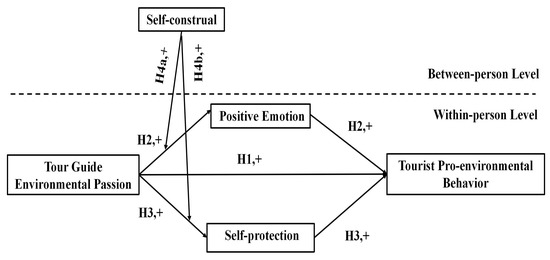
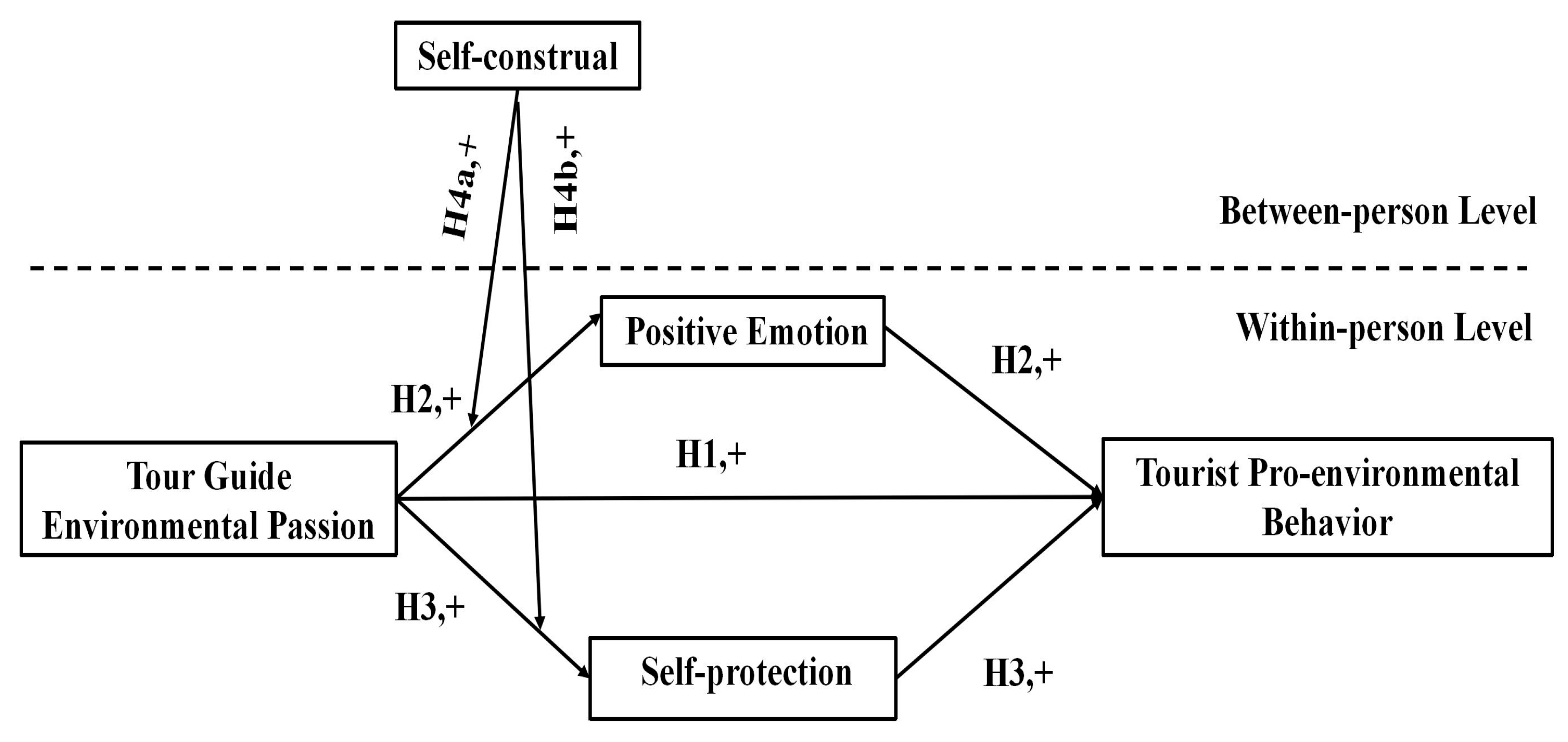
Building upon the aforementioned hypotheses, the present study develops a conceptual framework that delineates how tour guides’ environmental passion influences tourists’ pro-environmental behavior (see Figure 1). The framework posits that tour guides’ environmental passion not only exerts a direct effect on tourists’ pro-environmental behavior but also shapes it indirectly through positive emotions and self-protection motivation. Moreover, tourists’ self-construal level moderates this indirect pathway, influencing the strength and direction of the mediating effects.
Figure 1.
Research framework.
3. Methodology
3.1. Sample and Procedure
In late 2024, Shanxi experienced a noticeable surge in tourist arrivals due to a popular culture event, which increased the environmental pressure on several attractions. This contextual backdrop makes pro-environmental behavior particularly salient in tour activities and provides an appropriate setting to examine how tour guides’ environmental passion shapes tourists’ daily pro-environmental responses. Accordingly, Taiyuan City—the provincial capital and one of Shanxi’s principal tourism hubs—was selected as the research site for an in-depth empirical investigation into these issues.
Data for the present study were obtained from a field survey conducted in Taiyuan City, Shanxi Province, in November 2024. During the survey, tourists were randomly selected across multiple attractions, yielding a final valid sample of 159 participants. Prior to data collection, all participants were briefed on the purpose of the study, and informed consent was obtained in accordance with ethical research standards. Data were collected through an online questionnaire administered via a secure digital platform. The data collection procedure unfolded as follows: first, participants completed demographic items covering gender, age, education level, income, and self-construal orientation. Subsequently, over the following week, each participant completed a daily questionnaire between 8:00 p.m. and 10:00 p.m., assessing their perceptions of the tour guide’s environmental passion, positive emotions, self-protection motivation, and pro-environmental behavior.
The study was conducted over a one-week period, during which a total of 191 tourists participated in the questionnaire-based survey. The surveys were completed by tourists only; tour guides were not surveyed. Tour guides’ environmental passion was assessed as tourists’ perceptions of the guide’s emotional display during the tour. After excluding invalid responses resulting from inattentive or incomplete answers, the final valid sample consisted of 159 participants. During the subsequent follow-up phase, 873 valid and 240 invalid questionnaires were recovered, yielding an overall effective response rate of 78.43%. Daily questionnaires were screened for response quality; submissions completed in <30 s or showing straight-line responding (selecting the same response option across all items) were flagged as invalid and excluded. Thirty-two participants who failed to complete at least three survey waves were excluded from the final data analysis. The final sample consisted of 159 tourists (Table 1). Females accounted for 56.7% of the sample (n = 495) and males for 43.3% (n = 378). Regarding age, participants were distributed across five categories, with the largest group aged 31–45 (46.4%, n = 405), followed by 18–30 (24.1%, n = 210), 46–60 (23.8%, n = 208), above 60 (5.7%, n = 50), and under 18 (0%, n = 0). In terms of education, participants reported middle school or below (3.7%, n = 32), high school (33.7%, n = 294), associate degree (35.4%, n = 309), bachelor’s degree (22.7%, n = 198), and master’s degree or above (4.6%, n = 40). Monthly income was reported as below 3000 RMB (17.6%, n = 154), 3001–5000 RMB (45.0%, n = 393), 5001–8000 RMB (26.0%, n = 227), 8001–10,000 RMB (4.6%, n = 40), and above 10,000 RMB (6.8%, n = 59).
Table 1.
Participant demographics (N = 159, n = 873).
3.2. Measures
All measurement indicators were taken from previously validated scales. To better predict the relationship between tourists’ perceived guide environmental passion and their own emotions, cognition, behavior, and the design of daily diaries, the project descriptions were minimally adjusted (for example, adding “today”/”today I feel”). The questionnaire was translated by two bilingual researchers following the translation and back-translation procedures. Any disagreements were resolved through discussion. Items were reviewed by two tourism management scholars and one organizational behavior scholar for content validity and wording clarity before the main survey. A pilot test was conducted on 74 tourists to ensure clear expression and alignment with the context. The results only involved minor modifications to the expressions, while the meaning of the items remained unchanged.
Tour Guides’ Environmental Passion (Perceived): Tour guides’ environmental passion was measured as tourists’ perceptions of the guide’s expressed environmental passion, using an adapted version of Robertson and Barling’s environmental passion scale [29]. Following prior research on other-reported emotion display, all items were reworded from a first-person to a third-person referent to capture tourists’ observations (e.g., “The tour guide is passionate about the environmental quality of scenic areas in Shanxi”). The scale contained 10 items. Cronbach’s α averaged 0.917 across waves.
Tourists’ Pro-Environmental Behavior: Tourists’ pro-environmental behavior was assessed using a modified version of the scale originally developed by Su and Swanson [65]. Several items were contextually refined to align with the focus of the present study, yielding a six-item measurement scale. A representative item reads, “I follow regulations to avoid damaging the environmental quality of scenic areas in Shanxi.” In the present study, the scale exhibited strong internal consistency, as evidenced by an average Cronbach’s α of 0.894.
Positive Emotions: Positive emotions were assessed using a refined version of the scale originally developed by Su and Hsu [66]. The scale comprised three items, including a representative statement such as “This travel experience made me feel very happy.” In the present study, the scale exhibited satisfactory reliability, as evidenced by an average Cronbach’s α of 0.814.
Self-Protection Motivation: Self-protection motivation was measured with three context-specific items capturing social image concern and impression-management motives in the travel setting. The items were developed based on the self-protection framework [53] and integrative accounts of self-protection strategies [52] and were adapted to a daily diary format (e.g., ‘Today, I worried that others would view me as irresponsible if I did not behave in an environmentally friendly way’). In the present study, the scale exhibited satisfactory reliability, as indicated by an average Cronbach’s α of 0.802.
Self-Construal: Self-construal was assessed using an adapted version of the scale originally developed by Chen and Moosmayer [62]. The scale comprised seven items: four capturing interdependent self-construal (e.g., “Maintaining harmony within the group is important to me”) and three capturing independent self-construal (e.g., “I prefer to be straightforward when interacting with others”). The overall scale exhibited high internal consistency, with an average Cronbach’s α value of 0.880. Specifically, Cronbach’s α values for the interdependent and independent dimensions were 0.869 and 0.884, respectively, both reflecting strong reliability. Following the analytical approach of Winterich, a self-construal index was computed using the formula: (Interdependent − Independent)/(Interdependent + Independent) [67]. A higher index value denotes a stronger interdependent orientation and, consequently, a higher level of self-construal.
A five-point Likert scale was employed to assess tour guides’ environmental passion, tourists’ pro-environmental behavior, positive emotions, self-protection motivation, and self-construal. Response categories were defined as follows: 1 = “strongly disagree,” 2 = “disagree,” 3 = “neutral,” 4 = “agree,” and 5 = “strongly agree.”
Control Variables: Gender, age, income level, and education level of tourists were included as control variables in the model. Previous research has demonstrated that gender, income, and education exert significant influences on individuals’ pro-environmental behavior [32,68]. Following prior pro-environmental behavior research, we controlled for gender, age, education, and income because these demographic factors are often associated with environmental values, perceived efficacy, and compliance with environmentally responsible practices.
3.3. Data Analysis
The present study adopted the experience sampling method (ESM) to collect data, encompassing two analytical levels: the within-person level (Level 1) and the between-person level (Level 2). Based on subsequent analyses, the study explored the underlying mechanisms linking variables across these two hierarchical levels. Specifically, Level 1 captured within-person variation, whereas Level 2 reflected between-person differences. At Level 1, repeated measures were collected for four variables: tour guides’ environmental passion, positive emotions, self-protection motivation, and pro-environmental behavior. At Level 2, self-construal and demographic attributes (gender, age, education level, and monthly income) were assessed. To avoid the contamination of Level 2 variance by Level 1 data, individual-level environmental passion scores were mean-centered to remove potential between-person bias. Furthermore, the Level 2 moderator (self-construal) was group-mean centered to examine its cross-level moderating influence on Level 1 relationships. Throughout the analysis, random slopes of the independent variable (environmental passion) on the mediators (positive emotions and self-protection motivation), as well as fixed effects of the mediators on the dependent variable (pro-environmental behavior), were explicitly estimated.
To further evaluate the model’s stability and reliability, an unconditional (null) model test was performed. Specifically, three outcome variables—positive emotions, self-protection motivation, and pro-environmental behavior—were examined. The intraclass correlation coefficients (ICC(1)) for these variables were 0.466, 0.492, and 0.415, respectively, all exceeding the conventional 0.05 threshold. These results indicate substantial within-person variability and sufficient variance at the individual level. Accordingly, the data were deemed appropriate for multilevel structural equation modeling (MSEM). The hypotheses were tested using 1-1-1 path analysis implemented in Mplus 8, while the Monte Carlo simulation in R was applied to estimate the 95% confidence intervals of the mediation effects [69]. Finally, the moderated mediation model was tested following the analytical framework of Edwards and Lambert [70].
To examine the construct validity of all variables, a confirmatory factor analysis (CFA) was performed. In the first model, four latent constructs—tour guides’ environmental passion, positive emotions, self-protection motivation, and pro-environmental behavior—were specified at Level 1, whereas interdependent and independent self-construal were modeled as distinct latent constructs at Level 2. The results indicated an excellent overall fit: χ2(216) = 686.458, RMSEA = 0.050, CFI = 0.955, TLI = 0.948, SRMRwithin = 0.036, and SRMRbetween = 0.070, suggesting that the data exhibited strong model adequacy. In the second model, the four Level 1 constructs were collapsed into a single latent factor, while the two Level 2 self-construal dimensions were combined into one overarching construct. The model exhibited a poor fit: χ2(230) = 4628.560, RMSEA = 0.148, CFI = 0.584, TLI = 0.532, SRMRwithin = 0.135, and SRMRbetween = 0.259. A chi-square difference test (Δχ2 = 3942.102, Δdf = 4, p < 0.01) further confirmed that the first model provided a significantly superior fit compared with the second model.
Convergent validity was supported as all standardized factor loadings were significant (p < 0.001) and exceeded 0.59. Composite reliability (CR) values ranged from 0.807 to 0.918 at the within level and from 0.863 to 0.874 at the between level, exceeding the recommended threshold of 0.70. Average variance extracted (AVE) values ranged from 0.534 to 0.595 (within) and from 0.606 to 0.656 (between), exceeding the recommended threshold of 0.50. Discriminant validity was further supported by the Fornell–Larcker criterion: for each construct, the square root of AVE was greater than the absolute value of its correlations with other constructs (Table 2 and Table 3). Interfactor correlations were obtained from the CFA standardized solution (STDYX) at the within- and between-person levels; 95% confidence intervals were computed as estimate ± 1.96SE (Table 3). Given the intensive longitudinal (1-1-1) multilevel design, formal multigroup measurement invariance testing in a full multilevel CFA framework is technically nontrivial and would require additional modeling assumptions beyond the scope of the present study. No correlated residuals were added. Modification indices were inspected, but all model specifications were kept theory-driven.
Table 2.
Reliability and convergent validity (CR and AVE).
Table 3.
Discriminant validity (Fornell–Larcker criterion).
3.4. Sample Size Justification
Participants were approached on-site at the botanical garden in Taiyuan and screened to ensure that they were taking guided tours. To reduce selection bias, recruitment was conducted at different times of day across weekdays and weekends. Participants received a small incentive of 20 RMB upon completing the baseline survey and an additional 10 RMB after completing at least three daily surveys. Daily surveys were sent via the WeChat platform at 20:00 and remained open until 22:00. Missing responses at the day level were handled using full information maximum likelihood (FIML) in Mplus. The present study employed an experience sampling design with 873 day-level observations nested within 159 individuals. Although the Level-2 sample (N = 159) may appear modest for multilevel structural equation modeling, it is within the range commonly used in ESM and intensive longitudinal research, where the trade-off between the number of persons and the number of repeated measures is well recognized [71]. Moreover, the present data exhibit substantial within-person variance (ICC(1) = 0.415–0.492), supporting the appropriateness of multilevel modeling [72].
To further assess whether the available Level-2 sample provides adequate power for detecting the focal effects in the proposed 1-1-1 MSEM (i.e., the a paths from tour guide environmental passion to the mediators, the b paths from mediators to pro-environmental behavior, and the cross-level moderation of the a paths), we conducted a Monte Carlo power analysis based on the observed parameter estimates and variance components. Using 20,000 replications, the results indicated satisfactory power (≥0.80) for the primary fixed effects and the cross-level interaction terms reported in Table 3, as well as for the two indirect effects estimated using Monte Carlo confidence intervals (Table 4) [73]. Therefore, the current sample size is considered adequate for the complexity of the proposed model.
Table 4.
Multilevel-latent correlations and 95% CI.
4. Hypothesis Testing
4.1. Descriptive Statistics and Correlations
Table 5 reports the descriptive statistics and intercorrelations among all study variables. At the within-person level, tour guides’ environmental passion showed significant positive correlations with tourists’ positive emotions (r = 0.34, p < 0.01), self-protection motivation (r = 0.38, p < 0.01), and pro-environmental behavior (r = 0.37, p < 0.01). Moreover, tourists’ positive emotions (r = 0.33, p < 0.01) and self-protection motivation (r = 0.35, p < 0.01) were likewise positively associated with pro-environmental behavior. These findings align with theoretical expectations and offer preliminary empirical support for the study’s hypotheses.
Table 5.
Means, standard deviations, and correlations among variables.
4.2. Main Effect Test and Mediation Tests
Table 6 reports the results of the multilevel regression analysis, displaying the path coefficients among all study variables. As shown in Model 3, results from the 1-1-1 multilevel model showed tour guides’ environmental passion exerted a significant positive effect on tourists’ pro-environmental behavior (b = 0.51, p < 0.01), thereby supporting Hypothesis H1. Consistent with Model 1 and Model 2, tour guides’ environmental passion showed significant positive effects on tourists’ positive emotions (b = 0.44, p < 0.01) and self-protection motivation (b = 0.47, p < 0.01). Furthermore, Model 3 demonstrated that both tourists’ positive emotions (b = 0.17, p < 0.01) and self-protection motivation (b = 0.29, p < 0.01) positively predicted their pro-environmental behavior. These findings suggest that tourists’ positive emotions and self-protection motivation serve as mediating mechanisms linking tour guides’ environmental passion to tourists’ pro-environmental behavior. To assess the robustness of the mediation effects, the Monte Carlo resampling method with 20,000 iterations was employed. The results revealed significant indirect effects for both positive emotions (0.07, 95% CI: [0.04, 0.11]) and self-protection motivation (0.14, 95% CI: [0.09, 0.19]). These findings confirm that tourists’ positive emotions and self-protection motivation significantly mediate the relationship between tour guides’ environmental passion and tourists’ pro-environmental behavior, thereby supporting Hypotheses H2 and H3. Moreover, when both positive emotions and self-protection motivation were simultaneously included in the regression predicting pro-environmental behavior (Model 3), tour guides’ environmental passion remained a significant positive predictor. This indicates that positive emotions and self-protection motivation jointly play partial mediating roles in linking tour guides’ environmental passion to tourists’ pro-environmental behavior.
Table 6.
Multilevel regression results.
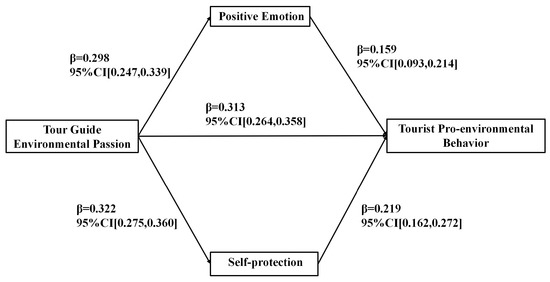
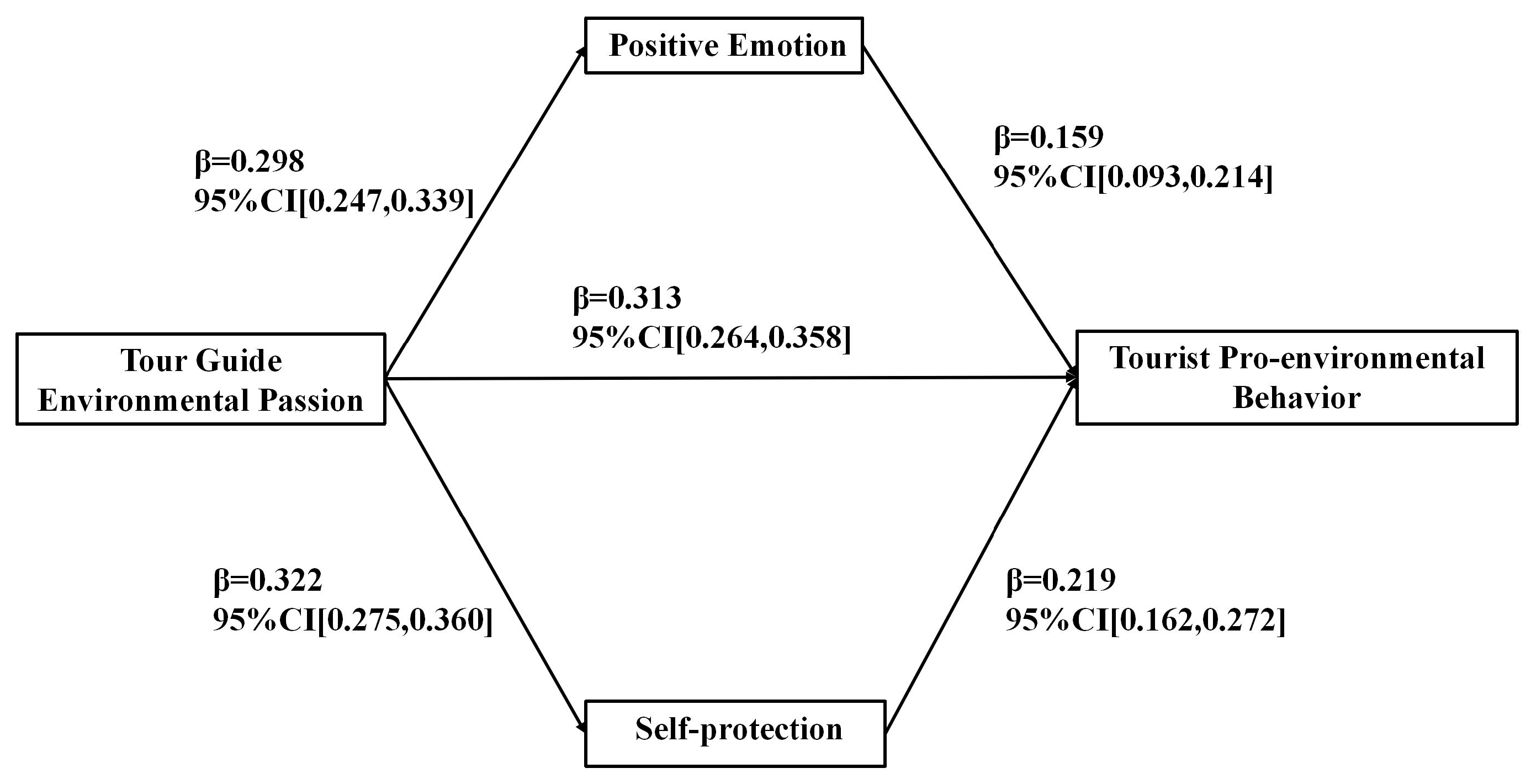
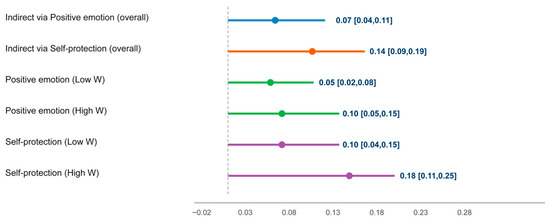
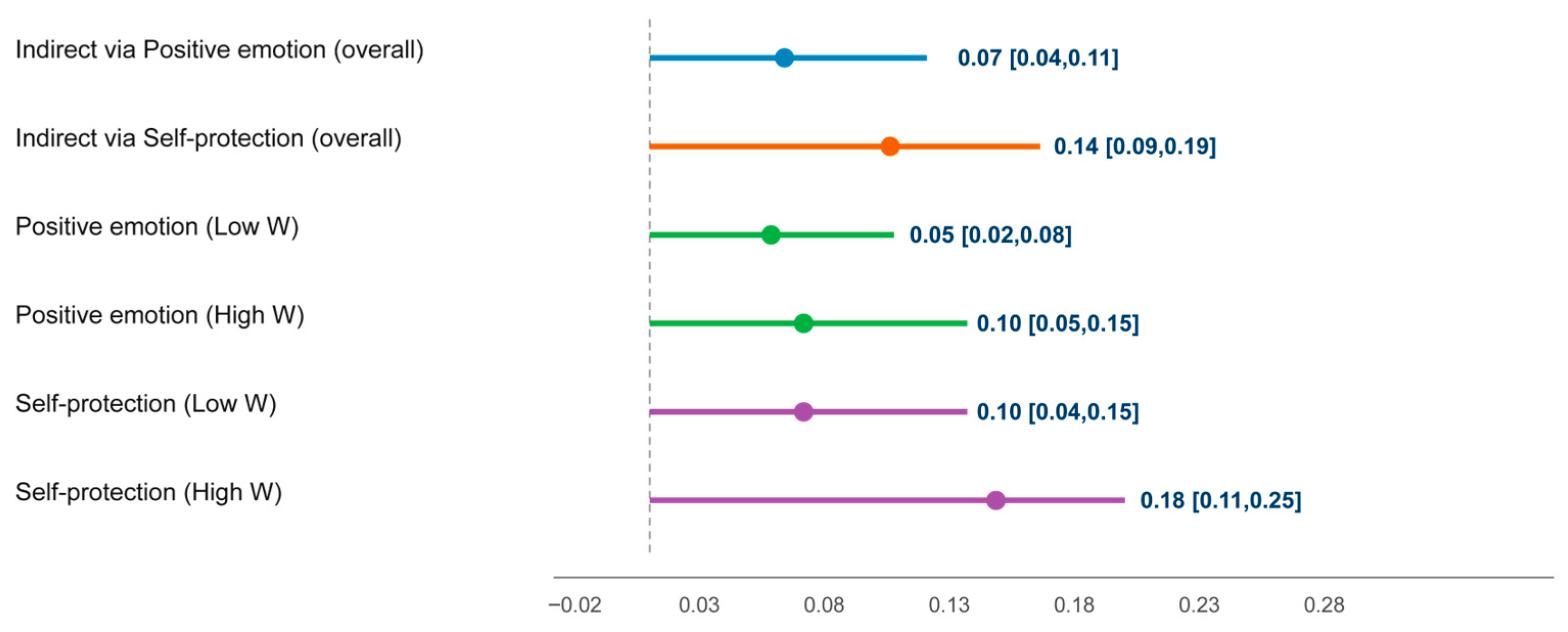
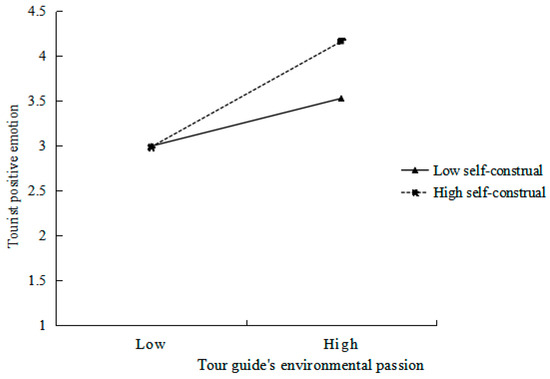
For readability, Figure 2 summarizes the proposed model with standardized path coefficients (β). Specifically, at the within-person level, environmental passion predicted positive emotions (β = 0.298, 95% CI [0.247, 0.339]) and self-protection motivation (β = 0.322, 95% CI [0.275, 0.360]), which in turn predicted pro-environmental behavior (positive emotions: β = 0.159, 95% CI [0.093, 0.214]; self-protection: β = 0.219, 95% CI [0.162, 0.272]). The direct effect of environmental passion on pro-environmental behavior remained significant (β = 0.313, 95% CI [0.264, 0.358]). Figure 3 further visualizes the indirect effects and their 95% confidence intervals, highlighting the relative strength of the affective-reaction and inferential pathways.
Figure 2.
Standardized multilevel path diagram (β, with 95% CI). Note: Standardized multilevel path model (β; Mplus STDYX). Solid lines indicate significant paths.
Figure 3.
Conditional indirect effects (95% CI). Note: Estimates are conditional indirect effects; 95% Monte Carlo confidence intervals reported. Vertical dashed line at 0 indicates null effect.
4.3. Moderation and Moderated Mediation Tests
Table 6 reports the results of the cross-level moderation analysis examining the role of self-construal. As shown in Model 1, self-construal exerted a significant positive moderating effect on the relationship between tour guides’ environmental passion and tourists’ positive emotions (b = 0.67, p < 0.01), indicating that higher levels of self-construal amplified the influence of environmental passion on tourists’ positive emotions. Model 2 further revealed a significant positive moderation, with self-construal strengthening the relationship between tour guides’ environmental passion and tourists’ self-protection motivation (b = 0.61, p < 0.01). This suggests that higher levels of self-construal heighten the influence of environmental passion on tourists’ self-protection motivation. Accordingly, Hypothesis H4 was supported.
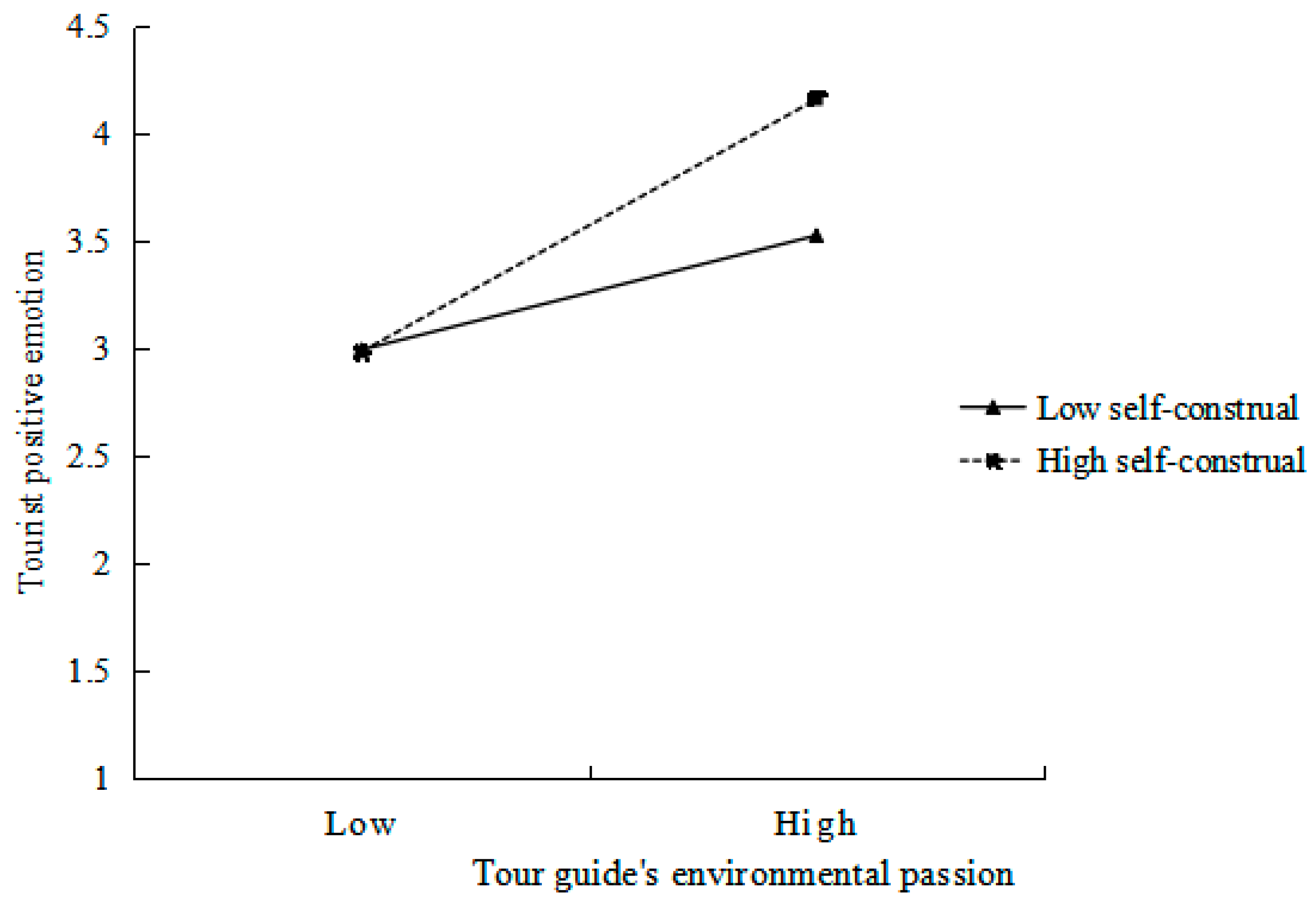
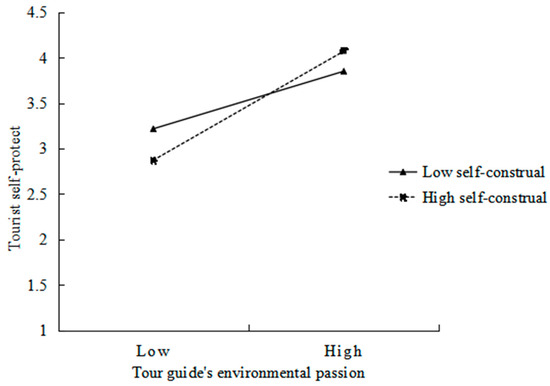
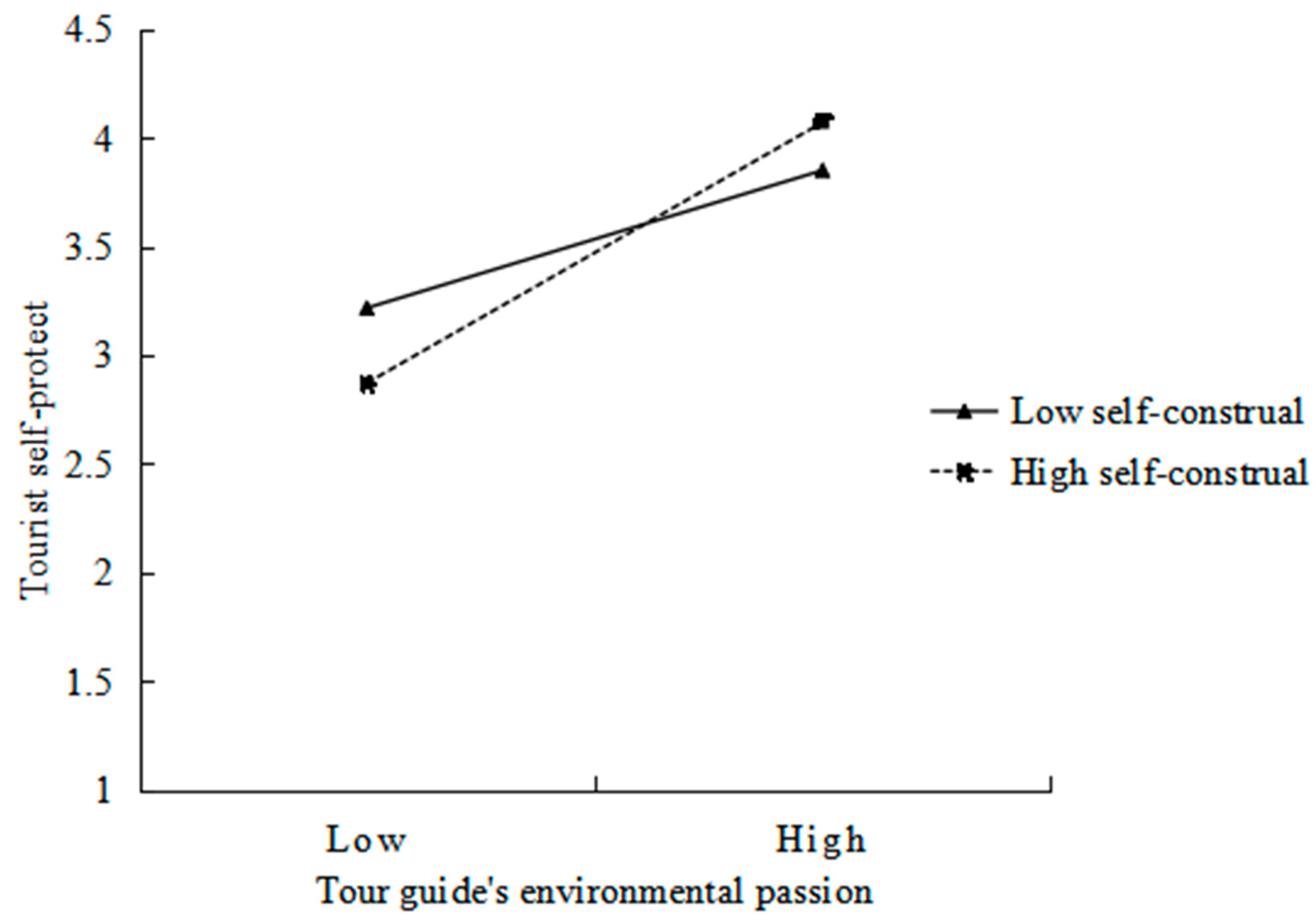
To offer a clearer visualization of the moderating patterns, simple slope analyses were conducted by calculating the effects of tour guides’ environmental passion on tourists’ positive emotions and self-protection motivation at one standard deviation above and below the mean (±1 SD) of self-construal. The results are illustrated in Figure 4 and Figure 5. As depicted in Figure 4, when tourists exhibited a high level of self-construal (+1 SD), the positive influence of tour guides’ environmental passion on tourists’ positive emotions was markedly stronger (b = 0.60, p < 0.01). In contrast, when self-construal was low (−1 SD), the effect weakened (b = 0.29, p < 0.01), with a significant difference observed between the two conditions (Δb = 0.31, p < 0.01). Similarly, Figure 5 illustrates that when tourists’ self-construal was high (+1 SD), the facilitative effect of tour guides’ environmental passion on self-protection motivation was stronger (b = 0.61, p < 0.01). Conversely, when self-construal was low (−1 SD), the effect diminished (b = 0.33, p < 0.01), and the difference between the two levels remained statistically significant (Δb = 0.28, p < 0.01).
Figure 4.
Relationship between tour guides’ environmental passion and tourists’ positive emotion at different levels of self-construal.
Figure 5.
Relationship between tour guides’ environmental passion and tourists’ self-protection motivation at different levels of self-construal.
The present study adopted the analytical approach proposed by Edwards and Lambert (2007) [70] to test whether self-construal moderates the mediation effects of tourists’ positive emotions and self-protection motivation within a multilevel structural equation modeling (MSEM) framework. As shown in Table 7, when tourists exhibited a high level of self-construal, the mediation effect of positive emotions was significant (0.10, 95% CI [0.05, 0.15]); conversely, when self-construal was low, the mediation effect decreased to 0.05 (95% CI [0.02, 0.08]). The difference between the two conditions was 0.05 and statistically significant (95% CI [0.01, 0.10]), confirming that self-construal significantly moderated the mediation effect of positive emotions. Similarly, when tourists’ self-construal was high, the mediation effect of self-protection motivation was significant (0.18, 95% CI [0.11, 0.25]); however, when self-construal was low, the effect diminished to 0.10 (95% CI [0.04, 0.15]). The difference between the two conditions was 0.08 and statistically significant (95% CI [0.01, 0.15]), suggesting that self-construal also significantly moderated the mediation effect of self-protection motivation. Taken together, these findings demonstrate that the indirect effects of tour guides’ environmental passion on tourists’ pro-environmental behavior—via positive emotions and self-protection motivation—are significantly moderated by tourists’ self-construal levels.
Table 7.
Moderated mediation results.
5. Discussion and Implications
5.1. Discussion
Grounded in the Emotions-as-Social-Information (EASI) theory, the present study systematically explores the mechanisms through which tour guides’ environmental passion shapes tourists’ pro-environmental behavior. The findings yield three major insights. First, tour guides’ environmental passion exerts a significant and robust positive influence on tourists’ pro-environmental behavior, lending strong empirical support to Hypothesis H1. Second, both tourists’ positive emotions and self-protection motivation function as partial mediators linking tour guides’ environmental passion to tourists’ pro-environmental behavior, thus validating Hypotheses H2 and H3. Third, self-construal not only moderates the effects of tour guides’ environmental passion on tourists’ positive emotions and self-protection motivation but also amplifies the indirect pathways through positive emotions and self-protection, thereby corroborating Hypotheses H4a and H4b.
Because the study was conducted in Shanxi, China, it is important to interpret the findings by considering how cultural self-views shape the decoding and use of emotional expressions as social information. In EASI theory, others’ emotional displays influence observers through two complementary routes: an affective-reaction pathway, which involves affective resonance and emotional contagion, and an inferential pathway, through which observers draw conclusions about the situation (e.g., what is valued, expected, or appropriate) and adjust their behavior accordingly [51].
From this perspective, China’s cultural tendency toward interdependent self-construal provides a theoretically grounded explanation for why both routes may be strengthened. Interdependent individuals define the self in relation to others, prioritize relational harmony, and thus attend more closely to interpersonal cues during social interaction [56,62]. Such heightened sensitivity makes them more susceptible to others’ affective displays, which facilitates emotional contagion and amplifies the EASI affective-reaction route. In the guided-tour setting—characterized by repeated face-to-face encounters and shared activities—interdependent tourists may therefore experience stronger positive emotions when exposed to a guide’s environmental passion [58].
Interdependence also implies stronger concerns about public evaluation and “face,” especially in group contexts where behavior is observable and socially consequential [62]. As a result, tour guides’ environmental passion may be interpreted as an appraisal cue that signals not only personal passion but also that environmental protection is socially valued and normatively expected in the tour group. This inference strengthens the EASI inferential route, activating self-protection motivation—that is, a motivation to avoid negative social evaluation or embarrassment that might occur if one does not act in an environmentally responsible manner. Prior research likewise suggests that pro-environmental behavior can be driven by social-image concerns and impression-management motives [19]. Consistent with this account, the present results show that a stronger interdependent (vs. independent) self-construal amplifies the effects of guides’ environmental passion on both positive emotions and self-protection motivation, thereby strengthening the indirect effects on pro-environmental behavior.
In more individualistic contexts, where independent self-construal is more salient, tourists may be less sensitive to social-evaluative cues and thus rely more on personal attitudes and internalized values when translating others’ emotional expressions into behavior. Future research could test this boundary condition by comparing group tours versus independent travel and by conducting cross-cultural replications that examine whether the relative strength of the affective-reaction versus inferential routes varies systematically.
5.2. Theoretical Contributions
The theoretical contributions about the present study to the existing literature can be summarized in four key dimensions.
First, the present study empirically demonstrates that tour guides’ environmental passion exerts a significant and positive influence on tourists’ pro-environmental behavior, through aligning with and extending previous research. In contrast to prior studies, this research specifically centers on the tourist population and provides robust empirical evidence that guides’ environmental passion actively fosters tourists’ pro-environmental engagement. This finding fills an important gap in the literature by elucidating how one’s emotional expression can shape others’ behavioral responses. Moreover, the study reveals that beyond peer interactions among tourists, the emotional passion conveyed by tour guides serves as a comparably potent catalyst for promoting pro-environmental conduct.
Second, grounded in the Emotions-as-Social-Information (EASI) framework, the present study substantiates the dual mediating roles of tourists’ positive emotions and self-protection motivation. The empirical evidence confirms that both positive emotions and self-protection motivation exert significant and mutually reinforcing effects on tourists’ pro-environmental behavior. Consequently, this research extends existing theoretical frameworks while deepening conceptual insight into how guides’ emotional expressions interface with tourists’ affective and motivational dynamics. Distinctively, the present study represents one of the few empirical applications of the EASI framework in tourism, and it is, to our knowledge, among the first to test EASI specifically in guide–tourist interactions. This exploration broadens the theoretical scope of the EASI framework and underscores its explanatory potency in accounting for emotion-driven social influence in tourism contexts.
Third, the present study introduces self-construal as a cross-level moderator to examine how the impact of tour guides’ environmental passion varies with tourists’ self-construal orientations. Specifically, when tourists exhibit high interdependent self-construal, the effects of guides’ environmental passion on tourists’ positive emotions and self-protection motivation are amplified. This result aligns with Lin et al. [8], who demonstrated that self-construal moderates the linkage between guides’ humor and tourists’ relational energy. By integrating self-construal as a moderating construct within the framework of guides’ emotional expressions, the present study extends its conceptual application and theoretical reach.
5.3. Practical Implications
The findings of the present study offer significant managerial implications for destination management organizations (DMOs) aiming to foster tourists’ pro-environmental behavior through strategic guide management, thereby advancing the sustainable governance of tourism destinations. Tour guides’ positive environmental emotions emerge as a pivotal driver of sustainable tourism development. Accordingly, DMOs should prioritize cultivating guides’ positive environmental affect—particularly their environmental passion—through systematic training and capacity-building initiatives, while encouraging their active engagement in environmental protection efforts.
Specifically, destination management organizations should underscore the importance of exhibiting environmental passion in tourist–guide interactions and implement incentive mechanisms to effectively stimulate such passion. For instance, tourists could be invited to evaluate guides’ environmental passion, with high-performing guides receiving corresponding recognition or rewards. Second, DMOs should develop targeted training initiatives that nurture guides’ environmental passion—for example, by integrating environmental education modules that instill environmental values and evoke emotional resonance. Third, destination authorities should collaborate with travel agencies to align managerial practices toward cultivating environmental passion—for instance, by prioritizing the recruitment of individuals who demonstrate strong pro-environmental orientations or exhibit genuine interest in environmental knowledge.
In addition, because the inferential pathway operates through tourists’ self-image protection motivation, DMOs and tour guides may complement passionate environmental displays with norm- and identity-relevant communication (e.g., emphasizing that environmentally responsible conduct is socially valued in the group and that careless behaviors such as littering may lead to negative social evaluation or embarrassment). Such communication should remain respectful and non-coercive, helping tourists translate guides’ emotional cues into impression-management concerns (i.e., “how I will be seen by others”) and thereby strengthening their motivation to engage in pro-environmental actions.
6. Limitations and Future Research Directions
Despite yielding valuable insights, the present study inevitably bears certain limitations. First, because data collection was confined to the Shanxi region, the generalizability of the findings across broader geographical and cultural contexts remains limited. Accordingly, future research should endeavor to validate the proposed theoretical framework across diverse cultural and regional contexts. Second, although Shanxi’s tourism industry had largely rebounded during the period of data collection, subsequent studies are warranted to replicate and extend the current findings through broader sampling and longitudinal validation. Additionally, although the experience sampling method (ESM) design captures within-person fluctuations, the focal constructs were measured at the same daily time point; thus, temporal precedence cannot be fully established. Future studies may adopt time-lagged or experimental designs. Finally, recognizing that tour guides frequently assume multiple and overlapping roles, future studies should integrate these dimensions into a unified analytical framework to yield a more holistic understanding of how guides’ environmental passion shapes tourists’ pro-environmental engagement. Hence, future investigations are encouraged to devise and implement effective methodological and contextual strategies to overcome these limitations.
Author Contributions
W.L.: Data curation, Resources, Supervision; S.Z.: Conceptualization, Software, Writing—Original Draft, Formal analysis, Data curation; Z.W.: Conceptualization, Methodology, Supervision; S.T.: Visualization, Validation, Supervision. All authors have read and agreed to the published version of the manuscript.
Funding
This research was funded by the National Natural Science Foundation of China, grant number 72174137 and was funded by Shanxi Province Basic Research Program (Industrial Development Category) Joint Funding Project, grant number 202303011222001.
Institutional Review Board Statement
Ethical review and approval were waived for the present study by regulations of School of Economics and Management of Taiyuan University of Technology, the study Emotion or Cognition: How Tour Guides’ Environmental Passion Drives Tourists’ Pro-Environmental Behavior is a behavior experiment conducted through a questionnaire survey. It does not involve human experimentation or human tissues. All participants have been fully informed if the anonymity is assured, why the research is being conducted, how their data will be used and if there are any risks associated. The present study has been granted exemption by School of Economics and Management of Taiyuan University of Technology.
Informed Consent Statement
Informed consent was obtained from all subjects involved in the study.
Data Availability Statement
The original contributions presented in the present study are included in the article. Further inquiries can be directed to the corresponding authors.
Conflicts of Interest
The authors declare no conflicts of interest.
Abbreviations
The following abbreviations are used in this manuscript:
| EASI | Emotions-as-Social-Information |
| MSEM | Multilevel Structural Equation Model |
References
- Sun, Y.Y.; Faturay, F.; Lenzen, M.; Gössling, S.; Higham, J. Drivers of global tourism carbon emissions. Nat. Commun. 2024, 15, 10384. [Google Scholar] [CrossRef] [Scilit]
- Zhang, Y.; Zheng, W. Travel with your textbooks: How cultural memory mediums affect tourist behavior. J. Hosp. Tour. Manag. 2025, 63, 406–420. [Google Scholar] [CrossRef] [Scilit]
- Çiftçi, Ş.F.; Çizel, B. Exploring relations among authentic tourism experience, experience quality, and tourist behaviours in phygital heritage with experimental design. J. Destin. Mark. Manag. 2024, 31, 100848. [Google Scholar] [CrossRef] [Scilit]
- Hu, C.A.; Hu, X.S.; Zhang, Y. How important is charisma? The impacts of charismatic tour-guiding and service disclosure on tourist trust, self-disclosure, interaction quality, and emotional solidarity. Tour. Manag. Perspect. 2025, 58, 101367. [Google Scholar] [CrossRef] [Scilit]
- Aideed, H.; Elbaz, A.M.; Salem, I.E.; Hussein, H.; Elzek, Y. The power of professionalism: Enhancing tour guide impact on visitors’ experience and satisfaction to foster visitor sustainable behaviour. Tour. Hosp. Res. 2024, 14673584251350782. [Google Scholar] [CrossRef] [Scilit]
- Shi, L.; Ma, J.Y.; Ann, C.O. Exploring the effect of tour guide cultural interpretation on tourists’ loyalty in the context of the southern journey by Emperor Qianlong. Sustainability 2023, 15, 11585. [Google Scholar] [CrossRef] [Scilit]
- Tu, H.; Guo, W.; Xiao, X.; Yan, M. The relationship between tour guide humor and tourists’ behavior intention: A cross-level analysis. J. Travel Res. 2020, 59, 1478–1492. [Google Scholar] [CrossRef] [Scilit]
- Lin, H.; Tian, J.; Kong, Y.; Gao, J. Impact of tour guide humor on tourist pro-environmental behavior: Utilizing the conservation of resources theory. J. Destin. Mark. Manag. 2022, 25, 100728. [Google Scholar] [CrossRef] [Scilit]
- Poudel, S.; Nyaupane, G.P. The role of interpretative tour guiding in sustainable destination management: A comparison between guided and nonguided tourists. J. Travel Res. 2013, 52, 659–672. [Google Scholar] [CrossRef] [Scilit]
- Sengoz, A.; Dogru, T.; Mody, M.; Isik, C. Guiding the path to sustainable tourism development: Investigating the role of tour guides within a social exchange theory paradigm. Tour. Manag. 2025, 110, 105162. [Google Scholar] [CrossRef] [Scilit]
- Wang, Z.; Li, W. The mechanism of adolescent environmental passion influencing parent pro-environmental behavior. J. Environ. Psychol. 2024, 96, 102342. [Google Scholar] [CrossRef] [Scilit]
- Zhang, Q.; Khan, S.U.; Khan, S.; Khan, I.U.; Mehmood, S. Greening gateways: Navigating tourists pro-environmental behavior through norms and emotions. Environ. Dev. Sustain. 2024, 1–23. [Google Scholar] [CrossRef] [Scilit]
- Gao, Y.; Zhao, Z.; Qin, K.; Liu, Y.; Li, Y. How do current and anticipated positive emotions nudge tourists’ pro-environmental behavior? Joint evidence from laboratory and field survey experiment studies. Tour. Manag. Perspect. 2024, 54, 101322. [Google Scholar] [CrossRef] [Scilit]
- Lagomarsino, M.; Lemarié, L. Hope for the environment: Influence of goal and temporal focus of emotions on behavior. Int. J. Consum. Stud. 2024, 48, e13020. [Google Scholar] [CrossRef] [Scilit]
- Ozer, M.; Can, A.S.; Ekinci, Y.; Ozer, A. Leveraging Cittaslow promotion on social media to enhance tourists’ behavioral responses toward small urban tourism destinations. J. Travel Res. 2025, 65, 812–832. [Google Scholar] [CrossRef] [Scilit]
- Javed, M.K.; Tahir, M.S.; Capaldo, A.; Ahmad, J.; Wasaya, A.; Ahmed, A.U.; Chani, M.I. Shaping sustainable tourism: The influence of norms and social media rumors on tourist behavior. Environ. Dev. Sustain. 2025, 1–21. [Google Scholar] [CrossRef] [Scilit]
- Wang, X.; Liu, K.; Song, Y.; Zheng, J. Rapport, satisfaction, and eWOM: Unpacking the impact of online tour guide influencers. J. Hosp. Tour. Manag. 2025, 63, 236–246. [Google Scholar] [CrossRef] [Scilit]
- Zhou, G.; Liu, Y.; Hu, J.; Cao, X. The effect of tourist-to-tourist interaction on tourists’ behavior: The mediating effects of positive emotions and memorable tourism experiences. J. Hosp. Tour. Manag. 2023, 55, 161–168. [Google Scholar] [CrossRef] [Scilit]
- Dong, Z.; Wu, Z.; Hou, Y. Protect the environment for impressing others? Understanding whether, why, and when relational mobility shapes individual pro-environmental behaviors. J. Clean. Prod. 2023, 427, 139215. [Google Scholar] [CrossRef] [Scilit]
- García-Maroto, I.; Higueras-Castillo, E.; Muñoz-Leiva, F.; Liebana-Cabanillas, F. Environmentally responsible tourist behavior in socially responsible urban destinations. Tour. Rev. 2025. [Google Scholar] [CrossRef] [Scilit]
- Dolnicar, S.; Demeter, C. Why targeting attitudes often fails to elicit sustainable tourist behaviour. Int. J. Contemp. Hosp. Manag. 2024, 36, 730–742. [Google Scholar] [CrossRef] [Scilit]
- Pahari, S. Rural tourism in India and pro-tourism behavior. Tour. Rev. 2025, 80, 1757–1775. [Google Scholar] [CrossRef] [Scilit]
- Tang, J.; Liu, J.; Kim, J.J. Shall I follow them? How destination image and ambivalent emotions influence tourists’ responsible behavioral intentions. J. Hosp. Tour. Manag. 2025, 58, 101327. [Google Scholar] [CrossRef] [Scilit]
- Tiwari, R.; Prentice, C.; Khoo, C. Development and validation of a multidimensional responsible tourist behavior scale. Int. J. Tour. Res. 2025, 27, e2808. [Google Scholar] [CrossRef] [Scilit]
- Wullenkord, M.C.; Reese, G. Avoidance, rationalization, and denial: Defensive self-protection in the face of climate change negatively predicts pro-environmental behavior. J. Environ. Psychol. 2021, 77, 101683. [Google Scholar] [CrossRef] [Scilit]
- Alzghoul, Y.A.; Jamaliah, M.M.; Alazaizeh, M.M.; Mgonja, J.T.; Al-Daoud, Z.J. Tour guides’ interpretation and tourists’ pro-environmental behavior: Differences across cultural and natural world heritage sites. J. Ecotourism 2024, 23, 366–394. [Google Scholar] [CrossRef] [Scilit]
- Zhou, C.; Huang, M. The persuasive effects of voice characteristics embedded in paid tour guide audio on tourist purchase decisions based on deep learning. J. Hosp. Tour. Manag. 2024, 60, 313–321. [Google Scholar] [CrossRef] [Scilit]
- Jachimowicz, J.M.; Wihler, A.; Bailey, E.R.; Galinsky, A.D. Why grit requires perseverance and passion to positively predict performance. Proc. Natl. Acad. Sci. USA 2018, 115, 9980–9985. [Google Scholar] [CrossRef] [Scilit]
- Robertson, J.L.; Barling, J. Greening organizations through leaders’ influence on employees’ pro-environmental behaviors. J. Organ. Behav. 2013, 34, 176–194. [Google Scholar] [CrossRef] [Scilit]
- Crawford, A.C.; Newmeyer, C.E.; Jung, J.H.; Arnold, T.J. Frontline employee passion: A multistudy conceptualization and scale development. J. Serv. Res. 2022, 25, 194–210. [Google Scholar] [CrossRef] [Scilit]
- Qasim, S.; Ahmed, W.; Frooghi, R. Influence of employees’ beliefs and values on shaping green work culture for boosting firm’s environmental performance. Int. J. Ethics Syst. 2024, 40, 320–339. [Google Scholar] [CrossRef] [Scilit]
- Li, Q.; Wu, M. Tourists’ pro-environmental behaviour in travel destinations: Benchmarking the power of social interaction and individual attitude. J. Sustain. Tour. 2020, 28, 1371–1389. [Google Scholar] [CrossRef] [Scilit]
- Yin, C.; Ma, H.; Gong, Y.; Chen, Q.; Zhang, Y. Environmental CSR and environmental citizenship behavior: The role of employees’ environmental passion and empathy. J. Clean. Prod. 2021, 320, 128751. [Google Scholar] [CrossRef] [Scilit]
- Gregori, P.; Holzmann, P.; Krajger, I.; Schwarz, E.J.; Harms, R. Entrepreneurship and environmental sustainability: The effects of passion and self-efficacy on entrepreneurial intentions. J. Small Bus. Enterp. Dev. 2024, 31, 228–250. [Google Scholar] [CrossRef] [Scilit]
- Fischer, A.H.; Manstead, A.S.R. Social functions of emotion. In Handbook of Emotions, 3rd ed.; Guilford Press: New York, NY, USA, 2008; pp. 456–468. [Google Scholar]
- Frijda, N.H.; Mesquita, B. The social roles and functions of emotions. In Emotion and Culture: Empirical Studies of Mutual Influence; Kitayama, S., Markus, H.R., Eds.; American Psychological Association: Washington, DC, USA, 1994; pp. 51–87. [Google Scholar]
- Frijda, N.H. The Emotions; Cambridge University Press: Cambridge, UK, 1986. [Google Scholar]
- Wang, Z.; Singh, S.N.; Li, Y.J.; Mishra, S.; Ambrose, M.; Biernat, M. Effects of employees’ positive affective displays on customer loyalty intentions: An emotions-as-social-information perspective. Acad. Manag. J. 2017, 60, 109–129. [Google Scholar] [CrossRef] [Scilit]
- Deng, H.; Walter, F.; Guan, Y. Supervisor-directed emotional labor as upward influence: An emotions-as-social-information perspective. J. Organ. Behav. 2020, 41, 384–402. [Google Scholar] [CrossRef] [Scilit]
- Lia, H.; Hammond Mobilio, M.; Rudzicz, F.; Moulton, C.A. Contextualizing the tone of the operating room in practice: Drawing on the literature to connect the dots. Front. Psychol. 2023, 14, 1167098. [Google Scholar] [CrossRef] [Scilit]
- Yin, D.; Bond, S.; Zhang, H. Anger in consumer reviews: Unhelpful but persuasive? MIS Q. 2021, 45, 1059–1086. [Google Scholar] [CrossRef] [Scilit]
- Van Doorn, E.A.; van Kleef, G.A.; van der Pligt, J. How instructors’ emotional expressions shape students’ learning performance: The roles of anger, happiness, and regulatory focus. J. Exp. Psychol. Gen. 2014, 143, 980–984. [Google Scholar] [CrossRef] [Scilit] [PubMed]
- Navratil, S.D.; Kühl, T. Learning with self-generated drawings and the impact of learners’ emotional states. Front. Psychol. 2023, 14, 1286022. [Google Scholar] [CrossRef] [Scilit]
- Hosany, S.; Gilbert, D. Measuring tourists’ emotional experiences toward hedonic holiday destinations. J. Travel Res. 2010, 49, 513–526. [Google Scholar] [CrossRef] [Scilit]
- Fredrickson, B.L. Positive emotions broaden and build. In Advances in Experimental Social Psychology; Academic Press: Cambridge, MA, USA, 2013; Volume 47, pp. 1–53. [Google Scholar] [CrossRef] [Scilit]
- Van Kleef, G.A. How emotions regulate social life: The emotions as social information (EASI) model. Curr. Dir. Psychol. Sci. 2009, 18, 184–188. [Google Scholar] [CrossRef] [Scilit]
- Wang, J.; Yang, X.; He, Z.; Wang, J.; Bao, J.; Gao, J. The impact of positive emotional appeals on the green purchase behavior. Front. Psychol. 2022, 13, 716027. [Google Scholar] [CrossRef] [Scilit]
- Greenaway, K.H.; Kalokerinos, E.K. Suppress for success? Exploring the contexts in which expressing positive emotion can have social costs. Eur. Rev. Soc. Psychol. 2017, 28, 134–174. [Google Scholar] [CrossRef] [Scilit]
- Argyris, Y.A.; Monu, K.; Kim, Y.; Zhou, Y.; Wang, Z.; Yin, Z. Using speech acts to elicit positive emotions for complainants on social media. J. Interact. Mark. 2021, 55, 67–80. [Google Scholar] [CrossRef] [Scilit]
- Mintz, K.K.; Ayalon, O.; Eshet, T.; Nathan, O. The influence of social context and activity on the emotional well-being of forest visitors: A field study. J. Environ. Psychol. 2024, 94, 102234. [Google Scholar] [CrossRef] [Scilit]
- Van Kleef, G.A.; Côté, S. The social effects of emotions. Annu. Rev. Psychol. 2022, 73, 629–658. [Google Scholar] [CrossRef] [Scilit] [PubMed]
- Hepper, E.G.; Gramzow, R.H.; Sedikides, C. Individual differences in self-enhancement and self-protection strategies: An integrative analysis. J. Personal. 2010, 78, 781–814. [Google Scholar] [CrossRef] [Scilit] [PubMed]
- Alicke, M.D.; Sedikides, C. Self-enhancement and self-protection: What they are and what they do. Eur. Rev. Soc. Psychol. 2009, 20, 1–48. [Google Scholar] [CrossRef] [Scilit]
- Wang, Y.; Wang, L. Self-construal and creativity: The moderator effect of self-esteem. Personal. Individ. Differ. 2016, 99, 184–189. [Google Scholar] [CrossRef] [Scilit]
- Baker, L.R.; McNulty, J.K. When low self-esteem encourages behaviors that risk rejection to increase interdependence: The role of relational self-construal. J. Personal. Soc. Psychol. 2013, 104, 995–1018. [Google Scholar] [CrossRef] [Scilit]
- Cross, S.E.; Hardin, E.E.; Gercek-Swing, B. The what, how, why, and where of self-construal. Personal. Soc. Psychol. Rev. 2011, 15, 142–179. [Google Scholar] [CrossRef] [Scilit]
- Markus, H.R.; Kitayama, S. Culture and the self: Implications for cognition, emotion, and motivation. In College Student Development and Academic Life; Routledge: London, UK, 2014; pp. 264–293. [Google Scholar]
- Kafetsios, K.; Hess, U.; Nezlek, J.B. Self-construal, affective valence of the encounter, and quality of social interactions: Within and cross-culture examination. J. Soc. Psychol. 2018, 158, 82–92. [Google Scholar] [CrossRef] [Scilit] [PubMed]
- Chen, X.P.; Li, S. Cross-national differences in cooperative decision-making in mixed-motive business contexts: The mediating effect of vertical and horizontal individualism. J. Int. Bus. Stud. 2005, 36, 622–636. [Google Scholar] [CrossRef] [Scilit]
- Taras, V.; Kirkman, B.L.; Steel, P. Examining the impact of Culture’s consequences: A three-decade, multilevel, meta-analytic review of Hofstede’s cultural value dimensions. J. Appl. Psychol. 2010, 95, 405–439. [Google Scholar] [CrossRef] [Scilit]
- Trumbull, E.; Rothstein-Fisch, C. The intersection of culture and achievement motivation. Sch. Community J. 2011, 21, 25–53. [Google Scholar]
- Chen, Y.; Moosmayer, D.C. When guilt is not enough: Interdependent self-construal as moderator of the relationship between guilt and ethical consumption in a Confucian context. J. Bus. Ethics 2020, 161, 551–572. [Google Scholar] [CrossRef] [Scilit]
- Duclos, R.; Barasch, A. Prosocial behavior in intergroup relations: How donor self-construal and recipient group-membership shape generosity. J. Consum. Res. 2014, 41, 93–108. [Google Scholar] [CrossRef] [Scilit]
- Lam, S.S.K.; Chen, X.P.; Schaubroeck, J. Participative decision making and employee performance in different cultures: The moderating effects of allocentrism/idiocentrism and efficacy. Acad. Manag. J. 2002, 45, 905–914. [Google Scholar] [CrossRef] [Scilit]
- Su, L.; Swanson, S.R. The effect of destination social responsibility on tourist environmentally responsible behavior: Compared analysis of first-time and repeat tourists. Tour. Manag. 2017, 60, 308–321. [Google Scholar] [CrossRef] [Scilit]
- Su, L.J.; Hsu, M.K. Service fairness, consumption emotions, satisfaction, and behavioral intentions: The experience of Chinese heritage tourists. J. Travel Tour. Mark. 2013, 30, 786–805. [Google Scholar] [CrossRef] [Scilit]
- Winterich, K.P.; Barone, M.J. Warm glow or cold, hard cash? Social identity effects on consumer choice for donation versus discount promotions. J. Mark. Res. 2011, 48, 855–868. [Google Scholar] [CrossRef] [Scilit]
- Otto, S.; Neaman, A.; Richards, B.; Marió, A. Explaining the ambiguous relations between income, environmental knowledge, and environmentally significant behavior. Soc. Nat. Resour. 2016, 29, 628–632. [Google Scholar] [CrossRef] [Scilit]
- Preacher, K.J.; Selig, J.P. Advantages of Monte Carlo confidence intervals for indirect effects. Commun. Methods Meas. 2012, 6, 77–98. [Google Scholar] [CrossRef] [Scilit]
- Edwards, J.R.; Lambert, L.S. Methods for integrating moderation and mediation: A general analytical framework using moderated path analysis. Psychol. Methods 2007, 12, 1–22. [Google Scholar] [CrossRef] [Scilit]
- Bolger, N.; Laurenceau, J.P. Intensive Longitudinal Methods: An Introduction to Diary and Experience Sampling Research; Guilford press: New York, NY, USA, 2013. [Google Scholar]
- Snijders, T.A.B.; Bosker, R. Multilevel Analysis: An Introduction to Basic and Advanced Multilevel Modeling; SAGE Publications Ltd.: Thousand Oaks, CA, USA, 2011; pp. 1–368. [Google Scholar]
- Mathieu, J.E.; Aguinis, H.; Culpepper, S.A.; Chen, G. Understanding and estimating the power to detect cross-level interaction effects in multilevel modeling. J. Appl. Psychol. 2012, 97, 951–966. [Google Scholar] [CrossRef] [Scilit] [PubMed]

Disclaimer/Publisher’s Note: The statements, opinions and data contained in all publications are solely those of the individual author(s) and contributor(s) and not of MDPI and/or the editor(s). MDPI and/or the editor(s) disclaim responsibility for any injury to people or property resulting from any ideas, methods, instructions or products referred to in the content. |
© 2026 by the authors. Licensee MDPI, Basel, Switzerland. This article is an open access article distributed under the terms and conditions of the Creative Commons Attribution (CC BY) license.