Article

Environmental Justice in Ecological Resettlements in Nepal: Social, Ecological and Environmental Perspectives

by
Hari Prasad Pandey
1,2,*,
Armando Apan
3,4 and
Tek Narayan Maraseni
1,4
1
Institute of Life Sciences and the Environment, University of Southern Queensland, Toowoomba, QLD 4350, Australia
2
Department of Forests and Soil Conservation, Ministry of Forests and Environment, Kathmandu 44600, Nepal
3
Institute of Environmental Science and Meteorology, University of the Philippines Diliman, Quezon City 1101, Philippines
4
Northwest Institute of Eco-Environment and Resources, Chinese Academy of Sciences, Lanzhou 730000, China
*
Author to whom correspondence should be addressed.
Sustainability 2026, 18(6), 2746; https://doi.org/10.3390/su18062746
Submission received: 30 January 2026 / Revised: 2 March 2026 / Accepted: 9 March 2026 / Published: 11 March 2026
(This article belongs to the Section Sustainability, Biodiversity and Conservation)

Abstract

Ecological resettlement (ER), or conservation-led displacement, is widely implemented to safeguard biodiversity but often produces complex socio-ecological outcomes. This study assessed the environmental justice (both social and ecological) impacts of ER in Nepal’s Terai Arc Landscape (TAL) using an enhanced (including social, ecological, and environmental aspects) environmental justice (EJ) framework. Data were collected from 240 households across all resettled villages within the Chitwan and Parsa National Parks (NPs) of Nepal through household interviews, key informant interviews, focus groups, and field observations, supplemented by policy reviews, reports, and unpublished documents. Household demographics indicated an average family size of 5.5, gender parity (664 females, 658 males), and diverse caste/ethnic composition (ethnic: 146 households; higher caste: 64; lower caste: 6). Wealth distribution and literacy were uneven, with disparities in land ownership, assets, and social positions. Social and ecological justice outcomes were analysed using chi-square and McNemar tests. We observed a significant difference (p < 0.05) in substantive justice (food, shelter, clothing, and security) attributes before and after the resettlements. Similarly, significant improvements post-resettlement were observed in procedural and recognition justice: participation in decision-making increased from 43% to 62% (χ2 = 12.34, p < 0.05). However, recognition of Indigenous knowledge and FPIC rights remained low, with 93% of households reporting inadequate acknowledgment (χ2 = 198.5, p < 0.05). Distributive justice indicators, including access to compensation and forest resources, showed mixed outcomes, with 52% reporting fair compensation and 48% citing inequities (p < 0.05). Ecological outcomes also shifted significantly: forest cover decreased in 65% of surveyed areas post-resettlement, while grassland extent increased in 28% (χ2 = 27.4, p < 0.05). Water source accessibility declined for 48% of households (χ2 = 21.6, p < 0.05), and bushfire incidence decreased by 15% (χ2 = 9.8, p < 0.05). Composite scoring revealed strong linkages between social justice deficits and ecological downturn in the resettled areas, suggesting that inadequate participation, recognition, inequitable compensation, and ecological degradation shift the issues from parks to the outside and exacerbate environmental vulnerability. These findings demonstrate that ER can achieve partial ecological objectives inside the parks but often perpetuates social inequities and ecological downturn in the resettled areas, undermining the long-term sustainability of the socio-ecological landscape. The study highlights the critical need to integrate social justice, participatory governance, and ecological monitoring into resettlement planning. Future policies should be grounded in the understanding that conservation effectiveness and social equity are mutually reinforcing, and that ignoring justice dimensions risks undermining both biodiversity outcomes and human wellbeing.

1. Introduction

The interactions between humans and nature have undergone profound transformations over centuries, influenced by political, economic, and cultural dynamics. Processes such as industrialization, globalization, neoliberal conservation policies, colonial legacies, and evolving human–nature relationships have intensified pressures on ecosystems, exacerbated social inequalities, and accelerated biodiversity loss globally [1,2,3,4]. In response, formalized biodiversity conservation strategies emerged in the late nineteenth century, exemplified by Yellowstone National Park in 1872, the first protected area (PA) aimed at preserving non-human life in situ [5,6,7]. While effective for conservation, this model institutionalized the displacement of communities residing in designated conservation zones [8,9,10]. Today, PAs have proliferated to over 286,200 sites globally, terrestrial and marine [11]. Despite the emergence of community-based conservation approaches [12,13,14], the legacy of displacement persists through contemporary practices of conservation-led displacement (CD) or ecological resettlement (ER).
Understanding the limitations of historical ER and its contemporary consequences is essential for designing just and effective conservation strategies. ER intersects with global environmental and development agendas, including the Sustainable Development Goals [15,16] and the Convention on Biological Diversity’s target to protect 30% of terrestrial and marine ecosystems by 2030 [17]. Achieving these targets necessitates integrating ecological objectives with social equity, ensuring that conservation measures do not perpetuate injustices or undermine local livelihoods [17,18,19]. With accelerating ecosystem degradation and expanding conservation imperatives, ER is expected to increase, particularly in biodiversity-rich regions of the Global South, where human populations, infrastructure development, and resource pressures converge [20,21]. Such dynamics heighten risks of displacement and raise critical questions around justice, equity, and sustainable development [22,23].
Despite its growing significance, empirical research examining ER through an environmental justice (EJ) lens remains scarce. EJ frameworks, encompassing distributive, procedural, and recognitional justice, are vital for understanding the social and ecological impacts of resettlement interventions [24,25,26]. However, the complete scope—i.e., the social, ecological, and environmental attributes—of conservation-led resettlement resulting from the implementation of environmental rules and regulations has not been studied. By fulfilling this research gap, this study contributes to scholarship on social–ecological systems [27], political ecology [28], biodiversity governance [17,19], and ecological and planetary justice [29,30,31,32,33], offering empirical insights from the Terai Arc Landscape (TAL) by taking the case of Chitwan and Parsa National Parks of Nepal.
In this background, the study aims to evaluate the status and implications of ecological resettlement (ER) in Nepal’s Terai Arc Landscape (TAL) through an environmental justice lens, offering insights relevant to global conservation governance. Specifically, it examines the impacts of ER on social justice dimensions—including substantive, health, procedural, recognition, and governance aspects—through a fairness perspective and compares pre- and post-resettlement empirical evidence of ecological indicators (e.g., vegetation cover, grassland, wildlife abundance) and environmental variables (e.g., disasters, water sources, pollution) in evacuated and resettled sites. This assessment integrates historical records, community perceptions, and field observations, focusing on Chitwan and Parsa National Parks. By linking social equity and ecological effectiveness, the research enhances understanding of how conservation-led resettlement can simultaneously support biodiversity goals and safeguard human wellbeing. Additionally, the findings provide lessons for biodiversity hotspots facing rapid development and resource pressures, highlighting the critical importance of incorporating environmental justice into resettlement policies to prevent inequities while maintaining ecological integrity.

2. Methodology

2.1. Study Area

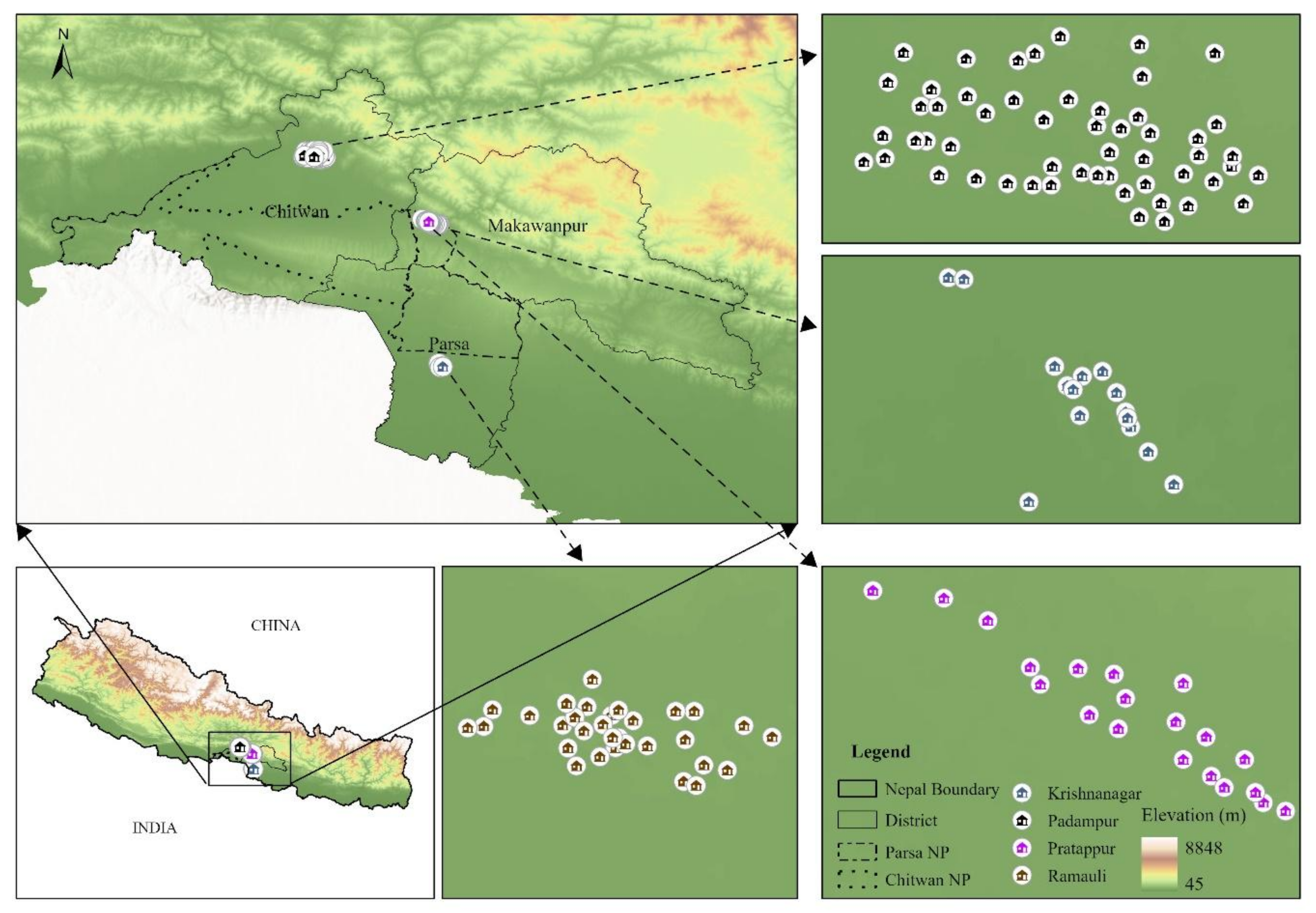
The research was conducted in Nepal’s Terai Arc Landscape (TAL), a globally significant socio-ecological region spanning approximately 24,000 km2. TAL encompasses five national parks (Banke, Bardia, Chitwan, Parsa, and Suklaphanta) and one conservation area, representing critical biodiversity hotspots with multiple UNESCO World Heritage Sites and Ramsar wetlands [34,35]. TAL has undergone multiple ecological resettlement (ER) interventions aimed at biodiversity conservation [10]. Its combination of rich cultural diversity, dense human settlements, and development pressures makes it an ideal case study to examine the social and ecological consequences of conservation-led resettlement [20,36,37,38]. Among these national parks, we specifically focus on all the resettled villages of Chitwan NP and Parsa NP for their global significance and comparative advantages (Figure 1).

2.2. Methodological Framework of the Research

Ecological resettlement (ER), or conservation-led resettlement (CR), involves relocating communities primarily for biodiversity conservation [10,39,40]. This study frames ER through Environmental Justice (EJ), which addresses trade-offs between social equity and ecological sustainability [33,41]. EJ extends beyond distributive justice to recognition, resolving tensions between human wellbeing and conservation goals, with roots in eco-feminist, eco-socialist, and indigenous perspectives [42]. Globally, EJ research has highlighted disparities in exposure to environmental hazards and access to resources [25,43,44,45], but applications in conservation remain limited.
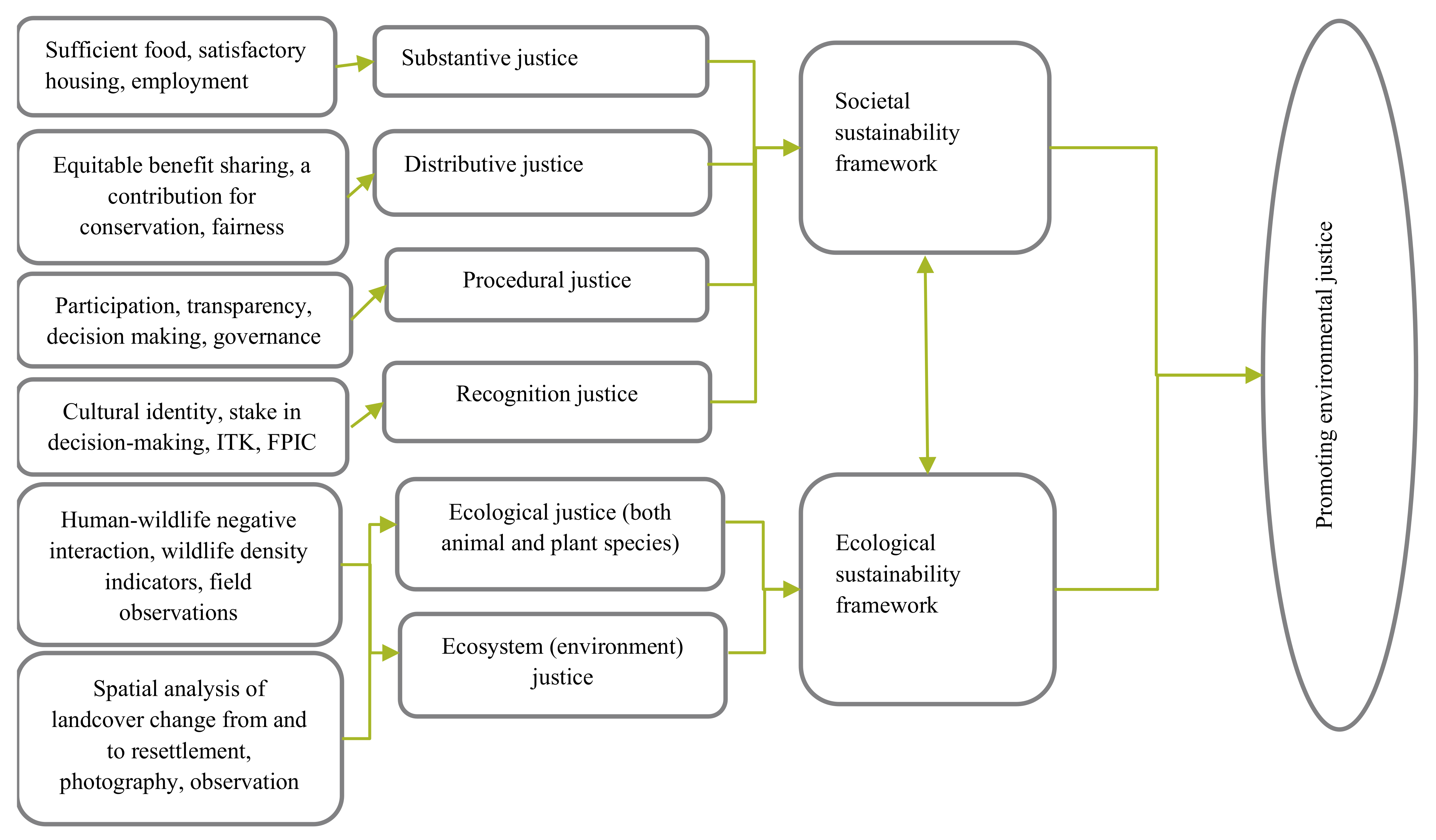
In Nepal, EJ studies are scarce and largely site-specific, addressing hydropower displacement, irrigation benefit-sharing, and disaster management, with few analyses of social participation, ecosystem service distribution, or governance in conservation [46,47,48,49,50]. To address these gaps, this study develops a comprehensive EJ framework integrating social, ecological, and ecosystem dimensions, encompassing both human and non-human interests. Applied to Nepal’s Terai Arc Landscape (TAL), this framework enables a holistic assessment of justice, equity, and ecological integrity in ER and conservation practice (Figure 2).

2.3. Research Ethics, Design, and Data Collection

Ethical approval for this study was obtained from the Human Research Ethics Committee at the University of Southern Queensland, Australia (ETH2023-0568 HREC), alongside official authorization from Nepal’s Ministry of Forests and Environment and the Department of National Parks and Wildlife Conservation. Research in the Terai Arc Landscape (TAL) adhered to strict ethical standards, including informed consent, participant anonymity, and respect for local cultural protocols. Participants were fully informed of the study’s purpose, procedures, voluntary nature, right to withdraw, and confidentiality measures. Engagement with community leaders, adherence to traditional protocols, and use of local languages ensured culturally sensitive data collection and built trust, safeguarding both participant rights and data integrity.
A mixed-methods design was employed to capture the multifaceted impacts of ecological resettlement (ER) in Nepal’s Terai Arc Landscape (TAL), integrating quantitative and qualitative approaches. All the resettled villages from Chitwan and Parsa National Parks were considered after due consultation with the stakeholders, considering the global, transboundary, and local importances and comparative advantages. Household lists of resettled families were sourced from Chitwan and Parsa National Park Offices, and households were randomly selected for interviews. Then, among all villages from these NPs, a random sampling technique was adopted to cover at least 10% of sampling intensity, considering each village as a separate entity (population) for this study purpose. After that, the data were collected in a multistage process.
First, structured household interviews were administered to 240 households across four villages (Krishnanagar: 30; Padampur: 108; Pratappur: 40; Ramauli: 62) to gather detailed information on demographic characteristics, socio-economic conditions, access to forest and natural resources, participation in decision-making, and perceptions of resettlement outcomes. Key demographic findings included an average household size ranging from 4.5 to 5.3 members, near gender parity (664 females and 658 males), predominance of ethnic groups (146 households) followed by higher caste (64) and lower caste (6), and wealth distribution dominated by medium-ranked households (202), with smaller proportions classified as poor (28) or rich (8). Literacy levels were higher among males (86 literate) than among females (10 literate).
Second, key informant interviews and focus group discussions with local leaders, government officials, and community forest committee members provided in-depth insights into governance processes, procedural justice, and policy implementation challenges. Third, field observations and geospatial analysis were conducted to assess ecological indicators, including forest cover, grasslands, water sources, bushfire incidence, wildlife–human interactions, and pollution levels, comparing pre- and post-resettlement conditions. GIS mapping was used to validate the responses provided during the household interviews with the actual household proximity to forests, markets, and schools, and to examine spatial patterns of resource accessibility. Finally, a comprehensive review of government policies, resettlement guidelines, and unpublished reports contextualized the procedural, distributive, and recognitional dimensions of justice. Together, these methods enabled an integrated assessment of social, ecological, and governance outcomes of ER, providing both empirical evidence and analytical depth for evaluating environmental justice impacts across TAL.

2.4. Data Analysis

Data analysis integrated descriptive statistics, cross-tabulations, and inferential tests to comprehensively assess social and ecological outcomes of ecological resettlement (ER). Chi-square tests were employed to examine associations between categorical variables, including pre- and post-resettlement status of social justice indicators—such as participation in decision-making, satisfaction with compensation, and recognition of free, prior, informed consent (FPIC) and Indigenous and Traditional Knowledge (ITK)—and ecological outcomes, including forest cover, water availability, and wildlife–human interactions. McNemar’s test was applied to paired nominal data to detect significant changes in households’ social and ecological indicators before and after resettlement, while the Wilcoxon signed-rank test was used for ordinal variables, such as wealth ranking, perceived ecosystem benefits, and satisfaction levels, to identify statistically significant shifts post-resettlement. Descriptive statistics and cross-tabulations were complemented by composite analysis, in which results from multiple indicators were synthesized into integrated tables, capturing overall trends in social justice and ecological outcomes.
Social justice indicators were grouped into substantive aspects (food, shelter, clothing and security), health healing, distributive aspects (access to compensation, forest resources), procedural dimensions (participation in decision-making), recognition (FPIC and ITK acknowledgment), and governance (rule of law and ethics), whereas ecological indicators encompassed forest cover, human–wildlife interaction, water sources, grassland extent, bushfire frequency, pollution, and disaster exposure.
A structured algorithmic workflow guided the development of composite Environmental Justice (EJ) scores: first, pre- and post-resettlement responses were tabulated for each indicator; second, chi-square or McNemar’s tests identified statistically significant differences; third, results were standardized and scaled (0–1) to allow integration across diverse indicators; fourth, scaled values were aggregated within social, ecological, and ecosystem dimensions; and finally, composite results were visualized using heatmaps, radar plots, and bar charts suitable for high-resolution journal presentation.
To assess the association between pre- and post-resettlement outcomes, the following statistical algorithm was applied:
Data Preparation:
We constructed 2 × 2 and 3 × 3 contingency tables for each variable, with rows representing pre-resettlement categories and columns representing post-resettlement outcomes. Calculate row totals, column totals, and the grand total.
Calculation of Expected Counts:
For each cell, the expected count under the null hypothesis of independence was computed as:
Eij = (Rowi total × Columnj total)/Grand total
Cells with expected counts <5 were flagged for Fisher’s exact test, following standard guidelines [57].
Chi-square Test of Independence:
For tables with all expected counts ≥5, the Chi-square statistic was calculated as:
χ 2 = i , j ( O i j E i j ) 2 E i j
where degrees of freedom (df) were calculated as r 1 × c 1 , where r and c represent the number of rows and columns, respectively. Two-tailed p-values were obtained to assess statistical significance (α = 0.05).
Fisher’s Exact Test:
For 2 × 2 tables or tables with expected counts <5, Fisher’s exact test was used to compute the exact probability of observing the contingency table under the null hypothesis [58].
Standardized Residuals:
Standardized residuals were calculated for each cell to identify which categories contributed most to the observed Chi-square statistic:
S R i j = O i j E i j E i j
where cells with |SR| > 2 were considered significant contributors [59].
Odds Ratio (OR) Estimation:
For 2 × 2 tables (e.g., forest fires), odds ratios were calculated as:
O R = O 11 × O 22 O 12 × O 21
Confidence intervals for ORs were computed using standard logit transformations.
Interpretation Algorithm:
Significant Chi-square or Fisher’s exact p-values indicated non-random associations between pre- and post-resettlement categories. Standardized residuals identified the cells driving the association. Odds ratios quantified the strength and direction of associations for 2 × 2 variables.
All analyses were performed using R and RStudio (version 4.3.1) [60] to ensure reproducibility and visualization quality, with statistical significance assessed at α = 0.05. Interpretation of results was framed within the integrated social–ecological justice framework, enabling nuanced insights into the equity and sustainability of ER interventions.

3. Results

3.1. Respondent Background

The survey included 240 households across four villages: Padampur (108, 45%), Ramauli (62, 25.8%), Pratappur (40, 16.7%), and Krishnanagar (30, 12.5%) (Table 1). Respondents represented diverse ethnic and caste groups: ethnic communities (146 households, 60.8%), higher caste (64, 26.7%), and lower caste (6, 2.5%). Household gender composition was balanced, with 664 females and 658 males, and most households were male-headed (75.8%). Most respondents were married (85.8%), with a smaller proportion of single, widowed, or divorced (14.2%).
Education levels indicated moderate literacy: 104 respondents (43.3%) were literate, while 134 (55.8%) were illiterate; male literacy was higher than female. Wealth rank was dominated by medium-wealth households (202, 84%), followed by poor (28, 11.7%) and rich households (8, 3.3%). Ownership of property and livestock was common, with 234 households (97.5%) owning land, 354 cattle, and 684 goats/pigs across surveyed households. Vehicle ownership was moderate (176 households, 73.3%), predominantly motorbikes and bicycles. Most respondents were Hindu (222, 92.5%), with minor Buddhist and Christian representation, and political participation was low, with only 20 households reporting active engagement.
Access to forest resources for fuelwood, fodder, and grazing was reported by 112 households (46.7%). Proximity to markets ranged from 0 to 8 km, while access to schools improved post-resettlement, with most children within 1–1.5 km of educational facilities. Chronic disease prevalence was moderate (110 respondents, 45.8%), dominated by high blood pressure, diabetes, and asthma, and 12 respondents (5%) reported disabilities. Life insurance coverage was limited (74 respondents, 30.8%). These demographics provide a baseline for interpreting post-resettlement changes in social and ecological outcomes.

3.2. Social Justice Outcomes

Key social justice indicators—substantive aspects, participation, compensation, recognition (ITK and FPIC), and governance—showed significant changes post-resettlement (Table 2). Substantive aspects (food, shelter, clothing, security) improved significantly: χ2 (1, n = 240) = 29.8, p < 0.05. Standardized residuals indicated that most households reporting “Yes” post-resettlement came from the group that had “Yes” pre-resettlement (SR = 6.1). Similarly, health-related forest foods for human consumption decreased post-resettlement (χ2 (1, n = 240) = 128.5, p < 0.05), suggesting a substantial decline in household reliance on forest resources for nutrition. Compensation distribution was equitable, with most households satisfied, as indicated by a non-significant Fisher’s exact test (p = 0.47).
Participation and governance indicators improved: recognition of ITK and FPIC (χ2 (1, n = 240) = 233.2, p < 0.05) and ethical governance (χ2 (1, n = 240) = 228.6, p < 0.05), reflecting structured inclusion mechanisms in resettlement processes.

3.3. Ecological Justice Outcomes

Forest cover decreased in 158 households, while only 32 reported increased cover (χ2 (4, n = 240) = 212.6, p < 0.05), reflecting habitat degradation (Table 3). Wildlife–human interactions shifted towards decreased encounters in 130 households, with 68 reporting increased interactions (χ2 (4, n = 240) = 84.7, p < 0.05). Grasslands and water sources largely decreased, with 150 households reporting grassland reduction (χ2 (4, n = 240) = 190.3, p < 0.05) and 124 households experiencing reduced water sources (χ2 (4, n = 240) = 172.1, p < 0.001). Forest fires and pollution levels changed significantly: post-resettlement fires increased in 38 households (χ2 (1, n = 240) = 30.4, p < 0.05), while soil, water, noise, and air pollution increased in 108 households (χ2 (4, n = 240) = 162.7, p < 0.05). Disasters (flood, landslide, bushfire) increased in 26 households post-resettlement (χ2 (4, n = 240) = 207.8, p < 0.05), highlighting ecological vulnerability in resettled areas. Ecological variables also showed significant transitions post-resettlement.
Standardized residuals highlighted that reductions in forest cover, grasslands, and water sources were the primary contributors to significant Chi-square values. Odds ratios for forest fire occurrence post-resettlement indicated a 3.4-fold increased risk compared to pre-resettlement (OR = 3.42; 95% CI: 1.7–6.9).

3.4. Composite Test Results

Post-resettlement analyses revealed significant shifts across social justice and ecological indicators (Table 4). Substantive aspects such as food, shelter, clothing, and security showed notable improvements for households consistently reporting “Yes” pre- and post-resettlement (χ2 = 29.8, p < 0.05; SR = 6.1), while health-related forest food access increased primarily among households transitioning from “No” to “Yes” (χ2 = 128.5, p < 0.05; SR = 8.0). Participation, ITK and FPIC recognition, and ethical governance demonstrated strong post-resettlement gains (χ2 = 22.4–233.2, p < 0.05; SR = 4.5–15.2). Ecological outcomes were more mixed: forest cover, grasslands, and water sources remained largely decreased post-resettlement (χ2 = 172.1–212.6, p < 0.05; SR = 10.9–16.3), whereas wildlife–human interactions increased in areas where interactions had previously decreased (χ2 = 84.7, p < 0.05; SR = 7.5). Incidents of forest fires, pollution, and disasters were significantly associated with post-resettlement increases or persistence (χ2 = 30.4–207.8, p < 0.05; SR = 5.1–11.6), with forest fires showing threefold higher odds (OR = 3.42, 95% CI: 1.7–6.9) among affected households. Overall, these results indicate that while social justice dimensions of resettlement improved markedly, ecological and environmental indicators exhibited mixed or persistent vulnerabilities, highlighting the need for integrated social–ecological management strategies.
Overall, the social justice outcomes of ecological resettlement indicate notable improvements in households’ access to basic needs, participation in decision-making, and recognition of traditional knowledge, suggesting that structured governance and compensation mechanisms were largely effective. Despite these gains, reliance on forest-derived foods declined, reflecting a partial loss of traditional livelihood resources and the nuanced trade-offs inherent in resettlement. From an ecological perspective, most indicators deteriorated post-resettlement, with significant reductions in forest cover, grasslands, and water sources, accompanied by increased bushfires, pollution, and disaster risk. These findings underscore the environmental costs associated with resettlement and the challenges of reconciling biodiversity goals with local livelihoods. Household-level factors further mediated these outcomes: medium-wealth and male-headed households were better able to access services and maintain participation, whereas poorer and lower-caste households experienced heightened vulnerability to both social and ecological stressors. Collectively, these results highlight the complex interplay between social equity and ecological sustainability in conservation-led resettlement, emphasizing the need for targeted support for marginalized groups and integrated long-term environmental monitoring to achieve balanced, just, and sustainable outcomes.

4. Discussion

A complete sphere of environmental justice (social, ecological, and environmental) has been assessed by taking a case of conservation-led resettlement of Nepal. The findings reveal that ecological resettlement in Nepal’s Terai Arc Landscape has produced complex social and ecological outcomes. Social justice analyses indicated significant improvements in procedural participation and recognition, with higher engagement of households in decision-making and acknowledgment of FPIC and ITK practices; however, disparities persist across caste, wealth, and gender groups, highlighting uneven access to compensation, resources, and social protections. Ecologically, post-resettlement assessments showed mixed outcomes: forest cover, grasslands, and water sources exhibited localized increases or stabilization, while wildlife–human interactions, bushfire incidence, pollution, and disaster exposure displayed variable trends, suggesting partial effectiveness of conservation interventions. Statistical analyses, including chi-square, McNemar, and Wilcoxon tests, confirmed significant shifts in both social and ecological indicators (p < 0.05), with composite Environmental Justice (EJ) scores revealing stronger gains in social recognition than in ecological and ecosystem dimensions. These results underscore the intertwined nature of social equity and ecological integrity in ER, highlighting both the successes and limitations of current conservation-led resettlement practices in achieving holistic sustainability and justice outcomes.

4.1. Social Justice Implications of Resettlement

The study indicates that resettlement significantly improved several dimensions of social justice, including access to basic needs (food, shelter, clothing, and security), community participation, recognition of Indigenous Traditional Knowledge (ITK), and adherence to Free, Prior, and Informed Consent (FPIC) protocols. We observe that households involved in pre-resettlement participation, decision-making, and recognition were more likely to maintain or improve their engagement post-resettlement, suggesting that structured governance mechanisms and transparent compensation processes were effective in ensuring social inclusion [61].
However, the observed decline in the use of forest foods is directly concerned with the traditional health boosting and illness recovery system, which involves a partial loss of traditional livelihood resources. This may jeopardize the traditional culture on health and illness recovery systems of the indigenous people and local communities, as reported in previous research, as well as in the ecological resettlement [2,37,62,63,64,65]. While resettlement improved formal access to services, households’ dietary diversity and reliance on forest resources were negatively impacted, highlighting a trade-off between formal welfare and indigenous livelihood practices.

4.2. Ecological Impacts

We found that post-resettlement ecological outcomes were largely negative in the resettlement areas. This suggests that ecological resettlement often transfers ecological pressures from biodiversity hotspot areas (such as national parks in this study) to surrounding landscapes rather than resolving them. Further, a significant decline in forest cover, grasslands, and water sources was observed in resettlement sites, alongside increases in bushfires, pollution, and disaster risk. Chi-square analyses indicate that ecological degradation was disproportionately concentrated in previously vulnerable areas. These findings are consistent with evidence from India, where conservation-induced resettlement has led to comparable vegetation changes in both evacuated and resettled landscapes [66].
Moreover, the results suggest that ecological resettlement should not aim merely to displace environmental pressures from protected areas by relocating human settlements. Instead, careful ecological planning is required at resettlement sites, many of which are located within or adjacent to critical biological corridors [10,37,38,67,68]. Inadequate consideration of these contexts can exacerbate ecosystem degradation and intensify negative human–wildlife interactions following relocation [2,4]. The Khata Transboundary Biological Corridor and the Barandavar Biological Corridor illustrate such outcomes, where resettlement within corridor landscapes has led to severe ecological impacts and increased wildlife incursions into human settlements [69]. Further, wildlife–human interactions shifted in complex ways: while some households experienced fewer encounters, others reported more interactions, likely due to reduced habitat and fragmentation. Furthermore, increased bushfires and pollution highlight secondary environmental stresses that exacerbate ecological vulnerability post-resettlement, as noted in the study areas. These findings underscore the environmental trade-offs of relocation programs and the need for integrated ecological management in resettlement planning.

4.3. Influence of Demographic and Socio-Economic Factors

Demographic and socio-economic characteristics played a substantial role in shaping both social and ecological outcomes. Medium-wealth, literate, and male-headed households were more likely to retain participation in governance, access resources, and mitigate environmental risks, whereas lower-wealth and lower-caste households were disproportionately affected by ecological degradation and limited resource access. This aligns with existing literature showing that socio-economic status mediates resilience to environmental and social change [70,71].
Further, educational attainment, household headship, and prior social position systematically shaped households’ capacity to leverage compensation, engage in governance, and withstand environmental change, underscoring persistent structural inequities within resettlement processes. These findings demonstrate that ecological resettlement cannot be framed as a narrow conservation intervention; rather, it constitutes a complex socio-ecological transformation that demands integrated, multidisciplinary policy and planning approaches capable of simultaneously addressing social, economic, ecological, environmental, and governance dimensions [16,17,26,28,30,31,72].

4.4. Limitations and Future Pathways

We acknowledge that this study has several limitations. Its cross-sectional design, while enabling pre- and post-resettlement comparisons, limits causal inference; longitudinal monitoring would provide more robust insights into social and ecological trajectories. Reliance on self-reported household data may introduce recall bias, particularly regarding pre-resettlement ecological conditions and chronic health outcomes. Although field observations were used to assess forest cover, grasslands, and water sources, integrating remote sensing and quantitative ecological metrics would improve measurement precision and could be the areas for future research. The relatively small sample of minority groups, including lower-caste and smaller ethnic populations, may also constrain the generalizability of findings on social vulnerability and ecological equity. In addition, the study’s focus on Nepal precludes cross-country comparison, and long-term impacts on livelihoods, cultural continuity, and marginalized populations remain unexplored. Future research should prioritize longitudinal designs, evaluate livelihood and health trajectories, assess participatory governance effectiveness, and examine transboundary ER dynamics using tools such as remote sensing, artificial intelligence (AI), climate finance mechanisms, and integrated resilience indicators to support equitable, adaptive, and ecologically robust resettlement policies.
Nevertheless, the study offers methodological, theoretical, and practical contributions. Methodologically, it serves as a testament to a scalable environmental justice (EJ) monitoring framework in the ecological resettlement case for the first time. Theoretically, it expands EJ by integrating ecological and ecosystem dimensions beyond anthropocentric perspectives. Practically, the findings provide evidence-based guidance for participatory, accountable, and ecologically meaningful resettlement policies. As Nepal’s TAL is one of the globally recognized bio- and culturally diverse landscapes in which this study is based, the findings could be a lesson learned for the strategic planning cycle, providing insights for policy decisions for Nepal and the global communities. Moreover, we argue that this ecological resettlement strategy should be treated as a last resort, prioritize community rights, and embed long-term ecological monitoring, aligning conservation with Sustainable Development Goals and global biodiversity commitments.

5. Conclusions

The advanced concept of environmental justice (EJ) is not limited to social dimensions but to ecological and environmental spheres, in the Anthropocene. This study demonstrates that ecological resettlement (ER), particularly focusing on the conservation-led resettlement in Nepal’s Terai Arc Landscape–case of Chitwan and Parsa National Parks, generates uneven social and ecological outcomes, revealing fundamental trade-offs between conservation objectives and justice imperatives. While resettlement has strengthened procedural participation, recognition, and access to formal services, these gains remain unevenly distributed across caste, wealth, and gender, and are accompanied by losses in traditional livelihoods and cultural practices. Ecologically, the findings show that ER often relocates environmental pressures from protected areas to surrounding landscapes, contributing to forest and grassland decline, reduced water availability, heightened disaster exposure, and intensified human–wildlife interactions—particularly where resettlement intersects with critical biological corridors.
By integrating mixed-methods analysis within a comprehensive Environmental Justice framework, this research advances theoretical understanding by extending justice beyond anthropocentric concerns to include ecological and ecosystem dimensions and provides empirical evidence that social equity and ecological integrity are mutually reinforcing rather than separable goals. The results underscore that conservation-led resettlement cannot be treated as a narrow technical intervention but must be approached as a complex socio-ecological transformation requiring context-specific planning, targeted support for marginalized groups, and sustained ecological monitoring. Taken together, the study offers transferable lessons for biodiversity-rich regions worldwide and supports policy approaches that treat resettlement as a measure of last resort, prioritize community rights, and align conservation practice with global biodiversity commitments and the Sustainable Development Goals.

Author Contributions

H.P.P.: Conceptualization, Data curation, Methodology, Visualization, and Writing the original drafts; A.A.: Review and editing, Supervision, and English proofing; T.N.M.: Review & editing, Supervision, and Discussion. All authors have read and agreed to the published version of the manuscript.

Funding

This research did not receive any specific funding. The first author sincerely thanks the Australian Government and the University of Southern Queensland for the Research Training Program Stipend Scholarship and International Fees Research Scholarship that made this study possible.

Institutional Review Board Statement

The ethics clearance was obtained from the Human Research Ethics Committee at the University of Southern Queensland, Australia (ETH2023-0568 HREC, approval date 23 January 2024), alongside official authorization from Nepal’s Ministry of Forests and Environment and the Department of National Parks and Wildlife Conservation.

Informed Consent Statement

Informed consent was obtained from all subjects involved in the study as per the ethical standards of the ethics of human research from the University of Southern Queensland, Australia.

Data Availability Statement

Due to ethical considerations in human research, the data cannot be shared publicly to maintain confidentiality.

Acknowledgments

The first author acknowledges the Government of Nepal for granting study leave for this research. The authors extend their gratitude to the parks and forest officials, security personnel across the Terai Arc Landscape (TAL) Area of Nepal, WWF Nepal, the TAL Program, the Zoological Society of London (ZSL) Nepal Office, the National Trust for Nature Conservation Nepal, and the local communities for their insightful opinions and cooperation during fieldwork. Special thanks to field research assistants Manisha Poudel, Aakankshya Shrestha, Chintamani Panjiyar, and Prem Bahadur Bhujel for their assistance with data collection.

Conflicts of Interest

The authors declare that there are no financial or other conflicts of interest among the authors or supporting organizations related to this study, the data used, or any other aspects of this research.

References

  1. Fanari, E. Relocation from Protected Areas as a Violent Process in the Recent History of Biodiversity Conservation in India. Ecol. Econ. Soc. INSEE J. 2019, 2, 43–76. [Google Scholar] [CrossRef]
  2. Pandey, H.P.; Maraseni, T.N.; Apan, A. Insights into Ecological Resettlements and Conservation-Led Displacements: A Systematic Review. Environ. Manag. 2025, 75, 1281–1298. [Google Scholar] [CrossRef] [PubMed]
  3. Rai, N.D.; Benjaminsen, T.A.; Krishnan, S.; Madegowda, C. Political Ecology of Tiger Conservation in India: Adverse Effects of Banning Customary Practices in a Protected Area. Singap. J. Trop. Geogr. 2019, 40, 124–139. [Google Scholar] [CrossRef]
  4. Rantala, S.E.; Vihemäki, H.; Swallow, B.M.; Jambiya, G. Who Gains and Who Loses from Compensated Displacement from Protected Areas? The Case of the Derema Corridor, Tanzania. Conserv. Soc. 2013, 11, 97. [Google Scholar] [CrossRef]
  5. Haines, A.L. Yellowstone National Park: Its Exploration and Establishment; U.S. National Park Service: Washington, DC, USA, 1974.
  6. Ripple, W.J.; Beschta, R.L.; Painter, L.E. The History of Cougars in Yellowstone National Park. West. N. Am. Nat. 2022, 82, 752–759. [Google Scholar] [CrossRef]
  7. Agrawal, A.; Redford, K. Conservation and Displacement: An Overview. Conserv. Soc. 2009, 7, 1–10. [Google Scholar] [CrossRef]
  8. Eichler, L.; Baumeister, D. Settler Colonialism and the US Conservation Movement: Contesting Histories, Indigenizing Futures. Ethics Policy Environ. 2021, 24, 209–234. [Google Scholar] [CrossRef]
  9. West, P.; Igoe, J.; Brockington, D. Parks and Peoples: The Social Impact of Protected Areas. Annu. Rev. Anthropol. 2006, 35, 251–277. [Google Scholar] [CrossRef]
  10. Pandey, H.P.; Maraseni, T.N.; Apan, A.; Aryal, K. Unlocking the Tapestry of Conservation: Navigating Ecological Resettlement Policies in Nepal. Sci. Total Environ. 2024, 946, 174335. [Google Scholar] [CrossRef]
  11. UNEP-WCMC; IUCN. UNEP-WCMC and IUCN Protected Planet: The World Database on Protected Areas (WDPA) and World Database on Other Effective Area-Based Conservation Measures (WD-OECM); UNEP-WCMC: Cambridge, UK; IUCN: Gland, Switzerland, 2023. [Google Scholar]
  12. Maraseni, T.N.; Neupane, P.R.; Lopez-Casero, F.; Cadman, T. An Assessment of the Impacts of the REDD+ Pilot Project on Community Forests User Groups (CFUGs) and Their Community Forests in Nepal. J. Environ. Manag. 2014, 136, 37–46. [Google Scholar] [CrossRef]
  13. Pandey, H.; Pokhrel, N. Formation Trend Analysis and Gender Inclusion in Community Forests of Nepal. Trees For. People 2021, 5, 100106. [Google Scholar] [CrossRef]
  14. Pandey, H.P.; Maaren, I.E.; Shah, K.K.; Maraseni, T.N. Response of Topographic and Biodiversity Variables on Biomass and Carbon Density in Community Forests of Himalayan Foot-Hills. J. For. Livelihood 2020, 19, 51–65. [Google Scholar]
  15. Pascual, U.; Balvanera, P.; Díaz, S.; Pataki, G.; Roth, E.; Stenseke, M.; Watson, R.T.; Başak Dessane, E.; Islar, M.; Kelemen, E.; et al. Valuing Nature’s Contributions to People: The IPBES Approach. Curr. Opin. Environ. Sustain. 2017, 26–27, 7–16. [Google Scholar] [CrossRef]
  16. UN The 17 Goals: The 2030 Agenda for Sustainable Development. Available online: https://sdgs.un.org/goals (accessed on 27 May 2021).
  17. World Conservation Monitoring Centre. CBD Nations Adopt Four Goals, 23 Targets for 2030 In Landmark UN Biodiversity Agreement; World Conservation Monitoring Centre: Montreal, QC, Canada, 2022. [Google Scholar]
  18. FAO. FAO The State of the World’s Forests 2022: Forest Pathways for Green Recovery and Building Inclusive, Resilient and Sustainable Economies. In The State of the World’s Forests (SOFO); FAO: Rome, Italy, 2022. [Google Scholar]
  19. IPBES Report of the Plenary of the Intergovernmental Science-Policy Platform on Biodiversity and Ecosystem Services on the Work of Its Fourth Session | System of Environmental Economic Accounting. Available online: https://seea.un.org/content/report-plenary-intergovernmental-science-policy-platform-biodiversity-and-ecosystem-services (accessed on 23 July 2023).
  20. Basheer, M.; Nechifor, V.; Calzadilla, A.; Ringler, C.; Hulme, D.; Harou, J.J. Balancing National Economic Policy Outcomes for Sustainable Development. Nat. Commun. 2022, 13, 5041. [Google Scholar] [CrossRef]
  21. National Planning Commission (NPC) of Nepal. NPC Approach Paper of 15th Plan; National Planning Commission (NPC) of Nepal: Kathmandu, Nepal, 2019.
  22. IPCC. IPCC AR6 Synthesis Report: Climate Change 2023; IPCC: Geneva, Switzerland, 2023. [Google Scholar]
  23. Miller, D. Social Justice; OUP Oxford: Oxford, UK, 1979. [Google Scholar]
  24. Miller, B.W.; Caplow, S.C.; Leslie, P.W. Feedbacks between Conservation and Social-Ecological Systems. Conserv. Biol. 2012, 26, 218–227. [Google Scholar] [CrossRef]
  25. Mohai, P.; Saha, R. Which Came First, People or Pollution? A Review of Theory and Evidence from Longitudinal Environmental Justice Studies. Environ. Res. Lett. 2015, 10, 125011. [Google Scholar] [CrossRef]
  26. Schlosberg, D. Theorising Environmental Justice: The Expanding Sphere of a Discourse. Environ. Polit. 2013, 22, 37–55. [Google Scholar] [CrossRef]
  27. Ostrom, E. Do Institutions for Collective Action Evolve? J. Bioecon. 2014, 16, 3–30. [Google Scholar] [CrossRef]
  28. Svarstad, H.; Benjaminsen, T.A.; Overå, R. Power Theories in Political Ecology. J. Polit. Ecol. 2018, 25, 350–363. [Google Scholar] [CrossRef]
  29. Baxter, B. A Theory of Ecological Justice; Routledge: London, UK, 2004. [Google Scholar]
  30. Baxter, B.H. Ecological Justice and Justice as Impartiality. Environ. Polit. 2000, 9, 43–64. [Google Scholar] [CrossRef]
  31. Cochrane, A. Sentientist Politics: A Theory of Global Inter-Species Justice; Oxford University Press: Oxford, UK, 2018. [Google Scholar]
  32. Kashwan, P.; Biermann, F.; Gupta, A.; Okereke, C. Planetary Justice: Prioritizing the Poor in Earth System Governance. Earth Syst. Gov. 2020, 6, 100075. [Google Scholar] [CrossRef]
  33. Martin, A.; McGuire, S.; Sullivan, S. Global Environmental Justice and Biodiversity Conservation. Geogr. J. 2013, 179, 122–131. [Google Scholar] [CrossRef]
  34. Ministry of Forests and Environment (MoFE). MoFSC/GoN Strategy and Action Plan: 2015–2025 Terai Arc Landscape, Nepal; Ministry of Forests and Environment (MoFE): Kathmandu, Nepal, 2015.
  35. Department of National Parks and Wildlife Conservation (DNPWC); Department of Forests and Soil Conservation (DFSC); Rescue Centers. Status of Tigers and Prey in Nepal 2022; Department of National Parks and Wildlife Conservation; Department of Forests and Soil Conservation; Ministry of Forests and Environment: Kathmandu, Nepal, 2022.
  36. Latif, M.I.; Faisal, M. Terai Regionalism in Nepal. Pak. J. Humanit. Soc. Sci. 2024, 12, 98–105. [Google Scholar] [CrossRef]
  37. Pandey, H.P.; Maraseni, T.N.; Apan, A. Resettlement for Conservation: Assessing Health and Social Security Challenges in Nepal’s Biodiverse Regions. Glob. Transit. 2025, 7, 247–261. [Google Scholar] [CrossRef]
  38. Pandey, H.P.; Apan, A.; Maraseni, T.N. Impacts of Conservation-Led Resettlements in Nepal: Ecological Perspectives. Land 2025, 14, 1057. [Google Scholar] [CrossRef]
  39. Lam, C.; Paul, S.; Sarma, V. Reversal of Fortune? The Long-Term Effect of Conservation-Led Displacement in Nepal. Oxf. Dev. Stud. 2016, 44, 401–419. [Google Scholar] [CrossRef]
  40. Kabra, A. Conservation-Induced Displacement: A Comparative Study of Two Indian Protected Areas. Conserv. Soc. 2009, 7, 249–267. [Google Scholar] [CrossRef]
  41. Bowen, W.M.; Wells, M.V. The Politics and Reality of Environmental Justice: A History and Considerations for Public Administrators and Policy Makers. Public. Adm. Rev. 2002, 62, 688–698. [Google Scholar] [CrossRef]
  42. Vallance, S.; Perkins, H.C.; Dixon, J.E. What Is Social Sustainability? A Clarification of Concepts. Geoforum 2011, 42, 342–348. [Google Scholar] [CrossRef]
  43. Dobbie, B.; Green, D. Australians Are Not Equally Protected from Industrial Air Pollution. Environ. Res. Lett. 2015, 10, 055001. [Google Scholar] [CrossRef]
  44. Collins, T.W.; Grineski, S.E.; Chakraborty, J. Household-Level Disparities in Cancer Risks from Vehicular Air Pollution in Miami. Environ. Res. Lett. 2015, 10, 095008. [Google Scholar] [CrossRef]
  45. Chakraborty, J. Focus on Environmental Justice: New Directions in International Research. Environ. Res. Lett. 2017, 12, 030201. [Google Scholar] [CrossRef]
  46. Ghimire, S. Concept of Environmental Justice in Nepal: Environmentalism of Poor for Sustainable Livelihood. Himal. J. Sci. 2003, 1, 47–50. [Google Scholar] [CrossRef]
  47. Bhattarai, A.M. Earthquake and Earth Justice: Emergence of the Environmental Justice Movement and Its Relevance in Addressing Unanticipated Events. Living Threat. Earthq. 2018, 285–292. [Google Scholar] [CrossRef]
  48. Chaudhary, S.; McGregor, A.; Houston, D.; Chettri, N. Environmental Justice and Ecosystem Services: A Disaggregated Analysis of Community Access to Forest Benefits in Nepal. Ecosyst. Serv. 2018, 29, 99–115. [Google Scholar] [CrossRef]
  49. Acharya, R.P.; Maraseni, T.; Cockfield, G. Assessing the Financial Contribution and Carbon Emission Pattern of Provisioning Ecosystem Services in Siwalik Forests in Nepal: Valuation from the Perspectives of Disaggregated Users. Land Use Policy 2020, 95, 104647. [Google Scholar] [CrossRef]
  50. Acharya, R.P.; Maraseni, T.N.; Cockfield, G. Estimating the Willingness to Pay for Regulating and Cultural Ecosystem Services from Forested Siwalik Landscapes: Perspectives of Disaggregated Users. Ann. For. Sci. 2021, 78, 51. [Google Scholar] [CrossRef]
  51. Mohai, P.; Pellow, D.; Roberts, J. Environmental Justice. Annu. Rev. Environ. Resour. 2009, 34, 405–430. [Google Scholar] [CrossRef]
  52. Harvey, D. Social Justice and the City; University of Georgia Press: Athens, GA, USA, 2010. [Google Scholar]
  53. Khanal, R.; Xi, J.; Ali, S.; Othman, B. The Effect of Environmental Justice on Social Sustainability: A Case Study of Budi Gandaki Hydropower in Nepal. Environ. Technol. Innov. 2021, 22, 101539. [Google Scholar] [CrossRef]
  54. Sultana, F. Critical Climate Justice. Geogr. J. 2022, 188, 118–124. [Google Scholar] [CrossRef]
  55. Fredericks, S.E. Justice in Sustainability Indicators and Indexes. Int. J. Sustain. Dev. World Ecol. 2012, 19, 490–499. [Google Scholar] [CrossRef]
  56. Pandey, H.P.; Maraseni, T.N.; Apan, A. Assessing the Theoretical Scope of Environmental Justice in Contemporary Literature and Developing a Pragmatic Monitoring Framework. Sustainability 2024, 16, 10799. [Google Scholar] [CrossRef]
  57. McDonald, J.H. Handbook of Biological Statistics, 3rd ed.; Sparky House: Baltimore, MD, USA, 2014. [Google Scholar]
  58. Agresti, A.; Mehta, C.R.; Patel, N.R. Exact Inference for Contingency Tables with Ordered Categories. J. Am. Stat. Assoc. 1990, 85, 453–458. [Google Scholar] [CrossRef]
  59. Agresti, R.; Martelli, G.; Sandri, M.; Tagliabue, E.; Carcangiu, M.L.; Maugeri, I.; Pellitteri, C.; Ferraris, C.; Capri, G.; Moliterni, A.; et al. Axillary Lymph Node Dissection versus No Dissection in Patients with T1N0 Breast Cancer: A Randomized Clinical Trial (INT09/98). Cancer 2014, 120, 885–893. [Google Scholar] [CrossRef] [PubMed]
  60. R Core Team. R: A Language and Environment for Statistical Computing, R Version 4.3.1; R Foundation for Statistical Computing: Vienna, Austria, 2023. [Google Scholar]
  61. Maclean, J.; Strade, S. Conservation, Relocation, and the Paradigms of Park and People Management—A Case Study of Padampur Villages and the Royal Chitwan National Park, Nepal. Soc. Nat. Resour. 2003, 16, 509–526. [Google Scholar] [CrossRef]
  62. Zhang, J.; Cui, X.; Wang, Y.; Gongbuzeren; Zhuang, M.; Ji, B. Ecological Consequence of Nomad Settlement Policy in the Pasture Area of Qinghai-Tibetan Plateau: From Plant and Soil Perspectives. J. Environ. Manag. 2020, 260, 110114. [Google Scholar] [CrossRef]
  63. Zen, I.S.; Saleh, M.N.; Afrizal, T.; Yaumidin, U.K.; Titisari, P.W.; Hendrayani, Y. Quo Vadis Development: Assessing the Livelihood of Indigenous People’s Communities in Malaysia and the Potential for Community-Based Conservation Effort. Environ. Dev. Sustain. 2021, 23, 6502–6523. [Google Scholar] [CrossRef]
  64. Pandey, H.P.; Maraseni, T.N.; Apan, A.; Zhang, H. Review Articles on Ecological Resettlements: Insights, Gaps, and Pathways. Sustainability 2025, 17, 4094. [Google Scholar] [CrossRef]
  65. Katin, N. Exploring the Ecological Dimensions of Displacement in Núcleo Itariru (Serra Do Mar State Park): An Ethnobotanical Study of Peasant/Landscape Relations in Brazil’s Atlantic Forest. J. Ethnobiol. 2020, 40, 21–38. [Google Scholar] [CrossRef]
  66. Platt, R.V.; Ogra, M.V.; Badola, R.; Hussain, S.A. Conservation-Induced Resettlement as a Driver of Land Cover Change in India: An Object-Based Trend Analysis. Appl. Geogr. 2016, 69, 75–86. [Google Scholar] [CrossRef]
  67. Peng, W.; Kong, D.; Wu, C.; Møller, A.P.; Longcore, T. Predicted Effects of Chinese National Park Policy on Wildlife Habitat Provisioning: Experience from a Plateau Wetland Ecosystem. Ecol. Indic. 2020, 115, 106346. [Google Scholar] [CrossRef]
  68. De Royer, S.; Van Noordwijk, M.; Roshetko, J.M. Does Community-Based Forest Management in Indonesia Devolve Social Justice or Social Costs? Int. For. Rev. 2018, 20, 167–180. [Google Scholar] [CrossRef]
  69. Gurung, B.; Mendelsohn, R.; Queenborough, S.A.; Rai, D.P.; Chaudhary, M. Assessing the Costs of Human–wildlife Conflict in the Khata Wildlife Corridor, Nepal. Eur. J. Wildl. Res. 2025, 71, 52. [Google Scholar] [CrossRef]
  70. Cernea, M.M.; Schmidt-Soltau, K. Poverty Risks and National Parks: Policy Issues in Conservation and Resettlement. World Dev. 2006, 34, 1808–1830. [Google Scholar] [CrossRef]
  71. Clement, F.; Basnet, G.; Sugden, F.; Bharat, L. Social and Environmental Justice in Foreign Aid: A Case Study of Irrigation Interventions in Western Nepal. N. Angle Nepal. J. Soc. Sci. Public. Policy 2014, 3, 65–83. [Google Scholar] [CrossRef]
  72. Rigolon, A.; Fernandez, M.; Harris, B.; Stewart, W. An Ecological Model of Environmental Justice for Recreation. Leis. Sci. 2022, 44, 655–676. [Google Scholar] [CrossRef]
Figure 1. Map showing the study sites in the Chitwan–Parsa Ecological Landscape of Nepal, resettlement villages from the respective national parks.
Sustainability 18 02746 g001
Figure 2. Theoretical conceptual framework of the understanding of environmental justice in biodiversity conservation, particularly focusing on ecological relocation (adopted and modified from several theoretical literature, e.g., [23,24,27,29,30,31,51,52,53,54,55,56]). Arrows indicate the flow and cumulative outcomes within the justice framework, and shapes have no specific meaning beyond differentiating the themes.
Sustainability 18 02746 g002
Table 1. Demographic and socio-economic characteristics of respondents.
CharacteristicCategoryN (%)Notes/Summary
VillageKrishnanagar30 (12.5)Smallest surveyed village
Padampur108 (45)Largest surveyed village
Pratappur40 (16.7)Moderate size
Ramauli62 (25.8)Moderate size
Ethnicity/CasteEthnic146 (60.8)Balanced age/gender distribution
Higher caste64 (26.7)
Lower caste6 (2.5)Minority group
Household Gender compositionFemale664Current household members
Male658
Household HeadMale182 (75.8)Predominantly male-headed
Female58 (24.2)
Marital Status of the RespondentMarried206 (85.8)
Widowed24 (10)
Single/Divorced10 (4.2)
Health InsuranceYes74 (30.8)Limited coverage
No166 (69.2)
Disability—family membersAny12 (5)Physical, locomotor, intellectual
Chronic Disease—family membersAny110 (45.8)Most prevalent: high BP, diabetes, asthma
Housing TypeModern124 (51.7)Predominantly medium/higher caste
Hut/Mixed44 (18.3)
Mud & Stone28 (11.7)
Property OwnershipOwned234 (97.5)Landholdings 0.008–1.354 ha
Leased Land34 (14.2)Mostly male-headed households
Livestock OwnershipCattle354Reflects agricultural livelihoods
Goat/Pigs684
Wealth RankMedium202 (84)Most households
Poor28 (11.7)
Rich8 (3.3)Minority
Vehicle OwnershipAny176 (73.3)Mostly motorbikes, bicycles, scooters
ReligionHindu222 (92.5)Majority population
Buddhist/Christian14 (5.8)
Political ParticipationActive20 (8.3)A small proportion engaged
Non-active176 (73.3)
Education (Respondent)Literate104 (43.3)Male literacy higher than female
Illiterate134 (55.8)
Social PositionYes24 (10)Participation before/after resettlement is low
Access to Forest/ResourcesYes112 (46.7)Fuelwood, fodder, and grazing access
Proximity to ServicesForest0.03–7 kmVaries across villages
Market0–8 kmMost within 3 km
School0.02–2 kmImproved access post-resettlement
Table 2. Social justice outcomes of the tests.
Aspectχ2/Statisticdfp-ValueORKey ResidualsInterpretation
Substantive aspects (food, shelter, clothing, security)16.831<0.051.94SR = 1.50, −1.15, −0.78, 0.60Significant association; after resettlement, slightly more positive outcomes
Health-related forest foods77.891<0.0528.83SR = 1.84, −4.20, −2.61, 6.06Strong association; “No” before predicts “No” after
Distribution (compensation)16.831<0.051.94Same as Table 1Satisfaction is significantly associated with resettlement outcome
Participation31.851<0.057.68SR = 3.94, −4.92, −3.56, 4.55Participation increased after resettlement
Recognition (ITK & FPIC)Fisher’s exact1<0.05Very largeSRs not computedStrong association; ITK & FPIC recognition are highly linked
Governance (Rule of law & Ethical)Fisher’s exact1<0.05Very largeSRs not computedStrong governance-ethical compliance association
Table 3. Social justice and ecological outcomes with statistical test results.
Environmental AspectTestχ2/Statisticdfp-ValueKey Findings/Interpretation
Forest coverChi-square92.464<0.05Significant association between forest cover status before and after resettlement; “increased” before often decreased after, residuals show major shifts from increased to decreased.
Wildlife–human interactionChi-square82.554<0.05Significant changes: “increased” interactions before mostly decreased after resettlement; strong standardized residuals in decreased–increased cells.
GrasslandsChi-square144.334<0.05Significant association; most previously “increased” grasslands decreased post-resettlement; “indifference” largely unchanged.
Water sourcesChi-square145.224<0.05Significant changes; major shift from increased water sources pre-resettlement to decreased post-resettlement; standardized residuals highlight this transition.
Forest (bush) firesChi-square31.581<0.05Strong association; areas with prior fires are more likely to experience fires after resettlement (OR = 4.67).
Pollution (soil, water, noise, air, visual)Chi-square96.444<0.05Significant association; decreased pollution pre-resettlement mostly became “increased” post-resettlement, indicating environmental degradation.
Disasters (flood, landslide, bushfire, others)Chi-square189.724<0.05Highly significant association; areas with prior disasters often experienced increased post-resettlement disasters; standardized residuals indicate key cells driving the association.
Table 4. Summary of Social Justice and Ecological Outcomes Post-Resettlement (Chi-square/Fisher’s Exact Tests).
VariableNTestχ2/pSignificant Contributor (SR > 2)Effect Size/OR (If Applicable)
Substantive aspects (food, shelter, clothing, security)240Chi-square29.8, <0.05“Yes-Yes” households (SR = 6.1)
Health-related forest foods240Chi-square128.5, <0.05“No-Yes” households (SR = 8.0)
Compensation satisfaction240Fisher’s exactp = 0.47
Participation390Chi-square22.4, <0.05Post-resettlement “Yes” (SR = 4.5)
ITK & FPIC recognition240Chi-square233.2, <0.05Post-resettlement “Yes” (SR = 15.2)
Ethical governance240Chi-square228.6, <0.05Post-resettlement “Yes” (SR = 14.8)
Forest cover240Chi-square212.6, <0.05“Decreased-Decreased” (SR = 16.3)
Wildlife–human interaction240Chi-square84.7, <0.05“Decreased-Increased” (SR = 7.5)
Grasslands240Chi-square190.3, <0.05“Decreased-Decreased” (SR = 12.8)
Water sources240Chi-square172.1, <0.05“Decreased-Decreased” (SR = 10.9)
Forest fires240Chi-square30.4, <0.05“Yes-Yes” (SR = 5.1)OR = 3.42 (1.7–6.9)
Pollution240Chi-square162.7, <0.05“Increased-Increased” (SR = 9.2)
Disasters240Chi-square207.8, <0.05“Increased-Increased” (SR = 11.6)
Note: SR = standardized residual; OR = odds ratio; N = total observations per variable.
Disclaimer/Publisher’s Note: The statements, opinions and data contained in all publications are solely those of the individual author(s) and contributor(s) and not of MDPI and/or the editor(s). MDPI and/or the editor(s) disclaim responsibility for any injury to people or property resulting from any ideas, methods, instructions or products referred to in the content.