1. Introduction
Industrial ecology emphasizes the systematic analysis of material and energy flows within production systems to minimize unfavorable environmental impacts [
1]. Environmental sustainability has become a strategic imperative for food manufacturers globally, with carbon footprint assessment providing critical metrics for understanding and reducing greenhouse gas emissions across products’ life cycles [
2]. In Thailand, manufacturers face dual pressures from export market requirements and domestic regulations mandating environmental transparency [
3].
The complexity of carbon footprint data collection presents significant operational challenges. Assessment requires comprehensive data from procurement, production, quality control, maintenance, warehousing, and logistics departments [
4]. This multi-departmental requirement creates coordination difficulties often resulting in data collection processes that are time consuming, fragmented, and prone to inefficiencies [
5]. Data quality issues frequently arise from inconsistent measurement protocols and varying documentation standards across departments [
6].
Lean methodologies offer proven approaches for improving information management efficiency. The lean office concept applies waste elimination principles to administrative processes, focusing on value-added activities while reducing redundancy [
7]. Key lean tools including value stream mapping (VSM), root cause analysis, and the ECRS framework (Eliminate, Combine, Rearrange, and Simplify), which provide systematic approaches for process optimization [
8]. Thai organizations have successfully applied lean to procurement processes [
9], logistics operations [
10], and administrative workflows [
11]. Beyond operational efficiency, lean methodologies are directly relevant to environmental sustainability: by eliminating waste in the processes through which environmental performance is measured and reported, lean application reduces the resource burden of environmental compliance and lowers the barriers that prevent manufacturers from adopting systematic carbon footprint assessment [
12].
Despite growing interest in sustainable manufacturing practices, limited research examines lean applications to environmental assessment processes themselves. Most studies focus on using lean to reduce environmental impacts directly rather than improving assessment efficiency [
12,
13]. This gap represents missed opportunities for enhancing sustainability management capabilities and addressing real barriers to environmental assessment adoption, particularly in resource-constrained manufacturing environments. This research uniquely demonstrates that lean principles can optimize the environmental assessment process itself—addressing the meta-challenge of making sustainability measurement more sustainable.
This study investigates lean office application to carbon footprint data collection in food manufacturing, with two specific objectives: first, to quantify the extent to which systematic process improvement can reduce the time and non-value-added activities associated with multi-departmental carbon footprint data collection while maintaining regulatory compliance; second, to examine how lean-optimized data collection processes affect data quality and the ability to achieve third-party carbon footprint certification. Using a case study approach at Doi Kham Food Products Co., Ltd., a Thai food manufacturer with existing ISO 14001 certification and an active TGO certification program, strawberry jam production serves as the representative case [
14]. The study contributes empirical evidence of achievable efficiency and quality gains through systematic process improvement and provides a replicable framework for enhancing environmental assessment capabilities across diverse manufacturing contexts.
3. Methods
3.1. Research Context
This action research was conducted at Doi Kham Food Products Co., Ltd.’s Royal Factory Food Processing Plant No. 1, in Fang District, Chiang Mai Province, Thailand. The facility produces various fruit-based products and maintains ISO 14001 environmental management certification. The study focused on strawberry jam in 130 g tube packaging, representing typical product complexity with multiple ingredients, processing stages, and packaging components.
3.2. Data Collection Methods
Data collection employed triangulation through multiple methods to ensure validity and reliability. The sample size of eleven key personnel was determined through purposive sampling to include at least one representative from each department involved in carbon footprint data collection. The data collection continued until thematic saturation was reached, with no new information emerging from the final two interviews.
Process Observation: Direct observation was used to document actual workflows from January to December 2023, tracking information movement across departments and identifying delays, bottlenecks, and rework instances.
Semi-structured Interviews: Eleven key personnel participated, including department managers and operational staff from production, quality assurance, maintenance, warehousing, administration, agricultural procurement, and environmental management. Participants’ experience ranged from 2 to 28 years, providing diverse perspectives on process challenges.
Document Analysis: Existing procedures, forms, reports, and system outputs were reviewed to understand formal requirements versus actual practices. This revealed gaps between the documented procedures and the operational reality.
Focus Groups: Cross-functional teams participated in structured discussions identifying problems, root causes, and improvement opportunities. The sessions facilitated brainstorming and cause–effect analysis techniques.
3.3. Analytical Framework
Flow process charts mapped all activities from initial scope definition through to final certification. Each activity was classified as follows: operation (value-added), transportation (movement), delay (waiting), inspection (verification), or storage (holding).
Value stream mapping visualized the information flows, identifying cycle times, lead times, and communication patterns. Current state maps revealed process complexity and inefficiency sources.
Eight waste analysis systematically examined each activity for waste presence. Quantification enabled prioritization of improvement opportunities based on impact magnitude.
ECRS application evaluated each activity for elimination, combination, rearrangement, or simplification potential. This structured approach ensured comprehensive improvement consideration.
3.4. Implementation Approach
Improvements were implemented through participatory design involving department representatives in solution development. This approach built ownership and ensured practical feasibility. A pilot phase with strawberry jam allowed for refinement before broader application.
The performance metrics included the total process time, activity counts, value-added percentages, and cycle time consistency. The comparison of before and after measurements quantified the improvement impacts. Time measurements represent single-case implementation values; a variability assessment would require multiple product implementations to establish confidence intervals.
4. Results
4.1. Current State Assessment
The baseline carbon footprint data collection process involved extensive coordination across 12 departments.
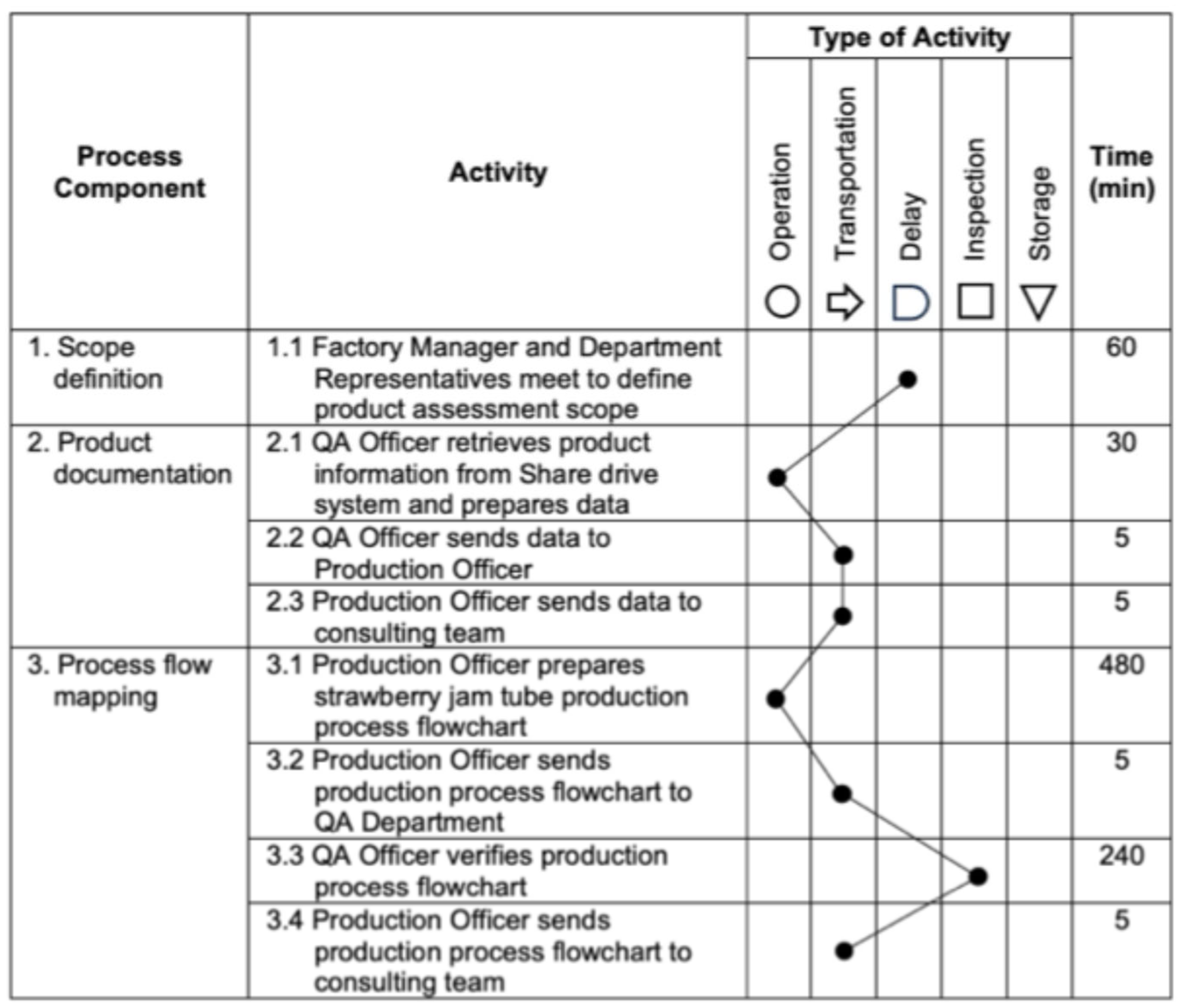
Figure 1 illustrates the flow process chart methodology used to document activities, showing the first three process components as an example.
Figure 1 demonstrates how each activity in the data collection process was systematically documented and classified. The flow process chart reveals the patterns of information movement and the delays between departments. For instance, activities 2.2 and 2.3 show sequential data transfers from QA to Production and then to the consulting team, representing potential bottlenecks. Activity 3.3, the QA verification of the production process flowchart, consumed 240 min—highlighting a significant time investment in inspection activities. The symbol system enables a quick visual identification of value-added operations (circles) versus non-value-added activities such as transportation (arrows) and inspection (squares). This classification framework, applied across all 142 activities in the complete process, provided the foundation for identifying improvement opportunities through lean analysis. The time measurements documented in the rightmost column established baseline metrics for evaluating process improvements.
Table 1 summarizes the current state structure and time distribution.
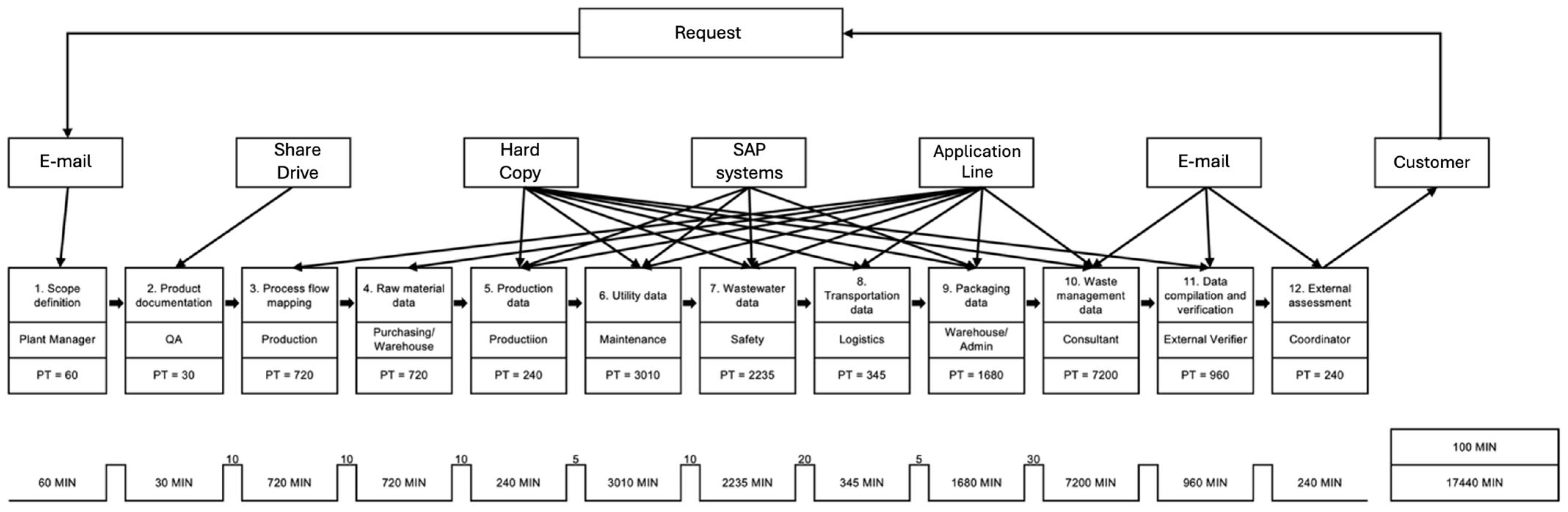
Figure 2 presents the current state value stream map, revealing complex information flows with multiple feedback loops and departmental handoffs.
A critical inefficiency identified in the current state process was the inconsistent data format and transmission methods across departments. Data collection relied on multiple channels including email communications, physical hard-copy documents, and SAP enterprise resource planning system outputs. This heterogeneous data infrastructure created significant coordination challenges and time delays. Different departments maintained their preferred information storage and sharing methods based on historical practices and operational convenience rather than standardized protocols. Email-based data transfer required manual downloading, consolidation, and the formatting of attachments. Hard-copy documents necessitated physical collection, manual data entry, and verification processes prone to transcription errors. SAP system data required specialized access permissions, extraction procedures, and format conversions to align with carbon footprint assessment requirements. The lack of a unified data collection platform resulted in sequential rather than parallel information gathering, with the carbon footprint coordinator spending substantial time tracking down data from various sources, converting formats, and resolving inconsistencies between different departmental submissions.
4.2. Waste Identification Results
To identify improvement opportunities, each of the 142 activities was analyzed for waste presence and classified according to its contribution to the overall objective of carbon footprint assessment.
Table 2 illustrates the methodology for waste identification and activity value classification using the same three process components shown in
Figure 1.
Activity Value Classification Legend:
VA (Value-Added): Activities that directly contribute to carbon footprint data collection and transform information toward the final assessment
NVA (Non-Value-Added): Activities that consume resources without contributing to the assessment outcome (can be eliminated)
NNVA (Necessary but Non-Value-Added): Activities required under current conditions but do not directly contribute (should be minimized)
The key distinction from NVA is regulatory or operational necessity: NNVA activities such as data verification (e.g., activity 3.3: QA verification of the production process flowchart) cannot be fully eliminated because quality and compliance standards require some level of verification, but their frequency and duration can be reduced through standardization. By contrast, NVA activities such as redundant transportation steps (e.g., activities 3.2 and 3.4, which involve sending the same flowchart sequentially to multiple recipients when a shared repository would serve all simultaneously) have no regulatory justification and can be eliminated entirely.
Waste Type Examples:
Activity 2.1 is classified as VA because it performs essential data retrieval, yet exhibits overprocessing waste due to redundant handling.
Activities 3.2 and 3.3 illustrate unnecessary verification loops creating transportation and waiting waste without adding substantive value.
The systematic waste analysis identified 277 instances across 142 activities.
Table 3 summarizes the waste distribution and its impacts.
Waiting represented the largest single waste category at 30.2% of the total process time, primarily from inter-departmental dependencies and approval processes. Overprocessing consumed 22.6% through redundant verification requirements. Combined, these two waste categories accounted for over half (52.8%) of the total process time, indicating significant opportunities for improvement through better coordination mechanisms and streamlined verification protocols.
4.3. Process Improvement Design
ECRS analysis evaluated all 142 activities systematically, revealing distinct improvement opportunities across four strategic categories. The elimination strategies affected 24 activities (16.9% of the total), primarily targeting redundant approvals and duplicate verification steps that consumed time without adding value. The combination strategies proved most prevalent, consolidating 52 activities (36.6%) by merging related data collection tasks that had been unnecessarily separated across departmental silos. Rearrangement strategies optimized the sequence of five activities (3.5%) to reduce waiting time and improve workflow continuity. Simplification strategies transformed 61 activities (43.0%) through standardized templates and centralized storage systems that reduced complexity while maintaining essential functionality.
The redesigned process incorporated three key innovations:
Centralized Working Team: Cross-functional team with defined roles replaced ad hoc coordination, ensuring clear responsibilities and communication channels.
Standardized Templates: Uniform data collection formats eliminated conversion requirements. Templates aligned with TGO requirements while accommodating departmental needs.
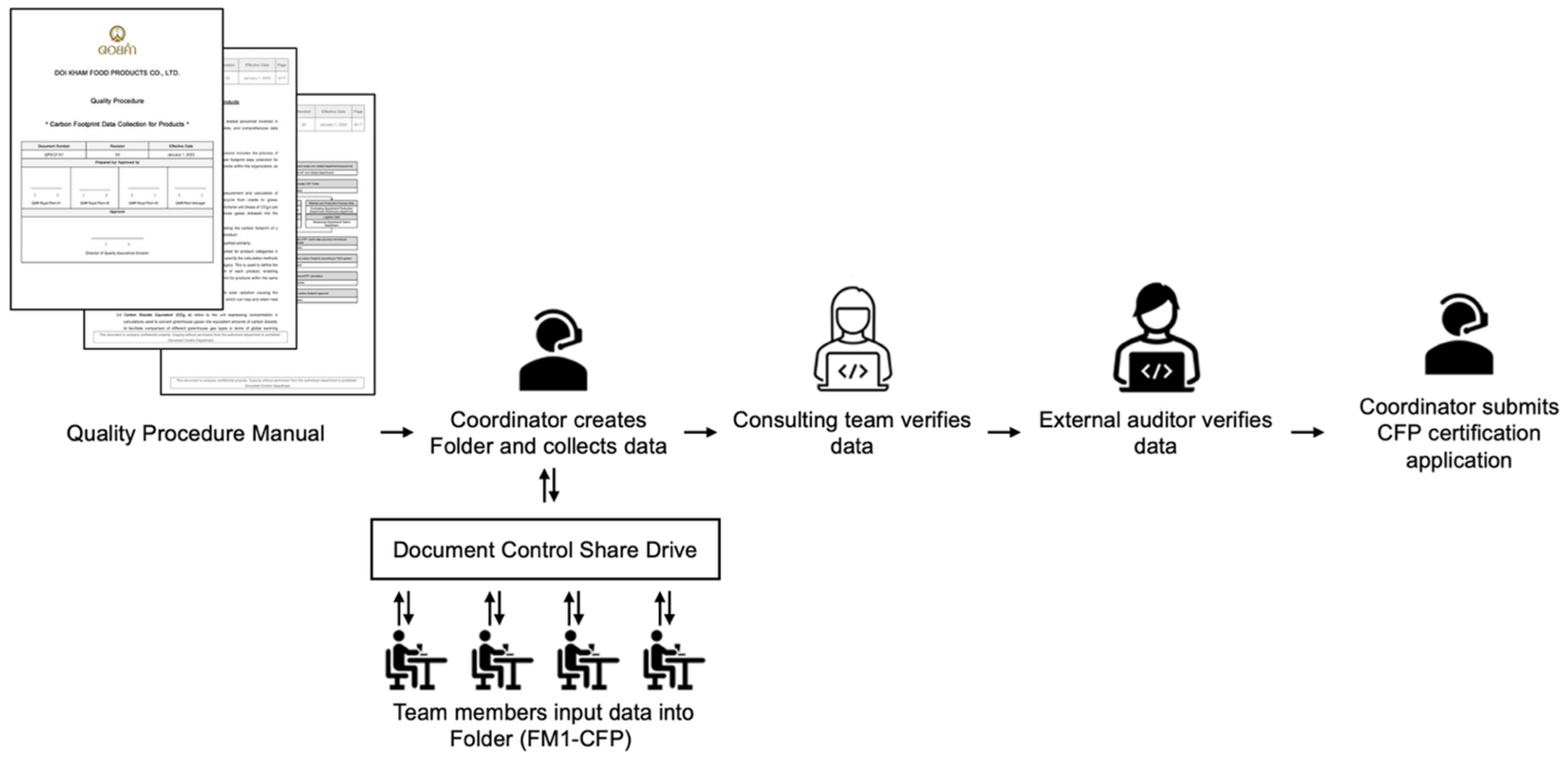
Digital Folder System (FM1-CFP): Centralized repository on existing shared drive enabled simultaneous access, eliminating sequential transfers.
Figure 3 illustrates the improved framework.
4.4. Implementation Process
The quality procedure document (QP-CFP-001) provided detailed guidance for each role. The implementation followed three phases:
Phase 1—System Setup (2 weeks): We created the folder structure, developed templates, and established access permissions.
Phase 2—Training (1 week): Department representatives learned new procedures through hands-on sessions using actual data. The QP-CFP-001 quality procedure document served as the primary institutional mechanism for sustaining these changes beyond the training period; by codifying each role’s responsibilities, data submission formats, and verification steps in a permanent standard operating procedure, the system was designed to be self-sustaining and independent of individual staff recall. Competency in the new procedures was confirmed through observed practice during the pilot phase before sign-off, and the centralized FM1-CFP folder structure provides an ongoing visual reference that reinforces correct practice with each assessment cycle.
Phase 3—Pilot Operation (3 months): This involved the full implementation with strawberry jam, including refinements based on user feedback.
4.5. Performance Improvements
4.5.1. Comparison of Current and Future State Process Flows
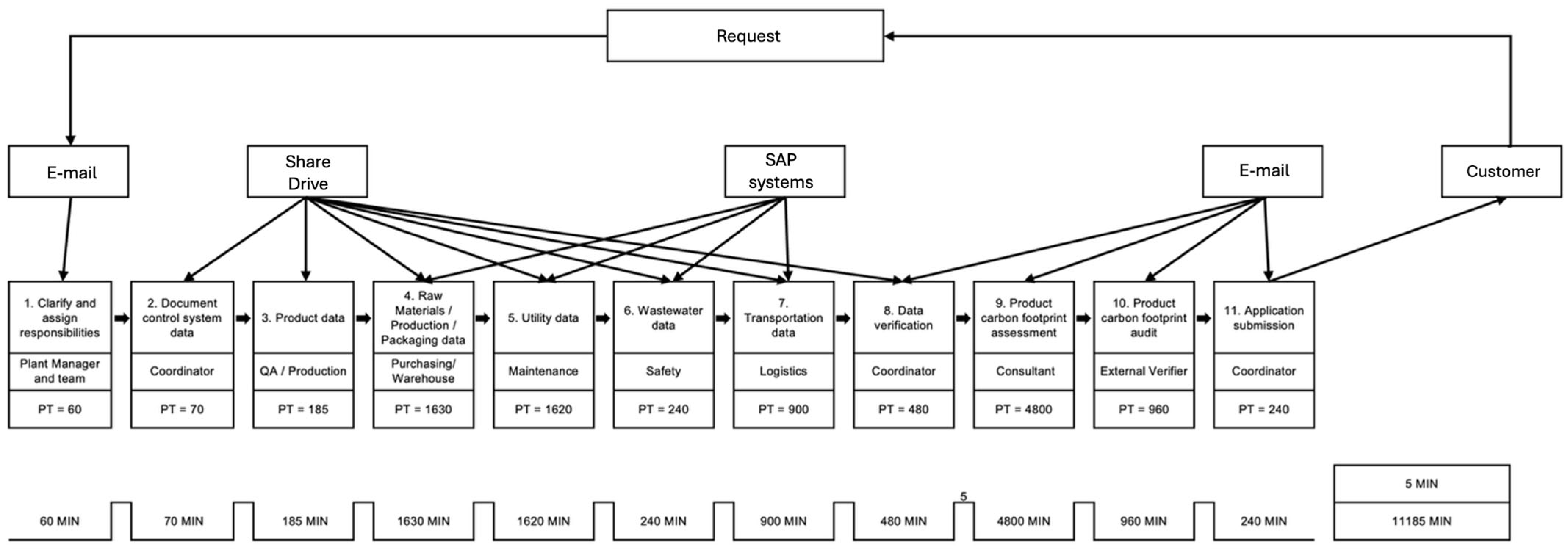
The transformation from the current (
Figure 2) to the future state (
Figure 4) achieved a 36.2% time reduction through three primary improvements.
4.5.2. Data Management Centralization
The fragmented system (email, hard copy, and SAP) was replaced with the unified FM1-CFP folder system. This eliminated format conversion requirements and enabled parallel data input rather than sequential handoffs. All departments now access standardized templates within a single digital repository, reducing coordination overhead and transcription errors.
4.5.3. Process Flow Optimization
Transportation activities reduced from 20 to 5 handoffs through standardized templates and real-time visibility. The quality procedure (QP-CFP-001) provides explicit guidance, eliminating confusion and rework. Sequential bottlenecks were replaced with parallel workflows, allowing multiple departments to work simultaneously.
4.5.4. Coordination Enhancement
A formal cross-functional team with defined roles replaced ad hoc coordination. The shared folder system provides transparent progress tracking, reducing status inquiry communications. The coordinator’s role evolved from reactive problem solving to proactive quality assurance.
4.5.5. Quality and Consistency Improvements
Standardized templates incorporate validation rules and consistent formatting requirements. The version control inherent in the shared drive system eliminates any confusion about data currency. Built-in calculation formulae minimize arithmetic errors, reducing data entry errors by 92.7%, as shown in
Table 4.
4.5.6. Scalability and Sustainability
The standardized procedures and centralized repository enable efficient replication across product lines. The improved process supports organizational sustainability objectives by reducing barriers to comprehensive carbon footprint assessment across product portfolios.
Table 4 presents comprehensive before-and-after comparison.
Figure 4 shows the streamlined future state process.
The 36.2% time reduction enabled quarterly assessments rather than annual, supporting continuous improvement. Standardization reduced errors by 92.7%, improving the data’s reliability for decision making. It should be noted that the increased assessment frequency represents a demonstrated operational capability established during this study; the identification of specific new opportunities to reduce the carbon footprint of the product itself through quarterly data is a prospective benefit that has yet to be fully realized, as Doi Kham is in the early stages of utilizing the certified CFP baseline values established in January 2025 to monitor seasonal and process-related emission variations. This trajectory is consistent with the study’s original intent: by reducing the assessment cycle from annual to quarterly, the improved process creates the data density necessary to detect emission trends and evaluate reduction interventions over time, a capability that was structurally unavailable under the prior fragmented annual process.
4.5.7. Carbon Footprint Certification Outcome
Crucially, the process improvements described in this study directly enabled a concrete carbon footprint outcome. On 14 January 2025, Doi Kham Food Products Co., Ltd. received official Carbon Footprint of Organization (CFO) and Carbon Footprint of Products (CFP) certificates from the Thailand Greenhouse Gas Management Organization (TGO). Among the certified products was strawberry jam—the focal product of this study—alongside three additional product lines: mixed berry jam, orange marmalade jam, and 100% honey. This certification constitutes the principal qualitative measure of improvement: the lean-optimized process produced carbon footprint data of sufficient completeness, consistency, and accuracy to satisfy TGO’s rigorous ISO 14067:2018-based certification criteria, something that had not been achieved under the prior fragmented process. Quantitatively, the certified carbon footprint values for these products now provide a verified baseline against which future emission reductions can be measured and reported. The connection between process efficiency and carbon footprint data quality is therefore direct: the 92.7% reduction in data errors, the elimination of format conversion inconsistencies, and the standardization of measurement protocols under the FM1-CFP system collectively ensured that the data entering the TGO certification pipeline met the threshold for independent verification. The successful certification thus validates not only the process improvements in isolation, but demonstrates that lean-optimized data collection can deliver actionable, certified environmental outcomes within a compressed timeframe.
4.6. Wastewater Treatment and Sustainable Water Management
Strawberry jam production generates process wastewater containing organic resi-dues, fruit sugars, and cleaning agents that require treatment before discharge or reuse. Anaerobic digestion is a recommended biotechnology for primary treatment, enabling the recovery of biogas as a renewable energy source while simultaneously reducing organic load; the recovered energy can partially offset production utility consumption, contributing to the facility’s broader sustainability objectives. Constructed wetlands or membrane bioreactors may serve as complementary secondary treatment stages, producing effluent of sufficient quality for agricultural reuse on the strawberry cultivation site. Incorporating such systems would extend the environmental scope of the assessment beyond CO2-equivalent emissions to encompass sustainable water cycle management, supporting more comprehensive sustainability reporting aligned with multi-dimensional environmental assessment frameworks.
5. Discussions
The results are interpreted across five interconnected dimensions.
Section 5.1 explains the theoretical mechanism behind the observed improvements and positions the findings within the lean–green literature.
Section 5.2 translates the results into practical implications for organizations seeking to replicate this approach, including an indicative cost saving estimate.
Section 5.3 addresses the methodological contributions of the lean toolkit applied here.
Section 5.4 acknowledges the study’s limitations and identifies priority directions for future research, drawing on post-pilot evidence of sustained performance.
Section 5.5 discusses policy and management implications at the industry level. Together, these sections argue that lean office principles are as effective at optimizing environmental assessment processes as they are in production contexts, and that process efficiency and data quality are complementary rather than competing objectives in this domain.
5.1. Theoretical Contributions
This research extends lean office applications to environmental assessment contexts, demonstrating that administrative processes in sustainability management contain substantial optimization potential. The 95.8% reduction in non-value-added activities while maintaining compliance validates lean principles’ applicability beyond traditional domains. The systematic approach using VSM, waste identification, and ECRS principles proved effective for analyzing and improving complex multi-departmental information management processes.
The scale of improvement is explicable by the structural nature of the waste identified. Waste analysis revealed that waiting and overprocessing together accounted for 52.8% of total baseline process time (30.2% and 22.6% respectively), both driven by the same root cause: departmental fragmentation in which data resided in incompatible formats across email, hard copy, and SAP systems, and each department operated independently without a shared visibility of the overall assessment process. Lean interventions targeted this root cause directly rather than its symptoms. The centralized FM1-CFP digital repository eliminated the sequential handoff structure that generated waiting time, enabling parallel data input across departments simultaneously. The cross-functional team with defined roles removed the ambiguity that produced redundant verification loops, which was the primary driver of overprocessing waste. Because both dominant waste categories shared a single structural cause—fragmentation—a single structural intervention addressing that cause produced proportionately large gains. This causal chain, from fragmentation to waste to inefficiency, and from integration to waste elimination to efficiency gain, explains why lean tools that were originally designed for manufacturing flows transfer effectively to information-intensive administrative processes, which has been previously noted as an open empirical gap by Yang et al. [
35].
The study contributes to the industrial ecology literature by providing empirical evidence that process optimization can significantly enhance environmental assessment efficiency without compromising data quality or compliance requirements [
1]. This finding supports arguments for integrated approaches combining operational excellence with sustainability management.
Unique Positioning in the Lean–Green Literature
While previous studies have applied lean to reduce environmental impacts directly [
12,
13], this research uniquely demonstrates that lean principles can optimize the environmental assessment process itself—addressing the meta-challenge of making sustainability measurement more sustainable. This extends lean–green integration beyond production optimization to environmental management support processes. The study bridges operational excellence and environmental management studies, showing these objectives complement rather than compete, consistent with recent research demonstrating lean–green synergies across manufacturing contexts [
26,
28].
A particularly noteworthy finding is that efficiency and data quality improved simultaneously rather than trading off against one another. The improved process reduced the total time by over one third while also reducing data errors by 92.7% and eliminating all format conversion discrepancies. In many process improvement contexts, speed and quality improvements compete: acceleration can introduce shortcuts that compromise accuracy. Here, both dimensions improved together because the intervention resolved a shared underlying problem. The overprocessing and format conversion errors that consumed 22.6% of the process time were not simply slow activities—they were also the primary sources of inaccurate data, generating rework loops that further compounded delay. Eliminating these structurally defective activities therefore improved speed and quality in the same action rather than through separate interventions. This finding has an important implication for environmental data management specifically: it suggests that poor data quality in carbon footprint assessments often reflects process structure rather than measurement difficulty, and that structural lean interventions can address the data reliability problem that most often prevents organizations from achieving certification-grade environmental data, as the successful TGO CFP certification of strawberry jam directly confirms.
5.2. Practical Implications
The time saving of 10.6 working days per assessment enables more frequent evaluations, supporting dynamic environmental performance management. The 36.2% time reduction achieved through process improvement represents substantial resource savings that can enable more frequent carbon footprint assessments or the expansion of additional product lines. The reduced administrative burden may encourage the broader adoption of environmental assessment practices within the organization and similar manufacturing facilities, addressing common barriers to environmental assessment adoption including resource constraints, coordination complexity, and the lack of standardized procedures. Although a formal cost–benefit analysis was outside the scope of this study, an indicative estimate of labor cost savings can be derived directly from the time reduction data. Since administrative labor costs scale proportionally with staff time, the 36.2% reduction in process time (6350 min saved per assessment cycle from the 17,540 min baseline) translates directly to an equivalent 36.2% reduction in the staff labor costs associated with carbon footprint data collection. Critically, these savings were achieved with zero capital expenditure on new technology, as the FM1-CFP system was built entirely on Doi Kham’s existing shared drive infrastructure. The cost of implementation was therefore limited to staff time during the two-week setup phase and one-week training, meaning the process improvement reached a positive return on investment within its first operational assessment cycle. Organizations operating with higher staff cost structures, or conducting assessments across a larger product portfolio, would realize proportionately greater absolute savings from the same 36.2% efficiency gain.
Standardized templates and procedures provide replicable tools that are adaptable across products and facilities. The centralized folder system leverages existing IT infrastructure, minimizing implementation barriers. The improvement methodology’s reliance on existing organizational capabilities and minimal technology requirements enhances transferability across diverse manufacturing environments and developing economy contexts. Visual management tools transcend language barriers, facilitating multi-site deployment. Regarding digital literacy requirements specifically, the FM1-CFP system was deliberately designed around shared drive folders and pre-structured data entry templates rather than specialized software, requiring only basic file navigation and spreadsheet input skills. In practice, the 11 participating staff members across Doi Kham’s 12 departments—whose digital experience ranged from basic to intermediate—achieved operational competency within the one-week training period using hands-on sessions with actual assessment data, suggesting that the system’s design is accessible to employees with average or below-average digital literacy, without requiring lengthy or costly training programs.
The success factors included participatory design ensuring practical solutions, phased implementation allowing iterative refinement, and management support demonstrating organizational commitment. These elements suggest that successful replication requires both technical tools and change management attention. The specific implementation challenges encountered and how they were resolved are worth noting for organizations considering similar initiatives. The primary technical barrier was the heterogeneous data infrastructure; the three incompatible channels (email, hard copy, and SAP) each required different handling procedures, and departments were accustomed to these established practices. This was addressed by designing the FM1-CFP folder system to accept inputs in familiar formats initially, with standardized templates introduced progressively to minimize disruption. The primary human factor challenge was individuals’ variable IT proficiency across the 12 departments, with staff experience ranging from 2 to 28 years. Hands-on training using actual assessment data, rather than simulated exercises, accelerated competency development and allowed staff to validate the system against real departmental needs before the sign-off. The participatory design process, in which department representatives co-developed their own templates, additionally reduced resistance by giving staff ownership of the tools they would use.
Beyond technical implementation, organizational and cultural factors at Doi Kham Food Products Co., Ltd. meaningfully contributed to success. The company’s social enterprise mission and community-oriented values—rooted in its royal project heritage and expressed through commitments to environmental stewardship and sustainable development—created institutional alignment with the lean improvement objectives, supporting employees’ acceptance of the new process. The staff across all 12 departments engaged constructively with cross-functional working sessions, reflecting a culture of collaboration and shared environmental commitment. The cross-functional team structure served not only as a coordination mechanism but also fostered mutual understanding and a sense of the collective ownership of the redesigned process, reducing resistance to change. Organizations adopting this methodology should attend to these human dimensions, including the transparent communication of objectives, the inclusive participation in solution design, and the alignment of lean goals with broader organizational values, as cultural readiness can be as determinative as technical preparedness.
5.3. Methodological Contributions
The research provides a systematic framework for applying lean office tools to environmental assessment processes. The combination of VSM, waste analysis, root cause identification, and ECRS-based improvement represents a replicable methodology applicable across diverse manufacturing contexts and environmental assessment types. The case study methodology provides detailed documentation of implementation challenges and solutions, offering practical guidance for organizations considering similar process improvement initiatives.
The study demonstrates the effective integration between lean principles and environmental management requirements, showing how operational efficiency improvements can support rather than compete with sustainability objectives. This integration approach may encourage the broader adoption of both lean and environmental management practices.
5.4. Limitations and Future Research
5.4.1. Study Design Limitations
Single-case design limits the generalizability across industries and organizational contexts. The three-month pilot period is acknowledged as insufficient to confirm the long-term sustainability of process improvements in isolation, and the Hawthorne effect may have influenced performance during this phase, potentially overestimating sustained gains. However, meaningful post-pilot evidence of sustained operation exists: the successful TGO CFP certification of strawberry jam and three additional products on 14 January 2025—conducted under independent third-party verification more than twelve months after process implementation—demonstrates that the improved data collection procedures continued to produce certification-grade data well beyond the pilot window. This outcome provides substantive, externally validated evidence that the changes were maintained in practice, while longitudinal studies tracking performance metrics across multiple annual assessment cycles remain necessary to formally characterize long-term stability. Generalizability is additionally limited to food manufacturing contexts with comparable IT infrastructure and organizational readiness. A formal cost–benefit analysis incorporating full implementation costs, indirect productivity effects, and certification-related revenue or market access benefits was not conducted; the indicative 36.2% labor cost saving estimate provided in
Section 5.2 should therefore be understood as a lower-bound approximation, and systematic cost–benefit analyses across organizations of different scales represent an important direction for future research.
5.4.2. Scope Limitations
The focus on internal processes excluded supplier interface optimization opportunities. The research examined only carbon footprint assessment processes, leaving questions about the applicability to other environmental assessment types such as water footprints, biodiversity impacts, or comprehensive life cycle assessments.
Although the methodology demonstrated clear replicability for strawberry jam—a product with a relatively predictable supply chain and consistent processing parameters—its application to products with greater data variability or more complex supplier networks may require modest adaptations. Doi Kham’s broader product portfolio, encompassing cold-pressed juices sourced from multiple agricultural regions, honey with variable seasonal yields, and over 200 product lines including OEM-manufactured items, presents scenarios involving higher data variability and more diverse supplier relationships. In such contexts, standardized templates may require additional flexibility provisions, the centralized digital repository may benefit from enhanced version control, and the cross-functional team may need to include external supplier representatives to capture upstream data reliably. These represent incremental refinements rather than fundamental changes to the methodology. A preliminary data variability assessment is therefore recommended when extending this approach to products with more heterogeneous raw material inputs or more geographically dispersed supply chains. A further moderating factor is the host organization’s level of digitalization. The efficiency gains reported in this study are partly contingent on Doi Kham’s existing digital infrastructure—specifically its shared drive system and SAP ERP platform—which provided the foundation for the FM1-CFP repository at no additional capital cost, and on the company’s institutionalized “Green Way” low-carbon strategy, which created organizational readiness and management commitment that facilitated rapid adoption. Enterprises at lower levels of digitalization, or without an established environmental management culture, may require prior investment in basic data infrastructure or change management capacity before the full efficiency benefits of this methodology are realizable. Conversely, more highly digitalized organizations may achieve proportionately greater gains through integration of the standardized lean data flows with automated real-time data capture systems.
5.4.3. Future Research Directions
Future studies should examine whether efficiency gains persist over time and identify factors supporting sustained improvement implementation. Research opportunities include the following:
Exploring lean applications to diverse environmental assessment processes.
Investigating long-term performance stability across multiple product implementations.
Exploring supplier integration strategies for cradle-to-gate assessments.
Assessing applicability to other environmental assessments (water footprint and biodiversity).
The integration with digital technologies for automation and real-time data capture.
Multi-site implementation studies to establish confidence intervals for improvement metrics.
Cost–benefit analyses across different organizational scales.
Validating the proposed approach across Doi Kham’s broader product portfolio, noting that partial validation is already underway: beyond the four products certified in January 2025 (strawberry jam, mixed berry jam, orange marmalade jam, and 100% honey), additional Doi Kham products including fruit juices such as passion fruit have previously received TGO CFP certification, demonstrating that the data collection infrastructure developed through this study is actively supporting carbon footprint assessment across product lines of varying supply chain complexity. The systematic comparison of methodology performance metrics across these certified products would yield the confidence intervals needed to quantify the variability in efficiency gains attributable to product complexity and supply chain length.
Transdisciplinary research extending the greenhouse gas scope beyond CO2 to include other gases such as methane generated from organic waste streams in strawberry cultivation and jam processing, to enable a more complete GHG inventory and support alignment with evolving multi-gas environmental reporting standards.
The investigation of food safety dimensions encompassing the identification and management of carcinogens, mutagens, and allergens throughout the strawberry cultivation chain and in the final jam product, as a complementary factor in holistic sustainability assessment and a priority concern for consumer health in food manufacturing contexts.
5.5. Policy and Management Implications
The research findings suggest that process efficiency improvements can reduce barriers to environmental assessment adoption, supporting policy objectives for increased corporate environmental transparency. Government agencies and industry associations could promote lean-based process improvement as a means of encouraging broader environmental assessment implementation.
Manufacturing organizations may benefit from integrating lean office training with environmental management system development, creating synergies between operational excellence and sustainability management capabilities. The standardized approach developed could serve as a model for industry-wide process improvement initiatives, potentially supported by trade associations or government sustainability programs. The collaborative development of standardized procedures and tools could reduce individual organization implementation costs while improving overall industry environmental assessment capabilities.
6. Conclusions
This study successfully demonstrates lean office application to carbon footprint data collection in food manufacturing. The systematic application of flow mapping, waste analysis, root cause investigation, and ECRS redesign achieved a 36.2% time reduction while improving data quality and maintaining regulatory compliance. The methodology achieved substantial efficiency gains (36.2% time reduction; 95.8% reduction in non-value-added activities) through systematic process optimization. Most significantly, the improved process directly enabled the successful TGO certification of the Carbon Footprint of Products (CFP) for strawberry jam on 14 January 2025—alongside three other Doi Kham product lines—providing tangible evidence that lean-optimized data collection can deliver certified, internationally recognized environmental outcomes. The 92.7% reduction in data errors and complete elimination of format conversion inconsistencies were the primary qualitative drivers of data quality sufficient to meet ISO 14067:2018-based TGO certification requirements, while the verified CFP values now establish a quantitative baseline for tracking future emission reductions across the product life cycle.
The key findings substantiate three empirically grounded conclusions. First, waiting and overprocessing were identified as the dominant sources of inefficiency, jointly accounting for 52.8% of the total baseline process time (30.2% and 22.6% respectively, as documented in
Table 3), consistent with Hartmann and Metternich [
6], who identified information flow fragmentation as the principal generator of these waste categories in administrative contexts. Second, process consolidation through ECRS principles reduced activities from 142 to 63 (55.6% reduction) and non-value-added activities by 95.8% (
Table 4), a scale of improvement aligned with the lean office gains reported by Kasemset et al. [
22] and corroborated in the systematic review of Yokoyama et al. [
27], which found that ECRS-based redesign consistently achieves disproportionately large NVA reductions relative to the overall process scope. Third, the standardized FM1-CFP system eliminated all 47 format conversion instances and reduced data errors from 41 to 3 (
Table 4), confirming Yang et al.’s [
35] argument that strategic data management is a prerequisite for reliable lean outcomes. Together, these findings extend the lean–green evidence base by demonstrating that lean office tools are as effective in environmental assessment processes as in the production and logistics contexts documented by Singh and Singh [
26] and Resta et al. [
28].
The practical implications include resource savings enabling expanded environmental assessment activities: the 36.2% time reduction (6350 min per cycle;
Table 4) enables quarterly rather than annual assessments, supporting dynamic environmental performance management. Replicable tools and procedures enable immediate implementation across products and facilities at zero capital expenditure, as the FM1-CFP system is built on existing shared drive infrastructure [
22]. The improved process framework addresses critical barriers to environmental assessment adoption—particularly resource constraints and administrative complexity—and can be adapted for carbon footprint assessment across diverse food product categories and manufacturing contexts, consistent with the transferability criteria identified by Yokoyama et al. [
27] for lean office implementations.
Four evidence-based implementation recommendations follow from these findings. First, establishing a cross-functional team before beginning the assessment is essential: this study’s cross-functional structure reduced the cycle time by 50% (from 15 to 20 to 7–10 days;
Table 4) and eliminated 94.3% of necessary non-value-added coordination activities, consistent with the participatory design principles identified as critical success factors in lean office implementations by Serra et al. [
25]. Second, investment in data standardization, despite its initial time cost, is justified by its compounding returns: the FM1-CFP template system eliminated 100% of format conversion activities (
Table 4) and was the primary enabler of TGO CFP certification-grade data quality, corroborating Yang et al.’s [
35] finding that upfront data infrastructure investment yields asymmetric downstream gains in lean processes. Third, leveraging existing IT infrastructure rather than implementing new technologies reduces adoption barriers and enables rapid deployment; the shared drive system used in this study required no capital expenditure yet delivered the full centralization benefit, supporting Kasemset et al.’s [
22] recommendation that lean–IT integration succeeds most when it builds on established organizational systems. Fourth, organizations should position assessment process efficiency as a strategic sustainability capability rather than an administrative overhead: the progression from a fragmented 17,540 min annual process to a standardized 11,190 min process that produced internationally certified carbon footprint data for four product lines demonstrates the competitive and reputational value of this reframing, consistent with Resta et al.’s [
28] finding that lean–sustainability integration generates durable organizational advantages.
The integration of lean principles with environmental management represents natural evolution as organizations seek simultaneous operational and environmental excellence. As environmental transparency requirements expand globally, efficient assessment processes become increasingly critical for competitiveness and maintaining stakeholder expectations. This research provides a roadmap for organizations seeking to enhance sustainability capabilities through operational excellence, ultimately supporting more sustainable manufacturing systems.



 ,
,