1. Introduction
Contemporary food systems are at the center of multiple crises that feed into each other. Ecological degradation, climate change, food insecurity, massive food waste, and growing dependence on ultra-processed products form a web of tensions that goes beyond sectoral approaches [
1,
2,
3,
4].
In the Global South, food and environmental challenges take on intensity when combined with historical structures of inequality that limit both institutional capacity and access to basic infrastructure [
5]. The precariousness of storage, transport, and waste management systems not only increases food losses but also reveals the fragility of the region’s nascent circular systems [
6]. At the same time, the expansion of a homogeneous global food paradigm is eroding traditional practices, weakening the sociocultural sustainability of diets, and reinforcing dependence on productivist models with high environmental and health impacts [
7]. Far from being isolated phenomena, these dynamics constitute a structural framework through which food consumption, waste generation and environmental pressures materialize in everyday institutional settings, including rural schools [
8,
9].
In Ecuador, these tensions take on an even more critical nature. As a megadiverse country, it faces the dual challenge of conserving its natural heritage while ensuring the food security and well-being of its population. This tension is particularly evident in vulnerable territories such as the Andean Chocó. The Chocó Andino de Pichincha, located along the western slopes of the Ecuadorian Andes, is a UNESCO-designated Biosphere Reserve and one of the world’s most biologically and culturally significant montane ecosystems. Spanning approximately 2869 km
2, nearly 30% of Pichincha province, this region encompasses a vast altitudinal gradient (500–4784 m) and includes diverse ecosystems ranging from cloud forests to páramos. It is home to hundreds of endemic plant and animal species, including over 270 bird species, 140 amphibians, and more than 3200 vascular plants, many of which are critically endangered [
10,
11].
Beyond its biological richness, the Chocó Andino provides essential ecosystem services such as freshwater provision, slope stabilization, carbon sequestration, up to 250 tons of CO
2 per hectare in some forest zones [
12], and agricultural productivity through crops like coffee, cocoa, and tropical fruits [
13]. Local and regional governance efforts, including those led by the Mancomunidad del Chocó Andino (MCA), youth and school networks, and conservation NGOs, demonstrate how community engagement, ecological knowledge, and multi-scalar governance are converging to promote sustainable development and biodiversity conservation in one of the world’s most threatened tropical biodiversity hotspots [
14]. Embedded within this ecological landscape are deeply rooted cultural and ancestral traditions, especially those of the Yumbo people, whose ceremonial centers, culuncos (ancestral trails), and agricultural systems are preserved across over 600 archeological sites [
15,
16]. According to the 2022 Ecuadorian Population and Housing Census, approximately 119,343 people inhabit the region, 24.45% of whom are between 15 and 29 years of age. Among them, some are engaged in agroecology, artisan production, and communal rituals that reflect strong cultural stewardship and place-based knowledge [
13].
In this context, rural educational institutions are strategic actors in addressing the tension between conservation and food security in megadiverse territories such as the Andean Chocó. Through environmental education processes rooted in everyday life, schools can promote transformative practices related to food production, consumption, and management. In this way, they not only fulfill an educational function, but also become spaces for social and cultural experimentation where local knowledge, community values, and collective actions aimed at sustainability converge [
17,
18].
Environmental education has undergone a conceptual shift that has taken it from being a mechanism for transmitting ecological information to becoming a field focused on shaping values, practical skills, and capacities for collective action for sustainability [
17]. This shift is particularly relevant in rural contexts, where community life maintains a close relationship with ecosystems and, at the same time, faces structural limitations in access to resources, infrastructure, and decision-making spaces [
19,
20]. It is not just a matter of “teaching ecology” in peripheral settings, but of recognizing that these territories embody both the vulnerability and the transformative potential of sustainability [
20,
21].
Recent literature recognizes that schools, particularly in rural contexts, are not passive recipients of policies, but actively participate as actors that produce social innovation by coordinating with other community actors and generating sustainable solutions from the territory [
22]. These transformations are enhanced by participatory methodologies that promote situated learning and shared responsibility for environmental problems, as shown by experiences of education for sustainable development in African institutions [
23]. In this process, school leadership is crucial, as it facilitates the collective construction of sustainable practices and guides the educational community toward the Sustainable Development Goals [
24]. Finally, environmental education is understood not as an isolated subject, but as a community and intercultural framework that links school life with collective practices and values oriented towards sustainability [
25].
Within this framework, food systems provide a privileged setting for observing how this articulation between education, culture, and sustainability materializes. Agroecological pedagogy and circular practices not only regenerate ancestral knowledge but also reconfigure food sovereignty relationships in rural communities by promoting dialog between different types of knowledge and situated education [
26,
27]. Complementarily, the notion of food circular behavior allows us to understand school routines as nodes of transition towards sustainability, shifting attention from individual attitudinal changes to broader frameworks of environmental and territorial justice [
28].
In summary, research on environmental education in rural contexts shows a shift toward approaches that prioritize community participation, knowledge dialog, and practice centered on food systems. This field opens the door to broader debates on how educational and behavioral interventions can promote circularity and sustainable food consumption in various settings, a rapidly expanding field that has been the subject of attention in different international contexts [
29,
30,
31].
Extending this line of inquiry, several recent studies illustrate how education and behavioral interventions promote circularity in food systems and reduce waste across diverse age groups and settings. For instance, Ref. [
32] evaluated the impact of a food education session in a Portuguese school canteen, finding that such interventions can significantly reduce vegetable plate waste. Additionally, Ref. [
33] investigated children’s understanding and engagement with sustainable food packaging disposal at a UK science event, revealing strong interest, 77% of participants expressed willingness to change future behavior, though many still struggled to correctly identify disposal bins for different packaging types. Complementing these findings, Ref. [
34] explored circularity in food waste management in a primary school in Spain, underscoring how structured waste management practices enhance both learning and resource reuse. Extending beyond formal education, Ref. [
35] offered a systematic review of sustainability measures in school feeding, highlighting strategies like menu planning, composting, recycling, vegetarian options, and food donation as effective tools for minimizing food system impacts. Furthermore, immersive technological approaches such as VR experiences demonstrate promising potential: Ref. [
36] developed an interactive virtual escape room to simulate food purchasing and disposal decisions, resulting in significant improvements in participants’ knowledge, confidence, and intention toward sustainable behavior. Together, these studies converge on the importance of combining educational, behavioral, and technological strategies to promote sustainable food consumption and circular food systems among young learners. However, empirical evidence from rural schools located in megadiverse and protected territories, particularly in Latin America, remains limited.
While environmental education in rural contexts is recognized as a driver of sustainability, challenges remain regarding its actual reach. Some authors warn that educational interventions, if not accompanied by institutional and structural transformations, are unlikely to achieve sustained changes in consumption habits [
37]. There is also debate as to whether approaches focused on individual motivation are sufficient or whether it is essential to analyze practices in their collective and situated dimension, taking into account local norms, infrastructures, and cultures [
37,
38]. Similarly, food circularity appears to be an ambivalent area: while some studies highlight the regenerative potential of agroecology and local knowledge, others emphasize that without political support, infrastructure, and solid governance, these initiatives can become fragmented or vulnerable [
39]. These tensions reveal a field traversed by debates between the pedagogical and the structural, the individual and the collective, the local and the institutional, shaping a critical framework for understanding how rural schools can be hubs of transition towards more sustainable food systems.
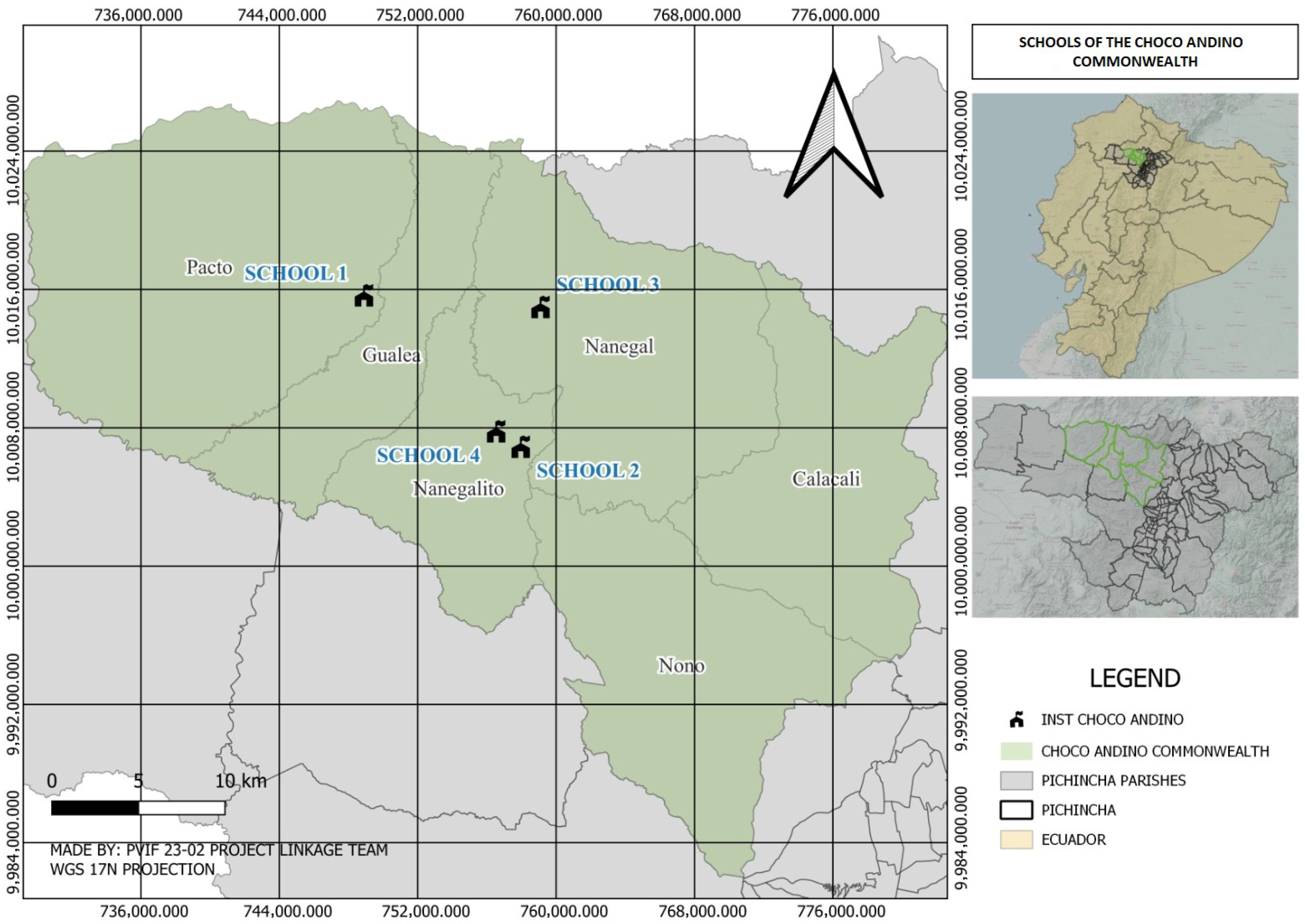
This study represents a pioneering effort in the rural context of the Chocó Andino Biosphere Reserve, marking one of the first initiatives in Ecuador, and among the few in Latin America, to investigate food consumption patterns and waste management within schools situated in protected areas. By analyzing the composition and handling of food waste in four schools of the region and exploring the role of school authorities, teachers, and parents in shaping environmental practices, this research aims to highlight the strategic role of educational institutions in promoting transitions toward sustainability, food literacy, and circular practices. In doing so, it contributes to the growing body of knowledge on consumer behavior and sustainability within agri-food systems, particularly in underrepresented rural and biodiversity-rich territories. The findings are expected to offer critical insights on shared values, pedagogical leadership for developing context-specific educational and policy strategies that align with broader goals of environmental sustainability and responsible food consumption.
Drawing on fieldwork conducted in schools located within the Biosphere Reserve, the findings are expected to generate critical insights into shared community values and pedagogical leadership. These insights will inform the development of context-specific educational and policy strategies that not only resonate with local socio-environmental realities but also align meaningfully with broader global goals of environmental sustainability and responsible food consumption.
4. Discussion
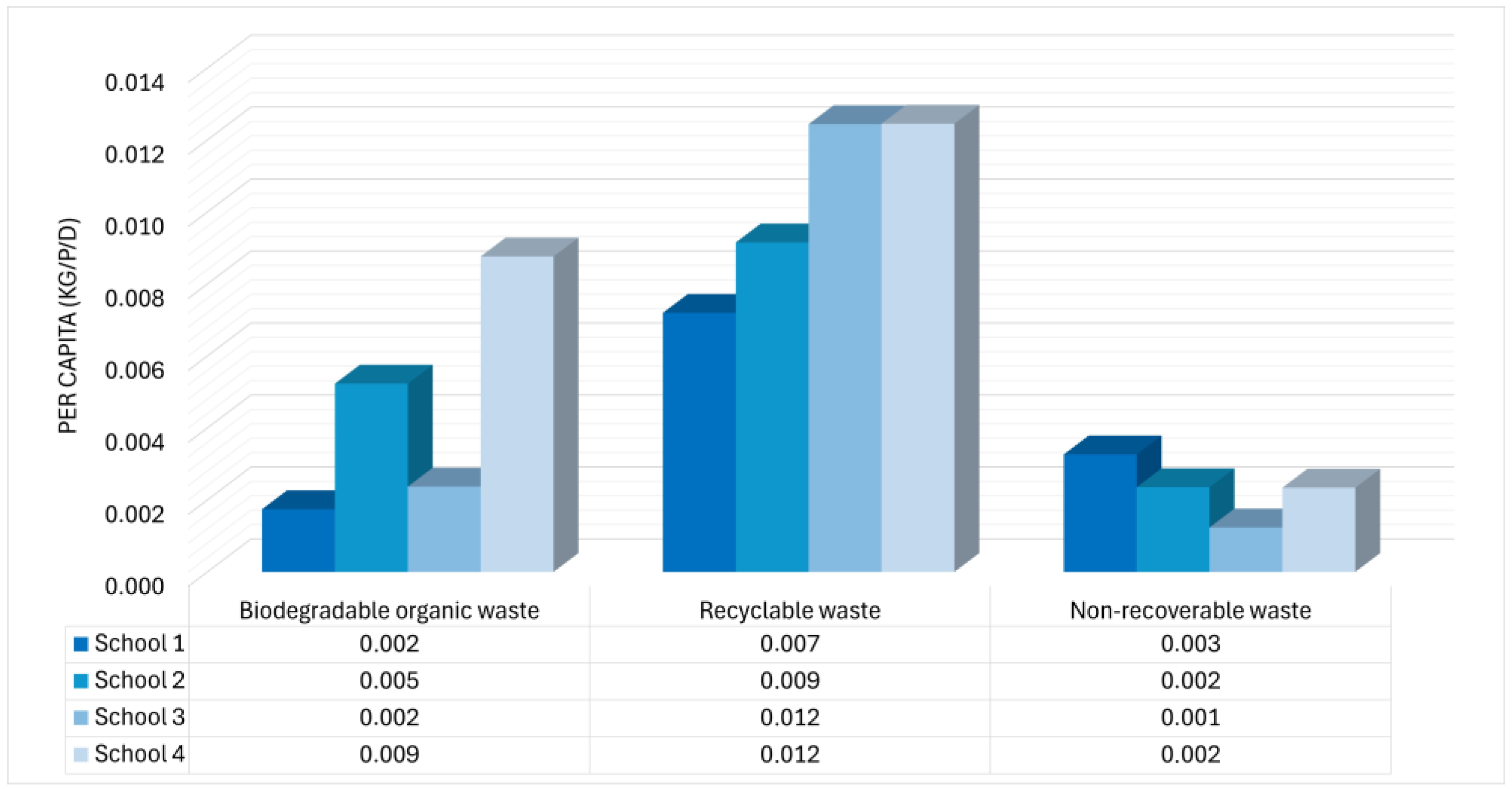
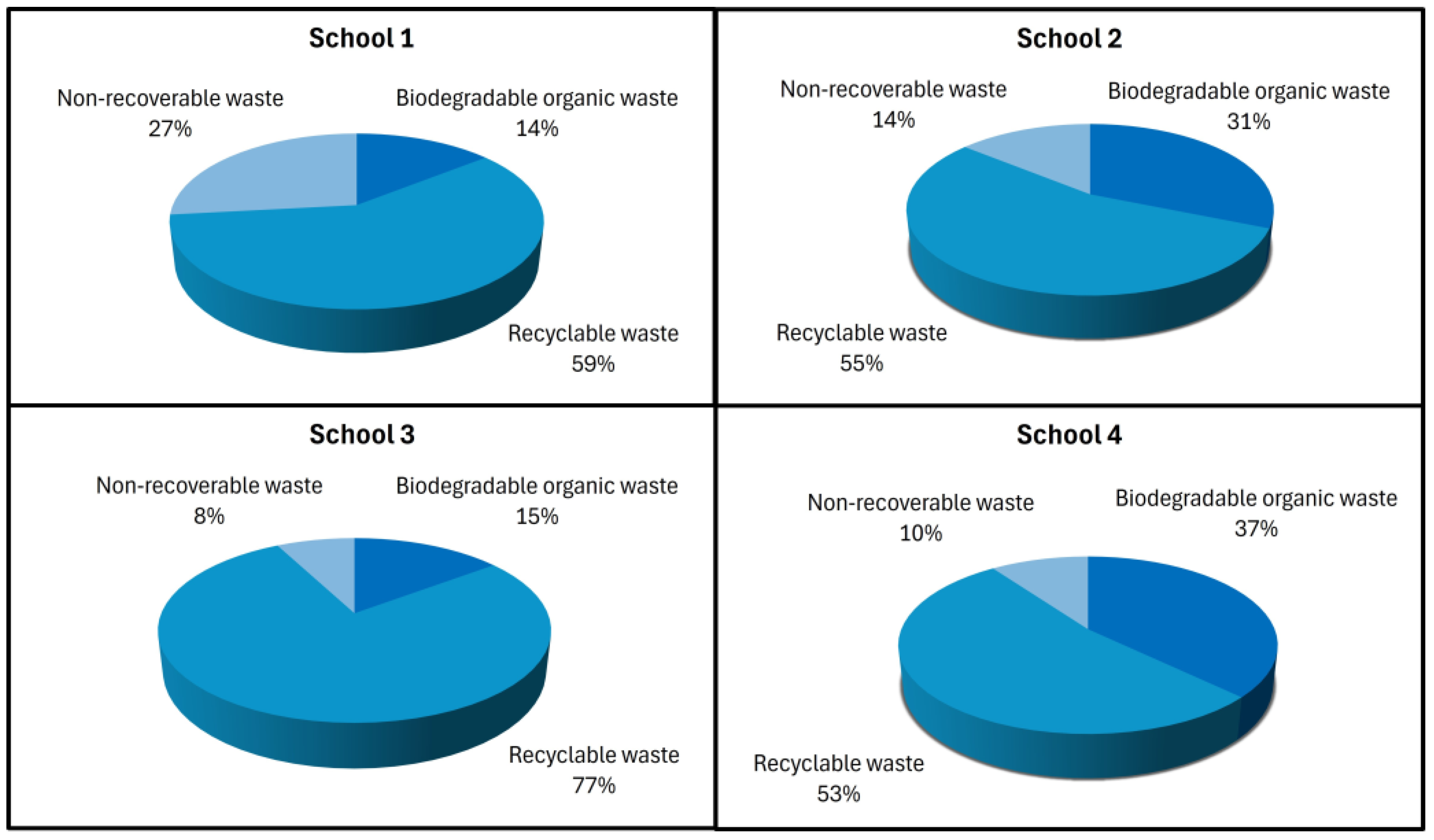
The waste composition observed in rural schools of the Chocó region, where biodegradable organic fraction represents 14–37%, recyclable dry fraction 53–77%, and non-recoverable residual waste 8–27%, reveals patterns that both converge with and differ from findings reported in similar Latin American and international contexts. Studies conducted in rural settings of Ecuador typically report a predominance of biodegradable organic waste; for example, Ref. [
44] documented that household waste in the rural parish of Fátima (Ecuadorian Amazon) consisted of 66% biodegradable organic matter. This proportion is considerably higher than that found in the Chocó schools, suggesting that school environments may generate comparatively more packaged or manufactured waste than rural households, a pattern that points to the relevance of students’ consumption habits and the presence of single-use packaging in school settings, while requiring further empirical confirmation.
When compared with waste-characterization work in other educational settings, the results also exhibit notable distinctions. Research conducted in an Ecuadorian lower-secondary school by [
45] identified structural limitations in institutional waste-management practices, including insufficient communication and lack of established separation systems. These systemic barriers, which are common in rural schools, may contribute to the relatively high fraction of non-recoverable waste (up to 27%) identified in the Chocó schools. International institutional studies point to similar trends: for instance, an audit performed in a South African university setting found that only 3.9% of generated waste was non-recoverable when systematic segregation was implemented [
46], highlighting the potential for diversion if adequate infrastructure were available.
More broadly, the predominance of recyclable dry fraction (53–77%) observed in the Chocó schools is consistent with the challenges documented across rural low- and middle-income countries (LMICs), where waste recovery systems tend to be limited. Ref. [
47] emphasize that rural LMIC contexts frequently lack effective separation at source, collection logistics, and recycling channels, resulting in higher proportions of potentially recyclable materials being discarded as mixed waste. The situation in the Chocó region appears to reflect this pattern, suggesting that improving local capacity for material recovery could substantially reduce the three types of waste produced.
Overall, the comparatively low biodegradable organic fraction and the elevated presence of recyclable materials in the Chocó schools align with broader findings from rural educational and community environments where waste-management infrastructure is insufficiently developed. These results underscore the importance of implementing school-based separation systems, educational interventions, and local recycling or composting initiatives to enhance waste recovery and reduce the volume of residual waste.
The patterns observed across the four participating schools reveal a solid-waste management landscape shaped not only by structural constraints but also by the active engagement of educational communities. One of the most salient findings is the prominence of recyclable materials such as paper, plastic, cardboard, and beverage containers. This composition draws attention to the particular material configuration of school environments, positioning the predominance of recyclable materials as a key element for understanding school-based waste-management dynamics. Consequently, the high proportion of recyclable waste suggests significant opportunities to strengthen separation at source, reuse activities, and local recycling circuits—especially when these actions are linked to school-based environmental education initiatives. At the same time, the comparatively lower generation of biodegradable organic waste underscores the need to reassess food provisioning practices and their implications for circularity within school food systems.
Building on this, participation patterns among students, teachers, and school staff further highlight the centrality of routine engagement in shaping environmental practices. Although the intensity of participation varies among schools—from consistent involvement to more occasional practices—the results indicate a general willingness to take part in waste-related activities when responsibilities are clearly assigned, designated spaces exist, and pedagogical purposes are made visible. This reinforces existing literature showing that environmental actions embedded in daily routines, rather than isolated or sporadic activities, are more likely to produce durable behavioral changes. Nevertheless, the predominance of “regular” and “occasional” participation responses reveals not only motivation but also structural limitations, pointing to the need for institutional strategies that formalize and stabilize circular practices over time.
In addition, the perception that environmental leadership is shared—where teachers emerge as the most frequently recognized drivers of initiatives, followed by students and school authorities—adds further nuance to these dynamics. This distributed leadership model is consistent with qualitative insights from the study, in which pedagogical leadership, modeling behaviors, and intergenerational collaboration are repeatedly emphasized. Teachers, in particular, appear as key agents who not only initiate sustainability practices but also ensure their continuity by integrating them into classroom routines and promoting shared responsibility. Meanwhile, student involvement—especially in tasks such as waste separation—contributes to a peer-learning environment that strengthens commitment and reinforces pro-environmental identities.
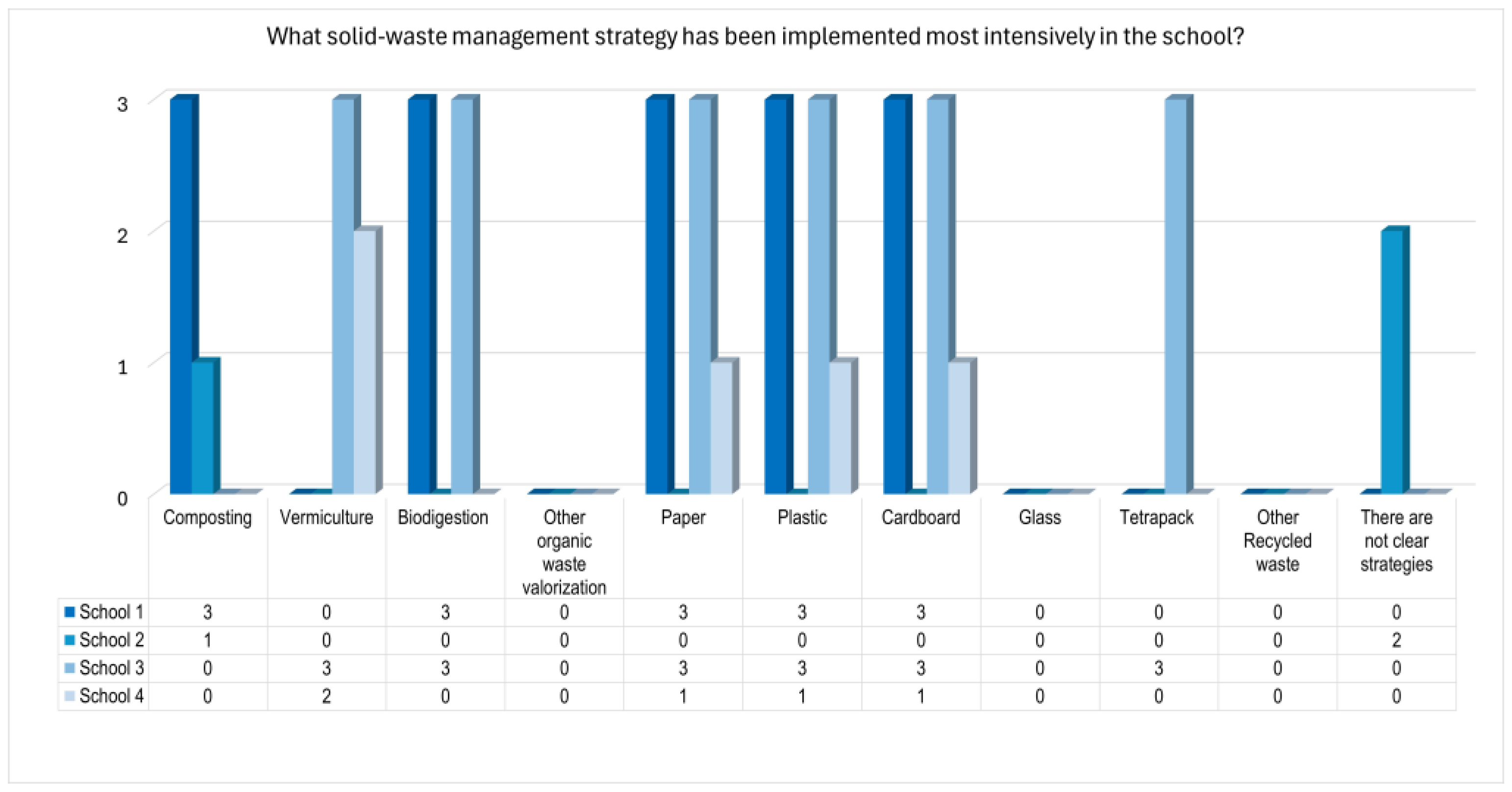
Furthermore, differences across schools in the types of waste-management strategies implemented reflect variations in infrastructure, institutional priorities, and community engagement. While some schools show a clearer orientation toward biodegradable organic-waste valorization—through composting, vermiculture, or biodigestion—others emphasize recycling or report the absence of consolidated strategies. These contrasts highlight the need for context-specific interventions that build on existing strengths while addressing gaps in technical capacity, space availability, and local waste-collection systems. The coexistence of highly engaged and less structured practices within the same territory illustrates that the transition toward circularity is uneven but evolving, driven not by standardized programs but by situated, community-based processes.
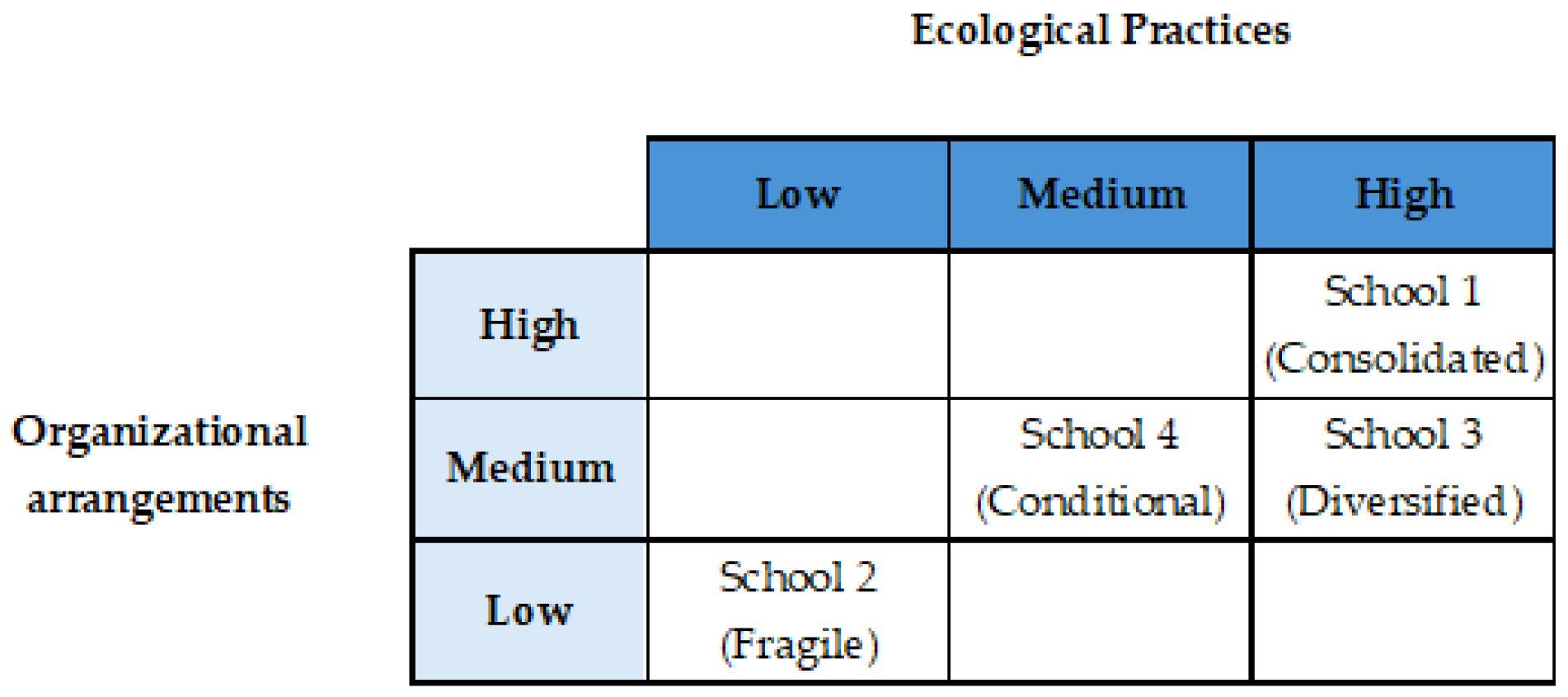
Taken together, these findings make it possible to understand school circularity not as a linear maturation process but as a set of differentiated institutional trajectories shaped by the interaction between two key dimensions: (a) the degree of development of ecological practices (their diversity, stability, and scope) and (b) the level of internal organization (leadership, clarity of roles, continuity, and community ownership). This perspective underscores that circularity depends not only on the existence of technical practices but also on how these practices become assembled with organizational structures and community dynamics.
An analytical reading of the trajectories of school circularity reveals that their differences are shaped by specific combinations of structural conditions and agency capacities present in each institution. Structural conditions refer to the availability and continuity of infrastructure, the existence of spaces and resources, and the degree of organizational formalization of environmental practices. Agency capacities, on the other hand, are expressed in teaching leadership, pedagogical commitment, collective ownership of the environmental problem, and the ability of school actors to sustain routines and responsibilities over time. The comparative analysis shows that when both dimensions are coherently articulated, circularity practices tend to stabilize and expand; conversely, when this articulation is weak or asymmetrical, initiatives remain fragmented, depend on specific actors, or exhibit high levels of discontinuity. This interaction is key to understanding the heterogeneity of trajectories observed among schools that share the same territory.
From this standpoint, School 1 exhibits a consolidated trajectory, with evidence of waste separation, recycling, composting, and the use of biodigesters. Interview data indicates coherent leadership, clear role distribution, and strong collective ownership. Here, ecological practices and institutional organization reinforce each other, forming a stable circularity system. This case suggests that the stability of circularity practices does not depend solely on the availability of infrastructure, but also on its coordination with teaching leaders capable of institutionalizing these practices in shared school routines that are sustained over time.
By contrast, School 2 presents a fragile trajectory. Although some isolated actions were mentioned, respondents repeatedly emphasized the absence of clear strategies. Interviews revealed a lack of assigned responsibilities, discontinuity, and limited institutional ownership. Thus, practices fail to consolidate, and the minimal organizational support restricts the possibility of establishing a functional school circularity system.
Meanwhile, School 3 develops a diversified trajectory, supported by a broad repertoire of practices such as vermicomposting, biodigesters, waste separation, recycling, and tetrapack collection. Interviews show strong teacher commitment and daily engagement, although internal tensions and uneven organization were also noted. Circularity in this school evolves through an environmental culture that sustains initiatives beyond rigid formal structures.
Lastly, School 4 displays a conditional trajectory. Although practices such as waste separation and vermicomposting are present, institutional organization remains weak. Interviews revealed a lack of consensus regarding the environmental problem, and actions depend largely on the initiative and commitment of specific individuals. Consequently, circularity operates only under particular conditions—functioning when key actors drive activities but lacking structures that ensure stability or continuity. This pattern shows that, in the absence of shared organizational structures and minimum institutional agreements, individual agency is insufficient to ensure the sustainability of practices, even when key actors have motivation and technical knowledge.
These four trajectories can be visualized through a two-dimensional matrix in which the horizontal axis represents the level of development of ecological practices (low–medium–high), and the vertical axis represents the level of development of organizational arrangements (low–medium–high). This schematic representation synthesizes how each school combines these factors and occupies a distinct position within the territorial circularity system (
Figure 6).
For analytical purposes, school trajectories were classified based on each school’s relative position in two empirical dimensions derived from the quantitative and qualitative evidence in the study. The level of development of ecological practices was established by considering, in a comparative manner, (i) the diversity of practices implemented (e.g., waste separation, composting, biodigestion, recycling), (ii) their degree of continuity over time, and (iii) their integration into the school’s daily routines. Schools were classified as low level when practices were isolated, sporadic, or discontinuous; medium level when there was moderate diversity of partially sustained actions; and high level when practices were multiple, stable, and regularly integrated into school operations.
Complementarily, the level of development of organizational arrangements was defined as the degree to which the school has structures, agreements, and forms of internal coordination that allow for the organization, maintenance, and continuity of environmental practices over time. This dimension was operationalized using criteria such as (i) the presence and stability of leadership, (ii) clarity in the distribution of roles, (iii) continuity of responsibilities, and (iv) the existence of collective ownership of environmental initiatives. A low level was assigned when actions depended mainly on individual initiatives and lacked stable structures or agreements; a medium level when there was shared leadership or basic agreements, but with limitations on continuity; and a high level when clear organizational arrangements, distributed responsibilities, and institutional commitment that transcended specific actors were observed.
Moreover, the findings invite a critical dialog with theoretical frameworks on sustainable practices, transformative learning, and socioecological transitions in rural territories. The heterogeneity observed across schools confirms, at least partially, the notion that environmental practices depend on specific socio-material configurations [
37,
38]. Schools 1 and 3 demonstrate consistent alignment between meanings, competencies, and infrastructures. However, the situation in School 4 introduces a dimension that existing literature has not fully explored: even when infrastructure and practices exist, the absence of a shared understanding of the environmental problem prevents them from becoming institutionally embedded. This suggests that the stability of circular practices requires a foundational cognitive agreement—namely, a shared recognition of the existence, relevance, and urgency of the issue. Without this interpretive framework, practices may persist in isolated forms or depend on individual actors but cannot evolve into a coherent school system.
Similarly, while the institutional fragility of School 2 aligns with structural limitations described by [
5] in rural territories, the data indicates that precariousness cannot be explained solely by material or administrative constraints. In this school, the environmental problem is indeed recognized; however, the difficulty lies in the absence of designated responsibilities, lack of continuity, and weak mechanisms for collective ownership. This highlights that fragile trajectories arise not only from external limitations but also from internal deficits related to task distribution and institutional stability.
Conversely, the presence of robust and diversified practices in Schools 1 and 3 supports transformative learning perspectives advanced by [
17,
18]. Yet, the findings also demonstrate that such learning depends not only on curricular innovations or pedagogical intention but on organizational stability, expressed through structured routines, clear responsibilities, and continuity over time. This extends existing frameworks by showing that transformative processes emerge not only in the classroom but also from how institutions organize and sustain environmental practices in their everyday functioning.
Furthermore, the agroecological experiences in Schools 1 and 3, including biodigesters, vermicomposting, waste separation, and recycling, reinforce propositions by [
26,
27] regarding agroecology as relational ecology. However, the experience of School 4 underscores that the mere presence of such practices does not guarantee meaningful learning when there is no shared understanding that legitimizes them. This reveals an additional dimension often overlooked in the literature: pedagogical agroecology requires not only infrastructure or environmental practices but also basic shared meanings that situate these activities within a collective educational project.
Finally, although the leadership dependence observed in School 4 aligns with arguments by [
22,
23] regarding educational agency in fragile contexts, the results show that such individualized leadership produces a specific form of instability. When practices rely primarily on the initiative of particular individuals, their continuity becomes tied to the permanence and motivation of these actors, limiting their integration into institutional dynamics. This highlights that while leadership can activate environmental processes, it does not guarantee their sustainability unless it is translated into shared structures and commitments.
The findings show that socioecological transitions in rural, megadiverse contexts do not depend exclusively on technical practices or devices, but rather on the articulation among infrastructures, cognitive agreements, internal organization, and community ties. Consequently, the study offers a more nuanced understanding of educational circularity, not as a uniform or progressive state, but as a situated assemblage of school configurations that reflect the conditions, capacities, and cultural meanings each educational community constructs within its own territory.





 ,
,