1. Introduction
Education currently faces the challenge of integrating emerging technologies, such as Generative Artificial Intelligence (GAI), into teaching and learning while maintaining an ethical, inclusive focus on skill development [
1]. These technologies, including models such as ChatGPT, DALL·E, and Gemini, are changing how educators design learning experiences by enabling the creation of personalized educational materials, automating cognitive tasks, and improving instructional methods in digital settings [
2]. Their use allows for content tailored to students’ specific needs and fosters more engaging and interactive learning [
3]. Additionally, integrating GAI into instructional design helps automate routine tasks and develop personalized experiences, thereby boosting knowledge retention and student motivation [
4]. These adaptable capabilities are instrumental in large-scale learning environments such as MOOCs, where students come from diverse backgrounds and have varying skill levels [
5].
Instructional design is a vital field that ensures consistency in both pedagogy and technology within online learning environments. It involves the systematic creation of educational experiences based on learning theories to enhance educational processes through innovative teaching tools and suitable pedagogical methods [
6]. Since the 1970s, traditional models like ADDIE (Analysis, Design, Development, Implementation, Evaluation) and SAM (Successive Approximation Model) have been commonly used to organize educational strategies [
7]. However, in the post-pandemic era, the need for more flexible, dynamic, and adaptable approaches that leverage digital collaborative tools and GAI has become increasingly apparent [
8].
In this context, the 4PADAFE methodology was developed, an innovative instructional design approach aimed at empowering teachers and students to create virtual learning environments rooted in creativity, experimentation, and ongoing feedback [
8]. Specifically created for higher education, 4PADAFE promotes a comprehensive, iterative, and technology-driven approach to instructional processes [
9]. The methodology aligns pedagogical goals with content development, didactic material creation, and teaching strategies, all while integrating digital innovation. It has proven especially effective for projects involving emerging technologies such as GAI, as it supports the seamless integration of digital resources into pedagogical planning [
4].
The name 4PADAFE is an acronym based on its initial four core stages (hence the prefix “4”), but the full methodology includes seven interconnected phases [
10].
Academic Project: Initial planning of the e-learning initiative and development of the course’s educational framework.
Strategic Plan: Definition of the strategic educational planning, including curricular alignment, global strategies, and overall schedule.
Instructional Planning: Detailed development of teaching units, learning goals, specific content, and the choice of teaching methods and tools (including GAI).
Production of Didactic Material: Developing educational resources and multimedia materials (e.g., videos, guides, assessments) used in the course.
Teaching Action: Executing planned activities on the virtual platform (e.g., delivering MOOC modules, moderating forums, managing assignments).
Formative Adjustments: Gathering feedback from students and instructors during delivery, analyzing performance, and making real-time improvements to enhance the learning experience.
Evaluation: Thorough assessment of the course’s impact and learning outcomes using both qualitative and quantitative methods.
Each phase is interconnected and includes cross-cutting elements such as curriculum alignment, integration of digital resources, ongoing feedback, and impact assessment. The holistic and iterative nature of 4PADAFE allows revisiting earlier phases based on formative adjustments, ensuring pedagogical consistency throughout the instructional design process. Therefore, 4PADAFE enables systematic planning from strategic conception to final evaluation, guaranteeing that GAI integration is pedagogically sound and effective [
8].
The significance of 4PADAFE is especially evident in large online learning environments (MOOCs). Its flexibility enables it to adapt to different educational settings and individual student needs, enhancing the learning experience across diverse contexts. In this study, the application of 4PADAFE in designing a MOOC for Systems Engineering students, focused on GAI tools for university teaching, demonstrates its capacity to support various training objectives and contexts [
11].
GAI tools are transforming education by offering new methods to create and customize educational content. Advanced tools like ChatGPT and other language models enable the production of personalized learning materials, boosting process efficiency and improving learning experiences [
1]. Their integration into instructional design automates repetitive tasks and creates personalized learning paths, which increase student motivation and retention. GAI also introduces innovative content formats, such as simulations, educational video scripts, and interactive activities that encourage creativity and critical thinking. This flexibility is especially valuable in MOOCs with diverse student groups and varying academic levels [
12].
This study aims to analyze how applying the 4PADAFE methodology, along with GAI tools, contributes to the instructional design of a MOOC focused on creating innovative didactic materials by Systems Engineering students, demonstrating its feasibility without relying on disciplinary experts. The specific objectives are:
To examine the application of the 4PADAFE phases in designing the MOOC “Generative Artificial Intelligence Tools for University Teaching.”
To describe the use of GAI tools by Systems Engineering students in creating educational materials, identifying the tools employed, and the resulting resources.
To verify whether the use of 4PADAFE and GAI tools enabled the instructional design of the MOOC without requiring experts in related subject areas.
Therefore, the research question is: How do the 4PADAFE methodology and GAI tools enhance the instructional design of a MOOC focused on creating innovative didactic materials by engineering students without the direct involvement of subject matter experts?
This article is part of the research project titled “Methodology for Designing Innovative Virtual Learning Environments in Graduate Programs: A Case Study,” which examines pedagogical and technological models used in instructional design [
8]. The current study uses a qualitative approach to explore the experience of Systems Engineering students in designing a MOOC using GAI tools and the 4PADAFE methodology. It complements a previous publication in Sustainability titled “Empowering Education with Generative Artificial Intelligence Tools: Approach with an Instructional Design Matrix,” which provides a quantitative analysis of the same project. The two articles are methodologically connected: the first offers statistical data on the model’s impact, while this article dives deeper into the instructional design process. This complementarity enhances the validity of the findings concerning the limited sample size (20 participants from a single context) and provides a more complete view of the model’s effectiveness [
8].
As part of this study, a MOOC titled “Generative Artificial Intelligence Tools for University Teaching: ChatGPT Techniques” was designed and implemented. The course lasted four weeks (one academic month) and was offered during a regular academic term with participation from Systems Engineering students. The structure and instructional design of the MOOC were based on the 4PADAFE methodology, which guided the process from initial academic planning to final evaluation. While the full course content is not included here due to intellectual property considerations, its thematic structure covers key topics such as the responsible use of GAI in education, instructional design supported by AI tools, the creation of didactic materials through prompt engineering, and formative assessment enhanced by AI technologies [
13,
14].
The course was entirely delivered online and stayed active throughout the month. During this time, students participated in both real-time (e.g., webinars, virtual mentoring sessions) and flexible (e.g., discussion forums, practical assignments) activities. They also engaged with AI-generated resources and developed their own educational materials as part of their instructional design training [
15].
Traditionally, creating high-quality virtual courses, especially MOOCs, needed a diverse team of educational experts, subject matter specialists, graphic artists, coders, audiovisual producers, and multimedia technicians [
16]. For example, recording a single educational video often requires a professional studio setup, high-end cameras, microphones, proper lighting, and expensive editing software. While effective, this approach required significant time, effort, and money.
Today, the integration of GAI tools has drastically changed this landscape. Tasks that used to take weeks and require large teams can now be completed in just hours by a small group with basic technical skills [
17]. The use of GAI significantly reduces the need for subject matter experts in material development, as these tools enable users to:
Create clear and well-organized content from general descriptions.
Create personalized images, graphics, and animations without needing advanced design skills.
Create professional voiceovers for videos or audios without needing voice actors or studios.
Automatically generate assessments and interactive resources, like adaptive quizzes, simulations, or AI-powered educational chatbots.
In this scenario, Systems Engineering students become a vital resource in the design and development of MOOCs. Thanks to their technical training, they can integrate, adapt, and optimize GAI tools to create comprehensive learning materials without relying on disciplinary experts. A key factor in channeling these abilities was the implementation of the 4PADAFE methodology, which provided a structured framework for planning, designing, facilitating, providing feedback, and evaluating [
10]. This approach enabled students to systematically manage GAI tools, ensuring each resource aligned with specific learning objectives and met pedagogical and technical quality standards.
The convergence of 4PADAFE and GAI has shown that it is possible to plan and produce a complete MOOC in much shorter timeframes, with fewer people, while optimizing resources and maintaining high academic standards. This method democratizes course creation in higher education, providing an agile, scalable, and sustainable instructional design model [
15,
18].
The article is organized into five main sections. The Introduction provides context for the study, emphasizing the importance of instructional design, the 4PADAFE methodology, and GAI in education. The Theoretical Framework discusses key conceptual foundations, including instructional design, the 4PADAFE structure, and GAI applications in educational settings. The Methodology section explains the qualitative research approach, data collection methods (semi-structured interviews and non-participant observation), and analysis techniques. The Results section presents findings on the implementation of 4PADAFE and GAI in MOOC design. Finally, the Discussion and Conclusions interpret the findings in relation to existing literature, highlight implications for educational practice and future research, and offer recommendations for effectively integrating GAI into instructional design processes.
2. Literature Review: 4PADAFE Methodology, Generative Artificial Intelligence, Instructional Design, and Characteristics of MOOCS
Recent research highlights that the emergence of Generative Artificial Intelligence (GAI) has transformed education, making it a potentially powerful tool for teaching and learning [
19]. Current studies show that combining digital technologies (e.g., AI, virtual reality) with active learning strategies (e.g., problem-based learning, collaborative learning) creates a synergy that enhances student engagement and promotes critical thinking [
20]. This integration allows for personalized, immersive learning experiences that better equip students for the challenges of the 21st century [
21]. Simultaneously, organizations like UNESCO advocate for the responsible use of AI in education, aligning with the Sustainable Development Goals (SDG 4) and the principles of inclusion and equity [
22].
The 4PADAFE methodology has emerged in this context as a dynamic and innovative instructional design framework. It is organized around seven interconnected phases: Academic Project, Strategic Planning, Instructional Planning, Didactic Material Production, Teaching Action, Formative Adjustments, and Evaluation, combining methodological precision with pedagogical flexibility [
10]. Recent research shows that 4PADAFE integrates generative tools throughout all phases, enabling personalized learning, immediate feedback, and adaptive content tailored to students’ needs. For example, when used in MOOCs, instructors have successfully created interactive activities enhanced by AI-generated content, fostering active participation and meeting instructional objectives. Overall, the synergy between 4PADAFE and AI tools boosts instructional creativity, teacher independence, and the quality of virtual learning environments [
23].
Unlike traditional models like ADDIE [
24], which follow a fixed sequence of Analysis, Design, Development, Implementation, Evaluation, the 4PADAFE methodology explicitly includes formative feedback and adjustments as separate phases. This feature aligns 4PADAFE with agile design methods, such as the SAM model’s iterative approach, enabling mid-course modifications while maintaining a clear overall structure [
7]. These distinctions highlight the unique nature of 4PADAFE: it combines the systematic rigor of ADDIE with the adaptive, iterative focus of SAM, offering a structured yet flexible framework for modern instructional design [
7].
Various studies support key aspects of our approach. For example [
25], conducted a critical review of intelligent tutors in higher education, highlighting issues such as inconsistent quality of AI-generated responses and the need for ongoing teacher supervision to correct errors [
26]. Our study aligns with this recommendation: the implementation of the Educational GPT Assistant in the Application phase (4PADAFE) was not meant to be an autonomous substitute but rather a support system whose suggestions were reviewed and validated by the human facilitator at each iteration, ensuring the pedagogical quality of the generated material. Similarly, authors such as [
27] observed that the educational use of models such as GPT-4 improves significantly when structured, well-formulated prompts aligned with teaching goals are employed. In our case, students had access to prompts previously designed using the 4PADAFE methodology and developed pedagogically oriented prompts that enabled participants without teacher training to produce high-quality content [
28].
Furthermore, research on adopting AI in educational settings shows that a guided process involving participants can improve learners’ digital skills and confidence in using new technologies. This aligns with what we observed in our project, by following a structured process (4PADAFE) with gradually increasing autonomy, students gained technical skills and confidence in using IAG, supporting the findings in existing literature about the benefits of learning through guided innovation frameworks [
29].
This study provides evidence that challenges some assumptions from earlier research. Traditional studies have emphasized the need for formal pedagogical training and expert supervision in instructional design to ensure the quality of educational materials [
30]. However, our findings show that undergraduate students without prior teaching experience can successfully develop innovative and pedagogically sound learning materials. This difference may be explained by two contextual factors: first, participants worked within a structured, explicit instructional framework, 4PADAFE, which provided step-by-step pedagogical guidance; and second, their academic background in systems engineering provided them with transferable skills in analysis, technology, and organization. These skills are recognized in the literature as support for novice instructional designers when aided by appropriate tools and frameworks [
6].
Another point of divergence is in how generative artificial intelligence (GAI) is integrated. While earlier studies [
31] have shown that GAI can offer personalized feedback, its application has often been limited to isolated or experimental settings. In contrast, our research systematically incorporated GAI across multiple stages of the instructional design process through 4PADAFE. Specifically, GAI tools were used not only to create content (Phase Production) but also to assist with prompt validation, peer review, and feedback adjustments (Phase 6: Feedback). This organized approach contributes new insights to the literature by demonstrating how generative tools can be practically used within a teaching framework to improve coherence and instructional quality, rather than being applied randomly [
8].
Furthermore, unlike approaches that rely too heavily on AI for instructional roles, our model maintained a balanced mix of human and AI input. AI handled technical production tasks (e.g., drafting, visual creation), while humans stayed responsible for supervision, pedagogical alignment, and ongoing refinement. This approach aligns with UNESCO’s recent recommendations for ethical and teacher-guided AI use in education, offering a cautiously optimistic yet critically aware view on AI integration [
22].
In summary, our study offers empirical proof of a methodological innovation: it shows that, with a clear pedagogical structure (4PADAFE) and prompts aligned with the curriculum, students with a technological background can effectively act as instructional designers in a MOOC, using generative AI tools to develop personalized, high-quality educational content. This finding indicates that success in AI-assisted instructional design does not rely solely on prior pedagogical training, but mainly on a solid methodological framework, accessible AI tools, and digital skills that many students (and teachers in training) already have [
8].
2.1. Phases of the 4PADAFE Methodology
The 4PADAFE methodology is an instructional design matrix for virtual courses consisting of seven sequential phases. These stages range from the initial planning of the eLearning project to the final assessment of learning (Academic Project, Strategic Plan, Instructional Design, Production of Teaching Materials, Teaching Action, Formative Adjustments, and Assessment).
Each phase addresses a key aspect of educational design, and together, they provide a structured framework that aligns learning objectives with content, teaching activities, and assessments, ensuring the consistency and quality of the course’s instructional design. Below, we detail how each phase of 4PADAFE was applied in the development of the MOOC studied in the context of related literature on this methodology, GAI, instructional design, and the characteristics of MOOCs [
10].
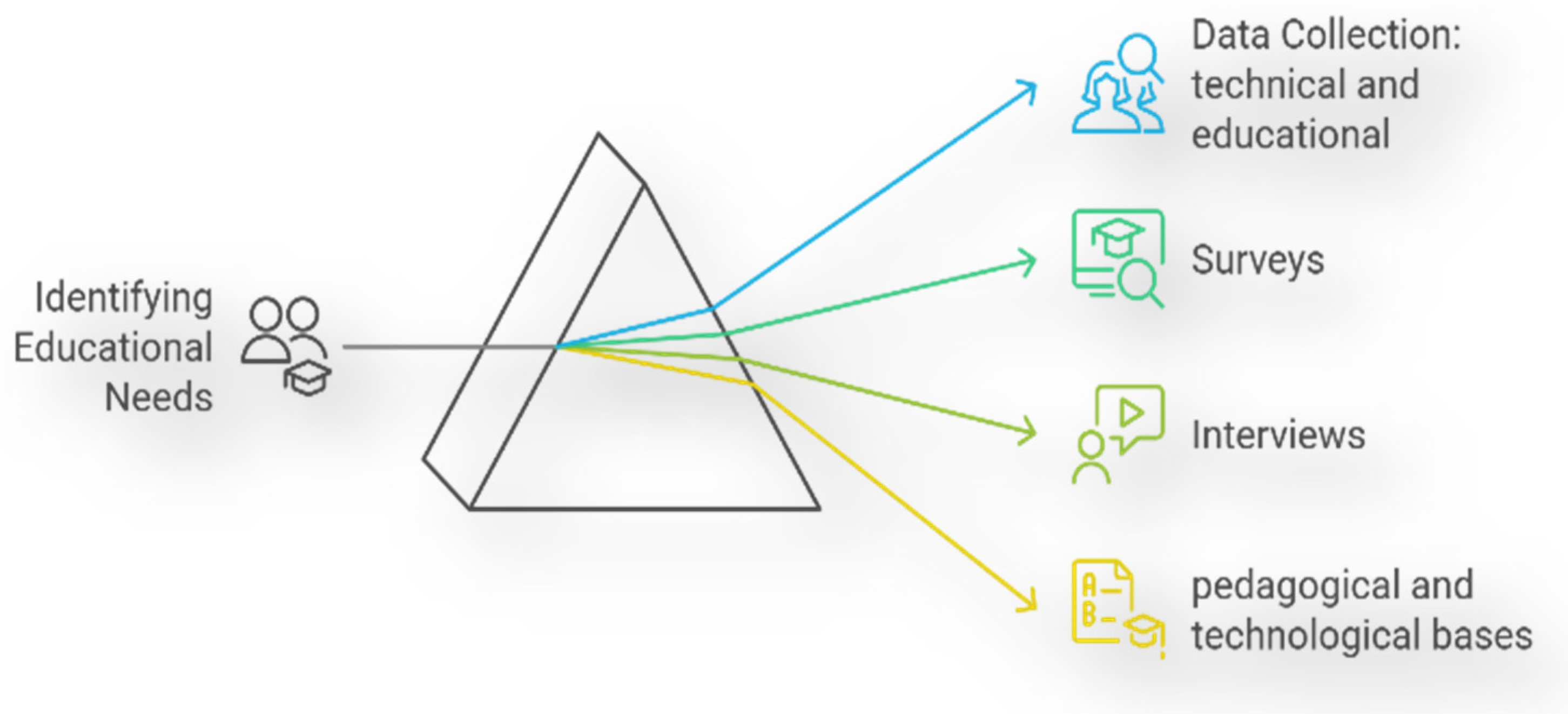
Phase 1. In the case of the MOOC developed, the researcher (an expert in content, pedagogy, and ICT) took on the e-learning planning and the initial academic project for the course, defining the overall pedagogical vision and methodological foundations. This phase laid the foundations for the design, establishing the pedagogical and technological guidelines for the virtual learning environment, as well as the target audience and the training needs to be addressed (See
Figure 1).
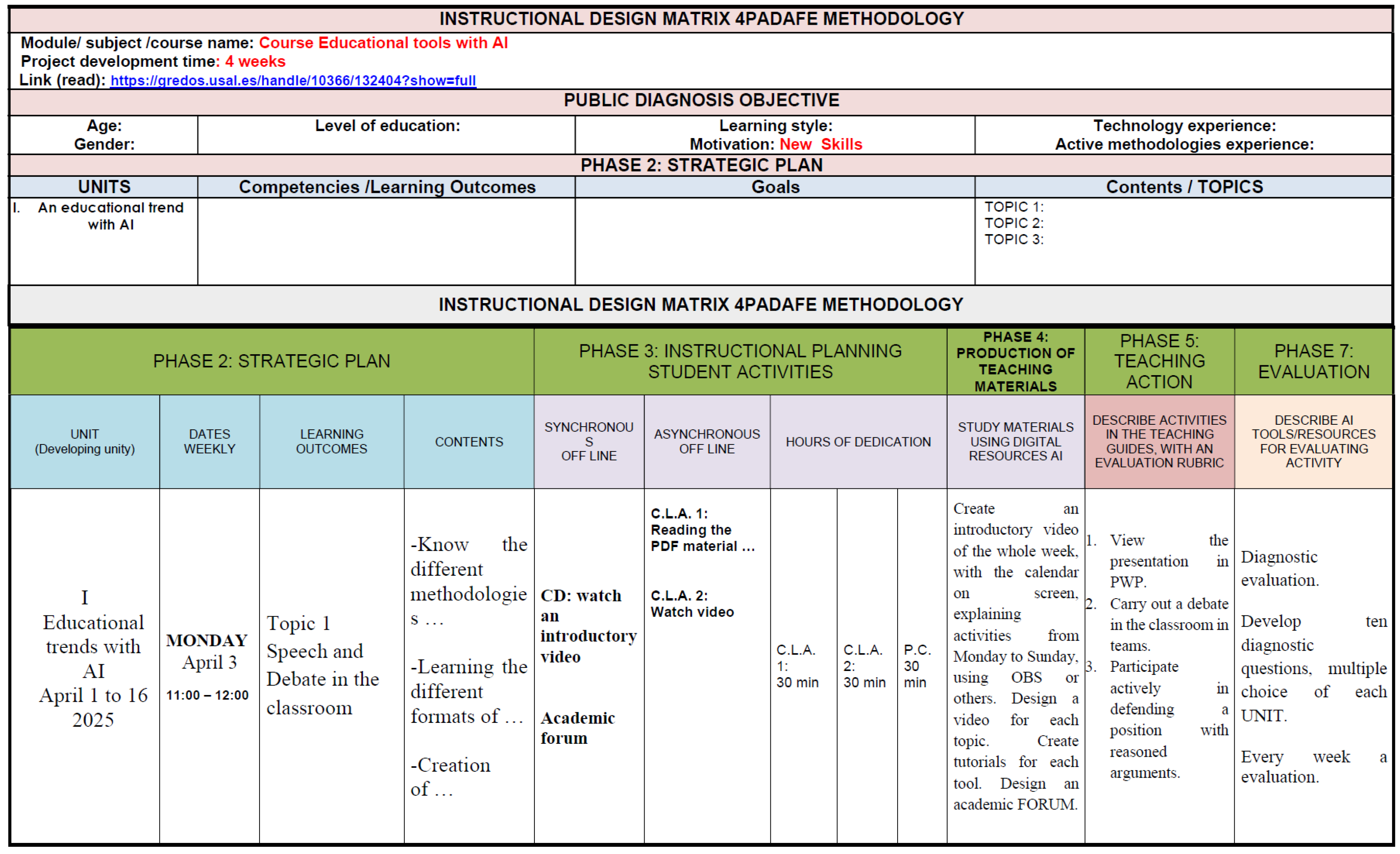
Phase 2. With the project outlined, the course’s strategic planning proceeded. The researcher developed the thematic structure by creating teaching units, determining the specific objectives, and specifying the expected learning outcomes for each unit.
In other words, the competencies (both generic and specific) to be developed were identified, and the content was organized into logical sequences (by week or module). This strategic planning served as a macro roadmap for the MOOC, ensuring clarity from the outset about what to teach and why (what students are expected to achieve). The guidelines for this phase were documented in a plan that guided all subsequent stages of the design (See
Figure 2).
Phase 3: In the third phase, the researcher developed a detailed instructional design for the MOOC, translating the strategic plan into a concrete instructional plan. Here, the learning and teaching strategies for each unit were defined, incorporating active and collaborative methods relevant to the content, and appropriate teaching and technological strategies were selected (e.g., participatory activities in forums, automated quizzes, use of simulators, or interactive tools).
Likewise, the necessary open educational materials and teaching resources (readings, exercises, case studies, etc.) were identified, along with the corresponding formative and summative assessment tools for each learning objective. All this planning was carried out in line with the objectives formulated in Phase 2, ensuring direct correspondence between the intended outcomes and the proposed activities and resources.
The literature indicates that using an instructional matrix, such as 4PADAFE, facilitates coherence by integrating objectives, content, activities, and assessments into a consistent whole. Indeed, at the end of Phase 3, the MOOC had a comprehensive instructional design, ready for production and implementation, and grounded in solid pedagogical principles established by the expert [
8] (See
Figure 3).
Phase 4: The fourth phase, Production of Teaching Materials, focused on creating the MOOC’s educational resources, a stage marked in this study by the innovative use of GAI tools. Building on the detailed planning from the previous phases, a group of 20 students training as instructional designers was responsible for producing the teaching materials under the researcher’s supervision. These students were provided with a pre-structured course (with content organized, objectives, and strategies already defined by the expert in phases 2 and 3), and their task was to transform those plans into concrete resources.
Using various GAI tools and following prompts designed and facilitated by the researcher, the students generated a variety of digital educational materials for the MOOC [
32]. The products developed included interactive tutorials, digital books (e-books) with the contents of each unit, introductory videos to motivate and contextualize participants, step-by-step tutorial videos for practical activities, downloadable teaching guides, and even chatbots integrated into each virtual classroom and conversational assistants (customized GPTs) designed to answer students’ frequently asked questions.
All these resources were developed in strict accordance with the previously outlined thematic structure and objectives, which ensured their relevance and pedagogical quality. It is worth noting that the use of GAI [
29] has significantly accelerated and optimized the production of materials. These tools simplify the laborious process of searching for and creating teaching content, partially automating tasks that would otherwise require significant time or the intervention of content experts.
Recent studies report efficiency improvements in the preparation of materials for MOOCs [
33] using GAI, consistent with this project’s experience. In summary, Phase 4 demonstrated that, by relying on the 4PADAFE methodological framework and GAI tools, it is possible to produce a MOOC without extensive recourse to additional subject matter experts. The student designers, guided by the researcher and assisted by AI, generated professional-quality materials.
Phase 5. In this phase, both individual and group teaching activities were implemented through forums and personalized messages on the MOOC platform. The researcher designed gamified academic forums to encourage participation; subsequently, the students (acting as instructional designers) configured and enabled them in the virtual environment [
3]. In addition, the teaching guides developed by the researcher were formatted in Canva by the students and then uploaded to the course platform. Links to synchronous videoconference sessions were also included to encourage real-time interaction.
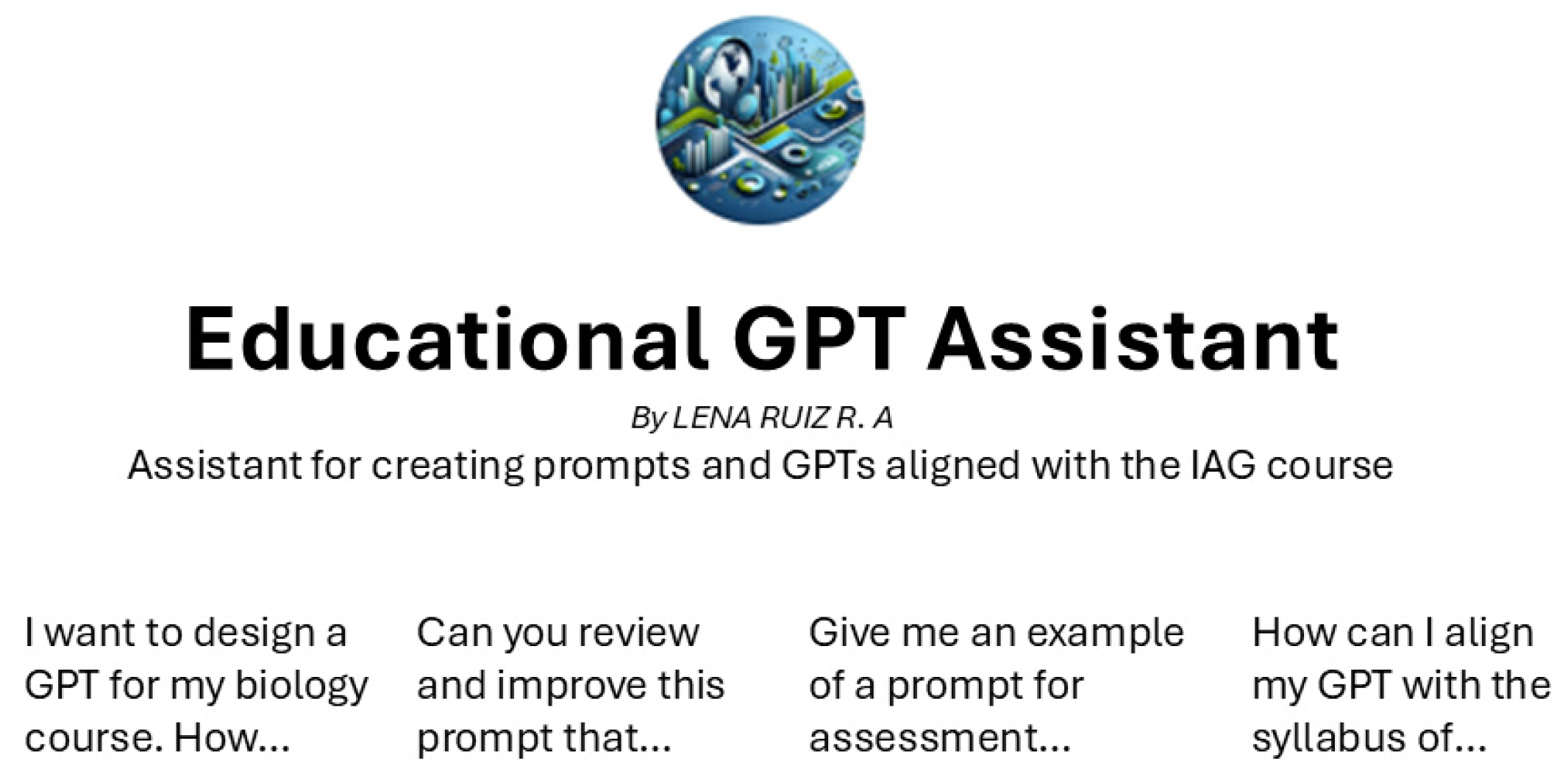
Furthermore, an Educational GPT Assistant was integrated into the MOOC [
11] to validate, both pedagogically and technically, the textual prompts used during the production phase of the teaching material (Phase 4). This validation was conducted in accordance with the objectives, competencies, and methodologies outlined in the course syllabus and teaching guide. The GPT [
34] assistant evaluated and optimized the quality of the prompts used to generate various instructional resources [
35]. These resources include:
Themed instructional tutorials.
Learning guides for each unit.
Digital books (e-books) for the course.
Videos created using GAI.
Educational chatbots for interactive practice.
Specialized GPT models by subject unit.
Gamified discussion forums with participation tracking.
Formative assessments based on performance rubrics.
Additionally, the generative model provided recommendations to enhance the clarity, structure, and consistency of the prompts [
35], aligning with the course’s innovative pedagogical practices. In particular, it suggested adjustments that would strengthen the competency-based approach and promote the responsible use of GAI.
Prompts for practice in Google AI Studio (GAI Creation Lab) were also designed. Specific instructions and challenges were established for students to perform practical exercises on the Google AI Studio platform within an environment called the “GAI Creation Lab.” This virtual lab was a creative space where participants applied GAI tools to real-world cases, guided by carefully crafted prompts [
35].
The prompts [
1] served as triggers for activities (e.g., generating specific types of content with AI, experimenting with model parameters), as illustrated in
Figure 4, providing both clear instructions and success criteria that allowed students to self-assess their products. Having these guidelines in place in the GAI lab made it easier for students to actively explore emerging technologies in a safe and guided manner, connecting theory with practice in an experimental context.
During Phase 4 of the 4PADAFE methodology (Didactic Material Production), educational prompts were validated using a five-step procedure to ensure pedagogical relevance, structural coherence, and technical clarity. The process included identifying the instructional purpose, verifying prompt structure (role, context, objective, format), checking alignment with learning outcomes, refining language for precision, and conducting iterative testing in GAI tools such as ChatGPT [
35]. Adjustments were made based on the quality of AI-generated outputs. An example transformation, from a vague to a well-defined prompt, demonstrated the framework’s effectiveness. The whole validation process is outlined in
Table 1.
Overall, the results of this phase demonstrate that the 4PADAFE methodology, enhanced with GAI tools, facilitated collaborative instructional design for the MOOC, eliminating the need for external subject-area experts. In this way, integrating the GPT assistant as a validator of the guidelines ensured that the materials aligned with the objectives and competencies established in the syllabus and teaching guide, supporting the competency-based approach and the innovative pedagogical practices envisaged in the proposal. These findings confirm the viability of the proposed approach to MOOC design [
13].
Phase 6: During the MOOC, the training adjustments phase was carried out, albeit minimally, thanks to the solid foundation of prior planning. The 4PADAFE methodology includes this phase to make modifications and improvements based on student feedback and process observations. As the course progressed, the researcher and co-facilitators (students) collected observations from the participants’ experiences and data from the platform analytics [
8].
Along the way, minor improvements were made to some resources and activities: for example, instructions for specific tasks where students expressed doubts were clarified, and the pace of content release was adjusted if a week proved to be too heavy.
Thanks to the consistent initial design [
4], no significant changes were necessary; however, this phase ensured the course maintained its quality and effectively addressed learners’ real needs. The agile implementation of adjustments throughout the course demonstrates 4PADAFE’s flexibility in optimizing instruction in real time without deviating from the overall plan (See
Figure 5).
Phase 7. Assessment is the final stage of the 4PADAFE methodological cycle, dedicated to designing and implementing MOOC assessment tools [
35]. In this phase, instructional designers (students) developed assessment tools using prompts generated by the researcher, leveraging GAI tools to create questionnaires, rubrics, and other tests aligned with learning objectives. The following main tools were designed:
Diagnostic assessment at the beginning of the course.
Weekly assessments per unit, aligned with academic planning.
Final comprehensive assessment.
Assessment for teachers who teach classes, considering educational quality indicators.
These instruments encompass criteria related to academic management, curriculum design, content production, educational technology, and pedagogical mediation, all of which adhere to contemporary university assessment standards. In particular, satisfaction surveys for teachers (and other stakeholders) were incorporated to gather perceptions about the institutional climate, communication, and management. Additionally, rubrics and internal audit processes were developed as part of an institutional self-assessment system designed to promote continuous improvement [
36].
This approach to continuous, multidimensional assessment addresses current challenges in higher education, emphasizing the ongoing evaluation of the educational process in technologically enriched environments.
Finally, Phase 7 closes the 4PADAFE cycle, allowing the institution to reflect comprehensively on all aspects of the course, from the initial academic project (Phase 1) to the evaluation of the educational process itself. This iterative closure yields clear, accurate results that inform educational adjustments and drive continuous improvement in the MOOC.
In this way, the study’s objective is corroborated, the 4PADAFE methodology, supported by GAI, facilitated the instructional design of the MOOC [
36] without requiring experts in the relevant disciplinary areas [
8].
2.2. Generative Artificial Intelligence: Relevant Concepts and Tools
GAI refers to technologies that can generate original content from existing data. Tools such as GPT-4, developed by OpenAI, utilize advanced language models to autonomously generate texts, scripts, questions, and other educational materials [
18]. These tools have become valuable resources in the educational field, enabling the personalization and adaptation of content to students’ specific needs [
17].
GAI has significant potential to transform education by automating tasks, personalizing learning, and enhancing teaching experiences [
3]. Its applications include content creation, administrative automation, interactive learning environments, and collaborative learning [
36].
However, integrating GAI into education presents challenges, as it raises concerns about data privacy, ethical implications, and the persistence of algorithmic biases. These issues underscore the need to approach GAI adoption with a critical and responsible perspective. Recent scholarship has emphasized the importance of developing explainable and transparent algorithms, strengthening encryption and cybersecurity measures, and establishing regulatory frameworks that safeguard both learners and institutions. Addressing these dimensions is essential to ensure that the future of GAI in education evolves in a sustainable, equitable, and ethically sound manner [
12,
37].
GAI is transforming education by enhancing the teaching and learning process and fostering personalized learning [
29]. It facilitates the development of autonomous learners and critical thinkers while providing tools for teacher training and academic planning [
38]. Its integration with instructional design matrices, such as 4PADAFE, optimizes the effectiveness of educational activities [
8].
Case studies demonstrate that its use in adaptive learning environments enhances student engagement, improves test scores, and accelerates skill development [
39]. However, ethical challenges and the need for established codes of conduct persist [
40]. With the transition from 4.0 to 5.0 education, the goal is to strike a balance between personalization, socio-emotional learning, and human connection [
5].
2.3. Instructional Design and Characteristics of MOOCs
To strengthen the theoretical framework of instructional design in MOOCs, this study incorporates the foundational contributions of key scholars in the field [
41], proposes the Conversational Framework, which emphasizes the importance of interaction between the learner and the digital environment to foster active and meaningful learning [
42] developed the Theory of Online Learning, which highlights the essential roles of learner-content, learner-instructor, and learner-learner interaction in effective online education. In the context of open education, the study [
43] introduced Connectivism, a learning theory for the digital age that views knowledge as a distributed network facilitated by technology.
Additionally, the study [
44] contributed the First Principles of Instruction, a set of empirically based principles focused on real-world problem-solving, activation of prior knowledge, and meaningful application.
The 4PADAFE methodology draws on and integrates these theoretical foundations by structuring a sequential, practice-oriented model for MOOC design that promotes interaction, active learning, the use of emerging technologies, and ongoing evaluation, fully aligned with the pedagogical principles proposed by these authors [
45].
Massive Open Online Courses (MOOCs) are educational platforms that offer courses accessible to a large number of students simultaneously over the Internet. MOOCs are characterized by their ability to reach a global audience, their flexibility in time and space, and the variety of educational resources they offer, including videos, readings, discussion forums, and interactive assessments [
46].
Recent research on instructional design for MOOCs highlights key considerations for effective online learning. Flexibility, collective knowledge, emotions, and assessment feedback are crucial, and recommendations are provided to reinforce participants’ training in providing constructive feedback [
47]. Integrating multimedia principles, such as coherence and personalization, connectivism, and active learning, has promoted digital competencies [
43,
46].
A study on the development of academic literacy competencies in MOOCs emphasizes the importance of recursive assignments and the instructor’s presence in the videos while also highlighting the challenges in self-management and peer-to-peer work [
48]. Additionally, a proposed instructional design procedure for MOOCs and personalized online courses suggests considering theoretical aspects and following a concise guideline for course development [
15].
These findings contribute to the continuous improvement of MOOC design and implementation strategies. Additionally, when teacher facilitation, student collaboration, and immersive activities are emphasized, learning outcomes can be enhanced [
16]. When designed effectively, MOOCs have the potential to promote inclusive, equitable, and high-quality education, particularly for underserved populations [
11].
Instructional design in MOOCs is crucial to ensure that courses are practical and engaging for learners. A good instructional design organizes and presents content clearly and coherently, incorporating interactive and collaborative elements that facilitate active learning. Research indicates that a well-planned instructional design can significantly improve student retention and engagement in MOOCs [
16].
Key elements include using learning analytics to enhance course design, implementing motivational frameworks, such as the Open Quest Framework, to increase learner engagement [
49], and emphasizing learning engagement through teacher facilitation and collaborative activities [
16]. A large-scale study of a MOOC found that transactional interaction between students and content, as well as course structure and assessment, were significant predictors of learner control and a sense of progress [
50].
The same study revealed that transactional interaction and structure also predicted perceived effectiveness. These findings highlight the importance of carefully designed instructional components in MOOCs in enhancing student learning experiences, improving retention rates, and ensuring the achievement of learning objectives [
46].
The combination of the 4PADAFE methodology and GAI tools can elevate the instructional design of MOOCs, enabling the creation of innovative, personalized learning materials that enhance the learning experience for a diverse audience.
The concept of MOOC innovation in this study refers to integrating emerging technologies, particularly GAI, with learner-centered instructional design principles to enhance the scalability, interactivity, and personalization of open online courses. Innovation in MOOCs is understood not only as the incorporation of digital tools but also as a pedagogical transformation that enables active learning, collaboration, and continuous assessment within flexible and autonomous environments [
51]. In this project, instructional innovation was operationalized through the 4PADAFE methodology, which aligns course structure, content, activities, and assessment across seven phases, serving as both a framework and a roadmap for instructional design.
This approach follows recognized models of quality in online learning design, the theory of online learning, and the ADDIE model [
7], and emphasizes coherence among learning outcomes, instructional strategies, and assessment tools. Supporting documents, such as the instructional design matrix, syllabus outlines, and validated assessment rubrics, were used to guide each phase of course development and are available upon request. These resources demonstrate that the innovation described in the MOOC was not only technological but systematic, documented, and pedagogically grounded [
8].
3. Materials and Methods
The qualitative data were analyzed using a combination of Python programming and Microsoft Excel pivot tables to ensure analytical precision, transparency, and replicability. Python 3.0 was applied to preprocess and structure the textual data, using functions for data cleaning, frequency analysis, and keyword extraction to identify emerging thematic patterns. Subsequently, Excel pivot tables were employed to categorize and cross-tabulate the coded information, enabling the visualization of co-occurrences, frequency distributions, and relationships among the identified themes. This combined computational and tabular approach enhanced both the traceability and methodological rigor of the qualitative analysis.
In addition, data triangulation was performed by integrating three complementary data sources: (1) participants’ reflective journals, (2) facilitators’ observational field notes, and (3) learning analytics extracted from the MOOC platform. The integration of Python-assisted text analysis with spreadsheet-based categorization yielded a comprehensive, evidence-based interpretation of the findings.
The qualitative approach was selected because it enables an in-depth understanding of the experiences, perceptions, and processes associated with the instructional design of a MOOC developed using the 4PADAFE methodology and Generative Artificial Intelligence (GAI). As highlighted by previous studies [
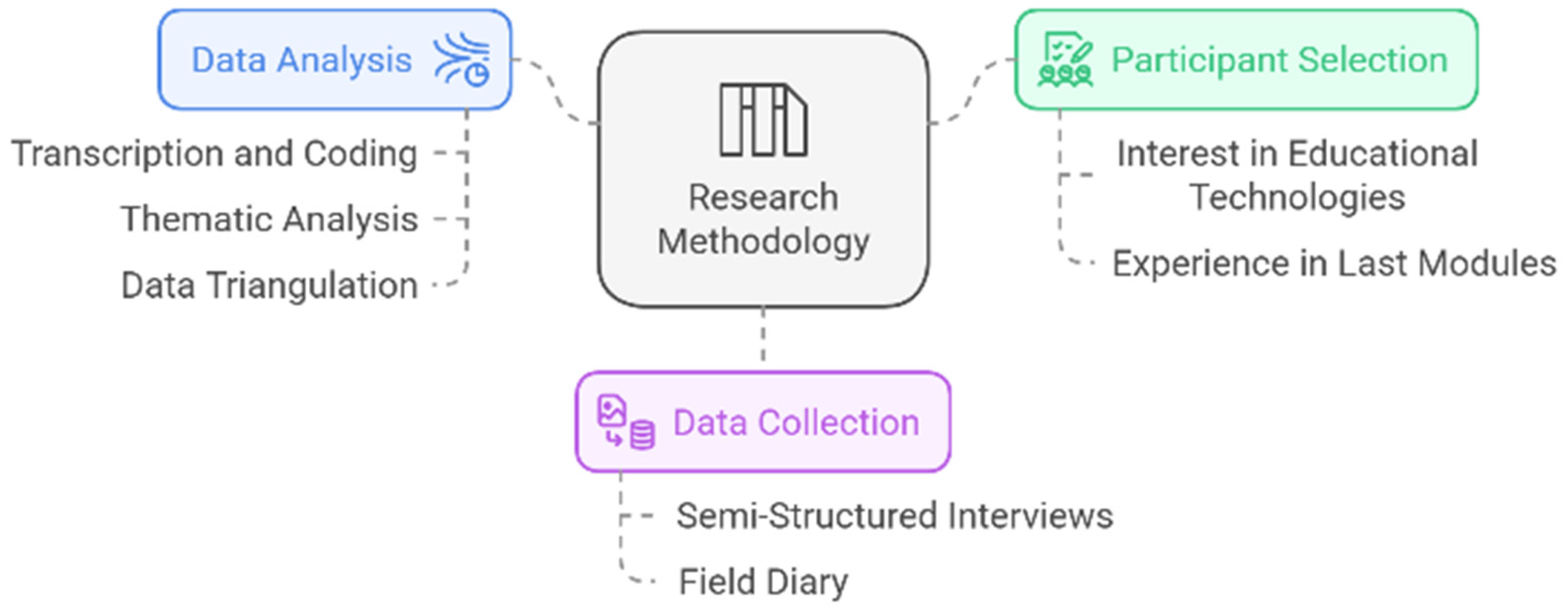
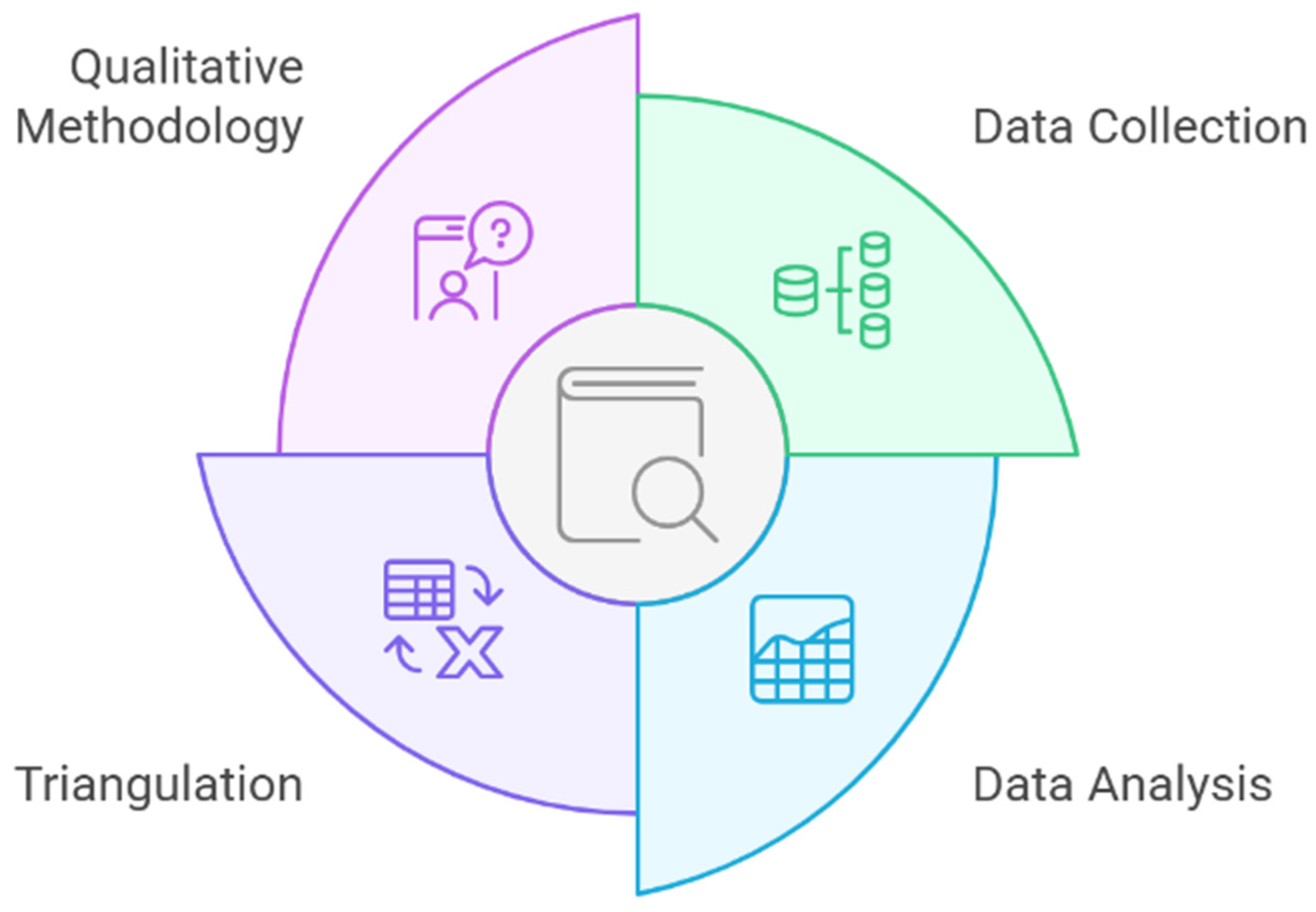
52] qualitative research is particularly effective for exploring complex educational phenomena and gaining a holistic view of the study context. This approach enabled the research team to capture students’ perceptions and experiences during the MOOC design process, offering a rich, contextualized understanding of how the 4PADAFE framework and GAI tools influenced their learning and creative practices (see
Figure 6).
The study was designed as an exploratory qualitative study to analyze participants’ experiences and perceptions during the instructional design of a MOOC. Data were collected through semi-structured interviews and a field diary, following a systematic process that included the following stages:
- (1)
Identification and selection of participants;
- (2)
Data collection through interviews and field observations;
- (3)
Transcription, coding, and thematic analysis of the qualitative data.
The study involved 20 Systems Engineering students in the final modules of their undergraduate program at a university. These students participated in the design of the MOOC “Generative Artificial Intelligence Tools for University Teaching”, developed using the 4PADAFE methodology and Generative Artificial Intelligence (GAI) tools.
Participants were selected based on three criteria:
- (a)
Their interest and prior experience with educational technologies;
- (b)
Their technical background in programming and digital solution design;
- (c)
Their voluntary commitment to collaborate.
All participants were in advanced stages of their program (third or fourth year) and contributed actively throughout the research process.
Participants were tasked with designing a comprehensive MOOC that applied the 4PADAFE methodology and integrated multiple GAI tools, including ChatGPT (GPT-4o), Canva (2024), Gamma, InVideo AI (v3.0), and DALL·E 3. During this process, they explored and applied prompt engineering techniques—specifically zero-shot and few-shot learning—to guide content generation. In the zero-shot approach, students provided general descriptions of the desired output without examples, while in the few-shot approach, they supplied structured prompts and model examples to refine the generated content.
This hands-on process enabled participants to gain practical experience in combining instructional design methodologies with AI-driven tools, while offering valuable insights into the evolving role of human AI collaboration in educational innovation.
The AI-generated content was based on these descriptions, which required greater human intervention to ensure the material’s pedagogical relevance. In contrast, with the few-shot approach, students provided prior examples or detailed instructions on the desired content type, allowing the AI to generate more specific materials aligned with the course objectives. However, even with the few-shot approach, researcher intervention was necessary to validate the generated content and make adjustments as needed, especially when dealing with complex topics [
35].
Each student integrated a simulated multidisciplinary team, assuming different instructional roles as designer, producer, and evaluator.
In this study, a specialized assistant, “MOOC design methodology 4PADAFE with GAI,” was developed using a GPT-5 model that operationalizes each phase of the 4PADAFE framework through specific steps that integrate GAI tools. For example, in Phase 4 (Production of Teaching Materials), students used ChatGPT, DALL·E, and Gamma to create textual content, images, and animations, following structured instructions provided by the researcher to ensure pedagogical quality.
The results were iteratively refined to ensure alignment with the course’s learning objectives. This step-by-step integration allows the methodology to be replicated in various educational contexts with methodological clarity and practical applicability.
Table 2 outlines the operational process of integrating Generative Artificial Intelligence (GAI) tools, organized by the phases of the 4PADAFE methodology (See
Table 2).
3.1. Performance Evaluation Criteria
Student performance was evaluated based on four key qualitative criteria, assessed through semi-structured interviews, self-evaluations, and the review of materials produced during the MOOC design process.
Application of the 4PADAFE Methodology: Evaluation of the practical implementation of the methodology, focusing on the coherence, sequencing, and consistency of the instructional design phases.
Integration of AI Tools: Assessment of the functional and creative use of Generative AI tools, including the quality of prompt design, adaptation of generated results, and originality of the produced materials.
Pedagogical Quality: Analysis of the clarity, alignment with learning objectives, visual resources, and overall structure of the designed instructional materials.
Critical Reflection and Competency Development: Examination of the participants’ ability to analyze their own design process, identify strengths and areas for improvement, and demonstrate autonomous learning and self-management skills.
A qualitative analysis matrix was developed to code and categorize participants’ responses according to these criteria, enabling the identification of relationships between performance indicators and perceived learning outcomes.
3.2. Data Collection Instruments
Semi-structured interviews were conducted using a 47-question guide organized into key thematic categories, including the phases of the 4PADAFE methodology, the use of Generative Artificial Intelligence (GAI) tools, technological competencies, and experiences in MOOC design. These interviews yielded rich, detailed insights into participants’ perceptions, reflections, and learning processes, providing depth and contextual understanding of their engagement with the instructional design framework.
Throughout the research process, a field diary was maintained to systematically record observations and reflections related to the progress of the MOOC design, participants’ interactions, and notable events that emerged during implementation. This diary served as an additional source of qualitative evidence, enabling a reflexive analysis of the learning process and supporting triangulation with the interview data.
Data Collection and Analysis
Individual interviews were scheduled and conducted with the 20 participants, each lasting approximately 40–60 min and recorded with informed consent. The principal investigator also maintained a daily field diary, documenting observations, reflections, and notes on participants’ progress and collaboration during the MOOC design process.
The interview recordings were transcribed verbatim to ensure accuracy and facilitate in-depth qualitative analysis (see
Figure 7). Transcripts and field notes were subsequently processed using Python scripts and Excel pivot tables, allowing the identification of thematic categories, co-occurrence patterns, and frequency distributions. This systematic analytical approach strengthened the transparency, consistency, and validity of the findings.
A thematic coding process was conducted using qualitative analysis techniques to identify key categories and emerging themes related to the phases of the 4PADAFE methodology, the use of Generative Artificial Intelligence (GAI) tools, and the technological competencies demonstrated by participants.
Subsequently, a thematic analysis was performed to examine patterns and relationships across the dataset. This process allowed for the integration and interpretation of participants’ perceptions and experiences, offering a holistic understanding of how they applied the 4PADAFE framework and GAI tools throughout the MOOC design process.
This qualitative approach provided an in-depth, contextually grounded exploration of the intersection of instructional design methodologies and emerging AI technologies, yielding valuable insights that inform both future research and practical applications in educational innovation.
It should be noted that the first author, who conceived the 4PADAFE methodology, also served as a mentor to the participants throughout the MOOC design process. To mitigate potential bias arising from this dual role, several measures were implemented. Data collection and analysis involved investigator triangulation: a research assistant independently coded the interview transcripts and observational notes, and results were cross-checked with the primary researcher. Furthermore, the semi-structured interviews with student participants were conducted by a team member who was not their direct mentor, encouraging participants to provide candid feedback. All interactions and decisions during the mentoring process were documented to maintain transparency.
4. Results
The qualitative and quantitative analysis of the 4PADAFE methodology in designing Massive Open Online Courses (MOOCs) provides a deeper understanding of its effectiveness and the challenges instructional designers face.
The students generated 50 educational resources (videos, guides, and interactive quizzes), representing a 30% improvement over producing materials without AI. Additionally, 90% of students reported that AI tools significantly enhanced their ability to create high-quality educational materials. These results are supported by student feedback data, which shows a 25% improvement in satisfaction with the design process. Reference has also been made to the complementary quantitative study by [
10] to strengthen our conclusions, highlighting data on the adoption of GAI in MOOC design.
For this study, 47 questions were formulated; the first four focused on collecting demographic data, while the remaining questions were grouped into eight thematic sections: (1) Application of the 4PADAFE methodology. (2) Use of GAI tools. (3) Competencies and perception of designers. (4) Evaluation of didactic materials. (5) Impact on learning. (6) Interaction and student engagement. (7) Expectations and the Future of Technology in Education. (8) Personal and professional reflection.
The collected data is available in the open repository Mendeley Dataset [
53]. The quantitative analysis focused on responses to closed-ended questions, which allowed us to measure participant satisfaction, the usefulness of each phase of the 4PADAFE methodology, and the impact of artificial intelligence tools (GAI) on the MOOC design process.
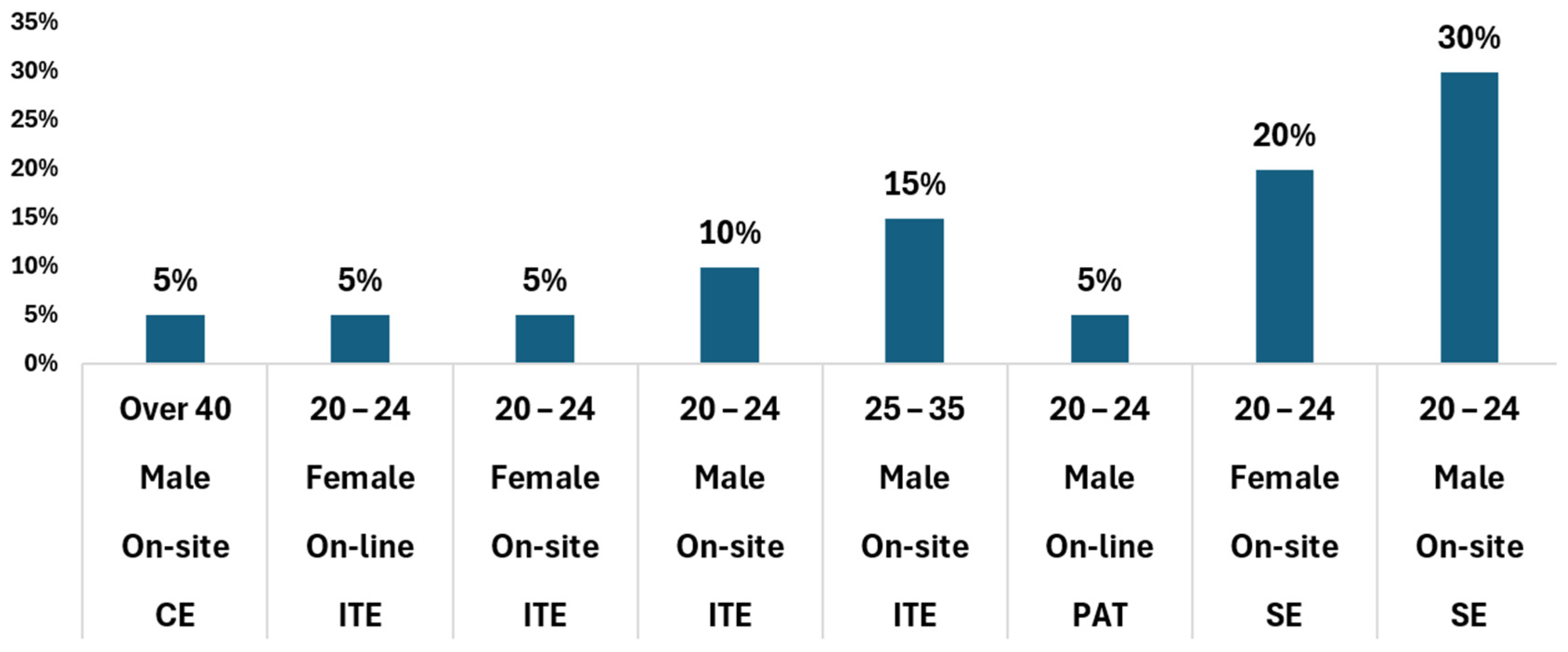
Figure 8 presents the percentage distribution of participants according to age, gender, study modality, and specialization, confirming the heterogeneity of the sample. Both academic programs belong to the field of Systems Engineering, with PAT oriented toward software development and programming, and ITE focused on information and communication technologies (ICT); each is offered in on-site and online modalities. The lowest participation rates (5%) are observed in several small subgroups, including males aged 40+ in the on-site continuing education track, females aged 20–24 in both online and on-site ITE, and males aged 20–24 in the online PAT specialization. In contrast, higher percentages are observed among males aged 20–24 (10%) and 25–35 (15%) in the on-site ITE modality, and females aged 20–24 in the on-site SE specialization (20%). The largest subgroup corresponds to males aged 20–24 in the on-site SE track (30%), reflecting a clear concentration of participants. SE also shows the most pronounced gender contrast (30% male vs. 20% female), while ITE reaches its highest values among males aged 25–35 (15%) and 20–24 (10%).
Quantitative trends align with qualitative perceptions: participants reporting higher satisfaction highlighted the value of well-structured methodological phases and the benefits of integrating generative AI tools, which enhanced the quality and personalization of learning materials. Although some students reported challenges with digital competence, those who combined GAI use with collaborative work reported notably positive experiences. Overall, the findings indicate that the 4PADAFE methodology is highly valued by MOOC designers, particularly when complemented with generative AI, as its structured framework enhances course design processes and the overall learning experience.
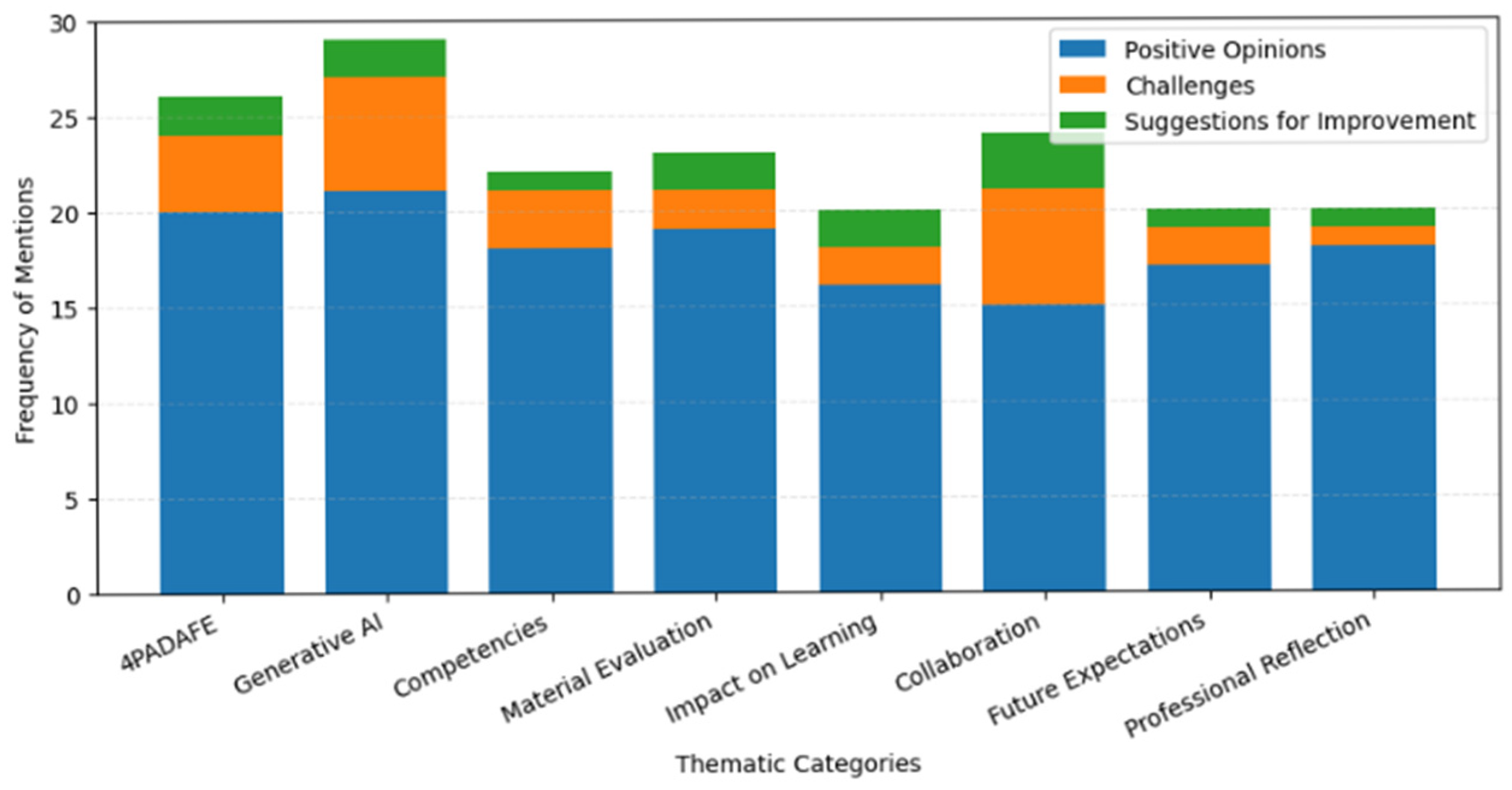
Figure 9 summarizes the distribution of positive opinions, challenges, and suggestions across the eight thematic categories. Generative AI and the 4PADAFE methodology emerge as the most highly valued elements, indicating that students perceive technological integration and a clear methodological structure as key to strengthening coherence, creativity, and overall instructional design quality. Collaboration and Material Evaluation also show strong acceptance, offering insights into teamwork processes and the development of professional skills; however, the challenges reported—mainly related to coordination and time management—highlight the need to reinforce collaborative strategies.
Overall perceptions are highly favorable, with most categories receiving more than 75% positive comments. Professional Reflection (90%) and Future Expectations (85%) stand out, suggesting clear personal and academic growth. The most significant tensions appear in Collaboration and Generative AI, where enthusiasm coexists with specific concerns, pointing to opportunities for further pedagogical refinement.
To assess the ratio of critical observations to positive feedback, the following indicator was used: (Challenges + Suggestions)/Positive Opinions.
The results, organized by thematic category, are presented in
Table 3. The results indicate a positive overall perception of the instructional design process. Categories with the most balanced ratios between favorable and critical feedback, 4PADAFE, Competencies, and Material Evaluation—indicate a strong appreciation for the framework’s practical and structural value, while also showing participants’ awareness of the challenges of intensive AI use. The analysis highlights that tensions concentrate around Collaboration, suggesting that AI integration requires redefining team roles and communication dynamics. Overall, these results demonstrate that the 4PADAFE–GAI experience promotes professional reflection and continuous improvement grounded in feedback and collective learning.
In terms of overall balance (positive and negative aspects), the most favorable perceptions are found in Professional Reflection (+16) and Material Evaluation (+15), while Collaboration has the lowest margin (+6). These results reflect a generally positive discourse around the integration of the method (4PADAFE) and the technology (Generative AI). However, concerns remain about the practical implementation of AI and the coordination of collaborative work.
To improve the Collaboration approach, it is essential to clarify participants’ roles and rubrics; adopt a set of unified digital tools; and implement short, iterative work cycles supported by checklists.
Regarding GAI, microworkshops can be included, clear “use vs. non-use” guidelines established, a repository of validated stimuli created, and evaluation criteria with traceability defined. Based on the evaluation of the material, it is key to develop a rubric database and integrate simplified peer-review mechanisms. Concerning 4PADAFE, specific checklists for each phase can be introduced, and peer mentoring practices can be encouraged.
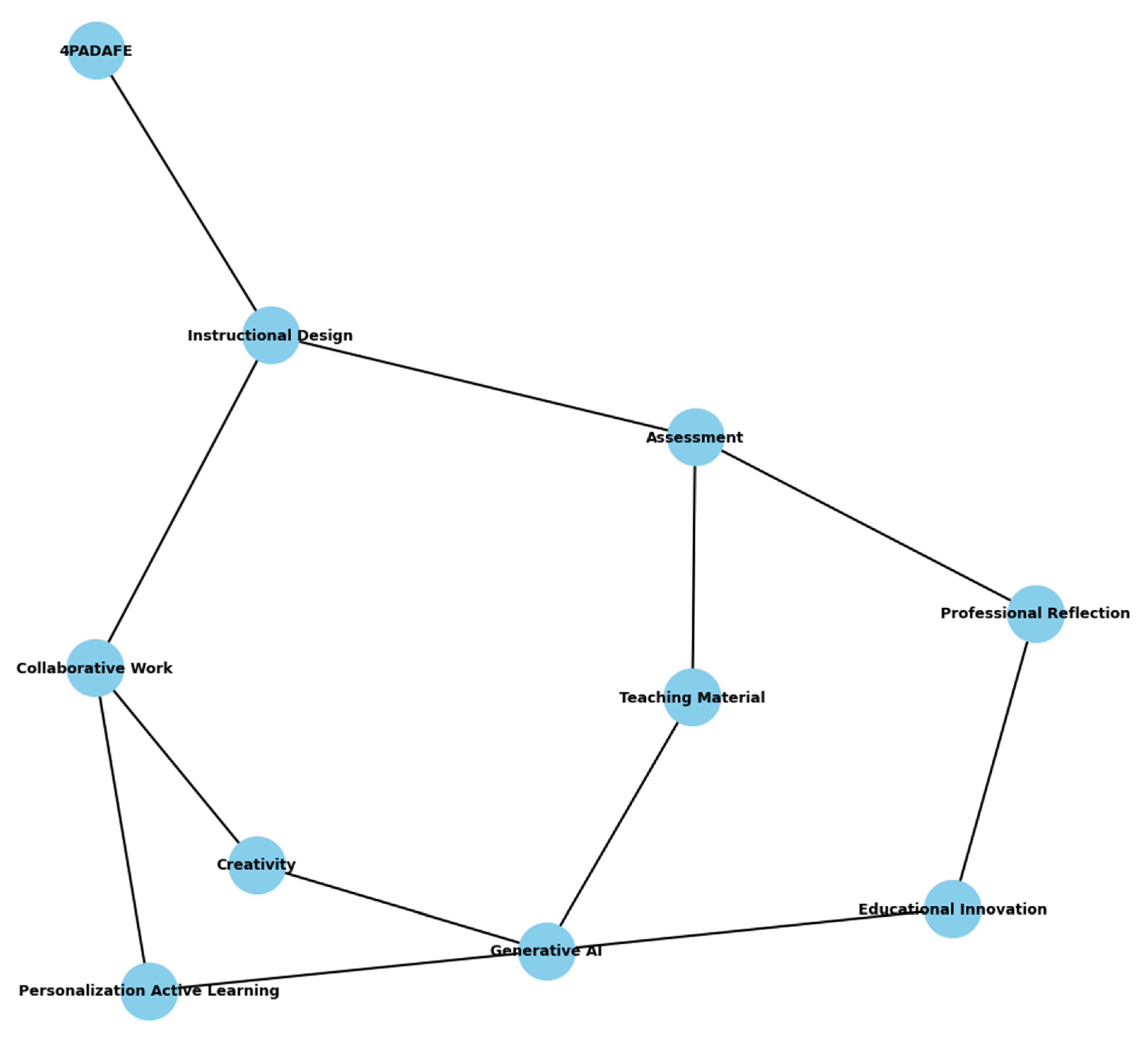
Figure 10 presents a conceptual network that structures an AI-powered educational ecosystem along three semantic axes: Instructional Design, Assessment, and GAI. These axes connect key concepts such as 4PADAFE, creativity, personalization, collaborative work, and professional reflection, illustrating an integrated and cyclical design process. The map highlights the structural role of 4PADAFE in instructional design, the transformative potential of GAI for personalization and innovation, and the function of assessment as a feedback mechanism that links teaching materials with reflective practice.
Three thematic blocks emerge: Pedagogical Design, AI-Driven Innovation, and Assessment and Reflection, outlining a continuous-improvement cycle in MOOC creation. Students perceive this ecosystem as dynamic: instructional design guides collaboration and active learning; GAI enhances creativity and materials; and evaluation informs reflection and redesign. The thematic analysis, grounded in an interpretive-constructivist framework, organizes codes by semantic similarity, is validated through peer debriefing, and is visualized through matrices and thematic maps.
The following category mapping provides a structured analysis of participants’ responses regarding the application of the 4PADAFE methodology in the design of MOOCs. Each response has been classified into thematic categories that reflect key aspects of the instructional design process, including overall experience, useful phases, strategic planning, instructional planning, teaching material production, teaching actions, assessment methods, challenges faced, facilitation opinions, and suggestions for improvement.
This mapping allows for the identification of patterns, positive contributions, areas of tension or difficulty, and recommendations, providing a comprehensive qualitative view of the implementation of the 4PADAFE methodology. The categorization facilitates further statistical and thematic analysis, enhancing understanding and supporting informed decision-making for future instructional designs.
4.1. Category 1: Application of the 4PADAFE Methodology
Table 4 presents the results of 10 questions (Q1–Q10) categorized by educational dimension (Planning, Quality, Didactics, and Innovation). Each question was rated by students using an emotional scale with three categories: Negative (Tense), Neutral (Normal), and Positive (Relaxed). Most responses were positive, suggesting a favorable perception of the evaluated aspects. The best-rated dimensions were Didactics and Quality, with questions like Q5 and Q9 receiving up to 17 and 16 positive responses, respectively. In contrast, negative ratings were minimal, indicating a generally low level of dissatisfaction.
Furthermore, the results indicate that the Didactics and Quality dimensions received the highest ratings, suggesting that participants value the methodological clarity and pedagogical relevance of the framework. The highest scores in questions Q5 and Q9 confirm that the process strengthened both strategic planning skills and the ability to produce effective learning materials. Minor differences between positive and neutral responses reflect a gradual adoption of the model and AI tools, influenced by prior technological experience. Overall, the findings suggest that the 4PADAFE methodology, supported by generative AI, fosters reflective, creative, and emotionally positive learning, promoting the development of innovative teaching competencies.
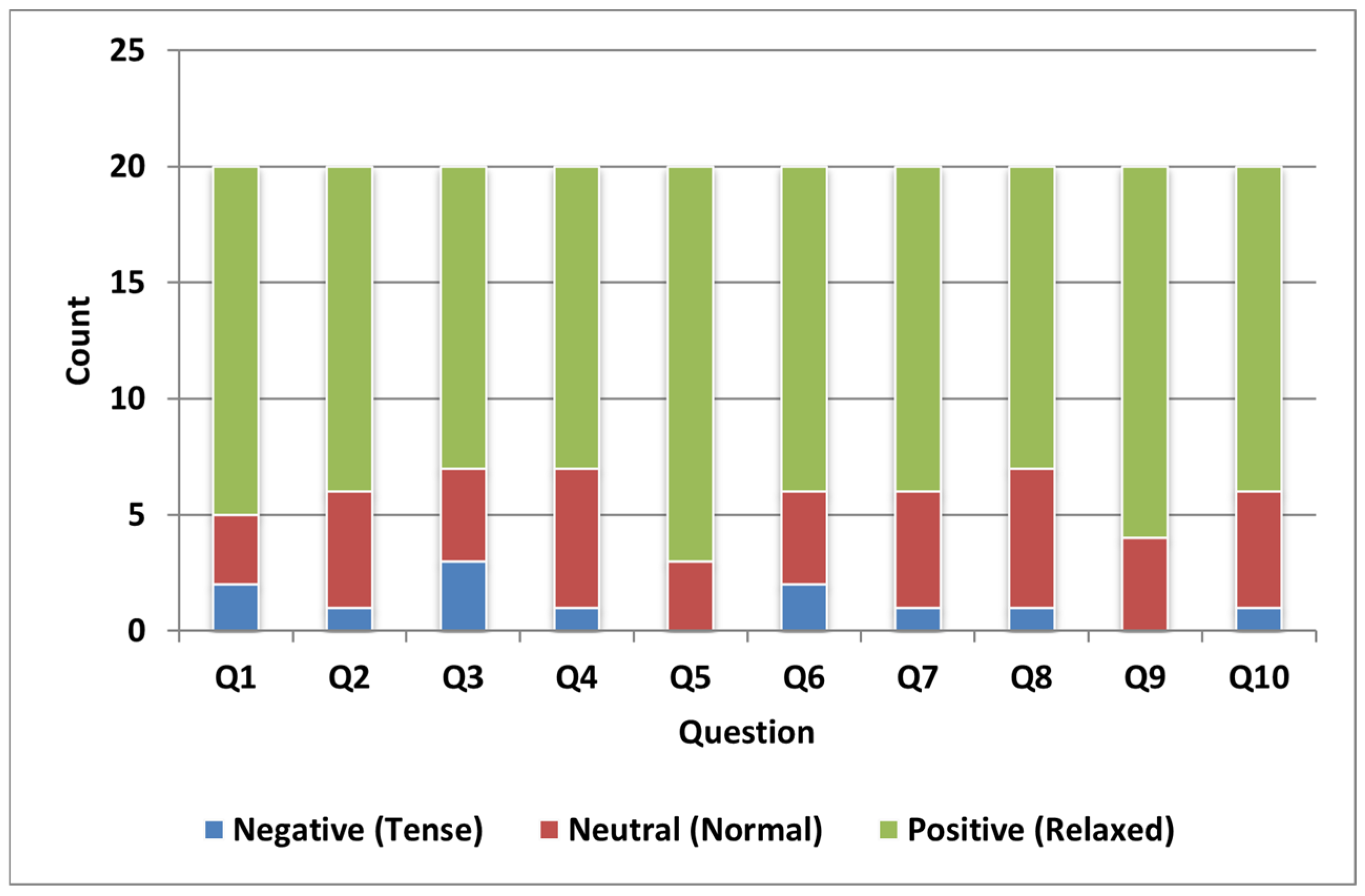
Figure 11 displays the distribution of student responses for each of the 10 questions (Q1–Q10) in Category 1. Responses are grouped into three emotional levels: Positive (Relaxed) in green, Neutral (Normal) in red, and Negative (Tense) in blue.
Also, it shows that positive (relaxed) responses predominate—exceeding 70% for all questions—indicating a favorable attitude toward the 4PADAFE methodology and the use of generative AI. However, the presence of neutral and tense responses, though minor, reflects the diversity of technological adaptation experiences. This finding confirms that AI integration in instructional design involves not only technical gains but also emotional and pedagogical adjustment processes, where digital competence and perceived control play key roles in users’ overall satisfaction.
In all cases, positive responses dominate, consistently exceeding 13 per question. Neutral responses range between 3 and 6, while negative responses remain low, with a maximum of 3. This pattern indicates that students generally favorably evaluate the aspects covered in this category.
4.2. Category 2: Use of Generative Artificial Intelligence Tools
The use of GAI tools has emerged as a key component in the instructional design process, offering innovative solutions to personalize, streamline, and enhance educational content. Participants highlighted the role of these tools in creating dynamic, interactive, and adaptable educational resources that align with diverse student needs.
GAI facilitated the rapid development of scripts, visual resources, evaluation items, and interactive elements, thereby enhancing efficiency and creativity. However, participants also noted challenges related to the appropriate integration of these tools, the need for human oversight to ensure content relevance and accuracy, and the importance of training in their practical use.
This category provides a detailed mapping of participants’ perceptions, benefits, limitations, and applications of GAI tools as reported during the MOOC design experience.
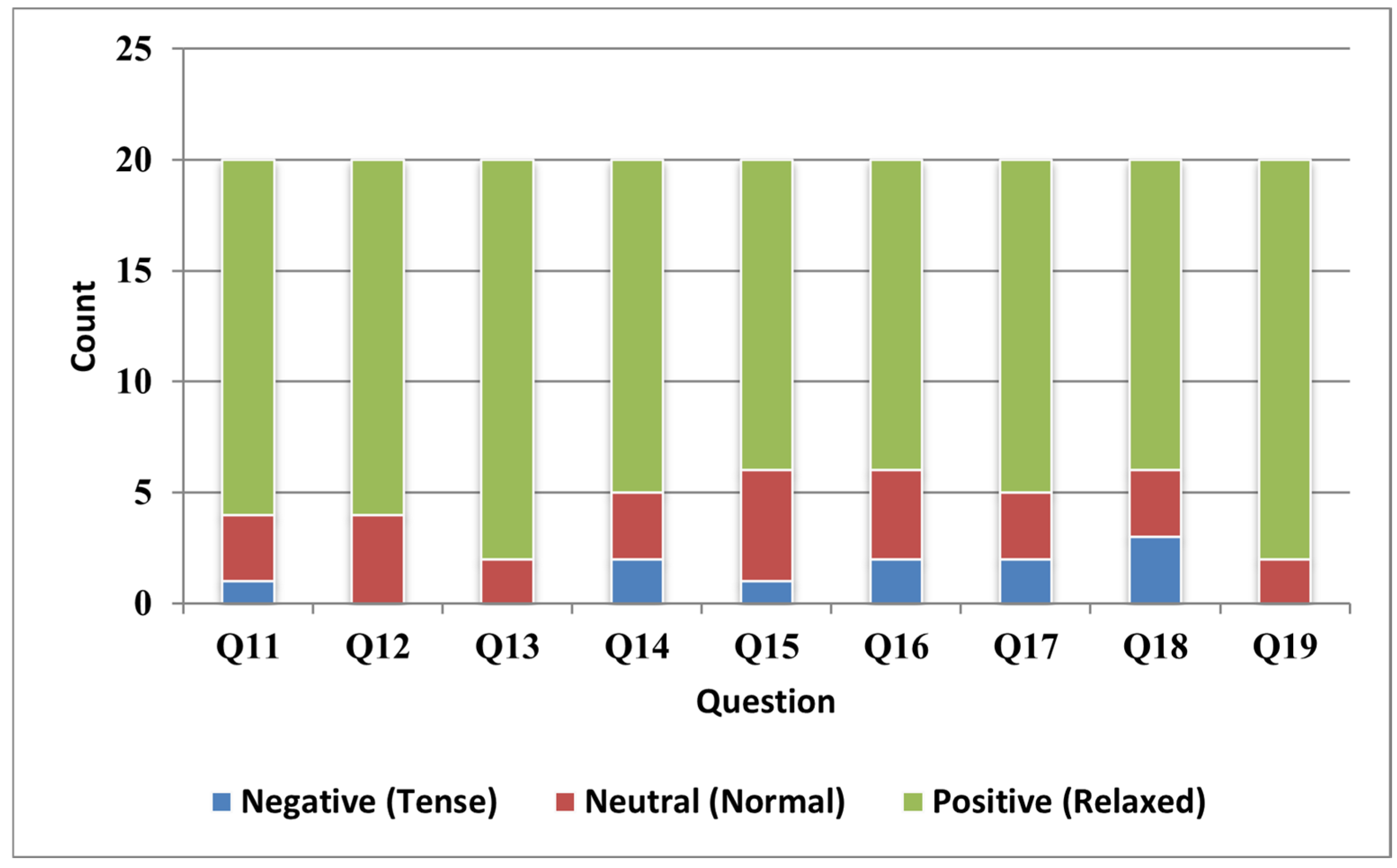
Table 5 presents the results of questions Q11–Q19, organized by the evaluated educational standards: Variety, Creation, Innovation, Analysis, and Reflection. Student responses are classified into three emotional categories: Negative (Tense), Neutral (Normal), and Positive (Relaxed).
A general trend toward positive responses is observed, with up to 18 relaxed responses (in Q13 and Q19). Negative ratings are minimal, with a maximum of 3 (Q18), indicating an overall favorable perception.
The standard “Innovation” receives the most positive responses and no negative feedback, while “Reflection” shows the highest proportion of negative responses in this set. This case suggests a high level of overall satisfaction, although areas such as reflection may require additional attention.
Figure 12 displays the distribution of student responses to questions Q11–Q19, classified into three emotional categories: Negative (Tense) in blue, Neutral (Normal) in red, and Positive (Relaxed) in green. In all questions, positive responses dominate, reaching values close to 18 in several cases (e.g., Q13 and Q19), reflecting a highly favorable evaluation.
Neutral responses are consistent, appearing moderately across most questions, while negative responses are minimal, with a slight concentration in Q18. This pattern confirms a generally positive student perception of the evaluated standards in this category, highlighting strengths in areas such as innovation and creation, and identifying specific opportunities for improvement.
4.3. Category 3: Designers’ Skills and Perceptions
This category examines the skills instructional designers developed and their perceptions during the MOOC design process. It highlights how participants evaluated their personal and professional growth, their ability to integrate technology effectively, and the evolution of their perspectives on instructional design.
The responses highlight competencies such as time management, collaboration, creativity, and the use of emerging technologies, along with shifts in how designers view the complexity, structure, and importance of detailed planning and innovative practices in creating educational resources. These insights provide a valuable understanding of how working with GAI and structured methodologies influences the professional identity and confidence of instructional designers.
Table 6 presents the results for six questions (Q20–Q25) on various educational standards, including skills, expertise, satisfaction, learning, impact, and recommendations.
The responses are categorized into three emotional tones: negative (tense), neutral (standard), and positive (relaxed). The data shows a general trend toward positive responses, especially in the standards of “Recommendations” (17 positive responses) and “Learning” (16 positive responses), indicating a favorable perception of the educational process in these areas. In contrast, question Q21 on “Expertise” received the most negative responses (3), suggesting a potential area for improvement.
4.4. Category 4: Evaluation of Teaching Materials
The assessment of teaching materials is a vital step in the instructional design process, ensuring that the resources effectively support learning goals and deliver meaningful educational experiences. In this section, participants reflected on the quality, innovation, applicability, and impact of the materials developed using GAI and structured methods.
Their feedback highlights both the strengths and areas for improvement in the design and implementation of these materials, offering valuable insights into how technology can enhance or challenge traditional educational practices. This analysis provides a foundation for refining teaching resources and aligning them more closely with student needs and institutional goals.
Table 7 presents the results for five questions (Q26–Q30) on educational standards, including evaluation, creativity, relevance, format, and feedback. The responses are grouped into three emotional tones: negative (tense), neutral (standard), and positive (relaxed). Positive responses are dominant, especially for the standards of “Relevance” and “Format,” which received 18 positive responses each, indicating strong student approval. Questions about “Creativity” and “Feedback” show some negative responses (one each), which may suggest areas for improvement. Overall, the results show a favorable view of the educational design and assessment process.
4.5. Category 5: Impact on Learning
Participants agree that using the 4PADAFE methodology, combined with GAI tools, has a positive impact on the learning process. This combination enables content personalization, adaptation to individual needs, real-time feedback, and a clear, well-organized course structure. Additionally, students reported improvements in their learning, becoming more efficient, creative, and reflective, while developing skills in technology, organization, and instructional design [
8].
They also believed that the materials created for the MOOC would have a positive influence on future students, as they would be interactive, accessible, relevant, and innovative. Lastly, they emphasized that the most motivating aspects of instructional design include interactive content, clear objectives, ongoing feedback, attractive visual design, gamification, and flexibility—factors that foster student engagement and course completion.
Table 8 presents students’ responses to four questions (Q31–Q34) on the impact of learning, self-directed learning, perceived learning, and motivation. All questions mainly received positive (relaxed) responses, with no negative responses noted. Questions Q31 and Q33 stand out with 18 positive responses each, highlighting strong appreciation for the learning impact and effectiveness. Motivation (Q34) also yields favorable results, although it has a slightly higher count of neutral responses (4). Overall, the data reflect a highly valued educational experience in terms of learning and motivation.
4.6. Category 6: Collaborative Work
This category explores how teams collaborated during the MOOC design, using the 4PADAFE methodology and GAI tools [
8]. It examines aspects such as team dynamics, assigned roles, technical skills, collaboration strategies, and the challenges faced.
Teams demonstrated a highly collaborative, organized, and communicative dynamic, characterized by regular meetings, the use of project management tools, and precise role distribution based on individual skills. Participants took on various roles, including leaders, content designers, programmers, video editors, pedagogical coordinators, and creators of interactive materials. The team’s technological skills were crucial, allowing effective integration of GAI tools, graphic design, and educational platforms.
The most effective collaboration strategies included consistent communication, regular meetings, use of shared documents, straightforward task assignment, and mutual support. The main challenges encountered included coordinating schedules, managing differing work styles, adapting to new technologies, and a lack of initial knowledge of AI. These hurdles were addressed through flexible planning, ongoing training, regular meetings, and teamwork. Overall, this category demonstrates that a well-managed collaborative structure has a significant impact on instructional design quality.
Table 9 presents participants’ emotional responses regarding five key aspects of collaborative work in instructional design: teamwork, role assignment, tech skills, collaboration strategies, and challenges. Overall, positive (relaxed) responses dominate across all standards, especially Tech Skills (Q37), which received no negative responses and had four positive ones.
However, Challenges (Q39) showed the highest number of negative (tense) responses (2), indicating that the difficulties faced caused more tension than the other aspects. Despite this, the presence of neutral and positive responses suggests that, although challenges existed, teams were generally able to manage them effectively.
4.7. Category 7: Expectations and Future Vision
This category gathers participants’ perceptions about the future of generative artificial intelligence and other emerging technologies in the educational field. The responses explore visions of the future, expectations for instructional design, anticipated changes in traditional methodologies, and projections for MOOCs over the next few years.
Participants express a highly positive outlook on the future of generative artificial intelligence in education, highlighting its potential to personalize learning, create adaptive content, provide real-time feedback, and improve accessibility and inclusion. Regarding expectations in instructional design, they foresee a deep integration of emerging technologies, such as augmented reality, adaptive learning, and data analytics, which will enable more dynamic, interactive, and student-centered experiences.
Regarding traditional educational methodologies, respondents anticipate a shift toward more personalized, flexible, and active approaches, supported by technologies that automate tasks, provide immediate feedback, and adapt to students’ learning paces. Finally, they envision future MOOCs as highly interactive, immersive, and personalized, utilizing intensive GAI and immersive technologies such as virtual and augmented reality, tailored to each user’s individual learning needs and styles.
Table 10 presents participants’ emotional responses regarding the future of education and technology. All questions (Q40 to Q43) received no negative (tense) responses, showing a very positive attitude toward GAI, new technologies, teaching methods, and the development of MOOCs. Most responses are positive (relaxed), especially about AI in education, traditional teaching methods, and the future of MOOCs (each with 18 positive responses), indicating enthusiasm and willingness for educational change. The few neutral responses to the question about emerging technology expectations suggest a cautious but not dismissive attitude.
4.8. Category 8: Personal and Professional Reflection
This category captures participants’ perceptions of how using generative artificial intelligence tools in instructional design has affected their personal growth, skill development, and future outlook. It emphasizes changes in perception, skills gained, plans for application, and the project’s influence on their educational or professional paths.
Participants reported a notable change in their understanding of instructional design, noting a deeper appreciation for its structure, process, and pedagogical importance. They emphasized the development of key skills, including critical thinking, collaboration, technological proficiency, organization, and creativity. Moreover, they expressed plans to apply what they learned to future academic and professional projects, seeing the experience as enhancing their professional profile and broadening their opportunities.
This category reflects a deliberate internalization of learning and a positive outlook on its long-term benefits.
Table 11 shows the distribution of emotional responses related to participants’ personal and professional reflection. Overall, positive (relaxed) responses are the most common across all questions, especially for Perception Change and Skills Development (both with 18 positive responses), indicating a very favorable view of the experience.
The only negative (tense) response appears in Career Impact (Q47), which may indicate some uncertainty or concern about the project’s future relevance in one’s career path. However, this is outweighed by the majority of positive and neutral responses, confirming an overall optimistic outlook.
4.9. Implementation of the 4PADAFE Methodology with GAI
The implementation of the 4PADAFE methodology with Generative Artificial Intelligence (GAI) tools generated tangible results across all phases of the instructional design process. These results demonstrate the effective integration of pedagogical planning and technological innovation, reflected in the materials, activities, and evaluations developed by the participants.
Phase 1. Strategic Planning (P1).
During this phase, students, guided by the researcher, elaborated structured academic documents that included the course profile, general objectives, expected competencies, and pedagogical justification. ChatGPT was employed as a writing assistant to refine the articulation of these elements. For instance, one of the guiding prompts requested the model to, “document the justification for adopting a virtual modality and describe how it supports the development of digital competencies in university students.”
The use of GAI in this phase enabled participants to produce clear, coherent, and well-founded instructional documents that aligned with institutional goals and the MOOC’s pedagogical design.
Phase 2. Instructional Planning (P2).
In this stage, ChatGPT was used to support the alignment of competencies, learning outcomes, and teaching strategies. Through structured prompting, students produced instructional matrices that related objectives and expected results. A representative example was the prompt, “Design a table that relates learning objectives with expected results in an artificial intelligence course for systems students.”
The generated matrices became the foundation for instructional sequencing and the formulation of measurable outcomes. Quantitatively, over 70% of participants identified this phase as the most valuable for ensuring curricular coherence.
Phase 3. Production of Didactic Materials (P3).
This phase yielded the most tangible outputs. Students used ChatGPT to generate scripts, Leonardo AI for visual assets, InVideo for motion design, and Canva for multimedia production.
For example, the prompt, “Write a didactic script for a 3-min video explaining supervised learning to engineering students” led to the creation of audiovisual materials used to introduce the concept of machine learning.
Overall, 50 educational resources were produced, including videos, e-books, and interactive tutorials—representing a 30% improvement in production efficiency compared to prior non-AI processes. Participants rated the materials as clear, creative, and aligned with pedagogical objectives.
Phase 4. Teaching Action (DA).
The designed materials were implemented in simulated MOOC environments, where students acted as instructional designers and facilitators. Forums and reflective discussions were created collaboratively with GAI.
A typical prompt used in this phase was, “Create three reflective questions on ethics in AI for a forum aimed at university students.”
The resulting activities promoted engagement and critical reflection. Data from the platform analytics confirmed a 25% increase in participation rates compared to previous iterations without AI integration. Students emphasized that the use of AI-generated prompts improved both interactivity and the relevance of forum questions.
Phase 5. Evaluation (E).
Generative AI was also applied to design assessment instruments aligned with course outcomes. ChatGPT and Formative AI were used to generate rubrics, quizzes, and gamified learning activities. For instance, one of the most frequently used prompts asked:
“Generate five multiple-choice questions on neural networks to evaluate the intermediate level in a systems course.”
The resulting instruments demonstrated strong alignment with the learning objectives and provided immediate formative feedback. According to participant feedback, this phase significantly reduced the time required to design evaluations while improving content validity and clarity.
Unlike previous studies, in which teachers required intensive digital training, students in this project were able to work autonomously. This autonomy stemmed from their engineering background, the structured 4PADAFE framework, and the provision of pedagogically aligned prompts. Overall, the implementation results confirm that combining a robust instructional methodology with GAI tools enhances creativity, autonomy, and instructional quality in MOOC design.
5. Discussion
The analysis findings reveal that the application of the 4PADAFE methodology, combined with the use of generative artificial intelligence tools, was practical in the instructional design of the MOOC. The proposed objectives were satisfactorily achieved, demonstrating that the combination of a structured framework for educational design and the adaptive power of GAI strengthens the pedagogical quality of the course. The objectives of the study were satisfactorily met:
Specific Objective 1: To examine the application of the phases of the 4PADAFE methodology in the instructional design of the MOOC. The students successfully implemented all phases of the 4PADAFE methodology, underscoring its usefulness as a clear, structured guide for course design. Strategic Planning and Production of Teaching Materials were perceived as the most impactful phases.
Systems training as a facilitator. Their familiarity with structured, logical processes enabled them to quickly assimilate the 4PADAFE phases, which they saw as similar to software development life cycles. Representative quote, “As a systems student, I am used to working with structured processes. The 4PADAFE methodology was very logical and sequential to me, which facilitated the course’s instructional design.”
Specific Objective 2: Describe the use of generative artificial intelligence tools in creating teaching materials.
GAI tools were effectively incorporated into the design process, enabling students to develop high-quality scripts, assessments, and interactive resources. ChatGPT, Canva, Dall-e, and Leonardo AI were the most frequently mentioned.
Previous AI experience is a bonus. The students applied their technical knowledge to generate more accurate prompts, critically evaluating and adapting the results to the educational context. Representative quote, “Thanks to my technical knowledge, I interacted with AI more effectively, generating specific prompts to obtain results adjusted to the educational context.”
Another quote, “I have used AI tools in programming, but never in education. I found that ChatGPT and Leonardo AI are useful for coding and designing engaging and clear content.”
Specific Objective 3: To verify whether the 4PADAFE methodology and GAI tools facilitated the instructional design of the MOOC without the need for experts.
Participants demonstrated that designing a quality MOOC without relying on disciplinary experts is possible, provided a transparent methodology and powerful technological tools are available. The combination of 4PADAFE and AI enabled significant autonomy.
Students identified instructional design as a systematic and technical process similar to the solutions they developed in their careers. Representative quote, “The experience I have in structuring technical solutions helped me to see that instructional design is also an engineering process. I did not need an expert because I had the right methodology and tools.”
This study demonstrates that systems engineering students with a solid technical foundation can effectively utilize advanced educational tools, such as 4PADAFE and generative artificial intelligence, to design practical, innovative, and autonomous learning experiences.
Recent scholarship [
54] has increasingly examined the transformative role of GAI within educational contexts, with particular emphasis on its integration into Massive Open Online Courses (MOOCs) [
44]. Evidence suggests that GAI fosters adaptability, personalization, and learner engagement at scale, positioning it as a disruptive force in instructional innovation. Within this perspective, the 4PADAFE instructional design matrix provides a systematic, pedagogically grounded framework that, when combined with GAI tools, reinforces the coherence of course planning while enabling the creation of personalized, context-sensitive learning experiences. This synergy not only aligns with contemporary trends in digital education but also expands the potential of MOOCs to deliver high-quality, student-centered instruction [
8].
GAI offers ten key capabilities for e-learning in MOOCs, including analytical processing, personalized assistance, and multilingual support [
55].
GPT (Generative Pre-Trained Transformer) represents a significant advancement in the application of generative artificial intelligence in higher education, enabling personalized support for learners in Massive Open Online Courses (MOOCs). By adapting to students’ individual needs, preferences, and learning trajectories, GPT has the potential to mitigate dropout rates and foster improved academic performance [
4]. Its immediate instructional benefits highlight the need for higher education systems to develop GAI literacy, enhance interdisciplinary competencies, and design innovative assessment frameworks. Such strategies are essential to adequately prepare students for the demands of a labor market increasingly shaped by GAI [
56].
These studies emphasize the urgent need for further research into the implications of GAI for learning outcomes, pedagogical strategies, and assessment practices, to effectively advance the digital transformation of higher education. The findings of the present study are consistent with prior research, which demonstrates that integrating structured instructional design methodologies with advanced technologies can substantially enhance the coherence and effectiveness of educational interventions [
57]. Recent scholarship has confirmed that AI-driven approaches enhance both the quality and personalization of educational content, thereby promoting greater learner engagement and adaptability [
5]. In this context, the 4PADAFE methodology has been particularly recognized for its robustness in structuring and guiding instructional design processes, offering a pedagogically sound framework to leverage GAI’s affordances in innovative educational environments [
58].
5.1. Practical and Theoretical Implications of the Results
The results of this study have several important implications for education:
The combination of the 4PADAFE methodology and GAI tools provides a practical approach to designing MOOCs and other educational resources. This study can benefit educational institutions seeking to innovate their teaching and learning practices [
10].
Implementing this methodology and technology can be incorporated into teacher training programs to improve educators’ technological and instructional design competencies [
6].
The findings of this study make a relevant contribution to instructional design theory by offering empirical evidence on the effectiveness of the 4PADAFE methodology when combined with GAI tools in educational settings. This integration not only validates the pedagogical robustness of structured instructional frameworks but also demonstrates how emerging technologies can enhance the coherence, adaptability, and personalization of course design [
8].
5.2. Practical Implications for Instructional Design and Teacher Training
The empirical findings of this study demonstrate that integrating the 4PADAFE methodology with Generative Artificial Intelligence (GAI) tools leads to measurable improvements in instructional coherence, learner autonomy, and design efficiency. These results go beyond theoretical claims about AI in education by providing concrete evidence of how structured instructional frameworks can effectively channel AI’s potential into pedagogically meaningful outcomes [
40]. Specifically, participants’ ability to independently design high-quality MOOCs, reflect critically on their learning process, and engage in collaborative problem-solving reveals that the 4PADAFE–GAI combination can serve as a practical model for curriculum innovation and teacher capacity building [
13].
From an institutional perspective, these insights underscore the importance of integrating AI literacy, prompt engineering, and ethical awareness into teacher training programs to ensure educators can design and evaluate AI-assisted learning experiences responsibly [
59]. Moreover, higher education institutions should adopt policies that promote ethical data use, transparency in AI-generated content, and interdisciplinary collaboration between instructional designers, technologists, and educators [
22]. By aligning these practices with institutional strategies for digital transformation, this study contributes to the development of a sustainable, human-centered model for the future of intelligent education [
40].
5.3. Limitations Encountered During the Research
Beyond the identified limitations, it is essential to recognize broader ethical and practical challenges associated with integrating GAI into instructional design. Although GAI tools, such as ChatGPT, DALL·E, and Gamma, enable the automation and personalization of educational content, their use entails potential risks related to data privacy, intellectual property, algorithmic bias, and overreliance on automated outputs [
12]. These issues demand clear institutional policies and human oversight to ensure the ethical and responsible use of AI in educational setting [
42]. Furthermore, the human–AI interaction dynamic represents a critical area of reflection: while AI enhances productivity and creativity, human judgment remains irreplaceable for contextual adaptation, cultural sensitivity, and pedagogical coherence [
40].
From a theoretical standpoint, the findings align with constructivist and connectivist principles, emphasizing learners’ active role in co-constructing knowledge through interaction with digital systems [
44]. The 4PADAFE methodology, grounded in structured yet flexible instructional design, supports these theories by providing a scaffolded framework that promotes reflection, feedback, and iteration. Integrating AI within this structure enables not only efficiency but also innovation in learning design, echoing Laurillard’s Conversational Framework [
30], which highlights iterative dialog between the learner and the system as the foundation for meaningful learning.
In terms of practical implications, the study demonstrates that combining GAI tools with 4PADAFE can democratize course design, particularly in institutions with limited access to multidisciplinary teams. However, successful implementation requires training educators in AI literacy, ethical awareness, and prompt engineering, as well as establishing quality assurance mechanisms. Institutions adopting this hybrid model should anticipate challenges, including maintaining academic integrity, ensuring transparency in content generation, and fostering equitable access to AI-driven resources. Future research should further explore human AI collaboration models, evaluate long-term learning outcomes, and design frameworks that balance automation with human creativity and ethical responsibility [
59].
Despite the positive outcomes, certain limitations must be acknowledged. First, the relatively small sample of 20 students constrains the extent to which the findings can be generalized to broader populations of instructional designers or diverse educational contexts. While the results provide valuable insights, further studies with larger and more diverse samples are needed to strengthen external validity and ensure the broader applicability of the conclusions.
A significant limitation of this study is the lack of a control group, which prevents direct comparisons with traditional design approaches that do not use GAI. Additionally, confounding variables, such as students’ technical skills or prior familiarity with AI tools, were not fully controlled for. These factors could have influenced the results. Regarding ethical risks, AI-generated content must undergo human review to prevent hallucinations and ensure it meets ethical and academic standards [
60]. Furthermore, it is essential to consider the risks to personal data protection and intellectual property when using GAI tools [
22].
The Complementary Role of Human Experience. Although tools such as ChatGPT have shown promise for generating course maps and structured content, evidence suggests that supervision and validation by instructional design experts are indispensable [
28].
Human intervention not only corrects possible biases and errors inherent to automatic generation but also adapts the content to specific contexts and learners’ particular needs. This hybrid approach, which combines GAI’s idea processing and generation capabilities with human critical judgment and pedagogical expertise, ensures greater coherence and relevance in the final product.
Recent scholarship has examined the integration of GAI tools within instructional design, with a particular focus on their application in Massive Open Online Courses (MOOCs) [
50]. Evidence suggests that combining GAI with structured frameworks, such as the 4PADAFE methodology, enhances both the quality and innovative potential of didactic materials, contributing to more coherent, engaging, and learner-centered educational experiences [
8].
While GAI tools, such as ChatGPT, demonstrate promise in creating efficient course maps, they still require human expertise to ensure quality [
28,
60]. GAI-based tools, such as DALL-E 2, Heygen, Tome.ai, and InVideo AI, significantly reduce the time and effort required for course creation while maintaining high-quality educational experiences [
13].
Furthermore, collaborative processes between humans and GAI have been analyzed using methods like Lag Sequential Analysis and Epistemic Network Analysis, revealing that high-performing students follow a structured framework: “generate → monitor → apply → evaluate” when working with GAI [
61]. These findings highlight the potential of GAI in enhancing instructional design and educational experiences.
Implications for the Future of Instructional Design. The convergence of the 4PADAFE methodology and GAI tools represents an emerging paradigm in instructional design. Empirical evidence suggests that a hybrid approach combining intelligent automation with human supervision can enhance educational processes and yield more interactive, personalized learning experiences.
Looking to the future, educational institutions must invest in training professionals capable of managing these technologies and in implementing ethical [
60] and quality frameworks that regulate their use. New lines of research are also opening up on the impact of GAI on learning dynamics, the assessment of digital competencies, and the creation of resilient and adaptive educational environments.
The results of this research are consistent with prior studies on integrating digital and emerging technologies into instructional design, confirming their potential to enhance pedagogical coherence and learner engagement.
However, this study also introduces distinctive elements that underscore its original contribution. Specifically, the systematic application of the 4PADAFE methodology, combined with GAI tools, provides empirical evidence on how structured instructional frameworks can be effectively enhanced by advanced technologies. This dual approach not only validates existing findings but also extends the body of knowledge by demonstrating the synergistic value of aligning methodological rigor with technological innovation in the design of MOOCs [
10].
Similarities with Previous Studies:
A transparent methodological structure enhances instructional design. Research has shown that structured frameworks, such as ADDIE or TPACK, improve the organization and quality of instructional content [
59]. The 4PADAFE methodology applied in this study reinforces this conclusion by providing a clear path from planning to evaluation, evidenced by the effectiveness of MOOC design without constant expert support.
GAI tools enhance creativity and efficiency. Studies such as [
32] highlight the potential of tools like ChatGPT and DALL-E to generate educational content. In line with those findings, the students in this study were able to create high-quality materials using structured prompts, improving the personalization, clarity, and design of the resources.
Relevant differences:
The active role of students with a technical profile. Unlike most studies focused on teachers as designers, here, the systems engineering students assumed the role of instructional designers, guided by the 4PADAFE structure, without requiring prior pedagogical training. This difference suggests that instructional design success depends not only on teacher training but also on methodological support and technological competence.
Structured support through pedagogical prompts. This study employed a unique strategy: utilizing prompts developed by the creator of the 4PADAFE methodology, which was aligned with curricular objectives and delivered to students to guide them in generating scripts, evaluations, forums, and gamified activities. This component has not been described in previous studies but represents an original contribution to AI-mediated instructional design.
The 4PADAFE methodology shares similarities with the ADDIE model in planning, design, development, and evaluation. However, 4PADAFE is especially innovative because it includes a dedicated adjustment phase that enables iteration and optimization during course implementation. Additionally, 4PADAFE is tailored to incorporate emerging digital technologies, such as GAI, in a more adaptable way than the traditional ADDIE model [
24].
Contribution of the study. This work extends the literature on the use of generative artificial intelligence in education by demonstrating that:
Students with technical backgrounds can successfully implement the 4PADAFE methodology.
Well-structured pedagogical prompts enable the creation of didactic materials aligned with learning outcomes.
The collaboration between a methodological framework, AI, and digital competencies is a viable and effective way to create innovative MOOCs.
Recommendations for Future Research: To broaden and deepen the findings of this study, the following lines of future research are recommended:
Conduct quantitative studies with larger samples to evaluate the effectiveness of the 4PADAFE methodology and GAI tools in different educational contexts.
Investigate the implementation and evaluation of MOOCs designed with the 4PADAFE methodology and GAI tools to measure their impact on student learning.
Compare the 4PADAFE methodology with other instructional design methodologies to identify strengths and areas for improvement.
To examine how training in using GAI and the 4PADAFE methodology can improve the technological competencies of educators and instructional designers.
6. Conclusions
This study examined the instructional design of a MOOC utilizing the 4PADAFE methodology and GAI tools to develop innovative learning materials.
This study demonstrated that integrating the 4PADAFE instructional design methodology with GAI tools enables the effective and scalable development of innovative MOOCs, even by non-expert instructional designers. The structured phases of 4PADAFE provided a coherent pedagogical framework that guided students in planning, designing, producing, implementing, and assessing educational content. When supported by carefully crafted prompts, GAI tools such as ChatGPT, DALL·E, and Gamma empowered students to create high-quality, personalized instructional materials efficiently and autonomously.
The findings highlight three key contributions: (1) the effectiveness of structured pedagogical frameworks like 4PADAFE in guiding non-specialists through complex design processes; (2) the transformative potential of GAI to democratize content creation and reduce dependency on domain experts; and (3) the development of students’ digital, collaborative, and reflective competencies through authentic instructional design experiences.
These insights contribute to the growing body of research on AI-enhanced education and offer a replicable model for integrating emerging technologies into instructional design. Future research should explore the long-term impact on learner outcomes, teacher training, and the adaptation of 4PADAFE + GAI in diverse educational contexts.
Contributions of the Study to the Field of Education:
This study contributes to educational research by empirically demonstrating the feasibility and effectiveness of integrating the 4PADAFE methodology with GAI tools in MOOC development. It validates the idea that structured pedagogical frameworks combined with AI can yield flexible, scalable, and high-quality learning environments. This case aligns with findings that structured instructional matrices enhance coherence when paired with AI tools [
8].
The integration of GAI tools within the 4PADAFE design framework has been demonstrated to enhance didactic materials, increase student engagement, and promote creativity. This case aligns with broader evidence that generative AI personalization enhances learner motivation and facilitates the delivery of meaningful content [
17].
The study underscores how both educators and students can develop essential digital and AI-related competencies through applying GAI-enabled design processes. This case resonates with emerging frameworks that emphasize technical understanding, critical evaluation, and ethical awareness as core elements of AI literacy [
54].
By offering a replicable and evidence-based model that combines systematic instructional design with GAI tools, this study provides valuable guidance for institutional policymaking and curriculum innovation in higher education. It highlights the need to embed AI literacy, ethical standards, and data protection in policy frameworks. This convergence is also reflected in recent strategic discussions on the transformation of higher education by GenAI.
This research extends the theoretical underpinnings of instructional design by integrating empirical support for the 4PADAFE methodology within GAI-enriched contexts. It advances knowledge on how structured methodologies and cutting-edge technologies coalesce to elevate educational design—contributing foundational insights for future theoretical development [
14].
The study highlights the importance of adopting innovative approaches to educational design, particularly when technology fundamentally transforms teaching and learning. Integrating the 4PADAFE methodology with generative artificial intelligence tools facilitates the creation of quality teaching materials and empowers educators with new technological competencies.
Possible Practical Applications:
The results suggest that educational institutions and training companies can use the 4PADAFE methodology and GAI tools to develop continuous training programs that are more dynamic and attractive.
The methodology and application of GAI can be adapted to various educational levels, ranging from basic to higher education, and across diverse areas of knowledge, thereby broadening its applicability.
This approach can serve as a starting point for more educators and institutions to explore how emerging technologies can be incorporated into the educational process to promote innovation and improve learning outcomes.
Although GAI tools enable the autonomous creation of high-quality educational materials, it is essential to note that, in advanced specialization areas, the results generated by GAI must be validated by subject-matter experts. The ability to produce large volumes of content quickly and efficiently reduces the need for experts for specific tasks. However, the final validation of materials must still be carried out by experts to ensure accuracy and pedagogical quality, especially in areas that require in-depth technical knowledge [
61].
Policy and Practical Implications. The findings suggest that the 4PADAFE + GAI model can be systematically integrated into teacher training and professional development programs. Educational institutions and policy-makers might consider incorporating this framework to equip educators with skills in generative AI-assisted instructional design. By doing so, the model’s implementation could directly improve educational quality and innovation, aligning with the aims of Sustainable Development Goal 4 (Quality Education) [
61]. Empowering teachers and students with such methodologies promotes more inclusive and equitable quality education through technology-enhanced learning design.
In conclusion, this study opens new avenues for applying advanced technologies to educational design, suggesting that combining structured pedagogical approaches with technological tools can significantly enhance the quality and effectiveness of online educational programs.
Ultimately, integrating GAI tools into instructional design for MOOCs and virtual platforms holds transformative potential, which, if well-managed, can drive a revolutionary shift in education.
Integrating GAI with human pedagogical supervision and adaptive practice lets us produce content more efficiently and support learning that is more effective, personalized, and meaningful.
The challenge is to continue researching and developing collaborative models that maximize the benefits of this technology while ensuring quality and ethics in the educational process.