Article

Ecological Niches, Interspecific Associations, and Species Diversity of Herbaceous Plants in Parabolic Dunes of the Ebinur Lake Basin in Northwestern China


by
Pengpeng Chen
1,
Shengli Wu
1,2,*,
Yan Zhang
3,* and
Lin Gao
1
1
School of Geography and Tourism, Xinjiang Normal University, Urumqi 830017, China
2
Xinjiang Uygur Autonomous Region Higher Education Teachers Training Center, Urumqi 830054, China
3
Agricultural Science Research Institute, The Fifth Division of Xinjiang Production and Construction Corps, Bole 833400, China
*
Authors to whom correspondence should be addressed.
Sustainability 2026, 18(5), 2608; https://doi.org/10.3390/su18052608
Submission received: 20 January 2026 / Revised: 23 February 2026 / Accepted: 4 March 2026 / Published: 6 March 2026

Abstract

To clarify the ecological characteristics of herbaceous plants on parabolic dunes in the Ebinur Lake Basin and to support regional ecological conservation, this study focused on herbaceous species with an importance value (IV) > 1%. Standard ecological indices and analytical approaches were used for assessment. The results showed the following. (1) A total of 12 herbaceous species were recorded, belonging to 10 genera and 7 families. The ranking of niche breadth showed no clear qualitative association with IV. (2) Niche overlap (Oik) among species was generally high. Fifty-eight species pairs had Oik > 0.60. Most herbaceous species differed only slightly in their environmental and resource requirements, indicating interspecific competition. (3) Overall species associations were significantly positive. The ratios of positive to negative associations were 12.2 based on the χ2 test, the interspecific association coefficient (AC), and Spearman rank correlation. Species were strongly associated. The community was at the mid-successional stage. (4) Diversity indices followed a normal distribution. The community showed moderate richness and evenness, with pronounced dominance. For future conservation, species with similar ecological preferences and biological traits should be selected. Management should adjust and optimize species composition to improve resource use efficiency and enhance community stability.

1. Introduction

Studies on ecological niches and interspecific associations of dune vegetation are essential for understanding the functioning of desert ecosystems, vegetation restoration, and biodiversity conservation [1]. An ecological niche refers to the functional role and position of a species within an ecosystem. It includes all interactions between the species and its environment, such as resource acquisition, interactions with other species, and effects on environmental processes [2]. Interspecific association describes the spatial relationships among different species. It reflects both species interactions and their responses to environmental conditions [3]. Dune environments are typically characterized by extreme conditions, including high temperatures, drought, strong winds, and nutrient-poor soils. Niche breadth reflects the ability of a species to adapt to extreme dune environments. Species with broader niche breadths can tolerate harsh conditions and persist under limited resource availability [4]. In contrast, niche-specialized species depend on specific resources or microhabitats and are more sensitive to environmental changes [5]. Analysis of niche overlap can be used to assess the degree of competition in resource use and to clarify how species exploit limited resources [6]. Positive and negative interspecific associations reflect interaction patterns within plant communities. Positive associations indicate mutual facilitation or similar habitat requirements, whereas negative associations suggest competition or antagonistic interactions [7]. Studies integrating ecological niche characteristics and interspecific associations can support the selection of adaptive species to enhance vegetation restoration success, providing a scientific basis for desertification control and ecological restoration.
Research on dune vegetation communities has primarily focused on species diversity [8], ecological functions [9], vegetation succession [10], and plant adaptation strategies to environmental conditions [11]. Among these topics, dune morphology is closely linked to vegetation growth and spatial distribution [12]. Hesse et al. [13] reported a negative relationship between vegetation cover and sand mobility on longitudinal dunes. Vegetation reduced sand transport rates and thereby influenced dune morphology and activity. Laksono et al. [14] suggested that changes in vegetation cover significantly affect the morphology of barchan dunes. The influence of vegetation density was mainly observed in transport zones, whereas its effect on the dune body was relatively limited. Yan et al. [15] emphasized that the formation and evolution of parabolic active dunes depend on vegetation. When aeolian sand transport decreases or moisture stress is alleviated, such as under increased precipitation, vegetation establishment promotes the development of parabolic dunes from mobile barchan dunes, transverse dunes, and deflation hollows. However, most existing studies have focused on the effects of vegetation cover on dune morphology. Few studies have examined the ecological characteristics of vegetation communities under specific dune types.
Research in arid regions of Central Asia has highlighted that plant responses to environmental gradients vary substantially between life forms [16], suggesting that aggregated community analyses may obscure important functional distinctions. Extending this perspective to the community scale, detailed examinations of niche characteristics and species associations within herbaceous assemblages on specific geomorphic features warrant further attention. The Ebinur Lake Basin is located in an arid region and represents a typical inland lake basin. The climate is dry, precipitation is scarce, and evaporation is intense [17]. The southeastern part of the Ebinur Lake Basin contains well-developed parabolic dunes with diverse morphologies [18]. Desert vegetation in the Ebinur Lake Basin is dominated by drought- and salt-tolerant species [19]. However, previous studies on plant communities in the desert region of the Ebinur Lake Basin have mainly focused on plant functional traits [20] ecosystem multifunctionality [21], landscape ecological risk [22], and rhizosphere microbial communities [23]. Studies addressing the ecological niche characteristics and interspecific associations of herbaceous communities on parabolic dunes remain limited. Therefore, this study examined 12 herbaceous plant taxa on parabolic dunes in the Ebinur Lake Basin. Based on community surveys and plant taxon importance values, ecological niche characteristics and interspecific associations were analyzed. The objectives were to clarify community composition, plant taxon interactions, and successional patterns, and to provide a scientific basis for plant diversity conservation and desert ecosystem protection.

2. Materials and Methods

2.1. Study Site Description

The Ebinur Lake Basin (44°02′–45°23′ N, 79°53′–83°53′ E) is located in northwestern Xinjiang, China. It administratively includes Jinghe County, Bole City, Alashankou City, Wenquan County, Toli County, and Wusu City. The basin spans roughly 2.5 × 10⁴ km2 and is bordered by mountain ranges to the south, west, and north. It functions as an important dust-emission area in northern Xinjiang. The climate is typically temperate continental, characterized by limited precipitation and strong evaporative demand. Meteorological records from the China National Meteorological Data Service Center (2008–2020) indicate a mean annual temperature of 5.6 °C and an average annual precipitation of 181 mm, while potential evaporation generally ranges between 1500 and 2000 mm. Strong winds occur on as many as 164 days each year and may extend to 185 days in extreme cases [24].

2.2. Plot Establishment and Field Survey

Based on the distribution patterns and habitat characteristics of vegetation on parabolic dunes in the Ebinur Lake Basin, three morphologically typical parabolic dunes were selected as sampling sites. Representative areas were sampled using a typical plot method. Each sampling site included key geomorphic positions, namely the windward slope, leeward slope, dune crest, dune arms, and interdune arm zones. At each sampling site, seven large plots measuring 10 m × 10 m were set up. Within each large plot, five small quadrats (1 m × 1 m) were nested along the diagonal for herbaceous vegetation surveys. Species identity, abundance, and frequency were recorded for all plants within each quadrat. The aforementioned method was proposed by Shengli Wu, who identified and numbered species based on Flora of China [25].

2.3. Methods

Based on herbaceous plant data recorded in the quadrats, species dominance was evaluated using the importance value (IV). Herbaceous species were ranked in descending order according to IV. Species with an IV exceeding 1% were retained for subsequent statistical analyses. Niche breadth was quantified using the Levins niche index (BL) and the Shannon niche index (BS). Niche overlap among species was calculated using the Niche overlap index (Oik). Overall interspecific association within the plant community was assessed using the Variance ratio (VR) method. Interspecific associations were further examined by applying the χ2 test, Interspecific association coefficient (AC), and Spearman rank correlation analysis. Community stability was evaluated using the M. Godron stability analysis method. Alpha diversity of the plant community was characterized using the Patrick richness index (SR), the Shannon–Wiener diversity index (H), the Simpson dominance index (D), and the Pielou evenness index (E).

2.3.1. Important Value

Species IVs were determined according to the method proposed by Li Dengxing et al. [26]. Only species with IVs above 1% were retained for further statistical analysis. The calculation is expressed as follows:
I V = R e l a t i v e   a b u n d a n c e + R e l a t i v e   f r e q u e n c y 2

2.3.2. Calculation of Niche Breadth and Niche Overlap

Species niche breadth was calculated using the BL [27] and the BS [28]. Niche overlap among species was quantified using the Oik [29]. The calculations are expressed as follows:
B L = 1 j = 1 r   P i j 2
B S = j = 1 r   ( P i j l n P i j )
where P i j represents the proportion of the important value of species i in resource state j relative to the total important value of species i across all resource states, and r is the total number of resource states. A higher B value indicates a broader niche breadth, reflecting a wider and more even distribution of the species. Conversely, a lower B value indicates a narrower niche breadth and a more restricted distribution.
O i k = j = 1 r   P i j P k j j = 1 r   P i j 2 j = 1 r   P k j 2  
where P i j and P k j represent the important values of species i and species k in resource state j, respectively; j denotes the quadrat, and r is the total number of quadrats. The index O i k indicates the extent of resource overlap and the level of competition between species. A higher O i k value indicates greater niche overlap and more intense interspecific competition.

2.3.3. Overall Interspecific Association Test

Overall interspecific association was calculated following the method proposed by Schluter [30]. The calculations are expressed as follows:
V R = S T 2 σ T 2 = i = 1 s   P i ( 1 P i ) ( 1 / N ) i = 1 N   ( T j t ) 2
W = V R × N
where P i = n i / N ; P i is the occurrence frequency of species i; n i is the number of quadrats in which species i occurs; and N is the total number of quadrats. S represents the total number of species; T j is the total number of species in quadrat j; t is the mean number of species across all quadrats; S T 2 is the variance of species richness among all quadrats; and σ T 2 is the variance of species occurrence frequencies. When VR = 1, no overall interspecific association is present. When VR > 1, overall interspecific association is positive. When VR < 1, overall interspecific association is negative. The significance of the deviation of VR from 1 was tested using the statistic W. Overall interspecific association was considered significant when W > χ 0.05 2 ( N ) or W < χ 0.95 2 ( N ) . Otherwise, overall interspecific association was not significant.

2.3.4. Interspecific Association Test

Interspecific association was qualitatively assessed using the Yates-corrected χ2 test [31]. The calculation is expressed as follows:
χ 2 = N ( a d b c N 2 ) 2 ( a + b ) ( c + d ) ( a + c ) ( b + d )
where N is the total number of quadrats; a is the number of quadrats in which both species occur; b and c are the numbers of quadrats in which only one of the two species occurs; and d is the number of quadrats in which neither species occurs. When ad > bc, the two species show a positive association. When ad < bc, a negative association is indicated. When ad = bc, the two species are independent. A χ2 value greater than 6.635 indicates an extremely significant interspecific association. A χ2 value between 3.841 and 6.635 indicates a significant association. A χ2 value less than 3.841 indicates a non-significant association.
The AC was applied to quantify interspecific relationships [32]. The calculations are expressed as follows:
When adbc,
A C = a d b c ( a + b ) ( b + d )
When bc > ad and da,
A C = a d b c ( a + b ) ( a + c )
When bc > ad and d < a,
A C = a d b c ( b + d ) ( c + d )
The range of AC is [−1, 1]. As AC approaches 1, the positive association between the two species becomes stronger, indicating similar environmental requirements. As AC approaches −1, the negative association strengthens, suggesting an antagonistic relationship between the species. When AC = 0, the two species occur independently.
The Spearman rank correlation coefficient [33] was employed for quantitative analysis of interspecific correlations. The calculation is expressed as follows:
r ( i , k ) = 1 6 j = 1 N   ( x i j x i ¯ ) 2 ( x k j x k ¯ ) 2 N 3 N
where N is the number of quadrats; x i j and x k j are the abundances of species i and species k in quadrat j, respectively, forming two vectors x i and x k ; and x i ¯ and x k ¯ are the mean abundances of species i and species k across all quadrats. The values of r i k and r(i, k) range from −1 to 1. Positive values indicate positive correlations, whereas negative values indicate negative correlations.

2.3.5. Community Stability

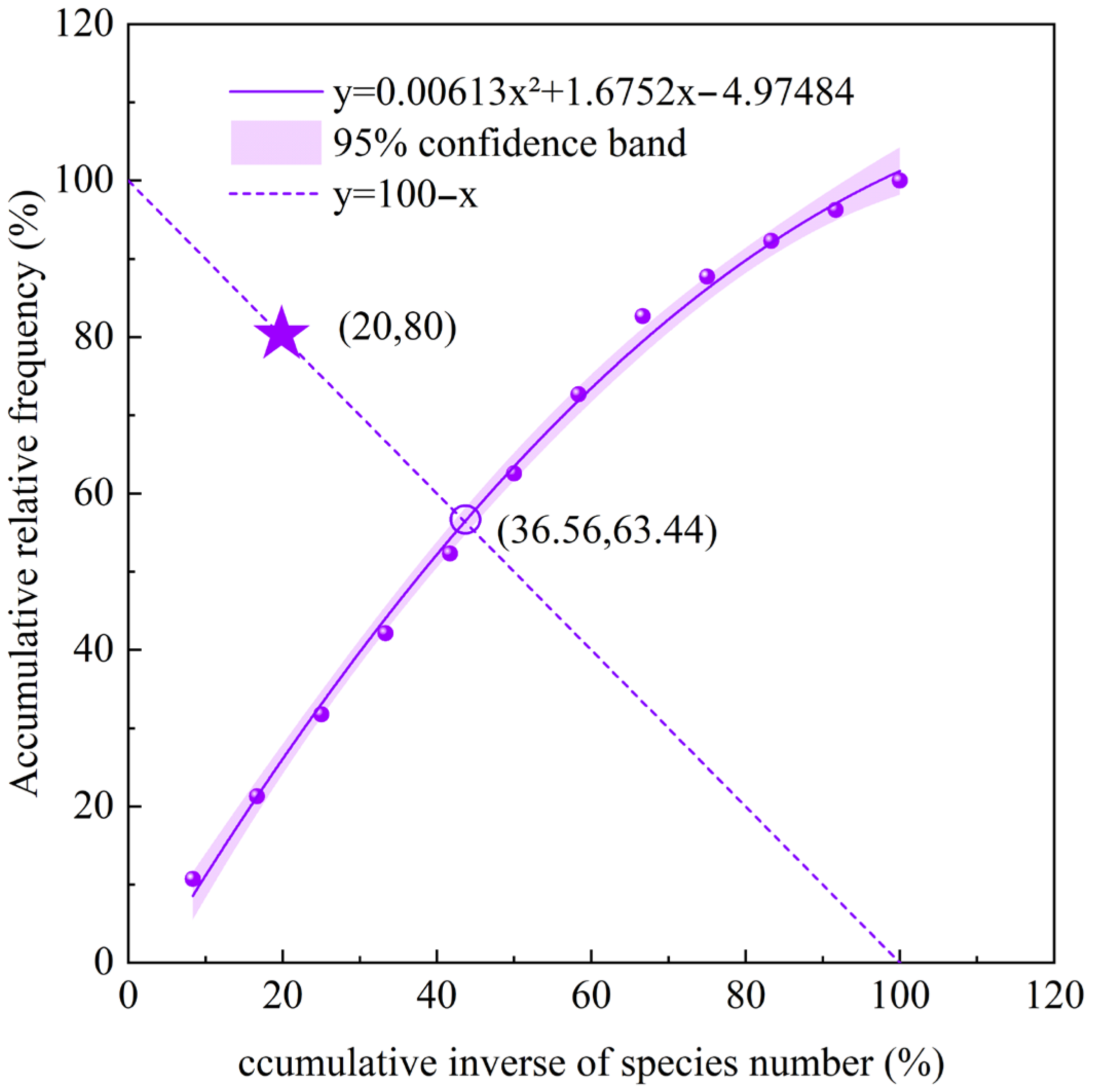
Community stability was evaluated using the modified M. Godron stability analysis method proposed by Zheng Yuanrun [34]. Species within each community were ranked in descending order according to their relative frequency. The cumulative reciprocal percentage of species number (x) and the cumulative relative frequency (y) were then calculated. These values were used to construct a stability evaluation model. A quadratic regression equation (y = ax2 + bx + c) was fitted to the data and compared with the reference line y = 100 − x. Community stability was assessed by calculating the Euclidean distance between the intersection point of the two curves and the theoretical stable point (20, 80). A shorter Euclidean distance indicates higher community stability, whereas a longer distance indicates lower stability.

2.3.6. Calculation of Plant Diversity Indices

Alpha diversity was used to characterize species richness and evenness within a given area. The SR, SH, D, and E were selected to describe the alpha diversity of plant communities. The calculation formulas are shown below [35]:
(1)
SR:
S R = S
(2)
H:
H = i = 1 S R P i l n P i
(3)
D:
D = 1 i = 1 S R P i 2
(4)
E:
E = H l n S R
where S represents the number of species within a quadrat, and P i denotes the relative biomass of species i in the quadrat. A higher S R value indicates a greater number of species. A higher H value reflects greater species diversity. A larger D value indicates higher dominance. A higher E value suggests that species abundances are more similar and the community evenness is higher.

2.4. Data Processing

Species IV were obtained using Microsoft Excel 2019. Niche breadth, Oik, and AC were derived with the spaa package by applying the functions niche.width, niche.overlap.pair, sp.assoc, and sp.pair. Interspecific Spearman rank correlation coefficients were evaluated for significance with the corr.test function from the psych package at a threshold of p = 0.05. Species diversity metrics were estimated using the vegan package. All statistical procedures, except for IV calculations, were performed in R (version 4.2.0).

3. Results

3.1. Importance Value and Ecological Niche Breadth Analysis

A total of 12 herbaceous species belonging to 10 genera and 7 families were recorded on the parabolic dunes of the Ebinur Lake Basin. The importance value (IV) of all species exceeded 1.00% (Table 1). The Boraginaceae family was represented by three species: Arnebia guttata Bunge, Lithospermum arvense L., and Arnebia decumbens (Vent.) Coss. & Kralik. Two species belonged to the Poaceae family, namely Eremopyrum orientale (L.) Jaubert & Spach and Festuca ovina L. The Brassicaceae family included Strigosella africana (L.) Botsch. and Chorispora macropoda Trautv. Two species of Amaranthaceae were recorded: Atriplex patens (Litv.) Iljin and Bassia dasyphylla (Fisch. & C. A. Mey.) Freitag & G. Kadereit. One species was recorded from each of the Asteraceae, Geraniaceae, and Amaryllidaceae families: Heliotropium ellipticum Ledeb, Erodium stephanianum Willd, and Allium mongolicum Regel, respectively. Arnebia guttata, Atriplex patens, Eremopyrum orientale, and Arnebia decumbens were the dominant herbaceous species in the community. Their IVs were 16.65%, 15.05%, 13.34%, and 13.09%, respectively, which were markedly higher than those of the remaining species. These results indicate that these four species occupied a prominent position in the herbaceous community, with high abundance and wide spatial distribution.
Pronounced differences were observed in the Levins niche breadth (BL) among species in the community, whereas variations in the Shannon niche breadth (BS) were relatively small. The ranges of BL and BS were 29.00–76.84 and 3.41–4.41, respectively (Table 1). Arnebia guttata, Atriplex patens, Eremopyrum orientale, Arnebia decumbens, and Bassia dasyphylla exhibited relatively large niche breadths, indicating strong environmental adaptability. Their BL values were 76.84, 74.60, 65.23, 74.68, and 70.49, respectively, while their BS values were 4.39, 4.40, 4.41, 4.38, and 4.38. In contrast, Festuca ovina, Allium mongolicum, Strigosella africana, and Chorispora macropoda showed narrower niche breadths and weaker environmental adaptability. Their BL values were 27.27, 37.13, 31.68, and 29.00, respectively, and their BS values were 3.55, 3.63, 3.48, and 3.41. The variation patterns of BL and BS were generally consistent with each other but did not correspond to the variation in IV. For example, Chorispora macropoda had the lowest importance value (1.65), whereas its niche breadth was not the smallest (BL = 29.00; BS = 3.41).

3.2. Ecological Niche Overlap

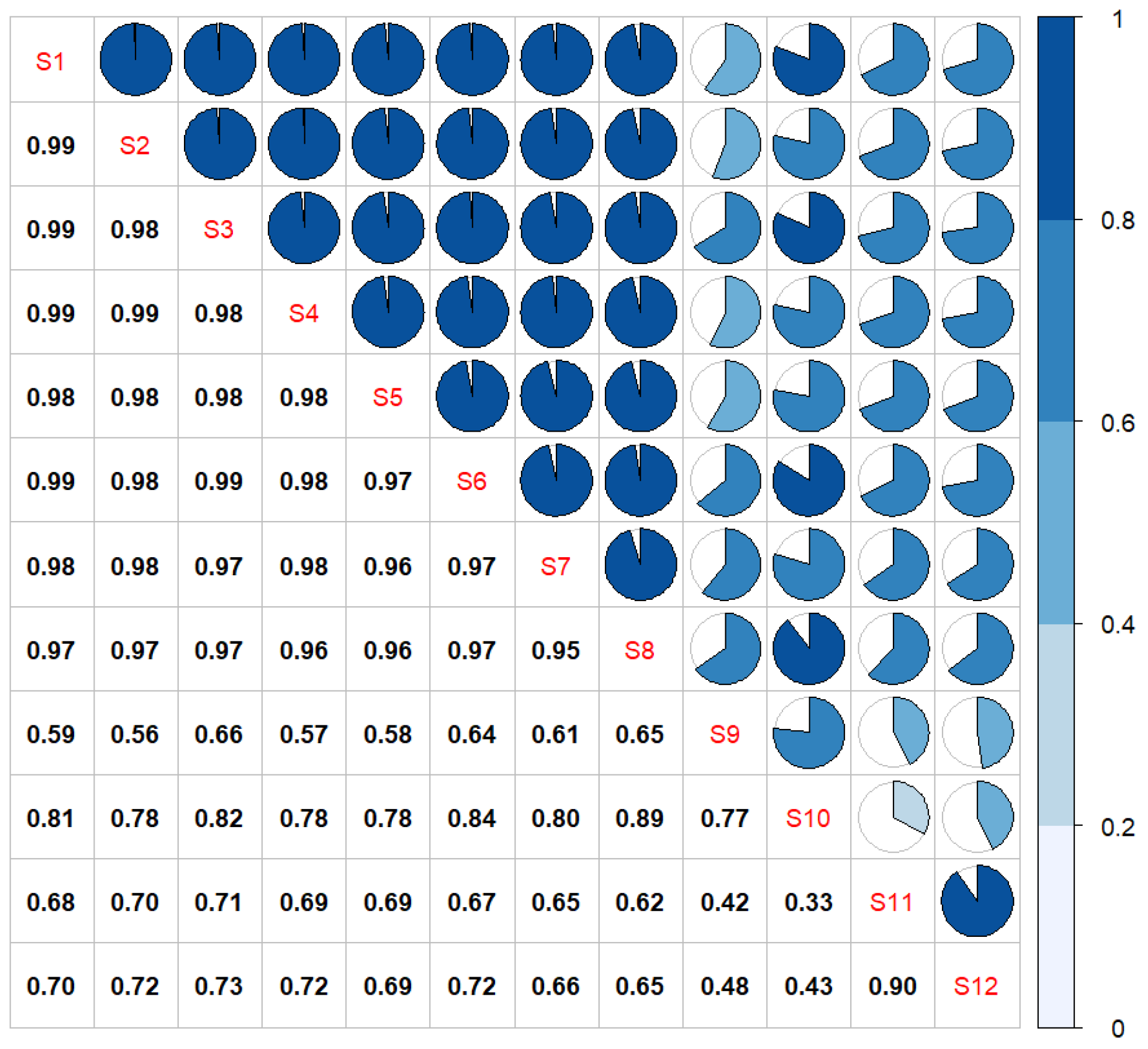
For the 66 species pairs formed by 12 herbaceous species on parabolic dunes in the Ebinur Lake Basin, the niche overlap (Oik) ranged from 0.33 to 1.00, with a mean value of 0.80 (Figure 1). A total of 58 species pairs (87.88% of all pairs) showed a Oik greater than 0.60. Among them, six species pairs—Arnebia guttataAtriplex patens, Arnebia guttataArnebia decumbens, Arnebia guttataEremopyrum orientale, Arnebia guttataBassia dasyphylla, Atriplex patensArnebia decumbens, and Eremopyrum orientaleBassia dasyphylla—had Oik values reaching 0.99. Seven species pairs (10.60%) had Oik values between 0.40 and 0.60. Only one species pair (1.52%) showed an Oik value lower than 0.40, namely Strigosella africanaAllium mongolicum (Oik = 0.33). Species pairs with higher Oik showed similar environmental requirements, indicating strong interspecific competition. In contrast, species pairs with lower Oik exhibited greater differences in environmental requirements and weaker interspecific competition.

3.3. Overall Interspecific Association

Using a binary species occurrence matrix, the variance ratio (VR) approach was applied to evaluate the overall interspecific associations among herbaceous species on parabolic dunes of the Ebinur Lake Basin. A VR value of 3.63 was obtained, exceeding 1 and suggesting an overall positive association among species (Table 2). The significance of the deviation of VR from 1 was evaluated using the W statistic. The W value was 381.18, exceeding both χ 0.95 2 (105) = 11.59 and χ 0.05 2 (105) = 129.92. This result indicates that the overall interspecific association of herbaceous plants on parabolic dunes in the Ebinur Lake Basin was significantly positive.

3.4. Interspecific Association

3.4.1. Chi-Square Test

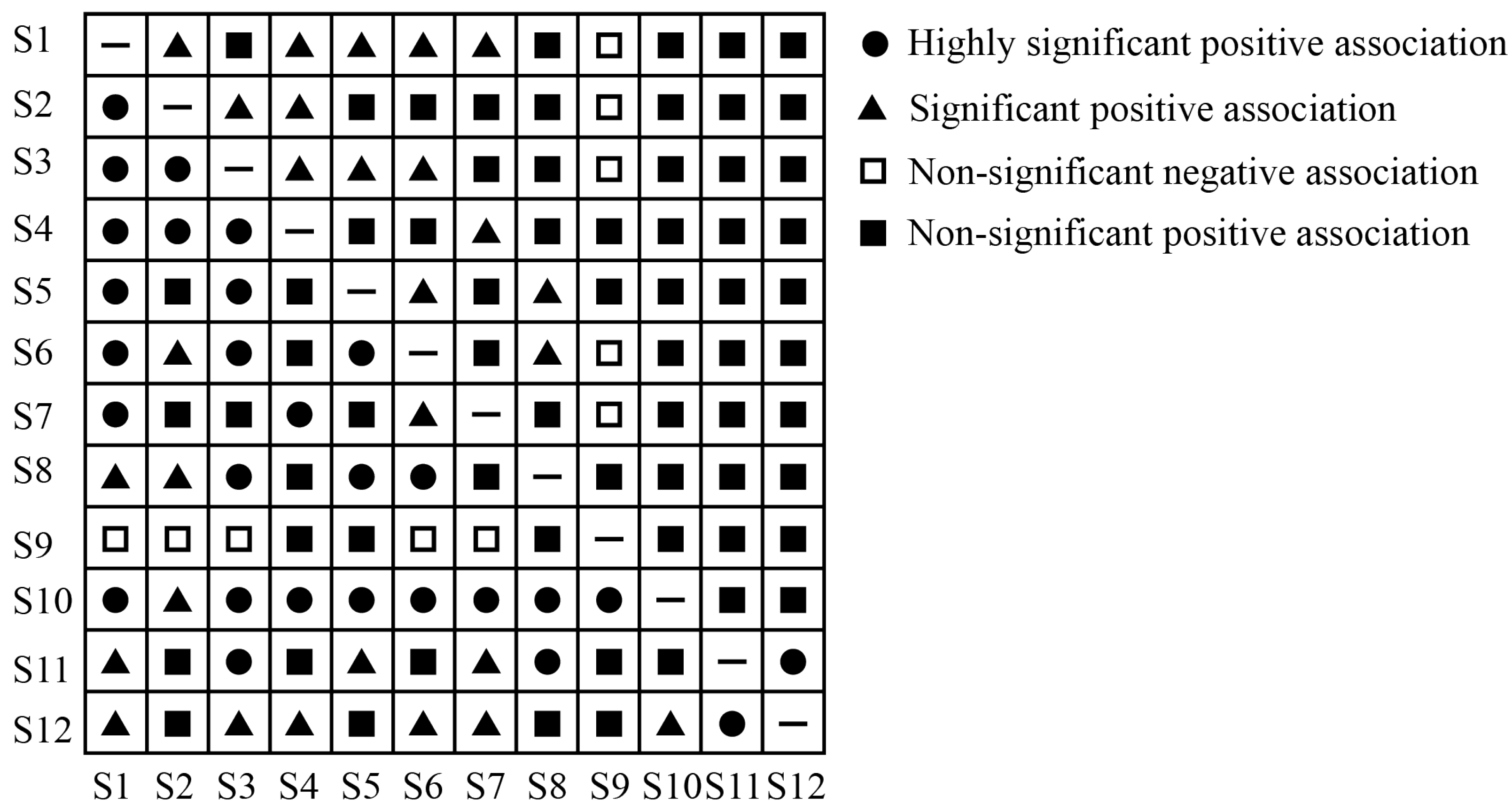
Based on the chi-square test, positive associations were detected in 61 of the 66 herbaceous species pairs (92.42%) (Figure 2). Among these, 27 pairs displayed highly significant positive associations, 14 pairs showed significant positive associations, and 20 pairs exhibited non-significant positive associations. Negative associations were observed in only five species pairs (7.58%), all of which were non-significant. The positive-to-negative association ratio reached 12.20, reflecting the dominance of positive interactions among herbaceous species and indicating a relatively advanced stage of community development.

3.4.2. Interspecific Association Coefficient

The analysis of the association coefficient showed that, among the 66 species pairs of herbaceous plants, 61 pairs (92.42%) exhibited positive associations (Figure 2). Among these, one pair showed a highly significant positive association, 14 pairs showed significant positive associations, and 46 pairs showed non-significant positive associations. Negative associations occurred in five species pairs (7.58%), all of which were non-significant. The positive–negative association ratio for herbaceous plants reached 12.20, demonstrating the predominance of positive associations. This pattern agreed with the results of the χ2 analysis.

3.4.3. Spearman’s Rank Correlation Test

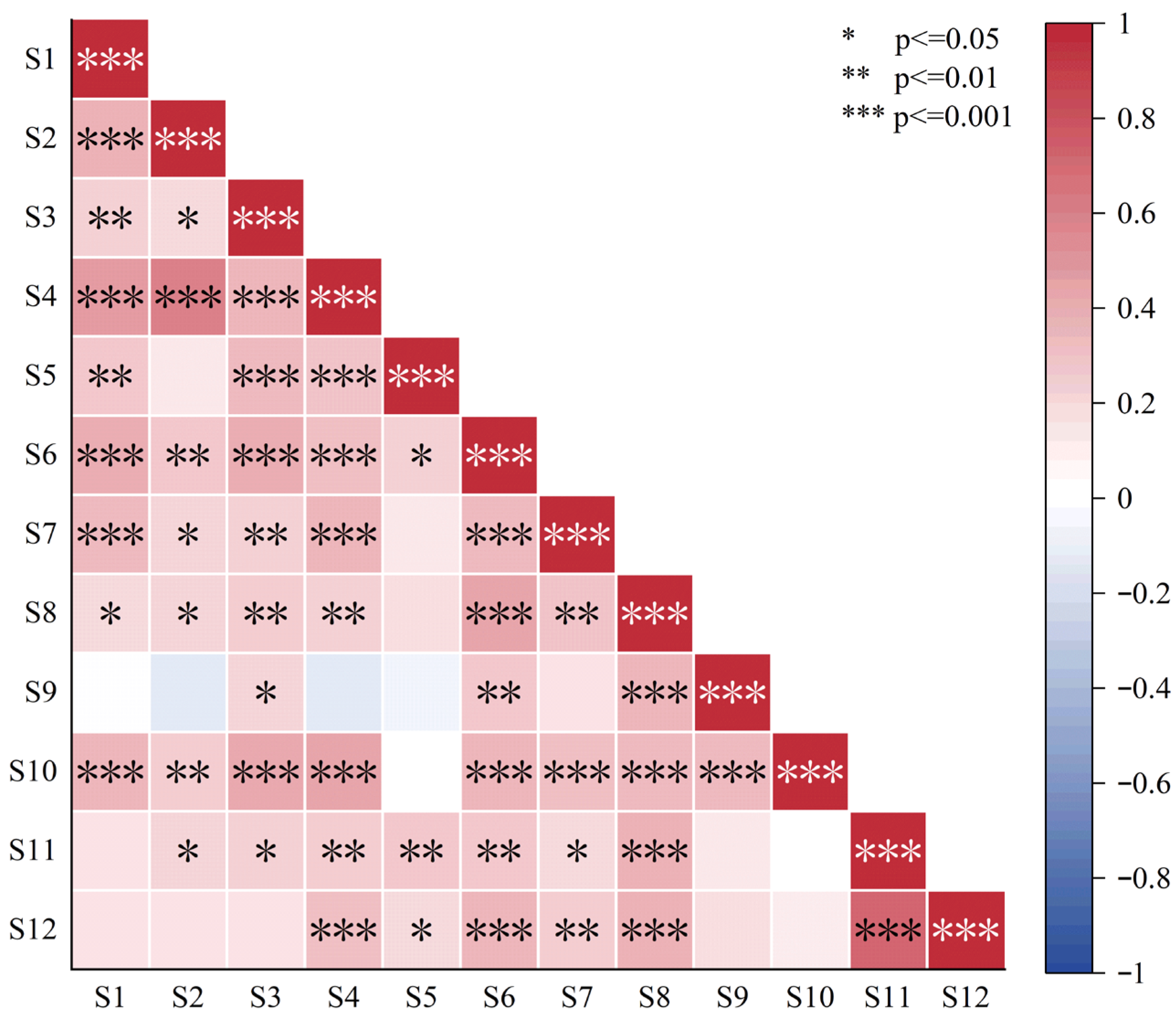
Spearman rank correlation analysis revealed 61 positively associated species pairs and five negatively associated pairs among the 66 combinations derived from the 12 herbaceous species. These represented 92.42% and 7.58% of all pairs, respectively. The positive-to-negative correlation ratio was 12.2 (Figure 3). Among the positively correlated pairs, 39 showed highly significant positive correlations (p < 0.001 and p < 0.01), accounting for 59.09% of the total pairs. Ten pairs showed significant positive correlations (p < 0.05), representing 15.15%. Twelve pairs exhibited non-significant positive correlations, accounting for 18.18%. Five species pairs showed non-significant negative correlations, accounting for 7.58% of the total pairs. In total, 49 species pairs exhibited significant correlations, whereas 17 pairs showed non-significant correlations. These accounted for 74.24% and 25.76% of the total pairs, respectively. Overall, positive correlations were dominant, and most species pairs showed significant associations.

3.5. Analysis of Community Stability

The community stability analysis showed that the intersection point between the fitted curve and the reference line was located at (36.56, 63.44) (Figure 4). The Euclidean distance between this point and the ideal coordinate (20, 80) was 23.42, indicating that the community was in an unstable state.

3.6. Analysis of Species Diversity

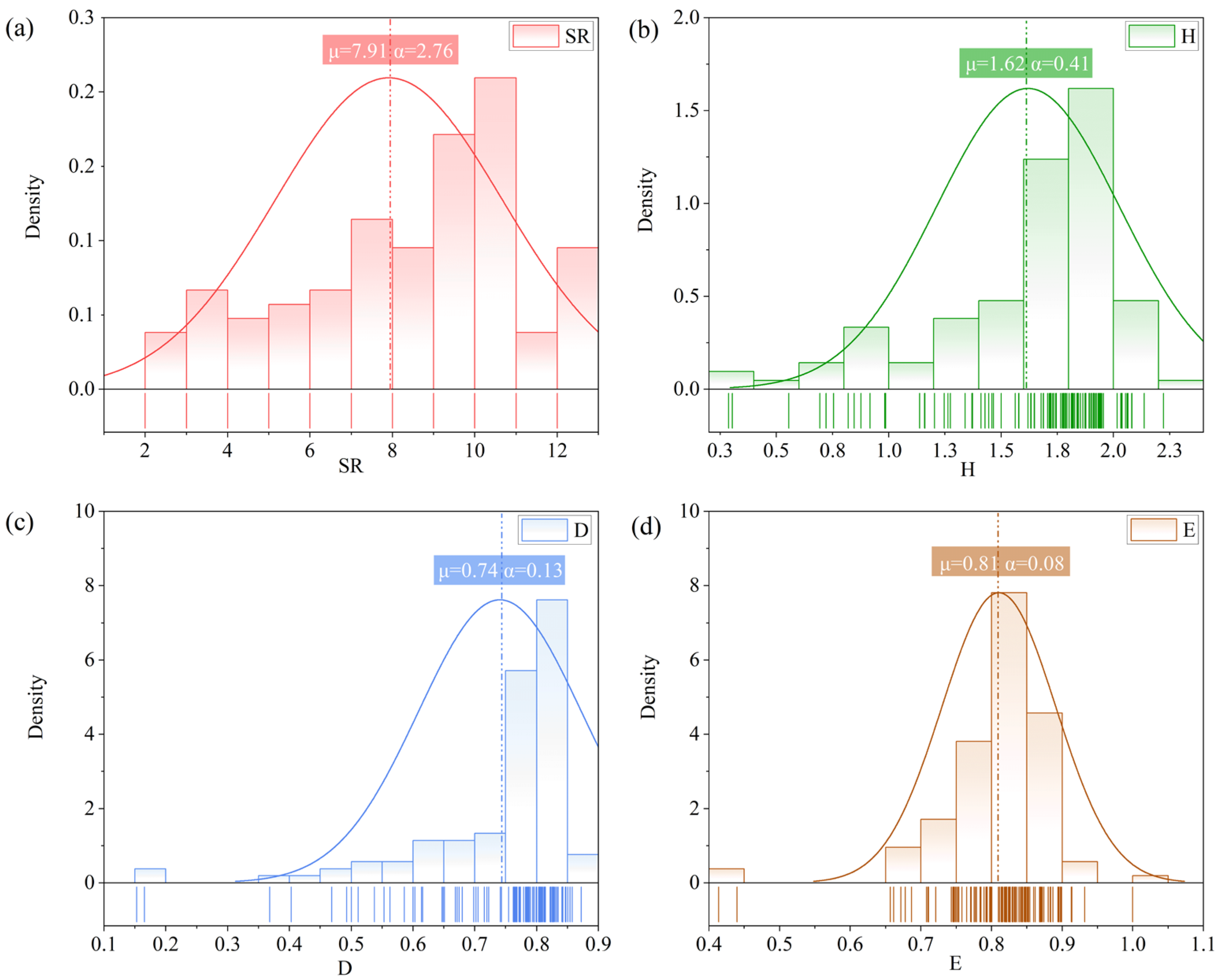
The density distributions of plant diversity indices were illustrated using a combination of histograms and boxplots. The density distributions revealed clear differences among the four vegetation diversity indices (Figure 5). Species richness (SR) ranged from 2 to 12 and showed a right-skewed distribution, with a mean value of approximately 7.9. This pattern indicates that most plots exhibited moderate diversity levels. However, a small number of plots showed high species richness, suggesting pronounced spatial heterogeneity in community resource distribution. The Shannon–Wiener index (H) was mainly concentrated between 1.6 and 2.0, with a mean of approximately 1.62 and a slightly right-skewed distribution. This result suggests that most plots maintained relatively high species diversity, although extreme richness was uncommon. The distributions of the Simpson dominance index (D) and Pielou evenness index (E) were more concentrated, ranging from 0.75 to 0.85 and from 0.80 to 0.85, respectively. Their mean values were 0.74 for D and 0.81 for E. The D showed a right-skewed distribution, whereas the E was centrally distributed. These patterns indicate that most plots were characterized by relatively high dominance and a moderate level of community structural evenness.

4. Discussion

4.1. Importance Value and Ecological Niche Breadth

IV and niche breadth are commonly used to reflect species dominance within a community and their capacity for resource utilization and environmental adaptation, respectively [36,37]. In general, species with higher IVs tend to exhibit broader niche breadths [38]. In this study, Arnebia guttata, Atriplex patens, Eremopyrum orientale, and Arnebia decumbens showed relatively high IVs and correspondingly wide niche breadths. These species occupied dominant positions within the herbaceous layer, exhibited strong environmental adaptability, and played key roles in maintaining community stability. In arid parabolic dune systems characterized by frequent aeolian disturbance, water and nutrient resources are severely limited and heterogeneously distributed. Strong abiotic stress exerts pronounced environmental filtering on community composition. Under such conditions, only species with broad ecological amplitude and high stress tolerance can persist across heterogeneous microtopographic habitats and attain high importance values. Therefore, the positive correlation between IV and niche breadth may not only reflect differences in competitive ability, but also indicate the selective effect of arid environments on species functional traits. This pattern is consistent with the ecological principle that stress-tolerant strategists dominate arid ecosystems [39]. Similar patterns have been reported across Mediterranean, Hyrcanian and Irano-Turanian dune systems, where plant functional groups were shaped primarily by habitat filtering rather than by regional species pools [40]. This suggests that, in dune ecosystems, environmental constraints may override biogeographic differences in determining species dominance and niche characteristics. However, changes in niche breadth are not always strictly positively correlated with IV. For example, the IV of Bassia dasyphylla and Festuca ovina ranked sixth (8.55%) and ninth (3.14%), respectively. In contrast, their BLs ranked fourth (8.73%) and twelfth (10%), respectively. This pattern is closely related to species distribution frequency. A wider distribution frequency indicates that a species can tolerate a broader range of environmental conditions and therefore possesses a wider ecological niche [41]. This suggests that niche breadth is influenced not only by IV but also by species distribution frequency [42]. Niche breadth and IV describe ecological characteristics from different perspectives. Niche breadth mainly reflects the evenness of species distribution across resource states. In contrast, IV integrates species abundance and frequency but does not account for differences in distribution among resource states [43,44]. These findings are consistent with previous studies on herbaceous plants in the Altay Desert region by Su et al. [45] and on dominant understory species in Haloxylon ammodendron plantations in Alxa, Inner Mongolia, reported by Li et al. [46].

4.2. Niche Breadth and Niche Overlap

Oik is commonly used to quantify the degree of similarity among species in resource use and environmental adaptation [47]. For eight species—Arnebia guttata, Atriplex patens, Arnebia decumbens, Eremopyrum orientale, Bassia dasyphylla, Erodium stephanianum, Lithospermum arvense, and Heliotropium ellipticum—all pairwise Oik values exceeded 0.90. This indicates a high degree of similarity in environmental adaptability and resource utilization among these species. Classical niche theory proposes that high niche overlap may intensify interspecific competition [48]. However, in arid and resource-limited dune ecosystems, such high overlap is not necessarily driven solely by competition. Under arid conditions and persistent aeolian stress, environmental filtering may select stress-tolerant species with similar functional traits, leading to niche convergence. According to the stress gradient hypothesis, facilitative interactions increase under high-stress conditions, and species sharing similar habitats are more likely to co-occur [49]. Therefore, high niche overlap may arise not only from competition but also from environmental filtering and functional convergence. In contrast, Allium mongolicum and Strigosella africana exhibited relatively low niche breadth and niche overlap. However, niche breadth and niche overlap do not always follow a fixed relationship [50]. In this study, Strigosella africana and Chorispora macropoda, despite their narrow niche breadths, showed a relatively high Oik (0.89). This pattern may be explained by the fact that both species belong to the Brassicaceae and share similar ecological and biological traits, resulting in high Oik despite limited niche breadth [51].

4.3. Interspecific Association and Community Stability

Overall interspecific association can reflect community stability and successional processes [52,53]. Some studies have suggested that, during community succession, community structure gradually becomes more stable, and interspecific associations tend to shift toward positive association [54,55]. In contrast, other researchers have argued that successional processes drive communities toward a state of interspecific independence, characterized by weak or no associations among species [56,57]. Statistical tests showed that herbaceous plant communities on parabolic dunes in the Ebinur Lake Basin exhibited significant positive overall association, with a ratio of positive to negative species associations greater than 1. This finding is consistent with the results reported by Zhao Yueyue [58], indicating close internal linkages within the herbaceous community. The Spearman rank correlation test further confirmed the results obtained using the variance ratio method, showing consistent outcomes across all approaches. However, under intense abiotic stress, environmental filtering may select species with similar drought-tolerant traits. The overall positive associations observed in this study may therefore reflect the combined effects of environmental filtering and facilitation, rather than solely indicating successional stability.
In the M. Godron community stability analysis, the Euclidean distance between the intersection point of the straight line and curve and the ideal coordinate was relatively large, indicating low community stability. This suggests that the herbaceous plant communities on parabolic dunes in the Ebinur Lake Basin are still undergoing succession and have not yet reached the climax stage [59]. The study area is located within the Ebinur Lake Wetland Nature Reserve and experiences relatively limited human disturbance. Community succession is therefore mainly driven by natural processes. The Ebinur Lake Basin is characterized by low precipitation, frequent strong winds, and a high occurrence of sandstorm events, resulting in harsh environmental conditions [60]. The pronounced heterogeneity of dune environments, together with spatial limitations in water and nutrient availability [61], subjects community structure to continuous abiotic regulation, thereby maintaining a dynamic rather than climax-stable state [62].

4.4. Species Diversity

Species diversity is a crucial indicator of plant community structure and ecosystem functioning [63]. It comprehensively reflects the species composition, dominance patterns, and the balance of resource allocation within the community. In this study, SR, the H, the D, and E all exhibit normal distributions. The community is characterized by moderate richness, evenness, and significant dominance. This suggests the presence of interspecific interactions and niche differentiation among herbaceous species in the study area, which collectively maintain the fundamental functions of the community [64]. The fluctuation range of the H was markedly smaller than that of SR. This indicates that an increase in species number does not necessarily result in a proportional increase in diversity indices. Community diversity was primarily driven by the combined effects of dominance and evenness. This pattern is consistent with classical diversity regulation mechanisms, in which diversity is not determined solely by species number but is constrained by the relative abundance structure among species [65]. Although the overall level of community diversity remained relatively low, SR, the H, the D, and E were all higher than those reported for artificial desert vegetation communities [66]. This suggests that the parabolic dune habitats in the Ebinur Lake Basin are capable of providing relatively suitable habitats and resource conditions for a greater number of species, indicating a certain potential for ecological restoration. With progressive soil development and increased vegetation cover, competitive pressure exerted by dominant species may gradually weaken. Species coexistence mechanisms may become more stable, allowing further improvement in community diversity.

4.5. Limitations and Future Perspectives

This study has several limitations. First, the survey included only three parabolic dune sites. This limited sampling may not fully capture the spatial heterogeneity of dune habitats across the Ebinur Lake Basin. Therefore, the conclusions are primarily applicable to similar parabolic dune systems. Second, the 12 herbaceous species analyzed in this study represent all herbaceous taxa recorded during the survey period. However, community composition and species occurrence frequency in arid regions may vary with seasonal shifts and interannual fluctuations in precipitation. Such variability may influence the temporal stability of diversity patterns and interspecific relationships. Future research should expand the number of sampling sites and implement multi-year and multi-season monitoring. Integrating measurements of environmental variables, such as soil moisture and nutrient availability, with analyses of plant functional traits would help test the generality of the findings and provide a more comprehensive understanding of the underlying driving mechanisms.

5. Conclusions

On the parabolic dunes of the Ebinur Lake Basin, herbaceous plants belong to 7 families, 10 genera, and 12 species. The ranking of species niche breadth does not fully correspond to the ranking of importance values. The herbaceous plant community exhibits a significantly positive overall association. Niche overlap among species is high, indicating strong interspecific correlations and weak species independence. Overall community stability is low, suggesting that the community is at a mid-successional stage. Species richness and evenness of the community are moderate, whereas dominance is relatively high. The dune environment exerts strong environmental filtering on plant growth. Consequently, there remains considerable potential for improvement in community diversity indices. In future ecological restoration and conservation efforts, species with similar ecological habits and biological traits should be preferentially selected. These species should exhibit low niche overlap and strong positive interspecific associations. Appropriate regulation and optimization can promote efficient resource utilization, enhance community stability, and facilitate the continuous improvement of the ecological environment in the Ebinur Lake Basin.

Author Contributions

Conceptualization, P.C. and S.W.; methodology, P.C. and Y.Z.; software, P.C. and L.G.; validation, P.C., S.W. and Y.Z.; investigation, P.C. and S.W.; resources, S.W. and Y.Z.; data curation, P.C.; writing—original draft preparation, P.C.; writing—review and editing, S.W. and Y.Z.; visualization, L.G.; supervision, S.W.; project administration, S.W.; funding acquisition, S.W. All authors have read and agreed to the published version of the manuscript.

Funding

This research was funded by Hubei Provincial Key Research and Development Program for Aid to Xinjiang and Tibet, grant number 2023EGA124.

Institutional Review Board Statement

Not applicable.

Informed Consent Statement

Not applicable.

Data Availability Statement

The original contributions presented in the study are included in the article; further inquiries can be directed to the corresponding author.

Conflicts of Interest

The authors declare no conflicts of interest.

Abbreviations

The following abbreviations are used in this manuscript:
IVImportant value
BLLevins niche index
BSShannon niche index
OikNiche overlap index
VRVariance ratio
ACInterspecific association coefficient
SRPatrick richness index
HShannon–Wiener diversity index
DSimpson dominance index
EPielou evenness index

References

  1. Xu, C.; Li, Z. Changes in interspecific niche relationship of sand-fixing plants in the restoration process of desert ecosystem. Chin. J. Ecol. 2004, 23, 7. [Google Scholar]
  2. Kearney, M. Habitat, Environment and Niche: What Are We Modelling? Oikos 2006, 115, 186–191. [Google Scholar] [CrossRef]
  3. Jiang, C.; Fu, J.; Wang, Y.; Chai, P.; Yang, Y.; Mi, X.; Yu, M.; Ma, K.; Chen, J.; Jiang, C.; et al. The Habitat Type and Scale Dependences of Interspecific Associations in a Subtropical Evergreen Broad-Leaved Forest. Forests 2022, 13, 1334. [Google Scholar] [CrossRef]
  4. Liu, J.; Wu, G.; Ma, T. Study on Niche Characteristics of Desert Plant Community in Marginal Zone of Muus Desert. Pratacult. Sci. 2007, 24, 9–14. [Google Scholar]
  5. Nery, E.K.; Caddah, M.K.; Santos, M.F.; Nogueira, A. The Evolution of Ecological Specialization Underlies Plant Endemism in the Atlantic Forest. Ann. Bot. 2023, 131, 921–940. [Google Scholar] [CrossRef] [PubMed]
  6. Li, X.; Yuan, S.; Li, L.; Zhang, H.; Jin, Y.; Liu, L.; Zhang, R.; Bu, F.; Sun, S.; Fu, H.; et al. Influence of Grazing on the Activity Pattern and Temporal Niche of Two Dominant Rodent Species in Alxa Desert. Front. Ecol. Evol. 2023, 10, 1105729. [Google Scholar] [CrossRef]
  7. Chen, J.; Zhang, P.; Amoah, I.D.; Chen, J.; Zhang, P.; Amoah, I.D. Plant Diversity and Interspecific Interactions in Desert-Oasis Transition Zones: Insights from the Badain Jilin Desert. Sustainability 2025, 17, 1259. [Google Scholar] [CrossRef]
  8. Zhang, J.; Zhao, H.; Zhang, T.; Zhao, X.; Drake, S. Community Succession along a Chronosequence of Vegetation Restoration on Sand Dunes in Horqin Sandy Land. J. Arid. Environ. 2005, 62, 555–566. [Google Scholar] [CrossRef]
  9. Liu, Z.; Wang, X. Functions of Canopy-Stored Seeds in the Dune Ecosystem: Conclusions from Agriophyllum squarrosum and Artemisia wudanica. Front. Biol. China 2009, 4, 486–490. [Google Scholar] [CrossRef]
  10. Zuo, X.; Zhao, X.; Zhao, H.; Zhang, T.; Li, Y.; Wang, S.; Li, W.; Powers, R. Scale Dependent Effects of Environmental Factors on Vegetation Pattern and Composition in Horqin Sandy Land, Northern China. Geoderma 2012, 173–174, 1–9. [Google Scholar] [CrossRef]
  11. Zuo, X.; Yue, X.; Lv, P.; Yu, Q.; Chen, M.; Zhang, J.; Luo, Y.; Wang, S.; Zhang, J. Contrasting Effects of Plant Inter- and Intraspecific Variation on Community Trait Responses to Restoration of a Sandy Grassland Ecosystem. Ecol. Evol. 2017, 7, 1125–1134. [Google Scholar] [CrossRef] [PubMed]
  12. Barchyn, T.E.; Hugenholtz, C.H. Predicting Vegetation-stabilized Dune Field Morphology. Geophys. Res. Lett. 2012, 39, L17403. [Google Scholar] [CrossRef]
  13. Hesse, P.P.; Simpson, R.L. Variable Vegetation Cover and Episodic Sand Movement on Longitudinal Desert Sand Dunes. Geomorphology 2006, 81, 276–291. [Google Scholar] [CrossRef]
  14. Laksono, A.; Saputri, A.A.; Pratiwi, C.I.B.; Arkan, M.Z.; Putri, R.F. Vegetation Covers Change and Its Impact on Barchan Dune Morphology in Parangtritis Coast, Indonesia. In E3S Web of Conferences, Proceedings of the 1st Geosciences and Environmental Sciences Symposium (ICST 2020), Yogyakarta, Indonesia, 7–8 September 2020; EDP Sciences: Les Ulis, France, 2020; Volume 200, p. 02026. [Google Scholar]
  15. Yan, N.; Baas, A.C.W. Parabolic Dunes and Their Transformations under Environmental and Climatic Changes: Towards a Conceptual Framework for Understanding and Prediction. Glob. Planet. Change 2015, 124, 123–148. [Google Scholar] [CrossRef]
  16. Sandanov, D.V.; Liu, Y.; Wang, Z.; Korolyuk, A.Y. Woody and Herbaceous Plants of Inner Asia: Species Richness and Ecogeorgraphic Patterns. Contemp. Probl. Ecol. 2020, 13, 360–369. [Google Scholar] [CrossRef]
  17. Jing, Y.; Zhang, F.; He, Y.; Kung, H.; Johnson, V.C.; Arikena, M. Assessment of Spatial and Temporal Variation of Ecological Environment Quality in Ebinur Lake Wetland National Nature Reserve, Xinjiang, China. Ecol. Indic. 2020, 110, 105874. [Google Scholar] [CrossRef]
  18. Ma, Q.; Wu, S.; Liu, Y.; Jia, C. Grain Size Distribution of the Parabolic Dunes’ Sediments in the Ebinur Lake Basin, Xinjiang, China. J. Desert Res. 2014, 34, 650–657. [Google Scholar]
  19. Yang, J.; Fu, D.; Yang, X.; Qin, L.; Lv, G. Study on the Species Diversity of Typical Plant Communities in Ebinur Lake Wetland Nature Reserve. J. Arid. Land Resour. Environ. 2010, 24, 145–149. [Google Scholar] [CrossRef]
  20. Nurbolat, S.; Guanghui, L.; Lamei, J.; Lei, Z. Convergent Variation in the Leaf Traits of Desert Plants in the Ebinur Lake Basin. Front. Environ. Sci. 2022, 10, 927572. [Google Scholar] [CrossRef]
  21. Hou, Z.; Lv, G.; Jiang, L.; Hou, Z.; Lv, G.; Jiang, L. Functional Diversity Can Predict Ecosystem Functions Better Than Dominant Species: The Case of Desert Plants in the Ebinur Lake Basin. Sustainability 2021, 13, 2858. [Google Scholar] [CrossRef]
  22. Sun, Q.; Sun, J.; Baidurela, A.; Li, L.; Hu, X.; Song, T. Ecological Landscape Pattern Changes and Security from 1990 to 2021 in Ebinur Lake Wetland Reserve, China. Ecol. Indic. 2022, 145, 109648. [Google Scholar] [CrossRef]
  23. Ding, C.; Hu, W.; Zhang, X.; Qi, X.; He, B.; Chen, X. Composition and Diversity of the Fungal Community in the Rhizosphere Soil of Halophytic Vegetation in Ebinur Lake Wetland. Environ Sci. Pollut. Res. 2023, 30, 86097–86109. [Google Scholar] [CrossRef] [PubMed]
  24. Huang, L.; Wu, S.; Zhang, Y.; Xiao, J.; Chen, P.; Shi, H. Morphological Evolution and Migration Characteristics of Parabolic Dunes in the Ebinur Lake Basin. Mt. Res. 2025, 43, 811–823. [Google Scholar]
  25. Wu, Z.Y.; Raven, P.H.; Hong, D.Y. (Eds.) Flora of China; Science Press: Beijing, China; Missouri Botanical Garden Press: St. Louis, MO, USA, 1994–2013; Volumes 1–25. [Google Scholar]
  26. Li, D.; Yang, Z.; Yan, P.; Ling, T.; Qin, F.; Li, P. Effects of Stand Density on Canopy Structure and Understory Herbs of Pinus massoniana Plantation Community. J. Southwest For. Univ. 2024, 44, 60–68. [Google Scholar]
  27. Levins, R. Evolution in Changing Environments: Some Theoretical Explorations; Princeton University Press: Princeton, NJ, USA, 1968. [Google Scholar]
  28. Li, J.; Zhu, J.; Zhu, Q. A Review on Niche Theory and Niche Metrics. J. Beijing For. Univ. 2003, 25, 100–107. [Google Scholar] [CrossRef]
  29. Pianka, E.R. The Structure of Lizard Communities. Annu. Rev. Ecol. Syst. 1973, 4, 53–74. [Google Scholar] [CrossRef]
  30. Schluter, D. A Variance Test for Detecting Species Associations, with Some Example Applications. Ecology 1984, 65, 998–1005. [Google Scholar] [CrossRef]
  31. Zhang, J. Quantitative Ecology, 3rd ed.; Science Press: Beijing, China, 2018. [Google Scholar]
  32. Song, Y. Vegetation Ecology, 2nd ed.; Higher Education Press: Beijing, China, 2017. [Google Scholar]
  33. Bishara, A.J.; Hittner, J.B. Testing the Significance of a Correlation with Nonnormal Data: Comparison of Pearson, Spearman, Transformation, and Resampling Approaches. Psychol. Methods 2012, 17, 399–417. [Google Scholar] [CrossRef]
  34. Zheng, Y. Comparison of Methods for Studying Stability of Forest Community. Sci. Silvae Siniae 2000, 36, 28–32. [Google Scholar]
  35. Tan, L. Statistical Ecology; China Forestry Publishing House: Beijing, China, 2009. [Google Scholar]
  36. Zhang, M.; Lan, B.; Zhang, D.; Liu, Y.; Zhang, L.; Xu, W.F.; Duan, C.; Dun, J.; Liu, Z. Niche and Interspecific Association of Dominant Herbaceous Plants in the Water-Level-Fluctuating Zone of Fuling—Fengjie Section of the Three Gorges Reservoir. Acta Ecol. Sin. 2022, 42, 3228–3240. [Google Scholar]
  37. Li, K.; Xing, X.; Li, Y.; Li, X.; Li, R.; Fan, S.; Dong, L. Effect of Different Artificial Restoration Methods of Karst Rocky Desertification on Community Composition and Niche Characteristics of Woody Populations in Shilin Scenic Area. Acta Ecol. Sin. 2020, 40, 4641–4650. [Google Scholar]
  38. Liu, R.; Chen, L.; Tu, H.; Liang, S.; Jiang, Y.; Li, Y.; Huang, D.; Nong, J. Niche and Interspecifie Association of Species in Shrub Layer of Cyclobalanopsis glauca Community in Karst Hills of Guilin, Southwest China. Acta Ecol. Sin. 2020, 40, 2057–2071. [Google Scholar]
  39. Hodáňová, D. Plant Strategies and Vegetation Processes. Biol. Plant 1981, 23, 254. [Google Scholar] [CrossRef]
  40. Mahdavi, P.; Bergmeier, E. Plant Functional Traits and Diversity in Sand Dune Ecosystems across Different Biogeographic Regions. Acta Oecolog. 2016, 74, 37–45. [Google Scholar] [CrossRef]
  41. Long, Z.; Wang, Z.; Zhao, R.; Liu, B.; Chen, G. Niches and Community Stability of Dominant Herbaceous Species in the Forest and Creek Ecotone of Dehang Geopark. Acta Bot. Boreali-Occident. Sin. 2024, 44, 1954–1964. [Google Scholar]
  42. Ma, X.; Jiang, D.; Liu, Z.; Wang, F.; Wen, R. Niche of Dominant Plant Populations of Acacia confusa Community in Pingtan Island. Chin. J. Trop. Crops 2022, 43, 2614–2625. [Google Scholar]
  43. Gu, L.; Gong, Z.; Li, W. Niches and Interspecific Associations of Dominant Populations in Three Changed Stages of Natural Secondary Forests on Loess Plateau, P.R. China. Sci. Rep. 2017, 7, 6604. [Google Scholar] [CrossRef] [PubMed]
  44. Zheng, X.; Zhao, C.; Liu, Q.; Feng, Y.; Zhu, C.; Wang, Z.; Liu, B. Niche Characteristics of Understory Herb Layer in a Mature Chinese Fir Plantation. Chin. J. Ecol. 2018, 37, 332–338. [Google Scholar]
  45. Su, J.; Liu, Y.; Liu, Y.; Wu, T.; Rong, W.; Chu, G.; Wang, M. Niche and Interspecific Correlation of Herbaceous Plants in the Altay Deser Region. Pratacult. Sci. 2024, 41, 2217–2228. [Google Scholar]
  46. Li, X.; Sui, Y.; Xin, Z.; Dong, X.; Zhang, J.; Sun, J.; Shang, M. Niche Characteristics and Interspecific Associations of Main Plants under Haloxylon ammodendron Plantations in Alxa of Inner Mongolia. J. Plant Resour. Environ. 2025, 34, 79–87. [Google Scholar]
  47. Levine, J.M.; HilleRisLambers, J. The Importance of Niches for the Maintenance of Species Diversity. Nature 2009, 461, 254–257. [Google Scholar] [CrossRef] [PubMed]
  48. Zhou, X.; Wang, X.; Ma, Y.; Wang, Y.; Luo, S.; Xie, L. Niche of Main Plant Populations in Alpine Meadow under the Rest-Grazing in the Green-up Period. Ecol. Environ. Sci. 2022, 31, 1547–1555. [Google Scholar]
  49. Bertness, M.D.; Callaway, R. Positive Interactions in Communities. Trends Ecol. Evol. 1994, 9, 191–193. [Google Scholar] [CrossRef] [PubMed]
  50. Huang, M.; Su, X.; Guo, S.; Tian, X.; Liu, F.; Shao, Y.; Yuan, Z.; Chen, Y.; Li, H. Niche and Interspecific Linkage of Dominant Herba Ceous Plants in the Middle and Lower Reaches of the Yellow River Wetlands in Henan. Plant Sci. J. 2024, 42, 181–190. [Google Scholar]
  51. Wang, R.; Peng, W.; Yang, J.; Wu, B.; Zhang, B.; Liao, L. Niche and Interspecific Association of Main Woody Plants in Cunninghamia lanceolata Plantation Community in Jianfengling, China. Chin. J. Appl. Ecol. 2024, 35, 1483–1491. [Google Scholar]
  52. Huang, X.; Wang, S.; Huang, B.; Yin, H.; Cui, K.; Zhao, W.; Fan, G.; Gu, D. Analyses of Community Stability and Inter-Specific Associations between the Rare Plant Phyllitis scolopendrium and Its Associated Species. Acta Ecol. Sin. 2015, 35, 80–90. [Google Scholar]
  53. Lei, D.; Wang, Z. Interspecific Associations, niches and Community Stability of Main Species in Pinus massoniana Community in Karst Mountainous Cities, the Central Guizhou Province. Acta Ecol. Sin. 2024, 44, 4353–4367. [Google Scholar]
  54. Gao, H.; Yuan, J.; Gao, P. Niche and Interspecific Association of Dominant Species in Secondary Forest of Zhoushan Islands. J. Trop. Subtrop. Bot. 2017, 25, 73–80. [Google Scholar] [CrossRef]
  55. Zhou, X.; Lu, G.; Cao, X.; Zhao, A.; Huang, H.; Tian, Q.; Shi, R.; Zhou, X. Interspecific Association of Shrub Species in Burned Site of Picea asperata-abies Fabri Forest on the Northern Slope of Dieshan Mountains. For. Res. 2022, 35, 163–170. [Google Scholar] [CrossRef]
  56. Xu, S.; Shang, Z.; Ma, Y.; Long, R. Analysis of Interspecific Association in Degraded Meadow Communitiesin the Headwater Area of Yellow River on Tibetan Plateau. Acta Bot. Boreal.-Occident. Sin. 2008, 28, 1222–1227. [Google Scholar]
  57. Huang, S.; Li, Y.; Luo, T.; Wang, B. Dynamics of Associations between Tree Species in a Secondary Tropical Montane Rain Forest at Jianfengling on Hainan Island. Acta Ecol. Sin. 2000, 24, 569–574. [Google Scholar]
  58. Zhao, Y.; Li, Z.; Wu, S.; Xing, S. Species Associations and Community Stability of a Tilia mongolica Forest. J. For. Environ. 2025, 45, 375–385. [Google Scholar] [CrossRef]
  59. Liang, Z.; Liang, S.; Deng, R. Study on the Interspecific Associations in Arbor Layer of Evergreen Monsoon Rainforest in Fangcheng Golden Camellia National Nature Reserve. J. Southwest For. Univ. 2024, 44, 34–44. [Google Scholar]
  60. Wang, C.; Zhang, X.; Xue, Y.; Zhou, J.; Lei, J.; Li, S. Spatiotemporal Variations and Driving Factors of Sand Dust Storms in the Ebinur Lake Basin of Northwest China from 2010 to 2023. China Environ. Sci. 2025, 45, 5329–5337. [Google Scholar] [CrossRef]
  61. Ma, Q. Development and Evolution of Parabolic Sand Dunes in the Abi Lake Basin, Xinjiang; Shanxi Normal University: Xi’an, China, 2013. [Google Scholar]
  62. Ye, J.; Deng, T.; Cen, H.; Duan, Y.; Zhu, X.; Hu, X. Niche and Interspecific Association of Dominant Trees in Abies ziyuanensis Community of Yinzhu Laoshan, Guangxi. Acta Ecol. Sin. 2025, 45, 3921–3932. [Google Scholar]
  63. Dietrich, P.; Ebeling, A.; Meyer, S.T.; Asato, A.E.B.; Bröcher, M.; Gleixner, G.; Huang, Y.; Roscher, C.; Schmid, B.; Vogel, A.; et al. Plant Diversity and Community Age Stabilize Ecosystem Multifunctionality. Glob. Change Biol. 2024, 30, e17225. [Google Scholar] [CrossRef] [PubMed]
  64. Zhou, T.; Reich, P.B.; Pang, X.; Tan, C.; Zhou, G.; Zhou, Z.; Delgado-Baquerizo, M. Tree Evenness Sustains Multiple Ecosystem Services in Boreal-Temperate Ecotone. New Phytol. 2025. [Google Scholar] [CrossRef] [PubMed]
  65. Yan, H.F.; Morais, R.A.; Bellwood, D.R. Species Abundances Surpass Richness Effects in the Biodiversity-Ecosystem Function Relationship across Marine Fishes. Nat. Commun. 2025, 16, 7789. [Google Scholar] [CrossRef]
  66. Lu, Y.; Zhan, Y.; Qian, W.; Zhen, W.; Teng, Y.; Tian, X. Species Diversity of Typical Community of Artificial Desert Vegetation in Hexi Corridor. Bull. Soil Water Conserv. 2018, 38, 14–18. [Google Scholar] [CrossRef]
Figure 1. Niche overlap of herbaceous plants on parabolic dunes. (The size and color intensity of the fan shape represent the magnitude of the numerical value).
Sustainability 18 02608 g001
Figure 2. Half-matrix diagrams of interspecific association coefficient (AC) values (right) and Chi-square test results (left) for herbaceous plants on parabolic dunes.
Sustainability 18 02608 g002
Figure 3. Half matrix plot of Spearman rank correlation coefficient test for herbaceous plants on parabolic dunes.
Sustainability 18 02608 g003
Figure 4. Community stability fitting curve. (Stars represent the coordinates of community stability points, whereas circles represent the intersection points of the community stability curve with the linear equation y = 100 − x).
Sustainability 18 02608 g004
Figure 5. Distribution density plots of vegetation diversity indices ((a) distribution density of species richness; (b) distribution density of the Shannon–Wiener index; (c) distribution density of the Simpson dominance index; (d) distribution density of the Pielou evenness index).
Sustainability 18 02608 g005
Table 1. Importance values and niche widths of herbaceous plants on parabolic dunes.
CodeSpeciesFamily NameIV/%BLBS
S1Arnebia guttata BungeBoraginaceae16.6576.844.39
S2Atriplex patens (Litv.) IljinAmaranthaceae15.0574.604.40
S3Eremopyrum orientale (L.) Jaubert & SpachPoaceae13.3465.234.41
S4Arnebia decumbens (Vent.) Coss. & KralikBoraginaceae13.0974.684.38
S5Erodium stephanianum Willd.Geraniaceae8.7248.694.24
S6Bassia dasyphylla (Fisch. & C. A. Mey.) Freitag & G. KadereitAmaranthaceae8.5570.494.38
S7Lithospermum arvense L.Boraginaceae8.1149.064.27
S8Heliotropium ellipticum Ledeb.Asteraceae7.3758.034.29
S9Festuca ovina L.Poaceae3.1427.273.55
S10Allium mongolicum RegelAmaryllidaceae2.4537.133.63
S11Strigosella africana (L.) Botsch.Brassicaceae1.8831.683.48
S12Chorispora macropoda Trautv.Brassicaceae1.6529.003.41
Table 2. Overall correlation of herbaceous plants on parabolic dunes.
VRTest Statistics Critical   χ 2   Value   ( χ 0.05 2 ,   χ 0.95 2 ) Measure Result
3.63381.1882.35, 129.92significant positive association
Disclaimer/Publisher’s Note: The statements, opinions and data contained in all publications are solely those of the individual author(s) and contributor(s) and not of MDPI and/or the editor(s). MDPI and/or the editor(s) disclaim responsibility for any injury to people or property resulting from any ideas, methods, instructions or products referred to in the content.