1. Introduction
As global climate change and ecological environmental crises intensify, fostering a green and low-carbon economic transition has become a shared mission for the international community. Within this context, entrepreneurs, as key agents, are committed to creatively restructuring resources to drive growth. They aim to address environmental issues while generating economic value, thereby achieving synergistic improvements in economic, social and ecological benefits [
1]. The national government places high importance on cultivating entrepreneurship. The report of the 19th National Congress of the Communist Party of China explicitly stated the need to “stimulate and protect entrepreneurs’ spirit, and encourage more members of society to engage in innovation and business start-ups.” Entrepreneurs’ spirit is often conceptualized as the comprehensive ability of entrepreneurs to organize and manage firms. This ability serves as an intangible element that propels innovation and entrepreneurship. Within the current sustainability imperative, the sustainable spirit of green entrepreneurs extends beyond the traditional concept. It transcends the narrow confines of sole economic profit pursuit and broadens its focus to include the active responsibility for ecological stewardship alongside corporate profitability [
2,
3,
4,
5,
6]. This form of entrepreneurship, with its green focus, is becoming an increasingly pivotal force in advancing sustainable development [
7]. Accordingly, cultivating and galvanizing green entrepreneurship represents a dual necessity. It is inherently required for meeting China’s carbon peak and neutrality targets, and is equally critical for constructing a modernized industrial architecture and advancing high-quality development.
Green entrepreneurial and innovative activities often face more complex challenges than those in traditional business domains [
8,
9]. Various internal and external factors continually influence the spirit of entrepreneurs dedicated to green and low-carbon goals. The first factor involves entrepreneurs’ personal attributes. Research indicates that entrepreneurs’ social and ethical values provide critical support for resource integration, risk management and green innovation [
3]. Notably, collectivist values can moderate the relationship between social identity and sustainable entrepreneurial behavior, thereby helping to shape a sustainable social environment [
10]. Entrepreneurs’ perceptions of the practicality of green policies, as well as their acceptance of novel technologies, are both key determinants [
5]. Furthermore, green entrepreneurship orientation and environmental leadership directly drive green entrepreneurial practices [
11,
12]. The second factor involves organizational conditions. Some scholars argue that green entrepreneurs focus on developing green business models and value chains [
13], while digital infrastructure and technology orientation enhance organizational resilience and support green innovation practices [
5]. Meanwhile, collaboration between industry and academia has become a crucial channel for acquiring key technologies and innovation resources [
14]. Market competition further drives companies to pursue green differentiation, creating new demand for clean and sustainable products [
15]. The third factor is about institution and macroeconomic environment. Governments are increasingly adopting policies that prioritize green and sustainable development, and their evaluation systems are transitioning toward green development metrics. This provides strong external impetus for green entrepreneurship and the cultivation of entrepreneurs’ environmental awareness [
16,
17]. Policy tools such as green finance reforms, green credit, and environmental regulations directly incentivize innovation and entrepreneurship in green industries [
18,
19]. Furthermore, technological advancements like the internet and artificial intelligence can drive the success of green innovation and entrepreneurship [
20], with their effects amplified by government support [
21].
The new media environment can compel heavily polluting enterprises to enhance green technology innovation, which generates a positive effect on their total factor productivity [
22,
23]. Both the quantity and scope of new media applications have shown broader growth. Sina Weibo is a representative new media platform. According to the Weibo Financial Report (Q3 2025) [
24], it has seen substantial user bases, reaching 578 million MAUs and 257 million DAUs by the end of the third quarter of 2025. To this end, government social media has arisen as a key medium [
25], transforming complex fiscal and tax regulations into practical, comprehensible guides for entrepreneurs. It achieves this by leveraging digital tools to bridge the gap between the government and the public, breaking free from the constraints of traditional channels. This is realized through relatable explanations, prompt updates and an interactive approach, all in service of more effective social governance [
26]. Government departments’ new media primarily serve three functions, which are publicity [
27], warning [
28,
29], and supervision [
30,
31,
32]. Firstly, government new media helps the public understand policy news and reform signals. Compared with traditional media, new media can reach a wider audience in reporting events or disseminating key points [
31]. The official new media platforms disseminate essential tax information and policy signals to the public, helping them stay informed about fiscal and taxation news as well as reform initiatives [
27]. Furthermore, these platforms can sustain public engagement with key issues through persistent reporting [
33]. Secondly, government media exposing tax evaders will benefit the nation. Companies are highly concerned about the negative impact of media reports on their reputation, which significantly limits their motivation to formulate strategies [
28]. Media scrutiny of corporate irregularities acts as a catalyst for government agencies to progressively strengthen regulatory oversight, which both warns and urges enterprises to normalize their behavior. Thirdly, media is an important channel to convey the attitude and ability of enterprises to pay taxes, and can play a potential supervisory role. The feedback between new media and individuals can affect the interests of the masses. When government agencies provide high-quality information on social media, it not only attracts social attention but also accepts public accountability for government actions [
30,
34].
However, research specifically addressing how government departments utilize these platforms for fiscal and tax governance remains scarce. Presently, only Sun K.P. and Yang F. (2024) have examined this issue by focusing on the tax administration practices of tax bureaus’ Weibo accounts [
32]. On one hand, new media enables the swift dissemination of tax policy and regulatory information, allowing taxpayers to promptly understand their rights and obligations. This effectively boosts tax compliance [
35]. By leveraging diverse formats such as imagery, text, and videos, new media presents complex tax policies in accessible terms. These media campaigns focus on taxes, reduce taxpayers’ comprehension barriers, and enhance their perception of tax system fairness [
36]. On the other hand, new media has established a convenient communication bridge between tax authorities and taxpayers. Fluctuations in media sentiment can serve as a predictor for market changes [
37]. Within the process of administrative compliance, service quality and trust are equally critical [
38]. Taxpayers can consult on tax matters and provide feedback through new media platforms, enabling tax authorities to respond promptly and enhance service efficiency. Moreover, the interactive nature of new media helps tax authorities accurately understand taxpayer needs. This contributes to the refinement of tax collection and administration models, elevates societal compliance norms, and ultimately enhances overall tax governance capacity [
39,
40].
This indicates that there remains a significant research gap regarding the impact of public finance and taxation new media on green entrepreneurs’ spirit. It is an urgent requirement to build digital fiscal scenarios, innovate e-government approaches, and facilitate corporate green transformation. It is crucial to analyze how official new media platforms of government fiscal authorities can effectively cultivate green entrepreneurs’ sustainable spirit. This research holds both substantial significance and practical value. To fill this research gap, this paper incorporates the entrepreneurial spirit and innovative spirit of green enterprises into the same analytical framework. And this paper analyzes the impact and mechanism of fiscal and tax new media on the sustainable spirit of green entrepreneurs in detail, combined with the staggered difference-in-difference model. The potential marginal contribution of this paper is mainly evident in four aspects. First, we systematically compiled official Sina Weibo data from municipal finance and taxation departments across China, conducting theoretical analysis and staggered DID (difference-in-differences) model tests. This study provides substantial evidence to support the participation of new media in contemporary fiscal and taxation governance. Second, the perspective of fiscal and taxation department governance is detailed, which breaks the limitation of the existing research based on the perspective of overall government governance. Third, the study focuses on the special cluster of green enterprises and the key driving force of green entrepreneurship, aiming to enrich the theoretical connotation of the sustainable spirit of green entrepreneurs in the digital economy era. This research holds both prospective and practical significance for promoting corporate innovation and entrepreneurship. More importantly, informed by institutional and legitimacy theory and signaling theory, this paper treats fiscal and tax new media as more than an efficiency tool. It is an institutional channel that shapes perceived rule stability, procedural fairness, and policy credibility. This perspective shows how digital public communication can strengthen legitimacy and trust, and thereby support sustained green investment. Finally, this paper aims to explore the specific role of new media in public finance and taxation in infrastructure, institutional guarantee and institutionalization of governance. It aims to provide valuable theoretical references and practical insights for the government to optimize fiscal policy communication, for platforms to enhance content quality, and for green entrepreneurs to effectively utilize these new media tools.
The remaining structure is as follows:
Section 2 discusses the influence mechanism;
Section 3 describes the empirical strategies and variables;
Section 4 provides the empirical results and discussion;
Section 5 provides the heterogeneity analysis;
Section 6 is the conclusions.
6. Conclusions
6.1. Empirical Conclusions
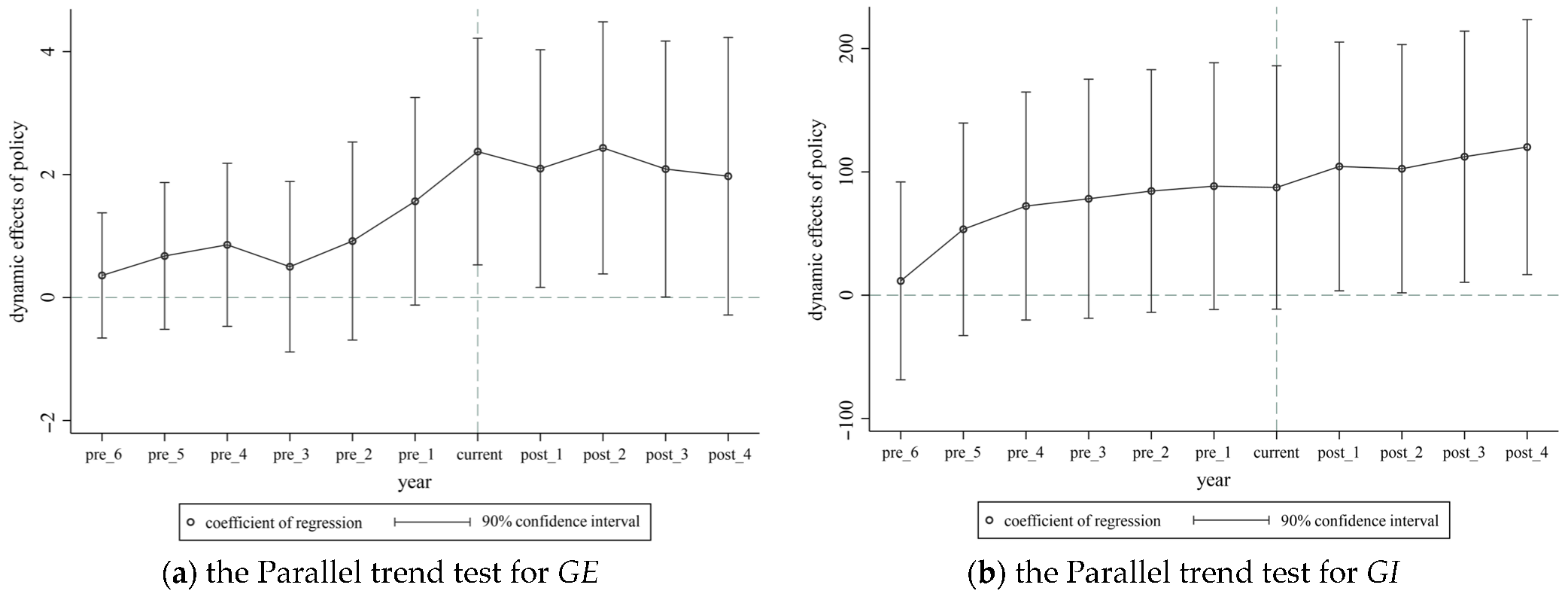
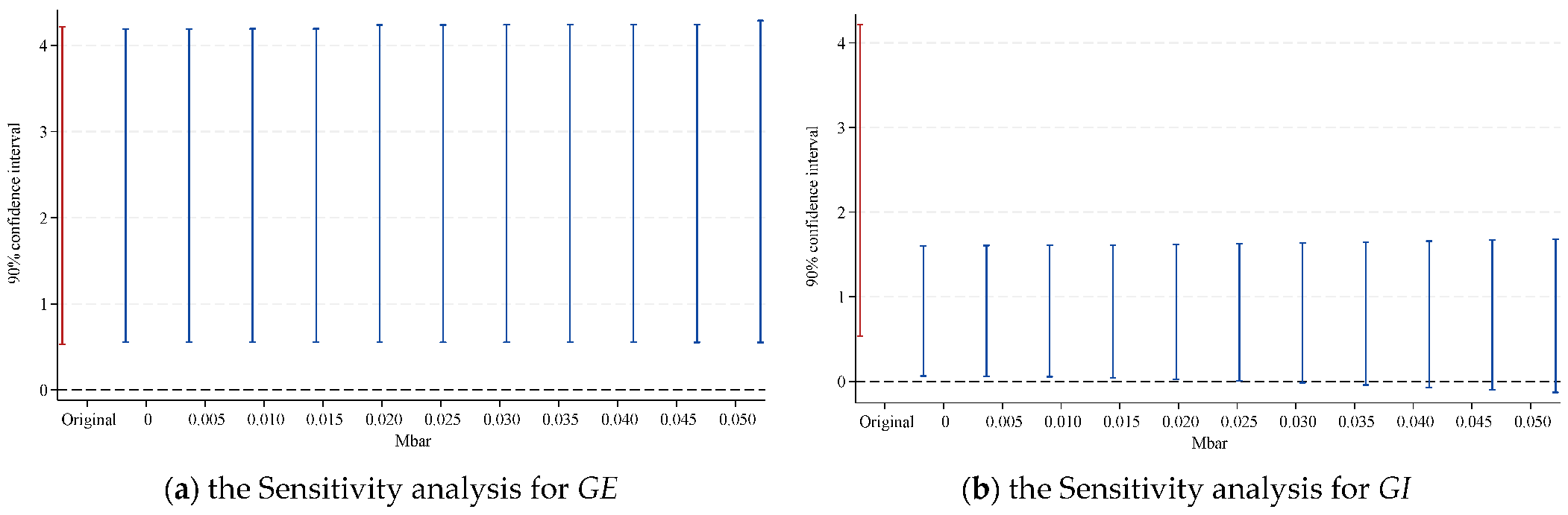
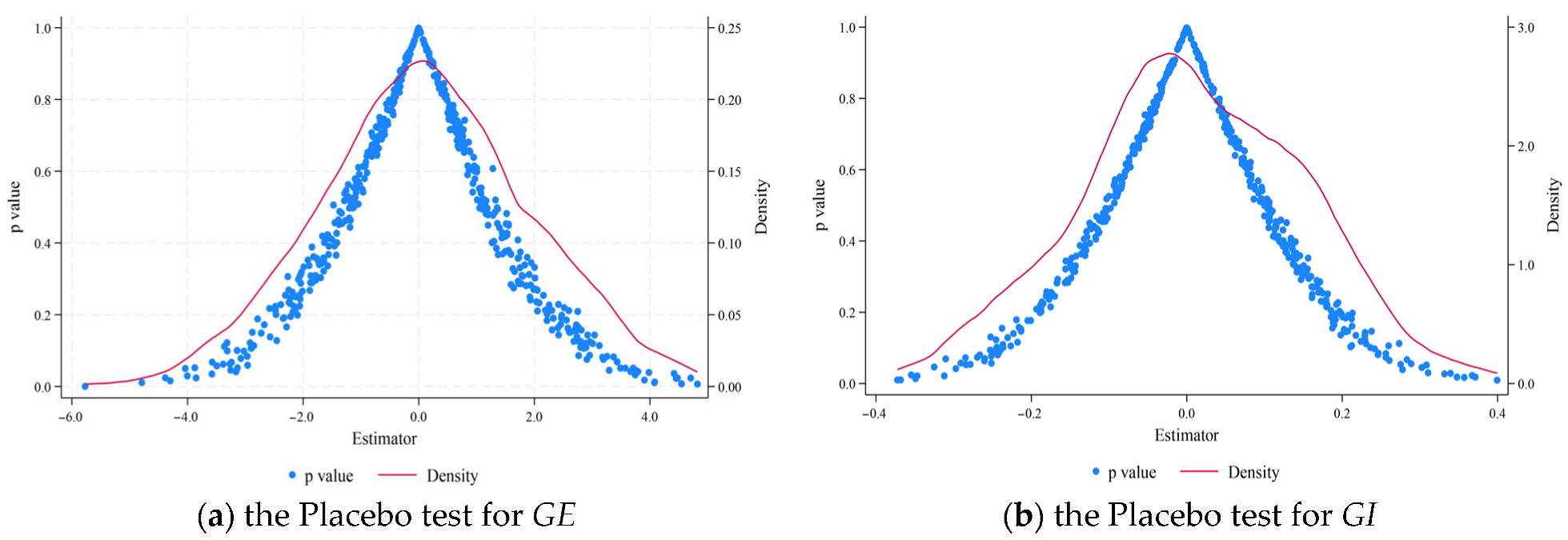
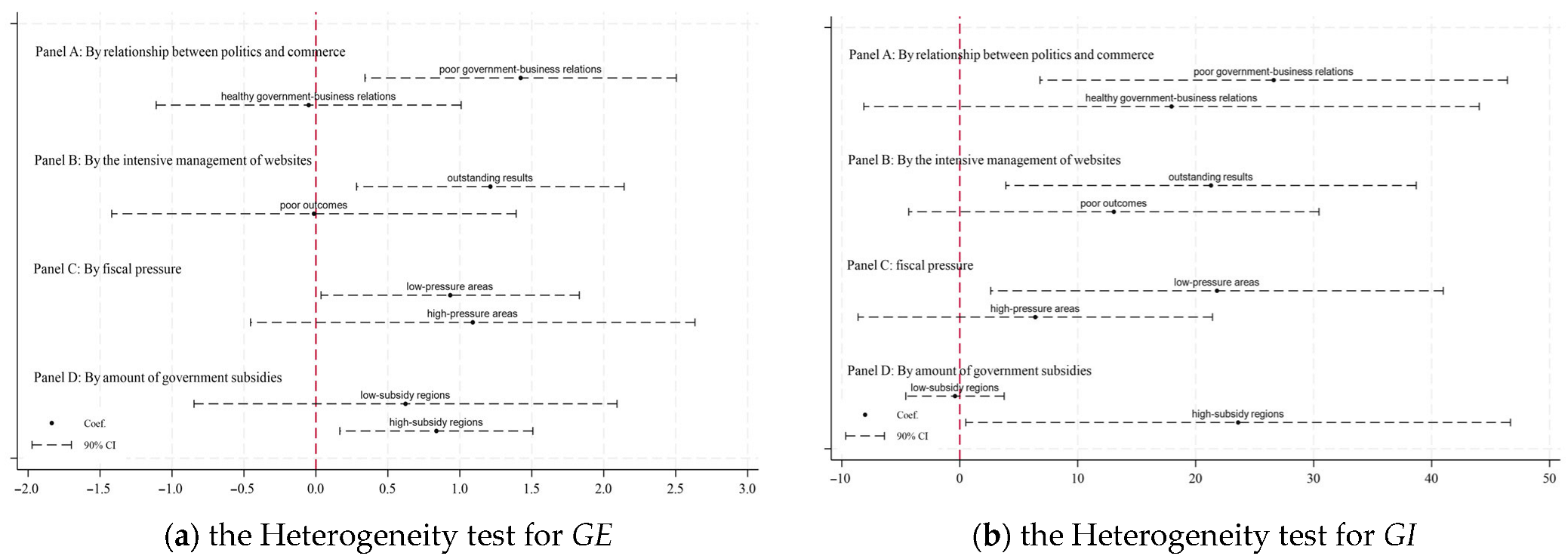
Focusing on the perspective of entrepreneurship and innovation, this paper constructs a new concept of sustainable spirit of green entrepreneurs. Using firm-level data on Chinese green enterprises from 2008 to 2022, this research combines data from the official Weibo opening status of city-level finance and taxation departments. This paper adopts the staggered difference-in-difference model to empirically test the impact of new media in finance and taxation on the sustainable spirit of green entrepreneurs. All these conclusions are robust to a series of tests, including parallel-trends tests, sensitivity analyses, placebo tests, alternative measures of the key explanatory variable, PSM-DID, addition of baseline variable to mitigate the impact of selection, alternative sample windows and controls for competing policy shocks. And the underlying mechanism is further assessed using a mediation framework. The analysis yields the following conclusions. (1) The new media of finance and taxation strengthens the sustainable spirit of green entrepreneurs, mainly by reinforcing their entrepreneurial and innovative spirit. (2) Opening new finance and taxation media supports the development of these spirits, through higher internet penetration, fewer irregularities of fiscal and taxation, and stronger digital governance. (3) In regions with poor relationships between government and business, excellent results from website consolidation pilot programs, lower fiscal pressures, larger government subsidies, and the launch of fiscal and tax new media significantly promotes green entrepreneurs to carry out sustainable entrepreneurship and innovation.
6.2. Policy Recommendations
Firstly, fiscal and tax new media should shift from information posting to integrated service delivery. Policy communication should go beyond reposting official documents and provide plain-language interpretation and clear implementation guidance. Short videos, infographics, and structured Q&A can improve policy usability and reduce entrepreneurs’ search and comprehension costs. Governments should also institutionalize online interaction by treating messages and public comments as formal service requests, with response deadlines and follow-up responsibility. At the same time, implementation should address practical constraints, including information overload, proceduralized interaction, and uneven digital access. Therefore, governments should deliver targeted content and retain offline or assisted access when needed.
Secondly, the design of fiscal and tax new media should match local governance capacity. Across these contexts, the common principle is to reduce uncertainty and transaction costs that otherwise discourage long-horizon entrepreneurial entry and sustained innovation effort. In regions with weak government-business relations, governments should prioritize trust and policy credibility through consistent communication, plain-language explanations of eligibility and procedures, and consultation services with clear answers and follow-up. In regions with stronger digital infrastructure, governments should shift the focus from posting frequency to service integration by linking new media accounts with one-stop service portals and data exchange systems. In fiscally stronger regions with larger subsidy programs, governments should use new media platforms to support accountable policy delivery by consolidating subsidy information, disclosing implementation progress and outcomes where feasible, and using brief cases to clarify compliance requirements and risks. These differentiated arrangements can improve policy access and credibility, but their effectiveness still depends on limiting information overload, superficial interaction, and digital divides.
Finally, governments should establish an institutionalized performance evaluation system for fiscal and tax new media to strengthen accountability and policy learning. The system should use harmonized and measurable indicators across levels of government, centered on entrepreneurs’ feedback and complemented by response rates, turnaround times, and complaint resolution outcomes. Platforms can embed standardized satisfaction prompts after policy updates, policy interpretation, or problem resolution, and governments can disclose aggregated results regularly. Governments should also ensure content quality through basic review procedures and responsibility-tracing mechanisms. In addition, agencies should use regular summaries of entrepreneurs’ inquiries and suggestions to improve services, assign responsibilities, set follow-up timelines, and disclose progress where feasible. The evaluation system should also account for implementation constraints, because information overload, superficial interaction, and unequal digital access can weaken policy effectiveness. Meanwhile, the evaluation should emphasize whether the platform improves the usability, credibility, and follow-through of fiscal and taxation services that matter for entrepreneurial and innovative behavior.
6.3. Limitations of the Study
Lastly, our measurement of the key constructs can be further extended. This study captures entrepreneurs’ sustainable spirit mainly from the perspectives of entrepreneurship and innovation. As a result, our evidence speaks to sustainability orientation in decision-making, rather than to broader ESG performance or triple-bottom-line outcomes. Future research can broaden the theoretical lens to include additional dimensions. When data permit, future studies can use more objective and more granular indicators of digital activity and engagement. These measures can better reflect differences in governments’ social media operations and firms’ actual participation. Examples include interaction intensity and firm-side traces of exposure to, and feedback on, platform information. In addition, we apply a relatively strict identification strategy, including parallel-trends tests, sensitivity analyses, and propensity score matching. Even so, studies based on observational data cannot fully rule out unobserved factors or selection in policy rollout. Future work should therefore make causal claims more cautiously. Finally, it is important to note that our analysis relies on a theoretical framework developed in dialog with the international literature. Whether effect sizes and mechanisms remain consistent across institutional contexts can be tested more directly using cross-country data in future research. Claims about sustainable development should be stated with caution, because broader effects are likely to be indirect and conditional.