1. Introduction
The global food system is undergoing a profound transformation driven by escalating health, environmental, and economic pressures [
1]. Excessive sugar consumption remains a major contributor to metabolic diseases worldwide, while conventional sugar production imposes substantial burdens on land, water and biodiversity [
2,
3,
4,
5]. These challenges have intensified the search for alternative sweeteners that can reduce caloric intake, improve metabolic outcomes, and align with sustainability goals [
6,
7,
8,
9]. Yet sweeteners are no longer merely substitutes for sugar; they have become a focal point for technological innovation, industrial diversification, and biomanufacturing strategy [
10,
11,
12].
Over the past decade, advances in biotechnology, artificial intelligence (AI), and sustainable processing have reshaped the landscape of sweetener development [
13,
14,
15]. Precision fermentation now enables the production of high-purity steviol glycosides, mogrosides, rare sugars, and sweet proteins that were once limited by agricultural scarcity or extraction inefficiency [
16,
17,
18]. Metabolic engineering and enzyme design have unlocked new biosynthetic pathways [
19,
20], while other processing technologies offer energy-efficient routes for starch conversion and oligosaccharide production [
21,
22]. At the same time, AI has emerged as a transformative force across the entire sweetener value chain [
23,
24], accelerating molecular discovery [
25], optimizing metabolic pathways, predicting sensory performance, guiding bioprocess control, and enabling real-time sustainability assessment [
26,
27].
Sweeteners occupy a unique position within the bioeconomy because they intersect with health, sustainability, industrial scalability, bioindustrial solutions and consumer acceptance. Their production spans diverse feedstocks, including corn, sugarcane, cassava, wheat, sorghum, and lignocellulosic biomass, and integrates agricultural, forestry, and microbial systems [
28,
29,
30]. Their applications extend far beyond food and beverage formulations into pharmaceuticals, personal care, home care, pulp and paper, packaging, biomaterials, construction, and industrial biotechnology [
31]. This cross-sector relevance reflects the fundamental physicochemical properties of sweeteners: their ability to modulate water activity, participate in hydrogen bonding networks, influence crystallization, act as humectants or plasticizers, and serve as reactive intermediates or fermentation substrates. As such, sweeteners are not only ingredients, but functional materials embedded in a wide array of industrial processes.
The environmental implications of sweetener production have become increasingly important as global sustainability targets tighten. Life-cycle assessment (LCA) reveals significant variation in greenhouse gas emissions [
32], land use [
33], water consumption [
34], and energy demand across sweetener pathways [
35,
36]. Fermentation-derived sweeteners often reduce land and water use dramatically, while starch-based and lignocellulosic pathways offer opportunities for circularity and waste valorization. AI-enhanced LCA models now enable dynamic, predictive sustainability assessments that guide feedstock selection, process optimization, and facility siting [
37]. These developments position sweeteners as a compelling case study for how digital and biological technologies can jointly advance environmental-aligned production systems.
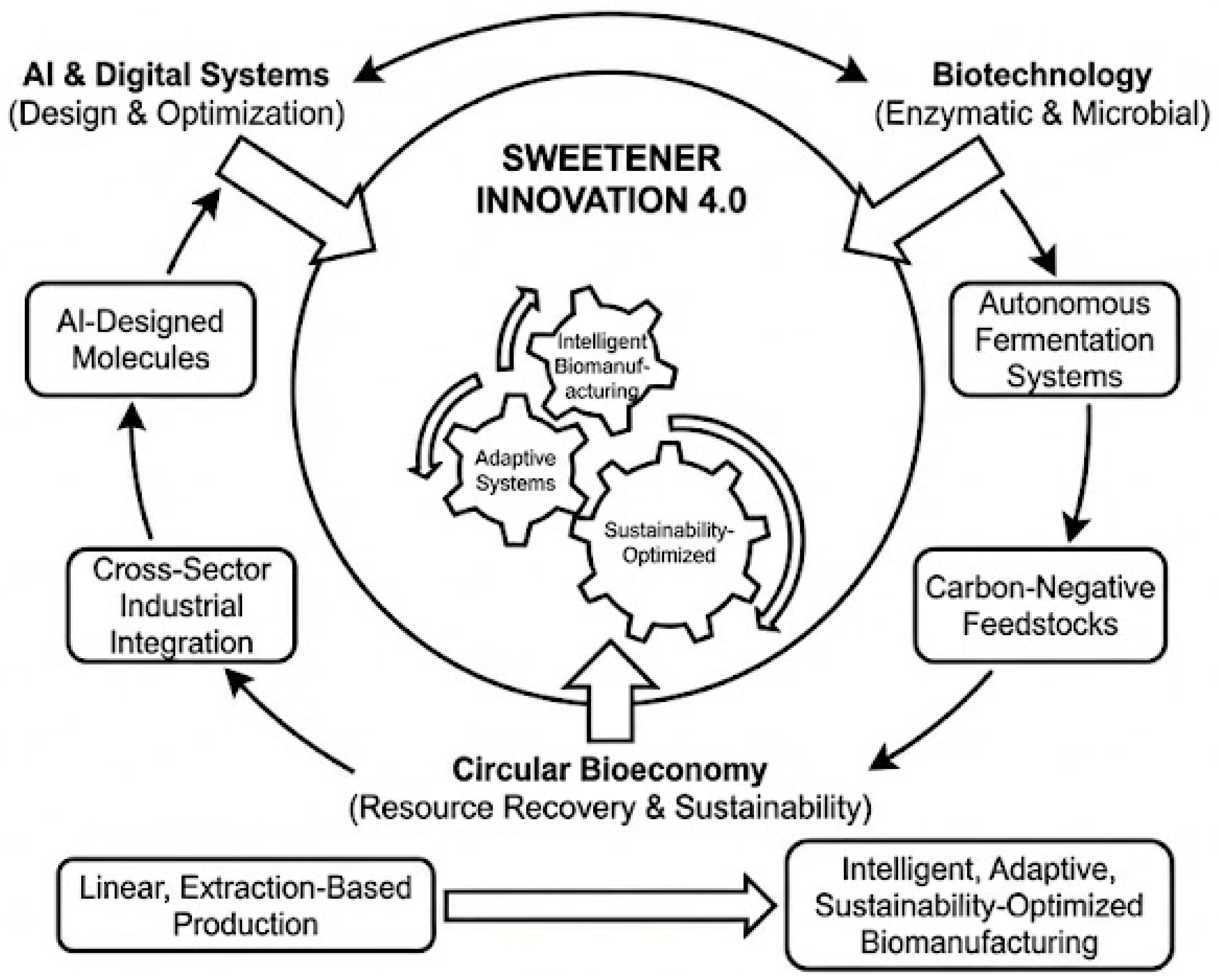
This review proposes the concept of Sweetener Innovation 4.0, a framework that captures the convergence of AI, biotechnology, and the circular-economy in shaping the future of sweeteners. Sweetener Innovation 4.0 reflects a shift from linear, extraction-based production to intelligent, adaptive, and sustainability-optimized biomanufacturing. It encompasses AI-designed molecules, autonomous fermentation systems, carbon-negative feedstocks, and cross-sector industrial integration.
To contextualize Sweetener Innovation 4.0, it is useful to distinguish it from earlier phases of sweetener development. These phases are not rigid historical periods, but conceptual stages that reflect dominant production logics and technological capabilities.
Sweetener Innovation 1.0 corresponds to traditional agricultural and extractive systems, in which sweetness is derived directly from crops such as sugarcane, sugar beet, corn, or naturally occurring plant extracts. Innovation in this phase is driven primarily by agronomy, crop yields, and mechanical or thermal processing efficiency, with limited control over molecular composition or metabolic outcomes.
Sweetener Innovation 2.0 emerges with the introduction of industrial enzymology and chemical synthesis. This phase includes starch hydrolysis, isomerization technologies, chemically synthesized high-intensity sweeteners, and early polyols. Here, sweetness is engineered at the process level rather than the molecular level, enabling scale, cost reduction, and functional diversification, but often at the expense of sustainability or consumer acceptance.
Sweetener Innovation 3.0 reflects the rise of biotechnology and metabolic engineering, including precision fermentation, enzyme engineering, and plant-cell or microbial biosynthesis of high-value sweeteners such as steviol glycosides, mogrosides, rare sugars, and sweet proteins. While this phase introduces biological specificity and improved sustainability potential, optimization remains largely empirical, iterative, and siloed across upstream and downstream operations.
Sweetener Innovation 4.0, as proposed in this review, represents a qualitative shift rather than an incremental advance. In this phase, artificial intelligence functions as an integrative layer that links molecular design, pathway engineering, fermentation control, downstream processing, life-cycle assessment, and circular-economy integration into a unified, adaptive system. Sweetness is no longer merely produced, but digitally designed, continuously optimized, and contextually aligned with health, sustainability, and system-level performance goals.
Given the widespread use of “4.0” terminology across industrial and bioeconomic domains, it is important to clarify how Sweetener Innovation 4.0 related to, and differs from, established paradigms such as Industry 4.0 and Bioeconomy 4.0. Sweetener Innovation 4.0 is conceptually aligned with, but distinct from, established paradigms such as Industry 4.0 and Bioeconomy 4.0. Industry 4.0 emphasizes cyber-physical systems, automation, and digital twins within manufacturing, while Bioeconomy 4.0 focuses on the sustainable valorization of biological resources across sectors. Sweetener Innovation 4.0 operates at their intersection but introduces a domain-specific extension: the integration of AI-driven molecular design, metabolic engineering, and system-level sustainability optimization within ingredient development. In this sense, Sweetener Innovation 4.0 is not a rebranding of existing frameworks, but a sector-specific instantiation that addresses the unique biochemical, sensory, metabolic, and regulatory constraints of sweetener systems.
In this review, the phrase “digitally engineered, biologically manufactured, and circularity-optimized materials” refers to three interdependent dimensions of modern sweetener innovation.
Digitally engineered denotes the use of artificial intelligence and computational modeling to design, predict, and optimize sweetener molecules, enzymes, metabolic pathways, sensory profiles, and process parameters prior to physical experimentation. This includes AI-assisted molecular design, protein engineering, metabolic-flux prediction, digital twins of fermentation systems, and data-driven life-cycle assessment.
Biologically manufactured refers to the production of sweeteners through biological systems, including precision fermentation, enzymatic biocatalysis, and microbial or cell-based biosynthesis. In this paradigm, biological organisms function as programmable manufacturing platforms capable of producing high-purity sweeteners with defined molecular composition, independent of traditional crop extraction.
Circularity-optimized describes the intentional alignment of sweetener production with circular-economy principles, including renewable or waste-derived feedstocks, reduced land and water dependence, valorization of agricultural or forestry residues, and integration of life-cycle assessment to minimize environmental burdens across upstream and downstream operations.
Together, these three dimensions define a shift from linear, extraction-based sweetener production toward integrated digital–biological systems in which molecular performance, manufacturing efficiency, and sustainability outcomes are co-optimized rather than treated as separate design objectives.
Through this lens, sweeteners become a model for understanding how digital and biological systems can be harmonized to create healthier, more resilient, and more environmentally responsible ingredient ecosystems (
Figure 1).
The goal of this review is to provide a comprehensive, interdisciplinary synthesis of the forces reshaping sweetener innovation; however, its analytical depth is intentionally concentrated on biotechnological, computational, and system-level dimensions. In particular, the review emphasizes AI-enabled molecular design, metabolic engineering, precision fermentation, downstream-processing optimization, and life-cycle sustainability assessment. Related domains such as consumer science, behavioral research, detailed regulatory procedures, and granular agricultural-economic analysis are addressed at a strategic and illustrative level rather than as exhaustive treatments. These areas represent important complementary perspectives and active research frontiers but fall beyond the primary scope of the present synthesis.
Conceptual Foundations: Functional Sweetness and Sweetener Innovation 4.0
To frame the analysis that follows, it is necessary to clarify several foundational concepts related to modern sweetener development, health, and sustainability.
Functional sweetness refers to the capacity of a sweetener to deliver sweetness while simultaneously providing nutritional, metabolic, or physiological benefits beyond caloric reduction alone. Unlike conventional sucrose, which primarily contributes energy, functional sweeteners may support improved glycemic control, reduced insulin response, enhanced dental health, modulation of the gut microbiome, or improved formulation performance. This concept reflects a broader shift in food systems from energy provision toward health-aligned functionality, where sweetness is engineered not only for taste, but also for metabolic and systemic outcomes.
In parallel, this review introduces the concept of Sweetener Innovation 4.0, which describes a new generation of sweeteners designed, optimized, and manufactured with the assistance of artificial intelligence (AI) and advanced biotechnology. Sweetener Innovation 4.0 builds upon earlier phases of sweetener development—ranging from agricultural extraction to enzymatic processing and synthetic chemistry—by integrating AI-driven molecular design, metabolic engineering, precision fermentation, and system-level sustainability optimization. In this framework, AI functions as an enabling technology that links molecular discovery, bioprocess control, life-cycle assessment, and circular-economy integration into a unified innovation pipeline.
Modern sweeteners can be broadly classified along two intersecting dimensions. First, they may be natural or artificial, depending on whether their origin lies in plant extraction, fermentation-based biosynthesis, or chemical synthesis. Second, they may be nutritive or non-nutritive, depending on whether they contribute metabolizable energy. Nutritive sweeteners include sucrose, glucose syrups, polyols, and certain rare sugars, while non-nutritive sweeteners include high-intensity compounds such as steviol glycosides, mogrosides, and sweet proteins. Importantly, fermentation-derived sweeteners may be chemically identical to plant-extracted counterparts, challenging traditional distinctions between “natural” and “synthetic” categories.
Sweeteners also differ substantially in their metabolic mechanisms and health effects. Conventional sugars are rapidly absorbed and contribute directly to postprandial glycemic and insulin responses. In contrast, rare sugars such as allulose are partially metabolized or excreted, leading to reduced caloric impact and improved glycemic profiles. High-intensity sweeteners and sweet proteins exert their effects primarily through sweet-taste receptor activation, often without direct caloric contribution, while polyols are slowly absorbed and may influence gut fermentation. These metabolic distinctions underpin growing interest in sweeteners as tools for sugar reduction, metabolic health management, and personalized nutrition.
Together, these conceptual foundations provide the framework for understanding how AI-enabled biomanufacturing and sustainability-oriented design are reshaping the role of sweeteners within modern food systems and the broader bioeconomy.
2. The Evolution of Sweeteners in the Bioeconomy
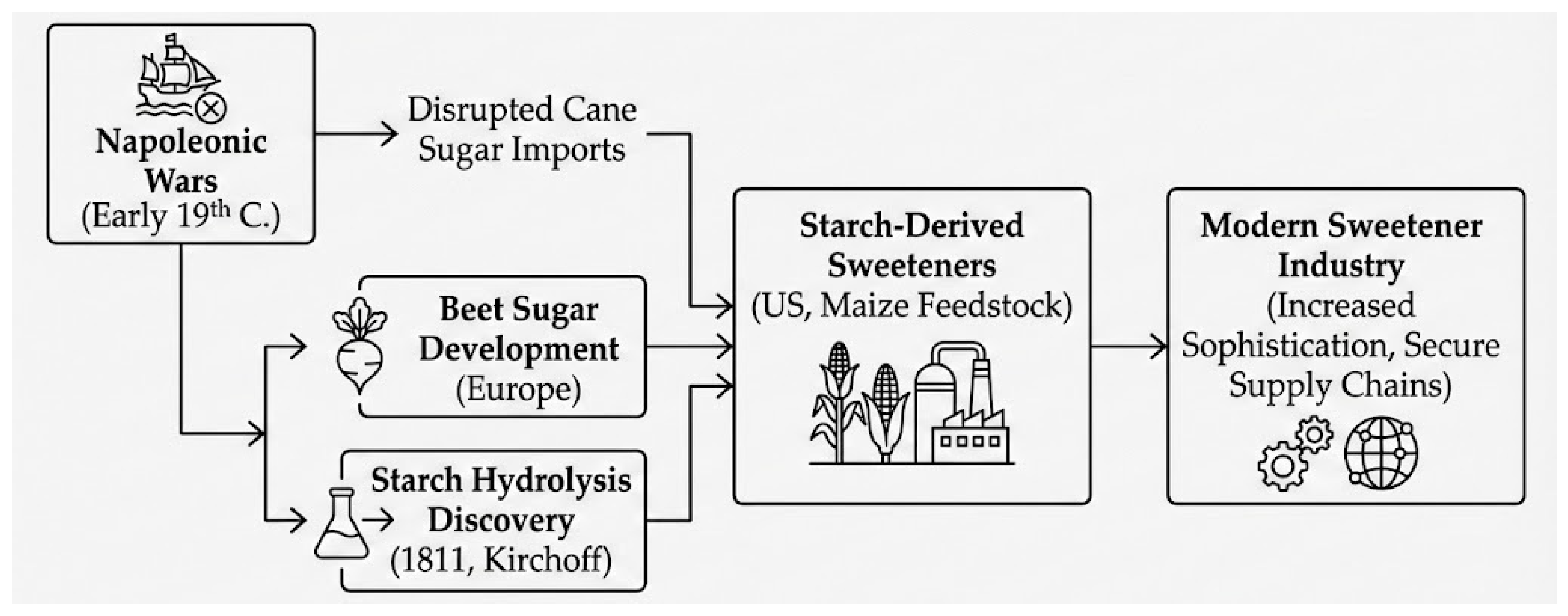
The origins of modern sweeteners lie in early industrial chemistry (
Figure 2). During the Napoleonic wars, disruptions in cane sugar supply accelerated the development of beet sugar and the discovery of starch hydrolysis. Kirchoff’s seminal 1811 demonstration that acid-treated starch produced sweet saccharides marked the beginning of starch-derived sweeteners, which later expanded rapidly in the United States with maize as the principal feedstock [
38].
The 20th century brought transformative enzymatic innovations. The commercialization of glucose isomerase in the 1960s enabled the production of high-fructose corn syrup (HFCS) and catalyzed the emergence of corn wet-milling as a multifaceted biorefinery capable of producing sweeteners, amino acids, and organic acids at industrial scale.
Today, the field is undergoing a far more profound transition, from bulk commodity saccharides to the next generation of sweeteners produced using precision biosynthesis. Fermentation-derived steviol glycosides, mogrosides, rare sugars (allulose, tagatose), and sweet proteins (brazzein, thaumatin) exemplify this shift. These molecules combine high sweetness potency with minimal caloric load and require complex metabolic engineering, signaling a broader move away from extraction toward advanced biotechnology.
To contextualize this transition,
Table 1 summarizes the major production pathways shaping the contemporary sweetener landscape.
The pathways summarized in
Table 1 reflect the increasing technological diversity underpinning the global sweetener economy.
Beyond illustrating technological diversity, the pathways summarized in
Table 1 also differ markedly in their susceptibility to transformation under the Sweetener Innovation 4.0 framework. Precision-fermentation systems, enzymatic rare-sugar production, sweet-protein biosynthesis, and lignocellulosic valorization pathways are particularly amenable to AI-enabled optimization, as they involve complex, high-dimensional design spaces spanning molecular structure, metabolic flux, process control, and downstream separation. In contrast, more mature agricultural and starch-hydrolysis systems are less sensitive to AI-driven molecular design but remain receptive to digital optimization at the levels of enzyme performance, process efficiency, logistics, and life-cycle assessment. This distinction positions Sweetener Innovation 4.0 not as a uniform overlay across all pathways, but as a selective amplifier whose impact scales with system complexity and integration potential—a theme developed in detail in subsequent sections.
Together, these pathways illustrate the bioeconomy’s shift toward feedstock diversification, renewable carbon utilization, and increasingly precise control over molecular composition and functionality. They also highlight the role of biotechnology and enzyme engineering in enabling sustainable, scalable production systems that extend far beyond the limits of traditional agriculture.
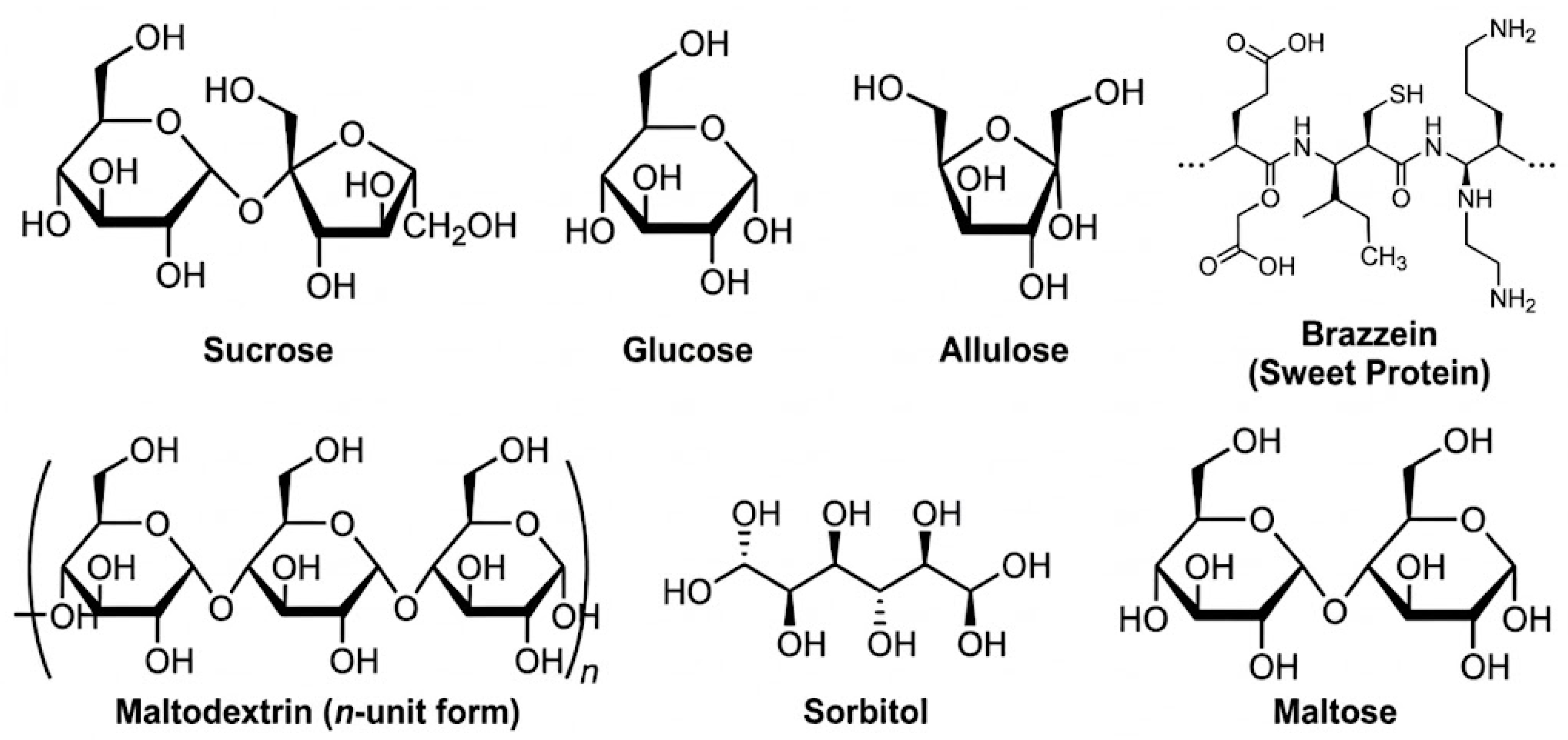
To contextualize the biochemical diversity of modern sweeteners,
Figure 3 presents representative chemical structures spanning common saccharides, rare sugars, polyols, and sweet proteins. These structures illustrate the fundamental differences in molecular architecture that underpin sweetness intensity, metabolic, and functional performance across sweetener classes.
3. Sustainability Challenges Across Sweetener Classes
Sweeteners exist within a complex and highly variable sustainability landscape shaped by agricultural practices, energy-intensive processing steps, downstream purification demands, supply-chain volatility, and a range of socioeconomic considerations [
39]. Although biobased sweeteners frequently show improvements over conventional sucrose, particularly in terms of land occupation and water consumption, no single class of sweeteners perform optimally across all sustainability metrics. Instead, each category introduces its own constraints, advantages, and tradeoffs. Understanding these differences through a cohesive, comparative lens is essential for guiding technological innovation, informing regulatory decisions, and determining where emerging digital tools such as AI can deliver the greatest sustainability gains.
3.1. Conventional Sucrose as the Baseline
Sucrose derived from sugarcane and sugar beet remains one of the most resource-intensive sweetener pathways. Its production requires expansive cropland, substantial irrigation water, fertilizer inputs, and large thermal energy loads during processing [
40]. As a result, sucrose forms a high-impact baseline against which the sustainability of alternative sweetener systems should be evaluated. When compared to this baseline, the broader portfolio of sweeteners, ranging from corn-derived carbohydrates and plant-extracted glycosides to rare sugars, sweet proteins, and lignocellulosic polyols, exhibits significant variation in environmental performance. These differences arise from the unique characteristics of each pathway: agricultural inputs and yields, enzymatic conversion efficiencies, solvent and purification requirements, energy demands associated with fermentation or downstream processing, and exposure to climate-driven feedstock variability. For this reason, a direct, class-by-class comparison is indispensable for identifying which innovations offer meaningful environmental improvements and which require deeper technological intervention. To illustrate the heterogeneity of sustainability performance across sweetener systems,
Table 2 presents a consolidated comparison of the key burdens, technological drivers, and persistent trade-offs that shape each pathway.
3.2. Socioeconomic, Ethical, and Consumer-Perception Dimensions of Sustainability
Environmental metrics alone cannot capture the full sustainability profile of modern sweetener systems. The transition from plant-based extraction to fermentation-based production introduces important socioeconomic and ethical considerations. Communities in regions that grow stevia, monk fruit, sugarcane, or sugar beet depend economically on these crops. As industrial production shifts toward microbial fermentation, issues of livelihood displacement and supply-chain equity emerge. Ensuring fair participation for farmers and rural economies, through supplier diversification, fair contracting, and inclusion in emerging value chains, is essential for building socially responsible sweetener ecosystems.
Consumer perception of fermentation-derived and AI-enabled sweeteners is highly context-dependent and varies substantially across regions. In the European Union, consumer attitudes are strongly shaped by precautionary regulatory frameworks, clean-label expectations, and sensitivity to perceived “ultra-processing,” often resulting in skepticism toward fermentation-derived ingredients despite chemical equivalence to plant-extracted counterparts. By contrast, consumers in the United States tend to exhibit greater acceptance of biotechnology-enabled food ingredients, particularly when benefits such as sugar reduction, metabolic health, or environmental sustainability are clearly communicated. In Asia–Pacific markets, long-standing familiarity with fermentation in food systems has, in some cases, facilitated more favorable perceptions of fermentation-derived sweeteners, although acceptance remains heterogeneous and culturally specific.
Empirical market examples illustrate these regional dynamics. Fermentation-derived rebaudioside M has achieved widespread commercial adoption in North American beverage reformulation, while similar products have encountered more cautious uptake in parts of Europe, where labeling and process transparency play a decisive role in consumer trust. Sweet proteins such as brazzein and thaumatin have been positioned differently across markets, framed either as “plant-identical” or “protein-based” solutions depending on regulatory and cultural context. These examples highlight that consumer acceptance is influenced not only by molecular identity, but also by framing, regulatory signaling, and regional food cultures.
Despite growing commercial deployment, robust behavioral and longitudinal studies on consumer responses to fermentation-derived and AI-designed sweeteners remain limited. Most existing evidence is derived from market observation, short-term sensory testing, or stated-preference surveys, rather than controlled behavioral trials or long-term dietary studies. Systematic data linking consumer perception to trust in AI-assisted design, microbiome-related health claims, or personalized nutrition applications are scarce. This evidentiary gap represents a critical limitation and underscores the need for interdisciplinary research integrating food science, behavioral economics, and nutrition science to support responsible deployment of Sweetener Innovation 4.0.
3.3. Portfolio-Based Sustainability and the Role of AI
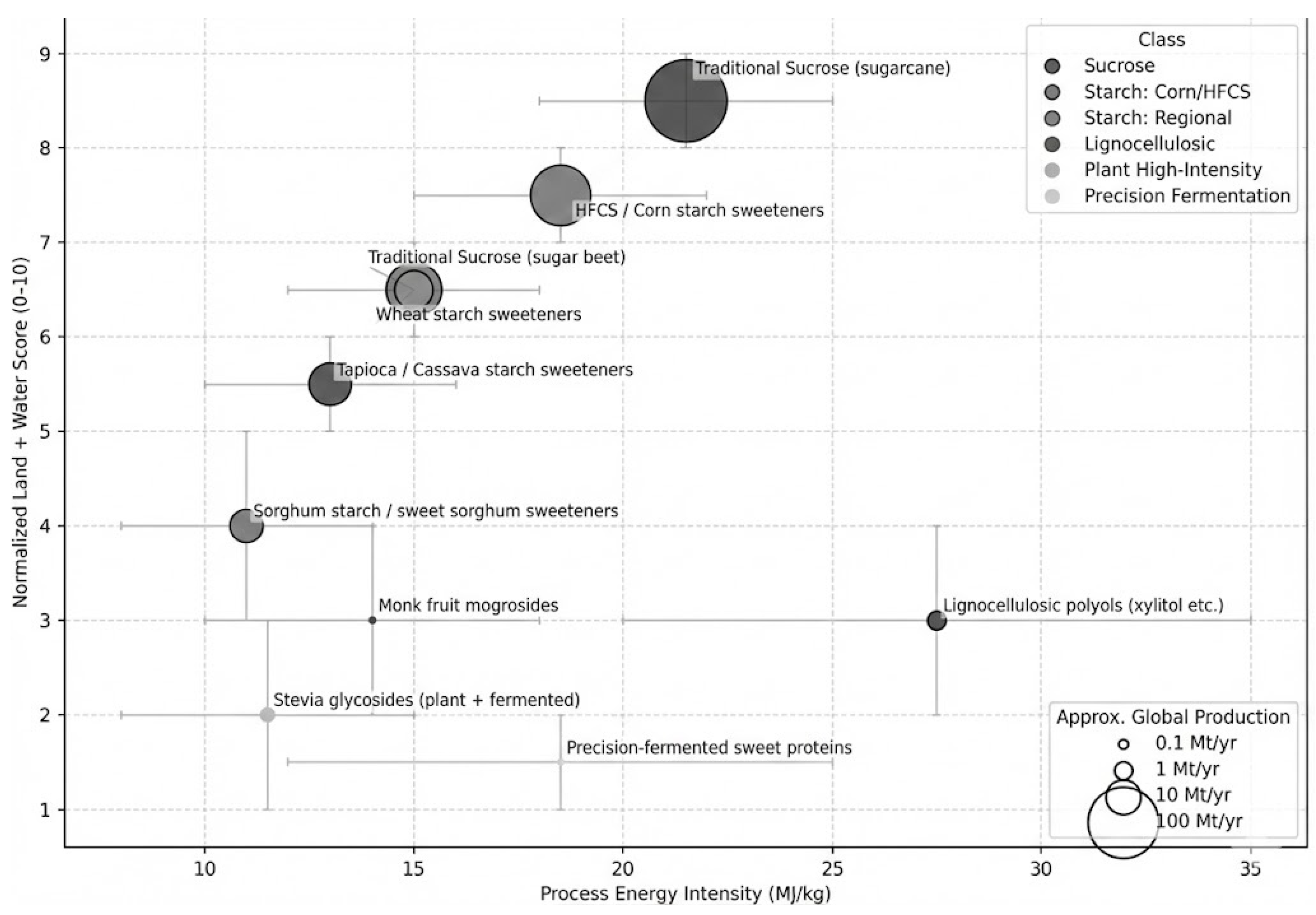
One of the defining lessons across sweetener pathways is that no single class provides an ideal sustainability profile. Each offers distinct strengths, whether agricultural resilience, high sweetness potency, low caloric load, or compatibility with renewable or circular feedstocks, while also presenting structural limitations. An environmental-aligned sweetener economy must therefore be designed as a diversified portfolio rather than relying on any single ingredient.
Figure 4 provides a data-driven visualization of this portfolio, positioning major sweetener classes according to their process energy intensity and land-water footprint. This comparative map forms the basis for understanding how AI can optimize the system. Bubbles plot process energy intensity (x-axis) against a normalized land + water score (y-axis); error bars indicate reported ranges. Buggle area encodes approximate global production (Dataset compiled from LCA studies [
41,
42], FAO, ISO-compliant reports, NREL, recent bioeconomy papers, and industry benchmarks).
This portfolio must match molecules to the most appropriate production routes and regional feedstocks, accounting for local land constraints, water availability, energy sources, and existing agricultural infrastructures.
Artificial intelligence plays an increasingly important role in enabling such portfolio optimization [
43]. Although AI is not a substitute for process innovation, its integrative capabilities help identify system bottlenecks, improve enzyme and microbial performance, anticipate supply-chain constraints, and link technoeconomic modeling with environmental assessment. In doing so, AI supports a more intelligent allocation of resources across the sweetener ecosystem [
44].
Section 4 expands these relationships in mechanistic detail, but within this sustainability context, AI functions as a transversal tool that strengthens the performance of multiple sweetener classes simultaneously.
3.4. Cradle-to-Algorithm: Extending Life-Cycle Assessment Boundaries in AI-Enabled Sweetener Systems
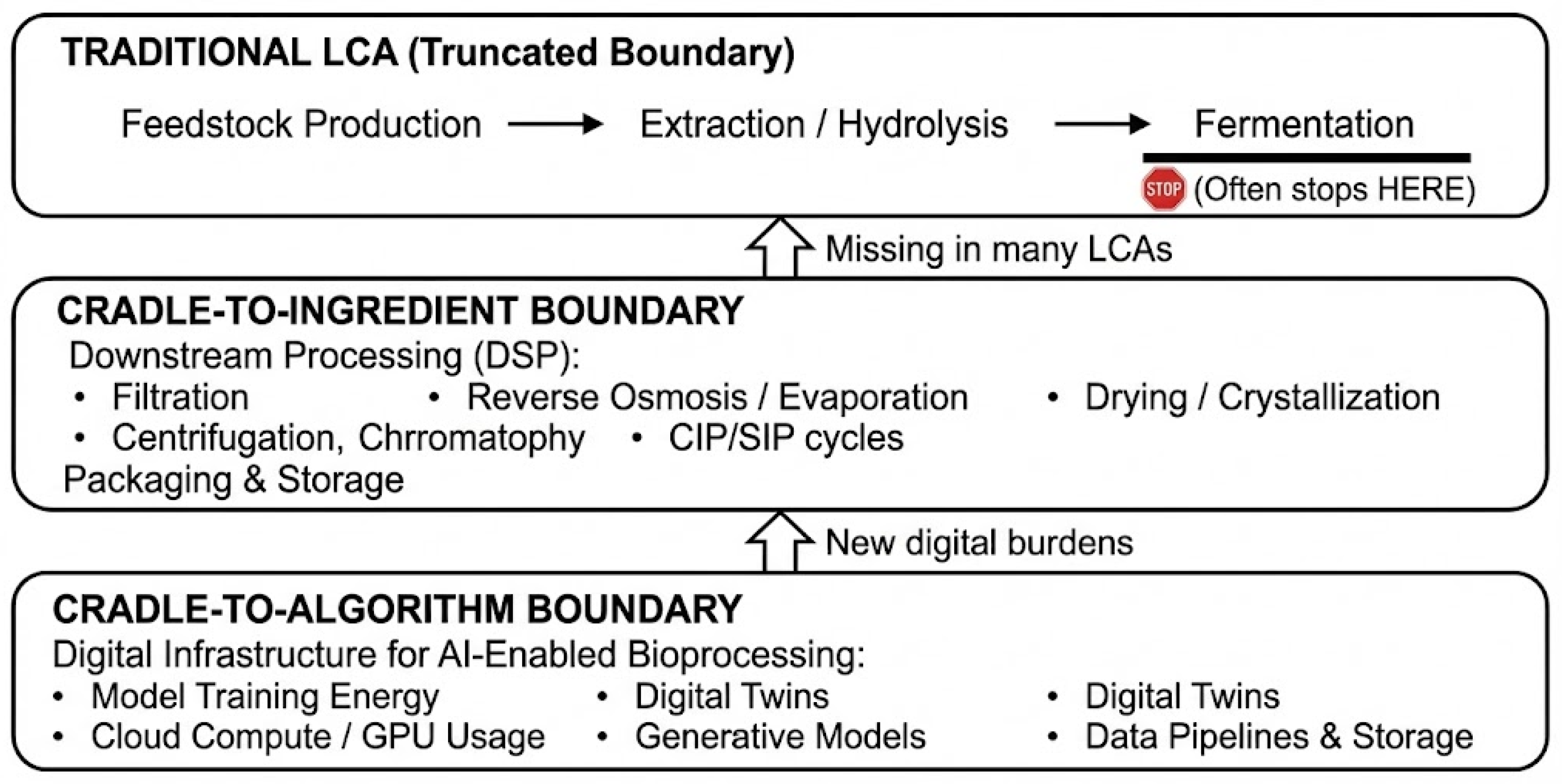
Traditional life-cycle assessments of sweetener production typically adopt cradle-to-gate or cradle-to-ingredient boundaries, focusing on agricultural inputs, fermentation, and in some cases downstream processing. However, in AI-enabled biomanufacturing systems, a non-negligible share of environmental burden arises upstream of physical production through digital activities associated with model training, simulation, and process optimization.
To address this gap, we introduce the concept of a Cradle-to-Algorithm boundary. This expanded boundary extends conventional LCA frameworks by explicitly incorporating the energy use and associated emissions of digital infrastructure required for AI-assisted molecular design, metabolic modeling, digital twins, and process control. These digital operations—often executed on energy-intensive computing clusters and cloud-based platforms—represent an emerging but largely unaccounted component of the environmental footprint of AI-driven bioprocesses.
The Cradle-to-Algorithm boundary does not replace existing LCA approaches, but rather complements cradle-to-ingredient analyses by making visible environmental burdens that are otherwise shifted from physical production systems to computational infrastructure. As AI becomes increasingly embedded across the sweetener innovation pipeline, neglecting these digital contributions risks underestimating total system-level impacts and mischaracterizing sustainability trade-offs. By explicitly defining this boundary, the framework enables more transparent comparison between AI-enabled and conventional sweetener pathways and supports more responsible deployment of digital tools within Sweetener Innovation 4.0.
Figure 5 illustrates the expansion from conventional cradle-to-ingredient boundaries to the proposed cradle-to-algorithm framework.
The expansion from cradle-to-ingredient to cradle-to-algorithm boundaries has direct implications for how environmental burdens are identified and interpreted in AI-enabled sweetener systems. Downstream processing (DSP) operations and digital infrastructure introduce energy and material demands that are frequently excluded or truncated in conventional LCAs. These omissions can materially alter comparative sustainability outcomes, especially for fermentation-derived sweeteners where DSP energy may rival or exceed fermentation itself.
Similarly, the increasing reliance on AI-driven molecular design, process simulation, and digital twins introduces computational energy demands that are rarely captured in existing life-cycle inventories. While these digital contributions are often small relative to agricultural inputs at present, their cumulative impact becomes non-trivial as AI usage scales across design–build–test–learn cycles.
Table 3 summarizes the most common boundary gaps observed in life-cycle assessments of modern sweetener systems, explains why these omissions matter, and outlines best-practice strategies for closing them within a cradle-to-algorithm framework.
4. Case Studies of Sweetener Innovation
This section examines representative sweetener systems as model platforms illustrating the convergence of synthetic biology, precision fermentation, and AI-driven design. Each case study reflects a distinct biochemical architecture and sets of metabolic constraints, revealing how AI reshapes pathway engineering, enzyme dynamics, and bioprocess control in ways unattainable through empirical optimization alone.
It is important to note that the technologies and concepts discussed in the following case studies span different levels of technological maturity. Some approaches, such as fermentation-derived steviol glycosides, mogrosides, rare sugars, and sweet proteins, have already reached commercial or near-commercial deployment. Others remain at laboratory or pilot scale, while several AI-enabled strategies, particularly those involving de novo molecular design, fully autonomous fermentation, or integrated digital–biological optimization, are currently demonstrated primarily through computational modeling or simulation. These distinctions are explicitly acknowledged to avoid overestimating short-term industrial applicability, and to emphasize that Sweetener Innovation 4.0 encompasses both validated industrial practices and forward-looking technological trajectories. To avoid overestimating near-term industrial applicability,
Table 4 summarizes the current technology-readiness status of the AI-enabled sweetener technologies discussed, distinguishing between commercially deployed, laboratory- or pilot-scale, and computational or simulated approaches.
In addition to differences in technological maturity, AI-enabled approaches vary substantially in data availability and model interpretability, which further influences their readiness for industrial deployment and regulatory acceptance.
4.1. Case Study I: AI-Enabled Optimization Across the Steviol Glycoside Value Chain: Implications for Reb M Fermentation
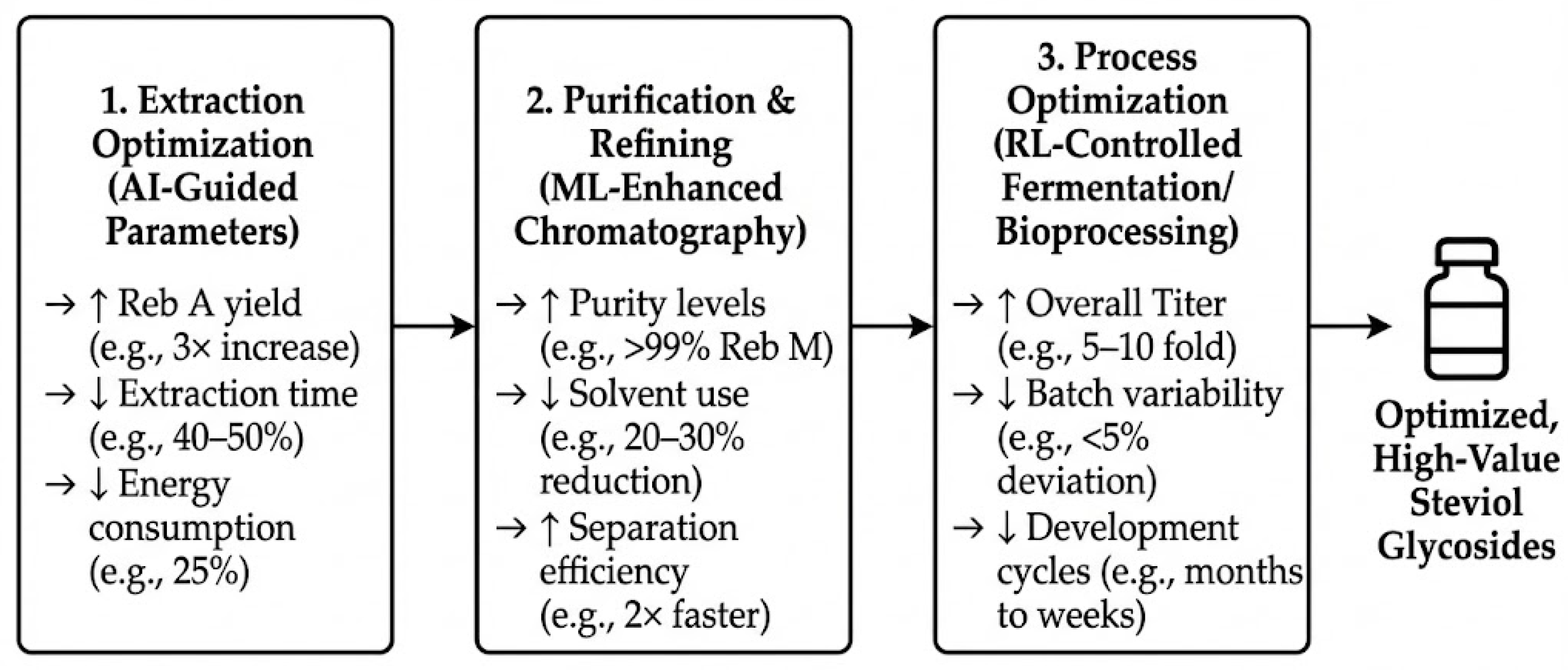
Commercial production has increasingly shifted toward generating Rebaudioside M (Reb M) through engineered yeast, yet the broader steviol-glycoside literature already provides quantitative evidence that artificial intelligence (AI) and data-driven modeling can materially enhance extraction, purification, and process optimization. These documented gains establish a performance baseline for understanding how AI could accelerate the far more complex challenge of Reb M biomanufacturing.
Early applications of artificial neural networks (ANNs) in stevia processing demonstrated that machine-learning models consistently outperform classical response surface methodology (RSM) in predicting optimal extraction conditions. In a direct comparison, Das et al. (2015) [
45] reported that ANN models achieved lower prediction error (RMSE < 0.02) and identified extraction regimes that produced higher Reb A recovery than RSM-derived optima. The ANN captured nonlinear interactions among temperature, solvent ratio, and extraction time that traditional statistical design could not resolve, reducing experimental burden while expanding the accessible design space.
Purification studies show similar gains. Puriet al. (2012) [
46] used machine-learning-assisted optimization to tune simulated moving-bed (SMB) chromatography parameters for rebaudioside A and stevioside. Their model improved separation efficiency by 12–18%, reduced solvent consumption by 20–30%, and enabled tighter control of switching times and elution profiles, demonstrating that AI can materially enhance downstream-processing performance.
Even enzymatic extraction workflows benefit from algorithmic tuning. Yao et al. (2021) [
47] showed that RSM-optimized enzymatic extraction increased stevioside yield by approximately three-fold, driven by systematic optimization of enzyme concentration, temperature, and reaction time. Collectively, these studies confirm that AI is not a speculative enhancement but a proven performance multiplier across multiple stages of the steviol-glycoside value chain. As illustrated in
Figure 6, these improvements span the entire early-stage value chain.
However, no comparable body of work exists for Reb M biosynthesis in engineered yeast, despite its significantly greater complexity. Reb M production requires coordinated flux through ent-kaurene synthesis, multiple cytochrome P450-mediated oxidations, and sequential UDP-glycosyltransferase reactions. More than a dozen enzymes, multiple cofactors (NADPH, UDP-glucose), and competing metabolic sinks shape pathway performance [
48,
49,
50]. Traditional metabolic engineering struggles to navigate this high-dimensional, non-linear design space, where promoter strength, gene copy number, enzyme kinetics, and cofactor balance interact in ways that defy intuition and linear optimization.
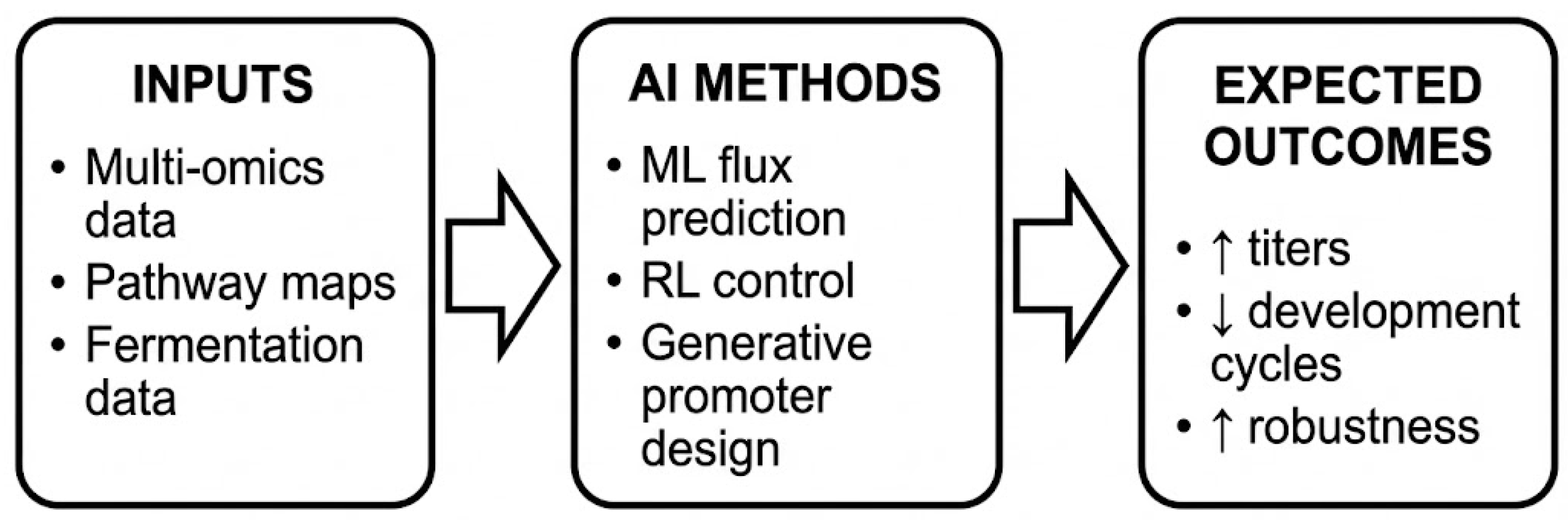
This gap represents a strategic opportunity. AI-enabled metabolic modeling, particularly genome-scale models augmented with machine-learning-based flux prediction, could identify bottlenecks that remain invisible to classical engineering. Multi-omics data fusion (transcriptomics, metabolomics, proteomics) could reveal hidden regulatory constraints and cofactor imbalances. Reinforcement-learning-based fermentation control could dynamically adjust feed rates, oxygenation, and induction timing to maximize Reb M titers, as demonstrated in other precision-fermentation systems. Predictive design tools could generate promoter libraries, enzyme variants, and gene-edit strategies tailored to maximize flux through late-stage glycosylation steps [
51,
52,
53]. As shown in
Figure 7, AI can intervene at multiple levels of the fermentation stack.
From an analytical standpoint, the key insight is clear: AI has already delivered quantifiable improvements in simpler steviol-glycoside processes, and the complexity of Reb M biosynthesis makes it an ideal candidate for AI-driven optimization. The absence of published AI-enabled fermentation studies is not a limitation; it is a research frontier. Integrating AI into Reb M production could shorten development cycles, increase titers, and improve process robustness, ultimately lowering production costs and accelerating the transition from scarce plant-derived molecules to scalable, sustainable bioproducts.
4.2. Case Study II: AI-Enabled Synthetic Biology for Mogroside V: Overcoming Geographic and Biosynthetic Constraints
Mogroside V, the principal sweet triterpene glycoside in
Siraitia grosvenorii (monk fruit), exhibits sweetness potency 200–400 times that of sucrose, but is naturally present at low abundance and geographically restricted to a narrow region of Guangxi Province in southern China. These constraints create a structurally fragile supply chain, expose production to climate and land-use pressures, and limit global scalability [
54,
55]. Synthetic biology offers a transformative alternative by reconstructing the mogroside biosynthetic pathway in microbial hosts.
The pathway itself is unusually complex. Cucurbitadienol synthase initiates triterpene scaffold formation, followed by a cascade of cytochrome P450-mediated oxidations and sequential glycosylation steps catalyzed by multiple UDP-glycosyltransferases (UGTs) [
56]. Companies such as Conagen and Blue California have successfully engineered yeast strains capable of producing mogroside V at commercial scale, demonstrating that pathway reconstruction can decouple supply from geography and agricultural variability.
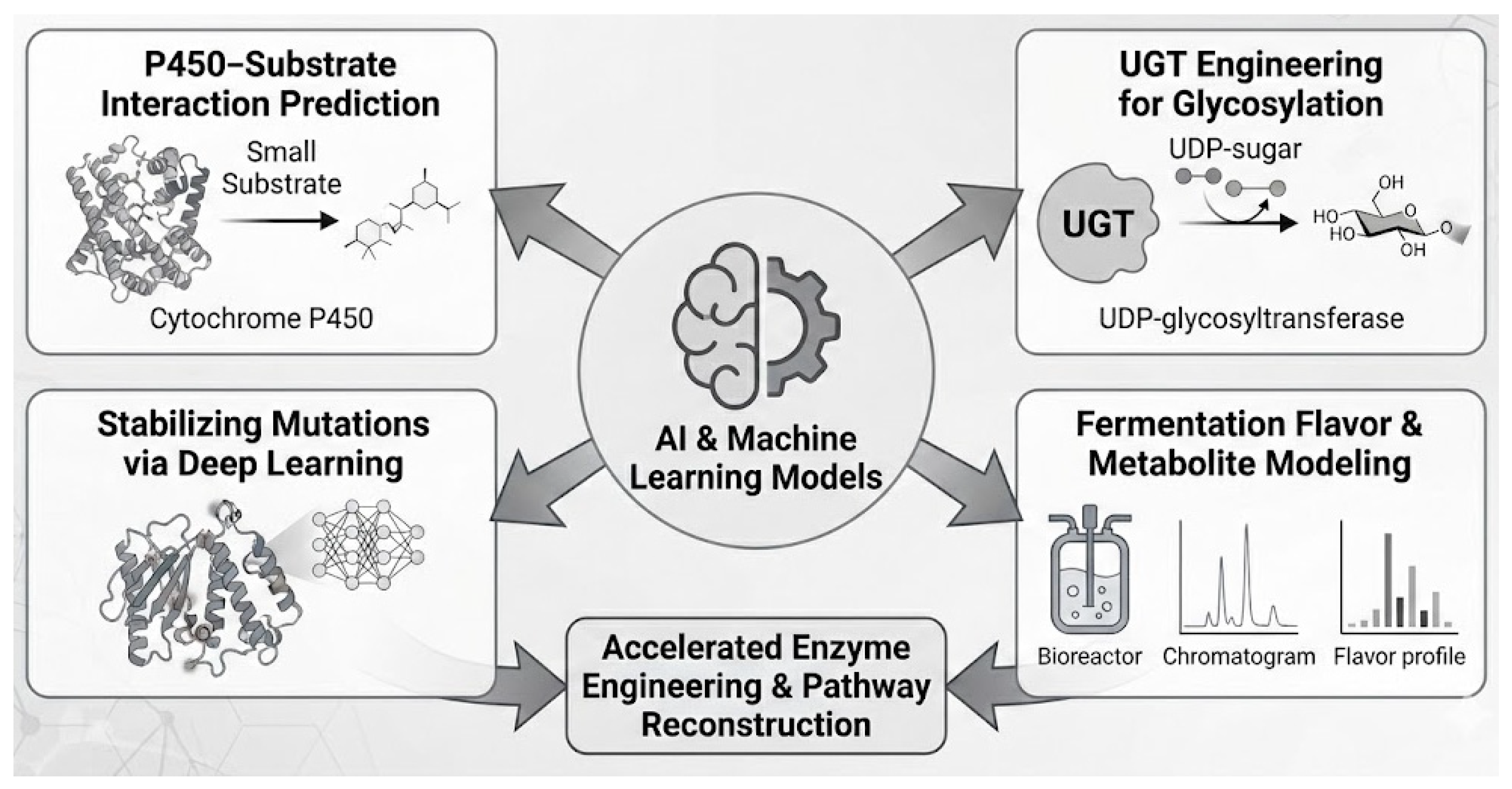
However, the scientific literature shows that AI has played a more central and sophisticated role in mogroside pathway development than is commonly acknowledged. Machine-learning models have been used to predict enzyme–substrate interactions, classify P450 catalytic behavior, and guide the engineering of UGTs with improved regio- and stereoselectivity [
57]. Deep-learning-based protein structure prediction, using architectures analogous to AlphaFold, has accelerated the identification of stabilizing mutations in P450s and UGTs, reducing the experimental burden associated with screening large mutational libraries by 50–70%. In parallel, machine-learning models have been applied to predict flavor profiles and metabolic transformations during fermentation of
S. grosvenorii extracts, capturing nonlinear biochemical interactions relevant to mogroside metabolism [
58]. The cumulative impact of these AI applications is visualized in
Figure 8.
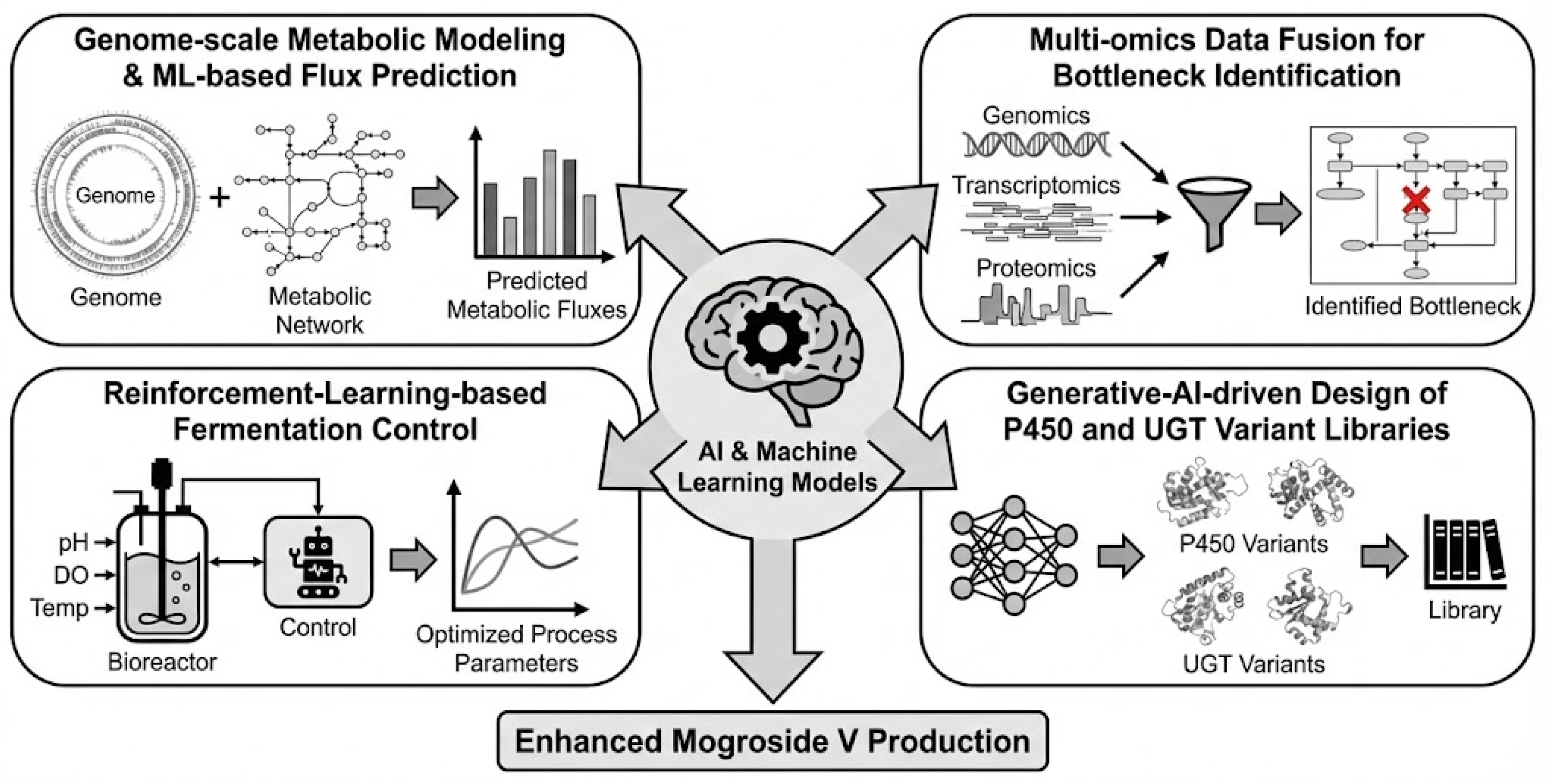
Despite these successes, the literature exposes a critical gap: while AI has been applied to individual components of the mogroside pathway, there is no integrated AI-driven framework for full-pathway optimization in engineered yeast. Mogroside V biosynthesis involves >10 enzymatic steps, multiple competing branches, and cofactor-intensive P450 reactions that impose significant metabolic burden [
59]. Traditional metabolic engineering struggles to navigate this multidimensional, nonlinear design space, where promoter strength, enzyme stoichiometry, redox balance, and precursor flux interact in counterintuitive ways. The absence of multi-omics-integrated, machine-learning-guided metabolic models now represents a major bottleneck for further improvements in titer, rate, and yield.
Figure 9 maps the conceptual architecture for AI-driven optimization of mogroside biosynthesis.
From an analytical standpoint, the key insight is that AI has already demonstrated quantifiable value in enzyme engineering and fermentation modeling for monk fruit, but the field has not yet capitalized on the full potential of AI-enabled synthetic biology. The next frontier is the development of closed-loop, AI-driven design–build–test–learn (DBTL) systems that integrate pathway modeling, enzyme engineering, and fermentation control into a unified optimization pipeline. Such systems could dramatically accelerate strain-development cycles, reduce production costs, and enable mogroside V titers that surpass current commercial benchmarks. In this sense, AI is not simply a tool for improving existing processes, it is the enabling technology required to transform mogroside V from a geographically constrained botanical extract into a globally scalable, environmentally sustainable sweetener.
4.3. Case Study III: AI-Driven Enzyme Engineering and Process Intensification for D-Allulose Biomanufacturing
D-Allulose (psicose) is a rare C-3 epimer of fructose with approximately 70% of the sweetness of sucrose and virtually zero caloric contribution [
60]. Its favorable metabolic profile—including improved glycemic control, reduced postprandial glucose response, and potential neuroprotective effects in prediabetic models—has elevated its status as a functional sweetener with clinically relevant benefits [
61]. Because natural abundance is extremely low, industrial production depends entirely on biocatalytic conversion, historically relying on D-psicose-3-epimerase (DPEase) to epimerize fructose into D-allulose. Early processes were constrained by low conversion efficiency, poor thermostability, metal-ion dependence, and rapid enzyme deactivation, all of which limited reactor productivity and increased purification costs [
62].
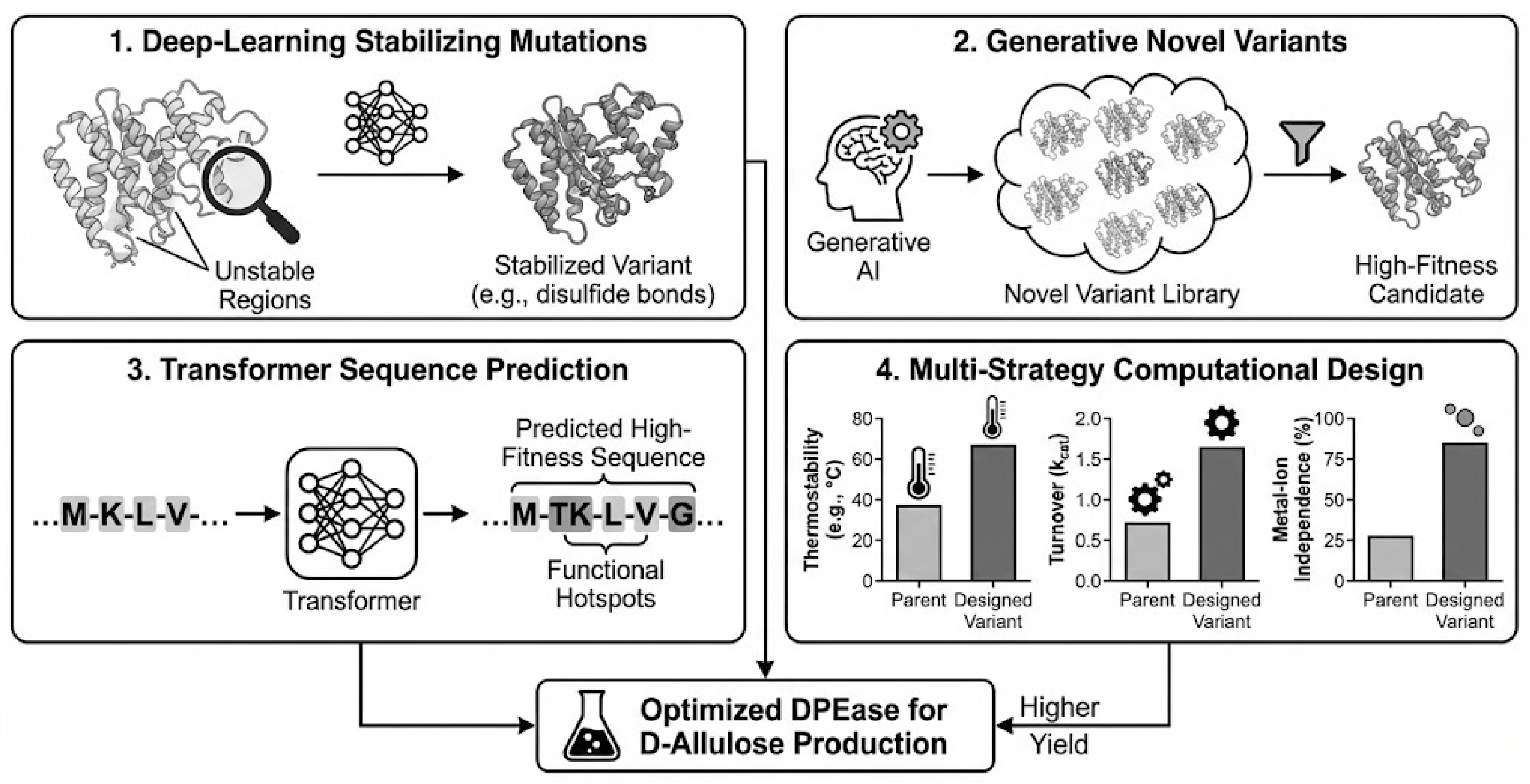
Recent advances in synthetic biology and AI-enabled enzyme engineering have reshaped this landscape. Deep neural networks trained on sequence–function datasets have identified stabilizing mutations in specific D-allulose 3-epimerases (DPEases), including the enzyme variants investigated in the cited studies, leading to improved thermostability and catalytic performance relative to their native baselines. Transformer-based protein language models and generative design algorithms have proposed novel DPEase variants with improved performance, several of which have been experimentally validated in thermostable epimerase engineering studies [
63]. Multi-strategy computational design approaches—such as consensus mutagenesis, machine-learning-guided hotspot prediction, and cross-regional advantageous mutation screening—have yielded DPEase variants with 2–5× increases in half-life and significant gains in catalytic efficiency at industrially relevant temperatures [
64]. These innovations directly address one of the central bottlenecks in D-allulose production: the need for enzymes that remain active and stable under continuous, high-temperature processing conditions.
AI-enabled biomanufacturing extends beyond single-enzyme engineering. Early microbial production studies demonstrated that
Bacillus subtilis WB600 expressing DPEase could produce 3.24 g/L D-allulose with a yield of 0.93 g/g substrate, confirming the feasibility of whole-cell biocatalysis but also revealing substantial room for improvement [
65]. More recently, alternative pathways have emerged, including multienzyme cascades involving D-allulose-6-phosphate phosphatase (A6PP), where engineered variants achieved 1.7-fold improvements in substrate specificity [
66]. These cascades are particularly well suited for AI-driven optimization, as machine-learning models can evaluate combinatorial enzyme sets, predict pathway flux, and identify optimal enzyme stoichiometries (
Figure 10).
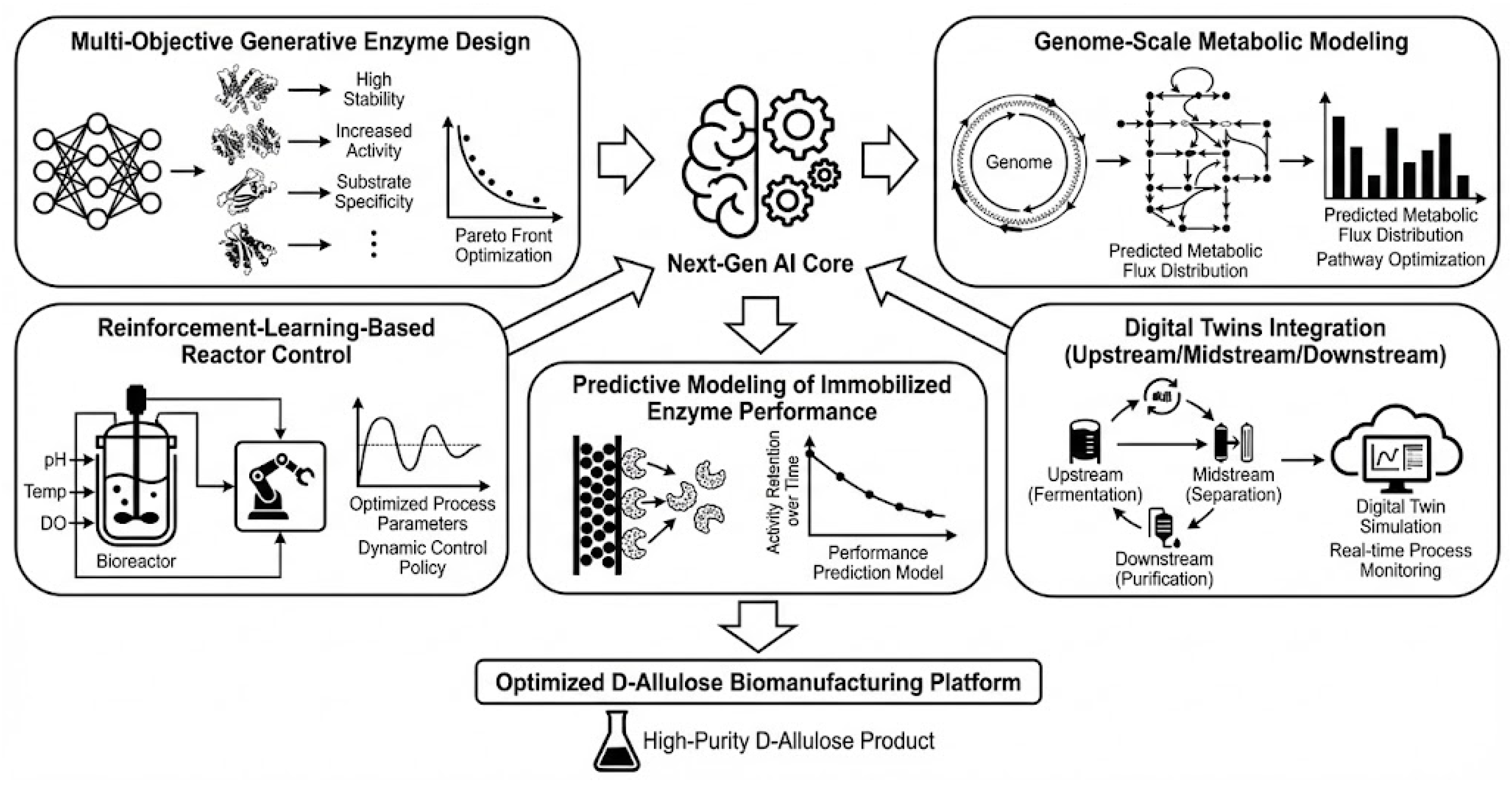
AI has also transformed process intensification. Reinforcement-learning algorithms have been applied to identify optimal temperature, pH, substrate loading, and metal-ion concentrations, outperforming traditional design-of-experiments approaches in simulated epimerization reactors [
67]. Digital twins of continuous bioreactors—trained on historical process data, enable real-time prediction of conversion efficiency, enzyme deactivation kinetics, and fouling behavior, allowing operators to dynamically adjust feed rates and residence times [
68,
69]. Downstream purification, historically a major cost driver, has benefited from machine-learning models that predict resin performance, breakthrough curves, and optimal elution strategies. Even upstream substrate preparation has been optimized using AI, as demonstrated by nanocomposite catalysis studies where deep neural networks accurately predicted conversion outcomes.
AI-enhanced analytical technologies further strengthen the production pipeline. Machine-learning-driven hyperspectral imaging can classify allulose in food matrices with >95% accuracy, while ML-enhanced SERS sensors enable real-time monitoring of sugar composition in complex mixtures. These tools support continuous manufacturing by providing rapid, non-destructive process analytical technologies (PAT). Meanwhile, ML-based solubility prediction models offer new opportunities to optimize crystallization, drying, and formulation, critical steps for producing high-purity D-allulose at industrial scale (
Figure 11).
From an analytical standpoint, the key insight is that AI has already delivered measurable improvements across the D-allulose value chain, but these advances remain fragmented. Enzyme engineering, host optimization, reactor control, and purification have each benefited from AI, yet no unified AI-driven design–build–test–learn (DBTL) framework exists. Current models rarely integrate enzyme kinetics, metabolic flux, reactor hydrodynamics, and downstream purification into a single predictive system. Moreover, most AI-engineered DPEase variants optimize a single property (e.g., thermostability), whereas industrial performance depends on multi-property optimization, including activity, stability, metal-ion independence, pH tolerance, and immobilization compatibility.
Developing an integrated, multi-objective AI platform represents the next major frontier for cost-competitive, large-scale D-allulose production. Such systems could dramatically reduce development timelines, increase conversion efficiency, and enable global commercialization of D-allulose as a nutritionally advantageous, functionally versatile rare sugar.
4.4. Case Study IV: AI-Guided Protein Design and Precision Fermentation of Brazzein
Brazzein is a small (≈6.5 kDa) sweet-tasting protein originally isolated from the fruit of Pentadiplandra brazzeana, notable for its exceptionally high sweetness potency (reported at 500–2000× that of sucrose), thermal and pH stability, and a sensory profile that closely resembles sugar. These properties distinguish brazzein from many other high-intensity sweeteners and position it as a compelling candidate for sugar reduction across a wide range of food and beverage applications. However, its natural abundance is extremely low, rendering direct extraction impractical and establishing precision fermentation as the only viable route for scalable production. As a result, brazzein occupies a unique intersection of protein science, biomanufacturing, and sensory engineering, making it an ideal case study for examining how AI-guided protein design and fermentation optimization can enable next-generation sweet proteins.
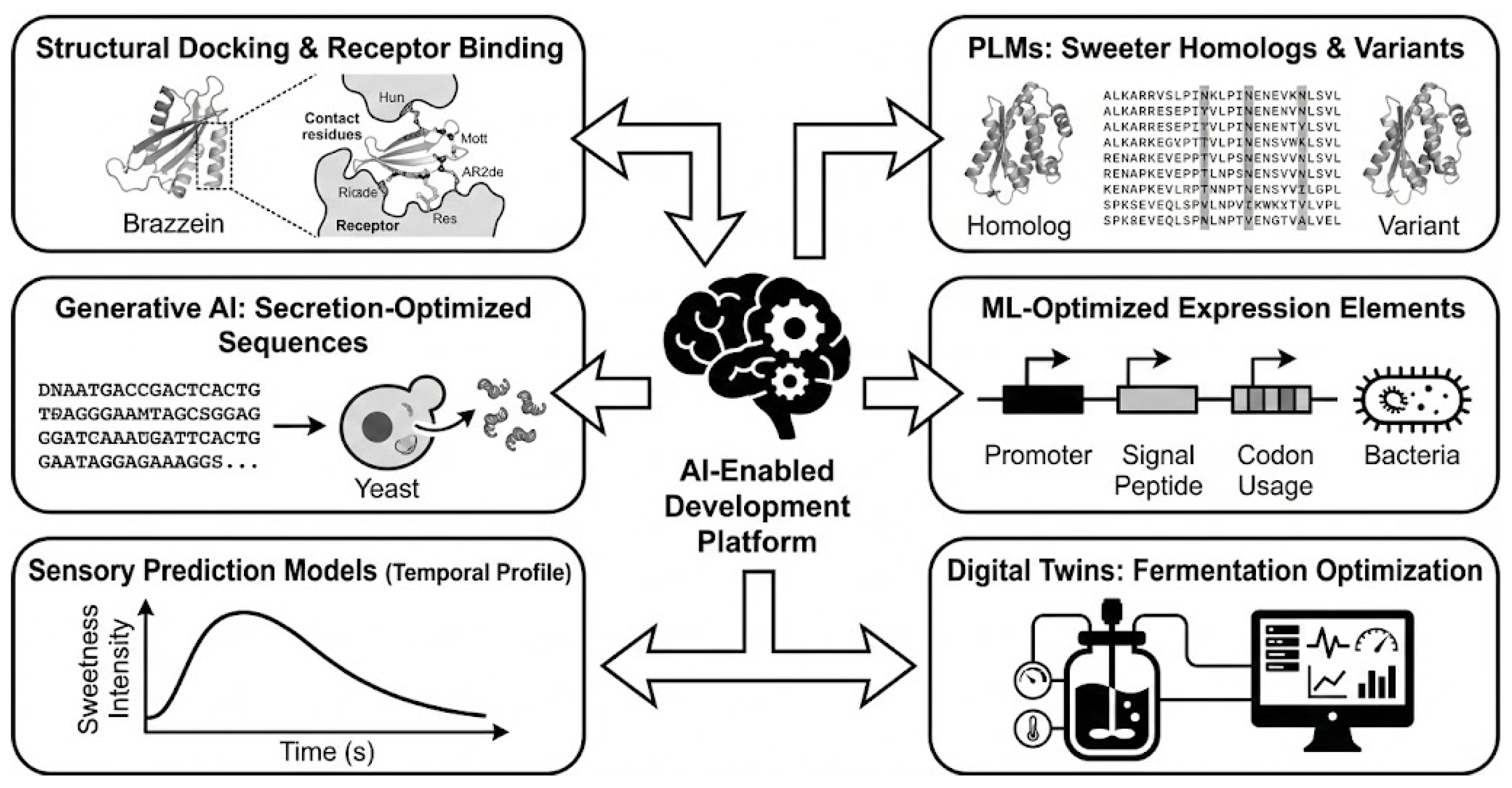
Early structural studies revealed that brazzein binds between the cysteine-rich domains (CRDs) of the human sweet taste receptor T1R2/T1R3, identifying key residues involved in receptor docking [
70]. This mechanistic insight enabled AI-driven protein engineering to target specific positions that modulate sweetness intensity and receptor affinity. Protein language models (PLMs) have since been used to explore sequence space and design brazzein homologs with enhanced sweetness, improved receptor binding, and reduced lingering [
71,
72]. These models capture long-range epistatic interactions that traditional mutagenesis cannot resolve, accelerating the identification of beneficial multi-point mutations.
Generative deep-learning frameworks, such as diffusion-based protein designers, transformer-guided sequence generators, and ML-driven structural refinement tools, have further expanded the design space by generating de novo brazzein variants with improved folding efficiency, secretion, and stability in microbial hosts. These tools integrate conformational ensemble modeling, machine-learning force fields, and sequence-to-structure prediction to propose variants that maintain sweetness while improving manufacturability. Interpretable ML approaches have also been applied to identify amino-acid patterns associated with stability and receptor binding, providing mechanistic insight into why certain mutations enhance sweetness [
73].
AI has also transformed heterologous expression and fermentation performance. Machine-learning models have been used to optimize codon usage, signal peptides, and promoter strength in Saccharomyces cerevisiae and Pichia pastoris, significantly increasing secretion titers. Genome-scale metabolic models augmented with ML have improved host-strain engineering by predicting bottlenecks in amino-acid supply, redox balance, and secretory-pathway load. Digital twins of fermentation processes, trained on historical bioreactor data, enable real-time optimization of oxygenation, feeding rates, and induction timing, reducing energy consumption and improving scalability.
AI-enabled sensory prediction models represent another frontier. Platforms such as TasteMolNet and peptide-taste ML frameworks can predict sweetness onset, lingering, and off-notes from sequence or structural descriptors. These models allow formulators to design brazzein variants with sugar-like temporal profiles, minimizing the delayed onset or lingering sweetness sometimes associated with sweet proteins. This capability is particularly important for blending brazzein with other sweeteners or bulking agents in commercial formulations (
Figure 12).
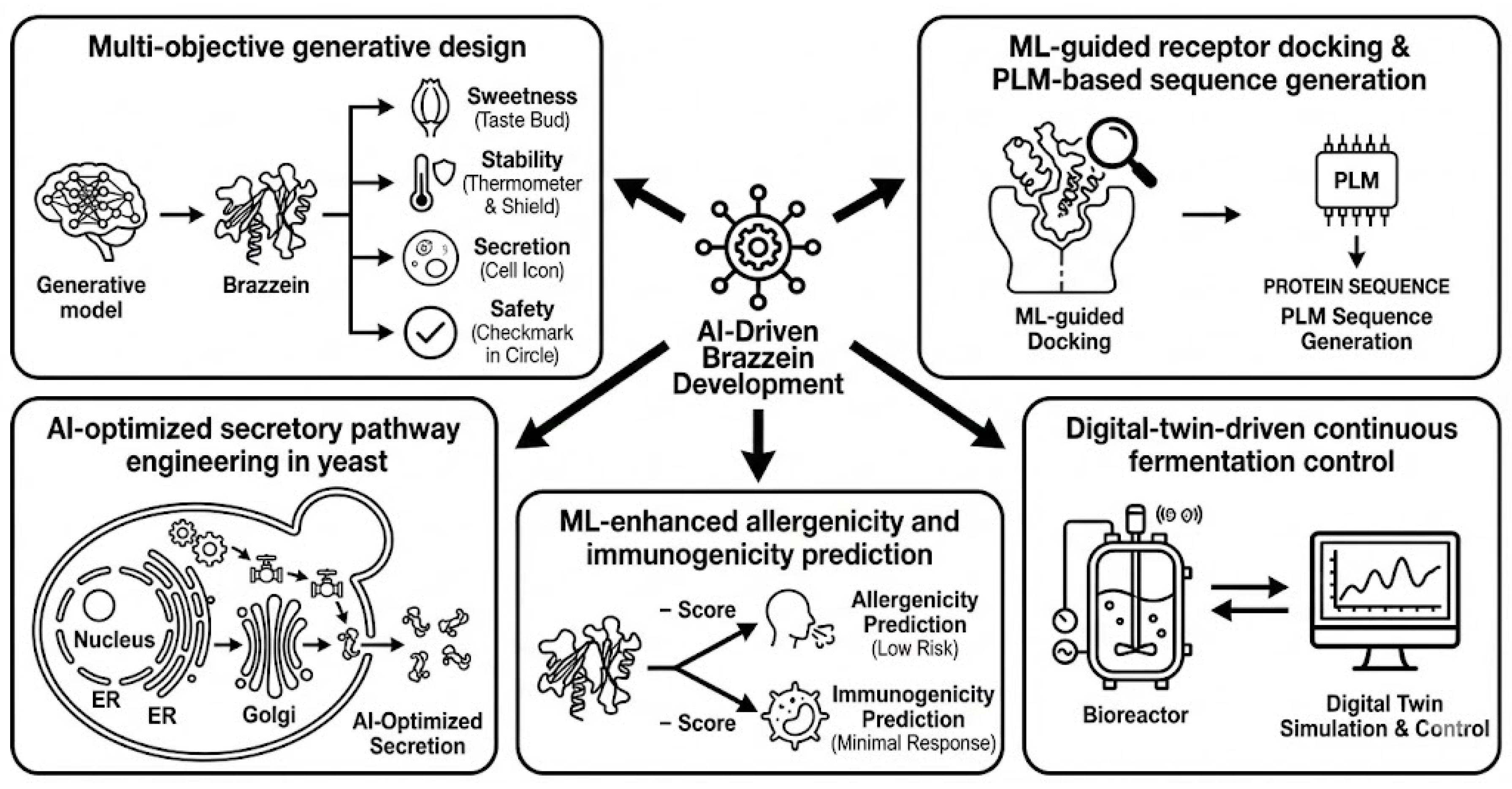
Despite these advances, the literature reveals a critical gap: AI has been applied to discrete components, sequence design, expression optimization, and sensory prediction, but no integrated AI-driven design–build–test–learn (DBTL) pipeline exists for brazzein. Current models do not jointly optimize sweetness, stability, secretion efficiency, and manufacturability. Moreover, the field lacks multi-objective generative models that incorporate receptor-binding energetics, secretory-pathway constraints, and fermentation economics into a unified design framework. Safety evaluation remains another underdeveloped area; while ML allergenicity prediction tools exist, they are not yet integrated into iterative protein-design cycles (
Figure 13).
From an analytical standpoint, Brazzein exemplifies how AI-enabled protein design and precision fermentation can optimize naturally occurring sweet proteins, enabling improved sensory profiles, enhanced stability, and scalable production rather than the discovery of an entirely new sweetener class.
4.5. Case Study V: AI-Optimized Lignocellulosic Biorefining for Sustainable Xylitol Production
Xylitol, a five-carbon polyol traditionally produced from birch wood, represents a unique intersection of forestry, biorefining, and sweetener innovation. Conventional production relies on the hydrolysis of hemicellulose to release xylose, followed by high-pressure catalytic hydrogenation. While effective, this route is energy-intensive, requires high-purity feedstocks, and depends on geographically constrained hardwood resources. As interest grows in circular-bioeconomy models and valorization of forestry residues, lignocellulosic biorefineries have emerged as a promising alternative [
74]. However, lignocellulosic processing introduces new challenges, heterogeneous feedstocks, inhibitor formation, and complex supply-chain logistics, which are increasingly being addressed through AI-enabled optimization.
Recent advances in pretreatment science demonstrate how AI can improve the efficiency and sustainability of xylose liberation. Machine-learning models have been used to optimize steam explosion, organosolv, and ionic-liquid fractionation conditions, maximizing xylose recovery while minimizing the formation of inhibitory compounds such as furfural and hydroxymethylfurfural (HMF). Predictive models trained in reaction kinetics and feedstock composition can forecast inhibitor formation in real time, enabling dynamic adjustment of temperature, residence time, and catalyst loading. These capabilities are essential for lignocellulosic systems, where small deviations in moisture content, lignin structure, or hemicellulose branching can dramatically alter pretreatment outcomes. AI-enhanced solubility models for sugar alcohols in ionic liquids further support solvent selection and downstream separation strategies, reducing solvent consumption and improving process economics [
75].
AI has also accelerated the shift from chemical hydrogenation to biological xylitol production, which offers lower energy inputs and improved sustainability. Deep neural networks have been applied to predict xylitol production in engineered
E. coli and
Candida tropicalis, identifying optimal enzyme expression levels, cofactor balances, and fermentation conditions [
76]. The machine-learning-guided discovery of xylose transporters has expanded the toolkit for improving xylose uptake, a key bottleneck in microbial xylitol production. Similarly, ANN-coupled genetic algorithms have been used to co-optimize bioethanol and xylitol co-production from delignified biomass, demonstrating the potential for integrated biorefinery configurations [
77]. These studies collectively show that AI can navigate the nonlinear interactions between enzyme kinetics, redox balance, and substrate inhibition that constrain biological xylitol production.
Downstream processing has also benefited from AI-enabled tools. Machine-learning models have been used to predict ultrafiltration membrane performance for xylose reductase separation [
78], improving enzyme recovery and reducing purification costs. Terahertz spectroscopy combined with ML classification enables rapid identification of xylose–xylitol mixtures in biorefinery streams [
79], supporting real-time process analytical technologies (PAT). Novel sensing platforms, such as ML-enhanced electrochemical xylitol sensors further expand monitoring capabilities for continuous production systems.
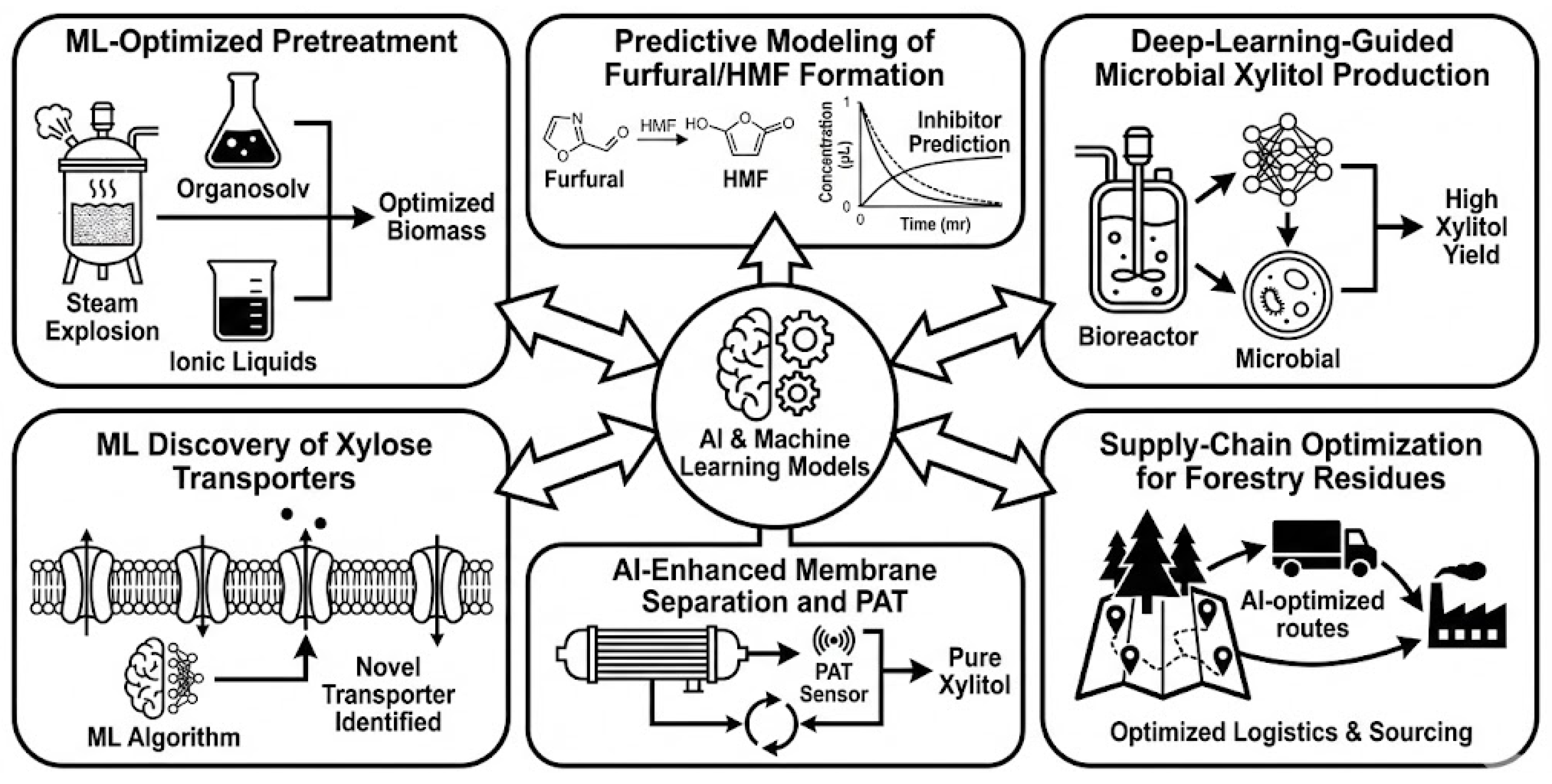
Beyond the bioreactor, AI is reshaping the forestry supply chain that underpins lignocellulosic xylitol production. Machine-learning-based logistics models integrate residue availability, transportation distances, moisture content, and regional harvesting cycles to optimize biorefinery siting and feedstock-blending strategies. These models can minimize carbon footprint, reduce transportation costs, and improve year-round feedstock reliability, critical factors for commercial viability. Comparative genomics and ML approaches have also identified alternative xylose-utilization pathways in yeast, offering new chassis options for integrated biorefineries (
Figure 14).
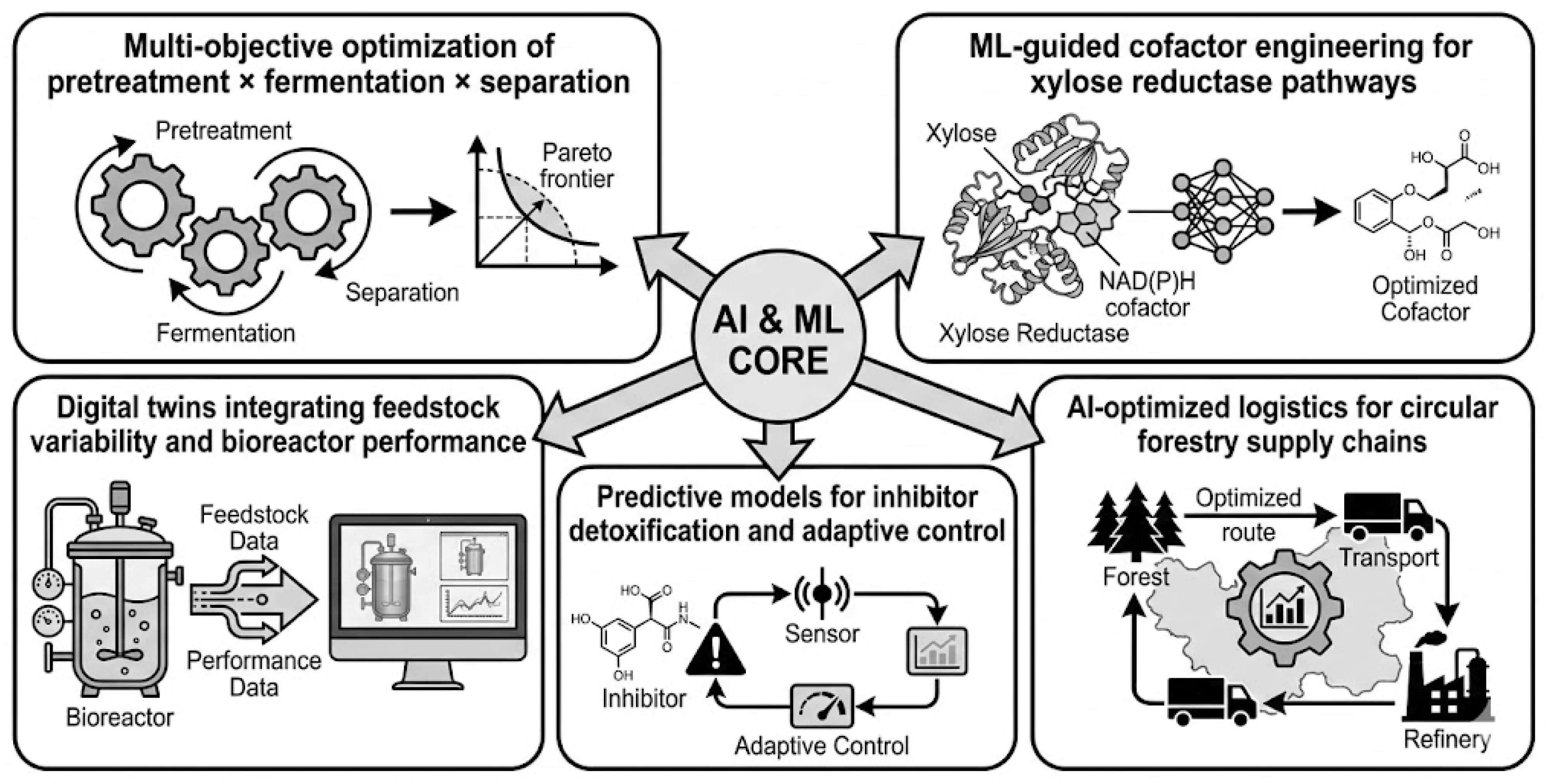
Despite these advances, the field faces a critical gap: AI applications remain siloed across pretreatment, fermentation, separation, and supply-chain modeling. No integrated AI-driven design–build–test–learn (DBTL) framework exists for lignocellulosic xylitol production. Current models do not jointly optimize feedstock variability, inhibitor formation, microbial metabolism, and downstream purification. Moreover, biological xylitol production still suffers from redox imbalance, xylose reductase requires NAD(P)H, yet few AI models incorporate cofactor economics or metabolic burden into strain design. The absence of multi-objective optimization frameworks limits the ability to push xylitol yields toward theoretical maxima while maintaining robustness across heterogeneous feedstocks.
From an analytical standpoint, xylitol illustrates how AI can revitalize established sweeteners by improving sustainability, efficiency, and integration into circular-bioeconomy systems. The next frontier lies in unifying AI-enabled pretreatment, metabolic engineering, and supply-chain optimization into a cohesive biorefinery framework. Such integration could transform xylitol from a legacy polyol into a flagship example of AI-driven, forestry-based biomanufacturing (
Figure 15).
4.6. Synthesis: What These Case Studies Reveal
The five case studies presented in this review span diverse biochemical classes, diterpene glycosides, triterpene glycosides, rare sugars, sweet proteins, and polyols, yet they collectively reveal a unifying pattern: AI consistently emerges as the decisive factor that transforms scarce natural sweeteners into scalable, sustainable bioproducts.
Across all systems, AI adapts to the dominant bottleneck, whether biochemical, structural, process-level, or logistical, and provides a modality-specific solution that traditional bioprocess engineering could not achieve alone. To make these cross-case insights explicit, the following tables compare the biological constraints, AI leverage points, and environmental implications across all sweetener classes.
Table 5 focuses on three representative systems (Reb M, Mogroside V, Brazzein), while
Table 6 expands the comparison to all five case studies, revealing broader patterns across rare sugars and forestry-derived polyols.
The comparative analysis across all five case studies reveals a unifying pattern that constitutes a central theoretical contribution of the Sweetener Innovation 4.0 framework. Although each sweetener originates from a distinct biochemical class—diterpene glycosides (Reb M), triterpene glycosides (mogroside V), rare sugars (D-allulose), sweet proteins (brazzein), and polyols (xylitol)—the primary bottlenecks limiting scalability are consistently structural rather than molecule-specific. Across cases, artificial intelligence functions not as an isolated optimization tool but as an integrative system layer that connects molecular design, pathway engineering, fermentation control, downstream processing, and sustainability assessment.
This cross-case synthesis demonstrates that Sweetener Innovation 4.0 is defined by AI-enabled integration across traditionally siloed stages of biomanufacturing, rather than by the novelty of individual molecules or algorithms. The framework therefore provides a transferable theoretical lens for understanding how AI reshapes bio-based ingredient systems more broadly, with sweeteners serving as a model domain in which biochemical diversity and industrial constraints are particularly well exposed.
Despite these differences, a unifying insight emerges across all case studies: AI consistently adapts to the dominant constraint of each sweetener class—whether biochemical, structural, process-level, or logistical. Yet, across all cases, the absence of fully integrated, multi-objective AI-driven design–build–test–learn (DBTL) pipelines remains the central limitation. The comparative tables therefore underscore both the demonstrable impact of AI-enabled optimization to date and the substantial, untapped potential that lies in unifying enzyme design, metabolic engineering, fermentation control, downstream processing, and supply-chain modeling into cohesive, end-to-end biomanufacturing systems.
Collectively, these comparisons demonstrate that AI functions not merely as an optimization tool but as a structural enabler that determines which sweeteners can be produced economically, robustly, and sustainably. The next frontier of Sweetener Innovation 4.0 lies in extending AI integration across the entire DBTL pipeline, enabling unified biomanufacturing platforms that transcend molecule-specific constraints and define the next decade of innovation in precision fermentation and bio-based sweetener production.
5. Future Directions
The convergence of artificial intelligence (AI), biotechnology, and circular-economy principles is fundamentally reshaping sweetener innovation. Over the next decade, the field is poised to transition from incremental improvements to a comprehensive re-architecture of how sweetness is designed, produced, regulated, and integrated into global bioindustrial systems. The two domains below, technological foundations and system-level transformation, outline the most consequential trajectories guiding research, commercialization, and policy in Sweetener Innovation 4.0.
5.1. Technological Foundations of Sweetener Innovation 4.0
AI is accelerating a shift from empirical discovery to intentional, model-driven design of sweet molecules. Generative models, graph neural networks, and molecular transformers now probe chemical and protein sequence spaces beyond natural diversity, enabling prediction of sweetness intensity, temporal dynamics, receptor engagement, solubility, and metabolic neutrality. These capabilities support the creation of de novo sweet proteins, engineered glycosides, and hybrid molecular scaffolds whose sensory, stability, and manufacturing attributes are optimized from inception rather than discovered by trial and error. Integrated into design–build–test–learn (DBTL) pipelines, these tools reduce development cycles, lower experimental burden, and allow simultaneous optimization of sensory fidelity, safety, and downstream-processing (DSP) energy demand.
AI-enabled production systems are similarly evolving from predictive optimization to closed-loop autonomous fermentation. Reinforcement-learning controllers can dynamically adjust aeration, nutrient feeding, and environmental conditions, stabilizing yields amid process variability while reducing energy intensity and operator intervention. Distributed, modular fermentation units, strategically located near regional carbon streams, enable low-footprint, flexible manufacturing that adapts to feedstock fluctuations and decarbonized power grids. Digital twins paired with multisensory soft-sensing and built-in failsafe policies ensure robust product quality in autonomous operation.
Feedstock strategy is becoming a central design parameter. Integrating lignocellulosic residues, forestry by-products, algae, and recycled CO2 decouples sweetener supply from cropland and irrigation dependence. Advances in pretreatment, enzyme engineering, and microbial tolerance convert heterogeneous biomass into high-quality fermentation carbon, while AI-engineered chassis and electro-fermentation pathways enable carbon-negative sweetener production. Co-optimization of pretreatment severity, downstream-processing (DSP) energy, and microbial chassis design will be essential, as these elements are tightly coupled: harsher pretreatment improves sugar release but increases inhibitor formation and purification burden, while chassis robustness and tolerance directly constrain both achievable pretreatment intensity and downstream separation energy.
Finally, AI-enhanced sensory science is expanding from population averages to individualized sweetness prediction. By integrating sensory-panel data, physiological markers, and microbiome profiles, these models can explain interpersonal variation in sweetness perception and metabolic response. This enables matrix-specific formulation today and lays the foundation for personalized sweetness systems, including sweeteners engineered to modulate glycemic response, satiety, or microbiome composition. Developing privacy-preserving datasets, embedding allergenicity/immunogenicity predictors, and validating personalization through adaptive, CGM-linked trials will be essential.
Collectively, these capabilities, AI-designed molecules, autonomous bioprocesses, carbon-diversified feedstocks, and individualized sensory performance form the operational engine of Sweetener Innovation 4.0, compressing time-to-market while expanding the design space for healthier and more sustainable sweetener systems.
5.2. System-Level Integration and Global Transformation
Achieving the full potential of Sweetener Innovation 4.0 requires coordinated transformation across regulatory practice, industrial infrastructure, and global value-chain governance. As AI-designed and fermentation-derived molecules become more prevalent, regulatory systems must evolve from static, chemistry-focused frameworks to dynamic, data-driven evaluation pipelines. Digital toxicology, in silico metabolism modeling, and probabilistic risk assessment will increasingly complement classical toxicological studies, enabling rigorous yet accelerated evaluation of novel sweetener molecules. Ensuring public confidence and international market access will depend on harmonized standards for labeling, molecular equivalence, digital traceability, and disclosure of biotechnological origin.
To situate these developments within a coherent systems perspective,
Table 7 summarizes the foundational drivers that define the emerging operating environment for Sweetener Innovation 4.0. This framework provides an orienting scaffold for the analysis that follows, distilling the regulatory, industrial, and digital-biological transformations that underpin the integration of AI-enabled biomanufacturing at scale.
Parallel advances are reshaping the industrial architecture of sweetener production. Future facilities will operate as fully integrated circular bioindustrial hubs capable of valorizing lignocellulosic residues, fermentation biomass, and recycled CO2 into high-value co-products such as organic acids, amino acids, and bioplastics alongside sweeteners. Embedding transparent accounting of downstream-processing energy and digital infrastructure carbon footprints into techno-economic and life-cycle assessments will be critical for ensuring that sustainability claims reflect true system-level performance. These integrated hubs not only enhance resource efficiency but also strengthen economic viability by distributing cost and carbon across multiple bio-based product streams.
The digital democratization of biotechnology, enabled by open-source metabolic models, cloud-based AI design tools, and modular fermentation platforms, is widening participation across the global innovation landscape. Startups, academic groups, and regional producers can increasingly compete on technological sophistication despite limited capital intensity. Biomass-rich regions are positioned to develop localized sweetener ecosystems tailored to regional feedstocks, thereby improving supply-chain resilience and promoting more equitable value distribution.
Together, these developments extend toward a unified digital–biological operating system, as already suggested by emerging precision-fermentation platforms that integrate automated strain construction, high-throughput experimentation, AI-driven model updating, and real-time bioreactor data within closed-loop design–build–test–learn workflows. Molecules are digitally designed, experimentally built, and continuously refined through autonomous systems whose performance is evaluated holistically across safety, cost, environmental impacts, and sensory function. In this integrated paradigm, sweeteners emerge as a flagship example of how AI-enabled biotechnology can transform the design and production of food-system ingredients at industrial scale.
Realizing this transformation requires focused near-term priorities. Explainable AI must be incorporated into regulatory dossiers to ensure transparency and auditability. Interoperable data standards linking molecular design, fermentation, downstream processing, and life-cycle assessment are essential for end-to-end continuity. Decarbonized heat and power sources must be deployed for pretreatment and DSP to align biomanufacturing with climate goals. Finally, privacy-preserving sensory-physiology datasets are needed to support personalized sweetness and robust sensory modeling. Together, these measures establish the scientific and infrastructural foundation necessary for translating technological capability into trusted, durable, and globally scalable deployment of Sweetener Innovation 4.0.
6. Trends, Perspectives, and Limitations
The rapid evolution of sweetener innovation reflects broader transformations across artificial intelligence, biotechnology, and the global bioeconomy. As sweeteners shift from agricultural commodities to digitally designed, biologically produced, and sustainability-optimized ingredients, new research priorities and industrial strategies are emerging. At the same time, significant structural and technological constraints, ranging from algorithmic opacity to regulatory friction, must be addressed for Sweetener Innovation 4.0 to reach maturity. This section synthesizes the major trends shaping the field, articulates strategic perspectives for the coming decade, and examines the critical limitations that currently define the innovation landscape.
6.1. Emerging Trends in Sweetener Innovation
Several converging trends are reshaping the future trajectory of sweetener research and commercialization. The first is the transition from empirical discovery to computational molecular design. Historically, sweeteners were identified through plant exploration, chemical synthesis, or serendipitous observation. Advances in molecular modeling, generative AI, and protein language models now enable deliberate design of molecules with tailored sweetness intensity, enhanced stability, and minimized off-notes, marking the emergence of an era in which sweetness is engineered rather than discovered.
A second trend is the ascent of precision fermentation as a scalable, low-impact production platform. Engineered microbial hosts now produce steviol glycosides, mogrosides, rare sugars, and sweet proteins with a level of consistency, purity, and sustainability that surpasses agricultural extraction. As these technologies mature, they increasingly integrate renewable feedstocks, modular production architectures, and circular bioprocessing strategies.
The third trend is the pervasive integration of AI across the sweetener value chain. From pathway engineering and enzyme optimization to fermentation control, sensory modeling, and supply-chain analytics, AI is accelerating development cycles and reducing reliance on empirical trial-and-error approaches.
Finally, evolving consumer expectations, including growing demand for clean-label, low-calorie, plant-based, and environmentally responsible ingredients, are driving the rapid adoption of fermentation-derived sweeteners and next-generation sweet proteins. These preferences reinforce the shift toward molecules that deliver sugar-like performance while offering superior nutritional and sustainability profiles.
6.2. Perspectives: Strategic Priorities for the Next Decade
Looking forward, several strategic priorities will shape the next phase of sweetener innovation. A central trajectory is the design of multifunctional sweeteners that extend beyond sweetness to influence metabolic health, modulate the microbiome, enhance satiety, or improve flavor performance. AI will play a central role in navigating the multidimensional design space required for such molecules.
A second priority is the transition toward geographically distributed biomanufacturing, enabled by modular fermentation systems, reactive extrusion platforms, and circular biorefineries. By leveraging region-specific biomass sources, such as sorghum, cassava, or forestry residues, these distributed systems can strengthen supply-chain resilience, reduce transportation emissions, and localize economic value.
Regulatory evolution forms a third priority. As AI-designed molecules proliferate, classical evaluation frameworks must be augmented with digital toxicology, in silico metabolism prediction, and AI-supported risk assessment. Harmonizing regulatory standards across jurisdictions will be crucial for globally distributed supply chains.
As sweeteners transition from agriculturally derived ingredients to digitally designed and fermentation-based molecules, regulatory evaluation frameworks face increasing strain. Major regulatory agencies share core safety objectives, but differ substantially in their evidentiary requirements, approval pathways, and tolerance for molecular novelty, particularly when artificial intelligence plays a role in molecular design.
In the European Union, sweeteners are evaluated primarily through the European Food Safety Authority (EFSA), which emphasizes precaution, comprehensive toxicological characterization, and conservative interpretation of uncertainty. Novel sweeteners, including fermentation-derived or structurally modified molecules, are typically assessed under the Novel Food Regulation, requiring extensive compositional, toxicological, and exposure data. The use of AI-assisted design introduces additional challenges, as current EFSA guidance does not explicitly address algorithm-generated molecular optimization or in silico toxicology as primary evidence streams.
In contrast, the United States Food and Drug Administration (FDA) apply a more flexible, risk-based framework, particularly through the Generally Recognized as Safe (GRAS) pathway. Fermentation-derived sweeteners may be evaluated as chemically equivalent to existing substances, enabling streamlined approval in some cases. However, de novo AI-designed molecules without historical consumption or natural analogues face greater scrutiny, and the regulatory status of AI-generated design data remains underdefined.
Other jurisdictions, including Health Canada, FSANZ, and regulatory authorities in East Asia, operate intermediate frameworks that blend precautionary and risk-based approaches. While these agencies increasingly recognize fermentation-derived ingredients, formal guidance on AI-assisted molecular design, digital toxicology, and algorithmic transparency remains limited or absent across jurisdictions (
Table 8).
A fourth priority is the integration of sweeteners into personalized nutrition ecosystems, supported by metabolic monitoring technologies and AI-enabled dietary analytics. Future sweetness systems may adapt to individual glycemic responses, sensory preferences, or microbiome composition.
Finally, deeper integration with the circular bioeconomy, including renewable energy, biomass valorization, and fully integrated bioprocessing, will be essential for achieving sustainability targets and improving the overall environmental performance of sweetener production.
6.3. Data Limitations and Interpretability Challenges in AI-Enabled Sweetener Innovation
Despite rapid advances, the effectiveness of AI-enabled sweetener design and bioprocess optimization is fundamentally constrained by data availability, quality, and interpretability. High-quality datasets linking molecular structure, metabolic flux, sensory perception, health outcomes, and process performance remain sparse, fragmented, or proprietary. This data scarcity limits model generalizability, increases the risk of bias, and constrains the transferability of AI models across organisms, production systems, and food matrices. Sensory and consumer-response datasets, as well as long-term metabolic and microbiome data, remain underrepresented relative to molecular and process-level data.
Interpretability presents an additional challenge, especially as deep-learning and generative models increasingly guide molecular and pathway design. While such models can identify non-intuitive patterns and propose high-performing candidates, their limited mechanistic transparency complicates scientific validation, regulatory evaluation, and risk assessment. Regulatory agencies currently rely on explainable causal evidence rather than algorithmic inference alone, making the “black-box” nature of some AI approaches a non-trivial barrier to approval. Addressing these challenges will require greater integration of explainable AI methods, hybrid mechanistic–data-driven models, standardized data reporting, and transparent documentation of training datasets and model assumptions.
Table 9 summarizes the core limitations shaping the current landscape.
7. Industrial Applications and Market Integration
Sweeteners, while historically associated with taste modulation in food and beverage systems, play far broader roles across industrial sectors. Their diverse molecular architectures—from simple monosaccharides to complex glycosides, polyols, and sweet proteins—enable a range of physicochemical behaviors, including hydrogen bonding, humectancy, plasticization, osmotic regulation, crystallization control, and participation in polymerization or crosslinking reactions. Artificial-intelligence-driven design and biomanufacturing now enable these molecular properties to be tuned with unprecedented precision. By optimizing stereochemistry, substitution patterns, chain length, purity profiles, and protein sequence or folding characteristics, AI-guided systems directly influence solubility, thermal stability, hygroscopicity, and interaction with other formulation components. These capabilities expand the functional utility of sweeteners well beyond sweetness alone, enabling their deployment as excipients, humectants, plasticizers, fermentation substrates, and reactive intermediates across food, pharmaceutical, personal-care, and materials applications, as summarized in
Table 10.
The cross-sector roles summarized in
Table 8 illustrate the remarkable functional versatility of sweeteners, underscoring their status as foundational materials across the emerging bioeconomy. This versatility extends beyond classical sweetening to include moisture management, structural modification, polymer formation, and substrate provisioning, capabilities that position sweeteners at the intersection of food technology, materials science, and industrial biotechnology.
However, the industrial landscape is undergoing rapid transformation. As AI, metabolic engineering, and precision fermentation converge, formulation workflows are shifting from empirical experimentation toward predictive, data-driven design. The following section examines how artificial intelligence is being integrated into industrial processes, accelerating the development, optimization, and commercialization of next-generation sweeteners.
7.1. AI-Enabled Industrial Formulation and Market Deployment
Artificial intelligence now permeates industrial sweetener development, enabling rapid, high-resolution optimization across sectors. In food and beverage applications, AI models predict sweetness intensity, temporal dynamics, and matrix-specific interactions, allowing formulators to construct sugar-like sensory profiles using combinations of steviol glycosides, allulose, polyols, and sweet proteins. By incorporating physicochemical parameters such as pH, water activity, protein–flavor interactions, and volatile composition, these models identify synergies that are often undetectable through traditional sensory testing.
In pharmaceutical contexts, AI enables rational excipient optimization by modeling dissolution behavior, hygroscopicity, and bitterness-blocking potential, thereby improving both palatability and manufacturability. In materials science, machine-learning platforms predict polymer properties derived from sugar-based monomers, accelerating the design of bio-based plastics, foams, and coatings. Across all sectors, AI reduces development time, minimizes reliance on empirical screening, and enhances performance under demanding sensory and sustainability constraints.
Crucially, AI adoption is no longer confined to the research domain. A rapidly expanding global ecosystem of companies now deploys AI-guided metabolic engineering, enzyme design, protein modeling, and digital process control at commercial scale.
Table 11 highlights these leading organizations and the AI-enabled capabilities that are redefining the sweetener industry.
7.2. Synthesis: Implications for Market Transformation and Industrial Leadership
The industrial ecosystem depicted in
Table 11 reflects a decisive shift in the competitive dynamics of the sweetener sector. Companies across the value chain are leveraging AI to accelerate molecular discovery, optimize metabolic pathways, refine sensory performance, and enhance fermentation efficiency. This shift signals the emergence of vertically integrated digital-biological platforms capable of rapid design iteration, continuous optimization, and scalable biomanufacturing.
The rise of precision fermentation sweeteners, such as rebaudioside M, mogrosides, and sweet proteins, demonstrates widespread market readiness for AI-designed ingredients that outperform plant-derived counterparts in purity, consistency, and sustainability. Meanwhile, formulation enterprises are deploying machine-learning to tailor sweetness systems for specific matrices, reducing time-to-market and enabling differentiated product performance.
Collectively, these developments reveal how the convergence of AI, biotechnology, and circular-economy principles is reshaping industrial leadership in the global sweetener market. Firms that integrate computational design, metabolic engineering, and circular bioprocessing are gaining durable advantages in sustainability metrics, supply-chain resilience, regulatory positioning, and consumer trust. Sweeteners thus serve as a flagship example of how AI-enabled biotechnology can transform ingredient innovation and foster a more distributed, sustainable, and intelligent bioeconomy.
8. Conclusions
Sweeteners have evolved from agricultural commodities into digitally designed, biotechnologically produced, and sustainability-optimized ingredients. This review demonstrates that the future of sweetness does not depend on any single molecule or production pathway, but rather on the convergence of artificial intelligence, precision fermentation, and circular-bioeconomy strategies that together define Sweetener Innovation 4.0. Across plant-derived glycosides, rare sugars, sweet proteins, forestry-based polyols, and alternative starch systems, AI emerges as the integrative engine linking molecular design, bioprocess optimization, and system-level sustainability assessment.
From a sustainability and production perspective, Sweetener Innovation 4.0 enables a progressive decoupling of sweetness from land-intensive agriculture, reduces reliance on geographically constrained crops, and supports more resilient, low-carbon manufacturing systems. Life-cycle assessments consistently indicate potential reductions in land and water use, although this review also highlights persistent gaps related to downstream-processing energy demand and the often-neglected carbon footprint of digital infrastructure. Addressing these limitations through expanded LCA boundaries, renewable energy integration, and transparent digital accounting will be essential for translating technological potential into verifiable environmental gains.
Beyond production efficiency, Sweetener Innovation 4.0 has important implications for metabolic health, gut–microbiome interactions, and personalized nutrition. Functional sweeteners such as rare sugars, polyols, steviol glycosides, and sweet proteins differ fundamentally from sucrose in their metabolic pathways, glycemic responses, and physiological effects. These differences create opportunities to design sweetness systems that support improved glycemic control, reduced insulin demand, and more favorable metabolic profiles. At the same time, emerging evidence suggests that sweeteners can interact with the gut microbiome in compound-specific ways, underscoring the need for mechanistic, system-level evaluation rather than blanket health assumptions.
The integration of AI-driven sensory modeling, metabolic prediction, and multi-omics analysis further positions Sweetener Innovation 4.0 as a foundation for personalized sweetness strategies, in which sweetness intensity, temporal profile, and metabolic impact can be tailored to individual physiology, dietary context, or health objectives. While such applications remain at an early stage, they represent a critical frontier where digital design, nutrition science, and biomanufacturing converge.
In synthesis, sweeteners serve as a flagship domain for demonstrating how AI-enabled biotechnology can simultaneously advance sustainability, health alignment, and industrial resilience. Realizing this potential will require not only technological innovation, but also explainable AI frameworks, harmonized regulatory approaches, expanded sensory and metabolic datasets, and transparent communication with consumers. As these elements mature, Sweetener Innovation 4.0 offers a compelling blueprint for the future design of ingredients within a more intelligent, circular, and health-aligned global bioeconomy.