Article

Research on the Synergistic Effects of Water Quality and Quantity as Dual Factors in Irrigation in Arid Region Oases

1
College of Geology and Mining Engineering, Xinjiang University, Urumqi 830047, China
2
Key Laboratory of Green and Efficient Mining and Ecological Restoration in High-Altitude Arid Mines Regions of Xinjiang, Xinjiang University, Urumqi 830017, China
3
Key Laboratory of Coupling Process and Effect of Natural Resources Elements, Ministry of Natural Resources, Beijing 100055, China
4
Regional Geological Survey Center, Xinjiang Uygur Autonomous Region Geological Bureau, Urumqi 830013, China
*
Author to whom correspondence should be addressed.
Sustainability 2026, 18(5), 2486; https://doi.org/10.3390/su18052486
Submission received: 7 January 2026 / Revised: 2 February 2026 / Accepted: 6 February 2026 / Published: 4 March 2026
(This article belongs to the Section Sustainable Agriculture)

Abstract

Water resources in arid oases are extremely scarce, and the quality of irrigation water and groundwater depth are key factors affecting soil secondary salinization and maintaining high and stable crop yields. This study focuses on the oasis irrigation area of the 38th Regiment in Qiemo County, located in the extremely arid region at the southeastern edge of the Tarim Basin. For the first time, irrigation experiments with different water qualities, ranging from 0.5 to 3.0 g/L, were conducted under varying groundwater depths for multiple crops. Through indoor soil column experiments and numerical simulations of water and salt in the unsaturated zone, the study reveals the water and salt migration patterns in the root zones of watermelon, corn, jujube, and peanuts. It was found that the process of soil water and salt transport exhibits significant differentiation characteristics in the vertical direction, with the surface layer responding most rapidly to changes in moisture and salinity, while the middle and deep layers show certain lag and buffering effects. The study also examined the spatiotemporal distribution trends of soil water and salt under different water quality and quantity irrigation conditions, drawing nonlinear threshold response curves for groundwater depth and determining the optimal groundwater depth under various irrigation conditions. The results indicate: (1) for the four crops under freshwater (0.5 g/L) irrigation and actual irrigation water conditions, soil salinity is safe at groundwater depths of 1–2 m; (2) under slightly saline water (2.0 g/L) irrigation, the safe groundwater depth (GWD) ranges for corn, peanuts, watermelon, and jujube root zones are 3.5–4.2 m, 1.2–3.5 m, ≥2.9 m, and ≥1.6 m, respectively, with crop sensitivity ranking as “corn > peanuts > watermelon > jujube”; and (3) under saline water (3.0 g/L) irrigation, the salinity tolerance thresholds for corn and peanuts root zones are exceeded regardless of shallow or deep groundwater depths, while the upper limits of salinity tolerance thresholds for watermelon and jujube correspond to groundwater depths of 2.9 m and 2.1 m, respectively, with increased groundwater depth making soil salinity increasingly safe. The study proposes a “sensitive-suitable-reinforced” three-zone paradigm and constructs a threshold table for optimal crop layout in arid areas based on the synergistic dual factors of “water quality–water quantity,” providing a theoretical basis for crop layout considering the spatial heterogeneity of groundwater occurrence. This has guiding value for arid oases in addressing the dual stress of water quality deterioration and salinization.

1. Introduction

In recent decades, water scarcity has impacted the development of irrigated agriculture in arid and semi-arid regions, with agriculture consuming over 90% of the total available water resources [1]. Arid oasis irrigation areas face severe challenges from water scarcity and soil salinization, which significantly restrict sustainable agricultural development [2]. The sustainability of agricultural production is primarily constrained by two key factors: irrigation water quality and groundwater depth (GWD) [3]. In these regions, the dual constraints of irrigation water quality and groundwater depth (GWD) jointly influence the dynamics of soil water and salt, the process of secondary salinization, and crop productivity [4]. With the intensification of global climate change and the over-exploitation of water resources, the irrigation water quality in many arid oases continues to deteriorate, while improper groundwater management further exacerbates the risk of soil salinization, posing severe challenges to sustainability of agricultural systems [5,6,7].
Irrigation water quality is typically evaluated using indicators such as total dissolved solids (TDS), electrical conductivity (EC), and sodium adsorption ratio (SAR), which directly affect soil water–salt balance and crop physiological processes [8]. When the salinity of irrigation water exceeds 3.0 g/L, it can lead to significant yield reductions in crops such as wheat and induce soil alkalization [9]. Irrigation with slightly saline water (2.0–3.0 g·L−1) has also been shown to inhibit the growth of corn seedlings, resulting in decreased plant height, leaf area, and dry matter accumulation [10]. Meanwhile, groundwater depth influences the effectiveness of soil moisture and the dynamics of salt accumulation by regulating capillary rise height, evaporation flux, and salt movement in the root zone [4,11]. In the irrigation management of saline-alkali land, critical depth is a key parameter for controlling soil salt accumulation. Nulsen’s [12] field experiments revealed that the critical depths for different salt-tolerant crops vary: approximately 2.2 m for wheat, 1.8 m for barley, and 1.5 m for salt-tolerant grasses. When the groundwater depth is below these thresholds, capillary rise can transport salts to the root zone, leading to increased soil SAR values and reduced crop yields. Ayers and Westcot [13] further pointed out that in arid and semi-arid climates, groundwater levels should be maintained at a safe depth of at least 2 m to interrupt the evaporation–salt accumulation pathway. However, the synergistic effects of irrigation water quality and groundwater depth on soil water–salt movement and crop growth still require further investigation, particularly regarding the nonlinear threshold responses of different crops to the combined variations in these two factors. To accurately characterize the patterns of soil water–salt movement under irrigation conditions, numerical simulation has become an important research tool. The HYDRUS numerical model can effectively simulate the distribution of water and salt under field point source convergence conditions [14]. Notably, the HYDRUS model incorporates a dual-porosity model that can simulate preferential flow, providing convenience for solute transport simulation under complex soil structures and layers [15,16]. Qi et al. [17] used the HYDRUS model to simulate the soil water–salt movement process under straw cover and drip irrigation conditions. Cheng [18] constructed water–salt transport models for furrow and bed irrigation methods based on the Hydrus-3D model, with results indicating that furrow irrigation is suitable for the early growth stage of crops, while bed irrigation is more appropriate for the later stages to balance water conservation and salt control. Yu et al. [19] conducted field experiments in the He-tai irrigation area and established numerical models to simulate soil water–salt movement under different irrigation methods, providing a theoretical basis for determining a reasonable irrigation system that balances water conservation and salt control. Lai et al. [20] used Hydrus software and field observation data to simulate the infiltration and recharge processes of groundwater under different irrigation conditions in various regions, validating the model’s applicability in simulating water–salt movement in arid areas.
However, the existing research primarily focuses on single-factor effects (such as individual water quality or depth), and systematic studies on the synergistic effects of irrigation water quality and groundwater depth remain insufficient. Dai et al. [21] identified the optimal groundwater depth for spring corn drip irrigation with slightly saline water in the Heihe River Basin, while Ren et al. [22] explored the suitable depth conditions for irrigating jujube trees with slightly saline water in Xinjiang. De Pascale et al. [23] and Mukonazwothe et al. [24] conducted feasibility studies on slightly saline water irrigation in arid regions such as South Africa and Iran. Research by Nosetto et al. [25] along the natural groundwater depth gradient (0.7–2.9 m) in the inland Pampas of Argentina revealed the nonlinear response mechanisms of corn, soybean, and wheat yields to depth (optimal depth ranges of 1.40–2.45 m, 1.20–2.20 m, and 0.70–1.65 m, respectively). However, their irrigation water was all freshwater, and they did not consider the coupling effects of water quality and quantity. Wang et al. [26] conducted a 14-year (2006–2019) continuous positioning experiment in the North China Plain, establishing a quantitative relationship between irrigation water salinity (ECiw 1.3–14.1 dS/m) and yield under a winter wheat-summer corn rotation system (with a recommended safe threshold of 3.10 dS/m), but this study did not address the impact of variations in groundwater depth. Recent research by Shen et al. [27] in the Yarkand River irrigation area of Xinjiang indicated that the critical groundwater depths causing soil salinization were 2.10 m and 2.18 m, with the impact of groundwater depth on soil salinity being significantly greater than that of groundwater mineralization. However, this study only monitored salinity dynamics and did not simultaneously analyze crop yield responses. Particularly, in extremely arid oasis areas with unique hydrogeological conditions, the nonlinear threshold response mechanisms of different crops to the combined changes in water quality and quantity remain unclear. Wang et al. [28] found in southern Xinjiang that drip irrigation with slightly saline water (EC 3.0–7.0 dS/m) could alter the water–salt movement in sandy soils, but their experiments did not set different groundwater depth treatments. Based on the salinity–yield response model by Lamsal et al., research in the Khuzestan region confirmed that a groundwater depth of less than 50 cm in sugarcane planting areas leads to continuous capillary rise and salt accumulation, resulting in a significant decrease in yield. However, this study lacked comparative data across different depth gradients [29]. The existing research either establishes crop salt tolerance thresholds independently or determines groundwater depth critical values separately, but has yet to establish a coupled indicator system of “crop salt tolerance threshold–groundwater depth threshold,” and lacks multi-crop zoning classification standards based on the synergistic regulation of water and salt, which restricts the layout of precision agriculture.
The existing research primarily focuses on single water quality or single crops, while studies on the vertical movement of water and salt in the root zones of multiple crops under continuous water quality gradients and their responses to groundwater depth thresholds remain relatively weak. Therefore, this study targets the Qiemo Oasis and conducts irrigation experiments with water quality gradients of 0.5–3.0 g/L to reveal the water and salt movement patterns of four crops, determine the suitable range of groundwater depth, and establish a collaborative layout paradigm of water quality and quantity, providing a basis for precise regulation of water and salt in arid regions.

2. Materials and Methods

2.1. Overview of the Study Area

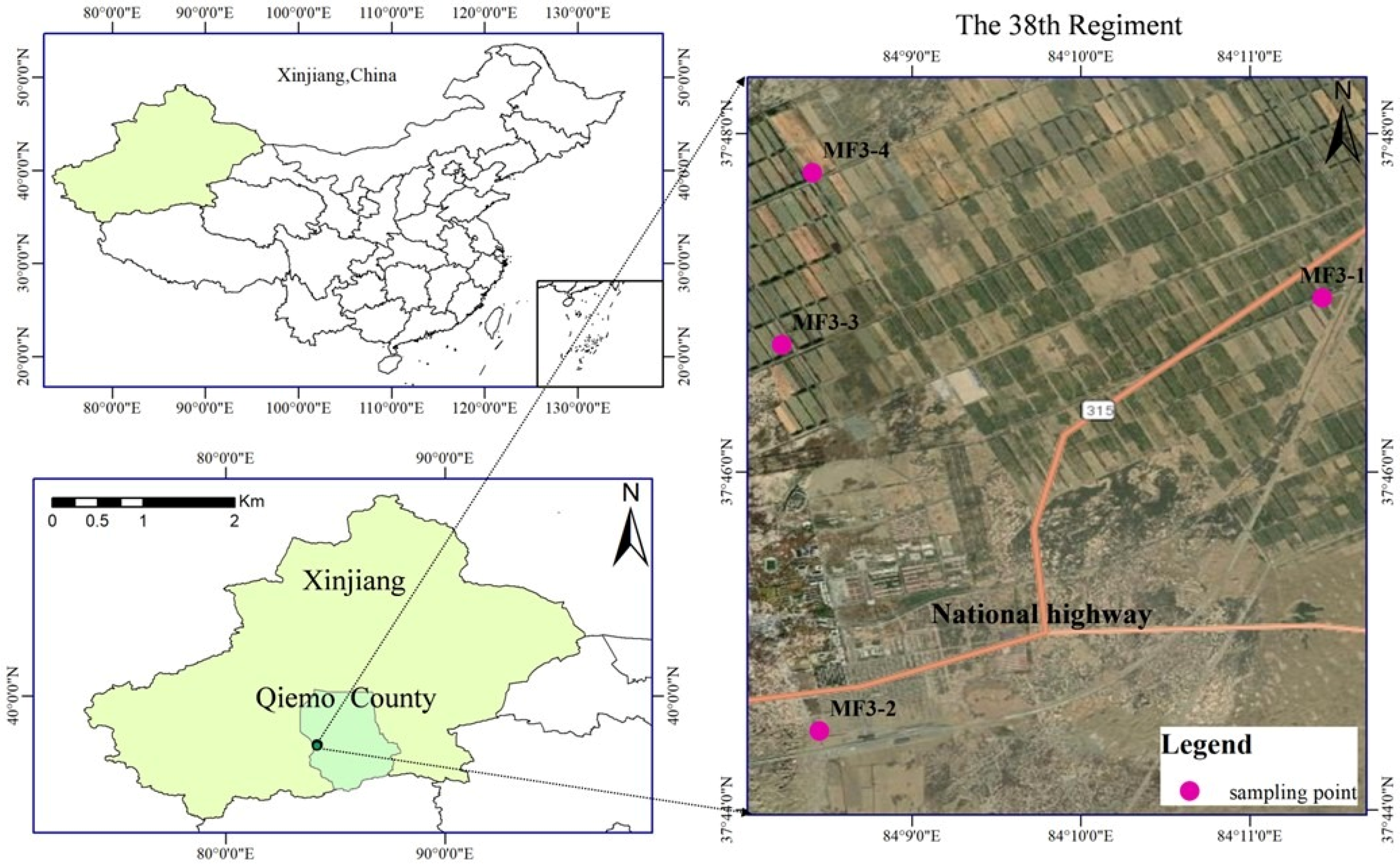
The irrigation area of the 38th Regiment in Qiemo County (Figure 1) is located at the southern edge of the Tarim Basin in southern Xinjiang, on the alluvial fan of the Kunlun Mountains. It extends from the Che’erchen River valley in the north to the northern foothills of the Kunlun Mountains in the south, from the Taklamakan Desert in the east to Minfeng County in the west.
The 38th Regiment is located in a temperate extreme arid continental climate, with an average annual temperature of 12.3 °C, an extreme maximum temperature of 40 °C, and an extreme minimum temperature of −20.8 °C. The annual precipitation is only 17.8 mm, while the evaporation reaches as high as 1977.3 mm, with a total annual sunshine duration of 2853.2 h. The frost-free period lasts for 243 days, and sandstorm weather is frequent, with floating dust days reaching 96, dust storm days 31, and sandstorm days 15. Within the study area flows the Moerqie River, with an average annual runoff of approximately 6.6 × 10⁸ m3, which is the main water source for agricultural irrigation in the regiment. Relying on this water source, the 38th Regiment has developed water-saving irrigation agriculture dominated by cotton, primarily using subsurface drip irrigation technology, significantly improving water resource utilization efficiency. The agricultural natural resources include ample sunlight, abundant heat, and a large temperature difference between day and night, combined with the sandy loam formed by the alluvial fan of the Kunlun Mountains, providing unique advantages for the cultivation of specialty crops such as cotton and jujubes. Field surveys indicate that the main typical crops in the study area are seed watermelon, corn, jujubes, and peanuts, with minimal differences in soil quality across different crop areas, all classified as silty soil based on laboratory tests. There are significant differences in irrigation water quantity and quality. As shown in Figure 1, four typical crop planting sites (MF3-1 seed watermelon, MF3-2 corn, MF3-3 jujubes, and MF3-4 peanuts) were selected as the subjects of this study.

2.2. Experimental Design

Soil samples from four different crops were collected in the study area, namely MF3-1 for seed watermelon, MF3-2 for corn, MF3-3 for jujube, and MF3-4 for peanut. The samples were brought back to the laboratory for particle size classification experiments and indoor irrigation tests.

2.2.1. Particle Classification Test

The particle composition of the soil in the study area was analyzed using the sieving method, which allowed for the classification of soil types (silt and sandy soil) [30]. Soil samples were sieved through filters with different pore sizes, dividing the soil particles into several groups based on the size of the sieve openings. The weight of each group was measured, and the proportion of each group relative to the total sample was calculated, thereby classifying the soil types. The experimental steps are as follows: ① the collection of dry, loose soil samples from Qiemo County; ② the use of 500 g of dry sand particles, accurate to 0.1 g; ③ the adjustment of the folding sieve to allow the sample to pass through; ④ grading, weighing, and calculating proportions; and ⑤ classification.

2.2.2. Ring Knife Method for Measuring Bulk Density

The ring knife method for measuring bulk density involves determining the dry density of four undisturbed ring knife soil samples: MF3-1, MF3-2, MF3-3, and MF3-4. First, the ring knife soil samples are weighed to obtain the total wet weight. Then, the soil samples are placed in a drying oven and dried at 110 °C for 8 h. After drying, the soil samples are cooled in a desiccator. Once the samples have completely cooled, they are weighed again to obtain the total dry weight. The weight of moisture is calculated from the difference between the wet weight and the dry weight, allowing for the determination of the dry density and moisture content of the soil samples.

2.2.3. Indoor Irrigation Experiment

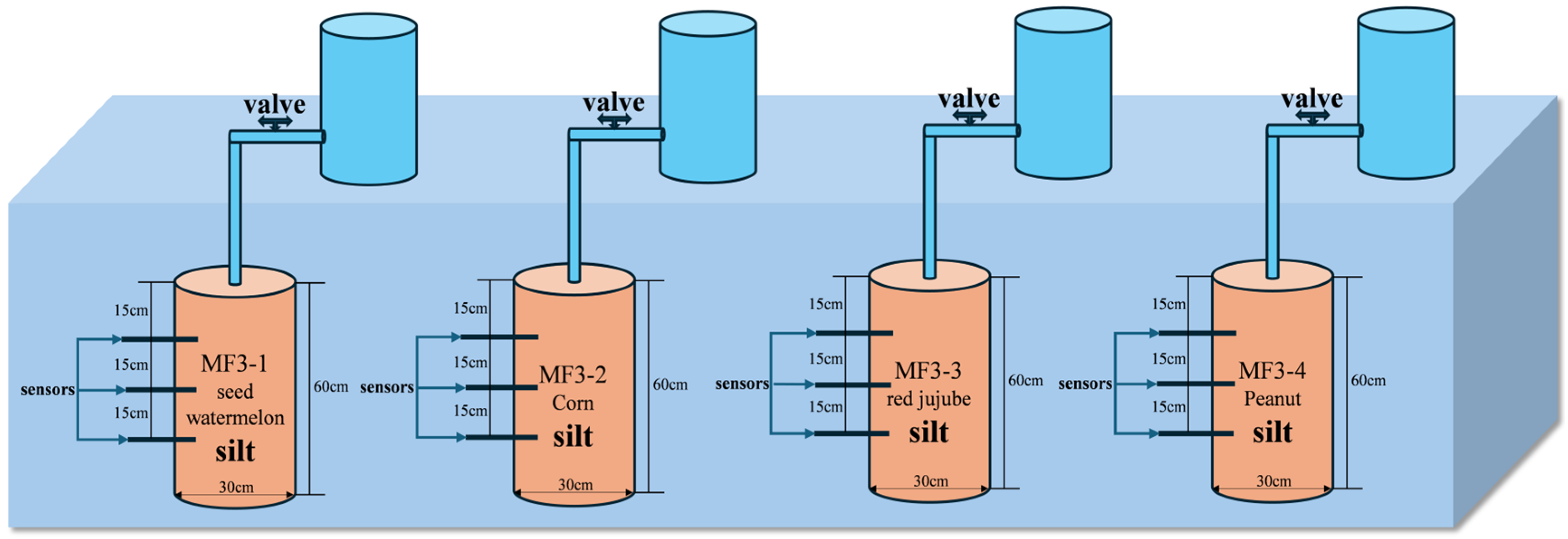
In this experiment, four sets of soil column instruments were arranged for irrigation tests, collecting in situ soil samples from four typical crops in the study area, seed watermelon, corn, jujube, and peanut, for indoor irrigation experiments. The irrigation method used in the indoor experiments was based on actual field irrigation practices, specifically drip irrigation. The irrigation water amounts for seed watermelon, corn, jujube, and peanut were 64 cm/day, 108 cm/day, 48.8 cm/day, and 36 cm/day, respectively. Based on this, four groups of irrigation tests with varying salinity levels were conducted, with seed watermelon representing an irrigation water amount of 64 cm/day, corn representing 108 cm/day, jujube representing 48.8 cm/day, and peanut representing 36 cm/day. The four groups of indoor irrigation experiments utilized different water qualities, with an irrigation cycle consisting of three periods, each lasting 7 days, for a total of 21 days. The first irrigation cycle used water with a TDS of 500 mg/L, the second cycle used water with a TDS of 2000 mg/L, and the third cycle used water with a TDS of 3000 mg/L.
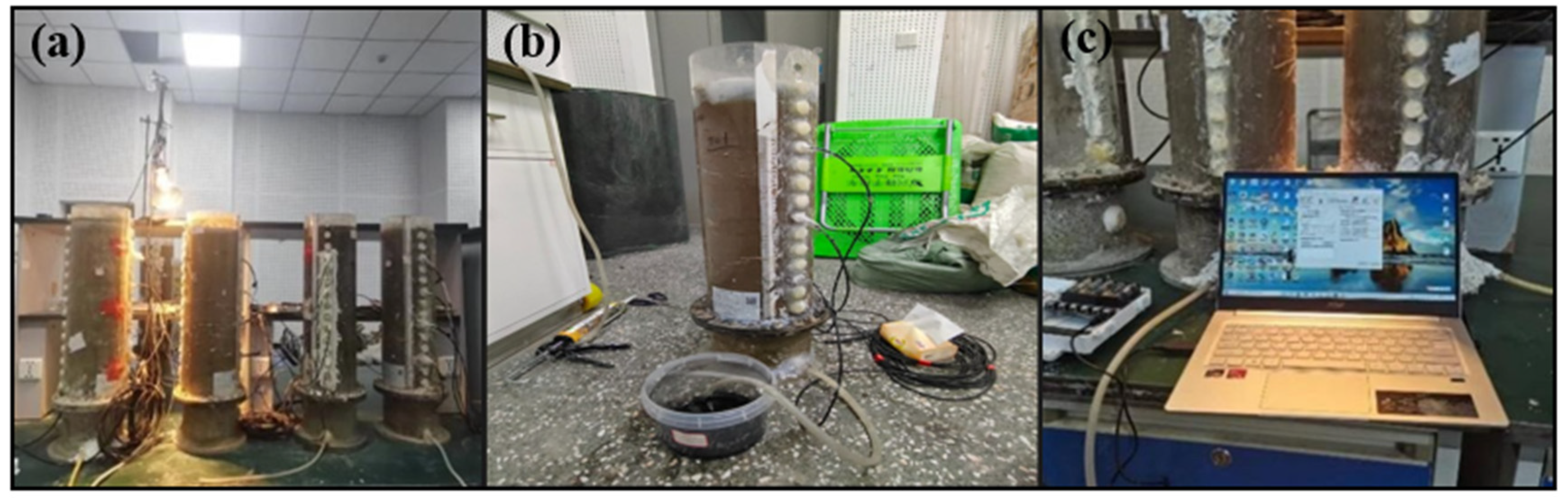
The experimental apparatus and the corresponding dry density, TDS, irrigation methods, and irrigation water amounts are shown in Figure 2 and Table 1. The indoor irrigation soil column experiment is illustrated in Figure 3, where the soil column instrument is filled with in situ soil. The soil samples are placed in cylindrical acrylic soil columns, which are connected at the bottom with a flange. The diameter of the bottom of the soil column is 30 cm, the height is 90 cm, and the wall thickness is 1 cm to ensure uniform filling of the soil sample. Small holes with a diameter of 2 mm are drilled at 1 cm intervals at the bottom for measuring pre-saturated soil. Additionally, holes with a diameter of 5 cm are opened at 15 cm intervals on the side of the soil column for the insertion of soil three-parameter sensors. Quartz sand is filled in the flange connection below the soil column. The soil is filled according to equivalent soil bulk density, with layers built up every 5 cm, resulting in a total soil thickness of 60 cm. The soil three-parameter sensors (measuring moisture content, temperature, and electrical conductivity) are inserted at depths of 15 cm, 30 cm, and 45 cm on the side of the soil column, representing the moisture content, temperature, and electrical conductivity at depths of 0–15 cm, 15–30 cm, and 45–60 cm, respectively. During the experiment, the three-parameter sensors automatically record moisture content, electrical conductivity, and temperature data every 5 min. Through indoor physical experiments, the study reveals the migration patterns of water and salt in the soil of Qiemo County under different water quality irrigation, providing parameters for numerical models of unsaturated soil.

3. Numerical Simulation of Soil Water and Salt Migration Under Irrigation with Different Water Qualities

3.1. Model Construction and Validation

3.1.1. Conceptual Model of Unsaturated Zone Hydrogeology

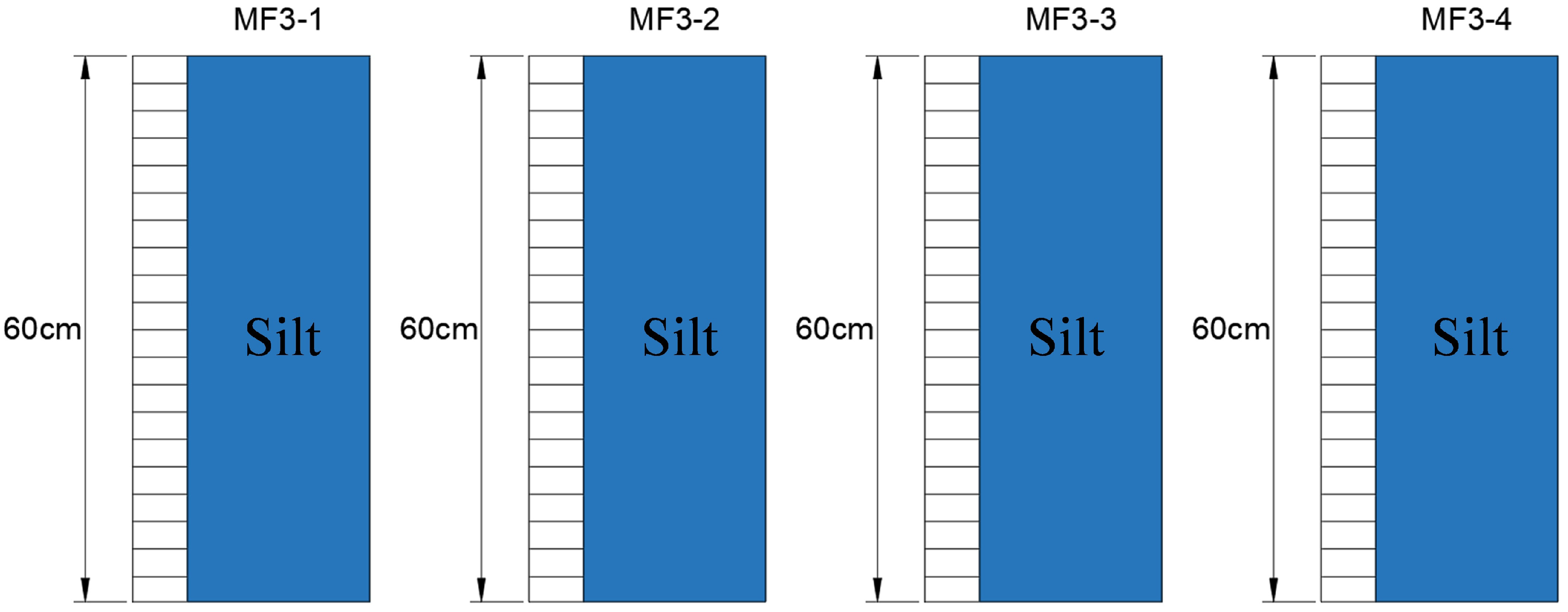
Based on in situ analysis of measured data, the model is extended to a one-dimensional vertical unsaturated flow model to simulate the moisture movement process under different irrigation methods with varying water qualities in arid regions. The irrigation process represents the differences in water volume using varying irrigation amounts for different crops. A conceptual model of unsaturated zone hydrogeology is constructed according to the actual irrigation conditions, with the model profile shown in the figure below (Figure 4). The model is identified and validated through indoor physical experiments. It simulates the future interannual soil water and salt conditions under different groundwater table depths, combining the groundwater salinity adapted to crops, and analyzing the optimal groundwater table depth for different crops under varying water quality irrigation.
(1) Upper and Lower Boundary Conditions
In this study, the atmospheric boundary is set as the upper limit condition, with the irrigation amount converted to rainfall. The lower boundary is a free drainage boundary.
(2) Initial Conditions
The initial conditions are based on actual observational data at t = 0. The water content of soil columns at depths of 15, 30, and 45 cm for various crops from the irrigation experiment is used as the initial condition, and the water content at other depths is obtained through automatic linear interpolation by the model.

3.1.2. Determination of Soil Parameters

The RETC software (version 6.02), based on the van Genuchten equation (Table 2), is used to fit and determine the initial soil water parameters, which can be expressed by the following formula:
θ h = θ r + θ s θ r 1 + x h n m h < 0 , n > 1 θ s h 0
K θ = K s S e 1 1 1 S e 1 m m 2 h < 0 K s h 0
S e = θ θ r θ s θ r
In the equation, θ h is the soil characteristic curve, θ (%) is the volumetric water content, θ r (%) is the residual water content, θ s (%) is the saturated water content, h is the pressure head, K( θ )(%) is the hydraulic conductivity under pressure head, K s (%) is the saturated hydraulic conductivity, and Se is the effective saturation. α, n, and m are dimensionless empirical parameters of the van Genuchten model, where m = 1 − 1/ n .

3.1.3. Spatial Partitioning and Temporal Discretization

The irrigation test soil column is divided into 60 layers, with observation points set at 15, 30, and 45 cm. Based on the filling conditions of the irrigation samples and the results of the indoor particle analysis, the lithology of the simulation area from 0 to 60 cm is set as silt. The simulation unit is days; the initial time step, minimum time step, and maximum time step for iteration are set to 0.01 d, 0.001 d, and 1 d, respectively.

3.1.4. Model Calibration and Validation

After constructing the Hydrus-1D water–salt transport model, the model parameters were set based on particle analysis experiments. Using the Rosseta module in the Hydrus-1D model, which predicts parameters, the particle size distribution and bulk density of the soil at each test point were inputted to obtain preliminary soil hydraulic parameters for each test point. Calibration was conducted based on the monitoring data of soil water–salt transport from indoor irrigation experiments. The parameters of the solute transport model were primarily based on the measured bulk density of soil samples and the indoor irrigation experiments. The calibrated soil hydraulic parameters are shown in Table 3:
The coefficient of determination (R2) and root mean square error (RMSE) indicators are used to validate the water–salt transport model. The closer R2 is to 1 and the smaller the RMSE, the better the simulation performance of the model. The coefficient of determination (R2) is an indicator for evaluating the degree of agreement between the regression model and the observed data. Its value ranges from 0 to 1, with values closer to 1 indicating better model fit. The calculation formula for the coefficient of determination R2 is as follows:
R 2 = 1 i = 1 n y i y ^ i 2 i = 1 n y i y ¯ 2
where ( y i ) is the (i)-th measured value; ( y ^ i ) is the (i)-th simulated value; and ( y ¯ ) is the average of the measured values.
Root mean square error (RMSE) is an indicator that measures the difference between simulated values and observed values, and it is widely used in model validation. Its calculation formula is:
R M S E = 1 n i = 1 n y i y ^ i 2
where ( y i ) is the (i)-th measured value; ( y ^ i ) is the (i)-th simulated value; and (n) is the sample size.
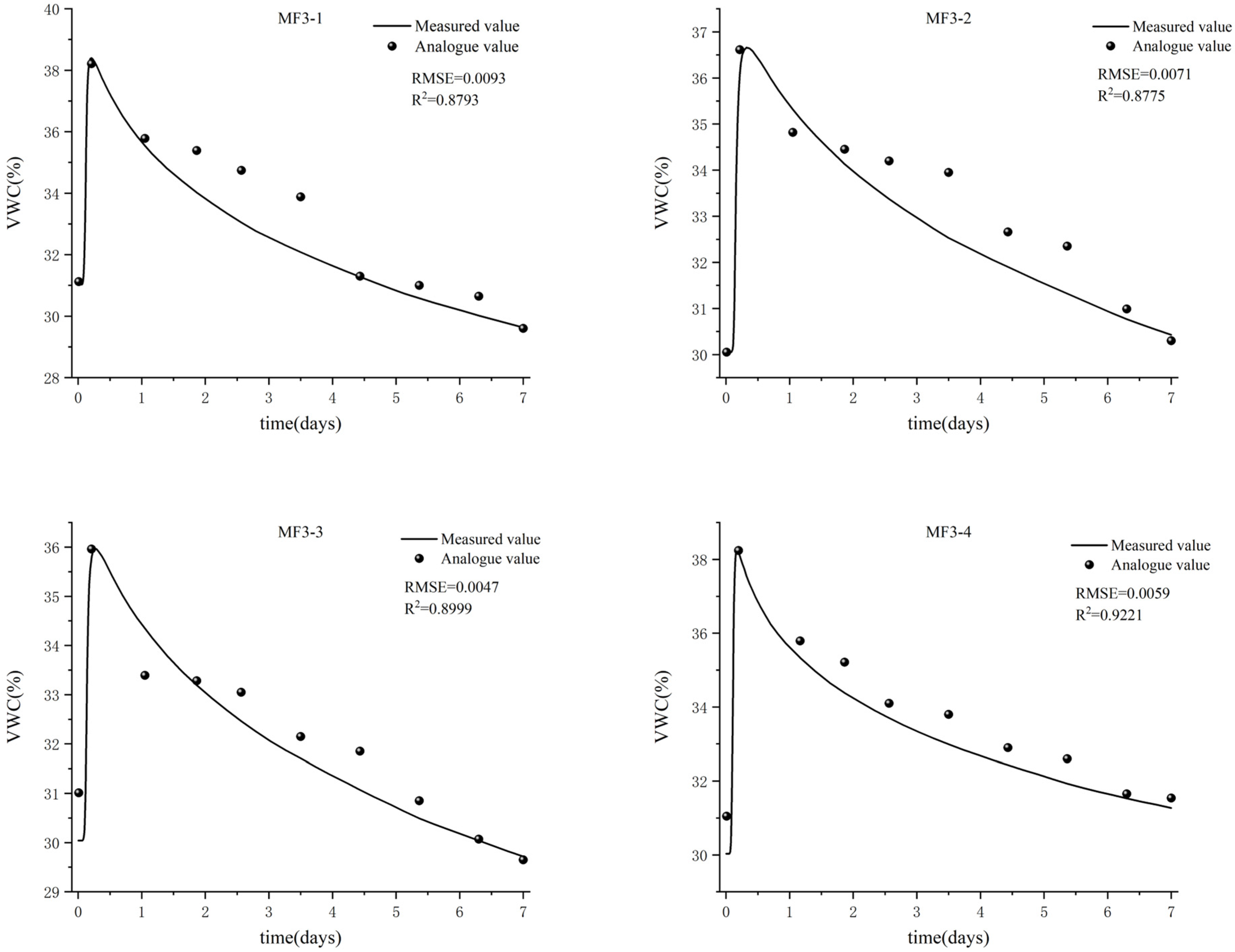
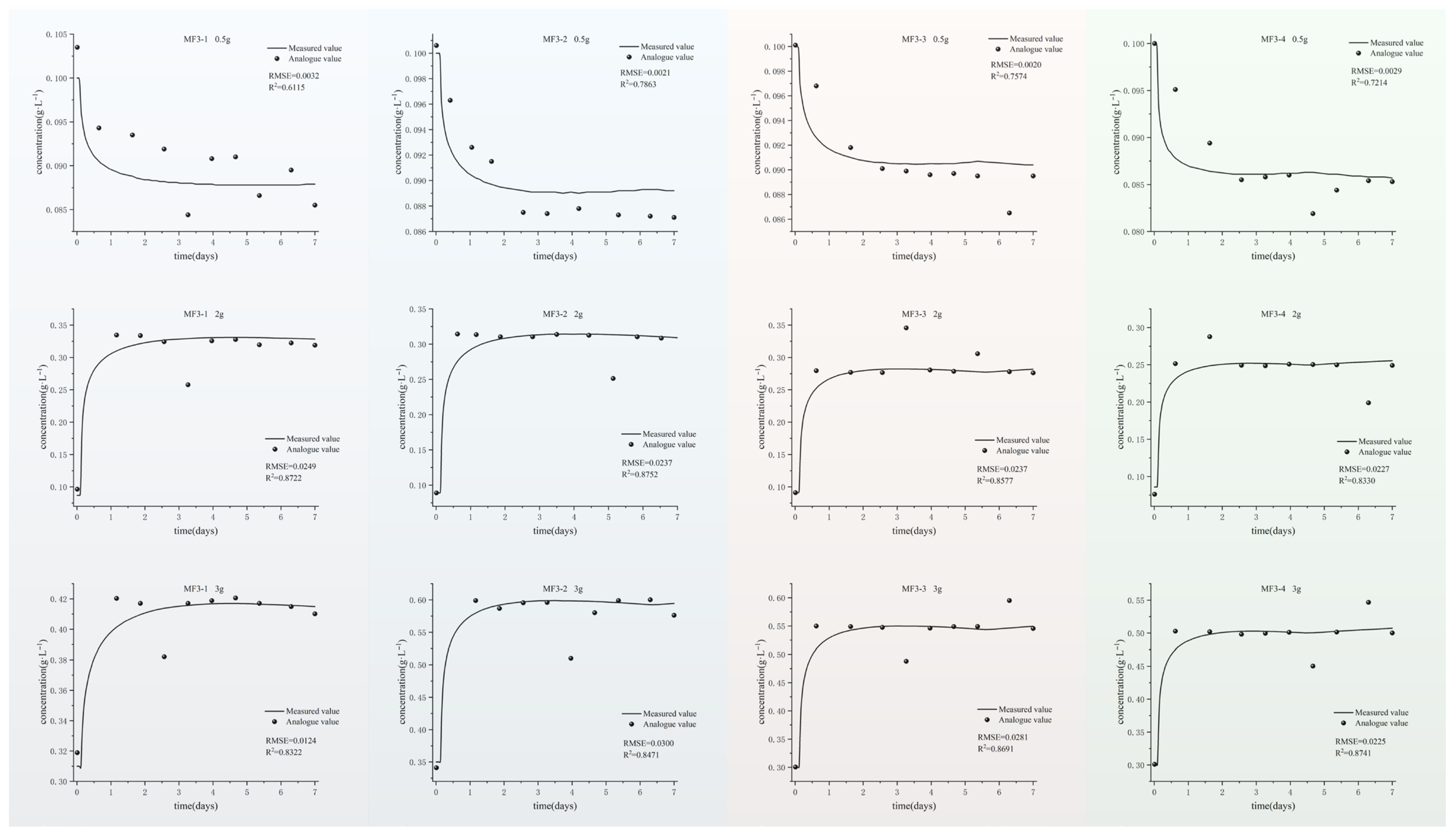
The Hydrus-1D model, optimized with soil hydraulic parameters, simulates the movement of unsaturated zone water bodies under different irrigation methods with varying water qualities. The overall trend of the measured moisture content is consistent with the simulated moisture content, and the simulated moisture content shows a clear response characteristic during the irrigation process, indicating that the model fits well overall. The fitting of experimental and simulated moisture content and electrical conductivity is shown in Figure 5 and Figure 6.

3.2. Simulation of Optimal Water Level Burial Depth Under Different Water Quality and Quantity Irrigation Conditions

The seed watermelon, corn, red jujube, and peanut were studied under irrigation water qualities of 0.5 g/L, 2.0 g/L, and 3.0 g/L, with irrigation amounts of 64 cm/day, 108 cm/day, 48.8 cm/day, and 36 cm/day, respectively. The simulation assessed the effect of different groundwater table depths on the salinity distribution and accumulation trends in the root zones (at depths of 45, 60, and 75 cm) of different crops. This was conducted to identify the “safe depth interval” of groundwater for each crop under various salinity thresholds to provide quantitative data to support crop layout and irrigation management in arid regions. Based on four sets of indoor irrigation experiments, Hydrus-1D models were developed for different crops under varying irrigation water qualities, forming a total of 12 basic models for the four crops (seed watermelon, corn, red jujube, and peanut) across three water qualities (0.5 g/L, 2 g/L, and 3 g/L). These models were calibrated and validated using the experiment results. Using these 12 basic models as a reference, the GWL parameters were adjusted in the time-variable boundary conditions interface to simulate different groundwater table depths. For watermelon, water–salt transport trends were studied under scenarios with irrigation of 2 g/L water quality at depths of 2.8 m, 2.9 m, 3 m, and 5 m, and 3 g/L water quality at depths of 2 m, 2.8 m, 2.9 m, and 3 m. Corn was studied under scenarios of 2 g/L water quality at depths of 3 m, 3.4 m, 3.5 m, 4.2 m, 4.3 m, and 4.5 m, and 3 g/L water quality at 1 m, 3 m, 4 m, and 5 m. For red jujube, the scenarios included irrigation of 2 g/L water quality at depths of 1 m, 1.5 m, 1.6 m, 1.8 m, 2 m, and 3 m, and 3 g/L at depths of 1.5 m, 2.9 m, 3 m, and 3.1 m. Peanuts were studied under 2 g/L quality at 1 m, 1.1 m, 1.2 m, 3.4 m, 3.5 m, 3.8 m, and 4 m, and 3 g/L at 1 m, 3 m, and 3.5 m. The optimal GWD was determined by comparing the crops’ salinity thresholds with the 45 cm soil salinity simulation results, analyzing 49 scenario conditions of soil salinity to determine whether the crop salinity trend and threshold are met. This led to determining the optimal groundwater table depth for different crops and irrigation quality, based on the salinity threshold of each crop. The specific scenario settings are shown in Table 4.

4. Results

4.1. Particle Size Classification and Soil Physical Parameters

The particle size classification results of four typical crop soil types are shown in Table 5.
The results of the particle size classification tests indicate that the silt content in soil sample MF3-1 exceeds 55%, which is the highest proportion; followed by sand particles at 43.2%; and clay particles at 0%. The silt content in the soil sample is high, exceeding 58%, with sand particles at over 41% and clay particles at 0%. In soil sample MF3-4, the silt content is the highest, exceeding 59%, followed by sand particles at over 39% and clay particles at 0%. All four typical crop soil types are classified as silt loam.
The measured dry densities of soil samples from the four experimental points MF3-1, MF3-2, MF3-3, and MF3-4 are 1.583 g/cm3, 1.592 g/cm3, 1.686 g/cm3, and 1.593 g/cm3, respectively, as shown in Table 6.

4.2. The Migration Patterns of Soil Water and Salt at Different Depths Under Varying Irrigation Water Quality and Quantity Conditions

4.2.1. The Migration Status of Soil Moisture at Different Depths

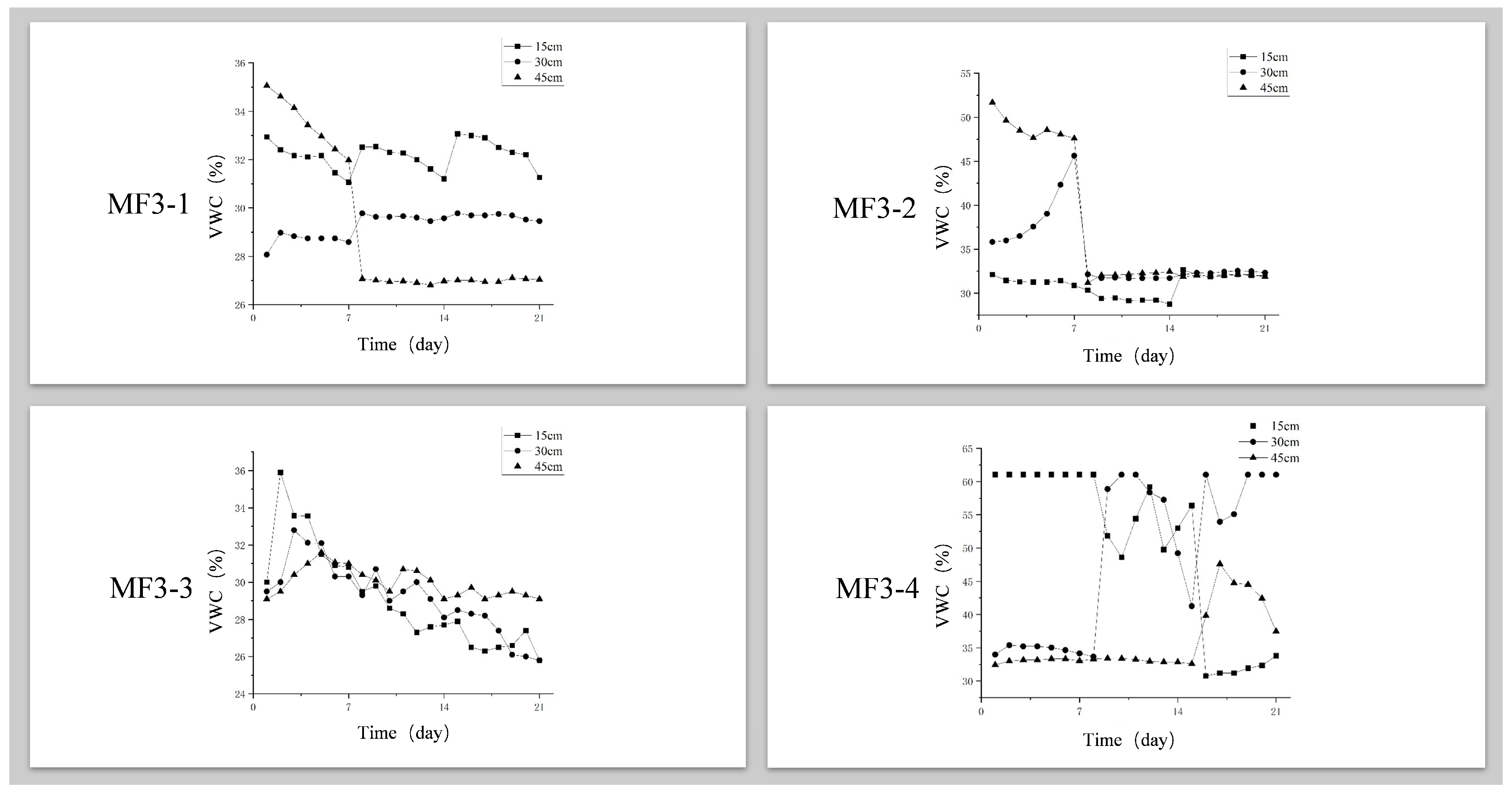
The changes in soil moisture content at different depths (15 cm, 30 cm, and 45 cm) at sampling points MF3-1 to MF3-4 during three irrigation cycles (Figure 7). At point MF3-1, the moisture content at a depth of 15 cm exhibited a pattern of “irrigation rebound decrease during the cycle”: it decreased from 33% to 31.2% by the seventh day in the first cycle, then after an initial rebound in the second cycle, it continued to decline to 31.4% by the fourteenth day, and in the third cycle, it peaked at 33.5% before decreasing again. At a depth of 30 cm, the moisture fluctuated in the first cycle (peaking at 29.1%), while in the second cycle, it initially rose to 30% and then fluctuated slightly. At a depth of 45 cm, it decreased from 35% to 32% in the first cycle, and in the second cycle, it sharply dropped to 27% and stabilized. Point MF3-2 showed more dramatic changes: at a depth of 15 cm, it dropped from 34% to 15% by the end of the second cycle, then rebounded to 32.5% and stabilized in the third cycle; at 30 cm, it peaked at 46% on the seventh day, then sharply dropped to 32.5% and stabilized; at 45 cm, it decreased to 47.5% by the seventh day in the first cycle, then sharply dropped and stabilized around 32.5% in the second cycle. At point MF3-3, the moisture content at a depth of 15 cm rose from 30% to 35.9% before declining, fluctuated down to 27.7% in the second cycle, and, after slight fluctuations, ended at 25.8% (the lowest in the experiment) in the third cycle; at 30 cm, it fluctuated with a maximum of 32.8% in the first cycle, then stabilized at 25.8% after fluctuations in the second cycle; at 40 cm, it rose to 31.5% in the first cycle, then fluctuated and stabilized at 29% by the end of the second cycle, with slight fluctuations in the third cycle. At point MF3-4, the moisture content at all depths fluctuated gently in the first cycle (15 cm at 61.5%, 30 cm at 33.75%, and 45 cm at 32.5%); in the second cycle, the moisture content at 15 cm dropped to 48.75% by day nine, then gradually rebounded to 57.75%, before dropping again to 49.5%; at 30 cm, it sharply rose to 61.25% before dropping to 41.75%, while at 45 cm, it remained stable at 32.5%; in the third cycle, the moisture content at 15 cm dropped to 30.75% before rebounding to 33%, at 30 cm it sharply rose to 61.5% and then stabilized, while at 45 cm there were no significant changes.

4.2.2. The Migration Patterns of Soil Salinity at Different Depths

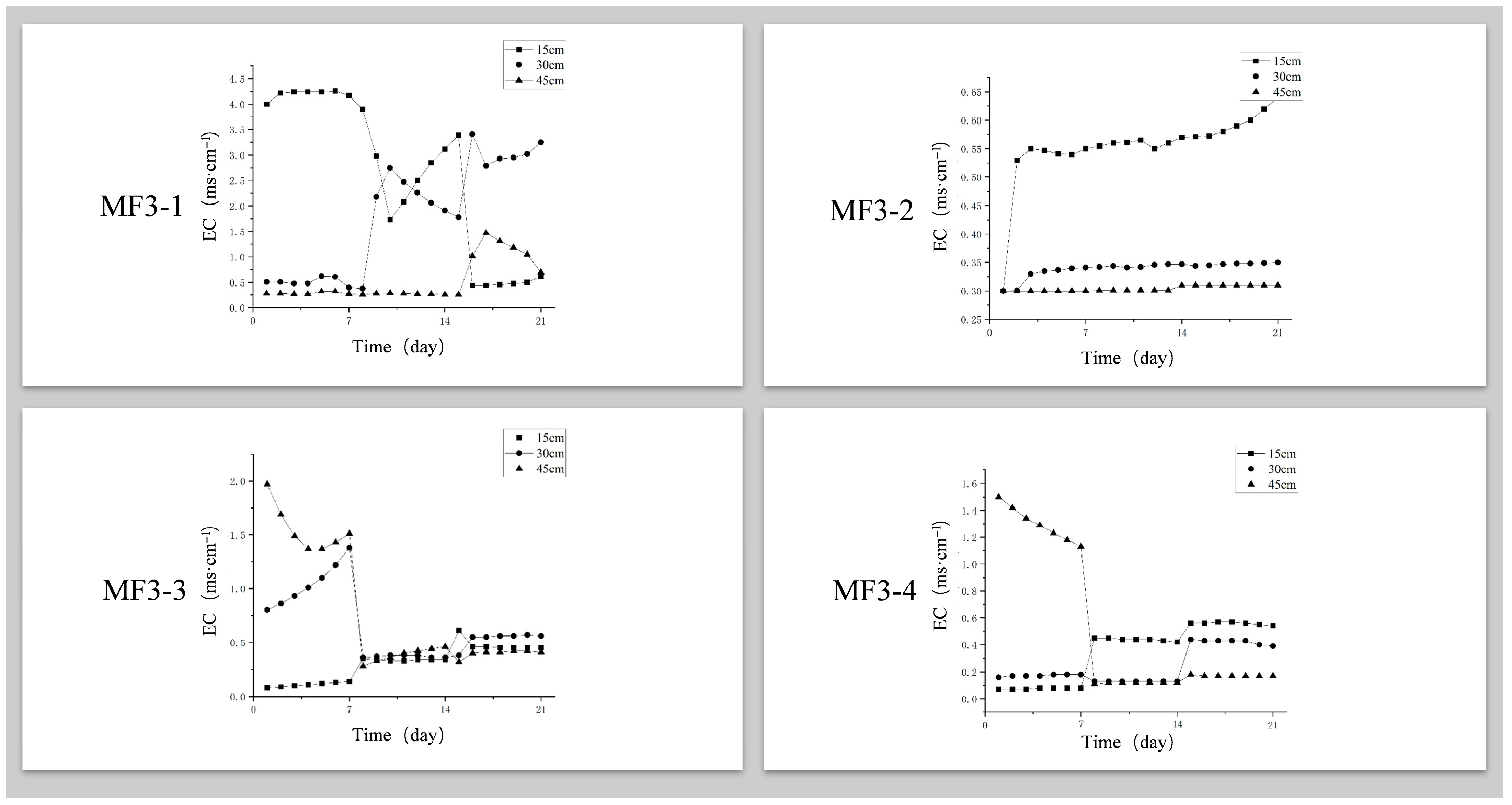
The EC values at depths of 15 cm, 30 cm, and 45 cm at four points, MF3-1 to MF3-4, exhibited significant spatial heterogeneity and phase response characteristics over three experimental cycles (Figure 8). The EC values in the shallow layers (15 cm and 30 cm) generally showed an upward or fluctuating upward trend as the cycles progressed. For instance, the EC value at 15 cm depth at MF3-1 rose from a stable state to a peak of 0.62 mS/cm, and at 15 cm depth at MF3-2, it rose from 0.125 mS/cm to a peak of 0.7 mS/cm. At 30 cm depth at MF3-4, it rose to 3.5 mS/cm in the third cycle. In contrast, the EC values in the deep layer (45 cm) were generally more stable, with only slight fluctuations at MF3-1 and MF3-4 in the third cycle, while other points like MF3-3 at 45 cm depth remained stable around 0.3 mS/cm throughout.

4.3. Soil Salinity Distribution and Optimal Groundwater Depth Under Different Irrigation Water Quality and Quantity Conditions

The soil salinity threshold for watermelon is less than 1 g/L. According to field experiments conducted by Liu et al. [31] in heavily saline-alkali land in Xinjiang, using furrow mulching and drip irrigation for watermelon planting, the results showed that the salt content in the 0–60 cm soil layer of the root zone could be controlled below 2.5% and always below 1% in the 0–20 cm soil layer, maintaining a continuous desalination state in the root zone. Based on the estimation of soil solution concentration, 1% soil salinity is approximately equal to 6.5 g/L. Therefore, setting the irrigation water or root zone salinity to less than 1 g/L is supported by field experiment background and can ensure the safe growth of watermelon. The soil salinity threshold for jujube is less than 2 g/L. According to a field experiment with slightly saline water drip irrigation conducted by Yao et al. [32] in Xinjiang, the study indicated that irrigation water salinity exceeding 2.5 g/L would significantly increase soil salinity in the root zone, approaching the upper salt tolerance limit of jujube trees (0.48–0.55%). The threshold for corn is set with reference to Maas, at less than 1 g/L, based on the derivation from melon crops and general salt tolerance models [9], which is methodologically reasonable. The soil salinity threshold for peanuts is set at less than 1 g/L. According to the research results of Fu et al. [33], soil salinity exceeding 0.45% (approximately equal to 2.9 g/L soil solution concentration) will result in 93% of peanut varieties failing to germinate, while 0.15% (approximately 0.97 g/L) is a relatively safe threshold. Combined with exogenous mitigation experiments [34], it is indicated that ≥100 mmol/L NaCl (approximately 5.85 g/L) significantly inhibits peanut growth. Therefore, setting the irrigation water or root zone soil salinity to less than 1 g/L is supported by experimental evidence and production rationality.
In this numerical model of water and salt transport, observation holes are set at depths of 15 cm, 30 cm, 45 cm, 60 cm, and 75 cm from top to bottom. The closer to the soil surface, the greater the external influence, and the more unstable the changes in salt concentration. Therefore, this study selects the 45 cm observation hole for comparative analysis of water and salt, mainly to compare whether the salt content in the soil root zone exceeds the crop threshold, which is used to determine the optimal groundwater depth for crops.
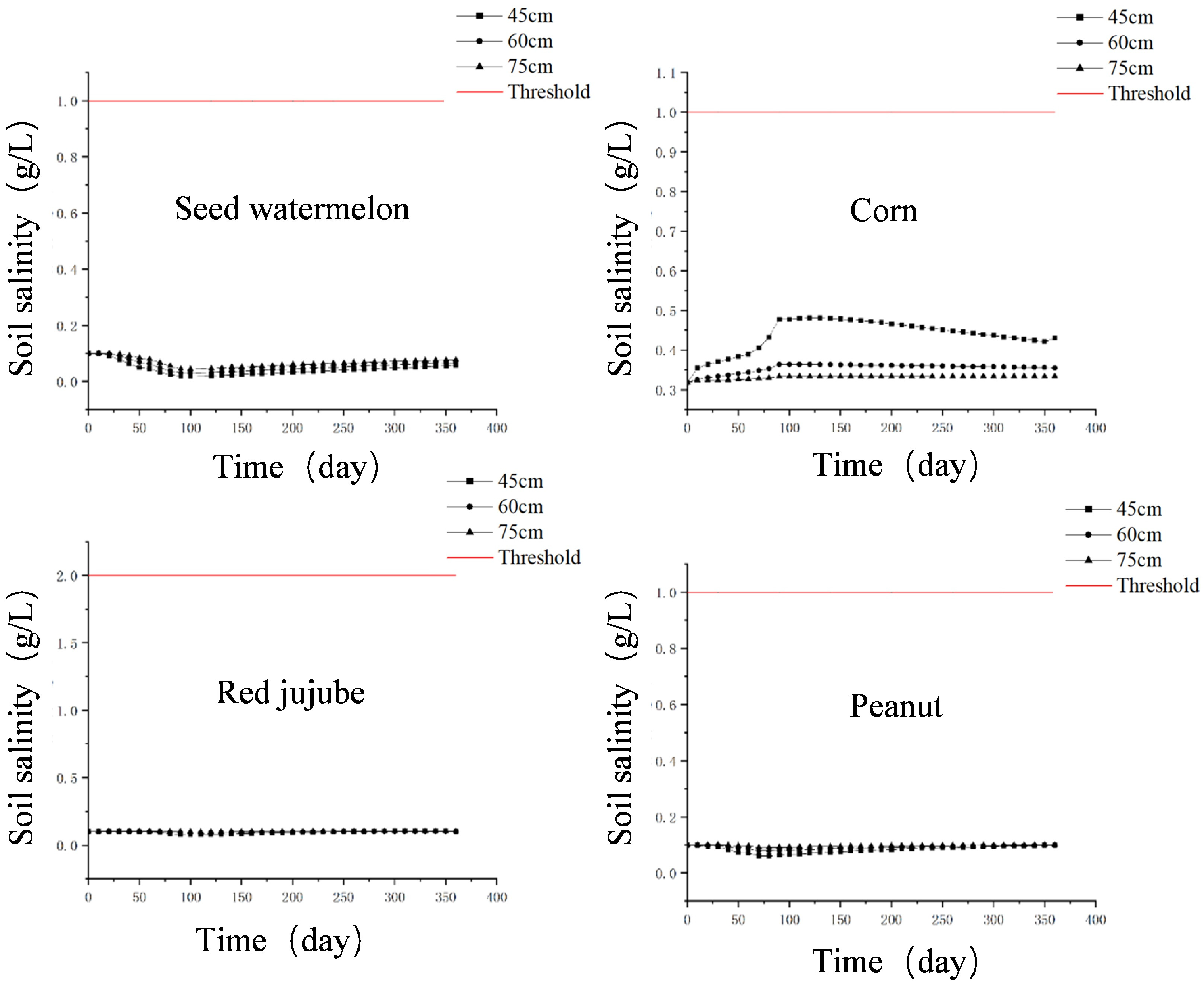
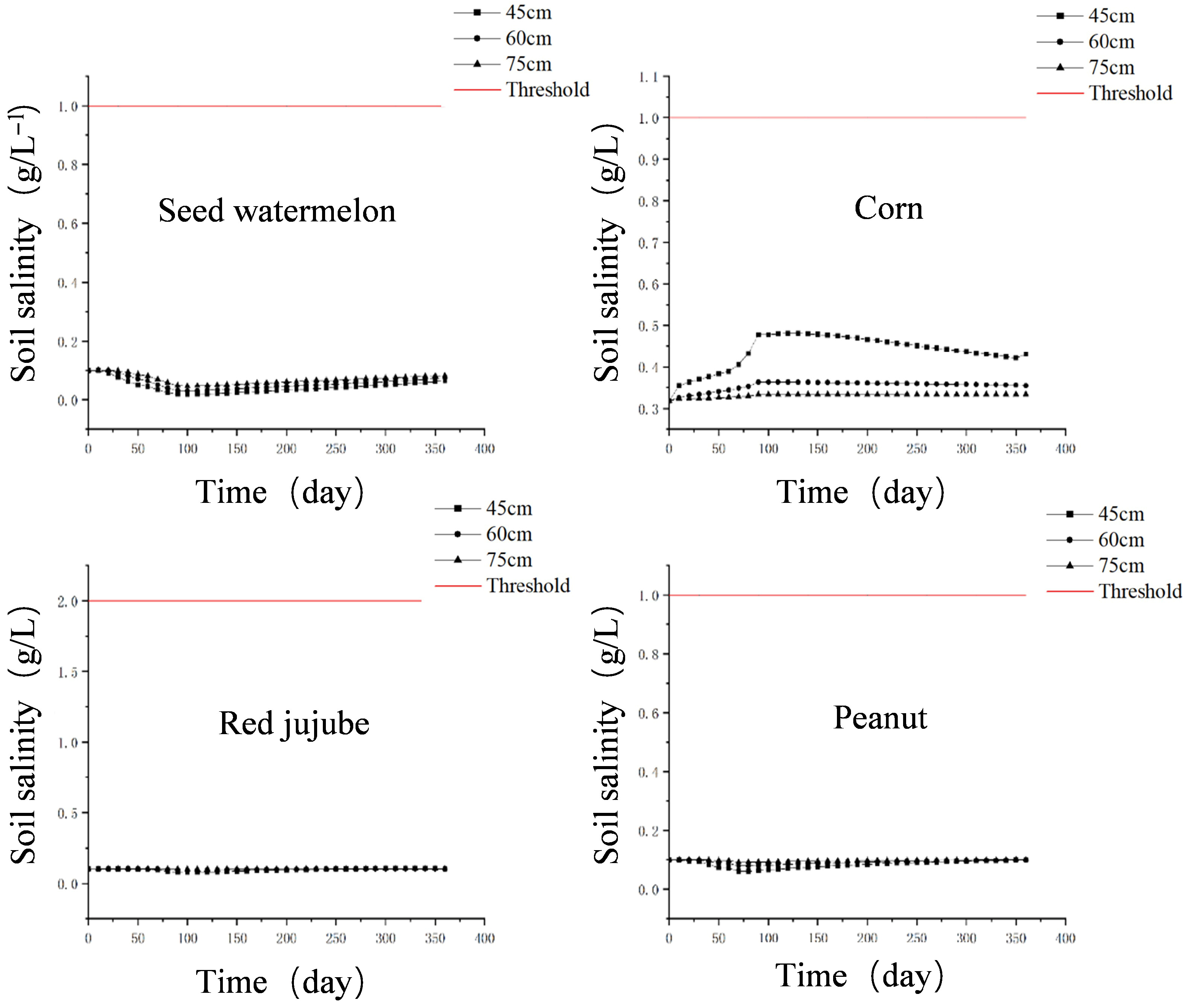
Under the condition of continuous irrigation with freshwater at 0.5 g/L, regardless of whether the groundwater table is at a depth of 1 m or 2 m, the accumulation of salt in the soil profile is far below the salinity tolerance threshold of the corresponding crops (watermelon, corn, jujube, and peanuts) (Figure 9 and Figure 10). The soil moisture content can remain stable within suitable range for a long time without the need for additional desalination or water allocation measures. The mineralization of the irrigation water is significantly lower than the critical mineralization level of the four crops, resulting in a low salt input flux. After the leaching–evaporation balance, the surface aggregation effect is weak, and there is no observable difference in salt accumulation between the groundwater depths of 1 m and 2 m. The model predicts that the steady-state soil moisture content falls within the safe threshold of the water demand range for each crop. Changes in groundwater depth have a limited impact on the available water for crops, and no drought or waterlogging stress is induced by excessively strong or weak groundwater recharge.
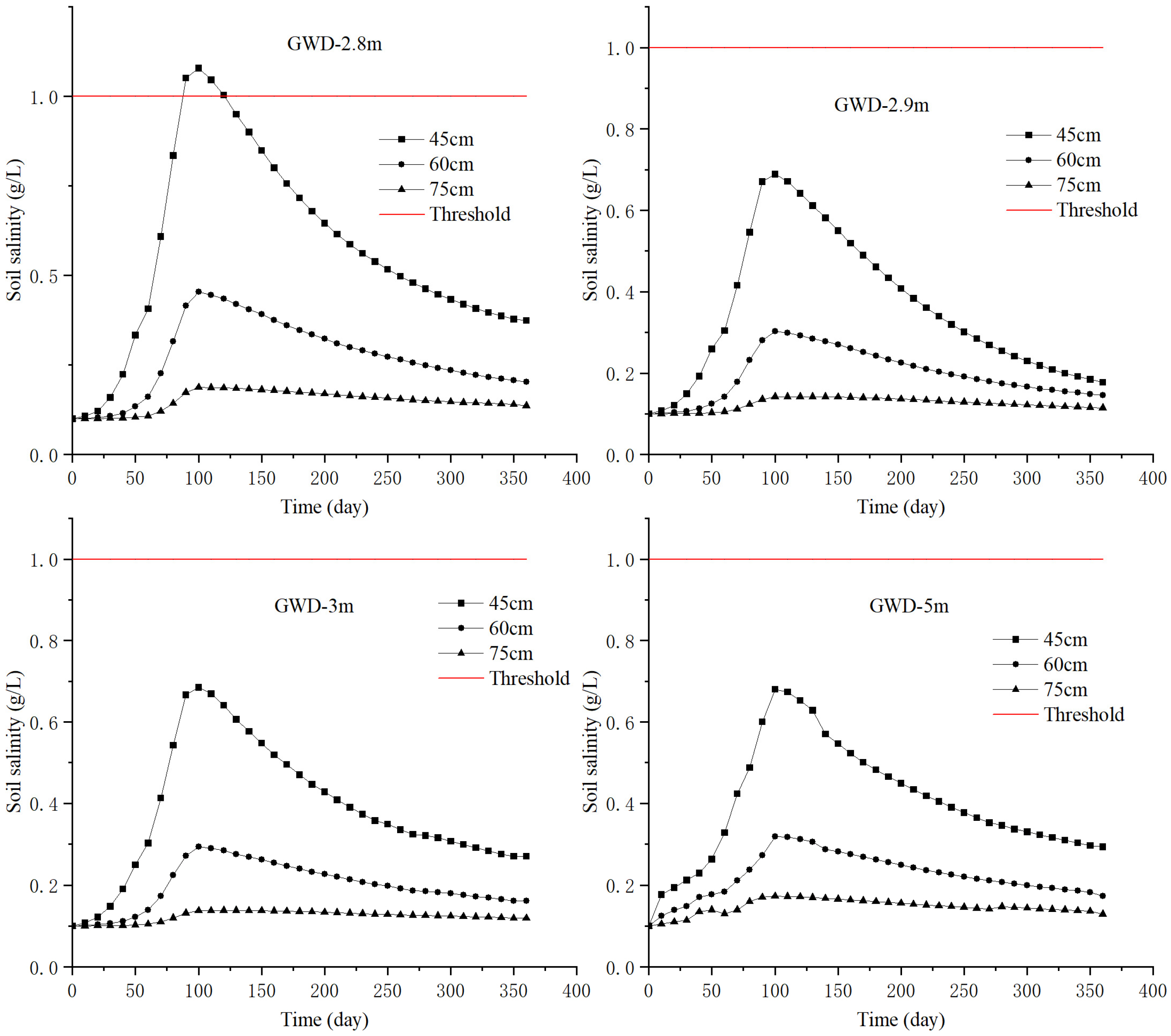
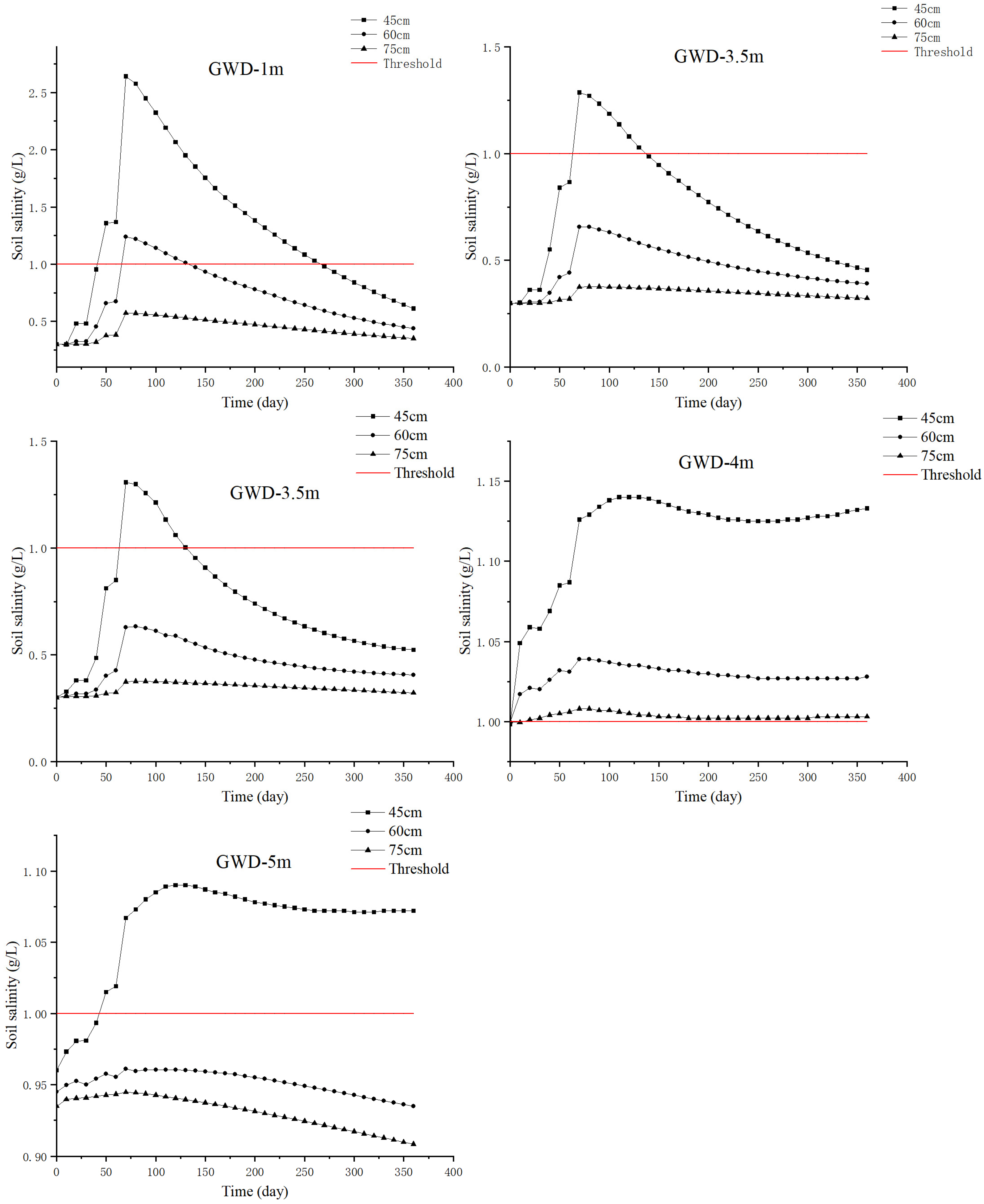
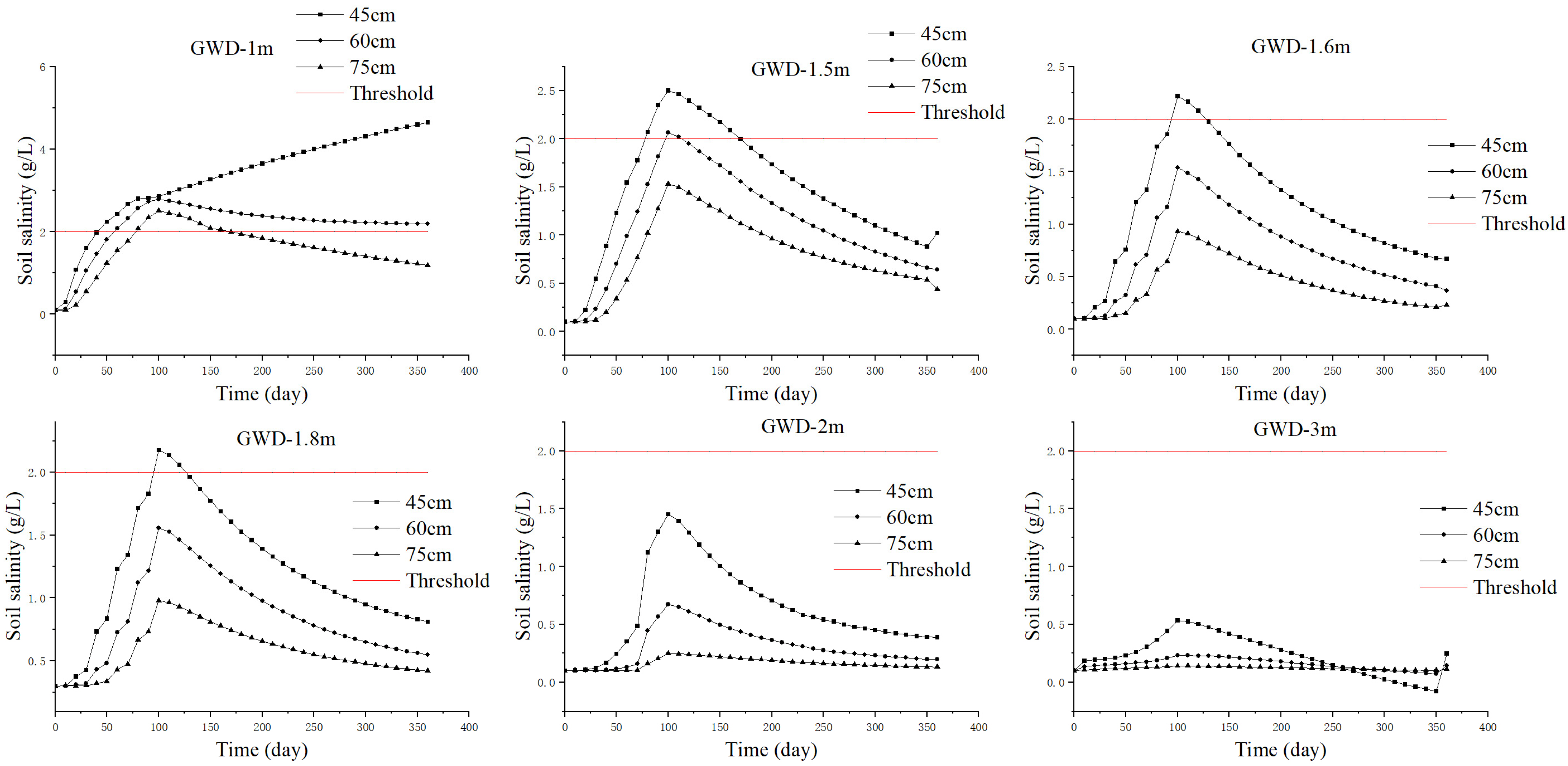
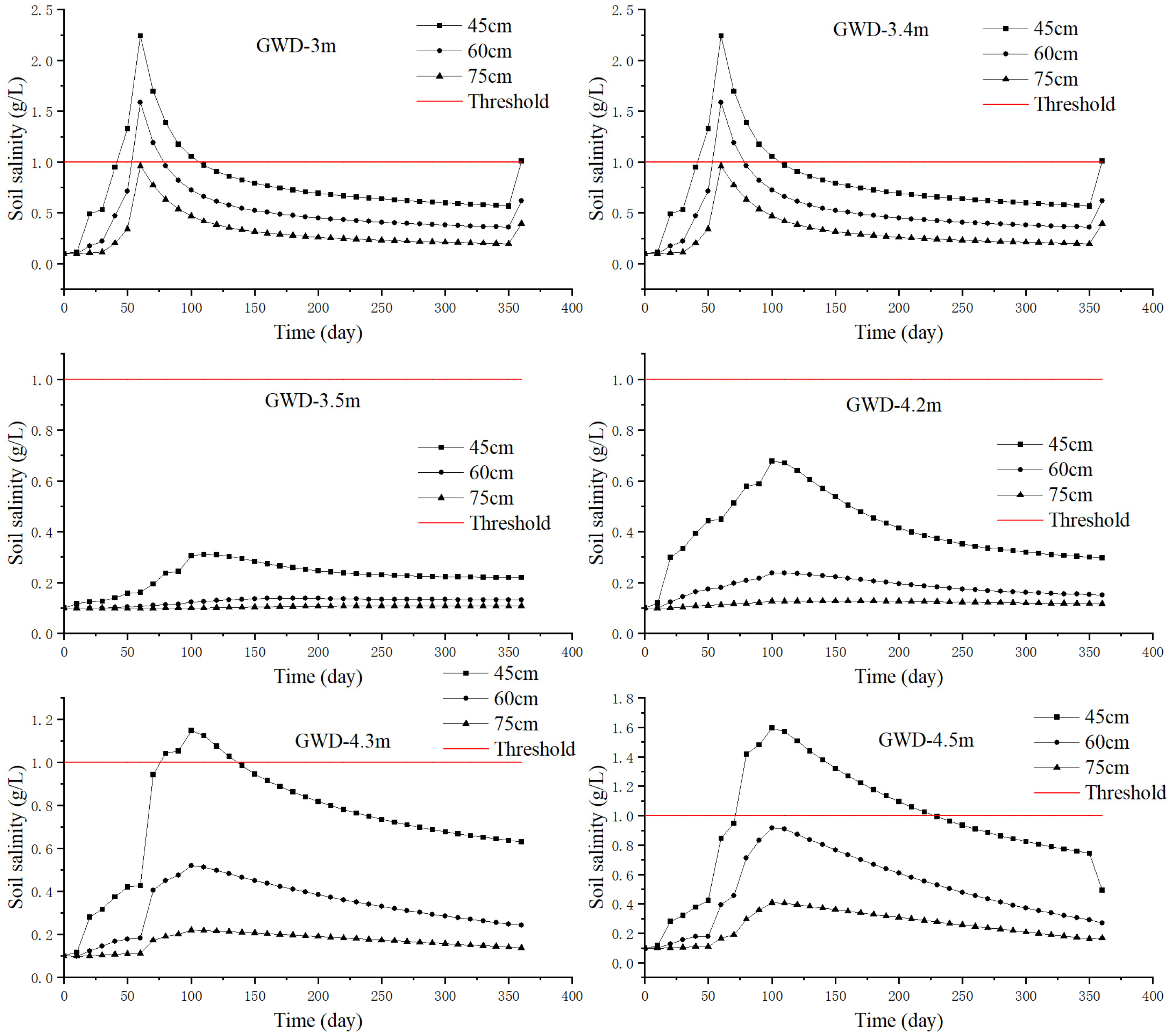
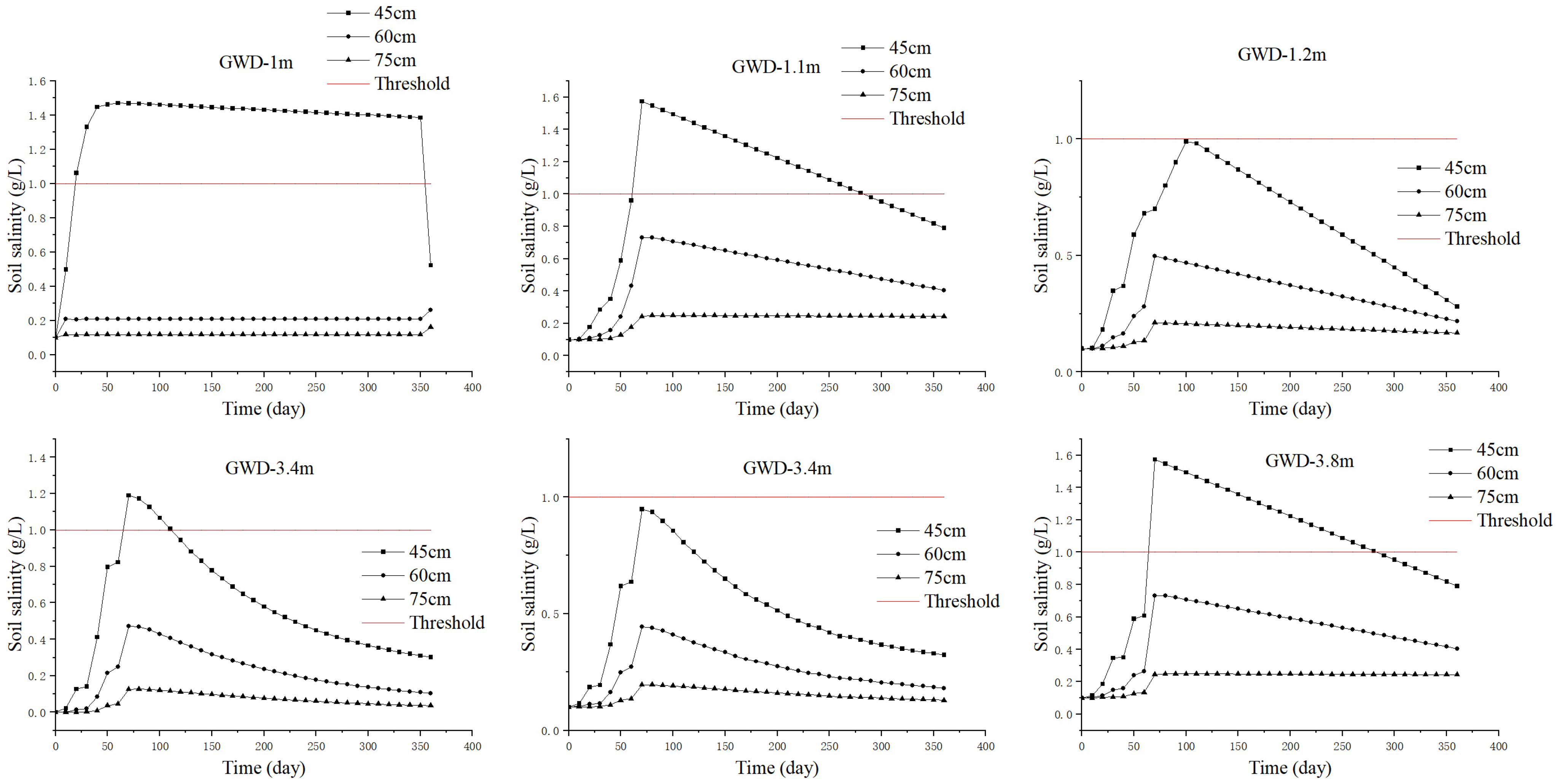
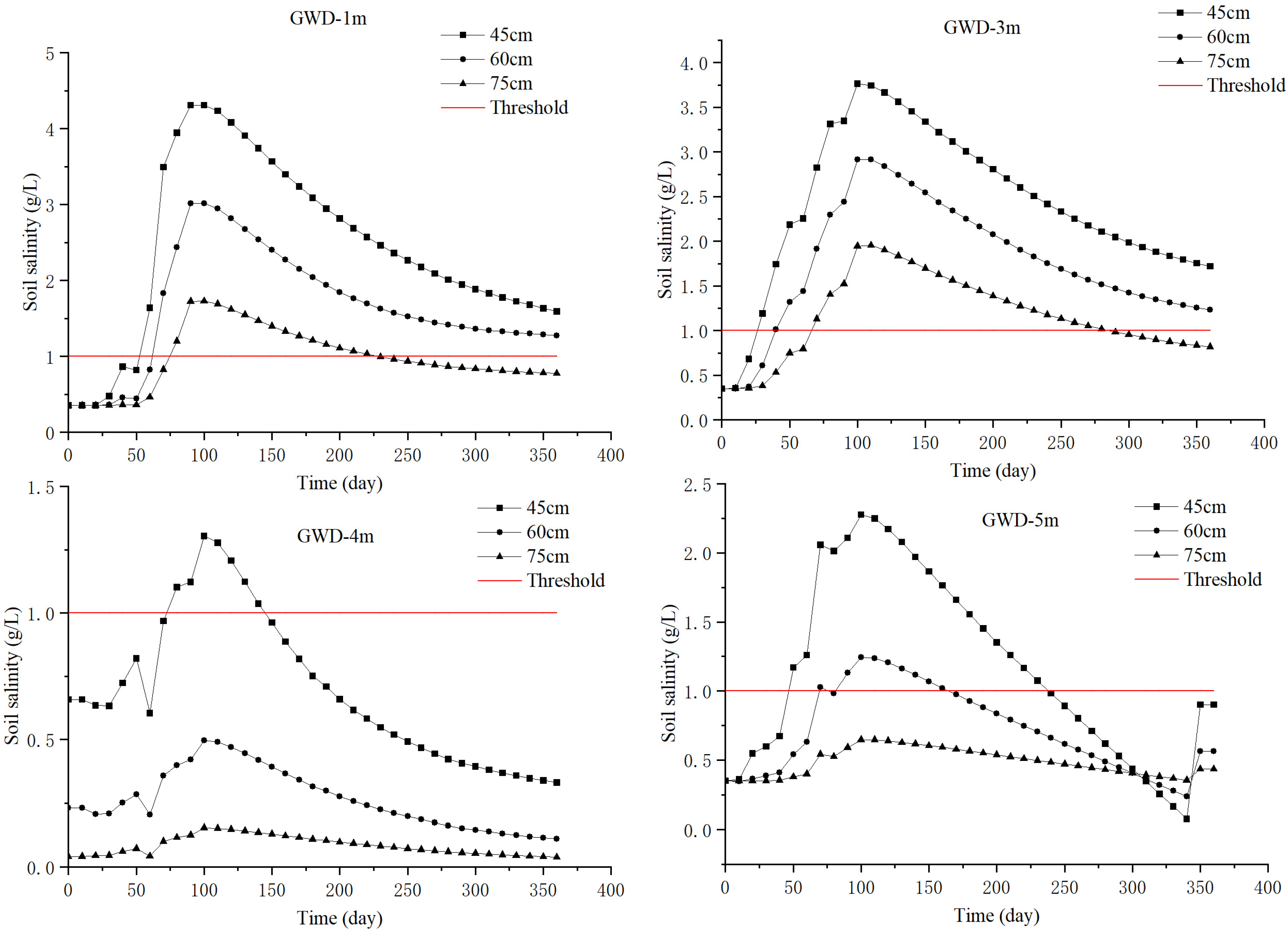
Under the scenario of continuous irrigation with 2 g/L saline water at the four experimental sites, the accumulation of soil salinity in the crop root zone (at a depth of 45 cm) shows a typical “high at both ends, low in the middle” threshold response to GWD. Seed watermelon (Figure 11) and jujube (Figure 12) can simultaneously meet the dual conditions of “salinity below the threshold and sufficient moisture” at GWD ≥ 2.9 m and GWD ≥ 1.6 m, respectively, and there are no negative effects as GWD continues to increase. Therefore, their safe lower limits are 2.9 m and 1.6 m, respectively, with no upper limit set. Corn (Figure 13), however, is overly sensitive to salt surface accumulation and leaching concerning GWD, achieving a dynamic balance of evaporation and leaching only within a narrow window of 3.5–4.2 m. Below 3.5 m, salinity rises with evaporation, and above 4.2 m, insufficient water potential gradient leads to salt retention, both resulting in excessive salinity in the root zone. Peanuts (Figure 14) exhibit a “dual threshold” characteristic, with rapid salt accumulation in shallow groundwater when GWD < 1.2 m, and insufficient groundwater replenishment when GWD > 3.5 m causes salt to gradually accumulate due to evaporation. Only within the range of 1.2–3.5 m can leaching and evaporation reach a balance, ensuring salinity remains below the tolerance level and moisture is adequate.
In summary, under the irrigation conditions of 2 g/L saline water, the sensitivity of crops to groundwater depth is ranked as follows: corn (3.5–4.2 m) > peanuts (1.2–3.5 m) > seed watermelon (≥2.9 m) > jujube (≥1.6 m).
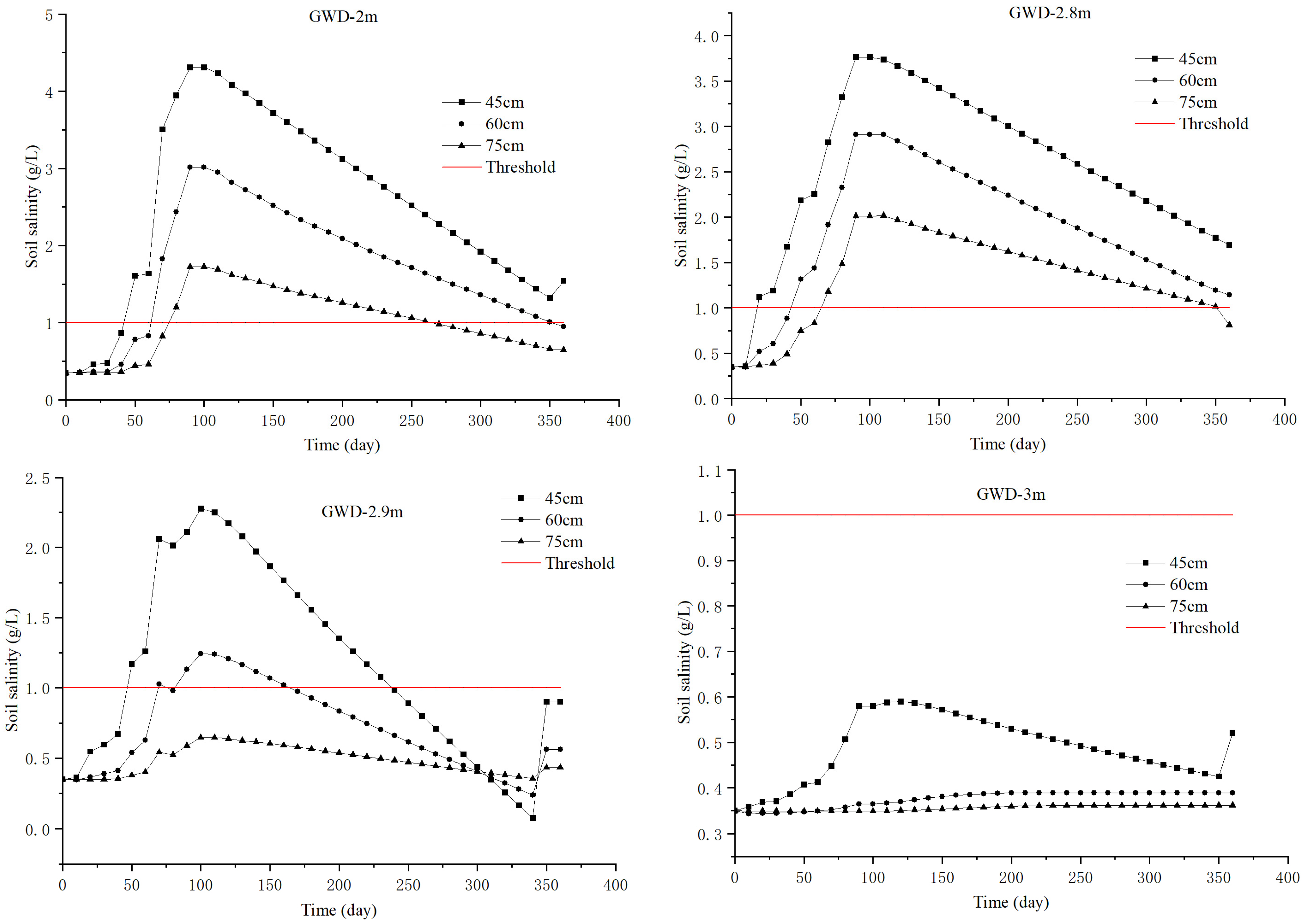
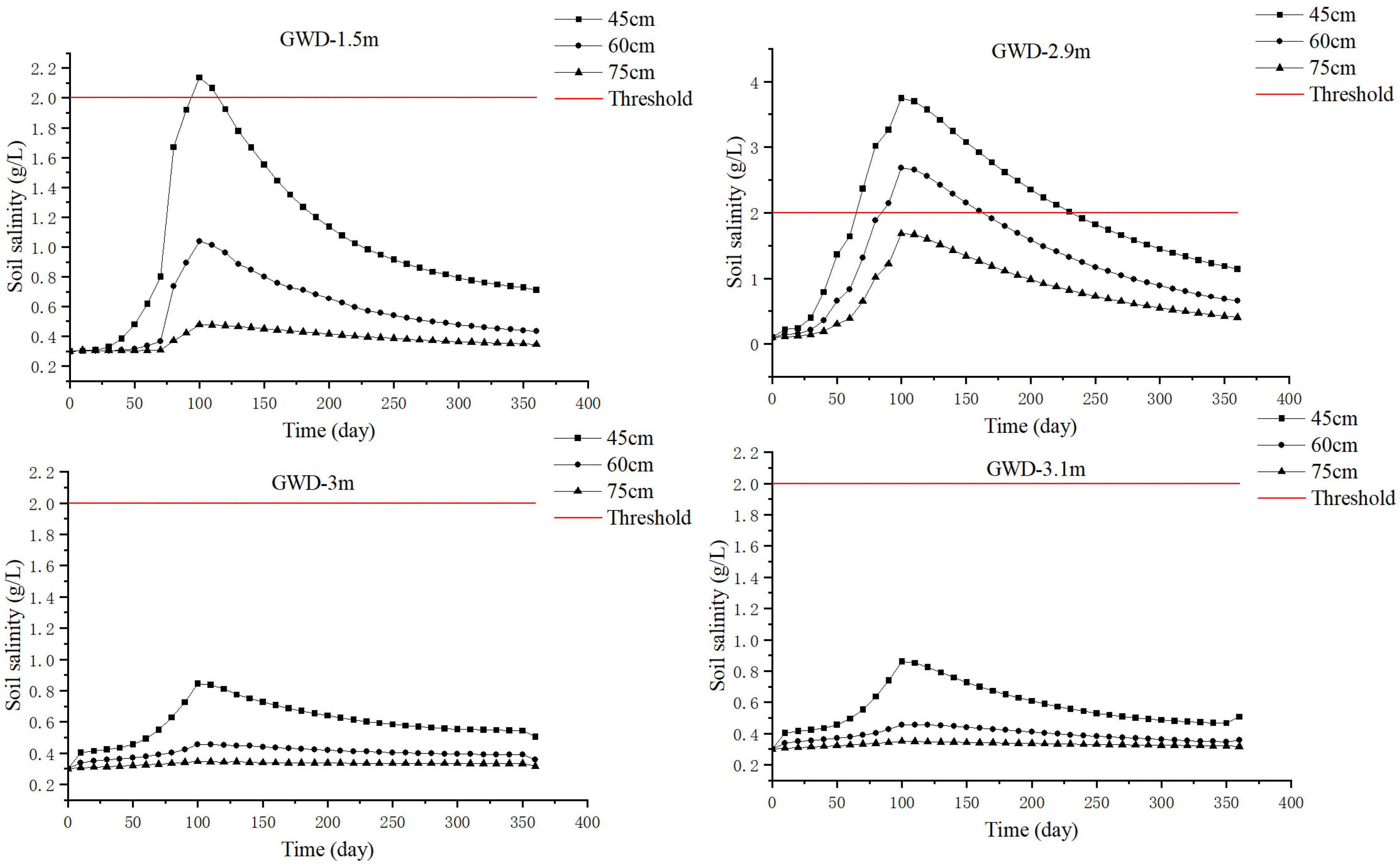
Under the scenario of continuous irrigation with 3 g/L saline water, the response of salt accumulation in the root zones (at a depth of 45 cm) of various crops to groundwater depth can be summarized as a “threshold rejection” pattern: when below a certain critical value, upward flow driven by groundwater evaporation causes the salt concentration in the root zone to exceed the crop’s salinity tolerance limit; when above this critical value, the upward flux weakens, allowing the salt to be leached to safe levels by irrigation water. The patterns of water and salt movement under different irrigation water conditions for various crops are as follows: for seed watermelon (Figure 15), when GWD < 2.9 m, the salt concentration in the root zone exceeds the salinity tolerance threshold for large melons; when GWD > 2.9 m, the salt concentration remains below the threshold, and moisture meets the demand. Therefore, the safe lower limit for GWD of seed watermelon is 2.9 m, with no upper limit, i.e., GWD > 2.9 m. For corn (Figure 16), throughout the entire simulated range, the salt concentration at 45 cm is consistently above the salinity tolerance threshold for corn, indicating that the 3 g/L irrigation water exceeds the salt tolerance limit for corn, and there is no suitable range for groundwater depth. For jujube (Figure 17), the salt threshold is relatively lenient. When GWD ≤ 3 m, the salt concentration in the root zone exceeds the limit; when GWD ≥ 3 m, the salt concentration stabilizes below the threshold, and moisture is sufficient. Therefore, the safe GWD for jujube is ≥3 m. For peanuts (Figure 18), within the experimental range of 1–3.5 m, even though the salt concentration first decreases and then increases with increasing GWD, its minimum value still exceeds the salinity tolerance threshold for peanuts, indicating that the 3 g/L irrigation water overall exceeds the salt tolerance range for peanuts, with no feasible groundwater depth.

5. Discussion

5.1. Contrasting Dynamics of Surface Sensitivity vs. Deep Soil Buffering Under Varying Irrigation Water Qualities

Based on continuous high-resolution monitoring of soil moisture at 15, 30, and 45 cm depths across sites MF3-1 through MF3-4, this study systematically elucidates the spatiotemporal differentiation mechanisms of soil water and salt dynamics driven by the coupled processes of irrigation and evaporation. The surface soil layer (0–15 cm) exhibits pronounced sensitivity to hydrological disturbances, characterized by rapid response rates and high amplitude fluctuations in both moisture and salinity. This phenomenon is primarily governed by the coupling of two dominant processes: intense surface evaporation and preferential recharge from irrigation events [35].
Vertical gradient of evaporative dynamics: Soil evaporation intensity demonstrates a significant vertical decay pattern. At the atmosphere–soil interface, evaporation is driven by steep water vapor pressure deficits, resulting in maximum flux at the surface. With increasing soil depth, the tortuosity of vapor transmission pathways increases substantially, causing progressive attenuation of the vapor pressure gradient and consequent weakening of evaporative intensity [36]. This vertical differentiation not only reshapes the upward migration channels of soil water but also regulates the vector direction and flux magnitude of solute transport [37].
The mechanism of surface salt accumulation: Driven by evaporative potential, soil water migrates upward via capillary rise. During this process, soluble salts are transported with the water flow and accumulate in the surface layer, while deep-profile salts are continuously mobilized upward by capillary forces. This creates a positive feedback loop of “evaporation-concentration-capillary rise,” leading to significant surface salt enrichment. This mechanism is particularly pronounced in arid and semi-arid irrigated regions and represents the primary hydrological driver of secondary soil salinization [38].
Deep soil buffering capacity: In contrast, deep soil layers (>30 cm) exhibit a marked “damping response” to external hydrological perturbations. With increasing depth, the pulse signals from irrigation infiltration and evaporative loss progressively attenuate, resulting in significantly reduced amplitude of moisture content fluctuations and gradual convergence toward the steady-state threshold of field capacity [39]. This transition reflects a fundamental shift in water movement regimes from flux-controlled dynamics in the surface layer to matric potential equilibrium in deeper profiles, where water dynamics are jointly constrained by soil water potential and groundwater depth.

5.2. Three-Dimensional Salt Dynamics: Surface Enrichment, Mid-Layer Fluctuation, and Root Zone Stabilization Under Variable Irrigation Regimes

The spatiotemporal evolution of soil solution electrical conductivity (EC) exhibits distinct depth-dependent patterns that can be categorized into three mechanistic regimes:
Surface layer (15 cm): “Initial equilibrium followed by progressive accumulation”
During early irrigation cycles, leaching effects and evaporative concentration remain approximately balanced, maintaining relatively stable EC values. In later stages, as soil matric potential decreases and capillary rise intensifies, salts progressively accumulate at the surface. This pattern indicates that surface salt enrichment is primarily controlled by evaporative-driven upward flow and transpiration-induced water extraction.
Mid-layer (30 cm): “Pulsatile fluctuation with net accumulation”
This zone exhibits characteristics of either oscillatory increases or initial rise followed by partial stabilization. Notably, treatments with higher irrigation water salinity display sharp initial EC increases (e.g., 1.31 mS/cm) followed by abrupt declines (0.43 mS/cm), reflecting periodic leaching-reconcentration cycles driven by intermittent irrigation events. This pulsing behavior suggests that the mid-layer functions as a transitional zone where advective-dispersive transport dominates.
Deep layer (45 cm): “Progressive dilution or stable low-concentration”
Root-zone soil at this depth is influenced by continuous dilution from irrigation water and gravitational infiltration, promoting downward salt migration. Consequently, significant salt accumulation in the root zone is unlikely under the tested conditions, provided adequate drainage is maintained. This depth represents a hydrological buffer zone where leaching efficiency exceeds upward capillary transport.

5.3. Threshold Framework for Groundwater Depth Management: Delineating Sensitive, Optimal, and Risk Zones Across Water Quality Gradients

This study establishes nonlinear salinity response curves for four drought-resistant crops (seed watermelon, maize, jujube, and peanut) under varying water quality and groundwater depth (GWD) scenarios. Based on these relationships, we propose a three-zone threshold framework comprising “sensitive zone–suitable zone–rising risk zone.”
Critical revision of traditional safety thresholds: Contrary to previous reports suggesting that freshwater irrigation (1.5–2.0 m GWD) is universally safe [6], this study validates that, under low-salinity conditions (0.5 g/L TDS), a GWD of 1–2 m indeed supports safe cultivation for all tested crops. However, our findings reveal significantly stricter constraints under moderate salinity: at 2.0 g/L TDS, the safe GWD window for maize narrows sharply to 3.5–4.2 m, substantially exceeding the 2.0 m upper limit reported by Dai et al. [21]. This discrepancy arises from the silty soil texture of our experimental site (silt content > 55%), which facilitates enhanced capillary rise and elevates the evaporation-leaching equilibrium point.
The “salt rejection” phenomenon under high salinity: When irrigating with 3.0 g/L saline water, feasible GWD conditions disappear entirely for maize and peanut. This novel observation—termed “salt rejection”—indicates that when irrigation TDS exceeds 3 g/L, effective leaching of the 45 cm root zone cannot be achieved through gravitational infiltration under drip irrigation, even with GWD extending to 5 m. Instead, evaporation–diffusion effects dominate, resulting in net salt retention.
Management implications: These results support a “water quality priority, depth optimization” principle for saline water utilization in arid regions:
When TDS ≤ 2 g/L: safe cultivation is achievable through GWD regulation alone.
When TDS ≥ 3 g/L: only salt-tolerant crops (seed watermelon and jujube) are viable under deep groundwater conditions (≥2.9 m and ≥2.1 m, respectively).
For sensitive crops (maize and peanut): Mandatory desalination or leaching–drainage interventions are required when using high-salinity water.

5.4. Application Scope and Subsequent Research Directions

This research outcome is applicable to extreme arid oasis areas with annual precipitation less than 50 mm and annual evaporation greater than 1500 mm, such as the Tarim Basin and Heihe River Basin in northwest China, as well as similar regions in Central Asia and North Africa. The study primarily focuses on silty loam soil (with silt content greater than 55%) and four types of crops: seed watermelon, corn, jujube, and peanut. The applicability of sandy or clayey soils and other crops requires further adjustment and validation. Future research should expand the types of crops and soils and establish a “water quality–water quantity–crop-soil” coupling threshold system. It should combine long-term field observations with indoor simulations to verify the climate stability of the “sensitive-suitable-enhanced” three-zone paradigm. By integrating remote sensing and GIS technology, the aim is to optimize the regional crop layout. Additionally, it should explore the synergistic regulatory mechanisms between irrigation water quality, groundwater depth, and soil improvement measures to enhance the technical system for sustainable agricultural development in arid regions.

6. Conclusions

This study systematically quantifies the nonlinear threshold response of root zone salinity for four typical drought-resistant crops—seed watermelon, corn, jujube, and peanuts—under continuous water quality gradients of 0.5–3.0 g/L by coupling indoor soil column experiments with the Hydrus-1D inversion-forecast framework. A “sensitive-suitable-rising” three-zone safety depth paradigm is proposed, leading to the following conclusions:
(1) The process of soil water and salt movement exhibits significant differentiation characteristics in the vertical direction, with the surface layer responding most rapidly to changes in moisture and salinity, while the mid-deep layers show certain lag and buffering effects.
(2) The coupling mechanism of evaporation and leaching drives the threshold-type response of root zone salinity to groundwater depth (GWD). When the total dissolved solids (TDS) of irrigation water are ≤2 g/L, regulating GWD can simultaneously meet crop moisture demands and maintain salt balance; when TDS ≥ 3 g/L, only salt-tolerant crops are feasible under deep burial conditions, validating the principle of “water quality first, depth matched” for the safe utilization of slightly saline water in arid regions.
(3) In the 0.5 g/L freshwater scenario, the root zone salinity of all four crops is below the salinity tolerance threshold within the GWD range of 1–2 m. In the 2 g/L slightly saline water scenario, the safe GWD ranges for crops significantly diverge: corn has the narrowest range (3.5–4.2 m), followed by peanuts (1.2–3.5 m), while seed watermelon and jujube are at 2.9 m and ≥1.6 m, respectively. Under saline water conditions, the salinity tolerance thresholds for corn and peanuts are systematically exceeded; seed watermelon and jujube require GWD ≥ 2.9 m and ≥2.1 m, respectively, to maintain safe root zone salinity, establishing the critical groundwater depth conditions for salt stress.

Author Contributions

All authors contributed to the conception and design of the study. The trial preparation, data collection, and analysis were carried out jointly by T.L. (Tianchao Liu) and T.L. (Tong Li). The first draft of the manuscript was written by Y.Z. and R.G., Y.G., S.L. and F.J. proposed revisions. All authors have commented on previous manuscript editions. All authors have read and agreed to the published version of the manuscript.

Funding

This research was funded by the “Tianshan Talents” Training Program of Xinjiang Uygur Autonomous Region (2023TSYCCX0091) and Open Foundation of the Key Laboratory of Coupling Process and Effect of Natural Resources Elements (No.2024KFKT013).

Institutional Review Board Statement

Not applicable.

Informed Consent Statement

Not applicable.

Data Availability Statement

The data that support the findings of this study are available from the corresponding author upon reasonable request.

Conflicts of Interest

The authors declare no conflicts of interest.

References

  1. Ye, X.; Ning, A.; Qin, Y.; Zhang, L.; Liu, Y. Assessing Land Use Efficiency in the Tarim River Basin: A Coupling Coordination Degree and Gravity Model Approach. Land 2025, 14, 2237. [Google Scholar] [CrossRef]
  2. Yang, J.; Zhao, J.; Zhu, G.; Wang, Y.; Ma, X.; Wang, J.; Guo, H.; Zhang, Y. Soil Salinization in the Oasis Areas of Downstream Inland Rivers—Case Study: Minqin Oasis. Quat. Int. 2020, 537, 69–78. [Google Scholar] [CrossRef]
  3. Melo-León, S.F.; Reinhard, S.; Bierkens, M.F.; van Beek, R. HELGA: A Global Hydro-Economic Model of Groundwater-Fed Irrigation from a Farmer’s Perspective. Environ. Res. Lett. 2024, 19, 124007. [Google Scholar] [CrossRef]
  4. Feng, Z.; Dai, L.; Miao, Q.; Gonçalves, J.M.; Shi, H.; Li, Y.; Feng, W. Effects of Groundwater Depth on Soil Water and Salinity Dynamics in the Hetao Irrigation District: Insights from Laboratory Experiments and HYDRUS-1D Simulations. Agronomy 2025, 15, 2025. [Google Scholar] [CrossRef]
  5. Robert, M.; Bergez, J.E.; Thomas, A. A Stochastic Dynamic Programming Approach to Analyze Adaptation to Climate Change—Application to Groundwater Irrigation in India. Eur. J. Oper. Res. 2018, 265, 1033–1045. [Google Scholar] [CrossRef]
  6. Wei, Y.; Huang, G.; Wang, F.; Li, Y.; Yang, Z.; Ren, X. Human Activities Have Become the Main Driving Force of Groundwater Decline in Highly Cultivated and Mined Areas. J. Environ. Manag. 2025, 395, 128012. [Google Scholar] [CrossRef]
  7. El Fartassi, I.; Metcalfe, H.; El Alami, R.; Diarra, A.; Alonso-Chavez, V.; Waine, T.W.; Zawadzka, J.; Milne, A.E.; Corstanje, R. Adaptations in Agricultural Water Management in Arid Regions: Modelling Farmer Behaviour and Cooperation on Irrigation Sustainability in Morocco. Agric. Water Manag. 2025, 319, 109789. [Google Scholar] [CrossRef]
  8. Pivić, R.; Maksimović, J.; Dinić, Z.; Jaramaz, D.; Majstorović, H.; Vidojević, D.; Stanojković-Sebić, A. Hydrochemical Assessment of Water Used for Agricultural Soil Irrigation in the Water Area of the Three Morava Rivers in the Republic of Serbia. Agronomy 2022, 12, 1177. [Google Scholar] [CrossRef]
  9. Sun, H.Y.; Zhang, X.J.; Tian, L.; Lou, B.Y.; Liu, T.; Wang, J.T.; Dong, X.L.; Guo, K.; Liu, X.J. Effects of Saline Water Irrigation on Soil Quality and Crop Production: A Review. Chin. J. Eco-Agric. 2023, 31, 354–363. [Google Scholar] [CrossRef]
  10. Zhang, T.G.; Hu, X.L.; Luo, M.; Wang, C.; Yan, S.H.; Cheng, Y.; Liang, Q.; Feng, H.; Zhang, T.B. Effects of Ionic Composition of Brackish Water on Soil Water-Salt Distribution and Crop Growth Under Mulched Drip Irrigation. J. Irrig. Drain. Eng. 2023, 42, 16–25. [Google Scholar] [CrossRef]
  11. Šimůnek, J.; van Genuchten, M.T.; Šejna, M. Recent Developments and Applications of the HYDRUS Computer Software Packages. Vadose Zone J. 2016, 15, e20310. [Google Scholar] [CrossRef]
  12. Nulsen, R.A. Critical Depth to Saline Groundwater in Non-Irrigated Situations. Aust. J. Soil Res. 1981, 19, 83–86. [Google Scholar] [CrossRef]
  13. Ayers, R.S.; Westcot, D.W. Water Quality for Agriculture; FAO Irrigation and Drainage Paper 29; Food and Agriculture Organization of the United Nations: Rome, Italy, 1985.
  14. Šimůnek, J.; van Genuchten, M.T. Contaminant Transport in the Unsaturated Zone: Theory and Modeling. In The Handbook of Groundwater Engineering, 2nd ed.; Dellieur, J.W., Ed.; CRC Press: Boca Raton, FL, USA, 2006; pp. 22-1–22-46. [Google Scholar]
  15. Yao, R.J.; Yang, J.S.; Zheng, F.L.; Wang, X.P.; Xie, W.P.; Zhang, X.; Shang, H. Estimation of Soil Salinity by Assimilating Apparent Electrical Conductivity Data into HYDRUS Model. Trans. Chin. Soc. Agric. Eng. 2019, 35, 91–101. [Google Scholar] [CrossRef]
  16. Beven, K.J. Preferential Flows and Travel Time Distributions: Defining Adequate Hypothesis Tests for Hydrological Process Models. Hydrol. Process. 2010, 24, 1537–1547. [Google Scholar] [CrossRef]
  17. Qi, Z.J.; Feng, H.; Zhao, Y.; Zhang, T.; Yang, A.; Zhang, Z. Spatial Distribution and Simulation of Soil Moisture and Salinity under Mulched Drip Irrigation Combined with Tillage in an Arid Saline Irrigation District, Northwest China. Agric. Water Manag. 2018, 201, 219–231. [Google Scholar] [CrossRef]
  18. Cheng, H. Study on Water and Salt Transportation Under Different Irrigation Methods in Jingdian Irrigation Area. Master’s Thesis, North China University of Water Resources and Electric Power, Zhengzhou, China, 2018. [Google Scholar]
  19. Yu, G.J.; Huang, J.S.; Gao, Z.Y. Study on Water and Salt Transportation of Different Irrigation Modes by the Simulation of HYDRUS Model. Shui Li Xue Bao 2013, 44, 826–834. [Google Scholar]
  20. Lai, X.M.; Liao, K.H.; Zhu, Q.; Lv, L.G.; Xu, F. Feature Analysis of Soil Water Leakage and Leaching of Nitrogen and Phosphorus in the Typical Farmland of Taihu Lake Basin Based on Hydrus-1D Model. Resour. Environ. Yangtze Basin 2015, 24, 1491–1498. [Google Scholar]
  21. Dai, L.; Miao, Q.; Shi, H.; Feng, Z.; Li, Y.; Liu, Y.; Xu, Y.; Xu, R.; Feng, W. Influence of Groundwater Depth on Salt Migration and Maize Growth in the Typical Irrigation Area. Agronomy 2025, 15, 1021. [Google Scholar] [CrossRef]
  22. Ren, Y. Optimal Groundwater Depth for Jujube Drip Irrigation with Saline Water in Southern Xinjiang. Master’s Thesis, Xinjiang Agricultural University, Urumqi, China, 2010. [Google Scholar]
  23. De Pascale, S.; Maggio, A.; Ruggiero, C.; Barbieri, G. Growth, Water Relations and Ion Content of Field-Grown Celery [Apium graveolens L. var. dulce (Mill.) Pers.] Under Saline Irrigation. J. Am. Soc. Hortic. Sci. 2003, 128, 136–143. [Google Scholar] [CrossRef]
  24. Mukonazwothe, M.; Munyai, L.F.; Mutoti, M.I. Groundwater Quality Evaluation for Domestic and Irrigation Purposes for the Nwanedi Agricultural Community, Limpopo Province, South Africa. Heliyon 2022, 8, e09203. [Google Scholar] [CrossRef]
  25. Nosetto, M.D.; Jobbágy, E.G.; Jackson, R.B.; Sznaider, G.A. Reciprocal Influence of Crops and Shallow Ground Water in Sandy Landscapes of the Inland Pampas. Field Crops Res. 2009, 113, 138–148. [Google Scholar] [CrossRef]
  26. Wang, H.; Zheng, C.; Ning, S.; Cao, C.; Li, K.; Dang, H.; Wu, Y.; Zhang, J. Impacts of Long-Term Saline Water Irrigation on Soil Properties and Crop Yields Under Maize-Wheat Crop Rotation. Agric. Water Manag. 2023, 286, 108383. [Google Scholar] [CrossRef]
  27. Shen, Z.; Bai, Y.; Zheng, M.; Zhang, W.; Cao, B.; Ding, B.; Xiao, J.; Chai, Z. Spatial and Temporal Variations in Soil Salinity and Groundwater in the Downstream Yarkant River Irrigation District. Water 2026, 18, 11. [Google Scholar] [CrossRef]
  28. Wang, D.; Zhang, L.; Zhang, J.; Li, W.; Li, H.; Liang, Y.; Han, Y.; Luo, P.; Wang, Z. Effect of Magnetized Brackish Water Drip Irrigation on Water and Salt Transport Characteristics of Sandy Soil in Southern Xinjiang, China. Water 2023, 15, 577. [Google Scholar] [CrossRef]
  29. Mao, D.; Riesbeck, F.; Khodabakhshi, H.R.; Mahjoobi, A. The Impacts of Irrigation and Groundwater Drainage Induced Salinity and Overflooding of Evaporation Ponds in Khuzestan, Iran. Front. Water 2025, 7, 1266089. [Google Scholar] [CrossRef]
  30. GB 50021-2001; Code for Investigation of Geotechnical Engineering. China Architecture & Building Press: Beijing, China, 2009.
  31. Liu, H.G.; Zheng, X.R.; He, X.L. Research on Salt Migration in Ditch and Drip Irrigation Under Mulch for Planting in Saline Land. China Rural Water Hydropower 2010, 12, 1–3. Available online: https://irrigate.whu.edu.cn/CN/Y2010/V0/I12/1 (accessed on 5 February 2026).
  32. Yao, B.L.; Ye, H.C.; Sun, S.M.; Xing, X.N. Experimental Study on Soil Salt Distribution Law and Jujube Tree Salt Tolerance Under Brackish Water Drip Irrigation. Water-Sav. Irrig. 2010, 10, 32–34. Available online: https://irrigate.whu.edu.cn/jsgg/CN/Y2010/V0/I10/32 (accessed on 5 February 2026).
  33. Fu, F. Adaptability and Salt-Tolerance Evaluation of Peanut Under Salt Stress. Master’s Thesis, Hunan Agricultural University, Changsha, China, 2013. [Google Scholar]
  34. Zhu, Y.Y.; Zhang, Q.; Dong, Y.J. Effects of Exogenous Nitric Oxide on Alleviating Salt Stress in Peanuts and Its Mechanism. J. China Agric. Univ. 2020, 25, 30–39. [Google Scholar] [CrossRef]
  35. Liu, P.F.; Zhang, G.H.; Cui, S.J.; Nie, Z.L.; Cao, L.; Cui, H.H.; Wang, X. Characteristics, Dynamic Mechanisms of Synergistic Water-Salt Variation in Topsoil of Farmland Across Different Seasons in Arid Areas, and Salinization Prevention and Control. Geol. China 2025, 52, 1747–1759. [Google Scholar] [CrossRef]
  36. Ma, Z.T.; Wang, W.K.; Zhao, M.; Huang, J.T.; Lu, Y.Y.; Hou, X.Y.; Wang, Y. Study on Hydrothermal Transport in Surface-Groundwater Systems and Bare Soil Evaporation in Semi-Arid Areas. Hydrogeol. Eng. Geol. 2021, 48, 7–14. [Google Scholar] [CrossRef]
  37. Mohanty, B.P.; Zhu, J. Effective Hydraulic Parameters in Horizontally and Vertically Heterogeneous Soils for Steady-State Land–Atmosphere Interaction. J. Hydrometeorol. 2007, 8, 715–729. [Google Scholar] [CrossRef]
  38. Zhang, A.; Wang, Z.H.; Wang, J.L.; Li, W.H. Effects of Groundwater on Soil Water-Salt Distribution Under Evaporation Conditions. Agric. Res. Arid Areas 2015, 6, 229–233+253. [Google Scholar] [CrossRef]
  39. Chen, Y.; Zhang, Y.K.; Liang, X.Y. The Spatiotemporal Variations of Water Flow in an Unsaturated-Saturated Zone. J. Nanjing Univ. Nat. Sci. 2015, 51, 1279–1290. Available online: https://jns.nju.edu.cn/CN/Y2015/V51/I6/1279 (accessed on 5 February 2026). (In Chinese with English Abstract).
Figure 1. Map of the study area and sampling points.
Sustainability 18 02486 g001
Figure 2. Indoor irrigation experiment design diagram.
Sustainability 18 02486 g002
Figure 3. Indoor irrigation experiment diagram ((a) Simulated illumination and evaporation (b) Irrigation experiment—saturation (c) Irrigation experiment—data collection).
Sustainability 18 02486 g003
Figure 4. One-dimensional vertical unsaturated flow model profile.
Sustainability 18 02486 g004
Figure 5. Measured and simulated soil moisture content during model validation.
Sustainability 18 02486 g005
Figure 6. Measured and simulated soil electrical conductivity during model validation.
Sustainability 18 02486 g006
Figure 7. Changes in soil moisture content at different depths.
Sustainability 18 02486 g007
Figure 8. Changes in soil electrical conductivity at different depths.
Sustainability 18 02486 g008
Figure 9. Soil salinity distribution for different crops under irrigation conditions with water quality of 0.5 g/L and GWD at 1 m.
Sustainability 18 02486 g009
Figure 10. Soil salinity distribution for different crops under irrigation conditions with water quality of 0.5 g/L and GWD at 2 m.
Sustainability 18 02486 g010
Figure 11. Distribution of soil salinity under different groundwater table depths for seed watermelon under 2 g/L water quality irrigation conditions.
Sustainability 18 02486 g011
Figure 12. Distribution of soil salinity under different groundwater table depths for jujube under 2 g/L water quality irrigation conditions.
Sustainability 18 02486 g012
Figure 13. Distribution of soil salinity under different groundwater table depths for corn under 2 g/L water quality irrigation conditions.
Sustainability 18 02486 g013
Figure 14. Distribution of soil salinity under different groundwater table depths for peanuts under 2 g water quality irrigation conditions.
Sustainability 18 02486 g014
Figure 15. Distribution of soil salinity under different groundwater table depths for seed watermelon under 3 g/L water quality irrigation conditions.
Sustainability 18 02486 g015
Figure 16. Distribution of soil salinity under different groundwater table depths for corn under 3 g/L water quality irrigation conditions.
Sustainability 18 02486 g016
Figure 17. Distribution of soil salinity for jujube under different groundwater table depths and irrigation conditions with 3 g/L water quality.
Sustainability 18 02486 g017
Figure 18. Distribution of soil salinity under different groundwater table depths for peanuts under 3 g/L water quality irrigation conditions.
Sustainability 18 02486 g018
Table 1. Indoor irrigation experiment.
Soil Sample NumberSampling DepthFilling ThicknessNatural DensityPhase I Irrigation Water Quality (g/L)/Water Volume (cm/day)Phase II Irrigation Water Quality (g/L)/Water Volume (cm/day)Phase III Irrigation Water Quality (g/L)/Water Volume (cm/day)Irrigation Methods
MF3-10–100601.5830.5, 642, 643, 64Drip irrigation
MF3-20–100601.5920.5, 1082, 1083, 108
MF3-30–100601.6860.5, 48.82, 48.83, 48.8
MF3-40–100601.5930.5, 362, 363, 36
Table 2. Soil parameters.
Sample NumberSoil TypeθrθsAlpha/cmnKET
MF3-1Silt0.0320.340.0431.650.150.5
MF3-2Silt0.0230.270.0091.250.310.5
MF3-3Silt0.0190.220.0991.560.230.5
MF3-4Silt0.0120.250.0891.880.290.5
Table 3. Calibrated van Genuchten model parameters.
Qr
(cm3/cm3)
Qs
(cm3/cm3)
α
(1/cm)
nKs
(cm/d)
IDbulk
(g/cm3)
D
(cm2/d)
MF3-10.0780.4300.0361.5608.6600.5001.58310
MF3-20.0750.4300.0351.4508.5600.5001.59210
MF3-30.0810.4100.0311.4507.5600.5001.68610
MF3-40.0700.4300.0331.3609.1100.5001.59310
Table 4. Summary of simulated scenarios.
Water Quality TypesTDS (g/L)Simulated Groundwater Depth Range (m)Key Observational Indicators
Seed WatermelonCornJujubePeanut
Freshwater0.51.0,2.01.0,2.01.0,2.01.0,2.0Is the soil salinity below the crop threshold?
Brackish water2.02.8,2.9,3,53,3.4,3.5,
4.2,4.3,4.5
1,1.5,1.6,
1.8,2,3,
1,1.1,1.2,
3.4,3.5,3.8,4
Saltwater3.02,2.8,2.9,31,3,4,51.5,2.9,
3,3.1
1,3,3.5
Table 5. Particle size classification results of typical crop soils.
Soil Sample NumberClay Particles
(%)
Silt Particles
(%)
Sand Particles
(%)
MF3-10.0055.3043.20
MF3-20.0056.0042.30
MF3-30.0058.1041.50
MF3-40.0059.9039.00
Table 6. Dry density measurement by the ring knife method.
Sample NumberTotal Wet Weight
g
Total Dry Weight
g
Aluminum Box
g
Moisture
g
Dry Soil Weight
g
Moisture Content by Mass
%
Ring Knife Volume
cm3
Dry Density of Soil
g/cm3
MF3-1118.56113.4918.535.0794.965.3391%601.583
MF3-2115.12112.9617.422.1695.542.2608%601.592
MF3-3129.55119.6218.449.93101.189.8142%601.686
MF3-4129.01111.60 16.0017.4195.6018.2113%601.593
Disclaimer/Publisher’s Note: The statements, opinions and data contained in all publications are solely those of the individual author(s) and contributor(s) and not of MDPI and/or the editor(s). MDPI and/or the editor(s) disclaim responsibility for any injury to people or property resulting from any ideas, methods, instructions or products referred to in the content.