
Article

Impact of Artificial Intelligence on Sustainable Performance: The Mediating Roles of Supportive Leadership and Organizational Change


by
Abdullah Ali Alsadoun
* and
Sultan Alateeg
Department of Management of Information System, College of Business Administration, Majmaah University, Al-Majmaah 11952, Saudi Arabia
*
Author to whom correspondence should be addressed.
Sustainability 2026, 18(5), 2435; https://doi.org/10.3390/su18052435
Submission received: 2 January 2026 / Revised: 11 February 2026 / Accepted: 28 February 2026 / Published: 3 March 2026

Abstract

This study’s purpose is to examine the impact of artificial intelligence (AI) on sustainable performance through the mediating effects of supportive leadership and organizational change. The study examines how AI influences supportive leadership and organizational change, which in turns leads to sustainable outcomes for organizations. A quantitative study was used to examine the relationship between the constructs. Data were collected from 364 employees working in Saudi Arabian service organizations and data analysis was performed using structural equation modeling to investigate the direct and indirect effects of the constructs. The findings indicate that the application of AI has significant and positive effects on supportive leadership and organizational change, both of which, in turns, improve sustainable performance. Essentially, this study demonstrates that AI provides extensive support for achieving sustainable performance through these mediative roles, enhancing the level of understanding of these phenomena through this specification. Applying these findings in organizational settings will enable managers to enhance work efficiency, with AI playing a vital role in achieving performance indicators for sustainability and ensuring the active involvement of humans in the strategic modification of systems to achieve long term goals. The practical guidance for organizational leaders offered here is to leverage AI-based systems for operational efficiency and long-term sustainability in service organizations.

1. Introduction

Organizations across the globe have paid justified attention to artificial intelligence (AI) in relation to transforming their operations and improving efficiency. AI assists organizations in their use of modern tools and systems to ensure the timely completion of tasks. It provides extensive support options for changing and redesigning strategic management practices [1]. Organizations tend to apply modern technologies comprising intelligent automation, robotics, machine learning and predictive analysis, opting for these technologies to improve their operational efficiency and performance [2]. Therefore, AI-based technology plays a fundamental role in long-term survival and in gaining competitive advantages. Such techniques support better decisions and increase performance across departments, with smart technologies playing a vital role in building networks among departments and tracking progress in a timely manner [3]. Most importantly, service organizations can take advantage of AI in their operations to optimize resources and minimize costs, necessary steps towards achieving sustainable performance [4].
The service sector urgently requires the use of AI in their systems to deal with complex processes and ensure better structural flow [5]. Sustainability indicators can be achieved via effective monitoring of operations, including process optimization, quality control, and supply chains [6]. Resource optimization brings positive outcomes to sustainable performance in service organizations. Nonetheless, the application of smart technologies alone does not produce results; to bring change to the organization environment and its systems, it is important to ensure the desired outcomes. A complete policy infrastructure around the application of AI is very much needed in these organizations. To ensure operational efficiency, it is necessary to ensure the proper utilization of AI capabilities within existing systems [7]. Moreover, leadership should allow workers to use AI systems in a timely manner and obtain maximum benefits from them, performing their tasks while working on the same goals towards sustainability.
In view of the rapid transformation of AI within service-sector organizations, it becomes challenging for them to achieve sustainable performance while investing in smart technologies [8,9]. Business research on AI in relation to organizational processes remains scarce, as does AI’s expansion across corporate environments. Current AI research pays more attention to performance enhancement and is less likely to examine how environmental factors and human resources affect tangible outcomes [10,11]. Hence, earlier studies have paid good attention to AI benefits; however, limited research has been focused on organizational change and leadership dynamics. Specifically, the roles of supportive leadership and organizational change are less often examined in the context of AI and sustainability. There is a need to address this gap in the case of the service sector, where leadership and employee responsiveness are valuable in shaping digital transformation.
The purpose of this study is to measure AI’s influence on sustainable performance via organizational change and supportive leadership. The objectives of the study are to measure the influence of AI on organizational change and supportive leadership; examine the influence of organizational change and supportive leadership on sustainable performance; and examine the mediation role of organizational change and supportive leadership between AI and sustainable performance. The study research questions deal with how AI influences organizational change and supportive leadership, which in turn influence sustainable performance. Moreover, do organizational change and supportive leadership play a mediating role between AI and sustainable performance?
To address these questions, quantitative research was used and data were collected from employees working in service sector organizations in Saudi Arabia. Structural equation modeling was employed to assess the direct and indirect effects of the study constructs. The motivation of the study falls beyond the technological transmission of AI, with an organizational perspective needed to gain sustainable value for service sector organizations. The novelty of the study concerns AI transformation and the interactive role of human resources. The empirical results present the major role of AI in gaining sustainable performance, along with the mediating role of organizational change and supportive leadership.
The paper structure is as follows. Section 2 presents a review of the literature and develops hypotheses. Section 3 outlines the study’s methodology. Section 4 presents the statistical results. Section 5 includes a discussion and research implications. Finally, Section 6 provides a conclusion and future research avenues.

2. Literature Review

Transformation of organizations relies on AI, with the extensive support of leadership to achieve the desirable goals. The technological advancement of AI works as a catalyst that provides predictive analytics and insights for managers to deal with challenges in advance. When organizations establish systems with technological support by making their policies and operating procedures more functional, this process comes under the domain of organizational change [12]. Employees working in different positions seek technical training from their departmental heads to use AI systems effectively and deliver better results [13]. On the other hand, sustainable performance emerges from a combination of technological transformation, employee capabilities, and development initiatives. The theoretical foundation is based on Dynamic Capabilities Theory and a Resource-Based View (RBV), as it supports the stance of considering AI as a strategic resource, and ensures sustainable performance when it is triggered via leadership and organizational change. Figure 1 depicts supportive leadership and organizational change as having direct influence on sustainable performance, along with mediation roles in strengthening the impact of AI in achieving sustainability goals. Straight lines depict direct impact and dotted lines indirect impact.

2.1. Artificial Intelligence in Organizations

AI acts as a catalyst for innovation in the service sector, as most of its work relies on data processing and multiple operations [14]. Organizations opt for AI technologies that include natural language processing to improve system efficiency. AI automates processes, handles big data effectively, and suggests better strategies to cope with challenges [15,16]. AI offers multiple benefits to organizations by increasing operational performance and enabling them to make strategic decisions to achieve sustainable goals [17]. Transformation is key to success via the smart application of technology in organizations. Hence, AI integration with existing systems brings positive outcomes by enabling more precise resource utilization [18]. The entire integration of processes and procedures regulates the application of smart technologies for organizational transformation. AI utilization could be less effective when organizations fail to deploy suitable changes within an existing system [15].
Factual decisions could be improved with the proper implementation of AI in organizations, which supports evaluation of the system and enables the development of effective pathways for the timely completion of operations [19]. Predictive analysis supports companies in obtaining timely updates on maintenance requirements and identifying better ways to reduce energy usage. This supports organizations in tracking operational tasks in order to align with environmental stewardship and effective resource management.

2.2. Artificial Intelligence and Organizational Change

Organizational change relates to modifications in systems, procedures, and processes with the objective of enhancing operational efficiency and strategic management [20]. AI application urges organizations to focus more on transformation in the present and ensure that team structures are aligned with AI development. Organizational change is necessary to avail itself of specific desired results and outcomes by effective utilization of resources.
Employees use AI-based decision-making processes to improve their work efficiency and apply AI intelligence in their routine tasks. Employees opt for modern tools to perform their tasks, as their skill sets need to evolve over time. Hence, innovation is key to organizational success and is more beneficial when complemented by organizational change [21]. AI can automate daily tasks performed by employees, but companies need to align human resources in line with strategic functions in order to attain better results and outcomes. Hence, changes in workforce capabilities are necessary to ensure that organizational change is applied wisely [22]. Organizational change also allows companies to include AI insights into planning, management, monitoring, and evaluation process. Thus, this could be supportive for organizations to achieve continuous improvement. Keeping these facts in view, the following hypothesis is proposed:
H1. 
AI influences organizational change.

2.3. Artificial Intelligence and Supportive Leadership

Leadership provides extensive support for applying modern AI systems in organizations [23]. Supportive leadership is shown by the actual behavior of leaders, through which they motivate employees, develop their skills, provide guidance, recognize their contributions, and foster a learning environment culture [24]. Supportive leadership provides extensive support to deal with challenges associated with learning AI systems, reducing resistance, and ensuring active engagement of employees in learning about new tools and practices [25].
The relation between AI deployment and supportive leadership is equally integrational, and together they support the achievement of desired outcomes. AI supports leaders by providing timely updates and real-time monitoring of operations. Leadership is an essential component for encouraging employees to use AI systems with due diligence [26]. Leadership support plays a vital role in overcoming challenges and working towards organizational priorities. Leadership also supports in ways to promote learning culture, and encourages employees to use modern tools to accomplish their tasks [27]. Thus, supportive leadership is necessary to make sure that investment in smart technology brings meaningful outcomes. Keeping these facts in view, the following hypothesis is proposed:
H2. 
AI influences supportive leadership.

2.4. Organizational Change and Sustainable Performance

Sustainable performance refers to the organizational ability to accomplish objectives related to operations and finance with minimal damage to the environment while maintaining ethical standards [22]. In view of service businesses, sustainable performance deals with creating less waste, using environmentally friendly materials, and complying with environmental regulations [28]. Sustainable performance relies on modern technology, along with structural changes within organizations, improvement in systems, and improved employee conduct [29].
Sustainable performance depends on organizational change that links operational systems with frameworks aligned to technological capabilities. The utilization of AI in service organizations supports effective resource use, minimization of waste, and better allocation of resources. It is important to consider that change can occur when companies think about modern systems linked with smart technologies. Smart technologies help accomplish tasks on time and handle communication between departments wisely [30]. Such approaches bring positive outcomes and fall within the domain of organizational change. In line with this, AI-based technologies provide vital support to accomplish these goals.
Thus, it is necessary for organizations to opt for modern systems and processes. Hence, organizations should develop new policies that support the implementation of AI. Organizations can derive benefits from structural changes and AI capabilities to enhance operational efficiency. Modern AI-based systems help to track waste management and ensure compliance with environmental standards. AI sustainability could be limited when proper implementation lacks structured approaches. Thus, necessary changes can be determined through the mediation role of organizational change [31]. Based on this account, the following hypotheses are developed:
H3. 
Organizational change influences sustainable performance.
H4. 
Organizational change mediates the relationship between AI and sustainable performance.

2.5. Supportive Leadership and Sustainable Performance

Leadership support plays an important role in attaining sustainable performance. When leaders encourage the use of AI systems, it adds value to the organization and motivates employees to work on sustainable goals. It helps promote an innovative culture within the organization and brings drastic change in the organization [32]. Supportive leadership ensures that AI applications are properly deployed and that all employees are capable of using them in a timely manner [33]. When employees follow programs and initiatives, process development could work better in achieving goals, which depends on positive actions from the associated leaders [24].
The adoption of AI applications depends highly on supportive leadership that unifies systems in the organization. Leaders use their power and authority to motivate workers to use AI on a regular basis and ensure that sustainability targets are achieved [34]. Supportive leadership provides learning space to employees with constructive feedback that helps them follow instructions in a positive manner and ensures the effective utilization of AI systems [35]. Leadership functions as a major factor that ensures that the adoption of technology is widely accepted within the organization and brings measurable benefits [24]. Keeping this in view, the following hypotheses are proposed:
H5. 
Supportive leadership influences sustainable performance.
H6. 
Supportive Leadership mediates the relationship between AI and sustainable performance.

3. Methodology

A quantitative study design was used to investigate the influence of AI on sustainable performance via the mediating roles of organizational change and supportive leadership. The selection of the Saudi Arabian service sector was based mainly on its major contribution to Vision 2030 and its noticeable digital transformation, particularly in service delivery, customer support, decision support, and logistics management. Thus, employees working in the service sector provide a relevant perspective to investigate AI-based transformation influences on organizational change, supportive leadership, and sustainable performance.
The selected population comprised full-time employees involved in AI-based systems and processes in Saudi Arabia’s service sector in the domain of hospitality, logistics, healthcare, retail, and telecommunication services. The target sample consisted of supervisors, mid- to top-level management, and technical and operational staff who were engaged with AI systems, such as automation of operations, chatbots, and predictive analytics systems. Entry-level employees were considered if their tasks aligned with regular interaction with AI-based systems. Moreover, employees who were involved in operational processes and were likely to gain first-hand experience with AI automation and sustainable practices were also considered. A convenience sampling technique was applied to target study participants who were accessible and consented to participate in the study. The selection of participants was mainly based on their active role in AI integration in their operations and their acceptance of modern technologies. Data from a single sector and country were gathered intentionally, as this shows the significance of AI-based transformation in the Saudi Arabian service sector.
A structured questionnaire was administered online and data were collected from 364 respondents between September and October 2025, as this gave a sufficient sample size to meet the structural equation modeling requirement and to provide enough statistical power to examine the relationship between constructs.
A 5-point Likert scale was used based on disagreement and agreement ratings from 1 to 5, respectively. The study instrument was developed based on published studies in order to achieve valid and reliable results. Seven items related to AI were adapted from Paschen et al. [15] and Wijayati et al. [16]. Seven items related to organizational change were adapted from Holt et al. [36]. Three items related to supportive leadership were adapted from Braathu et al. [24]. Six items related to sustainable performance were adapted from Lin et al. [37]. SmartPLS software (version 4.1.1.6) was used to perform structural equation modeling.
The study maintained ethical research standards. Informed consent was gained from all the participants prior to data collection. Voluntary participation was ensured. The study participants were assured about confidentiality and the anonymity of their responses, which were solely used for research purposes. Hence, no personal identifiable data or information were collected from study participants.

4. Results

The participant profile is shown in Table 1. Most of the participants were males belonging to the 35–44 age group and had earned bachelor’s degrees. In terms of job level and experience, most of them hold mid-level managerial positions and had 6–10 years of experience in the service sector. The response rate from male and mid-aged groups were recorded as high, as this reflects the workforce composition of the service sector.
Table 2 depicts the assessment of measurement model results. The item loadings for each construct were above the threshold of 0.7. For AI, the value of Cronbach’s alpha (0.859), composite reliability (CR) (0.866), and average variance extracted (AVE) (0.801) were above the thresholds (α > 0.70, CR > 0.70, AVE > 0.50). For organizational change, the value of Cronbach’s alpha (0.847), composite reliability (CR) (0.757), and average variance extracted (AVE) (0.761) were above the thresholds (α > 0.70, CR > 0.70, AVE > 0.50). For supportive leadership, the value of Cronbach’s alpha (0.775), composite reliability (CR) (0.823), and average variance extracted (AVE) (0.801) were above the thresholds (α > 0.70, CR > 0.70, AVE > 0.50). For sustainable performance, the value of Cronbach’s alpha (0.751), composite reliability (CR) (0.761), and average variance extracted (AVE) (0.753) were above the thresholds (α > 0.70, CR > 0.70, AVE > 0.50). Hence, all the constructs were confirmed as valid and reliable. The results of the measurement model assessment confirm the reliability and validity of the constructs and indicate that they can be considered for impact evaluation in the Saudi service sector.
Table 3 shows discriminant validity using the Fornell–Larcker criterion. The diagonal values are higher than the corresponding off-diagonal correlations for each construct, indicating good discriminant validity. The results of discriminant validity confirm that each construct is distinct from the others without any overlap.
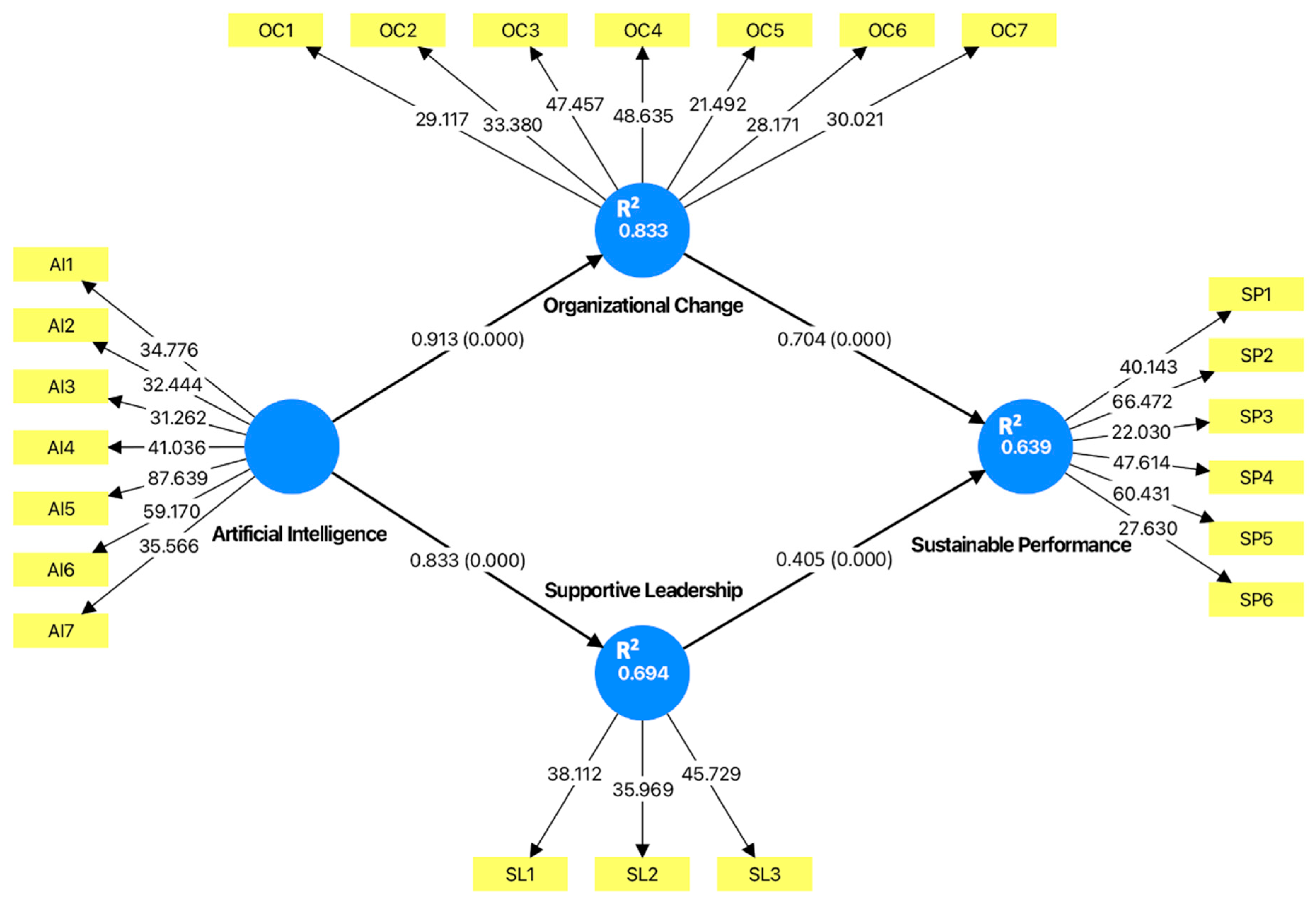
Table 4 presents the assessment of the structural model. AI has significant and positive influences on organizational change, with the path coefficient (0.913), t-value (45.476), and p < 0.001 confirming H1. This shows that AI plays a vital role and provides extensive support for organizations in improving processes, ensuring better workflow, and serving as a strategic tool for managers. AI has significant and positive influences on supportive leadership with the path coefficient β = 0.833, t = 24.247, and p < 0.001, confirming H2. This shows that AI-based systems provide support to leaders in adopting supportive behaviors for their subordinates in terms of giving them training, guidance, and redesigning HR policies, with the main focus on digital leadership enhancement. Organizational change has significant and positive influences on sustainable performance (β = 0.704, t = 4.917, p < 0.001), thus H3 is confirmed. Hence, change management brings positive outcomes for the organization and should be deployed along with technological transformation. Furthermore, organizational change mediates the relationship between AI and sustainable performance (β = 0.643, t = 4.798, p < 0.001), thus H4 is confirmed. In line with this, AI is connected with organizational change in order to ensure better performance outcomes. It is necessary for managers to opt for initiatives in the organization that are aligned with AI systems. Supportive leadership has positive and significant influence on sustainable performance (β = 0.405, t = 8.709, p < 0.001), thus H5 is confirmed. Leadership plays a fundamental role in the organization in enhancing performance, as leaders can provide experiential learning to subordinates via training programs within AI-based environments. Similarly, supportive leadership mediates the relationship between AI and sustainable performance (β = 0.487, t = 7.704, p < 0.001), thus H6 is confirmed. The effective application of AI-based systems is possible with the extensive support of leadership, policy reforms in the organization, and the integration of digital technology. Figure 2 depicts the R2 (R-square) values, where organizational change has R2 (0.833), indicating that 83.3% of the variance is explained by AI. Supportive leadership depicts R2 0.694, indicating that 69.4% of the variance is explained by AI. Lastly, sustainable performance has an R2 0.639, indicating that 63.9% of the variance is explained by organizational change and supportive leadership. The findings indicate that AI-based systems provide better results for the organization and lead to competitive advantages in the service sector. Hence, managers can use these insights to work on AI-based initiatives within the organization in order to improve operational efficiency and gain sustainable performance.

5. Discussion

The study results indicate that AI brings better results for organizations via its impact on organizational change and supportive leadership. In short, AI brings positive outcomes related to the sustainable performance of organizations. Hence, when organizations pay worthy attention to transformation through smart technologies, this supports the achievement of sustainable results. The study shows that, when organizations implement AI-based technology in their operations, this helps to create an efficient process for workflow [3], evidenced by a strong path coefficient (β = 0.913 and β = 0.833). The study findings are aligned with prior studies, as AI-based systems provide extensive support to organizations in improving their operational efficiency [38,39]. Hence, the study extends earlier work by examining the dual mediation role of organizational change and supportive leadership in order to gain better results in the performance of the Saudi service sector.
Organizations that focus on change management can have better sustainable outcomes in their ability to adapt to technological progress (β = 0.704). Thus, for organizations that align their AI application with policy reforms, workflow and process development improves in the areas of environment, operations, and social sustainability [40]. The findings indicate that AI emphasizes organizational change and leads to sustainable performance outcomes (β = 0.643), because AI applications alone do not bring sustainable performance.
Moreover, supportive leadership plays a mediation role between AI and sustainable performance, whereby leaders encourage employees to opt for AI usage within the organization in order to perform effectively. Effective leadership can provide training and mentorship to departmental heads on how to use AI within existing systems. Supportive leadership provides a learning environment for employees that enables them to focus on modern tools and techniques in order to accomplish their tasks [32]. The mediation role of supportive leadership between AI and sustainable performance shows that leadership is essential in ensuring the adoption of technology in the service sector, bringing positive results in terms of operational and financial performance [33].
The study concludes that AI applications should be considered as a strategic initiative for the transformation of the service sector in Saudi Arabia. It is a vital component for the service sector in obtaining sustainable results by improving resource optimization, reducing waste, and effectively using energy. In line with Vision 2030, the agenda for industrial transformation could be aligned with AI adoption and used to train workers to use AI effectively. Thus, it is necessary to understand the AI dynamics in the organization, and leaders should play an active role in training and encouraging their employees [17]. Moreover, future research could consider constructs, i.e., employee engagement with AI and leadership mentorship, for effective utilization of smart technologies.
Another implication is that sustainable performance of the service sector could be achieved in conjunction with the organizational change process. It is important to deploy a technology-performance model rather than focusing on adaptability and change management. Managers should emphasize the socio-technology system which best ensures the active engagement of workers in the utilization of AI-based systems in order to perform their tasks. This could support organizations in tracking their progress and in the timely handling of challenges whenever they occur in service organizations.
Furthermore, the application of AI requires more technical support, because organizations should align their existing systems and ensure that system transformations work effectively. Senior management should take the lead in deploying processes for organizational change in order to redesign existing processes and policies. Leaders should encourage workers to opt for AI with due diligence and develop an environment that supports learning and practical application working together. Leaders can focus on developing the skills of their workers and support their routine activities. When organizations associate their AI programs with sustainable performance, it helps to optimize resources and achieve targets for corporate social responsibility and performance.
In view of the study findings, policy-level recommendations can be suggested for leaders in the service sector and governing bodies. Organizations should emphasize formal AI adoption programs as part of organizational change and run initiatives to sustain their businesses. Organized AI learning programs should be launched to increase employee engagement. Furthermore, governing bodies should provide incentives to service sector organizations to arrange resources for AI-based system development via regulatory support and sustainability objectives in line with Vision 2030.
Along with this study’s contributions, it has its limitations. Saudi service sector organizations are exclusively considered, and this limits the generalizability of findings to other business sectors and countries. Cross-sectional design limits the measurement of the temporal effect and monitoring of continuous change. The convenience sampling technique and uneven distribution of gender and age groups as derived from the workforce dynamics in the country may show sampling bias. Hence, future studies could deal with these points by conducting longitudinal studies and using diverse samples.
Thereby, future studies could place more emphasis on examining additional factors, such as engagement with AI, mentorship, organizational culture, and employee capacity building. Group comparisons and comparative studies across diverse samples and industries may enhance generalizability and validity. Longitudinal studies could be conducted to check the impact of AI over varied time intervals.

6. Conclusions

The findings demonstrate that AI applications bring change to organizations and improve the role of supportive leadership, which helps to achieve sustainable performance results. Furthermore, AI plays a vital role in achieving sustainable performance via the mediation roles of supportive leadership and organizational change. In an organizational setting, team leaders can increase work efficiency via the effective utilization of AI. AI gives a competitive edge in achieving performance indicators for sustainability, which helps organizations maintain the active engagement of humans towards strategic modification in systems to achieve long-term goals. From the theoretical perspective, the study adds value to technology adoption and organizational theories by indicating the role of AI in performance enhancement and emphasizing the significance of human resources and organizational structures. The study enriches the level of understanding by specifying how AI contributes to sustainable results. Supportive leadership can play a major role in motivating employees in organizations to use AI-based systems to accomplish their tasks. Moreover, organizational change can mediate between AI and performance and attain the desired results. It is necessary for organizations to connect modern AI-based systems with existing systems in order to ensure the smooth running of operations. These findings give valuable insights into Saudi Arabian service organizations and could plausibly be used in other regions. Thus, a better AI implementation strategy could achieve good results to organizations, along with other constructs such as employee engagement, examined in different business sectors. From a practical point of view, managers could take advantage of AI to handle their tasks and maximize operational efficiency. Future research could focus on examining employee engagement with AI-based systems and digital leadership development across multiple sectors.

Author Contributions

Conceptualization, A.A.A. and S.A.; methodology, S.A.; software, S.A.; validation, A.A.A.; formal analysis, S.A.; investigation, A.A.A.; resources, A.A.A. and S.A.; data curation, A.A.A.; writing—original draft preparation, S.A.; writing—review and editing, A.A.A. and S.A.; visualization, A.A.A.; supervision, S.A.; project administration, A.A.A.; funding acquisition, A.A.A. and S.A. All authors have read and agreed to the published version of the manuscript.

Funding

The author extends the appreciation to the Deanship of Postgraduate Studies and Scientific Research at Majmaah University for funding this research work through the project number (R-2026-81).

Institutional Review Board Statement

The study is exempt from IRB approval in accordance with the institutional research regulations of Majmaah University, Saudi Arabia. As stated in the regulations issued by the Deanship of Scientific Research (Graduate Studies and Scientific Research), researchers are granted the freedom to publish the results of their research without obtaining prior approval from project funders, provided that such publication does not compromise the security or interests of the country or cause harm to society (see page 5, line 1). The relevant regulation can be accessed at the following link: https://www.mu.edu.sa/sites/default/files/content/2016/01/dsr.pdf (accessed on 27 February 2026) حرية الباحثين في نشر نتائج بحوثهم دون أخذ موافقة املمولين للمشروع البحثى وبما ال يمس أمن ومصلحة البالد، أو إلاضرار باملجتمع. Translation: The freedom of researchers to publish the results of their research without obtaining the approval of the project funders, provided that this does not affect the security and interests of the country or cause harm to society. Based on these institutional guidelines, prior ethical approval was not required for this study.

Informed Consent Statement

Informed consent for participation was obtained from all subjects involved in the study.

Data Availability Statement

The raw data supporting the conclusions of this article will be made available by the authors on request.

Conflicts of Interest

The authors declare no conflicts of interest.

References

  1. Oyekunle, D.; Boohene, D. Digital transformation potential: The role of artificial intelligence in business. Int. J. Prof. Bus. Rev. 2024, 9, e04499. [Google Scholar] [CrossRef]
  2. Tao, Y.; Muhammad Muneeb, F.; Wanke, P.F.; Tan, Y. Big data artificial intelligence to promote new product performance: The role of electronic-supply chain collaboration in B2B firms. J. Bus. Ind. Mark. 2026, 41, 44–57. [Google Scholar] [CrossRef]
  3. Jorzik, P.; Klein, S.P.; Kanbach, D.K.; Kraus, S. AI-driven business model innovation: A systematic review and research agenda. J. Bus. Res. 2024, 182, 114764. [Google Scholar] [CrossRef]
  4. Badmus, O.; Rajput, S.; Arogundade, J.; Williams, M. AI-driven business analytics and decision making. World J. Adv. Res. Rev. 2024, 24, 616–633. [Google Scholar] [CrossRef]
  5. Muthu, J. Recent trends in supply chain management using artificial intelligence and machine learning in manufacturing. Educ. Admin. Theory Pract. 2024, 30, 4127–4134. [Google Scholar] [CrossRef]
  6. Espina-Romero, L.; Gutiérrez Hurtado, H.; Ríos Parra, D.; Vilchez Pirela, R.A.; Talavera-Aguirre, R.; Ochoa-Díaz, A. Challenges and opportunities in the implementation of AI in manufacturing: A bibliometric analysis. Sci 2024, 6, 60. [Google Scholar] [CrossRef]
  7. Gurjar, K.; Jangra, A.; Baber, H.; Islam, M.; Sheikh, S.A. An analytical review on the impact of artificial intelligence on the business industry: Applications, trends, and challenges. IEEE Eng. Manag. Rev. 2024, 52, 84–102. [Google Scholar] [CrossRef]
  8. Potluka, O.; Harten, S.; Kocks, A.; Dvorak, J. Digitalization in evaluations and evaluations of digitalization: The changing landscape of evaluations. Evaluation 2025, 31, 289–302. [Google Scholar] [CrossRef]
  9. Pudney, S.; Mills, D.; Alaei, A.R.; Sellers, S.; Dvorak, J.; Potluka, O. Evaluation of artificial intelligence-enhanced critical infrastructure systems: A conceptual framework. Evaluation 2025, 31, 412–443. [Google Scholar] [CrossRef]
  10. Bock, T.; von der Oelsnitz, D. Leadership-competences in the era of artificial intelligence-a structured review. Strategy Leadersh. 2025, 53, 235–255. [Google Scholar] [CrossRef]
  11. Dwivedi, D. Artificial Intelligence and the Future of Business: The Role of AI in Shaping Business Leadership. In AI in Business Management; Taylor & Francis Group: Oxford, UK, 2025; pp. 356–378. [Google Scholar] [CrossRef]
  12. Jansson, N. Organizational change as practice: A critical analysis. J. Organ. Change Manag. 2013, 26, 1003–1019. [Google Scholar] [CrossRef]
  13. Stein, M.; Vincent-Hoeper, S.; Gregersen, S. Why busy leaders may have exhausted followers: A multilevel perspective on supportive leadership. Leadersh. Organ. Dev. J. 2020, 41, 829–845. [Google Scholar] [CrossRef]
  14. Enholm, I.M.; Papagiannidis, E.; Mikalef, P.; Krogstie, J. Artificial intelligence and business value: A literature review. Inf. Syst. Front. 2022, 24, 1709–1734. [Google Scholar] [CrossRef]
  15. Paschen, J.; Kietzmann, J.; Kietzmann, T.C. Artificial intelligence (AI) and its implications for market knowledge in B2B marketing. J. Bus. Ind. Mark. 2019, 34, 1410–1419. [Google Scholar] [CrossRef]
  16. Wijayati, D.T.; Rahman, Z.; Rahman, M.F.W.; Arifah, I.D.C.; Kautsar, A. A study of artificial intelligence on employee performance and work engagement: The moderating role of change leadership. Int. J. Manpow. 2022, 43, 486–512. [Google Scholar] [CrossRef]
  17. Loureiro, S.M.C.; Guerreiro, J.; Tussyadiah, I. Artificial intelligence in business: State of the art and future research agenda. J. Bus. Res. 2021, 129, 911–926. [Google Scholar] [CrossRef]
  18. Sestino, A.; De Mauro, A. Leveraging artificial intelligence in business: Implications, applications and methods. Technol. Anal. Strateg. Manag. 2022, 34, 16–29. [Google Scholar] [CrossRef]
  19. Feuerriegel, S.; Shrestha, Y.R.; von Krogh, G.; Zhang, C. Bringing artificial intelligence to business management. Nat. Mach. Intell. 2022, 4, 611–613. [Google Scholar] [CrossRef]
  20. Schwaeke, J.; Gerlich, C.; Nguyen, H.L.; Kanbach, D.K.; Gast, J. Artificial intelligence (AI) for good? Enabling organizational change towards sustainability. Rev. Manag. Sci. 2025, 19, 3013–3038. [Google Scholar] [CrossRef]
  21. Kim, G.M.; Kim, H. How organizations legitimize AI led organizational change? Asia Pac. J. Inf. Syst. 2022, 32, 461–476. [Google Scholar] [CrossRef]
  22. Alhusban, M.I.; Alshurafat, H.; Khatatbeh, I.N. Exploring professional perspectives on integrating generative artificial intelligence into corporate learning and development: An organizational change perspective. Dev. Learn. Organ. Int. J. 2025, 39, 21–24. [Google Scholar] [CrossRef]
  23. Peifer, Y.; Jeske, T.; Hille, S. Artificial intelligence and its impact on leaders and leadership. Procedia Comput. Sci. 2022, 200, 1024–1030. [Google Scholar] [CrossRef]
  24. Braathu, N.; Laukvik, E.H.; Egeland, K.M.; Skar, A.M.S. Validation of the Norwegian versions of the Implementation Leadership Scale (ILS) and Multifactor Leadership Questionnaire (MLQ) in a mental health care setting. BMC Psychol. 2022, 10, 25. [Google Scholar] [CrossRef] [PubMed]
  25. Sposato, M. Leadership training and development in the age of artificial intelligence. Dev. Learn. Organ. Int. J. 2024, 38, 4–7. [Google Scholar] [CrossRef]
  26. Matli, W. Integration of warrior artificial intelligence and leadership reflexivity to enhance decision-making. Appl. Artif. Intell. 2024, 38, 2411462. [Google Scholar] [CrossRef]
  27. Smith, A.M.; Green, M. Artificial intelligence and the role of leadership. J. Leadersh. Stud. 2018, 12, 85–87. [Google Scholar] [CrossRef]
  28. Orji, I.J. Examining barriers to organizational change for sustainability and drivers of sustainable performance in the metal manufacturing industry. Resour. Conserv. Recycl. 2019, 140, 102–114. [Google Scholar] [CrossRef]
  29. Olafsen, A.H.; Nilsen, E.R.; Smedsrud, S.; Kamaric, D. Sustainable development through commitment to organizational change: The implications of organizational culture and individual readiness for change. J. Workplace Learn. 2021, 33, 180–196. [Google Scholar] [CrossRef]
  30. Robertson, J.; Botha, E.; Oosthuizen, K.; Montecchi, M. Managing change when integrating artificial intelligence (AI) into the retail value chain: The AI implementation compass. J. Bus. Res. 2025, 189, 115198. [Google Scholar] [CrossRef]
  31. Lemos, S.I.; Ferreira, F.A.; Zopounidis, C.; Galariotis, E.; Ferreira, N.C. Artificial intelligence and change management in small and medium-sized enterprises: An analysis of dynamics within adaptation initiatives. Ann. Oper. Res. 2025, 353, 197–223. [Google Scholar] [CrossRef]
  32. Madancian, M.; Taherdoost, H.; Farhaoui, Y.; Khan, I.U. Leveraging AI for sustainable leadership: A transformative approach. In International Conference on Communication, Information and Digital Technologies (CIDT2024); SPIE: Bellingham, WA, USA, 2024; Volume 13185, pp. 71–75. [Google Scholar] [CrossRef]
  33. Odugbesan, J.A.; Aghazadeh, S.; Al Qaralleh, R.E.; Sogeke, O.S. Green talent management and employees’ innovative work behavior: The roles of artificial intelligence and transformational leadership. J. Knowl. Manag. 2023, 27, 696–716. [Google Scholar] [CrossRef]
  34. Rosário, A.T.; Boechat, A.C. How Sustainable Leadership Can Leverage Sustainable Development. Sustainability 2025, 17, 3499. [Google Scholar] [CrossRef]
  35. Iqbal, Q.; Ahmad, N.H.; Halim, H.A. How does sustainable leadership influence sustainable performance? Empirical evidence from selected ASEAN countries. Sage Open 2020, 10, 2158244020969394. [Google Scholar] [CrossRef]
  36. Holt, D.T.; Armenakis, A.A.; Feild, H.S.; Harris, S.G. Readiness for organizational change: The systematic development of a scale. J. Appl. Behav. Sci. 2007, 43, 232–255. [Google Scholar] [CrossRef]
  37. Lin, R.J.; Tan, K.H.; Geng, Y. Market demand, green product innovation, and firm performance: Evidence from Vietnam motorcycle industry. J. Clean. Prod. 2013, 40, 101–107. [Google Scholar] [CrossRef]
  38. Arinze, C.A.; Izionworu, V.O.; Isong, D.; Daudu, C.D.; Adefemi, A. Integrating artificial intelligence into engineering processes for improved efficiency and safety in oil and gas operations. Open Access Res. J. Eng. Technol. 2024, 6, 39–51. [Google Scholar] [CrossRef]
  39. Roy, R.; Srivastava, A. Role of artificial intelligence (AI) in enhancing operational efficiency in manufacturing medical devices. J. Multidiscip. Res. 2024, 4, 35–40. [Google Scholar] [CrossRef]
  40. Li, J.; Jin, X. The Impact of Artificial Intelligence Adoption Intensity on Corporate Sustainability Performance: The Moderated Mediation Effect of Organizational Change. Sustainability 2024, 16, 9350. [Google Scholar] [CrossRef]
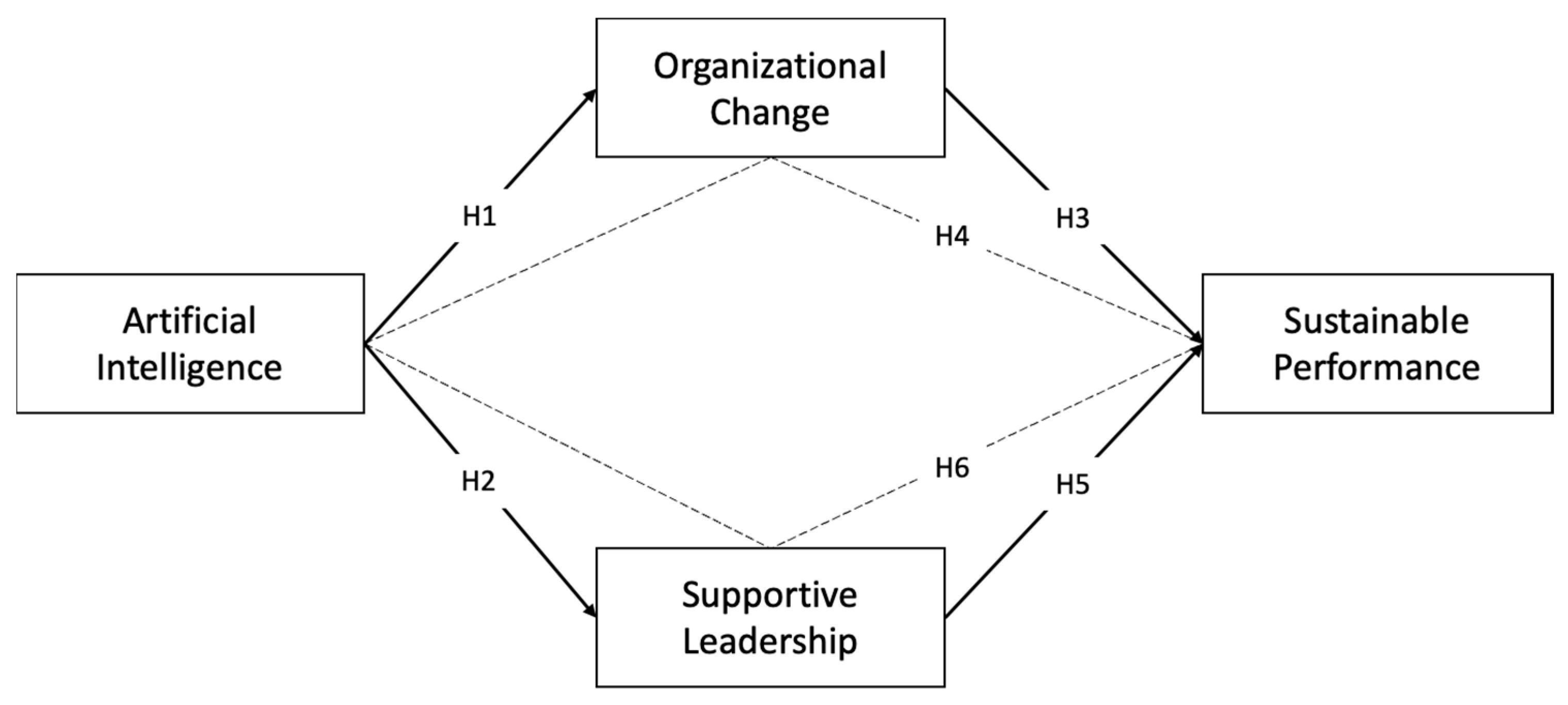
Figure 1. Research Model.
Sustainability 18 02435 g001
Figure 2. Structural model.
Sustainability 18 02435 g002
Table 1. Participants profile (n = 364).
CategorySubcategoryFrequencyPercentage
GenderMale22361%
Female14139%
Age25–3414640%
35–4418852%
45–54308%
Education LevelAssociate degree144%
Bachelor’s degree24166%
Master’s degree10930%
Current Job PositionEntry Level Employee6317%
Mid-level manager18150%
Senior manager9526%
Executive/Director257%
Years of ExperienceLess than 2 years5315%
2–5 years13637%
6–10 years14740%
10+ years288%
Table 2. Measurement model.
Items and ConstructsLoadingsCronbach’s AlphaComposite ReliabilityAverage Variance Extracted
Artificial Intelligence
Paschen et al. [15] and Wijayati et al. [16]
0.8590.8660.701
AI1: “AI can help me find lost data”0.879
AI2: “AI provides accurate data and information”0.771
AI3: “AI can help me in making important decisions in the company”0.876
AI4: “AI can help display hard-to-measure data”0.799
AI5: “AI can protect the privacy of yourself and others”0.734
AI6: “AI can help me in getting the job done”0.819
AI7: “The authorities can easily audit AI”0.887
Organizational Change
Holt et al. [36]
0.8470.7570.761
OC1: “I think that the organization will benefit from this change”0.813
OC2: “There are legitimate reasons for us to make this change”0.832
OC3: “This change will improve our organization’s overall efficiency”0.709
OC4: “There are a number of rational reasons for this change to be made”0.784
OC5: “In the long run, I feel it will be worthwhile for me if the organization adopts this change”0.83
OC6: “This change makes my job easier”0.776
OC7: “This change matches the priorities of our organization”0.866
Supportive Leadership
Braathu et al. [24]
0.7750.8230.801
SL1: “Supports employee efforts to learn more about AI”0.876
SL2: “Recognizes and appreciates employee efforts”0.799
SL3: “Supports employee efforts to use AI”0.807
Sustainable Performance
Lin et al. [37]
0.7510.7610.753
SP1: “Our company is adhering to reduce paper use”0.89
SP2: “Our company is adhering to reduce hazardous waste/scrap”0.821
SP3: “Our company is adhering to reduce in consumption of gasoline/fuel”0.847
SP4: “Our company is adhering to build partnership with green organizations and suppliers”0.718
SP5: “Our company is adhering to improve of environmental compliance”0.723
SP6: “Our company is adhering to the use environmentally friendly material”of 0.823
Table 3. Discriminant validity (Fornell-Larcker criterion).
AIOrganizational ChangeSupportive LeadershipSustainable Performance
AI0.895
Organizational Change0.8130.872
Supportive Leadership0.7330.7930.844
Sustainable Performance0.820.7680.7340.837
Table 4. Path Coefficients.
PathsBetaStandard DeviationT Statisticsp ValuesResults
AI → Organizational Change0.9130.0245.4760.00H1
accepted
AI → Supportive Leadership0.8330.03424.2470.00H2
accepted
Organizational Change → Sustainable Performance0.7040.1434.9170.00H3
accepted
AI → Organizational Change → Sustainable Performance0.6430.1344.7980.00H4
accepted
Supportive Leadership → Sustainable Performance0.4050.1488.7090.00H5
accepted
AI → Supportive Leadership → Sustainable Performance0.4870.1247.7040.00H6
accepted
Disclaimer/Publisher’s Note: The statements, opinions and data contained in all publications are solely those of the individual author(s) and contributor(s) and not of MDPI and/or the editor(s). MDPI and/or the editor(s) disclaim responsibility for any injury to people or property resulting from any ideas, methods, instructions or products referred to in the content.