Using Artificial Intelligence to Reshape Higher Education Such That It Is in Line with Sustainability: A Systematic Review of Pedagogical and Curricular Innovations

 ,
,  and
and
Abstract
1. Introduction
2. Research Methodology
2.1. Data Source
2.2. Statistical Methods
3. CiteSpace-Based Analysis of Research Status and Hot Topics in the Field of AI in Higher Education
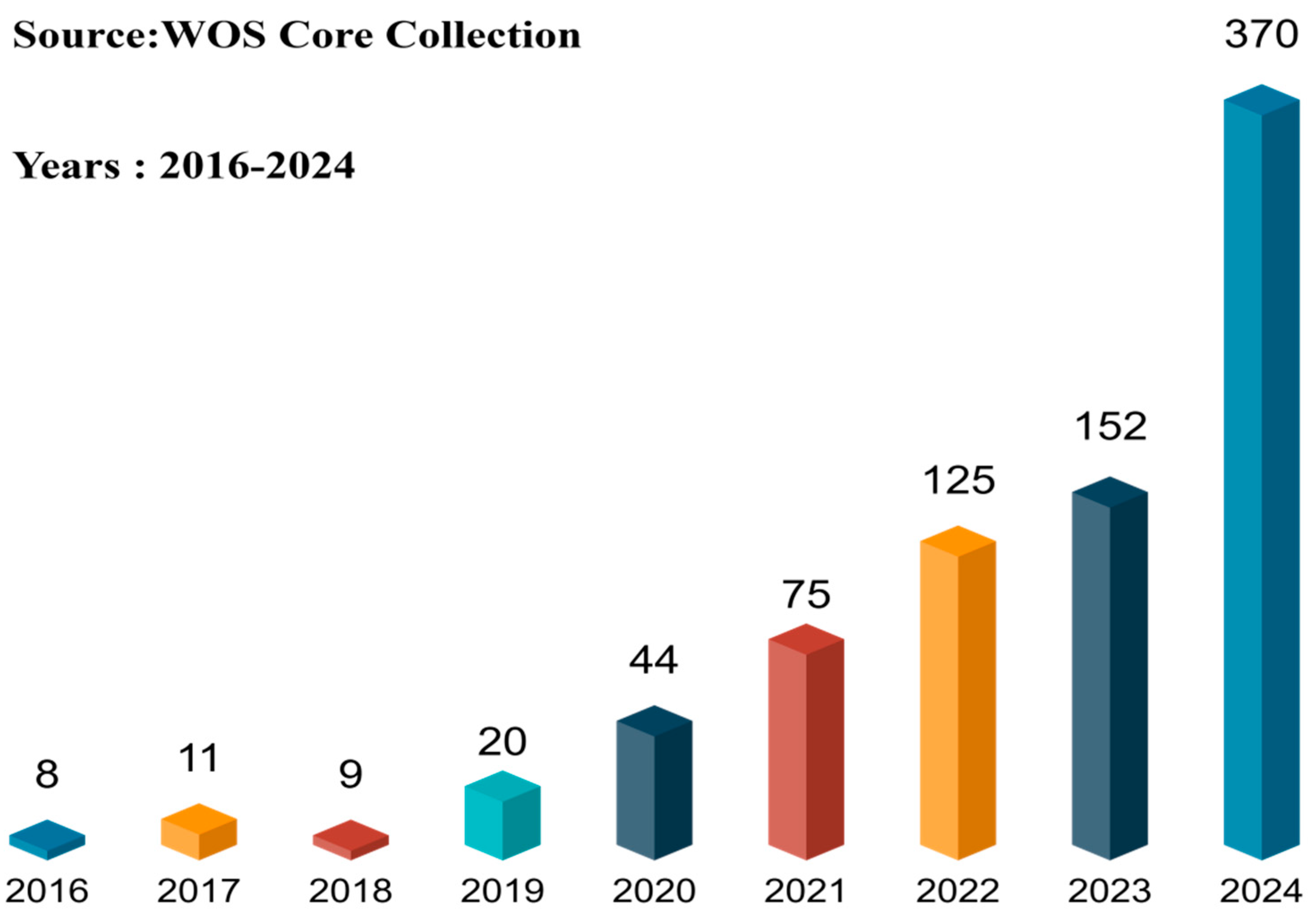
3.1. Annual Distribution of the Number of Published Documents
3.2. Journal Analysis
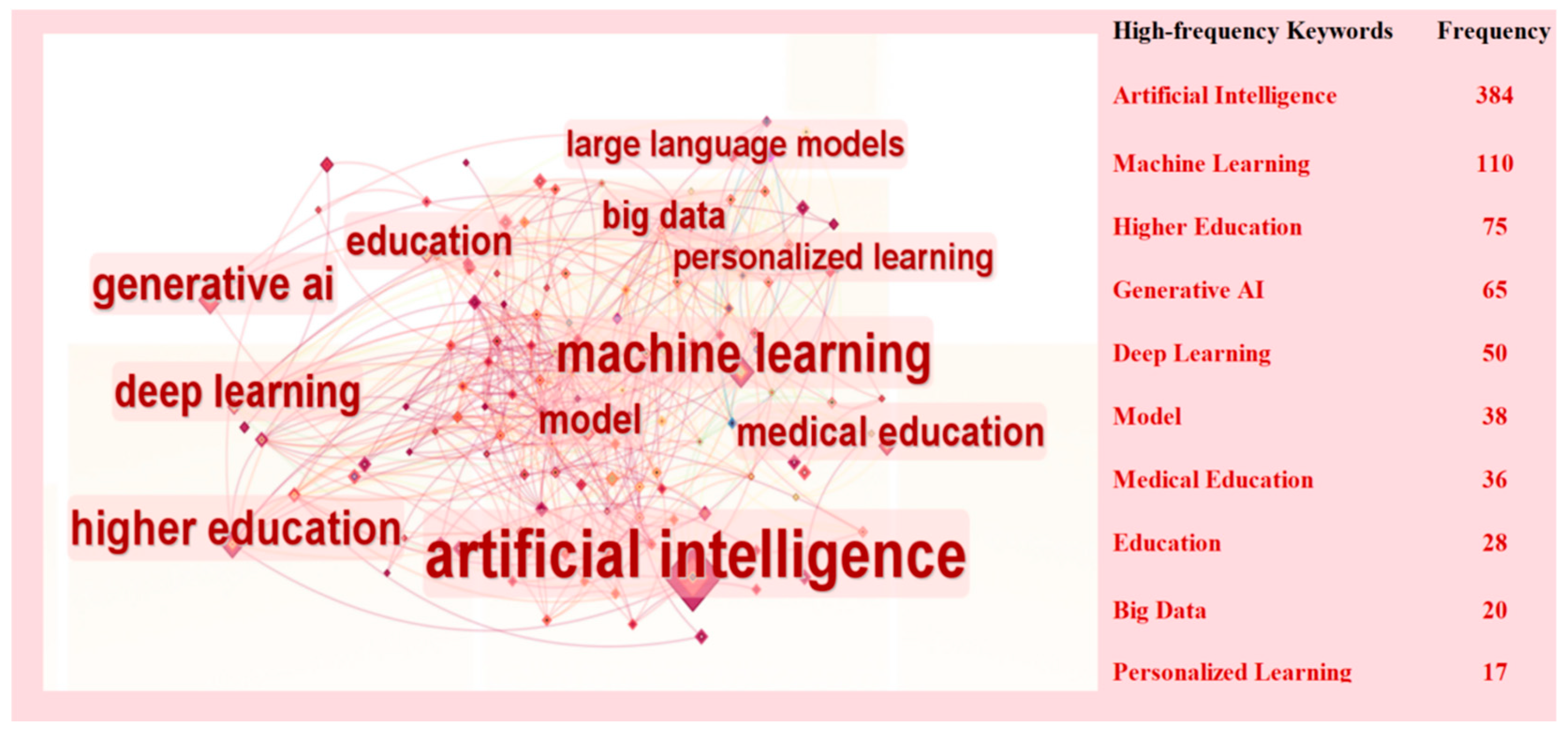
3.3. Keyword Analysis
3.4. From Analytic Clusters to Thematic Focus: Structuring the Review
4. AI-Driven Reshaping and Innovation of Teaching Models in Higher Education
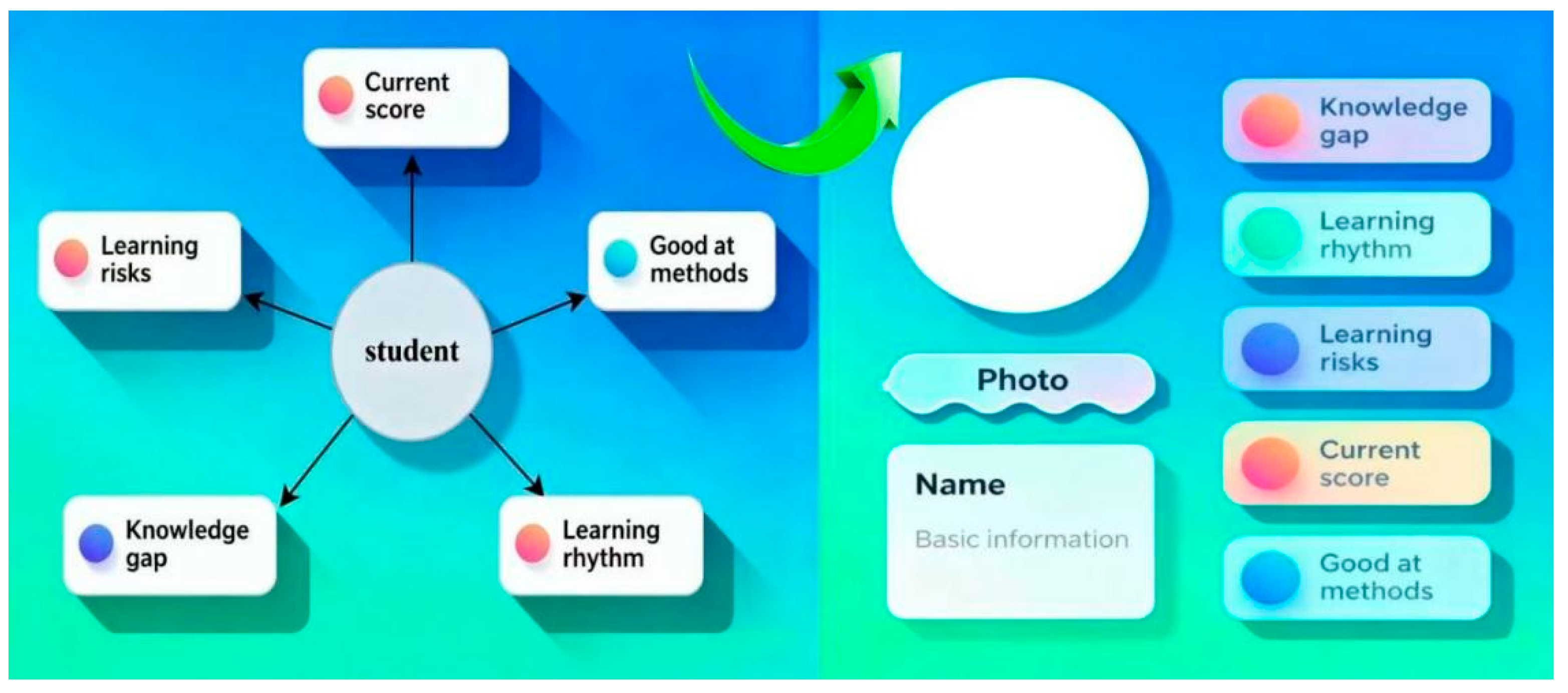
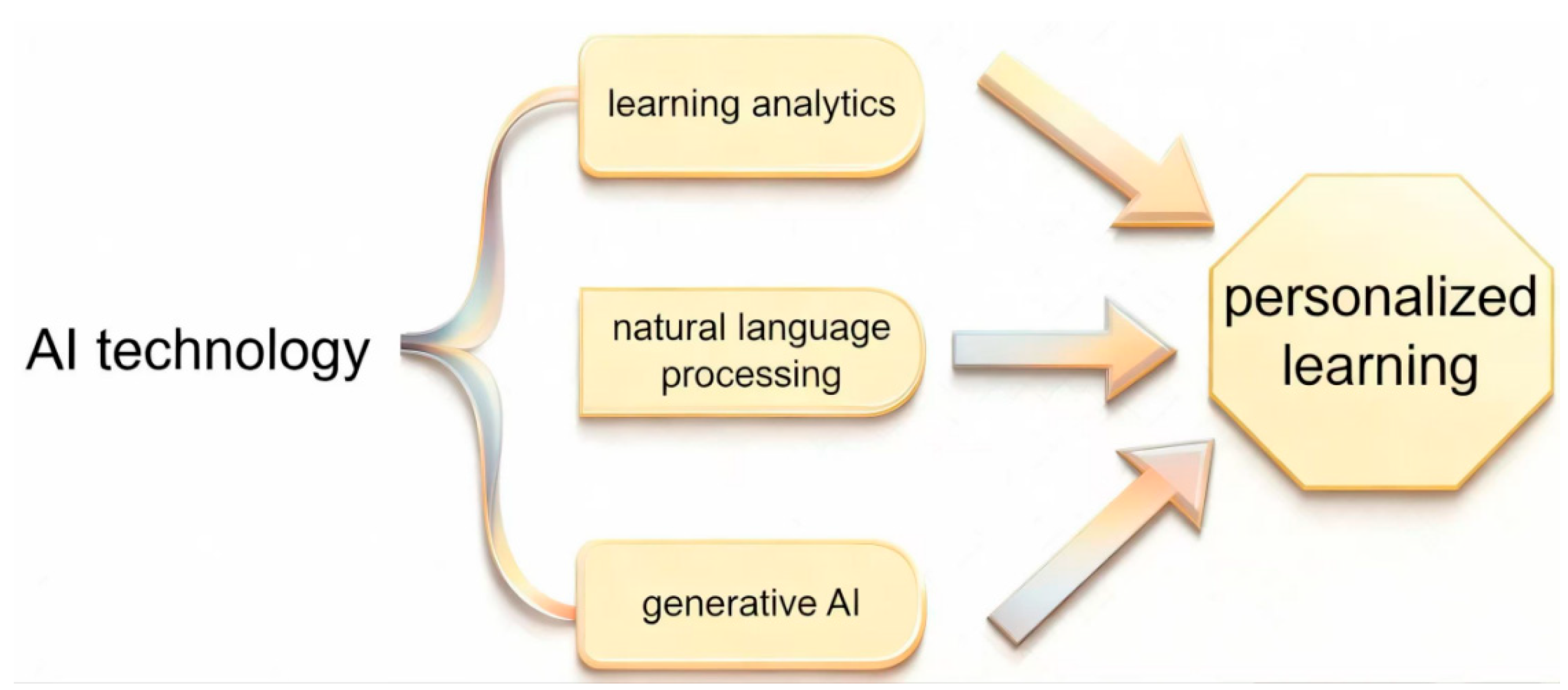
4.1. Artificial Intelligence Facilitates Personalized Learning
4.2. Intelligent Upgrading of Classroom Teaching
5. AI-Augmented Intelligent Course Development and Instructional Design
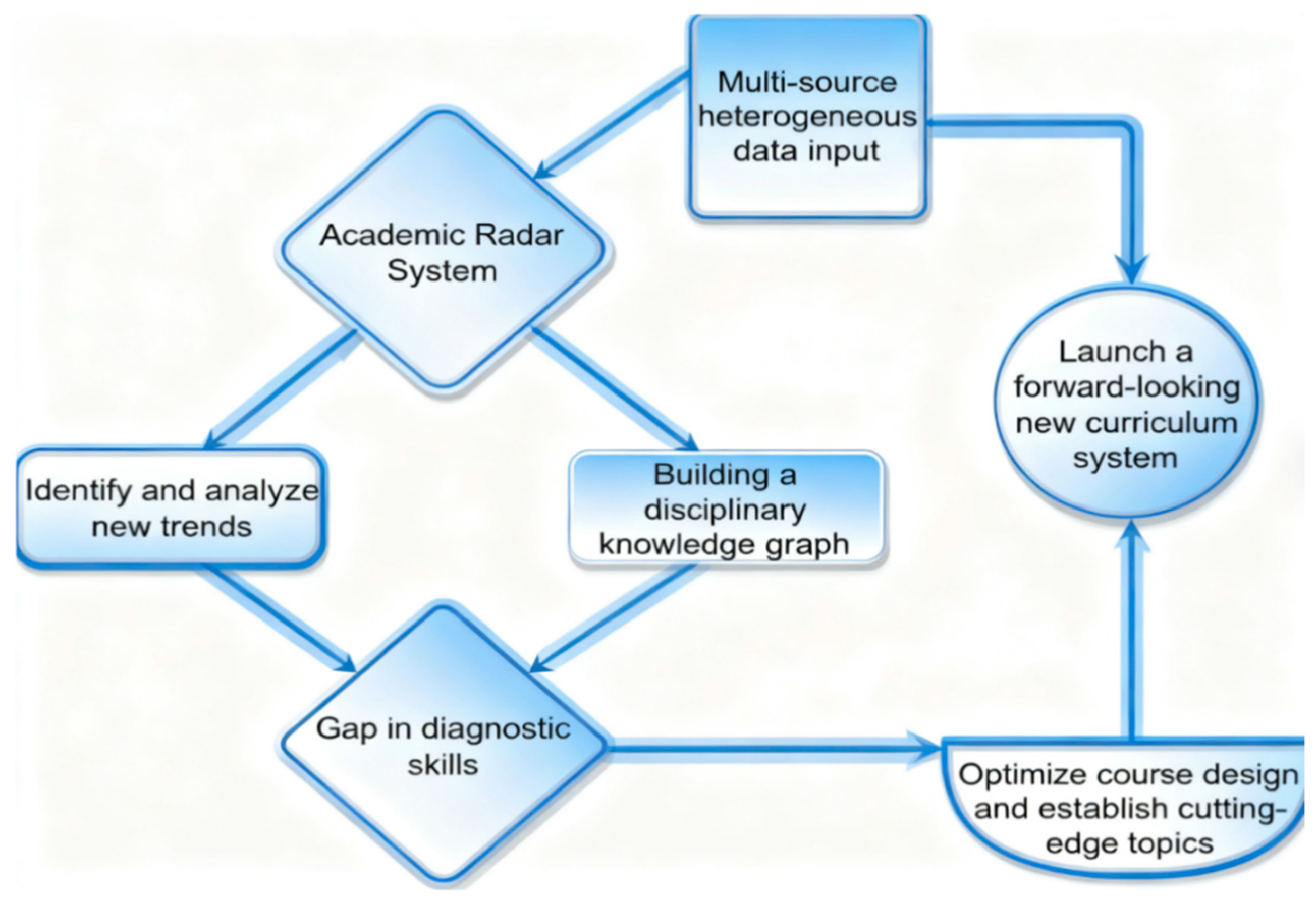
5.1. Data-Driven Precision Requires Analysis in Curriculum Development
5.2. The Transformation of Higher-Education Instructional Design Driven by Al
6. AI-Transformed Advancement of Scientific Management and Decision-Making in Education
7. Comprehensive Discussion of Challenges
8. Conclusions and Prospects
Author Contributions
Funding
Institutional Review Board Statement
Informed Consent Statement
Data Availability Statement
Acknowledgments
Conflicts of Interest
References
- Giesenbauer, B.; Müller-Christ, G. University 4.0: Promoting the Transformation of Higher Education Institutions toward Sustainable Development. Sustainability 2020, 12, 3371. [Google Scholar] [CrossRef]
- Shestakova, I.; Morgunov, V.; Novikova, E.; Bylieva, D. Analysis of the Advantages and Disadvantages of Distance Education in the Context of the Accelerated Digital Transformation of Higher Education. Sustainability 2025, 17, 4487. [Google Scholar] [CrossRef]
- Bygstad, B.; Ovrelid, E.; Ludvigsen, S.; Dæhlen, M. From Dual Digitalization to Digital Learning Space: Exploring the Digital Transformation of Higher Education. Comput. Educ. 2022, 182, 104463. [Google Scholar] [CrossRef]
- Klave, E.; Cane, R. DIGITAL TRANSFORMATION OF HIGHER EDUCATION: INTEGRATING MULTIMEDIA SYSTEMS INTO THE STUDY PROCESS. Environ. Technol. Resour. Proc. Int. Sci. Pract. Conf. 2024, 2, 168–174. [Google Scholar] [CrossRef]
- Zhuang, T.T.; Liu, B.C. Sustaining Higher Education Quality by Building an Educational Innovation Ecosystem in China-Policies, Implementations and Effects. Sustainability 2022, 14, 7568. [Google Scholar] [CrossRef]
- Kim, S.; Kyung, C.M. AI-Based Educational Platform Analysis Supporting Personalized Mathematics Learning. Commun. Math. Educ. 2022, 36, 417–438. [Google Scholar] [CrossRef]
- Jiang, X.M.; Wang, R.; Hoang, T.; Ranaweera, C.; Dong, C.Z.; Myers, T. AI-Powered Gamified Scaffolding: Transforming Learning in Virtual Learning Environment. Electronics 2025, 14, 2732. [Google Scholar] [CrossRef]
- Hayashi, Y. Prospects for Revolutionary and Popular AI Technology following the Launch of ChatGPT in 2023. Electronics 2024, 13, 290. [Google Scholar] [CrossRef]
- Zhou, M.; Peng, S. The Usage of AI in Teaching and Students’ Creativity: The Mediating Role of Learning Engagement and the Moderating Role of AI Literacy. Behav. Sci. 2025, 15, 587. [Google Scholar] [CrossRef] [PubMed]
- Alfirevic, N.; Hell, M.; Rendulic, D. Pedagogical Qualities of Artificial Intelligence-Assisted Teaching: An Exploratory Analysis of a Personal Tutor in a Voluntary Business Higher-Education Course. Appl. Sci. 2025, 15, 8764. [Google Scholar] [CrossRef]
- Singh, S.; Singh, U.S.; Nermend, M. Sustainability in a Digitized Era Analyzing the Moderation Effect of Social Strata and Digital Capital Dependence on Digital Divide. Sustainability 2022, 14, 14508. [Google Scholar] [CrossRef]
- Choi, C.-G.; Kang, M.-K. Concepts and Measurements of Educational Alienation in Lifelong Education. Asia-Pac. J. Multimed. Serv. Converg. Art Humanit. Sociol. 2019, 9, 343–352. [Google Scholar] [CrossRef]
- Li, G.; Ma, W.J. The Innovation and Reform of Higher Education Teaching Mode Under the Empowerment of Artificial Intelligence. High. Educ. Pract. 2024, 1, 146–149. [Google Scholar] [CrossRef]
- Ko, Y.-J. An Analysis of Artificial Intelligence Education Research Trends Based on Topic Modeling. J. Korea Soc. Comput. Inf. 2024, 29, 197–209. [Google Scholar] [CrossRef]
- Sharma, A.; Al-Haidose, A.; Al-Asmakh, M.; Abdallah, A.M. Integrating Artificial Intelligence into Biomedical Science Curricula: Advancing Healthcare Education. Clin. Pract. 2024, 14, 1391–1403. [Google Scholar] [CrossRef] [PubMed]
- Cao, L.B. A New Age of AI: Features and Futures. IEEE Intell. Syst. 2022, 37, 25–37. [Google Scholar] [CrossRef]
- Daniels, C.P. Exploring Artificial Intelligence Literacy and Engagement in Higher Education Stakeholders. Int. Assoc. Comput. Inf. Syst. 2025, 26, 201–216. [Google Scholar] [CrossRef]
- Trigka, M.; Dritsas, E. The Evolution of Generative AI: Trends and Applications. IEEE Access 2025, 13, 98504–98529. [Google Scholar] [CrossRef]
- Yoon, S.; Choi, A.; Kim, C.; Sohn, S.; Oh, S.; Park, M. A Study of Generative AI Trends and Applications. J. Converg. Cult. Technol. 2024, 10, 607–612. [Google Scholar] [CrossRef]
- Asproni, G. Phillip Carter on Observability for Large Language Models. IEEE Softw. 2024, 41, 93–96. [Google Scholar] [CrossRef]
- Yu, H.T.; Mi, Y. Application Model for Innovative Sports Practice Teaching in Colleges Using Internet of Things and Artificial Intelligence. Electronics 2023, 12, 874. [Google Scholar] [CrossRef]
- Kevin, A.; Bakker, M.; van Loon, A.M.; Kral, M.; Camp, G. Young learners’ motivation, self-regulation and performance in personalized learning. Comput. Educ. 2025, 226, 105208. [Google Scholar] [CrossRef]
- Ma, Y.J.; Wang, L.; Zhang, J.T.; Liu, F.J.; Jiang, Q.Y. A Personalized Learning Path Recommendation Method Incorporating Multi-Algorithm. Appl. Sci. 2023, 13, 5946. [Google Scholar] [CrossRef]
- Li, H.; Gong, R.R.; Zhong, Z.M.; Xing, L.B.; Li, X.; Li, H.N. Research on personalized learning path planning model based on knowledge network. Neural Comput. Appl. 2023, 35, 8809–8821. [Google Scholar] [CrossRef]
- Li, H.J.; Xu, J.Y.; Jin, M.; Yin, A.Y. Personalized Federated Learning With Global Information Fusion and Local Knowledge Inheritance Collaboration. J. Supercomput. 2025, 81, 158. [Google Scholar] [CrossRef]
- Kanchon, M.K.H.; Sadman, M.; Nabila, K.F.; Tarannum, R.; Khan, R. Enhancing Personalized Learning: AI-Driven Identification of Learning Styles and Content Modification Strategies. Int. J. Cogn. Comput. Eng. 2024, 5, 269–278. [Google Scholar] [CrossRef]
- Oyebola Olusola, A.; Nancy Mohd Al, H.; Onyebuchi Nneamaka, C.; Blessing, O.; Ololade Elizabeth, A. AI in Education: A Review of Personalized Learning and Educational Technology. GSC Adv. Res. Rev. 2024, 18, 261–271. [Google Scholar] [CrossRef]
- Mane, P.A.; Jagtap, D.S. AI-Enhanced Educational Platform for Personalized Learning Paths, Automated Grading, and Real-Time Feedback. Int. J. Sci. Res. Eng. Manag. 2024, 8, 1–7. [Google Scholar] [CrossRef]
- Silva, G.; Godwin, G.; Jayanagara, O. The Impact of AI on Personalized Learning and Educational Analytics. Int. Trans. Educ. Technol. (ITEE) 2024, 3, 36–46. [Google Scholar] [CrossRef]
- Zampieri, M.; Nakov, P.; Scherrer, Y. Natural language processing for similar languages, varieties, and dialects: A survey. Nat. Lang. Eng. 2020, 26, 595–612. [Google Scholar] [CrossRef]
- Muniyandi, A.P.; Balusamy, B.; Dhanaraj, R.K.; Ellappan, V.; Murali, S.; Sathyamoorthy, M.; Nkenyereye, L. Privacy Preserved Reinforcement Learning Model Using Generative AI for Personalized E-Learning. IEEE Trans. Consum. Electron. 2024, 70, 6157–6165. [Google Scholar] [CrossRef]
- Liu, R.; Zhang, X.L. A review of methodologies for natural-language-facilitated human-robot cooperation. Int. J. Adv. Robot. Syst. 2019, 16, 1729881419851402. [Google Scholar] [CrossRef]
- Chinemelum Goodness, U. The role of generative AI in personalized learning for higher education. World J. Adv. Eng. Technol. Sci. 2025, 14, 205–207. [Google Scholar] [CrossRef]
- Chen, W.; Yu, M.Y.; Hou, J. Synergistic Relationship, Agent Interaction, and Knowledge Coupling: Driving Innovation in Intelligent Construction Technology. Buildings 2024, 14, 542. [Google Scholar] [CrossRef]
- Chen, J.; Lu, H. Evaluation Method of Classroom Teaching Effect Under Intelligent Teaching Mode. Mob. Netw. Appl. 2022, 27, 1262–1270. [Google Scholar] [CrossRef]
- Yu, F.H.; Lv, J.N.; Han, H.; Zhang, Y.J.; Zhang, J. Application of AI teaching Assistant to College Education of Principles of Chemical Engineering. Educ. Chem. Eng. 2025, 53, 138–148. [Google Scholar] [CrossRef]
- Zhao, H.Y.; Min, Q.F. Exploring Continued Usage of an AI Teaching Assistant among University Students: A Temporal Distance Perspective. Inf. Manag. 2024, 61, 104012. [Google Scholar] [CrossRef]
- Rahmani, M.K.I. Smart Bubble Sort: A Novel and Dynamic Variant of Bubble Sort Algorithm. Cmc-Comput. Mater. Contin. 2022, 71, 4895–4913. [Google Scholar] [CrossRef]
- Tracy, K.; Spantidi, O. Impact of GPT-Driven Teaching Assistants in VR Learning Environments. IEEE Trans. Learn. Technol. 2025, 18, 192–205. [Google Scholar] [CrossRef]
- Sajja, R. AI-Driven Virtual Teaching Assistants for Enhanced Learning: A Framework for Personalized Support, Analytics, and Scalability in Higher Education. Ph.D. Thesis, The University of Iowa, Johnson County, IA, USA, 2025; pp. 1–227. [Google Scholar]
- Kushwaha, P.; Namdev, D.; Kushwaha, S.S. SmartLearnHub: AI-Driven Education. Int. J. Res. Appl. Sci. Eng. Technol. 2024, 12, 1396–1401. [Google Scholar] [CrossRef]
- Li, T. AI-Driven Multi-Modal Interactive Learning Environment Using Deep Learning and Chain-of-Thought Reasoning. Int. J. Pattern Recognit. Artif. Intell. 2025, 39, 2552001. [Google Scholar] [CrossRef]
- Ryu, M.-Y.; Gwan, H.S. The Direction of AI Classes using AI Education Platform. J. Korea Soc. Comput. Inf. 2022, 27, 69–76. [Google Scholar] [CrossRef]
- Garay, S.M. Advancing Instructional Design with AI: A Study on Al Literacy in Higher Education. Ph.D. Thesis, University of South Alabama, Mobile, AL, USA, 2025; pp. 1–352. [Google Scholar]
- Shamshiri, A.; Ryu, K.R.; Park, J.Y. Text Mining and Natural Language Processing in Construction. Autom. Constr. 2024, 158, 105200. [Google Scholar] [CrossRef]
- Wheelock, L.B.; Pachamanova, D.A. Acceptable Set Topic Modeling. Eur. J. Oper. Res. 2022, 299, 653–673. [Google Scholar] [CrossRef]
- Shrestha, S.; Das, S. Exploring Gender Biases in ML and AI Academic Research Through Systematic Literature Review. Front. Artif. Intell. 2022, 5, 976838. [Google Scholar] [CrossRef]
- Zheng, L.Y.; Ge, D. Cultivating Key Disciplinary Competencies among University Students Against the Background of China’s New Engineering Education Initiative Education Initiative. PLoS ONE 2025, 20, 0318561. [Google Scholar] [CrossRef]
- Lee, J.H.; Cho, J.W. Artificial Intelligence Curriculum Development for Intelligent System Experts in University. Int. J. Adv. Sci. Eng. Inf. Technol. 2024, 14, 409–419. [Google Scholar] [CrossRef]
- Cha, S.E.; Loeser, M.; Seo, K. The Impact of AI-Based Course-Recommender System on Students’ Course-Selection Decision-Making Process. Appl. Sci. 2024, 14, 3672. [Google Scholar] [CrossRef]
- Ma, G.; Shi, W.B.; Hou, P. Exploring University Teacher Construction for Higher Education Sustainability in China: Perspective from Policy Instruments. Sustainability 2023, 15, 362. [Google Scholar] [CrossRef]
- Young, C.S. A Study on the Understanding and Solving Tasks of AI Convergence Education. J. Ind. Converg. 2023, 21, 147–157. [Google Scholar] [CrossRef]
- Wooding, J.G. Inviting Educators into Their Learning The Relationship Between Personalized Professional Learning and K-5 Teacher Academic Optimism. Dissertation Thesis, The University of Findlay, Findlay, OH, USA, 2024; pp. 1–168. [Google Scholar]
- Chen, X.; Song, J.; Wen, H.; Zhang, L. Mentor-Student Relationship and Graduate Students’ Satisfaction With Mentors: A Moderated Mediation Model. J. Adv. Nurs. 2025; Early View. [Google Scholar] [CrossRef]
- Chul, D.I.; Kim, N.; Jeon, Y. Unification Education in the Age of AI: A Study on the Direction for Building an AI Platform for Unification Education. J. North Korean Stud. 2024, 49, 88–121. [Google Scholar]
- Pan, L.; Luo, H.Q.; Gu, Q.Z. Incorporating AI Literacy and AI Anxiety Into TAM: Unraveling Chinese Scholars’ Behavioral Intentions Toward Adopting AI-Assisted Literature Reading. IEEE Access 2025, 13, 38952–38963. [Google Scholar] [CrossRef]
- Bonggyu, L.; Hyeonjin, K. Exploring the Potential for Developing Instructional Design Principles through Archive-Based Qualitative Analysis: Focusing on Collaborative Instructional Design Principles for Teacher and Generative AI. J. Korean Assoc. Educ. Inf. Media 2024, 30, 743–766. [Google Scholar] [CrossRef]
- So, C.H.; Khvan, A.; Choi, W. Natural Conversations with a Virtual Being: How User Experience with a Current Conversational AI Model Compares to Expectations. Comput. Animat. Virtual Worlds 2023, 34, e2149. [Google Scholar] [CrossRef]
- Lin, J.; Tomlin, N.; Andreas, J.; Eisner, J. Decision-Oriented Dialogue for Human-AI Collaboration. Trans. Assoc. Comput. Linguist. 2024, 12, 892–911. [Google Scholar] [CrossRef]
- Jiyoung, S.; Kim, S. Generative AI as a Virtual Conversation Partner in Language Learning. Int. J. Adv. Cult. Technol. 2024, 12, 7–15. [Google Scholar] [CrossRef]
- Sajadi, S.; Huerta, M.; Ryan, O.; Drinkwater, K. Harnessing Generative AI to Enhance Feedback Quality in Peer Evaluations within Project-Based Learning Contexts. Int. J. Eng. Educ. 2024, 40, 998–1012. Available online: https://webofscience.clarivate.cn/wos/alldb/full-record/WOS:001385273300001 (accessed on 3 February 2026).
- Kooli, C.; Yusuf, N. Transforming Educational Assessment: Insights Into the Use of ChatGPT and Large Language Models in Grading. Int. J. Hum.-Comput. Interact. 2025, 41, 3388–3399. [Google Scholar] [CrossRef]
- Chang, D.H.; Lin, M.P.C.; Hajian, S.; Wang, Q.Q. Educational Design Principles of Using AI Chatbot That Supports Self-Regulated Learning in Education: Goal Setting, Feedback, and Personalization. Sustainability 2023, 15, 12921. [Google Scholar] [CrossRef]
- Mittal, U.; Sai, S.; Chamola, V.; Sangwan, D. A Comprehensive Review on Generative AI for Education. IEEE Access 2024, 12, 142733–142759. [Google Scholar] [CrossRef]
- Li, G.; Cherukuri, A.K. Embrace Open-Environment Machine Learning for Robust AI. Natl. Sci. Rev. 2023, 11, 20955138. [Google Scholar] [CrossRef]
- Majeed, A.; Hwang, S.O. Technical Analysis of Data-Centric and Model-Centric Artificial Intelligence. It Prof. 2023, 25, 62–70. [Google Scholar] [CrossRef]
- Ebert, C.; Nawalramka, P. Generative AI for Data Science. IEEE Softw. 2025, 42, 20–24. [Google Scholar] [CrossRef]
- Lawrence, N.D.; Montgomery, J. Accelerating AI for Science: Open Data Science for Science. R. Soc. Open Sci. 2024, 11, 231130. [Google Scholar] [CrossRef]
- Barbierato, E.; Gatti, A. Toward Green AI: A Methodological Survey of the Scientific Literature. IEEE Access 2024, 12, 23989–24013. [Google Scholar] [CrossRef]
- Pu, Z.J.; Shi, C.L.; Jeon, C.O.; Fu, J.Y.; Liu, S.J.; Lan, C.H.; Yao, Y.L.; Liu, Y.X.; Jia, B.L. ChatGPT and Generative AI are Revolutionizing the Scientific Community: A Janus-Faced Conundrum. Imeta 2024, 3, e178. [Google Scholar] [CrossRef]
- Wang, X.; Zhao, S.; Xu, X.; Zhang, H.; Lei, V.N.-L. AI Adoption in Chinese Universities: Insights, Challenges, and Opportunities from Academic Leaders. Acta Psychol. 2025, 258, 105160. [Google Scholar] [CrossRef] [PubMed]
- Li, Q.J.; Ban, M.; Liu, Y.J.; Xu, D. Online Instruction for a Humanized Learning Experience: Techniques Used by College Instructors. Comput. Educ. 2022, 189, 104595. [Google Scholar] [CrossRef]
- Martins, G.C. Reform of Secondary Education Reform: Advances, Setbacks and Challenges. Master’s Thesis, Universidade do Oeste de Santa, Joaçaba, Brazil, 2024; pp. 1–114. [Google Scholar]
- Xie, H. Critical Thinking and Selfhood in the Age of Globalization: A Case Study of Transnational Chinese Undergraduates in the United States. Ph.D. Thesis, University of California, Los Angeles, CA, USA, 2022; pp. 1–849. [Google Scholar]
- Bulathwela, S.; Pérez-Ortiz, M.; Holloway, C.; Cukurova, M.; Shawe-Taylor, J. Artificial Intelligence Alone Will Not Democratise Education: On Educational Inequality, Techno-Solutionism and Inclusive Tools. Sustainability 2024, 16, 781. [Google Scholar] [CrossRef]
- Lee, I.J. A Study on Ways of AI Ethics Education Using AI Ethics Guidelines. Korean Elem. Moral Educ. Soc. 2022, 76, 157–180. [Google Scholar] [CrossRef]
- Sun, X.F.; Qin, Y.K. The Model Practice of Reconstructing Education Management Based on Web 3.0 Technology Blended Learning under the People-Oriented Concept. Comput. Appl. Eng. Educ. 2024, 32, e22629. [Google Scholar] [CrossRef]
- Zheng, W. Intelligent E-Learning Design for Art Courses Based on Adaptive Learning Algorithms and Artificial Intelligence. Entertain. Comput. 2024, 50, 100713. [Google Scholar] [CrossRef]
- Foffano, F.; Scantamburlo, T.; Cortes, A. Investing in AI for Social Good: An Analysis of European National Strategies. AI Soc. 2023, 38, 479–500. [Google Scholar] [CrossRef]
- Zhang, S.; Rehman, S.; Zhao, Y.; Rehman, E.; Yaqoob, B. Exploring the Interplay of Academic Stress, Motivation, Emotional Intelligence, and Mindfulness in Higher Education: A Longitudinal Cross-Lagged Panel Model Approach. BMC Psychol. 2024, 12, 732. [Google Scholar] [CrossRef]
- Payton, M.J. Analyzing Artificial Intelligence Trustworthiness Characteristics Risks and Impacts in Insurance. Ph.D. Thesis, Marymount University, Arlington, VA, USA, 2024; pp. 1–123. [Google Scholar]
- Kshetri, N.; Voas, J. Adapting to Generative Artificial Intelligence: Approaches in Higher Education Institutions. Computer 2024, 57, 128–133. [Google Scholar] [CrossRef]
- Mogoale, P.D.; Pretorius, A.; Mogase, R.C.; Segooa, M.A. Ethical Considerations in Artificial Intelligence-Driven Environments for Higher Education. S. Afr. J. Inf. Manag. 2025, 27, 2007. [Google Scholar] [CrossRef]
- Jornet, A.; Penuel, W.R.; Esteban-Guitart, M.; Akkermann, S. Socio-Educational Ecologies for Learning, Social Change, and Future Thinking: Expanding Educational Psychology’s Boundaries. Acta Psychol. 2025, 258, 105156. [Google Scholar] [CrossRef]
- Ren, M.L.; Chen, N.Y.; Qiu, H. Human-machine Collaborative Decision-making: An Evolutionary Roadmap Based on Cognitive Intelligence. Int. J. Soc. Robot. 2023, 15, 1101–1114. [Google Scholar] [CrossRef]
- Katsamakas, E.; Pavlov, O.V.; Saklad, R. Artificial Intelligence and the Transformation of Higher Education Institutions: A Systems Approach. Sustainability 2024, 16, 6118. [Google Scholar] [CrossRef]
- Alotaibi, N.S. The Impact of AI and LMS Integration on the Future of Higher Education: Opportunities, Challenges, and Strategies for Transformation. Sustainability 2024, 16, 10357. [Google Scholar] [CrossRef]



| Ranking | Journal Name | JCR Broad Categories | Publication Count | Proportion (%) | Impact Factor (2024) |
|---|---|---|---|---|---|
| 1 | Sustainability | Environmental Sciences Q2 | 80 | 9.83 | 3.9 |
| 2 | IEEE Access | Computer Science, Information Systems Q2 | 44 | 5.41 | 3.6 |
| 3 | Applied Sciences-Basel | Engineering, Multidisciplinary Q2 | 24 | 2.95 | 2.2 |
| 4 | Heliyon | Multidisciplinary Sciences Q1 | 24 | 2.95 | 3.4 |
| 5 | International Journal Of Human–Computer Interaction | Computer Science, Cybernetics Q1 | 17 | 2.09 | 4.9 |
| 6 | Bmc Medical Education | Education and Educational Research Q1 | 14 | 1.72 | 3.2 |
| 7 | Medical Teacher | Education, Scientific Disciplines Q1 | 11 | 1.35 | 4.28 |
| 8 | IEEE Transactions On Learning Technologies | Education and Educational Research Q1 | 10 | 1.22 | 4.4 |
| 9 | Soft Computing | Computer Science, Artificial Intelligence Q3 | 10 | 1.28 | 2.5 |
| 10 | Computers & Education | Education and Educational Research Q1 | 9 | 1.11 | 8.9 |
| Keywords | Year | Strength | Begin | End | |
|---|---|---|---|---|---|
| Big Data | 2020 | 4.28 | 2020 | 2023 |  |
| Generative AI | 2023 | 4.25 | 2023 | 2024 |  |
| AI Education | 2020 | 3.87 | 2021 | 2023 |  |
| Learning Analytics | 2021 | 3.33 | 2021 | 2023 |  |
| Deep Learning | 2019 | 3.06 | 2019 | 2022 |  |
| Machine Learning | 2019 | 2.97 | 2019 | 2020 |  |
| Design | 2020 | 2.35 | 2023 | 2024 |  |
| System | 2020 | 2.27 | 2020 | 2021 |  |
| Challenges | 2017 | 1.74 | 2022 | 2024 |  |
| Data Science | 2019 | 1.47 | 2021 | 2022 |  |
| Empowerment Area | Core AI Applications |
|---|---|
| Course Content Development | Analyzing academic frontiers and generating teaching cases and simulated data to ensure there is cutting-edge and practical content. |
| Learning Activity Design | Enabling personalized attention in large classes, acting as a research assistant, and creating simulations to enhance inquiry-based learning. |
| Assessment and Feedback | Providing initial feedback on students’ papers and checking for compliance and freeing up instructors so that they may focus on guiding academic innovation. |
Disclaimer/Publisher’s Note: The statements, opinions and data contained in all publications are solely those of the individual author(s) and contributor(s) and not of MDPI and/or the editor(s). MDPI and/or the editor(s) disclaim responsibility for any injury to people or property resulting from any ideas, methods, instructions or products referred to in the content. |
© 2026 by the authors. Licensee MDPI, Basel, Switzerland. This article is an open access article distributed under the terms and conditions of the Creative Commons Attribution (CC BY) license.
Share and Cite
Su, R.; Liu, C.; Ma, X.; Chen, R.; Luo, Y.; Chen, Y. Using Artificial Intelligence to Reshape Higher Education Such That It Is in Line with Sustainability: A Systematic Review of Pedagogical and Curricular Innovations. Sustainability 2026, 18, 2360. https://doi.org/10.3390/su18052360
Su R, Liu C, Ma X, Chen R, Luo Y, Chen Y. Using Artificial Intelligence to Reshape Higher Education Such That It Is in Line with Sustainability: A Systematic Review of Pedagogical and Curricular Innovations. Sustainability. 2026; 18(5):2360. https://doi.org/10.3390/su18052360
Chicago/Turabian StyleSu, Rongkui, Caiqi Liu, Xiancheng Ma, Runhua Chen, Yiting Luo, and Yonghua Chen. 2026. "Using Artificial Intelligence to Reshape Higher Education Such That It Is in Line with Sustainability: A Systematic Review of Pedagogical and Curricular Innovations" Sustainability 18, no. 5: 2360. https://doi.org/10.3390/su18052360
APA StyleSu, R., Liu, C., Ma, X., Chen, R., Luo, Y., & Chen, Y. (2026). Using Artificial Intelligence to Reshape Higher Education Such That It Is in Line with Sustainability: A Systematic Review of Pedagogical and Curricular Innovations. Sustainability, 18(5), 2360. https://doi.org/10.3390/su18052360