1. Introduction
Climate change has become a central challenge to sustainable development and has also continued to impact the coastlines of the world, which not only comprise the most economically successful and densely populated areas of the globe, but also harbour irreplaceable ecosystems [
1]. The populations of these areas confront a broad spectrum of risks, from direct threats such as injury and loss of life due to more frequent and intense extreme weather events to escalating threats posed by infectious and chronic diseases, including mental health disorders [
1,
2], thereby undermining human wellbeing and social resilience, which are key pillars of sustainability. Furthermore, climate change stresses healthcare systems through the disruption of access to important services during the occurrence of floods and storms. Rising sea levels also further escalate the exposure of coastal lowlands, potentially resulting in huge-scale population displacement [
3,
4,
5], thus further challenging the capacity of coastal communities to achieve sustainable and inclusive development goals. Hence, as part of the sustainability discourse, the integration of climate adaptation, public health protection, and risk-informed planning are recognized as keys to the achievement of the Sustainable Development Goals (SDGs) related to health protection—SDG 3: Good Health and Wellbeing, SDG 11: Sustainable Cities and Communities, as well as SDG 13: Climate Action.
A growing body of literature on climate impact monitoring incorporates information on disasters, extreme events, and vulnerabilities in developing necessary adaptation measures as tools to support sustainable decision-making. Researchers have conducted various approaches to assess climate and disaster resilience, exposing deficiencies in standard measurement methodologies and interactions between hazards [
6]. These methodologies include resilience assessments through index-based approaches and principal component analysis [
7], and metrics that harness open data sources to simulate composite resilience indicators [
6], such as the Socio-Climatic Vulnerability Index [
8]. However, many current composite vulnerability indices are still descriptive in nature, have a coarse geographic resolution, and do not offer much in terms of sectoral interventions at the local level. Very few indices have adapted the IPCC risk framework to health outcomes at a fine level of detail, particularly in the context of data-poor coastal areas.
The primary challenge in advancing sustainable climate adaptation is often associated with the availability of data, resources on continuous monitoring, and evaluation of indicators reflecting health risks and climate variability. Therefore, establishing an effective indicator tracking system that assesses climate–health risks is essential for informing decision-making processes and effectively communicating risks to the public [
9], addressing context-specific vulnerabilities [
10,
11]. It is critical that the selected climate and health risk indicators accurately capture the geographically unique interconnected nature of climate variability systems and the complex socio-economic and public health factors in specific contexts.
Indonesia experiences a high frequency of climate-related disasters dominated by floods, heavy precipitations, and landslides, with documented health injuries, mortality and mass displacement, underscoring the need for fine-scale risk assessment tools [
12]. Indonesian local studies document climate-sensitive health risks including dengue, malaria, and waterborne diseases expanding under rising temperatures and variable rainfall, particularly in island and coastal populations [
13,
14,
15]. Indonesia’s landscape policy recognizes climate-related health risks, yet gaps persist in linking sustainability-oriented data systems to actionable local targeting and long-term resilience building [
2].
To bridge this gap between data availability and actionable local planning, this study contributes to the sustainability literature by advancing composite climate–health indices through moving beyond indicator aggregation toward an operational, decision-oriented village-scale framework for three Indonesian coastal cities that integrates satellite-derived climate fields with nationally standardized village statistics (PODESs) and district health records via the Google Earth Engine (GEE). In particular, it aims to construct a framework to assess climate–health risks by identifying the important parameters, variables, and indicators that are critical to accurate risk appraisal. In contrast to national- or city-average indices, our approach (i) observes intra-urban heterogeneity at the village level; (ii) provides parameter-specific quadrant analysis to guide sectoral action (public health services, social protection, WASH/settlement, early warning), and (iii) documents replicable indicator blueprints that are aligned to existing Indonesian data systems.
2. Methodology
2.1. Methodological Framework
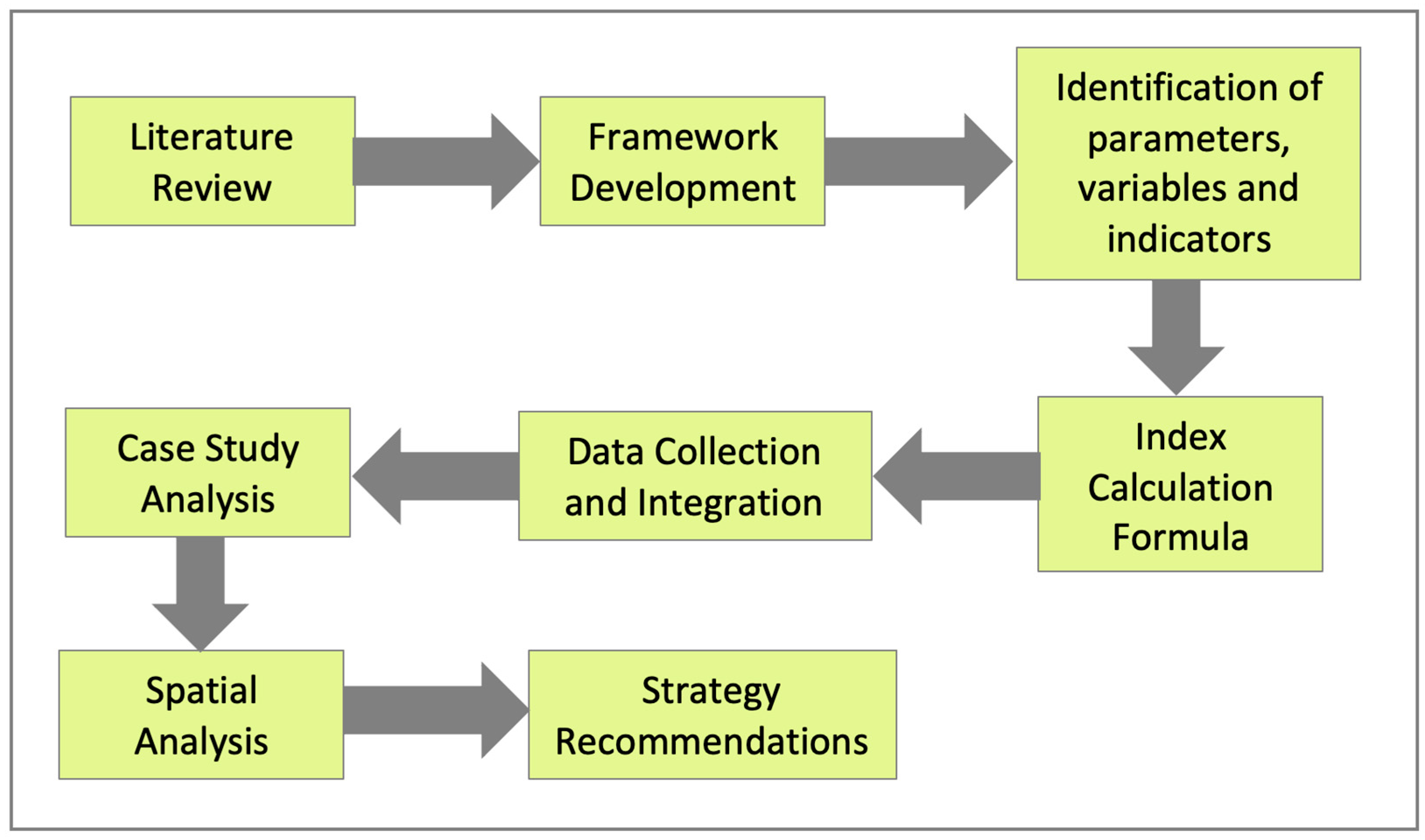
This study involves several stages, as outlined in
Figure 1.
First, conduct an extensive review of the literature for the purpose of informing the setting of a framework and the parameters, variables, and indicators to determine climate–health risks. Second, develop a conceptual framework to analyze climate–health risks by synthesizing the findings from the literature review and considering specific factors in the study areas. Third, set the parameters, variables, and indicators for determining the climate–health risks. Selection of the indicators was informed by a systematic literature review, data availability, and policy relevance (e.g., alignment with SDGs and national health and climate plans in Indonesia). Additionally, it was also informed by discussions with public health and environmental science stakeholders in our institutional partnerships. These may include weather station readings, satellite readings, socio-economic surveys, or public health surveillance. Fourth, develop a quantitative equation to calculate climate–health risks from the selected variables and indicators with a robust method for use in varied settings. Fifth, collect the data from various sources and present them in one form for concurrent analysis to ensure the consistency and quality of data. Sixth, apply the framework and formula established to conduct case studies in Banda Aceh, Mataram, and Ambon. This involves looking at patterns of spatial climate–health risks and hotspots where vulnerability, sensitivity, and exposure are greatest. Seventh, employ spatial analysis techniques, including GIS mapping, to map and analyze data patterns and distributions across the study area, showing the relationships between the variables. Eighth, using the findings of the case studies, make operational policy recommendations for policymakers and stakeholders to enhance adaptation and mitigation action. Recommendations will target improving public health infrastructure, community resilience, and integrating the consideration of climate change into urban planning and public health policy.
2.2. Study Location
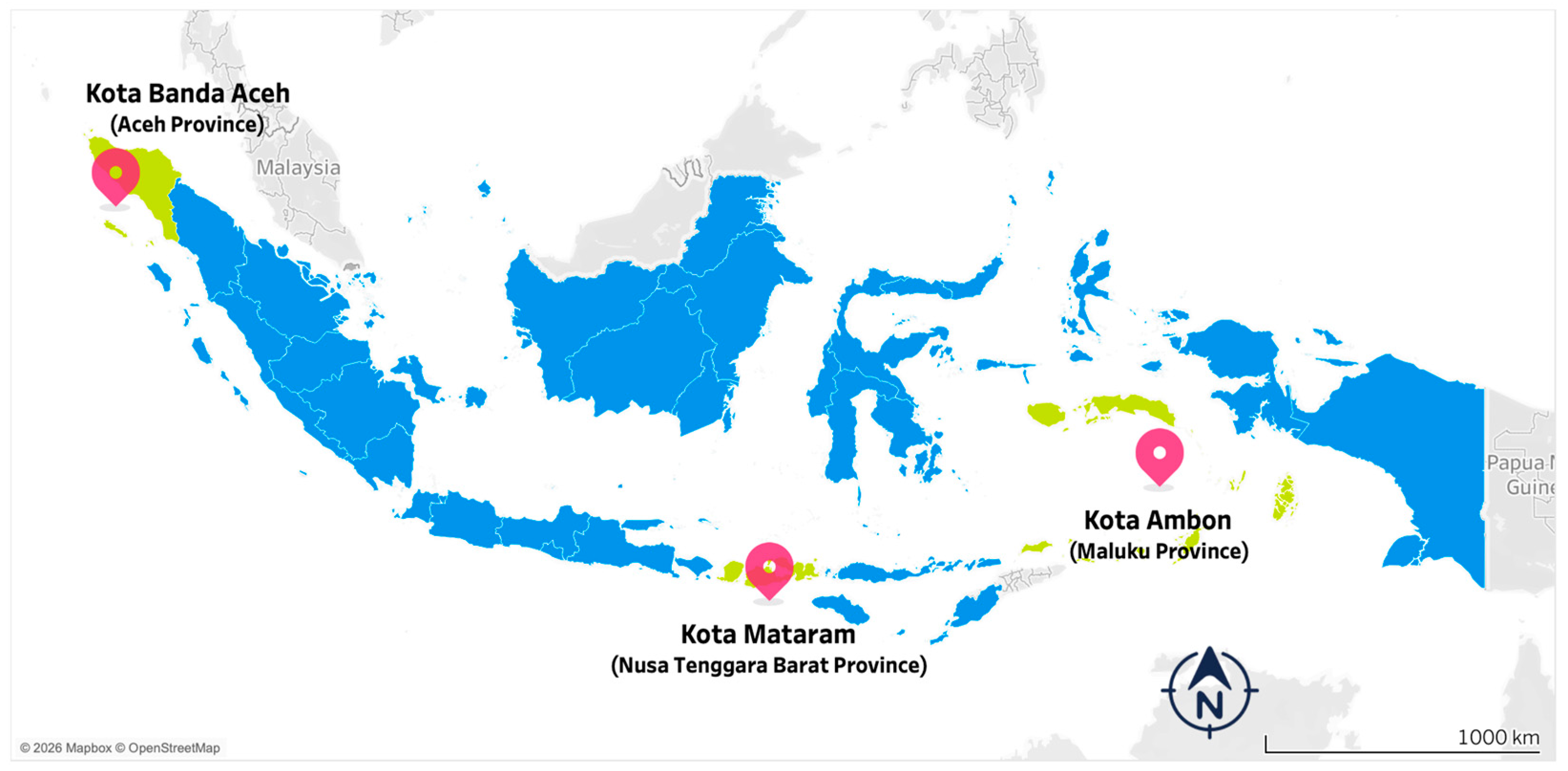
The pilot study was carried out in Indonesia, a nation that is highly susceptible to climate change impacts, especially in coastal regions. Banda Aceh, Mataram, and Ambon (see
Figure 2) were purposively selected to reflect western–central–eastern coastal typologies while leveraging existing health and municipal partnerships for data access. These cities represent specific urbanization patterns along the coastline of Indonesia, varying from highly populated provincial capitals (Banda Aceh, Ambon) to cities with considerable areas of urban–rural transition zones (Mataram). We do not claim national representativeness; rather, these sites provide contrasting testbeds to evaluate a village-scale, data system-aligned method that is transferable to other Indonesian cities.
2.3. Data Source
For this study, we integrated multiple data sources to conduct a climate–health risk assessment that captures both environmental and socio-economic dimensions. These sources include satellite-derived climate variables accessed via the Google Earth Engine (GEE), national village-level statistics from the Village Potential Statistics (PODESs), and official public health records from regional health offices. The Google Earth Engine is a cloud-based geospatial processing platform that enables efficient analysis of multi-petabyte datasets derived from a range of Earth observation satellites. It is particularly effective for monitoring climate trends, detecting environmental changes, and producing spatially explicit risk maps. In this study, the GEE was utilized to extract key climate variables using several datasets.
ERA5, the fifth-generation ECMWF climate reanalysis, provides hourly atmospheric variable estimates between 1979 and present day, i.e., estimates of air temperature, pressure, humidity, and 2 m height wind globally [
16]. The precipitation data were also gathered using the Tropical Rainfall Measuring Mission (TRMM) and the combined satellite missions of Global Precipitation Measurement (GPM) and NASA-JAXA. These datasets give rainfall intensity data with a high resolution at a millimetre scale by hour to gain an understanding of hydro-meteorological hazards [
17,
18]. For the wind speed and water balance variables, we used TerraClimate, a global climate dataset offering high-resolution monthly data based on both remote sensing and ground-based observations [
19]. All of the datasets were accessed and processed using JavaScript within GEE’s cloud computing interface and the results were exported in CSV format for further spatial and statistical analysis. The processing in GEE followed a standardized workflow. The relevant image collections (e.g.,
) were filtered by the time range from 2001 to 2020. For each climate variable, long-term annual means were computed. Village-level values were then extracted by applying the
function, where the feature collection consists of village administrative boundaries and the reducer “mean” was used to compute area-weighted averages from intersecting pixels.
In parallel, we employed Village Potential Statistics (PODESs) data to capture socio-economic conditions and infrastructure at the village level. The latest dataset, PODES 2021, covers more than 83,000 villages in Indonesia and also covers indicators related to education, health, working condition, infrastructure, and exposure to natural hazards [
20]. The PODESs data are essential in planning regional development and are used to determine the basis for the Village Development Index (
Indeks Desa Membangun) calculation, ranking villages as underdeveloped, developing, or independent. Furthermore, the PODESs data support the Geographic Difficulty Index (
Indeks Kesulitan Geografis/IKG), which is used by the Ministry of Finance to determine Village Fund allocations. The importance and effectiveness of the Village Fund Program, especially in relation to the Sustainable Development Goals (SDGs), have been assessed in recent studies that demonstrate its significance for rural development and governance [
21].
Extreme values (outliers) in the PODES 2021 socio-economic data were kept as valid representations of local vulnerability conditions; no statistical winsorization or truncation was performed. The climate datasets used are scientifically validated and are Level 3 products that have been rigorously calibrated and bias-corrected by the original data producers (ECMWF, NASA, University of Idaho for ERA5, TRMM/GPM, and TerraClimate, respectively).
The ERA5, TRMM/GPM, and TerraClimate grids were intersected with village polygons; for each variable we computed the area-weighted mean of all pixels overlapping a village to generate village-level climate exposure. By combining satellite-based environmental data with detailed local socio-economic statistics and health records, this study establishes a robust foundation for assessing climate-related health risks in Indonesia’s coastal and urban fringe areas. Data completeness was checked across all sources, and villages were excluded from the analysis if there were any missing values in the key indicators, to ensure no bias in the composite index calculation.
2.4. Data Integration
To create a robust baseline for climatic exposure, all climate variables were averaged over the 2001–2020 period. This was done as it represents long-term climatic norms, thus reducing the impact of short-term inter-annual variability, such as ENSO events, and creating a more stable measure of underlying exposure for comparative vulnerability analysis than the use of annual extremes. Although this does not align perfectly with the 2021 PODES snapshot for socio-demographic information or the 2020–2021 information for health outcomes, the temporal design was chosen for its ability to pair long-term climate information with more proximate vulnerability information as a means of better understanding long-term patterns of climate-related health risk, as opposed to transient or annually correlated relationships.
Health outcomes were measured as incidence rates per 1000 of the population for the 2020–2021 period to account for differences in village population size. These temporal considerations, a long-term climate baseline (2001–2020) combined with point-in-time vulnerability and recent health data, are consistent with the study’s aim of mapping relative spatial patterns of risk. This framework enhances the internal consistency of the integrated dataset for spatial analysis without implying short-term causal relationships, which would require longitudinal data beyond this study’s scope.
The climate–health risk assessment integrates multi-source data across four parameters (hazard, sensitivity, exposure, and adaptive capacity) following a standardized processing protocol for comparability. Climate hazard indicators (precipitation, temperature, wind speed, humidity) were derived from the satellite and reanalysis products (TRMM/GPM, TerraClimate, ERA5) via Google Earth Engine. These datasets cover a consistent 2001–2020 reference period and were calculated as long-term annual means. For spatial resolutions less than the administrative unit of a village (~0.1° to ~4 km), village-level climate values were retrieved using zonal statistics, where the area-weighted average of all intersecting raster pixel values was computed for each village, with the pixel value assigned to villages smaller than the pixel cell size. This is a typical approach for subnational-level climate risk studies, providing proxies for relative climatic exposure for risk ranking. All other indicators for sensitivity, exposure, and adaptive capacity were retrieved from the 2021 PODESs village census data, providing point-in-time data on socio-demographic characteristics. Each PODESs indicator is linked to a specific questionnaire code (e.g., R305A). Directionality was defined such that higher original values increased the risk for the hazard, sensitivity, and exposure parameters, whereas for adaptive capacity, higher values indicated greater capacity.
To align with the theoretical risk framework, all adaptive capacity scores were inverted before aggregation using the transformation 1 − normalized score. All continuous and count variables were normalized to a 0–1 scale via min–max normalization; binary and categorical data were first quantified (e.g., as 0/1 or prevalence rates) and then normalized. This systematic workflow, encompassing data extraction, spatial aggregation, directional alignment, normalization, and parameter aggregation, ensures methodological transparency and reproducibility. Spatial data extraction and aggregation were performed using the Google Earth Engine (JavaScript API). The subsequent data integration, normalization, index calculation, and statistical analysis were conducted using R statistical software (version 4.3.1).
2.5. Framework for Assessing Climate–Health Risk
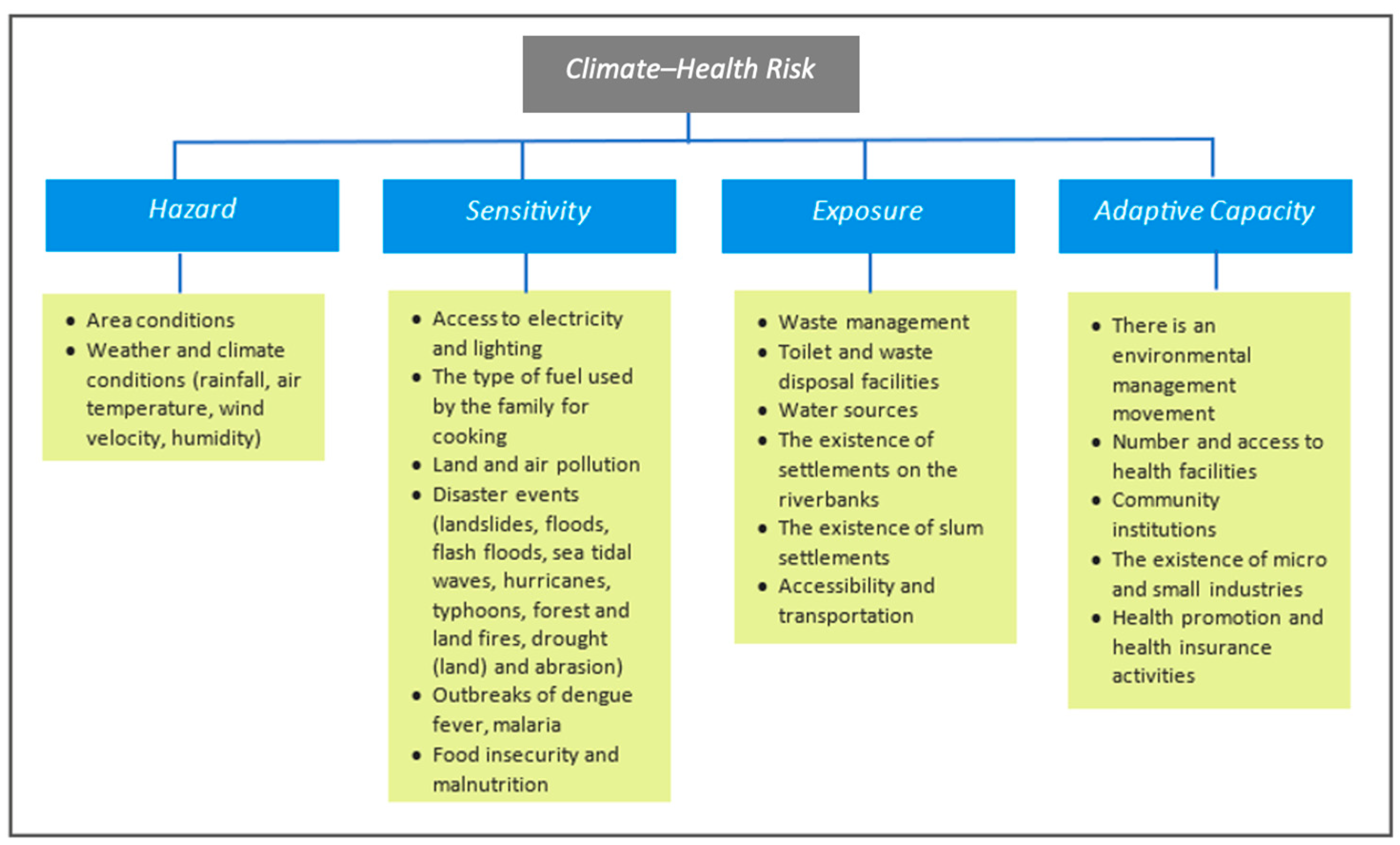
We have designed and developed a comprehensive framework for assessing climate–health risks, as illustrated in
Figure 3. This framework was constructed using integrative review and model modification of previous studies [
22,
23,
24,
25] and later tailor-made to the Indonesian setting.
The review procedure involved a review of grey and peer-reviewed literature published from 2010 to 2025 in Scopus, PubMed, Web of Science, and Google Scholar using the following keywords: “climate risk”, “health vulnerability”, “climate change and health”, “climate exposure”, and “adaptive capacity”. Articles were included if they (1) proposed a conceptual or quantitative risk assessment framework, (2) addressed at least two of the components of hazard, vulnerability, or exposure, and (3) provided disaggregated or quantifiable indicators. Excluded were studies focused only on single-disease outcomes without climate linkages or those not reporting indicator-level metrics. The final set of studies and reviews formed the evidence base for selecting the relevant indicators and structuring the composite index.
Health risks due to climate change are assessed using the Risk Model Concept (Risk/
R), which integrates hazard (
H), vulnerability (
V), and exposure (
E). Vulnerability (
V) is determined by sensitivity (
S) and adaptive capacity (
AC). The risk score [
26,
27] is calculated using Formula (1) or (2).
The risk index calculation involves four key parameters:
hazard (2 variables, 6 indicators),
sensitivity (9 variables, 97 indicators),
exposure (6 variables, 25 indicators), and
adaptive capacity (5 variables, 73 indicators). Assessment of these indicators (see
Supplementary Materials) relies on data sourced from PODESs and satellite imagery (Google Earth Engine).
Our methodology follows a composite index approach, which integrates multidimensional indicators into a single risk score, drawing from best practices used in global assessments such as the UNDP Climate Risk Index. Indicator selection was guided by data availability, policy relevance, and alignment with established frameworks (See
Appendix A).
This study employs a composite climate–health risk index structured around four principal parameters (PMs) with equal weighting (0.25 each). Each parameter is defined by specific indicator variables (VRs) with literature-derived weights. Parameter 1: Hazard (PM1) [
26] comprises two indicators: area conditions (VR11) [
21,
23] and weather/climate conditions (VR12) [
1,
19]. Parameter 2: Sensitivity (PM2) [
23,
28] integrates nine indicators: access to electricity (VR21) [
3,
29], cooking fuel type (VR22) [
30], pollution (VR23) [
1,
31], disaster events (VR24) [
2,
32], disease outbreaks (VR25) [
23,
33], food insecurity (VR26) [
33,
34], poverty (VR27) [
20], persons with disabilities (VR28) [
5], and environmental resources (VR29) [
1,
35]. Parameter 3: Exposure (PM3) [
1,
14] includes waste management (VR31) [
28,
36], sanitation facilities (VR32) [
23,
37], water sources (VR33) [
23,
34], riverside settlements (VR34) [
2,
38], slum settlements (VR35) [
35], and accessibility (VR36) [
10,
36]. Parameter 4: Adaptive capacity (PM4) [
9,
39] covers environmental movements (VR41) [
28], health facilities (VR42) [
4,
23], community institutions (VR43) [
34,
35], local industries (VR44) [
30,
39], and health promotion (VR45) [
23,
40].
All indicators were normalized for comparability and then aggregated at the variable level before being further combined at the parameter level. Equal weighting was applied to the four main parameters: hazard, sensitivity, exposure, and adaptive capacity (assigning a weight of 0.25 to each). Within each parameter, the associated variables were also weighted equally. This approach reflects a normative and transparent decision in the absence of a robust empirical or expert basis for assigning differential weights. Equal weighting is widely accepted in the construction of composite indices, especially in contexts where expert elicitation or statistical methods such as principal component analysis (PCA) or the Analytic Hierarchy Process (AHP) are not feasible [
37]. In public health-focused vulnerability assessments, equal weighting helps avoid giving undue weight to one risk dimension over another in the absence of context-specific evidence, which is also in line with frameworks proposed by WHO and more recent research on climate–health impacts [
24,
25,
26,
40]. Although sensitivity analysis could have been used to refine the weighting approach, the equal weighting approach is consistent with several climate–health risk frameworks and is transparent for interpreting relative risks among villages.
The risk score calculation begins with computing the variable and parameter scores, as outlined below. The score for each variable is found using Formula (3):
Binary and categorical indicators were quantified prior to aggregation: binary items were assigned values of 1 (yes) or 0 (no), and categorical items were expressed as village-level prevalence rates. All indicators were normalized using a min–max approach to rescale values to a common 0–1 range prior to aggregation. This ensures comparability across indicators with differing units and scales while preserving the relative distribution of each variable.
The score for each parameter is generally calculated using Formula (4):
Scores are categorized as: “very low” (Category 1) for scores < 20, “low” (Category 2) for scores between ≥20 and <40, “medium” (Category 3) for scores ≥ 40 and <60, “high” (Category 4) for scores between ≥60 and <80, and “very high” (Category 5) for scores ≥ 80.
To ensure conceptual consistency with the theoretical models (Equations (1) and (2)), where a higher adaptive capacity reduces overall risk, the aggregated adaptive capacity parameter (
) was transformed prior to the final risk score calculation. The normalized
score, which initially represents the level of capacity, was inverted to represent an adaptive deficit using Formula (5):
where
is the transformed parameter score used in subsequent aggregation.
The risk score is calculated using Equation (6):
where
= Total score of indicators within variable I;
= Score of each variable j;
= Number of indicators in variable j;
= Score of each parameter k;
= Hazard parameter score;
= Sensitivity parameter score;
= Exposure parameter score;
= Inverted adaptive capacity parameter score;
= Weight for each variable j;
= Total of all parameters score;
= Risk score.
To calculate the score for each parameter, use Formulas (7)–(10):
3. Results
Overall, the analysis indicates that out of a total of 190 villages across three cities (Banda Aceh, Mataram, and Ambon), nearly all of the villages (92.11%) are categorized as high risk, with the remaining (7.89%) classified as very high risk. Regarding the hazard index, 63.68% of villages are categorized as low risk, 25.26% as high risk, and 11.05% as very high risk. Notably, all villages (100%) have a very high sensitivity index. This uniformity, driven by the high prevalence of solid cooking fuel use, widespread food insecurity and malnutrition, significant populations of persons with disabilities, and limited access to electricity and clean water, reveals that underlying socio-economic vulnerability is a pervasive and serious baseline condition across the region. While this result precludes fine-grained intra-city prioritization, it represents a key substantive finding: the tool successfully identifies a region in systemic crisis, shifting the policy implication from village-level ranking to the need for broad, programmatic intervention. Additionally, the majority of villages demonstrate a low adaptive capacity index (78.95%), while the remainder are split between the medium (20.53%) and very low (0.53%) categories. In terms of the exposure index, the majority of villages fall into the low (64.74%) and medium (34.74%) categories, with a minimal percentage (0.53%) classified as very low.
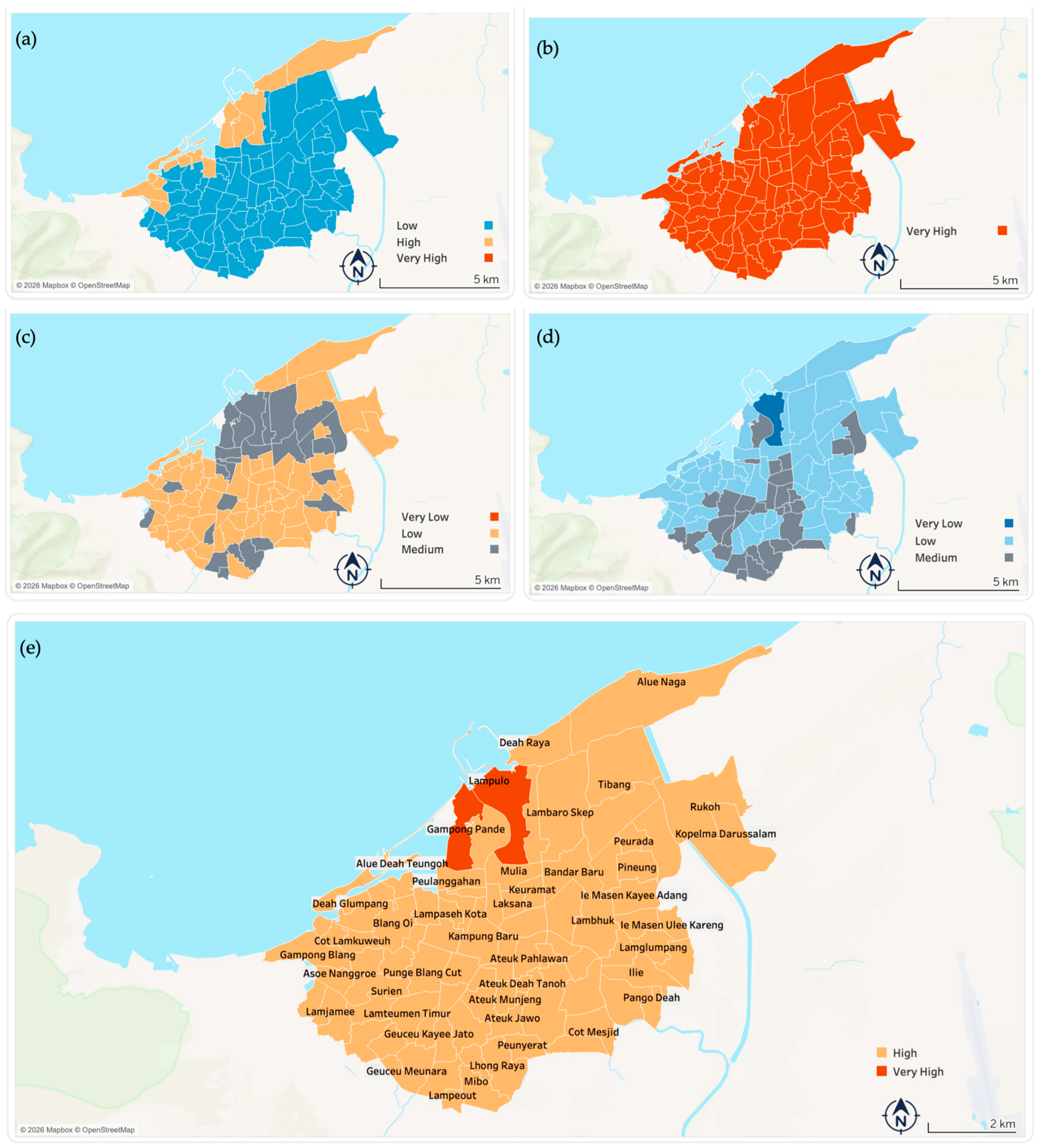
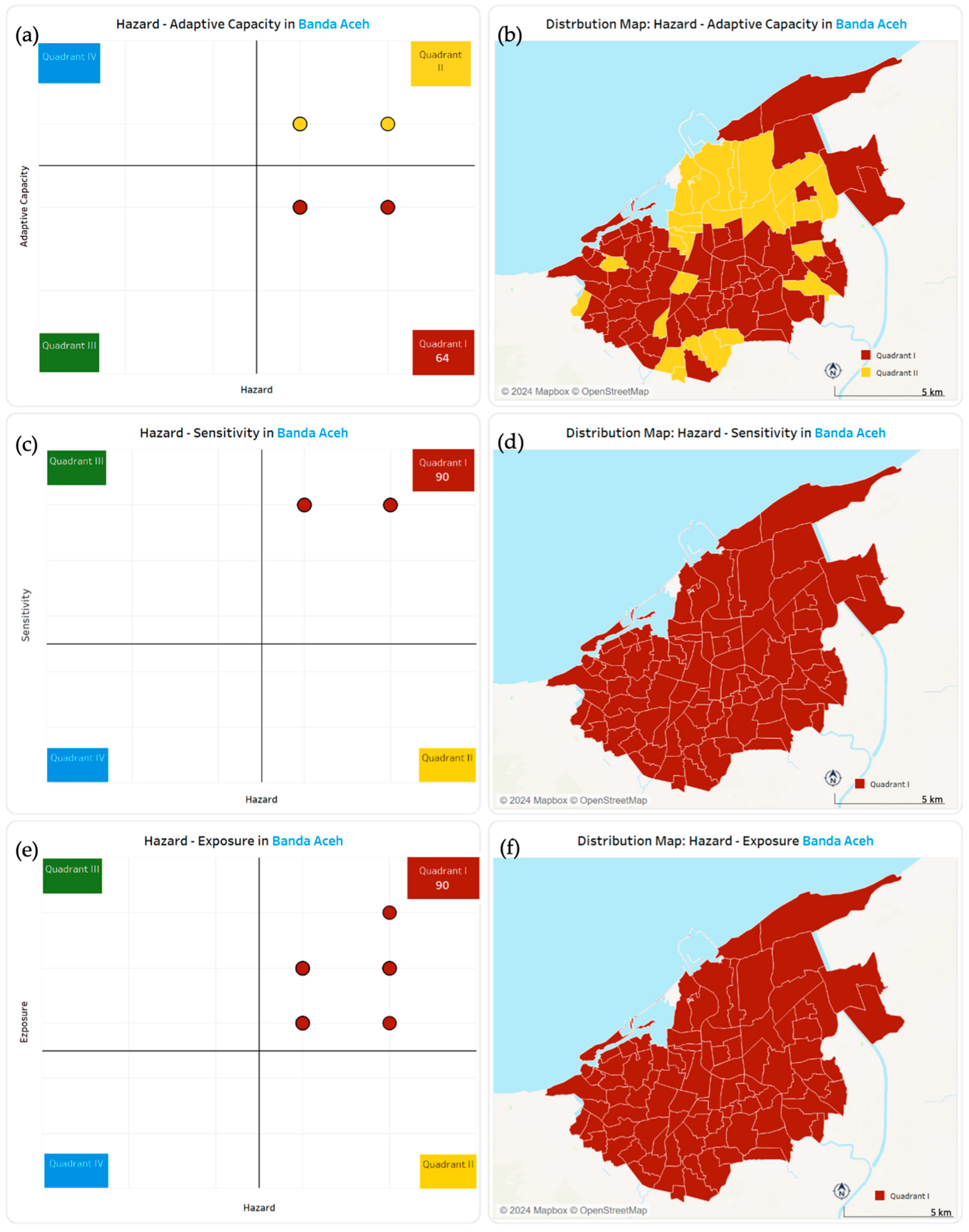
The assessment of 90 villages in Banda Aceh reveals that the majority of them fall within the high to very high risk indexes.
Figure 4 illustrates the spatial distribution of climate–health risk in Banda Aceh. Specifically, 85.56% of the villages have a low hazard index, and 14.44% are high-hazard areas. All the villages (100%) have a very high sensitivity index. Adaptive capacity index reveals that 71.11% of villages are low capacity and 28.89% of villages have a medium capacity. Regarding exposure, 63.33% villages have low exposure, 35.56% villages have medium exposure, and 1.11% villages have very low exposure.
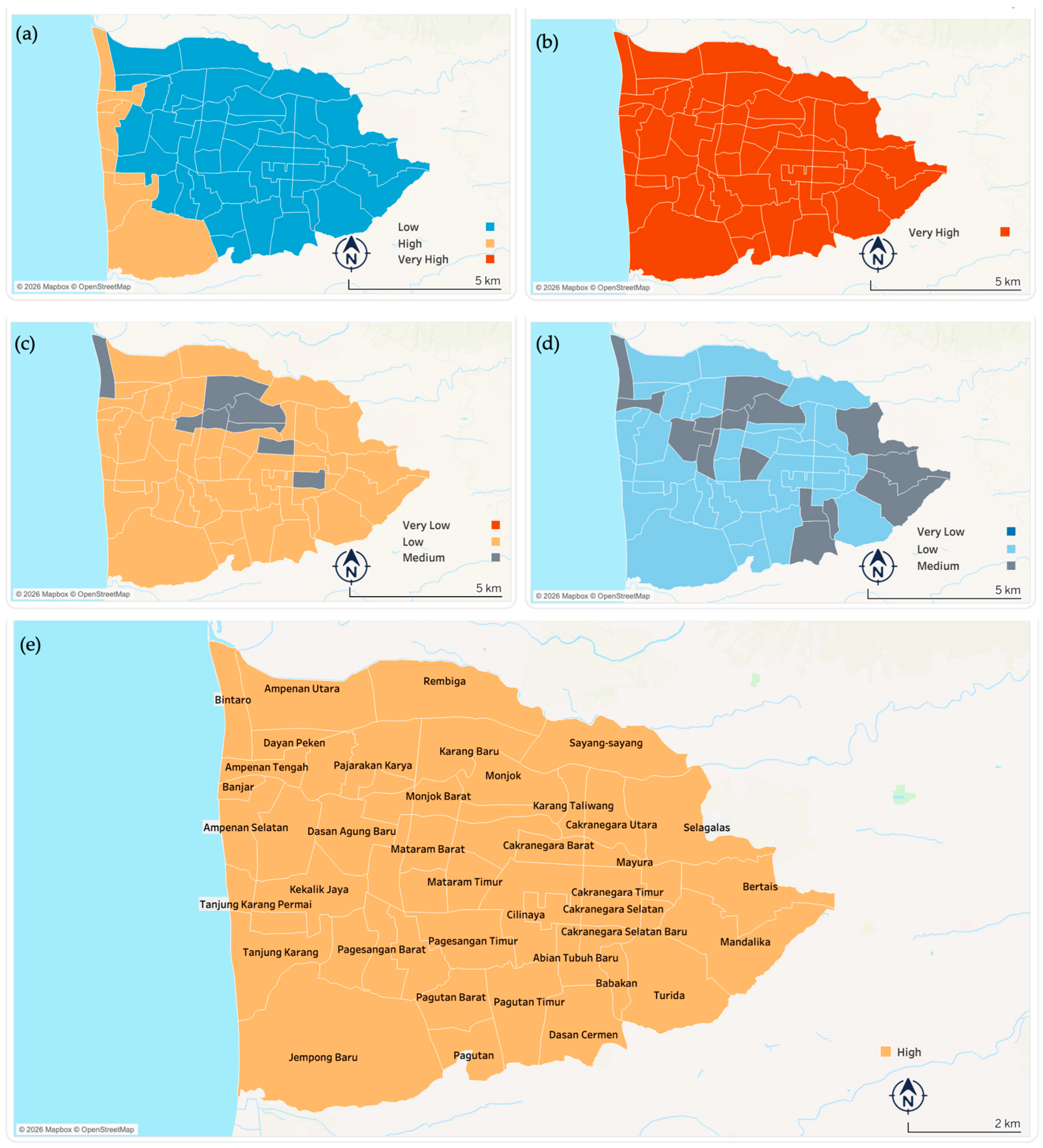
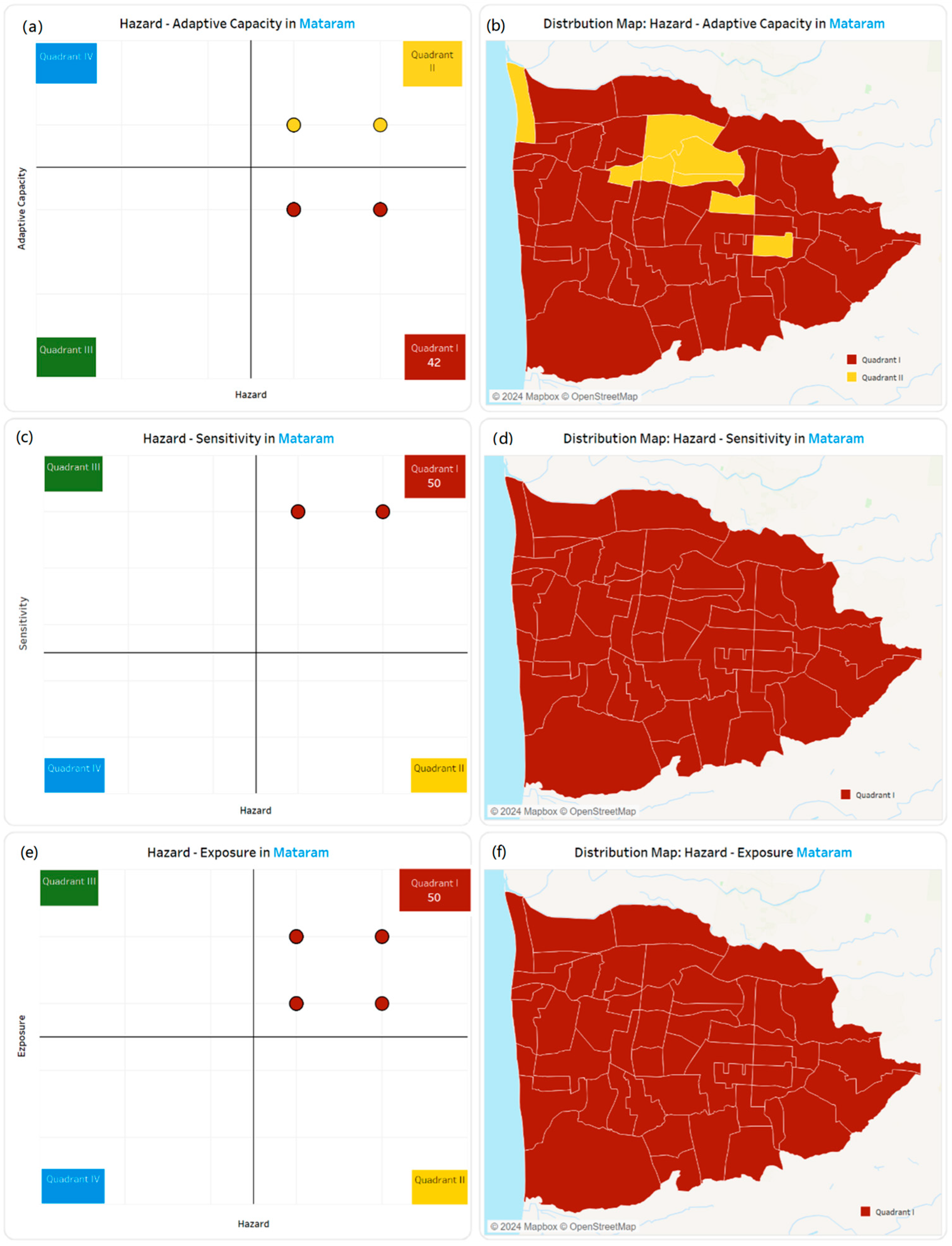
Comparatively, all 50 villages in Mataram exhibit a high risk index (100%). The spatial distribution analysis of climate–health risk in Mataram is depicted in
Figure 5. A similar pattern is observed, with 86% having a low hazard index and 14% categorized as high-hazard. Like Banda Aceh, all of the villages (100%) show a very high sensitivity index. However, Mataram indicates a higher percentage of villages with a low adaptive capacity (84%) compared to Banda Aceh, where 16% have a medium adaptive capacity. For exposure, 70% of the villages have low exposure, and 30% have medium exposure.
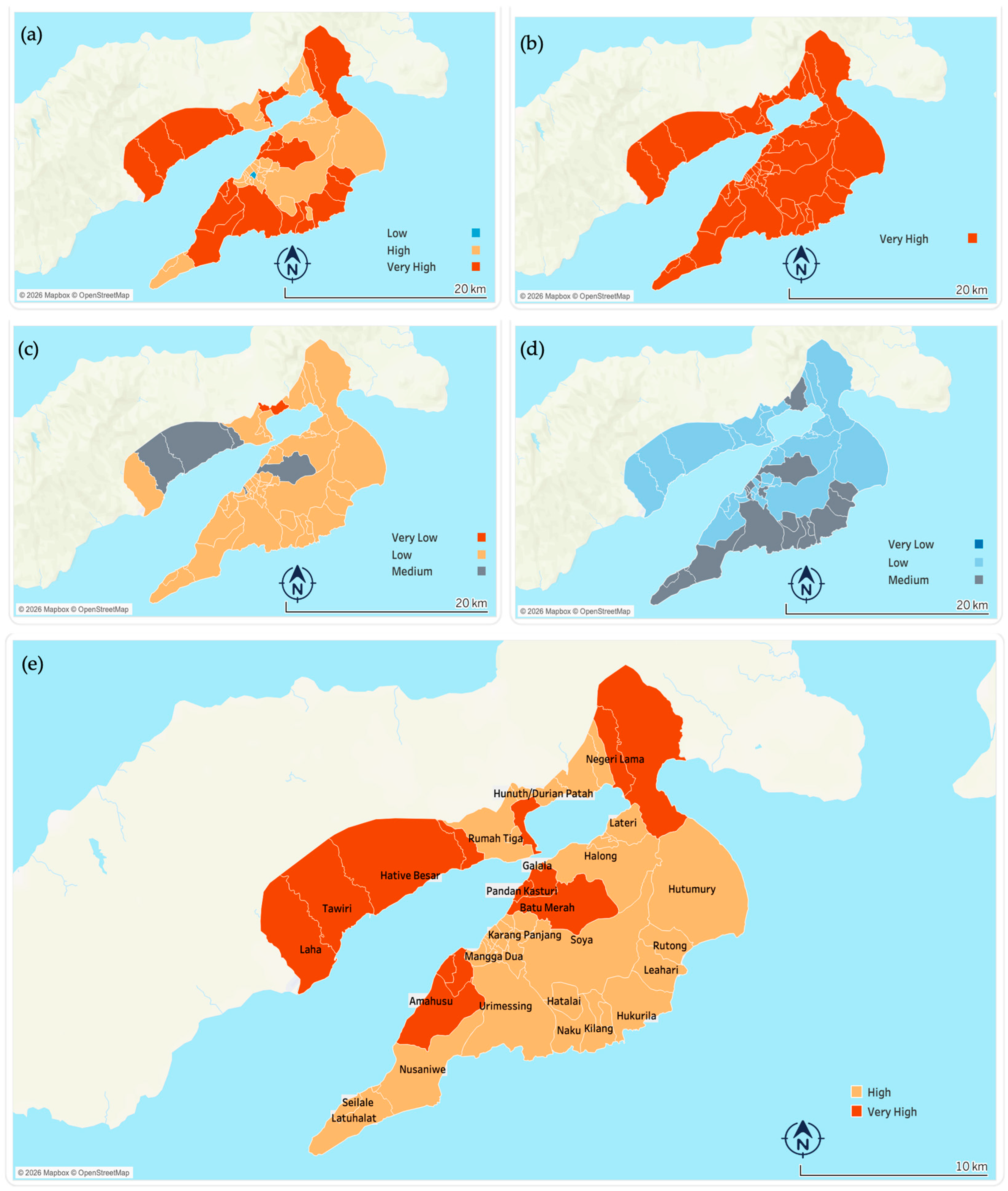
The assessment of 50 villages in Ambon revealed predominantly high and very high hazard indexes.
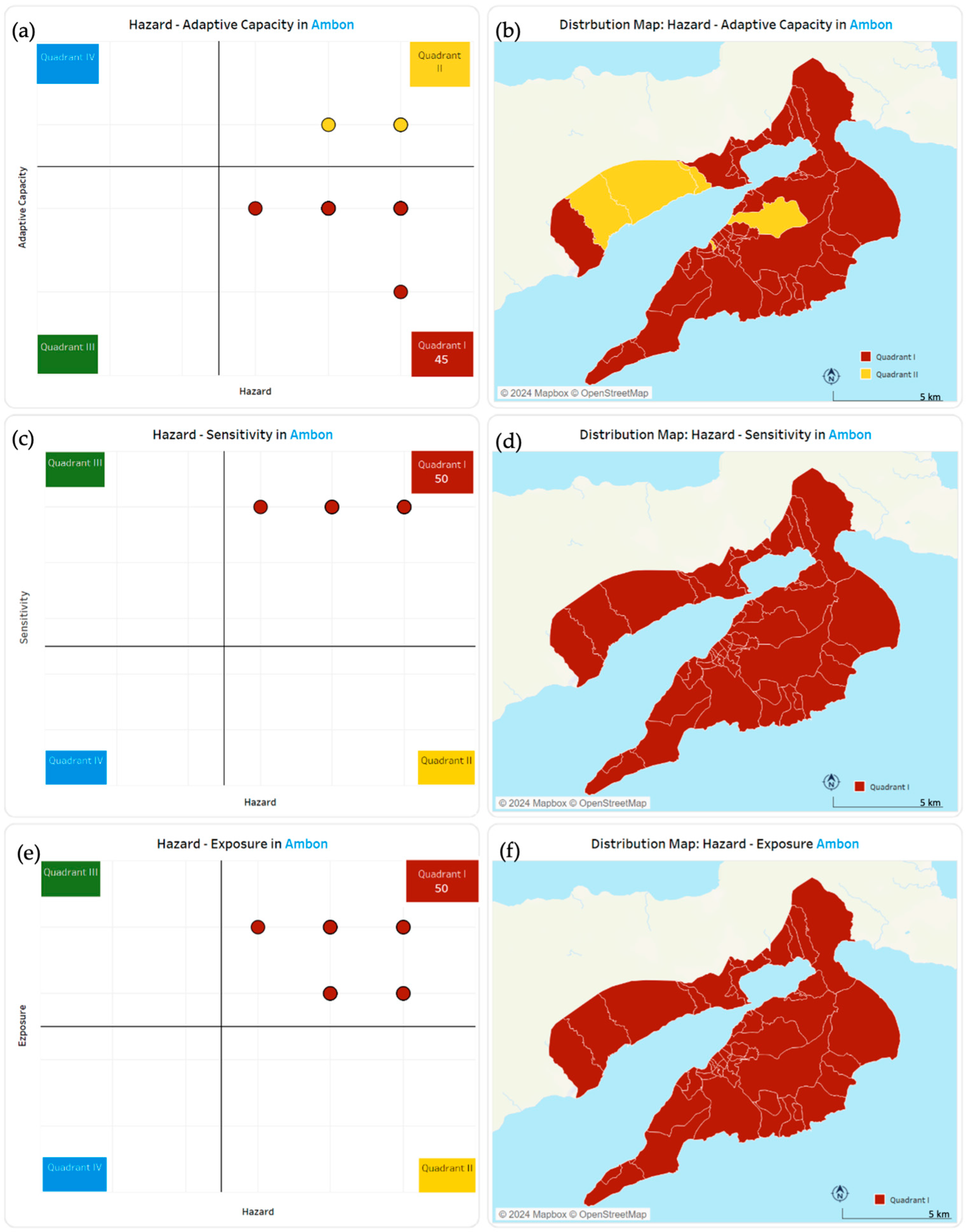
Figure 6 indicates the spatial distribution analysis of climate–health risk in Ambon. In contrast to Banda Aceh and Mataram, 56% of the villages are classified as high-hazard, 42% as very-high-hazard, and 2% as low-hazard. Like other cities, all of the villages (100%) exhibit a very high sensitivity index. However, Ambon shows a higher proportion of villages with a low adaptive capacity (88%), with 10% having medium a capacity and 2% having a very low capacity. Regarding exposure, 62% of villages have low exposure, while 38% have medium exposure.
From the assessment findings, Banda Aceh and Mataram predominantly face lower hazard indices than Ambon, where a significant portion of villages fall into higher hazard categories. This suggests varying preparedness and vulnerability across these cities to climate-related risks. The consistently high sensitivity index across all locations underscores the critical need for adaptive strategies despite the differing capacities observed in the adaptive capacity indices. These insights highlight the nuanced regional differences crucial for targeted climate resilience interventions.
We conducted a quadrant analysis (see
Appendix A) to evaluate the hazard index alongside the sensitivity, adaptive capacity, and exposure indices. For this analysis, the “high” and “low” categories were defined by median splits for each index, where villages above the median were considered “high” and those below the median were considered “low”. This method enables us to prioritize interventions to mitigate climate–health threats by specifying the key areas that need to act, based on these various indices.
Under both the hazard index and adaptive capacity analysis, Quadrant I has the priority, wherein the hazard index is high while adaptive capacity is low. Quadrant II indicates zones of high adaptive capacity and high hazard, reflecting potential opportunity for the expansion of strengths already present to minimize risks further. Quadrant III shows zones with a low hazard index but a low adaptive capacity, hence the need for capacity building even when the surrounding hazards are of lesser priority. Quadrant IV shows zones of low hazard and high adaptive capacity, implying comparatively high resilience for these zones. There are 64 villages in Quadrant I and 26 villages in Quadrant II in the Banda Aceh city. Mataram depicts 42 villages in Quadrant I and eight villages in Quadrant II, while Ambon depicts 45 villages in Quadrant I and five villages in Quadrant II for adaptive capacity estimation.
Quadrant I again becomes the primary priority area where both the sensitivity and hazard indices are high, indicating higher vulnerability in sensitivity analysis. Quadrant II shows high hazards but low sensitivity, indicating areas where vulnerability is more determined by environmental conditions compared to inherent community traits. Quadrant III shows low hazard but high sensitivity, indicating the need for community-specific vulnerability-focused interventions. Quadrant IV is characteristic of low-hazard and low-sensitivity areas, indicating lower overall vulnerability. In Mataram and Banda Aceh, all of the villages (90 villages in Banda Aceh, 50 villages in Mataram, and 50 villages in Ambon) fall under Quadrant I in sensitivity analysis, i.e., they have an equally high vulnerability.
For exposure analysis, Quadrant I indicates high hazard and exposure indices, which correspond to high risk from equally high magnitudes of hazard and direct exposure. Quadrant II is high-hazard but low-exposure, bringing attention to where lower levels of direct exposure minimize the impact of hazards. Quadrant III is low-hazard but high-exposure, bringing attention to where exposure to climate–health hazards takes place despite lower levels of hazards. Quadrant IV is low-hazard and low-exposure, depicting relatively lower risk. In Banda Aceh, Mataram, and Ambon, all of the villages (90 in Banda Aceh, 50 in Mataram, and 50 in Ambon) are in Quadrant I in the exposure analysis, indicating that there are widespread high-risk exposure conditions in these locations.
The results of the quadrant analysis show that there are clear prioritization patterns for the villages. with regard to the critical question of hazard vs. adaptive capacity, 151 out of 190 villages (79.5%) are categorized in the highest prioritization category, Quadrant I (high hazard, low adaptive capacity), with the remaining 39 villages in Quadrant II (high hazard–high adaptive capacity). However, it is pertinent to mention here that there are no villages under the low-hazard quadrants III and IV. On the other hand, for the hazard sensitivity and hazard exposure analyses, all 190 villages (100%) are located in Quadrant I (high-high) of both analyses, thereby confirming that all villages have a universal baseline of high sensitivity and exposure. This indicates that Ambon’s 45 high-hazard, low-capacity villages are the most urgent targets, while also suggesting that risk reduction strategies must address both capacity building and overall strategies to reduce ubiquitous sensitivity and exposure.
4. Discussion
The results of this climate–health risk analysis, grounded in a composite informatics framework, reveal notably high hazard levels and very high sensitivity across all of the villages studied in the three coastal cities. From a sustainability perspective, these findings support existing evidence on the vulnerability of coastal communities in similar typologies to climate impacts, particularly in low-resource contexts [
2,
41]. Our study further illuminates how socio-environmental data, when systematically collected, normalized, and integrated, can be transformed into actionable information for sustainable public health and care planning.
Importantly, this work reflects the dual dimensions of informatics systems that are central to sustainability-oriented governance: the nature of the data (its structure, variability, and representation) and its functional use in informing decisions at the intersection of health and climate resilience. The sensitivity scores in our model, derived from multidimensional indicators such as access to infrastructure, air and land pollution, and economic conditions, underscore the entrenched disparities that characterize vulnerable populations and illustrate how structural inequities undermine sustainable development trajectories [
31,
36].
The uniform “very high sensitivity” score across all villages carries significant implications. Methodologically, it highlights that while the result limits the tool’s discriminatory power for granular, within-region prioritization, it successfully fulfils its primary screening function—to identify geographic areas in a state of systemic crisis requiring broad, programmatic responses. The tool retains analytical value for identifying priority combinations of risk parameters (e.g., through quadrant analysis) and for comparative analysis with other regions. This is not an artefact of the method but is critical evidence of severe and extensive deprivation, which represents a uniformly high level of vulnerability as a starting point. This finding also emphasizes the need for climate adaptation strategies integrated with holistic development programmes targeting the underlying causes of vulnerability. These insights emphasize that beyond physical exposure, structural inequities in care access and infrastructure remain central determinants of climate–health risk, all of which are core concerns within the sustainability discourse [
28,
38].
We also observed low levels of adaptive capacity in multiple locations, highlighting systemic limitations in local health systems, environmental governance, and public services. Adaptive capacity, from a sustainability perspective, is a fundamental enabling condition for longer-term resilience, joining short-term climate risk management to continued institutional and community development. These results align with the previous literature suggesting that climate resilience is not merely a function of environmental exposure, but also of institutional support, community agency, knowledge creation and capacity building [
35,
39,
42,
43]. This reinforces the value of informatics approaches that not only diagnose vulnerabilities but also facilitate planning for equitable, person-centred interventions.
From an informatics systems perspective, our methodology draws on the life-cycle of sustainability-relevant data, ranging from collection via satellite and survey sources to transformation through normalization and aggregation into a composite risk index. All of these are in line with general debates on the integration of data from communities within the frameworks of health adaptation policies in climate change scenarios [
44]. Although the design framework of our model is based on international frameworks, we appreciate the relevance of methodological clarity. In addition, we appreciate areas which call for expansion in informatics rigour. For instance, while internal consistency checks and correlation analysis helped validate the model, external benchmarking against health outcomes or social care metrics was constrained by data availability, which reflects broader data gaps that are common in sustainability monitoring at local scales.
Expanding on this notion, a key limitation stemming from these data constraints is the lack of external validation with existing health outcome data sets. In other words, our validation was limited to internal consistency (i.e., face validity, checking directional relationships between sub-indices, etc.). Accordingly, the scientific contribution of this research is largely methodological and operational: it shows how a transferable methodology for aggregating disparate, publicly available data sources to produce a high-resolution, multi-component risk screening tool for a nation-sized population is feasible. This tool is a robust starting point for the relative prioritization of populations at risk, a critical need for proactive climate adaptation planning, particularly where such data are scarce. Further research should be conducted to correlate the index with existing longitudinal health outcome data sets to calibrate its predictive potential. In spite of these limitations, this tool is a significant improvement over existing hazard maps because it incorporates the critical vulnerability elements that determine where climate-related hazards may manifest as human health concerns.
Addressing this gap in future iterations will involve linking the risk index to health surveillance systems or care delivery metrics to examine predictive validity and practical utility in real-world care contexts. Overall, this study contributes to the sustainability literature by demonstrating how digital and environmental informatics can inform health and social care systems, particularly in climate-exposed, underserved regions. It highlights how integrated, person- and community-centred risk assessments can support not only emergency planning but also long-term investments in care equity, infrastructure, and resilience, as key dimensions of sustainable development.
This study’s climate–health vulnerability mapping offers a robust evidence base for designing targeted interventions in Indonesia’s coastal areas. By integrating high-resolution satellite imagery with village-level socio-economic and public health data, a composite risk index was developed to reflect actual field conditions, capturing climate hazard exposure, public health sensitivity, and adaptive capacity. The resulting GIS-based maps allow health authorities to identify priority villages facing high risks, such as frequent climate-sensitive diseases, poor access to care, or environmental health stressors. This enables the more efficient and equitable allocation of resources, including medical personnel, emergency supplies, and disease surveillance systems.
Findings also inform city-specific and provincial policies by highlighting gaps in community adaptive capacity and supporting the integration of climate–health education, early warning integration, and cross-sector planning into long-term development strategies. City-specific, parameter-linked recommendations include: (i) prioritize Banda Aceh‘s WASH infrastructure upgrades for high-exposure riverbank settlements where flooding and waterborne disease risks are elevated; (ii) scale up primary health care services and expand health insurance coverage in communities with low adaptive capacity scores in Mataram to promote equitable and sustainable health access; (iii) in Ambon, implement applicability coastal green belts and intensified vector control programmes in high-hazard villages that are vulnerable to vector-borne diseases and storm surge impacts, in order to enhance ecosystem-based adaptation and reduce long-term exposure to climate and health hazards. Moreover, this approach can be integrated into regional health information systems to support continuous monitoring and long-term health adaptation strategies, thereby enhancing the sustainability of climate–health response over time.
Several limitations should be acknowledged. First, the equal-weighting scheme, though transparent and normatively defensible, may not correspond with local priorities, and future studies could involve sensitivity analysis. Second, although resolution of climate data for comparative risk ranking purposes was adequate, it may not reflect microclimatic changes within villages. Third, though the research adopted a cross-sectional research design, the use of a longitudinal research design would have helped in the understanding of the dynamics of risk. Fourth, for the framework to be applicable in different settings, testing the framework in different geographic and socio-cultural locations is important.
5. Conclusions
This research provides a transferable approach for climate–health vulnerability analysis by merging high-resolution satellite climate data with village-level socio-economic census data (PODES). While employing a normative equal-weighting scheme, the framework’s transparent methodology offers a replicable model for comparative risk ranking, shifting from hazard-only mapping to integrated vulnerability assessment, identifying communities where high sensitivity and low adaptive capacity converge with climate threats. The nature of this index, as a cross-sectional study using data that is readily available, is such that it is probably best used as a screen for spatial prioritization and proactive planning, rather than as a predictive tool. The results call for a dual track approach in policy formulation. First, the fact that socio-economic vulnerabilities are widespread requires mainstreaming climate adaptation into development interventions such as poverty reduction, renewable energy, and health. Second, the approach enables geographical targeting. Prioritization of financial support to villages that are highly vulnerable and have low adaptive capacity is important, such as upgrading WASH infrastructure in flood-prone villages or upgrading health infrastructure in remote villages. This model provides a directly transferable blueprint. Other coastal districts can replicate this approach by merging their administrative data with publicly available climate data. The inclusion of this index into health information systems can convert it into a continuous monitoring and adaptive management system, which is a major milestone from generic preparedness to evidence-based targeted investment for resilience.