1. Introduction
The phenomenon of business failure has emerged as a prominent area of interest across fields such as business management, economics, and data science. The advent of the novel Coronavirus (SARS-CoV-2) pandemic exposed critical vulnerabilities in business survival, prompting a more extensive exploration of factors such as scale, scope, and experience [
1]. Innovative methods have been adopted to investigate its causes. Cui et al. [
2] applied the grey-DEMATEL method to analyze green business failures, while Ben Jabeur et al. [
3] used the CatBoost model to enhance bankruptcy prediction. The extant body of regional studies has also contributed to the discourse; Svabova et al. [
4] focused on failure prediction in Slovak SMEs, and Mayr et al. [
5] examined entrepreneurial traits and failure causes in Austrian SMEs. This diversity underscores the intricacies of business failure and the necessity of continuous, multidimensional research.
Research on business failure has gained prominence due to its relevance in understanding corporate survival and sustainability. This study provides empirical insights into the personal and contextual causes of failure in Austrian SMEs, thereby underscoring the significance of this topic in business research. Financial transparency has also been examined as a key factor, with Muñoz-Izquierdo et al. [
6] emphasizing the role of audit report disclosures in preventing collapse.
Technological advances have enhanced predictive capabilities; see Jang et al. [
7], as well as Carmona et al. [
8], for a discussion of the effectiveness of deep learning (RNN) and machine learning models (XGBoost) using diverse variables. From a historical perspective, Jayasekera [
9] traces the evolution of business failure prediction, thereby establishing a foundation for future research and strategy development.
Despite the growing interest in studying business failure, the existing literature reveals significant gaps that call for bibliometrics to delineate and address unexplored research areas. In Kücher and Feldbauer-Durstmüller’s [
10] bibliometric analysis, the scientific frontier of the topic was outlined, but there were notable gaps in the global understanding of the phenomenon of business failure that this review failed to cover. Furthermore, recent research [
11] examined certified knowledge of business failures until 2012. However, current trends and developments require a more recent and detailed evaluation.
A thorough analysis of the scientific literature indicates that the concept of business failure and its various aspects have not been fully explored, which raises questions about the variability and applicability of existing models despite the efforts made [
12]. When rereading business failures from an entrepreneurial perspective in 2023, a lack of consensus was perceived in the definition and measurement of failure. Therefore, a bibliometric evaluation is urgently required to identify and fill these conceptual gaps. In this context, conducting a targeted bibliometric study on business failure is essential to provide a comprehensive overview of current research on business failure, identify underexplored areas, and guide future research directions. This study aims to investigate research trends related to business failure. To this end, the following questions were formulated:
What are the years in which business failure has been the most interesting?
What type of growth does the number of scientific articles on business failures present?
What are the main research references to business failure?
What is the thematic evolution derived from the scientific production of business failure?
What are the main thematic clusters of business failures?
What are the growing keywords in business failure research?
What themes are positioned as protagonists for the design of a research agenda on business failure?
In line with the aim of this review, the study specifically seeks to answer: What are the dominant research trends in business failure? How have these trends evolved over time and across regions? And why does understanding these patterns contribute to better theoretical and managerial decision-making? This reinforces the study’s purpose to identify underexplored dimensions and promote a more integrated research agenda on business failure.
To achieve this objective, the bibliometric analysis was supported by specialized tools. Microsoft Excel® was used for data extraction, cleaning, and the organization of bibliometric indicators, while VOSviewer®, in its version 1.6.18, was applied to visualize co-authorship, co-citation, and keyword co-occurrence networks. This combination ensured a rigorous and transparent process, enhancing both the quantitative and conceptual interpretation of the results.
This article contributes uniquely to the literature on business failure by integrating bibliometric and thematic perspectives to offer a structured understanding of the phenomenon. Unlike previous fragmented reviews, this study groups the existing research into three major thematic categories—causes of business failure, predictive models, and crisis management and recovery strategies—thus enabling a more coherent interpretation of the field’s evolution.
Furthermore, this study advances the literature by proposing a comprehensive framework that links traditional financial and organizational variables with emerging technological approaches, such as machine learning and artificial intelligence, in the prediction and prevention of failure. By combining methodological rigor, thematic organization, and a future-oriented research agenda, this article provides both theoretical and practical insights for scholars and practitioners seeking to understand and mitigate business failure in dynamic economic contexts.
Research Hypotheses
In accordance with the research questions and objectives, the following hypotheses are proposed to guide the bibliometric analysis and thematic interpretation of business failure studies:
H1. There is a significant increase in the scientific production on business failure in recent years, indicating growing academic interest and diversification of approaches.
H2. The literature on business failure can be grouped into consistent thematic clusters, mainly focused on financial causes, predictive modeling, and crisis management.
H3. Emerging technologies such as machine learning and artificial intelligence are becoming central tools for predicting and preventing business failure.
H4. There are notable geographic and institutional differences in the study of business failure, reflecting uneven research development across regions.
H5. The integration of bibliometric and thematic perspectives allows for the identification of conceptual gaps and the formulation of a research agenda that advances the understanding of business failure.
2. Materials and Methods
This study presents an exploratory bibliometric analysis based on secondary sources, following the PRISMA 2020 methodology (please see the
Supplementary Material) to ensure transparency in the selection, analysis, and reporting process [
13]. The objective of this study is to provide a systematic review of the extant literature on business failure, with the aim of identifying emerging trends, research gaps, and thematic patterns. Furthermore, the study underscores the significance of ethical leadership in averting organizational failure. Al Halbusi et al. [
14] underscore the pivotal role of ethical leadership, the moral identity of subordinates, and self-control in reducing the likelihood of failure. The integration of these ethical dimensions has been demonstrated to enhance comprehension of business failure and to inform superior management practices.
The PRISMA 2020 framework, originally developed for systematic reviews of clinical and social science studies, was adapted in this research to suit the requirements of bibliometric analysis. This adaptation maintained the core stages of the PRISMA protocol—identification, screening, eligibility, and inclusion—while aligning them with the specific processes of data retrieval and refinement in bibliometric research.
In the identification phase, search equations were designed and applied across the selected databases (Scopus and Web of Science) using defined inclusion terms related to business failure. During the screening phase, duplicate and incorrectly indexed records were removed to ensure data accuracy. The eligibility phase involved the application of exclusion criteria, such as limited access, incomplete metadata, or marginal relevance to the topic. Finally, the inclusion phase consolidated the corpus of highly relevant studies (rated 3 on the relevance scale) that met all quality and thematic criteria.
This methodological adaptation ensures transparency and replicability, maintaining the systematic rigor of PRISMA while optimizing its structure for quantitative bibliometric evaluation.
2.1. Eligibility Criteria
The selection criteria were designed to identify and choose relevant records through the inclusion of specific keywords within titles and descriptors. This approach guaranteed a comprehensive representation of studies related to the subject, encompassing the different dimensions of business failure and the diverse terminology used to refer to this concept in academic publications. The search procedure emphasized locating core ideas within the metadata of the documents analyzed.
The bibliometric exclusion process was structured in three stages. The first stage removed all entries that contained indexing errors to preserve the accuracy and consistency of the database. In the second stage, documents without full-text availability were excluded. This restriction was applied exclusively to Systematic Literature Reviews, since bibliometric analyses rely primarily on metadata. Finally, the third stage discarded materials with incomplete indexing, conference papers, and works with only peripheral relevance to business failure.
2.2. Source of Information
The Scopus and Web of Science databases were chosen as primary sources of information. This choice was based on the recognition that Scopus and Web of Science are among the main bibliometric databases today, providing exhaustive coverage of scientific and academic literature at a global level. A comparative analysis highlights the relevance of both databases, underlining that despite their coverage differences, both offer a broad overview of scientific production as confirmed by prior comparative analyses [
15,
16].
2.3. Search Strategy
Two tailored search formulas were designed to satisfy the inclusion requirements and align with the specific features of each database. Creating customized search equations is crucial to enhance both the accuracy and comprehensiveness of the data collection process. This methodological approach enables the adjustment of search terms and logical operators according to the indexing systems and organizational structures unique to Scopus and the Web of Science. As a result, it facilitates a more precise and efficient retrieval of studies related to business failure.
For the Scopus database: TITLE (“business failure” OR “company failure” OR “business collapse” OR “corporate failure” OR “entrepreneurial failure” OR “business decline” OR “enterprise collapse” OR “organizational failure” OR “failure of companies” OR “business dissolution”).
For the Web of Science database: TI = (“business failure” OR “company failure” OR “business collapse” OR “corporate failure” OR “entrepreneurial failure” OR “business decline” OR “enterprise collapse” OR “organizational failure” OR “failure of companies” OR “business dissolution”).
The search strategy was designed to ensure comprehensive coverage of the relevant literature by querying multiple metadata fields simultaneously. Specifically, the search was conducted across the title (TI), abstract (AB), and author keywords (KW) fields in both Scopus and Web of Science. This approach increased the sensitivity and precision of retrieval by capturing articles where the concept of business failure appeared in any of these key sections.
In Scopus, the search equations targeted terms within the TITLE-ABS-KEY fields, while in Web of Science, the equivalent fields TI–AB–AK were employed. The use of these combined fields allowed for a broader inclusion of studies that explicitly discuss business failure as a primary or secondary theme, thereby enhancing the relevance over time and completeness of the dataset used for the bibliometric analysis.
2.4. Data Management
The main platform used for extracting, storing, and processing information from each database was Microsoft Excel. Its versatility allows for the efficient organization of a large amount of bibliometric data, facilitating subsequent analysis and visualization of bibliometric indicators through the use of the free software VOSviewer
® [
17], which is recognized for its ability to generate interactive bibliometric maps. Microsoft Excel was used to create graphs that presented the results in a clear and understandable manner. Excel is a powerful and user-friendly tool [
18]. The combination of these tools provided a comprehensive methodology that ranged from data extraction to the visualization of bibliometric patterns and trends, ensuring the coherence and robustness of the analysis in this scientific research.
The visualization and grouping presented in figures in
Section 3 were generated using VOSviewer
®, applying bibliometric mapping techniques based on co-authorship and co-occurrence analysis. For the author network, the minimum threshold was set at two co-authored documents per author, which allowed us to identify the most collaborative and influential researchers. For the journal network, clustering was performed using keyword co-occurrence, with a minimum threshold of eight occurrences per keyword to ensure the inclusion of the most representative sources. In both cases, the association strength normalization method was used to optimize cluster detection and relational density.
2.5. Selection Process
In accordance with the PRISMA 2020 guidelines [
13], the study utilized internal automation tools in Microsoft Excel
® to facilitate the selection process and mitigate the risk of missing or misclassified studies. These tools, developed and applied independently by the researchers, aimed to enhance the reliability and convergence of results. The document selection process was meticulously executed in three phases. Initially, papers with indexing errors were excluded. Subsequently, gray literature, such as conference proceedings, was eliminated. Finally, a relevance assessment was conducted on a 1–3 scale to ascertain the quality of the remaining documents. It is imperative to note that solely studies that were evaluated as being highly relevant (i.e., those assigned a rating of 3) were considered in the analysis. This methodological approach was undertaken to ensure the study’s alignment with the stipulated research aim.
The choice to limit the search to Scopus and Web of Science was deliberate and methodologically grounded. Although other databases such as Google Scholar, EB-SCOhost, or ScienceDirect contain valuable information, they were excluded for reasons of data reliability, indexing consistency, and replicability. Both Scopus and Web of Science offer standardized metadata, author disambiguation, and citation tracking features that ensure comparability and methodological rigor. In contrast, Google Scholar includes heterogeneous sources—such as theses, non-peer-reviewed documents, and duplicated records—that may introduce bias or compromise data quality. This controlled selection enhances the transparency and reproducibility of the bibliometric analysis.
Regarding the relevance assessment scale (1–3), each document was independently reviewed and scored by the authors using the following criteria:
Score 1 (Low Relevance): The article only tangentially addressed business failure or lacked methodological clarity.
Score 2 (Moderate Relevance): The article referred to business failure in a partial or secondary way but provided some conceptual or empirical value.
Score 3 (High Relevance): The article directly focused on business failure, presented solid methodological foundations, and contributed explicitly to understanding its causes, prediction, or management.
Only studies rated with a score of 3 were included in the final bibliometric corpus to guarantee thematic coherence and analytical robustness. To ensure inter-rater reliability, the authors independently assessed the documents and discussed discrepancies until full consensus was reached.
2.6. Data Collection Process
Following PRISMA 2020 guidelines [
13], which emphasize the importance of specifying the methods used for data collection, we report that in this study on business failure, we used Microsoft Excel
® as an automated tool for data collection. All the authors of the study acted as reviewers and independently validated the data. Additionally, a collective data confirmation process was implemented, in which the authors collaborated to achieve absolute convergence in the results obtained from the two selected databases. This process guaranteed consistency and reliability in data collection, allowing for rigorous and collaborative validation that contributes to the robustness of the methodology used in the bibliometric analysis of business failure.
2.7. Data Elements
Exhaustive searches were conducted to identify all results relevant to the research objective. This included articles related to the theme of business failure using specialized equations designed for each database. In this context, it is essential to recover all results compatible with the defined outcome domain, including measures, time points, and analyses related to business failure. However, we established a clear criterion for excluding unclear or missing information, classified as “irrelevant texts”, to maintain coherence with the research objectives and scope.
2.8. Risk of Bias Assessment
Following bibliometric methodology guidelines, this study evaluated the risk of bias in the included studies. The authors jointly carried out the data collection process and evaluated bias in a consistent and valid manner, ensuring the application of the inclusion and exclusion criteria. The evaluation was conducted using the same automated Microsoft Excel tool that was uniformly used by all authors. Tool selection improved the efficiency of data collection and ensured consistency in assessing bias risk, strengthening the quality and integrity of the bibliometric analysis results on business failure. This systematic and collaborative approach enhances the methodological robustness of the research, providing a solid basis for interpreting and relying on the findings.
2.9. Measures of Effect
The specification of effect measures, such as the risk ratio or the difference in means, takes on a particular connotation in this study, as it is based on secondary sources. Instead of using traditional effect measures, bibliometric indicators such as the number of publications and citations are analyzed as key quantitative indicators. These data were extracted and processed using Microsoft Excel® to allow for quantitative evaluation of the relevance and dissemination of studies related to business failure. The use of each keyword’s temporality is an additional metric that is processed using Microsoft Excel® to provide insights into trends and changes in research focus over time. Thematic association was determined by identifying nodes in bibliometric maps generated by VOSviewer®, which provides a graphical view of the relationships between key terms and their co-occurrence in the literature on the topic. This innovative approach, adapted to secondary sources, ensures a robust and holistic evaluation of the literature on business failure.
2.10. Synthesis Methods
The procedures employed to assess the eligibility of studies for synthesis are described in detail. Bibliometric indicators related to quantity, quality, and structure were calculated following the methodology outlined in [
19]. These procedures were implemented automatically in Microsoft Excel
® for the documents that successfully passed the three exclusion stages. Both quantitative and qualitative metrics were included to evaluate the relevance and robustness of the selected studies. In addition, specific methods were applied to address missing summary statistics and perform data conversions, thereby preserving the consistency and reliability of the findings. The organization and graphical display of the bibliometric indicators facilitate a clear and comprehensive synthesis of the collected information, supporting a well-informed interpretation of the academic literature on business failure.
2.11. Reporting Bias
To mitigate the potential bias arising from the absence of results in the synthesis, it is essential to recognize the possibility of reporting biases. Moreover, the study may present a tendency toward certain synonyms included in controlled vocabularies, such as those from IEEE, which can influence the inclusion criteria, search strategies, and data collection process. There is also a chance that some documents with incomplete indexing were inadvertently incorporated. Likewise, the exclusion of conference proceedings and materials of limited relevance might result in the omission of valuable insights that contribute to the understanding and development of knowledge on the topic. Awareness of these potential sources of bias is crucial when interpreting the bibliometric findings. To ensure both the temporal validity and reliability of the results, these biases should be addressed transparently and thoughtfully.
2.12. Certainty Evaluation
This study adopts a comprehensive perspective to assess the level of certainty across the overall body of evidence, rather than focusing on individual evaluations of certainty as in primary research. This was accomplished by independently applying both inclusion and exclusion criteria. In defining the bibliometric indicators, transparency in reporting potential biases established within the methodological framework plays a crucial role in shaping the degree of certainty. The discussion section should explicitly acknowledge the study’s limitations to offer a more holistic understanding of the reliability of the bibliometric evidence. This approach supports a deeper, more reflective assessment of the temporal validity and strength of the research findings (See
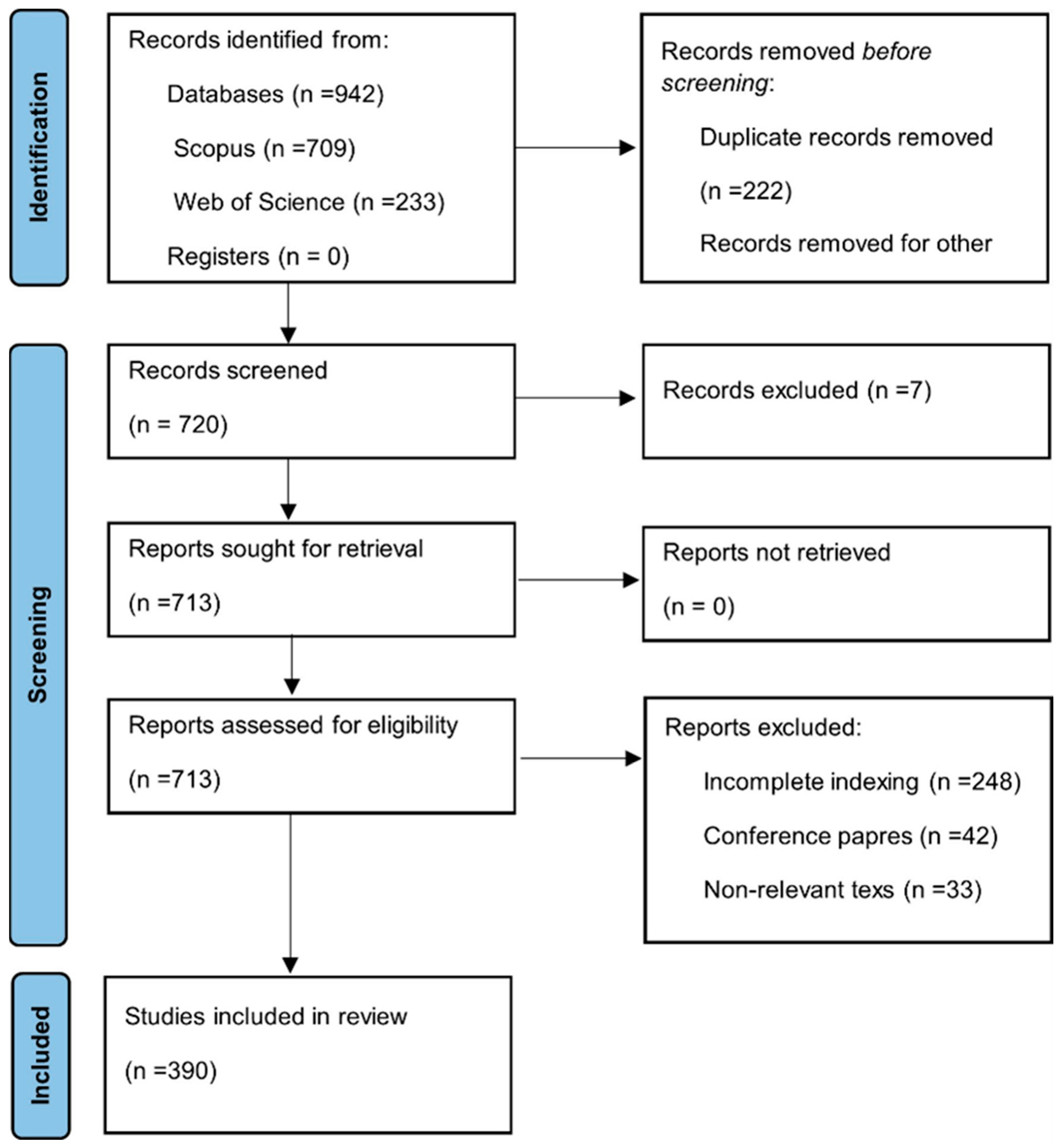
Figure 1).
The initial phase of identification consisted of implementing tailored search strategies for each selected information source. Subsequently, duplicate entries were removed. The exclusion process was carried out in three stages to eliminate records with inaccurate indexing and documents that were either limited in scope or unrelated to the research topic, thereby refining the pool of relevant studies. Following this screening procedure, a total of 390 articles were retained, forming the bibliometric evidence base for the analysis of business failure.
3. Results
The results section constitutes the essential core of this research, where the findings derived from bibliometrics on business failure are presented and analyzed in detail. This section offers a comprehensive vision of the patterns, trends, and characteristics identified in the specialized literature, providing an in-depth understanding of the research landscape on the topic through the rigorous application of bibliometric methods and the systematic analysis of the collected information. It also seeks to offer readers an objective and data-based perspective on the dynamics of knowledge in the area of business failure.
To provide a structured overview of the studies included in this systematic review,
Table 1 summarizes the reviewed literature organized by country, offering a concise quantitative synthesis of the publications analyzed. This table facilitates a clearer connection between the main results and
Supplementary Material. The complete list of studies, including detailed bibliographic information for each publication, is available in
Supplementary Table S2.
The table show a strong concentration of publications in a small number of countries, with the United States, the United Kingdom, and Spain accounting for the highest number of studies. A moderate level of research output is observed in several European and Asian countries, while contributions from Africa, Latin America, and the Middle East remain comparatively limited. This uneven distribution suggests the existence of regional gaps in the literature on business failure and highlights opportunities for future research in underrepresented contexts.
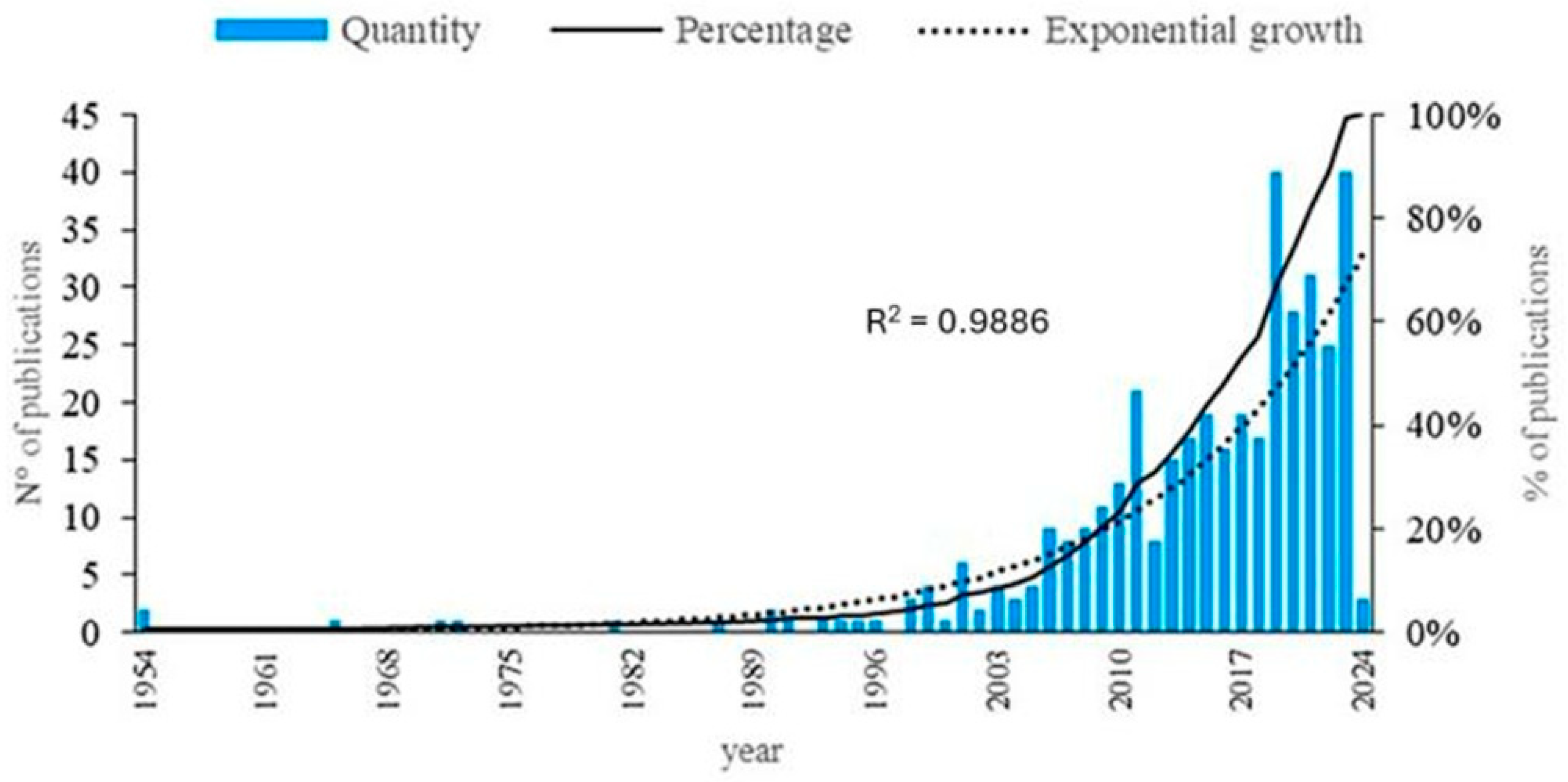
Figure 2 shows significant exponential growth with an increase of 98.86%. Thus, the research question of the type of growth in the number of selected scientific articles is answered. This increase reveals a growing interest in research on this topic throughout the years analyzed. The years 2019, 2020, and 2022 stand out as periods with a notable number of publications, suggesting increasing academic attention towards the study of business failure during those specific years. Thus, the first research question is answered. This exponential trend underlines the relevance and timeliness of the topic, highlighting the importance of understanding and addressing the dynamics and challenges associated with business failures in the contemporary context.
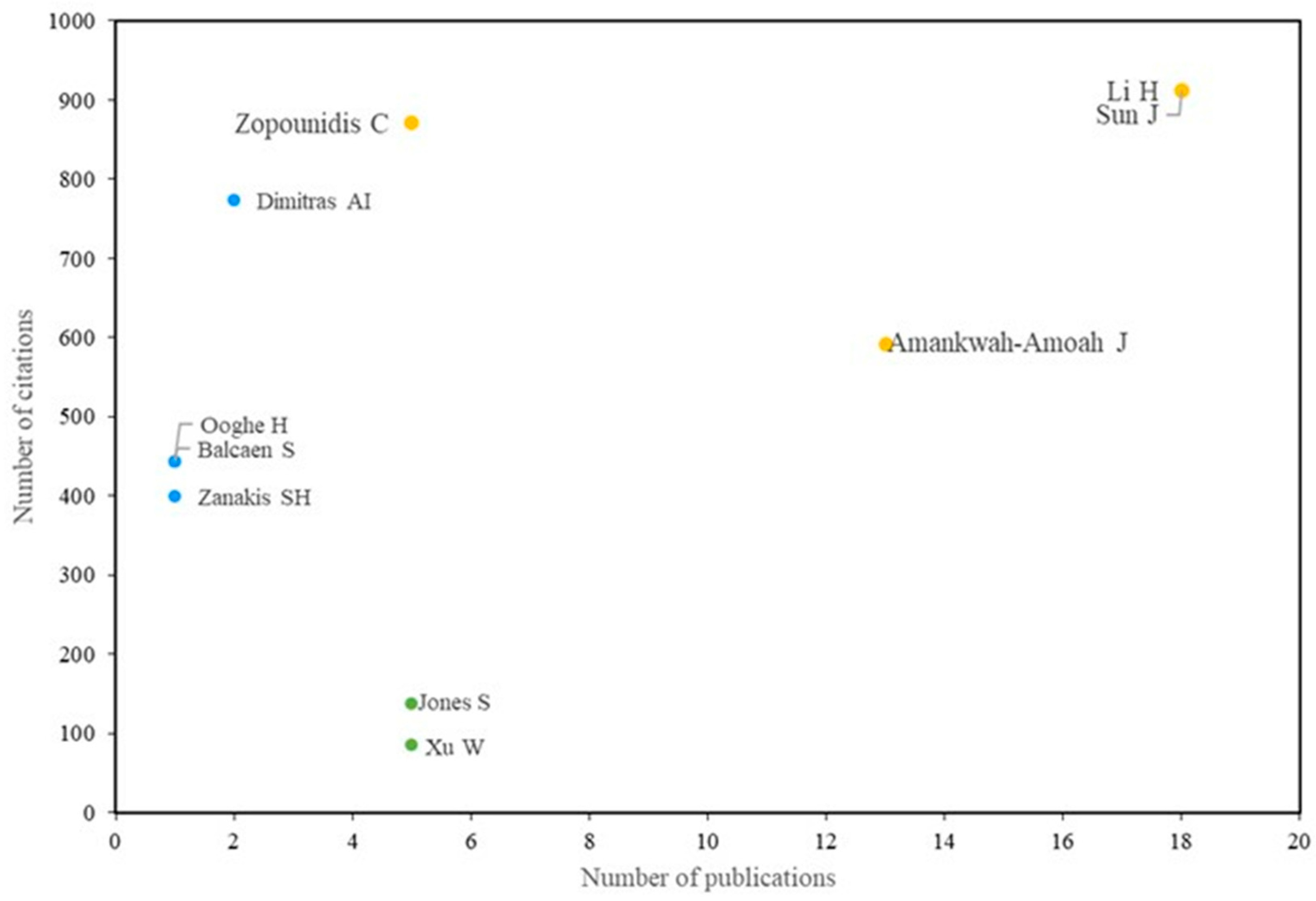
Figure 3 shows the significant stratification of the main authors, identifying three key groups. Among the groups highlighted in yellow, Li H, Sun J, Zopounidis C, and Amankwah-Amoah J stand out because of their outstanding scientific productivity and notable impact. Regarding citations, the group led by Dimitras AI, Ooghe H, and Balcaen S, indicated in blue, stands out for its impact, despite lower productivity. Meanwhile, the group led mainly by Jones, indicated in green, stands out for its high productivity, although its impact, measured in terms of citations, is more modest. This differentiated analysis provides a stratified view of the contributions of the main authors in the field of business failure, considering both their productivity and the impact of their scientific contributions.
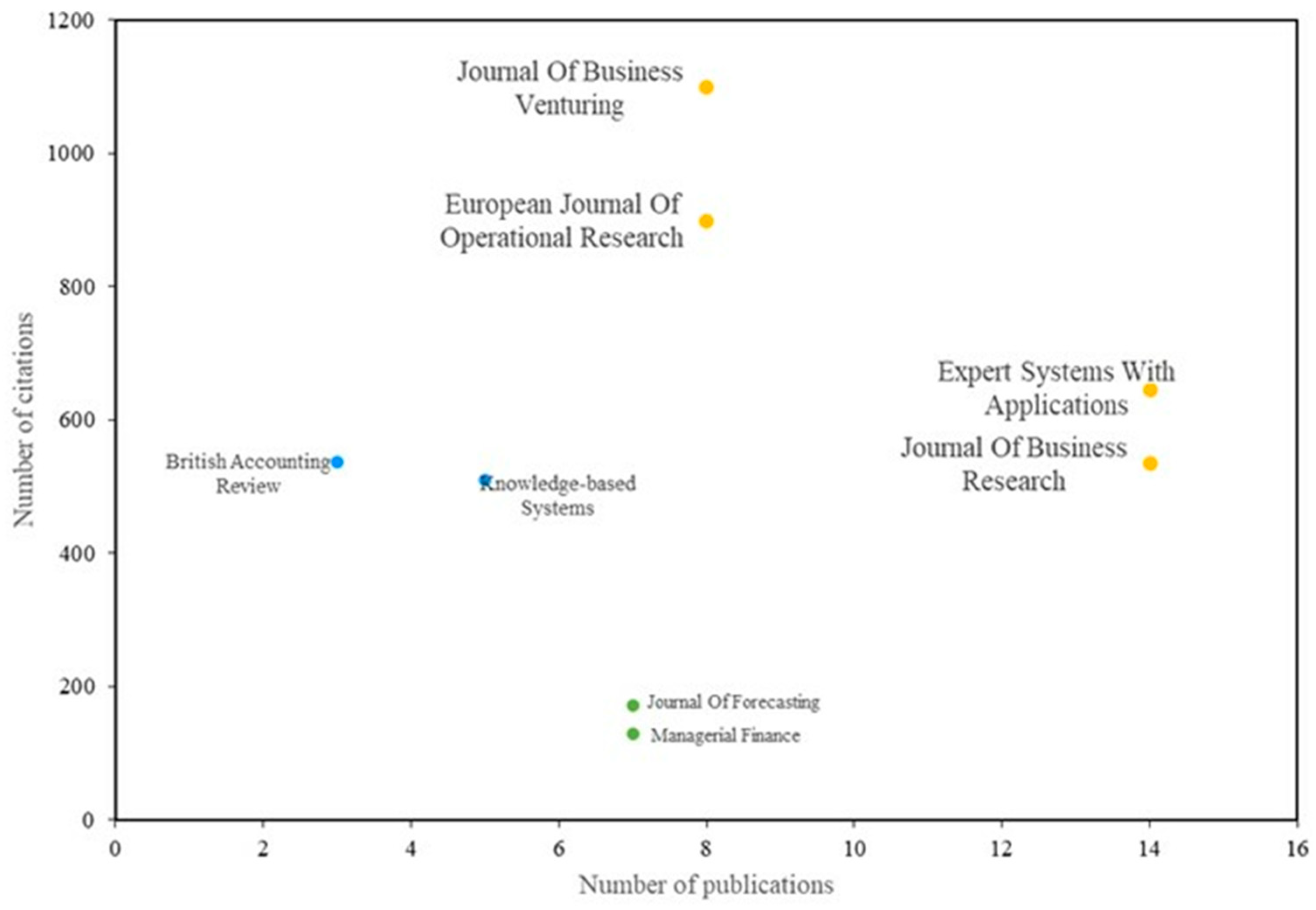
Figure 4 presents a three-dimensional classification of the main journals and identifies three distinctive groups. The first group, highlighted in yellow, includes the Journal of Business Research, Expert Systems with Applications, Journal of Business Venturing, and the European Journal of Operational Research. These journals are characterized by high scientific productivity and have a significant impact in terms of citations. The blue group, led by the British Accounting Review and Knowledge-based Systems, stands out for its impact, despite lower productivity. The green group, led mainly by the Journal of Forecasting, stands out for its high productivity, although its impact, measured in terms of citations, is modest.
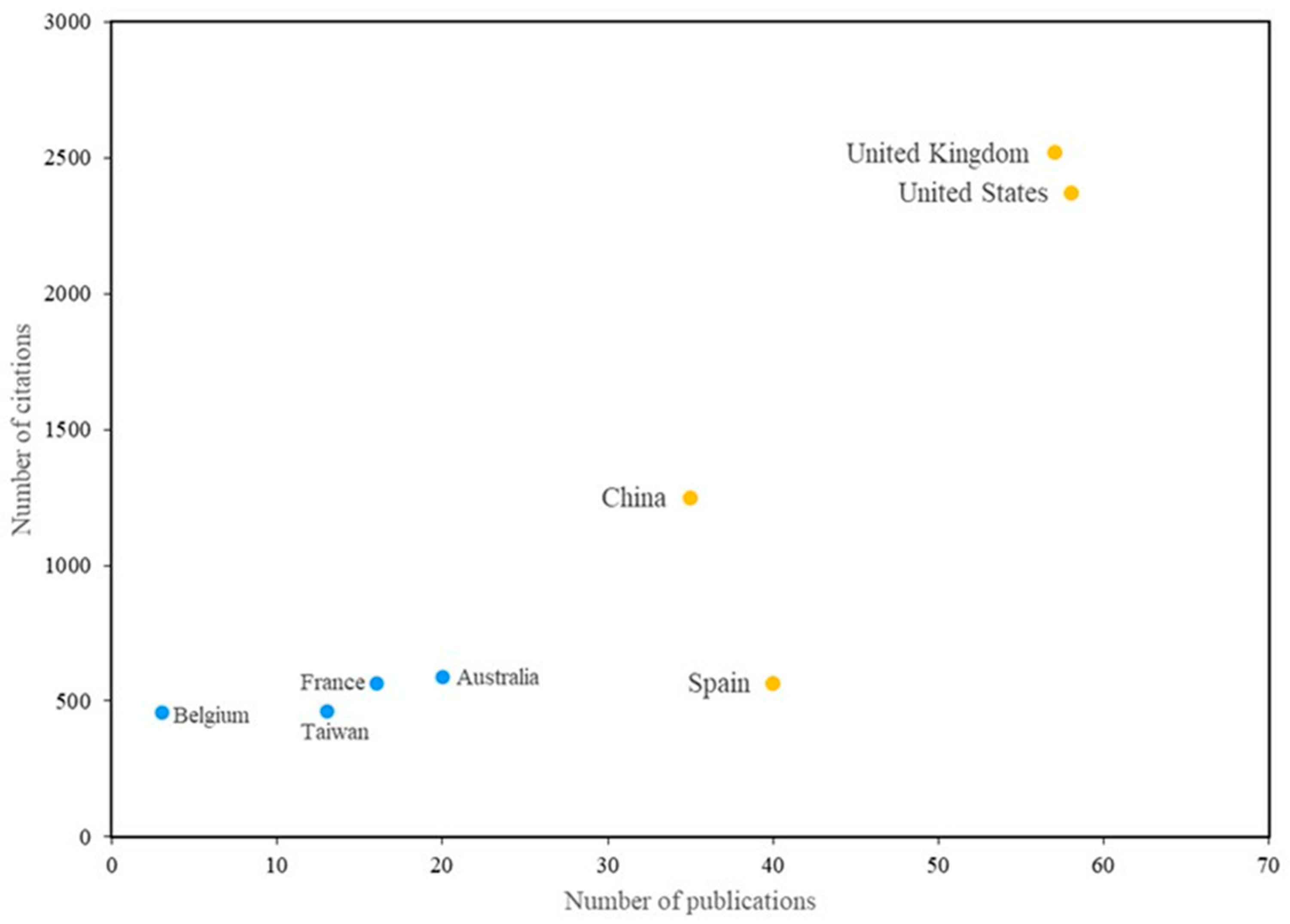
Figure 5 presents a stratified view of the main countries, highlighting two distinct groups. The first group, highlighted in yellow, includes the United Kingdom, the United States, China, and Spain. These countries are characterized by outstanding scientific productivity and a significant impact in terms of citations, making them leaders in the generation of knowledge in the field of business failure. They contribute substantially to both quantitative and qualitative terms. On the other hand, the blue group, consisting of countries such as Australia and France, stands out for its impact despite lower scientific productivity. This stratified analysis highlights the influence and distinctive role of certain countries in business failure research, offering a differentiated perspective in terms of productivity and impact in the scientific field.
Thus, the third research question on the most outstanding research references in this research area is answered.
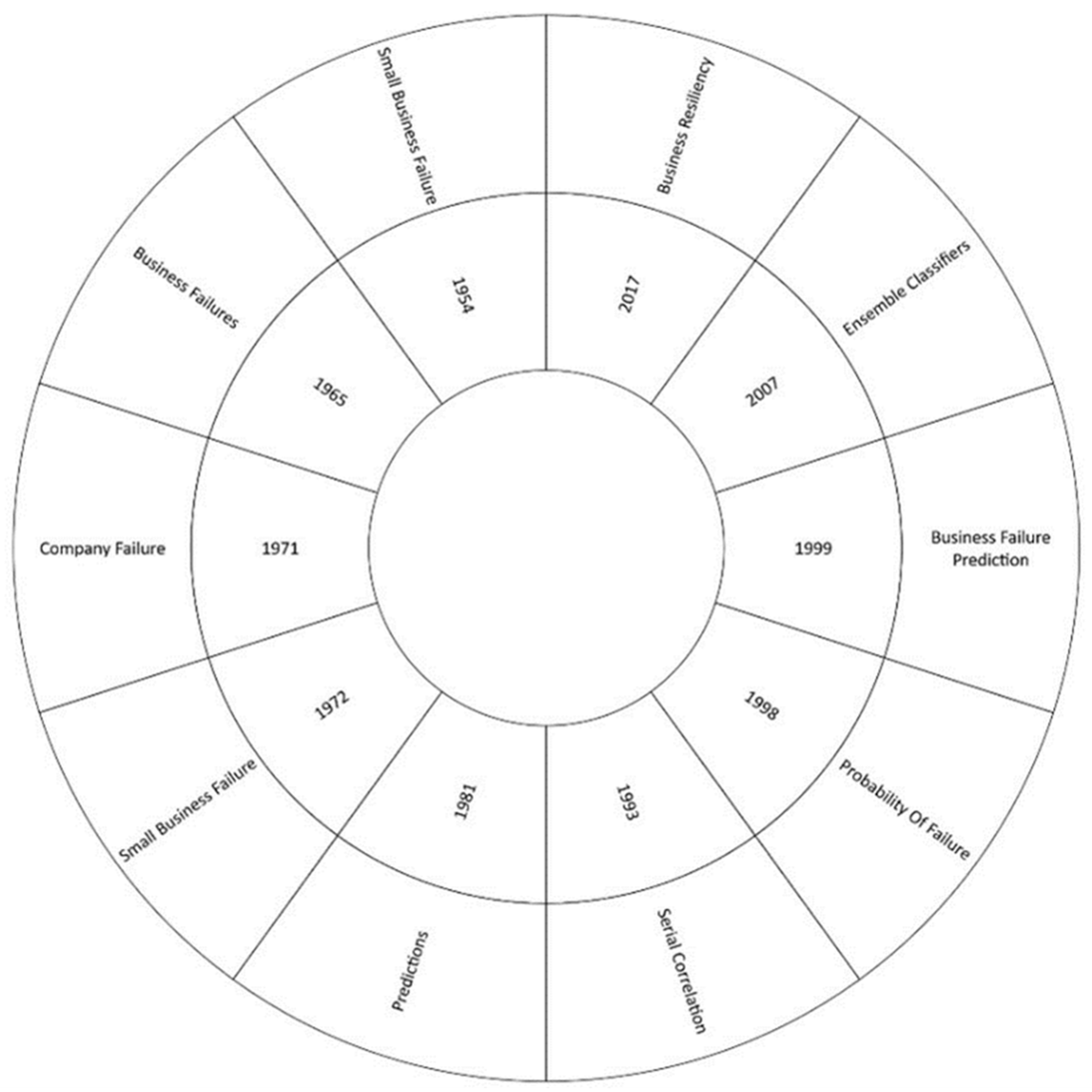
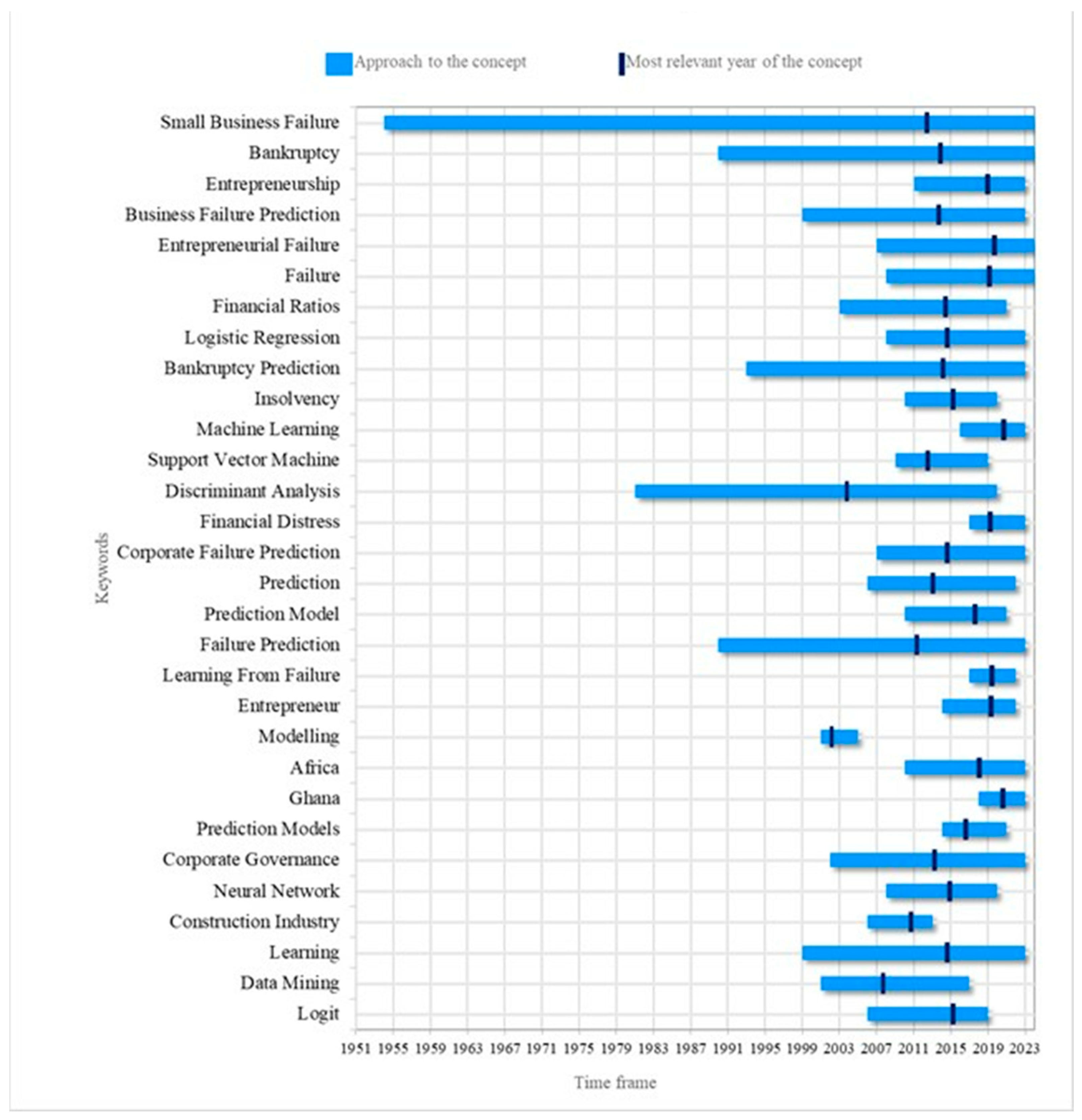
Figure 6 illustrates the thematic evolution of the literature on business failures analyzed in this research, answering the fourth research question. The keywords most frequently used in each year from 1954 to 2017 were analyzed. It is observed that 1954, as a starting point, is characterized by the introduction of key concepts such as Small Business Failure. As time has progressed, the literature on business failure has evolved. The field of study has undergone significant changes in recent years, reflected in the emergence of concepts such as ‘business resilience,’ ‘ensemble classifiers,’ and ‘business failure prediction’. These concepts reveal the most recent research trends and highlight the areas of interest that have gained relevance in the context of business failure.
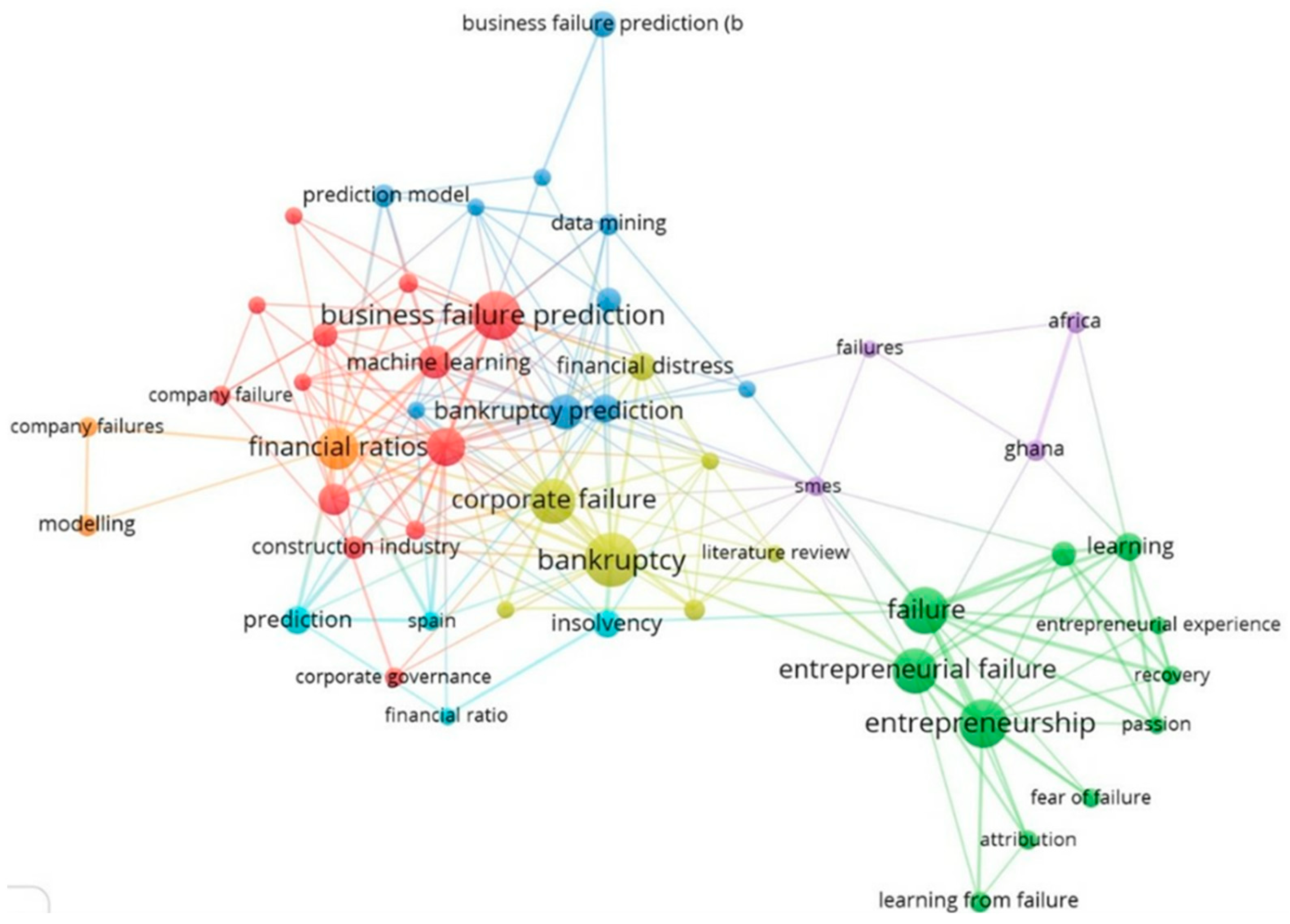
Figure 7 shows the main keyword co-occurrence network, which revealed seven thematic clusters. The co-occurrence analysis was performed using the VOSviewer
® software, considering author keywords as the unit of analysis. A minimum occurrence threshold of five was established to ensure the inclusion of the most relevant terms. The normalization method used was association strength, which optimizes the visualization of relationships between keywords. In this way, the fifth research question is answered by identifying the main thematic groups of business failures. The most prominent cluster is the green one, which includes terms such as ‘Failure,’ ‘Entrepreneurial Failure,’ ‘Entrepreneurship,’ ‘Learning,’ ‘Recovery,’ and ‘Passion.’ The red cluster consists of keywords such as Business Failure Prediction, ‘Machine Learning’, and ‘Company Failure’, with relevance to the construction industry. Additional clusters, identified by the orange color, were also present. Co-occurrence network analysis offers a clear visual representation of thematic relationships and connections in the field of business failure. This contributes to a comprehensive understanding of the areas of focus of scientific research. Blue, yellow, and purple provide a detailed view of other elements of conceptual affinity emerging in the literature on the topic.
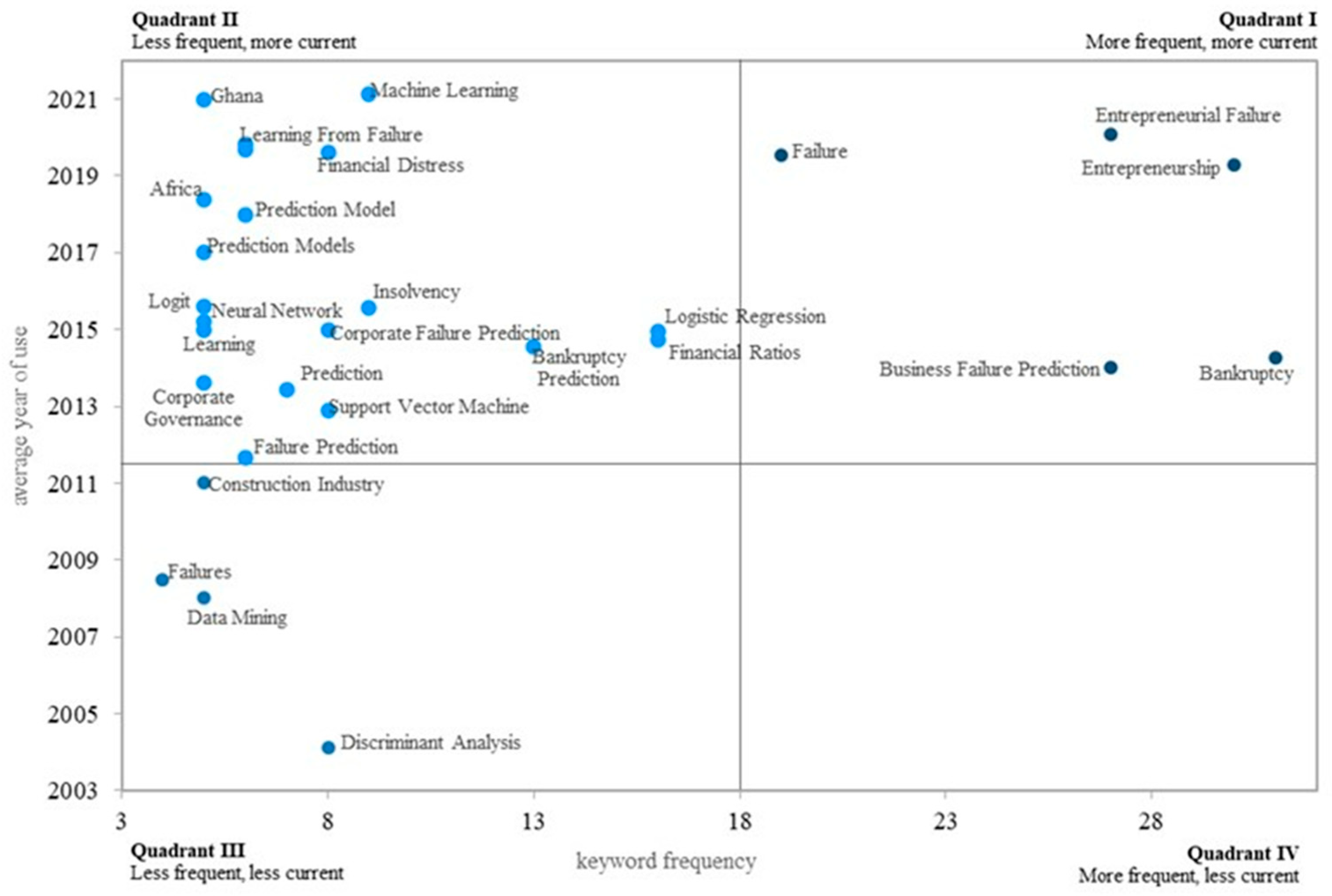
The authors propose a novel approach that uses a Cartesian plane to evaluate the frequency and temporal relevance of keywords, identifying how the use of key concepts evolves and persists over time within the literature. The findings allow us to answer the sixth research question about the most recurrent and frequent keywords, which show the growth of these within the publications on the research phenomenon. This generated four quadrants, as shown in
Figure 8. Quadrant 4 identifies decreasing concepts, while Quadrant 2 highlights emerging but less frequent keywords, reflecting their temporal dynamics rather than methodological validity. On the other hand, quadrant 2 contains infrequent but highly current keywords, considered emerging, such as ‘Machine Learning,’ ‘Learning from Failure,’ ‘Financial Distress,’ and ‘Prediction Model.’ Quadrant 1 contains consolidated and growing concepts, such as ‘Failure’ and ‘Entrepreneurial Failure.’ “Entrepreneurship,” “Bankruptcy,” and “Business Failure Prediction” are still central themes in scientific research on the topic. This study provides a dynamic and detailed view of the evolution and relevance of key concepts in the context of business failure.
4. Discussion
The Discussion section provides a detailed analysis of the results obtained from the bibliometric study. The interpretation of the findings was exhaustively addressed, highlighting emerging trends, identifying patterns, and revealing significant connections. In addition, this section presents a critical analysis of the practical implications derived from the results. The possible applications and relevance of the findings in business and academic contexts were explored. The limitations inherent in this study are also presented, providing a balanced view. The text discusses the validity and generalization of the results, classifies keywords by function, identifies research gaps, and proposes a research agenda for future studies on business failure.
4.1. Growth of Business Failure Research
The results indicate that 2019, 2020, and 2022 were the most productive years for research on business failure. In 2019, Liu et al. [
20] examined how narcissistic traits in entrepreneurs influence their capacity to learn from failure, highlighting the psychological dimension of the phenomenon. That same year, Cui et al. applied the gray-DEMATEL method to analyze key factors in green business failure, offering insights into sustainability-related challenges. Previous bibliometric studies investigated how firm age affects the causes of corporate failure, emphasizing the temporal dimension of bankruptcy. In 2022, Lee et al. [
21] conducted a systematic review linking institutional factors to business failure, proposing an agenda to integrate institutional perspectives into future research. Also in 2022, Carmona et al. [
8] employed the XGBoost algorithm to predict business failure, stressing the need for model transparency and interpretability.
4.2. Key Research References
The results identified Li H, Sun J, Zopounidis C, and Amankwah-Amoah J as the most productive and influential authors, with Dimitras AI, Ooghe H, and Balcaen S recognized for their academic impact, and Jones S noted for productivity. Sun et al. [
22] provided a comprehensive review of corporate insolvency prediction methods. Previous studies conducted a foundational survey on prediction methods and also explored rough ensemble methods to improve predictive accuracy [
23], while other studies developed a processual model of organizational failure [
24]. In addition, recent studies offered a critical review of 35 years of statistical approaches to business failure [
25]. It has even been proposed that a multinomial nested logit model be used for corporate failure [
26].
Regarding journals, the most productive and impactful were Journal of Business Research, Expert Systems with Applications, Journal of Business Venturing, and European Journal of Operational Research. The British Accounting Review and Knowledge-Based Systems were highlighted for impact, while Journal of Forecasting stood out in productivity. Yeh et al. [
27], publishing in Expert Systems with Applications, proposed a hybrid prediction model using DEA, rough sets, and SVMs, advancing methodological innovation in the field.
Key journals in the field of business failure include the Journal of Business Venturing, which offers insights into entrepreneurial experience and optimism in the face of failure [
28], and the European Journal of Operational Research, which provides a foundational survey on prediction methods and industrial applications [
23]. The British Accounting Review contributed with a critical assessment of classical statistical approaches [
25], while Knowledge-Based Systems offered a comprehensive review of insolvency modeling techniques [
22]. The Journal of Forecasting advanced the field with studies such as that of Gepp, Kumar, and Bhattacharya [
29], who applied decision trees for failure prediction.
With respect to geographic contribution, the United Kingdom, the United States, China, and Spain demonstrated notable productivity and impact. Australia and France also exhibited substantial output. The United Kingdom’s foundational contributions to the field are exemplified by the seminal work of [
30], who pioneered the field of data analysis on business failures. In the United States, Edmister’s [
31] contributions to the field were instrumental. He employed empirical analyses utilizing financial ratios, thereby establishing predictive methodologies that have endured and continue to be relevant in contemporary contexts [
32].
Revilla, Perez-Luno, and Nieto [
33] analyzed how family involvement in management can reduce the risk of business failure, offering key insights into organizational dynamics. Spain and China stand out as leading contributors to this research field. Previous studies highlighted China’s role through a comprehensive review of definitions and models related to corporate insolvency. Australia and France have also made notable contributions. In Australia, researchers introduced decision tree models for failure prediction [
29], while Khelil [
34] developed an empirical taxonomy addressing the multifaceted nature of business failure in the French context. These studies reflect global diversity and methodological richness in business failure research.
4.3. Thematic Evolution
The phenomenon of small business failure has been a subject of considerable scholarly interest. Marburg’s [
35] case study on the failure of Smith and Griggs of Waterbury provided an early and influential perspective, laying the groundwork for understanding the vulnerabilities of small businesses. As time progressed, the focus of research expanded to encompass a broader array of phenomena, including business resilience and the prediction of failure. Alfaro Cortés et al. [
36] introduced Adaboost-based ensemble classifiers for bankruptcy prediction, underscoring the value of complex data analysis.
4.4. Thematic Clusters
Thematic cluster analysis of the keyword co-occurrence network revealed a dominant green cluster centered on terms such as failure, entrepreneurial failure, entrepreneurship, learning, recovery, and passion. This finding reflects the interplay between business failure, entrepreneurial resilience, and emotional engagement. Key studies within this cluster include Cardon, Stevens, and Potter [
37], who examined the cultural meaning of entrepreneurial failure, and Mandl, Berger, and Kuckertz [
38], who explored the behavioral consequences of failure. In their 2023 study, Walsh and Cunningham examined the role of passion in failure experiences, while Singh et al. [
39] analyzed entrepreneurs’ coping strategies in the aftermath of failure.
The second most relevant cluster, designated here as “red,” integrates keywords such as “Business Failure Prediction,” “Machine Learning,” “Company Failure,” and “Construction Industry,” thereby emphasizing the use of predictive analytics and machine learning. Li et al. [
40] compared traditional and tree-based models for forecasting failure, and a multiclass analysis of private firms [
32]. Abidali and Harris [
41] and Horta and Camanho [
42] examined business failure prediction specifically within the construction sector. The aforementioned studies emphasize the technological and industry-specific evolution of predictive research on business failure.
4.5. Keyword Frequency and Continuous Use of Concepts
Quadrant 2 of the Cartesian plane is indicative of nascent concepts in the domain of business failure research, with particular emphasis on machine learning and the acquisition of knowledge from failure. Jabeur et al. [
3] underscore the predictive capabilities of artificial intelligence, particularly the CatBoost model, in anticipating corporate distress. Boso et al. [
43] explore how entrepreneurs develop through failure experiences, reinforcing the developmental value of learning from failure. Their placement in Quadrant 2 is indicative of a mounting academic and practical interest.
Quadrant 1 encompasses consolidated and leading concepts, including failure, entrepreneurial failure, entrepreneurship, bankruptcy, and business failure prediction. In their 2013 study, Mantere et al. examined narrative constructions of failure, thereby offering insight into how entrepreneurs frame setbacks. In their 2015 study, Jacobson and Von Schedvin examined the correlation between bankruptcy and trade credit, emphasizing its systemic ramifications. Li and Sun’s [
44] contributions to predictive approaches are rooted in case-based reasoning. It is evident that these concepts collectively constitute a foundational framework for comprehending business failure through a multifaceted lens, encompassing cultural, psychological, financial, and predictive dimensions.
4.6. Keyword Classification
Table 2 presents a comprehensive classification of the main emerging and growing keywords in the field of business failure, organized according to their specific functions. This classification aims to provide a clear and concise overview of the distinctive characteristics and specific applications associated with each identified function.
The table helps comprehend the emerging trends in business failure research by emphasizing thematic features that are gaining significance in the scientific literature.
4.7. Main Causes of Business Failure
The causes of business failure are multifaceted and interrelated, reflecting the complexity of modern organizational environments. Based on the reviewed literature, these causes can be classified into four main categories: financial, strategic, governance-related, and external factors.
Financial causes are among the most frequent, including insufficient liquidity, poor cash flow management, excessive leverage, and inadequate access to credit [
25,
31,
32,
45]. These conditions often result in an inability to sustain operations during periods of market volatility. Strategic causes relate to ineffective business models, poor market positioning, and a lack of innovation, which hinder firms’ ability to adapt to environmental changes [
20,
46].
Governance-related causes encompass weak leadership, deficient internal controls, and poor decision-making processes that compromise organizational performance [
24,
33,
47]. Finally, external causes include macroeconomic instability, sudden regulatory changes, and global disruptions such as the COVID-19 pandemic, which significantly affect the survival of firms [
1,
48].
Synthesizing these dimensions provides a comprehensive understanding of why businesses fail and highlights the need for integrated management strategies that combine financial discipline, innovation capacity, and adaptive governance to ensure long-term sustainability.
4.8. Theoretical Implications
The bibliometric analysis provides a comprehensive perspective on the evolution and current trends in research on business failure. A substantial increase in publications in recent years is indicative of a growing academic interest in the topic, driven by its relevance in today’s economic context. Influential authors such as Li, Sun, Zopounidis, and Amankwah-Amoah have established the theoretical foundations of the field, thereby making significant contributions to its development. The research focus has evolved from traditional themes, such as small business failure, to contemporary areas, including business resilience, ensemble classifiers, and predictive analytics. A thorough examination of keyword co-occurrence and thematic cluster analysis reveals intricate conceptual interconnections and underscores the emergence of salient terms such as “Learning From Failure” and “Machine Learning.” These findings underscore a paradigm shift toward proactive and technology-driven approaches to understanding and preventing failure. Moreover, the identification of research gaps serves as a guide for future studies, promoting the exploration of underdeveloped areas. The analysis underscores the dynamic and multidisciplinary nature of business failure research.
4.9. Practical Implications
The present study offers practical implications for academics, practitioners, and policymakers. The conceptual shift from the failure of small businesses to broader perspectives, such as organizational resilience, advanced classifiers, and failure prediction, reflects a move toward more holistic and proactive strategies. The thematic connection between concepts such as failure, entrepreneurship, learning, and recovery underscores the significance of cultivating organizational cultures that facilitate learning from failure and promote sustainable growth.
The advent of concepts such as machine learning, financial distress, and predictive models underscores the mounting imperative to integrate advanced technologies and data-driven methodologies into business management. This necessitates the enhancement of analytical and adaptive capabilities to ensure competitiveness in an increasingly digital environment.
From an educational standpoint, training programs should incorporate topics such as business resilience and emerging technologies to better prepare future entrepreneurs. At the policy level, regulatory frameworks should promote business recovery and innovation. Finally, bibliometric insights can inform national business development strategies and promote international collaboration to enhance the understanding and management of business failure.
4.10. Limitations
Notwithstanding the valuable insights offered by this bibliometric analysis based on PRISMA 2020 and data from Scopus and Web of Science, several limitations must be acknowledged. The restricted scope of these databases may have resulted in the exclusion of pertinent publications. Furthermore, the utilization of software such as Microsoft Excel® and VOSviewer® has the potential to introduce analytical bias, while the classification of keywords remains to a certain extent subjective. The reliability of bibliometric metrics can vary, potentially impacting the evaluation of research quality. The temporal scope of the study constitutes a limitation, as it reflects trends only up to a specific cutoff date. The expansion of the search strategy to encompass broader terminology and databases such as Google Scholar has the potential to enhance comprehensiveness by capturing grey literature and less-visible sources. Finally, the absence of qualitative methods, such as expert interviews or surveys, limits the depth of interpretation, suggesting the need for mixed-method approaches to comprehensively understand the complexities of business failure.
Another limitation of this study concerns the restricted database coverage. By relying exclusively on Scopus and Web of Science, the analysis may have omitted relevant studies published in regional, interdisciplinary, or emerging journals that are not indexed in these databases. Such omissions could particularly affect research from Latin America, Asia, or Africa, where national repositories and open-access platforms (e.g., RedALyC, SciELO, or ERIC) play an important role in disseminating academic work.
Although this restriction was intentional to maintain methodological consistency and data quality, it introduces a potential bias that limits the global representativeness of the findings. Future research should consider expanding the bibliometric scope to include complementary databases or mixed approaches that integrate peer-reviewed and regional sources, allowing for a more inclusive and diversified understanding of business failure across contexts.
In addition to the methodological constraints previously described, several specific limitations should be acknowledged.
Database Bias: The exclusive use of Scopus and Web of Science may have introduced a selection bias, as these databases predominantly index English-language and high-impact journals. Consequently, relevant studies published in regional or non-indexed outlets—particularly in developing countries—might have been omitted, limiting the global representation of research on business failure.
Language Bias: The inclusion criteria restricted the analysis to publications written in English, which may have excluded valuable contributions in other languages, such as Spanish, French, or Chinese. This linguistic restriction may affect the cultural diversity and contextual understanding of business failure across different regions.
Analytical Bias: The study employed a bibliometric-descriptive design supported by quantitative indicators and visualization tools (Excel® and VOSviewer®). While this approach provides a structured overview, it does not allow for an in-depth qualitative interpretation of the underlying theoretical constructs or causal relationships. Integrating qualitative methods—such as content analysis or expert interviews—could enrich the interpretation of findings and mitigate this limitation in future studies.
Recognizing these biases contributes to a more transparent and critical interpretation of the results, while also guiding methodological improvements for subsequent research on business failure.
It should also be noted that the processing and analysis of the information was based mainly on office software (Microsoft Excel®) and bibliometric visualization using VOSviewer®, without the application of automated text mining models, key phrase extraction, or cluster analysis using advanced algorithms. In this regard, this methodological limitation restricts the depth of semantic analysis and the detection of latent patterns in the texts. Therefore, we recommend that future research incorporate computational techniques such as topic modeling, semantic network analysis, or natural language processing (NLP) to broaden the understanding of conceptual relationships and reduce the bias derived from manual processing.
Another limitation of this study is that it did not analyze the temporal evolution of contributions at the national level in the field of business bankruptcy. Although the analysis identified the most productive and influential countries, it did not examine how their scientific output changed over time. Therefore, it is suggested that future research address this aspect by incorporating longitudinal bibliometric approaches to explore changes in geographic leadership and the dynamics of international collaboration.
4.11. Research Gaps
Table 3 outlines the main research gaps identified in the field of business failure, providing a strategic vision for guiding future research on this topic.
This table summarizes the gaps identified in various dimensions, providing a framework that guides future research on business failure. These gaps open opportunities for deeper and multidisciplinary research, which will contribute to a more holistic understanding of this critical phenomenon in the field of business.
4.12. Cultural Perspectives on Business Failure
Cultural context plays a significant role in shaping the perception, causes, and management of business failure. Comparative studies have demonstrated that cultural norms influence both entrepreneurs’ attitudes toward risk and society’s tolerance for failure. For instance, in Western countries, failure is often perceived as a learning opportunity and a natural component of the entrepreneurial process, which fosters resilience and innovation [
37,
43]. In contrast, in Asian and Latin American contexts, failure tends to carry greater social stigma, leading to more conservative decision-making and a reluctance to take risks [
34,
46].
Cross-national research also reveals variations in the determinants of failure. In developed economies, strategic and innovation-related factors—such as market adaptation or technology adoption—are predominant, while in developing regions, financial constraints, weak institutional frameworks, and informal management practices are more common causes [
21,
45]. These differences underscore the need to consider cultural and institutional settings when analyzing failure mechanisms and designing preventive strategies.
Incorporating cultural dimensions into business failure studies can therefore enrich theoretical frameworks and promote more context-sensitive policy interventions. Future research should explore how cultural attitudes, regulatory environments, and social norms interact to shape business resilience and recovery processes across countries.
4.13. Research Agenda
Finally, this subsection gathers the main findings of the study to present a research agenda with the topics with the greatest potential to be explored in future research around the research phenomenon and answer the seventh research question.
Figure 9 shows a meticulously designed research agenda proposal that serves as a solid foundation for expanding knowledge in the field of business failure. This agenda arises from an exhaustive bibliometric analysis covering various dimensions, including thematic evolution, identification of gaps, and the notable emergence of key concepts. The guiding tool aims to encourage future research by providing strategic directions that encompass both the theoretical and practical dimensions of business failure. The elements of this agenda capture the complexities inherent in business failure, encouraging researchers to explore new perspectives, address contemporary challenges, and contribute to the formation of resilient strategies in the business field.
Research on small business failures has illuminated the specific challenges these companies face, yet gaps remain regarding how management strategies, resilience, and adaptability influence survival. Future studies should build robust theoretical frameworks to analyze the roles of innovation, financial management, and community involvement in long-term success. The concept of bankruptcy continues to be central in understanding severe failure cases; however, future research should prioritize prevention, exploring early warning systems, management practices, and the influence of bankruptcy laws on decision-making and business resilience.
The term failure remains broad and influential, though inconsistently defined. Research is needed to refine its dimensions, financial, operational, and strategic, and to examine how cultural and social perceptions shape its interpretation and management. Meanwhile, entrepreneurial failure provides a focused lens on how entrepreneurs learn, recover, and evolve after setbacks. Investigating the effects of support networks, training, and experience can improve entrepreneurial support systems.
Entrepreneurship itself is key to understanding how new ventures cope with failure. Future inquiry could explore the traits that foster resilience and how market conditions affect entrepreneurs’ adaptive capacity. Despite advancements like machine learning, financial ratios remain foundational in assessing company stability. Research should aim to integrate these metrics with emerging techniques for a more holistic analysis.
Moreover, the concepts of insolvency and financial distress are critical for failure prediction. Improving and contextualizing their indicators, especially through machine learning, can strengthen early detection and intervention strategies. Finally, machine learning has revolutionized the predictive accuracy in business failure studies, enabling deeper pattern recognition. Continued research should focus on model optimization, ethical interpretation, and customization across industries and regions.
Considering the relevance and feasibility of future studies, three priority lines of research are identified: (1) the development of integrative theoretical frameworks linking financial, strategic, and psychological perspectives on failure; (2) the incorporation of advanced computational and mixed methodologies to improve predictive accuracy; and (3) the exploration of cultural and contextual differences that shape entrepreneurial resilience. Other proposed topics remain valuable but are secondary in terms of sequence or scope.
4.14. Comparison with Other Studies
Previous literature reviews on business failure have offered valuable insights. Jayasekara et al. [
45] examined failures in SMEs, attributing them to factors such as limited financial access, poor market conditions, lack of institutional support, and inadequate entrepreneurial skills. Their findings align with those of Shaik et al. [
46], who emphasized the importance of models and techniques for predicting business failure. Similarly, Mrani and Loulid [
47] conducted a documentary analysis, concluding that failure is often preceded by signs of bankruptcy, and provided a critical evaluation of existing prediction models.
Other studies, such as those by Amankwah-Amoah et al. [
1] and Assefa [
48], explored the impact of COVID-19 on business failure, advocating for research into environmental, voluntaristic, and integrative factors. Appiah et al. [
49] addressed methodological limitations in classical statistical and AI-based techniques, noting the absence of a universally reliable and accessible failure prediction model. Lee et al. [
21] analyzed failure across business lifecycle stages, proposing a research agenda that aligns with Kanapickienė et al. [
50], who emphasize the importance of differentiating between personal and corporate bankruptcy laws in future research.
Literature reviews have underscored the relevance of business resilience in the context of failure. Saad et al. [
51] analyzed SMEs in developing countries from 2000 to 2018, identifying key resilience factors such as human capital, entrepreneurial orientation, and social capital, particularly in response to disruption recurrence and complexity. Conz and Magnani [
52] further emphasized the need for future research to explore how cognitive, entrepreneurial, and innovative capabilities interact to enhance resilience, a direction also supported by Dhanalakshmi and Jwalapuram [
53].
Unlike previous bibliometric studies, such as those by Lee et al. [
21] and Sun et al. [
22], which examined the relationships between institutions (which govern the rules of business failure) and business decisions/behaviors and, in turn, the prediction of business failures, focusing mainly on the volume and distribution of publications, the present study integrates a thematic and conceptual analysis, revealing emerging trends related to machine learning and organizational resilience. Unlike these previous reviews, our findings also emphasize the cultural and methodological diversity of the field.
4.15. Conceptual Gaps
Conceptual gaps refer to the absence of integrative theoretical frameworks and the fragmentation of research approaches. The literature reveals that many studies address business failure from isolated perspectives—financial, managerial, or psychological—without establishing a unified understanding of how these dimensions interact. There is also a lack of consensus on the operational definition of business failure, leading to inconsistencies in measurement and interpretation across contexts.
Furthermore, the relationship between business failure, resilience, and learning remains underexplored. Few studies analyze failure as part of a broader organizational learning process, limiting the capacity to design preventive strategies. The insufficient incorporation of sustainability, innovation, and ethical leadership perspectives further highlights the need to strengthen the conceptual foundations of this field. Addressing these gaps will allow for the development of more robust models capable of explaining the multifactorial nature of business failure.
4.16. Methodological Gaps in Business Failure Research
Methodological gaps arise from limitations in data collection, analytical tools, and study design. Many empirical studies rely on cross-sectional datasets and traditional statistical models, which restrict the capacity to capture the dynamic and longitudinal aspects of business failure. The absence of standardized variables and indicators across studies also impedes comparability and replication.
In addition, there is a limited use of advanced computational techniques such as machine learning, network analysis, and mixed methods, which could improve predictive accuracy and theoretical generalization. Geographic bias remains another challenge, as most data comes from Western economies, limiting global understanding. Future research should adopt multidisciplinary and longitudinal methodologies, integrating qualitative insights with quantitative analytics to strengthen methodological rigor and advance the study of business failure.
5. Conclusions
It was concluded that bibliometrics provides valuable insights into various research questions, revealing significant patterns in scientific production related to this phenomenon. Research interest in business failure was concentrated in 2019 and 2022, indicating key moments of attention in the academic community. Additionally, there has been an exponential growth in the number of scientific articles over time, demonstrating a growing interest in and recognition of this topic. The primary research references, including authors, journals, and countries, provide a solid foundation for future research. Influential authors such as Li, Sun, and Zopounidis have made significant contributions to the study and prediction of business failure.
In terms of thematic evolution, the research shifted from an initial focus on Small Business Failure to more contemporary themes, such as business resilience, ensemble classifiers, and business failure prediction. This reflects the adaptation of the research to current business dynamics. The analysis of thematic clusters highlights the conceptual affinity between key terms, such as Failure, Entrepreneurial Failure, Entrepreneurship, Learning, Recovery, and Passion, underlining the interconnection of these elements in the scientific literature.
Finally, the study identified emerging keywords such as Machine Learning and Learning From Failure, suggesting areas for future research. This study also highlights the need to integrate advanced technological approaches. The proposal of a research agenda focused on the deepening of consolidated and emerging concepts provides a strategic guide for the development of future studies on business failure. These conclusions offer a comprehensive vision of the trajectory and research opportunities in this field.




 ,
,