Article

Research on the Impact of Corporate ESG Greenwashing on Sustainable Development Performance: Evidence from China


1
School of Maritime Economics and Management, Dalian Maritime University, Dalian 116026, China
2
Nanjing Institute of Geography and Limnology, Chinese Academy of Sciences, Nanjing 210008, China
3
Jangho Architecture College, Northeastern University, Shenyang 110169, China
*
Authors to whom correspondence should be addressed.
Sustainability 2026, 18(4), 2139; https://doi.org/10.3390/su18042139
Submission received: 8 January 2026 / Revised: 10 February 2026 / Accepted: 18 February 2026 / Published: 22 February 2026

Abstract

Against the backdrop of China’s vigorous promotion of green and low-carbon development, this study empirically examines the impact of ESG greenwashing on corporate financial sustainable development performance, using a sample of Chinese A-share-listed companies from 2018 to 2023. Empirical results indicate that ESG greenwashing significantly undermines corporate financial sustainable development performance. Furthermore, accounting conservatism mediates the relationship between ESG greenwashing and corporate financial sustainable development performance, whereas negative external media coverage moderates it. This research provides robust theoretical and empirical support for standardizing corporate ESG practices and advancing the achievement of green sustainable development objectives.

1. Introduction

Against the backdrop of in-depth global sustainable development and the accelerated green transition of economies and societies worldwide, the international community has gradually reached a clear and unified consensus on ESG. Specifically, countries around the world have introduced targeted ESG-related regulatory systems, strengthened supervision of enterprises’ sustainable development behaviors, and elevated ESG performance as core criteria for international trade cooperation. In this global context, China’s economic and social development has entered a new phase of high-quality development, focusing on integrating quality, efficiency, and sustainability. To fulfill global sustainable development goals and align with international consensus, enterprises must prioritize ecological and environmental protection, striving to achieve a win–win situation between their own sustainable development and environmental protection. As a core non-financial indicator evaluation framework, ESG is pivotal in fostering positive interactions among enterprises, society, and the natural environment. In recent years, the Chinese government has placed great importance on corporate ESG information disclosure, issuing a series of supportive policies to further strengthen the disclosure of corporate environmental information. The specific contents are shown in Table 1.
Under the ‘dual carbon’ goals, ecological civilization is vital for sustainable development. Environmental protection has become central to corporate strategy, with ESG practices widely adopted and third-party agencies widely assessing them. However, China’s ESG standards lag behind globally, and an incomplete framework has led to greenwashing, hindering corporate green transition and ecological progress.
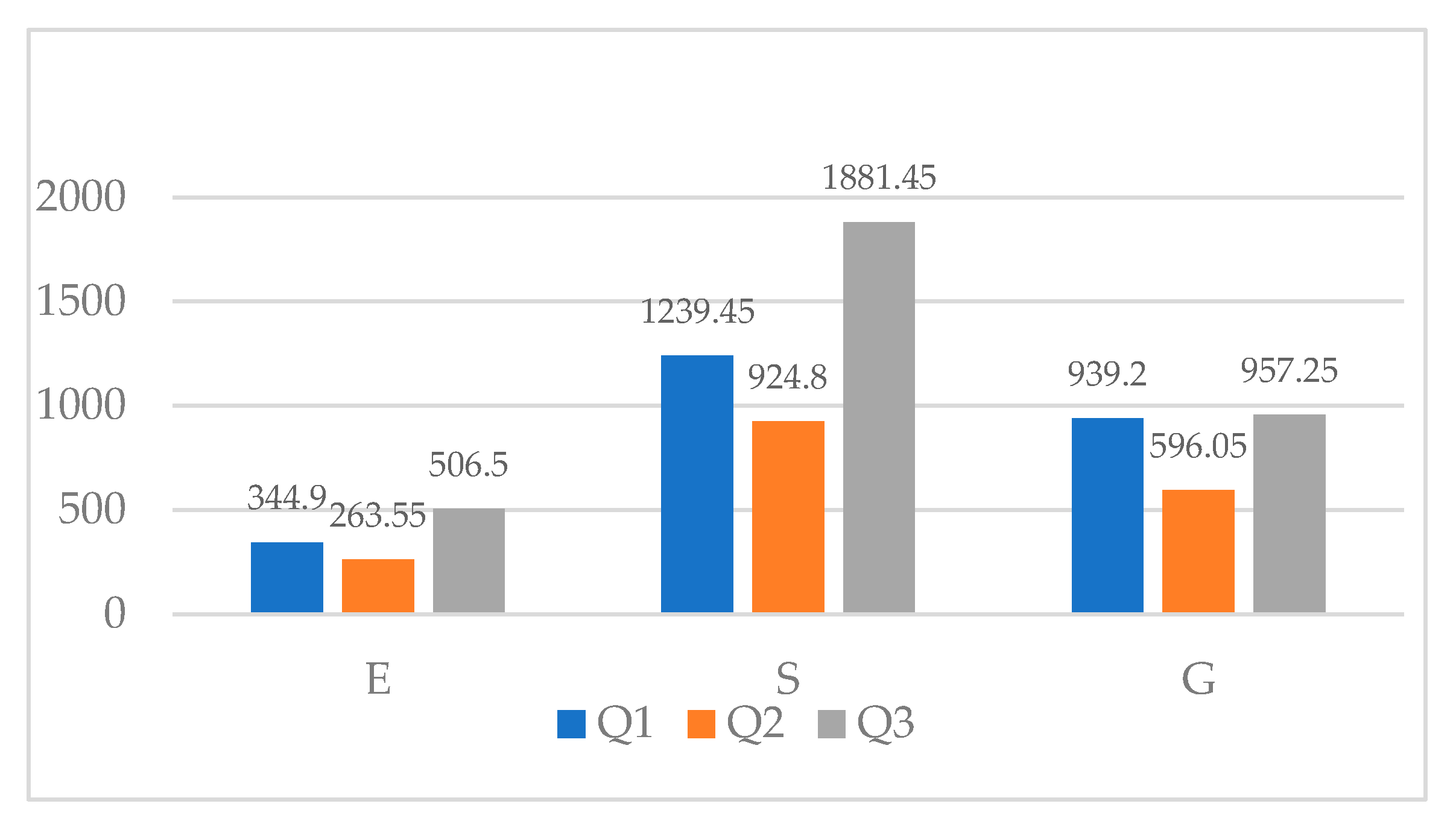
In October 2025, Southern Weekend published the Q3 2025 ESG Risk Assessment Report on Listed Companies, based on data from the Shanze Cloud Platform. The report showed 1117 listed companies were involved in 2815 ESG risk incidents, with a cumulative risk index of 3345.2—up 42.8%, 73.6% and 87.5% quarter-on-quarter. Social risks were most prominent (index 1881.45, 56% of total), surging by 103%. Safety risks made up 49% (1642.15), governance risks 36% (957.25), and environmental risks 11.47% (506.5), all rising significantly. Figure 1 shows ESG risk index changes for Q1–Q3 2025.
As shown in Table 2, in November, Southern Weekend released the 2024–2025 China Greenwashing List, which impacted the reputations and development of many well-known enterprises. Meanwhile, regulatory scrutiny and public awareness are prompting more companies to focus on transparency and sustainability, with some taking substantive actions to improve ESG practices.
Existing data and policy guidelines highlight the inherent ESG greenwashing risks of listed companies in mainland China. These risks not only jeopardize their reputation and long-term, high-quality development, but also contradict the green transition roadmap outlined in the 2024 ‘Opinions of the PC Central Committee and the State Council on Accelerating the Comprehensive Green Transition of Economic and Social Development’. In the context of sustainable development being driven by policies and markets—a prerequisite for enterprise survival and growth—financial sustainability performance, as a core indicator of corporate long-term value emphasizing the dynamic balance of profitability, liquidity, and growth, has made the correlation between corporate ESG practices a cutting-edge issue of common concern in both academia and industry.

2. Literature Review

2.1. Research on ESG

Environmental, social, and governance (ESG) is a framework for assessing non-financial performance, vital to corporate relations with society and the environment. Research shows that ESG practices boost credibility, promote green innovation, and aid sustainable development (Guo & Zhang, 2025) [1].
With global attention on sustainable development, many countries have promoted corporate ESG disclosure. In China, the government has prioritized ESG, issuing policies to improve disclosure and oversight, laying the foundation for ESG development.
Enterprises still face room for improvement in ESG ratings, such as structural imbalances and fragmented governance in relevant policies, insufficient stakeholder coordination (Liu & Ma, 2025), incomplete unification of evaluation standards (Li et al., 2024), and a certain degree of information asymmetry in the market (Zhang et al., 2024) [2,3,4]. Some enterprises may exploit flexible systems and rules—on their own or with third-party rating agencies—to optimize the presentation of ESG outcomes. However, this may not fully reflect reality, resulting in idealized ESG reports, a practice known as ESG greenwashing [5].

2.2. Research on ESG Greenwashing

‘Greenwashing’, from the English ‘whitewash’, is defined by the Cambridge Dictionary as companies exaggerating environmental efforts, leading to consumer bias. Academically, it refers to information asymmetry: enterprises highlight visible, quantifiable achievements, driven by self-interest rather than genuine commitment to sustainability.
Research shows that ESG greenwashing harms the long-term interests of enterprises, investors, consumers, and other stakeholders. Once exposed, it can damage a company’s reputation, hinder growth, and even lead to legal issues. It also misleads investors and consumers, harming their rights, and impedes ecological and sustainable development.
However, due to the lack of strict industry regulation (Kim & Lyon, 2015), asymmetric market information (Li et al., 2023), some corporations’ pursuit of profit maximization (Wu et al., 2020), avoidance of excessive stakeholder attention or catering to their claims (Huang et al., 2022; Lee & Raschke, 2023), and executives committing to acquiring reputation and status and other issues (Niu et al., 2024) [6,7,8,9,10,11], corporate ESG greenwashing incidents occur from time to time.
In summary, the literature on ESG and ESG greenwashing provides a theoretical basis for this study, but notable gaps remain. Most research focuses on definitions, antecedents, and consequences, with few studies examining the formation mechanism under China’s policy promotion, or the role of external factors (media, analyst attention) and internal factors (managerial traits, governance). The link between ESG greenwashing and financial sustainability, as well as its impact on firms’ long-term value, is also underexplored. This study aims to address these gaps and promote further research.
Against this backdrop, this study examines Chinese A-share-listed companies from 2018 to 2023, analyzing the impact of ESG greenwashing on sustainable development and its mechanisms. Rigorous tests and statistical analyses support the reliability of the results.

2.3. Research Contribution

Existing research often measures ESG greenwashing with single ESG ratings or subjective metrics, which can introduce bias. This study constructs a relative ESG greenwashing index based on differences in Huazheng and Wind ESG ratings, providing a more objective measure for quantitative research. While the previous literature mainly examines the correlation between ESG performance and corporate outcomes or non-financial impacts, this study goes further by validating the inhibitory effect of ESG greenwashing on sustainable development and by analyzing mediating and moderating mechanisms (such as accounting conservatism and negative media coverage). This deepens the understanding of ESG greenwashing’s microeconomic impact and the economic effects of ESG.

3. Materials and Methods

3.1. Research Hypothesis

The existing literature mostly verifies the positive correlation between genuine ESG performance and financial performance (Alsayegh, 2020; Li & You, 2025; Zhang, 2025) [12,13,14], or explores ESG greenwashing’s impacts on non-financial indicators—such as inhibiting green innovation (Zhou, 2024) [15]; reducing enterprises’ operational control capabilities and weakening their market competitiveness (Liu et al., 2025) [16]; increasing corporate debt financing costs (Peng & Xie, 2024) [17]; and exacerbating information asymmetry between internal and external stakeholders (Lee & Suh, 2022) [18]. A key research gap remains: how does ESG greenwashing (a typical opportunistic behavior) directly affect corporate financial sustainable development performance? Its impact direction, transmission mechanisms, and intensity lack systematic empirical and theoretical support.
With global digitalization and faster information dissemination, ESG greenwashing—an agency behavior linked to information asymmetry—is gradually being reduced. Management uses information advantages to send misleading signals to stakeholders, and disclosure of such behavior can exacerbate agency conflicts. This not only affects operational efficiency and brand reputation but may also lead to tighter financing, reduced transparency, and higher operational risk, undermining stakeholders’ trust in management [19]. Externally, it erodes organizational legitimacy, leading to lost trust, regulatory scrutiny, and adverse financial outcomes (Liang & Guo, 2025) [20]. For example, in 2022, Deutsche Wirtschaftsprüfung (DWS) suffered a greenwashing scandal, and its share price fell by more than 7% over a few days; in April 2025, Deutsche Bank was again suspected of greenwashing and fined 25 million euros (about 200 million yuan). Internally, non-compliant and unethical behavior harms employee identification and retention, ultimately impacting financial sustainability (Marquis et al., 2016) [21].
Drawing on the aforementioned practical risks, research gaps, and theoretical logic, this study focuses on the intrinsic link between corporate ESG greenwashing and financial sustainable development performance. The aim is to clarify the impact mechanism, direction, and intensity of this link. This study addresses a literature gap on the financial consequences of ESG greenwashing, refines the theoretical framework for ESG and corporate long-term value, and provides enterprises with practical guidance to avoid opportunism. This leads to the formulation of Hypothesis 1.
Hypothesis 1:
Corporate ESG greenwashing is negatively associated with financial sustainable development performance.
Accounting conservatism, a core accounting principle and key criterion of information quality under uncertainty, requires prudent treatment during market fluctuations. FASB defines it as fully integrating uncertain risks, while IASB and China’s 2006 standards stress avoiding overestimating assets/gains or underestimating liabilities/expenses. Centered on recognizing losses promptly and verifying gains strictly, accounting conservatism is vital to financial reporting quality and to the functioning of capital markets. Lara et al. (2016) demonstrate that accounting conservatism can resolve conflicts between debt and equity, thereby facilitating enterprises’ access to debt financing and alleviating underinvestment [22]. Bai et al. (2024) argue that accounting conservatism enhances the efficiency of market resource allocation and strengthens innovation collaboration, thereby boosting enterprises’ market competitiveness [23].
From a signaling perspective, when enterprises engage in ESG greenwashing to meet short-term market and investor expectations, they often embellish their ESG performance in misleading ways. This can trigger internal issues that hinder high-quality development, such as misallocation of resources to superficial projects and poor management decisions that harm long-term growth. Over time, ESG greenwashing undermines accounting conservatism, distorting financial data and impeding sustainable development. These practices support Hypothesis 2.
Hypothesis 2:
Accounting conservatism mediates the relationship between enterprises’ ESG greenwashing behaviors and financial sustainable development performance.
In the capital market ecosystem, the media—an independent third-party core force outside the market—has garnered widespread attention for its roles in information dissemination, stakeholder communication, and corporate behavior oversight (Liu et al., 2024; Lin & Xing, 2024) [24,25]. In signaling theory, the ‘media’ are key information carriers and intermediaries. Evolving from traditional one-way communication to interactive digital platforms like WeChat, Douyin, and Xiaohongshu, the media has helped reduce information asymmetry. ESG greenwashing uses misleading information to mask poor ESG performance. In the digital era, influential media with strong screening capabilities can spot abnormal ESG greenwashing and issue negative reports, thereby mitigating its impact on financial sustainable development performance.
Specifically, negative media reports signal potential operational problems to stakeholders. As the media guide public opinion, managers often take corrective actions after negative reports to restore a positive image. These measures can help reduce ESG greenwashing and improve corporate financial sustainable development performance.
Additionally, through agenda-setting and public opinion mechanisms, the media serves as an information disseminator and rule enforcer, enhancing corporate financial performance, raising awareness of green operations, expanding environmental investments (Tan et al., 2025; Kong et al., 2020), or inducing strategic defensive behaviors from enterprises amid excessive scrutiny—such as heightened greenwashing, increased external audits, and reputational damage (Ren et al., 2024; Aouadi & Marsat, 2018) [26,27,28,29].
However, notable gaps remain in research on moderating effects. Most studies focus on the media’s supervision of corporate compliance and irregularities, overlooking its moderating role in the relationship between ESG greenwashing and financial sustainability. Additionally, there is no consensus on whether digital media’s communication characteristics strengthen or weaken the link between ESG greenwashing and corporate sustainable development, and the boundary of this moderating effect is not clearly defined.
Therefore, this paper examines how digital media attention moderates the relationship between ESG greenwashing and corporate financial sustainable development performance. It clarifies how digital media mitigates the negative impact of ESG greenwashing by affecting signal transmission efficiency and eroding stakeholder confidence.
This study fills the research gap regarding digital media’s moderating role in the ESG greenwashing–sustainable development relationship, enriches the application of signaling and media supervision theory in ESG, clarifies the moderating path, and lays the groundwork for empirical tests, leading to Hypothesis 3.
Hypothesis 3:
Negative media coverage attenuates the negative impact of corporate ESG greenwashing on financial sustainable development performance.

3.2. Selection of Factors

The core explained variable is corporate financial sustainable development performance (Sus). This paper uses relevant financial metrics to measure corporate financial sustainable development performance, which primarily denotes the integrated achievement of economic, social, and environmental benefits. This is achieved by balancing environmental, social, and governance (ESG) factors while pursuing long-term financial health and robust growth.
This variable is mainly measured by the corporate financial sustainable growth rate indicator. Following the methodology of Yang et al. (2018) and Hu et al. (2025) [30,31], this study applies the Van Horne Static Model of Sustainable Growth to derive a corporate financial sustainability score that measures the level of corporate financial sustainable development performance.
The core explanatory variable is corporate ESG greenwashing (ESGg)—the act of exaggerating environmental efforts that do not match reality. With the rise of ESG, some companies overstate environmental actions in reports, masking insufficient investment and creating a misleading picture. Drawing on the research methods of Hu et al. (2023) and Zhong et al. (2025) [32,33], this study selects rating data from third-party rating agencies to construct an ESG greenwashing index for sample enterprises. Following a comparison of mainstream authoritative ESG rating agencies, the ESG scores of Wind and Huazheng are adopted, and the performance of corporate ESG greenwashing is gauged by computing their standardized difference value.
The mediating variable is accounting conservatism (AC). Referring to the research method of Wang et al. (2009) [34], the cash flow model is adopted to construct the accounting conservatism indicator (AC), and the regression models shown in Equation (1):
A C i t = α 0 + α 1 D R i t + β 0 C F O i t + β 1 D R i t × C F O i t + ε i t
Here, AC is total accruals, CFO is net cash flow from operating activities, and DR is a dummy variable set to 1 for negative CFO and 0 otherwise. Coefficient β1 (the accounting conservatism coefficient) measures the extra sensitivity of accruals to negative vs. positive operating cash flows. A significant positive β1 indicates accounting conservatism, with a larger β1 implying a higher degree of conservatism.
The moderating variable is negative media coverage. This study adopts the methods of Gui & Hou (2025) and Zou et al. (2025) [35,36], using negative media coverage data retrieved from the CNRDS database. The negative media coverage indicator (Media) is constructed by summing the counts and taking the natural logarithm.
Based on existing studies, the control variables selected include firm size (Size), firm age (Age), shareholding ratio of the largest shareholder (Top1), shareholding ratio of the top five shareholders (Top5), management shareholding ratio (Mshare), board size (Board), leverage ratio (Lev), and firm value (TobinQ). The specific variable definitions are shown in Table 3.

3.3. Data and Processing

In 2018, China formally established ESG-related regulations for listed companies for the first time, and Wind’s ESG dataset was released that same year. Considering data availability and research timeliness, this study ultimately designates A-share-listed companies spanning 2018 to 2023 as the initial research sample. The sample undergoes the following screening and processing procedures:
(1) Enterprises with abnormal trading statuses (including PT, ST, and *ST designations) are excluded. (2) To mitigate the potential interference of outliers on analytical results, samples are excluded if they belong to the financial or insurance industries, were listed for less than one year during the research period, or contain missing key data. (3) To further ensure the reliability of results derived from the two-way fixed-effects model employed in this study, enterprises with altered industry classification codes during the sample period are eliminated. (4) All continuous variables are winsorized at the 1% level (two-tailed) to alleviate the impact of extreme values on regression outcomes.
Following the aforementioned procedures, this study obtained 14,736 valid observations from 2456 A-share-listed companies. Regarding data sources, corporate ESG greenwashing data is retrieved from Huangzheng and the Wind Database; media coverage data is sourced from the China Research Data Services Platform (CNRDS); and all other financial indicator data are obtained from the CSMAR Database.

3.4. Methods

The research framework of this paper includes three parts: (1) building a variable of financial sustainable development performance; (2) building a variable of ESG greenwashing; (3) building a model of ESG greenwashing on financial sustainable development performance.

3.4.1. Financial Sustainable Development Performance (Sus)

In the selection of research methodologies, this study fully draws on the well-established insights from the prior literature, with specific reference to the methodological approaches adopted by Yang et al. (2018) and Hu et al. (2025) [30,31]. For the critical step of measuring corporate financial sustainable development performance (Sus), after careful consideration and comparative analysis, the Van Horne Sustainable Development Static Model is ultimately employed to construct the Sus variable, ensuring the scientific rigor and accuracy of the measurement.
S u s i t = N e t   p r o f i t   m a r g i n × A s s e t   t u r n o v e r × R e t e n t i o n   r a t i o × E q u i t y   m u l t i p l i e r 1 N e t   p r o f i t   m a r g i n × A s s e t   t u r n o v e r × R e t e n t i o n   r a t i o × E q u i t y   m u l t i p l i e r

3.4.2. ESG Greenwashing (ESGg)

We use ESG scores from the Wind and Huazheng databases, two leading Chinese ESG rating agencies, to measure corporate ESG disclosure. Their design and indices align closely with China’s national context, offering a more accurate reflection of domestic ESG development.
This study calculates the greenwashing index by comparing Wind and Huazheng ESG ratings scores. Both are authoritative Chinese databases, but their ratings differ, providing insight into the authenticity of ESG disclosures. Wind emphasizes governance and financial indicators, relies on official reports, and weights quantitative data, with a focus on compliance and completeness. Huazheng prioritizes environmental and social outcomes, uses both official and media sources, weights qualitative indicators, and highlights substantive ESG impact and long-term contributions. To summarize, the corporate ESG greenwashing index is calculated as follows:
ESGg it = ( WindESG it WindESG it ¯ σ WindESG ) ( ESG it ESG it ¯ σ ESG )

3.4.3. Model of ESG Greenwashing on Financial Sustainable Development Performance

We adopt a two-way fixed-effects model to test H1, examining the impact of corporate ESG greenwashing on financial sustainable development performance. Individual fixed effects control for firms’ time-invariant traits, such as ownership and industry, reducing omitted variable bias and identifying true relationships. Time-fixed effects control for common shocks such as macroeconomic fluctuations and industry cycles during 2018–2023, highlighting the net effect of core variables. This model does not require strict distributional assumptions, making it well-suited for micro-level panel data. Cluster-robust standard errors address heteroscedasticity and serial correlation, enhancing the robustness of the results. The model is specified as follows:
S u s i t = α 0 + α 1 E S G g i t + α 2 C o n t r o l i t + I n d u s t r y + Y e a r + ε i t
In this case, the explained variable is financial sustainable development performance (Sus); the core explanatory variable is corporate ESG greenwashing (ESGg); the control variables are the controls; Industry and Year are industry and year dummy variables, respectively; and ε is a random disturbance term.

4. Results

4.1. Descriptive Statistics

Table 4 presents descriptive statistics of the variables. Financial sustainable development performance (Sus), which ranges from −1.238 to 1.051, indicates substantial variations in sample firms’ financial sustainability. ESG greenwashing (ESGg) varies significantly across firms, ranging from −2.556 to 2.985. Other control variables fall within reasonable ranges, consistent with the existing literature.
This study uses the Variance Inflation Factor (VIF) to check multicollinearity among variables, ensuring model accuracy. Detailed results are in Table 5. In line with the econometric approach proposed by Johnston (1984) [37], Table 5 reports the VIF values for all variables included in this study. All VIF values are below 5, indicating no multicollinearity. The variables are suitable for further analysis.

4.2. Corporate ESG Greenwashing and Financial Sustainable Development Performance

Table 6 shows the main regression results on ESG greenwashing and financial sustainable development performance. Column (1) excludes controls; column (2) adds industry and year fixed effects; column (3) includes both. All models show significantly negative coefficients at the 1% level. Specifically, the coefficient of −0.029 in Column (3) indicates that for each one-unit increase in ESG greenwashing degree, the corporate sustainable development indicator decreases by an average of 0.029 units. This suggests that companies engaging in ESG greenwashing reduce their financial sustainable development performance. The results also show that corporate financial sustainable development performance is driven by multiple macro and micro factors. However, this study only examines ESG greenwashing and conventional control variables, not all influencing factors. Although this is a limitation, the conclusions remain valid. This study clarifies the economic consequences of ESG greenwashing, provides practical guidance, and lays the foundation for further research. Thus, hypothesis 1 is strongly supported. With global digitalization and faster information flow, ESG greenwashing—driven by information asymmetry—is becoming less viable. If management misleads stakeholders and is exposed, this intensifies agency conflicts, erodes legitimacy and trust, triggers regulatory penalties, weakens employee identification, and ultimately harms sustainable development. In addition, this study employs the high-dimensional fixed-effects model (reghdfe) to diagnose heteroskedasticity and serial autocorrelation. The BP test (p-value < 0.05) indicates significant residual heteroskedasticity, and the Wooldridge test (F = 352.589, p-value < 0.05) confirms significant first-order serial autocorrelation. To address these issues, firm-level clustered robust standard errors were used in the estimation. This approach effectively alleviates relevant estimation biases and is widely used in panel data research. Thus, this approach ensures unbiased standard error estimates and reliable research conclusions despite the aforementioned model issues.

4.3. Mediating Effects of Accounting Conservatism

Table 7 reports the regression results for the mediating effect of accounting conservatism (AC). A higher value of the AC indicator suggests greater corporate accounting conservatism. Column (1) shows that ESG greenwashing (ESGg) has a coefficient of −0.009 on AC at the 1% significance level, meaning that, on average, each one-unit rise in ESGg reduces the AC indicator by 0.009 units. This suggests ESG greenwashing leads firms to overlook risk and deviate from prudent accounting, lowering conservatism.
Column (2) shows that after adding AC as a mediating variable, the coefficients of ESGg and AC are −0.029 and −0.011 (both 1% significance), confirming AC exerts a mediating effect. Specifically, ESG greenwashing reduces internal accounting conservatism, and this decline further impairs financial sustainable development performance. As an internal operational signal, weakened AC exacerbates internal–external information asymmetry, impairs firms’ risk anticipation and resistance, and reduces the scientificity of financial decision-making, ultimately creating a significant negative impact on financial sustainable development performance. Hypothesis 2 is thus strongly supported.

4.4. Moderating Effects of Accounting Conservatism

Table 7 also presents the moderating effect of negative media coverage (Media) on the relationship between corporate ESG greenwashing (ESGg) and financial sustainable development performance. The results in Column (4) show that the regression coefficient of ESGg is −0.029, indicating that after introducing the moderating variable, there remains a statistically significant negative correlation at the 1% level between corporate ESG greenwashing behavior and sustainable performance. Meanwhile, the coefficient of the interaction term between ESG greenwashing and negative media coverage (ESGg × Media) is −0.007, which is significantly negative at the 5% level (p < 0.05). This finding, to a certain extent, suggests that negative media coverage mitigates the adverse impact of corporate ESG greenwashing on financial sustainable development performance.
This result is mainly derived from external supervision and market rational feedback mechanisms in response to negative media coverage. When negative media coverage exposes corporate ESG greenwashing practices, it creates external pressure that forces enterprises to address their ESG shortcomings, standardize green information disclosure, and reduce the persistent adverse effects of greenwashing. At the same time, stakeholders will rationally screen reports, focusing more on enterprises’ subsequent rectification actions than on mere negative public opinion. This effectively alleviates their risk concerns and reduces the negative fluctuations in financing costs and market valuations. In addition, media supervision promotes the standardization of ESG information disclosure across the industry, dilutes the long-term impact of greenwashing on financial performance, and thereby mitigates its adverse effect on financial sustainable development performance. Hypothesis 3 is thus strongly supported.
To enhance the credibility of our research findings, we conducted a Bootstrap test with 1000 replications and used the bias-corrected (BC) method to estimate the mediating effect of accounting conservatism, with the results presented in Table 8. Notably, in the transmission path through which ESG greenwashing exerts an impact on financial sustainable development performance, the 95% confidence intervals of both the direct and indirect effects exclude zero, which provides robust statistical evidence for the existence of the mediating effect.
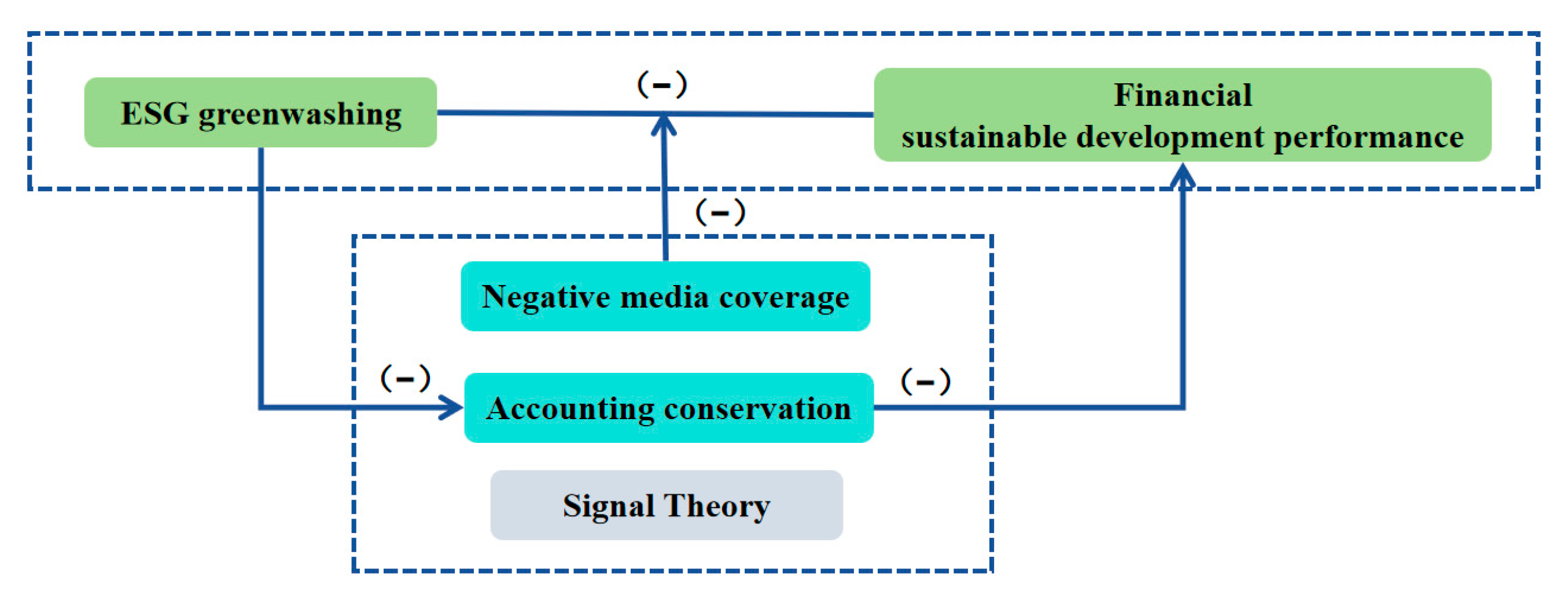
Figure 2 clearly presents the complete functional paths of the mediating and moderating mechanisms in this study. It explicitly defines the logical relationships among the core explanatory variable (corporate ESG greenwashing), mediating variable (accounting conservatism), moderating variable (negative media attention), and dependent variable (financial sustainable development performance); labels the direction and sequence of the effects among all variables; and further verifies the rationality and logical consistency of the model specification in this study.

5. Discussion

5.1. Heterogeneity Analysis of Regions

The 19th CPC National Congress identified China’s main social issue as the gap between people’s aspirations and unbalanced, inadequate development. Regional strategies—western development, northeast revitalization, central rise, and eastern growth—aim to leverage local strengths. Yet imbalances persist: the east excels in industrial upgrading, the west in energy security, and the central region faces resource and economic challenges. Most listed companies cluster in the east and west, where mature markets and strong policies foster large firms that attract investor and regulatory attention. These regions have higher public ESG awareness and stricter oversight, increasing scrutiny of corporate behavior. In contrast, central enterprises experience looser regulation, less public scrutiny, and lower ESG disclosure pressure. ESG greenwashing in the east and west provokes strong backlash, damages reputation, and disrupts financing, while central firms face milder consequences due to weaker oversight. Thus, ESG greenwashing has a greater negative impact on financial sustainable development performance in eastern and western China.
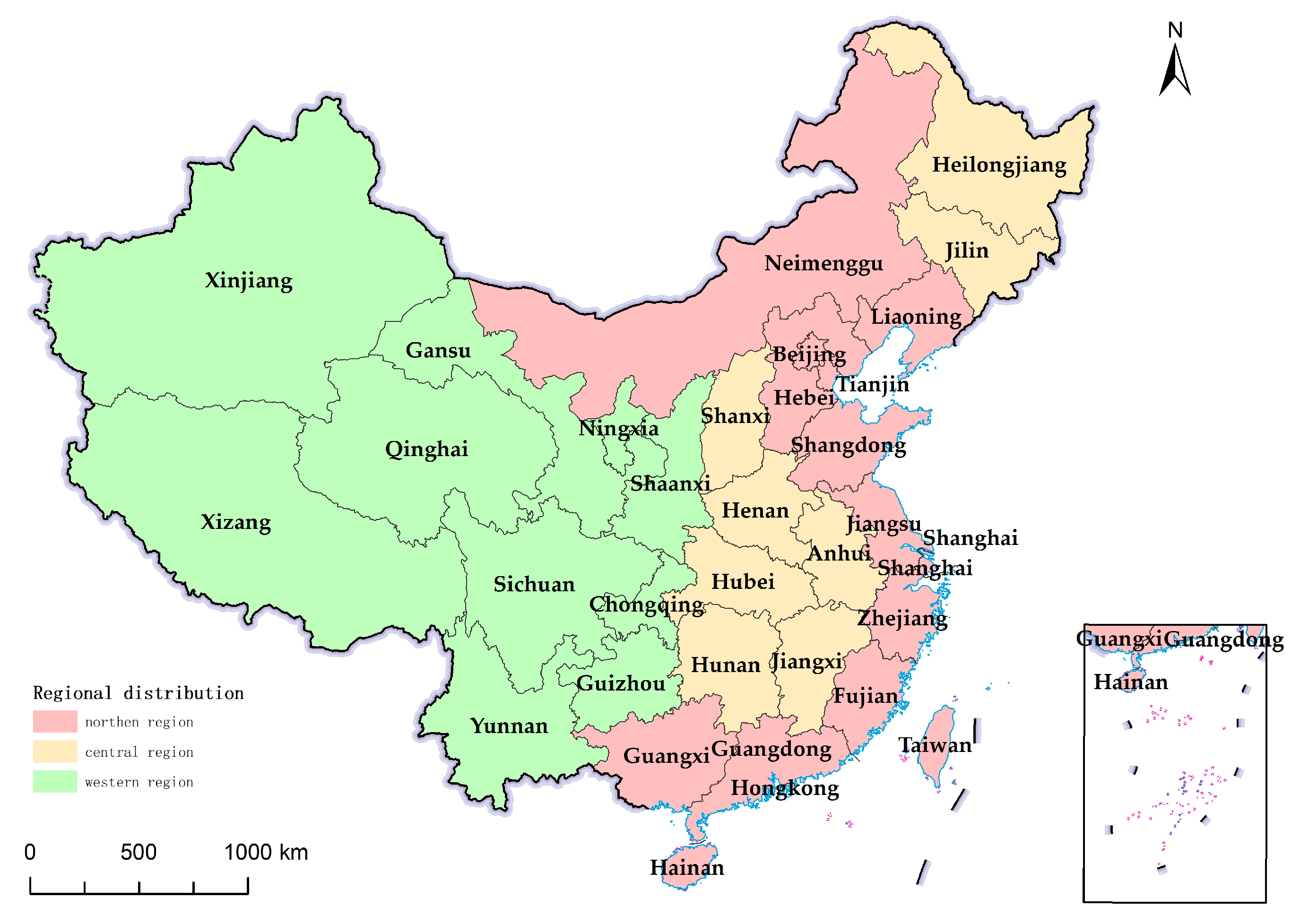
We divided the sample into eastern, central, and western regions for separate regressions. Figure 3 illustrates China’s regional grouping. The pink region denotes Eastern China, encompassing Beijing Municipality, Tianjin Municipality, Hebei Province, Liaoning Province, Shandong Province, Jiangsu Province, Shanghai Municipality, Zhejiang Province, Fujian Province, Guangdong Province, and Hainan Province; the yellow region denotes Central China, encompassing Heilongjiang Province, Jilin Province, Shanxi Province, Henan Province, Anhui Province, Hubei Province, Hunan Province, and Jiangxi Province; and the green region denotes Western China, encompassing the Inner Mongolia Autonomous Region, Xinjiang Uygur Autonomous Region, Tibet Autonomous Region, Guangxi Zhuang Autonomous Region, Ningxia Hui Autonomous Region, Gansu Province, Qinghai Province, Shaanxi Province, Sichuan Province, Chongqing Municipality, Guizhou Province, and Yunnan Province.
The results of the data regression are presented in Columns (1)–(3) of Table 9. For the eastern region (Column 1), the coefficient of corporate ESG greenwashing on financial sustainable development performance is −0.029 (1% significance); for the western region (Column 2), it is −0.030 (5% significance); and for the central region (Column 3), it is −0.015 (10% significance). To further examine regional heterogeneity, we conducted the Chow test, which showed significance at the 10% level, confirming that the core relationship exhibits notable regional differences. This indicates that the negative impact of ESG greenwashing is more pronounced in the economically developed eastern and western regions than in the central region.

5.2. Policy Suggestions Based on Research Perspective

The international ESG system is increasingly sophisticated, while ESG research in China trails behind. Despite continuous policy refinements over the past few years, inconsistent standards across rating agencies have created room for corporate ESG greenwashing. Such practices erode corporate reputation, undermine investor confidence, impede the integration of ESG into financial practices, and hinder improvements in financial sustainable development performance.
At the institutional level, unbalanced regional development in China’s eastern, central, and western regions necessitates differentiated ESG institutions. The eastern region, with a well-developed economy and high greenwashing risks, needs a full-chain anti-greenwashing system that includes mandatory disclosure, third-party assurance, and market constraints. The western region, dominated by energy and mineral industries and lacking supporting facilities and professional resources, requires a robust supportive framework with differentiated disclosure, special fund support, and greenwashing regulations. The central region, lagging in ESG practices and facing moderate greenwashing risks, should adopt a progressive system that features tiered disclosure, strengthened policy incentives, and consolidation of foundational capacity.
At the cultural level, integrating modern corporate social responsibility with fine traditional culture is key to implementing ESG; listed companies should abandon greenwashing and foster a corporate culture and core values to drive long-term compliance.
At the governance level, internal–external collaborative mechanisms should be established, ESG into management assessments should be incorporated, accounting conservatism should be coordinated for standardized disclosure, and media supervision should be strengthened to alleviate information asymmetry.
In ESG practices, the government, together with industry associations and third-party institutions, should develop a China-adapted ESG indicator system and rating manual to avoid homogenization and enhance transparency and authority.

5.3. Limiting Factors

This paper selects Chinese A-share-listed companies from 2018 to 2023 as samples to explore the impact and mechanism of environmental, social, and governance (ESG) greenwashing on corporate financial sustainable development performance. The results show that ESG greenwashing reduces corporate financial sustainable development performance, providing a reference for improving ESG and ESG report authenticity. However, this study has the following limitations: (1) Time span limitation: Due to the availability of ESG data and insufficient standardization of early disclosure, only data from 2018 to 2023 are used. The short time dimension may fail to capture the dynamic impacts of long-term factors such as macroeconomic cycles and industry development stages. (2) Variable measurement optimization space: The proxy indicator of ESG greenwashing only uses the difference between Huazheng and Wind ESG ratings, failing to cover all its forms (e.g., selective disclosure). Existing ESG ratings lack unified weight standards and focus more on disclosure quantity than quality. Potential control variables (e.g., corporate digital transformation) may be omitted, leaving only online negative media coverage, leading to incomplete measurement. (3) Research perspective limitation: Only Chinese A-share-listed companies are focused on, without comparative analysis with international ESG practices, making it difficult to reveal the relationship under different institutional environments and regulatory systems.
Given the above limitations, future research can be improved by expanding the time span, optimizing measurement methods for variables, and broadening the research perspective.

6. Conclusions

In recent years, China has actively advanced the green and low-carbon transformation of society. As a key vehicle for fully implementing green and low-carbon development, some enterprises have exploited loopholes in the institutional framework to deliberately engage in non-compliant ESG greenwashing, which exerts an adverse impact on financial sustainable development performance (Sus). Drawing on data from Chinese A-share-listed companies over the period 2018–2023, this study explores the impact and underlying mechanism of corporate ESG greenwashing on Sus. The findings indicate that (1) Corporate ESG greenwashing is significantly and negatively associated with Sus—enterprises engaging in misleading and deceptive ESG greenwashing behaviors experience a marked reduction in Sus. (2) ESG greenwashing undermines internal accounting conservatism (AC), which impairs stakeholders’ assessment of corporate reputation and thereby reduces Sus. (3) Negative media coverage may function as an external regulatory mechanism, thereby improving corporate behavior and mitigating the detrimental impact of greenwashing on financial sustainable development performance. (4) The heterogeneity analysis indicates that the negative impact of ESG greenwashing on enterprises’ financial sustainable development performance (Sus) presents a regional gradient characteristic—being most prominent in the eastern region, followed by the western region, and weakest in the central region.
This conclusion provides important empirical support and practical guidance for multi-stakeholder ESG: For enterprises, it offers an operational basis to abandon ESG greenwashing, focus on substantive ESG practices, strengthen internal accounting conservatism, and standardize ESG information disclosure. For regulatory authorities, it serves as a decision-making reference to accelerate a unified China-adapted ESG standard system, implement a regionally differentiated supervision strategy (“stronger verification/punishment in the east, enhanced guidance in the west, and transformation space in the central region”), and improve the closed-loop mechanism linking media supervision and hierarchical punishment. Finally, for market participants, it identifies directions for guiding investors regarding rational ESG information identification, promoting professional media supervision, and building a collaborative ESG co-governance ecosystem involving industry associations, third-party institutions, etc.

Author Contributions

Methodology, Y.W., J.Y. and W.S.; software, Y.L.; formal analysis, Y.W. and W.S.; writing—review and editing, Y.W. and J.Y.; visualization, Y.L. and W.S.; supervision, Y.W. and Y.L.; funding acquisition, Y.W. All authors have read and agreed to the published version of the manuscript.

Funding

This research was funded by the Natural Science Foundation of Liaoning province under grant number 2025-MS-096 and Basic scientific research project of Liaoning Provincial Education Department under grant number LJ112510151007. The APC was funded by 2025-MS-096.

Institutional Review Board Statement

Not applicable.

Informed Consent Statement

Not applicable.

Data Availability Statement

The original contributions presented in this study are included in the article. Further inquiries can be directed to the corresponding authors.

Conflicts of Interest

The authors declare no conflicts of interest.

References

  1. Guo, Z.; Zhang, X. Corporate ESG performance and low-carbon technology innovation. Technol. Anal. Strat. Manag. 2025, 1–15. [Google Scholar] [CrossRef]
  2. Liu, Y.; Ma, H. Evaluation of China’s ESG Policy Texts Based on the “Instrument-Theme-Subject” Framework. Sustainability 2025, 17, 7796. [Google Scholar] [CrossRef]
  3. Li, L.; Zhang, D.; Li, R. ESG rating disagreement and corporate innovation: Evidence from China. Finance Res. Lett. 2024, 62, 105096. [Google Scholar] [CrossRef]
  4. Zhang, W.; Zhao, Y.; Meng, F. ESG performance and green innovation of Chinese enterprises: Based on the perspective of financing constraints. J. Environ. Manag. 2024, 370, 122955. [Google Scholar] [CrossRef]
  5. Baldi, F.; Pandimiglio, A. The role of ESG scoring and greenwashing risk in explaining the yields of green bonds: A conceptual framework and an econometric analysis. Glob. Finance J. 2022, 52, 100711. [Google Scholar] [CrossRef]
  6. Kim, E.-H.; Lyon, T.P. Greenwash vs. Brownwash: Exaggeration and Undue Modesty in Corporate Sustainability Disclosure. Organ. Sci. 2015, 26, 705–723. [Google Scholar] [CrossRef]
  7. Li, W.; Li, W.; Seppänen, V.; Koivumäki, T. Effects of greenwashing on financial performance: Moderation through local environmental regulation and media coverage. Bus. Strat. Environ. 2023, 32, 820–841. [Google Scholar] [CrossRef]
  8. Wu, Y.; Zhang, K.; Xie, J. Bad Greenwashing, Good Greenwashing: Corporate Social Responsibility and Information Transparency. Manag. Sci. 2020, 66, 3095–3112. [Google Scholar] [CrossRef]
  9. Huang, Y.; Francoeur, C.; Brammer, S. What drives and curbs brownwashing? Bus. Strat. Environ. 2022, 31, 2518–2532. [Google Scholar] [CrossRef]
  10. Lee, M.T.; Raschke, R.L. Stakeholder legitimacy in firm greening and financial performance: What about greenwashing temptations? J. Bus. Res. 2023, 155, 113393. [Google Scholar] [CrossRef]
  11. Niu, Z.; Zhu, Y.; Wang, Y.; Zhong, M. CEO turnover and ESG greenwashing: Evidence from China. Appl. Econ. Lett. 2024, 32, 2778–2782. [Google Scholar] [CrossRef]
  12. Alsayegh, M.F.; Rahman, R.A.; Homayoun, S. Corporate Economic, Environmental, and Social Sustainability Performance Transformation through ESG Disclosure. Sustainability 2020, 12, 3910. [Google Scholar] [CrossRef]
  13. Li, X.; You, Z. The impact of ESG performance on firm value in the Chinese market. Finance Res. Lett. 2025, 85, 108114. [Google Scholar] [CrossRef]
  14. Zhang, L.-S. The impact of ESG performance on the financial performance of companies: Evidence from China’s Shanghai and Shenzhen A-share listed companies. Front. Environ. Sci. 2025, 13, 1507151. [Google Scholar] [CrossRef]
  15. Zhou, D.P. Research on the Impact of Greenwashing Behavior in ESG Information Disclosure on Foreign Direct Investment of En-terprises. World Econ. Stud. 2024, 18-31+133. [Google Scholar] [CrossRef]
  16. Liu, X.; Wang, C.; Wang, X. Greenwashing and corporate market power. J. Clean. Prod. 2025, 486, 144486. [Google Scholar] [CrossRef]
  17. Peng, Q.; Xie, Y. ESG greenwashing and corporate debt financing costs. Finance Res. Lett. 2024, 69, 106012. [Google Scholar] [CrossRef]
  18. Lee, M.T.; Suh, I. Understanding the effects of Environment, Social, and Governance conduct on financial performance: Arguments for a process and integrated modelling approach. Sustain. Technol. Entrep. 2022, 1, 100004. [Google Scholar] [CrossRef]
  19. Fan, Y.D.; Guan, T.Y.; Li, W. A study of the impact of ESG greenwashing on stock price volatility. Friends Account. 2025, 3, 49–56. Available online: https://link.cnki.net/urlid/14.1063.F.20250116.1101.014 (accessed on 17 February 2026).
  20. Liang, Y.; Gao, X. Greenwashing and financial performance in public health firms: The mechanism of organizational legitimacy erosion. Front. Public Health 2025, 13, 1565703. [Google Scholar] [CrossRef]
  21. Marquis, C.; Toffel, M.W.; Zhou, Y.H. Scrutiny, Norms, and Selective Disclosure: A Global Study of Greenwashing. Organ. Sci. 2016, 27, 483–504. [Google Scholar] [CrossRef]
  22. Lara, J.M.G.; Osma, B.G.; Penalva, F. Accounting conservatism and firm investment efficiency. J. Account. Econ. 2016, 61, 221–238. [Google Scholar] [CrossRef]
  23. Bai, M.; Kent, P.; Kim, S.; Li, S. The role of accounting conservatism in corporate innovation. Account. Finance 2024, 65, 1091–1127. [Google Scholar] [CrossRef]
  24. Liu, W.; Wang, Y.; Li, B. Does social media attention influence audit reporting conservatism? Evidence from China. Asia-Pacific J. Account. Econ. 2024, 32, 497–511. [Google Scholar] [CrossRef]
  25. Lin, Y.; Xing, X. Supply chain spillover effect of media attention to customers from the perspective of real earnings management. Finance Res. Lett. 2024, 63, 105316. [Google Scholar] [CrossRef]
  26. Tan, W.; Yan, E.H.; Chen, X.H. Positive Press, Greener Progress: The Role of ESG Media Reputation in Corporate Energy Innovation. Sustain. Dev. 2025, 33, 5162–5184. [Google Scholar] [CrossRef]
  27. Kong, G.; Kong, D.; Wang, M. Does Media Attention Affect Firms’ Environmental Protection Efforts? Evidence from China. Singap. Econ. Rev. 2020, 65, 577–600. [Google Scholar] [CrossRef]
  28. Ren, J.; Wu, P.; Hou, L. Social media attention and corporate greenwashing: Evidence from China. Corp. Soc. Responsib. Environ. Manag. 2024, 31, 5446–5465. [Google Scholar] [CrossRef]
  29. Aouadi, A.; Marsat, S. Do ESG Controversies Matter for Firm Value? Evidence from International Data. J. Bus. Ethics 2018, 151, 1027–1047. [Google Scholar] [CrossRef]
  30. Yang, X.D.; Peng, C.C.; Yao, A.L. Management Capability, Internal Control and Corporate Sustainability. Audit. Res. 2018, 34, 121–128. [Google Scholar]
  31. Hu, Y.; Chen, S.; Tu, Y. Directors’ and officers’ liability insurance, cybersecurity governance, and sustainable development capability of listed companies. Finance Res. Lett. 2025, 86, 108541. [Google Scholar] [CrossRef]
  32. Hu, X.; Hua, R.; Liu, Q.; Wang, C. The green fog: Environmental rating disagreement and corporate greenwashing. Pacific-Basin Finance J. 2023, 78, 101952. [Google Scholar] [CrossRef]
  33. Zhong, M.; Niu, Z.; Zhu, Y.; Li, R. Government green subsidies and corporate ESG greenwashing: Evidence from China. Econ. Anal. Policy 2025, 88, 1321–1346. [Google Scholar] [CrossRef]
  34. Wang, R.Z.; HÓgartaigh, C.Ó.; Van Zijl, T. Measures of Accounting Conservatism: A Construct Validity Perspective. J. Account. Lit. 2009, 28, 165–203. [Google Scholar]
  35. Gui, K.; Hou, H. Digital transformation, media coverage, and management tone manipulation. Finance Res. Lett. 2025, 81, 107440. [Google Scholar] [CrossRef]
  36. Zou, X.; Jiang, J.; Zhang, H.; He, H. ESG performance, media coverage and brand value. Asia Pac. J. Mark. Logist. 2025, 37, 171–188. [Google Scholar] [CrossRef]
  37. Johnston, J. Econometric Methods, 3rd ed.; McGraw-Hill Book Company: New York, NY, USA, 1984. [Google Scholar]
Figure 1. ESG risk index for listed companies exposed to risks (Q1–Q3 2025).
Sustainability 18 02139 g001
Figure 2. Regression path.
Sustainability 18 02139 g002
Figure 3. Regional distribution of China.
Sustainability 18 02139 g003
Table 1. ESG policy.
TimeIssuing AuthorityDocument NamePolicy Content
2018China Securities Regulatory Commission Guidelines for the Governance of Listed CompaniesAdded a chapter on “Stakeholders, Environmental Protection and Social Responsibility.”
2022Shenzhen Stock ExchangeCSI ESG Evaluation MethodologyCovers 15 themes, 32 areas, and over 200 indicators under ESG dimensions, reflecting listed companies’ sustainable development performance
2024The Communist Party of China Central Committee and the State CouncilOpinions of the Communist Party of China Central Committee and the State Council on Fully Promoting the Building of Beautiful ChinaIncorporates “exploring ESG evaluation” into the support system for Beautiful China construction
2025China Securities Regulatory Commission Revisions to the “Measures for the Administration of Information Disclosure of Listed Companies”, the “Guidelines for Annual Reports”, and the “Guidelines for Semi-Annual Reports”Regulates sustainability reports via departmental rules, requiring listed companies to disclose in accordance with exchange provisions
Table 2. China Greenwashing List (2024–2025).
Brand NameClaimsActual Performance
ARC’TERYXLong-term sustainable development via product design, responsible manufacturing, and community engagement1. Sponsored fireworks show on the Qinghai–Tibet Plateau (Sept 2025) caused grassland damage and inadequate residue cleanup; 2. regional discrepancies in clothing fabric chemical disclosure; products contain excessive PFAS
XTEPHas been launching eco-friendly products (e.g., “360–ECO” low-carbon running shoes, 100% polylactic acid windbreakers) since 20211. No official flagship store purchase links for claimed eco-friendly products; 2. “eco-friendly concept products” are marketing gimmicks (short sales cycles, low production volumes, no mass production) used for awards and displays
Deutsche BankGuides capital to sustainable/eco-friendly solutions; supports low-carbon economic transition as a global financial intermediary1. Subsidiary Deutsche Investment Bank fined €25 million for misleading sustainable finance promotions; 2. ESG “leader” claims and “ESG as core DNA” statements were factually inconsistent
Table 3. Variable name and variable description.
VariableVariable NameVariable Description
Explanatory variableESG greenwashing (ESGg)Standardized WindESG ratings−Standardized Huazheng ESG ratings
Explained variableFinancial sustainable development performance (Sus)Van Horne model of sustainable development
Mediator variableAccounting conservatism (AC)ACF accounting conservatism model
Moderating variableNegative media coverage (Media)Ln (1 + number of negative media reports)
Control
variables
Corporate size (Size)Total number of employees in the enterprise/100
Corporate age (Age)Ln [1 + (current year − year of establishment)]
Ownership centralization (Top1)Shareholding ratio of the largest shareholder
Shareholders’ shareholding (Top5)Top five shareholders’ shareholding ratio
Management shareholding (Mshare)Management shareholding/total share capital
Board size (Board)Ln (number of board of directors)
Debt-to-Asset Ratio (Lev)Total liabilities/total assets
Corporate Value (TobinQ)Market value/total assets
Note: ESG rating data of listed companies is sourced from the Wind Database, media attention data is from CNRDS, and all other indicator data is from CSMAR.
Table 4. The result of descriptive statistics.
VariablesObsMeanSdMedianMinMax
Sus14,7360.3810.3390.417−1.2381.051
ESGg14,736−0.0181.137−0.174−2.5562.985
Media14,7363.4850.9553.3671.3866.600
AC14,736−0.5720.485−0.606−1.8141.121
Size14,73660.050117.96723.4001.890859.060
Age14,7363.0860.2533.0912.3983.611
Top114,73632.97514.64930.6307.77071.240
Top514,73651.78215.30851.45819.06088.024
Mshare14,73612.86918.2001.1690.00066.489
Board14,7362.1080.1952.1971.6092.639
Lev14,7360.4250.1880.4190.0710.857
TobinQ14,7361.8691.1451.5090.8007.439
Table 5. Multicollinearity test.
VariablesSus
VIF1/VIF
ESGg1.0100.989
Size1.1500.872
Age1.1000.909
Top12.4800.403
Top52.5500.392
Mshare1.2600.792
Board1.0800.925
Lev1.2200.820
TobinQ1.1300.886
Mean1.440
Table 6. The results of corporate ESG greenwashing and financial sustainable development performance.
Variables(1)(2)(3)
SusSusSus
ESGg−0.034 ***−0.034 ***−0.029 ***
(−8.191)(−8.209)(−7.774)
Size 0.000 ***
(7.267)
Age 0.060 **
(2.320)
Top1 0.002 ***
(2.989)
Top5 0.004 ***
(7.388)
Mshare 0.001 ***
(4.963)
Board 0.109 ***
(4.009)
Lev −0.484 ***
(−10.801)
TobinQ 0.002
(0.314)
_cons0.381 ***0.381 ***−0.133
Industry(60.627)
No
(61.521)
Yes
(−1.290)
Yes
YearNoYesYes
N14,73614,73614,736
Adj. R20.0130.0390.175
BP Testp < 0.05
Wooldridge TestF = 352.598    p < 0.05
Note: T-values are in parentheses. **, and *** indicate significance levels of 5%, and 1%, respectively. Coefficient standard error is processed by robust and company-level clusters.
Table 7. Results of the mediating effect.
(1)(2)(3)(4)
ACSusSusSus
ESGg−0.009 ***−0.029 ***−0.030 ***−0.029 ***
(−2.993)(−7.798)(−8.009)(−7.926)
AC −0.011 ***
(−3.425)
Media 0.026 ***0.025 ***
(4.505)(4.387)
ESG × Media −0.007 **
(−2.179)
Size−0.000 **0.000 ***0.000 ***0.000 ***
(−2.056)(7.266)(5.714)(5.765)
Age0.0020.060 **0.060 **0.060 **
(0.515)(2.320)(2.330)(2.321)
Top10.000 ***0.002 ***0.002 ***0.002 ***
(2.891)(2.998)(3.304)(3.271)
Top5−0.001 ***0.004 ***0.004 ***0.004 ***
(−3.915)(7.375)(7.254)(7.259)
Mshare−0.0000.001 ***0.001 ***0.001 ***
(−1.213)(4.958)(4.981)(5.013)
Board0.0080.109 ***0.106 ***0.106 ***
(0.823)(4.012)(3.934)(3.945)
Lev0.015−0.484 ***−0.500 ***−0.501 ***
(1.255)(−10.801)(−11.154)(−11.175)
TobinQ−0.0000.002−0.003−0.003
(−0.222)(0.314)(−0.445)(−0.462)
_cons−0.580 ***−0.139−0.198 *−0.194 *
(−24.154)(−1.351)(−1.894)(−1.860)
N14,73614,73614,73614,736
R20.1830.1760.1790.180
F6.15044.54046.13942.150
Note: T-values are in parentheses. *, **, and *** indicate significance levels of 10%, 5%, and 1%, respectively. Coefficient standard error is processed by robust and company-level clusters.
Table 8. Bootstrap test results for Mediation Effect.
Mediating VariableEffectCoefficientBootstrap
Std. Err.
95% Bootstrapped CI
ACInd_eff0.00010.0007[0.00001, 0.0002809]
Dir_eff−0.02930.0024[−0.033372, −0.0243254]
Tot_eff−0.02920.0024[−0.033283, −0.024209]
Table 9. The results of heterogeneity of regions and auditor concerns.
Variables(1)(2)(3)
EastWestCentral
SusSusSus
ESGg−0.029 ***−0.030 **−0.015 *
(−6.808)(−2.311)(−1.717)
Size0.000 ***0.001 ***0.000 ***
(5.632)(3.810)(3.290)
Age0.0470.1050.075
(1.616)(1.148)(1.120)
Top10.002 ***0.0020.002
(2.673)(1.072)(1.142)
Top50.004 ***0.003 *0.005 ***
(6.402)(1.815)(3.060)
Mshare0.001 ***0.002 **0.002 **
(3.481)(2.113)(2.358)
Board0.076 **0.1110.243 ***
(2.509)(1.412)(3.085)
Lev−0.476 ***−0.486 ***−0.563 ***
(−8.966)(−3.978)(−4.909)
TobinQ0.0010.020−0.025
(0.141)(1.304)(−1.408)
_cons−0.018−0.293−0.432
(−0.158)(−0.750)(−1.642)
IndustryYesYesYes
YearYesYesYes
N10,67118152250
Adj. R20.1720.2460.236
Chow test F = 2.03    p = 0.0871
Note: T-values are in parentheses. *, **, and *** indicate significance levels of 10%, 5%, and 1%, respectively. Coefficient standard error is processed by robust and company-level cluster.
Disclaimer/Publisher’s Note: The statements, opinions and data contained in all publications are solely those of the individual author(s) and contributor(s) and not of MDPI and/or the editor(s). MDPI and/or the editor(s) disclaim responsibility for any injury to people or property resulting from any ideas, methods, instructions or products referred to in the content.