Article

Generalized Additive Model (GAM) Applied to the Analysis of Ozone Pollution in a City in Eastern China

1
Zhejiang Key Laboratory of Environment and Health of New Pollutants, School of Environment, Hangzhou Institute for Advanced Study, University of Chinese Academy of Sciences, Hangzhou 310024, China
2
Ningbo Ecological and Environmental Monitoring Center of Zhejiang Province, Ningbo 315048, China
3
Zhejiang Marine Ecology and Environment Monitoring Center, Zhoushan 316021, China
*
Author to whom correspondence should be addressed.
Sustainability 2026, 18(4), 2134; https://doi.org/10.3390/su18042134
Submission received: 16 January 2026 / Revised: 13 February 2026 / Accepted: 14 February 2026 / Published: 22 February 2026
(This article belongs to the Special Issue Air Pollution: Causes, Monitoring and Sustainable Control)

Abstract

Ground-level ozone (O3) pollution remains persistently high in China, despite the implementation of stringent emission controls targeting primary pollutants. However, understanding of the drivers and formation mechanisms of this secondary pollutant remains limited. Herein, comprehensive field observations of O3 and its precursors were conducted in a medium-sized city in eastern China. The average O3 concentration was 93.60 ± 61.98 μg·m−3, with severe pollution accounting for 47.05% (high-temperature, low-humidity conditions). The peak O3 concentration during pollution episodes (207.13 ± 34.93 μg·m−3) exceeded that of non-pollution periods (108.77 ± 43.99 μg·m−3) by more than twofold. A generalized additive model (GAM) was employed to identify the key drivers of O3 pollution, revealing relative humidity (RH) (F = 36.95) and volatile organic compounds (VOCs) (F = 8.03) as dominant drivers. Further interaction analysis using the GAM showed synergistic effects between RH and nitric oxide (NOx) as well as the temperature (T) and NOx on O3 evolution. O3 formation sensitivity analysis demonstrated that O3 production was primarily within a VOC-limited regime (VOCs/NOx < 5.5). Alkenes were found to be the most prominent component, contributing 41.20–45.38% to the in situ O3 formation potential (OFP), especially for ethylene and acetaldehyde (>10 μg·m−3). The toluene/benzene ratio indicated that Taizhou’s ambient VOCs were dominated by vehicle exhaust emissions, with minor contributions from solvents, oils, and gases, and LPG volatilization, making vehicle exhaust control the core of VOC reduction. The air mass transport from the Yellow Sea also significantly affected the local O3. This study quantifies the effects of multiple factors of summertime O3 pollution and provides scientific support for targeted O3 control strategies in a medium-sized city in eastern China.

1. Introduction

In recent years, benefiting from the promulgation of the Ambient Air Quality Standard, primary pollutants such as volatile organic compounds (VOCs), carbon monoxide (CO), and nitrogen oxides (NOx) have decreased significantly across China. However, near-surface ozone (O3) pollution has intensified due to climate change and evolved into the primary factor constraining further improvement of air quality in the country. The number of days with O3 as the primary pollutant accounted for 34.7% of the total number of days exceeding the Grade II National Ambient Air Quality Standards in 339 prefecture-level and above cities in China in 2021 [1,2]. Ground-level O3 adversely affects human health, inhibits biomass growth, reduces agricultural yields, and poses persistent challenges to air quality management in China, making O3 pollution control an urgent priority for the region [3].
O3 is produced through in situ photochemical reactions between VOCs and NOx, exhibiting a nonlinear relationship with its precursors. VOCs act as reactive precursors for O3 formation, while NOx serves as catalytic agents with dual effects that can both promote and inhibit O3 production. Due to the different industrial and economic structures, there are certain differences in the sensitivity of O3 formation to precursors in different regions [4]. In rural areas of the Pearl River Delta, the formation of ozone (O3) is predominantly regulated by VOCs, in contrast to urban areas of the region, where O3 generation is mainly governed by NOx [5]. In several Chinese cities, the sensitivity of summer O3 formation has shifted from a VOC-controlled regime to a transitional phase, and one concrete observation is that O3 production falls in this transitional zone during summer pollution episodes in Nanjing [6,7,8]. Given the complex nonlinear nature of these reactions, identifying whether O3 generation is more sensitive to VOCs or NOx is crucial for designing targeted and effective abatement strategies. Meanwhile, O3 formation is strongly influenced by meteorological factors, such as the temperature (T), relative humidity (RH), and solar radiation (SR) [9,10]. Chemical transport models (CTMs) are widely employed to distinguish the contributions of anthropogenic emissions and meteorological factors to O3 variations over long-term periods and specific short-term episodes. Note that CTMs require detailed and up-to-date emission inventories and computing power. Alternatively, statistical methods are widely adopted to investigate this issue using long-term observational data of O3 and meteorological parameters [11,12]. For instance, Hu et al. [13] applied generalized additive models (GAMs) to predict the maximum daily 8-h average (MDA8) O3 concentrations across 334 Chinese cities, revealing that MDA8 O3 levels in different cities were governed by distinct meteorological variables, with the temperature (T), relative humidity (RH), and sunshine hours identified as the top three factors [14]. Such findings collectively reflect the intricate nature of near-surface O3 formation mechanisms, and thus controlling the emissions of a single precursor alone fails to effectively mitigate O3 pollution, thereby posing a significant challenge to atmospheric emission control efforts [15]. The atmospheric oxidation capacity (AOC) refers the atmosphere’s ability to oxidize primary pollutants into secondary products, such as the conversion of VOCs and NOx into O3. The AOC is driven by various atmospheric oxidants, including hydroxyl radical (OH·), nitrate radical (NO3), and O3 itself [16]. A strong AOC accelerates the cycling of ROx· radicals (e.g., RO2·, HO2·, and OH· radicals), which in turn accelerates O3 formation and exacerbates O3 pollution. Typically, OH· radicals dominate the daytime AOC and serve as key indicators of atmospheric photochemical activity [17]. Despite numerous studies [18,19] characterizing O3 precursors and clarifying the influences of anthropogenic emissions and meteorological conditions on O3 evolution, the relative importance of these factors in driving O3 variation remains insufficiently understood. Furthermore, research on how the AOC mechanistically regulates O3 formation is still sparse. Previous studies on OH· radical datasets largely relied on model simulations like OBM-MCM, which hinders our ability to assess the actual contribution of atmospheric oxidizability to O3 formation. Previous field campaigns in China showed that the OH concentrations might be underestimated under low-NOx conditions [20,21,22].
The Yangtze River Delta (YRD), one of China’s most economically developed regions with intense anthropogenic activities, has experienced frequent photochemical pollutions in recent years. As a major metropolitan in the YRD, Taizhou city—with a population of approximately 4.5 million and over 1 million vehicles—have recorded multiple O3 pollution episodes. These conditions provide an opportunity to investigate how precursor emissions and meteorological parameters collectively drive the evolution of O3 pollution. The main goals of this study are to (1) analyze the temporal evolution characterizations of O3 and its precursors; (2) quantify the crucial precursors and meteorological parameters influencing O3 formation, elucidating their interactive mechanisms during pollution periods; and (3) identify an O3 formation sensitivity regime, determine its sensitivity characteristics, and pinpoint the crucial reactive VOC species involved. This study underscores the importance of formulating O3 mitigation strategies that consider multi-pollutant interactions, thereby aiding the design of tailored, region-specific control measures.

2. Materials and Methods

2.1. Observation Site and Instrument Analysis

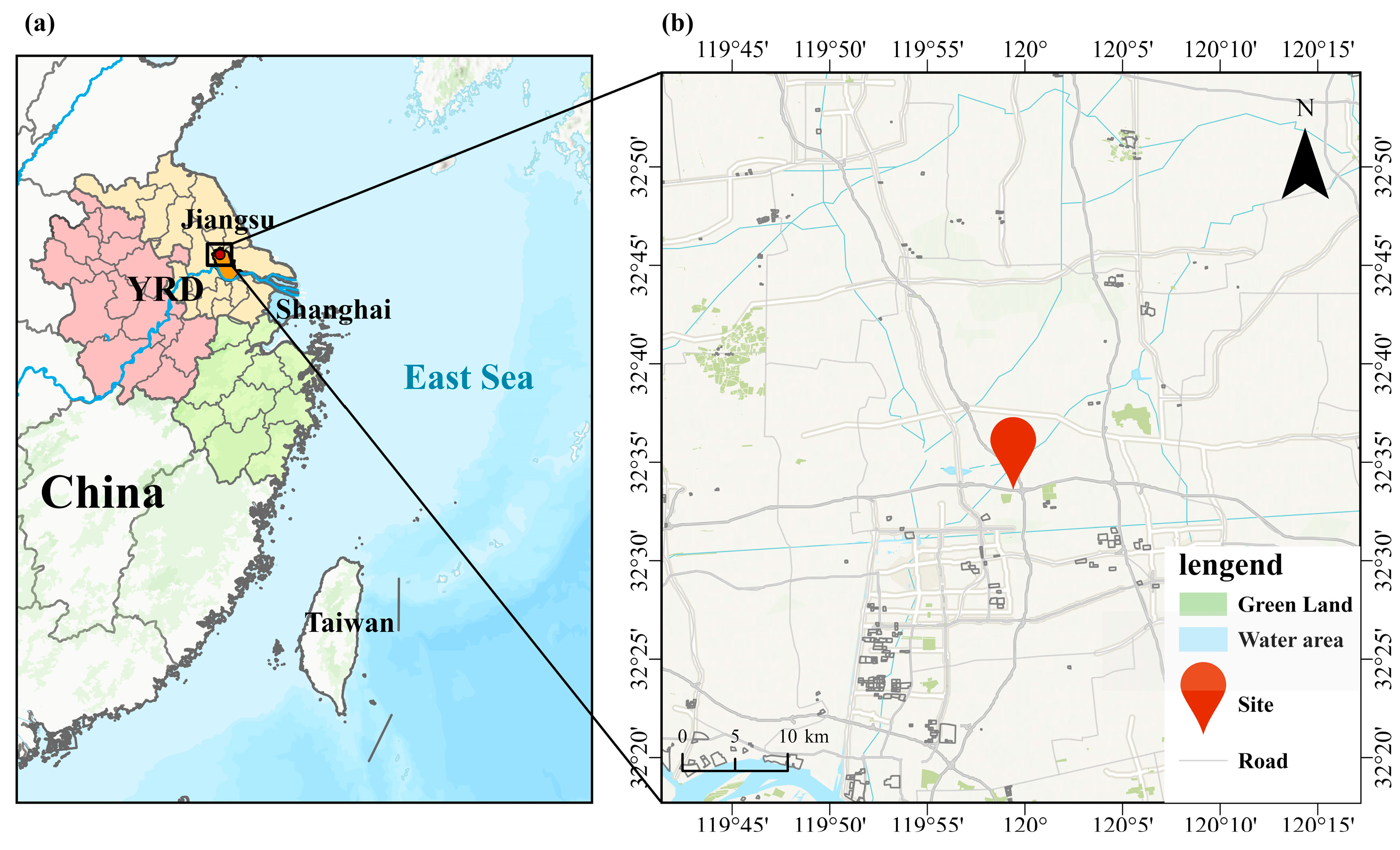
The field observation campaign was conducted at a typical rural area (32.56° N, 119.99° E) of Taizhou, China, from 16 May to 18 June 2018 (Figure 1) This site is surrounded by farmland extending ~12 km to the central urban area, which is ~150 m away from expressways but with no major industrial pollution sources within 20 km. The primary pollution source corresponds to emissions from local vehicular traffic. It is characterized by a typical subtropical monsoon climate with hot, humid summers (June–August) and cold, dry winters (December–February). In most of the observation period, southerly and easterly winds prevailed and brought air from the megacities and sea upwind to this site during the daytime. Thus, the sampled air mass during this campaign could generally embody the atmospheric chemical characteristics in this region [23]. In 2024, the corresponding ambient air quality rate of Taizhou was 83.1%. The contribution ratios of major pollutants to the comprehensive air quality index were as follows: O3 (28.8%), PM2.5 (25.4%), PM10 (19.1%), NO2 (16.0%), CO (7.0%) and SO2 (3.7%).
The gaseous pollutants of O3, NOx, SO2, CO were measured at a 5-min time resolution using Thermo Fisher Scientific analyzers (Models 49i-PS for O3, 42i-TL for NOx and 43i, for SO2, respectively, Thermo Fisher, Waltham, MA, USA) and Picarro analyzers (Picarro G2401 for CO, Picarro, Beijing, China). A total of 98 species of VOCs––28 alkanes, 11 alkenes, 1 alkyne, 16 aromatics, 28 halohydrocarbons, and 14 OVOCs––were monitored using gas chromatography-mass spectrometry (GC-MS, Thermo Fisher, Waltham, MA, USA) with a 1-h time resolution. The OH· radical was directly measured by a laser flash photolysis-laser-induced fluorescence technique (LF-LIF, Peking University, Beijing, China) system. The photolysis frequency of NO2 (JNO2) was obtained by measuring the photochemical flux with a spectroradiometer. Meanwhile, T and RH were measured using a temperature and humidity sensor (MetOne 083E, MetOne, Grants Pass, OR, USA) , wind speed (WS) and wind direction (WD) using an anemometer, and atmospheric pressure (P) using a pressure sensor (MetOne 092, MetOne, Grants Pass, OR, USA), with all instruments operating at a 5-min time resolution. All of the above-mentioned monitoring data were collected through 24-h continuous monitoring. The PBL was sourced from the European Centre for Medium-Range Weather Forecasts (ECMWF) (https://www.ecmwf.int/en/forecasts/dataset/ecmwf-reanalysis-v5, accessed on 1 December 2025). More detailed information on the online measurement could be obtained from the China Atmospheric Complex Pollution Data Sharing Platform (https://www.capdatabase.cn/en) and Text S1 in the Supplementary Materials (SI).

2.2. Generalized Additive Model (GAM)

The generalized additive model (GAM) enables realistic nonlinear fitting rather than a typical statistical approach and has been widely applied for nonlinear and non-monotonic data, including O3 pollution [24,25,26]. The GAM is depicted as follows:
g(u) = β + f(x1) + f(x2) + … + f(xn) + α
where u is the expected value of the response variable; xn is the explanatory variable that drives or indirectly affects u; g(u) is the link function; f(x1) is the thin plate spline smoothing function of the explanatory variable; β is the model’s intercept; and α is the error term.
In this study, the GAM model with the ‘gcv’ package in R software (version 4.5.2) was adopted to simulate hourly O3 concentrations. The Gamma distribution and log link function out of mathematical rationality were used to check whether the O3 concentration met a normal distribution. The model outputs were evaluated via various parameters including the degrees of freedom (df), P value, F statistic, and adjusted coefficient of determination (R2). In general, a df value larger than 1.0 indicates a nonlinear relationship between the influencing factor and response variable, whereas a df value of 1.0 denotes a linear relationship. More detailed information on the GAM approach can be found in Text S2 in the Supplementary Materials (SI).

2.3. Ozone Formation Potential (OFP)

The ozone formation potential (OFP) of VOCs was tested to evaluate the impact of VOC composition in O3 formation [27]. The OFP was calculated using the mixing ratios of individual VOC species, multiplying with the respective maximum incremental reactivity (MIR) values. The MIR is produced by the increase in the unit concentration of VOC species under different VOCs/NOx values, which were obtained from the work of Carter [28]:
OFPi = [VOCs]i × MIRi
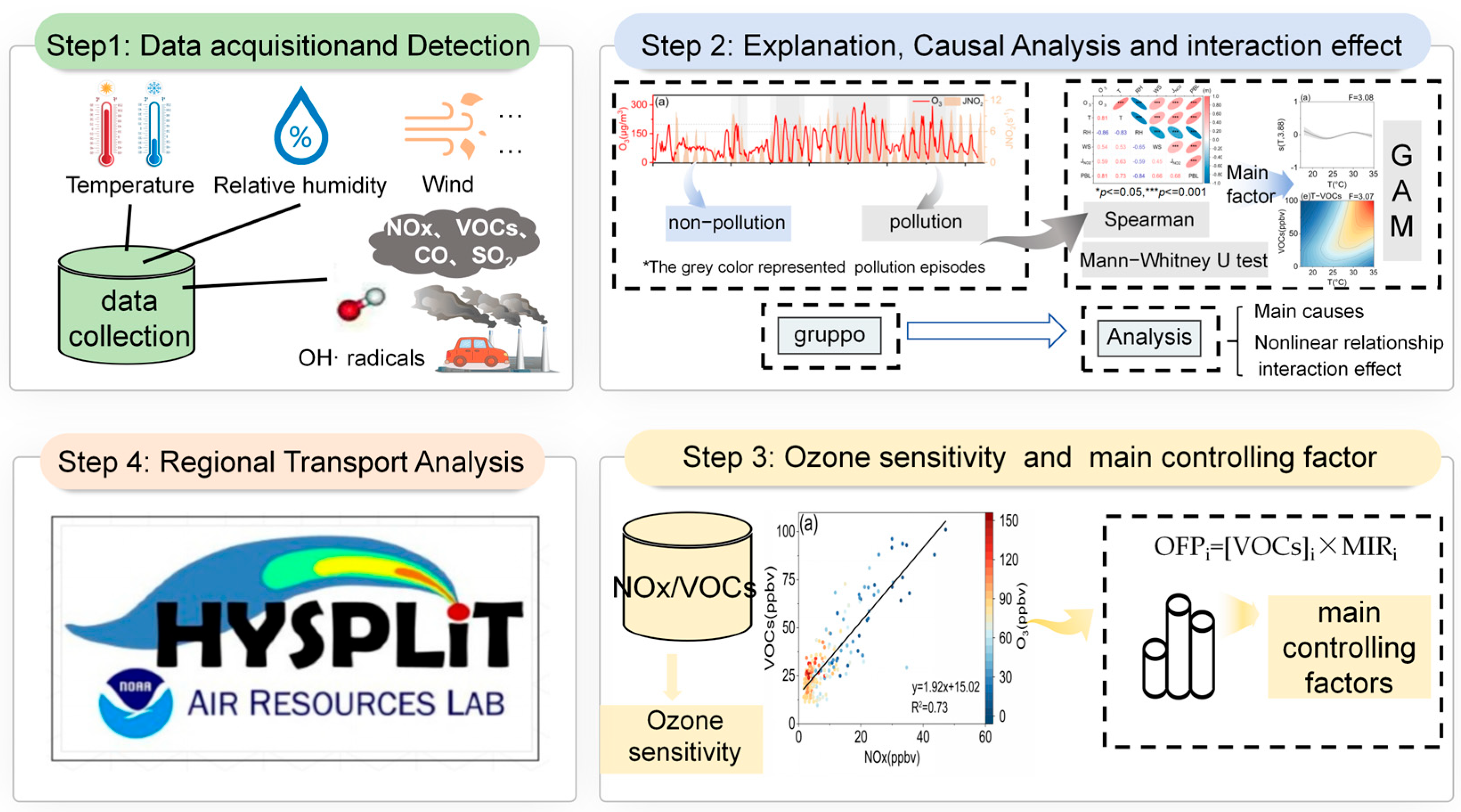
Overall, the technical roadmap of this study is shown in Figure 2.

3. Results and Discussions

3.1. Overview of Field Observation

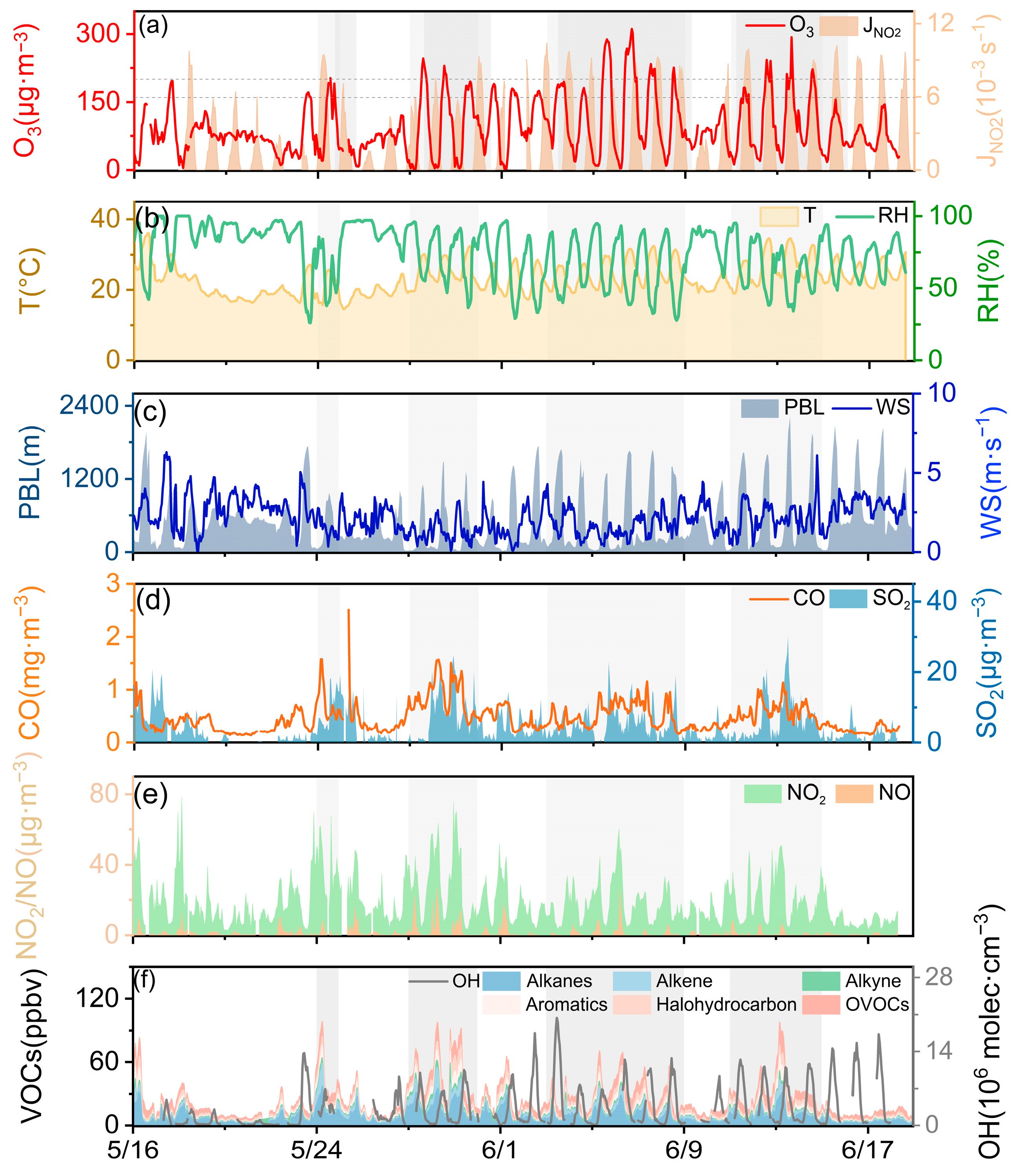
The temporal variations in O3 and its precursors as well as the meteorology in Taizhou during the observation period are shown in Figure 3 and Table S1. The hourly VOC concentrations varied in the range of 5.82–110.16 ppbv (mean of 26.03 ± 18.87 ppbv) during the observation period. The alkanes (35.56%) and OVOCs (25.30%) dominated the VOC composition, followed by halohydrocarbon (13.65%), alkenes (11.43%), and aromatics (9.40%). The NOx concentrations were 2.72–90.89 μg·m−3 with a mean of 20.60 ± 15.55 μg·m−3. The measured hourly OH· radical concentrations spanned from 4.12 × 10⁴ to 2.04 × 10⁷ molec·cm−3, with a daytime average of 5.25 ± 4.27 × 10⁶ molec·cm−3. In comparison with other studies, it was comparable to those observed in Dongying (5.6 × 10⁶ molec·cm−3) during the summer while being a bit lower than those from the coastal city of Xiamen (7.4 × 10⁶ molec·cm−3) [29,30]. As the decisive driver of the daytime AOC, the enhanced OH· radicals may promote local in situ O3 formation. The hourly O3 concentrations showed wide variation from 1.32 to 331.38 μg·m−3 with an average of 93.60 ± 61.98 μg·m−3, which was comparable with that in Shijiazhuang (102.94 ± 23.74 μg·m−3) [31]. Specifically, the daily maximum 8-h average O3 concentrations (MDA-8h O3) exceeding the National Ambient Air Quality Standard Class II (160 μg·m−3) frequently occurred under typical conditions of a high T (23.41 ± 4.42 °C), low RH (74.46 ± 18.97%), and strong JNO2 (2.42 ± 3.11 × 10⁻³ s−1).

3.2. Temporal Evolution of O3 Pollution

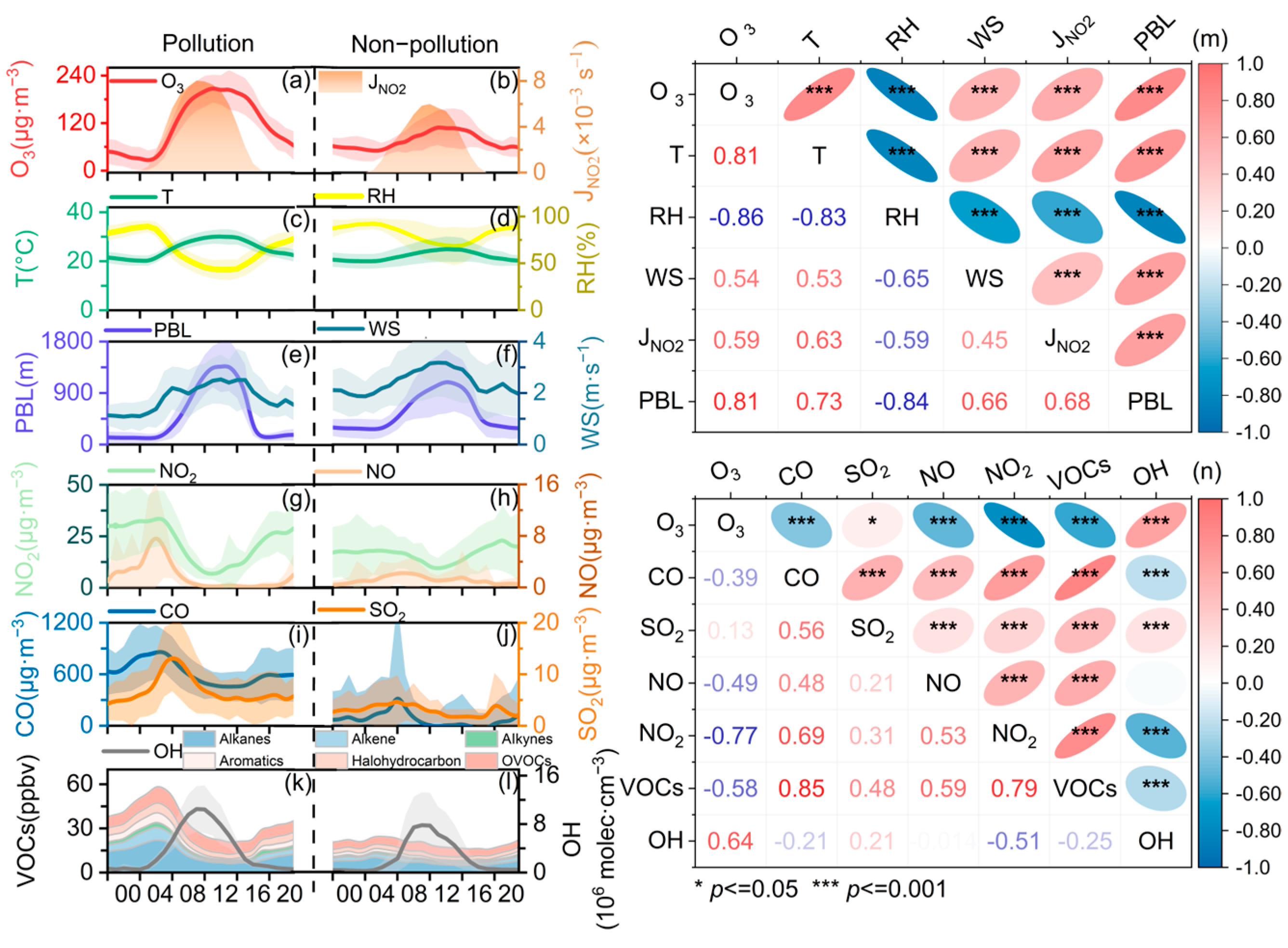
Based on the O3 concentrations, the observations were further divided into O3 pollution episodes (MDA8 O3 > 160 μg·m−3, according to Chinese air quality standards for Class II areas (160 μg·m−3)) and non-pollution periods. As shown in Table S2, 16 pollution episodes (i.e., 47.05%) were recorded, which was less than the number of non-pollution episodes (i.e., 52.95%). The maximum and average MDA8 O3 concentrations in the pollution episodes were 276.37 μg·m−3 and 192.70 μg·m−3 respectively, which were 1.7–1.8 times higher than those in the non-pollution periods. Similarly, the mean levels of the primary pollutants of VOCs, NOx, CO, and SO2 during the O3 pollution episodes were 1.3–2.3 times higher than those in the non-pollution periods. As expected, the OH· radical concentration during the pollution episodes (4.12 ± 4.12 molec·cm−3) was much higher than that during the non-pollution periods, indicating a stronger oxidizing atmosphere and more intense photochemical reactions during pollution episodes. Notably, the role of OH· radicals drove the oxidation of VOCs to generate reactive intermediates. These intermediates further oxidized NO to NO2, which produced oxygen atoms that combined with O2 to form O3, thus linking higher OH· radical concentrations directly to increased O3 production. Aside from that, the O3 pollution episodes occurred mainly under a high T (25.03 ± 4.25 °C), low RH (65.88 ± 19.15%), strong solar radiation (daytime maximum JNO2 of 7.87 ± 1.91 × 10⁻³ s−1), and low wind speed (1.81 ± 0.91 m·s−1). These excellent light and heat conditions promote in situ O3 formation. Thus, a strong atmospheric oxidizing capacity, elevated precursor concentrations, and faster precursor consumption rates were key factors driving the observed O3 enrichment. Among the influencing factors analyzed above, the strong positive correlations were between O3 and the T, JNO2, PBL and OH· radicals (r = 0.81, 0.59, 0.81, 0.64, p < 0.01), whereas negative correlation was found between O3 and the precursors (NO2, NO, and VOCs) and RH (r = 0.77, 0.49, 0.58, 0.86, p < 0.01), suggesting the crucial role of these factors in O3 formation on pollution days, as shown in Figure 4m–n . Specifically, an elevated T and high OH· radical count and JNO2 enhanced the reaction rates of O3 precursors, O3 formation rates, and mechanism pathways, thus showing positive correlations with O3 levels. The RH affected O3 by promoting cloud formation, regulating solar radiation reaching the surface through an aerosol-radiation effect, and enhancing wet deposition. Aside from that, O3 formation was accompanied by the photochemical consumption of VOCs and NOx. Although NO2 and VOCs contributed to O3 production, excessive NOx titrated O3, and high VOCs levels consumed abundant OH· radicals, resulting in reductions in the O3 concentration [14,17]. Notably, the positive correlations between O3 and wind speed and PBL were different from previous studies. On O3-polluted days with low wind speeds (1.81 ± 0.91 m·s−1), a relatively high PBL (499.11 ± 541.38 m), strong solar radiation (daytime maximum JNO2 of 7.87 ± 1.91 × 10⁻³ s−1), and precursor concentrations, weak diffusion-dilution and mixing-dominated atmospheric conditions yielded positive wind speed–O3 and PBL–O3 correlations. The mild wind (<2 m·s−1) increments boosted photochemical reactions and surface O3 accumulation, while the relatively high PBL below 2000 m caused vertical exchange that induced downward O3 flux. However, rising wind speeds (>2 m·s−1) enhanced diffusion to parity with mixing, and elevated wind speeds induce a negative correlation by strengthening diffusion processes and inhibiting surface O3 buildup [32].
The hourly variations in O3 and its precursors, the meteorology in Taizhou during the pollution episodes and non-pollution periods are shown in Figure 4a–l. O3 concentrations slightly decreased in the early morning and reached the valley values (26.32–50.47 μg·m−3) near 5:00 a.m. local time (LT) due to the deposition and depletion of O3. Subsequently, the O3 underwent a rapid increase and reached the maximum values (108.77–207.13 μg·m−3) at 1:00 p.m. LT, indicating the crucial role of local photochemistry reactions for O3 formation. In contrast with O3, the primary pollutants of VOCs, NOx, CO, and SO2 exhibited similar diurnal patterns, with the maximum and minimum values occurring in the morning (at about 8:00 a.m. LT) and afternoon, respectively.

3.3. Drivers of O3 Pollution Episodes

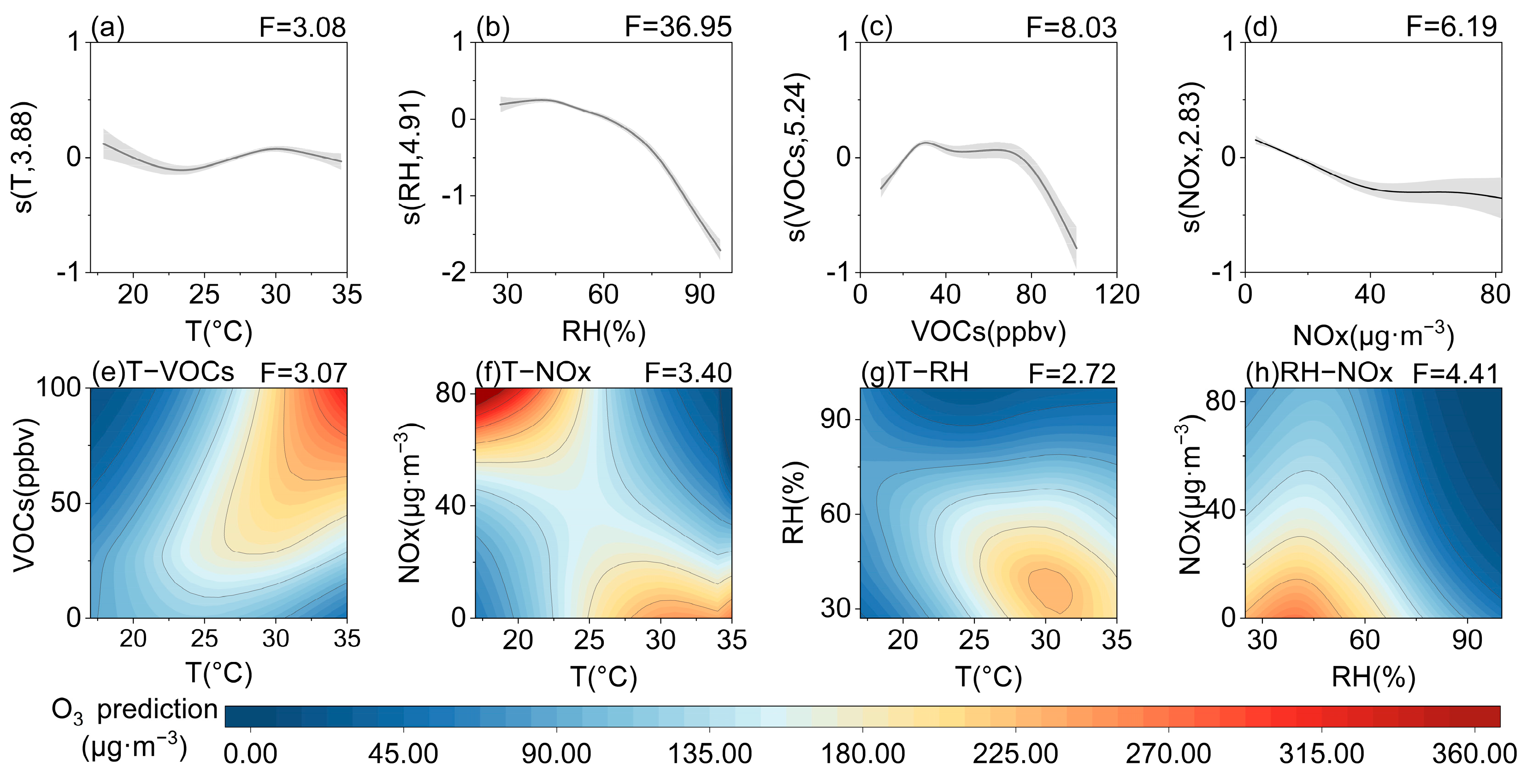
Since the nonlinear relationships between in situ O3 formation and its influencing factors (precursors emissions and meteorology), a GAM approach was employed to further quantify the impacts of influencing factors on O3 pollution formation as well as reveal characterizations of the interactions between meteorological effects and various precursors (Figure 5a–d, Figures S2a and S3 and Table S5). Due to OH· radicals and JNO2 possibly inducing GAM multicollinearity (VIF > 5), five major explanatory variables, including precursors (VOCs and NOx) and meteorological conditions (T, RH, and PBL) were added for model execution. The total deviance explained (%) and adjusted R2 were 86.70% and 0.81, respectively, indicating that the GAM approach has a robust predictive ability for the O3 formation process. The degrees of freedom (df) of all explanatory variables exceeded 1.0, suggesting significant nonlinear relationships between these explanatory variables and O3 concentrations. However, the PBL was excluded due to its low independent explanatory power (p > 0.5) for O3.
The RH (F = 36.95) emerged as the most dominant driving factor for O3 pollution, exhibiting a nonlinear negative correlation with the O3 concentrations. This phenomenon may be attributed to two main aspects. On the one hand, increased RH promotes cloud formation and aerosol scattering, which reduces solar radiation and thus indirectly weakens in situ photochemical O3 production. On the other hand, high RH facilitates the wet deposition of O3 and its precursors, which would result in reduced O3 concentrations [33,34]. This phenomenon aligns with prior studies conducted in Shanghai, Nanjing, Hangzhou, and Hefei, which found that RH serves as the dominant factor governing O3 pollution in the summer [35]. In comparison with RH, the VOCs, T, and NOx showed much less importance in O3 pollution, with F values of 3.08–8.03. The T generally displayed a nonlinearly positive correlation with O3, in line with prior works [36]. As expected, O3 concentrations exhibited decreasing trends with increasing NOx and VOC levels. These precursors were consumed in photochemistry reactions for forming O3 [37,38]. Notably, under relatively low concentration variations (<35 ppbv with narrow CI), VOCs had a significant positive promotion effect on O3 formation. However, the VOCs shifted to a negative correlation with O3 evolution under high VOC levels, indicating that sufficient VOCs facilitate photochemical reactions and exacerbate O3 pollution.
The multi-factor GAM approach showed enhanced explanatory power compared with the single-factor approach (Figure 5e–h, Figures S2b and S4 and Table S6). With the deviance explained (87.70%) and adjusted R2 (0.82) a bit higher than those for the single-factor GAM, robust performance for the model simulation was verified. The RH–NOx interaction emerged as the most critical factor (F = 4.41), with T–NOx and T–VOC interaction as secondary contributors (F = 3.07–3.40), whereas interactions of T–RH and RH–VOCs displayed results of F = 2.45–2.72. The interaction of T–VOCs showed strong positive correlation with O3, where O3 concentrations gradually increased with higher T and VOC levels. In contrast, the interactions of RH–NOx showed negative correlation with O3. The increasing ambient T usually accompanied reduced RH, and elevated VOC levels were conducive to O3 formation. Notably, O3 pollution majorly occurred under conditions of T > 25 °C and RH < 70%. Thus, the typical conditions of pollution episodes with relatively low RH (65.88 ± 19.15%), a high T (25.03 ± 4.25 °C), as well as relatively high VOC levels (35.93 ± 20.51 ppbv) were highly prone to initiating O3 pollution.

3.4. O3 Production Sensitivity Analysis

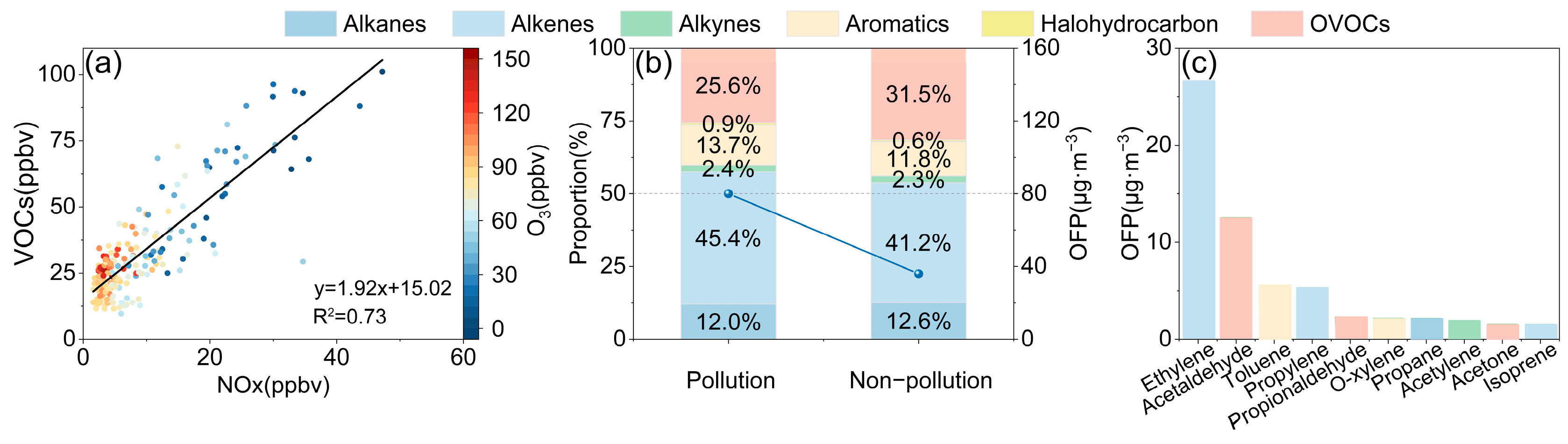
The VOC/NOx ratio was adopted to assess the relationship between ambient O3 concentrations and their precursors (VOCs and NOx) and identify the formation sensitivity regime (Figure 6a). In general, a VOC/NOx ratio less than 5.5 under typical urban atmospheric conditions means that the OH· radical preferentially reacts with NOx, rendering O3 formation sensitive to VOC levels (VOC-limited regime) [39]. Conversely, at high ratios (>5.5), O3 formation becomes sensitive to NOx (NOx-limited regime). The hourly VOC/NOx mixing ratio in this study was 1.92 (R2 = 0.73), indicating that O3 formation was located in a VOC-limited regime during the O3 pollution episodes in Taizhou. O3 is primarily formed via photochemical reactions between OH· radicals and VOCs or NOx, in which NOx and VOCs compete for OH· radicals. Under VOC–limited regimes, the reaction of OH· + NO2 is the terminating reaction under a relatively high NOx concentration environment, and a reduction in the VOC concentration would effectively mitigate O3 yields.

3.5. OFP Evaluation

The OFP induced by VOCs during both pollution episodes and non-pollution periods were calculated, as shown in Figure 6b,c. The mean OFP was 80.00 μg·m−3 during pollution episodes, which was over two times higher than that for the non-pollution periods. In general, different VOC groups contributed similarly to O3 formation in both pollution episodes and non-pollution periods. Alkenes played a dominant role in O3 formation (41.20–45.38%), followed by OVOCs (25.58–31.47%), aromatics (11.85–13.71%), and alkanes (12.04–12.57%), whereas halohydrocarbon (0.59–0.86%) exhibited the smallest contribution. More specifically, ethylene was the most dominant VOC species contributing to O3 formation (26.69 μg·m−3), and the second primary contributor species was acetaldehyde (>10 μg·m−3), followed by toluene, propylene, propionaldehyde, o-xylene, and propane (2–5 μg·m−3) during pollution episodes. This finding highlights that ethylene and acetaldehyde are the key reactive species driving O3 pollution formation in Taizhou, and reduction measures targeting these key species should be prioritized for effective O3 mitigation. The ratio of characteristic pollutants in VOCs can characterize pollutant sources. Toluene and benzene in the atmosphere are mainly derived from industrial emissions, combustion sources, and motor vehicle emissions. It is generally recognized that a toluene/benzene ratio <2.0 indicates a significant influence of motor vehicle exhaust emissions [40]. A ratio <1.0 points to a prominent impact of combustion sources, with the toluene/benzene ratio ranging from 0.37 to 0.58 for biomass combustion sources and 0.71 for coal combustion sources [41]. A ratio >2 suggests that, in addition to motor vehicle exhaust emissions, the region may also be affected by other pollution sources (e.g., solvent volatilization sources [40]). Based on the toluene/benzene ratio, VOCs in the ambient air of Taizhou during the monitoring period were predominantly influenced by vehicle exhaust emissions, with additional minor contributions from solvent volatilization, oil and gas volatilization, and LPG volatilization. Therefore, the control of vehicle exhaust emissions was the core priority for VOC emission reduction in the city, with concurrent regulation of the aforementioned supplementary volatilization sources as auxiliary measures.

3.6. Regional Transport Analysis

Figure S5 illustrates the six clusters of the 48-h backward trajectory affecting Taizhou on pollution days from 16 May to 18 June 2018, which were obtained using the MeteoInfo (version 3.9.4, more details are provided in Text S3). Air mass trajectories were classified into six categories based on their primary passing regions and the occurrence frequency of the dominant cluster, among which Clusters 3, 1 and 5 accounted for relatively high air mass proportions of approximately 58%, 20%, and 17% respectively, while those of Clusters 2, 4, and 6 were comparatively low. In terms of air mass source directions, Cluster 3 represented short-distance transport, originating primarily from the Yellow Sea and reaching the study area via northeastern Jiangsu; Cluster 1 ranged from the Yellow Sea to the northeast of the study area and more distant areas including the Korean Peninsula; and Cluster 5 originated from the Bohai Sea, passing through Shandong and northern Jiangsu before arrival. Clusters 2, 4, and 6 were influenced by air masses from the east and southeast directions, which are inferred to be long-distance transport from the East China Sea region. Overall, air mass transport from the Yellow Sea and regions to the northeast and due north exerted a prominent influence on Taizhou and Jiangsu, with short-distance pollutant transport from the Yellow Sea being the most significant contributor.

4. Conclusions

Based on observations in Taizhou, this study delineated the diurnal dynamics and key drivers of O3 pollution episodes. (1) O3 concentrations (93.60 ± 61.98 μg·m−3) remained elevated, with severe pollution (47.05%) occurring under high-temperature, low-humidity conditions. (2) GAM analysis further identified RH (F = 36.95) and VOCs (F = 8.03) as the primary drivers, exhibiting nonlinear influences; RH promoted O3 below 40% but suppressed it above 40%, while T showed a positive correlation. The interaction of a high T (>25 °C) and low RH (<70%) significantly exacerbated O3 pollution. (3) Our results show that O3 formation occurred under VOC–limited regimes, and thus rigorous reduction measures for VOC concentrations are suggested to effectively mitigate O3 yield in Taizhou in the future. (4) The OFP analysis revealed that alkenes (41.20–45.38%), particularly ethylene and acetaldehyde (>10 μg·m−3), served as the dominant contributors in O3 formation. (5) Air mass transport from the Yellow Sea and regions to the northeast and due north exerted a prominent influence on Taizhou and Jiangsu, with short-distance pollutant transport from the Yellow Sea being the most significant contributor. These findings address a research gap for medium-sized urban hubs and provide targeted mitigation strategies, emphasizing prioritized control of key VOC species and enhanced regional coordination. Future research should consider long-term seasonal observations and add multi-site observations in Taizhou to clarify annual O3 variations, optimize the GAM with additional meteorological factors, and couple them with photochemical models for quantitative simulation, as well as perform refined source analysis of key high-OFP VOCs (ethylene and acetaldehyde) and strengthen regional joint control of O3 pollution in the central Yangtze River Delta to explore synergistic emission reduction in O3 precursors among adjacent cities.

Supplementary Materials

The following supporting information can be downloaded at https://www.mdpi.com/article/10.3390/su18042134/s1. Figure S1: The correlations between O3 and various meteorological factors, conventional pollutants, and oxidants during non-pollution periods; Figure S2: Example of autocorrelation of observed residuals during daytime of pollution episodes: (a) Single-factor GAM; (b) Multi-factor GAM; Figure S3: Residual test results of the Single-factor GAM approach during daytime of pollution episodes; Figure S4: Residual test results of the Multi-factor GAM approach during daytime of pollution episodes; Figure S5: Six clusters of 48 h air mass backward trajectories and their relative contributions. Trajectories were obtained from MeteoInfo from 16 May to 18 June 2018. The colored lines indicate clusters of air mass trajectories; Table S1: Daily average concentrations of various air pollutants (including VOCs) and meteorological parameters in Taizhou from 16 May to 18 June 2018; Table S2: Distribution of polluted and non-polluted days in Taizhou from 16 May to 18 June 2018; Table S3: Daily average concentrations of various air pollutants and meteorological parameters of the site and urban site from 16 May to 18 June 2018; Table S4: Mann-WhitneyU test of polluted and non-polluted days in Taizhou from 16 May to 18 June 2018; Table S5: Single-factor GAM outputs for O3 variations during daytime of episodes The model evaluated explanatory variables (NOx, VOCs, T, RH) and reported parameters including df, degree of reference (dr), p-value, F-value, deviance explained (%), and adjusted R2. Total deviance explained was 86.70%, with corresponding adjusted R2 values of 0.81; Table S6: Multi-factor GAM outputs for O3 variations during daytime of episodes The model evaluated explanatory variables (NOx, VOCs, T, RH) and reported parameters including df, dr, p-value, F-value, deviance explained (%), and adjusted R2. Total deviance explained was 87.70%, with corresponding adjusted R2 values of 0.82; Text S1: Instrument analysis of O3 , NOx, CO and VOCs; Text S2: Modeling and verification process of GAM; Text S3: Air-mass backward-trajectories.

Author Contributions

Conceptualization, W.L. and D.H.; methodology, W.L.; software, W.L.; validation, W.L., W.W., and L.C.; formal analysis, W.L.; investigation, W.L., S.L., and L.C.; resources, D.H. and Z.Y.; data curation, W.L. and W.W.; writing—original draft preparation, W.L.; writing—review and editing, W.L. and D.H.; visualization, W.L.; supervision, D.H.; project administration, D.H.; funding acquisition, D.H. All authors have read and agreed to the published version of the manuscript.

Funding

This research was funded by the Zhejiang Provincial Meteorological Bureau Joint Funds of the Zhejiang Provincial Natural Science Foundation of China (No. LZJMZ24D050006), Zhejiang Province Ecological and Environmental Scientific Research and Achievement Promotion Project (No. 2024HT0060), and National Natural Science Foundation of China Data Integration Project for the Major Research Plan on Atmospheric Compound Pollution (No. 92044303).

Institutional Review Board Statement

Not applicable.

Informed Consent Statement

Not applicable.

Data Availability Statement

Dataset available on request from the authors.

Conflicts of Interest

The authors declare that they have no known competing financial interests or personal relationships that could have appeared to influence the work reported in this paper.

Abbreviations

The following abbreviations are used in this manuscript:
O3Ozone
MDA8Maximum daily 8-h average
TTemperature
RHRelative humility
JNO2Nitrogen dioxide photolysis frequency
WSWind speed
PBLPlanetary boundary layer
NONitric oxide
NO2Nitrogen dioxide
NOxNitrogen oxides
SO2Sulfur dioxide
COCarbon monoxide
VOCsVolatile organic compounds
OVOCsOxygenated volatile organic compounds
AOCAtmospheric oxidation capacity
OHHydroxyl radical
OFPOzone formation potential
GAMGeneralized additive model
YRDYangtze River Delta
LPGLiquefied petroleum gas

References

  1. Li, B.; Ho, S.S.H.; Gong, S.; Ni, J.; Li, H.; Han, L.; Yang, Y.; Qi, Y.; Zhao, D. Characterization of VOCs and their related atmospheric processes in a central chinese city during severe ozone pollution periods. Atmos. Chem. Phys. 2019, 19, 617–638. [Google Scholar] [CrossRef]
  2. Chu, W.; Li, H.; Ji, Y.; Zhang, X.; Xue, L.; Gao, J.; An, C. Research on ozone formation sensitivity based on observational methods: Development history, methodology, and application and prospects in China. J. Environ. Sci. 2024, 138, 543–560. [Google Scholar] [CrossRef] [PubMed]
  3. Yu, W.; Wang, Y.; Wang, H.; Zhu, S.; Wang, P.; Zhang, H. Response of Ozone to Meteorology and atmospheric oxidation capacity in the Yangtze River Delta from 2017 to 2020. Atmos. Environ. 2024, 332, 120616. [Google Scholar] [CrossRef]
  4. Niu, Y.; Yan, Y.; Xing, Y.; Duan, X.; Yue, K.; Dong, J.; Hu, D.; Wang, Y.; Peng, L. Analyzing ozone formation sensitivity in a typical industrial city in China: Implications for effective source control in the chemical transition regime. Sci. Total Environ. 2024, 919, 170559. [Google Scholar] [CrossRef] [PubMed]
  5. Zheng, J.; Zhong, L.; Wang, T.; Louie, P.K.K.; Li, Z. Ground-level ozone in the Pearl River Delta region: Analysis of data from a recently established regional air quality monitoring network. Atmos. Environ. 2010, 44, 814–823. [Google Scholar] [CrossRef]
  6. Wang, W.; Van Der A, R.; Ding, J.; Van Weele, M.; Cheng, T. Spatial and temporal changes of the ozone sensitivity in China based on satellite and ground-based observations. Atmos. Chem. Phys. 2021, 21, 7253–7269. [Google Scholar] [CrossRef]
  7. Li, Z.; Liu, T.; Zhang, H.; Wang, X.; Zhang, J.; Qin, Z.; Zhu, C. Sensitivity analysis of ozone formation and source apportionment of VOCs in a typical industrial city in the Yangtze River Delta region during summer. Atmos. Pollut. Res. 2025, 16, 102424. [Google Scholar] [CrossRef]
  8. Wang, M.; Chen, W.; Zhang, L.; Qin, W.; Zhang, Y.; Zhang, X.; Xie, X. Ozone pollution characteristics and sensitivity analysis using an observation-based model in Nanjing, Yangtze River Delta Region of China. J. Environ. Sci. 2020, 93, 13–22. [Google Scholar] [CrossRef]
  9. Zhou, X.; Li, M.; Huang, X.; Liu, T.; Zhang, H.; Qi, X.; Wang, Z.; Qin, Y.; Geng, G.; Wang, J.; et al. Urban meteorology–chemistry coupling in compound heat–ozone extremes. Nat. Cities 2025, 2, 847–856. [Google Scholar] [CrossRef]
  10. Gong, C.; Liao, H. A typical weather pattern for ozone pollution events in north China. Atmos. Chem. Phys. 2019, 19, 13725–13740. [Google Scholar] [CrossRef]
  11. Cheng, N.; Li, R.; Xu, C.; Chen, Z.; Chen, D.; Meng, F.; Cheng, B.; Ma, Z.; Zhuang, Y.; He, B.; et al. Ground ozone variations at an urban and a rural station in Beijing from 2006 to 2017: Trend, meteorological influences and formation regimes. J. Cleaner Prod. 2019, 235, 11–20. [Google Scholar] [CrossRef]
  12. Mousavinezhad, S.; Choi, Y.; Pouyaei, A.; Ghahremanloo, M.; Nelson, D.L. A comprehensive investigation of surface ozone pollution in China, 2015–2019: Separating the contributions from meteorology and precursor emissions. Atmos. Res. 2021, 257, 105599. [Google Scholar] [CrossRef]
  13. Hu, C.; Kang, P.; Jaffe, D.A.; Li, C.; Zhang, X.; Wu, K.; Zhou, M. Understanding the impact of meteorology on ozone in 334 cities of China. Atmos. Environ. 2021, 248, 118221. [Google Scholar] [CrossRef]
  14. Ding, J.; Dai, Q.; Fan, W.; Lu, M.; Zhang, Y.; Han, S.; Feng, Y. Impacts of meteorology and precursor emission change on O3 variation in Tianjin, China from 2015 to 2021. J. Environ. Sci 2023, 126, 506–516. [Google Scholar] [CrossRef]
  15. Liu, C.; Shi, K. A review on methodology in O3-NOx-VOC sensitivity study. Environ. Pollut. 2021, 291, 118249. [Google Scholar] [CrossRef]
  16. Chen, G.; Lin, Z.; Ji, X.; Xu, L.; Fan, X.; Li, M.; Hong, Y.; Chen, J. The primary sources of ROx Radicals in atmosphere: Oxidative capacity and self-purifying effect. J. Environ. Sci. 2026, 160, 490–496. [Google Scholar] [CrossRef]
  17. Qian, H.; Xu, B.; Xu, Z.; Zou, Q.; Zi, Q.; Zuo, H.; Zhang, F.; Wei, J.; Pei, X.; Zhou, W.; et al. Anthropogenic oxygenated volatile organic compounds dominate atmospheric oxidation capacity and ozone production via secondary formation of formaldehyde in the urban atmosphere. ACS EST Air 2025, 2, 1033–1041. [Google Scholar] [CrossRef]
  18. Tan, Z.; Lu, K.; Jiang, M.; Su, R.; Wang, H.; Lou, S.; Fu, Q.; Zhai, C.; Tan, Q.; Yue, D.; et al. Daytime atmospheric oxidation capacity in four chinese megacities during the photochemically polluted season: A case study based on box model simulation. Atmos. Chem. Phys. 2019, 19, 3493–3513. [Google Scholar] [CrossRef]
  19. Stone, D.; Whalley, L.K.; Heard, D.E. Tropospheric OH and HO2 radicals: Field measurements and model comparisons. Chem. Soc. Rev. 2012, 41, 6348. [Google Scholar] [CrossRef]
  20. Fuchs, H.; Novelli, A.; Rolletter, M.; Hofzumahaus, A.; Pfannerstill, E.Y.; Kessel, S.; Edtbauer, A.; Williams, J.; Michoud, V.; Dusanter, S.; et al. Comparison of OH reactivity measurements in the atmospheric simulation chamber SAPHIR. Atmos. Meas. Tech. 2017, 10, 4023–4053. [Google Scholar] [CrossRef]
  21. Tan, Z.; Rohrer, F.; Lu, K.; Ma, X.; Bohn, B.; Broch, S.; Dong, H.; Fuchs, H.; Gkatzelis, G.I.; Hofzumahaus, A.; et al. Wintertime photochemistry in Beijing: Observations of ROx radical concentrations in the North China Plain during the BEST-ONE campaign. Atmos. Chem. Phys. 2018, 18, 12391–12411. [Google Scholar] [CrossRef]
  22. Tan, Z.; Fuchs, H.; Lu, K.; Hofzumahaus, A.; Bohn, B.; Broch, S.; Dong, H.; Gomm, S.; Häseler, R.; He, L.; et al. Radical chemistry at a rural site (Wangdu) in the North China Plain: Observation and model calculations of OH, HO2 and RO2 Radicals. Atmos. Chem. Phys. 2017, 17, 663–690. [Google Scholar] [CrossRef]
  23. Ma, X.; Tan, Z.; Lu, K.; Yang, X.; Chen, X.; Wang, H.; Chen, S.; Fang, X.; Li, S.; Li, X.; et al. OH and HO2 radical chemistry at a suburban site during the EXPLORE-YRD campaign in 2018. Atmos. Chem. Phys. 2022, 22, 7005–7028. [Google Scholar] [CrossRef]
  24. Wu, Q.; Tang, Y.; Wang, L.; Wang, S.; Han, D.; Ouyang, D.; Jiang, Y.; Xu, P.; Xue, Z.; Hu, J. Impact of emission reductions and meteorology changes on atmospheric mercury concentrations during the COVID-19 lockdown. Sci. Total Environ. 2021, 750, 142323. [Google Scholar] [CrossRef] [PubMed]
  25. Cheng, B.; Ma, Y.; Feng, F.; Zhang, Y.; Shen, J.; Wang, H.; Guo, Y.; Cheng, Y. Influence of weather and air pollution on concentration change of PM2.5 using a Generalized Additive Model and Gradient Boosting Machine. Atmos. Environ. 2021, 255, 118437. [Google Scholar] [CrossRef]
  26. Pearce, J.L.; Beringer, J.; Nicholls, N.; Hyndman, R.J.; Tapper, N.J. Quantifying the influence of local meteorology on air quality using Generalized Additive Models. Atmos. Environ. 2011, 45, 1328–1336. [Google Scholar] [CrossRef]
  27. Wang, Q.; Li, Y.; Zhong, F.; Wu, W.; Zhang, H.; Wang, R.; Duan, Y.; Fu, Q.; Li, Q.; Wang, L.; et al. Ground ozone rise during the 2022 Shanghai lockdown caused by the unfavorable emission reduction ratio of nitrogen oxides and volatile organic compounds. Atmos. Environ. 2025, 340, 120851. [Google Scholar] [CrossRef]
  28. Carter, W.P.L. Development of ozone reactivity scales for volatile organic compounds. Air Waste 1994, 44, 881–899. [Google Scholar] [CrossRef]
  29. Liu, T.; Hong, Y.; Li, M.; Xu, L.; Chen, J.; Bian, Y.; Yang, C.; Dan, Y.; Zhang, Y.; Xue, L.; et al. Atmospheric oxidation capacity and ozone pollution mechanism in a coastal city of southeastern China: Analysis of a typical photochemical episode by an observation-based model. Atmos. Chem. Phys. 2022, 22, 2173–2190. [Google Scholar] [CrossRef]
  30. Chen, T.; Xue, L.; Zheng, P.; Zhang, Y.; Liu, Y.; Sun, J.; Han, G.; Li, H.; Zhang, X.; Li, Y.; et al. Volatile organic compounds and ozone air pollution in an oil production region in northern China. Atmos. Chem. Phys. 2020, 20, 7069–7086. [Google Scholar] [CrossRef]
  31. Guan, Y.; Liu, X.; Zheng, Z.; Dai, Y.; Du, G.; Han, J.; Hou, L.; Duan, E. Summer O3 pollution cycle characteristics and VOCs sources in a central city of Beijing-Tianjin-Hebei area, China. Environ. Pollut. 2023, 323, 121293. [Google Scholar] [CrossRef] [PubMed]
  32. Wen, P.; Guo, X.; Lin, M.; Chun, N.; Bin, X.; Lei, L. Characteristics of ozone pollution and analysis of meteorologicalcauses in Hangzhou city. J. Chengdu Univ. Inf. Technol. 2019, 34, 664–670. [Google Scholar] [CrossRef]
  33. Lin, C.; Lau, A.K.H.; Fung, J.C.H.; Song, Y.; Li, Y.; Tao, M.; Lu, X.; Ma, J.; Lao, X.Q. Removing the effects of meteorological factors on changes in nitrogen dioxide and ozone concentrations in China from 2013 to 2020. Sci. Total Environ. 2021, 793, 148575. [Google Scholar] [CrossRef] [PubMed]
  34. Li, T.; Lu, Y.; Deng, X.; Zhan, Y. Spatiotemporal variations in meteorological influences on ambient ozone in China: A machine learning approach. Atmos. Pollut. Res. 2023, 14, 101720. [Google Scholar] [CrossRef]
  35. Qian, J.; Liao, H.; Yang, Y.; Li, K.; Chen, L.; Zhu, J. Meteorological influences on daily variation and trend of summertime surface ozone over years of 2015–2020: Quantification for cities in the Yangtze River Delta. Sci. Total Environ. 2022, 834, 155107. [Google Scholar] [CrossRef]
  36. Qiu, Y.; Li, X.; Chai, W.; Liu, Y.; Song, M.; Tian, X.; Zou, Q.; Lou, W.; Zhang, W.; Li, J.; et al. Insights into ozone pollution control in urban areas by decoupling meteorological factors based on machine learning. Atmos. Chem. Phys. 2025, 25, 1749–1763. [Google Scholar] [CrossRef]
  37. Wang, F.; Wang, W.; Wang, Z.; Zhang, Z.; Feng, Y.; Russell, A.G.; Shi, G. Drivers of PM2.5-O3 co-pollution: From the perspective of reactive nitrogen conversion pathways in atmospheric nitrogen cycling. Sci. Bull. 2022, 67, 1833–1836. [Google Scholar] [CrossRef]
  38. Yang, J.; Wang, C.; Zhang, Y.; Zhang, S.; Peng, X.; Qin, X.; Bai, J.; Xue, L.; Wang, G.; Cui, S.; et al. Unprecedented impacts of meteorological and photolysis rates on ozone pollution in a coastal megacity of northern China. Atmos. Pollut. Res. 2025, 16, 102461. [Google Scholar] [CrossRef]
  39. Yang, X.; Tang, L.; Zhang, Y.; Mu, Y.; Wang, M.; Chen, W.; Zhou, H.; Hua, Y.; Jiang, R. Correlation analysis between characteristics of VOCs and ozone formation potential in summer in Nanjing urban district. Environ. Sci. 2016, 37, 443–451. [Google Scholar] [CrossRef]
  40. Nelson, P.F.; Quigley, S.M. The hydrocarbon composition of exhaust emitted from gasoline fuelled vehicles. Atmos. Environ. (1967) 1984, 18, 79–87. [Google Scholar] [CrossRef]
  41. Karl, T.G.; Christian, T.J.; Yokelson, R.J.; Artaxo, P.; Hao, W.M.; Guenther, A. The tropical forest and fire emissions experiment: Method evaluation of volatile organic compound emissions measured by PTR-MS, FTIR, and GC from tropical biomass burning. Atmos. Chem. Phys. 2007, 7, 5883–5897. [Google Scholar] [CrossRef]
Figure 1. (a) Map of the location of the YRD. (b) The surroundings of the sampling site.
Sustainability 18 02134 g001
Figure 2. Technical roadmap of this study.
Sustainability 18 02134 g002
Figure 3. Time series of (a) O3, JNO2, (b) T, RH, (c) PBL, WS, (d) CO, SO2, (e) NOx and (f) VOCs, OH· in Taizhou. The grey color represented pollution episodes.
Sustainability 18 02134 g003
Figure 4. Temporal variations in O3 and influencing factors. (al) Diurnal variations in O3 and its precursors (VOCs, NOx, SO2, CO, and OH·) and meteorological parameters (JNO2, T, RH, PBL, and WS). (m,n) The correlations between O3 and various meteorological factors, conventional pollutants, and oxidants during pollution episodes.
Sustainability 18 02134 g004
Figure 5. GAM-derived response curves of O3 concentrations and changes in explanatory variables. (ad) Single-factor effects of T, RH, NOx, and VOC levels. The y axis is the smoothing function values. For example, s(T, df) shows a trend with O3 when T changes, and the df number is the degree of freedom. The x axis is the influencing factor, and the shaded area around the solid blue line indicates the 95% confidence interval of O3. (eh) Multi-factor interaction effects: T–VOCs, T–NOx, T–RH, and RH–NOx.
Sustainability 18 02134 g005
Figure 6. (a) VOC-NOx-O3 synergistic relationship diagram. (b) Contributions and total value of OFP for each type of organic matter in episodes and non-episodes. (c) The top 10 VOC species contributing the most to OFP along with their contributions to VOCs during pollution episodes.
Sustainability 18 02134 g006
Disclaimer/Publisher’s Note: The statements, opinions and data contained in all publications are solely those of the individual author(s) and contributor(s) and not of MDPI and/or the editor(s). MDPI and/or the editor(s) disclaim responsibility for any injury to people or property resulting from any ideas, methods, instructions or products referred to in the content.