
Article

Shifting Deserts and Rising Cities: Assessing Sustainable Landscape Management and Hazard Dynamics in Al-Kawamel Area, Sohag, Egypt, Using Landsat Insights


Geology Department, Faculty of Science, Sohag University, Sohag 82524, Egypt
*
Author to whom correspondence should be addressed.
Sustainability 2026, 18(4), 2011; https://doi.org/10.3390/su18042011
Submission received: 5 January 2026 / Revised: 8 February 2026 / Accepted: 13 February 2026 / Published: 15 February 2026
(This article belongs to the Section Air, Climate Change and Sustainability)

Abstract

Changes in land use and land cover (LULC) are crucial indicators to consider when examining various environmental challenges and assessing the sustainability of rapidly transforming landscapes. Land utilization in arid regions results from a diverse range of socioeconomic activities that reshape urban and regional environments. Using remote sensing and geographic information systems (GISs), the authors investigate the evolving and sustainability-sensitive landscape of the Al-Kawamel area, southwest of Sohag City, Egypt. Three time series of Landsat imagery, from 1985, 2005, and 2025, were used to map major LULC categories and evaluate their transformations with respect to elevation and slope. Based on the data analysis, the results reveal substantial shifts over the 40-year period in this low desert zone. During this time, the built-up areas and the agricultural lands expanded from 8 to 64 km2 and from 10 to 131 km2, respectively. Conversely, the desert zone declined from 325 to 148 km2. These essential changes reflect intensified human activities and land reclamation. These rapid shifts increase exposure to natural and man-made hazards, including karstification, sand accumulations, rockfalls, flash floods, problematic soils, heavy metal hazards from wastewater disposal sites, and abandoned pits. Accordingly, suitable remediation methods should be assigned to minimize their impact.

1. Introduction

The Earth’s surface is constantly changing due to both natural and human factors. Remote sensing data and techniques demonstrate a significant ability to monitor Earth’s surface over time, thanks to their advanced temporal and spatial resolution. Rapidly growing cities are ideal examples for studying these surface dynamic changes [1]. Land use and land cover (LULC) change has been a central research theme in global environmental change studies for several decades [2]. It broadly refers to human-induced modifications of the Earth’s terrestrial surface. Early investigations recognized that such changes significantly influence regional climate systems; however, scientific understanding of LULC dynamics has evolved considerably over time [3]. By the mid-1970s, researchers had identified that LULC change alters surface albedo, impacting the exchange of energy between the land surface and the atmosphere [2]. In the 1980s, attention shifted toward the role of LULC change in the global carbon cycle [4]. During the 1990s, the focus expanded to include the influence of evapotranspiration on the hydrologic cycle, demonstrating that LULC change affects climate at local and regional scales [5]. More recently, advancements in LULC modeling have further strengthened our understanding of these dynamics [6]. The accurate detection of these changes over time, along with their visual and statistical interpretations, plays a vital role in development plans and environmental hazard mitigation and remediation strategies in development areas [7]. According to [8], only a small number of landscapes worldwide have not been altered. “Land use/land cover dynamics” (LULC) is a phrase that is used to describe the steady transition of the use of land and the physical characteristics of a particular region [9]. Several factors influence this process, including natural occurrences, human activities, and governmental decisions [10,11]. There have been significant changes in land use and land cover (LULC) over time due to human activities, with substantial impacts on the natural environment [12]. This natural and human-caused intervention has primarily resulted in the following outcomes: deforestation, decreased productivity, soil degradation, increased runoff and precipitation, and changes in climate at both global and regional levels [13]. Recently, human activities have had unfavorable consequences, including the expansion of pollution hotspots and the massive urbanization of areas once agricultural.
Remote sensing (RS) and geographic information systems (GISs) have become powerful tools for monitoring and evaluating land use and land cover changes over time [14,15]. These techniques provide high-resolution, temporally rich data that enable researchers to track landscape dynamics, especially in rapidly changing environments [16,17]. Medium-resolution satellites such as Landsat and Sentinel are particularly effective for regional LULC classification [18], with Landsat offering a longer, more consistent observation record that is more suitable for LULC change monitoring and analysis [19]. The integration of RS and GIS has enabled mapping of land surface characteristics, infrastructure, and natural resources, enhancing our understanding of environmental change and supporting sustainable land management [20,21,22]. Over the past three decades, these tools have been instrumental in quantifying the spatial and temporal distribution of landscape patterns, which is essential for informed decision-making in development and conservation [23,24,25,26].
Arid areas, such as deserts, are particularly vulnerable to both natural and anthropogenic types of hazards [27]. The literature identifies several key hazards associated with land use changes in these environments: (1) Erosion and Deposition: Driven by sand drifting and dune movement, these processes can reshape landscapes and threaten infrastructure [28]. (2) Soil Instability: Swelling and shrinkage of clay deposits, as well as land subsidence from groundwater withdrawal, pose risks to buildings and agriculture [29]. (3) Hydrological Hazards: Flash floods and changes in watershed dynamics are exacerbated by land cover changes and can have devastating effects on new developments [30]. (4) Karstification: The dissolution of carbonate rocks leads to sinkholes and ground instability. (5) Pollution: Improper disposal of wastewater in open pits leads to soil and groundwater contamination [27]. GIS and RS are essential for hazard assessment, enabling the identification, mapping, and monitoring of these risks. This supports the development of targeted mitigation and adaptation strategies [31]. Human activity and land use have had a profound impact on the ecosystem, leading to changes in land use and land cover patterns over time [32,33]. The properties of LULC impact climate, and changes in hydrology and land cover pose significant challenges for research and urban sustainable development initiatives [34]. Recently, emphasis has focused on land use changes, dryland degradation, and watershed management [35]. Desert regions sometimes lose their area to the expansion of agricultural and urban lands. The literature emphasizes the need for sustainable development strategies that balance economic growth, environmental conservation, and risk mitigation [36]. Key trends emerge: (1) Urban expansion and agricultural development can drive economic growth. However, they often occur at the expense of natural desert landscapes, leading to habitat loss and increased exposure to hazards. (2) There is a growing focus on integrating sustainability principles into city planning, such as preserving natural hydrology, minimizing land degradation, and promoting resilient infrastructure. (3) Sustainable land use requires careful management of water, soil, and other natural resources, informed by continuous monitoring and adaptive planning.
The Egyptian government has proposed to develop the low desert zones outside the Nile floodplain. The developments include establishing urban and industrial zones, as well as agricultural activities, with the assistance of the private sector. The low desert zone is located between the limestone escarpment and the recent floodplain of the River Nile. The majority of the Egyptian population (approximately 96%) currently resides in the Nile Valley and Delta [37]. To relieve population pressure, new cities have been built outside the Nile Valley and the Delta. However, in some of these new cities, potential natural and anthropogenic hazards that will affect the suitability of these areas for urbanization and infrastructure activities were not thoroughly investigated (e.g., the El-Menia project [37,38]) and problems associated with Pliocene clay were identified (the El-Kawther area [39,40,41]). Accordingly, investigation, evaluation, and remedial activities are crucial for these development areas. This study builds on these themes by applying RS and GIS to assess LULC changes and hazard dynamics in the Al-Kawamel area, Sohag, Egypt, an arid region undergoing rapid transformation. The low desert area of Al-Kawamel is exposed to many geological hazards (such as dunes, problematic clay deposits, karst phenomena, rockfalls, and floods) and some man-made hazards (such as quarry depressions and sewage disposal sites). The area is a critical hub for urban, infrastructure, and agricultural activities. By mapping land use changes over four decades and evaluating associated hazards, the research provides actionable insights for sustainable landscape management. The findings directly inform strategies for balancing development with environmental stewardship and hazard mitigation, contributing to the broader discourse on sustainable development in arid environments.

2. Study Area and Its Characteristics

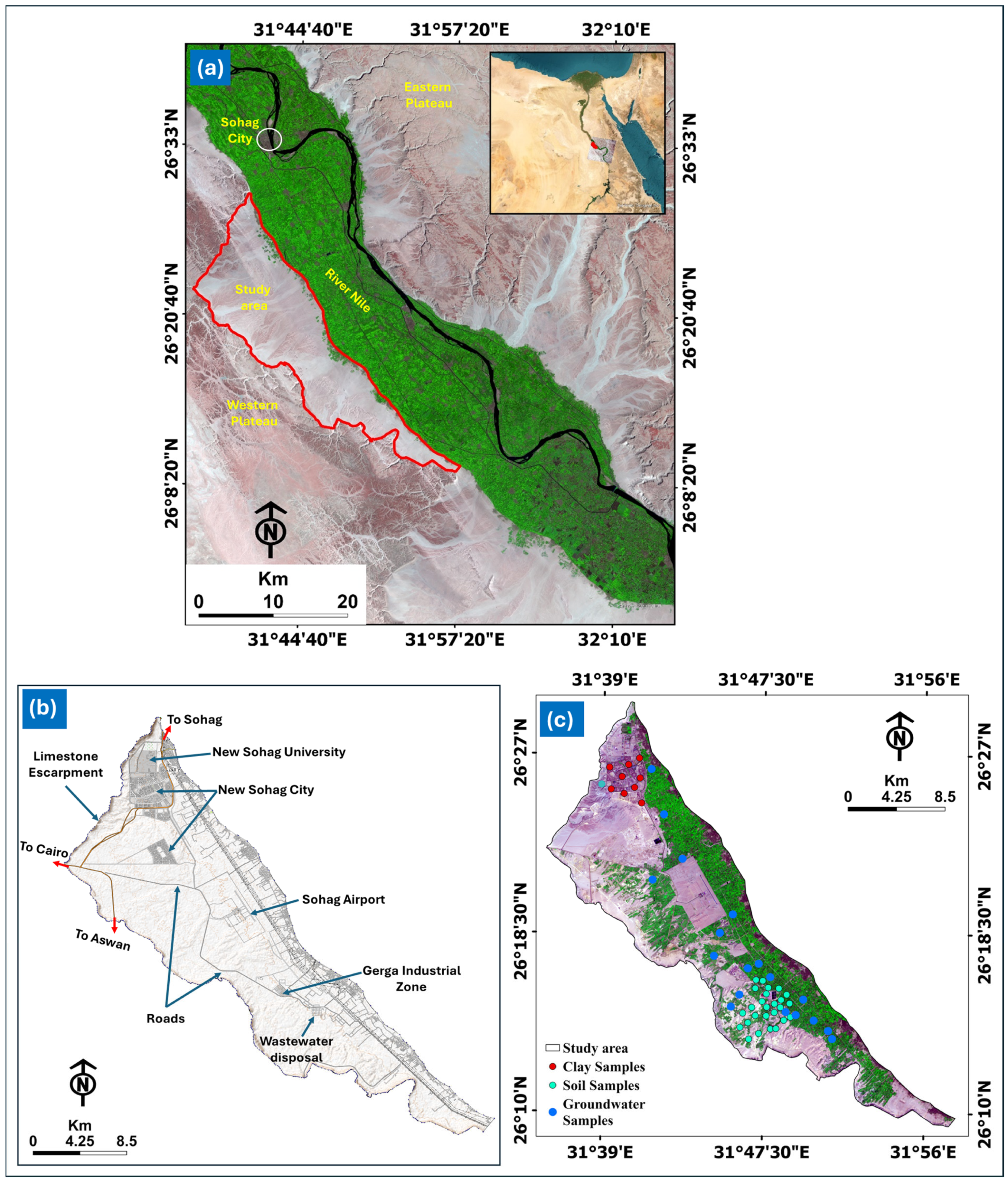
The new Sohag City, New Sohag University, Sohag Airport, highways, private urban areas, industrial zones, and agricultural areas in the study area “Southwest of Al-Kawamel” are currently considered crucial elements in Sohag Governorate. Due to its proximity to Al-Kawamel Village, it is also referred to as the New Al-Kawamel area. It is located approximately 18 km southwest of Sohag City. The study area has experienced significant growth across various fields over the past few years. It has transformed from a barren desert lacking resources to a residential, recreational, and agricultural area. The study area is distinguished by its strategic location, as it is considered the western gateway to Sohag Governorate (connecting the western desert Aswan–Cairo highway with Sohag City). The new Sohag City and New Sohag University are located in the northern portion of the study area; Sohag Airport is located in the middle portion; and the industrial zones are located in the southern portion. Road networks connect these areas. Highways link the study area with major cities (Sohag, Assiut, Cairo, and Aswan). The low desert zone, known as the West Al-Kawamel area, covers approximately 343 km2. The area is bounded by a latitude from 26°8′00′′ to 26°33′00′′ N and a longitude from 31°40′00′′ to 32°0′00′′ E (Figure 1a,b). The main morphometric characteristic of the study area is shown in Table 1.
The low desert zone has a topography characterized by undulating terrain, with an elevation range of 57 to 287 m, averaging 117 m above mean sea level. The average annual precipitation is 0.18 mm. Each year, most precipitation occurs between June and October. The lowest annual average temperature is 17.6 degrees Celsius, while the highest is 30.7 degrees Celsius (Sohag, EG Climate Zone, Monthly Weather Averages and Historical Data). Physiographic properties in the research region fall into four categories: (1) the limestone plateau, deeply dissected by a drainage system; (2) the low desert zone (old floodplain) representing the fringes of the Nile valley; (3) the recent floodplain of the Nile River, characterized by flat areas occupied by many urban areas, agricultural areas, canal and road systems; and (4) wadis, which cut through the limestone plateau and discharge runoff water into the low desert zone and the River Nile floodplain. Arid climate is the main climatic condition of the area. Land degradation is caused by human activity, steep slopes, weak geological units, and rainstorms, which disrupt the natural equilibrium.
Said [25] found that the Nile Valley “Egypt segment” is occupied by a buried canyon carved during the Late Miocene desiccation of the Mediterranean and filled by clastic sediments (gravel, sand, and clay) accumulated during the Nile’s evolution. These deposits are from distinct sources and deposited under varied depositional and climatological settings. The lithological and compositional properties of these sediments may be used to determine the geological history of the Nile basin [42]. Many researchers have examined the stratigraphy of these sediments (e.g., [43,44,45,46]). The geological units of the low desert zone comprise a sedimentary sequence from the lower Eocene to recent times, as shown in Table 2. These sediment sequences host most of the area’s natural hazards, including the limestone plateau, which causes various karstification problems and rockfalls. Pliocene clay and its swelling characteristics are distributed in the area. In addition, the presence of sand and gravel used as aggregates and construction materials left behind abandoned depressions that later served as dumping sites, leading to contamination of both surface and subsurface waters.

3. Material and Methods

3.1. Data Processing

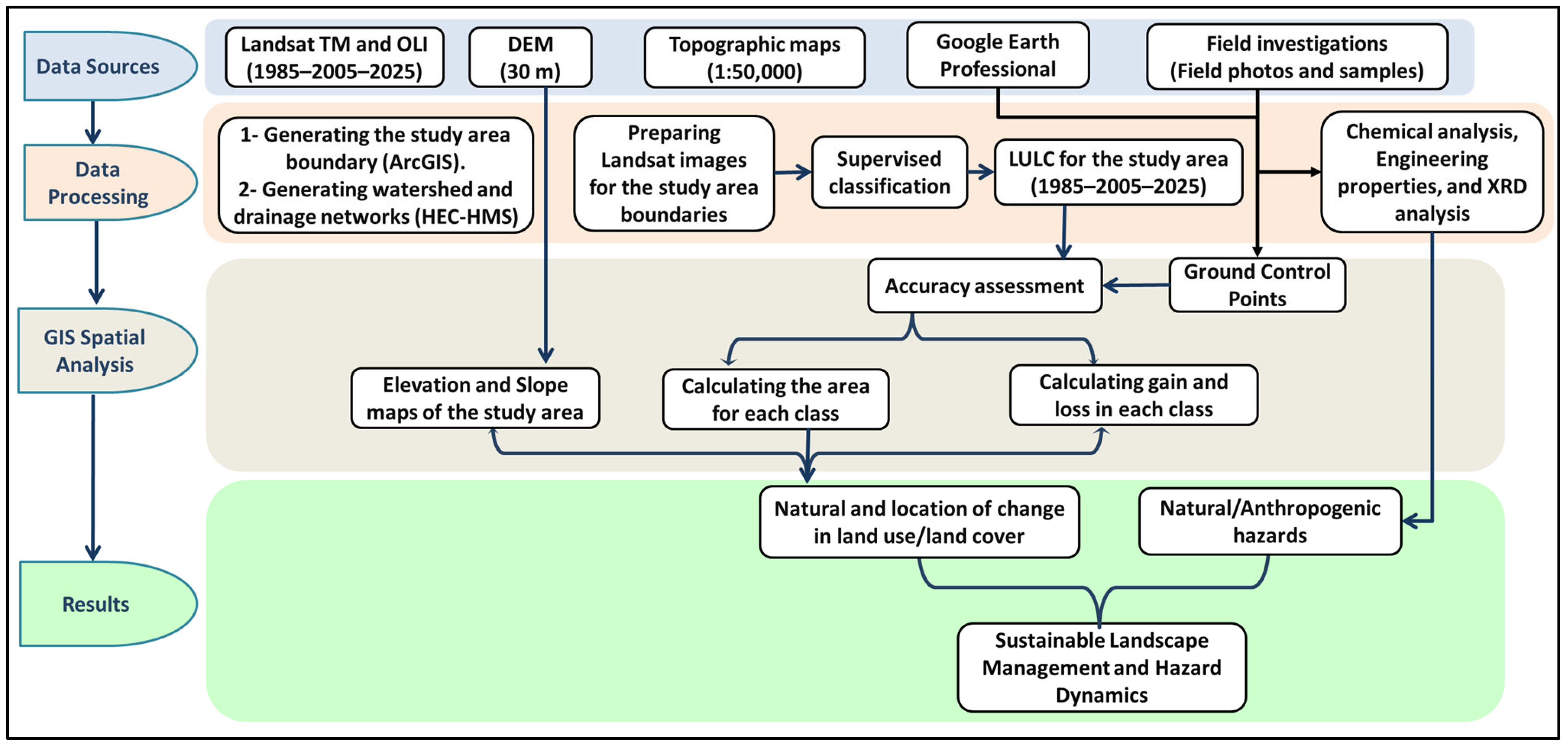
A 30 m resolution digital elevation model (DEM) was used to delineate the watershed’s outer boundary. The DEM was obtained from the ALOS website (https://search.asf.alaska.edu (accessed on 20 March 2025)) and used to create slope and elevation maps. The watershed and drainage networks were generated using HEC-HMS. The morphometric properties of the study area are presented in Table 1. Data from the Landsat satellite (path 175/raw 042), acquired on 24 March 1985, 15 March 2005, and 18 February 2025, were radiometrically corrected to determine how the study area’s terrain changes over time (https://earthexplorer.usgs.gov (accessed on 20 March 2025)). The Landsat sensors (Thematic Mapper (TM) and Operational Land Imager (OLI)) were used in this study. The bands have a 30 m spatial resolution. The TM bands (B1–B7) and OLI bands (B1–B7) were used in the study. These datasets have been used as raster images composite with a cell size of 30 m, and spatial analysis can now be carried out using the same cell size and map projection. A composite image was prepared using the ArcGIS Pro 3.3 image processing module. It was used to perform geometric rectification on the photos by georeferencing a toposheet map of the examined area at a scale of 1:50,000. All data was registered to the Universal Transverse Mercator (UTM) WGS 84 coordinate system, zone 36. In addition, ground control points (GCPs) were collected across the various image areas using field GPS and high-resolution Google Earth Imagery. These three dates were selected for the LULC studies because, in 1985, the area was completely desert, and after that time, agricultural activities began to appear. In 2005, urban encroachment began, and 2025 is the date of this study. Figure 2 shows the general framework of the methodology used in the current study.

3.2. Digital Image Classification Technique

Bayesian probability theory underpins maximum likelihood classification (MLC), a method for data analysis. The MLC technique is a robust method and a widely used supervised classification approach [47,48]. It assigns pixels to the class with the highest probability based on a multivariate normal distribution of training data. It estimates class distribution means and variances using training data to compute probabilities [49,50,51]. This exercise utilized MLC with the original bands to create three LULC maps for the years 1985, 2005, and 2025. First, the training sample manager was used to collect training samples for each image, followed by selecting MLC from the segmentation and classification section of the spatial analyst tools. Comparisons were made between these three maps. Eastman [52] states that cross-classification is a basic method for pairwise comparison of qualitative data. To achieve this purpose, a table was created using the dataset’s size in square kilometers and the % change for each year, evaluated against each LULC category. The observed changes were divided by the total of the changes and multiplied by 100 to establish the pattern of change. The percentage change must be multiplied by the number of research years and then divided by 100 to determine the annual rate of change.

3.3. Land Use/Land Cover Accuracy Assessment

Assessment of the land use map’s accuracy is essential. A field study was conducted to verify the accuracy of LULC. The sample points were chosen so that it would be possible to cover all the significant LULC classes, and they were also selected at sites where there was some uncertainty regarding a particular LULC class to improve the classification technique. A comparison was made between the class type information of these sites (also known as ground control points “GCPs”) and the class type in the LULC maps. The locations of the GCPs “collected from the field and the high-resolution satellite images” were superimposed on the LULC maps to evaluate the respective classes. It was decided to use a statistically sound sampling technique, the “confusion matrix method,” to assess the degree of accuracy in terms of both errors of commission and omission [53]. Both commission and omission errors are complementary to the user accuracy and producer accuracy, respectively [54]. User accuracy is the proportion of the incorrectly classified pixels by the total number of classified pixels for that class. In contrast, producer accuracy is the proportion of incorrectly classified reference pixels by the total number of reference pixels for that class. On the other hand, Congalton [55] calculates the overall accuracy by dividing the total accurate samples (diagonal sum) by the total number of pixels contained within the confusion matrix. Finally, the Kappa coefficient [56] was calculated to estimate the inter-rater reliability or agreement.

3.4. Sampling

Surface soil samples were collected (from the top 20 cm) from a total of 26 points, and 18 Quaternary groundwater (15–120 m in depth) samples were collected in gutted plastic bottles (Figure 1c), according to the American Public Health Association [57], from the Kawamel area, southwest Sohag. The groundwater samples were analyzed for heavy metals, including Cd, Cu, Pb, Co, Cr, and Ni, after acidification. Total heavy metal values were analyzed by using the total digestion method in the bulk samples. The soil samples were air-dried, passed through a 0.063 mm sieve, and completely digested in a mixture of strong acids (4 mL HNO3 69%, 4 mL HClO3 40%, and 15 mL HF 40%) until dry [58]. The concentrations of toxic metals (Zn, Cd, Pb, Ni, Co, Cu, and Cr) were measured in groundwater and soil samples using an atomic absorption spectrophotometer (Perkin Elmer, A. Analyst 400, Shelton, CT, USA). In addition, 10 clay samples were collected from the Pliocene clay in the area to evaluate Atterberg limits, free swell tests, swell pressure tests, chemical characteristics, and XRD analysis.

4. Results and Discussions

4.1. Landscape Evaluation

4.1.1. Digital Image Classification of Land Use/Land Cover

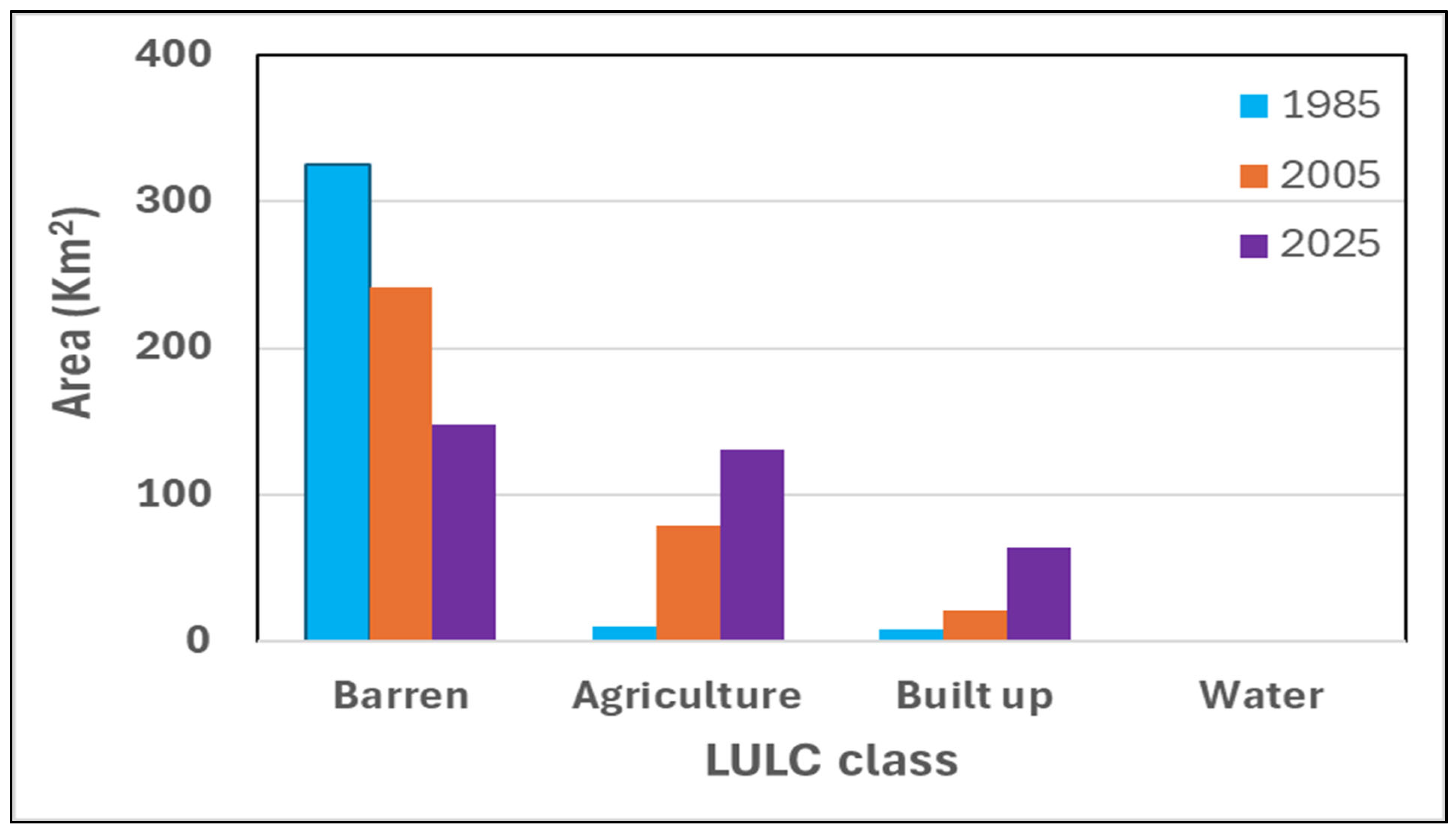
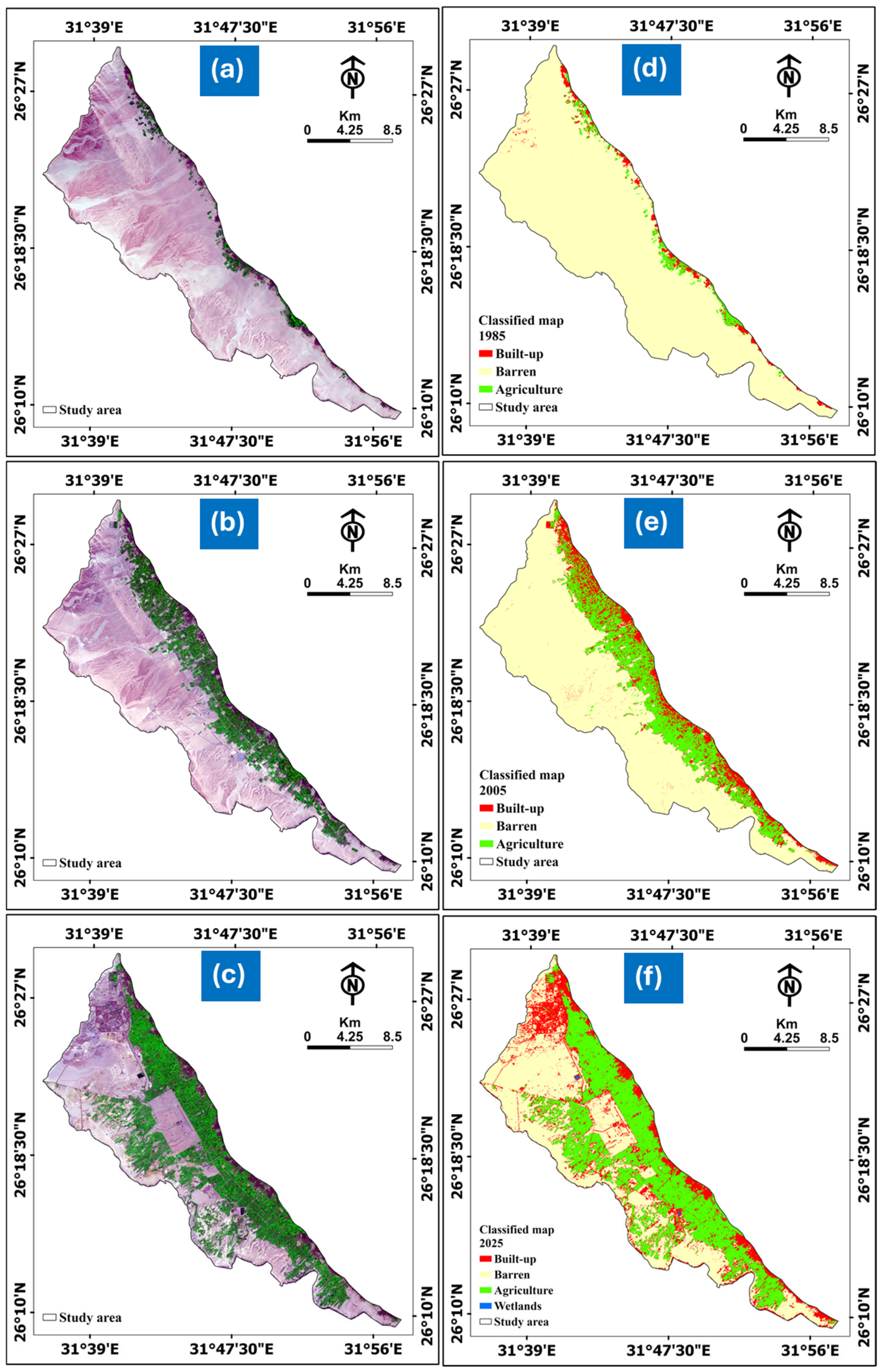
Landsat satellite datasets were used to prepare a land use/land cover map for the study area (Figure 3a–c). The four significant classes were identified as follows: urban built-up areas, agricultural areas, barren lands, and water bodies. The classification scheme was applied to the three Landsat images from 1985, 2005, and 2025 (Figure 3d–f). Table 3 presents the results of calculations made between 1985 and 2025, including the total area of each LULC category and the percentage of each class present in the study region. After that, the LULC change was calculated using these three images, each representing a different period. The extent of the land use changes in the research region was determined (Figure 3d–f and Figure 4, Table 3). As shown in Table 3, the barren land was the most dominant class in the year 1985 (94.7% covering 324.9 km2), followed by agricultural areas (2.95% covering 10.14 km2), and the built-up regions (2.35% covering 8.07 km2). However, in the 2005 scenario, the primary LULC class was also found in barren areas (70.44% covers 241.6 km2), followed by agricultural lands (23.21% covers 79.6 km2), and built-up “urban areas” (6.36% covers 21.8 km2). In addition, in the 2025 scenario, the primary LULC class was also found in barren areas (43.11%, which represents 147.87 km2), followed by agricultural lands (38.22% represents an area of 131.08 km2), and built-up “urban areas” (18.59% represents an area of 63.75 km2).

4.1.2. Land Use/Land Cover Change Characteristics

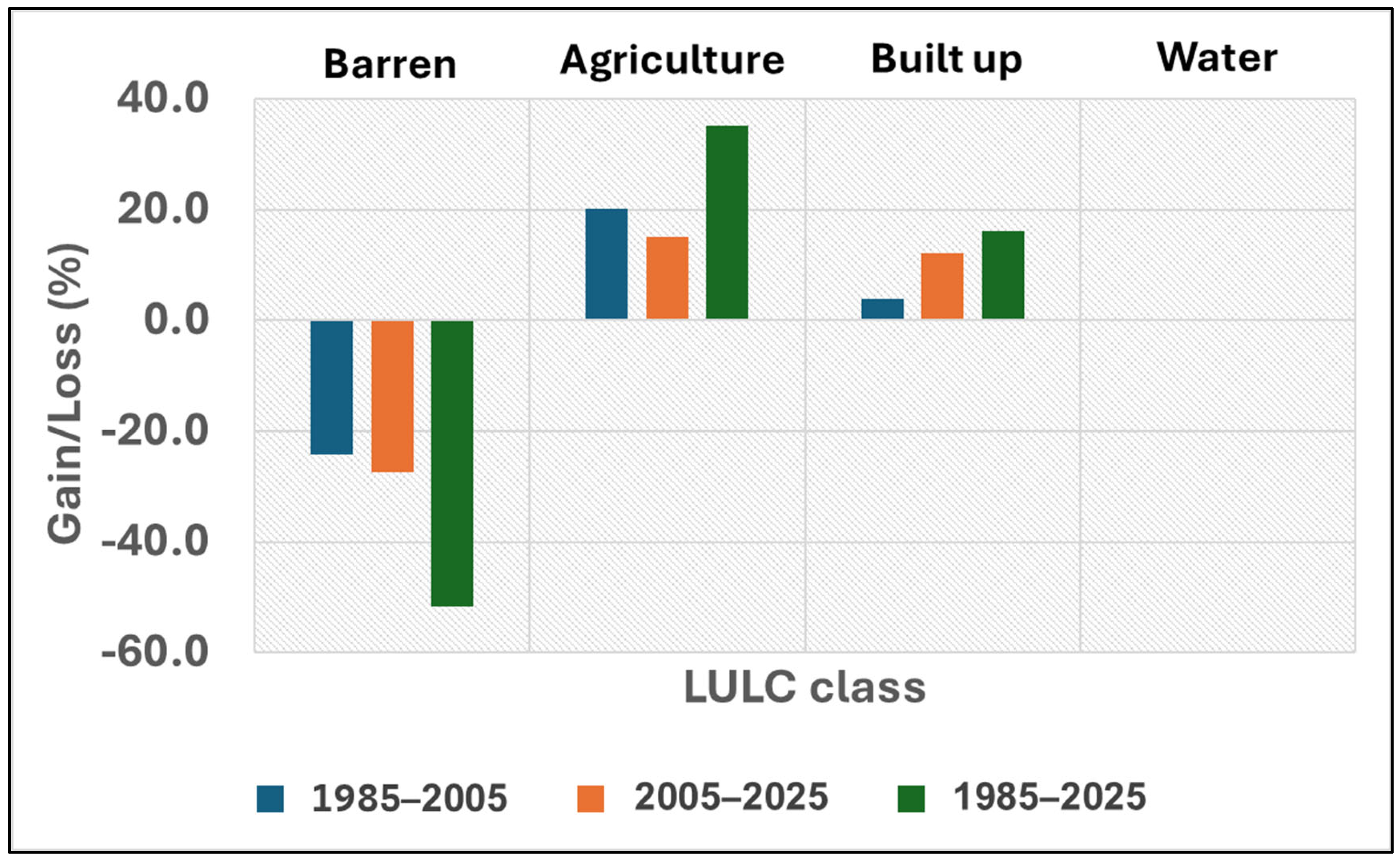
The land use/land cover change characteristics from 1985 to 2025 were evaluated. The outcome is expressed as a percentage of change, indicating where all the land transformation has occurred. Table 4 and Figure 5 show substantial changes in all LULC classes from 1985 to 2005 and from 2005 to 2025. Gain refers to any growth in a class’s area compared to other courses. Agriculture, built-up regions, and water bodies yielded the most. Three gain and loss changes in the period between 1985 and 2025 were applied: (1) Between 1985 and 2005, it was found that the loss percentage of barren area was 24.3% (~83.27 km2), whereas gains were noted in agricultural areas (20.3% = 69.54 km2) and built-up areas (4.0% = 13.73 km2). (2) Between 2005 and 2025, it was found that the loss percentage of barren area was 27.3% (~93.73 km2), while gains were noted in agricultural area (15.0% = 51.45 km2) and built-up area (12.2% = 41.95 km2). (3) For the overall net changes between 1985 and 2025, it was found that the loss percentage of barren area was 51.6% (~177.0 km2), while gains were noticed in agricultural area (35.3% = 120.9 km2) and built-up area (16.2% = 55.7 km2).

4.1.3. Accuracy Assessment

Classifying digital images involves several steps, one of which is assessing accuracy. Validation utilizing data received from ground verification is necessary to verify the LULC types created through digital image classification. Independent ground samples (also known as GCPs) acquired during the field survey, images with a higher resolution (Google Earth Pro), and derived LULC maps have all been utilized to evaluate the correctness of the categorization. To ensure robust accuracy assessment of the LULC classification, a total of 382 sample ground control points (GCPs) were collected across the study area. The sample size was selected based on statistical sampling principles to achieve both representativeness and reliability in the validation process. Specifically, the sample size was determined to balance the need for sufficient coverage of all major LULC classes and the practical constraints of fieldwork.
Information regarding land cover gathered during the fieldwork for the current work was also kept separate for accuracy evaluation. A comparison was made between the land use type of these points (GCPs) and the class type in the classification maps. The locations of the field samples were superimposed on the categorized maps to evaluate the respective classes. To perform a statistical analysis of the data and assess accuracy, a confusion matrix was created using the LULC maps and field data (signature file), as reported by Stehman [52]. Kappa and its variance were used to calculate a coefficient of agreement between classified and ground reference data. Overall accuracy, producer accuracy, user accuracy, and Kappa coefficient all indicate categorization accuracy. Table 5 and Table 6 exhibit the confusion matrix for 1985, 2005, and 2025 quantitative LULC classification accuracy studies. The results show an overall accuracy of 97.1%, 89.3%, and 92.9% for the 1985, 2005, and 2025 LULC maps, respectively. These data were confirmed by the Kappa coefficient values of 0.933, 0.812, and 0.894 for the LULC images of 1985, 2005, and 2025, respectively. Table 7 reveals that the user and producer accuracy are less than 90% for several categories in the 2005 classification image, including the built-up (UAc = 86.2% and PAc = 83.6%) and agricultural areas (UAc = 82.3% and PAc = 86.8%), and for the built-up area in the 2025 image (PAc = 85.2%). This is because the classes may or may not affect the spectral reflectance of the feature class. All categories—water bodies, barren, agriculture, and built-up—exhibited very high levels of concordance (PAc and UAc above 90%) for the years 1985, 2005, and 2025.

4.1.4. Nature and Location of Change in Land Use/Land Cover

Land use/land cover (LULC) change detection requires recognizing which landscape modification is caused by a class change. This study examines the stability and distribution of land use and land cover classes in the study area. Table 3 and Table 4 show the changes in each class between 1985 and 2025. Bare areas decreased by (−177.0 km2), showing significant losses, and the agricultural regions (+121 km2) and urban built-up areas (+55.7 km2) show substantial gains. Wasteland has a slight increase (0.33 km2). Large-scale migration and urban land development have increased built-up areas and agricultural activity in the area. Urban built-up land growth via “edge extension and development” is predominantly at the cost of desert areas in the study region. In addition, the agricultural land increased due to the presence of a groundwater aquifer in the desert area. Table 8 analyzes LULC changes according to elevation zones (0–50 m, 50–100 m, and >200 m) and slope categories (0–3 degrees, 3–10 degrees, and >10 degrees). The results show that for the elevation zone “50–100 m”, agricultural areas cover 24.8%, followed by built-up areas (10.7%) and barren areas (6.1%). For the elevation zone “100–200 m”, barren areas cover 21.2%, agricultural areas 11.1%, and built-up areas 5.8%. With increased elevation, agricultural and built-up areas decreased substantially to 2.4% and 2.1%, respectively.
For the slope zone “0–3 degrees”, agricultural areas cover 27.6%, followed by barren areas (23.9%), and then built-up regions (11.4%). For the slope zone “3–10 degrees”, barren areas cover 16.8%, agricultural areas 10.7%, and built-up areas 6.1%. With increased slope angle, agricultural and built-up areas decreased substantially to 0.1% and 0.9%, respectively. The agricultural and built-up areas are generally distributed in areas with gentle slope gradients and low elevation values, where access is easier and more comfortable.
The analysis of land use/land cover (LULC) change in the Al-Kawamel area reveals distinct spatial patterns in the distribution of built-up, agricultural, and barren lands over time. Most notably, the expansion of built-up and agricultural zones has occurred predominantly in areas with low elevation and gentle slopes. These regions offer favorable conditions for development due to easier access, lower construction costs, and a reduced risk of certain geotechnical hazards. However, this spatial concentration also has important implications for hazard vulnerability and sustainable landscape management. Low-lying, flat areas are often more susceptible to hazards such as flash floods, problematic soils (e.g., swelling clays), and groundwater contamination. The clustering of urban and agricultural activities in these zones may therefore increase the probability and potential impact of such hazards. By overlaying LULC change maps with elevation and slope data, it becomes possible to identify specific locations where rapid development coincides with heightened hazard risk.

4.2. Natural and Man-Made Hazards

4.2.1. Natural Hazards

Karst Hazards
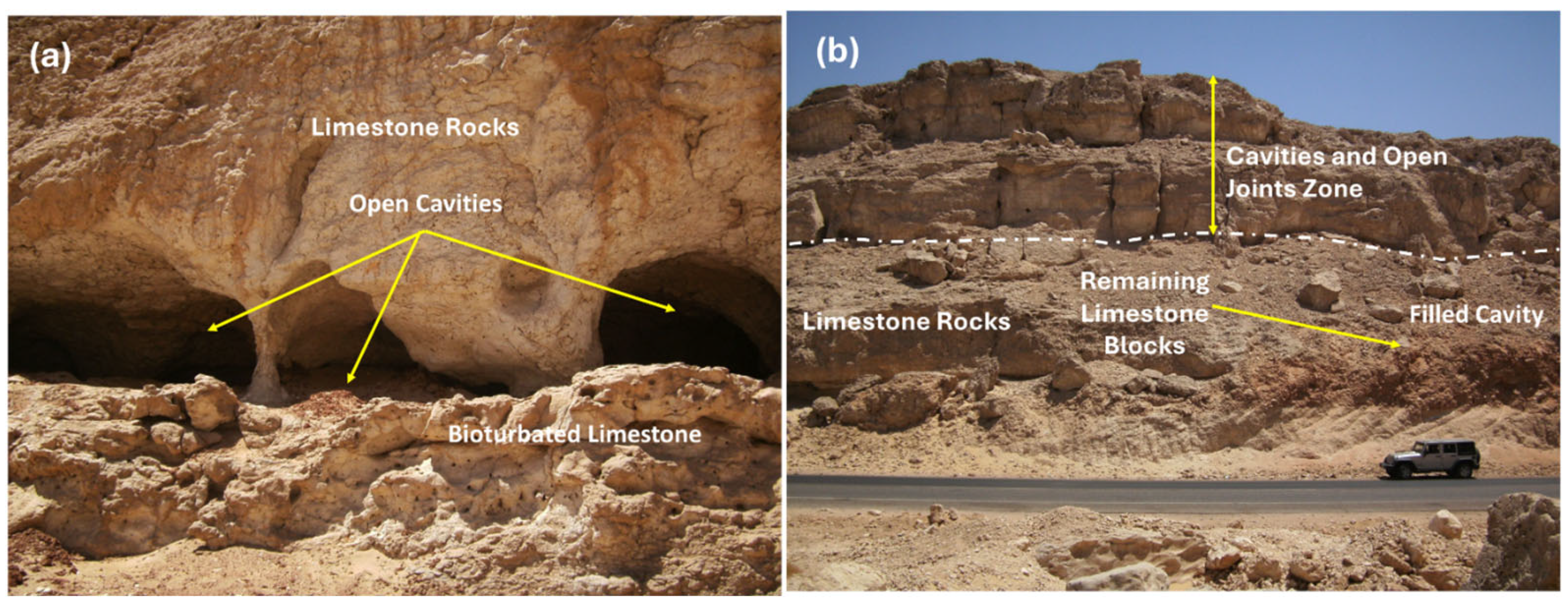
Karst characteristics may be observed in and around the study region. The renowned filled and open cavities in the limestone plateau, intersected by highways, roads, and wadis, serve as a remarkable feature. Karst is a type of landform that develops in rocks that can be dissolved, such as carbonate and evaporite rocks. Water and acids are utilized to enlarge joints, fractures, and caves. This process of chemical weathering leads to the formation of karst features (e.g., sinkholes, a natural consequence of the ground subsiding) [59]. The carbon dioxide dissolved in the water, whether from the atmosphere or organic materials in the topsoil, contributes significantly to its acidity. It interacts with the calcium carbonate found in limestone, gradually decomposing it into bicarbonate. This chemical process increases the likelihood of the hole collapsing or expanding as it washes away the dissolved components [60]. Egyptian limestone plateaus (eastern and western) exhibit numerous karst features linked to the carbonate rocks found in the Thebes and Drunka Formations. The majority of the karst features in and around the study region, which developed during ancient wet periods, are located within the Drunka Formation. Joint systems in the uppermost layer of the Drunka Formation in the study area facilitate the development of karst phenomena. Karst features pose geotechnical challenges worldwide. Numerous caves and cavities can be observed along the Cairo–Aswan Road, as shown in Figure 6. This region is home to four distinct types of karst features: (a) pockets measuring 1–4 m filled with gravel and sand within a brick-red clayey matrix; (b) networks that run parallel to the layers or joins, indicating that water flows most readily along discontinuities in the layers; (c) the occurrence of empty cavities; and (d) the tower karst (a height of 4 m) observable in the gravel depressions.
Active Dunes and Sand Accumulations
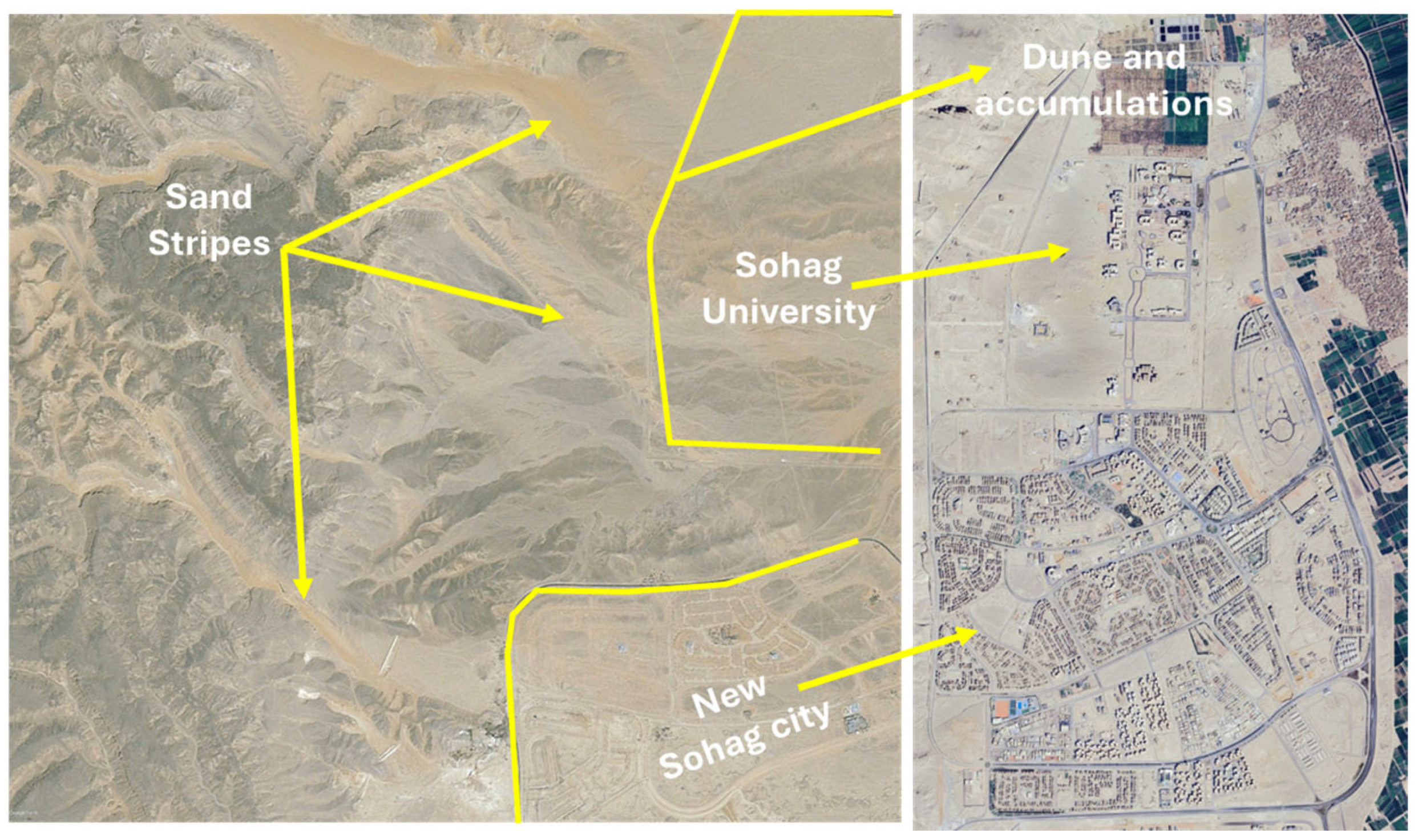
Interpretation and analysis of high-resolution Google Earth Images, fieldwork, and Landsat images indicated that there are three types of active sands in the area: active dunes (barchan type), sand sheets, and sand accumulations. Three strips that affect urban areas (New Sohag City and New Sohag University, Sohag, Egypt) are detected. Other sand sheets with a thickness of tens of centimeters are distributed in the area, and vast amounts of sand accumulation are collected along the scarps and slopes of the western plateaus (Figure 7). The barchan type is characterized by a height range from 2 to 5 m, and its length from 30 to 50 m. The prevailing wind direction in the study area is mainly from NW to SE, with speeds ranging from 2.3 to 6.3 km/h. The source of the dunes, sand sheet, and sand accumulations is the western desert plateau. Sand-grain size, relative density, mineralogical composition, specific gravity, salt content, and moisture percent impact sand threshold velocity and the rate of sand movement according to Shehata et al. [61]. The findings showed that various forms of active sand in the area would cause serious problems such as sandstorms, roadblocks, buried buildings, and filling the dam reservoirs (reducing flood dam capacity) (Figure 7).
Rockfalls
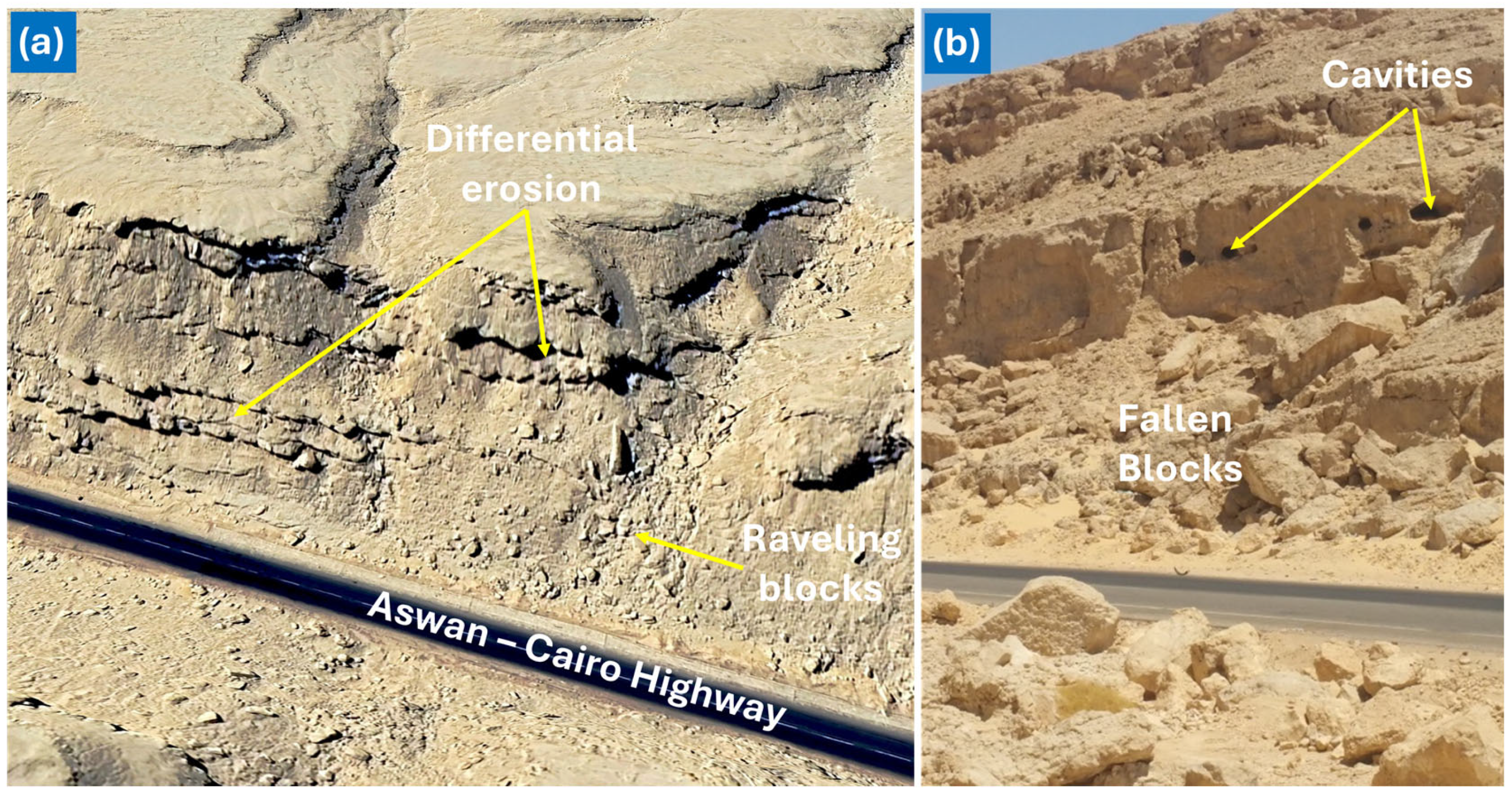
Geotechnical engineers and geologists face distinct challenges when building and maintaining roadways and railways in areas with rocky and hilly terrain. Highway cuts and slopes are typically planned, constructed, and maintained using basic geotechnical evaluations of slope stability to prevent significant sliding or toppling failures. This level of investigation is generally conducted only in densely populated regions of wealthy nations [62]. Wet seasons can lead to rockfalls on both natural and man-made slopes. Rockfalls can block highways, damage infrastructure, and lead to fatalities. The slope stability analysis employs two methods: (1) Sliding along structural components (joint, fault, shear zones); failures of this kind are planar, toppling, and wedge sliding mechanisms, relatively easy to investigate using limiting equilibrium analysis or numerical modeling [63]. (2) The raveling mechanisms are due to overhang and undercutting, ice jacking, and rolling materials. This type of failure mechanism is particularly prominent in areas where flat-lying sedimentary rocks with vertical jointing are prevalent. Whether they are sluggish, time-dependent, or rapid and catastrophic, unraveling failures pose greater challenges to understand. Analysis is often insufficient, so remediation decisions typically fall to an experienced engineer on-site, who must assess the risk of failure and its consequences against the costs of successful repair. In the study area, many highways and roads are established under the cliffs, and most of them are facing raveling mass wasting. Field investigations have shown that the factors that most impact falling rocks are the karst phenomena, differential weathering, the slope angle and the road design (no ditches that can capture the falling rocks and limited shoulder space) (Figure 8). The raveling phenomenon will increase in the future for several reasons, including human activities along roads and highways and high precipitation due to climate change.
Flash Floods
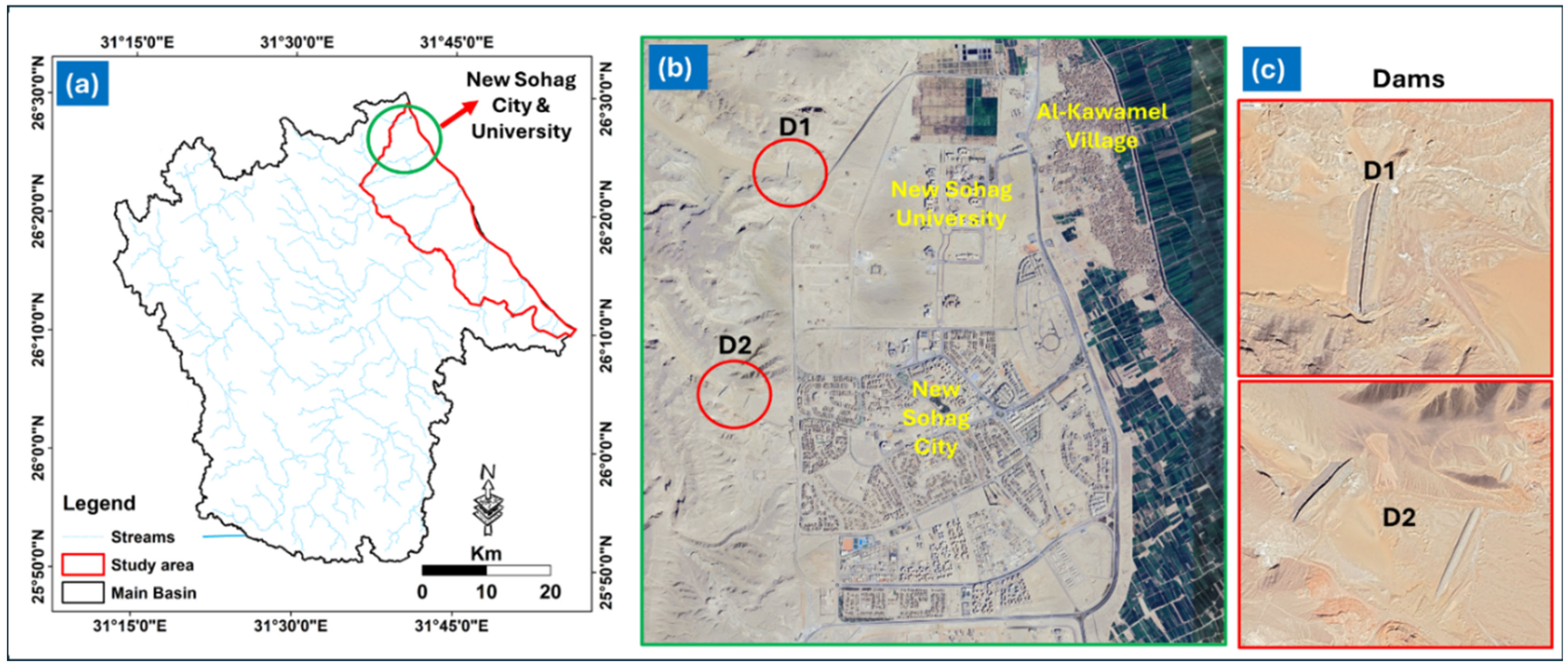
The study area may suffer from flash floods due to the presence of some wadis, especially the western portion of the new development activities [39] (Figure 9a). Flash floods may wash the paved roads and houses of Sohag University and New Sohag City (Figure 9b). The interpretation of the digital elevation model (DEM) indicates that these wadis have small basin areas; however, their locations pose a danger to new urban areas. This is due to the location of these infrastructures in the low-level areas. These low-level areas will be the most vulnerable zones to flash floods. Analysis of high-resolution satellite images reveals that these wadis have exhibited different erosion features in the past. Recently, the government established some small dams to protect the urban areas. However, these dams have small reservoir capacities, and dunes filled most of them, making the problem more severe. In addition, there are no drainage systems, or “channels” to dissipate the flooded water from the dam reservoir away from the urban areas (Figure 9b,c).
Problems Associated with Pliocene Clay
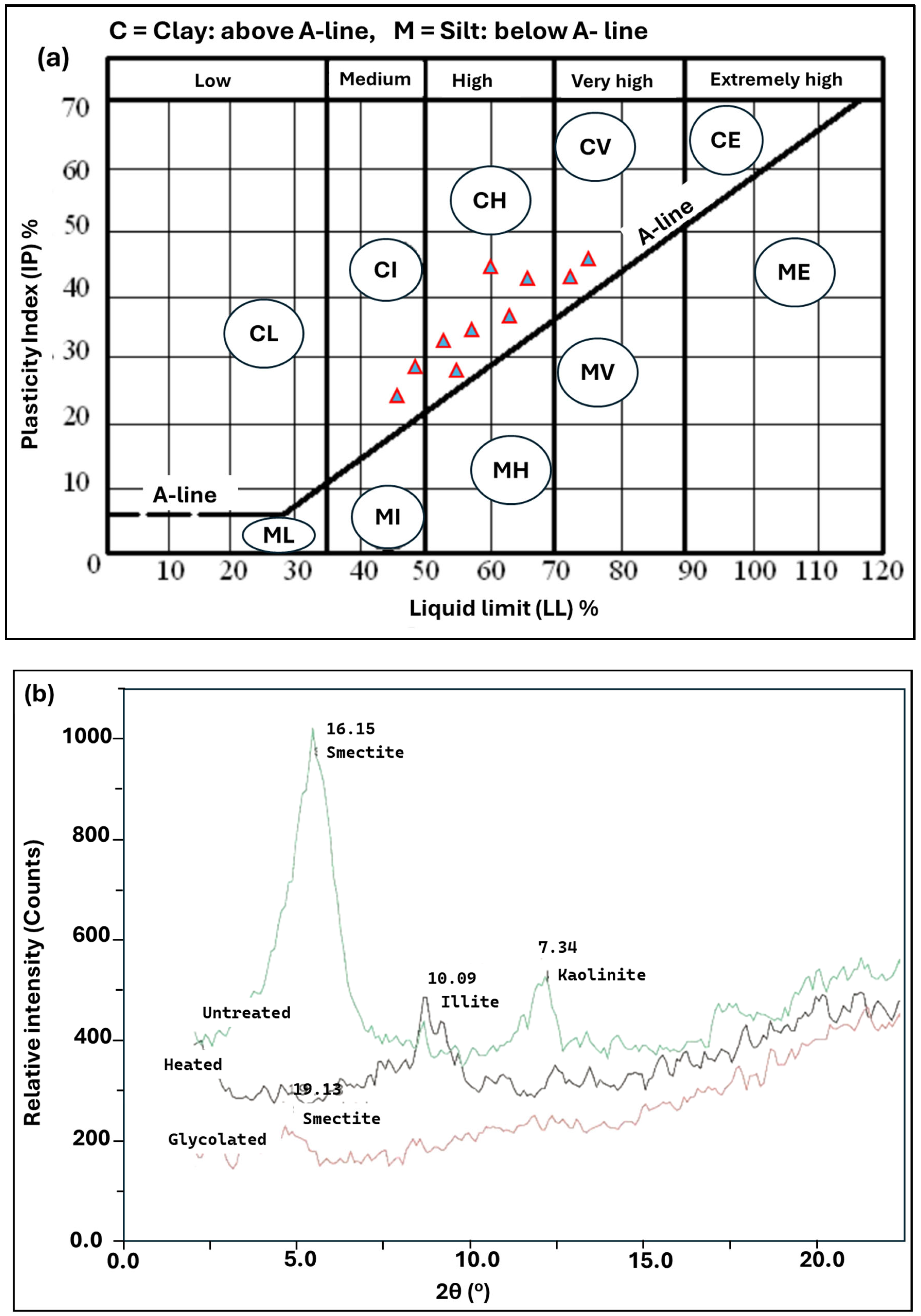
The research region has marine Pliocene clay deposits in the low desert areas. Geologic hazards, such as clay deposits, inflict widespread devastation each year. Pipelines, urban areas, and roads are severely impacted by them [64,65]. Swelling clay minerals (smectite) describe expansive soils. Wet clay expands, causing swelling pressure. It shrinks when dry, creating enormous fissures. If the clay content is greater than 5% by weight, swelling clays may govern soil behavior across all soil types, according to specific research. Youssef [41] concluded that the Pliocene clay deposits in the low desert zone of the study area exhibit swelling behavior. Field and laboratory work indicate that the Pliocene clay deposits in the study area are characterized by a gray-to-chocolate brown color, shiny surfaces, and a soapy texture when mixed with water. Based on Youssef and El-Hadad [66], the depth of the Pliocene clay ranges from 0 m to 20 m along the eastern margin of the New Sohag City and the New Sohag University. Additionally, laboratory tests that were conducted on the collected samples revealed that the free-swelling test showed swelling percentages ranging from 75% to 120%, whereas the Atterberg limits indicate that the liquid limit ranges from 40% to 80%, the plastic limit ranges from 20% to 36%, and the plasticity index ranges from 20% to 44%. Based on the liquid limit–plasticity index curve [67], the clay samples range in swelling potential from medium to very high (Figure 10a).
The chemical characteristics of these clay samples are characterized by an average total dissolved solids of 1135 ppm, sulfate of 351 ppm, and chloride of 295 ppm, as they are deposited in a marine environment. In addition to these swelling characteristics, a chocolate clay sample was used for XRD analysis to understand the mineral association (Figure 10b). The results show that smectite mineral is the main portion of the sample, followed by kaolinite, and then illite. One of the problems caused by Pliocene clay is evident in urban areas, manifesting tension cracks and fractures in building foundations and undulating road surfaces. The interpretation indicates that seepage water is the leading cause of heaving problems. The water comes from the urban and agricultural farms in the surrounding area. This uplift pressure caused these tension cracks with an opening at the surface and depleted downwards. In addition, two clay samples were subjected to swell pressure tests that measure the upward force expansive soils exert when they absorb water. This test is crucial for civil engineering projects to prevent structural damage from soil expansion and contraction. It has been carried out using an oedometer (consolidation) device. The results showed that high swell pressure values of 3–5 kg/cm2 were obtained for the two samples.

4.2.2. Man-Made Hazards

Dumping Wastewater in Open Pits
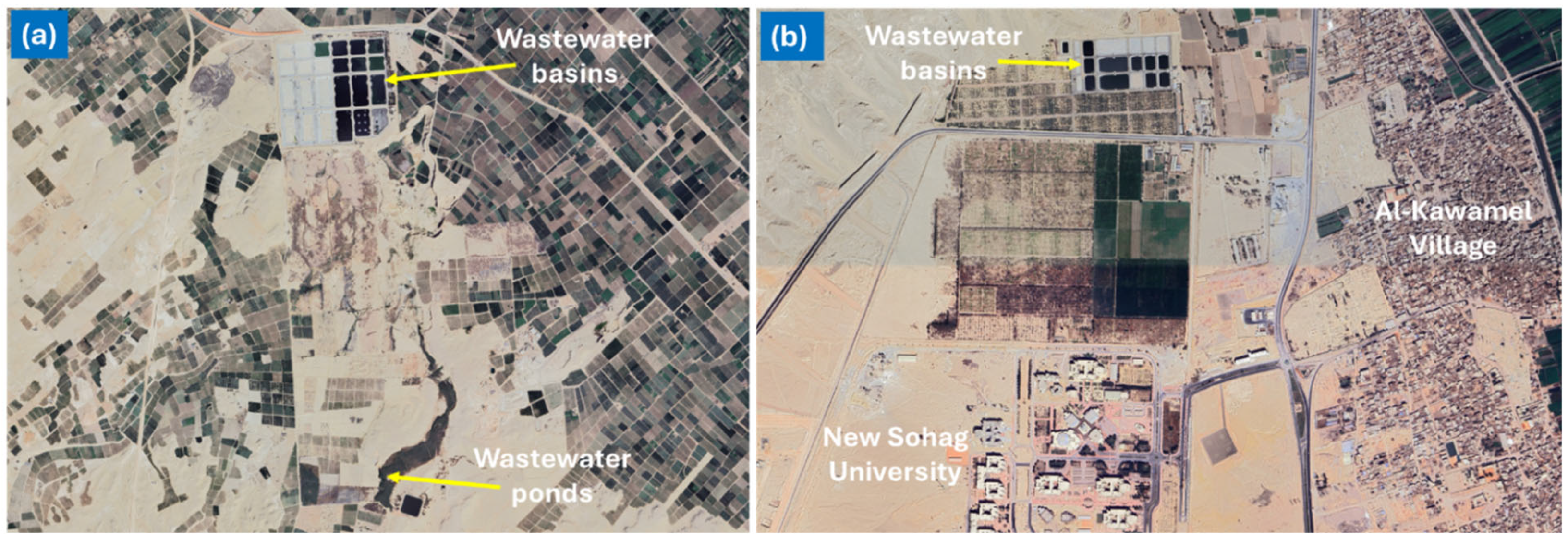
The Sohag Governorate has identified sites for wastewater treatment plants along the old floodplain in the study area. However, these locations, such as the west Girga site and north of the Sohag University site, are dumping wastewater into open depressions (Figure 11). The wind direction in the area is from N to S, and the dominant direction is from NW to SE. The interpretation of this wastewater site suggests a significant impact of this project on these new urban developments, primarily due to two main factors. The wastewater sites are not fully treated, and some of these waters have two effects: (1) odor, as the new development activities, as well as Al-Kawamel Village, are located to the south of this project, and (2) potential pollution of the soil and the groundwater aquifer from the improper disposal of wastewater. Many studies indicated that soil and groundwater aquifers are contaminated by heavy metals [68]. The current study detected the environmental impact of the west Girga disposal site on soil and groundwater aquifers in the study area. Remote sensing techniques and detailed geochemical analysis were used to detect this impact. Remote sensing results indicated an increase in the polluted area over the past 11 years, covering 2.1 km2. To determine the sources of pollutants affecting soil and groundwater chemistry at the west Girga site, soil and groundwater samples were collected and analyzed [68].
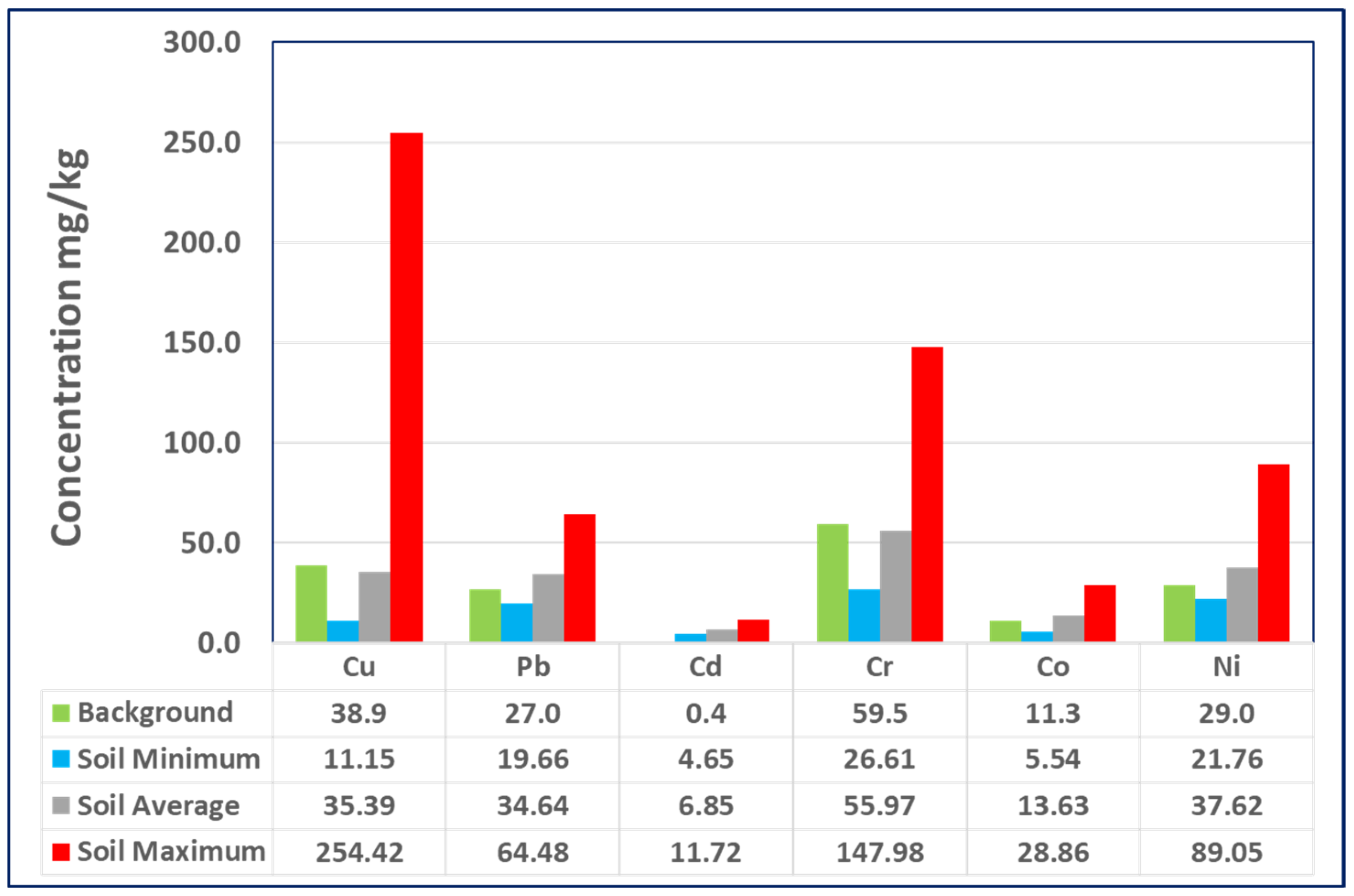
According to the geochemical analysis of surface soil samples (polluted), total heavy metal concentrations decreased in the order Cr > Ni > Cu > Pb > Co > Cd with average values of 55.97 > 37.62 > 35.39 > 34.64 > 13.63 > 6.85 mg/kg (Figure 12). Soil samples from the El-Kawamel (unpolluted) area were collected to differentiate between the polluted and unpolluted soil. The values of the heavy metals in the soil decreased in the order Cr > Cu > Ni> Pb > Co > Cd, with average values of 59.5 > 38.9 > 29.0 > 27.0 > 11.3 > 0.4 mg/kg. The highest levels of these heavy metals in the soil indicate that intensive municipal wastewater leakage has occurred in recent years, given their high mobility. These heavy metals exceed the background values based on the worldwide soils [69]. The soil in southwest Sohag poses a high environmental risk and demands close attention.
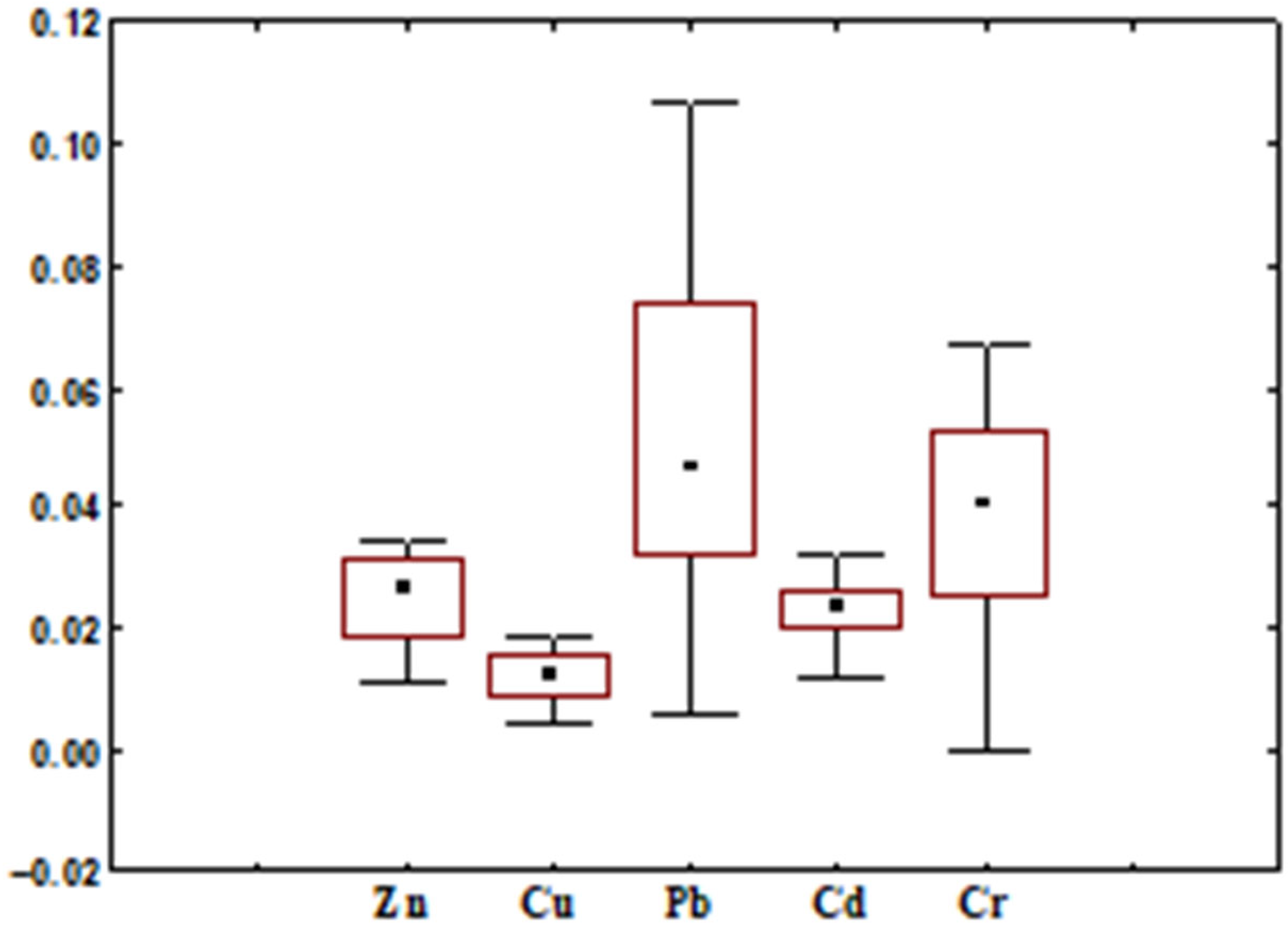
Concern arose on whether the groundwater samples, with average concentrations of the toxic metals Pb > Zn> Cd > Cu of 0.053 > 0.028 > 0.023 > 0.012 mg/L, respectively (Figure 13), were fit for drinking usage. To assess the impact of heavy metals on groundwater quality and the ecosystem [69], the WHO [70] guideline is used as the standard for comparing heavy metal concentrations in the study area with the permissible limits for potable water. The comparison of the results obtained from the analysis and the recommended limit of these parameters from [70] showed deviations in some parameters from the recommended values for potable water. The general high values of heavy metals in the Quaternary aquifer demonstrate its vulnerability, where the sewage leakage from tree forests is the primary source, indicating that this water is unsafe for domestic use.
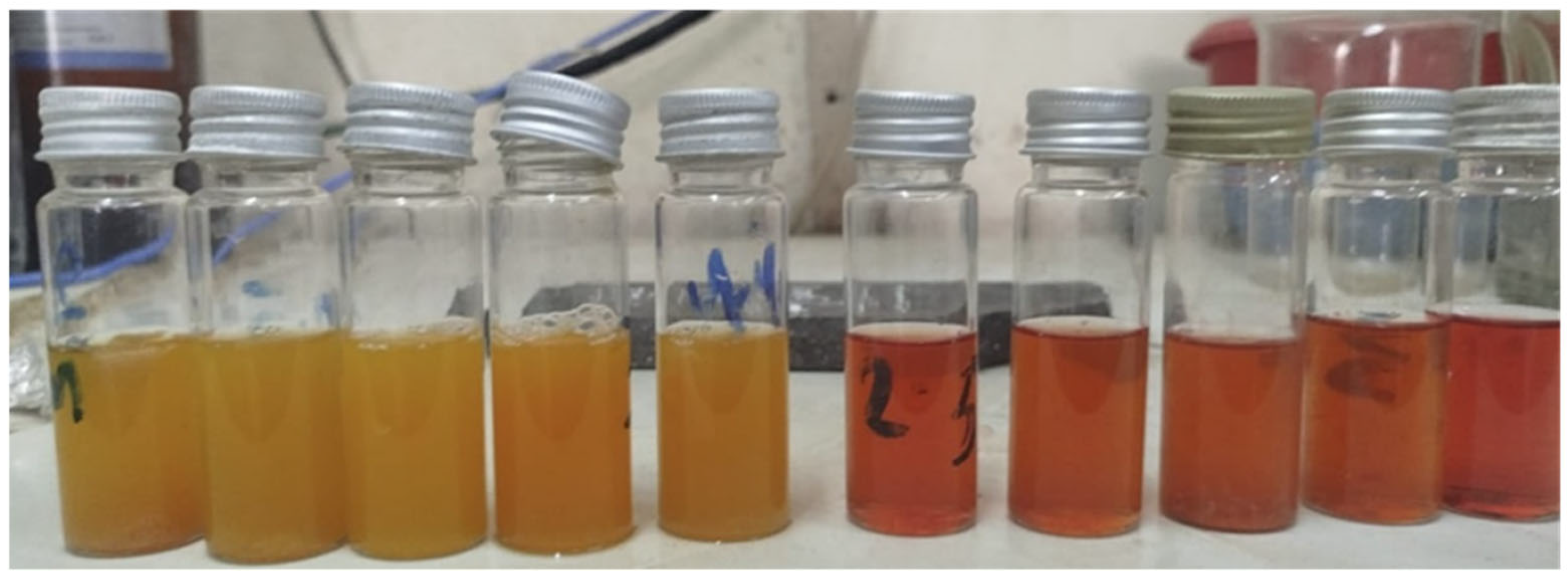
Based on the bacteriological investigation, it was found that human sources including wastewater and sewage treatment plants are frequently associated with E. coli bacteria in aquatic systems [71,72]. While E. coli bacteria are not the cause of disease, they are used to indicate the presence of pathogenic bacteria and viruses [73]. In the study area, E. coli occurrence indicates wastewater pollution in the groundwater aquifer. E. coli was observed in 70% of groundwater samples (Figure 14), which refers to the high contamination of groundwater by untreated wastewater. The occurrence of E. coli is used as an indicator of other pathogens.
Old Abandoned Quarries
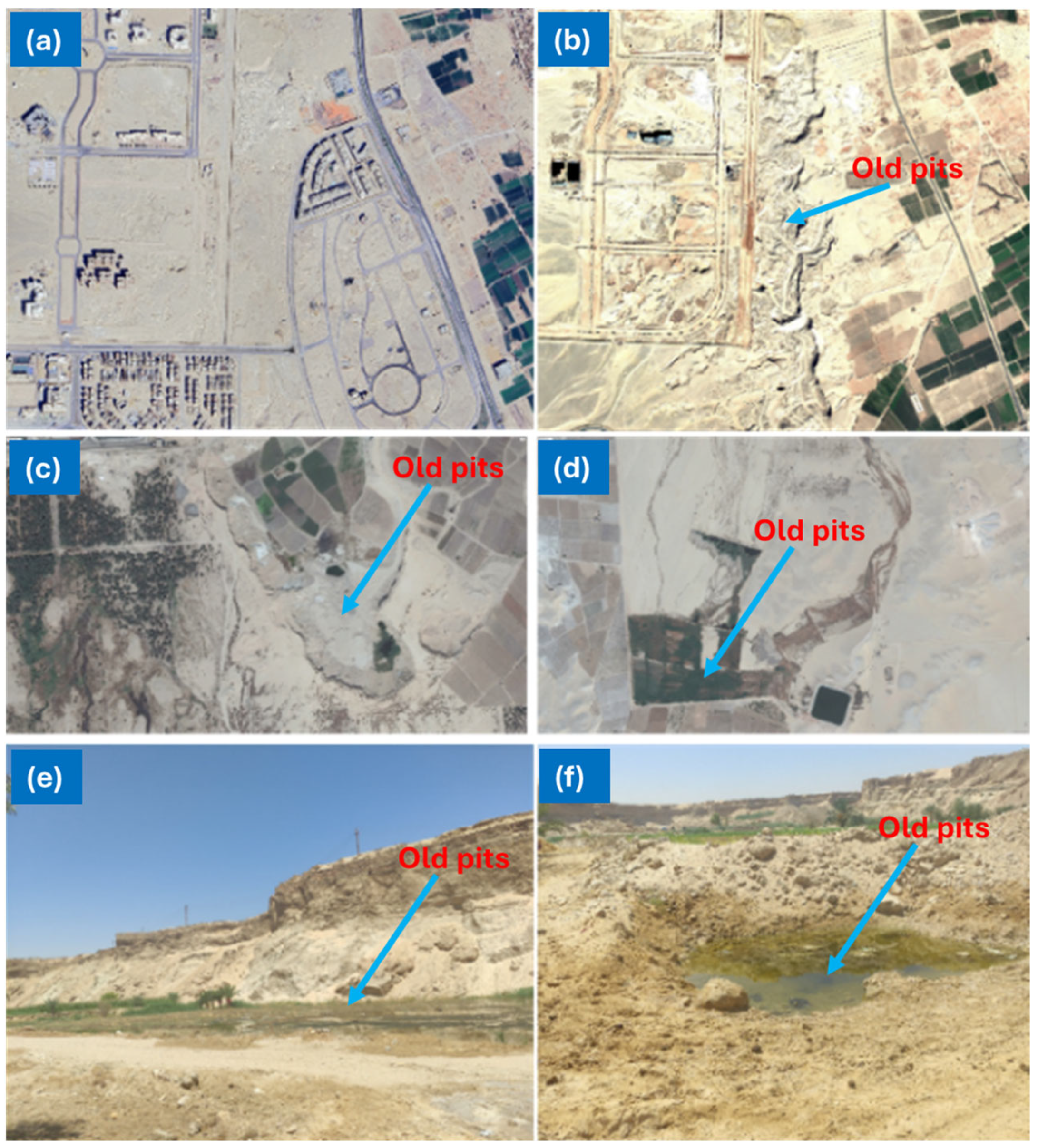
Old, abandoned quarries and depressions represent another harmful human activity in the area, causing engineering and environmental hazards. Most of the sand and gravel quarries have been closed due to new development projects and some agricultural activities. However, these open-pit areas are often misused as dumping sites for wastewater and trash. In addition, they are filled haphazardly, without considering engineering factors that could lead to environmental problems for the aquifer system in the area or unstable construction sites. A detailed map of these abandoned quarries has been prepared using high-resolution satellite images, supplemented by field reconnaissance. The results indicate that the depth of these quarries reaches 10 m. They are located within and to the east of the new development projects with an elongated shape (Figure 15). These old, abandoned quarries have various impacts: (1) The refilling of these quarries with raw and/or dump materials will pose a severe problem, especially for future planning. (2) The location of these abundant quarries adjacent to the reclamation areas may increase the speed at which water accumulates in these depressions. This will pose a severe environmental problem if no suitable measures are taken to mitigate its impact.

5. Summary and Conclusions

5.1. Summary

Our results showed that over four decades, built-up area increased from 8 to 64 km2, and agricultural lands from 10 to 131 km2, while desert area decreased from 325 to 148 km2. Urban and agricultural expansion occurred primarily in low-elevation, gentle-slope zones, thereby increasing vulnerability to hazards such as flash floods, problematic soils, and groundwater contamination. The study emphasizes rapid land reclamation, intensified human activity, and the need for integrated hazard assessment in planning. Selmy et al. [74] reported that built-up areas in Sohag Governorate increased from 5.5% to 12.5% between 1984 and 2022, with urban sprawl reducing old farmlands and creating new settlements on bare land. They also indicated that cultivated lands increased due to reclamation projects, while desert lands lost about half their area. Accordingly, future projections indicate continued expansion of desert lands and increased urban and agricultural areas. Also, a study in the Bahawalpur District, Pakistan [75], indicated that agricultural land expanded at an annual rate of 2.3% and barren land declined by 0.5% per year from 1987 to 2020. Accordingly, there is a strong correlation between population growth and agricultural expansion, with significant environmental deterioration. Urban and agricultural expansion at the expense of desert landscapes is a consistent trend across arid regions, driven by population growth, government policies, and reclamation initiatives, which together lead to habitat loss, increased exposure to hazards, and environmental degradation [76,77].
Socioeconomic factors driving LULC dynamics in Al-Kawamel, southwest of Sohag City, Egypt, include government policies and development initiatives aimed at reducing population pressure in the Nile Valley and Delta. To this end, the Egyptian government and the private sector have supported the development of low desert zones beyond the floodplain. This involves creating new urban areas, establishing industrial zones, and expanding agricultural areas. Accordingly, desert regions have been transformed into new residential, recreational, and industrial zones, as well as agricultural areas, owing to their strategic location (e.g., New Sohag City, New Sohag University, Sohag Airport, industrial zones, and agricultural activities). Due to urbanization and population growth, Egypt needs to expand to accommodate its rapidly rising population, 96% of whom live in the Nile Valley and Delta. Migration and urban land expansion in Al-Kawamel have increased built-up and agricultural land at the cost of the desert. From 1985 to 2025, built-up areas increased from 8 to 64 km2 and agricultural fields from 10 to 131 km2, while desert areas decreased from 325 to 148 km2. This indicates increased land reclamation and human activity. Accordingly, urban expansion and agricultural development are drivers of economic growth. These typically degrade natural desert environments, leading to habitat loss and increased risk. Additionally, placing new projects in sensitive locations (e.g., underdeveloped deserts) is subject to natural and human-made threats. These areas become more vulnerable to natural hazards that were historically less significant. Karstification, affecting urban expansion on limestone plateaus, generates sinkholes and ground instability. Active dunes and sand accumulations threaten built-up areas and infrastructure, particularly in NW-SE directions. Rockfalls can affect infrastructure and urban growth in steep terrain. Flash floods are likely to occur in low-lying areas that have recently been developed for urban and agricultural use. In addition, anthropogenic hazards, such as pollution from improper wastewater disposal, have contaminated land and groundwater with heavy metals and E. coli. Due to rapid expansion, exceeding the capacity for infrastructure and environmental protection. Often used as dumping grounds, abandoned quarries pose technical and environmental challenges, particularly near new construction. Built-up and agricultural zones have expanded primarily in low-elevation, gently sloped regions, which are easier and less costly to develop. Flash floods, swelling clays, and groundwater pollution are more likely to occur in these places. Development clustering in these zones increases hazard risk and effect, underscoring the necessity for integrated hazard assessment in planning.
Deserts require maintenance, and effective communication between agencies is essential to understand both natural and man-made dangers. Additionally, any proposed corrective procedures should be designed using engineering materials. This research recommends methods to reduce natural and man-made hazards in the low desert zone of the study region, including: (1) avoiding urban activities in karstified areas (above the limestone plateau); (2) stabilizing the dunes using plants as well as petroleum materials to reduce their movement and protect the area from sandstorms; (3) designing ditches, benching mechanisms, or any other engineering method to protect the highways and roads from rockfall problems; (4) constructing flash flood control dams with suitable drainage channels to carry the flood water out of the developed areas; (5) detailed mapping of the Pliocene clay deposits and using a suitable engineering technique to deal with the expansive characteristics of these soils; (6) increasing the capacity of the wastewater treatment plant to avoid dumping raw materials in the desert, and increasing woody lands to accommodate the treated wastewater for planting wood tree farms; and (7) refilling the abandoned old quarries with suitable materials and using them for activities other than urbanization. A final natural and man-made hazard map has been provided as the preliminary step for future planning activities.

5.2. Conclusions

This study demonstrates that rapid urbanization and agricultural expansion in the Al-Kawamel area of Sohag, Egypt, have led to significant land use and land cover shifts over the past four decades, with built-up and agricultural areas increasing at the expense of desert areas. While these transformations support regional development in the country, the current study also highlighted that the build-up and agricultural expansions are exposed to natural and anthropogenic hazards. These hazards include karstification (cavities and sinkholes), sand accumulations (sand dunes), landslides (rockfalls), flash floods (caused by wadis), problematic soils (swelling clay), pollution from wastewater (due to heavy metals), and abandoned quarries (unstable depressions). As a result, there is an increased likelihood of experiencing either physical damage and/or financial loss.
The integration of remote sensing and GIS, supported by field and laboratory investigations, has proven essential for monitoring these transformations. Additionally, informing critical landscape management is crucial for the area’s long-term sustainability. The study recommends targeted remediation measures, such as hazard mapping, improved infrastructure planning, and environmentally responsible land use practices. Our results suggest that sustainable development in dry areas, such as the Al-Kawamel area, requires a harmonious integration of economic growth, environmental conservation, risk mitigation, and resource preservation. These measures are essential for protecting the environment and communities as urban areas grow.
To further advance our understanding of land use/land cover (LULC) dynamics and their implications for hazard vulnerability and sustainable development in the Al-Kawamel area, future research should focus on several key areas such as (1) integrating spatial LULC data with statistical hazard modeling to enable a more precise assessment of risk probabilities for various natural and anthropogenic hazards, (2) considering the temporal evolution of hazard exposure in relation to ongoing urban and agricultural expansion using time-series analysis and scenario-based forecasting, (3) expanding the scope of research to include socioeconomic factors, community resilience, and stakeholder engagement to provide a more holistic perspective on sustainable landscape management, and (4) developing decision-support tools and hazard maps tailored for planners and policymakers to facilitate the translation of scientific insights into effective sustainable development practices for arid regions.

Author Contributions

Conceptualization, B.A.E.-H. and A.M.Y.; methodology, A.E. and S.R.; software, B.A.E.-H., A.E. and S.R.; validation, A.M.Y.; investigation, A.E., B.A.E.-H. and S.R.; data curation, A.E., A.M.Y., B.A.E.-H. and S.R.; writing—original draft preparation, A.E. and B.A.E.-H.; writing—review and editing, A.M.Y. and S.R.; visualization, B.A.E.-H.; supervision, A.M.Y. and B.A.E.-H.; A.E., A.M.Y. and S.R. ran the experiments, designed models, analyzed the results, and wrote and reviewed the manuscript. All authors have read and agreed to the published version of the manuscript.

Funding

This research received no external funding.

Institutional Review Board Statement

Not applicable.

Informed Consent Statement

Not applicable.

Data Availability Statement

The raw data supporting the conclusions of this article will be made available by the authors on request.

Conflicts of Interest

The authors declare no conflicts of interest.

References

  1. Wei, H.; Jia, K.; Wang, Q.; Cao, B.; Qi, J.; Zhao, W.; Yang, J. Real-time remote sensing detection framework of the earth’s surface anomalies based on a priori knowledge base. Int. J. Appl. Earth Obs. Geoinf. 2023, 122, 103429. [Google Scholar] [CrossRef]
  2. Gaur, S. Distributed Hydrological Modelling Under Climate Change: A Way-Forward for Accounting, Planning and Management of Water Resources. Unpublished Ph.D. Thesis, IIT Kharagpur, Kharagpur, India, 2022. [Google Scholar]
  3. Lambin, E.F.; Turner, B.L.; Geist, H.J.; Agbola, S.B.; Angelsen, A.; Bruce, J.W.; Coomes, O.T.; Dirzo, R.; Fischer, G.; Folke, C.; et al. The causes of land-use and land-cover change: Moving beyond the myths. Glob. Environ. Change 2001, 11, 261. [Google Scholar] [CrossRef]
  4. Gaur, S.; Mittal, A.; Bandyopadhyay, A.; Holman, I.; Singh, R. Spatio-temporal analysis of land use and land cover change: A systematic model inter-comparison driven by integrated modelling techniques. Int. J. Remote Sens. 2020, 41, 9229–9255. [Google Scholar] [CrossRef]
  5. Eltahir, E.A.B.; Bras, R.L. Precipitation recycling. Rev. Geophys. 1996, 96, 367–378. [Google Scholar] [CrossRef]
  6. Adam, E.; Masupha, N.E.; Xulu, S. Spatial assessment and prediction of urbanization in Maseru using earth observation data. Appl. Sci. 2023, 13, 5854. [Google Scholar] [CrossRef]
  7. Wei, J.; Sun, K.; Li, W.; Li, W.; Gao, S.; Miao, S.; Tan, Y.; Cui, W.; Duan, Y. Cross-Visual Style Change Detection for Remote Sensing Images via Representation Consistency Deep Supervised Learning. Remote Sens. 2025, 17, 798. [Google Scholar] [CrossRef]
  8. Dimple; Singh, R. Land Use and Land Cover Change Along Shivaliks Between River Ghagghar and Yamuna. In Climate Change and Biodiversity, Advances in Geographical and Environmental Sciences; Singh, M., Singh, R., Hassan, M., Eds.; Springer: Tokyo, Japan, 2014. [Google Scholar] [CrossRef]
  9. Singh, V.P.; Singh, R.; Paul, P.K.; Bisht, D.S.; Gaur, S. Land Use Land Cover (LULC) Change Analysis. In Hydrological Processes Modelling and Data Analysis; Water Science and Technology Library; Springer: Singapore, 2024; Volume 127. [Google Scholar] [CrossRef]
  10. Aslam, R.W.; Shu, H.; Javid, K.; Pervaiz, S.; Mustafa, F.; Raza, D.; Ahmed, B.; Quddoos, A.; Al-Ahmadi, S.; Hatamleh, W.A. Wetland identification through remote sensing: Insights into wetness, greenness, turbidity, temperature, and changing landscapes. Big Data Res. 2024, 35, 100416. [Google Scholar] [CrossRef]
  11. Cetin, M. Peyzaj planlama aşamasinda önemli etkenlerden olan sicaklik, yağiş ve iklim tiplerinde, küresel iklim değişikliğine bağli olarak meydana gelebilecek değişiklikler: Mersin kent örneği. Turk. J. Agric. Food Sci. Technol. 2020, 8, 2695–2701. [Google Scholar] [CrossRef]
  12. Winkler, K.; Fuchs, R.; Rounsevell, M.; Herold, M. Global land use changes are four times greater than previously estimated. Nat. Commun. 2021, 12, 2501. [Google Scholar] [CrossRef]
  13. Pal, S.C.; Chatterjee, U.; Chakrabortty, R.; Roy, P.; Chowdhuri, I.; Saha, A.; Islam, A.R.M.T.; Alam, E.; Islam, M.K. Anthropogenic drivers induced desertification under changing climate: Issues, policy interventions, and the way forward. Prog. Disaster Sci. 2023, 20, 100303. [Google Scholar] [CrossRef]
  14. Ren, C.; Dong, B.; Wang, P.; Fang, L.; Gao, X.; Xu, H.; Wang, T.; Xu, Z.; Liu, Y.; Li, S.; et al. Land use change and driving force analysis of wetland in Poyang Lake Based on Remote Sensing. Res. Sq. 2021, preprint. [Google Scholar] [CrossRef]
  15. Yu, Y.; Renzullo, L.J.; McVicar, T.R.; Malone, B.P.; Tian, S. Generating daily 100 m resolution land surface temperature estimates continentally using an unbiased spatiotemporal fusion approach. Remote Sens. Environ. 2023, 297, 113784. [Google Scholar] [CrossRef]
  16. Pongratz, J.; Schwingshackl, C.; Bultan, S.; Obermeier, W.; Havermann, F.; Guo, S. Land Use Effects on Climate, Current State, Recent Progress, and Emerging Topics. Curr. Clim. Change Rep. 2021, 7, 99–120. [Google Scholar] [CrossRef]
  17. Wang, H.; Liu, X.; Zhao, C.; Chang, Y.; Liu, Y.; Zang, F. Spatial-temporal pattern analysis of landscape ecological risk assessment based on land use/land cover change in Baishuijiang National nature reserve in Gansu Province, China. Ecol. Indic. 2021, 124, 107454. [Google Scholar] [CrossRef]
  18. Huang, C.; Zhang, C.; He, Y.; Liu, Q.; Li, H.; Su, F.; Liu, G.; Bridhikitti, A. Land Cover Mapping in Cloud-Prone Tropical Areas Using Sentinel-2 Data: Integrating Spectral Features with Ndvi Temporal Dynamics. Remote Sens. 2020, 12, 1163. [Google Scholar] [CrossRef]
  19. Zhu, Y.; Lu, L.; Li, Z.; Wang, S.; Yao, Y.; Wu, W.; Li, Q. Monitoring land use changes in the yellow river delta using multi-temporal remote sensing data and machine learning from 2000 to 2020. Remote Sens. 2024, 16, 1946. [Google Scholar] [CrossRef]
  20. Zhang, Z.; Song, Y.; Luo, P.; Wu, P. Earth observation for land cover and human-environment interactions. Int. Arch. Photogramm. Remote Sens. Spat. Inf. Sci. 2022, XLVIII-4/W5-2022, 211–218. [Google Scholar] [CrossRef]
  21. Shi, Y.; Qi, Z.; Liu, X.; Niu, N.; Zhang, H. Urban Land Use and Land Cover Classification Using Multisource Remote Sensing Images and Social Media Data. Remote Sens. 2019, 11, 2719. [Google Scholar] [CrossRef]
  22. Yin, J.; Dong, J.; Hamm, N.A.S.; Li, Z.; Wang, J.; Xing, H.; Fu, P. Integrating remote sensing and geospatial big data for urban land use mapping: A review. Int. J. Appl. Earth Obs. Geoinf. 2021, 103, 102514. [Google Scholar] [CrossRef]
  23. Zhao, Y.; Ying, L.; Zhang, G.; Ouyang, Z. Dynamics and driving forces of urban ecosystem assets: Evidence towards urban sustainability in Shenzhen, China. Ecol. Front. 2026; in press. [Google Scholar] [CrossRef]
  24. Kuenzer, C.; Dech, S.; Wagner, W. Remote Sensing Time Series Revealing Land Surface Dynamics: Status Quo and the Pathway Ahead. Remote Sensing Time Series; In Remote Sensing and Digital Image Processing; Kuenzer, C., Dech, S., Wagner, W., Eds.; Springer: Cham, Switzerland, 2015; Volume 22. [Google Scholar] [CrossRef]
  25. Teodoro, A.C.; Duarte, L. Chapter 11—The synergy of remote sensing and geographical information systems in the management of natural disasters. In Micro and Nano Technologies, Nanotechnology-Based Smart Remote Sensing Networks for Disaster Prevention; Denizli, A., Alencar, M.S., Nguyen, T.A., Motaung, D.E., Eds.; Elsevier: Amsterdam, The Netherlands, 2022; pp. 217–230. [Google Scholar] [CrossRef]
  26. Norouzi Nazar, M.S.; Asadolahi, Z.; Rabbani, F.; Abbaspour, K.C.; Sakieh, Y. Modeling the integrated effects of landuse and climate change on the hydrologic response of Gorganroud watershed in Iran. Theor. Appl. Climatol. 2023, 151, 1687–1707. [Google Scholar] [CrossRef]
  27. Shehata, W.M.; Amin, A.A. Geotechnical hazard associated with desert environment. Nat. Hazards 1997, 16, 81–95. [Google Scholar] [CrossRef]
  28. Al-Hemoud, A.; Alqahtani, J.; Mhawish, A.; AlSarraf, M.; Misak, R.; Soleimani, M.; Samany, N.N.; Boloorani, A.D. Sand and dust storms, sand encroachment, and drought in Kuwait: A basis for formulating a disaster risk reduction plan. Nat. Hazards 2026, 122, 81. [Google Scholar] [CrossRef]
  29. Basma, A.A.; Al-Homoud, A.S.; Husein Malkawi, A.I.; Al-Bashabsheh, M.A. Swelling-shrinkage behavior of natural expansive clays. Appl. Clay Sci. 1996, 11, 211–227. [Google Scholar] [CrossRef]
  30. Wang, X.; Gourbesville, P.; Liu, C. Flash Floods: Forecasting, Monitoring and Mitigation Strategies. Water 2023, 15, 1700. [Google Scholar] [CrossRef]
  31. Abd El-Hamid, H.T.; Caiyong, W.; Yun, Z.; El-Zeiny, A.M. Environmental hazards of land use/land cover dynamics using data observation techniques and GIS: Case study of Guyuan watershed, China. Arab. J. Geosci. 2022, 15, 426. [Google Scholar] [CrossRef]
  32. Fang, Z.; Ding, T.; Chen, J.; Xue, S.; Zhou, Q.; Wang, Y.; Wang, Y.; Huang, Z.; Yang, S. Impacts of land use/land cover changes on ecosystem services in ecologically fragile regions. Sci. Total Environ. 2022, 831, 154967. [Google Scholar] [CrossRef]
  33. Wang, H.; Liu, Y.; Wang, Y.; Yao, Y.; Wang, C. Land cover change in global drylands: A review. Sci. Total Environ. 2023, 863, 160943. [Google Scholar] [CrossRef]
  34. Banjara, M.; Bhusal, A.; Ghimire, A.B.; Kalra, A. Impact of Land Use and Land Cover Change on Hydrological Processes in Urban Watersheds: Analysis and Forecasting for Flood, Risk Management. Geosciences 2024, 14, 40. [Google Scholar] [CrossRef]
  35. Lewin, A.; Murali, G.; Rachmilevitch, S.; Roll, U. Global evaluation of current and future threats to drylands and their vertebrate biodiversity. Nat. Ecol. Evol. 2024, 8, 1448–1458. [Google Scholar] [CrossRef]
  36. Mensah, J. Sustainable development: Meaning, history, principles, pillars, and implications for human action: Literature review. Cogent Soc. Sci. 2019, 5, 1653531. [Google Scholar] [CrossRef]
  37. Aly, M.H. Integration of Remote Sensing and GIS For Geo-Environmental Assessment and Monitoring of the New Minia City, Egypt. Master’s Thesis, Zagazig University, Zagazig, Egypt, 1997; 139p. [Google Scholar]
  38. Aly, M.H.; Giardino, J.R.; Klein, A.G. Suitability assessment for New Minia City, Egypt: A GIS Approach to Engineering Geology. Environ. Eng. Geosci. 2005, 11, 259–269. [Google Scholar] [CrossRef]
  39. Youssef, A.M.; Abdel Moneim, A.A.; Abu El-Maged, S.A. Flood hazard assessment and its associated problems using geographic information systems, Sohag Governorate, Egypt. In Proceedings of the Fourth International Conference on the Geology of Africa, Assiut, Egypt, 15–16 November 2005; Volume 1, pp. 1–17. [Google Scholar]
  40. Youssef, A.M.; Abdel Moneim, A.A. Evaluation of the geo-environmental hazard in relation to the future development using Geographic Information Systems, East Sohag area, Egypt. In Proceedings of the Third International Conference of Environment and Development in the Arab World, Assiut, Egypt, 21–23 March 2006; Volume 1, pp. 673–692. [Google Scholar]
  41. Youssef, A.M. Mapping the Pliocene clay deposits using Remote Sensing and its impact on the urbanization developments in Egypt: Case study, East Sohag area. Geotech. Geol. Eng 2008, 26, 579–591. [Google Scholar] [CrossRef]
  42. Omer, A.A. Geological, Mineralogical and Geochemical Studies on the Neogene and Quaternary Nile Basin Deposits, Qena-Assiut Stretch, Egypt. Ph.D. Thesis, South Valley University, Qena, Egypt, 1996; 320p. [Google Scholar]
  43. Said, R. The Geological Evaluation of the River Nile; Springer: New York, NY, USA, 1981; p. 151. [Google Scholar]
  44. Issawi, B.; McCauley, J.F. The Cenozoic rivers of Egypt: The Nile problem. In The Followers of Horus; Egyptian Studies Association Publication No.2 Oxbow Monograph 20; Oxbow Books: Oxford, UK, 1992; pp. 121–138. [Google Scholar]
  45. El-Haddad, B.A.; Youssef, A.M.; Mahran, T.M.; El-Shater, A.A.; Pourghasemi, H.R. Mapping of the pre-Eonile—Eonile sediments using remote sensing technique and sedimentological investigation in the western desert of Egypt. J. Afr. Earth Sci. 2026, 236, 106005. [Google Scholar] [CrossRef]
  46. Omer, A.A.; Issawi, B. Lithostratigraphical, mineralogical and geochemical studies on the Neogene and Quaternary Nile basin deposits, Qena-Assiut stretch, Egypt. In Proceedings of the 4th International conference on Geology of the Arab World, Cairo, Egypt, 21–25 February 1998. [Google Scholar]
  47. Sisodia, P.S.; Tiwari, V.; Kumar, A. Analysis of Supervised Maximum Likelihood Classification for remote sensing image. In Proceedings of the International Conference on Recent Advances and Innovations in Engineering (ICRAIE-2014), Jaipur, India, 9–11 May 2014; pp. 1–4. [Google Scholar]
  48. Abbas, L.K. Mapping Land Cover/Land Use for Change Derivation Using Remote Sensing and GIS Technique. Iraqi J. Sci. 2021, 62, 3772–3778. [Google Scholar] [CrossRef]
  49. Gebeyehu, A.K.; Snelder, D.; Sonneveld, B. Land use-land cover dynamics, and local perceptions of change drivers among Nyangatom agro-pastoralists, Southwest Ethiopia. Land Use Policy 2023, 131, 106745. [Google Scholar] [CrossRef]
  50. Alshari, E.A.; Gawali, B.W. Development of classification system for LULC using remote sensing and GIS. Glob. Transit. Proc. 2021, 2, 8–17. [Google Scholar] [CrossRef]
  51. Reddy, G.P.O. Digital Image Processing: Principles and Applications. In Geospatial Technologies in Land Resources Mapping, Monitoring and Management; Geotechnologies and the Environment; Reddy, G., Singh, S., Eds.; Springer: Cham, Switzerland, 2018; Volume 21. [Google Scholar] [CrossRef]
  52. Eastman, J.R.; Kyem, P.A.; Toledano, J.; Weigen, J. GIS and Decisión Making: Explorations in Geographic Information Systems Technology; United Nations Institute for Training and Research (UNITAR): Geneva, Switzerland, 1993. [Google Scholar]
  53. Tripathi, S.V.K. Multi-Temporal Image Processing for LULC Classification and Change Detection. Environ. Ecol. 2024, 42, 1349–1357. [Google Scholar] [CrossRef]
  54. Foody, G.M. Status of land cover classification accuracy assessment. Remote Sens. Environ. 2002, 80, 185–201. [Google Scholar] [CrossRef]
  55. Congalton, R.G. A review of assessing the accuracy of classifications of remotely sensed data. Remote Sens. Environ. 1991, 37, 35–46. [Google Scholar] [CrossRef]
  56. Lillesand, T.M.; Kiefer, R.W. Remote Sensing and Image Interpretation; John Wiley & Sons, Inc.: New York, NY, USA, 1999; pp. 9–597. [Google Scholar]
  57. American Public Health Association (APHA). Standard Methods for the Examination of Water and Wastewater; American Public Health Association: Washington, DC, USA, 2005. [Google Scholar]
  58. Kouadia, L.; Trefry, J.H. Sediment trace metal contamination in the Ivory Coast West Africa. Air Water Soil Pollut. 1987, 32, 145–154. [Google Scholar] [CrossRef]
  59. Amin, A.A.; Bankher, K.A. Karst hazard assessment of eastern Saudi Arabia. Nat. Hazards 1997, 15, 21–30. [Google Scholar] [CrossRef]
  60. White, W.B. Geomorphology and Hydrology of Karst Terrains; Oxford University Press: Oxford, UK, 1988. [Google Scholar]
  61. Shehata, W.; Bader, T.; Irtem, O.; Ali, A.; Abdallah, M.; Aftab, S. Rate and mode of barchan dunes advance in the central part of the Jafurah sand sea. J. Arid Environ. 1992, 23, 1–17. [Google Scholar] [CrossRef]
  62. Hoek, E. Strength of rock and rock masses. ISRM News J. 1994, 2, 4–16. [Google Scholar]
  63. Hoek, E.; Bray, J.W. Rock Slope Engineering, 3rd ed.; Institution of Mining and Metallurgy: London, UK, 1981; p. 402. [Google Scholar]
  64. Azam, S. Large-scale odometer for assessing swelling and consolidation behaviour of Al-Qatif clay. In Expansive Soils: Recent Advances in Characterization and Treatment; Al-Rawas, A.A., Goosen, M.F.A., Eds.; Balkema Publishers-Taylor and Francis: Leiden, The Netherlands, 2006; pp. 85–99. [Google Scholar]
  65. Aiban, S.A.; Al-Abdul Wahhab, H.I.; Al-Amoudi, O.S.B.; Ahmed, H.R. Performance of a stabilized marl base: A case study. Construct. Build. Mater. 1998, 12, 329–340. [Google Scholar] [CrossRef]
  66. Youssef, A.M.; El-Haddad, B.A. Problems associated with Pliocene clay in New Sohag Urban Area, Sohag, Egypt. Asp. Min. Miner. Sci. 2025, 13, AMMS.000818. Available online: https://crimsonpublishers.com/amms/pdf/AMMS.000818.pdf (accessed on 2 December 2025).
  67. ASTM D2487-11; Standard Practice for Classification of Soils for Engineering Purposes (Unified Soil Classification System). American Society for Testing and Materials: West Conshohocken, PA, USA, 2011. Available online: http://www.astm.org/Standards/D2487.htm (accessed on 12 December 2025).
  68. Rizk, S.; Elhaddad, B. Environmental impact of sewage water disposable sites using remote sensing and geochemical studies in West Girga, Sohag, Egypt. Episodes 2023, 46, 575–589. [Google Scholar] [CrossRef]
  69. Kabata-Pendias, A. Trace Elements in Soils and Plants, 4th ed.; CRC Press: Boca Raton, FL, USA, 2010; Available online: https://www.perlego.com/book/1510200/trace-elements-in-soils-and-plants-pdf (accessed on 10 December 2025).
  70. World Health Organization (WHO). World Health Statistics 2017: Monitoring Health for the SDGs, Sustainable Development Goals; WHO: Geneva, Switzerland, 2017; Available online: https://cdn.who.int/media/docs/default-source/gho-documents/world-health-statistic-reports/v-4-17162-world-health-statistics-2017.pdf (accessed on 5 August 2025).
  71. Eichmiller, J.J.; Hicks, R.; Sadowsky, M.J. Distribution of genetic markers of fecal pollution on a freshwater sandy shoreline in proximity to wastewater effluent. Environ. Sci. Technol. 2013, 47, 3395–3402. [Google Scholar] [CrossRef]
  72. Anastasi, E.M.; Matthews, B.; Stratton, H.M.; Katouli, M. Pathogenic Escherichia coli found in sewage treatment plants and environmental waters. Appl. Environ. Microbiol. 2012, 78, 5536–5541. [Google Scholar] [CrossRef]
  73. Dorevitch, S.; Pratap, P.; Wroblewski, M.; Hryhorczuk, D.O.; Li, H.; Liu, L.C.; Scheff, P.A. Health risks of limited-contact water recreation. Environ. Health Perspect. 2012, 120, 192–197. [Google Scholar] [CrossRef]
  74. Selmy, S.A.H.; Kucher, D.E.; Mozgeris, G.; Moursy, A.R.A.; Jimenez-Ballesta, R.; Kucher, O.D.; Fadl, M.E.; Mustafa, A.-r.A. Detecting, Analyzing, and Predicting Land Use/Land Cover (LULC) Changes in Arid Regions Using Landsat Images, CA-Markov Hybrid Model, and GIS Techniques. Remote Sens. 2023, 15, 5522. [Google Scholar] [CrossRef]
  75. Arshad, S.; Hasan Kazmi, J.; Fatima, M.; Khan, N. Change detection of land cover/land use dynamics in arid region of Bahawalpur District, Pakistan. Appl. Geomat. 2022, 14, 387–403. [Google Scholar] [CrossRef]
  76. Ren, Q.; He, C.; Huang, Q.; Shi, P.; Zhang, D.; Güneralp, B. Impacts of urban expansion on natural habitats in global drylands. Nat. Sustain. 2022, 5, 869–878. [Google Scholar] [CrossRef]
  77. Mohammed, G.; Boutkhil, M.; Ayoub, B. Assessing the impact of anthropogenic activities on land use and land cover changes in the semi-arid and arid regions of Algeria. Environ. Monit. Assess. 2024, 196, 383. [Google Scholar] [CrossRef]
Figure 1. (a) Al-Kawamel area, southwest Sohag City, Egypt. (b) Close-up view showing different urban activities in the study area as shown by blue arrows. Red arrows show the highways that connect the area in different directions (figure created by the authors). (c) Location samples collected from the study area (soil, water, and clay samples).
Sustainability 18 02011 g001
Figure 2. General flow chart of the proposed method.
Sustainability 18 02011 g002
Figure 3. Landsat images (RGB 753) of Al-Kawamel region from (a) 1985, (b) 2005, and (c) 2025; land use/land cover of Al-Kawamel region in (d) 1985, (e) 2005, and (f) 2025.
Sustainability 18 02011 g003
Figure 4. Histogram showing the area of different LULC classes of Al-Kawamel area for 1985, 2005, and 2025.
Sustainability 18 02011 g004
Figure 5. Net changes (gains and losses) of LULC from 1985 to 2005, 2005 to 2025, and 1985 to 2025.
Sustainability 18 02011 g005
Figure 6. (a) Empty cavities, (b) Joints and filled cavities in the Drunka Formation activate the karst phenomenon; notice that the filled cavities are located in the karst zone, where limestone block relics remain. These photographs were taken by the authors.
Sustainability 18 02011 g006
Figure 7. Three main sand stripes affect the northern part of the study area (New Sohag University and New Sohag City) with a main direction from NW to SE.
Sustainability 18 02011 g007
Figure 8. Rockfalls along the highway pass through unstable slopes of the carbonate plateau: (a) high-resolution Google Earth 3D image, (b) field photograph.
Sustainability 18 02011 g008
Figure 9. (a) The drainage basin and the drainage wadis dissected in the study area, (b) a close-up view of the infrastructure and metropolitan area (new Sohag City and university) located downstream of the small dams, and (c) a high-resolution Google Earth Image showing the dams that were constructed to protect urban areas.
Sustainability 18 02011 g009
Figure 10. (a) Plasticity chart used with the Unified Soil Classification System showing clay samples (red triangles) are located above the A-line, ranging from intermediate to very high swelling potential. (b) The XRD profile for the chocolate brown Pliocene clay sample, acquired from New Sohag City (depth of 3 m). Curves show that smectite mineral is the main constituent of the Pliocene clay deposits.
Sustainability 18 02011 g010
Figure 11. Location of the wastewater sites: (a) west Girga site, (b) north of Sohag University.
Sustainability 18 02011 g011
Figure 12. Soil samples contaminated by heavy metals in West Gerga wastewater sites (the graph shows a comparison of the background values based on the worldwide soils [69] and the soil samples with minimum, average, and maximum values).
Sustainability 18 02011 g012
Figure 13. Heavy metal values in groundwater samples from southwest Sohag.
Sustainability 18 02011 g013
Figure 14. Bacteriology test results of the water samples from southwest Sohag.
Sustainability 18 02011 g014
Figure 15. The location of the old quarries and man-made depressions in the study area: (a,b) Google Earth images before and after the urban development; (c,d) depressions filled with leakage water, and (e,f) field photographs of the old pits filled with water.
Sustainability 18 02011 g015
Table 1. Study area morphometric characteristic and data used summary.
ParameterMorphometric
Characteristics
Analysis
Method
Parameter
Results
1AreaGIS343 km2
2PerimeterGIS122 km
3Length/average widthGIS47 km/8 km
4Height range/averageGIS57–287 m (asl)/117 m
5Slope range/averageGIS0–48.5°/3.1°
6Dominant soil/rock typeFieldworkSand, gravel, clay, limestone
ParameterData usedResolution/sourceDescription
1Landsat30 mThematic Mapper (TM) (B1–B7)
Operational Land Imager (OLI) (B1–B7)
2Topographic map1:50,000Drainage networks
3Field photographsBy the authorsInvestigate the area
Table 2. Main geological units of the low desert zone.
AgeFormationDescription
HoloceneWadi depositsDisintegrated product of the Eocene carbonate and reworked material of the pre-existing sediments.
Alluvial dep.Clays and silts with sandstone.
Pliocene–PleistoceneDandaraFluviatile fine sand–silt intercalations are deposited in a low-energy environment.
GhawanimNile sandy sediments exhibiting the first appearance of the heavy mineral.
Kom OmboSand and gravel sediments contain coarse fragments of basement rocks.
QenaQuartozose sands and gravels lacking igneous and metamorphic fragments.
IssawiaClastic facies at the lake margins and carbonate facies in the central zones.
MuneihaBedded brown and gray clays intercalated with thin beds and lenses of silt and fine sand, and fluviatile-dominated sediments comprising sand, silt, and mud.
EoceneDrunkaMedium- to thick-bedded limestone succession is highly bioturbated in some horizons, with siliceous concretions.
ThebesMassive to laminated limestone with flint bands or nodules and marl rich with Nummulites and planktonic foraminifera.
Table 3. LULC class area and percentage of 1985, 2005, and 2025 images.
Class
NO.
Surfaces 1985Surfaces 2005Surfaces 2025
Area km2%Area km2%Area km2%
1324.8794.71241.670.44147.8743.11
28.072.3521.86.3663.7518.59
310.142.9579.623.21131.0838.22
40.000.000.000.000.330.10
LULC classes: 1 = Barren; 2 = Built-up; 3 = Agriculture; 4 = Water body.
Table 4. Net change (gains and losses) between 1985 and 2025.
Gain/Loss from 1985 to 2005Gain/Loss from 2005 to 2025Gain/Loss from 1985 to 2025
LULC ClassesNet Gain/Loss (Km2)(%)Net Gain/Loss (Km2)(%)Net Gain/Loss (Km2)(%)
Barren−83.27−24.3−93.73−27.3−177.00−51.6
Agriculture69.5420.351.4515.0120.9935.3
Built-up13.734.041.9512.255.6816.2
Water body0.000.00.330.10.330.1
Table 5. Confusion matrix of the 1985 and 2005 LULC images.
LULCBuilt-UpAgricultureBarrenTotal
1985Built-up450247
Agriculture052456
Barren50274279
Total5052280382
2005Built-Up561865
Agriculture7791096
Barren411206221
Total6791224382
Table 6. Confusion matrix of the 2025 LULC image.
LULCBuilt-UpAgricultureBarrenWaterTotal
Built-up7512078
Agriculture315072162
Barren1021200132
Water0001010
Total8815312912382
Table 7. User and producer accuracy of LULC images.
LULC198520052025
UAc
(%)
PAc
(%)
UAc
(%)
PAc
(%)
UAc
(%)
PAc
(%)
Built-up95.79086.283.696.285.2
Agriculture92.710082.386.892.696.2
Barren98.297.993.291.990.992.6
Water----10090.9
UAc = User Accuracy; PAc = Producer Accuracy.
Table 8. Land use of 2025 classes versus elevation and slope zones.
Elevation ZoneBuilt-Up (%)Agriculture (%)Barren (%)Water (%)
50–100 m10.6724.816.100.06
100–200 m5.8011.0521.210.03
>200 m2.092.3815.790.00
Slope zoneBuilt-up (%)Agriculture (%)Barren (%)Water (%)
0–3°11.3827.5923.940.01
3–10°6.1410.6916.840.04
>10°0.920.072.370.00
Disclaimer/Publisher’s Note: The statements, opinions and data contained in all publications are solely those of the individual author(s) and contributor(s) and not of MDPI and/or the editor(s). MDPI and/or the editor(s) disclaim responsibility for any injury to people or property resulting from any ideas, methods, instructions or products referred to in the content.