Article

The ‘Córregos da Tiririca’ Collective: Replicating the Experience of Restoration of an Urban Stream with Syntropic Agriculture-Oceanic Region of Niterói-Rio de Janeiro-Brazil


by
Luisa Maria Sarmento-Soares
1,2,*,
Fernando São Thiago Tanscheidt
3,
Felipe Silva Lima Queiroz
4 and
Ronaldo Fernando Martins-Pinheiro
2
1
Programa de Pós-Graduação em Ciências Biológicas (Biologia Animal), Universidade Federal do Espírito Santo (UFES), Campus Goiabeiras, Av. Fernando Ferrari, 514, Goiabeiras, Vitória 29075-910, ES, Brazil
2
Instituto Nossos Riachos (INR), Estrada de Itacoatiara, 356, Itacoatiara, Niterói 24348-095, RJ, Brazil
3
Carpe Projetos Socioambientais, Rua Cosme Velho 1061/301, Rio de Janeiro 22241-091, RJ, Brazil
4
Instituto Floresta Darcy Ribeiro (Amadarcy), rua Pau Brasil, no 1257, Engenho do Mato, Niterói 24344-505, RJ, Brazil
*
Author to whom correspondence should be addressed.
Sustainability 2026, 18(4), 1969; https://doi.org/10.3390/su18041969
Submission received: 7 January 2026 / Revised: 26 January 2026 / Accepted: 5 February 2026 / Published: 14 February 2026

Abstract

The degradation of urban streams is a critical challenge for cities worldwide, often exacerbated by climate change. In Niterói, Brazil, the Itaipu Lagoon and its tributaries, such as Colibris Stream, face siltation, pollution, and riparian forest loss. This article presents and analyzes a six-year (2019–2025) community-led initiative for urban stream restoration, demonstrating a viable socio-technical model. The intervention, carried out by the organized civil society collective ‘Córregos da Tiririca,’ employed an adapted syntropic agriculture protocol to restore a narrow, degraded riparian strip. The core innovation, however, extends beyond the agroforestry technique to the social architecture that sustained it. The Collective evolved into a permanent community of practice, ensuring long-term stewardship. The experience was systematized into a four-phase replicability framework (Social Foundation; Participatory Diagnosis and Planning; Pilot Implementation and Adaptive Learning; Scaling and Institutionalizing Care). This study argues that the most significant outcome is this integrated model itself, where ecological technique and social process are mutually reinforcing. The results show significant ecological recovery along a 900-m stretch, with the establishment of a stratified forest (>70% canopy cover) and a documented return of biodiversity (194 species recorded via citizen science), all driven by collective action. Therefore, this article serves as a practical replication guide for organized civil society groups, offering a scalable strategy for urban watershed regeneration that reconciles ecological restoration with social mobilization and resilience.

1. Introduction

The degradation of urban streams represents a critical nexus of environmental, social, and public health challenges in cities worldwide. Historically treated as mere drainage infrastructure—a practice dating to ancient civilizations and intensified since the Industrial Revolution—urban waterways have been systematically channelized, polluted, and buried, severing their ecological functions and their connection to human communities [1,2]. This paradigm is now being challenged by the twin crises of climate change and biodiversity loss, which demand a fundamental rethinking of urban planning. In this context, urban green and blue infrastructure—including riparian corridors—has gained recognition not merely as an aesthetic amenity but as essential nature-based solutions (NBS) for climate adaptation [3,4]. These spaces mitigate urban heat islands, regulate microclimates, manage stormwater, and sequester carbon, while enhancing human well-being and ecological resilience [5,6].
Within this green infrastructure, riparian forests play a disproportionately vital role [7]. They are the ‘eyelashes of the river’ functioning as biological filters that improve water quality, stabilize banks to prevent erosion and siltation, provide habitat corridors for fauna, and recharge groundwater [8,9]. Their loss in urban areas—through encroachment, channelization, and pollution—directly contributes to increased flooding, habitat fragmentation, and the degradation of entire aquatic ecosystems [10]. Restoring these linear ecosystems is thus a priority for sustainable urban water management and climate resilience [11,12].
However, the restoration of urban riparian zones faces unique constraints: limited space, legacy pollution, conflicting land uses, and often, a lack of long-term maintenance commitment from traditional top-down management approaches. This highlights the need for innovative socio-ecological models that are both technically effective in confined spaces and socially sustainable. Here, community-led initiatives and collective action emerge as powerful drivers of change. When civil society organizes into place-based collectives, it can transcend the limitations of government action, fostering local ownership, adaptive management, and the co-production of knowledge tailored to specific territorial realities [13,14]. Such social organization becomes the bedrock for lasting environmental stewardship.
Agroecological approaches, particularly agroforestry systems, offer a promising technical pathway for urban restoration by integrating ecological principles with food production and community engagement. Among these, syntropic agriculture stands out as a method specifically designed to accelerate ecological succession through high-density, stratified planting that mimics natural forest growth [15,16]. It requires no external inputs, builds soil fertility through in-situ biomass management, and can be adapted to narrow, degraded strips—making it uniquely suited for the challenging context of urban riparian zones. When combined with a robust social organization, syntropic agriculture transitions from a cultivation technique to a catalyst for community empowerment and permanent landscape care.
This study presents and analyzes one such integrated model, with the explicit aim of serving as a practical guide for its replication. We document the six-year experience of the ‘Córregos da Tiririca’ Collective in restoring the left bank of Colibris Stream, a degraded urban tributary of the Itaipu Lagoon in Niterói, Brazil [17]. Our primary purpose is to distill from this experience a structured and adaptable guide. To this end, our specific objectives are: (1) to detail the adaptation of syntropic agriculture principles to an extremely narrow urban riparian strip; (2) to analyze the formation and evolution of the community collective as the central sustaining agent; and (3) to synthesize the process into a practical four-phase framework (Section 3.4), which constitutes the core of this replication guide. We argue that the most significant innovation lies not solely in the agroforestry technique, but in the social vehicle—the permanent collective—created to implement, adapt, and perpetuate it. Therefore, this article is intended as a tool for other organized civil society groups to restore their own urban streams, demonstrating a viable pathway for reconciling ecological restoration with social mobilization and offering a scalable strategy for regenerating urban watersheds. Consequently, this paper is positioned as a hybrid contribution: it provides a scientific evaluation of a six-year socio-ecological intervention while simultaneously systematizing the process into a practical, evidence-based replication guide for civil society. We balance these aims by using the detailed case study (Section 2 and Section 3) as the empirical foundation from which the generalizable framework and guidelines (Section 3.2 and Section 3.4) are derived.

2. Materials and Methods

2.1. Conceptual Framework and Study Approach

This study adopts a participatory action-research framework, combining ecological restoration techniques with community-led governance. The methodological approach was designed not only to restore a specific urban stream but to develop a transferable model for similar contexts. The work is grounded in the principles of syntropic agriculture as adapted for urban riparian zones, emphasizing accelerated ecological succession, biodiversity stratification, and minimal external inputs. The methodological approach was therefore dual-purpose: (1) to document and assess the ecological and social outcomes of a specific restoration initiative (the case study), and (2) to synthesize the learned process into a transferable model—the replicability framework that constitutes the core of this replication guide.
The experience reported here spans six years (2019–2025) and integrates three interconnected dimensions:
  • Ecological Technique: The application and adaptation of syntropic agroforestry to a constrained urban riparian zone.
  • Social Process: The formation, organization, and sustained action of the Córregos da Tiririca Collective.
  • Institutional Engagement: The navigation of licensing, partnerships, and support from public and non-governmental entities.
Whereas the specific, detailed protocols for syntropic planting in this location have been documented elsewhere (see detailed protocols in [18]), this article focuses on extracting and systematizing the replicable core of that initiative.
The methodological approach was designed not only to restore a specific urban stream but to develop a transferable model—a practical replication guide—for similar contexts.

2.2. Study Area and Contextual Diagnosis

The intervention was conducted on the left bank of Colibris Stream (−22.9538, −43.0289), a tributary of the Itaipu Lagoon in the oceanic region of Niterói, Rio de Janeiro, Brazil (Figure 1). The site was selected due to its representative urban degradation: severe bank erosion, siltation, colonization by invasive grasses (Brachiaria spp.), irregular solid waste disposal, and points of clandestine sewage inflow.
The physical and urban context of the site is emblematic of the pressure on water bodies in residential expansion zones. The stream runs adjacent to Boa Vista Avenue, an 8-m-wide road whose implementation in the 1970s prioritized commercial subdivision at the expense of the riparian forest. The physical boundary between the road and the watercourse was defined by a concrete curb, which, at the project’s outset (2019), was collapsed and invaded by the channel due to bank erosion in several sections. The area available for restoration was, therefore, a narrow and steep marginal strip (slope of approximately 60–80°) between the stream bed and the urban infrastructure, with compacted and degraded soil. Water flow is perennial but with significant discharge peaks during the summer rainy season (December–March).
A preliminary participatory diagnostic was conducted, involving:
  • Historical Analysis: Review of historical maps and land-use changes to understand the stream’s original condition and transformation.
  • Physical Assessment: Walk-through surveys to identify erosion points, sedimentation areas, and pollution sources.
  • Social Mapping: Engagement with local residents to understand perceptions, uses, and conflicts related to the stream.
This diagnosis informed the strategic planning of the intervention, ensuring it addressed root causes and had community buy-in.
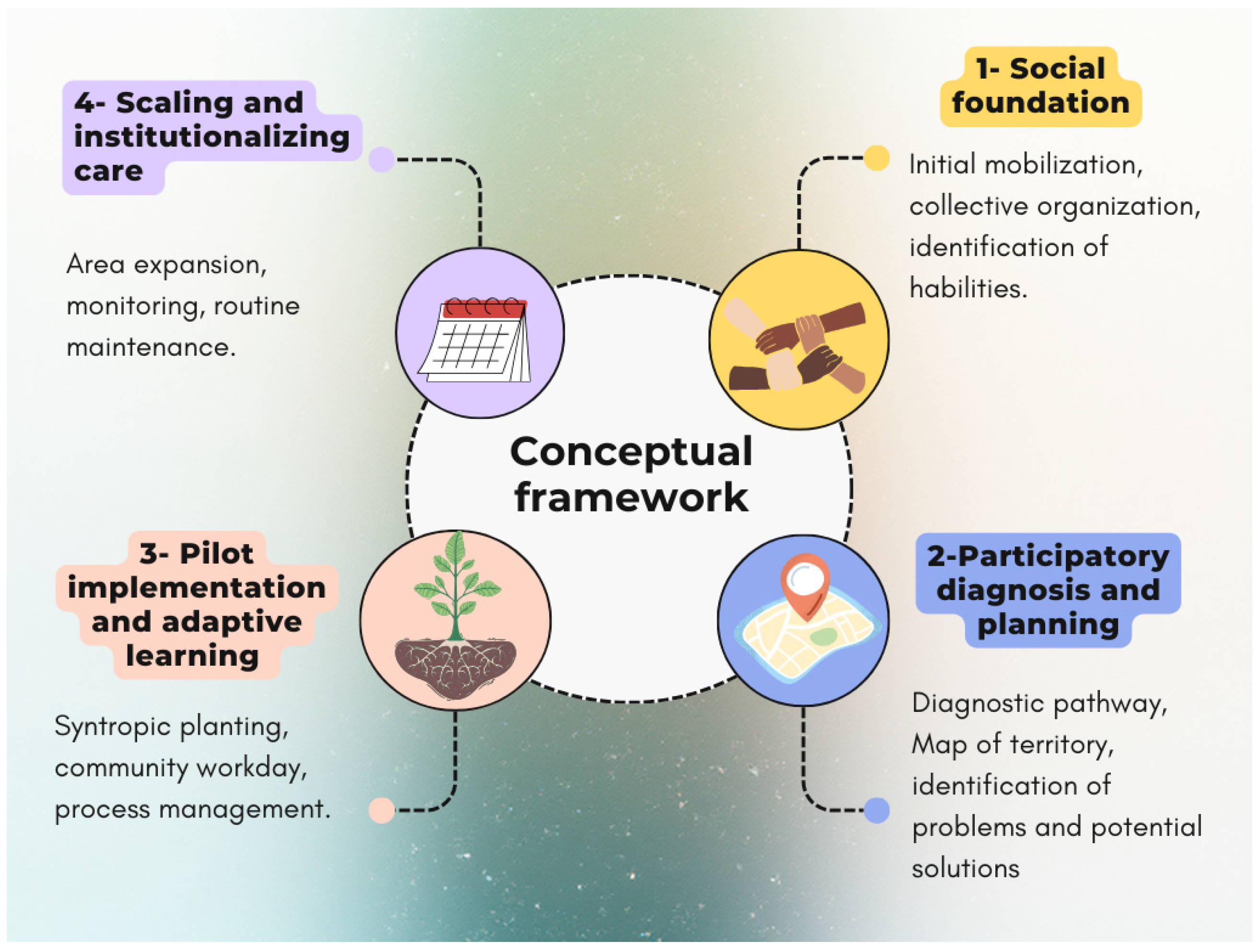
This participatory action-research framework is synthesized in a four-phase model (Figure 2), which guides the subsequent technical and social steps.

2.3. Phase 1: Social and Institutional Foundation

Prior to any physical intervention, foundational social and legal steps were undertaken:
  • Collective Formation: Interested residents and professionals were mobilized, forming a collaborative group without a single hierarchical leader. Roles were organically assumed based on skills (coordination, communication, technical knowledge, logistics).
  • Legal Framework: A technical project outlining the restoration objectives, methods, and community involvement was submitted to the municipal environmental agency (Secretariat of Environment, Water Resources and Sustainability of Niterói-SMARHS). The project emphasized its nature as a spontaneous community-led initiative, seeking formal authorization for intervention in a Permanent Preservation Area (APP).
  • Partnership Building: Strategic alliances were established with municipal departments (for logistical support like green waste chipping), state environmental agencies (for licensing and guidance), and local NGOs (for technical and financial support).

2.4. Phase 2: Adapted Restoration Protocol

The on-ground restoration technique was an urban-adapted syntropic agroforestry protocol. Its key adaptive innovations for narrow, degraded urban strips were:
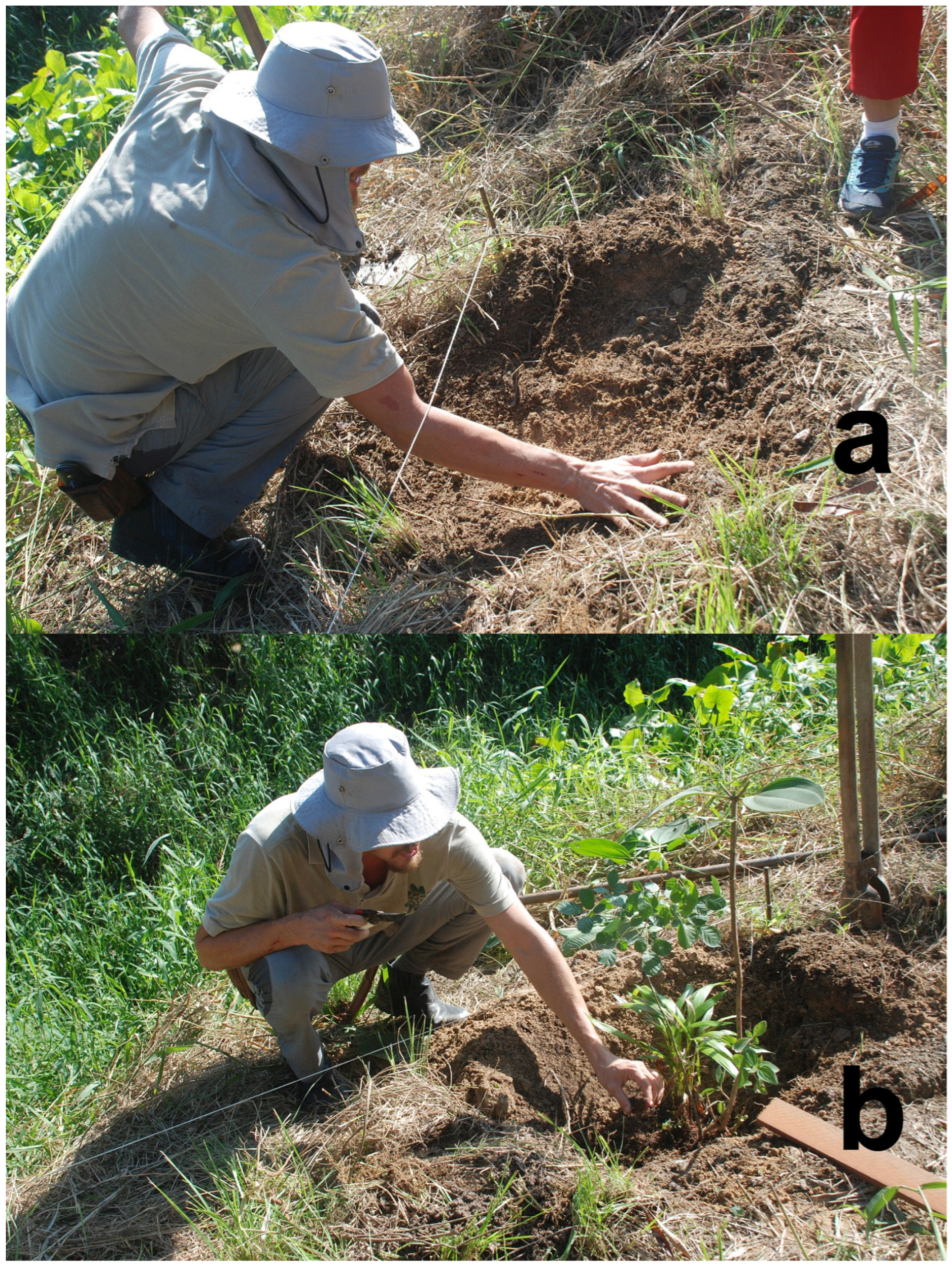
  • High-Density Nesting (Figure 3): Instead of evenly spaced seedlings, planting was concentrated in densely packed nests or cradles (approx. 20–30 cm deep), spaced 1.5–3 m apart. This created immediate micro-environments conducive to plant establishment and rapid soil cover.
Species selection for the nests followed a hierarchy of technical criteria, later adapted through social practice (see Supplementary Table S1 for the detailed list of key species and their functions):
  • Native origin: We prioritized species from the Atlantic Forest biome and the local region to ensure ecological compatibility and habitat provision.
  • Function within the syntropic system: We sought species with complementary roles: nitrogen fixation, rapid soil cover and biomass production, attraction of pollinators and seed dispersers, and long-term structural development.
  • Resilience: Adaptability to degraded urban conditions.
Nevertheless, the open nature of the collective led to a socially negotiated adaptation. Volunteers, especially elders, often contributed seedlings from their homes, including non-native fruit trees, as a practical way to contribute and appropriate the space. To sustain engagement, the collective adopted a pragmatic rule: allowing such contributions provided they were not known invasive species. The ongoing syntropic management—particularly selective pruning—then served as the primary ecological filter, gradually favoring the development of the native structural species that formed the project’s technical core. This experience highlights how the social process actively shaped the technical application.
  • Successional Stratification in Miniature: Each nest functioned as a micro-scale successional system. It received:
    Nitrogen-fixing legumes: Seeds of Canavalia ensiformis (jack bean) or Cajanus cajan (pigeon pea).
    Fast-growing tuberous plants: Cuttings of Manihot esculenta (cassava) and Ipomoea batatas (sweet potato) for rapid soil protection.
    Shrub-layer cuttings: Species like Morus nigra (blackberry) and Tithonia diversifolia (Mexican sunflower) for early structure.
    Tree seedlings: Up to three individuals of native Atlantic Forest species from different successional stages (pioneer, secondary, climax).
    “Muvuca” seed mix: A diverse blend of seeds with varying germination times and growth rates, ensuring continuous ground cover and biomass production.
    Biomass-Driven Fertility: No external compost or fertilizer was used. Soil fertility was built through:
    On-site biomass recycling: Cut grass and invasive plants were uprooted, inverted, and left to decompose in situ.
    Mulching: Donated chipped green waste from municipal pruning formed a thick protective layer, retaining moisture and suppressing weeds.
    Strategic pruning: Fast-growing species in the nests were periodically pruned, and the clippings were left on the soil as nutrient-rich green manure.

2.5. Phase 3: Management, Monitoring, and Social Learning

The methodology included a built-in process for maintenance and adaptation:
  • Regular Community Workdays: Scheduled monthly collective action days for planting, pruning, and site cleaning, transforming maintenance into a recurring social event.
  • Participatory Monitoring: Biodiversity return was tracked collaboratively using the iNaturalist platform (project: “corrego-dos-colibris”), engaging volunteers in data collection. The citizen science data from the iNaturalist platform underwent a pragmatic quality control strategy, appropriate for a community-based project. While dedicated expert taxonomic validation in the field remains a future goal, the primary quality filter was the platform’s own consensus system. We utilized only observations that achieved ‘Research Grade’ status, which requires confirmation by the community and often expert reviewers, thereby minimizing species misidentification risk. The sampling was inherently biased towards the project’s activities, as most uploads were made by collective members during workdays. In the context of this community-led restoration study, this bias is informative, as it directly links the documented biological records to the restoration intervention’s timeline and location. Observations of key functional groups (e.g., pollinators, seed dispersers, and predators) were used as qualitative indicators of functional recovery within the restored corridor. Photographic registers documented ecological and landscape changes over time. Participation in each community workday was documented, allowing for a quantitative analysis of community engagement dynamics throughout the project (see Supplementary Table S2).
  • Adaptive Management: The system was continuously observed. Decisions on what to prune, when to replant, or which species to introduce next were made collectively based on the system’s response, embodying a learn-by-doing approach.

2.6. Synthesis of the Replicable Model

The methodology culminates in a replicability framework distilled from the experience. This framework, detailed in the Results section, translates the specific case study into a generalized sequence of four phases (Social Foundation, Participatory Diagnosis and Planning, Pilot Implementation and Adaptive Learning, and Scaling and Institutionalizing Care) intended to guide other groups.

2.7. Documentation and Analysis of the Social Process

To ensure the reproducibility and transparency of the social process, the formation and evolution of the Córregos da Tiririca Collective were systematically documented. Primary data sources included:
  • A public and permanent photographic archive hosted on the project’s dedicated website (https://nossacasa.net/nossosriachos/tiririca/ accessed on 23 December 2025), which documents all 26 community workdays and serves as both a dissemination tool and a documentary record;
  • Internal attendance lists and communication records (e.g., messaging groups);
  • Field logs noting collective decisions and adaptive management actions.
The core volunteer base ranged from an initial 8 neighbors to over 80 registered individuals, with a consistent group of 15–20 participants in monthly workdays. Quantitative participation metrics were extracted from these sources to build a complete dataset of engagement over time (see Supplementary Table S2). Qualitative analysis of group dynamics, decision-making, and role internalization was conducted through collaborative reflection and synthesis by the authorial collective, which is embedded within the community of practice.

3. Results

The six-year initiative generated profound outcomes that are best understood through two lenses: the social-organizational transformation and the resulting ecological regeneration. The most significant finding is the emergence and consolidation of a sustainable community of practice capable of leading urban ecological restoration.

3.1. The Social Fabric: Building a Permanent Collective

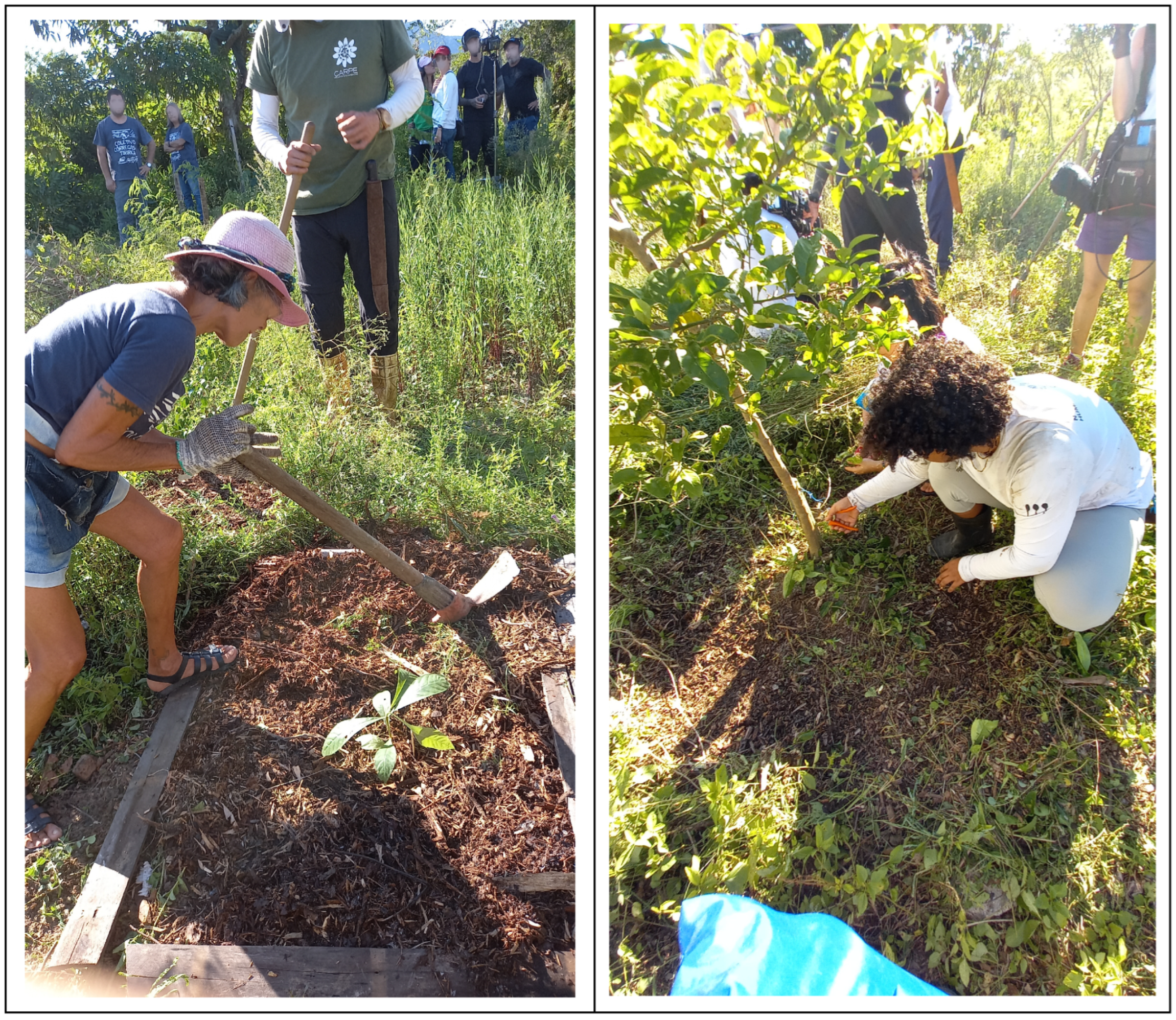
Contrary to transient volunteer efforts, the Córregos da Tiririca Collective evolved into a permanent socio-environmental entity within the urban fabric (Figure 4).
This outcome is detailed through several key indicators:
  • Formation and Growth: The collective expanded from an initial group of 8 neighbors to a network of over 130 individuals in its primary communication channel. From this network, a core of over 80 volunteers had their active participation documented through fieldwork attendance, photographic records, or seedling production. A quantitative analysis of this active participation (Supplementary Table S2) revealed a dynamic pattern: the diagnostic workday (#02) mobilized a peak of 54 participants, demonstrating substantial initial social capital. This engagement consolidated into a stable operational core, which maintained regular activities even during contextual challenges such as the COVID-19 pandemic (leading to the cancellation of workday #07) and periods of heavy rain. Notably, activities were sustained by a dedicated group even without photographic records (e.g., workdays #16 and #17, with 6 participants each). During the long-term management phase (2023–2025), a sustained average of approximately 15 participants per workday was maintained, evidencing the transition to a permanent and resilient community of practice with high retention.
  • Horizontal Governance and Role Internalization: The group organically developed a non-hierarchical functional structure. Key roles—such as technical facilitator (guiding syntropic practices), community mobilizer, institutional liaison, and documentation manager—were assumed and sustained by different members, ensuring resilience and distributing leadership.
  • From Project to Institution: The Collective transcended its initial objective of planting trees. It became a local reference for environmental education, a legitimate interlocutor with public authorities, and a custodian of situated ecological knowledge. This shift is evidenced by:
    Formal recognition and recurring partnerships with municipal secretariats (Environment, Cleaning Services).
    Being sought out by other community groups for advice on stream restoration.
    Sustained activity through political-administrative cycles, demonstrating independence from short-term political agendas.

3.2. The Replicability Framework: A Model Forged in Practice

The collective’s experience was systematized into a four-phase replicability framework, which constitutes a primary output of this study (Figure 5).
This framework is not merely theoretical but is a direct reflection of the learned social process:
  • Foundation—The Social Genesis: The critical first step of identifying and uniting initial actors, defining a shared identity, and establishing trust.
  • Diagnosis and Planning—Collective Sense-Making: The process of jointly studying the territory, understanding its degradation, and co-designing an intervention plan, which fosters ownership.
  • Pilot Implementation—Learning by Doing: Starting with a manageable section to build collective confidence, refine techniques, and generate visible early wins that fuel motivation.
  • Scaling and Management—Institutionalizing Care: The transition from a planting project to establishing routines of care (maintenance working days, participatory monitoring), ensuring long-term stewardship.
This framework underscores that ecological restoration is fundamentally a social process; the technique is embedded within it. To facilitate practical replication, this framework is accompanied by an operational guide detailing key objectives, suggested timelines, actions, and potential challenges for each phase (see Supplementary Table S3).

3.3. Ecological Outcomes: The Landscape Transformed by Collective Action

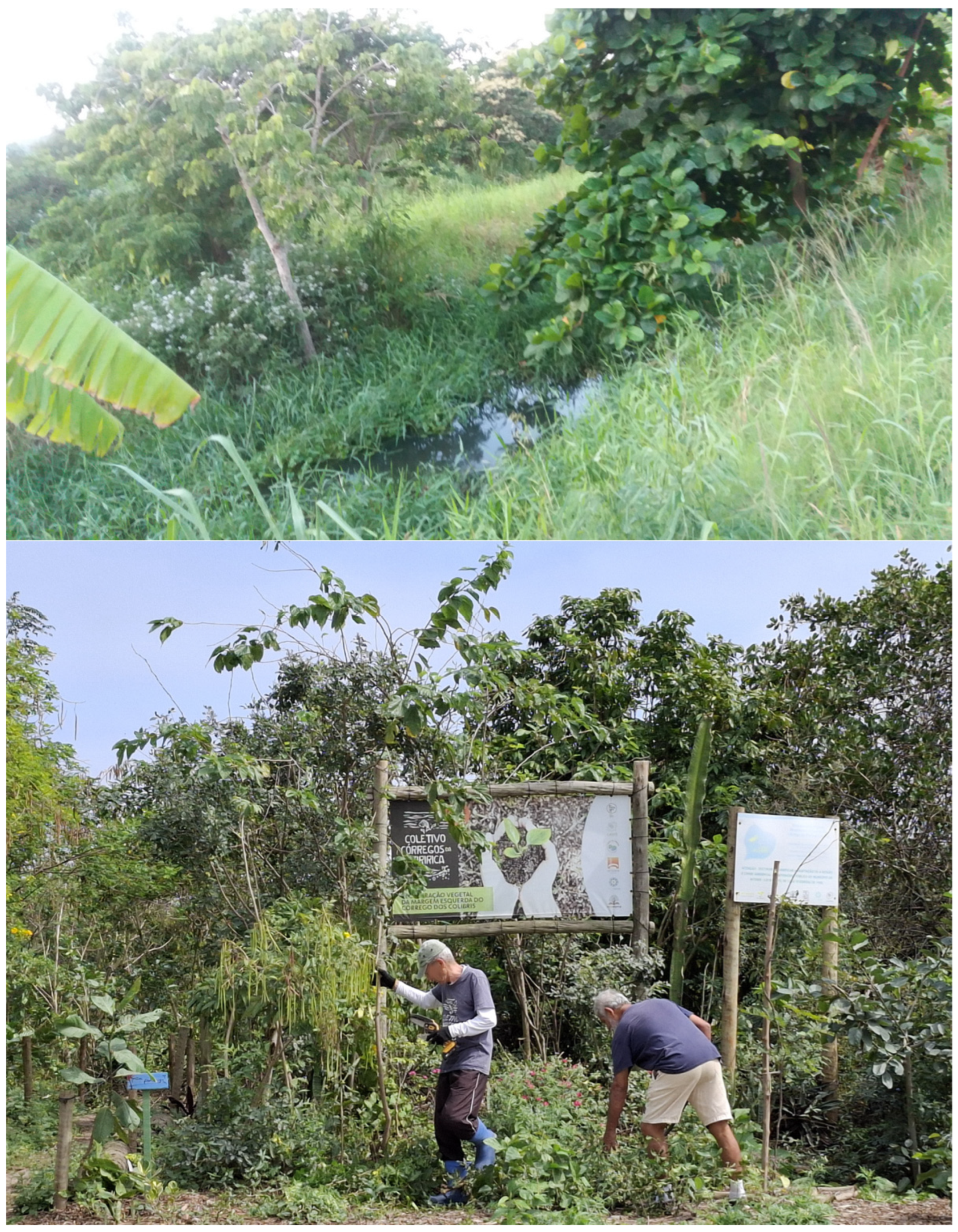
The efficacy of the social model is materially demonstrated by the ecological transformation it produced on a 900-m stretch of the Colibris stream (Figure 5). The efficacy of the model is materially demonstrated by the ecological transformation along a 900-m stretch of Colibris Stream. Quantitative ecological indicators confirm the recovery (Supplementary Table S4). The return of biodiversity was documented through 561 observations of 194 species on the iNaturalist citizen science platform. Direct visual observation and sequential photographic records attest that the area transitioned from a degraded bank with exposed soil to a stratified riparian forest with a closed canopy, where signs of erosion were eliminated.
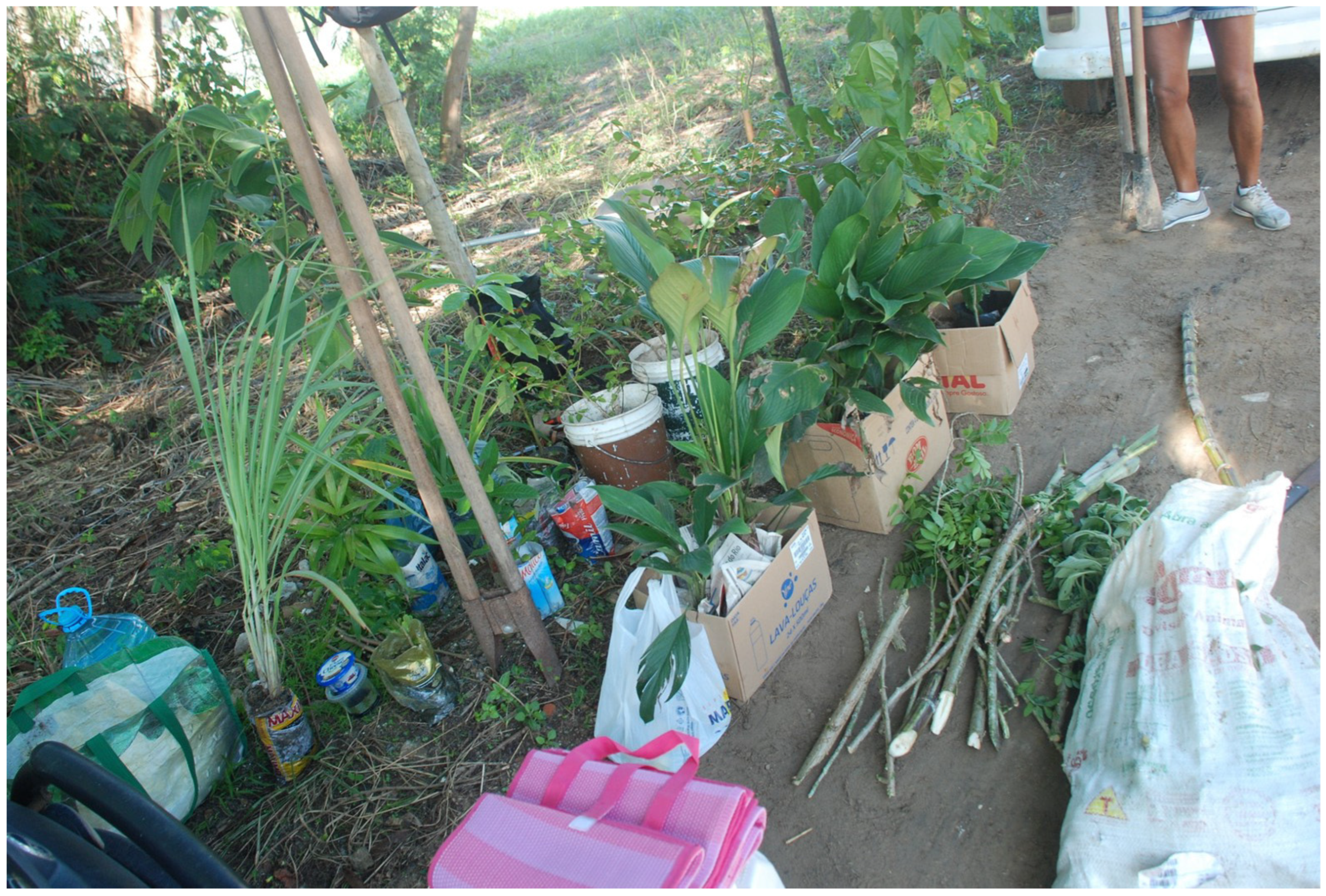
  • From Erosion to Forest Structure: Within four years, the site transitioned from an eroding, grass-dominated bank to a stratified riparian forest. Canopy cover, assessed through collaborative visual estimation by the collective and supported by qualitative analysis of sequential drone imagery (2020–2023), exceeds 70%, representing a closed forest structure. The dense planting strategy (nesting) and the consistent care from a decentralized community network (Figure 6) ensured high plant establishment success, enabling this rapid transformation. Over time, the initially distinct planting nests naturally merged through plant growth and canopy closure, forming a continuous, stratified vegetation cover—an expected outcome of the syntropic approach where the initial design evolves into a cohesive forest.
  • Documented Biodiversity through Citizen Science: The Collective’s use of the iNaturalist platform for participatory monitoring generated a robust, public dataset: 561 observations of 194 species recorded between 2019–2025. The floristic composition of the restored corridor is now dominated by native and functional species. The ten species considered ecologically most relevant for the restoration, including structural species such as “Pau-Brasil” (Paubrasilia echinata) and “Pau-Rei” (Pterygota brasiliensis), are detailed in Supplementary Material S1 (Table S1). The return of fauna, recorded via participatory monitoring, confirms the recovery of key ecosystem functions, including predation, pollination, nutrient cycling, and soil engineering. A selection of recorded species, representing different functional groups, is presented in Supplementary Material S2 (Table S5).
  • Functional Recovery: The restored vegetation halted bank erosion, improved soil organic matter, and now acts as a buffer for surface runoff. The area withstood heavy summer rains without damage, a tangible result reported by both the collective and local residents.

3.4. The Virtuous Cycle: Social Capital Fueling Ecological Gains

A key result is the observed virtuous cycle between social and ecological elements:
  • Ecological wins (e.g., first fruits, bird sightings) motivated continued social participation.
  • Regular social gatherings (called ‘mutirão’ in portuguese) ensured constant, adaptive ecological management.
  • Documented ecological improvements (e.g., iNaturalist data) strengthened the group’s legitimacy and persuasive power with authorities and the community.
This synergy suggests that the long-term viability of the restored forest is intrinsically linked to the health and permanence of the collective that tends it.

4. Discussion

This study set out to develop and document a replicable model for community-led urban stream restoration. The six-year experience of the Córregos da Tiririca Collective demonstrates that such restoration is not only ecologically feasible in severely constrained urban spaces but, more importantly, that its long-term success is fundamentally dependent on the creation and maintenance of a permanent social organization. The most significant contribution documented here is therefore not merely the adaptation of syntropic agriculture to narrow riparian strips, but the socio-technical framework (Figure 2) that emerged—a framework in which ecological technique and social process are inseparable and mutually reinforcing. This finding aligns with and extends the growing recognition of community-led initiatives as critical actors in implementing nature-based solutions for urban climate adaptation [5], and underscores the role of civic ecology in fostering adaptive, place-based stewardship [13].
The adapted syntropic protocol proved to be a highly effective ecological technique for the challenging urban context. The rapid establishment of a stratified forest structure (Figure 5) and the documented recruitment of over 194 plant and animal species (Tables S1 and S5) within a narrow marginal strip (0.5–1.5 m) validate its core premise: accelerating succession through dense, diversified nesting can quickly restore key riparian functions. This contrasts sharply with conventional urban restoration approaches, which often rely on spaced planting of a limited number of tree seedlings—a method frequently associated with high initial mortality, slow canopy closure, and continued vulnerability to erosion and weed invasion [19]. The syntropic system, by generating immediate soil cover and a continuous input of organic matter through pruning, created a self-fertilizing and self-regulating microenvironment. This not only accelerated ecological outcomes but also reduced long-term maintenance burdens, a critical advantage for community-managed projects.
This experience allows us to contextualize the adapted syntropic protocol within urban restoration practice. While the theoretical advantages of syntropic agriculture for accelerating succession are established in the literature [15,16], our study aimed to test its applied efficacy in a severely constrained urban setting. The protocol proved highly effective for our target context: narrow, degraded riparian strips where rapid soil cover, microclimate creation, and low external input are critical. It addresses key limitations of conventional spaced planting in such areas, namely slow canopy closure and vulnerability to erosion. However, its suitability has boundary conditions. It may be less optimal for: (1) very large-scale implementations without committed community labor for management; (2) purely compliance-driven restoration without social engagement; or (3) sites requiring prior contamination remediation. Thus, its ideal niche is in community-stewarded, confined urban corridors where its social and ecological requirements align.
It is also worth noting that in steep and inaccessible banks, such as those of Colibris Stream, soil stabilization can be achieved through natural colonization by native apophytic species once favorable microclimatic conditions are created. In our study, we observed the spontaneous arrival of ferns such as Acrostichum danaeifolium, which contributed to slope stabilization without additional manual intervention. This suggests that in urban restoration projects with physical constraints, priority should be given to creating an environment conducive to succession, allowing autonomous ecological processes to complement the initial intervention.
Beyond technical efficacy, the most profound innovation of this initiative lies in its social architecture. The Córregos da Tiririca Collective evolved from a project-oriented group into a permanent community of practice [13]. This permanence is not incidental but fundamental; it provides the consistent stewardship required by dynamic syntropic systems and transforms what is typically viewed as a recurring maintenance cost into a continuous process of social learning and capital formation. We observed a clear virtuous cycle: visible ecological gains (e.g., fruit production, bird sightings) reinforced volunteer motivation and community buy-in, while the regular social gatherings ensured adaptive, on-the-ground management that textbooks cannot prescribe (Figure 4). This feedback loop between ecological recovery and social engagement addresses a core failure point in many top-down restoration projects: post-planting abandonment. The collective thus becomes the immune system of the restored landscape—a resilient, adaptive, and legitimate social entity capable of defending, learning from, and nurturing the ecosystem over time, independent of political cycles.
The permanence of the collective enabled ecological recovery through a concrete causal pathway. The regular rhythm of community workdays provided consistent maintenance (selective pruning, replanting), which suppressed competitive grasses and directed successional growth. This ongoing care ensured continuous input of organic matter (from prunings) for in-situ soil fertilization and allowed for rapid adaptive responses to stressors (e.g., drought, vandalism). Furthermore, the established social presence fostered a community sense of guardianship, deterring littering and encroachment. These intertwined social mechanisms directly facilitated high plant survival, accelerated canopy closure, and ultimately led to stable erosion control and documented biodiversity return. Thus, the social routines were not merely adjacent to the ecological technique but were the operational engine that ensured its efficacy over time.
The replicability framework (Figure 2) distilled from this experience offers a concrete tool for urban environmental policy. It demonstrates that community-led syntropic restoration is not a marginal alternative, but a viable, low-cost, and high-engagement strategy for recovering thousands of kilometers of degraded urban waterways where full legal compliance with riparian buffer widths is impossible. This approach aligns with and operationalizes key principles of contemporary watershed revitalization programs, which emphasize participatory planning and addressing root causes [9]. Furthermore, the model positions itself as a potent nature-based solution for climate mitigation. By accelerating biomass accumulation and carbon sequestration through dense, managed succession—a potential evidenced in studies of agroforestry systems in the region [20]—and by enhancing urban resilience through flood mitigation and microclimate regulation, it delivers coupled climate adaptation and mitigation benefits. Crucially, these benefits are sustained by the very social fabric the project cultivates, ensuring the intervention’s longevity beyond typical project cycles.
This study has certain limitations that also define tendencies for future work. The replication framework, while grounded in a successful six-year case, requires validation and adaptation in diverse urban socio-ecological contexts. Long-term comparative studies quantifying hydrological parameters, carbon stocks, and biodiversity trajectories in syntropic versus conventional urban riparian restoration are needed to solidify its evidence base. Furthermore, the model’s dependency on sustained volunteer engagement raises questions about its applicability in communities with low social capital or high mobility. Future research should explore hybrid governance models that couple core community stewardship with structured institutional support. Despite these considerations, the experience of the Córregos da Tiririca Collective provides a proof-of-concept that is both ecologically robust and socially transformative. It offers a tangible pathway for cities to reclaim their blue-green infrastructure, not through costly engineering alone, but by cultivating the collective civic capacity of care.
A critical consideration is that riparian restoration alone does not eliminate point-source pollution. The collective’s permanence proved vital in addressing these root causes through civic action [17]. Beyond planting, the group (1) consistently reported illegal dumping, (2) successfully advocated with the Watershed Committee to pressure the utility company into implementing a sewage inspection program (‘Se Liga na Rede’), and (3) supported broader campaigns against inappropriate wastewater infrastructure location. This demonstrates how the social organization became a vehicle for environmental governance. However, the establishment of systematic water quality monitoring at the site remains a pending challenge despite community efforts—a limitation of this study and a clear priority for future work. This experience underscores that the social-ecological model is most resilient when the community collective actively tackles both the symptoms (erosion) and the sources (pollution) of degradation.

5. Conclusions

This study documented and systematized a six-year experience in community-led urban stream restoration, resulting in a practical, replicable framework. The initiative successfully restored a degraded stretch of the Colibris stream using an adapted syntropic agriculture protocol, proving its technical feasibility for establishing biodiverse, functional riparian forests in extremely narrow urban strips (0.5–1.5 m) where conventional approaches are often unviable.
However, the most significant finding extends beyond the ecological technique. The core innovation lies in the social vehicle created to implement and sustain it: the Córregos da Tiririca Collective. This entity evolved from a project into a permanent community of practice, transforming recurrent maintenance into continuous social learning and capital formation. It acts as the immune system of the restored landscape, ensuring adaptive management and resilience against urban pressures and political cycles. Therefore, successful replication requires cultivating not just a forest, but the collective that will steward it.
Consequently, we recommend that urban environmental policies actively support community-led syntropic restoration as a cost-effective, scalable, and socially transformative strategy. This model offers a dual pathway: it provides a concrete technical alternative for recovering kilometers of confined urban waterways, while simultaneously rebuilding the vital connection between citizens and their aquatic ecosystems through hands-on stewardship. The ultimate legacy of such initiatives may well be the activated communities themselves, capable of leading the regeneration of their urban watersheds.

Supplementary Materials

The following supporting information can be downloaded at https://www.mdpi.com/article/10.3390/su18041969/s1, Table S1: Key plant species in the restored corridor of Colibris Stream, ranked by ecological relevance for riparian forest restoration (Data from the iNaturalist project, 2019–2025); Table S2: Participation dynamics in the Córregos da Tiririca Collective workdays (2019–2025); Table S3: Operational guide for the four-phase community-led urban stream restoration framework; Table S4: Quantitative ecological indicators of Colibris Stream restoration (2019–2025); Table S5: Selected fauna species recorded in the restored corridor of Colibris Stream, evidencing ecosystem function recovery (Data from the iNaturalist project, 2019–2025).

Author Contributions

All authors designed this study; participated in fieldwork and prepared the manuscript. R.F.M.-P. built the table with species list and prepared the map of study area. Methodology by R.F.M.-P. and F.S.T.T. Final review and edition by L.M.S.-S. and F.S.L.Q. provided funding. All authors have read and agreed to the published version of the manuscript.

Funding

Fieldwork was in part funded by grant process no. 002563/2024 corresponding to the joint partnership between the MMA (Secretaria Nacional de Meio Ambiente Urbano, Recursos Hídricos e qualidade ambiental, of brazilian ministery of environment and climate change) and the non governamental organization AMADARCY (a OSC Instituto Floresta Darcy Ribeiro) in order to restore and preserve the remnants of riparian forest, protect fauna and flora of Colibris stream. The activity was coordinated by F.S.L.Q., with the participation of the CARPE and the Instituto Nossos Riachos.

Institutional Review Board Statement

Not applicable.

Informed Consent Statement

Not applicable.

Data Availability Statement

The original contributions presented in this study are included in the article/Supplementary Material. Further inquiries can be directed to the corresponding author.

Acknowledgments

We extend our gratitude to the team of Collective Córregos da Tiririca and Carpe Projects for their help with field activities. To the team at Project “Vamos Plantar” and the AMADARCY for financial support and partnership. We give thanks to the team of the PESET (Parque Estadual da Serra da Tiririca) for logistic support during fieldwork and INEA-Instituto Estadual do Ambiente process SEI-070002/001344/2025 for the license for field activities. To ICMBio for the license Sisbio no. 80891-1 for field activities. The City of Niterói through the Secretariat of Environment, Water Resources and Sustainability of Niterói (SMARHS), Pró Sustentável, Regional Administration of the Oceanic Region and CLIN for the support and field logistics. Our gratitude to the 4th GMar Fire Department—Itaipu for the support on the beginning of the activities. This work received laboratory support from the Instituto Nossos Riachos (INR).

Conflicts of Interest

The authors declare no conflicts of interest.

References

  1. Abreu, M.A. A Cidade, a Montanha e a Floresta. In Escritos sobre Espaço e História; Fridman, F., Haesbaert, R., Eds.; Garamond: Rio de Janeiro, Brazil, 2014; pp. 299–357. [Google Scholar]
  2. Sales, G.P.S.; Guedes-Bruni, R.R. New Sources of Biological Data Supporting Environmental History of a Tropical Forest of South-Eastern Brazil. In Historia Ambiental Latinoamericana y Caribeña; Halac: Buenos Aires, Argentina, 2023; Volume 13, pp. 281–308. [Google Scholar]
  3. IPCC. Climate Change 2022: Impacts, Adaptation and Vulnerability. Contribution of Working Group II to the Sixth Assessment Report of the Intergovernmental Panel on Climate Change; Cambridge University Press: Cambridge, UK, 2022; Available online: https://www.ipcc.ch/report/ar6/wg2/ (accessed on 9 January 2026).
  4. United Nations. The Sustainable Development Goals Report 2023; UN: New York, NY, USA, 2023; Available online: https://unstats.un.org/sdgs/report/2023/ (accessed on 9 January 2026).
  5. Kabisch, N.; Korn, H.; Stadler, J.; Bonn, A. (Eds.) Nature-Based Solutions to Climate Change Adaptation in Urban Areas: Linkages Between Science, Policy and Practice; Springer: Cham, Switzerland, 2017. [Google Scholar] [CrossRef]
  6. European Commission. Towards an EU Research and Innovation Policy Agenda for Nature-Based Solutions and Re-Naturing Cities; Publications Office of the European Union: Luxembourg, 2015; Available online: https://op.europa.eu/en/publication-detail/-/publication/fb117980-d5aa-46df-8edc-af367cddc202/language-en (accessed on 20 December 2025).
  7. Magnanini, A. Reflorestamento e Silvicultura. Rev. Bras. De Geogr. 1960, 22, 671–677. [Google Scholar]
  8. Naiman, R.J.; Décamps, H. The Ecology of Interfaces: Riparian Zones. Annu. Rev. Ecol. Syst. 1997, 28, 621–658. [Google Scholar] [CrossRef]
  9. Liu, C.; Li, Y.; Wang, J.; Liu, Y. The Role of Riparian Vegetation in Protecting and Improving Water Quality in Urban Streams: A Global Meta-Analysis. J. Environ. Manag. 2022, 320, 115849. [Google Scholar] [CrossRef]
  10. Capilé, B. Rios Urbanos e Suas Adversidades: Repensando Maneiras de Ver as Cidades. In Historia Ambiental Latinoamericana y Caribeña; Halac: Buenos Aires, Argentina, 2016; Volume 5, pp. 81–95. [Google Scholar]
  11. Suárez, M.; García-Nieto, A.P.; Gómez-Baggethun, E.; Ametzaga-Arregi, I. Renaturalisation and Natural Rewilding of the Manzanares River in Madrid, Spain: Mapping Recreation Potential and Actual Use. Urban For. Urban Green. 2024, 101, 128555. [Google Scholar] [CrossRef]
  12. Ministério do Desenvolvimento Regional (MDR). Diretrizes e Estratégias para o Programa Nacional de Revitalização de Bacias Hidrográficas—Relatório Final; MDR: Brasília, Brazil, 2022; 135p. Available online: https://www.gov.br/mdr/pt-br/assuntos/seguranca-hidrica/bacias-hidrograficas/TOMO_IdoPNRBH.pdf (accessed on 29 January 2026).
  13. Krasny, M.E.; Tidball, K.G. Civic Ecology: Adaptation and Transformation from the Ground Up; MIT Press: Cambridge, MA, USA, 2015. [Google Scholar] [CrossRef]
  14. Aldrich, D.P. Building Resilience: Social Capital in Post-Disaster Recovery; University of Chicago Press: Chicago, IL, USA, 2012. [Google Scholar] [CrossRef]
  15. Götsch, E. Break-Through in Agriculture; AS-PTA: Rio de Janeiro, Brazil, 1994; 22p. [Google Scholar]
  16. Andrade, D.; Pasini, F.; Scarano, F.R. Syntropy and Innovation in Agriculture. Curr. Opin. Environ. Sustain. 2020, 45, 20–24. [Google Scholar] [CrossRef]
  17. Coletivo Córregos da Tiririca. Projeto Córregos da Tiririca. 2019. Available online: http://nossacasa.net/nossosriachos/tiririca/proposta/ (accessed on 29 December 2025).
  18. Sarmento-Soares, L.M.; Martins-Pinheiro, R.F.; Tanscheidt, F.S.T. Collective Córregos da Tiririca: Restoration of Riparian Forest in a Tributary Stream of Itaipu Lagoon, Niterói-RJ, Brazil. Qeios 2024, 6, IA72E0.2. [Google Scholar] [CrossRef]
  19. Ganem, R.S.; Drummond, J.A. Recuperação de Matas Ciliares: Uma Análise Crítica da Legislação e da Prática no Brasil. Rev. Árvore 2011, 35, 721–731. [Google Scholar] [CrossRef]
  20. Torres, C.M.M.E.; Jacovine, L.A.G.; Oliveira Neto, S.N.; Fraisse, C.W.; Soares, C.P.B.; Castro Neto, F.; Ferreira, L.R.; Zanuncio, J.C.; Lemes, P.G. Greenhouse Gas Emissions and Carbon Sequestration by Agroforestry Systems in Southeastern Brazil. Sci. Rep. 2017, 7, 16738. [Google Scholar] [CrossRef] [PubMed]
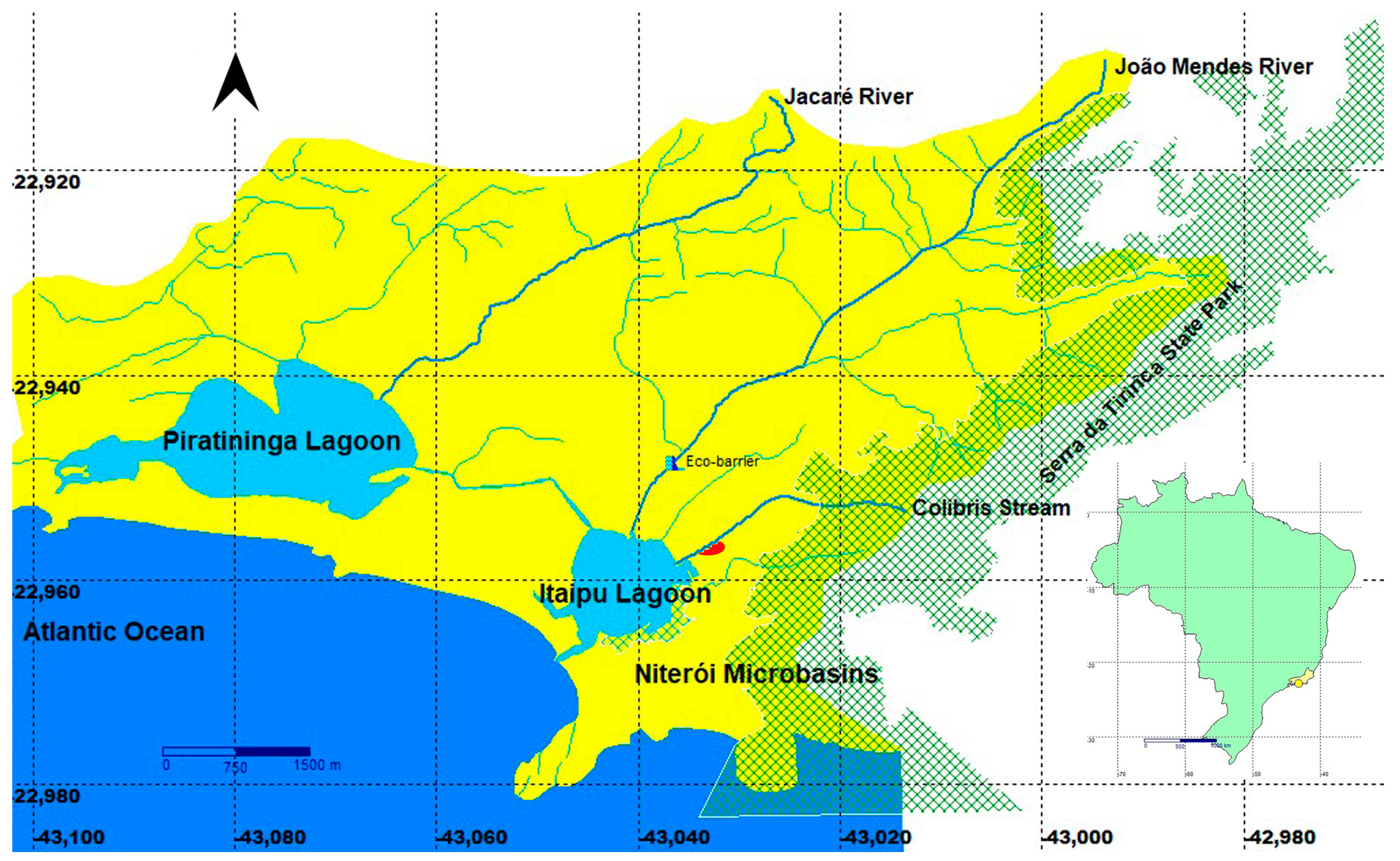
Figure 1. Location of the study area. (left) Micro-basins of the Itaipu-Piratininga lagoon system in Niterói, Rio de Janeiro, Brazil (yellow contour), indicating the main contributing rivers and the position of Colibris Stream (red dot); green hatched area indicates the Serra da Tiririca State Park (PESET). (small image at right) Brazil map with location of Rio de Janeiro state (in yellow). Scale bar: 1500 m.
Sustainability 18 01969 g001
Figure 2. Conceptual framework for community-led urban stream restoration, systematized from the experience of the Córregos da Tiririca Collective. The model comprises four iterative phases: (1) Social Foundation—mobilization and collective formation; (2) Participatory Diagnosis and planning—co-assessment of the territory; (3) Pilot Implementation and adaptive learning—initial application of syntropic planting and management; (4) Scaling and institutionalizing care—area expansion, routine maintenance, and participatory monitoring. Dotted line indicates the cyclical and adaptive nature of the process, where sustained social organization ensures long-term ecological recovery.
Sustainability 18 01969 g002
Figure 3. Implementation of the adapted syntropic planting technique on the Colibris stream bank. (a) Volunteers preparing a planting nest by excavating soil and incorporating organic matter. (b) A nest containing multiple plant species immediately after planting, showing the dense, stratified arrangement designed to mimic natural succession.
Sustainability 18 01969 g003
Figure 4. The Córregos da Tiririca Collective in action during a monthly community workday on the left bank of Colibris Stream. (left) Net construction. (right) Maintenance. The images capture the horizontal, collaborative, and hands-on nature of the social organization that sustained the project over six years.
Sustainability 18 01969 g004
Figure 5. Visual transformation of the Colibris stream bank following the agroecological intervention. (top) Initial condition in 2019: degraded, eroding bank dominated by invasive grass (Brachiaria sp.). (bottom) Condition in 2025: established, multi-strata riparian forest resulting from the growth and merging of the initial syntropic planting nest, providing soil stabilization, canopy cover, and habitat complexity.
Sustainability 18 01969 g005
Figure 6. Community-based logistics of the restoration project. Seedlings and plant material stored at a volunteer’s home prior to being transported to the planting site, illustrating the decentralized, resource-efficient approach of the collective.
Sustainability 18 01969 g006
Disclaimer/Publisher’s Note: The statements, opinions and data contained in all publications are solely those of the individual author(s) and contributor(s) and not of MDPI and/or the editor(s). MDPI and/or the editor(s) disclaim responsibility for any injury to people or property resulting from any ideas, methods, instructions or products referred to in the content.