Article

Authenticity, Restaurant Quality, and Place Attachment: Evaluating Authentic Food Tourism Experiences


1
Department of Hospitality and Tourism Management, Sejong University, 209 Neungdong-ro, Gwangjin-gu, Seoul 05006, Republic of Korea
2
Tourism Industry Data Analytics Lab (TIDAL), Department of Hospitality and Tourism Management, Sejong University, Gwangjin-gu, Seoul 05006, Republic of Korea
*
Author to whom correspondence should be addressed.
Sustainability 2026, 18(4), 1957; https://doi.org/10.3390/su18041957
Submission received: 30 December 2025 / Revised: 5 February 2026 / Accepted: 9 February 2026 / Published: 13 February 2026

Abstract

Increasing recognition of food as a sustainable tourism product has led to further interest in how it can impact tourist experiences. This study examined the relationships between key constructs of food tourism experiences by utilizing the stimulus–organism–response (S-O-R) framework. Through an examination of perceived food authenticity, perceived restaurant quality, place attachment, tourist satisfaction, and destination loyalty, this research explored these constructs in a food tourism context. Data from food tourists in China were analyzed using confirmatory factor analysis and structural equation modeling to test seven hypotheses. Results indicated that perceived local food authenticity influenced perceived restaurant quality, place attachment, and satisfaction. Perceived restaurant quality and place attachment also influenced satisfaction, while place attachment and satisfaction influenced destination loyalty. The findings confirmed all tested hypotheses, supporting the construct relationships indicated by the S-O-R framework and demonstrating how external stimuli and internal dynamics shape responses in a food tourism context. The findings underscore that authentic food tourism experiences can positively influence tourist perceptions, satisfaction, and loyalty. This has implications for destination sustainability, as authentic food tourism experiences can help to preserve cultural traditions and provide economic benefits to destination communities.

1. Introduction

Recently, the perspective that food is a sustainable tourism product has gained increased attention in the tourism literature [1,2,3]. Food goes beyond merely addressing the physical demands of tourists; it can promote social relationships and diverse gastronomic experiences. Food can be considered as both a cultural and a tourism product [4], thereby enabling tourists to have genuine dining experiences that promote local traditions and cultural encounters. Given the relevance it has for tourism experiences, researchers have explored diverse elements of food tourism experiences and have put forth the notion that the value of food in the context of tourism can be financial and social; food tourism can act as a sustainable factor in tourism [1,3]. Food tourism can also help to promote UN Sustainable Development Goals 8 and 12, which describe the need for employment and economic growth as well as responsible forms of production and consumption [5]. Thus, this form of tourism can provide cultural, economic, or social sustainability benefits to destination communities [6]. Cultural sustainability enables local culinary heritage and techniques to be preserved. Economic sustainability allows communities to be sustained through economic opportunities and reduced economic leakage. Social sustainability allows community resilience and local pride to be developed through culinary offerings.
Some research concerning food tourism has examined tourists’ food experiences [7] and the value of local food consumption [8]. More recently, some researchers have begun to recognize local food as a sustainable tourism product and have examined the role of local food and its effect on tourists’ behavior [1,3]. As a sustainable tourism product, food generates local sourcing, community economic benefits, and cultural preservation, which can serve as valuable outcomes for tourists and host communities alike. The cultural and economic dimensions of food tourism sustainability serve as drivers to enable social sustainability, thereby benefiting the local community. The importance of local food authenticity in making food more sustainable and satisfying tourists has been previously noted. Authentic local food enhances tourist experiences, as it enables tourists to connect with destinations [9]. Place attachment is a relevant concept that describes people’s emotional bonds to specific places [10]. Place attachment can enhance satisfaction and generate emotional connections among tourists [11]. The connections tourists make with the places they visit can shape destination perceptions and visitor experiences. Tourists can seek deep cultural connections, and local food can provide a path for a greater understanding of the uniqueness of a destination by allowing the tastes, customs, and culture encountered through gastronomic experiences to enrich tourists’ destination experiences [12]. Understanding the dynamics that contribute to loyalty is relevant for sustainable tourism development [9]. Ultimately, furthering our understanding of these specific constructs and how they influence food tourists’ experiences can lead to positive outcomes for tourists as well as destinations.
In the current literature, a gap remains in comprehensively addressing how local food authenticity is related to restaurant quality, place attachment, and satisfaction and how loyalty among tourists can subsequently be influenced. The current study examines local food authenticity and restaurant quality perceptions, along with the constructs of place attachment, tourist satisfaction, and destination loyalty. Given that food tourists’ experiences are connected with external stimuli, influence people’s internal processes, and result in a response outcome, the S-O-R (stimulus, organism, response) framework was applied along with the study’s constructs to better understand food tourists’ experiences. The S-O-R framework is logically necessary to test food tourism hypotheses due to the foundation that it provides for understanding external stimuli (e.g., food authenticity and restaurant quality), internal psychological processes, and behavioral outcomes. This systematic framework provides a theoretical basis that allows cognitive and emotional experiences that transpire from food tourism experiences to be assessed while providing a means to explore the interaction of food tourism experience constructs.
Therefore, the current study explores relationships among constructs relevant to food tourism experiences and offers insights into their implications for sustainable tourism development, which can benefit local economies and preserve cultural heritage. Xi’an served as the setting for this study because it provides a unique location to explore food tourism experiences. The city is located at a unique cultural crossroads, having been influenced by its location on the historic Silk Road. This enabled cultural exchanges that influenced the development of local cuisine that continues to attract tourists today. A distinctive local food culture, rich stimuli for the senses, and cultural diversity allow it to be a unique study site. Given that traditional recipes and family food businesses can be most readily encountered by tourists in restaurant establishments, study participants’ experiences at such establishments were the focus of this study. Through traditional food preparation methods, a dynamic food culture that represents a form of intangible heritage, and the continued use of local ingredients and methods, Xi’an provides a relevant food tourism destination site to examine issues such as food authenticity and loyalty. While the S-O-R framework has been used to study food tourism before, it has not been well applied to examine food authenticity, place attachment, or restaurant quality. These constructs have not been examined together in a model applying the S-O-R framework previously. Additionally, this framework has not been applied to study one specific food tourism destination in China as a means of assessing tourist experience outcomes.
This paper first reviews the literature on the key constructs examined in this study. Previous literature that influenced the development of the hypotheses for this study is then discussed. Thereafter, the methods and measurements that were used are described, along with the data collection procedures. Results are presented and described, and the findings, implications, and conclusions derived from the study are explained in the final sections of the paper.

2. Literature Review

2.1. Tourism Authenticity and Food Authenticity

A wide range of research has explored the concept of authenticity in relation to definitions, dimensions, and evaluations of authenticity in tourism contexts. Authenticity is associated with what is real, original, true, pure, and trustworthy [13], which can be viewed as a contrast to that which is copied or reproduced.
In tourism, authenticity has been used to describe tourist experiences, objects, and tourism attractions. Starting with MacCannell [14], the concept of authenticity has been used to understand the travel experiences of tourists. In general, authenticity can be explained by three approaches reflecting the transition from modernism to postmodernism. According to Wang [15], authenticity can be classified into objective, constructive, and existential authenticity. MacCannell [16] described objective authenticity as an assessment of authenticity based on specific criteria. This approach was critiqued by Cohen [17], who argued that authenticity can be socially constructed by tourists. Another approach was suggested by Wang [15], which differentiated between authentic objects and socially constructed experiences. Wang [15] referred to existential authenticity as “an existential state of being that is to be activated by tourism” (p. 359). Kim and Jamal [18] noted that the concept of existential authenticity highlighted the importance of individual experiences, giving consideration to psychological experience components, such as emotional bonds or self-awareness. While not the focus of this study, increasingly, digital experiences have influenced the authenticity perceptions of tourists experiencing gastronomic tourism, leading to issues of future concern in relation to digital authenticity in food tourism [19]. Authenticity can be subjective in different tourism contexts [20], and this can be the case in multicultural contexts such as China.
Authenticity in food tourism contexts may be conceptualized or centered on the following considerations: the use of traditional recipes (objective authenticity), themed restaurants or culinary tour experiences (constructive authenticity), or personal connections to the food experience itself (existential authenticity). Objective authenticity in food tourism would indicate that the object of the tourists’ pursuit—in this case, food—could be viewed as authentic or not [21]. Constructive authenticity in food tourism lends credence to the view that authenticity may be a creation that visitors partake in through their experiences [21]. While all viewpoints have relevance, to operationalize the study of food tourism experiences, existential authenticity was the perspective adopted for this study, as it allows for the investigation of tourist experiences generally without predetermining the type of experience that visitors have as food tourists. Additionally, as it is closely connected with tourists’ experiences and encompasses tourists’ perceptions concerning the authenticity of food, this approach was used for this study. Existential authenticity has been demonstrated to be suitable for understanding tourists’ experiences due to the personal and subjective nature of individual tourist experiences. This approach has also been shown to be highly applicable in empirical research [18]. Kontogeorgopoulos [22] emphasized the importance of existential authenticity based on intrapersonal and interpersonal aspects to explain the motivations of volunteer tourists visiting Thailand. Awareness of authenticity can include local residents’ perspectives in addition to those of tourists, as the host community can be considered a contributing factor [23]. Given that this perspective allows for the evaluation of tourism experiences through the understanding of personal insights, existential authenticity is a beneficial viewpoint to adopt to study food tourism.
Authenticity in food tourism has been a dominant research theme, according to a review by Ellis et al. [24]. Perceived food authenticity can be considered as the genuineness of local foods specific to a place [9]. It can be the tourists’ perspective or perception of local food at a tourism location [25]. Authenticity may be considered a vital component of experiencing food tourism [24]. Food authenticity can serve as a driver for tourist visitation to a destination [26]. Food authenticity may be related to issues of importance to tourists, such as the relationship of food to history, the portrayal of local culture, the genuine perception of food being served, and the connection with the destination [9,27]. Authenticity has been found to influence food quality, service quality, and the perception of the physical environment among tourists [9]. Although authenticity in food tourism has received attention previously, further research on authenticity in food tourism experiences remains relevant in order to advance knowledge on this subject [28]. The significance of experiences, connections people make with destinations, and the role of communities, places, and unique offerings are crucial in food tourism [24]. Compared to the normal food that they regularly eat, tourists can recognize authenticity and uniqueness by consuming local foods during tourism experiences. Despite the interest in authenticity in food tourism contexts, little research has assessed the direct outcomes of perceived food authenticity in relation to restaurant quality assessments and assessments of food destinations.

2.2. Perceived Food and Restaurant Quality

Food and restaurant quality are important for dining experiences and for tourists partaking in food experiences. Bujisic et al. [29] noted that restaurant quality can be examined by restaurant features associated with the atmosphere, service, and food. Food quality can be defined as the gratification people obtain from enjoyable, high-standard food [30].
Restaurants are an important component of tourist destinations, and tourists view food quality as a beneficial attribute that impacts experiences of food consumption [31]. Tourists tend to seek out gastronomic experiences that provide outstanding food and restaurant quality [32]. Ha and Jang [33] noted that food and restaurant quality are vital considerations in dining experiences. The importance of quality is a relevant consideration for tourism destinations and the food establishments that operate within them. Food tourism experiences can be influenced by food quality as well as service quality [7]. This was found to be the case in a study of an American food festival [7].
The expansion of food tourism depends on attracting tourists who are willing to spend money on quality food and restaurant experiences [34]. Yu et al. [35] noted that patronage intention toward a green restaurant was influenced by consumers’ expectations being met in terms of food quality, service quality, and the restaurant atmosphere. Food quality and the physical environment have been explored in the literature and serve as important considerations that influence tourists’ food experiences [9]. These concepts are also connected with sustainability and the development of sustainable tourism experiences [9].

2.3. Place Attachment

Place attachment describes an emotional relationship that an individual has with a specific location or setting [10]. The theory of attachment helped to influence the development of the notion of place attachment [36]. Drawing from that perspective, place attachment can be considered the emotional bond that develops between people and places [10].
Place can connect affection, perception, and behavior in individuals by linking the natural environment with the individual, creating identification, satisfaction, and enhanced interest [37,38]. Place attachment has been examined in various contexts such as environmental psychology [39], architecture [40], leisure [41], and tourism [42,43,44]. In scholarly works, place attachment has been investigated in relation to place identity as well as place dependence [38,41]. Place identity describes how individuals associate themselves with a specific location and form attachments; place dependence reflects how well the environment promotes users’ specific activities and how place can help an individual achieve functional goals [38].
The tourism literature indicates that place identity is a more significant predictor of place attachment than place dependence [42,43]. According to Prayag and Ryan [43], tourists who visited Mauritius cultivated emotional connections rather than practical attachments. Cheng et al. [42] examined how destination attractiveness was related to place attachment. The results indicated that the more the destination was viewed as attractive, the more visitors developed place attachment. Similarly, Tsai [44] also confirmed that when tourists consumed local foods in Taiwan, their memorable tourism experiences formed their identification with the place being visited, leading to positive behavioral intention. Tourists partake of local foods during travel and can form emotional connections with the destination, engage in social interactions, and develop an enhanced interest in local foods, thereby increasing their desire to visit the destination again [44]. Place attachment can be generated through gastronomic consumption experiences among tourists [45]. Food experiences by tourists have been found to influence place attachment previously, indicating that culinary heritage can build attachment [46].

2.4. Tourist Satisfaction

In general, satisfaction is considered a judgment of a customer in relation to goods and services [47]. Satisfaction can be considered as having emotional and cognitive components [48].
The literature indicates that satisfaction can be measured in at least two ways: transient (i.e., transaction-specific) and overall satisfaction [49]. The former, transient satisfaction, refers to the evaluation of behaviors that occur through a single interaction at the service interface [47]. This can be evaluated following a specific interaction with a good or service [50]. Overall satisfaction can be viewed as a subjective evaluation that connects a consumer’s recent purchases with prior service provider interactions [50].
Whereas the transaction-focused view of satisfaction can vary with each exposure, the perspective of overall satisfaction is beneficial because it looks beyond individual consumption experiences. This enables a broader satisfaction perspective to be applied. Thus, this study adopted the overall satisfaction viewpoint, enabling the examination of a tourist’s overall assessment of a food tourism experience while accounting for consumer assessments based on prior input. For food and gastronomic tourists, satisfaction is important because it influences behavioral intentions [1]. Similarly, food experiences have been shown to influence food tourists’ satisfaction [9].

2.5. Destination Loyalty

Loyalty can be defined as a strong dedication to repeatedly purchase or support a product or service over time, resulting in ongoing purchases despite the potential for switching behavior [47]. Loyalty can be considered a key way to measure and assess a successful strategy in marketing [51]. In the last decade, researchers in the tourism field have measured loyalty based on three main approaches: behavioral, attitudinal, and a combination of both [52,53,54]. The first approach is associated with tourists’ brand loyalty and is characterized by sequential purchasing or the probability of repurchase. The attitudinal approach refers to the psychological commitment made by consumers toward a purchase (e.g., buying intent). Tourists can show a positive perception toward a specific destination or product and can indicate a willingness to purchase an item or travel to a specific location. The final approach emerged because loyalty may not be assessed fully through a single approach, and integrating the approaches can provide a useful perspective [52,55]. Therefore, the current study used the combined approach to measure destination loyalty because tourists’ positive experiences with local food, word-of-mouth intention, and revisit intention have been beneficial measures of tourist loyalty in prior studies [52,56]. Additionally, the combined approach allows for a more comprehensive assessment because other behavioral metrics, such as revisit intention, mostly focus on the desire to revisit or recommend [46] exclusively. Loyalty has been connected with sustainability outcomes in the food sector [57], further highlighting its importance for the current study.

2.6. Stimulus–Organism–Response and Food Tourism

The stimulus–organism–response (S-O-R) theory provides a beneficial framework to examine food tourism experiences. Mehrabian and Russell [58] proposed this theory to help examine how physical environments impact people’s behaviors and affective responses. This theory has been applied in different contexts, such as the services industry and the hospitality and tourism sectors [59,60,61].
In food tourism contexts, authenticity can function as a relevant stimulus to tourists seeking food experiences and can promote sustainable behaviors such as supporting local producers and preserving cultural heritage. Food authenticity can influence tourists’ evaluations of their destination food experiences [26,62]. Perceived authenticity has been found to influence return preference, recommendation to others, and openness to spend more in a gastronomy tourism context [63]. Perceived authenticity can also influence satisfaction and behavioral intention among restaurant patrons [64]. In food tourism settings, perceived authenticity influences the value derived by tourists as well as their behavioral responses [63,64]. Food tourism research has demonstrated that quality can influence affective responses [65]. Satisfaction can influence behavioral intentions in food tourism contexts [65], and in research testing the S-O-R framework, satisfaction has been verified as influencing loyalty [66].
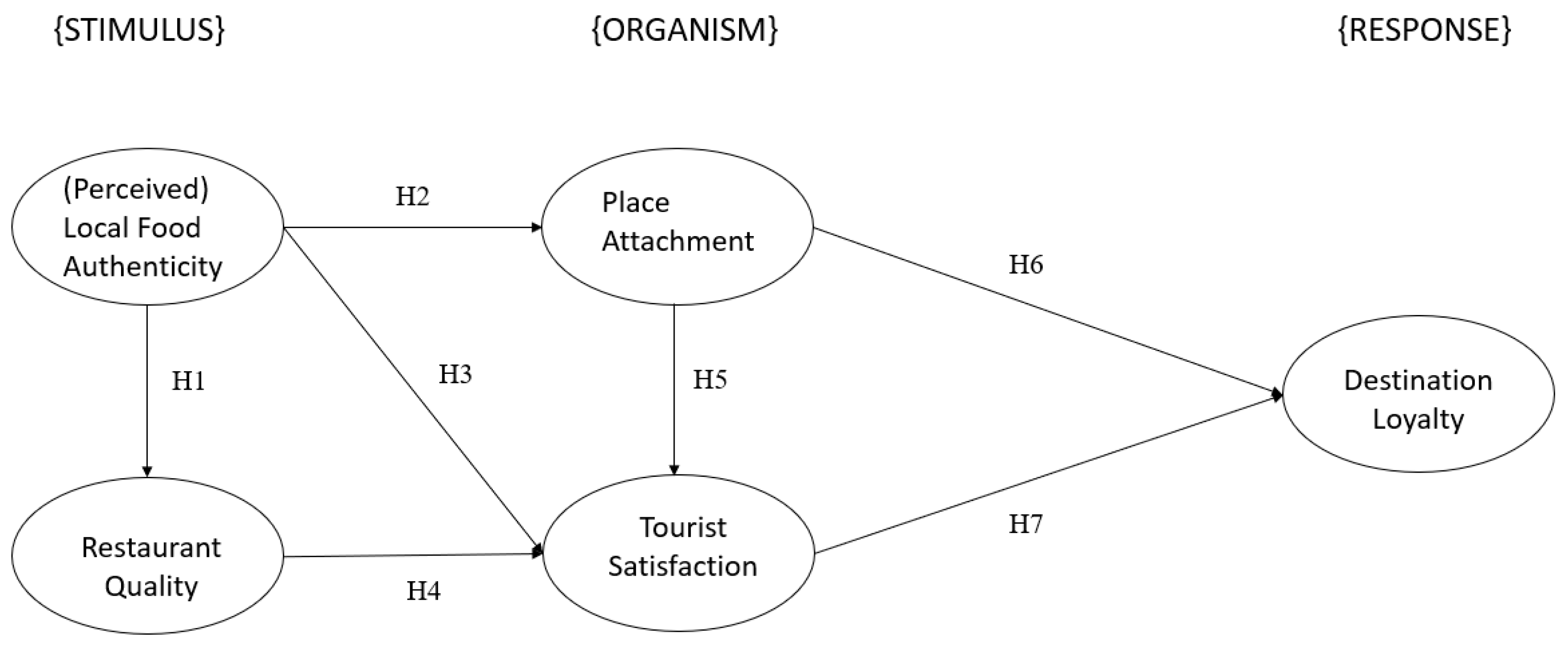
The S-O-R model influenced the design of this research study. Within this framework, perceived local food authenticity and perceived restaurant quality act as direct stimuli that convey value, influencing tourists’ internal states. In this case, the internal states under consideration are place attachment and tourist satisfaction. These internal states subsequently determine the behavioral response of destination loyalty. Previous research in tourism studies provides support for orienting the constructs within the S-O-R framework as conceptualized in this study. Authenticity constructs (i.e., authentic experience, authenticity, existential authenticity, and food authenticity) have been previously categorized as “stimulus” constructs when testing the S-O-R framework [66,67,68,69]. Similarly, quality constructs have been considered “stimulus” constructs in numerous studies [70,71,72,73,74,75,76,77]. In food tourism contexts using the S-O-R framework, quality [70] and food quality [71,75,76] constructs were oriented as “stimulus” constructs, as was existential authenticity [66]. Satisfaction [74,77,78,79] and destination attachment, which was explored in a food tourism study [27], have been tested as “organism” constructs previously. Numerous studies have categorized loyalty as the “response” construct when testing the S-O-R framework in different contexts [66,67,69,71,72,80,81,82]. In food tourism contexts, loyalty was the “response” construct [66,67]. The S-O-R model offered theoretical clarity for this study. Perceived food authenticity and perceived restaurant quality serve as stimuli that influence place attachment and satisfaction (the organism components of the model). In turn, those constructs explain loyalty, which represents the response component.

2.7. Study Hypotheses

2.7.1. Authenticity and Restaurant Quality

The perception of food authenticity is important for tourists seeking food experiences. Several recent studies have noted that perceived authenticity can influence how tourists perceive the quality of the food and restaurants they encounter.
Zhang et al. [9] found that perceived food authenticity influenced food quality and the physical environment among food tourists in China. Perceived authenticity was also found to influence tourists’ food quality perceptions and environment quality perceptions in a study by Chen et al. [83] concerning traditional food tourism in China. Grubor et al. [84] noted the relevance of authentic foods being shared in the context of authentic food experiences, as they can influence the food quality perceptions of food tourists and assessments of restaurant food experiences. A study by Li et al. [27] discovered that food authenticity resulted in positive food experience memories for Chinese food tourists. The influence of authenticity on food quality and dining environment perceptions in the context of food tourism in China has been noted in recent research [9,27,83].
H1. 
Perceived food authenticity will positively influence perceivedrestaurant quality.

2.7.2. Authenticity and Place Attachment

Authenticity has been previously connected with place attachment. Several studies have examined how these constructs are related.
Jiang et al. [85] explored the experiences of nature-based tourists in Australia. These researchers noted that existential authenticity influenced various place components in their study, including dependence, identity, affect, and social bonding. Meng and Han [86] found that perceived authenticity moderated the relationship between place identification and destination loyalty in a study of Chinese participants on a working vacation. Wu et al. [87] examined heritage tourists’ experiences in China. It was found that subjective authenticity influenced both place dependence and place identity in their study. This provided evidence that, for Chinese tourists, authenticity can influence place attachment. Yi et al. [88] examined the experiences of Chinese heritage tourists. The researchers found support for perceived authenticity influencing place attachment among the participants. Oorgaz-Agüera et al. [89] studied resident perspectives at a heritage site in the Dominican Republic. These researchers found that perceived architectural authenticity positively influenced place attachment among the study participants.
H2. 
Perceived food authenticity will positively influence place attachment.

2.7.3. Authenticity and Satisfaction

Authenticity experienced by tourists is closely linked with the notion of existential authenticity, and such experiences have been linked with satisfaction previously [90]. Perceived authenticity has been found to directly influence tourist satisfaction in tourism contexts [91].
In food tourism contexts, authenticity has been connected with satisfaction by recent research studies. In a review of gastronomic tourist behavior, the enhancement of satisfaction was identified as resulting from the authenticity of food in gastronomic experiences [92]. Zhang et al. [9] found that local food authenticity affected satisfaction among Chinese food tourists. Food authenticity was recently found to influence food tourists’ satisfaction in a study of visitors to Bali [93]. Among Chinese tourists, authenticity has been connected with satisfaction outcomes [9,91].
H3. 
Perceived food authenticity will positively influence satisfaction.

2.7.4. Perceived Restaurant Quality and Satisfaction

In the literature, food and restaurant quality have an established relationship with satisfaction. Food and restaurant quality can be considered critical elements for achieving satisfaction in dining experiences [94]. Weiss et al. [95] noted that food quality and the restaurant atmosphere influenced dining satisfaction and behavioral intentions in a study of themed-restaurant patrons. Satisfaction among gastronomic tourists can be attributed to food and restaurant quality [96].
In different settings, studies have confirmed the link between food quality and satisfaction. Food quality and the restaurant’s physical environment were found to influence satisfaction in a study of American solo eaters by Bae et al. [97]. Restaurant quality was found to directly influence customer satisfaction in a study of restaurant patrons’ experiences [98]. A study of restaurant diners at an American university found that restaurant attributes influenced dining satisfaction [99]. A study on restaurant attributes in Pakistan also found that they directly influenced satisfaction among restaurant customers [100]. Food quality and restaurant environment quality have also been found to influence satisfaction among fast-food restaurant customers in China [101].
H4. 
Perceived restaurant quality will positively influence satisfaction.

2.7.5. Place Attachment and Satisfaction

Place attachment and satisfaction have been examined in previous tourism research. A national park study in Taiwan noted that tourists’ involvement affected both place attachment and interpretation satisfaction; place attachment served as a potential mediator in this relationship [102]. Place attachment influenced satisfaction in research by Prayag and Ryan [43] who studied international tourists visiting Mauritius. Ramkissoon et al. [103] noted that place attachment influenced place satisfaction among visitors to an Australian national park. Ramkissoon and Mavondo [104] discovered that pro-environmental intended behaviors mediated the association between specific place attachment dimensions and place satisfaction in an Australian national park context.
Research over the past decade has also examined these constructs. Place attachment was found to influence social satisfaction in a study concerning social connections in a European neighborhood context [105]. Wu et al. [87] found that place attachment significantly influenced satisfaction among Chinese heritage site tourists, and Zhang et al. [106] confirmed that place attachment affected satisfaction in research concerning festival participants in China. These studies confirm that, for Chinese tourists, place attachment can lead to satisfaction.
H5. 
Place attachment will positively influence satisfaction.

2.7.6. Place Attachment and Loyalty

Place attachment and loyalty have been studied together in the tourism literature by numerous researchers. Alexandris et al. [107] found that place attachment influenced visitor loyalty in the context of tourists who visited a ski resort. Ramkissoon et al. [108] noted a significant relationship between place attachment and destination loyalty in a national park study. The influence of place attachment on loyalty was also confirmed in a study of customer winery experiences [109].
In more recent studies, this relationship has been confirmed. Reitsamer and Brunner-Sperdin [110] found that place attachment influenced loyalty in a study of brands and loyalty among customers. Place attachment influenced loyalty in a study of tourists who visited a tourist destination in Turkey [111]. Dandotiya & Aggarwal [112] confirmed the relationship between place attachment and loyalty in a dark tourism context. Xu et al. [113] found that place attachment constructs influenced loyalty constructs in a study on Chinese heritage site tourists. A review article by Zou et al. [114] confirmed that place attachment has been found to influence tourist loyalty in a number of previous studies.
H6. 
Place attachment will positively influence destination loyalty.

2.7.7. Satisfaction and Loyalty

Two commonly researched constructs of importance in tourism studies are satisfaction and loyalty. It has been identified that customers who experience satisfaction from services will tend to purchase again or recommend the service [115], highlighting how satisfaction influences loyalty. Prior studies have connected satisfaction to loyalty in different tourism-related contexts [116,117]. For example, Lee et al. [118] found that satisfaction influenced loyalty in the context of a South Korean festival. Chi and Qu [119] noted that overall satisfaction and attribute satisfaction were capable of influencing destination loyalty among domestic tourists in the United States. In the context of Airbnb, satisfaction was found to influence loyalty in a study concerning tourists visiting Thailand [120]. Similarly, a study by Keshavarz and Jamshidi [121] found that for international hotel guests visiting Kuala Lumpur, satisfaction influenced loyalty. Satisfaction was found to influence loyalty in a study of fast-food restaurant customers in China [101].
It has been recognized that satisfied tourists can demonstrate revisit intention and a willingness to recommend a destination, thereby demonstrating loyalty [122]. Kim et al. [123] urged additional research on satisfaction as a determinant of loyalty in tourism settings.
H7. 
Satisfaction will positively influence destination loyalty.

3. Methodology

3.1. Sampling and Data Collection

The target research population was Chinese tourists aged 18 years or older who had visited Xi’an within two years preceding data collection. The questionnaire was distributed online through the social media platform WeChat, with a screening question included to verify that participants had visited Xi’an for food tourism purposes and had visited a restaurant as a food tourist. As this was a non-interventional study, formal ethical approval was not required under national regulations. Informed consent was obtained at the survey’s outset, and participants received information about the study’s purpose and procedures.
Xi’an, China, was chosen as the study site. This city is the capital of Shaanxi Province and is located in central China. The city has a long history and is known for its cultural significance due to its historically relevant location along the trade route known as the Silk Road, which facilitated cultural exchanges. Due to its location and history, the city enjoys cultural diversity, which has helped to produce a vibrant culinary heritage. For example, well-known dishes such as lamb soup and cold noodle specialties exhibit multicultural influences that reflect the cultural intersections that have helped to establish the city as a food tourism destination. Thus, destination pull factors from a gastronomic perspective include unique food experiences available to visitors, ranging from iconic local dishes that offer multisensory culinary experiences to traditional cooking methods and food markets that offer unique cuisine to tourists. A unique food culture exists that provides traditional recipes, sensory stimulation, and gastronomic experiences that are culturally diverse. This setting serves as a unique food tourism destination to explore issues such as food authenticity and place attachment, given the city’s unique gastronomic identity. This site exemplifies sustainable food practices due to the emphasis on using local ingredients (i.e., local sourcing), handcrafted noodle-making techniques, and traditional cooking methods. This ongoing transmission of food culture as a dynamic form of intangible cultural heritage shows the ongoing cultural transmission of food being shared with locals and tourists alike. Tourists may experience gastronomic authenticity during their visits because culinary practices are transmitted as multisensory culinary experiences that demonstrate the preservation of traditional cooking methods.
The original survey, developed in English, was translated into Mandarin Chinese by a researcher. For linguistic accuracy, the translation was reviewed by native Mandarin-speaking faculty members and graduate students, whose feedback led to minor revisions. A pilot test was subsequently completed with five students and five faculty members from a Chinese university to evaluate the clarity and appropriateness of the questionnaire. Refinements were made due to their input, after which the survey was finalized for data collection. Data collection took place to explore the proposed research model (see Figure 1), and the collection took place over a two-week period beginning on 10 March 2021, yielding 422 completed surveys. After excluding two incomplete responses, a final sample of 420 questionnaires was retained for analysis.

3.2. Construct Measurement and Data Analysis

Measurement scales were adapted from prior research to suit the objectives of this study. Perceived food authenticity was assessed using seven items adopted from previous studies [124,125,126,127]. Place attachment was measured with eight items derived from Kyle et al. [128] and Williams and Vaske [129]. Food and restaurant quality were assessed using ten items drawn from research by Wu [130] and Ryu and Han [131]. Tourist satisfaction was measured using four items from Gursoy and Gavcar [132], while loyalty was measured with four items from a study by Žabkar et al. [133]. The study constructs were measured on a five-point Likert scale that ranged from 1 (strongly disagree) to 5 (strongly agree) (the construct measurement data that was collected can be accessed as Supplementary Material near the end of this article). The concluding section of the questionnaire asked participants about their demographic information. The sample’s demographic composition was analyzed using descriptive statistics. Confirmatory factor analysis (CFA) was then conducted, enabling assessment of the reliability and validity of the measurement model. Hypotheses were tested through structural equation modeling (SEM) with SPSS 28 and AMOS 28.

4. Results

4.1. Respondent Demographics

The demographic information of respondents is summarized in Table 1. Most study participants were female (57.9%), and the largest proportion were in their 30s (56.9%). In terms of education, the majority of participants (81.2%) held a university degree. Most respondents indicated their monthly income was USD 5001 or more (78.1%), and most participants were employed full-time.

4.2. Measurement Model Evaluation

Before evaluating the measurement and structural models, Harman’s single-factor test was performed by entering all measurement items into an unrotated exploratory factor analysis [134] to examine the potential presence of common method bias associated with the use of a single data collection approach. The analysis indicated that the first factor accounted for 32.65% of the total variance, which is well below the suggested cutoff value of 50% [135]. Additionally, a common latent factor technique was employed in AMOS, in which all latent variables were allowed to load onto a single method factor. A comparison between the original confirmatory factor analysis model and the common-factor model showed that the differences in standardized factor loadings ranged from 0 to 0.075, remaining below the recommended threshold of 0.20 [136]. Overall, the results suggest that common method variance is unlikely to have a significant impact on the findings of this study.
Confirmatory factor analysis (CFA) was conducted to assess the validity and reliability of the measurement model. Examination of the standardized factor loadings indicated that all retained measurement items exceeded the recommended threshold of 0.50. During the scale purification process, a total of twelve items were removed. Of these, nine items were excluded due to standardized factor loadings below 0.50, including two items from food authenticity, three items from food and restaurant quality, two items from place attachment, and one item from satisfaction and loyalty. In addition, three items from food and restaurant quality were removed to improve composite reliability (CR) values.
In considering the construct validity further, place attachment, satisfaction, and loyalty constructs were deemed sufficient to measure what was intended. The retained food authenticity items allowed the measurement scale to be more cohesively focused on food in relation to authenticity and the individual’s connection to the experience. Originally, the study sought to measure food and restaurant quality. The dropped items for this construct centered on food quality, and in hindsight, it appears that the dropped items may have been too broad, perhaps not capturing nuanced elements of a food quality experience effectively. Additionally, food and restaurant quality may have been too broadly defined, so the original scale may have tried to encompass too many items conceptually. The retained quality items centered on constructs that assessed restaurant environment and quality. Thus, the retained construct can be accurately described as restaurant quality.
As shown in Table 2, factor loadings ranged from 0.69 to 0.81, demonstrating statistical significance at the p < 0.001 level. This led to the retention of all remaining items for subsequent analysis. Composite reliability (CR) values ranged from 0.79 to 0.89, while average variance extracted (AVE) values were in the range of 0.55 to 0.61. These findings support the model’s convergent validity, as all CR values surpassed the recommended cutoff of 0.70 and all AVE values exceeded the 0.50 criterion, consistent with established guidelines [137].
The discriminant validity was evaluated by comparing the square roots of AVE values for each construct against inter-factor correlations. For all constructs, the square root of the AVE exceeded the corresponding inter-factor correlations, thereby confirming the adequacy of discriminant validity (see Table 3). In addition, the model provided a satisfactory fit to the data, as specified by the following indices: χ2 (179) = 448.81, p < 0.001; CFI = 0.93; GFI = 0.90; IFI = 0.94; TLI = 0.92; RMSEA = 0.04; and RMR = 0.03.

4.3. Testing of the Hypotheses

Structural equation modeling (SEM) was completed through the use of AMOS version 28 to test the hypothesized relationships within the measurement model. The model demonstrated a strong fit with the data: χ2 = 392.20; df = 181; p < 0.001; CFI = 0.96, IFI = 0.96, TLI = 0.95, RMR = 0.03, RMSEA = 0.05. The results indicated that perceived food authenticity had a significant and positive effect on restaurant quality (β = 0.54, t = 10.07), place attachment (β = 0.31, t = 5.64), and satisfaction (β = 0.29, t = 4.34). Moreover, perceived restaurant quality influenced satisfaction (β = 0.47, t = 6.85). Place attachment had a significant and positive effect on both satisfaction (β = 0.43, t = 7.25) and loyalty (β = 0.31, t = 5.67). A strong relationship was also confirmed between satisfaction and loyalty (β = 0.59, t = 8.66). The satisfaction and loyalty relationship was the strongest finding from the study (β = 0.59), followed by the influence food authenticity had on attachment (β = 0.54). Also notable was the influence that restaurant quality had on satisfaction (β = 0.47) and the influence that place attachment had on satisfaction (β = 0.43). The remaining findings indicated weaker construct relationships. All hypotheses (H1–H7) were supported, as summarized in Table 4. All statistically significant relationships were identified at the p < 0.001 level.
Furthermore, the squared multiple correlations (SMCs), equivalent to R-squared, which indicate the proportion of variance explained in the endogenous variables, ranged from 0.28 to 0.68: restaurant quality (SMC = 0.28), place attachment (SMC = 0.42), satisfaction (SMC = 0.68), and destination loyalty (SMC = 0.61). The influence of food authenticity on place attachment was stronger than its influence on restaurant quality in this model. The strongest explanatory power in the model was the influence of food authenticity, restaurant quality, and place attachment on satisfaction. Also, the variance explained in destination loyalty by place attachment and satisfaction can be considered robust.

5. Discussion

This research examined food tourism constructs in the context of China and employed the S-O-R framework to elucidate food tourism experiences. Data were gathered from Chinese tourists through an online survey. Seven hypotheses were tested using confirmatory factor analysis and structural equation modeling to explore how perceived food authenticity, perceived restaurant quality, place attachment, tourist satisfaction, and destination loyalty were influenced according to the S-O-R framework. This study filled a gap in the literature through a robust examination of how the specific constructs could be assessed using the S-O-R framework in the setting of food tourism.
The findings demonstrated that all tested hypotheses were confirmed. The confirmation of the hypotheses in this study validated the application of the S-O-R framework in a food tourism context. Perceived local food authenticity positively influenced perceived restaurant quality, place attachment, and tourist satisfaction (H1–H3). This suggests that the more authentic tourists’ perceptions are of local food restaurants, the more tourists perceive the restaurants to have enhanced quality, the greater their place attachment becomes, and the more satisfaction tourists experience at a destination. Regarding Hypothesis 1, empirical investigations have also noted the relationship between perceived food authenticity and perceived restaurant quality [9,27,83]. This hypothesis also highlights the importance of preserving authentic cultural heritage through food, which can enhance tourists’ food experiences. The findings suggest that in Xi’an, perceived food authenticity plays a crucial role in food tourists’ perceptions of restaurant quality, likely allowing foods perceived as being more authentic to heighten quality perceptions of the restaurants. Recent studies have found direct confirmation for Hypothesis 2 regarding the influence of perceived authenticity on place attachment [87,88]. This indicates that providing authentic food experiences can allow tourists to connect with the food and cultural traditions of the destination they visit through an immersive multisensory experience of food tourism. In Xi’an, perceptions of food authenticity enable tourists to experience the food and develop an attachment to the destination. In other food tourism contexts, the relationship in Hypothesis 3 has also been confirmed previously [9,91,93]. This study also found that perceived food authenticity positively influences satisfaction. Tourists visiting Xi’an who perceive the food as being authentic likely have their expectations met and thus become satisfied. Restaurant quality was found to positively influence tourist satisfaction (H4). This confirmed findings from recent research studies that directly tested these constructs [98,101]. In Xi’an, tourists who perceived the restaurants they visited as meeting their expectations became satisfied customers. Taken together, Hypotheses 3 and 4 highlight the importance of cultural practices as a beneficial economic pathway that can be shared, presented, and leveraged to enhance food as a sustainable tourism product. Place attachment, which was measured as a single construct, was found to influence satisfaction positively in this study (H5). This confirmed the relationship between these constructs as found in other settings [43,87,103,106] and extended this connection to a food tourism setting. Tourists who experienced place attachment to Xi’an reported higher levels of satisfaction. Place attachment was found to influence destination loyalty (H6). This confirms the relationship between these constructs noted in studies across different settings [107,108,109,110,111,112,113]. The tourists who developed place attachment while visiting Xi’an showed an inclination to be loyal to the destination. Collectively, these findings demonstrate that food tourism can contribute to the social and economic sustainability of a destination. Lastly, satisfaction was found to influence destination loyalty (H7). This again confirmed the relationship noted by many previous studies [101,116,117,118,119,120,121]. Tourists who were satisfied with their visits to Xi’an also had their loyalty intentions influenced by that aspect of their experience. The confirmation of Hypotheses 6 and 7 extends these relationships into a food tourism context. The enhancement of destination loyalty among tourists can be beneficial in supporting cultural heritage preservation through food tourism as a long-term sustainability strategy. The study provides support for the notion that food can be a sustainable tourism product for tourism destinations. Food tourism can enable preservation of intangible heritage that maintains cultural authenticity while generating opportunities for both tourists and the host community.

5.1. Theoretical Implications

Firstly, this study extended the theoretical application of the S-O-R framework in the context of food tourism. The study empirically validated the relationships between perceived food authenticity, restaurant quality, place attachment, satisfaction, and destination loyalty in the context of Xi’an. Previous studies primarily applied the S-O-R framework to general tourism experiences [68,138]. This study demonstrated that tourists’ perceptions of food authenticity and restaurant quality (stimulus) can evoke positive psychological and emotional responses through place attachment and satisfaction (organism), thereby resulting in the behavioral response of destination loyalty. Thus, the study confirmed the S-O-R framework as a viable theoretical lens to explain tourists’ cognitive and affective responses to authentic local food experiences.
Secondly, the results contribute to the theoretical development of food authenticity research. Empirical findings from this research demonstrated specific construct relationships in a food tourism setting. Perceived food authenticity influenced perceived restaurant quality, place attachment, and satisfaction. Restaurant quality was the construct most significantly influenced by perceived food authenticity, a relationship that has received limited attention in prior research. The results indicate that perceived food authenticity is an important cognitive and emotional stimulus that can influence tourists’ deeper connections to local foods and tourism destinations. Thus, this study extended the conceptual understanding of authenticity in a food context by considering tourists’ psychological experiences influencing their place attachment and satisfaction in the context of a tourism destination experience.
Thirdly, the study advanced theoretical understanding of how emotional bonds formed through food-related experiences can translate into loyalty behavior. The significant effects place attachment had on both satisfaction and destination loyalty indicated that place attachment is a relevant factor that influences the experiential evaluations of tourists and their behavioral intentions. This understanding of the role of place attachment enhances the understanding of satisfaction and the loyalty formation process in food tourism. Additionally, place attachment may serve as a relevant avenue to promote sustainability outcomes. Through place attachment, destination loyalty can be strengthened, potentially encouraging revisitation and reducing overtourism. Similarly, the development of loyalty among tourists may lead to the promotion of ethical sourcing due to a respect for and interest in preserving local food production methods.

5.2. Practical Implications

First, destination marketers and local tourism stakeholders should seek to prioritize preserving the authenticity of local food traditions. This study found that perceived food authenticity influences tourists’ restaurant quality perceptions, place attachment, and satisfaction. Various approaches could highlight the importance of local food authenticity. Highlighting unique elements such as traditional cooking methods or local ingredients could be effective. Additionally, experiences could be provided through collaborations with local chefs or communities to preserve food heritage, as could the integration of storytelling into the food experience. Emphasizing such authentic elements could help Xi’an or destinations with similar characteristics to distinguish themselves as food tourism destinations. Implementing such strategies can be beneficial for sustainable food tourism management and can be used to cultivate resilience among food tourism destinations.
Second, this study found that perceived restaurant quality exerted a strong influence on satisfaction. Thus, tourism stakeholders should seek to ensure consistency in food and restaurant quality across the different phases of a food tourism experience. Proper staff training is important to ensure proper hygiene, presentation, and service quality. Implementing food safety protocols and seeking visitor feedback can be helpful to maintain proper overall standards. The promotion of high-quality food experiences can also be shared through social media or through local food festivals that can engage tourists’ food perceptions. These can enable a destination to promote sustainable food tourism practices while also enabling the host destination to develop resilience as a food tourism destination.
Third, the study noted the importance of place attachment. In this study, perceived food authenticity influenced place attachment, and place attachment influenced tourists’ destination loyalty. Destination management organizations in Xi’an can use this information to strategically distinguish the culinary opportunities tourists can experience there. Sharing information about the multicultural and authentic gastronomic experiences tourists can have at Xi’an through digital marketing can help promote place attachment among potential tourists. This can be promoted through immersive experiences or by using storytelling techniques on social media platforms. The sharing of authentic food experiences, short videos, or virtual cooking classes could be useful methods for Xi’an to position itself as a distinct gastronomic destination. Leveraging narratives that highlight historical connections and food authenticity can help disseminate information about local ingredients and cooking techniques to potential tourists on social media to build emotional connections. Such approaches can emphasize the culturally unique gastronomic experiences that differentiate this destination from other culinary destinations, such as Chengdu or Guangzhou. Allowing tourists to develop emotional connections by emphasizing authentic foods and seeking to build place attachment through marketing campaigns can enable tourists to better understand the unique local ingredients, distinctive local cuisine, and cultural traditions that are unique to Xi’an.

5.3. Study Limitations and Future Research

This study had some limitations and also points to future research in food tourism. First, the data was collected online, and responses were obtained through one social media platform (WeChat). This introduced a form of bias into the sampling process, as the pool of participants was restricted, and self-selection bias regarding responses was also a consideration for participants. This limited participation to internet users who were connected with the specific social media platform that was used. Such an approach limited the number of potential respondents and affected the representativeness of the responses. Similarly, self-reported data served as a study limitation, as potential social desirability bias may have influenced the reporting of authenticity perceptions in this study. Additional data collection measures could be considered for future research in relation to this topic. Future research could incorporate a broader approach to collecting responses across social media platforms or by including in-person data collection. This may capture a more representative sample for future research on this topic.
Second, the study had a specific focus on one food tourism destination: Xi’an in China. This was informative for the purposes of this study, but it presents some limitations. Researchers could sample food tourists from multiple food tourism destinations to further explore the main constructs studied in this research. Another consideration is that visitors to specific food tourism sites could be sampled to assess specific aspects of their experiences. This latter approach could provide insights into specific kinds of food tourists’ experiences and the influence of those experiences on their behaviors.
Third, this research only employed quantitative research methods. Given that the cognitive and emotional experiences of tourists in a food tourism context are complex for researchers, a qualitative study on the topic would be beneficial for future research. Narrative analysis or in-person interviews may provide more detailed insights into how food tourists engage with the settings they visit, either through post-visit reflection or in real time. Applying such approaches may improve the insights derived from further study of perceived food authenticity and perceived restaurant quality, as well as satisfaction or loyalty behaviors among tourists.
Fourth, the data used in this study were collected in 2021. The data was collected during the COVID-19 pandemic, and participants were likely describing food tourism visits from the pre-pandemic period. However, the data and study findings are still scientifically relevant, as the study was methodologically sound, and this was not a technology-oriented study. The study outcomes remain meaningful today, given that the tourism sector is continuing to rebuild in the post-pandemic setting. Thus, researchers using the S-O-R model in food tourism may test similar constructs in the post-pandemic setting.
Lastly, the data collected for this study were cross-sectional, having been collected over a two-week period. This type of data collection captures a snapshot at a specific point in time. Thus, due to the cross-sectional research design, it should be noted that the empirical data demonstrated a pattern of statistical associations, and strict causality cannot be conclusively established. Consequently, it may be possible for future studies to more directly demonstrate cause-and-effect relationships between the constructs explored in this study.

6. Conclusions

This research provided an exploration of food tourism experiences using the S-O-R framework. Study results indicated significant connections between perceived food authenticity, restaurant quality, place attachment, satisfaction, and destination loyalty. Study participants had visited restaurants in Xi’an as food tourists. By examining participant experiences at a tourism destination with a rich culinary heritage, the findings demonstrate the importance of authentic local food experiences in driving emotional connections and influencing tourists’ loyalty. Food tourism can serve as a sustainable destination development strategy to preserve cultural heritage, provide economic support for destination communities, and help create tourist experiences that are meaningful.
The study also highlights the relevance of food tourism as a sustainable tourism approach, aligning with the UN Sustainable Development Goals. As this research helped to demonstrate, food tourism can be more than just a culinary experience for tourists. Through authentic food experiences, tourists can encounter intangible cultural heritage. This highlights the need to preserve food heritage and enable economic opportunities in the host community. Thus, food tourism provides the means for responsible consumption and production alongside economic benefits, enabling sustainable development and growth in tourism destinations. Food as a sustainable tourism product can enable the development of sustainable destinations that serve tourists’ interests responsibly. Through authentic and quality local food experiences, meaningful tourist experiences that benefit both tourists and destination communities can continue to be created.

Supplementary Materials

The following supporting information can be downloaded at https://www.mdpi.com/article/10.3390/su18041957/s1, anonymized raw construct data.

Author Contributions

Conceptualization, T.E. and S.Z.; methodology, T.E. and S.Z.; validation, T.E. and Y.-j.A.; formal analysis, T.E.; investigation, T.E.; data curation, T.E.; writing—original draft preparation, T.E.; writing—review and editing, T.E., S.Z. and Y.-j.A.; visualization, T.E. and Y.-j.A.; supervision, T.E.; project administration, T.E. All authors have read and agreed to the published version of the manuscript.

Funding

This research received no external funding.

Institutional Review Board Statement

Ethical review and approval were waived for this study due to Chapter 3, Article 32 of Ethical Review Measures for Life Sciences and Medical Research Involving Humans.

Informed Consent Statement

Informed consent was obtained from all subjects involved in the study.

Data Availability Statement

The original contributions presented in this study are included in the article/Supplementary Material. Further inquiries can be directed to the corresponding author.

Conflicts of Interest

The authors declare no conflict of interest.

References

  1. Chen, Q.; Huang, R. Local food in China: A viable destination attraction. Br. Food J. 2018, 120, 146–157. [Google Scholar] [CrossRef]
  2. Everett, S.; Slocum, S.L. Food and tourism: An effective partnership? A UK-based review. J. Sustain. Tour. 2013, 21, 789–809. [Google Scholar] [CrossRef]
  3. Sims, R. Food, place and authenticity: Local food and the sustainable tourism experience. J. Sustain. Tour. 2009, 17, 321–336. [Google Scholar] [CrossRef]
  4. Hjalager, A.M.; Corigliano, M.A. Food for tourists—Determinants of an image. Int. J. Tour. Res. 2000, 2, 281–293. [Google Scholar] [CrossRef]
  5. United Nations. The Sustainable Development Goals Report 2025; United Nations: New York, NY, USA, 2025; Available online: https://unstats.un.org/sdgs/report/2025/The-Sustainable-Development-Goals-Report-2025.pdf (accessed on 12 October 2025).
  6. de Jong, A.; Varley, P. Food tourism and events as tools for social sustainability? J. Place Manag. Dev. 2018, 11, 277–295. [Google Scholar] [CrossRef]
  7. Chang, W. A taste of tourism: Visitors’ motivations to attend a food festival. Event Manag. 2011, 15, 151–161. [Google Scholar] [CrossRef]
  8. Choe, J.Y.J.; Kim, S.S. Effects of tourists’ local food consumption value on attitude, food destination image, and behavioral intention. Int. J. Hosp. Manag. 2018, 71, 1–10. [Google Scholar] [CrossRef]
  9. Zhang, T.; Chen, J.; Hu, B. Authenticity, quality, and loyalty: Local food and sustainable tourism experience. Sustainability 2019, 11, 3437. [Google Scholar] [CrossRef]
  10. Williams, D.R.; Patterson, M.E.; Roggenbuck, J.W.; Watson, A.E. Beyond the commodity metaphor: Examining emotional and symbolic attachment to place. Leis. Sci. 1992, 14, 29–46. [Google Scholar] [CrossRef]
  11. Ramkissoon, H.; Mavondo, F.T. The satisfaction-place attachment relationship: Potential mediators and moderators. J. Bus. Res. 2015, 68, 2593–2602. [Google Scholar] [CrossRef]
  12. Moura, A.A.; Mira, M.D.R.; Teixeira, A.R. The Tourist Gastronomic Experience: Ties Between Young Foodies’ Motivation and Destination Development in Portugal. Tour. Hosp. 2025, 6, 7. [Google Scholar] [CrossRef]
  13. Beverland, M.B.; Farrelly, F.J. The quest for authenticity in consumption: Consumers’ purposive choice of authentic cues to shape experienced outcomes. J. Consum. Res. 2010, 36, 838–856. [Google Scholar] [CrossRef]
  14. MacCannell, D. Staged authenticity: Arrangements of social space in tourist settings. Am. J. Sociol. 1973, 79, 589–603. [Google Scholar] [CrossRef]
  15. Wang, N. Rethinking authenticity in tourism experience. Ann. Tour. Res. 1999, 26, 349–370. [Google Scholar] [CrossRef]
  16. MacCannell, D. The Tourist: A New Theory of the Leisure Class; Shocken Books: New York, NY, USA, 1976. [Google Scholar]
  17. Cohen, E. Authenticity and commoditization in tourism. Ann. Tour. Res. 1988, 15, 371–386. [Google Scholar] [CrossRef]
  18. Kim, H.; Jamal, T. Touristic quest for existential authenticity. Ann. Tour. Res. 2007, 34, 181–201. [Google Scholar] [CrossRef]
  19. Hjalager, A.M. Digital food and the innovation of gastronomic tourism. J. Gastron. Tour. 2022, 7, 35–49. [Google Scholar] [CrossRef]
  20. Park, E.; Choi, B.K.; Lee, T.J. The role and dimensions of authenticity in heritage tourism. Tour. Manag. 2019, 74, 99–109. [Google Scholar] [CrossRef]
  21. Graham, S.C. Authentic culinary tourism experiences: The perspectives of locals. Gastron. Tour. 2021, 5, 65–82. [Google Scholar] [CrossRef]
  22. Kontogeorgopoulos, N. Finding oneself while discovering others: An existential perspective on volunteer tourism in Thailand. Ann. Tour. Res. 2017, 65, 1–12. [Google Scholar] [CrossRef]
  23. Yi, X.; Lin, V.S.; Jin, W.; Luo, Q. The authenticity of heritage sites, tourists’ quest for existential authenticity, and destination loyalty. J. Travel Res. 2017, 56, 1032–1048. [Google Scholar] [CrossRef]
  24. Ellis, A.; Park, E.; Kim, S.; Yeoman, I. What is food tourism? Tour. Manag. 2018, 68, 250–263. [Google Scholar] [CrossRef]
  25. Kolar, T.; Zabkar, V. A consumer-based model of authenticity: An oxymoron or the foundation of cultural heritage marketing? Tour. Manag. 2010, 31, 652–664. [Google Scholar] [CrossRef]
  26. Latiff, K.; Ng, S.I.; Aziz, Y.A.; Kamal Basha, N. Food authenticity as one of the stimuli to World Heritage Sites. Br. Food J. 2020, 122, 1755–1776. [Google Scholar] [CrossRef]
  27. Li, F.; Su, Q.; Ma, J. How do food authenticity and sensory appeal influence tourist experience? The moderating role of food involvement. Int. J. Tour. Res. 2023, 25, 109–122. [Google Scholar] [CrossRef]
  28. Okumus, B. Food tourism research: A perspective article. Tour. Rev. 2021, 76, 38–42. [Google Scholar] [CrossRef]
  29. Bujisic, M.; Hutchinson, J.; Parsa, H. The effects of restaurant quality attributes on customer behavioral intentions. Int. J. Contemp. Hosp. Manag. 2014, 26, 1270–1291. [Google Scholar] [CrossRef]
  30. Nield, K.; Kozak, M.; LeGrys, G. The role of food service in tourist satisfaction. Int. J. Hosp. Manag. 2000, 19, 375–384. [Google Scholar] [CrossRef]
  31. Sparks, B.; Bowen, J.; Klag, S. Restaurants and the tourist market. Int. J. Contemp. Hosp. Manag. 2003, 15, 6–13. [Google Scholar] [CrossRef]
  32. Kivela, J.; Crotts, J.C. Tourism and gastronomy: Gastronomy’s influence on how tourists experience a destination. J. Hosp. Tour. Res. 2006, 30, 354–377. [Google Scholar] [CrossRef]
  33. Ha, J.; Jang, S.S. Effects of service quality and food quality: The moderating role of atmospherics in an ethnic restaurant segment. Int. J. Hosp. Manag. 2010, 29, 520–529. [Google Scholar] [CrossRef]
  34. Shalini, D.; Duggal, S. A review on food tourism quality and its associated forms around the world. Afr. J. Hosp. Tour. Leis. 2015, 4, 1–12. [Google Scholar]
  35. Yu, Y.S.; Luo, M.; Zhu, D.H. The Effect of Quality Attributes on Visiting Consumers’ Patronage Intentions of Green Restaurants. Sustainability 2018, 10, 1187. [Google Scholar] [CrossRef]
  36. Kim, S.; Lee, Y.K.; Lee, C.K. The moderating effect of place attachment on the relationship between festival quality and behavioral intentions. Asia Pac. J. Tour. Res. 2017, 22, 49–63. [Google Scholar] [CrossRef]
  37. Harris, P.B.; Brown, B.B.; Werner, C.M. Privacy regulation and place attachment: Predicting attachments to a student family housing facility. J. Environ. Psychol. 1996, 16, 287–301. [Google Scholar] [CrossRef]
  38. Moore, R.L.; Graefe, A.R. Attachments to recreation settings: The case of rail-trail users. Leis. Sci. 1994, 16, 17–31. [Google Scholar] [CrossRef]
  39. Lewicka, M. On the varieties of people’s relationships with places: Hummon’s typology revisited. Environ. Behav. 2011, 43, 676–709. [Google Scholar] [CrossRef]
  40. Kaltenborn, B.P. Nature of place attachment: A study among recreation homeowners in Southern Norway. Leis. Sci. 1997, 19, 175–189. [Google Scholar] [CrossRef]
  41. Kyle, G.; Graefe, A.; Manning, R.; Bacon, J. An examination of the relationship between leisure activity involvement and place attachment among hikers along the Appalachian Trail. J. Leis. Res. 2003, 35, 249–273. [Google Scholar] [CrossRef]
  42. Cheng, T.M.; Wu, H.C.; Huang, L.M. The influence of place attachment on the relationship between destination attractiveness and environmentally responsible behavior for island tourism in Penghu, Taiwan. J. Sustain. Tour. 2013, 21, 1166–1187. [Google Scholar] [CrossRef]
  43. Prayag, G.; Ryan, C. Antecedents of tourists’ loyalty to Mauritius: The role and influence of destination image, place attachment, personal involvement, and satisfaction. J. Travel Res. 2012, 51, 342–356. [Google Scholar] [CrossRef]
  44. Tsai, C.T. Memorable tourist experiences and place attachment when consuming local food. Int. J. Tour. Res. 2016, 18, 536–548. [Google Scholar] [CrossRef]
  45. Sthapit, E.; Björk, P.; Coudounaris, D.N. Emotions elicited by local food consumption, memories, place attachment and behavoural intentions. Anatolia 2017, 28, 363–380. [Google Scholar] [CrossRef]
  46. Li, A.N.; Dai, Y.D.; Tsai, T.; Yeh, G.T.; Chen, Y.C. Effects of food experience, emotion, and place attachment on heritage tourists’ revisit intention. In Advances in Hospitality and Leisure; Chen, J.S., Ed.; Emerald Publishing Limited: Leeds, UK, 2023; Volume 19, pp. 121–139. [Google Scholar] [CrossRef]
  47. Oliver, R.L. Satisfaction: A Behavioral Perspective on the Consumer; McGraw-Hill: New York, NY, USA, 1997. [Google Scholar]
  48. Del Bosque, I.R.; San Martín, H. Tourist satisfaction: A cognitive-affective model. Ann. Tour. Res. 2008, 35, 551–573. [Google Scholar] [CrossRef]
  49. Eid, R. Integrating Muslim customer perceived value, satisfaction, loyalty and retention in the tourism industry: An empirical study. Int. J. Tour. Res. 2015, 17, 249–260. [Google Scholar] [CrossRef]
  50. Nam, J.; Ekinci, Y.; Whyatt, G. Brand equity, brand loyalty and consumer satisfaction. Ann. Tour. Res. 2011, 38, 1009–1030. [Google Scholar] [CrossRef]
  51. Wu, C.W. Destination loyalty modeling of the global tourism. J. Bus. Res. 2016, 69, 2213–2219. [Google Scholar] [CrossRef]
  52. Backman, S.J.; Crompton, J.L. The usefulness of selected variables for predicting activity loyalty. Leis. Sci. 1991, 13, 205–220. [Google Scholar] [CrossRef]
  53. Chen, J.S.; Gursoy, D. An investigation of tourists’ destination loyalty and preferences. Int. J. Contemp. Hosp. Manag. 2001, 13, 79–85. [Google Scholar] [CrossRef]
  54. Lee, J.; Graefe, A.R.; Burns, R.C. Examining the antecedents of destination loyalty in a forest setting. Leis. Sci. 2007, 29, 463–481. [Google Scholar] [CrossRef]
  55. Iwasaki, Y.; Havitz, M.E. A path analytic model of the relationships between involvement, psychological commitment, and loyalty. J. Leis. Res. 1998, 30, 256–280. [Google Scholar] [CrossRef]
  56. Yoon, Y.; Uysal, M. An examination of the effects of motivation and satisfaction on destination loyalty: A structural model. Tour. Manag. 2005, 26, 45–56. [Google Scholar] [CrossRef]
  57. Tian, Y.; Kamran, Q. A review of antecedents and effects of loyalty on food retailers toward sustainability. Sustainability 2021, 13, 13419. [Google Scholar] [CrossRef]
  58. Mehrabian, A.; Russell, J.A. An Approach to Environmental Psychology; MIT Press: Cambridge, MA, USA, 1974. [Google Scholar]
  59. Bitner, M.J. Servicescapes: The impact of physical surroundings on customers and employees. J. Mark. 1992, 56, 57–71. [Google Scholar] [CrossRef]
  60. Donovan, R.J.; Rossiter, J.R. Store atmosphere: An environmental psychology approach. J. Retail. 1982, 58, 34–57. [Google Scholar]
  61. Eroglu, S.A.; Machleit, K.A.; Davis, L.M. Atmospheric qualities of online retailing: A conceptual model and implications. J. Bus. Res. 2001, 54, 177–184. [Google Scholar] [CrossRef]
  62. Gupta, V.; Sharma, K. Food authenticity, culture, and tourism: Analysing the dimensions of local gastronomic image among foreign tourists in Fiji. Br. Food J. 2024, 126, 4124–4146. [Google Scholar] [CrossRef]
  63. Kim, H.; Bonn, M.A. Authenticity: Do tourist perceptions of winery experiences affect behavioral intentions? Int. J. Contemp. Hosp. Manag. 2016, 284, 839–850. [Google Scholar] [CrossRef]
  64. Leksana, A.P.; Arifin, Z.; Sunarti, S.; Bafadhal, A.S. Impact of food quality, price fairness, and authenticity on customer satisfaction and behavior intention. Wacana 2025, 28, 124–137. [Google Scholar] [CrossRef]
  65. Rousta, A.; Jamshidi, D. Food tourism value: Investigating the factors that influence tourists to revisit. J. Vacat. Mark. 2020, 26, 73–95. [Google Scholar] [CrossRef]
  66. Hsu, F.C.; Agyeiwaah, E.; Lynn, I.; Chen, L. Examining food festival attendees’ existential authenticity and experiential value on affective factors and loyalty: An application of stimulus-organism-response paradigm. J. Hosp. Tour. Manag. 2021, 48, 264–274. [Google Scholar] [CrossRef]
  67. Jalali, A.; Abhari, S.; Anatolievich Bachkirov, A.; Jaafar, M.; Nikbin, D. The determinants of local food consumption value at family-owned restaurants and their impact on tourist satisfaction and behavioural intentions. J. Hosp. Tour. Insights 2025, 9, 804–822. [Google Scholar] [CrossRef]
  68. Kim, M.J.; Lee, C.K.; Jung, T. Exploring consumer behavior in virtual reality tourism using an extended stimulus-organism-response model. J. Travel Res. 2020, 59, 69–89. [Google Scholar] [CrossRef]
  69. Lee, T.; Jan, F.H.; Lin, Y.H. How authentic experience affects traditional religious tourism development: Evidence from the Dajia Mazu Pilgrimage, Taiwan. J. Travel Res. 2020, 60, 1140–1157. [Google Scholar] [CrossRef]
  70. Ahn, J.A.; Seo, S. Consumer responses to interactive restaurant self-service technology (IRSST): The role of gadget-loving propensity. Int. J. Hosp. Manag. 2018, 74, 109–121. [Google Scholar] [CrossRef]
  71. Chen, A.; Peng, N.; Hung, K.P. The effects of luxury restaurant environments on diners’ emotions and loyalty incorporating diner expectations into an extended Mehrabian-Russell model. Int. J. Contemp. Hosp. Manag. 2015, 27, 236–260. [Google Scholar] [CrossRef]
  72. Hemsley-Brown, J.; Alnawas, I. Service quality and brand loyalty: The mediation effect of brand passion, brand affection and self-brand connection. Int. J. Contemp. Hosp. Manag. 2016, 28, 2771–2794. [Google Scholar] [CrossRef]
  73. Hew, J.J.; Leong, L.Y.; Tan, G.W.H.; Lee, V.H.; Ooi, K.B. Mobile social tourism shopping: A dual-stage analysis of a multi-mediation model. Tour. Manag. 2018, 66, 121–139. [Google Scholar] [CrossRef]
  74. Siu, N.Y.M.; Wan, P.Y.K.; Dong, P. The impact of the servicescape on the desire to stay in convention and exhibition centers: The case of Macao. Int. J. Hosp. Manag. 2012, 31, 236–246. [Google Scholar] [CrossRef]
  75. Tsaur, S.H.; Luoh, H.F.; Syue, S.S. Positive emotions and behavioral intentions of customers in full-service restaurants: Does aesthetic labor matter? Int. J. Hosp. Manag. 2015, 51, 115–126. [Google Scholar] [CrossRef]
  76. Wahyudi, L.; Al Ahmad, A.S.M.; Sarjiyanto, S.; Sarwoto, S. The role of culinary tourism nostalgia on the tourist satisfaction model: The stimulus-organism-response approach. J. Ekon. Bisnis Kewirausahaan (JEBIK) 2023, 12, 309–322. [Google Scholar] [CrossRef]
  77. Zhu, L.; Li, H.; Wang, F.K.; He, W.; Tian, Z. How online reviews affect purchase intention: A new model based on the stimulus-organism-response (S-O-R) framework. Aslib J. Inf. Manag. 2020, 72, 462–488. [Google Scholar] [CrossRef]
  78. Choi, H.; Kandampully, J. The effect of atmosphere on customer engagement in upscale hotels: An application of S-O-R paradigm. Int. J. Hosp. Manag. 2019, 77, 40–50. [Google Scholar] [CrossRef]
  79. Nanu, L.; Ali, F.; Berezina, K.; Cobanoglu, C. The effect of hotel lobby design on booking intentions: An intergenerational examination. Int. J. Hosp. Manag. 2020, 89, 102539. [Google Scholar] [CrossRef]
  80. Chang, K.C. How reputation creates loyalty in the restaurant sector. Int. J. Contemp. Hosp. Manag. 2013, 25, 536–557. [Google Scholar] [CrossRef]
  81. Jani, D.; Han, H. Influence of environmental stimuli on hotel customer emotional loyalty response: Testing the moderating effect of the big five personality factors. Int. J. Hosp. Manag. 2015, 44, 48–57. [Google Scholar] [CrossRef]
  82. Lin, H.; Zhang, M.; Gursoy, D. Impact of nonverbal customer-to-customer interactions on customer satisfaction on loyalty intentions. Int. J. Contemp. Hosp. Manag. 2020, 32, 1967–1985. [Google Scholar] [CrossRef]
  83. Chen, Q.; Huang, R.; Hou, B. Perceived authenticity of traditional branded restaurants (China): Impacts on perceived quality, perceived value, and behavioural intentions. Curr. Issues Tour. 2020, 23, 2950–2971. [Google Scholar] [CrossRef]
  84. Grubor, B.; Kalenjuk Pivarski, B.; Đerčan, B.; Tešanović, D.; Banjac, M.; Lukić, T.; Bubalo Živković, M.; Ilić Udovičić, D.; Šmugović, S.; Ivanović, V.; et al. Traditional and authentic food of ethnic groups of Vojvodina (northern Serbia)—Preservation and potential for tourism development. Sustainability 2022, 14, 1805. [Google Scholar] [CrossRef]
  85. Jiang, Y.; Ramkissoon, H.; Mavondo, F.T.; Feng, S. Authenticity: The link between destination image and place attachment. J. Hosp. Mark. Manag. 2017, 26, 105–124. [Google Scholar] [CrossRef]
  86. Meng, B.; Han, H. Determinants of working holiday makers’ destination loyalty: Uncovering the role of perceived authenticity. Tour. Manag. Perspect. 2019, 32, 100565. [Google Scholar] [CrossRef]
  87. Wu, D.; Shen, C.; Wang, E.; Hou, Y.; Yang, J. Impact of the perceived authenticity of heritage sites on subjective well-being: A study of the mediating role of place attachment and satisfaction. Sustainability 2019, 11, 6148. [Google Scholar] [CrossRef]
  88. Yi, X.; Fu, X.; So, K.K.F.; Zheng, C. Perceived authenticity and place attachment: New findings from Chinese world heritage sites. J. Hosp. Tour. Res. 2023, 47, 800–826. [Google Scholar] [CrossRef]
  89. Oorgaz-Agüera, F.; Puig-Cabrera, M.; Moral-Cuadra, S.; Domínguez-Valerio, C.M. Authenticity of architecture, place attachment, identity and support for sustainable tourism in world heritage cities. Tour. Hosp. Manag. 2025, 31, 81–92. [Google Scholar] [CrossRef]
  90. Steiner, C.J.; Reisinger, Y. Understanding existential authenticity. Ann. Tour. Res. 2006, 33, 299–318. [Google Scholar] [CrossRef]
  91. Lu, L.; Chi, C.G.; Liu, Y. Authenticity, involvement, and image: Evaluating tourist experiences at historic districts. Tour. Manag. 2015, 50, 85–96. [Google Scholar] [CrossRef]
  92. Özdemir, B.; Seyitoğlu, F. A conceptual study of gastronomical quests of tourists: Authenticity or safety and comfort? Tour. Manag. Perspect. 2017, 23, 1–7. [Google Scholar] [CrossRef]
  93. Anggara, A.P.; Winata, G.A.S. Effects of food authenticity, food quality, place dependence, place identity, and service quality on tourist satisfaction during COVID-19. Enrich. J. Multidiscip. Res. Dev. 2024, 2, 157–164. [Google Scholar] [CrossRef]
  94. Sulek, J.M.; Hensley, R.L. The Relative Importance of Food, Atmosphere, and Fairness of Wait: The Case of a Full-service Restaurant. Cornell Hotel. Restaur. Adm. Q. 2004, 45, 235–247. [Google Scholar] [CrossRef]
  95. Weiss, R.; Feinstein, A.H.; Dalbor, M. Customer Satisfaction of Theme Restaurant Attributes and Their Influence on Return Intent. J. Foodserv. Bus. Res. 2005, 7, 23–41. [Google Scholar] [CrossRef]
  96. Correia, A.; Moital, M.; da Costa, C.F.; Peres, R. The determinants of gastronomic tourists’ satisfaction: A second-order factor analysis. J. Foodserv. 2008, 19, 164–176. [Google Scholar] [CrossRef]
  97. Bae, S.; Slevitch, L.; Tomas, S. The effects of restaurant attributes on satisfaction and return patronage intentions: Evidence from solo diners’ experiences in the United States. Cogent Bus. Manag. 2018, 5, 1493903. [Google Scholar] [CrossRef]
  98. Almohaimmeed, B.M.A. Restaurant quality and customer satisfaction. Int. Rev. Manag. Mark. 2017, 7, 42–49. [Google Scholar]
  99. Lee, J.; Whaley, J.E. Determinants of dining satisfaction. J. Hosp. Mark. Manag. 2019, 28, 351–378. [Google Scholar] [CrossRef]
  100. Shahzadi, M.; Malik, S.A.; Ahmad, M.; Shabbir, A. Perceptions of fine dining restaurants in Pakistan: What influences customer satisfaction and behavioral intentions? Int. J. Qual. Reliab. Manag. 2018, 35, 635–655. [Google Scholar] [CrossRef]
  101. Zhong, Y.; Moon, H.C. What drives customer satisfaction, loyalty, and happiness in fast-food restaurants in China? Perceived price, service quality, food quality, physical environment quality, and the moderating role of gender. Foods 2020, 9, 460. [Google Scholar] [CrossRef]
  102. Hwang, S.N.; Lee, C.; Chen, H.J. The relationship among tourists’ involvement, place attachment and interpretation satisfaction in Taiwan’s national parks. Tour. Manag. 2005, 26, 143–156. [Google Scholar] [CrossRef]
  103. Ramkissoon, H.; Smith, L.D.G.; Weiler, B. Testing the dimensionality of place attachment and its relationships with place satisfaction and pro-environmental behaviours: A structural equation modelling approach. Tour. Manag. 2013, 36, 552–566. [Google Scholar] [CrossRef]
  104. Ramkissoon, H.; Mavondo, F. Proenvironmental behavior: The link between place attachment and place satisfaction. Tour. Anal. 2014, 19, 673–688. [Google Scholar] [CrossRef]
  105. Weijs-Perrée, M.; Van den Berg, P.; Arentze, T.; Kemperman, A. Social networks, social satisfaction and place attachment in the neighborhood. Region 2017, 4, 133–151. [Google Scholar] [CrossRef]
  106. Zhang, Y.; Park, K.S.; Song, H. Tourists’ motivation, place attachment, satisfaction and support behavior for festivals in the migrant region of China. Sustainability 2021, 13, 5210. [Google Scholar] [CrossRef]
  107. Alexandris, K.; Kouthouris, C.; Meligdis, A. Increasing customers’ loyalty in a skiing resort: The contribution of place attachment and service quality. Int. J. Contemp. Hosp. Manag. 2006, 18, 414–425. [Google Scholar] [CrossRef]
  108. Ramkissoon, H.; Smith, L.D.G.; Weiler, B. Relationships between place attachment, place satisfaction and pro-environmental behaviour in an Australian national park. J. Sustain. Tour. 2013, 21, 434–457. [Google Scholar] [CrossRef]
  109. Cardinale, S.; Nguyen, B.; Melewar, T.C. Place-based brand experience, place attachment and loyalty. Mark. Intell. Plan. 2016, 34, 302–317. [Google Scholar] [CrossRef]
  110. Reitsamer, B.F.; Brunner-Sperdin, A. It’s all about the brand: Place brand credibility, place attachment, and consumer loyalty. J. Brand Manag. 2021, 28, 291–301. [Google Scholar] [CrossRef]
  111. Tasci, A.D.; Uslu, A.; Stylidis, D.; Woosnam, K.M. Place-oriented or people-oriented concepts for destination loyalty: Destination image and place attachment versus perceived distances and emotional solidarity. J. Travel Res. 2022, 61, 430–453. [Google Scholar] [CrossRef]
  112. Dandotiya, R.; Aggarwal, A. An examination of tourists’ national identity, place attachment and loyalty at a dark tourist destination. Kybernetes 2023, 52, 6063–6077. [Google Scholar] [CrossRef]
  113. Xu, N.N.; Ji, X.Z.; Guo, Y.Z. A study on the relationship between cultural identity, place attachment, and tourist loyalty. J. Tour. Hosp. Manag. 2022, 10, 38–50. [Google Scholar] [CrossRef]
  114. Zou, W.; Wei, W.; Ding, S.; Xue, J. The relationship between place attachment and tourist loyalty: A meta-analysis. Tour. Manag. Perspect. 2022, 43, 100983. [Google Scholar] [CrossRef]
  115. Cronin, J.J.; Taylor, S.A. Measuring service quality: A reexamination and extension. J. Mark. 1992, 56, 55–68. [Google Scholar] [CrossRef]
  116. Ali, F.; Kim, W.G.; Li, J.; Jeon, H.M. Make it delightful: Customers’ experience, satisfaction and loyalty in Malaysian theme parks. J. Destin. Mark. Manag. 2018, 7, 1–11. [Google Scholar] [CrossRef]
  117. Taylor, L.L.; Norman, W.C. The influence of mindfulness during the travel anticipation phase. Tour. Recreat. Res. 2019, 44, 76–90. [Google Scholar] [CrossRef]
  118. Lee, Y.K.; Lee, C.K.; Lee, S.K.; Babin, B.J. Festivalscapes and patrons’ emotions, satisfaction, and loyalty. J. Bus. Res. 2008, 61, 56–64. [Google Scholar] [CrossRef]
  119. Chi, C.G.Q.; Qu, H. Examining the structural relationships of destination image, tourist satisfaction and destination loyalty: An integrated approach. Tour. Manag. 2008, 29, 624–636. [Google Scholar] [CrossRef]
  120. Priporas, C.V.; Stylos, N.; Vedanthachari, L.N.; Santiwatana, P. Service quality, satisfaction, and customer loyalty in Airbnb accommodation in Thailand. Int. J. Tour. Res. 2017, 19, 693–704. [Google Scholar] [CrossRef]
  121. Keshavarz, Y.; Jamshidi, D. Service quality evaluation and the mediating role of perceived value and customer satisfaction in customer loyalty. Int. J. Tour. Cities 2018, 4, 220–244. [Google Scholar] [CrossRef]
  122. Piper, L.; Prete, M.I.; Palmi, P.; Guido, G. Loyal or not? Determinants of heritage destination satisfaction and loyalty. A study of Lecce, Italy. J. Herit. Tour. 2022, 17, 593–608. [Google Scholar] [CrossRef]
  123. Kim, M.; Vogt, C.A.; Knutson, B.J. Relationships among customer satisfaction, delight, and loyalty in the hospitality industry. J. Hosp. Tour. Res. 2015, 39, 170–197. [Google Scholar] [CrossRef]
  124. Chhabra, D.; Healy, R.; Sills, E. Staged authenticity and heritage tourism. Ann. Tour. Res. 2003, 30, 702–719. [Google Scholar] [CrossRef]
  125. Cho, M.H. A study of authenticity in traditional Korean folk villages. Int. J. Hosp. Tour. Admin. 2012, 13, 145–171. [Google Scholar] [CrossRef]
  126. Naoi, T. Visitors’ evaluation of a historical district: The roles of authenticity and manipulation. Tour. Hosp. Res. 2004, 5, 45–63. [Google Scholar] [CrossRef]
  127. Shen, S.; Guo, J.; Wu, Y. Investigating the structural relationships among authenticity, loyalty, involvement, and attitude toward world cultural heritage sites: An empirical study of Nanjing Xiaoling Tomb, China. Asia Pac. J. Tour. Res. 2014, 19, 103–121. [Google Scholar] [CrossRef]
  128. Kyle, G.; Graefe, A.; Manning, R. Testing the dimensionality of place attachment in recreational settings. Environ. Behav. 2005, 37, 153–177. [Google Scholar] [CrossRef]
  129. Williams, D.R.; Vaske, J.J. The measurement of place attachment: Validity and generalizability of a psychometric approach. For. Sci. 2003, 49, 830–840. [Google Scholar] [CrossRef]
  130. Wu, C.Y. Tourist behavioral intentions and festival quality: The case of Kaohsiung’s Lantern festival. Int. J. Res. Tour. Hosp. 2016, 2, 23–27. [Google Scholar] [CrossRef]
  131. Ryu, K.; Han, H. Influence of the quality of food, service, and physical environment on customer satisfaction and behavioral intention in quick-casual restaurants: Moderating role of perceived price. J. Hosp. Tour. Res. 2010, 34, 310–329. [Google Scholar] [CrossRef]
  132. Gursoy, D.; Gavcar, E. International leisure tourists’ involvement profile. Ann. Tour. Res. 2003, 30, 906–926. [Google Scholar] [CrossRef]
  133. Žabkar, V.; Brenčič, M.M.; Dmitrović, T. Modelling perceived quality, visitor satisfaction and behavioural intentions at the destination level. Tour. Manag. 2010, 31, 537–546. [Google Scholar] [CrossRef]
  134. Podsakoff, P.M.; MacKenzie, S.B.; Lee, J.-Y.; Podsakoff, N.P. Common method biases in behavioral research: A critical review of the literature and recommended remedies. J. Appl. Psychol. 2003, 88, 879–903. [Google Scholar] [CrossRef]
  135. Podsakoff, P.M.; Organ, D.W. Self-reports in organizational research: Problems and prospects. J. Manag. 1986, 12, 531–544. [Google Scholar] [CrossRef]
  136. Williams, L.J.; Anderson, S.E. An alternative approach to method effects by using latent-variable models: Applications in organizational behavior research. J. Appl. Psychol. 1994, 79, 323–331. [Google Scholar] [CrossRef]
  137. Tabachnick, B.G.; Fidell, L.S. Using Multivariate Statistics, 7th ed.; Pearson: New York, NY, USA, 2019; pp. 60–116. [Google Scholar]
  138. Jiang, S.; Zhang, Z.; Xu, H.; Pan, Y. What influences users’ continuous behavioral intention in cultural heritage virtual tourism: Integrating experience economy theory and stimulus-organism-response (SOR) model. Sustainability 2024, 16, 10231. [Google Scholar] [CrossRef]
Figure 1. Proposed conceptual model.
Sustainability 18 01957 g001
Table 1. Respondents’ Demographic Information.
Frequency (n)Percentage (%)
Gender
Female24357.9
Male17742.1
Age groups
20 s12830.5
30 s23956.9
40 s409.5
50 s102.4
Over 6030.7
Education
High school153.5
College34181.2
University6415.2
Monthly income (US dollars)
<2000194.5
2000–50007317.4
5001–800018042.9
8001 and over14835.2
Occupation
Working full-time38691.9
Working part-time133.1
Retired10.2
Student194.5
Other10.2
Table 2. Confirmatory factor analysis.
Factors and ItemsStandardized LoadingS.E.Skew.Kurt.C.R.
Food Authenticity(CR = 0.88, AVE = 0.59)
Xi’an’s food tradition is well preserved0.74N/A−0.390.68N/A
Xi’an food is an authentic portrayal of ancient life0.690.07−0.220.2313.74
Xi’an food presents the local history and culture very well0.800.07−0.340.1416.08
Xi’an food arouses feelings of authentic history and culture0.810.08−0.14−0.3516.16
I like to be connected with local ways of food experience0.770.08−0.28−0.0915.48
Restaurant Quality (CR = 086, AVE = 0.61)
The staff at a restaurant in Xi’an was professional0.79N/A−0.01−0.54N/A
The restaurant in Xi’an provided a clean environment0.810.05−0.09−0.4217.13
The restaurant in Xi’an had an attractive interior design0.750.06−0.23−0.3615.68
The restaurant in Xi’an was in a good location0.780.05−0.38−0.1816.44
Place Attachment (CR = 0.89, AVE = 0.59)
Xi’an is a very special destination for me0.77N/A−0.980.16N/A
I identify strongly with this destination0.800.06−0.86−0.0416.99
Holiday in Xi’an means a lot to me0.780.06−1.028−0.0316.58
I am very attached to this holiday destination0.770.06−0.69−0.3116.27
Xi’an is the best place for what I like to do on holidays0.800.06−0.820.1517.02
Holidaying here is more important to me than holidaying in other places0.670.06−0.690.0513.94
Satisfaction (CR = 0.79, AVE = 0.56)
I feel satisfied with the trip0.69N/A−0.20−0.10N/A
I feel that I have a better understanding of local history and culture after the trip0.760.08−0.530.6013.19
After the visit, I feel that my expectations before the trip have been met0.800.08−0.310.1613.55
Loyalty (CR = 0.79, AVE = 0.55)
I will spread positive word of mouth about the destination0.71N/A−0.36−0.06N/A
I will visit the destination again0.730.07−0.481.3112.88
I intend to revisit the destination again0.790.08−0.27−0.1113.74
Goodness-of-fit statistics: χ2 = 488.41; df = 179; χ2/df = 2.729; p < 0.001; CFI = 0.93, GFI = 0.90, TLI = 0.92, IFI = 0.94; RMR = 0.03; RMSEA: 0.04
Note: p < 0.001. N/A. In AMOS, in one loading, the first item of each construct had to be fixed to 1; the CR and SE could not be calculated for that item.
Table 3. Validity assessment criteria and inter-factor correlations.
MeasuresFood AuthenticityRestaurant QualityPlace AttachmentSatisfactionLoyalty
Food Authenticity0.77
Restaurant Quality0.550.78
Place Attachment0.300.110.77
Satisfaction0.650.550450.75
Loyalty0.520.390.590.690.74
Note: 1. The bold diagonal elements are the square root of the AVE. 2. Off-diagonal elements are the inter-factor correlations.
Table 4. Standardized parameter estimates for the structural model.
Hypothesized PathStandardized EstimatesTTest
Result
H1: Food Authenticity → Restaurant Quality0.5410.07 ***Yes
H2: Food Authenticity → Place attachment0.315.64 ***Yes
H3: Food Authenticity → Satisfaction0.294.34 ***Yes
H4: Restaurant Quality → Satisfaction0.476.85 ***Yes
H5: Place Attachment → Satisfaction0.437.25 ***Yes
H6: Place Attachment →Loyalty0.315.67 ***Yes
H7: Satisfaction → Loyalty0.598.66 ***Yes
Note: *** p < 0.001. Goodness-of-fit statistics: χ2 = 392.20; df = 181; χ2/df = 2.17; p < 0.001; CFI = 0.96, TLI = 0.95, IFI = 0.96, RFI = 0.91; NFI = 0.92, RMR = 0.03; RMSEA = 0.05.
Disclaimer/Publisher’s Note: The statements, opinions and data contained in all publications are solely those of the individual author(s) and contributor(s) and not of MDPI and/or the editor(s). MDPI and/or the editor(s) disclaim responsibility for any injury to people or property resulting from any ideas, methods, instructions or products referred to in the content.