Mechanisms Underlying the Effects of Recreation Services on Tourist Satisfaction in Forest Parks: A Case Study of the Yangtze River Delta, China



Abstract
1. Introduction
2. Materials and Methods
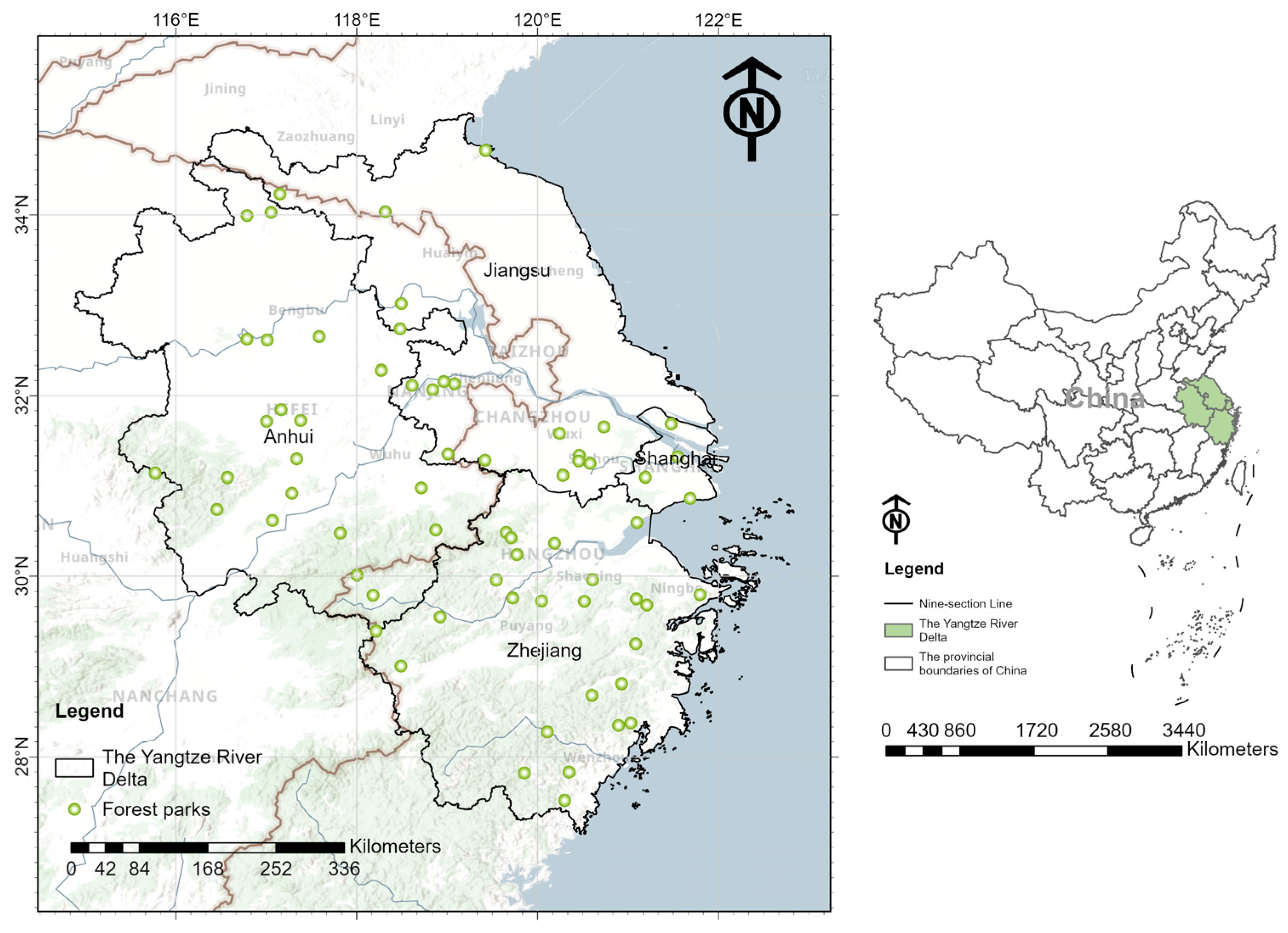
2.1. Study Area
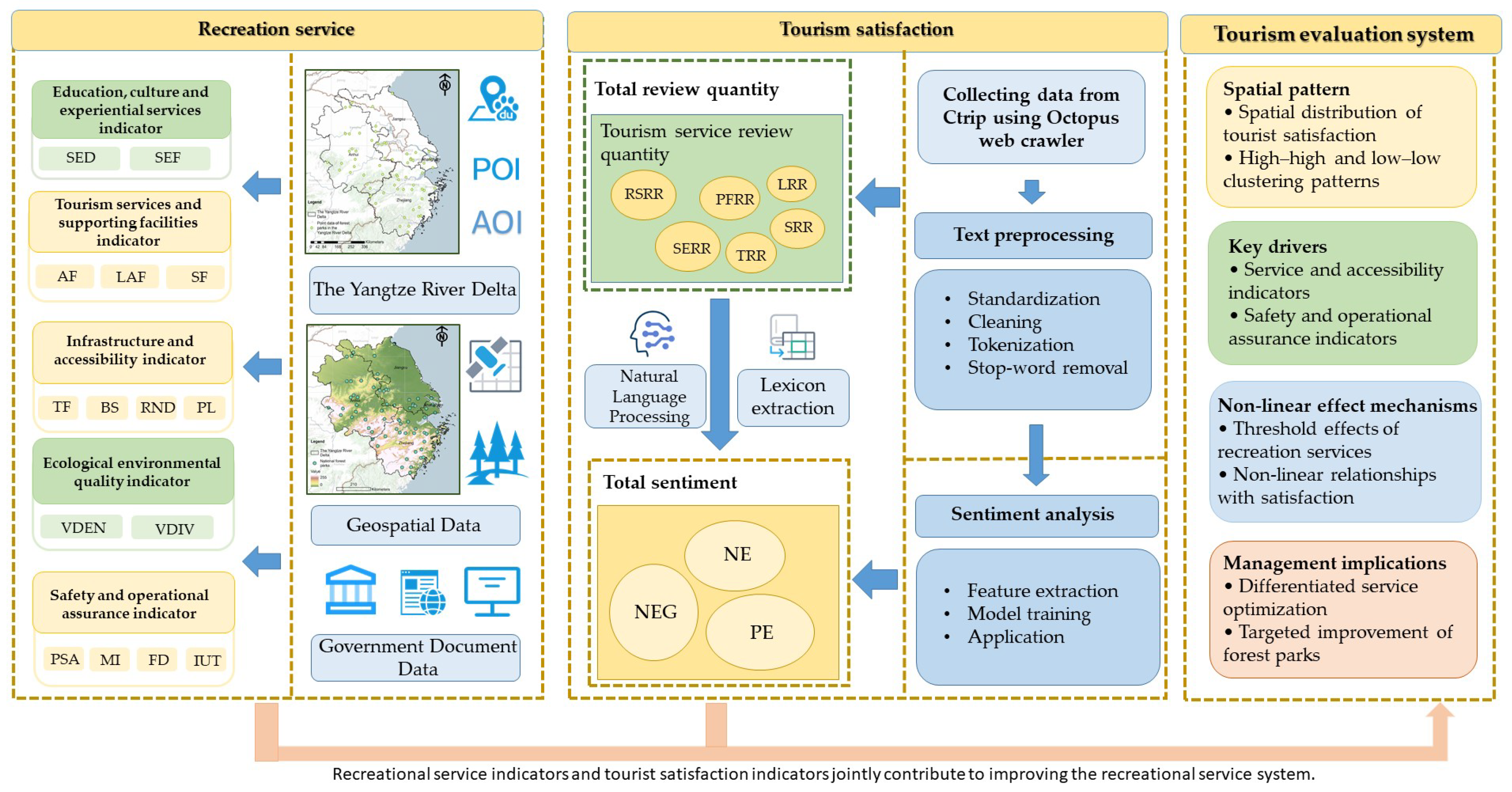
2.2. Materials and Variables
2.2.1. Tourist Satisfaction Variables
2.2.2. Recreation Service Evaluation Variables
2.3. Data Preprocessing
2.3.1. Geographic Information Data Processing
2.3.2. Social Media Data Processing
2.4. Analysis Approach
2.4.1. Spatial Pattern Analysis
2.4.2. Correlation Analysis
2.4.3. Extreme Gradient Boosting (XGBoost) Model
2.4.4. Explanation Based on Shapley Methods
2.4.5. Robustness Analysis of Model Specification
3. Results
3.1. Analysis of Descriptive Statistical Results of Recreation Service Indicators and Tourist Satisfaction
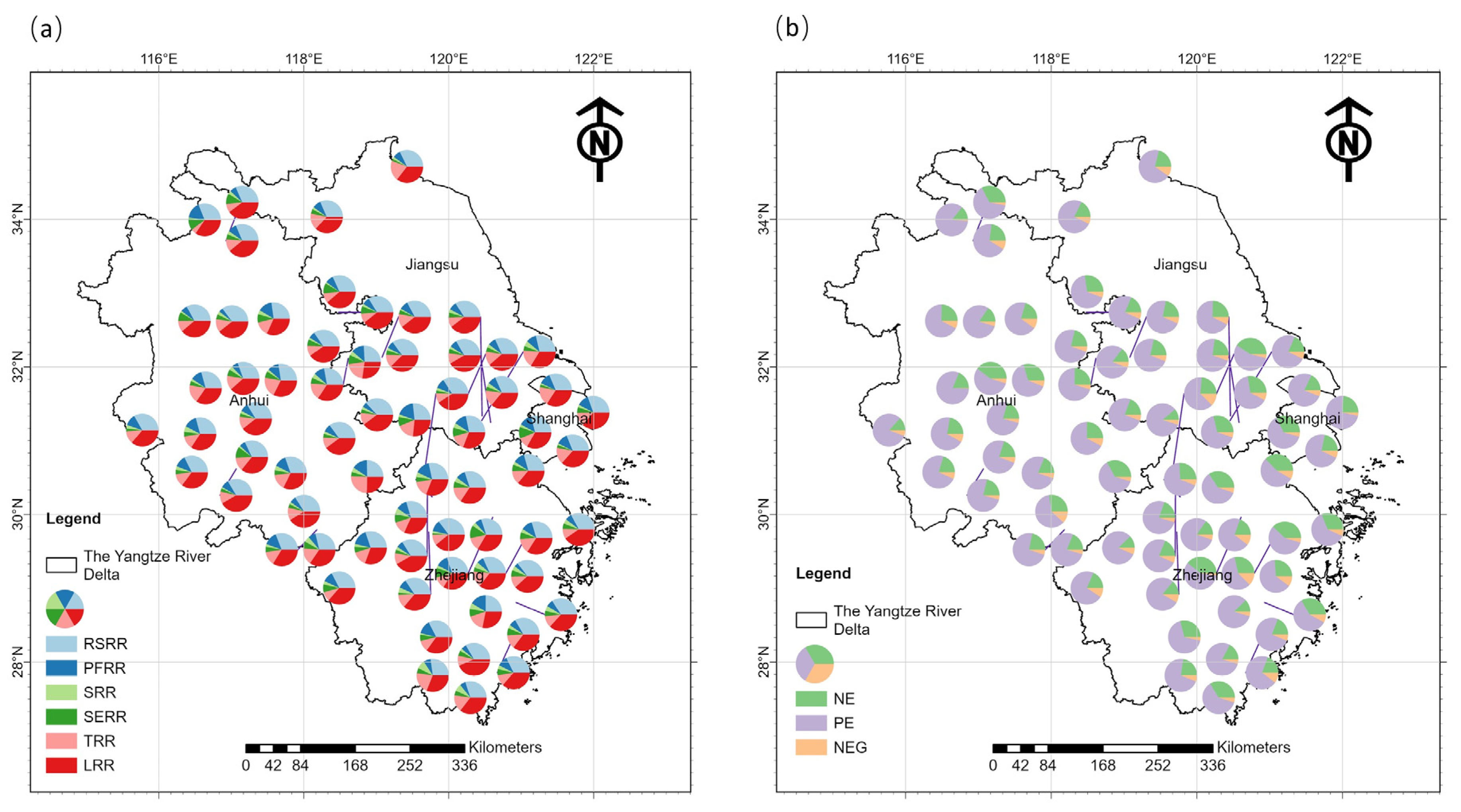
3.1.1. Descriptive Statistics and Spatial Distribution of Tourist Satisfaction
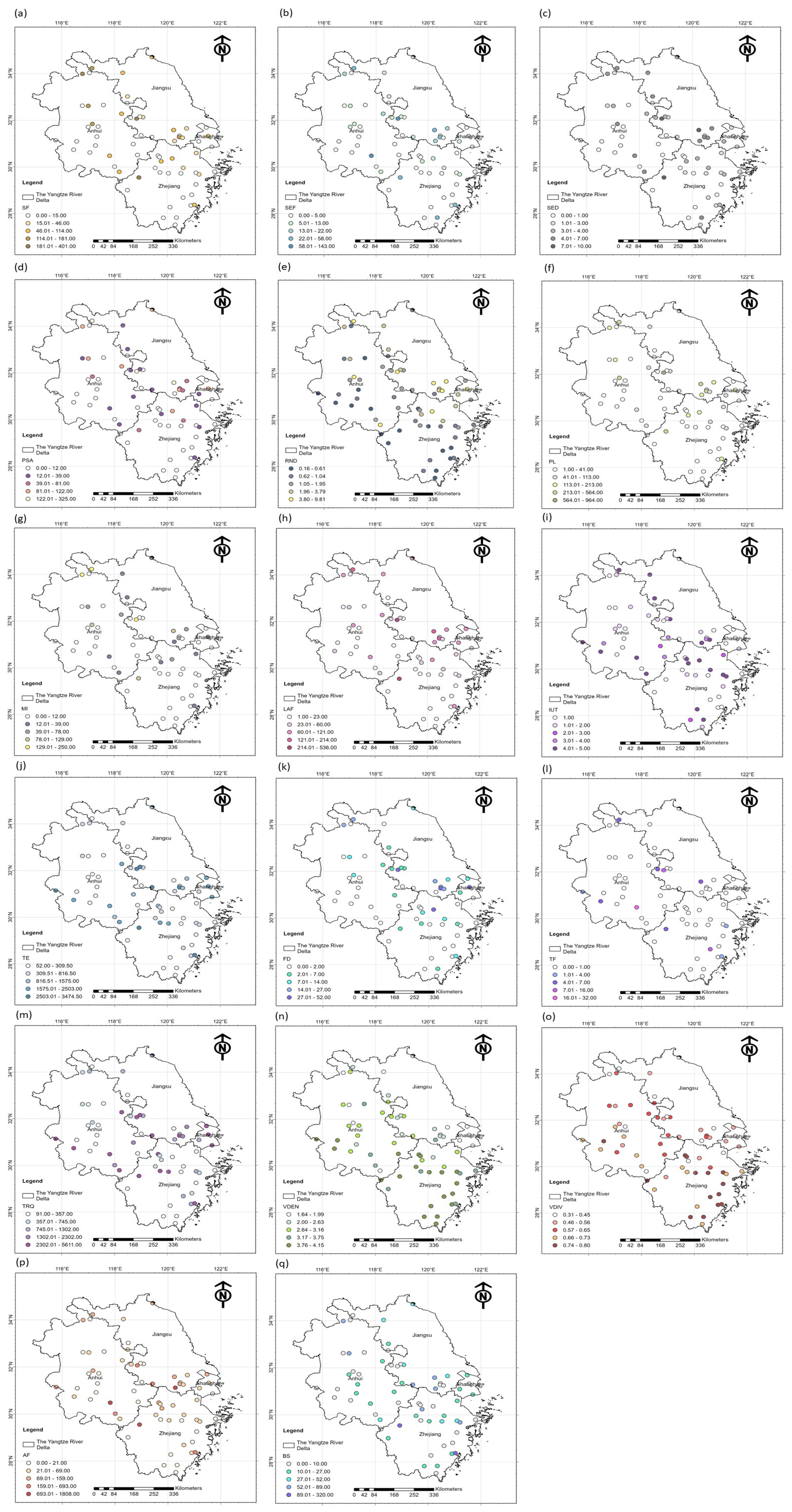
3.1.2. Descriptive Statistics and Spatial Distribution of Recreation Service Indicators
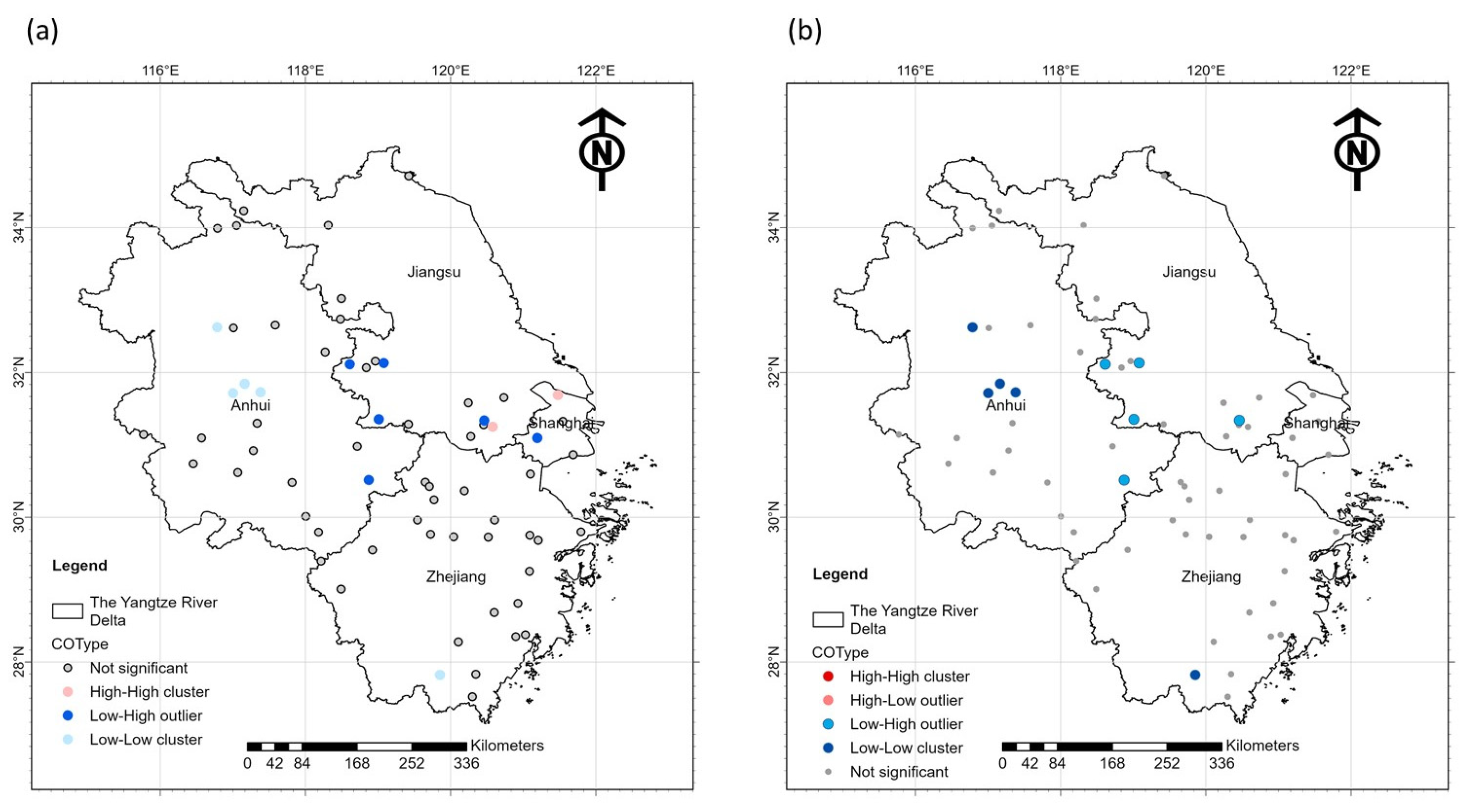
3.1.3. Spatial Autocorrelation Patterns of Tourist Satisfaction
3.2. Analysis of the Impact Mechanisms of Recreational Service Indicators on Tourist Satisfaction and Key Indicators
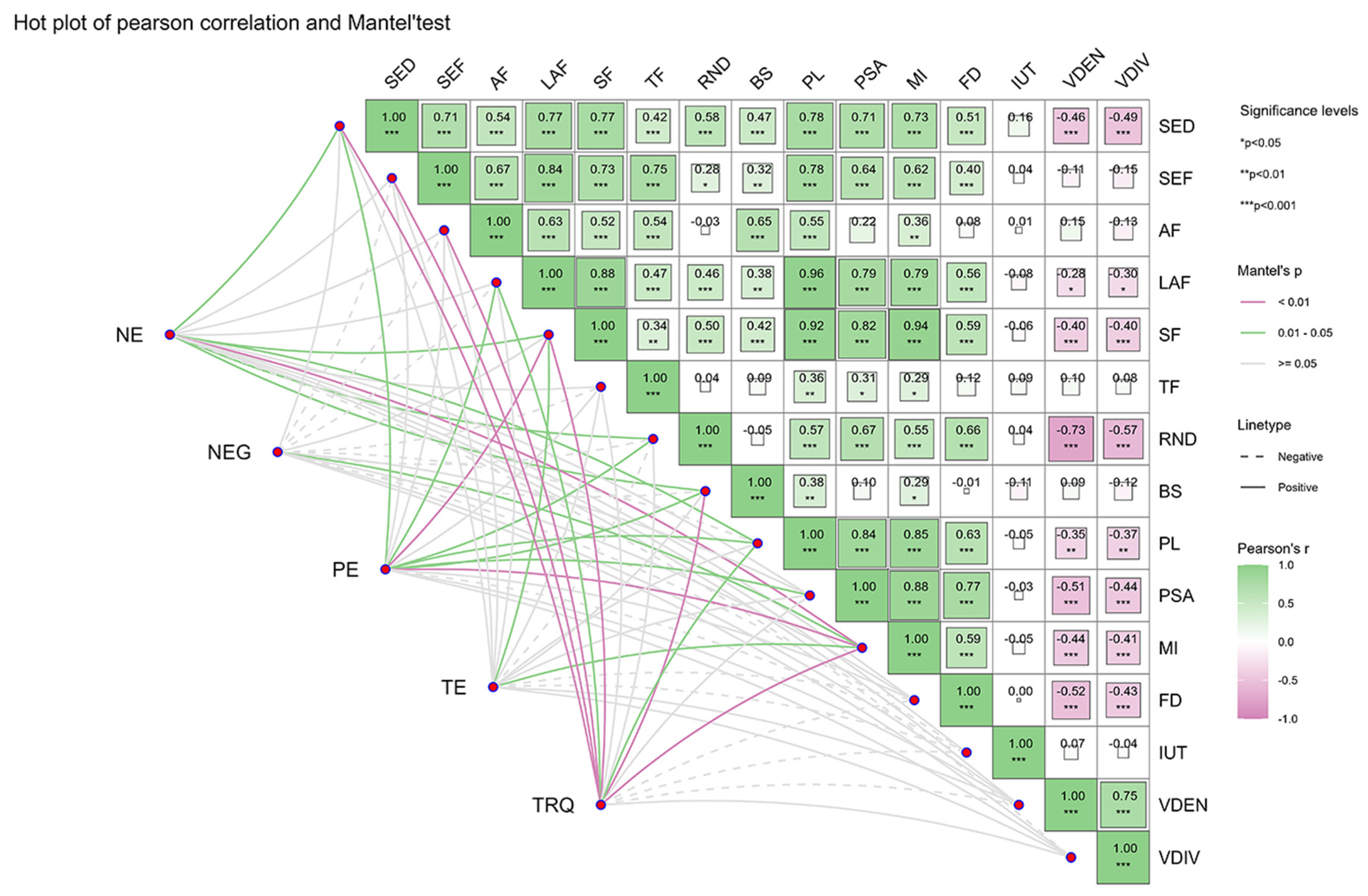
3.2.1. Results of the Correlation Analysis of Recreational Service Indicators
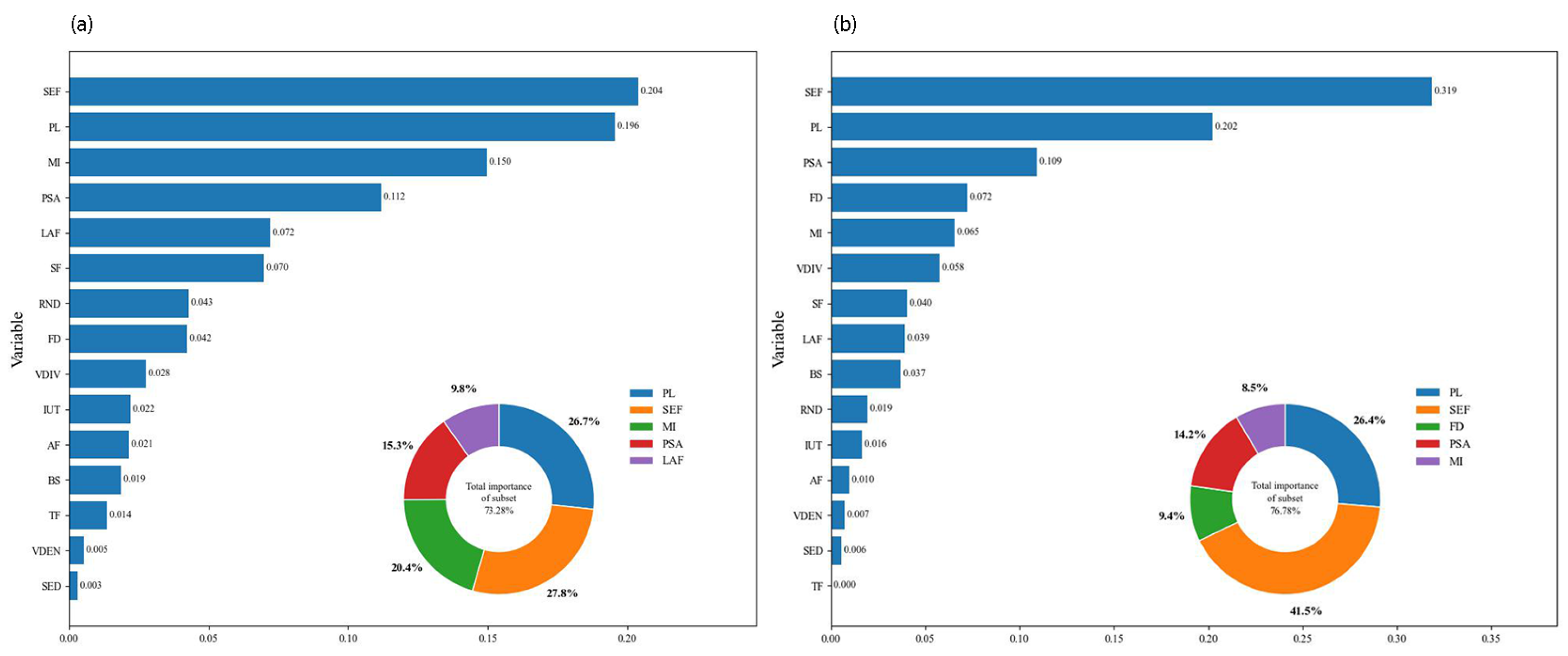
3.2.2. The Importance of Various Recreational Service Indicators for Review Volume and Tourist Sentiment
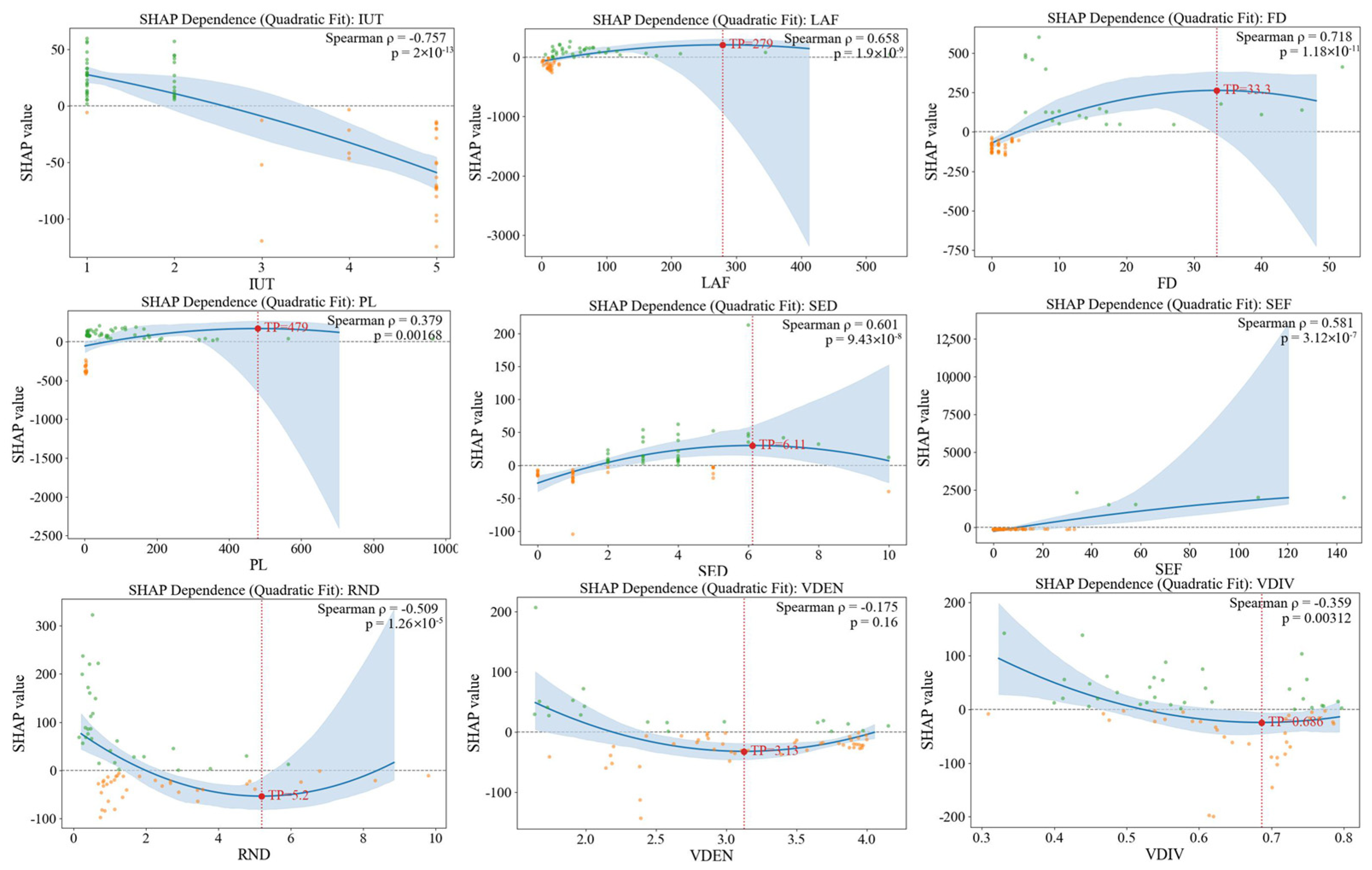
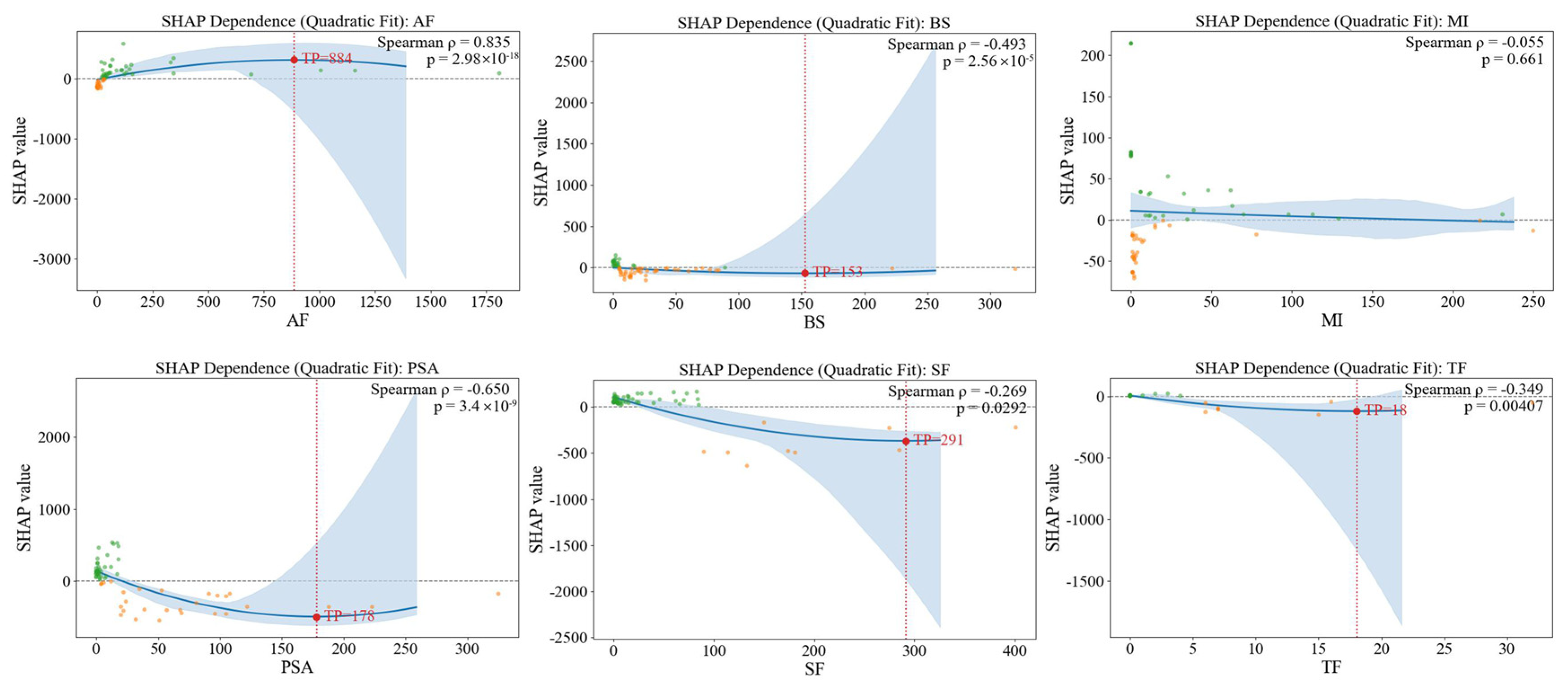
3.2.3. Threshold Effect Analysis of Recreational Service Indicators on Review Popularity in Forest Parks
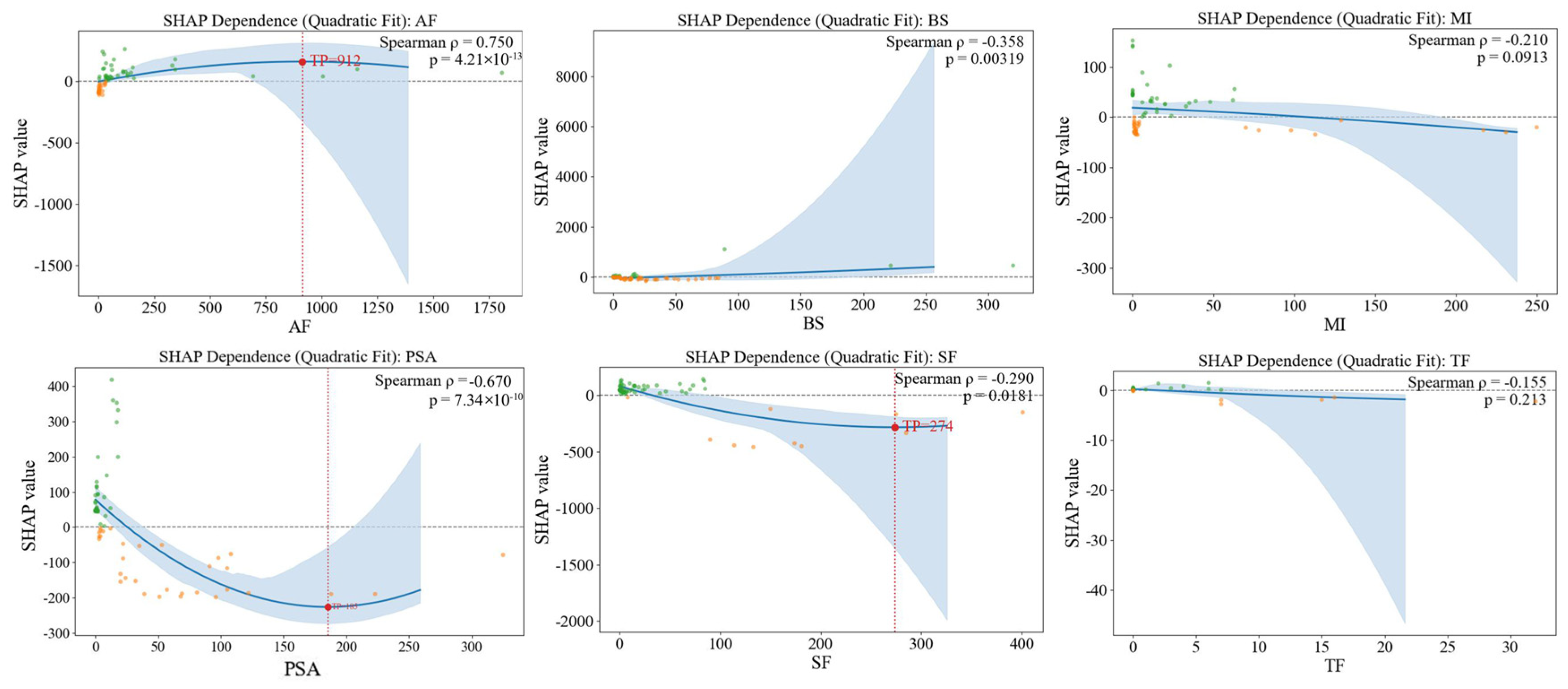
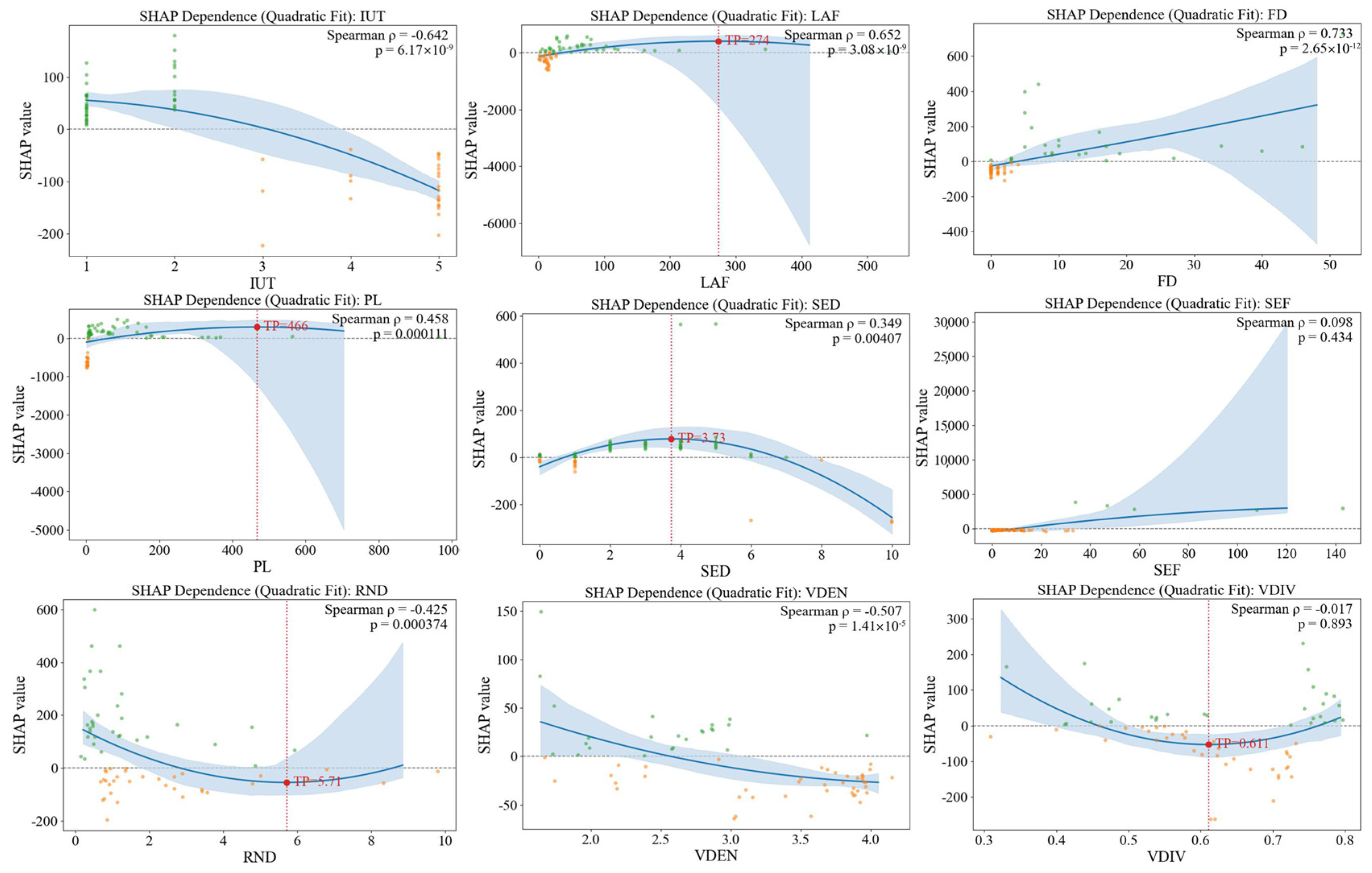
3.2.4. Threshold Effect Analysis of Recreational Service Indicators on Tourist Sentiment in Forest Parks
3.3. Robustness Analysis Result
4. Discussion
5. Conclusions
Author Contributions
Funding
Institutional Review Board Statement
Informed Consent Statement
Data Availability Statement
Acknowledgments
Conflicts of Interest
Appendix A


References
- Achard, F.; Hansen, M.C. Global Forest Monitoring from Earth Observation; CRC Press: Boca Raton, FL, USA, 2012. [Google Scholar]
- Zhang, D. China’s forest expansion in the last three plus decades: Why and how? For. Policy Econ. 2019, 98, 75–81. [Google Scholar] [CrossRef]
- Sun, W.; Liu, X. Review on carbon storage estimation of forest ecosystem and applications in China. For. Ecosyst. 2019, 7, 4. [Google Scholar] [CrossRef]
- Wang, L.; Zhao, H.; Wu, W.; Song, W.; Zhou, Q.; Ye, Y. Time-Varying Evolution and Impact Analysis of Forest Tourism Carbon Emissions and Forest Park Carbon Sinks in China. Forests 2024, 15, 1517. [Google Scholar] [CrossRef]
- Sgroi, F. Forest resources and sustainable tourism, a combination for the resilience of the landscape and development of mountain areas. Sci. Total Environ. 2020, 736, 139539. [Google Scholar] [CrossRef]
- Tampakis, S.; Andrea, V.; Karanikola, P.; Pailas, I. The growth of mountain tourism in a traditional forest area of Greece. Forests 2019, 10, 1022. [Google Scholar] [CrossRef]
- Yang, Z. Analysis of Influencing Factors of Tourist Satisfaction in Fuzhou Forest Park based on Structural Equation Model. Front. Bus. Econ. Manag. 2023, 12, 202–203. [Google Scholar] [CrossRef]
- Zhang, L.; Wu, C.; Hao, Y. Effect of the development level of facilities for forest tourism on tourists’ willingness to visit urban forest parks. Forests 2022, 13, 1005. [Google Scholar] [CrossRef]
- Daxin, Y.; Ziwei, J.; Zhexin, W.; Hede, G. Development and Research of Forest Tourism from the Perspective of Forest Experience. J. Landsc. Res. 2016, 8, 116. [Google Scholar]
- Sun, Q.; Zhang, N.; Liu, Z.; Liao, B. Tourism resources and carrying capacity of scenic tourism areas based on forest ecological environment. South. For. J. For. Sci. 2020, 82, 10–14. [Google Scholar] [CrossRef]
- Hu, J.; Wu, Y.; Irfan, M.; Hu, M. Has the ecological civilization pilot promoted the transformation of industrial structure in China? Ecol. Indic. 2023, 155, 111053. [Google Scholar] [CrossRef]
- Kang, N. Assessing Tourism Carrying Capacity Based on Visitors’ Experience Utility: A Case Study of Xian-Ren-Tai National Forest Park, China. Forests 2023, 14, 1694. [Google Scholar] [CrossRef]
- Lu, J.; Chen, H. Dynamic Evaluation and Forecasting Analysis of Touristic Ecological Carrying Capacity of Forest Parks in China. Forests 2023, 15, 38. [Google Scholar] [CrossRef]
- Golos, P.; Zajac, S. Delimitacja rekreacyjnej funkcji lasów i gospodarki leśnej na terenach zurbanizowanych. Leśne Pr. Badaw. 2011, 72, 83–94. [Google Scholar]
- Wang, Z.; Wang, E.; Yu, Y. Translating tourists’ satisfaction data into economic value of the National Forest Parks in China. J. For. Res. 2023, 28, 397–406. [Google Scholar] [CrossRef]
- Kim, Y. A guidelines for the media art of forest park using the forms and principles natural art. Int. Soc. Next Gener. Converg. Technol. 2019, 3, 143–149. [Google Scholar] [CrossRef]
- Zhang, H.; Yu, J.; Dong, X.; Zhai, X.; Shen, J. Rethinking Cultural Ecosystem Services in Urban Forest Parks: An Analysis of Citizens’ Physical Activities Based on Social Media Data. Forests 2024, 15, 1633. [Google Scholar] [CrossRef]
- He, S.; Yu, Y.; Lan, S.; Zheng, Y.; Liu, C. Influence of Perceived Sensory Dimensions on Cultural Ecosystem Benefits of National Forest Parks Based on Public Participation: The Case of Fuzhou National Forest Park. Forests 2024, 15, 1314. [Google Scholar] [CrossRef]
- Kang, N.; Wang, E.; Yu, Y. Valuing forest park attributes by giving consideration to the tourist satisfaction. Tour. Econ. 2019, 25, 711–733. [Google Scholar] [CrossRef]
- Woodley, S. A scheme for ecological monitoring in national parks and protected areas. Environments 1996, 23, 50–73. [Google Scholar]
- Tierney, G.L.; Faber-Langendoen, D.; Mitchell, B.R.; Shriver, W.G.; Gibbs, J.P. Monitoring and evaluating the ecological integrity of forest ecosystems. Front. Ecol. Environ. 2009, 7, 308–316. [Google Scholar] [CrossRef]
- Théau, J.; Trottier, S.; Graillon, P. Optimization of an ecological integrity monitoring program for protected areas: Case study for a network of national parks. PLoS ONE 2018, 13, e0202902. [Google Scholar] [CrossRef]
- Jianrong, Z.; Zhenbin, Z. Tourists’ perceptual presentation of national forest park—A case study of Wujin mountain national forest park. J. For. Res. 2022, 27, 15–19. [Google Scholar] [CrossRef]
- Zeng, Z.X.; Zhang, A.W.; Wang, Q.T. A Research on the Problems and Solutions in the Development of the Forest Parks in China. Appl. Mech. Mater. 2013, 295–298, 2343–2346. [Google Scholar] [CrossRef]
- Kozłowska-Adamczak, M.; Jezierska-Thöle, A.; Essing-Jelonkiewicz, P. Application of Remote Sensing for the Evaluation of the Forest Ecosystem Functions and Tourism Services. Sustainability 2025, 17, 2060. [Google Scholar] [CrossRef]
- del Castillo, E.M.; García-Martin, A.; Aladrén, L.A.L.; de Luis, M. Evaluation of forest cover change using remote sensing techniques and landscape metrics in Moncayo Natural Park (Spain). Appl. Geogr. 2015, 62, 247–255. [Google Scholar] [CrossRef]
- Nagendra, H.; Tucker, C.; Carlson, L.; Southworth, J.; Karmacharya, M.; Karna, B. Monitoring parks through remote sensing: Studies in Nepal and Honduras. Environ. Manag. 2004, 34, 748–760. [Google Scholar] [CrossRef] [PubMed]
- Kunakh, O.; Ivanko, I.; Holoborodko, K.; Lisovets, O.; Volkova, A.; Nikolaieva, V.; Zhukov, O. Modeling the spatial variation of urban park ecological properties using remote sensing data. Biosyst. Divers. 2022, 30, 213–225. [Google Scholar] [CrossRef]
- Chen, B.; Chen, L.; Huang, B.; Michishita, R.; Xu, B. Dynamic monitoring of the Poyang Lake wetland by integrating Landsat and MODIS observations. ISPRS J. Photogramm. Remote Sens. 2018, 139, 75–87. [Google Scholar] [CrossRef]
- Chen, Z.; Chen, J.; Yue, Y.; Lan, Y.; Ling, M.; Li, X.; You, H.; Han, X.; Zhou, G. Tradeoffs among multi-source remote sensing images, spatial resolution, and accuracy for the classification of wetland plant species and surface objects based on the MRS_DeepLabV3+ model. Ecol. Inform. 2024, 81, 102594. [Google Scholar] [CrossRef]
- Lingua, F.; Coops, N.C.; Griess, V.C. Assessing forest recreational potential from social media data and remote sensing technologies data. Ecol. Indic. 2023, 149, 110165. [Google Scholar] [CrossRef]
- You, S.; Zheng, Q.; Chen, B.; Xu, Z.; Lin, Y.; Gan, M.; Zhu, C.; Deng, J.; Wang, K. Identifying the spatiotemporal dynamics of forest ecotourism values with remotely sensed images and social media data: A perspective of public preferences. J. Clean. Prod. 2022, 341, 130715. [Google Scholar] [CrossRef]
- Barros, C.; Moya-Gómez, B.; Gutiérrez, J. Using geotagged photographs and GPS tracks from social networks to analyse visitor behaviour in national parks. Curr. Issues Tour. 2020, 23, 1291–1310. [Google Scholar] [CrossRef]
- Walden-Schreiner, C.; Leung, Y.-F.; Tateosian, L. Digital footprints: Incorporating crowdsourced geographic information for protected area management. Appl. Geogr. 2018, 90, 44–54. [Google Scholar] [CrossRef]
- Pizam, A.; Milman, A. Predicting satisfaction among first time visitors to a destination by using the expectancy disconfirmation theory. Int. J. Hosp. Manag. 1993, 12, 197–209. [Google Scholar] [CrossRef]
- Choi, I.Y.; Moon, H.S.; Kim, J.K. Assessing personalized recommendation services using expectancy disconfirmation theory. Asia Pac. J. Inf. Syst. 2019, 29, 203–216. [Google Scholar] [CrossRef]
- Weber, K. The assessment of tourist satisfaction using the expectancy disconfirmation theory: A study of the German travel market in Australia. Pac. Tour. Rev. 1997, 1, 35–45. [Google Scholar]
- Ray, R.; Rahman, M.B. Measuring students’ satisfaction towards different tourism destinations in Rajshahi: An Application of Expectancy Disconfirmation Theory. Bangladesh J. Tour. 2016, 1. [Google Scholar]
- Tribe, J.; Snaith, T. From SERVQUAL to HOLSAT: Holiday satisfaction in Varadero, Cuba. Tour. Manag. 1998, 19, 25–34. [Google Scholar] [CrossRef]
- Puri, G.; Singh, K. The role of service quality and customer satisfaction in tourism industry: A review of SERVQUAL Model. Int. J. Res. Anal. Rev. 2018, 5. [Google Scholar]
- Bhattacharya, P.; Mukhopadhyay, A.; Saha, J.; Samanta, B.; Mondal, M.; Bhattacharya, S.; Paul, S. Perception-satisfaction based quality assessment of tourism and hospitality services in the Himalayan region: An application of AHP-SERVQUAL approach on Sandakphu Trail, West Bengal, India. Int. J. Geoheritage Parks 2023, 11, 259–275. [Google Scholar] [CrossRef]
- Kouthouris, C.; Alexandris, K. Can service quality predict customer satisfaction and behavioral intentions in the sport tourism industry? An application of the SERVQUAL model in an outdoors setting. J. Sport Tour. 2005, 10, 101–111. [Google Scholar] [CrossRef]
- Song, H.J.; Lee, C.-K.; Park, J.A.; Hwang, Y.H.; Reisinger, Y. The influence of tourist experience on perceived value and satisfaction with temple stays: The experience economy theory. J. Travel Tour. Mark. 2015, 32, 401–415. [Google Scholar] [CrossRef]
- Lee, S.; Jeong, E.; Qu, K. Exploring theme park visitors’ experience on satisfaction and revisit intention: A utilization of experience economy model. J. Qual. Assur. Hosp. Tour. 2020, 21, 474–497. [Google Scholar] [CrossRef]
- Mehmetoglu, M.; Engen, M. Pine and Gilmore’s concept of experience economy and its dimensions: An empirical examination in tourism. J. Qual. Assur. Hosp. Tour. 2011, 12, 237–255. [Google Scholar] [CrossRef]
- Mahdzar, M.; Saiful Raznan, A.M.; Ahmad Jasmin, N.; Abdul Aziz, N.A. Exploring relationships between experience economy and satisfaction of visitors in rural tourism destination. J. Int. Bus. Econ. Entrep. (JIBE) 2020, 5, 69–75. [Google Scholar]
- Babolian Hendijani, R. Effect of food experience on tourist satisfaction: The case of Indonesia. Int. J. Cult. Tour. Hosp. Res. 2016, 10, 272–282. [Google Scholar] [CrossRef]
- Anaya-Aguilar, R.; Gemar, G.; Anaya-Aguilar, C. Validation of a satisfaction questionnaire on spa tourism. Int. J. Environ. Res. Public Health 2021, 18, 4507. [Google Scholar] [CrossRef]
- Suzuki, K.; Rin, U.; Maeda, Y.; Takeda, H. Forest cover classification using geospatial multimodal data. Int. Arch. Photogramm. Remote Sens. Spat. Inf. Sci. 2018, 42, 1091–1096. [Google Scholar] [CrossRef]
- Lamahewage, S.H.G.; Witharana, C.; Riemann, R.; Fahey, R.; Worthley, T. Aboveground biomass estimation using multimodal remote sensing observations and machine learning in mixed temperate forest. Sci. Rep. 2025, 15, 31120. [Google Scholar] [CrossRef] [PubMed]
- Zheng, P.; Fang, P.; Wang, L.; Ou, G.; Xu, W.; Dai, F.; Dai, Q. Synergism of multi-modal data for mapping tree species distribution—A case study from a mountainous forest in southwest china. Remote Sens. 2023, 15, 979. [Google Scholar] [CrossRef]
- Ling, Q.; Chen, Y.; Feng, Z.; Pei, H.; Wang, C.; Yin, Z.; Qiu, Z. Monitoring Canopy Height in the Hainan Tropical Rainforest Using Machine Learning and Multi-Modal Data Fusion. Remote Sens. 2025, 17, 966. [Google Scholar] [CrossRef]
- Yang, Y.; Wang, Z.; Lin, G. Performance assessment indicators for comparing recreational services of urban parks. Int. J. Environ. Res. Public Health 2021, 18, 3337. [Google Scholar] [CrossRef]
- Jalilian, M.A.; Danehkar, A.; Fami, H.S.A. Determination of indicators and standards for tourism impacts in protected Karaj River, Iran. Tour. Manag. 2012, 33, 61–63. [Google Scholar] [CrossRef]
- Lin, S.; Shi, W.; Dong, L. Research on travel decision-making based on text analysis of travel notes—Take Ctrip as a example. In Proceedings of the 2016 IEEE Advanced Information Management, Communicates, Electronic and Automation Control Conference (IMCEC), Xi’an, China, 3–5 October 2016; pp. 859–862. [Google Scholar]
- Cohen, J.B.; Fishbein, M.; Ahtola, O.T. The nature and uses of expectancy-value models in consumer attitude research. J. Mark. Res. 1972, 9, 456–460. [Google Scholar] [CrossRef]
- Wu, J.; Yang, T. Service attributes for sustainable rural tourism from online comments: Tourist satisfaction perspective. J. Destin. Mark. Manag. 2023, 30, 100822. [Google Scholar] [CrossRef]
- Song, S.; Kawamura, H.; Uchida, J.; Saito, H. Determining tourist satisfaction from travel reviews. Inf. Technol. Tour. 2019, 21, 337–367. [Google Scholar] [CrossRef]
- Atsri, K.H.; Abotsi, K.E.; Kokou, K.; Dendi, D.; Segniagbeto, G.H.; Fa, J.E.; Luiselli, L. Ecological challenges for the buffer zone management of a West African National Park. J. Environ. Plan. Manag. 2020, 63, 689–709. [Google Scholar] [CrossRef]
- Guan, C.; Song, J.; Keith, M.; Akiyama, Y.; Shibasaki, R.; Sato, T. Delineating urban park catchment areas using mobile phone data: A case study of Tokyo. Comput. Environ. Urban Syst. 2020, 81, 101474. [Google Scholar] [CrossRef]
- McHugh, M.L. Interrater reliability: The kappa statistic. Biochem. Medica 2012, 22, 276–282. [Google Scholar] [CrossRef]
- Holle, H.; Rein, R. The modified Cohen’s kappa: Calculating interrater agreement for segmentation and annotation. In Understanding Body Movements: A Guide to Empirical Research on Nonverbal Behavior: With an Introduction to the NEUROGES Coding System; Peter Lang GmbH: Berlin, Germany, 2013; pp. 261–277. [Google Scholar]
- Chen, T. XGBoost: A Scalable Tree Boosting System. arXiv 2016, arXiv:1603.02754. [Google Scholar] [CrossRef]
- Lundberg, S.M.; Lee, S.-I. A unified approach to interpreting model predictions. In Proceedings of the NIPS’17: Proceedings of the 31st International Conference on Neural Information Processing Systems, Long Beach, CA, USA, 4–9 December 2017. [Google Scholar]
- Blazeska, D.; Strezovski, Z.; Klimoska, A.M. The influence of tourist infrastructure on the tourist satisfaction in Ohrid. UTMS J. Econ. 2018, 9, 85–93. [Google Scholar]
- Khaliji, M.A.; Ghalehteimouri, K.J. Assessing tourist infrastructure using a multi-criteria decision-making model: A case study of Ardabil Province’s impact on regional tourism development. Res. Sq. 2024. [Google Scholar]
- Priyana, E.B.; Prihartanto, E. The Role of Infrastructure in Realizing Cultural Tourism in North Kalimantan: A Literature Review. IOP Conf. Ser. Earth Environ. Sci. 2024, 1431, 012001. [Google Scholar] [CrossRef]
- Kanwal, S.; Rasheed, M.I.; Pitafi, A.H.; Pitafi, A.; Ren, M. Road and transport infrastructure development and community support for tourism: The role of perceived benefits, and community satisfaction. Tour. Manag. 2020, 77, 104014. [Google Scholar] [CrossRef]
- Arabov, N.; Nasimov, D.; Janzakov, B.; Khomitov, K.; Utemuratova, G.; Abduraimov, D.; Ismailov, B. Shaping the future of Uzbekistan’s tourism: An in-depth analysis of infrastructure influence and strategic planning. J. East. Eur. Cent. Asian Res. (JEECAR) 2024, 11, 53–65. [Google Scholar] [CrossRef]
- Sharma, M.; Mohapatra, G.; Giri, A.K. Assessing the role of ICT, governance, and infrastructure on inbound tourism demand in India. J. Econ. Adm. Sci. 2025, 41, 320–335. [Google Scholar] [CrossRef]
- Fanelli, G.; Tescarollo, P.; Testi, A. Ecological indicators applied to urban and suburban floras. Ecol. Indic. 2006, 6, 444–457. [Google Scholar] [CrossRef]
- Zhang, T.; Yang, R.; Yang, Y.; Li, L.; Chen, L. Assessing the urban eco-environmental quality by the remote-sensing ecological index: Application to Tianjin, North China. ISPRS Int. J. Geo-Inf. 2021, 10, 475. [Google Scholar] [CrossRef]
- Rebele, F. Urban ecology and special features of urban ecosystems. Glob. Ecol. Biogeogr. Lett. 1994, 4, 173–187. [Google Scholar] [CrossRef]
- Buckley, R. Ecological indicators of tourist impacts in parks. J. Ecotourism 2003, 2, 54–66. [Google Scholar] [CrossRef]
- Deng, J.; Qiang, S.; Walker, G.J.; Zhang, Y. Assessment on and perception of visitors’ environmental impacts of nature tourism: A case study of Zhangjiajie National Forest Park, China. J. Sustain. Tour. 2003, 11, 529–548. [Google Scholar] [CrossRef]
- Qin, G.; Cheng, B. Analysis on the impact of Forest Park facilities on the performance of Forest Park tourism: An empirical study of Forest parks in China. Tour. Plan. Dev. 2021, 18, 457–478. [Google Scholar] [CrossRef]
- Yu, M.; Liu, Y. Landscape Ecological Integrity Assessment to Improve Protected Area Management of Forest Ecosystem. Ecologies 2025, 6, 38. [Google Scholar] [CrossRef]
- Brovina, F.; Sallaku, D. Sustainable development of forest parks for active recreation: A balance between nature conservation and physical education. Ukr. J. For. Wood Sci. 2024, 15, 165–179. [Google Scholar] [CrossRef]
- Huang, Z.; Cao, J.; Peng, Y.; Ma, K.; Cui, G. Quantitative Evaluation of the Integrity of Natural Ecosystems and Anthropogenic Impacts in Shennongjia National Park, China. Forests 2023, 14, 987. [Google Scholar] [CrossRef]
- Reining, C.E. Does Perceived Ecological Integrity Affect Restorative Health Outcomes? An Examination of Visitor Experiences in Diverse Environments in an Ontario Protected Area. Master’s Thesis, Wilfrid Laurier University, Waterloo, ON, Canada, 2019. [Google Scholar]
- Chakraborty, A.; Messias, J.; Benevenuto, F.; Ghosh, S.; Ganguly, N.; Gummadi, K. Who makes trends? understanding demographic biases in crowdsourced recommendations. In Proceedings of the International AAAI Conference on Web and Social Media, Montreal, QC, Canada, 15–18 May 2017; Volume 11, pp. 22–31. [Google Scholar]
- Cesare, N.; Grant, C.; Nsoesie, E.O. Understanding demographic bias and representation in social media health data. In Proceedings of the Companion Publication of the 10th ACM Conference on Web Science, Amsterdam, The Netherlands, 30 June–3 July 2019; pp. 7–9. [Google Scholar]
- Henderson, K.E.; Welsh, E.T. Potential bias when using social media for selection: Differential effects of candidate demographic characteristics, race match, perceived similarity, and profile detail. Int. J. Sel. Assess. 2024, 32, 149–167. [Google Scholar] [CrossRef]




| Items (Abbreviation) | Description | Calculation Method | Source |
|---|---|---|---|
| education, culture and experiential services indicators | |||
| scientific and educational diversity (SED) | Number of categories of science and environmental education resources within the forest parks (count). | S = number of education resource categories; = number of resources in category i; | Baidu Maps POI data (2024) |
| scientific and educational facilities (SEF) | Number of facilities supporting ecological education and environmental interpretation (e.g., nature education centers, interpretive signage, and research monitoring stations) within the forest park buffer zone (count). | m = Total number of facilities in category m M = Number of sub-types in this facility category = Number of facilities in sub-type | |
| tourism services and supporting facilities indicators | |||
| accommodation facilities (AF) | Number of accommodation facilities (e.g., hotels, homestays, campsites) within the forest park buffer zone (count). | ||
| landscape ancillary facilities (LAF) | Number of facilities enhancing landscape presentation and visitor viewing experience within the forest park buffer zone (count). | ||
| shopping facilities (SF) | Number of retail, food, and cultural–creative facilities within the forest park buffer zone (count). | ||
| infrastructure and accessibility indicators | |||
| transportation facilities (TF) | Number of facilities supporting visitor access and internal circulation within the forest park buffer zone (count). | ||
| road network density (RND) | Density of the road network within the buffer zone (km/km2). | RND = L = total road length within the buffer zone (km) A = buffer zone area (km2) | Open-Street Map (OSM) |
| bus stops (BS) | Number of bus stops serving the forest park within the buffer zone. (count) | m = Total number of facilities in category m M = Number of sub-types in this facility category = Number of facilities in sub-type | Baidu Maps POI data (2024) |
| parking lots (PL) | Number of parking facilities for motorized and non-motorized vehicles within the buffer zone (count). | ||
| safety and operational assurance indicators | |||
| public security agencies (PSA) | Number of public security facilities (e.g., police stations, public security bureaus, police substations, and joint public security patrol posts) within the forest park buffer zone (count). | ||
| medical institutions (MI) | Number of medical and emergency service facilities within the forest park buffer zone (count). | ||
| fire departments (FD) | Number of firefighting facilities and fire stations within the forest park buffer zone (count). | ||
| infrastructure update time (IUT) | Year of the most recent construction or renovation of internal park infrastructure (year). | IUT = = construction or renovation dates of internal park facilities. | The government websites (2024) |
| ecological environmental quality indicators | |||
| vegetation diversity (VDEN) | Vegetation species diversity per unit area within the forest park (species/ha). | VDEN = S = number of vegetation species A = park area (ha) | Field survey data (2024) |
| vegetation density (VDIV) | The ratio of the total vegetation area to the total buffer area (%). | VDIV = = the total area covered by vegetation within the buffer zone. = denotes the total area of the buffer zone. | Remote sensing data (2024 annual mean NDVI data) |
| tourist satisfaction indicators | |||
| total review quantity (TRQ) | The number of comments extracted from social media using text mining in forests park(count). | TRQ = = number of comments extracted from social media using text mining. | Web-scraped data from the social media platform Ctrip |
| tourism service review quantity (TSRQ) | Number of social media reviews related to tourism services (count). | TSRQ = = number of social media reviews related to tourism services. | |
| recreation service review ratio (RSRR) | The proportion of recreation service -related reviews to total reviews (%). | Rj = The proportion of comments on a certain type of service Nj = Number of reviews related to class j service TRQ = Total number of visitor reviews extracted from social media platforms. | |
| science and education service review ratio (SERR) | The proportion of science and education service-related reviews to total reviews (%). | ||
| public facility review ratio (PFRR) | The proportion of public facility-related reviews to total reviews (%). | ||
| transportation review ratio (TRR) | The proportion of transportation review to total reviews (%). | ||
| safety service review ratio (SRR) | The proportion of safety service review to total reviews (%). | ||
| landscape review ratio (LRR) | The proportion of landscape reviews to total reviews (%). | ||
| total sentiment (TE) | Aggregated sentiment score derived from sentiment analysis of visitor reviews. | sentiment score of the i-th visitor comment derived from sentiment analysis. | |
| negative sentiment (NEG) | Number of reviews expressing negative sentiment (count). | = = The total quantity of the k type of sentiment = The number of social media comments corresponding to the sentiment | |
| neutral sentiment (NE) | Number of reviews expressing neutral sentiment (count). | ||
| positive sentiment (PE) | Number of reviews expressing positive sentiment (count). | ||
| Indicator | [Min, Max] | Mean | SD | Median |
|---|---|---|---|---|
| PE | [43–3390] | 848.95 | 945.99 | 375 |
| NE | [15–827] | 231.29 | 218.52 | 137.5 |
| NEG | [1–329] | 75.06 | 83.55 | 32.5 |
| TE | [52–3474.5] | 889.54 | 969.89 | 412 |
| TRQ | [91–5611] | 1350.64 | 1396.02 | 634.5 |
| SED | [0–10] | 2.94 | 2.35 | 3 |
| SEF | [0–143] | 12.05 | 23.4 | 4 |
| AF | [0–1808] | 121.3 | 295.85 | 31.5 |
| LAF | [1–536] | 52.32 | 83.37 | 21.5 |
| SF | [0–401] | 42.39 | 76.06 | 7.5 |
| TF | [0–32] | 1.61 | 4.94 | 0 |
| RND | [0.157–9.811] | 1.94 | 2.06 | 1.1375 |
| BS | [0–320] | 27.68 | 49.85 | 13.5 |
| PL | [1–964] | 85.68 | 155.34 | 15.5 |
| PSA | [0–325] | 34.21 | 58.46 | 8.5 |
| MI | [0–250] | 26.18 | 53.37 | 3.5 |
| FD | [0–52] | 6.29 | 11.09 | 1.5 |
| IUT | [1–5] | 2.58 | 1.69 | 2 |
| VDEN | [1.638–4.154] | 3.06 | 0.79 | 3.0305 |
| VDIV | [0.309–0.797] | 0.61 | 0.13 | 0.616 |
| TSRQ | [67–4546] | 1155.3 | 1225.42 | 528.5 |
Disclaimer/Publisher’s Note: The statements, opinions and data contained in all publications are solely those of the individual author(s) and contributor(s) and not of MDPI and/or the editor(s). MDPI and/or the editor(s) disclaim responsibility for any injury to people or property resulting from any ideas, methods, instructions or products referred to in the content. |
© 2026 by the authors. Licensee MDPI, Basel, Switzerland. This article is an open access article distributed under the terms and conditions of the Creative Commons Attribution (CC BY) license.
Share and Cite
Chen, C.; Zhao, W.; Zhao, B. Mechanisms Underlying the Effects of Recreation Services on Tourist Satisfaction in Forest Parks: A Case Study of the Yangtze River Delta, China. Sustainability 2026, 18, 1936. https://doi.org/10.3390/su18041936
Chen C, Zhao W, Zhao B. Mechanisms Underlying the Effects of Recreation Services on Tourist Satisfaction in Forest Parks: A Case Study of the Yangtze River Delta, China. Sustainability. 2026; 18(4):1936. https://doi.org/10.3390/su18041936
Chicago/Turabian StyleChen, Caijie, Weilin Zhao, and Bing Zhao. 2026. "Mechanisms Underlying the Effects of Recreation Services on Tourist Satisfaction in Forest Parks: A Case Study of the Yangtze River Delta, China" Sustainability 18, no. 4: 1936. https://doi.org/10.3390/su18041936
APA StyleChen, C., Zhao, W., & Zhao, B. (2026). Mechanisms Underlying the Effects of Recreation Services on Tourist Satisfaction in Forest Parks: A Case Study of the Yangtze River Delta, China. Sustainability, 18(4), 1936. https://doi.org/10.3390/su18041936