A Novel Intelligent Prediction Model for Higher Heating Value of Sustainable Solid Biomass Fuel Based on Bayesian Optimized Deep Neural Network

Abstract
1. Introduction
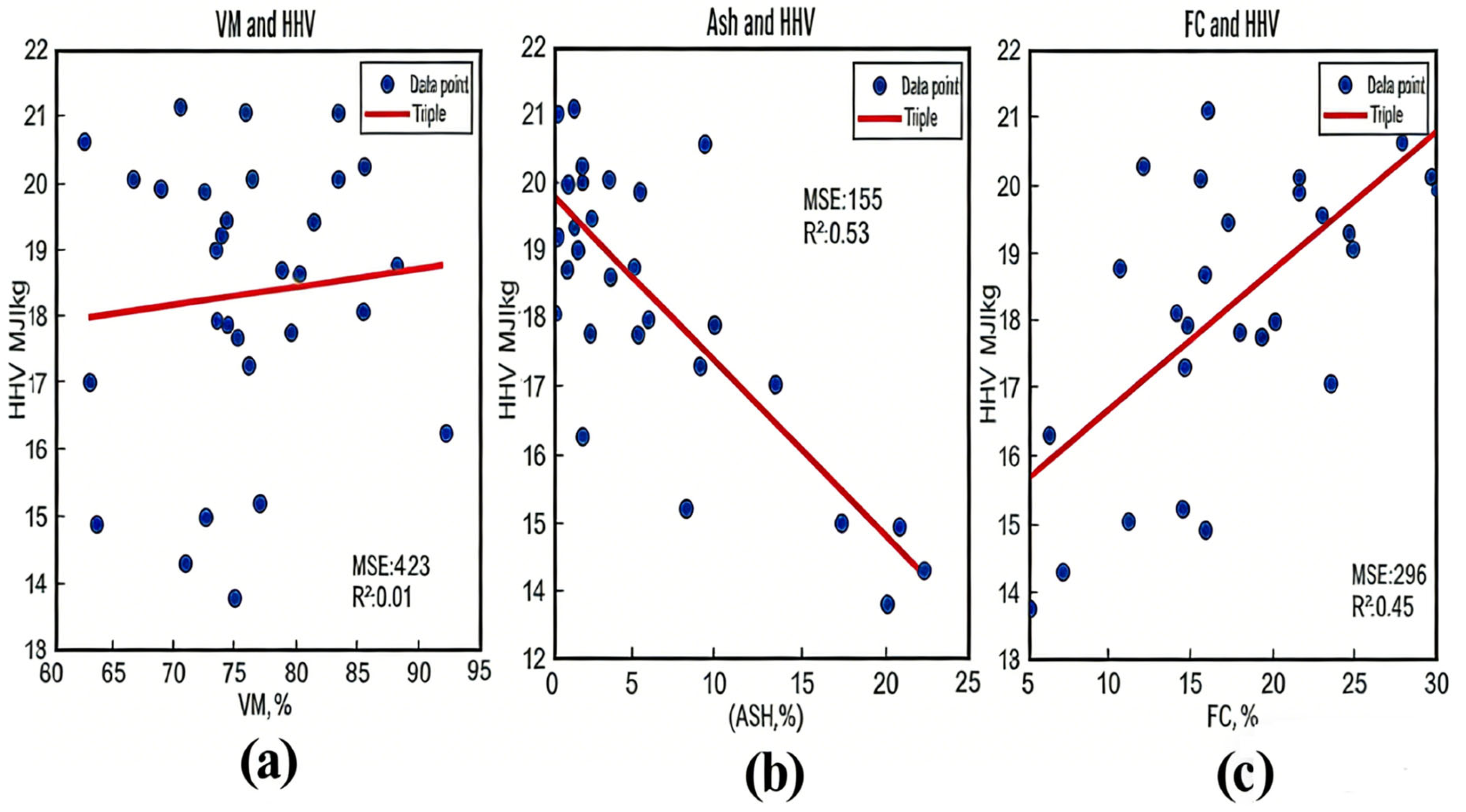
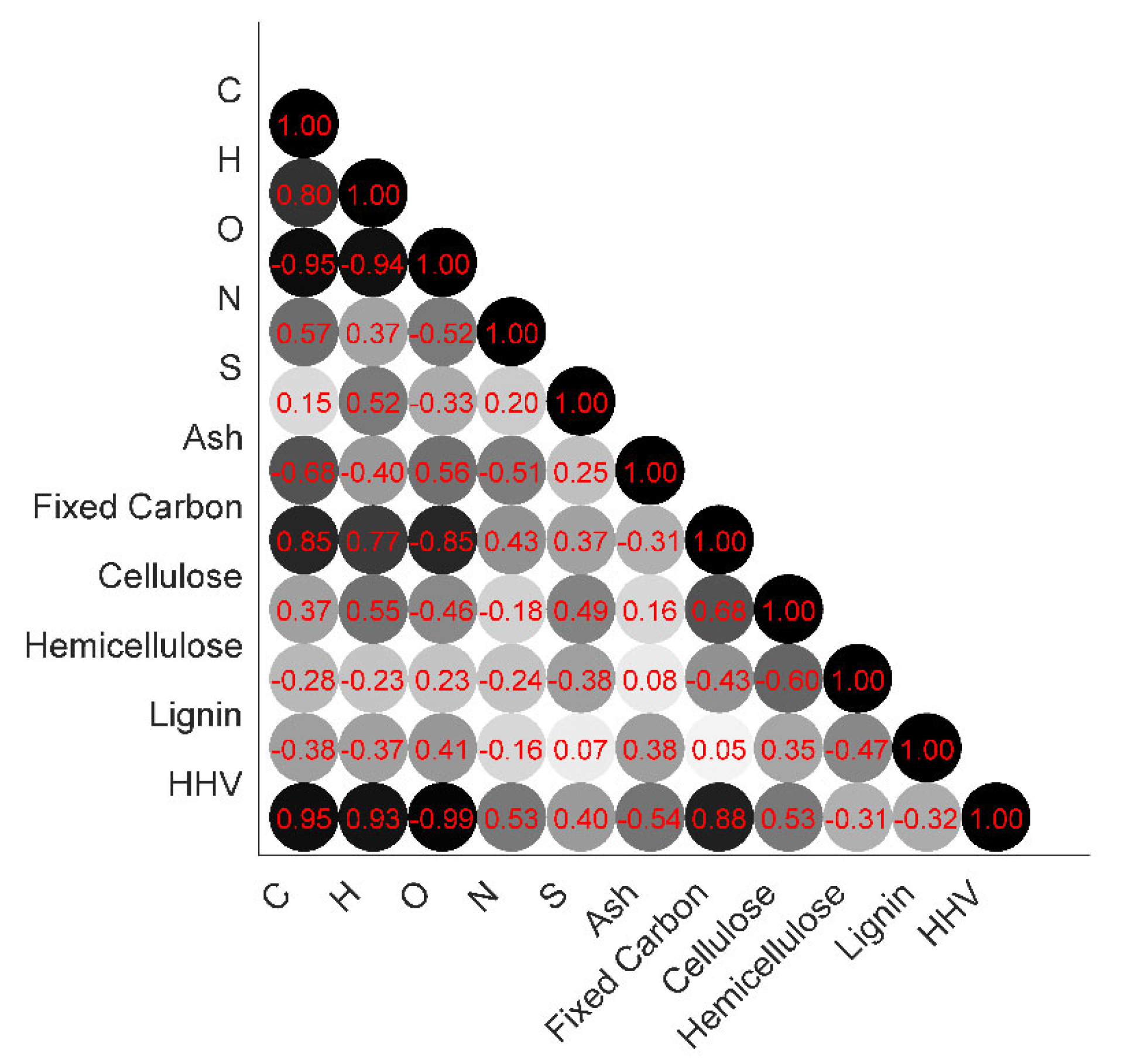
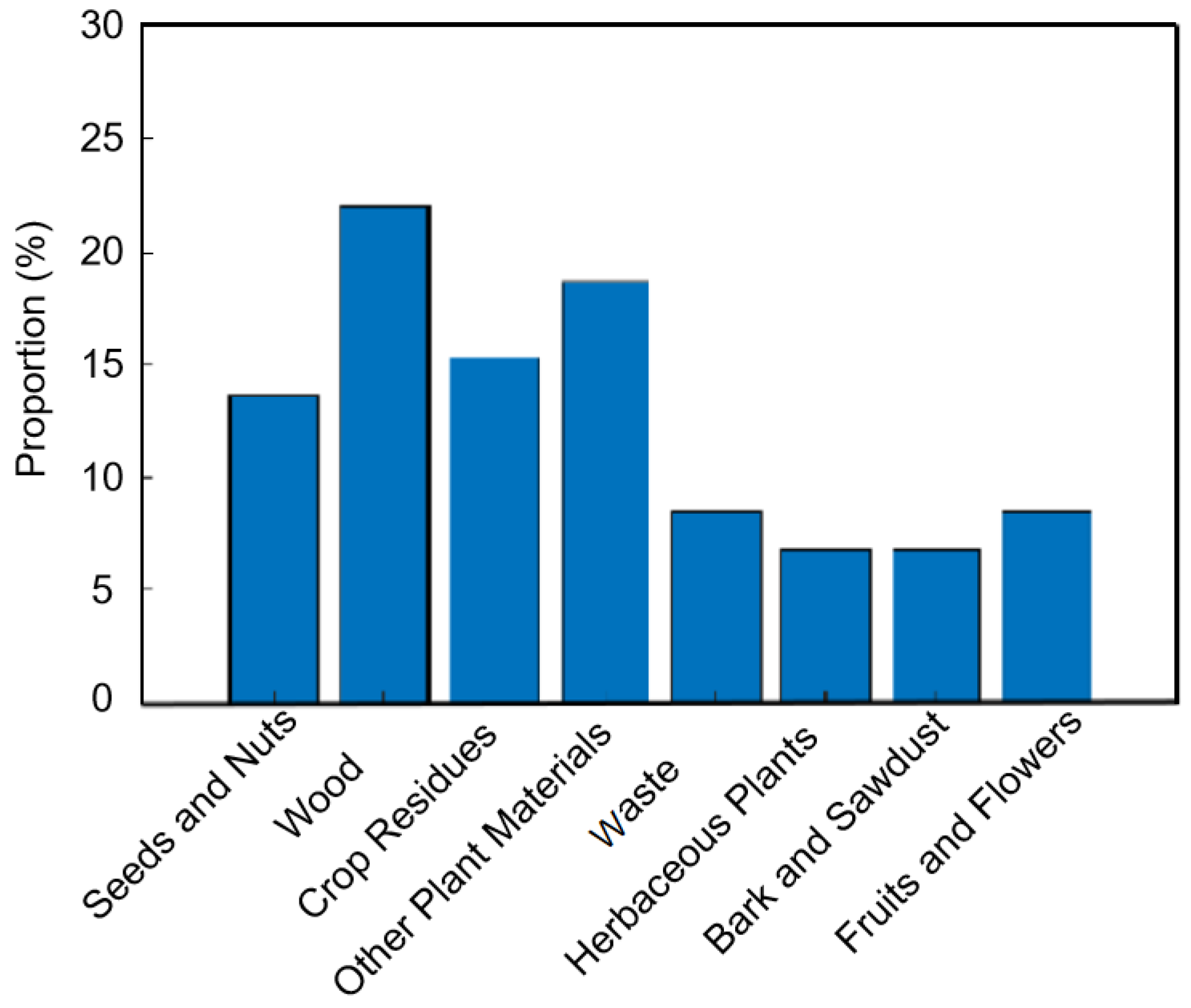
2. Analysis of SBF Characteristic Parameters
3. Methodology
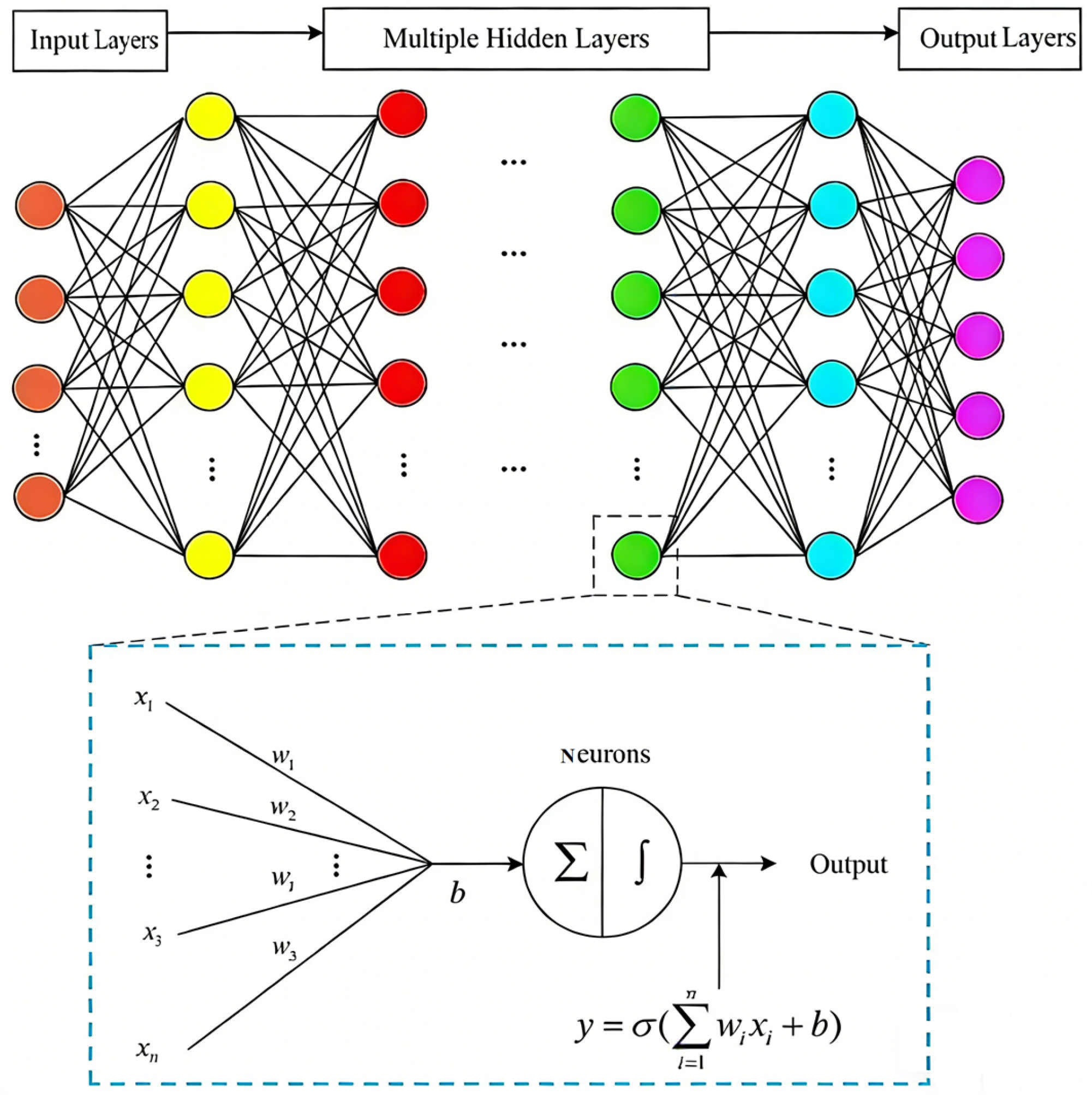
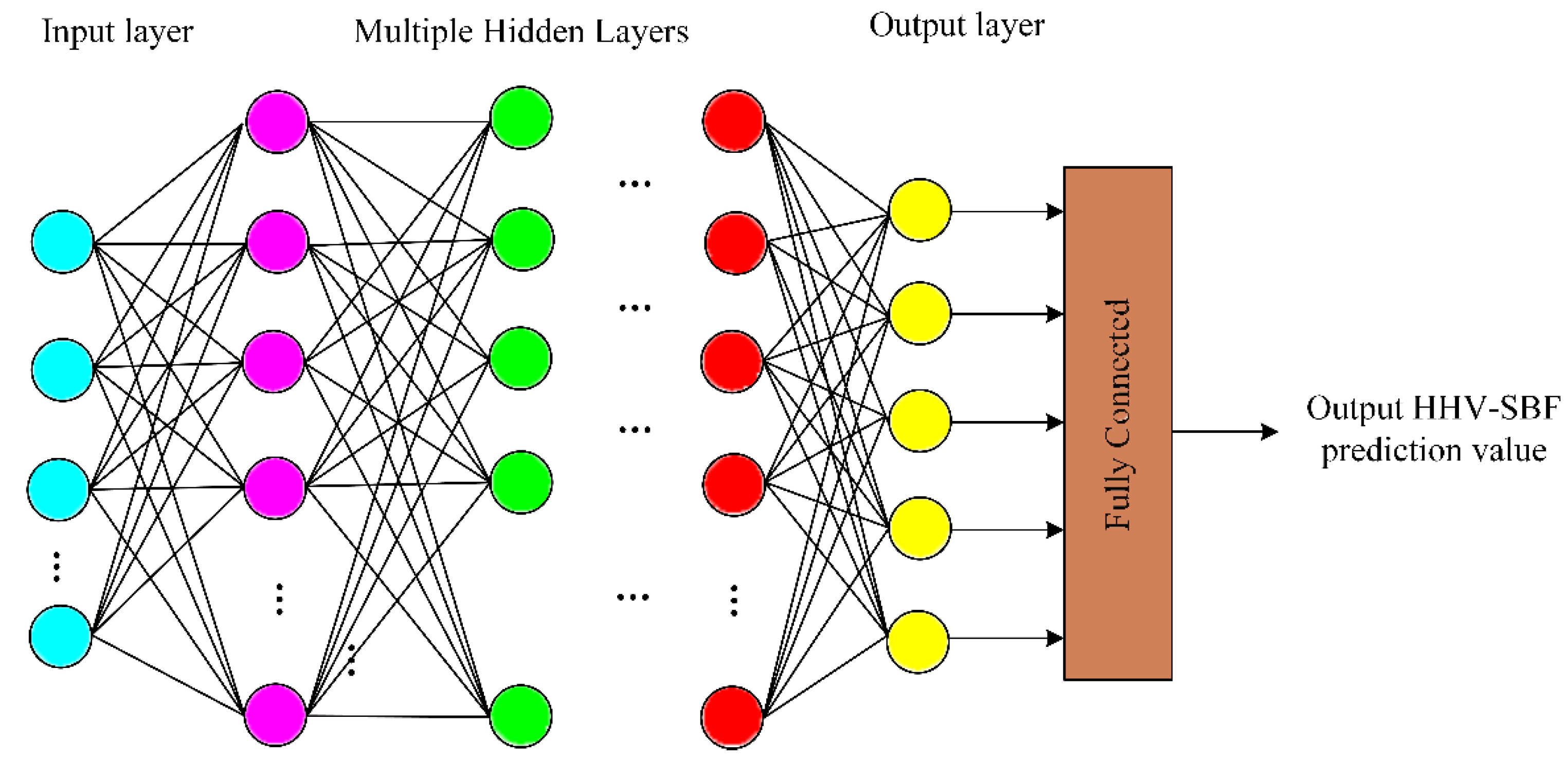
3.1. DNN
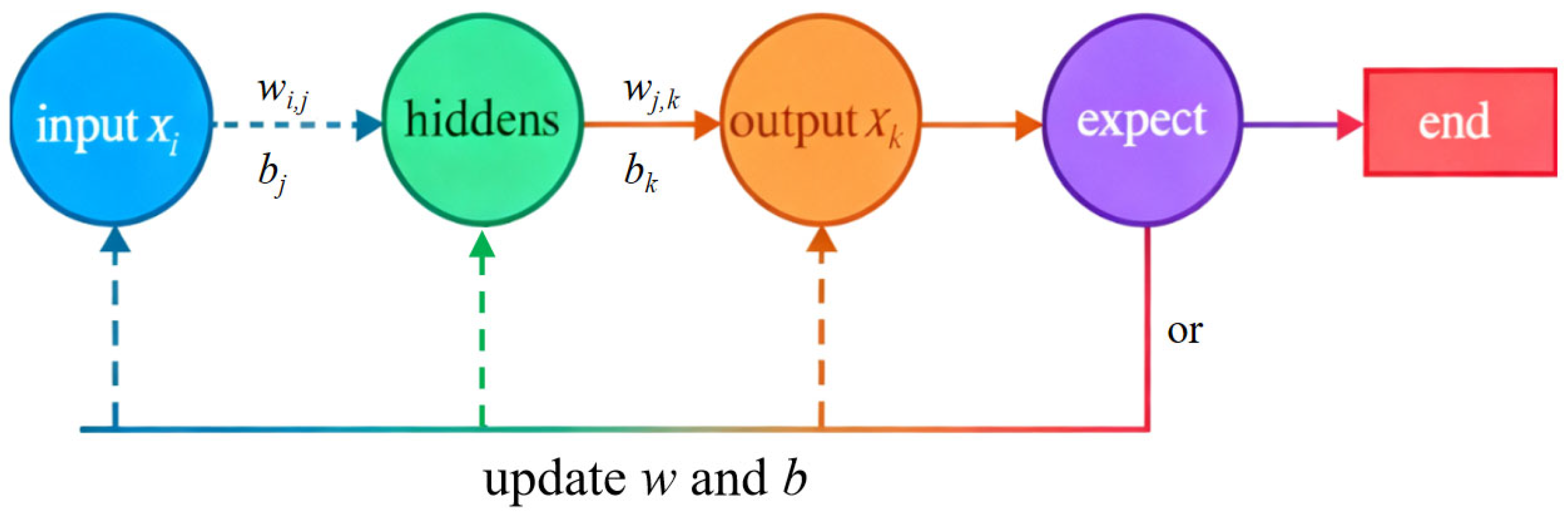
3.2. Bayesian Optimized DNN
3.3. Indicators of HHV-SBF
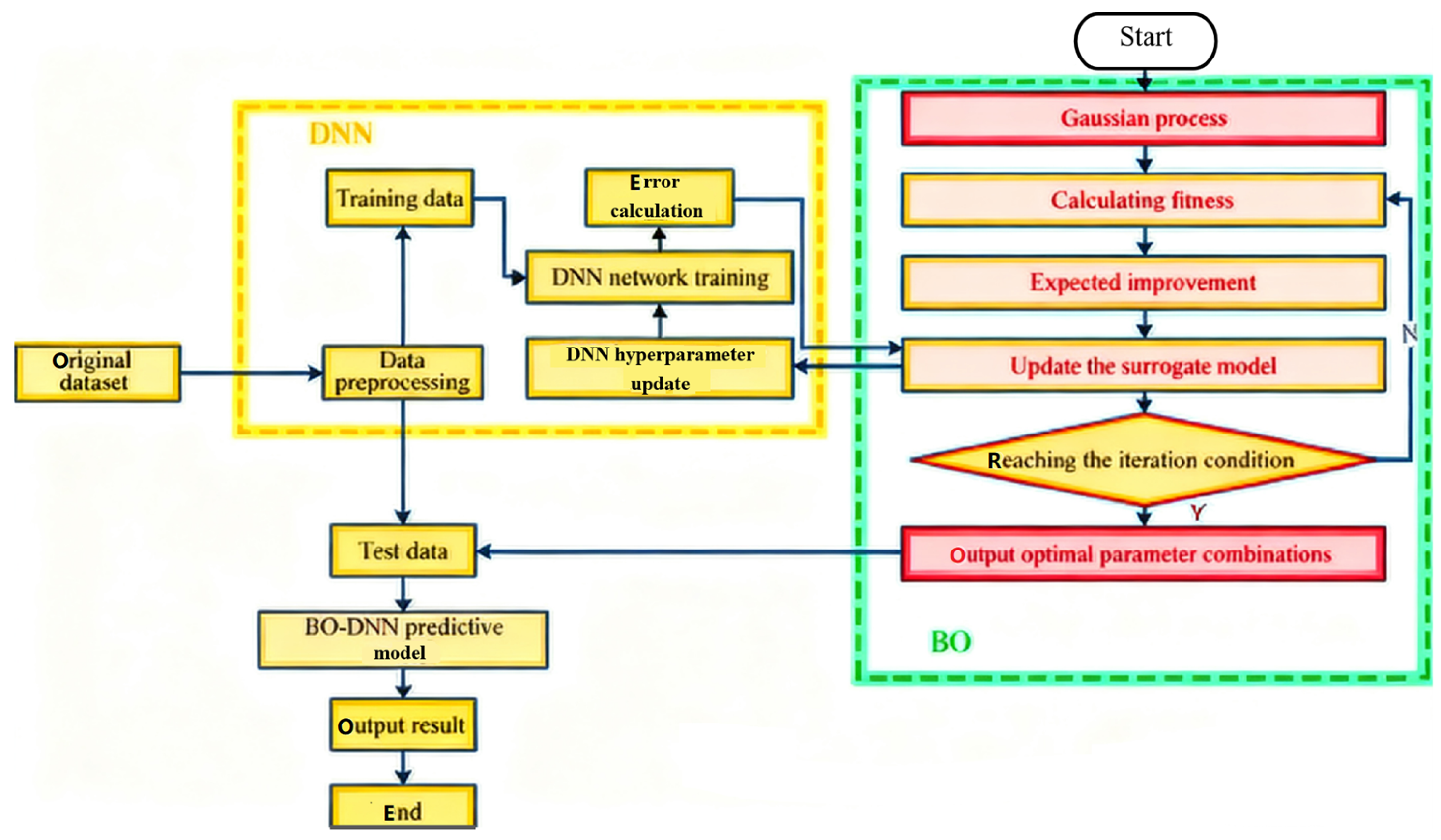
3.4. BO-DNN Model Architecture
- (1)
- Design Basis for DNN Model Architecture
- (2)
- The selection criteria for Bayesian optimization hyperparameters
3.5. Prediction of HHV-SBF by BO-DNN Model
- (1)
- Data Preprocessing
- (2)
- Input Layer
- (3)
- DNN Layer
- (4)
- Bayesian Optimization Layer
- (5)
- Output Layer
- (6)
- Prediction and Validation
4. Results and Analysis
4.1. Data Preparation
- (1)
- Dataset information
- (2)
- Data cleaning process
- (3)
- Dataset partitioning scheme
- (4)
- Data preprocessing operation
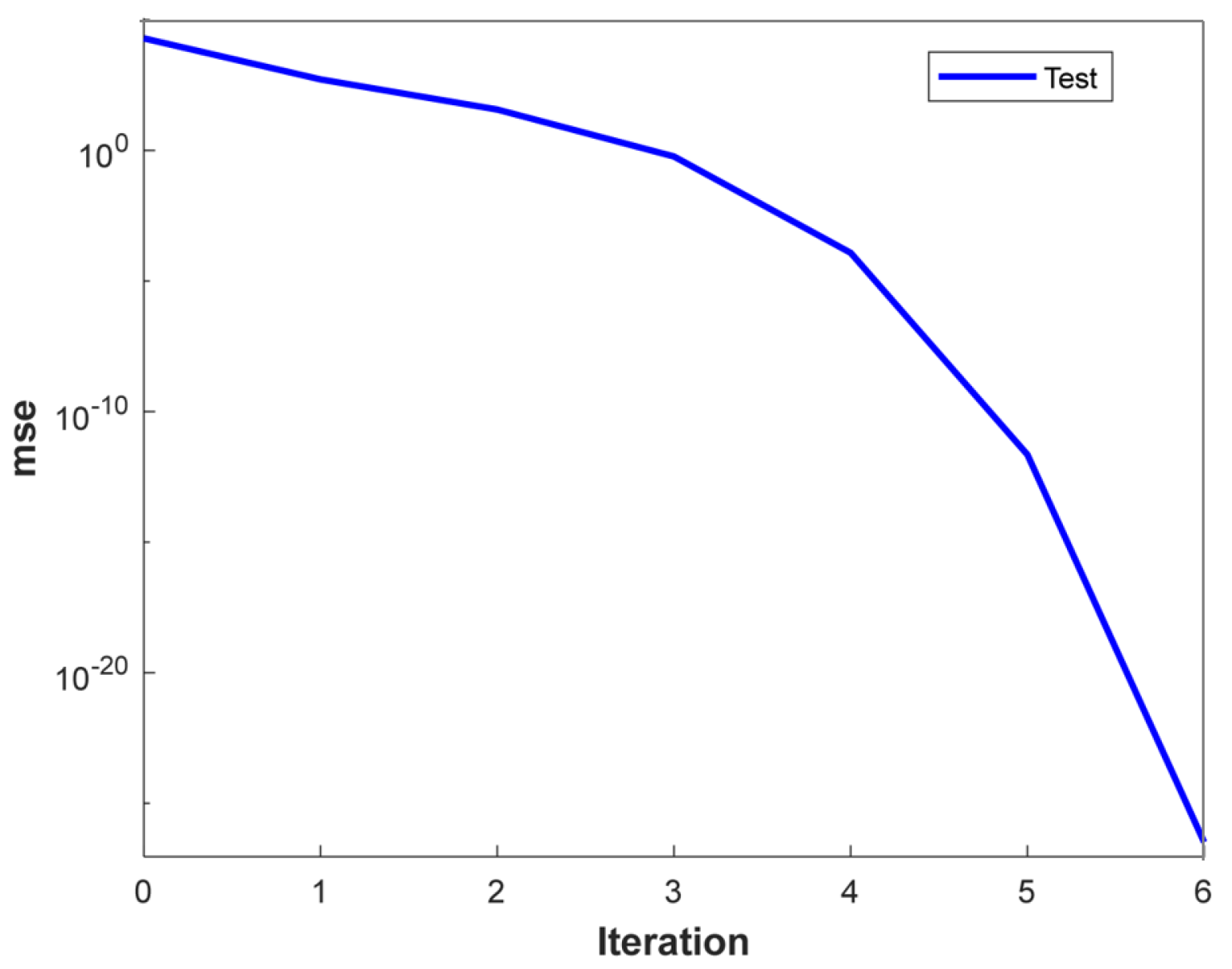
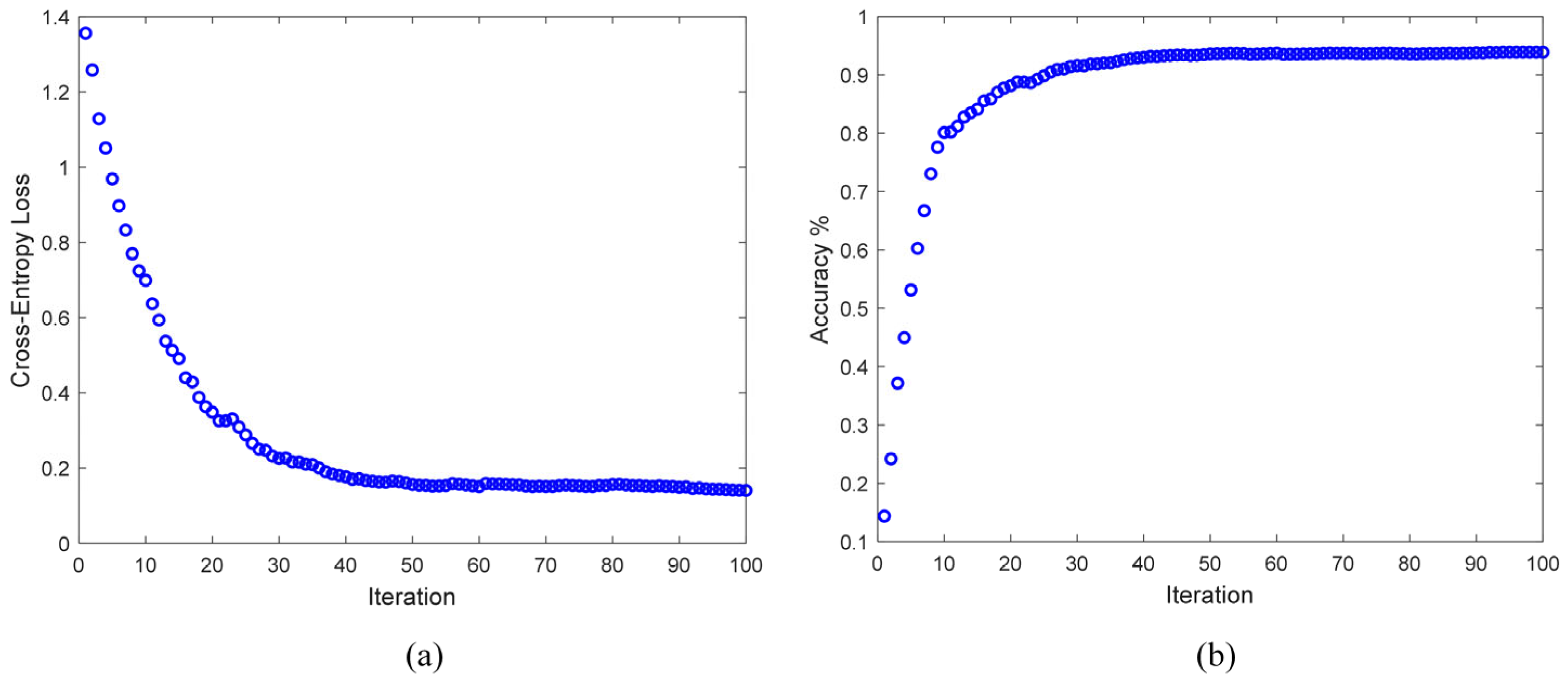
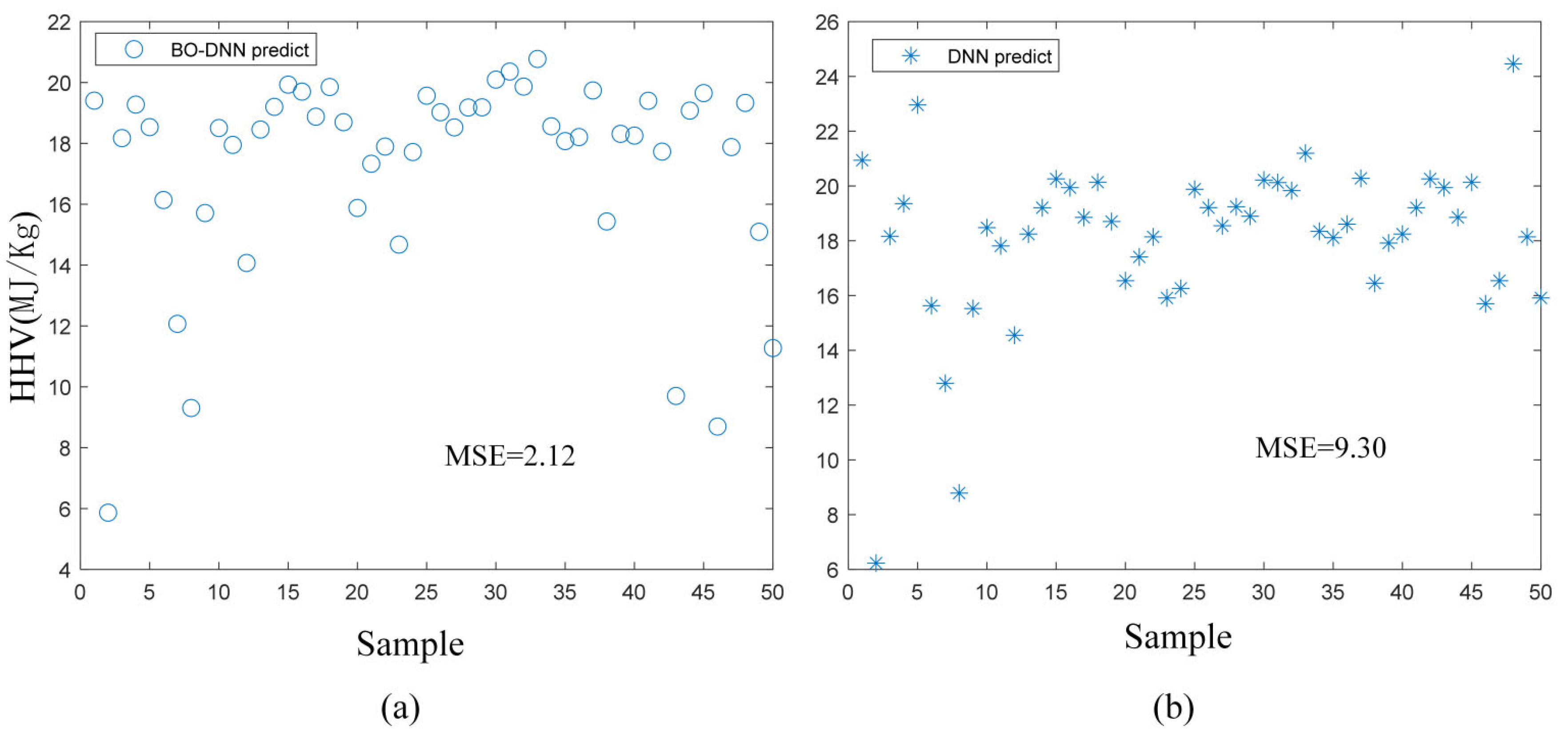
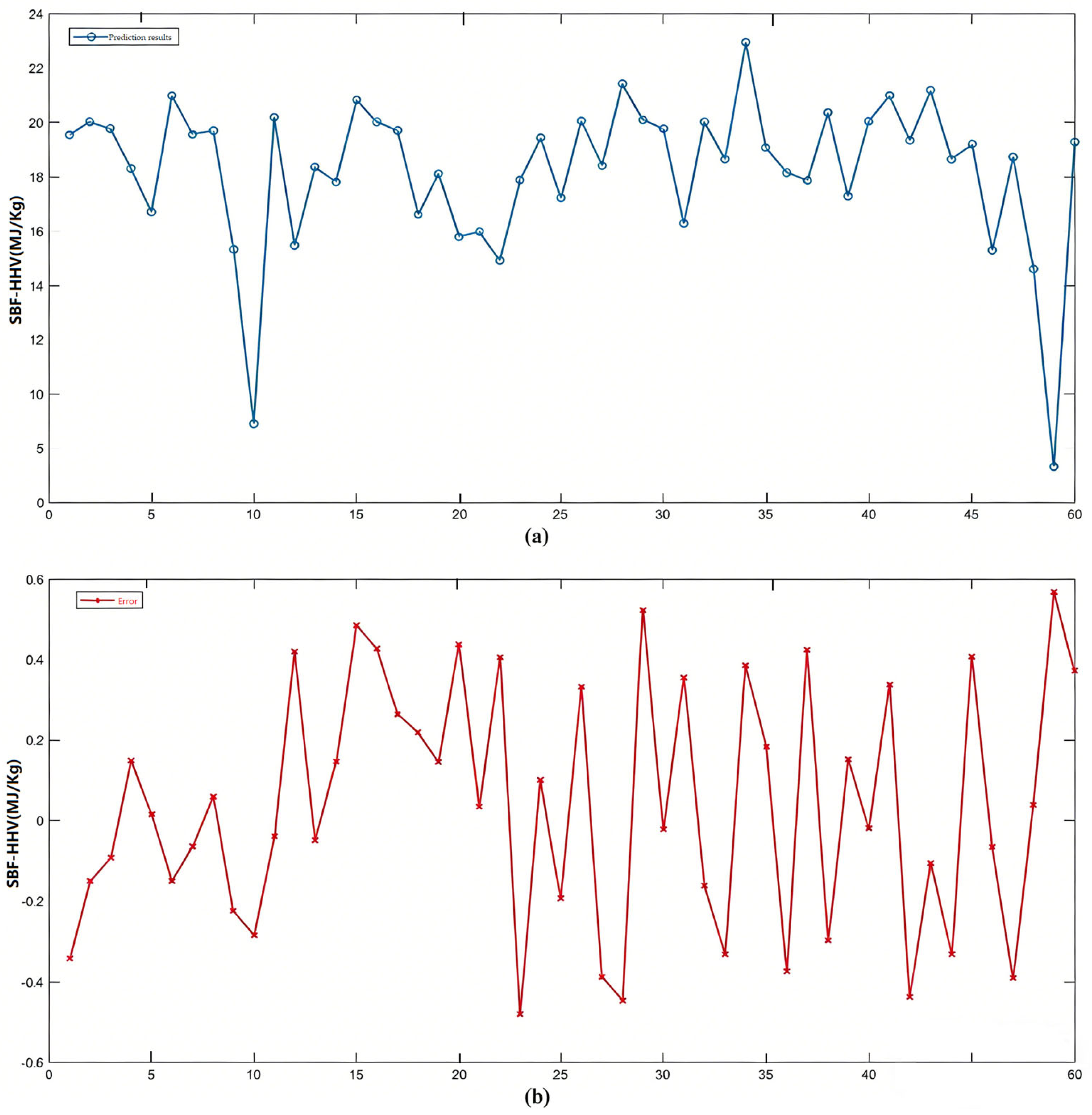
4.2. Performance Evaluation of the BO-DNN Model
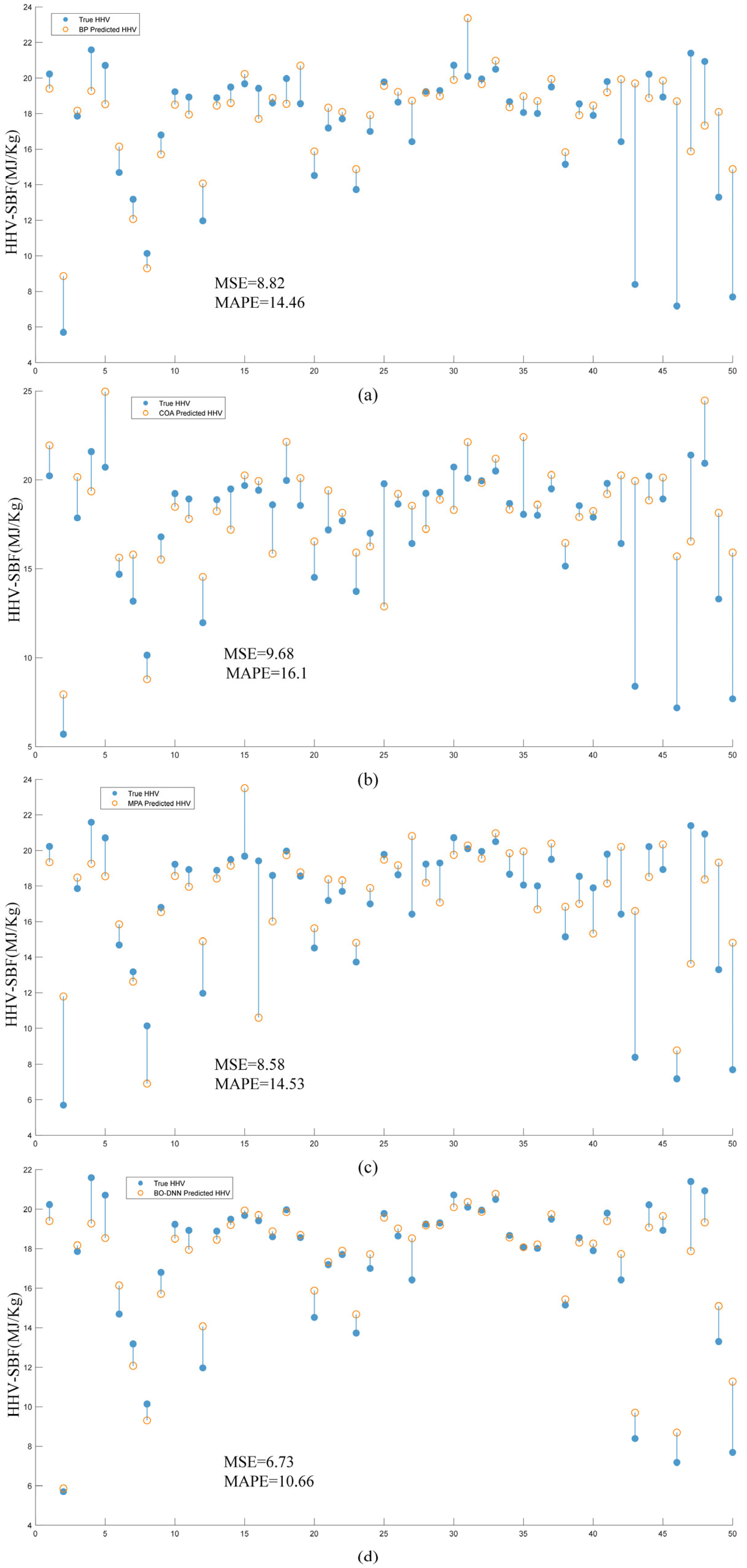
4.3. Experimental Solution and Analysis
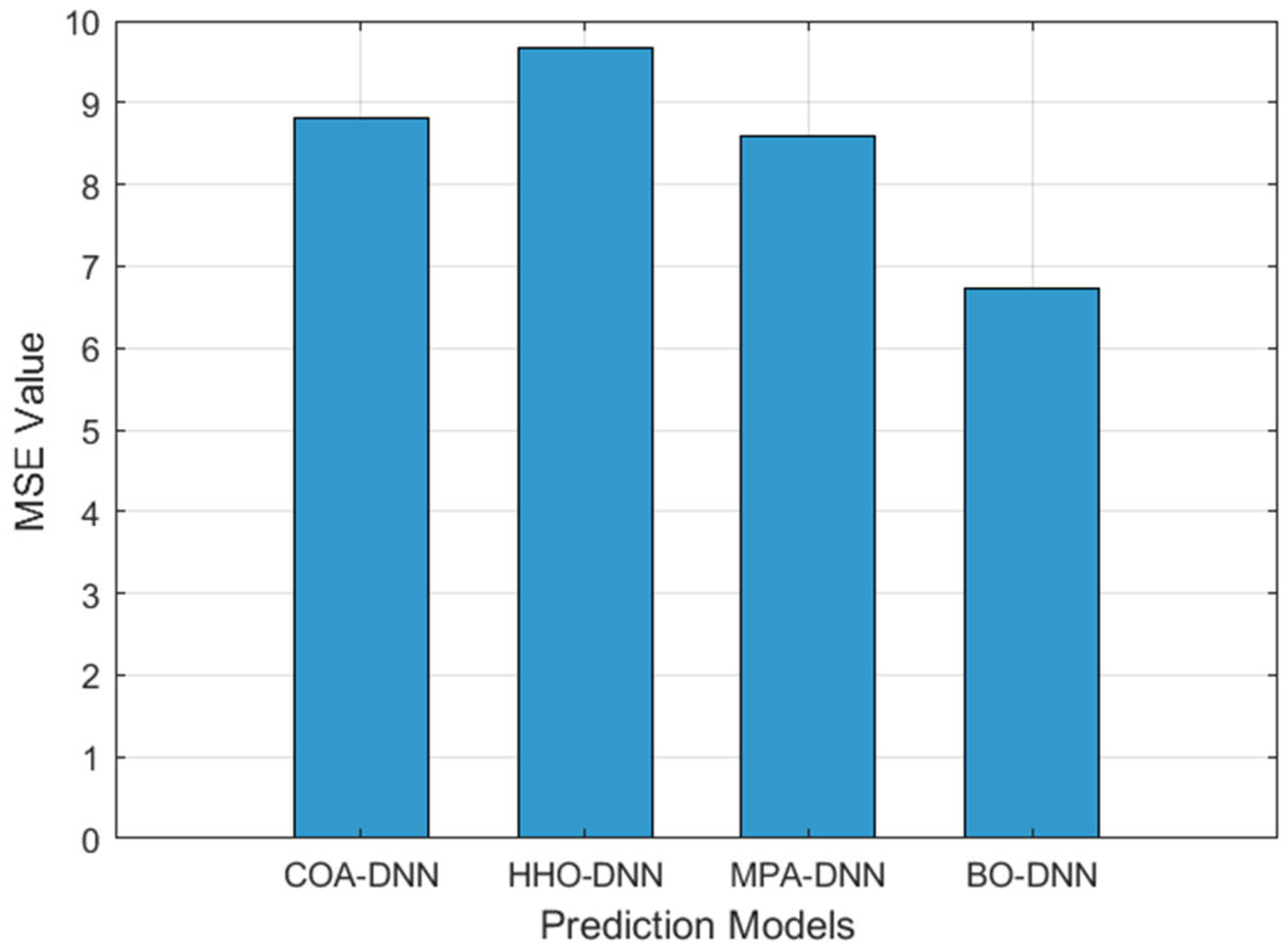
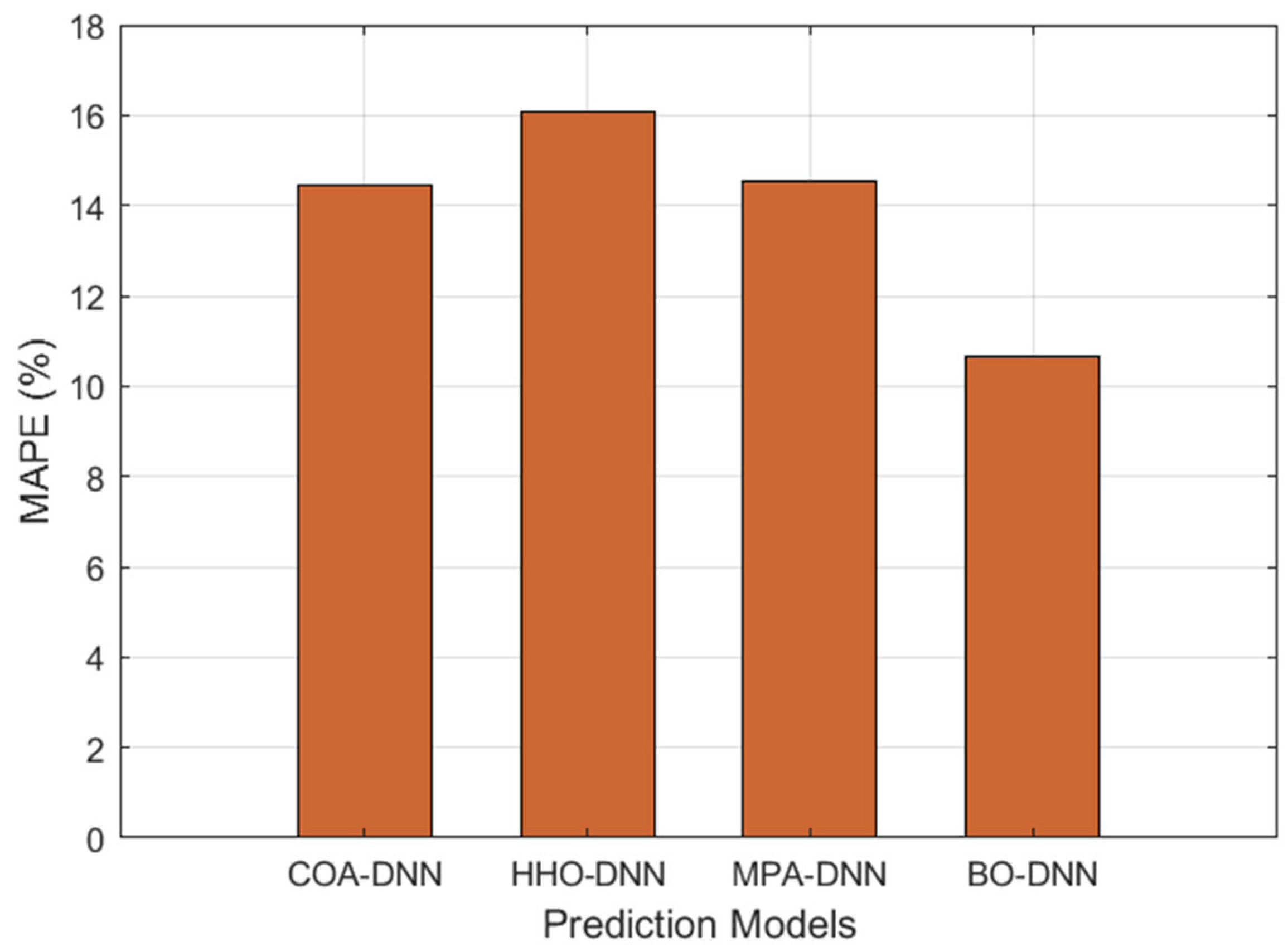
4.4. Comparison with Other Intelligent Optimization Algorithms
4.5. Practical Application of the BO-DNN Model
- (1)
- Construction of a dataset based on multi-source feature fusion
- (2)
- Bayesian optimization hyperparameter automatic tuning strategy for HHV prediction
- (3)
- Significant performance improvement achieved on HHV prediction tasks
5. Discussion
6. Conclusions
- (1)
- By integrating multi-source data, including chemical elements, proximate analysis parameters, and biochemical components, a composite feature set is constructed that systematically characterizes the influencing factors of the HHV-SBF.
- (2)
- The Bayesian optimization algorithm is employed to automatically adjust hyperparameters of the DNN, such as the learning rate and batch size. This overcomes the inefficiency of traditional parameter tuning methods and significantly improves the model’s convergence speed and stability.
- (3)
- Results indicate that the coefficient of determination (R2) of the BO-DNN model reaches 92.6%, showing significant improvement compared to traditional DNN and other intelligent algorithms. Furthermore, the model maintains small error fluctuations on the external validation set, demonstrating good precision and generalization capability.
Author Contributions
Funding
Institutional Review Board Statement
Informed Consent Statement
Data Availability Statement
Conflicts of Interest
References
- Li, H.; Yang, S.; Zhao, W.; Xu, Z.; Zhao, S.; Liu, X. Prediction of the physicochemical properties of woody biomass using linear prediction and artificial neural networks. Energy Sources Part A Recovery Util. Environ. Eff. 2016, 38, 1569–1573. [Google Scholar] [CrossRef]
- Bartocci, P.; Zampilli, M.; Bidini, G.; Fantozzi, F. Hydrogen-rich gas production through steam gasification of charcoal pellet. Appl. Therm. Eng. 2018, 132, 817–823. [Google Scholar] [CrossRef]
- Faramarzi, A.; Heidarinejad, M.; Mirjalili, S.; Gandomi, A.H. Marine Predators Algorithm: A nature-inspired metaheuristic. Expert Syst. Appl. 2020, 152, 113377. [Google Scholar] [CrossRef]
- Shi, Z.; Ferrari, G.; Ai, P.; Marinello, F.; Pezzuolo, A. Artificial Intelligence for Biomass Detection, Production and Energy Usage in Rural Areas: A review of Technologies and Applications. Sustain. Energy Technol. Assess. 2023, 60, 103548. [Google Scholar] [CrossRef]
- Kim, S.U.; Yun, J.S.; Ri, J.S.; Hong, K.I.; Chon, O.S.; Ri, J.H.; Ri, J.M. Improvement of HHV prediction model of biomass based on the ultimate analysis. J. Renew. Sustain. Energy 2021, 13, 053101. [Google Scholar] [CrossRef]
- Maksimuk, Y.; Antonava, Z.; Krouk, V.; Korsakova, A.; Kursevich, V. Prediction of higher heating value (HHV) based on the structural composition for biomass. Fuel 2021, 299, 120860. [Google Scholar] [CrossRef]
- Ascher, S.; Watson, I.; You, S. Machine learning methods for modelling the gasification and pyrolysis of biomass and waste. Renew. Sustain. Energy Rev. 2022, 155, 111902. [Google Scholar] [CrossRef]
- Abdollahi, S.A.; Ranjbar, S.F.; Razeghi Jahromi, D. Applying feature selection and machine learning techniques to estimate the biomass higher heating value. Sci. Rep. 2023, 13, 16093. [Google Scholar] [CrossRef]
- Onsree, T.; Tippayawong, N.; Phithakkitnukoon, S.; Lauterbach, J. Interpretable machine-learning model with a collaborative game approach to predict yields and higher heating value of torrefied biomass. Energy 2022, 249, 123676. [Google Scholar] [CrossRef]
- Aghel, B.; Yahya, S.I.; Rezaei, A.; Alobaid, F. A dynamic recurrent neural network for predicting higher heating value of biomass. Int. J. Mol. Sci. 2023, 24, 5780. [Google Scholar] [CrossRef]
- Güleç, F.; Pekaslan, D.; Williams, O.; Lester, E. Predictability of higher heating value of biomass feedstocks via proximate and ultimate analyses–A comprehensive study of artificial neural network applications. Fuel 2022, 320, 123944. [Google Scholar] [CrossRef]
- Jakšić, O.; Jakšić, Z.; Guha, K.; Silva, A.G.; Laskar, N.M. Comparing artificial neural network algorithms for prediction of higher heating value for different types of biomass. Soft Comput. Fusion Found. Methodol. Appl. 2023, 27, 5933–5950. [Google Scholar] [CrossRef]
- Ghugare, S.B.; Tiwary, S.; Elangovan, V.; Tambe, S.S. Prediction of higher heating value of solid biomass fuels using artificial intelligence formalisms. Bioenergy Res. 2014, 7, 681–692. [Google Scholar] [CrossRef]
- Veza, I.; Panchal, H.; Paristiawan, P.A.; Idris, M.; Fattah, I.R.; Putra, N.R.; Silambarasan, R. Improved prediction accuracy of biomass heating value using proximate analysis with various ANN training algorithms. Results Eng. 2022, 16, 100688. [Google Scholar] [CrossRef]
- Kandpal, S.; Tagade, A.; Sawarkar, A.N. Critical insights into ensemble learning with decision trees for the prediction of biochar yield and higher heating value from pyrolysis of biomass. Bioresour. Technol. 2024, 411, 131321. [Google Scholar] [CrossRef]
- Hu, Z.J.; Su, R.; Ling, K.V.; Guo, Y.; Ma, R.J. Resilient event-triggered MPC for load frequency regulation with wind turbines under false data injection attacks. IEEE Trans. Autom. Sci. Eng. 2024, 21, 7073–7083. [Google Scholar] [CrossRef]
- Hu, Z.J.; Ma, R.J. Adaptive event-triggered tracking control via switching functions. Automatica 2026, 185, 112813. [Google Scholar] [CrossRef]
- Yin, C.Y. Prediction of higher heating values of biomass from proximate and ultimate analyses. Fuel 2011, 90, 1128–1132. [Google Scholar] [CrossRef]
- Esteves, B.; Sen, U.; Pereira, H. Influence of chemical composition on heating value of biomass: A review and bibliometric analysis. Energies 2023, 16, 4226. [Google Scholar] [CrossRef]
- Friedl, A.; Padouvas, E.; Rotter, H.; Varmuza, K. Prediction of heating values of biomass fuel from elemental composition. Anal. Chim. Acta 2005, 544, 191–198. [Google Scholar] [CrossRef]
- Channiwala, S.A.; Parikh, P.P. A unified correlation for estimating HHV of solid, liquid and gaseous fuels. Fuel 2002, 81, 1051–1063. [Google Scholar] [CrossRef]
- Sheng, C.; Azevedo, J.L.T. Estimating the higher heating value of biomass fuels from basic analysis data. Biomass Bioenergy 2005, 28, 499–507. [Google Scholar] [CrossRef]
- Jenkins, B.M.; Ebeling, J.M. Correlation of Physical and Chemical Properties of Terrestrial Biomass with Conversion. In Proceedings of the IGT symposium: Energy from Biomass and Waste IX, Lake Buena Vista, FL, USA, 28 January–1 February 1985. [Google Scholar]
- Institute of Gas Technology; United States Division of Coal Conversion. Coal Conversion Systems: Technical Data Book; US Government Printing Office: Washington, DC, USA, 1978.
- Beckman, D.; Elliott, D.; Gevert, B.; Hörnell, C.; Kjellström, B.; Östman, A.; Solantausta, Y.; Tulenheimo, V. Techno-Economic Assessment of Selected Biomass Liquefaction Processes; Technical Research Centre of Finland: Espoo, Finland, 1990. [Google Scholar]
- Wang, R.; Zha, B. A research on the optimal design of BP neural network based on improved GEP. Int. J. Pattern Recognit. Artif. Intell. 2019, 33, 1959007. [Google Scholar] [CrossRef]
- Chen, J.; Dong, C.; He, G.; Zhang, X. A method for indoor Wi-Fi location based on improved back propagation neuralNetwork. Turk. J. Electr. Eng. Comput. Sci. 2019, 27, 2511–2525. [Google Scholar] [CrossRef]
- Ding, S.; Su, C.; Yu, J. An optimizing BP neural network algorithm based on genetic algorithm. Artif. Intell. Rev. 2011, 36, 153–162. [Google Scholar] [CrossRef]
- Greenhill, S.; Rana, S.; Gupta, S.; Vellanki, P.; Venkatesh, S. Bayesian optimization for adaptive experimental design: A review. IEEE Access 2020, 8, 13937–13948. [Google Scholar] [CrossRef]
- Springenberg, J.T.; Klein, A.; Falkner, S.; Hutter, F. Bayesian optimization with robust Bayesian neural networks. Adv. Neural Inf. Process. Syst. 2016, 29. [Google Scholar]
- Maraş, A.; Erol, Ç. Emerging Trends in Classification with Imbalanced Datasets: A Bibliometric Analysis of Progression. Bilişim Teknol. Derg. 2022, 15, 275–288. [Google Scholar] [CrossRef]
- Parikh, J.; Channiwala, S.A.; Ghosal, G.K. A correlation for calculating HHV from proximate analysis of solid fuels. Fuel 2005, 84, 487–494. [Google Scholar] [CrossRef]
- Zhao, C.; Lu, X.; Zhang, Y. Prediction of the higher heating value of biomass based on multiple classification methods. Biomass Convers. Biorefin. 2024, 15, 5183–5191. [Google Scholar] [CrossRef]





| No. | Equation | References |
|---|---|---|
| 1 | HHV = 3.55 C2 − 232 C − 1230 H + 51.2 × H + 131 N + 2060 O | Friedl [20] |
| 2 | HHV = 0.34191 C + 1.1783 H + 0.1005 S − 0.1034 O − 0.0151 N | Channiwala [21] |
| 3 | HHV = −1.3675 + 0.3137 C + 0.7009 H + 0.0318 O | Sheng [22] |
| 4 | HHV = −0.763 + 0.301 C + 0.525 H + 0.064 O | Jenkins [23] |
| 5 | HHV = 0.341 C + 1.323 H + 0.0685 − 0.0153 A − 0.1194(O + N) | IGT [24] |
| 6 | HHV = 0.352 C + 0.944 H + 0.105(S − O) | Beckman [25] |
Disclaimer/Publisher’s Note: The statements, opinions and data contained in all publications are solely those of the individual author(s) and contributor(s) and not of MDPI and/or the editor(s). MDPI and/or the editor(s) disclaim responsibility for any injury to people or property resulting from any ideas, methods, instructions or products referred to in the content. |
© 2026 by the authors. Licensee MDPI, Basel, Switzerland. This article is an open access article distributed under the terms and conditions of the Creative Commons Attribution (CC BY) license.
Share and Cite
Feng, Y.; Xu, Q.; Li, C. A Novel Intelligent Prediction Model for Higher Heating Value of Sustainable Solid Biomass Fuel Based on Bayesian Optimized Deep Neural Network. Sustainability 2026, 18, 1921. https://doi.org/10.3390/su18041921
Feng Y, Xu Q, Li C. A Novel Intelligent Prediction Model for Higher Heating Value of Sustainable Solid Biomass Fuel Based on Bayesian Optimized Deep Neural Network. Sustainability. 2026; 18(4):1921. https://doi.org/10.3390/su18041921
Chicago/Turabian StyleFeng, Yaoxun, Qing Xu, and Changqing Li. 2026. "A Novel Intelligent Prediction Model for Higher Heating Value of Sustainable Solid Biomass Fuel Based on Bayesian Optimized Deep Neural Network" Sustainability 18, no. 4: 1921. https://doi.org/10.3390/su18041921
APA StyleFeng, Y., Xu, Q., & Li, C. (2026). A Novel Intelligent Prediction Model for Higher Heating Value of Sustainable Solid Biomass Fuel Based on Bayesian Optimized Deep Neural Network. Sustainability, 18(4), 1921. https://doi.org/10.3390/su18041921