Article

FinTech Adoption and ESG Performance in MENA Banks: The Mediating Role of Corruption Risk

1
Department of Banking and Financial Sciences, Business School, The Hashemite University, Zarqa 13133, Jordan
2
Jadara Research Center, Jadara University, Irbid 21110, Jordan
3
Business Faculty, Amman Arab University, Amman 11953, Jordan
*
Authors to whom correspondence should be addressed.
Sustainability 2026, 18(4), 1887; https://doi.org/10.3390/su18041887
Submission received: 11 January 2026 / Revised: 4 February 2026 / Accepted: 7 February 2026 / Published: 12 February 2026

Abstract

FinTech adoption is increasingly viewed as a catalyst for sustainable finance, yet empirical evidence on how and under what conditions it enhances environmental, social, and governance (ESG) performance remains mixed, particularly in emerging economies. This study examines the relationship between FinTech adoption and ESG performance in MENA banks, explicitly modeling corruption risk as an internal governance transmission channel. Using a panel of 152 listed banks across 11 MENA countries over the period 2013–2023 and a novel bank-level FinTech Adoption Index constructed through textual analysis of annual reports, we employ fixed-effects and dynamic System GMM estimations to examine both direct and indirect effects. The results show that FinTech adoption is positively associated with ESG performance. More importantly, corruption risk partially mediates this relationship, indicating that FinTech enhances sustainability outcomes not only through improved disclosure and transparency, but also by strengthening internal governance and constraining integrity-related risks. The indirect effect is economically meaningful, underscoring the role of digital governance mechanisms in institutionally constrained settings. Pillar-level analysis reveals stronger effects for the governance and social dimensions, while environmental effects are comparatively weaker. Additional robustness analyses confirm the persistence of these findings across institutional settings and crisis periods. These findings contribute to the FinTech–ESG literature by identifying corruption risk as a key governance mechanism and provide policy-relevant insights for regulators and banks seeking to leverage digital transformation to achieve substantive sustainability outcomes in emerging banking systems.

1. Introduction

Recent advances in financial technology (FinTech) are fundamentally reshaping the global banking industry by transforming how financial services are delivered, monitored, and governed. Beyond its well-documented effects on operational efficiency, competition, and financial inclusion, FinTech has increasingly been recognized as a potential enabler of sustainable banking practices. Through the digitization of transactions, real-time data analytics, artificial intelligence (AI), and automated compliance systems, FinTech enhances transparency, reduces information asymmetry, and strengthens internal control mechanisms—key foundations for banks’ environmental, social, and governance (ESG) performance and long-term sustainability [1,2,3].
Accordingly, FinTech is no longer viewed solely as an efficiency-enhancing technology, but increasingly as a digital governance capability that reshapes banks’ information environments, monitoring structures, and accountability mechanisms. Consistent with early conceptual work [1] and more recent empirical evidence [4,5], FinTech adoption is increasingly recognized as a governance-relevant organizational capability that can enhance corporate ESG performance, particularly in emerging markets where traditional governance mechanisms tend to be weaker.
Despite growing scholarly and policy interest, empirical evidence on the FinTech–ESG nexus remains fragmented and, in some cases, contradictory across institutional contexts [6]. While several studies document that FinTech adoption improves ESG performance through enhanced disclosure quality, risk monitoring, and stakeholder engagement—primarily in developed or institutionally strong environments [6,7,8]—other contributions report weak, heterogeneous, or statistically insignificant effects, especially in emerging and institutionally constrained economies [9,10]. These mixed findings suggest that FinTech adoption does not automatically translate into improved sustainability outcomes. Rather, its effectiveness depends on governance structures that determine whether digital technologies are deployed symbolically or embedded substantively within organizational decision-making processes. Moreover, prior evidence indicates that the strength of the FinTech–ESG relationship may vary across ESG dimensions, reflecting differences in how environmental, social, and governance outcomes respond to digital transformation.
Although recent studies report a positive association between FinTech development and ESG performance (e.g., [5,11]), they primarily emphasize channels such as financing constraints, disclosure efficiency, or digital inclusion. As a result, the internal governance mechanisms through which FinTech adoption translates into credible ESG improvements—particularly in banking systems operating under weak institutional environments—remain insufficiently explored.
This unresolved issue is especially salient in the Middle East and North Africa (MENA) region. Banks represent a particularly relevant empirical setting because their ESG performance is closely tied to governance integrity, regulatory compliance, and trust-based intermediation, making them uniquely sensitive to corruption-related risks. Banking systems across MENA countries are undergoing accelerated digital transformation, supported by national digitalization strategies and substantial investments in financial innovation. At the same time, the region continues to face persistent governance challenges, including regulatory fragmentation, uneven enforcement capacity, and elevated corruption risk [9]. Consequently, sustainability outcomes in MENA banking remain highly uneven, despite rising ESG commitments and increasing FinTech adoption [10]. This coexistence of rapid digitalization and enduring governance weaknesses creates a distinctive institutional context in which the sustainability implications of FinTech remain theoretically ambiguous and empirically underexplored. Accordingly, a critical policy-relevant question emerges: can FinTech meaningfully enhance ESG performance in environments where governance weaknesses undermine the credibility and effectiveness of sustainability initiatives?
Corruption risk represents a particularly binding constraint in this context. In the banking sector, corruption risk manifests through weak internal controls, opaque decision-making processes, and rent-seeking behavior, which erode stakeholder trust, distort managerial incentives, and undermine the reliability of sustainability disclosures [12,13,14]. Prior research consistently shows that corruption weakens governance structures and limits the effectiveness of ESG initiatives, particularly in emerging markets characterized by institutional fragility and limited enforcement capacity [15,16,17]. Although digital technologies have the potential to improve traceability, accountability, and real-time monitoring, their sustainability benefits are unlikely to fully materialize when corruption-related governance failures persist. Yet, existing research provides limited evidence on whether—and through which internal governance mechanisms—FinTech adoption can mitigate corruption risk and translate digital transformation into substantive ESG improvements, particularly within banking systems operating under institutional constraints.
Against this backdrop, this study examines whether FinTech adoption enhances ESG performance in MENA banks and whether this relationship operates through a reduction in corruption risk. Using bank-level data and a multi-method panel estimation framework combining fixed-effects models, formal mediation analysis interpreted as a governance transmission mechanism, and dynamic system GMM estimation, we provide robust evidence that FinTech adoption is positively associated with ESG performance and that this relationship is partially mediated by lower corruption risk. By examining environmental, social, and governance pillars separately, the study further identifies the channels through which digital transformation most strongly contributes to sustainability outcomes.
Overall, the findings indicate that FinTech functions not merely as a technological innovation, but as an internal digital governance tool that strengthens transparency, accountability, and institutional integrity. By explicitly identifying corruption risk as a key governance transmission channel, this study contributes to the sustainability, corporate governance, and digital finance literature and offers policy-relevant insights for regulators seeking to align FinTech strategies with credible ESG implementation and broader sustainable development objectives in institutionally constrained banking environments.

2. Literature Review

2.1. FinTech and ESG Performance in Banking

The rapid diffusion of FinTech has transformed banking operations by enhancing efficiency, transparency, and information processing. Beyond operational improvements, recent studies increasingly conceptualize FinTech as a strategic enabler of sustainable finance and ESG performance. Digital banking platforms, artificial intelligence, big data analytics, and blockchain technologies improve data availability, monitoring capacity, and stakeholder engagement—key mechanisms through which banks may enhance ESG outcomes [1,2,18]. Importantly, emerging evidence suggests that these technologies reshape banks’ internal governance and risk-management architectures by strengthening oversight and accountability, rather than merely improving operational efficiency [4,19].
Empirical research generally supports a positive association between FinTech adoption and ESG performance in the banking sector, particularly in institutionally strong environments [16,17]. For example, studies on European banks document that higher FinTech intensity is associated with superior ESG performance and improved sustainability disclosure quality [5,6]. Similarly, firm-level evidence from China indicates that digital finance enhances ESG outcomes through innovation, improved information disclosure, and reduced agency costs [8,18]. More recent cross-country and bank-level studies further suggest that FinTech-driven digitalization can mitigate governance frictions and improve ESG credibility by strengthening monitoring mechanisms and reducing opportunistic behavior [5,20].
However, this relationship is not unconditional. A growing body of research reports mixed, heterogeneous, and context-dependent results. Studies focusing on banking performance show that FinTech adoption may simultaneously improve efficiency and capital adequacy while exerting pressure on profitability or asset quality, reflecting intensified competition and adjustment costs [7,19]. In sustainability-focused research, several studies caution that FinTech adoption alone does not guarantee ESG improvements, particularly in environments characterized by weak governance, limited regulatory enforcement, and accountability deficits [4,6]. Evidence from MENA and GCC banking systems further highlights that governance quality, risk culture, and institutional enforcement critically shape whether FinTech adoption translates into genuine sustainability gains [21,22,23]. Consistent with this view, prior research shows that FinTech adoption tends to strengthen governance-related ESG dimensions, while its effects on environmental and social pillars remain uneven or highly context-specific [20,24].
Taken together, these findings indicate that FinTech does not automatically translate into improved sustainability performance. Rather, its ESG effects depend critically on institutional quality, governance effectiveness, and enforcement mechanisms. This insight points to the importance of examining the internal governance channels through which FinTech influences ESG outcomes, rather than focusing solely on average or aggregate effects.
While early studies primarily emphasized a direct positive link between FinTech adoption and ESG performance, more recent research has begun to explore the underlying governance mechanisms involved. These studies suggest that FinTech influences ESG outcomes through interconnected channels such as easing financing constraints, increasing stakeholder scrutiny, and reducing superficial ESG practices such as greenwashing [7,8]. Nevertheless, most existing research stops short of explicitly modeling integrity-related governance risks—such as corruption risk—as a formal transmission mechanism, particularly in banking systems operating under institutional constraints.
Finally, despite the expanding FinTech–ESG literature, many studies rely on aggregate country-level digitalization indicators or narrow single-proxy measures of FinTech activity, which may obscure substantial heterogeneity in banks’ actual digital engagement [5]. This limitation is especially relevant in banking, where digital transformation strategies differ markedly across institutions operating within the same regulatory environment [3]. Recent studies therefore emphasize the importance of bank-level FinTech measures that capture the intensity and strategic depth of digital adoption [4,25], providing a more appropriate foundation for identifying governance-related sustainability effects.

2.2. ESG Performance and Institutional Challenges in MENA Banking

The MENA region provides a distinctive institutional context for examining ESG dynamics in banking. While ESG awareness, reporting initiatives, and sustainability commitments have increased across the region, ESG adoption and performance remain uneven and highly heterogeneous across countries and banks [26,27]. Prior studies show that ESG outcomes in MENA banking are shaped not only by firm-level characteristics such as size, ownership structure, and profitability, but also—crucially—by broader institutional conditions, including regulatory quality, governance effectiveness, and enforcement capacity [11,28].
Empirical evidence further suggests that ESG engagement among MENA banks is often positively associated with size and market visibility, but exhibits mixed and sometimes weak relationships with profitability and long-term value creation. Several studies interpret ESG adoption in the region as partly driven by legitimacy-seeking behavior consistent with institutional theory, rather than by deep integration into banks’ internal governance and risk-management systems [12,29]. As a result, symbolic ESG disclosure, selective compliance, and uneven implementation across ESG pillars remain prevalent in environments characterized by fragmented regulation and weak oversight.
A central institutional challenge in this context is corruption risk. Prior research documents that weak regulatory enforcement, governance fragmentation, and corruption significantly undermine the credibility and effectiveness of ESG initiatives in MENA economies [30]. In the banking sector, corruption risk manifests through opaque decision-making processes, weak internal controls, and limited accountability, which erode stakeholder trust and weaken the informational value of ESG disclosures. Unlike developed markets—where ESG frameworks are embedded within strong legal systems and supported by effective monitoring mechanisms [21]—many MENA banking systems operate under institutional constraints that limit the direct sustainability payoff of both ESG adoption and technological innovation [11,13].
Importantly, despite rapid digital transformation and substantial investment in FinTech across the region, systematic bank-level evidence on how FinTech adoption interacts with these institutional challenges remains extremely limited. Existing MENA-focused studies tend to examine ESG performance, digital transformation, or governance quality in isolation, leaving unanswered questions about whether FinTech can function as an internal governance tool capable of mitigating institutional weaknesses—particularly corruption risk—and thereby enabling substantive ESG improvements. This gap underscores the need for research that explicitly links FinTech adoption, corruption risk, and ESG performance within the unique institutional setting of MENA banking systems.

2.3. Corruption Risk, Transparency, and ESG Performance

Corruption remains a persistent challenge in many emerging economies, including several MENA countries [13]. In the banking sector, corruption manifests through weak compliance systems, opaque decision-making processes, and ineffective internal controls, directly undermining ESG performance. Prior research consistently documents a negative association between corruption and sustainability outcomes, as corruption weakens governance structures, exacerbates information asymmetry, and reduces the credibility of ESG disclosures [14,29].
From an agency and institutional perspective, corruption amplifies managerial opportunism and enables symbolic ESG engagement to persist. Empirical evidence indicates that strong integrity, transparency, and accountability mechanisms are essential for translating ESG commitments into substantive outcomes [11]. In the absence of such mechanisms, sustainability practices risk becoming decoupled from actual organizational behavior, particularly in institutionally constrained environments.
Importantly, this literature implies that improvements in ESG performance require governance mechanisms capable of constraining integrity-related risks rather than merely expanding disclosure or sustainability rhetoric. This insight motivates the examination of corruption risk not as a peripheral control factor, but as a central transmission channel through which governance-enhancing tools may influence ESG outcomes in banking systems characterized by institutional weaknesses.

2.4. FinTech as an Internal Governance Mechanism

A growing body of literature highlights FinTech’s potential to mitigate corruption and integrity-related risks within financial institutions by strengthening internal governance structures. Through the digitization of transactions, automation of compliance procedures, and real-time data processing, FinTech reduces managerial discretion and limits opportunities for fraud, rent-seeking behavior, and opportunistic conduct. Technologies such as blockchain enhance transaction traceability, while artificial intelligence and big data analytics improve fraud detection, compliance monitoring, and supervisory oversight, thereby reinforcing transparency and accountability within banks [1,2].
Empirical evidence supports this governance-enhancing role of FinTech. Prior studies show that FinTech adoption improves transparency and reduces earnings management, indicating stronger internal discipline and higher reporting integrity [8]. Other research demonstrates that digital technologies enhance monitoring effectiveness, internal control quality, and risk governance in banking institutions, particularly in settings where traditional oversight mechanisms are weak or fragmented [19]. Recent evidence from MENA and GCC banking systems further suggests that FinTech adoption contributes to financial stability and risk containment by strengthening internal governance frameworks and mitigating governance failures [21,22].
Importantly, several studies indicate that the governance role of FinTech becomes more pronounced during periods of institutional stress or crisis. Evidence from the COVID-19 period shows that digital monitoring and FinTech-enabled systems help banks maintain control, manage risk, and constrain opportunistic behavior when conventional governance mechanisms are strained [31,32]. This crisis-based perspective reinforces the view that FinTech functions not merely as a productivity-enhancing innovation, but as an internal governance complement capable of substituting for weak external enforcement and mitigating integrity-related risks.
Taken together, this literature suggests that FinTech adoption may influence sustainability outcomes not only directly, but also indirectly by strengthening internal governance mechanisms that constrain corruption risk. This perspective provides a clear theoretical foundation for examining corruption risk as a key transmission channel through which FinTech adoption enhances ESG performance in banking systems operating under institutional constraints.

2.5. Corruption Risk as a Mediating Channel

Rather than implying a strict causal sequencing, corruption risk is conceptualized in this study as a governance transmission channel through which FinTech adoption reshapes banks’ information environments, monitoring incentives, and accountability structures. This mechanism-based perspective emphasizes how digital transformation alters internal governance conditions that shape the credibility and effectiveness of ESG practices, rather than asserting a deterministic causal order. This approach is consistent with recent evidence showing that FinTech-enabled digitalization reduces opportunistic behavior and ESG greenwashing by strengthening transparency, automation, and internal controls [24]. Despite growing interest in the FinTech–ESG nexus, most empirical studies continue to focus primarily on direct associations and devote limited attention to the governance mechanisms through which digital transformation translates into substantive sustainability outcomes.
It is therefore important to clarify how corruption risk differs from related channels such as transparency, compliance quality, or disclosure intensity. Transparency primarily reflects information availability and visibility, compliance quality captures the formal presence of rules, procedures, and monitoring units, and disclosure intensity reflects the volume of sustainability-related reporting [33,34,35,36]. However, in institutionally constrained settings such as the MENA region, these mechanisms may coexist with weak enforcement and fragmented governance, allowing symbolic compliance and selective disclosure to persist [12,37]. Importantly, corruption risk captures integrity-based governance failures rather than formal governance structures embedded in ESG scores, thereby mitigating concerns of mechanical overlap between the mediator and the dependent variable. In contrast, corruption risk captures a deeper, integrity-based governance failure—encompassing rent-seeking incentives, weak internal controls, and limited enforcement credibility—that directly undermines the substantive implementation of ESG practices [33]. Accordingly, corruption risk is expected to dominate these alternative channels in the MENA context because it represents a binding governance constraint that conditions whether transparency, compliance systems, and disclosure translate into credible sustainability outcomes rather than symbolic reporting [13].
Recent research increasingly emphasizes mediation-oriented explanations, demonstrating that FinTech can influence ESG performance through intermediate channels such as green finance development, innovation capacity, disclosure quality, and transparency [6,23]. However, corruption risk has received surprisingly limited attention as a central governance mechanism, particularly in the banking sector and in emerging or institutionally constrained regions [15]. In much of the existing literature, corruption is treated as a background country-level condition or a control variable rather than as an internal governance risk that can be shaped by organizational capabilities such as FinTech adoption.
Building on agency theory, institutional theory, and the resource-based view, this study conceptualizes corruption risk as a key internal governance channel linking FinTech adoption to ESG performance in MENA banks [21]. From an agency perspective, FinTech reduces information asymmetry and managerial discretion by enhancing traceability, automation, and real-time monitoring. From an institutional perspective, FinTech helps compensate for weak external enforcement by embedding governance and compliance functions directly within banks’ operational processes. From a resource-based view, FinTech adoption represents a strategic governance capability that enables banks to deploy digital resources to constrain integrity-related risks and support more credible ESG engagement.
This mediation framework is particularly relevant in the MENA context, where corruption remains a salient institutional constraint and ESG practices often risk becoming symbolic rather than substantive. By explicitly modeling corruption risk as a governance transmission channel, the study provides a more nuanced and theoretically grounded explanation of how and under what conditions FinTech adoption contributes to sustainable banking outcomes, rather than merely documenting whether such a relationship exists.
In summary, while existing literature establishes links between FinTech adoption, ESG performance, and governance quality, four important gaps remain. First, evidence on the FinTech–ESG relationship in banking remains mixed and highly context-dependent. Second, systematic bank-level studies focusing on MENA countries are scarce. Third, corruption risk is rarely conceptualized as an internal governance mechanism rather than a passive institutional background condition. Fourth, the mediating role of corruption risk in the FinTech–ESG nexus has not been systematically examined. This study addresses these gaps by analyzing MENA banks and explicitly modeling corruption risk as a governance transmission mechanism through which FinTech adoption influences ESG performance.
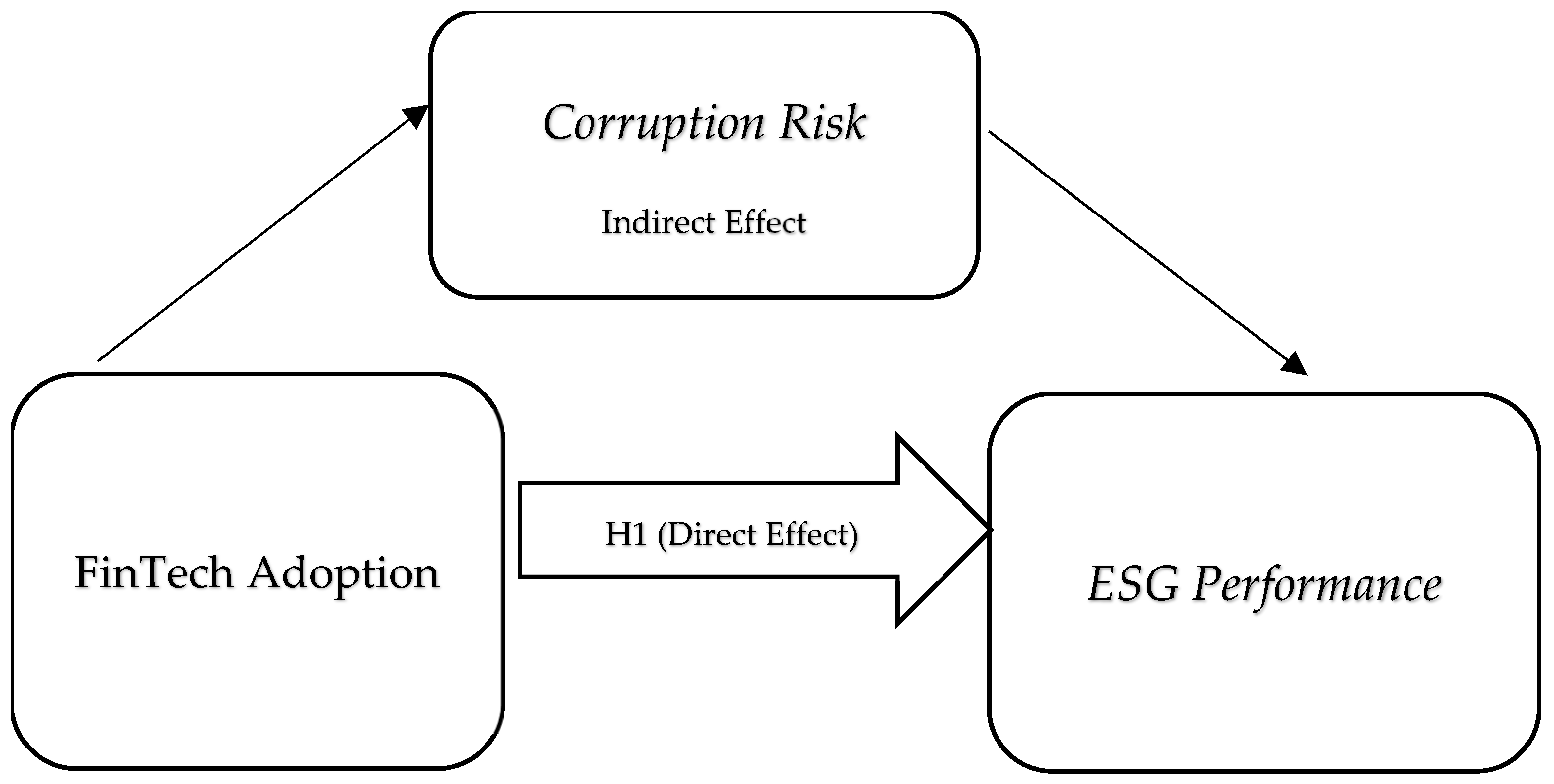
Figure 1 visually summarizes the hypothesized governance transmission mechanism, illustrating both the direct effect of FinTech adoption on ESG performance and the indirect effect operating through corruption risk. The conceptual framework depicts FinTech adoption as a substantive internal digital governance capability that strengthens transparency, monitoring, and compliance systems within banks. By reducing corruption and integrity-related risks, FinTech adoption facilitates more credible and effective ESG performance, particularly in institutionally constrained environments. The framework therefore allows for both a direct effect of FinTech adoption on ESG outcomes and an indirect effect operating through corruption risk as a governance transmission channel.
Building on the foregoing literature, the next section develops testable hypotheses that directly reflect the reviewed theoretical arguments and empirical evidence. In particular, the hypotheses formalize the proposed relationships between FinTech adoption, corruption risk, and ESG performance in MENA banks, translating the identified governance mechanisms into an empirically testable framework.

3. Hypothesis Development

3.1. FinTech Adoption and ESG Performance

Drawing directly on the theoretical arguments and empirical evidence reviewed in Section 2, recent literature increasingly recognizes FinTech as a potential enabler of sustainability in the banking sector by enhancing transparency, monitoring capacity, and information processing. Digital platforms, automated reporting systems, and advanced analytics improve disclosure quality and reduce information asymmetry, which are central to effective ESG performance [1,2]. Empirical evidence from institutionally strong environments generally supports a positive association between FinTech adoption and ESG outcomes, suggesting that digital transformation facilitates stakeholder engagement and governance effectiveness [5,6].
However, evidence from emerging and weak-governance environments indicates that FinTech adoption alone does not automatically translate into improved ESG performance. In such contexts, governance deficiencies, limited enforcement, and institutional fragility may constrain the sustainability benefits of digitalization [7,8]. These findings imply that FinTech contributes to ESG performance when it is strategically embedded within banks’ internal processes and governance frameworks.
From a resource-based view, FinTech can be conceptualized as an internal organizational capability that enhances transparency, accountability, and control mechanisms. When effectively integrated, FinTech strengthens governance quality and supports more credible sustainability outcomes, even in institutionally constrained settings. Accordingly, this study proposes:
H1. 
FinTech adoption is positively associated with ESG performance in MENA banks.

3.2. FinTech Adoption and Corruption Risk

From an agency theory perspective, corruption risk arises from information asymmetry, weak monitoring, and excessive managerial discretion. In banking institutions, these conditions facilitate opportunistic behavior, regulatory non-compliance, and opaque decision-making. FinTech adoption can mitigate such governance failures by digitizing transactions, automating compliance processes, and enabling real-time monitoring and traceability [2,3].
Empirical studies provide support for this governance-enhancing role of FinTech. Evidence shows that digital technologies improve transparency, reduce earnings management, and strengthen internal control systems in financial institutions [8,19]. These effects are particularly relevant in environments characterized by weak external enforcement, where internal digital governance mechanisms can substitute for formal institutional constraints. Accordingly, this study hypothesizes:
H2. 
FinTech adoption is negatively associated with corruption risk in MENA banks.

3.3. Corruption Risk and ESG Performance

Corruption risk undermines ESG performance by weakening governance structures, distorting managerial incentives, and reducing the credibility of sustainability disclosures. In banking, high corruption risk is associated with ineffective compliance systems, symbolic ESG engagement, and limited accountability [13]. Prior research consistently documents a negative relationship between corruption and sustainability outcomes, particularly in emerging economies with institutional fragility [12,29].
From both agency and institutional perspectives, corruption amplifies managerial opportunism and weakens stakeholder trust, preventing ESG commitments from translating into substantive outcomes. In such settings, sustainability practices risk becoming decoupled from actual organizational behavior. Therefore, this study proposes:
H3. 
Corruption risk is negatively associated with ESG performance in MENA banks.

3.4. The Mediating Role of Corruption Risk

Recent studies suggest that FinTech may influence ESG performance indirectly through intermediate channels such as transparency, innovation, and green finance [6,20]. However, corruption risk has received limited attention as a central mediating mechanism, particularly in the banking sector and in institutionally constrained regions such as MENA.
Building on agency theory, institutional theory, and the resource-based view, this study conceptualizes corruption risk as a key transmission channel through which FinTech adoption affects ESG performance. FinTech reduces corruption risk by strengthening transparency, monitoring, and internal controls, which in turn facilitates more credible and substantive ESG engagement [27]. In the MENA context—where corruption remains a salient institutional constraint—this mediation framework provides a more nuanced explanation of how digital transformation contributes to sustainable banking. Accordingly, this study hypothesizes:
H4. 
Corruption risk mediates the relationship between FinTech adoption and ESG performance in MENA banks.

4. Research Methodology

4.1. Sample Selection and Data Sources

The sample comprises 152 listed commercial banks operating across 11 MENA countries—Bahrain, Qatar, Palestine, Morocco, Egypt, the United Arab Emirates, Tunisia, Saudi Arabia, Jordan, Oman, and Kuwait—over the period 2013–2023. Commercial banks are selected due to their central role in financial intermediation, their early and intensive engagement in digital transformation, and their increasing exposure to sustainability- and governance-related regulatory pressures. Moreover, banks provide relatively standardized financial and governance disclosures, which enhances cross-country comparability in the MENA context.
Bank-level financial, governance, and ESG data are obtained from Refinitiv Eikon, which offers internationally comparable ESG scores, governance indicators, and financial statement information that are widely used in banking and sustainability research. Banks’ annual reports are manually collected from official bank websites and stock exchange portals to construct the bank-level FinTech Adoption Index, following disclosure-based approaches commonly applied in the FinTech–banking literature. Country-level macroeconomic and institutional variables, including GDP per capita and regulatory quality, are sourced from the World Bank databases.
The final dataset forms an unbalanced panel, reflecting the gradual and uneven adoption of ESG reporting and digital disclosure practices across MENA banks, particularly in the early years of the sample period. Prior to 2015, ESG engagement and FinTech-related transparency were largely voluntary, fragmented, and institution-specific in the region, resulting in incomplete coverage for some banks and years. This pattern is consistent with prior MENA-focused evidence documenting the delayed institutionalization of ESG reporting and governance disclosure practices in the banking sector [12,13,25,37]. Using an unbalanced panel therefore allows the analysis to maximize sample coverage, reduce survivorship bias, and preserve within-bank variation over time, rather than mechanically restricting the sample to later years.
All continuous variables are winsorized at the 1st and 99th percentiles to mitigate the influence of extreme observations, consistent with standard practice in governance and banking research. Variable definitions, measurement approaches, expected signs, and supporting references are summarized in Table 1.

4.2. Measurement of Variables

This subsection describes the construction of the dependent, independent, mediating, and control variables employed in the empirical analysis.

4.2.1. Dependent Variable: ESG Performance

ESG performance is measured using the Refinitiv ESG score, which captures banks’ sustainability performance across ESG dimensions. The score ranges from 0 to 100, with higher values indicating stronger ESG performance. The composite ESG score is employed to reflect overall sustainability engagement rather than isolated ESG pillars, consistent with prior ESG-focused banking and governance studies [34,35,36]. Using a standardized third-party ESG measure reduces subjectivity and enhances comparability across banks and countries [37].

4.2.2. Independent Variable: FinTech Adoption

Following recent bank-level FinTech–ESG studies, we construct a FinTech Adoption Index using textual analysis of annual reports. This approach has been validated in prior research [5], which shows that keyword-based FinTech indices capture institution-specific digital engagement more accurately than aggregate digitalization indicators. FinTech adoption is measured using a bank-level index developed for this study and constructed through systematic textual analysis of banks’ annual reports, allowing us to capture how digital technologies are integrated into banks’ core activities rather than relying on country-level proxies that may mask substantial within-country heterogeneity.
Following established practices in the FinTech and banking literature, the index is based on the annual frequency of predefined FinTech-related keywords, including digital banking, artificial intelligence, blockchain, big data analytics, mobile banking, electronic payments, cloud computing, and related digital finance applications [5,39]. Keyword selection followed a multi-step validation process: keywords were compiled from established FinTech and banking studies, cross-checked against industry and regulatory publications to ensure relevance to core banking technologies, and screened within annual reports to confirm their use in substantive discussions of digital strategy rather than isolated marketing statements.
An important distinction in the FinTech literature concerns symbolic versus substantive FinTech adoption. Symbolic adoption reflects superficial or reputational disclosure driven by signaling motives, whereas substantive adoption reflects sustained, multi-dimensional integration of digital technologies into banks’ operational, governance, and risk-management processes. To mitigate concerns related to symbolic disclosure, the FinTech Adoption Index captures frequency, breadth, and persistence of FinTech-related keywords over time. Depth is reflected in technological breadth, as banks referencing a wider range of FinTech applications are interpreted as exhibiting deeper digital integration, while persistence is captured through repeated multi-year references, which are less likely to reflect short-term signaling behavior [1,34,40]. Recent bank-level studies confirm that frequency-based and longitudinal textual indices provide informative proxies of underlying digital capabilities [7,34].
This firm-level measurement strategy reflects growing evidence that FinTech adoption is best assessed through bank-specific digital strategies, which vary substantially even among institutions operating within the same regulatory environment. Consistent with recent FinTech–ESG studies employing composite and text-based indices [5,20], the index therefore reduces the likelihood that short-term or purely symbolic disclosures drive the empirical results. Sensitivity checks using alternative keyword groupings and category-based sub-indices yield qualitatively similar results, indicating that the findings are not driven by a narrow subset of keywords or specific weighting choices.
While disclosure-based measures may be subject to narrative bias—particularly if banks with stronger ESG performance engage more actively in reporting—the technology-specific focus of the index, its longitudinal design, and its emphasis on persistence rather than isolated mentions help mitigate this concern.
Prior research suggests that internal FinTech integration enhances operational efficiency, strengthens monitoring capacity, and influences governance and risk-taking behavior in financial institutions. The finding that FinTech adoption significantly reduces corruption risk and improves ESG performance in subsequent analyses provides indirect validation that the index captures substantive digital integration rather than symbolic disclosure. To further mitigate concerns related to reverse causality and simultaneity, the FinTech Adoption Index is lagged by one year in all baseline specifications and incorporated into dynamic models, consistent with panel-data and System GMM approaches widely used in the FinTech and banking literature [30].

4.2.3. Mediating Variable: Corruption Risk

Corruption risk is conceptualized as a bank-level integrity and compliance risk reflecting exposure to governance failures, weak internal controls, and deficiencies in regulatory compliance rather than voluntary disclosure practices alone. Consistent with recent governance and ESG studies in banking and emerging markets, corruption risk is proxied using Refinitiv governance controversy indicators and compliance-related disclosures, which capture observable integrity-related governance weaknesses within financial institutions [12].
The corruption risk proxy aggregates bank–year information related to corruption- and bribery-related controversies, regulatory or legal violations linked to ethical misconduct, and weaknesses in internal compliance and control systems, including deficiencies in anti-corruption policies, anti-money laundering (AML) frameworks, and whistleblowing mechanisms reported by Refinitiv. These components are combined into a composite indicator, where higher values indicate greater exposure to integrity-related governance risks.
Importantly, higher values of the corruption risk measure do not simply reflect disclosure intensity or transparency. Rather, they signal substantive governance vulnerabilities, such as ineffective internal controls and weak enforcement credibility, which undermine the credibility of ESG practices. While disclosure affects the visibility of such issues, Refinitiv governance controversies are primarily driven by regulatory actions, legal proceedings, supervisory findings, and verified misconduct, rather than discretionary narrative reporting [13,37].
Modeling corruption risk at the bank level, rather than relying on country-level corruption indices, allows the analysis to capture within-country heterogeneity in governance and compliance quality, which is particularly relevant in the MENA context where banks operating under the same regulatory framework often exhibit substantial variation in internal governance effectiveness [12,33]. While country-level corruption measures capture broad institutional conditions, they are less suitable for identifying internal governance transmission mechanisms. Bank-level corruption risk therefore provides a more precise and theoretically appropriate mediator through which organizational capabilities—such as FinTech adoption—can influence ESG performance, rather than treating corruption as a fixed institutional background condition.

4.2.4. Control Variables

Following prior banking, governance, and ESG literature, the analysis controls for key bank-specific characteristics. Bank size is measured as the natural logarithm of total assets, profitability is captured by return on assets (ROA), capital adequacy is measured by the equity-to-total-assets ratio, liquidity is proxied by the ratio of liquid assets to total assets, and bank age is measured as the natural logarithm of the number of years since establishment [9,28].
In addition, country-level control variables are included to account for macroeconomic and institutional heterogeneity across MENA countries. These include GDP per capita and regulatory quality, which may influence both ESG performance and governance outcomes. Including these controls helps isolate the bank-level effects of FinTech adoption and corruption risk from broader institutional conditions.

4.3. Empirical Model Specification

4.3.1. Baseline Model

To examine the direct relationship between FinTech adoption and ESG performance, the following fixed-effects model is estimated:
ESG it = α + β1 FINTECH it − 1 + β2 Controls it + μ i + λ t + ε it
where ESG it denotes ESG performance of bank i in year t; FINTECH it − 1 represents the lagged FinTech adoption index; Controls it is a vector of control variables; μ i captures bank fixed effects; and λ t represents year fixed effects; and ε it is the error term.

4.3.2. Mediation Models

To test the mediating role of corruption risk, a two-step mediation framework is employed [41].
Step 1: Effect of FinTech on Corruption Risk:
CORRISK it = α + δ1 FINTECH it − 1 + δ2 Controls it + μi+ λ t + ε it
where CORRISK it denotes the corruption risk of bank i in year t.
Step 2: Effect of FinTech and Corruption Risk on ESG Performance:
ESG it = α + β1 FINTECH it − 1 + β2 CORRISK it + β3 Controls it + μi + λ t + ε it
Mediation is supported if three conditions are satisfied:
(i)
FinTech adoption significantly affects corruption risk (δ1 ≠ 0);
(ii)
Corruption risk significantly affects ESG performance (β2 ≠ 0);
(iii)
The coefficient on FinTech adoption in Equation (3) (β1) is reduced in magnitude relative to Equation (1).
A reduction that remains statistically significant indicates partial mediation, whereas a loss of significance suggests full mediation, consistent with the mediation criteria proposed by [12].

4.4. Estimation Technique

All models are estimated using bank fixed-effects regressions to control for unobserved time-invariant heterogeneity across banks, such as managerial culture and long-term strategic orientation [12]. Year fixed effects are included to capture common macroeconomic shocks and regulatory changes. Standard errors are clustered at the bank level to address heteroskedasticity and serial correlation [31]. Lagged explanatory variables are employed to mitigate concerns related to reverse causality and simultaneity [32].

5. Empirical Investigation

5.1. Descriptive Statistics

Table 2 reports descriptive statistics for the sample banks over the period 2013–2023. The mean ESG score of 47.82 indicates a moderate level of sustainability performance, while the relatively high standard deviation (16.94) reflects substantial heterogeneity in ESG practices across banks and countries. The average FinTech adoption index is 0.113, suggesting uneven digital engagement, with some banks reporting limited or no FinTech-related disclosures in certain years. This pattern is consistent with the gradual and asymmetric diffusion of digital technologies in MENA banking systems.
The mean corruption risk score of 0.286, accompanied by notable dispersion, indicates significant variation in governance and compliance quality across banks, supporting its relevance as a mediating mechanism in the FinTech–ESG relationship. Regarding control variables, the sample is dominated by medium-to-large banks (mean SIZE = 16.84). Average profitability (ROA = 1.2%), capital adequacy (14.2%), and liquidity (29.1%) are broadly consistent with prior MENA banking studies. Finally, cross-country variation in GDP per capita and regulatory quality underscores the importance of controlling for institutional heterogeneity in the empirical analysis.

5.2. Correlation Analysis

Table 3 presents the pairwise correlation coefficients among the study variables, along with variance inflation factors (VIFs). The results provide preliminary insights into the relationships between FinTech adoption, corruption risk, and ESG performance, while also assessing potential multicollinearity concerns. ESG performance is positively correlated with FinTech adoption and negatively correlated with corruption risk, suggesting that banks with stronger digital engagement tend to exhibit higher sustainability performance, whereas higher integrity risk is associated with weaker ESG outcomes. In addition, FinTech adoption is negatively related to corruption risk, indicating that greater digitalization may enhance transparency and internal control mechanisms.
Institutional and bank-specific characteristics display associations consistent with theoretical expectations. Bank size, GDP per capita, and regulatory quality are positively correlated with ESG performance, while corruption risk is negatively associated with institutional quality measures. Importantly, all correlation coefficients are moderate in magnitude. VIF values range from 1.27 to 2.31, well below conventional thresholds, indicating that multicollinearity does not pose a concern for the subsequent regression and mediation analyses.

5.3. Baseline Regression Results

This study examines the relationship between FinTech adoption, corruption risk, and ESG performance using a multivariate panel regression framework applied to the bank-level dataset described in Section 4.1. Prior to estimation, standard model selection diagnostics are conducted. The F-test rejects the pooled ordinary least squares (OLS) specification, while the Hausman test rejects the random-effects model, indicating the presence of unobserved bank-specific heterogeneity correlated with the regressors [31]. Accordingly, all baseline models are estimated using bank fixed effects and year fixed effects, with robust standard errors clustered at the bank level to address heteroskedasticity and serial correlation.
Table 4 reports the baseline fixed-effects regression results. Model (1) shows that lagged FinTech adoption is positively and statistically significantly associated with ESG performance, providing initial empirical support for H1. This finding is consistent with prior empirical evidence documenting a positive FinTech–ESG relationship in the banking sector, whereby digital transformation enhances transparency, information processing, and stakeholder engagement [8,9]. From a theoretical perspective, this result aligns with the resource-based view, which conceptualizes FinTech as an internal strategic capability that strengthens governance quality and supports sustainable organizational outcomes.
The inclusion of bank-level control variables in Model (2) does not materially alter the magnitude or statistical significance of the FinTech coefficient, indicating that the FinTech–ESG relationship is not driven by differences in bank size, profitability, capitalization, liquidity, or age. Model (3) further incorporates country-level institutional controls and corruption risk. FinTech adoption remains positive and statistically significant, reinforcing the interpretation of FinTech as an internal governance mechanism rather than a proxy for favorable external institutional conditions—an especially salient result in the institutionally heterogeneous MENA context [12,33,34].
Consistent with H3, corruption risk is negatively and statistically significantly related to ESG performance, supporting agency-theoretic arguments that integrity and compliance failures undermine sustainability outcomes [11,12]. In addition, the positive and significant effects of GDP per capita and regulatory quality corroborate institutional theory predictions regarding the role of macro-level governance conditions in shaping ESG performance across MENA banking systems [9].
Overall, the stability of the FinTech coefficient across all model specifications highlights the empirical relevance of the bank-level FinTech adoption index in capturing economically meaningful differences in banks’ digital transformation strategies. While some prior studies report neutral or context-dependent FinTech effects [7,19], the present findings help reconcile this mixed evidence by demonstrating that FinTech adoption enhances ESG performance when governance and integrity mechanisms are explicitly accounted for. Collectively, these baseline results provide a robust foundation for the subsequent mediation analysis examining corruption risk as the transmission channel linking FinTech adoption to ESG performance.

5.4. ESG Pillar-Level Analysis: Environmental, Social, and Governance Dimensions

While the baseline results provide evidence that FinTech adoption is positively associated with aggregate ESG performance, reliance on a composite ESG score may mask heterogeneity across individual sustainability dimensions. The ESG pillars capture distinct aspects of sustainability and may respond differently to digital transformation, particularly in institutionally heterogeneous settings. Recent studies in the FinTech–ESG literature emphasize that digital technologies influence governance structures and disclosure quality more directly than environmental or social outcomes, especially in banking systems operating under regulatory and institutional constraints [4,5,6,42]. To examine whether the sustainability effects of FinTech adoption differ across dimensions and to validate the proposed digital governance mechanism, this study replaces the aggregate ESG score with its Environmental (E), Social (S), and Governance (G) components and re-estimates the baseline model.
The results, reported in Table 5, reveal substantial heterogeneity across ESG pillars. FinTech adoption exhibits a positive and statistically significant association with all three components, with the strongest and most consistent effect observed for the Governance pillar. This finding is consistent with evidence showing that FinTech adoption primarily enhances banks’ information environments, internal control systems, and monitoring capacity, which are directly reflected in governance-related ESG indicators [5,6]. The effect on the Social pillar is positive but comparatively smaller, suggesting that digitalization supports stakeholder engagement and social performance through improved transparency, service quality, and risk management, albeit to a lesser extent [4,20]. In contrast, the impact on the Environmental pillar is weaker, indicating that environmental outcomes may depend more heavily on long-term strategic investments, regulatory mandates, and targeted green finance initiatives that respond more gradually to digital adoption in the banking sector [8,9].
In addition, corruption risk remains negatively and significantly associated with ESG performance across all pillars, with the strongest adverse effect again observed for the Governance dimension. This pattern aligns with prior evidence showing that corruption undermines governance quality, weakens internal controls, and reduces the credibility of sustainability disclosures, thereby limiting effective ESG implementation in emerging and institutionally constrained economies [10]. Overall, the pillar-level analysis confirms that the baseline ESG results are not driven by aggregation bias and that the primary sustainability contribution of FinTech in MENA banks operates through improvements in governance quality [40,43,44].

5.5. Mediation Results

Table 6 reports the fixed-effects mediation results examining whether corruption risk functions as a transmission channel through which FinTech adoption influences ESG performance in MENA banks. The mediation analysis follows the two-step framework specified in Section 4.3.2 and incorporates bank and year fixed effects, with robust standard errors clustered at the bank level. To formally assess the statistical significance of the indirect effect, bootstrapped confidence intervals based on 5000 replications are employed, consistent with established mediation procedures in governance and panel-data research [30].
Model (1), corresponding to Equation (2), shows that lagged FinTech adoption is negatively and statistically significantly associated with corruption risk, providing empirical support for H2. This result indicates that greater FinTech engagement reduces banks’ exposure to integrity and compliance risks. From an agency-theoretic perspective, this finding suggests that digitalization constrains managerial discretion, enhances transparency, and reduces information asymmetry [45,46]. It is consistent with prior empirical evidence documenting that FinTech adoption strengthens internal monitoring, transparency, and compliance mechanisms in financial institutions [8,35,47].
Model (2), corresponding to Equation (3), shows that corruption risk is negatively and statistically significantly associated with ESG performance, providing support for H3. This finding indicates that elevated integrity and compliance risks undermine banks’ ability to translate sustainability commitments into substantive ESG outcomes. The result aligns with prior governance and ESG research emphasizing the critical role of ethical controls, transparency, and institutional integrity in shaping sustainability performance, particularly in emerging and institutionally constrained markets [10,26].
With respect to the mediation hypothesis, when FinTech adoption and corruption risk are jointly included in the ESG performance model, the coefficient on FinTech adoption declines in magnitude relative to the baseline specification but remains statistically significant, while corruption risk retains a significant negative effect. This pattern satisfies the mediation criteria proposed by [30] and indicates partial mediation, thereby providing empirical support for H4.
The bootstrapped mediation analysis further confirms a statistically significant indirect effect of FinTech adoption on ESG performance through corruption risk. The estimated indirect effect equals 2.00 ESG points, with a statistically significant 95% confidence interval of [0.74, 3.41]. These results demonstrate that FinTech adoption improves ESG performance not only directly, but also indirectly by mitigating corruption risk.
The mediation findings are particularly salient in the MENA banking context, where governance weaknesses and enforcement gaps often constrain the effectiveness of sustainability initiatives [48,49]. By reducing corruption risk, FinTech adoption enables banks to convert digital capabilities into credible and substantive ESG improvements, rather than symbolic compliance. Overall, this mediation analysis extends the FinTech–ESG literature by moving beyond direct associations and demonstrating that the sustainability benefits of FinTech adoption materialize through integrity-enhancing internal governance mechanisms, helping to reconcile previously mixed empirical evidence in institutionally heterogeneous environments [40,43,44].

6. Robustness Analysis

To strengthen the credibility of the baseline and mediation results, this section conducts three additional tests: a dynamic System GMM estimation to address endogeneity concerns, an institutional quality heterogeneity analysis, and a crisis-period heterogeneity test examining the persistence of the FinTech–ESG mediation mechanism before and after COVID-19.

6.1. Robustness Checks and Endogeneity Analysis

To address potential endogeneity concerns arising from reverse causality, omitted variable bias, and the dynamic persistence of ESG performance, this study employs a two-step System GMM estimator as a robustness check. Dynamic panel techniques are particularly appropriate in the FinTech–ESG and banking literature, as sustainability performance evolves gradually over time and may both influence and be influenced by banks’ strategic digital investments [5,8,20]. Moreover, prior ESG and governance studies emphasize the suitability of System GMM when integrity risks and institutional quality are jointly determined with sustainability outcomes, especially in emerging and institutionally heterogeneous environments such as MENA [10,26,35].
Accordingly, the dynamic specification provides a rigorous robustness test for the baseline fixed-effects and mediation results. The model includes the lagged dependent variable to capture ESG persistence and treats FinTech adoption and corruption risk as potentially endogenous, while limiting the instrument count to avoid overfitting.
The results reported in Table 7 confirm the dynamic persistence of ESG performance, as evidenced by the positive and statistically significant coefficient on the lagged ESG term. This finding validates the use of a dynamic modeling framework and is consistent with prior banking and sustainability studies documenting path dependence in ESG engagement [9,29].
FinTech adoption remains positive and statistically significant, indicating that the beneficial effect of digital transformation on ESG performance is robust after explicitly accounting for endogeneity and reverse causality. Although the magnitude of the FinTech coefficient is smaller than that observed in the fixed-effects models, it remains economically meaningful. This attenuation is expected in dynamic specifications and reinforces—rather than weakens—the credibility of the baseline findings [8,20].
Corruption risk continues to exhibit a negative and statistically significant association with ESG performance, reinforcing the interpretation that integrity and governance weaknesses undermine effective sustainability engagement. The persistence of this relationship within the System GMM framework strengthens the causal interpretation of the mediation results and aligns with prior evidence identifying corruption and governance quality as key constraints on ESG effectiveness in emerging markets [10,26,35].
The diagnostic tests support the validity of the System GMM estimates. The Arellano–Bond AR(1) test indicates the expected first-order serial correlation, while the AR(2) test fails to reject the null hypothesis of no second-order serial correlation. In addition, the Hansen J-test confirms the overall validity of the instrument set, indicating that the model is well specified and free from instrument proliferation concerns.
Overall, the System GMM results confirm that the positive relationship between FinTech adoption and ESG performance, as well as the mediating role of corruption risk, is not driven by endogeneity or dynamic feedback effects. The consistency of results across baseline, mediation, and dynamic specifications further reinforces the conclusion that FinTech functions as an internal digital governance mechanism that enhances sustainability performance in MENA banks. Importantly, these findings demonstrate that the FinTech adoption index captures persistent and causally relevant dimensions of banks’ digital transformation, rather than short-term or symbolic technological experimentation [5,36,46].

6.2. Institutional Quality Heterogeneity Analysis

Although the baseline and robustness results confirm a positive relationship between FinTech adoption and ESG performance, this relationship may vary across institutional environments. Prior evidence suggests that the sustainability effects of digital technologies depend on regulatory quality and governance capacity, particularly in institutionally constrained settings [8,9,50,51].
To examine institutional heterogeneity, the sample is split based on the median value of the country-level Regulatory Quality index from the World Bank’s Worldwide Governance Indicators (WGI). Banks operating in countries with regulatory quality above (below) the sample median are classified as operating in stronger (weaker) institutional environments. The baseline fixed-effects model is then re-estimated separately for each subsample.
As reported in Table 8, FinTech adoption exhibits a stronger and more statistically significant association with ESG performance in countries with higher regulatory quality, indicating that effective institutional frameworks amplify the governance and transparency benefits of digital transformation [4,6]. In contrast, the relationship is weaker in low-regulatory-quality environments, where institutional constraints may limit the sustainability gains from digital adoption [8,10]. Moreover, corruption risk exerts a more pronounced negative effect on ESG performance in weaker institutional settings, reinforcing the complementary role of FinTech and institutional quality in shaping sustainability outcomes [11].

6.3. Additional Tests: Crisis-Period Heterogeneity

As an additional robustness exercise, Table 9 examines whether the mediation mechanism linking FinTech adoption to ESG performance through corruption risk differs across periods of macroeconomic stability and crisis. Motivated by prior evidence showing that governance, risk management, and digital monitoring mechanisms become particularly salient during systemic shocks [40,45,52], the analysis compares the pre-COVID (2013–2019) and post-COVID (2020–2023) periods.
The results indicate that FinTech adoption is negatively and significantly associated with corruption risk in both periods, with a noticeably stronger effect after COVID-19. This finding suggests that digital financial technologies play an enhanced governance role when banks operate under heightened uncertainty and operational stress. In parallel, corruption risk remains negatively associated with ESG performance across periods, with a larger adverse effect observed in the post-COVID period, implying that integrity-related governance failures become more consequential for sustainability outcomes following a major crisis [53,54].
Importantly, the positive direct association between FinTech adoption and ESG performance persists across both periods, confirming that the core FinTech–ESG nexus is structurally robust and not driven solely by crisis conditions. Taken together, these additional tests support the view that COVID-19 acts as a stress test that amplifies—rather than alters—the underlying governance transmission mechanism, consistent with crisis-based evidence that digital and risk-management tools become more effective when traditional controls are strained [46,47,55].

7. Discussion

This study examines whether FinTech adoption enhances ESG performance in MENA banks and whether this relationship operates through corruption risk as an internal governance mechanism. Overall, the findings support the study’s hypotheses (H1–H4) and provide mechanism-based insight into how digital transformation contributes to sustainable banking in institutionally constrained environments.
Consistent with H1, both baseline fixed-effects and dynamic System GMM estimations show that FinTech adoption is positively and significantly associated with ESG performance. This finding aligns with prior evidence that FinTech strengthens banks’ information-processing capacity, transparency, and monitoring, thereby supporting governance quality and sustainability outcomes [1,2,7,11]. From a resource-based perspective, FinTech adoption can be interpreted as a strategic organizational capability that enhances internal data quality, monitoring capacity, and risk-management processes. The robustness of the FinTech–ESG relationship across static and dynamic specifications suggests that digital transformation generates persistent governance advantages rather than short-term or purely symbolic gains [1,2,41,56].
The mediation analysis further supports H2–H4, indicating that corruption risk functions as a meaningful governance transmission channel linking FinTech adoption to ESG performance. In line with H2, FinTech adoption is negatively associated with corruption risk, consistent with the view that digitization and automated systems reduce opacity, discretionary behavior, and compliance weaknesses by strengthening traceability, control, and monitoring functions [1,2,22,23]. Supporting H3, higher corruption risk is associated with significantly lower ESG performance, reinforcing prior evidence that integrity failures undermine governance credibility, stakeholder trust, and the effectiveness of sustainability commitments [16,17,57]. Taken together, these results support H4, showing that FinTech enhances ESG performance not only directly but also indirectly by mitigating integrity-related governance risks.
From an economic perspective, the estimated indirect effect—equivalent to an improvement of approximately two ESG points—is meaningful in the MENA banking context, where ESG scores are relatively compressed and incremental changes often reflect substantive improvements in governance quality and risk management [12,37,58]. Such an effect has practical relevance for supervisory assessment, reputational positioning, and investor perception, particularly as ESG performance is increasingly linked to access to sustainability-oriented capital and regulatory scrutiny [6,13].
Importantly, the presence of partial mediation is theoretically informative rather than a limitation. It reflects the multifaceted nature of ESG performance in banking institutions, where sustainability outcomes are shaped by multiple, interrelated governance channels. While FinTech adoption may directly improve ESG performance through enhanced disclosure quality, data transparency, and stakeholder engagement, the indirect effect operating through corruption risk highlights the importance of enforcement credibility and governance integrity [7,20]. This finding suggests that digital transformation alone is insufficient to generate substantive sustainability gains; rather, its ESG impact depends on whether FinTech adoption effectively constrains opportunistic behavior and mitigates integrity-related governance risks—an especially relevant condition in institutionally constrained environments such as the MENA region [12,14].
Situating these findings within the broader literature, prior FinTech–ESG studies identify alternative transmission channels that are not explicitly modeled here, most notably innovation capacity and disclosure quality. On the innovation side, FinTech has been shown to enhance ESG performance by stimulating green technology development and capability upgrading [4,5,28,54]. On the disclosure side, digitalization can reduce information asymmetry and improve reporting quality and transparency [7,19,20]. However, MENA-focused evidence indicates that improvements in innovation and disclosure may coexist with weak enforcement, fragmented governance, and symbolic compliance, limiting their ability to produce substantive sustainability outcomes [12,37]. In such settings, corruption risk represents a deeper, integrity-based governance constraint that conditions whether innovation and transparency translate into credible ESG performance [13,16,17]. This institutional logic justifies the study’s emphasis on corruption risk as a central mediating mechanism in the MENA banking context [14].
The ESG pillar-level results further reinforce this interpretation. The strongest FinTech effects are observed for governance-related ESG outcomes, followed by social outcomes, while environmental effects are comparatively weaker. This pattern is consistent with the nature of banking activities, where FinTech primarily strengthens internal controls, compliance systems, monitoring, and disclosure credibility—core elements of governance—rather than directly driving environmental investments, which often depend on long-term portfolio reallocation, regulatory mandates, and client-level environmental decisions [7,12,22]. As banks’ environmental impact is largely indirect, operating through financing channels rather than direct emissions, environmental improvements are likely to materialize more gradually, explaining the weaker short-term effects observed for this pillar.
A related concern is whether the strong governance results reflect mechanical overlap between the governance pillar and the corruption risk measure. While both relate to governance quality, they capture conceptually distinct dimensions. The governance pillar reflects formal governance structures and practices—such as board oversight, risk management frameworks, and disclosure policies—whereas corruption risk captures integrity-based governance failures linked to weak internal controls, enforcement credibility, and exposure to corruption-related events. Importantly, corruption risk is modeled as a mediating mechanism rather than a component of ESG performance, and the persistence of significant direct FinTech effects on governance outcomes indicates that the results are not driven by mechanical overlap. Instead, the evidence suggests that FinTech adoption improves governance both by strengthening formal governance structures and by reducing integrity-related risks.
Overall, the implications are twofold. For regulators and supervisors, the findings indicate that FinTech can function as a governance-enabling infrastructure, improving sustainability outcomes when it meaningfully strengthens compliance and accountability systems rather than merely expanding disclosure volume [1,2,22]. Regulators may therefore view supervisory technologies (SupTech) and digital compliance infrastructures as complementary tools for enhancing ESG credibility in emerging banking systems [59].
For banks, the results suggest that ESG gains from digital transformation depend on embedding FinTech within credible governance arrangements, integrity controls, and enforcement-aligned compliance frameworks. Future research can extend this mechanism-based agenda by jointly examining corruption risk alongside other transmission channels—such as innovation capability, disclosure quality, or green finance—and by exploring how governance structures and leadership characteristics shape the effectiveness of digital transformation for sustainability outcomes in emerging banking systems [25,30,44].

8. Conclusions

This study examines whether FinTech adoption enhances ESG performance in MENA banks and whether this relationship operates through corruption risk as an internal governance mechanism. Using a novel bank-level, text-based FinTech Adoption Index and an unbalanced panel of 152 listed commercial banks across 11 MENA countries over the period 2013–2023, the findings provide robust evidence that FinTech adoption is positively associated with ESG performance and that this relationship is partially mediated by reductions in corruption risk. The consistency of results across fixed-effects estimations, formal mediation analysis, and dynamic System GMM models strengthens their credibility and supports a cautious, mechanism-based interpretation.
The study makes several contributions to the FinTech–ESG and sustainable banking literature. First, it shows that FinTech adoption should be understood not merely as a technological upgrade, but as a digital governance capability. By enhancing transparency, monitoring capacity, and compliance processes, FinTech strengthens internal governance structures that underpin credible ESG performance, providing empirical support for agency theory and the resource-based view in institutionally constrained environments.
Second, by explicitly modeling corruption risk as a mediating governance channel, the study moves beyond the reduced-form associations that dominate much of the existing literature. The findings demonstrate that the sustainability benefits of FinTech adoption are conditional, materializing when digital transformation effectively constrains integrity-related governance risks. This mechanism-based evidence helps reconcile mixed empirical results and responds directly to calls to explain how FinTech translates into ESG performance rather than simply whether such a relationship exists.
Third, the study advances measurement in the FinTech literature by employing a bank-level index derived from textual analysis of annual reports. This approach captures institution-specific digital engagement more accurately than aggregate country-level digitalization proxies, which often obscure within-country heterogeneity—an especially important consideration in the MENA banking context.
From a practical perspective, the findings suggest that FinTech can support sustainable banking in the MENA region only when embedded within credible governance and compliance frameworks. For bank managers, this underscores the importance of integrating FinTech investments with internal controls, risk management systems, and anti-corruption practices. For regulators and supervisors, the results highlight the value of governance-oriented FinTech policies—such as supervisory technologies, standardized digital reporting frameworks, and regulatory sandboxes—to ensure that digital finance contributes to substantive ESG improvements rather than symbolic compliance.
This study has limitations that point to avenues for future research. The FinTech index relies on publicly disclosed information and may not fully capture proprietary or internal digital capabilities. Future studies could extend the analysis to other financial institutions or regions and explore additional governance transmission channels—such as board effectiveness, ownership structures, green innovation, or regulatory enforcement—to further clarify the conditions under which digital transformation supports sustainability outcomes.
Overall, this study provides mechanism-based evidence that FinTech adoption enhances ESG performance in banking by strengthening internal governance and reducing corruption risk. By clarifying how and under what conditions digital transformation supports sustainability, the findings offer timely and policy-relevant insights for advancing credible sustainable finance in emerging market banking systems.


Author Contributions

Conceptualization, S.A.a. and M.M.; methodology, M.M.; software, M.M.; validation, S.A.a. and M.M.; formal analysis, M.M.; investigation, S.A.a.; resources, S.A.a.; data curation, M.M.; writing—original draft preparation, M.M.; writing—review and editing, S.A.a. and M.M.; visualization, M.M.; supervision, M.M.; project administration, M.M.; funding acquisition, S.A.a. All authors have read and agreed to the published version of the manuscript.

Funding

This research received no external funding.

Institutional Review Board Statement

Not applicable.

Informed Consent Statement

Not applicable.

Data Availability Statement

The raw data supporting the conclusions of this article will be made available by the authors on request.

Acknowledgments

The authors would like to acknowledge the academic and institutional support provided by their affiliated universities, which facilitated the completion of this research. The authors also thank their institutions for providing access to research resources and databases that contributed to the development of this study.

Conflicts of Interest

The authors declare no conflicts of interest.

Abbreviations

The following abbreviations are used in this manuscript:
AbbreviationDefinition
AIArtificial Intelligence
AMLAnti-Money Laundering
ARArellano–Bond test
CAPCapital Adequacy
CORRISKCorruption Risk
ESGEnvironmental, Social, and Governance
FEFixed Effects
FINTECHFinTech Adoption Index
GDP_pcGross Domestic Product per capita
GMMGeneralized Method of Moments
LIQLiquidity
MENAMiddle East and North Africa
OLSOrdinary Least Squares
RBVResource-Based View
REG_QUALRegulatory Quality
ROAReturn on Assets
SIZEBank Size
WGIWorldwide Governance Indicators
VIFVariance Inflation Factors

References

  1. Thakor, A.V. Fintech and banking: What do we know? J. Financ. Intermediat. 2020, 41, 100833. [Google Scholar] [CrossRef]
  2. Boot, A.; Hoffmann, P.; Laeven, L.; Ratnovski, L. Fintech: What’s old, what’s new? J. Financ. Stab. 2021, 53, 100836. [Google Scholar] [CrossRef]
  3. Chen, X.; You, X.; Chang, V. FinTech and commercial banks’ performance in China: A leap forward or survival of the fittest? Technol. Forecast. Soc. Change 2021, 166, 120645. [Google Scholar] [CrossRef]
  4. Ding, J.; Li, L.; Zhao, J. How does fintech prompt corporations toward ESG sustainable development? Evidence from China. Energy Econ. 2024, 131, 107387. [Google Scholar] [CrossRef]
  5. Gao, D.; Tan, L.; Duan, K. Forging a path to sustainability: The impact of Fintech on corporate ESG performance. Eur. J. Financ. 2024, 1–19. [Google Scholar] [CrossRef]
  6. Atayah, O.F.; Najaf, K.; Ali, M.H.; Marashdeh, H. Sustainability, market performance and FinTech firms. Meditari Account. Res. 2024, 32, 317–345. [Google Scholar] [CrossRef]
  7. Dicuonzo, G.; Palmaccio, M.; Shini, M. ESG, governance variables and Fintech: An empirical analysis. Res. Int. Bus. Financ. 2024, 69, 102205. [Google Scholar] [CrossRef]
  8. Galeone, G.; Ranaldo, S.; Fusco, A. ESG and FinTech: Are they connected? Res. Int. Bus. Financ. 2024, 69, 102225. [Google Scholar] [CrossRef]
  9. Daud, S.N.M.; Khalid, A.; Azman-Saini, W.N.W. FinTech and financial stability: Threat or opportunity? Financ. Res. Lett. 2022, 47, 102667. [Google Scholar] [CrossRef]
  10. Baklouti, N. Credit, risk and transparency: How FinTech transforms corporate ESG performance in China. J. Econ. Stud. 2025, 1–13. [Google Scholar] [CrossRef]
  11. Wang, D.; Peng, K.; Tang, K.; Wu, Y. Does FinTech development enhance corporate ESG performance? Evidence from an emerging market. Sustainability 2022, 14, 16597. [Google Scholar] [CrossRef]
  12. El Khoury, R.; Nasrallah, N.; Alareeni, B. The determinants of ESG in the banking sector of MENA region: A trend or necessity? Compet. Rev. Int. Bus. J. 2023, 33, 7–29. [Google Scholar] [CrossRef]
  13. Rashwan, M.; Farouk, N.; Pasha, R. Can ESG Strategies Drive Firm Value Growth in the MENA Region? Sustainability 2025, 17, 7894. [Google Scholar] [CrossRef]
  14. Transparency International. Corruption Perception Index 2018; Transparency International: Berlin, Germany, 2023. [Google Scholar]
  15. Mansour, M.; Al Zobi, M.; Altawalbeh, M.; E’leimat, D.; Alnohoud, I.; Marei, A. Relationship between Jordan’s corruption level and company capital structure. Invest. Manag. Financ. Innov. 2024, 21, 400–412. [Google Scholar] [CrossRef]
  16. Wei, H.; Mohd-Rashid, R.; Ooi, C.A. Corruption at country and corporate levels: Impacts on environmental, social and governance (ESG) performance of Chinese listed firms. J. Money Laund. Control 2024, 27, 559–578. [Google Scholar] [CrossRef]
  17. Hossain, A.T.; Kryzanowski, L. Political corruption and corporate social responsibility (CSR). J. Behav. Exp. Financ. 2021, 31, 100538. [Google Scholar] [CrossRef]
  18. Al-Okaily, M. Artificial intelligence and its applications in the context of accounting and disclosure. J. Financ. Report. Account. 2025, 23, 1387–1401. [Google Scholar]
  19. Trotta, A.; Rania, F.; Strano, E. Exploring the linkages between FinTech and ESG: A bibliometric perspective. Res. Int. Bus. Financ. 2024, 69, 102200. [Google Scholar] [CrossRef]
  20. Liu, Z.; Li, X. The impact of bank fintech on ESG greenwashing. Financ. Res. Lett. 2024, 62, 105199. [Google Scholar] [CrossRef]
  21. Attia, E.F.; BinEid, S.M. Fintech as a Catalyst for Sustainability: Empirical Evidence from Saudi Arabia. Sustainability 2025, 17, 9621. [Google Scholar] [CrossRef]
  22. Srairi, S. The risk governance paradox in GCC banks: Unveiling the roles of risk disclosure and fintech on performance for conventional and Islamic banks. J. Financ. Report. Account. 2025. ahead-of-print. [Google Scholar] [CrossRef]
  23. Afzal, A.M.; Abu Khalaf, B.; Al-Naimi, M.S.; Samara, E. The Impact of Fintech on the Stability of Middle Eastern and North African (MENA) Banks. Risks 2025, 13, 106. [Google Scholar] [CrossRef]
  24. AlNawafleh, E.A.T.; Addin al-sharari, F.E.; Alsheikh, G.A.A.; Al-Ghalabi, R.R.; Hamdan, K.B. Enhancing the Sustainability Performance Through E-Hrm and Unveiling of the Labour Productivity and Organizational Agility in the Jordanian Public Universities. Int. J. Ebusiness Egovernment Stud. 2022, 14, 242–263. [Google Scholar] [CrossRef]
  25. Khanchel, I.; Lassoued, N.; Mekni, E. Digital transformation and ESG performance in MENA banks: The moderating role of returnee CEOs. J. Financ. Report. Account. 2025. ahead-of-print. [Google Scholar] [CrossRef]
  26. Al-Okaily, A.; Al-Okaily, M. FinTech revolution: What enables blockchain technology adoption towards financial performance improvement? A path model analysis. J. Sci. Technol. Policy Manag. 2025, 1–24. [Google Scholar] [CrossRef]
  27. Wang, H.; Mao, K.; Wu, W.; Luo, H. Fintech inputs, non-performing loans risk reduction and bank performance improvement. Int. Rev. Financ. Anal. 2023, 90, 102849. [Google Scholar] [CrossRef]
  28. Li, W.; Pang, W. The impact of digital inclusive finance on corporate ESG performance: Based on the perspective of corporate green technology innovation. Environ. Sci. Pollut. Res. 2023, 30, 65314–65327. [Google Scholar] [CrossRef] [PubMed]
  29. Ben Bouheni, F.; Tewari, M.; Sidaoui, M.; Hasnaoui, A. An econometric understanding of Fintech and operating performance. Rev. Account. Financ. 2023, 22, 329–352. [Google Scholar] [CrossRef]
  30. Hu, H.; Jia, Z.; Yang, S. Exploring FinTech, green finance, and ESG performance across corporate life-cycles. Int. Rev. Financ. Anal. 2025, 97, 103871. [Google Scholar] [CrossRef]
  31. Chen, C.; Huang, D. A Tale of Two Banks: When Credit Loss Models Meet Economic Crises. J. Account. Res. 2022, 60, 1035–1083. [Google Scholar] [CrossRef]
  32. Bao, Z.; Huang, D. Shadow Banking in a Crisis: Evidence from FinTech During COVID-19. J. Financ. Quant. Anal. 2021, 56, 2320–2355. [Google Scholar] [CrossRef]
  33. Azad, M.A.K.; Akhter, T.; Saona, P.; Mosqueira, P.; Ahmad, N. Corporate governance, national culture and bank performance: Evidence from MENA countries. Int. J. Islam. Middle East. Financ. Manag. 2025, 18, 1176–1197. [Google Scholar] [CrossRef]
  34. Kharrat, H.; Trichilli, Y.; Abbes, B. Relationship between FinTech index and bank’s performance: A comparative study between Islamic and conventional banks in the MENA region. J. Islam. Account. Bus. Res. 2024, 15, 172–195. [Google Scholar] [CrossRef]
  35. Mansour, M.; Al Zobi, M.; Alnohoud, I.; Abu-Allan, A.; Khassawneh, A.; Saad, M. Does engaging in ESG practices improve banks’ performance in Jordan? Banks Bank Syst. 2025, 20, 62–73. [Google Scholar] [CrossRef]
  36. Zhu, N.; Nagriwum, T.M.; Saeed, U.F. Advancing ESG Performance in MENA Economies: Do Governance Structures and Eco-Technology Matter? Corp. Soc. Responsib. Environ. Manag. 2025, 32, 7793–7815. [Google Scholar] [CrossRef]
  37. Abdulla, Y.; Jawad, A. Do MENA firms consider climate risks? Evidence from the relationship between ESG and firm performance. J. Sustain. Financ. Invest. 2024, 14, 870–888. [Google Scholar] [CrossRef]
  38. World Bank. Worldwide Governance Indicators; World Bank: Washington, DC, USA, 2023. [Google Scholar]
  39. Alqudah, M.Z.; Sierra-García, L.; Garcia-Benau, M.A. The moderating role of ESG scores on the relationship between FinTech adoption and financial performance: Evidence from Middle East banks. Econ. Change Restruct. 2025, 58, 90. [Google Scholar] [CrossRef]
  40. Zhao, J.; Li, X.; Yu, C.H.; Chen, S.; Lee, C.C. Riding the FinTech innovation wave: FinTech, patents and bank performance. J. Int. Money Financ. 2022, 122, 102552. [Google Scholar] [CrossRef]
  41. Kayed, S.; Alta’any, M.; Meqbel, R.; Khatatbeh, I.N.; Mahafzah, A. Bank FinTech and bank performance: Evidence from an emerging market. J. Financ. Report. Account. 2025, 23, 518–535. [Google Scholar] [CrossRef]
  42. Wang, J.; Qi, B.; Li, Y.; Hossain, M.I.; Tian, H. Does institutional commitment affect ESG performance of firms? Evidence from the United Nations principles for responsible investment. Energy Econ. 2024, 130, 107302. [Google Scholar] [CrossRef]
  43. Liu, Y.; Saleem, S.; Shabbir, R.; Shabbir, M.S.; Irshad, A.; Khan, S. The relationship between corporate social responsibility and financial performance: A moderate role of fintech technology. Environ. Sci. Pollut. Res. 2021, 28, 20174–20187. [Google Scholar] [CrossRef]
  44. Magableh, K.N.Y.; Badwan, N.; Al-Nimer, M.; Al-Khazaleh, S.; Abdallah-Ou-Moussa, S.; Chen, Y. Role of financial technology (FinTech) innovations in driving sustainable development: A comprehensive literature review and future research avenues. J. Sci. Technol. Policy Manag. 2025. [Google Scholar] [CrossRef]
  45. Lavrinenko, O.; Čižo, E.; Ignatjeva, S.; Danileviča, A.; Krukowski, K. Financial technology (FinTech) as a financial development factor in the EU countries. Economies 2023, 11, 45. [Google Scholar] [CrossRef]
  46. Phan, D.H.B.; Narayan, P.K.; Rahman, R.E.; Hutabarat, A.R. Do financial technology firms influence bank performance? Pac.-Basin Financ. J. 2020, 62, 101210. [Google Scholar] [CrossRef]
  47. Saha, A.K.; Khan, I. Sustainable prosperity: Unravelling the Nordic nexus of ESG, financial performance, and corporate governance. Eur. Bus. Rev. 2024, 36, 793–815. [Google Scholar] [CrossRef]
  48. Ellili, N.O.D. Institutional ownership, corporate governance and climate change risk management: Evidence from the Middle East and North Africa. Corp. Gov. 2025. ahead-of-print. [Google Scholar] [CrossRef]
  49. Bani Atta, A.A. Adoption of fintech products through environmental regulations in Jordanian commercial banks. J. Financ. Report. Account. 2025, 23, 536–549. [Google Scholar] [CrossRef]
  50. Baron, R.M.; Kenny, D.A. The moderator–mediator variable distinction in social psychological research: Conceptual, strategic, and statistical considerations. J. Personal. Soc. Psychol. 1986, 51, 1173. [Google Scholar] [CrossRef] [PubMed]
  51. Saleh, M.W.; Mansour, M. Is audit committee busyness associated with earnings management? The moderating role of foreign ownership. Account. Res. J. 2024, 37, 80–97. [Google Scholar] [CrossRef]
  52. Dadabada, P.K. Analyzing the impact of ESG integration and FinTech innovations on green finance: A comparative case studies approach. J. Knowl. Econ. 2025, 16, 7959–7978. [Google Scholar] [CrossRef]
  53. Chen, S.; Song, Y.; Gao, P. Environmental, social, and governance (ESG) performance and financial outcomes: Analyzing the impact of ESG on financial performance. J. Environ. Manag. 2023, 345, 118829. [Google Scholar] [CrossRef]
  54. Guang-Wen, Z.; Siddik, A.B. The effect of Fintech adoption on green finance and environmental performance of banking institutions during the COVID-19 pandemic: The role of green innovation. Environ. Sci. Pollut. Res. 2023, 30, 25959–25971. [Google Scholar] [CrossRef] [PubMed]
  55. Lee, C.C.; Li, X.; Yu, C.H.; Zhao, J. Does fintech innovation improve bank efficiency? Evidence from China’s banking industry. Int. Rev. Econ. Financ. 2021, 74, 468–483. [Google Scholar] [CrossRef]
  56. Li, C.; He, S.; Tian, Y.; Sun, S.; Ning, L. Does the bank’s FinTech innovation reduce its risk-taking? Evidence from China’s banking industry. J. Innov. Knowl. 2022, 7, 100219. [Google Scholar] [CrossRef]
  57. Nguyen, L.; Tran, S.; Ho, T. Fintech credit, bank regulations and bank performance: A cross-country analysis. Asia-Pac. J. Bus. Adm. 2022, 14, 445–466. [Google Scholar] [CrossRef]
  58. Al-Kasasbeh, O.; Al-Khazaleh, S.M.; Ghaith, A. The Dynamic Impact of Environmental Sustainability, Green Finance, and FinTech on Energy Efficiency in Middle Eastern Economies. Int. J. Energy Econ. Policy 2024, 14, 574–579. [Google Scholar] [CrossRef]
  59. Bao, L.; Huang, D.; Lin, C. Can Artificial Intelligence Improve Gender Equality? Evidence from a Natural Experiment. Manag. Sci. 2026, 72, 474–494. [Google Scholar] [CrossRef]
Figure 1. Conceptual framework illustrating the governance transmission mechanism through which FinTech adoption influences ESG performance via corruption risk.
Sustainability 18 01887 g001
Table 1. Variable Definitions, Measurements, and References.
VariableSymbolMeasurement/DefinitionExpected SignKey References
Dependent Variable
ESG PerformanceESGRefinitiv ESG score capturing a bank’s overall environmental, social, and governance performance. The score ranges from 0 to 100, with higher values indicating stronger sustainability performance.[9]
Independent Variable
FinTech AdoptionFINTECHBank-level FinTech Adoption Index constructed using systematic text analysis of annual reports. The index captures the intensity and breadth of FinTech engagement based on the frequency of FinTech-related keywords (e.g., digital banking, AI, blockchain, big data analytics, mobile banking, electronic payments). Higher values indicate stronger and more persistent FinTech adoption.+[5,8]
Mediating Variable
Corruption RiskCORRISKBank-level corruption and integrity risk proxied by governance and compliance-related indicators from Refinitiv, including governance controversy scores and disclosures related to anti-corruption policies, anti-money laundering (AML) systems, compliance frameworks, and whistle-blowing mechanisms. Higher values indicate greater corruption and integrity risk.[11]
Control Variables
Bank SizeSIZENatural logarithm of total assets. +[3]
ProfitabilityROAMeasured as net income divided by total assets.±[10]
Capital AdequacyCAPEquity-to-total-assets ratio.+[9]
LiquidityLIQRatio of liquid assets to total assets.+[19]
Bank AgeAGENatural logarithm of the number of years since the bank’s establishment.+[12]
Country-Level ControlsINSTVector of country-level institutional variables, including GDP per capita and regulatory quality, used to control for macroeconomic and institutional heterogeneity across MENA countries.World Bank (2023) [38]
Notes: “+” indicates an expected positive relationship; “−” indicates an expected negative relationship; “±” indicates an ambiguous or theoretically indeterminate expected relationship; “—” denotes that the variable is not included in the corresponding model specification.
Table 2. Summary of Descriptive Statistics.
VariableObs.MeanStd. Dev.MinMax
ESG148647.8216.9412.1086.45
FINTECH16720.1130.0970.0000.465
CORRISK15300.2860.1620.0200.780
SIZE167216.841.3813.2520.95
ROA16600.0120.018−0.0910.074
CAP16450.1420.0560.0520.364
LIQ16180.2910.1190.0610.712
AGE16723.420.611.954.76
GDP_pc167221,48014,960321069,840
REG_QUAL1672−0.210.84−1.681.32
Table 3. Correlation Matrix and VIF.
Variable12345678910VIF
(1) ESG1.000
(2) FINTECH0.312 ***1.000 1.84
(3) CORRISK−0.274 ***−0.221 ***1.000 1.69
(4) SIZE0.356 ***0.402 ***−0.198 ***1.000 2.31
(5) ROA0.118 **0.094 *−0.146 ***0.082 *1.000 1.27
(6) CAP0.164 ***0.071 *−0.103 **−0.142 ***0.221 ***1.000 1.41
(7) LIQ0.091 *0.056−0.088 *−0.174 ***0.0630.118 **1.000 1.33
(8) AGE0.203 ***0.261 ***−0.131 ***0.295 ***0.044−0.062−0.071 *1.000 1.56
(9) GDP_pc0.284 ***0.338 ***−0.242 ***0.317 ***0.0670.093 *0.0580.211 ***1.000 2.07
(10) REG_QUAL0.329 ***0.301 ***−0.356 ***0.228 ***0.074 *0.129 ***0.0610.164 ***0.514 ***1.0002.19
*, **, *** denote significance at the 10%, 5%, and 1% levels, respectively. All continuous variables are winsorized at the 1st and 99th percentiles.
Table 4. Baseline Fixed-Effects Regression Results: FinTech Adoption and ESG Performance.
VariableESG Score
Model (1)Model (2)Model (3)
FINTECH (t − 1)15.842 * (3.621)13.274 * (3.389)12.487 * (3.214)
CORRISK−9.362 *** (2.745)
SIZE2.241 *** (0.648)2.104 *** (0.621)
ROA19.104 ** (8.347)18.295 ** (8.114)
CAP7.214 ** (3.274)6.872 ** (3.112)
LIQ2.104 (1.712)1.953 (1.684)
AGE0.692 (0.517)0.614 (0.489)
GDP_pc0.4 ** (0.2)
REG_QUAL2.317 ** (1.054)
Constant−18.936 *** (6.512)−22.748 *** (7.104)−21.468 *** (7.326)
Bank FEYesYesYes
Year FEYesYesYes
F-test17.29
Prob > F0.0000
Breusch & Pagan1022.32 *
Hausman38.87 *
Observations167216721672
Banks152152152
Within R20.2410.2860.312
Notes: “—” indicates that the variable is not included in the corresponding model specification. Robust standard errors in parentheses. *** p < 0.01, ** p < 0.05, * p < 0.10.
Table 5. FinTech Adoption, Corruption Risk, and ESG Pillar Performance.
Variables(1) Environmental(2) Social(3) Governance
FINTECH (t − 1)0.285 * (0.164)0.498 ** (0.211)0.842 *** (0.257)
CORRISK−0.372 ** (0.176)−0.521 *** (0.192)−0.691 *** (0.214)
SIZE1.318 *** (0.402)1.744 *** (0.488)2.064 *** (0.575)
ROA0.081 (0.069)0.119 * (0.067)0.156 ** (0.074)
CAP0.194 (0.152)0.331 ** (0.165)0.389 ** (0.183)
LIQ0.071 (0.058)0.098 * (0.056)0.113 * (0.063)
AGE−0.022 (0.017)−0.018 (0.016)−0.029 * (0.017)
GDP_pc0.436 ** (0.189)0.512 *** (0.197)0.604 *** (0.214)
REG_QUAL0.684 *** (0.233)0.771 *** (0.246)0.903 *** (0.268)
ConstantYesYesYes
Bank FEYesYesYes
Year FEYesYesYes
F-test21.34 ***24.87 ***29.56 ***
Prob > F0.0000.0000.000
Breusch & Pagan412.6 ***418.3 ***426.9 ***
Hausman27.41 ***31.62 ***36.88 ***
Observations167216721672
Banks152152152
Within R20.2290.2660.301
Standard errors in parentheses. *, **, *** denote significance at the 10%, 5%, and 1% levels, respectively.
Table 6. Mediation Results: The Role of Corruption Risk.
VariableModel (1): CORRISKModel (2): ESG
FINTECH (t − 1)−0.214 * (0.061)12.487 * (3.214)
CORRISK−9.362 * (2.745)
SIZE−0.012 (0.009)2.104 *** (0.621)
ROA−0.326 (0.221)18.295 ** (8.114)
CAP−0.118 * (0.066)6.872 ** (3.112)
LIQ−0.041 (0.036)1.953 (1.684)
AGE−0.008 (0.007)0.614 (0.489)
GDP_pc−0.6 ** (0.3)0.4 ** (0.2)
REG_QUAL−0.063 (0.029)2.317 (1.054)
Constant0.714 *** (0.182)−21.468 *** (7.326)
Bank FEYesYes
Year FEYesYes
Observations16721672
Banks152152
Within R20.1960.312
Robust standard errors in parentheses. *** p < 0.01, ** p < 0.05, * p < 0.10. Bootstrapped Mediation Effect: The indirect effect of FinTech adoption on ESG performance through corruption risk equals 2.00 ESG points ((−0.214) × (−9.362)). The effect is statistically significant based on bootstrapped standard errors (0.71) and a 95% confidence interval [0.74, 3.41], computed using 5000 bootstrap replications.
Table 7. System GMM Results: FinTech Adoption, Corruption Risk, and ESG Performance.
VariableESG
ESG (t − 1)0.612 * (0.074)
FINTECH10.936 * (3.842)
CORRISK−7.814 * (2.631)
SIZE1.587 ** (0.742)
ROA14.326 * (8.119)
CAP5.962 * (3.219)
LIQ1.284 (1.601)
AGE0.431 (0.497)
GDP_pc0.0003 * (0.0002)
REG_QUAL1.984 * (1.093)
Obs.1334
Banks152
Instruments34
AR(1) p-value0.002
AR(2) p-value0.318
Hansen J-test p-value0.287
** p < 0.05, * p < 0.10. AR(1) and AR(2) report Arellano–Bond tests for serial correlation. The Hansen test examines the validity of the instrument set.
Table 8. Institutional Quality Heterogeneity in the FinTech–ESG Relationship.
Variables(1) Low REG_QUAL(2) High REG_QUAL
FINTECH (t − 1)0.284 * (0.158)0.672 *** (0.214)
CORRISK−0.611 *** (0.192)−0.348 ** (0.171)
SIZE1.245 *** (0.391)1.892 *** (0.462)
ROA0.083 (0.071)0.149 ** (0.073)
CAP0.201 (0.158)0.376 ** (0.166)
LIQ0.074 (0.059)0.108 * (0.058)
AGE−0.027 * (0.016)−0.014 (0.015)
GDP_pc0.318 * (0.182)0.541 *** (0.193)
REG_QUAL
ConstantYesYes
Bank FEYesYes
Year FEYesYes
F-test19.62 ***27.44 ***
Prob > F0.0000.000
Breusch & Pagan398.5 ***412.7 ***
Hausman24.83 ***31.96 ***
Observations836836
Banks7676
Within R20.2180.289
Standard errors are clustered at the bank level and reported in parentheses. *, **, *** denote statistical significance at the 10%, 5%, and 1% levels, respectively.
Table 9. Period Heterogeneity in the FinTech–ESG Mediation Mechanism.
VariablePre-COVIDPost-COVID
Model 1Model 2 Model 3 Model 4
FINTECH (t − 1)−0.198 * (0.058)11.742 * (3.105)−0.286 ** (0.072)14.936 ** (4.012)
CORRISK−8.614 * (2.531)−11.427 ** (3.104)
SIZE−0.011 (0.009)2.021 *** (0.608)−0.014 (0.010)2.268 *** (0.682)
ROA−0.302 (0.218)17.884 ** (8.003)−0.341 (0.231)19.442 ** (8.631)
CAP−0.111 * (0.065)6.584 ** (3.021)−0.129 ** (0.068)7.213 ** (3.294)
LIQ−0.039 (0.035)1.912 (1.652)−0.045 (0.038)2.084 (1.743)
AGE−0.007 (0.007)0.598 (0.482)−0.009 (0.008)0.632 (0.503)
GDP_pc−0.58 ** (0.29)0.38 ** (0.19)−0.64 ** (0.31)0.42 ** (0.21)
REG_QUAL−0.061 (0.028)2.208 (1.041)−0.071 * (0.030)2.446 * (1.112)
Constant0.702 *** (0.180)−20.914 *** (7.214)0.756 *** (0.194)−22.831 *** (7.902)
Bank FEYesYesYesYes
Year FEYesYesYesYes
Obs.1064608
Banks152152
Within R20.1920.3050.2140.337
Robust standard errors in parentheses. *** p < 0.01, ** p < 0.05, * p < 0.10.
Disclaimer/Publisher’s Note: The statements, opinions and data contained in all publications are solely those of the individual author(s) and contributor(s) and not of MDPI and/or the editor(s). MDPI and/or the editor(s) disclaim responsibility for any injury to people or property resulting from any ideas, methods, instructions or products referred to in the content.