


Abstract
Given the growing concerns over water scarcity and the state’s emphasis on livestock sector development, this study aims to evaluate the effect of variations in livestock units (camels, cattle, goats, and sheep) on domestic red meat production and food security during the period 2000–2023, using economic equations and econometric analysis. This study revealed an increase in red meat production from 159.6 thousand tons in 2000 to 297.5 thousand tons in 2023, representing an annual growth rate of 2.9%. Sheep ranked first in red meat production, accounting for 47.0%, followed by camels at 23.1%, then cows and goats at 16.3% and 13.6%, respectively, during the period 2000–2023. Livestock development will also increase the number of animal units to 12.56 million by 2030, thereby increasing local red meat production from 345.01 thousand tons in 2024 to 578.47 thousand tons in 2030. Given the daily local consumption, the production sufficiency period is expected to increase, thus reducing the period of import coverage for local consumption. Livestock development will also increase both the strategic stock and the food security coefficient for red meat by rates of 110.4% and 51.6%, respectively. Finally, this study recommends the continued development of livestock through the Agricultural Development Fund’s provision of loans for livestock breeding and fattening, in addition to expanding the import of fodder grains and the manufacture of animal feed.
1. Introduction
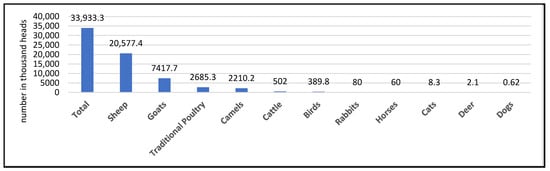
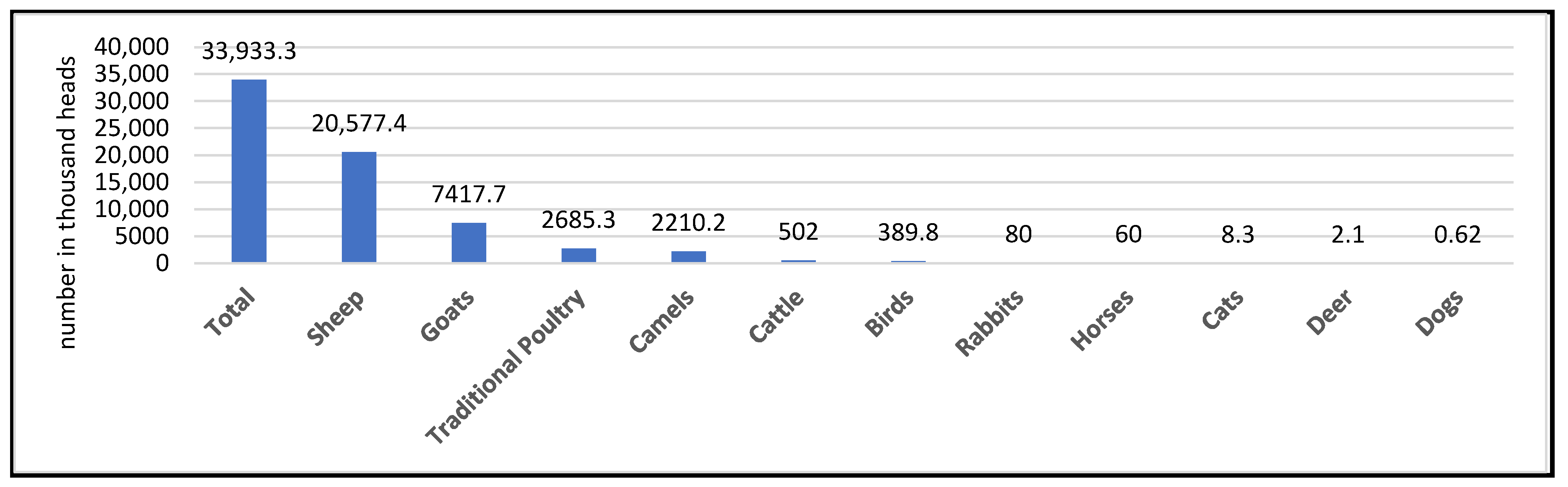
Saudi Arabia possessed a livestock wealth of 33.93 million heads in 2023, including 20.6 million head of sheep, 7.42 million head of goats, 2.21 million head of camels, and 502,000 head of cattle. Thus, the total number of livestock reached 30.73 million heads, representing 90.57% of the total livestock population. Meanwhile, the proportion of traditional poultry, birds, rabbits, horses, cats, deer, and dogs did not exceed 9.43% in 2023 (Figure 1).
Figure 1.
Livestock Numbers in Saudi Arabia (Thousand Heads), 2023. Source: [1].
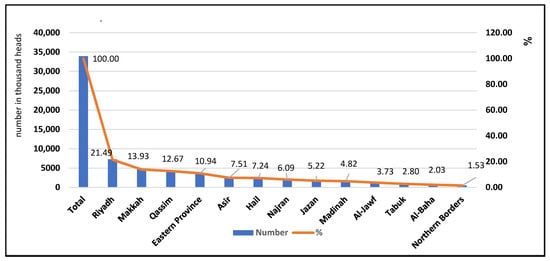
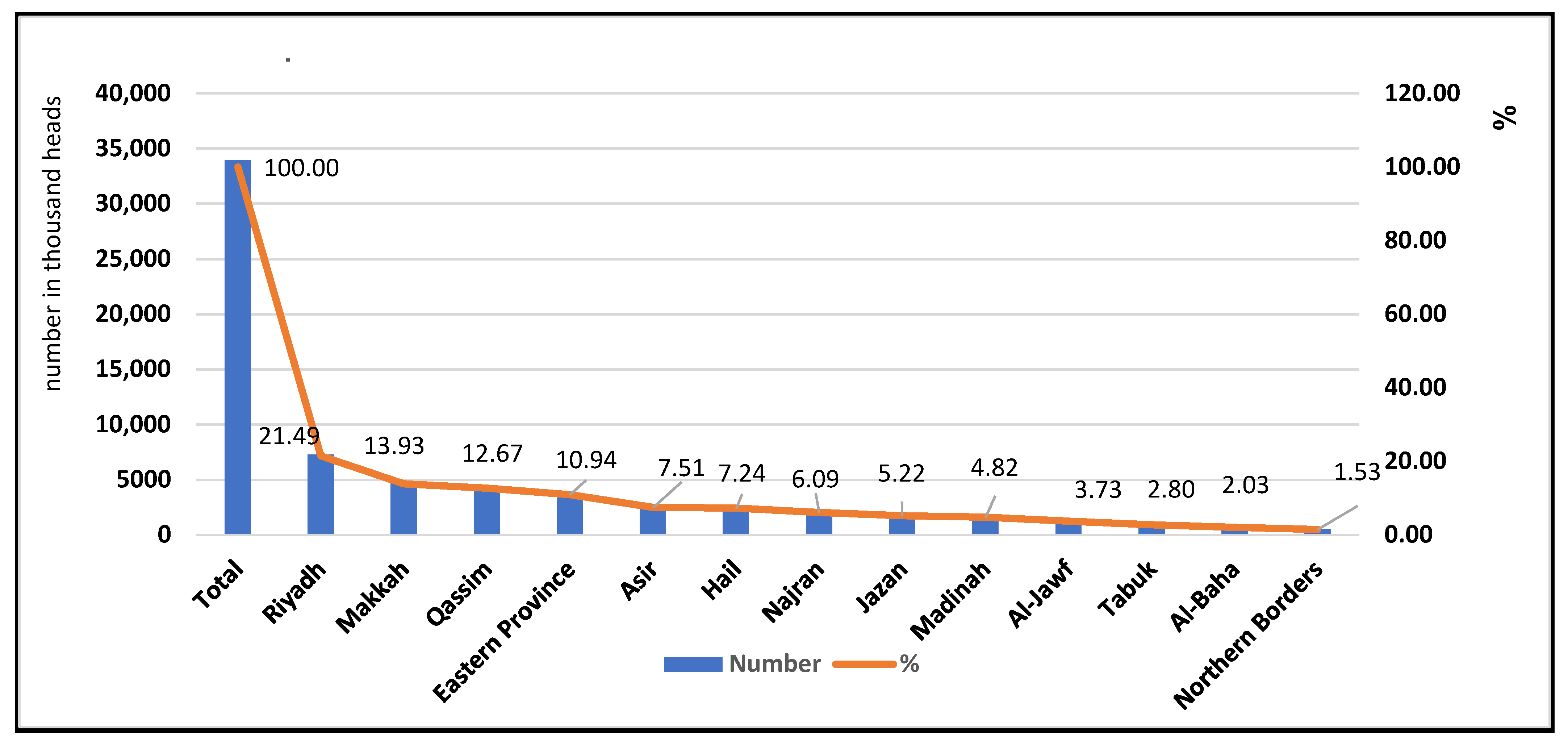
Livestock wealth is concentrated in the Riyadh region, which possesses 21.49% of the total livestock population, followed by Makkah Al-Mukarramah with 13.93%, then the Qassim region, Eastern Province, Asir, Hail, Najran, and Jazan, with percentages of 12.67%, 10.94%, 7.51%, 7.24%, 6.09%, and 5.22% for each, respectively. From the above, it is clear that the eight regions referred to possess livestock wealth amounting to 85.09%, while the percentage of ownership of the remaining productive regions (Al-Madinah, Al-Jouf, Tabuk, Al-Baha, Northern Borders) did not exceed 14.91% in 2023 (Figure 2).
Figure 2.
Geographical distribution of livestock numbers in 2023. Source: [1].
There is no doubt that animal husbandry has evolved, transitioning from traditional grazing to the adoption of modern, specialized practices supported by technology and private investment, with a clear focus on achieving self-sufficiency and food security in meat production. The livestock sector in Saudi Arabia has experienced several major developments, which can be summarized as follows: (1) the application of modern technologies, such as using the internet to monitor animal health and increase productivity, as well as the adoption of advanced management models in livestock farms; (2) the genetic improvement of animals to enhance production efficiency and reduce disease incidence; (3) the development of the dairy and poultry sectors to increase local production and thereby reduce dependence on imports; (4) Supporting small-scale farmers via financing initiatives intended to boost productivity and enhance their income; (5) the expansion of integrated animal production complexes, including barns, feed mills, veterinary hospitals, and modern slaughterhouses; (6) the provision of programs to develop traditional farming and integrate it with broader economic development; and (7) diversification of investment in veterinary medicine and services, which helps attract both local and foreign direct investment [2,3].
The state has provided direct and indirect support for livestock development, with the Agricultural Development Fund adopting the Sheep Breeding and Improvement Initiative. The total value of loans allocated for sheep breeding and fattening amounted to 879.7 million riyals from the Fund’s establishment until 2022 [4]. The number of livestock (goats, sheep, cows, camels) increased from 8.04 million heads in 2012 to 30.71 million heads in 2023 [5]. The livestock production index (2004–2006 = 100) also increased from 65.39 in 2000 to 164.71 in 2022. The Livestock Production Index is a statistical indicator that measures the relative change in livestock production over the period 2000–2022, using the average of the 2004–2006 period as the base year. An increase in the Livestock Production Index to 164.71 in 2022 indicates that livestock production rose by 64.71% in 2022 compared with the average level of the base period (2004–2006). The livestock sector represents a pivotal component of Saudi Arabia’s economy, substantially contributing to national food security. The Kingdom is implementing targeted strategies to optimize livestock production by harnessing the agro-ecological advantages of its diverse regions, while concurrently conserving and genetically improving native breeds to sustainably satisfy the nutritional requirements of its expanding population [6].
Some economic studies have addressed livestock development In Saudi Arabia and some other countries. A study [7] investigated red meat food security from an economic perspective over the period 2000–2017. The study revealed that domestic red meat production was insufficient to meet the growing consumer demand, leading to an increase in Saudi imports throughout the study period. Both the apparent and actual food gaps expanded at exhibiting annual growth rates of 4.1% and 5.7%, respectively. Moreover, the findings indicated that achieving food security and full self-sufficiency in red meat is feasible through additional investments amounting to SAR 139.4 million and SAR 164.3 million, respectively.
A study [8] analyzed the effects of macroeconomic variables on the dynamics of food security over the period 2005–2020. The study revealed a widening food gap, largely driven by population growth in Saudi Arabia. The self-sufficiency ratio for poultry meat declined at an average annual rate of 0.11%, while the food gap increased by approximately 24,000 tons per year. Moreover, the analysis identified a statistically significant positive association between domestic poultry consumption and gross domestic product (GDP), alongside a statistically significant negative relationship with the meat price index in the long term. Drawing on these results, the authors emphasized the need to bolster productivity in the poultry sector and facilitate foreign agricultural investment to achieve sustainable food security and alleviate domestic production deficits.
A study [9] showed that the contribution of local production to meeting domestic consumption needs for red meat ranged from a minimum of 27.54% to a maximum of 64.46% at a 95% confidence level. In Saudi Arabia, the total amount of water used in red meat production reached approximately 46.68 billion m3, representing 10.14% of the total water used in the agricultural sector during the period 1995–2022. Given that red meat production relies on water-intensive fodder crops, the area of green fodder increased from 305.3 thousand hectares in 1995 to 502.2 thousand hectares in 2016, then decreased steadily in recent years, with the aim of rationalizing water consumption in the agricultural sector.
A study [10] shows that livestock is a rapidly expanding agricultural sector with significant implications for economic development and food security. This study assesses the projected impact of climate variability on meat production (beef, mutton, and poultry) in Saudi Arabia by 2030, in the context of climate-change susceptibility, the potential effects of CO2 fertilization, and limitations posed by water scarcity, and compares these projections with Iraq and Yemen. Integrated data from multiple sources indicate that the combined effects of these factors are likely to reduce meat production across all three countries, particularly in Iraq. Notably, strong interactions were observed between CO2 fertilization and water scarcity, exceeding correlations between beef and mutton production. These findings highlight critical challenges to livestock sustainability in the region and suggest a potential shift toward reduced reliance on indigenous meat sources by 2030.
In view of the global burden of foodborne diseases associated with the consumption of red meat and its products, ref. [11] conducted a comprehensive review examining the transmission environment, the most frequently implicated food categories, the causative pathogens, including bacteria, viruses, and parasites, and the key factors driving disease outbreaks. The findings highlight the critical need for the implementation of robust food safety management strategies that incorporate effective control measures across all stages of the food supply chain, from farm to table, to prevent outbreaks effectively. Moreover, the study underscores the importance of continuously raising public awareness regarding the risks of foodborne diseases linked to meat products and advises against the consumption of raw meat, particularly among vulnerable population groups.
Finally, another study [12] examined the impact of livestock development on water consumption in the agricultural sector. The study showed an increase in the amount of water required for livestock and red meat production from 1.53 billion m3 representing 8.52% of total agricultural water consumption in 2000 to 2.86 billion m3, representing 23.23% in 2023. The total water required for livestock and red meat production is expected to increase from 2.77 billion m3 in 2024 to 3.32 billion m3 in 2030. Water consumption in the agricultural sector is also projected to rise from 12.39 billion m3 in 2024 to 15.95 billion m3 in 2030, which will impact strategic water reserves and reduce groundwater levels, particularly in sedimentary aquifer areas. The study concludes by recommending the regulation of livestock numbers with the aim of continuing to rationalize water use and ensure sustainability for future generations.
A review of previous studies indicates that most have focused primarily on local production and consumption, foreign trade (exports and imports) of red meat, and the water requirements for livestock and red meat production. In contrast, the present study distinguishes itself by examining the impact of livestock development under conditions of water scarcity on local red meat production and food security in the Kingdom of Saudi Arabia. Moreover, the variables identified in earlier studies were incorporated into the construction of the proposed model and employed to predict the food security index for red meat.
2. Research Objectives
This study aimed to measure the impact of livestock development (goats, sheep, cows, camels) on local red meat production and food security in the Kingdom of Saudi Arabia during the period 2000–2023. This was achieved by examining the following sub-objectives:
- The current status of livestock, local production, and red meat food security.
- Estimating the proposed model for studying the impact of increasing livestock numbers (animal units) on local red meat production and food security.
- Predicting the number of animal units, local production, and the food security coefficient for red meat until 2030.
3. Materials and Methods
To achieve its objectives, this study relied on secondary data published in (1) the Statistical Yearbook issued by the Ministry of Environment, Water and Agriculture; (2) the Livestock Statistics Bulletin issued by the General Authority for Statistics; and (3) the websites of international organizations, most notably the World Bank and the Food and Agriculture Organization (FAO). To estimate the annual growth rate of livestock (goats, sheep, cows, camels), local production, and food security indicators for red meat during the period 2000–2023, this study relied on quadratic, exponential, and semi-logarithmic models, which can be expressed using the following equations:
Quadratic model:
The annual growth rate of livestock numbers (animal units) is obtained by performing the first differentiation of the model, then dividing by as follows [13]:
Exponential model:
The previous equation can be written as follows:
where represents the base of the natural logarithm and is equal to 2.71828, represents the annual growth rate, and is obtained through the first differentiation of the model, then dividing by as follows [13]:
Semi-logarithmic model:
This study relied on the following equations to measure the level of food security for red meat:
where represents the production sufficiency period for domestic consumption, represents the total domestic production, represents the daily domestic consumption, represents the import coverage period for domestic consumption, represents the total Saudi imports, represents the amount of surplus and deficit, represents the sum of the lengths of the production sufficiency and import coverage periods, represents the quantity of exports, represents the strategic stock (the sum of the surplus and deficit), represents domestic consumption, and represents the food security coefficient, and its value ranges between zero and one. The closer the value is to zero, the more food insecure it is, and vice versa. The closer the value is to one, the higher the level of food security for the commodity [14].
Finally, this study relied on the proposed regression model to measure the impact of livestock development on local production and food security of red meat, which could be expressed by the following equations:
The proposed model includes the following variables:
- (1)
- Endogenous variables, which are three variables: livestock numbers (animal units) in million units (), local red meat production in thousand tons (), and the food security coefficient, expressed as the ratio of the surplus and deficit to local red meat consumption (). In this study, the Animal Unit (AU) was employed as a standardized metric to unify different livestock species into a single reference unit. An animal unit is commonly defined as equivalent to an average mature cow (approximately 450–500 kg live weight) and is used to facilitate statistical analysis, estimate feed requirements, and assess food security. The total animal units are calculated using the following equation [15]:where is the number of animals of type iii and is the conversion coefficient to an animal unit.
Conversion coefficients may vary according to references (FAO, Ministries of Agriculture). The values used here are based on the latest livestock statistical data for the Kingdom of Saudi Arabia. Conversion coefficients of different livestock types to animal units: Caw (1.00), Camal (1.25), Sheep (0.15), Goat (0.10) [15].
- (2)
- Exogenous variables, which are six variables: production of feed grains (barley, maize, sorghum) in thousand tons (), production of green fodder in million tons (), rainfall rate in millimeters for the development of natural pastures (), quantity of imports of feed grains in million tons (), quantity of manufactured fodder in thousand tons (), quantity of imports of red meat in thousand tons ().
The proposed model was estimated using the ordinary least squares (OLS) method, given that the internal variables matrix has a diagonal of one and all numbers above this diagonal have a diagonal of zero as follows [16]:
| Endogenous Variables | Exogenous Variables | |||||||
| 1 | 0 | 0 | 0 | |||||
| 1 | 0 | 0 | 0 | 0 | ||||
| 0 | 1 | 0 | 0 | 0 | 0 | 0 | ||
| It is well-established that the matrix encompasses all internal and external variables of the employed model. This matrix plays a crucial role in determining the model’s type and the appropriate estimation method. Specifically, it indicates that the model is either triangular or recursive, implying unidirectional causality. Accordingly, the ordinary least squares (OLS) method is employed for estimation. There is no doubt that the multi-equation model is more appropriate than its single-equation counterpart, as each endogenous variable is determined by a set of factors that should be taken into consideration when examining the impact of livestock development on achieving food security for red meat. | ||||||||
4. Results and Discussion
4.1. Current Status of Livestock, Local Production, and Red Meat Food Security
4.1.1. Current Status of Livestock Numbers
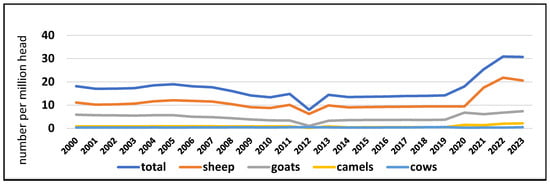
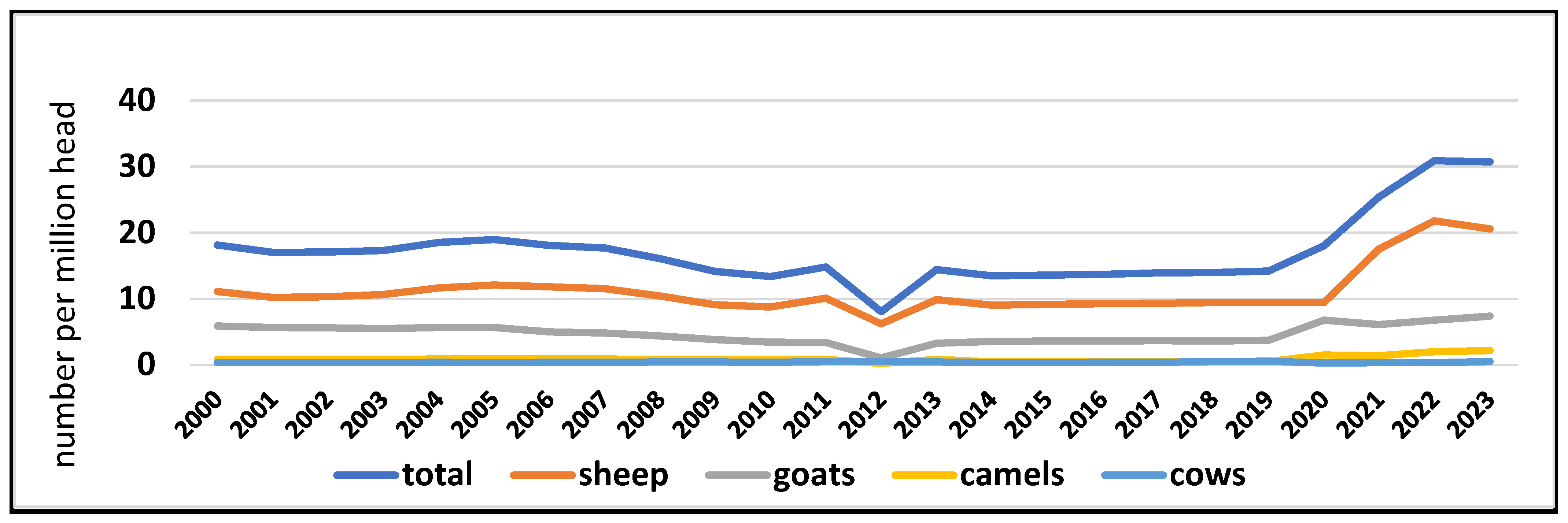
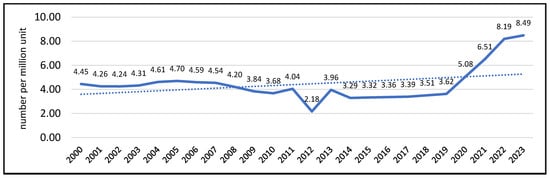
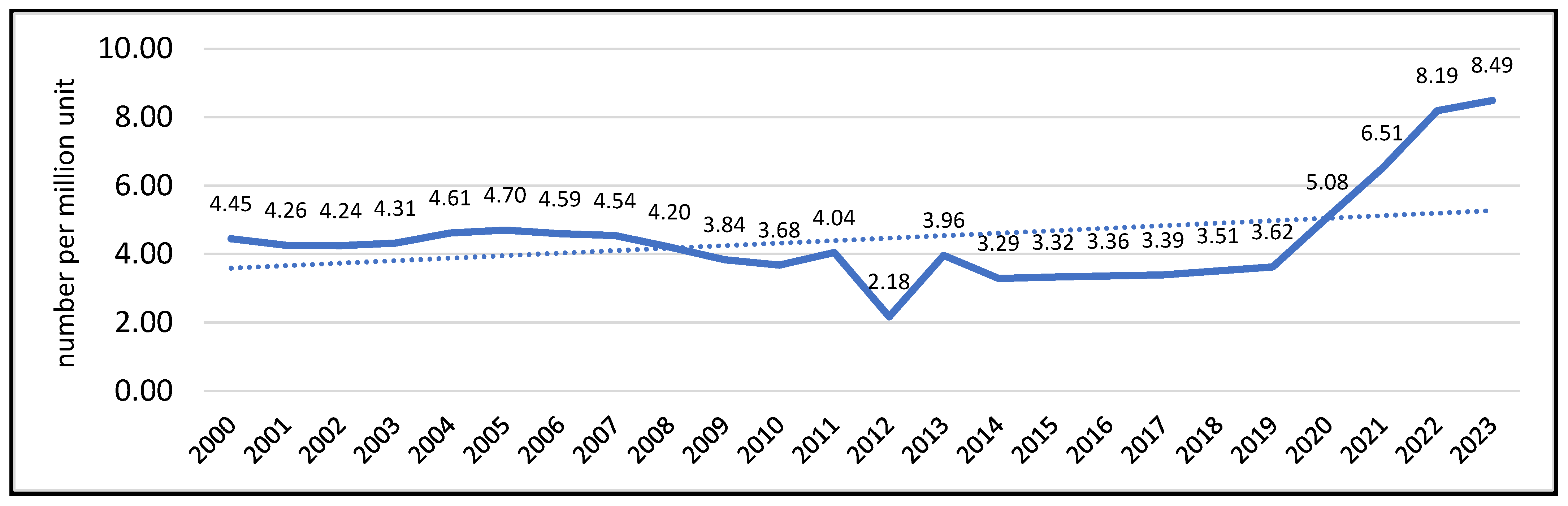
By examining the evolution of livestock numbers (goats, sheep, cows, and camels) during the study period, the data presented in Figure 3 show a decrease in the total number of livestock from 18.11 million heads in 2000 to 8.04 million heads in 2012, then an increase to 30.71 million heads in 2023. The decline is attributed to the reduction in loans allocated to the livestock sector, in addition to the diseases that resulted in the death of large numbers of animals, as well as the effects of climate change and rising temperatures. Meanwhile [17], The increase in livestock numbers to 30.71 million head in 2023 can be attributed to the substantial growth in private investment directed toward the livestock sector, enhanced support for small-scale livestock breeders, and the expansion of both feed-grain imports and domestic feed manufacturing capacity. This trend has been further strengthened by government policies aimed at supporting the private sector in order to reduce the deficit in the red meat trade balance. Given the heterogeneity in livestock size and physical characteristics, animal numbers were standardized by conversion into animal units. As illustrated in Figure 4, the total number of animal units ranged from a minimum of 2.18 million units in 2012 to a peak of 8.49 million units in 2023. Overall, the total livestock population and animal units exhibited positive annual growth rates of 1.21% and 1.74%, respectively, over the period 2000–2023 (Table 1).
Figure 3.
Development of livestock numbers in the Kingdom of Saudi Arabia during the period 2000–2023. Source: [1,18].
Figure 4.
Total number of animal units in the Kingdom of Saudi Arabia during the period 2000–2023. Source: Data contained in Figure 3.
Table 1.
Equations of the general trend of livestock numbers and animal units during the period 2000–2023.
4.1.2. The Current Status of Red Meat Production
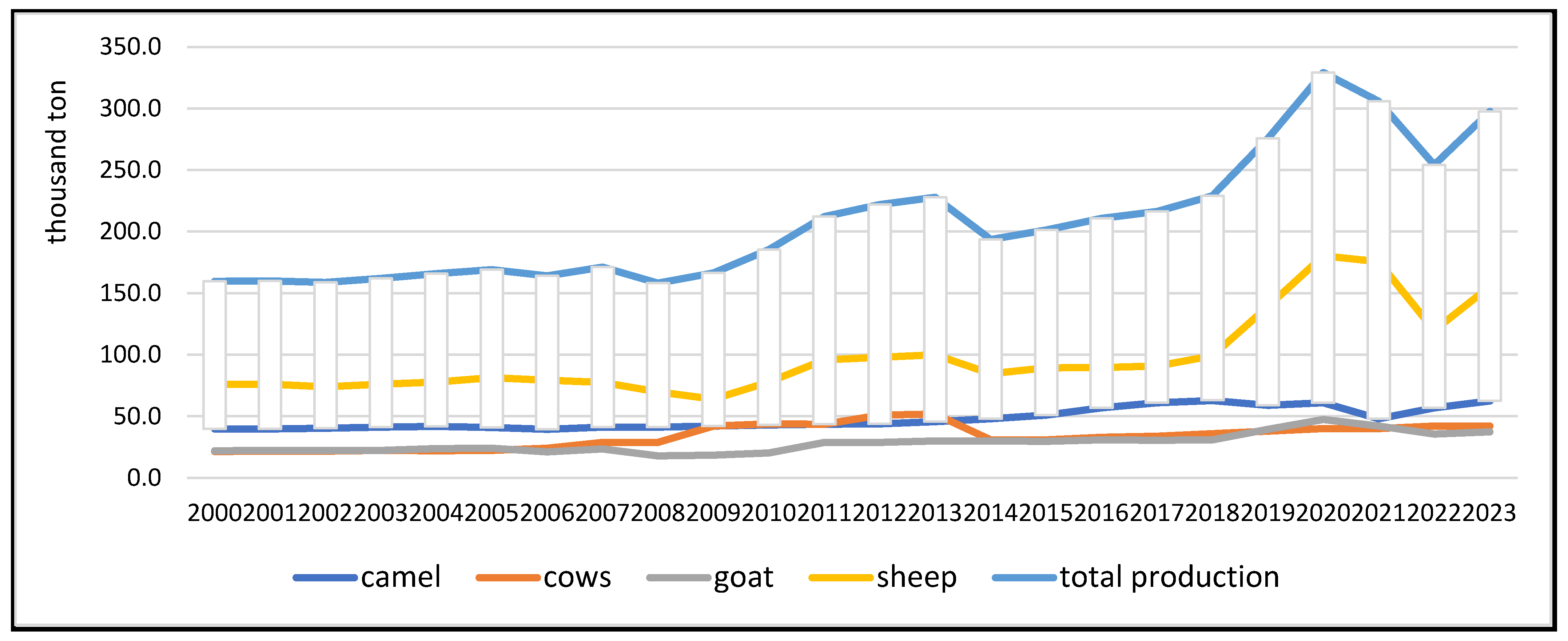
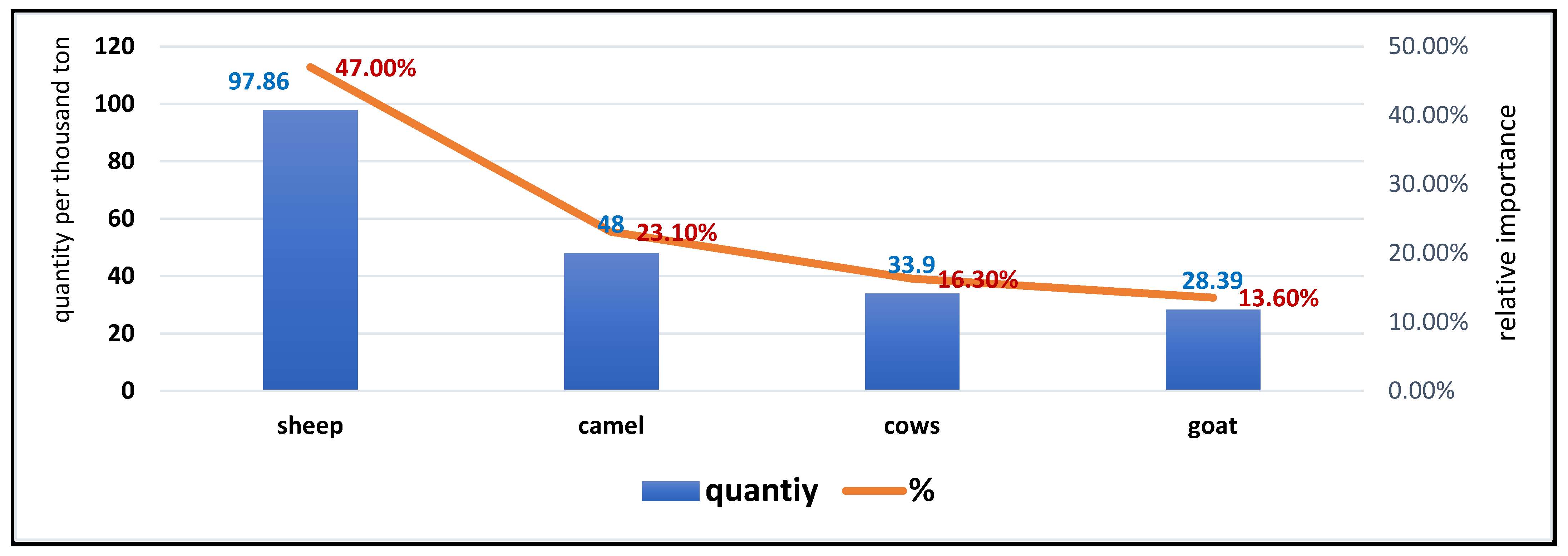
An examination of local red meat production trends, based on the data presented in Figure 5 and Table 2, indicates a sustained increase across all livestock categories over the study period. Local camel meat production rose from 39.8 thousand tons in 2000 to 62.5 thousand tons in 2023, corresponding to an average annual growth rate of 2.1%. Similarly, beef production increased from 21.6 thousand tons to 42.0 thousand tons over the same period, reflecting an annual growth rate of 3.0%. Goat meat production also exhibited steady growth, increasing from 22.2 thousand tons in 2000 to 37.5 thousand tons in 2023, at an annual rate of 3.1%. Sheep meat production recorded the highest expansion, rising from 76.0 thousand tons to 155.4 thousand tons during the period 2000–2023, with an average annual growth rate of 3.3%. As a result of these trends, total domestic red meat production increased from 159.6 thousand tons in 2000 to 297.5 thousand tons in 2023, representing an overall annual growth rate of 2.9%. In terms of relative contribution, sheep accounted for the largest share of red meat production (47.0%), followed by camels (23.1%), while cattle and goats contributed 16.3% and 13.6%, respectively, over the study period (Figure 6).
Figure 5.
Red meat production in the Kingdom of Saudi Arabia in thousand tons during the period 2000–2023. Source: [1,19,20].
Table 2.
Equations of the general trend of the development of local red meat production during the period 2000–2023.
Figure 6.
Average and relative importance of red meat production during the period 2000–2023. Source: Data contained in Figure 5.
4.1.3. Evaluating the Current Status of Indicators of Red Meat Food Security
By examining the food security indicators for red meat, the data in Table 3 and Table 4 indicate an increase in local consumption of red meat from 322.18 thousand tons in 2000 to 487.7 thousand tons in 2023. Consequently, daily local consumption increased from 0.88 thousand tons in 2000 to 1.34 thousand tons in 2023. The self-sufficiency rate for red meat ranged from a low of 38.6% in 2002 to a high of 66.7% in 2001. The production sufficiency period for local consumption ranged from a low of 140.4 days in 2002 to a high of 242.4 days in 2001. The import coverage period for local consumption ranged from a low of 133.2 days in 2023 to a high of 263.3 days in 2005.
Table 3.
Saudi production, consumption and foreign trade of red meat during the period 2000–2023.
Table 4.
The most important indicators for measuring the level of food security for red meat during the period 2000–2023.
By calculating the surplus and deficit in red meat during the study period, it was found that there was a surplus over local consumption during the years 2000–2007, 2010, 2013–2015, 2017–2018, and 2022. The total surplus amounted to 306.13 thousand tons, directed towards developing the strategic stock, to be withdrawn during years in which there was a deficit in local consumption. The total deficit amounted to 181.37 thousand tons over a period of 142.0 days, or approximately 4.73 months. The surplus directed towards developing the strategic stock exceeded the deficit or withdrawal from the stock, and thus the ratio of surplus to deficit reached 168.8% at the end of the period 2000–2023.
According to the concept of strategic stock, as the sum of the difference between the total surplus and the deficit, the strategic stock is estimated at approximately 124.73 thousand tons. In light of the average local consumption of red meat amounting to 404.83 thousand tons, the food security coefficient for red meat is estimated at about 0.31 at the end of the period 2000–2023 (Table 4).
4.2. Measuring the Impact of Livestock Development on Local Red Meat Production and Food Security
4.2.1. Characterization of the Internal and External Variables of the Proposed Model
Regarding the internal variables of the estimated model, these were described in the section addressing the current situation. As for the external variables, data presented in Table 5 indicate that feed grain production ranged from a minimum of 209,000 tons in 2010 to a maximum of 967,300 tons in 2014, with an annual average of 447,010 tons. Green fodder production varied between 2.37 million tons in 2006 and 10.70 million tons in 2014, averaging 4.77 million tons per year over the study period. Rainfall in Saudi Arabia ranged from a minimum of 56.6 mm in 2012 to a maximum of 151.9 mm in 2023, with an annual average of 89.29 mm. Imports of feed grains (barley, maize, and sorghum) fluctuated between 3.67 million tons in 2004 and 12.65 million tons in 2013, with an annual average of 8.20 million tons. Manufactured feed production ranged from zero in 2008 to a peak of 737.89 thousand tons in 2022, with an annual average of 345.34 thousand tons during the study period.
Table 5.
Descriptive analysis of the external variables included in the proposed model.
Finally, Saudi Arabia’s red meat imports fluctuated considerably over the study period, ranging from a minimum of 124.66 thousand tons in 2001 to a peak of 338.82 thousand tons in 2015, with an annual average of 251.98 thousand tons. Rainfall rates and Saudi imports of feed grains and red meat were relatively stable, while feed grain production, green fodder production, and manufactured fodder production were unstable, due to the high coefficient of variation values for these variables during the study period. This instability in these variables is attributed to changes in the cropping structure aimed at rationalizing water consumption.
4.2.2. Estimating the Proposed Model to Measure the Impact of Livestock Development on Production and Food Security
The proposed regression model was estimated to measure the impact of livestock development on red meat production and food security during the period 2000–2023. The equations in Table 6 show the following:
Table 6.
Behavioral equations of the proposed model for measuring the impact of livestock development on the production and food security of red meat during the period 2000–2023.
The First Equation:
By estimating the first equation, it was found that the most important factors determining the number of animal units are the production of forage grains (barley, maize, and sorghum), the production of green fodder (alfalfa and Rhodes), the rainfall rate for natural pasture development, and the quantity of manufactured fodder. The model indicates that these variables collectively capture approximately 70% of the variance in animal unit numbers. By estimating the relative impact (elasticity) of the explanatory variables, it is clear that a 10% increase in each of forage grain production, rainfall rate, and the quantity of manufactured fodder leads to an increase in the number of animal units by rates of 4.47%, 4.46%, and 3.54%, respectively. An inverse relationship was also found between green fodder production and the number of animal units during the study period, due to the decline in the area and production of water-depleting green fodder, and the gradual shift to seasonal fodder cultivation, with a maximum of 50 hectares for each holder of an agricultural license. The suspension applies to all farmers licensed to grow green fodder in alluvial shelf areas, in accordance with the regulations for implementing Cabinet Resolution No. 66 dated 25/2/1437 AH, which stipulates the suspension of green fodder cultivation. To implement the agricultural cycle, anyone who has been issued a license to grow wheat, based on Cabinet Resolution No. 192 dated 4/4/1440 AH, is permitted to obtain a license to grow seasonal fodder in the same area licensed for wheat cultivation [16].
The Second Equation:
It is clear from the second equation that the most important factors determining red meat production are the estimated number of animal units, green fodder production, the quantity of feed grain imports (barley, corn, sorghum), and the quantity of manufactured feed. These variables explain approximately 67% of the changes in red meat production. It also shows that a 10% increase in each of the estimated number of animal units, green fodder production, the quantity of feed grain imports (barley, corn, sorghum), and the quantity of manufactured feed contributes to an increase in red meat production by rates of 7.01%, 2.67%, 1.63%, and 0.27%, respectively.
The Third Equation:
It is evident from the third equation that the primary determinants of the food security coefficient for red meat are the estimated domestic production and the volume of Saudi red meat imports. Together, these variables account for 82% of the variation in red meat food security, measured as the ratio of surplus and deficit relative to domestic consumption. The analysis further indicates that a 10% increase in estimated domestic production and Saudi red meat imports results in an increase in red meat food security of 5.28% and 4.49%, respectively.
The estimated model also demonstrates robustness, being free from residual autocorrelation, as indicated by the Durbin–Watson statistic and the insignificance of the F-value in the Breusch–Godfrey serial correlation LM test. Additionally, no heteroscedasticity was detected in the series, as evidenced by the insignificance of the F-value in the ARCH test. The model exhibits high efficiency in representing the data, as confirmed by performance indicators, most notably Theil’s inequality coefficient (U-Theil), which approaches zero (Table 7).
Table 7.
Indicators for measuring the efficiency of the estimated model equations during the period 2000–2023.
4.3. Predicting the Number of Animal Units, Local Production, and Red Meat Food Security Until 2030
The internal variables (number of animal units, local production, and red meat food security) were predicted until 2030 using the general trend equations for the external variables shown in Table 8, then substituting their predictive values into the regression model estimated in this study. The data in Table 9 show that, due to the low and insignificant annual growth rate in feed grain production, the production of feed grains (barley, maize, and sorghum) is assumed to remain stable at 292.1 thousand tons in 2023 until 2030. This assumption may be close to reality, given the cropping pattern’s orientation toward higher-yielding crops, most notably vegetables and fruits. Green fodder production is expected to increase from 7.05 million tons in 2024 to 9.07 million tons in 2030. Rainfall rates are also expected to increase to develop natural pastures. 120.62 mm in 2024, to 171.44 mm in 2030. This is helped by the rain enhancement system in place in Saudi Arabia. The quantity of manufactured feed is projected to increase from 805.93 thousand tons in 2024 to 1416.58 thousand tons by 2030. Similarly, Saudi Arabia’s imports of feed grains are expected to rise from 9.54 million tons in 2024 to 9.85 million tons in 2030. In contrast, red meat imports are projected to decline markedly, falling from 205.29 thousand tons in 2024 to 116.38 thousand tons over the same period.
Table 8.
General trend equations for key variables influencing livestock numbers (animal units) and red meat imports, 2000–2023.
Table 9.
Predictive values of the external variables included in the estimated model until the year 2030.
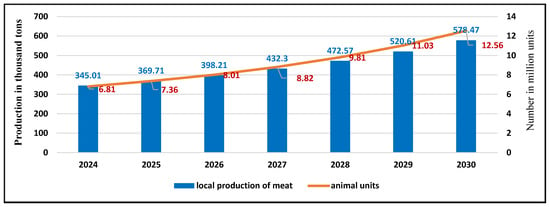
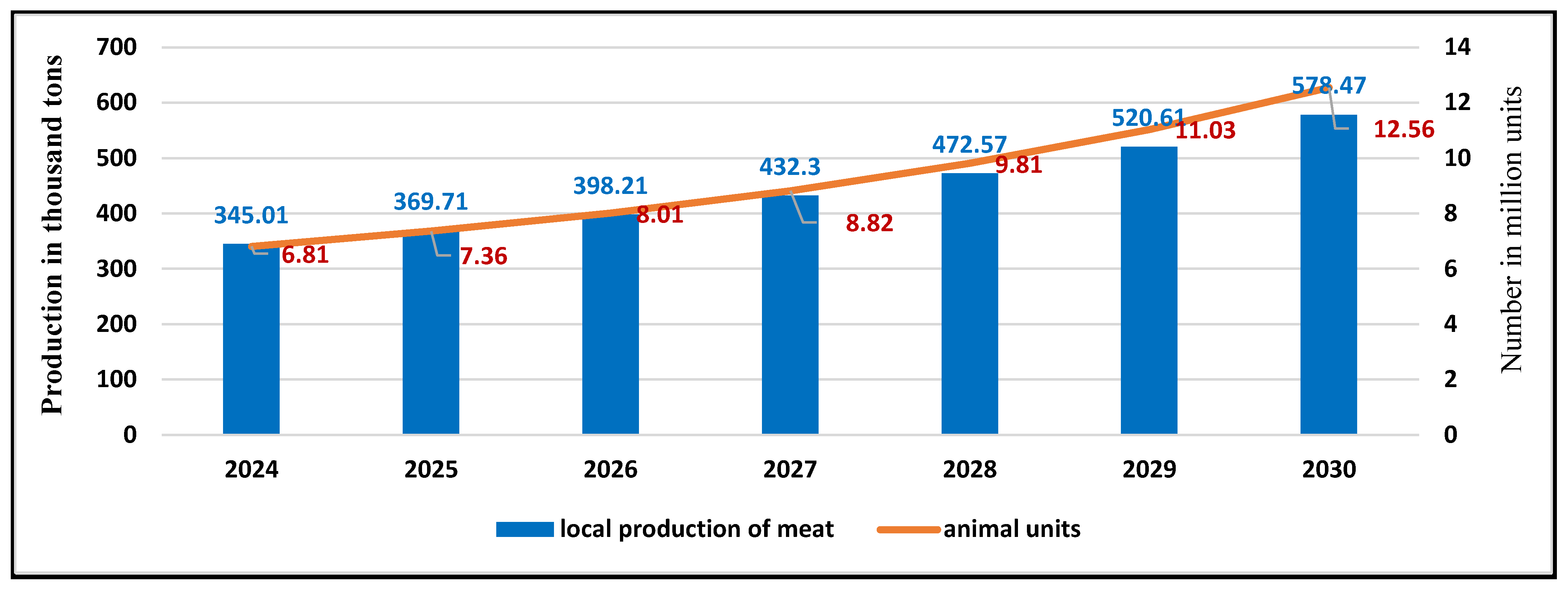
As for the predictive values of the internal variables of the estimated regression model, it is clear from the data in Figure 7 that the number of animal units will increase from 6.81 million units in 2024 to 12.56 million units in 2030. It is also expected that the local production of red meat will increase from 345.01 thousand tons in 2024 to 578.47 thousand tons in 2030. As for the food security indicators for red meat, it is clear from the data in Table 10 that the production sufficiency period for local consumption will increase from 239.6 days in 2024 to 357.1 days in 2030, while the import coverage period for local consumption is expected to decrease from 142.6 days in 2024 to 71.8 days in 2030. It is known that the increase in the production sufficiency period and the decrease in the import coverage period for local consumption is considered a good indicator in favor of the Saudi economy. Given the water scarcity problem facing the Kingdom of Saudi Arabia, Saudi red meat exports are expected to remain stable at 12.64 thousand tons until 2030. By calculating the surplus and deficit in domestic red meat consumption during the period 2024–2030, a surplus of 262.45 thousand tons is expected, which will be directed towards developing the strategic reserve. Given the absence of a deficit in domestic consumption during this period, the strategic reserve is estimated at approximately 262.45 thousand tons. Given the average domestic red meat consumption of 558.45 thousand tons, the food security coefficient for red meat is estimated at approximately 0.47 at the end of the period 2024–2030.
Table 10.
Predictive values of food security indicators for red meat until 2030.
Finally, based on forecasts related to the internal and external variables of the employed model, it is evident that they are consistent with Saudi Arabia’s Vision 2030, as well as with the agricultural policies implemented in both crop and livestock production. Furthermore, they align with environmental and water conservation efforts aimed at achieving sustainable development.
5. Conclusions
The state has focused on developing livestock, and the number of livestock units has increased despite water scarcity. This has been achieved through expanding investments and supporting small livestock breeders, in addition to expanding both feed grain imports and feed manufacturing. The number of livestock units is projected to reach 12.56 million by 2030, thereby supporting the anticipated expansion in livestock numbers and red meat production. This growth is expected to result from the implementation of livestock development programs encompassing the adoption of modern technologies, genetic improvement, enhanced animal health monitoring, expanded veterinary services, and the establishment of integrated livestock cities. Consequently, domestic red meat production is forecast to increase substantially, rising from 345.01 thousand tons in 2024 to 578.47 thousand tons by 2030. In light of average daily red meat consumption levels, the period of production sufficiency for local consumption is expected to lengthen, while the duration of import coverage for domestic consumption is projected to decline. These developments constitute a favorable indicator for the Saudi economy. Moreover, livestock sector development is anticipated to strengthen the strategic stock of red meat, increasing it from 124.73 thousand tons at the end of the 2000–2023 period to 262.45 thousand tons by the end of 2024–2030. This means that the strategic stock of red meat is expected to increase by a rate of 110.4%. Given the average domestic consumption of red meat, the food security coefficient is expected to increase from 0.31 at the end of the period 2000–2023 to 0.47 at the end of the period 2024–2030. This means that the food security coefficient is expected to increase by a rate of 51.6%. Achieving these results requires continued development of livestock, through the provision of loans for livestock breeding and fattening projects, in addition to expanding both feed grain imports and feed manufacturing.
Author Contributions
Conceptualization, A.M.G. and S.F.A.; methodology, A.M.G.; software, O.S.A.; validation, M.H.A., A.A.M.A. and S.B.A.; formal analysis, S.F.A.; investigation, M.H.A.; resources, S.F.A.; data curation, O.S.A.; writing—original draft preparation, S.B.A.; writing—review and editing, A.M.G.; visualization, O.S.A.; supervision, A.M.G.; project administration, A.M.G.; funding acquisition, A.A.M.A. All authors have read and agreed to the published version of the manuscript.
Funding
This research received no external funding.
Institutional Review Board Statement
Not applicable.
Informed Consent Statement
Not applicable.
Data Availability Statement
All data contained inside the article.
Conflicts of Interest
The authors declare no conflicts of interest.
References
- Ministry of Environment, Water and Agriculture, Statistical Yearbook; Ministry of Environment, Water and Agriculture: Riyadh, Saudi Arabia, 2023; pp. 246–247.
- Al-Nafea, A.L.H.M. Regions of wild animals in the Kingdom of Saudi Arabia: A study in animal geography. Arab. Geogr. J. 2022, 53, 303–334. [Google Scholar] [CrossRef] [Scilit]
- Al-Shahrani, F.S. Agricultural development during the reign of King Fahd bin Abdul Aziz: A historical study (1982–2005). J. Humanit. Nat. Sci. 2025, 6, 141–201. [Google Scholar] [CrossRef] [Scilit]
- Agricultural Development Fund. Sixty-First Annual Report for the Fiscal Year (1445–1446 AH); Agricultural Development Fund: Riyadh, Saudi Arabia, 2024. [Google Scholar]
- World Bank. Website, Open Data, 2000–2023. 2025. Available online: https://data.worldbank.org/country/saudi-arabia (accessed on 20 October 2025).
- Ministry of Environment, Agriculture and Water. Executive Plan for the National Transformation Program; Ministry of Environment, Water and Agriculture: Riyadh, Saudi Arabia, 2017. Available online: https://www.mewa.gov.sa/ar/Ministry/initiatives/MinistryInitiatives/Pages/default.aspx (accessed on 20 October 2025).
- Elsebaei, M.N.; Tawfik, R.T.; Saied, M.A. An Economic Perspective on Food Security for Red Meat in Saudi Arabia. Sci. J. King Faisal Univ. Basic Appl. Sci. 2020, 21, 88–94. [Google Scholar] [CrossRef] [Scilit]
- Alsarawi, F.M.; Elbushra, A.A.; Abdalla, I.F. Impact of Macroeconomic Variables on Food Security in Saudi Arabia: Case Study of Poultry Meat. Sarhad J. Agric. 2023, 39, 316–322. [Google Scholar] [CrossRef] [Scilit]
- Almojel, S.A.; Ghanem, A.M.; Alrwis, K.N.; Kamara, S.A.; Krimly, Y.A.; Ahmed, S.B. The impact of nutritional sovereignty of red meat on water consumption in the agricultural sector. Afr. J. Agric. Res. 2024, 20, 145–154. [Google Scholar] [CrossRef] [Scilit]
- Abdullah, A.; Bakshwain, A.S.; Ahtisham, A.M. Predicting Long-Term Meat Productivity for the Kingdom of Saudi Arabia. Int. J. Biol. Life Agric. Sci. 2015, 9, 304–308. [Google Scholar]
- Warmate, D.; Onarinde, B.A. Food safety incidents in the red meat industry: A review of foodborne disease outbreaks linked to the consumption of red meat and its products, 1991 to 2021. Int. J. Food Microbiol. 2023, 398, 110240. [Google Scholar] [CrossRef] [Scilit] [PubMed]
- Ghanem, A.M.; Al-Nafisa, M.A.L.; Al-Aqsam, F.M. Measuring the impact of livestock development and red meat production on water consumption in the agricultural sector in the Kingdom of Saudi Arabia. Int. J. Financ. Adm. Econ. Stud. 2025, 4, 301–320. [Google Scholar] [CrossRef] [Scilit]
- Magdy, E.-S. Econometrics, Theory and Application, 1st ed.; Dar El-Masryia El-Lubnania: Cairo, Egypt, 1994; p. 47. [Google Scholar]
- Ghanem, A.M.K.; Kamra, S.A.M. A Study of the Economic Factors Determining the Food Security Coefficient of Sugar in Egypt. In Proceedings of the Third Conference of the Department of Economics and Agricultural Business Administration (Agricultural Development Strategy and Challenges of Egyptian Food Security), Cairo, Egypt, 28–29 July 2010; pp. 1–10. [Google Scholar]
- Gujarati, D.N. Basic Econometrics, the Second Part; Odeh, H.A.G.; Al-Dash, A.A.H., Translators; Marekh House of Publishing: Cairo, Egypt, 2015; pp. 1145–1146. [Google Scholar]
- Benoît, M.; Veysset, P. Livestock unit calculation: A method based on energy requirements to refine the study of livestock farming systems. INRAE Prod. Anim. 2021, 34, 139–160. [Google Scholar]
- Williams, J.B.; Shobrak, M.; Wilms, T.M.; Arif, I.A.; Khan, H.A. Climate change and animals in Saudi Arabia. Saudi J. Biol. Sci. 2012, 19, 121–130. [Google Scholar] [CrossRef] [Scilit] [PubMed]
- Ministry of Environment, Water and Agriculture. Environment: Cabinet Decision to Allow the Cultivation of Wheat and Seasonal Fodder Contributes to the Sustainability of Natural Resources; Media Center, News and Events, Website; Ministry of Environment, Water and Agriculture: Riyadh, Saudi Arabia, 2025.
- General Authority for Statistics. Livestock Statistics for 2023; General Authority for Statistics: Riyadh, Saudi Arabia, 2023.
- Food and Agriculture Organization. FAOSTAT Website, 2000–2023; Food and Agriculture Organization: Rome, Italy; Available online: https://www.fao.org/faostat/en/#data (accessed on 20 October 2025).

Disclaimer/Publisher’s Note: The statements, opinions and data contained in all publications are solely those of the individual author(s) and contributor(s) and not of MDPI and/or the editor(s). MDPI and/or the editor(s) disclaim responsibility for any injury to people or property resulting from any ideas, methods, instructions or products referred to in the content. |
© 2026 by the authors. Licensee MDPI, Basel, Switzerland. This article is an open access article distributed under the terms and conditions of the Creative Commons Attribution (CC BY) license.