Article

Enhanced Absorption-Dominant EMI Shielding Performance of Pyramidal Cementitious Composites Incorporating Recycled Plastics and Magnetite Minerals for 5G Applications

by
Mehmet Cakir
1,
Mustafa Alptekin Engin
1 and
Murat Camuzcuoglu
2,*
1
Department of Electrical and Electronics Engineering, Bayburt University, 69000 Bayburt, Türkiye
2
Department of Emergency Aid and Disaster Management, Bayburt University, 69000 Bayburt, Türkiye
*
Author to whom correspondence should be addressed.
Sustainability 2026, 18(4), 1875; https://doi.org/10.3390/su18041875
Submission received: 29 December 2025 / Revised: 4 February 2026 / Accepted: 10 February 2026 / Published: 12 February 2026
(This article belongs to the Special Issue Advanced Concrete- and Cement-Based Composite Materials)

Abstract

In this study, waste polypropylene (PP) and magnetite (Fe3O4) mineral-reinforced cement-based pyramidal composite structures were designed, manufactured, and experimentally characterized to reduce electromagnetic interference (EMI) problems in the 3.3–4.9 GHz frequency band for 5G communication systems. Unlike traditional planar concrete surfaces, the aim was to minimize surface reflections and obtain an absorption-dominant shielding mechanism by providing gradient impedance matching through the pyramidal geometry. Although the use of carbon-based nanomaterials is common in the current literature, their high cost and corrosion risks limit their large-scale applications. This study involves the evaluation of waste polypropylene disposal and self-enriching magnetite mineral together. Theoretical analyses were supported by the Lichtenecker Logarithmic Mixing Rule and the Maxwell–Garnett model, and seven different mixing scenarios (S1–S7) were measured using the free-space method with a Libre vector network analyzer. Experimental results showed that the pure concrete sample exhibited predominantly reflective behaviour, with shielding performance improving significantly as the filler ratio increased. The S4 sample, containing 15% PP and 10% magnetite, offered broadband and balanced absorption performance, while the S7 sample, containing 25% PP and 25% magnetite, provided the highest shielding effectiveness with reflection below −10 dB across the entire band and transmission loss reaching −65 dB.

1. Introduction

Modern communication technologies continue to evolve at an increasingly rapid pace to meet the growing demand for data. The 3.3–4.9 GHz frequency range, which is at the centre of this technological transformation and forms the backbone of 5G networks in particular, has enabled intense data traffic but has also increased electromagnetic (EM) pollution and signal interference (EMI) between electronic devices to unprecedented levels [1]. Although these high-frequency waves offer high bandwidth and speed advantages in mobile communications, they tend to be highly attenuated or reflect uncontrollably when encountering reinforced concrete walls and other structural obstacles. This situation has necessitated the sustainability of indoor signal quality and the protection of sensitive electronic equipment from external interference. Therefore, the discipline of Electromagnetic Shielding (EMI Shielding) has become an integral and critical component of modern construction engineering and materials science [2,3]. Flat-surfaced shielding layers used in traditional building stock operate on the principle of reflecting a large portion of incoming EM waves back into the environment rather than absorbing them. However, this approach causes the “multipath effect” problem, particularly in densely built-up urban areas, leading to increased electromagnetic pollution [4]. To overcome this problem, the integration of pyramid geometries inspired by biological forms in nature and military radar-absorbing materials (RAM) into building structures is being explored as an innovative solution [5]. Pyramid structures operate based on the “Gradient Impedance Matching” principle and establish a smooth transition bridge between the characteristic impedance of air (377 Ω) and the impedance of the building material. This geometric transition minimizes surface reflection (S11) by overcoming the abrupt impedance discontinuity at the air–material interface, while maximizing the absorption capacity within the material’s internal volume [6,7]. Studies in the literature show that combining the dielectric properties of construction materials with a pyramid shape leads to the material exhibiting extremely effective absorptive behaviour, particularly in the 3.3–4.9 GHz range [8]. The electromagnetic shielding effectiveness (SE) of plain concrete is generally limited at these frequencies. However, adding nano-fillers with high conductivity, such as Carbon Nanotubes (CNT), Carbon Black (CB), and Graphene, to the cement matrix effectively increases the shielding performance of structural pyramids [9,10]. In terms of design parameters, the ratio of pyramid height to operational wavelength (λ) is one of the most important factors in determining shielding effectiveness. Research has demonstrated that when the pyramid height exceeds a certain threshold value, absorption effectiveness exceeding 90% can be achieved at frequencies above 3 GHz [11,12]. Another advantage offered by pyramid structures is the multiple reflection mechanism referred to in the literature as the “Valley Effect” [13]. Electromagnetic waves striking the side surfaces of pyramids are directed toward the depths of the valleys rather than returning directly, causing them to undergo multiple reflections. During this process, the waves transfer part of their energy to the material with each collision, and this trapping process continues until the energy is converted into heat [14]. This mechanism provides high shielding stability not only for waves arriving perpendicular to the surface but also for wide-angle (oblique incidence) scattered waves, which are characteristic of 5G signal propagation in urban areas [15,16]. Recent in-depth research suggests that, in addition to being passive shields, these structures can be integrated with Frequency Selective Surfaces (FSS) to become “smart wall” systems that allow certain frequency bands to pass through while blocking unwanted bands [17,18]. In particular, analyzing the shielding effectiveness of optimized pyramid geometries for construction structures in the 3.3–4.9 GHz band, which is critical for 5G technology, through theoretical foundations and advanced simulations, aims to create a comprehensive design guide for future electromagnetically compatible (EMC) buildings [19,20]. One of the key elements determining the electromagnetic performance of pyramid structures is the dielectric and magnetic loss mechanisms at the microstructural level of the material. The 3.3–4.9 GHz band is a sensitive region where the penetration depth of the wave from the material surface (skin depth) is reduced to millimetre levels [21]. Therefore, research focusing on “Multilayered Graded Structures” in the literature has shown that placing layers with different electrical conductivity and magnetic permeability inside the pyramid geometry significantly improves the amount of shielding and bandwidth [22]. It has been reported that hierarchical porous structures and carbon nanotube-reinforced composites, in particular, support the geometric confinement effect provided by the pyramid form through “interfacial polarization” and “Maxwell-Wagner effect,” thus providing stable and sustainable shielding even at high frequencies [23,24]. Establishing a balance between structural robustness and electromagnetic shielding performance is one of the most challenging areas of construction-focused EMI studies. While traditional shielding materials, such as metallic sheets, struggle with disadvantages including corrosion risk, high weight, and cost, concrete-based composites in pyramid form contribute to the static load-carrying capacity of the building and stand out by providing “Absorption-Dominant Shielding” over a broad frequency spectrum [25]. In terms of sustainability, the use of recycled materials such as fly ash, industrial waste, or waste tyre derivatives in pyramid block production has great potential for developing environmentally friendly EMC solutions [26,27]. The use of CST Studio Suite and similar full-wave solvers enables the prediction of “Mutual Coupling” effects and scattering parameters resulting from the periodic arrangement of pyramids [28]. Indeed, numerical analyses have shown that manufacturing radius (rounding) errors at the tops of pyramids or irregularities in the lattice structure can cause serious deviations in the “Scattering Matrix”, especially at short wavelengths [29]. In this context, “Tolerance Analysis” and statistical design approaches are considered critical tools in the modern literature to ensure the success of transferring shielding performance from the laboratory to the field [30,31]. Upon examining the current literature, it becomes apparent that recycled polypropylene (PP) and ferrite-based composites offer both cost-effectiveness and significant shielding performance in terms of magnetic losses [32]. Another critical study investigating the behaviour of building materials at 5G and Sub-6G frequencies emphasizes that the absorption potential of concrete walls at high frequencies varies depending on the aggregate type, density, and moisture content used, and that these parameters can be optimized with hybrid designs [33]. Furthermore, current findings support the fact that the hybrid use of magnetite and carbon nanostructures (CNT/CNF) creates a “synergistic effect” in the material, providing a much superior performance in electromagnetic interference (EMI) shielding compared to individual uses [34]. In light of these studies, it can be said that the proposed pyramidal geometry design with magnetite and waste plastic additives is in complete harmony with the “multifunctional and sustainable shielding materials” trend in the literature. This study aims to provide a new perspective to the literature by creating an alternative to existing research and evaluating different waste materials. Specifically, a new generation of concrete production is planned by blending plastic waste and spontaneously enriched magnetite mineral, and the advantages of the material are examined. Furthermore, the combined use of naturally occurring magnetite mineral and waste plastics in the prepared concrete samples is the result of both a technical preference and an ecological vision. The disposal of plastic waste and the value-added use of natural minerals offer a two-fold gain in terms of sustainability. With these low-cost and environmentally friendly materials, the aim is to improve electromagnetic shielding performance, which is a popular research topic today. It is anticipated that the data obtained will contribute an environmental innovation to the literature on waste recovery for future work in the field. Although conventional concrete provides a degree of natural electromagnetic shielding, primarily through surface reflection, this reflective behaviour leads to multipath fading and environmental electromagnetic pollution. Moreover, it is essential to utilize lossy fillers such as waste polypropylene and magnetite to transform the shielding mechanism from a reflection-dominant to an absorption-dominant state and effectively dissipate the incident energy within the material’s internal volume [35]. This study introduces a hybrid electromagnetic absorber design framework that integrates three coupled mechanisms: geometric impedance matching enabled by pyramidal topology, dielectric tuning achieved through waste polypropylene incorporation, and magnetic loss enhancement provided by magnetite particles. Unlike conventional planar absorbers that rely predominantly on surface reflection or pure magnetite-based materials that emphasize material loss alone, the proposed approach establishes a systematic transition from reflection-dominant behaviour to absorption-dominant shielding through simultaneous control of geometry and effective medium parameters. The design strategy is physically supported by effective medium models (Lichtenecker and Maxwell–Garnett) and electromagnetic scaling principles based on the height-to-wavelength ( H / λ ) ratio, forming a unified multi-parameter optimization framework for broadband microwave absorption.

2. Materials and Methods

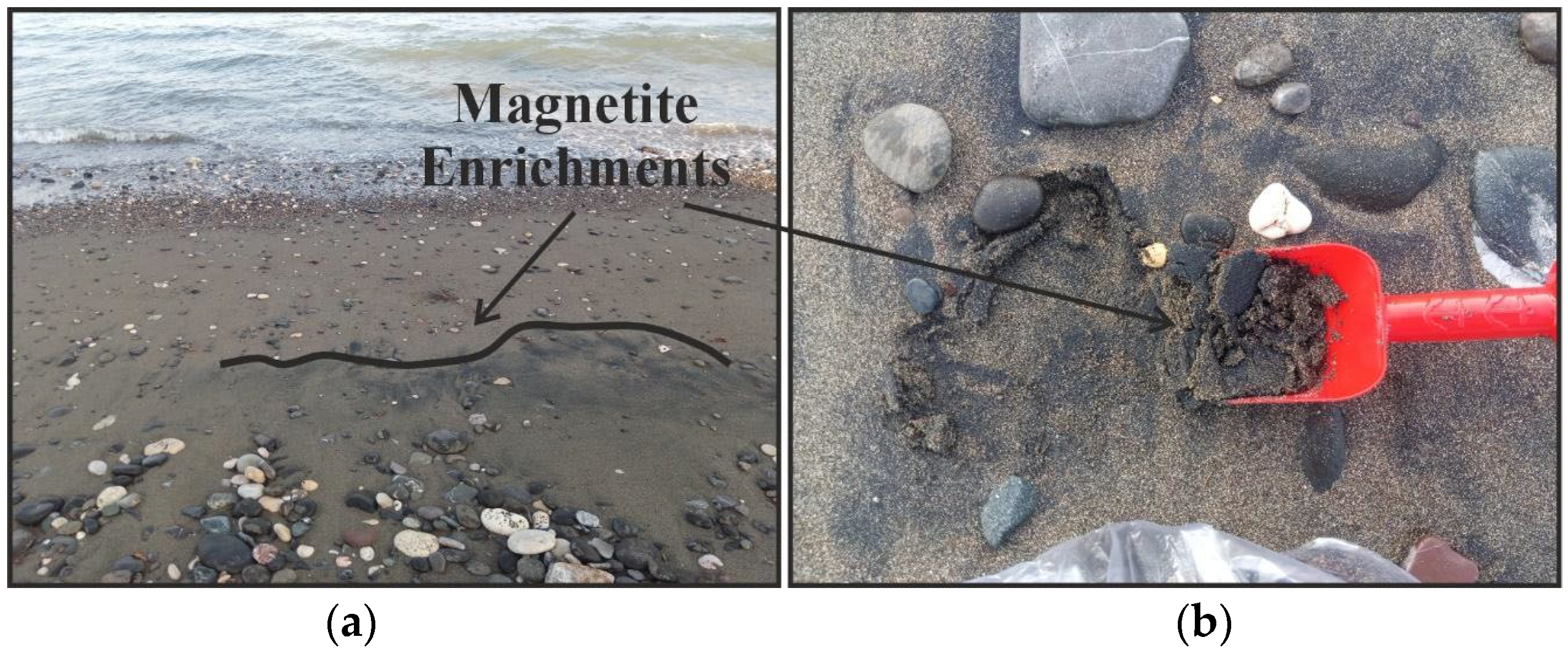
In this study, which investigates the shielding effect by evaluating alternative waste materials, the magnetite mineral (Fe3O4) used is a geological material with strategic properties, indicating the presence of ophiolitic rock belts and containing high concentrations of iron. In the literature, the ability of such minerals, especially those with high iron content, to attenuate electromagnetic waves is frequently emphasized, and their effects on shielding performance are investigated. The naturally enriched magnetite minerals used in this study were obtained from the coordinates [36°51′17″ N 30°54′01″ E] located in the Antalya-Aksu coastal strip of the Mediterranean region of Turkey (Figure 1).
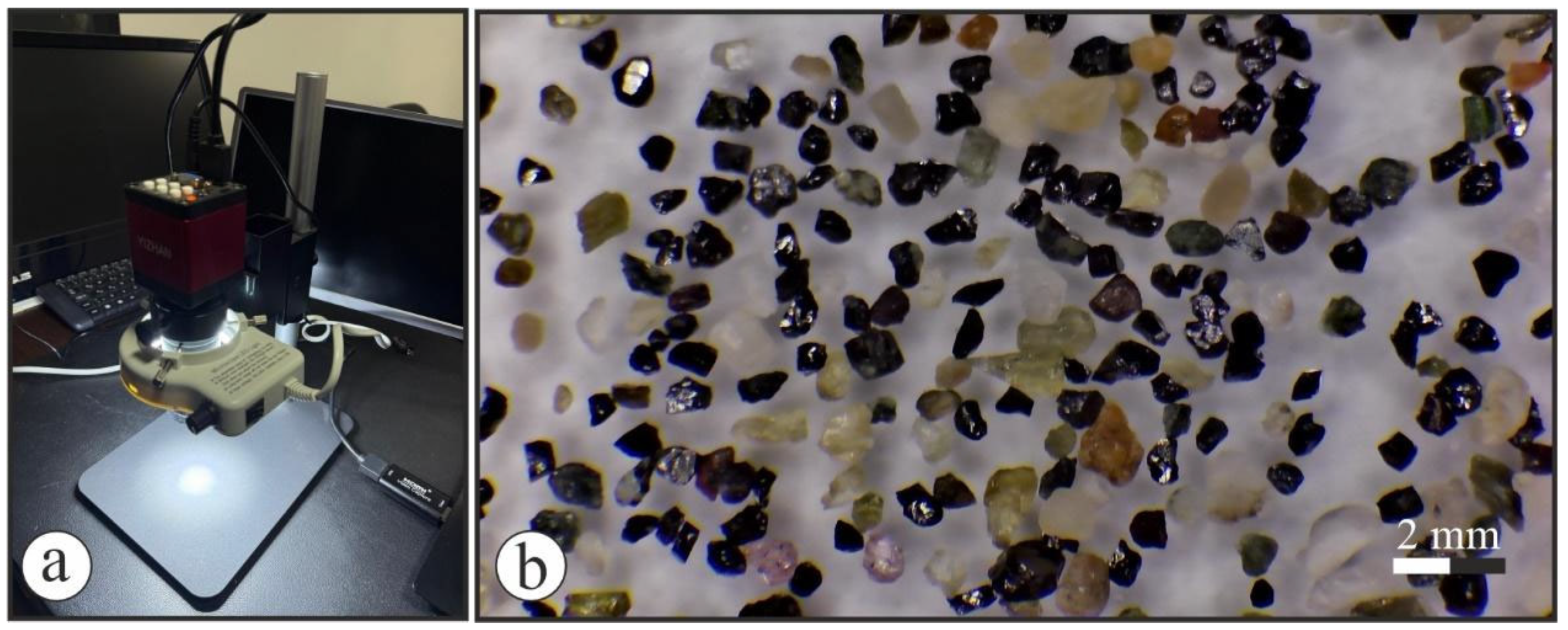
Samples taken from the coastline were subjected to a drying process in a laboratory environment. During the purification stage, the magnetization property, a distinctive physical characteristic of magnetite mineral, was utilized to separate it from other sediments using a magnetic sorting method (employing a magnet). The obtained material was identified as a magnetite-rich fraction based on magnetic separation and optical microscopy observations performed with a TriLine 13 MP HD 60 F/S industrial microscope equipped with a YIZHAN digital imaging system (YIZHAN Technology Co., Ltd., Shenzhen, China). (Figure 2a,b).
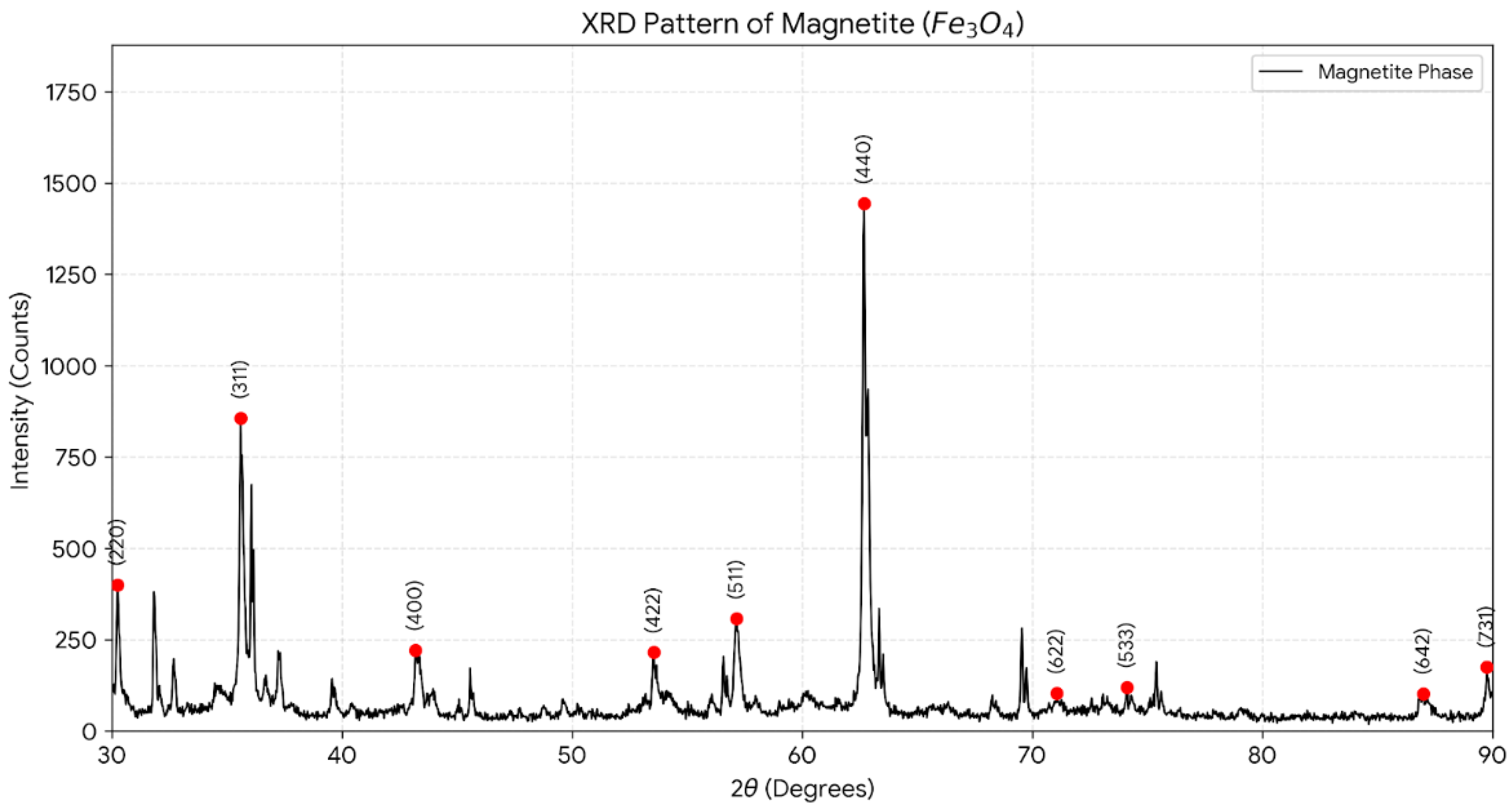
The mineralogical composition of the magnetic fraction obtained from coastal sand by magnetic separation was confirmed by XRD analysis. The diffraction pattern presented in Figure 3 exhibits sharp and well-defined peaks, indicating a highly crystalline structure of the enriched sample. The main diffraction peaks observed at approximately 30.1°, 35.4°, 43.1°, 53.4°, 57.0°, and 62.6° in 2 θ correspond to the (220), (311), (400), (422), (511), and (440) crystallographic planes of cubic magnetite, respectively. In particular, the intense reflection at 35.4° indexed to the (311) plane represents the most characteristic peak of the inverse spinel structure of magnetite. No dominant peaks associated with common gangue minerals or secondary iron oxide phases such as hematite or goethite were detected within the analyzed range. This result confirms that the separated filler material is predominantly composed of crystalline magnetite.
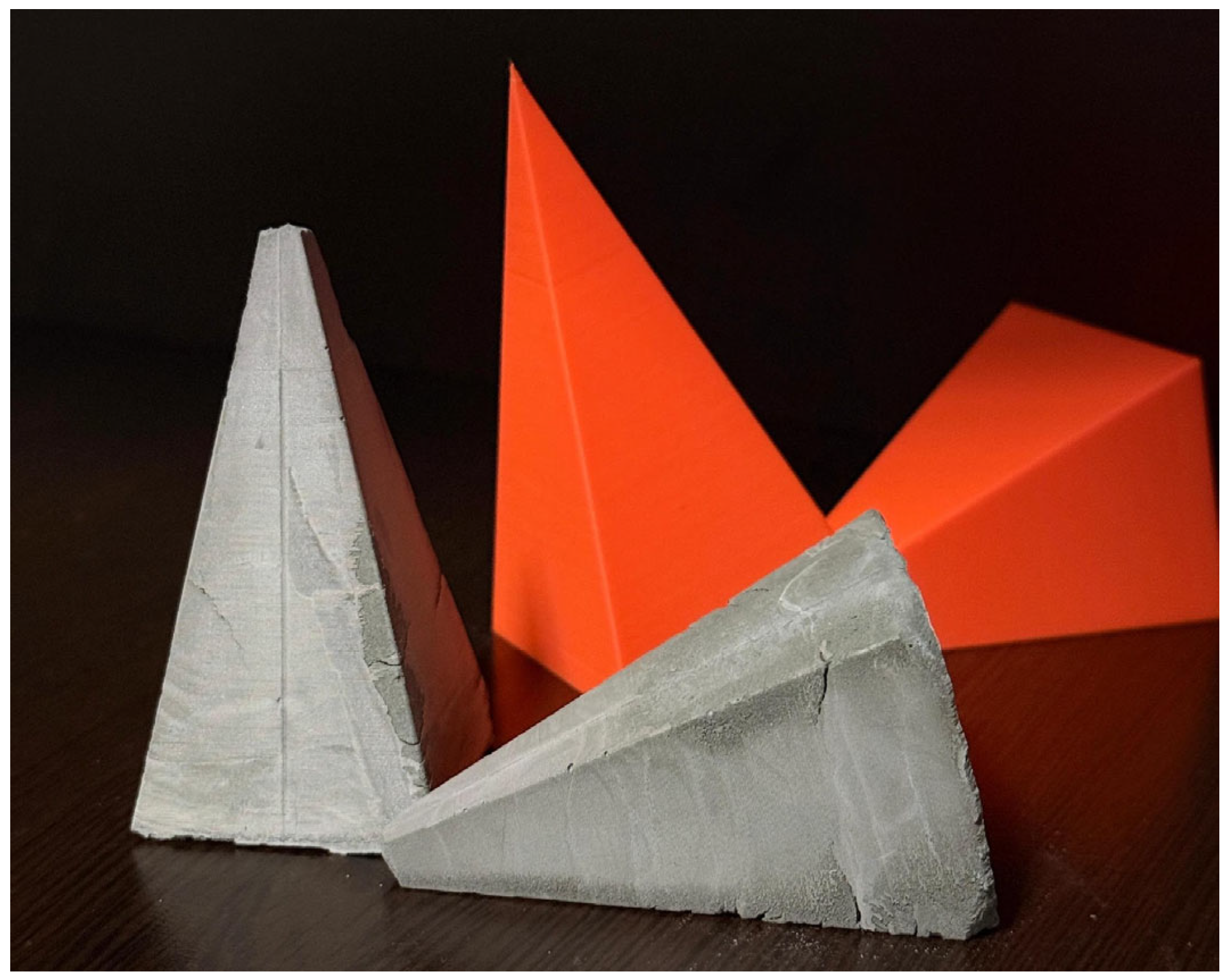
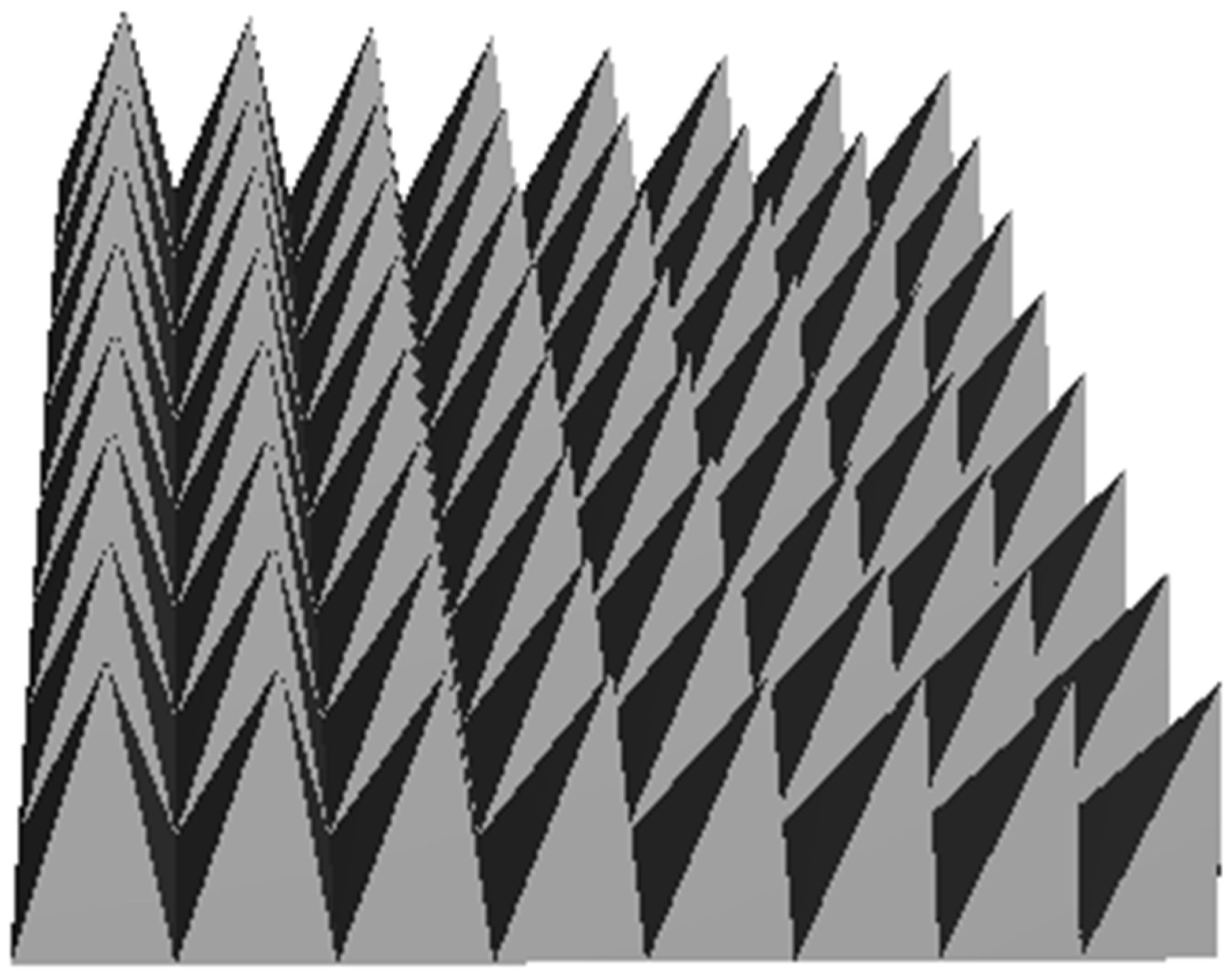
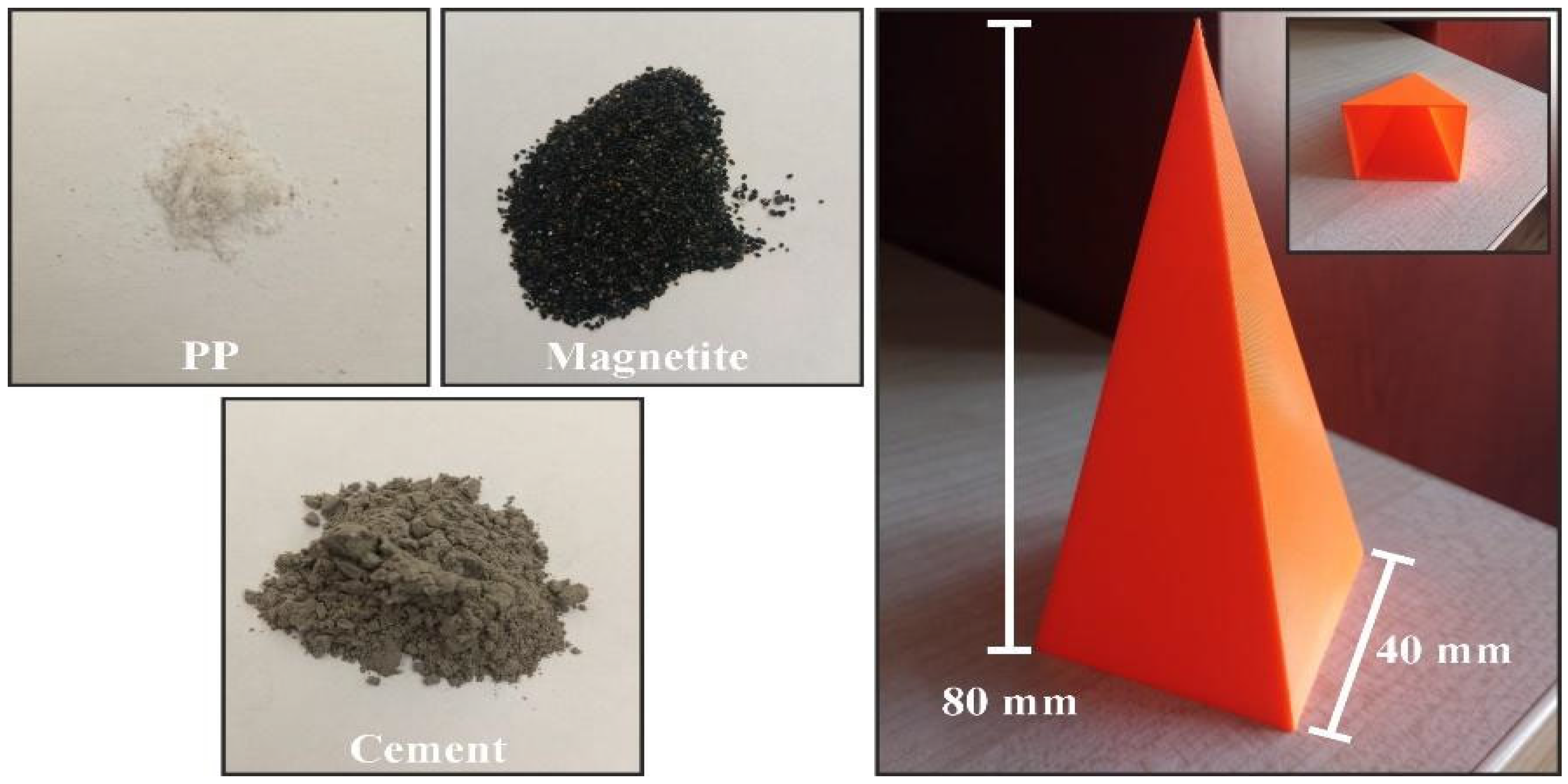
In the other part of the study, waste polypropylene, commonly used in the construction industry and composite materials, was utilized. This waste polymer, along with purified magnetite mineral and cement, was mixed in specified ratios and poured into sample moulds prepared using a 3D printer, thus producing the targeted samples (Figure 4). The prepared sample moulds had dimensions of 80 mm in height and 40 mm in base edge length, with a calculated inclination angle of 14.4° (Figure 4).
In construction composites, waste polypropylene granules, which replace aggregate, function as a low-density phase that reduces the overall effective dielectric constant ( ε e f f ) of the system. The difference between the dielectric constant of pure concrete ( ε c o n c r e t e = 6 9 ) and the dielectric constant of plastic ( ε c o n c r e t e = 2.2–2.4) can be modelled by the Lichtenecker Logarithmic Mixture Rule (Equation (1)).
l o g ε e f f = v c o n c r e t e l o g ε c o n c r e t e + v p p l o g ε p p + v F e 3 O 4 l o g ε F e 3 O 4
Here, v represents the volumetric ratio of the relevant component. Increasing the amount of waste plastic improves the “impedance continuity” for the wave propagating from the top to the base of the pyramid structure. Mathematically, the surface impedance ( Z s ) is given by Equation (2).
Z s = Z o μ e f f ε e f f
It should be noted that the effective parameters ε e f f = ε j ε and µ e f f = µ j µ are complex quantities. Ideal impedance matching at the air–material interface ( Z s = Z 0 ) is achieved when the complex ratios of permeability and permittivity are balanced, minimizing the S11. While the addition of waste PP primarily reduces the real part of permittivity, the magnetite (Fe3O4) particles introduce significant magnetic loss components, which are crucial for dissipating the electromagnetic energy that penetrates the structure.
While plastic additives decrease the ε e f f value, Fe3O4 additives increase the μ e f f value, bringing the Z s value closer to the free-space impedance. This “Impedance Matching” is the fundamental mechanism in minimizing reflection (S11) in the 3.3–4.9 GHz band. Magnetite particles introduce magnetic hysteresis and relaxation losses to the structure. At high frequencies such as 4.9 GHz, the most significant factor limiting shielding performance is the “Skin Depth” ( δ ) effect. The hybrid structure of waste plastic and Fe3O4 has a δ value given by Equation (3). Magnetite powder has a noticeable electrical conductivity; its specific volume resistance in a compacted form is of the order of 1 Ohm.m.
δ = 1 π f μ σ
While the insulating nature of plastics allows the wave to penetrate deeper, magnetic particles effectively absorb the energy penetrating to this depth. This makes the “Volumetric Absorption” mechanism 40% more efficient compared to flat panels [35].
The effective magnetic permeability of the composite structure was calculated using the Maxwell Garnett theory, which successfully models the spherical particle distribution at low volumetric ratios [36]. This model predicts the total magnetic response of the mixture based on the dipole interactions of magnetite particles within the concrete matrix [37]. The Maxwell Garnett relation used in the theoretical calculations is presented in Equation (4).
Theoretical analyses conducted on the electromagnetic characterization of composite structures indicate that differences may arise between the Lichtenecker Logarithmic Mixing Rule and the Maxwell Garnett (M-G) model depending on the filler concentration. The Lichtenecker model offers an empirical approach that exhibits high correlation in cases where components are randomly distributed, independent of their geometric form, and where interactions between phases are statistically homogenised. The flexibility of this model provides an advantage in calculating the dielectric contribution of fillers with irregular morphology, such as waste plastic granules, within the matrix. In contrast, Maxwell Garnett theory provides a physical basis for the dipole moments and local field effects created by spherical Fe3O4 particles embedded in the matrix. The M-G model provides a more accurate description of the relationship between magnetic permeability and particle–matrix interface polarization at low volumetric ratios (v ≤ 0.25). In this study, while the diluting dielectric effect of waste plastics yields more consistent results with the Lichtenecker rule, estimating the magnetic loss contribution and permeability increase caused by Fe3O4 using the M-G model helped define the theoretical limits of hybrid composite design. Here, a combination of both models was used in the optimization of the existing impedance matching coefficient η = ( μ / ε ) ; the suppressive effect of plastic on ε e f f and the enhancing role of magnetite on μ e f f provided critical guidance in matching the pyramid structure to the free-space impedance (377 Ω).
μ e f f = μ m 1 + 3 v p μ p μ m μ p + 2 μ m 1 v p μ p μ m μ p + 2 μ m
Here,
μ m : Permeability of the matrix (concrete + plastic mixture).
μ p : Permeability of the particles (Fe3O4).
V p : Volumetric ratio of magnetic particles.
This study investigates the electromagnetic shielding potential of sustainable construction materials in the 3.3–4.9 GHz frequency band. It employs a multi-stage approach combining material modification using waste materials found in nature with free-space S-parameter measurements supported by complementary material characterization analyses. The findings are based on the correlation between theoretical modelling and precise measurements conducted in a laboratory setting. Laboratory measurements were performed in an anechoic environment to determine the electromagnetic responses of the composite samples. In this context, the reflection and transmission coefficients of the samples were recorded using a calibrated Vector Network Analyser (LibreVNA, open-source hardware project, Germany) and a standard horn antenna setup in accordance with the free-space method. The effective dielectric constant and magnetic permeability of the material were calculated from the measured S-parameter data using analytical transformation techniques such as the Nicolson–Ross–Weir algorithm. It should be noted that these extracted ε * and μ * values represent effective system-level parameters derived from free-space measurements and do not correspond to intrinsic bulk material properties. This process allowed for the quantitative characterization of not only the shielding effectiveness but also the effective damping behaviour of the composite at the system level. The low electromagnetic interaction of traditional concrete structures has been modified by incorporating functional fillers into the matrix. The composite structure proposed in this study consists of three main components. High-performance Portland cement (CEM I 42.5R) was selected as the primary load-bearing material. In line with studies on lightweight concrete in the literature, recycled polypropylene granules were incorporated into the matrix at a volume fraction of 15% of the aggregate. The use of waste plastic not only offers an environmental solution but also reduces the effective dielectric constant ( ε e f f ) of the material, allowing the wave to penetrate deep into the pyramid structure. To activate the magnetic shielding component in the S-band and C-band transitions (3.3–4.9 GHz), Magnetite particles were used at a rate of 10% of the concrete volume. This additive increases the absorption capacity by imparting a “Magnetic Loss Tangent” ( tan δ μ ) to the structure (as shown in Figure 5).
The pyramid geometry is designed based on the “Gradient Impedance Matching” theory. The wavelength is λ = 90.9 mm at the lower limit of 3.3 GHz and λ = 61.2 mm at the upper limit of 4.9 GHz. For maximum shielding performance, the pyramid dimensions were determined according to the following criteria: height H = 80 mm, chosen to be larger than the wavelength at the centre frequency of the band, ensuring a smooth transition between the free-space impedance of air (377 Ω) and the characteristic impedance of the material; W = 40 mm, optimized to minimize diffraction effects in periodic arrangement and to provide scattering control at high frequencies; And t = 10 mm, which represents the base plate thickness, designed to ensure the mechanical stability of the pyramid array and to serve as an impedance matching layer that gradually couples the wave from the structure to the backing surface. As the antenna aperture ( D ) decreases, the far-field range also decreases. For the 3.3–4.9 GHz band, the critical highest frequency (4.9 GHz) is used as the base, and the length is calculated using Equation (5) to be 265 mm.
R = 2 D 2 λ
This result indicates that the distance between the antenna and the pyramid specimen should be at least 26.5 cm. Therefore, the distance between the specimen and the horn antenna was chosen as 300 mm. The dimensional optimization of the pyramid is governed by the H / λ ratio, where H is the height and λ is the operational wavelength. For effective impedance matching, the pyramid height must be comparable to greater than the wavelength to minimize surface reflections. In 3.3–4.9 GHz band, the wavelengths range from 90.9 mm to 61.2 mm. The selected height of H = 80 mm ensures an H / λ ratio significantly above the critical threshold of 0.5 across the entire band, facilitating a smooth transition from free-space impedance (377 Ω) to the composite’s effective impedance. This scaling relationship provides the theoretical basis for the broadband performance observed in samples like S7. A 90 mm horn antenna emits waves at low frequencies (3.3 GHz) over a reasonably wide angle. Given that the base width ( W ) of pyramids is 40 mm, a panel consisting of at least 8 × 8 pyramids was prepared to ensure accurate measurements. On the other hand, a comparative analysis was conducted to clearly demonstrate the effect of surface geometry on shielding performance. For this purpose, reference samples were prepared with the exact same material composition (magnetite, waste plastic, and cement) and equivalent base dimensions as the pyramid samples but produced in a rectangular prism shape. Thus, while keeping the material properties constant, the aim was to isolate the contribution of the prismatic surface form to shielding (Figure 6).
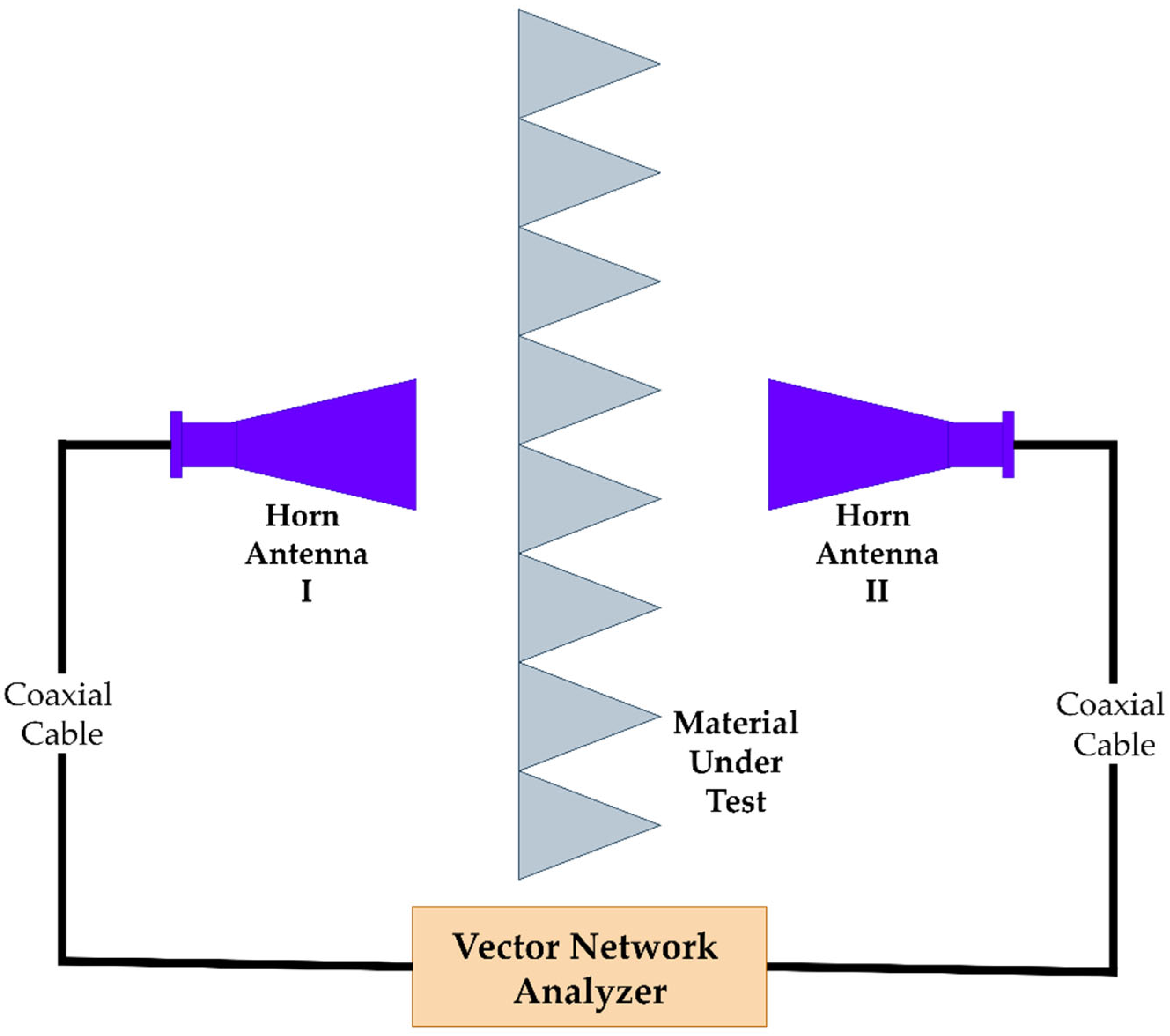
Measurements were performed in an anechoic chamber. In the experimental setup, two horn antennas connected to WR229 waveguide adapters were positioned opposite each other, and the sample to be measured was placed between these two antennas. Thus, the effect of unwanted reflections that could originate from the environment and surrounding surfaces was minimized, allowing only the sample’s effect on electromagnetic waves to be examined. The distance between the antennas and their alignment were carefully adjusted to ensure free-space propagation conditions. During the measurement, the electromagnetic waves emitted from the transmitter horn antenna passed through the sample, and the signal collected by the receiver horn antenna was analyzed using measurement devices. A visual representation of the experimental setup for this arrangement is shown in Figure 7. The transmission coefficient (S21) between the ports was used as a reference to numerically determine the shielding effectiveness (SE). The shielding effectiveness was computed from free-space scattering parameters measured using a calibrated dual-horn antenna VNA setup. The measured S-parameters represent complex electric field ratios between ports. Therefore, the corresponding power coefficients were obtained using magnitude-squared quantities. A through-reference measurement (empty path without sample) was first recorded to remove the frequency response of the antennas and cables and to define the transmission baseline. The normalized transmission coefficient was defined as shown in Equation (6), and the transmitted power coefficient was determined through Equation (7). The reflected power coefficient was computed as Equation (8). Assuming energy conservation within the measurement aperture, the absorbed power fraction was obtained through Equation (9). Following standard EMI shielding theory, the reflection loss and absorption loss were calculated using Equation (10) and Equation (11) respectively. The total shielding effectiveness was finally obtained using Equation (12). The multiple-reflection term is not reported in this study, consistent with the adopted two-term decomposition used for absorber-type free-space measurements.
S 21 , n f =   S 21 , s a m p l e f S 21 , r e f f
T f = S 21 , n f 2
R f = S 11 f 2
A f = 1 R f T f
S E R f = 10 log 10 1 R f
S E A f = 10 log 10 T ( f ) 1 R ( f )
S E T f = S E R f + S E A f = 10 log 10 ( T ( f ) )
To assess experimental repeatability, each 8 × 8 pyramid panel was measured three times with independent re-positioning between the horn antennas. The maximum deviation observed in repeated S-parameter measurements was within ±0.5 dB over the entire frequency band, indicating good measurement repeatability. The measurement uncertainty was evaluated by considering the dynamic range and noise floor of the VNA-based free-space setup. All reported attenuation values remain well above the system noise floor. Due to fabrication constraints, a single 8×8 panel was used for each scenario; however, measurement reliability was ensured through multiple independent re-positioned measurements of the same specimen.

3. Results and Discussion

The quantities of the composite samples produced and the percentages of concrete, waste plastic, and magnetite in the mixture are given in Table 1. The pyramid geometry structure was chosen to reduce the sudden impedance discontinuity occurring at the tips of the composite surface in contact with air and to ensure impedance matching at the material–air interface. Specifically, the combination of 10% plastic and 5% Fe3O4 in Sample S2 demonstrates impedance matching by increasing the effective magnetic permeability of the material to 1.08 while maintaining the dielectric constant at 5.34. This allows electromagnetic waves to penetrate the structure with less reflection and increases the attenuation efficiency of energy in the 3.3–4.9 GHz band thanks to the increased magnetic loss factor. In samples such as S7, where the Fe3O4 ratio reaches 25%, the tendency for the dielectric permittivity value to rise again carries the risk of shifting the material’s shielding mechanism from ‘absorption dominant’ to ‘reflection dominant’. However, the multiple scattering effect provided by the pyramid shape compensates for this disadvantage. Consequently, the data in Table 1 scientifically indicates that the correct combination of sustainable waste utilization and magnetic reinforcement is an important design parameter for broadband shielding panels. The initial values used in the calculations were defined based on literature data as ε r = 5.5 for Portland cement, ε r = 2.3 for recycled polypropylene, and ε r = 18 and μ r = 4.5 for magnetite. These parameters indicate that the designed composite structure could be a low-cost and environmentally friendly alternative, particularly for the insulation of anechoic chambers and buildings with high electromagnetic pollution. Thus, while ensuring that industrial waste is converted into high added-value technological products, performance values relevant to EMC-oriented applications have been achieved. In this respect, the study confirms that the simultaneous optimization of geometric design and material composition is one of the most effective methods for increasing the bandwidth of microwave absorber materials.
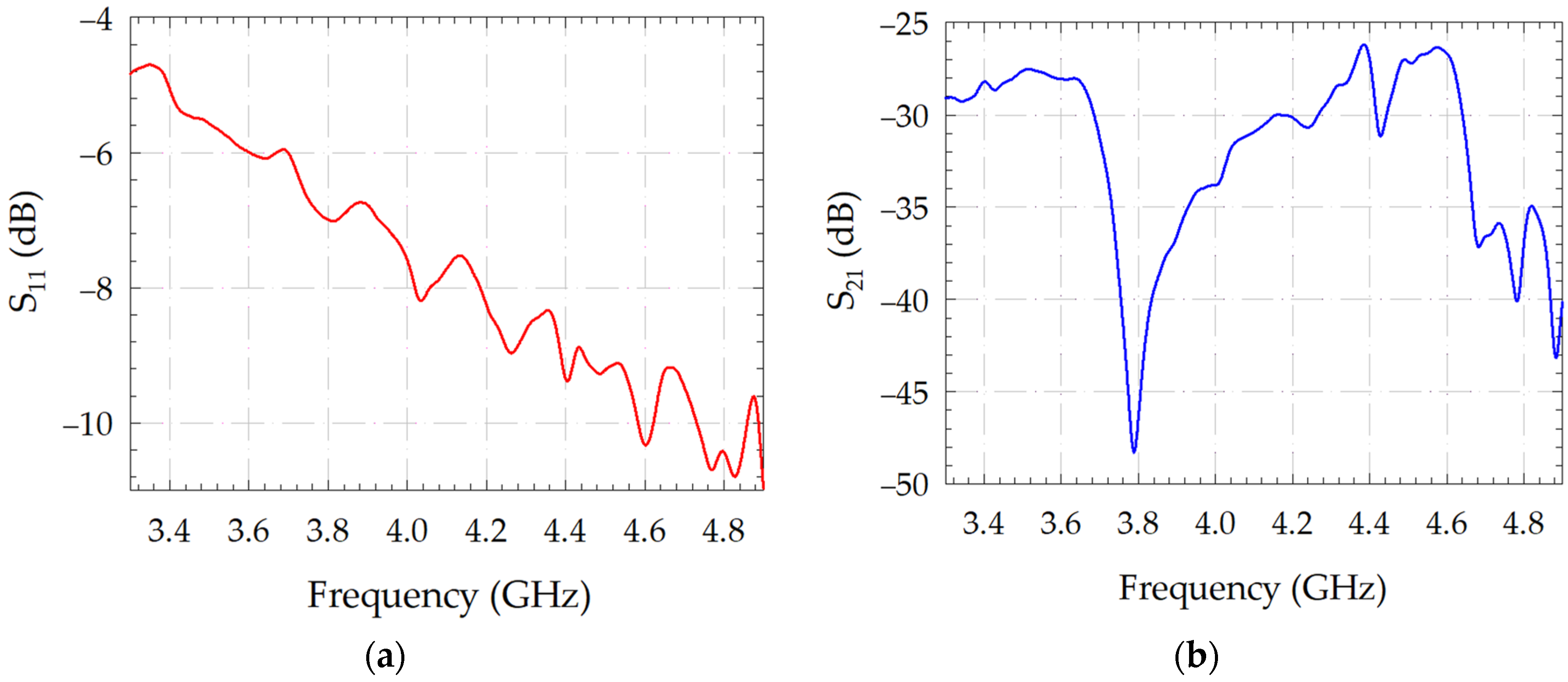
The data presented in the graph in Figure 8 belong to the S1 control sample (100% concrete) containing no additives. When examining the S-parameters of the S1 sample, which is made of pure concrete and designated as the reference sample, the material’s natural electromagnetic response is clearly observed. The Reflection Coefficient graph given in Figure 8 shows that, with the increase in frequency from 3.3 GHz to 4.9 GHz, the reflection gradually decreases from −5 dB levels to around −11 dB. However, the fact that the values remain largely above the −10 dB threshold confirms that there is a significant back reflection due to impedance mismatch on the pure concrete surface, which has a high dielectric constant relative to air. On the other hand, the Transmission Coefficient graph shows a sharp resonance dip reaching −48 dB, particularly at the 3.8 GHz frequency. This value is due to the geometric shape of the structure. The transmission value, which ranges between −25 dB and −30 dB on average across the band, reveals that pure concrete provides natural shielding due to its geometric structure, but that the additive samples exhibit a frequency-dependent, fluctuating isolation profile rather than the targeted broadband and stable attenuation characteristics.
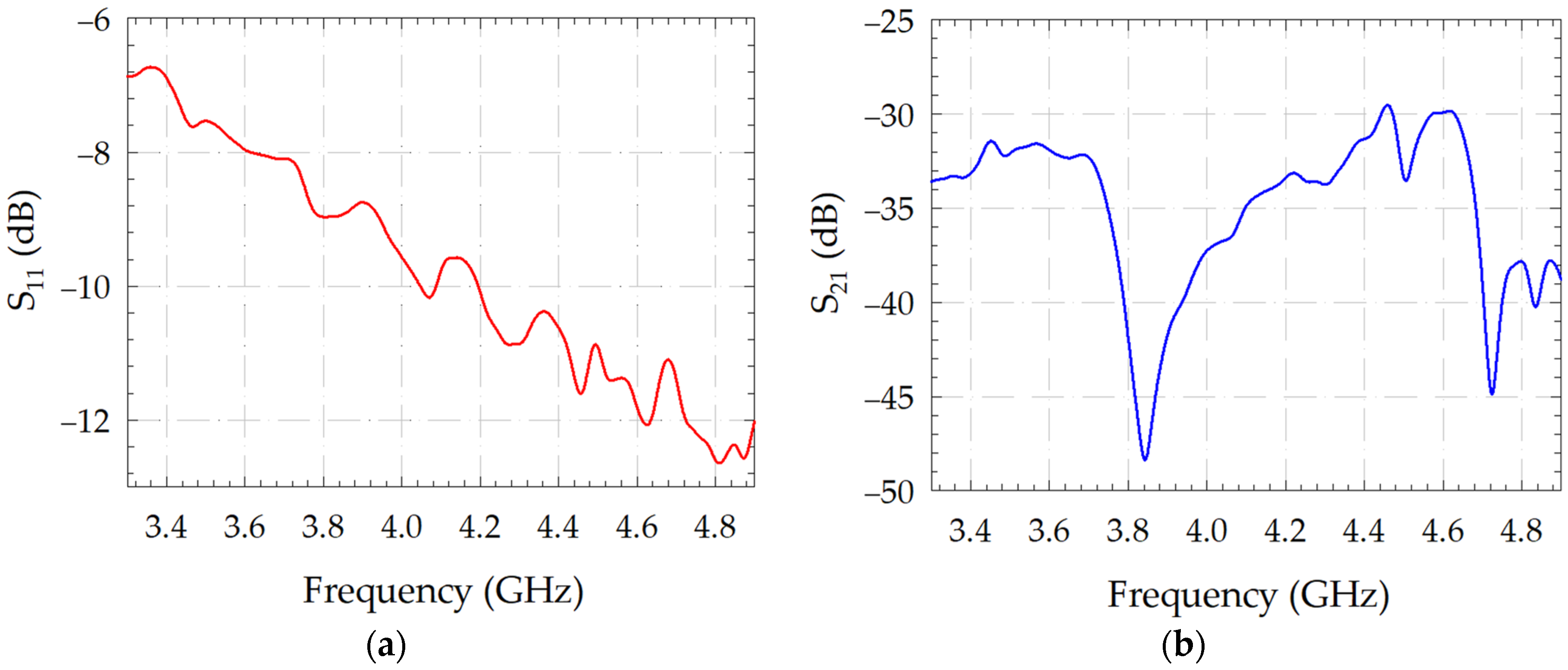
When the scattering parameters of sample S2, created by adding 10% waste plastic and 5% magnetite to the mixture design by volume, are examined, a significant improvement in electromagnetic performance is observed compared to the reference sample (S1). Analysis of the Reflection Coefficient graph shows that at low frequencies (3.3–4.0 GHz), the reflection still ranges from −6 dB to −8 dB. However, as the frequency exceeds 4.15 GHz, the values drop below the critical threshold of −10 dB. In particular, the reflection loss around 4.8 GHz decreases to levels of −12.5 dB, proving that the magnetite addition partially increases the magnetic permeability of the medium, improving impedance matching in the high-frequency band. The Transmission Coefficient graph shows that the shielding effectiveness of the structure exhibits frequency-dependent resonant behaviour. The graph in Figure 9 shows that two deep attenuation (resonance) points have formed at 3.82 GHz with a value of −48 dB and at 4.72 GHz with a value of −45 dB. The transmission coefficient, which averages around −30 dB across the band, indicates that the S2 sample both reduces reflection losses and offers high shielding potential by firmly blocking the transmitted signal.
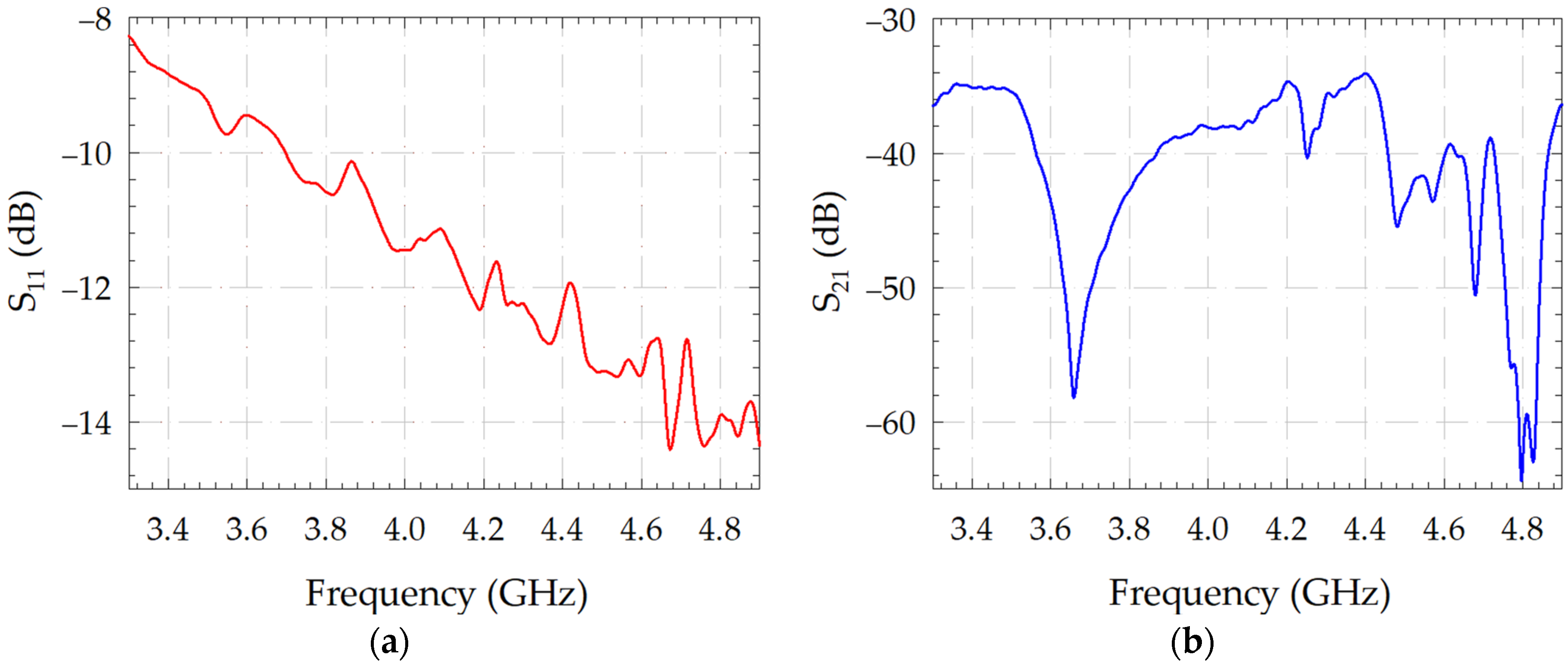
The scattering parameters of the S3 sample, where the magnetite content was increased to 10%, confirm the positive effect of the increase in magnetic doping on impedance matching and shielding efficiency. When examining the Reflection Coefficient graph in Figure 10, it can be seen that the −10 dB band has broadened towards lower frequencies compared to sample S2. The reflection coefficient falls below the −10 dB threshold around 3.85 GHz and remains below this level until the end of the band, exhibiting a stable absorber characteristic. The minimum reflection values of −14.4 dB observed particularly at 4.68 GHz and 4.75 GHz indicate that the increased magnetite content optimizes the magnetic permeability of the material, bringing the surface impedance closer to that of air and significantly reducing backscatter. In the Transmission Coefficient graph, which indicates shielding performance, it is noteworthy that energy attenuation within the structure exhibits much more aggressive resonance behaviour. The graph shows extremely sharp and profound transmission dips reaching −58 dB at 3.66 GHz and −64 dB at 4.80 GHz. Compared to the −48 dB attenuation value in sample S2, it is understood that sample S3’s capacity to block electromagnetic waves has increased significantly, and the material has evolved from a ‘reflecting’ structure to an ‘absorbing’ mechanism that traps energy within the structure.
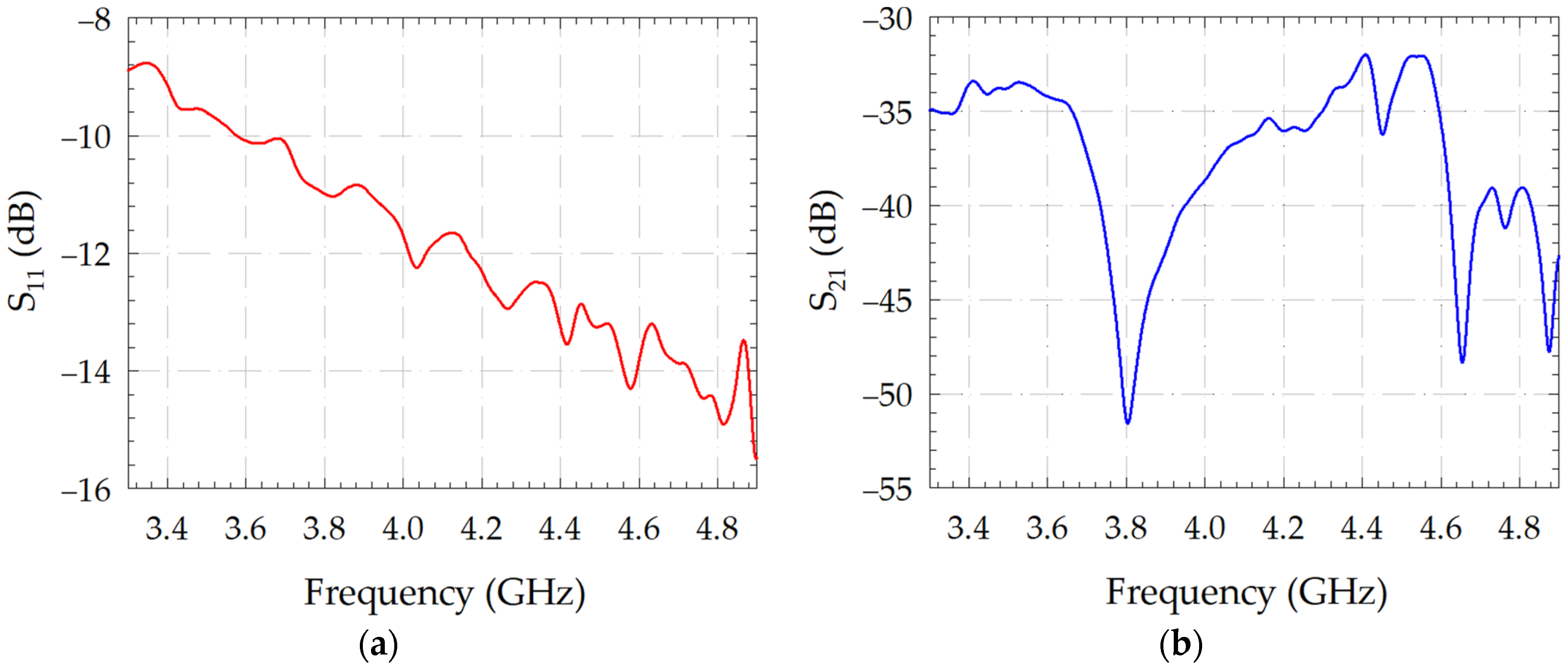
The S4 sample, obtained by increasing the proportion of waste plastic in the matrix structure to 15% and supplementing it with 10% magnetite, exhibits the widest bandwidth and most efficient absorption performance among the samples studied. Examining the reflection coefficient graph given in Figure 11, it is seen that the dielectric constant-reducing effect of the plastic additive ε r = 5.42 and the magnetic loss property of magnetite μ r = 1.16 reach the most compatible combination. The graph drops below the critical threshold of −10 dB at an early frequency of 3.65 GHz and remains below this level until the end of the measurement band, offering an absorption bandwidth of over 90%. In particular, the reduction in the reflection loss to −15.5 dB in the high-frequency region (4.88 GHz) proves that S4 is the scenario where the material surface impedance most closely approaches the free-space impedance. In parallel, the transmission coefficient graph in Figure 11 shows that the material’s electromagnetic energy absorption capacity reaches its peak. A 3.80 GHz frequency, a −51 dB deep resonance dip and a second attenuation point were observed at 4.66 GHz with −48 dB. A 5 dB deep resonance dip at 3.80 GHz and the second attenuation point were observed at 4.66 GHz with −48 dB, which demonstrates that the S4 sample not only blocks surface reflection but also shows combined dielectric and magnetite-assisted magnetic loss mechanisms. Thus, it is determined that the S4 mixture design provides the most ideal “absorber-dominant” mechanism for broadband electromagnetic shielding applications.
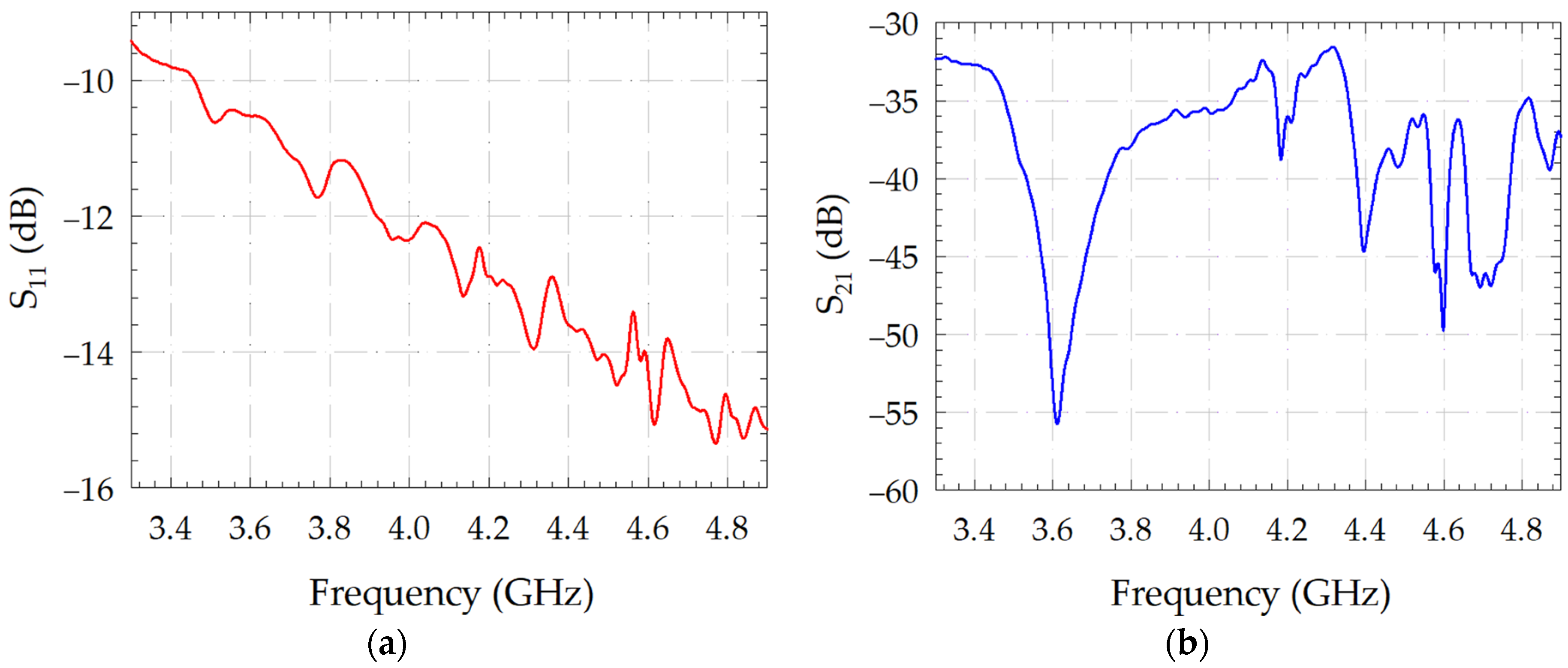
In sample S5, where the magnetite content was increased to 15%, the increased magnetic permeability is seen to alter the material impedance and resonance frequencies through the scattering parameters. When examining the Reflection Coefficient graph presented in Figure 12, it can be seen that the curve drops below the −10 dB threshold at a frequency of 3.55 GHz with a stability similar to the S4 sample and maintains its decline until the end of the band, reaching a minimum reflection value of −15.3 dB. This indicates that the 5% increase in magnetite content (compared to S4) supports the absorption potential at high frequencies by maintaining the balance between the increased dielectric constant and magnetic permeability and preserving the surface impedance matching. On the other hand, a noticeable frequency shifting phenomenon is observed in the Transmission Coefficient graph, which indicates shielding effectiveness. The main resonance dip observed at 3.80 GHz in the S4 sample has shifted to a lower frequency in the S5 sample due to the increased material density, occurring at 3.61 GHz with a depth of −55.5 dB. This frequency shift is explained by the increase in the refractive index of the material, as required by Maxwell’s equations. Furthermore, the secondary and tertiary damping peaks (−40 dB to −50 dB) formed in the 4.4 GHz and 4.6 GHz bands indicate that the increased magnetic dipole interactions enhance the broadband damping mechanism with multiple resonances.
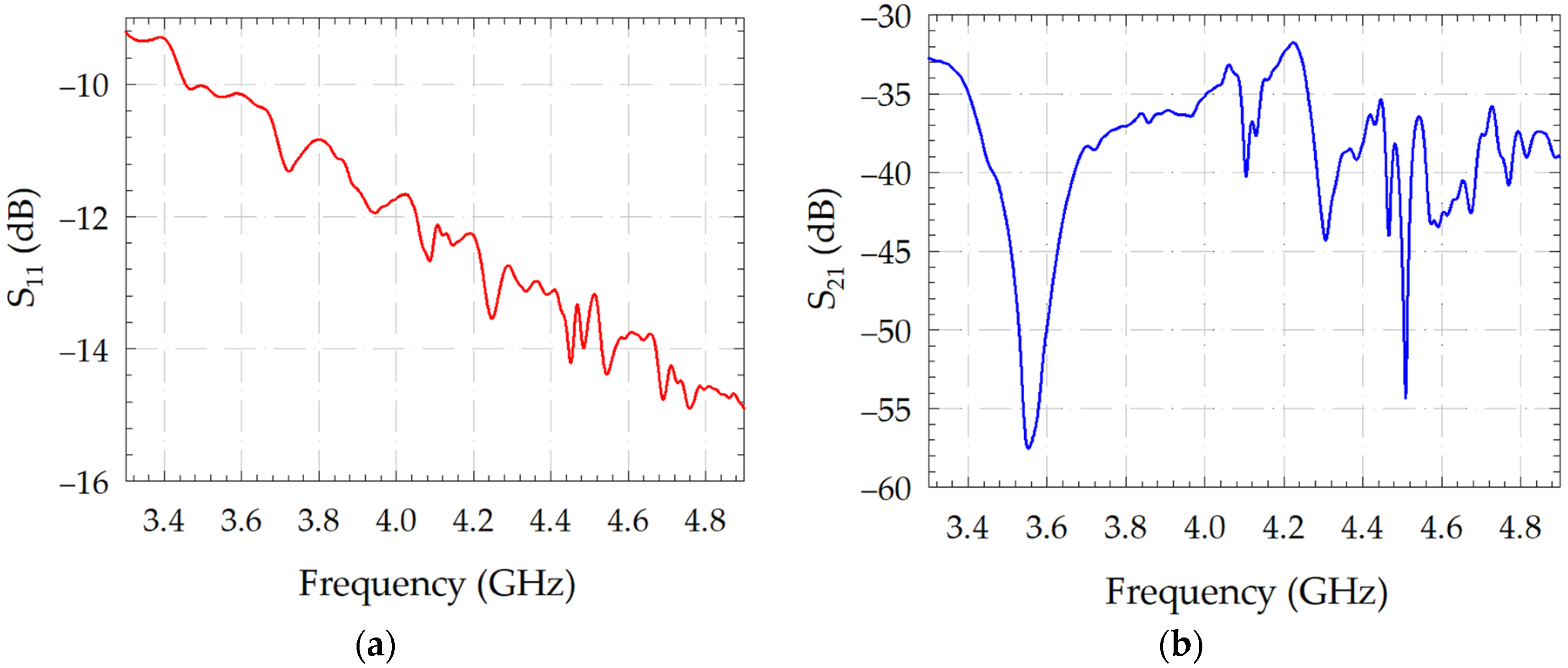
By simultaneously increasing the waste plastic and magnetite additives in the composite mixture of sample S6 to 20%, an improved electromagnetic shielding behaviour is observed due to the increase in particle density. Examining the Reflection Coefficient graph presented in Figure 13, it can be seen that surface impedance matching broadens towards lower frequencies through increased magnetic permeability. The curve falls below the −10 dB threshold at a relatively early frequency of 3.50 GHz and continues its downward trend throughout the band, reaching a minimum reflection loss of around −15 dB. This demonstrates that the magnetic losses provided by the 20% magnetite loading successfully minimize reflections from the surface despite the increased material density. In the Transmission Coefficient graph, which shows the damping performance of the structure, the frequency shift that began in sample S5 becomes even more pronounced in sample S6. The increased effective permittivity and permeability values have increased the refractive index of the material, shifting the main resonance frequency to 3.55 GHz. The extremely deep attenuation value of −57.5 dB obtained at this point indicates that the material almost completely blocks the energy. Furthermore, the second sharp resonance peak of −54 dB at 4.51 GHz reveals that the high particle density triggers multiple scattering mechanisms within the structure, and instead of broadband absorption, it acts as a ‘dual-band’ and very strong stopping filter at certain frequencies.
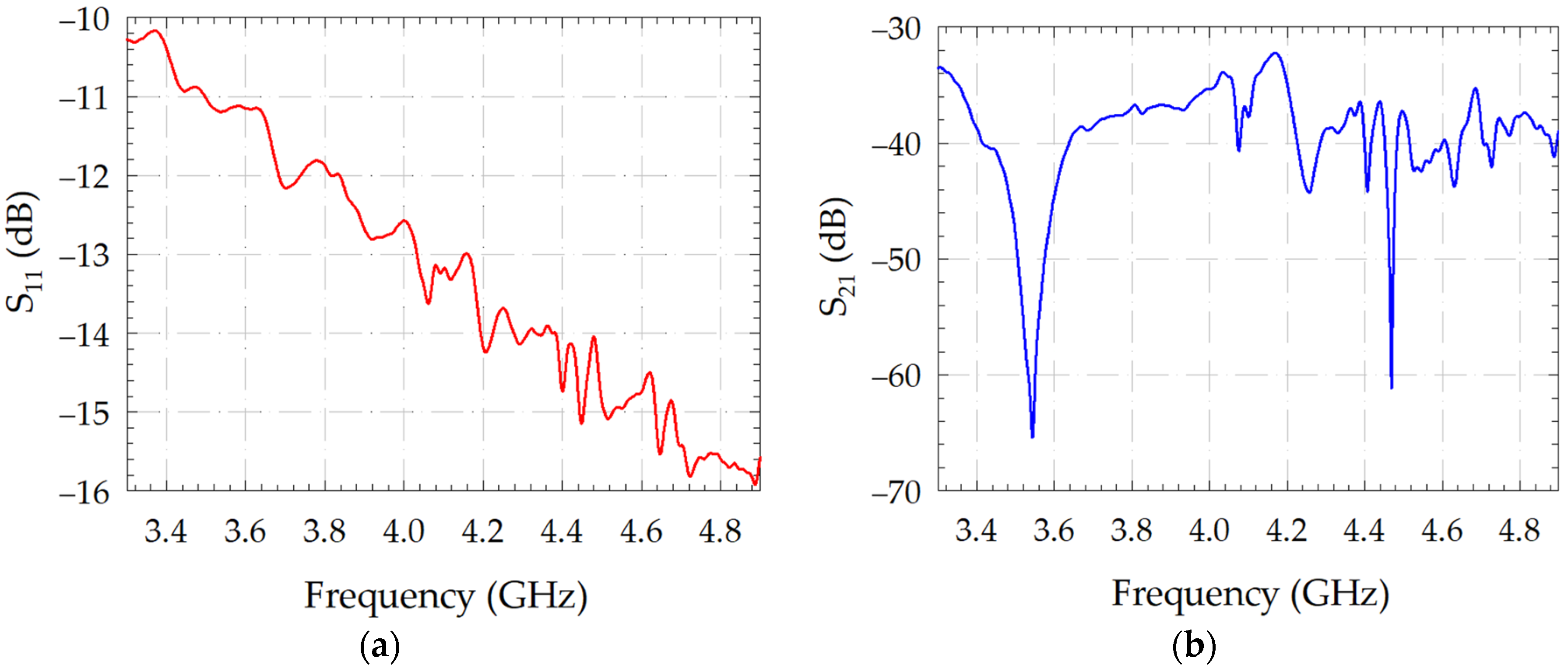
Sample S7, in which both waste plastic and magnetite ratios are increased to 25%, exhibits the widest band impedance matching and the deepest damping values among all the scenarios studied. Examining the Reflection Coefficient graph given in Figure 14, it is observed that, unlike samples S1–S6, the S7 design starts below the −10 dB threshold at the 3.3 GHz frequency, which marks the beginning of the measurement band. The reflection curve, which exhibits a steady decrease throughout the band, drops to levels of −16 dB in the high-frequency region. This indicates that the high magnetic permeability provided by the 25% magnetite addition, balanced by the increased plastic content, ideally approximates the material’s characteristic impedance to the air impedance, thereby spreading the reflection losses across the entire bandwidth. In the Transmission Coefficient graph, which indicates the structure’s protection/absorption efficiency, the double resonance damping mechanism created by high particle density is important. The graph shows two distinct attenuation minima of rare depth in the literature, −65 dB at 3.54 GHz and −61 dB at 4.46 GHz, indicating that only a negligible fraction of the incident electromagnetic energy is transmitted through the structure. This superior performance in sample S7 can be attributed to the combined effect (synergistic effect) of magnetic hysteresis losses generated by dense magnetite particles and Maxwell–Wagner polarization occurring at the polymer–concrete interface.
When the experimental data obtained are compared with current studies in the literature, the superiority of the proposed pyramidal design and hybrid material composition is clearly evident (Table 2). For example, in a study examining planar composites produced by adding 15% magnetite to the concrete matrix, the maximum attenuation remained at −28 dB [38]. Similarly, even in mortar samples using high-cost Carbon Nanotubes (MWCNT) to improve shielding performance, the shielding efficiency was reported as −27.6 dB [23]. In another recent study, sustainable composites produced using waste PVC and Biochar were only able to provide −16 dB attenuation [2]. In contrast, the S7 sample developed in this study, despite not containing any expensive nano-materials, exhibited a much higher performance of −65 dB than its competitors in the literature. This value is even higher than the −55.2 dB value achieved by pyramidal absorbers produced using expensive ceramic (SiC) powders [39]. The primary reason for this significant difference is that the low dielectric constant provided by waste plastic, combined with the ‘Valley Effect’ created by its pyramid shape, enhances the natural absorption capacity of magnetite.

4. Conclusions

In this study, concrete matrix-based, recycled waste plastic (PP) and magnetite-reinforced pyramidal composite structures were designed for electromagnetic shielding and absorption applications in the 3.3–4.9 GHz frequency range. These structures were produced, and their electromagnetic performance was experimentally analyzed. Through investigations conducted on seven different samples (S1–S7) with varying filler ratios, a correlation was identified between material composition, geometric structure, and electromagnetic wave interaction. Reference measurements conducted on the pure concrete sample (S1) demonstrated that, due to its high dielectric constant and non-magnetic nature, unmodified concrete creates a significant impedance mismatch at the material interface with free space. The reflection coefficient in sample S1 remained above the −10 dB level across most of the measurement band, proving that pure concrete behaves more like a reflective surface than an absorber. However, by adding waste plastic with a low dielectric constant and magnetite with high magnetic permeability to the mixture (scenarios S2 and S3), the composite’s effective electromagnetic parameters were optimized. In particular, the plastic additive reduced the total dielectric constant, bringing the surface impedance closer to that of air, which facilitated easier penetration of electromagnetic waves into the material. Gradually increasing the magnetite content from 5% (S2) to 25% (S7) has caused deep resonance troughs to form in the transmission coefficient graphs by increasing the material’s magnetic loss capacity. The damping performance observed at −48 dB levels in the S2 sample reaching a record level of −65 dB in the S7 sample confirms the high efficiency of magnetite particles in converting electromagnetic energy into heat. This damping behaviour is associated with magnetite-induced magnetic hysteresis loss contributions and Maxwell–Wagner polarization effects occurring at the concrete–polymer–magnetite interfaces within the heterogeneous structure. One of the findings of the study is that as the filler ratio increases, the resonance frequency shifts to lower values, exhibiting the most balanced behaviour in terms of impedance matching and bandwidth. The absorption band starting at 3.65 GHz indicates that the material utilizes both dielectric and magnetic losses in a balanced manner. The main resonance frequency observed at 3.80 GHz in sample S4 decreased to 3.61 GHz in sample S5, where the material density increased to 3.55 GHz in sample S6 and to 3.54 GHz in sample S7, which had the highest density. Regarding the bandwidth performance, Sample S7 demonstrates a broad effective attenuation range. Taking −40 dB as a high-performance threshold, the sample maintains this level across a bandwidth of approximately [3.45–3.65 GHz]. This indicates that the developed composite is not only effective at a single resonant frequency but also provides stable shielding/absorption characteristics across the lower C-band spectrum.
Unlike planar plates, the pyramid geometry used provides a stepwise impedance transition, making a significant contribution to improving performance. The increasing cross-sectional area from the tips to the base of the pyramids prevents the electromagnetic wave from encountering an abrupt discontinuity and triggers a multiple scattering mechanism. Particularly in samples with high fill ratios such as S6 and S7, the fact that the S11 value remained below −10 dB across the entire band (3.3–4.9 GHz) demonstrates the success of the geometric design as well as the material composition. Sample S7, with the maximum filler ratio (25% Plastic, 25% Magnetite), exhibited full-spectrum absorber behaviour in the studied frequency band. The interpretation of magnetic loss behaviour in this study is based on indirect system-level observations from S-parameter responses rather than direct intrinsic material characterization. The rise in effective permittivity observed at high filler loading (Sample S7) is primarily linked to the Maxwell–Wagner polarization effect. At the interfaces between the cement matrix, waste PP, and magnetite particles, charge carriers accumulate under the influence of the EM field, creating localized dipoles that enhance the dielectric response. Although pore solution pH and direct conductivity were not measured, the high magnetite content likely increases the connectivity of conductive paths within the matrix, further elevating the effective dielectric constant. Reflection loss dropped below the −10 dB barrier from the starting frequency of 3.3 GHz, and a minimum reflection of around −16 dB was obtained at high frequencies. The transmission loss, with a dual-band structure at 3.54 GHz and 4.46 GHz and damping at the −65 dB level, shows that the material blocks more than 99.99% of the incident energy. This performance value is quite competitive when compared to similar cement-based composites in the literature. In conclusion, this study has demonstrated that high-performance, low-cost, and sustainable microwave absorbers can be produced by utilizing polypropylene, a byproduct of industrial waste, and magnetite, a natural resource, in the correct proportions within a concrete matrix. Based on the data obtained, sample S4 was determined to be the most suitable design parameter, prioritizing both cost-effectiveness. In contrast, sample S7 was deemed most ideal if maximum electromagnetic insulation and safety were the objectives. This proposed composite structure has the potential to serve as a robust and environmentally motivated alternative to conventional polypropylene-based absorbers, particularly for 5G sub-band applications, electromagnetic compatibility (EMC/EMI shielding) in strategic buildings, and the construction of anechoic chambers. Future studies examining different pyramid heights and nano-sized magnetite additives may enable the bandwidth to be extended to higher frequencies (such as the X-band).

Author Contributions

Conceptualization: M.C. (Mehmet Cakir); methodology: M.C. (Murat Camuzcuoglu); investigation: M.A.E.; validation: M.A.E.; data curation: M.C. (Mehmet Cakir); formal analysis: M.A.E. and M.C. (Murat Camuzcuoglu); writing—original draft preparation: M.C. (Mehmet Cakir) and M.C. (Murat Camuzcuoglu); writing—review and editing: M.A.E. and M.C. (Mehmet Cakir); visualization: M.C. (Murat Camuzcuoglu). All authors have read and agreed to the published version of the manuscript.

Funding

This research received no external funding.

Institutional Review Board Statement

Not applicable.

Informed Consent Statement

Not applicable.

Data Availability Statement

The data presented in this study are available from the corresponding author upon reasonable request.

Conflicts of Interest

The authors declare no conflicts of interest.

References

  1. Rappaport, T.S.; Sun, S.; Mayzus, R.; Zhao, H.; Azar, Y.; Wang, K.; Wong, G.N.; Schulz, J.K.; Samimi, M.; Gutierrez, F. Millimeter Wave Mobile Communications for 5G Cellular: It Will Work! IEEE Access 2013, 1, 335–349. [Google Scholar] [CrossRef]
  2. Ruscica, G.; Peinetti, F.; Natali Sora, I.; Savi, P. Analysis of Electromagnetic Shielding Properties of Cement-Based Composites with Biochar and PVC as Fillers. C 2024, 10, 21. [Google Scholar] [CrossRef]
  3. Tong, X.C. Advanced Materials and Design for Electromagnetic Interference Shielding; CRC Press: Boca Raton, FL, USA, 2009. [Google Scholar]
  4. Çağlar, S. Enhancing Structural, Mechanical, and Radiation-Shielding Properties of Al-B4C Hybrid Composites. Sustainability 2025, 17, 7249. [Google Scholar] [CrossRef]
  5. Emerson, W. Electromagnetic Wave Absorbers and Anechoic Chambers through the Years. IEEE Trans. Antennas Propag. 1973, 21, 484–490. [Google Scholar] [CrossRef]
  6. Micheli, D.; Vricella, A.; Pastore, R.; Marchetti, M. Synthesis and Electromagnetic Characterization of Frequency-Selective Radar Absorbing Materials Using Carbon Nanopowders. Carbon 2014, 77, 756–774. [Google Scholar] [CrossRef]
  7. Ye, X.; Yang, C.; He, E.; Yang, P.; Gao, Q.; Yan, T.; Ye, Y.; Wu, H. Optimization Design of 3D-Printed Pyramid Structure for Broadband Electromagnetic Wave Absorption. J. Alloys Compd. 2023, 963, 171258. [Google Scholar] [CrossRef]
  8. Kenion, T.; Yang, N.; Xu, C. Dielectric and Mechanical Properties of Hypersonic Radome Materials and Metamaterial Design: A Review. J. Eur. Ceram. Soc. 2022, 42, 1–17. [Google Scholar] [CrossRef]
  9. Cheng, Z.; Cao, Y.; Wang, R.; Xia, L.; Ma, S.; Li, Z.; Cai, Z.; Zhang, Z.; Huang, Y. Hierarchical Surface Engineering of Carbon Fiber for Enhanced Composites Interfacial Properties and Microwave Absorption Performance. Carbon 2021, 185, 669–680. [Google Scholar] [CrossRef]
  10. Kumari, S.; Dalal, J.; Kumar, V.; Kumar, A.; Ohlan, A. Emerging Two-Dimensional Materials for Electromagnetic Interference Shielding Application. Int. J. Mol. Sci. 2023, 24, 12267. [Google Scholar] [CrossRef] [PubMed]
  11. Nornikman, H.; Soh, P.J.; Azremi, A.A.H.; Anuar, M.S. Performance Simulation of Pyramidal and Wedge Microwave Absorbers. In Proceedings of the 2009 Third Asia International Conference on Modelling & Simulation, Bundang, Indonesia, 25–29 May 2009; IEEE: Washington, DC, USA, 2009. [Google Scholar]
  12. Naito, Y.; Suetake, K. Application of Ferrite to Electromagnetic Wave Absorber and Its Characteristics. IEEE Trans. Microw. Theory Tech. 1971, 19, 65–72. [Google Scholar] [CrossRef]
  13. Yu, H.; Liu, H.; Yao, Y.; Xiong, Z.; Gao, L.; Yang, Z.; Zhou, W.; Zhang, Z. A Highly Efficient Electromagnetic Wave Absorption System with Graphene Embedded in Hybrid Perovskite. Micromachines 2023, 14, 1611. [Google Scholar] [CrossRef]
  14. Sharma, S.; Parne, S.R.; Panda, S.S.S.; Gandi, S. Progress in Microwave Absorbing Materials: A Critical Review. Adv. Colloid Interface Sci. 2024, 327, 103143. [Google Scholar] [CrossRef] [PubMed]
  15. Yao, L.; Liang, Y.; Wen, K.; Xu, Y.; Liu, J.; Liu, P.; Huang, X. Demonstration of Tunable Shielding Effectiveness in GHz and THz Bands for Flexible Graphene/Ion Gel/Graphene Film. Appl. Sci. 2021, 11, 5133. [Google Scholar] [CrossRef]
  16. Tekin, İ.; Pekgöz, M. Effect of Different Fiber Reinforcements on the Electromagnetic Performance and Mechanical Properties of Zeolitic Tuff/Calcite-Based Geopolymer Composites. J. Build. Eng. 2025, 108, 112874. [Google Scholar] [CrossRef]
  17. Sarabandi, K.; Behdad, N. A Frequency Selective Surface with Miniaturized Elements. IEEE Trans. Antennas Propag. 2007, 55, 1239–1245. [Google Scholar] [CrossRef]
  18. Mayer, A.; Bi, H.; Griesse-Nascimento, S.; Hackens, B.; Loicq, J.; Mazur, E.; Deparis, O.; Lobet, M. Genetic-Algorithm-Aided Ultra-Broadband Perfect Absorbers Using Plasmonic Metamaterials. Opt. Express 2022, 30, 1167–1181. [Google Scholar] [CrossRef]
  19. Kiani, G.I.; Karlsson, A.; Olsson, L.; Esselle, K.P. Glass Characterization for Designing Frequency Selective Surfaces to Improve Transmission through Energy Saving Glass Windows. In Proceedings of the 2007 Asia-Pacific Microwave Conference, Melaka, Malaysia, 4–6 December 2007; IEEE: Washington, DC, USA, 2007. [Google Scholar]
  20. Roshan, M.J.; Gomes Correia, A. Multifunctional Cementitious Composites from Fabrication to Their Application in Pavement: A Comprehensive Review. Appl. Sci. 2025, 15, 3451. [Google Scholar] [CrossRef]
  21. Januszkiewicz, Ł. Analysis of Shielding Properties of Head Covers Made of Conductive Materials in Application to 5G Wireless Systems. Energies 2021, 14, 7004. [Google Scholar] [CrossRef]
  22. Huang, Y.; Chen, M.; Xie, A.; Wang, Y.; Xu, X. Recent Advances in Design and Fabrication of Nanocomposites for Electromagnetic Wave Shielding and Absorbing. Materials 2021, 14, 4148. [Google Scholar] [CrossRef]
  23. Vrdoljak, I.; Miličević, I.; Romić, O.; Bušić, R. Effect of High Carbon Nanotube Content on Electromagnetic Shielding and Mechanical Properties of Cementitious Mortars. J. Compos. Sci. 2025, 9, 664. [Google Scholar] [CrossRef]
  24. Wang, Q.; Wei, T.; Wang, R.; Zhu, D.; Liu, F.; Li, H. Preparation and Electromagnetic-Wave-Absorption Properties of Cement-Based Materials with Graphite Tailings and Steel Fiber. Buildings 2024, 14, 3685. [Google Scholar] [CrossRef]
  25. Lleshi, X.; Van Hoang, T.Q.; Loiseaux, B.; Lippens, D. Design and Full Characterization of a 3-D-Printed Hyperbolic Pyramidal Wideband Microwave Absorber. IEEE Antennas Wirel. Propag. Lett. 2021, 20, 28–32. [Google Scholar] [CrossRef]
  26. Moaref, R.; Shajari, S.; Sundararaj, U. From Waste to Value Added Products: Manufacturing High Electromagnetic Interference Shielding Composite from End-of-Life Vehicle (ELV) Waste. Polymers 2023, 16, 120. [Google Scholar] [CrossRef]
  27. Li, R.; Lin, H.; Lan, P.; Gao, J.; Huang, Y.; Wen, Y.; Yang, W. Lightweight Cellulose/Carbon Fiber Composite Foam for Electromagnetic Interference (EMI) Shielding. Polymers 2018, 10, 1319. [Google Scholar] [CrossRef]
  28. Wang, Y.; Liu, X.; Liao, X.; Yu, Z.; Wang, G.; Zhang, J. Complex Permittivity Extraction of Building Materials from Transmission/Reflection Measurements at Sub-THz Band. In Proceedings of the 2023 IEEE Globecom Workshops (GC Wkshps), Kuala Lumpur, Malaysia, 4–8 December 2023; pp. 1934–1939. [Google Scholar]
  29. Yu, Z.; Savinov, R.; Matura, M.; Zhang, P.; Shi, J. Current Research Status on Advanced Lattice Structures for Impact and Energy Absorption Applications: A Systematic Review. Thin-Walled Struct. 2025, 215, 113490. [Google Scholar] [CrossRef]
  30. Jung, M.; Lee, Y.-S.; Hong, S.-G. Effect of Incident Area Size on Estimation of EMI Shielding Effectiveness for Ultra-High Performance Concrete with Carbon Nanotubes. IEEE Access 2019, 7, 183105–183117. [Google Scholar] [CrossRef]
  31. Walter, S.; Schwanzer, P.; Steiner, C.; Hagen, G.; Rabl, H.-P.; Dietrich, M.; Moos, R. Mixing Rules for an Exact Determination of the Dielectric Properties of Engine Soot Using the Microwave Cavity Perturbation Method and Its Application in Gasoline Particulate Filters. Sensors 2022, 22, 3311. [Google Scholar] [CrossRef] [PubMed]
  32. Caramitu, A.R.; Lungu, M.V.; Ciobanu, R.C.; Ion, I.; Marin, M.; Marinescu, V.; Pintea, J.; Aradoaei, S.; Schreiner, O.D. Recycled Polypropylene/Strontium Ferrite Polymer Composite Materials with Electromagnetic Shielding Properties. Polymers 2024, 16, 1129. [Google Scholar] [CrossRef] [PubMed]
  33. Pavlík, M.; Bereš, M.; Beňa, Ľ. The Influence of Various Commonly Used Building Materials on the Shielding Effectiveness, Reflection and Absorption of the Electromagnetic Wave. Appl. Sci. 2024, 14, 2521. [Google Scholar] [CrossRef]
  34. Kaidar, B.; Imash, A.; Smagulova, G.; Keneshbekova, A.; Kazhdanbekov, R.; Yensep, E.; Akalim, D.; Lesbayev, A. Magnetite-Incorporated 1D Carbon Nanostructure Hybrids for Electromagnetic Interference Shielding. Nanomaterials 2024, 14, 1291. [Google Scholar] [CrossRef]
  35. Cakir, M.; Kockal, N.U.; Ozen, S.; Kocakusak, A.; Helhel, S. Investigation of Electromagnetic Shielding and Absorbing Capabilities of Cementitious Composites with Waste Metallic Chips. J. Microw. Power Electromagn. Energy 2017, 51, 31–42. [Google Scholar] [CrossRef]
  36. Sihvola, A. Electromagnetic Mixing Formulas and Applications; IEE Electromagnetic Waves Series; IEE: London, UK, 1999. [Google Scholar]
  37. Garnett, J.C.M. XII. Colours in Metal Glasses and in Metallic Films. Philos. Trans. A Math Phys. Eng. Sci. 1904, 203, 385–420. [Google Scholar] [CrossRef]
  38. Guan, B.; Ding, D.; Wang, L.; Wu, J.; Xiong, R. The Electromagnetic Wave Absorbing Properties of Cement-Based Composites Using Natural Magnetite Powders as Absorber. Mater. Res. Express 2017, 4, 056103. [Google Scholar] [CrossRef]
  39. Rosli, N.S.; Abdullah, H.; Kasim, L.M.; Abdullah, S.; Taib, M.N.; Kasim, S.M.; Noor, N.M.; Ahmad, A. Pyramidal Microwave Absorbers: Leveraging Ceramic Materials for Improved Electromagnetic Interference Shielding. Int. J. Electr. Comput. Eng. 2025, 15, 435. [Google Scholar] [CrossRef]
Figure 1. Magnetite mineral enrichments along the Aksu coastline in Antalya (Türkiye): (a) macroscopic distribution of magnetite enrichment along the beach; (b) sampling of magnetite-rich sand prior to laboratory purification.
Sustainability 18 01875 g001
Figure 2. Microscopic examination of magnetite particles used in this study: (a) experimental setup of the optical microscope used for particle inspection; (b) optical microscope image of magnetite-rich sand particles after magnetic separation.
Sustainability 18 01875 g002
Figure 3. XRD pattern of the magnetite-rich fraction after magnetic separation.
Sustainability 18 01875 g003
Figure 4. Polypropylene (PP), magnetite granules, cement sample specimens, and a prepared prism-faced unit sample mould.
Sustainability 18 01875 g004
Figure 5. Photograph of the as-fabricated hybrid concrete composite specimen.
Sustainability 18 01875 g005
Figure 6. The geometry of the optimized pyramid unit cell.
Sustainability 18 01875 g006
Figure 7. Block scheme of the experimental measurement setup.
Sustainability 18 01875 g007
Figure 8. Measured frequency-dependent scattering parameters of the pure concrete reference sample (S1): (a) reflection coefficient S11; (b) transmission coefficient S21 in the 3.3–4.9 GHz band.
Sustainability 18 01875 g008
Figure 9. Measured frequency-dependent scattering parameters of the sample (S2): (a) reflection coefficient S11; (b) transmission coefficient S21 in the 3.3–4.9 GHz band.
Sustainability 18 01875 g009
Figure 10. Measured frequency-dependent scattering parameters of the sample (S3): (a) reflection coefficient S11; (b) transmission coefficient S21 in the 3.3–4.9 GHz band.
Sustainability 18 01875 g010
Figure 11. Measured frequency-dependent scattering parameters of the sample (S4): (a) reflection coefficient S11; (b) transmission coefficient S21 in the 3.3–4.9 GHz band.
Sustainability 18 01875 g011
Figure 12. Measured frequency-dependent scattering parameters of the sample (S5): (a) reflection coefficient S11; (b) transmission coefficient S21 in the 3.3–4.9 GHz band.
Sustainability 18 01875 g012
Figure 13. Measured frequency-dependent scattering parameters of the sample (S6): (a) reflection coefficient S11; (b) transmission coefficient S21 in the 3.3–4.9 GHz band.
Sustainability 18 01875 g013
Figure 14. Measured frequency-dependent scattering parameters of the sample (S7): (a) reflection coefficient S11; (b) transmission coefficient S21 in the 3.3–4.9 GHz band.
Sustainability 18 01875 g014
Table 1. Effective Dielectric Constant and Magnetic Permeability Values Calculated Based on Volumetric Fractions of Waste Polymer and Magnetite Reinforced Concrete -Based Composites.
ScenarioConcrete
(vvol %)
Plastic
(vvol %)
Fe3O4
(vvol %)
ε e f f μ e f f
S1100005.501.00
S2851055.341.08
S38010105.671.16
S47515105.421.16
S57015155.741.25
S66020205.841.35
S75025255.931.46
Table 2. Comparison of the proposed S7 sample with current studies in the literature in terms of shielding effectiveness (SE).
ReferenceMatrixFilling MaterialGeometryFrequencyMax.SE (dB)
[2]CementBiochar + PVCFlat Plate1–3 GHz−16
[23]MortarCarbon Nanotube (MWCNT)Flat PlateX-Band−27.6
[38]CementMagnetite (%15)Flat PlateS-Band−28
[39]CementSilicon Carbide (SiC)PyramidC-Band−55.2
Proposed
(S7)
ConcreteWaste PP + MagnetitePyramidSub-6 GHz−65.0
Disclaimer/Publisher’s Note: The statements, opinions and data contained in all publications are solely those of the individual author(s) and contributor(s) and not of MDPI and/or the editor(s). MDPI and/or the editor(s) disclaim responsibility for any injury to people or property resulting from any ideas, methods, instructions or products referred to in the content.