1. Introduction
Quinoa (
Chenopodium quinoa Willd.) is a pseudocereal native to the Andean highlands and is currently cultivated in over 120 countries [
1]. Owing to its exceptional nutritional value, characterized by complete proteins and essential micronutrients, quinoa is widely recognized as a promising crop for improving food and nutrition security [
2,
3,
4,
5,
6]. Its broad genetic diversity also confers strong adaptability to diverse agroecological conditions and resilience to major abiotic stresses, including drought, heat, frost, and salinity [
7,
8,
9]. These attributes position quinoa as a strategic crop for climate change adaptation and sustainable food system diversification [
10].
Beyond its agronomic and nutritional attributes, quinoa has gained prominence in both domestic and international markets. Globally, demand for quinoa has expanded steadily over the past decade, driven by consumer preferences for nutritious, sustainable, and climate-resilient foods, particularly in European and North American markets. This growing demand has positioned quinoa as a high-value crop within international agri-food value chains. For countries such as Morocco, quinoa therefore represents not only an agronomic innovation but also a potential opportunity for market diversification and income generation, especially for small and medium-scale farmers.
At the national level, quinoa remains a relatively recent crop and is not intended to replace traditional cereals such as wheat or barley, which are deeply embedded in local food systems and cultural practices. Rather, quinoa should be considered as a complementary crop, capable of diversifying production systems, reducing vulnerability to climate shocks, and enhancing food and nutritional security [
11]. Its integration into local farming systems, through monocropping, intercropping, or agroforestry-based systems, can contribute to more resilient and diversified agricultural landscapes, particularly in marginal areas [
12,
13].
The present study explores the dynamics of quinoa adoption in two contrasting Moroccan regions—Rehamna and the Oriental—by focusing on the determinants that shape farmers’ decisions to adopt this crop. Rather than assessing quinoa as a universal substitute for traditional grains, this research examines its role as a sustainable and complementary innovation, whose diffusion depends on farmers’ characteristics, resource constraints, access to information, and institutional frameworks. By doing so, the study contributes to a better understanding of how climate-resilient crops can be integrated into local farming systems in a manner consistent with the principles of sustainable development.
1.1. Context of Quinoa Cultivation in Morocco
Morocco is already experiencing significant climate variability and recurrent drought events, which are projected to increase in both frequency and intensity in the coming decades. Climate models anticipate temperature increases of 1.7 °C to 2.6 °C, alongside declining rainfall and heightened climate variability, putting additional pressure on water resources and the agricultural sector [
14,
15]. In this context, quinoa stands out as a climate-smart crop, well adapted to extreme conditions due to its resilience to salinity and water scarcity. Its robust adaptive mechanisms allow it to withstand droughts, while its halophytic traits enable it to thrive in saline soil [
8]. Integrating quinoa into agricultural practices can help farmers diversify their current cropping systems, improve soil health, and ensure food security in challenging environments. These beneficial attributes position quinoa as a highly promising option for Moroccan farmers. It provides a viable means to optimize land use in drought-prone regions, enhance community stability, and generate additional income to boost livelihoods [
13].
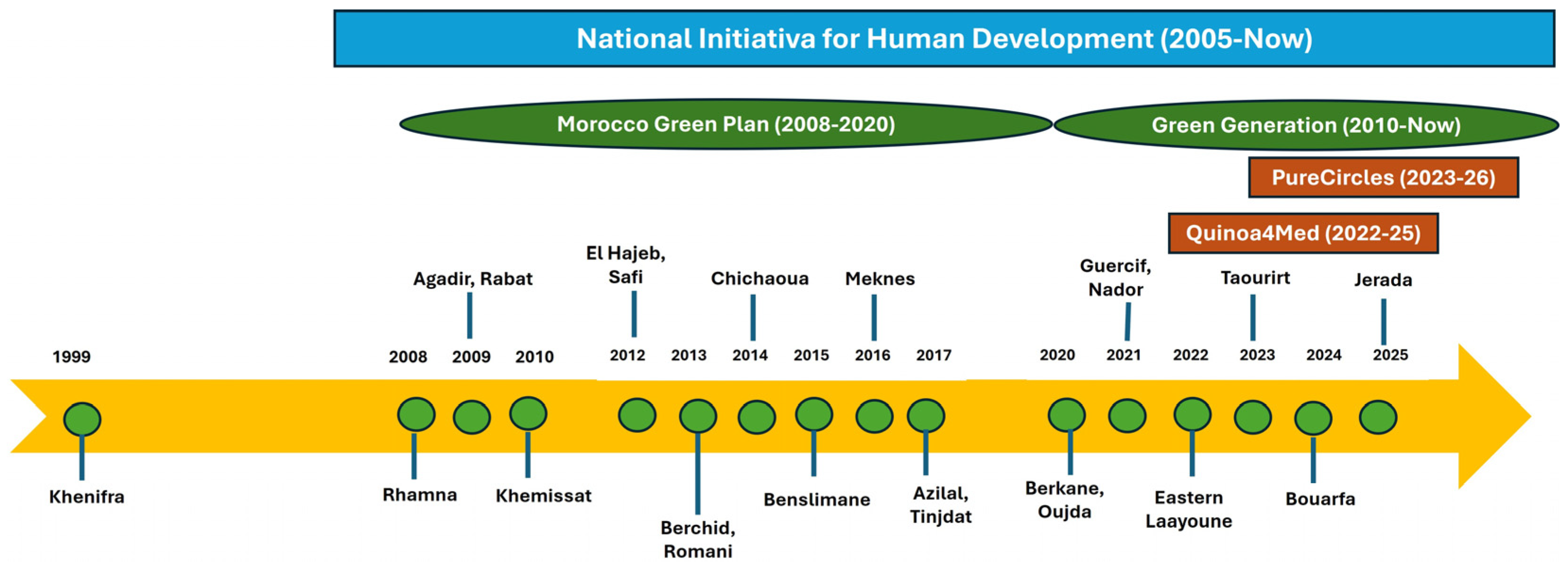
Quinoa was introduced in Morocco in 1999, initially in Khenifra Province, and later expanded to the Rehamna region in 2008, notably through the National Initiative for Human Development (2005–present) [
16]. Since then, national agricultural strategies, including the Morocco Green Plan (2008–2020) [
17] and the Green Generation Strategy (2020–2030) [
18], have supported the dissemination of quinoa across multiple regions, contributing to greater agricultural diversification and enhanced sustainability. The celebration of the International Day of Quinoa in 2013 by the Food and Agriculture Organization (FAO) renewed interest in the crop. In 2017, the Act4Community program, led by the Cherifian Office of Phosphates (OCP Group) and the Morocco-Peru agreement, advanced quinoa cultivation, while the 2018 Quinoa Value Chain Development Project, funded by the International Development Research Centre (IDRC), aimed to boost quinoa’s economic and sustainable growth. The Quinoa4Med and PureCircles projects, part of the Partnership for Research and Innovation in the Mediterranean Area (PRIMA) initiative, are currently supporting quinoa development in eastern Morocco through international collaboration. Overall, the introduction and expansion of quinoa emphasize Morocco’s dedication to enhancing food security, fostering economic development, and promoting agricultural sustainability, particularly in marginal environments (
Figure 1).
1.2. Conceptual Framework: Innovation Adoption and Sustainability
This study adopts an integrated conceptual framework that combines the theory of innovation diffusion with a multidimensional sustainability perspective.
1.2.1. Innovation Diffusion as the Core Explanatory Framework
Agricultural innovation is the process of developing and applying new ideas, technologies, and methods in farming to enhance efficiency, productivity, and sustainability.
The Diffusion of Innovation Theory, first introduced in 1963 by Rogers, provides a valuable framework for understanding the adoption of quinoa. The theory examines how new ideas, behaviors, or products are gradually embraced within a social system [
19]. Rogers identifies five categories of adopters: innovators, early adopters, early majority, late majority, and laggards along with five key factors that influence adoption: relative advantage, compatibility, complexity, trialability, and observability. In the context of quinoa integration in Morocco, for instance, its relative advantage can be seen in its resilience to extreme climatic conditions, while compatibility refers to quinoa’s suitability for local farming practices. By adopting agricultural innovations that enhance yield, resource efficiency, and resilience while minimizing risks and costs, farmers can boost profitability and achieve greater sustainability. Agricultural extension services and peer networks are essential in supporting this process, fostering wider adoption and driving long-term improvements in agriculture.
1.2.2. Quinoa Adoption in the Context of Sustainability
From a sustainability perspective, quinoa aligns closely with several Sustainable Development Goals (SDGs). Its cultivation supports SDG 2 (Zero Hunger) by enhancing food and nutritional security, SDG 6 (Clean Water and Sanitation) through improved water-use efficiency, SDG 8 (Decent Work and Economic Growth) by creating income opportunities along emerging value chains, SDG 12 (Responsible Consumption and Production) through sustainable agricultural practices, and SDG 13 (Climate Action) by strengthening adaptation to climate change. Consequently, assessing quinoa adoption requires an integrated approach that considers not only environmental benefits, but also economic viability and social dynamics, including access to markets, institutional support, and collective organization.
1.2.3. Study Objectives and Hypotheses
Despite being the first country in North Africa to embrace and research quinoa, Morocco’s production still falls short of meeting the growing demand, which is currently covered by imports. This study examines the dynamics of quinoa adoption in two Moroccan regions: Rehamna and the Oriental. Rehamna adopted quinoa earlier (in 2008) than the Oriental (in 2020). By examining the factors influencing adoption in these regions, the study aims to uncover obstacles and opportunities for promoting quinoa cultivation. Field surveys with farmers in both regions provide the data, with these areas selected for their distinct agricultural characteristics and representativeness in the context of quinoa adoption in Morocco.
The main questions this survey aims to answer are: Q1: What are the key factors driving the adoption of quinoa by local farmers? Q2: Do farmers in the two regions share a similar perception of quinoa as an innovative crop? Q3: How do quinoa adopters manage and use resources sustainably?
To identify the key determinants of quinoa adoption in both regions, we propose the following hypotheses:
H1. Farm characteristics (size, mechanization, etc.) and farmer attributes (age, education level, etc.) are the primary factors influencing adoption.
H2. State intervention, through supportive policies, information, incentives, and guidance, plays a pivotal role in driving quinoa adoption.
H3. Farmers’ perception of climate change impacts on traditional crops is a key determinant of quinoa adoption.
H4. Farmers’ perceptions of quinoa and their likelihood of adoption differ between the Rehamna and Oriental regions and across farmer profiles, due to differences in climate, resources, and access to quinoa-related interventions.
2. Materials and Methods
2.1. Characterization of the Survey Areas
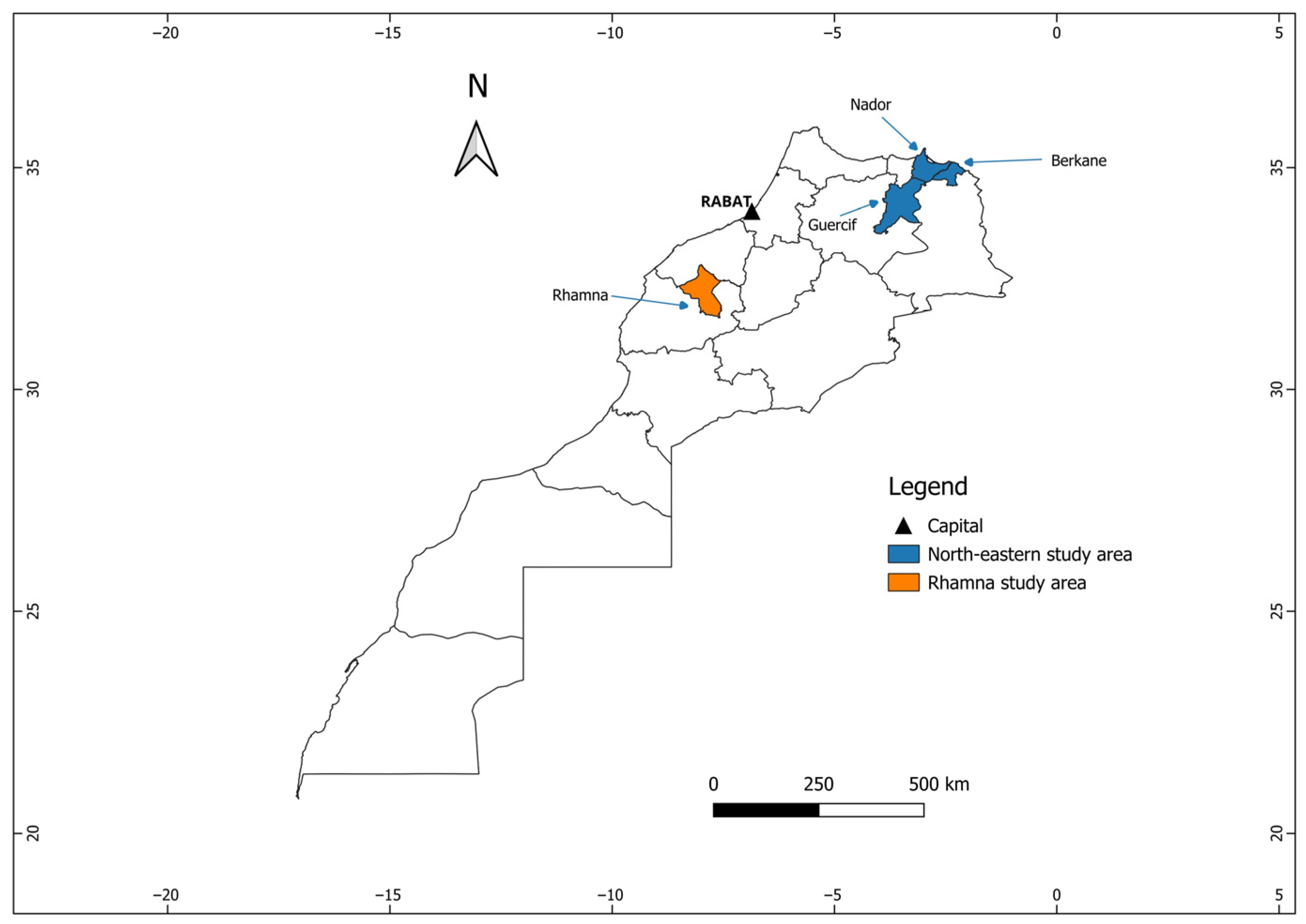
The data for this study were obtained from surveys conducted at four distinct sites in two Moroccan regions between March and June 2022, notably during the quinoa growing cycle, which spans from February to the end of June. These sites were selected for their representative and well-established quinoa production systems (
Figure 2). The provinces of Berkane (1985 km
2), Guercif (7307 km
2), and Nador (3263 km
2) are located within Morocco’s Oriental region, which covers 90,130 km
2. Rehamna Province (8856 km
2) is situated within the larger Marrakech-Safi region.
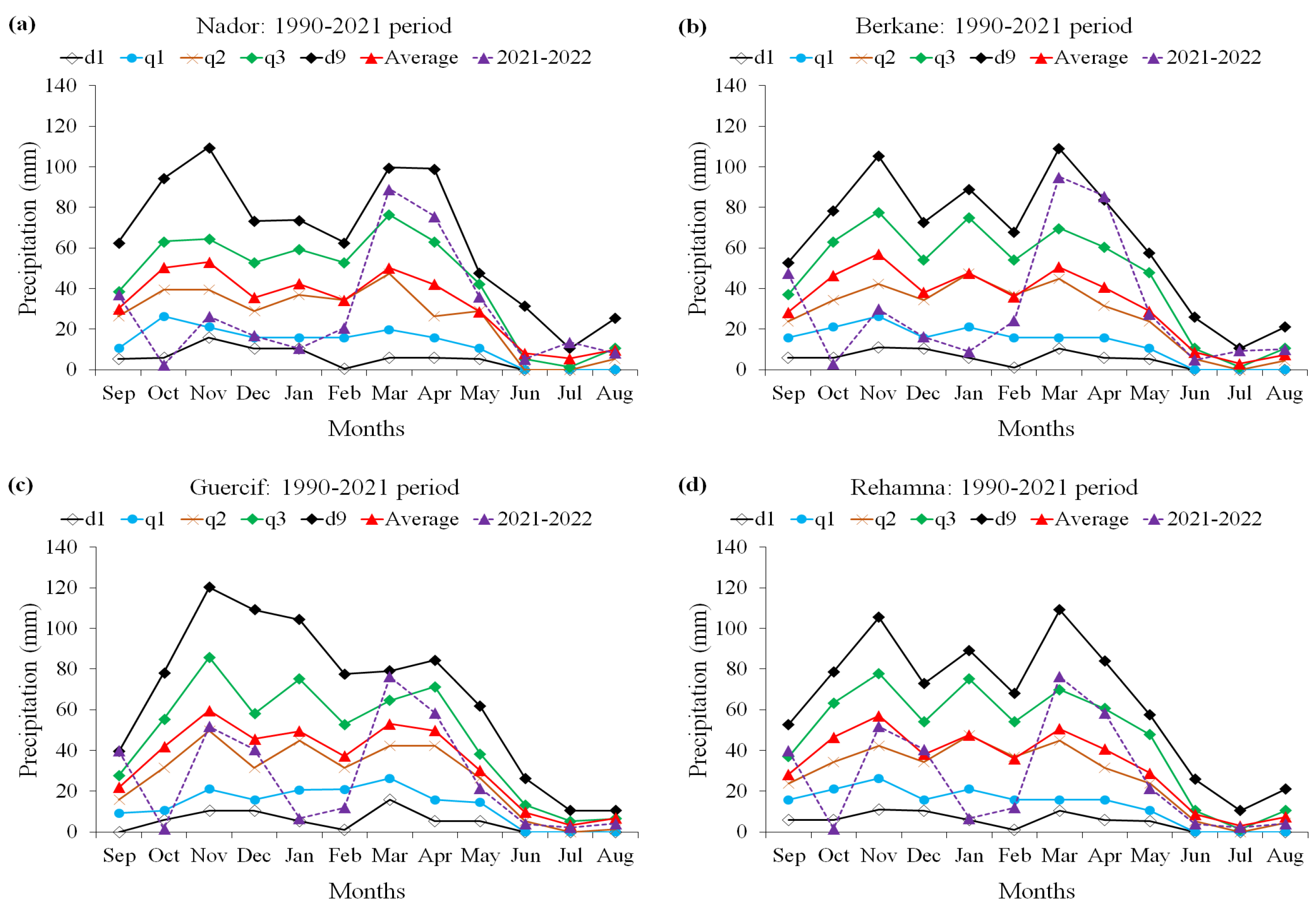
Analysis of precipitation data from 1990 to 2021 reveals significant variability: Nador is notably arid, with less than 330 mm of rainfall in 30% of the years. Berkane is comparatively wetter, receiving over 330 mm in 80% of the years. The median precipitation is lowest in Nador at 356 mm and highest in Guercif at 381 mm, underscoring the region’s climatic challenges. Rehamna has the lowest average rainfall and is the driest site, with annual rainfall below 261 mm in 50% of the years.
Regarding the precipitation distribution during the rainy winter season, November recorded the highest median rainfall amount in Guercif. In Nador and Berkane, the highest median precipitation amounts were recorded in March and January, respectively. However, at all four sites, rainfall is less persistent in December, January, and February. The survey year was relatively better than the 31-year series. In fact, the rainfall recorded during the quinoa growing cycle was higher than the average rainfall for the series across all four sites (
Figure 3).
The study areas differ notably in soil characteristics, salinity constraints, and agro-ecological contexts. In the Oriental region (Nador–Berkane), soils are predominantly calcareous and clayey, with increasing salinity linked to groundwater exploitation and proximity to coastal areas [
20]. In contrast, Rehamna is characterized by shallow, low-organic-matter soils, where salinity issues are mainly associated with limited water availability and high evapotranspiration [
21]. The two areas were selected to represent contrasting agro-ecological and institutional contexts: Rehamna is an inland semi-arid zone with severe water constraints, whereas the Oriental region has a more diversified agro-ecological setting and stronger cooperative structures. This contrast allows for a comparative analysis of quinoa adoption under different environmental and institutional conditions.
2.2. Survey Questionnaire
The study conducted in Morocco’s Oriental and Rehamna regions utilized a standardized questionnaire administered to 48 and 72 farmers, respectively. The questionnaire was divided into three key sections: (i) personal information: this section gathered data on the farmers’ age, education level, and other sociodemographic characteristics; (ii) farm description: this section focused on the farm’s size, degree of mechanization, and the cropping systems used; and (iii) knowledge and support on quinoa: this section evaluated the farmers’ understanding of quinoa cultivation and the support and guidance they had received.
2.3. Sampling and Survey Design
To define the scope of the surveys and gather precise information about farms in each region, a preliminary survey was conducted with the Provincial Directorates of Agriculture (DPAs), rural municipalities in the selected sites for both regions, and, additionally, with the Moulouya Regional Office for Agricultural Development (ORMVAM) in the Oriental region. The Snowball Sampling method was then employed to expand the initial sample by asking early respondents to recommend other farmers for inclusion in the survey [
22]. This approach leverages existing networks to reach hard-to-access populations and provides insights into the relationships among stakeholders.
Snowball sampling was adopted due to the absence of an official registry of quinoa farmers in Morocco. In fact, as quinoa is a recently introduced crop in the Oriental region and its value chain is not yet structured in Morocco, some farmers adopted it informally, motivated by peer experience rather than by official extension services or ministerial support structures, particularly as a strategy to cope with salinity and water stress.
In both study areas, quinoa producers constitute a small and dispersed population, often connected through informal networks or cooperatives.
2.4. Data Analysis
The data collected from the surveys were processed using SPSS, RStudio (version 4.4.1), and Excel spreadsheet software. R Studio, with FAMD and HCPC analyses performed via the FactoMineR package and visualizations generated using Factoextra. The data collected from the surveys were processed using IBM SPSS Statistics (version 29.0), RStudio (version 4.4.1), and Microsoft Excel (Microsoft 365). Multivariate analyses (FAMD and HCPC) were performed using the FactoMineR package (version 2.10), and graphical visualizations were generated using the factoextra package (version 1.0.7).
A binary analysis was first performed to explore the impact of independent variables on quinoa adoption, which serves as the dependent variable (
Table 1). Following this, a logistic regression model (Logit model) was developed to assess the impact of various explanatory variables on quinoa adoption. We chose the logistic (Logit) model for our study on quinoa adoption due to its effectiveness in handling a binary dependent variable, representing whether farmers adopt quinoa (1) or not (0). The Logit model uses a logit transformation to model the probability of adoption as a linear function of explanatory variables. This approach is ideal for analyzing factors influencing agricultural innovation adoption, enabling us to estimate the impact of various qualitative factors on farmers’ decisions. The given econometric model is a logistic regression, where the dependent variable is binary [
23]:
represents the probability that the dependent variable equals 1 (the probability of adopting quinoa), and 1 − is the probability that the outcome is 0 (not adopting quinoa).
: logit transformation of the probability pi
β1, β2, …, βk are the coefficients of the independent variables X1, X2, …, Xk. Each coefficient measures the change in the log-odds of the dependent variable for a one-unit increase in the corresponding independent variable, holding other variables constant.
X1, X2, …, Xk represent the independent (explanatory) variables in the model, which are thought to influence the probability pi of the dependent variable being 1.
Several preliminary regressions were conducted to identify an appropriate logit specification for quinoa adoption, initially including all potential explanatory variables. Variables exhibiting high multicollinearity were subsequently excluded to prevent inflated standard errors, coefficient instability, and potentially misleading inferences regarding statistical significance.
Additionally, Factorial Analysis for Mixed Data (FAMD) was used to investigate the relationships between qualitative and quantitative variables. Thereafter, a Hierarchical Clustering on Principal Components (HCPC) was performed on the FAMD results to classify farmers into homogeneous groups based on their shared characteristics. Clustering allowed the identification of distinct farmer profiles, reflecting different socio-economic conditions, resource access levels, and attitudes toward quinoa adoption.
3. Results and Discussion
This section presents a comparative analysis combining descriptive statistics to contextualize adoption patterns with econometric and multivariate methods that provide explanatory insights into the determinants and trajectories of quinoa adoption.
3.1. Descriptive Results and Preliminary Exploratory Analysis
The comparative analysis of results from the Rehamna and Oriental regions reveals both distinct dynamics and common factors influencing quinoa adoption. These differences and similarities offer valuable insights into designing agricultural policies tailored to regional contexts. For each factor, the distinctions and parallels between the two regions are discussed.
3.1.1. Main Activities
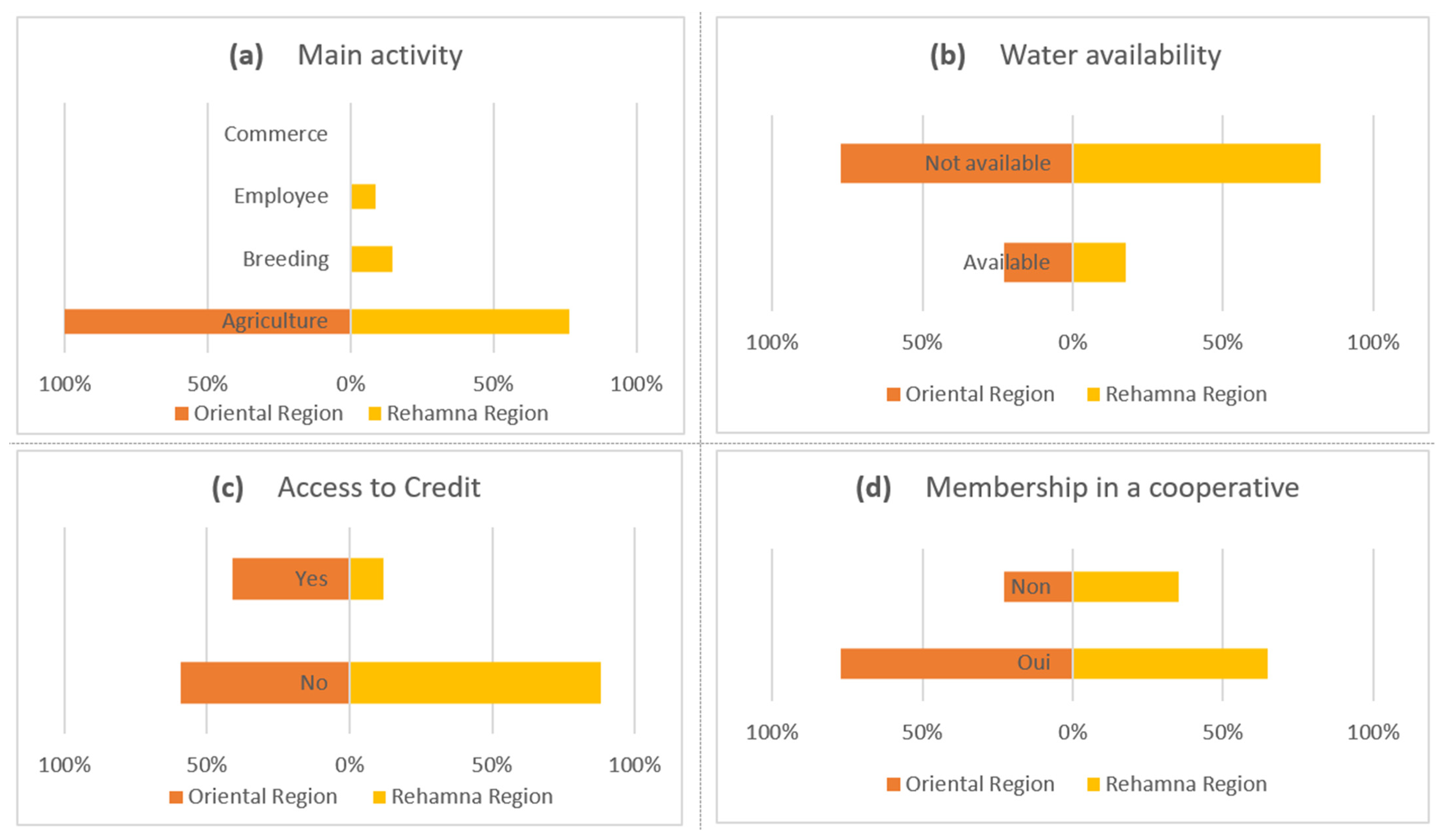
In Rehamna, farmers engage in a variety of activities. In addition to agriculture, 15% of adopters also practice livestock farming, and 9% are salaried workers. In contrast, in the Oriental region, agriculture is the sole activity for all adopters, indicating a higher degree of specialization. Non-adopters in Rehamna are more diversified in their economic activities, with 49% involved in livestock farming, compared to the absence of this activity among non-adopters in the Oriental region (
Figure 4a).
3.1.2. Water Availability
Water availability emerged as a key determinant influencing quinoa adoption in both regions. In Rehamna, only 18% of adopters have access to water, compared to 23% in the Oriental region. Although
Figure 4b shows slightly better water access in the Oriental, water scarcity remains a major constraint across both areas. Notably, limited water availability appears to encourage some farmers to adopt quinoa, given its remarkable tolerance to drought and relatively low water requirements. This adaptive behavior underscores quinoa’s potential as a strategic crop for enhancing agricultural resilience in arid and semi-arid regions where water scarcity reduces traditional crop cultivation.
3.1.3. Reactions to Innovation
Farmers’ responses to innovation differ between the two regions. In the Oriental region, 73% of adopters pursue innovation directly, compared to 65% in Rehamna. However, a significant proportion of non-adopters in Rehamna (54%) adopt a “wait-and-see” attitude, preferring to observe the results achieved by other producers before making changes. In contrast, none of the non-adopters in the Oriental region display this behavior. Overall, farmers in the Oriental region appear more proactive and willing to adopt new agricultural practices once they are informed.
3.1.4. Access to Credit
Access to credit influences farmers differently in the two regions. In Rehamna, 88% of adopters and 86% of non-adopters do not have access to credit. In the Oriental region, this proportion is slightly better, with 59% of adopters and 58% of non-adopters lacking access to credit. This indicates that while access to credit is generally limited, it is relatively more accessible in the Oriental region (
Figure 4c).
3.1.5. Membership in a Cooperative
Membership in a cooperative plays a significant role in quinoa adoption in both regions. In Rehamna, 65% of adopters are members of a cooperative, compared to only 20% of non-adopters. In the Oriental region, 77% of adopters are cooperative members, compared to 29% of non-adopters. This indicates that being part of a cooperation is a crucial factor for quinoa adoption, particularly in the Oriental region (
Figure 4d).
3.1.6. Farm Size
Farm size varies significantly between the two regions. In Rehamna, the average farm size for adopters is 16.12 hectares, while it is 19.91 hectares for non-adopters. In the Oriental region, the average farm size for adopters is much smaller, at 7.52 hectares, compared to 22.04 hectares for non- adopters. This difference indicates that quinoa adopters in the Oriental region tend to be smaller-scale farmers compared to those in Rehamna.
3.2. Determinants of Quinoa Adoption: Econometric Results
The econometric Models (Logit Models) relate the log-odds of quinoa adoption to the variables. Each coefficient (e.g., 2.927 for NT) represents the change in the log-odds of adoption for a one-unit increase in that variable, holding other factors constant. The term captures any unexplained variation in adoption that is not accounted for by the included variables. The models for both regions highlight distinct factors affecting quinoa adoption.
In the Rehamna region, an increase in the number of tractors (NT) significantly enhances the likelihood of adopting quinoa. Cooperative membership (CM) emerges as another critical factor, further increasing the probability of adoption. On the other hand, livestock farming (LF) as the main occupation reduces this likelihood. Notably, water scarcity (WS) unexpectedly raises the chances of adoption, indicating that farmers view quinoa as a practical solution to water shortages (
Table 2).
The econometric model is expressed as follows:
In northeastern Morocco, farmers who receive information about quinoa are more inclined to adopt it (FI). Furthermore, those in the middle age group (40–60 years) (FA) are more likely to embrace quinoa cultivation. Additionally, cooperative membership (CM) plays a vital role, significantly increasing the likelihood of adoption (
Table 3).
The econometric model is expressed as follows:
A similar study [
24], using a Logit analysis, found that farm size, capital, extension contact, innovativeness, and achievement motivation significantly influenced farmers’ adoption and perception of
Bacillus thuringiensis (Bt) cotton, while information source diversity, mass media exposure, social participation, and education had no significant effect.
3.3. Farmer Typologies and Adoption Pathways
To identify adopter categories and their respective characteristics, we employed hierarchical cluster analysis on the mixed data from factor analysis (HCPC). This clustering technique segmented farmers with similar behaviors and traits into distinct groups, offering valuable insights into the regional dynamics of quinoa adoption. Comparing the results from the Rehamna and Oriental regions provides deeper insights into the factors driving adoption, enabling us to develop more effective, region-specific strategies. The cluster analysis (FAMD and HCPC) was conducted with an exploratory objective to capture heterogeneity among farmers and to identify indicative adoption profiles across the two regions. Given the sample size and the non-probabilistic sampling strategy, the identified clusters should be interpreted as analytical configurations, rather than as definitive or exhaustive typologies of quinoa farmers.
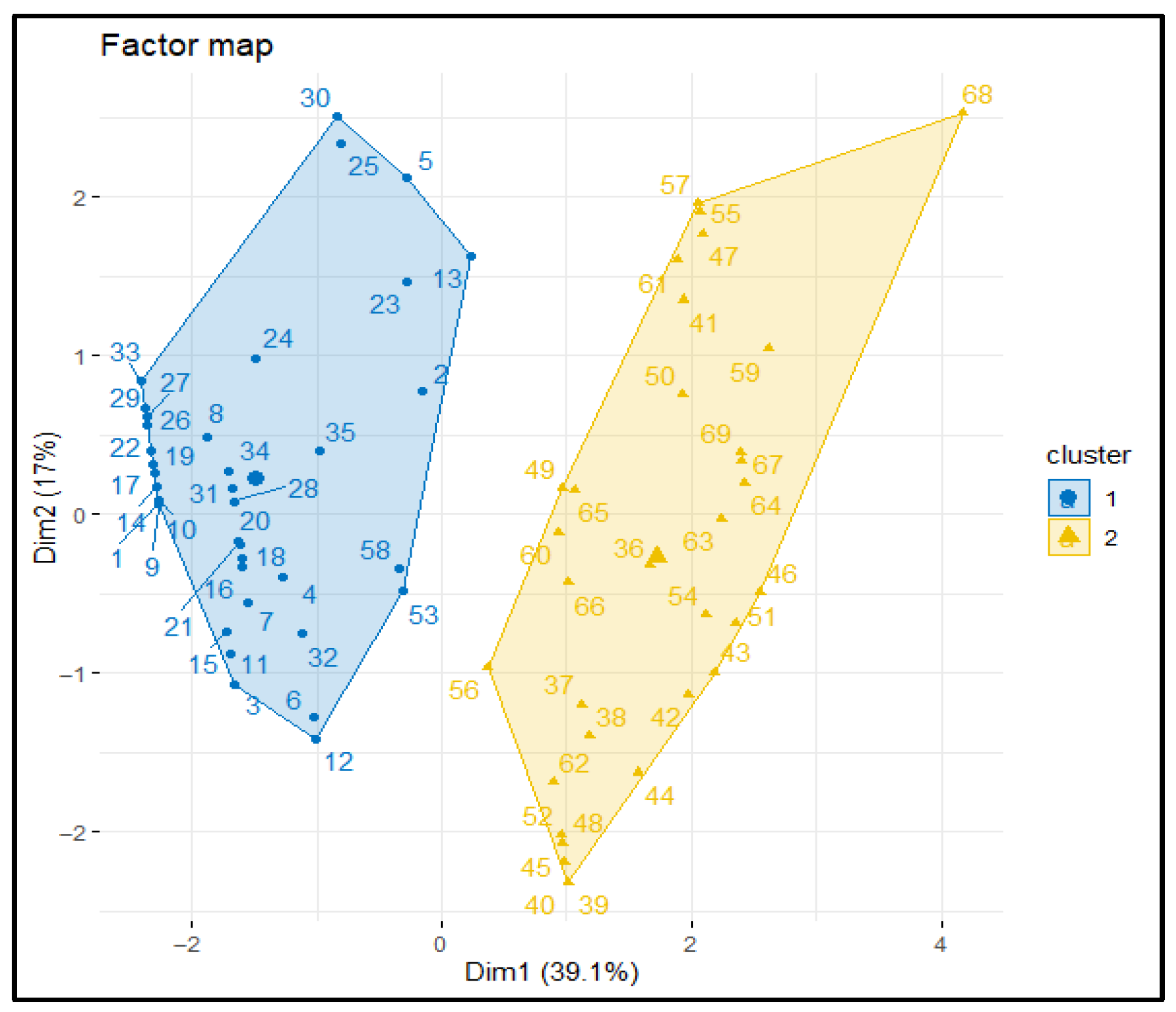
The dendrogram suggested an optimal partition of two clusters for Rehamna and four clusters for the Oriental region, reflecting different degrees of heterogeneity across study areas.
In the Rehamna region, two main clusters have been identified (
Figure 5):
Cluster 1: The Resilient Innovators: The Resilient Innovators in Rehamna are characterized by limited access to water but adopt quinoa as an adaptive strategy. These farmers operate medium-sized farms and exhibit strong membership in cooperatives. Their activities are diverse, often including livestock farming. Despite limited access to credit, they proactively and directly embrace agricultural innovations. According to Rogers’ theory of innovation diffusion, these farmers can be classified as innovators or early adopters. They perceive a relative advantage in adopting quinoa due to its drought and salinity tolerance, which addresses their needs in the context of water scarcity.
Cluster 2: The Traditional Conservatives: In contrast, the Traditional Conservatives enjoy better water availability but are less likely to adopt quinoa. They generally operate larger farms and have limited involvement in cooperatives. Their focus remains on traditional agriculture, with moderate access to credit. This group tends to be cautious, preferring to gather more information or observe the outcomes of others before adopting new practices. They fit into Rogers’ categories of the early or late majority. Their decision to adopt quinoa will largely depend on the demonstrated success of the Resilient Innovators and the perceived complexity of integrating quinoa into their established agricultural routines.
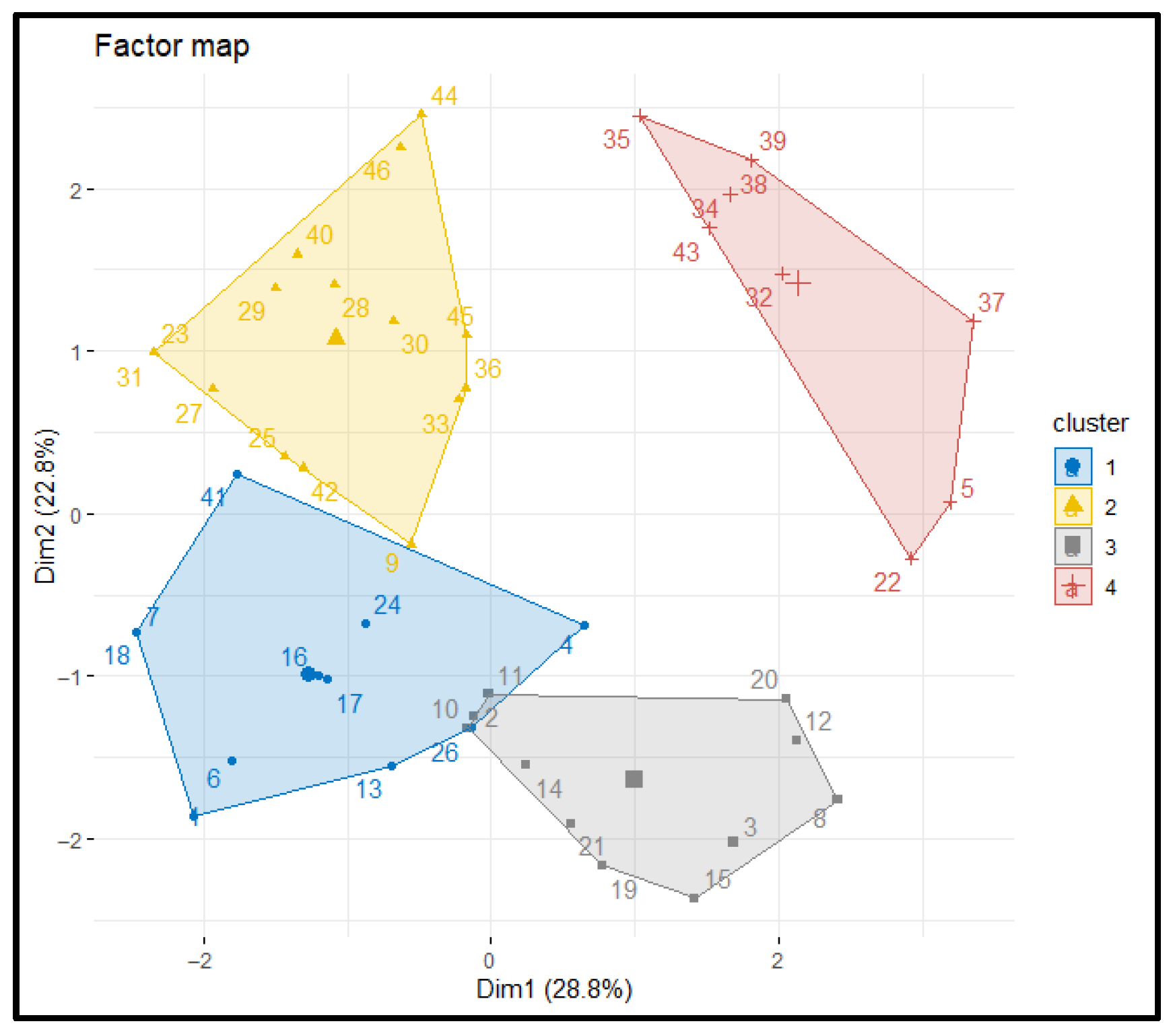
Within the northeastern region, four clusters were identified using Hierarchical Cluster Analysis for Mixed Data (HCPC) (
Figure 6):
Cluster 1: The laggards: This group of farmers remains uninterested in adopting quinoa, having had no prior knowledge of the crop before the survey. While some are open to observing results from other farmers before deciding, others show no interest in adoption. Most of these farmers are not part of cooperatives or agricultural associations. Notably, 43% have farms larger than 40 hectares, 42% are unaffected by soil salinity, 71% have sufficient water, and 72% benefit from high levels of mechanization. Overall, these farmers do not feel a pressing need to alter their practices, as they have not yet experienced the effects of drought or soil salinity. However, some studies suggest that owners of larger farms are more willing to invest in new practices, such as climate-smart agriculture, compared to those managing smaller farms [
25].
Cluster 2: Early adopters: These farmers, aged 40 to 60, have moderate to extensive agricultural experience and are open to new technologies. They are characterized by their immediate adoption of innovations, without waiting for results from other farms. They are aware of quinoa’s tolerance to salinity and drought but have low levels of mechanization and grow a limited number of crops, indicating that they are actively seeking solutions to combat the negative effects of drought and salinity. Without access to credit, they prioritize cost-effective solutions. Their limited crop diversification allows them to easily introduce new crops, particularly when intercropped with olive trees. These early adopters engage in arboriculture and intercrop quinoa with trees, recognizing the benefits of diversifying for improving their farm’s productivity.
Cluster 3: The early majority: The early majority comprises farmers who adopted quinoa a year or more after the early adopters. This group mainly includes younger farmers (under 40) who are open to agricultural innovations. Most are well-informed about quinoa’s resistance to soil salinity and drought, as well as its nutritional value, likely due to internet access. Notably, 83% of these farmers belong to cooperatives, which facilitates information exchange and raises their expectations of receiving state support to further develop this crop. Additionally, 76% face soil salinity issues, 88% contend with drought, and 65% cultivate more than three crops on their farms. Furthermore, 88% intercrop quinoa with trees, aiming to capitalize on quinoa’s positive effects on tree yields.
Cluster 4: The potential adopters: This group includes farmers who have not yet adopted quinoa but express an interest in doing so. Predominantly over the age of 60, 90% were previously unfamiliar with quinoa. After learning about its benefits, such as its tolerance to drought and salinity and its positive impact on tree yields (with 80% engaged in arboriculture), they are now interested in adopting it. However, they are awaiting state-organized training to facilitate their adoption. Additionally, 60% of these farms are highly mechanized. In summary, this group comprises farmers who are receptive to adopting quinoa but currently lack information and depend on government support for training.
3.4. Comparison of Clusters Between Rehamna and the Oriental Region
3.4.1. Water Availability and Farm Size
In both regions, water availability plays a crucial role, but it is more limited in Rehamna. Furthermore, the decision to adopt quinoa as an agricultural innovation is also influenced by farm size [
26,
27]. The farms of resilient innovators in Rehamna tend to be medium-sized (16.12 hectares), while the informed innovators in the Oriental have small to medium-sized farms (7.52 hectares on average). In contrast, traditional conservatives and cautious observers own larger farms in both regions (19.91 hectares vs. 22.04 hectares).
3.4.2. Cooperative Membership
Cooperative membership is significantly higher among innovators in both regions. Resilient innovators in Rehamna and informed innovators in the Oriental show strong integration into cooperative structures, which facilitates their proactive adoption of innovations. In contrast, traditional conservatives in Rehamna and cautious observers in the Oriental exhibit low to moderate involvement in cooperatives. These findings align with those of KO Olatade et al. [
28], who reported that farmers’ adoption of biofortified cassava was significantly influenced by their membership in farmer organizations.
3.4.3. Access to Credit and Main Activities
Access to credit remains a common challenge, although it is relatively better in the Oriental. Informed innovators in the Oriental have better access to credit compared to resilient innovators in Rehamna. Likewise, some researchers reported that access to credit can promote the adoption of innovation [
29,
30]. Regarding primary activities, innovators in Rehamna tend to diversify more, incorporating livestock farming, while those in the Oriental focus more on specialized agriculture.
3.4.4. Reaction to Innovation
The reaction to innovation also varies between the two regions. Innovators in both regions adopt new agricultural practices directly and proactively. However, traditional conservatives in Rehamna prefer to wait and observe the results from others, like the cautious observers in the Oriental, though the latter tend to be more inclined to observe before adopting.
The clustering analysis of quinoa adoption in the Rehamna and Oriental regions reveals distinct profiles among farmers, with specific dynamics influencing adoption in each region. Public policy strategies need to be tailored to these profiles. For innovators, it is crucial to strengthen cooperative networks, improve access to information and credit, and offer specific solutions for water management. For conservatives and cautious observers, providing concrete evidence of quinoa’s benefits, along with offering field-based training and demonstrations, is essential.
The comparative analysis of results from the Rehamna and Oriental regions highlights specific dynamics and common factors influencing quinoa adoption. Cooperatives play a crucial role in both regions, but their impact is more pronounced in the Oriental. Water management remains a central challenge, particularly in Rehamna, where water availability is limited. Adoption strategies vary, with a stronger tendency for direct adoption in the Oriental.
These differences and similarities provide a solid foundation for shaping tailored agricultural policies. Public authorities should strengthen cooperatives, improve water management, offer targeted training, and promote agricultural diversification. By taking regional specificities into account, these actions can encourage broader and more effective quinoa adoption, thereby contributing to more resilient and sustainable agriculture in Morocco.
3.5. Policy-Oriented Discussion: Innovation Diffusion and Sustainable Adoption Pathways
The results of this study have important implications for agricultural development policies aimed at promoting climate-resilient crops in marginal environments. Interpreted through the lens of innovation diffusion and sustainability, quinoa adoption emerges as a process that depends not only on agronomic suitability, but also on institutional support, collective organization, and market integration.
3.5.1. Supporting Innovation Diffusion Through Targeted Policies
The heterogeneity observed among farmers highlights the need for differentiated policy interventions along the innovation diffusion process. Early adopters and more resource-endowed farmers play a key role in demonstrating the feasibility and benefits of quinoa cultivation, while later adopters require stronger institutional support to reduce perceived risks and uncertainty.
Policies should therefore focus on strengthening extension services and advisory systems, facilitating access to reliable information and technical training, and supporting demonstration plots and pilot initiatives that enhance the observability and trialability of quinoa cultivation [
31].
Such measures are essential to accelerate diffusion beyond niche adoption and to ensure a more inclusive transition toward sustainable climate-resilient cropping systems.
3.5.2. Quinoa Adoption and Multidimensional Sustainability
While innovation diffusion explains how and why quinoa is adopted, the broader significance of its adoption is interpreted through the lens of sustainability, understood as a multidimensional concept encompassing environmental, economic, and social dimensions.
Environmentally, quinoa contributes to climate change adaptation by enabling productive use of water-scarce and saline environments, thereby reducing pressure on conventional cereals and water resources. By reducing pressure on water resources and enabling productive use of marginal lands, quinoa contributes to the resilience of farming systems and aligns with SDG 13 (Climate Action) and SDG 6 (Clean Water and Sanitation). However, environmental benefits can only be sustained if adoption is embedded in appropriate agronomic practices and local ecological conditions that balance productivity and sustainability, such as quinoa-based agroforestry [
12,
13].
Economically, quinoa represents an opportunity for income diversification and risk reduction, particularly in regions exposed to climatic shocks. Public policies can enhance these benefits by supporting access to markets, value addition, and quality standards, especially for emerging domestic and export-oriented value chains. In the same sense, quinoa adoption contributes to SDG 8 (Decent Work and Economic Growth) and SDG 12 (Responsible Consumption and Production). Dissanayake et al. [
32] argued that socio-economic and institutional factors (e.g., access to markets and credit) influence farmers’ perception and innovation.
Socially, adoption outcomes depend strongly on farmers’ ability to access information, resources, and collective support mechanisms. Without inclusive institutional arrangements, the benefits of quinoa adoption risk remaining concentrated among better-connected producers. Similar statements have been advanced by [
33] regarding the role of access to information in promoting innovation adoption. Furthermore, [
34] stated that institutional support strengthens farmers’ decisions to adopt new crop and agricultural technology. Furthermore, Aryal et al. [
35] reported that quinoa adoption in Egypt, Morocco, and Tunisia is driven more by farmers’ perceptions of climate adaptation and usefulness than by economic capacity, with limited credit access cited as a key barrier by 27% of farmers.
3.5.3. The Central Role of Cooperatives in Sustainable Adoption
One of the most consistent findings of this study is the central role of cooperatives in shaping quinoa adoption pathways. Cooperative membership is not merely an explanatory variable, but a structuring mechanism that links innovation diffusion to sustainable development outcomes. Cooperative membership facilitates access to technical knowledge and training, collective acquisition of inputs, improved bargaining power and market access, and risk-sharing among members. Cooperative membership can significantly influence decisions regarding the adoption of new technologies [
36,
37,
38].
In the Rehamna region, cooperatives already play a pivotal role in promoting quinoa adoption. Therefore, it is essential to encourage greater farmer participation through awareness campaigns and financial incentives. Strengthening these structures will foster fair management of shared resources, such as water and agricultural equipment, thereby improving collective efficiency and resilience to climate crises. In the Oriental region, efforts should prioritize establishing new cooperatives and strengthening the capacity of existing ones. Engaging farmers in decision-making processes regarding cooperative governance and the adoption of innovative agricultural technologies is essential. Involving farmers not only aligns cooperative initiatives with their needs but also enables resource sharing, better market access, and cost optimization. This collaborative governance fosters economic resilience and supports sustainable community development, especially in rural areas [
39].
3.5.4. Implications for Agricultural Development Strategies
The findings suggest that promoting quinoa as a sustainable crop alternative requires integrated policy approaches rather than isolated technical interventions. Innovation diffusion, sustainability objectives, and institutional strengthening must be addressed simultaneously. Institutional support for quinoa adoption should recognize its role as a complementary crop within diversified farming systems, align climate adaptation goals with rural income generation, and reinforce collective organizations as key intermediaries between farmers, markets, and public institutions. Such an approach would enhance the contribution of quinoa to food security, climate resilience, and rural livelihoods, in line with the principles of sustainable development.
3.5.5. Water Governance
Water governance requires the establishment of water user organizations, which play a vital role in transferring irrigation management from the public sector to water users [
40]. In this study, water management was a significant challenge in both regions. In Rehamna, developing water management infrastructure, such as drip irrigation systems, is essential. These systems should be managed collectively by cooperatives, with clear rules on their usage to ensure fair and sustainable water management [
12]. Quinoa, known for its water-efficient properties, is particularly well-suited to regions facing water scarcity [
41,
42].
3.5.6. Training and Awareness
Education has a significant positive influence on innovation adoption. This supports Rogers’ observation that “early adopters typically have more formal education than those who adopt later” [
43] and aligns with [
25], who found that “farmers with higher education levels are more likely to adopt modern technologies at an earlier stage. In our study, training and awareness initiatives are crucial to promoting quinoa adoption. In both regions, workshops on the benefits of quinoa and sustainable agricultural practices should be organized. Engaging farmers in the design and implementation of these training sessions ensures that they address their specific needs and fosters greater commitment.
In this way, public authorities can effectively support quinoa adoption, enhancing the resilience and sustainability of Moroccan agriculture in the face of climate change and economic challenges. Similarly, Sisay et al. [
44] supported that adoption of Climate Smart Agriculture (CSA) technologies was higher among farmers with more resources, knowledge, and extension support. Policies and local offices should address barriers to promote CSA uptake.
4. Conclusions
Quinoa’s adoption in Rehamna and northeastern regions represents an innovative strategy to cope with climate and economic challenges faced by local farmers, particularly in marginal areas. A comparative analysis of the factors influencing this adoption in both regions reveals critical similarities and differences that must be considered when developing effective agricultural policies tailored to regional contexts.
In the Rehamna region, the adoption of quinoa is significantly influenced by access to mechanization, cooperative membership, and water management practices. Farmers with more tractors and those who belong to cooperatives are more likely to adopt quinoa. Interestingly, those facing water scarcity view quinoa as a viable solution due to its drought resilience. These dynamics underline the importance of supporting cooperatives and improving water management infrastructure to promote quinoa adoption effectively. In the northeastern region, information and training play a central role in quinoa adoption. Farmers who are well-informed and those in the middle age group (40–60 years old) are more likely to adopt the crop. Cooperative membership is also a key factor in this regard. These insights emphasize the need to strengthen cooperative networks and promote continuous training programs to raise awareness among farmers about the benefits of quinoa.
Rogers’ diffusion of innovation framework provides a useful basis for informing agricultural policy by highlighting heterogeneity in farmers’ adoption behavior. This perspective supports the design of differentiated policy instruments aligned with the specific characteristics of the clusters identified. Accordingly, public interventions should be tailored to address the distinct constraints and incentives faced by each segment. For example, ‘Traditional Conservatives’ in the Rehamna region call for demonstration plots to overcome their risk aversion, whereas ‘Early Adopters’ in the Oriental region require priority access to credit facilities and processing infrastructure to accelerate scaling and value addition.
Despite limitations such as a small, non-probabilistic sample and cross-sectional data, this study provides valuable insights into quinoa adoption in Morocco. It shows that quinoa functions as a complementary crop within diversified farming systems, enhancing rural sustainability, and that adoption reflects farmers’ socio-economic responses to climatic, resource, and institutional conditions. Moreover, the findings highlight the roles of cooperative and information access in supporting sustainable adoption pathways and contribute to understanding agricultural innovation diffusion in marginal environments.
This study situates quinoa adoption within an integrated sustainability framework, addressing environmental, economic, and social dimensions. Environmentally, quinoa is a climate-resilient crop well adapted to drought- and salinity-prone conditions, enhancing water-use efficiency, farming system resilience, and climate-change adaptation in marginal areas. Economically, it provides opportunities for income diversification, risk reduction, and access to emerging markets. Socially, cooperatives and collective action play a key role by facilitating knowledge exchange, market access, and inclusion of small- and medium-scale farmers, thereby strengthening social capital and local capacities.
Finally, the findings position quinoa adoption within the framework of Morocco’s national “Génération Green 2020–2030” strategy, which aims to develop resilient agri-food systems, while also contributing to key Sustainable Development Goals, including SDG 2 (Zero Hunger), SDG 8 (Decent Work and Economic Growth), SDG 12 (Responsible Consumption and Production), and SDG 13 (Climate Action). When supported by appropriate institutional frameworks, market access, and collective organization mechanisms, quinoa adoption can enhance food security, strengthen climate resilience, and improve rural livelihoods.
Author Contributions
I.A.: project administration, conceptualization, methodology, investigation, data curation, visualization, writing—original draft preparation. R.H.: supervision, writing—review and editing. L.B.: project administration, resources, review and editing. S.B.A.: project administration, conceptualization, supervision, review and editing. All authors have read and agreed to the published version of the manuscript.
Funding
This research was undertaken as part of the project PURECIRCLES: «Maximizing resource use efficiency within the water-nutrient-energy nexus for sustainable agriculture in marginal environments» MEL n. 1825, funded under the Notice PRIMA 2022 (Partnership for Research and Innovation in the Mediterranean Area) art. 185 of TFUE, approved by the European Parliament and Council 2017/1324, 4 July 2017. (Project code PRIMA22-00082, MIUR dd n.3153 del 01 03 2023, CUP B83C22009530005).
Institutional Review Board Statement
The study is based on non-interventional interviews with farmers in the Berkane region. Before data collection, formal authorization to conduct the field investigation was granted by the Office de Mise en Valeur Agricole (ORMVAM) of Berkane, the governmental institution responsible for implementing agricultural policies and coordinating field activities with farmers. For this type of study, ethical approval from an Institutional Review Board is not required in Morocco. The official authorization issued by the ORMVAM serves as the necessary institutional approval for conducting the survey.
Informed Consent Statement
Verbal informed consent was obtained from the participants. Verbal consent was obtained rather than written because the study involved only non-interventional interviews with farmers, and all participants received clear prior information about the study objectives.
Data Availability Statement
The original contributions presented in this study are included in the article. Further inquiries can be directed to the corresponding author.
Acknowledgments
The authors are grateful to the director of the Office Régional de Mise en Valeur Agricole de la Moulouya and the field staff. Moreover, we acknowledge the farmers for their valuable help during the field experiments.
Conflicts of Interest
The authors declare no conflicts of interest.
References
- Vilcacundo, R.; Hernández-Ledesma, B. Nutritional and Biological Value of Quinoa (Chenopodium quinoa Willd.). Curr. Opin. Food Sci. 2017, 14, 1–6. [Google Scholar] [CrossRef]
- Rodríguez Gómez, M.J.; Matías Prieto, J.; Cruz Sobrado, V.; Calvo Magro, P. Nutritional Characterization of Six Quinoa (Chenopodium quinoa Willd) Varieties Cultivated in Southern Europe. J. Food Compos. Anal. 2021, 99, 103876. [Google Scholar] [CrossRef]
- Saddiq, M.S.; Wang, X.; Iqbal, S.; Hafeez, M.B.; Khan, S.; Raza, A.; Iqbal, J.; Maqbool, M.M.; Fiaz, S.; Qazi, M.A.; et al. Effect of Water Stress on Grain Yield and Physiological Characters of Quinoa Genotypes. Agronomy 2021, 11, 1934. [Google Scholar] [CrossRef]
- Yadav, R.K.; Kumar, R.; Singh, A.; Dagar, J.C. Utilization of Saline and Other Poor-Quality Waters to Sustain Agroforestry Production. In Agroforestry for Sustainable Intensification of Agriculture in Asia and Africa; Dagar, J.C., Gupta, S.R., Sileshi, G.W., Eds.; Sustainability Sciences in Asia and Africa; Springer Nature: Singapore, 2023; pp. 243–271. [Google Scholar]
- Zhou, X.; Yue, T.; Wei, Z.; Yang, L.; Zhang, L.; Wu, B. Evaluation of Nutritional Value, Bioactivity and Mineral Content of Quinoa Bran in China and Its Potential Use in the Food Industry. Curr. Res. Food Sci. 2023, 7, 100562. [Google Scholar] [CrossRef]
- Liu, C.; Ma, R.; Tian, Y. An Overview of the Nutritional Profile, Processing Technologies, and Health Benefits of Quinoa with an Emphasis on Impacts of Processing. Crit. Rev. Food Sci. Nutr. 2024, 64, 5533–5550. [Google Scholar] [CrossRef]
- Rao, N.K.; Shahid, M. Quinoa-A Promising New Crop for the Arabian Peninsula. Am.-Eurasian J. Agric. Environ. Sci. 2012, 12, 1350–1355. [Google Scholar] [CrossRef]
- Ain, Q.T.; Siddique, K.; Bawazeer, S.; Ali, I.; Mazhar, M.; Rasool, R.; Mubeen, B.; Ullah, F.; Unar, A.; Jafar, T.H. Adaptive Mechanisms in Quinoa for Coping in Stressful Environments: An Update. PeerJ 2023, 11, e14832. [Google Scholar] [CrossRef]
- Langyan, S.; Khan, F.N.; Kumar, A. Advancement in Nutritional Value, Processing Methods, and Potential Applications of Pseudocereals in Dietary Food: A Review. Food Bioprocess Technol. 2024, 17, 571–590. [Google Scholar] [CrossRef]
- Bardhan, H.; Sanodiya, L. Quinoa Farming in a Changing Climate: Sustainability, Challenges, and the Way Forward. Vigyan Varta Int. E-Mag. Sci. Enthus. 2025, 6, 130–135. [Google Scholar]
- Sun, H.; Khan, W.U.D.; Tanveer, M.; Ijaz, U.; Lu, Z.; Shabala, S. Can Quinoa (Chenopodium quinoa) Replace Traditional Cereals under Current Climate Scenarios? Front. Plant Sci. 2025, 16, 1636565. [Google Scholar] [CrossRef]
- Abidi, I.; Daoui, K.; Abouabdillah, A.; Belqadi, L.; Mahyou, H.; Bazile, D.; Douaik, A.; Gaboun, F.; Hassane Sidikou, A.A.; Alaoui, S.B. Quinoa–Olive Agroforestry System Assessment in Semi-Arid Environments: Performance of an Innovative System. Agronomy 2024, 14, 495. [Google Scholar] [CrossRef]
- Abidi, I.; Daoui, K.; Abouabdillah, A.; Bazile, D.; Hassane Sidikou, A.A.; Belqadi, L.; Mahyou, H.; Alaoui, S.B. Pomegranate–Quinoa-Based Agroforestry System: An Innovative Strategy to Alleviate Salinity Effects and Enhance Land Use Efficiency in Salt-Affected Semiarid Regions. Plants 2024, 13, 2543. [Google Scholar] [CrossRef]
- Aoubouazza, M.; Rajel, R.; Essafi, R. Impact des phénomènes climatiques extrêmes sur les ressources en eau et l’agriculture au Maroc. Rev. Marocaine Sci. Agron. Vétérinaires 2019, 7, 223–232. [Google Scholar]
- Swynghedauw, B.; Weméau, J.-L. Rapport 20-07. Conséquences du changement climatique sur la santé humaine et animale. Bull. L’académie Natl. Médecine 2021, 205, 219–226. [Google Scholar] [CrossRef]
- Ministère des Affaires Etrangères, de la Coopération Africaine et des Marocains Résidant à L’etranger Initiative Nationale Pour le Développement Humain (INDH). Available online: https://diplomatie.ma/fr/initiative-nationale-de-d%C3%A9veloppement-humain (accessed on 24 November 2025).
- MAPMDREF Plan Maroc Vert. Available online: https://www.ada.gov.ma/fr/principales-realisations-du-plan-maroc-vert (accessed on 24 November 2025).
- ASLLAM Lahoucine. Les Politiques Agricoles Au Maroc. Afr. Sci. J. 2025, 3, 1481. [Google Scholar] [CrossRef]
- Rogers, E.M. Diffusion of Innovations, 5th ed.; Simon and Schuster: New York, NY, USA, 2003. [Google Scholar]
- Observatoire National de L’environnement et du Développement Durable du Maroc. 3ème Rapport Sur L’état de L’environnement du Maroc; Observatoire National de L’environnement et du Développement Durable du Maroc: Rabat, Morocco, 2015; p. 187. [Google Scholar]
- Taleb, H. Water Management in Morocco. In Management of Intentional and Accidental Water Pollution; Dura, G., Kambourova, V., Simeonova, F., Eds.; Springer: Dordrecht, The Netherlands, 2006; pp. 177–180. [Google Scholar]
- Audemard, J. Objectifying Contextual Effects. The Use of Snowball Sampling in Political Sociology. Bull. Sociol. Methodol./Bull. Méthodologie Sociol. 2020, 145, 30–60. [Google Scholar] [CrossRef]
- Menard, S. Applied Logistic Regression Analysis; SAGE Publications, Inc.: Thousand Oaks, CA, USA, 2002. [Google Scholar]
- Padaria, R.; Singh, B.; Sivaramane, N.; Naik, Y.; Modi, R.; Surya, S. A Logit Analysis of Bt Cotton Adoption and Assessment of Farmers’ Training Need. Indian J. Ext. Educ. 2009, 9, 39–45. [Google Scholar]
- Atinkut, B.; Mebrat, A. Determinants of Farmers Choice of Adaptation to Climate Variability in Dera Woreda, South Gondar Zone, Ethiopia. Environ. Syst. Res. 2016, 5, 6. [Google Scholar] [CrossRef]
- Fosso, P.K.; Nanfosso, R.T. Adoption of Agricultural Innovations in Risky Environment: The Case of Corn Producers in the West of Cameroon. Rev. Agric. Food Environ. Stud. 2016, 97, 51–62. [Google Scholar] [CrossRef]
- Maguza-Tembo, F.; Edriss, A.-K.; Mangisoni, J. Determinants of Climate Smart Agriculture Technology Adoption in the Drought Prone Districts of Malawi Using a Multivariate Probit Analysis. Asian J. Agric. Ext. Econ. Sociol. 2017, 16, 1–12. [Google Scholar] [CrossRef]
- Olatade, K.O.; Olugbire, O.O.; Adepoju, A.A.; Aremu, F.J.; Oyedele, P.B. How Does Farmers’ Characteristics Affect Their Willingness to Adopt Agricultural Innovation? The Case of Biofortified Cassava in Oyo State, Nigeria. AFRREV STECH Int. J. Sci. Technol. 2016, 5, 59–75. [Google Scholar] [CrossRef]
- Asrat, P.; Simane, B. Farmers’ Perception of Climate Change and Adaptation Strategies in the Dabus Watershed, North-West Ethiopia. Ecol. Process. 2018, 7, 7. [Google Scholar] [CrossRef]
- Mujeyi, A.; Mudhara, M.; Mutenje, M.J. Adoption Determinants of Multiple Climate Smart Agricultural Technologies in Zimbabwe: Considerations for Scaling-up and Out. Afr. J. Sci. Technol. Innov. Dev. 2020, 12, 735–746. [Google Scholar] [CrossRef]
- Akkaya, D.; Bimpikis, K.; Lee, H. Government Interventions to Promote Agricultural Innovation. Manuf. Serv. Oper. Manag. 2020, 23, 437–452. [Google Scholar] [CrossRef]
- Dissanayake, C.A.K.; Jayathilake, W.; Wickramasuriya, H.V.A.; Dissanayake, U.; Kopiyawattage, K.P.P.; Wasala, W.M.C.B. Theories and Models of Technology Adoption in Agricultural Sector. Hum. Behav. Emerg. Technol. 2022, 2022, 9258317. [Google Scholar] [CrossRef]
- Akudugu, M.A.; Nkegbe, P.K.; Wongnaa, C.A.; Millar, K.K. Technology Adoption Behaviors of Farmers during Crises: What Are the Key Factors to Consider? J. Agric. Food Res. 2023, 14, 100694. [Google Scholar] [CrossRef]
- Tanti, P.C.; Jena, P.R.; Aryal, J.P.; Rahut, D.B. Role of Institutional Factors in Climate-smart Technology Adoption in Agriculture: Evidence from an Eastern Indian State. Environ. Chall. 2022, 7, 100498. [Google Scholar] [CrossRef]
- Aryal, J.P.; Lopez-Lavalle, L.A.B. Use of Marginalized Crops for Food Security under Climate Change: Key Socioeconomic Drivers, Opportunities and Barriers. Discov. Agric. 2025, 3, 172. [Google Scholar] [CrossRef]
- Kassie, M.; Jaleta, M.; Shiferaw, B.; Mmbando, F.; Mekuria, M. Adoption of Interrelated Sustainable Agricultural Practices in Smallholder Systems: Evidence from Rural Tanzania. Technol. Forecast. Soc. Change 2013, 80, 525–540. [Google Scholar] [CrossRef]
- Musson, A.; Rousselière, D. Le Rôle Des Coopératives Dans La Diffusion d’une Éco-Innovation: Le Cas de l’adoption de Films Recyclés Par Les Maraîchers Du Bassin Nantais. Dév. Durable Territ. 2020, 11. [Google Scholar] [CrossRef]
- Boumali, N.E.I.; Mamine, F.; Cheriet, F.; Montaigne, E. Performances Des Coopératives Agricoles Innovantes: Le Cas de La Valorisation de La Figue de Barbarie Par Nopaltec En Algérie. Cah. Agric. 2023, 32, 3. [Google Scholar] [CrossRef]
- Addai, K.N.; Temoso, O.; Ng’ombe, J.N. Participation in Farmer Organizations and Adoption of Farming Technologies among Rice Farmers in Ghana. Int. J. Soc. Econ. 2022, 49, 529–545. [Google Scholar] [CrossRef]
- Sabzevari, Y.; Eslamian, S.; Dadvand, F. Effect of Social Activities on Water Management with Emphasis on Water User Cooperatives. In Handbook of Climate Change Impacts on River Basin Management; CRC Press: Boca Raton, FL, USA, 2024. [Google Scholar]
- Hirich, A.; Rafik, S.; Rahmani, M.; Fetouab, A.; Azaykou, F.; Filali, K.; Ahmadzai, H.; Jnaoui, Y.; Soulaimani, A.; Moussafir, M.; et al. Development of Quinoa Value Chain to Improve Food and Nutritional Security in Rural Communities in Rehamna, Morocco: Lessons Learned and Perspectives. Plants 2021, 10, 301. [Google Scholar] [CrossRef] [PubMed]
- Jamshideyni, M.; Behdani, M.A.; Parsa, S.; Khoramdel, S. Evaluation of Yield and Water Use Efficiency of Quinoa under Irrigation Regimes, Gamma Aminobutyric Acid, and Vermicompost Application. Acta Agric. Slov. 2023, 119, 1–15. [Google Scholar] [CrossRef]
- Sigigaba, M.; Mdoda, L.; Mditshwa, A. Adoption Drivers of Improved Open-Pollinated (OPVs) Maize Varieties by Smallholder Farmers in the Eastern Cape Province of South Africa. Sustainability 2021, 13, 13644. [Google Scholar] [CrossRef]
- Sisay, T.; Tesfaye, K.; Ketema, M.; Dechassa, N.; Getnet, M. Climate-Smart Agriculture Technologies and Determinants of Farmers’ Adoption Decisions in the Great Rift Valley of Ethiopia. Sustainability 2023, 15, 3471. [Google Scholar] [CrossRef]
| Disclaimer/Publisher’s Note: The statements, opinions and data contained in all publications are solely those of the individual author(s) and contributor(s) and not of MDPI and/or the editor(s). MDPI and/or the editor(s) disclaim responsibility for any injury to people or property resulting from any ideas, methods, instructions or products referred to in the content. |