Article

Using Stable Nitrogen Isotope Tracing to Indicate the Effects of Increasing Groundwater Depth on the Soil–Plant System in a Semi-Arid Region of Eastern China


1
School of Geography and Planning, Chizhou University, Chizhou 247000, China
2
University of Chinese Academy of Sciences, Beijing 100049, China
3
Naiman Desertification Research Station, Northwest Institute of Eco-Environment and Resources, Chinese Academy of Sciences, Tongliao 028300, China
*
Author to whom correspondence should be addressed.
Sustainability 2026, 18(4), 1835; https://doi.org/10.3390/su18041835
Submission received: 12 January 2026 / Revised: 4 February 2026 / Accepted: 9 February 2026 / Published: 11 February 2026

Abstract

Nitrogen isotopes have garnered increasing attention in the investigation of nitrogen (N) dynamics. However, there remains a significant knowledge gap concerning the dynamics of plant–soil nitrogen interactions and their driving factors under conditions of increasing groundwater depth. In this study, we assessed the response of soil and plant tissue 15N signatures of two dominant species (the herb Pennisetum centrasiaticum and the shrub Artemisia halodendron) to three groundwater depth treatments (30 cm, 50 cm, and 100 cm) with the addition of N compounds (15NH415NO3) in the Horqin Sandy Land. Our results suggested that soil δ15N increased with soil depth at 30 cm groundwater depth, and plant tissue δ15N were positively related to soil δ15N at 30 and 50 cm groundwater depth. Negative effects of groundwater depth variability on plant tissue δ15N and TN values were observed; our results also showed that the variability in SW and pH caused by groundwater depth was most responsible for the distribution in plant tissue N. These findings enhance our understanding of the profound impacts of climate change on plant and soil properties and their interrelationships in semi-arid regions and also provide critical insights to underpin sustainable water resources management.

1. Introduction

The nitrogen isotope ratio (δ15N) plays a pivotal role as an integrated indicator in elucidating intricate nitrogen (N) cycling processes within ecosystems. The utilization of δ15N provides researchers with a powerful tool to comprehensively assess the dynamics of N cycling and nutrient interactions in soil–plant systems [1,2]. Soil δ15N provides valuable insights into the identification and understanding of prevailing nitrogen (N) sources, sinks, and biogeochemical processes in a variety of environmental reservoirs. By deciphering the δ15N values in soil, researchers can discern the origins of N inputs, track its transformations, and track the ultimate destinations of N within ecosystems [3]. A previous study revealed a consistent pattern of increasing δ15N values with rising temperature and decreasing δ15N values with increasing precipitation [4]. While soil δ15N has shown consistent associations with climate variables, it is also essential to recognize that these relationships are largely indirect and influenced by various other factors, such as soil depth and dominant plant species. Moreover, exogenous N inputs can lead to elevated soil 15N signatures due to the influence of N enrichment on N transformations (e.g., nitrification and denitrification) and N losses (e.g., NH3 volatilization and N2O emissions). These processes collectively result in a preferential depletion of the heavier 15N [5].
Plant δ15N is influenced by a combination of factors, including the nitrogen composition of the soil N source available to the plant and fractionation processes occurring during N uptake, assimilation, and reallocation [5,6]. Besides the 15N signature of the N sources, other factors can influence plant δ15N. These factors encompass N acquisition tactics (e.g., mycorrhizal associations or biological nitrogen fixation), selective uptake of distinct N forms (NH4+-N, NO3-N), and the rooting depth of the plant [7]. Nevertheless, N enrichment may counteract the discrimination against 15N observed between symbiotic plant species that exhibit diverse N uptake strategies. This is achieved by reducing the reliance on associated microbes (such as N2-fixing bacteria and mycorrhizal fungi) for plant N uptake. As a result, the 15N signatures in plants with different N acquisition strategies converge, leading to a less pronounced isotopic differentiation among co-existing species [8]. These isotopic signatures provide valuable information on the interactions between plants and their soil N resources, shedding light on the complexities of N acquisition, utilization, and redistribution within plant systems [9].
In arid and semi-arid regions, water resources represent a scarce but critical limiting factor, with water availability driving strong synergistic coupling among vegetation productivity and energy cycling in these regions [10]. In water-scarce areas that solely rely on groundwater recharge, soil water content is directly regulated by groundwater depth (GWD) [11]. Soil water content (SW) exerts a profound influence on soil N dynamics and N turnover processes. By controlling the accessibility of biologically required substrate, oxygen, and water, soil moisture plays a pivotal role in shaping microbial activity and N transformation rates. Furthermore, fluctuations in SW influence the redox conditions within the soil matrix, and subsequently impact the availability and mobility of different N forms. Variations in soil moisture also can trigger subsurface flow, affecting N transport and leaching [12]. When soil moisture was below a critical threshold, nitrification tends to dominate and leads to the primary emission of NO as the prevailing soil N gas. However, as soil moisture increases and surpasses this threshold, denitrification becomes dominant, resulting in the primary emission of N2O and subsequently N2 [13]. In addition, numerous studies have underscored the pivotal influence of soil water movement on N leaching loss dynamics, wherein higher soil moisture has been found to drive increased losses of dissolved and particulate N [14]. Under conditions of increasing groundwater depth, combining investigations of N dynamics and 15N patterns provides a means to elucidate the processes governing N isotope patterns.
Meanwhile, several studies have revealed significant variations in δ15N among different plant tissues, including leaves and stems. This intra-plant δ15N heterogeneity is believed to be primarily linked to the position of N assimilation or associated with intra-plant reallocation processes [15]. The assumption of constant within-plant fractionation of δ15N across individuals within a species has been common. However, emerging evidence indicates the presence of intraspecific variability in specific fractionation processes, such as nitrogen storage capacity and photosynthetic rate [16]. These intrinsic variations may contribute significantly to the observed intraspecific variability in plant δ15N values, in addition to source effects. Deserts offer exceptional opportunities to investigate the variability in plant δ15N, owing to the complex and heterogeneous nature of biotic and abiotic N processing in desert soils. Several factors contribute to this variability, including the timing and intensity of precipitation events and high temperatures [17].
As one of the four major sandy lands in northern China, the ecologically fragile Horqin Sandy Land spans 139,300 km2, of which 71,884 km2 is subject to desertification [18]. Sand dunes and gently undulating lowlands alternate across the study area, forming its dominant geomorphic feature [19]. Recent years have witnessed accelerated population growth, contributing to heightened demands for food, housing, employment, and land. This, in turn, has exacerbated ecological challenges [20], especially the decline of the groundwater depth [21]. With the anticipated rise in temperature in the future, the potential increase in evapotranspiration is expected to be more significant compared to that of precipitation. This trend is likely to exacerbate water scarcity and intensify desertification in this region [22,23]. Projected alterations in climate conditions have the potential to heighten the susceptibility of sandy land ecosystems, exerting significant impacts on both biotic and abiotic processes within the soil environment. Previous studies have confirmed that δ15N values exhibit significant spatiotemporal variability in different regions, which is closely related to climate factors, soil properties, vegetation types, and human disturbances. However, there is a lack of clear understanding of how ecological restoration processes alter δ15N patterns and what this implies for nitrogen turnover in the Horqin Sandy Land. It remains unknown whether δ15N can serve as a sensitive indicator to assess the recovery status of nitrogen turnover during ecological restoration, and the response of δ15N to desertification severitD can offer insighty has not been quantified. This study of the interaction between groundwater depth and nitrogen turnover provides important insights for simulating nitrogen absorption by plants under different groundwater depth conditions, which is crucial for supporting sustainable water resource management [24].
Based on this, the aims of this study are to: (a) explore the correlation between soil δ15N and soil properties across the soil profile at different GWD and (b) systematically investigate the primary influences on plant tissue N in relation to soil hydrological and biogeochemical processes associated with varying GWD. The hypothesis of this study posits that an examination of the correlation between soil–plant δ15N and GWD can offer insights into elucidating the factors governing the distribution of plant tissue δ15N.

2. Materials and Methods

2.1. Study Area

The study area is located in the Horqin Sandy Land of eastern Inner Mongolia, China (42°55′ N, 120°42′ E). This region falls within the realm of a characteristic temperate continental monsoon climate, characterized by an annual mean temperature ranging from 5.8 to 6.4 °C and an average yearly precipitation of 351.7 mm. Rainfall exhibits irregular spatial and temporal patterns, with approximately 80% of the total precipitation concentrated between June and September [25].
The region of study is characterized by low soil nitrogen content, with levels ranging from 0.057 to 0.199 g/kg. The bulk density of the topsoil layer (0–30 cm) ranges from 1.29 to 1.59 g/cm3 [26]. The dominant vegetation species of this region are Pennisetum centrasiaticum, Setaria viridis, Artemisia halodendron and Caragana microphylla. Pennisetum centrasiaticum and Artemisia halodendron were chosen in this study due to their robust tolerance to heterogeneous habitats, including severely water-limited regions, and their critical ecological functions in preserving soil structure stability and combating land degradation [18].

2.2. Experimental Design

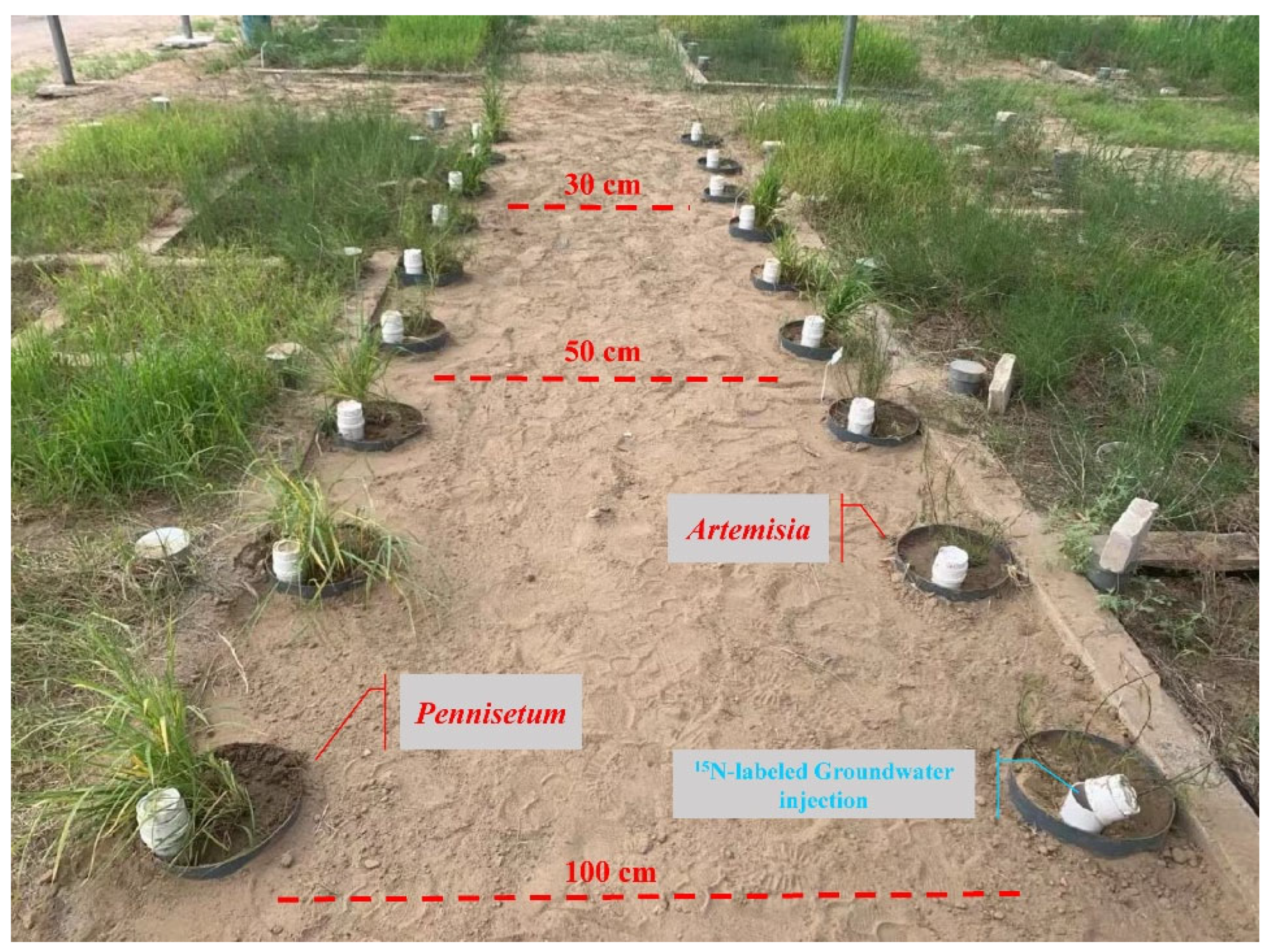
This experiment began on April 2022 at the Naiman Desertification Research Station. Figure 1 shows that three groundwater depths and two dominant species were used in the experimental manipulations (Pennisetum centrasiaticum and Artemisia halodendron), with 3 replicates per treatment. The two dominant species represent two distinct functional types in Horqin Sandy Land. This functional divergence is central to our study design, as it allows us to capture contrasting strategies of resource use and nitrogen turnover, which are critical for interpreting δ15N patterns. Moreover, Pennisetum is a shallow-rooted species, primarily exploiting nutrients from the topsoil. In contrast, Artemisia is a deep-rooted shrub, capable of accessing water and nutrients from deeper soil layers. This contrast in resource acquisition strategies is a key focus of our δ15N analysis. Manipulations were carried out in barrels with a diameter of 30 cm and consisted of 30, 50, 100 cm groundwater depths (Portions of Horqin Sandy Land exhibit these groundwater depth levels which correspond to the groundwater depths for the suitable growth of the two dominant species investigated in our research). PVC shelters were set up to protect the barrels from rainfall. A controlled experimental gradient was established to evaluate the impact of increasing groundwater depth on the N turnover within the soil–plant system. Barrels were buried to 0.5, 0.7 and 1.2 m, referring to the vertical distance from the soil surface to the bottom of each barrel according to each treatment gradient. As stones with a diameter greater than 10 mm and a thickness of 10 cm were placed in bottom of the barrels, followed by sand to build the groundwater reservoir. The bottom of each barrel contained a 20 cm layer of stone-sand-water mixture. To maintain the target groundwater depths throughout the experimental period, monitoring of the groundwater depth was conducted every 3 days, and water is injected. Young individuals of Pennisetum centrasiaticum and Artemisia halodendron were selected from the same sandy dune environment. The root system retaining the bud was dug out, and the root stems with the same diameter and length were selected. The selected rhizomes were then planted into the experimental barrels. After 39 days of planting, 15N-labeled 15NH415NO3 was added (10 g/m2/yr) with 10% abundance to the groundwater in all experimental barrels. The 15NH415NO3 was added via a PVC tube only in the initial stage of the experiment and the 15N-labeled groundwater is protected by a PVC cover until the end of this experiment.

2.3. Sampling of Soils, Stems and Leaves

Plant and soil were sampled in August 2022 during the peak period of plant growth. We collected leaf and stem samples from 18 individuals to assess variability in δ15N and N values within and among plant tissues with increasing groundwater depth (2 species × 3 GWDs × 3 repetitions). From each individual, we gathered three sets of leaf samples originating from diverse locations on the plant, with each set consisting of five leaves taken from a single branch, and they were then mixed together into a leaf sample for each individual. Using the same approach, we also sampled three stem segments of the main stem of these two plants. Soil samples were collected down to the groundwater aquifer at the following depths: 0–10, 10–20, 20–30, 30–50, 50–70, and 70–100 cm.

2.4. Trait Analyses

Soil samples were processed by passing them through a 2 mm-mesh sieve to remove roots, litter, and gravel. Each sample was subsequently divided into two subsamples. One of the subsamples was utilized for immediate soil moisture measurement, while the other subsample was air-dried for subsequent physicochemical analysis. Plant leaf and stem samples, as well as the soil samples, were washed with deionized water to remove dust particles and then dried at 60 °C for more than 48 h prior to further analysis [27]. Leaf total nitrogen (LTN), stem total nitrogen (STN) and soil total nitrogen (TN) were measured according to the protocol described by Perez-Harguindeguy [28]. Prior to analyzing the concentrations of nitrate nitrogen (NN) and ammonium nitrogen (AN), the wet soil samples underwent extraction using a 0.01 M CaCl2 solution (10% w/v) for a duration of two hours. Subsequently, the extracted solutions were quantified using a continuous flow analyzer (Bran + Luebbe AA3, Norderstedt, Germany). Soil moisture (SW) was determined gravimetrically by subjecting samples to oven-drying at 105 °C until a constant weight was achieved. Soil pH was ascertained using a pH probe through analysis of a 1:1.5 soil water extract.
Selected plant and soil samples were ground and loaded into tin capsules for analysis of N isotope ratios using a Flash 2000 elemental analyzer coupled to a DELTA V Advantage via a continuous flow interface (Thermo Fisher Scientific, Inc., Waltham, MA, USA). The average standard deviations for replicate analyses of an individual sample were ±0.2‰ for δ15N values.

2.5. Data Analysis

One-way analysis of variance (ANOVA) and Tukey’s test were used with a least significant difference (LSD) test at the p < 0.05 level of significance to identify significant differences in trait values along the gradient of soil layer and underground water table, respectively. Before conducting any analysis to identify significant differences, the raw data underwent assessment for normality and homogeneity using the Shapiro–Wilk test and Cochran’s C-test, respectively. Transformations were applied when necessary to meet underlying assumptions. Pearson correlation analyses were employed to investigate relationships between plant and soil variables. Next, multiple linear stepwise regression analysis was conducted to investigate the effects of soil and groundwater depth on the plant leaf and stem. Finally, structural equations were used to construct complex relationships among these variables. The initial step in structural equation modeling (SEM) involves establishing an a priori model based on the hypothesized causal relationships among the variables. To obtain the most rational models, non-significant and weakly correlated pathways were progressively eliminated to derive the final model. Subsequently, the models were parameterized and their goodness-of-fit statistics were evaluated. Shipley’s d-separation test was employed to determine the presence of any missing paths within the model, with p > 0.05 indicating a satisfactory model fit. Standardized coefficients for each pathway from individual component models were reported, along with Fisher’s C statistic and AIC values for the overall model. The SEM analyses were conducted using the piecewise-SEM package 2.3.0 (https://github.com/jslefche/piecewiseSEM accessed on 20 September 2023).
SPSS Statistics 22.0, Origin 8.0, and R 4.2.0 were employed for statistical analyses and figure construction.

3. Results

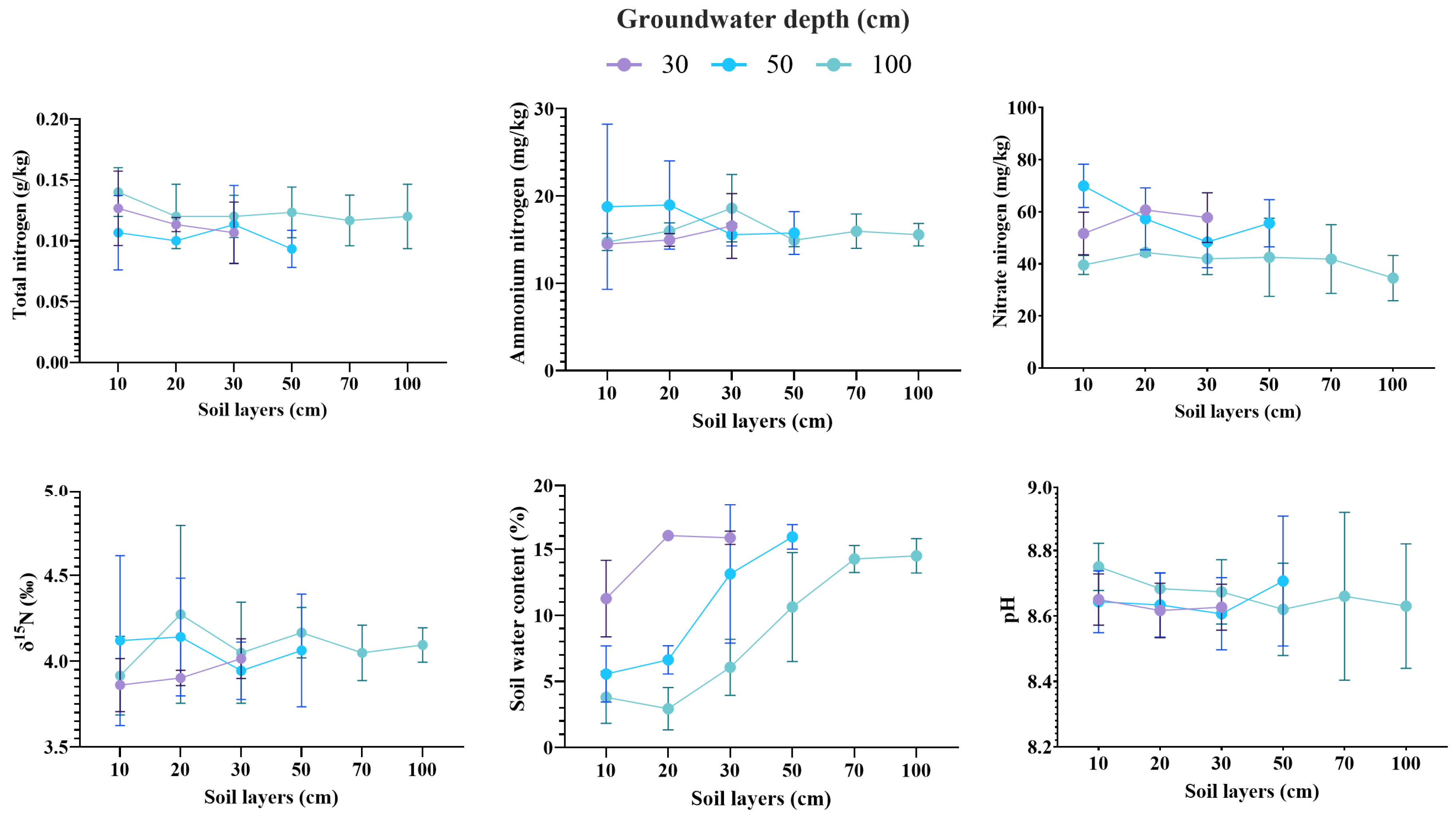
The variation trends of soil TN, NN, AN, δ15N, SW and pH across the soil profile were shown in Figure 2. The TN content (range: 0.11–0.13 g/kg) decreased with increasing soil depth through the upper profile (0–30 cm) at the 30 cm groundwater depth (p < 0.05), but no significant difference was observed among soil layers in 50 and 100 cm groundwater depth treatments. In 50 cm groundwater depth, the variation in AN content (range: 15.56–18.77 mg/kg) decreased with increasing soil depth through the 0–30 cm profile (p < 0.05), whereas AN at 30 cm groundwater depth (range: 14.52–16.57 mg/kg) increased with increasing soil depth (p < 0.05). For soil NN content, a significant difference was only observed among soil layers at 50 cm groundwater depth (range: 48.36–69.93 mg/kg, p < 0.05). There was no significant difference (except under the 30 cm groundwater depth treatment, range: 3.86–4.01‰, p < 0.05) in soil δ15N content among soil layers. For soil water content, the variation trends of all groundwater depth treatments increased with increasing soil depth (range: 3.79–15.87%, p < 0.05). Soil pH was not significantly different between soil layers in all groundwater depth treatments.
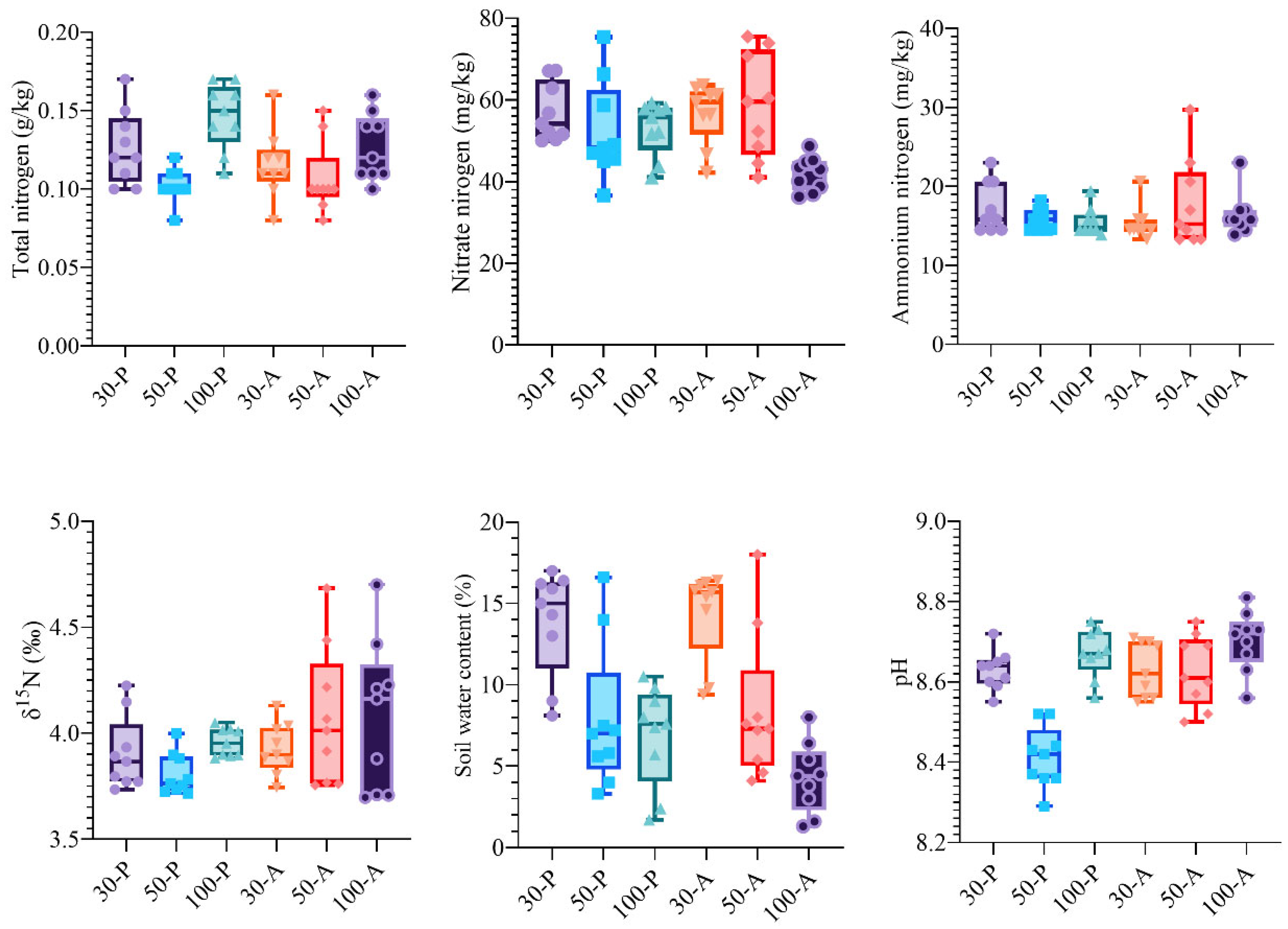
Figure 3 summarizes the TN, AN, NN, δ15N, SW and pH of soil across different groundwater depths and plant life forms. Across different groundwater depths, TN, NN and pH values of P (Pennisetum) showed the same trend (i.e., lower values at a groundwater depth of 50 cm than at 30 and 100 cm), but AN showed no significant difference among groundwater depths. Soil TN and δ15N values of A (Artemisia) increased with increasing groundwater depth, whereas AN showed no significant change between groundwater depths. In addition, SW decreased with increasing groundwater depth in the two dominant species. In general, Soil TN, δ15N and pH values in the 100 cm groundwater depth treatment were significantly higher than those in the 30 and 50 cm groundwater depth treatments.
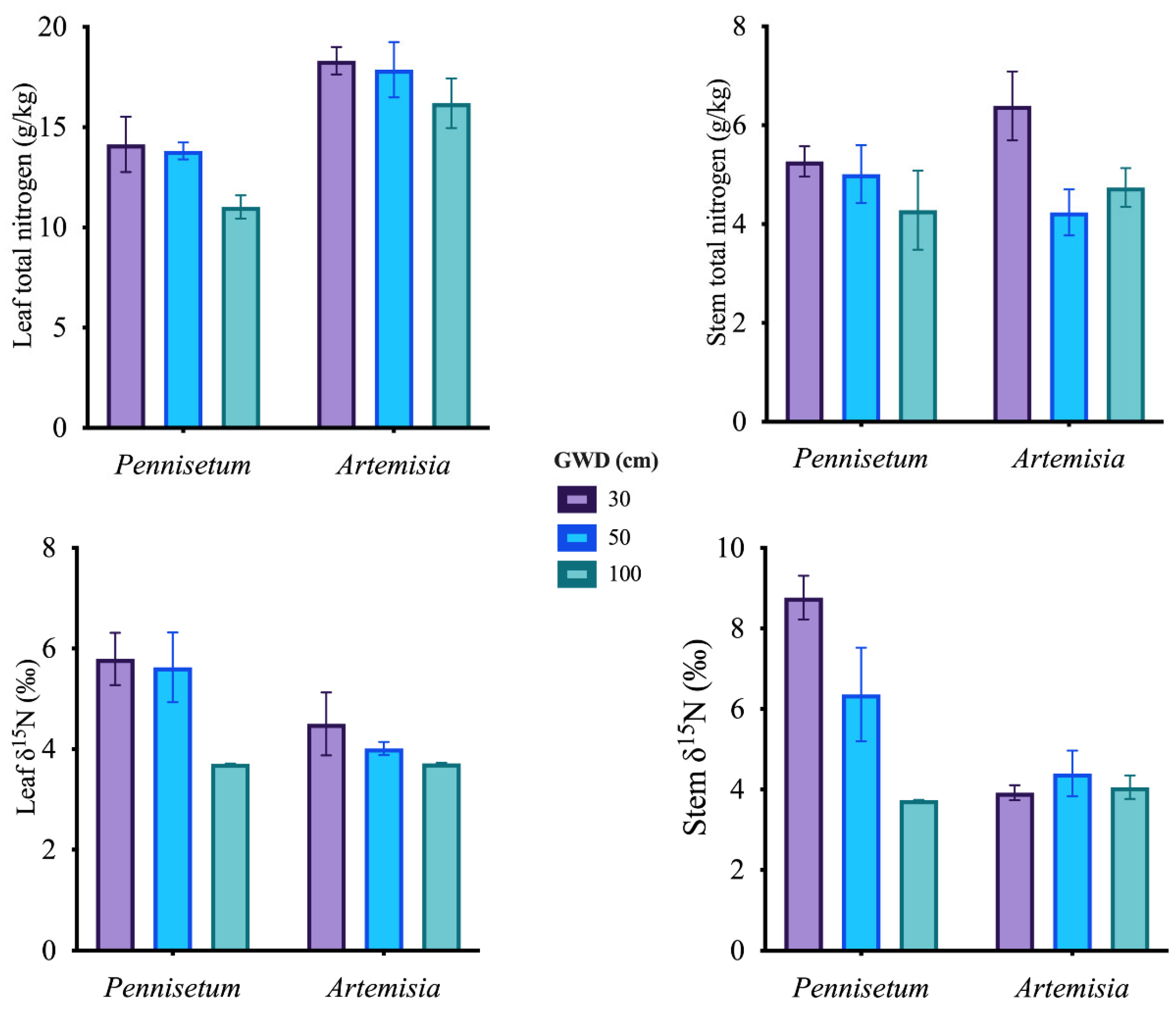
We sampled stems and leaves of the two dominant plant species at different groundwater depth treatments to better understand how TN and δ15N values varied among and within plant tissues (Figure 4). LTN (leaf total nitrogen) and STN (stem total nitrogen) varied significantly among groundwater depth treatments in both plant species. LTN of the two plant species in the 100 cm groundwater depth treatment (P: mean = 11.02 g/kg; A: mean = 16.19 g/kg) was significantly lower than those at 30 cm (P: mean = 14.14 g/kg; A: mean = 18.31 g/kg) and 50 cm (P: mean = 13.82 g/kg; A: mean = 17.87 g/kg) (p < 0.05). STN values of Pennisetum decreased with increasing groundwater depth (range: 4.28–5.27 g/kg, p < 0.05), whereas STN values of Artemisia in 50 cm groundwater depth were significantly higher than those at 30 and 100 cm (range: 4.24–6.39 g/kg, p < 0.05). δ15N values of plants also varied significantly among groundwater depth treatments. Leaf-δ15N (range: 3.71–5.79‰) and stem-δ15N (range: 3.74–8.77‰) values of Pennisetum exhibited a trend similar to leaf-δ15N (range: 3.72–4.51‰) values of Artemisia (p < 0.05), but no significant change was observed between groundwater depth treatments in stem-δ15N of Artemisia.
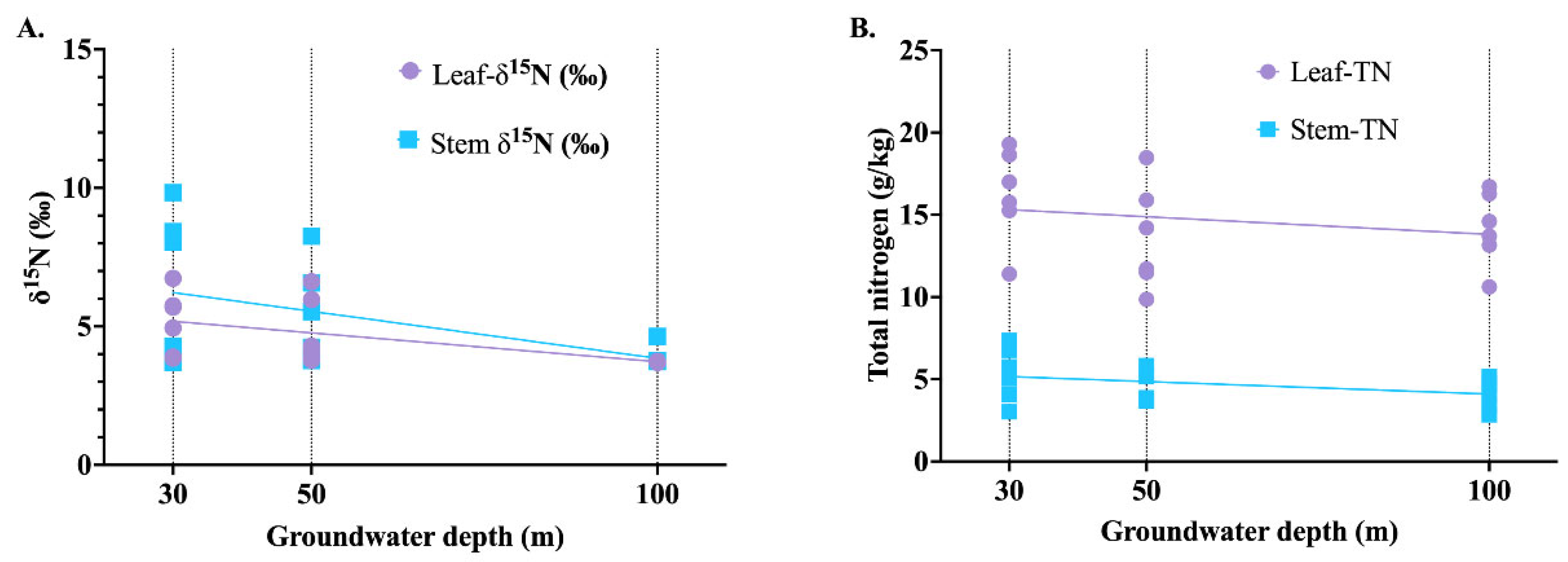
Figure 5 shows the results of linear regressions of leaf δ15N, stem δ15N, leaf TN, and stem TN against groundwater depth. There was a significant negative correlation between δ15N values and groundwater depth for leaf (r2 = 0.34, p = 0.0012) and stem (r2 = 0.25, p = 0.0347). TN concentrations of leaves significantly decreased with increasing groundwater depth (r2 = 0.15, p = 0.0364), and TN of stems also had a significant negative relationship with groundwater depth (r2 = 0.13, p = 0.0126).
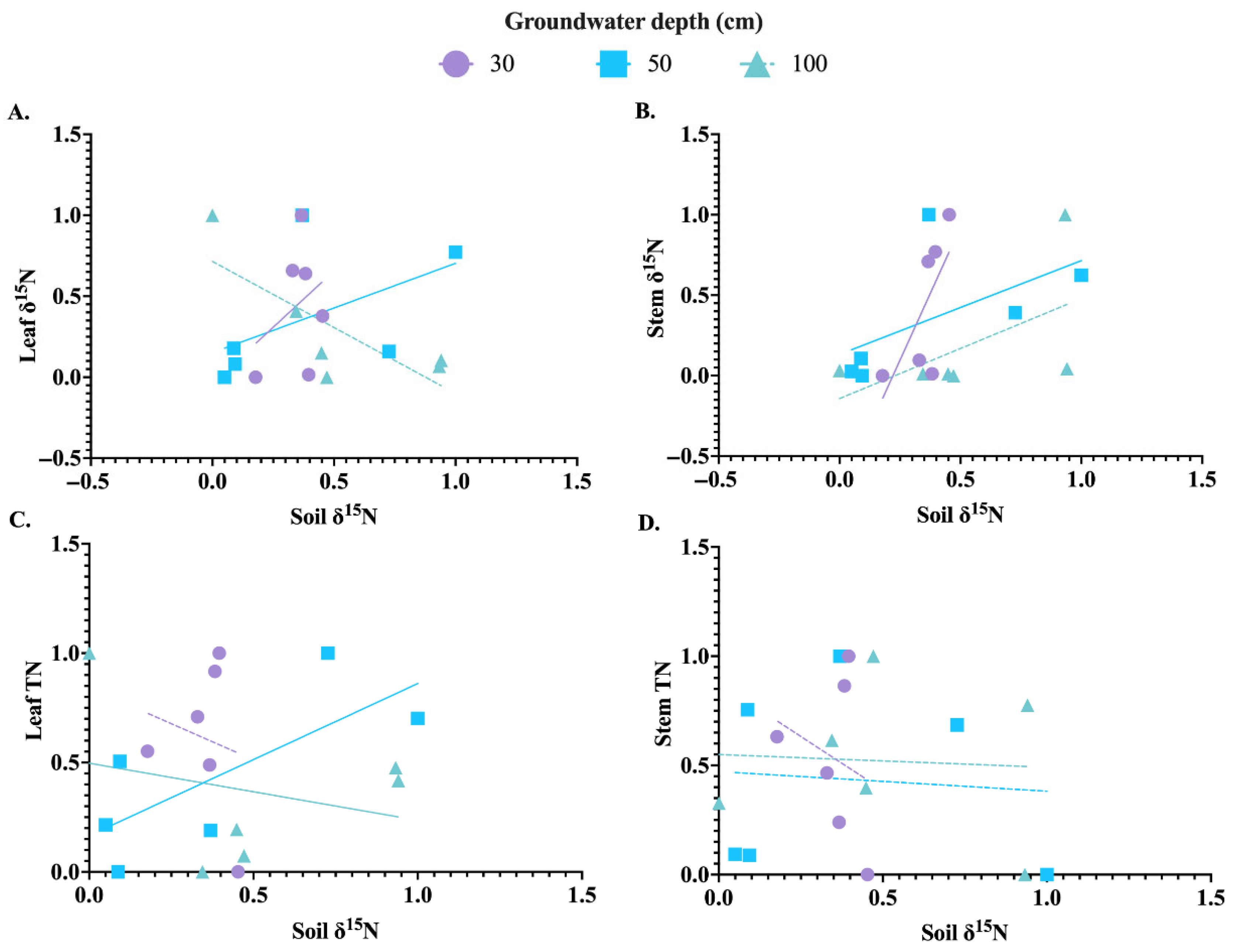
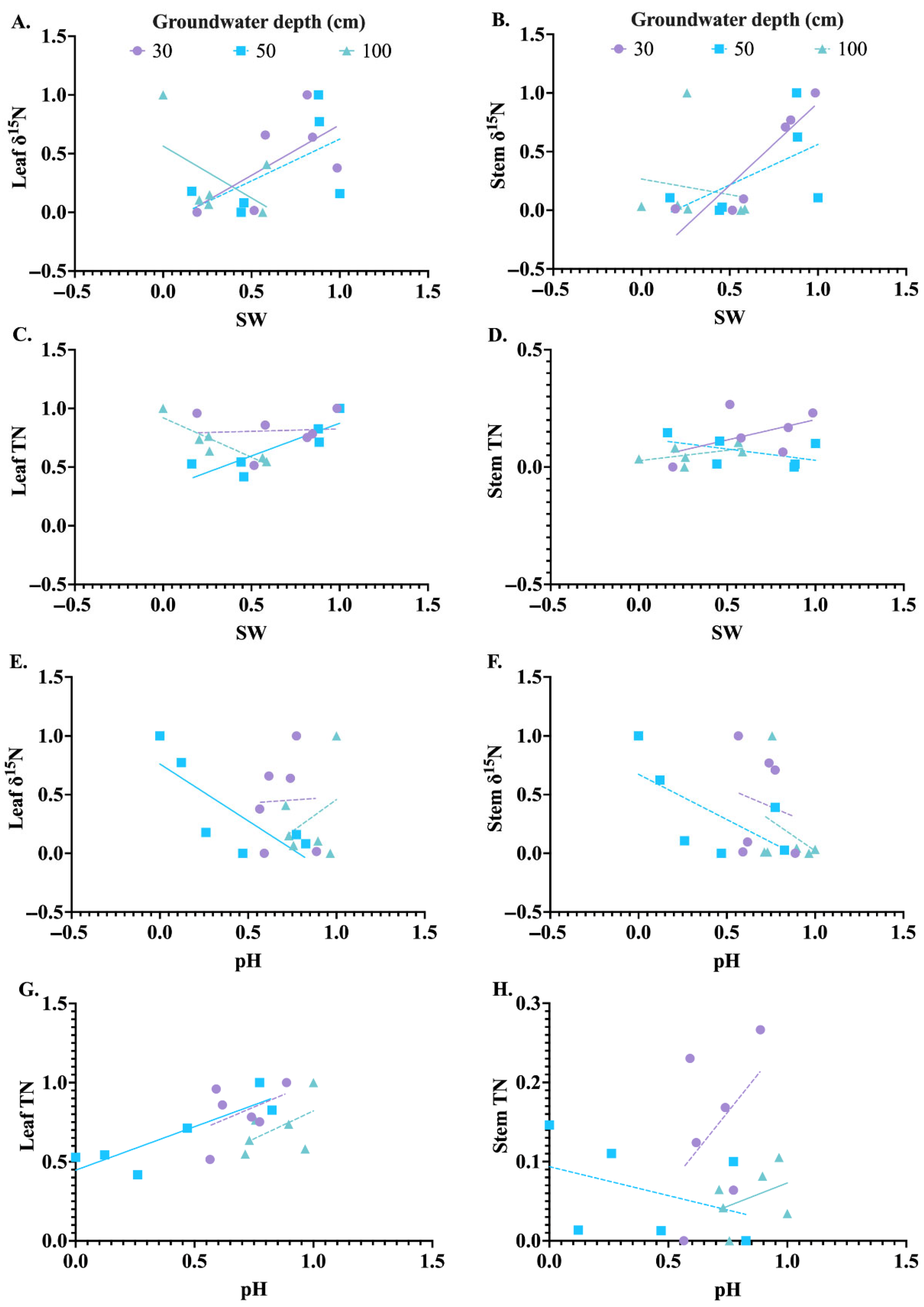
Figure 6 and Figure 7 show the results of linear regressions of soil δ15N, SW, and pH against plant tissue N (δ15N and TN) at groundwater depths of 30, 50, and 100 cm, respectively. The regression equations are provided in Table S1. The changes in plant tissue δ15N and TN with environmental gradients of soil showed strong flexibility under altered groundwater depth. The trends for δ15N of leaves and stems at 30 and 50 cm groundwater depths were mostly similar with respect to the soil δ15N gradient, but the plant δ15N with respect to soil δ15N differed at 100 cm groundwater depth. The δ15N of leaf and stem significantly increased with increasing soil δ15N at 30 and 50 cm groundwater depth, whereas the leaf δ15N decreased with increasing soil δ15N at 100 cm groundwater depth. For plant tissue TN, leaf TN had a significant positive relationship with soil δ15N at 50 cm groundwater depth, whereas leaf TN decreased with soil δ15N at 100 cm groundwater depth. There was no significant relationship between stem TN and soil δ15N. Leaf δ15N and stem δ15N significantly increased with increasing SW at 30 cm groundwater depth. Plant tissue TN also had significant positive relationships with SW at 30 and 50 cm groundwater depth. Soil pH negatively influenced the δ15N of leaf and stem, but it is not significant except at groundwater depth of 50 cm.
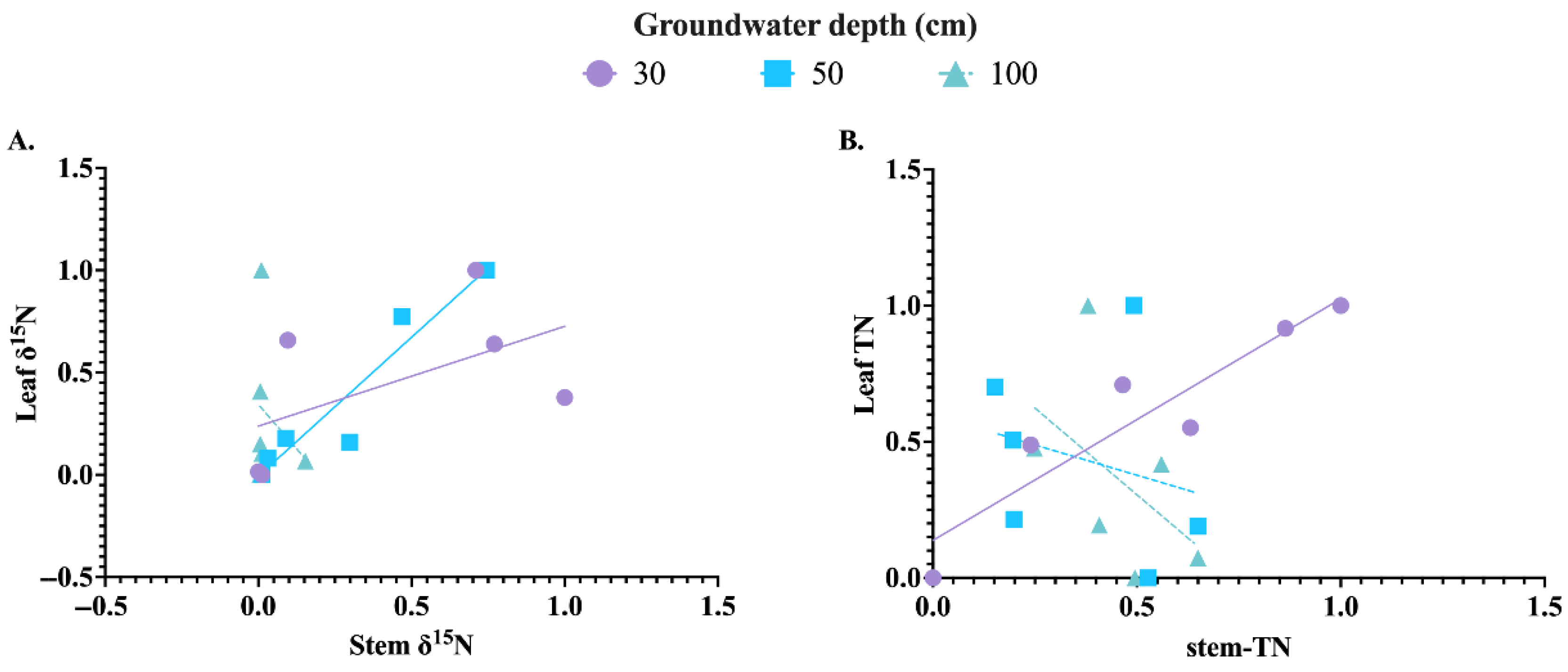
At 30 and 50 cm groundwater depth, leaf δ15N was strongly positively related to stem δ15N (Figure 8A, Table S2). However, the leaf δ15N vs. stem δ15N relationship was not significant at 100 cm groundwater depth. For TN in plant tissues (Figure 8B), leaf TN had a significant positive relationship with stem TN at 30 cm groundwater depth.
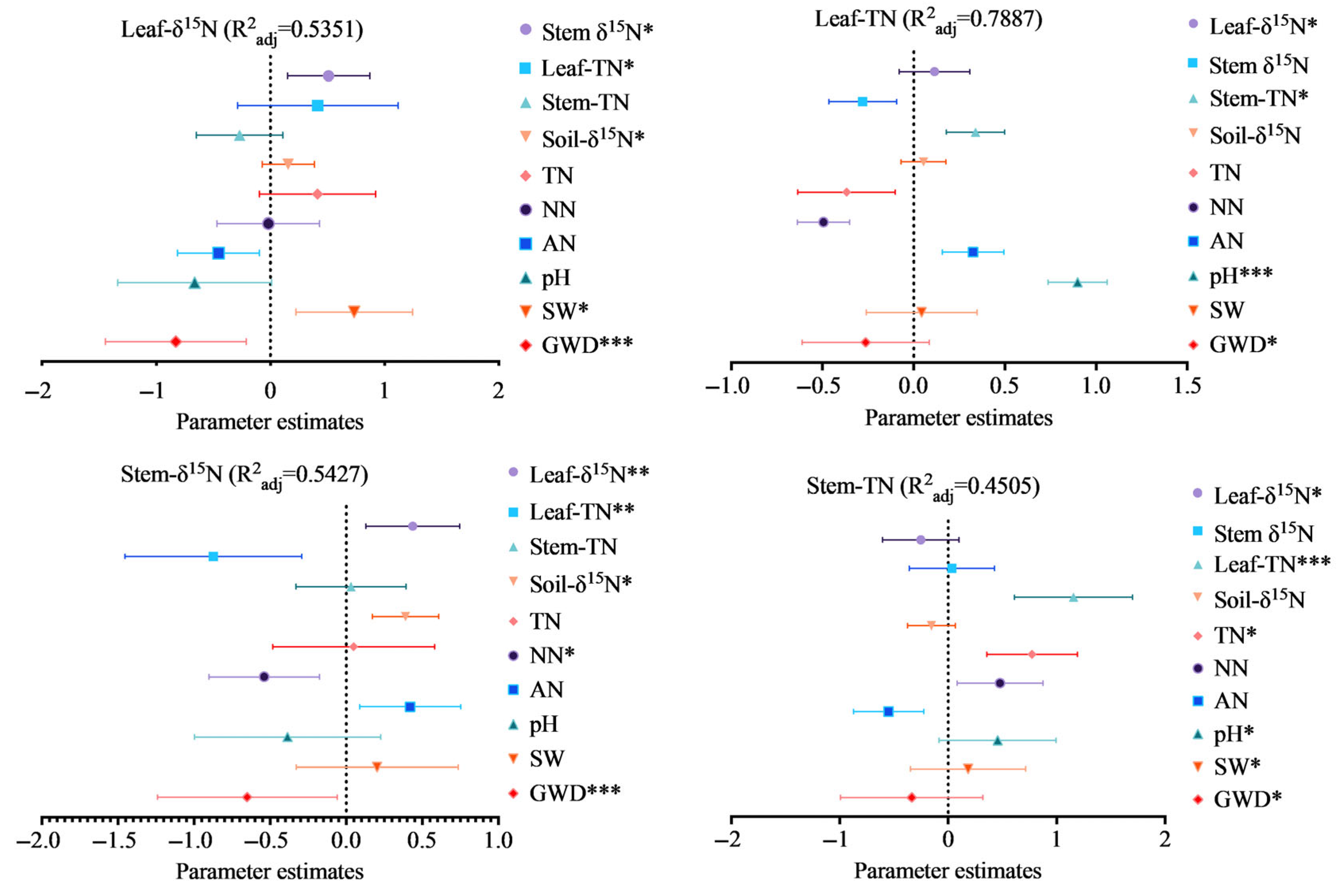
Plant and environmental parameters were incorporated into a mixed-effects model to comprehensively identify the principal determinants of δ15N and TN (total nitrogen) values in individual plants (Figure 9). For leaf δ15N and stem δ15N, as well as leaf TN and stem TN, the full mixed-effects model included soil δ15N, groundwater depth (GWD), soil water content (SW), soil TN, nitrate nitrogen (NN), ammonium nitrogen (AN), and soil pH as fixed effects. All fixed effects significantly improved model fit and were retained in the final model, with the exception of stem TN, NN, AN, and soil pH. Leaf δ15N values were negatively correlated with groundwater depth (GWD) and positively correlated with stem δ15N, leaf TN, soil δ15N, and soil water content (SW). For leaf TN, the full mixed-effects model included leaf δ15N, stem δ15N, stem TN, soil δ15N, GWD, SW, soil TN, nitrate nitrogen (NN), ammonium nitrogen (AN), and soil pH as fixed effects. The fixed effects of leaf δ15N, stem TN, pH, and GWD significantly enhanced model fit and were retained in the final model. Leaf TN was negatively related to GWD and positively related to leaf δ15N, stem TN, and pH. For stem δ15N, leaf δ15N, leaf TN, stem TN, soil δ15N, GWD, SW, soil TN, NN, AN, and pH were included as fixed effects in the full model. The fixed effects of leaf δ15N, leaf TN, soil δ15N, pH and GWD significantly improved the fit of the model and were retained in the final model. Stem δ15N values were negatively related to leaf TN, NN and GWD, and positively related to leaf δ15N, soil δ15N, and pH. For stem TN, leaf δ15N, leaf TN, stem δ15N, soil δ15N, GWD, SW, soil TN, NN, AN, and pH were included as fixed effects in the full model. The fixed effects, except for stem δ15N, soil δ15N, NN and AN, significantly improved the fit of the model and were retained in the final model. Stem TN values were positively related to leaf TN, TN, and SW and negatively related to leaf δ15N, soil δ15N, pH, and GWD.
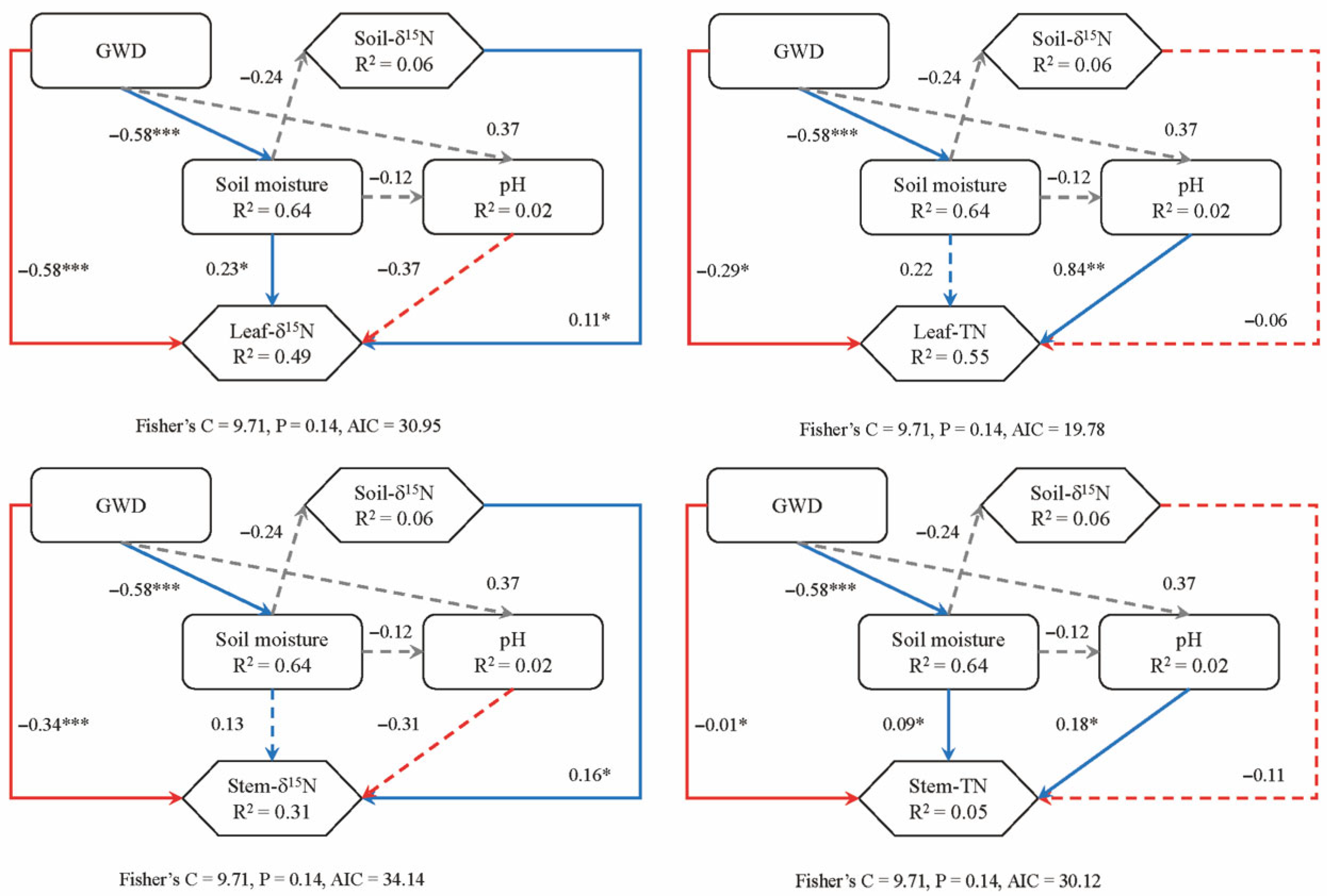
The SEM and RDA results showed that groundwater depth (GWD) and soil moisture (SW) appeared to be the most influential predictors of leaf δ15N and stem δ15N values (Figure 10 and Figure S1). Leaf δ15N and stem δ15N values were directly and negatively affected by GWD and pH, and soil δ15N had a significant positive effect on leaf δ15N. Leaf δ15N values were also affected significantly and positively by soil moisture (SW). Soil pH had a significant positive effect on leaf TN, and GWD had a significant and negative effect on leaf TN. SW and pH had a significant and positive effect on stem TN, which was also affected directly and negatively by GWD. In addition, stem TN was indirectly and negatively related to GWD, mediated predominantly by variation in SW.

4. Discussion

4.1. Distribution of Soil–Plant Properties

The distribution of soil properties in soil layers is influenced by various factors, such as vegetation characteristics, nitrogen sources, soil texture, and hydrogeological conditions. However, the current understanding of the relationship between groundwater depth and soil properties rests primarily on observations of soil physicochemical properties that do not include 15N isotope tracing [4,29]. Our results showed that TN, AN, NN, and pH decreased with increasing soil depth (Figure 2), which was due to animal and plant residues mainly accumulating at the soil surface and microbial activity being stronger in the shallower soil layer, thereby promoting their accumulation [30]. In contrast, AN and NN contents increased with increasing soil depth in 30 cm groundwater depth because increased oxygen availability in the upper soil enhanced microbial activity, consequently promoting both ammonification and nitrification processes [31]. In our study, soil δ15N values decreased with increasing soil depth. This finding was consistent with previous studies showing that the δ15N values in the soil decreased gradually with increasing soil depth, primarily because the lighter 14N is more prone to downward migration, while the heavier 15N tends to remain in the shallower soil layers. Additionally, the source of 15N in groundwater can also influence the distribution of δ15N values in the soil profile [32,33,34]. Several studies reported that soil moisture is affected primarily by a shallow underground water table [35]. Our results showed that soil moisture increased with increasing soil depth. Soil pH declined with increasing soil depth, and this was consistent with other studies showing that the low soil moisture combined with strong evaporation enhance salt accumulation in the upper soil layers, resulting in high pH [36].
Groundwater depth also has an impact on soil properties and δ15N values, which were highest at 100 cm groundwater depth, except for AN and soil water content (Figure 3). The reasons were that (1) the soil water content at 30 and 50 cm groundwater depth was higher than that at 100 cm (excessive soil moisture restricted soil microbial functions and the accumulation of soil nutrients) and (2) as groundwater depth decreased, TN and NN in the surface soil were more rapidly leached into the groundwater [37,38,39], and the denitrification caused by anaerobic conditions led to a reduction in NN at 30 and 50 cm groundwater depth [40]. Moreover, due to low soil moisture with strong evaporation in upper soil layers at 100 cm groundwater depth and the selective uptake of roots along the pathways of groundwater, salts have a greater opportunity to accumulate at the root end compared to nutrient substances [36,41]. These factors consequently resulted in an elevation of soil pH at 30 and 100 cm groundwater depth.
Organ (leaf and stem) N is considered a surrogate for the whole-plant N signatures and is directly linked to N sources [42]. Therefore, the increasing trend of foliar N with decreasing groundwater depth indicated a reduction in the distance between plant and N sources [43]. Our results also showed that increasing groundwater depth had a strong negative effect on plant TN and δ15N signatures (Figure 4). This could also be attributed to N addition in groundwater significantly enhancing net nitrogen mineralization and nitrification rates in the soil layer adjacent to the N sources [44]. A significant positive relationship between δ15N of plants and nitrification rates was suggested in previous studies [45,46]. In addition, several studies also demonstrated that nitrogen sources significantly enhanced N2O emissions and NH3 volatilization in the soil layer adjacent to the groundwater, thereby significantly enriching the available soil N pools under exogenous N input [42,47]. However, δ15N and TN of Artemisia did not significantly change with altered groundwater depth. This indicated possible N limitation in the plant species and a dependency of plants on N2 fixation, thereby potentially offsetting the increasing trend of plant TN and δ15N values induced by exogenous N inputs [48]. Consequently, the N pool served as the primary nitrogen source supporting plant growth. Noticeable variations in 15N signatures were observed due to a significant enrichment of 15N in the soil layer adjacent to the groundwater, which were attributed to the increased nitrogen turnover and preferential discrimination against the heavier N isotope.

4.2. Driving Factors of Plant Tissue δ15N Values

Environmental factors, soil physicochemical properties and patterns of intra-plant fractionation and their interaction regulate changes in the δ15N values of soil and plants [49]. However, the current understanding of relationships between climate and plant tissue δ15N values rests primarily on temperature and precipitation, rather than groundwater depth [50]. It remains unclear if groundwater depth influences plant δ15N values directly or whether it is simply a covariate with variables such as soil type and species composition. In our study, we established three groundwater depth gradients (30, 50, and 100 cm). These groundwater depth gradients correspond to the actual underground water tables in specific areas of the Horqin Sandy Land [11]. Our results showed that plant tissue δ15N and TN values tended to decrease with increasing groundwater depth (Figure 5). This aligns with the positive relationship between soil moisture and soil δ15N that has been observed in arid ecosystems with alkaline soils [51]. We observed that the relationship between soil properties and plant tissues’ N varies among different groundwater depths. The tested plants rapidly grew from seedling to a vigorous stage, requiring substantial nitrogen uptake through their root systems. At 30 and 50 cm groundwater depths, soil δ15N strongly positively affected plant tissue δ15N. Due to water serving as the carrier for nitrogen transport, it plays a significant role in the process of plants’ absorption and utilization of nitrogen from the soil. Meanwhile, the closer proximity of plant root systems to nitrogen sources enhances plant nitrogen uptake and utilization [52,53]. Therefore, during the seedling stage, plants are constrained by root length, making it challenging for them to access both water and nitrogen at a groundwater depth of 100 cm. Moreover, when soil moisture approaches saturation (e.g., 30 cm groundwater depth treatment), denitrification is facilitated, resulting in soil 15N enrichment [4,54,55,56]. In addition, due to the selective uptake of roots along the pathways of groundwater, salts have a greater opportunity to accumulate at the root end compared to nutrient substances. This consequently results in an elevation of soil pH in the vicinity of the root system [41]. Given that higher soil pH has the potential to influence soil microbial community structure, it could play an indirect role in influencing the plant’s capacity for nitrogen uptake [57]. Indeed, soil pH at a groundwater depth of 50 cm is more conducive to plant nitrogen absorption (Figure 7E–G).
Plants obtain their N directly from N sources in soil, making them highly interdependent [58,59]. As plant seedlings grow rapidly, changes in the depth of nitrogen uptake may influence leaf nitrogen content. The overall soil δ15N increases with soil depth (Figure 2), but different trends in N values may be observed among various plant tissues [60]. We also observed significant differences in δ15N values among plant tissues, and there were moderate correlations between leaf and stem (Figure 4 and Figure 8; Table S2), which have previously been documented in a variety of species [61,62]. Although the leaf δ15N value was not identical to the stem δ15N value, the consistent offset among tissues indicates that leaf δ15N values are representative of whole-plant δ15N values within this population across groundwater depth treatments. In the process of nitrate assimilation, the site of nitrate assimilation is a common explanation for the observed intra-plant variability in δ15N values, which can occur in stems or leaves. Correlation analysis showed a significant negative relationship between stem-δ15N and NN (Figure 9). Nitrate reductase exhibits a significant preference for 14N over 15N, leading to an enriched pool of nitrogen being transported from roots to stems during assimilation and a further enriched pool from stems to leaves [63,64]. Moreover, interactions with atmospheric nitrogen, involving both losses and uptake through photosynthetic tissues (e.g., leaves and photosynthetic stems), could lead to δ15N values in photosynthetic tissues approaching 0 (via equilibrium processes or uptake) or becoming enriched (due to gaseous losses from the plant) [65,66]. These exchange processes could be responsible for the observed higher δ15N values in leaves and photosynthetic stems (Pennisetum) in comparison to woody stems (Artemisia) (Figure 4).
Our results indicated that there was no significant correlation between soil nitrogen components (e.g., TN, NN, and AN) and plant tissue δ15N (Table S1; Figures S2 and S3). Previous studies have cautioned against the direct interpretation of plant δ15N values as reliable tracers of nitrogen, and this study supports the viewpoint that the relationship between δ15N values and the nitrogen pool is intricate and subject to variability [64,67,68,69]. Furthermore, the relative contribution of fractionation linked to N uptake, assimilation, transformation, and storage in plants may have a substantial impact, surpassing the influence of the δ15N value of the absorbed inorganic N (Figure S1). This implies that the variation in δ15N observed at small spatial scales within this ecosystem is predominantly governed by plant physiology rather than N sources [49]. Structural equation modeling showed that groundwater depth can directly or indirectly affect leaf-LTN, leaf-δ15N, stem TN, and stem-δ15N by altering soil δ15N, soil moisture and soil pH value (Figure 10). Soil moisture and pH directly affect N change in plant tissues, since lower soil moisture and higher soil pH inhibit soil microbial activity and thus impair nitrogen transformation rates [68,70]. Furthermore, due to the lower soil moisture content, soils tend to become alkaline, leading to greater susceptibility of plant 15N uptake to NH3 gaseous losses [71]. In summary, SEM results highlighted that the variation in plant N is a combined effect of groundwater depth, vegetation, and soil properties. Groundwater depth plays a crucial role in regulating the effects of plant and soil properties and their relationship. Moreover, future increases in groundwater depth may exacerbate nutrient limitations, potentially leading to adverse impacts on the functionality of semi-arid ecosystems [72,73,74].
While this study emphasizes the usefulness of soil–plant δ15N values as comprehensive indicators of groundwater depth shifts and factors influencing nitrogen turnover, the exact mechanisms driving numerous observed patterns in soil–plant δ15N values still lack precise elucidation. First, the study focused on the dominant plant species and topsoil layers, and non-dominant species and deeper soil layers were not included in the sampling framework; deeper soil moisture and N pools often serve as critical resources for plant growth in water-limited areas, and non-dominant species may exhibit distinct N utilization strategies. Second, temporal and spatial groundwater variability (e.g., fluctuations from erratic precipitation or intermittent extraction) further complicate δ15N-based interpretation. Third, unmeasured confounding factors exist in the analysis of driving factors for N turnover and δ15N signatures. Given that plants exert species-specific and substantial influences on soil nutrient availability through feedback mechanisms within nutrient cycles, it is crucial to underscore the importance of meticulously quantifying population-level variations and ensuring representative sampling.

5. Conclusions

Elucidating the environmental and physiological drivers of soil–plant N isotopes remains a challenge for effectively using δ15N values to understand ecosystem nitrogen cycling. We investigated the response of the soil and plant tissue 15N signatures in two dominant species (the herb Pennisetum centrasiaticum and the shrub Artemisia halodendron) to three groundwater depth treatments (30 cm, 50 cm, and 100 cm) under the addition of N compounds (15NH415NO3) in the Horqin Sandy Land. We found that soil δ15N increased with soil depth at 30 cm groundwater depth, and plant tissue δ15N and TN were positively related to soil δ15N at 30 and 50 cm groundwater depth. There were negative effects of groundwater depth variability on plant tissue δ15N and TN values. We also found evidence that the gradient in SW and pH affected by groundwater was most responsible for the distribution of plant tissue N and for inconsistencies in δ15N values between leaf and stem across treatments. Our results suggest that groundwater depth plays a crucial role in regulating the pattern of N transformation. These findings enhance our understanding of how environmental change affects plant and soil properties and their relationships in the semi-arid region.

Supplementary Materials

The following supporting information can be downloaded at https://www.mdpi.com/article/10.3390/su18041835/s1, Figure S1: Redundancy analysis (RDA) showing the major drivers influencing plant N and δ15N in 30, 50, and 100 cm groundwater depth; Figure S2. Regression analysis for the relationships between soil TN values with respect to the plant tissue δ15N and TN at different groundwater depths. Solid lines and dotted lines represent p < 0.05 and p > 0.05, respectively; Figure S3. Regression analysis for the relationships between the soil NN and AN values with respect to plant tissue δ15N and TN at different groundwater depths. Solid lines and dotted lines represent p < 0.05 and p > 0.05, respectively; Table S1: Regression analysis for the relationships between the soil variables with respect to the plant tissues δ15N and TN at different groundwater depths; Table S2: Regression analysis for the relationships between leaf δ15N and TN values with respect to stem δ15N and TN values at different groundwater depths.

Author Contributions

Conceptualization, X.Z. and S.Z.; methodology, S.Z.; software, S.Z.; validation, X.Z., S.Z., L.Z., K.J. and J.S.; formal analysis, S.Z.; investigation, S.Z., L.Z., K.J. and J.S.; resources, X.Z.; data curation, S.Z.; writing—original draft preparation, S.Z.; writing—review and editing, X.Z. and S.Z.; visualization, S.Z.; supervision, X.Z.; project administration, X.Z.; funding acquisition, X.Z. and S.Z. All authors have read and agreed to the published version of the manuscript.

Funding

This work was supported by the National Natural Science Foundation of China (No. 42177456), the Key Projects of Anhui Provincial Department of Education (No. 2024AH051354) and the Scientific Research Start-up Fund Project of Chizhou University (No. CZ2024YJRC14).

Institutional Review Board Statement

Not applicable.

Informed Consent Statement

Not applicable.

Data Availability Statement

The original contributions presented in this study are included in the article/Supplementary Material. Further inquiries can be directed to the corresponding author.

Conflicts of Interest

The authors declare no conflicts of interest.

References

  1. Gurmesa, G.A.; Hobbie, E.A.; Zhang, S.; Wang, A.; Zhu, F.; Zhu, W.; Koba, K.; Yoh, M.; Wang, C.; Zhang, Q.; et al. Natural N-15 abundance of ammonium and nitrate in soil profiles: New insights into forest ecosystem nitrogen saturation. Ecosphere 2022, 13, e3998. [Google Scholar] [CrossRef]
  2. Hu, C.-C.; Liu, X.-Y.; Yan, Y.-X.; Lei, Y.-B.; Tan, Y.-H.; Liu, C.-Q. A new isotope framework to decipher leaf-root nitrogen allocation and assimilation among plants in a tropical invaded ecosystem. Sci. Total Environ. 2022, 806, 151203. [Google Scholar] [CrossRef]
  3. Wang, Z.-J.; Yue, F.-J.; Xue, L.-L.; Wang, Y.-C.; Qin, C.-Q.; Zeng, J.; Ding, H.; Fu, Y.-C.; Li, S.-L. Soil nitrogen transformation in different land use and implications for karst soil nitrogen loss controlling. Catena 2023, 225, 107026. [Google Scholar] [CrossRef]
  4. Lai, X.; Zhu, Q.; Castellano, M.J.; Zan, Q.; Liao, K. Relationship between soil 15N natural abundance and soil water content at global scale: Patterns and implications. Catena 2023, 222, 106879. [Google Scholar] [CrossRef]
  5. Hobbie, E.A.; Hogberg, P. Nitrogen isotopes link mycorrhizal fungi and plants to nitrogen dynamics. New Phytol. 2012, 196, 367–382. [Google Scholar] [CrossRef]
  6. Clemmensen, K.E.; Durling, M.B.; Michelsen, A.; Hallin, S.; Finlay, R.D.; Lindahl, B.D. A tipping point in carbon storage when forest expands into tundra is related to mycorrhizal recycling of nitrogen. Ecol. Lett. 2021, 24, 1193–1204. [Google Scholar] [CrossRef]
  7. Pu, Y.; Meyers, P.A.; Werne, J.P.; Zhang, H. The paleolacustrine significance of sedimentary nitrogen isotopes: A comparative study of late Holocene records in two lakes on the eastern Qinghai-Tibet Plateau. Sci. Total Environ. 2023, 893, 164641. [Google Scholar] [CrossRef]
  8. Jach-Smith, L.C.; Jackson, R.D. Inorganic N addition replaces N supplied to switchgrass (Panicum virgatum) by arbuscular mycorrhizal fungi. Ecol. Appl. 2020, 30, e02047. [Google Scholar] [CrossRef]
  9. Craine, J.M.; Brookshire, E.N.J.; Cramer, M.D.; Hasselquist, N.J.; Koba, K.; Marin-Spiotta, E.; Wang, L. Ecological interpretations of nitrogen isotope ratios of terrestrial plants and soils. Plant Soil 2015, 396, 1–26. [Google Scholar] [CrossRef]
  10. Wang, C.; Wang, X.B.; Liu, D.W.; Wu, H.H.; Lu, X.T.; Fang, Y.T.; Cheng, W.X.; Luo, W.T.; Jiang, P.; Shi, J.S.; et al. Aridity threshold in controlling ecosystem nitrogen cycling in arid and semi-arid grasslands. Nat. Commun. 2014, 5, 4799. [Google Scholar] [CrossRef] [PubMed]
  11. Su, T.; Jia, B.; Hu, Y.; Yang, Q.; Mao, W. Effects of groundwater depth on soil environmental factors and root biomass of typical plant communities in sandy grassland. Pratacultural Sci. 2021, 38, 1694–1705. [Google Scholar]
  12. Zhu, Q.; Castellano, M.J.; Yang, G. Coupling soil water processes and the nitrogen cycle across spatial scales: Potentials, bottlenecks and solutions. Earth-Sci. Rev. 2018, 187, 248–258. [Google Scholar] [CrossRef]
  13. Mekala, C.; Nambi, I.M. Understanding the hydrologic control of N cycle: Effect of water filled pore space on heterotrophic nitrification, denitrification and dissimilatory nitrate reduction to ammonium mechanisms in unsaturated soils. J. Contam. Hydrol. 2017, 202, 11–22. [Google Scholar] [CrossRef]
  14. Ouyang, W.; Xu, X.; Hao, Z.; Gao, X. Effects of soil moisture content on upland nitrogen loss. J. Hydrol. 2017, 546, 71–80. [Google Scholar] [CrossRef]
  15. Qian, J.; Jin, W.; Hu, J.; Wang, P.; Wang, C.; Lu, B.; Li, K.; He, X.; Tang, S. Stable isotope analyses of nitrogen source and preference for ammonium versus nitrate of riparian plants during the plant growing season in Taihu Lake Basin. Sci. Total Environ. 2021, 763, 143029. [Google Scholar] [CrossRef]
  16. Kalcsits, L.A.; Buschhaus, H.A.; Guy, R.D. Nitrogen isotope discrimination as an integrated measure of nitrogen fluxes, assimilation and allocation in plants. Physiol. Plant. 2014, 151, 293–304. [Google Scholar] [CrossRef]
  17. Koyama, A.; Harlow, B.; Evans, R.D. Greater soil carbon and nitrogen in a Mojave Desert ecosystem after 10 years exposure to elevated CO2. Geoderma 2019, 355, 113915. [Google Scholar] [CrossRef]
  18. Zuo, X.; Zhao, X.; Zhao, H.; Yun, J.; Wang, S.; Su, N.; Feng, J. Spatial heterogeneity of vegetation characteristics in the processes of degraded vegetation restoration in Horqin Sandy Land, northern China. Ecol. Environ. Sci. 2010, 19, 1513–1518. [Google Scholar]
  19. Luo, Y.; Du, Z.; Yan, Z.; Zhao, X.; Li, Y.; Jiang, H.; Yang, Y.; Li, M.-H. Artemisia halodendron Litters Have Strong Negative Allelopathic Effects on Earlier Successional Plants in a Semi-Arid Sandy Dune Region in China. Front. Plant Sci. 2020, 11, 961. [Google Scholar] [CrossRef] [PubMed]
  20. Kooch, Y.; Ghorbanzadeh, N.; Kuzyakov, Y.; Praeg, N.; Ghaderi, E. Investigation of the effects of the conversion of forests and rangeland to cropland on fertility and soil functions in mountainous semi-arid landscape. Catena 2022, 210, 105951. [Google Scholar] [CrossRef]
  21. Maihemuti, B.; Simayi, Z.; Alifujiang, Y.; Aishan, T.; Abliz, A.; Aierken, G. Development and evaluation of the soil water balance model in an inland arid delta oasis: Implications for sustainable groundwater resource management. Glob. Ecol. Conserv. 2021, 25, e01408. [Google Scholar] [CrossRef]
  22. Dai, A.G.; Zhao, T.B. Uncertainties in historical changes and future projections of drought. Part I: Estimates of historical drought changes. Clim. Change 2017, 144, 519–533. [Google Scholar] [CrossRef]
  23. Su, B.; Huang, J.; Fischer, T.; Wang, Y.; Kundzewicz, Z.W.; Zhai, J.; Sun, H.; Wang, A.; Zeng, X.; Wang, G.; et al. Drought losses in China might double between the 1.5 degrees C and 2.0 degrees C warming. Proc. Natl. Acad. Sci. USA 2018, 115, 10600–10605. [Google Scholar] [CrossRef]
  24. Biedunkova, O.; Kuznietsov, P.; Tsos, O.; Boiaryn, M.; Karaim, O. Sustainable Hydrochemical Reference Conditions in the Headwaters of Western Ukraine. Sustainability 2026, 18, 821. [Google Scholar] [CrossRef]
  25. Li, Y.Q.; Wang, X.Y.; Chen, Y.P.; Luo, Y.Q.; Lian, J.; Niu, Y.Y.; Gong, X.W.; Yang, H.; Yu, P.D. Changes in surface soil organic carbon in semiarid degraded Horqin Grassland of northeastern China between the 1980s and the 2010s. Catena 2019, 174, 217–226. [Google Scholar] [CrossRef]
  26. Mao, W.; Zhang, T.; Li, Y.; Zhao, X.; Huang, Y. Allometric response of perennial Pennisetum centrasiaticum Tzvel to nutrient and water limitation in the Horqin Sand Land of China. J. Arid. Land 2012, 4, 161–170. [Google Scholar] [CrossRef]
  27. Lu, J.; Feng, S.; Wang, S.; Zhang, B.; Ning, Z.; Wang, R.; Chen, X.; Yu, L.; Zhao, H.; Lan, D.; et al. Patterns and driving mechanism of soil organic carbon, nitrogen, and phosphorus stoichiometry across northern China’s desert-grassland transition zone. Catena 2023, 220, 106695. [Google Scholar] [CrossRef]
  28. Perez-Harguindeguy, N.; Diaz, S.; Garnier, E.; Lavorel, S.; Poorter, H.; Jaureguiberry, P.; Bret-Harte, M.S.; Cornwell, W.K.; Craine, J.M.; Gurvich, D.E.; et al. New handbook for standardised measurement of plant functional traits worldwide. Aust. J. Bot. 2013, 61, 167–234. [Google Scholar] [CrossRef]
  29. Toriyama, J.; Imaya, A.; Tanaka-Oda, A.; Mori, T.; Hak, M. Patterns of delta C-13 and delta N-15 in soil profiles under seasonally dry evergreen and deciduous tropical forests. Plant Soil 2023, 489, 681–696. [Google Scholar] [CrossRef]
  30. Ma, W.; Li, J.; Gao, Y.; Xing, F.; Sun, S.; Zhang, T.; Zhu, X.; Chen, C.; Li, Z. Responses of soil extracellular enzyme activities and microbial community properties to interaction between nitrogen addition and increased precipitation in a semi-arid grassland ecosystem. Sci. Total Environ. 2020, 703, 134691. [Google Scholar] [CrossRef] [PubMed]
  31. Guan, Y.; Bai, J.; Wang, J.; Wang, W.; Wang, X.; Zhang, L.; Li, X.; Liu, X. Effects of groundwater tables and salinity levels on soil organic carbon and total nitrogen accumulation in coastal wetlands with different plant cover types in a Chinese estuary. Ecol. Indic. 2021, 121, 106969. [Google Scholar] [CrossRef]
  32. Martinelli, L.A.; Piccolo, M.C.; Townsend, A.R.; Vitousek, P.M.; Cuevas, E.; McDowell, W.; Robertson, G.P.; Santos, O.C.; Treseder, K. Nitrogen stable isotopic composition of leaves and soil: Tropical versus temperate forests. Biogeochemistry 1999, 46, 45–65. [Google Scholar] [CrossRef]
  33. Santos, F.L.S.; Vasconcelos, V.; de Jesus, K.; Couto Junior, A.F.; Neves, G.; Sena-Souza, J.P.; Sampaio, E.; Ometto, J.; Menezes, R.; Nardoto, G.B. Climatic control effect on the soil nitrogen isotopic composition in Alisols across the physiographic regions of Pernambuco State, Northeast Brazil. Geoderma Reg. 2022, 30, e00565. [Google Scholar] [CrossRef]
  34. Xu, T.; Ai, Z.; Jia, Y.; Li, S.; Philp, J.; Ma, F. Symbiotic nitrogen fixation contributes to divergent patterns of foliar and soil nitrogen isotopic composition in an alpine legume shrub species. Biogeochemistry 2021, 153, 17–31. [Google Scholar] [CrossRef]
  35. Chen, G.; Yue, D.; Zhou, Y.; Wang, D.; Wang, H.; Hui, C.; Guo, J. Driving factors of community-level plant functional traits and species distributions in the desert-wetland ecosystem of the Shule River Basin, China. Land Degrad. Dev. 2021, 32, 323–337. [Google Scholar] [CrossRef]
  36. Li, J.; Yu, B.; Zhao, C.; Nowak, R.S.; Zhao, Z.; Sheng, Y.; Li, J. Physiological and morphological responses of Tamarix ramosissima and Populus euphratica to altered groundwater availability. Tree Physiol. 2013, 33, 57–68. [Google Scholar] [CrossRef]
  37. Liu, X.; Wu, Y.; Sun, R.; Hu, S.; Qiao, Z.; Wang, S.; Mi, X. NH4+-N/NO3-N ratio controlling nitrogen transformation accompanied with NO2-N accumulation in the oxic-anoxic transition zone. Environ. Res. 2020, 189, 109962. [Google Scholar] [CrossRef]
  38. Liu, X.; Wu, Y.; Sun, R.; Hu, S.; Qiao, Z.; Wang, S.; Zhang, Z. Nitrogen species control the interaction between NO3-N reduction and aniline degradation and microbial community structure in the oxic-anoxic transition zone. Environ. Sci. Pollut. Res. 2021, 28, 29650–29664. [Google Scholar] [CrossRef]
  39. Wang, L.; He, Z.; Li, J. Assessing the land use type and environment factors affecting groundwater nitrogen in an arid oasis in northwestern China. Environ. Sci. Pollut. Res. 2020, 27, 40061–40074. [Google Scholar] [CrossRef]
  40. Portela, S.I.; Andriulo, A.E.; Jobbagy, E.G.; Sasal, M.C. Water and nitrate exchange between cultivated ecosystems and groundwater in the Rolling Pampas. Agric. Ecosyst. Environ. 2009, 134, 277–286. [Google Scholar] [CrossRef]
  41. Kirova, E.; Kocheva, K. Physiological effects of salinity on nitrogen fixation in legumes—A review. J. Plant Nutr. 2021, 44, 2653–2662. [Google Scholar] [CrossRef]
  42. Wang, Y.; Niu, G.; Wang, R.; Rousk, K.; Li, A.; Hasi, M.; Wang, C.; Xue, J.; Yang, G.; Lu, X.; et al. Enhanced foliar N-15 enrichment with increasing nitrogen addition rates: Role of plant species and nitrogen compounds. Glob. Change Biol. 2023, 29, 1591–1605. [Google Scholar]
  43. Wang, Z.; Wang, W.; Zhang, Z.; Hou, X.; Ma, Z.; Chen, B. River-groundwater interaction affected species composition and diversity perpendicular to a regulated river in an arid riparian zone. Glob. Ecol. Conserv. 2021, 27, e01595. [Google Scholar] [CrossRef]
  44. Hu, Y.; Zhang, Z.; Yang, G.; Ding, C.; Lu, X. Increases in substrate availability and decreases in soil pH drive the positive effects of nitrogen addition on soil net nitrogen mineralization in a temperate meadow steppe. Pedobiologia 2021, 89, 150756. [Google Scholar] [CrossRef]
  45. Wang, R.; Penuelas, J.; Li, T.; Liu, H.; Wu, H.; Zhang, Y.; Sardans, J.; Jiang, Y. Natural abundance of C-13 and N-15 provides evidence for plant-soil carbon and nitrogen dynamics in a N-fertilized meadow. Ecology 2021, 102, e03348. [Google Scholar] [CrossRef]
  46. Gurmesa, G.A.; Wang, A.; Li, S.; Peng, S.; de Vries, W.; Gundersen, P.; Ciais, P.; Phillips, O.L.; Hobbie, E.A.; Zhu, W.; et al. Retention of deposited ammonium and nitrate and its impact on the global forest carbon sink. Nat. Commun. 2022, 13, 880. [Google Scholar] [CrossRef]
  47. Ni, K.; Vietinghoff, M.; Pacholski, A. Targeting yield and reducing nitrous oxide emission by use of single and double inhibitor treated urea during winter wheat season in Northern Germany. Agric. Ecosyst. Environ. 2023, 347, 108391. [Google Scholar] [CrossRef]
  48. Bai, Y.; Wu, J.; Clark, C.M.; Naeem, S.; Pan, Q.; Huang, J.; Zhang, L.; Han, X. Tradeoffs and thresholds in the effects of nitrogen addition on biodiversity and ecosystem functioning: Evidence from inner Mongolia Grasslands. Glob. Change Biol. 2010, 16, 358–372. [Google Scholar]
  49. Chen, Q.; Chen, J.; Andersen, M.N.; Cheng, X. Elevational shifts in foliar-soil delta N-15 in the Hengduan Mountains and different potential mechanisms. Glob. Change Biol. 2022, 28, 5480–5491. [Google Scholar] [CrossRef]
  50. Zhao, S.; Zhao, X.; Li, Y.; Mao, W.; Wang, N.; Chen, Y.; Lu, J.; Chen, X.; Wang, R.; Yang, X. A review on the driving effect of groundwater depth on the evolution of sandy plant soil systems in arid and semi-arid region. Acta Ecol. Sin. 2022, 42, 9898–9908. [Google Scholar] [CrossRef]
  51. von Sperber, C.; Chadwick, O.A.; Casciotti, K.L.; Peay, K.G.; Francis, C.A.; Kim, A.E.; Vitousek, P.M. Controls of nitrogen cycling evaluated along a well-characterized climate gradient. Ecology 2017, 98, 1117–1129. [Google Scholar] [CrossRef]
  52. Zhang, B.; Zeng, F.; Gao, X.; Shareef, M.; Zhang, Z.; Yu, Q.; Gao, Y.; Li, C.; Yin, H.; Lu, Y.; et al. Groundwater depth alters soil nutrient concentrations in different environments in an arid desert. Front. Environ. Sci. 2022, 10, 939382. [Google Scholar] [CrossRef]
  53. Ignacio Querejeta, J.; Prieto, I.; Armas, C.; Casanoves, F.; Dieme, J.S.; Diouf, M.; Yossi, H.; Kaya, B.; Pugnaire, F.I.; Rusch, G.M. Higher leaf nitrogen content is linked to tighter stomatal regulation of transpiration and more efficient water use across dryland trees. New Phytol. 2022, 235, 1351–1364. [Google Scholar] [CrossRef]
  54. Zhi-gao, S.U.N.; Jing-shuang, L.I.U. Nitrification-denitrification and its Affecting Factors in Wetland Soil—A Review. J. Soil Sci. 2008, 39, 1462–1467. [Google Scholar]
  55. Xiao, Y.; Yang, J. Nitrification and denitrification potentials of soil in Liaohe estuary wetland. In Proceedings of the 2nd International Conference on Renewable Energy and Environmental Technology (REET), Dalian, China, 19–20 August 2014; pp. 71–74. [Google Scholar]
  56. Lu, L.; Chen, C.; Ke, T.; Wang, M.; Sima, M.; Huang, S. Long-term metal pollution shifts microbial functional profiles of nitrification and denitrification in agricultural soils. Sci. Total Environ. 2022, 830, 154732. [Google Scholar] [CrossRef]
  57. Chen, J.; Sinsabaugh, R.L. Linking microbial functional gene abundance and soil extracellular enzyme activity: Implications for soil carbon dynamics. Glob. Change Biol. 2021, 27, 1322–1325. [Google Scholar] [CrossRef]
  58. Gusewell, S. N:P ratios in terrestrial plants: Variation and functional significance. New Phytol. 2004, 164, 243–266. [Google Scholar] [CrossRef]
  59. Chen, Y.; Li, Y.Q.; Cao, W.J.; Wang, X.Y.; Duan, Y.L.; Liu, X.P.; Yao, C.P. Response of the plant-soil system to desertification in the Hulun Buir Sandy Land, China. Land Degrad. Dev. 2023, 34, 2024–2037. [Google Scholar] [CrossRef]
  60. Garrett, L.G.; Lin, Y.; Matson, A.L.; Strahm, B.D. Nitrogen isotope enrichment predicts growth response of Pinus radiata in New Zealand to nitrogen fertiliser addition. Biol. Fertil. Soils 2023, 59, 555–566. [Google Scholar] [CrossRef]
  61. BassiriRad, H.; Constable, J.V.H.; Lussenhop, J.; Kimball, B.A.; Norby, R.J.; Oechel, W.C.; Reich, P.B.; Schlesinger, W.H.; Zitzer, S.; Sehtiya, H.L.; et al. Widespread foliage delta N-15 depletion under elevated CO2: Inferences for the nitrogen cycle. Glob. Change Biol. 2003, 9, 1582–1590. [Google Scholar] [CrossRef]
  62. Driscoll, A.W.; Kannenberg, S.A.; Ehleringer, J.R. Long-term nitrogen isotope dynamics in Encelia farinosa reflect plant demographics and climate. New Phytol. 2021, 232, 1226–1237. [Google Scholar] [CrossRef]
  63. Kolb, K.J.; Evans, R.D. Implications of leaf nitrogen recycling on the nitrogen isotope composition of deciduous plant tissues. New Phytol. 2002, 156, 57–64. [Google Scholar] [CrossRef]
  64. Hu, Y.; Guy, R.D.; Soolanayakanahally, R.Y. Nitrogen isotope discrimination in open-pollinated and hybrid canola suggests indirect selection for enhanced ammonium utilization. Front. Plant Sci. 2022, 13, 1024080. [Google Scholar] [CrossRef] [PubMed]
  65. Goodale, C.L. Multiyear fate of a N-15 tracer in a mixed deciduous forest: Retention, redistribution, and differences by mycorrhizal association. Glob. Change Biol. 2017, 23, 867–880. [Google Scholar] [CrossRef]
  66. Vallano, D.M.; Sparks, J.P. Foliar delta N-15 is affected by foliar nitrogen uptake, soil nitrogen, and mycorrhizae along a nitrogen deposition gradient. Oecologia 2013, 172, 47–58. [Google Scholar] [CrossRef] [PubMed]
  67. Evans, R.D. Physiological mechanisms influencing plant nitrogen isotope composition. Trends Plant Sci. 2001, 6, 121–126. [Google Scholar] [CrossRef]
  68. Wang, X.; Wang, J.; Zhang, L.; Lv, C.; Liu, L.; Zhao, H.; Gao, J. Climatic Factors Determine the Distribution Patterns of Leaf Nutrient Traits at Large Scales. Plants 2022, 11, 2171. [Google Scholar] [CrossRef]
  69. Oddo, E.; D’Asaro, G.; Monti, E.; Signa, G.; Vizzini, S.; Sajeva, M. Carbon and nitrogen isotopic values in Lithops aucampiae during leaf development. Plant Physiol. Biochem. 2021, 165, 196–199. [Google Scholar] [CrossRef]
  70. Chen, Y.; Sha, G.; Wei, T.; Ren, K.; Guo, X.; Yu, H.; Jiang, S. Factor contribution to soil carbon and nitrogen accumulation after vegetation restoration on the Loess Plateau, China. Ecol. Eng. 2023, 194, 107016. [Google Scholar] [CrossRef]
  71. McCalley, C.K.; Sparks, J.P. Abiotic Gas Formation Drives Nitrogen Loss from a Desert Ecosystem. Science 2009, 326, 837–840. [Google Scholar] [CrossRef]
  72. Zhou, W.; Li, C.; Wang, S.; Ren, Z.; Stringer, L.C. Effects of vegetation restoration on soil properties and vegetation attributes in the arid and semi-arid regions of China. J. Environ. Manag. 2023, 343, 118186. [Google Scholar] [CrossRef] [PubMed]
  73. Hidalgo-Galvez, M.D.; Matias, L.; Cambrolle, J.; Gutierrez, E.; Perez-Ramos, I.M. Impact of climate change on pasture quality in Mediterranean dehesas subjected to different grazing histories. Plant Soil. 2023, 488, 465–483. [Google Scholar] [CrossRef]
  74. Zuccarini, P.; Sardans, J.; Asensio, L.; Penuelas, J. Altered activities of extracellular soil enzymes by the interacting global environmental changes. Glob. Change Biol. 2023, 29, 2067–2091. [Google Scholar] [CrossRef] [PubMed]
Figure 1. Schematic diagram of the experimental design.
Sustainability 18 01835 g001
Figure 2. Distribution of soil properties and soil δ15N across soil layers at different groundwater depths.
Sustainability 18 01835 g002
Figure 3. Soil properties and soil δ15N across groundwater depths (30, 50, and 100 cm) in the two dominant species (P, Pennisetum; A, Artemisia).
Sustainability 18 01835 g003
Figure 4. δ15N values and total nitrogen values from plant leaf and stem samples among groundwater depths (GWD) in two dominant species.
Sustainability 18 01835 g004
Figure 5. Regression analysis for the relationships between groundwater depths with respect to the plant tissue δ15N and TN values. Solid lines and dotted lines represent p < 0.05 and p > 0.05, respectively. (A) Relationship between δ15N and groundwater depth; (B) Relationship between TN and groundwater depth.
Sustainability 18 01835 g005
Figure 6. Regression analysis for the relationships between the soil δ15N values with respect to the plant tissue δ15N and TN at different groundwater depths. Solid lines and dotted lines represent p < 0.05 and p > 0.05, respectively. (A) Relationship between leaf δ15N and soil δ15N; (B) Relationship between stem δ15N and soil δ15N; (C) Relationship between leaf TN and soil δ15N; (D) Relationship between stem TN and soil δ15N.
Sustainability 18 01835 g006
Figure 7. Regression analysis for the relationships between the soil SW and pH values with respect to the plant tissue δ15N and TN at different groundwater depths. Solid lines and dotted lines represent p < 0.05 and p > 0.05, respectively. (A) Relationship between leaf δ15N and SW; (B) Relationship between stem δ15N and SW; (C) Relationship between leaf TN and SW; (D) Relationship between stem TN and SW; (E) Relationship between leaf δ15N and pH; (F) Relationship between stem δ15N and pH; (G) Relationship between leaf TN and pH; (H) Relationship between stem TN and pH.
Sustainability 18 01835 g007
Figure 8. Regression analysis for the relationships between the leaf δ15N and TN values with respect to the stem δ15N and TN values at different groundwater depths. Solid lines and dotted lines represent p < 0.05 and p > 0.05, respectively. (A) Relationship between leaf δ15N and stem δ15N; (B) Relationship between leaf TN and stem TN.
Sustainability 18 01835 g008
Figure 9. Standardized coefficients from the optimized mixed-effects model of four plant N values in two dominant species, representing the changes in N values in SDs associated with SD changes in the predictor variables. Note: ***, p < 0.001; **, p < 0.01; *, p < 0.05. Significant differences between treatments are indicated by different asterisks.
Sustainability 18 01835 g009
Figure 10. The direct and indirect effects of environmental factors on plant δ15N values and total nitrogen values using structural equation modeling (SEM). Solid-red arrows represent negative effects, solid-blue arrows represent positive effects, and dashed lines represent paths that are not significant. Note: ***, p < 0.001; **, p < 0.01; *, p < 0.05. Significant differences between treatments are indicated by different asterisks.
Sustainability 18 01835 g010
Disclaimer/Publisher’s Note: The statements, opinions and data contained in all publications are solely those of the individual author(s) and contributor(s) and not of MDPI and/or the editor(s). MDPI and/or the editor(s) disclaim responsibility for any injury to people or property resulting from any ideas, methods, instructions or products referred to in the content.