1. Introduction
The discourse surrounding Environmental, Social, and Governance (ESG) performance has undergone a profound paradigm shift, transitioning from a peripheral niche of organizational behavior to a foundational pillar of modern financial economics and accounting research [
1,
2,
3]. Historically, sustainability initiatives were often dismissed as “soft” corporate rhetoric or discretionary philanthropic activities, marginal to the primary objective of shareholder wealth maximization. However, the contemporary landscape has reframed ESG metrics as risk-relevant, nonfinancial information that capital markets increasingly price into valuation models [
4]. This evolution reflects a growing recognition that a firm’s sustainability profile is inseparably linked to its long-term viability, cost of capital, and information environment. This study investigates the nuanced and often antagonistic relationship between ESG integrity, defined here as the fundamental alignment between a firm’s sustainability claims and the quality of its financial reporting, and firm performance. Central to this study is the mediating role of earnings management (EM), a phenomenon that serves as a relevant test for corporate transparency [
5]. By synthesizing the current body of knowledge, this paper explores whether ESG activities act as a genuine signal of ethical commitment or as a sophisticated tool for managerial opportunism [
6].
The intellectual foundations of this study were set around 2008, as researchers began to move beyond simple correlations between “doing good” and “doing well” to explore the underlying behavioral drivers of managers. Two competing theoretical frameworks have since dominated the literature. The “ethical signaling” perspective posits that managers committed to high-quality ESG performance are inherently driven by a philosophy of integrity and stakeholder accountability. Within this framework, high ESG scores serve as a proxy for a culture of transparency, which manifests in superior earnings quality, characterized by lower levels of discretionary accruals and a reduction in real activities manipulation [
7]. Conversely, the “moral window-dressing” offers a more cynical interpretation of corporate social engagement [
8]. This theory suggests that managers who engage in aggressive financial reporting or EM may strategically deploy ESG initiatives to build “moral capital”. This capital acts as a reputational buffer, insulating management from stakeholder scrutiny or regulatory sanctions when financial irregularities eventually surface [
9]. In this context, ESG performance is not a signal of quality but a diversionary tactic, a form of “greenwashing” applied to the balance sheet.
Despite an increase in empirical studies, particularly following the 2018 surge in sustainable investing, findings regarding the ESG–EM–performance relationship remain highly fragmented and often contradictory. This study identifies that such dispersion is rarely the result of defective data but rather a reflection of a complex “conditional chain” of institutional and organizational factors that moderate the impact of ESG initiatives. One critical mechanism in this chain is the information–risk pathway. Seminal research has established that high-quality, realistic nonfinancial disclosure can mitigate information asymmetry between the firm and its investors, thereby reducing the implied cost of equity capital and enhancing the accuracy of analyst forecasts [
10]. However, the efficacy of this pathway is not comprehensive. It is heavily contingent upon the rigor of the national institutional environment, the strength of investor protection laws, and internal governance architectures. For instance, the presence of board diversity and high-quality external auditing acts as a “governance filter” that ensures ESG commitments translate into actual value creation rather than mere symbolic signaling [
11,
12]. Without these safeguards, the link between sustainability and performance often breaks down, leading to the concept conflation that breaks current empirical models.
To provide clarity to this fragmented landscape, this study employs a dual-method approach: a bibliometric analysis and a systematic literature review. Our sample consists of 205 peer-reviewed articles sourced from Scopus and the Web of Science, covering the period until October 2025. By utilizing advanced visualization tools such as VOSviewer and Bibliometrix, we move beyond a descriptive summary to map the intellectual structure. This analysis identifies how clusters of research have shifted from general corporate social responsibility (CSR) themes to more technical ESG integrations, allowing us to identify the nodes where financial accounting (EM) intersects with sustainability science.
This study contributes to the literature by moving beyond the descriptive identification of the “governance gap” established in the prior literature. While previous studies have noted the dominance of environmental metrics, this paper provides empirical structure to this imbalance by mapping the “conditional chain”, a framework where governance acts not merely as a pillar but as the mediating mechanism that converts ESG claims into financial performance. Secondly, we introduce and operationalize the concept of “ESG integrity” to resolve the construct conflation often found in empirical models. Finally, we update the intellectual trajectory of the field, showing how the recent shift towards “impact” and “materiality” reflects a market correction against greenwashing, necessitating a transition from reputation-based studies to verification-based research.
2. Research Methodology
Analyses were conducted using
VOSviewer (version 1.6.20) software [
13] and
Bibliometrix/Biblioshiny from
R (version 4.5.2) [
14]. We implemented a conceptual structure through keyword co-occurrence and maps based on keywords under full counting as baseline. Association-strength normalization and
VOS clustering were used to identify thematic clusters and hub terms [
13,
15]. A co-citation analysis was developed to analyze the intellectual structure. We interpreted clusters as schools of thought and used total link strength (TLS) and occurrences to identify anchors [
16,
17,
18].
Bibliographic data (
Table 1) were collected from
Scopus and the
Web of Science (
WoS) Core Collection, two complementary citation databases widely used in management and accounting research [
19,
20]. Searches targeted peer-reviewed journal articles in English. The search query operationalized the three required constructs: sustainability (ESG/CSR), earnings management, and financial performance.
After collecting the results from both databases, records were merged. We screened titles/abstracts against three criteria: a study must (i) measure ESG/CSR or sustainability disclosure; (ii) measure EM, earnings quality, or real activities manipulation; and (iii) report a financial outcome (e.g., profitability or cost of capital).
To mitigate measurement noise, we standardized author names, journal titles, and affiliation fields and consolidated keyword variants (e.g., ESG vs. environmental social governance). Therefore, we developed an analysis of descriptive indicators: publication trends, top outlets, countries, and collaboration patterns. Following [
21], we distinguished quantity (productivity), performance (citations), and structural indicators (network connectivity).
3. Results
3.1. Annual Publication Trends
The
WoS and
Scopus databases (after removing duplicated records) contained 205 papers, which were collected using the query presented in
Table 1 on the Business Economics research field from 2008 (first publication) to 2025 [
8,
22,
23].
The first empirical studies were published in 2008 by [
23] with “Corporate Social Responsibility, Investor Protection, and Earnings Management: Some International Evidence” [
22], with “Ethics and Disclosure: A Study of the Financial Performance of Firms in the Seasoned Equity Offerings Market”, and [
8] with “Are Socially Responsible Managers Really Ethical? Exploring the Relationship Between Earnings Management and Corporate Social Responsibility”. These studies link CSR/ESG to investor protection and disclosure, probing whether sustainability claims limit or coexist with EM and tracing the related implications for financial performance.
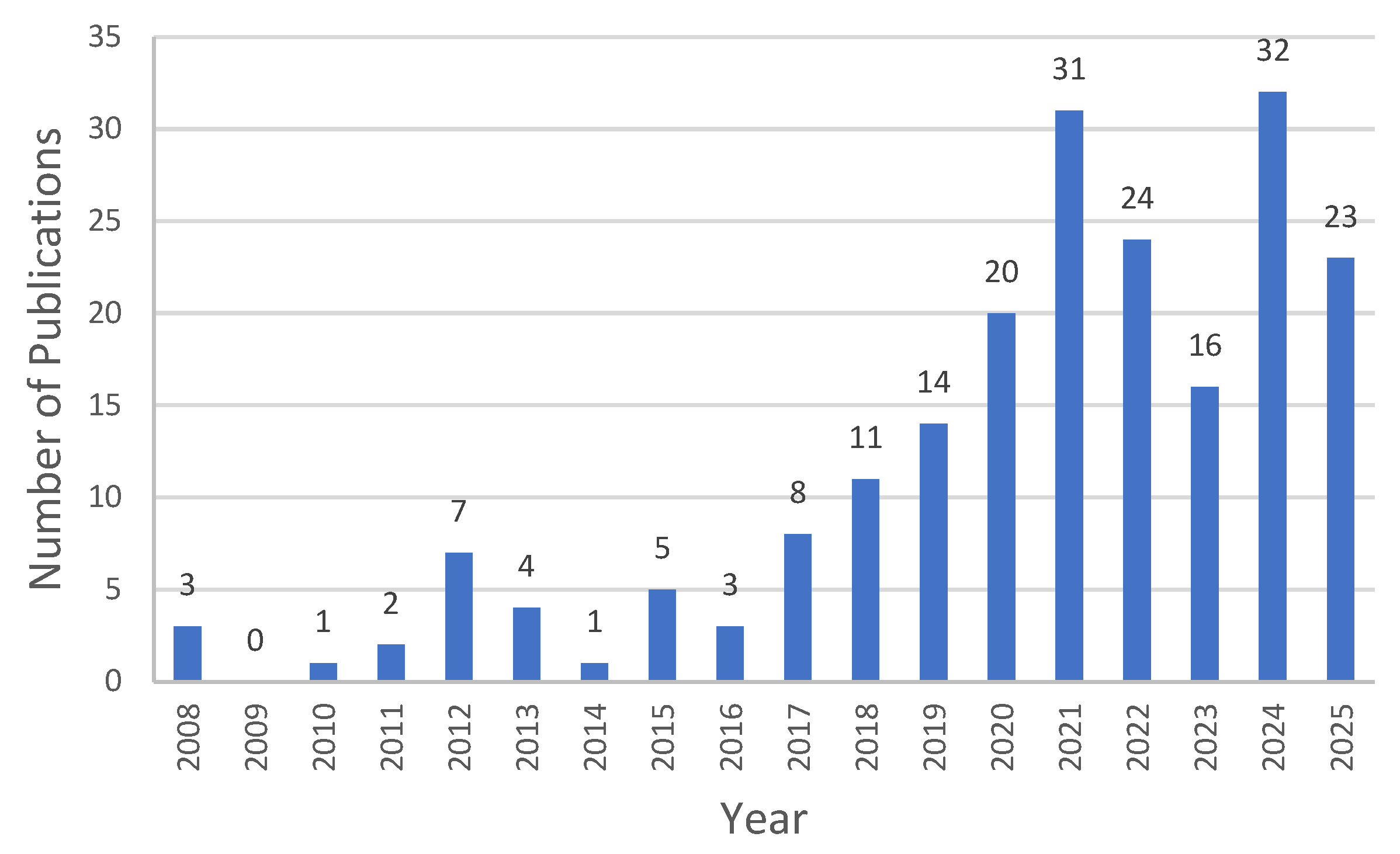
From 2008 to 2010, the number of publications did not reach 10 per year (
Figure 1) and was zero in the year 2009. After 2018, the number of publications increased, which reveals interest in the effect of sustainability on financial performance and the impact of EM.
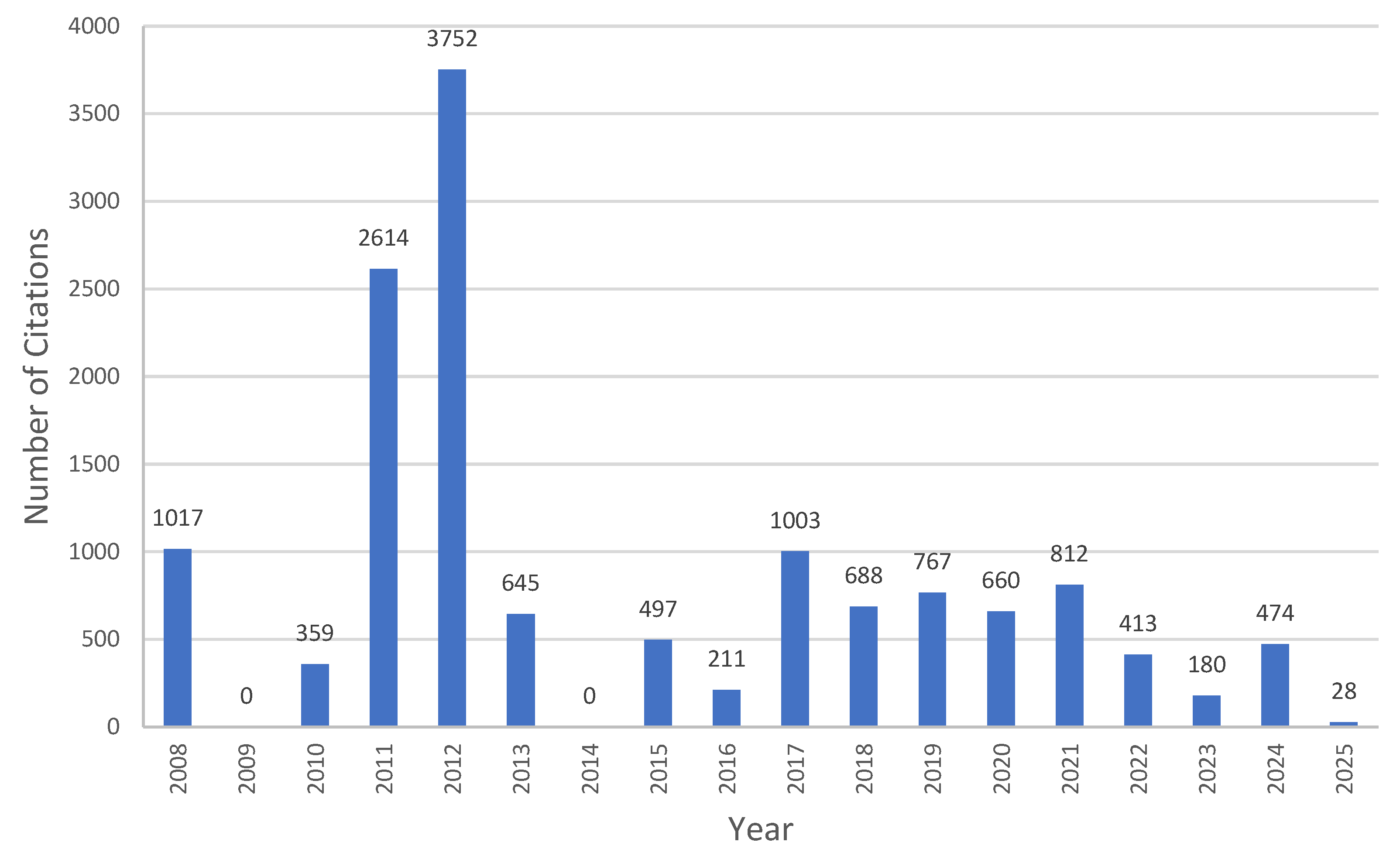
Figure 2 shows that the number of cited references is highly concentrated around two early surges: 2011 (2614 citations) and especially 2012 (3752), which dwarf all other years. After an initial buildup in 2008 (1017) and a modest 2010 uptick (359), citations spike sharply in 2011–2012 and then recede in 2013 (645) and from 2014 to 2016 (0–211), before a secondary crest in 2017 (1003) and a stabilization band in 2018–2021 (668–812). The subsequent decline in 2022 (413) and 2023 (180), followed by a partial rebound in 2024 (474) and a nascent 2025 count (28), is consistent with citation lags affecting recent publications.
The 2011–2012 peaks align with a small set of anchor studies that the literature repeatedly co-cites [
10,
24,
25,
26] which collectively linked ESG/CSR disclosure and governance to earnings quality and market outcomes, becoming dominant co-citation hubs for subsequent research.
3.2. Leading Contributors
Two countries are highlighted among the top five most cited authors (
Table 2), Hong Kong and the United States, with two authors from each country. Also, Korea is represented in this list with one author. The most cited author is Tsang, Albert, with 3664 citations (four papers published), followed by Dhaliwal, Dan S. and Yang, Yong George, each with 3567 citations (two papers published each); Li, Oliver Zhen, with 2387 citations (one paper); and finally Kim, Yongtae, with 1367 citations (three papers).
Table 3 reports the top five journals with the most significant publications.
Sustainability publishes the largest share of papers (19; 9.3%) with 316 citations (average of 17 citations per article).
Corporate Social Responsibility and Environmental Management, with 13 articles (13; 6.3%), has accrued 773 citations (average of 60 per article), and
Journal of Business Ethics, with 12 papers (5.9%), accounts for 2097 citations (average of 175 per article).
Managerial Auditing Journal, with four papers (2.0%), has contributed 151 citations (average of 38 citations per article. Notably,
The Accounting Review, despite only having three papers (1.5%), dominates the citation impact with 4786 citations (average of 1595 per article), reflecting a small set of highly cited articles that anchor the field. Overall, visibility is present in Q1 and Q2 outlets.
The most cited papers (
Table 4) collectively establish an information–risk channel through which credible sustainability disclosure is priced by markets and valued by non-market counterparties, structured in the first group of the top 10 research papers. According to [
10], the initiation of stand-alone CSR reporting lowers firms’ implied cost of equity, consistent with broader investor bases and reduced estimation risk. Ref. [
24] extends this disclosure mechanism to intermediaries, documenting higher analyst coverage, greater forecast accuracy, and lower dispersion when CSR information is provided. Furthermore, ref. [
26] adds the institutional layer (strong rule of law, investor and labor protections, and market development are associated with superior corporate social performance) suggesting that the same disclosure has higher informational content when embedded in rigorous national systems. CSR credibility travels beyond capital markets: firms with stronger CSR win higher-value government procurement contracts, particularly in complex settings, consistent with CSR functioning as a trust and information signal in exchange relationships [
27].
A second group of studies examines whether sustainability engagement aligns with financial reporting quality. Ref. [
25] finds that higher-CSR firms exhibit better earnings quality: lower discretionary accruals, less real activities manipulation, and reduced tax avoidance, especially where external monitoring is weaker. In contrast, ref. [
8] uncovers a positive association between CSR and accrual EM consistent with moral window-dressing in low-monitoring environments. Ref. [
23] reconciles these views by showing heterogeneous links across EM forms: CSR associates with less smoothing and loss avoidance but more earnings aggressiveness, highlighting that how EM is operationalized matters for inference.
Governance and ownership emerge as the conduits that convert sustainability claims into credible reporting and valued outcomes. Ref. [
28] verified that female leadership and foreign ownership are associated with higher CSR performance among Chinese listed firms, while the share of independent directors shows limited association, emphasizing leadership and ownership channels over formal board independence. Ref. [
12] links board diversity to the quality of CSR disclosure: education and tenure diversity improve disclosure quality, whereas age and nationality diversity detract, underscoring that not all forms of diversity are complements to credibility. Focusing on financial industrial aspects, ref. [
29] shows that firm size, competition, legal enforcement, and self-regulation promote CSR, while stronger shareholder rights correlate with lower CSR, and that CSR does not map monotonically into financial performance.
Generally, these papers articulate a conditional chain: institutional quality and ownership/governance structures shape the credibility of sustainability disclosure; credible disclosure improves the information environment and trust, which capital and procurement markets reward; and the earnings management margin determines whether ESG engagement signals integrity or functions as cosmetic rhetoric. The synthesis implies that ESG integrity, the alignment of sustainability claims with high-quality reporting and governance, mediates the ESG–performance relation and explains why markets sometimes reward ESG and at other times discount it.
4. Research Clusters of Bibliographic Coupling
4.1. Intellectual Structure
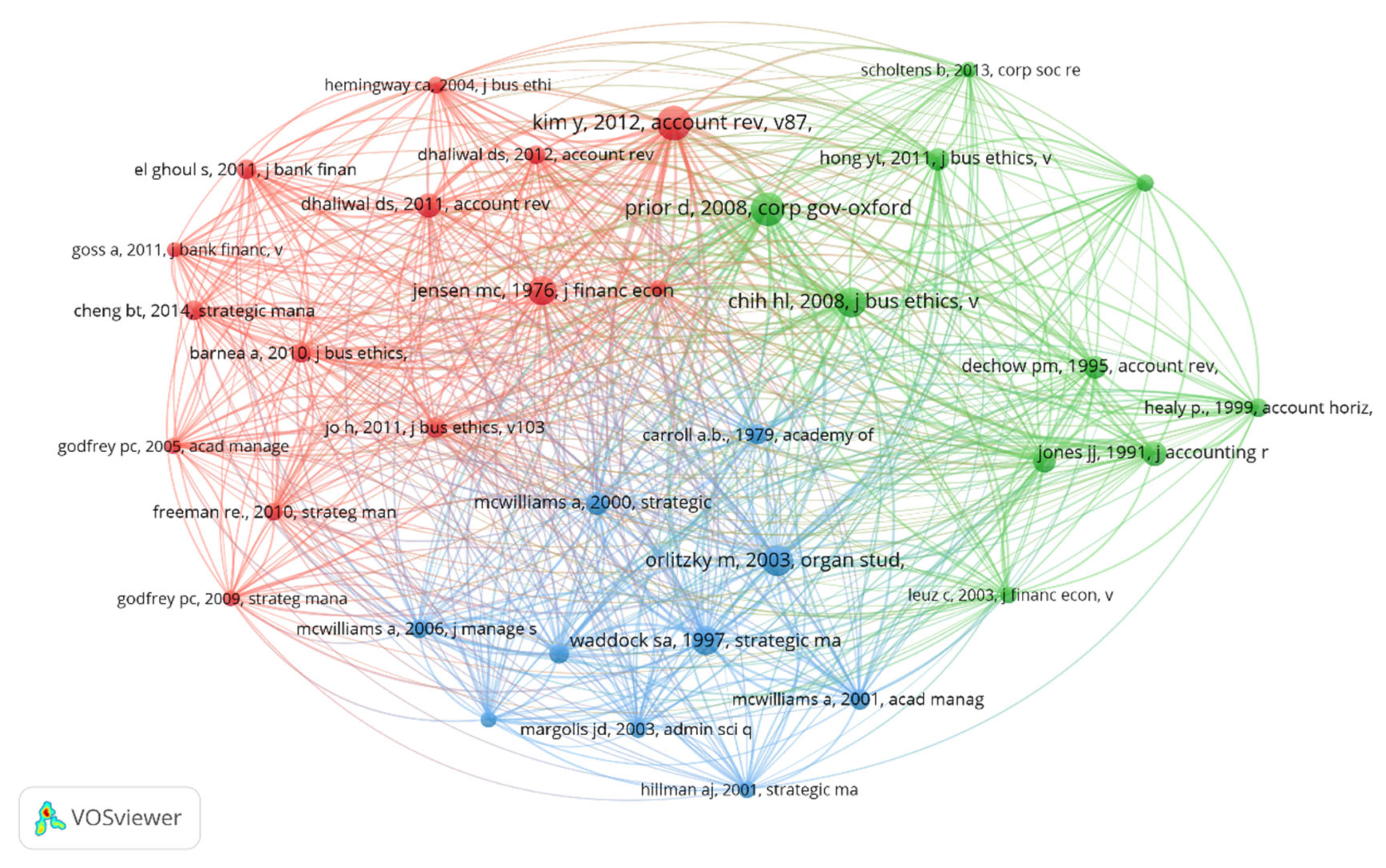
The co-citation network (
Figure 3) reveals three clusters of intellectual structure linking sustainability disclosure to EM and to financial performance. The disclosure cluster (red) consolidates research related to nonfinancial disclosure, particularly CSR/ESG reporting, reduces estimation risk, broadens the investor base, and is reflected in the cost of capital and valuation. Within this cluster, the finance foundations on agency and information risk are repeatedly co-cited with archival evidence on disclosure externalities (analyst coverage, spreads, and portfolio tilts). The cluster’s cohesion indicates that ESG information is framed not as “soft” rhetoric but as analyzable risk-relevant input. Its dependence on disclosure quantity measures and implied-cost proxies exposes design vulnerabilities: results are sensitive to whether disclosure is assured, decision-useful, and material and to whether identification relies on adoption shocks versus selection on observables.
The financial performance cluster (green) supplies the methodological backbone. Co-cited classics on accrual models, smoothing, and loss avoidance anchor empirical practice, while CSR-EM studies populate the applied margin that links sustainability to reporting behavior. This cluster explains why findings in the first cluster propose that ESG that is credible should co-move with higher earnings quality and why this sometimes fails: managers can substitute symbolic CSR for real improvements in reporting. The presence of both “discipline” and “masking” logics within the same cluster points to heterogeneous mechanisms. Effects depend on governance complements (audit committee expertise and board independence), data provenance (third-party ESG ratings versus self-constructed indices), and whether real activities manipulation is explicitly measured. Without careful construct separation, estimates risk attributing to ESG globally what is driven by the G (governance) in ESG.
The stakeholder cluster (blue) provides conceptual and boundary conditions. Classic stakeholder theory, resource-based arguments, and meta-analyses are repeatedly co-cited here, together with work emphasizing national business systems, investor protection, and ownership types. This cluster explains cross-study dispersion: in strong enforcement regimes, ESG commitments are more readily translated into credible disclosure and disciplined reporting; in weaker regimes, the same formal practices have lower informational content and are more vulnerable to window-dressing. Ownership and stakeholder salience operate as external governance, complementing or substituting for internal board mechanisms and thereby shifting the CSR–EM–performance relation.
Taken together, the map suggests a conditional chain. The stakeholder institutional cluster sets the feasible set for corporate conduct; the accounting cluster transforms that environment into verifiable reporting quality; and the disclosure cluster transmits credible sustainability information into prices and financing costs. The high co-citation centrality of studies that directly test CSR–earnings–quality associations signals the field’s integrative core: when ESG is embedded in governance and accompanied by informative, assured disclosure, capital market benefits materialize. Where governance is weak or disclosure lacks assurance and materiality, ESG reverts to symbolic signaling, and associations with cost of capital or valuation attenuate or reverse.
This structure also clarifies an agenda for cumulative research. First, identification needs to move beyond disclosure adoption events toward settings that jointly vary ESG assurance, governance intensity, and institutional enforcement, allowing for tests of complementarity and substitution across clusters. Second, accounting designs should separate accrual-based from real earnings management and isolate the governance component of ESG to avoid construct conflation. Third, performance-based papers should privilege realized financing outcomes (spreads, bond covenants, and seasoned equity costs) over implied measures and tie them to independently validated measures of reporting credibility. By aligning designs with the three clusters and their interfaces, future work can distinguish authentic sustainability performance that improves the information environment from cosmetic initiatives that leave earnings quality, and thus financial performance, unchanged.
4.2. Conceptual Structure
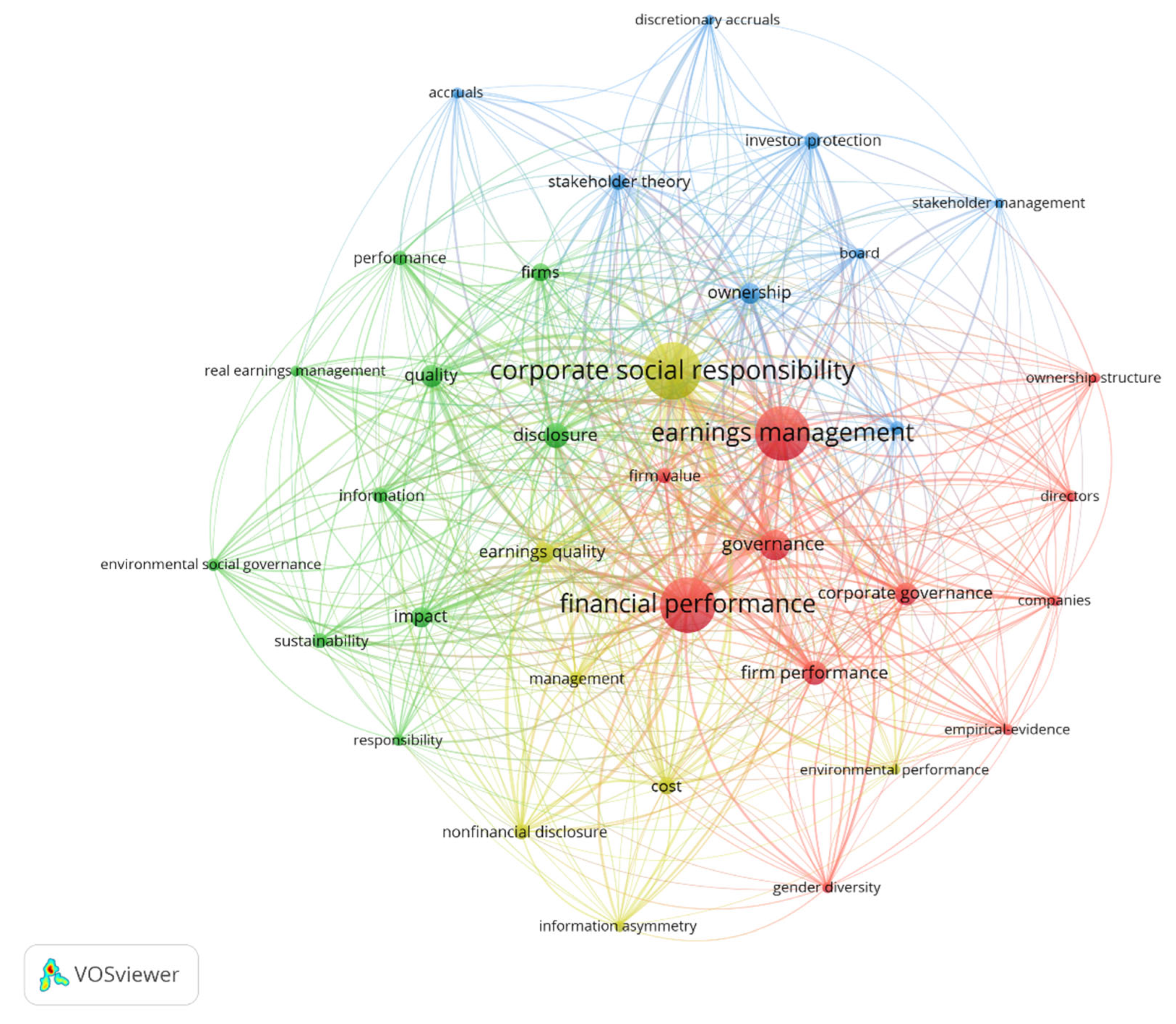
A keyword co-occurrence analysis (
Figure 4) was conducted using
VOSviewer to provide an overall view of the thematic content of the research. This analysis identified four keyword clusters (
Table 5), based on the most frequently used keywords that capture the main topics of the publications, and also enabled examination of the research foci through a visualization map of the 36 most frequent keywords organized into the same four clusters. The co-occurrence network reveals a coherent but multi-centric knowledge structure at the intersection of ESG/CSR, EM, and financial performance. The financial performance cluster (red) anchors the map, strongly linked with keywords earnings management, corporate governance, firm performance, and gender diversity, among others. This suggests that board structures and governance mechanisms are the main conduits through which EM relates to value creation. A second disclosure cluster (green) is visible, connecting keywords quality, information, impact, sustainability, environmental social governance, and real earnings management, which highlights the informational role of ESG/CSR reporting and its interaction with both accrual-based and real EM. A third cluster is related to stakeholders (blue) demonstrating a relation with keywords stakeholder theory, investor protection, ownership, board, and discretionary accruals, which points to the conditioning influence of national-level institutions, ownership, and stakeholder orientation on the ESG-EM link. Finally, a fourth cluster emerge relates with corporate social responsibility (yellow), revealing the connection with keywords earnings quality, nonfinancial disclosure, information asymmetry, and environmental performance, consolidating evidence on credibility, assurance, and the pricing of nonfinancial reporting.
Network centrality is dominated by the bridging hubs financial performance, earnings management, corporate social responsibility, and governance, which exhibit high occurrences and total link strength, connecting otherwise distinct thematic areas. Temporal overlay (average publication year) suggests a recent pivot toward material ESG constructs and diversity: environmental social governance (~2023.7), sustainability (~2022.3), responsibility (~2022.4), and gender diversity (~2022.0) skew newer rather than legacy CSR/EM terms, consistent with the field’s shift from broad CSR narratives to investor-oriented ESG metrics and organizational levers.
4.2.1. Financial Performance (Red Color)
This cluster concentrates the field’s economic mechanism: how governance architectures discipline reporting choices and map into valuation. Its centrality reflects two features. First, governance is the nearest firm-level lever connecting ESG/CSR to the quality of earnings and to performance outcomes (profitability, Tobin’s q, and cost of capital). Second, “board” and “diversity” terms indicate a micro-organization channel (committee expertise, independence, and gender composition) through which ESG commitments become effective rather than symbolic. A limitation is construct breadth: “governance” aggregates heterogeneous practices, such as board structure, audit quality, and ownership oversight. This aggregation invites attenuation bias, where strong signals (e.g., audit committee financial expertise) are averaged with weak ones (e.g., boilerplate codes), possibly explaining mixed performance associations.
4.2.2. Disclosure (Green Color)
The disclosure cluster highlights the information–risk channel: ESG/CSR reporting (and its assurance) reduces estimation risk, improves analyst processing, and constrains both accrual-based and real earnings management (when reliable). The presence of real earnings management here is telling: markets appear to treat narrative ESG signals and operating decisions jointly. Keywords in this cluster also introduce generic tokens (information and impact), blurring whether the literature measures disclosure quality (content/assurance) or mere quantity. Without careful measurement, the cluster risks over-ascribing effects to “disclosure” that actually emanate from governance or institutional enforcement embedded in other clusters.
4.2.3. Stakeholders (Blue Color)
The stakeholder cluster supplies the macro boundary conditions under which the first two mechanisms operate. Strong investor protection, media freedom, and enforcement enhance the disciplining role of ESG/CSR, making opportunistic pairing of CSR with earnings management less sustainable; weak environments generate room for greenwashing practices. Ownership structure straddles internal and external governance: foreign, state and long-horizon owners can complement or substitute board controls, shifting both disclosure credibility and EM incentives. A methodological warning is endogeneity: institutions co-move with unobserved country traits, so cross-country associations can confound true causal moderation with shared background variation.
4.2.4. Corporate Social Responsibility (Yellow Color)
The corporate social responsibility cluster captures the field’s central tension. On the one path, CSR aligns with higher earnings quality via ethical norms and stakeholder monitoring; on the other, CSR is deployed to offset reputational costs of aggressive reporting. The fact that both logics exist in one cluster signals systematic heterogeneity regarding effects linked to credibility (assurance, third-party ratings, and materiality), governance complements (from financial performance cluster), and institutional rigor (stakeholder cluster 3). Critically, studies that proxy CSR with broad scores risk mixing environmental process metrics with governance quality, inflating apparent CSR–quality links that are actually governance-driven.
Globally, the conceptual structure implies a conditional chain. The stakeholder cluster sets the feasible set for corporate conduct; within that set, the financial performance cluster translates incentives into internal controls; the disclosure cluster externalizes credibility to markets; and the corporate social responsibility cluster is the realized outcome along the reliability spectrum. The bridging hubs (earnings management, financial performance, corporate social responsibility, and governance) connect these stages, consistent with a model where authentic ESG requires (i) governance complements and (ii) informative disclosure to generate priced financial benefits. Where either complement is weak, CSR tilts toward signaling and becomes a short-term cover for EM.
Three cross-cutting risks qualify the inference. First, the confusion of constructs: “ESG/CSR” often groups governance with environmental/social policies; separating “G” avoids attributing the effects of governance to “ESG in general.” Second, quality versus volume of disclosure: many studies count reports instead of assessing assurance, alignment with materiality, or usefulness for decision-making, overestimating the impact of disclosure. Third, endogeneity: companies choose ESG, governance, and disclosure together; simple fixed effects mitigate, but do not eliminate, bias.
Overall, the clusters are not competing explanations but sequential complements: institutions shape incentives, governance internalizes them, disclosure communicates credibility, and CSR–earnings quality reflects the net outcome. The field’s next step is to identify when and how this chain breaks and whether targeted governance and assurance interventions restore the link from sustainability claims to priced financial performance.
Researchers should discuss the results and how they can be interpreted from the perspective of previous studies and of the working hypotheses. The findings and their implications should be discussed in the broadest context possible. Future research directions may also be highlighted.
4.3. Towards an ESG Integrity Framework: The Conditional Chain
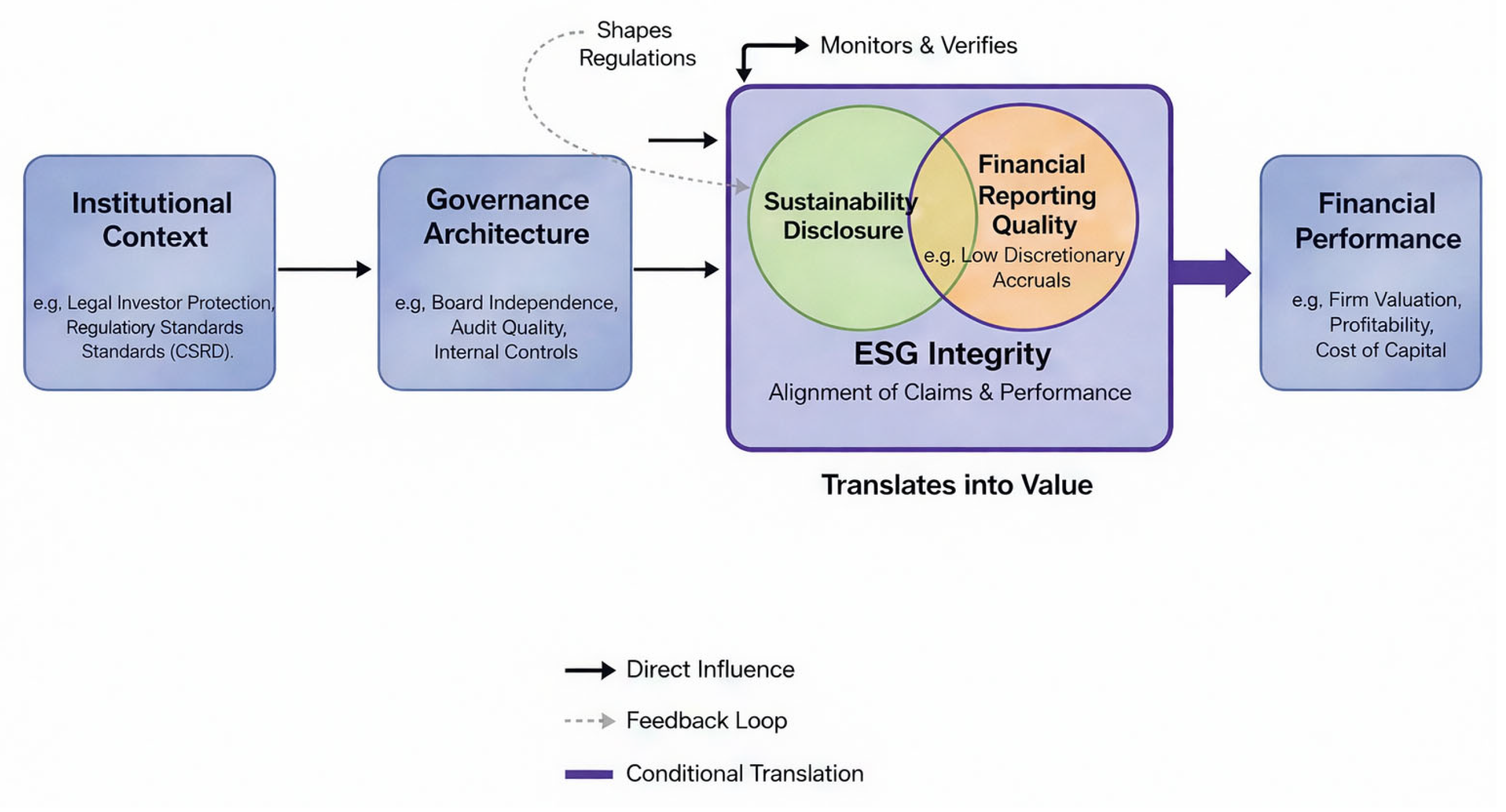
Based on the bibliometric clusters identified, we propose the ESG integrity conditional chain (
Figure 5). This model synthesizes the fragmented literature by illustrating that the transition from ESG disclosure to financial value is not direct. Instead, it is conditioned by a hierarchical flow: national institutions shape the governance architecture, which in turn monitors the alignment between sustainability claims and financial reporting quality. We define this alignment as ESG integrity.
The diagram presents ESG integrity as a conditional mechanism rather than a direct effect. Financial value is not assumed to follow ESG engagement automatically. It is shown as dependent on the surrounding institutional setting. Strong investor protection, enforcement, and reporting standards are positioned as enabling conditions. Under such conditions, ESG signals are more likely to be credible and decision-useful.
Governance architecture is then placed as the firm-level channel through which those institutional pressures operate. Board oversight, audit quality, and internal controls are described as raising monitoring intensity. Managerial discretion is therefore constrained. This is expected to affect both sustainability disclosure and financial reporting. Governance is thus framed as a core conditioning factor, not a peripheral control.
ESG integrity is defined as the overlap between sustainability disclosure and financial reporting quality. Sustainability claims are expected to be consistent with credible disclosure practices. At the same time, earnings management should be limited, as illustrated by lower discretionary accruals. ESG integrity is therefore presented as jointly grounded in nonfinancial disclosure and financial reporting behavior.
The final arrow highlights that translation into financial performance is conditional. Where institutions and governance reinforce monitoring and verification, ESG integrity is more likely to be priced and reflected in valuation, profitability, or cost of capital. Where monitoring is weak, the same ESG activity may lose value relevance. In such settings, ESG disclosure can function as symbolic signaling and may coexist with lower reporting quality. The framework therefore implies a testable expectation: stronger institutions and governance should increase ESG integrity, and higher ESG integrity should strengthen the ESG–performance link.
The development of the “ESG integrity conditional chain” framework is motivated by the structural isolation of the bibliometric clusters observed in
Figure 3. Specifically, the separation between the disclosure cluster (red) and the financial performance cluster (green) is consistent with the interpretation that disclosure alone may be insufficient to explain value effects. The stakeholder cluster (blue) acts as the structural bridge between them. This bridging function is further supported by recent empirical evidence identifying the specific mechanisms of value translation. Ref. [
30] demonstrates that the link between CSR and access to finance is mediated by reduced agency costs and lower information asymmetry, reasoning that stakeholder engagement limits opportunistic behavior. Relatedly, ref. [
31] establishes that CSR is an extension of effective governance, where external monitoring mechanisms, such as analyst following, are essential for solving stakeholder conflicts and enhancing firm value. Furthermore, ref. [
32] highlights the conditional nature of this relationship, showing that CSR functions as reputation capital that preserves valuation and operating profitability specifically during periods of high policy uncertainty. The framework visually formalizes this bibliometric finding: it positions governance not as a parallel variable but as the necessary conduct that connects the distinct clusters of disclosure and performance.
Essentially, the governance architecture within the “ESG integrity” framework extends beyond the formal Board of Directors to include internal governance mechanisms, specifically the monitoring role of the C-suite (e.g., CEO and CFO) and the rigor of internal control systems [
33]. While the board sets the tone, the recent literature emphasizes that specific C-suite characteristics serve as a primary defense against managerial short-termism and “greenwashing”. For instance, ref. [
34] demonstrates that firms led by founder CEOs exhibit significantly lower levels of corporate environmental violations, attributed to their greater psychological ownership and long-term reputational horizons, which insulate the firm from the pressures of immediate financial fulfillment. Furthermore, refs. [
35,
36] establish that high-quality internal governance, manifested through robust internal audit functions, effectively mitigates agency conflicts, constraining managers from engaging in opportunistic resource adjustments and empire-building behavior.
To operationalize this alignment, ref. [
37] provides evidence that linking executive compensation to process-oriented environmental targets (rather than simply outcome-based metrics) significantly improves substantive environmental performance, thereby reducing the probability of symbolic “greenwashing”. Sustainable compensation policies act as a critical governance mechanism that complements board monitoring to enhance financial performance [
38]. Consequently, the quality of internal controls acts as a granular filter, ensuring that ESG data possesses the same rigor as financial data before it reaches the market. These internal mechanisms reinforce the “conditional chain”, guaranteeing that sustainability strategies are not merely symbolic but are operationalized with financial integrity.
5. Research Trends
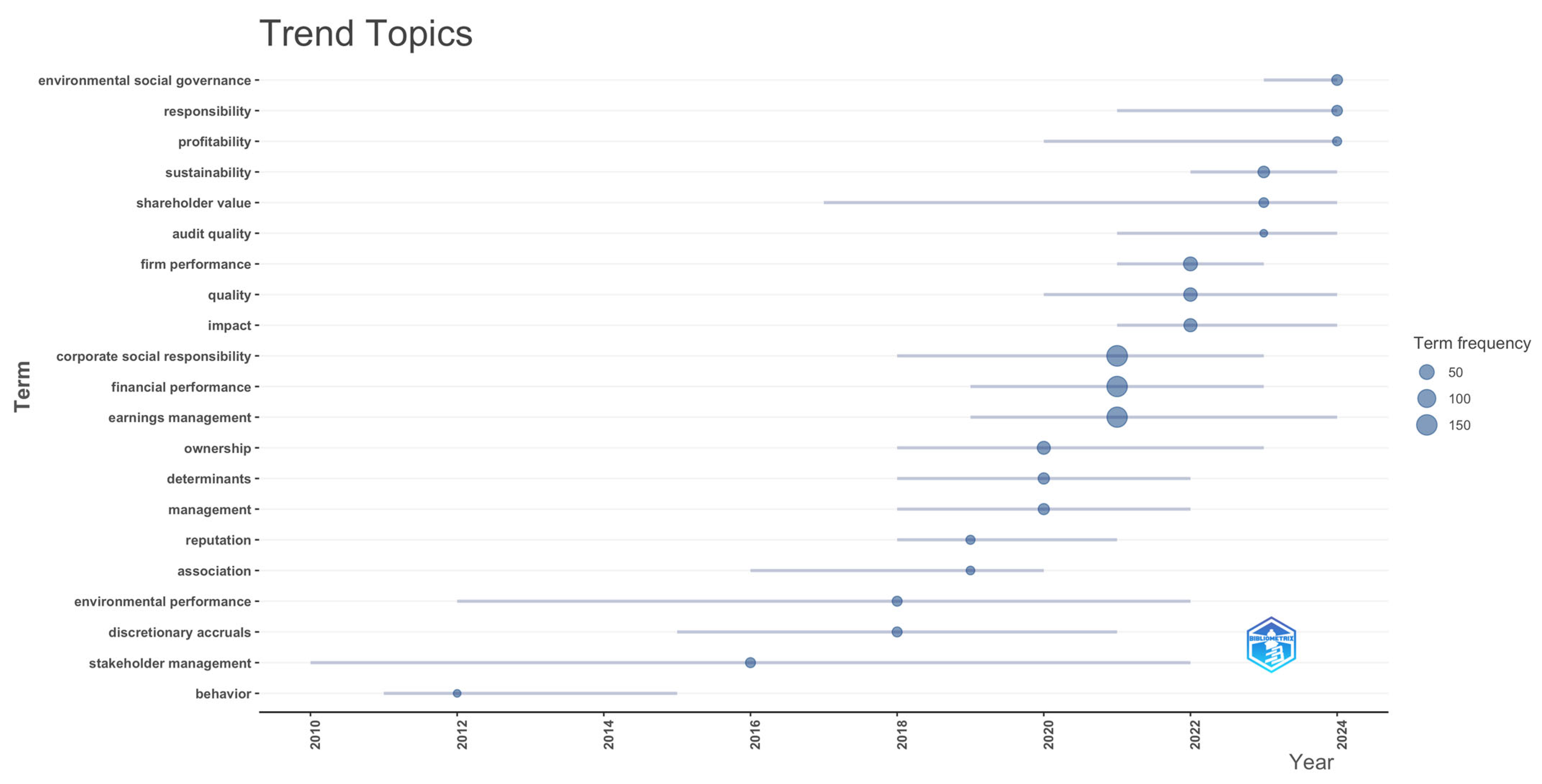
The topic trend map (
Figure 6) suggests a substantive transformation in the research agenda over time. Early research is dominated by notions such as behavior, stakeholder management, discretionary accruals and environmental performance, reflecting a focus on traditional accounting outcomes, managerial opportunism and the initial integration of environmental concerns into performance analysis. As the timeline progresses, the most frequent and persistent terms become corporate social responsibility, financial performance and EM, signaling a consolidation of interest in how socially oriented policies interact with core financial metrics and reporting quality. In the most recent period, the emergence and growth of environmental social governance, responsibility, sustainability, profitability, shareholder value, audit quality, firm performance, quality and impact indicate a shift towards a more comprehensive ESG perspective, in which firm outcomes are assessed not only in terms of short-term financials but also through their broader economic, social and environmental implications and the credibility of the underlying information.
This temporal pattern points to several avenues for future research. First, there is room for more rigorous investigation of the mechanisms linking ESG practices to EM, discretionary accruals and audit quality. Existing evidence is largely correlational; future studies could employ longitudinal designs, quasi-experimental settings (e.g., regulatory shocks) and granular archival data to isolate causal effects and distinguish between real changes in behavior and purely cosmetic adjustments in reporting. Second, the growing salience of profitability, shareholder value and impact suggests the need to articulate integrated performance frameworks that reconcile financial, social and environmental value creation. This includes the development and validation of standardized ESG and environmental performance metrics that are comparable across firms and jurisdictions and that can be embedded in mainstream valuation, risk assessment and capital allocation models. Third, the convergence of terms such as ownership, management, reputation and association with ESG-related concepts highlights the importance of governance structures and behavioral factors. Future research could explore how ownership concentration, board composition, executive incentives and organizational culture condition the relationship between ESG initiatives, earnings quality and firm value, as well as how reputational concerns and stakeholder pressures shape managerial choices. Fourth, the prominence of impact and responsibility points to an underexplored distinction between the real effects of ESG activities (e.g., emissions reduction and social outcomes) and their disclosure effects (e.g., market reactions and legitimacy gains). Studies that explicitly disentangle these dimensions, possibly using multi-method approaches combining archival, survey and qualitative evidence, would substantially enrich the literature.
Finally, the concentration of recent terms in the ESG domain indicates that cross-country, sectoral and regulatory heterogeneity remains a promising field. Comparative analyses across legal systems, enforcement regimes and sustainability reporting standards could clarify whether and when ESG practices translate into higher audit quality, improved financial performance and enhanced shareholder value. Sector-specific research, particularly in environmentally sensitive or innovation-intensive industries, may also reveal non-linear or threshold effects that aggregate studies are unable to detect. Overall, the topic trend map portrays a field in transition from isolated analyses of CSR or environmental performance towards a more integrated, impact-oriented ESG paradigm, for which robust theoretical development and methodologically sophisticated empirical research are still required.
These terminological shifts are not random but reflect the market’s changing reaction to information asymmetry. The early prevalence of terms like “discretionary accruals” and “stakeholder management” aligns with the initial uncertainty where ESG was assessed primarily as an agency cost. The recent wave in terms like “audit quality”, “materiality”, and “impact” (
Figure 6) suggests a structural break: investors no longer question if ESG matters, but whether the reported data is credible. This evolution mirrors the regulatory tightening (e.g., the EU’s CSRD) and indicates that the literature is moving from a “reputation-building” paradigm to a “verification and assurance” paradigm.
6. Conclusions and Future Research
This study provided a comprehensive bibliometric and systematic synthesis of the intellectual landscape around the relationship between ESG performance, EM, and financial performance. By analyzing 205 peer-reviewed articles indexed in Scopus and Web of Science up to October 2025, we map the evolution of a field that has transitioned from emerging ethical debates to a sophisticated, multi-dimensional inquiry into “ESG integrity”.
Our analysis of co-citation and keyword clusters elucidates that the relationship between ESG and financial outcomes is controlled by a complex, multi-layered conditional chain. We identify four primary intellectual pillars that anchor the field: (i) national institutions, which establish the feasible set for corporate conduct through investor protection and the rule of law; (ii) governance structures, particularly board diversity and ownership structures, which affect these institutional incentives; (iii) disclosure quality, which transmits credibility to capital markets and stakeholders; and (iv) earnings quality, which serves as critical test for ESG integrity.
The synthesized evidence suggests that when ESG engagement is embedded in rigorous governance and complemented by informative, assured disclosure, significant capital market benefits materialize, most notably through reduced information asymmetry and lower financing costs. Conversely, in environments characterized by weak external monitoring or internal oversight, ESG initiatives often revert to symbolic signaling, potentially serving as a short-term cover for opportunistic EM. A critical finding of this review is that “governance” (the G in ESG) often acts as the primary conduit for these effects. Consequently, we give notice against concept conflation; future research must be vigilant to avoid attributing results to holistic ESG performance that are fundamentally driven by the quality of the governance structures.
To move the field beyond its current state, the research agenda must transition from broad correlational analysis toward precise causal identification. We propose three research avenues: (i) Methodological rigor and causal inference: future studies should prioritize longitudinal designs and quasi-experimental settings, such as regulatory shocks or the implementation of the Corporate Sustainability Reporting Directive (CSRD), to isolate the real effects of ESG from disclosure-related legitimacy gains. (ii) Granular measurement and materiality: there is a pressure to distinguish between accrual-based and real earnings management in the context of sustainability. Research should shift focus from disclosure volume to the materiality and assurance of nonfinancial information, investigating whether independent ESG audits mitigate the “masking” effect. (iii) Integrated frameworks and ownership dynamics: researchers should develop models that reconcile financial, social, and environmental value creation, particularly by investigating how ownership concentration and executive incentives condition the ESG-EM link. Furthermore, exploring the “Twin Transition” (digital and green) will reveal how technological transparency impacts managerial discretion.
In summary, the transition from legacy CSR narratives to an impact-oriented ESG paradigm requires a fundamental shift toward the credibility of underlying information. This study suggests that alignment between organizational levers and transparent, high-quality communication is more likely to support sustained financial performance than cosmetic reporting adjustments.
6.1. Practical Implications
For regulators and standard setters, the review highlights the need to strengthen assurance, materiality guidance, and interoperability between sustainability and financial reporting. For boards, it emphasizes governance architecture as a credibility filter that determines whether ESG creates value or functions as symbolic signaling. For investors and analysts, it underscores that ESG information is priced through the lens of reporting credibility and earnings quality. For auditors and assurance providers, it identifies independent verification as a mechanism that can reduce ESG masking risk. For researchers, it proposes a structured agenda focused on construct separation, measurement precision, and causal designs.
6.2. Limitations
This study is subject to database constraints (Scopus and WoS), English-language selection, and query sensitivity, which may omit relevant studies outside indexed journals. Bibliometric mapping is inherently descriptive and depends on parameter choices (thresholds, clustering, and normalization), which may affect cluster composition. Finally, the proposed conditional chain is a theoretically grounded synthesis of prior evidence and cannot establish causal effects; subsequent empirical work is required to validate the framework using credible identification strategies.