Article

Source Quantification Analysis and Multi-Dimensional Risk Evaluation of Potentially Toxic Elements in Suburban Topsoil, Southwest China


1
College of International Education, Chengdu University of Technology, Chengdu 610059, China
2
Sichuan Experimental Testing Research Center of Natural Resources, Chengdu 610084, China
3
Faculty of Geosciences and Engineering, Southwest Jiaotong University, Chengdu 611756, China
4
Yibin Research Institute, Southwest Jiaotong University, Yibin 644000, China
5
Faculty of Technology and Metallurgy, University of Belgrade, Karnegijeva 4, 11120 Belgrade, Serbia
6
Sichuan Institute of Comprehensive Geological Survey, Chengdu 610081, China
7
School of Chemical and Environmental Engineering, Sichuan University of Science & Engineering, Zigong 643000, China
8
School of Emergency Management, Xihua University, Chengdu 610039, China
*
Author to whom correspondence should be addressed.
Sustainability 2026, 18(4), 1747; https://doi.org/10.3390/su18041747
Submission received: 6 January 2026 / Revised: 26 January 2026 / Accepted: 31 January 2026 / Published: 9 February 2026
(This article belongs to the Topic Water-Soil Pollution Control and Environmental Management)

Abstract

Potentially toxic element (PTE) contamination in topsoil poses non-negligible risks to both the ecological environment and public safety. This study integrated multiple methods to conduct geochemical analyses and assess the presence of PTEs in topsoils of an urban area. The findings show that the average concentrations of PTEs were as follows: 8.21 mg/kg for As, 0.23 mg/kg for Cd, 92.26 mg/kg for Cr, 0.22 mg/kg for Hg, 35.99 mg/kg for Pb, 37.83 mg/kg for Cu, 42.85 mg/kg for Ni, and 111.99 mg/kg for Zn. Zn exhibited the highest mean concentration among PTEs in the topsoil, followed by Cr and Ni, while all PTEs exceeded their background levels. Utilizing the positive matrix factorization (PMF) model, four distinct sources of PTEs were quantitatively determined: F1, representing industrial emissions, had the highest contribution rate (30.73%) and mainly provided Cr and Ni; F2, representing agricultural activities, ranked second with a contribution rate of 23.31%. The Nemerow geo-accumulation index (NI) varied between 0.26 and 2.07 (mean = 0.73), with over 88% of the samples classified as slightly polluted; the potential ecological risk index (PERI) was in the range of 119.98–511.07 (mean = 158.95), with more than 95% classified within the low-to-moderate ecological risk range; and the soil environmental capacity index (PI) ranged from 0.47 to 1.40, with an average value of 1.0. These results suggest that the pollution level of and potential ecological risk posed by PTEs are low overall, reflecting a robust soil carrying capacity and minimal adverse effects on the ecosystem. In addition, the hazards of PTEs to public health were quantified based on the human health risk assessment framework. The potential health risks posed by PTEs fell into the acceptable range for both children and adults. Notably, elevated risk values were predominantly observed in the southern portion of the study area, with arsenic (As) being the principal contributor.

1. Introduction

Topsoil constitutes a fundamental element of the Earth’s surface system and is essential for sustaining ecological stability, promoting agricultural development, and ensuring environmental security [1,2]. Since the Anthropocene, extensive human activities have exerted profound impacts on the topsoil environment, and the input of numerous pollutants has drastically altered the geochemical characteristics of topsoil. Among various pollutants, potentially toxic elements (PTEs) have garnered considerable attention owing to their pronounced toxicity, which presents substantial risks to both ecosystems and public health [3]. Particularly in urban areas with dense populations, the potential pollution of PTEs in topsoil has brought enormous challenges to social sustainable development [4,5]. Therefore, conducting systematic geochemical analysis and risk assessment of soil PTEs is an urgent requirement for promoting the green development of society.
Source apportionment of soil PTEs is a prerequisite for pollution prevention and risk management. Traditional source apportionment methods are mainly qualitative, relying on basic surveys and simple analytical tools, and are characterized by ease of operation and low cost [6,7]. However, these methods cannot quantify the contribution ratios of pollution sources, are easily affected by subjective experience, and have weak ability to distinguish complex multi-source mixed pollution [8,9,10]. They are only applicable to areas with single pollution sources and low spatial heterogeneity. Currently, source apportionment of soil PTEs has entered the quantitative analysis stage, and technical methods centered on receptor models have become mainstream, such as the Positive Matrix Factorization (PMF) model, Absolute Principal Component Scores-Multiple Linear Regression (APCS-MLR) model, and UNMIX model [11,12,13]. Among them, PMF model does not rely on prior source profiles. It quantifies source contributions based on matrix factorization and least squares iterative optimization, and is believed to have superior performance and the most extensive application [14,15,16]. Moreover, receptor models have wide applicability, can be used in multi-source mixed pollution areas, and support the combination of multiple technologies. When integrated with stable isotope tracing, machine learning algorithms, etc., they further improve the comprehensiveness and reliability of analytical results [17,18].
Moreover, detailed PTE assessment offers a scientific foundation and theoretical framework for sustainable development [19,20]. Quantitative indicators such as the geo-accumulation index, enrichment factor, and pollution load index enable the measurement of heavy metal enrichment and accumulation within soil matrices, facilitating the identification of potential anomalous zones and contamination [21,22]. The potential ecological risk index, introduced by Hakanson, integrates multiple factors including heavy metal concentration, toxicity, and synergistic interactions among elements, thereby providing a holistic assessment of the ecological risks posed by soil heavy metal contamination [23,24,25]. Additionally, the soil environmental capacity index assesses the soil’s tolerance threshold for PTEs, offering critical insights for land use planning and management strategies [26,27]. Furthermore, the human health risk assessment framework developed by the USEPA serves as an internationally recognized guideline for evaluating the public health risks associated with soil PTEs [28,29,30]. Collectively, this suite of assessment indices encompasses pollution severity, ecological risk, environmental carrying capacity, and human health implications, thereby enabling a thorough appraisal of the environmental impacts and public health hazards attributable to PTEs in soil.
The research site is situated within the Chengdu Plain. Its superior physical geographical conditions have promoted the social development of the region, thereby attracting a large population. PTEs released from the advanced industrial and agricultural production practices in this area have posed enormous challenges to the topsoil environment and potential threats to ecosystems and public safety. Therefore, this study conducts geochemical analysis of PTEs in topsoil samples, aiming to: (1) elucidate the concentration levels and spatial distribution patterns of PTEs; (2) quantitatively apportion the sources and respective contributions of PTEs present in the topsoil; and (3) conduct a comprehensive evaluation of the PTEs in the topsoil, encompassing pollution intensity, ecological risk, and potential human health hazards. The innovations of this study lie in the comprehensive adoption of the geological accumulation index (NI), potential ecological risk index (PERI), soil environmental capacity index (PI), and the USEPA health risk framework, which fully covers the four core dimensions of potentially toxic elements (PTEs): pollution levels, ecological impacts, environmental carrying capacity, and human health hazards, resulting in a more systematic assessment system. The integration of spatial information with the PMF receptor model improves the reliability of source apportionment and risk assessment and quantitatively identifies the key contributing elements of different sources. The research findings are anticipated to provide a scientific basis for local land planning and management, as well as for the prevention, control, and remediation of pollution, thus supporting the region’s advancement toward green and sustainable development.

2. Materials and Methods

2.1. Study Area

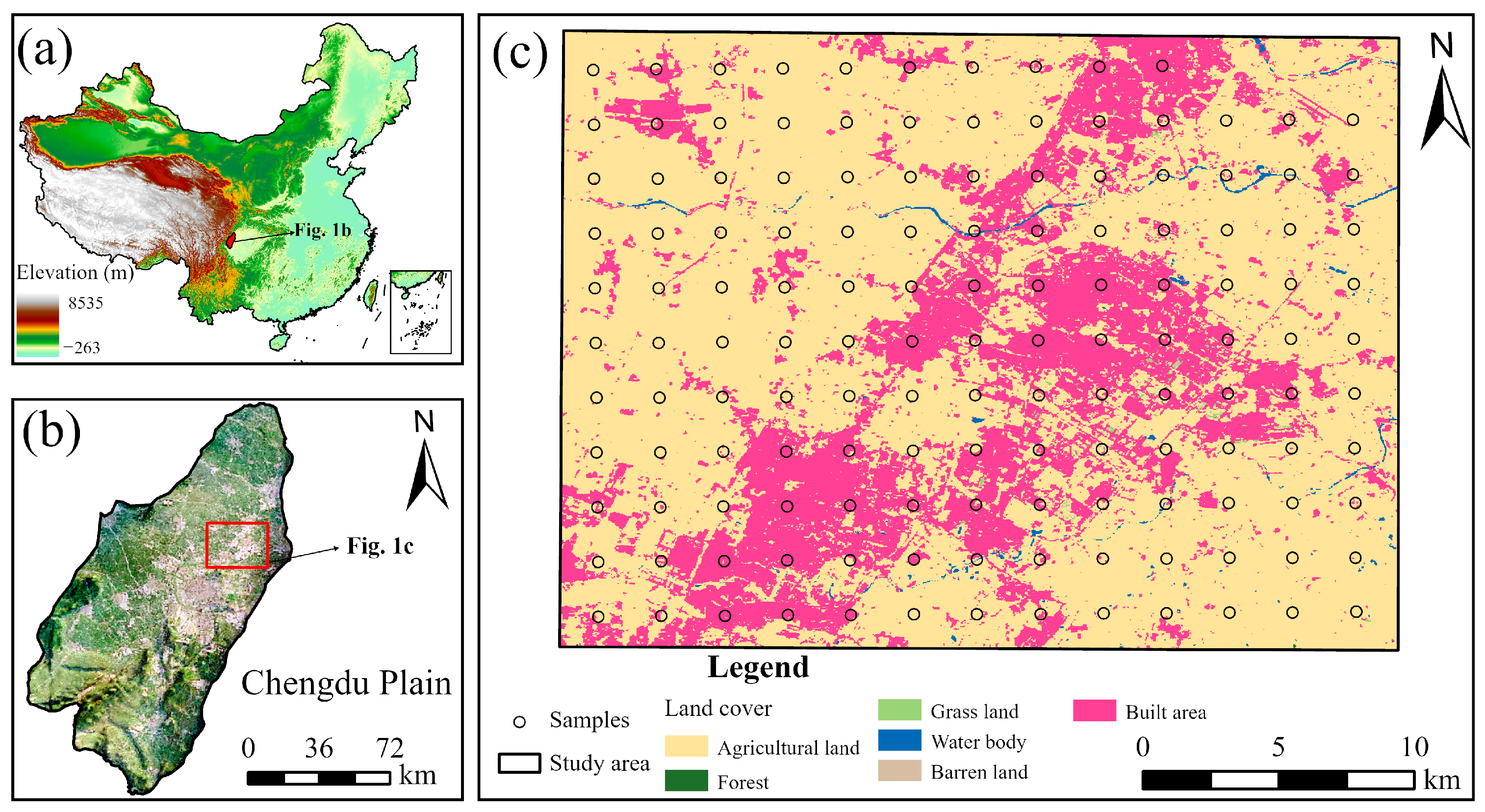
The study area is located in the Chengdu Plain in southwestern China (Figure 1a,b). The region experiences a subtropical monsoon climate, characterized by an average annual temperature of 15.8 °C and an average yearly precipitation of roughly 918.2 mm. The topography is predominantly flat, comprising primarily plains and terraces, with a mean elevation of approximately 600 m above sea level. The superior geographical conditions have made this region an important grain-producing and industrial agglomeration area. Located in the suburbs of Chengdu, the study area possesses a well-established transportation infrastructure and is among the regions in China characterized by a high population density, showing extensive traces of human activities. Except for the central part and the southwest corner, most of the land cover is vast agricultural land (Figure 1c).
The Chengdu Plain is typified by a fault-bounded basin encircled by mountainous terrain. Its basement is composed of Cretaceous and Tertiary clastic rocks (red beds), whereas the predominant deposits within the plain consist of unconsolidated Quaternary sediments. The principal soil classifications in this region are paddy soils and purple soils. The formed soils include not only zonal yellow soil and yellow-brown soil, but also azonal alluvial soil and paddy soil, as well as lithomorphic soils such as limestone soil and purple soil.

2.2. Soil Sampling and Experiment

In this research, a total of 140 topsoil samples were collected in strict accordance with the geochemical sample collection standards (DZ/T 0295—2016) [31]. During the sampling process, clean polyethylene sealed bags were used to collect surface sediments at a depth of 0–20 cm. Prior to analysis, extraneous materials such as gravel, shells, and organic residues from plants and animals were meticulously removed from each sample. Each sample was maintained at a minimum weight of 1.0 kg. To prevent contamination and degradation, the samples were stored under ventilated, dry, and light-protected conditions. Subsequently, the samples were sent to the laboratory for testing within one week.
The tests were carried out at the Sichuan Natural Resources Experimental Testing and Research Center of the Sichuan Geological Survey Research Institute. Before the test, each sample underwent a digestion process lasting 30 min utilizing hydrofluoric acid (HF) with a density of 1.16 g/mL, hydrochloric acid (HCl) with a density of 1.19 g/mL, and nitric acid (HNO3) with a density of 1.42 g/mL. The contents of As, Cd, Cr, Pb, Ni, Cu, and Zn were measured through the ICP-MS (PlasmaMS 300, NCS, Beijing, China), while Hg levels were measured via the AFS (AFS-8500, Haiguang, Beijing, China). To guarantee the precision and dependability of the experimental outcomes, a Chinese standard substance was applied to validate the metal analysis, with a relative standard deviation (RSD) below 5%. Quality control procedures encompassed the incorporation of blank and duplicate samples throughout the test. All blank sample results were lower than the detection limits, while the RSD for parallel samples remained under 10%. Moreover, the sample recovery rates ranged from 92% to 104% across all tests.

2.3. Risk Evaluation Indices

2.3.1. Geo-Accumulation Index

The geo-accumulation index (Igeo) serves as a critical metric for evaluating the extent of enrichment or accumulation of a specific element in the soil environment [32]. It can reflect the accumulation characteristics of elements during geological history and identify pollution through abnormal accumulation. In addition, the overall heavy metal enrichment and pollution status can be understood by integrating the geo-accumulation indices of multiple elements by the Nemerow method [33]. The computational procedures for these two indices are presented below (Equation (1)):
logo = log 2 ( C i K × B i ) NI = I g e o a v e 2 + I g e o m a x 2 2
where Ci represents the observed value of HM i within the sediments; and Bi denotes the background level of this area. K is the correction factor adopted to account for variations in background values that may arise from differences in rock types, and it is usually set to 1.5. In addition, NI refers to the Nemerow comprehensive accumulation index, while Igeoave and Igeomax represent the mean and max value of the Igeo of all PTEs in a single sample, respectively. The classification of Igeo and NI is introduced in Table S1.

2.3.2. Potential Ecological Risk Index

The potential ecological risk index (PERI) is a quantitative tool for evaluating the potential hazards of pollutants in the environment to ecosystems, and it is extensively utilized in the ecological risk evaluation of contamination in soils and river sediments [34]. The calculation process of PERI is as shown in Equation (2), and its classification is listed in Table S1.
E r i = T i × C i B i PERI = i = 1 n E r i
where Eri refers to the potential ecological risk factor of a pollutant; Ci, Bi, and Ti represent the measured value, background value, and toxic-response factor of the pollutant, respectively.

2.3.3. Soil Environmental Capacity Index

Soil environmental capacity index is based on the static environmental capacity approach. It assesses the capacity status of pollutants in the soil through the ratio of the existing environmental capacity (Qe) and the total static environmental capacity (Qb). This index is typically categorized into the single-factor capacity index (Pi) and the multi-factor comprehensive capacity index (PI) [35]. The classification of soil pollutant capacity is divided into five levels, as outlined in Table S2. The computational procedures for these indices are presented in Equations (3) and (4).
P i = Q e Q b PI = 1 n × i = 1 n P i
Q b = 10 6 × M × C i c C i b Q e = 10 6 × M × C i c C i b C i p = 10 6 × M × C i c C i o
where M refers to the weight of the plow layer sediments, which is taken as 2.25 × 10⁶ kg/hm2; Cic denotes the environmental quality standard level of pollutant i (mg/kg), which adopts the screening value specified in the Soil environment quality-Risk control standard for soil contamination of agricultural land (GB 15618-2018) [36]; Cib and Cip represent the background value and observed value of pollutant i in this area (mg/kg).

2.4. Positive Matrix Factorization Model

The positive matrix factorization (PMF) receptor model, introduced by Paatero and Tapper [37], is a source apportionment technique that enables the accurate quantification of pollutant sources and their respective contributions by employing matrix factorization combined with iterative optimization. Detailed principles and introduction of the PMF model are presented in the Supplementary Materials. Except for data preparation, the operation and debugging processes of the model were all carried out in the integrated software EPA PMF 5.0.

2.5. Public Health Risk Assessment Framework

A public health risk assessment was performed utilizing the human health risk assessment framework established by the United States Environmental Protection Agency [38]. This approach enables the quantification of potential non-carcinogenic and carcinogenic health risks that pollutants may pose to populations via various exposure pathways. Detailed introductions and calculation processes of this assessment framework are presented in the Supplementary Materials, while the introduction and reference values of the exposure parameters are listed in Tables S3 and S4.

2.6. Data Process

Soil data processing and statistical analysis, including principal component analysis (PCA), were conducted utilizing IBM SPSS Statistics 25; spatial interpolation was conducted via ArcGIS Pro 3.0; the calculation and plotting of various indices were carried out based on Python 3.12 and Origin 2024.

3. Results and Discussion

3.1. Statistical Characteristics and Spatial Patterns

Table 1 presents the statistical analysis of heavy metal contents in the topsoil. The pH values of soil vary between 5.65 and 8.07, with both the mean and median recorded at 6.79, suggesting that the topsoil within the area is characterized by a slightly acidic nature. The concentration ranges for the eight PTEs are as follows: 4.12–21.20 for As, 0.14–0.47 for Cd, 57.00–154.05 for Cr, 0.04–0.96 for Hg, 19.90–101.00 for Pb, 21.20–87.10 for Cu, 19.70–64.90 for Ni, and 50.50–253.00 for Zn. Their mean values are ranked in descending order as follows: Zn (111.99) > Cr (92.26) > Ni (42.85) > Cu (37.83) > Pb (35.99) > As (8.21) > Cd (0.23) > Hg (0.22). The coefficient of variation (CV) is used to measure the degree of dispersion of heavy metal concentration data. Hg has the highest CV of 0.59, belonging to the category of high variability, indicating that the concentration of this component is highly likely controlled by anthropogenic factors. In contrast, Cr and Ni have the lowest CV (0.17), indicating that soil concentrations remain comparatively stable and are minimally influenced by external perturbations. This can also be verified by skewness (S) and kurtosis (K). With the exception of Cr and Ni, all PTEs have skewness values exceeding 1 and kurtosis values greater than 3, indicating that their concentration data deviate from a normal distribution. Taking the background values (BVs) of topsoil in Chengdu as the reference standard [39], all elements have exceeded the benchmark. Among these elements, Cd, Cr, and Ni surpass the background concentration levels in over 70% of the analyzed samples. There are two main reasons behind this phenomenon: First, the samples in this study are surface soils, which are more significantly affected by anthropogenic factors, whereas the background value data were calculated based on subsoils, whose component contents are generally lower than those in surface soils. Second, the study area is located in a metropolitan area with an extremely high population density, and extensive and intense human activities have further exacerbated the accumulation of PTEs in surface soils. In addition, the average component contents are also subject to interference from extreme values.
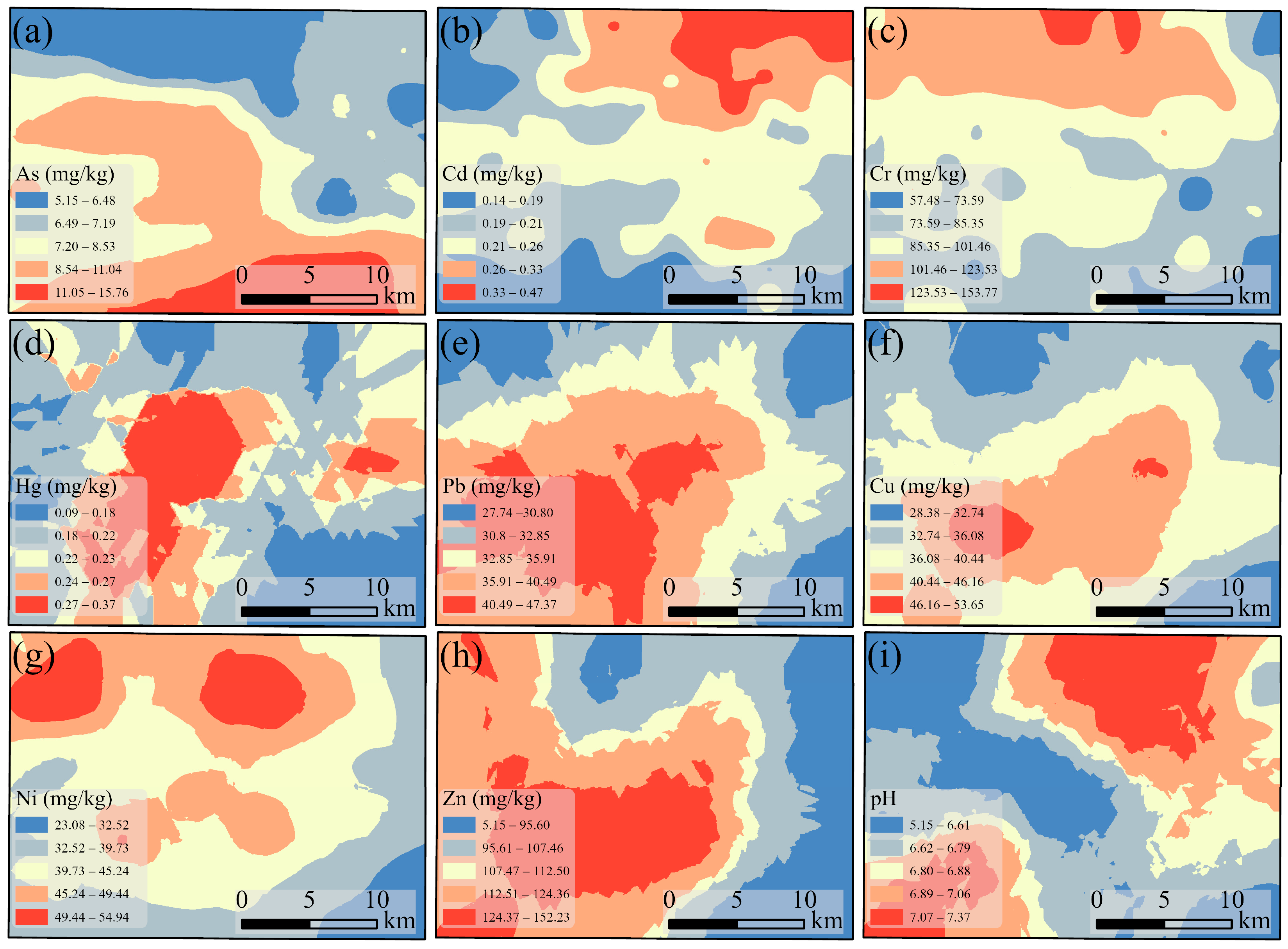
Figure 2 illustrates the spatial distribution of HM concentrations in the topsoil within the study area. Elevated levels of cadmium (Cd), chromium (Cr), and nickel (Ni) were detected predominantly in the northern region, whereas arsenic (As) concentrations exhibited a progressive increase moving from the northern to the southern part of the area. Additionally, Elevated concentrations of other PTEs were predominantly observed in the central and southwestern regions. These regions are mainly construction areas with intense human activities, suggesting that the distribution of these PTEs may be controlled by anthropogenic factors.

3.2. Comprehensive Evaluation of Soil PTEs

3.2.1. Pollution Levels Analysis

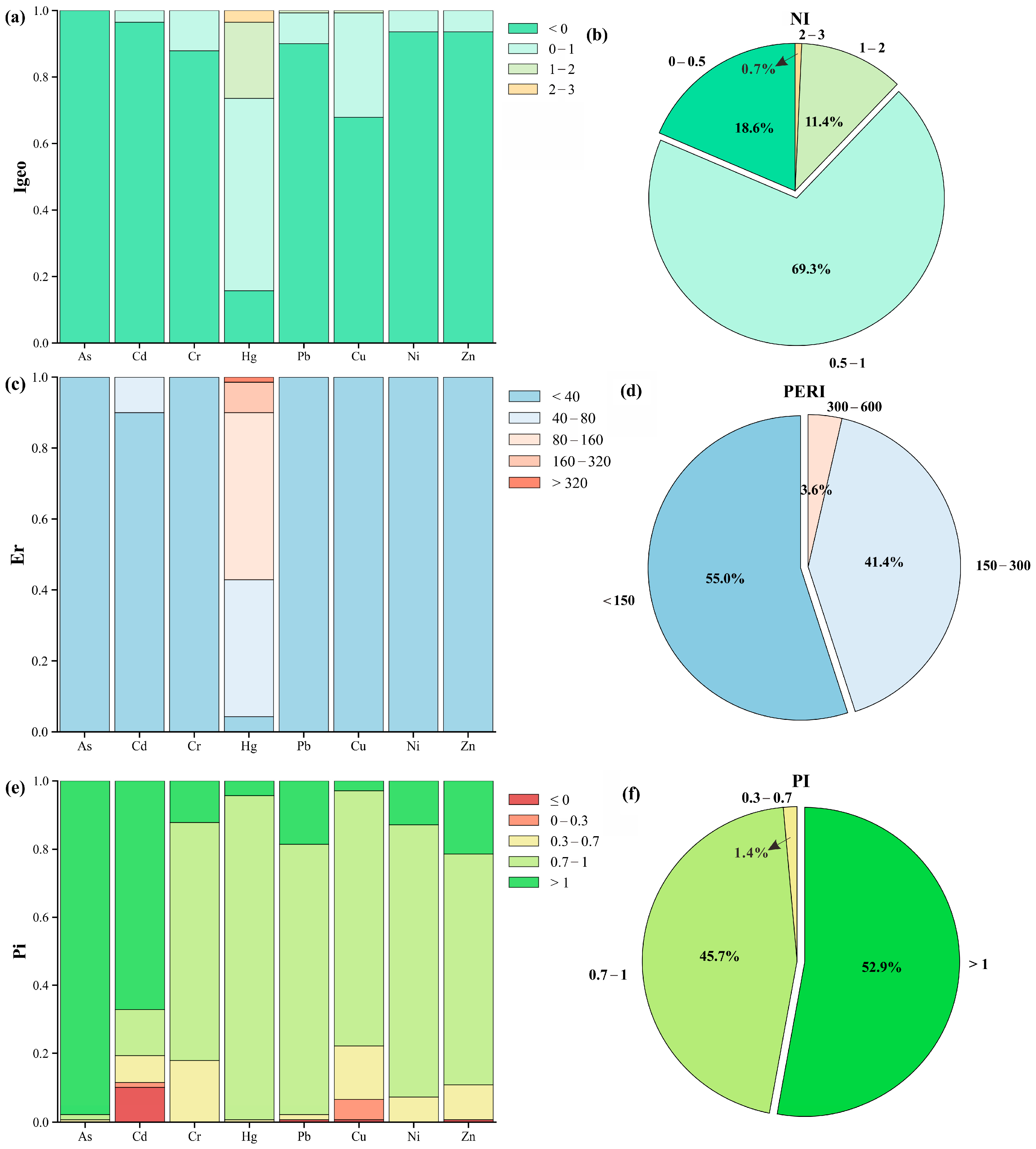
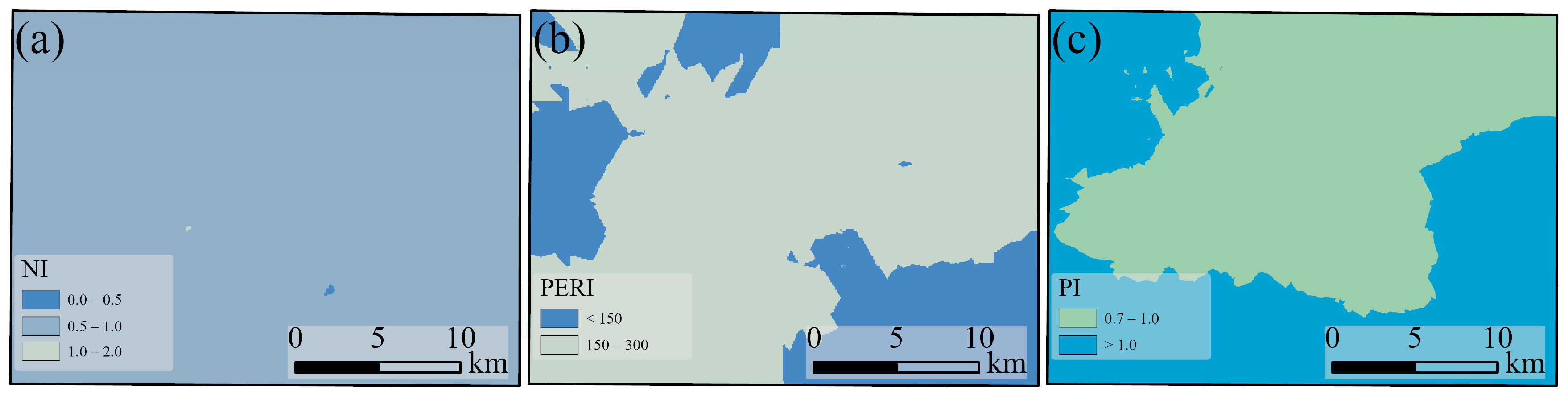
The geo-accumulation index (Igeo) was employed to evaluate the contamination levels of PTEs within topsoils. The findings are presented in Figure 3a,b. Except for Hg, the geo-accumulation index values of all other PTEs are below 2.0, and even below 1. Their average geo-accumulation index values are ranked in the order: Hg (0.58) > Cu (−0.10) > Cr (−0.33) > Pb (−0.35) > Ni (−0.35) > Zn (−0.38) > Cd (−0.70) > As (−1.63), with only Hg exceeding 0. This indicates that the degree of abnormal enrichment or accumulation of PTEs in the topsoil is low, and only Hg in some of the samples reaches a moderate pollution level. In addition, the value of Nemerow geo-accumulation index (NI) for the samples varies between 0.26 and 2.07, with a mean value of 0.73. Nearly 88% of the samples have an NI value below 1.0, indicating an overall slight pollution status of PTEs in the topsoil. Meanwhile, the NI values are relatively uniformly distributed in the area, with isolated instances of elevated values occurring in the central part (Figure 4a), which are the main urban construction regions. The abnormal accumulation in these areas might be related to anthropogenic factors.

3.2.2. Ecological Risk Evaluation

Given the pollution of PTEs in the topsoil, this study adopted the potential ecological risk index to assess their potential threats to the ecosystem. As shown in Figure 3c,d, the ecological risk factors of all other PTEs are below 40 except for Cd and Hg, and their threats to the ecological system are negligible. The average risk factor of Cd is 28.5, with only 10% of the samples belonging to the slight risk category (40–80). In contrast, the risk factor of Hg ranges from 19.05 to 457.14, with a mean value of 102.64. More than 50% of the samples have an Hg risk factor exceeding 160, which falls into the category of high or severe risk. The difference in risk factors between these two metals and other PTEs can be attributed to their assigned maximum toxicity coefficients (Cd = 30 and Hg = 40). In addition, the potential ecological risk index (PERI), which measures the overall risk, ranges from 119.98 to 511.07, with an average of 158.95. More than 95% of the samples have a PERI value below 300, indicating that the general potential ecological risk level of PTEs in the topsoil is between low and moderate risk. Furthermore, elevated PERI values are identified in the center and southwestern areas (Figure 4b).

3.2.3. Environmental Capacity Assessment

The static soil environmental capacity was employed to evaluate the carrying capacity of topsoil for PTEs within the study region. As depicted in Figure 3e,f, the mean values of the environmental capacity index (Pi) for the eight PTEs are ranked in the order: As (1.53) > Cd (1.15) > Hg (0.94) > Pb (0.92) > Zn (0.88) > Ni (0.87) > Cr (0.86) > Cu (0.76). Among these PTEs, the Pi value of As exceeds 1 in 97.86% of the samples, indicating that the soil medium still has a high carrying capacity for As. In contrast, the other PTEs all show a significant decrease in environmental capacity, especially Cd. Although the Pi value of Cd exceeds 1 in 67.14% of the samples, the concentration of Cd surpasses the environmental carrying capacity in only 10% of the samples. Additionally, the Cu content in 5.71% of the samples also approaches the carrying limit. Meanwhile, the overall environmental capacity index (PI) ranges from 0.47 to 1.40, with an average of 1.00. This suggests that overall, the soil environment within the area maintains a substantial carrying capacity to accommodate these eight PTEs, and the contamination level remains minimal. However, the Pi values of individual elements indicate a decline in soil carrying capacity in local areas, especially the potential pollution of Cd and Cu. The spatial pattern of PI values shows that the soil environmental capacity is overloaded in the primary urban areas of the study area (Figure 4c), indicating potential pollution.

3.3. Source Analysis of PTEs in the Topsoil

3.3.1. Multivariate Statistical Analysis

Multivariate statistical analysis serves as a methodological approach to examine the interdependencies and inherent statistical regularities among multiple indicators [40,41]. These analytical approaches can be categorized into descriptive techniques and inferential techniques. The former mainly extracts important information from raw data to study the main characteristics of the system, including the principal component analysis (PCA), while the latter focuses on researching correlations, causal relationships, etc., among variables, and quantifies the understanding of relationships between variables by establishing models, such as correlation analysis (CA).
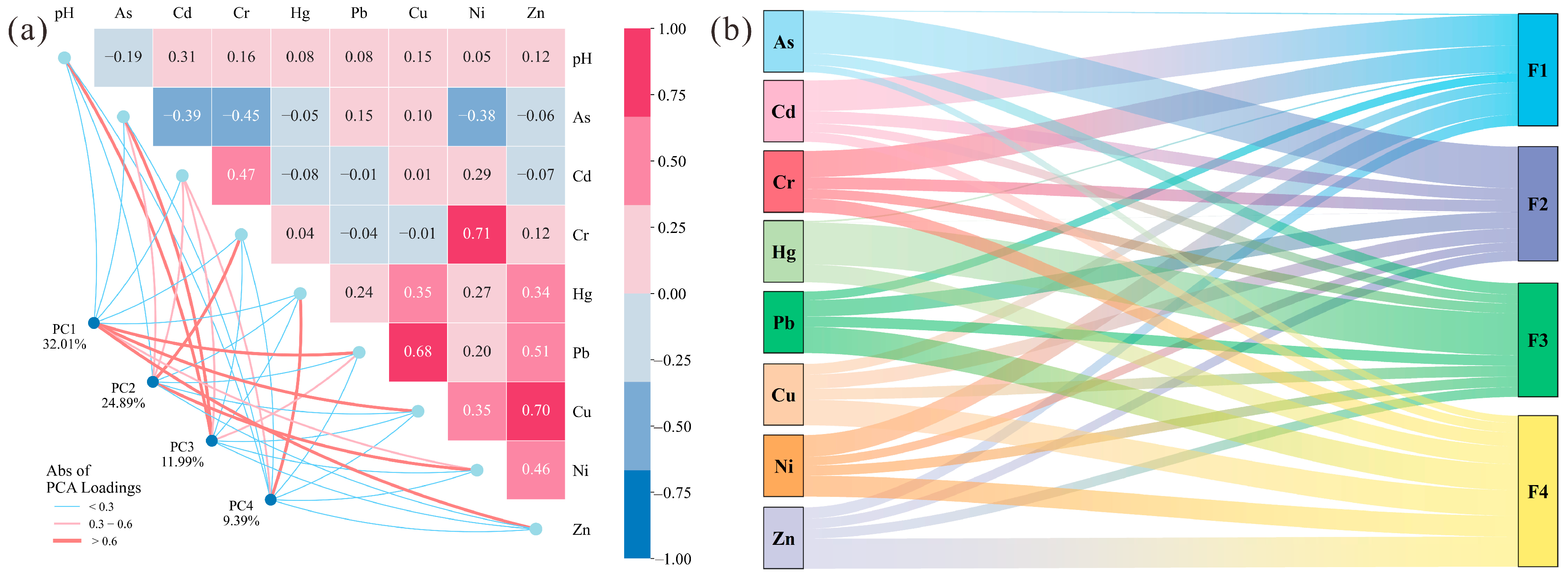
The dataset comprising HM contents in the topsoil of the area satisfied the requirements for multivariate statistical analysis, as evidenced by the Kaiser–Meyer–Olkin (KMO) measure of sampling adequacy (KMO statistics = 0.68) and the significance of Bartlett’s test of sphericity (p < 0.05). Therefore, the Pearson correlation coefficient was employed to quantify the inherent correlations among various indicators, and the results are shown in Figure 5a. High positive correlations were identified between Cr and Ni, Cu and Pb, and Zn and Cu, with correlation coefficients of 0.71, 0.68, and 0.70, respectively. This suggests that they mainly originate from the same sources or processes. In addition, As shows a negative correlation with the majority of other PTEs, suggesting that it may originate from distinct sources. PCA extracted four principal components (PC1-PC4), which cumulatively explained 78.28% of the variance in the samples. PC1 accounted for the highest proportion (32.01%) with factor loadings exceeding 0.6 for Cu, Pb, and Zn, reflecting their common sources. PC2 exhibited a correlation with Cr and Ni, elements commonly linked to the weathering processes of soil parent materials. Notably, PC3 and PC4 were characterized by As and Hg, respectively, suggesting that these two elements have separate sources. The above statistical analysis findings offer a scientific foundation and sound guidance for the determination of heavy metal sources.

3.3.2. Quantitative Source Apportionment of PTEs

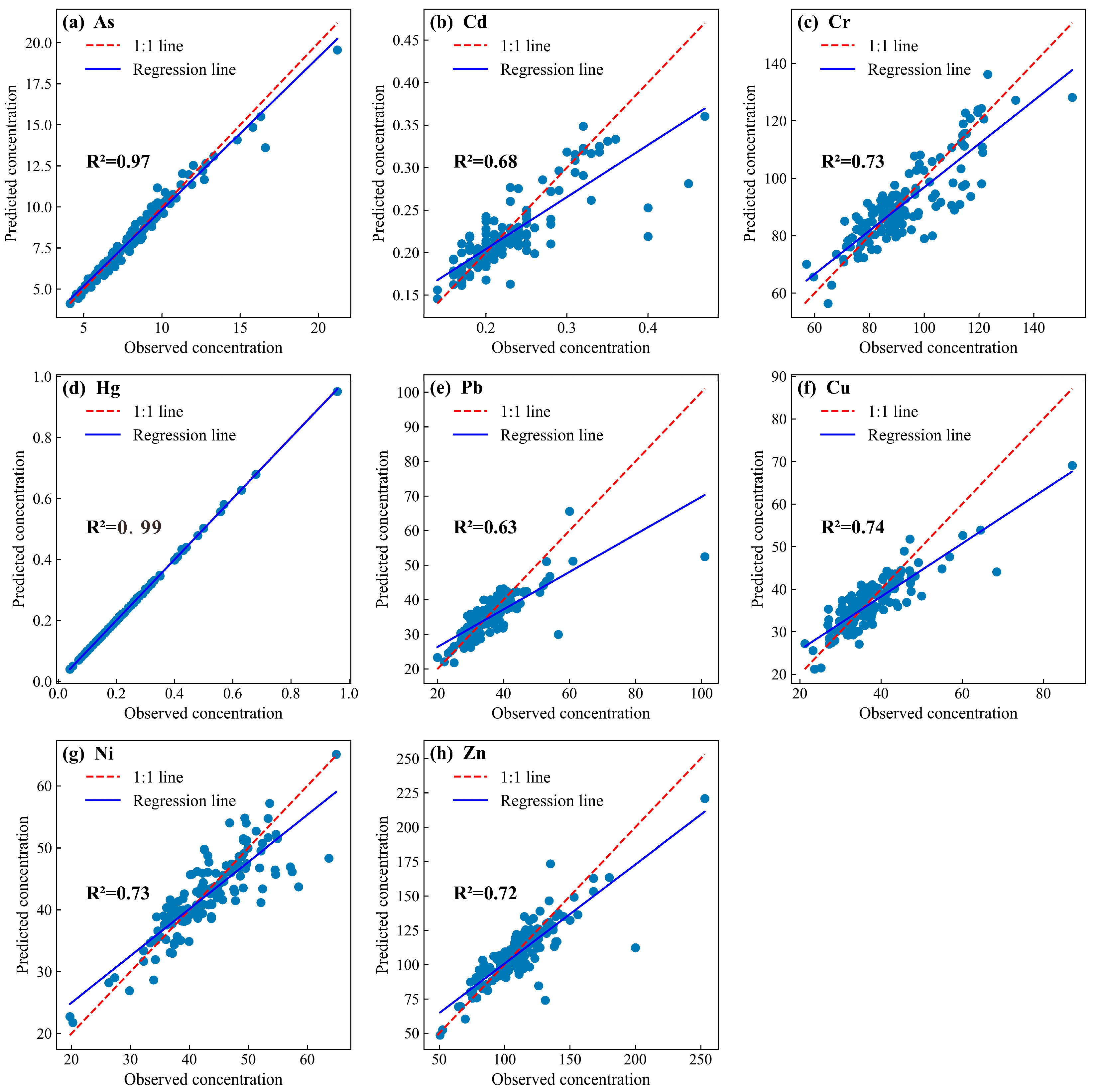
The PMF model was further used to quantitatively apportion the sources of PTEs in the topsoil. After debugging, the selection of four factors yielded consistent results across 20 iterations using the software’s default parameters. Under these conditions, the Q value approached a minimal and stable state, and the residuals for all samples were within the acceptable range of -3 to +3. In addition, the coefficients of determination (R2) of the predicted and observed values of the 8 PTEs all exceeded 0.6 (Figure 6). These operational performances indicate that a suitable fitting result was achieved [42]. As shown in Figure 6b, the proportional contributions of the four identified sources (F1–F4) are 22.83%, 23.31%, 23.14%, and 30.73% in sequence (Figure 5b).
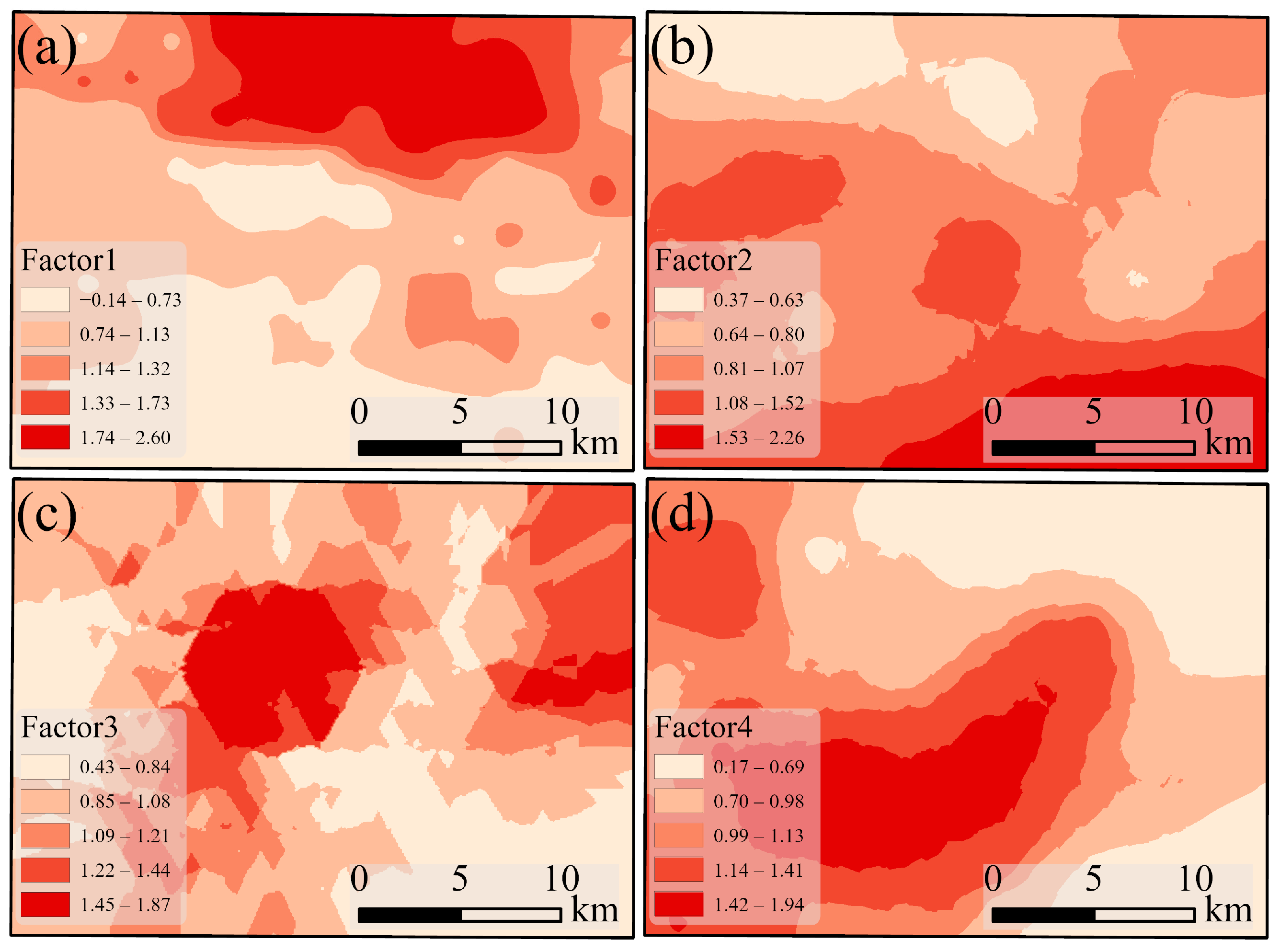
F1 contributed more than half of the Cd (50.14%), as well as the highest proportions of Cr (42.89%) and Ni (35.27%). The primary factor scores were predominantly identified in the northern region of the area, while a comparatively uniform distribution was observed across the remaining regions. (Figure 7a). Cr and Ni are characterized by relative stability, usually originating from the weathering of parent rocks and being less affected by other factors [43,44]. In this study, they had the lowest CV values, indicating minimal influence from anthropogenic activities. Additionally, the spatial pattern of these three PTEs was relatively uniform (Figure 2). Therefore, F1 can be characterized as a natural source.
F2 mainly provides As (67.84%) and Pb (26.62%). The factor scores for F2 show a gradual increasing trend from north to south, with elevated values notably concentrated in the southeastern area (Figure 7b). Except for construction areas, the majority of the study area comprises agricultural land, notably extensive agricultural fields located in the northwest and southeast regions, which have a prolonged history of uninterrupted agricultural activity. As and Pb were once widely present in insecticides and chemical fertilizers [45,46]. With large-scale application, they continuously accumulate in the topsoil, causing pollution. In addition, the soil in this area is rich in iron–manganese oxides, which can efficiently adsorb elements such as As and intensify their enrichment [47]. Therefore, F2 represents an agricultural practice source.
F3 is characterized by Hg (68.51%), and the distribution of its high factor scores highly coincides with the construction areas in the land cover (Figure 7c). Except for special cases such as mining areas, Hg in the topsoil usually originates from human activities. The disposal of domestic waste, including waste batteries, has been identified as a contributor to soil contamination [48]. In addition, urban sewage and medical waste can also exacerbate the enrichment and pollution of Hg in soil environments [49,50,51]. In the present research, Hg exhibited the highest CV value, indicating that it was affected by potential anthropogenic pollution, and its high-concentration distribution was mainly concentrated in urban areas. Therefore, F3 is considered a waste disposal source.
F4 makes a significant contribution to multiple PTEs, including Pb (42.35%), Zn (49.19%), Cu (41.80%), and Ni (33.88%), with its scores mainly concentrated in the southwest of the area (Figure 7d). This region, situated in the suburban vicinity of Chengdu, contains numerous industrial facilities. The ongoing production and manufacturing processes in this area result in the continuous generation of substantial quantities of waste and wastewater. Extensive and improper disposal of production waste often exerts tremendous pressure on the local soil environment [52,53]. Furthermore, the emissions contain various PTEs, and their massive input can lead to potential pollution problems [54]. In the study area, PTEs including Pb, Zn, and Cu have accumulated abnormally in these regions, forming local high-value areas. Therefore, F4 represents the industrial emission source in this region.
Specifically, among the sources identified in this study, the contribution of PTEs from anthropogenic factors exceeds that from natural sources. This differs from some similar studies [55,56,57]. The reason for this phenomenon can be attributed to the extensive and intense human activities in the study area. On the one hand, the area is located around a metropolitan region, and the surface soil environment has undergone intense anthropogenic modification; on the other hand, the extremely high population density and long-standing urban activities have continuously released large amounts of pollutants into the soil. Therefore, the sources of PTEs in the study area are extremely complex, and a pattern has gradually formed where anthropogenic input surpasses natural formation.

3.4. Public Health Risk Assessment

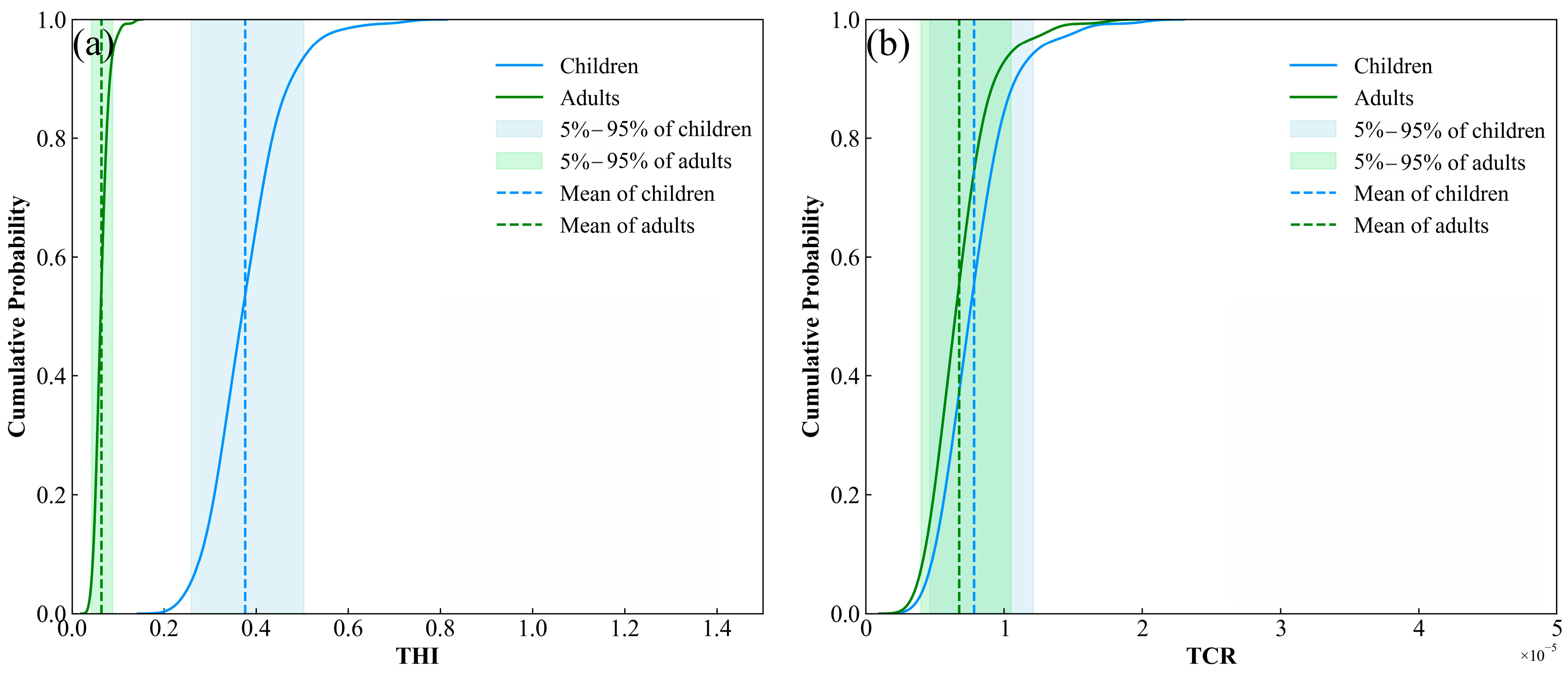
The potential health risks associated with eight PTEs in soil were evaluated for both children and adults across three exposure pathways, employing the human health risk assessment framework. The findings are illustrated in Table 2 and Figure 8. The total non-carcinogenic hazard index (THI) values for children and adults varied from 0.29 to 0.73 and 0.04 to 0.14, respectively, with average values of 0.38 and 0.06. The total carcinogenic hazard index (TCR) values for children and adults were observed within the intervals of 3.93 × 10⁻⁶–2.02 × 10⁻⁵ and 3.39 × 10⁻⁶–1.74 × 10⁻⁵, respectively, with average values of 7.83 × 10⁻⁶ and 6.75 × 10⁻⁶. Notably, both non-carcinogenic and carcinogenic risk estimates for the two demographic groups remained below established unacceptable risk thresholds, suggesting that the health risks posed by soil PTEs in the study area are within acceptable limits. However, the population density of urban areas in the study area is approximately 12,910 people per square kilometer (according to the Chengdu Statistical Yearbook 2024), while suburban agricultural areas have a sparse population distribution, with a density of about 5000 people per square kilometer. The urban core is dominated by residential living and daily recreational activities (e.g., walking, gardening), with the primary exposure pathways being inhalation of soil dust and dermal contact. Suburban areas, by contrast, are mainly engaged in agricultural planting activities (e.g., vegetable cultivation, soil tillage), with oral ingestion and dermal contact as the main exposure pathways, and farmers constitute the key exposed population. Therefore, existing research results are likely to underestimate or overestimate human health risk levels in different regions. Although the concentrations of PTEs in soil are low in some parts of urban areas, residents may face higher cumulative health risks due to high population density and frequent daily exposure. In contrast, farmers in suburban agricultural areas generally face higher carcinogenic risks than urban residents, owing to their long-term direct contact with and ingestion of contaminated soil during planting activities.
In addition, a key finding from the health risk assessment is that children exhibit significantly higher vulnerability to soil PTE exposure than adults, which is consistent with the results of other similar studies [58,59,60]. Children account for 13.28% of the total population in the study area, and this group constitutes a susceptible population. Due to their immature physiological functions and low immunity, they are more susceptible to PTE exposure. This can be explained from physiological, behavioral, and exposure parameter perspectives. From a physiological perspective, children are in the critical stage of organ and immune system development, with immature metabolic and detoxification functions (e.g., low activity of metallothionein and antioxidant enzymes). This reduces their ability to eliminate PTEs from the body, leading to greater accumulation of PTEs in target organs (liver, kidneys, and nervous system). Furthermore, children have a higher gastrointestinal absorption rate for PTEs (e.g., the absorption rate of lead is 40–50% in children, compared with 10–15% in adults) and a lower body weight. Thus, even at the same external exposure level, their internal dose per unit body weight is higher. From a behavioral perspective, children’s frequent hand-to-mouth contact and higher frequency of outdoor activities in contaminated areas increase the amount of soil particles they ingest orally, which is the main exposure pathway for non-dietary PTE intake. Moreover, this risk difference stems not only from inherent physiological and behavioral disparities but also from local exposure scenarios: children in urban and suburban areas spend more time outdoors and have direct contact with soil, which elevates their exposure risk [61,62,63].
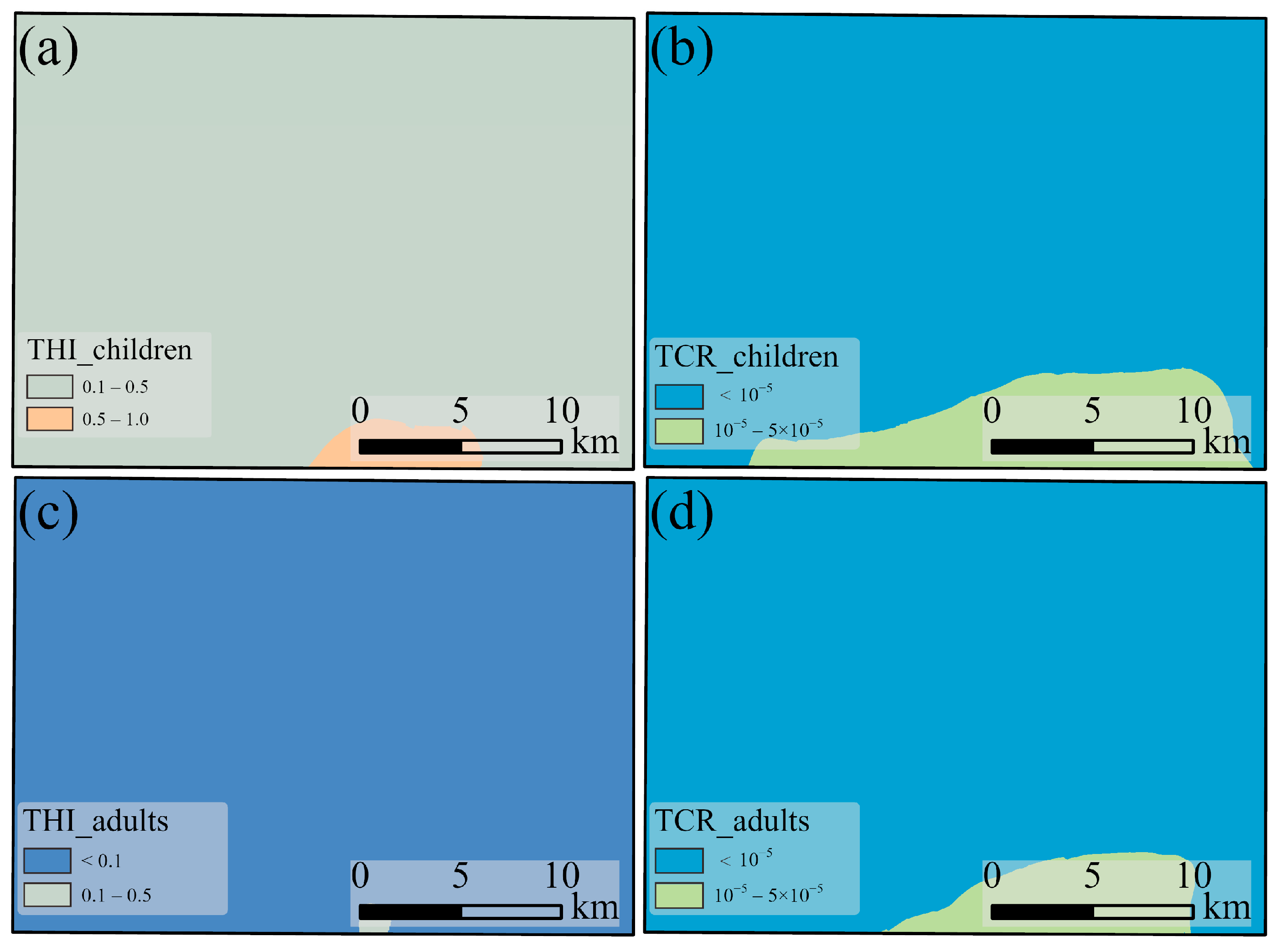
These findings highlight the necessity of prioritizing children as a key protected population in local soil pollution control and public health interventions, such as restricting children’s access to heavily contaminated areas and strengthening hand hygiene education. Additionally, the higher values of both THI and TCR are mainly observed in the southern region (Figure 9), a pattern that corresponds closely with the spatial distribution of As.
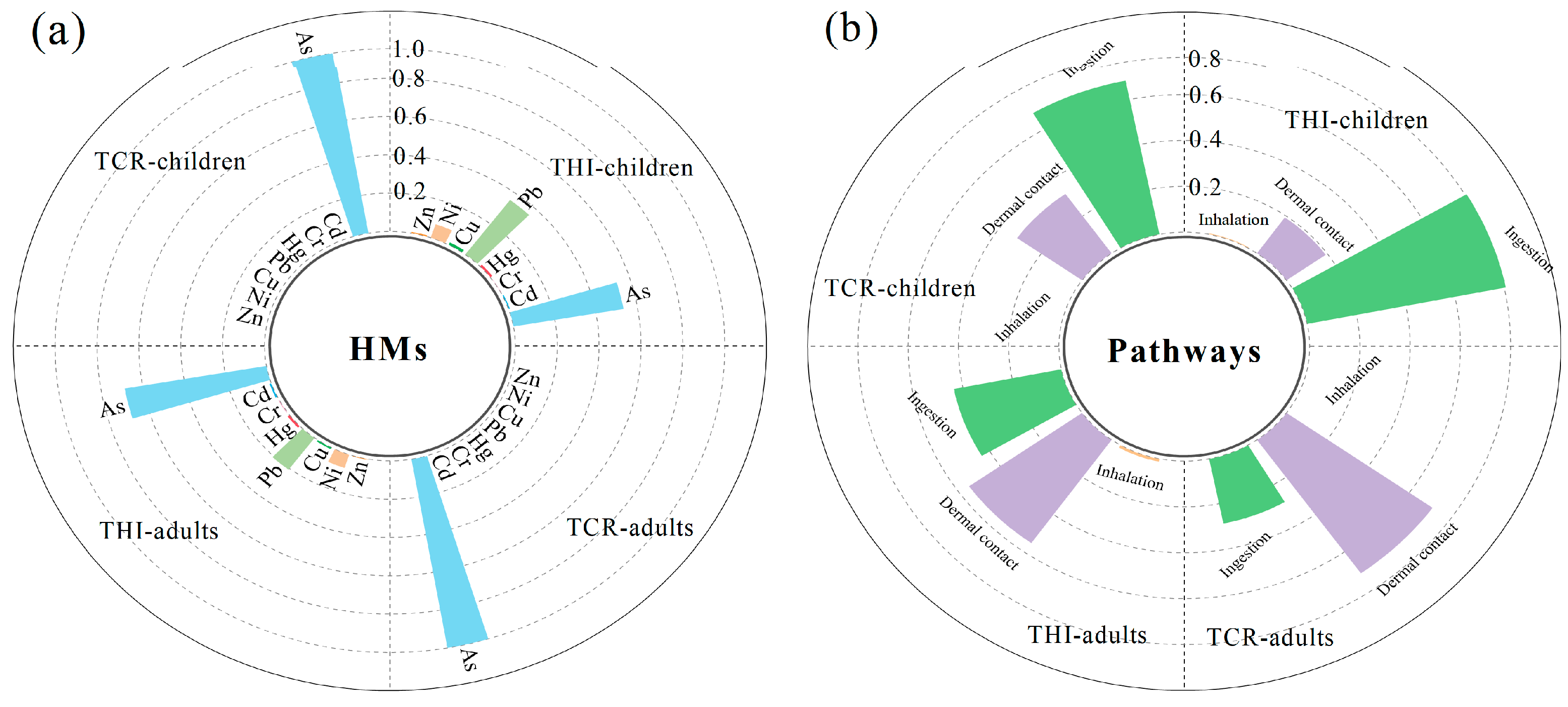
Furthermore, the impacts of each element and exposure pathway on human health were analyzed by examining the proportion of health risk values contributed by them. As shown in Figure 10, As constitutes the predominant contributor to non-carcinogenic health risks among both populations, accounting for average contribution rates of 53.35% and 68.70%, respectively. This is followed by Pb (35.52% and 20.67%) and Ni (below 10.00%), indicating that the toxicity of As and Pb poses significant threats to human health. Meanwhile, the mean contribution rates of the three exposure pathways to health risks in children are consistently ranked as follows: ingestion > dermal contact > inhalation, with ingestion accounting for an average contribution exceeding 68.00%. In contrast, for adults, the ranking is dermal contact > ingestion > inhalation, with dermal contact contributing more than 55.00% on average across all instances. This phenomenon also stems from the physiological differences between children and adults: children have higher ingestion rates, while adults have a larger skin surface area.

4. Conclusions

This study employed the PMF model in conjunction with multiple evaluation index systems to conduct a comprehensive analysis of the geochemical characteristics of PTEs in topsoil. The primary sources of these PTEs were quantitatively determined, and assessments of heavy metal pollution levels, ecological risks, and health risks were systematically performed. The principal findings are summarized as below:
(1) The average content of PTEs in the topsoil follows the ranking: Zn > Cr > Ni > Cu > Pb > As > Cd > Hg. Notably, the average levels of all examined PTEs surpass their respective background values. The central part of the study area represents the primary zone of elevated HM enrichment.
(2) Four distinct sources of PTEs were identified. The industrial activity source (F4), predominantly contributing Pb, Zn, Cu, and Ni, accounts for the largest proportion at 30.73%. F2, associated with agricultural practices, primarily supplies As and Pb. F3 is characterized by Hg, which is attributed to urban waste pollution. Additionally, a natural source contributes to the presence of Cr and Ni.
(3) The overall pollution status and ecological risk posed by PTEs in the topsoil were assessed as low, indicating a high soil carrying capacity and an ecological impact within acceptable limits. However, the central portion of the study area exhibits comparatively poorer heavy metal evaluation outcomes, which are linked to intensified anthropogenic activities.
(4) Health risk assessments indicate that PTEs in the topsoil do not exceed threshold levels for either children or adults. Elevated risk values are observed predominantly in the southern sector of the study area. Children are subject to higher health risks than adults, with As identified as the principal hazardous element and ingestion recognized as the primary exposure pathway contributing to health risks.
However, the main limitations of this study are as follows: Firstly, this study only focused on 0–20 cm surface soils and did not investigate the migration patterns of PTEs in deep soils. The insufficient sampling density in key areas such as industrial clusters and intensive agricultural regions may affect the characterization of local pollution characteristics. Secondly, this study only determined the total concentrations of PTEs and did not analyze their available fractions and bioavailability, which may lead to either conservative or overestimated results in ecological and health risk assessments. Due to the lack of detailed localized ecotoxicological data and limited sample size, it was unable to supplement other ecological risk indices with fully region-specific thresholds for a more precise assessment of ecological risk. Furthermore, the health risk assessment adopted USEPA generic exposure parameters without incorporating population-specific parameters for the local population, resulting in deviations between the assessment results and the actual exposure levels. Additionally, the results of the PMF model are dependent on data quality, with limited resolution for low-concentration elements. Data on migration pathways such as atmospheric deposition and surface runoff were not included, making it impossible to fully reveal the transport chain of PTEs in the soil–environment–human system. In subsequent research, more attention should be paid to conducting localized ecotoxicological experiments (e.g., toxicity testing on dominant soil fauna and microorganisms in the study area) to establish region-specific toxicity thresholds for PTEs. And more comprehensive ecological risk indices (e.g., mERM-Q, soil microbial risk index) should be integrated with soil environmental factors to further enhance the regional applicability of soil PTE assessment.

Supplementary Materials

The following supporting information can be downloaded at: https://www.mdpi.com/article/10.3390/su18041747/s1, Table S1 Classification of the geo-accumulation index and ecological risk index; Table S2 Classification of the environmental capacity index; Table S3 Reference values of exposure parameters in the health risk calculation; Table S4 Carcinogenic slope factors and non-carcinogenic reference doses of PTEs* (mg/(kg·d)).

Author Contributions

Conceptualization, Y.Z.; methodology, D.W.; software, M.Z.; validation, A.O., J.V., Q.L.; formal analysis, Z.H.; investigation, M.L., M.Z.; resources, Y.W.; data curation, X.H.; writing—original draft preparation, Y.Y.; writing—review and editing, Y.Z.; visualization, D.W.; supervision, A.O.; project administration, Y.Z.; funding acquisition, Y.Z. All authors have read and agreed to the published version of the manuscript.

Funding

This research was funded by Sichuan Province Science and Technology program (2025YFHZ0269, 2025ZNSFSC0307), Sichuan Transportation Science and Technology program (2023-B-15), Yibin City Science and Technology program (YBSCXY2023020006, YBSCXY2023020007, 2024MZ001), and Fundamental Research Funds for the Central Universities (A0920502052501-23, 2682024CX068). We acknowledge the support from the Innovative Practice Bases of Geological Engineering and Surveying Engineering of Southwest Jiaotong University (YJG-2022-JD04).

Institutional Review Board Statement

Not applicable.

Informed Consent Statement

Not applicable.

Data Availability Statement

Dataset available on request from the authors.

Acknowledgments

We thank reviewers and the Editor-in-Chief for their constructive comments.

Conflicts of Interest

The authors declare no conflicts of interest.

References

  1. De Souza, R.E.; Fontes, M.P.F.; Tucci, C.A.F.; Lima, H.N.; Da Silva Ferreira, M. Health Risk Assessment and Quality Reference Values of Potentially Toxic Elements in Soils of the Southwestern Amazonas State—Brazil. Sci. Total Environ. 2024, 912, 168937. [Google Scholar] [CrossRef]
  2. Albanese, S.; Ebrahimi, P.; Aruta, A.; Cicchella, D.; De Vivo, B.; Lima, A. Potentially Toxic Elements in the Soils of Campi Flegrei (South Italy) and the Immediate Surroundings: Spatial Distribution, Origin and Probabilistic Human Health Risk. Chemosphere 2023, 313, 137297. [Google Scholar] [CrossRef]
  3. Parviainen, A.; Vázquez-Arias, A.; Arrebola, J.P.; Martín-Peinado, F.J. Human Health Risks Associated with Urban Soils in Mining Areas. Environ. Res. 2022, 206, 112514. [Google Scholar] [CrossRef] [PubMed]
  4. Liu, F.; Wang, X.; Dai, S.; Zhou, J.; Liu, D.; Hu, Q.; Wang, W.; Xie, M.; Lu, Y.; Tian, M.; et al. Spatial Variations, Health Risk Assessment, and Source Apportionment of Soil Heavy Metals in the Middle Yellow River Basin of Northern China. J. Geochem. Explor. 2023, 252, 107275. [Google Scholar] [CrossRef]
  5. Hou, D.; Jia, X.; Wang, L.; McGrath, S.P.; Zhu, Y.-G.; Hu, Q.; Zhao, F.-J.; Bank, M.S.; O’Connor, D.; Nriagu, J. Global Soil Pollution by Toxic Metals Threatens Agriculture and Human Health. Science 2025, 388, 316–321. [Google Scholar] [CrossRef]
  6. Dai, X.; Liang, J.; Shi, H.; Yan, T.; He, Z.; Li, L.; Hu, H. Health Risk Assessment of Heavy Metals Based on Source Analysis and Monte Carlo in the Downstream Basin of the Zishui. Environ. Res. 2024, 245, 117975. [Google Scholar] [CrossRef]
  7. Ali, W.; Muhammad, S. Compositional Data Analysis of Heavy Metal Contamination and Eco-Environmental Risks in Himalayan Agricultural Soils, Northern Pakistan. J. Geochem. Explor. 2023, 255, 107323. [Google Scholar] [CrossRef]
  8. Nolos, R.; Sevilla-Nastor, J.; Villanueva-Peyraube, J. Distribution of Potentially Toxic Elements (PTEs) and Health Risk Assessment of Soil in an Island Province in the Philippines. Environ. Geochem. Health 2025, 47, 189. [Google Scholar] [CrossRef]
  9. Wu, J.; Wang, H.; Han, Z.; Shu, Y.; Huang, X.; Zhong, Q.; Li, R.; Fan, Z. Application of a PMF+BMR Hybrid Model for Source Apportionment and Ecological Risk Assessment of Soil Heavy Metal(Loid)s. J. Hazard. Mater. 2025, 494, 138734. [Google Scholar] [CrossRef]
  10. Guo, G.; Chen, S.; Zhang, J.; Lei, M. Prioritizing Pollution Sources and Targeted Potentially Toxic Elements in Soils Using a Probabilistic Source-Specific Eco-Health Risk Assessment from Micro and Macro Perspectives. J. Hazard. Mater. 2025, 498, 139909. [Google Scholar] [CrossRef]
  11. Zeng, T.; Ma, L.; Li, Y.; Abuduwaili, J.; Liu, W.; Feng, S. Source Apportionment of Soil Heavy Metals with PMF Model and Pb Isotopes in an Intermountain Basin of Tianshan Mountains, China. Sci. Rep. 2022, 12, 19429. [Google Scholar] [CrossRef]
  12. Liu, Z.; Wang, L.; Yan, M.; Ma, B.; Cao, R. Source Apportionment of Soil Heavy Metals Based on Multivariate Statistical Analysis and the PMF Model: A Case Study of the Nanyang Basin, China. Environ. Technol. Innov. 2024, 33, 103537. [Google Scholar] [CrossRef]
  13. Saha, A.; Sen Gupta, B.; Patidar, S.; Hernández-Martínez, J.L.; Martín-Romero, F.; Meza-Figueroa, D.; Martínez-Villegas, N. A Comprehensive Study of Source Apportionment, Spatial Distribution, and Health Risks Assessment of Heavy Metal(Loid)s in the Surface Soils of a Semi-Arid Mining Region in Matehuala, Mexico. Environ. Res. 2024, 260, 119619. [Google Scholar] [CrossRef]
  14. Shen, L.; Zeng, J.; Guo, E.; Cheng, Y.; Li, L.; Niu, C.; Yuan, Y.; Ma, L. Source Apportionment and Risk Assessment of Heavy Metals in Urban Soils from a Central China City by Using Positive Matrix Factorization Model Coupled with Monte Carlo Simulation. Stoch. Environ. Res. Risk Assess. 2023, 37, 291–304. [Google Scholar] [CrossRef]
  15. Chen, S.; Wang, H.; Han, R. Source Apportionment of Potentially Toxic Elements in Agricultural Soils of Yingtan City, Jiangxi Province, China: A Principal Component Analysis–Positive Matrix Factorization Method. Toxics 2025, 13, 267. [Google Scholar] [CrossRef]
  16. Sun, Y.; Yang, Z.; Dong, K.; Hui, F.; Wang, D.; Huang, Y. Pollution Risk Assessment of Potentially Toxic Elements in Soils Using Characterization and Microbiological Analysis: The Case of a Rare and Precious Metal Mining Site in Wuzhou, Guangxi. Toxics 2025, 13, 270. [Google Scholar] [CrossRef] [PubMed]
  17. Zhang, H.; Yin, S.; Chen, Y.; Shao, S.; Wu, J.; Fan, M.; Chen, F.; Gao, C. Machine Learning-Based Source Identification and Spatial Prediction of Heavy Metals in Soil in a Rapid Urbanization Area, Eastern China. J. Clean. Prod. 2020, 273, 122858. [Google Scholar] [CrossRef]
  18. Xu, H.; Hu, P.; Wang, H.; Croot, P.; Li, Z.; Li, C.; Xie, S.; Zhou, H.; Zhang, C. Identification of the Pollution Sources and Hidden Clustering Patterns for Potentially Toxic Elements in Typical Peri-Urban Agricultural Soils in Southern China. Environ. Pollut. 2025, 370, 125904. [Google Scholar] [CrossRef] [PubMed]
  19. Zhang, Y.; Jiang, B.; Gao, Z.; Liu, J.; Jiang, B.; Zhang, J. Source-Oriented Health Risk Assessment of Soil Potentially Toxic Elements Based on Monte Carlo Simulation in the Upper Reaches of Wei River Basin, China. Environ. Geochem. Health 2025, 47, 52. [Google Scholar] [CrossRef]
  20. Zhang, L.; Zhu, Y.; Zhang, Y.; Zhong, J.; Li, J.; Yang, S.; Ta, W.; Zhang, Y. Characteristics, Source Analysis, and Health Risk Assessment of Potentially Toxic Elements Pollution in Soil of Dense Molybdenum Tailing Ponds Area in Central China. Environ. Geochem. Health 2024, 46, 129. [Google Scholar] [CrossRef] [PubMed]
  21. Aftab, A.; Aziz, R.; Ghaffar, A.; Rafiq, M.T.; Feng, Y.; Saqib, Z.; Rafiq, M.K.; Awan, M.A. Occurrence, Source Identification and Ecological Risk Assessment of Heavy Metals in Water and Sediments of Uchalli Lake—Ramsar Site, Pakistan. Environ. Pollut. 2023, 334, 122117. [Google Scholar] [CrossRef]
  22. Yang, Z.; Guo, J.; Sun, S.; Ni, D.; Chen, P.; Rupakheti, D.; Kang, H.; Abdullaev, S.F.; Abdyzhapar uulu, S.; Kang, S. Spatial Distribution and Risk Assessments of Mercury in Topsoils of Central Asia. Geosci. Front. 2023, 14, 101585. [Google Scholar] [CrossRef]
  23. Li, Y.; Zhang, Y.; Chen, J.; Yang, G.; Li, H.; Wang, J.; Li, W. Ecological Risk Assessment and Source Analysis of Heavy Metals in Farmland Soil in Yangchun City Based on APCS-MLR and Geostatistics. Agriculture 2024, 14, 309. [Google Scholar] [CrossRef]
  24. Ncibi, K.; Hamed, Y.; Hadji, R.; Busico, G.; Benmarce, K.; Missaoui, R.; Wederni, K. Hydrogeochemical Characteristics and Health Risk Assessment of Potentially Toxic Elements in Groundwater and Their Relationship with the Ecosystem: Case Study in Tunisia. Environ. Sci. Pollut. Res. 2023, 30, 40031–40048. [Google Scholar] [CrossRef] [PubMed]
  25. Liu, N.; Jin, X.; Feng, C.; Wang, Z.; Wu, F.; Johnson, A.C.; Xiao, H.; Hollert, H.; Giesy, J.P. Ecological Risk Assessment of Fifty Pharmaceuticals and Personal Care Products (PPCPs) in Chinese Surface Waters: A Proposed Multiple-Level System. Environ. Int. 2020, 136, 105454. [Google Scholar] [CrossRef]
  26. Han, S.; Wang, B.; Yao, Z.; Dai, L.; Wei, Y.; Niu, Y.; Qian, L. Heavy Metals Impact Environmental Capacity of Oasis Soils in Qinghai-Tibet Plateau Dry Zone. Sci. Rep. 2025, 15, 2176. [Google Scholar] [CrossRef]
  27. Pan, Y.; Ding, L.; Xie, S.; Zeng, M.; Zhang, J.; Peng, H. Spatiotemporal Simulation, Early Warning, and Policy Recommendations of the Soil Heavy Metal Environmental Capacity of the Agricultural Land in a Typical Industrial City in China: Case of Zhongshan City. J. Clean. Prod. 2021, 285, 124849. [Google Scholar] [CrossRef]
  28. Zhang, Y.; Li, L.; Song, B.; Xu, R.; Zhou, Z.; Zhu, L.; Zhou, L. Comprehensive Risk Assessment of Heavy Metals Based on Pollution Sources: A Case Study for Agricultural Soils from Southwest China. Expo. Health 2025, 17, 1–16. [Google Scholar] [CrossRef]
  29. Sonkar, V.; Jaswal, V.; Chenlak, S.; Nandabalan, Y.K. Pollution Status and Health Risk Assessment of Heavy Metals in the Soil of Sahibzada Ajit Singh (SAS) Nagar District of Punjab, India and Its Source Apportionment. J. Geochem. Explor. 2024, 261, 107453. [Google Scholar] [CrossRef]
  30. Nakagawa, K.; Imura, T.; Berndtsson, R. Distribution of Heavy Metals and Related Health Risks through Soil Ingestion in Rural Areas of Western Japan. Chemosphere 2022, 290, 133316. [Google Scholar] [CrossRef]
  31. DZ/T 0295—2016; Specification of land Quality Geochemical Evaluation. Natural Resources and Territory Spatial Planning (SAC/TC 93). Beijing, China, 2016.
  32. Yuan, B.; Cao, H.; Du, P.; Ren, J.; Chen, J.; Zhang, H.; Zhang, Y.; Luo, H. Source-Oriented Probabilistic Health Risk Assessment of Soil Potentially Toxic Elements in a Typical Mining City. J. Hazard. Mater. 2023, 443, 130222. [Google Scholar] [CrossRef]
  33. Elvine Paternie, E.D.; Hakkou, R.; Ekengele Nga, L.; Bitom Oyono, L.D.; Ekoa Bessa, A.Z.; Oubaha, S.; Khalil, A. Geochemistry and Geostatistics for the Assessment of Trace Elements Contamination in Soil and Stream Sediments in Abandoned Artisanal Small-Scale Gold Mining (Bétaré-Oya, Cameroon). Appl. Geochem 2023, 150, 105592. [Google Scholar] [CrossRef]
  34. Capozzi, S.L.; Rodenburg, L.A.; Krumins, V.; Fennell, D.E.; Mack, E.E. Using Positive Matrix Factorization to Investigate Microbial Dehalogenation of Chlorinated Benzenes in Groundwater at a Historically Contaminated Site. Chemosphere 2018, 211, 515–523. [Google Scholar] [CrossRef]
  35. Xie, X.; Wang, S.; Li, M.; Zhou, Z.; Zhang, Z.; Tang, Z. Assessment of Soil Environmental Capacity for Heavy Metals in Shantou City, Guangdong Province, China: Source Analysis and Enrichment Evaluation. Environ. Monit. Assess. 2024, 196, 978. [Google Scholar] [CrossRef]
  36. GB 15618—2018; Soil Environmental Quality-Risk Control Standard for Soil Contamination of Agricultural Land (Trial). Ministry of Ecology and Environment of the People’s Republic of China: Beijing, China, 2018.
  37. Reff, A.; Eberly, S.I.; Bhave, P.V. Receptor Modeling of Ambient Particulate Matter Data Using Positive Matrix Factorization: Review of Existing Methods. J. Air Waste Manag. Assoc. 2007, 57, 146–154. [Google Scholar] [CrossRef]
  38. Zhang, Y.; Wei, D.; Xie, Z.; Li, H.; Yang, S.; Luo, M.; Vesković, J.; Onjia, A.; Wang, Y.; Wang, Y.; et al. Spatial Source-Oriented Analysis and Probabilistic Health Risk Assessment of Potentially Toxic Elements in Soils Integrating the Geo-Detector, APCS-MLR, and Monte-Carlo Models. J. Environ. Chem. Eng. 2025, 13, 117983. [Google Scholar] [CrossRef]
  39. Chen, J.; Wei, F.; Zheng, C.; Wu, Y.; Adriano, D.C. Background Concentrations of Elements in Soils of China. Water Air Soil Pollut. 1991, 57–58, 699–712. [Google Scholar] [CrossRef]
  40. Ke, Z.; Han, X.; Zhou, R.; Zhang, Y.; Liu, G.; Zhang, C.; Liu, Z.; Li, X.; Li, W. Insights into Wind-Driven Heavy Metal Pollution and Human Health Risk Assessment in a Typical Lead-Zinc Mining Area of Northern China. China Geol. 2025, 8, 487–499. [Google Scholar] [CrossRef]
  41. Chen, H.; Lu, X.; Li, L.Y.; Gao, T.; Chang, Y. Metal Contamination in Campus Dust of Xi’an, China: A Study Based on Multivariate Statistics and Spatial Distribution. Sci. Total Environ. 2014, 484, 27–35. [Google Scholar] [CrossRef] [PubMed]
  42. Heidari, M.; Darijani, T.; Alipour, V. Heavy Metal Pollution of Road Dust in a City and Its Highly Polluted Suburb; Quantitative Source Apportionment and Source-Specific Ecological and Health Risk Assessment. Chemosphere 2021, 273, 129656. [Google Scholar] [CrossRef] [PubMed]
  43. Lu, A.; Wang, J.; Qin, X.; Wang, K.; Han, P.; Zhang, S. Multivariate and Geostatistical Analyses of the Spatial Distribution and Origin of Heavy Metals in the Agricultural Soils in Shunyi, Beijing, China. Sci. Total Environ. 2012, 425, 66–74. [Google Scholar] [CrossRef]
  44. Hu, W.; Wang, H.; Dong, L.; Huang, B.; Borggaard, O.K.; Bruun Hansen, H.C.; He, Y.; Holm, P.E. Source Identification of Heavy Metals in Peri-Urban Agricultural Soils of Southeast China: An Integrated Approach. Environ. Pollut. 2018, 237, 650–661. [Google Scholar] [CrossRef] [PubMed]
  45. Yang, Y.; Lu, X.; Yu, B.; Zuo, L.; Wang, L.; Lei, K.; Fan, P.; Liang, T.; Rennert, T.; Rinklebe, J. Source-Specific Risk Judgement and Environmental Impact of Potentially Toxic Elements in Fine Road Dust from an Integrated Industrial City, North China. J. Hazard. Mater. 2023, 458, 131982. [Google Scholar] [CrossRef]
  46. Zhao, L.; Xu, Y.; Hou, H.; Shangguan, Y.; Li, F. Source Identification and Health Risk Assessment of Metals in Urban Soils around the Tanggu Chemical Industrial District, Tianjin, China. Sci. Total Environ. 2014, 468–469, 654–662. [Google Scholar] [CrossRef]
  47. He, K.; Han, R.; Wang, Z.; Xiao, Z.; Hao, Y.; Dong, Z.; Xu, Q.; Li, G. Soil Source, Not the Degree of Urbanization Determines Soil Physicochemical Properties and Bacterial Composition in Ningbo Urban Green Spaces. Sci. Total Environ. 2024, 930, 172550. [Google Scholar] [CrossRef]
  48. Guan, Q.; Wang, F.; Xu, C.; Pan, N.; Lin, J.; Zhao, R.; Yang, Y.; Luo, H. Source Apportionment of Heavy Metals in Agricultural Soil Based on PMF: A Case Study in Hexi Corridor, Northwest China. Chemosphere 2018, 193, 189–197. [Google Scholar] [CrossRef]
  49. Ma, J.; Shen, Z.; Wang, S.; Deng, L.; Sun, J.; Liu, P.; She, Z. Source Apportionment of Heavy Metals in Soils around a Coal Gangue Heap with the APCS-MLR and PMF Receptor Models in Chongqing, Southwest China. J. Mt. Sci. 2023, 20, 1061–1073. [Google Scholar] [CrossRef]
  50. Zhang, Y.; Jiang, B.; Gao, Z.; Liu, J. Source-Specific Probabilistic Health Risk Judgement of Soil Heavy Metals in a Typical Resource-Based Town in North China. Ecol. Indic. 2024, 169, 112854. [Google Scholar] [CrossRef]
  51. Gong, C.; Xia, X.; Lan, M.; Shi, Y.; Lu, H.; Wang, S.; Chen, Y. Source Identification and Driving Factor Apportionment for Soil Potentially Toxic Elements via Combining APCS-MLR, UNMIX, PMF and GDM. Sci. Rep. 2024, 14, 10918. [Google Scholar] [CrossRef] [PubMed]
  52. Liu, Y.; Ma, Z.; Lv, J.; Bi, J. Identifying Sources and Hazardous Risks of Heavy Metals in Topsoils of Rapidly Urbanizing East China. J. Geogr. Sci. 2016, 26, 735–749. [Google Scholar] [CrossRef]
  53. Zhou, H.; Yue, X.; Chen, Y.; Liu, Y. Source-Specific Probabilistic Contamination Risk and Health Risk Assessment of Soil Heavy Metals in a Typical Ancient Mining Area. Sci. Total Environ. 2024, 906, 167772. [Google Scholar] [CrossRef] [PubMed]
  54. Streets, D.G.; Hao, J.; Wu, Y.; Jiang, J.; Chan, M.; Tian, H.; Feng, X. Anthropogenic Mercury Emissions in China. Atmos. Environ. 2005, 39, 7789–7806. [Google Scholar] [CrossRef]
  55. Doyi, I.; Essumang, D.; Gbeddy, G.; Dampare, S.; Kumassah, E.; Saka, D. Spatial Distribution, Accumulation and Human Health Risk Assessment of Heavy Metals in Soil and Groundwater of the Tano Basin, Ghana. Ecotoxicol. Environ. Saf. 2018, 165, 540–546. [Google Scholar] [CrossRef]
  56. Özen, Y. Spatial Distribution of Heavy Metals and Sources of Soil Contamination in Southern Konya (Turkey): Insights from Geochemistry, Pb and Sr–Nd Isotope Systematics. Environ. Earth Sci. 2022, 81, 285. [Google Scholar] [CrossRef]
  57. Čakmak, D.; Pavlović, P.; Mrvić, V.; Saljnikov, E.; Perović, V.; Jaramaz, D.; Sikirić, B. Using Different Receptor Models to Determine the Sources of Available Forms of Potentially Toxic Elements in Rasina District—A Case Study. CATENA 2023, 222, 106865. [Google Scholar] [CrossRef]
  58. Hossain Bhuiyan, M.A.; Chandra Karmaker, S.; Bodrud-Doza, M.; Rakib, M.A.; Saha, B.B. Enrichment, Sources and Ecological Risk Mapping of Heavy Metals in Agricultural Soils of Dhaka District Employing SOM, PMF and GIS Methods. Chemosphere 2021, 263, 128339. [Google Scholar] [CrossRef]
  59. Agyeman, P.C.; Ahado, S.K.; Kingsley, J.; Kebonye, N.M.; Biney, J.K.M.; Borůvka, L.; Vasat, R.; Kocarek, M. Source Apportionment, Contamination Levels, and Spatial Prediction of Potentially Toxic Elements in Selected Soils of the Czech Republic. Environ. Geochem. Health 2021, 43, 601–620. [Google Scholar] [CrossRef]
  60. Keshavarzi, A.; Kumar, V.; Ertunç, G.; Brevik, E.C. Ecological Risk Assessment and Source Apportionment of Heavy Metals Contamination: An Appraisal Based on the Tellus Soil Survey. Environ. Geochem. Health 2021, 43, 2121–2142. [Google Scholar] [CrossRef]
  61. Zhang, Y.; Yan, Y.; Yao, R.; Wei, D.; Huang, X.; Luo, M.; Wei, C.; Chen, S.; Yang, C. Natural Background Levels, Source Apportionment and Health Risks of Potentially Toxic Elements in Groundwater of Highly Urbanized Area. Sci. Total Environ. 2024, 935, 173276. [Google Scholar] [CrossRef]
  62. Yan, Y.; Zhang, Y.; Yang, S.; Wei, D.; Zhang, J.; Li, Q.; Yao, R.; Wu, X.; Wang, Y. Optimized Groundwater Quality Evaluation Using Unsupervised Machine Learning, Game Theory and Monte-Carlo Simulation. J. Environ. Manag. 2024, 371, 122902. [Google Scholar] [CrossRef]
  63. Zhao, Z.; Hao, M.; Li, Y.; Li, S. Contamination, Sources and Health Risks of Toxic Elements in Soils of Karstic Urban Parks Based on Monte Carlo Simulation Combined with a Receptor Model. Sci. Total Environ. 2022, 839, 156223. [Google Scholar] [CrossRef] [PubMed]
Figure 1. Map of the study area. (a) Geographical position of the Chengdu plain within China; (b) Specific location of the study area within the Chengdu plain; (c) land cover classification of the study area.
Sustainability 18 01747 g001
Figure 2. Spatial distribution characteristics of PTEs within the topsoil. (a) As; (b) Cd; (c) Cr; (d) Hg; (e) Pb; (f) Cu; (g) Ni; (h) Zn; (i) pH.
Sustainability 18 01747 g002
Figure 3. Statistical results of assessment indices to PTEs within the topsoil. (a) Igeo; (b) NI; (c) Er; (d) PERI; (e) Pi; (f) PI.
Sustainability 18 01747 g003
Figure 4. Spatial pattern of assessment indices to PTEs within the topsoil. (a) NI; (b) PERI; (c) PI.
Sustainability 18 01747 g004
Figure 5. Results of the multivariate statistical analysis and PMF model. (a) CA-PCA plot; (b) PMF model.
Sustainability 18 01747 g005
Figure 6. Predicted concentration vs. observed concentration of PTEs in the PMF model. (a) As; (b) Cd; (c) Cr; (d) Hg; (e) Pb; (f) Cu; (g) Ni; (h) Zn.
Sustainability 18 01747 g006
Figure 7. Spatial pattern of factor scores in the topsoil. (a) Factor 1; (b) Factor 2; (c) Factor 3; (d) Factor 4.
Sustainability 18 01747 g007
Figure 8. Cumulative probability of health risks of PTEs in the topsoil: (a) health risks for children; (b) health risks for adults.
Sustainability 18 01747 g008
Figure 9. Spatial pattern of health risks in the topsoil. (a) THI for children; (b) TCR for children; (c) THI for adults; (d) TCR for adults.
Sustainability 18 01747 g009
Figure 10. Mean contribution rates of PTEs and exposure pathways to health risks in the topsoil. (a) PTEs to health risks; (b) pathways to health risks.
Sustainability 18 01747 g010
Table 1. Statistical characteristics of HM contents in the study area.
ParametersMinMedianMeanMaxSDCVSKBVOutliers
mg/kgmg/kgmg/kgmg/kgUnitlessUnitlessUnitlessUnitlessmg/kg
pH5.656.796.798.070.490.070.05−0.386.9042.14%
As4.128.008.2121.202.620.321.614.6713.004.29%
Cd0.140.210.230.470.060.261.613.210.1973.57%
Cr57.0089.3092.26154.0515.860.170.760.8980.0078.57%
Hg0.040.190.220.960.130.592.489.420.3310.00%
Pb19.9035.0035.99101.009.170.252.9917.6746.007.86%
Cu21.2036.5037.8387.108.540.232.048.5846.0011.43%
Ni19.7042.3042.8564.907.300.170.021.1138.0075.00%
Zn50.50111.00111.99253.0026.340.241.295.90125.0023.57%
Note: SD is the standard deviation; CV is the coefficient of variation; S and K are the skewness and kurtosis, respectively. BV is the background value for HM in the area.
Table 2. Statistical characteristics of health risk assessment of PTEs.
ParametersTHITCR
ChildrenAdultsChildrenAdults
Min0.230.043.93 × 10−63.39 × 10⁻⁶
5%0.260.044.64 × 10−64.00 × 10⁻⁶
Mean0.380.067.83 × 10−66.75 × 10⁻⁶
95%0.500.091.21 × 10−51.05 × 10−5
Max0.730.142.02 × 10−51.74 × 10⁻⁵
Unacceptable0.00%0.00%0.00% 0.00%
Disclaimer/Publisher’s Note: The statements, opinions and data contained in all publications are solely those of the individual author(s) and contributor(s) and not of MDPI and/or the editor(s). MDPI and/or the editor(s) disclaim responsibility for any injury to people or property resulting from any ideas, methods, instructions or products referred to in the content.