Bridging the Theory–Practice Gap: A Design Methodology for Green Infrastructure Implementation in Mid-Adriatic Coastal Cities

Abstract
1. Introduction
2. Materials and Methods
2.1. Existing Literature Review
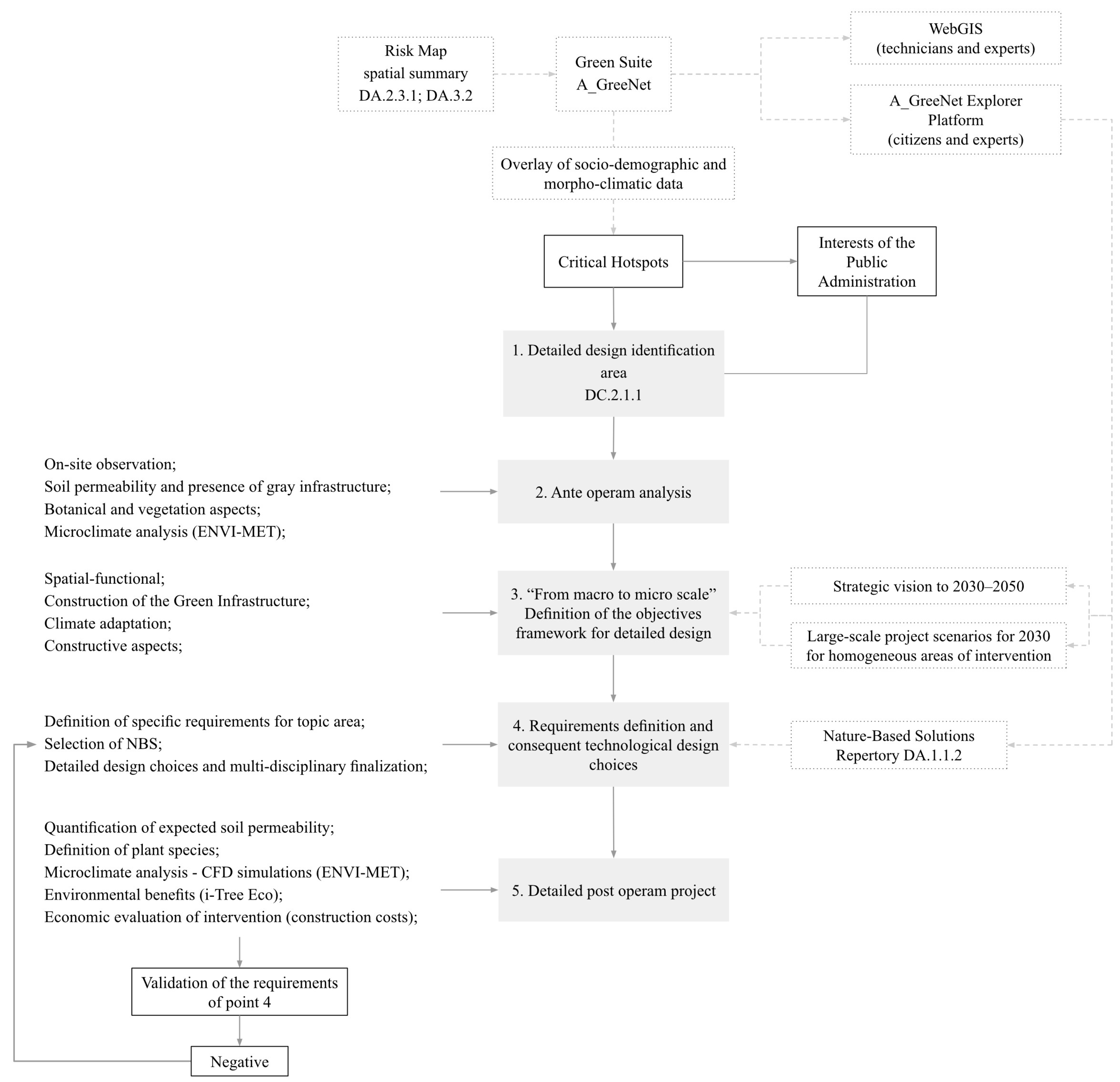
2.2. Methodology
- 1.
- Identification of Detailed Design Areas.
- Pre-existing Data: Socio-demographic and morpho-climatic analyses derived from previous preparatory phases of the LIFE+ A_GreeNet project.
- Local Consultation: Active involvement of the project’s partner municipal administrations and stakeholders.
- Identify areas with high climate vulnerabilities: Focusing on those projected to face the greatest climate risks in the 2030 and 2050 scenarios.
- Select exemplary and replicable sites: Prioritizing areas that represent the most common and recurrent criticalities in the coastal urban fabric, in order to maximize the transferability potential of the methodology to other similar contexts, by identifying specific strategies related to their belonging to a homogeneous area.
- Test the methodological approach: Provide real-world contexts for the validation of the proposed design methodology.
- 2.
- Ante Operam Analysis.
- Use and distribution of space: The qualitative analysis of space use and distribution is conducted to identify urban outdoor spaces (both available and currently utilized) and their modes of use. This involves the following:
- a.
- On-site Observations: Direct surveys to assess the actual use of spaces by different users and the presence/continuity of pedestrian and cycle paths.
- b.
- Cartographic and Documental Analysis: Study of existing urban plans and consultation of current urban planning instruments, such as Sustainable Urban Mobility Plans (PUMSs), Bicycle Plan (Biciplan), and General Master Plans (Piano Regolatore Generale), to understand land use designations and mobility guidelines.
- c.
- Dimensional Verification: Evaluation of the dimensions and continuity of areas designated for vegetation and vehicular infrastructure (e.g., roadways, parking areas) concerning their road category and supra-local regulations (e.g., Road Code).
- Soil permeability and presence of gray infrastructure: The quantification of permeable surface area is performed to calculate the percentage of permeability relative to the total area, a key indicator for stormwater management (storage capacity and runoff reduction) and for mitigating temperature peaks. This is achieved through GIS analysis utilizing land cover maps, also leveraging remote sensing vegetation indices (i.e., SAVI), and on-site surveys of existing surface materials to refine the accuracy of permeability mapping. Concurrently, the existing gray infrastructure (e.g., conventional sewage networks) is mapped to identify current discharge points and potential future integration or upgrade points [66].
- Botanical and vegetation aspects: This phase involves a comprehensive census and characterization of existing tree species and vegetation, with the aim of identifying the green heritage and evaluating its suitability and coherence with the urban context. The analysis, qualitative and quantitative in nature, is developed through the following:
- a.
- Field Surveys: Direct observation, cataloging of species and dimensional parameters, and assessment of the health status of existing plants (visual and, when available, using specific reports based on ultrasonic acoustic tomography).
- b.
- Aerial Image Analysis: Utilization of geographical data to support vegetation mapping.
- Microclimate analysis: Simulations using ENVI-MET software (version 5.6) to understand and model current (2019) and projected microclimate conditions according to future climate scenarios (2030). This is a thermo-fluid dynamic tool that uses input data on the terrain, vegetation, urban topography, building structure, and meteorological conditions to simulate local microclimates.
- 3.
- “From Macro to Micro”: Objectives Framework Definition.
- Macro-scale Context: In previous phases, the project conducted a comprehensive territorial analysis of the mid-Adriatic coastal cities. This allowed for their classification into homogeneous areas based on criteria such as the quantity of existing green areas, land use, building density (average building height), urban planning designations of the General Master Plans (PRG), main design proposals, and climate scenarios projected for 2030 and 2050, with reference to the UTCI index for identifying “Stress Categories” related to comfort conditions [49]. From this analysis, macro-scale guideline scenarios for the development of a robust Green Infrastructure network emerged.
- Disaggregation and Alignment: The central objective of this phase is to disaggregate these macro-objectives. This is achieved by aligning them with the specific peculiarities and local criticalities identified through the ante operam analysis (Phase 2) of each study area.
- Thematic Structuring: The translation of objectives from the macro to the micro scale is structured around four detailed design thematic areas:
- a.
- Spatial–functional: Objectives related to space use and configuration.
- b.
- Construction of the GI: Objectives related to the implementation and consolidation of Green Infrastructure.
- c.
- Climate adaptation: Objectives for improving microclimatic comfort and water management.
- d.
- Constructive aspects: Objectives related to technical and economic feasibility, and to foster the replicability of solutions.
- 4.
- Requirements Definition and Consequent-Detailed Technological and Design Choices.
- Definition of Specific Requirements per Thematic Area: For each of the four thematic areas, detailed requirements are formulated that translate the general objectives into operational and measurable criteria.
- a.
- For the spatial–functional area: Optimization of vehicular space to promote active mobility by increasing pedestrian and cycle areas, also intervening with traffic calming measures and speed reduction.
- b.
- For the construction of the GI area: Continuity, effectiveness, and density of vegetation, consistent with the specificity of the location.
- c.
- For the climate adaptation area: Increase in outdoor thermal comfort and improvement in stormwater management capacity.
- d.
- For the constructive aspects area: Cost-effectiveness, replicability, and compatibility with existing infrastructure.
- Selection of Nature-Based Solutions (NBSs): The requirements thus defined serve as guiding criteria for the selection of solutions. This phase leverages the “NBS Repertoire” (Deliverable DA 1.1.2), a catalog of Nature-Based Solutions developed by the LIFE+ A_GreeNet project, which proposes a range of applicable measures for various recurring urban fabric typologies of the Adriatic city. The selection is conducted through a comparative analysis of the repertoire options against the specific site requirements, ensuring a targeted and evidence-based application.
- Detailed Design Choices and Multi-disciplinary Evaluation: The finalization of design choices requires the involvement of multi-disciplinary specialized competencies (e.g., architecture, engineering, botany, climatology). While the methodology provides a rigorous framework, the final decisions also incorporate a deep understanding of the context and the design team’s project sensitivity, which ensure the adaptability and effectiveness of the proposed solutions within the specific context.
- 5.
- Detailed Post Operam Project.
- a.
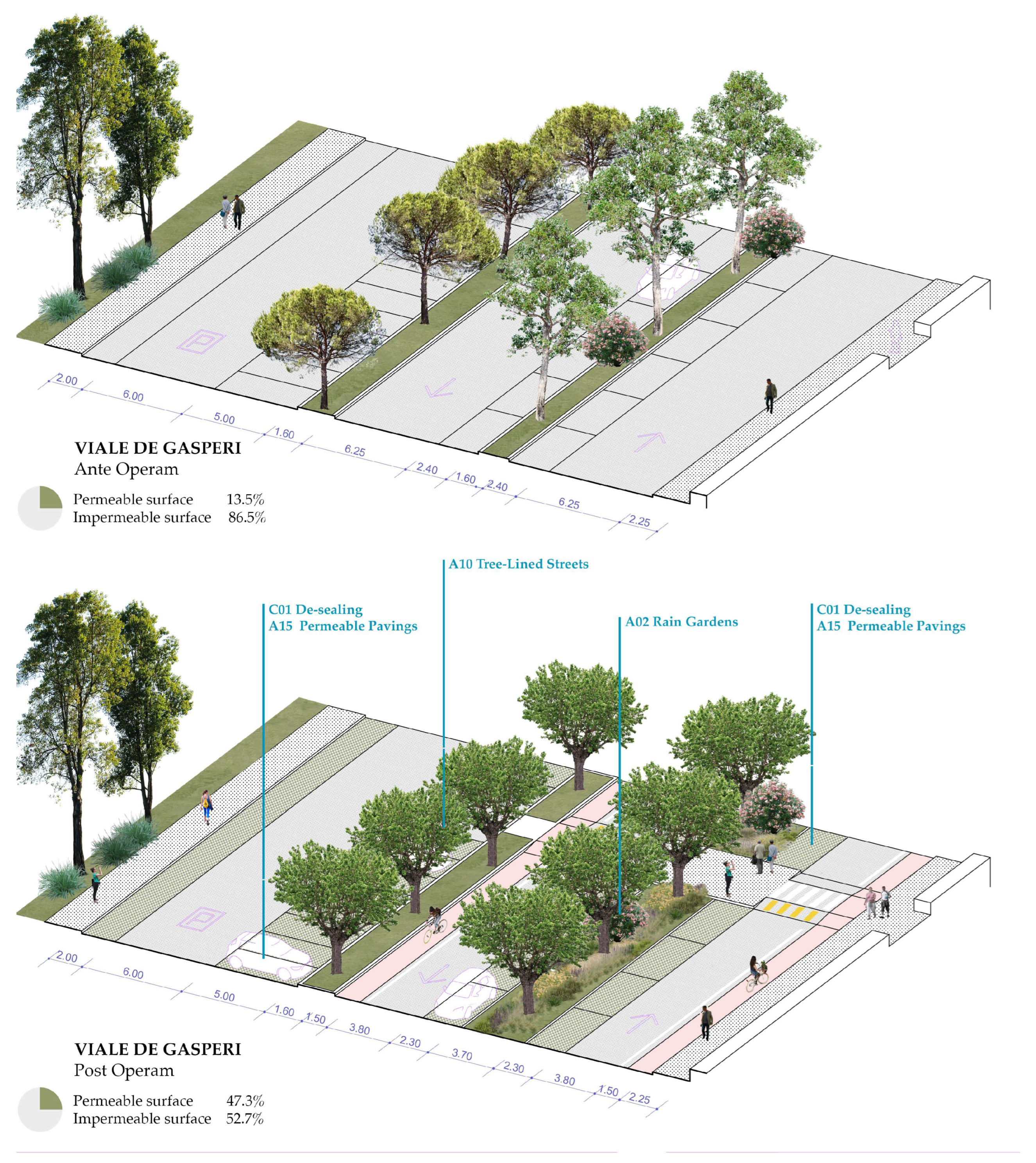
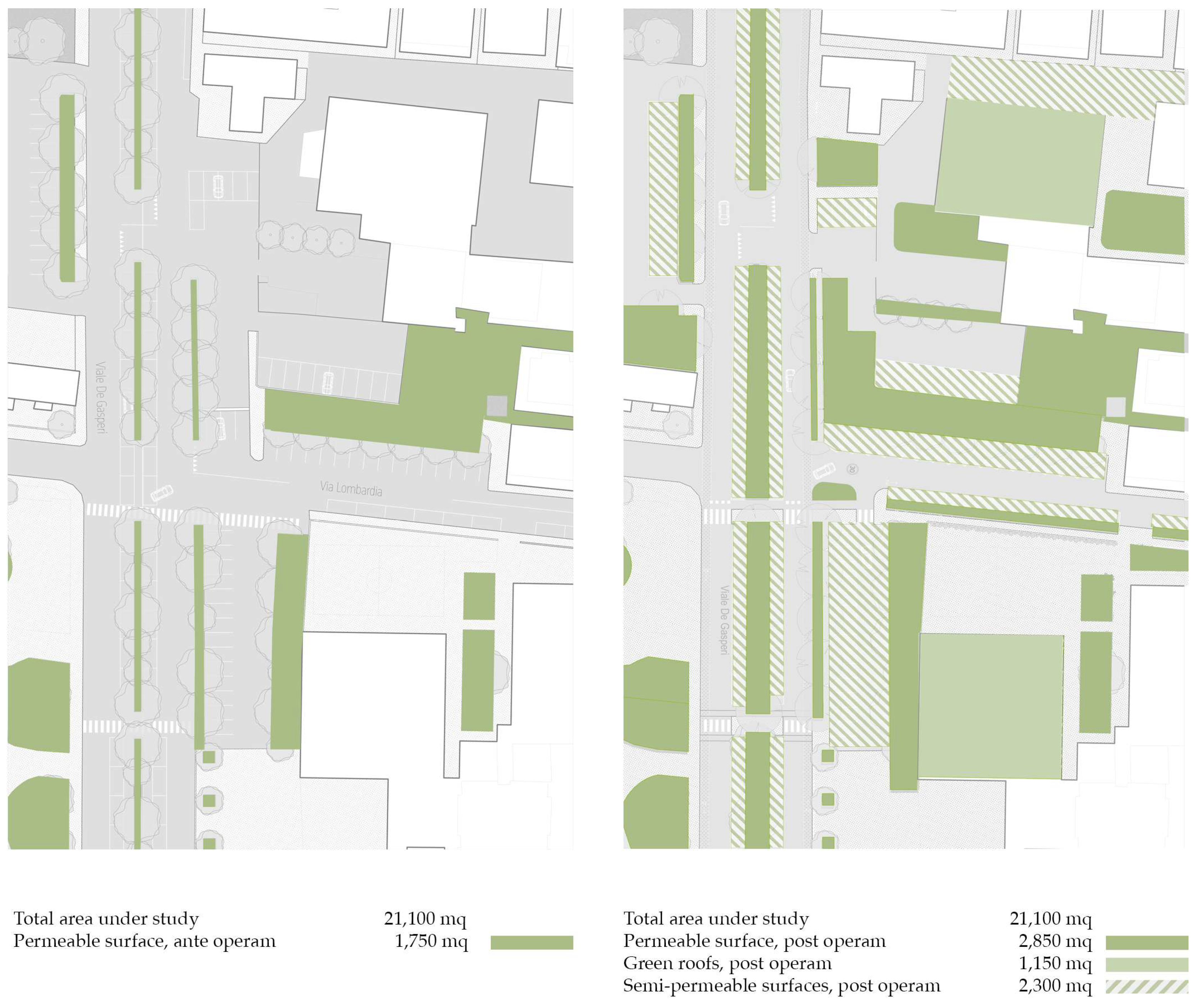
- Quantification of Post-Intervention Soil Permeability: Detailed maps of the post-intervention study area are produced, categorizing surfaces into permeable, semi-permeable, and impermeable. For each category, the surface extent is quantified, allowing for a direct comparison with ante operam conditions and an evaluation of the increase in permeable surfaces as a result of the design solutions (e.g., de-sealing interventions, creation of new green areas).
- b.
- Validation of Plant Species Selection: The selection of tree species and vegetation (carried out in Phase 4) is validated based on the expected ecosystem benefits, as described in the preceding botanical and microclimatic analyses (Phase 2). This includes verifying their suitability for future climate scenarios, their capacity to contribute to urban heat island mitigation (e.g., shading, evapotranspiration), stormwater management, and oxygen production and carbon storage. The validation relies on scientific data, species technical sheets, and results from simulations (e.g., i-Tree Eco) that quantify the anticipated benefits.
- c.
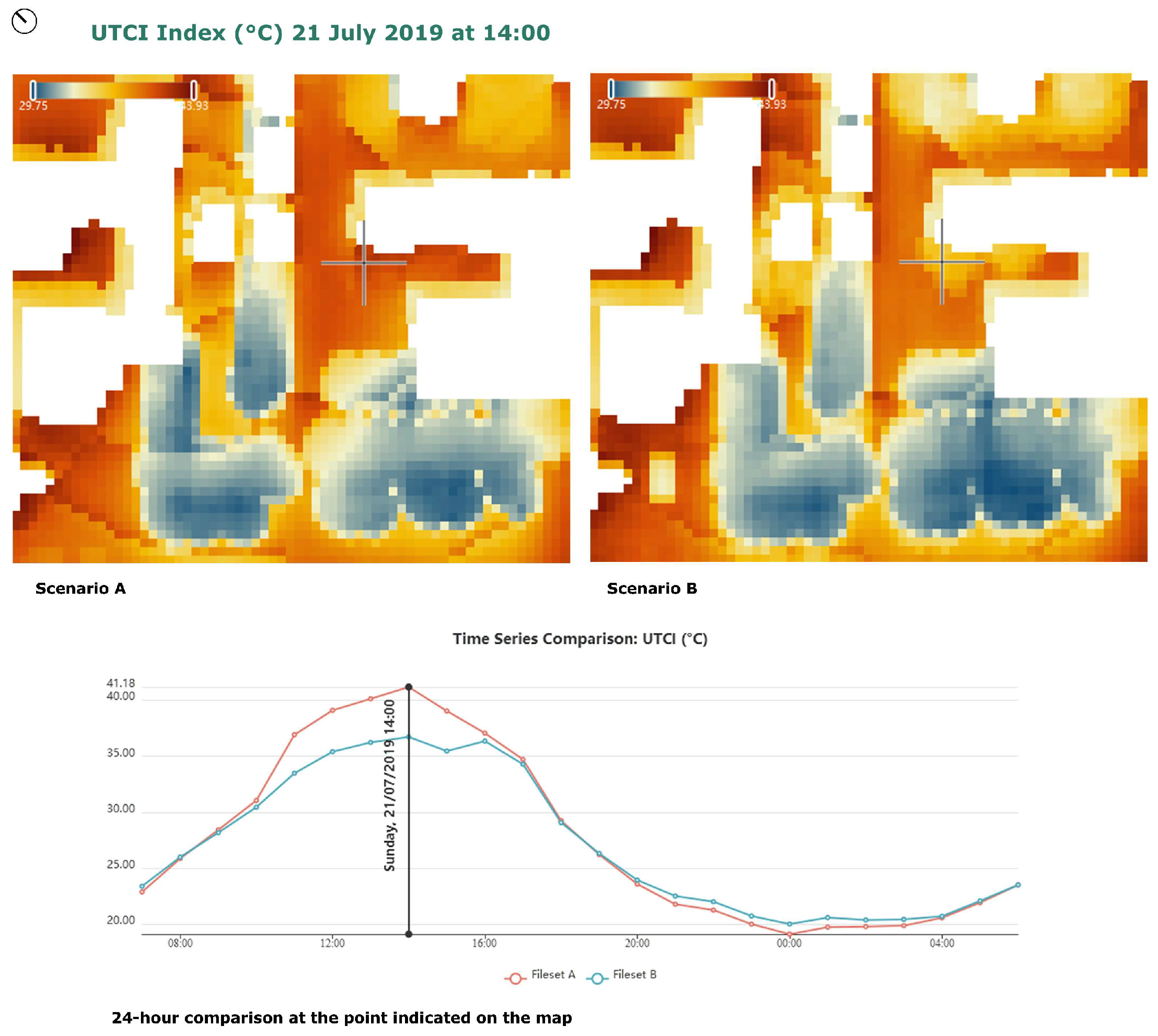
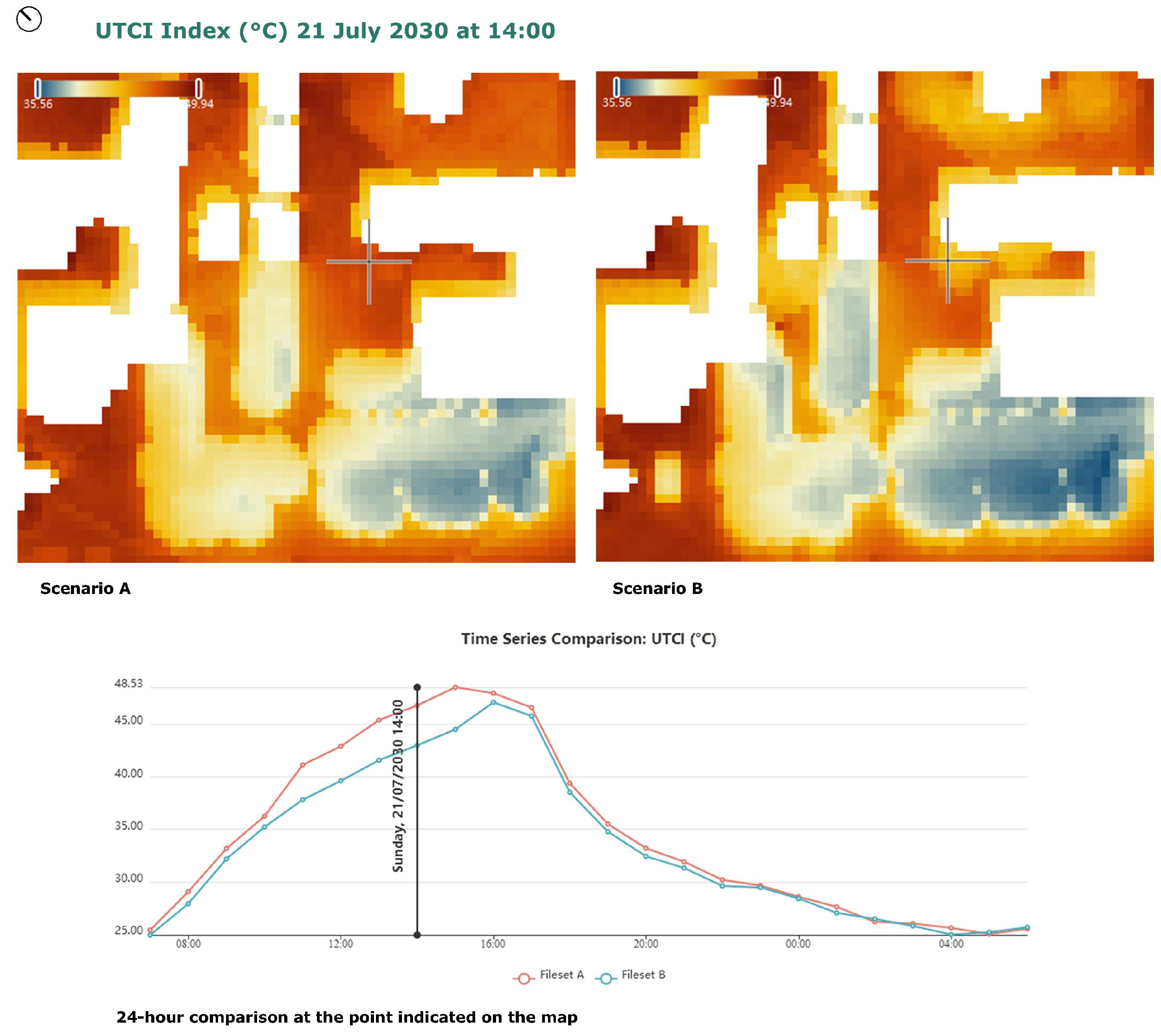
- Microclimate Analysis—CFD Simulations and Environmental Benefits: New simulations are performed using ENVI-MET and i-Tree Eco software on the study area model with the implemented design solutions. These simulations allow for the evaluation of microclimatic impact (e.g., UTCI index) and ecosystem services (e.g., pollutant removal, carbon sequestration) resulting from the proposed solutions, comparing them with ante operam and projected future scenarios (2030). The analysis confirms the achievement of climate adaptation objectives.
- d.
- Economic Evaluation of Interventions (Construction Costs): Summary estimates of construction costs for the proposed interventions are elaborated. While these estimates do not possess inherent scientific value for the validation of environmental performance, they are essential for the technical and economic feasibility studies required for public works in Italy. They provide local administrations with a pragmatic tool for budget definition, financial planning, and the overall economic sustainability assessment of the project with a view to potential implementation.
3. Results
3.1. Identification of the Detail Area
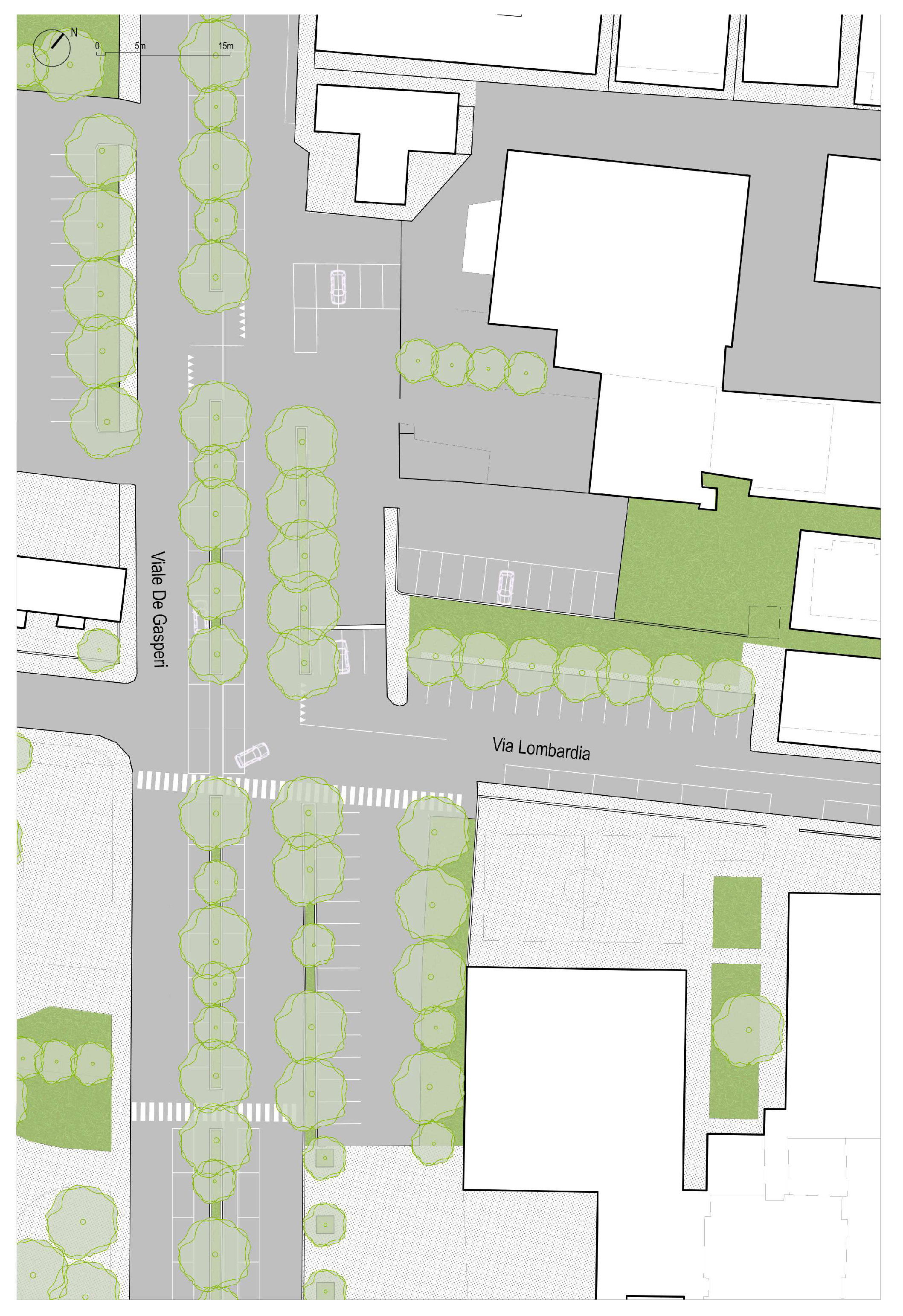
3.2. Ante Operam Analysis
- Use and distribution of space.
- Soil permeability and presence of gray infrastructure.
- Botanical–vegetational aspects.
- Microclimate analysis.
3.3. From Macro to Micro: Objectives Framework Definition
- Spatial–functional objectives. Given the scarcity of available space in this part of the city, which has already been defined as a compact city in other phases of the Life+ project analysis, i.e., as a densely built-up city with little green space and public space in general, it is necessary to understand how outdoor spaces are currently used, potentially in order to gain surface area. Analyses of the current use and size of roads suggest that there is indeed the possibility of fostering the use of urban space by pedestrians and cyclists and increasing the amount and quantity of greenery without compromising vehicular traffic, as the roads are largely oversized. A similar principle applies to parking lots, which allow for the rationalization of maneuvering spaces to obtain areas that can be used for other purposes.
- GI construction objectives. Implementation and consolidation of widespread green intervention in public spaces in continuity with other portions of the city.
- Climate adaptation objectives. The objective of this study is to enhance the outdoor microclimate, with a particular emphasis on cooling measures. This initiative is driven by the recognition of the area’s vulnerability to extreme heat stress, a condition that is anticipated to worsen in the future. The primary objective of this initiative is to promote sustainable rainwater management, with a dual focus on reducing flooding and runoff, minimizing sewage load, and enhancing the health and well-being of residents and users.
- Technological and construction objectives. In an effort to curtail expenditures while formulating an intervention that is not only economically sustainable but also replicable and expandable, the strategic objective is to identify cost-effective, replicable solutions that can be implemented expeditiously and without compromising the functionality (vehicular and pedestrian) of the area.
3.4. Requirements and Consequent-Detailed Technological and Design Choices
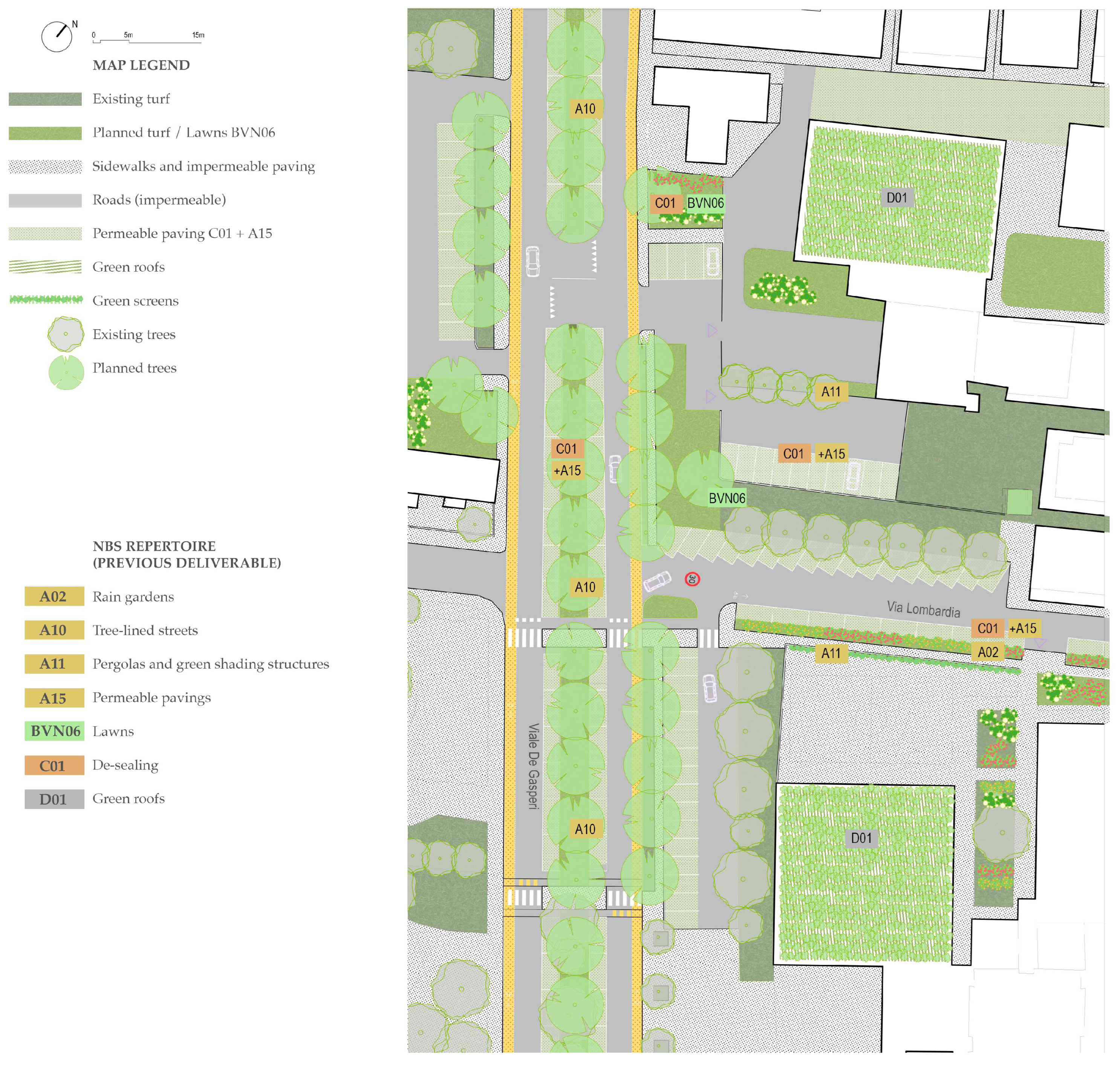
3.5. Detailed Post Operam Project
- Viale de Gasperi: A notable augmentation in green space can be achieved through a substantial reduction in the width of the roadways without compromising traffic flows. The central flowerbed has undergone significant expansion, reaching almost three times its original width (Figure 4). This modification serves to mitigate the presence of overly elongated discontinuities. This approach enables the strategic planting of new trees and bushes and the replacement of those that are not well-suited to the local climate, urban configurations, and projected climate change scenarios. The primary option under consideration is Morus alba, a deciduous and adaptable tree with a long history in the region, suited to temperate climates and, once mature, able to withstand even prolonged periods of drought. The resized central strip becomes a linear bioretention basin, appropriately connected to the existing rainwater collection network. The changes to the road section are made in line with current urban planning regulations.
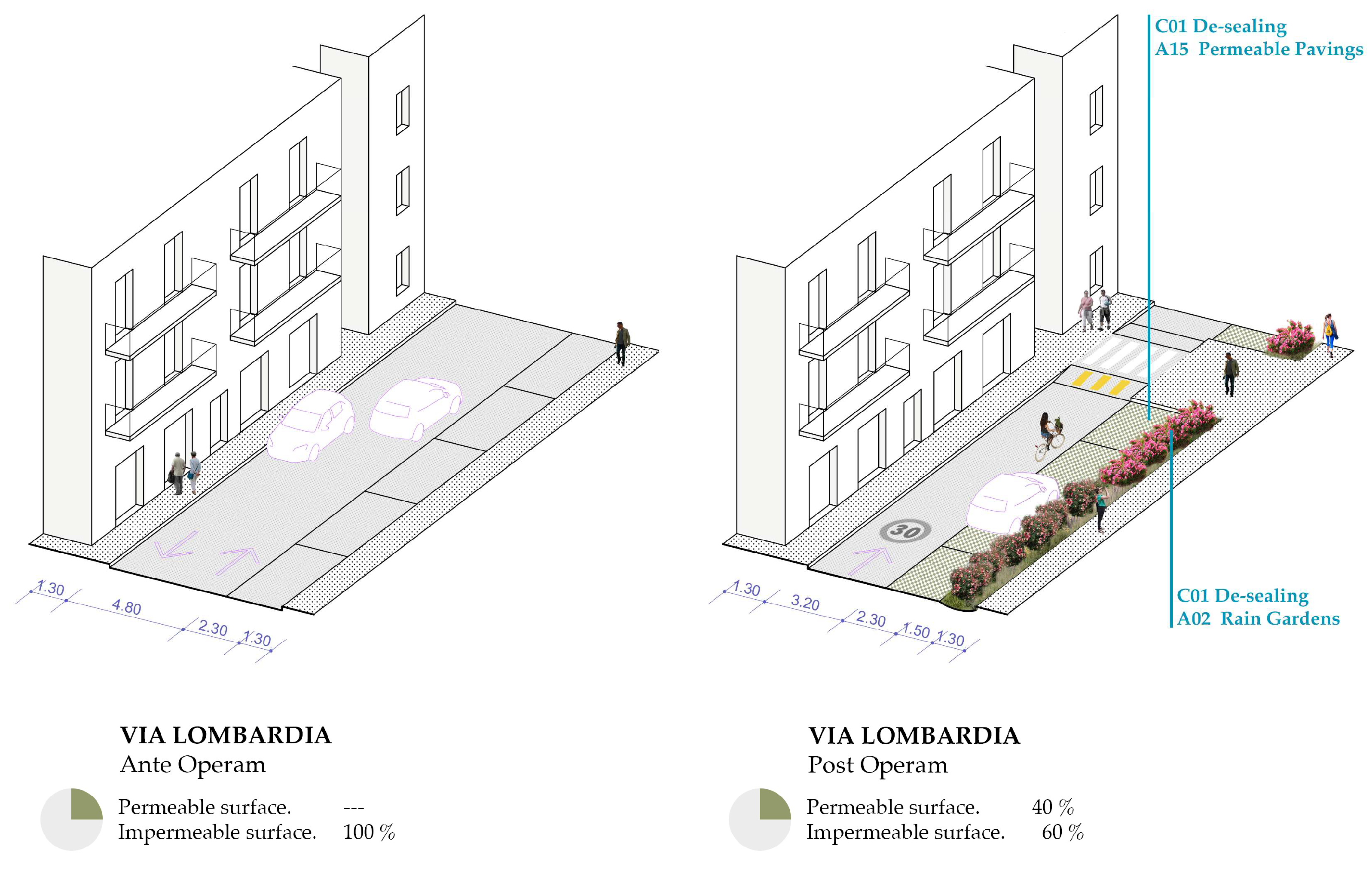
- Via Lombardia: The project involves the implementation of a one-way system for automobiles, with a roadway measuring 3.30 m in width (Figure 5). The design incorporates the implementation of a vegetated bioretention basin that is to be situated along the entire length of the thoroughfare. The basin has been meticulously designed to serve as a collection point for rainwater during inclement weather, while ensuring that the pedestrian thoroughfare remains accessible. The position of the bioretention basin, developed longitudinally with respect to the road, follows the current gray infrastructure layout in order to facilitate connections in the event of actual implementation. The changes to the road section are made in line with current urban planning regulations.
- Parking and pavements: The parking area can be optimized, particularly the spaces designated for maneuvering and the redundant entrances and exits, without compromising driver usability. This can create widespread space for new greenery. These spaces are scheduled to undergo de-sealing and replacement of the surface layer with materials conducive to drainage.
- Pedestrian and cyclist Space: Pedestrian and cyclist-designated spaces have been augmented and made safer, crossings have been shortened, making them easier to use, especially for those with mobility issues, and cycle paths now run seamlessly throughout the area. Despite the lack of direct correlation with greenery, these measures are regarded as essential climate mitigation strategies aimed at enhancing the comfort of outdoor spaces. This enhancement is defined by their capacity to welcome individuals, encourage movement, and consequently exert a positive influence on both physical and psychological well-being. Consequently, these measures can potentially lead to a reduction in automobile presence, accompanied by the associated benefits.
4. Discussion
5. Conclusions
Author Contributions
Funding
Institutional Review Board Statement
Informed Consent Statement
Data Availability Statement
Acknowledgments
Conflicts of Interest
Abbreviations
| GI | Green Infrastructure |
| NBSs | Nature-Based Solutions |
| PUMS | Piano Urbano Mobilità Sostenibile (Sustainable Urban Mobility Plan) |
| UTCI | Universal Thermal Climate Index |
| RCP | Representative Concentration Pathways |
References
- Liquete, C.; Udias, A.; Conte, G.; Grizzetti, B.; Masi, F. Integrated Valuation of a Nature-Based Solution: A Case Study of Water Purification in the Tordera River Basin, Spain. Ecosyst. Serv. 2016, 21, 192–203. [Google Scholar] [CrossRef]
- Dorst, H.; van Zanten, A.; Raven, R.; Runhaar, H. Urban Greening through Nature-Based Solutions–Key Characteristics of an Emerging Concept. Sustain. Cities Soc. 2019, 49, 101620. [Google Scholar] [CrossRef]
- European Commission. Green Infrastructure. Available online: https://environment.ec.europa.eu/topics/nature-and-biodiversity/green-infrastructure_en (accessed on 5 January 2026).
- La Notte, A.; Zulian, G. An Ecosystem Services-Based Approach to Frame NBS in Urban Context. In Nature-Based Solutions for More Sustainable Cities—A Framework Approach for Planning and Evaluation; Croci, E., Lucchitta, B., Eds.; Emerald Publishing: Leeds, UK, 2021. [Google Scholar]
- Hallegatte, S.; Corfee-Morlot, J. Understanding Climate Change Impacts, Vulnerability, and Adaptation at City Scale: An Introduction. Clim. Change 2011, 104, 1–12. [Google Scholar] [CrossRef]
- Pereira, P.; Wang, F.; Inacio, M.; Kalinauskas, M.; Bogdzevič, K.; Bogunovic, I.; Zhao, W.; Barcelo, D. Nature-Based Solutions for Carbon Sequestration in Urban Environments. Curr. Opin. Environ. Sci. Health 2024, 37, 100536. [Google Scholar] [CrossRef]
- Biswal, B.K.; Bolan, N.; Zhu, Y.; Balasubramanian, R. Nature-based Systems (NbS) for Mitigation of Stormwater and Air Pollution in Urban Areas: A Review. Resour. Conserv. Recycl. 2022, 186, 106578. [Google Scholar] [CrossRef]
- Wanner, A.; Pröbstl-Haider, U.; Feilhammer, M. New green infrastructures for European cities: Multiple ways for improvement and climate change adaptation. WIT Trans. Ecol. Environ. 2022, 260, 121–133. [Google Scholar] [CrossRef]
- Gehl, J. Life Between Buildings: Using Public Space; The Danish Architectural Press: Copenhagen, Denmark, 1971. [Google Scholar]
- Ramos-Vidal, I.; Domìnguez de la Ossa, E. A Systematic Review to Determine the Role of Public Space and Urban Design on Sense of Community. Int. Sci. J. 2023, 74, 633–655. [Google Scholar] [CrossRef]
- Nieuwenhuijsen, M.J. New Urban Models for More Sustainable, Liveable and Healthier Cities Post Covid19; Reducing Air Pollution, Noise and Heat Island Effects and Increasing Green Space and Physical Activity. Environ. Int. 2021, 157, 106850. [Google Scholar] [CrossRef]
- D’Onofrio, R.; Trusiani, E. Città, Salute e Benessere. Nuovi Percorsi Per L’Urbanistica; FrancoAngeli: Milano, Italy, 2018. [Google Scholar]
- Salvo, D.; Banda, J.A.; Sheats, J.L.; Winter, S.J.; Lopes dos Santos, D. Impacts of Temporary Urban Pop-Up Park on Physical Activity and Other Individual- and Community-Level Outcomes; The New York Academy of Medicine: New York, NY, USA, 2017. [Google Scholar]
- Intergovernmental Panel on Climate Change (IPCC). Climate Change 2022: Impacts, Adaptation and Vulnerability. Contribution of Working Group II to the Sixth Assessment Report of the Intergovernmental Panel on Climate Change; Cambridge University Press: Cambridge, UK, 2022.
- World Health Organization (WHO). COP28 UAE Declaration on Climate and Health. 2023. Available online: https://cdn.who.int/media/docs/default-source/climate-change/cop28/cop28-uae-climate-and-health-declaration.pdf?sfvrsn=2c6eed5a\_3&download=true (accessed on 17 November 2025).
- Matos Silva, M. Public Spaces for Water—A Design Notebook; CRC Press: Leida, Spain, 2019. [Google Scholar]
- Castelo, S.; Amado, M.; Ferreira, F. Challenges and Opportunities in the Use of Nature-Based Solutions for Urban Adaptation. Sustainability 2023, 15, 7243. [Google Scholar] [CrossRef]
- Cortinovis, C.; Olsson, P.; Boke-Olén, N.; Hedlund, K. Scaling Up Nature-Based Solutions for Climate-Change Adaptation: Potential and Benefits in Three European Cities. Urban For. Urban Green. 2022, 67, 127450. [Google Scholar] [CrossRef]
- Oral, H.V.; Carvalho, P.; Gajewska, M.; Ursino, N.; Masi, F.; Hullebusch, E.D.; Kazak, J.K.; Exposito, A.; Cipolletta, G.; Andersen, T.R.; et al. A Review of Nature-Based Solutions for Urban Water Management in European Circular Cities: A Critical Assessment Based on Case Studies and Literature. Blue-Green Syst. 2022, 2, 112–136. [Google Scholar] [CrossRef]
- Mancuso, S. Fitopolis, La Città Vivente; Laterza: Roma, Italy, 2023. [Google Scholar]
- Ajirotutu, R.; Adeyemi, A.; Ifechukwu, G.; Iwuanyanwu, O.; Ohakawa, T.; Garba, P. Designing Policy Frameworks for the Future: Conceptualizing the Integration of Green Infrastructure into Urban Development. World J. Adv. Res. Rev. 2024, 24, 911–923. [Google Scholar] [CrossRef]
- IUCN. Global Standard for Nature-Based Solutions: A User-Friendly Framework for the Verification, Design and Scaling Up of NbS, 1st ed.; IUCN: Gland, Switzerland, 2020. [Google Scholar]
- Pietrapertosa, F.; Olazabal, M.; Simoes, S.; Salvia, M.; Fokaides, P.; Ioannou, B.; Viguié, V.; Spyridaki, N.-A.; Hurtado, S.D.G.; Geneletti, D.; et al. Adaptation to Climate Change in Cities of the Mediterranean Europe. Cities 2023, 140, 104452. [Google Scholar] [CrossRef]
- Lara, A.; del Moral, L. Nature-Based Solutions to Hydro-Climatic Risks: Barriers and Triggers for Their Implementation in Seville (Spain). Land 2022, 11, 868. [Google Scholar] [CrossRef]
- Macaione, I.; Raffa, A.; Andaloro, B. Climate-Adaptive Nature-Based Regenerative Urban Green Streetscapes: Design Exploration from the City of Matera. Sustainability 2024, 16, 6811. [Google Scholar] [CrossRef]
- Voskamp, I.M.; De Luca, C.; Polo-Ballinas, M.B.; Hulsman, H.; Brolsma, R. Nature-Based Solutions Tools for Planning Urban Climate Adaptation: State of the Art. Sustainability 2023, 13, 6381. [Google Scholar] [CrossRef]
- Organization for Economic Co-operation and Development (OECD). Developing an Integrated Approach to Green Infrastructure in Italy; (OECD Public Governance Reviews); OECD Publishing: Paris, France, 2023. [CrossRef]
- De Araújo Souza, P.; Souza de Abreu, V.H. Nature-Based Solutions For Climate Change Mitigation And Adaptation. Mix. Sustentável 2025, 11, 47–62. [Google Scholar] [CrossRef]
- Sahay, S. Nature-based solutions as urban adaptation to climate risk: Framework for economic evaluation as decision support tool. Sustain. Cities Soc. 2025, 118, 106037. [Google Scholar] [CrossRef]
- Guarino, R.; Catalano, C.; Pasta, S. Beyond Urban Forests: The Multiple Functions and the Overlooked Role of Semi-Natural Ecosystems in Mediterranean Cities. Diversity 2024, 16, 447. [Google Scholar] [CrossRef]
- McPhearson, T.; Frantzeskaki, N.; Ossola, A.; Diep, L.; Anderson, P.M.L.; Blatch, T.; Collier, M.J.; Cook, E.M.; Culwick Fatti, C.; Grabowski, Z.J.; et al. Global Synthesis and Regional Insights for Mainstreaming Urban Nature-Based Solutions. Proc. Natl. Acad. Sci. USA 2025, 122, e2315910121. [Google Scholar] [CrossRef]
- Castelar, J.A.C.; Popartan, L.A.; Pucher, B.; Pineda-Martos, R.; Hecht, K.; Katsou, E.; Nika, C.E.; Junge, R.; Langergraber, G.; Atanasova, N.; et al. What Does It Take to Renature Cities? An Expert-Based Analysis of Barriers and Strategies for the Implementation of Nature-Based Solutions. J. Environ. Manag. 2024, 354, 120385. [Google Scholar] [CrossRef] [PubMed]
- Bagiouk, S.; Sotiriadis, D.; Katsifarakis, K.L. Combining Pocket Parks with Ecological Rainwater Management Techniques in High-Density Urban Environments. Environ. Process. 2024, 11, 7. [Google Scholar] [CrossRef]
- Chelli, A.; Brander, L.; Geneletti, D. Cost-Benefit Analysis of Urban Nature-Based Solutions: A Systematic Review of Approaches and Scales with a Focus on Benefit Valuation. Ecosyst. Serv. 2025, 71, 101684. [Google Scholar] [CrossRef]
- Datola, G.; Dell’Ovo, M.; Oppio, A. The Feasibility of Nature-Based Solution (NBS) Interventions: Estimating the Cost Using the Work Breakdown Structure (WBS). Valori Valutazioni 2025, 37, 183–208. [Google Scholar] [CrossRef]
- Tuel, A.; Eltahir, E.A.B. Why Is the Mediterranean a Climate Change HotSpot? J. Clim. 2020, 33, 5829–5843. [Google Scholar] [CrossRef]
- Linares, C.; Díaz, J.; Negev, M.; Martínez, G.S.; Debono, R.; Paz, S. Impacts of Climate Change on the Public Health of the Mediterranean Basin Population-Current Situation, Projections, Preparedness and Adaptation. Environ. Res. 2020, 182, 109107. [Google Scholar] [CrossRef] [PubMed]
- Guida, C. I Rischi Naturali Del Cambiamento Climatico Nelle Città Del Mediterraneo; Federico II Open Access University Press: Napoli, Italy, 2021. [Google Scholar]
- Tojčić, I.; Denamiel, C.; Vilibić, I. Kilometer-Scale Trends, Variability, and Extremes of the Adriatic Far-Future Climate (RCP 8.5, 2070−2100). Front. Mar. Sci. 2024, 11, 1329020. [Google Scholar] [CrossRef]
- Intergovernmental Panel on Climate Change (IPCC). Climate Change 2022: Mitigation of Climate Change. Contribution of Working Group III to the Sixth Assessment Report of the Intergovernmental Panel on Climate Change; Cambridge University Press: Cambridge, UK, 2022.
- Tousi, E.; Mela, A.; Tseliou, A. Nature-Based Urbanism for Enhancing Senior Citizens’ Outdoor Thermal Comfort in High-Density Mediterranean Cities: ENVI-met Findings. Urban Sci. 2025, 9, 152. [Google Scholar] [CrossRef]
- Cramer, W.; Guiot, J. The Mediterranean as a Climate Change Hotspot: Implications for State and Societal Resilience. In Climate Change and Security in the Mediterranean: Exploring the Nexus, Unpacking International Policy Responses; Dessì, A., Fusco, F., Eds.; Edizioni Nuova Cultura: Roma, Italy, 2022. [Google Scholar]
- Del Duca, B.; Gullì, E.; Pisano, C.; Cristiano, S. Climate Risk Analysis Related to Urban Heat Islands in Metropolitan Areas for Urban Health: The Case Study of the Florence Plain. Contesti Città Territ. Progett. 2026, 288–309. [Google Scholar] [CrossRef]
- ISPRA (Istituto Superiore per la Protezione e la Ricerca Ambientale). Rapporto Consumo di Suolo, Dinamiche Territoriali e Servizi Ecosistemici, Edizione 2023; ISPRA: Roma, Italia, 2023. [Google Scholar]
- Sciuto, L.; Licciardello, F.; Scavera, V.; Verde, D.; Giuffrida, E.R.; Cirelli, G.L. The Role of Nature-Based Solutions for the Water Flow Management in a Mediterranean Urban Area. Ecol. Eng. 2024, 208, 107375. [Google Scholar] [CrossRef]
- Nastos, P.; Saaroni, H. Living in the Mediterranean Cities in the Context of Climate Change: A Review. Int. J. Climatol. 2024, 44, 3169–3190. [Google Scholar] [CrossRef]
- The World Bank. Nature-Based Solutions for Climate Resilience in Cities: A Guide for Practitioners; The World Bank: Washington, DC, USA, 2021; Available online: https://documents1.worldbank.org/curated/en/502101636360985715/pdf/A-Catalogue-of-Nature-based-Solutions-for-Urban-Resilience.pdf (accessed on 5 January 2026).
- Versini, P.A.; Al Sayah, M.; Duffaut, C.; Schertzer, D. How to Choose the Most Relevant Nature-Based Solutions and to Assess Their Performances? Insight from Two Projects Implemented on the French Territory. In Proceedings of the EGU General Assembly 2022, Vienna, Austria, 23–28 April 2022. EGU22-9465. [Google Scholar] [CrossRef]
- LIFE A_GreeNet Project. Available online: https://www.lifeagreenet.eu/site/ (accessed on 18 November 2025).
- Brownlee, T.D. Design with Climate Variables, Tecnologie per un Adattamento Temporaneo al Cambiamento Climatico; FrancoAngeli: Milano, Italy, 2023. [Google Scholar]
- Vilanova, C.; Ferran, J.F.; Concepción, E.D. Integrating Landscape Ecology in Urban Green Infrastructure Planning: A Multi-Scale Approach for Sustainable Development. Urban For. Urban Green. 2024, 94, 128248. [Google Scholar] [CrossRef]
- Maragno, D.; Litt, G.; Ferretto, L.; Gerla, F. Abaco per la Transizione Climatica; Anteferma: Treviso, Italy, 2022. [Google Scholar]
- Esraz-Ul-Zannat, M.; Dedekorkut-Howes, A.; Morgan, E.A. A Review of Nature-Based Infrastructures and Their Effectiveness for Urban Flood Risk Mitigation. WIREs Clim. Change 2023, 15, e889. [Google Scholar] [CrossRef]
- Aparicio Uribe, C.; Bonilla Brenes, R.; Hack, J. Potential of Retrofitted Urban Green Infrastructure to Reduce Runoff—A Model Implementation with Site-Specific Constraints at Neighborhood Scale. Urban For. Urban Green. 2022, 69, 127499. [Google Scholar] [CrossRef]
- Minixhofer, P.; Scharf, B.; Hafner, S.; Weiss, O.; Henöckl, C.; Greiner, M.; Room, T.; Stangl, R. Towards the Circular Soil Concept: Optimization of Engineered Soils for Green Infrastructure Application. Sustainability 2022, 14, 905. [Google Scholar] [CrossRef]
- Fang, X.; Li, J.; Ma, Q.; Zhou, R.; Du, S. A Quantitative Review of Nature-Based Solutions for Urban Sustainability (2016–2022): From Science to Implementation. Sci. Total Environ. 2024, 927, 172219. [Google Scholar] [CrossRef]
- Croeser, T.; Garrard, G.; Sharma, R.; Ossola, A.; Bekessy, S. Choosing the Right Nature-Based Solutions to Meet Diverse Urban Challenges. Urban For. Urban Green. 2021, 65, 127337. [Google Scholar] [CrossRef]
- United States Environmental Protection Agency (EPA). Green Streets Handbook; EPA 841-B-21-001; Office of Water: Washington, DC, USA, 2021. [Google Scholar]
- Sommese, F.; Diana, L. A Holistic Framework for the Implementation of Green Roofs on Existing Buildings: A Case Study in the Mediterranean Climate of Naples. Build. Environ. 2025, 274, 112811. [Google Scholar] [CrossRef]
- Regione Emilia-Romagna. REBUS—Laboratorio Rigenerazione Urbana e Cambiamenti Climatici. Available online: https://territorio.regione.emilia-romagna.it/urbanistica/formazione-ed-eventi/corsi-formazione/rebus-laboratorio-rigeneraz-urbana-cambiam-climatici (accessed on 5 January 2026).
- B67 Palomeras Arquitectes; Cierto Estudio. Model Nous Eixos Verds; Ajuntament de Barcelona: Barcellona, Spain, 2021; Available online: https://ajuntament.barcelona.cat/superilles/sites/default/files/model_eixos_verds_web.pdf (accessed on 5 January 2026).
- Sommese, F.; Diana, L.; Colajanni, S.; Bellomo, M.; Sciuto, G.; Lombardo, G. Towards a Regenerative and Climate-Resilient Built Environment: Greening Lessons from European Cities. Buildings 2025, 15, 1878. [Google Scholar] [CrossRef]
- Regione Emilia-Romagna. Strategie Proposte Progettuali: Schede Progetti Rimini; Regione Emilia-Romagna: Bologna, Italy, 2023; Available online: https://fesr.regione.emilia-romagna.it/progetti-attivita/strategie-territoriali-e-progetti/atuss/documenti-atuss/strategie-proposte-progettuali/2023-10.pdf/@@download/file/Schede%20progetti%20Rimini.pdf (accessed on 5 January 2026).
- Catalano, C.; Andreucci, M.B.; Guarino, R.; Bretzel, F.; Leone, M.; Pasta, S. (Eds.) Urban Services to Ecosystems: Green Infrastructure Benefits from the Landscape to the Urban Scale; Springer: Cham, Switzerland, 2021. [Google Scholar] [CrossRef]
- Raffa, A.; Moscatelli, M. Rigenerazione Urbana Green: Progettare Streetscapes Resilienti Al Clima Attraverso NbS. Techne 2025, 29, 229–239. [Google Scholar] [CrossRef]
- Ye, C.; Gao, J.; Nachabe, M.; Charkhgard, H.; Zhang, Y.; Zhang, Q. Optimization of Green and Grey Infrastructure for Performance Enhancement of Urban Drainage System under Future Conditions. J. Environ. Manag. 2025, 376, 124518. [Google Scholar] [CrossRef]
- Cecchi, J.; Malavolta, S.; D’Onofrio, R.; Marchesani, G.E.; Catorci, A.; Giorgini, I. LIFE+ A_GreeNet—Data & Report iTree Eco; Zenodo: Geneva, Switzerland, 2025. [Google Scholar] [CrossRef]
- Weatherspark. San Benedetto del Tronto Weather History. Available online: https://it.weatherspark.com/h/y/74641/2019/Condizioni-meteorologiche-storiche-durante-il-2019-a-San-Benedetto-del-Tronto-Italia#Figures-Temperature (accessed on 5 January 2026).
- Eggimann, S. Deprioritising Cars Beyond Rerouting: Future Research Directions of the Barcelona Superblock. Cities 2025, 157, 105609. [Google Scholar] [CrossRef]
- WorldWeatherOnline. Historical Weather Data. Available online: https://www.worldweatheronline.com (accessed on 25 October 2025).
- Tirabassi, T.; Nassetti, S. The Representative Day. Atmos. Environ. 1999, 33, 2427–2434. [Google Scholar] [CrossRef]
- Cocci Grifoni, R.; Marchesani, G.E.; Malavolta, S.; D’Onofrio, R.; Khodaparast, M. Representative Meteoclimatic Scenarios for Mediterranean Urban Climate Adaptation. IOP Conf. Ser. Earth Environ. Sci. 2025, 1568, 012045. [Google Scholar] [CrossRef]
- Marchesani, G.E.; Cocci Grifoni, R.; Khodaparast, M. EnviReader, version 1.5; Zenodo: Geneva, Switzerland, 2024. [CrossRef]
- Marchesani, G.E.; Cocci Grifoni, R. Envi-MET Simulation Dataset for the LIFE AGREEN_NET Project (2019 and 2030); Zenodo: Geneva, Switzerland, 2025. [Google Scholar] [CrossRef]
- Romm, D.; Jasso Chávez, J.A.; Kinman, L.; Salsabilian, P.; McKenzie, G.; Manaugh, K. The Cars Are Going to Be Alright: Examining Micromobility Infrastructure Space Allocation and Potential Improvement Scenarios in Montréal. J. Cycl. Micromobility Res. 2025, 5, 100071. [Google Scholar] [CrossRef]
- Brownlee, T.D.; Malavolta, S. Bridging the Theory-Practice Gap: A Design Methodology for Green Infrastructure Implementation in Mid Adriatic Coastal Cities. Preprints 2025, 2025121403. [Google Scholar] [CrossRef]



| Month | Average Max Temperature (°C) | Average Min Temperature (°C) | Rainfall (mm) | N° of Rainy Days | Relative Humidity |
|---|---|---|---|---|---|
| January | 9.8 | 3.5 | 65 | 7 | 79% |
| February | 12.1 | 4.2 | 48 | 6 | 76% |
| March | 15.5 | 6.0 | 52 | 6 | 74% |
| April | 18.2 | 9.5 | 60 | 8 | 75% |
| May | 19.5 | 11.8 | 145 | 12 | 78% |
| June | 28.5 | 18.2 | 35 | 4 | 68% |
| July | 30.2 | 20.1 | 42 | 4 | 65% |
| August | 30.5 | 20.5 | 55 | 5 | 69% |
| September | 25.4 | 17.5 | 79 | 9 | 75% |
| October | 21.0 | 13.2 | 85 | 7 | 78% |
| November | 15.8 | 9.5 | 130 | 11 | 82% |
| December | 11.5 | 5.2 | 80 | 8 | 80% |
| GI Construction Goals | Climate Adaptation Goals | Project Scenario 2030 | Project Scenario 2050 |
|---|---|---|---|
| Regeneration of public space and building fabrics through greening and micro-forestry interventions. | Cooling of the urban environment; Reduction in air pollution; Health and well-being of inhabitants. | Initiation of public space regeneration along the squares and the streets. De-sealing interventions, installation of permeable paving, and qualitative improvement of existing public green spaces. Introduction of new non-allergenic trees, micro-forestry interventions, and integration of NBSs. | Interventions targeting small-scale public spaces and building courtyards through greening and de-sealing of existing parking areas. |
| Time | Temperature (°C) | Humidity (g/kg) | Precipitation (mm) | Wind Speed (m/s) | Wind Direction (°) |
|---|---|---|---|---|---|
| 00:00 | 21.4 | 11.14 | 0 | 2.5 | 240 |
| 01:00 | 21.3 | 11.13 | 0 | 2.5 | 242 |
| 02:00 | 21.4 | 11.14 | 0 | 2.5 | 243 |
| 03:00 | 20.4 | 10.32 | 0 | 2.5 | 245 |
| 04:00 | 22.4 | 11.11 | 0 | 2.5 | 244 |
| 05:00 | 23.4 | 11.79 | 0 | 2.2 | 244 |
| 06:00 | 24.4 | 13.34 | 0 | 1.9 | 243 |
| 07:00 | 26.3 | 12.68 | 0 | 1.7 | 200 |
| 08:00 | 27.3 | 12.71 | 0 | 1.7 | 157 |
| 09:00 | 28.3 | 11.91 | 0 | 1.4 | 114 |
| 10:00 | 29.3 | 11.79 | 0 | 1.7 | 100 |
| 11:00 | 29.3 | 11.79 | 0 | 1.9 | 85 |
| 12:00 | 30.3 | 11.9 | 0 | 2.2 | 71 |
| 13:00 | 29.3 | 11.79 | 0 | 2.2 | 77 |
| 14:00 | 29.4 | 12.63 | 0 | 2.5 | 83 |
| 15:00 | 28.4 | 13.48 | 0 | 2.5 | 89 |
| 16:00 | 27.4 | 13.45 | 0 | 2.2 | 98 |
| 17:00 | 26.4 | 14.31 | 0 | 1.9 | 107 |
| 18:00 | 25.4 | 14.37 | 0 | 1.7 | 116 |
| 19:00 | 24.4 | 13.34 | 0 | 1.7 | 145 |
| 20:00 | 23.4 | 12.57 | 0 | 1.7 | 174 |
| 21:00 | 22.3 | 12.55 | 0 | 1.7 | 203 |
| 22:00 | 22.3 | 11.1 | 0 | 1.9 | 217 |
| 23:00 | 22.3 | 10.37 | 0 | 1.9 | 231 |
| Aspects | Needs Framework | Requirements | Technological Design Choices |
|---|---|---|---|
| Spatial–functional | Streets. Foster the use of urban space by pedestrians and cyclists and increase the amount and quantity of greenery without compromising vehicular traffic. | Minimum provision of comfortable, attractive, and safe outdoor urban space. | Via Lombardia can become one-way with a reduced carriageway of 3.30 m wide. Space is created for the insertion of a bioretention device and to increase space for pedestrians. In Viale De Gasperi, there can be a reduction in the carriageways to 3.80 m. This allows the creation of cycle lanes in both directions, and the insertion of a large vegetated flowerbed (from 1.60 m to 3.70 m) which can accommodate bioretention basins and large safe spaces for pedestrians to cross and stop, equipped with benches and street furniture. It is also planned to rationalize spaces designated for motor vehicle traffic in order to increase green pedestrian areas. |
| Parking spaces. Rationalize maneuvering spaces and parking areas to obtain areas that can be used for other purposes. | Reduction in parking area with total number of parking spaces unchanged. | Parking areas are rationalized, double access points are removed, and spaces are created for the purposes of the project. The number of parking spaces remains essentially unchanged (113 before and 114 after), while the space for maneuvering and accessing has been reduced. These changes do not affect drivers’ ability to access and exit parking spaces, in line with current regulations and the urban planning instruments adopted. | |
| Construction of the GI | Implementation and consolidation of widespread green intervention in public spaces. | Continuity of the GI to supplement the existing one. | The creation of new green spaces allows for increasing green capacity and integrating it into the existing network. Insertion and replacement of high-risk tree species. Wojtyla Park is located to the west of the project area. The extension and densification of the tree-lined avenue will serve as a connection to the park, promoting the creation of ecological networks. The selection of possible NBSs is made through Deliverable DA 1.1.2, the “NBS Repertoire,” based on site characteristics and includes the following categories: Rain gardens; Tree-lined streets; Pergolas and green shading structures; Permeable surfaces; De-sealing; Green roofs. |
| Effective tree cover. | Selection of trees and bushes based on current and projected climate, as well as site characteristics and distance from the sea. Selection also based on their adaptability, ability to withstand cold and especially hot and arid climates, as well as low maintenance requirements once established. Maximize tree canopy cover during hot periods and allow solar radiation to pass through during winter. | Trees: Morus alba; Tree that has these characteristics and its widespread traditional use in neighboring territories. Bushes: Solanus jasminoides, Rosa banskia arbustiva, Rosa chinensis. | |
| Climate adaptation | Improving outdoor microclimate comfort, particularly cooling and counteracting the urban heat island effect; Sustainable rainwater management with a view to reducing flooding and runoff; Reducing sewage load; Health and well-being of residents and users. | Minimum number of trees along main roads; Use of materials suitable for hot temperatures and long, continuous exposure to solar radiation; Capacity of the sewerage system to cope with the effects of extreme events; Provision of green and blue infrastructure integrated with existing gray infrastructure; Capacity of urban bioretention basins capable of absorbing and slowing down rainwater runoff; Minimum provision of green space with trees to benefit from the effects of shade and evapotranspiration. | Allocating the highest possible number of tall trees along the road, in parks, and within newly created surfaces; Replacement of existing pavements with high albedo materials (cool pavement) in order to reduce surface temperatures; Creation of green roofs when feasible, for example, on flat roofs of schools and public buildings; Creation of road sections with slopes towards bioretention basins, which are specially sized according to the collection areas and extreme precipitation forecasts. |
| Technological–constructive | Economy; Replicability; Speed in the implementation phase; Ability to carry out interventions without compromising the functionality (vehicular and pedestrian) of the area; Compatibility with under services lines. | Easy to install; Easy to maintain; Possibility of implementation for modular segments or phases. | Constructive systems with materials and components available on site and construction methods implemented starting from knowledge not foreign to local workers; Identify modular technological solutions and materials easy to replace and maintain over time |
| Ante | Post | |
|---|---|---|
| Number of trees | 39 | 59 |
| Tree cover | 6.1% | 15.1% |
| Pollution removal | 2.26 kg/year (EUR 18/year) | 4.52 kg/year (EUR 31.7/year) |
| Carbon storage | 20.390 kg (EUR 3280) | 23.370 kg (EUR 3760) |
| Carbon sequestration | 1163 kg (EUR 187/anno) | 1849 kg (EUR 297/anno) |
| Oxygen production | 3101 kg/year | 4931 kg/anno |
| Avoided runoff | 1.82 m3/year (EUR 3.45/year) | 3.47 m3/year (EUR 6.61/year) |
| UTCI ANTE (°C) in Case of No Intervention | UTCI POST (°C) in Case of Implementing the Design Proposal | |
|---|---|---|
| 21 July 2019 at 2:00 PM | 41° | 37° |
| 21 July 2030 at 2:00 PM | 47° | 43° |
| Brief Description of the Intervention | Summary Cost (Euro) |
|---|---|
| Interventions aimed at creating bioretention basins | |
| De-sealing and restoration of the surface layer of soil | 13,800.00 |
| Construction of rain gardens, sub-bases, drainage systems, soil, fabrics, and rainwater collection systems | 51,700.00 |
| Interventions aimed at creating lawns | |
| De-sealing and restoration of the surface layer of soil | 14,500.00 |
| Soil preparation and sowing operations | 2500.00 |
| Interventions aimed at creating permeable parking lots | |
| De-sealing and restoration of the surface layer of soil | 38,200.00 |
| Soil preparation, ballast, sand bed, etc. | 59,100.00 |
| Drainage paving in interlocking elements | 76,300.00 |
| Interventions aimed at creating extensive green roofs | |
| Preparatory works, supply, installation of green roofing | 230,000.00 |
| Maintenance and connection works on sidewalks | 20,000.00 |
| Total | 506,100.00 |
| Thematic Area | Specific Requirement (From Phase 4) | Operam Result (From Section 3.5) | Validation Status |
|---|---|---|---|
| Spatial– functional | Optimization of vehicular space for increased pedestrian/cycling areas. | Significant increase in pedestrian/cycling areas, reduced roadway widths, optimized parking; substantial gains in space allocated for trees and vegetation; | Fulfilled |
| Construction of GI | Continuity and density of vegetation. | Tree canopy cover increased from 6.1% to 15.1%; new green areas connected to Parco Wojtyla. | Fulfilled |
| Climate Adaptation | Reduction in UTCI index; improved stormwater management capacity. | Average UTCI reduction of 0.61 °C (peaks of 4.45 °C) in 2019, 1.17 °C in 2030; +194% permeable surface area. | Fulfilled (microclimatic and hydrological benefits confirmed) |
| Constructive Aspects | Cost-effectiveness, replicability, infrastructure compatibility. | Estimated construction costs EUR 506,100; modular solutions; no substantial alteration to existing infrastructure. | Fulfilled (for the case study) |
Disclaimer/Publisher’s Note: The statements, opinions and data contained in all publications are solely those of the individual author(s) and contributor(s) and not of MDPI and/or the editor(s). MDPI and/or the editor(s) disclaim responsibility for any injury to people or property resulting from any ideas, methods, instructions or products referred to in the content. |
© 2026 by the authors. Licensee MDPI, Basel, Switzerland. This article is an open access article distributed under the terms and conditions of the Creative Commons Attribution (CC BY) license.
Share and Cite
Brownlee, T.D.; Malavolta, S.; Marchesani, G.E. Bridging the Theory–Practice Gap: A Design Methodology for Green Infrastructure Implementation in Mid-Adriatic Coastal Cities. Sustainability 2026, 18, 1690. https://doi.org/10.3390/su18031690
Brownlee TD, Malavolta S, Marchesani GE. Bridging the Theory–Practice Gap: A Design Methodology for Green Infrastructure Implementation in Mid-Adriatic Coastal Cities. Sustainability. 2026; 18(3):1690. https://doi.org/10.3390/su18031690
Chicago/Turabian StyleBrownlee, Timothy D., Simone Malavolta, and Graziano Enzo Marchesani. 2026. "Bridging the Theory–Practice Gap: A Design Methodology for Green Infrastructure Implementation in Mid-Adriatic Coastal Cities" Sustainability 18, no. 3: 1690. https://doi.org/10.3390/su18031690
APA StyleBrownlee, T. D., Malavolta, S., & Marchesani, G. E. (2026). Bridging the Theory–Practice Gap: A Design Methodology for Green Infrastructure Implementation in Mid-Adriatic Coastal Cities. Sustainability, 18(3), 1690. https://doi.org/10.3390/su18031690