Integrating Lean Philosophy and Sustainability: A Systematic Literature Review with a Focus on the Social Dimension




Abstract
1. Introduction
2. Materials and Methods
2.1. Methodological Approach
2.2. Data Sources and Search Strategy Methodological Approach
2.3. Inclusion and Exclusion Criteria Data Sources and Search Strategy Methodological Approach
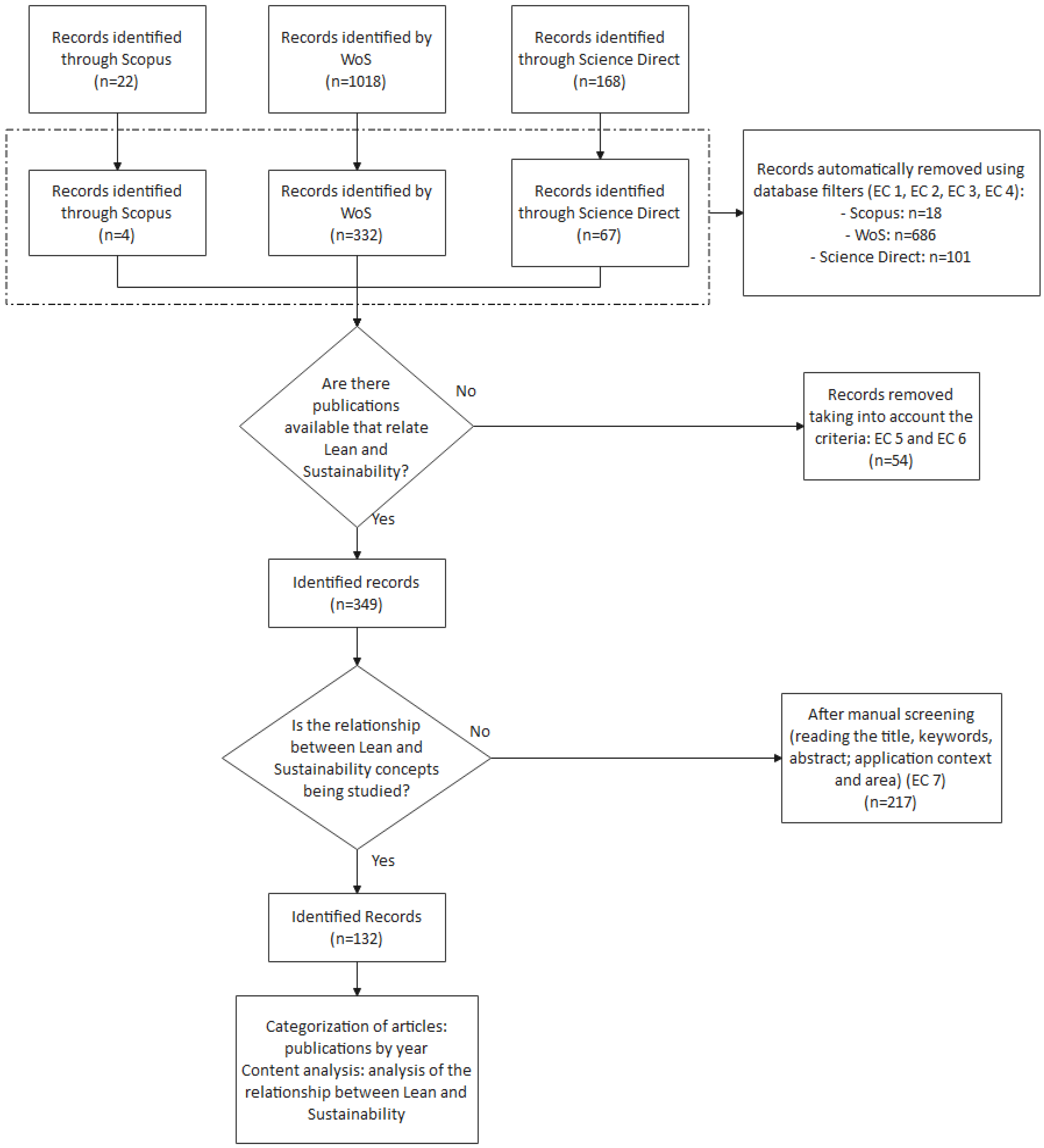
2.4. Data Selection and Extraction Process
2.5. Quality Appraisal of Included Studies
3. Results
3.1. Temporal Distribution of Publications
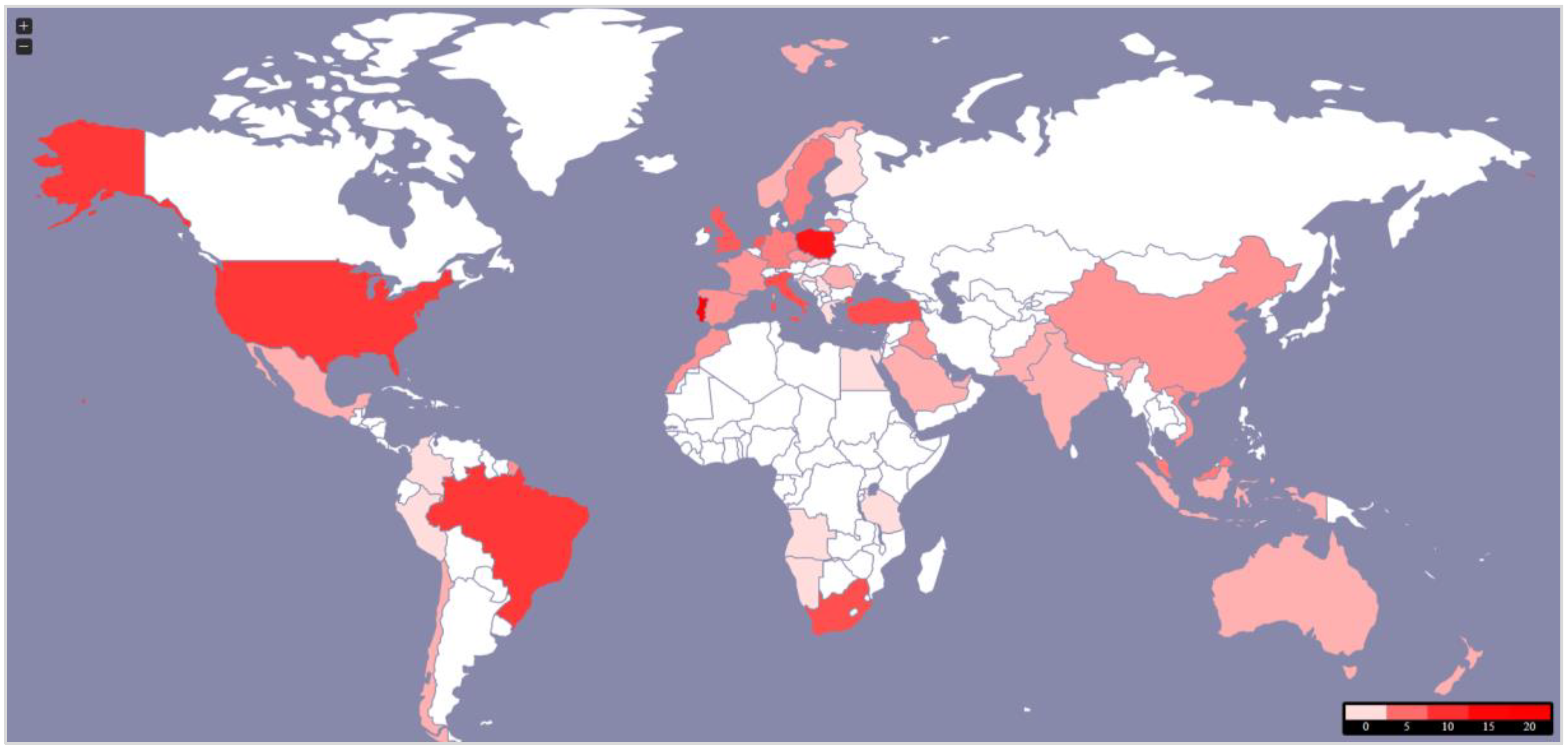
3.2. Distribution by Country
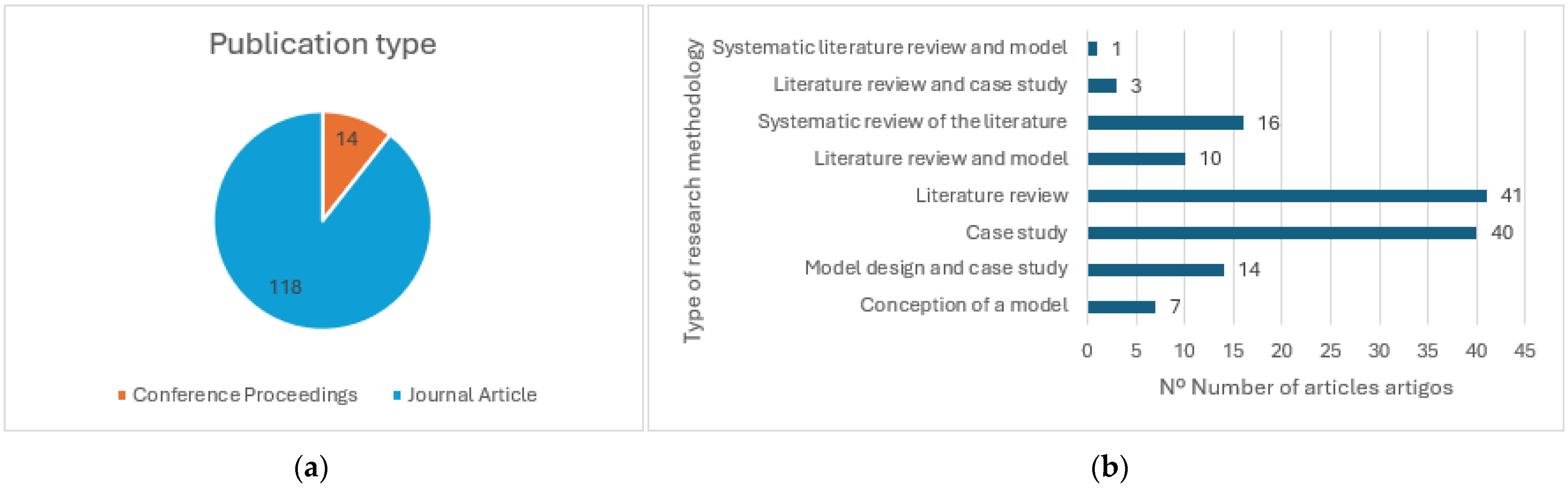
3.3. Type of Research and Publication
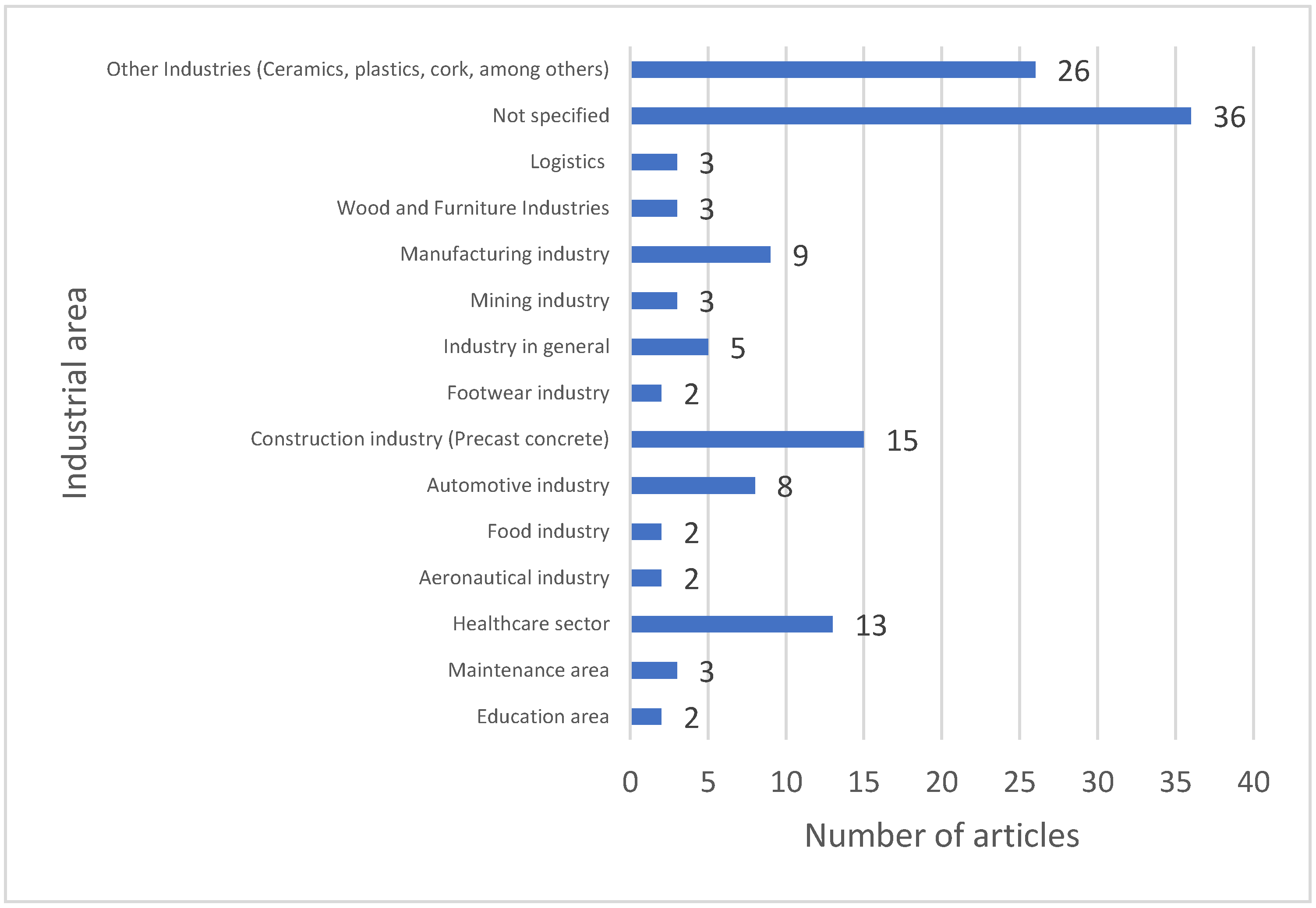
3.4. Industrial Application Sectors
3.5. Keyword Analysis
4. Discussion
4.1. RQ1: What Are the Main Objectives and Approaches of Studies on the Implementation of Lean and Sustainability Practices (Economic, Environmental, and Social) in Companies?
4.2. RQ2: How Does the Implementation of Lean and Sustainability Practices (Economic, Environmental, and Social) Influence Competitive Priorities and Trade-Offs in Companies?
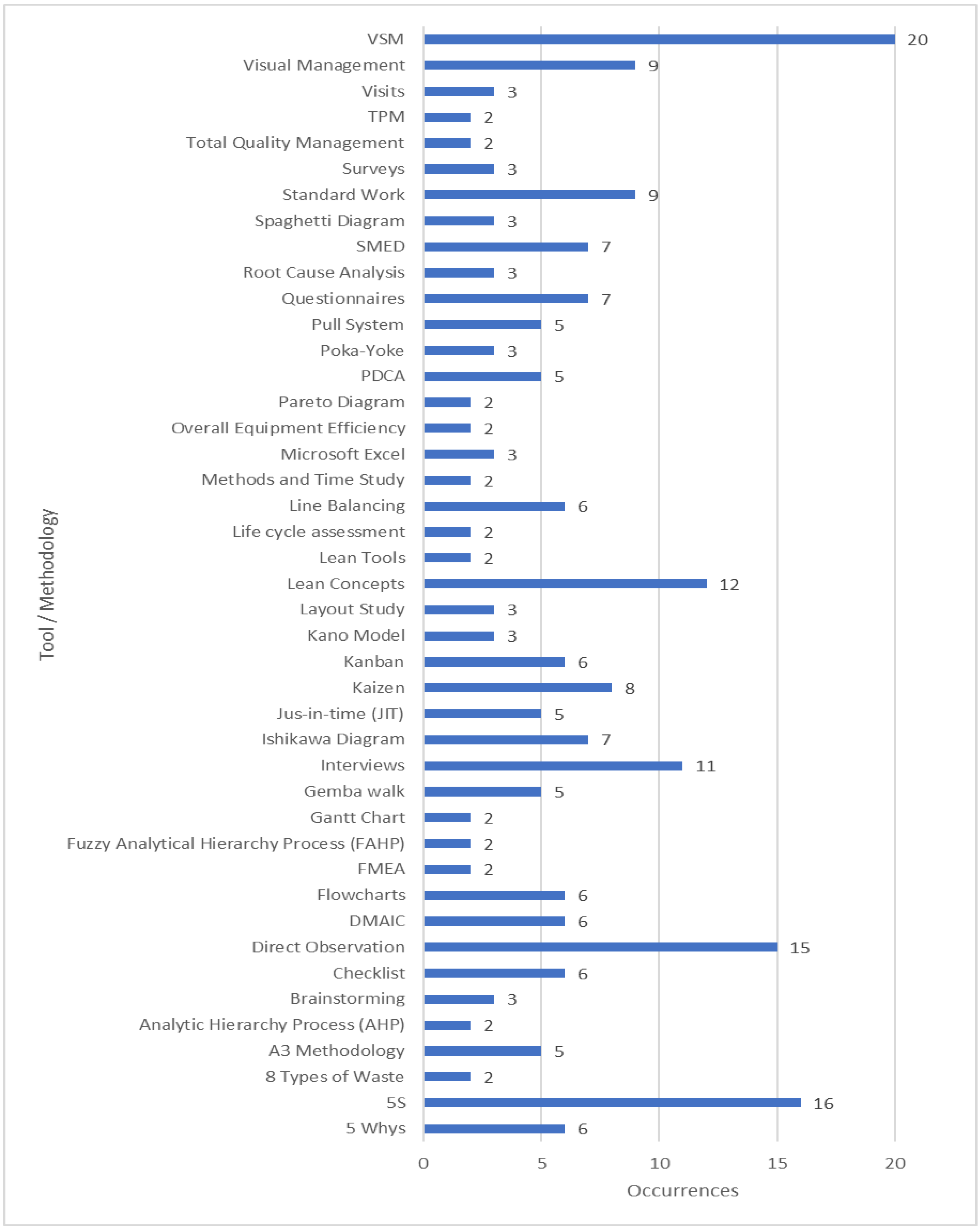
4.3. RQ3: What Are the Most Common Tools and Methodologies Used in the Integration of Lean and Sustainability Concepts (Economic, Environmental, and Social) in Companies?
4.4. RQ4: What Impacts Does the Implementation of Lean and Sustainability Concepts Have on Companies?
4.5. Managing Trade-Offs: Towards Synergistic Integration
4.6. Implications for Future Research
- How do Lean practices influence worker well-being, social equity, and ethical behavior in industrial and healthcare contexts?
- What key performance indicators can effectively measure social outcomes in Lean–sustainability integration initiatives?
- How can circular economic principles be incorporated into Lean tools, such as VSM, to mitigate environmental trade-offs?
- What organizational or contextual factors influence the successful integration of Lean and sustainability in the economic, environmental, and social dimensions?
5. Conclusions
Supplementary Materials
Author Contributions
Funding
Institutional Review Board Statement
Informed Consent Statement
Data Availability Statement
Acknowledgments
Conflicts of Interest
Abbreviations
| SLR | Systematic Literature Review |
| PRISMA | Preferred Reporting Items for Systematic Reviews and Meta-Analyses |
| RQ | Research questions |
| WoS | Web of Science |
| IC | Inclusion Criteria |
| EC | Exclusion Criteria |
| TBL | Triple Bottom Line |
| JIT | Just-in-Time |
| ESG | Environment, Social and Governance |
| TQM | Total Quality Management |
| TPM | Total Productive Maintenance |
| BPMN | Business Process Model and Notation |
| VSM | Value Stream Mapping |
| SMED | Single Minute Exchange of Die |
| DMAIC | Define, Measure, Analyze, Improve, Control |
| PDCA | Plan-Do-Check-Act |
| AHP | Analytic Hierarchy Process |
| FMEA | Failure Mode and Effects Analysis |
| FAHP | Fuzzy Analytical Hierarchy Process |
| LCA | Life Cycle Assessment |
Appendix A
Appendix A.1

| Item | Reference | Type of Study | Clear Objective | Defined Context | Appropriate Method | Rigorous Data Collection | Coherent Analysis | Relevant Results | Limitations Discussed | Overall Score | Ranking |
|---|---|---|---|---|---|---|---|---|---|---|---|
| 1 | [42] | Case study | Yes | Yes | Yes | Yes | Yes | Yes | Partial | 6.5 | High |
| 2 | [97] | Literature review | Yes | Partial | Yes | Partial | Yes | Yes | No | 5.0 | Moderate |
| 3 | [27] | Literature review | Yes | Partial | Yes | Partial | Yes | Yes | No | 5.0 | Moderate |
| 4 | [98] | Literature review and case study | Yes | Partial | Yes | Partial | Yes | Yes | No | 5.5 | Moderate |
| 5 | [20] | Literature review | Yes | Yes | Yes | Partial | Yes | Yes | No | 5.5 | Moderate |
| 6 | [53] | Literature review | Yes | Yes | Yes | Partial | Yes | Yes | No | 5.5 | Moderate |
| 7 | [99] | Literature review and case study | Yes | Yes | Yes | Yes | Yes | Yes | Partial | 6.5 | High |
| 8 | [17] | Literature review | Yes | Partial | Yes | Partial | Yes | Yes | No | 5.5 | Moderate |
| 9 | [44] | Literature review | Yes | No | Yes | Partial | Yes | Yes | No | 5.0 | Moderate |
| 10 | [100] | Case study | Yes | Yes | Yes | Yes | Yes | Yes | Partial | 6.0 | High |
| 11 | [54] | Theoretical model | Yes | Yes | Yes | Partial | Yes | Yes | Partial | 5.5 | High |
| 12 | [79] | Literature review + empirical study | Yes | Yes | Partial | Partial | Yes | Yes | Partial | 5.0 | Moderate |
| 13 | [101] | Case study | Yes | Yes | Yes | Partial | Yes | Yes | Partial | 5.5 | High |
| 14 | [102] | Case study | Yes | Yes | Yes | Partial | Yes | Yes | Partial | 5.5 | High |
| 15 | [103] | Literature review | Yes | No | Yes | Partial | Yes | Yes | Partial | 4.5 | Moderate |
| 16 | [78] | Literature review/case study | Yes | Yes | Yes | Partial | Yes | Yes | Partial | 5.0 | High |
| 17 | [70] | Case study | Yes | Yes | Yes | Partial | Yes | Yes | No | 5.0 | Moderate |
| 18 | [50] | Model/case study | Yes | Yes | Yes | Partial | Yes | Yes | Yes | 6.0 | High |
| 19 | [104] | Case study | Yes | Yes | Yes | Partial | Yes | Yes | Yes | 6.0 | High |
| 20 | [57] | Literature review & model | Yes | Yes | Yes | Partial | Yes | Yes | Partial | 5.0 | High |
| 21 | [51] | Model | Yes | Yes | Yes | No | Yes | Yes | Partial | 5.0 | Moderate |
| 22 | [105] | Literature review | Yes | No | Yes | No | Yes | Yes | Partial | 4.0 | Moderate |
| 23 | [58] | Literature review & questionnaire | Yes | Yes | Yes | Partial | Yes | Yes | Partial | 5.0 | High |
| 24 | [106] | Literature review & survey | Yes | Yes | Yes | Partial | Yes | Yes | Partial | 5.0 | High |
| 25 | [107] | Literature review | Yes | No | Yes | No | Yes | Yes | No | 4.0 | Moderate |
| 26 | [39] | Case study | Yes | Yes | Yes | Yes | Yes | Yes | No | 6.0 | High |
| 27 | [19] | Model & case study | Yes | Partial | Yes | Yes | Yes | Yes | Yes | 6.0 | High |
| 28 | [21] | Systematic literature review | Yes | Yes | Yes | Partial | Yes | Yes | Yes | 6.0 | High |
| 29 | [89] | Case study | Yes | Yes | Yes | Partial | Yes | Yes | No | 5.0 | Moderate |
| 30 | [108] | Literature review & model | Yes | Partial | Partial | No | Yes | Yes | No | 4.0 | Moderate |
| 31 | [46] | Literature review | Yes | No | Partial | No | Yes | Yes | No | 4.0 | Low |
| 32 | [109] | Systematic literature review | Yes | Partial | Yes | Partial | Yes | Yes | No | 5.0 | Moderate |
| 33 | [48] | Model & case study | Yes | Yes | Yes | Partial | Yes | Yes | No | 6.0 | Moderate |
| 34 | [62] | Literature review/survey | Yes | Yes | Partial | No | Partial | Yes | No | 4.0 | Moderate |
| 35 | [67] | Literature review/multiple case studies | Yes | Yes | Partial | No | Partial | Yes | No | 4.0 | Moderate |
| 36 | [68] | Literature review | Yes | Partial | Partial | No | Partial | Yes | No | 4.0 | Low |
| 37 | [110] | Case study | Yes | Yes | Yes | Partial | Yes | Yes | No | 6.0 | Moderate |
| 38 | [63] | Case study | Yes | Yes | Yes | Partial | Yes | Yes | No | 6.0 | Moderate |
| 39 | [111] | Systematic literature review/bibliometric analysis | Yes | Yes | Yes | Partial | Yes | Yes | No | 5.0 | Moderate |
| 40 | [84] | Case study/theoretical framework | Yes | Yes | Yes | Partial | Yes | Yes | No | 5.0 | Moderate |
| 41 | [112] | Mixed-methods exploratory research | Yes | Partial | Yes | Partial | Yes | Yes | No | 5.0 | Moderate |
| 42 | [30] | Systematic literature review | Yes | Partial | Yes | Partial | Yes | Yes | No | 5.0 | Moderate |
| 43 | [49] | Case study | Yes | Yes | Yes | Partial | Yes | Yes | No | 6.0 | Moderate |
| 44 | [113] | Case study | Yes | Yes | Yes | Partial | Yes | Yes | No | 6.0 | Moderate |
| 45 | [114] | Case study | Yes | Yes | Yes | Partial | Yes | Yes | No | 6.0 | Moderate |
| 46 | [87] | Case study | Yes | Yes | Yes | Partial | Yes | Yes | No | 6.0 | Moderate |
| 47 | [6] | Literature review | Yes | Partial | Yes | Partial | Yes | Yes | No | 5.0 | Moderate |
| 48 | [115] | Case study | Yes | Yes | Yes | Partial | Yes | Yes | No | 6.0 | Moderate |
| 49 | [116] | Case study | Yes | Yes | Yes | Yes | Yes | Yes | No | 6.0 | High |
| 50 | [117] | Literature review | Yes | Yes | Partial | No | Yes | Yes | No | 4.0 | Moderate |
| 51 | [3] | Literature review | Yes | Partial | Partial | No | Yes | Yes | No | 4.0 | Moderate |
| 52 | [71] | Case study | Yes | Yes | Yes | Partial | Yes | Yes | No | 6.0 | Moderate |
| 53 | [33] | Literature review & model | Yes | Partial | Yes | Partial | Yes | Yes | No | 5.5 | Moderate |
| 54 | [118] | Case study | Yes | Yes | Yes | Partial | Yes | Yes | No | 6.0 | Moderate |
| 55 | [80] | Literature review | Yes | Partial | Yes | Partial | Yes | Yes | No | 5.0 | Moderate |
| 56 | [47] | Literature review + conceptual model | Yes | Yes | Yes | Partial | Yes | Yes | No | 6.0 | Moderate |
| 57 | [90] | Literature review/meta-analysis | Yes | Partial | Yes | Yes | Yes | Yes | No | 6.0 | Moderate |
| 58 | [52] | Model/case study | Yes | Yes | Yes | Partial | Yes | Yes | No | 6.0 | Moderate |
| 59 | [81] | Literature review | Yes | Yes | Partial | Partial | Yes | Yes | No | 5.0 | Moderate |
| 60 | [93] | Case study | Yes | Yes | Yes | Yes | Yes | Yes | No | 6.0 | High |
| 61 | [119] | Case study | Yes | Yes | Yes | Partial | Yes | Yes | No | 5.0 | Moderate |
| 62 | [120] | Case study | Yes | Yes | Yes | Partial | Yes | Yes | No | 5.0 | Moderate |
| 63 | [72] | Literature review | Yes | Partial | Partial | No | Partial | Yes | No | 4.0 | Low |
| 64 | [37] | Conceptual model | Yes | No | Partial | No | Yes | Partial | No | 3.0 | Low |
| 65 | [121] | Case study | Yes | Yes | Yes | Yes | Yes | Yes | No | 6.0 | High |
| 66 | [122] | Case study | Yes | Yes | Yes | Yes | Yes | Yes | No | 6.0 | High |
| 67 | [123] | Literature review | Yes | Yes | Yes | Partial | Yes | Yes | Yes | 5.5 | High |
| 68 | [124] | Model and case study | Yes | Yes | Yes | Partial | Yes | Yes | Partial | 5.0 | High |
| 69 | [35] | Systematic literature review | Yes | Partial | Yes | Partial | Yes | Yes | Partial | 5.0 | Moderate |
| 70 | [24] | Case study | Yes | Yes | Yes | Partial | Yes | Yes | Partial | 6.0 | High |
| 71 | [29] | Systematic literature review | Yes | Partial | Yes | Partial | Yes | Yes | No | 5.0 | Moderate |
| 72 | [55] | Model and case study | Partial | Yes | Yes | Partial | Yes | Yes | No | 5.0 | Moderate |
| 73 | [125] | Model and case study | Yes | Yes | Yes | Partial | Yes | Yes | No | 5.0 | Moderate |
| 74 | [59] | Literature review | Yes | Partial | Partial | No | Partial | Yes | No | 3.0 | Low |
| 75 | [31] | Model and case study | Yes | Partial | Partial | No | Partial | Yes | No | 3.0 | Low |
| 76 | [126] | Model | Yes | Partial | Partial | No | Partial | Yes | Yes | 4.0 | Moderate |
| 77 | [127] | Case study | Yes | Yes | Partial | Partial | Yes | Yes | Partial | 5.0 | Moderate |
| 78 | [128] | Case study | Yes | Yes | Yes | Partial | Yes | Yes | No | 5.0 | Moderate |
| 79 | [25] | Systematic literature review | Yes | Partial | Yes | Partial | Yes | Yes | Partial | 5.0 | Moderate |
| 80 | [129] | Case study | Yes | Yes | Yes | Partial | Yes | Yes | No | 5.0 | Moderate |
| 81 | [130] | Model + case study | Yes | Yes | Yes | Partial | Yes | Yes | No | 5.0 | Moderate |
| 82 | [69] | Systematic literature review | Yes | Partial | Yes | No | Partial | Partial | No | 3.0 | Low |
| 83 | [73] | Literature review | Yes | Yes | Partial | No | Partial | Yes | No | 4.0 | Moderate |
| 84 | [26] | Model/case Study | Yes | Yes | Partial | No | Partial | Yes | No | 4.0 | Moderate |
| 85 | [131] | Model/case Study | Yes | Yes | Yes | Partial | Yes | Yes | No | 5.0 | Moderate |
| 86 | [64] | Model/case Study | Yes | Yes | Yes | Partial | Yes | Yes | No | 5.0 | Moderate |
| 87 | [82] | Model | Yes | Yes | Yes | Partial | Yes | Yes | Partial | 5.0 | High |
| 88 | [132] | Literature review | Yes | Yes | Partial | Partial | Yes | Yes | No | 4.0 | Moderate |
| 89 | [76] | Case study | Yes | Yes | Yes | Yes | Yes | Yes | Partial | 6.0 | High |
| 90 | [74] | Model and case study | Yes | Yes | Yes | Partial | Yes | Yes | Partial | 5.5 | High |
| 91 | [60] | Model | Yes | Yes | Partial | No | Yes | Yes | Partial | 4.5 | Moderate |
| 92 | [45] | Systematic literature review | Yes | Partial | Yes | Partial | Yes | Yes | No | 5.0 | Moderate |
| 93 | [133] | Systematic literature review | Yes | No | Yes | Partial | Yes | Yes | No | 5.0 | Moderate |
| 94 | [134] | Case study | Yes | Yes | Yes | Partial | Yes | Yes | No | 6.0 | Moderate |
| 95 | [85] | Literature review | Yes | Yes | Partial | No | Yes | Yes | No | 5.0 | Moderate |
| 96 | [18] | Model and case study | Yes | Partial | Yes | Partial | Yes | Yes | No | 5.5 | Moderate |
| 97 | [135] | Literature review/survey-based study | Yes | Yes | Partial | Yes | Yes | Yes | No | 5.5 | Moderate |
| 98 | [32] | Systematic literature review and conceptual model | Yes | Yes | Yes | Partial | Yes | Yes | Partial | 6.0 | High |
| 99 | [136] | Systematic literature review | Yes | Partial | Yes | Yes | Yes | Yes | Yes | 6.5 | High |
| 100 | [83] | Literature review | Yes | Yes | Yes | Partial | Yes | Yes | Partial | 6.0 | High |
| 101 | [38] | Literature review | Yes | Yes | Partial | Partial | Yes | Yes | No | 5.0 | Moderate |
| 102 | [36] | Literature review | Yes | Yes | Partial | Partial | Yes | Yes | Yes | 5.5 | High |
| 103 | [137] | Case study | Yes | Yes | Yes | Partial | Yes | Yes | Partial | 5.0 | High |
| 104 | [75] | Case study | Yes | Yes | Yes | Partial | Yes | Yes | Partial | 5.0 | High |
| 105 | [138] | Systematic review | Yes | Yes | Yes | Partial | Yes | Yes | Partial | 5.0 | High |
| 106 | [95] | Case study | Yes | Yes | Yes | Partial | Yes | Yes | Partial | 5.0 | High |
| 107 | [91] | Systematic literature review | Yes | Yes | Yes | Partial | Yes | Yes | Partial | 5.0 | High |
| 108 | [139] | Case study | Yes | Yes | Yes | Partial | Yes | Yes | Partial | 5.0 | High |
| 109 | [88] | Literature review | Yes | Partial | Yes | Partial | Yes | Yes | No | 4.0 | Moderate |
| 110 | [96] | Case study | Yes | Partial | Yes | Partial | Yes | Yes | No | 5.0 | Moderate |
| 111 | [61] | Systematic review + model | Yes | Yes | Yes | Partial | Yes | Yes | Partial | 6.0 | High |
| 112 | [34] | Literature review | Yes | Yes | Partial | Partial | Yes | Yes | No | 5.0 | Moderate |
| 113 | [4] | Case study | Yes | Yes | Yes | Partial | Yes | Yes | No | 6.0 | Moderate |
| 114 | [43] | Case study | Yes | Yes | Yes | Yes | Yes | Yes | No | 6.0 | High |
| 115 | [79] | Literature review + conceptual model | Yes | Partial | Yes | Partial | Yes | Yes | No | 5.0 | Moderate |
| 116 | [140] | Literature review | Yes | Yes | Yes | Partial | Yes | Yes | No | 5.0 | Moderate |
| 117 | [22] | Case study | Yes | Yes | Yes | Partial | Yes | Yes | No | 5.0 | Moderate |
| 118 | [141] | Case study/model | Yes | Yes | Yes | Partial | Yes | Yes | No | 5.0 | Moderate |
| 119 | [40] | Case study | Yes | Yes | Yes | Partial | Yes | Yes | No | 5.0 | Moderate |
| 120 | [23] | Literature review | Yes | Partial | Partial | No | Yes | Partial | No | 4.0 | Low |
| 121 | [142] | Literature review | Yes | Yes | Yes | Partial | Yes | Yes | Partial | 5.0 | High |
| 122 | [41] | Literature review | Partial | No | Yes | Partial | Yes | Yes | No | 4.0 | Moderate |
| 123 | [56] | Systematic literature review | Yes | Partial | Yes | Partial | Yes | Yes | No | 5.0 | Moderate |
| 124 | [28] | Literature review | Yes | Partial | Yes | No | Yes | Yes | No | 5.0 | Moderate |
| 125 | [9] | Literature review and model | Yes | Yes | Partial | No | Yes | Yes | Partial | 5.0 | Moderate |
| 126 | [143] | Literature review and conceptual model | Yes | Yes | Partial | No | Yes | Yes | Partial | 5.0 | Moderate |
| 127 | [144] | Literature review and integrated model | Yes | Partial | Yes | Partial | Yes | Yes | Partial | 5.0 | Moderate |
| 128 | [145] | Literature review and model | Yes | Partial | Yes | Partial | Yes | Yes | Partial | 5.0 | Moderate |
| 129 | [66] | Literature review | Yes | Yes | Partial | Partial | Yes | Yes | No | 5.0 | Moderate |
| 130 | [86] | Case study | Yes | Yes | Yes | Yes | Yes | Yes | No | 6.0 | High |
| 131 | [146] | Model & case study | Yes | Yes | Yes | Yes | Yes | Yes | No | 6.0 | High |
| 132 | [147] | Literature review & case study | Yes | Yes | Yes | Yes | Yes | Yes | No | 6.0 | High |
Appendix A.2
| Item | Author and Year | Key Findings |
|---|---|---|
| 1 | Sanda et al. [42] | The tacit knowledge of miners, transmitted mainly through practical experience, is essential for the effective implementation of Lean Philosophy, facilitating the integration of new workers, improving operations, and eliminating non-value-added activities. The importance of valuing human skills, optimizing processes, and capturing technical knowledge is also highlighted. |
| 2 | Bakri et al. [97] | From the study it was possible to observe that there is a research gap, where it is relevant to explore the need for a comprehensive integration between the TPM methodology and the Lean Philosophy. Also, from the study it is possible to verify that the beneficial result of the TPM methodology is quite difficult and not exposed in some studies related to Lean Philosophy. |
| 3 | Monroe et al. [27] | Ergonomics is a critical factor for continuous process improvement and operator well-being, but its integration with methodologies such as Lean, 5S, and Six Sigma requires overcoming organizational barriers. The active involvement of engineers and managers is essential for ergonomic initiatives to effectively contribute to organizational performance. |
| 4 | Krogstie and Martinsen [98] | Collaboration between departments and teamwork is essential for the effectiveness of continuous improvement initiatives. Integrating Lean and Six Sigma philosophies, with the participation of all company members, promote significant gains in operational efficiency, product quality, and adherence to production tolerances. |
| 5 | Wu et al. [20] | Applying Lean Philosophy improves production by prioritizing value-adding activities and eliminating non-value-adding ones, preventing defects and reducing costs. Furthermore, reducing non-value-adding activities contributes to lower carbon emissions and material waste. |
| 6 | Toussaint and Berry [53] | Lean Philosophy is applicable to both industrial production and complex knowledge areas, such as healthcare. When well implemented, it transforms organizational culture, promotes continuous improvement, increases the efficiency and quality of operations, controls costs, and requires the involvement of all stakeholders to maximize benefits without compromising quality. |
| 7 | Ramnath et al. [99] | The authors point out that the result of the study gives a clear picture to workers about the improvement of their working conditions after the implementation of EKAS. In addition to improving working conditions with EKAS, it has also improved worker morale. On the other hand, the improvement of working conditions and the morale of workers contributed to improving productivity. |
| 8 | Ioppolo et al. [17] | Integrating Lean Philosophy with Environmental Efficiency (EE) promotes more efficient and sustainable production, reducing waste and improving resource management. This combination contributes to operational and environmental gains, enabling industries to reduce environmental impacts and increase overall efficiency. |
| 9 | Dombrowski and Mielke [44] | Fifteen practical requirements for the effective implementation of the Lean Philosophy have been identified, serving as a guide for managers. Success depends on strengthening leadership and developing employee skills, which are essential to sustaining the integration of Lean culture and promoting sustainable continuous improvement. |
| 10 | Wu [100] | The study shows that applying Lean Philosophy to construction sites using precast concrete elements contributes to reducing carbon emissions and improving operational efficiency. The use of methodologies such as value stream mapping (VSM) allows for the identification of non-value-adding activities, responsible for approximately 71% of emissions in the installation cycle, thus promoting more sustainable processes. |
| 11 | Van der Merwe et al. [54] | The study proposes a model to support the implementation of Lean Philosophy in the automotive industry, integrating factors such as leadership, communication, and training. The authors emphasize that cultural change is crucial for Lean success, requiring strong leadership and continuous training to overcome challenges and consolidate the organizational culture. |
| 12 | Čiarnienė and Vienažindienė [79] | The authors highlight that implementing Lean Philosophy improves operational and economic performance, as well as quality, although it presents different levels of maturity among companies. The success of Lean depends heavily on organizational culture, with barriers identified such as resistance to change, lack of knowledge, and difficulties in adapting Lean principles to operational specificities. |
| 13 | McCann et al. [101] | The study analyzes the implementation of Lean Philosophy in a hospital, highlighting that an accelerated and simplified application compromises its long-term sustainability. The authors emphasize that the success of Lean depends on adequate planning, in-depth knowledge of the philosophy, and continuous commitment from stakeholders. |
| 14 | Goerke et al. [102] | The authors emphasize that the holistic application of Lean Philosophy in Learning Factories allows for the practical and contextualized teaching of its principles, better preparing students for the job market. Success depends on the involvement and commitment of managers, teachers, and partner companies, as well as the appropriate adaptation of Lean tools to educational objectives. |
| 15 | Mardani et al. [103] | The authors state that the choice of problem-solving approaches and decision-making techniques depends on the objectives, the actors involved, and the information available. These tools are particularly useful in complex and multi-criteria contexts, although their application may be limited by difficulties in defining criteria and obtaining data. |
| 16 | Bamford et al. [78] | The authors emphasize that Lean Philosophy provides strategic benefits and supports operational changes, with its gradual implementation associated with better results and greater team engagement. However, adopting Lean requires a balanced approach, considering costs, risks, and resources, as well as a continuous commitment to monitoring and consolidation. |
| 17 | Rauch et al. [70] | The authors highlight that the Lean Enterprise approach is particularly relevant in the ETO sector, as it promotes waste reduction and the synchronization of engineering, production, and on-site execution activities. Effective communication and coordination, supported by tools such as ERP and simulation, are essential to avoid rework, delays, and additional costs, thus improving organizational performance. |
| 18 | Kurilova-Palisaitiene and Sundin [50] | The study shows that the Lean Pull Kanban system improves inventory management and material flow according to actual demand, mitigating uncertainties and increasing efficiency. Implementation faces challenges such as internal resistance, the need to adapt information systems, and the integration of external suppliers. |
| 19 | Rohac and Januska [104] | The application of value stream mapping (VSM) allows for the identification of waste, mapping of processes, and location of bottlenecks, promoting efficiency and a culture of continuous improvement. However, resistance from employees and managers, scarcity of resources, and difficulties in obtaining accurate data can compromise the expected results. |
| 20 | Minh and Há [57] | For the process of implementing and consolidating Lean to occur in the best possible way, it is important that there is training of workers. The model presented enables companies to know how to maintain a Lean thinking, as well as increase the effectiveness of the implementation of Lean practices to achieve sustainable development. |
| 21 | Tekez and Taşdeviren [51] | The model presented allows companies to comprehensively assess Lean capability from various perspectives, including knowledge management, customers, resources, and performance, enabling them to measure the potential benefits of implementing Lean practices. |
| 22 | Elizondo et al. [105] | The implementation of Lean practices must align with the company’s real objectives and reinforce the commitment of management and employees. They also emphasize that effective cultural change requires not only intention, but concrete actions to consolidate the Lean culture. |
| 23 | Salonitis and Tsinopoulos [58] | The authors highlight that Lean Philosophy increases competitiveness, improves quality, and reduces waste, being recognized in Greece for its economic, social, environmental, and competitive benefits. However, barriers such as resistance to cultural change, lack of knowledge, financial limitations, and insufficient support can hinder implementation, although the long-term benefits make adoption advantageous. |
| 24 | Vavrušová and Vitásková [106] | In the health sector, the Lean Philosophy has been applied to improve the efficiency and quality of services. Professionals report that Lean optimizes workflow, improves the organization of care, and increases patient satisfaction, reducing waiting times and better coordinating services. However, implementation faces challenges such as resistance to change, lack of adequate training, and low involvement of managers during the process. |
| 25 | Coetzee et al. [107] | The study indicates that, despite the emphasis on responsibility and cooperation, Lean principles related to the human element are frequently neglected in implementation. The authors suggest that this uneven prioritization may explain the high failure rate in Lean adoption. |
| 26 | Stadnicka and Ratnayake [39] | The use of Lean tools, more specifically VSM, allows you to map the entire value stream from the customer’s request to the delivery of the service. Through the inclusion of VSM, it was possible to identify critical points of failure that cause service interruptions and are responsible for increasing downtime and customer dissatisfaction. |
| 27 | Miehe et al. [19] | The study shows that the correct application of Lean Philosophy, integrated with sustainability, improves operational, economic, and environmental efficiency, as well as enhancing the company’s image. Implementation requires a high level of commitment from management and employees, changes in organizational culture, and appropriate training, posing challenges for companies. |
| 28 | De Carvalho et al. [21] | The integration of Lean and sustainability concepts in construction can improve the life cycle management of buildings, reduce waste, increase operational efficiency and minimize environmental impact. However, challenges such as lack of knowledge, need for training, resistance to change, and internal cultural limitations can compromise implementation and expected results. |
| 29 | Diaz et al. [89] | The study demonstrates that Lean tools, such as VSM, 5S, and standardization, allow for the identification of bottlenecks and opportunities for improvement in the spar assembly process, optimizing production, reducing costs, and increasing efficiency. Variations in cycle time, resulting from operator speed and the use of inadequate tools, reveal inefficiencies in the process. |
| 30 | Laureani and Antony [108] | The study highlights that the integration of tools, methodologies, and concepts (FMCs) depends on the knowledge, commitment, and leadership of those responsible, making it essential to train employees and have effective communication to consolidate practices and promote continuous improvement and cultural change. |
| 31 | AlManei et al. [46] | The study indicates that the implementation of Lean Philosophy must be adapted to the type, size, and area of the company, facing financial, human, and leadership barriers. Despite these limitations, Lean promotes greater efficiency, waste reduction, quality improvement, and better resource management, being particularly advantageous for small and medium-sized enterprises. |
| 32 | Aij and Teunissen [109] | The study highlights the importance of Lean leadership in the implementation of Lean Philosophy in healthcare. Leadership attributes serve as a guide to promote appropriate behaviors in employees and in the production system, allowing the benefits of Lean to be fully achieved. Leadership must be adapted to the context and overtime, and the involvement of all those involved is essential for successful implementation. |
| 33 | Duran et al. [48] | As for the results of the two case studies, they are encouraging. In the first case study, they indicate that by applying the 5S tool it would be possible to reduce costs and increase profit margin. As for the second case study, it was based on the integration of the SMED methodology and the use of VSM. By identifying inefficiencies, it was possible to reduce the costs and maintenance time of the sprayer, thus increasing its availability. |
| 34 | Antosz and Stadnicka [62] | The study reveals that small and medium-sized Polish companies are receptive to implementing Lean Philosophy, motivated by improved operational management, waste reduction, and increased competitiveness. The main wastes identified include waiting time, machine breakdowns, and unnecessary movements, with the 5S methodology being the most widely used tool by companies that have implemented Lean. |
| 35 | Satolo et al. [67] | The study highlights that, despite the application of Lean in various industries, the literature in the agribusiness sector is limited. Companies in this sector demonstrate concern for long-term organizational performance and apply Lean only partially, recommending closer collaboration with academia to create synergies and deepen knowledge. Furthermore, the tools, methodologies, and concepts (FMCs) should be selected according to organizational needs. |
| 36 | Rampasso et al. [68] | The study indicates that the implementation of Lean can increase the intensity of work, generating more stress and injuries in workers, in addition to impacting the effectiveness of management. To mitigate these effects, it is essential to prepare and train managers, provide continuous training to employees, and promote a cultural change, focusing on eliminating activities that do not add value and that contribute to overload and health risks. |
| 37 | Nowotarski et al. [110] | The study analyzed construction workers, managers, and engineers, observing that the implementation of Lean causes behavioral changes and resistance to change. The Lean Philosophy demonstrated relevance in the construction sector by streamlining processes, reducing recurring problems, and improving productivity and quality; the applied tools proved effective in achieving the objectives of the case study. |
| 38 | Antoniolli et al. [63] | The study demonstrates that eliminating waste, balancing activities, and introducing a new bending machine enabled the simultaneous production of parts and a reduction in the number of operators. Standardizing processes helped to decrease discrepancies in cycle times between shifts, increasing the average efficiency of the line by approximately 16%. |
| 39 | Filser et al. [111] | The study highlights the growing demand for the introduction of new tools, methodologies, and concepts (FMCs) in industry and healthcare, presenting relevant examples of Lean application in the USA, UK, Australia, and Sweden. It contributes to expanding knowledge about Lean in healthcare and supporting those responsible for its implementation. |
| 40 | Ainul Azyan et al. [84] | The study highlights the growing demand for the introduction of new tools, methodologies, and concepts (FMCs) in industry and healthcare, emphasizing relevant experiences in the US, UK, Australia, and Sweden. Despite Lean’s potential to improve processes and support healthcare management, it is a relatively recent approach in this sector, facing uncertainties and challenges during implementation. |
| 41 | Van Dun et al. [112] | The study indicates that effective management of Lean Philosophy depends on core values such as honesty, participation, teamwork, responsibility, and continuous improvement. Managers must demonstrate positive behaviors, promote employee training, encourage participation, recognize results, and provide constructive feedback to consolidate the Lean culture. |
| 42 | Tasdemir and Gazo [30] | The study highlights that the integration of Lean Philosophy with sustainability has been explored in response to climate change, resource scarcity, and increased environmental awareness, with most studies coming from Europe, the USA, and Asia. Despite some trade-offs, the synergies between Lean and sustainability outweigh the differences, and limitations can be mitigated through the introduction of additional methodologies within Lean-driven sustainability frameworks. |
| 43 | Hasibul et al. [49] | The analysis of the tasks allowed the identification of activities that add value or not, as well as variations in cycle times depending on the type and model of the vehicle. The introduction of Kaizen, by creating an improved workstation design, helped to reduce operator movement and improve the flow of activities. The study also showed that two operators working together at a single station can have similar performance to working individually at two stations, promoting station reduction and knowledge sharing. |
| 44 | Rocha et al. [113] | The adoption of Lean proves to be important for the jewelry industry to generate changes in the business world, as well as for companies to be more competitive and improve management, among other aspects. Introducing some Lean tools and MES software contributes to achieving improvements in process management, improved task performance and gaining greater knowledge. |
| 45 | Sousa et al. [114] | The study demonstrates that the integrated application of Lean tools, such as VSM, SMED, A3, and OEE, allows for the identification of value-adding and non-value-adding activities, reduces tool changeover time, and monitors the production system, contributing to the overall improvement of production systems. |
| 46 | Antosz and Pacana [87] | The study shows that applying the SMED tool allows for the identification of non-value-adding activities, increasing production flexibility and machine performance, which constitutes a competitive advantage in highly competitive business environments. |
| 47 | Nassereddine and Wehbe [6] | With globalization and increased competitiveness, companies are looking for FMCs that improve performance. Lean stands out for optimizing production systems and reducing waste. Despite the benefits, barriers such as lack of planning and increased customer needs can hinder full implementation. The education and training of employees, as well as the attitude of top management, are decisive factors for the success of the introduction of Lean. |
| 48 | Makumbe et al. [115] | The study shows that the Learning Factory is effective in transmitting skills associated with Lean Philosophy in the short term, improving employees’ understanding regardless of their initial level. Integrating this approach makes it possible to increase employees’ skills and operational performance. |
| 49 | Rosa et al. [116] | The application of Lean tools made it possible to optimize the production process and get closer to the initial budget, through the identification of activities that add value and those that do not, reduction in waste, balancing of tasks, standardization of work methods, and analysis of times and movements to quantify the main points of waste. |
| 50 | Singh et al. [117] | The authors point out that Lean can contribute beneficially to the Indian manufacturing industry. According to the literature, the implementation of the 5S methodology is an extra advantage for the company that implements it. The adoption of Lean should be seen as a philosophy, and as such it should be implemented starting with top management, as well as in all phases of the production system. |
| 51 | Dieste and Panizzolo [3] | The study shows that integrating Lean Philosophy benefits environmental indicators such as atmospheric emissions, energy consumption, and solid waste. Although Lean reduces emissions, the application of JIT can increase them, making it necessary to assess its suitability. The importance of supplier and customer involvement in optimizing environmental performance and achieving high levels of sustainability is also highlighted. |
| 52 | Karam et al. [71] | The study shows that integrating Lean tools, such as SMED, visual management, and Gemba Walk, improves operational performance, reduces production times, and eliminates waste, generating greater added value. Significant results were obtained in six months, although objectives such as CO2 reduction still need to be achieved. |
| 53 | Solaimani et al. [33] | The study shows that integrating Lean principles can drive innovation in companies through the interaction between hard and soft process management. Goal-oriented leadership coaching and employee support contribute to the proper functioning of these factors, improving processes and achieving overall business goals. |
| 54 | Pereira et al. [118] | The study demonstrates that the creation of working groups, with the involvement of employees and management, combined with the application of A3 and DMAIC methodologies, allowed for the adjustment of processes and indicators, balanced the production line, and brought cycle times closer to the Takt time. These actions contributed to increased productivity, efficiency, and improved overall auditing. |
| 55 | Elkhairi et al. [80] | The study shows that integrating Lean Philosophy into small and medium-sized enterprises significantly contributes to improving operational management. Implementation should be adapted to the type, size, and area of operation of the company, requiring a high level of commitment from management and conditions that allow employees to accept change and adopt a culture of continuous improvement. |
| 56 | Bajjou et al. [47] | This study presents a model that organizes the principles of Lean construction into management and culture & behavior, subdividing it into nine main principles and 33 sub-principles. The model helps to clarify the implementation of Lean in civil construction and to improve the understanding of the principles and supporting tools. |
| 57 | Gonçalves et al. [90] | The study shows that implementing Lean management does not guarantee a universally positive correlation with company performance, although it can favorably influence financial and operational results depending on the tool used. Systems such as Pull, Heijunka, and Jidoka improve operational performance; Kaizen, Pull, equipment layout, and autonomous teams influence financial performance; and Pull, Jidoka, and autonomous teams are associated with competitiveness and market performance. |
| 58 | Ngoc Thuy and Phuong Thao [52] | The study shows that certain high-quality attributes increase customer satisfaction, although their absence does not always generate dissatisfaction. However, essential attributes, such as the accuracy of information, are crucial, and it is fundamental to understand the impact of each action on the customer experience to guide management in improving processes and optimizing financial resources. |
| 59 | Bayhan et al. [81] | The study identifies facilitators and barriers to the implementation of Lean in construction, including financial, managerial, technical, cultural, and communication aspects. Technical knowledge of Lean facilitates implementation, while a lack of commitment and support from management is one of the main barriers. The integration of Lean allows for better management of construction processes. |
| 60 | Siqueira et al. [93] | The study shows that applying Lean Philosophy in healthcare mitigates inefficiencies caused by the non-use of protocols and the inadequate transmission of information. Tools such as clear records, visual management, VSM (value stream mapping), continuous flow, and resource management improve administrative and operational efficiency, optimizing performance, increasing service quality, and generating economic and social benefits. |
| 61 | Khan et al. [119] | The study indicates that Lean Philosophy has been progressively adopted in the industry of developed countries, including the banking sector. Successful implementation depends on the full adoption of methodologies, employee training, and customer information. The application of Lean has contributed to reducing branch visits and emphasizes the importance of integrating paperless banking services, thus reducing waste. |
| 62 | Azevedo et al. [120] | The Lean concept offers companies tools that make it possible to implement and offer solutions at low cost, contributing to increased productivity and competitiveness, as well as improving other factors. Through the implementation of Lean it was possible to improve the production process. To improve the process, it was necessary to eliminate waste such as over-processing, transportation, and movement. |
| 63 | Pardillo Baez et al. [72] | The integrating Lean Six Sigma allows for improved business processes, but the exclusion of all stakeholders can limit results. To overcome these barriers, it is essential to engage suppliers and partners in the company’s projects and methodologies, promoting alignment and greater competitiveness. |
| 64 | Prasetyawan et al. [37] | Simple methodology to determine the production strategy with the advantages of reducing or eliminating waste within Lean production. The indicators for each waste have been formulated to adapt to the various types of waste in different ways. |
| 65 | Morgado et al. [121] | The Pareto chart allowed the identification of the downtime that most affects operational performance, caused by organizational tasks, format/product changes and equipment failures. The integration of Lean with TRIZ, especially with SMED, reduced setup times by about 70% and operator movements by 26%. The application of methodologies such as 5S, checklists, manuals, and analysis matrices contributed to organizing the work environment, reducing waste, and increasing employee motivation. |
| 66 | Nowotarski et al. [122] | The analysis of the causes made it possible to identify the source of excessive waste, and it was possible to reduce this waste by half with the integration of Lean and quality tools. Hiring an additional engineer improved efficiency and communication between teams. The authors point out that the involvement of employees, suppliers and top management is essential to maintain workflow improvements and achieve better financial and time results in the execution of the works. |
| 67 | Rotter et al. [123] | While there are other definitions for the central topic, the authors note that this is the first data-driven Lean operational definition in healthcare. The definition presented has the potential to be biased towards organizations in the early phases of Lean implementation. The authors hope that the presented definition will be a first step towards solidifying the definition, conceptualization, and quality of reporting on Lean in healthcare. |
| 68 | Issa and Alqurashi [124] | The authors indicate that Lean in the construction area can contribute to improving this business area, increasing the levels of control and implementation of Lean construction, as well as reducing waste levels. The model can help top management in choosing the most suitable project, if there is a comparison between several projects in different countries, based on waste levels and the effect of Lean. |
| 69 | Ishak et al. [35] | The study highlights that, around the year 2000, new leadership styles emerged, such as ideological, pragmatic, authentic, ethical, distributed, and integrative styles, which are still relatively unexplored. Lean and Six Sigma gained popularity in manufacturing, general services, and utilities, promoting a culture of continuous improvement, although implementation faces barriers such as lack of leadership, internal resistance, and limited resources. Furthermore, it is necessary to investigate the social impacts of the success of these methodologies. The authors point out that Lean Six Sigma can improve the quality of healthcare but lacks generalizable approaches. |
| 70 | Liu and Yang [24] | The study demonstrates that integrating simulation and VSM allows for a dynamic approach to value stream mapping. Applying the Grey–Taguchi method enables prioritization of scenarios with minimal testing, proposing two alternative VSMs that reduced lead time, inventory, and defect rates, while increasing order satisfaction. The enhanced VSM allows managers to reach ideal solutions considering multiple performance criteria. |
| 71 | Niñerola et al. [29] | The study highlights a growing interest in applying quality management methodologies to address sustainability challenges. Lean has been applied in this context, while the potential of Six Sigma remains largely unexplored. The integration of Lean and Six Sigma allows for reduced energy consumption and environmental impact, improving industrial efficiency and generating economic, social, and competitive benefits for companies. |
| 72 | Veres [55] | The study presents a model that guides the correct implementation of Lean, facilitating the interpretation and sequencing of the necessary steps. The application of the CCTP model in the healthcare field proved effective, allowing for improved results, organized activities, increased productivity, optimized perception of the work environment, and reduced wasted time and movement within four months. |
| 73 | Ömürgönülşen et al. [125] | The application of methodologies allowed the identification of priority criteria in course evaluation, such as the professor’s theoretical and industrial knowledge, teaching skills, effective classroom management, and empathy. Course quality depends on the professor’s qualifications, and attractive attributes include industry interaction and support for career goals. Faculty workload and high faculty quality are critical factors for academic success, and reducing the number of students can improve industry interaction and communication with students. |
| 74 | Burka [59] | The study shows that applying Lean/Kaizen contributes to increased productivity, efficiency, and competitiveness in companies. The concept of Personal Kaizen allows for the application of continuous improvement in personal life, promoting better task management, organization, waste reduction, and the development of positive habits, benefiting discipline, assertiveness, self-control, and family relationships. |
| 75 | Hammadi and Herrou [31] | The study highlights that integrating Lean with sustainability can improve operational, environmental, and economic factors, but faces significant challenges, especially in industrial maintenance. Success depends on the human factor, requiring collaboration, commitment, and responsibility, as well as standardization, systematization, and clear and effective communication. |
| 76 | Zhiwen et al. [126] | Although the model will be useful and contribute to evaluating the quality of logistics information, it only considers the supply of a single type of material, as well as time and quantity. |
| 77 | Nedeliakova et al. [127] | The study shows that Lean Philosophy, known for improving quality and efficiency in production, has been applied in other industrial sectors, including rail transport. Its implementation aims to reduce operational risks, increase efficiency, improve risk management, and allow for a rapid response to market changes. |
| 78 | Kowalski et al. [128] | The study highlights that implementing continuous workflow in the workstation requires specific adaptations, such as U-shaped organization, arranging machines according to the process, and making materials available as needed. Ergonomic measures, including tool positioning, appropriate workbench height, and suitable lighting, contribute to improving production, ensuring continuous workflow, and reducing operator injuries. |
| 79 | Solaimani and Sedighi [25] | The application of Lean positively impacts the Triple Bottom Line, improving economic, productive, and environmental aspects. The emphasis on quality promotes the standardization of processes, reducing variability, costs, and manufacturing time and increasing safety and transparency. However, trade-offs may arise, such as reduced job opportunities, the need for more qualified employees, and increased costs due to process changes. |
| 80 | Martins et al. [129] | The study shows that high investments are not always necessary to achieve continuous improvement. It was possible to increase production, maximize capacity and available resources, optimize preparation areas and create loading zones, reducing transport distances. To maintain continuous improvement, it is essential to control all activities and perform systematic analyses, applying appropriate methodologies to consolidate and sustain the results obtained. |
| 81 | Morell-Santandreu et al. [130] | The study demonstrates that the proposed model allows for the implementation of changes and improvements, showing that Lean Philosophy contributes to improving management and achieving defined objectives. In the healthcare field, it was possible to increase the quality of care, reduce wasted time, and cultivate a culture of continuous improvement, information sharing, and collaboration. Furthermore, there was a reduction in stress among healthcare professionals, including doctors and administrative staff. |
| 82 | Dieste et al. [69] | The study highlights that, although many articles exist on the effects of Lean, few focus on the financial impacts on companies. This research stands out for its focus and may encourage organizations that have not yet adopted Lean to consider its implementation to reap the benefits of this philosophy. |
| 83 | Abu et al. [73] | The study highlights that, although Lean Philosophy is perceived as beneficial for improving the overall performance of companies, its implementation faces barriers such as resistance to change, lack of knowledge, and traditional management. To overcome these difficulties, the authors suggest awareness and collaboration programs with stakeholders, promoting adequate time, resources, and training for the adoption of Lean. |
| 84 | Hernández Marquina et al. [26] | The study demonstrates that adapting the traditional VSM (value stream mapping) model to circular environments is feasible, allowing for the representation of circular systems and providing information that supports decision-making. The inclusion of indicators enables a global view and multidimensional evaluation of system performance. Lean and its tools contribute significantly to improving aspects related to the Triple Bottom Line, making it necessary to evaluate circular products considering this perspective and not just the product life cycle. |
| 85 | Gaudenzi and Qazi [131] | It presents a useful tool to support risk-based thinking required by ISO 9001. The integration of the Bayesian Belief Networks model demonstrates how the careful choice of suppliers and risk can be determinants in strategy, cost and time. Without the integration of the tool, the project indicated in the study would not have been completed. |
| 86 | Agostinho et al. [64] | The study presents a model based on Lean principles that allows for the calculation of minimum and maximum inventory quantities, indicates order urgency, and classifies items according to demand. The model proved to be effective and intuitive and contributes to adding value by correctly identifying the items to be ordered, enabling cost reduction, especially relevant in the healthcare sector, where storage costs are high. |
| 87 | Aslam et al. [82] | The study identified 32 challenges related to sustainable construction, with organization/culture and management/construction being the highest priority categories. The application of Lean tools in construction, assessed using the LAST matrix, shows the capacity to address many of these challenges. However, limitations such as lack of government interest or the absence of strict regulations remain. The LAST matrix provides a strategic guide to overcome obstacles and implement more sustainable practices in the construction industry. |
| 88 | Ulewicz et al. [132] | The study indicates that many companies, especially small ones, do not use Lean tools systematically. Among the tools applied, ISO 9001, statistical process control, standardization, pull system, continuous flow, and 5S stand out. Companies that integrate these tools gain competitive advantages, with integration being most effective in fixed and high-volume production systems in the ceramic industry. Ancillary companies face greater challenges in implementing Lean methodologies. |
| 89 | Murmura et al. [76] | Implementing Lean Six Sigma can help reduce constraints and inefficiencies in production processes, improve customer satisfaction, and promote quality improvement and cost reduction. The methodology encourages continuous training, data-driven culture, and problem-solving, developing skills, knowledge sharing, and employee motivation, demonstrating effectiveness in customer focus and waste elimination. |
| 90 | Mendes et al. [74] | The study highlights that integrating decision support systems requires stakeholder knowledge, identification of value-adding steps through VSM (value stream mapping), and assessment of the organization’s current state using indicators and tools such as PDCA and 5W2H. Successful Lean implementation depends on understanding and adopting the philosophy within the organizational culture. Common barriers include cultural resistance, insufficient communication, lack of prioritized training, and undervaluing team skills, limiting the benefits of Lean. |
| 91 | Caretta Teixeira et al. [60] | In the healthcare sector, data and service management present challenges due to the diversity and complexity of medical information. The integration of Lean principles allows for improved information management, quality, and services provided, optimizing medical procedures. Implementation requires organizational restructuring, elimination of non-value-adding activities, and prioritization of those that do. The adoption of computerized systems facilitates information flow, continuous improvement, and innovation, resulting in significant gains in the quality of healthcare services and the efficiency of primary care. |
| 92 | Bhasin and Found [45] | Lean transformation requires a holistic approach, considering the system as a whole and its interactions, not isolated parts. Implementation involves changes in organizational structure, culture, behaviors, and other internal aspects. It is necessary for the company, employees, and management to deeply understand the Lean concept, supported by adequate infrastructure and a favorable organizational culture, to overcome typical barriers and ensure the effectiveness of the process. |
| 93 | Mangaroo-Pillay and Coetzee [133] | Lean and the Ubuntu philosophy are people-centered, sharing values such as teamwork, leadership, respect, collective thinking, decision-making, and continuous improvement. However, specific Lean principles, such as continuous flow, pull system, load balancing, and visual management, are not related to Ubuntu. The correlation between nine Lean principles and thirteen Ubuntu principles allows for the adaptation of Lean to the South African context, facilitating the acceptance and explanation of the philosophy. However, specific education and training are essential for successful implementation. |
| 94 | Velásquez et al. [133] | Integrating Lean into companies increases productivity, improves customer service, and facilitates the exploration of new markets. Lean enhances the planning and preparation of activities, reducing unnecessary movements and human errors, with checklists helping to minimize interruptions. Success depends heavily on employee engagement, demonstrating that the correct implementation of Lean significantly increases operational performance. |
| 95 | Zaporowska and Szczepański [85] | The authors highlight that risk management is not always considered when selecting improvement processes in shared service centers, and cooperation between Lean and risk teams is limited. The simultaneous integration of Lean and risk management is essential, especially with the rise in remote work and outsourcing during the COVID-19 pandemic. Combining Lean with risk management emerges as an effective solution to address emerging challenges such as cybersecurity and new work realities. |
| 96 | Minh and Quyen [18] | From the study it was possible to observe that it is feasible to improve the quality of human resources from the integration of Kaizen. Using training and Genchi-Genbutsu, employees can achieve levels of skills and abilities of excellence. Kaizen, in addition to improving the skills and abilities of employees, makes it possible to foster an environment and culture of cooperation and continuous improvement. |
| 97 | Keleş and Yılmaz [135] | The study concludes that employees do not fully understand the concept of Lean in the construction industry. Despite some variations in the responses of the 343 interviewees, the majority believe that applying Lean will bring benefits to the sector. The interviews showed that participants have a limited understanding of the concepts and their practical application. To improve this situation, the authors highlight the importance of greater collaboration between the construction industry, universities, and public/institutional bodies, as well as the need to train employees, reduce waste, identify those responsible for Lean processes, standardize and update processes, and ensure the active participation of all employees to maximize the benefits of Lean Philosophy. |
| 98 | Moradi and Sormunen [32] | It was observed that the isolated integration of the Lean concept, sustainability or BIM brings less benefits when compared to the joint integration of these concepts. Although there are some studies that promote the partial integration of these concepts, there is a need for a project delivery system that integrates the principles and practices of Lean, sustainability and BIM concepts. The model presented will contribute to improving the construction sector in terms of sustainability, but also in terms of social, economic and productive aspects. |
| 99 | Mangaroo-Pillay and Coetzee [136] | The authors identified a demand for articles, papers, and other documents on the benefits of Lean, its limitations, and frameworks that can aid in creating an implementation guide. However, there is no standardized method for developing models that integrate the Lean concept. To validate the developed models, the authors suggest conducting interviews, case studies in companies, questionnaires, mathematical calculations, or surveys. Despite the great potential for success in implementing Lean Philosophy, approximately 90% of implementations fail, largely due to a lack of focus on change management and human factors, among others. |
| 100 | Maware and Parsley [83] | Companies face several challenges when integrating Lean, the most common being resistance to cultural change, lack of knowledge about Lean, limitations in management, and employee resistance. Other frequent barriers include a lack of strategy, organizational commitment, and insufficient skills. For successful Lean implementation, it is essential to overcome these barriers, as well as others that may arise throughout the process. Senior management plays a crucial role, being responsible for reducing resistance from employees and suppliers, as well as promoting education, training, and dissemination of Lean to all those involved in the process. |
| 101 | Sá et al. [38] | The authors indicate that outsourcing aligns with some Lean principles, as it allows companies to focus on their core activities and delegate secondary tasks, reducing non-value-adding activities. It contributes to cost reduction, increased efficiency, productivity, and quality, as well as enabling the absorption of new ideas and management practices. The division of labor reduces rework and errors, improves task distribution, and increases customer satisfaction. Although generally applied to secondary activities, outsourcing can generate strategic competitive advantages, making it important for the company to maintain a balance between internal and external production, preserving negotiating power and autonomy. |
| 102 | Liu et al. [36] | The authors indicate that implementing Lean combined with innovation and sustainability can significantly contribute to improving aspects related to the Triple Bottom Line (environmental, social, and economic). Sustainable innovation can act as a partial mediator between Lean and sustainability, enhancing the effects of Lean implementation in all three dimensions. Despite the positive prospects of this integration, the authors highlight the need for further studies to delve deeper into the challenges and barriers faced by companies when applying these concepts in the business environment. |
| 103 | Pawlak et al. [137] | Through the integration of the 5S methodology and standardization, it was possible to reduce the time in all production operations, concluding that the changes made contribute significantly to the alteration of the duration of the individual operations included in the production process. The results can serve as an incentive for production managers to integrate Lean tools to improve the operational performance of their companies. |
| 104 | Kanyemba et al. [75] | The authors identified the main factors influencing the dense media separation process, related to viscosity, cycle pressure, and part wear. The integration of Lean Six Sigma allowed for the reduction in waste and process variability, as well as improved efficiency. Using the DMAIC methodology, it was discovered that replacing the PC100 densifier with the PC200 would be important for controlling critical factors. To ensure sustainability and motivate stakeholders, it was necessary to clearly communicate the results obtained based on data. |
| 105 | Fuentes et al. [138] | Although Lean Philosophy is widely studied and applied in various industries, in the healthcare field, especially in the management of patient admissions and discharges, it is still underexplored. Despite its potential to generate benefits in hospital management, many healthcare institutions lack adequate support to ensure the sustainability of Lean application. When well implemented, Lean improves discharge planning, allowing for process mapping, identification of waste, detection of improvement opportunities, and support for healthcare professionals’ decision-making. Furthermore, it promotes teamwork, accountability, and other essential aspects to improve service quality. It is necessary to continue investigating the barriers, limitations, and challenges of Lean integration, as well as to clearly understand the benefits of its application in healthcare. |
| 106 | Sá et al. [95] | Integrating Lean principles into the production of custom-made footwear faces challenges due to the artisanal nature of the process and variations. Tools such as Gemba Walk and TPM have reduced cycle time, increased efficiency, eliminated non-value-added activities, improved maintenance planning, decreased equipment failures, and increased productivity. The use of labels and visual management has facilitated the identification of delays, prioritization of urgent tasks, and adherence to deadlines, in addition to reducing accidents and increasing safety. The continuous application and updating of SVSM (Safety, Health, and Management System) has allowed for the evaluation of production pace and safety. While many Lean tools are easy to implement, the introduction of Yokoten (a Lean method) presented challenges. Success depends heavily on the involvement of operators, managers, and senior management, which is essential to ensure sustainable results. |
| 107 | Simonsen et al. [91] | Interest in applying Lean in the public sector has increased by approximately 9.4%, highlighting the relevance and constant development of studies in this area. The most frequently addressed topics include efficiency, government, Lean, logistics, and management. Applying Lean in public construction offers benefits, contributing to cost reduction, improved quality, and faster project completion times. However, integration faces internal challenges such as resistance to change, collaboration, and trust, as well as external challenges related to regulations and laws. |
| 108 | Baskiewicz et al. [139] | The hospital management is complex and demands the full involvement and collaborative spirit of all employees, including doctors, assistants, and technicians. Despite efforts, services do not always meet patient expectations. Analyzing patient satisfaction allows for the evaluation of the achievement of the hospital unit’s objectives. The integration of the Kano model identified factors that influence satisfaction, such as medical behavior, reception, and bureaucracy. Furthermore, the implementation of an information system can optimize hospital management, benefit patients and increasing their satisfaction. |
| 109 | Becker and Endenich [88] | Entrepreneurial ecosystems together with the Lean concept influence management in start-ups. It verifies that some kind of pressure by the ecosystem leads to incorporating scalable business models into start-ups. The authors also indicate that the fast-growing culture in start-ups can lead to the marginalization of financial metrics, which undermines the balance between growth and profits. |
| 110 | Basulo-Ribeiro et al. [96] | The study presents a study that involves two very different aspects of a company. It has a high maturity in the application of Lean and a low technological level. The authors point out that sometimes the use of some Lean tools and the combination with some less complex technologies contributed to the smooth functioning of companies, as well as supporting Lean development. |
| 111 | Vijverberg et al. [61] | The study identified gaps in the literature regarding the identification and quantification of waste and factors related to the improvement of clinical services. Although several studies apply Lean in healthcare, mainly using tools such as value stream mapping and waste reduction, there is a need for models that assess the improvement potential of a clinical pathway and measure the impact of implemented actions. Application in Integrated Practice Units, which adopt a horizontal view of the system and a closed patient flow, facilitates the integration of Lean, promoting more consistent and comprehensive improvements. |
| 112 | Craveiro et al. [34] | The integration of Lean and Six Sigma philosophies enables companies to gain competitive advantages and improve operational performance. Although few clinical, testing and calibration laboratories know or apply these methodologies, those that implement them have more employees, greater financial flow and superior operational results compared to those that do not use them. |
| 113 | Ince et al. [4] | Integrating Lean and sustainability into multi-criteria decision-making methodologies is feasible, although it increases the complexity in developing decision support models. The most relevant criteria were “distance to the customer” and “work practices,” while “quality level” was less important. The Fuzzy ARAS and Fuzzy TOPSIS methodologies indicated Supplier 2 as the best choice due to its better Lean and sustainability indicators. |
| 114 | Santos et al. [43] | The case study demonstrated that the application of Lean tools significantly improved the company’s production system. There was a 47% reduction in non-value-adding activities, resulting in a 26% decrease in lead time and a 33% increase in production. The integration of Poka-Yoke reduced defects and corrected errors more efficiently. In addition to economic and competitive benefits, there was an improvement in occupational safety. A simplified inventory management system allowed for better inventory monitoring and the elimination of waste related to excess inventory, material shortages, and unnecessary movements. |
| 115 | Vienažindienė and Čiarnienė [79] | The Lean Philosophy aims to eliminate waste and increase efficiency in companies, but its implementation can face barriers and challenges related to change, lack of knowledge, poor leadership and communication. To overcome these difficulties, it is essential to consolidate Lean throughout the organization, invest in employee training and motivation, and promote a culture of continuous improvement. When applied correctly, Lean makes it possible to increase productivity, reduce costs, improve quality, and increase customer satisfaction. |
| 116 | Vaz et al. [140] | The study shows that the TPM methodology has a positive impact on the operational performance of companies. Planned maintenance and education and training practices are the most used and the ones that contribute the most to improvements. However, factors such as headcount, team size, and barriers such as lack of support from top management or low employee engagement can limit the benefits of TPM. |
| 117 | da Silva et al. [22] | The study highlights the need for more research that relates the Lean Philosophy and sustainability, specifically in solid waste management. The application of VSM allows solid waste management companies to identify waste and inefficiencies in processes. Additionally, it makes it possible to base decisions, optimizing operations with a focus on sustainability, reducing costs and increasing safety at work. |
| 118 | Moso and Olanrewaju [141] | The integration of the model allowed for the identification of problems such as quality non-conformities, safety incidents, and engineering failures. Improvement can be achieved by updating existing systems or implementing more efficient management systems. Combining Lean with risk analysis helps companies identify improvement opportunities from existing problems and define future development projects. Furthermore, it ensures adherence to ISO standards, improves profitability through continuous improvement projects, and strengthens the company’s market position. |
| 119 | Alanya et al. [40] | The application of tools such as VSM, SMED and others has made it possible to eliminate non-value-added activities, reducing constraints in the production system and losses. In addition to the operational gains, with a reduction of around 16.7% in non-value-added activities, there was also a greater decrease in costs. The authors emphasize that the success of the project depends on the continuous training of employees, to ensure the effective application of the tools and to promote a cultural change in the company, fostering efficiency and sustained results in the long term. |
| 120 | Díaz-Reza et al. [23] | Integrating the concept of continuous improvement in companies is extremely important for them to be able to more easily achieve social sustainability, serving as an enabler for tools such as TPM and JIT, which are essential components of Lean, as well as philosophies such as TQM. |
| 121 | Alberto et al. [142] | The work was carried out based on 87 industries located in Luanda using the Milan maturity model. Through statistical analysis it was possible to observe that the level of Lean maturity in the industry in Luanda is low. Despite the result, this knot can be generalized to all industries in the city. |
| 122 | Al-Baldawi et al. [41] | The proposed model allows small and medium-sized companies to focus on the most relevant Lean activities, contributing to improving competitiveness and business sustainability. Companies must implement Lean to eliminate or reduce waste and improve performance and quality. The most significant Lean activities were identified: Kaizen team, efficient manager, relationship with suppliers, customer satisfaction, job rotation and employees with multiple skills. |
| 123 | Hasan et al. [56] | Lean practices in construction, by integrating customer needs and continuous improvement, are aligned with sustainable development goals, promoting equitable access to sanitation, economic productivity, and sustainable procurement. Lean resource optimization contributes to economic growth and diversification. Furthermore, continuous improvement acts as a catalyst for innovation and technological progress in the sector. Improving production flows increases efficiency, promotes sustainable production and responsible resource use, and is fundamental for reducing waste, improving costs, and increasing resource efficiency in public procurement processes. |
| 124 | Slavina and Štefanić [28] | For the effective implementation of Lean and TPM methodologies, alignment between senior management and employees is fundamental. It is necessary to overcome barriers and challenges, improve equipment selection, positively engage employees through education and training, and consider Industry 4.0 technologies. Critical factors include lack of recognition of internal audits, inadequate equipment selection, occupational safety, and insufficient rigor in Lean activities. The integration of Lean and TPM should be a daily and continuous process, subject to regular audits, with adequate training at all hierarchical levels. The correct choice of equipment and increased employee motivation through better working conditions and safety are crucial for successful implementation. |
| 125 | Antonelli et al. [9] | The study demonstrates that implementing Lean tools can facilitate the inclusion of people with disabilities in dynamic environments, such as the factory floor, promoting equity in the workplace. By identifying and eliminating inefficiencies and waste in production systems, companies can design roles and processes that guarantee equal opportunities for participation and contribution. While Lean tools contribute to inclusive and equitable environments, they are not a universal solution and must be adapted to the specific needs of people with disabilities. The adoption of Lean promotes inclusion and equity in business, as well as contributing to the improvement of the three dimensions of sustainability: economic, social, and environmental. |
| 126 | Rodrigues and Alves [143] | In the existing literature, there are not many works that integrate Lean with Information Technology Project Management (ITIM). The model can serve as a guide for practitioners and researchers to see the integration of Lean and GPTI as a new approach that contributes to improving the efficiency of projects. Integrating Lean into projects can contribute to eliminating waste identified in projects, where, on the other hand, it will make it possible to better manage resources and increase project performance. |
| 127 | Al-baldawi et al. [144] | Small and medium enterprises (SMEs) these days are increasingly fundamental to the economy of any country. SMEs represent about 90% of companies and contribute about 46% of global gross domestic product (GDP) and can offer 60% of employment opportunities. Although Lean is a widely known and effective philosophy to promote improvements within companies, SMEs, due to their characteristics, face difficulties in adopting all Lean activities due to structural and financial limitations. For SMEs to be able to improve their competitiveness, they must join efforts in continuous improvement, to cope with the volatility of increasingly global markets. |
| 128 | Chitiva-Enciso et al. [145] | For companies, the measurement of indicators represents a huge challenge for specialists, managers and top management. The model is an innovative alternative to measuring Lean systems, using a human perspective associated with mathematics, such as dimensional analysis, to efficiently identify key indicators that require action plans to ensure the continuous improvement of Lean systems. The model contributes to the identification of the most important indicators for managers. |
| 129 | Kessy et al. [66] | The study identifies the factors that generate waste and analyzes how the application of Lean can reduce them. The main wastes are related to demand management, supplier development, institutional and organizational structure, and incentive culture. Public institutions face more challenges due to institutional complexity and high bureaucracy, while private institutions apply more Lean practices, such as standardization and automation. The most common wastes include excess inventory, operational and transactional costs, rework, and delays. Other influential factors are environmental uncertainty and the quality of digital and internet infrastructure. Supply chains in public institutions tend to be more extensive, complex, and bureaucratic, while those in private institutions are more agile, with less bureaucracy and greater funding. |
| 130 | Contreras Castañeda et al. [86] | The study identified the main sources of waste in the plant, including handling, transportation, and waiting. Implementing 5S tools, visual management, standardized procedures, and the Lean Kaizen concept resulted in a more organized, clean, and safe work environment. This led to improved company image, prevention of product contamination, greater safety and efficiency in activities, and compliance with quality parameters. Furthermore, the application of these practices reduced production time and increased the company’s competitiveness in economic, environmental, and social terms. |
| 131 | Moso and Olanrewaju [146] | Through the proposed model and case study, it was found that troubleshooting models can serve as a tool for the development of companies, given the characteristic of problem-solving. The development of companies will be all the better the more accurate the problem-solving system is. The model presented combines some Lean tools that allow them to analyze the problems. With the simulation of the model, it was possible to verify that it can contribute to problem-solving and achieve operational improvements. |
| 132 | Mandic et al. [147] | The study identified that Lean and quality tools, such as Gemba Walk, 5S, PDCA, Ishikawa Diagram, and the A3 methodology, contribute to increased productivity in civil construction. The implementation of these tools allowed for the identification of process problems and the proposal of changes to improve productivity, reducing installation time per panel. Furthermore, quality improved through standardization and worker training. The 5S methodology made the workspace safer, cleaner, and more organized, reducing the risk of accidents and injuries. |
References
- Kovilage, M.P. Influence of Lean–Green Practices on Organizational Sustainable Performance. J. Asian Bus. Econ. Stud. 2021, 28, 121–142. [Google Scholar] [CrossRef]
- Henao, R.; Sarache, W.; Gómez, I. Lean Manufacturing and Sustainable Performance: Trends and Future Challenges. J. Clean. Prod. 2019, 208, 99–116. [Google Scholar] [CrossRef]
- Dieste, M.; Panizzolo, R. On the relationship between lean practices and environmental performance. IOP Conf. Ser. Earth Environ. Sci. 2018, 151, 012034. [Google Scholar] [CrossRef]
- Ince, M.N.; Tasdemir, C.; Gazo, R. Lean and Sustainable Supplier Selection in the Furniture Industry. Sustainability 2023, 15, 15891. [Google Scholar] [CrossRef]
- Piercy, N.; Rich, N. The Relationship between Lean Operations and Sustainable Operations. Int. J. Oper. Prod. Manag. 2015, 35, 282–315. [Google Scholar] [CrossRef]
- Nassereddine, A.; Wehbe, A. Competition and Resilience: Lean Manufacturing in the Plastic Industry in Lebanon. Arab Econ. Bus. J. 2018, 13, 179–189. [Google Scholar] [CrossRef]
- Tenera, A.M.B.R.; Pimentel, C.M.O.; Dias, R.M.F.; Matias, J.C.d.O. Lean Tools Contribution to Sustainability Outcomes: Insights from a Set of Case Studies. In Lean Engineering for Global Development; Alves, A.C., Kahlen, F.-J., Flumerfelt, S., Siriban-Manalang, A.B., Eds.; Springer International Publishing: Cham, Switzerland, 2019; pp. 161–190. [Google Scholar] [CrossRef]
- Ali, Y.; Younus, A.; Khan, A.U.; Pervez, H. Impact of Lean, Six Sigma and Environmental Sustainability on the Performance of SMEs. Int. J. Prod. Perform. Manag. 2020, 70, 2294–2318. [Google Scholar] [CrossRef]
- Antonelli, D.; Stadnicka, D.; Litwin, P. Inclusive Manufacturing through the Application of Lean Tools to Sustainability Issues. Procedia CIRP 2024, 122, 593–598. [Google Scholar] [CrossRef]
- Varela, L.; Araújo, A.; Ávila, P.; Castro, H.; Putnik, G. Evaluation of the Relation between Lean Manufacturing, Industry 4.0, and Sustainability. Sustainability 2019, 11, 1439. [Google Scholar] [CrossRef]
- Farias, L.M.S.; Santos, L.C.; Gohr, C.F.; de Oliveira, L.C.; da Silva Amorim, M.H. Criteria and Practices for Lean and Green Performance Assessment: Systematic Review and Conceptual Framework. J. Clean. Prod. 2019, 218, 746–762. [Google Scholar] [CrossRef]
- Garza-Reyes, J.A. Lean and Green—A Systematic Review of the State of the Art Literature. J. Clean. Prod. 2015, 102, 18–29. [Google Scholar] [CrossRef]
- Page, M.J.; McKenzie, J.E.; Bossuyt, P.M.; Boutron, I.; Hoffmann, T.C.; Mulrow, C.D.; Shamseer, L.; Tetzlaff, J.M.; Akl, E.A.; Brennan, S.E. The PRISMA 2020 Statement: An Updated Guideline for Reporting Systematic Reviews. BMJ 2021, 372, n71. [Google Scholar] [CrossRef]
- Reis, J.; Marques, P.A.; Marques, P.C. Where Are Smart Cities Heading? A Meta-Review and Guidelines for Future Research. Appl. Sci. 2022, 12, 8328. [Google Scholar] [CrossRef]
- Paterson, C.; Mckie, A.; Turner, M.; Kaak, V. Barriers and Facilitators Associated with the Implementation of Surgical Safety Checklists: A Qualitative Systematic Review. J. Adv. Nurs. 2024, 80, 465–483. [Google Scholar] [CrossRef] [PubMed]
- Aromataris, E.; Fernandez, R.; Godfrey, C.M.; Holly, C.; Khalil, H.; Tungpunkom, P. Summarizing Systematic Reviews: Methodological Development, Conduct and Reporting of an Umbrella Review Approach. JBI Evid. Implement. 2015, 13, 132–140. [Google Scholar] [CrossRef] [PubMed]
- Ioppolo, G.; Cucurachi, S.; Salomone, R.; Saija, G.; Ciraolo, L. Industrial Ecology and Environmental Lean Management: Lights and Shadows. Sustainability 2014, 6, 6362–6376. [Google Scholar] [CrossRef]
- Minh, N.D.; Quyen, N.T.H. Human Resources Quality Improvement from the Perspective of Kaizen Practice. Management 2022, 26, 144–163. [Google Scholar] [CrossRef]
- Miehe, R.; Bogdanov, I.; Schneider, R.; Hirsch, M.; Bauernhansl, T.; Pawlik, E.; Horbal, R. The Eco Lean Method—A Combined Approach for Low Cost Economic and Ecologic Optimization in the Manufacturing Industry. Procedia CIRP 2016, 57, 613–618. [Google Scholar] [CrossRef]
- Wu, P.; Pienaar, J.; O’Brien, D. Developing a Lean Benchmarking Process to Monitor the Carbon Efficiency in Precast Concrete Factories—A Case Study in Singapore. J. Green Build. 2013, 8, 133–152. [Google Scholar] [CrossRef]
- De Carvalho, A.C.V.; Granja, A.D.; Da Silva, V.G. A Systematic Literature Review on Integrative Lean and Sustainability Synergies over a Building’s Lifecycle. Sustainability 2017, 9, 1156. [Google Scholar] [CrossRef]
- da Silva, M.G.M.; Bouzon, M.; dos Santos Silva, J. Value Stream Analysis of a Waste Picker Cooperative: An Approach Based on Sustainability and Lean Philosophy. Braz. J. Oper. Prod. Manag. 2023, 20, 1801. [Google Scholar] [CrossRef]
- Díaz-Reza, J.R.; García-Alcaraz, J.L.; Sánchez-Ramírez, C.; Vargas, A.R. Assessing the Impact of Lean Manufacturing on the Social Sustainability through Structural Equation Modeling and System Dynamics. Jordan J. Mech. Ind. Eng. 2024, 18, 113–130. [Google Scholar] [CrossRef]
- Liu, Q.; Yang, H. An Improved Value Stream Mapping to Prioritize Lean Optimization Scenarios Using Simulation and Multiple-Attribute Decision-Making Method. IEEE Access 2020, 8, 204914–204930. [Google Scholar] [CrossRef]
- Solaimani, S.; Sedighi, M. Toward a Holistic View on Lean Sustainable Construction: A Literature Review. J. Clean. Prod. 2020, 248, 119213. [Google Scholar] [CrossRef]
- Hernandez Marquina, M.V.; Zwolinski, P.; Mangione, F. Application of Value Stream Mapping Tool to Improve Circular Systems. Clean. Eng. Technol. 2021, 5, 100270. [Google Scholar] [CrossRef]
- Monroe, K.; Fick, F.; Joshi, M. Successful Integration of Ergonomics into Continuous Improvement Initiatives. Work 2012, 41, 1622–1624. [Google Scholar] [CrossRef]
- Slavina, T.; Štefanić, N. Facing Challenges of Implementing Total Productive Management and Lean Tools in Manufacturing Enterprises. Systems 2024, 12, 52. [Google Scholar] [CrossRef]
- Niñerola, A.; Ferrer-Rullan, R.; Vidal-Suñé, A. Climate Change Mitigation: Application of Management Production Philosophies for Energy Saving in Industrial Processes. Sustainability 2020, 12, 717. [Google Scholar] [CrossRef]
- Tasdemir, C.; Gazo, R. A Systematic Literature Review for Better Understanding of Lean Driven Sustainability. Sustainability 2018, 10, 2544. [Google Scholar] [CrossRef]
- Hammadi, S.; Herrou, B. Lean Integration in Maintenance Logistics Management: A New Sustainable Framework. Manag. Prod. Eng. Rev. 2020, 11, 99–106. [Google Scholar] [CrossRef]
- Moradi, S.; Sormunen, P. Lean and Sustainable Project Delivery in Building Construction: Development of a Conceptual Framework. Buildings 2022, 12, 1757. [Google Scholar] [CrossRef]
- Solaimani, S.; Haghighi Talab, A.; van der Rhee, B. An Integrative View on Lean Innovation Management. J. Bus. Res. 2019, 105, 109–120. [Google Scholar] [CrossRef]
- Craveiro, A.; Lima, V.; Santos, G.; Sá, J.C.; Lopes, M.; Carvalho, J.D. Lean and Six Sigma Philosophies and Organizational Performance: A Study in Portuguese Laboratories. Qual. Innov. Prosper. 2023, 27, 21–45. [Google Scholar] [CrossRef]
- Ishak, A.; Siregar, K.; Ginting, R.; Gustia, D. A systematic literature review of lean six sigma. IOP Conf. Ser. Mater. Sci. Eng. 2020, 1003, 012096. [Google Scholar] [CrossRef]
- Liu, G.; Ding, Y.; Wen, C.; Gao, K.; Wang, T.; Sun, R. Understanding the Role of Sustainable-Oriented and Process Innovation with Lean Practices in Achieving Sustainability Paradigm: A Chinese Perspective. Front. Environ. Sci. 2022, 10, 905112. [Google Scholar] [CrossRef]
- Prasetyawan, Y.; Suef, M.; Rifqy, N.; Kusuma Wardani, I.O. Manufacturing strategy improvement based on lean methodology. IOP Conf. Ser. Mater. Sci. Eng. 2019, 508, 012095. [Google Scholar] [CrossRef]
- Sá, S.; Pinto Ferreira, L.; Silva, F.J.G.; Sá, J.C.; Pereira, M.T.R.; Santos, G. The Importance of Subcontracting and Its Relationship with Lean Philosophy in Automotive Industry. Int. J. Ind. Eng. Manag. 2022, 13, 186–193. [Google Scholar] [CrossRef]
- Stadnicka, D.; Ratnayake, R.M.C. Minimization of Service Disturbance: VSM Based Case Study in Telecommunication Industry. IFAC-PapersOnLine 2016, 49, 255–260. [Google Scholar] [CrossRef]
- Alanya, B.S.; Dextre, K.E.; Nuñez, V.H.; Marcelo, G.E.; Alvarez, J.C.; Hatakeyama, K. Application of Lean Manufacturing to Improve Processes and Increase Productivity in the Textile Industry of Peru: Case Study. S. Afr. J. Ind. Eng. 2024, 35, 140–153. [Google Scholar] [CrossRef]
- Al-Baldawi, Z.; Kassam, A.H.; Al-Zubaidi, S.S.A. Assessment the Level of Importance of SME Lean Activities Using an Integrated Model Based on Fuzzy Logic. Manag. Prod. Eng. Rev. 2024, 15, 76–89. [Google Scholar] [CrossRef]
- Sanda, M.-A.; Johansson, J.; Johansson, B. Miners’ tacit knowledge: A unique resource for developing human-oriented lean mining culture in deep mines. In Proceedings of the 2011 IEEE International Conference on Industrial Engineering and Engineering Management, Singapore, 6–9 December 2011; IEEE: New York, NY, USA, 2011; pp. 399–404. [Google Scholar] [CrossRef]
- Santos, E.; Lima, T.M.; Gaspar, P.D. Optimization of the Production Management of an Upholstery Manufacturing Process Using Lean Tools: A Case Study. Appl. Sci. 2023, 13, 9974. [Google Scholar] [CrossRef]
- Dombrowski, U.; Mielke, T. Lean Leadership—15 Rules for a Sustainable Lean Implementation. Procedia CIRP 2014, 17, 565–570. [Google Scholar] [CrossRef]
- Bhasin, S.; Found, P. Sustaining the Lean Ideology. Manag. Decis. 2021, 59, 568–585. [Google Scholar] [CrossRef]
- AlManei, M.; Salonitis, K.; Xu, Y. Lean Implementation Frameworks: The Challenges for SMEs. Procedia CIRP 2017, 63, 750–755. [Google Scholar] [CrossRef]
- Bajjou, M.S.; Chafi, A.; Ennadi, A. Development of a Conceptual Framework of Lean Construction Principles: An Input–Output Model. J. Adv. Manuf. Syst. 2019, 18, 1–34. [Google Scholar] [CrossRef]
- Duran, O.; Capaldo, A.; Duran Acevedo, P.A. Lean Maintenance Applied to Improve Maintenance Efficiency in Thermoelectric Power Plants. Energies 2017, 10, 1653. [Google Scholar] [CrossRef]
- Hasibul, I.M.; Gustav, B.; Malin, T. Adoption of Lean Philosophy in Car Dismantling Companies in Sweden—A Case Study. Procedia Manuf. 2018, 25, 620–627. [Google Scholar] [CrossRef]
- Kurilova-Palisaitiene, J.; Sundin, E. Toward Pull Remanufacturing: A Case Study on Material and Information Flow Uncertainties at a German Engine Remanufacturer. Procedia CIRP 2015, 26, 270–275. [Google Scholar] [CrossRef]
- Tekez, E.K.; Taşdeviren, G. A Model to Assess Leanness Capability of Enterprises. Procedia Comput. Sci. 2016, 100, 776–781. [Google Scholar] [CrossRef]
- Ngoc Thuy, V.T.; Phuong Thao, H.D.P. Ecotourists’ Satisfaction and Dissatisfaction: Asymmetric Effects of Service Attributes. J. Asian Bus. Econ. Stud. 2019, 26, 189–205. [Google Scholar] [CrossRef]
- Toussaint, J.S.; Berry, L.L. The promise of lean in health care. Mayo Clin. Proc. 2013, 88, 74–82. [Google Scholar] [CrossRef]
- Van der Merwe, K.R.; Pieterse, J.J.; Lourens, A.S. The Development of a Theoretical Lean Culture Causal Framework to Support the Effective Implementation of Lean in Automotive Component Manufacturers. S. Afr. J. Ind. Eng. 2014, 25, 131–144. [Google Scholar] [CrossRef][Green Version]
- Veres, C. Conceptual Model for Introducing Lean Management Instruments. Procedia Manuf. 2020, 46, 233–237. [Google Scholar] [CrossRef]
- Hasan, S.; Işık, Z.; Demirdöğen, G. Evaluating the Contribution of Lean Construction to Achieving Sustainable Development Goals. Sustainability 2024, 16, 3502. [Google Scholar] [CrossRef]
- Minh, N.D.; Van Ha, N.T. “Made in Vietnam” Lean Management Model for Sustainable Development of Vietnamese Enterprises. Procedia CIRP 2016, 40, 602–607. [Google Scholar] [CrossRef]
- Salonitis, K.; Tsinopoulos, C. Drivers and Barriers of Lean Implementation in the Greek Manufacturing Sector. Procedia CIRP 2016, 57, 189–194. [Google Scholar] [CrossRef]
- Burka, I. How Managers in Poland Use the Principles and Instruments of the Kaizen Philosophy in Their Personal Lives—The Personal Kaizen Approach. Qual. Innov. Prosper. 2020, 24, 1–21. [Google Scholar] [CrossRef]
- Caretta Teixeira, J.C.; Bernardi, F.A.; Lopes Rijo, R.P.C.; Alves, D. Proposal for a Health Information Management Model Based on Lean Thinking. Procedia Comput. Sci. 2021, 181, 1097–1104. [Google Scholar] [CrossRef]
- Vijverberg, J.R.G.; Rouppe van der Voort, M.B.V.; van der Nat, P.B.; Mosselman, M.J.; Rigter, S.; Biesma, D.H.; van Merode, F. How to Use Lean Thinking for the Optimization of Clinical Pathways: A Systematic Review and a Proposed Framework to Analyze Pathways on a System Level. Healthcare 2023, 11, 2488. [Google Scholar] [CrossRef]
- Antosz, K.; Stadnicka, D. Lean Philosophy Implementation in SMEs—Study Results. Procedia Eng. 2017, 182, 25–32. [Google Scholar] [CrossRef]
- Antoniolli, I.; Guariente, P.; Pereira, T.; Ferreira, L.P.; Silva, F.J.G. Standardization and Optimization of an Automotive Components Production Line. Procedia Manuf. 2017, 13, 1120–1127. [Google Scholar] [CrossRef]
- Agostinho, A.; Guilherme, H.; Marcelino, S.; Lima, T.M.; Gaspar, P.D. Decision Support System for the Application of Lean Healthcare in Stock Management in Health Facilities. In Proceedings of the 2021 International Conference on Decision Aid Sciences and Application (DASA), Virtual Conference, 7–8 December 2021; IEEE: New York, NY, USA, 2021; pp. 886–891. [Google Scholar] [CrossRef]
- Dieste, M.; Panizzolo, R.; Garza-Reyes, J.A. Evaluating the Impact of Lean Practices on Environmental Performance: Evidences from Five Manufacturing Companies. Prod. Plan. Control 2020, 31, 739–756. [Google Scholar] [CrossRef]
- Kessy, S.S.A.; Salema, G.L.; Simwita, Y. Lean Thinking in Medical Commodities Supply Chains: Applicability and Success Factors for Tanzanian Health Supply Chains. J. Humanit. Logist. Supply Chain Manag. 2024, 14, 105–117. [Google Scholar] [CrossRef]
- Satolo, E.G.; Hiraga, L.E.d.S.; Goes, G.A.; Lourenzani, W.L. Lean Production in Agribusiness Organizations: Multiple Case Studies in a Developing Country. Int. J. Lean Six Sigma 2017, 8, 335–358. [Google Scholar] [CrossRef]
- Rampasso, I.S.; Anholon, R.; Gonçalves Quelhas, O.L.; Filho, W.L. Primary Problems Associated with the Health and Welfare of Employees Observed When Implementing Lean Manufacturing Projects. Work 2017, 58, 263–275. [Google Scholar] [CrossRef]
- Dieste, M.; Panizzolo, R.; Garza-Reyes, J.A. A Systematic Literature Review Regarding the Influence of Lean Manufacturing on Firms’ Financial Performance. J. Manuf. Technol. Manag. 2021, 32, 101–121. [Google Scholar] [CrossRef]
- Rauch, E.; Dallasega, P.; Matt, D.T. Synchronization of Engineering, Manufacturing and on-Site Installation in Lean ETO-Enterprises. Procedia CIRP 2015, 37, 128–133. [Google Scholar] [CrossRef]
- Karam, A.-A.; Liviu, M.; Cristina, V.; Radu, H. The Contribution of Lean Manufacturing Tools to Changeover Time Decrease in the Pharmaceutical Industry. A SMED Project. Procedia Manuf. 2018, 22, 886–892. [Google Scholar] [CrossRef]
- Pardillo Baez, Y.; Andersson, R.; Bridi, E.; Pacheco Paladini, E. Lean six sigma philosophy improves collaboration to get more integrated supply chains. Rev. Eletrôn. Estratég. Neg. 2019, 12, 153–176. [Google Scholar] [CrossRef]
- Abu, F.; Gholami, H.; Saman, M.Z.M.; Zakuan, N.; Streimikiene, D.; Kyriakopoulos, G.L. An SEM Approach for the Barrier Analysis in Lean Implementation in Manufacturing Industries. Sustainability 2021, 13, 1978. [Google Scholar] [CrossRef]
- Mendes, A.; Lima, T.M.; Gaspar, P.D. Lean Tools Selector—A Decision Support System. In Proceedings of the 2021 International Conference on Decision Aid Sciences and Application (DASA), Virtual Conference, 7–8 December 2021; IEEE: New York, NY, USA, 2021; pp. 45–50. [Google Scholar] [CrossRef]
- Kanyemba, A.; Dzinomwa, G.; Sony, M. Application of Lean Six Sigma to Improve the Dense Medium Separation Performance at a Diamond Processing Plant in Namibia. Cogent Eng. 2023, 10, 2165216. [Google Scholar] [CrossRef]
- Murmura, F.; Bravi, L.; Musso, F.; Mosciszko, A. Lean Six Sigma for the Improvement of Company Processes: The Schnell SpA Case Study. TQM J. 2021, 33, 351–376. [Google Scholar] [CrossRef]
- Vienažindienė, M.; Čiarnienė, R. The Challenges and Solutions to Implementing the Lean Concept: The Case of Lithuanian Companies. Pol. J. Manag. Stud. 2023, 28, 423–440. [Google Scholar] [CrossRef]
- Bamford, D.; Forrester, P.; Dehe, B.; Leese, R.G. Partial and Iterative Lean Implementation: Two Case Studies. Int. J. Oper. Prod. Manag. 2015, 35, 702–727. [Google Scholar] [CrossRef]
- Čiarnienė, R.; Vienažindienė, M. An Empirical Study of Lean Concept Manifestation. Procedia Soc. Behav. Sci. 2015, 207, 225–233. [Google Scholar] [CrossRef]
- Elkhairi, A.; Fedouaki, F.; El Alami, S. Barriers and Critical Success Factors for Implementing Lean Manufacturing in SMEs. IFAC-PapersOnLine 2019, 52, 565–570. [Google Scholar] [CrossRef]
- Bayhan, H.G.; Demirkesen, S.; Jayamanne, E. Enablers and barriers of lean implementation in construction projects. IOP Conf. Ser. Mater. Sci. Eng. 2019, 471, 022002. [Google Scholar] [CrossRef]
- Aslam, M.; Gao, Z.; Smith, G. Development of Lean Approaching Sustainability Tools (LAST) Matrix for Achieving Integrated Lean and Sustainable Construction. Constr. Econ. Build. 2021, 21, 176–197. [Google Scholar] [CrossRef]
- Maware, C.; Parsley, D.M. The Challenges of Lean Transformation and Implementation in the Manufacturing Sector. Sustainability 2022, 14, 6287. [Google Scholar] [CrossRef]
- Ainul Azyan, Z.H.; Pulakanam, V.; Pons, D. Success Factors and Barriers to Implementing Lean in the Printing Industry: A Case Study and Theoretical Framework. J. Manuf. Technol. Manag. 2017, 28, 458–484. [Google Scholar] [CrossRef]
- Zaporowska, Z.; Szczepański, M. Exploration of Lean Management Methods Used in Shared Services Centers, Drivers and Barriers to Process Selection for Improvements in the Light of Risk Management and ESG Reporting. Sustainability 2022, 14, 4695. [Google Scholar] [CrossRef]
- Contreras Castañeda, E.D.; Gordillo Galeano, J.J.; Olaya Rodríguez, K.J. Lean-Kaizen Startup in Panela Production Processes: The Case of a Trapiche. Cogent Eng. 2024, 11, 2322834. [Google Scholar] [CrossRef]
- Antosz, K.; Pacana, A. Comparative Analysis of the Implementation of the SMED Method on Selected Production Stands. Teh. Vjesn. 2018, 25, 276–282. [Google Scholar] [CrossRef]
- Becker, S.D.; Endenich, C. Entrepreneurial Ecosystems as Amplifiers of the Lean Startup Philosophy: Management Control Practices in Earliest-Stage Startups. Contemp. Account. Res. 2023, 40, 624–667. [Google Scholar] [CrossRef]
- Diaz, I.C.; Jin, Y.; Ares, E. Cycle Time Study of Wing Spar Assembly on Aircraft Factory. Procedia Manuf. 2017, 13, 1019–1025. [Google Scholar] [CrossRef]
- Gonçalves, T.I.G.; Sousa, P.S.A.; Moreira, M.R.A. Does Lean Practices Implementation Impact on Company Performance? A Meta-Analytical Research. Manag. Prod. Eng. Rev. 2019, 10, 11–24. [Google Scholar] [CrossRef]
- Simonsen, E.M.; Herrera, R.F.; Atencio, E. Benefits and Difficulties of the Implementation of Lean Construction in the Public Sector: A Systematic Review. Sustainability 2023, 15, 6161. [Google Scholar] [CrossRef]
- Jebbor, I.; Benmamoun, Z.; Hachimi, H. Leveraging Digital Twins and Metaverse Technologies for Sustainable Circular Operations: A Comprehensive Literature Review. Circ. Econ. Sustain. 2025, 5, 5795–5848. [Google Scholar] [CrossRef]
- Siqueira, C.L.; Siqueira, F.F.; Lopes, G.C.; Gonçalves, M.d.C.; Sarantopoulos, A. Enteral Diet Therapy: Use of the Lean Healthcare Philosophy in Process Improvement. Rev. Bras. Enferm. 2019, 72, 235–242. [Google Scholar] [CrossRef]
- Mirali, F.; Jebbor, I.; Raouf, Y.; Benmamoun, Z.; Jizat, J.E.M.; Hachimi, H. Driving Manufacturing Excellence: The Role of Lean Strategies and Mediating Factors in Performance Improvement. Manag. Prod. Eng. Rev. 2025, 16, 1–11. [Google Scholar] [CrossRef]
- Sá, J.C.; Soares, L.; Dinis-Carvalho, J.; Silva, F.J.G.; Santos, G. Assessment of the Impact of Lean Tools on the Safety of the Shoemaking Industry. Safety 2023, 9, 70. [Google Scholar] [CrossRef]
- Basulo-Ribeiro, J.; Amorim, M.; Teixeira, L. How to Accelerate Digital Transformation in Companies with Lean Philosophy? Contributions Based on a Practical Case. Int. J. Ind. Eng. Manag. 2023, 14, 94–104. [Google Scholar] [CrossRef]
- Bakri, A.H.; Rahim, A.R.A.; Yusof, N.M.; Ahmad, R. Boosting Lean Production via TPM. Procedia Soc. Behav. Sci. 2012, 65, 485–491. [Google Scholar] [CrossRef][Green Version]
- Krogstie, L.; Martinsen, K. Beyond Lean and Six Sigma; Cross-Collaborative Improvement of Tolerances and Process Variations—A Case Study. Procedia CIRP 2013, 7, 610–615. [Google Scholar] [CrossRef][Green Version]
- Ramnath, B.V.; Kumar, C.S.; Mohamed, G.R.; Venkataraman, K.; Elanchezhian, C.; Sathish, S. Analysis of Occupational Safety and Health of Workers by Implementing Ergonomic Based Kitting Assembly System. Procedia Eng. 2014, 97, 1788–1797. [Google Scholar] [CrossRef][Green Version]
- Wu, P. Monitoring Carbon Emissions in Precast Concrete Installation through Lean Production—A Case Study in Singapore. J. Green Build. 2014, 9, 191–211. [Google Scholar] [CrossRef]
- McCann, L.; Hassard, J.S.; Granter, E.; Hyde, P.J. Casting the Lean Spell: The Promotion, Dilution and Erosion of Lean Management in the NHS. Hum. Relat. 2015, 68, 1557–1577. [Google Scholar] [CrossRef]
- Goerke, M.; Schmidt, M.; Busch, J.; Nyhuis, P. Holistic Approach of Lean Thinking in Learning Factories. Procedia CIRP 2015, 32, 138–143. [Google Scholar] [CrossRef]
- Mardani, A.; Jusoh, A.; Nor, K.M.D.; Khalifah, Z.; Zakwan, N.; Valipour, A. Multiple Criteria Decision-Making Techniques and Their Applications—A Review of the Literature from 2000 to 2014. Econ. Res.-Ekon. Istraz. 2015, 28, 516–571. [Google Scholar] [CrossRef]
- Rohac, T.; Januska, M. Value Stream Mapping Demonstration on Real Case Study. Procedia Eng. 2015, 100, 520–529. [Google Scholar] [CrossRef]
- Elizondo, R.L.; Grabot, B.; Ngouna, R.H. Beyond Productivity and Continuous Improvement: Fundamentals Required for Lean Complex Transformation Unpublished. IFAC-PapersOnLine 2016, 49, 467–472. [Google Scholar] [CrossRef]
- Vavrušová, V.; Vitásková, E. Lean healthcare: Results of multicenter survey of Czech medical staff. In Proceedings of the 12th Annual International Bata Conference for Ph.D. Students and Young Researchers (DOKBAT), Zlín, Czech Republic, 26 May 2016; Tomas Bata University in Zlín: Zlín, Czech Republic, 2016. [Google Scholar] [CrossRef]
- Coetzee, R.; Van Dyk, L.; Van der Merwe, K. Lean Implementation Strategies: How Are the Toyota Way Principles Addressed? S. Afr. J. Ind. Eng. 2016, 27, 79–91. [Google Scholar] [CrossRef]
- Laureani, A.; Antony, J. Leadership Characteristics for Lean Six Sigma. Total Qual. Manag. Bus. Excell. 2015, 28, 405–426. [Google Scholar] [CrossRef]
- Aij, K.H.; Teunissen, M. Lean Leadership Attributes: A Systematic Review of the Literature. J. Health Organ. Manag. 2017, 31, 713–729. [Google Scholar] [CrossRef] [PubMed]
- Nowotarski, P.; Paslawski, J.; Wysocki, B. Quality Improvement of Ground Works Process with the Use of Chosen Lean Management Tools—Case Study. IOP Conf. Ser. Earth Environ. Sci. 2017, 95, 022032. [Google Scholar] [CrossRef]
- Filser, L.D.; da Silva, F.F.; de Oliveira, O.J. State of Research and Future Research Tendencies in Lean Healthcare: A Bibliometric Analysis. Scientometrics 2017, 112, 799–816. [Google Scholar] [CrossRef]
- Van Dun, D.H.; Hicks, J.N.; Wilderom, C.P.M. Values and Behaviors of Effective Lean Managers: Mixed-Methods Exploratory Research. Eur. Manag. J. 2017, 35, 174–186. [Google Scholar] [CrossRef]
- Rocha, H.T.; Ferreira, L.P.; Silva, F.J.G. Analysis and Improvement of Processes in the Jewelry Industry. Procedia Manuf. 2018, 17, 640–646. [Google Scholar] [CrossRef]
- Sousa, E.; Silva, F.J.G.; Ferreira, L.P.; Pereira, M.T.; Gouveia, R.; Silva, R.P. Applying SMED Methodology in Cork Stoppers Production. Procedia Manuf. 2018, 17, 611–622. [Google Scholar] [CrossRef]
- Makumbe, S.; Hattingh, T.; Plint, N.; Esterhuizen, D. Effectiveness of Using Learning Factories to Impart Lean Principles in Mining Employees. Procedia Manuf. 2018, 23, 69–74. [Google Scholar] [CrossRef]
- Rosa, C.; Silva, F.J.G.; Ferreira, L.P.; Pereira, T.; Gouveia, R. Establishing Standard Methodologies To Improve The Production Rate Of Assembly Lines Used For Low Added-Value Products. Procedia Manuf. 2018, 17, 555–562. [Google Scholar] [CrossRef]
- Singh, S.; Dixit, S.; Sahai, S.; Sao, A.; Kalonia, Y.; Kumar, R.S. Key benefits of adopting lean manufacturing principles in Indian construction industry. In Proceedings of the MATEC Web of Conferences, Chennai, India, 6–7 April 2018; EDP Sciences: Les Ulis, France; Volume 172, p. 05002. [CrossRef]
- Pereira, J.; Silva, F.J.G.; Bastos, J.A.; Ferreira, L.P.; Matias, J.C.O. Application of the A3 Methodology for the Improvement of an Assembly Line. Procedia Manuf. 2019, 38, 745–754. [Google Scholar] [CrossRef]
- Khan, Z.A.; Ahmad, M.; Butt, S. Implementation of Lean Practices in Banks: A Qualitative Research. Ind. J. Manag. Prod. 2019, 10, 489–498. [Google Scholar] [CrossRef]
- Azevedo, J.; Sá, J.C.; Ferreira, L.P.; Santos, G.; Cruz, F.M.; Jimenez, G.; Silva, F.J.G. Improvement of Production Line in the Automotive Industry Through Lean Philosophy. Procedia Manuf. 2019, 41, 1023–1030. [Google Scholar] [CrossRef]
- Morgado, T.L.M.; Sandiães, J.; Navas, H.V.G. TRIZ and Lean Philosophies Applied Together in Management Activities. Qual. Innov. Prosper. 2019, 23, 90–102. [Google Scholar] [CrossRef]
- Nowotarski, P.; Paslawski, J.; Skwarek, J. Waste Reduction by Lean Construction-Office Building Case Study. IOP Conf. Ser. Mater. Sci. Eng. 2019, 603, 042061. [Google Scholar] [CrossRef]
- Rotter, T.; Plishka, C.; Lawal, A.; Harrison, L.; Sari, N.; Goodridge, D.; Flynn, R.; Chan, J.; Fiander, M.; Poksinska, B. What Is Lean Management in Health Care? Development of an Operational Definition for a Cochrane Systematic Review. Eval. Health Prof. 2019, 42, 366–390. [Google Scholar] [CrossRef]
- Issa, U.H.; Alqurashi, M. A Model for Evaluating Causes of Wastes and Lean Implementation in Construction Projects. J. Civ. Eng. Manag. 2020, 26, 331–342. [Google Scholar] [CrossRef]
- Ömürgönülşen, M.; Eryiğit, C.; Tektaş, Ö.Ö.; Soysal, M. Enhancing the Quality of a Higher Education Course: Quality Function Deployment and Kano Model Integration. Yükseköğretim Derg. 2020, 10, 312–327. [Google Scholar] [CrossRef]
- Zhiwen, Z.; Xiaoying, Y.; Yujun, X.; Limin, G.; Junxing, L. Supply Chain Logistics Information Quality Evaluation from Just-in-Time Perspective. IEEE Access 2020, 8, 105728–105743. [Google Scholar] [CrossRef]
- Nedeliakova, E.; Hudakova, M.; Masar, M.; Lizbetinova, L.; Stasiak-Betlejewska, R.; Šulko, P. Sustainability of Railway Undertaking Services with Lean Philosophy in Risk Management—Case Study. Sustainability 2020, 12, 5298. [Google Scholar] [CrossRef]
- Kowalski, A.; Waszkowski, R.; Ratushnyi, V. The Use of Lean Manufacturing Principles to Improve Production Processes by Better Designing of Assembly Cells. IOP Conf. Ser. Mater. Sci. Eng. 2020, 916, 012053. [Google Scholar] [CrossRef]
- Martins, R.; Pereira, M.T.; Ferreira, L.P.; Sá, J.C.; Silva, F.J.G. Warehouse Operations Logistics Improvement in a Cork Stopper Factory. Procedia Manuf. 2020, 51, 1723–1729. [Google Scholar] [CrossRef]
- Morell-Santandreu, O.; Santandreu-Mascarell, C.; Garcia-Sabater, J.J. A Model for the Implementation of Lean Improvements in Healthcare Environments as Applied in a Primary Care Center. Int. J. Environ Res. Public Health 2021, 18, 2876. [Google Scholar] [CrossRef]
- Gaudenzi, B.; Qazi, A. Assessing Project Risks from a Supply Chain Quality Management (SCQM) Perspective. Int. J. Qual. Reliab. Manag. 2021, 38, 908–931. [Google Scholar] [CrossRef]
- Ulewicz, R.; Kleszcz, D.; Ulewicz, M. Implementation of Lean Instruments in Ceramics Industries. Manag. Syst. Prod. Eng. 2021, 29, 203–207. [Google Scholar] [CrossRef]
- Mangaroo-Pillay, M.; Coetzee, R. A Systematic Literature Review (SLR) Comparing Japanese Lean Philosophy and the South African Ubuntu Philosophy. Int. J. Lean Six Sigma 2022, 13, 118–135. [Google Scholar] [CrossRef]
- Velásquez, M.; Zabala, N.; Neira-Rodado, D.; Baldovino, T.O.; Mercado-Caruso, N. Design of Lean-Based Strategies to Improve the Flow of Materials in the Value Chain of a Furniture Company in Colombia. Procedia Comput. Sci. 2022, 203, 502–507. [Google Scholar] [CrossRef]
- Keleş, A.E.; Yılmaz, H.K. Investigation of Lean Production Knowledge among Employees in Building Inspection Organizations. Sustainability 2022, 14, 15142. [Google Scholar] [CrossRef]
- Mangaroo-Pillay, M.; Coetzee, R. Lean Frameworks: A Systematic Literature Review (SLR) Investigating Methods and Design Elements. J. Ind. Eng. Manag. 2022, 15, 202–214. [Google Scholar] [CrossRef]
- Pawlak, S.; Nowacki, K.; Kania, H. Analysis of the Impact of the 5S Tool and Standardization on the Duration of the Production Process—Case Study. Prod. Eng. Arch. 2023, 29, 421–427. [Google Scholar] [CrossRef]
- Fuentes, L.B.E.H.; Gardim, L.; da Silva, T.O.; de Moura, A.A.; Bernardes, A. Applying Lean Healthcare in the Hospitalization and Patient Discharge Process: An Integrative Review. Rev. Bras. Enferm. 2023, 76, e20220751. [Google Scholar] [CrossRef]
- Baskiewicz, N.; Daroń, M.; Pachura, A. Directions of Changes in Healthcare Unit Management from the Patient’s Perspective. Pol. J. Manag. Stud. 2023, 28, 82–100. [Google Scholar] [CrossRef]
- Vaz, E.; Vieira De Sá, J.C.; Santos, G.; Correia, F.; Ávila, P. The Value of TPM for Portuguese Companies. J. Qual. Maint. Eng. 2023, 29, 286–312. [Google Scholar] [CrossRef]
- Moso, M.; Olanrewaju, O.A. An Application of Lean Techniques to Construct an Integrated Management Systems Preventive Action Model and Evaluation: Kaizen Projects. Processes 2024, 12, 1069. [Google Scholar] [CrossRef]
- Alberto, A.; Lima, T.M.; Charrua-Santos, F.; Gaspar, P.D. Assessment of Lean Maturity Levels in Industries of the Luanda Region, Angola. Appl. Sci. 2024, 14, 6949. [Google Scholar] [CrossRef]
- Rodrigues, I.; Alves, W. Integrating Lean Thinking into Project Management: A Conceptual Model for the IT Sector. Procedia Comput. Sci. 2024, 239, 1604–1611. [Google Scholar] [CrossRef]
- Al-baldawi, Z.; Kassam, A.H.; Al-Zubaidi, S.S.A. Investigation and Assessment the Level of Adoption Lean Philosophy in SMES Under Uncertainty by EFA/FAHP/FTOPSIS Integrated Model. Manag. Syst. Prod. Eng. 2024, 32, 280–293. [Google Scholar] [CrossRef]
- Chitiva-Enciso, W.A.; Pérez-Domínguez, L.A.; Romero-López, R.; Luviano-Cruz, D.; Pérez-Olguín, I.J.C.; Méndez-González, L.C. Lean Manufacturing Assessment: Dimensional Analysis with Hesitant Fuzzy Linguistic Term Sets. Appl. Sci. 2024, 14, 1475. [Google Scholar] [CrossRef]
- Moso, M.; Olanrewaju, O.A. Review of Integrated Management Systems to Re-Engineer Existing Nonconformances Troubleshooting System. Safety 2024, 10, 58. [Google Scholar] [CrossRef]
- Mandic, J.; Sremcev, N.; Piaux, J.; Vrhovac, V.; Kucevic, D.; Stankovski, S. Streamlining Construction Operations: A Holistic Approach with A3 Methodology and Lean Principles. Buildings 2024, 14, 2260. [Google Scholar] [CrossRef]

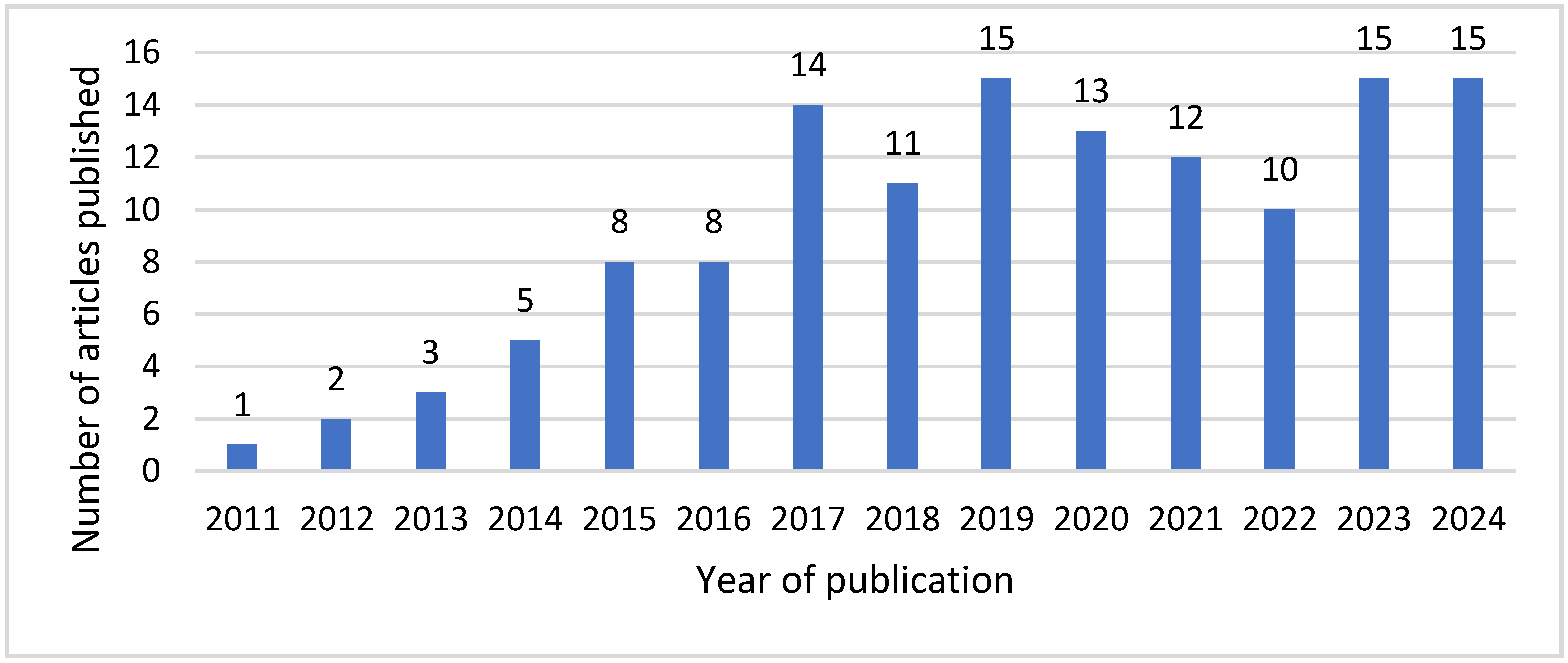


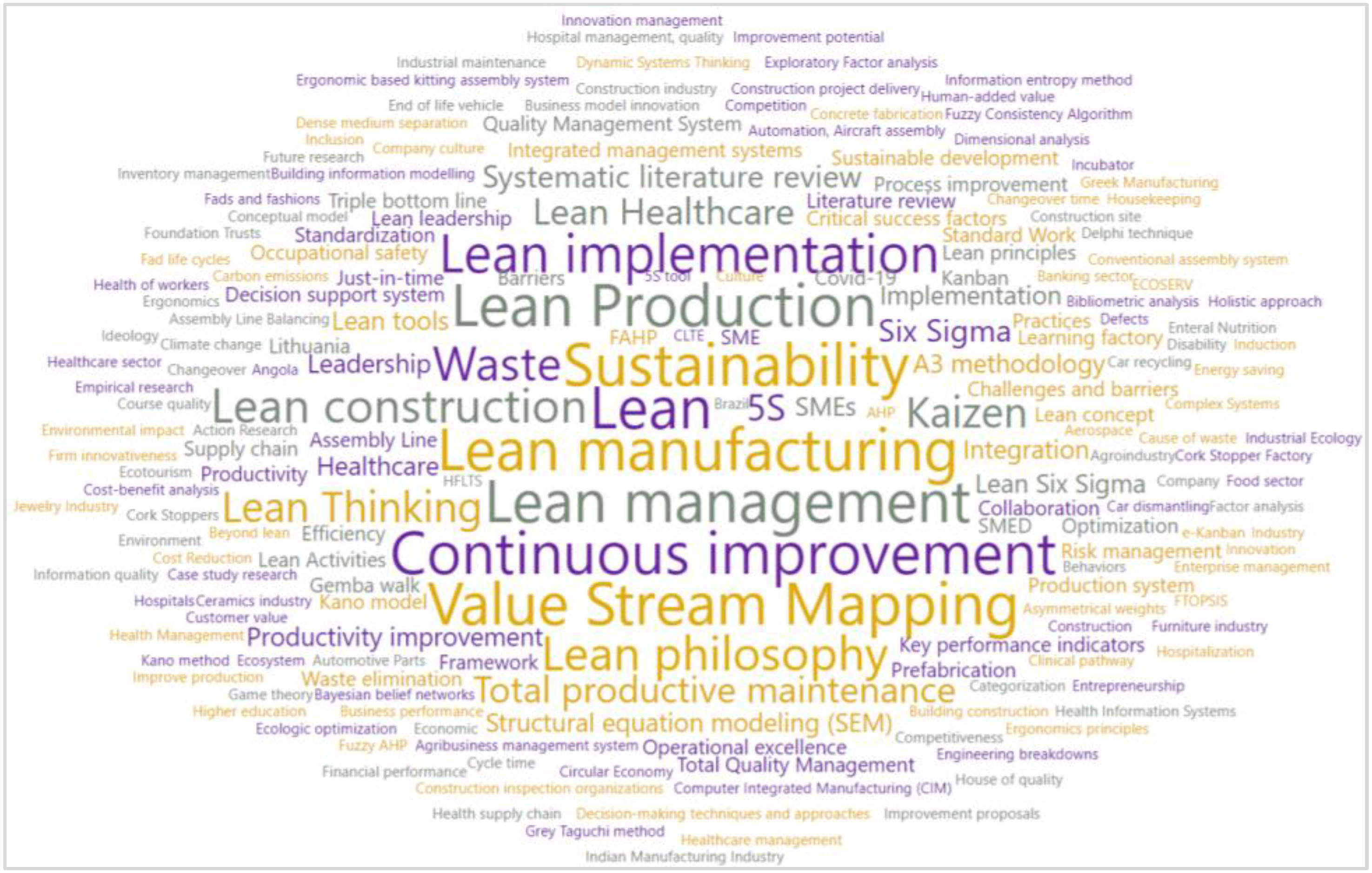

Disclaimer/Publisher’s Note: The statements, opinions and data contained in all publications are solely those of the individual author(s) and contributor(s) and not of MDPI and/or the editor(s). MDPI and/or the editor(s) disclaim responsibility for any injury to people or property resulting from any ideas, methods, instructions or products referred to in the content. |
© 2026 by the authors. Licensee MDPI, Basel, Switzerland. This article is an open access article distributed under the terms and conditions of the Creative Commons Attribution (CC BY) license.
Share and Cite
Terradillos, E.; Matias, J.; Navas, H.V.G.; Costa, O. Integrating Lean Philosophy and Sustainability: A Systematic Literature Review with a Focus on the Social Dimension. Sustainability 2026, 18, 1666. https://doi.org/10.3390/su18031666
Terradillos E, Matias J, Navas HVG, Costa O. Integrating Lean Philosophy and Sustainability: A Systematic Literature Review with a Focus on the Social Dimension. Sustainability. 2026; 18(3):1666. https://doi.org/10.3390/su18031666
Chicago/Turabian StyleTerradillos, Elena, João Matias, Helena V. G. Navas, and Olga Costa. 2026. "Integrating Lean Philosophy and Sustainability: A Systematic Literature Review with a Focus on the Social Dimension" Sustainability 18, no. 3: 1666. https://doi.org/10.3390/su18031666
APA StyleTerradillos, E., Matias, J., Navas, H. V. G., & Costa, O. (2026). Integrating Lean Philosophy and Sustainability: A Systematic Literature Review with a Focus on the Social Dimension. Sustainability, 18(3), 1666. https://doi.org/10.3390/su18031666