1. Introduction
Global resource constraints, escalating ecological risks, and the strengthening of dual-carbon goals are driving a profound transformation in materials and manufacturing systems. The traditional linear production model based on fossil resources is no longer sustainable. Its high-energy-consumption, high emissions, and high pollution characteristics directly exacerbate climate change and ecosystem degradation. In this context, the search for novel materials that combine renewability, environmental friendliness, and functional performance has become a key direction for advancing sustainable product design and green manufacturing. As a natural material characterized by a rapid growth cycle, high carbon sequestration efficiency, and excellent mechanical properties, bamboo has regained significant attention in the fields of materials science, industrial design, and sustainable innovation. It is currently regarded as a strategic biomass resource for the future.
The sustainable value of bamboo exhibits multidimensional characteristics. On the one hand, at the ecological level, bamboo species exhibit rapid growth and high carbon sequestration characteristics, with their carbon fixation rates and carbon storage per unit area generally surpassing those of traditional timber stands. When further processed into durable products, they can be used as long-term carbon sinks, significantly reducing the environmental impact throughout the material’s life cycle. On the other hand, at the socio-economic level, the bamboo industry has established robust rural industrial systems across numerous countries and regions, exerting significant influence on employment, regional economic development, and cultural preservation. Moreover, bamboo carries multiple layers of symbolic meaning in Chinese and East Asian cultures. From traditional artifacts and crafts to contemporary spatial design and cultural and creative products, bamboo has consistently served as a vital medium connecting natural aesthetics with cultural identity. This makes bamboo not merely an alternative material in sustainable design research, but a design resource with systemic value.
With the rapid development of materials technologies such as bamboo-based composite materials, the application boundaries of bamboo materials continue to expand. Its innovative trends are becoming increasingly obvious across sectors, including furniture, construction, transportation, consumer electronics, textiles, and cultural and creative products. However, existing research still exhibits distinct fragmentation: materials science studies focus on mechanical properties, microstructure, and modification techniques; process research concentrates on processing paths and forming methods; while design-oriented studies predominantly center on case analyses or the exploration of specific product forms. Regarding how bamboo materials can achieve systematic value enhancement in product design, the relationships between their material-driven logic, cultural narrative approaches, sustainability performance, and design strategies remain underdeveloped in terms of systematic summarization and theoretical frameworks. This has led to the immense potential of bamboo in industrial practice being underexplored and lacking systematic frameworks.
Accordingly, this study conceptualizes bamboo as an integrated material system that bridges ecological integrity, social value, and design innovation. It aims to create a strategic framework to guide bamboo-driven innovation in product design. This paper first reviews the fundamental properties of bamboo from three dimensions: materials science, ecological sustainability, and sociocultural value. It then analyzes the product application characteristics of bamboo across various industries to reveal the logical relationship between material performance and design requirements. Subsequently, it summarizes four core design strategies: material-driven approaches, process innovation, cultural expression, and systemic transformation. Finally, it explores strategic opportunities for bamboo within green manufacturing systems and the circular economy by addressing challenges and future trends. Through this framework, this paper aims to advance bamboo from a “substitutable natural material” to a “strategic material within sustainable product systems”, providing theoretical support and methodological foundations for its deep integration into future design innovation and green industrial progress.
2. Sustainable Characteristics and Material Fundamentals of Bamboo
2.1. Environmental Sustainability
The environmental sustainability of bamboo constitutes a key foundation that distinguishes it from traditional materials and positions it as a crucial choice for green design. This advantage is primarily reflected in its exceptional carbon sequestration capacity, significant ecological restoration potential, and relatively low environmental impact throughout its life cycle. As a rapidly growing gramineous herbaceous plant, bamboo exhibits highly efficient carbon fixation capabilities during its growth process. Research has indicated that a hectare of well-managed Moso bamboo forest can sequester approximately 4.9–5.5 tons of carbon annually, which is 1.5 times that of certain timber stands [
1]. In addition to its carbon sequestration benefits, the ecological management of bamboo resources requires careful consideration. While bamboo forests are instrumental in carbon storage and erosion control, large-scale monoculture plantations may lead to reduced biodiversity and altered ecosystem dynamics. Sustainable practices—including mixed-species cultivation, preservation of understory flora, and regulated harvesting—are essential to minimize ecological trade-offs and ensure that bamboo cultivation aligns with holistic sustainable forestry principles.
The carbon sink capacity of bamboo forest ecosystems extends beyond aboveground biomass: the carbon stored in bamboo culms constitutes the primary component of total plant carbon sequestration, followed by roots, branches, and underground rhizomes [
2]. Through proper management and periodic harvesting—that is, the “harvest–regeneration” system—bamboo forests can maintain continuous regeneration and carbon sequestration functions while avoiding ecological degradation caused by overharvesting or the abandonment of management [
3]. When bamboo is processed into durable products such as furniture and structural materials, it can sequester biomass carbon from bamboo forests for the long-term throughout the product’s life cycle. This implies that bamboo products serve dual functions as both a material and a carbon reservoir, thereby converting carbon fixation and material utilization into relatively long-term carbon sequestration [
4]. A life cycle assessment (LCA) study of typical bamboo-based composite materials, such as bamboo scrimber, revealed that their carbon footprint is considerably lower than that of traditional wood-based panels. Specific data indicate that the carbon footprint of 1 m
3 of bamboo scrimber is approximately 3.11 kg CO
2 equivalent per square meter [
5]. The manufacturing stage is indeed a major source of carbon emissions, but it still holds a significant advantage over high-energy consumption, high-emission materials such as wood panels, concrete, and steel [
6]. Therefore, bamboo not only holds environmental potential as a rapidly renewable resource, but also demonstrates significant low-carbon or net carbon sequestration potential throughout its entire value chain—from forest growth and harvesting to processing and final product manufacturing. Bamboo offers a stable and reliable environmental foundation for green design and sustainable product development.
2.2. Socio-Economic Sustainability
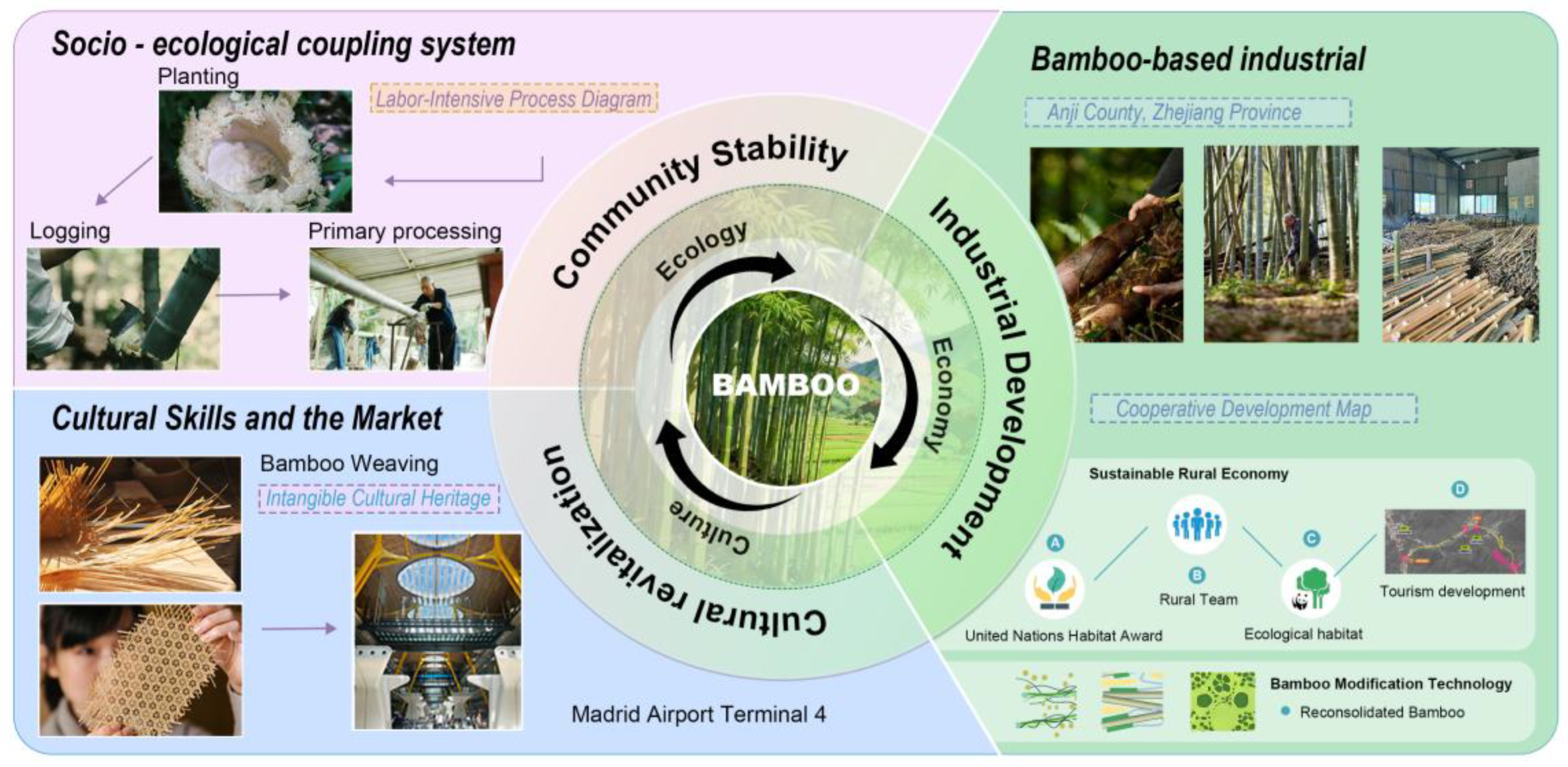
The social and economic sustainability of bamboo primarily manifests in its role in promoting rural economic development and its value in preserving traditional crafts and culture as living traditions, forming systemic social attributes that transcend the material itself. On the one hand, the bamboo industry, as a typical socio-ecological coupling system encompassing labor-intensive processes such as cultivation, harvesting, and primary processing (
Figure 1), effectively provides employment opportunities for local labor. It provides rural areas with employment opportunities that allow workers to “leave the land but not the village”, thereby enhancing regional economic resilience. Anji County in Zhejiang Province is the most representative case. Within the framework of the “Beautiful Countryside” initiative, the local community has built a comprehensive industrial chain centered on bamboo (
Figure 1), achieving synergistic development in ecological conservation, industrial upgrading, and community stability. This approach has garnered international recognition, including the United Nations Habitat Award [
7]. This model demonstrates that the bamboo industry not only serves as a vital pillar of the rural economy but also plays a vital role in mitigating rural depopulation and enhancing community resilience.
On the other hand, bamboo’s close association with traditional craftsmanship makes it a vital medium for intangible cultural heritage. Bamboo weaving, bamboo thread painting, and other crafts not only embody regional aesthetics and practical wisdom but also represent cultural resources with significant economic potential [
8]. Under the dual pressures of modernization and globalization, these crafts face crises in both their transmission and market viability. In recent years, design research has pursued pathways such as “cultural heritage design” [
9] and “cultural translation methodologies” [
10] to integrate traditional craft elements—including weaving textures and structural logic—with contemporary materials technology, user needs, and aesthetic contexts. This approach has enabled the renovation of bamboo craftsmanship across furniture, lighting, and cultural and creative products. For example, research indicates that bamboo has transitions from a traditional craft material to a modern design material with both structural and decorative applications, and has been extensively adopted in international architectural and product design projects such as landmark projects such as Terminal 4 at Madrid Airport [
11]. This innovation not only enhances the artistic expressiveness of bamboo products but also creates new economic opportunities for artisans. It thereby promotes the commercialization and sustainable development of traditional craftsmanship.
Overall, the social and economic sustainability of bamboo materials operates through a positive feedback loop comprising three interconnected components: industrial development, community stability, and cultural revitalization (
Figure 1). Industrial prosperity provides the economic foundation for cultural preservation, while cultural innovation, by enhancing product value, in turn fuels industrial upgrading. This creates a sustainable system where ecology, economy, and culture mutually reinforce each other. This model provides replicable experience for resource-based regions to explore development paths that combine cultural distinctiveness with economic benefits.
2.3. Material Properties and Modification Techniques
Bamboo’s exceptional sustainability is closely linked to its unique material properties. As a natural composite material, bamboo’s mechanical properties primarily stem from its anisotropic and high-strength microstructure. Research indicates that bamboo possesses a native fiber gradient structure, with its vascular bundles gradually becoming sparser from the outer to the inner cross-section, forming a natural fiber-reinforced composite material with outstanding mechanical properties [
12]. The failure mechanism of this structure primarily depends on the mechanical properties at the interface between the fibers and the thin-walled cell walls. Understanding this is critical for the efficient utilization of bamboo materials [
13].
However, natural bamboo also has inherent limitations that restrict its use in high-end products. Its primary drawbacks include susceptibility to mold growth due to elevated nutrient content, as well as dimensional instability caused by significant moisture absorption and expansion resulting from the presence of numerous hydrophilic hydroxyl groups. These factors severely compromise the product’s dimensional stability and durability [
14]. To overcome these shortcomings, heat treatment and resin impregnation are two effective modification strategies. Heat treatment significantly enhances the dimensional stability and decay resistance of bamboo by heating it to 160–200 °C in an inert atmosphere or oil bath, which degrades hydrophilic hemicellulose and alters the structure of lignin. However, this process may result in a decrease in material toughness due to the degradation of hemicellulose, which acts as a quintessential amorphous polymer providing viscoelasticity and impact resistance in the cell wall matrix [
15]. The reduction in hemicellulose content increases material brittleness and reduces fracture energy, thereby lowering the resistance to dynamic or impact loads. Consequently, while heat-treated bamboo exhibits superior dimensional stability for static applications (e.g., tabletops, wall panels), its reduced toughness imposes durability limits in designs subjected to repeated stress, sharp impacts, or high flexural fatigue (e.g., certain structural joints, high-traffic flooring, or sport equipment components). Another effective strategy is resin impregnation. For example, treating round bamboo with rosin allows the resin to effectively deposit within the bamboo’s pore structure, blocking moisture transmission. This decreases hygroscopicity and enhances dimensional stability [
16].
With the advancement of material modification technologies, a series of high performance bamboo-based engineering materials has gained widespread applications by considerably expanding the boundaries of product design. The bamboo flattening technique transforms curved bamboo tubes into flat bamboo panels through softening, flattening, and shaping, enabling efficient and high-value utilization of bamboo materials [
17]. Bamboo composite lumber and engineered bamboo are the two primary types of engineered bamboo structural materials. The former is produced by bonding and laminating bamboo strips or slats, while the latter is a high performance material created by disintegrating bamboo into fibrous bundles, impregnating them with resin, arranging them in a specific orientation, and then hot-pressing and curing them. Its properties can be optimized by adjusting the resin content, resulting in excellent water resistance and mechanical strength [
18,
19]. Additionally, bamboo–plastic composites combine the rigidity of bamboo with the toughness of plastics like polypropylene. Their performance hinges critically on the compatibility at the bamboo–plastic interface, which can be improved by modification with monomers such as polydopamine [
20]. Meanwhile, high performance bamboo fiber composites fabricated from bamboo fibers represent the cutting edge of bamboo’s applications in lightweight and multifunctional materials [
21]. The emergence of these novel materials and their manufacturing technologies signifies that bamboo has evolved from a traditional natural material into a promising modern engineering material [
22], providing a rich material foundation for sustainable product design.
Taken together, the environmental sustainability, socio-economic embeddedness, and engineered material properties of bamboo establish it as a multidimensional design resource rather than a single-purpose material. Its low-carbon life cycle performance provides an ecological rationale for sustainable design, while its deep integration with local industries and cultural practices enables social value creation. Simultaneously, advances in modification techniques and engineered bamboo materials have transformed bamboo into a controllable, high-performance material system capable of meeting modern industrial requirements. These combined characteristics form the material and conceptual foundation for bamboo’s expanding role in contemporary product design. Building upon this foundation, the following section systematically examines how these attributes are translated into practical design applications across different product categories and industries.
3. The Application Spectrum of Bamboo in Product Design
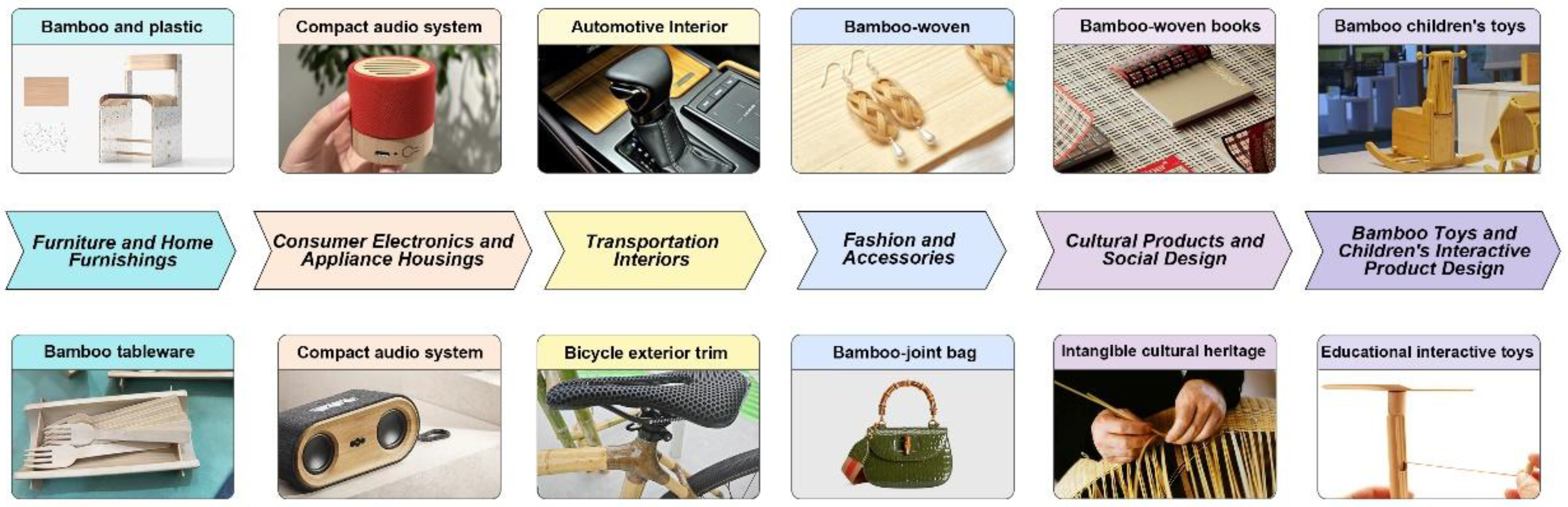
The application of bamboo in product design has expanded from traditional handicrafts to modern industrial systems, demonstrating a systematic evolution across scales and disciplines. With the rapid advancement of materials science, engineering technology, and sustainable design concepts, bamboo has gradually transcended its traditional boundaries as a “natural material” and “handicraft material”. It now demonstrates innovative potential across multiple sectors, including furniture, home goods, consumer electronics, transportation interiors, fashion accessories, and cultural and creative products (
Figure 2). This application lineage demonstrates a value enhancement trajectory from “structural material” to “functional material” and ultimately to “cultural and emotional carrier,” reflecting bamboo’s multidimensional evolution from fulfilling basic functions to embodying aesthetic expression and cultural significance. This expansion is not merely a simple material substitution process, but rather a systemic innovation driven by material properties, manufacturing techniques, cultural values, and sustainability requirements. By analyzing the typical applications of bamboo materials across various products, a clear application structure map can be constructed, laying the foundation for subsequent design strategy development.
3.1. Furniture and Home Furnishings
Furniture and home furnishings represent the field with the longest history and the most mature system of bamboo applications. From the “sturdy yet elegant” bamboo structures and decorations in Ming Dynasty Chinese furniture, to the “form follows function” bamboo experiments of the modernist movement, and on to contemporary home products pursuing naturalism and minimalist aesthetics, bamboo has consistently explored the relationship between humans and their dwellings [
11]. Innovations in contemporary bamboo furniture primarily focus on three aspects. First, material composites and structural innovation. To address the issues of cracking and dimensional limitations inherent in native bamboo, modern furniture design extensively employs engineered bamboo materials such as glued laminated bamboo and bamboo scrimber. These materials offer superior mechanical properties and controllable specifications, facilitating the achievement of complex designs and industrial-scale production [
22]. While traditional solid bamboo furniture excels in cultural authenticity and aesthetic warmth, it often fails in dimensional stability and scalability for complex designs. In contrast, engineered bamboo materials (e.g., glued laminated bamboo, bamboo scrimber) succeed in industrial applications due to superior mechanical consistency, controlled specifications, and enhanced resistance to cracking—factors critical for mass production and structural reliability. However, this shift sometimes comes at the cost of decreased tactile naturalness and increased embodied energy from resin use, highlighting a trade-off between performance optimization and ecological purity. The research further achieved lightweight bamboo furniture by designing filled core structures or optimizing bamboo strip gradients, overcoming the limitation of heavy weight in traditional bamboo furniture [
23].
Second, it focuses on process integration and form liberation. The fusion of traditional bamboo weaving and bending techniques with modern technology has given rise to innovative formal expressions. For example, through bamboo reconstruction and plasticization technology, gradient bamboo strips can be molded into dimensionally stable, smoothly curved furniture components, offering a new solution for green furniture manufacturing [
24]. Finally, modularity and sustainability principles. Modular design concepts have been incorporated into bamboo furniture design, enabling personalized solutions through standardized components while extending product life cycles. This approach enhances product versatility and expandability through thoughtful design [
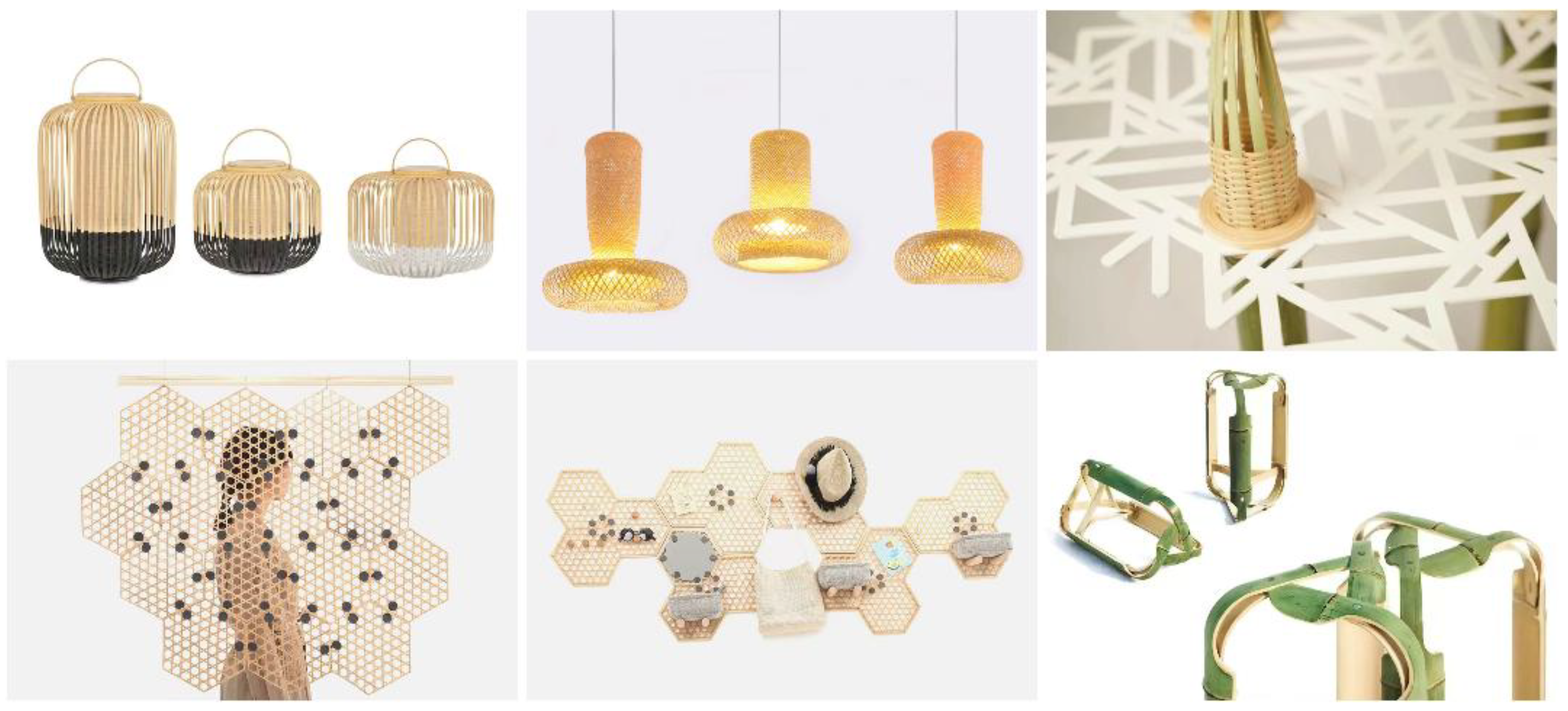
25]. In practical applications, bamboo has successfully created a vision of healthy, eco-friendly modern home living. This is reflected in pieces ranging from bamboo screens and coffee tables embodying Eastern aesthetics [
26] to contemporary modular bookshelves [
25] and lighting fixtures blending bamboo with plastic, metal, and glass [
27]. Furthermore, bamboo’s warm tactile quality, natural grain patterns, and low-carbon attributes have been leveraged to develop thermally conductive bamboo cups and bamboo tableware [
28,
29], successfully shaping a healthy, eco-conscious vision of modern home living (
Figure 3).
3.2. Consumer Electronics and Appliance Housings
In the high-tech and consumer electronics sectors, bamboo has emerged as an ideal alternative to engineering plastics for creating differentiated products, thanks to its unique sensory qualities and eco-friendly attributes. Its application motivation primarily stems from the following. First, the fulfillment of emotional needs. Incorporating natural bamboo into cold tech products can impart a warm, approachable human touch, alleviating users’ sense of technological indifference. For example, wireless keyboards, mice, power banks, or Bluetooth speakers featuring bamboo casings (
Figure 4) not only offer a distinctly different visual and tactile experience compared to plastic but also convey the user’s preference for a natural and sustainable lifestyle. Second, it represents a micro-level practice of “replacing plastic with bamboo”. Single-use or rapidly disposable electronic consumer goods are a major source of plastic pollution. The use of bamboo materials (particularly bamboo–plastic composites) for manufacturing enclosures, accessories, and packaging products can significantly reduce the carbon footprint. Their life cycle carbon footprint ranges from −0.55 to 4.02 kg CO
2 e/kg. When replacing traditional carbon-intensive materials (such as plastics) with equivalent functionality, the carbon reduction per unit product reaches 0.87 to 3.57 kg CO
2 e/kg. From 2007 to 2022, cumulative emissions reductions from such substitutions in China reached 280 Mt CO
2 e [
30]. Research indicates that modifying bamboo powder with monomers such as polydopamine can effectively enhance its interfacial bonding properties with plastic matrices. This enables the production of composite materials that combine the visual appeal of bamboo with the processing characteristics of plastics, offering a viable material solution for the “greening” of electronic casings [
20]. Third, the differentiation of brand image. Bamboo materials have evolved from mere material selection to a brand narrative strategy in shaping brand differentiation. For brands that prioritize design aesthetics and value communication, bamboo not only embodies sustainability but is also a medium connecting concepts like environmentalism, nature, and craftsmanship with users’ emotional resonance [
25]. However, its engineering implementation still faces challenges in strength, moisture resistance, and processing [
21]. Designers must find a balance between aesthetic expression and engineering feasibility [
31], ultimately achieving a systematic integration of form, function, emotion, and technology through process innovation and technological integration [
32].
However, the success of bamboo in high-value electronics is not the same and critically depends on the design approach. Strategies that treat bamboo as a superficial veneer or finish often fail to address core engineering challenges like moisture ingress and long-term durability, leading to product failures and reinforcing negative perceptions of bamboo as a ‘non-serious’ material. In contrast, successful applications typically adopt an integrated material-process co-design strategy. For instance, using bamboo–plastic composites (BPCs) with enhanced interfacial bonding through polydopamine modification [
20] succeeds because it decouples aesthetic appeal from structural dependency. This permits the bamboo component to provide visual and tactile warmth while the composite matrix ensures the moisture resistance and mechanical stability required for electronics housing. This approach outperforms designs using solid bamboo, which, despite its natural aesthetic, often fails due to dimensional instability in varied climates. Therefore, the critical comparison lies not merely in using bamboo, but in selecting a material formulation and design philosophy that aligns bamboo’s inherent properties with the product’s functional and environmental requirements.
3.3. Transportation Interiors
The application of bamboo materials in vehicle interiors is shifting from purely decorative uses toward integrated structural-functional materials. Driven by demands for lightweight construction, low-carbon footprints, and enhanced comfort, bamboo fiber-reinforced composites can partially replace plastics and metals in automotive interiors (
Figure 5). Research indicates that bamboo fiber-reinforced polypropylene (PP) and polylactic acid (PLA) composites, after optimizing the process parameters, can meet the performance requirements for interior components such as flexural modulus and peel strength while significantly reducing vehicle weight [
33]. Due to bamboo’s inherent carbon sequestration properties, its composite materials have become a key material pathway for automakers to build low-carbon supply chains and establish green brand narratives [
34].
Wider engineering applications still face challenges such as insufficient dimensional stability, weather resistance, and flame retardancy. The transportation sector imposes stringent requirements on materials for flame retardancy, moisture resistance, and long-term safety performance, which natural bamboo struggles to meet directly. Research indicates that modification methods such as vacuum pressure impregnation [
35], heat treatment [
36], and the addition of flame retardants like melamine polyphosphate [
33] can significantly enhance the dimensional stability, mechanical strength, and flame retardancy (achieving UL-94 V-0 rating) of bamboo composite materials. This enables their application in automotive interiors and broader non-load-bearing structural components. This demonstrates that through precise matching of processing techniques and performance characteristics, bamboo can meet the standards for non-load-bearing structural components in automobiles and other transportation vehicles.
Innovations in bamboo materials for transportation extend beyond mere material substitution, representing a systematic strategy integrating material modification, structural optimization, and clean production. Future efforts should focus on establishing standardized systems for bamboo-based composites, enhancing quantitative research on their life cycle carbon footprint and service reliability [
34], thereby supporting their large-scale application in lightweight components for automobiles, railways, and aviation.
3.4. Fashion and Accessories
The application of bamboo in fashion and accessories leverages its lightweight yet high-strength properties, natural grain patterns, and cultural symbolism to forge a design approach that integrates functionality, aesthetics, and sustainability [
37]. In rigid accessories, traditional bamboo weaving techniques achieve high-precision translation through modern manufacturing technologies. Brands including Marni have experimented with combining bamboo splitting, weaving, and CNC machining, enabling bamboo-woven bags to retain their natural texture while achieving greater structural stability and surface quality. Furthermore, international studies demonstrate systematic approaches to revitalizing traditional bamboo weaving by integrating it with modern product design through scientific frameworks and consumer research. For instance, research has successfully incorporated traditional bamboo weaving techniques into modern home appliance design using Kansei engineering, transforming renewable craft into functional contemporary products while preserving cultural heritage [
38]. Zhaoqing tea-stalk bamboo undergoes material modification and process innovation to achieve product transformation. The watch straps and luggage accessories crafted from it retain their natural texture while exhibiting markedly enhanced durability, demonstrating bamboo’s diverse adaptability potential in rigid accessories [
39].
In the realm of flexible textiles and wearable accessories, the functional properties and application scenarios of bamboo fiber continue to broaden. Both bamboo primary fibers and bamboo pulp fibers exhibit natural antibacterial advantages, achieving significant inhibition rates against common pathogenic bacteria. Even after processing, they retain moisture-wicking, breathable, and cooling properties [
40]. This makes them widely applicable not only in intimate apparel like underwear and towels but also in children’s footwear through personalized designs, balancing health protection with comfortable wear [
41]. From the craftsmanship heritage of rigid luggage to the functional innovation of flexible textiles, bamboo applications have transcended traditional boundaries of “utensils”. It has achieved full-scenario coverage from “body adornment” to “wearable accessories”, satisfying consumers’ demands for health and environmental sustainability while imparting unique, differentiated value to fashion products through cultural empowerment [
37]. Bamboo fashion and accessory examples are given in
Figure 6.
3.5. Cultural Products and Social Design
The value of bamboo in cultural and creative products and social design has expanded beyond its traditional material properties to encompass cultural translation and social empowerment. It has become a key material connecting cultural memory, emotional experience, and social sustainability.
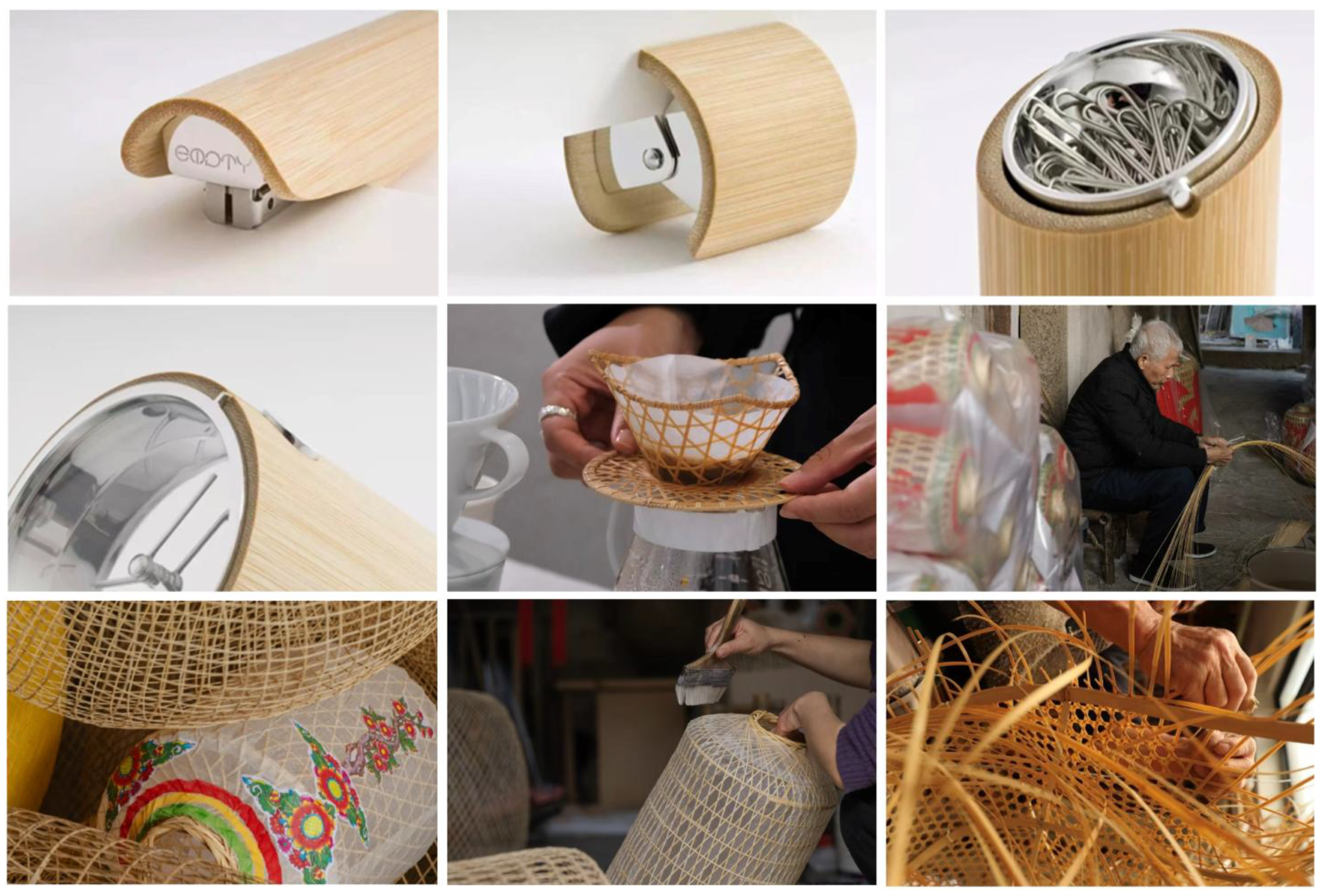
In the design of cultural and creative products, innovation centers on the systematic deconstruction and modern reinterpretation of traditional bamboo craftsmanship. The study systematically extracts design elements from intangible cultural heritage techniques such as Huizhou bamboo weaving and Xiangxi bamboo weaving (
Figure 7) by constructing a “cultural gene bank” across three dimensions: material form, behavioral practices, and philosophical connotations [
10]. This translation is not a mere appropriation of form but involves creative transformation through the integration of modern design language and user needs. For example, a study employing the Analytic Hierarchy Process (AHP) to quantify user preferences found that practicality ranked highest in the design of bamboo cultural and creative products, serving as a scientific basis for design decisions [
42]. Based on this, designers have transformed traditional bamboo weaving patterns and structures into contemporary products such as lamps and audio equipment (
Figure 7), enabling the deep cultural connotations to be “vitalized” through everyday items [
43]. The adoption of computer simulation software [
44] and artificial intelligence (AI) [
45] in international research provides robust methodologies for analyzing and innovating bamboo product design. These tools facilitate the study of innovative applications, enable consumer-participatory design processes, and help bridge the perception gap between designers and users. Furthermore, research has leveraged AIGC (Artificial Intelligence Generated Content) technology to assist in the intelligent generation and innovation of bamboo weaving patterns, significantly enhancing design efficiency and providing new technological pathways for the modern transformation of traditional craftsmanship [
43,
46]. However, it is important to critically recognize that AI-driven pattern generation remains largely confined to visual and aesthetic exploration. It does not inherently account for physical and structural constraints such as material bending limits, tensile strength, or dimensional stability, which are crucial in translating digital patterns into viable physical products. Therefore, while AIGC accelerates ideation and pattern variation, its outputs must be rigorously evaluated and adapted through physical prototyping, structural simulation, or collaboration with craftsmen to ensure manufacturability and performance integrity. This indicates that innovation in bamboo cultural and creative products has evolved from a “craft revival” reliant on individual expertise to a systematic design model encompassing “cultural analysis—user research—technology-enabled solutions”. Design approaches that merely appropriate traditional patterns (e.g., superficial motif application) often fail to achieve deep cultural resonance or commercial longevity. In contrast, methodologies that systematically decode cultural genes—integrating material logic, structural wisdom, and philosophical connotations into contemporary functions—succeed in creating products that are both culturally authentic and market-relevant. This distinction highlights the importance of moving beyond aesthetic imitation to meaningful cultural translation.
In the field of social design, bamboo’s characteristics—renewability, potential for localized production, and low processing barriers—make it a vital medium for fostering community engagement and supporting sustainable rural development. Against the backdrop of harmonious rural development, traditional bamboo weaving techniques are transformed through modular design into standardized components that local artisans can produce. These components are used for public facilities or specialty product development, effectively reducing production costs while enhancing community participation and revenue streams [
47]. This participatory design approach emphasizes embedding the knowledge systems of local artisans into the design process, thereby restoring the value of traditional craftsmanship within modern design frameworks. This facilitates the accumulation of social capital within communities and enhances cultural confidence [
48]. Further research proposes a collaborative mechanism centered on knowledge sharing, capability matching, and market feedback by establishing a capability management framework for collaboration between bamboo product designers and artisans. This approach aims to bridge gaps in skills, cognition, and resources between the two parties, thereby achieving multiple enhancements in the cultural attributes, market competitiveness, and community benefits of the products [
49].
In summary, the application of bamboo in cultural and creative products and social design has formed an integrated pathway spanning cultural value exploration, design expression, and community empowerment. Design not only acts as a channel for the dynamic transmission of culture but also promotes community participation and equitable development through the accessibility of materials and craftsmanship. Bamboo thus transforms from a natural material into a medium for cultural narratives and social connections, offering an innovative direction for sustainable design that combines cultural depth with social impact.
3.6. Bamboo Toys and Children’s Interactive Product Design
Bamboo toys represent an emerging niche within bamboo-based material applications, which synthesizes ecological benefits with educational value in product design, thereby aligning with the core tendencies in contemporary children’s products: safety, educational engagement, and sustainability.
Figure 8 illustrates the application of bamboo in children’s toy design. Compared with traditional toy materials like plastic and metal, bamboo’s low density, warm texture, and biodegradable properties give it unique advantages for use in children’s products. Moreover, bamboo’s malleability in processing and its rich cultural heritage in craftsmanship provide an excellent medium for integrating the multidimensional values of toys—functional, educational, and emotional.
Compared with traditional toy materials like plastic and metal, bamboo’s low density, warm texture, and biodegradable properties give it unique advantages for use in children’s products. Moreover, bamboo’s malleability in processing and its rich artistic heritage in craftsmanship provide an excellent medium for integrating the multidimensional values of toys—functional, educational, and emotional. For instance, the persimmon tannin and iron ion complexation modification strategy can significantly enhance the water resistance and mold resistance of bamboo-based composites while markedly improving flame retardancy and safety [
50]. This provides a green and efficient technical pathway for the safe modification of bamboo toys. At the level of interaction design, bamboo toys must achieve precise alignment between material properties, cognitive stages, and interaction methods based on Piaget’s theory of child cognitive development. For children aged 3–6 in the preoperational stage, modular mortise-and-tenon bamboo blocks and bamboo percussion toys can stimulate multisensory experiences through stacking, assembling, and striking, thereby developing fine motor skills and spatial cognition. For children aged 7–12 in the concrete operational stage, lantern toys incorporating bamboo weaving techniques and bamboo gear transmission devices based on STEAM education principles can convey traditional craftsmanship culture through interactive experiences. These tools guide children in understanding fundamental mechanics and structural principles, achieving the educational goal of “learning through play”. This design logic aligns with the concept proposed in related research—a dual-track design methodology integrating children’s physiological and psychological characteristics to address both functionality and emotional needs—emphasizing that bamboo children’s products must balance safety, practicality, and emotional care [
51]. In terms of sustainability, bamboo toy design embodies the concept of the full “material–production–consumption” life cycle. Leveraging bamboo’s rapid growth cycle and high carbon sequestration capacity, it prioritizes the use of FSC-certified bamboo or furniture production offcuts to create bamboo–plastic composites, significantly enhancing bamboo utilization rates. The establishment of localized low-carbon production chains and the application of modular, repairable designs not only reduce carbon emissions during manufacturing and use but also extend product life cycles. This guarantees that bamboo toys can naturally decompose after disposal, avoiding the environmental pollution issues associated with plastic toys. In summary, the innovative development of bamboo toys and children’s interactive products represents a significant extension of bamboo from a functional material to an educational and emotional medium. Through breakthroughs in material modification technology, alignment with children’s cognitive needs, and sustainable design across the entire product life cycle, bamboo toys not only meet the safety and experiential requirements for children’s products but also convey eco-friendly design principles. This approach provides a new pathway for green innovation in children’s products.
Figure 8 shows an example of a bamboo children’s toy.
4. Four-Dimensional Innovation Framework for Bamboo-Based Product Design
To systematically construct a sustainable product innovation pathway utilizing bamboo, this section proposes a coherent and progressive strategic framework centered on four core dimensions: material properties, manufacturing processes, cultural value, and systemic ecology. The framework builds upon the inherent structural advantages and cultural significance of bamboo while integrating principles of modern manufacturing and the circular economy. This approach establishes a holistic methodology that spans from material innovation to industrial ecosystem design.
4.1. Material-Driven and Performance Optimization
The core of material-driven design and performance optimization lies in using bamboo’s inherent structural mechanisms as the starting point for design, rather than treating it as a simple substitute for wood. This strategy advocates for a material-driven design philosophy, wherein bamboo’s inherent anisotropic and hierarchical structures—from micro-scale fiber gradients to macro-scale nodal patterns—become the primary generative logic for form and function, rather than an afterthought. Based on this, biomimetic structural design has become a key pathway for expanding performance capabilities. By employing computational simulation and structural optimization, we replicate the multi-point support mechanism between bamboo nodes or the fiber gradient configuration. This approach achieves a balance between minimizing material usage and maximizing mechanical performance in applications such as seat frames, architectural components, and vehicle internal skeletons. This approach of “shaping structures through the logic of bamboo” transforms the material’s inherent mechanical strengths into an innovative driving force for engineering design. A form-driven approach, which forces bamboo into shapes designed for conventional materials, often leads to structural inefficiency or material failure. In contrast, a material-driven strategy—using bamboo’s anisotropic and graded structure as a generative design logic—succeeds in optimizing strength-to-weight ratios and functional performance. This comparison highlights that the highest innovation potential lies not in substitution but in adapting design thinking to the material’s inherent intelligence.
Meanwhile, the development of composite materials is critical to overcoming the inherent limitations of bamboo and expanding its application scope. Natural bamboo’s shortcomings in dimensional stability, weather resistance, and durability make it difficult to directly meet the requirements of high-strength or high-precision products. However, by combining it with bio-based resins, biodegradable plastics, or other natural fibers, targeted performance regulation can be achieved. For example, bamboo fiber-reinforced polymer composite systems combine rigidity, toughness, and lightweight advantages, making them suitable for applications such as automotive interiors, electronic product casings, and high performance sports equipment. Such composite pathways not only compensate for bamboo’s limitations in environmental adaptability but also significantly expand its design boundaries in precision manufacturing and engineering applications. This transforms bamboo from a natural material into an engineered, programmable, high performance material system.
4.2. Process Innovation and Digital Fabrication
The core of process innovation lies in breaking away from the heavy reliance on manual expertise and craftsmanship in traditional bamboo processing. This enables bamboo to integrate into modern manufacturing systems with higher precision, greater efficiency, and reduced environmental impact. In terms of connection methods, developing modular mortise-and-tenon structures and mechanical joining techniques tailored to bamboo properties can significantly reduce adhesive usage, lower volatile organic compound emissions, and enhance product operability during disassembly, maintenance, and recycling phases. This type of process not only enhances the structural reliability of bamboo products but also makes them more aligned with the requirements of a circular economy for material separability and remanufacturability. At the same time, through precision processing of bamboo surfaces and cross-sections, complex curved surfaces, thin-walled components, and irregular structures can be achieved. This expands the design flexibility of bamboo in structural and functional parts, enabling it to align with industrial product standards across a broader range of applications.
Digital manufacturing further propels bamboo’s transformation from a traditional material to one for smart manufacturing. By incorporating 3D scanning and parametric modeling techniques, the natural form and geometric characteristics of bamboo can be precisely captured. These data serve as input for generative design, enabling form optimization based on material properties. CAD/CAM systems and robotic machining technology can convert complex digital models into high-precision machining paths, enabling the stable mass production of surfaces, textures, and structures that are difficult to achieve with traditional processes. Moreover, the digital manufacturing chain enables a green production model characterized by customization, low-batch production, and diverse product categories. This approach allows bamboo materials to achieve a balance between high performance, differentiation, and scalability while preserving their natural properties. Through this strategy, bamboo not only gains new possibilities in its physical form but also achieves meaningful integration with modern industrial systems in terms of production organization.
Traditional bamboo crafting excels in flexibility, cultural embeddedness, and low energy consumption but fails to achieve the precision, scalability, and consistency required for industrial integration. Digital fabrication (e.g., CNC, robotic milling) succeeds in enabling complex geometries and repeatable quality, but may diminish the unique tactile and cultural qualities of handcrafted bamboo. The most promising innovations lie in hybrid approaches, where digital tools enhance rather than replace artisanal wisdom.
4.3. Cultural Narrative and Emotional Design
Cultural narrative strategies aim to imbue products with deeper spiritual value beyond their material functionality by distilling and reconstructing the cultural symbols, historical memories, and regional imagery embodied within bamboo. The unique growth patterns of bamboo, its jointed structure, and traditional weaving techniques can all serve as narrative elements integrated into product forms and details, forming a design language with cultural distinctiveness. Simultaneously, designers can translate the symbolic vocabulary of traditional craftsmanship into culturally recognizable expressions for modern products through the manipulation of light and shadow, structure, or texture. This establishes a continuous cultural chain across the visual, semantic, and symbolic dimensions of the product. Such narratives not only reinforce the cultural identity of the product but also elevate its intangible value, positioning bamboo as a cultural medium that bridges tradition and innovation in contemporary design.
Emotional design focuses on the user experience, enhancing the tactile feel, warmth, and natural grain expression of bamboo materials to evoke positive emotions during product use. This fosters a more enduring emotional attachment. The delicate fiber structure, gentle texture, and natural scent of bamboo impart a unique sensory appeal, offering an interactive experience with a natural warmth within highly industrialized product environments. In design practice, optimizing the grip interface, contact point layout, and surface treatment methods can further enhance user comfort and psychological satisfaction during use. The core of the emotionalization strategy lies in transforming bamboo from a mere physical material into an emotional carrier, enabling products to extend their life cycle through sensory experiences and enhance users’ identification with sustainable consumption practices.
4.4. System Transition and Service Design
System transformation and service design emphasize upgrading from isolated innovations at the product level to holistic value chain restructuring. Its core objective is to create a closed-loop logic across the material, product, usage, and recycling stages. Circular design requires incorporating disassembly convenience, component standardization, replaceable modules, and low-environmental-impact surface treatments into the initial structural planning of products. This ensures that bamboo materials can be effectively recycled, remanufactured, or enter the biocircular economy at the end of their life cycle. Through this life cycle-oriented design principle implemented at the outset, bamboo products maximize their service life and minimize waste generation. This transforms the material’s recycling pathway from “recyclable” to “mandatory recycling”, achieving truly closed-loop resource utilization.
At the system level, the Product-Service System (PSS) model further drives the shift from a “material economy” to a “usage economy”. By shifting from selling bamboo products to offering product-related services—such as furniture rental subscriptions, scenario-based facility management, and recycling-upgrade programs—businesses will transition their profit mechanisms from one-time transaction revenues to sustained value creation dependent on product durability, maintainability, and recyclability. This model not only enhances the utilization efficiency of material resources but also encourages enterprises to proactively optimize product structures, improve repairability, and increase recyclability. By integrating bamboo’s natural attributes, circular pathways, and commercial logic into a coherent systemic framework, systemic transformation and service design emerge as core strategies to propel bamboo toward a highly efficient and sustainable industrial ecosystem.
5. Challenges and Future Outlooks
Despite bamboo’s significant environmental advantages, rich application potential, and profound socio-cultural value in product design, its widespread transition from an “alternative material” to a “mainstream innovative material” still faces a series of multidimensional, systemic challenges. These challenges stem from both the inherent properties of bamboo as a natural biomass material and from constraints imposed by existing technologies, markets, industrial chains, and cognitive frameworks. A deep understanding and systematic approach to addressing these obstacles are prerequisites for achieving systematic innovation and large-scale application of bamboo materials in product design. Looking ahead, it is essential to integrate technological evolution, design thinking transformation, and industrial ecosystem restructuring to formulate forward-looking and actionable innovation strategies and development directions. This will fully unlock the inherent potential of bamboo as a strategic sustainable material.
5.1. The Key Challenges Currently Faced
The primary obstacles to deepening the application of bamboo materials in product design lie in the lack of material standardization and challenges in achieving consistent performance. As a naturally occurring biomass material, bamboo’s key properties—including physical and mechanical characteristics, dimensional stability, and weather resistance—are influenced by multiple factors such as bamboo age, species, growing environment, harvesting season, and subsequent processing techniques. This results in pronounced batch-to-batch variability and individual differences in material performance. This inherent variability poses challenges for bamboo in modern industrialized production, which demands high standardization, predictability, and consistency. It increases uncertainty for designers and engineers in material selection, performance prediction, and quality control. Despite significant progress in the research of bamboo-based composites (such as engineered bamboo and bamboo-plastic composites), a systematic evaluation framework for their long-term durability—including resistance to UV aging, humid–heat cycling, creep, and biocorrosion—remains incomplete. The absence of unified, authoritative testing standards and transparent performance databases hinders reliability verification and trust-building for these materials in high-end and critical applications.
At the level of craftsmanship and manufacturing, challenges are concentrated in the technical bottlenecks of high-precision machining and the difficulties in modernizing traditional processes. Processing bamboo into complex shapes and ultra-thin curved surfaces that meet the demands of modern precision products—such as consumer electronics components and high-precision interior trim parts—often relies on advanced CNC machine tools, specialized cutting tools, and precision fixtures. The associated processing costs and complexity far exceed those of working with highly mature engineering plastics or metals, thereby raising the barrier to innovation and limiting its adoption among small-to-medium enterprises or startup design projects. Meanwhile, traditional bamboo crafts rich in cultural value—such as bamboo weaving, bamboo carving, and bamboo bending—face a severe crisis in their transmission. The aging of artisans and a lack of successors are widespread phenomena. How to systematically transform and integrate the wisdom, aesthetics, and flexible manufacturing advantages inherent in traditional craftsmanship through modern technologies such as digital modeling, parametric design, and robot-assisted manufacturing—thereby achieving a leap from “experience-dependent” to “knowledge-driven” practices—is a pivotal challenge for bridging the past and future while realizing the sustainable synergy between cultural preservation and industrial advancement.
From the perspectives of market dynamics and consumer perception, the core challenge lies in the entrenched product image in consumers’ minds and the unestablished value chain coordination mechanisms. For a long time, bamboo products in the consumer market have been associated with labels such as “inexpensive”, “simple”, “handicrafts”, or “disposable items”. Their strategic value as high performance engineering materials, premium design carriers, and low-carbon solutions remains far from widely recognized and adopted. This cognitive bias directly impacts the market’s willingness to pay and acceptance of high-value-added, high-tech bamboo innovation products, thereby weakening the economic incentive for enterprises to invest in R&D and brand upgrades. At a deeper level, the innovation chain of bamboo materials—from raw materials to end products—involves multiple stakeholders, including materials scientists, forest farmers, processing enterprises, designers, brand owners, and consumers. Currently, the lack of efficient information-sharing mechanisms, collaborative innovation platforms, and value-co-creation models between upstream and downstream sectors results in fragmented innovation efforts that struggle to generate the collective momentum needed to drive comprehensive industrial upgrading.
5.2. Future Research Directions and Innovation Strategies
To drive the systematic transition of bamboo from a “substitute natural material” to a “strategic sustainable design material”, future research must transcend disciplinary boundaries and focus on four strategic directions: material research, circular system development, digital technology empowerment, and interdisciplinary collaboration. This will establish a comprehensive innovation pathway spanning from material performance enhancement to the realization of systemic value.
5.2.1. Data-Driven Material Innovation and Sustainable Design Database Construction
The engineering application of bamboo materials urgently requires systematic and standardized data support. Future efforts should be focused on establishing a multi-scale material database covering the entire life cycle of bamboo, systematically collecting key parameters such as mechanical properties, thermal characteristics, durability, and processing adaptability across different bamboo species, ages, origins, and modification processes. Simultaneously, it is necessary to establish an environmental impact database for bamboo-based materials using the Life Cycle Assessment (LCA) methodology, quantifying their carbon footprint, water footprint, and ecological benefits to provide reliable evidence for eco-design. Building upon this foundation, research should prioritize developing functionalized bamboo-based composites tailored for high-value-added applications. Examples include smart bamboo composites with flame-retardant, anti-static, electromagnetic shielding, or shape-memory properties. These materials address the dual demands for high performance and functional integration in sectors such as consumer electronics, automotive interiors, and wearable devices.
5.2.2. Design of a Closed-Loop Bamboo Material System Within a Circular Economy Framework
Research should move beyond the substitution logic of “replacing plastic with bamboo” and shift toward establishing a circular model for bamboo materials throughout their entire life cycle. Key priorities include: developing bamboo product structures that are easy to disassemble and feature standardized interfaces to enhance component reuse and remanufacturing efficiency; researching pathways for reintegrating bamboo fiber, bamboo powder, and other processing residues into high performance composite materials; and exploring the controlled biodegradability of bamboo in specific environments to ensure its safe return to the biocyclic process. By adopting a “design-for-circularity” mindset upfront, we integrate circularity into the product concept phase, thereby driving a systemic shift from linear consumption to closed-loop regeneration for bamboo materials.
5.2.3. Design, Manufacturing, and Experience Innovation Empowered by Digital Technology
The integration of technologies such as artificial intelligence, generative design, and digital twins will bring breakthrough transformations to bamboo applications. By leveraging AI algorithms for material property prediction and structural topology optimization, lightweight designs can achieve optimal performance with minimal material usage. Digital twin technology simulates the entire life cycle of bamboo products—from production and use to recycling—in a virtual environment, enabling advanced assessment of their durability, environmental performance, and circularity potential. Building on the potential of digital tools, Virtual Reality (VR) and Augmented Reality (AR) technologies can transform the pedagogy and dissemination of traditional bamboo craftsmanship. By enabling immersive, interactive experiences, they facilitate deeper emotional engagement with bamboo products and enrich brand narratives. Internationally, VR-based systems are already being prepared to preserve, experience, and innovate upon traditional bamboo weaving techniques [
46]. These systems not only support skill transmission and interactive design but also reduce cognitive barriers and enhance efficiency in culturally-informed design workflows, opening new pathways for sustainable craft revitalization and product innovation. Future AI tools should evolve beyond stylistic generation to incorporate physical and mechanical constraints—such as bendability, joint strength, and material behavior—through integration with finite element analysis (FEA) and digital twin systems, ensuring that AI-aided designs are not only visually innovative but also structurally feasible and materially coherent.
5.2.4. Building Interdisciplinary Collaboration and System Innovation Platforms
The true value of bamboo materials is unlocked through the deep integration of multiple disciplines, including materials science, industrial design, engineering manufacturing, sociology, cultural studies, and business management. A collaborative innovation platform integrating industry, academia, research, and application should be established to foster mutual understanding: enabling materials researchers to grasp design requirements, equipping designers with materials expertise, engaging enterprises in building circular models, and incorporating community and user feedback into design iterations. Through cross-disciplinary collaboration, we jointly define critical challenges, develop integrated solutions, and advance the harmonization of performance, aesthetics, culture, and sustainability in bamboo materials across product systems, business models, and social services. Only through systematic, interdisciplinary innovation mechanisms can bamboo transform from an “optional material” into a core strategic resource driving green industries and sustainable lifestyles.
6. Conclusions
Bamboo represents a strategically important sustainable material capable of simultaneously addressing environmental, technological, and socio-cultural challenges in contemporary product systems. Beyond its rapid renewability and carbon sequestration capacity, bamboo demonstrates growing potential as an engineered, design-driven material through advances in composite technologies, digital manufacturing, and culturally informed innovation. This study positions bamboo not merely as an alternative to conventional materials but as a systemic design resource embedded within low-carbon production, circular-economy logic, and cultural value creation.
Building on the four proposed strategies—material-driven performance optimization, process innovation and digital fabrication, cultural narrative and emotional design, and system transformation through service design—this research offers differentiated pathways for key stakeholders to address the gap between research and practice. For policymakers, priority actions include establishing standardized classification and performance evaluation systems for bamboo-based materials, integrating bamboo products into green procurement and carbon accounting frameworks, and supporting regionally embedded bamboo industries through incentives that link ecological benefits with rural development and circular-economy goals. For materials scientists, future research should focus on developing data-driven bamboo material databases, improving long-term durability and reliability assessment, and advancing multifunctional bamboo composites tailored to high-value applications such as consumer electronics, transportation interiors, and smart products. For industrial designers and manufacturers, bamboo calls for a shift toward material-driven design thinking, in which its anisotropic structure, tactile qualities, and cultural symbolism actively inform form generation, user experience, and brand narratives. The integration of parametric design, digital fabrication, and product–service systems is critical to scale bamboo applications while maintaining performance consistency and circularity.
In conclusion, the transition of bamboo from a “substitute material” to a “material of choice” depends on coordinated action across policy, science, and design. By aligning technological innovation with cultural meaning and systemic sustainability, bamboo can play a pivotal role in shaping future product systems that are ecologically responsible, economically viable, and socially meaningful.