1. Introduction
As industrialization progresses, the worldwide manufacturing sector’s production capacity has grown, yielding considerable economic gains and material evolution, yet concurrently, it has resulted in a marked rise in energy usage. The swift expansion of China’s economy has resulted in a steady rise in the need for energy, even as the supply of energy becomes more limited. Against the backdrop of China’s “dual carbon” goals, energy conservation has risen from a technical challenge to a national strategic priority. In May 2024, the State Council released the 2024–2025 Action Plan for Energy Conservation and Carbon Reduction, which designates manufacturing as a key sector for targeted interventions. The plan sets clear objectives: achieving energy savings equivalent to 50 million tons of standard coal and reducing carbon dioxide emissions by approximately 130 million tons by 2025. These measures not only address the urgent needs of China’s domestic green transition but also demonstrate a concrete commitment to the United Nations Sustainable Development Goals. Over 70% of the manufacturing sector’s energy usage is attributed to the machining system, which primarily consists of machine tools and boasts a vast array and quantity [
1]. Minimizing the energy usage of machine tools stands as a key strategy for attaining “carbon peak and carbon neutrality”, with the prediction of energy consumption in machine tool processing serving as the foundation for optimizing energy efficiency in these tools. Developing a precise model for predicting energy consumption can aid in managing and controlling energy, thereby enhancing the efficiency of energy use. Consequently, advocating for the preservation of energy and a decrease in consumption within the manufacturing sector is not just a necessary step towards China’s enduring sustainable economic expansion, but also aligns with the broader movement towards global environmental and low-carbon change.
The manufacturing sector extensively utilizes machine tools, attributed to their exceptional precision, operational efficiency, and extensive automation [
2,
3]. Nonetheless, the production of machine tools involves a variety of energy sources [
4]. A significant amount of energy will be used by the spindle drive, feed system, cooling system, and additional auxiliary machinery. As an illustration, energy depletion in computer numerical control (CNC) machine tools can arise from alterations in processing burden and the drive system’s dynamic properties, leading to a decrease in total operational efficiency. Therefore, within the manufacturing sector, the analysis of energy usage and the enhancement of machine tool systems have emerged as key research areas to boost energy efficiency and cut down on operational expenses.
The advancement in machine tool processing technology is closely linked to a nation’s competitive edge in industry and its smart manufacturing skills. Enhancing the efficiency and creativity in teaching machine tool processing within engineering education has emerged as a key concern for both educators and researchers. Zeng et al. highlighted the role of project-based teaching in facilitating students’ complete assimilation into the task, reshaping their educational knowledge framework, and transforming compulsory learning into dynamic learning [
5]. He et al. employed VERICUT 9.0.1 software for virtual simulations in the hands-on instruction of higher education institutions, enhancing students’ grasp of CNC machine tools’ architecture and fostering their creative thought processes in virtual simulations [
6]. Some scholars have conducted comparative studies using a self-developed VRCNC simulation environment, revealing that context-based instructional design significantly outperforms traditional sequential approaches in terms of students’ academic performance, satisfaction, and confidence. This finding further validates the critical role of pedagogical design in virtual simulation-based teaching [
7]. Similarly, a three-dimensional virtual simulation system constructed on the SolidWorks platform (V 2023), which integrates both virtual and hands-on operations, has demonstrated substantial effectiveness in enhancing students’ learning engagement and practical skills by combining visualized instruction with operational safety [
8]. Zhang et al. emphasized combining virtual and real teaching in practical training by having student groups simulate engineers and collaborate on the full training process. The virtual environment effectively supports equipment learning and enhances practical skills [
9]. Through the development of selectively flexible assembly robot arms by students, Ramesh et al. investigated the efficacy of project-based learning as a teaching methodology. A real-world example of knowledge integration was presented, and the efficacy of project-based learning in engineering education was confirmed [
10]. Ouyang et al. investigated the need for the teaching reform strategy of industry–education integration from three perspectives, using the course “CNC Technology” as an example. They fully mobilized students’ learning enthusiasm and passion, significantly enhanced their practical skills, and achieved an effective combination of theory and practice by incorporating real-world enterprise cases, a plethora of cutting-edge new technologies, and political and ideological cases into the course narrative. They also used project-based teaching as a career [
11]. Liu recognized the weaknesses of China’s high-end CNC machine tools in the areas of important technology research, technology innovation system construction, industrial development ecology, and intelligent landing applications. As a result, he provided a development strategy for the construction of a high-quality machine tool equipment innovation system, the enhancement of industrial basic support capabilities, and the promotional demonstration and promotion of intelligent integration [
12].
The aforementioned papers demonstrate how researchers have looked at machine tool processing technology, teaching, and practice change in engineering education from a variety of angles. Nevertheless, both domestic and international students lack a thorough grasp and mastery of the most recent research findings because the teaching structure of machine tool courses has not fully incorporated the current modern machine tool energy-saving technology. There is a mismatch between the teaching, research, and practice of machine tool energy-saving technology in the manufacturing field because of this limitation, which puts students’ theoretical knowledge out of touch with real-world applications and makes it challenging to meet the demands of industrial production for energy-saving optimization. Therefore, it is now essential to integrate machine tool energy-saving technology into engineering education instruction and practice to successfully address the issues of managing and optimizing machine tool energy consumption in the manufacturing sector. In addition to improving students’ comprehension of machine tool energy-saving technologies, these reform initiatives can also improve the capacity of engineering practice to satisfy the demands of the contemporary manufacturing industry’s low-carbon and green development. As a result, all colleges should incorporate energy-saving machine tool technology into their CNC machine tool curriculum. To develop top-tier talent with green manufacturing concepts and energy-saving optimization skills, the explanation and use of energy-saving optimization techniques should be reinforced, whether in theoretical instruction or real-world operations.
In response to the growing demand for energy conservation and carbon reduction in the manufacturing industry, this study seeks to integrate machine tool energy-saving technologies into undergraduate engineering education. The goal is to develop a practical and sustainable approach to curriculum reform that aligns with the ongoing shift toward green and low-carbon manufacturing. Specifically, this study focuses on the teaching pain points, such as the complexity of the teaching content of machine tool energy-saving technology and the weak practical links. The goal is to improve students’ energy-saving awareness and engineering application ability through the coordinated reform of teaching content and mode, and to build a curriculum system with a sustainable development orientation. To this end, this paper takes machine tool energy-saving technology as the core theme, designs a teaching reform plan oriented towards the cultivation of students’ energy-saving awareness and ability, and conducts in-depth discussions around theoretical teaching, practical training, and effectiveness evaluation, providing a demonstration path for the green upgrade of manufacturing professional courses.
2. Methods: Objects and Frameworks
As the Sustainable Development Goals continue to gain momentum, the manufacturing industry, characterized by high energy consumption, is under growing pressure due to resource constraints and carbon reduction requirements. The implementation of China’s “dual carbon” strategy has accelerated the shift toward greener and more efficient manufacturing processes. As the core equipment in production systems, machine tools play a decisive role in shaping the carbon footprint and resource efficiency of manufacturing operations. Enhancing the operational efficiency of machine tools and reducing unit energy consumption are, therefore, not only key levers for promoting industrial green transformation but also concrete responses to SDG targets such as “sustainable industrialization” and “climate action”. Against this backdrop, the educational value of machine tool energy-saving technologies in engineering training must be re-evaluated and more fully developed to meet the evolving demands of sustainable manufacturing.
Machine tools, as fundamental equipment in the manufacturing industry, are widely used across sectors such as aerospace, automotive manufacturing, and electronics. Their operation involves multiple energy conversion processes, including spindle drive, feed motion, cutting execution, cooling and lubrication, as well as auxiliary systems coordination. These processes result in complex energy consumption patterns and dispersed loss points. In traditional machining modes, energy utilization efficiency tends to be low, leading to significant energy waste. With the rapid advancement of intelligent manufacturing, energy-efficient and smart machine tools are increasingly becoming central to the industry’s transformation [
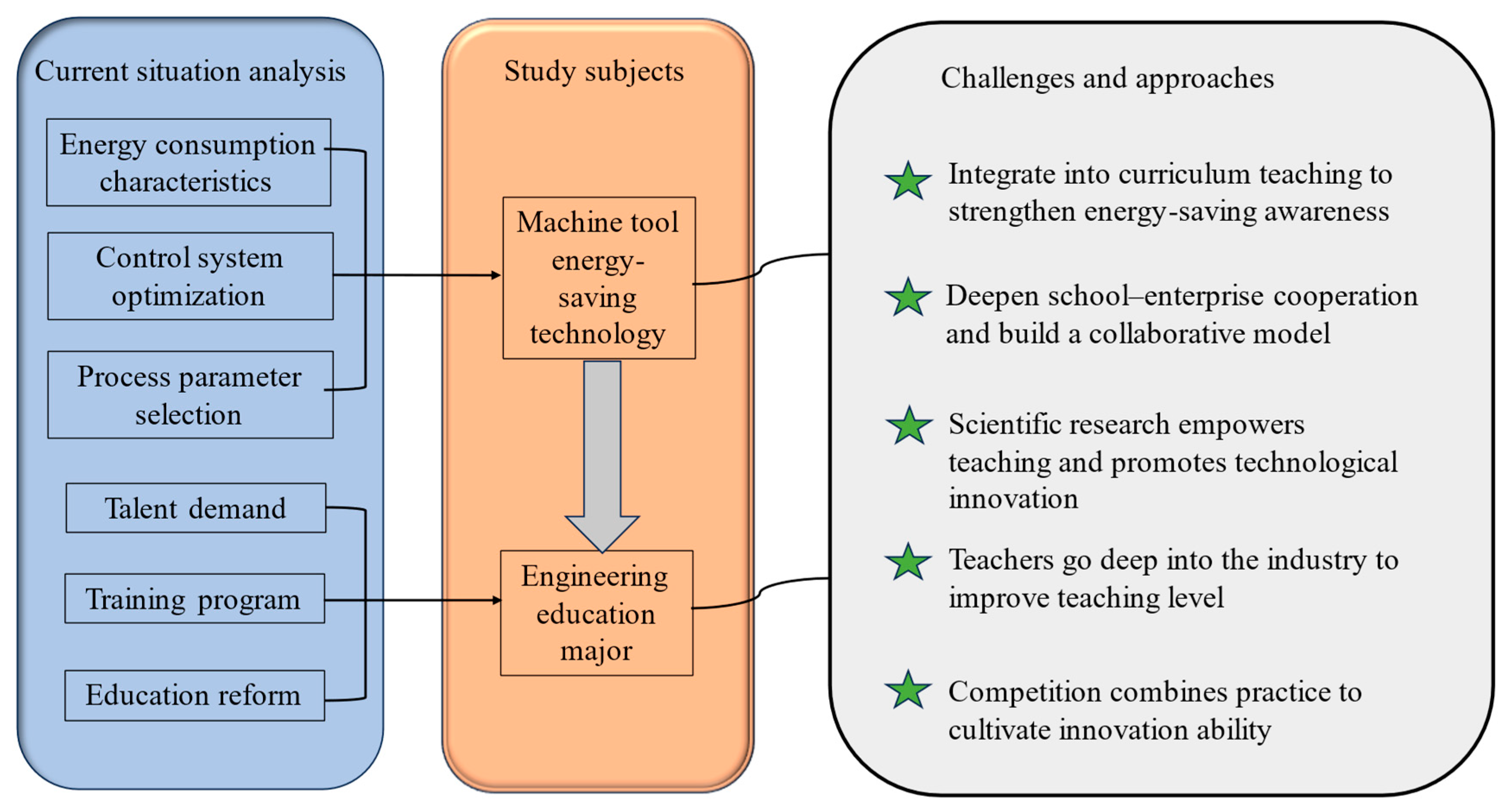
13]. At present, significant progress has been made in areas such as energy consumption modeling, optimization of control strategies, and selection of cutting parameters. However, integrating these research outcomes into engineering education in universities remains challenging due to the high technical complexity and limited adaptability to teaching environments. To address these challenges, this study proposes an instructional reform framework centered on machine tool energy-saving technologies. The framework aims to embed energy efficiency concepts into the full spectrum of curriculum design, teaching practice, and competency development, thereby establishing a closed-loop mechanism from problem identification to pedagogical implementation. As shown in
Figure 1, the reform strategy includes five core components: curriculum integration, collaboration between academia and industry, research-based teaching, faculty engagement in industrial settings, and project-based competitions. These measures aim to address current barriers in embedding energy-saving technologies into education and to enhance students’ practical competence and green innovation capability within the context of intelligent manufacturing.
This paper is structured in the following order:
Section 3 introduces the theoretical basis of machine tool energy-saving technology to provide technical support;
Section 4 explains the integration strategy and path design of teaching content; and
Section 5 demonstrates the teaching implementation process and student feedback through experimental cases to verify the effectiveness of the reform.
3. Machine Tool Energy-Saving Technology
Recent developments in the integration of machine tool processing technology with computer control, sensor technology, artificial intelligence, and intelligent manufacturing have facilitated the development of machine tool processing systems toward high efficiency, intelligence, digitization, precision, and reliability [
14,
15]. The intelligence and energy-saving optimization of machine tool processing systems has emerged as a major study area due to the growing demands of modern manufacturing for high-precision processing, automated production, and green manufacturing. Nonetheless, the issue of energy consumption in machine tool processing has progressively drawn the attention of academics both domestically and internationally. The spindle drive system, feed system, cooling system, cutting process, and auxiliary equipment are the main sources of machine tool energy usage. The processing process uses a lot of energy inefficiently, which leads to low energy utilization, raising production costs, and an environmental impact. As a result, a key area of study in the fields of intelligent manufacturing and green manufacturing is how to minimize unit processing energy consumption, increase energy efficiency, and optimize the energy consumption structure of machine tool processing [
16,
17,
18]. To systematically review the current research on machine tool energy-saving technologies, this paper categorizes recent domestic and international studies into three key areas, as summarized in
Table 1: energy consumption modeling and prediction, energy-efficient control of equipment, and optimization of process parameters.
The table indicates that energy consumption modeling and equipment-level energy-saving control primarily involve complex system modeling, energy data mining, and structural component optimization—technically demanding areas that require advanced theoretical knowledge. These topics are often challenging for undergraduate students to fully comprehend and are difficult to implement effectively within standard classroom instruction. In contrast, process parameter optimization is more accessible and practically oriented. It can be integrated into experimental teaching, allowing students to understand energy-saving concepts through hands-on parameter adjustment. This approach offers valuable theoretical support for both technical applications and educational practice.
Processing parameters are crucial in the cutting process for reducing consumption and saving energy [
60]. The selection of process parameters should be based on certain decision-making principles [
61,
62]. The performance of the cutting and machine tools may be completely exploited if the processing parameters are chosen correctly. This can lower the processing cost by 10% in addition to lowering the energy consumption of production and processing [
63]. Software tools have been created to forecast the energy consumption of CNC machine tool production and processing, assess the environmental effects of sustainable manufacturing and processing [
64], and assist operational staff in making decisions and optimizing production and processing technology to achieve sustainable manufacturing and processing. Intelligent expert system software for green and efficient cutting processes that can help process workers assess and optimize the environmental and resource characteristics of cutting processes, as well as carry out intelligent reasoning and process optimization, is currently scarce. In order to categorize five methods that are appropriate for the production of car bumpers, Hambali et al. [
47] used the analytic hierarchy process and the constraint of environmental effect. In order to help decision-makers or manufacturing engineers choose the best manufacturing process for composite car bumpers early in the product development process, they employed Expert Choice software(V 11.5) to make the best choices possible regarding the processing schemes for composite car bumper beams. Nevertheless, the evaluation indicators’ weights for materials, cost, design, maintainability, and product attributes were not taken into account. Arezoo et al. [
48] developed an auxiliary tool selection expert system, EXCATS, which includes a knowledge base composed of a database of machine tools, materials, a working database of workpieces, systems, and other information, and a rule base. Through the processing condition selection module and tool selection program, it can automatically select suitable tool holders, blades, and cutting process parameters for multi-process turning. However, the system can only be used for turning processing, and its optimization targets are only processing cost and product rate. It does not make reasonable use of the data of processed examples, and the optimization target does not have energy consumption and carbon emission indicators. Hou et al. [
49] proposed a method for optimizing machining process parameters based on matching cutting process condition characteristics, defined process condition vectors, and process parameter vectors. They used the analytic hierarchy process to determine the influence weights of process condition factors, and used the equilibrium matrix to eliminate the size differences and numerical scale differences between process condition factors. They designed and developed a typical CNC machining process database system for aircraft engine parts, and achieved the optimal process parameters by matching the actual process conditions with the existing process conditions, solving the problem of selecting milling process parameters for parts with complex structures and difficult-to-cut materials. By taking cutting parameters and tool path strategies into account, this framework maximizes the ecological, economic, and social footprints and supports the long-term growth of the manufacturing sector [
50]. Bilgaet et al. [
51] concluded that the depth of cut is the most significant parameter affecting cutting energy efficiency and power, and the feed rate is the most significant parameter affecting the energy consumption of machine tools; thus, they obtained the cutting parameter combination with the best energy consumption. Wang et al. [
52] reported that the energy consumption of machining increases with the increase in cutting speed. Sarkaya et al. [
53] found that lower cutting speed leads to poor machining quality, while higher cutting speed accelerates tool wear. To find the milling process parameters, like spindle speed and feed rate, that use the least amount of energy, Calvanese et al. [
54] developed an energy consumption model for CNC machining centers. Winter et al. [
55] were able to identify the best grinding process parameters in order to maximize ecological benefits. Rajemi et al. [
56] analyzed and modeled the turning process’s energy consumption and identified the best turning parameters in order to minimize both environmental impact and energy consumption. Numerous parameters influencing surface roughness in machining have been examined by other researchers. Managing the roughness can help cut down on energy use and CO
2 emissions by preventing the need for later finishing procedures like grinding [
57,
58,
59].
In summary, the optimization of cutting process parameters holds significant practical value and pedagogical feasibility in machine tool energy-saving research. Existing studies demonstrate that the appropriate selection and adjustment of key parameters, such as spindle speed, feed rate, and depth of cut, can effectively reduce energy consumption while simultaneously improving machining quality and production efficiency. These research findings offer rich instructional resources for course development and provide an accessible entry point for students to grasp energy-saving concepts.
4. Integrate Machine Tool Energy-Saving Technology into Engineering Education and Research
Based on the latest research on advanced machine tool energy-saving technologies and the future development trends outlined above, it is essential to integrate these technologies into the educational process to equip professionals with the skills needed to meet the manufacturing industry’s current demands for green and sustainable development. Both business and academics are now very interested in energy consumption optimization and energy-saving control of machine tool operations as a result of the manufacturing sector’s shift to high efficiency, intelligence, and low carbon [
65,
66]. As a result, integrating machine tool energy-saving technology into engineering education helps foster students’ comprehension of sophisticated energy-saving theories as well as their capacity to apply energy-saving optimization techniques to real-world engineering challenges.
- 1.
Integrate machine tool energy-saving technology into course teaching to strengthen energy-saving awareness.
In order to reduce energy consumption, students must first understand the energy loss characteristics of each energy consumption unit in the cutting process, such as the feed system, spindle drive, material removal energy consumption, etc. They must also learn how to optimize cutting parameters [
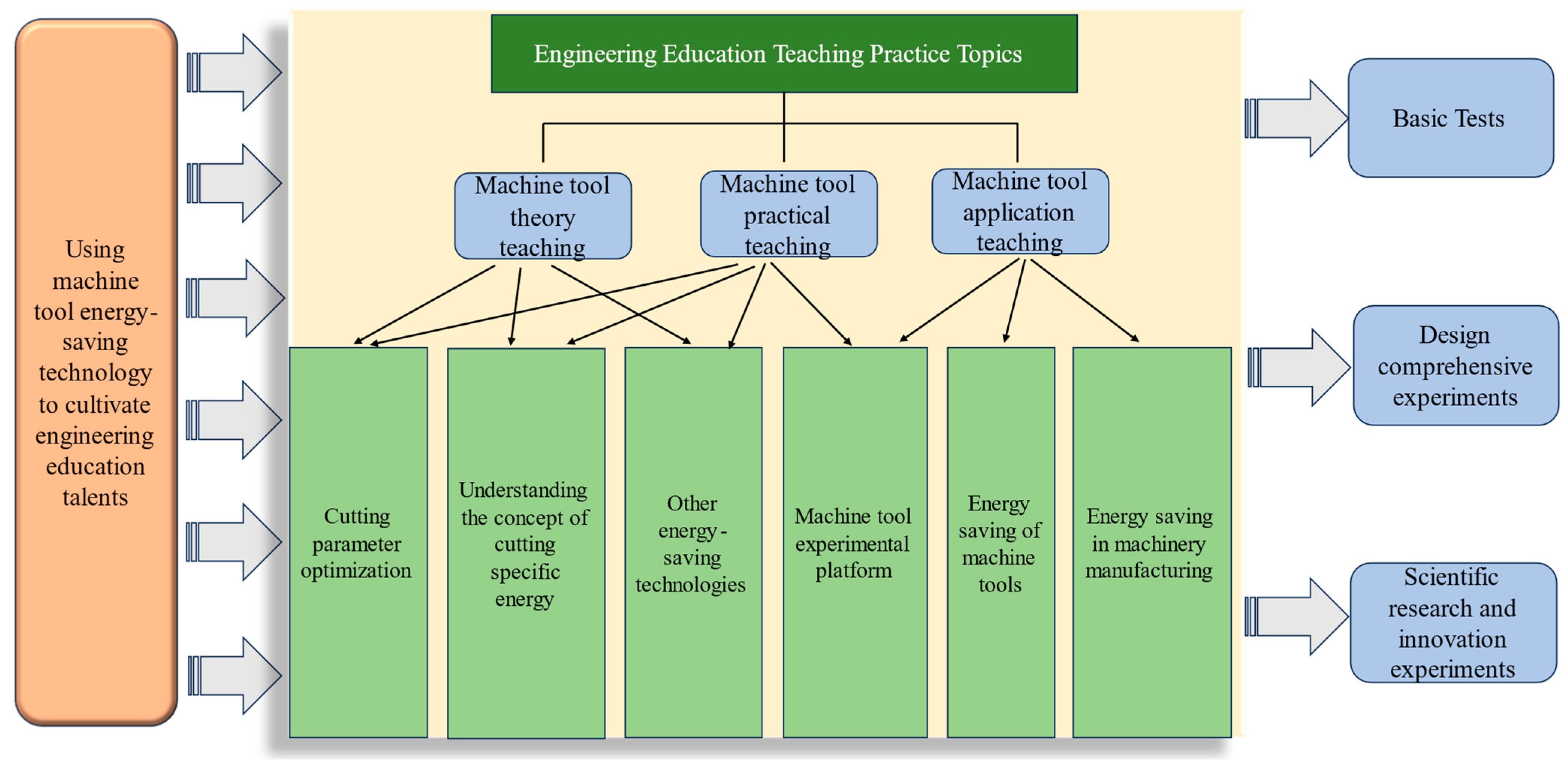
67]. As illustrated in
Figure 2, during the theoretical phase of machine tool instruction, students are expected to gain a solid understanding of specific cutting energy, including methods to evaluate the energy required to remove a unit volume of material. Through the analysis of experimental data, students develop an awareness of energy efficiency assessment, thereby reinforcing their understanding of sustainable manufacturing principles. This theoretical foundation is extended in subsequent practical modules aimed at strengthening students’ ability to apply energy-saving strategies. In energy-related lab sessions, students operate machine tools, collect and analyze energy consumption data, and compare performance under different parameter settings. These activities foster a practical understanding of energy optimization processes. Furthermore, students are exposed to complementary energy-saving approaches, such as control system optimization and standby energy management, which provide a broader systems-level view of energy efficiency. In the later stages of the course, instruction focuses on real-world applications. Students assess how different machining strategies influence total energy consumption and explore the implementation conditions of energy-saving technologies in industrial environments. To enhance this connection with practice-based learning, students are encouraged to integrate these concepts into internships or capstone projects, applying their knowledge to propose energy-saving improvements for actual production systems. By embedding energy-saving concepts into theoretical learning, hands-on practice, and application-oriented modules, the course supports a progressive development of student competencies. It not only strengthens their grasp of cutting-edge energy-efficient machining technologies but also cultivates skills in experimental design, data analysis, and practical problem-solving. Ultimately, the curriculum aims to achieve three core educational objectives: foundational proficiency in testing and measurement, the ability to design and conduct integrated experiments, and the capacity to engage in research and technological innovation.
To enhance teaching effectiveness and strengthen students’ practical skills in machine tool energy-saving technology, this course incorporates micro-lecture-based online resources to build a flexible and efficient learning pathway. These resources are deeply integrated with hands-on laboratory sessions, forming a blended teaching model where online instruction guides the learning process and offline practice provides essential support.
- 2.
Establishing an online teaching mode.
With the rapid development of modern information technology and the widespread use of mobile devices, micro-lectures have become increasingly prevalent in education, emerging as a powerful tool in contemporary teaching.
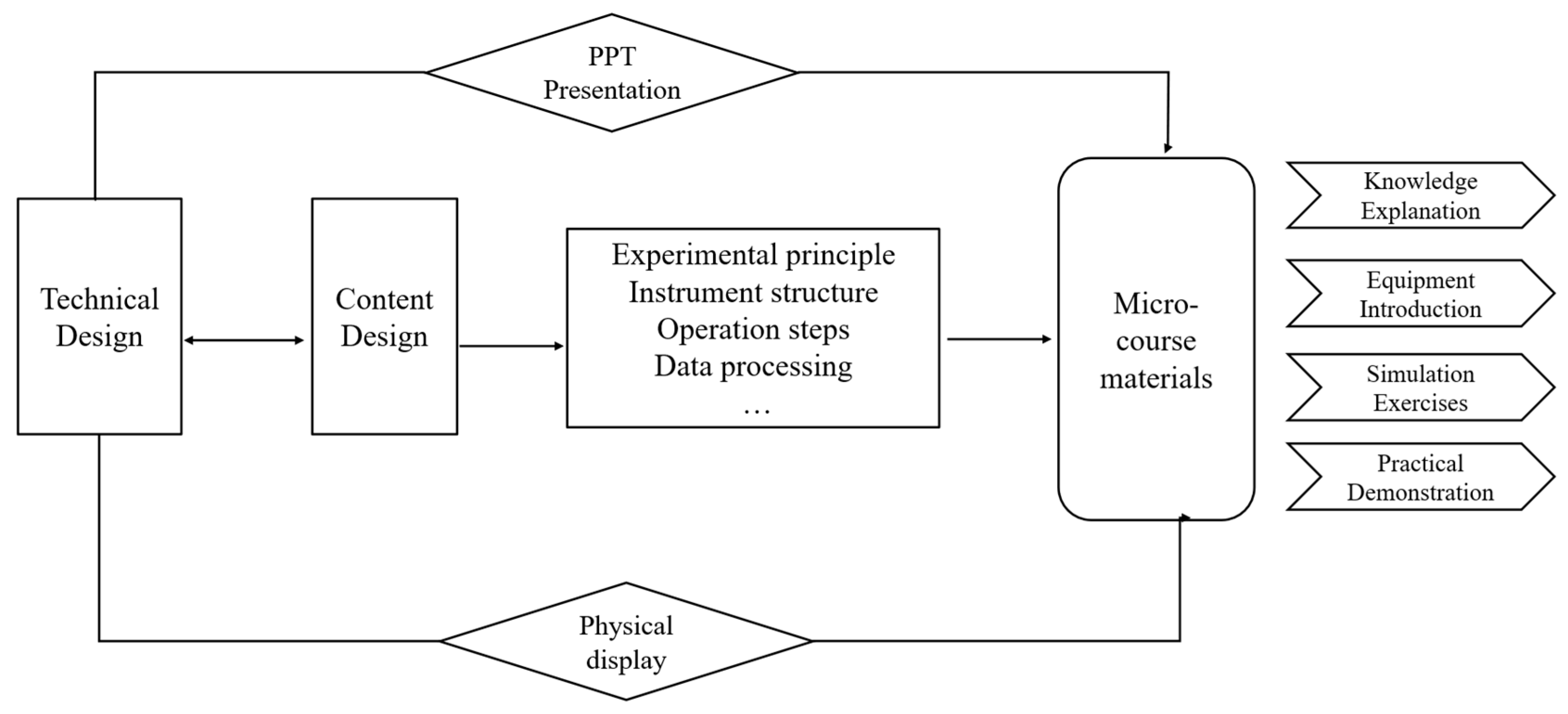
Figure 3 illustrates the overall design process of micro-lecture development, integrating both technical and content design. Centered on key topics such as experimental principles, equipment structure, operating procedures, and data processing, the micro-lectures are structured into four core modules: conceptual explanation, equipment introduction, simulation exercises, and hands-on demonstrations. These are delivered through multimedia formats, including PPT narration and physical demonstrations, resulting in a comprehensive and effective digital teaching system.
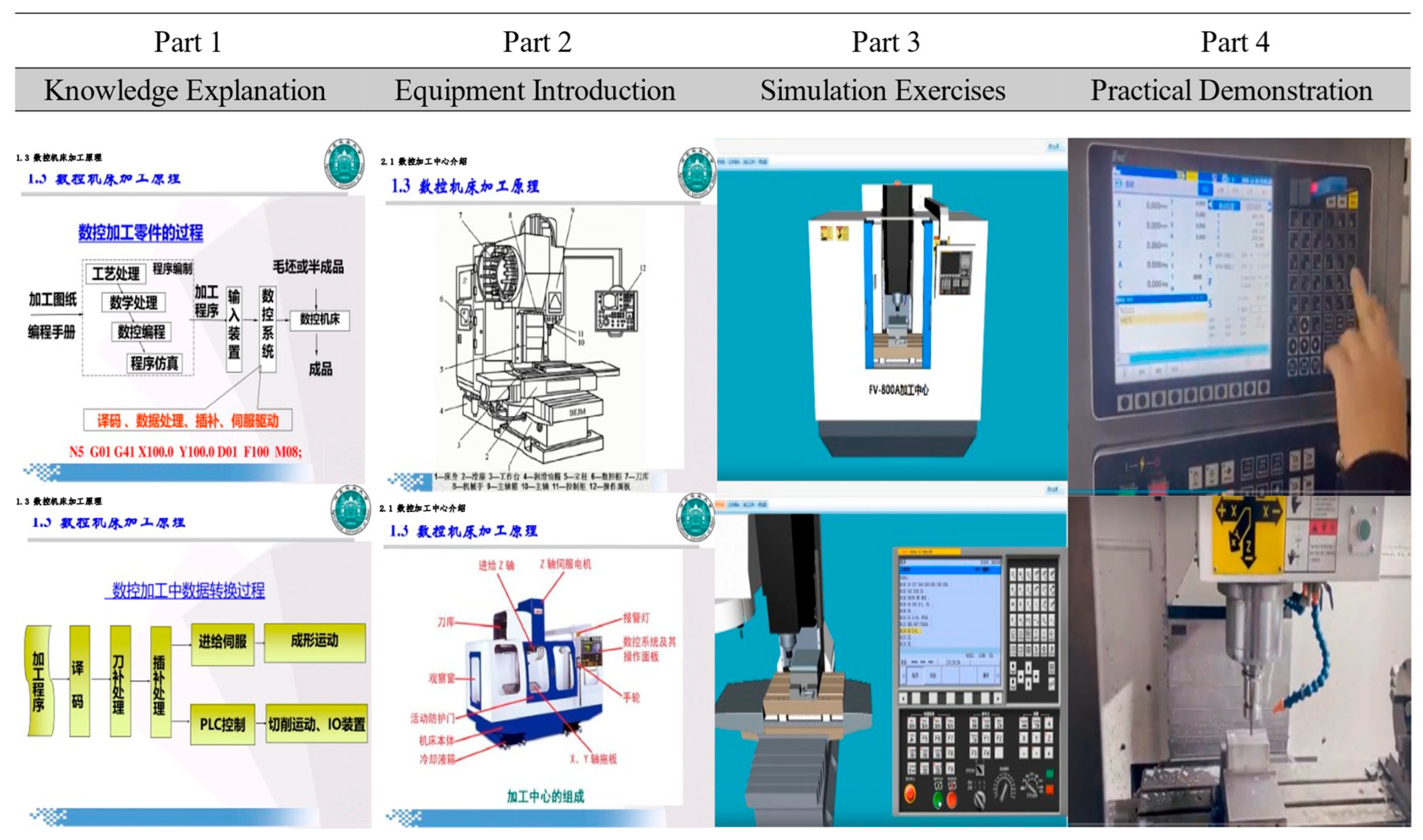
Our micro-lecture materials consist of four key components: conceptual explanation, equipment introduction, simulation exercises, and hands-on demonstrations, as shown in
Figure 4. The conceptual explanation section covers the workflow of CNC machining parts and the data transformation process involved in CNC operations. The equipment introduction provides a detailed overview of the structural components of a CNC machining center. In the simulation exercises, students are guided through CNC operation training using virtual simulation software (V 2023). The figure illustrates the simulated machine tool interface and control panel, including functions such as CNC code input, coordinate setting, and spindle operation simulation. These features help students become familiar with machine operation steps and interface layout, enabling them to successfully complete repeatable training tasks. The hands-on demonstration begins with the instructor demonstrating the operation, followed by students practicing on actual equipment. This includes activities such as command input via the human–machine interface, monitoring machine operation, and observing tool movement. This stage reinforces students’ ability to apply theoretical knowledge and simulated practice to real-world operations, facilitating the transition from virtual training to practical application.
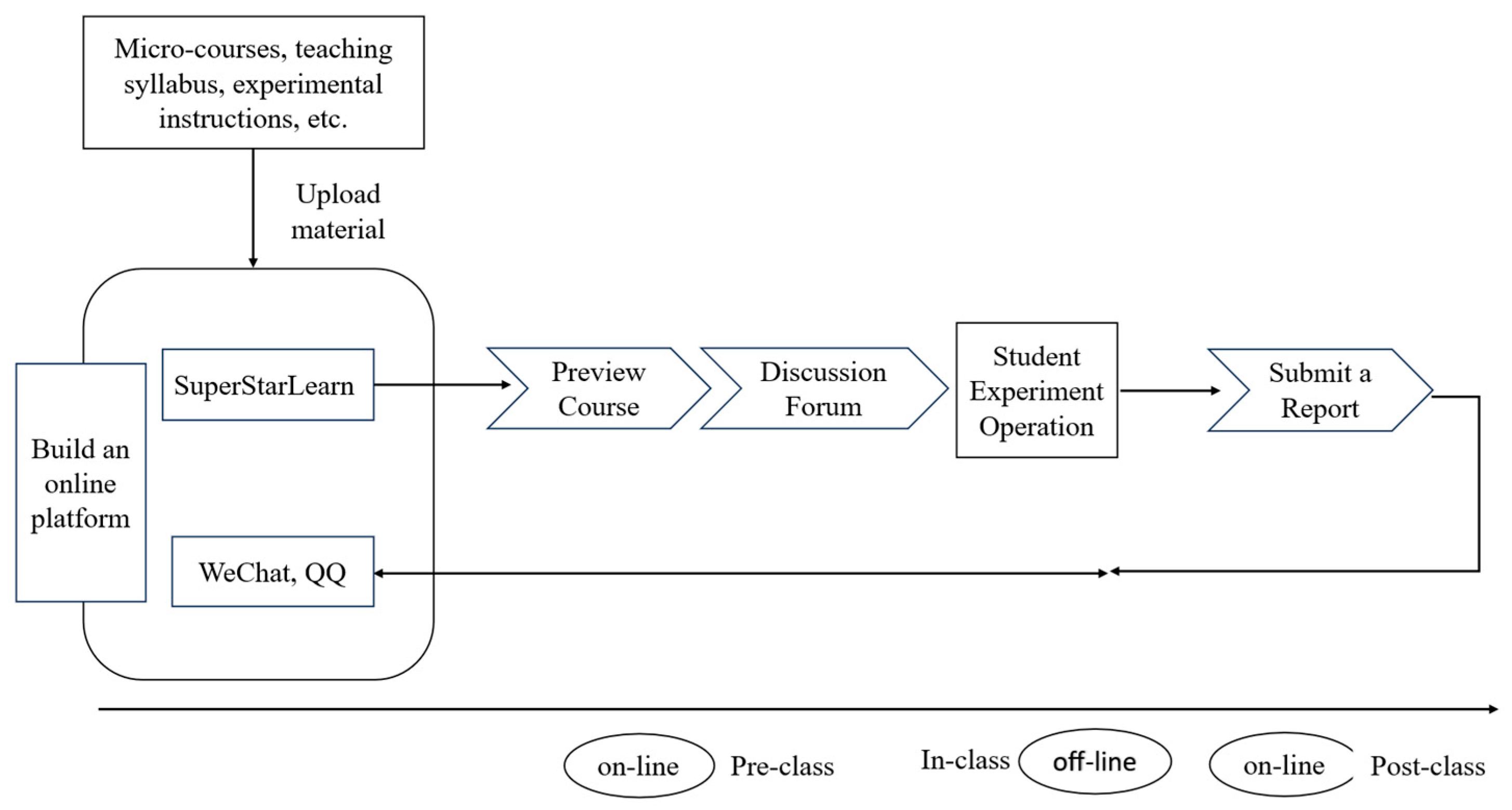
Figure 5 illustrates the construction process of the online learning platform. Through platforms such as QQ groups, WeChat groups, and the SuperStarLearn system, resources, including micro-lectures, course syllabi, and lab manuals, are uploaded to ensure unified management and shared access. In the pre-class phase, instructors assign preview tasks and open discussion forums on the platform, enabling students to complete preparatory learning, engage in peer discussions, and interact with instructors online. During the in-class phase, students are divided into groups and conduct hands-on experiments at an off-campus training facility. In the post-class phase, students are required to submit lab reports, thereby forming a closed-loop instructional process.
- 3.
Building offline environments.
The integration of online micro-lectures and pre-class preparation has fundamentally reshaped offline instruction, particularly in settings such as laboratories and workshop environments. Students now enter the lab with prior knowledge, having already familiarized themselves with the experimental principles and key procedures. As a result, traditional lecture-based instruction is no longer necessary during lab sessions; teachers no longer need to repeat basic concepts such as experimental theories, equipment usage, procedural steps, or safety guidelines. The instructor’s role evolves from merely delivering knowledge to fostering deeper inquiry and independent thinking, shifting the emphasis from providing answers to guiding students in developing their own problem-solving abilities. Similarly, students shift from passive recipients of information to active participants in their own learning. Rather than relying solely on teacher-led instruction, they engage in self-directed preparation, hands-on experimentation, and critical thinking, thereby constructing their own knowledge systems and practical competencies.
In traditional offline CNC machine tool experiments, students are typically required to become familiar with CNC programming by translating part machining sequences, process parameters, and machine motions into numerical control code. Once input into the CNC system, the servo mechanism executes the machining automatically. In contrast, the current offline experiment introduces an energy-efficiency objective, requiring students to actively adjust machining parameters and consider how their settings impact the machine’s energy consumption. This instructional approach not only implements a blended reform in teaching methodology by integrating online and offline components but also shifts the experimental focus from conventional machining tasks to energy-conscious practices. As a result, it significantly enhances students’ understanding of sustainable manufacturing principles.
- 4.
Learning process of online and offline hybrid teaching mode.
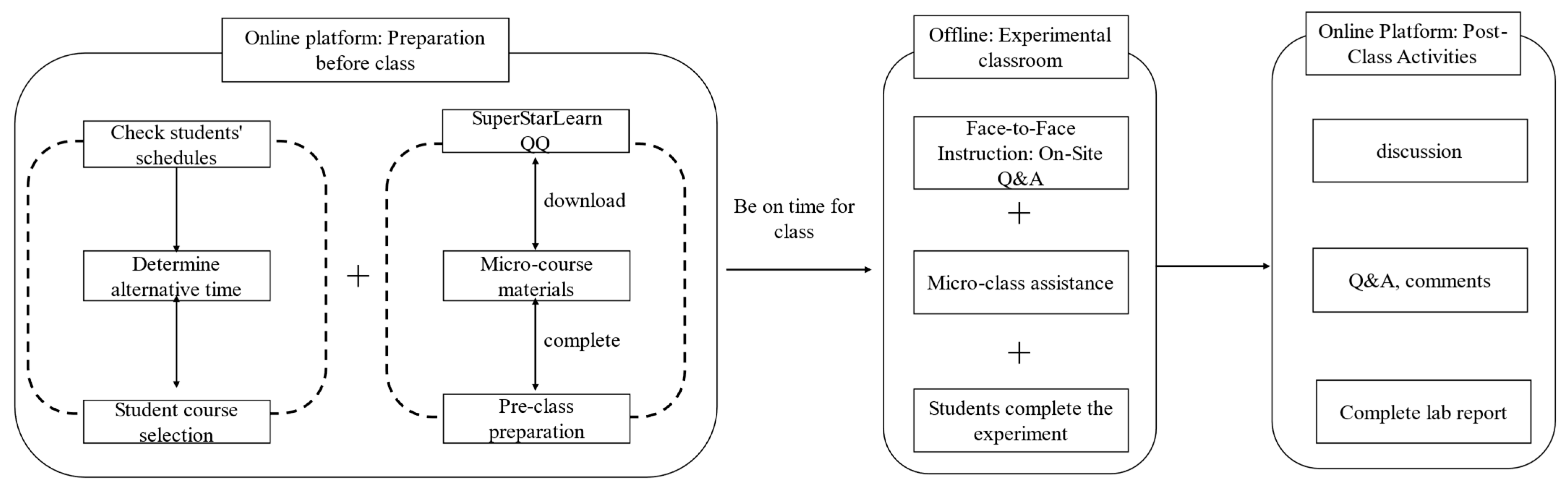
Figure 6 illustrates the learning process of a blended experimental teaching model that combines both online and offline components. Prior to class, instructors use online platforms to survey students’ course schedules, determine feasible times for experimental sessions, and communicate the finalized arrangements to the students. Students then attend laboratory sessions based on their individual availability. Once the schedule is set, students download micro-lecture videos and other experimental materials via platforms such as Learning Pass or QQ groups for self-directed online preparation. Instructors monitor students’ learning progress through online supervision and provide timely support. During offline laboratory sessions, instructors spend a short time addressing common issues and answering questions, while the majority of the session is allocated for students to review the uploaded materials and complete the experiments efficiently. After class, students engage in online discussions, while instructors provide feedback and respond to questions. Students then process and analyze experimental data, complete their lab reports, and upload them to the designated platform.
5. Case Studies
5.1. Practical Teaching Reform Case
In the teaching of the machine tool energy-saving technology course, several issues have been identified: (1) The course encompasses a wide range of knowledge areas, including mechanics, electronics, and signal processing; (2) it is highly theoretical, requiring extensive formula-based calculations; (3) the engineering cases presented in textbooks are often abstract, making it difficult for students to digest the content and relate theory to real-world engineering problems, thereby hindering innovation; (4) the teaching format is monotonous, relying solely on traditional lecture-based instruction, which reduces student engagement and limits the integration of theory with practice; and (5) the assessment method is single-dimensional, based only on final exam results, placing more emphasis on outcome evaluation rather than process-based assessment. To address these challenges, a blended teaching approach is proposed, combining live-streamed online lectures with hands-on factory-based training. An experimental CNC milling task using 316L stainless steel is designed as the practical component, allowing students to conduct energy consumption analysis and data evaluation within a real machining context. Existing studies have demonstrated that blended teaching exhibits strong adaptability and effectiveness in engineering education. The relevant literature suggests that integrating online self-directed learning with offline practical training can effectively enhance students’ learning motivation, overcome the limitations of traditional classroom settings in terms of time and space, and deepen the learning experience. This approach thus offers a solid practical foundation and pedagogical rationale for implementation [
68,
69,
70].
5.2. Implementation of Teaching Reform Practices
The blended teaching experiment was implemented in three phases: before class, during class, and after class.
Pre-class phase: The teaching team first prepared a set of instructional materials, including PowerPoint slides and operation demonstration videos, to help students become familiar with the experimental procedures and improve their operational proficiency through online self-learning. To ensure a smooth hands-on experience during the offline sessions, the team also completed the following preparations: laboratory setup and equipment calibration (as shown in
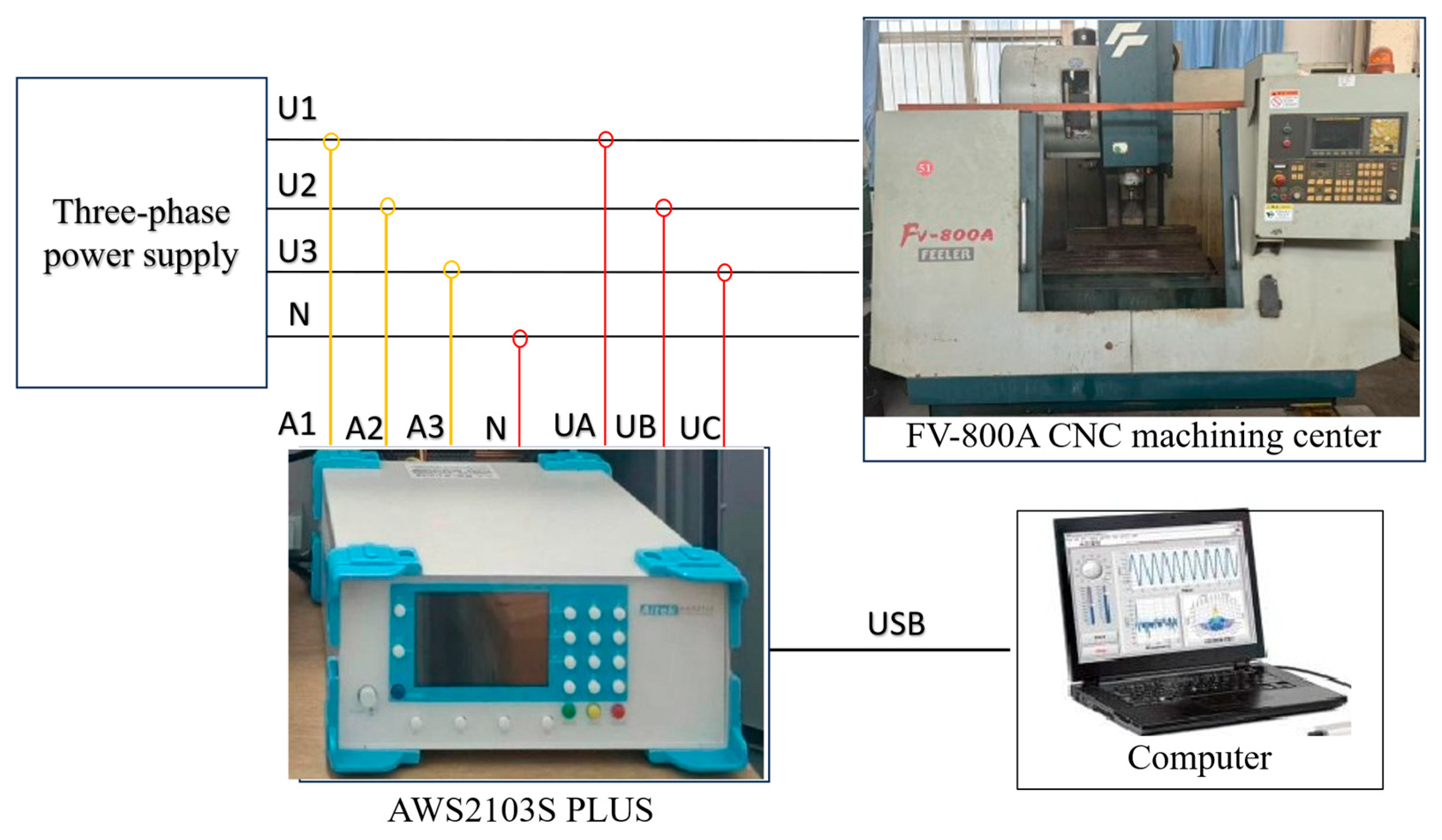
Figure 7, the experimental platform includes a three-phase power supply (U1, U2, U3, and N) connected to a FV-800A CNC machining center; power consumption is monitored in real time via the AW2103S PLUS power analyzer (AITEK, Taiwan), with data transferred to a computer via USB for further analysis), as well as the preparation of consumables and tools. The machining parameters were fixed as follows: the workpiece material is 316L stainless steel, with dimensions of 105 mm × 26 mm × 60 mm and a machined length of 105 mm; the cutting tool used is a six-flute tungsten carbide end mill (Model: ∅10 × 25 × D10 × 75L × 4F − 70°).
In-class phase: Students arrived at the partner factory at scheduled times and formed self-organized learning groups, each with a designated leader. Guided by the pre-class materials, each group performed machine setup and data collection using their assigned experimental platforms. During the experiment, under practical machining conditions, spindle speeds below 2500 rpm result in insufficient material removal rates, while speeds above 3500 rpm significantly accelerate tool wear. Students referred to the four major milling parameters affecting energy consumption to complete
Table 2. To further investigate the influence of each factor, instructors guided students to design a full-factorial experiment and populate
Table 2 (presented as a reference). Each group then analyzed which factor had the greatest effect on energy use and discussed which software tools could best visualize these impacts.
Post-class phase: After completing the experiment, students processed the recorded data, analyzed it, and engaged in group discussions to interpret the results. To assess learning outcomes, each group was required to present their findings, with one member selected to deliver a group presentation. One group’s analysis, which was both logically structured and supported by accurate conclusions, is highlighted here as an example. Given that the milling experiment was based on a four-factor, three-level single-variable design,
Table 3 presents 81 sets of experimental results under different machining parameter combinations. These data were used to examine the influence of various parameters on energy consumption. The analysis revealed that appropriately increasing cutting depth and feed per tooth helps reduce specific energy consumption (SEC) and improves energy efficiency. Although increasing spindle speed results in higher cutting power, its effect on SEC is relatively minor. Therefore, under the premise of maintaining machining quality, feed rate and cutting depth should be optimized to lower the energy consumption per unit volume of material removal and enhance overall processing efficiency. Moreover, parameter optimization should strike a balance among energy efficiency, tool life, and machining quality to achieve more sustainable and high-performance CNC milling. After the presentations, the instructor engaged in further discussions with the students to clarify technical questions and reinforce key concepts.
5.3. Student Results and Analysis
To evaluate the effectiveness of the implemented teaching reform, we analyzed the data processing outcomes submitted by student groups upon completing the experiment. The majority of students demonstrated a solid ability to analyze energy consumption under varying cutting parameters. They successfully generated data visualizations, including interaction plots illustrating the combined effects of multiple parameters, reflecting strong comprehension of machining variables and data processing skills.
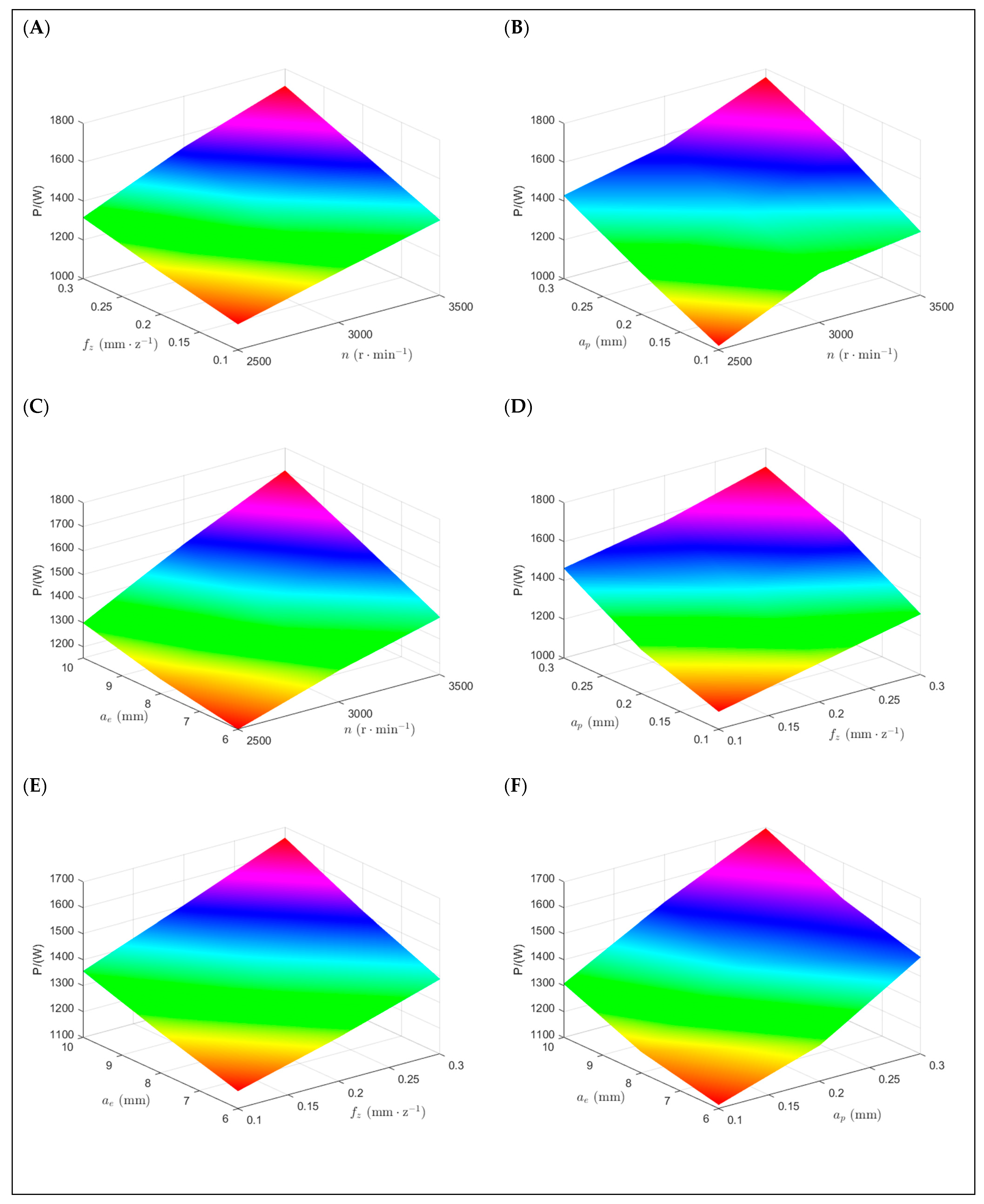
As shown in
Figure 8, one student group used MATLAB (2023a) to plot the interactions between paired cutting parameters and spindle power consumption. The figure displays the interaction trends between spindle speed, feed per tooth, cutting depth, and cutting width, providing a clear view of how these factors influence energy usage during machining. By comparing the slope magnitudes of the power response surfaces for different parameter dimensions, students concluded that cutting depth had the greatest influence on power consumption, followed by feed per tooth, then cutting width, with spindle speed having the least effect. Specifically, the depth of cut influences the cross-sectional area of the undeformed chip, thereby determining the cutting force and power requirements. As the depth of cut increases, the resistance to material deformation also rises, leading to higher machine load and, consequently, greater energy consumption. Additionally, a larger cutting depth accelerates tool wear, shortens tool life, increases replacement costs, and may compromise machining quality. Therefore, optimizing the depth of cut helps reduce energy consumption and operational costs while maintaining machining efficiency. From a chip formation mechanics perspective, an increased depth of cut implies that a thicker layer of material is removed in a single pass. This thickens the deformation zone during cutting, increases shear deformation strength, and results in higher plastic energy consumption. Consequently, the specific energy consumption (SEC) also rises. Moreover, the dynamic characteristics of the tool–workpiece system are sensitive to cutting depth. A deeper cut may compromise system stiffness, increase cutting forces on the tool, and negatively affect machining stability. This can lead to additional energy losses, such as ineffective cutting caused by vibration or increased thermal dissipation. Therefore, deep cutting not only directly increases energy input but may also cause complex energy distribution and waste phenomena. These findings closely align with established theoretical principles, indicating that students had effectively developed a quantitative understanding of the relationship between process parameters and energy consumption.
During further analysis, some students observed that when the cutting depth ranged between 0.1 and 0.2 mm, power fluctuations were relatively moderate, indicating good energy efficiency stability. However, within the 0.2–0.3 mm range, power consumption increased rapidly, leading to a noticeable rise in energy usage. A similar pattern was identified in the analysis of cutting width: energy consumption remained relatively stable between 6 and 8 mm but increased significantly beyond 8 mm. Based on these findings, most student groups proposed in their presentations that setting the cutting depth at 0.2 mm and the cutting width at 8 mm represents an optimal parameter combination—striking a balance between machining efficiency and energy reduction. These conclusions closely correspond with known empirical patterns in machining energy efficiency, demonstrating that students had begun to establish a sound engineering logic linking process parameters, energy consumption, and optimization.
5.4. Teaching Evaluation Analysis
To further evaluate the effectiveness of the blended teaching reform in enhancing students’ cognitive understanding and practical abilities, a questionnaire survey was conducted at the end of the course, targeting all students who participated in the experimental teaching (n = 100). The questionnaire adopted a 5-point Likert scale for quantitative assessment. This scale, widely used in educational and psychological research, is a subjective evaluation tool that measures the extent of agreement with a given statement, ranging from 1 (“strongly disagree”) to 5 (“strongly agree”). Detailed information is provided in
Table 4.
The questionnaire in this study was initially constructed based on Bloom’s (1956) three domains of educational objectives: cognitive, affective, and psychomotor [
70]. Accordingly, the instructional goals of the energy-saving course were categorized into three dimensions: “understanding and cognition,” “teaching engagement,” and “sense of responsibility”.
To assess the structural consistency and internal reliability of the items within each dimension, Cronbach’s Alpha was employed for reliability analysis. As a widely used measure in educational research, Cronbach’s Alpha evaluates the internal consistency of items within the same dimension of a questionnaire.
Table 5 presents the Cronbach’s Alpha values for the three dimensions. Each of the first three dimensions includes three items, with corresponding Alpha values of 0.912, 0.894, and 0.886, respectively. These results indicate a high level of internal consistency, suggesting that the items within each dimension are highly reliable (with α > 0.7 generally considered acceptable and α > 0.9 considered excellent). The overall reliability of the questionnaire reached 0.898, further confirming that the instrument possesses strong internal consistency in its structural design.
To further illustrate students’ feedback on the effectiveness of the curriculum reform, this study conducted a descriptive statistical analysis of the mean scores and standard deviations for each questionnaire item, as shown in
Table 6. The majority of items had mean scores ranging from 4.22 to 4.45, indicating a generally high level of student recognition and satisfaction with the course. For Dimension 1 (Understanding and Cognition), the mean scores of the three items ranged from 4.26 to 4.45, demonstrating the course’s significant effectiveness in helping students acquire knowledge related to energy-saving technologies and energy consumption mechanisms. The items under Dimension 2 (Teaching Method and Engagement) had slightly higher mean scores, all above 4.3, suggesting that the blended teaching model and hands-on experimental tasks positively contributed to students’ learning motivation and collaborative skills. For Dimension 3 (Energy Awareness and Engineering Responsibility), item scores ranged from 4.22 to 4.31, indicating the course’s positive role in enhancing students’ sense of responsibility in green manufacturing. Moreover, the standard deviations for all items fell within the range of 0.56 to 0.67, suggesting a moderate level of response dispersion and reflecting consistency and stability in students’ feedback.
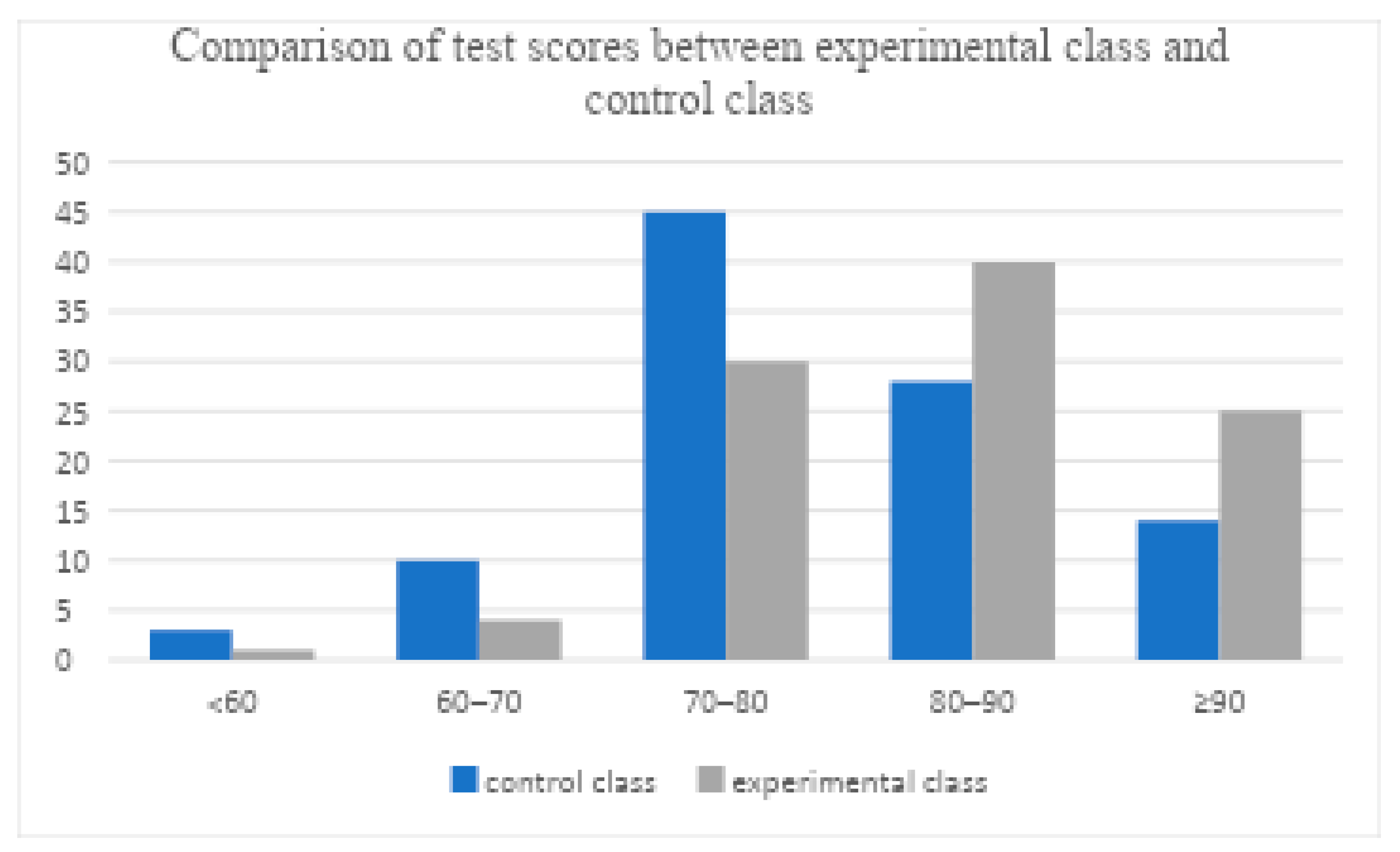
Given that the blended teaching reform has been fully implemented, it is no longer feasible to conduct repeated questionnaire testing with a traditional teaching control group under identical conditions. To enhance the comparability and persuasiveness of this study, a comparative analysis was conducted using the final exam scores of two groups of students. The experimental class, from the current semester, adopted the blended teaching model and integrated machine tool energy-saving content. In contrast, the control class, from previous semesters, followed a traditional teaching approach. The final exam covered both theoretical knowledge and practical tasks taught during the course. As shown in
Figure 9, the number of students in the experimental class scoring within the 70–80, 80–90, and 90–100 ranges was significantly higher than that in the control class. Furthermore, the pass rate and excellence rate of the experimental class were also notably higher. These results indicate that the blended teaching approach led to significant improvements in students’ comprehension and application abilities, enhancing their overall performance in both theoretical understanding and practical skills. This further demonstrates the effectiveness of the reformed instructional method.
6. Discussion
This teaching reform initiative is grounded in the research achievements of the faculty team in the field of machine tool energy-saving technologies. It follows a pedagogical logic of “theoretical guidance—practical validation—reflective enhancement,” with the goal of strengthening students’ understanding and application of energy consumption control technologies in CNC machining. By developing an integrated online–offline teaching model, the reform addresses challenges in traditional instruction, such as fragmented knowledge structures, difficulties in applying theoretical concepts, and limited diversity in teaching methods. This approach optimizes both the organization of course content and students’ learning trajectories. In terms of curriculum design, the course incorporates typical engineering cases and structured experimental tasks, guiding students to internalize and transfer knowledge through a multi-dimensional learning process involving cognition, hands-on practice, and critical evaluation. Through operating CNC machine tools and collecting energy consumption data, students analyze how cutting parameters influence energy use, gradually constructing a cognitive framework of “parameters–energy consumption–optimization.” This enhances their analytical skills and problem-solving abilities. Practical outcomes show that the teaching model effectively stimulates students’ interest and active participation. Moreover, student feedback indicates a deeper understanding of green manufacturing concepts and a recognition of the necessity and strategies of energy control in engineering practice.
Despite the positive outcomes, several limitations were identified during this study. First, the teaching reform was implemented primarily within a pilot innovation class at our institution, involving a relatively small sample with specialized academic backgrounds and curricular frameworks. As such, the generalizability and scalability of the findings require further validation in broader educational contexts. Second, the current curriculum mainly focuses on cutting parameter optimization, while other key energy-saving areas—such as energy modeling, tool efficiency evaluation, and intelligent control—are not yet adequately covered, leaving room for expanding the depth and breadth of instructional modules. Furthermore, the evaluation of teaching effectiveness has relied mainly on classroom observation and subjective student feedback, lacking long-term tracking data and objective quantitative indicators. This limits the ability to fully assess the lasting impact of energy-saving education on students’ comprehensive competencies. Future research could explore strategies such as broadening the sample population, enriching the instructional content system, and establishing a multi-dimensional teaching assessment framework to further optimize the integration of machine tool energy-saving technologies into engineering education.
7. Conclusions
This study explores the integration of machine tool energy-saving technologies into engineering education, aiming to align energy conservation concepts with the goals of environmental sustainability. It seeks to systematically embed these concepts into talent cultivation processes in response to the urgent need for carbon reduction and green transformation in the manufacturing industry. The main findings highlight key optimization pathways for machine tool energy efficiency, including energy consumption modeling, control system enhancement, and machining parameter adjustment. Based on the curricular needs and ongoing reforms in mechanical engineering programs at universities, this study analyzes the challenges and opportunities associated with incorporating energy-saving technologies into both teaching and research. Through a case-based approach, it demonstrates practical strategies for applying machine tool energy-saving methods in hands-on instruction, enabling students to master the latest optimization techniques while strengthening their green engineering awareness and sense of environmental responsibility.
Integrating machine tool energy-saving technologies into engineering education not only enriches the course content but also provides new research directions and methodological support for instructors. More importantly, it offers a novel approach to cultivating engineering talents with a strong awareness of energy conservation and emission reduction. The widespread application of energy-saving technologies in machining and intelligent manufacturing is not only a key measure to reduce energy consumption in the manufacturing sector, but also a critical pathway toward ecological industrial transformation and low-carbon development. This integration process involves continuously tracking the latest research progress in machine tool energy efficiency and promoting the alignment of educational and research outcomes with practical needs in ecological and environmental governance. It ensures that teaching and research outputs are responsive to the actual demands of industry development. In the context of advancing ecological civilization and the national strategy of green manufacturing, engineering professionals are expected to master advanced energy-saving technologies and apply them flexibly in practice. This requires universities to fully incorporate machine tool energy-saving concepts into both theoretical and practical courses, thereby equipping future engineers with the necessary professional competencies. Finally, by promoting technological innovation and the dissemination of energy-saving concepts through industry–academia collaboration, universities and enterprises can jointly build a green manufacturing education system. The educational reform path advocated in this study not only contributes to the green transformation of the manufacturing industry but also supports the achievement of carbon neutrality goals and advances environmental sustainability through education.