1. Introduction
Climate change and interest to reduce the total CO
2 emissions have driven demand for cleaner technologies, making electric vehicles (EVs) a key part of sustainable mobility. In 2023, EVs accounted for 18% of global vehicle sales—up from 14% in 2022 and just 2% in 2018—with over 14 million units sold, which is 3.5 million more than the previous year. Weekly registrations peaked at 250,000, surpassing the total sales recorded in 2013 [
1]. This rapid increase is driven by the application of lithium-ion batteries (LIBs) [
2].
However, EVs present distinct fire safety challenges. LIB fires can generate high heat release rates, emit hazardous gases such as hydrogen fluoride, and pose explosion risks due to cell rupture and projectile ejection. They are also characterized by re-ignition potential and require prolonged suppression efforts, often demanding substantially more water than conventional vehicle fires. These hazards are particularly critical in confined environments (such as underground garages, tunnels, and transport vessels), where ventilation and access are limited, making EV fire scenarios a concern for fire safety engineering and a potential barrier to widespread EV deployment [
3,
4,
5,
6].
Thermal runaway in LIB batteries can be triggered by improper use, abusive conditions—such as overheating, overcharging, short circuits, or mechanical impact [
7]—or exposure to extreme environmental factors. These events initiate exothermic reactions that release heat, flammable gases, and toxic byproducts, potentially resulting in fires or explosions [
8,
9] that can compromise the safety of buildings and structures. EV fires have also occurred during stationary charging [
9]. As a result, EV fires in enclosed spaces pose heightened risks to RC structures due to limited ventilation and restricted firefighting access [
3,
10]. The impact of heat from EV fires on building structures needs to be understood, as it can compromise structural integrity and safety.
Kang et al. [
11] conducted large-scale fire tests on LIB fires, measuring the effective heat of combustion as vehicles burned fully under a calorimeter hood. EV fires can last up to 70 min and produce higher thermal intensity than the ISO 834 standard fire [
12], which is widely adopted in structural design codes such as EN 1992-1-2 [
13]. However, the study did not assess structural response (behavior), underscoring the need for research—as proposed on the present work—that examines EV fire impacts on structural integrity.
Large-scale EV fire testing is scarce due to high costs [
3]. The existing studies, in enclosed environments [
4,
10,
11], primarily assess thermal parameters and toxic gas emissions. However, most of the existing studies [
4,
10,
11] focus solely on fire dynamics or suppression and neglect the compartment temperature development and its structural implications. No study evaluates the structural performance of RC elements exposed to EV fire conditions or assesses the adequacy of current fire design standards based on an ISO 834 [
12] fire. This gap underscores the novelty of the present study, which addresses the structural response of RC members under EV fire and examines their compliance with standardized fire resistance.
Sturm et al. [
4] performed full-scale EV fire tests in a road tunnel, comparing heat release and toxic emissions with those of diesel vehicles. EVs showed higher heat release rates, and hydrogen fluoride was identified as a critical byproduct. Although different firefighting methods were evaluated, the study did not assess structural temperatures or fire impact on structural performance—this is an aspect addressed in the present research.
Funk et al. [
3] conducted nine EV fire tests in an open-sided enclosure to investigate the fire dynamics to building structures. Gas temperatures reached up to 1000 °C, with flames spreading to adjacent vehicles within 3–46 min and ceiling temperatures exceeding 1000 °C for about 5 min during early fire stages. While the study did not assess the effects on RC elements (i.e., structural analysis), it highlighted potential risks to structural integrity and emphasized the need for further research on the fire performance of RC under EV fire exposure.
Fires in residential buildings cause significant fatalities, damage, and economic losses [
14,
15,
16], with high-rises being especially vulnerable due to their complexity and evacuation challenges. However, EV fires raise additional concerns. Elevated temperatures degrade concrete and steel, risking structural failure and collapse. Current RC design standards, such as EN 1992-1-2 [
13], rely on ISO 834 [
12] but EV fires can exceed this severity, leaving the adequacy of existing codes for EV fire scenarios unverified. Large-scale experimental and numerical studies have reported peak gas temperatures exceeding 1000–1200 °C and heat release rates higher than those associated with the ISO 834 curve, particularly during the first 30–45 min of fire [
3,
4,
11], which corresponds to the critical period for structural fire resistance assessment.
RC structures usually show greater fire resistance than steel under the same fire conditions. However, prolonged fire damage can weaken RC elements and potentially lead to collapse [
17,
18,
19]. Elevated temperatures induce physical, chemical, and mechanical degradation in structural materials such as steel and concrete [
20,
21,
22,
23]. According to fib Bulletin No. 38 [
24], 500 °C is critical for steel reinforcement, where the bending capacity reduces to around 70% of its normal strength. Considering mechanical degradation at 500 °C and a partial safety factor of about 1.15 [
25], the maximum stress sustainable by rebars during fire is roughly 60% of that at room temperature.
Regarding concrete, while fib Bulletin No. 38 [
24] sets it at 500 °C from a mechanical perspective, other authors suggest lower thresholds due to spalling risks: Qiao et al. [
26] and Khoury [
27] suggests 250–500 °C and Tenchev and Purnell [
28] 300 °C. Additionally, fib Bulletin No. 38 [
24] defines a thermal insulation criterion for the unexposed surface, aimed at limiting heat transfer to the adjacent rooms. This critical temperature averages 140 °C, with local slab peaks reaching 180 °C [
29].
The proposed study addresses a critical sustainability-related gap in structural fire safety. Electric vehicle (EV) fires can exceed the temperatures defined by the ISO 834 standard within the first 45–60 min of exposure, thereby challenging the assumptions embedded in current fire design provisions, such as EN 1992-1-2. Because the degradation of reinforced concrete (RC) elements is primarily governed by temperature-dependent material deterioration, it is essential to evaluate whether structures designed according to the existing standards can maintain adequate safety levels under these more severe thermal scenarios. This issue is particularly relevant in basement environments, where beams are often exposed to three perimeter surfaces due to the absence of partition walls and where EVs are increasingly parked. Such conditions create high-risk zones for fire-induced structural damage, with potential consequences for progressive collapse and the overall resilience, durability, and sustainability of buildings throughout their service life.
In this sense, three RC beams with equivalent bending capacity at room temperature but varying reinforcement layouts and diameters were modeled in this research. Using coupled thermomechanical FEA, these beams were tested under ISO 834 and EV fire scenarios while carrying 70% of their ambient ultimate load to evaluate structural performance during fire. Since all three beams performed well for 60 min (i.e., the critical duration for EV fires) six additional beams were developed to represent critical conditions common in older or noncompliant structures, such as reduced concrete cover thickness, insufficient reinforcement, and high load levels. In total, nine beam cases were analyzed. This study aims to assess whether current fire design standards (e.g., EN 1992-1-2) adequately protect RC structures against EV fires and to determine if revisions are necessary to address this emerging, more severe fire risk.
The primary objective of this study is to quantitatively assess the structural response of RC beams subjected to EV fire and to benchmark this response against the predicted one using the ISO 834 fire. A secondary objective is to evaluate whether fire resistance assessments based on current Eurocode assumptions, particularly EN 1992-1-2, adequately capture the thermal and mechanical demands imposed by EV fire scenarios. The study does not aim to propose a new design fire curve or codified design margin; rather, it seeks to provide a component-level thermomechanical evaluation that highlights potential limitations of existing approaches. The intended contribution of this work lies in offering quantitative evidence, based on FEA models, of how reinforcement layout, rebar diameter, and concrete cover thickness influence fire behavior under EV fire, thereby supporting more informed future developments in structural fire design practice
The remainder of this paper is organized as follows.
Section 2 describes the numerical methodology, including the definition of beam configurations, the thermal and thermomechanical finite element models, and the adopted fire scenarios.
Section 3 presents and discusses numerical results, with emphasis on temperature evolution, reinforcement yielding, stress redistribution, and deformation behavior under ISO 834 and EV fire exposure.
Section 4 summarizes the main findings and discusses their practical implications for structural fire design, including the influence of reinforcement detailing and concrete cover on fire resistance. Finally,
Section 5 presents the main conclusions and identifies directions for future research.
In addition to thermal severity, EV fires are also associated with the release of chemically aggressive by-products, such as hydrogen fluoride (HF), resulting from lithium-ion battery decomposition. Although the present study focuses on the thermomechanical response of RC elements, it is acknowledged that HF is highly corrosive and may pose additional long-term risks to RC structures. In confined environments, HF could potentially penetrate cracks or damaged concrete cover, accelerating reinforcement corrosion, weakening the steel–concrete bond, and exacerbating degradation mechanisms such as spalling under prolonged or repeated exposure. While these chemical effects are not explicitly modeled herein, they further highlight the multifaceted hazards associated with EV fires and reinforce the need for conservative fire design and enhanced resilience of RC structures in such scenarios.
2. Methods
The research comprised three sequential stages. In the first, all beams shared identical cross-sectional geometry but varied in reinforcement detailing, including rebar layout, diameters, and concrete cover thickness. The objective was to develop alternative reinforcement configurations with equivalent ultimate load-bearing capacity, allowing a consistent mechanical basis for comparison. Additionally, critical or non-standard scenarios—such as low reinforcement ratios and insufficient concrete cover, typical of older structures not compliant with current design codes—were simulated to assess their vulnerability.
In the second, a FEA was developed to simulate the cross-section field temperature of the proposed beam configurations under two fire scenarios: the ISO 834 heating [
12] and an EV-specific fire curve defined by the author of reference [
29] and based on CFD and experimental data. This analysis provided the temperature evolution and thermal gradients across the beam cross-sections for both fire exposures (thermal model).
In the third, a thermomechanical FEA numerical model was considered to apply the temperature fields from the second stage to the FEA model developed in the first. Beams were subjected either to a sustained load of 70% of their ultimate capacity or to a critical load level to evaluate performance under extreme conditions. Each beam was subjected to both ISO 834 and EV fire to evaluate the relative impact of each fire on structural performance. The proposed analysis aimed to define which thermal condition led to earlier reinforcement yielding, greater stiffness loss, and critical deflection, considering variations in reinforcement detailing and applied loading.
2.1. Beam Cases
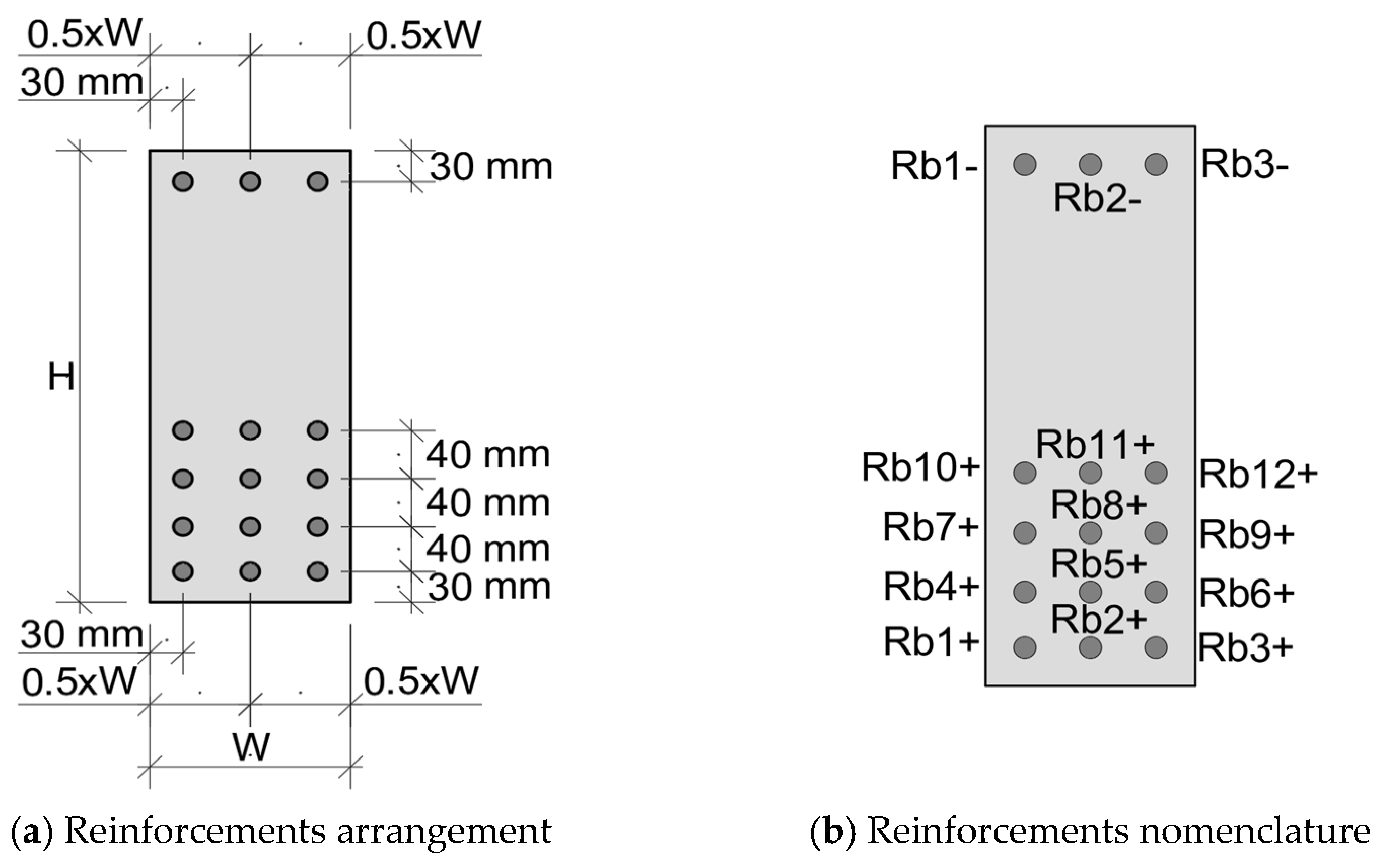
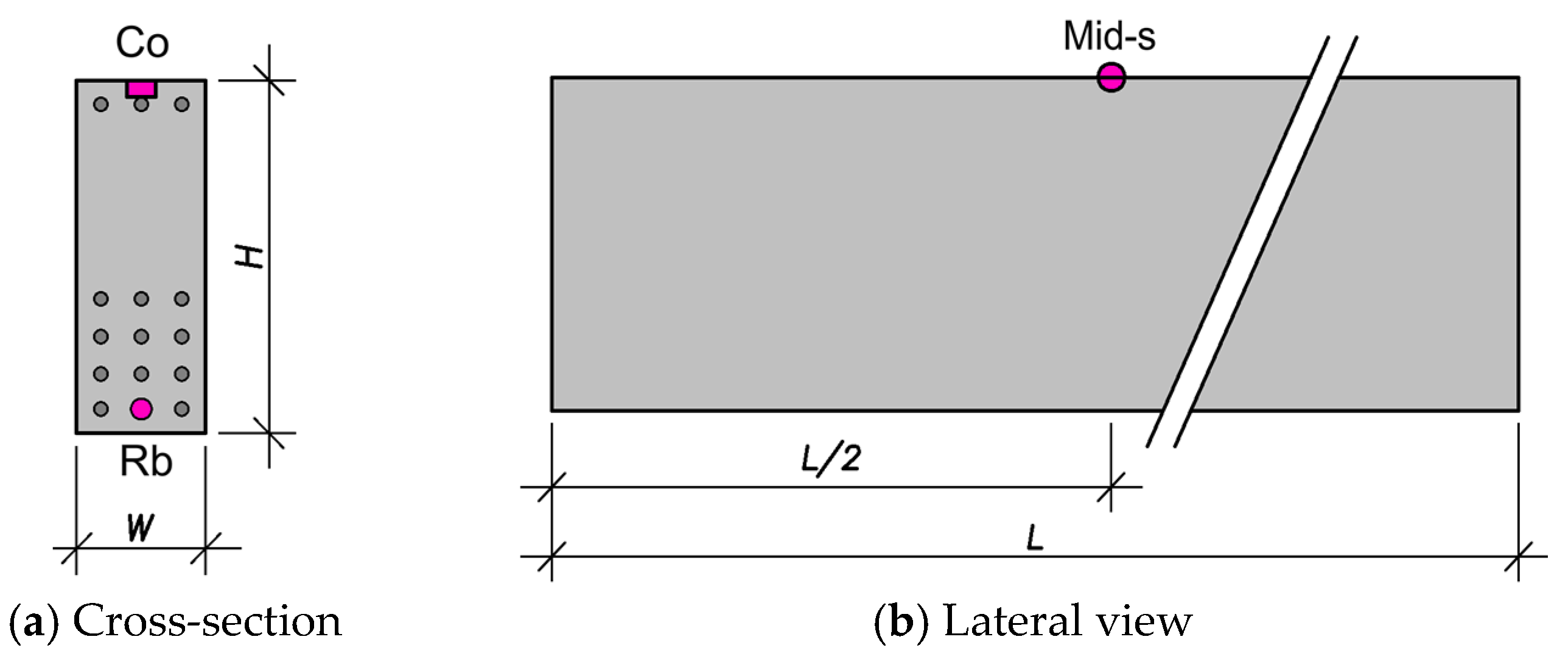
The beam cross-sectional geometries and corresponding reinforcement arrangements are illustrated in
Figure 1. All models share a width (W) of 200 mm and an overall height (H) of 600 mm, with a clear span of 6000 mm. The various reinforcement layouts, concrete cover values, and the associated naming conventions are provided in
Table 1.
The vertical spacing between layers of positive reinforcement (Rb+) is 30 mm, and the horizontal spacing is 70 mm, which is also applied to the negative reinforcement (Rb−) layouts.
Specimens B1, B2, and B3 were reinforced with bar diameters of 10 mm (B1-D10-C20), 12.5 mm (B2-D12-C20), and 16 mm (B3-D16-C20), respectively. These beams have a concrete cover of 20 mm and use normal-strength steel with a yield strength of 500 MPa. Their mechanical equivalence is verified in
Section 3.1. The aim of testing these beams is to replicate typical reinforcement detailing in tall buildings—especially B3, which aligns with current fire safety standards. B1 and B2 are variations of B3, using a greater number of smaller-diameter rebars to maintain equivalent load-bearing capacity. Thus, B1 to B3 share the same bending capacity but differ in reinforcement strategies. This set, referred to as
Condition 1, is used to evaluate the influence of reinforcement layout and criteria.
Since 60 min of fire exposure is generally considered acceptable for RC structures, more severe, non-standard scenarios were introduced. Two additional groups (Condition 2 and 3) represent atypical reinforcement details often found in older buildings that were not originally designed with fire resistance considerations. These configurations simulate critical cases common in such structures, highlighting potential vulnerabilities under fire exposure.
Condition 2 comprises beams with a significantly reduced number of longitudinal rebars arranged in a single layer, using diameters of 8 (B4-D8-C20) and 10 mm (B5-D10-C20, B6-D10-C20). Condition 3 extends Condition 2 by introducing a second deficiency: the reduced concrete cover thicknesses, representative of older structures lacking fire and durability design. This group includes beams B7-D10-C10 and B8-D10-C15 with minimal cover, alongside B9-D10-C30, which serves as a high-cover reference for comparison.
The conditions cases are described in
Table 2.
In this context, the study examines not only standard and realistic design scenarios but also critical configurations that reflect conditions commonly found in outdated structures lacking compliance with current design codes.
2.2. Finite Element Model
The FEA model is described in this section.
2.2.1. Mechanical
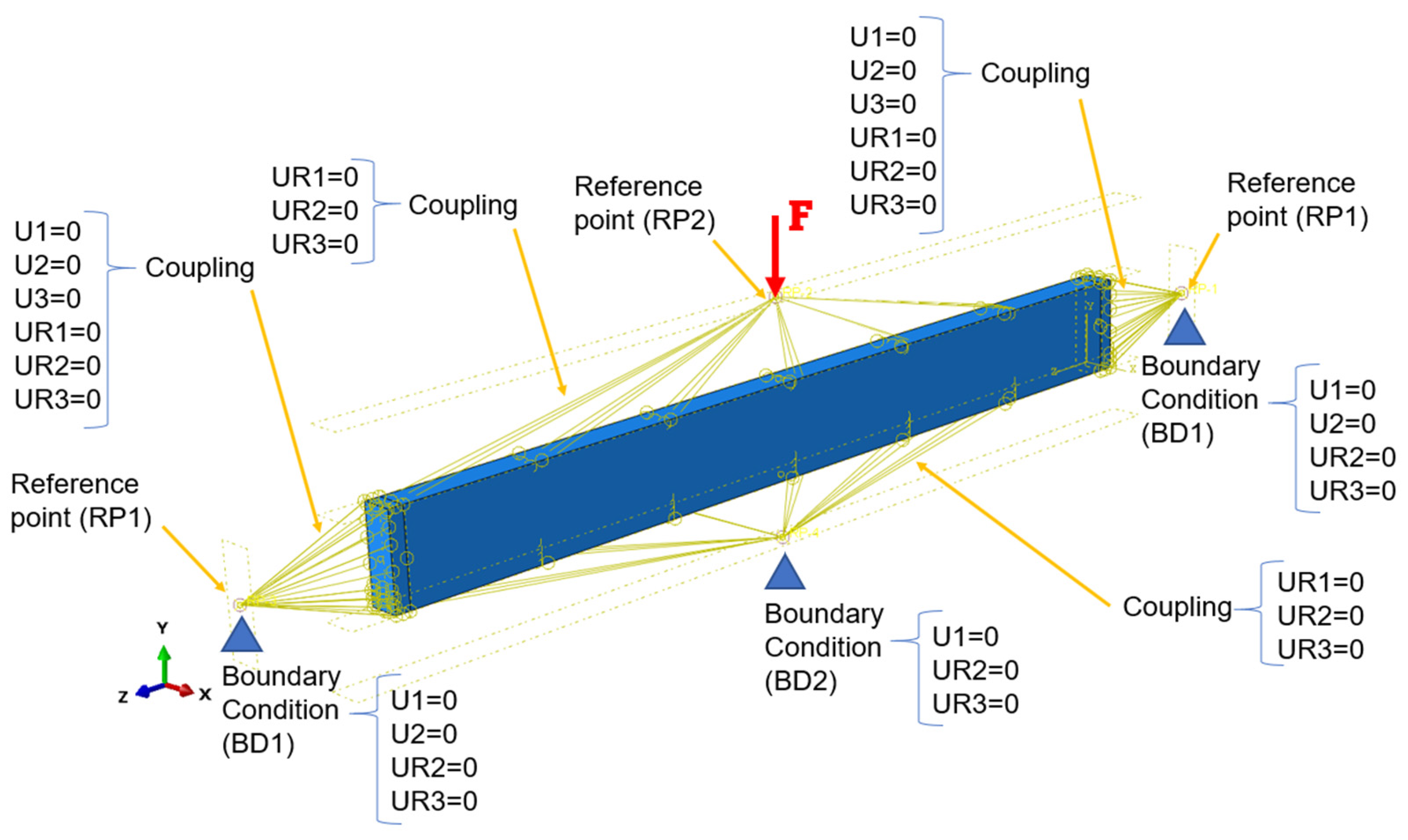
The reinforced concrete beam was simulated using a nonlinear finite element model that explicitly considered the beam geometry, longitudinal reinforcement configuration, and the nonlinear constitutive responses of concrete and steel. The FEA setup is illustrated in
Figure 2.
In the mechanical and thermomechanical FE analyses, concrete was modeled using three-dimensional solid elements, while the longitudinal reinforcement was represented using truss elements, allowing only axial force transfer. Mechanical degrees of freedom were defined according to the structural formulation of each element type. A perfect bond between concrete and reinforcement was assumed, implemented through an embedded constraint, ensuring full strain compatibility between the steel and surrounding concrete. Each node in the model possesses six degrees of freedom: three translational (U1, U2, U3) along the global x-, y-, and z-axes, and three rotational (UR1, UR2, UR3) about these axes, enabling the model to simulate bending and torsional behavior effectively.
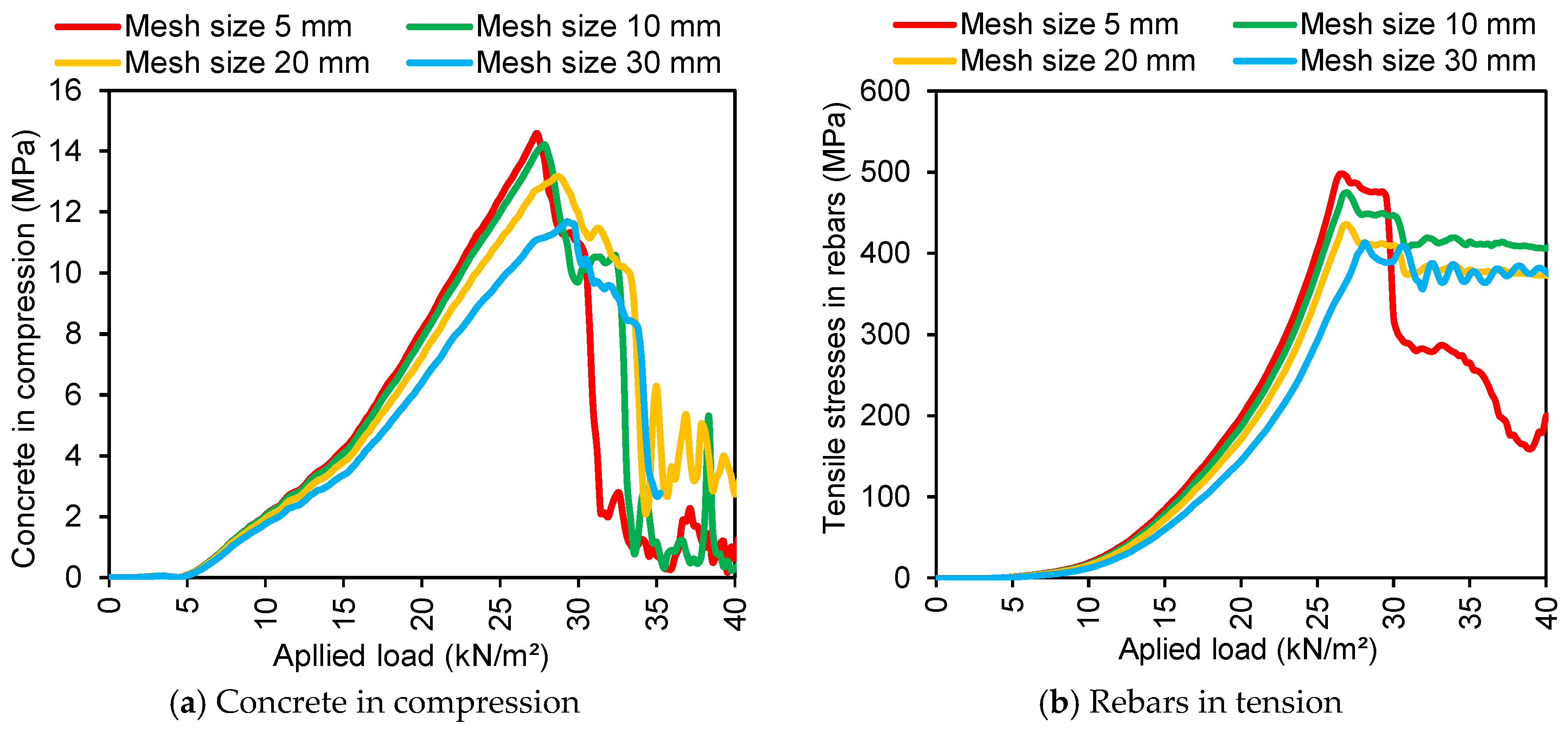
To ensure the accuracy and reliability of the FEA simulations, a mesh sensitivity analysis was performed, as shown in
Figure 3. Several mesh sizes—ranging from coarse (30 mm) to fine (5 mm)—were tested on a representative RC beam model under ambient loading conditions. The structural response, including load-displacement behavior and stress distribution, was compared across mesh configurations. The results show that mesh sizes finer than 20 mm produced negligible differences in global structural response, while coarser meshes led to noticeable discrepancies in peak load. Based on this assessment, a mesh size of 10 mm was selected as an optimal balance between computational efficiency and result accuracy and was adopted for both concrete and reinforcement elements.
To determine the ultimate bending capacity, a time-dependent increasing load F (see also
Figure 2) was applied to the top surface of the beam according to Equation (1), where “t” is the total time in seconds. The load was uniformly distributed over the application area using a coupling strategy to ensure even force transmission to the structural elements.
The numerical model assumed the Concrete Damage Plasticity Model (CDPM) theory, which is based on continuum plasticity theory and effectively captures the primary failure mechanisms in concrete—namely, tensile cracking and compressive crushing. CDPM is interesting for simulating the nonlinear, inelastic behavior of concrete structures. The model is defined by key plasticity parameters:
,
,
,
, and
, which govern the shape of the yield surface, the flow potential, and the viscous regularization. In addition, two sets of uniaxial material data (tension and compression) are required to describe the evolution of damage and stiffness degradation. The yield surface is defined by Equation (2), with supporting formulations in Equations (2)–(5) used to solve the constitutive model [
30].
In this formulation, α and γ are determined from the ratios
and the parameter
. The terms
,
,
,
, and
represent the von Mises equivalent stress, the hydrostatic stress component, the maximum principal effective stress, and the effective cohesion stresses in compression and tension, respectively. Plastic flow is defined by a Drucker–Prager-type plastic potential, which controls both the magnitude and orientation of the plastic strain increments, as described in Equation (6).
In this formulation, ϕ corresponds to the dilatation angle,
to the critical tensile stress, and ξ to the eccentricity parameter of the plastic potential, with all values obtained from the literature (
Table 3).
Figure 4 illustrates the control points (Co, Rb and Mid-s) adopted to evaluate stress development and deflection behavior. The beam was considered to have reached its ultimate capacity when the material stress limits were exceeded. Compressive stresses in the concrete above the neutral axis (denoted as Co) and tensile stresses in the reinforcement below the neutral axis (Rb) were used to characterize the cross-sectional stress state of the beam. In addition, the vertical deflection at mid-span (L/2) was monitored at the control point labeled Mid-s.
All beam models were defined with identical geometric properties to ensure consistency across the parametric analyses. The beam width (W) was set to 200 mm, the overall height (H) to 600 mm, and the span length (L) to 6000 mm for all cases considered. By maintaining constant geometric dimensions, the influence of reinforcement diameter, reinforcement arrangement, and material behavior on the structural response could be isolated and systematically evaluated.
2.2.2. Thermal
A thermal analysis was carried out to define the evolution of the cross-sectional temperature fields within the beam over time. Two fire exposure conditions were considered as thermal boundary conditions in the model: the ISO 834 standardized fire and an electric vehicle (EV) fire situation. Temperature-dependent thermal properties of the concrete and the steel (namely thermal conductivity, specific heat, and density) were implemented in accordance with EN 1992-1-2 [
13].
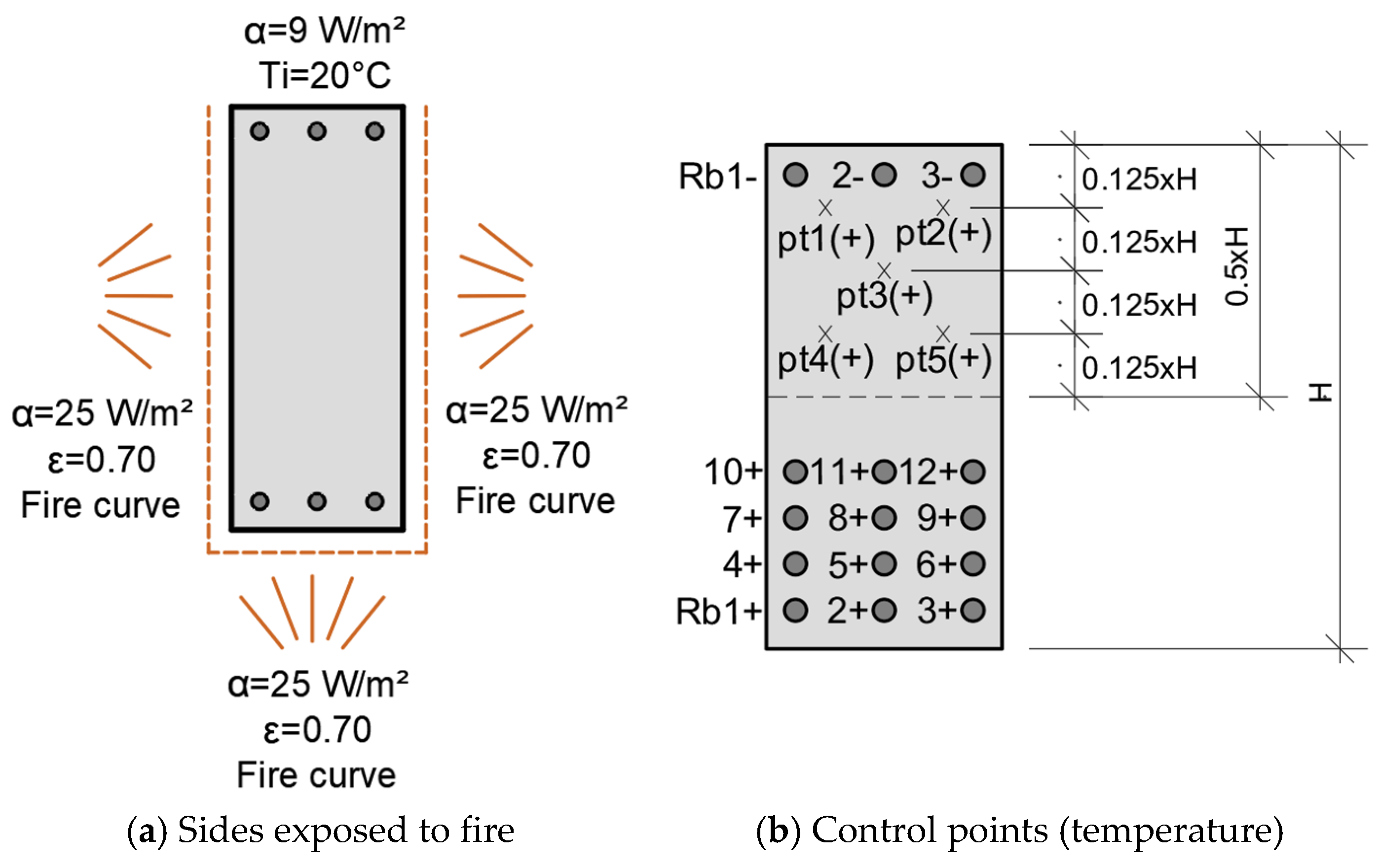
The thermal model is presented in
Figure 5a, while
Figure 5b describes the control points used to understand the temperature across the cross-section. These control points were selected to capture the temperature distribution within the concrete region above the neutral axis and at the reinforcements. Important highlight:
Figure 5b shows the case where all rebar layers are considered; however, this scenario does not apply to all cases, as can be seen in
Table 1.
Figure 5a describes the heating criteria assumed in the FEA thermal analysis. The ISO 834 [
12] and EV [
29] fire was applied on the surface by thermal convection (heat transfer α = 25 W/m
2·K) and radiation (thermal emissivity Ɛ = 0.70 [
13]). On the unexposed surface, a room temperature of 20 °C was applied by convection (α = 9 W/m
2·K). According to Equation (7), thermal diffusivity (
α) is related to the material’s density (
ρ), thermal conductivity (
λ), and specific heat capacity (
).
The governing equation for the convective and radiative heat transfer are defined in accordance to Equation (8) [
34], where
and
denote the components of the outward normal vector to the beam cross-sectional surface;
and
represent the radiative and convective heat transfer coefficients; T is the initial temperature (20 °C); and
is the temperature of the fire (standard fire or EV fire, as the main objective of the proposed paper). The radiation heat transfer coefficient is given by Equation (9), where
is the Stefan–Boltzmann constant (σ = 5.67 × 10
−8 W/m
2·
) and
is the surface emissivity factor.
The thermal analysis was performed independently from the mechanical analysis using dedicated heat transfer elements. Concrete was discretized using DC3D8 thermal solid elements, while the reinforcing bars were modeled using DCC1D2 thermal elements. In this stage, each node possessed a single degree of freedom corresponding to temperature. The resulting temperature fields were subsequently transferred to the mechanical model to perform the coupled thermomechanical analysis
2.2.3. Thermomechanical
Temperature distributions across the beam cross section, derived from the thermal analyses for each fire scenario, were transferred to the mechanical model to account for the degradation of material properties resulting from elevated temperatures. Strength and stiffness reductions were applied according to the standardized temperature-dependent damage curves specified in EN 1992-1-2 [
13] for concrete and EN 1993-1-2 [
35] for steel (reinforcements).
The coupled thermomechanical approach provides a criterion for evaluating the combined effects of thermal loading and mechanical stress on beams. It enables a direct comparison between the structural damage induced by the ISO 834 and that caused by an EV fire, particularly in terms of reductions in bending capacity. To ensure consistency in the analysis, the same mechanical controls in
Figure 4 were used to monitor stress and deflection responses throughout the simulations.
2.3. Constitutive Data and Numerical Parameters
2.3.1. Thermal Model
The proposed numerical model is based on the thermal parametric data for concrete and steel, as suggested in [
13,
35], and validated by full-scale experimental data, which was already described by the authors in another proposed research. The values for thermal conductivity, specific heat, and specific weight of concrete were taken from EN 1992-1-2 [
13]. For the steel of the reinforcements, the parametric data were taken according to EN 1993-1-2 [
35], with a density of 7850 kg/m
3.
2.3.2. Mechanical and Thermomechanical Models
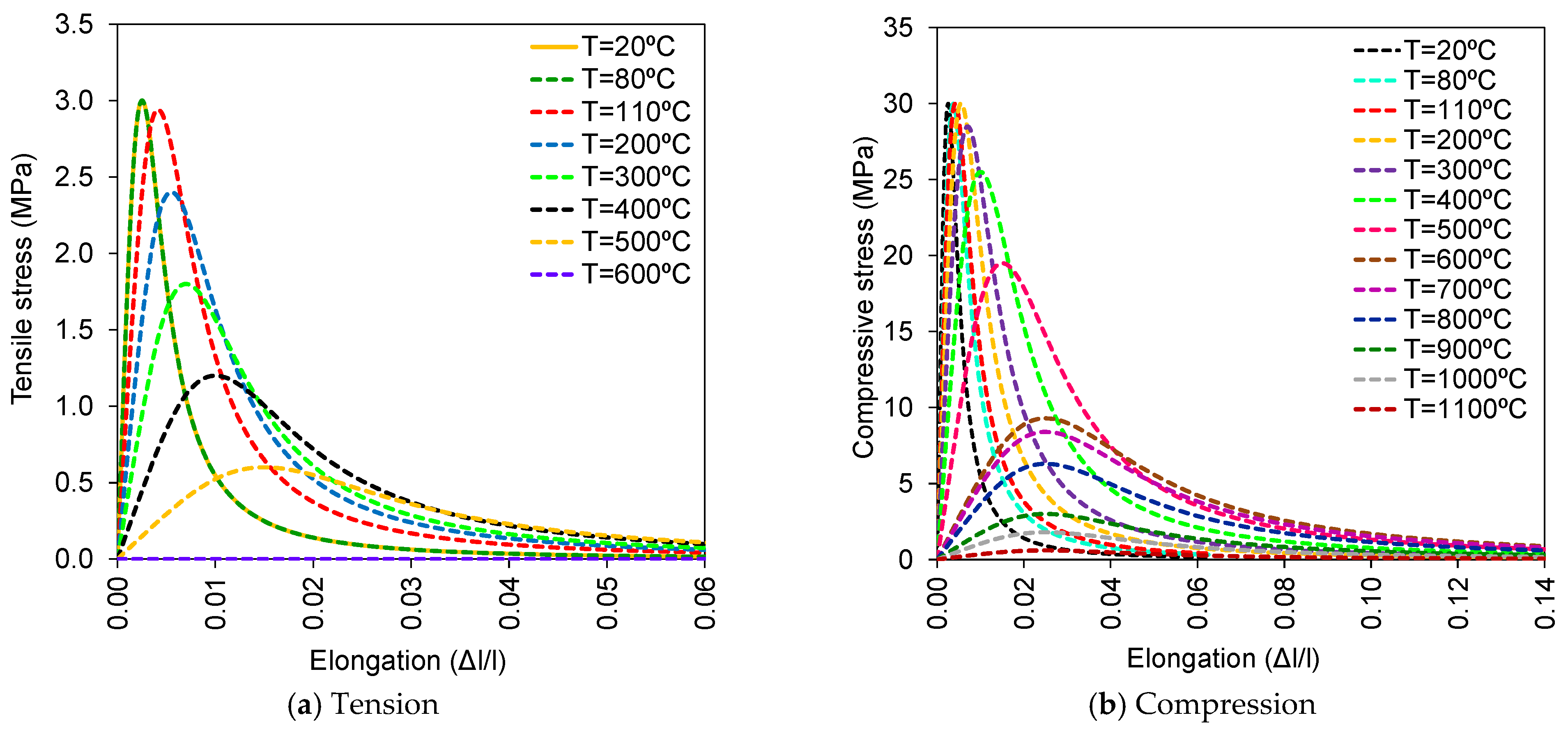
Under uniaxial tensile loading, concrete exhibits an approximately linear elastic response until reaching about 40% of its ultimate tensile strength. As loading progress beyond this threshold, the CDPM theory represents the onset and evolution of microcracking through a softening stress response at the macroscopic scale. This post-cracking phase is governed by tensile damage and strain localization, which progressively reduce the effective stiffness and load-bearing capacity of the material. In the plastic regime, concrete displays a hardening response prior to attaining peak stress, followed by strain softening controlled by the fracture energy formulation.
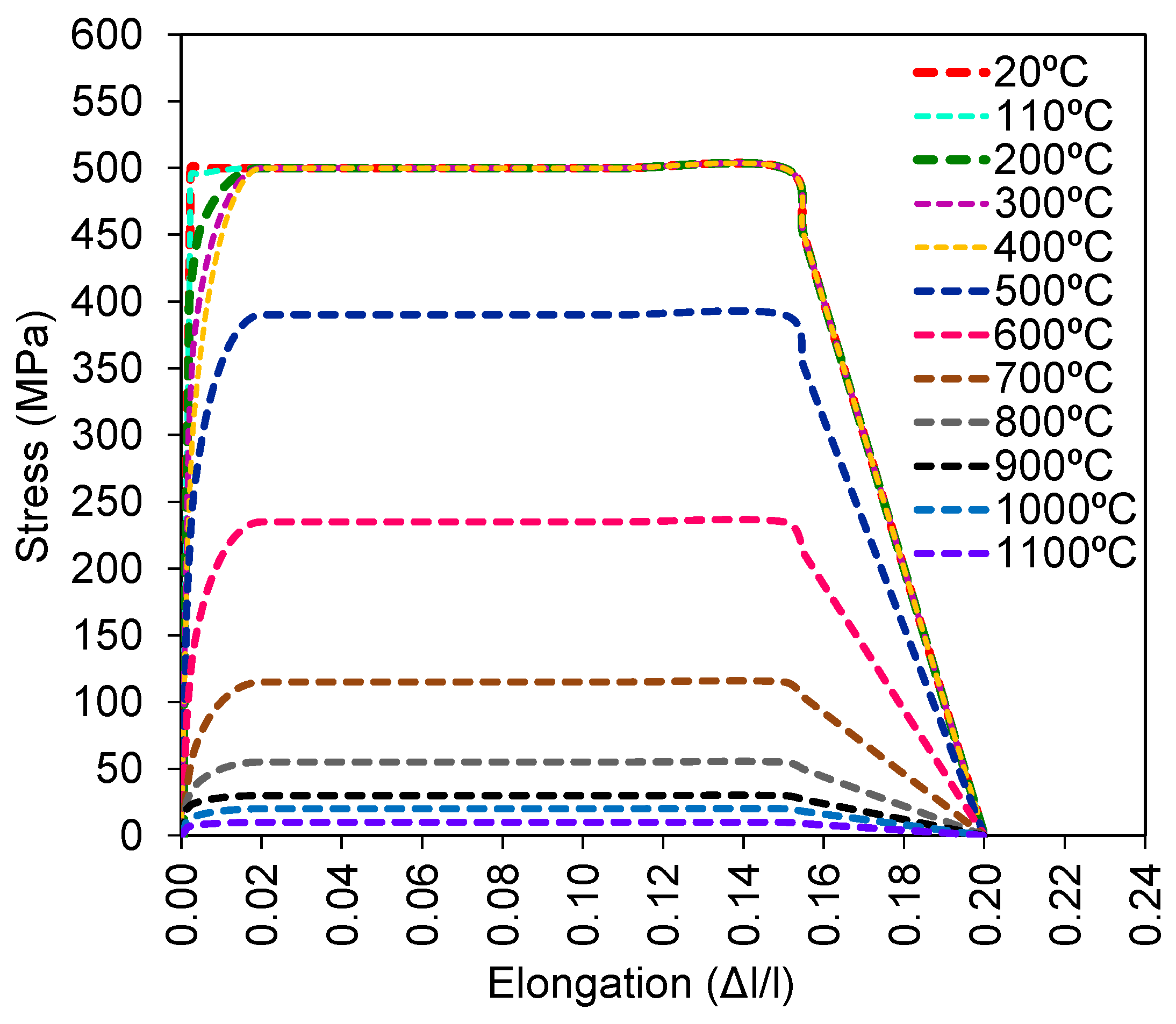
The stress–strain relationships for concrete are shown in
Figure 6. For steel rebars, the temperature-dependent stress–strain curves are also based on EN 1992-1-2, with the corresponding relationships for normal-strength steel shown in
Figure 7.
The temperature-dependent thermal and mechanical properties of concrete and reinforcing steel adopted in this study were taken from EN 1992-1-2 and EN 1993-1-2, which provide a consistent and widely accepted basis for structural fire analysis. In the thermomechanical simulations, the time- and temperature-dependent deterioration of concrete, including creep-related effects at elevated temperatures, is represented through the Concrete Damage Plasticity Model (CDPM) by means of progressive damage and the associated adjustment of the stress–strain response. Although transient thermal creep is not modeled as a separate constitutive mechanism, its influence is indirectly captured through stiffness degradation, strength reduction, and damage evolution embedded in the temperature-dependent material formulation. Concrete spalling was not explicitly considered due to its highly stochastic nature and the absence of reliable predictive models for EV fire scenarios.
2.4. Heating Curves (Fire Simulation)
The standardized fire defined by ISO 834 [
12] is widely recognized and adopted by EN 1992-1-2 [
13]. In contrast, the EV fire used in this study was previously developed and published by the authors [
29]. The EV fire curve was established using a computational fluid dynamics (CFD) model, which incorporated heat release parameters obtained from experimental studies available in the literature [
11]. The CFD model was validated by full-scale experimental data also extracted from published research [
36,
37]. The resulting EV fire is shown in
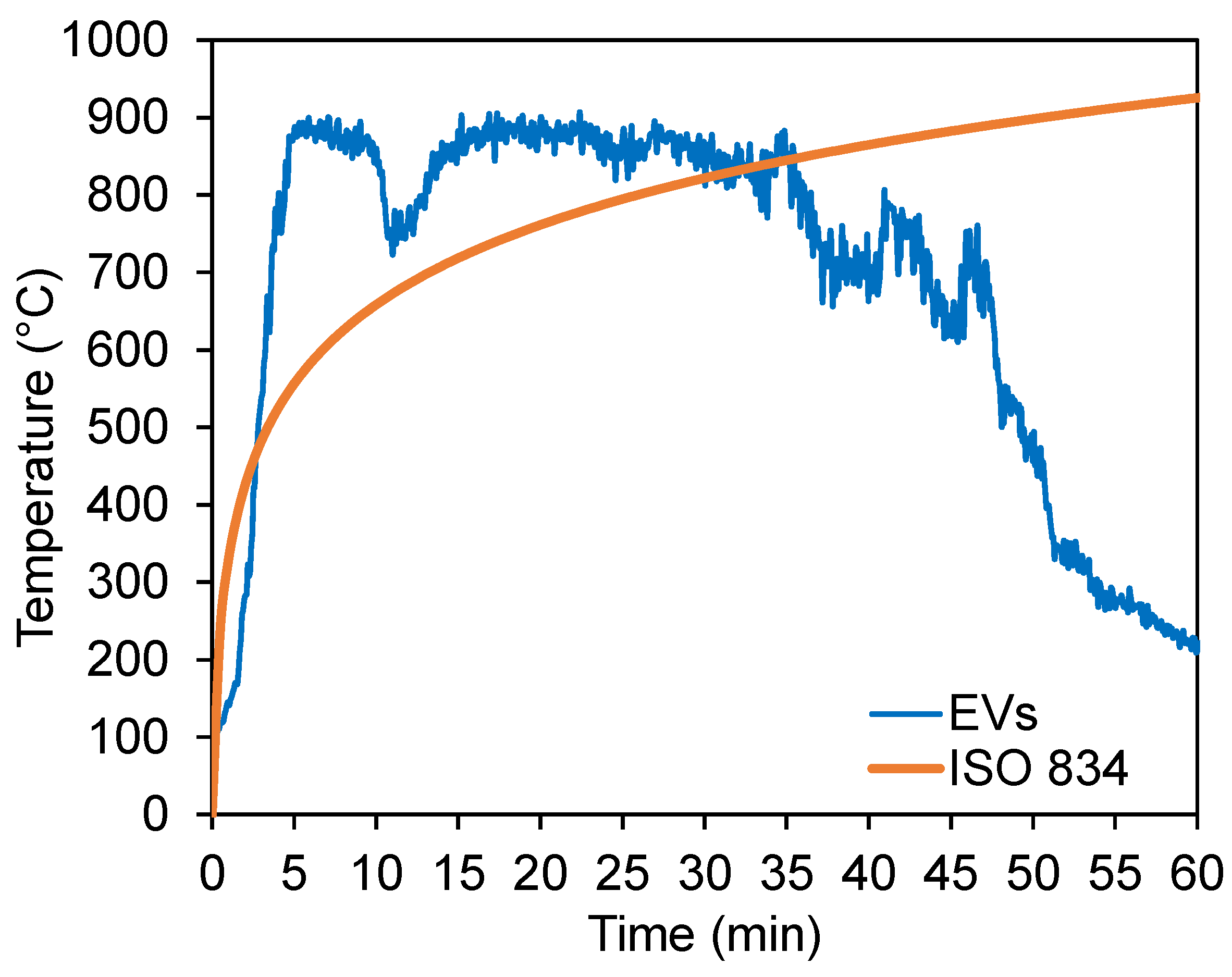
Figure 8.
Between 3 and 35 min, EV fire temperatures significantly exceed those of the ISO 834 curve, which forms the basis of current structural fire design standards such as EN 1992-1-2. This pronounced thermal severity during the critical early fire phase underscores the urgent need for comprehensive validation and analysis to accurately assess the fire safety and structural integrity of reinforced concrete elements under EV fire exposure.
The EV fire curve adopted in this study was derived in previous work by the authors [
29] based on a combination of CFD simulations and experimental data available in the literature. The CFD model incorporated heat release rate data from full-scale passenger EV fire tests and was validated against published experimental measurements of gas temperatures and fire development in enclosed environments. The resulting EV fire curve is explicitly defined by a temperature–time relationship and represents a single-vehicle fire scenario in a confined space with limited ventilation, consistent with underground parking conditions. This thermal exposure is characterized by a rapid temperature increase, reaching peak gas temperatures exceeding 1100–1200 °C within the first 15–25 min, followed by a decay phase. The curve is intended to represent the thermal boundary condition relevant for structural fire assessment rather than a complete description of fire dynamics; further details on its derivation and validation are provided in Ref. [
29].
2.5. Validation of the Numerical Model
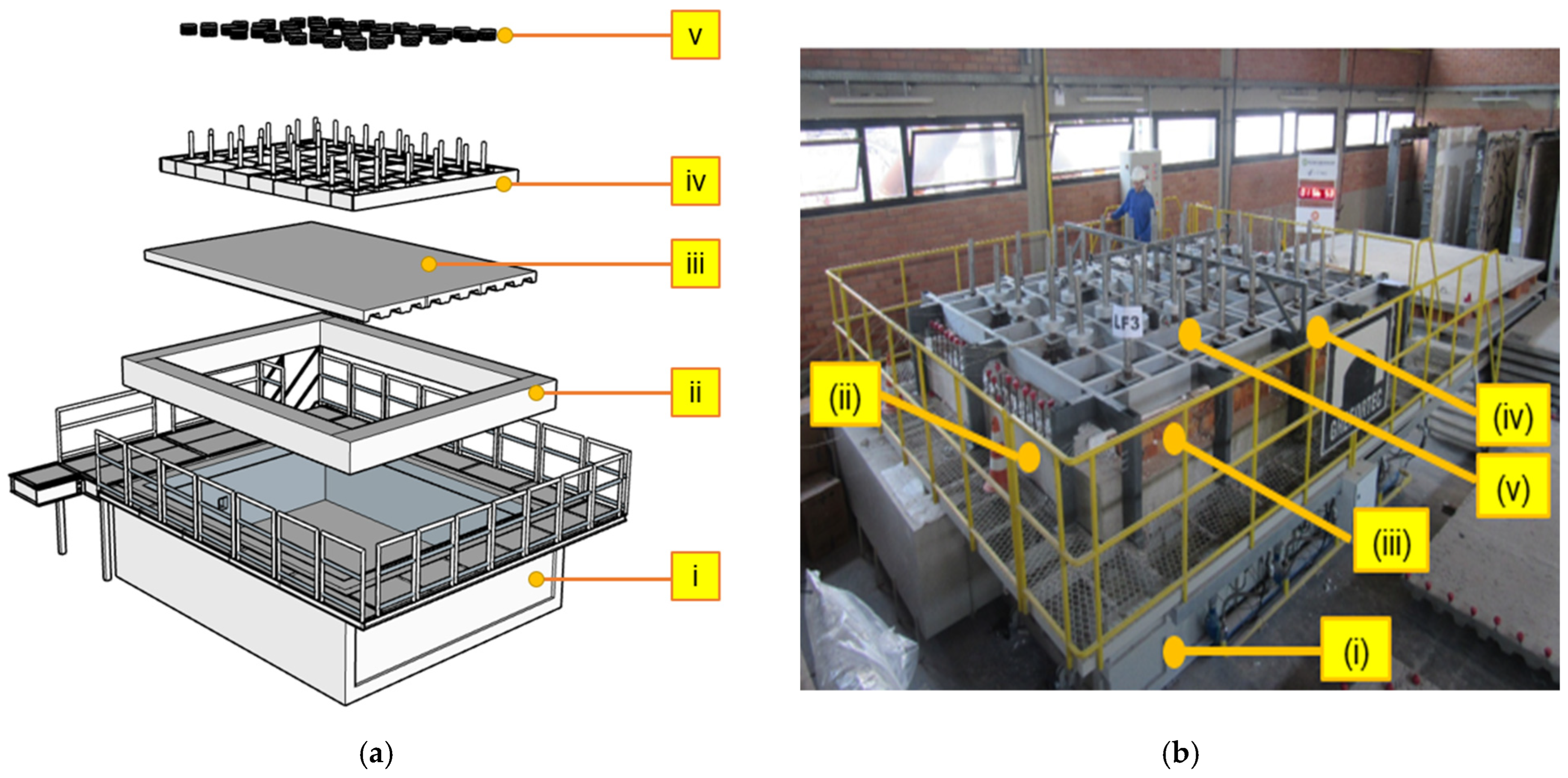
The FEA model and numerical procedures assumed (mesh refinement, time stepping, boundary conditions, numerical integration schemes, and the governing equations for heat transfer and thermomechanical analysis) have been thoroughly validated by the authors in prior numerical–experimental programs (see
Figure 9a,b). These validations involved full-scale RC structures fire tests conducted under ISO 834 [
12] heating conditions, as documented in previous studies [
22]. The modeling strategies also follow established approaches outlined in [
38]. Given the comprehensive validation and critical assessment already presented in these earlier works, it is not deemed necessary to repeat the detailed analysis in the current paper.
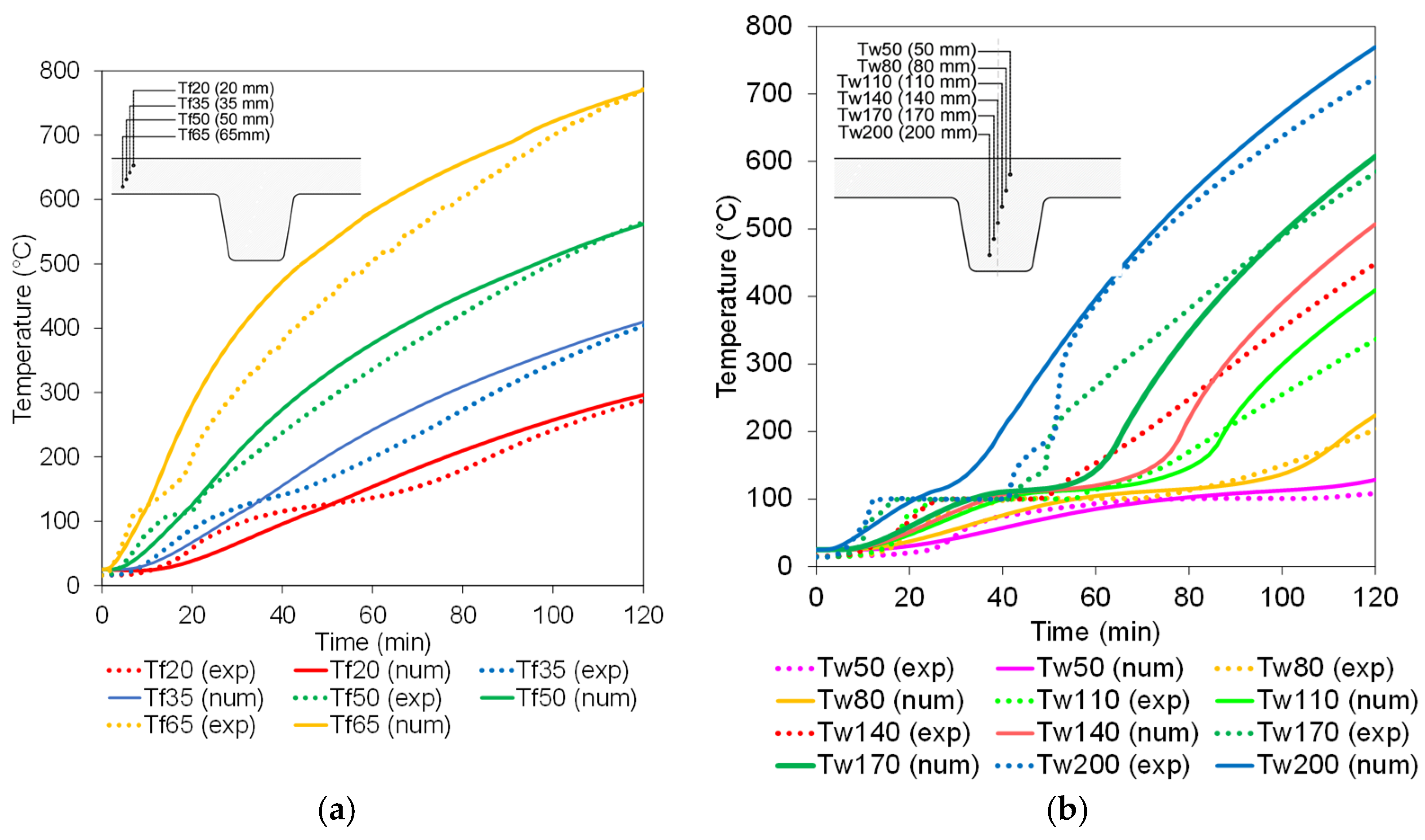
The validation of the FEA models according to experimental results is shown in
Figure 10. For more information for the experimental model, please see the references and the papers carried out by these authors [
22]. It should be noted that the beam used for model validation was tested together with adjacent slabs on its top surface. This configuration resulted from the use of a horizontal furnace, which is specifically designed for slab testing. Consequently, the beam–slab assembly reflects the experimental boundary conditions imposed by the testing setup and was appropriately considered in the numerical validation model.
The presence of moisture in the concrete is evidenced by a temperature plateau observed around 100 °C, particularly in the thicker region of the element (
Figure 10b). In this zone, the temperature remains close to 100 °C during the initial 20–40 min of heating, which can be attributed to the phase transition of pore water from liquid to vapor. A comparison between
Figure 10a,b indicates that the thicker region retained a higher moisture content than the thinner region, even 12 months after casting. No concrete spalling was observed. The maximum deviation between experimental measurements and numerical predictions did not exceed 20.5%. Considering the inherent heterogeneity of concrete and the stochastic nature of cracking, this level of discrepancy is deemed acceptable, supporting the credibility and representativeness of the adopted numerical modeling approach.
2.6. Validation of the Mechanical Equivalence at Ambient Temperature
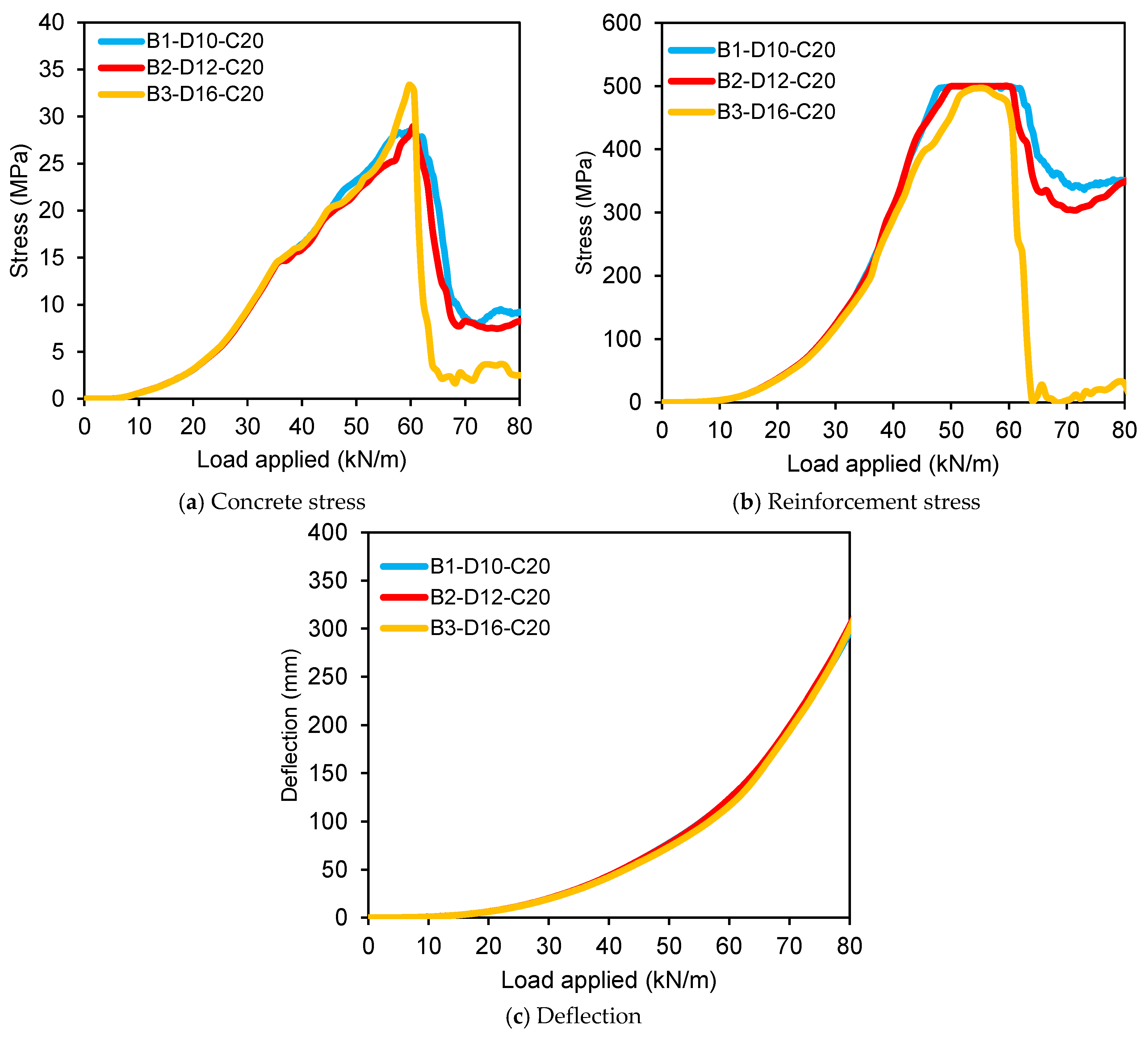
This section verifies that B1–B3 (
Table 1) are mechanically equivalent under ambient conditions, providing a consistent baseline for the subsequent fire performance analysis. Stress distributions at key control points (
Figure 4, showing in
Figure 11a,b) and deflection curves (
Figure 11) show similar behavior across all beams, confirming equivalent strength and serviceability despite different cross-sectional reinforcement layouts. This validates the design approach and ensures that any differences observed under fire exposure are attributable to reinforcement configuration, not initial mechanical discrepancies.
All beams reached an ultimate load capacity of around 48–50 kN/m, marked by the yielding of tensile reinforcement. Concrete in the compression zone began to yield around 60 kN/m due to stress redistribution. At this stage, vertical deflections reached about 46 mm. For comparison, the serviceability limit (L/250 proposed by [
25] in the design at ambient temperature) corresponds to 24 mm, meaning the ultimate load is roughly 191.6% above the serviceability threshold.
These results are based purely on FEA and do not include safety or partial factors from analytical expressions from design codes. While not directly applicable to design, they confirm that all beams exhibit comparable performance in both ultimate and serviceability states, validating their mechanical equivalence and safety. Considering an ultimate load-bearing capacity of approximately 50 kN/m, the fire resistance analysis was conducted under sustained load levels corresponding to 70% of this capacity—i.e., 35.0 kN/m. Each beam configuration (B1–B3) was evaluated under both ISO 834 and EV fire exposures at these load levels to assess their thermomechanical response and behavior.
3. Results
3.1. Temperature Profiles
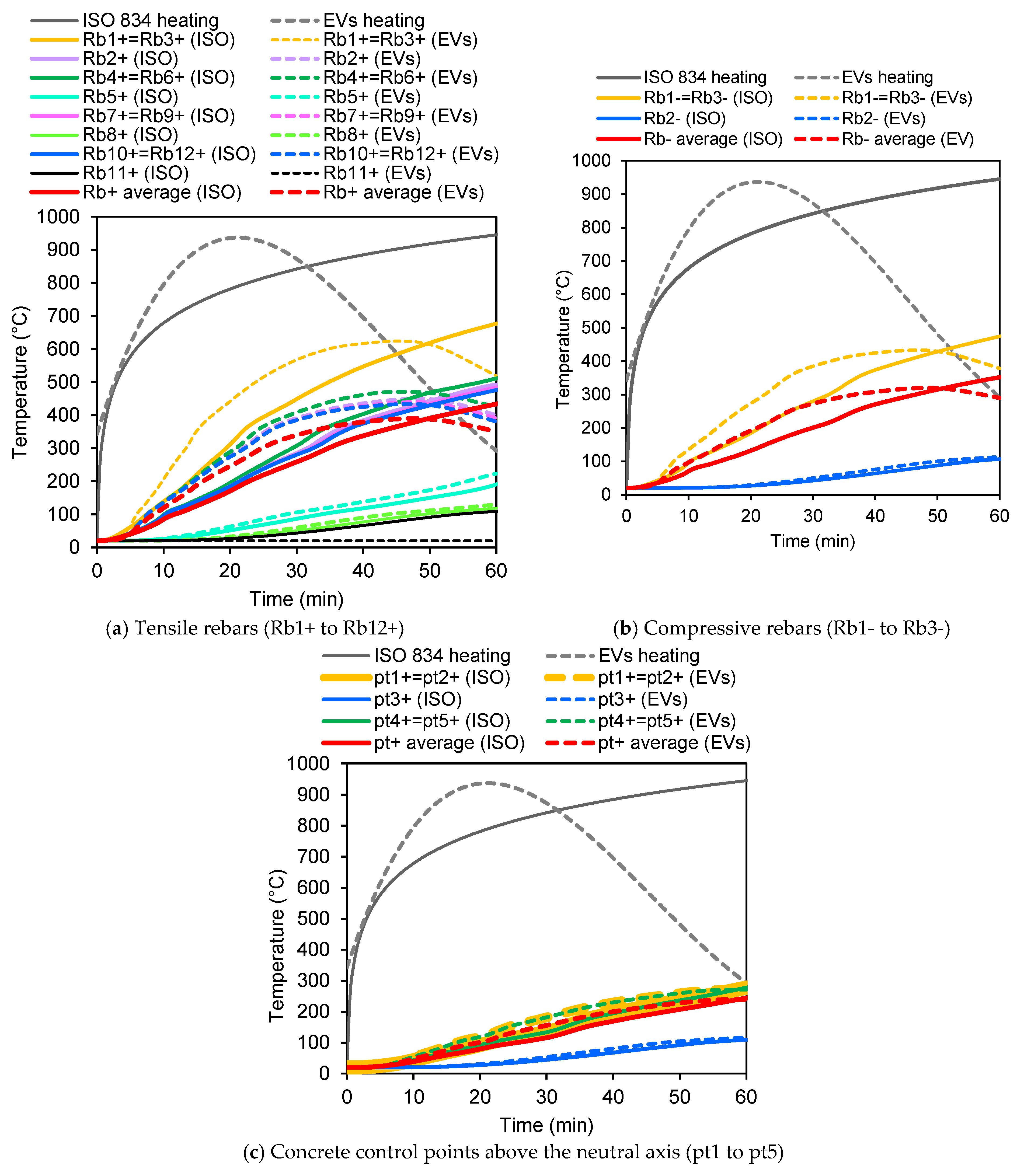
Figure 12 describes the temperature evolution in the reinforcement, as well as in the concrete above the neutral axis (see
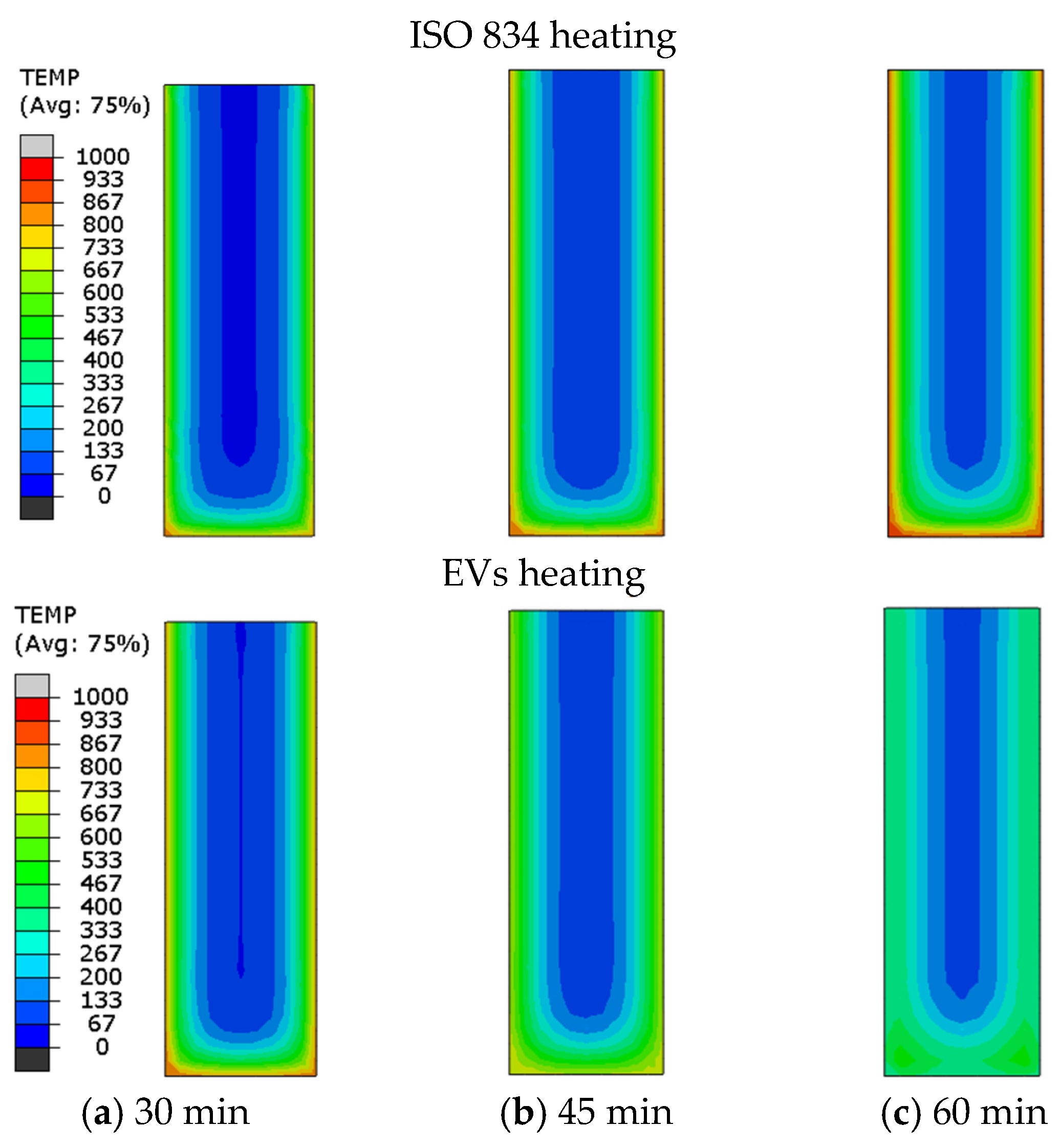
Figure 5), when the beams are exposed to ISO and EV fire conditions. The corresponding cross-sectional temperature fields are illustrated in
Figure 13. Only the configuration with a concrete cover of 20 mm (C = 20 mm) is discussed, as this case allows a clear comparison of the temperature development in reinforcement layers at different depths within the cross section (Condition 1 in
Table 1) and highlights with good evidence the contrasting thermal effects of ISO and EV fire exposure.
EV fires tend to produce a more severe temperature distribution across the beam cross-section, particularly during the early stages of exposure. Within the first 45 min, rebar temperatures were observed to be up to 147 °C higher than those experienced under ISO 834 conditions. This suggests a potentially increased thermal demand that could influence the beam’s flexural performance and contribute to earlier reinforcement degradation. Additionally, the EV fire curve shows a decline around 30–40 min, potentially altering the thermal gradient across the section. These aspects, especially the implications of higher initial heating rates, warrant detailed thermomechanical investigation, as developed in the next sections of this study.
Corner reinforcement is more susceptible to thermal degradation due to its proximity to exposed surfaces, which accelerates heat absorption and reduces mechanical capacity earlier during fire exposure. In contrast, bars embedded deeper within the concrete core benefit from greater thermal inertia, delaying heat penetration and preserving strength for a longer duration. Beams featuring denser or more internally distributed reinforcement layouts demonstrate enhanced thermal shielding and structural redundancy, which may contribute to improved fire resistance. These considerations form the basis for the comparative thermomechanical assessment under EV and ISO 834 fire conditions presented in the following sections.
The analysis further reveals that reinforcement positioned above the neutral axis experiences a more intense temperature increase than the adjacent (i.e., surround) concrete and are the most vulnerable component (to mechanical damage) under thermal loading. This response is linked to the comparatively high thermal conductivity and reduced heat storage capacity of steel. Therefore, the thermal degradation of the reinforcements largely controls the structural behavior to fire and are a key factor in evaluating their fire resistance.
Accordingly, for the beam configurations considered, fire resistance is primarily controlled by the temperature evolution of the steel reinforcement. The more severe thermal exposure associated with the EV fire curve produces steeper temperature gradients, leading to accelerated strength deterioration in the reinforcement and a consequent reduction in the beam bending capacity. These findings indicate that EV fire scenarios may result in earlier structural failure than predicted using standardized fire curves such as ISO 834, thus providing the rationale for the thermomechanical analyses undertaken in this study.
A comparison between the heating curves shows that the EV fire produces more critical thermal conditions during the first 45 min. The average concrete temperature above the neutral axis under EV fire was 9.5%, 30.2%, and 12.5% higher than that under ISO 834 fire at 15, 30, and 45 min, respectively. The temperature increase in the positive reinforcement (mainly corner rebars) was even more significant—51.4%, 28.2%, and 5.7% higher than ISO 834 at the same time intervals. However, except for the corner rebars, these temperatures did not reach the critical threshold for steel (approximately 500 °C), indicating that the reinforcement maintained its mechanical integrity during the initial stages of fire exposure in the time considered (60 min).
The temperature field in the cross-section of the beam is shown in
Figure 12.
3.2. Ultimate Load at High Temperatures
- (a)
Condition 1
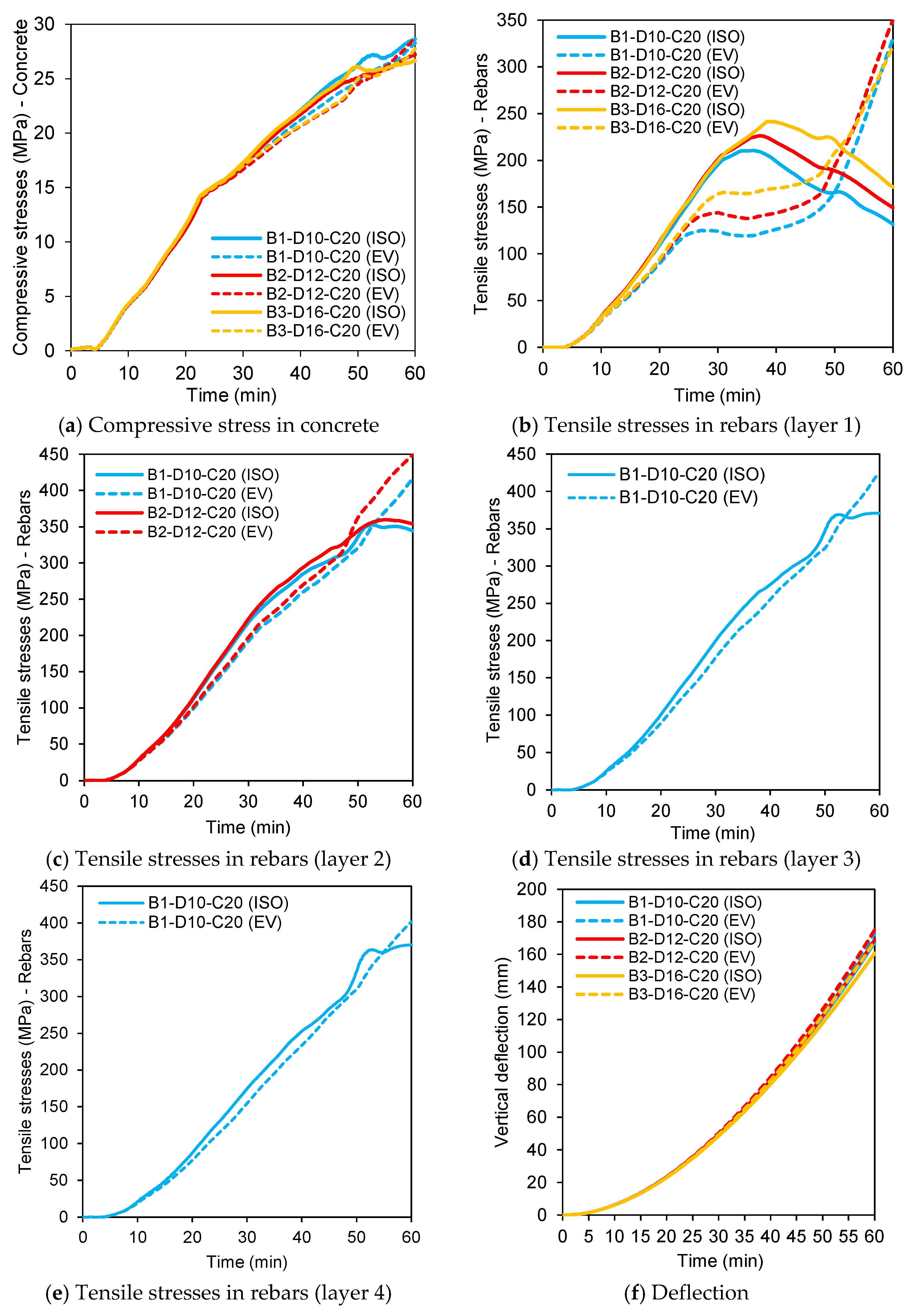
For typical structural configurations subjected to 70% of their ultimate load during fire exposure, the overall performance remained satisfactory, with no structural collapse observed. This was supported by stress analyses: concrete stresses (
Figure 14a) and reinforcement stresses in the second (
Figure 14c), third (
Figure 14d), and fourth (
Figure 14e) reinforcement layers—when present—remained below yield limits. Although the first reinforcement layer reached yielding (
Figure 14b), the remaining layers continued to perform within mechanical limits. Additionally, concrete stress levels remained below the critical threshold, indicating that, despite partial yielding of the reinforcement, the beam retained sufficient residual capacity to prevent failure.
The load-bearing behavior under EV and ISO 834 fire was similar in terms of ultimate capacity. However, a more critical condition was observed under an EV fire when steel yielding (first layer) was considered. This conclusion was drawn from the analysis of the reinforcement behavior: the first layer of rebars yielded earlier in the EV fire compared to the ISO fire (
Figure 14b), due to the higher temperatures to which these rebars were exposed, as shown in (
Figure 12).
Despite the early yielding of the first layer, structural collapse did not occur because the reinforcement in the second, third, and fourth layers (when present) was able to preserve the structural integrity and prevent beam failure. This conclusion is supported by the analysis and comparison of the stresses in both the compressed concrete zone and the reinforcements.
Based on the principle of internal force equilibrium—where the compressive force in the concrete balances the tensile force in the reinforcement—no concrete yielding was observed. This indicates that the tensile forces were successfully redistributed from the yielded rebars in the first layer to the deeper reinforcement layers, confirming the occurrence of stress redistribution within the cross-section.
Analysis of reinforcement layer stresses shows that beams exposed to the EV fire experience slightly higher rebar stresses than those under ISO 834 fire, though the difference does not exceed 1.0 MPa. This suggests that, for a 60-min, the rebars (except those in the first layer) remain adequately protected. Therefore, deeper reinforcement layers effectively compensate for the early yielding of the outer rebars.
The difference between the compressive stresses in the concrete did not exceed 2.0 MPa at the critical condition, which occurred at around 45 min of fire exposure. The first layer of rebars began to yield at approximately 22, 24, and 27 min for the B1, B2, and B3 cases under EV fire, respectively. In contrast, under ISO fire, yielding occurred later—at 30, 33, and 37 min, respectively. This indicates that the time to yielding under EV fire was approximately 27% shorter than under ISO fire, highlighting the more severe thermal effects of EV fires on the rebars. This difference is influenced by the rebar diameter: smaller-diameter reinforcement tends to yield earlier due to its faster thermal response.
Deflection results are presented for the initial 60 min of fire exposure (
Figure 14f), aligning with the critical assessment criteria specified in EN 1363-1, which defines failure due to excessive vertical deformation as a deflection exceeding L/20 (i.e., 300 mm for the 6000 mm span). The analysis shows that none of the beam models approached this critical threshold within the evaluated time, regardless of the fire curve applied. This indicates that, under the tested conditions, vertical deflection was not the governing failure mode. Instead, structural performance remained within acceptable deformation limits, suggesting that thermomechanical degradation of materials (rather than excessive midspan displacement) plays a more decisive role in assessing fire resistance for these beam.
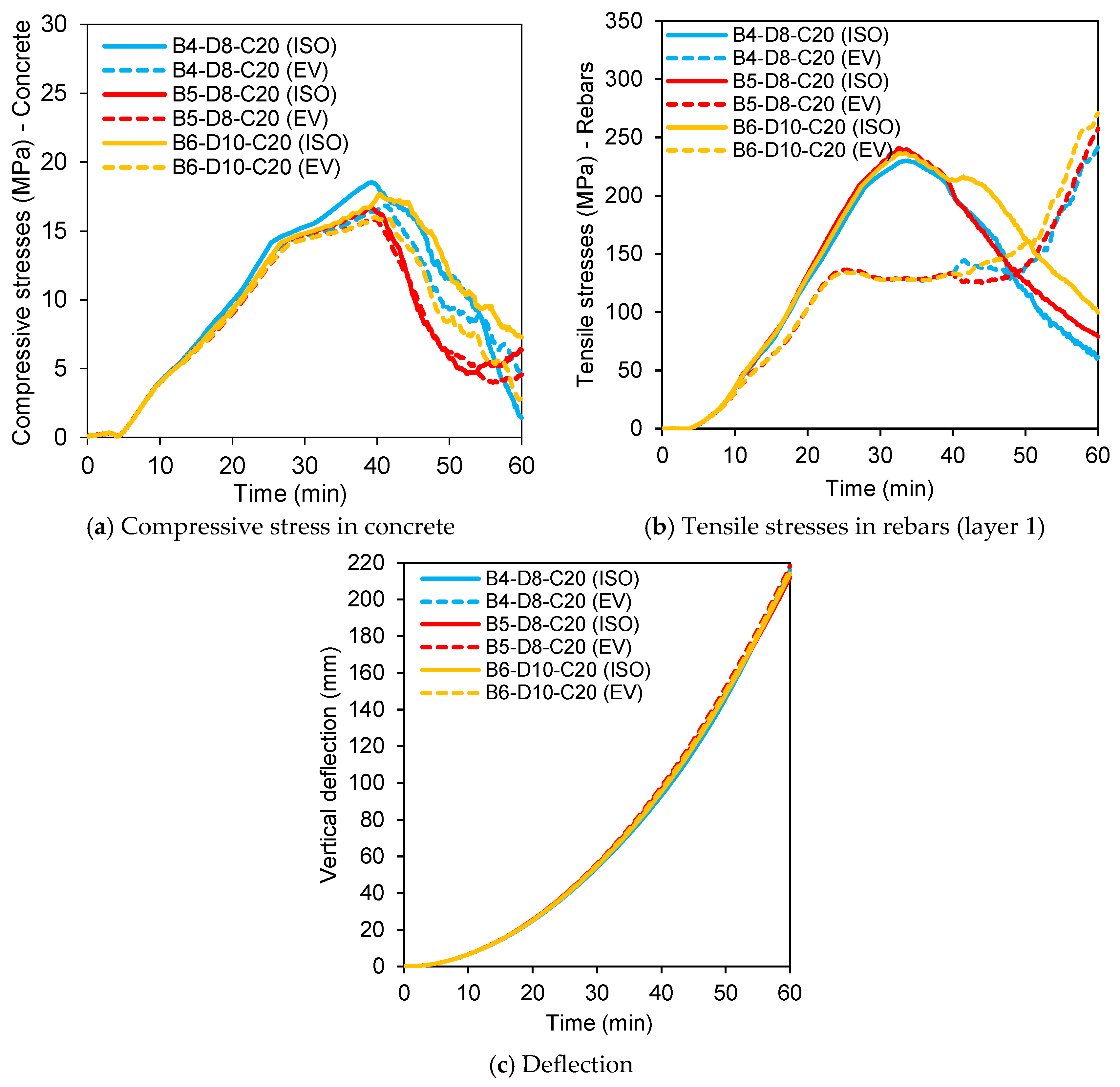
This condition considers beam cases with a single reinforcement layer and a concrete cover of 20 mm with high load application (equal to B1–B3). As can be seen in
Figure 15, the yielding of both the rebars and the concrete occurs earlier compared to the previous case, due to the lack of redundancy provided by multiple reinforcement layers.
In the critical beam cases and according to
Figure 15b, reinforcement yielding occurred before 30 min of fire exposure, regardless of the fire scenario. While the high load ratio contributed to this early yielding, the primary focus of the analysis was on the comparative thermal effects of ISO 834 and EV fire curves. The results confirmed that the reinforcement remained the most vulnerable component under fire, especially in configurations with only a single reinforcement layer. Beams exposed to the EV fire exhibited earlier rebar yielding compared to those subjected to ISO fire, reinforcing the observation that EV fire scenarios impose more severe thermal demands on structural elements.
In the comparative analysis, reinforcement yielding under the EV fire scenario occurred approximately 9 min earlier than under the ISO 834 fire, underscoring the higher thermal intensity and faster temperature rise associated with EV battery fires. This early yielding (
Figure 15b) is attributed to the rapid degradation of steel strength at elevated temperatures, especially for rebars positioned in the outermost layer. In beam B4, the inclusion of intermediate longitudinal reinforcement (Rb2+ in
Figure 1) provided only limited delay in thermal penetration and stress redistribution. This marginal benefit suggests that, in configurations with reduced reinforcement ratios and single-layer detailing, the thermal gradient through the section is not sufficiently attenuated to prevent premature yielding. The limited thermal inertia and insufficient internal redundancy contribute to a more brittle failure mechanism, emphasizing the need for multi-layer reinforcement strategies and adequate cover depth in fire-prone designs.
As shown in
Figure 14c, B4 and B6 did not exceed the vertical deflection limit prescribed by EN 1363-1 during fire exposure, indicating satisfactory serviceability despite their critical reinforcement configurations and loading. This suggests that, although high temperatures degrade material properties and reduce stiffness, the beams maintain adequate deformation capacity to prevent excessive deflections. These findings underscore the importance of evaluating both strength and deformation criteria in fire-resistant design to ensure comprehensive structural safety.
- (c)
Condition 3
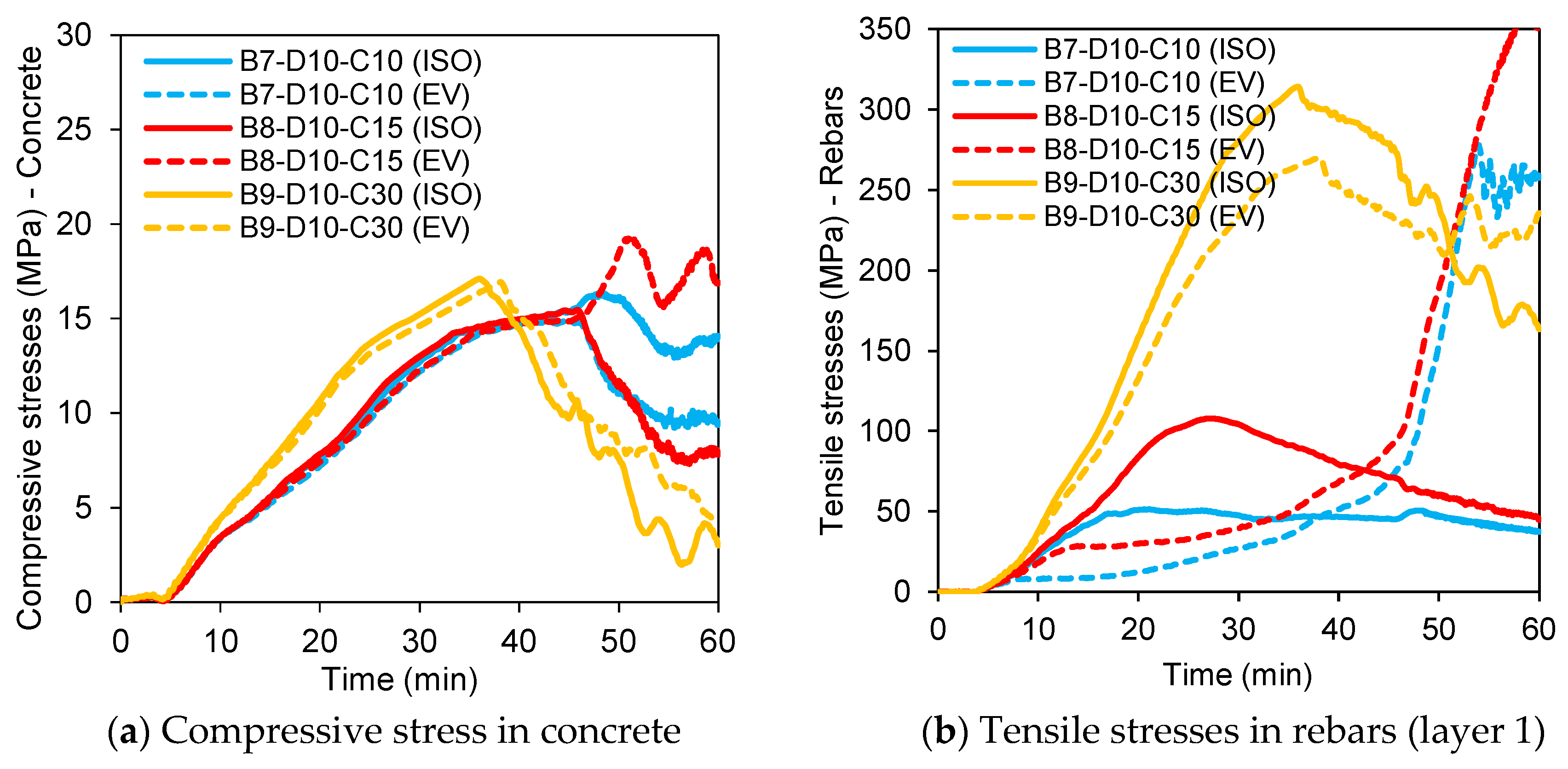
According to
Figure 16, accelerated failure observed in beams exposed to EV fire becomes particularly pronounced when the concrete cover thickness is reduced to approximately 10–15 mm. This diminished concrete cover provides significantly less thermal insulation to the reinforcement, resulting in more rapid heat transfer to the rebars during the initial intense phase of the EV fire (characterized by a sharp temperature peak within the first 15 min). Consequently, the rebars experience elevated temperatures earlier, showing mechanical damage and creating a critical condition for the structural integrity. Quantitatively, the onset of yielding in the rebars under EV fire occurs approximately 10 to 12 min earlier than under ISO 834 fire exposure, underscoring the pronounced impact of reduced cover in combination with the aggressive thermal loading typical of EV fires.
For concrete cover thicknesses equal to or greater than 30 mm, the results indicate that the internal reinforcement remains below critical temperature thresholds during the most demanding phase of EV fire exposure, particularly within the first 30–45 min. This finding demonstrates that increased concrete cover improves the thermal insulation of the rebars, effectively slowing down heat transfer to the steel reinforcement. Notably, under these conditions, a thermomechanical “equilibrium” appears to be reached, wherein beams exposed to the EV fire scenario begin to show signs of failure at approximately the same time as those subjected to ISO 834 fire exposure. This suggests that increasing concrete cover can partially mitigate the more aggressive thermal impact of EV fires.
The observed thermal protection is primarily attributed to the low thermal diffusivity of concrete, which governs the transient heat conduction process. As the EV fire curve features a rapid temperature rise and peak intensity (often exceeding 1200 °C within the first 15–20 min) the concrete cover acts as a thermal barrier. In sections with sufficient cover, this intense heat is dissipated through the surface layers, and the core region containing the reinforcement experiences a delayed and attenuated thermal gradient.
Furthermore, due to the characteristic decay phase of EV fires—typically beginning around the 20 min mark—the period of intense thermal exposure is relatively brief. This limits the duration during which heat can propagate into the concrete and elevate reinforcement temperatures. Consequently, in beams with cross-sectional dimensions similar to those analyzed and concrete cover thicknesses of ≥30 mm, the temperature of the reinforcements under EV fire conditions remained comparable to that observed under ISO 834 exposure, despite the more severe external heating. These findings reinforce the role of increased concrete cover as an effective passive fire protection measure, particularly for high-intensity, short-duration fire scenarios characteristic of EV battery incidents.
Although both fire scenarios lead to structural degradation, the underlying physical mechanisms differ significantly. The EV fire curve is characterized by a much higher heating rate during the early stages, resulting in steep temperature gradients across the concrete cover and rapid heating of the outer reinforcement layers. This leads to earlier steel yielding and strength loss compared to the ISO 834 fire, which exhibits a more gradual and uniform temperature increase. Consequently, failure under EV fire exposure is primarily governed by reinforcement degradation rather than deformation, whereas ISO-based assessments tend to predict a more progressive response. These differences highlight that fire resistance evaluations based solely on failure time may overlook critical aspects of structural behavior and suggest that reinforcement detailing, concrete cover thickness, and early-stage thermal severity should play a more prominent role in fire design when EV fire scenarios are considered.
4. Practical Recommendations
EV fires produce significantly more critical thermal scenarios than the ISO 834 standard fire, necessitating a comprehensive reassessment of current fire design procedures for RC structures. The findings reveal distinct differences in structural response under these two fire exposures, with substantial implications for RC beam behavior and safety.
The EV fire curve is distinguished by a rapid heat release rate and steep temperature gradients, often surpassing 1200 °C within the first 25–30 min, which accelerates the thermal degradation of both concrete and steel. In contrast, the ISO 834 fire exhibits a more gradual and uniform temperature increase over time. Consequently, critical structural components—particularly the outermost reinforcement layers—experience elevated temperatures much earlier under EV fire exposure. This early thermal assault leads to a significant reduction in the yield strength and stiffness of the rebars, advancing the onset of yielding by up to 15 min compared to ISO 834 conditions.
Rebars located near the beam corners—where thermal exposure is the greatest—exhibited a yield strength reduction of approximately 27% under EV fire conditions compared to ISO 834. These findings demonstrate that EV fires cause more severe and rapid material deterioration, especially in beams with minimal redundancy, reduced concrete cover (e.g., 10–20 mm), or suboptimal reinforcement detailing (e.g., single-layer longitudinal reinforcement).
This highlights the inherent limitations of conventional fire design approaches that rely exclusively on the ISO 834 curve, emphasizing the urgent need to update design assumptions to address emerging fire hazards, particularly those associated with EV and lithium-ion battery fires. A notable paradox exists: most reinforced concrete structures are engineered to maintain integrity for at least 60 min under fire exposure based on ambient load criteria, yet EV fires exhibit their greatest thermal severity precisely within this timeframe. This apparent contradiction is partly mitigated by durability-driven design requirements—such as environmental exposure classifications in structural codes—that mandate increased concrete cover thickness. Although these provisions were not originally intended as fire protection measures, the enhanced concrete cover provides significant passive thermal insulation, thereby contributing to residual fire resistance during these critical early stages of EV fires.
Based on the results observed, some design recommendations are proposed:
Reinforcement Detailing: A minimum of two longitudinal reinforcement layers should be required in beams exposed to potential EV fire conditions. This ensures redundancy and allows deeper layers to compensate if the outermost rebars yield prematurely.
Fire Resistance Adjustment: For beams with fire resistance ratings below 90 min, a 30-min increase should be applied when EV fire scenarios are anticipated. For example, beams designed for 30 or 60 min under ISO 834 should be upgraded to 60 and 90 min, respectively.
Simplified Design Rule: Where full thermomechanical modeling is not feasible, a conservative adjustment of +15 min for beams rated below 60 min may serve as a practical guideline to account for EV fire exposure.
These proposed adaptations provide a practical yet safety-conscious framework for integrating EV fire scenarios into the structural design of RC elements. They aim to ensure that future constructions maintain adequate fire resilience in the light of emerging hazards not fully addressed by current standardized fire tests. It is important to emphasize, however, that the present study represents an initial investigation focused on a specific beam cross-section and reinforcement layout. As such, while the findings highlight important trends and potential vulnerabilities, further research is necessary to validate and generalize these conclusions across a broader range of geometries, loading conditions, and detailing strategies. Nonetheless, the outcomes presented herein underscore the need for continued investigation into the fire performance under non-standard fire curves and suggest that EV fire scenarios warrant closer consideration in future structural fire safety studies and code development initiatives.
It is acknowledged that the ISO 834 standard fire curve was originally developed to represent the fully developed (post-flashover) stage of compartment fires and was historically derived as an envelope of wood-fuel fire tests. Early fire stages are typically addressed through reaction-to-fire requirements for finishing materials, while fire resistance criteria focus on preventing structural collapse after flashover. However, recent studies have shown that modern fire loads dominated by plastics and polymers may exhibit temperature peaks that exceed the ISO 834 curve. Although EN 1991-1-2 recommends the hydrocarbon fire curve for scenarios involving petrochemical fuels, electric vehicle fires represent a distinct thermal exposure, characterized by very high heat release rates and severe temperature peaks concentrated in the early post-flashover period. As such, EV fires are not fully represented by either the ISO 834 or hydrocarbon fire curves, justifying the need for dedicated assessment of their impact on reinforced concrete structures.




 ,
,