Social Innovation, Gendered Resilience, and Informal Food Traders in Windhoek, Namibia


Abstract
1. Introduction
2. Materials and Methods
2.1. Study Site
2.2. Descriptive Statistics
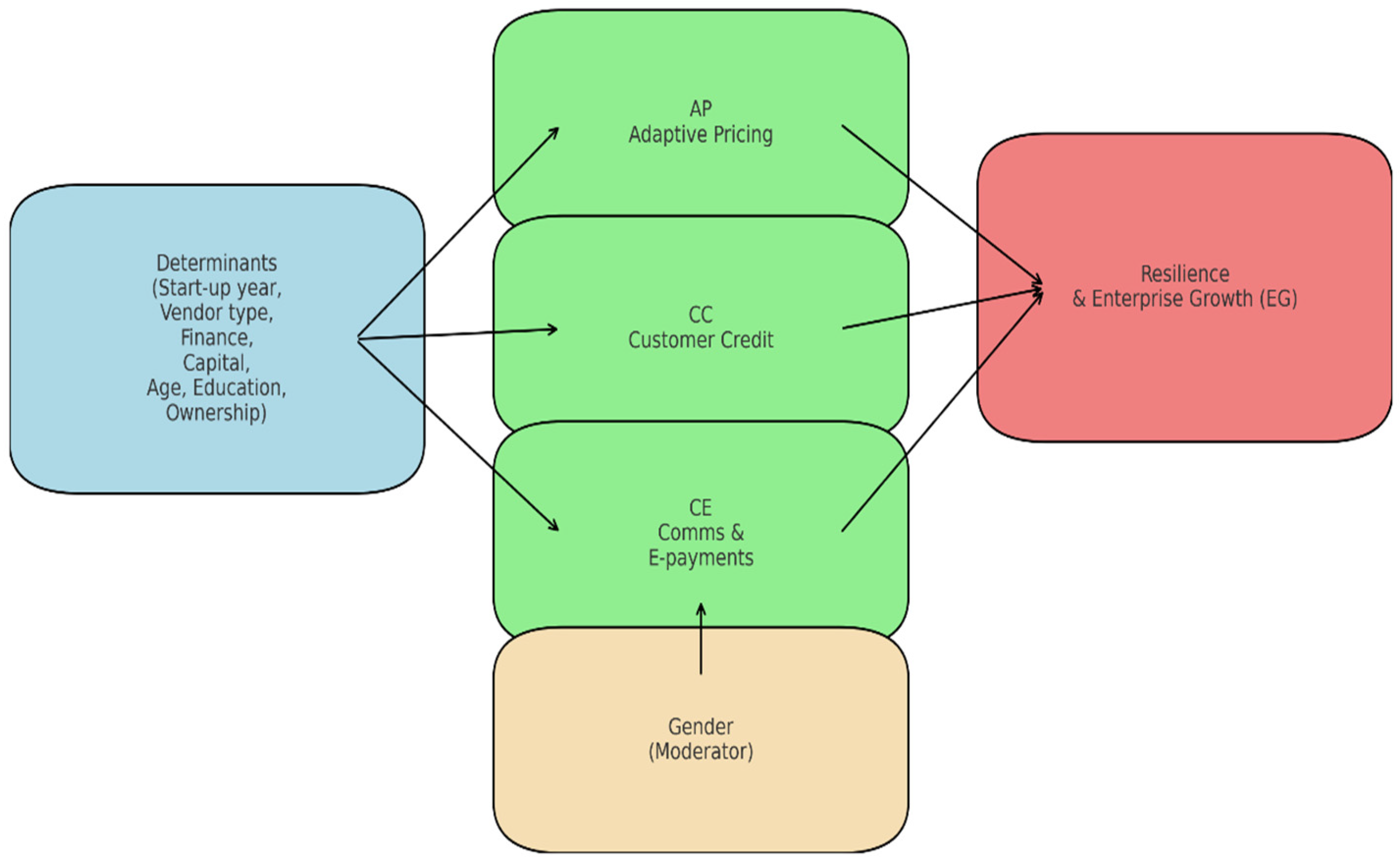
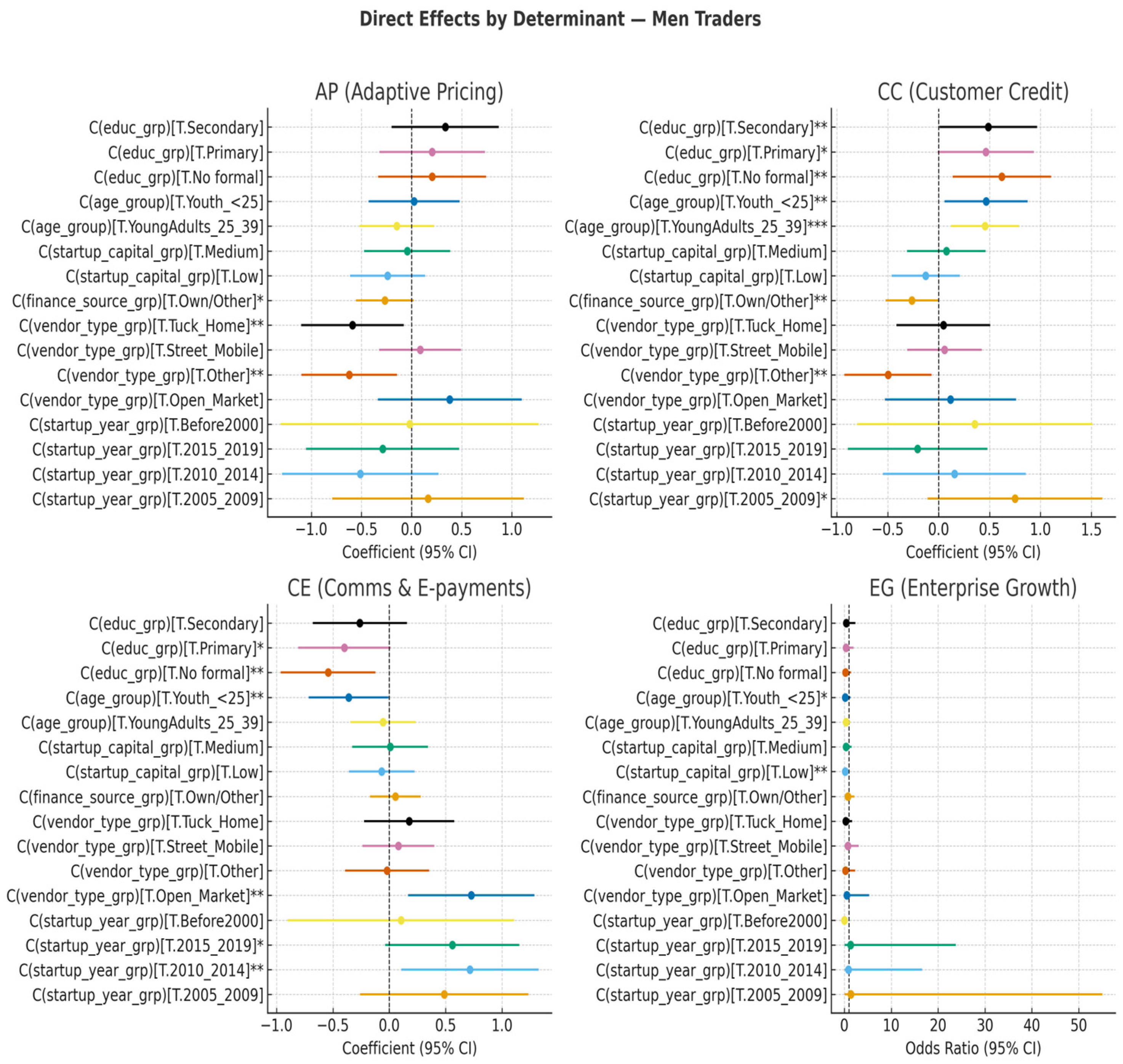
- Adaptive pricing (AP) represents the capacity of informal traders to respond to fluctuations in consumer demand and purchasing power. By offering flexible prices, negotiating transactions, and adjusting payment terms, they can maintain customer flows even under volatile conditions. This flexibility is essential in markets characterised by economic shocks and highly elastic demand.
- Customer centricity (CC) emphasises the relational dimensions of informal trading. Traders maintain loyalty and repeat patronage by extending credit, soliciting customer feedback, and reserving stock for regular clients. These practices not only strengthen customer relationships but also serve as informal risk-sharing mechanisms that embed businesses in wider social networks [38,78].
- Capability evolution (CE) refers to the ability of informal traders to continuously adapt through skills development, technological uptake, and coordination with suppliers. Practices such as mobile phone use for coordination or e-payments illustrate how digital tools expand the operational capacity of small-scale enterprises, reduce transaction costs, and enhance resilience [79,80].
- Value co-creation (VC) highlights collaborative practices that directly respond to customer needs [81,82]. Strategies such as selling in smaller quantities or engaging in mobile vending allow traders to tailor their offerings to low-income consumers, thus aligning livelihood sustainability with consumer affordability. These practices demonstrate how traders and customers co-produce value in resource-constrained settings.
- Ecosystem growth (EG) captures the collective dimensions of innovation. Traders often collaborate with peers or suppliers through joint purchasing, supplier negotiations, or partnership arrangements. Such practices extend resilience beyond the individual enterprise by embedding traders within supportive networks and supply chains, enabling them to access economies of scale and strengthen bargaining power [83,84,85].
2.3. Structural Equation Modelling (SEM)
- AP (Adaptive Pricing): ap_disc (discounts), ap_negot (negotiates), ap_follow (follows market prices).
- CC (Customer Centricity): cc_feedback (customer feedback), cc_credit (extends credit), cc_stock (reserves stock for regulars).
- CE (Capability Evolution): ce_mobilecoord (coordinates via phone), ce_mobilepay (accepts mobile money).
- VC (Value Co-creation): indicators such as vc_smallqty, vc_mobilevend, etc. (low-prevalence practices).
- EG (Ecosystem Growth): eg_negotSupp (supplier negotiations), eg_bulk (bulk buying), eg_partnership (partnerships/shareholding).
- INNOV (Innovativeness): measured by AP, CC, CE, VC, EG.
- RESIL: res survive (business survived), res_income (income recovered), res_hhwell (household well-being maintained).
- gender (female = 1, male = 0),
- educ (ordinal: none < primary < secondary < tertiary),
- formal (registered business = 1, else 0),
- shock (e.g., experienced COVID-19 trading shock = 1, else 0),
- finance (banked/business account = 1, else 0),
- controls: age, location (market/street/roadside), sole ownership (=1 if sole), startup year (=1 if after 2010), startup capital (1 if 5000 NAD).
2.4. Study Limitations
3. Results
3.1. Descriptive Findings
- Women represented 64% of the respondents, consistent with the broader gendered composition of informal trading in Windhoek.
- Enterprise type shows strong variation. Women were more likely to operate from tuckshops or home-based enterprises (27.6%) compared with men (12.3%), while men were more concentrated in street and market vending (87.7% vs. 72.4%). The chi-square test confirmed that this difference is statistically significant (χ2 = 13.37, p < 0.001). This suggests that women are relatively more home-anchored in their trading, whereas men dominate the more public and mobile spaces.
- Age differences were even more pronounced. A striking 75.3% of men were under age 35 compared with only 40.3% of women (χ2 = 54.22, p < 0.001). The informal food economy therefore appears to attract much younger men, while women traders are older and longer established, suggesting that informal vending is a long-term livelihood strategy for women but a more transitional or early-career activity for unemployed youth.
- Business start-up patterns differed significantly. Men were more likely than women to have started trading in 2010 or later (44.5% vs. 34.3%; χ2 = 23.90, p < 0.001), suggesting either greater recent male entry into the informal economy or faster turnover among male traders.
- Educational attainment differed sharply, with 56.8% of women (vs. 32.1% of men) completing secondary school or higher (χ2 = 32.08, p < 0.001), demonstrating that women’s overrepresentation in informal food vending stems not from low education but from structural barriers to formal employment.
- Sole ownership was high for both groups but slightly higher among women (86.7% vs. 82.1%; χ2 = 6.11, p = 0.05), indicating women’s greater likelihood to run independent operations rather than joint ventures or family partnerships.
- Startup capital distributions indicate that women were more likely to begin with limited resources. Over 70% of women reported initial capital below NAD 5000 compared with 58% of men, and this difference was statistically significant (χ2 = 6.78, p = 0.009). This reflects a gendered capital gap at business formation.
- Loan-related financing showed weaker gender differentiation. Only 16.9% of women and 10.5% of men accessed loans or external financing. While the difference approaches significance (χ2 = 2.97, p = 0.085), it suggests that very few traders of either sex accessed formal credit, with women slightly more likely to do so.
- Necessity-driven entry into trading was reported by roughly one-third of both women (34.4%) and men (33.3%). The chi-square test was not significant (χ2 = 0.02, p = 0.894), indicating that gender plays little role in determining whether entrepreneurs entered trading out of survival needs such as unemployment.
- Migration status also mirrored gender parity. Roughly 89% of both women and men were migrants to Windhoek, with no significant difference (p = 0.062). This reflects the role of the informal economy as a common entry point for migrants regardless of gender.
- (1)
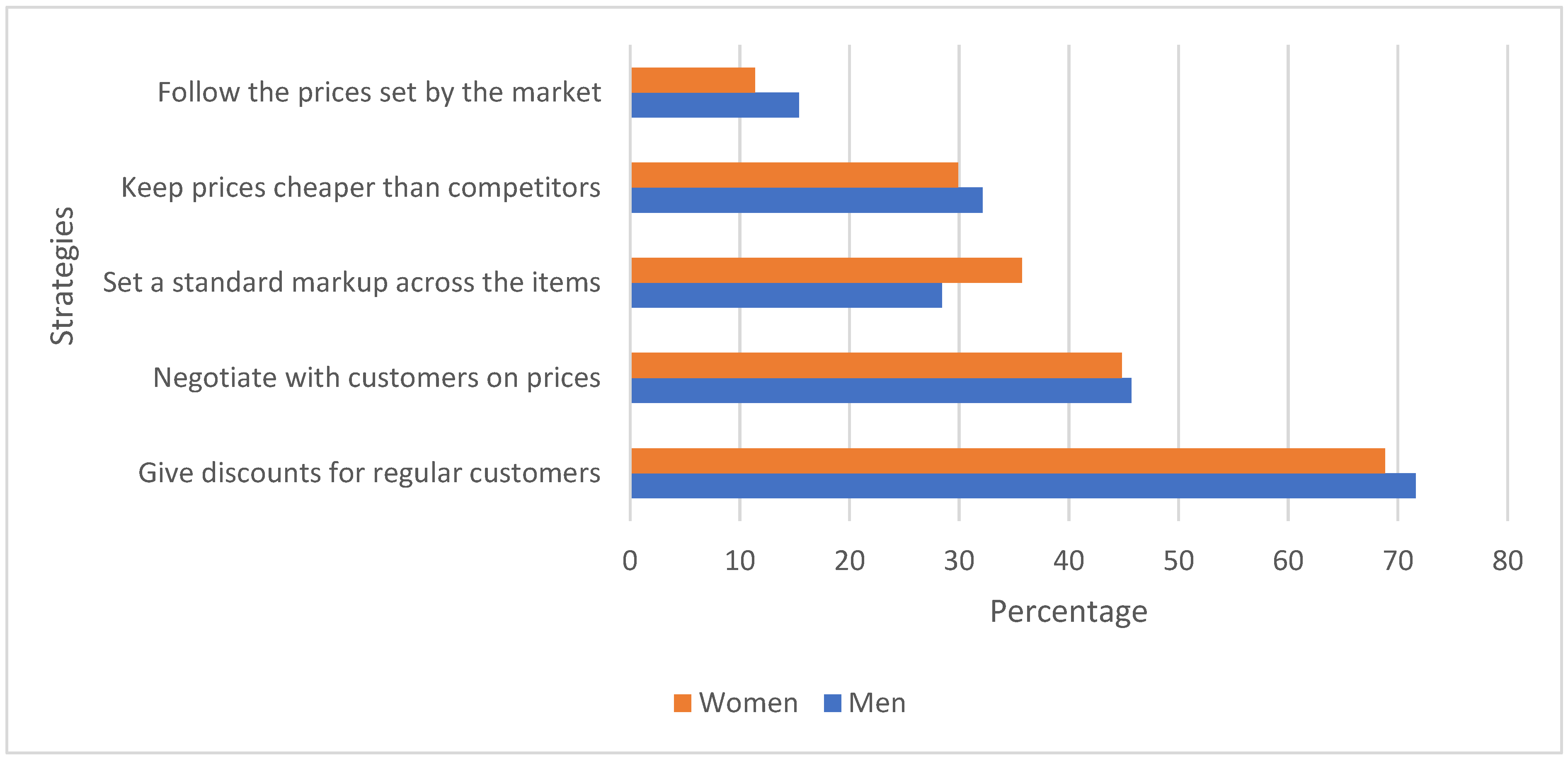
- Adaptive Pricing (AP): Figure 2 shows five strategies employed by traders to adjust prices in response to market conditions. Negotiating prices with customers and providing discounts to regular customers are the predominant strategies of both men and women. However, men are more likely than women to adopt these and most of the other adaptive pricing strategies.
- (2)
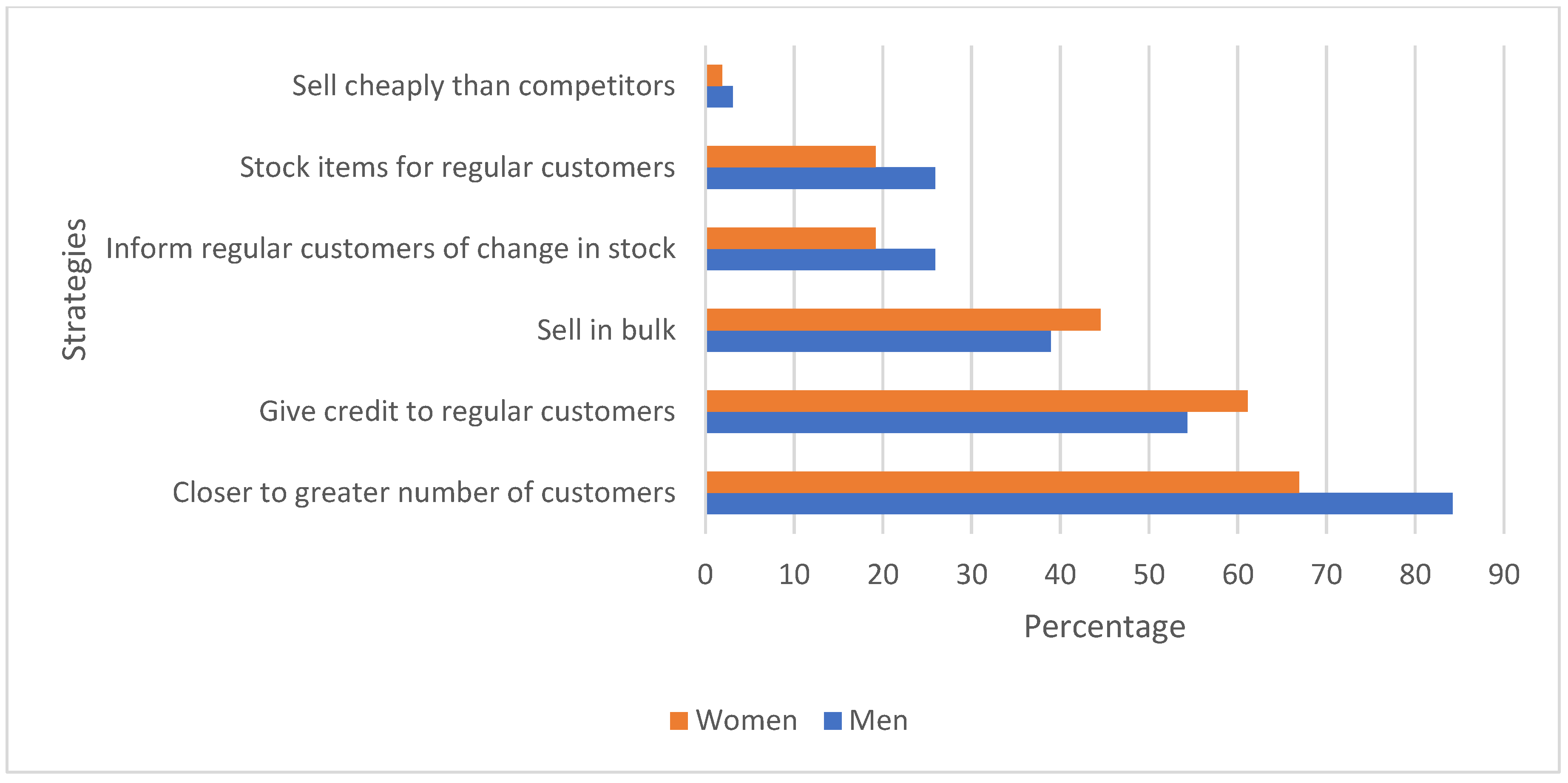
- Customer Centricity (CC): Figure 3 shows that customer-oriented practices were widespread. Three-quarters of the traders stressed the importance of close relationships with the greatest number of customers, while 57% overall (and over 60% of women) regularly extended credit to trusted clients.
- (3)
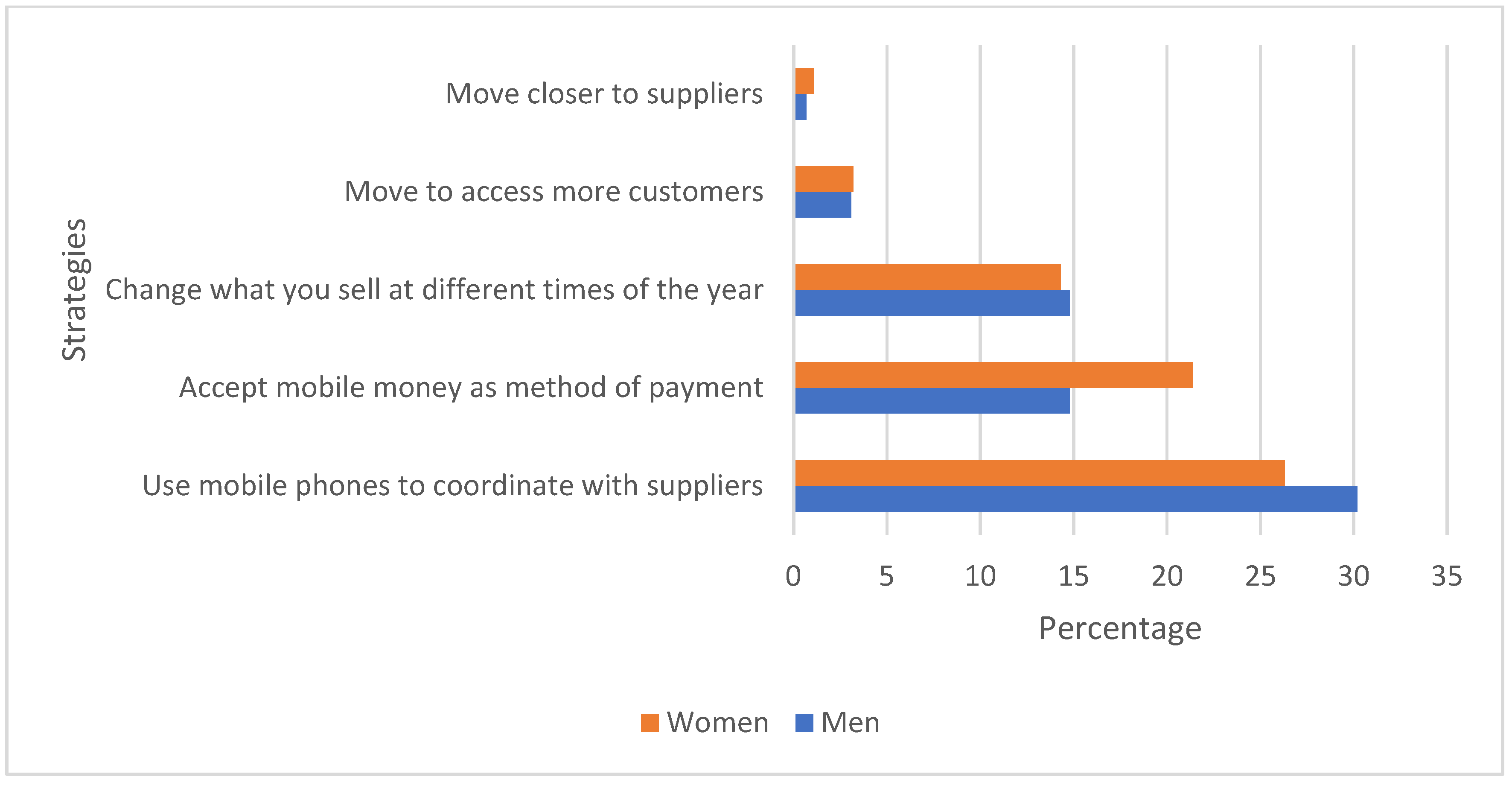
- Capability Evolution (CE): Figure 4 presents the uptake of digital and technological strategies. Just over one-quarter of the traders (27%) used mobile phones to coordinate with suppliers and customers, and 20% reported accepting mobile money as a payment method. Women are more likely to accept mobile money payments, while men are more likely to use the technology to coordinate with suppliers.
- (4)
- Value Co-creation (VC): Figure 5 shows that value co-creation strategies were comparatively rare. Across all five approaches assessed, fewer than 10% of business owners reported adopting these practices, highlighting the limited diffusion of collaborative customer–business innovations within the informal trading sector.
- (5)
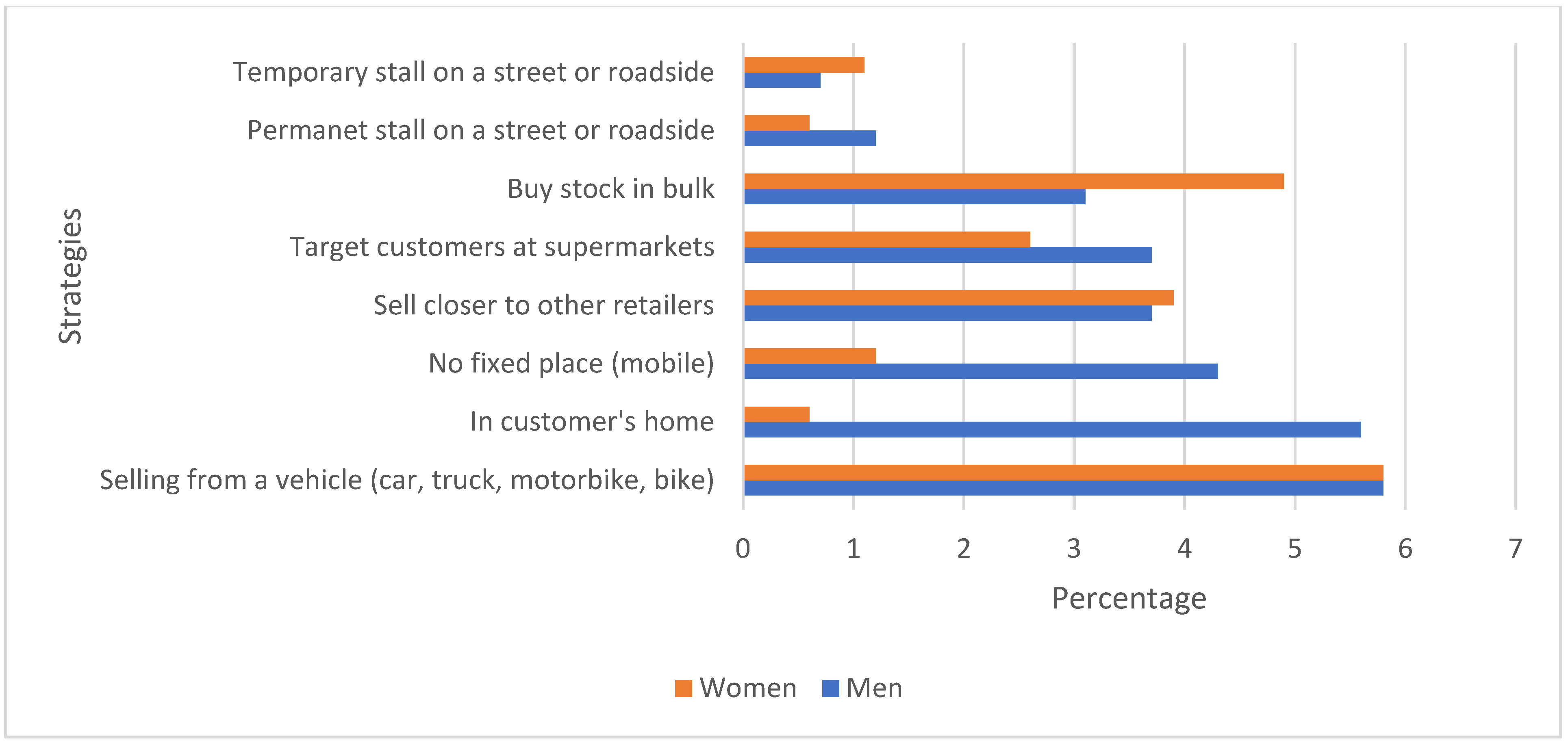
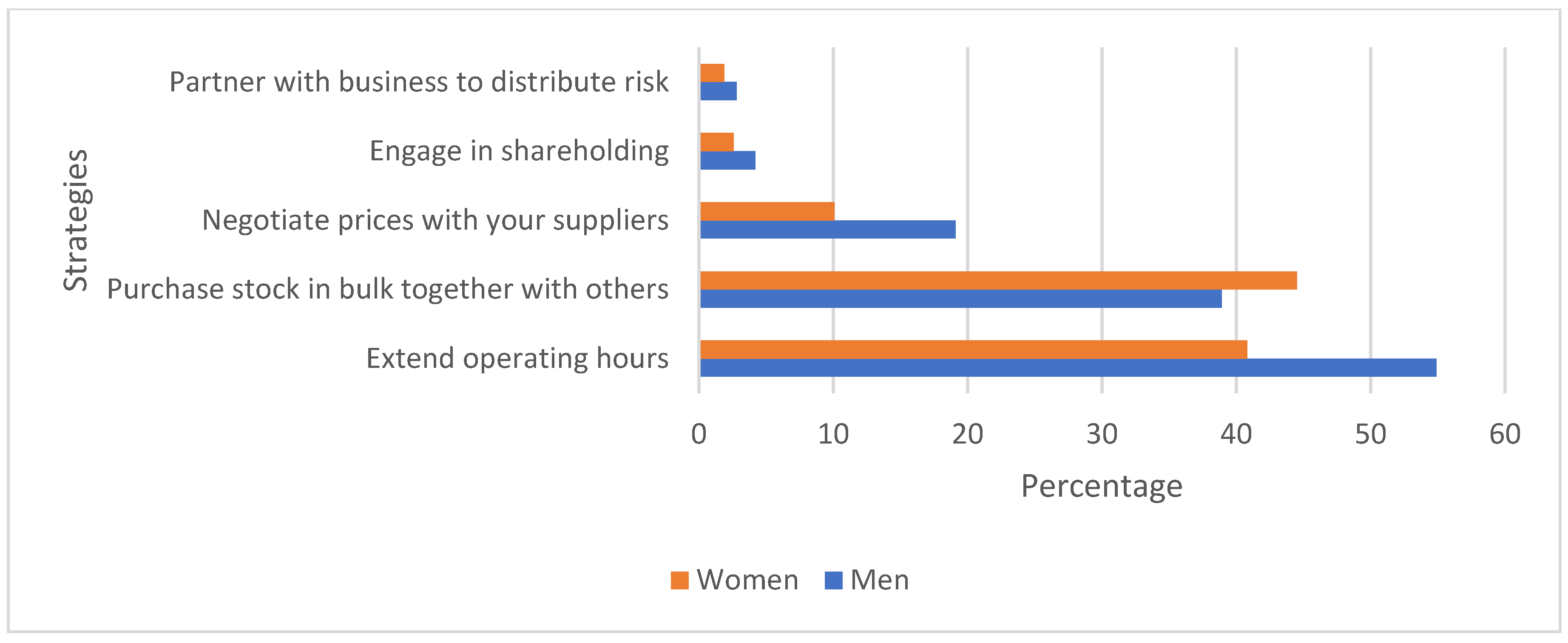
- Ecosystem Growth (EG). Figure 6 depicts strategies related to collective or network-based enterprise growth. The most common practices were extended working hours and purchasing stock together with other traders. Far fewer traders engaged in shareholding or partnerships.
3.2. SEM Results
4. Discussion
5. Conclusions
Author Contributions
Funding
Institutional Review Board Statement
Informed Consent Statement
Data Availability Statement
Conflicts of Interest
References
- ILO. Women and Men in the Informal Economy: A Statistical Update; International Labour Office: Geneva, Switzerland, 2023. [Google Scholar]
- NSA. Namibia Labour Force Survey 2018; Namibia Statistics Agency: Windhoek, Namibia, 2018. [Google Scholar]
- Chen, M.; Carré, F. (Eds.) The Informal Economy Revisited: Examining the Past, Envisioning the Future; Routledge: New York, NY, USA, 2020. [Google Scholar]
- Williams, C.C. A Modern Guide to the Informal Economy; Edward Elgar Publishing: Cheltenham, UK, 2023. [Google Scholar]
- Chicho, N.; Ongori, H. An Assessment of Challenges Faced by Microenterprises in Botswana: A Case of Street Food Vendors in Gaborone. Int. J. Learn. Dev. 2013, 3, 56–67. [Google Scholar] [CrossRef]
- Kalaoane, R.C.; Matamanda, A.R. Women in the Urban Informal Economy and Pathways Towards Inclusive Cities. In Pandemic Recovery? Reframing and Rescaling Societal Challenges; Anders, L., Bryson, J.R., Ersoy, A., Reardon, L., Eds.; Edward Elgar Publishing: Cheltenham, UK, 2024; pp. 78–93. [Google Scholar]
- Kinyanjui, M.N. Women and the Informal Economy in Urban Africa: From the Margins to the Centre; Zed Books: London, UK, 2014. [Google Scholar]
- Kedir, A.; Odhiambo, S.; Murinde, V. African Economies: Recovery Agenda from Multiple Shocks. J. Afr. Econ. 2014, 33, 3–7. [Google Scholar] [CrossRef]
- Grapsa, E.; Ismail, G.; Rogan, M.; Valvidia, M.; Alfers, L.; Harvey, J.; Chen, M.A.; Ogando, A.C.; Reed, S.O.; Roever, S. COVID-19 and Informal Work: Distinct Pathways of Impact and Recovery in 11 Cities Around the World; WIEGO Working Paper No. 42; WIEGO: Manchester, UK, 2021. [Google Scholar]
- Contreras, I.; Oseni, G.; Palacios-Lopez, A.; Pieters, J.; Weber, M. Inequalities in Job and Income Loss in Countries with High Prevalence of Informal Employment in Sub-Saharan Africa During the COVID-19 Crisis. Stat. J. IAOS 2024, 40, 890–907. [Google Scholar] [CrossRef]
- Donga, G.; Chimucheka, T. Challenges and Opportunities of the COVID-19 Pandemic on Women Entrepreneurs Operating in the Informal Food Sector: A Post COVID-19 Analyses. Int. J. Res. Bus. Soc. Sci. 2024, 13, 216–228. [Google Scholar] [CrossRef]
- Madichier, N.O.; Gbadamosi, A.; Rwelamila, P.D. (Eds.) Entrepreneurship and the Informal Sector: Challenges and Opportunities for African Business Development; Routledge: New York, NY, USA, 2023. [Google Scholar]
- Crush, J.; Kazembe, L.N.; Nickanor, N. Opportunity and Survival in the Urban Informal Food Sector of Namibia. Businesses 2023, 3, 129–149. [Google Scholar] [CrossRef]
- Kazembe, L.N.; Nickanor, N.; Crush, J. Informalized Containment: Food Markets and the Governance of the Informal Food Sector in Windhoek, Namibia. Environ. Urban. 2019, 31, 461–480. [Google Scholar] [CrossRef]
- Nickanor, N.; Crush, J.; Kazembe, L. The Informal Food Sector and Cohabitation with Supermarkets in Windhoek, Namibia. Urban Forum 2019, 30, 425–442. [Google Scholar] [CrossRef]
- Nickanor, N.; Kazembe, L.; Crush, J.; Wagner, J. Revisiting Africa’s Supermarket Revolution: The Case of Windhoek, Namibia. Dev. S. Afr. 2020, 38, 230–247. [Google Scholar] [CrossRef]
- Sheehama, W.L.; Singh, T. Food Safety in Informal Markets: How Knowledge and Attitudes Influence Vendor Practices in Namibia. Int. J. Environ. Res. Public Health 2025, 22, 631. [Google Scholar] [CrossRef]
- Thorn, J.P.; Maruza, T.C.; Stoffberg, M. Climate Justice and Informal Trader’s Access to Urban Green Spaces. Cities 2025, 159, 105725. [Google Scholar] [CrossRef]
- Keskinen, P.; Winschiers-Theophilus, H.; Chivuno-Kuria, S.; Müller, A.; Nieminen, M. Digital Microwork as a Livelihood Strategy in a Namibian Informal Settlement. Electron. J. Inf. Syst. Dev. Ctries. 2022, 88, e12197. [Google Scholar] [CrossRef]
- Crush, J.; Nickanor, N.; Kazembe, L. Informal Food Deserts and Household Food Insecurity in Windhoek, Namibia. Sustainability 2018, 11, 37. [Google Scholar] [CrossRef]
- Nickanor, N.M.; Tawodzera, G.; Kazembe, L.N. The Threat of COVID-19 on Food Security: A Modelling Perspective of Scenarios in the Informal Settlements in Windhoek. Land 2023, 12, 718. [Google Scholar] [CrossRef]
- Nickanor, N.; Kazembe, L.; Crush, J.; Shinyemba, T. Inclusive Growth and the Informal Food Sector in Windhoek, Namibia; HCP Report No. 23; Hungry Cities Partnership: Cape Town, South Africa, 2020. [Google Scholar]
- Ziwoni, C.; Marisa, C.; Marisa, J. The Transformative Power and Challenges of Informal Traders in Shaping Urban Development in Incubation Centre, Windhoek, Namibia. Int. J. Innov. Sci. Res. Technol. 2025, 10, 209–212. [Google Scholar] [CrossRef]
- Andreas, A.T.; Asa, A.R.; Nautwima, J.P.; Sunde, T. Entrepreneurial Skills and MSE Performance: Examining the Moderation Effect of Education on Youth-Owned Businesses. Cogent Bus. Manag. 2025, 12, 2529977. [Google Scholar] [CrossRef]
- NSA. 2023 Population and Housing Census Labour Force Report; Namibia Statistics Agency: Windhoek, Namibia, 2025. [Google Scholar]
- Bonnet, F.; Vanek, J.; Chen, M. Women and Men in the Informal Economy: A Statistical Brief; WIEGO: Manchester, UK, 2019. [Google Scholar]
- Alhassan, E.A.; Hoedoafia, M.A.; Alhassan, E.A. Entrepreneurial Characteristics and Business Profile of Women-Owned Small and Medium Enterprises (SMEs): A Case Study of the Tamale Metropolitan Area. Bus. Manag. Strategy 2016, 7, 159–173. [Google Scholar] [CrossRef]
- Mokomane, Z. Balancing Care and Work Roles Among Women Working in the Informal Sector in South Africa. Int. J. Care Caring 2021, 5, 129–147. [Google Scholar] [CrossRef]
- Peprah, C.; Peprah, V.; Ocloo, K.A. Improving the Socio-Economic Welfare of Women Through Informal Sector Activities in Ghana. Environ. Dev. Sustain. 2023, 25, 3005–3028. [Google Scholar] [CrossRef]
- Shava, H.; Chinyamurindi, W. Barriers of Growth Within an Informal Sector Business: Narratives of Women Subsistence Entrepreneurs in South Africa. Afr. J. Econ. Manag. Stud. 2022, 13, 328–343. [Google Scholar] [CrossRef]
- Wijewardena, N.; Samaratunge, R.; Kumara, A.S.; Newman, A. With the Help of the Family! Using Sri Lankan Informal Sector Women Entrepreneurs’ Family Resources to Develop Their Creative Self-Efficacy. Women’s Stud. Int. Forum 2023, 98, 102699. [Google Scholar] [CrossRef]
- Nickanor, N.M. Food Deserts and Household Food Insecurity in the Informal Settlements of Windhoek, Namibia. Ph.D. Thesis, University of Cape Town, Cape Town, South Africa, 2014. [Google Scholar]
- April, W.I.A. Women Entrepreneurs in Namibia. In Women Entrepreneurs in Sub-Saharan Africa: Historical Framework, Ecosystem, and Future Perspectives for the Region; Dabić, M., Dana, L.P., Nziku, D.M., Ramadani, V., Eds.; Springer Nature: Cham, Switzerland, 2022; pp. 127–153. [Google Scholar]
- Rogan, M.; Alfers, L. Gendered Inequalities in the South African Informal Economy. Agenda 2019, 33, 91–102. [Google Scholar] [CrossRef]
- Leonard, A.; Kiana, L. The Influence of Social Media on Knowledge-Sharing Practices Among Women Entrepreneurs in Windhoek, Namibia. Reg. J. Inf. Knowl. Manag. 2024, 8, 149–169. [Google Scholar]
- Caroli, M.G.; Fracassi, E.; Maiolini, R.; Carnini Pulino, S. Exploring Social Innovation Components and Attributes: A Taxonomy Proposal. J. Soc. Entrep. 2018, 9, 94–109. [Google Scholar] [CrossRef]
- Galego, D.; Moulaert, F.; Brans, M.; Santinha, G. Social Innovation and Governance: A Scoping Review. Innov. Eur. J. Soc. Sci. Res. 2021, 35, 265–290. [Google Scholar] [CrossRef]
- Grilo, R.; Moreira, A.C. The Social as the Heart of Social Innovation and Social Entrepreneurship: An Emerging Area or an Old Crossroads? Int. J. Innov. Stud. 2022, 6, 53–66. [Google Scholar] [CrossRef]
- Mulgan, G. Social Innovation: How Societies Find the Power to Change; Cambridge University Press: Cambridge, UK, 2019. [Google Scholar]
- van der Have, R.P.; Rubalcaba, L. Social Innovation Research: An Emerging Area of Innovation Studies? Res. Policy 2016, 45, 1923–1935. [Google Scholar] [CrossRef]
- Cajaiba-Santana, G. Social Innovation: Moving the Field Forward. A Conceptual Framework. Technol. Forecast. Soc. Change 2014, 82, 42–51. [Google Scholar] [CrossRef]
- Eichler, G.M.; Schwarz, E.J. What Sustainable Development Goals Do Social Innovations Address? A Systematic Review. Sustainability 2019, 11, 522. [Google Scholar] [CrossRef]
- Nicholls, A.; Murdock, A. Social Innovation: Blurring Boundaries to Reconfigure Markets; Palgrave Macmillan: Cham, Switzerland, 2012. [Google Scholar]
- Westley, F. Social Innovation and Resilience: How One Enhances the Other. Ecol. Soc. 2012, 17, 11. [Google Scholar]
- Joshi, R.; John, C.; Sood, S.; Burdon, S. Nature and Spirit of Exchange and Interpersonal Relationships Fostering Grassroots Innovations. J. Dev. Areas 2016, 50, 399–409. [Google Scholar] [CrossRef]
- Muchie, M.; Bhaduri, S.; Baskaran, A.; Sheikh, F. (Eds.) Informal Sector Innovations: Insights from the Global South; Routledge: New York, NY, USA, 2017. [Google Scholar]
- Sheik, A.; van Rooyen, D.; Mazzei, M. Social Innovation in South Africa: Building Inclusive Economies? Soc. Enterp. J. 2023, 19, 1–22. [Google Scholar] [CrossRef]
- Dees, J.G.; Anderson, B.B. Enterprising Social Innovation: Focusing Research on the Most Intriguing Form of Social Entrepreneurship. Soc. Enterp. Report. 2007, 302, 1–14. [Google Scholar]
- Mulgan, G. Social Innovation Theories: Can Theory Catch Up with Practice? In Challenge Social Innovation; Franz, H.-W., Hochgerner, J., Howaldt, J., Eds.; Springer: Cham, Switzerland, 2012; pp. 19–42. [Google Scholar]
- Mulgan, G.; Joseph, K.; Norman, W. Indicators for Social Innovation. In Handbook of Innovation Indicators and Measurement; Gault, F., Ed.; Edward Elgar Publishing: Cheltenham, UK, 2013; pp. 420–438. [Google Scholar]
- de Beer, J.; Fu, K.; Wunsch-Vincent, S. Innovation in the Informal Economy. In The Informal Economy in Developing Nations: Hidden Engine of Innovation? Kramer-Mbula, E., Wunsch-Vincent, S., Eds.; Cambridge University Press: Cambridge, UK, 2016; pp. 53–99. [Google Scholar]
- Smith, A.; Stirling, A. Innovation, Sustainability and Democracy: An Analysis of Grassroots Contributions. J. Self-Gov. Manag. Econ. 2017, 6, 64–97. [Google Scholar]
- Skinner, C. Contributing Yet Excluded? Informal Food Retail in African Cities. In Urban Food Systems Governance and Poverty in African Cities; Battersby, J., Watson, V., Eds.; Routledge: New York, NY, USA, 2019; pp. 104–115. [Google Scholar]
- Canelas, C.; Niño-Zarazúa, M. Social Protection and the Informal Economy: What Do We Know? ESCAP Social Development Working Paper; ESCAP: Bangkok, Thailand, 2022. [Google Scholar]
- Guven, M.; Jain, H.; Joubert, C. Social Protection for the Informal Economy: Operational Lessons for Developing Countries in Africa and Beyond; World Bank: Washington, DC, USA, 2021. [Google Scholar]
- Miti, J.J.; Perkiö, M.; Metteri, A.; Atkins, S. The Informal Sector and Social Protection. In Handbook on Social Protection Systems; Edward Elgar Publishing: Cheltenham, UK, 2021. [Google Scholar]
- Avenyo, E.K.; Kraemer-Mbula, E. Innovation and the Performance of Informal Enterprises in Developing Countries: A Gender Perspective. Int. J. Gend. Entrep. 2021, 13, 277–301. [Google Scholar] [CrossRef]
- Ogando, A.C.; Roever, S.; Riogan, M. Gender and Informal Livelihoods: Coping Strategies and Perceptions of Waste Pickers. Int. J. Sociol. Soc. Policy 2017, 37, 435–451. [Google Scholar] [CrossRef]
- Ogando, A.C.; Rogan, M.; Moussié, R. Impacts of the COVID-19 Pandemic and Unpaid Care Work on Informal Workers’ Livelihoods. Int. Labour Rev. 2022, 161, 171–194. [Google Scholar] [CrossRef]
- Béné, C.; Godfrey Wood, R.; Newsham, A.; Davies, M. Resilience: New Utopia or New Tyranny? IDS Working Paper 405; Sussex University: Brighton, UK, 2012. [Google Scholar]
- Avenyo, E.K. Informal Sector Innovation in Ghana; UNU-MERIT Working Paper 2018-030; United Nations University: Maastricht, The Netherlands, 2018. [Google Scholar]
- Bolosha, A.; Sinyolo, S.; Ramoroka, K.H. Factors Influencing Innovation Among Small, Micro and Medium Enterprises in Marginalized Settings: Evidence from South Africa. Innov. Dev. 2022, 13, 583–601. [Google Scholar] [CrossRef]
- Mramba, N.; Apiola, M.; Kolog, E.A.; Sutinen, E. Technology for Street Traders in Tanzania: A Design Science Research Approach. Afr. J. Sci. Technol. Innov. Dev. 2016, 8, 121–133. [Google Scholar] [CrossRef]
- Peprah, V.; Buor, D.; Forkuor, D. Characteristics of Informal Sector Activities and Challenges Faced by Women in Kumasi Metropolis, Ghana. Cogent Soc. Sci. 2019, 5, 1620154. [Google Scholar] [CrossRef]
- Rama, A.; Celestin, B.N.; Chen, S.; Martin, K. Assessment of Eco-Innovation Drivers Within the Informal Sector in Ghana. Sustainability 2022, 14, 6903. [Google Scholar] [CrossRef]
- Mulibana, L.; Rena, R. Innovation Activities of Informal Micro-Enterprises in Gauteng, South Africa: A Systematic Review. Afr. J. Sci. Technol. Innov. Dev. 2021, 13, 425–435. [Google Scholar] [CrossRef]
- Webb, J.W.; Bruton, G.D.; Tihanyi, L.; Ireland, R.D. Research on Entrepreneurship in the Informal Economy: Framing a Research Agenda. J. Bus. Ventur. 2013, 28, 598–614. [Google Scholar] [CrossRef]
- Akintimehin, O.O.; Eniola, A.A.; Alabi, O.J.; Eluyela, D.F.; Okere, W.; Ozordi, E. Social Capital and Its Effect on Business Performance in the Nigeria Informal Sector. Heliyon 2019, 5, e02002. [Google Scholar] [CrossRef] [PubMed]
- Ibidunni, A.S.; Kolawole, A.I.; Olokundun, M.A.; Ogbari, M. Knowledge Transfer and Innovation Performance of Small and Medium Enterprises. Heliyon 2020, 6, e04740. [Google Scholar] [CrossRef] [PubMed]
- Avenyo, E.K.; Francois, J.N.; Zinyemba, T.P. On Gender and Spatial Gaps in Africa’s Informal Sector: Evidence from Urban Ghana. Econ. Lett. 2021, 199, 109732. [Google Scholar] [CrossRef]
- Schneckenberg, S.; Velamuri, V.K.; Comberg, C.; Spieth, P. Business model innovation and decision making: Uncovering mechanisms for coping with uncertainty. R&D Manag. 2017, 47, 404–419. [Google Scholar]
- Adom, K.; Ackom, B. Towards a Greater Understanding of Immigrant Entrepreneurship in the Informal Economy of Ghana. J. Afr. Bus. 2024, 25, 264–286. [Google Scholar] [CrossRef]
- Eijdenberg, E.L.; Thompson, N.A.; Verduijn, K.; Essers, C. Entrepreneurial Activities in a Developing Country: An Institutional Theory Perspective. Int. J. Entrep. Behav. Res. 2019, 25, 414–432. [Google Scholar] [CrossRef]
- Williams, C.C. Entrepreneurship in the Informal Sector: An Institutional Perspective; Routledge: New York, NY, USA, 2017. [Google Scholar]
- Maldonado-Mariscal, K. Grassroots Innovation and Social Innovation in Perspective. Front. Sociol. 2023, 8, 1247293. [Google Scholar] [CrossRef]
- Sheikh, F.A.; Kumar, H. Grassroots Innovation: Mainstreaming the Discourse of Informal Sector; Edward Elgar Publishing: Cheltenham, UK, 2021. [Google Scholar]
- Sheikh, F.A.; Bhaduri, S. Grassroots Innovations in the Informal Economy: Insights from Value Theory. Oxf. Dev. Stud. 2020, 48, 85–99. [Google Scholar] [CrossRef]
- Santos, E.; Fernandes, C.I.; Ferreira, J.J. The Driving Motives Behind Informal Entrepreneurship. Int. J. Entrep. Innov. 2021, 22, 5–17. [Google Scholar]
- Ndemo, B.; Weiss, T. Digital Kenya: An Entrepreneurial Revolution in the Making; Springer Nature: Cham, Switzerland, 2017. [Google Scholar]
- Nguimkeu, P.; Okou, C. Leveraging Digital Technologies to Boost Productivity in the Informal Sector in Sub-Saharan Africa. Rev. Policy Res. 2021, 38, 707–731. [Google Scholar] [CrossRef]
- Kabbaj, M.; Hadi, K.; Elamrani, J.; Lemtaoui, M. A Study of the Social Entrepreneurship Ecosystem: The Case of Morocco. J. Dev. Entrep. 2016, 21, 1650021. [Google Scholar] [CrossRef]
- Qiang, C.Z.; Ghossein, T. Out of the Shadows: Unlocking the Economic Potential of Informal Businesses; World Bank: Washington, DC, USA, 2020. [Google Scholar]
- López-Sánchez, J.A.; Santos-Vijande, M.L. Key Capabilities for Frugal Innovation in Developed Economies. Sustain. Sci. 2022, 17, 191–207. [Google Scholar] [CrossRef]
- Murithi, W.K.; Beta, K.W. The Interaction Between Family Businesses and Institutional Environment in Africa: An Exploration of Contextual Issues. In The Palgrave Handbook of African Entrepreneurship; Kolade, O., Rae, D., Obembe, D., Beta, K.W., Eds.; Palgrave Macmillan: Cham, Switzerland, 2022; pp. 67–91. [Google Scholar]
- Kraemer-Mbula, E.; Wunsch-Vincent, S. The Informal Economy in Developing Nations: Hidden Engine of Innovation? Cambridge University Press: Cambridge, UK, 2015. [Google Scholar]
- Zimba, R.F.; Kasanda, C.D.; Haihambo, C.K.; Kudomo, M.; Kapenda, H.M.; Neshila, K.F.; Sheyapo, M. Namibian Boys’ Underachievement and Under-Participation in Education; School of Education, UNAM: Windhoek, Namibia, 2023. [Google Scholar]
- Ram, M.; Edwards, P.; Jones, T.; Villares-Varela, M. From the Informal Economy to the Meaning of Informality. Int. J. Sociol. Soc. Policy 2017, 37, 361–373. [Google Scholar] [CrossRef]
- Harshana, K.; Vera, T.-R. Women in Informal Sector in Mauritius: A Survival Mode. Equal. Divers. Incl. 2014, 33, 750–763. [Google Scholar]
- Wirba, E.L.; Akem, F.A.; Baye, F.M. Earnings Gap Between Men and Women in the Informal Labour Market in Cameroon. Rev. Dev. Econ. 2021, 25, 1466–1491. [Google Scholar] [CrossRef]
- Maslak, M.A. Education and Female Entrepreneurship in Asia; Palgrave Macmillan: Cham, Switzerland, 2018. [Google Scholar]
- Vieginie, C.; Robilliard, A.-S.; Roubaud, F. Gender Analysis of Labour Market Outcomes in Sub-Saharan Africa: Recent Evidence from Cameroon and Mali; Discussion Paper No. 16.; UN Women: New York, NY, USA, 2017. [Google Scholar]
- Campos, F.M.L.; Chavez, Z.L.; Coleman, R.D.; Conconi, A.; Donald, A.A.; Gassier, M.; Goldstein, M.P.; Mikulski, J.; Milazzo, A.; O’Sullivan, M.B.; et al. Profiting from Parity: Unlocking the Potential of Women’s Businesses in Africa, Volume 1: Main Report; Working Paper 135420; World Bank: Washington, DC, USA, 2019. [Google Scholar]
- Malta, V.; Kolovich, L.; Leyva, A.M.; Tavares, M.M.; Wiegand, J. Informality and Gender Gaps Going Hand in Hand; IMF Working Paper WP/19/112; International Monetary Fund: Washington, DC, USA, 2019. [Google Scholar]
- Brush, C.G.; Cooper, S.Y. Female Entrepreneurship and Economic Development: An International Perspective. Entrep. Reg. Dev. 2012, 24, 1–6. [Google Scholar] [CrossRef]
- Chant, S.; Sweetman, C. Fixing Women or Fixing the World? Smart Economics and Gender Equality in Development. Gend. Dev. 2012, 20, 517–529. [Google Scholar] [CrossRef]
- Williams, C.C.; Kedir, A.M. Explaining Cross-Country Variations in the Prevalence of Informal Sector Competitors. Int. Entrep. Manag. J. 2018, 14, 677–696. [Google Scholar] [CrossRef]
- Daniels, S. Making Do: Innovation in Kenya’s Informal Economy; Analogue Digital: New York, NY, USA, 2010. [Google Scholar]
- Mahadea, D.; Zogli, L.K. Constraints to Growth in Informal Sector Activities and Formalisation. S. Afr. J. Entrep. Small Bus. Manag. 2018, 10, 9. [Google Scholar]
- Mugoda, S.; Esaku, S.; Nakimu, R.K.; Bbaale, E. The Portrait of Uganda’s Informal Sector: Main Obstacles. Cogent Econ. Financ. 2020, 8, 1843255. [Google Scholar] [CrossRef]
- Vidyarani, K.; Maheshkumar, T. Business obstacles to the growth of small and medium-sized enterprises in India: Evidence from enterprise surveys. J. Int. Counc. Small Bus. 2025, 1–14. [Google Scholar] [CrossRef]
- Dutta, N.; Kar, S.; Guha, S. Informal Sector in India and Adoption of Digital Technologies. Indian Growth Dev. Rev. 2023, 16, 230–246. [Google Scholar] [CrossRef]
- Mannah-Blankson, T.; Asiseh, F.; Boateng, S.S.; Butu, M.M. Adoption Patterns and Impact of Digital Technologies Among Ghanaian Market Women. In African Women Entrepreneurs in the Informal Economy; Ejiribe, E.C.A., Sodzi-Tettey, S., Ofori-Dankwa, J., Eds.; Springer Nature: Cham, Switzerland, 2025; pp. 283–317. [Google Scholar]
- Daramola, O.; Etim, E. Affordances of Digital Platforms in Sub-Saharan Africa. Electron. J. Inf. Syst. Dev. Ctries. 2022, 88, e12213. [Google Scholar] [CrossRef]
- Kimuli, S.N.L.; Sendawula, K.; Nagujja, S. Digital Technologies in Micro and Small Enterprise: Evidence from Uganda’s Informal Sector During COVID-19. World J. Sci. Technol. Sustain. Dev. 2021, 18, 93–108. [Google Scholar] [CrossRef]
- Momanyi, C.; Rasugu Riechi, A.; Khatete, I. Digital Skills and the Use of Digital Platforms in the Informal Sector: A Case Study Among Jua Kali Artisans in Nairobi, Kenya. Int. J. Res. Vocat. Educ. Train. 2024, 11, 96–118. [Google Scholar] [CrossRef]
- Donner, J.; Escobari, M.X. Mobile Use by Micro and Small Enterprises in Developing Countries: A Review. J. Int. Dev. 2010, 22, 641–658. [Google Scholar] [CrossRef]
- Okeleke, K. The Mobile Economy: Sub-Saharan Africa 2020; GSMA Intelligence: London, UK, 2020. [Google Scholar]
- López-Sánchez, P.; Urquía-Grande, E.; del Campo, C.; Rivero-Menendez, M.J. The Importance of Accounting for Micro-Credit Beneficiaries in Developing Countries. Enterp. Dev. Microfinanc. 2020, 31, 268–283. [Google Scholar] [CrossRef]
- Kolawole, T.O.; Shobalaje, E.; Owoeye, T.P. Contribution of Digitized Micro-Credit to Economic Growth and Business Development in the Informal Sector: Nigeria’s Experience. Fuoye J. Educ. Manag. 2024, 1, 2. [Google Scholar]
- Lubabatu, B.C.; Abubakar, S.U.; Haruna, D.H. Effect of Micro-Credit on Micro Business Development Among Women Entrepreneurs. Afr. J. Manag. Bus. Res. 2024, 16, 100–113. [Google Scholar] [CrossRef]



| Type | No. | % |
|---|---|---|
| Street traders | 128 | 27.2 |
| Informal market traders | 70 | 14.9 |
| Open market traders | 67 | 14.3 |
| Traders outside supermarkets | 59 | 12.6 |
| Tuck shops | 39 | 8.3 |
| Traders at taxi ranks/bus stop | 35 | 7.4 |
| Mobile traders | 26 | 5.5 |
| Home-based shops | 21 | 4.5 |
| Traders outside open markets | 16 | 3.4 |
| Other | 9 | 1.9 |
| Total | 470 | 100.0 |
| Factor | Indicators | Notes on Measurement |
|---|---|---|
| AP (Adaptive Pricing) | Discounts, Negotiation, Following market price | Binary items |
| CC (Customer Centricity) | Customer feedback, Extends credit, Keeps stock for regulars | Ordinal/Binary |
| CE (Capability Evolution) | Uses phone for coordination, Accepts mobile payments | Two-indicator factor (identified by fixing one loading) |
| VC (Value Co-creation) | Small-quantity sales, Mobile vending, etc. | Low prevalence; may require item parcels |
| EG (Ecosystem Growth) | Supplier negotiations, Bulk buying, Partnerships | May include composite indicators |
| INNOV (Innovativeness) | Higher-order factor indicated by AP, CC, CE, VC, EG | Second-order latent factor |
| RESIL (Resilience) | Business survival, Income recovery, Household well-being | Endogenous latent factor |
| Measurement Model: |
|
|
|
|
|
|
|
|
|
|
| Structural model: |
|
|
| Moderation: |
|
| Characteristic | Women (%) | Men (%) | Total (%) | χ2 | p-Value |
|---|---|---|---|---|---|
| Enterprise type: street/market | 72.4 | 87.7 | 77.7 | 13.37 | 0.0001 |
| Enterprise type: tuckshop/home-based | 27.6 | 12.3 | 22.3 | 27.61 | 0.0001 |
| Age: Youth (<35 years) | 40.3 | 75.3 | 53.3 | 54.22 | <0.001 |
| Education ≥ Secondary | 85.7 | 62.3 | 77.7 | 32.08 | 0.001 |
| Start-up year: from 2010+ | 34.3 | 44.5 | 37.8 | 23.90 | <0.001 |
| Ownership: sole | 86.7 | 82.1 | 85.1 | 6.11 | 0.05 |
| Startup capital < NAD 5000 | 70.5 | 58.0 | 66.2 | 6.78 | 0.009 |
| Loan-related financing | 16.9 | 10.5 | 14.7 | 2.97 | 0.085 |
| Necessity-driven entry | 34.4 | 33.3 | 34.0 | 1.02 | 0.894 |
| Migrant to Windhoek | 89.3 | 88.9 | 89.1 | 3.5 | 0.062 |
| Construct | Indicators | Factor Loadings | Cronbach’s α |
|---|---|---|---|
| AP | Discounts, price negotiations | 0.72–0.81 | 0.74 |
| CC | Customer credit, stock on credit | 0.70–0.79 | 0.71 |
| CE | Mobile coordination, e-payments | 0.76–0.83 | 0.78 |
| Determinant | Adaptive Pricing (Coef, SE) | Customer Credit (Coef, SE) | Communications and E-Payments (Coef, SE) |
|---|---|---|---|
| Startup year (2010+) | 0.28 (0.09) *** | 0.05 (0.07) | 0.11 (0.08) |
| Vendor type (Market) | 0.04 (0.10) | 0.33 (0.09) *** | 0.02 (0.07) |
| Education ≥ Secondary | 0.42 (0.08) *** | 0.18 (0.07) ** | 0.37 (0.09) *** |
| Startup capital > NAD5000 | 0.07 (0.09) | 0.11 (0.08) | 0.25 (0.10) ** |
| Ownership (Sole) | –0.10 (0.08) | –0.22 (0.09) ** | –0.05 (0.07) |
| Determinant | Women Odds Ratio (95% CI) | Men Odds Ratio (95% CI) |
|---|---|---|
| Startup year (2010+) | 1.42 (0.88–2.32) | 1.11 (0.70–1.76) |
| Vendor type (Market) | 1.08 (0.65–1.79) | 1.95 (1.15–3.30) ** |
| Education ≥ Secondary | 2.14 (1.26–3.64) ** | 1.21 (0.73–2.01) |
| Startup capital > 5000 | 1.78 (1.05–3.00) ** | 1.33 (0.82–2.17) |
| Loan-related financing | 1.32 (0.76–2.30) | 2.08 (1.18–3.64) ** |
| Pathway | Indirect Effect () | Standard Error (SE) | p-Value |
|---|---|---|---|
| Education → AP → Enterprise Growth | 0.10 | 0.04 | 0.021 |
| Education → CE → Enterprise Growth | 0.12 | 0.05 | 0.008 |
| Startup Capital → CE → Enterprise Growth | 0.09 | 0.04 | 0.037 |
Disclaimer/Publisher’s Note: The statements, opinions and data contained in all publications are solely those of the individual author(s) and contributor(s) and not of MDPI and/or the editor(s). MDPI and/or the editor(s) disclaim responsibility for any injury to people or property resulting from any ideas, methods, instructions or products referred to in the content. |
© 2026 by the authors. Licensee MDPI, Basel, Switzerland. This article is an open access article distributed under the terms and conditions of the Creative Commons Attribution (CC BY) license.
Share and Cite
Kazembe, L.N.; Nickanor, N.M.; Crush, J.S.; Ahmed, H. Social Innovation, Gendered Resilience, and Informal Food Traders in Windhoek, Namibia. Sustainability 2026, 18, 1514. https://doi.org/10.3390/su18031514
Kazembe LN, Nickanor NM, Crush JS, Ahmed H. Social Innovation, Gendered Resilience, and Informal Food Traders in Windhoek, Namibia. Sustainability. 2026; 18(3):1514. https://doi.org/10.3390/su18031514
Chicago/Turabian StyleKazembe, Lawrence N., Ndeyapo M. Nickanor, Jonathan S. Crush, and Halima Ahmed. 2026. "Social Innovation, Gendered Resilience, and Informal Food Traders in Windhoek, Namibia" Sustainability 18, no. 3: 1514. https://doi.org/10.3390/su18031514
APA StyleKazembe, L. N., Nickanor, N. M., Crush, J. S., & Ahmed, H. (2026). Social Innovation, Gendered Resilience, and Informal Food Traders in Windhoek, Namibia. Sustainability, 18(3), 1514. https://doi.org/10.3390/su18031514