Article

An Intersectionality-Based Policy Analysis (IBPA) of Post-Pandemic Recovery Policies: Experiences of Women Informal Food Vendors in Kisumu City, Kenya


by
Joyce Kiplagat
1,
Patrick Mbullo Owuor
2,3,
Rebecca Gokiert
1 and
Elizabeth Onyango
1,*
1
School of Public Health, University of Alberta, Edmonton, AB T6G 1C9, Canada
2
Department of Anthropology, Wayne State University, Detroit, MI 48202, USA
3
Pamoja Community-Based Organization, Kisumu P.O. Box 2311-40100, Kenya
*
Author to whom correspondence should be addressed.
Sustainability 2026, 18(1), 334; https://doi.org/10.3390/su18010334
Submission received: 24 October 2025 / Revised: 9 December 2025 / Accepted: 23 December 2025 / Published: 29 December 2025

Abstract

Introduction: The informal food sector in Kisumu City, largely run by women informal food vendors, plays a crucial role in the urban food system. However, these female-led businesses faced disproportionate risks stemming from COVID-19-related policies, exacerbating gendered vulnerabilities. This paper explores the gender gaps of post-pandemic recovery strategies and their implications for resilience, recovery, and sustainability of women-led informal food businesses. Methods: This cross-sectional study was guided by the Intersectionality-Based Policy Analysis (IBPA) framework. In collaboration with the Pamoja Community-Based Organization, we employed qualitative methods grounded in community-based participatory approaches. Data were collected through key informant interviews (n = 20), depth interviews (n = 20), focus group discussions (n = 40), and a review of policy documents (n = 2). Data was analyzed guided by the eight principles of the IBPA framework alongside Braun and Clarke’s six-phased thematic analysis approach. Results: Findings indicated that power dynamics in the formulation of post-pandemic policies and top-down implementation approaches excluded women informal food vendors from meaningfully participating in policy processes. For example, female vendors were excluded from the recovery priorities as the strategies adopted had limited to no targeted gender-responsive interventions. As such, women informal food vendors faced several challenges during recovery, including limited government support, barriers to accessing credit facilities, heightened household and unpaid care work, gender-based violence, sexual exploitation, and insecurity. The female vendors employed both individual agency and collective action to facilitate recovery. Discussion: Gender-responsive COVID-19 policies were critical to addressing the disproportionate impact of the pandemic on women-led informal food businesses. Moving forward, a comprehensive understanding of existing sociocultural inequalities is crucial for designing post-pandemic strategies that are gender-inclusive and promote equitable recovery. Such an approach would enhance women informal food vendors’ resilience to emergencies and their contribution to urban household food security and livelihood.

1. Introduction

Worldwide, the COVID-19 pandemic had severe social and economic impacts [1]. In the Global South, the effects were not different [2,3,4]. An International Labour Organization assessment suggests that the pandemic led to the loss of about 2 billion jobs in the informal economy and disruption of small businesses [5]. In response to the pandemic, governments enacted various policies intended to control the spread of coronavirus [3,6,7]. Some of the policy interventions included lockdowns and curfews, which resulted in restricted movement of people and goods and in turn led to social and economic costs for the informal food sector [6,7].
The Food and Agriculture Organization [8] of the United Nations defines the informal food sector as “including small producers, manufacturing enterprises, traders and service providers, involved in legal as well as unrecognized activities related to food”. The informal food sector suffered severe consequences from the pandemic [9,10], largely due to the absence of social protection services, such as business insurance, medical benefits, leaves of absence from work, compensation, pension benefits, and maternity leave [11,12]. However, the contribution of informal food businesses to urban household food security cannot be underestimated [13,14].
Various studies conducted within cities of the Global South, including Nairobi, Ahmedabad, Windhoek, Lima, and Cape Town, demonstrate a heavy reliance on the informal food sector for food supply by low-income urban households [14,15,16,17,18,19]. Similarly, the informal economy in sub-Saharan Africa contributes significantly to gross domestic product and employment creation, with women being overrepresented, especially in the food sector [20]. Consistent with trends in the Global South, the informal food sector in Kenya is female-dominated, and women-led businesses continue to receive attention due to their valuable contribution to urban household food security and livelihoods [13,21,22]. Studies have shown that despite the sector’s crucial role in food provision, women-led businesses received limited government support to aid recovery from the pandemic [11,23,24].
To support economic recovery during and after the pandemic, several strategies were implemented by governments [11,25,26,27]. In Kenya, for instance, policies, programs, and monetary and fiscal measures including credit guarantee schemes, cash transfers, tax relief interventions, and social protection services were utilized [18,28,29,30]. In particular, the Kenya National Treasury developed the post-COVID-19 Economic Recovery Strategy 2020–2022, which entrenched measures to mitigate the adverse socioeconomic effects of the pandemic and reposition the economy on a steady and sustainable growth trajectory [30]. Guided by the post-pandemic recovery strategy, the government launched an eight-point COVID-19 economic stimulus package of KES 6.9 billion (USD 537 million) to shield communities and businesses from recession and promote economic recovery [25].
At the county-government level, there were additional recovery strategies. Kisumu County, for instance, developed the Kisumu County COVID-19 Social Economic Re-Engineering and Recovery Strategy 2020/21–2022/23 [29]. This policy was aimed at programs and interventions to support business recovery after the pandemic through provision of grants and cash transfers, supporting access to credit, and stimulating private sector support. The intention of implementing the policies was to address social and economic impacts of the pandemic; however, limited knowledge exists on the extent to which these recovery strategies entrenched intersecting identities and gender considerations.
The existing literature on the post-pandemic recovery of women-led businesses has focused primarily on the formal sector, women street vendors of non-food items, and home-based and domestic workers, with limited attention on the informal food sector [10,12,15,16,19,24,25,28,31,32,33]. A gender assessment report conducted in all 47 counties in Kenya during the pandemic showed that more women than men in the informal sector lost their businesses, which worsened their economic insecurity [34]. Previous studies conducted in Bangladesh, Kenya, and Thailand after the pandemic revealed that national recovery plans failed to outline specific interventions to support women in the informal economy [26]. Research has also shown that the financial support policies implemented by African governments during and post-COVID-19 to cushion businesses ignored the entrenched gender inequalities and the intersecting identities that limited women-led business growth and recovery [35]. Such policies reinforced the marginalization agenda of governments in cities in the Global South, which has consistently depicted the informal sector as being disorderly, undesirable, and disruptive of urban life [36].
Despite increasing evidence of the pandemic’s uneven impacts and recovery challenges faced by women informal food vendors, there is still limited understanding of how the post-pandemic recovery strategies in secondary cities incorporated the intersecting identities of women informal food vendors to adequately support their resilience post-pandemic. In this study, we sought to fill this knowledge gap by undertaking an intersectionality-based analysis of Kenya’s post-COVID-19 pandemic recovery strategies, with a focus on the experiences of women-led informal food businesses in Kisumu City, the administrative headquarters of Kisumu County. Using the Intersectionality-Based Policy Analysis (IBPA) framework [37], this study examined the gender responsiveness of post-pandemic recovery strategies, highlighting the different sociocultural gaps and their implications for the resilience and recovery of women-led informal food businesses. Utilizing an intersectional lens, this study addresses a key research gap by providing context-specific COVID-19 policy analysis that demonstrates how overlapping social identities shaped women informal vendors’ participation in policy processes, access to resources, and capacity to bounce back after the pandemic. This intersectionality-based analysis provides evidence for the need for inclusive policy responses that safeguard women-led informal food businesses in future emergencies while preserving their vital role in urban household food security. By examining the gaps in post-pandemic recovery policies, this study contributes to the literature on how sociocultural identity gaps in policies impact women in the informal sector and the food security of urban households in secondary cities.

2. Materials and Methods

2.1. Theoretical Framework: Intersectionality-Based Policy Analysis (IBPA)

This study draws on the eight guiding principles of the IBPA framework [37,38] to provide a comprehensive analysis of post-pandemic recovery strategies for women informal food vendors in Kisumu City. The IBPA framework is relevant to our study given its application in policy analysis that aims to explore the gender responsiveness of new and/or existing policy interventions. Due to its grounding in intersectionality, the framework allows for an understanding of the engagement of populations, issues of power and dynamics, and the intersecting identities that may impact how policy measures are experienced differently in populations. The intersectional lens applied to this study goes beyond examining how women were disproportionately affected by pandemic policies to highlight the role of power structures in influencing policy decisions and resulting in marginalization. Identifying the intersecting social locations stretches our analysis to examine gendered and uneven impacts women informal food vendors experienced with the pandemic and beyond.
The IBPA principles of power, multi-level analysis, diverse knowledge, intersecting categories, equity, reflexivity, social justice, and time and space [38] were used to make sense of the data. Applying the intersectionality lens allowed for the exploration of women informal food vendors’ experiences of discrimination based on their gender, marital status, level of education, class, ability, and economic status, in particular, how these intersecting identities shaped their lived experiences of the pandemic and revealed gender gaps within post-pandemic recovery strategies.
The principle of intersecting categories allowed for the exploration of how various overlapping social identities of the women food vendors shaped their post-COVID-19 recovery pathways. Using the principles of power and equity, we explored how systemic inequalities, such as lack of social protection schemes and exclusion from policy processes, influenced recovery processes for women informal food vendors. We then applied the principle of diverse knowledge, combining women’s lived experiences with insights from experts in various fields of governance, health, finance, private sector, and community leadership with policy highlights for an informed analysis. Social justice was considered by exploring whether the recovery strategies accounted for existing inequalities faced by the women informal food vendors. Multi-level analysis enabled comparison of policies from the national and county levels of government, foregrounding gender gaps in their responsiveness. This was undertaken while acknowledging the evolution of strategies adopted during the post-pandemic period as per the principle of time and space. The researchers remained reflexive throughout the analysis process, acknowledging the influence of their positionalities, lived experiences, perspectives, and backgrounds on the study design, interaction with participants, data analysis, and interpretation of findings.

2.2. Study Context

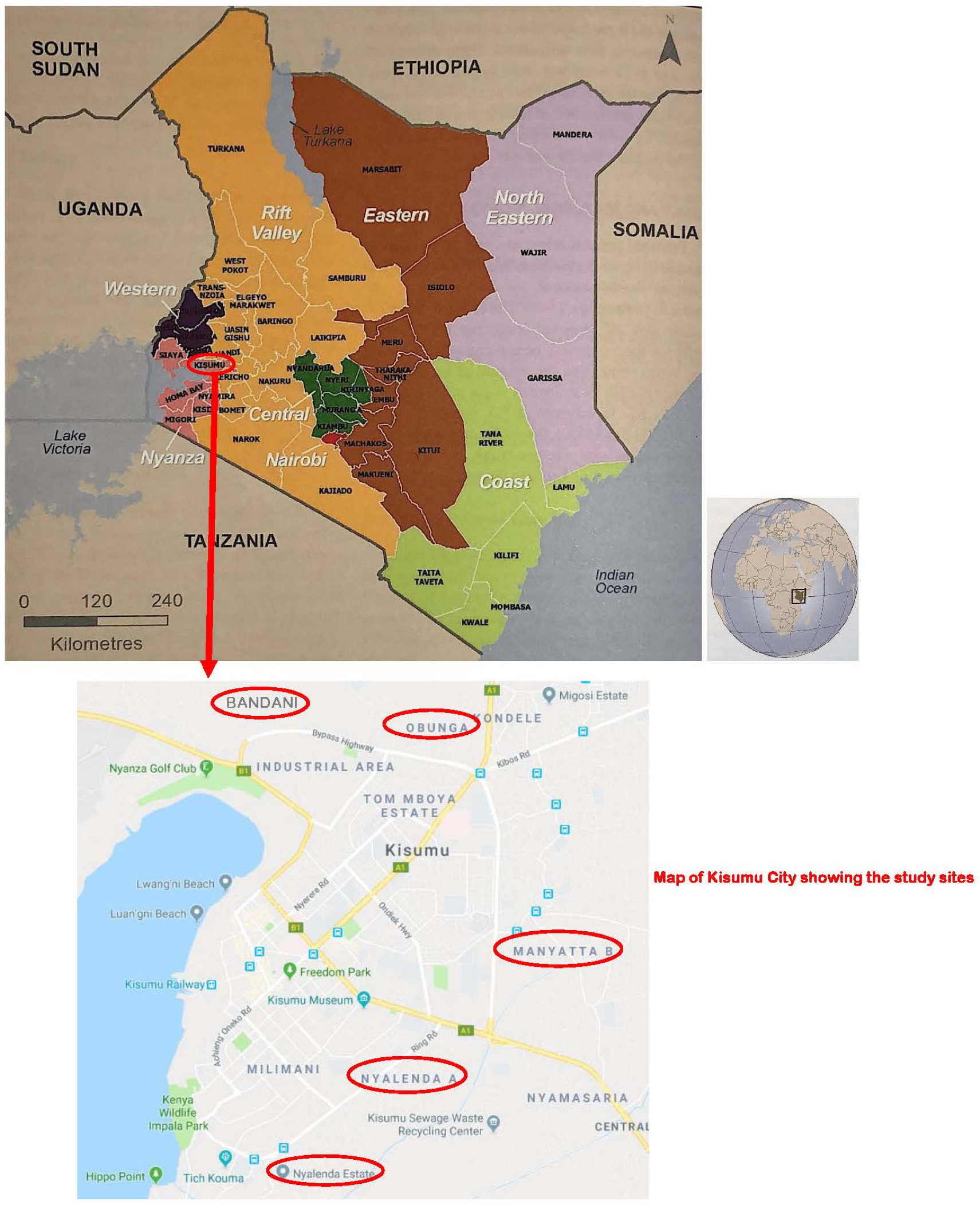
Kisumu City is located within the larger county of Kisumu, one of Kenya’s 47 counties, between latitude 0°14′60.00″ N and longitude 34°54′59.99″ E in the western part of the country (See Figure 1). According to the Kenya National Bureau of Statistics (KNBS) [39], Kisumu City has a population of approximately 397,957 people within the larger metropolitan area—that is, Kisumu County has over 1,155,000 people that also rely on the city’s informal economy. Kisumu City is characterized by sprawling urban informal settlements where more than half of the urban population resides [40]. The informal settlements in the city include Obunga, Manyatta, Nyalenda, Bandani, and Nyawita [41], and these settlements are densely populated at 6686 people per sq. km [39]. The population living in the informal settlement areas faces congestion, climate-induced floods, dilapidated housing conditions, poor hygiene and sanitation, and inadequate water and sewer infrastructure leading to an increased risk of the spread of infectious diseases [40,41,42].
Kisumu City is an important economic hub due to its location along the shores of Lake Victoria [22]. The economy is largely trade-driven, with a dominant informal sector that comprises varied small-scale enterprises, predominantly food businesses [22,43]. Approximately 60% of the informal business operators in Kisumu City are female (KNBS, 2020), most of whom identify as from either the Luo- or Luhya-speaking communities in western Kenya. These communities are known to be patriarchal, where females (women and girls) are less valued and well-defined gender roles relegate house chores and care work to the females. The care burden negatively impacts women’s business performance, and this was especially the case during the pandemic [21,44], affecting their health outcomes and financial resilience [45]. The study area provides an ideal space to research gendered dynamics of post-pandemic recovery strategies for women in informal food vending.

2.3. Research Design

This research employed a cross-sectional study design guided by the Intersectionality-Based Policy Analysis framework. A cross-sectional study design was deemed appropriate to critically review post-pandemic recovery policies, to explore and interpret experiences of women food vendors with the recovery strategies, and to identify potential gaps in the policies with reference to the unique needs of women food vendors in secondary cities. We conducted a review of post-pandemic recovery policies and collected primary qualitative data. The 2 main post-pandemic recovery policies that were formulated and implemented in Kisumu City and that were critically reviewed in this study include Kenya’s National Post-COVID-19 Economic Recovery Strategy 2020–2022 and the Kisumu County COVID-19 Social Economic Re-Engineering and Recovery Strategy 2020/21–2022/23 [29,30]. The primary qualitative data included key informant interviews (KIIs) with experts and market leaders, in-depth interviews (IDIs) with both female and male participants, and focus group discussions (FGDs) with female vendors in the different informal settlements and markets in Kisumu City.

2.4. Selection of Participants

  • Policy document sampling
A total of two policy documents (n = 2) were purposefully selected for review: Kenya’s National Post-COVID-19 Economic Recovery Strategy 2020–2022 and the Kisumu County COVID-19 Social Economic Re-Engineering and Recovery Strategy 2020/21–2022/23 [29,30]. These documents were chosen for the following reasons: (1) they outline measures to mitigate adverse socioeconomic effects of the COVID-19 pandemic; (2) they address socioeconomic recovery for the informal sector; and (3) they represent both tiers of government (national and county levels), enabling a multi-level analysis in line with the IBPA principles.
  • Participant sampling
A total of n = 80 participants were recruited between 10 July 2024 and 15 October 2024 to participate in this cross-sectional study, and they were drawn from the five key markets (Manyatta, Nyalenda, Obunga, Nyawita, and Bandani) in Kisumu City. The study participants were purposively selected to include women and some men informal food vendors, key informants who work directly with the informal food vendors, as they were deemed to hold information relevant to the study goals and questions. Through our connection with the local community-based organization Pamoja CBO, potential participants were invited to an information session through the market representatives, where the details about this study were shared to allow for informed consent. Participants in the IDIs (n = 20) and FGDs (n = 40) were distributed across the five markets, with each market having at least 12 participants engaged in the individual and the group discussions. The potential participants were included if they met the following criteria: (1) they had been actively operating food businesses in and had lived in Kisumu City for over five years; (2) they were owners or operators of informal food businesses during and after the COVID-19 pandemic; and (3) they were willing to consent to participate in a one-on-one interview or a group discussion. Participants who did not operate their businesses before the pandemic and those unwilling to give consent were excluded.
The key informants (n = 20) were selected from across the 5 markets, with at least 1–2 participants coming from each of the markets and the others from the various government departments and community-based organizations that work with informal food vendors. Key informants were included if they met the following criteria: (1) they were market leaders or representatives of informal food vendors within the five key markets; (2) they were representatives from the city government or community organizations, e.g., from community loaning organizations or the public health department or were community health promoters; they were at various levels and not limited to community leadership, market representation, government mandates, public and community health, non-governmental organizations, community-based support, and private sector support; (3) they were actively engaged in informal food vending during and after the COVID-19 pandemic and possess knowledge of their varied challenges post-pandemic; and (4) they were willing to consent to participate in a one-on-one interview with one of the research team members. Participants were excluded if they did not meet the above criteria.

2.5. Data Collection Procedures

  • Policy document review
Kenya’s National Post-COVID-19 Economic Recovery Strategy 2020–2022 (national level) and the Kisumu County COVID-19 Social Economic Re-Engineering and Recovery Strategy 2020/21–2022/23 (county level) were retrieved from the Kenya Law Reports portal and Kisumu County Government website, respectively [29,30]. This review aimed to assess whether the strategies incorporated the diverse intersecting identities that were found among women informal food vendors to support their resilience and recovery from the pandemic. The national strategy was examined to understand broad government measures to safeguard the informal sector from pandemic impacts, particularly interventions benefiting vulnerable groups through the implementation of fiscal measures, interventions that increase access to finance, and economic stimulus programs. The county strategy was reviewed to identify local interventions, including policy and institutional reforms, aimed at mitigating socioeconomic impacts, supporting informal sector business recovery, and spurring post-pandemic economic growth. This multi-level analysis enabled an exploration of whether the national and county policies captured the lived realities of individual women informal vendors and community groups, highlighting gender and socioeconomic gaps and disparities between policy provisions and on-the-ground experiences.
  • Primary data collection procedures
Research assistants trained in qualitative data techniques and fluent in English, Kiswahili, and Luo engaged in the recruitment of participants, the information session with potential participants, and the facilitation of primary data collections through face-to-face interviews. The choice of language used was determined by participants’ preferences, with most of the key informants preferring English. A majority of the IDI and FGD participants preferred Swahili and/or Luo. All interviews and the group discussions were audio-recorded with the informed consent of the participants, with those conducted in English transcribed verbatim and the ones in Swahili and Luo translated to English as they were being transcribed. The transcripts were then reviewed by the research assistants and authors (PO and EO) who are fluent in Luo, Swahili, and English to ensure accuracy of the translations and the transcriptions.
To facilitate data collection, we developed semi-structured interview guidelines for KIIs, FGDs, and IDIs, with a focus on the experiences of women informal food vendors with post-pandemic recovery strategies. We probed for the impacts of the pandemic on their businesses, as well as their perspectives on the challenges of post-pandemic recovery and prospects on the future of their businesses. The participants were asked to describe the role of governance mechanisms, including policies and institutions, as well as private sector and social networks that they relied upon and how these played a role in recovery from the pandemic. Participants gave recommendations for best practices for business recovery from the pandemic. Data collection was undertaken until saturation—that is, the point at which there were no new themes emerging from the interviews. Throughout the research process, the researchers remained reflexive, and the research assistants while in the field also kept a journal and gathered fieldnotes that were included in the data analysis. After every interview, the research assistants also summarized the key highlights from each interview.
Key informant interviews (n = 20) included market leaders, community health promoters, and government and community-based organization representatives who were engaged in one-on-one interviews which lasted for approximately 30–60 min each. The key informants included experts in compliance, enforcement officers, revenue collection officers, municipal and city management officials from the County Government of Kisumu, representatives from microfinance organizations, women group leaders, and market administrators. Based on the expertise of the government officials from various departments, we obtained information regarding governance and the formulation and implementation of the policies, as well the rationale for post-pandemic recovery strategies. Interviews with market and women group leaders explored the gap between the interventions stipulated within the policies and the actual support that the vendors obtained from the policy interventions.
The in-depth interview (n = 20) participants were both male and female informal food vendors who operated their food businesses during and after the COVID-19 pandemic. The male participants were recruited to capture their perspectives about the experiences of female informal food vendors during the pandemic and with post-pandemic recovery strategies. Recruitment of these participants was facilitated through our community partner and by the market leaders in each of the five markets. The market leaders invited potential participants to an information session, and interested vendors who gave informed consent and were interested in participating in a one-on-one interview were invited to a face-to-face interview at a convenient place of their choice. The IDI participants were interviewed to obtain firsthand information regarding individual perspectives of recovering from the negative effects of the pandemic and narratives on support mechanisms that existed (or lack thereof). The participants shared personal experiences with the post-pandemic recovery interventions, the barriers to accessing government support, and the role of the informal social support networks in the recovery and resilience of the informal food vendors.
Focus group discussions (n = 40) included four FGDs, each comprising 10 women informal food vendors. Recruitment of the FGD participants was facilitated by the market women group leaders who organized the information session with the potential participants. The women informal food vendors who met the inclusion criteria and gave informed consent were then invited to a centralized location close to the various markets, with most of the group discussions being held in community halls close to the markets. The FGDs provided a platform for participants to share the collective and individual mechanisms that shaped their recovery from the socioeconomic impacts of the COVID-19 pandemic. The interactive discussions elicited narratives on how women informal food vendors leveraged formal and informal social support networks, such as financial institutions and microfinance agencies, informal saving groups, market associations, and government and private sector entities, to shape their resilience and recovery post-pandemic.

2.6. Data Analysis

All primary qualitative data (KIIs, IDIs, and FGDs) were audio-recorded with the informed consent of the participants. Most of the KIIs were conducted in English and audio-recorded to allow for verbatim transcription. The IDIs and FGDs were mostly conducted in Swahili and/or Luo and were audio-recorded to allow for translation and transcription. The translations and transcriptions were conducted by the research assistants who facilitated the interviews, and the discussions and were reviewed by authors PO and EO, who are fluent in English, Swahili, and Luo. The data—transcripts, policy documents, and field notes—were then imported into NVivo QSR International, version 15, for analysis, coding, and management.
  • Policy document analysis
The analysis of policy documents was guided by the 8 principles of the IBPA framework alongside Braun and Clarke’s six-phase thematic analysis approach [46]. This involved reading and rereading the two policy documents to familiarize with the key provisions, including the objectives, key pillars to the recovery strategies, and support services to the informal sector. Using both deductive (informed by the IBPA framework) and inductive analyses, we developed a thematic code set, allowing for predefined and new themes to emerge [47,48]. The predefined themes were based on the IBPA principles of power and power dynamics, intersecting identities, social justice, equity, multi-level analysis, reflexivity, and time and space. The theme codes, transcripts, field notes, interview summaries, and post-pandemic recovery policies were then imported and organized in NVivo QSR International, version 15, and the data were coded line by line. To validate the theme code sets and the coding and analysis process, an independent peer researcher performed an independent analysis and cross-checked the analysis for consistency and accuracy. This process of peer checking allowed for multiple interpretations and understandings of the experiences of women informal food vendors and the identification of gaps within the policy documents [49]. To ensure the rigor and trustworthiness of the evidence, we triangulated evidence from the policy documents, the narratives from the key informants, and the informal food vendors.
  • Data analysis procedures for KIIs, FGDs, and IDIs
Following a similar process as with the analysis of the policy documents, the primary data collected through KIIs, FGDs, and IDIs was analyzed guided by the IBPA framework and using Braun and Clarke’s six-phase thematic analysis approach [46]. The research team immersed themselves in the data through reading and rereading transcripts and listening to the audio recordings to familiarize themselves with the data, generated the initial codes through deductive and inductive analysis, searched and named the themes within the data, and developed a theme code set. The theme codes, transcripts, field notes, and interview summaries, together with the post-pandemic recovery policies, were then imported and organized in NVivo QSR International, version 15, and the data were coded line by line. To ensure rigor, we engaged in peer checking of the theme codes and the line-by-line coding of the qualitative data. The codes and the evidence from the interviews and the group discussions were also triangulated with the data from the policy document reviews. Integrating outcomes of policy review with actual participant perspectives ensured credibility of our findings.

2.7. Rigor

To enhance the credibility of findings, we triangulated and compared findings from the document reviews with primary data from KIIs, FGDs, and IDIs. Additionally, to enhance data quality, adequate and appropriate sampling was undertaken. Study participants were selected through purposive sampling, which included individuals believed to hold lived and work experiences relevant to the focus of this study (Johnson et al., 2020 [50]; Mayan, 2016 [51])—that is, people who operated or owned informal food businesses during and post-pandemic and those who implemented the post-pandemic recovery strategies in Kisumu City.
To achieve analytical rigor, we ensured that intercoder reliability was realized through peer checking in the data analysis process. The research team, including the research assistants and the first author (JK), undertook coding of the data, identified initial themes, and collated the codes into broader themes. Afterwards, the initial codes and emergent themes were reviewed by a peer researcher (a graduate student) and by the authors (EO) and (PO) for accuracy through an iterative process. The coders also maintained reflexivity to ensure trustworthiness in the analysis process by acknowledging the influence of their backgrounds and positionalities on their interpretation of meanings of data (Berger, 2015) [52]. Also, peer review was achieved through regular consultations with the research team (EO), (RG), and (PO).

2.8. Ethical Considerations

Ethics approval was received by the University of Alberta Research Ethics Review Board (Protocol: Pro00138854) and the Research Ethics Board of the in African Medical and Research Foundation in Kenya (ESRC P1670/2024). Our local community partner Pamoja CBO provided connection with market leaders and other administrative authorities in Kisumu City, which facilitated our data collection. Potential participants were invited to an information session about this study and were issued information sheets detailing the research process, research objectives, expectations, and pros and cons of participation. We then obtained voluntary informed consent in written form from all participants. The participants were advised of their right to withdraw from the interviews and discussions at any stage without any penalty. The data was anonymized by removing any personal identifying information, with participants being assigned ID numbers based on the data collection methods. All the data were downloaded from the audio recorders at the end of the day of data collection and uploaded onto the University of Alberta shared Google Drive and protected following the University of Alberta’s data management procedures, and only the research team including the local community partner in Kenya had access. To honor participants’ time and contribution to the research, each participant received an honorarium of CAD 10 (KES 1000).

3. Results

In this study, we reviewed two post-pandemic recovery strategies that were implemented in Kisumu City to facilitate rebuilding of communities after the COVID-19 pandemic (see Table 1: Reviewed post-pandemic policy documents).
Additionally, we engaged in primary qualitative data collection with 80 participants in KIIs, IDIs, and FGDs to capture the lived experiences of the informal female food vendors of the recovery strategies. Our analysis of the policy documents and the primary data was guided by the principles of the IBPA framework [37,38]. The principles included power, multi-level analysis, diverse knowledge, intersecting categories, equity, reflexivity, social justice, and time and space [38]. The qualitative study participants included women informal food vendors (83.8%) and men informal food vendors (16.2%) in the age range 25–65 years. Male participants were included in this study to capture male perspectives of the gendered gaps within post-pandemic recovery strategies. Their perspectives illuminated the gendered patterns of male privilege based on the sociocultural context and female exclusion in decision-making, policy formulation, and the implementation of interventions in secondary cities and remote communities. Most of the participants had below the primary level of education (52.5%), with about 26.3% having a college or university level of education, especially the key informants. Over 90% of the participants were informal food vendors who operated different types of small-scale food businesses, such as selling fresh fruits and vegetables, cereals (maize, sorghum, rice), fresh-cooked food, meat products (beef, pork, fish, chicken), a variety of drinks (sodas, fresh juice, preserved juices, milk), and a wide range of food items in kiosks and small hotels. The participants belonged to market groups, and some were part of informal saving groups (chamas), where they accessed credit to support their businesses. Most participants reported that they did not receive any government support during or post-pandemic, and they mostly relied on their social connections to rebuild their businesses post-pandemic. See Table 2 for the demographic characteristics of the study participants.
Our critical analysis of the policy documents, KIIs, IDIs, and FGDs generated the following four main themes and accompanying subthemes (see Table 3: Key themes and subthemes). The following section presents these findings, with relevant participant quotes to illustrate key insights.

3.1. Key Themes

3.1.1. Gender and Power Imbalances in Policy Design, Decision-Making, and Recovery

Embracing the principles of intersecting identities, power, and social justice, our analysis of the data revealed issues of power, power imbalance, and the lack of consideration of gender and gender representation in the design, formulation, and governance and implementation of post-pandemic recovery strategies. Two subthemes emerge within this theme:
Centralized decision-making and limited participation of women informal food vendors in the policy processes.
The formulation of post-COVID-19 strategies was centralized at the Council of Governors level, whose legal mandate is to provide a forum for consultation amongst county governments. Although the recovery strategies mentioned that the formulation process for the policies was collaborative—involving the Council of Governors, county governments, researchers, development partners, and other stakeholders—the process was centralized within the national government, with limited engagement from lay community members such as informal food vendors.
“The Council of Governors……provided a central point for coordination of County Governments’ COVID-19 response measures…The development of this Strategy was a combined effort of Council of Governors, County Governments, researchers, development partners, and sector stakeholders.”
Kisumu County COVID-19 Social Economic Re-Engineering Recovery Strategy 2020/21–2022/23 p. ix
While we acknowledge the environment within which the COVID-19 pandemic unfolded, where decisions were made rapidly and with uncertainty, it would have been beneficial to find ways to engage with and incorporate the needs of women informal food vendors given their significant role in supporting livelihoods and food needs of urban households, particularly in secondary cities. This could be achieved through contextualization of national recovery strategies and intentionally engaging with local communities in cities.
Gender mainstreaming is also mentioned within the recovery strategy documents, but there is limited evidence on how the unique needs of females were addressed within the recovery strategies, particularly the needs of women informal food vendors in a city like Kisumu. The Post-COVID-19 Economic Recovery Strategy states:
“Gender Mainstreaming of Post-COVID-19 Pandemic Initiatives: The programme will integrate a gender perspective in post-COVID-19 interventions.”
Post-COVID-19 Economic Recovery Strategy 2020–2022 p. 27
Our analysis of the participant narratives reaffirms the limited consideration of the intersecting identities and gender gaps in policy implementation and in addressing specific needs, particularly the needs of female informal food vendors.
“…they should be offered spaces because women are vulnerable people in our society, right? I wish there were policies that were created to give them [women informal food vendors] space to conduct their businesses without competition or the stronger gender.”
(KII_20)
Exclusion of women informal food vendors from recovery priorities.
Related to issues of power and power dynamics is the exclusion of women in the recovery priorities set post-pandemic. Our analysis of the recovery strategies showed that the interventions prioritized the formal sectors of the economy. The measures were biased towards the macroeconomic environment, with a limited focus on the informal sector, which is female-dominated, especially in small to medium cities such as Kisumu. This is seen in the emphasis on fiscal measures to support recovery, including lowering of bank borrowing rates, restructuring of loans, and credit referencing, while not considering the populations that are often excluded through such interventions because of the prevailing sociocultural factors.
“…the National Treasury was directed, through a Presidential Directive of 28th September 2020 to consider extending the VAT rate at 14 percent until 1st July 2021, PAYE Income tax rate and the Resident Income Tax (Corporation tax) rate at 25 percent until 1st January 2021 and maintaining the 100 percent tax relief for persons earning gross monthly income of up to KES 24,000 beyond the Sunset date of 31st December 2020.”
Post-COVID-19 Economic Recovery Strategy 2020–2022 p. 8
Additionally, a review of the national strategy showed that the recovery priorities were centered on big sectors of the economy, such as manufacturing, information and communication technology (ICT) and digital infrastructure, transport, energy, and housing, among others. At the county level, the economic stimulus package outlined infrastructure, agriculture, solid waste management, and payment of pending bills as the key priority areas. These sectors are elite and male-dominated, while women-led food businesses were given limited to no attention, as reflected in the below section of the Post-Pandemic Economic Recovery Strategy of 2020–2022:
“The main sectors expected to lead the economic recovery are agriculture, wholesale and retail trade, manufacturing, transport and storage, ICT, building and construction and services sector supported by the measures outlined in this ERS.”
Post-COVID-19 Economic Recovery Strategy 2020–2022 p. 14

3.1.2. Mismatch in Resource Allocation and Economic Support to Women-Led Businesses

Related to theme 1 above is the inequitable distribution of resources to support post-pandemic recovery and in adopting the IBPA principles of social justice and equity. Our analysis identified a mismatch in resource allocation with reference to the prevailing gender barriers and the limited consideration of the diverse identities and experiences of women informal food vendors in post-pandemic recovery strategies. We identified two main subthemes:
Gender barriers in accessing financial recovery tools and government support.
Most of the participants shared their struggles with accessing government support and credit from banks and microfinance institutions to support the recovery of their businesses. They highlighted the requirement for collateral as one of the main barriers. Respondents also indicated that the cash transfers rolled out through the government economic stimulus program were unavailable to most women informal food vendors.
“Yes, I think there was money given by President Uhuru, it was one thousand every two weeks, some people got it, and others did not…… I doubt if they would give me money if I do not have anything to compensate or collateral to make them see my business growth and stability of the business.”
(IDI_10)
Respondents who benefited from microfinance organizations and government loans recounted the strict eligibility criteria, repayment conditions, and high interest rates.
“I want to thank the office of the women’s representative for allocating some funds that can be given to women to empower their businesses, but the only problem is that the interest rate is way too high.”
(FGD_02)
Due to limited access to credit information and stringent collateral requirements, some vendors narrated how informal moneylenders such as shylocks took advantage of the situation, exploited women sexually, and charged exorbitant interest for the loans.
“If you were to commission research on informal money lenders, like shylocks, you will realize that the people that they give money…… are the people that they exploit the most, …… women food vendors.”
(KII_16)
“People were not able to access loans… did not know where to access them. I only know of shylock money… They give you money and you have to return it with a daily interest. If you don’t pay… So, if you borrow KES 3000 (USD 30) from them, … you return KES 4500 (USD 45)…”
(IDI_02)
Participants highlighted that failure to repay loans came with profound consequences, with some of them being arrested, while others lost their household property to loan recovery agencies. Most of them mentioned that the struggles with loan repayment due to COVID-19-related impacts caused mental health-related challenges, citing stress and depression:
“… But if you cannot pay and have some arrears you’re told to pay up or they will come to your house and take something… you just have stress.”
(IDI_12)
The participants resoundingly acknowledged that lack of access to financial resources hampered the recovery process for women informal food vendors, while those who managed to restart their businesses struggled with instability.
“So up to now, some of them have not come back to businesses because they are not able to facilitate the credit facility that is secured from their financial providers, and those who had coped up, up to now, have not stabilized as well.”
(KII_19)
Systemic redress and mismatch with the experiences of informal female food vendors.
There was limited availability of social protection services like medical insurance, pension benefits, and maternity and sick leave benefits for workers in the informal food sector. The Post-COVID-19 Economic Recovery Strategy 2020–2022 sought to address this gap by proposing pension benefits to workers in the informal sector. Our critical review of the Kisumu County COVID-19 Social Economic Re-Engineering Recovery Strategy 2020/21–2022/23 also showed that the county proposed medical schemes that would benefit informal sector workers as part of the recovery interventions.
“Extend sickness benefit coverage to all, with attention given to reaching women and men in nonstandard and informal employment, the self-employed and vulnerable groups… Protect vulnerable groups in the population from health costs by enhancing NHIF coverage; improving knowledge of the existing insurance schemes to improve uptake; and subsidizing NHIF premiums for targeted vulnerable populations.”
Kisumu County COVID-19 Social Economic Re-Engineering Recovery Strategy 2020/21–2022/23 pp. 31–32
However, participants shared about the limited on-the-ground access to medical coverage and how they had to pay for medical treatment out-of-pocket despite making small profit margins from their businesses.
“Livelihood became difficult, for you to access services at the hospital, it required you to have money. You are required to have NHIF which I did not have.”
(FGD_03)
The instability of female-led businesses was further exacerbated by inflation and instances of political disruption. Notably, the high cost of living fueled riots and demonstrations, in turn impacting business operations, hindering recovery. Several participants reported that high costs of doing business drained their profits, reduced customer demand, and, in some instances, pushed traders out of business. As a result, they experienced slow recovery and were unable to repay their loans. Other compounding factors such as climate change-related disasters including floods also disrupted business recovery.

3.1.3. Intersecting Gendered Burdens in Post-COVID-19 Recovery

Informed by the IBPA principles of intersecting categories, our analysis of the policy documents and the qualitative data revealed the lack of acknowledgement of diverse identities, such as being a single parent, having lower socioeconomic status, and living in a society with specified gender roles, including care responsibilities and other unpaid roles. The two subthemes related to the theme of intersecting gendered burdens of the pandemic are discussed below.
Unacknowledged extra household and caregiving responsibilities.
Both male and female participants acknowledged that women informal food vendors shouldered extra responsibilities during and after the pandemic. They reflected on how the vendors managed house chores and caregiving duties while simultaneously running food stalls, which they described as “overwhelming.” The situation was even worse for single mothers, widows, and divorcees, since they lacked spousal support.
“That one, I can say that … actually women are overburdened. Sometimes I even wonder how they get that extra time to do the business. Because, okay, a woman wakes up at 5:00 A.M., they prepare the children for schooling. Then once they have done that, there are other house chores, which they also do, like washing the dishes and then preparing for the husband.”
(KII_10)
The recovery strategies, however, did not explicitly mention or acknowledge these extra responsibilities that were borne by women informal food vendors, and neither did they acknowledge the unique socioeconomic conditions of the women vendors. Gender aspects within the strategies only focused on gender mainstreaming, promoting reproductive health, and alleviating gender-based violence. The post-pandemic strategies acknowledged that women faced gender-based violence even before the occurrence of COVID-19 and that such experiences were exacerbated by pandemic control measures. Coupled with other vulnerabilities such as being a single parent, lower education level, and socioeconomic status, there was a need for special interventions, particularly for women informal food vendors in small to medium cities such as Kisumu City.
Exposure to gendered risks and vulnerabilities.
Female vendors faced different forms of gender-related challenges that hampered their recovery from the pandemic, including gender-based violence, insecurity, and sexual exploitation. Additionally, they were less likely to access government and microfinance loans due to lack of collateral, limited information access, and competing demands on their time, especially if they were less educated, were single parents, and had care responsibilities for their immediate and extended family members. Although the post-pandemic recovery strategies aimed to address issues related to violence against women and sought to build community resilience through prevention and through the implementation of government-led interventions, the policy inadequately addressed the unique barriers experienced by women, particularly those in the informal food sector.
“Implementation of this programme will mitigate the incidences of gender-based violence. The National Gender-Based Violence Emergencies Working Group will be operationalized to implement the activities targeted to prevent gender-based violence.”
Post-COVID-19 Economic Recovery Strategy 2020–2022 p. 27
Despite policy interventions, participants narrated their experiences of gender-based violence and intimate partner violence during and post-pandemic. Respondents indicated that due to the impact of COVID-19, some men lost their jobs and income, making them dependent on women to provide for their families. These financial challenges triggered tension and fights within households, and in some instances, there were break-ups and separations. Similar violent experiences continued even post-pandemic, with limited to no support for women in the market, as depicted in the participant’s quote below.
“As woman I observed that women had a lot of responsibilities to bear during that period…this led to the rise of gender-based violence cases which I had to step in and handle. As I told you, professional I’m a counselling psychologist (college trained) and my services were not limited to women in this market but also the community. I handled very many such cases and realized gender-based violence was majorly due to the additional responsibilities that women had after their spouses were laid off or had to stay at home without a source of income.”
(KII_04)
Women informal food vendors also expressed the fear and trauma they went through during protests, whereby their shops were targeted and vandalized and their goods looted. One participant recounted women’s experiences with attempted rape and physical defilement of their children. These instances, they mentioned, forced them to shut their businesses earlier than usual for fear of being robbed and sexually violated and loosing their income. Sexual exploitation emerged as one of the gendered risks that female vendors faced during post-pandemic recovery. A representative of a civil society organization operating in Kisumu City expressed concerns of instances of sexual exploitation, whereby women were coerced to give sexual favors in exchange for financial assistance.
“They would not access any kind of finances to even start their businesses. So we found the majority of the girls, they went back to looking for jobs, where majority of them again were now at risk of exploitation, because we found a lot of people, if you want any job, you want any monies, then there was the aspect of sexual exploitation and violence, so that they get to survive or they get to get up……”
(KII_11)
Since the County Government of Kisumu had not implemented any interventions to address the issue of insecurity, a market leader recounted community-driven initiatives to address insecurity.
“The county government does not provide security for the market currently; they have only deployed the revenue officers whose purpose is just to collect tax. You know where business is done is where thieves are equally, and so there is a need for security. In all the markets in the city, there is no security. This has been challenging for the businesswomen. … we would contribute KES Ten daily per trader to pay security guards who volunteered to take charge of securing the commodities in the market.”
(KII_08)

3.1.4. Missed Opportunities for Gender-Inclusive Post-Pandemic Recovery

A further analysis of the study data showed that the pandemic created opportunities for the creation of gender-responsive policies and moments to learn from communities, all of which were missed opportunities in rebuilding communities and cities post-COVID-19 pandemic. Guided by the principles of diverse knowledge and time and space, we identified two subthemes, discussed below.
Limited targeted gender-responsive interventions.
Both the national and the county strategies outlined various socioeconomic challenges facing various sectors of the economy, specifically, the medium, small, and micro-enterprises where the informal food sector falls. A number of interventions were outlined for implementation, such as enhancing liquidity to businesses including medium, small, and micro-enterprises (MSMEs), enhancement of social protection, investment in information and communication technology and digital infrastructure, and credit schemes, among others. These are relevant to the informal food sector; however, they were gender-neutral and did not consider the diverse identities reflected amongst the women informal food vendors. The policies spoke to the following:
“…establishing frameworks for micro-leasing for the MSMEs and utilization of the SMEs credit guarantee scheme which was launched in 2020 to cushion all SMEs across the country from the risks of high cost of credit for SMEs, which in most cases operate as informal businesses.”
Kisumu County COVID-19 Social Economic Re-Engineering Recovery Strategy 2020/21–2022/23 p. 14
Additionally, the strategies had specific social protection interventions to support vulnerable groups within society, such as orphaned and vulnerable children, people with disabilities, and the elderly, but did not consider the unique vulnerabilities experienced by women in the informal food economy.
“The County was also supporting and building capacities of individuals, vulnerable groups and communities for equity and self-reliance through training.”
Kisumu County COVID-19 Social Economic Re-Engineering Recovery Strategy 2020/21–2022/23
Most of the recommendations shared by women illuminated the limited gendered support to informal food vendors. Participants underscored the need for capacity building and mentorship targeting businesswomen in the informal sector.
“The government should consider grants to women in business as opposed to loans. Loans are a bit cumbersome when it comes to repayments… grants from government and loan write offs can be of help to us women in business. Unfortunately, that is not the case because if you are unable to pay, your guarantors will be asked to pay up.”
(IDI_14)
Community-based coping, adaptation, and recovery mechanisms.
Due to the limited support from government and insufficient gender-inclusive interventions, women informal food vendors adopted various strategies to survive the negative post-pandemic impacts. A key informant from the County Government of Kisumu acknowledged that the county government did not provide financial support to women informal food vendors to aid recovery but the women rely on the existing social support networks.
“Okay, as a county, we do not, but they themselves have their own way of operation. They have their leaders with them that link them with the micro finances for loans, but as a county, no.”
(KII_02)
As a consequence, a considerable number of participants highlighted their reliance on mobile money and informal money-pooling groups (chamas) as a crucial post-COVID-19 recovery mechanism. They contributed specific amounts of money daily, weekly, or monthly that allowed them to access loans commensurate to the total value of their shares. They added that the monies were utilized as business capital to support recovery after the pandemic.
“What boosted me were the chamas [women group] that I was part of. Whenever I was overwhelmed with something like rent, I could go take my shares to sort it out or take a loan then I pay it back later…”
(IDI_01)
Additionally, women informal food vendors reported that they had to seek financial assistance from private entities such as shylocks to aid in recovery. Participants from microfinance entities and community-based organizations (CBOs), such as Kisumu Medical and Education Trust and Waridi, corroborated this by articulating that they offered financial solutions and training to women food vendors. Of relevance was how the participants reiterated the need for government initiatives to work alongside the community-driven efforts to rebuild businesses post-emergencies such as the pandemic. They highlighted the key role of financing in business recovery post-COVID-19, noting that the businesses that benefited from funding had recovered from the negative effects of the pandemic.
“If possible if we can have microfinance with low interest rates and good payback period can help us recover.”
(KII_04)

4. Discussion

This study set out to explore the policy gaps in post-pandemic recovery strategies and the experiences of women informal food vendors with the recovery strategies in Kisumu City in Kenya. This study utilized the IBPA framework to demonstrate how overlapping identities shaped the experiences of women informal food vendors and how such identities were not reflected in the post-pandemic recovery strategies, leading to limited support for women informal food vendors. The IBPA principles of power, intersecting identities, social justice, time and space, local knowledge, multi-level analysis, and equity informed the critical analysis of policy documents and the narratives from the study participants. Our study showed that power and power imbalance with reference to gender and other forms of identities influenced the engagement of women informal food vendors in the formulation and implementation of the post-pandemic recovery interventions and their experience of the policies. We found that the perspectives of the female vendors were not incorporated into the post-pandemic recovery strategies. Notably, the formulation of the strategies was elite-driven, as it included the Council of Governors, county governments, researchers, development partners, academics, and other relevant stakeholders [30]. The agencies and professional bodies that were involved in the formulation of the policies were mostly male-dominated, further curtailing the participation of women in policy-making. Power imbalances in decision-making excluded the populations that were disproportionately affected by the COVID-19 pandemic such as the informal food vendors. Our study findings align with previous studies that have shown that the informal food sector did not receive adequate policy and institutional support despite its important role in cities of the Global South [11,21,23,24], especially with reference to supporting urban household livelihoods and food needs [53]. As a result of the non-inclusion, female-led enterprises suffered worse consequences of the pandemic because the policies ignored their unique needs, worsening the existing inequalities. The findings are similar to studies on post-pandemic recovery policies in Tanzania, where gender exclusion challenged the resilience and recovery of women-led business [15,16].
Furthermore, our study showed that there was inequitable allocation of resources to facilitate rebuilding and resilience post-COVID-19 pandemic. The policy interventions prioritized formal sector recovery, as the strategies were anchored on the Medium-term Plan and Kenya’s Vision 2030 [54]. These development agendas were mostly focused on propelling the global agenda of modern cities through support for the big sectors of the economy, such as industrialization, manufacturing, transport, and ICT, which are often viewed as key contributors to the national gross domestic product (GDP). As such, the post-pandemic recovery strategies may have reinforced the marginalization of the informal sector and particularly the informal food business given the limited focus on integrating the unique needs of those engaged in this sector and the limited consultation with such groups [36]. These findings corroborate those of studies in Thailand, Bangladesh, and South Africa, where government plans prioritized private sector firms, overlooking the lived experiences of informal businesses, especially those run by women, worsening inequality [26]. As noted by Oliveira & David [9], the informal sector bore a disproportionate burden of the pandemic effects compared to the formal sector due to the presence of varied support mechanisms that targeted the latter.
Our study also found that women food vendors faced several barriers in accessing government support mechanisms meant for recovery. The support was in the form of an economic stimulus program whereby the government set aside KES 53.7 billion (USD 537 million) to be disbursed as cash transfers to vulnerable populations. However, women informal food vendors had to fulfil certain conditions to qualify for and access the monies. For instance, they were required to provide identification cards and mobile numbers for one specific network provider (Safaricom) registered under their names. This requirement sidelined many women informal food vendors who were using other providers like Airtel to access cash transfers. This also meant that those who had lost their identity cards were ineligible to receive the cash. Additionally, there was lack of information provided to women informal food vendors on the availability of government support since the modes used included digital media, which was inaccessible to them due to low literacy levels. Elsewhere, researchers found that economic stimulus programs are more effective if support is channeled through existing community groups [23]. The resources distributed through existing community organizations were seen to benefit the vulnerable groups more efficiently [55]. In Zimbabwe, government support to the informal sector during the COVID-19 pandemic contributed to business recovery success rates [7,55]. However, in Kisumu City, the economic precarity of female-led businesses was deepened due to the inefficiency of support mechanisms and the limited government support for community-based initiatives for post-pandemic recovery. Similar to the government schemes in Delhi [4], the women informal food vendors in Kisumu City deemed the cash transfers expensive, given the interest rates, and inadequate to meet their unique needs. This limited allocation of resources by the government and the lack of consideration of the diverse identities/unique needs of women informal food vendors inhibited recovery efforts for female-led enterprises.
Our study showed that there were barriers to accessing support from private financial entities such as banks and savings and credits cooperative societies by informal food vendors and from informal microfinance initiatives such as shylocks. These financing institutions had strict collateral requirements, yet women had limited access to assets such as land or property that could act as security during borrowing. In the African context, existing cultural norms restrict ownership of property to men, sidelining women [56]. Therefore, men have been found to recover faster than women during emergencies because of the ease in accessing financial assistance and loans [24,57]. At the same time, there were severe consequences for those who received loans and defaulted on repayments. For example, women informal food vendors faced arrests, and their household goods were confiscated by loan recovery agencies due to non-payment. Research has shown that post-pandemic recovery processes differed for men and women due to the unequal impacts faced by the genders [45]. Despite the difficult experiences, women informal food vendors demonstrated unique strategies to cope with pandemic effects and respond to livelihood challenges through individual and community agency. These systemic barriers forced women informal food vendors to rely on informal money lending for support, such as through chamas and shylocks, to boost their businesses. However, these informal networks had many different challenges, including limited funds to loan to women, gender-related violence, and high interest rates that negatively impacted informal food vendors.
The application of IBPA principles of intersecting categories and equity to our analysis revealed differences in experiences among women informal food vendors of different ages, marital statuses, economic abilities, and education levels achieved. Women informal food vendors who were single parents experienced additional challenges as they did not benefit from spousal support, yet they had to financially support their families and also provide care and support to their immediate and extended families. Even before the pandemic, women in urban informal settlements in Kenya spent more time on domestic tasks than men [58]. Our findings show that women informal food vendors in Kisumu City faced heightened unpaid care work like household chores and caregiving responsibilities after the pandemic while simultaneously running businesses with minimal spousal support. These findings concur with other studies conducted in Nairobi and Kampala where women in the informal food sector faced increased household and caregiving roles, which were reinforced by cultural norms [12,28]. As a result of the burden of care, women suffered mental and physical fatigue, which hampered their business performance. The impact of care work on the income and profitability of women-led enterprises has been documented in South Africa and India [4]. In some instances, women were forced to close their shops to attend to house duties, and this lowered household income, impacting household food security. Unlike the case of Durban, South Africa, where women received cash grants to support childcare, women in Kisumu City were left to bear the responsibilities with minimal to no social support and without policy provisions honoring unpaid care work [1,59].
We also noted that women informal food vendors faced gender-based violence, sexual exploitation, and insecurity, including job losses and financial constraints, that perpetuated violence against women. Women informal food vendors also experienced a lack of security measures at their places of work, which exacerbated their vulnerability to violence. Due to the precarity of their businesses, they were unable to afford storage facilities and installation of security measures. Sexual exploitation was also highlighted as a gendered risk and a barrier to recovery for women informal food vendors. The power imbalances in resource allocation and marginalization of women exposed them to exploitation by patriarchal systems. The presence of sexual abuse highlights gender gaps in policies that were meant to safeguard the rights of all people equally and shows a lack of gender-sensitive interventions to protect women. Despite the mental toll caused by these challenges, there was a lack of government mechanisms such as counselling and psychosocial interventions to help women recover from trauma if they face abuse. This highlights the lack of integration of mental health considerations into recovery strategies. An intersectional approach to formulation of post-emergency recovery strategies is essential to ensure the inclusion of vulnerable populations in recovery plans [60].
Our analysis also revealed the various mechanisms that women informal food vendors explored to cope with the aftermath of the pandemic and support recovery. The women informal food vendors demonstrated unique strategies to cope with pandemic effects and respond to livelihood challenges through individual and community agency. For example, they leveraged community-based networks like market associations, saving groups, and family support. Studies have demonstrated the vital role of social support in times of emergencies, with businesses that benefited from such support mechanisms showing quicker recovery from and more resilience to the COVID-19 pandemic [7,9]. Through these coping strategies, vendors were able to collate financial resources to keep their businesses running and support their families. This demonstrates women’s agency and resilience against the backdrop of limited government support. Findings from our study concur with other studies that have demonstrated that individual agency of women informal food vendors and the collective networks were vital in navigating the challenges of the pandemic and in ensuring resilience post-pandemic [3,61].
This study was not without limitations. We recognize that this was a qualitative study involving policy document reviews, IDIs, KIIs, and FGDs that generated valuable evidence on the gaps in post-pandemic recovery policies and the experiences of women informal food vendors. Although the evidence may not be generalizable to the entire population, our findings are transferable to other secondary cities with similar characteristics. Additionally, the primary data in this study was collected between July and October of 2024, at least 2 years after the implementation of the post-pandemic recovery strategies in Kisumu City. This may introduce potential recall biases in the respondents’ narratives; however, through additional probing, engagement with diverse groups of participants, and review of the existing literature, the findings in this study are comparable to previous studies in other cities. Finally, this study relied on self-reported data, which may be prone to social desirability, especially with reference to personalized experiences of post-pandemic recovery policies, the impacts of the policies on informal food businesses, and the limitations of the policies in addressing the unique needs of women informal food vendors. Previous studies have adopted similar approaches where participants have shared their lived experience during and post-pandemic, and our findings are comparable with those from such studies.

5. Conclusions

In conclusion, our analyses reveal how gender and power relations structurally mediated women informal food vendors’ recovery trajectories. The networks of embedded inequities in decision-making contexts, inequitable financial and institutional support, and ongoing burden of unpaid care work deepened women’s precarity in the post-pandemic world. The pressures were further worsened by recovery policies that did not meaningfully consider the unique roles and needs of women informal food vendors. Without gender-inclusive provisions, including targeted financial support, childcare assistance, or mechanisms for women’s representation, the post-pandemic recovery processes largely exacerbated existing sociocultural and economic inequalities. Beyond the individual- and societal-level inequities, the post-pandemic recovery strategies also reinforced marginalization of the informal food sector, which is often seen as being undesirable and disruptive to the features of a modern city. The inadequate incorporation of the unique needs of the women informal food vendors who constitute over 60% of the street business informal sector could be seen as a form of exclusionary policies that delegitimize informality and informal economies in cities in the Global South. However, the resilience of the informal sector through collective agency, is demonstrated by the women informal food vendors who leveraged networks and social supports like informal saving groups and market associations to raise capital for recovery. Overall, this study shows that post-COVID-19 recovery cannot be effective or equitable without intentionally disrupting gendered power imbalances and embedding gender-responsive measures within policy design and implementation. Future responses to emergencies should integrate gender considerations, since women informal food vendors are at the center of urban food systems. Their unique roles and needs should therefore be incorporated into policies and programs to ensure their continued contribution to urban household food security.

Author Contributions

Conceptualization, E.O. and J.K.; methodology, E.O., P.M.O., R.G. and J.K.; software, E.O.; validation, J.K., P.M.O. and R.G.; formal analysis, J.K.; investigation, E.O., P.M.O., R.G. and J.K.; resources, E.O.; data curation, J.K. and P.M.O.; writing—original draft preparation, J.K.; writing—review and editing, E.O., P.M.O. and R.G.; visualization, J.K.; supervision, E.O., P.M.O. and R.G.; project administration, P.M.O. and E.O.; funding acquisition, E.O. All authors have read and agreed to the published version of the manuscript.

Funding

This research was funded by SSHRC-IDG Grant # 430-2023-00856 and a sub-grant from the Social Sciences and Humanities Research Council of Canada (SSHRC grant no. 895-2021-1004) from Wilfrid Laurier University.

Institutional Review Board Statement

The study was conducted in accordance with the University of Alberta Research Ethics Review Board (Protocol: Pro00138854) and AMREF Kenya Research Ethics Board (ESRC P1670/2024; 24 July 2024).

Informed Consent Statement

Informed consent was obtained from all participants involved in the study.

Data Availability Statement

Data supporting reported results in this study are hosted on the University of Alberta Google Drive and are not publicly available currently but are available on request.

Acknowledgments

Many thanks to all the research assistants, including community members, who helped with data collection and to Sammy Lowe, who supported the project with financial administration. We also want to thank the study participants for their involvement.

Conflicts of Interest

The authors declare no conflicts of interest with this paper’s research, authorship, and/or publication.

References

  1. WIEGO. COVID-19 Crisis and the Informal Economy Study: City Fact Sheets; WIEGO Publications: Manchester, UK, 2021. [Google Scholar]
  2. Alon, T.; Doepke, M.; Olmstead-Rumsey, J.; Tertilt, M. The Impact of COVID-19 on Gender Equality (No. w26947); Working Papers; National Bureau of Economic Research: Cambridge, MA, USA, 2020. [Google Scholar]
  3. Mondal, M.; Chakraborty, C. The analysis of unparalleled struggle for existence of urban women informal workers in West Bengal, India for survival and resilience to COVID-19 pandemic risk. GeoJournal 2022, 87, 607–630. [Google Scholar] [CrossRef]
  4. WIEGO. COVID-19 Crisis and the Informal Economy in Delhi, India: Continued Economic Impact and Uneven Recovery. In Delhi Round Table for Solid Waste Management; WIEGO: Manchester, UK, 2023. [Google Scholar]
  5. ILO. Impact of Lockdown Measures on the Informal Economy (Brief); ILO: Genever, Switzerland, 2020. [Google Scholar]
  6. Mwakisha, J.; Adika, B.; Nyawade, S.; Phori, P.M.; Nidjergou, N.N.; Silouakadila, C.; Fawcett, S. Kenya’s experience: Factors enabling and impeding the COVID-19 response. Health Promot. Pract. 2024, 25, 220–226. [Google Scholar] [CrossRef]
  7. Uzhenyu, D. Social Protection Mitigation Measures for the Informal Sector by the Government as Disaster Management in the Wake of COVID-19 Induced Lockdown: The Zimbabwe experience. IOSR J. Humanit. Soc. Sci. (IOSR-JHSS) 2020, 25, 40–46. [Google Scholar]
  8. Food and Agriculture Organization of the United Nations. Promises and Challenges of the Informal Food Sector in Developing Countries; Food and Agriculture Organization of the United Nations: Rome, Italy, 2007. [Google Scholar]
  9. Oliveira, L.B.; David, F.M. Os impactos da pandemia de COVID-19 em pequenas e médias empresas do Rio de Janeiro. Rev. Ibero-Am. Estratégia 2024, 23, e23588. [Google Scholar] [CrossRef]
  10. Pinchoff, J.; Austrian, K.; Rajshekhar, N.; Abuya, T.; Kangwana, B.; Ochako, R.; Tidwell, J.B.; Mwanga, D.; Muluve, E.; Mbushi, F.; et al. Gendered economic, social and health effects of the COVID-19 pandemic and mitigation policies in Kenya: Evidence from a prospective cohort survey in Nairobi informal settlements. BMJ Open 2021, 11, e042749. [Google Scholar] [CrossRef]
  11. Ghani, I.; Jan, S.A. The role of social capital: Resilience and recovery of informal business after the pandemic. Qual. Quant. 2025, 59, 5437–5448. [Google Scholar] [CrossRef]
  12. Suubi, K.; Yegon, E.; Ajema, C.; Wandera, N.; Afifu, C.; Mugyenyi, C. Impact of COVID-19 on Women Workers in the Urban Informal Economy in Uganda and Kenya: Secondary Data Review; International Center for Research on Women: Kampala, Uganda; Nairobi, Kenya, 2022; pp. 1–36. [Google Scholar]
  13. Crush, J.; Young, G. Resituating Africa’s urban informal food sector. Urban Forum 2019, 30, 377–384. [Google Scholar] [CrossRef]
  14. Nickanor, N.; Crush, J.; Kazembe, L. The informal food sector and cohabitation with supermarkets in Windhoek, Namibia. Urban Forum 2019, 30, 425–442. [Google Scholar] [CrossRef]
  15. Donga, G.; Chimucheka, T. Challenges and opportunities of the COVID-19 pandemic on women entrepreneurs operating in the informal food sector: A post COVID-19 analyses. Int. J. Res. Bus. Soc. Sci. 2024, 13, 216–228. [Google Scholar] [CrossRef]
  16. Donga, G.; Chimucheka, T. Navigating Uncharted Territory: A post COVID-19 Exploration of the Resilience of Women Owned Small Businesses in the Wake of the Pandemic. Int. J. Entrep. Bus. Creat. Econ. 2024, 4, 80–93. [Google Scholar] [CrossRef]
  17. Owuor, S. Inclusive Growth and Informal Food Vending in Nairobi, Keny; Discussion Papers, Paper No. 21; Hungry Cities Partnership: Cape Town, South Africa; Waterloo, ON, Canada, 2020. [Google Scholar]
  18. Roever, S.; Skinner, C. Street vendors and cities. Environ. Urban. 2016, 28, 359–374. [Google Scholar] [CrossRef]
  19. Skinner, C.; Barrett, J.; Alfers, L.; Rogan, M. Informal Work in South Africa and COVID-19: Gendered Impacts and Priority Interventions; WIEGO Policy Brief N 22; WIEGO: Manchester, UK, 2021; p. 25. [Google Scholar]
  20. Gebremichael, H.S.; Gebreslassie, M.G.; Mezgebe, T.T. Contextualizing entrepreneurship for Africa’s post-COVID-19 recovery and growth. Sci. Afr. 2023, 22, e01946. [Google Scholar] [CrossRef]
  21. Onyango, E.O.; Owusu, B.; Crush, J.S. COVID-19 and urban food security in Ghana during the third wave. Land 2023, 12, 504. [Google Scholar] [CrossRef]
  22. Opiyo, P.; Obange, N.; Ogindo, H.; Wagah, G. The Characteristics, Extent and Drivers of Urban Food Poverty in Kisumu, Kenya; Maseno University: Kisumu, Kenya, 2018. [Google Scholar]
  23. Ezimma, K.; Ifeanyi, E.; Clara, A.C. Informal Sector and Nigerian Economic Prospects: The COVID–19 Experience. Eur. J. Bus. Manag. Res. 2020, 5, 1–5. [Google Scholar] [CrossRef]
  24. Odhiambo, S.A.; Owuor, P.M.; Obondo, D.; Onyango, J.A.; Kiplagat, J.; Onyango, E. No. 38: Informal Female Food Vendors, COVID-19, and Post-Pandemic Recovery in Kisumu, Kenya. Available online: https://mifood.org/papers/informal-female-food-vendors-covid-19-and-post-pandemic-recovery-in-kisumu-kenya/ (accessed on 1 October 2025).
  25. Meru, A.K.; Kinoti, M.W. Gender and COVID-19 economic recovery: Towards policy recommendations and directions in Kenya. In Gendered Perspectives on COVID-19 Recovery in Africa: Towards Sustainable Development; Adeola, O., Ed.; Springer International Publishin: Cham, Switzerland, 2022; pp. 181–193. [Google Scholar] [CrossRef]
  26. Mhlana, S.; Moussié, R.; Roever, S.; Rogan, M. Informal Employment: What Is Missing from National Economic Recovery Plans? WIDER Working Paper No. 2023; UNU-WIDER: Helsinki, Finland, 2023. [Google Scholar]
  27. Romero, J.; Mesa, M.; Minoli, C.; Aristizabal, J. Resilience after COVID-19: A Global Review of Recovery Strategies and their impact on Demographic and Economic Sectors. Probl. Ekorozwoju 2025, 20, 74–95. [Google Scholar] [CrossRef]
  28. Afifu, C.; Ajema, C.; Suubi, K.; Wandera, N.; Mugyenyi, C. Gendered Impact of COVID-19: A Policy Analysis on the Women Workers in the Urban Informal Economy in Kenya; International Center for Research on Women (ICRW): Nairobi, Kenya, 2021; pp. 1–39. [Google Scholar]
  29. County Government of Kisumu. Kisumu County Fiscal Strategy Paper (FY 2020/2021): Towards a Peaceful and Prosperous County; County, K., Ed.; County Government of Kisumu: Kisumu, Kenya, 2020.
  30. Republic of Kenya. Post-COVID-19 Economic Recovery Strategy (2020–2022); Government of Kenya: Nairobi, Kenya, 2020.
  31. Ismail, G.; Valdivia, M.; Orleans Reed, S. COVID-19 impact and recovery for women informal workers—A view from 2021. Gend. Dev. 2022, 30, 115–143. [Google Scholar] [CrossRef]
  32. Onyango, E.O.; Crush, J.; Owuor, S. Preparing for COVID-19: Household food insecurity and vulnerability to shocks in Nairobi, Kenya. PLoS ONE 2021, 16, e0259139. [Google Scholar] [CrossRef]
  33. Wandera, N.; Afifu, C.; Suubi, K.; Schaub, E.; Roth, C.; Izugbara, C. The Social and Economic Impact of the COVID-19 Policy Responses on Women Working in the Urban Informal Sector in Kenya; Internationa Centre for Research on Women (ICRW): Nairobi, Kenya, 2023; p. 56. [Google Scholar]
  34. UNFPA Kenya; UN Women Kenya; Care Kenya; OXFAM-Kenya; KIPPRA; State Department for Gender and Statistics; Kenya National Bureau of Statistics. COVID-19 Gender Assessment Kenya: An Assessment of the Gendered Effects of the COVID-19 Pandemic on Households. 2020. Available online: https://kenya.unfpa.org/sites/default/files/pub-pdf/covid-19_gender_assessment_kenya_full_report.pdf (accessed on 1 October 2025).
  35. Ukala, E.; Abril, E.; Dassanou, E. Transformative Policy Solutions to Support Women-Led Businesses in Africa in a Post COVID-19 World. 2020. Available online: https://africa.unwomen.org/en/digital-library/publications/2020/07/transformative-policy-solutions-to-support-women-led-businesses-in-africa-in-a-post-covid-19-world (accessed on 1 October 2025).
  36. Bandauko, E.; Arku, G. A tale of two Harare (s): Contested narratives of world class city ideals and everyday urbanism in an informalizing city. Cities 2025, 167, 106328. [Google Scholar] [CrossRef]
  37. Hankivsky, O.; Grace, D.; Hunting, G. An intersectionality-based policy analysis framework. In Institute for Intersectionality Research and Policy; Simon Fraser University: Vancouver, BC, Canada, 2012. [Google Scholar]
  38. Hankivsky, O.; Grace, D.; Hunting, G.; Giesbrecht, M.; Fridkin, A.; Rudrum, S.; Ferlatte, O.; Clark, N. An intersectionality-based policy analysis framework: Critical reflections on a methodology for advancing equity. Int. J. Equity Health 2014, 13, 119. [Google Scholar] [CrossRef]
  39. KNBS. 2019 Kenya Population and Housing Census Volume III: Distributuion of population by Age and Sex; KNBS: Nirobi, Kenya, 2020; pp. 1–526. [Google Scholar]
  40. Mwangangi, W.M.; Simiyu, R.; Naburi, N.D. Types of Urban Vulnerabilities Affecting Households in Informal Settlements of Kisumu County. Afr. J. Empir. Res. 2023, 4, 1235–1243. [Google Scholar] [CrossRef]
  41. Othoo, C.O.; Dulo, S.O.; Olago, D.O.; Ayah, R. Effects of Shallow Water Table on the Construction of Pit Latrines and Shallow Wells in the Informal Settlements of Kisumu City. Sanit. Value Chain 2020, 4, 3–18. [Google Scholar] [CrossRef]
  42. Simiyu, S.; Cairncross, S.; Swilling, M. Understanding Living Conditions and Deprivation in Informal Settlements of Kisumu, Kenya. Urban Forum 2019, 30, 223–241. [Google Scholar] [CrossRef]
  43. Hayombe, P.O.; Owino, F.O.; Awuor, F.O. Planning and governance of food systems in Kisumu City. In Urban Food Systems Governance and Poverty in African Cities; Battersby, J., Watson, V., Eds.; Routledge: New York, NY, USA, 2018; pp. 116–127. [Google Scholar]
  44. Crush, J.; Tawodzera, G. Informal pandemic precarity and migrant food enterprise in South Africa during COVID-19. Glob. Food Secur. 2024, 43, 100804. [Google Scholar] [CrossRef]
  45. Adeola, O. Introduction: Gendered perspectives on COVID-19 recovery in Africa—Towards sustainable development. In Gendered Perspectives on COVID-19 Recovery in Africa: Towards Sustainable Development; Adeola, O., Ed.; Springer International Publishing: Cham, Switzerland, 2022; pp. 1–16. [Google Scholar]
  46. Braun, V.; Clarke, V. Using thematic analysis in psychology. Qual. Res. Psychol. 2006, 3, 77–101. [Google Scholar] [CrossRef]
  47. Strauss, A.; Corbin, J. Basics of Qualitative Research: Grounded Theory Procedures and Techniques; Sage: Newbury Park, CA, USA, 1990; Volume 15, pp. 61–110. [Google Scholar]
  48. Creswell, J.W. Research Design: Qualitative, Quantitative and Mixed Methods Approaches, 4th ed.; SAGE Publications Ltd.: Washington, DC, USA, 2014. [Google Scholar]
  49. Hay, I. Qualitative Research Methods in Human Geography, 4th ed.; Oxford University Press: Oxford, UK, 2016. [Google Scholar]
  50. Johnson, J.L.; Adkins, D.; Chauvin, S. A review of the quality indicators of rigor in qualitative research. Am. J. Pharm. Educ. 2020, 84, 7120. [Google Scholar] [CrossRef]
  51. Mayan, M.J. Essentials of Qualitative Inquiry, 1st ed.; Routledge: London, UK, 2016. [Google Scholar] [CrossRef]
  52. Berger, R. Now I see it, now I don’t: Researcher’s position and reflexivity in qualitative research. Qual. Res. 2015, 15, 219–234. [Google Scholar] [CrossRef]
  53. Onyango, E.O.; Crush, J.S.; Owuor, S. Food insecurity and dietary deprivation: Migrant households in Nairobi, Kenya. Nutrients 2023, 15, 1215. [Google Scholar] [CrossRef]
  54. Ogwora, E.T. Critical assessment of political pillar in Kenya’s vision 2030: Emerging perspectives in constitutional reforms, rule of law, electoral processes and public participation in governance. Int. J. Res. Sch. Commun. 2022, 5, 45–51. [Google Scholar]
  55. ILO. Social Protection Floor for a Fair and Inclusive Globalization: Report of the Advisory Group Chaired by Michelle Bachelet Convened by the ILO with the Collaboration of the WHO; International Labour Office: Geneva, Switzerland, 2011. [Google Scholar]
  56. Fletschner, D.; Kenney, L. Rural women’s access to financial services: Credit, savings, and insurance. In Gender in Agriculture: Closing the Knowledge Gap; Quisumbing, A.R., Meinzen-Dick, R., Raney, T.L., Croppenstedt, A., Behrman, J.A., Peterman, A., Eds.; Springer Nature: Dordrecht, The Netherlands, 2014; pp. 187–208. [Google Scholar]
  57. Anwana, E.O.; Aroba, O.J. African women entrepreneurs and COVID-19: Towards achieving the African Union Agenda. HTS Teol. Stud./Theol. Stud. 2022, 78, 2063. [Google Scholar]
  58. Maina, L.W.; Kimani, E.; Azevedo, A.; Parkes, A.; Ndinda, L. Gendered Patterns of Unpaid Care and Domestic Work in the Urban Informal Settlements of Nairobi, Kenya: Findings from a Household Care Survey–2019; Oxfam: Nairobi, Kenya, 2019; pp. 1–85. [Google Scholar]
  59. WIEGO; Street Vendor Project. COVID-19 Crisis and Street Vendors in New York City, USA: Lasting Impacts and an Agenda for Recovery; WIEGO Publications: New York, NY, USA, 2021. [Google Scholar]
  60. Marks, R.; Toye, M. Community economic development—A viable solution for COVID recovery. Can. J. Nonprofit Soc. Econ. Res. 2020, 11, 4. [Google Scholar] [CrossRef]
  61. Banerjee, S.; Wilks, L. Work in pandemic times: Exploring precarious continuities in paid domestic work in India. Gend. Work Organ. 2024, 31, 1505–1523. [Google Scholar] [CrossRef]
Figure 1. Map of the study area showing five urban informal settlements of Nyalenda, Manyatta, Nyawita, Bandani, and Obunga. Legend: The red arrow shows the location of Kisumu City on the map of Kenya.
Sustainability 18 00334 g001
Table 1. Reviewed post-pandemic policy documents (n = 2).
Policy DocumentPolicy Document Key Highlights
1. National Post-COVID-19 Economic Recovery Strategy 2020–2022 [30]Outlined financing mechanisms for the informal sector, recommendations for adaptation of digital technology such as cashless transactions and online vending, social safety net programs for vulnerable groups including food and cash transfers, contingency plans and disaster response to emergencies, economic resilience to food supply shocks, economic management and governance, economic stimulus program, and recovery programs for micro-, small and medium enterprises including those in the informal sector
2. County Government of Kisumu and KIPPRA (2020). Kisumu County COVID-19 Social Economic Re-Engineering and Recovery Strategy 2020/21–2022/23. [29]Embeds the principles of response, recovery, and thriving to mitigate socioeconomic effects of the pandemic through facilitating adoption of digital technology, social protection interventions for marginalized populations, measures to address emerging gender issues, food security programs such as the formation of County Food Security War Rooms, and setting up emergency funds to aid in recovery.
Table 2. Demographic characteristics of study participants.
CharacteristicsAll (n = 80)
Frequency (%)
KIIs (n = 20)
Frequency (%)
IDIs (n = 20)
Frequency (%)
4 FGD (n = 40)
Frequency (%)
Education
Primary or less42 (52.5)2 (10)14 (70)26 (65)
Secondary17 (21.2)3 (15)4 (20)10 (25)
Tertiary21 (26.3)15 (75)2 (10)4 (10)
Marital status
Single10 (12.5)05 (25)5 (12.5)
Married49 (61.2)14 (70)12 (60)23 (57.5)
Divorced/separated/widowed21 (26.3)6 (30)3 (15)12 (30)
Age categories
18–29 years8 (10)04 (20)4 (10)
30–49 years58 (72.5)14 (70)14 (70)30 (75)
50+ years14 (17.5)6 (30)2 (10)6 (15)
Gender
Female67 (83.8)11 (55)16 (80)40 (100)
Male13 (16.2)9 (45)4 (20)0
Informal markets
Manyatta17 (21.3)2 (20.0)5 (25.0)10 (25.0)
Nyalenda17 (21.3)2 (20.0)5 (25.0)10 (25.0)
Nyawita10 (12.5)2 (20.0)3 (15.0)5 (12.5)
Obunga16 (20.0)2 (20.0)4 (20.0)10 (25.0)
Bandani10 (12.5)2 (20.0)3 (15.0)5 (12.5)
Table 3. Key themes and subthemes.
Main ThemesSubthemes
Gender and power imbalances in policy design, decision-making, and recovery
  • Centralized decision-making and limited participation of women informal food vendors in policy processes.
  • Exclusion of women informal food vendors from recovery priorities.
Inequitable resource allocation and economic support to women-led businesses
  • Gender barriers in accessing financial recovery tools and government support.
  • Gendered precarity of informal food vending.
Intersecting gendered burdens in post-COVID-19 recovery
  • Unacknowledged extra household and caregiving responsibilities.
  • Exposure to gendered risks and vulnerabilities.
Missed opportunities for gender-inclusive post-pandemic recovery
  • Limited targeted gender-responsive interventions.
  • Community-based coping, adaptation, and recovery mechanisms.
Disclaimer/Publisher’s Note: The statements, opinions and data contained in all publications are solely those of the individual author(s) and contributor(s) and not of MDPI and/or the editor(s). MDPI and/or the editor(s) disclaim responsibility for any injury to people or property resulting from any ideas, methods, instructions or products referred to in the content.