Assessment of Rapeseed Soapstock as a Potential Source of Lecithin for Food Industry Applications
 , , , , , , , , and
Abstract
1. Introduction
2. Lecithin: Production Technologies, Types, Functional Properties, and Sources
2.1. Producing Lecithin in the Refining of Vegetable Oils and the Types of Lecithin
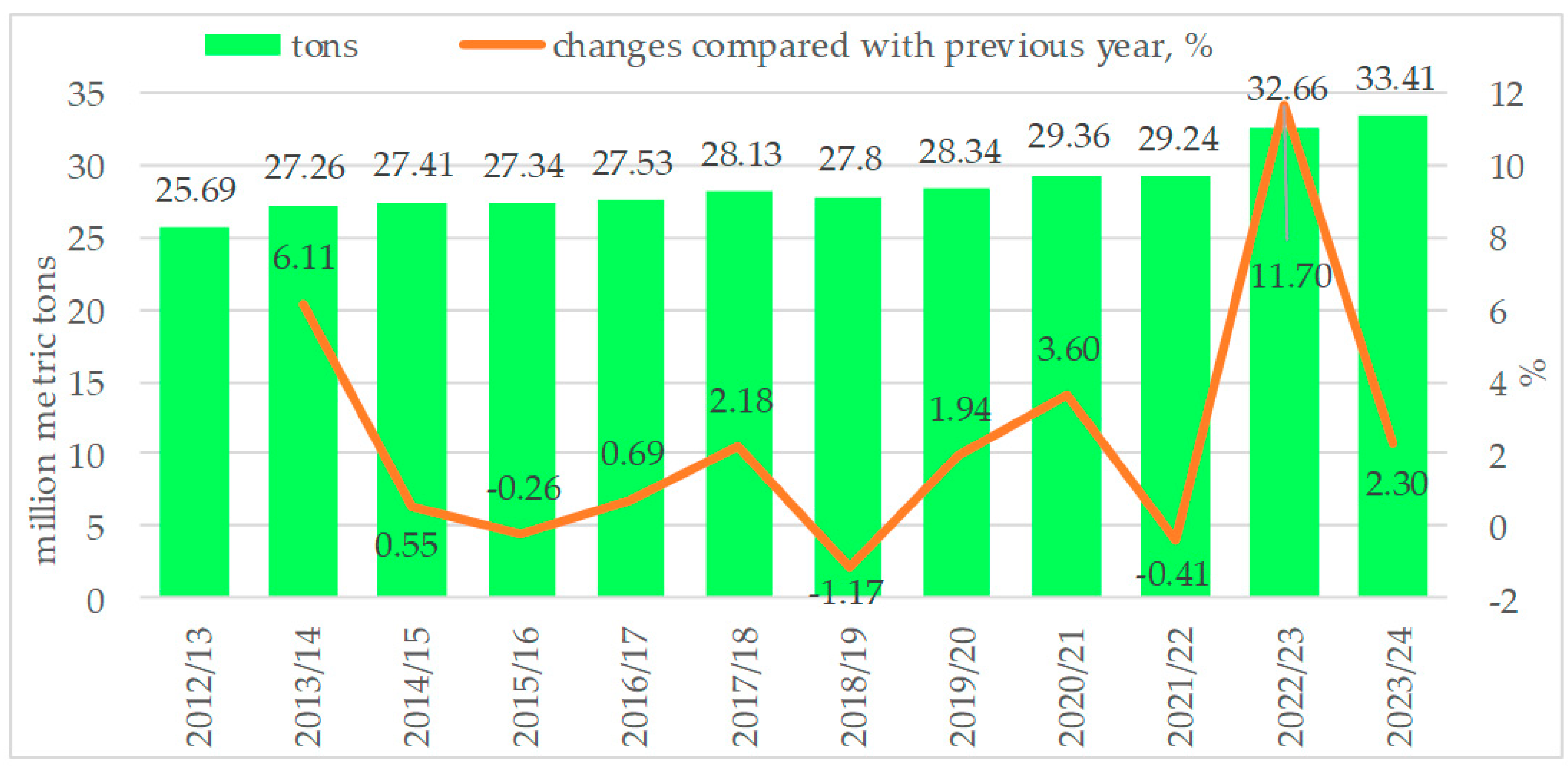
2.2. Sources of Lecithin and a Comparison of Rapeseed, Soybean, and Sunflower Lecithins
3. Materials and Methods
- Technological efficiency;
- Economic viability;
- Environmental sustainability and technological benefits;
- Market potential and competitiveness;
- Legal and quality aspects;
- Investment potential and return prospects;
- Product diversity and by-products;
- Professional profile.
4. Results
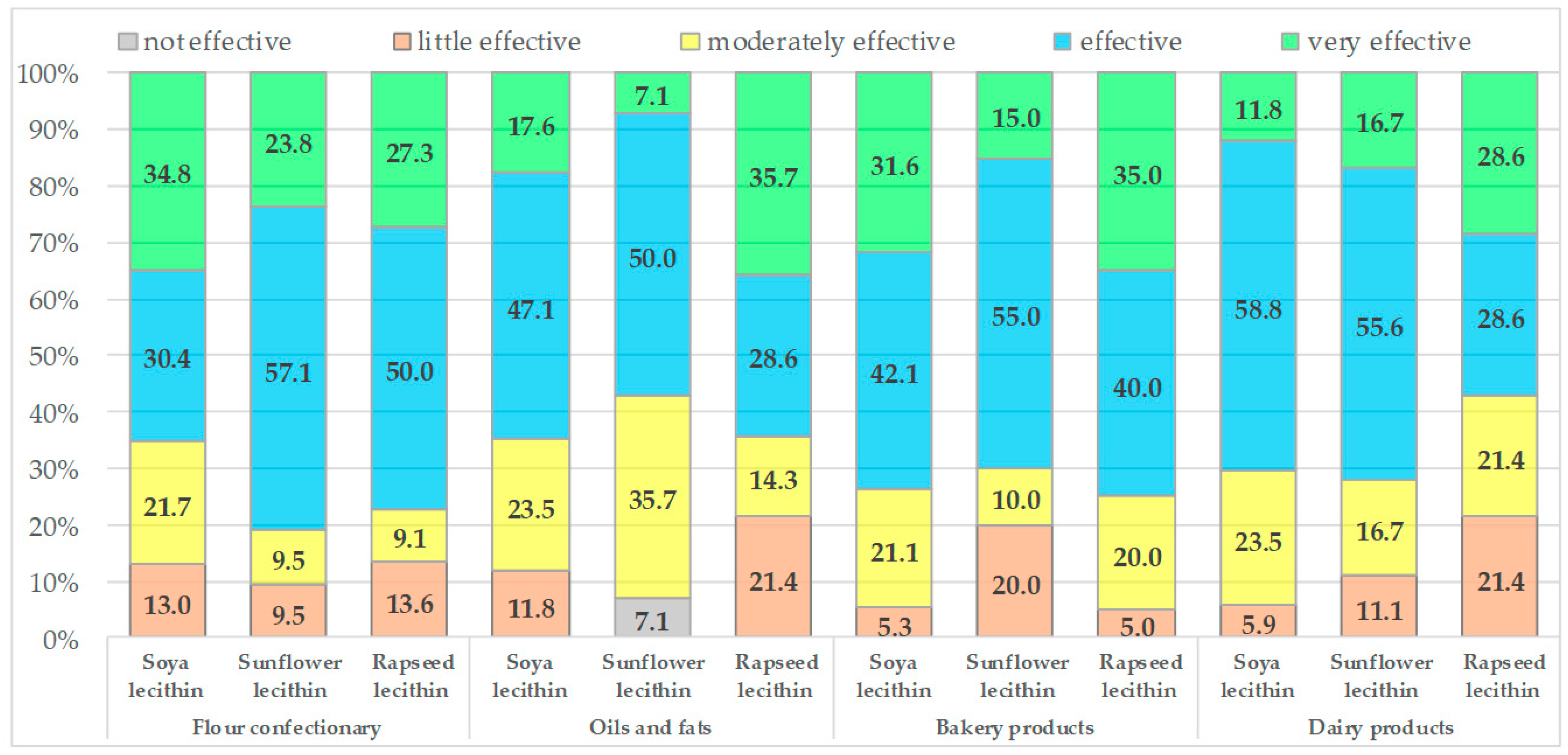
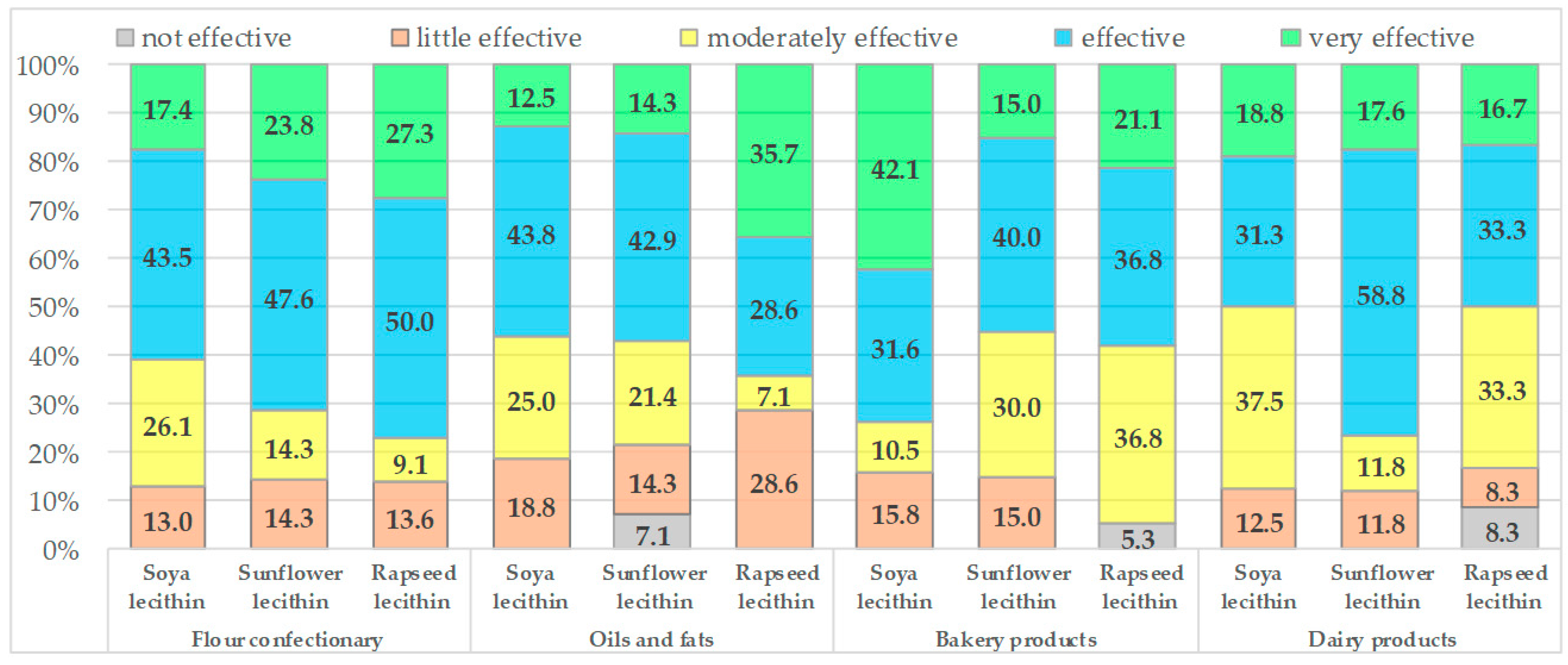
4.1. Assessment of the Technological Properties of Lecithin for Food Production
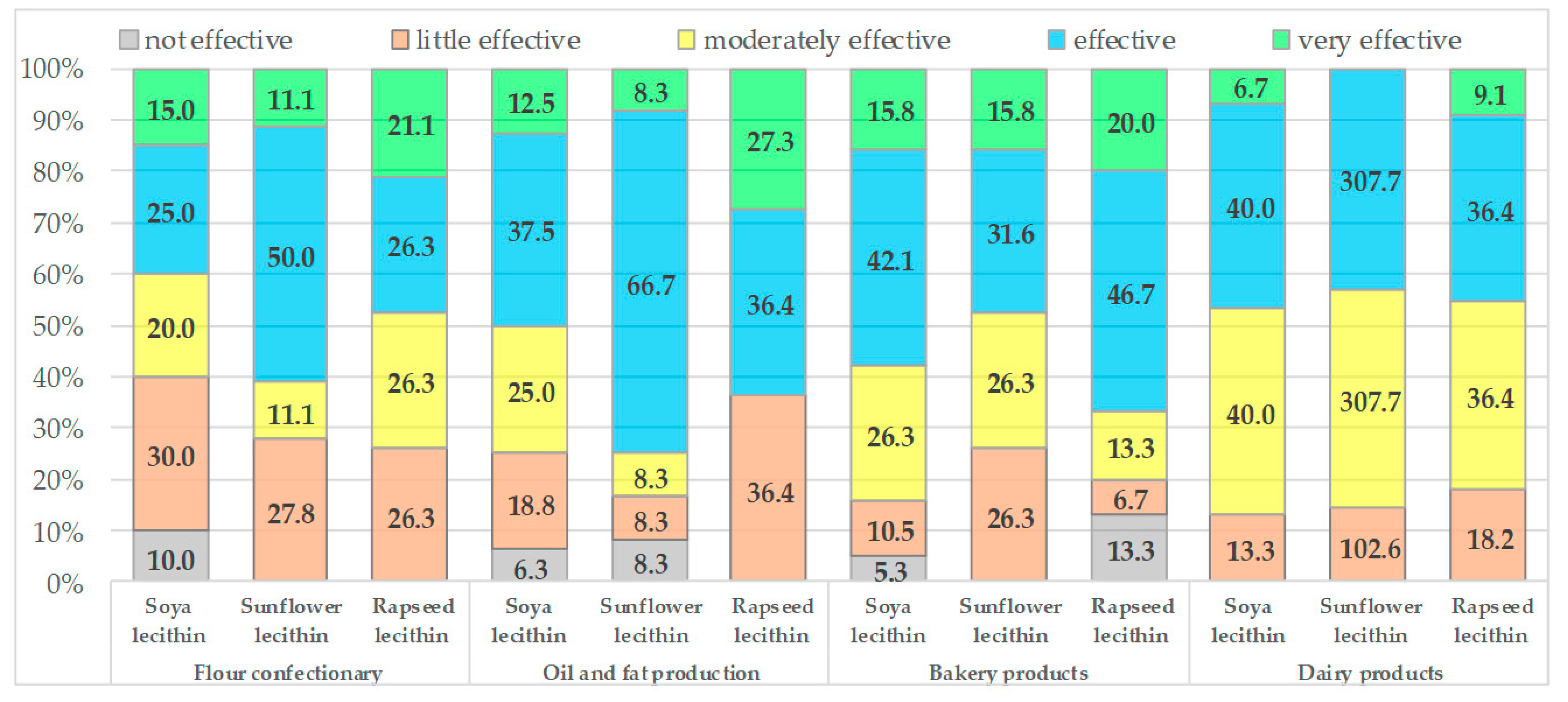
4.2. Texture Improvement, Stabilization, and Other Technological Impacts for Food Production
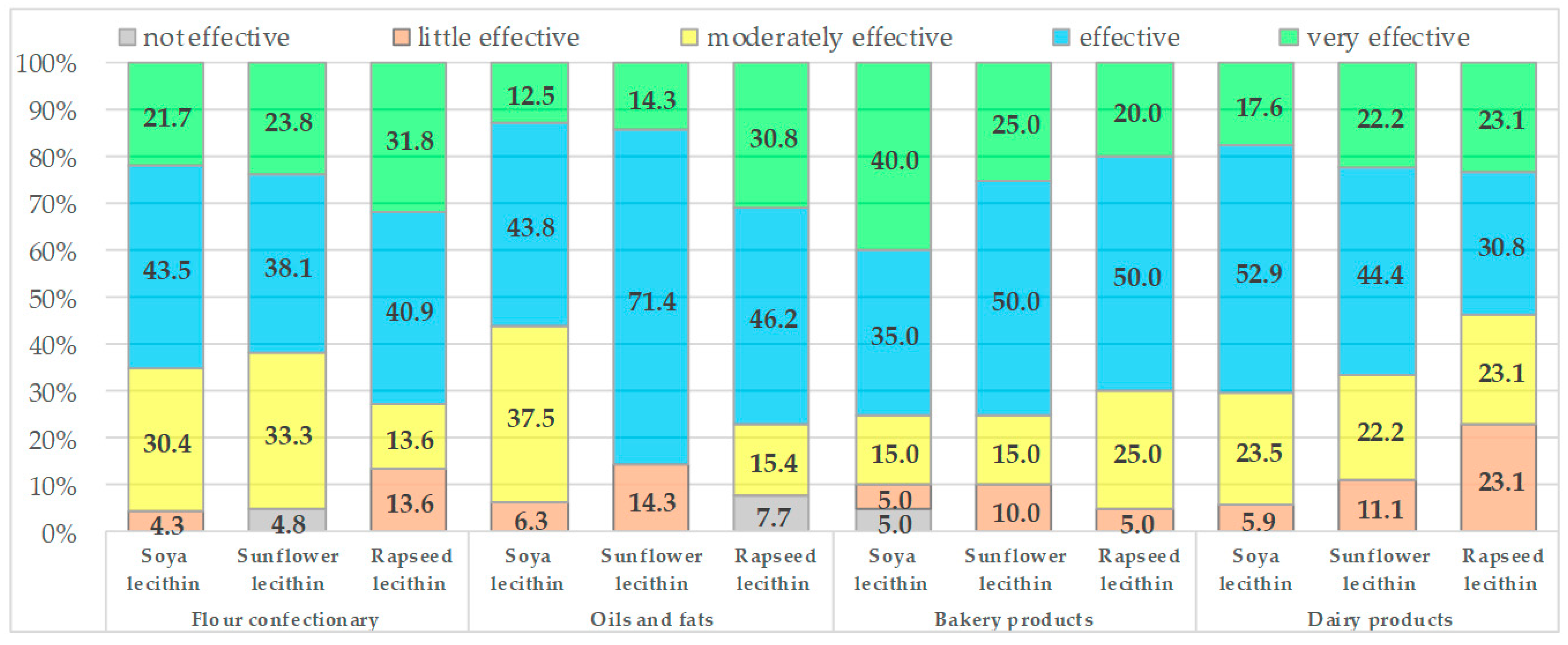
4.3. Overall Ratings of the Suitability of Lecithin for Food Production
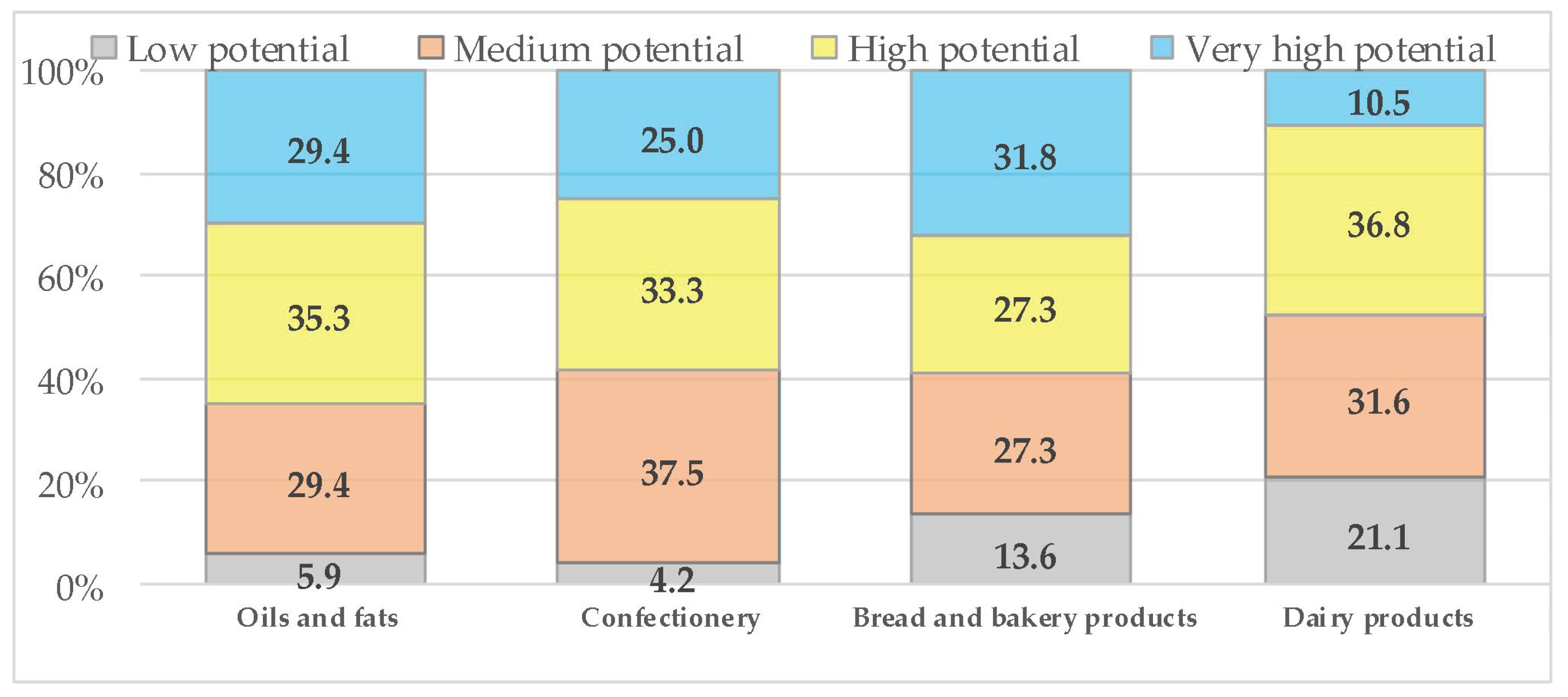
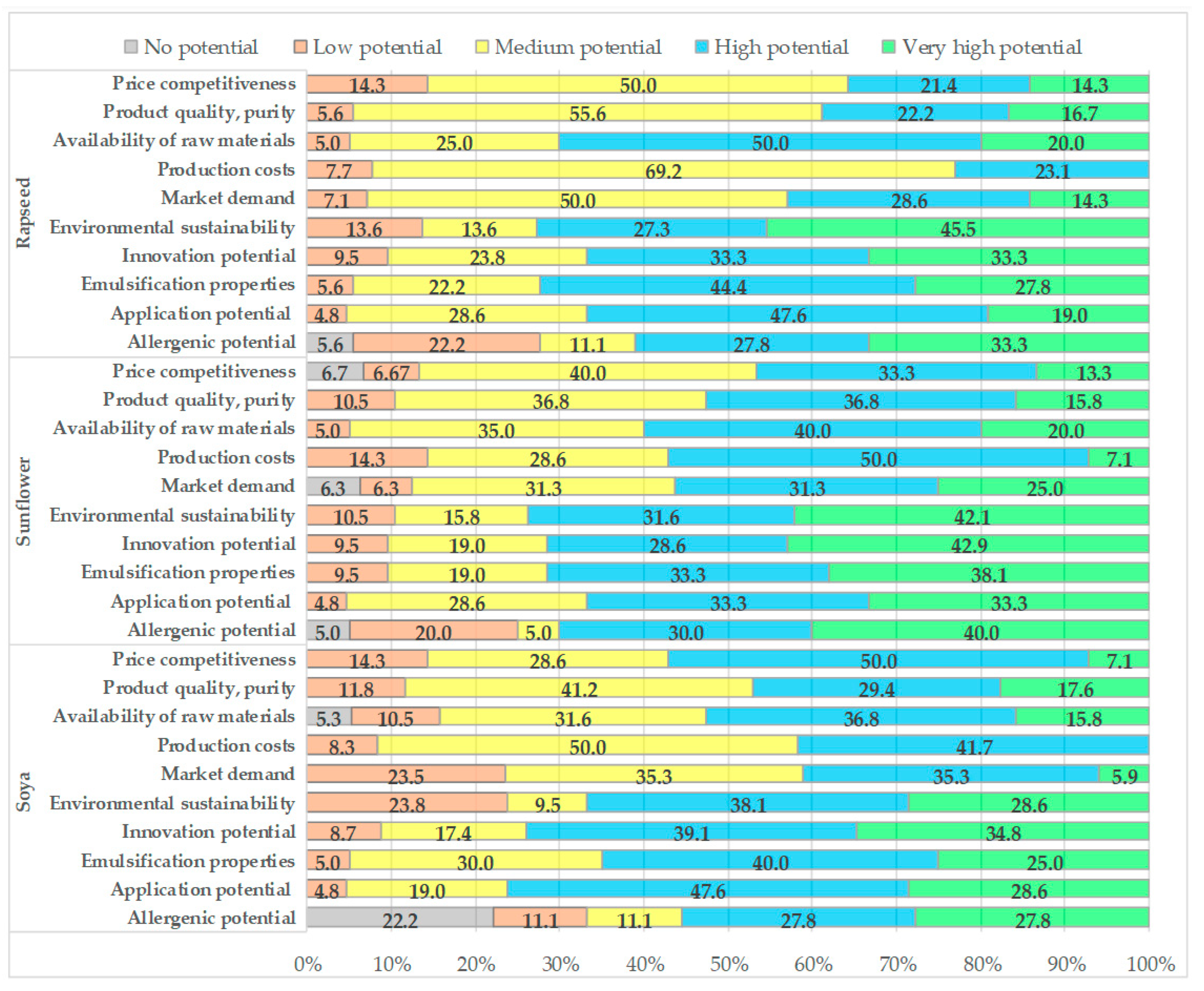
4.4. Rapeseed Lecithin Potential for Food Production
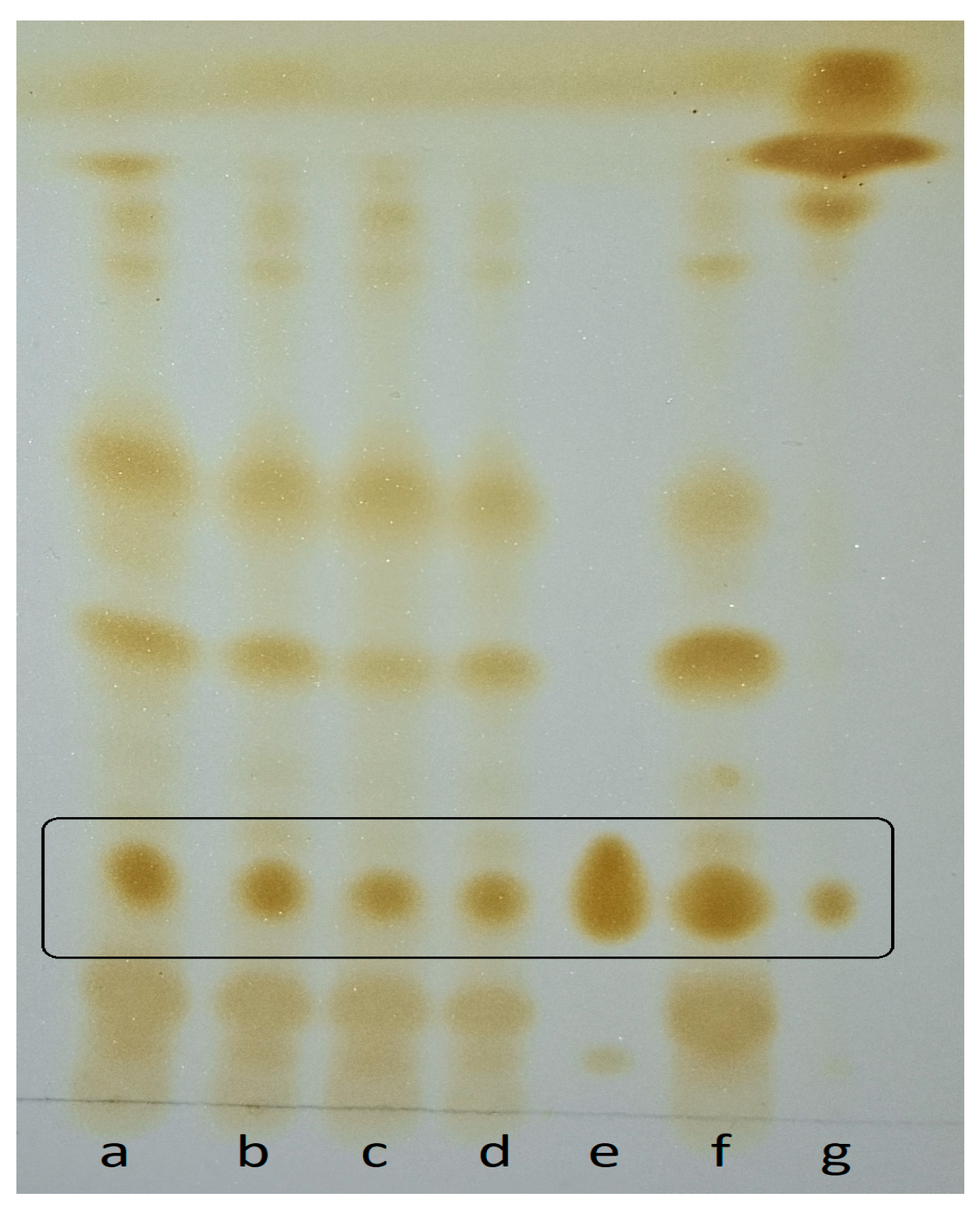
4.5. Extraction of Phospholipids from Rapeseed Soapstock
5. Discussion
5.1. Technological Advantages and Potential for the Introduction of Rapeseed Lecithin into the Food Production Industry
5.2. Functional Impacts of Lecithin on Food Production and Interpretation of the Results of Extracting Rapeseed Lecithin
- Rapeseed lecithin is highly rated for the production of bread (emulsifying ability, other technological impacts) and flour confectionery (texture improvement, stabilization);
- Soybean lecithin is especially effective for the production of oils and fats (emulsification) and dairy products (texture improvement);
- Sunflower lecithin was given the highest ratings for the production of dairy products and flour confectionery (emulsification, stabilization, other significant technological impacts).
6. Conclusions
Author Contributions
Funding
Institutional Review Board Statement
Informed Consent Statement
Data Availability Statement
Acknowledgments
Conflicts of Interest
References
- Mohamed, I.A.A.; Shalby, N.; El-Badri, A.M.; Awad-Allah, E.F.A.; Batool, M.; Saleem, M.H.; Wang, Z.; Wen, J.; Ge, X.; Xu, Z.; et al. Multipurpose uses of rapeseed (Brassica napus L.) crop and improvement strategies in China. J. Agric. Food Res. 2025, 20, 101794. [Google Scholar] [CrossRef]
- Statista Research Department. Rapeseed Oil: Global Production Volume 2012/13–2024/25. Statista. 2025. Available online: https://www.statista.com/statistics/613487/rapeseed-oil-production-volume-worldwide/ (accessed on 1 November 2025).
- Galanakis, C.M. Recovery of high added-value components from food wastes: Conventional, emerging technologies and commercialized applications. Trends Food Sci. Technol. 2012, 26, 68–87. [Google Scholar] [CrossRef]
- McClements, D.J. Food Emulsions: Principles, Practices, and Techniques, 3rd ed.; CRC Press: Boca Raton, FL, USA, 2015. [Google Scholar] [CrossRef]
- Krog, N.J.; Sparsø, F.V. Food emulsifiers and their chemical and physical properties. Food Sci. Technol. 1997, 141, 141–188. [Google Scholar]
- Hasenhuettl, G.L.; Hartel, R.W. Food Emulsifiers and Their Applications; Springer: New York, NY, USA, 2008. [Google Scholar]
- Doig, S.D.; Diks, R.M. Toolbox for modification of the lecithin headgroup. Eur. J. Lipid Sci. Technol. 2003, 105, 368–376. [Google Scholar] [CrossRef]
- Arnold, G.; Schuldt, S.; Schneider, Y.; Friedrichs, J.; Babick, F.; Werner, C.; Rohm, H. The impact of lecithin on rheology, sedimentation and particle interactions in oil-based dispersions. Colloids Surf. A 2013, 418, 147–156. [Google Scholar] [CrossRef]
- Lončarević, I.; Pajin, B.; Petrović, J.; Zarić, D.; Sakač, M.; Torbica, A.; Lloyd, D.M.; Omorjan, R. The impact of sunflower and rapeseed lecithin on the rheological properties of spreadable cocoa cream. J. Food Eng. 2016, 171, 67–77. [Google Scholar] [CrossRef]
- Haq, M.; Chun, B.S. Characterization of phospholipids extracted from Atlantic salmon by-product using supercritical CO2 with ethanol as co-solvent. J. Clean. Prod. 2018, 178, 186–195. [Google Scholar] [CrossRef]
- Shurtleff, W.; Aoyagi, A. History of Lecithin and Phospholipids (1850–2016); Soyinfo Center: Lafayette, CA, USA, 2016. [Google Scholar]
- Richter, A.; Bass, L. Exploring the Potential Benefits of Lecithin for Health. Greatist, 2024. Available online: https://greatist.com/health/lecithin-benefits (accessed on 3 November 2025).
- Szuhaj, B.F. Lecithins. In Bailey’s Industrial Oil and Fat Products, 6th ed.; Shahidi, F., Ed.; Wiley: Hoboken, NJ, USA, 2005. [Google Scholar] [CrossRef]
- Gutiérrez-Méndez, N.; Chavez-Garay, D.R.; Leal-Ramos, M.Y. Lecithins: A comprehensive review of their properties and their use in formulating microemulsions. J. Food Biochem. 2022, 46, e14157. [Google Scholar] [CrossRef] [PubMed]
- Xie, M.; Dunford, N.T. Fractionating of canola lecithin from acid degumming and its effect. Food Chem. 2019, 300, 125217. [Google Scholar] [CrossRef] [PubMed]
- van Nieuwenhuyzen, W.; Tomás, M.C. Update on vegetable lecithin and phospholipid technologies. Eur. J. Lipid Sci. Technol. 2008, 110, 472–486. [Google Scholar] [CrossRef]
- Pan, L.G.; Tomás, M.C.; Añón, M.C. Oil-in-water emulsions formulated with sunflower lecithins: Vesicle formation and stability. J. Am. Oil Chem. Soc. 2004, 81, 241–244. [Google Scholar] [CrossRef]
- Barbusiński, K.; Fajkis, S.; Szeląg, B. Optimization of soapstock splitting process to reduce the concentration of impurities in wastewater. J. Clean. Prod. 2021, 280, 124459. [Google Scholar] [CrossRef]
- Echim, C.; Verhé, R.; De Greyt, W.; Stevens, C. Production of biodiesel from side-stream refining products. Energy Environ. Sci. 2009, 2, 1131–1141. [Google Scholar] [CrossRef]
- Jin, B.; Zhu, M.; Fan, P.; Yu, L.-J. Comprehensive utilization of the mixture of oil sediments and soapstocks for producing FAME and phosphatides. Fuel Process. Technol. 2008, 89, 77–82. [Google Scholar] [CrossRef]
- Wanasundara, U.N.; Wanasundara, J.P.D.; Shahidi, F. Novel separation techniques for isolation and purification of fatty acids and oil by-products. In Bailey’s Industrial Oil and Fat Products, 7th ed.; Shahidi, F., Ed.; Wiley: Hoboken, NJ, USA, 2020. [Google Scholar] [CrossRef]
- Alhajj, M.J.; Montero, N.; Yarce, C.J.; Salamanca, C.H. Lecithins from vegetable, land, and marine animal sources and their potential applications for cosmetic, food, and pharmaceutical sectors. Cosmetics 2020, 7, 87. [Google Scholar] [CrossRef]
- American Lecithin Company. Lecithins and Phospholipids: A Simple Guide to Use and Selection; American Lecithin Company: Oxford, CT, USA, 2022; Available online: https://americanlecithin.us/wp-content/uploads/2022/08/ALC-Lecithin-and-Phopholipids-Brochure.pdf (accessed on 3 November 2025).
- Bende, V. Lecithin in the Food Industry. Knowde Periodical. Available online: https://periodical.knowde.com/lecithin-in-the-food-industry/ (accessed on 3 November 2025).
- Bot, F.; Cossuta, D.; O’Mahony, J.A. Inter-relationships between composition, physicochemical properties and functionality of lecithin ingredients. Trends Food Sci. Technol. 2021, 111, 261–270. [Google Scholar] [CrossRef]
- Cargill. Lecithins. Cargill Website. Available online: https://www.cargill.com/food-beverage/na/lecithins (accessed on 3 November 2025).
- Dijkstra, A.J. Introduction to Degumming. AOCS, 2019. Available online: https://www.aocs.org/resource/introduction-to-degumming/ (accessed on 3 November 2025).
- European Commission. Commission Implementing Regulation (EU) 2017/2325 authorising lecithins (liquid), lecithins hydrolysed, and lecithins de-oiled as feed additives. Off. J. Eur. Union 2017, L 333, 17–21. Available online: https://eur-lex.europa.eu/legal-content/EN/TXT/?uri=CELEX:32017R2325 (accessed on 3 November 2025).
- Mortensen, A.; Aguilar, F.; Crebelli, R.; Di Domenico, A.; Frutos, M.J.; Galtier, P.; Gott, D.; Gundert-Remy, U.; Lambré, C.; Leblanc, J.-C.; et al. Re-evaluation of lecithins (E 322) as a food additive. EFSA J. 2017, 15, 4742. [Google Scholar] [CrossRef]
- Volnova, E.R.; Kozyreva, A.S.; Lyashenko, A.E. Various methods for obtaining lecithin from plant and animal raw materials. Molod. Uchenyi 2021, 17, 28–32. Available online: https://moluch.ru/archive/359/80197/ (accessed on 3 November 2025).
- Cabezas, D.M.; Madoery, R.R.; Diehl, B.; Tomás, M.C. Application of enzymatic hydrolysis on sunflower lecithin using a pancreatic PLA2. J. Am. Oil Chem. Soc. 2011, 88, 385–394. [Google Scholar] [CrossRef]
- Chávez-Garay, D.R.; Gutiérrez-Méndez, N.; Sánchez-Ramírez, B.E.; Salmerón, I.; Hernández Ochoa, L.R.; Chávez-Flores, D.; Martínez-Monteagudo, S. Modification of lecithin-based emulsions with phospholipases. CyTA–J. Food 2020, 18, 688–697. [Google Scholar] [CrossRef]
- Madoery, R.; Cabezas, D.M.; Diehl, B.W.K.; Tomás, M.C. Emulsifying properties of different modified sunflower lecithins. J. Am. Oil Chem. Soc. 2012, 89, 355–361. [Google Scholar]
- Morgado, M.A.P.; Cabral, J.M.S.; Prazeres, D.M.F. Phospholipase A2-catalyzed hydrolysis of lecithin in a continuous reversed-micellar membrane bioreactor. J. Am. Oil Chem. Soc. 1996, 73, 337–346. [Google Scholar] [CrossRef]
- Zhao, F.; Li, R.; Liu, Y.; Chen, H. Perspectives on lecithin from egg yolk: Extraction, physicochemical properties, modification, and applications. Front. Nutr. 2023, 9, 1082671. [Google Scholar] [CrossRef]
- Fontoura, A.B.P.; Rico, J.E.; Davis, A.N.; Myers, W.A.; Tate, B.N.; Gervais, R.; McFadden, J.W. Effects of dietary deoiled soy lecithin supplementation on milk production and fatty acid digestibility in Holstein dairy cows. J. Dairy Sci. 2021, 104, 1823–1837. [Google Scholar] [CrossRef]
- USDA AMS. Lecithin—De-Oiled: Handling/Processing (Full Scope Technical Evaluation Report); U.S. Department of Agriculture, Agricultural Marketing Service, National Organic Program, 2023. Available online: https://www.ams.usda.gov/sites/default/files/media/2023Technical_Report_Lecithin_deoiled_Handling.pdf (accessed on 3 November 2025).
- Cherry, J.P.; Gray, M.S.; Jones, L.A. A review of lecithin chemistry and glandless cottonseed as a potential commercial source. J. Am. Oil Chem. Soc. 1981, 58, 903–913. [Google Scholar] [CrossRef]
- Wu, Y.; Wang, T. Soybean lecithin fractionation and functionality. J. Am. Oil Chem. Soc. 2003, 80, 319–326. [Google Scholar] [CrossRef]
- Wu, Y.; Wang, T. Fractionation of crude soybean lecithin with aqueous ethanol. J. Am. Oil Chem. Soc. 2004, 81, 697–704. [Google Scholar] [CrossRef]
- Toker, Ö.S.; Ozonuk, S.; Gunes, R.; Icyer, N.C.; Rasouli, H.P.; Konar, N. Importance of emulsifiers in chocolate industry: Effect on structure, machinability, and quality of intermediate and final products. J. Am. Oil Chem. Soc. 2024, 101, 721–733. [Google Scholar] [CrossRef]
- Lipkin, E.M.; Cohen, M.L.; Hartel, R.W. Microstructure and rheology of chocolate. Annu. Rev. Mater. Res. 2025, 55, 469–489. [Google Scholar] [CrossRef]
- Ahmed, I.B.H.; Hannachi, A.; Haros, C.M. Combined effect of chia flour and soy lecithin incorporation on nutritional and technological quality of fresh bread and during staling. Foods 2020, 9, 446. [Google Scholar] [CrossRef]
- Gómez, M.; del Real, S.; Rosell, C.M.; Ronda, F.; Blanco, C.A.; Caballero, P.A. Functionality of different emulsifiers on the performance of breadmaking and wheat bread quality. Eur. Food Res. Technol. 2004, 219, 145–150. [Google Scholar] [CrossRef]
- Pan, F.G.; Liu, J.; Yang, J.X.; Ren, J.R.; Sun, Y.Y.; Li, P.Z.; Yang, E.Q.; Chen, X.M.; Liu, B.Q. Research progress on the genesis and removal methods of non-hydratable phospholipids from vegetable oils. Grasas Aceites 2024, 75, e543. [Google Scholar] [CrossRef]
- Hasenhuettl, G.L.; Hartel, R.W. Margarines and spreads. In Food Emulsifiers and Their Applications; Hasenhuettl, G.L., Hartel, R.W., Eds.; Chapman & Hall: New York, NY, USA, 1997; pp. 255–280. [Google Scholar]
- Lecital. Margarines—Applications. Lecital Technical Webpage. 2024. Available online: https://lecital.com/applications/margarines/ (accessed on 10 November 2025).
- Nyuydze, C.K. Effect of Soy Lecithin Concentration on Formulating Dairy Emulsions. Master’s Thesis, South Dakota State University, Brookings, SD, USA, 2020. [Google Scholar]
- Diplomata Comercial. Soy Lecithin in Sauces and Dressings: Benefits and Applications. Diplomata Comercial Website. 2025. Available online: https://www.diplomatacomercial.com (accessed on 3 November 2025).
- Topuz, O.K.; Aygün, T.; Alp, A.C.; Yatmaz, H.A.; Torun, M.; Yerlikaya, P. Characterization and emulsifying properties of aquatic lecithins isolated from processing discard of rainbow trout fish and its eggs. Food Chem. 2021, 339, 128103. [Google Scholar] [CrossRef] [PubMed]
- Maxwell, V. What Is Lecithin? And How Is It Made? Food Additives for Health. 2024. Available online: https://foodadditivesforhealth.com/lecithin/ (accessed on 10 November 2025).
- List, G.R. Soybean lecithin: Food, industrial uses, and other applications. In Polar Lipids; Ahmad, M.U., Xu, X., Eds.; Elsevier: Amsterdam, The Netherlands, 2015; pp. 1–33. [Google Scholar] [CrossRef]
- European Commission. Genetically Modified Organisms: Commission Authorises Genetically Modified Maize for Use as Food and Animal Feed. European Commission Website. 2024. Available online: https://food.ec.europa.eu/food-safety-news-0/genetically-modified-organisms-2024-07-02_en (accessed on 3 November 2025).
- European Commission. GMO Legislation (Policy & Labelling Overview). European Commission Website. Available online: https://food.ec.europa.eu/plants/genetically-modified-organisms/gmo-legislation_en (accessed on 3 November 2025).
- FoodNavigator. Non-GM Lecithin Supply Struggling to Keep Up with Demand. FoodNavigator. 4 December 2013. Available online: https://www.foodnavigator.com/Article/2013/12/04/Non-GM-lecithin-supply-struggling-to-keep-up-with-demand (accessed on 5 November 2025).
- FoodNavigator. Clean Label and Non-GMO Behind Cargill’s EU Launch of De-Oiled Rapeseed Lecithin. FoodNavigator, 20 March 2018. Available online: https://www.foodnavigator.com/Article/2018/03/20/Clean-label-and-non-GMO-behind-Cargill-s-EU-launch-of-de-oiled-rapeseed-lecithin (accessed on 5 November 2025).
- Demydova, A.; Panasyuk, S.; Hunko, Y. Sunflower lecithin as an alternative to soy lecithin: Technological approaches to improving its rheological, sensory and functional properties. In Innovative Approaches in Food Processing and Sustainability; Priss, O., Ed.; Scientific Route OÜ: Tallinn, Estonia, 2025; Chapter 11. [Google Scholar] [CrossRef]
- Li, J.; Guo, Z. Identification and quantification of phenolic compounds in rapeseed originated lecithin and antioxidant activity evaluation. LWT 2016, 73, 397–405. [Google Scholar] [CrossRef]
- Eskin, N.A.M. Rapeseed oil/Canola. In Encyclopedia of Food and Health; Elsevier: Oxford, UK, 2016. [Google Scholar] [CrossRef]
- Matthäus, B.; Özcan, M.M.; Al Juhaimi, F. Some rape/canola seed oils: Fatty acid composition and tocopherols. Z. Naturforsch. C 2016, 71, 73–77. [Google Scholar] [CrossRef]
- Knutson, A. What’s the difference between canola and rapeseed oil? The Kitchn. 2022. Available online: https://www.thekitchn.com/whats-the-difference-between-canola-and-rapeseed-206047 (accessed on 14 November 2025).
- Alemán, A.; Pérez-García, S.; Fernández de Palencia, P.; Montero, M.P.; Gómez-Guillén, M.D.C. Physicochemical, antioxidant, and anti-inflammatory properties of rapeseed lecithin liposomes loading a chia (Salvia hispanica L.) seed extract. Antioxidants 2021, 10, 693. [Google Scholar] [CrossRef] [PubMed]
- Persistence Market Research. Canola Lecithin Market. Persistence Market Research. 2024. Available online: https://www.persistencemarketresearch.com/market-research/canola-lecithin-market.asp (accessed on 6 November 2025).
- Bende, V. Sunflower Lecithin in Food Products. Knowde Periodical. Available online: https://periodical.knowde.com/sunflower-lecithin-in-food-products/ (accessed on 6 November 2025).
- Grompone, M. Sunflower oil. In Bailey’s Industrial Oil and Fat Products; Shahidi, F., Ed.; Wiley: Hoboken, NJ, USA, 2005; Volume 2, pp. 655–725. [Google Scholar]
- Guiotto, E.N.; Tomás, M.C.; Diehl, B.W.K. Sunflower lecithin. In Polar Lipids; Ahmad, M.U., Xu, X., Eds.; Elsevier: Amsterdam, The Netherlands, 2015; pp. 57–75. [Google Scholar] [CrossRef]
- Guest, G.; Bunce, A.; Johnson, L. How many interviews are enough? An experiment with data saturation and variability. Field Methods 2006, 18, 59–82. [Google Scholar] [CrossRef]
- Creswell, J.W.; Poth, C.N. Qualitative Inquiry and Research Design: Choosing among Five Approaches, 4th ed.; SAGE Publications: Thousand Oaks, CA, USA, 2018. [Google Scholar]
- Hennink, M.M.; Kaiser, B.N.; Marconi, V.C. Code saturation versus meaning saturation: How many interviews are enough? Qual. Health Res. 2017, 27, 591–608. [Google Scholar] [CrossRef]
- Patton, M.Q. Qualitative Research & Evaluation Methods, 4th ed.; SAGE Publications: Thousand Oaks, CA, USA, 2015. [Google Scholar]
- Dearing, J.W.; Cox, J.G. Diffusion of innovations theory, principles, and practice. Health Aff. 2018, 37, 183–190. [Google Scholar] [CrossRef]
- Matissek, R.; Schnepel, F.M.; Steiner, G. Lebensmittelanalytik: Grundzüge, Methoden, Anwendungen, 2nd ed.; Springer-Lehrbuch: Berlin, Germany, 1992. [Google Scholar]
- Robert, C.; Couëdelo, L.; Vaysse, C.; Michalski, M.-C. Vegetable lecithins: A review of their compositional diversity, impact on lipid metabolism and potential in cardiometabolic disease prevention. Biochimie 2020, 169, 121–132. [Google Scholar] [CrossRef]
- Böhme, B.; Symmank, C.; Rohm, H. Physical and sensory properties of chocolate made with lecithin of different origin. Eur. J. Lipid Sci. Technol. 2016, 118, 1839–1845. [Google Scholar] [CrossRef]
- Azizi, M.H.; Rajabzadeh, N.; Riahi, E. Effect of mono-diglyceride and lecithin on dough rheological characteristics and quality of flat bread. LWT—Food Sci. Technol. 2003, 36, 189–193. [Google Scholar] [CrossRef]
- Garzón, R.; Hernando, I.; Llorca, E.; Rosell, C.M. Understanding the effect of emulsifiers on bread aeration during breadmaking. J. Sci. Food Agric. 2018, 98, 5494–5502. [Google Scholar] [CrossRef]
- McCrae, C.H. Heat stability of milk emulsions: Phospholipid–protein interactions. Int. Dairy J. 1999, 9, 227–231. [Google Scholar] [CrossRef]
- van Nieuwenhuyzen, W.; Szuhaj, B.F. Effects of lecithins and proteins on the stability of emulsions. Fett/Lipid 1998, 100, 282–291. [Google Scholar] [CrossRef]
- Guiotto, E.N.; Capitani, M.I.; Nolasco, S.M.; Tomás, M.C. Stability of oil-in-water emulsions with sunflower (Helianthus annuus L.) and chia (Salvia hispanica L.) by-products. J. Am. Oil Chem. Soc. 2016, 93, 133–143. [Google Scholar] [CrossRef]
- Pan, L.G.; Tomás, M.C.; Añón, M.C. Effect of sunflower lecithins on the stability of water-in-oil and oil-in-water emulsions. J. Surfactants Deterg. 2002, 5, 135–143. [Google Scholar] [CrossRef]
- Cao, Y.; Jiang, L.; Suo, W.; Deng, Y.; Zhang, M.; Dong, S.; Guo, P.; Chen, S.; Li, H. Influence of emulsifiers and enzymes on dough rheological properties and quality characteristics of steamed bread enriched with potato pulp. Food Chem. 2021, 360, 130015. [Google Scholar] [CrossRef]
- Feichtinger, A.; Scholten, E.; Sala, G. Effect of particle size distribution on rheological properties of chocolate. Food Funct. 2020, 11, 9547–9563. [Google Scholar] [CrossRef]
- Krüger, S.; Bürmann, L.; Morlock, G.E. Comparison and characterization of soybean and sunflower lecithins used for chocolate production by high-performance thin-layer chromatography with fluorescence detection and electrospray mass spectrometry. J. Agric. Food Chem. 2015, 63, 2893–2901. [Google Scholar] [CrossRef] [PubMed]
- Schantz, B.; Rohm, H. Influence of lecithin–PGPR blends on the rheological properties of chocolate. LWT—Food Sci. Technol. 2005, 38, 41–45. [Google Scholar] [CrossRef]
- Selmair, P.L.; Koehler, P. Molecular structure and baking performance of individual glycolipid classes from lecithins. J. Agric. Food Chem. 2009, 57, 5597–5609. [Google Scholar] [CrossRef]
- Hammes, M.V.; Englert, A.H.; Noreña, C.P.Z.; Cardozo, N.S.M. Influence of soy lecithin addition on the wettability of buffalo milk powder obtained by spray drying. Powder Technol. 2015, 277, 237–243. [Google Scholar] [CrossRef]
- Xie, M.; Dunford, N.T. Lipid composition and emulsifying properties of canola lecithin from enzymatic degumming. Food Chem. 2017, 218, 159–164. [Google Scholar] [CrossRef] [PubMed]
- Dumont, M.-J.; Narine, S.S. Soapstock and deodorizer distillates from North American vegetable oils: Review on their characterization, extraction and utilization. Food Res. Int. 2007, 40, 957–974. [Google Scholar] [CrossRef]
- Halsey, A.B.; Martin, M.E.; Ruff, M.E.; Jacobs, F.O.; Jacobs, R.L. Sunflower oil is not allergenic to sunflower seed-sensitive patients. J. Allergy Clin. Immunol. 1986, 78, 408–410. [Google Scholar] [CrossRef]
- Puumalainen, T.J.; Puustinen, A.; Poikonen, S.; Turjanmaa, K.; Palosuo, T.; Vaali, K. Proteomic identification of allergenic seed proteins, napin and cruciferin, from cold-pressed rapeseed oils. Food Chem. 2015, 175, 381–385. [Google Scholar] [CrossRef]
- AAK. Lecithin. AAK, 2019. Available online: https://www.aak.com/siteassets/investors/capital-market-day/2019/aak-cmd-2019_lecithin.pdf (accessed on 3 November 2025).






| Type of Lecithin | Production Technology | Changes in Composition and Properties | Technological Effects and Consequences | Sources |
|---|---|---|---|---|
| Standard (fluid/regular) lecithin | Lecithin is produced by hydrating vegetable oils; the separated gums are dried and homogenized with oil to produce a standardized liquid product | Natural mixture of phospholipids with triglycerides; high lipophilicity and solubility in the fat phase | Universal emulsifier and humidifier; it stabilizes dispersions, modulates viscosity and crystallization | [22,23,24,25,26,27,28,29,30] |
| Hydrolyzed lecithin (lysolecithin) | Industrially, enzymatic hydrolysis of phospholipids (usually with phospholipase A2) is applied, controlling the degree of hydrolysis according to the required properties | The proportion of lysophospholipids increases; hydrophilicity and surfactants in the aquatic environment increase; dissolution and dispersion in the aqueous phase are improved | Improved oil–water emulsification and stability; faster humidification, less dustiness | [23,25,26,28,29,30,31,32,33,34,35] |
| De-oiled lecithin | Neutral lipids are selectively extracted from standard lecithin using an organic solvent such as acetone, resulting in a powder or granules with a high content of acetone-insoluble substances | The phospholipid content usually exceeds 95 percent; neutral taste and color; better dispersion in the aquatic environment; more accurate dosing | Suitable as an emulsifier and moisturizing/dispersing agent for dry form; it promotes the formation of instantly soluble products and reduces particle aggregation | [23,25,26,28,29,30,36,37] |
| Fractionated lecithin | Selective fractionation, e.g., in alcohols, extracting phosphatidylcholine or anionic phospholipid-enriched fractions; available as both fat-free and liquid. Enzyme, ultrafiltration, or supercritical CO2 technologies are also applied to purify and concentrate phosphatidylcholine | Altered phospholipid profile; improved emulsibility and stability of suspensions. A high content of bioactive phospholipids is obtained while maintaining naturalness | Increased functional activity according to the fraction; more pronounced inhibition of crystallization and the formation of a finer texture. Suitable for functional foods and nutraceutical products | [23,24,25,26,30,35,38,39,40] |
| Role of the respondent: | |
| Food technologist | 29.4 |
| Food engineer | 11.8 |
| Food chemist | 2.9 |
| Food quality manager | 8.8 |
| Researcher/academic | 23.5 |
| Manager/management representative of a food manufacturing company | 23.5 |
| Work experience (practical/research) in the food production sector: | |
| Less than 1 year | 20.0 |
| 1–3 years | 13.3 |
| 4–7 years | 23.3 |
| More than 7 years | 43.3 |
| Current occupation: | |
| Research (food technology, functionality of ingredients, etc.) | 34.4 |
| Food production—additives (lecithin, emulsifiers, etc.) | 3.1 |
| Food production—baking and flour confectionery | 40.6 |
| Food production—beverages and juices | 9.4 |
| Research and food production at the same time | 12.5 |
| Emulsifying Power | Texture Improvement | Stabilization | Other Technological Properties | |||||||||
| Soya lecithin | Sunflower lecithin | Rapseed lecithin | Soya lecithin | Sunflower lecithin | Rapseed lecithin | Soya lecithin | Sunflower lecithin | Rapseed lecithin | Soya lecithin | Sunflower lecithin | Rapseed lecithin | |
| Flour confectionary | 65.2 | 81.0 | 77.3 | 65.2 | 61.9 | 72.7 | 60.9 | 71.4 | 77.3 | 40.0 | 61.1 | 47.4 |
| Oils and fats | 64.7 | 57.1 | 64.3 | 56.3 | 85.7 | 76.9 | 56.3 | 57.1 | 64.3 | 50.0 | 75.0 | 63.6 |
| Bakery products | 73.7 | 70.0 | 70.0 | 75.0 | 75.0 | 70.0 | 73.7 | 55.0 | 57.9 | 57.9 | 47.4 | 66.7 |
| Dairy products | 70.6 | 72.2 | 57.1 | 70.6 | 66.7 | 53.8 | 50.0 | 76.5 | 50.0 | 46.7 | 61.5 | 45.5 |
 , <50%, very low level, the property is insufficient for the specific application;
  , 50–59%, low level, possible quality or stability issues;
  , 60–69%, medium level, acceptable but not optimal;
  , 70–79%, high level, the property performs well and is technologically suitable;
  , ≥80%, very high level of technological properties, excellent performance for the specific product and lecithin type.
| Soapstock Batch No. | Dry Residue (%) | Soxhlet Extract (%) | Acid Oil (%) | Lecithin (%) | Lecithin Yield from Dry Residue (%) |
|---|---|---|---|---|---|
| 1 | 22.1 | 13.5 | 8.2 | 5.2 | 23.5 |
| 2 | 20.7 | 15.2 | 11.9 | 3.2 | 15.5 |
| 3 | 43.6 | 39.9 | 36.3 | 2.7 | 6.2 |
| 4 | 15.5 | 13.1 | 11.2 | 1.4 | 9.0 |
Disclaimer/Publisher’s Note: The statements, opinions and data contained in all publications are solely those of the individual author(s) and contributor(s) and not of MDPI and/or the editor(s). MDPI and/or the editor(s) disclaim responsibility for any injury to people or property resulting from any ideas, methods, instructions or products referred to in the content. |
© 2026 by the authors. Licensee MDPI, Basel, Switzerland. This article is an open access article distributed under the terms and conditions of the Creative Commons Attribution (CC BY) license.
Share and Cite
Zvaigzne, A.; Laipniece, L.; Litavniece, L.; Lazdovica, K.; Wieda, N.; Kotane, I.; Silicka, I.; Sile, E.; Gaile, A.; Lonska, J. Assessment of Rapeseed Soapstock as a Potential Source of Lecithin for Food Industry Applications. Sustainability 2026, 18, 1456. https://doi.org/10.3390/su18031456
Zvaigzne A, Laipniece L, Litavniece L, Lazdovica K, Wieda N, Kotane I, Silicka I, Sile E, Gaile A, Lonska J. Assessment of Rapeseed Soapstock as a Potential Source of Lecithin for Food Industry Applications. Sustainability. 2026; 18(3):1456. https://doi.org/10.3390/su18031456
Chicago/Turabian StyleZvaigzne, Anda, Lauma Laipniece, Lienite Litavniece, Kristine Lazdovica, Nina Wieda, Inta Kotane, Inese Silicka, Elina Sile, Anastasija Gaile, and Jelena Lonska. 2026. "Assessment of Rapeseed Soapstock as a Potential Source of Lecithin for Food Industry Applications" Sustainability 18, no. 3: 1456. https://doi.org/10.3390/su18031456
APA StyleZvaigzne, A., Laipniece, L., Litavniece, L., Lazdovica, K., Wieda, N., Kotane, I., Silicka, I., Sile, E., Gaile, A., & Lonska, J. (2026). Assessment of Rapeseed Soapstock as a Potential Source of Lecithin for Food Industry Applications. Sustainability, 18(3), 1456. https://doi.org/10.3390/su18031456