Article

Environmental and Economic Analysis of Repurposed Wind Turbine Blades for Recreational Trail Bridges †

by
Aeva G. Silverman
1,
Gabriel P. Ackall
2,
G. Eric Johansen
3,
T. Russell Gentry
4 and
Lawrence C. Bank
4,*
1
Department of Chemical Engineering, University of Michigan, Ann Arbor, MI 48109, USA
2
Department of Civil and Environmental Engineering, Virginia Polytechnic Institute and State University, Blacksburg, VA 24061, USA
3
Fiberglass Trusses, Inc., Philadelphia, PA 19147, USA
4
Department of Architecture, Georgia Institute of Technology, Atlanta, GA 30332, USA
*
Author to whom correspondence should be addressed.
This paper is a revised and expanded version of a “Comparative techno-economic and life-cycle analysis (TEA/LCA) of pedestrian trail bridges made from pultruded FRP, steel, timber and de-commissioned wind turbine blades,” presented at the 12th International Conference on Fiber-Reinforced Polymer (FRP) Composites in Civil Engineering, Lisbon, Portugal, 14–16 July 2025.
Sustainability 2026, 18(3), 1439; https://doi.org/10.3390/su18031439
Submission received: 19 November 2025 / Revised: 20 January 2026 / Accepted: 21 January 2026 / Published: 1 February 2026
(This article belongs to the Section Sustainable Engineering and Science)

Abstract

A two-parameter environmental (measured in CO2eq—CO2 is used in this paper to represent the carbon dioxide molecule as opposed to the chemical formula CO2 as is common practice in LCA studies; CO2eq is an abbreviation for CO2 equivalent and may be written as CO2e in the literature) and economic (measured in USD) analysis using life cycle analysis (LCA) and techno-economic analysis (TEA) of repurposed wind turbine blades for structural use in recreational trail bridges (e.g., on hiking trails and golf courses) is described in this paper. The US Department of Energy’s TECHTEST TEA/LCA software (v1.0) platform was used to compare three commercially available trail bridges (a steel truss bridge, an FRP pultruded truss bridge, and a glulam stringer bridge) with a bridge made from retired wind turbine blades (known as a BladeBridge). All bridges had a 50 ft (15.24 m) long by 6 ft (1.83 m) wide deck and were designed for a 90 psf (4.3 kN/m2) live load. The LCA functional unit was the assembled bridge, which was made ready to be shipped from the fabricator. Cradle-to-gate (A1–A3, i.e., raw material extraction, transportation, and manufacturing) system boundaries were used. For the BladeBridge, no embodied carbon was attributed to the blade itself (cut-off system allocation). For the TEA, a USD 660/tonne credit was attributed to the blade. The raw materials for each bridge were determined from detailed construction documents. Manufacturing and transportation energy were determined based on the equipment used for fabrication and geographical location. Direct labor for fabrication was calculated based on a weighted average of salaries taken from the US Bureau of Labor Statistics. The results indicate that raw materials had the biggest effect on embodied CO2eq and that labor had the largest impact on cost for all bridges. The results indicate that the BladeBridge is significantly less expensive to produce and releases less CO2eq into the environment (less Global Warming Potential (GWP)) than the three commercially available bridges. Additional TEA metrics for the BladeBridge, including Technology Readiness Level (TRL) and future market potential, were also evaluated and found to be positive for the BladeBridge technology.

1. Introduction

Many wind turbines have reached the end of their effective service lives and are being dismantled. In total, 85% of the components of a wind turbine are made of conventional materials (steel towers, elevators, ladders, platforms and turbines, reinforced concrete foundations, and copper and aluminum wiring) and can be recycled in well-known, commercially available, processes. The remaining 15% of the turbine (the blades, nose cone, and the nacelle that houses the turbine generator) are mainly FRP materials, primarily or exclusively glass fiber-reinforced epoxy or polyester materials, and FRP sandwich structures with polymer foam or balsa wood cores and polymeric adhesives. These materials cannot be easily recycled and are typically sent to landfills or incinerated. Starting around 2010, when large numbers of wind turbines started coming out of service, in the US and elsewhere, attention began to be focused on the sustainability and circularity of the end of life of the FRP components of wind turbines. Landfilling and incineration options have been found to be unsustainable and environmentally harmful [1,2]. A number of alternative downcycling solutions have been proposed (e.g., cement co-processing, grinding into filler material, pyrolysis and solvolysis for fiber reclamation and resin recovery, and others) Upcycling solutions include full turbine or blade reuse in different locations or repurposing of the FRP parts for other uses (e.g., bridge girders, poles, floating structures, furniture) [3,4,5].
In order to evaluate the sustainability of the repurposing of decommissioned FRP wind turbine blades, they should be compared to existing products using identical life cycle assessment (LCA) and techno-economic analysis (TEA) methodologies. One such method that has been developed by the US Department of Energy is “The Techno-Economic Energy & Carbon Heuristic Tool for Early-State Technologies v1.0 (TECHTEST)” [6]. As stated on the DOE website, “TECHTEST aids users in estimating potential energy, carbon, and cost impacts of a new technology in a streamlined spreadsheet tool that integrates life cycle assessment (LCA) and techno-economic analysis (TEA) methods. TECHTEST utilizes user data and pre-prepared data tables derived from publicly accessible information to create cost, energy, and emissions profiles for a technology throughout its life cycle, covering all stages from cradle to grave.”
In this paper, the TECHTEST tool was used to compare four recreational trail bridges: (1) an FRP pultruded truss bridge, (2) a steel truss bridge, (3) a glulam timber stringer bridge, and (4) a BladeBridge. Only the production (or fabrication) stages (A1–A3: raw material extraction, transportation, and manufacturing) of the life cycle were considered for the bridges in this paper. The BladeBridge used portions of two large wind blades as the bridge’s primary load-carrying girders. The bridges were all designed to be 50 ft (15.24 m) long by 6 ft (1.83 m) wide and designed to carry a 90 psf (4.3 kN/m2) live load for a 60-year design life (which is the US standard for pedestrian bridges [7]). The 50 ft (15.2 m) length was chosen to enable standard non-permitted truck transportation of the blade segment and is the typical length decommissioned blades are cut to for transportation when their reuse as blades is not considered. For steel and FRP bridges, it is standard practice to splice bridges longer than 50 ft (15.2 m). Glulam timber bridges are seldom used over 50 ft (15.2 m) in length and have a maximum permitted length of 60 ft (18.3 m) (USDA [8,9]).
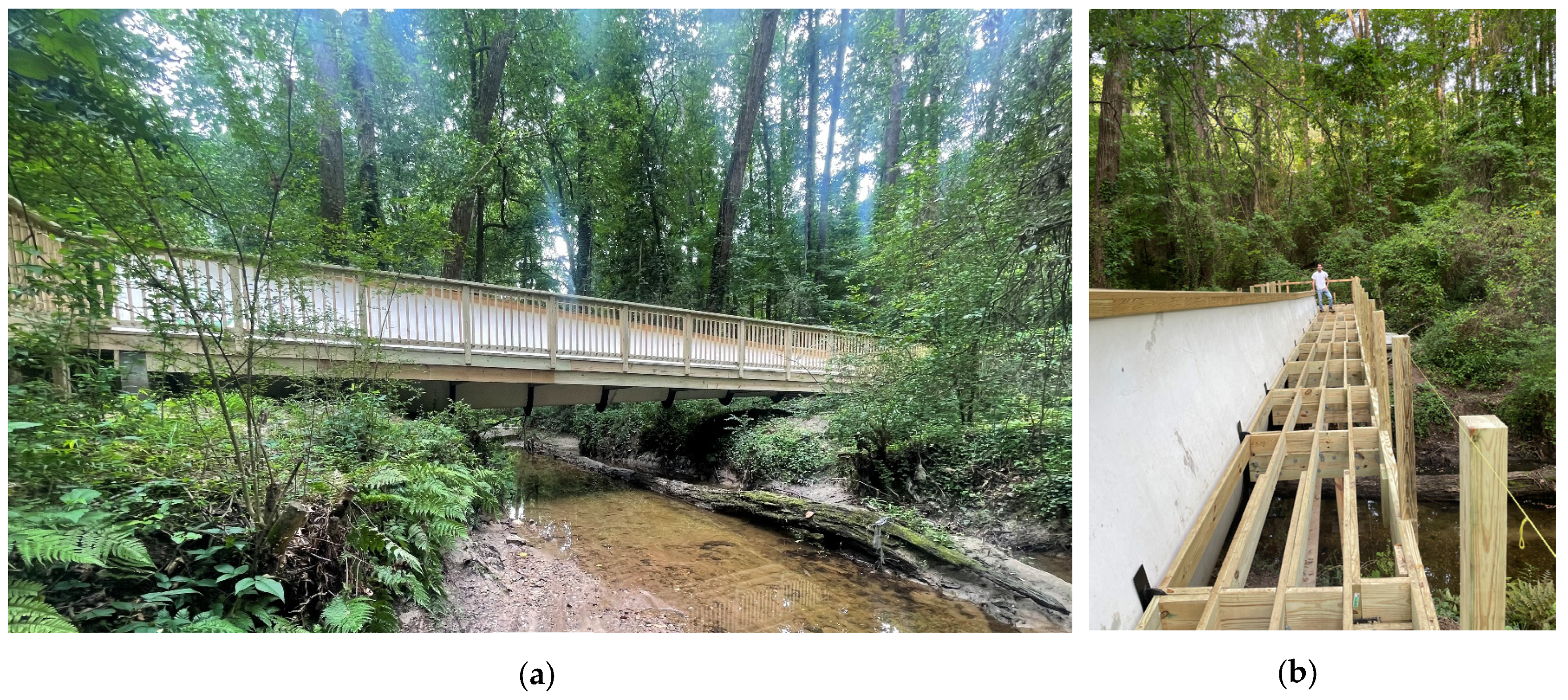
The Re-Wind Network [10] has spent the past 9 years designing, analyzing, testing, and building bridges made with wind turbine blades and has demonstrated constructability, produced construction documents, developed connection details, and proven the load-carrying capacity of such bridges. In January 2022, a BladeBridge was constructed on a greenway in Cork, Ireland (designed for pedestrians, cyclists, and a 12-tonne maintenance vehicle), and in May 2022, a test BladeBridge was constructed in Draperstown, Northern Ireland [11,12,13,14]. A group from the Rzeszow University of Technology in Poland and a waste management company, Anmet (Poland), also conducted research on bridges made from wind blades and installed the first bridge made from turbine blades in Poland in October 2021 [15,16,17]. The blade segment was tested in a laboratory prior to the construction of the bridge. A BladeBridge can also be spliced to achieve longer lengths, as seen in this bridge. In June 2025, a BladeBridge using a single blade segment with two cantilevered pedestrian decks was constructed in a park in Atlanta, GA, USA [18]. A photograph of this BladeBridge is shown in Figure 1 below. It is evident from the bridges already in service in Poland, Ireland, and the US that the construction of bridges using wind blades is technologically feasible.
Detailed cost data were provided in [19] for two BladeBridges constructed in Ireland and the UK—one by a commercial steel distribution and fabricating company (AR Brownlow Ltd., Cork, Ireland) and one by the in-house staff of a university (Queen’s University Belfast). The paper shows fabrication and construction details for BladeBridges of the type analyzed in this paper and demonstrates that such bridges are easy to fabricate using standard fabrication and construction technologies. A sustainability analysis of the repurposing of wind turbine blades is reported in [20]. A variety of end products were considered (including a BladeBridge). It was concluded that the substitution of blade segments for conventional steel products was environmentally beneficial but depended on transportation distance. The detailed full life cycle sustainability and life cycle cost (LCC) analysis of an innovative FRP pedestrian bridge was reported in [21]. It was demonstrated that the FRP bridge showed economic and environmental benefits over a steel bridge, although the end-of-life alternatives were unclear given the uncertainty of EOL options for FRP materials. A detailed comparison of the life cycle impacts (CO2eq) of three 8 m long girder-type bridges (FRP, RC, and steel) was reported in [22]. An early version of this work, comparing the four bridge types listed below, is described in [23].
The primary purpose of this paper is to determine whether a BladeBridge can be cost-competitive and have lower cradle-to-gate CO2eq than common conventional trail bridge alternatives when evaluated using a unified TEA plus LCA framework.

2. Design Codes and Standards for the Four Bridge Types

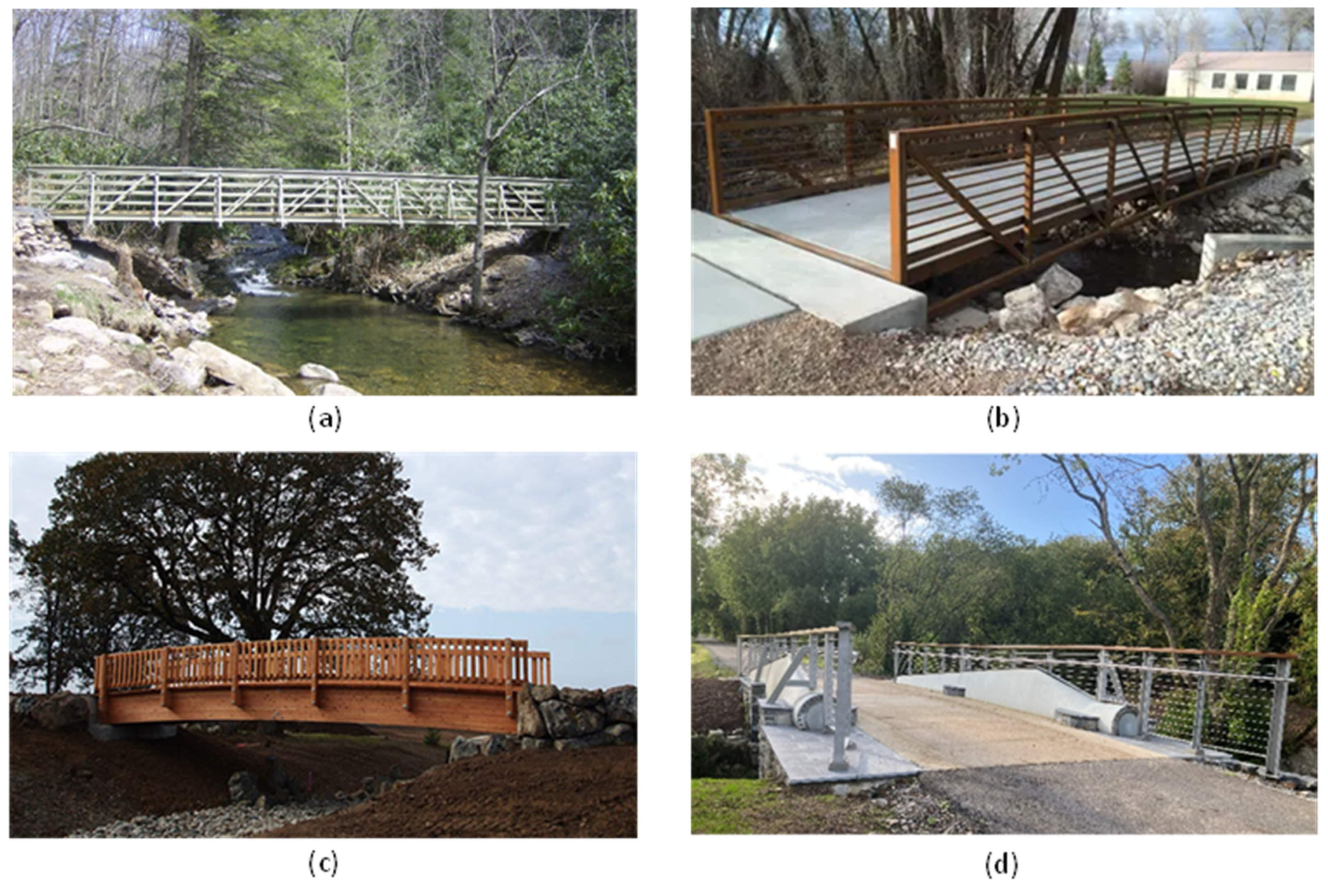
The four different bridge types compared in this paper are shown in Figure 2. Design codes and standards used to design and estimate quantities for the four bridge types are described further in this section. All bridges had a 50 ft (15.24 m) long by 6 ft (1.83 m) wide deck and were designed for a 90 psf (4.3 kN/m2) pedestrian live load. Snow load was not considered, as it is typically less than the pedestrian live load except in very remote mountainous areas where these prefabricated bridges would generally not be used [7]. They were all designed for a 60-year service life. Since the bridge deck was 6 ft (1.83 m) wide, it was not designed for vehicular loading. Vehicular load for trail bridges between 7 ft (2.13 m) and 10 ft (3.1 m) is for a 5-ton (10,000 lbs, 4.54-tonne, 44.5 kN) vehicle [9]. Most narrow golf course bridges are designed for a golf cart (and 2–4 passengers) and a small ATV maintenance vehicle weighing approximately 2000 lbs (8.9 kN). All bridges discussed in this paper can be designed for vehicular loads if necessary.

2.1. FRP Pultruded Truss Bridge

The FRP truss bridge (Figure S1, Supplementary Materials) was designed by ET Techtonics Inc., Philadelphia, PA, USA according to AASHTO design specifications for FRP recreational bridges [24]. The timber decking was designed according to the National Design Specification (NDS) for Wood Construction [25].
All four bridges considered in this paper were designed with the same Southern Yellow Pine (SYP) 3 × 12 dimensional lumber (actual dimensions 11.25 (28.6 cm) by 2.5 in (6.4 cm)) timber decking planks (not described again for the other three bridge types). Only the connection hardware and deck sub-structure (stringers and floor beams) used were different. These differences are included in the TEA and LCA analyses.

2.2. Steel Truss Bridge

The steel truss bridge (Figure S2, Supplementary Materials) was designed in house at Georgia Tech following steel recreational bridge common industry practice [7,26] and in accordance with the US Forest Service Prefabricated Steel Bridge plans and specifications [8,9]. It was designed using two 5 ft (1.52 m) deep trusses at each side as the main structural supports. The steel used was A709 Grade 50 Corten weathering steel, a steel type commonly used in outdoor recreational bridges for its corrosion resistance properties. Hollow structural section tubing and C-channels were used for all the structural components of the truss. As noted previously, the steel truss bridge was designed for a 90 psf (4.3 kN/m2) live load but not for snow load or for a 5-ton (44.5 kN) H-5 vehicle [9].

2.3. Glulam Stringer Bridge

A standard glulam stringer bridge (Figure S3, Supplementary Materials) with dimensions provided by the US Forest Service USDA standard trail bridge plans [8] was used. No design calculations were required.

2.4. BladeBridge

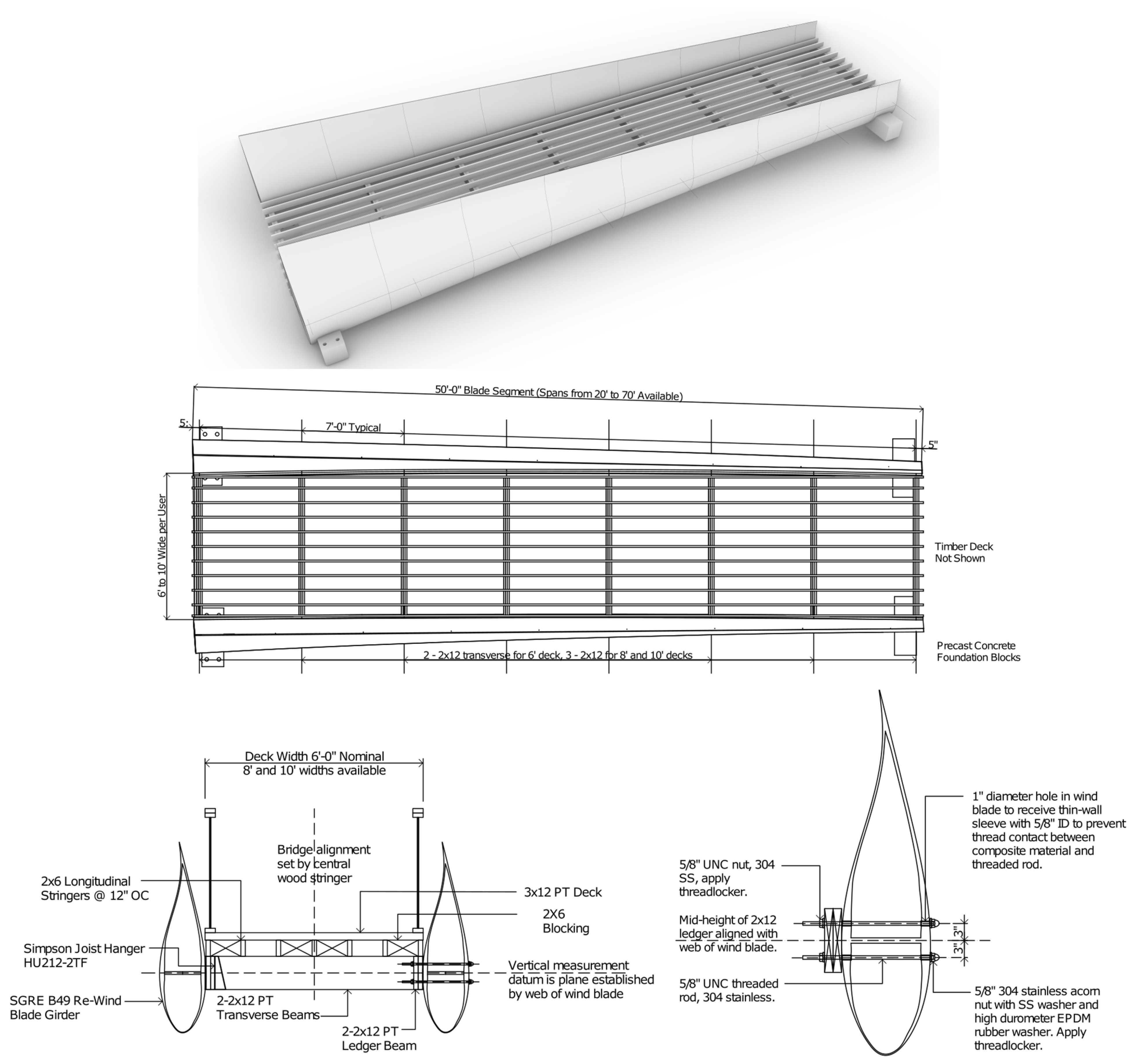
The BladeBridge (Figure 3) was designed according to the AASHTO bridge code [7]. Wind turbine blade sections from 49 m (160.7 ft) Siemens Gamesa Renewable Energy (SGRE) wind turbine blades were used as the main structural girders for this bridge. A 16 m (52.5 ft) section from the mid-section of the 49 m blade was chosen to address strength and deflection criteria, as well as minimizing the size for architectural aesthetics and constructability reasons. A detailed structural and finite-element analysis of this blade segment is presented in [18] and of dual-girder BladeBridges in [13,14]. The decking system, transverse deck supports, and guardrails were made from glulam and sawn lumber members. The decking system was connected to sawn lumber ledger beams using joist hangers that were bolted to the wind turbine blades using steel through bolts.

3. Results for LCA and TEA for the Four Bridge Types

LCA and TEA Analysis Boundaries

The functional unit for the analyses was a fully fabricated dual-girder bridge (ready to ship by truck) with a 50 ft (15.24 m) long by 6 ft (1.83 m) wide timber bridge deck designed for a 90 psf (4.3 kN/m2) live load, a 60 yr service life, and installed in the continental US.
A cradle-to-gate TEA/LCA was performed for all the bridges. The material extraction is the “cradle”, and the “gate” is the fabricated bridge in the shop, ready to ship (A1–A3 system boundaries). The use phases (field installation, in-service maintenance, or repair) and end-of-life phases were not considered in the TEA/LCA for the following reasons:
1.
The field installation (on-site construction) for all four bridge types is similar. The bridge is loaded onto a truck and transported to the site and then lifted onto preinstalled concrete abutments using a crane. A timber deck is often installed in the field (see Figure 1b). On rare occasions, an FRP pultruded bridge is assembled on site.
2.
In-service maintenance and repair are also expected to be similar for all four bridge types—and mostly dependent on the timber decking materials used and not on the superstructures—although it is arguably less for the FRP pultruded truss bridge and the BladeBridge due to their superior corrosion resistance. It is well documented that steel and timber recreational bridges of this type have been in service for over 60 years with regular maintenance. FRP pultruded structures have been in service for over 50 years with minor maintenance [27].
3.
FRP wind turbine blades have been in service since the 1980s. The end-of-life phases were not considered in this study since end-of-life solutions for wind turbine blades are not yet fully understood and are the subject of current research efforts [1,2,3,4,5]. An International Energy Agency (IEA) task group (IEA Task 45) is currently developing guidelines for end-of-life technologies for wind blades.
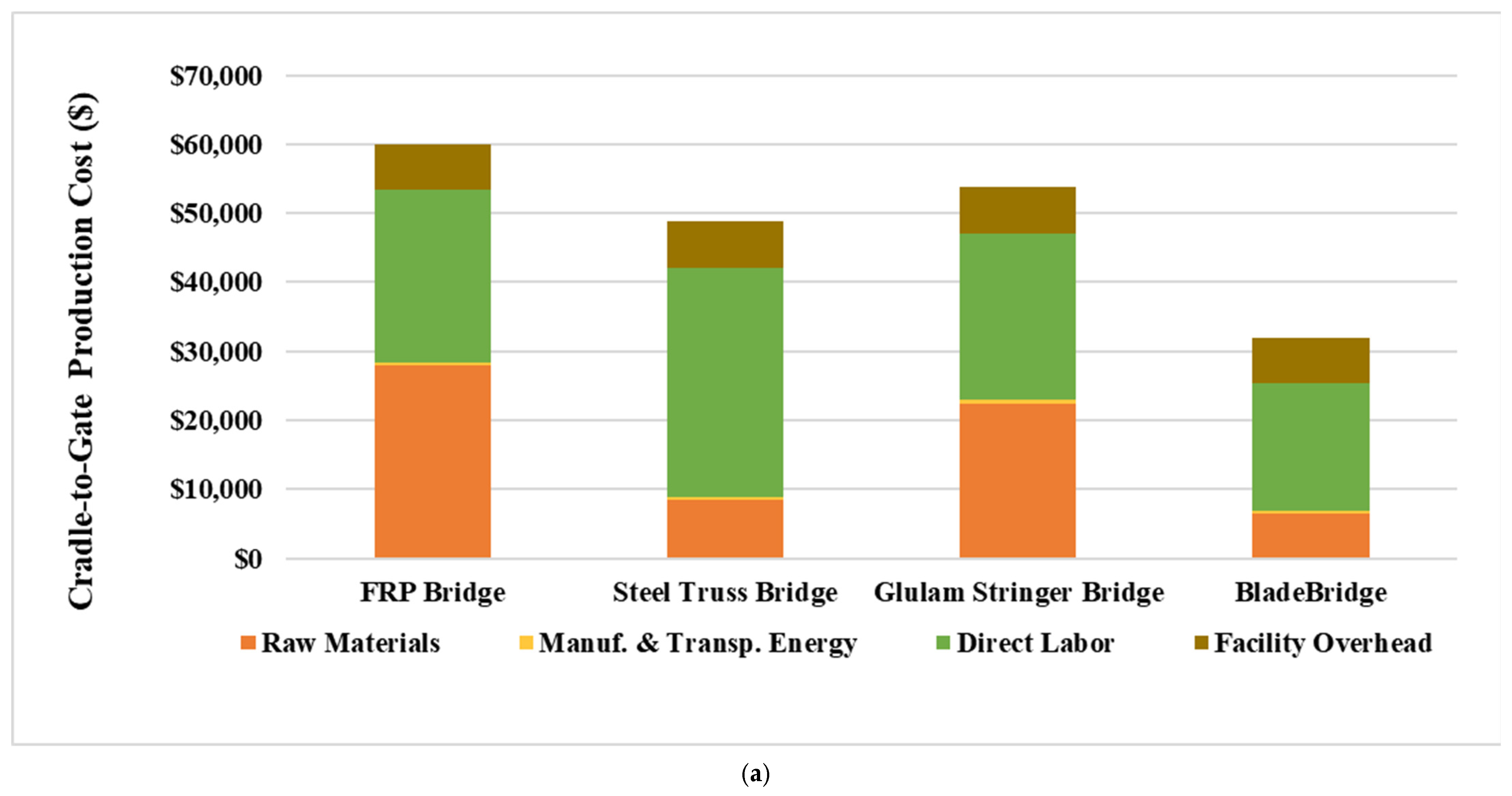
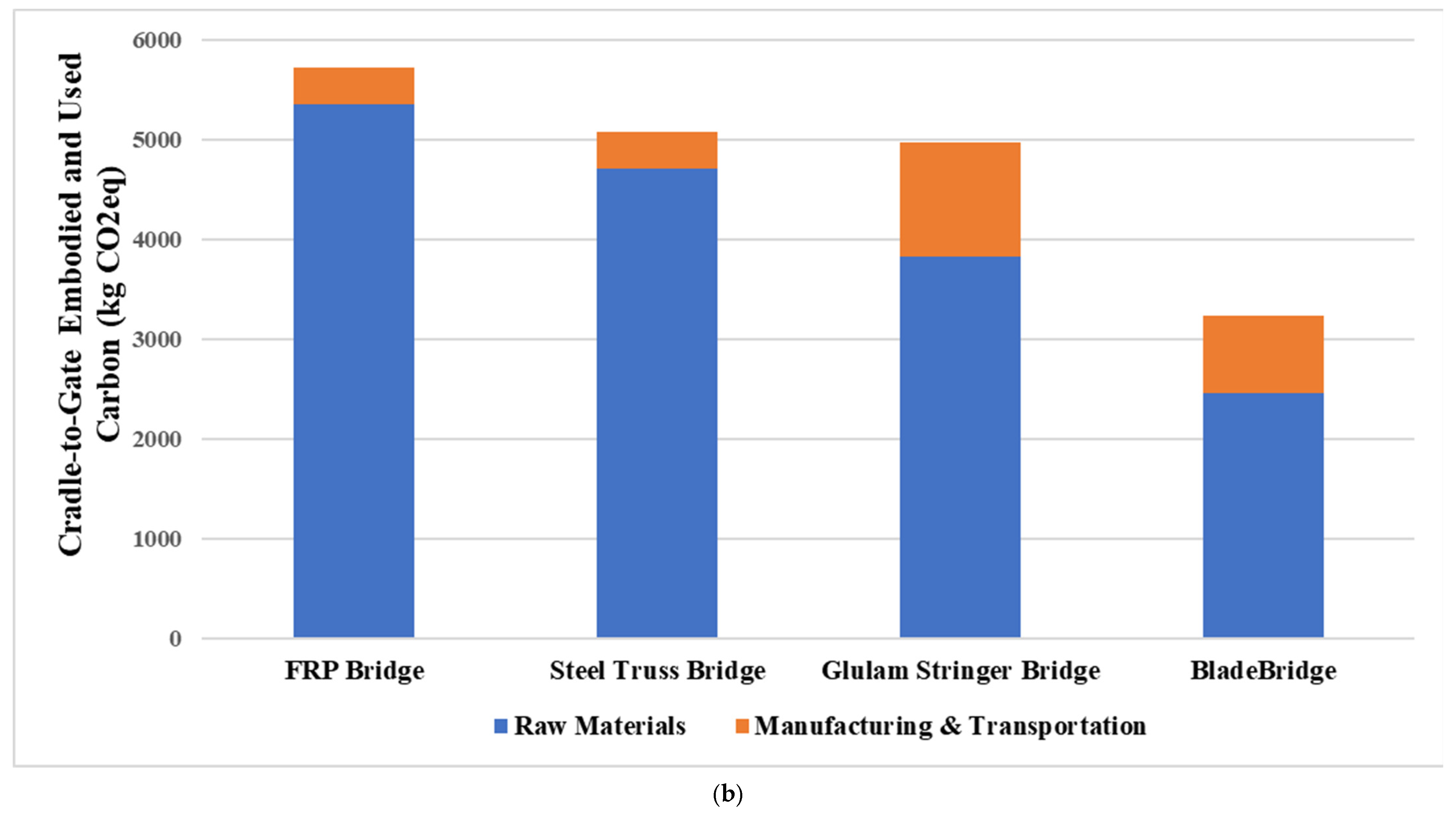
The summary of the TECHTEST results for the four bridge types shown in Table 1, Table 2 and Table 3 shows the cost, emissions, and weight comparisons for the four bridge types. Table 4 shows percentage differences between them. Figure 4 shows the tabulated cost and emissions data in bar charts (full detailed input and calculation TECHTEST worksheets are provided in the Supplementary Materials). Explanations and details of the categories in Table 1, Table 2, Table 3 and Table 4 are provided in the section that follows.
A graphical comparison of the data in Table 3 is shown in Figure 4.
Figure 4. Graphical comparison of tabulated data for (a) production cost (USD) and (b) embodied and used carbon (kg CO2eq) of the four bridge types.
Sustainability 18 01439 g004aSustainability 18 01439 g004b

4. Data Categories for LCA and TEA for the Four Bridge Types

4.1. Capital Expenses

Facility Overhead Charges

All the bridges described in the foregoing can be fabricated in any reasonably equipped steel, timber, or FRP fabrication facility (or machine shop). Three of the authors (TRG, LCB, EPJ) have decades of experience with structures of this type and are very familiar with their design and fabrication details and equipment and manpower needs.
For the TEA, a USD 300,000 annual cost of debt service for land acquisition, facility construction, initial equipment purchases, and annual equipment replacement was assumed for all bridge types. Assuming 50 bridges fabricated per year (one per week) of any type in one fabricating facility by one production crew, this translates to USD 6000 per bridge. Additional minor capital expenses for equipment maintenance (5%) and specialized equipment per bridge type were added.
For the LCA, no CO2eq emissions were attributed to the capital expenses.

4.2. Operating Expenses (Fabrication)

4.2.1. Raw Materials

For the LCA, embodied carbon Life Cycle Inventory (LCI) data for steel and timber materials of different forms were taken from [28,29]. These are known as the Inventory of Carbon and Energy (ICE) values and have been updated periodically on the Circular Ecology website [29]. The ICE data are based on a cradle to production gate (A1–A3: raw material extraction, transportation, and manufacturing). The life cycle inventories listed in ICE v.1.6a–4.0 were reviewed, and representative values were selected. For steel and timber materials, there were small changes in values from the original ICE v1.6 to the current v4.0. For the FRP materials, LCI values published in ICE v1.6a were used and checked with those for other glass/epoxy materials published in [22,30], which were determined using the Ecoinvent and Ansys Granta LCIs for glass/epoxy composite materials, respectively. These data are presented as CO2 or CO2eq values. The conversion to 100 yr GWP changes the CO2 kg/kg value to the CO2eq kg/kg value [31]. As noted in [28,29], not all the data for materials are able to be converted to the 100 yr Global Warming Potential (GWP) Life Cycle Inventory Assessment (LCIA) category per the IPCC procedures due to the lack of sufficient data on fuel type used to produce the materials. Given the rather wide range and uncertainty of embodied carbon values for these construction materials (structural steel with/without recycled content, galvanized steel hardware, timber of different forms (glulam, plywood, dimensional lumber, and pultruded fiber-reinforced polymer (FRP) materials)), this difference is felt to be within the range of values presented in the literature and is felt to be acceptable. However, in the calculation of the carbon emission due to the production (see the Manufacturing Energy section below) of the bridges used in this study, where electricity and transportation fuel (diesel) is used in the conversion of the raw material to the bridge item (the functional unit under consideration), TECHTEST converts all stationary (electricity) and mobile (transportation fuel) energy data to the 100 yr GWP LCIA category using the IPCC procedures [6].
For the TEA, raw material quantities were determined from bridge plans. The cost of the FRP pultruded members was based on current average industry prices of USD 9.50/lb (USD 20/kg) for pultruded profiles. The cost of the Southern Yellow Pine (SYP) 3 × 12 dimensional lumber (actual dimensions 11.25 (28.6 cm) by 2.5 in (6.4 cm)) timber decking planks and galvanized steel hardware (nuts, bolts, washers) were obtained from construction material distributors in the US. Steel unit costs were taken from published industry data (ENR) [32] (see details in Supplementary Materials).
The wind blades were assumed to have a “credit” of USD 660/tonne (USD 3300 per bridge) based on the actual weight of the two SGRE 49 blade segments used. Wind farm owners pay between USD 400 and USD 1000 per tonne to have the decommissioned blades removed [1,2,3,4]. They are considered to be recycled materials in the “cut-off” system allocation method [33], and they are “removed burden-free from the producing activity, and no impacts or benefits are allocated to them” [33].
For both the TEA and LCA, the data for the timber deck is broken out separately in the Table 5, Table 6, Table 7 and Table 8 for all four bridges. This has been carried out to see the contribution in USD, CO2eq, and weight of the 3 × 12 dimensional lumber timber decking planks. It also enables one to see the cost, emissions, and weight of the bridge superstructure and deck sub-structure, separate from the decking (which is identical in all four bridges considered in this study). The vast majority of recreational bridges in the US are constructed with timber deck planks for both cost and constructability reasons, even though they require more regular maintenance and periodic replacement (10 to 20 years) than other materials, especially in wet climates. Other decking materials used for recreational bridges are laminated or engineered wood panels, FRP panels or grating systems, plastic/composite wood planks, steel panels or grating systems, aluminum panels, and prefabricated or cast-in-place concrete panels. The use of any of these other decking systems will influence both the cost, emissions, and weight of each of the four bridges, to an equivalent extent, and must be evaluated separately. The results of this study only apply to the timber decking chosen.

4.2.2. Fabrication (Manufacturing Energy)

Differences in fabrication energy (assumed to be electricity only for a fabrication shop) arose from the different processes involved in fabricating the bridges. The FRP pultruded bridge requires cutting, drilling, and sealing holes in the pultruded members. Welding is used to fabricate steel truss bridges. The glulam timber bridge required drilling and finishing. The BladeBridge required cutting and drilling timber members for the deck supports and drilling holes in the blades. All bridges required overall assembly using cranes.
For the LCA, the electric energy required for the cutting and drilling tasks, and welding was found by estimating the duration of a machine task and multiplying it by the power rating or fuel consumption rate of the equipment. The 100 yr GWP CO2eq of the electric energy used was calculated by TECHTEST according to the Intergovernmental Panel on Climate Change (IPCC) recommendations [6,30].
For the TEA, costs of electricity were calculated by TECHTEST based on the US average electricity rates [6].

4.2.3. Transportation

The raw materials need to be transported from the supplier and wind farm to a fabricating facility.
For the LCA, for the BladeBridge, it is assumed the blades have been removed from a turbine, cut to size, and are ready to be transported. A distance of 300 miles (483 km) via flatbed truck from the wind farm to the fabrication shop is assumed. This distance was chosen since the fabrication can be performed in any standard machine shop, and parks and recreational areas are generally not very far from towns. For the steel bridge, it was assumed that steel could be obtained locally, and the transportation distance was 50 miles (80 km). For the FRP bridge, local distributor availability was also assumed, and a transportation distance of 100 miles (161 km) was used. For the glulam stringers, which are harder to source at the size necessary, a 500-mile (805 km) transportation distance was assumed.
For the TEA, a recurring operating cost of flatbed truck rental fees of approximately USD 350 per bridge was added for all bridge types. The 100 yr GWP CO2eq of the diesel fuel used for transportation was taken from TECHTEST [6,30].

4.2.4. Direct Labor

Labor rates were determined by a weighted average of salaries for different types of workers (e.g., engineers/designers, carpenters, steel workers, heavy equipment technicians) coming from the US Bureau of Labor Statistics data included in TECHTEST [6]. Assumptions on the procedures, tools, and duration of fabrication activities were made in good faith, combining the judgment of several industry participants and the expertise of the authors. A 72% employee fringe benefits and general overhead rate was applied by TECHTEST to all direct labor base costs [6]. The direct labor rates and full-time equivalent (FTE) personnel needed for the four bridges are shown in Table 9. No CO2eq emissions were associated with direct labor in the LCA.

4.3. Discussion of LCA and TEA Results

The CO2 summary data shown above are of the same order of magnitude as the data reported by Li et al. [22] for FRP and steel girder bridges (considering the different designs and span details). Similar cost and CO2eq advantages to using an FRP bridge system over a steel system are also noted in [20,21].
It is important to note that the cost and CO2eq savings obtained for the BladeBridge are not only a function of the credit received for the blades (USD 3300) and the zero embodied energy from the blade raw materials but also the application. If the blades are considered to be cost-neutral (i.e., no USD credit is attributed to them), then the cost of the BladeBridge would be USD 3300 more than reported above (see Table 8), which would make the cost of the BladeBridge equal to USD 30,817 + USD 3300 = USD 34,117, which is still less than the conventional bridge systems. In addition, even in this case, there would be a beneficial environmental impact since the blades are in their second life and incur no raw material embodied carbon burden in the cut-off allocation system [31].
Since a wind blade has ample capacity to span a gap of 15 m (see Figure 1) or more, its benefit increases as the span increases. The amount of raw material needed to span a gap is proportional to the span raised to the second power (for strength limits) or fourth power (for deflection limits). This means that the FRP pultruded truss, steel welded truss, and glulam stringers will need to be larger and use more material for longer spans than 15 m. For wind blades in the 50 to 70 m length range, a segment of the blade can be readily found to span larger gaps than 15 m with no additional cost. This makes repurposed wind blades excellent for long-span structures, such as bridges, roofs, and poles.

5. Additional Techno-Economic Metrics for BladeBridges

In this section, additional techno-economic metrics, beyond the production cost performed in TECHTEST above, are presented for BladeBridges. These are the Technology Readiness Level (TRL) [34] and future market potential.
Since BladeBridges have been built, tested, and have been in service for a number of years, as described previously in Section 1, the Technology Readiness Level (TRL) for BladeBridges can be valued at 8 or 9. It is important to note that TRL does not include whether a product is commercially viable, only that it can be produced, built, tested, and meet its functional requirements in multiple scenarios. Hence, from a technical point of view, BladeBridges are proven technology.
The future market potential for BladeBridges was determined as a percentage of the new or replaced recreational bridges constructed annually in the US. To do this, first, the number of existing recreational bridges was estimated, and thereafter, the annual number of new or replacement bridges was estimated.

5.1. Existing Recreational Trail Bridges in the US

In order to conduct this analysis, the total number of recreational hiking trail bridges and golf course bridges was needed. However, unlike highway bridges, where the US Federal Highway Administration maintains a database of all highway bridges [35], there is unfortunately no national database for recreational bridges.
Significant personnel resources were devoted to finding the data for recreational bridges with limited success. To overcome this lack of data, generative artificial intelligence (ChatGPT v-5 [36]) was used to estimate the number of recreational trail bridges in the US using two techniques. Thereafter, a similar estimate was made for golf course bridges. Following this, an analysis was made to estimate the number of recreational bridges that are constructed in a typical year in the US. An annual replacement/new construction estimate of 1–2% of the entire inventory was assumed to obtain high, medium, and low estimates.
ChatGPT provided the sources of the data and the logic by which it estimated the number of existing recreational bridges and the new recreational bridges constructed annually. The authors checked the source data (by visiting the source websites and reviewing the publications provided by ChatGPT listed in what follows) and evaluated the estimation methodology, which was felt to be logical and reasonable. The prompts used to query ChatGPT are provided in [36]. The results of the ChatGPT analysis are shown in Table 10, Table 11, Table 12, Table 13, Table 14 and Table 15 below (tables were generated by ChatGPT and modified slightly by the authors where necessary for clarity).
Two methods were used by ChatGPT to obtain ranges on the number of recreational trail bridges in the US:
1.
A count of actual bridges and, where a count was not available, an estimate of the number of miles (km) listed by different agencies and organizations that have hiking trails (Table 10). The estimate was based on bridges per mile (km) based on the terrain and calibrated from the terrain of the actual counted bridges;
2.
An estimate based on the miles (km) of hiking trails collected by a USGS National Database of hiking trails in the US [37] and based on terrain as described above (Table 11)
Table 10. Breakdown of total existing recreational hiking trail bridges in the US—agency data (2024).
Agency/Land TypeApprox. Trail Length (km)Reported or Estimated Trail BridgesSource/Notes
U.S. Forest Service (USFS)~255,000 km~7300Official USFS data (includes hiking, pack, and bike trails).
National Park Service (NPS)~29,000 km~200Range from NPS and Partnership for the National Trails System estimates.
Bureau of Land Management (BLM)~21,000 km~500–1000 (est.)Extrapolated from mileage and terrain type.
U.S. Fish & Wildlife Service/Army Corps lands~3200 km~100–300 (est.)Small systems, typically low-density bridges.
Rails–Trails (Rails-to-Trails Conservancy)~41,700 km~2500–4000 (est.)About one bridge every 9–16 km on rail-trails.
State Parks and State Trails Systems~64,400 km~2000–8000 (est.)Roughly one bridge every 8–32 km, depending on topography.
Local/County/City Trails~48,000–97,000 km~1500–10,000 (est.)Urban and suburban multiuse paths, varying density.
Private/Conservancy/NGO Trails~16,000 km (est.)~500–1000 (est.)Nature preserves and land trust trails.
U.S. Total~480,000 + km (aggregate est.)≈10,000–35,000 trail bridgesCombined from reported and modeled sources.
Key sources used for data listed above by ChatGPT: 1. U.S. Forest Service: manages about 7300 trail bridges (US Forest Service [38]). 2. National Park Service: reports about 200 trail bridges (National Park Service [39]). 3. Rails-to-Trails/rails–trails scale: there are ~2400 rails–trails, totaling ~41,700 km of rails–trails (many include bridges) (Rails-to-Trails Conservancy [40]). 4. National Trails System/long and national trails: the National Trails System itself totals tens of thousands of miles/km (the PCTA cites ~141,760 km across the system’s components), showing how many miles/km of managed trail exist at the federal level (America’s National Trails System [41]). 5. State parks and state-managed trails: various sources put state parks and other state lands at ~64,000 km of trails (older aggregated estimate) (American Hiking Society [42]).
The estimates were produced by ChatGPT using the following steps/methodology (text by ChatGPT (edited)):
1.
Firm federal counts: USFS (~7300) + NPS (~200) → ~7500 known federal trail bridges [38,39];
2.
Other federal agencies (BLM [43], Fish & Wildlife [44], USACE [45]) have trail bridges, too, but no single public national count is available;
3.
Trail miles under state/local/municipal control and non-federal trails are large but not centrally tallied (state parks ~40,000 miles (~64,000 km); rails–trails: ~25,900 miles (41,440 km); many local trail miles/kms not centrally recorded) [40,41,42];
4.
Estimate bridges on state/local/rail trails by converting trail miles/km into bridge counts using a plausible bridge density range. Bridge density varies hugely by terrain: rugged/wet areas have many bridges; flat urban trails have few. Reasonable densities used for a national estimate: one bridge per 5 miles (8 km) (higher density) to one bridge per 20 miles (32 km) (lower density) across non-federal trail miles. Then, combine the known federal total (~7500) with the estimated non-federal bridge range to produce a national range;
5.
Since there is no single national database counting every trail bridge across municipal parks, county parks, state parks, private land trusts, and unrecorded community trails, the uncertainty is high. Agencies count bridges they manage (USFS, NPS), but state and local counts are fragmented and trail miles/kms overlap between datasets, which makes double-counting a risk.
Using the total length of trails provided in the USGS database gives the following estimates (Table 11).
Table 11. Breakdown of total existing recreational hiking trail bridges in the US—USGS National Trail Database (NTDB), method 2 (2024).
ScenarioTrail Miles (NTAD)Bridge Density AssumptionEstimated Trail Bridges
Low density~704,000 km1 bridge per 32 km~22,000
Medium density~704,000 km1 bridge per 16 km~44,000
High density~704,000 km1 bridge per 8 km~88,000
Planning range~25,000–60,000
Table 12. Estimated number of golf course bridges in the US based on terrain (2024).
Course Type% of Total Courses (15,500)Typical Bridge Need per CourseExamples
Coastal/River/Lake Courses~25%4–8 bridgesPebble Beach, Kiawah, etc.
Parkland/Suburban Courses~60%2–5 bridgesMost U.S. courses
Desert/Flat Courses~15%0–2 bridgesScottsdale, Las Vegas, etc.
Weighted Average 3–5 bridges
Key data source: National Golf Association [46]. Includes golf cart bridges, footbridges, and maintenance vehicle crossings. Excludes road bridges or culverts that are not part of the course layout. Premium resort and coastal courses may have 8–12 bridges each, while dry inland courses have none [46].
Table 13. Total existing recreational trail and golf course bridges in the US (2024).
CategoryPrimary Land Types/ManagersApprox. Total Distance/CoursesEstimated or Reported Bridge CountBridge Density/Notes
Trail BridgesU.S. Forest Service, NPS, BLM, state and local trails, rails–trails~480,000 + km of trails≈10,000–35,000 bridges (midpoint ≈ 20,000)~1 bridge every 13–40 km, depending on terrain (includes footbridges and trail crossings).
Golf Course Bridges15,500 public and private golf courses across U.S.15,500 courses≈50,000–60,000 bridges (midpoint ≈ 55,000)~3–4 bridges per course (cart, foot, or creek crossings).
Combined Total (U.S.)≈60,000–95,000 small bridgesCovers both recreational trail and golf course bridges (excludes vehicle road bridges).
Table 14. New recreational trail and golf course bridges constructed annually in the US (2024).
CategoryLow Estimate/yrLikely Range/yrHigh Estimate/yrConfidence (Low to High)
Trail bridges (all managers: federal, state, local, NGO)200200–6001000Medium (data fragmented)
Golf course bridges (new courses + renovations + additions)50150–400600Medium (depends on renovation activity)
Combined~250~350–1000~1600Medium–Low (high uncertainty)
Table 15. Estimated average length of recreation trail bridges in the US (ChatGPT).
Bridge TypeTypical Span (m)Share of TotalWeighted Contribution
Small pedestrian culvert/footbridge4–8 m~50%6 m × 0.5 = 3.0 m
Moderate timber/steel pedestrian bridge8–20 m~40%14 m × 0.4 = 5.6 m
Long-span suspension or truss trail bridge20–60 m~10%40 m × 0.1 = 4.0 m
Weighted average13 m
Golf course bridges were then estimated using ChatGPT. The estimate is shown in Table 12.
The estimates of the recreational hiking trail bridges and the golf course bridges were combined to give a total estimate of all the recreational bridges in the US in Table 13. The lower of the two ranges (10,000–35,000) listed in Table 10 and Table 11 was selected for the hiking trail bridges.

5.2. New Recreational Bridges Constructed Annually in the USA

To assess the future market potential for BladeBridges, an estimate of the number of new recreational trail and golf course bridges constructed annually was obtained from ChatGPT.
The estimates were produced by ChatGPT using the following steps/methodology (text by ChatGPT (edited)):
Since there is no firm number, estimates were made using the following assumptions:
1.
Assume there are ~10,000–20,000 trail bridges already nationwide (midpoint ~20,000). Assume the replacement or new-construction rate is 1–2% per year (for expansion, trail development, etc.). Then, new trail bridges per year might be in the order of 200–400;
2.
For golf course bridges: if there are ~50,000–60,000 bridges on U.S. courses (estimate), and if courses add new bridges primarily with new course construction or remodels at 1–2% of courses each year, plus occasional bridge additions on existing courses, that might suggest 500–1200 new golf course bridges per year;
3.
Combined, one can estimate ~700–1600 new bridges/year in both categories together, given current trends.

5.3. Length of Recreational Trail Bridges in the US

The estimated average length of recreational trail bridges in the US was then estimated using ChatGPT to determine if bridge lengths under 15 m were common. The results are shown in Table 15.

5.4. Potential Number of New BladeBridges per Year

If the number of new recreational bridges in the US is 1000 per year (top of the “likely” range in Table 14 above), and if one BladeBridge per week can be fabricated in a small fabrication shop as assumed previously, then this suggests that 5% (or 50) of all new bridges could be BladeBridges.

5.5. Techno-Economic Case for BladeBridges

Based on the fabrication cost (Table 1) of USD 30,817 each (for the bridge analyzed in this study) and assuming a profit margin of 50%, this gives a FOB (Freight on Board or Free on Board) cost of USD 46,255 and an annual turnover of over USD 2.3 million. For 100 bridges per year, this is a USD 4.6 million turnover. This makes a good economic case for a business selling BladeBridges. It is noted that the fabrication cost of USD 30,817 is based on the “standard” 50 ft (15.24 m) long by 6 ft (1.83 m) wide deck BladeBridge that was designed for a 90 psf (4.3 kN/m2) live load. Given that the estimated average length of a recreational trail bridges 8–20 m long in the US is 13 m (Table 15 above), the use of this “standard” BladeBridge to determine costs and emissions is reasonable.
At the present time, the biggest obstacle to successful commercialization is the market demand for BladeBridges. Blade supply does not appear to be as big a problem as in previous years, as more wind energy companies and blade OEMs are recognizing the need for a variety of end-of-life solutions in a circular economy [1,3]. The two-girder BladeBridge discussed in this paper is easier to design and construct than a single-girder bridge (shown in Figure 1) [18], and it is felt to be more economically competitive. The Re-Wind Draperstown BladeBridge was constructed by a crew of four people in just three days using a simple sub-structure for the deck [19].

6. Conclusions

1.
Using the TECHTEST software from the US Department of Energy (DOE) with only the cradle-to-gate (A1–A3) production life cycle considered, a recreational trail bridge constructed using wind turbine blades (BladeBridge) has been shown to be both less expensive and have less environmental impact (measured in CO2eq) than three common existing recreational trail bridge types;
2.
The FRP pultruded truss bridge is 48% more expensive to produce and releases 41% more CO2eq than a BladeBridge, the steel truss bridge is 36% more expensive to produce and releases 34% more CO2eq than a BladeBridge, and a glulam timber bridge 42% more expensive to produce and releases 38% more CO2eq than a BladeBridge. This is based on the assumption of a cut-off allocation method where no embodied carbon is counted for the wind blade in its second life and there is an economic credit of USD 660/tonne for the blades from the decommissioning contractor or wind farm owner;
3.
In order to compare the four different bridges in TECHTEST, the actual design, fabrication, and assembly details of the four bridge types were used. The authors made every effort to include all pertinent raw materials, manufacturing processes, transportation energy, and fabrication activities in performing the analysis. Material quantities were extracted from structural plans of actual bridges designed according to accepted codes and standards. Industry experts were consulted during the data collection phase. Without these details, an accurate comparison cannot be made;
4.
Direct comparison of the cost and environmental impacts of new technologies with existing technologies must be conducted to validate claims of superior performance by new technologies, especially those using FRP composite materials or repurposed materials. TECHTEST is an accessible and verifiable tool to make these comparisons.

Supplementary Materials

The TECHTEST data sheets can be downloaded at https://doi.org/10.5281/zenodo.17652789 (accessed on 20 January 2026) and Figures S1–S3 can be downloaded at https://doi.org/10.5281/zenodo.18419382 (accessed on 20 January 2026).

Author Contributions

Conceptualization, A.G.S., L.C.B. and T.R.G.; methodology, A.G.S.; software, A.G.S. and G.P.A.; formal analysis, A.G.S. and L.C.B.; investigation, G.E.J.; data curation, A.G.S. and G.P.A.; writing—original draft preparation, A.G.S. and L.C.B.; writing—review and editing, L.C.B., T.R.G., A.G.S., G.P.A. and G.E.J.; supervision, L.C.B.; project administration, T.R.G.; funding acquisition, T.R.G. All authors have read and agreed to the published version of the manuscript.

Funding

Support for this research was provided by the US National Science Foundation (NSF) under grant 2016409.

Institutional Review Board Statement

Not applicable.

Informed Consent Statement

Not applicable.

Data Availability Statement

All source data are available from the authors upon request. This paper is a revised and expanded version of a “Comparative techno-economic and life-cycle analysis (TEA/LCA) of pedestrian trail bridges made from pultruded FRP, steel, timber and decommissioned wind turbine blades,” presented at the 12th International Conference on Fiber-Reinforced Polymer (FRP) Composites in Civil Engineering, Lisbon, Portugal, 14–16 July 2025 [23].

Acknowledgments

Wind blade data provided by Siemens Gamesa Renewable Energy (SGRE) are gratefully acknowledged. During the preparation of this manuscript/study, the authors used ChatGPT v.5.0 for the purposes of determining and estimating recreational bridge numbers and lengths and developing tables and explanatory text. The authors have reviewed and edited the output and take full responsibility for the content of this publication.

Conflicts of Interest

Author Eric Johansen was employed by the Fiberglass Trusses, Inc. The remaining authors declare that the research was conducted in the absence of any commercial or financial relationships that could be construed as a potential conflict of interest.

References

  1. Lund, K.W.; Madsen, E.S. State-of-the-art value chain roadmap for sustainable end-of-life wind turbine blades. Renew. Sustain. Energy Rev. 2024, 192, 114234. [Google Scholar] [CrossRef]
  2. Delaney, E.L.; Leahy, P.G.; McKinley, J.M.; Gentry, T.R.; Nagle, A.J.; Elberling, J.; Bank, L.C. Sustainability Implications of Current Approaches to End-of-Life of Wind Turbine Blades—A Review. Sustainability 2023, 15, 12557. [Google Scholar] [CrossRef]
  3. Beauson, J.; Laurent, A.; Rudolph, D.P.; Pagh Jensen, J. The complex end-of-life of wind turbine blades: A review of the European context. Renew. Sustain. Energy Rev. 2022, 155, 111847. [Google Scholar] [CrossRef]
  4. EPRI. Wind Turbine Blade Recycling: Preliminary Assessment; Electric Power Research Institute: Washington, DC, USA, 2020; Available online: https://www.epri.com/research/products/000000003002017711 (accessed on 19 November 2025).
  5. Qureshi, J. A Review of Recycling Methods for Fibre Reinforced Polymer Composites. Sustainability 2022, 14, 16855. [Google Scholar] [CrossRef]
  6. DOE. Techno-Economic, Energy, & Carbon Heuristic Tool for Early-Stage Technologies (TECHTEST) Tool; US Department of Energy: Washington, DC, USA, 2024. Available online: https://www.energy.gov/eere/iedo/techno-economic-energy-carbon-heuristic-tool-early-stage-technologies-techtest-tool (accessed on 19 November 2025).
  7. AASHTO. LRFD Guide Specifications for the Design of Pedestrian Bridges, 2nd ed.; AASHTO: Washington, DC, USA, 2015. [Google Scholar]
  8. USDA. Standard Trail Bridge Plans; US Department of Agriculture: Washington, DC, USA, 2024. [Google Scholar]
  9. USDA. Standard Trail Bridge Specifications; US Department of Agriculture: Washington, DC, USA, 2024. [Google Scholar]
  10. The Re-Wind Network. Available online: https://www.re-wind.info/ (accessed on 12 November 2025).
  11. Ruane, K.; Zhang, Z.; Nagle, A.; Huynh, A.; Alshannaq, A.; McDonald, A.; Leahy, P.; Soutsos, M.; McKinley, J.; Gentry, R.; et al. Material and Structural Characterization of a Wind Turbine Blade for Use as a Bridge Girder. Transp. Res. Rec. 2022, 2676, 354–362. [Google Scholar] [CrossRef]
  12. Bank, L.C.; Gentry, T.R.; Ruane, K.; Jaksic, V.; McDonald, K.; Soutsos, M.; Graham, C.; Delaney, E.; McKinley, J.; Leahy, P.; et al. Full-scale Testing of a Footbridge Constructed with Repurposed Wind Turbine Blades in Draperstown, Northern Ireland. In Proceedings of the Civil Engineering Research in Ireland Conference, CERI2024, Galway, Ireland, 29–30 August 2024; pp. 50–55. [Google Scholar]
  13. Gentry, T.R.; Ruane, K.; Bank, L.C. Numerical Modeling of a BladeBridge in Draperstown, Northern Ireland. In Proceedings of the Civil Engineering Research in Ireland conference, CERI2024, Galway, Ireland, 29–30 August 2024; pp. 62–67. [Google Scholar]
  14. Ruane, K.; Jaksic, V.; Bank, L.C.; Gentry, T.R.; McDonald, K.; Soutsos, M.; Graham, C.; Delaney, E.; McKinley, J.; Leahy, P.; et al. Testing and Analysis of Pedestrian Bridge made of Discarded Wind Turbine Blades. In Proceedings of the SEMC 2025, Cape Town, South Africa, 1–3 September 2025; pp. 1537–1542. Available online: https://www.routledge.com/Engineering-Materials-Structures-Systems-and-Methods-for-a-More-Sustainable-Future/Zingoni/p/book/9781032780702 (accessed on 19 November 2025).
  15. Rajchel, M.; Kulpa, M.; Wiater, A.; Siwowski, T. A bridge made of decommissioned wind turbine blade: Conceptual design, experimental investigations and site implementation. In Proceedings of the 11th International Conference on Fiber-Reinforced Polymer (FRP) Composites in Civil Engineering (CICE 2023), Rio de Janeiro, Brazil, 23–26 July 2023; Available online: https://zenodo.org/records/8104763 (accessed on 19 November 2025).
  16. Adamcio, A.; Wilczynski, W. Bridge Span. Danish Patent DK180876B1, 9 June 2022. Available online: https://patents.google.com/patent/DK180876B1/en?oq=PL244964B1 (accessed on 19 November 2025).
  17. Rajchel, M.; Kulpa, M.; Wiater, A.; Siwowski, T. Repurposing a Decommissioned Wind Turbine Blade for Bridge Construction: An Experimental Investigation. J. Compos. Constr. 2025, 29. [Google Scholar] [CrossRef]
  18. Ackall, G.; Bank, L.C.; Gentry, T.R. Structural Analysis and Design of a Recreational Bridge Constructed from a Single Wind Turbine Blade Girder. In Proceedings of the 12th International Conference on Fiber-Reinforced Polymer (FRP) Composites in Civil Engineering (CICE 2025), Lisbon, Portugal, 14–16 July 2025. [Google Scholar]
  19. Ruane, K.; Soutsos, M.; Huynh, A.; Zhang, Z.; Nagle, A.; McDonald, K.; Gentry, T.R.; Leahy, P.; Bank, L.C. Construction and Cost Analysis of BladeBridges Made from Decommissioned FRP Wind Turbine Blades. Sustainability 2023, 15, 3366. [Google Scholar] [CrossRef]
  20. Nagle, A.J.; Mullally, G.; Leahy, P.G.; Dunphy, N.P. Life cycle assessment of the use of decommissioned wind blades in second life applications. J. Environ. Manag. 2022, 302, 113994. [Google Scholar] [CrossRef] [PubMed]
  21. Jena, T.; Kaewunruen, S. Life Cycle Sustainability Assessments of an Innovative FRP Composite Footbridge. Sustainability 2021, 13, 13000. [Google Scholar] [CrossRef]
  22. Li, Y.-F.; Yu, C.-C.; Chen, S.-Y.; Sainey, B. The Carbon Footprint Calculation of the GFRP recreational Bridge at Tai-Jiang National Park. Int. Rev. Spat. Plan. Sustain. Dev. 2013, 1, 13–28. [Google Scholar] [CrossRef]
  23. Silverman, A.; Ackall, G.; Johansen, E.; Gentry, R.; Bank, L. Comparative Techno-Economic and Life-Cycle Analysis (TEA/LCA) of Pedestrian Trail Bridges Made from Pultruded FRP, Steel, Timber and Decommissioned Wind Turbine Blades. In Proceedings of the 12th International Conference on Fiber-Reinforced Polymer (FRP) Composites in Civil Engineering (CICE 2025), Lisbon, Portugal, 14–16 July 2025. [Google Scholar]
  24. AASHTO. Guide Specifications for Design of FRP Pedestrian Bridges, 1st ed.; American Association of State Highway and Transportation Officials: Washington, DC, USA, 2008. [Google Scholar]
  25. AWC. National Design Specification (NDS) for Wood Construction; American Wood Council (AWC): Leesburg, VA, USA, 2018. [Google Scholar]
  26. AISC. Specification for Structural Steel Buildings (ANSI/AISC 360-22); American Institute for Steel Construction: Chicago, IL, USA, 2022. [Google Scholar]
  27. Bank, L.C. Reflections on 50 Years of Pultruded Fiber-Reinforced Polymer Materials in Structural Engineering. ASCE J. Compos. Constr. 2023, 27. [Google Scholar] [CrossRef]
  28. Hammond, G.P.; Jones, C.I. Embodied energy and carbon in construction materials. Proc. Inst. Civ. Eng. Energy 2008, 161, 87–98. [Google Scholar] [CrossRef]
  29. ICE DB Advanced V4.0, Circular Ecology. 2024. Available online: https://circularecology.com/ (accessed on 25 March 2025).
  30. Morini, A.A.; Ribeiro, M.J.; Hotza, D. Carbon footprint and embodied energy of a wind turbine blade—A case study. Int. J. Life Cycle Assess. 2021, 26, 1177–1187. [Google Scholar] [CrossRef]
  31. IPCC Guidelines for National Greenhouse Gas Inventories. Chapters 1–3. 2006. Available online: https://www.ipcc-nggip.iges.or.jp/public/2006gl/ (accessed on 29 December 2025).
  32. ENR. ENR Construction Cost Index, April 2024; ENR: New York, NY, USA, 2024; Available online: https://www.enr.com/economics (accessed on 19 November 2025).
  33. Wernet, G.; Bauer, C.; Steubing, B.; Reinhard, J.; Moreno-Ruiz, E.; Weidema, B. The ecoinvent database version 3 (part I): Overview and methodology. Int. J. Life Cycle Assess. 2016, 21, 1218–1230. [Google Scholar] [CrossRef]
  34. ISO 16290:2013(en); Space Systems—Definition of the Technology Readiness Levels (TRLs) and their Criteria of Assessment. International Organization for Standardization: Geneva, Switzerland, 2013. Available online: https://www.iso.org (accessed on 19 November 2025).
  35. National Bridge Inventory (NBI). Federal Highway Administration: Washington, DC, USA. Available online: https://www.fhwa.dot.gov/bridge/nbi.cfm (accessed on 3 January 2026).
  36. OpenAI (2025). ChatGPT v-5. Available online: https://chatgpt.com/share/68ea4ffb-96ac-8013-aa90-76522c75c9db (accessed on 6 October 2025).
  37. US Geological Survey (USGS). National Digital Trails. Available online: https://www.usgs.gov/national-digital-trails/data (accessed on 3 January 2026).
  38. US Forest Service (FS). Bridges and Structures. Available online: https://www.fs.usda.gov/science-technology/infrastructure/bridges-structures (accessed on 3 January 2026).
  39. US National Parks Service (NPS). Federal Lands Transportation Program Accomplishments; US Department of the Interior: Washington, DC, USA, 2024. Available online: https://www.nps.gov/subjects/transportation/upload/2024-NPS-FLTP-Annual-Accomplishments.pdf (accessed on 3 January 2026).
  40. Rails to Trail Conservancy. National Rail-Trail and Trail Mileage Counts. Available online: https://www.railstotrails.org/united-states/ (accessed on 3 January 2026).
  41. US National Parks Service. America’s National Trails System. Available online: https://www.nps.gov/subjects/nationaltrailssystem (accessed on 3 January 2026).
  42. American Hiking Society. Hiking Trails in America; American Hiking Society: Silver Spring, MD, USA, 2015; Available online: https://www.americanhiking.org/wp-content/uploads/2015/05/AHS_RPT_fnl_LOW.pdf (accessed on 3 January 2026).
  43. US Bureau of Land Management (BLM). National Scenic and Historic Trails; US Department of the Interior: Washington, DC, USA. Available online: https://www.blm.gov/programs/national-conservation-lands/national-scenic-and-historic-trails (accessed on 3 January 2026).
  44. US Fish and Wildlife Service (FWS). U.S. Fish and Wildlife Service National Trails Inventory. Available online: https://iris.fws.gov/APPS/ServCat/Reference/Profile/143048 (accessed on 20 January 2026).
  45. USACE. U.S. Army Corps of Engineers’ Trails Designated as National Recreation Trails. Available online: https://www.usace.army.mil/Media/News/Article/478113/us-army-corps-of-engineers-trails-designated-as-national-recreation-trails/ (accessed on 20 January 2026).
  46. National Golf Foundation. Golf Industry Facts. Available online: https://www.ngf.org/the-clubhouse/golf-industry-research/ (accessed on 20 January 2026).
Figure 1. BladeBridge in Atlanta, Georgia, USA (2025). (a) Side view over the creek. (b) Deck sub-structure prior to deck planks being installed [18].
Sustainability 18 01439 g001
Figure 2. (a) FRP pultruded truss bridge (Creative Composites Group). (b) Steel truss bridge (Contech). (c) Glulam girder bridge (Western Wood Structures). (d) BladeBridge (Re-Wind Network).
Sustainability 18 01439 g002
Figure 3. Dual-girder BladeBridge (Re-Wind USA) (1′ = 12″ = 30.48 cm).
Sustainability 18 01439 g003
Table 1. TECHTEST cost comparisons (USD).
CategoriesFRP Pultruded Truss BridgeSteel Truss BridgeGlulam Stringer BridgeBladeBridge
Capital Expenses (CapEx)
Facility Overhead Charges
USD 6630USD 6630USD 6630USD 6630
Operating Expenses (OpEx)
Raw Materials
(including Timber Deck)
USD 27,378USD 7952USD 21,995USD 5344
OpEx
Raw Materials
Timber Deck (Alone)
USD 1835USD 1835USD 1835USD 1835
OpEx
Used Carbon (Energy)
Fabrication and Transportation
USD 398USD 402USD 621USD 516
OpEx
Direct Labor
USD 25,027USD 33,314USD 24,029USD 18,326
Total CostUSD 59,433USD 48,298USD 53,275USD 30,817
Table 2. TECHTEST total embodied (kg CO2eq) and used carbon (100-yr GWP kg CO2eq) comparisons.
CategoriesFRP Pultruded Truss BridgeSteel Truss BridgeGlulam Stringer BridgeBladeBridge
Embodied Carbon (kg CO2eq)
Raw Materials
(including Timber Deck)
5476483744132654
Timber Deck (alone)431431431431
Used Carbon (100-yr GWP kg CO2eq)
Fabrication and Transportation3683681145782
Total Embodied and Used Carbon5844520555583436
Table 3. Summary of cost, CO2eq, and weight comparisons.
CategoriesFRP Pultruded Truss BridgeSteel Truss BridgeGlulam Stringer BridgeBladeBridge
Total Cost (CapEx + OpEx)USD 59,433USD 48,298USD 53,275USD 30,817
Cradle-to-Gate Total Embodied (kg CO2eq) and Used Carbon (100-yr GWP kg CO2eq)5844520555583436
Weight
Raw Materials (kg)
(including Timber Deck)
2260324362357645
Weight
Timber Deck (kg) (Alone)
957957957957
Table 4. Relative cost and CO2eq impacts of the four bridge types.
Bridge TypeTotal Cost (USD)% Difference *
(Cost)
Total Embodied and Used Carbon (kg CO2eq)% Difference *
(Carbon)
BladeBridgeUSD 30,817-3436-
FRP Pultruded Truss BridgeUSD 59,433+48%5844+41%
Steel Truss BridgeUSD 48,298+36%5205+34%
Glulam Stringer BridgeUSD 53,275+42%5558+38%
* %   d i f f e r e n c e = ( C o n v e n t i o n a l   B r i d g e B l a d e B r i d g e ) ( C o n v e n t i o n a l   B r i d g e ) × 100 .
Table 5. Raw material inputs, amounts, specific embodied carbon and costs, and total embodied carbon and costs for a single FRP truss bridge.
Material InputsAmount of Material (kg)Specific Embodied Carbon (kg CO2eq/kg Material)Specific Cost (USD/kg Material)Total Embodied Carbon (kg CO2eq)Total Cost (USD)
FRP Channels, Tubes, and Plates10534.10USD 20.944291USD 22,061
Grade No. 2 Southern Pine
(Helical Piers)
1020.45USD 1.9246USD 196
Grade No. 2 Southern Pine (Decking)9570.45USD 1.92431USD 1835
Epoxy paint and sealant686.70USD 10.49456USD 714
Steel Hardware (Nuts, Bolts, Washers)793.19USD 32.41253USD 2572
Total5476USD 27,378
Table 6. Raw material inputs, amounts, specific embodied carbon and costs, and total embodied carbon and costs for a single steel truss bridge.
Material InputsAmount of Material (kg)Specific Embodied Carbon (kg CO2eq/kg Material)Specific Cost (USD/kg Material)Total Embodied Carbon (kg CO2eq)Total Cost (USD)
ASTM A709 Grade 50
Weathering Steel
20611.78USD 2.313669USD 4771
Grade No. 2 Southern Pine (Guardrail)1190.45USD 1.9254USD 228
Grade No. 2 Southern Pine (Decking)9570.45USD 1.92431USD 1835
ASTM A992 Carbon Steel Stick Welding Electrodes (5/32 in)51.71USD 11.469USD 60
Epoxy Paint and Sealant1016.70USD 10.49675USD 1057
Total4837USD 7952
Table 7. Raw material inputs, amounts, specific embodied carbon and costs, and total embodied carbon and costs for a single glulam stringer bridge.
Material InputsAmount of Material (kg)Specific Embodied Carbon (kg CO2eq/kg Material)Specific Cost (USD/kg Material)Total Embodied Carbon (kg CO2eq)Total Cost (USD)
Grade No. 2 Southern Pine (Guardrail, Blocking, End Support, Running Planks, Deck Fastening, etc.)14360.45USD 1.92646USD 2754
Grade No. 2 Southern Pine (Decking)9570.45USD 1.92431USD 1835
Glulam Beam (24F-V3)36370.65USD 3.512364USD 12,749
Epoxy Paint and Sealant916.70USD 10.49608USD 952
Steel Hardware (Nuts and Bolts)1143.19USD 32.41365USD 3704
Total4413USD 21,995
Table 8. Raw material inputs, amounts, specific embodied carbon and costs, and total embodied carbon and costs for a single BladeBridge.
Material InputsAmount of Material (kg)Specific Embodied Carbon (kg CO2eq/kg Material)Specific Cost (USD/kg Material)Total Embodied Carbon (kg CO2eq)Total Cost (USD)
Cut Sections of EoS Wind Turbine Blades49900.00−USD 0.660.00−USD 3300
Steel Hardware (Nails and Bolts)233.19USD 32.4172USD 735
Steel Through Bolts1893.19USD 7.95602USD 1500
Galvanized Steel (Guardrail Cable and Joist Hangers)902.83USD 1.54255USD 139
Grade No. 2 Dense Southern Pine (Transverse Beams, Guardrail Posts/Top Rail)7990.45USD 1.92359USD 1531
Grade No. 2 Dense Southern Pine (Decking)9570.45USD 1.92431USD 1835
Glulam Beam (20F-1.5E) 5020.65USD 3.51326USD 1759
Epoxy Paint and Sealant896.72USD 10.49598USD 938
Plywood (2 4 × 8 sheets)1.70.81USD 30.861USD 53
24oz Woven Fiber Glass (20 yds)6.41.56USD 24.2510USD 154
Total2654USD 5344
Table 9. Labor rates and estimated full-time equivalent (FTE) personnel.
Estimated Number of Personnel Required
PersonnelAvg Annual Salary 2023/2024 (USD/year)FRP Pultruded Truss BridgeSteel Truss BridgeGlulam Stringer BridgeBladeBridge
WelderUSD 52,2400200
Crane/Forklift TechnicianUSD 61,6201111
CarpenterUSD 60,970 2262
Metal/FRP MachinistUSD 68,220 4602
Project ManagerUSD 104,920 1111
Design EngineerUSD 101,160 1111
CAD/Shop Drawing TechnicianUSD 65,0001111
LiDAR TechUSD 65,000 0001
Average (Weighted) SalaryUSD 72,752 USD 69,174 USD 69,852 USD 66,593
Disclaimer/Publisher’s Note: The statements, opinions and data contained in all publications are solely those of the individual author(s) and contributor(s) and not of MDPI and/or the editor(s). MDPI and/or the editor(s) disclaim responsibility for any injury to people or property resulting from any ideas, methods, instructions or products referred to in the content.