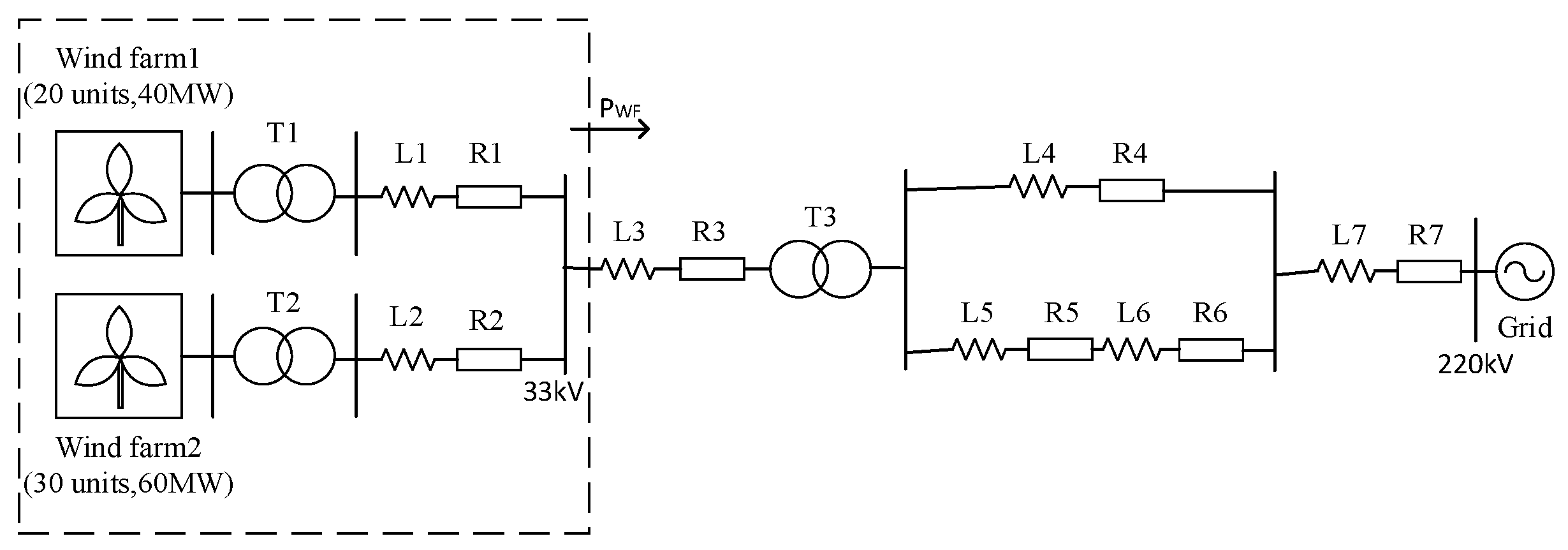
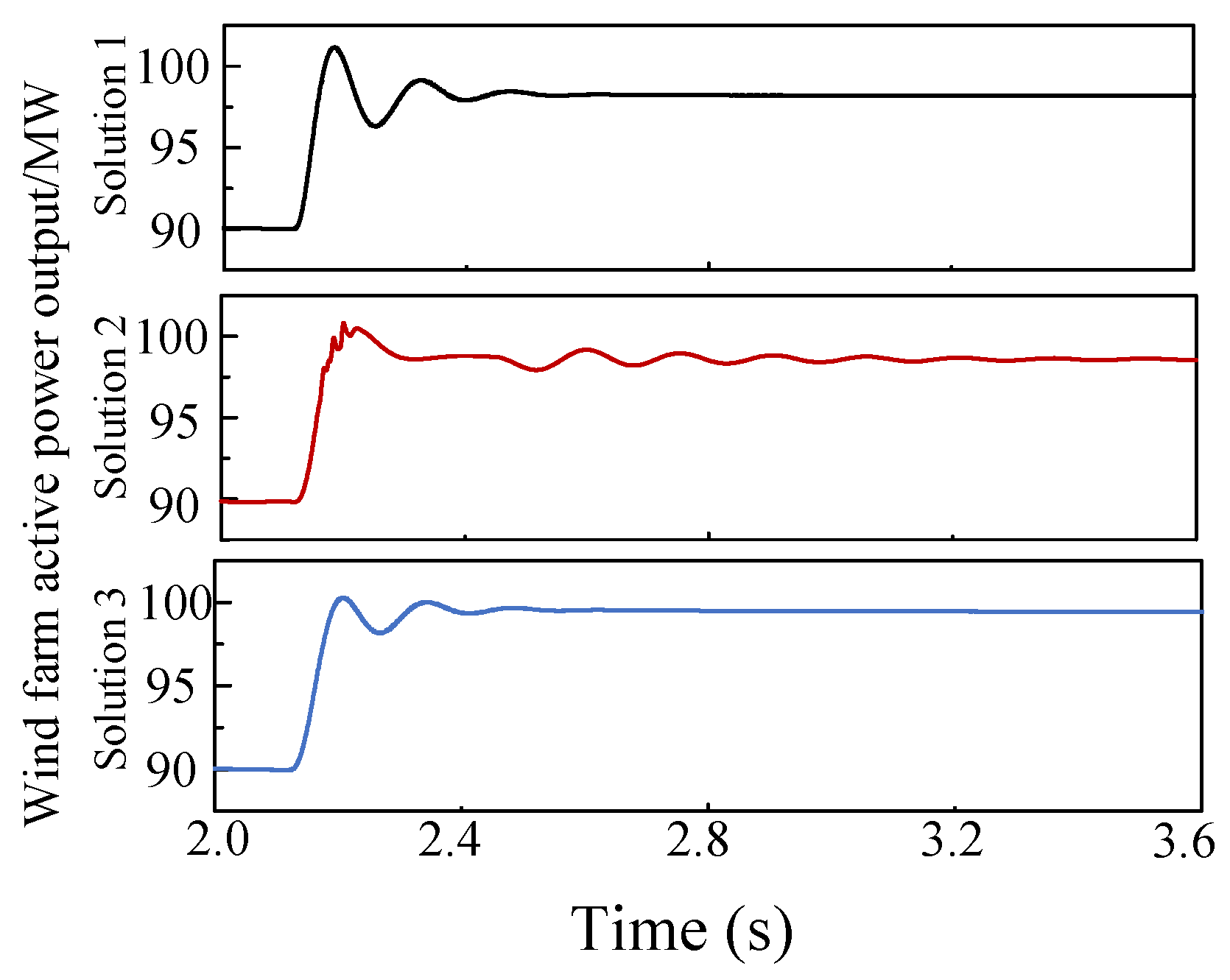
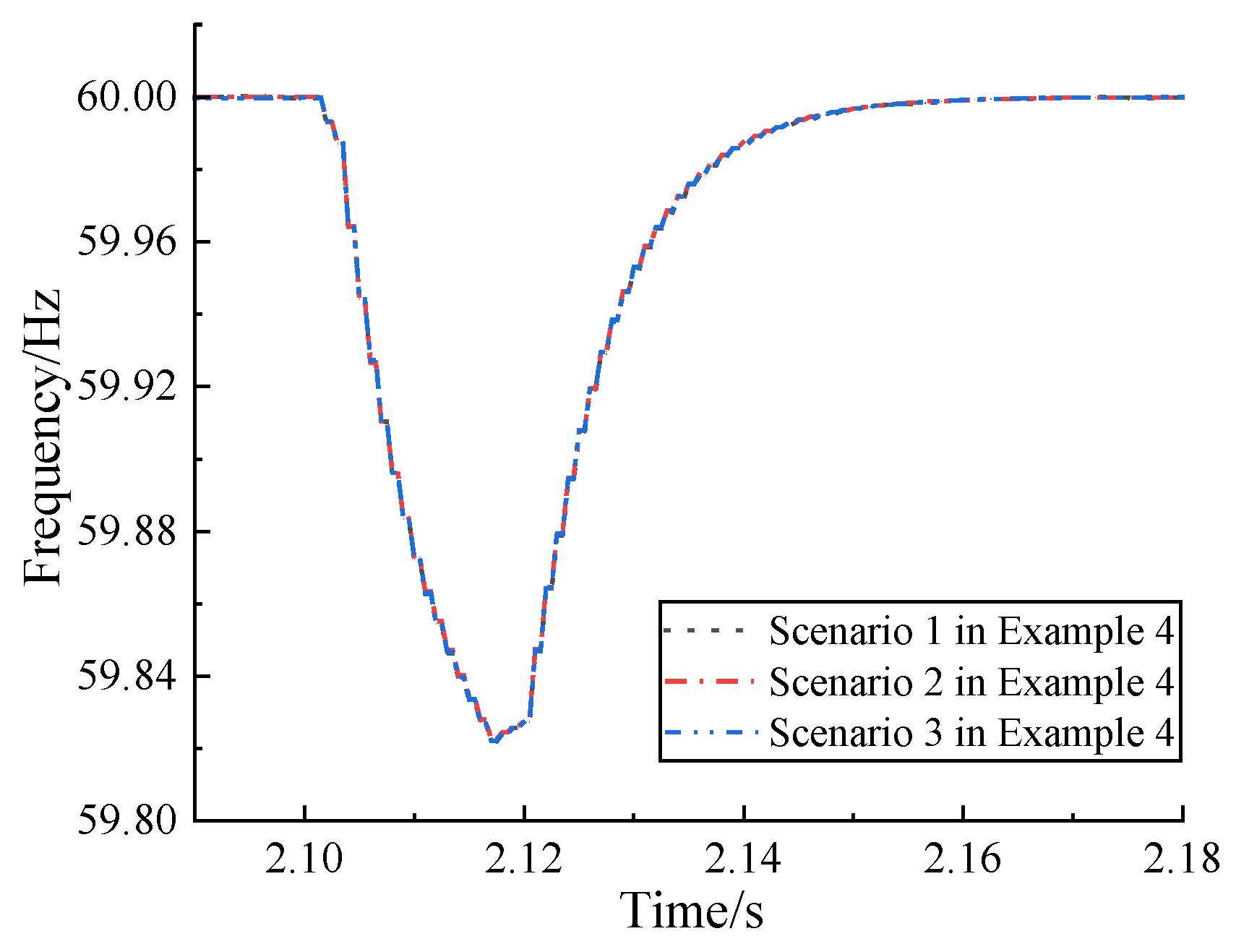
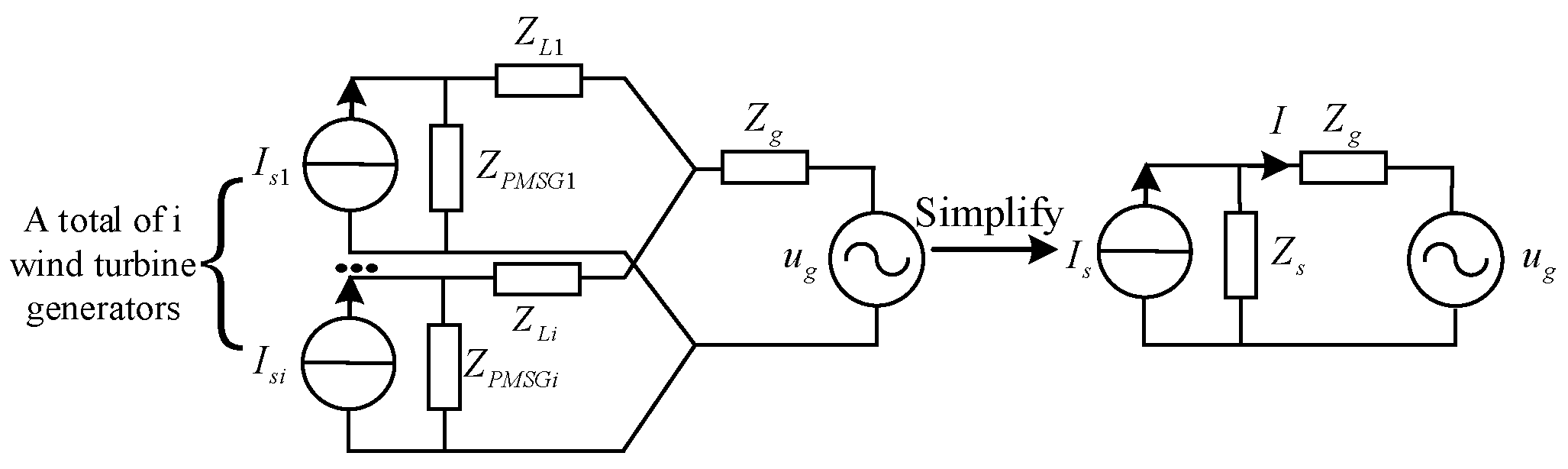
Active Power Optimization Allocation Strategy of Multiple Wind Turbines Considering the Improvement of Grid Connection Stability of Wind Farms


Abstract
1. Introduction
- (1)
- An impedance model accounting for active power output and terminal impedance variations has been established. Existing studies on grid-connected wind farm impedance models either neglect the impact of active power output or fail to account for the distributed characteristics of grid impedance. The small-signal equivalent impedance model proposed herein explicitly considers both the active power output variations of individual wind turbines and the terminal impedance differences caused by geographical location and transmission line length, which has not been captured by recent impedance-based analyses.
- (2)
- An impedance-matching-based active power allocation strategy for enhanced stability is proposed. Existing frequency regulation active power allocation strategies either prioritize equal distribution based on rated capacity or only partially consider stability. The optimization framework proposed in this study aims to maximize the system damping ratio stability margin while simultaneously addressing power balance constraints, limitations on wind turbine frequency regulation capabilities, and impedance-matching requirements. This frequency regulation power allocation strategy achieves synergistic optimization of frequency regulation performance and grid stability, representing a breakthrough not yet achieved in recent research.
2. Impedance Modeling of Wind Power Grid-Connected Systems Considering Active Power Output Effects
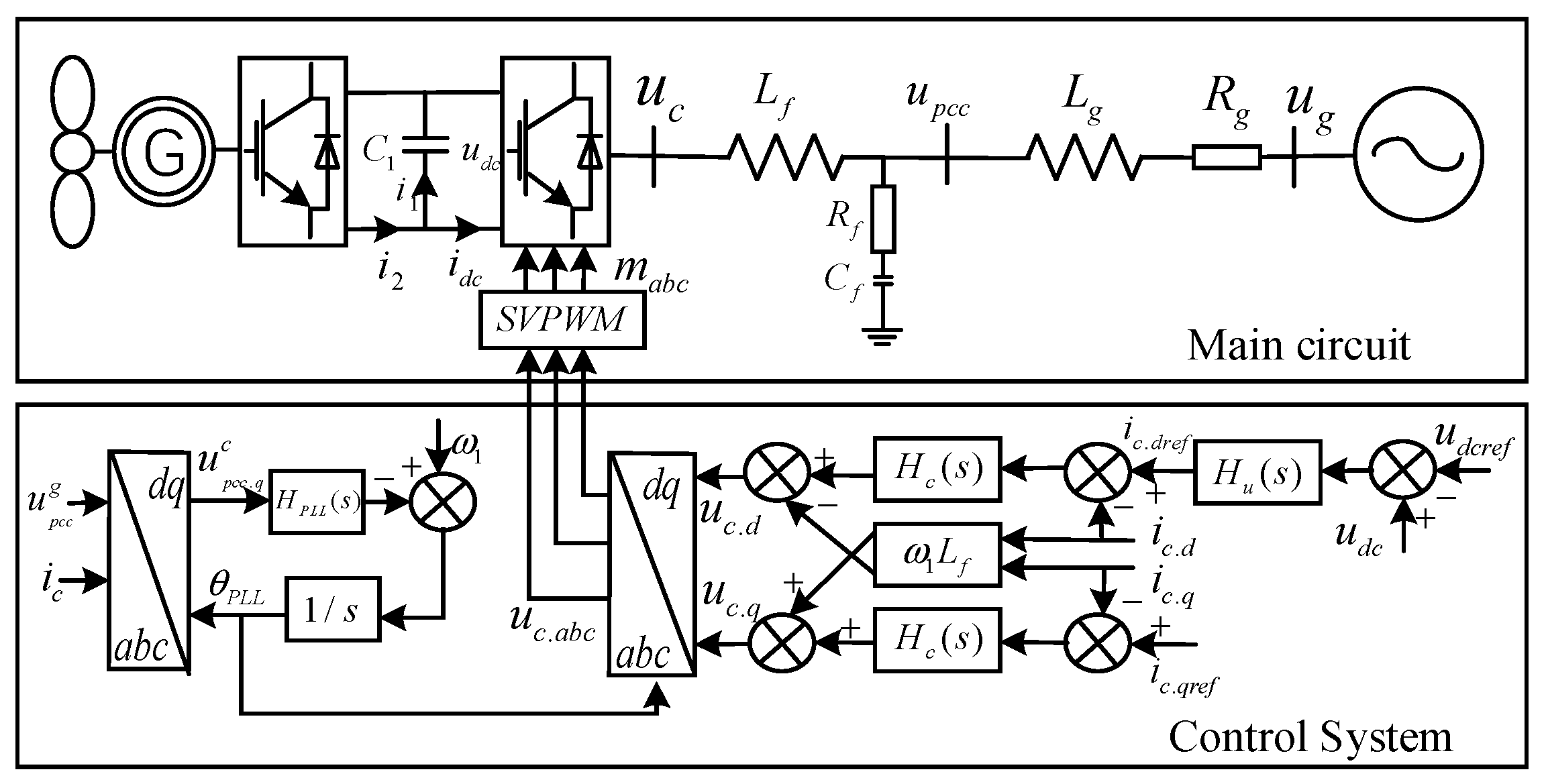
2.1. Impedance Model of PMSG
2.1.1. Small-Signal Model of the PLL
2.1.2. Small-Signal Model of the Current Inner Loop
2.1.3. Small-Signal Model of the Voltage Outer Loop Considering Power Output Effects
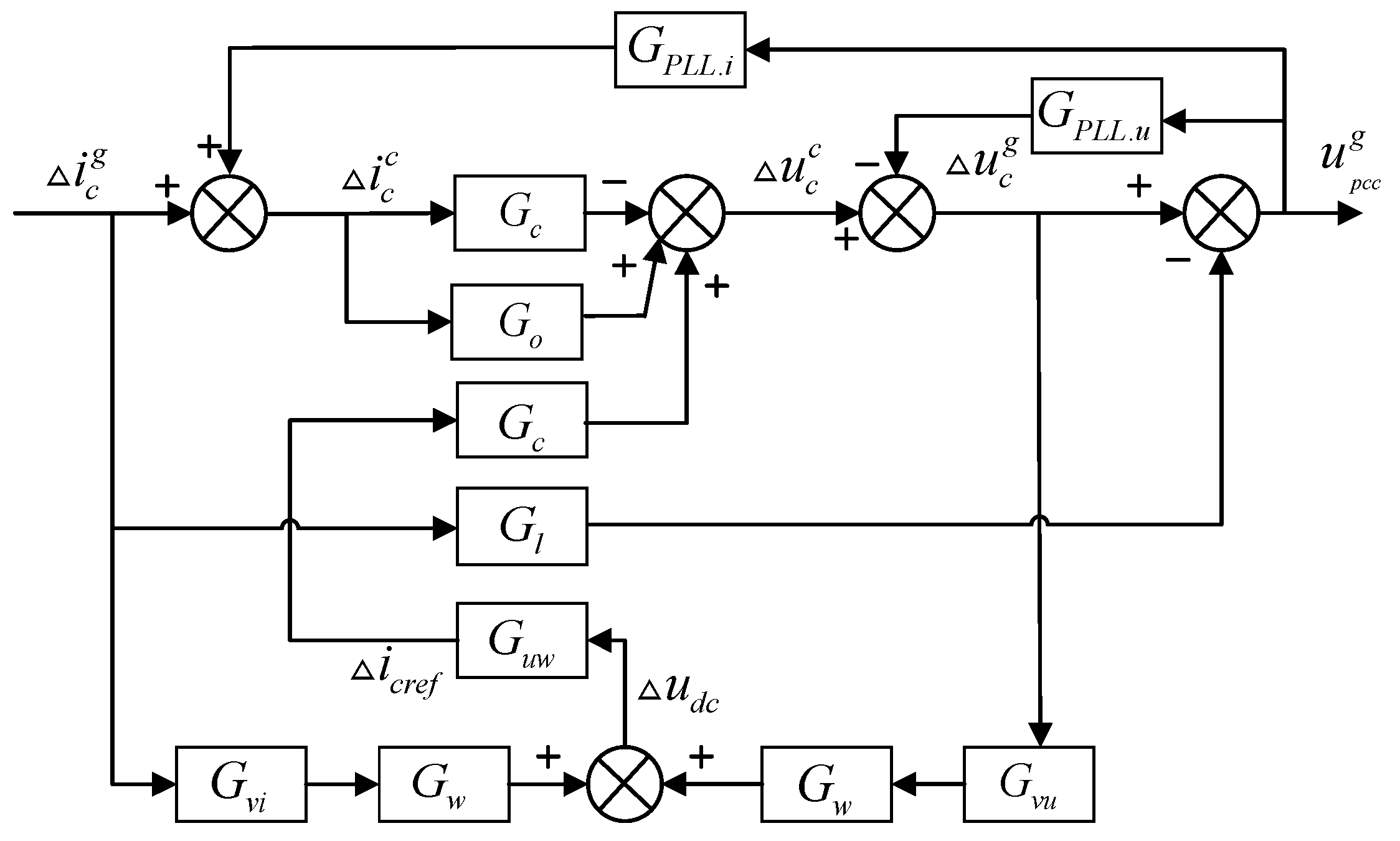
2.1.4. Small-Signal Model of Direct-Drive Wind Turbines
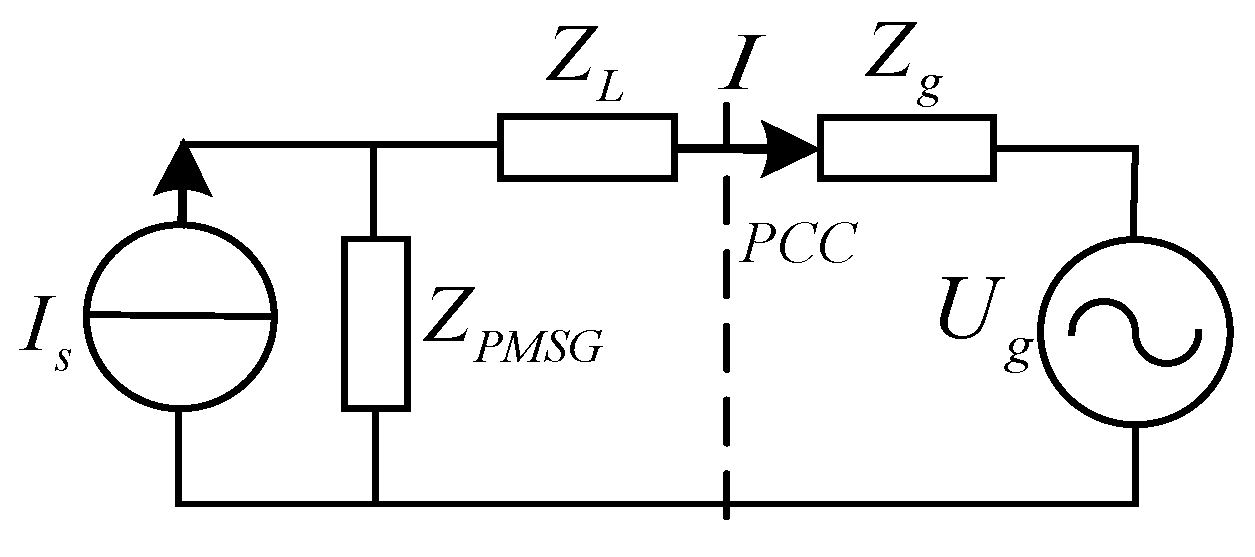
2.2. Grid-Connected Impedance Model for a Single Wind Turbine
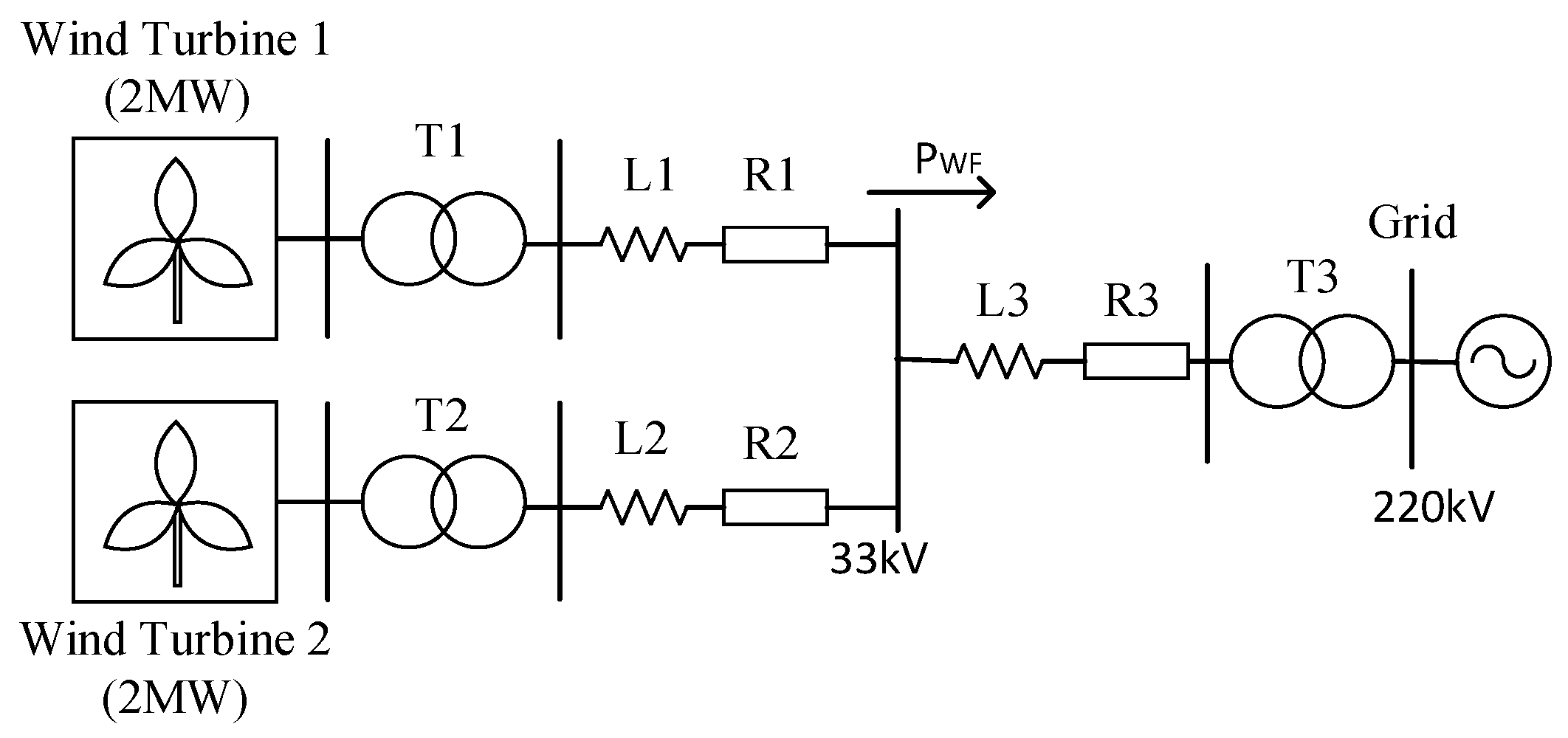
2.3. Equivalent Impedance Model for Wind Farm Grid Connection
3. Stability Analysis of Wind Farm Grid-Connected Systems
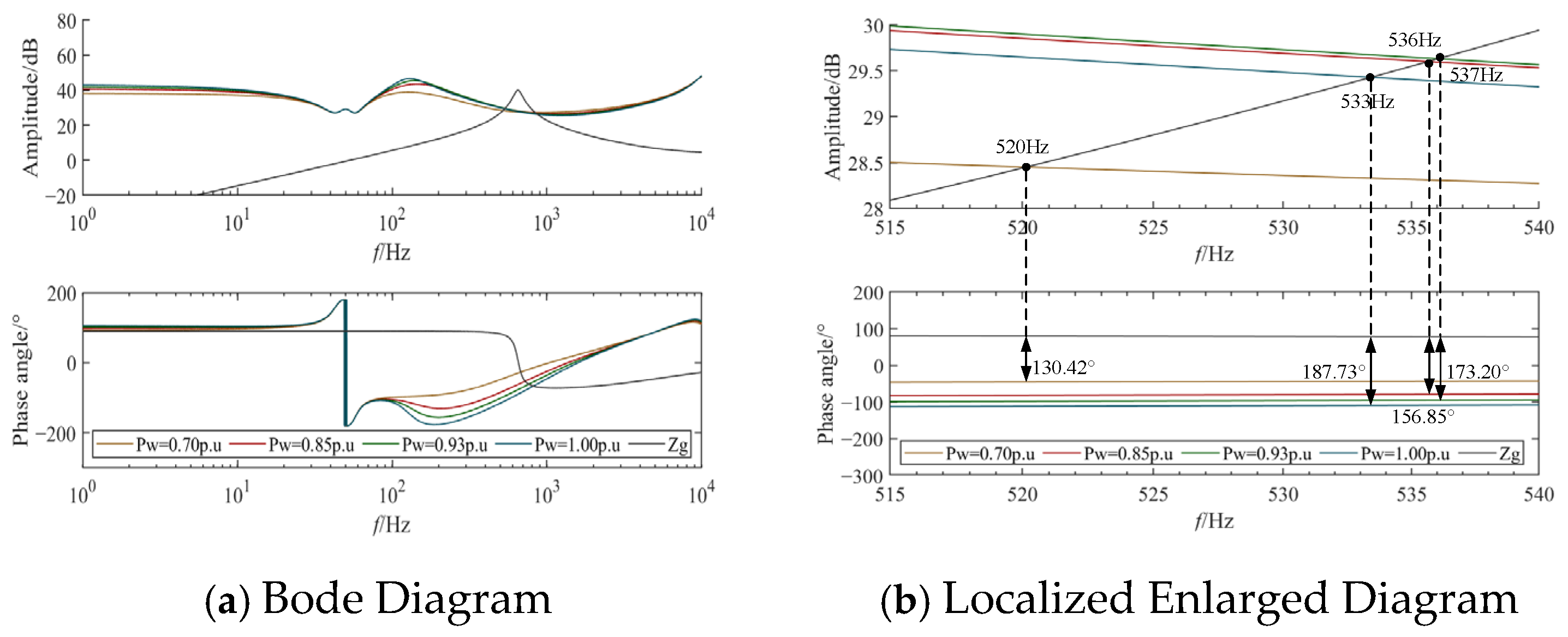
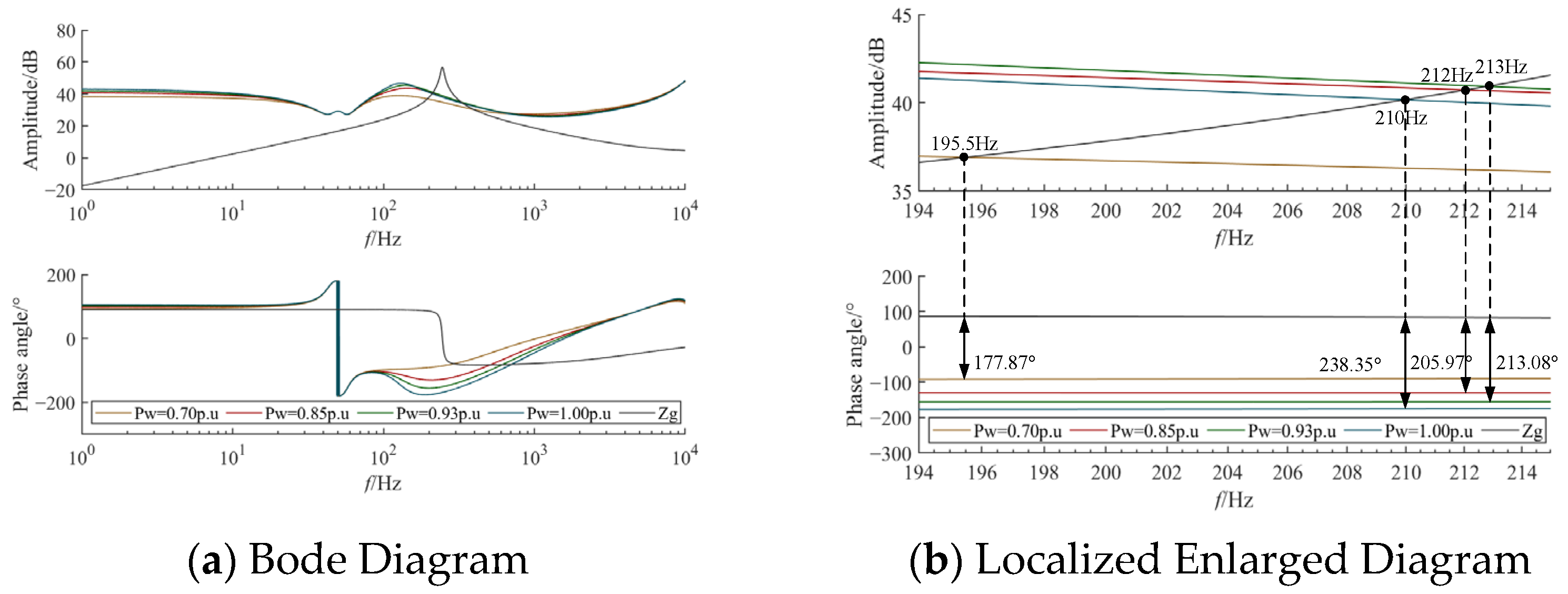
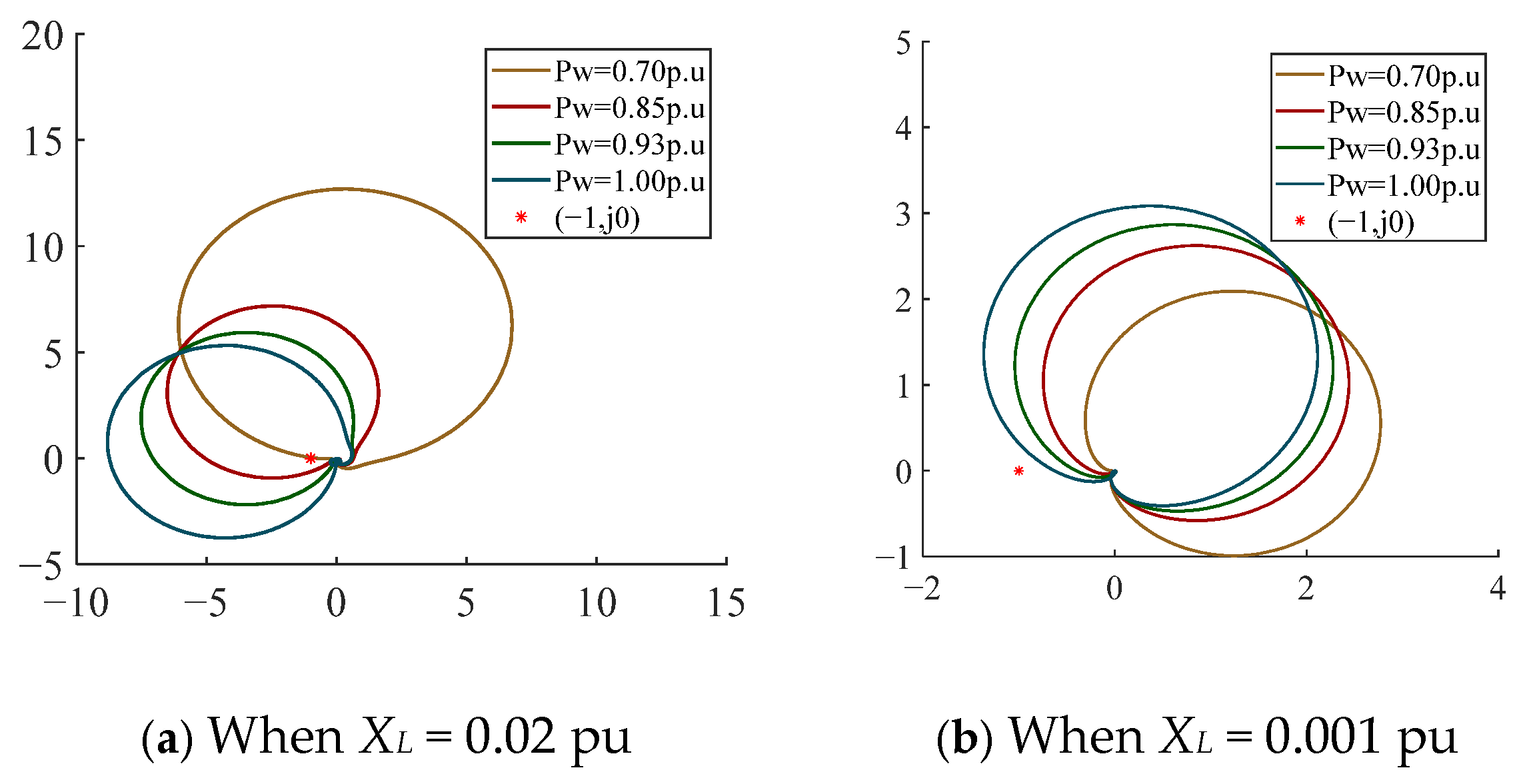
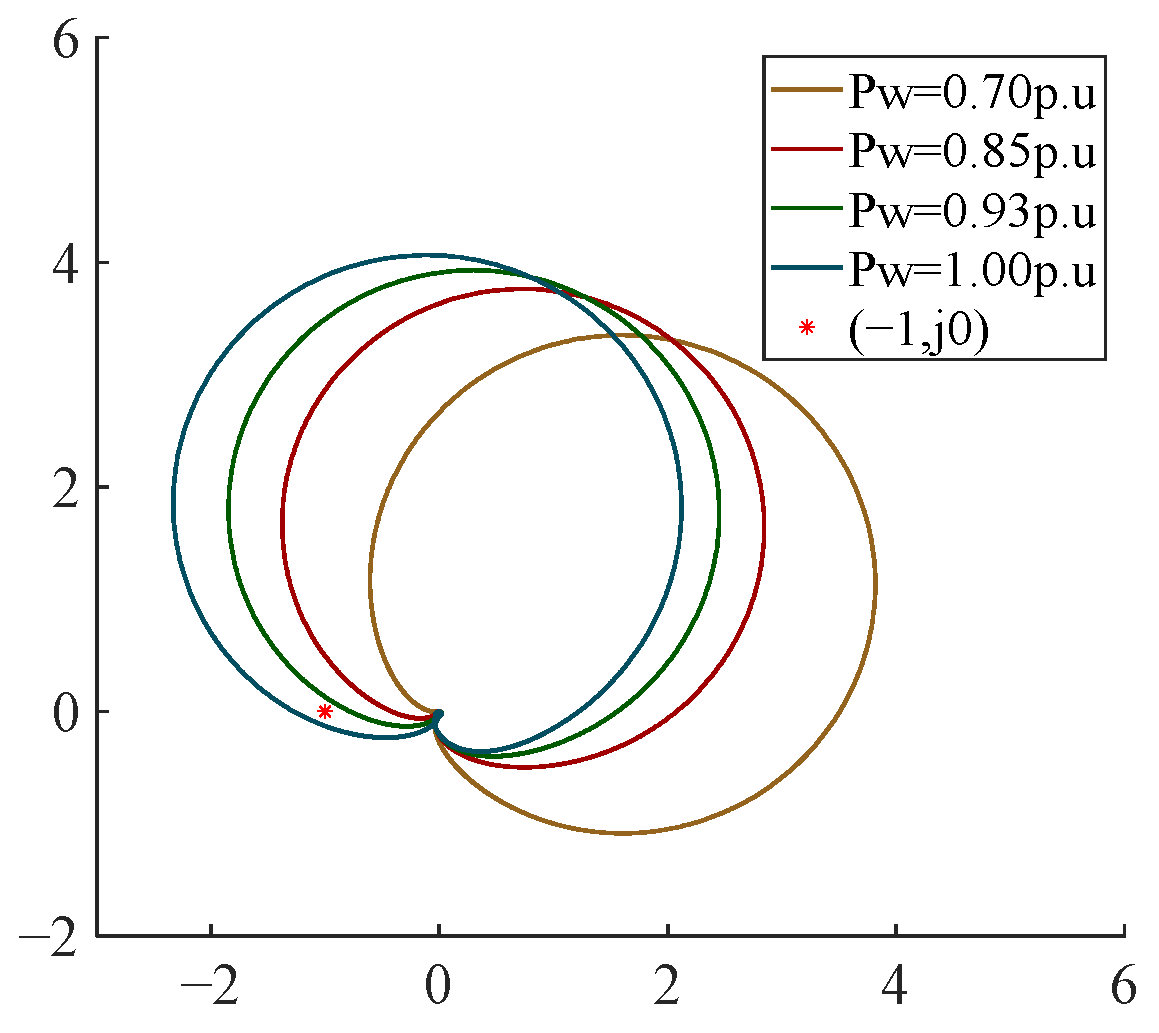
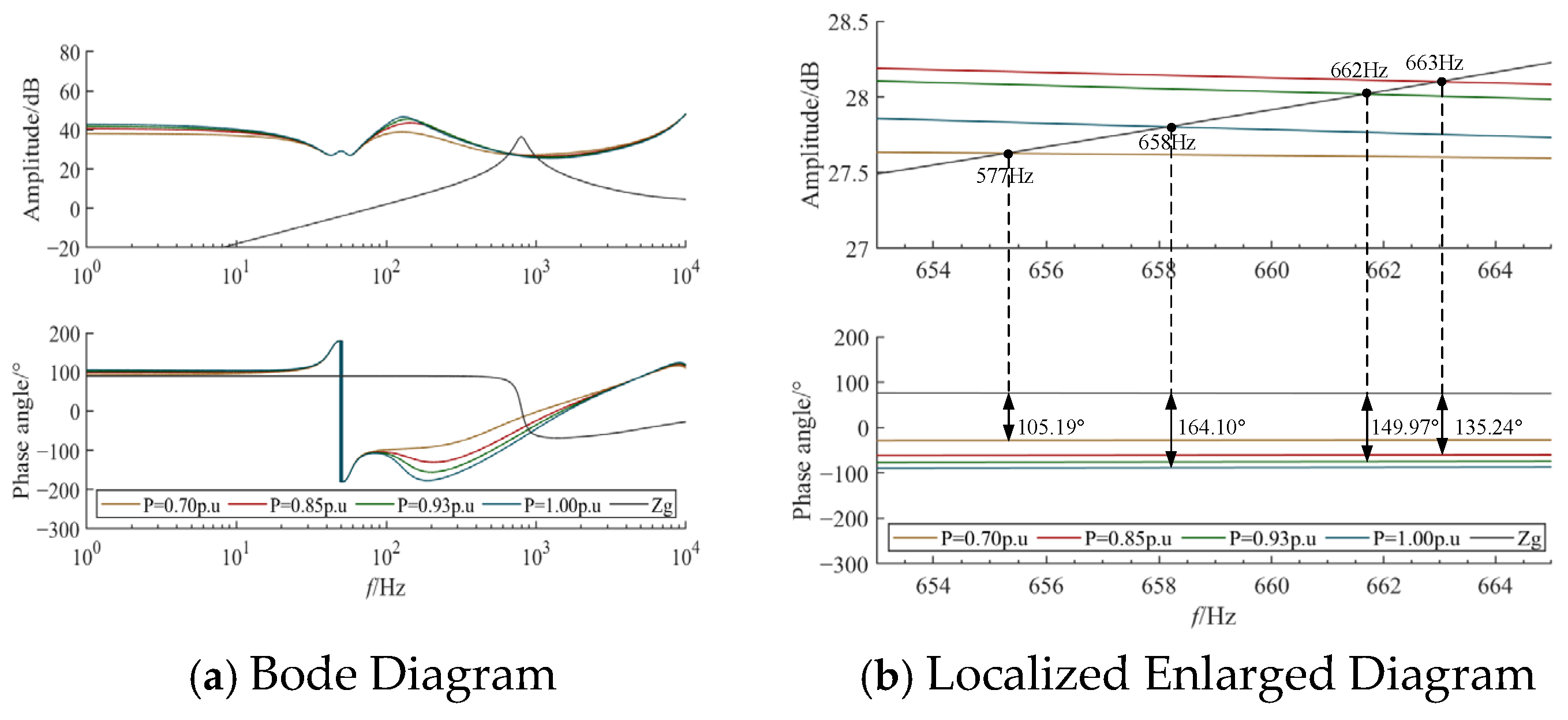
3.1. Analysis of Active Power Output Variations
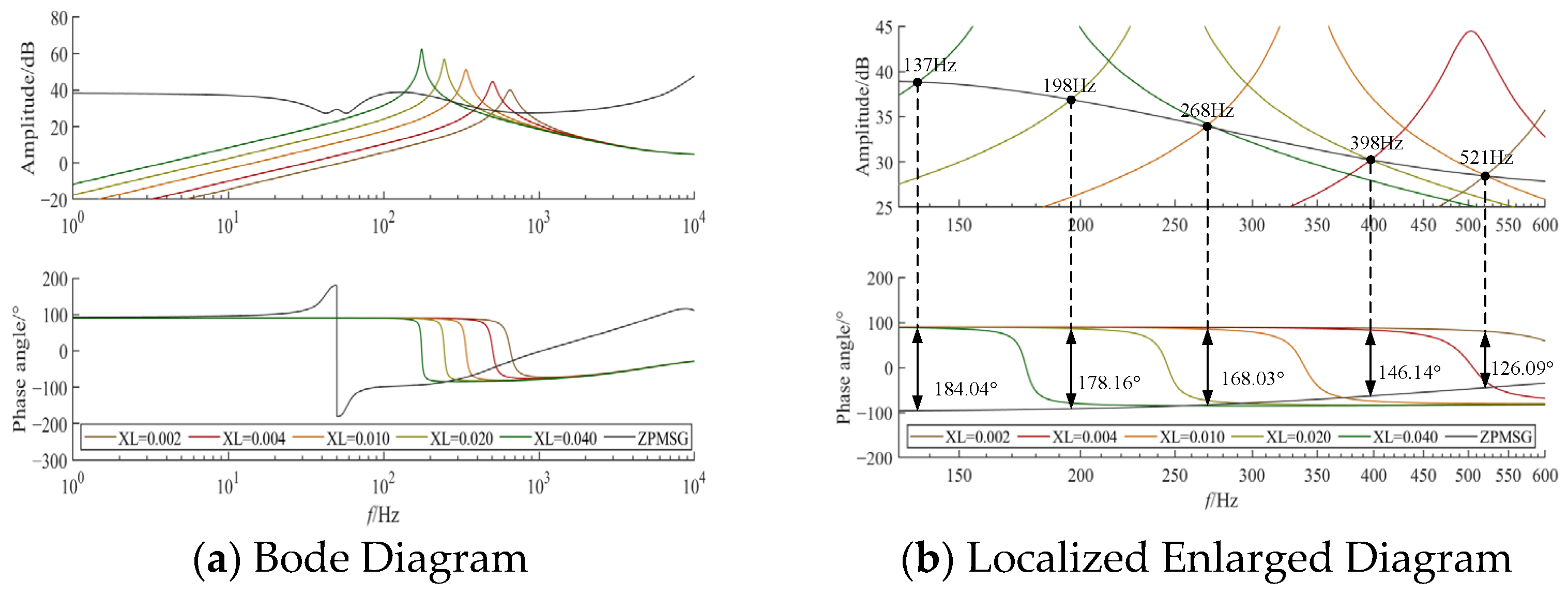
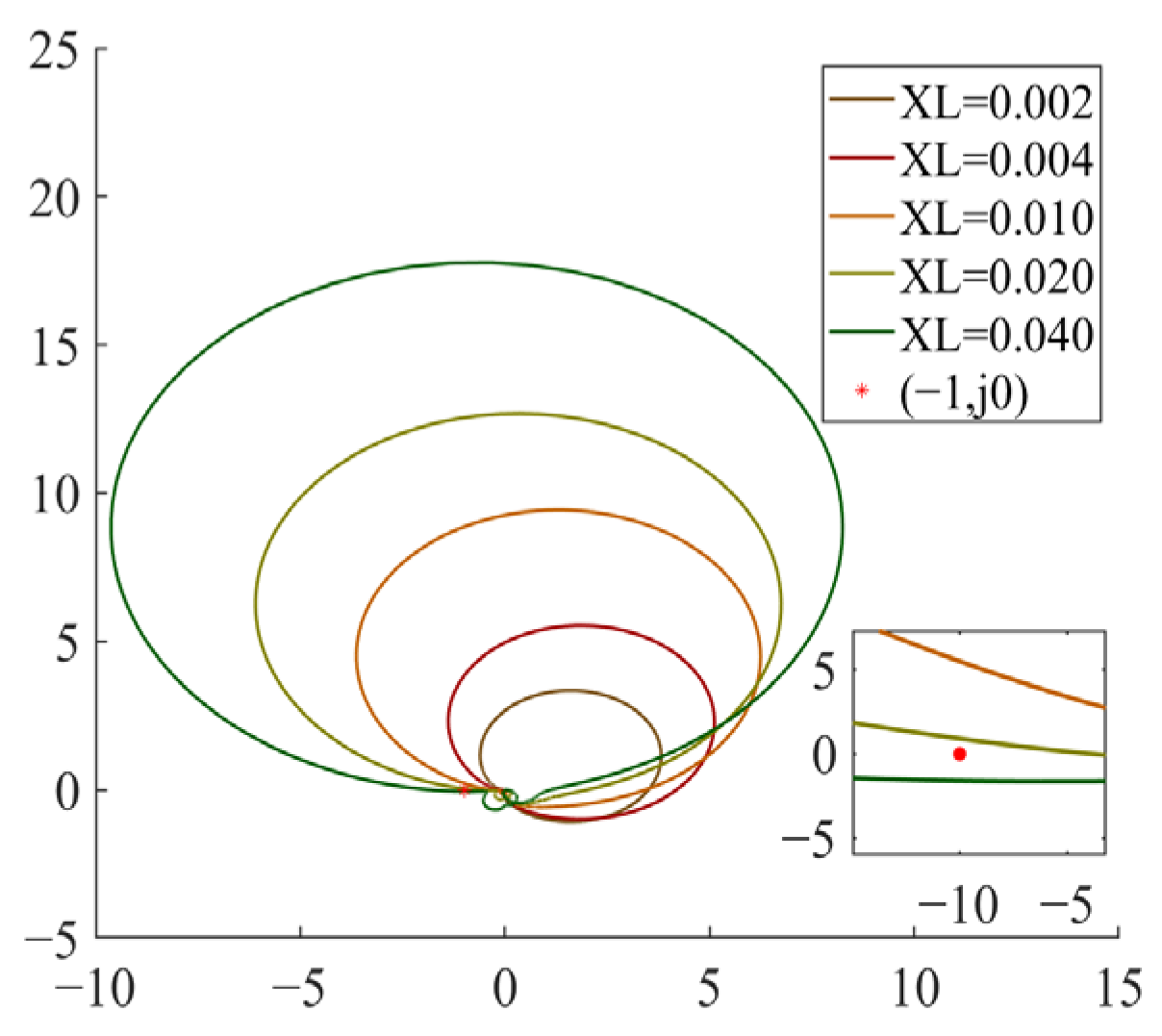
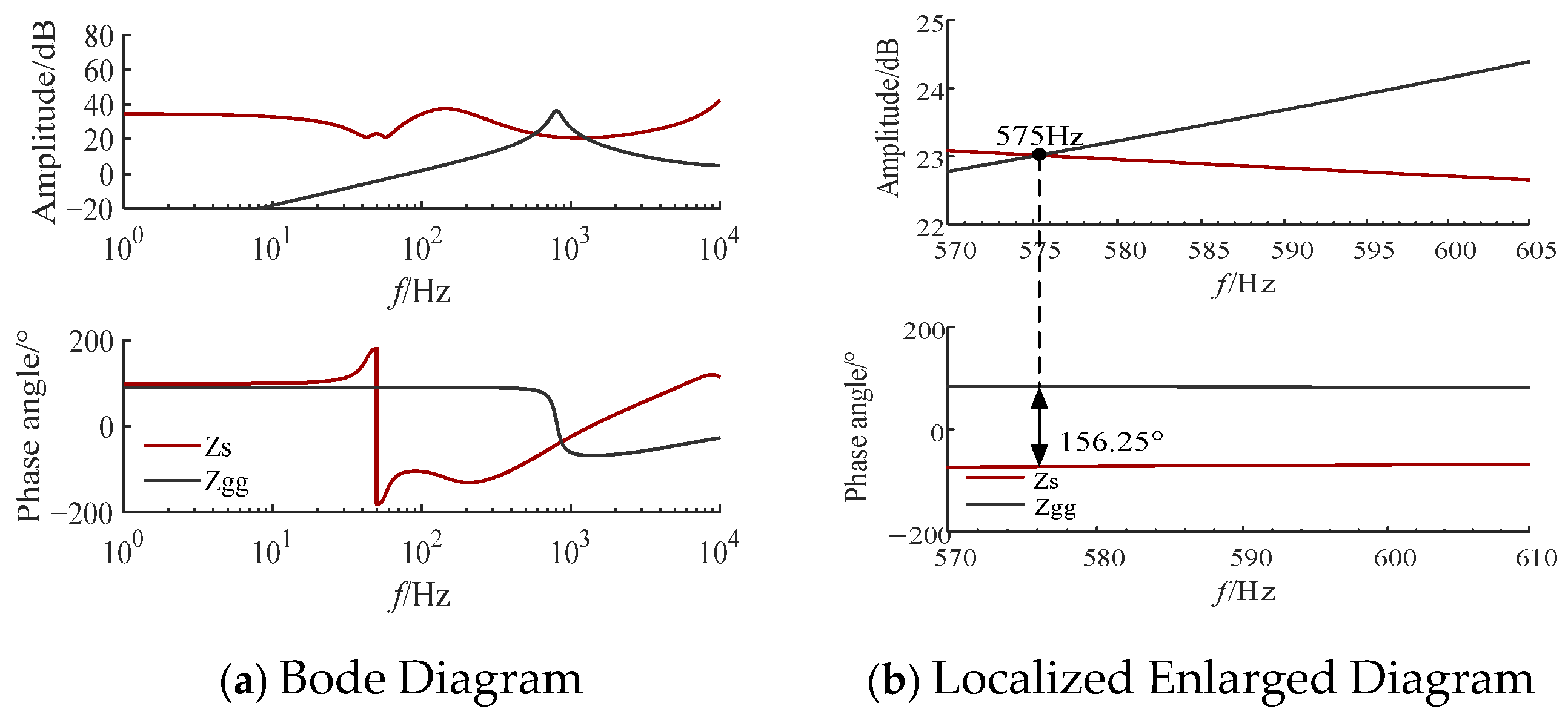
3.2. Analysis of Port Impedance Variations in Wind Turbines
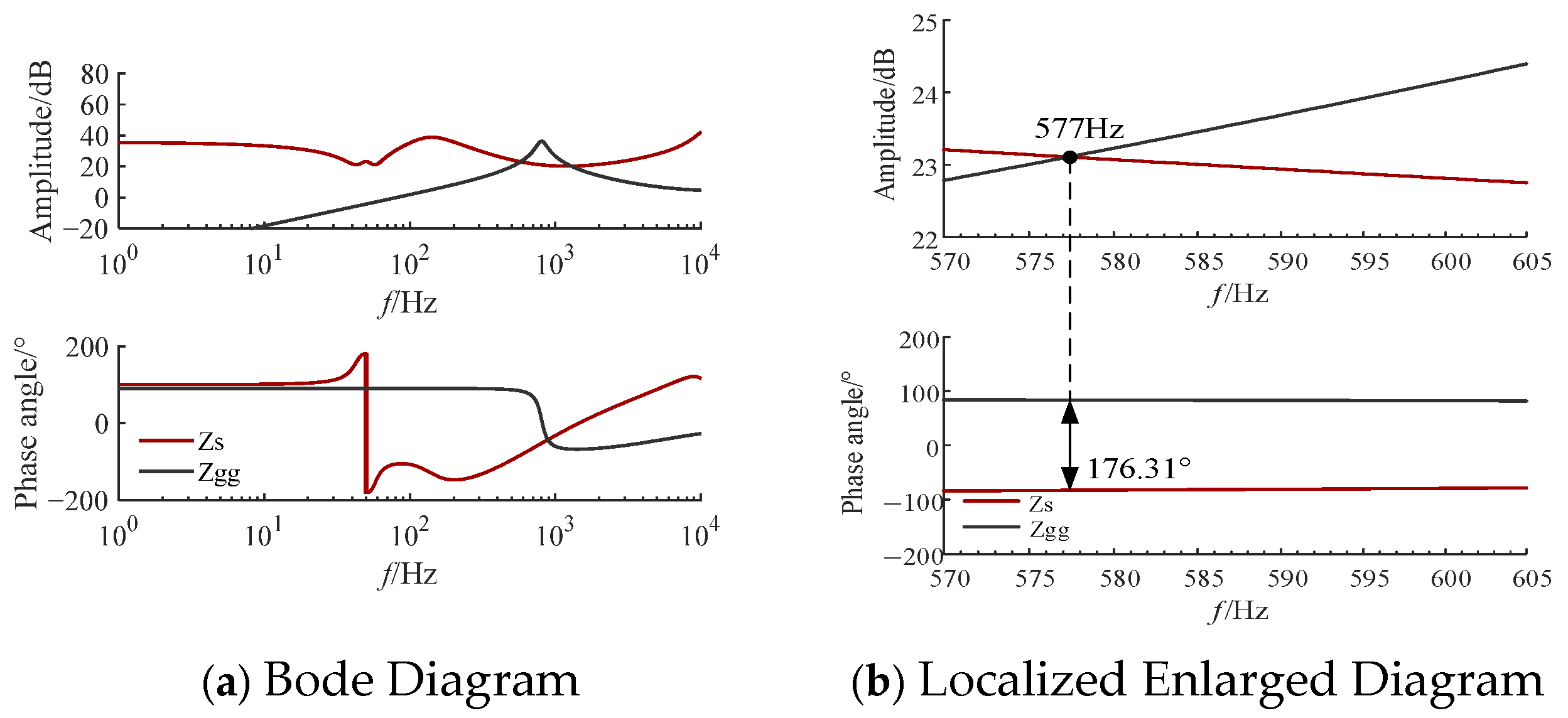
3.3. Analysis of the Impact of Wind Turbine Port Impedance on Active Power Output Matching
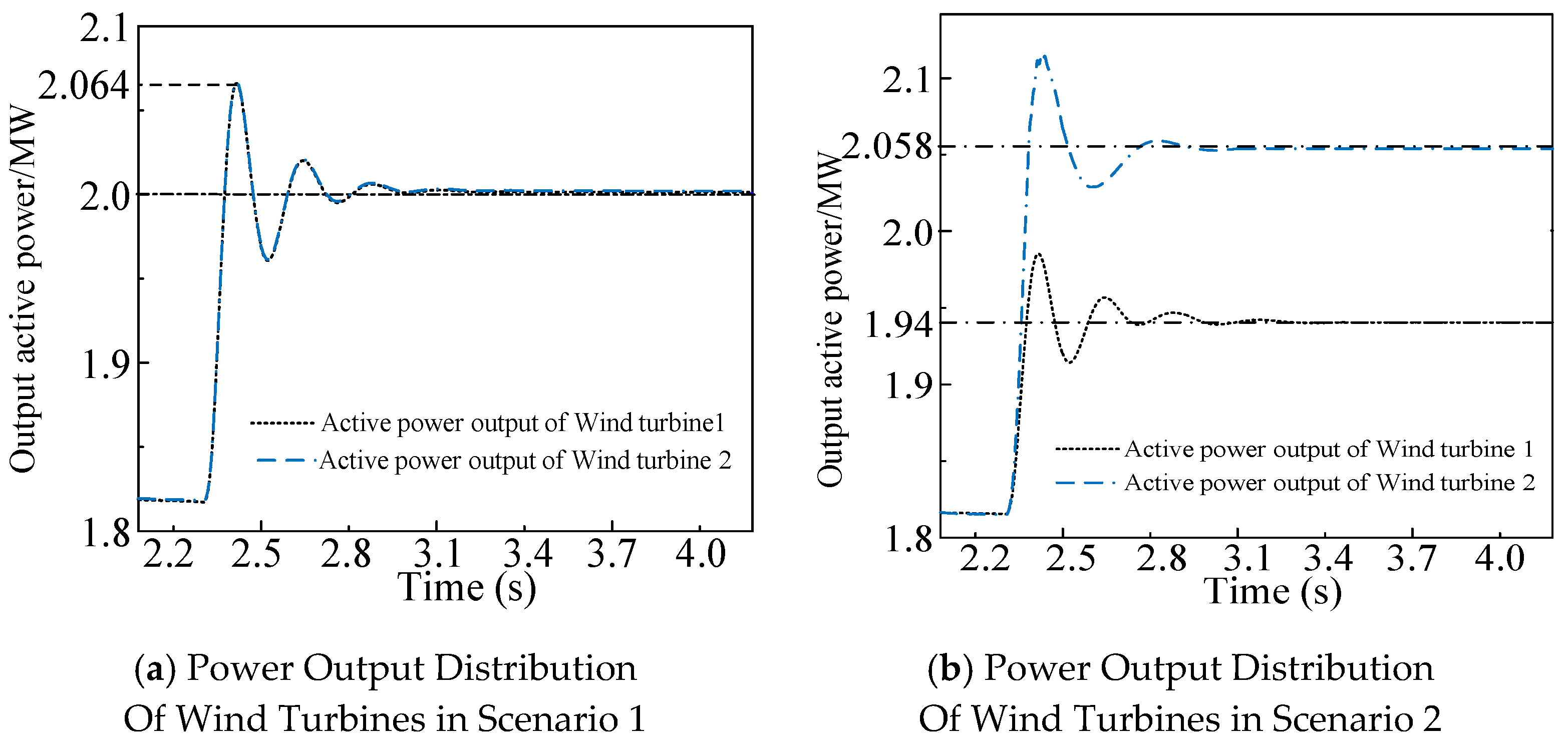
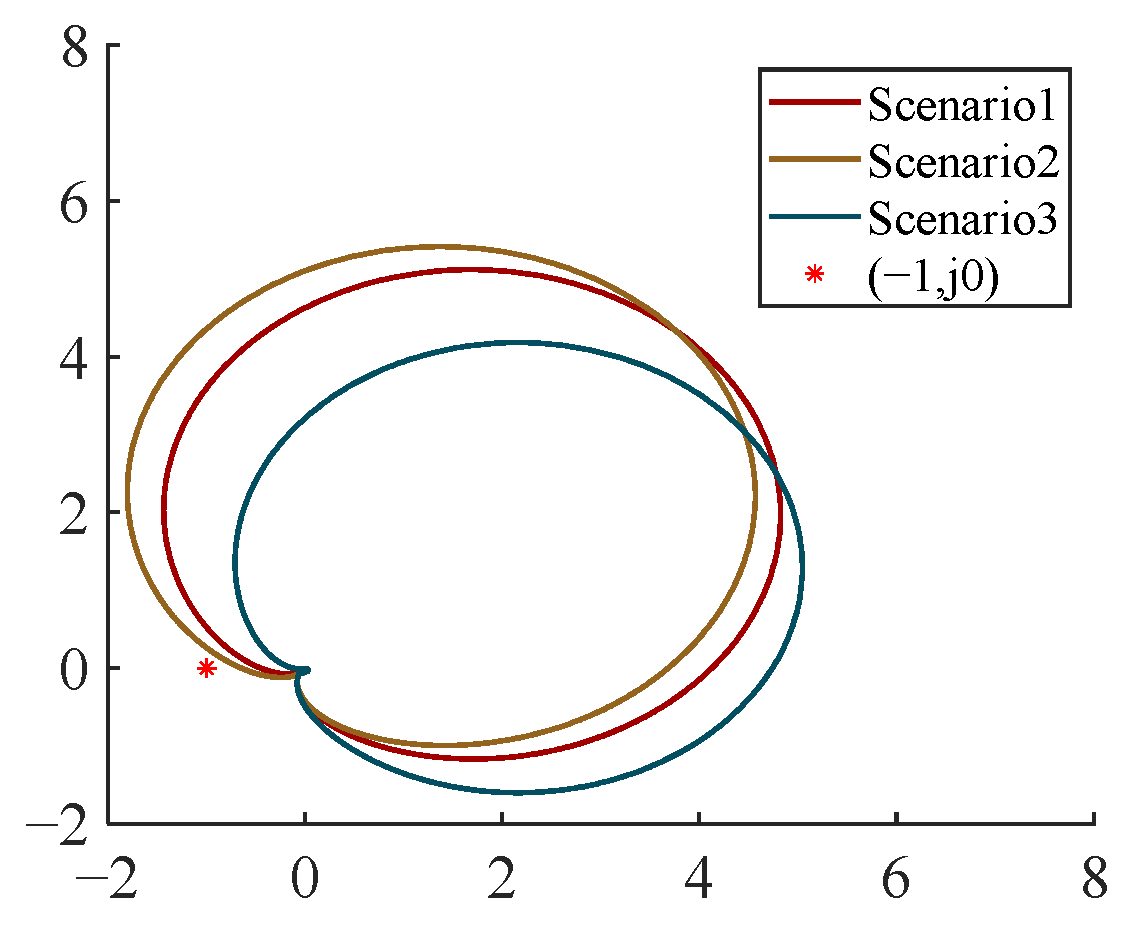
- Scenario 1: Active power output allocated according to rated capacity;
- Scenario 2: Turbine A output 1.0 pu, Turbine B output 1.2 pu;
- Scenario 3: Turbine A output 1.2 pu, Turbine B output 1.0 pu.
4. Optimized Frequency Regulation Power Allocation Strategy for Wind Farms Considering Stability Enhancement
4.1. Stability Margin Metrics for Wind Farm Grid-Connected Systems
4.2. Multi-Turbine Frequency Regulation Power Optimization Model Considering Stability Enhancement
4.3. Frequency Regulation Power Allocation Scheme
5. Case Study Analysis
5.1. Example 1
5.2. Example 2
5.3. Example 3
5.4. Example 4
6. Conclusions
- (1)
- A small-signal impedance model for wind farm grid-connected systems was established, accounting for unit output and terminal impedance variations. This model reveals the mechanism and matching relationship between active power output and terminal impedance in influencing stability margin.
- (2)
- A multi-turbine frequency regulation power allocation model is constructed to maximize the system damping ratio stability margin while accounting for power balance constraints and turbine active power output limitations, achieving coordinated optimization that balances frequency regulation power requirements with enhanced grid stability for wind farms;
- (3)
- Finally, considering practical and critical scenarios in power system operation, such as grid parameter changes caused by grid restructuring, load fluctuations, or line switching, we will explore the adaptability of the proposed strategy under dynamic grid conditions in a future study. Subsequent research will focus on extending this strategy to accommodate dynamic grid environments by integrating real-time grid impedance monitoring capabilities. This enhancement will improve the adaptability of the optimization strategy, enabling dynamic adjustments to power allocation schemes. The goal is to ensure the strategy maintains optimal stability margins while rapidly responding to grid parameter changes. The performance of the improved strategy will be validated through simulations and experimental testing under dynamic grid scenarios.
Author Contributions
Funding
Institutional Review Board Statement
Informed Consent Statement
Data Availability Statement
Conflicts of Interest
Abbreviations
| PMSG | Permanent Magnet Synchronous Generator |
| DC | Direct Current |
| PLL | Phase-Locked Loop |
| PCC | Point of Common Coupling |
| PSO | Particle Swarm Optimization |
References
- Staffell, I.; Pfenninger, S. The increasing impact of weather on electricity supply and demand. Energy 2018, 145, 65–78. [Google Scholar] [CrossRef]
- National Energy Administration. 2024 Renewable Energy Grid Connection and Operation Status. Available online: http://www.chinapower.com.cn/sj/ndsj/20250206/276129.html (accessed on 1 July 2025).
- Denholm, P.; Mai, T.; Kenyon, R.W.; Kroposki, B.; O’Malley, M. Inertia and the Power Grid: A Guide Without the Spin; National Renewable Energy Lab. (NREL): Golden, CO, USA, 2020. [Google Scholar]
- Lasseter, R.H.; Chen, Z.; Pattabiraman, D. Grid-Forming Inverters: A Critical Asset for the Power Grid. IEEE J. Emerg. Sel. Top. Power Electron. 2020, 8, 925–935. [Google Scholar] [CrossRef]
- Haque, M.E.; Paul, S.; Sheikh, M.R.I. Grid frequency analysis with the issue of high wind power penetration. In Proceedings of the 2013 International Conference on Electrical Information and Communication Technology (EICT), Khulna, Bangladesh, 13–15 February 2014; pp. 1–7. [Google Scholar]
- Zhao, H.; Zhao, J.; Qiu, J.; Liang, G.; Dong, Z.Y. Cooperative Wind Farm Control with Deep Reinforcement Learning and Knowledge-Assisted Learning. IEEE Trans. Ind. Inform. 2020, 16, 6912–6921. [Google Scholar] [CrossRef]
- Wang, D.; Liang, L.; Lei, S.; Hu, J.B.; Hou, Y.H. Analysis of modal resonance between PLL and DC-Link voltage control in weak-grid tied VSCs. IEEE Trans. Power Syst. 2019, 34, 1127–1138. [Google Scholar] [CrossRef]
- Murcia Leon, J.P.; Koivisto, M.J.; Sørensen, P.; Magnant, P. Power fluctuations in high-installation- density offshore wind fleets. Wind Energy Sci. 2021, 6, 461–476. [Google Scholar] [CrossRef]
- Yadav, V.V.; Saravanan, B. Technical advances and stability analysis in wind-penetrated power generation systems—A review. Front. Energy Res. 2022, 10, 986. [Google Scholar] [CrossRef]
- Du, W.J.; Wang, Y.J.; Wang, H.F.; Ren, B.X.; Xiao, X.Y. Small-Disturbance Stability Limit of a Grid-Connected Wind Farm with PMSGs in the Timescale of DC Voltage Dynamics. IEEE Trans. Power Syst. A Publ. Power Eng. Soc. 2021, 36, 1623–1633. [Google Scholar] [CrossRef]
- Du, W.; Ren, B.; Wang, H.; Wang, Y. Comparison of methods to examine Sub-synchronous oscillations caused by grid-connected wind turbine generators. IEEE Trans. Power Syst. 2019, 34, 4931–4943. [Google Scholar] [CrossRef]
- Wu, L.; Xu, M.; Lin, J.; Xu, H.; Zheng, L. Active Power Dispatch of Renewable Energy Power Systems Considering Multiple Renewable Energy Station Short-Circuit Ratio Constraints. Electronics 2024, 13, 3811. [Google Scholar] [CrossRef]
- Chai, Z.S.; Li, H.; Xie, X.R.; Abdeen, M.; Yang, T.; Wang, K. Output impedance modeling and grid-connected stability study of virtual synchronous control-based doubly-fed induction generator wind turbines in weak grids. Int. J. Electr. Power Energy Syst. 2021, 126, 106601. [Google Scholar] [CrossRef]
- Cespedes, M.; Sun, J. Impedance modelling and analysis of grid-connected voltage-source converters. IEEE Trans. Power Electron. 2014, 29, 1254–1261. [Google Scholar] [CrossRef]
- Du, W.; Dong, W.; Wang, H. A Method of Reduced-Order Modal Computation for Planning Grid Connection of a Large-Scale Wind Farm. IEEE Trans. Sustain. Energy 2020, 11, 1185–1198. [Google Scholar] [CrossRef]
- Shao, B.; Zhao, S.; Gao, B.; Yang, Y.; Blaabjerg, F. Adequacy of the Single-Generator Equivalent Model for Stability Analysis in Wind Farms With VSC-HVDC Systems. IEEE Trans. Energy Convers. 2021, 36, 907–918. [Google Scholar] [CrossRef]
- Tao, S.; Zhao, L.; Liu, Y.; Liao, K. Impedance Network Model of D-PMSG Based Wind Power Generation System Considering Wind Speed Variation for Sub-synchronous Oscillation Analysis. IEEE Access 2020, 8, 114784–114794. [Google Scholar] [CrossRef]
- Wu, D.; Seo, G.-S.; Xu, L.; Su, C.; Kocewiak, L.; Sun, Y.; Qin, Z. Grid Integration of Offshore Wind Power: Standards, Control, Power Quality and Transmission. IEEE Open J. Power Electron. 2024, 5, 583–604. [Google Scholar] [CrossRef]
- Du, W.; Dong, W.; Wang, H.F. Small-Signal Stability Limit of a Grid-Connected PMSG Wind Farm Dominated by the Dynamics of PLLs. IEEE Trans. Power Syst. 2020, 35, 2093–2107. [Google Scholar] [CrossRef]
- Bao, W.; Wu, Q.; Ding, L.; Huang, S.; Terzija, V. A Hierarchical Inertial Control Scheme for Multiple Wind Farms With BESSs Based on ADMM. IEEE Trans. Sustain. Energy 2021, 12, 751–760. [Google Scholar] [CrossRef]
- Wang, P.; Wu, Q.; Huang, S.; Li, C.; Zhou, B. ADMM-based Distributed Active and Reactive Power Control for Regional AC Power Grid with Wind Farms. J. Mod. Power Syst. Clean Energy 2022, 10, 588–596. [Google Scholar] [CrossRef]
- Ding, R.; Yang, C.; Mei, R.; Yang, H.; Ji, J.; Shi, Q. Research on simplified modeling of large-scale wind farms based on equivalent transfer function and aggregate equivalent. Front. Energy Res. 2023, 10, 1098025. [Google Scholar] [CrossRef]
- Li, C. Frequency modulation technology for power systems incorporating wind power, energy storage, and flexible frequency modulation. Sustain. Energy Res. 2025, 12, 10. [Google Scholar] [CrossRef]
- Jiang, C.; Cai, G.; Yang, D.; Liu, X.; Hao, S.; Li, B. Multi-objective configuration and evaluation of dynamic virtual inertia from DFIG based wind farm for frequency regulation. Int. J. Electr. Power Energy Syst. 2024, 158, 109956. [Google Scholar] [CrossRef]
- Astapov, V.Y. Applicability of multi-agent control for virtual inertia modes in a wind power plant. iPolytech J. 2024, 27, 694–726. [Google Scholar] [CrossRef]
- Feleke, S.; Satish, R.; Pydi, B.; Anteneh, D.; Abdelaziz, A.Y.; El-Shahat, A. Damping of Frequency and Power System Oscillations with DFIG Wind Turbine and DE Optimization. Sustainability 2023, 15, 4751. [Google Scholar] [CrossRef]
- Li, Y.; Zhu, G.; Lu, J.; Geng, H. Voltage Support Capacity Improvement for Wind Farms with Reactive Power Substitution Control. CSEE J. Power Energy Syst. 2025, 11, 999–1017. [Google Scholar]
- Yao, Q.; Hu, Y.; Deng, H. Two-degree-of-freedom active power control of megawatt wind turbine considering fatigue load optimization. Renew. Energy 2020, 162, 2096–2112. [Google Scholar] [CrossRef]
- Yao, Q.; Liu, J.; Hu, Y. Optimized active power dispatching strategy considering fatigue load of wind turbines during de- loading operation. IEEE Access 2019, 7, 17439–17449. [Google Scholar] [CrossRef]
- GB/T 40581-2021; Calculation Specification for Power System Security and Stability. State Administration for Market Regulation, Standardization Administration of China: Beijing, China, 2021.
- Li, W.; Li, Y.; Li, J.; Zhang, Y.; Chang, X.; Sun, Z. Variable droop gain frequency supporting control with maximum rotor kinetic energy utilization for wind-storage system. Int. J. Electr. Power Energy Syst. 2024, 163, 110289. [Google Scholar] [CrossRef]
- Kim, T.; Kim, C.; Song, J.; You, D. Optimal control of a wind farm in time-varying wind using deep reinforcement learning. Energy 2024, 303, 131950. [Google Scholar] [CrossRef]














| Reference | Consideration of Impedance Matching | Integration of Active Power Output-Stability Mechanism | Optimization Objective |
|---|---|---|---|
| [20,21,22,23] | No | No | Equal proportion/generation capacity priority |
| [24] | No | only small-disturbance oscillation mode damping | Maximize interval oscillation mode damping ratio |
| [25] | No | No | Meet grid critical inertia demand |
| [26] | No | damping level enhancement | Coordinate frequency support and stability |
| [27,28,29] | No | No | Reduce turbine fatigue load |
| Proposed Method | match terminal impedance and output power | explicit impedance model with output power effect | Maximize system damping ratio stability margin |
| Parameters | Value | Parameters | Value |
|---|---|---|---|
| DC link voltage | 1100 V | Current Loop Proportional Constant | 0.6 |
| DC link capacitor | 8 mF | Voltage Loop Proportional Constant | 0.1 |
| Current loop integral constant | 200 | PLL proportional constant | 180 |
| Voltage loop integral constant | 15 | Phase-locked loop integral constant | 2000 |
| Rated capacity of wind turbines | 2 MW | Power grid frequency | 60 Hz |
| Parameters | Value | Parameters | Value |
|---|---|---|---|
| Filter Inductor Lf | 1 mH | Filter Capacitor Cf | 20 uF |
| Filter Resistor Rf | 0.001 Ω | Frequency | 60 Hz |
| Equivalent Reactance of the Grid Lg | 5 mH | Voltage of PCC upcc | 35 kV |
| Grid Connection Line Impedance XL | 2 mH | Equivalent Resistor of the Grid Rg | 0.002 Ω |
| Parameters | Value | Parameters | Value |
|---|---|---|---|
| Wind Turbine Terminal Inductor | 0.02 pu | Wind Turbine Terminal Resistance | 0.005 pu |
| Equivalent Inductor of The Grid | 0.01 pu | Equivalent Resistance of The Grid | 0.001 pu |
| Parameters | Value | Parameters | Value |
|---|---|---|---|
| Wind Turbine 2-1 Average Wind Speed | 10.0 m/s | Terminating Resistor R2-1 | 0.005 pu |
| Wind Turbine 2-2 Average Wind Speed | 10.5 m/s | Terminating Resistor R2-2 | 0.008 pu |
| Terminal Inductor L2-1 | 0.05 pu | Equivalent Inductance Of The Grid L2-3 | 0.01 pu |
| Terminal Inductor L2-2 | 0.08 pu | Equivalent Resistor Of The Grid R2-3 | 0.001 pu |
| Population size | 50 | Cognitive acceleration coefficient | 2 |
| Maximum number of iterations | 100 | Social acceleration coefficient | 2 |
| Upper Boundary Constraint | Lower Boundary Constraints |
| Performance Indicator | Equal Distribution | Capacity-Based Allocation | Proposed Strategy |
|---|---|---|---|
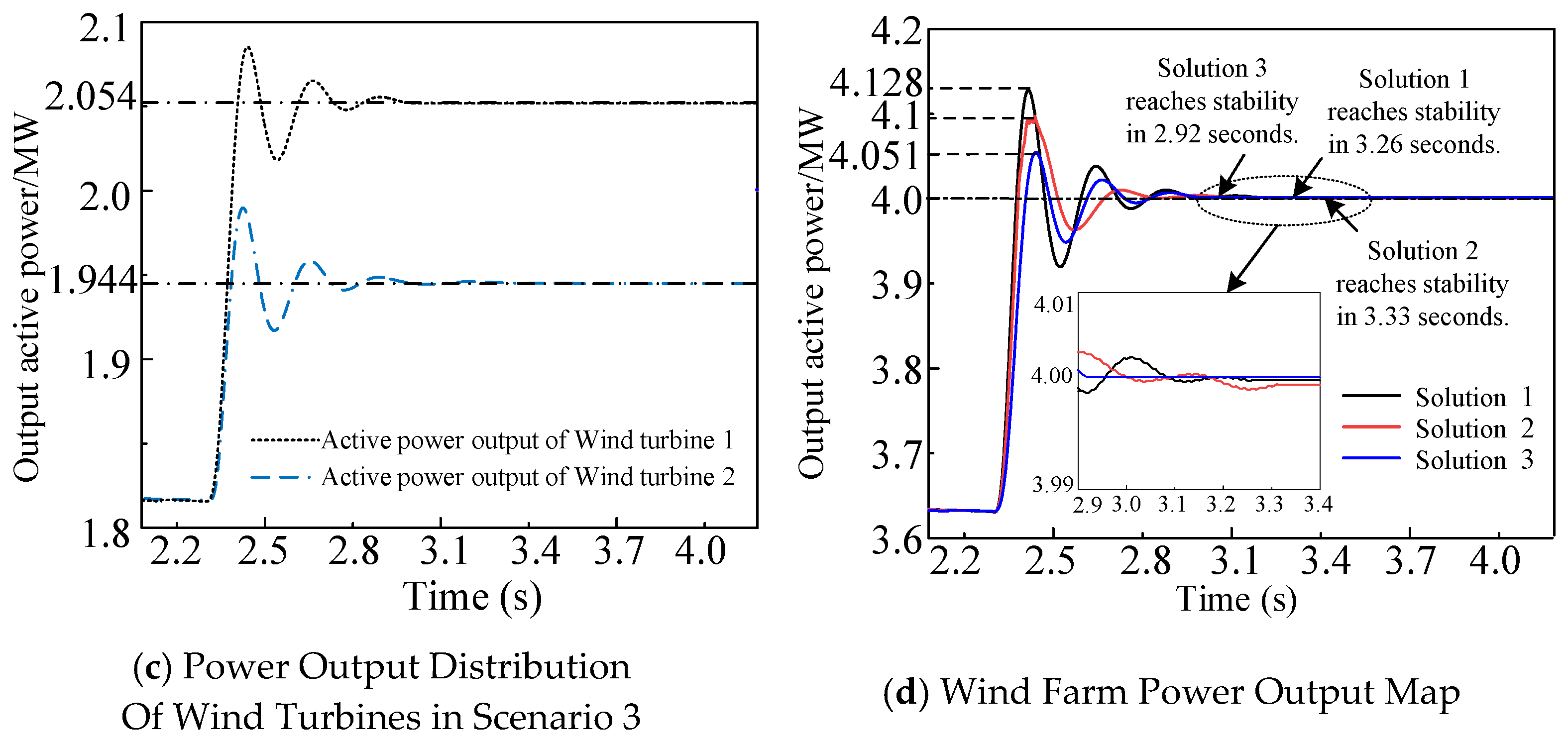
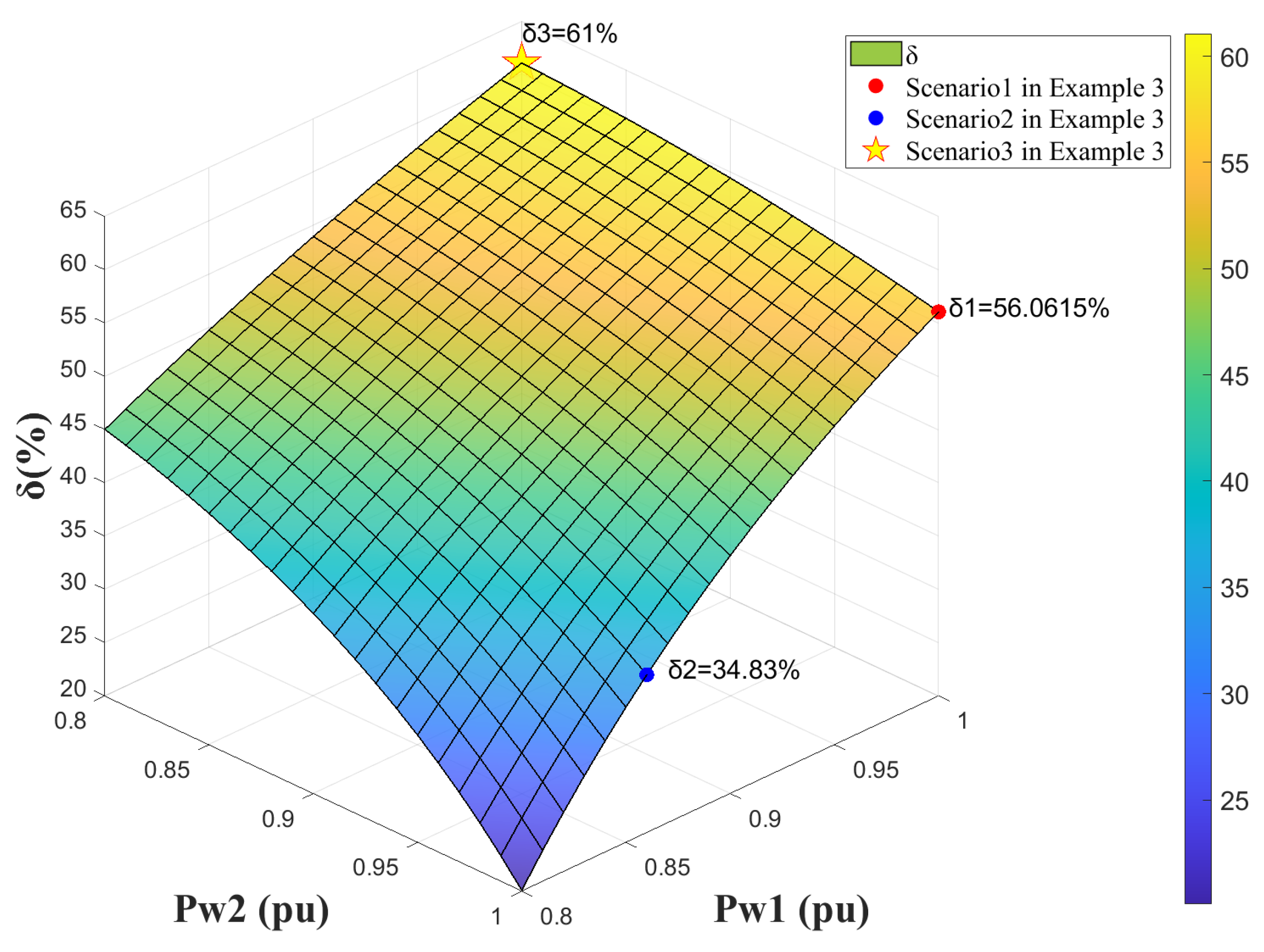
| Damping ratio stability margin | 56% | 34% | 61% |
| Transient recovery time (s) | 3.26 | 3.33 | 2.92 |
| Active power overshoot (%) | 3.2 | 2.5 | 1.3 |
| Parameters | Value | Parameters | Value |
|---|---|---|---|
| Number of wind turbines in Wind Farm 1 | 25 | R2-7 | 0.001 |
| Number of wind turbines in Wind Farm 2 | 25 | L2-1 | 0.05 pu |
| R2-1 | 0.005 pu | L2-2 | 0.08 pu |
| R2-2 | 0.008 pu | L2-3 | 0.2 pu |
| R2-3 | 0.02 pu | L2-4 | 0.3 pu |
| R2-4 | 0.03 pu | L2-5 | 0.15 pu |
| R2-5 | 0.015 pu | L2-6 | 0.15 pu |
| R2-6 | 0.015 pu | L2-7 | 0.01 |
| Performance Indicator | Equal Distribution | Capacity-Based Allocation | Proposed Strategy |
|---|---|---|---|
| Damping ratio stability margin | 39.89% | 34.83% | 52.67% |
| Transient recovery time (s) | 2.74 | 3.95 | 2.51 |
| Active power overshoot (%) | 2.6 | 3.1 | 2.0 |
Disclaimer/Publisher’s Note: The statements, opinions and data contained in all publications are solely those of the individual author(s) and contributor(s) and not of MDPI and/or the editor(s). MDPI and/or the editor(s) disclaim responsibility for any injury to people or property resulting from any ideas, methods, instructions or products referred to in the content. |
© 2026 by the authors. Licensee MDPI, Basel, Switzerland. This article is an open access article distributed under the terms and conditions of the Creative Commons Attribution (CC BY) license.
Share and Cite
Mei, Z.; Liu, Z.; Lv, X.; Dong, X. Active Power Optimization Allocation Strategy of Multiple Wind Turbines Considering the Improvement of Grid Connection Stability of Wind Farms. Sustainability 2026, 18, 1406. https://doi.org/10.3390/su18031406
Mei Z, Liu Z, Lv X, Dong X. Active Power Optimization Allocation Strategy of Multiple Wind Turbines Considering the Improvement of Grid Connection Stability of Wind Farms. Sustainability. 2026; 18(3):1406. https://doi.org/10.3390/su18031406
Chicago/Turabian StyleMei, Ziting, Ziwen Liu, Xiaoju Lv, and Xiaoxiao Dong. 2026. "Active Power Optimization Allocation Strategy of Multiple Wind Turbines Considering the Improvement of Grid Connection Stability of Wind Farms" Sustainability 18, no. 3: 1406. https://doi.org/10.3390/su18031406
APA StyleMei, Z., Liu, Z., Lv, X., & Dong, X. (2026). Active Power Optimization Allocation Strategy of Multiple Wind Turbines Considering the Improvement of Grid Connection Stability of Wind Farms. Sustainability, 18(3), 1406. https://doi.org/10.3390/su18031406