1. Introduction
Over the past decade, global production and logistics disruptions have been unprecedented for emerging economies [
1,
2]. The climate shocks, resource-market volatility, geopolitical conflicts of interest, and pandemic-related disruptions together have demonstrated a lot of structural weaknesses in supply chain systems. Digitalisation is the main supply chain transformation driver due to its ability to provide real-time insight, data-driven forecasting, and improved coordination of actors, both on the domestic and international level [
3,
4,
5]. Developments in cloud computing, artificial intelligence, blockchain-enhanced traceability, and Internet of Things (IoT)-enabled logistics will reassess the capabilities for new firms and national systems to track, assess, and respond to disruptions. These technologies enhance information resilience, increase predictive accuracy, and lower operational ambiguities, therefore creating environments in which supply networks can more quickly adjust to shocks [
6,
7]. There is an upward trend in digital-capacity development across emerging markets over the past decade, which is a result of intentional national investment into ICT infrastructure, repositioning businesses through industrial upskilling programmes, and leveraging a platform-based governance approach [
8,
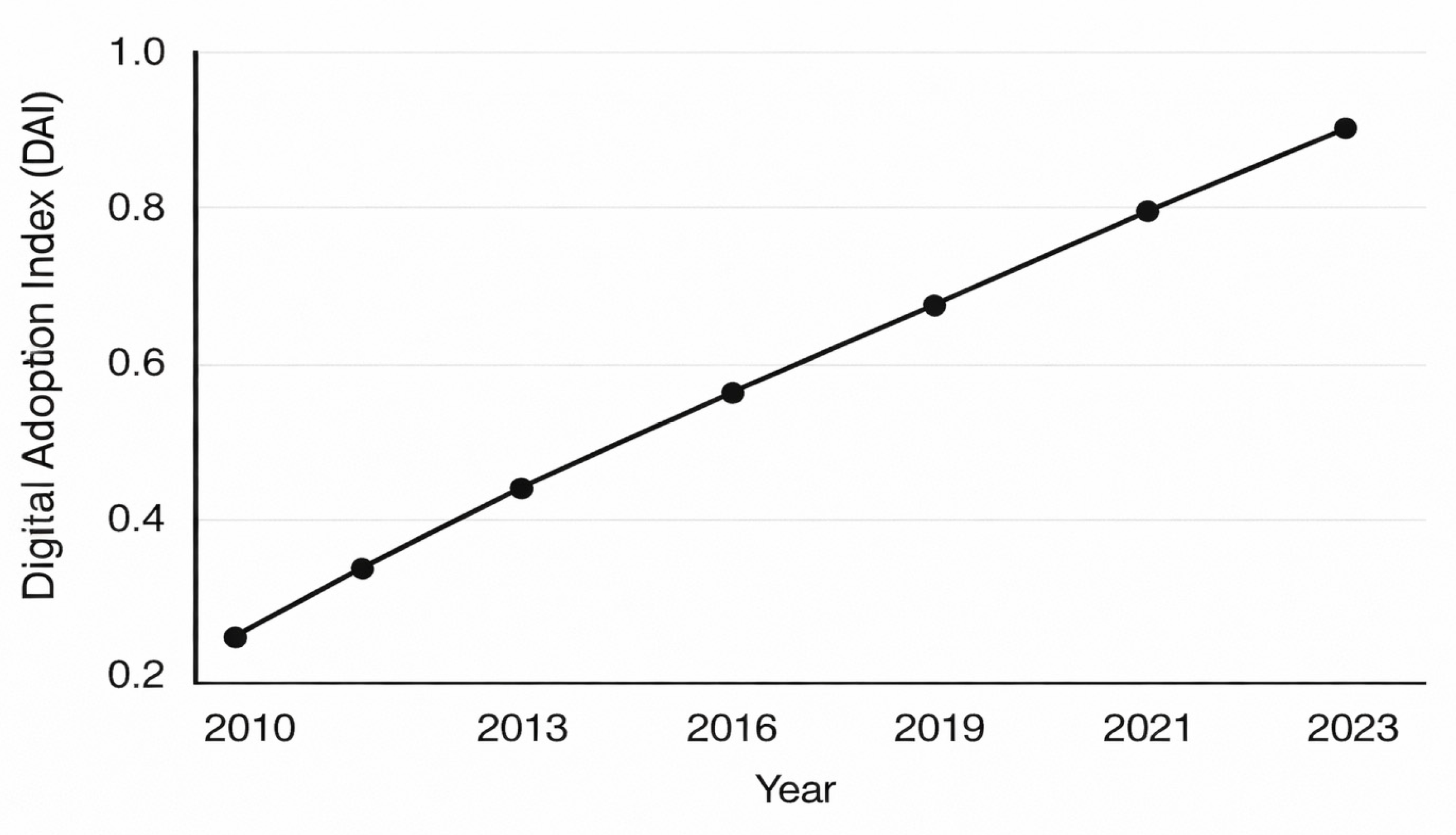
9]. This general upward trend is demonstrated in
Figure 1, which outlines the Digital Adoption Index (DAI) development across 32 emerging economies in the world from 2010 to 2023 [
10].
With the growing trend for digitalisation, the global dissemination of circular-economy ideas has transformed how resource use, waste creation, and material flows have been conceived within industrial systems [
1,
11,
12]. The circular economy could indeed provide resource-constrained emerging economies that are slowly being integrated into global manufacturing and commodity supply chains with a way to lessen their reliance on unstable raw-material markets and, at the same time, reduce their vulnerability to external resource shocks [
13,
14]. By diversifying inputs through the use of secondary materials and integrating closed-loop systems, circularity promotes structural robustness while also enhancing ecological performance. The inclusion of circularity-related strategies into national industrial policy development in Asia, Africa, and Latin America suggests that environmental performance and supply chain stability are interrelated parts of sustainable development [
8]. Even with these simultaneous changes, the countries classified as emerging economies have faced disruptions that were intense and frequent. The COVID-19 pandemic revealed systemic vulnerabilities on an unprecedented scale over recent decades: shipping delays rose to defied levels, port congestion was rampant, container shortages became acute, and price volatility seriously destabilised production systems. According to UNCTAD’s Global Trade Updates, the years from 2020 to 2023 saw the disruptions being most acute in the emerging markets, which did not have adequate buffers to absorb the cascading shocks [
15].
Table 1 provides a summary of cross-country disruption indicators, demonstrating the unequal impact on the dimensions of logistics and supply performance that were most affected [
16].
There are ongoing climatic weather events like floods, droughts, cyclones, and heat waves that keep on causing frequent disruptions to the existing infrastructural facilities, transport routes, and production networks in developing countries [
15,
16,
17]. Adding to the problem, the ever-increasing geopolitical tensions are reflected in the form of trade sanctions, export bans, regional conflicts, and strategic rivalry, thus raising the level of uncertainty even more. These converging pressures illustrate the clear and pressing need for supply chain models that are multifaceted, that use technology as a foundation but also consider environmental sustainability as a layer of resilience. Nevertheless, there is limited empirical research that systematically brings together these two fields, particularly at the macro level. The existing studies are primarily firm or industry-level, behaviourally, with strong consideration toward inventory management, reducing costs and risk management [
8,
18]. Although informative, micro- and meso-level studies may lack the rigour to comprehend national long-term trends or institutional drivers, and how they sustain resilience trajectories, across countries [
19]. Studies at the country-level remain rare, and when they do exist, they mostly treat digitalisation and circularity as separate and independent or determinants of resilience, rather than constituting a single adaptive system [
15].
The fragmentation in the research has contributed to several salient knowledge gaps. Firstly, national-level macro effects of digitalisation on resilience outcomes remain under-tested across various emerging economies; secondly, few resilience frameworks include the mediating role of circularity, particularly circularity’s ability to reduce material dependence and create systemic buffering; and thirdly, while sustainability performance is often correlated with digitalisation and circularity, the pathway connecting Digitalisation → Circularity → Resilience → Sustainability has not been empirically tested in a nation-level research setting in a serial-mediation approach. This is particularly attention-worthy in emerging economies since digital infrastructure, circular transition capacity, and resilience mechanisms evolve in a disparate and complex manner [
2,
19].
Given these research gaps, there is a need for a more holistic longitudinal framework to illuminate the ways in which digital development and circular-economy convergence co-generate resilience and sustainability outcomes across emerging economies [
5,
11]. Thus, this comprehensive viewpoint will yield a more detailed assessment of the country’s adaptive capacity and the future developmental paths in time [
20,
21].
The research study provides four primary contributions. One of them is theoretical, which progresses the Resource-Based View and Dynamic Capability Theory through the inclusion of digital capabilities and circular economy mechanisms under the umbrella of macro-resilience. In terms of empirical contributions, it presents one of the most expansive cross-country studies to date, looking at the intersection of digitalisation and circularity with resilience within emerging markets [
16,
22]. In terms of methodological contributions, it contributes to the literature by testing serial mediation pathways through multi-year national indicators. Finally, regarding practical contributions to the field, it provides a variety of policy-relevant opportunities for their governments, regional blocs, and development agencies, who desire to align digital transformation, circular-economy reforms, and resilient industrial development [
23,
24]. Accordingly, the study adds to the knowledge on how emerging economies can create sustainable, shock-resistant supply chains in an age of rapidly changing global uncertainty [
19,
25,
26].
This study departs from existing firm- and industry-level analyses by explicitly conceptualising digitalisation and circular-economy practices as national-level dynamic capabilities rather than operational tools or managerial choices. Unlike prior studies that examine resilience as an immediate or static outcome of technological adoption, this research advances a serial capability-accumulation framework, demonstrating how sustainability outcomes in emerging economies materialise through a sequential pathway of digitalisation, circularity, and supply chain resilience [
27]. This approach reflects the structural realities of emerging economies, where capability development is gradual, uneven, and strongly shaped by institutional constraints, infrastructure gaps, and exposure to external shocks. By empirically validating this chain-mediated pathway at the macro level over a 14-year horizon, the study offers a theoretical and empirical contribution that cannot be captured through cross-sectional or firm-level models. A longitudinal framework is essential in this context because digitalisation, circular-economy adoption, and resilience are not instantaneous outcomes but capabilities that evolve cumulatively over time. Cross-sectional analyses risk conflating short-term fluctuations with structural change, particularly in emerging economies where institutional reforms, infrastructure development, and policy implementation unfold gradually. By employing a balanced panel spanning 2010–2023, this study captures the temporal sequencing through which national capabilities are formed, reinforced, and translated into sustainability outcomes.
2. Literature Review
Digitalisation has emerged as a fundamental force influencing the economic and industrial sectors of developing countries, particularly by providing the chance to completely reshape the supply cycle. The past ten years have witnessed the adoption of various digital technologies, which allow for better information flow and decision-making skills to a greater extent [
4]. This technological innovation allows governments and firms to monitor cross-border flows in real time, make more accurate predictions of disruption, and effectively coordinate logistics in a much more timely and efficient way than ever possible [
24,
28]. As shown in
Table 2, there are some promising indicators of national digital capacity improvements, especially given the growing trends in the World Bank’s Digital Adoption Index (DAI) for emerging economies [
10,
11,
29,
30].
In addition to digital transformation, the circular economy has emerged and gained significant momentum as a foundational block of sustainable development. Circularity can help emerging economies with resource depletion, volatile commodity markets, and claims about environmental degradation, with renewed stabilisation of resource flows and reduced vulnerability to external shocks [
11,
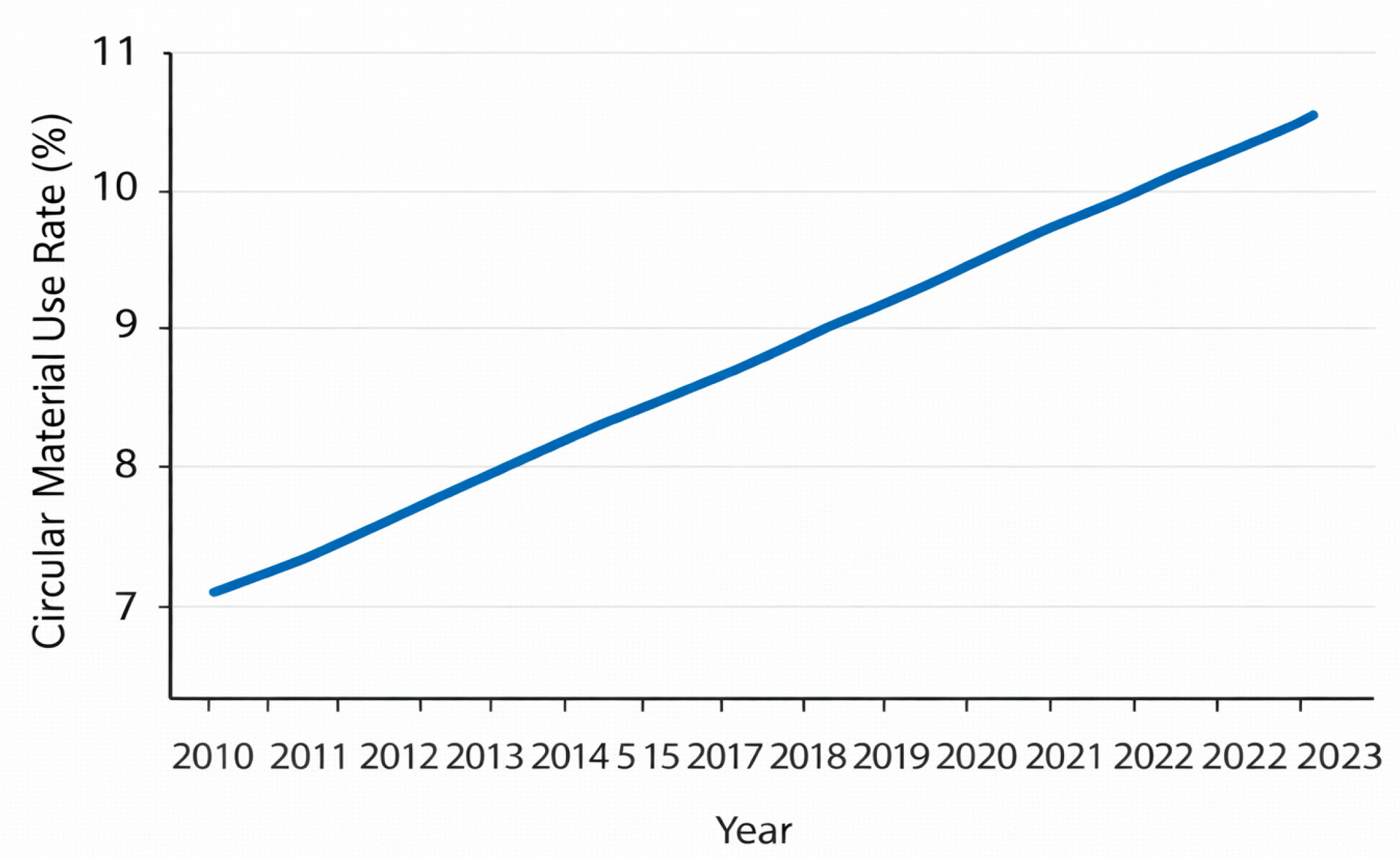
29]. Circular practices support closed-loop systems, increase material productivity, decrease reliance on primary materials, and avoid global supply constraints. As shown in
Figure 2, the growing application of circular practices in developing markets is shown through raising Circular Material Use (CMU) rates, which are a sign of the transition to more eco-friendly and efficient resource utilisation systems [
10].
The term supply chain resilience is now greatly discussed in the courses on sustainability and operations [
19]. This is due to the fact that global production networks have been hindered by various disruptions over time. Resilience is mainly described by scientists as the property of supply chain systems to predict, absorb, change, and recover from shocks while still being operational at the essential level [
5,
25]. The drive for resilience comes from the design and characteristics of the system, such as redundancy, flexibility, visibility, and adaptive capacity. One of the indicators that can be found in the empirical measurement of resilience in national cases is the World Bank’s Logistics Performance Index (LPI), which is also used as an indicator for customs efficiency, quality of transport infrastructure, shipment reliability, and logistical skill [
17,
30]. As shown in
Table 3, over time, changes in LPI scores can signify how effectively countries resolve their capacity to adapt to growing global pressures. Developing countries might have to confront a wide array of limitations imposed by their situations, such as inadequate logistics infrastructure, a poor regulatory environment, and vulnerability to climate and geopolitical risks, which could hinder their ability to develop resilience. These different aspects highlight the necessity of holistic strategy consideration, which includes, among other things, digital innovation and the circular economy as the main components in the national resilience building process [
28,
29].
Sustainability performance is a complex matter, yet it still encompasses the concepts of resilience and circularity that are very much in the limelight with respect to the potential impacts of future developments [
14,
20,
31]. Among the environmental sustainability indicators, carbon efficiency, emissions intensity, material productivity, and the advancement of SDG 9 (Industry, Innovation, and Infrastructure) and 12 (Responsible Consumption and Production) are excellent examples of global significant structural development [
18,
28]. In contrast, the implementation of circular strategies and improvement of digital monitoring systems not only reduces ecological footprints and creates resource-use cycles to be efficient but also assists the progress of low-carbon industrial processes, thus contributing to better sustainability performance [
19,
30,
32]. Nonetheless, the impact of the improvements is still uneven and heavily influenced by the commitment of national policies, the nature of industrial structure, and the level of technological readiness [
18,
30].
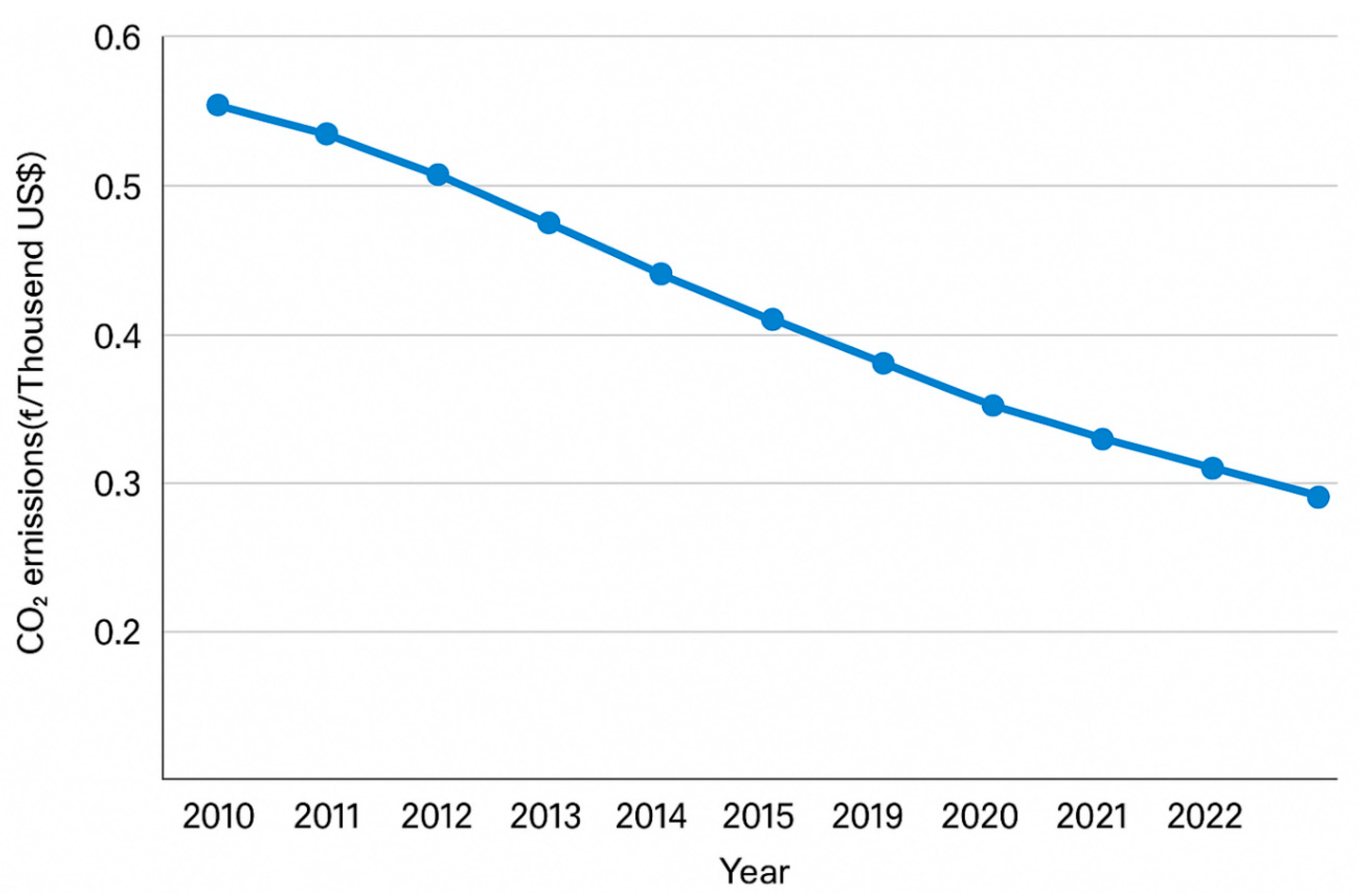
The given
Figure 3 presents the development of carbon dioxide (CO
2) emissions per GDP unit throughout the period 2010–2023 and indicates the separation of economic growth from emissions in various areas, as well as the persistence of difficulties for developing economies. The statistics denote a slow but steady worldwide drop in carbon intensity, which is the result of enhanced energy efficiency, the use of renewable energy, and changes in the structure of the economy, among the main reasons [
33,
34].
Through two theoretical frameworks, the Resource-Based View (RBV) and the Dynamic Capability Theory, the link between digitalisation, circularity, resilience, and sustainability is illustrated [
14,
34]. According to the RBV, digital and organisational resources like technology, data processing capabilities, and resource-efficient production systems are classified as strategic resources that can create a sustained competitive advantage, provided that such resources are valuable, rare, inimitable, and deeply rooted in the organisation [
19,
26,
35]. In this regard, through the RBV lens, digital capability and circular economy practices represent the resource bases that allow the management of complexity and uncertainty to be performed economically in the supply chain. Dynamic Capability Theory is an extension of this idea, where it recognises the ability of either companies or countries to sense, seize, and reconfigure resources in a rapid-fire manner whenever the environment changes. Digitisation ramps up the organisations’ sensing and coordinating capacities, which are needed to forecast and manage disruptions, while circular practices support the supply chain’s adaptability by cutting the dependence on vulnerable supply chains and allowing the creation of production cycles that are regenerative [
25,
36,
37]. Although the Resource-Based View (RBV) is traditionally applied at the firm level, recent macro-level studies extend its logic to national contexts by conceptualising country-specific endowments as strategic resources. At the national level, resources include digital infrastructure, institutional capacity, human capital, and innovation systems that are valuable, path-dependent, and difficult to replicate. In this study, digital infrastructure is treated as a strategic national resource because it enables countries to coordinate economic actors, reduce information asymmetries, and build adaptive capabilities that support circular practices and supply chain resilience.
Research conducted in the recent past has concluded that resilience is not an individual capability but rather a result of the interaction between different capabilities and reinforcing systems. Digitalisation enhances the ability to manage risks proactively through increased visibility, traceability, and predictive power [
2,
38]. Circularity decreases exposure to raw-material variability and bottlenecks in supply, increasing a system’s ability to absorb shocks. Together as a combined set of capabilities, these two capabilities can create a form of structural redundancy and adaptability that significantly increases resilience. Simultaneously, resilience supports sustainability by increasing the stability of production processes, decreasing waste from disruptions, and supporting continued regenerative flows through uncertainty and distress [
32]. However, even given these theoretical overlaps, empirical studies rarely explore these relationships at the macro level between countries over time.
A critical evaluation of the empirical work identifies three main gaps. First, much of the existing literature examines digitalisation and resilience at the level of an individual firm or node of the supply chain; such a context limits the ability to generalise findings to the level of a nation-state. Second, while circularity is usually studied as an outcome related to values such as environmental or resource efficiency, far less attention is offered to the direct role that circularity plays in supporting resilience [
39]. Third, while literature frequently discusses sustainability outcomes associated with transitions to digital or circular models, the sequencing through which digitalisation might improve sustainability through circularity and resilience remains an understudied area of inquiry. This is particularly notable in economies classified as emerging, in which the digital divide, lack of resources, and differences in institutions yielded distinct patterns of how capabilities are built, and of vulnerabilities. Against this backdrop, the present study positions digitalisation and circularity not as separate forces or role determinants, but as interdependent forces driving national resilience and sustainability [
32]. The research of a resilient integrated framework based on the axes of digitalisation and circularity is an attempt to present a unified viewpoint that gives a clearer picture of how the economies in transition can create not just supply chain resilience but also slowly turn into low-carbon, resource-efficient economies [
34,
40].
3. Conceptual Framework and Hypotheses
This research’s conceptual framework is based on the premise of digitalisation and the circular economy. The framework relies on the Resource-Based View (RBV) and Dynamic Capability Theory with the understanding that digitalisation is an enabling capability that enhances a system’s ability to sense and monitor risk, coordinate supply chain activities, and respond quickly to disruptions [
32]. The digital infrastructure, which includes ICT systems, data analytics, automation, and IoT platforms, is a key resource that facilitates information flow and reduces risk in the supply chain network [
41]. As a result, these capabilities allow emerging economies to not only anticipate disturbances but also reconfigure production and logistics in real time, thus enabling adaptive resilience [
5,
11]. On the other hand, digitalisation also contributes to the traceability and transparency needed for the implementation of circular-economy mechanisms that will eventually allow the more effective tracking of materials, managing of lifecycle processes, identifying of waste, and optimising of resources across industries [
22]
While the Resource-Based View is traditionally applied at the firm level, recent macro-level scholarship extends its logic to national systems by conceptualising infrastructure, institutions, and technological ecosystems as strategic resources. At the national level, digital infrastructure, data governance capacity, logistics systems, and circular-material networks function as collective resources that are path-dependent, difficult to imitate, and embedded within institutional frameworks [
32,
42]. In this study, digitalisation is treated as a national strategic resource because it enhances information visibility, coordination, and adaptive capacity across entire supply networks rather than individual firms. This extension aligns with dynamic capability perspectives, which emphasise the ability of countries, not only firms, to sense, seize, and reconfigure resources in response to systemic shocks [
43].
The circular economy is viewed as a capability that mutually reinforces and directly impacts the resilience of the economy by blocking the pathways of material scarcity, waste, and reliance on volatile global commodity markets, which are the main channels of structural vulnerabilities [
4,
44]. Recycling systems, remanufacturing practices, and resource recovery are some of the circular practices that develop buffers and thereby reduce the chances of supply bottlenecks or raw material price shocks [
44,
45]. The production systems are solidified by diversifying the sources of input and applying regenerative loops to the industrial processes. The dynamic capabilities perspective sees circularity as an enhancement of the system’s ability to reconfigure the flows of resources under the pressure of stress and uncertainty [
7,
46]. Therefore, in a consecutive way, digitalisation works as a trigger that makes it possible for economies to operationalise the major concept of the circular economy in a more effective way, with the circular economy supporting the level of material stability required for the economy to be functionally resilient. This line of reasoning supports the theoretical link suggested in the model between digitalisation and the circular economy [
47]. The framework further highlights the resilience of supply chains as a mediating capability that extends from circular practices to sustainability [
12,
38,
43]. Such resilient supply chains are characterised by a constant functionality throughout disruptions, thus reducing, to some extent, the operational inefficiencies, waste generation, emission surges, and material losses that are usually the results of disruptions [
3,
4,
25].
Supply chain stability ensures continuous circular system flows regarding recycled materials, recovered components, and waste, promotes environmental sustainability activities, and thus supports recycling and waste reduction [
45]. Hence, resilience adds up to ecological performance and to economic viability by maintaining the integrity of carbon-efficient, resource-efficient systems during disruptions [
34]. The model thus puts forward resilience as a result of both digitalisation and circularity, as well as an enabler of sustainability performance, that links short-term adaptive capacity and long-term sustainability transition [
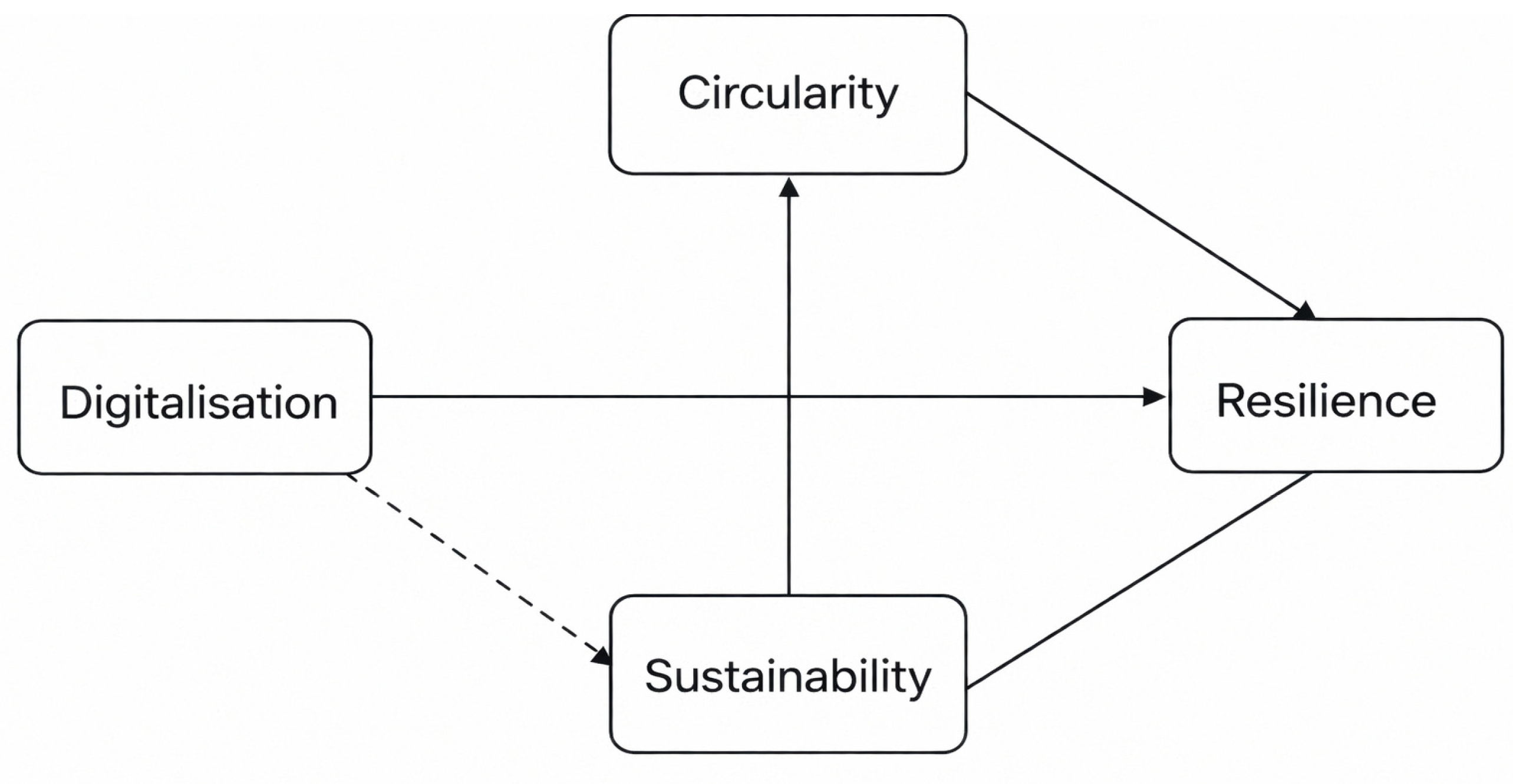
32]. Based on this, the conceptual framework specifies a series of relationships where there are direct, indirect, and sequential relationships. First, digitalisation is posited to have a direct, positive effect on adopting circular-economy practices, as digital technologies provide the information content and technological systems that support circularity strategies. Second, digitalisation is anticipated to have a direct effect of strengthening resilience by providing predictive analytics to supply chains, while also enhancing transparency and coordination in supply chain operations. Third, circularity is expected to have a direct effect on resilience by reducing dependency on primary resource flows, while also reducing vulnerabilities related to material disruptions. Fourth, resilience is expected to have a direct effect on environmental sustainability performance by providing stabilisation in production systems, enabling the supply chain to consistently move toward environmental targets. Together, these direct pathways form the structural foundation of the model [
13].
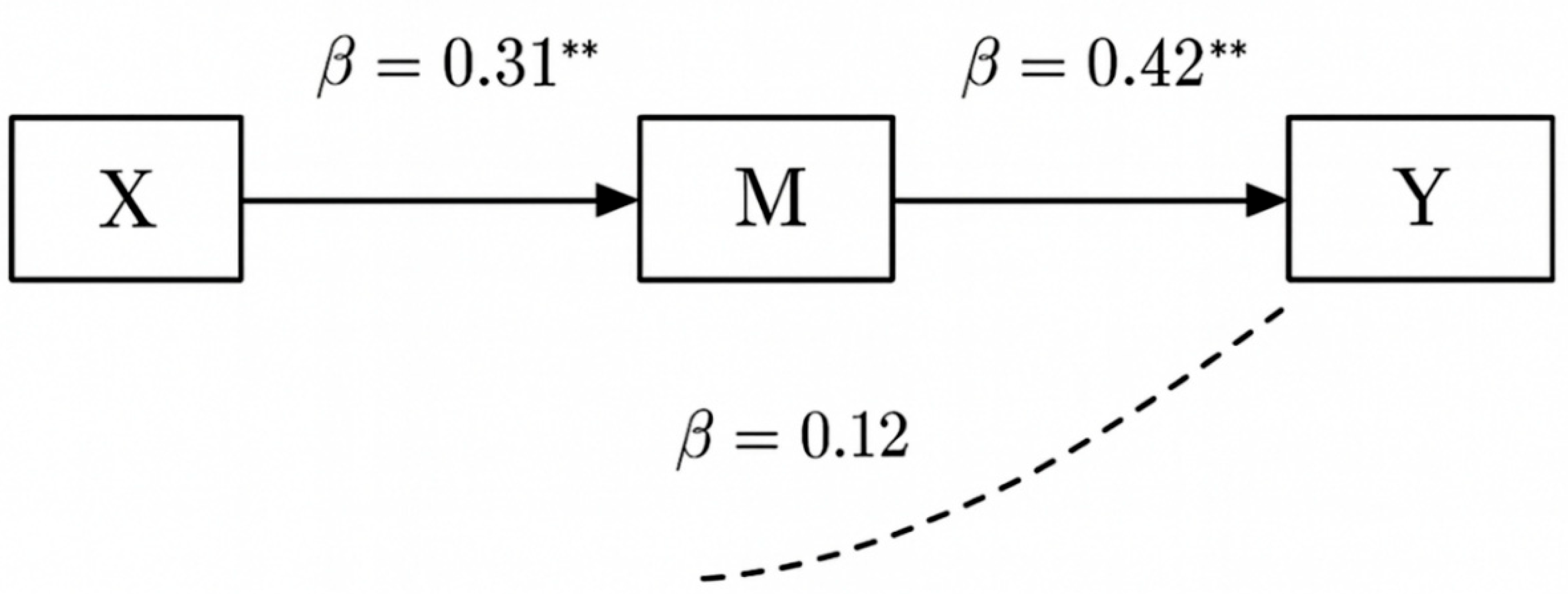
Aside from the direct consequences, there are two mediating mechanisms that take the spotlight. It is believed that circularity will mediate the connection between digitalisation and resilience, since digital tools simplify the adoption of circular practices that lead to resilience [
1,
6,
12]. This indicates a situation where the adoption of digital capabilities results in gaining resilience only if the transition to circular practices accompanies it. Additionally, the model presents a serial mediation route: digitalisation facilitates circularity, circularity strengthens resilience, and resilience boosts sustainability performance [
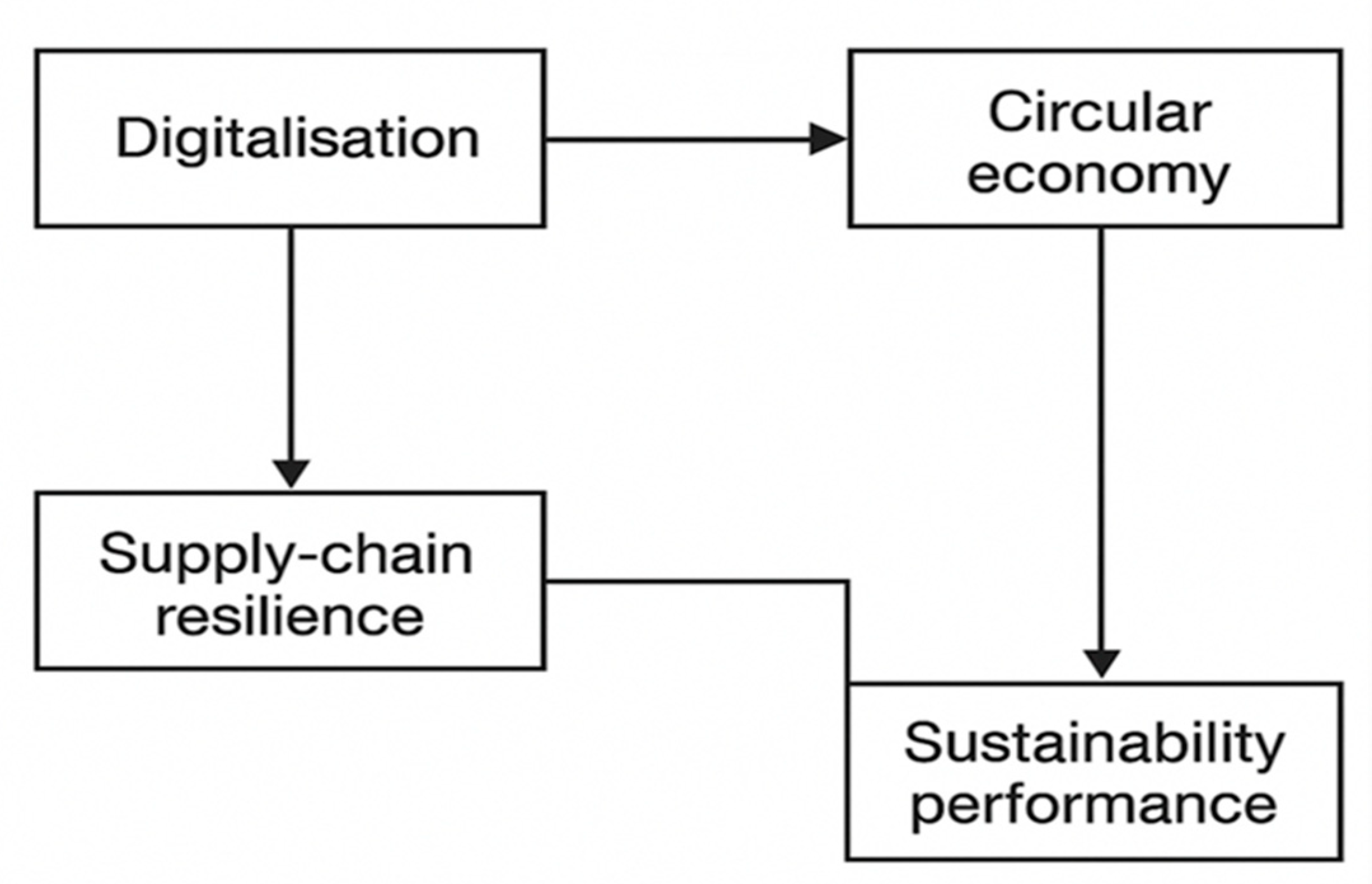
43,
48]. The proposed theoretical links are exemplified in the conceptual model of the study [
26,
32,
49].
Figure 4 explicitly illustrates that supply chain resilience functions as the immediate transmission mechanism through which digitalisation and circular-economy practices translate into improved sustainability performance. It highlights that sustainability outcomes are not driven directly by digitalisation or circularity in isolation but materialise through their combined effect on supply chain resilience, underscoring resilience as the critical intermediate capability. Succeeding the same line of thought, the research formulates six hypotheses. The very first hypothesis designates that digitalisation is a factor of the circular economy’s adoption (H1), which means that digital systems are making it easier to accurately track materials, identify waste, and accomplish and optimise lifecycles. The second hypothesis (H2) implies that digitalisation has a positive impact on supply chain resilience by enhancing the ability for risk anticipation, coordination, and responsiveness [
1,
13]. The third hypothesis puts forward that circular practices are a key factor in resilience as they lessen the reliance on raw materials, and at the same time, provide a buffering effect against disruption (H3). The fourth hypothesis (H4) argues that resilience, at the same time, acts as a driver of sustainability by enabling production activities to be aligned with environmental objectives, and thus, the entire process of achieving and continually advancing toward the environmental targets is completed [
39,
50]. The fifth hypothesis states the mediating role of the circular economy in the relationship between digital technology and resilience (H5), showing that the technological intervention that requires resource-efficient practices is the main factor for resilience improvements [
46]. The final hypothesis (H6) outlines the serial mediation effect whereby the digitalisation process is depicted as leading to sustainability, through the mechanisms of circularity and resilience, thus capturing the integrated understanding of sustainable development at the point of convergence between technological and ecologically based capabilities in developing economies.
6. Discussion
The empirical findings provide consistent support for all six hypothesised relationships proposed in
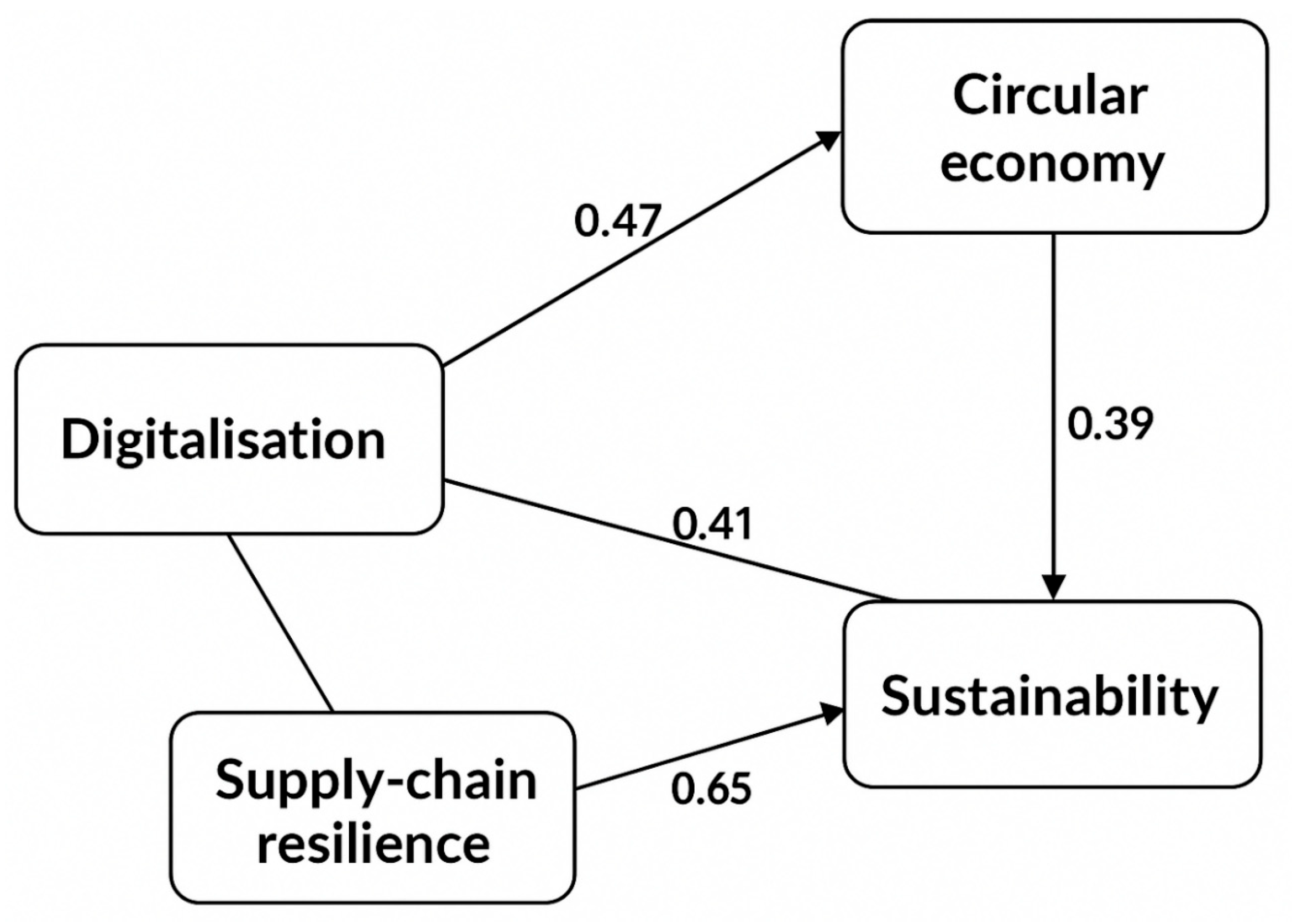
Section 3. Digitalisation significantly enhances circular-economy adoption (H1) and directly strengthens supply chain resilience (H2). Circular-economy practices exert a positive and statistically stronger influence on resilience (H3), while resilience itself emerges as a robust predictor of sustainability performance (H4). Mediation analysis confirms that circularity partially mediates the digitalisation–resilience relationship (H5), and the serial mediation results validate the proposed pathway through which digitalisation affects sustainability via circularity and resilience (H6). Together, these results empirically substantiate the study’s integrated capability-based framework. The results of this research validate that digitalisation, circularity, and resilience are an interconnected capability system that significantly influences sustainability outcomes in emerging economies [
36,
64]. Digitalisation has a strong statistical association with circularity seen in both the regression (β ≈ 0.45) and SEM model estimation (0.47), which supports the proposition that digital technologies enhance the visibility, monitoring, and optimisation of material flows. This effect size is consistent with previous work that has found technologies, such as IoT-enabled tracking and digital twins, as well as real-time analytics, to be essential to enable higher levels of use of secondary materials. Detailing this effect at the national level across 32 emerging economies expands the scope of existing studies that have focused on firm-level or sector-specific studies and show that digitalisation is a structural enabler of a transition to a circular economy [
47]. The findings also illustrate the value of circularity to increase supply chain resilience. The effect size (β ≈ 0.33 in regression; 0.36 in SEM) provides evidence that circularity makes an important contribution to resilience by lowering resource dependencies, expanding sources of inputs, and reducing exposure to fluctuating markets for primary materials [
5,
46]. This interpretation provides empirical evidence for nascent theoretical work that considers circular economy strategies to be both environmental interventions as well as a means of risk reduction and building adaptive capacity [
3,
6,
39]. The strength of the data indicates that even moderate changes to circular practices (such as increasing recycling infrastructure or facilitating industrial symbiosis) could lead to a cogent relationship to measurable gains in national resilience. Digitalisation does improve resilience directly, with consistent effect sizes roughly around 0.28–0.31 across the methods [
7]. The interaction terms would suggest a dual influence, direct and through circularity, that confirms that digital capabilities would strengthen resilience through two avenues, firstly by improving predictive analytics, trackability, and coordination, and secondly by supporting circular systems that stabilise material flows. This layering effect lends itself to dynamic capabilities theory, which argues that technological and organisational capabilities develop through co-evolution to develop long-term adaptive advantages. Not surprisingly, the size of the indirect effect due to circularity (β ≈ 0.15, or roughly one-third of the total influence on resilience) demonstrates that resilience policy frameworks should not conceptualise digitalisation as a standalone capability, but as a part of an integrated capabilities portfolio [
1,
58,
66]. The finding that circular-economy practices exert a stronger effect on supply chain resilience than digitalisation warrants cautious interpretation. Digitalisation primarily augments informational and coordinative efficiency, enabling systems to anticipate and manage disruptions. Circularity, by contrast, directly alters the material structure of supply chains by reducing dependence on primary inputs, diversifying sourcing options, and embedding redundancy through recycling and reuse networks. In emerging economies, where exposure to raw-material price volatility and import dependence is particularly high, these material buffers play a more decisive part in shock absorption than informational advantages alone. This elucidates why circularity emerges as a more influential resilience driver, while digitalisation functions as a critical enabler rather than a substitute for structural transformation.
This research also reveals that resilience has the largest impact on sustainability, with effect sizes of roughly 0.40 in regression and 0.52 in SEM, making it the most influential variable in the overall capability chain. The magnitude of this path implies that stable and adaptable supply chains are a prerequisite for progressive and predictable steps to achieve environmental outcomes. Disruptions typically result in more waste, less energy efficiency, and greater carbon intensity; particularly resilient systems offer the environment for sustainability transitions to take place without disruption [
39]. The relatively high explanatory potential for resilience strengthens recent calls in the literature to embed resilience thinking into a country’s sustainable development plans, especially those economies that may be vulnerable to a volatile global market or are exposed to geopolitical tensions and climate shocks [
35].
The serial mediation pathway is the most informative view of the interdependent nature of these capabilities [
40,
43]. The considerable indirect effect from digitalisation to sustainability through circularity and resilience (β ≈ 0.18) indicates that, unlike in isolation, sustainability outcomes are a result of sequential processes that shape each other. The findings are consistent with transition theory, which suggests that technological, ecological, and infrastructural capabilities are gradually accumulated to transition economies toward more sustainable paths of development. Through the quantification of this pathway across a large multi-country panel, the study offers empirical validation of the explanatory power of the multi-layered capability-building logic supporting sustainability goals [
40,
64].
When compared to existing literature, the results provided both commonalities and new contributions. There are several studies supporting a positive digital–environmental relationship, although few have explicitly examined the unfolding of these effects through material systems and resilience structures, in addition to sustainability drivers. Several studies linked circularity to environmental gain, yet few have empirically tested its impact on resilience structures. This study, in combining these domains and illustrating their combined explanatory power (62 per cent of sustainability variance), proposes a more compound model about how emerging economies confront structural vulnerabilities and simultaneously pursue sustainability goals. From a mechanism perspective, circular-economy practices enhance supply chain resilience by reducing dependence on virgin material inputs, diversifying sourcing channels through recycling and reuse networks, and shortening supply loops, thereby increasing redundancy and adaptive capacity during external shocks.
The numeric focus of the associations also implies a clear course of action for policymakers. The outcome of digitalisation on both circularity and resilience ranged from moderate to strong, suggesting that any investment in digital infrastructure, such as national data platforms, supply chain intelligence systems, and industrial IoT (internet of things), should intersect with and be strategically attuned to circular-economy policies [
3,
39,
41,
67]. Similarly, the strong effect of resilience on sustainability indicates that national sustainability frameworks will need to integrate resilience-building measures within their structures, such as diversified supply chains, regional recovery systems for materials, and digitalised logistics governance. This is also visualised in the proposed policy roadmap, which emphasises coordinated actions at the intersections of the digital/circular/resilience domains to support sustainability transitions in emerging economies [
68]. As a result, the endogenous suppositions and numerical analyses indicate that momentous impacts from sustainability agendas will come from capability systems, rather than artefacts. The study conceptualises the digitalisation, circularity, and resilience as pillars that reinforce and syndicate together to impact the trajectories of national sustainability [
36,
39,
63]. The results also help to contribute to an evocative change in sustainability research, moving from viewing technological transitions and ecological transitions as distinct lines of inquiry to understanding that these transitions are interdependent processes that must be addressed simultaneously [
27,
41].
7. Conclusions and Policy Implications
The present study offers plentiful empirical evidence that digitalisation, circular-economy practices, and supply chain resilience are interrelated capabilities impacting sustainability impacts in emerging economies. This shows that digitalisation is a significant predictor of improvements in circularity by improving the transparency of material flows and enabling technological advancements that improve resource efficiency. Circularity, in turn, provides better resilience to supply systems, as it will lessen dependence on volatile, primary-material markets for supply, and soften shocks within the supply chain. Resilience is the main predictive factor in sustainability performance, indicating that economies with more resilient, adaptive supply systems are better prepared to sustain environmental benefits through disruption. The order of digitalisation that then engenders circularity, leading to resilience, leading to sustainability, demonstrates that the sustainability transitions in emerging markets occur cumulatively as part of an incremental and capability-based process, not from one-off interventions.
The findings carry important implications for policymakers. Governments should be aware that digital, circular, and resilience capabilities reinforce each other, and that they should provide an integrated policy framework rather than fragmented propositions. Investment in digital infrastructure (e.g., IoT-enabled logistics systems, national data platforms, and digital traceability platforms) can help accelerate circular-economy development by providing accurate tracking of resource flows, which enable markets of recycled (or secondary) materials. Circular-economy policies (e.g., extended producer responsibility, industrial symbiosis programmes, and regional recycling systems) can also strengthen resilience, as they diversify resource inputs and mitigate risks to supply interruptions. Because resilience is a major driver of sustainability, policies to build adaptive supply systems that deploy supply chain risk mapping, decentralised logistics networks, climate-proof infrastructure, and data-driven contingency planning will have a role to play in national sustainability strategies. Thus, integrated digital–circular–resilience policy architectures can provide opportunities to stimulate low-carbon, shock-resilient, and future-proof sustainable development trajectories for Emerging Economies.
Although this study employs lagged specifications and multiple robustness checks to mitigate reverse causality concerns, potential endogeneity cannot be entirely ruled out. Future research could apply dynamic panel techniques such as System GMM or instrumental-variable approaches to further strengthen causal inference. However, the application of such methods in the present study is constrained by data availability, time dimensions, and risks of instrument proliferation in cross-country panels. Several limitations should be acknowledged. First, the use of national-level indicators may obscure sub-national heterogeneity in digital infrastructure, circularity adoption, and vulnerability to shocks. Additionally, although fixed-effects and robustness checks mitigate endogeneity concerns, reciprocal relationships between digitalisation, resilience, and sustainability cannot be completely ruled out. Future research could employ dynamic panel techniques or instrumental-variable approaches to reinforce causal inference. Furthermore, the resilience index does not explicitly incorporate geopolitical or climate-shock variables, which may further condition resilience outcomes. Addressing these dimensions through shock-specific indicators and mixed-method approaches would enrich future analyses.
These limitations also point to important coverage and future research opportunities. More in-depth examinations would include a rationale about approaches like sectoral (agriculture, manufacturing, energy, and electronics) or firm-based studies to deliver a more experienced interpretation of how firms pursue digital and circular activities, considering industry-based contexts. Sub-national research could scrutinise policy systems, regional political factors, and regional infrastructure and resource systems. Future research could also draw on qualitative evidence (e.g., case studies or interviews) to complement and further improve quantitative findings and the examination of the interactions in capability development and quality over time. Broadening the analysis of digital–circular–resilient systems to include institutional quality, regulatory environment, and culture would deepen our understanding of how these systems develop. Looming policy reforms or studies, in addition to simulations or scenario-modelling studies, could further illustrate how policy choices affect sustainability trajectories. Overall, the results from this study highlighted the need to take a system approach to develop sustainable development practices in emerging economies simultaneously through digital capacity, circular-economy principles, and resilient supply chains. The three capabilities synergistically build on each other to support the robustness, stability, and environmental performance of national development pathways. By recognising and investing in this capability development system, emerging economies could strive to achieve durable, inclusive, and environmentally secure growth objectives in the context of increasing levels of global risk and resource constraints.