4.1. Main Findings and Limitations
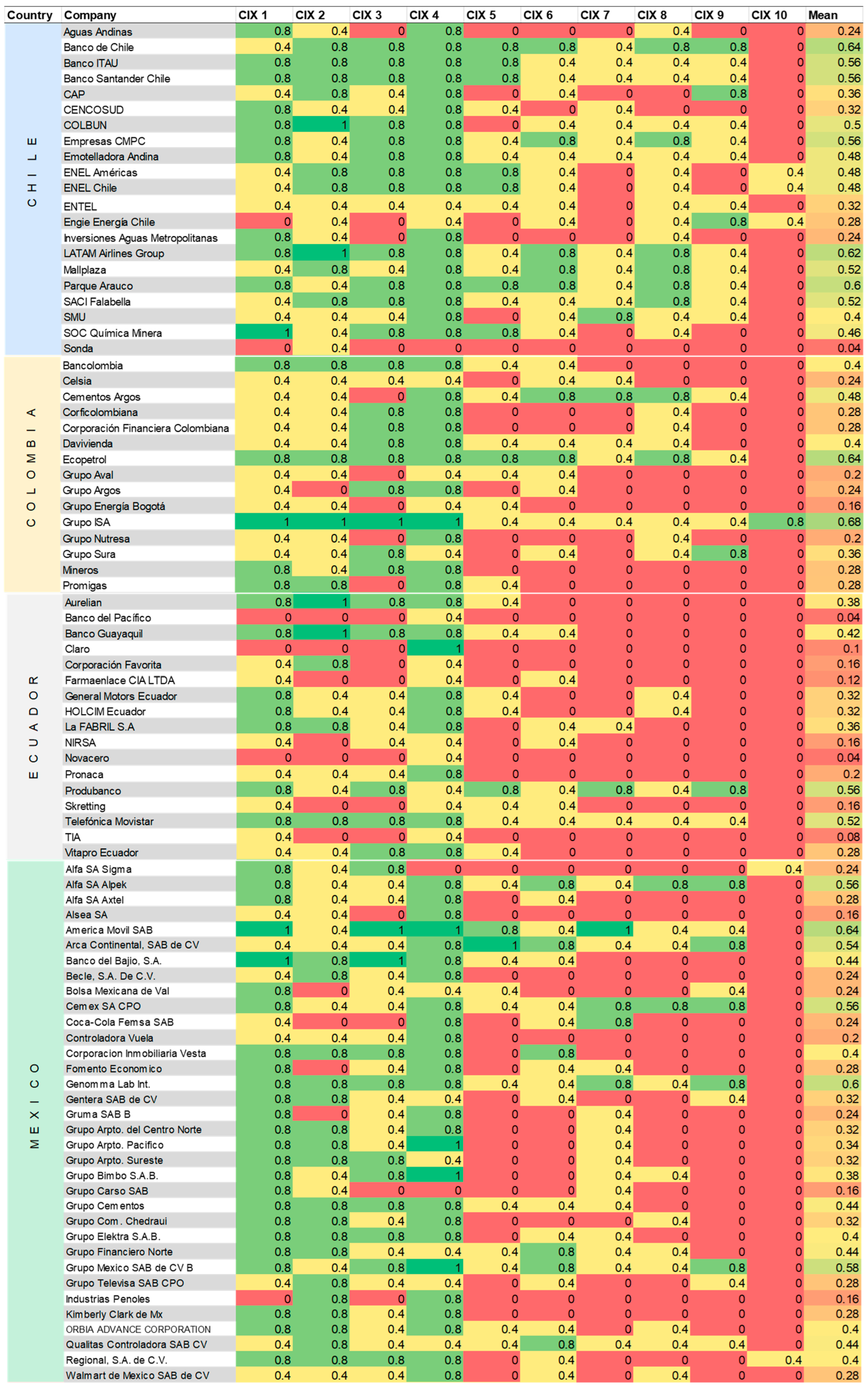
This multi-country assessment of 103 companies across five Latin American countries reveals three critical patterns in corporate carbon disclosure quality. First, the region exhibits a systematic Scope 3 transparency deficiency; while Scope 1 and 2 indicators achieve means of 0.48–0.68, Scope 3 categories collapse to 0.19–0.31, with 40–67% of companies providing no disclosure on at least one value-chain emission indicator. Uncertainty assessment, essential for credible emissions quantification [
1], is virtually absent, with only 6% of companies (6 of 103) reporting any uncertainty data. Additionally, 17/103 companies analyzed provided no Scope 3 or uncertainty assessments, illustrating that even though most companies report some data on Scope 3 and uncertainty, it is mostly incomplete.
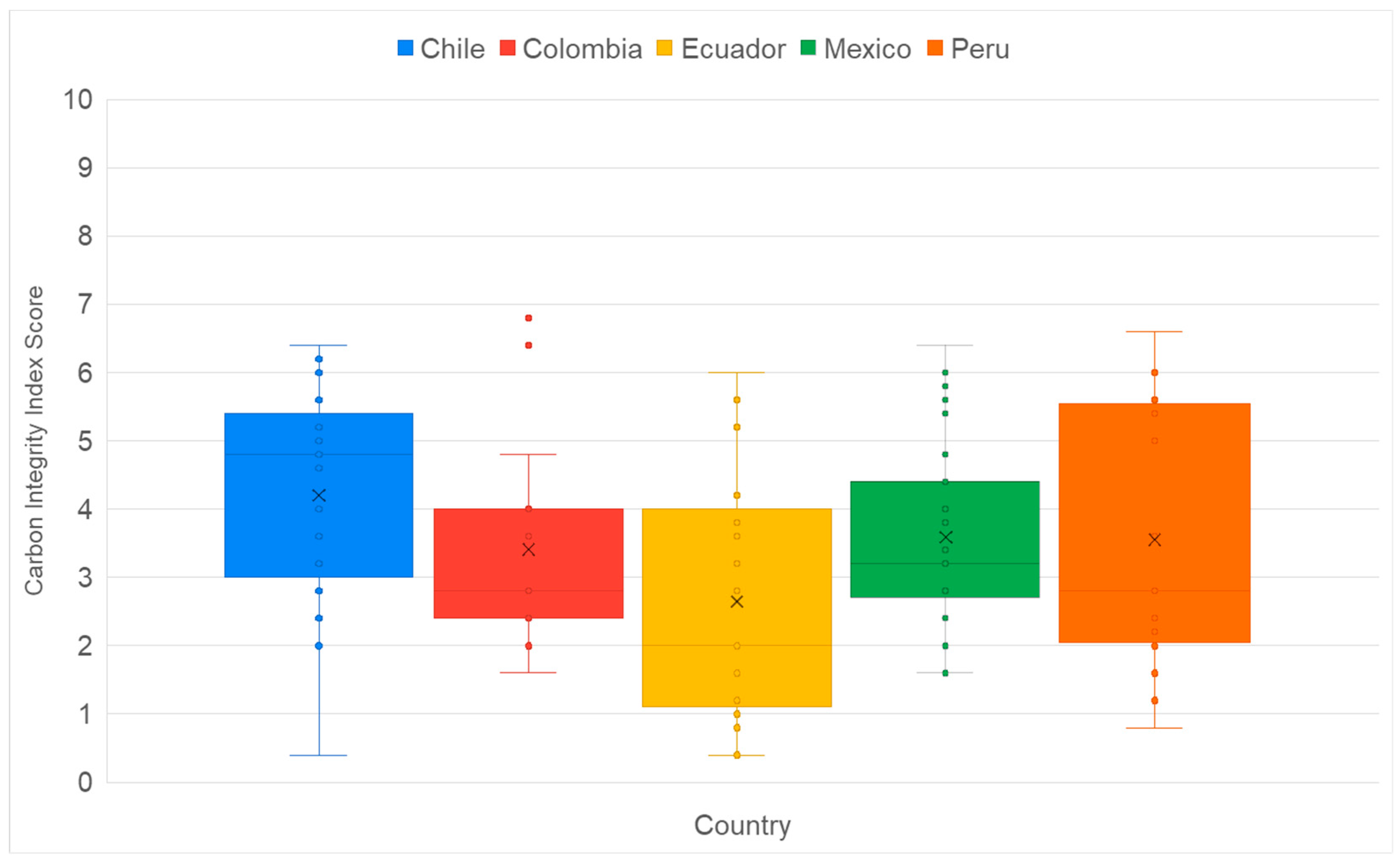
Second, despite diverse national contexts, country-level median scores converge within a 1.55-point range (Ecuador: 2.65; Chile: 4.20), suggesting that transnational isomorphic pressures, from multinational corporations, international investors, or global reporting frameworks, correlate with the regional patterns identified. Chile achieves both the highest median and lowest variability (CV = 38%), indicating mature, institutionalized disclosure practices, while Ecuador demonstrates the lowest median and highest variability (CV = 69%), pointing towards systemic capacity constraints that condition baseline transparency.
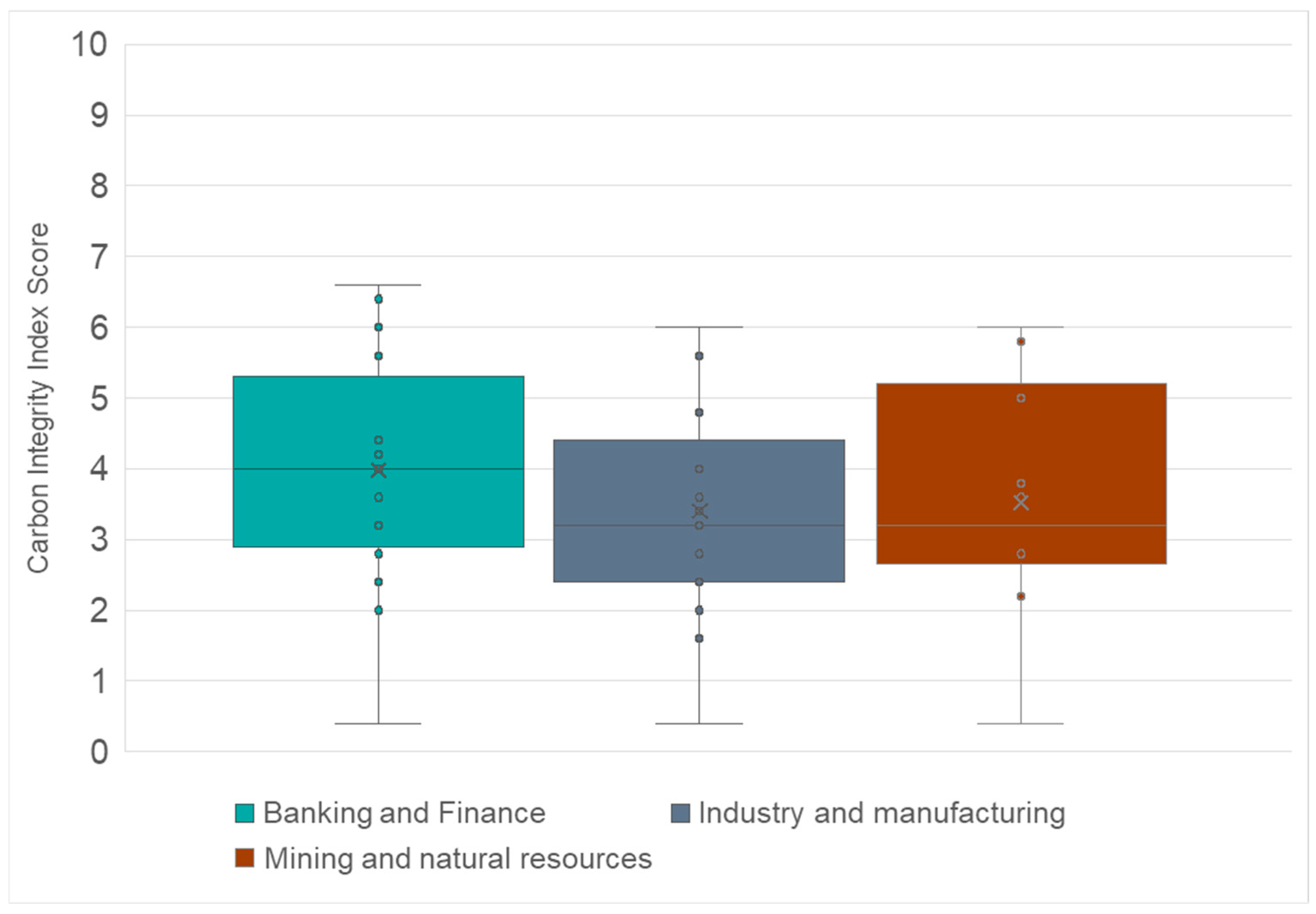
Third, sectoral analysis reveals that disclosure deficiencies transcend baseline transparency. Banking and finance achieve the highest regional CIX scores, with very high emission disclosure for CIX 1–4 (>0.61), although 100% non-disclosure of uncertainty, and substantial gaps in Scope 3 reporting, particularly waste and mobility. Cross-sectoral analysis revealed homogeneity in the deficiencies across sectors, pointing towards common deficiencies in regulatory enforcement, technical capacity, and corporate strategies. Industry and manufacturing (mean: 3.40) and mining and natural resources (mean: 3.52) exhibit parallel deficiency profiles, strong Scope 1 and 2, weak Scope 3, and complete uncertainty absence.
Before interpreting these patterns further, we acknowledge several methodological limitations that bound the scope of our conclusions. Firstly, sample composition and geographic scope. This study focused exclusively on large publicly traded companies from national stock market exchange indices to ensure an objective selection criterion, but excluding SMEs, private companies, and unlisted corporations, representing a great fraction of Latin American economic activity [
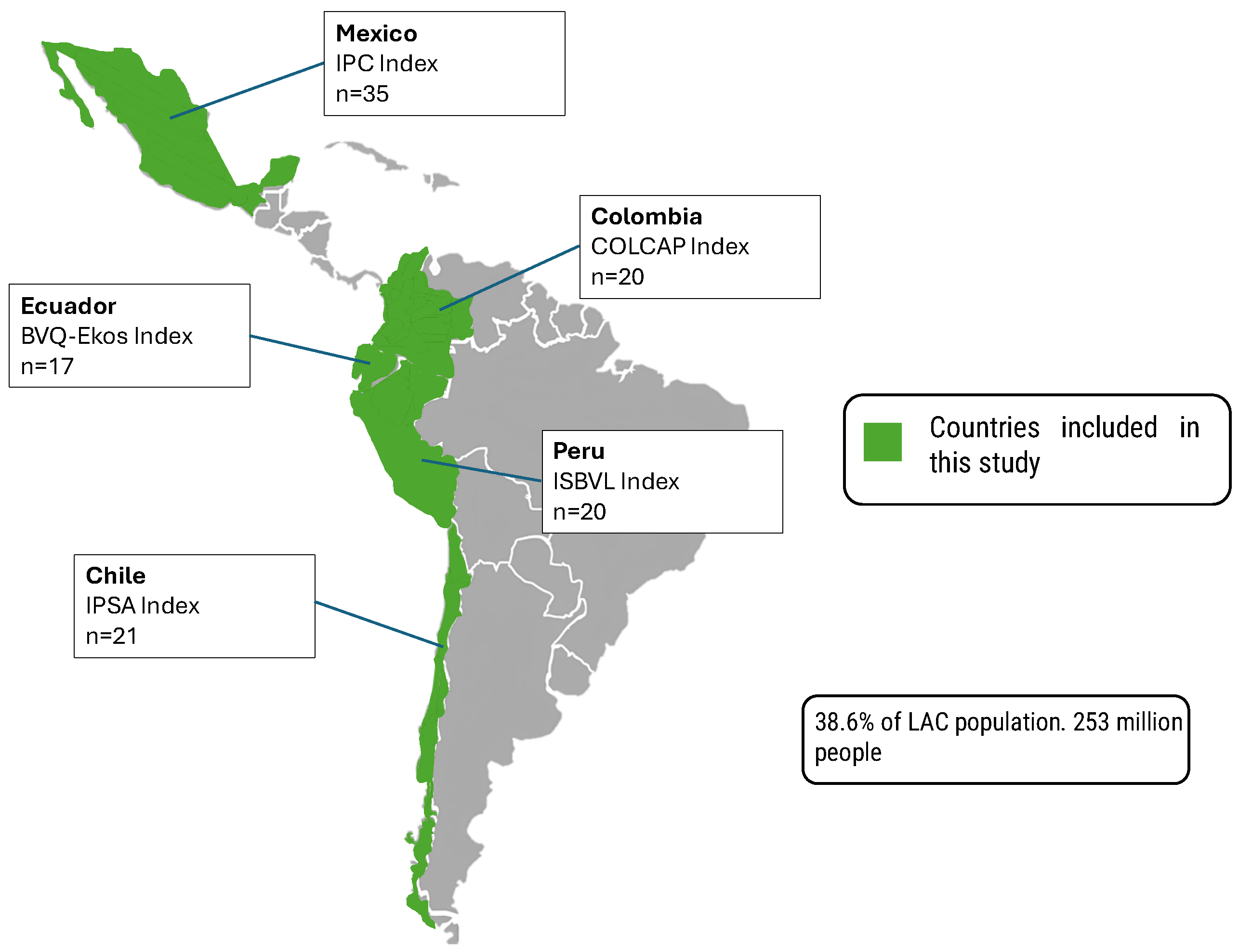
48]. Our findings characterize the disclosure practices among the region’s largest corporations but cannot speak of the broader economic ecosystem. Additionally, our geographic scope excludes major regional economies such as Argentina or Brazil, limiting our ability to make more comprehensive regional claims. Due to the limited size of Ecuador’s stock exchange index (10 companies in the ECUINDEX), a substitutive source, the Ekos business ranking [
45], was used to achieve adequate sample size, introducing minor methodological inconsistency in cross-country comparisons. Future research should expand CIX assessment to SMEs and private firms and incorporate other major economies such as Brazil and Argentina in order to provide truly comprehensive regional analysis.
The reliance on publicly disclosed information also generates an inherent limitation, because companies may in fact possess more detailed disclosure information in internal records that is not reflected in our analysis. However, our target analysis is precisely showcasing the level of public transparency of firms across the region, rendering non-public documentation invalid in this matter. Future research could deepen understanding through partnerships with companies willing to share internal documentation on carbon footprint disclosure.
This study analyzes disclosures from a single reporting year, except for Mexican reports (2022), all other companies reflect 2023 disclosures. This one-year lag limits direct temporal comparability, although corporate disclosure practices tend to evolve gradually, and no substantial new regulations on CF disclosure in Mexico were found between 2022 and 2023. Longitudinal assessments tracking the same markets across multiple years would reveal whether substantial differences in disclosure appear as time passes.
Despite rigorous control protocols, the CIX scoring methodology still presents a risk of introducing bias in expert judgment applying criteria to diverse disclosing formats and contexts. We addressed this issue by expanding from a two to a three independent reviewer protocol. Each company report was independently evaluated by three trained experts, followed by consensus meetings coordinated by a methodological expert to reconcile discrepancies and ensure inter-rater concordance. Institutional partnerships with UNALM and ESPOL enabled recruitment of evaluators with local contextual knowledge, reducing misinterpretation of country-specific reporting practices.
4.2. Latin America’s Carbon Disclosure Landscape
The regional convergence of median CIX scores within a 1.55-point range (Ecuador: 2.65; Chile: 4.20) despite diverse regulatory and disclosure contexts aligns with institutional isomorphism theory [
27]. Score convergence at low quality levels observed across the sample presented aligns with prior research identifying the reduced effectiveness of voluntary disclosure frameworks in emerging markets, where institutional pressures and stakeholder demands differ [
6]. The patterns suggest that due to the multinational character of most of the firms analyzed, global dynamics, such as the role of international investors [
49], global reporting frameworks, or shared know-how [
50], establish minimum disclosure thresholds, but are insufficient to motivate rigorous carbon accounting. Although all five countries analyzed reference international frameworks such as the GHG Protocol and GRI, their national regulatory approaches to corporate carbon disclosure differ substantially in terms of mandatory reporting, enforcement mechanisms, and institutional capacity. Chile and Mexico combine mandatory reporting requirements with fiscal or market-based instruments, while Colombia applies sector-specific mandates. In contrast, Ecuador and Peru rely primarily on voluntary or referential disclosure mechanisms. These similarities and differences in regulatory design and enforcement capacity help contextualize the observed convergence of CIX scores at relatively low levels and explain cross-country variability in disclosure quality (
Table 13).
Three particular mechanisms for the adoption of parallel reporting practices can be identified across the sample:
The first is coercive isomorphism. The sample analyzed includes 68/103 (66%) multinational corporations, meaning a majority of the companies analyzed operate through parent company mandates. Subsidiary companies can reasonably be expected to align their sustainability reporting with corporate standards independent of local contexts and requirements [
27].
The second one is mimetic isomorphism. Applied to this disclosure context, we can see a clear baseline reporting set in the adoption of Scope 1 and 2 reporting, with regional means ranging from 0.48 to 0.68 across all countries. This explains why companies from Ecuador report emissions on a similar level to Chile despite the differences in contextual factors that may lead to different scores in other Scope 3 categories.
Finally, we can see clear instances of normative isomorphism across company reports. A vast majority of the case studies analyzed cite global frameworks and reporting standards as the GHG Protocol and GRI frameworks, presenting a landscape of standardized methodologies with ample diffusion across borders [
56].
Although score convergence is identified, the low regional mean (3.53/10) points towards low quality convergence. Isomorphic pressures alone generate a baseline of reporting, but do not transcend to drive substantive transparency [
57]. The companies analyzed appear to adopt disclosure structures that favor minimum compliance, a signal of legitimacy to international stakeholders, avoiding the more resource-intensive quality improvement.
This pattern aligns with prior research showing voluntary frameworks in emerging markets generate ceremonial adoption rather than substantive implementation [
58]. The narrow convergence band (CV = 47% regionally) combined with universally low Scope 3 performance (means 0.19–0.31) demonstrates that global reporting frameworks create floor effects (minimum acceptable disclosure) without establishing ceiling pressures (incentives for excellence) [
50].
Even though to some extent there is regional convergence, there are important national variations that have to be acknowledged, as they reflect institutional capacity and regulatory infrastructure differences.
For starters, Chile’s position as a regional leader (median 4.20, CV = 38%) can be traced back to the convergence of three factors:
Firstly, the creation of several enforceable disclosure agreements, made possible because of Chile’s legal framework regarding climate change (Law 21455 [
51]) and carbon tax legislation (Law 20780 [
59]), has ensured the compliance of large facilities (
Table 13). In contrast to voluntary registry in Ecuador or Peru`s referential frameworks, there are important consequences for Chilean companies who choose to not follow disclosure regulation. It is precisely because of this normative floor that Chile’s consistent Scope 1 and 2 performance (CIX 1–4 means: 0.58–0.72) is above both Peru’s and Ecuador’s, with minimal zero-score cases (0–4 companies per indicator).
Secondly, the low variability in Chile’s results (CV = 38%) suggests an oversight capacity that has diffused broadly across their corporate sector, rather than remaining concentrated in early adopters. This can be traced back to Chile’s carbon pricing system, which has been operating since 2017 and therefore has allowed a maturing period of 6 to 7 years before our 2023 assessment. It is during this period that regulatory agencies have developed an oversight capacity, and when corporations have built internal expertise.
The third and final factor is the strong integration with international capital markets that Chilean companies demonstrate. Because of this, investors tend to press for quality disclosure to a greater extent, a pressure that exceeds domestic regulatory minimum and has resulted in Chile obtaining the highest Scope 3 performance regionally (CIX5–9 means: 0.25–0.46).
On the other side of the spectrum we find Ecuador, with systemic corporate failures that position it as the lowest-performing country (median 2.65, highest variability CV = 69%). There are three factors that explain this: a wide regulatory vacuum, complimented with limited institutional capacity, and a bifurcation of corporate capabilities. The “Low” enforcement levels of both the voluntary Environmental Organic Code and Ecuador’s Carbon Zero program through which Ecuador operates, far from effectively regulating and orienting Carbon disclosure, result in the non-compliance mechanism. This regulatory vacuum is accompanied by Ecuador’s smaller and underdeveloped capital markets. The result is that there is no investor pressure or rigorous disclosure, opposite to what we saw happens in Chile, and no resources for further regulatory advances. These limitations constrain institutional development of sustainability expertise.
Lastly the combination of low median (2.65) with the highest variability reveals an extreme heterogeneity in disclosure capacity. There is a high contrast between sophisticated and elite companies which achieve outstanding results and the rest of the companies, (12/17), which combined have a score below 3.0. This bifurcation indicated that technical capacity remains only accessible for elite firms, with little institutionalization of carbon and sustainability disclosure mechanisms across the national corporate sector [
60].
When interpreting the sectoral results, the banking sector presents a revealing disclosure profile. Financial institutions demonstrate a very strong operational baseline across the region, with CIX 1–4 obtaining high results (0.61–0.65) indicating strong internal capabilities. These strongpoints, however, contrast greatly with the systematic omission of value-chain emissions (CIX 7 shows 55% non-disclosure, CIX 9 shows 50% omission, and CIX 10 shows 100% omission). Contrary to original assumption, upstream categories (CIX 5–6) show higher CIX scores than downstream categories (CIX 7–9), even as these latter include financed emissions as a whole.
From a stakeholder theory perspective, we can interpret that banks are particularly susceptible to complex stakeholder pressure regionally, with international ESG investors and clients exerting pressure on operational footprint disclosure (CIX 1–4), although not as prominently with the companies financed emissions, a part of CIX 8 and representative of most of finance’s emissions as a whole [
61]. Likewise, waste management and mobility show low relevance for stakeholders. This selectivity is further explained by legitimacy theory. Banking’s consolidated operational emission disclosure profile shows a high level of symbolic compliance when analyzed globally. Although operational emissions are disclosed in a methodologically robust manner, their over-emphasis allows the sector to satisfy ESG reporting expectations to a high level, being leaders among the sectors analyzed, while avoiding comprehensive transparency across their value chain [
62].
The complete absence of uncertainty reporting is particularly striking in a sector that routinely quantifies credit risk, market risk, or operational risk systematically [
63]. This suggests strategic decisions prioritizing legitimacy management over technical limitations. From an agency theory perspective, this strategic omission can be seen as acknowledging that recognizing emission uncertainty could intensify further monitoring pressure and invite scrutiny of climate risk management [
64].
Cross-sector comparisons present a counterintuitive finding that challenges traditional legitimacy theory predictions: carbon-intensive sectors (Industry mean: 3.40; Mining: 3.52) demonstrate lower quality disclosure than the financial sector (mean: 3.98). The observed pattern suggests a complex legitimacy–disclosure dynamic operating in Latin American contexts.
This pattern can be explained by three complementary mechanisms. Firstly, we can point towards asymmetric stakeholder pressures. Industry and manufacturing presents a more fragmented stakeholder landscape that prioritizes immediately close environmental issues over value-chain methodological rigor. This fragmentation dilutes pressure for high-quality carbon disclosure specifically, even as overall environmental scrutiny remains high [
65]. Another mechanism has to do with the materiality of disclosure costs and complexity. Financial and banking companies produce high quality Scope 1 and 2 disclosure with relatively low marginal cost due to the type of facilities, meaning low complexity to achieve strong CIX 1–4 scores. Industry and natural resources, however, face more complex emissions accounting in operational emissions due to higher number of facility types, process emissions, and fugitive releases, discouraging comprehensive transparency even as the legitimacy pressures exist. Finally, alternative legitimacy-building tools apart from carbon footprint disclosure can be identified regionally for the sectors at hand. Initiatives such as community investments, operational safety, job creation, or technology adoption seem to be the more dominant narrative strategy, reflecting differing legitimacy management calculations between sectors.
The systematic Scope 3 deficiency (means 0.19–0.31, non-disclosure rates 40–67%) and near-complete uncertainty absence (94% non-disclosure) are symptomatic of both technical and strategic challenges.
The disclosure literature documents extensively the role of technical constraints for effective disclosure. It is safe to assume that elements such as data unavailability across complex supply chains, measurement difficulties, and methodological complexities play a role in the Scope 3 results presented. Additionally, tractioning long supply chains and generating supplier engagement in accounting can be a challenge specific to emerging markets that needs further study [
46].
Strategic considerations and issues, however, feed off and amplify these technical barriers, generating a disclosure avoidance in technically capable companies. From a stakeholder lens, systematic Scope 3 and uncertainty omission reflects a rational resource allocation mechanism towards the emission categories that generate stakeholder scrutiny. Scope 1 and 2 dominate the mandatory and voluntary disclosure framework guidelines. In fact, materiality asymmetries derived from the omission of Scope 3 tend to generate even greater disincentives for value-chain emission disclosure, being that Scope 3 emissions often represent 70–90% of total company emissions, making symbolic compliance through selective Scope 1 and 2 reporting the best option. Legitimacy theory, on the other hand, illustrates how regionally spread Scope 3 deficiencies act as a collective floor where no individual company faces legitimacy pressure to exceed the sectoral norms.
4.3. Implications for Policy, Practice, and Future Research
This analysis has shown that even though voluntary frameworks generate regional convergence (1.55-point difference between means), this convergence is of generally low quality (3.55 regional mean CIX score). The presence of disclosure alone is not enough to guarantee proper transparency for stakeholders [
43]. Applying the CIX framework to a regional context allows policy makers to move from a binary disclosure–non-disclosure paradigm towards setting minimum quality thresholds for compliance monitoring. Tiered quality requirements that establish disclosure guidelines and practices regionally could be a useful tool for improving CIX scores and transparency across the region. Regulatory agencies and operators could adopt CIX as a standardized monitoring framework, similarly to capital adequacy ratios, identifying lagging sectors and evidence-based enforcement prioritization.
The fact that Chile obtained the highest mean CIX score (4.20) with the lowest variability shows that combining institutional capacity and national frameworks is associated with consistent high performance. Ecuador, on the other hand, showing the lowest score (2.65) but highest variability, leads one to assume that uniform regional mandates could be counterproductive, given the internal capacity differences across contexts. Differentiated regulatory approaches and developments could use this CIX assessment as a guide structuring capacity-building programs and legal requirements in the initial consolidation phases of Scopes 1 and 2, then upstream Scope 3, then downstream Scope 3, and final uncertainty quantification. The harmonization of local capacity building with national regulatory frameworks and international reporting frameworks could generate the necessary incentive structure for lagged companies to catch up to a baseline of reporting, as well as generate a differentiation opportunity for companies that already report more thoroughly but are missing key indicators.
The CIX enables three specific policy interventions. Tiered regulatory frameworks could mandate minimum CIX thresholds by development stage, where foundational contexts (<3.0 score) require Scope 1 and 2 completeness before developing Scope 3 mandates, while advanced markets (>4.0) can enforce value-chain reporting. Chile’s Law 21455 [
51] demonstrates this approach—mandatory Scope 1–2 reporting for large facilities combined with carbon taxation (Law 20780) [
59] generated consistent performance (CV = 38%) through enforcement certainty. Second, CIX-indexed incentives could reward disclosure quality beyond mere presence, enabling tax credits, lending rates, or public procurement advantages to move from valuing symbolic to substantive reporting. Finally, capacity-building programs could provide technical assistance with focalized targets, focusing on the weaker CIX indicators regionally and nationally.
Furthermore, the systematic Scope 3 deficiencies identified in this study carry profound implications in a carbon trade landscape dominated by the EU’s Carbon Border Adjustment Mechanism (CBAM) discussions. CBAM implementation as of 2026 requires verifiable embedded carbon calculations across value chains, precisely the disclosure domain that presents weaker performance regionally. Our findings suggest that regional exporters of CBAM-covered sectors (cement, aluminum, steel, fertilizers…) will face distinct risks from inadequate value-chain emissions reporting. Among them, companies extending default carbon intensity values and not being able to demonstrate methodologically rigorous calculation will face punitive default rates and increasing border adjustment costs. What this means as well is that the regional differences reflected in this study will translate directly into differentiated median costs by country with stronger disclosure infrastructures securing preferential treatment (Chile or Mexico) over the weaker disclosers (Ecuador or Peru). CIX assessments in the future could serve as a diagnostic tool for assessing CBA readiness, identifying priority sectors requiring targeted pre-compliance technical assistance.
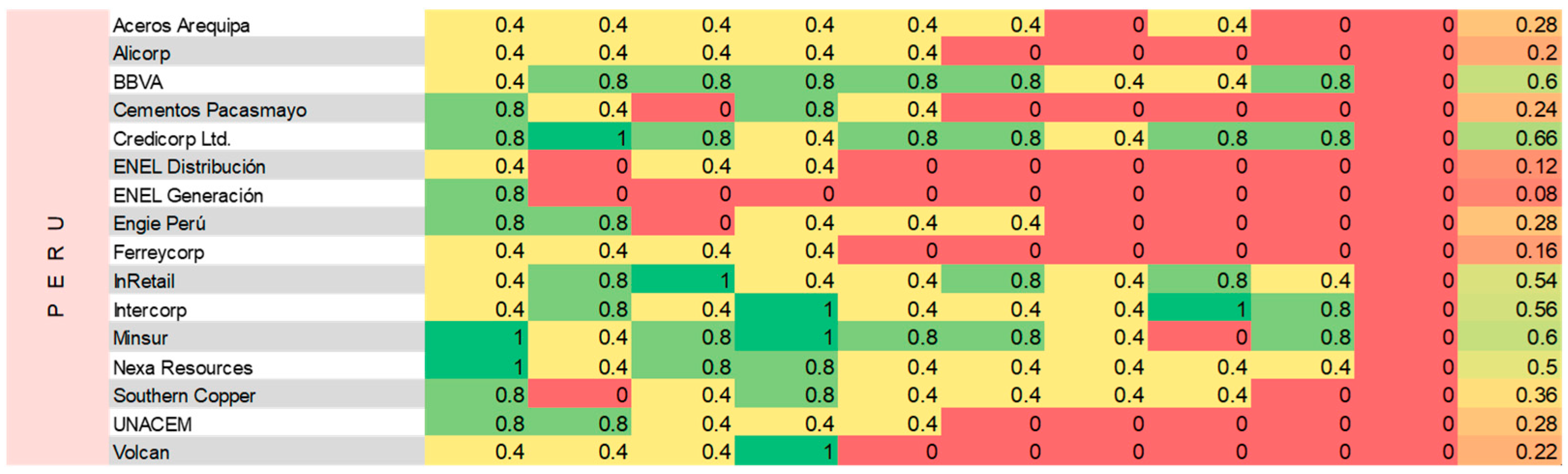
Currently, 94% of the company reports analyzed did not report any uncertainty values. This gap represents an opportunity for early adopters to differentiate themselves and acquire a competitive advantage over their sector, positioning them as a leader in climate action transparency and traceability. Interpreting uncertainty values in company reports as a sign of methodological sophistication instead of an internal weakness could help build credibility and rapport for the company, challenging possible greenwashing claims. Additionally, another notable gap has to do with operational disaggregation by business unit, geography, or facility. This gap is reflected by the low number of full one-point scores across the region and is a key measure in ensuring targeted decarbonization strategies across sectors, demonstrating actionable transparency. First-mover advantages are already emerging: Chile’s Banco de Chile (6.4), Colombia’s Grupo ISA (6.8), and Peru’s Credicorp (6.6) achieved top regional scores through comprehensive Scope 3 and uncertainty reporting, potentially positioning them favorably for climate-linked financing instruments (green bonds, sustainability-linked loans).
Several future research directions could enhance and develop several of the emission disclosure dynamics that remain out of this cross-sectional study’s scope. Most urgently, CBAM implementation in 2026 creates a natural experiment for assessing if and how border carbon pricing affects disclosure quality in exporting nations to the EU. Longitudinal CIX studies in the region could study whether sustain trade exposure in CBAM-covered sectors improves overall CIX scores and facilitates the transition from symbolic to substantive disclosure. Longitudinal studies comparing one, or a set of markets, over multiple reporting cycles could also reveal whether companies with more transparent disclosure achieve measurable advantages among the country’s top performing companies (by capital), or if it is in fact a non-factor. Broader regional studies, including all major economies in Latin America, including Brazil or Argentina, could provide deeper insight into regional disclosure dynamics and structures, as well as comparative assessments across regions. Future studies could focus on extending this analysis to regions of similar industrialization or development levels, elaborating on specific protocols that could enhance the generalizability of the assessments in these comparisons. Another particularly interesting field has to do with correlation analysis between CIX scores and other descriptive measures, such as policy stringency on environmental matters, Human Development Index, specific ESG ratings (MSCI, Sustainalytics, CDP…), etc. Altering the sample composition by including SMEs, national public institutions, or other sets of actors could also enhance our understanding of dynamics within the broader national economy.