Article

Does Emergency Capability Promote Community Responsibility?—A Moderated Mediation Model of Risk Perception and Community Resilience

Management School of Emergency, School of Public Policy, China University of Mining and Technology, Xuzhou 221000, China
*
Author to whom correspondence should be addressed.
Sustainability 2026, 18(3), 1335; https://doi.org/10.3390/su18031335
Submission received: 12 December 2025 / Revised: 21 January 2026 / Accepted: 24 January 2026 / Published: 29 January 2026
(This article belongs to the Topic Advances in Urban Resilience for Sustainable Futures)

Abstract

Clarifying the pathways through which public emergency response capability influences community responsibility holds positive implications for promoting public participation in community disaster prevention and mitigation efforts. Based on a large-scale community survey covering over 70 cities in China, this study obtained a sample of 1753 individuals through random sampling and employed Bootstrap methods for effect testing. Findings reveal the following: ① Public emergency response capability significantly correlates positively with sense of community responsibility, with both intrinsic cognitive emergency response capability and extrinsic skill-based emergency response capability demonstrating strong positive associations with community responsibility. ② Risk perception mediates the relationship between public emergency response capability and community responsibility, forming the associative pathway: “Enhanced public emergency response capability → Reduced risk perception → Strengthened sense of community responsibility”. ③ Community resilience moderates the “public emergency response capability → risk perception” pathway, with high-resilience communities significantly reducing public risk perception levels. Therefore, to fully leverage the role of public emergency response capability in enhancing community responsibility, efforts should focus on cultivating public risk prevention awareness, comprehensively disseminating safety and emergency knowledge, strengthening public emergency skills training, fostering a culture of neighborhood watch within communities, and optimizing public participation mechanisms for community disaster reduction.

1. Introduction

Building inclusive, safe, resilient, and sustainable cities and communities has become a global consensus as a core component of the United Nations Sustainable Development Goal 11 (SDG 11). Against the backdrop of intensifying climate change risks, scientifically and efficiently preventing and responding to disasters is crucial to achieving this goal, placing higher demands on grassroots disaster prevention and mitigation capabilities. This requires broad societal participation, and cultivating community-based emergency response forces is the key pathway to mobilize the public and strengthen the foundation for disaster prevention and mitigation. Social emergency response forces constitute a vital component and effective supplement to grassroots emergency response capabilities. Their effective mobilization is crucial for strengthening grassroots emergency management capacity building and enhancing disaster and accident response capabilities. Rooted in society, these forces are primarily cultivated at the grassroots community level, with the key challenge lying in effectively stimulating public participation [1]. Generally speaking, the disaster prevention and mitigation knowledge and self-rescue/mutual-aid capabilities of community residents directly influence their awareness of shared risk responsibility. Only by fostering an environment where everyone prioritizes safety and participates in disaster prevention and mitigation can we inspire a sense of community responsibility among the public. This, in turn, enhances their willingness to engage in community disaster reduction efforts, thereby injecting sustained vitality into the development of social emergency response capabilities. Therefore, building a collective defense line for grassroots emergency response has become a crucial component in advancing the modernization of grassroots emergency management in the new era [2]. Against this backdrop, communities worldwide have adopted multiple measures to enhance grassroots public emergency preparedness, including improving social emergency volunteer service systems, conducting practical first-aid training, and innovating safety education formats and content. However, enhancing community public emergency preparedness does not necessarily translate to a simultaneous strengthening of grassroots emergency management capabilities. This is because public emergency capability primarily manifests at the individual self-rescue level. To transform this individual capability into collective community-wide prevention and control efficacy—achieving a synergistic effect where “1 + 1 > 2”—the key lies in whether the public possesses the corresponding sense of community responsibility and willingness to participate. The mechanism for this transformation remains to be validated.
Specifically, in community disaster scenarios, the key to enhancing community emergency response capacity lies in whether the public’s self-rescue and mutual aid capabilities can be effectively translated into actual emergency actions. Traditional views on social responsibility assert that capability serves as the foundation for assuming responsibility. When individuals possess sufficient capability, they are more likely to be entrusted with or voluntarily take on greater responsibilities—reflecting the ethical paradigm that “with greater capability comes greater responsibility” and embodying individuals’ sense of responsibility [3]. This traditional ethical perspective presupposes a direct, inevitable link between “capability” and “responsibility.” This study transforms it into an empirical scientific question: Does this link hold true in the specific public domain of community disaster prevention and mitigation? What are its underlying psychological and social mechanisms? Are there external conditions that strengthen or weaken this connection? Through this transformation, we bring philosophical ethical discussions into the empirical research domains of organizational behavior and community psychology. In disaster scenarios, this perspective often assumes that members of the public equipped with emergency skills will participate more actively in community disaster prevention and mitigation activities and provide assistance during crises. However, it is worth reflecting on whether this responsibility paradigm, rooted in ethical tradition, still holds practical explanatory power in contemporary disaster reduction contexts. It is not uncommon to observe that individuals possessing first-aid skills fail to take timely rescue actions in real emergency situations. Research has confirmed that in emergency situations, approximately one-third of surveyed individuals are unwilling to perform CPR on others [4], This reflects not only a lack of public responsibility in practice but also exposes the practical challenges in translating public emergency response capabilities into responsible actions. The traditional expectation that “with greater capability comes greater responsibility” appears to face “challenges” in real-world emergency scenarios. This paradox points to two core questions in this study: First, is there an inherent causal mechanism linking individual public capabilities to collective responsibility? Second, do other factors in community disaster reduction contexts influence the effectiveness of public emergency capabilities in fostering responsibility? Consequently, this study focuses on the internal relationship between the improvement of public emergency response capacity and the cultivation of community responsibility, strives to clarify the mechanism and coupling logic of the two, and explores the external interference factors of the lack of public community responsibility in grassroots community disaster prevention, mitigation and relief work, so as to provide experience and theoretical reference for effectively guiding the public to participate in community disaster reduction practice and improving the effectiveness of grassroots disaster prevention and reduction.

2. Literature Review

2.1. Emergency Capacity and Its Influencing Factors

Generally speaking, emergency response capability refers to the capacity of individuals, organizations, or governments to swiftly and effectively identify, respond to, manage, and recover from sudden public incidents or emergencies, aiming to minimize the loss of life and property as well as the negative societal impacts caused by such events [5]. Currently, academic research primarily explores emergency response capability through dimensions such as hierarchy, subject, and type. At the hierarchical level, emergency response capability can be categorized into macro-level national emergency management capacity [6], meso-level emergency effectiveness of government departments [7], and micro-level professional competence of emergency management personnel [8]. At the subject level, it encompasses corporate, urban, community, and rural emergency response capabilities. In terms of types, based on the four major categories of emergencies defined in China’s Emergency Response Law, emergency capabilities can be categorized as natural disaster response capabilities, accident and disaster response capabilities, public health emergency response capabilities, and social security incident response capabilities [9,10]. Emergency capabilities across different dimensions also exhibit varying degrees of integration in research and practice. For individual members of the public, emergency capabilities can be categorized into four types based on the distinct phases of an emergency: preparedness capability, response capability, handling capability, and enhancement capability. Similarly, for urban flood disasters, community residents’ flood emergency capabilities can be divided into pre-disaster preparedness capability, in-disaster handling capability, and post-disaster recovery capability. International research defines public emergency capability as “the comprehensive competence of individuals to effectively identify risks, make decisions, and implement self-rescue and mutual aid during emergencies [11],” highlighting its diversity and integrated nature.

2.2. Sense of Community Responsibility in Disaster Contexts

Sense of responsibility refers to an individual’s internal psychological state of being accountable for the consequences of their actions, representing a stable psychological quality that drives individuals to proactively undertake social responsibilities and help others [12]. Sense of responsibility exhibits significant civilizational differences in terms of cultural construction and psychological mechanisms. In the Chinese context, sense of responsibility is rooted in the tradition of collective ethics, where individuals uphold the moral ideal of ‘National prosperity and decline are the responsibility of every citizen and bear inescapable responsibility for the collective destiny. By contrast, Western responsibility ethics originated from the “civic responsibility” of the ancient Greek city-state era. City-states connected individual virtues with the well-being of the city-state through political participation mechanisms, educating citizens to focus on public interests, offer suggestions on public affairs, and express opinions on each resolution or proposal of the city-state [13], thus forming a “rights-obligation” responsibility network. The connotations of sense of responsibility in Eastern and Western cultures have gradually converged, both representing that while enjoying rights, individuals must assume responsibilities and obligations to the country and society, proactively fulfill social responsibilities, and participate in public affairs.
In the field of disaster management, community responsibility is widely regarded as a key psychological mechanism for mobilizing social forces and achieving effective self-rescue and mutual aid. It differs from general community belonging, placing greater emphasis on residents’ willingness to proactively assume responsibility for community safety and well-being [14]. This sense of responsibility is directly linked to higher levels of community participation, emergency leadership, and cooperative behavior. Research indicates that community responsibility mediates the relationship between community identification and actual participatory behavior and is significantly positively correlated with residents’ altruistic tendencies [15]. In emergency scenarios, this sense of responsibility directly influences public willingness to respond, cooperative behaviors, and sustained initiative in reconstruction efforts. It serves as the core psychological foundation determining whether a community can mobilize swiftly and effectively mitigate disaster impacts [16]. Despite its acknowledged importance, existing research remains insufficient in exploring the formation and activation mechanisms of community responsibility within specific disaster contexts. Most findings focus on broad “social responsibility” or static structural measurements, lacking in-depth analysis of its dynamic evolution pathways and situational sensitivity. In recent years, scholars have begun examining how external environments and intervention strategies shape this sense of responsibility [17]. Notably, digital tools like big data and social media offer new avenues for risk communication and public awareness enhancement, enabling more precise and timely information dissemination [18]. Simultaneously, effective interventions during critical post-disaster windows—such as timely, transparent risk communication and community engagement—have been shown to significantly enhance residents’ risk perception and preparedness awareness [19]. Appropriate risk perception often serves as a crucial prerequisite for triggering and translating responsibility into concrete action [20,21]. These findings underscore that the formation of community responsibility is not only rooted in cultural and psychological factors but is also profoundly influenced by technological empowerment and process management [22].

2.3. Research Review

Existing studies on public emergency capacity have certain limitations:
  • Most studies classify public emergency capacity based on the occurrence and response stages of emergencies, resulting in a relatively narrow dimensional division.
  • Confined to the narrow scope of medical first aid, these studies understand public emergency capacity as specific first-aid capabilities and measure it using a single indicator. This fails to fully grasp the connotation of public emergency capacity, leaving room for further exploration and interpretation.
At the same time, existing research lacks empirical verification of the relationship between public emergency capacity and sense of community responsibility and has not systematically examined the mechanism of action between the two. Additionally, the research objects often focus on a specific region or a specific group, which limits the generalizability of the conclusions. On this basis, in addition to clarifying whether individual emergency capacity has a triggering effect on sense of community responsibility, it is also necessary to incorporate internal and external intervention factors and construct a more systematic and comprehensive analytical framework to clarify the path for improving the public’s sense of community responsibility.

3. Theoretical Analysis and Research Hypotheses

3.1. Direct Impact of Public Emergency Capacity on Sense of Community Responsibility

According to Weiner’s attribution theory of responsibility, as an internal factor of individuals, capacity serves as a prerequisite for them to take responsibility proactively [23]. The level of capacity directly affects an individual’s self-efficacy, which in turn further influences the implementation of responsible behaviors. Empirical studies have shown that in emergency situations, the probability of bystanders with high self-efficacy implementing first-aid intervention is 2.1 times higher than that of bystanders with low self-efficacy [24]. From a philosophical perspective, the assumption of moral responsibility typically requires the agent to possess control over their actions, and this control is precisely achieved through “capacity” [25]. In other words, the attribution of moral responsibility is often closely tied to an individual’s capacity to “choose different courses of action.” Furthermore, the notion that “greater capacity entails greater responsibility” has deep roots in traditional ethics. The construction of social responsibility and ethics cannot be separated from considerations of individual capability and the impact of their actions [26]. In other words, the attribution of moral responsibility is typically closely related to an individual’s capacity to “choose different courses of action” [27].
Based on this, the following hypothesis is proposed:
H1. 
Public emergency preparedness capability is significantly positively correlated with community responsibility, meaning that stronger public emergency preparedness capability leads to stronger community responsibility.
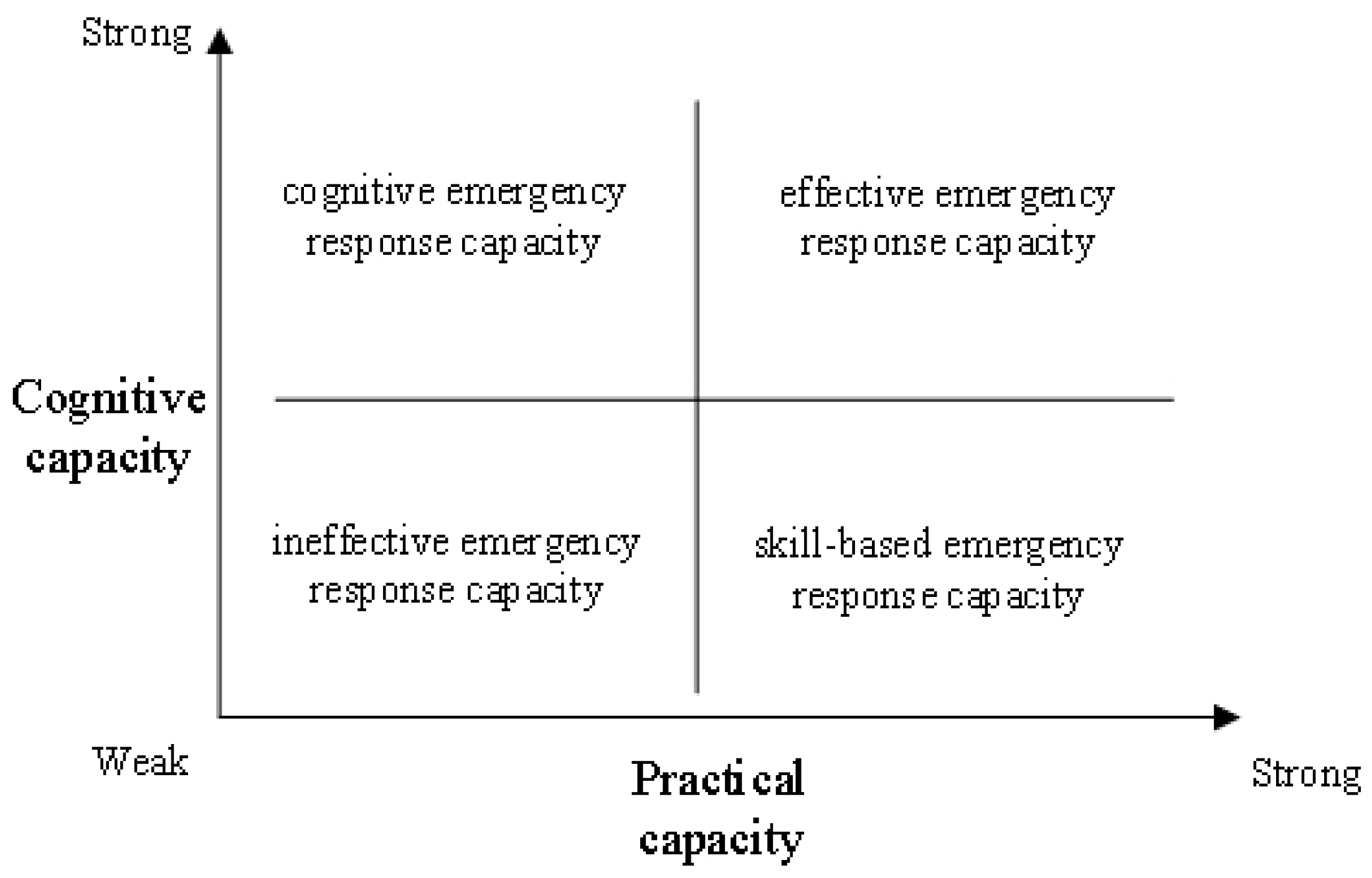
Current academic classifications of public emergency capabilities exhibit limitations, often simplifying them to practical skills like first aid and equipment operation while neglecting cognitive dimensions such as risk awareness, crisis decision-making, and psychological resilience. Therefore, building upon existing classifications, this study categorizes public emergency preparedness into four types based on the strength of cognitive and practical capabilities: Holistic Preparedness, Cognitive-Based Preparedness, Skill-Based Preparedness, and Ineffective Preparedness (Figure 1). This study posits that only by possessing “integrated cognitive-behavioral emergency capability” can the public make rational decisions and implement scientific actions during emergencies, thereby driving their participation in community disaster prevention, mitigation, and relief activities. In contrast, single-dimensional emergency capabilities are insufficient to predict an individual’s sense of community responsibility. Based on this, the following hypotheses are proposed:
H1a. 
Single-dimensional intrinsic cognitive emergency capability cannot effectively predict public community responsibility.
H1b. 
Single-dimensional external skill-based emergency preparedness cannot effectively predict public community responsibility.

3.2. The Mediating Role of Risk Perception in the Relationship Between Public Emergency Capacity and Sense of Community Responsibility

Risk perception, intuitively understood as “perceived risk”, refers to an individual’s perception, cognition, and comprehension of risky events and their characteristics [28]. Generally, risk perception is a subjective evaluation of potential threats formed by individuals through emotional arousal, based on emotional and rational judgments [29]. Studies have confirmed that risk perception can, to a certain extent, promote proactive behaviors among the public and strengthen their awareness of fulfilling responsibilities. In the field of communication, content-oriented social media can directly influence individuals to adopt self-protective behaviors, or indirectly drive such behaviors through risk perception [30]; in public environmental incidents, social capital can affect the public’s response behaviors fully or partially through risk perception [31]. Additionally, the public’s level of risk perception is positively correlated with public health compliance behaviors, willingness to participate in co-production, and willingness to support policies. This indicates that risk perception can exert a positive impact on the public’s public behaviors, thereby prompting them to fulfill social responsibilities.
At the same time, risk perception can also inhibit the public’s willingness to participate [32]. In risk response contexts, the public participates in social risk interactions as risk bearers [33]. Constrained by limited cognitive abilities and inadequate environmental assessment, individuals’ risk judgments tend to deviate from objective reality [34]. This deviation leads to cognitive biases and subsequent inappropriate actions, such as excessive self-protection and distrust of external organizations, which in turn cause adverse effects on themselves and others [35]. For instance, risk perception has a significant negative impact on the public’s willingness to use facial recognition technology and their intention to participate in AI-related affairs [36]. It is evident that the mechanism by which risk perception influences the public’s behavioral willingness exhibits a relatively consistent negative characteristic, and may inhibit the public’s behavioral willingness and sense of responsibility [37]. Specifically, when the public’s perceived risk level exceeds their own capacity threshold and they believe the risk is difficult to address, even if they possess strong emergency capacity, their behavioral decisions will still be constrained by psychological avoidance mechanisms, triggering negative behaviors such as risk avoidance and excessive self-protection [38]. For example, in the face of urban waterlogging caused by heavy rains, members of the public with rescue capabilities may still prioritize protecting themselves over providing immediate assistance to others, even if their own capabilities are sufficient to deal with the dangerous situation. Furthermore, the potential risks associated with participating in community disaster prevention and mitigation also inhibit public participation: improper operation of some emergency equipment can easily cause harm to oneself and others; the lack of professional resources in grassroots communities leads to inadequate preparation for work such as emergency drills—for example, unreasonable planning of fire escape routes in residential buildings can easily cause harm to participating members of the public [39]. These factors create significant participation barriers for most members of the public who have not participated or have participated minimally, especially groups such as the elderly with low risk tolerance. When the public estimates that the risk costs of responsible behaviors exceed the behavioral benefits, risk perception will significantly inhibit the public’s participation behaviors, and avoidance tendencies will dominate, resulting in hindered implementation of the public’s responsible behaviors. Based on this, the study proposes the following hypothesis:
H2. 
Risk perception is negatively associated with the sense of community responsibility.
Public emergency preparedness typically refers to an individual’s knowledge, skills, and psychological readiness to take effective countermeasures during emergencies [40]. An individual’s knowledge and experience can significantly moderate their assessment and perception of risk. When the public possesses higher emergency preparedness, their sense of control over risks and self-efficacy correspondingly increases, potentially reducing the perceived intensity of potential threats [41]. Traditional research has primarily focused on the driving role of risk perception in emergency behavior. However, recent scholarship increasingly recognizes a bidirectional interactive relationship between the two, where public emergency preparedness itself can significantly influence risk perception levels. Enhancing emergency preparedness not only strengthens individuals’ practical ability to respond to actual threats but also profoundly reshapes their psychological cognition and evaluation processes. When the public acquires higher emergency preparedness through knowledge acquisition, skill training, and drill participation, their understanding of risk events becomes more objective and comprehensive. Consequently, their confidence in coping with uncertainty—their sense of self-efficacy—increases. This capability-based confidence boost effectively reduces anxiety and panic stemming from the unknown and helplessness, prompting individuals to assess potential risks more rationally [42]. Consequently, strong public emergency preparedness often signifies a sense of security rooted in thorough preparation, which can subjectively lower risk perception levels. Based on this, the study proposes the following hypothesis:
H3. 
The public’s emergency response capability is negatively associated with risk perception.
Public emergency preparedness not only directly promotes adaptive behaviors among individuals and communities but may also indirectly influence their sense of responsibility and propensity for collective action through psychological cognitive pathways. On the one hand, preparedness enhances individuals’ sense of efficacy, bolstering their confidence to act in risky situations and thereby increasing their willingness to shoulder community responsibilities. On the other hand, the role of preparedness in fostering community responsibility may be partially mediated by risk perception. Specifically, enhanced emergency preparedness reduces the public’s irrational, emotion-driven risk perception levels [43]. When individuals shift from highly anxious risk perception to rational assessment, their behavioral tendencies may transition from prioritizing self-preservation to more proactive altruism and collaboration. Excessive risk perception may trigger defensive avoidance, whereas moderate, cognition-based evaluation better fosters enhanced social cooperation awareness. In other words, strong public emergency preparedness can mitigate perceived psychological threats and helplessness to some extent, thereby reducing behavioral withdrawal tendencies [44]. This provides foundational conditions for individuals to focus on community well-being and proactively assume responsibilities. Based on this, the following hypothesis is proposed:
H4. 
Risk perception mediates the association between the public’s emergency response capability and the sense of community responsibility.

3.3. The Moderating Effect of Community Resilience on the Public Emergency Response Capability and Risk Perception

“Resilience” was originally a concept in the field of physics and was later introduced into social science research. Academic circles have integrated “resilience” with community governance and urban management, and proposed a series of concepts such as community resilience, resilient cities, and resilient governance [45,46]. Based on differences in elements, community resilience can be deconstructed into five dimensions: value resilience, structural resilience, management resilience, technical resilience, and environmental resilience. Among them, technical resilience requires empowering the construction of a resilient community risk governance system with technology [47]. Through risk early warning and monitoring, and effective sharing of data resources, it promotes the improvement of community risk governance capabilities. At the same time, as an important position for responding to emergencies, the level of resilience of community physical space directly affects community risk governance capabilities. In addition, the improvement of community well-being cannot be separated from the support of community infrastructure, and the redundancy, robustness, and sustainability of infrastructure are crucial for disaster prevention and mitigation [48].
Community resilience characterizes a community’s capabilities and conditions to respond to emergencies and recover to its original state. Its construction can intervene in the shaping process of residents’ emergency response behaviors. Studies have shown that community resilience construction can effectively enhance residents’ development confidence, with technological resilience having the most significant impact on residents’ development confidence. Other studies have indicated that different post-disaster reconstruction contexts of communities exhibit differences in their psychological impacts on disaster victims, which suggests that the community environment may moderate the relationship between individual traits and external perceptions.
As the living space and action carrier of community members, the community environment may influence public behavioral motivations. On the one hand, communities can rely on risk response mechanisms to reduce the direct impact of public emergency skills on risk perception. In high-resilience communities, multi-dimensional resilience construction—such as the reliability of physical facilities, the efficiency of organizational mobilization, and the completeness of institutional guarantees—jointly forms a structural safety barrier. It reduces individuals’ subjective assessment of disaster threats and strengthens their sense of security in the external environment. Therefore, even if an individual’s emergency response capability is weak, their risk perception level will remain low due to the community’s safety guarantee effect. For example, community emergency volunteer teams can alleviate public anxiety when facing emergencies like fires through timely rescue, forming a compensatory effect of community protection on individual capabilities. On the other hand, communities weaken the intensity of the effect of safety awareness on risk perception through norm internalization. Individuals with cognitive emergency capabilities often pay more attention to the safety of their surrounding environment, and their risk perception may be stronger compared to those with skill-based emergency capabilities. In response, high-resilience communities can transform external community safety norms into internal behavioral guidelines for the public through collective actions such as disaster prevention drills and neighborhood mutual assistance [49]. This “safety inertia” shaped by the environment and constructed by individuals inhibits the risk sensitivity of individuals with high emergency capabilities: although residents with strong cognitive abilities can identify potential risks, they show a more rational risk attitude rather than excessive caution because they trust the community system’s response capabilities. Based on this, this study proposes the following hypotheses:
H5. 
Community resilience exerts a moderating effect on the relationship between public emergency capabilities and risk perception.
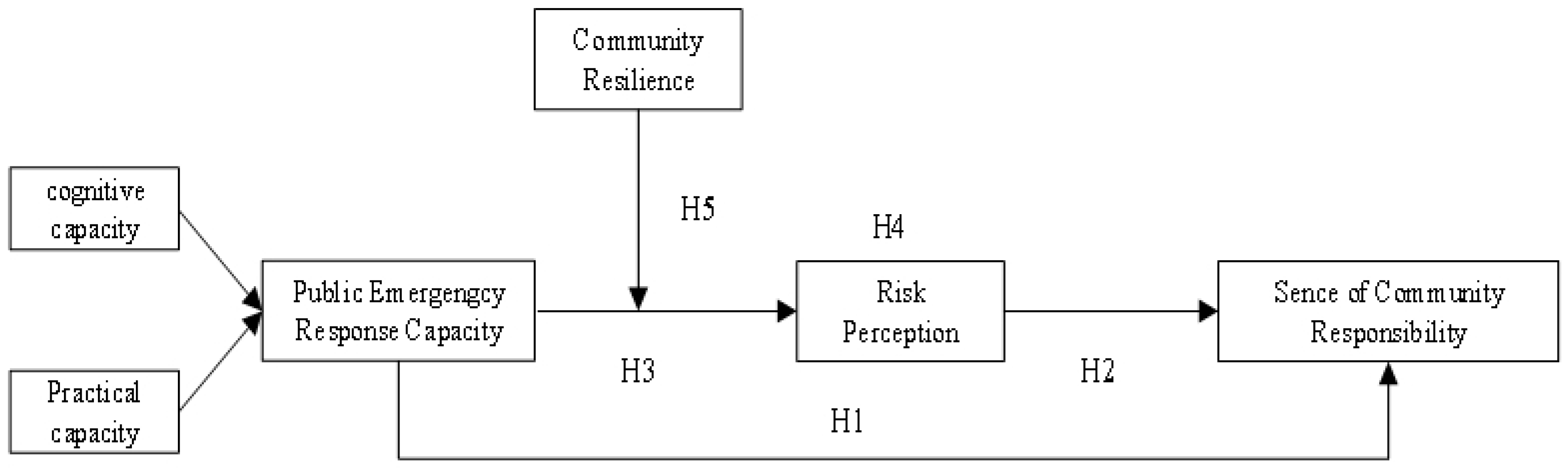
This study aims to investigate whether the linear assumption that “greater capability leads to greater responsibility” holds true in emergency situations. It examines the differential effects of two types of emergency capabilities on community responsibility, analyzes the mediating role of risk perception in the relationship between public emergency capabilities and community responsibility, and explores the moderating role of community resilience in the pathway. The theoretical model of this study is illustrated in Figure 2.

4. Research Objects and Methods

4.1. Research Samples and Methods

The data for this study originates from the “China Emergency Management Hundred Communities Survey” project conducted by China University of Mining and Technology in 2024. The project’s sampling scope covered 36 cities across mainland China, including 31 provincial capitals and 5 cities with independent planning status. Therefore, the samples used in this study are all from urban communities. The communities included in the survey project are recommended by the local emergency management department. At least two typical disaster prevention and mitigation model communities were selected in each city, encompassing traditional unit-based or older residential areas, commercial housing complexes, and emerging mixed-use or international communities. In total, over 70 communities were included, yielding 6729 valid questionnaires. Based on this, the study employed simple random sampling to independently select 1753 valid samples from the entire dataset for final analysis. The specific characteristics of these samples are detailed in Table 1.
To test the hypotheses, this study employed regression-based conditional process analysis. Specifically, the Process macro in SPSS 26.0 software was utilized to conduct effect tests via bootstrap sampling. Proposed by Hayes, this method serves as a robust approach for analyzing complex path models involving mediating and moderating variables. This method does not strictly follow the assumption of normal distribution of data, and is more suitable for the characteristics of social science questionnaire data, avoiding the prerequisites of traditional regression analysis. In addition, the Bootstrap method focuses more on the effect test, and can effectively control the sampling error, improving the robustness of the effect test results. In the analysis, Bootstrap resampling was conducted 5000 times, and 95% bias-corrected confidence intervals were calculated. If the confidence interval did not include zero, it indicated that the corresponding path’s indirect or moderating effect was significant. All continuous predictor variables were centered prior to analysis to reduce multicollinearity and facilitate interpretation of interaction terms.

4.2. Measurement Instruments

This study adopts a Likert five-point scale to measure the dependent variables, independent variables, mediating variables, and moderating variables. Scores are assigned based on the degree of conformity, ranging from 1 (strongly disagree) to 5 (strongly agree) with higher scores indicating greater conformity.

4.2.1. Dependent Variable: Sense of Community Responsibility (SOC-R)

Based on relevant studies on social responsibility, this study focuses the target of responsibility on the community and constructs the variable of “Sense of Community Responsibility” to measure the public’s sense of community responsibility. This study uses items such as “I am familiar with and strictly abide by the safety rules and regulations in the community” and “I will actively participate in the emergency drills regularly organized by the community” to measure the community public’s safety responsibility awareness. Meanwhile, it adopts the item “In emergency situations, I am willing to provide help within my capacity to neighbors in need” to evaluate the public’s initiative to help others, highlighting the community-based disaster prevention and mitigation context that the sense of community responsibility is rooted in. Exploratory Factor Analysis (EFA) and reliability analysis were conducted on the above items. The results show that the KMO statistic is 0.718 and the Cronbach’s Alpha coefficient is 0.757, indicating that the items measuring the public’s sense of community responsibility have good internal consistency and can be grouped into a single variable. On this basis, the scores of the above items are summed up and averaged as the operationalized measurement of the sense of community responsibility. The higher the score, the stronger the public’s sense of community responsibility.

4.2.2. Independent Variable: Public Emergency Response Capability (PERC)

Public emergency response capability comprises dual dimensions: first, the practical dimension encompassing self-rescue and mutual rescue skills; second, the cognitive dimension involving cognitive ability and responsiveness. Specifically, the cognitive dimension is reflected in the awareness of potential risks in normal scenarios, as well as emotional regulation and emergency decision-making capabilities in sudden situations. Accordingly, effective emergency response capability is the dual unity of cognitive ability and practical ability. This study defines the “strong practicality-weak cognition” emergency response capability as Skill-based Emergency Response Capability (SERC), and the “strong cognition-weak practicality” type as Cognitive-based Emergency Response Capability (CERC). The scale items cover both types of capabilities: practical ability items include “I have mastered first-aid methods such as cardiopulmonary resuscitation (CPR), fracture immobilization, wound hemostasis, and bandaging”; cognitive ability items include “I am highly alert to emergencies and always prioritize safety in everything I do”. All items adopt a five-point scoring system, with higher scores indicating stronger emergency response capability. Reliability and validity analysis were performed on the above items, and the results show that the Cronbach’s Alpha coefficient is 0.866 and the KMO statistic is 0.881, demonstrating good reliability and validity of the scale. The scores of the two dimensions of emergency response capability are summed up and averaged to construct the variable “Public Emergency Response Capability (PERC)”, which measures the public’s level of emergency response capability.

4.2.3. Mediating Variable: Risk Perception (RP)

This study measures risk perception by investigating the public’s understanding of external risks and loss estimation, so as to reveal their judgment of the severity of risks. All scale items still adopt a five-point scoring system, and the average score of the items is taken as the participant’s score for this variable. The higher the score, the higher the public’s level of risk perception. Reliability and validity analysis were conducted on the above items. The reliability analysis shows that the Cronbach’s Alpha coefficient is 0.861, indicating good internal consistency of the items, which can be grouped into a single variable. The validity analysis shows that the KMO statistic is 0.810, demonstrating good validity. The scores of the items are summed and averaged as the final score of risk perception.

4.2.4. Moderating Variable: Community Resilience (CR)

The measurement of the moderating variable focuses on the basic conditions of community disaster prevention and mitigation, covering two aspects: community resource support and safety education and publicity. Specific items include “The community is equipped with complete emergency facilities and equipment (such as fire extinguishers, Automated External Defibrillator (AED), etc.)” and “The community organizes activities in various forms and regularly carries out popular science publicity and education on disaster prevention and mitigation”. The higher the score, the better the level of community resilience construction. Reliability and validity analysis were performed on the items. The reliability analysis shows that the Cronbach’s Alpha coefficient is 0.918, indicating good internal consistency of the items. The validity analysis shows that the KMO statistic is 0.935, which is higher than 0.7. Finally, the scores of the items are summed up and averaged as the final score of community resilience.

4.2.5. Control Variables

Social class has a significant positive impact on public risk perception. Accordingly, referring to existing studies, this study incorporates demographic variables such as gender (GEN), age (AGE), marital status (MAR), educational background (EDU), and monthly personal income (ICO) as control variables. Through regression analysis, it explores whether these variables exert a significant impact on public risk perception and sense of community responsibility.

5. Research Results

5.1. Data Analysis

This study uses SPSS 26.0 software to conduct descriptive statistical analysis and correlation analysis on the core conducts preliminary tests on the relevant research hypotheses. The analysis results are shown in Table 2. Public Emergency Response Capability (PERC) is significantly positively correlated with Sense of Community Responsibility (SOC-R) (r = 0.692, p < 0.01); Risk Perception (RP) is significantly negatively correlated with Public Emergency Response Capability (PERC) (r = −0.232, p < 0.01) and Sense of Community Responsibility (SOC-R) (r = −0.242, p < 0.01); Community Resilience (CR) is significantly positively correlated with Public Emergency Response Capability (PERC) (r = 0.549, p < 0.01) and Sense of Community Responsibility (SOC-R) (r = 0.728, p < 0.01), and significantly negatively correlated with Risk Perception (RP) (r = −0.279, p < 0.01). These results provide a basis for subsequent hypothesis testing.

5.2. Hypothesis Testing

5.2.1. The Impact of PERC on SOC-R

This study adopts the linear regression method to examine the simple effect of Public Emergency Response Capability (PERC) on Sense of Community Responsibility (SOC-R). As shown in Model 2 of Table 3, the results indicate that PERC has a significant positive effect on SOC-R (r = 0.681, p < 0.01). Meanwhile, Table 4 presents the results of the main effect analysis of PERC on SOC-R. Specifically, PERC exerts a significant positive impact on SOC-R (p < 0.01), with a main effect of 0.698 and a confidence interval of [0.669, 0.727] that does not include 0, reaching a significant level. Thus, Hypothesis H1 is supported. In addition, among the control variables, gender and educational background have a significant impact on the public’s SOC-R, while marital status, age, and income do not.
To further validate that no significant association exists between a single type of emergency preparedness capability and community responsibility, this study conducted separate linear regression tests examining the effects of intrinsic cognitive emergency preparedness capability and extrinsic skill-based emergency preparedness capability on community responsibility. The analysis results are presented in Models 4 and 5 of Table 3. The results indicate that intrinsic cognitive emergency preparedness significantly positively affects community responsibility, while extrinsic skill-based emergency preparedness also significantly positively affects community responsibility. Hypotheses H1a and H1b are rejected, as both types of emergency preparedness are significantly positively associated with community responsibility.

5.2.2. Mediating Effect of RP

This study adopts the Bootstrap method to test the mediating effect. This method conducts repeated sampling from the sample, with higher testing power than the traditional Sobel method. Unlike the Sobel test, it does not require the test statistic to follow a normal distribution, thus being widely used in mediating effect analysis [50]. This study applies the Process 4.1 macro to perform a Bootstrap test on the mediating effect of Public Risk Perception between Public Emergency Response Capability and Sense of Community Responsibility, with 5000 resamples and a 95% confidence interval.
As shown in the data results of Model 3 in Table 3, risk perception is significantly negatively correlated with community responsibility (p < 0.01), confirming Hypothesis H2. As indicated by the analysis results of Model 6 in Table 3, public emergency preparedness is significantly negatively correlated with risk perception (p < 0.01), confirming Hypothesis H3. Table 4 indicates that the mediating effect of risk perception between public emergency preparedness and community responsibility is 0.020, with a 95% confidence interval of [0.013, 0.028]. This interval does not include zero, indicating statistical significance. Simultaneously, the direct effect of public emergency preparedness on community responsibility is 0.678, with a confidence interval of [0.649, 0.707], which does not include zero and is statistically significant. This confirms that risk perception partially mediates the relationship between public emergency preparedness and community responsibility, supporting H4.

5.2.3. Moderating Role of CR

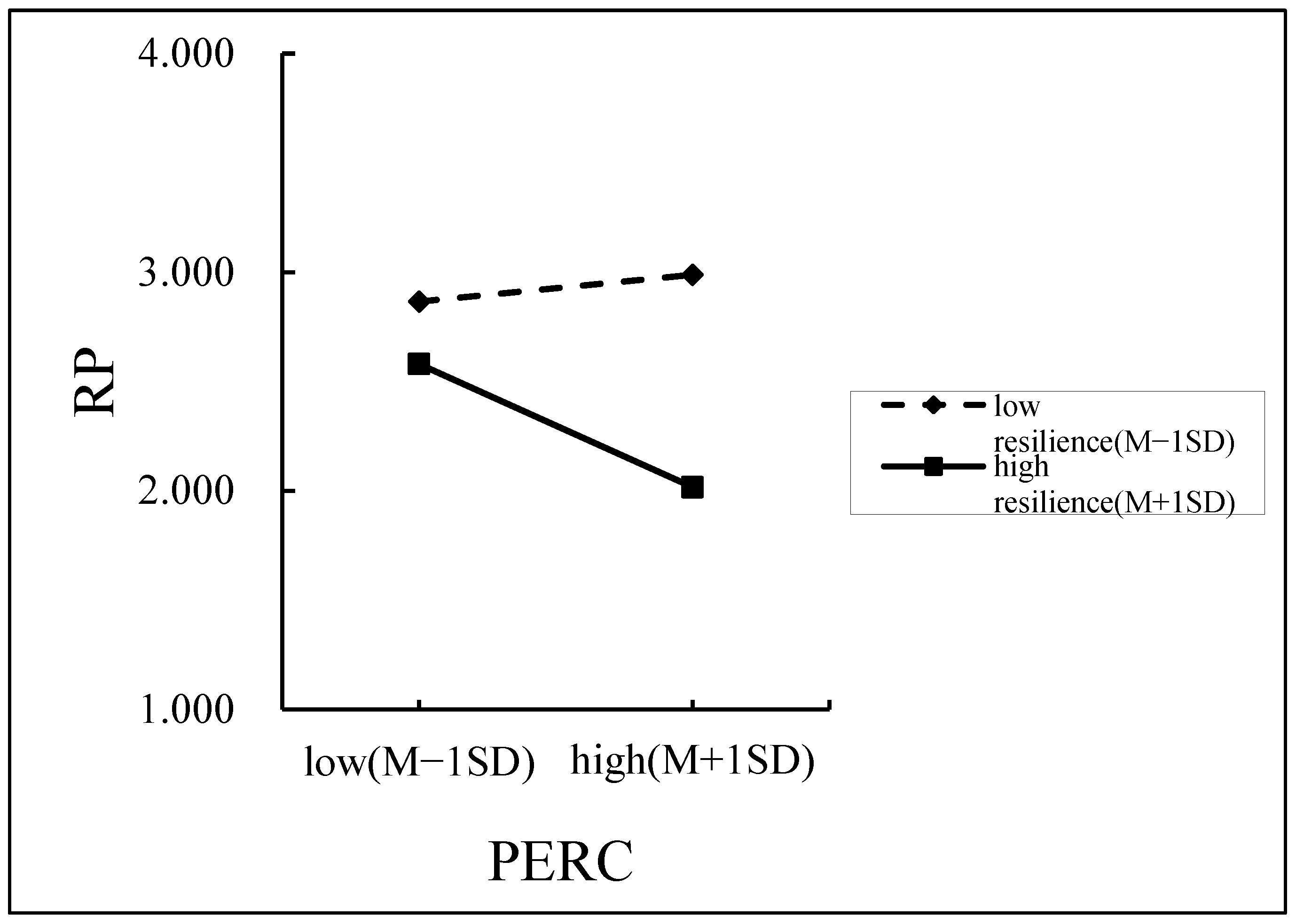
Building upon existing research, this study employed the Process 4.1 program and utilized the Bootstrap method to analyze the moderating effect of community resilience on the relationship between public emergency preparedness and risk perception. The results are presented in Table 5. The findings reveal that the interaction term between public emergency preparedness and community resilience significantly influences risk perception (p < 0.01), with an interaction coefficient of −0.282. After incorporating the interaction term, the change in R2 also reached statistical significance (p < 0.01). Combined with prior analysis, this confirms that community resilience significantly moderates the relationship between public emergency preparedness and risk perception, validating Hypothesis H5. Simple slope analysis (Figure 3) further elucidates these findings: when community resilience is high (MEAN + SD), the negative association between public emergency preparedness and risk perception is significant (p < 0.01); when community resilience is low (MEAN − SD), this effect is insignificant. This demonstrates that the relationship between public emergency preparedness and risk perception is not static but varies with the level of community resilience.
Having successfully validated the mediating effect of risk perception between public emergency preparedness and community responsibility, as well as the moderating effect of community resilience between public emergency preparedness and risk perception, this study further employed Process 4.1 software to analyze the moderated mediating effect. The analysis focused on examining the moderating role within the pathway “public emergency preparedness → risk perception,” with results presented in Table 6. At low community resilience levels, the indirect effect of public emergency preparedness on community responsibility via risk perception was −0.005, with a 95% confidence interval of [−0.001, 0.010], indicating a non-significant mediating effect. At medium community resilience levels, the indirect effect of public emergency preparedness on community responsibility was 0.012, with a 95% confidence interval of [0.007, 0.019], indicating a significant mediating effect. At high community resilience levels, the indirect effect of public emergency preparedness on community responsibility was 0.020, with a 95% confidence interval of [0.011, 0.030], indicating a significant mediating effect. Furthermore, using Hayes’ method for testing moderated mediation effects [51], the Index parameter value was 0.008 with a 95% confidence interval of [0.004, 0.014], which does not include zero. Thus, the Index is significantly non-zero, indicating that the mediation effect varies across different community resilience levels, confirming the presence of moderated mediation. This indicates that the first half of the mediating effect of public emergency preparedness on community responsibility through risk perception is moderated by community resilience, confirming the existence of a moderated mediating effect.
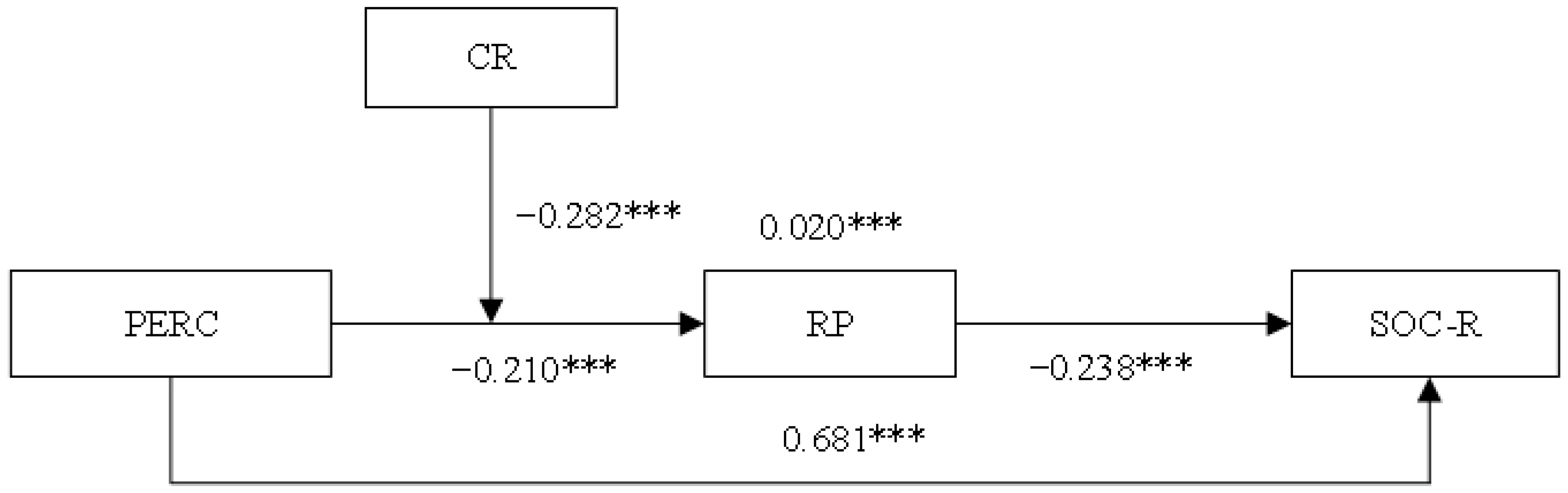
In summary, the main effect of public emergency preparedness on community responsibility and the mediating role of risk perception between public emergency preparedness and community responsibility were validated. Analysis of the moderating effect revealed that community resilience not only moderated the negative association between public emergency preparedness and risk perception but also mediated the relationship between risk perception and community responsibility in medium-to-high resilience communities, forming a moderated mediating effect. The specific pathway mechanism is illustrated in Figure 4.

6. Conclusions and Prospect

6.1. Conclusions and Innovations

This study begins with the traditional notion that “with great power comes great responsibility,” revealing a significant correlation between public emergency response capability and sense of community responsibility. It clarifies the mediating role of risk perception in this relationship and the moderating effect of community resilience. Findings indicate that PERC and SOC-R exhibit a significant positive correlation, with both internal cognitive emergency capability and external skill-based emergency capability significantly predicting SOC-R. Risk perception plays a partial mediating role in the path “public emergency response capacity → sense of community responsibility”; through the mediating transmission of risk perception, public emergency response capacity significantly promotes sense of community responsibility, thereby driving individuals to participate in community governance more actively and effectively. In communities with medium to high resilience, community resilience exerts a significant moderating effect on the path “PERC → RP,” meaning that strengthening community resilience can weaken the public’s risk perception level.
It is important to note that risk perception partially mediates the relationship between public emergency preparedness and community responsibility, with an indirect effect value of 0.020. Although statistically significant, its effect size is considerably smaller than the direct effect (0.678), accounting for approximately 2.9% of the total effect. This indicates that reduced risk perception represents an existing but non-dominant mediating pathway. The promotion of community responsibility by public emergency preparedness likely stems more directly from psychological mechanisms such as enhanced self-efficacy and social role identification resulting from capability enhancement. Nevertheless, this mediating pathway holds theoretical significance and practical implications: it reveals that emergency preparedness fosters responsibility not only by enabling action (“can do”) but also partially by alleviating psychological avoidance through reduced fear (“fearlessness” via lowered risk perception), thereby creating psychological conditions for the behavioral transformation of responsibility. The above explanation is supported by crisis situation behavior theory. Individual crisis behavior is not solely driven by the intensity of the crisis itself but rather results from the combined effects of three dimensions: situational cognition, resource availability, and social interaction. Among these, crisis situation cognition refers to an individual’s perception of the risks associated with the crisis, serving as the prerequisite for behavioral decision-making. Cognitive biases directly influence behavioral choices; for instance, excessive panic may lead to irrational flight. Risk perception alters individuals’ situational judgments of disaster crises, activating collective collaboration and responsibility awareness, thereby resolving psychological avoidance.
The innovations of this study are mainly reflected in two aspects. First, based on large-sample data from community surveys in China, this study confirms for the first time a significant positive relationship between public emergency preparedness and community responsibility, elucidating the underlying mechanism by which public emergency preparedness predicts community responsibility, and establish the action mechanism of “improved public emergency capacity → reduced risk perception → enhanced sense of responsibility.” The use of national questionnaire survey data effectively mitigates problems such as insufficient representativeness and sampling errors that may exist in small-scale, small-sample studies, endowing the research conclusions with stronger reliability and generalizability. Secondly, centered on the core goal of improving public emergency capacity and promoting public integration into the community disaster prevention and mitigation governance system, this study classifies public emergency capacity into four types. It was found that both intrinsic cognitive emergency response capabilities and extrinsic practical emergency response capabilities were significantly associated with community responsibility, revealing the endogenous logic of public community responsibility and providing a theoretical basis for the “classified cultivation of emergency capacity.” Meanwhile, the research discovers that community resilience can weaken public risk perception, which holds important guiding significance for enhancing the pertinence and effectiveness of the implementation of grassroots emergency policies.

6.2. Discussion and Suggestions

Entering a risk society, the development of grassroots emergency management systems increasingly emphasizes public participation. This study not only provides solid empirical evidence for subsequent research exploring pathways through which public emergency preparedness triggers community responsibility—validating the “significant correlation” between individual emergency preparedness and community responsibility—but also clarifies the crucial role of enhancing public participation and optimizing community development in strengthening public engagement in disaster reduction within community settings. Specifically:
First, cultivating public emergency preparedness through dual cognitive-behavioral drivers helps solidify the foundation of community responsibility. Research confirms that public emergency preparedness significantly and positively correlates with community responsibility, validating the experiential understanding that “greater capability brings greater responsibility.” Further analysis reveals that both intrinsic cognitive preparedness and extrinsic skill-based preparedness show significant positive correlations with community responsibility, effectively fostering public commitment to community duty. Influenced by China’s cultural traditions of responsibility ethics—such as “cultivating oneself, managing one’s family, governing the state, and bringing peace to the world” and “every commoner bears responsibility for the rise and fall of the nation”—this moral perspective that tightly links individual capability with collective well-being provides deep cultural roots and intrinsic motivation for the transformation of ‘capability’ into “responsibility.” Compared to the Western concept of civic responsibility based on the “rights-obligations” balance, China’s responsibility ethics places greater emphasis on unconditional individual responsibility toward the collective and moral self-awareness. Individual responsibility extends from the family to the community and nation, forming a responsibility network of “neighborly watch and shared risk.” The findings of this study precisely validate this difference: The Chinese public’s intrinsic cognitive emergency preparedness significantly predicts community responsibility—a departure from the Western emphasis on “skills-based capability matching responsibility fulfillment.” The former fundamentally reflects a “shared risk awareness” under collective ethics, while the latter extends from “individual capability matching obligations” under contractual ethics. This requires grassroots communities to focus on normalized education and incorporate public emergency capacity building into community emergency preparedness plans as an important strategy for disaster management. Through case studies and risk hazard inspections, they should strengthen public risk prevention awareness, effectively elevating safety and emergency preparedness awareness. Simulated emergency scenario training should be leveraged to enhance psychological resilience and emergency decision-making capabilities. For instance, when teaching cardiopulmonary resuscitation (CPR) skills, concurrently conduct cognitive training in risk assessment and pressure decision-making, and organize simulated drills organized by building or neighborhood units to promote the coordinated development of public cognitive and practical capabilities.
Second, guide rational risk perception to overcome barriers in translating capability into responsibility. Research indicates that risk perception mediates between public emergency capability and community responsibility—enhancing emergency skills reduces perceived external risks, thereby indirectly strengthening community accountability. This appears counterintuitive to the notion that “fear drives protective behavior,” yet aligns with the core role of “sense of efficacy.” According to protective motivation theory, when perceived coping efficacy exceeds perceived threat severity, individuals are more inclined toward proactive engagement rather than avoidance. In this study, enhanced emergency capability significantly boosted public coping efficacy, shifting their assessment of the same threat from a high-threat/low-efficacy state of panic to a medium-threat/high-efficacy state of vigilance and controllability. Under such conditions, a sense of responsibility—rather than escapism—becomes the dominant motivator. When individuals gain a sense of control over risks through enhanced capabilities, their behavioral orientation shifts more readily from self-preservation to mutual protection—embodying the altruistic and cooperative dimensions inherent in community responsibility. To this end, grassroots communities can innovate tiered incentive mechanisms, such as implementing a “Safety Participation Points System.” Community members earn cumulative points by participating in neighborly assistance, emergency drills, and hazard reporting. These points can be redeemed for tangible benefits like household services or retail discounts, balancing “potential risks” with “visible rewards.” Simultaneously, professional resources like firefighting and medical teams should be engaged to conduct immersive, scenario-based drills—covering high-rise fire escape, fire extinguisher use, flood rescue, and emergency supply distribution. Hands-on experiences help residents understand risks and reduce participation hesitation.
Third, focus on enhancing community resilience to leverage the environment’s role in shaping individual awareness. Research indicates that community resilience moderates the relationship between emergency preparedness and risk perception. Only in medium-to-high resilience communities does public preparedness significantly mitigate risk perception, whereas this effect is negligible in low resilience communities. Moreover, risk perception does not diminish with increased preparedness—it may even slightly rise. First, high-resilience communities significantly enhance physical resilience by strengthening infrastructure’s disaster resistance. When communities are equipped with adequate, well-maintained emergency facilities and residents know their locations and usage, these visible, reliable mitigation resources directly signal objective safety. This diminishes public imagination of helplessness during disasters, thereby lowering subjective risk perception. Second, strengthening social networks and refining disaster education mechanisms build robust social resilience. Close neighborhood ties and informal mutual aid commitments form a “disaster buffer.” Public confidence that they “won’t be isolated and helpless” in crises—this sense of security from social networks—effectively counteracts the vulnerability and fear arising from individual capability gaps. Regular community disaster prevention activities and education themselves serve as processes for strengthening networks and establishing shared safety norms. Finally, effective community mobilization and group communication also create opportunities for enhancing organizational resilience. Regional leadership, comprising community workers and volunteer leaders, can manage public expectations during risk events through transparent and timely communication. This reduces anxiety caused by rumors and uncertainty while effectively mobilizing groups to pursue collective goals.
In low-resilience communities, while enhanced public awareness improves risk recognition, inadequate disaster prevention and mitigation infrastructure means individuals can identify risks yet struggle to effectively protect themselves. This inability to mitigate personal risk sensitivity leads to heightened risk perception levels. Consequently, building grassroots disaster prevention and mitigation systems requires dual efforts from both government and community. On the one hand, local governments should deepen resilient city development by incorporating community resilience into assessment metrics. This involves upgrading disaster prevention infrastructure, optimizing grassroots emergency resource allocation, and establishing grid-based response platforms to build comprehensive grassroots emergency mechanisms. On the other hand, communities must strengthen disaster prevention and mitigation education, disseminate emergency knowledge through tiered and categorized approaches, establish diverse volunteer emergency response teams, cultivate public safety awareness, and promote a community ethos of “shared risk, shared safety” through neighborly mutual aid.

6.3. Limitations and Future Outlook

Based on cross-sectional survey data, this study systematically examined the relationships among public emergency preparedness, risk perception, and community responsibility, as well as the moderating role of community resilience. However, due to limitations in research design and data characteristics, the following areas warrant further refinement and provide directions for future research.
First, there is room for deepening causal inference. While cross-sectional data can reveal significant associations and theoretical pathways between variables, it struggles to rigorously establish causal direction. For instance, individuals with strong community responsibility may proactively seek capacity-building opportunities, and unobserved latent variables like community cohesion may simultaneously influence multiple core constructs. Therefore, the validated pathway “public emergency preparedness → risk perception → community responsibility” should be viewed as a theory-driven predictive model. Future research could employ longitudinal tracking designs or quasi-experimental methods to collect data across multiple time points, thereby rigorously examining the dynamic direction and causal sequencing of interactions among variables.
Second, there is scope for expanding the breadth of research contexts. While drawing general conclusions from a national sample, this study did not examine how regional policy environments, resource endowments, and cultural differences moderate this mechanism. For instance, significant disparities may exist between rural and urban communities. Rural areas typically feature stronger informal social networks and neighborhood watch traditions yet may lack adequate disaster prevention infrastructure and emergency supplies. This could lead to divergent outcomes regarding intrinsic sense of responsibility compared to the findings here. Furthermore, the applicability of these findings across different national or regional disaster prevention systems warrants careful consideration. In countries with mature, high-credibility emergency management systems—such as Japan—the interface between governmental capacity and community responsibility may function more seamlessly, where institutional trust itself becomes a critical determinant. Conversely, in regions where emergency systems are still developing or lack credibility, communities may exhibit extreme reactions of either “dependence” or “alienation,” distorting the positive relationship between capability and responsibility. Therefore, the conclusions of this study are more likely applicable to transitional social contexts similar to China’s urban communities, where emergency systems are undergoing continuous improvement.
Third, the measured results of public emergency preparedness may differ from the objective overall situation. On one hand, the assessment of public emergency preparedness in this study relies on participants’ self-reports. Although we employed a scale validated for reliability and validity, self-assessments may be influenced by social desirability bias, memory bias, or the Dunning–Kruger effect. Consequently, the measured ‘perceived emergency preparedness’ may diverge from actual capabilities. Future research could employ multi-source measurements of public emergency preparedness, such as behavioral experiments, practical skill assessments, or third-party evaluations, to more objectively characterize these capabilities. On the other hand, the survey project underlying this study focused on urban communities and did not include rural residents, resulting in underrepresentation of this demographic. Subsequent research should conduct further investigations targeting rural community residents.
Fourth, the research chain requires further depth. This study focuses on the pathway through which public emergency preparedness influences community responsibility but does not explore the subsequent link: “how responsibility translates into sustained practical participation.” Community responsibility serves only as a necessary psychological condition for public participation. Its transformation into stable behavioral patterns is influenced by multiple factors, including institutional incentives, social networks, and behavioral habits. Future research could focus on the “community responsibility → behavioral transformation” link, exploring its underlying mechanisms and external facilitation strategies to provide more refined theoretical guidance for designing sustainable public participation programs.

Author Contributions

Conceptualization, K.H. and L.W.; methodology, K.H.; software, K.H. and L.W.; validation, K.H., L.W., M.Z. and C.W.; formal analysis, M.Z. and C.W.; investigation, K.H. and L.W.; resources, M.Z. and C.W. All authors have read and agreed to the published version of the manuscript.

Funding

This study is one of the series achievements of the General Project of Philosophy and Social Science of Colleges and Universities titled “Research on the Empowerment of Urban Underground Space Emergency Response and Coordination System through Digital and Intelligent Integration” (Project No.: 2023SJYB1051).

Institutional Review Board Statement

All data for this study were collected through an anonymous questionnaire survey. Prior to commencing the questionnaire, all participants were presented with a detailed explanation of the research purpose, stating that the data would be used solely for academic research, participation was entirely voluntary, and they could withdraw at any time, with all responses remaining anonymous. Participants were required to explicitly check an option stating “I understand and agree to participate in this study” before they could proceed to the questionnaire items. The questionnaire did not collect any personally identifiable information (such as name, ID number, contact details, etc.). All data analysis was conducted at an aggregated level to strictly protect participant privacy.

Informed Consent Statement

Informed consent was obtained from all subjects involved in the study. Written informed consent has been obtained from the patient(s) to publish this paper.

Data Availability Statement

The original contributions presented in this study are included in the article. Further inquiries can be directed to the corresponding author.

Acknowledgments

We express our sincere appreciation to the community workers, professionals, and the many citizens. Finally, we thank all co-authors for their diligent contributions and collaborative efforts in the preparation and revision of this manuscript.

Conflicts of Interest

The authors declare no conflicts of interest. The funders had no role in the design of the study; in the collection, analyzes, or interpretation of data; in the writing of the manuscript; or in the decision to publish the results.

References

  1. Islam, E.; Abd Wahab, H.; Benson, O.G. Structural and operational factors as determinant of meaningful community participation in sustainable disaster recovery programs: The case of Bangladesh. Int. J. Disaster Risk Reduct. 2020, 50, 101710. [Google Scholar] [CrossRef]
  2. Ekmekcioğlu, Ö.; Koc, K.; Özger, M. Stakeholder perceptions in flood risk assessment: A hybrid fuzzy AHP-TOPSIS approach for Istanbul, Turkey. Int. J. Disaster Risk Reduct. 2021, 60, 102327. [Google Scholar] [CrossRef]
  3. Nikkanen, M.; Malinen, S.; Laurikainen, H. What Drives Feelings of Responsibility for Disaster Preparedness? A Case of Power Failures in Finland and New Zealand. Risk Hazards Crisis Public Policy 2023, 14, 188–208. [Google Scholar]
  4. Suo, T.; Li, J.; Gao, F.; Shen, Y.; Feng, H. Willingness to perform cardiopulmonary resuscitation (CPR) and its influencing factors among the general public. J. China Med. Univ. 2022, 51, 145–150. [Google Scholar]
  5. Mushi, N.L.; Salukele, F.; Mwageni, N. Disaster Management and Emergency Response Capability Assessment Indexes in Tanzania; Empirical Evidence from Dar Es Salaam City. J. Manag. Sustain. 2025, 15, 154. [Google Scholar] [CrossRef]
  6. Liu, J.; Teng, L.; Yang, Y.; Wang, W.; Luo, X.; Cai, F.; Chen, Y.; Hao, C. Study on the Construction and Application of a Community Emergency Capacity Evaluation Model Based on a Combined Weighting-Discrete Hopfield Neural Network. Int. J. Disaster Risk Reduct. 2024, 113, 104851. [Google Scholar] [CrossRef]
  7. Duan, C.; Feng, G.; Zhuang, X.; Zhou, Y.; Jia, Y.; Sun, X.; Zhang, Y.P. Factors influencing the public health emergency preparedness among Generation Z nursing interns in the post-pandemic era: A cross-sectional study. Front. Public Health 2025, 13, 1632609. [Google Scholar] [CrossRef] [PubMed]
  8. Das, M.; Becker, J.; Doyle, E.E.H. Fostering Civic Participation and Collective Actions for Disaster Risk Reduction: Insights from Aotearoa New Zealand Case Studies. Int. J. Disaster Risk Reduct. 2024, 114, 104954. [Google Scholar] [CrossRef]
  9. Yin, X.; Yu, Y.; Kang, Y.; Hu, D.; Wu, Y. A Cross-Sectional Study on Household Disaster Preparedness in China and Analysis of Its Influencing Factors. BMC Public Health 2025, 25, 2118. [Google Scholar] [CrossRef]
  10. Shen, B.; Guo, L.; Cui, S.; Peng, Y. Association of Community Resilience and Residents’ Consumption Intentions: A Study in the Beijing-Tianjin-Hebei Region of China. Prog. Disaster Sci. 2025, 28, 100465. [Google Scholar]
  11. Xiang, H.; Heng, X.; Zhai, B.; Yang, L. Digital and Culture: Towards More Resilient Urban Community Governance. Land 2024, 13, 758. [Google Scholar] [CrossRef]
  12. Kyne, D. Willingness to Prepare for Disasters among Individuals with Disabilities: An Essential Component for Building Disaster Resiliency. Soc. Sci. 2023, 12, 422. [Google Scholar] [CrossRef]
  13. Gammoh, L.A.; Dawson, I.G.J.; Katsikopoulos, K. How Flood Preparedness among Jordanian Citizens Is Influenced by Self-Efficacy, Sense of Community, Experience, Communication, Trust and Training. Int. J. Disaster Risk Reduct. 2023, 87, 103585. [Google Scholar] [CrossRef]
  14. Sun, J.Y.; Zhou, L.Y.; Deng, J.Y.; Zhang, C.Y.; Xing, H.G. Spatio-Temporal Analysis of Urban Emergency Response Resilience During Public Health Crises: A Case Study of Wuhan. Sustainability 2024, 16, 9091. [Google Scholar] [CrossRef]
  15. Kyne, D. An Exploratory Study on the Association between Community Resilience and Disaster Preparedness in the Rio Grande Valley. Soc. Sci. 2023, 12, 496. [Google Scholar] [CrossRef]
  16. Jiang, F.; Xie, Z.; Xu, J.; Yang, S.; Zheng, D.; Liang, Y.; Hou, Z.; Wang, J. Spatial and Component Analysis of Urban Flood Resiliency of Kunming City in China. Int. J. Disaster Risk Reduct. 2023, 93, 103759. [Google Scholar] [CrossRef]
  17. Tan, J.; Lin, L. Rural Residents’ Participation in Community-Based Disaster Risk Reduction (CBDRR): The Role of Moral Self-Identity, Perceived Responsibility and Face Consciousness. J. Environ. Plan. Manag. 2023, 68, 290–308. [Google Scholar]
  18. Deng, X.; Wei, Z.; Tu, C.; Yin, Y. Sense of Community Improves Community Participation in Chinese Residential Communities: The Mediating Role of Sense of Community Responsibility and Prosocial Tendencies. Am. J. Community Psychol. 2022, 71, 166–173. [Google Scholar] [CrossRef] [PubMed]
  19. Banyard, V.L.; Moynihan, M.M.; Crossman, M.T. Reducing Sexual Violence on Campus: The Role of Student Leaders as Empowered Bystanders. J. Coll. Stud. Dev. 2009, 50, 446–457. [Google Scholar] [CrossRef]
  20. Gizzi, F.T.; Kam, J.; Porrini, D. Time windows of opportunities to fight earthquake under-insurance: Evidence from Google Trends. Humanit. Soc. Sci. Commun. 2020, 7, 61. [Google Scholar] [CrossRef]
  21. Sisimayi, T.P.; Muperi, J.T. Evaluating the Impact of Risk Communication as A Disaster Preventive and Mitigatory Strategy During the COVID-19 Outbreak in Zimbabwe (2019–2023). J. Media Manag. 2025, 7, 1–10. [Google Scholar] [CrossRef]
  22. Slovic, P.; Finucane, M.L.; Peters, E.; MacGregor, D.G. Risk as Analysis and Risk as Feelings: Some Thoughts about Affect, Reason, Risk, and Rationality. Risk Anal. 2004, 24, 311–322. [Google Scholar] [CrossRef]
  23. Weiner, B. An Attributional Theory of Achievement Motivation and Emotion. Psychol. Rev. 1985, 92, 548–573. [Google Scholar] [CrossRef]
  24. Hu, S.; Zhou, J.; Tang, L.; Zhao, Y.; Xing, H. The Impact of Risk Communication, Trust, and Coping Appraisal on Individual Preparedness Decisions in Geological Hazard-Prone Areas. Int. J. Disaster Risk Reduct. 2024, 100, 104166. [Google Scholar] [CrossRef]
  25. Metz, J. Keeping It Simple: Rethinking Abilities and Moral Responsibility. Pac. Philos. Q. 2020, 101, 651–668. [Google Scholar] [CrossRef]
  26. Nikolenko, K.; Poperechna, G.; Diatlova, I.; Kvitkin, P.; Hrytsenko, A. Philosophical and Psychological Foundations of Social Responsibility and Ethics. Future Philos. 2024, 3, 95–113. [Google Scholar] [CrossRef]
  27. Kittle, S. Moral responsibility and general ability. Inquiry 2024, 1–27. [Google Scholar] [CrossRef]
  28. Londe, L.R.; Loose, E.B.; Marchezini, V.; Saito, S.M. Communication in the Brazilian civil defense system. Int. J. Disaster Risk Reduct. 2023, 95, 103869. [Google Scholar] [CrossRef]
  29. Liu, Z.; Chen, X.; Zhu, T. Influence Mechanism of Coping Behaviours for Natural Hazards: Empirical Study in Henan, China. Int. J. Disaster Risk Reduct. 2024, 100, 104169. [Google Scholar] [CrossRef]
  30. Lindell, M.K.; Perry, R.W. Communicating Environmental Risk in Multiethnic Communities; Sage Publications: Thousand Oaks, CA, USA, 2003. [Google Scholar]
  31. Ribeiro, D.F.; Saito, S.M.; Alvalá, R.C.D.S. Community Disaster Resilience in Brazilian Small Urban Centers. Int. J. Disaster Risk Reduct. 2024, 100, 104200. [Google Scholar] [CrossRef]
  32. Schmälzle, R.; Renner, B.; Schupp, H.T. Health Risk Perception and Risk Communication. Policy Insights Behav. Brain Sci. 2017, 4, 163–169. [Google Scholar]
  33. Wang, J.; Guo, C.; Lin, T. Public Risk Perception Attribution Model and Governance Path in COVID-19: A Perspective Based on Risk Information. Risk Manag. Healthc. Policy 2022, 15, 2097–2113. [Google Scholar] [CrossRef]
  34. Dhar, T.; Bornstein, L.; Lizarralde, G.; Nazimuddin, S.M. Risk perception—A lens for understanding adaptive behaviour in the age of climate change? Narratives from the Global South. Int. J. Disaster Risk Reduct. 2023, 95, 103886. [Google Scholar] [CrossRef]
  35. Aung, K.T. Preparedness for the Future Pandemic: Understanding the Impacts of Risk Perception in Public Health Emergencies. SSRN Electron. J. 2024. [Google Scholar] [CrossRef]
  36. Peng, S.; Hadžić, B.; Danner, M.; Rätsch, M. Panic consumption under public health emergencies: The mediating role of risk perception. J. Public Health 2024, 33, 2267–2277. [Google Scholar] [CrossRef]
  37. Jugert, P.; Greenaway, K.H.; Barth, M.; Büchner, R.; Eisentraut, S.; Fritsche, I. Collective efficacy increases pro-environmental intentions through increasing self-efficacy. J. Environ. Psychol. 2016, 48, 12–23. [Google Scholar] [CrossRef]
  38. Secchi, D.; Bui, H.T.M. Group Effects on Individual Attitudes Toward Social Responsibility. J. Bus. Ethics 2016, 149, 725–746. [Google Scholar] [CrossRef] [PubMed]
  39. Pahlke, J.; Strasser, S.; Vieider, F.M. Responsibility effects in decision making under risk. J. Risk Uncertain. 2015, 51, 125–146. [Google Scholar] [CrossRef]
  40. Fazeli, S.; Haghani, M.; Mojtahedi, M.; Rashidi, T.H. The Role of Individual Preparedness and Behavioural Training in Natural Hazards: A Scoping Review. Int. J. Disaster Risk Reduct. 2024, 105, 104379. [Google Scholar] [CrossRef]
  41. Xu, H.; Li, H.; Tian, S.; Chen, Y. Effects of Flood Risk Warnings on Preparedness Behavior: Evidence from Northern China. Int. J. Disaster Risk Reduct. 2023, 96, 103971. [Google Scholar] [CrossRef]
  42. Gong, W.; Li, Z.; Tang, J. Impact of Risk Perception on Emergency Information Seeking Behavior: A Meta-Analysis. Front. Psychol. 2025, 16, 1646584. [Google Scholar] [CrossRef]
  43. Serondo, L.J.; Martizano, M.A.; Jurabia, L.; Bacatan, J. Risk Perception and Disaster Awareness as Predictors of Disaster Preparedness among College Students. SSRN Electron. J. 2024. [Google Scholar] [CrossRef]
  44. Ning, N.; Hu, M.; Qiao, J.; Liu, C.; Zhao, X.; Xu, W.; Xu, W.; Zheng, B.; Chen, Z.; Yu, Y.; et al. Factors Associated With Individual Emergency Preparedness Behaviors: A Cross-Sectional Survey Among the Public in Three Chinese Provinces. Front. Public Health 2021, 9, 644421. [Google Scholar] [CrossRef]
  45. Suresh, R.; Akbari, P.; MacKenzie, C.A. A value-focused thinking approach to measure community resilience. arXiv 2024, arXiv:2408.00901. [Google Scholar] [CrossRef]
  46. Kenney, M.; Müller, R. Relations as Immunity: Building Community Resilience. Med. Anthropol. Theory 2024, 11, 1–13. [Google Scholar] [CrossRef]
  47. Chen, H.W.J.; Marzo, R.R.; Htay, M.N.N.; Abdalqader, M.A.; Baobaid, M.F.; Naidu, J.R.; Anuar, H.; Sithamparanathan, Y.; Thein, K.H.H.; Muslimin, I.; et al. Towards Sustainable Community: Social Responsibility And Community Resilience in Flood Disaster Management. Malays. J. Public Health Med. 2024, 24, 131–141. [Google Scholar]
  48. Macatulad, E.; Biljecki, F. Continuing from the Sendai Framework Midterm: Opportunities for Urban Digital Twins in Disaster Risk Management. Int. J. Disaster Risk Reduct. 2024, 102, 104310. [Google Scholar] [CrossRef]
  49. Appleby-Arnold, S.; Brockdorff, N.; Callus, C. Developing a “culture of disaster preparedness”: The citizens’ view. Int. J. Disaster Risk Reduct. 2021, 56, 102133. [Google Scholar] [CrossRef]
  50. Hayes, A.F. Process: A Versatile Computational Tool for Observed Variable Mediation, Moderation, and Conditional Process Modeling. 2012. Available online: https://is.muni.cz/el/1423/podzim2014/PSY704/50497615/hayes_2012_navod_process.pdf (accessed on 22 December 2025).
  51. Hayes, A.F. An Index and Test of Linear Moderated Mediation. Multivar. Behav. Res. 2015, 50, 1–22. [Google Scholar] [CrossRef]
Figure 1. Classification of types of public emergency capacity.
Sustainability 18 01335 g001
Figure 2. Mechanism model of PERC influencing SOC-R.
Sustainability 18 01335 g002
Figure 3. Moderating effect of CR on the relationship between PERC and RP.
Sustainability 18 01335 g003
Figure 4. The mechanism of action by which PERC influences SOC-R. Note: *** indicate that the correlation coefficients are significant at the 0.001 levels, respectively.
Sustainability 18 01335 g004
Table 1. Sample Characteristics.
CharacteristicsCategoriesFrequencyCharacteristicsCategoriesFrequency
GenderMale798 (45.52%)Educational BackgroundJunior high school or below300 (17.11%)
Female955 (54.48%)High school/technical secondary school516 (29.43%)
Age18–29285 (16.26%)College/university822 (46.89%)
30–44645 (36.79%)Master’s degree92 (5.25%)
45–59484 (27.61%)Doctoral degree23 (1.31%)
60 and above339 (19.34%)Monthly Personal IncomeBelow 2000 CNY254 (14.49%)
Marital StatusMarried1471 (83.91%)2001–3500 CNY381 (21.73%)
Unmarried231 (13.18%)3501–5000 CNY563 (32.11%)
Divorced05001–8000 CNY364 (20.76%)
Widowed51 (2.91%)8001–12,000 CNY140 (7.99%)
Others0Above 12,000 CNY51 (2.91%)
Table 2. Descriptive statistics and correlation analysis.
Variable NamesMEANSDPERCSOC-RRPCR
PERC3.7090.7491
SOC-R3.9740.7560.692 **1
RP2.5191.153−0.232 **−0.242 **1
CR3.9990.8130.549 **0.728 **−0.279 **1
Note: ** indicate that the correlation coefficients are significant at the 0.01 level, respectively.
Table 3. Simple effect analysis.
Variable CategoryVariable NameSOC-RRP
Model 1Model 2Model 3Model 4Model 5Model 6
Control VariablesGEN0.066 **0.068 ***0.062 **0.0480.089−0.034
AGE0.164 ***0.078 ***0.157 ***0.250 ***0.065−0.004
MAR−0.042−0.023−0.040−0.0250.0250.008
EDU0.104 ***0.040 *0.079 **0.0990.080−0.052 *
ICO−0.055 *−0.064 ***−0.0430.055−0.1110.027
Independent VariablesPERC 0.681 *** −0.210 ***
CERC 0.192 **
SERC 0.503 ***
Mediating VariableRP −0.238 ***
R2 0.0350.4890.0910.0970.2710.049
F 12.608 ***278.145 ***29.059 ***3.806 ***8.365 ***14.944 ***
Note: All regression coefficients are standardized coefficients. ***, **, and * indicate that the correlation coefficients are significant at the 0.001, 0.01, and 0.05 levels, respectively.
Table 4. Mediating effect analysis of RP.
RPEffectSEtLLCIULCI
PERC → SOC-RMain Effect0.6980.01740.087 ***0.6690.727
Direct Effect0.6780.01838.114 ***0.6490.707
EffectBootSE BootLLCIBootULCI
Mediating Effect0.0200.005 0.0130.028
Note: LL = Lower Limit, CI = Confidence Interval, UL = Upper Limit; *** indicates that the correlation coefficient is significant at the 0.001 level.
Table 5. Moderating effect test.
Variable NamesSOC-RRP
CoeffSECoeffSE
GEN0.100 ***0.0420.0050.053
AGE0.060 ***0.0230.0290.029
MAR−0.0290.022−0.0010.045
EDU0.028 *0.017−0.096 ***0.034
ICO−0.036 ***0.0110.0260.244
PERC0.666 ***0.017−0.147 ***0.042
RP−0.056 ***0.018
CR −0.387 ***0.040
PERC × CR −0.282 ***0.041
R20.4950.121
F244.818 ***29.876 ***
Note: *** and * indicate that the correlation coefficients are significant at the 0.001 and 0.05 levels, respectively.
Table 6. Moderated mediation effect test.
PathModeratorModerated Mediation Effect
CRIndirect EffectSE95% CIIndexSE95% CI
PERC → RPlow (−1 SD)−0.005 ***0.004[−0.013, 0.002]0.0160.004[0.009, 0.025]
medium (MEAN)0.008 ***0.003[0.003, 0.014]
high (+1 SD)0.0210.005[0.012, 0.030]
Note: *** indicate that the correlation coefficients are significant at the 0.001 levels, respectively.
Disclaimer/Publisher’s Note: The statements, opinions and data contained in all publications are solely those of the individual author(s) and contributor(s) and not of MDPI and/or the editor(s). MDPI and/or the editor(s) disclaim responsibility for any injury to people or property resulting from any ideas, methods, instructions or products referred to in the content.