Article

Dynamic Capabilities and Sustainable Competitive Advantage in SMEs: The Roles of Innovation and Organizational Learning


Management Department, College of Business, King Saud University, Riyadh 11451, Saudi Arabia
*
Author to whom correspondence should be addressed.
Sustainability 2026, 18(3), 1320; https://doi.org/10.3390/su18031320
Submission received: 21 December 2025 / Revised: 13 January 2026 / Accepted: 22 January 2026 / Published: 28 January 2026
(This article belongs to the Special Issue Industrial Digital Transformation: Sustainable Challenges for SMEs)

Abstract

This study examines how dynamic capabilities contribute to sustainable competitive advantage in small and medium-sized enterprises (SMEs), with a particular emphasis on long-term organizational sustainability in dynamic and uncertain environments. Drawing on Dynamic Capabilities Theory, the research investigates innovation as a mediating mechanism and organizational learning capability (OLC) as a moderating factor that strengthens the relationship between dynamic capabilities, innovation, and sustainable competitive advantage. Using data collected from 250 SME managers and decision-makers in Saudi Arabia, the proposed model was empirically tested through a quantitative approach employing Structural Equation Modeling (SEM). The findings reveal that innovation significantly mediates the relationship between dynamic capabilities and sustainable competitive advantage. Moreover, SMEs with higher organizational learning capability demonstrate stronger innovation outcomes, enhancing their ability to adapt, renew resources, and maintain competitiveness over time. By highlighting the role of internal capabilities in fostering innovation, adaptability, and learning, this study contributes to the sustainability literature by demonstrating how SMEs can achieve economically sustainable performance and long-term resilience. The study advances dynamic capabilities theory by empirically demonstrating how innovation operates as a key transmission mechanism and how organizational learning capability conditions this process in SME contexts. The results also provide practical insights for SME leaders and policymakers seeking to promote sustainable business development in emerging economies.

1. Introduction

In today’s rapidly evolving business environment, achieving and maintaining a competitive advantage has become a formidable challenge for organizations. The continuous flux driven by market disruptions and technological advancements is reshaping industries at an unprecedented pace, compelling firms to swiftly adapt or risk obsolescence. While traditional strategies may have sufficed in the past, they are no longer adequate in the face of these dynamic shifts [1]. Organizations are now required to develop innovative, flexible, and visionary competencies to navigate such volatile landscapes effectively [2]. Mansouri et al. [3] conducted a systematic review indicating that a growing body of literature underscores the pivotal role of dynamic capabilities in enabling firms to respond to environmental changes and seize new opportunities. Their findings highlight that dynamic capabilities are particularly crucial for SMEs, as their agility allows them to adapt rapidly to market fluctuations and technological advancements [3]. These capabilities allow organizations to sense shifts in the market, seize emerging opportunities, and reconfigure resources to maintain competitiveness. However, despite their significance, the direct impact of dynamic capabilities on competitive advantage remains ambiguous, prompting researchers to explore intermediary mechanisms such as innovation, which may clarify this relationship [4].
One such mechanism is innovation, which serves as a vital conduit through which dynamic capabilities are translated into tangible competitive advantages. Innovation not only fuels product and service development but also enhances internal processes and operational efficiencies, giving firms a leading edge in dynamic markets. Yet, the success of innovation in fostering competitive advantage is not solely dependent on dynamic capabilities; it is also influenced by the firm’s ability to learn and adapt Mansouri et al. [3].
Here, the concept of Organizational Learning Capability (OLC) comes into play. OLC refers to a firm’s capacity to assimilate new knowledge, reinterpret existing information, and adjust strategies in response to changing market conditions [4]. Organizations with strong learning capabilities are better equipped to leverage innovation for sustained competitive advantage [4]. Nevertheless, the effectiveness of innovation in generating sustainable competitive advantage is not uniform across firms. Emerging research highlights the importance of organizational learning capability (OLC) as a higher-order capability that enables firms to acquire, assimilate, and apply knowledge effectively [5]. While recent studies acknowledge the strategic importance of OLC for innovation and long-term competitiveness, its moderating role in strengthening the dynamic capabilities–innovation–sustainable competitive advantage relationship remains underexplored, particularly in SMEs operating in emerging economies [6].
Despite growing scholarly interest, the direct relationship between dynamic capabilities and sustainable competitive advantage remains inconclusive, with mixed empirical findings reported in recent studies [7,8]. This ambiguity has led researchers to argue that dynamic capabilities may not generate competitive advantage automatically but rather operate through intermediary mechanisms that translate capabilities into tangible performance outcomes.
Given this background, the current study seeks to address the following central research question:
Q: How do dynamic capabilities influence competitive advantage, and what is the mediating role of innovation and the moderating effect of organizational learning capability in this relationship?
To achieve these objectives, the study will focus on small and medium-sized enterprises (SMEs), which are often the driving force behind economic growth and innovation. SMEs operate in highly volatile markets, making them ideal candidates for exploring how dynamic capabilities, innovation, and learning contribute to competitive advantage. Data was collected from managers and key decision-makers within these firms to provide nuanced insights into the interplay of these factors. By delving into these relationships, this research aims to offer both theoretical insights and practical strategies that businesses can employ to strengthen their competitive position in today’s uncertain market environment. Ultimately, this study will enrich the understanding of the complex interactions between dynamic capabilities, innovation, and organizational learning, shedding light on how organizations can not only survive but thrive in the face of constant change.
By focusing on SMEs in Saudi Arabia, the study further contributes to the sustainability and strategic management literature by extending recent theoretical developments to an under-researched emerging economy context.

2. Literature Review

2.1. Dynamic Capabilities

Dynamic capabilities describe an organization’s capacity to purposefully renew and reconfigure its internal and external resources in response to environmental change [2]. Through these capabilities, firms are able to identify emerging opportunities, mobilize resources effectively, and realign operational configurations to remain competitive in volatile markets [2]. The strategic management literature widely recognizes dynamic capabilities as a key foundation of organizational adaptability and long-term viability in uncertain environments. In particular, Teece et al. [9] conceptualized dynamic capabilities as comprising sensing, seizing, and transforming activities that enable firms to continuously adjust their resource base and sustain competitive advantage over time.
Building on this view, Teece et al. [10] further emphasized the role of these capabilities in facilitating organizational adaptation through proactive opportunity recognition and asset reconfiguration. From a process-oriented perspective, Eisenhardt and Martin [11] described dynamic capabilities as identifiable and repeatable organizational routines—such as strategic decision-making, product development, and alliance formation—that support resource restructuring. Importantly, these routines do not generate competitive advantage in isolation but operate as mechanisms through which firms create advantageous resource combinations.
To empirically capture this construct, Kump et al. [12] proposed a validated measurement scale encompassing sensing, seizing, and transforming dimensions, enabling systematic assessment of dynamic capabilities in turbulent contexts. Similarly, Pavlou and El Sawy [13] framed dynamic capabilities as coordinated routines that facilitate learning, knowledge integration, and resource orchestration, thereby supporting innovation and sustained competitiveness.
However, prior research also suggests that the value of dynamic capabilities is contingent on environmental conditions, becoming more pronounced under high levels of market dynamism (Schilke et al. [14]). Moreover, Protogerou et al. [15] highlighted that dynamic capabilities typically influence firm performance indirectly, operating through mediating mechanisms such as innovation and organizational learning, which underscores the importance of internal transformation processes.
Recent studies highlight the crucial role of dynamic capabilities in digital transformation. For example, according to Saputra et al. [4], small and medium-sized enterprises (SMEs) that develop strong sensing and integrating capabilities are better positioned to adopt digital technologies, leading to sustained competitive advantages. Similarly, Liu et al. [16] emphasized the significance of dynamic capabilities in the tourism sector, especially in the post-COVID-19 recovery phase, illustrating how firms with robust dynamic capabilities adapt better to crises and industry disruptions.
Wakrim et al. [17] explored the intersection of dynamic capabilities and Strategic Human Resource Management (SHRM) in fostering organizational resilience within disruptive business environments. Their study proposed a theoretical framework illustrating how targeted SHRM practices, such as continuous learning, talent management, and flexible organizational structures, enhance the development of dynamic capabilities. These capabilities—sensing opportunities, seizing market potential, and reconfiguring resources—play a critical role in enabling organizations to adapt to rapidly changing market conditions and maintain a sustainable competitive advantage [18]. The authors emphasized that aligning HR strategies with dynamic capabilities equips organizations to thrive amidst market disruptions and technological advancements. Li and Liu et al. [1] expanded this understanding by investigating the role of dynamic capabilities in the context of Chinese firms. Their empirical study of 217 firms revealed that dynamic capabilities significantly and positively influence competitive advantage. Interestingly, their research concluded that environmental dynamism acts as a driver rather than a mediator, emphasizing the need for firms to proactively adapt and evolve in dynamic markets. This contrasts with previous literature that views environmental dynamism primarily as a moderating factor [1]. Fainshmidt et al. [19] expanded on this by illustrating that dynamic capabilities do not guarantee competitive advantage in isolation. Instead, they are most effective when aligned with the firm’s strategic orientation and environmental context. Their configurational model shows that dynamic capabilities contribute to competitive advantage when there is a strategic fit between internal capabilities and external environmental conditions, such as resource availability and market dynamism [19].
Building on this stream of research, Mansouri et al. [3] synthesized existing studies and concluded that dynamic capabilities are particularly critical for SMEs, as their smaller size and resource constraints require higher levels of agility and rapid adjustment in unstable environments. Their review underscores the importance of adopting adaptable strategic approaches that enable SMEs to continuously realign and reconfigure resources to sustain competitiveness [3]. Expanding this perspective, prior research has highlighted the contribution of Strategic Human Resource Management (SHRM) to the development of dynamic capabilities. Specifically, SHRM practices—such as flexible organizational structures, learning-oriented systems, effective resource integration, and heightened environmental awareness—support the strengthening of dynamic capabilities, especially under conditions of uncertainty and disruption. By aligning human capital practices with strategic adaptability, SHRM enhances firms’ capacity to respond proactively to environmental changes and organizational shocks [20].

2.2. Innovation

Innovation is defined as a dynamic process of creating and applying new ideas, products, services, or business models that enhance organizational performance and market competitiveness [21]. It involves a structured approach that integrates knowledge acquisition, transformation, and application to generate innovative solutions that drive business growth and sustainability [22]. Cao et al. [21] highlight that innovation can be categorized into independent innovation, where firms develop novel ideas internally, and secondary innovation, which involves adapting or improving existing technologies. Both forms of innovation contribute significantly to a company’s competitive advantage and long-term success in dynamic markets. Additionally, Jin et al. [22] emphasize the role of organizational learning capability in fostering innovation. They argue that firms with strong learning capabilities can efficiently process, internalize, and implement new knowledge, leading to continuous innovation and adaptation to market changes.
This perspective aligns with the idea that innovation is not just about generating new ideas but also about effectively integrating external and internal knowledge sources to maximize organizational impact. Innovation, therefore, serves as a crucial mechanism for firms to sustain growth, enhance market responsiveness, and navigate technological disruptions while maintaining a competitive edge in the industry. Saputra et al. [4] highlighted how digital innovation mediates the relationship between dynamic capabilities and competitive advantage in SMEs. Firms with strong learning and integrating capabilities were shown to be more effective in adopting digital solutions, which in turn strengthened their market positions. Agyapong et al. [23] further demonstrated that innovation mediates the link between organizational learning capabilities (OLC) and firm performance. Their study, conducted in an African emerging economy, found that firms with a culture of continuous learning were more likely to innovate, thus enhancing their competitive edge.
Crossan and Apaydin et al. [24] conceptualized innovation as both a process and an outcome shaped by leadership, organizational learning, and management systems. Their framework broadens the scope of innovation beyond technology, emphasizing strategic and behavioral aspects. This aligns with the present study’s view of innovation as a key mechanism through which dynamic capabilities contribute to sustainable competitive advantage, highlighting the foundational role of organizational learning in fostering innovation. Gunday et al. [25] found that different types of innovation—product, process, marketing, and organizational—have significant and positive effects on firm performance, demonstrating that innovation is multi-dimensional and directly linked to competitive success. Damanpour and Aravind [26] emphasized that managerial innovation—including changes in structures and management practices—plays a crucial role in enhancing adaptability, with organizational learning and dynamic capabilities as key antecedents. Moreover, Denicolai et al. [27] highlighted that digital transformation fosters dynamic capabilities and enables innovation, particularly in knowledge-intensive Additionally, Mansouri et al. [3] emphasized that innovation is critical in SMEs, particularly in high-velocity environments. They noted that dynamic capabilities must be coupled with innovation processes to effectively respond to market changes and technological advancements.

2.3. Organizational Learning

Organizational Learning Capability (OLC) reflects a firm’s capacity to acquire, interpret, and effectively utilize knowledge, thereby shaping how innovation translates into competitive advantage [23]. Organizations with well-developed learning capabilities are better positioned to exploit innovation outcomes, as they can integrate external knowledge more efficiently and convert it into strategically valuable resources [22]. Prior empirical research supports this view by demonstrating that learning-oriented firms are more effective in leveraging innovation for superior performance outcomes. Specifically, Agyapong et al. [23] found that OLC not only supports innovative activity but also amplifies the performance effects of innovation, indicating that learning capabilities enhance the value derived from innovative efforts.
Similarly, Jin et al. [22] showed that in knowledge-intensive SMEs, OLC strengthens the relationship between open innovation and firm performance by enabling firms to assimilate and apply externally sourced knowledge. Complementing these findings, Lin et al. [18] highlighted the influence of cultural and social factors on learning capability, demonstrating that social ties and shared norms affect how organizations deploy dynamic capabilities and innovate in international contexts. In addition, Fainshmidt et al. [19] argued that organizational learning capability contributes to strategic alignment by ensuring that innovation initiatives are consistent with both internal strategic objectives and external environmental demands. Empirical measurement of OLC has been advanced by Jerez-Gómez et al. [28], who identified four core dimensions—managerial commitment, systems perspective, openness to experimentation, and knowledge integration—providing a robust framework for assessing learning capability.
Collectively, these studies indicate that OLC serves as a critical enabling condition that strengthens the impact of dynamic capabilities on innovation. Furthermore, research on Strategic Human Resource Management (SHRM) suggests that practices such as high-involvement HR systems and knowledge-sharing mechanisms play an important role in developing OLC, thereby enhancing firms’ ability to convert innovation into sustainable competitive advantage [20,29].

2.4. Sustainable Competitive Advantage

Sustainable Competitive Advantage (SCA) is defined as a firm’s ability to maintain a long-term superior position in the market by leveraging valuable, rare, inimitable, and non-substitutable (VRIN) resources and capabilities [30]. It enables organizations to outperform competitors consistently and sustain their market dominance despite external challenges and industry fluctuations [31]. According to Alchalabi et al. [32], SCA is closely linked to cost leadership, product differentiation, and service excellence, which collectively enhance a company’s ability to sustain profitability and market relevance. Additionally, Huynh et al. [30] highlight the role of technological advancements and digital transformation in strengthening a firm’s competitive edge, enabling companies to adapt to changing market demands and drive continuous innovation. Furthermore, Rifqi et al. [31] emphasize that corporate social responsibility (CSR) and ethical business practices contribute significantly to SCA by fostering brand reputation, customer trust, and employee engagement. A firm’s ability to integrate these factors into its strategic framework ensures long-term resilience and business sustainability.
Barney et al. [33] argued that firms can achieve sustainable competitive advantage by developing internal resources that are valuable, rare, inimitable, and non-substitutable (VRIN). This supports the role of dynamic capabilities and innovation as strategic assets. Porter [34] emphasized that sustainable competitive advantage arises not only from operational effectiveness, but from making strategic choices that create unique value. He highlighted the importance of aligning internal activities with long-term positioning, which supports the role of internal capabilities—such as innovation and learning—as sources of differentiation. Newbert [35] found that valuable and rare resources are critical drivers of competitive advantage and firm performance, supporting the core assumptions of the resource-based view (RBV). His results emphasize the importance of internal capabilities in sustaining long-term advantage. Sirmon, Hitt, and Ireland [36] highlight that, in dynamic environments, competitive advantage depends not only on possessing valuable resources but also on how firms structure, bundle, and leverage these resources through dynamic capabilities.
A company’s SCA can also be described as its capacity to continuously evolve and innovate in response to competitive pressures, technological shifts, and customer preferences [32]. Organizations that invest in strategic resource management, digital transformation, and sustainability initiatives are more likely to maintain their competitive edge and achieve long-term market leadership [30]. The relationship between dynamic capabilities and competitive advantage is complex and often mediated or moderated by factors like innovation and organizational learning. Saputra et al. [4] argued that dynamic capabilities influence competitive advantage indirectly through digitalization. Their study found that SMEs with robust dynamic capabilities were more successful in implementing digital strategies, which translated into a stronger competitive position. Lin et al. [18] discovered that dynamic capabilities directly enhance project competitiveness in the international construction sector, especially when firms combine these capabilities with strategic partnerships and learning mechanisms. Importantly, Fainshmidt et al. [19] highlighted that dynamic capabilities contribute to competitive advantage only when there is a strategic alignment with the firm’s environment. Their study demonstrated that in dynamic, resource-rich environments, dynamic capabilities enable firms to combine differentiation and cost leadership strategies effectively. Conversely, in stable, resource-scarce environments, dynamic capabilities support a low-cost orientation, emphasizing efficiency over innovation. Mansouri et al. [3] reinforced this by showing that SMEs must continuously reconfigure their capabilities to align with shifting market demands and resource constraints, making dynamic capabilities an essential, albeit not standalone, driver of competitive advantage.

2.5. Theoretical Foundations and Integration

The theoretical grounding of this study draws primarily on the Resource-Based View (RBV), which argues that firms achieve sustained competitive advantage by effectively deploying internal resources that are valuable, rare, difficult to imitate, and non-substitutable. While RBV has been widely used to explain performance differences among firms, the recent literature suggests that its explanatory power is limited in environments characterized by rapid change and uncertainty, where static resource advantages tend to erode quickly [37]. In such contexts, long-term business sustainability requires not only the possession of strategic resources but also the capacity to continuously renew and reconfigure them in response to environmental shifts. To address these limitations, the Dynamic Capabilities View (DCV) extends RBV by focusing on firms’ abilities to purposefully adapt, integrate, and reconfigure internal and external resources over time. Dynamic capabilities—commonly conceptualized as sensing, seizing, and transforming—enable organizations to respond proactively to technological change, market volatility, and competitive pressures [38]. From a sustainability perspective, dynamic capabilities are particularly critical for SMEs, as they support organizational resilience, strategic flexibility, and long-term viability rather than short-term performance outcomes. However, recent studies emphasize that dynamic capabilities alone do not automatically lead to sustainable competitive advantage; their effectiveness depends on how they are translated into value-creating activities such as innovation [7].
In this regard, the Knowledge-Based Theory (KBT) offers an additional explanatory lens by positioning organizational knowledge and learning as central drivers of innovation and sustained competitiveness. KBT views the firm as an entity specialized in creating, integrating, and applying knowledge, suggesting that learning-oriented processes are fundamental to capability development and renewal [39]. Within this framework, organizational learning capability (OLC) represents a critical enabling condition that enhances a firm’s ability to leverage dynamic capabilities and transform innovation into sustainable competitive advantage. By fostering knowledge sharing, experimentation, and continuous learning, OLC strengthens firms’ capacity to adapt and sustain competitive positions over time [40]. Integrating RBV, DCV, and KBT, this study conceptualizes sustainable competitive advantage as the outcome of an interactive process in which dynamic capabilities facilitate resource reconfiguration, innovation acts as the primary value-creation mechanism, and organizational learning capability amplifies these effects. This integrative theoretical perspective provides a coherent explanation of how SMEs can achieve long-term business sustainability by aligning internal capabilities with innovation and learning in dynamic environments.

3. Hypothesis Development and Research Model

Grounded in Dynamic Capabilities Theory [2] and the broader literature on sustainable competitive advantage (SCA), this study focuses on the roles of innovation and organizational learning capability (OLC) as key drivers of firm-level outcomes. Although prior research has established the strategic importance of dynamic capabilities, there is still limited empirical clarity regarding the processes through which these capabilities are transformed into sustained competitive advantage. To address this gap, the present study investigates innovation as an intervening mechanism and examines OLC as a contextual factor that conditions the effectiveness of dynamic capabilities in generating long-term competitive advantage.
Dynamic capabilities describe a firm’s capacity to identify emerging opportunities, mobilize resources effectively, and reconfigure organizational assets in response to rapid environmental change [2]. Through these capabilities, organizations can adjust strategic priorities, integrate new technologies, and realign resources to remain competitive under evolving market conditions [4]. Firms with well-developed dynamic capabilities tend to exhibit greater adaptability, strategic differentiation, and resilience, enabling them to sustain competitive positions over time [3]. Ambrosini and Bowman [41] conceptualized dynamic capabilities as deliberate and structured processes through which firms renew their resource base in response to environmental shifts, thereby reinforcing long-term strategic advantage. Similarly, Bari [7] emphasized that dynamic capabilities facilitate the alignment of organizational resources with strategic objectives, contributing to sustainable competitiveness. Supporting this view, Albort-Morant [42] found that organizations possessing strong dynamic capabilities respond more effectively to change and are better positioned to preserve competitive advantage. More recently, Wamba [43] demonstrated that data-driven dynamic capabilities enhance organizational performance and strategic outcomes, underscoring the growing importance of digital and analytics-based capabilities in contemporary competitive environments.
H1: 
Dynamic capabilities positively influence sustainable competitive advantage.
Innovation frequently emerges as a central outcome of dynamic capabilities, as organizations that are able to recognize shifts in market conditions, capitalize on emerging opportunities, and realign their resource base are more likely to introduce new products, processes, and business models [4]. Dynamic capabilities facilitate learning, experimentation, and organizational adaptability, which are critical elements for sustaining continuous innovation [30]. Empirical research indicates that firms with stronger dynamic capabilities tend to invest more intensively in research and development, adopt new technologies more effectively, and engage in creative problem-solving, all of which enhance their innovative capacity [23]. Recent studies further emphasize the importance of dynamic capabilities as key antecedents of innovation, particularly in emerging economy contexts. For instance, Ferreira et al. [6] demonstrated that organizations with well-developed dynamic capabilities achieve superior innovation outcomes, especially under conditions of high innovation intensity. Similarly, Leih, Linden, and Teece [44] argued that dynamic capabilities extend beyond reactive adaptation by enabling firms to proactively design and implement innovative business models. Collectively, this body of evidence underscores the role of dynamic capabilities as a fundamental driver of innovation at both the operational and strategic levels. Accordingly, the following hypothesis is proposed:
H2: 
Dynamic capabilities positively influence innovation.
Sustainable competitive advantage is often driven by a firm’s ability to continuously innovate and adapt [30]. Innovation allows companies to stay ahead of competitors, enhance efficiency, and expand their market presence. However, achieving a sustainable competitive advantage requires more than just innovation—firms must integrate it into their strategic vision, operational processes, and customer engagement strategies [31]. Organizations that successfully implement innovation-driven strategies tend to achieve long-term market leadership and profitability. Innovation is widely recognized as a strategic enabler of long-term competitiveness. According to Satar et al. [45], digital innovation in business models allows firms to reconfigure how they create and deliver value, thereby strengthening their sustainable competitive advantage. Ngo and O’Cass [46] found that internal capabilities, such as market orientation and innovation capability, interact to enhance firm innovation and customer performance. Based on the above, the following hypothesis is proposed:
H3: 
Innovation positively influences sustainable competitive advantage.
The link between dynamic capabilities and sustainable competitive advantage is often indirect, as organizations must translate their capabilities into concrete value-creating activities to secure long-term market leadership. Prior research indicates that dynamic capabilities, on their own, are insufficient to ensure sustained competitiveness unless they are effectively transformed into innovative outputs [3]. In this context, innovation functions as an intervening mechanism, enabling firms to convert adaptive and reconfigurative capabilities into differentiated products, services, and strategic outcomes [4]. Empirical evidence from SMEs supports this view; Saputra et al. [4] demonstrated that digital innovation mediates the relationship between dynamic capabilities and competitive advantage, particularly when firms possess strong learning and integration capabilities. Similarly, Zehir et al. [47] argued that sustainable innovation emerges from the interaction of dynamic capabilities, organizational learning, and knowledge management, thereby positioning innovation as a critical conduit through which dynamic capabilities generate sustainable competitive advantage. Accordingly, the following hypothesis is proposed:
H4: 
Innovation mediates the relationship between dynamic capabilities and sustainable competitive advantage.
Organizational Learning Capability (OLC) refers to a firm’s ability to acquire, process, and apply knowledge to drive continuous improvement and maintain competitive positioning [4]. Companies with strong OLC are better at identifying market trends, assimilating new knowledge, and applying it effectively, leading to enhanced innovation outcomes [22]. Conversely, firms with weaker learning capabilities may struggle to capitalize on innovation, limiting its impact on sustained competitive advantage [23]. Jiménez-Jiménez and Sanz-Valle [48,49] found that organizational learning positively influences innovation, and both significantly impact firm performance. Their results highlight the importance of learning as a foundation for innovation-driven competitive advantage. Chiva et al. [50] developed a five-dimensional scale to measure organizational learning capability (OLC), including experimentation, risk-taking, interaction with the external environment, dialogue, and participative decision-making. Their work highlights how these factors foster a learning culture that supports innovation and adaptability. Baier and Sviokla [51] highlight that advanced tools like GenAI can enhance organizational learning, which in turn strengthens the effect of dynamic capabilities on innovation. Zada et al. [52] found that organizational learning and knowledge management capability significantly improve innovation performance. Cui et al. [53] investigated the role of knowledge management dynamic capabilities in enhancing employee job performance within Chinese technological companies, paying particular attention to the enabling effects of AI-driven knowledge sharing, knowledge-based organizational support, and organizational learning. Their study conceptualizes knowledge management dynamic capabilities as higher-order capabilities that allow organizations to sense, integrate, and reconfigure knowledge resources in response to technological and environmental change.
This supports the idea that OLC can enhance the impact of dynamic capabilities on innovation. Organizational learning capability (OLC) enables firms to transform acquired knowledge into innovative outcomes. This supports the notion that OLC strengthens the impact of dynamic capabilities on innovation. As emphasized by Zollo and Winter [54], dynamic capabilities are not static assets but evolve through deliberate learning processes. Thus, firms with high organizational learning capability are more likely to transform dynamic capabilities into innovative outcomes. Firms with strong absorptive capacity—a core dimension of organizational learning—are better equipped to assimilate and exploit external knowledge, thereby strengthening the innovation outcomes derived from dynamic capabilities. Hence, the following hypothesis is proposed:
H5: 
Organizational Learning Capability moderates the relationship between dynamic capabilities and innovation.

Research Model

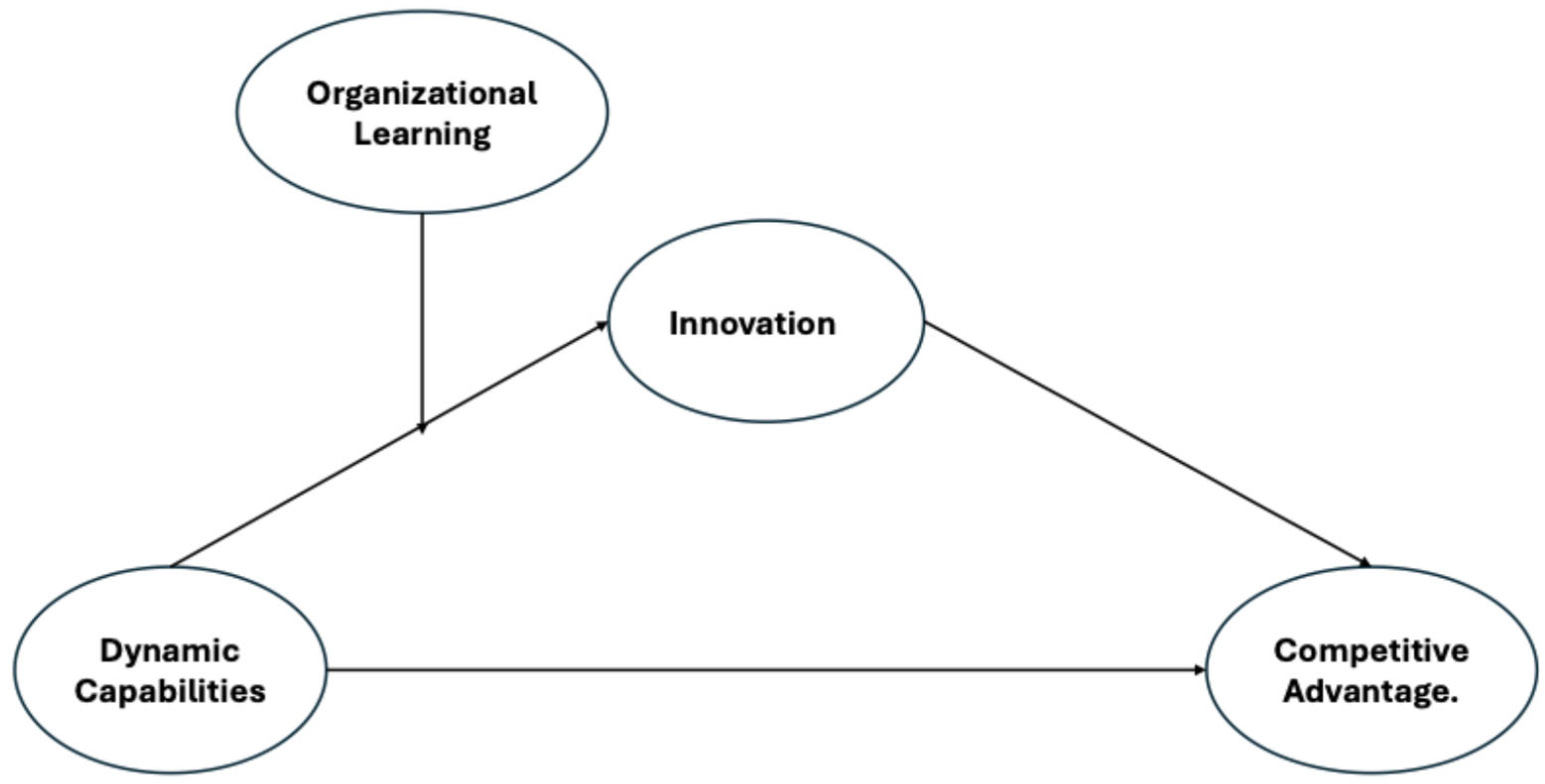
Figure 1 depicts the conceptual framework of the study, illustrating the proposed relationships between dynamic capabilities, innovation, and sustainable competitive advantage, and emphasizing innovation as a mediating mechanism and organizational learning capability (OLC) as a moderating factor within the model.

4. Research Methodology

4.1. Research Design

A quantitative research design was employed in this study, with data gathered through a self-administered online survey created and disseminated via Google Forms. The survey instrument was developed using measurement scales that have been previously validated and extensively applied in prior research. It captured four main constructs: Dynamic Capabilities, Innovation, Organizational Learning Capability, and Sustainable Competitive Advantage. Responses were recorded on a five-point Likert scale, ranging from 1 = strongly disagree to 5 = strongly agree. The initial version of the questionnaire was written in English and then translated into Arabic by a bilingual Saudi translator familiar with academic terminology and the study’s conceptual framework. The translated version was carefully reviewed by the researcher to ensure accuracy, contextual relevance, and consistency with the original meanings of the items. To enhance the credibility of the instrument, one bilingual academic expert in the business field assessed the Arabic version for face validity, and minor adjustments were made based on the expert’s feedback.
The questionnaire began with an introductory page that outlined the purpose of the study and included a consent statement emphasizing the voluntary nature of participation, the confidentiality of the information provided, and the anonymity of responses. Following the introduction, the questionnaire was organized into five main sections. The first section collected demographic information, including gender, age group, years of work experience, educational qualification, and department/sector. The second to fifth sections included the measurement items for the study’s primary constructs. The instrument was designed to be concise, accessible, and aligned with the research model, and was distributed in both Arabic and English to ensure clarity and inclusivity among respondents.

4.2. Population and Sample

This study targets Small and Medium-sized Enterprises (SMEs) operating in the private sector in Saudi Arabia, given their critical role in economic development and their agility in responding to environmental changes. Due to time constraints and the difficulty of accessing the entire population, a non-probability convenience sampling technique was adopted. The focus was placed on reaching department managers and key decision-makers, as their insights are particularly valuable for the research objectives.
To collect the data, an invitation describing the purpose and scope of the study was shared through multiple online channels, including LinkedIn, email invitations, and social media platforms such as WhatsApp and Twitter. These tools were selected to maximize outreach and ensure access to a wide range of SME professionals. In particular, LinkedIn was used for its effectiveness in reaching business leaders and professionals directly. All survey links were accompanied by a clear explanation of the academic nature of the research, along with assurances of confidentiality and voluntary participation.
After the initial distribution, a reminder was sent after two weeks to encourage participation and emphasize the importance of completing the survey. As a result, 250 valid responses were received, representing a response rate of approximately 50%.
The sample included a diverse group of respondents from different industries, organizational roles, and demographic backgrounds. Further details about the respondents’ profiles are provided in Table 1 (see Section 4.3). All responses were collected anonymously and used exclusively for academic purposes.

4.3. Measures

4.3.1. Dynamic Capabilities

As Shown in Appendix A, dynamic capabilities were measured using a 7-item scale adapted from Teece [2] and Saputra [4]. The items assessed the firm’s ability to sense environmental changes, seize opportunities, and reconfigure resources accordingly. Sample item: “Our company continuously modifies its capabilities to respond to industry changes.”

4.3.2. Innovation

The innovation construct was assessed using a 7-item scale derived from Cao et al. [23]. The scale reflects the firm’s efforts to implement new ideas, enhance products, and adopt advanced technologies. Sample item: “Our company integrates automation and digital tools to enhance productivity”.

4.3.3. Organizational Learning Capability

Organizational learning capability (OLC) was measured using a 9-item scale adapted from [23]. This scale captures learning behaviors such as acquiring external knowledge, sharing insights, and fostering a learning culture. Sample item: “Employees in our company frequently exchange ideas and insights”.

4.3.4. Sustainable Competitive Advantage

Sustainable competitive advantage (SCA) was evaluated using a 4-item scale based on the work of Huynh [30]. The items measure the firm’s ability to differentiate itself, respond to customer needs, and maintain long-term market strength. Sample item: “Our company offers unique value propositions that set it apart from competitors”.
Table 1. Sample demographics (N = 250).
Demographic ProfileCategoryFrequencyPercent (%)
gendermale11345.4
female13654.6
ageUnder 25176.8
25–347931.6
35–448433.6
45 and above7028.0
Under 25176.8
25–347931.6
Years of experience Less than 1 year228.8
1–34116.4
4–63514.0
7–106726.8
Education LevelHigh school114.4
Diploma228.8
Bachelor’s15863.2
Master’s4016.0
PhD187.2
Other10.4

4.4. Statistical Analysis

This research employed a two-step Structural Equation Modeling (SEM) approach, starting with the evaluation of the measurement model and subsequently testing the hypothesized structural paths. SEM was chosen due to its effectiveness in examining multiple interrelated dependence relationships among both latent and observed variables, while accounting for measurement error. In the initial phase, Confirmatory Factor Analysis (CFA) was conducted to assess the adequacy of the measurement model and to verify that the observed items appropriately represented their underlying constructs. This step ensured the reliability and validity of the measurement instruments, which were grounded in established theoretical foundations. Following this, the structural model was analyzed to investigate the direct and mediating relationships among the key constructs: Dynamic Capabilities, Innovation, Organizational Learning Capability, and Sustainable Competitive Advantage. All CFA and SEM analyses were performed using AMOS software.

5. Results

5.1. Measurement Model Assessment

To evaluate the psychometric properties of the study’s constructs, a Confirmatory Factor Analysis (CFA) was conducted using AMOS. The model demonstrated an acceptable fit with the data based on established thresholds. The fit indices were: χ2/df = 2.01, CFI = 0.951, TLI = 0.938, RMSEA = 0.057, and SRMR = 0.052, all of which fall within the recommended criteria of Hu and Bentler (1999) [55]. These results indicate that the measurement model provides a satisfactory representation of the underlying data structure.
The analysis included four second-order latent variables: Dynamic Capabilities (DC), Innovation (IN), Organizational Learning Capability (OCL), and Sustainable Competitive Advantage (SCA). As presented in Table 2, the standardized factor loadings for the observed variables ranged from 0.687 to 0.859, with most exceeding the 0.70 threshold. One item, D1 (0.687), slightly fell below 0.70 but remained above the acceptable minimum of 0.60 and was therefore retained.
Out of an initial 27 items, two items (C1 and C8) were excluded from the final measurement model due to insufficient factor loadings or weak contribution to model fit. This resulted in a total of 25 retained items, distributed as follows: 7 items for DC, 7 items for IN, 6 items for OCL, and 4 items for SCA. All retained items demonstrated statistically significant and acceptable loading values, justifying their inclusion in the final model.
The internal consistency of the measurement instruments was assessed using Cronbach’s Alpha and Composite Reliability (CR). The findings demonstrate satisfactory reliability for all constructs. Cronbach’s Alpha values ranged from 0.861 for Sustainable Competitive Advantage (SCA) to 0.958 for Organizational Learning Capability (OCL), indicating high internal consistency. Likewise, all CR values surpassed the recommended cutoff levels, recording 0.928 for Dynamic Capabilities (DC), 0.943 for Innovation (IN), 0.958 for OCL, and 0.893 for SCA, as shown in Table 2. Convergent validity was further supported through the Average Variance Extracted (AVE), with all constructs exceeding the acceptable threshold of 0.50. The AVE values were 0.622 for DC, 0.675 for IN, 0.693 for OCL, and 0.656 for SCA, confirming that each construct captured a substantial proportion of variance relative to measurement error.
Discriminant validity was evaluated using the Fornell–Larcker criterion. As presented in Table 2, the square root of the AVE for each construct exceeded its correlations with other constructs, indicating adequate discriminant validity. This evidence was further substantiated through a chi-square difference test comparing constrained and unconstrained models, which produced a statistically significant result (Δχ2 = 37.707, df = 1, p < 0.001), thereby confirming the distinctiveness of the latent variables. Given that the data were collected through self-administered questionnaires, potential common method bias (CMB) was assessed using Harman’s single-factor test. An exploratory factor analysis (EFA) conducted in SPSS 26 identified eight factors with eigenvalues greater than one, with the largest factor explaining only 23.1% of the total variance. Additionally, a confirmatory factor analysis (CFA) using AMOS indicated that the single-factor model demonstrated poor model fit (RMSEA = 0.165, CFI = 0.578, TLI = 0.549, SRMR = 0.173), suggesting that common method bias does not pose a serious concern for this study (Table 3). Descriptive statistics are presented in Table 4.

5.2. Structural Model Assessment

5.2.1. Descriptive Statistics

The descriptive statistics for the research constructs (i.e., means, standard deviations, and inter-construct correlations) are presented in Table 5. As shown, all correlation coefficients are statistically significant at the 0.001 level. The strongest correlation was observed between Organizational Learning Capability (OCL) and Innovation (IN) (r = 0.77), while the weakest correlation was between Dynamic Capabilities (DC) and Sustainable Competitive Advantage (SCA) (r = 0.72). These correlations provide preliminary support for the hypothesized structural relationships.

5.2.2. Hypothesis Testing

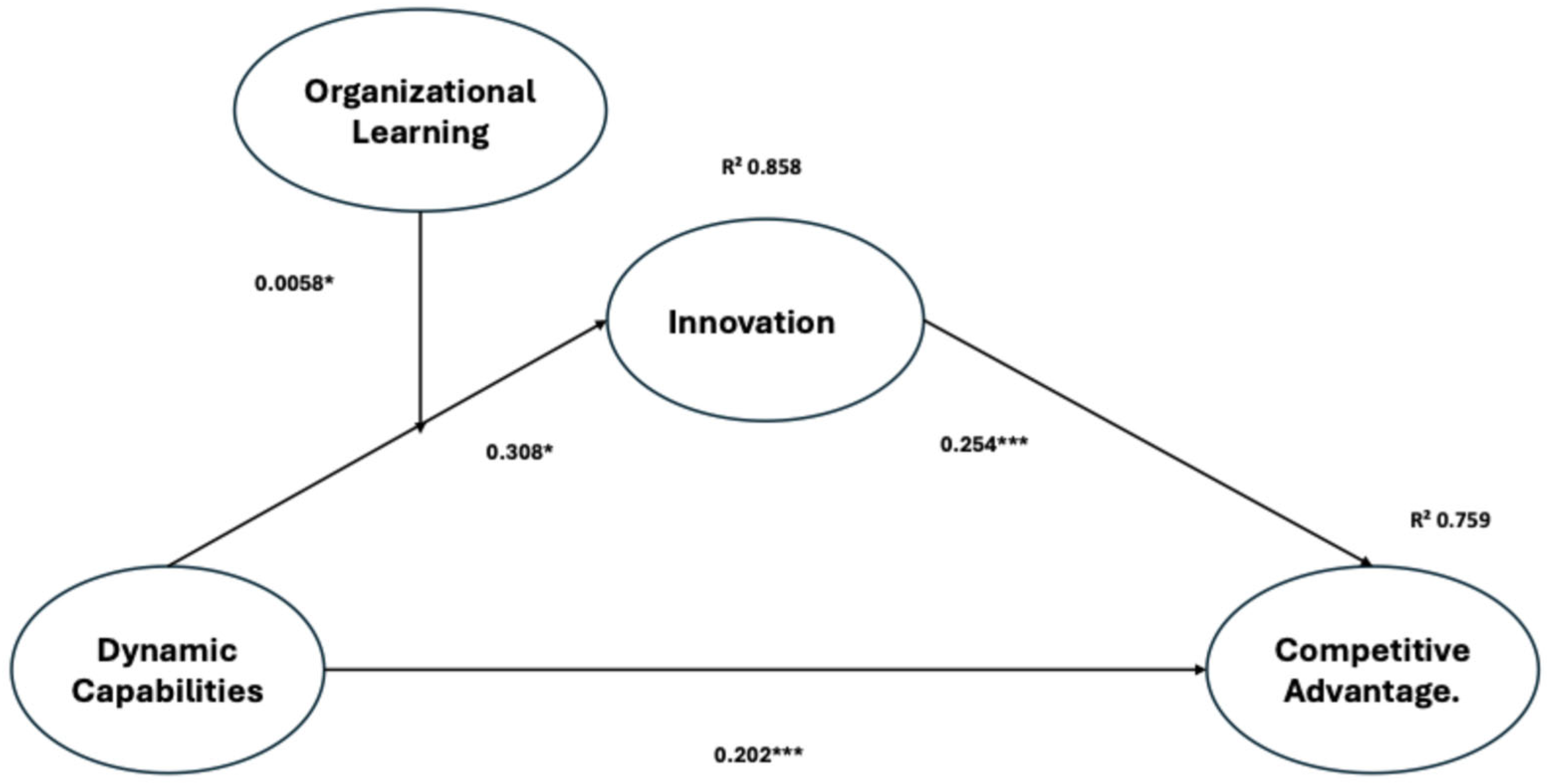
The proposed hypotheses were examined using a covariance-based Structural Equation Modeling (SEM) technique. As reported in Table 6 and illustrated in Figure 2, the findings indicate that Dynamic Capabilities (DC) exert a statistically significant impact on Sustainable Competitive Advantage (SCA) (β = 0.202, p < 0.001), thereby supporting H1. Moreover, DC was found to positively influence Innovation (IN) (β = 0.308, p < 0.05), lending support to H2. The results further show that Innovation has a significant positive effect on SCA (β = 0.254, p < 0.001), confirming H3. With respect to indirect relationships, the effect of DC on SCA through Innovation was significant (β = 0.167, p < 0.001), providing evidence for the mediating role of Innovation and supporting H4. In addition, Organizational Learning Capability (OLC) exhibited a significant moderating effect on the examined relationship (β = 0.0058, p < 0.05), thus confirming H5.

6. Discussion

The findings of this study provide important insights into how dynamic capabilities, innovation, and organizational learning capability interact to shape sustainable competitive advantage in SMEs. Rather than merely confirming hypothesized relationships, the results offer a deeper understanding of the mechanisms and boundary conditions through which internal capabilities contribute to long-term competitiveness, particularly in dynamic and emerging market contexts [56].
The results support H1, demonstrating that dynamic capabilities have a direct and positive effect on sustainable competitive advantage. This finding aligns with the Dynamic Capabilities View, which argues that firms capable of sensing environmental changes, seizing opportunities, and reconfiguring resources are better positioned to sustain competitive advantage over time [7,38]. Consistent with prior empirical studies [3,6], the results confirm that dynamic capabilities are not limited to large firms in developed economies but are equally critical for SMEs operating under resource constraints.
Importantly, this study extends prior research by demonstrating that dynamic capabilities contribute not only to short-term performance but also to sustainable competitive advantage, reinforcing their relevance for long-term business sustainability. With respect to H2, the findings reveal a strong and significant relationship between dynamic capabilities and innovation, supporting the argument that dynamic capabilities serve as enablers of innovation rather than direct sources of competitive advantage. This result is consistent with prior studies suggesting that adaptive and reconfigurative capabilities facilitate the generation and implementation of innovative solutions [5,8].
By empirically validating this relationship in Saudi SMEs, the study extends innovation-focused dynamic capability research to an underexplored emerging economy context, where institutional uncertainty and market volatility increase the strategic importance of innovation. The mediating role of innovation (H3) provides further theoretical insight by clarifying how dynamic capabilities are transformed into sustainable competitive advantage. The results indicate that innovation acts as a critical transmission mechanism through which internal capabilities are converted into market outcomes. This finding aligns with Agyapong et al. [23] and Saputra et al. [4], who emphasized that innovation bridges the gap between internal resource configurations and competitive performance. At the same time, the results extend existing literature by demonstrating that innovation mediates this relationship specifically in relation to sustainability-oriented competitive advantage, rather than general firm performance.
Regarding H4, the findings confirm the moderating role of organizational learning capability, highlighting learning as a key amplifying condition that strengthens the effectiveness of both dynamic capabilities and innovation. Firms with strong learning capabilities are better able to assimilate new knowledge, experiment, and adapt, thereby maximizing the returns from innovation efforts. This result is consistent with Knowledge-Based Theory and aligns with previous studies emphasizing the role of learning in enhancing innovation outcomes [22,39]. However, this study extends prior work by empirically demonstrating that organizational learning capability operates as a contextual boundary condition, intensifying the innovation–competitive advantage relationship rather than acting merely as an antecedent. Overall, the discussion advances the literature by moving beyond direct-effect explanations and offering a process-based understanding of sustainable competitive advantage. By integrating dynamic capabilities, innovation, and organizational learning capability into a single empirical framework, the study responds to recent calls for more nuanced examinations of capability interactions and their role in long-term business sustainability, particularly within SMEs and emerging economies.

7. Implications

The findings of this study provide several important theoretical contributions to the literature on strategic management, dynamic capabilities, and business sustainability. First, the research confirms the applicability of dynamic capabilities theory within the context of Saudi SMEs, reinforcing the argument that internal capabilities—particularly dynamic capabilities and organizational learning—are central to achieving sustainable competitive advantage in volatile and emerging market environments. This extends existing theory by demonstrating that dynamic capabilities are not only relevant to large firms in developed economies but also equally critical for SMEs operating under resource constraints.
Second, this study advances prior literature by developing and empirically validating an integrated capability-based model in which innovation functions as a key mediating mechanism linking dynamic capabilities and organizational learning to sustainable competitive advantage. By explicitly modeling this mediation, the study moves beyond direct-effect explanations and contributes to a more nuanced understanding of how capabilities are transformed into long-term competitive outcomes, addressing calls in the recent literature to unpack the black box between capabilities and performance. Third, the study contributes to theory by positioning organizational learning capability as a contextual boundary condition, demonstrating its moderating role in strengthening the effectiveness of dynamic capabilities and innovation.
This finding enriches both the Dynamic Capabilities View and the Knowledge-Based Theory by highlighting learning capability as a higher-order capability that amplifies the value-creation process, rather than merely serving as an antecedent to innovation. Fourth, by integrating insights from the Resource-Based View, Dynamic Capabilities View, and Knowledge-Based Theory, the study offers a unified theoretical framework that explains sustainable competitive advantage as an outcome of capability interaction rather than isolated resource possession. This theoretical integration responds to ongoing debates regarding the complementarities among strategic management theories and provides a coherent explanation of sustainability-oriented value creation in dynamic environments.
Finally, the study contributes to the business sustainability literature by conceptualizing sustainable competitive advantage as a long-term, adaptive process driven by innovation and learning rather than short-term performance gains. By focusing on SMEs in Saudi Arabia, the research extends the empirical scope of sustainability-oriented strategy research to an underexplored emerging economy context, thereby enhancing the generalizability and contextual richness of existing theoretical frameworks.
In addition to its theoretical value, this study offers practical insights for SME leaders and policymakers. Managers should prioritize the development of dynamic capabilities—such as resource flexibility and strategic responsiveness—as enablers of innovation and long-term advantage. Investing in a culture that fosters organizational learning through training, communication, and shared knowledge systems can further enhance a firm’s innovative potential. Moreover, the results suggest that innovation is not merely an outcome but a strategic mechanism that transforms capabilities into sustainable value. Policymakers and SME development institutions should, therefore, consider designing support programs that build internal competencies rather than relying solely on external funding. Collectively, these implications can assist SMEs in adapting to market changes and sustaining their competitive edge.

Limitations and Future Research

While this study provides valuable insights into the relationships among dynamic capabilities, innovation, organizational learning capability, and sustainable competitive advantage in Saudi SMEs, several limitations should be acknowledged, particularly in relation to sustainability and long-term development outcomes. First, the study adopted a cross-sectional research design, which limits the ability to capture the long-term and dynamic processes through which capabilities contribute to business sustainability and sustained competitive advantage over time. Sustainable development is inherently longitudinal, as it involves continuous adaptation, learning, and innovation. Future research is therefore encouraged to employ longitudinal or panel data designs to better examine how dynamic capabilities and organizational learning evolve and support long-term economic and organizational sustainability.
Second, the data collection process posed certain challenges that may have implications for interpretations. The survey was distributed electronically via LinkedIn and other online platforms during a period preceding a national holiday, which likely reduced participation rates. In addition, limited engagement with online academic surveys among business practitioners—particularly in the absence of direct incentives—restricted the response rate. These constraints may have affected the representativeness of the sample and, consequently, the generalizability of conclusions regarding sustainable business practices among SMEs. Future studies could adopt mixed-method approaches, incorporate interviews, or collaborate with industry associations to improve participation and generate deeper insights into sustainability-driven managerial practices. Finally, this study focused exclusively on SMEs operating in Saudi Arabia, providing important context-specific insights into business sustainability within an emerging economy. However, this focus limits the generalizability of the findings to larger organizations or SMEs operating in different institutional, cultural, or economic environments. Since sustainable development outcomes are shaped by national policies, regulatory frameworks, and market conditions, future research should replicate and extend this model across different regions, sectors, and organizational sizes to enhance its external validity and contribute to a broader understanding of sustainability-oriented competitive strategies.

Author Contributions

Methodology, S.D. and N.A.; Validation, S.D.; Investigation, N.A. Data Curation, S.D. and N.A. Writing—Original Draft, N.A.; Writing—Review and Editing, S.D. and N.A.; Supervision, S.D. All authors have read and agreed to the published version of the manuscript.

Funding

This research was supported by the research supporting program (ORF-2026-1023).

Institutional Review Board Statement

The study was conducted in accordance with the Declaration of Helsinki, and approved by the Institutional Review Board of King Saud University (protocol code: KSU-HE-25-072; data: 2 February 2025).

Informed Consent Statement

Informed consent was obtained from all subjects involved in the study.

Data Availability Statement

The data are not publicly available due to the need to protect participants’ privacy.

Conflicts of Interest

The authors declare no conflicts of interest.

Appendix A. Scale Items

  • Dynamic Capabilities Scale (DC)
  • Our company actively monitors changes in the business environment.
  • Our company continuously scans the market to identify emerging trends.
  • Our company has a system to collect and analyze external information for decision-making.
  • Our company effectively integrates new technologies or processes when needed.
  • Our company encourages collaboration between teams to exploit market opportunities.
  • Our company is flexible in reallocating resources based on strategic needs.
  • Our company continuously modifies its capabilities to respond to industry changes.
  • Innovation Scale (IN)
  • Our company frequently introduces new or significantly improved products.
  • Our company invests in research and development for product innovation.
  • Our company adopts advanced technology to enhance product quality.
  • Our company regularly updates operational procedures for efficiency.
  • Our company integrates automation and digital tools to enhance productivity.
  • Our company continuously explores new revenue streams.
  • Our company adopts innovative strategies to differentiate itself from competitors.
  • Organizational Learning Capability Scale (OCL)
  • Our company actively seeks external knowledge to improve operations.
  • Our company encourages employees to stay updated on industry trends.
  • Our company invests in training and development programs.
  • Employees in our company frequently exchange ideas and insights.
  • Management promotes a culture of collaboration and learning.
  • Employees are encouraged to experiment with new methods based on acquired knowledge.
  • Our company fosters a culture that values continuous learning.
  • Mistakes are treated as learning opportunities within the company.
  • Innovation is driven by knowledge-sharing, feedback, and the exchange of ideas.
  • Sustainable Competitive Advantage Scale (SCA)
  • Our company implements strategies to reduce production and operational costs.
  • Our company offers unique value propositions that set it apart from competitors.
  • Our company maintains a strong brand reputation due to its unique offerings.
  • Our company quickly adapts to changing customer preferences.

References

  1. Li, D.; Liu, J. Dynamic abilities, environmental dynamism, and competitive advantage: Evidence from China. J. Bus. Res. 2012, 67, 2793–2799. [Google Scholar] [CrossRef]
  2. Teece, D.J.; Pisano, G.; Shuen, A. Dynamic Capabilities and Strategic Management. Strateg. Manag. J. 1997, 18, 509–533. [Google Scholar] [CrossRef]
  3. Mansouri, M.; Malainine, C.; Souti, H.; Cadimi, I. Dynamic Capabilities, Competitiveness, and Performance of Small and Medium-Sized Enterprises: A Systematic Literature Review. Int. J. Account. Financ. Audit. Manag. Econ. 2022, 10, 321–335. [Google Scholar]
  4. Obeidat, B.Y.; Ayman, B.A.; Noor, A.; Abdel, H.O.M.A.; Mahmoud, M. The effect of intellectual capital on organizational performance: The mediating role of knowledge sharing. Commun. Netw. 2016, 9, 1–27. [Google Scholar]
  5. Brix, J. Innovation capacity building: An approach to maintaining balance between exploration and exploitation in organizational learning. Learn. Organ. 2019, 26, 12–26. [Google Scholar] [CrossRef]
  6. Ferreira, J.; Cardim, S.; Coelho, A. Dynamic capabilities and mediating effects of innovation on the competitive advantage and firm’s performance: The moderating role of organizational learning capability. J. Knowl. Econ. 2021, 12, 620–644. [Google Scholar] [CrossRef]
  7. Bari, N.; Chimhundu, R.; Chan, K.-C. Dynamic capabilities to achieve corporate sustainability: A roadmap to sustained competitive advantage. Sustainability 2022, 14, 1531. [Google Scholar] [CrossRef]
  8. Ali, M.A.; Hussin, N.; Abed, I.A.; Nikkeh, N.S.; Mohammed, M.A. Dynamic capabilities and innovation performance: A systematic literature review. Technol. Rep. Kansai Univ. 2020, 62, 5989–6000. [Google Scholar]
  9. Teece, D.J. Business models and dynamic capabilities. Long Range Plan. 2018, 51, 40–49. [Google Scholar] [CrossRef]
  10. Teece, D.J. Explicating dynamic capabilities: The nature and microfoundations of (sustainable) enterprise performance. Strateg. Manag. J. 2007, 28, 1319–1350. [Google Scholar] [CrossRef]
  11. Eisenhardt, K.M.; Martin, J.A. Dynamic capabilities: What are they? Strateg. Manag. J. 2000, 21, 341–363. [Google Scholar]
  12. Kump, B.; Engelmann, A.; Kessler, A.; Schweiger, C. Toward a dynamic capabilities scale: Measuring organizational sensing, seizing, and transforming capacities. Ind. Corp. Change 2019, 28, 1149–1172. [Google Scholar] [CrossRef]
  13. Pavlou, P.A.; El Sawy, O.A. Understanding the elusive black box of dynamic capabilitie. Decis. Sci. 2011, 42, 239–273. [Google Scholar] [CrossRef]
  14. Schilke, O. On the contingent value of dynamic capabilities for competitive advantage: The nonlinear moderating effect of environmental dynamism. Strateg. Manag. J. 2014, 35, 179–203. [Google Scholar] [CrossRef]
  15. Protogerou, A.; Caloghirou, Y.; Lioukas, S. Dynamic capabilities and their indirect impact on firm performanc. Ind. Corp. Change 2012, 21, 615–647. [Google Scholar] [CrossRef]
  16. Liu, C.-H.; Horng, J.-S.; Chou, S.-F.; Yu, T.-Y.; Huang, Y.-C.; Lin, J.-Y.; Lapuz, M.C.B. Discovery of the mutual relationships among dynamic capabilities and intellectual capital: The moderating roles of service innovation. Asia Pac. J. Tour. Res. 2023, 28, 1147–1165. [Google Scholar] [CrossRef]
  17. Wakrim, S.; Khaldi, S. Fostering Global Resilience through Cross-cultural Collaboration. In Proceedings of the 2nd International Conference on Humanities and Social Sciences, Porto, Portugal, 27–28 November 2023. [Google Scholar]
  18. Lin, Y.-H.; Qin, Z.; Kim, C.J.; Zhang, Y.; Xia, N. Dynamic Capabilities, Eastern Relationships, and Competitive Advantages: An Empirical Assessment of Chinese and South Korean International Contractors. Eng. Manag. J. 2022, 34, 671–688. [Google Scholar] [CrossRef]
  19. Fainshmidt, S.; Wenger, L.; Pezeshkan, A.; Mallon, M.R. When Do Dynamic Capabilities Lead to Competitive Advantage? The Importance of Strategic Fit. Strateg. Manag. J. 2022, 56, 758–787. [Google Scholar] [CrossRef]
  20. Apascaritei, P.; Elvira, M.M. Dynamizing human resources: An integrative review of SHRM and dynamic capabilities research. Hum. Resour. Manag. Rev. 2022, 32, 100878. [Google Scholar] [CrossRef]
  21. Cao, B.; Han, Z.; Liang, L.; Liu, Y.; Wang, J.; Xie, J. Independent Innovation or Secondary Innovation: The Moderating of Network Embedded Innovation. Sustainability 2022, 14, 14796. [Google Scholar] [CrossRef]
  22. Jin, J.; Li, M. Innovate with whom? The bridging effect of organizational learning capability for knowledge-intensive SMEs. Asian J. Technol. Innov. 2023, 31, 657–683. [Google Scholar] [CrossRef]
  23. Agyapong, A.; Acquaah, M.; Abiew, G.E.; Zan, H.N. Dynamic pathways to SMEs performance: Unraveling the influence of organizational learning capability, innovation, market dynamism, and market responsiveness in an African emerging economy. Afr. J. Manag. 2024, 10, 50–74. [Google Scholar] [CrossRef]
  24. Crossan, M.M.; Apaydin, M. A multi-dimensional framework of organizational innovation: A systematic review of the literature. J. Manag. Stud. 2010, 47, 1154–1191. [Google Scholar] [CrossRef]
  25. Gunday, G.; Ulusoy, G.; Kilic, K.; Alpkan, L. Effects of innovation types on firm performance. Int. J. Prod. Econ. 2011, 133, 662–676. [Google Scholar] [CrossRef]
  26. Damanpour, F.; Aravind, D. Managerial innovation: Conceptions, processes, and antecedents. Manag. Organ. Rev. 2012, 8, 423–454. [Google Scholar] [CrossRef]
  27. Denicolai, S.; Cotta Ramusino, E.; Sotti, F. The impact of digital transformation on dynamic capabilities and innovation: A multiple case study. Technol. Forecast. Soc. Change 2021. [Google Scholar]
  28. Jerez-Gómez, P.; Céspedes-Lorente, J.; Valle-Cabrera, R. Organizational learning capability: A proposal of measurement. J. Bus. Res. 2005, 58, 715–725. [Google Scholar] [CrossRef]
  29. Yi, C.; Xu, X.; Chen, C.; Wu, Y.J. Institutional distance, organizational learning, and innovation performance: Outward foreign direct investment by Chinese multinational enterprises. Emerg. Mark. Financ. Trade 2020, 56, 370–391. [Google Scholar] [CrossRef]
  30. Huynh, T.M.; Nguyen, H.H. Evaluating the relationship between corporate social responsibility, digital transformation, reputation, and sustainable competitive advantag. Int. J. Innov. Res. Sci. Stud. 2025, 8, 741–752. [Google Scholar] [CrossRef]
  31. Rifqi, H.; Díez, I.D.L.T.; Montero, E.C.; Alvarado, E.S. The Interplay of Lean Six Sigma, Industry 4.0, and Dynamic Capabilities: Pathways to Sustainable Competitive Advantage in North African Context. IEEE Access 2024, 12, 67641–67664. [Google Scholar] [CrossRef]
  32. Alchalabi, A.S.; Chitheer, S.H. The Role of Technology-Based Customer Relationship Management in Sustainable Competitive Advantage—A Field Study of Iraqi Banks. J. Econ. Adm. Sci. 2024, 30, 86–101. [Google Scholar]
  33. Barney, J.B. Firm resources and sustained competitive advantage. J. Manag. 1991, 17, 99–120. [Google Scholar] [CrossRef]
  34. Porter, M.E. What is strategy? Harv. Bus. Rev. 1996, 74, 61–78. [Google Scholar]
  35. Newbert, S.L. Value, rareness, competitive advantage, and performance: A conceptual-level empirical investigation of the resource-based view of the firm. Strateg. Manag. J. 2008, 29, 745–768. [Google Scholar] [CrossRef]
  36. Sirmon, D.G.; Hitt, M.A.; Ireland, R.D. Managing firm resources in dynamic environments to create value: Looking inside the black box. Acad. Manag. Rev. 2007, 32, 273–292. [Google Scholar] [CrossRef]
  37. Barney, J.B.; Ketchen, D.J., Jr.; Wright, M. Resource-based theory and the value creation framework. J. Manag. 2021, 47, 1936–1955. [Google Scholar] [CrossRef]
  38. Teece, D.J. The evolution of the dynamic capabilities framework. Artif. Sustain. Entrep. 2023, 113, 238. [Google Scholar]
  39. Anand, A.; Brix, J. The learning organization and organizational learning in the public sector: A review and research agenda. Learn. Organ. 2022, 29, 129–156. [Google Scholar] [CrossRef]
  40. Ferreira, J.; Coelho, A.; Moutinho, L. Strategic alliances, exploration and exploitation and their impact on innovation and new product development: The effect of knowledge sharing. Manag. Decis. 2021, 59, 524–567. [Google Scholar] [CrossRef]
  41. Ambrosini, V.; Bowman, C. What are dynamic capabilities and are they a useful construct in strategic management? Int. J. Manag. Rev. 2009, 11, 29–49. [Google Scholar] [CrossRef]
  42. Albort-Morant, G.; Leal-Rodríguez, A.L.; Fernández-Rodríguez, V.; Ariza-Montes, A. Assessing the origins, evolution and prospects of the literature on dynamic capabilities: A bibliometric analysis. Eur. Res. Manag. Bus. Econ. 2018, 24, 42–52. [Google Scholar] [CrossRef]
  43. Wamba, S.F.; Gunasekaran, A.; Akter, S.; Ren, S.J.-F.; Dubey, R.; Childe, S.J. Big data analytics and firm performance: Effects of dynamic capabilities. J. Bus. Res. 2017, 70, 356–365. [Google Scholar] [CrossRef]
  44. Leih, S.; Linden, G.; Teece, D.J. Business model innovation and organizational design: A dynamic capabilities perspective. In Business Model Innovation: The Organizational Dimension; Oxford University Press: Oxford, UK, 2015. [Google Scholar]
  45. Satar, A.; Al Musadieq, M.; Hutahayan, B.; Solimun, S. Creating a sustainable competitive advantage: The roles of technological innovation, knowledge management, and organizational agility. Glob. Bus. Organ. Excell. 2025, 44, 11–23. [Google Scholar] [CrossRef]
  46. Ngo, L.V.; O’Cass, A. In search of innovation and customer-related performance superiority: The role of market orientation, marketing capability, and innovation capability interactions. J. Prod. Innov. Manag. 2012, 29, 861–877. [Google Scholar] [CrossRef]
  47. Zehir, C.; Vural, S.Ç. Dynamic capabilities and firm performance: Moderated mediation model with product innovation as mediator and technology uncertainty as moderator. J. Strategy Manag. 2025, 18, 326–348. [Google Scholar] [CrossRef]
  48. Cepeda-Carrión, I.; Leal-Millán, A.G.; Martelo-Landroguez, S.; Leal-Rodríguez, A.L. Absorptive capacity and value in the banking industry: A multiple mediation model. J. Bus. Res. 2016, 69, 1644–1650. [Google Scholar] [CrossRef]
  49. Jiménez-Jiménez, D.; Sanz-Valle, R. Innovation, organizational learning, and performance. J. Bus. Res. 2011, 64, 408–417. [Google Scholar] [CrossRef]
  50. Chiva, R.; Alegre, J.; Lapiedra, R. Measuring organizational learning capability among the workforce. Int. J. Manpow. 2007, 28, 224–242. [Google Scholar] [CrossRef]
  51. Baier, J.; Sviokla, J. Turbocharging Organizational Learning with GenAI. MIT Sloan Manag. Rev. 2025, 2–6. [Google Scholar]
  52. Zada, M.; Khan, S.; Zada, S.; Dhar, B.K. Driving sustainable development through CSR leadership: Insights into organizational learning and technological innovation. Sustain. Dev. 2025, 33, 4060–4074. [Google Scholar] [CrossRef]
  53. Cui, J. The Explore of Knowledge Management Dynamic Capabilities, AI-Driven Knowledge Sharing, Knowledge-Based Organizational Support, and Organizational Learning on Job Performance: Evidence from Chinese Technological Companies. arXiv 2025, arXiv:2501.02468. [Google Scholar]
  54. Zollo, M.; Winter, S.G. Deliberate learning and the evolution of dynamic capabilities. Organ. Sci. 2002, 13, 339–351. [Google Scholar] [CrossRef]
  55. Hu, L.; Bentler, P.M. Cutoff criteria for fit indexes in covariance structure analysis: Conventional criteria versus new alternatives. Struct. Equ. Model. Multidiscip. J. 1999, 6, 1–55. [Google Scholar] [CrossRef]
  56. Luzuriaga, E.W.R. A Moderated Model of Digital Transformation in SMEs: Digital Competencies, Digital HRM, and Organizational Culture. Ceniiac 2025, 1, e0010. [Google Scholar] [CrossRef]
Figure 1. The Research Mode.
Sustainability 18 01320 g001
Figure 2. Standardized estimates for the structural paths. Note: *** p < 0.001; * p < 0.05.
Sustainability 18 01320 g002
Table 2. Model fit of confirmatory factor analysis.
x2dfCFIpGFIAGFISRMR90% CI for RMSEA
RMSEAPCLOSE
Model803.933 **4540.9550.0000.9160.7590.0470.0550.000
Notes: CFI = comparative fit index; RMSEA = root mean square error of approximation. GFI (Goodness-of-Fit Index); AGFI (Adjusted Goodness-of-Fit Index); SRMR (Standardized Root Mean Square Residual); PCLOSE (p-value for test of close fit). ** p < 0.01.
Table 3. Confirmatory factor analysis.
ConstructItemsFactor LoadingsCRAVE
Dynamic Capabilities (DC)A10.7530.9280.622
A20.791
A30.777
A40.849
A50.812
A60.757
A70.718
Innovation (IN)B10.7660.9430.675
B20.768
B30.746
B40.808
B50.762
B60.770
B70.774
Organizational Learning Capability (OLC)C20.7350.9580.693
C30.818
C40.857
C50.846
C60.854
C70.859
C90.825
Sustainable Competitive Advantage (SCA)D10.6870.8930.656
D20.772
D30.798
D40.830
Notes: CR = composite reliability; AVE = average variance extracted. Factor loadings ≥ 0.50 are considered acceptable. CR ≥ 0.70 and AVE ≥ 0.50 indicate adequate reliability and convergent validity.
Table 4. Descriptive statistics (Mean and Standard deviation and correlations between latent factors).
VariablesMeanSDDCINOCLSCA
DC28.024.280.911
IN28.134.00.845 **0.916
OLC35.955.550.767 **0.768 **0.907
SCA16.242.380.724 **0.734 **0.784 **0.861
Note. Diagonal values are Cronbach’s alpha. All correlations are significant at p < 0.001. ** p < 0.01.
Table 5. Standardized hypothesis testing results.
HypothesisPathsDirect EffectsIndirect EffectsTotal EffectsResult
H4DC → IN → SCA0.202 ***0.167 ***0.369 ***Supported
Note. Statistically significant: *** p < 0.001.
Table 6. Structural model results.
RelationshipsStandardized
Coefficients
DC → SCA (H1)0.202 ***
DC → IN (H2)0.308 *
IN → SCA (H3)0.254 ***
DC*OLC → IN (H5)0.0058 *
Note: *** p < 0.001; * p < 0.05.
Disclaimer/Publisher’s Note: The statements, opinions and data contained in all publications are solely those of the individual author(s) and contributor(s) and not of MDPI and/or the editor(s). MDPI and/or the editor(s) disclaim responsibility for any injury to people or property resulting from any ideas, methods, instructions or products referred to in the content.