1. Introduction
In recent years, cold-climate countries have experienced growing interest in IST, a distinctive form of winter ecotourism centered on natural snow and ice resources [
1,
2,
3]. In China, demand for IST has gradually evolved from a niche recreational activity into a mainstream tourism sector. During the 2024–2025 winter season, the sector attracted approximately 520 million participants and generated 720 billion yuan in revenue, thereby achieving the national target of bringing “300 million people onto ice and snow” [
4]. In Russia, with its prolonged winter period, conditions are favorable for developing IST across most regions [
5,
6]. The development of new tourist spaces and attractions based on snow and ice can lead to the creation of distinctive tourism products in regions with high winter tourism potential. One such region is the Baikal Natural Territory, where the opportunities and characteristics of IST are closely linked to the use of Lake Baikal’s ice surface. As a UNESCO World Natural Heritage site, the lake is subject to strict environmental regulations governing the use of its waters [
7]. The Baikal region occupies a significant position in the spatial structure of Russia’s tourism market and specializes in organized ecological tourism, creating a paradox: the need to preserve the lake’s ecosystem while ensuring the socioeconomic development of coastal territories. A viable solution may lie in prioritizing specialized and environmentally safe forms of tourism. Ice sculpture festivals align well with environmental safety criteria, as they entail minimal intervention in the natural landscape through the artistic utilization of natural ice formations.
In recent years, the coastal areas of the Republic of Buryatia and Irkutsk Oblast have seen a steady increase in tourist arrivals. Between 2021 and 2024, the number of winter-season hotel guests (January to March) grew by 44%, rising from 282,717 in 2021 to 407,727 in 2024. During the 2024–2025 winter season, approximately 94 ice and snow routes, attractions, and events were documented on Lake Baikal, including 64 in Irkutsk Oblast and 30 in the Republic of Buryatia. Among these, Olkhon Island remains the most popular and frequently visited destination for IST.
Despite the growing popularity of IST, research addressing its theoretical, methodological, and applied dimensions remains relatively limited. We align with the perspective of several scholars [
8] regarding the need for more in-depth investigations into IST. In this article, we therefore focus on a rapidly emerging subtype of IST, specifically related to ice and snow art. As a case study, we examine the “Olkhon Ice Fest”, an annual ice sculpture festival held from February to March in Olkhon Municipal District, Irkutsk Oblast (on Lake Baikal).
2. Literature Review
In the era of ‘experiences and sensations,’ the global tourism industry shows a prominent trend: the development of unique tourism products based on natural snow and ice resources. In many countries with abundant snow cover and extended winter seasons—including Russia—the popularity of IST continues to grow. This growth is reflected in the increasing diversity of tourism offerings, rising tourist flows, and the expanding appeal of ice and snow recreational activities. Correspondingly, the number of scholarly publications addressing the development of IST has also risen [
9,
10,
11].
Although the concept of IST has emerged relatively recently, ice and snow have long been used for both practical and cultural purposes [
12,
13], with the significance of cultural and recreational applications increasing over time. Successful models for the development of winter tourism and recreational activities are widespread in countries with abundant snow cover and prolonged winters: The Scandinavian countries, Austria, Canada, China, Switzerland, Japan, and others [
14]. Many of them offer a wide range of northern activities: snowmobile and dog sled safaris, aurora borealis observation, ethno-cultural programs, and visits to ice structures [
15]. Today, the construction and artistic use of snow and ice structures rank among the most popular winter recreational activities in many countries [
16].
Ice has been employed in a variety of contexts, including the construction of ice houses (for entertainment and promotional purposes), ice warehouses, seasonal ice crossings over rivers and lakes, and floating ice airstrips. More recently, innovative applications have emerged, including floating ice islands designed specifically for tourist use [
17].
At present, there is no universally accepted definition of IST. One study defines it as an activity through which individuals engage with culture associated with ice and snow [
18]. Other researchers argue that IST encompasses all forms of tourist activity based on natural snow and ice resources [
2]. The concept of IST holds considerable importance both within the Chinese academic community [
19,
20] and governmental policy in China. The Ministry of Culture and Tourism of China classifies IST as a form of nature-based ecotourism centered on ice and snow resources [
21]. Furthermore, the 13th Five-Year Plan for the Development of China’s Tourism Industry explicitly set out the goal of actively promoting IST. Another study [
22] notes that China’s snow and ice industry continues to expand, with winter tourism—supported by government initiatives—serving as one of its key components.
The prospects for developing IST are shaped by a range of factors, including the availability of snow cover and ice-covered water bodies (lakes, rivers, ponds, etc.); the duration of the cold season, during which ice attains sufficient thickness to ensure tourist safety; and the presence of unique natural snow and ice formations such as glaciers, caves, and grottos. Additional factors include the use of snow and ice as temporary construction materials, opportunities to combine diverse forms of recreational activity, advances in technologies for producing artificial snow and ice, and the broad geographical distribution of IST—extending beyond traditional regions such as the Arctic or mountainous areas. At the same time, IST is among the sectors most vulnerable to climate change [
23].
In our view, IST represents a distinct form of winter ecotourism that involves the exploration of snow-covered landscapes and the ice surfaces of water bodies; the development of ice and snow routes and tours; and the use of natural ice and snow resources to create temporary attractions, facilities, and events that support the winter recreation and service industry. The defining features of IST are consistent with the key principles of the International Ecotourism Society, enabling it to be recognized as a specialized form of ecotourism [
24].
Although IST has not yet been formally recognized as an independent category of tourism in Russia, it holds substantial potential for diversifying tourism products, reducing seasonal fluctuations, and fostering regional economic development, particularly in Arctic and Siberian regions.
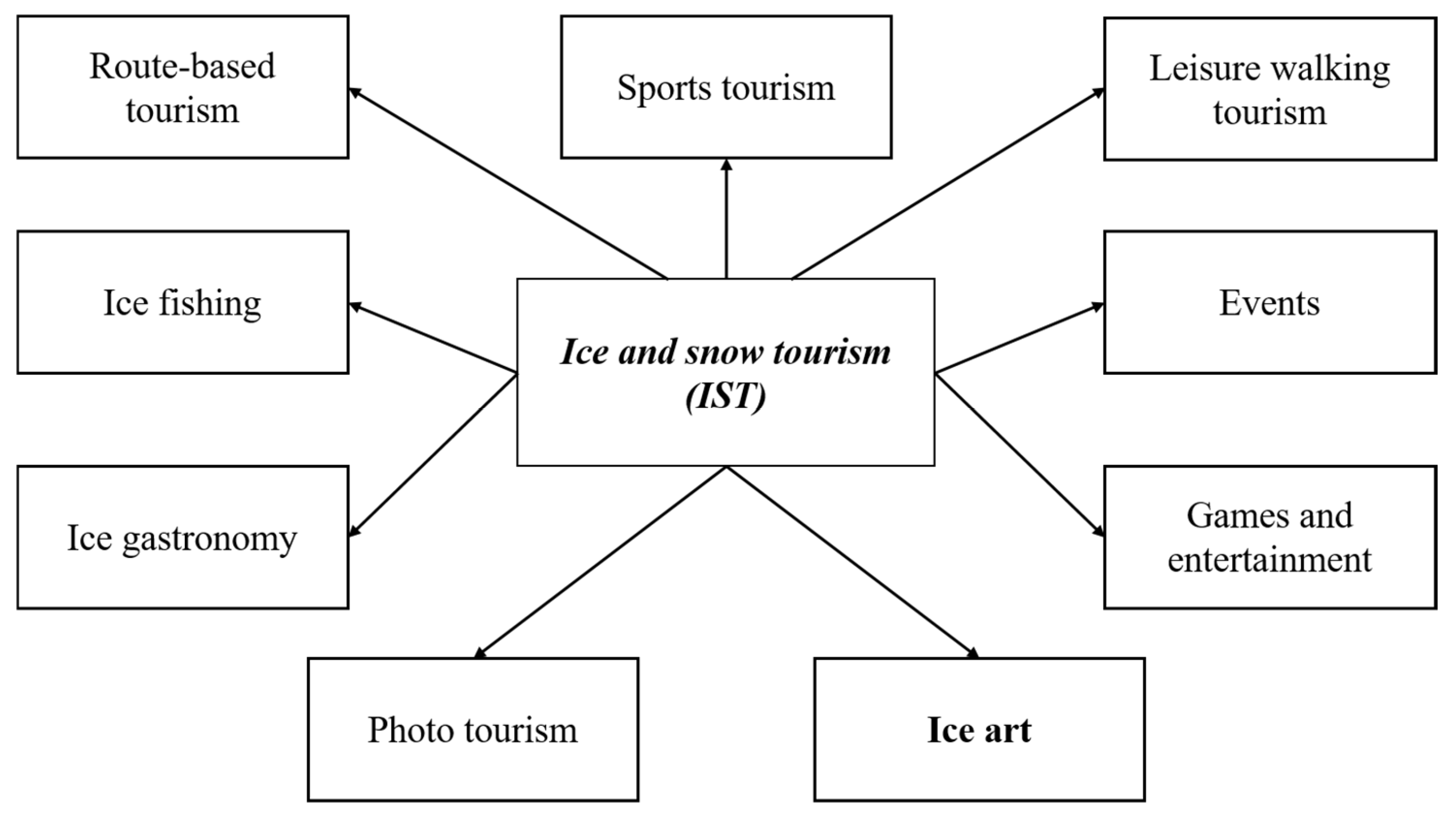
An analysis of Russia’s experience in developing snow- and ice-based tourism activities allows for the identification of several IST subtypes [
25], including route-based tourism, sports tourism, leisure walking tourism, ice fishing, events, ice gastronomy, games and entertainment, photo tourism, and ice art (
Figure 1).
The primary criteria for distinguishing IST subtypes relate to the specific services, activities, and attractions developed on the basis of natural ice and snow resources that meet tourists’ needs for particular forms of recreation. In practice, however, these subtypes rarely exist in a “pure” form, as their boundaries are often fluid and overlapping. For example, ice and snow art objects are commonly created within event-based activities such as festivals, celebrations, and competitions.
The most rapidly expanding segment of IST is ice and snow art, which uses ice and snow as primary materials for creating sculptures, installations, and other artistic works. Scholars identify several major directions within ice and snow art [
26,
27,
28], including the following:
The creation of artistic objects from snow and ice;
Ice sculpture;
Ice and snow architecture;
The use of ice and snow as artistic media;
Ornamental ice carving;
Artistic design and decoration of spaces using elements of ice and snow.
Ice and snow structures and sculpture constitute key components of IST. The tradition of creating snow and ice sculptures originated in Japan, China, and Korea as a way of symbolically honoring the winter season and has since evolved into contemporary snow and ice art festivals that now occur throughout the Northern Hemisphere [
26].
Table 1 presents the top five largest festivals worldwide, led by the Harbin International Ice and Snow Festival with 3.56 million visitors during the 2024–2025 winter season [
29].
Russia also has a longstanding tradition of building “ice towns” in city squares, complete with New Year trees, ice slides, and sculptures. These installations foster a positive perception of winter and encourage participation in outdoor recreational activities [
30]. Ice sculpture festivals featuring monumental and decorative works are held annually in various Russian regions [
27,
31].
Worldwide, ice art relies on a set of broadly unified techniques [
32]. Typically, the dimensions of the intended work are first determined, and large ice blocks are prepared. The design is developed in advance as a sketch, after which the sculptor proceeds to carving. A novel technique—splash ice sculpting—emerged at the Ice Olkhon Fest in 2020, introduced by sculptor Aleksandr Parfenov [
33]. This approach draws on natural splash formations created when waves freeze along the shoreline; the artist subsequently refines these naturally formed structures into completed sculptural works. The emergence of the term “splash ice sculpting” as a distinct artistic technique advances both the theory and practice of ice and snow art, formalizing the creation of temporary attractions through the artistic refinement of naturally formed ice splashes.
Despite the increasing popularity of IST, issues concerning the regulation and support of ice and snow art remain underexplored. In particular, there is a paucity of research based on comprehensive analysis that incorporates ecological, sociocultural, and institutional aspects of tourism development in vulnerable natural areas such as Lake Baikal, a World Heritage site. The present study aims to partially address these gaps through a comprehensive case analysis of the “Olkhon Ice Fest”.
3. Materials and Methods
3.1. Research Methodology
This study is grounded in the theory of recreational water use, which addresses leisure, sports, and tourism activities conducted on water bodies and along their shorelines. The recreational use of ice-covered water bodies requires the designation of clearly defined areas for mass tourist access, as well as the specification of appropriate equipment and conditions for safe and effective activity. The ice surface of water bodies is utilized for tourism purposes through activities such as walking, ice skating, ice fishing, sporting events, and others; additionally, it serves as a novel natural scenic attraction (ice caves, hummocks, ice splashes, sculptures, etc.). The IST subtypes on ice surfaces presented in this study effectively define the winter stage of recreational water use, demonstrating seasonal (winter) forms of recreational utilization of water bodies.
In this study, we proceed from the premise that a unique Baikal model of IST is emerging in the Baikal region, associated with the appearance of new tourist activities, facilities, and services based on snow and ice. To determine how IST is developing at Lake Baikal, we selected a case study format, which allows for detailed examination of a specific territory, investigation of documents and collection of diverse data, and more thorough analysis of ice and snow event organization practices.
Contemporary IST practices are exemplified by the “Olkhon Ice Fest”, an annual ice sculpture festival held on the ice of Lake Baikal. Notably, one of the authors has been directly involved in the organization of the festival for several years. The selection of this ice and snow event is justified by favorable natural and climatic conditions, the creation of temporary attractions based on the unique technique of “splash ice sculpting,” entrepreneurial activity, and growing popularity among tourists.
Our research methods included analyzing scientific publications and official documents, conducting field surveys during the winter of 2025, and consulting with key stakeholders in the tourism sector. To obtain specific information about the potential, characteristics, challenges, and mechanisms of IST development at Lake Baikal, field research included meetings with heads of administrations and tourism specialists from Olkhon Municipal District and other settlements. For the same purpose, meetings were conducted with representatives of public organizations in the fields of ecology and tourism, as well as with entrepreneurs who utilize the ice surface of Lake Baikal. In this study, we formed the stakeholder sample based on their participation in organizing ice and snow activities and their role in local-level decision-making. It should be noted that this sample does not claim complete representativeness of all stakeholder groups; in particular, tourists and event attendees, small business representatives not directly involved in festival organization, and experts from other regions and the international community were not included. These limitations are related to the logic of the case study approach, which focuses on organizational aspects and management practices through the example of a specific event and territory. Expanding the pool of respondents, including additional stakeholder categories, and applying quantitative methods to assess opinions of a broader audience are designated as tasks for future research. This will enable a more complete and balanced picture of the potential, challenges, and prospects for ice and snow tourism development in the Baikal region.
Using scientific and cartographic data, we performed a geographic analysis of ice and snow conditions in the study area [
34,
35,
36,
37,
38]. For cartographic representation of the study area, topographic base maps at scales of 1:1,000,000 and 1:200,000 from Roskadastr and Earth remote sensing data (ESRI World_Imagery basemap) were utilized. ArcGIS Desktop Standard 10.8.1 (ESRI, USA) was selected as the software platform.
We assessed the current state and development prospects of IST on Lake Baikal by examining strategic and territorial planning documents at the national, regional, and municipal levels [
39,
40,
41]. Through institutional analysis, we systematized approaches to organizing mass events on the ice of Lake Baikal in Irkutsk Oblast, drawing on regulatory frameworks designed to ensure the safe presence of large groups of people on the lake’s ice surface. Based on statistical data, tourist flows in the Olkhon Municipal District were analyzed. Field research involved the collection of primary data through direct observation and engagement with key stakeholders, including representatives of local authorities, entrepreneurs, and community members.
Overall, the study integrates institutional, statistical, cartographic, and geographic analyses with field-based methods and an examination of contemporary ice art practices. The information database comprised scientific publications, legislative, strategic, and program documents at federal and regional levels pertaining to tourism development at Lake Baikal, documents from the Olkhon Municipal District, and results from the authors’ own research.
3.2. Study Area: Lake Baikal, Olkhon Island
Lake Baikal, with its extensive seasonal ice cover, is among the most popular winter tourist destinations, with the season typically spanning from January to March. Tourists are attracted by the lake’s exceptional natural characteristics, including its ancient origin, extreme depth, and vast, crystal-clear ice surface [
34]; its distinctive geological and geomorphological features [
42]; endemic flora and fauna; and the opportunity to observe the renowned “Baikal ice,” such as ice grottos, hummocks, intricate splash formations, gas bubbles, and cracks in the ice. Visitors also experience the lake’s distinctive atmosphere and perceived energetic qualities. Olkhon Island, covering an area of 730 km
2 (extending approximately 70 km from north to south, with a maximum width of 15 km), is the largest of the Baikal islands. Its territory, including settlements, lies within the Pribaikalsky National Park (“Zapovednoye Pribaikalye”), a public sector entity. The island has a population of 1707 residents [
43], many of whom are engaged in tourism-related activities, including accommodation, food and beverage provision, retail trade, passenger transport, and guided tours. Seasonal connectivity with the mainland is maintained via a ferry in summer and an ice crossing in winter [
44].
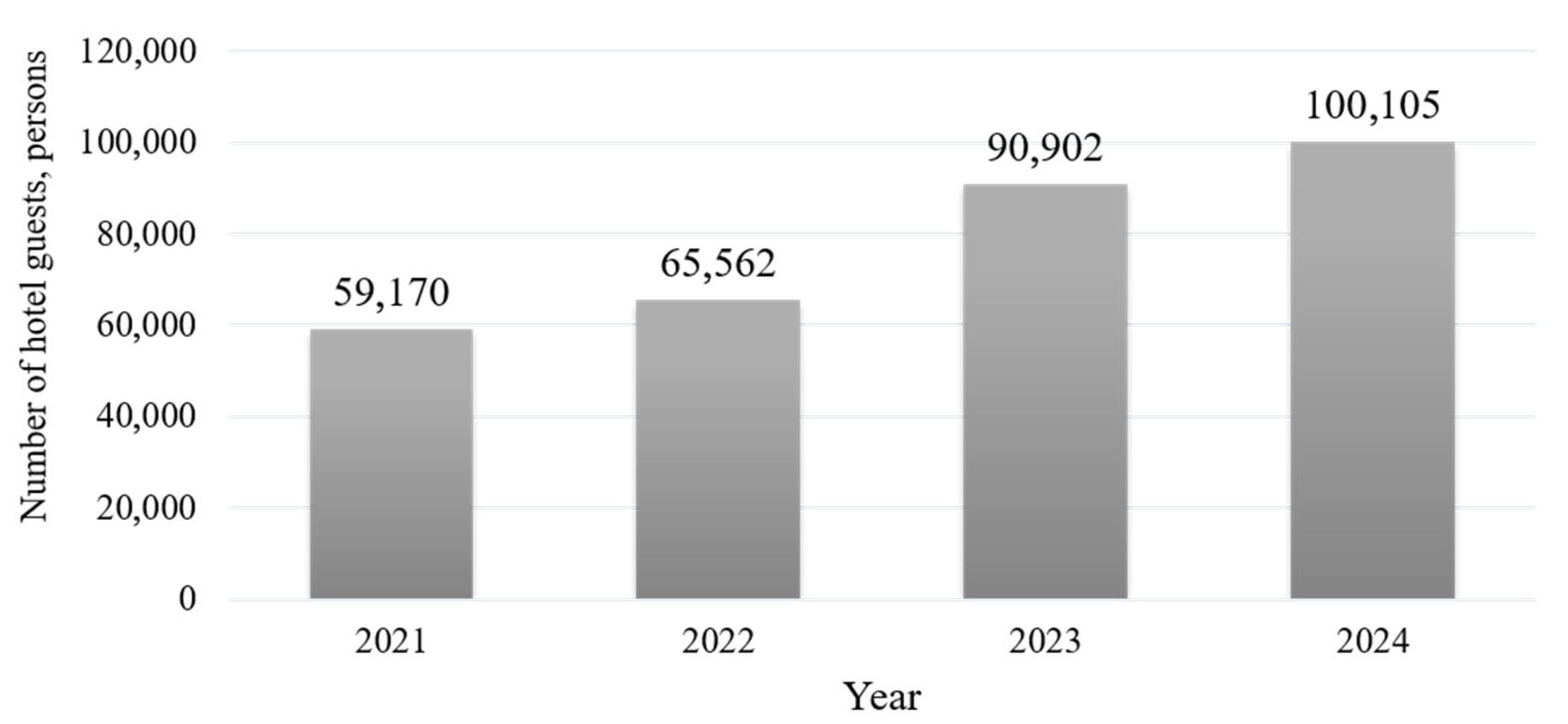
Olkhon District serves as the primary tourism hub on Lake Baikal, hosting 72 accommodation facilities, 68 of which are located on Olkhon Island, with a total capacity of 2574 beds [
45]. In recent years, winter tourist flows have shown steady growth; between 2021 and 2024, the number of hotel guests increased from 59,170 to 100,105 [
46] (
Figure 2).
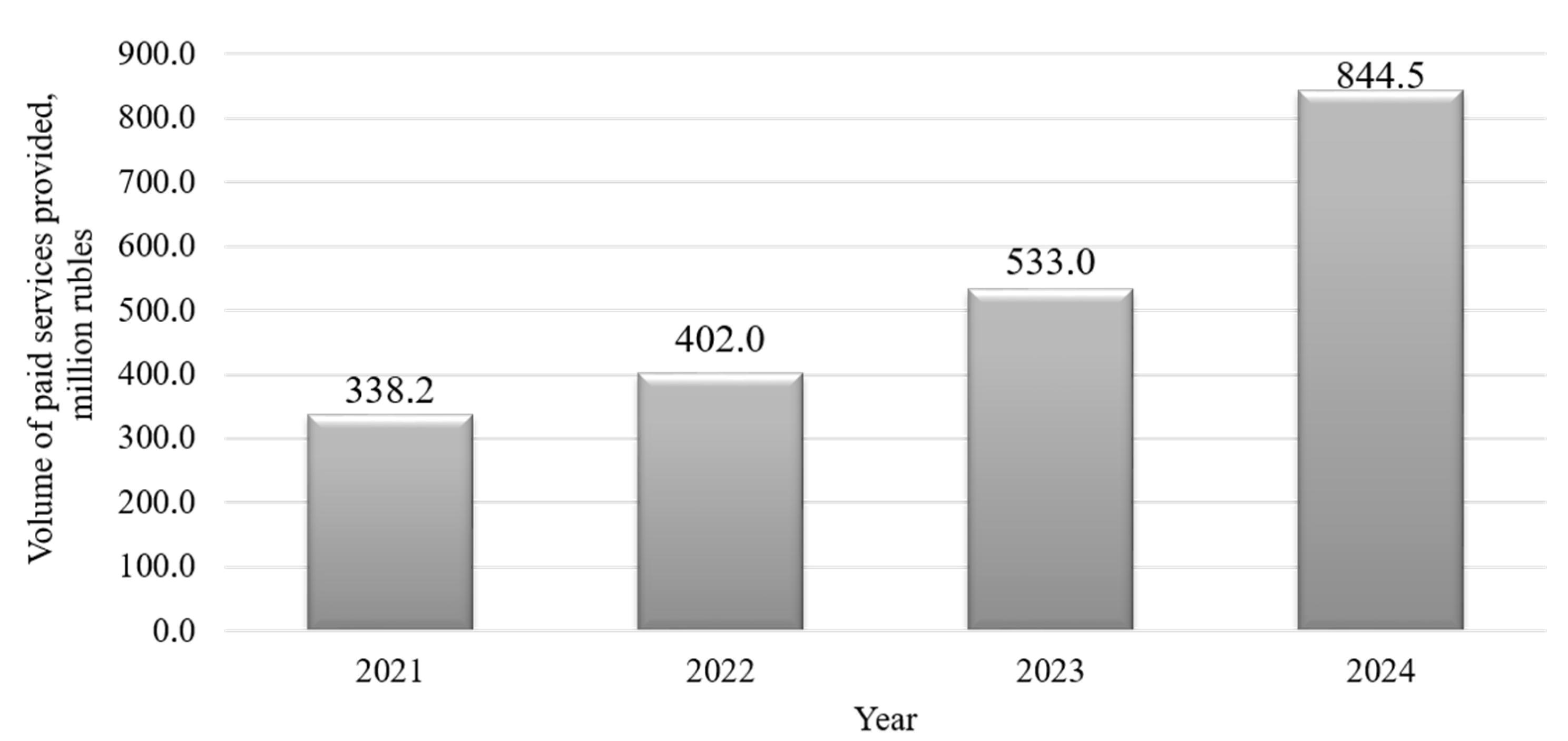
Olkhon Municipal District hosts 43% of all Baikal ice events (ice walks, sports tourism, ice fishing, ice-related events). Between 2020 and 2024, the annual increase in winter tourism offerings, including the development of the “Olkhon Ice Fest” festival, led to growth in the volume of paid services provided to tourists, which reached 844.5 million rubles in 2024, representing a 2.5-fold increase compared to 2021 [
46] (
Figure 3).
According to the federal master plan for tourism development on Lake Baikal, Olkhon Island is designated as a key site for observing the renowned Baikal ice [
40]. However, the Concept for the Development of Olkhon District through 2040, within the Central Ecological Zone of the Baikal Natural Territory, does not prioritize winter tourism or IST [
41]. In contrast, the municipal development concept emphasizes the attractiveness of ice and snow events, such as the “Olkhon Ice Fest,” an ice sculpture festival that has been held annually in Khuzhir since 2020.
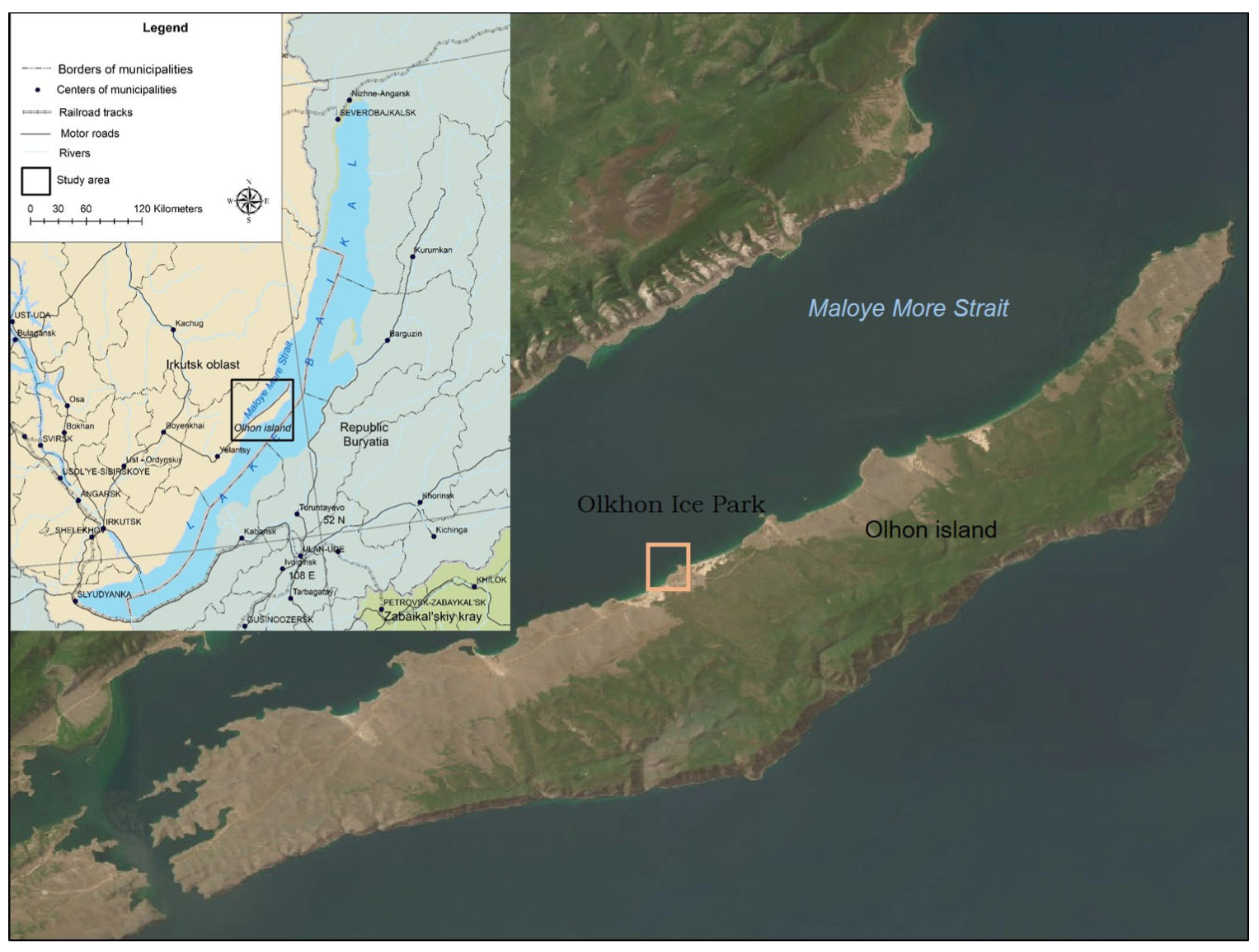
The festival site is located on the ice surface of Lake Baikal in the Maloye More Strait, between the lake’s western shore and Olkhon Island. The area extends approximately 1 km along the shoreline, within which a monumental ice sculpture park—the “Olkhon Ice Park”—is established (
Figure 4). The site is leased in accordance with the Water Code of the Russian Federation under a water-use agreement with the Yenisei Basin Water Management Board, Federal Agency for Water Resources.
Site selection for the “Olkhon Ice Fest” was guided by several key factors, including ice thickness, surface smoothness and transparency, the duration of ice cover, the presence of snow cover, and ice formations such as ice grottos and ice splashes (the so-called “napleski” or “sokui”). The long-term formation, development, and melting of ice are influenced by air temperature, wind, and snow accumulation [
35]. In the study area, moderate to severe frosts prevail [
36], with nighttime temperatures dropping as low as −31 °C, ensuring a stable ice cover.
During the cold season, prevailing winds in the study area blow from the west, from the land toward the lake. Between November and December, during ice formation, strong winds frequently exceed 15 m/s and can episodically reach 30–40 m/s [
37]. According to the Ministry of Emergency Situations, wave heights on Lake Baikal may exceed 5.5 m during this period and reach over 4 m in the Olkhonskiye Vorota Strait [
47]. These wave processes contribute to the formation of ice splashes along the high-abrasion shores characteristic of the western Baikal basin.
An important consideration for hosting ice and snow events is the ice regime of the lake in the study area. The Maloye More Strait experiences earlier ice formation than other parts of the island and most surrounding waters [
38]. Based on ice thickness and weather conditions, an ice crossing is maintained across the Olkhonskiye Vorota Strait. According to the Ministry of Emergency Situations, ice thickness in the strait reached 48 cm in February–March 2025.
The southern tip of Olkhon and the waters of the Maloye More Strait, including the site designated for the ice park, form a unique climatic microzone on Lake Baikal that has no direct analogs elsewhere on the lake [
34]. Consequently, this location is ideally suited for developing ice and snow art using the splash ice sculpting technique.
4. Results and Discussion
The “Olkhon Ice Park” is the only interactive monumental ice sculpture park in Russia, featuring compositions created using the splash ice sculpting technique. The park also includes children’s interactive zones with slides and games, adult activity areas, a performance stage, and an ice restaurant. The month-long “Olkhon Ice Fest” is held free of charge and serves several objectives:
To popularize ice sculpture as a distinct art form;
To preserve and promote Russian and Siberian cultural traditions;
To foster international, interregional, and intercultural connections;
To support event tourism in Olkhon District;
To facilitate the exchange of creative experience among ice art masters;
To foster a positive image of the Siberian region among tourists by highlighting the uniqueness of Lake Baikal and Olkhon Island, their natural beauty and energy, and the creativity and friendliness of local residents.
The overarching goal of the festival organizers is to position Olkhon Island as a global center for ice art. The study identified key features in the creation of the “Olkhon Ice Park” and the organization of the “Olkhon Ice Fest,” demonstrating that the concept of event-based IST on Lake Baikal is firmly grounded in the principles of ecotourism:
Use of the natural ice landscape of Lake Baikal and its coastal zone, including ice formations such as ice splashes. Sculptors artistically refine these natural formations to create unique monumental ice sculptures.
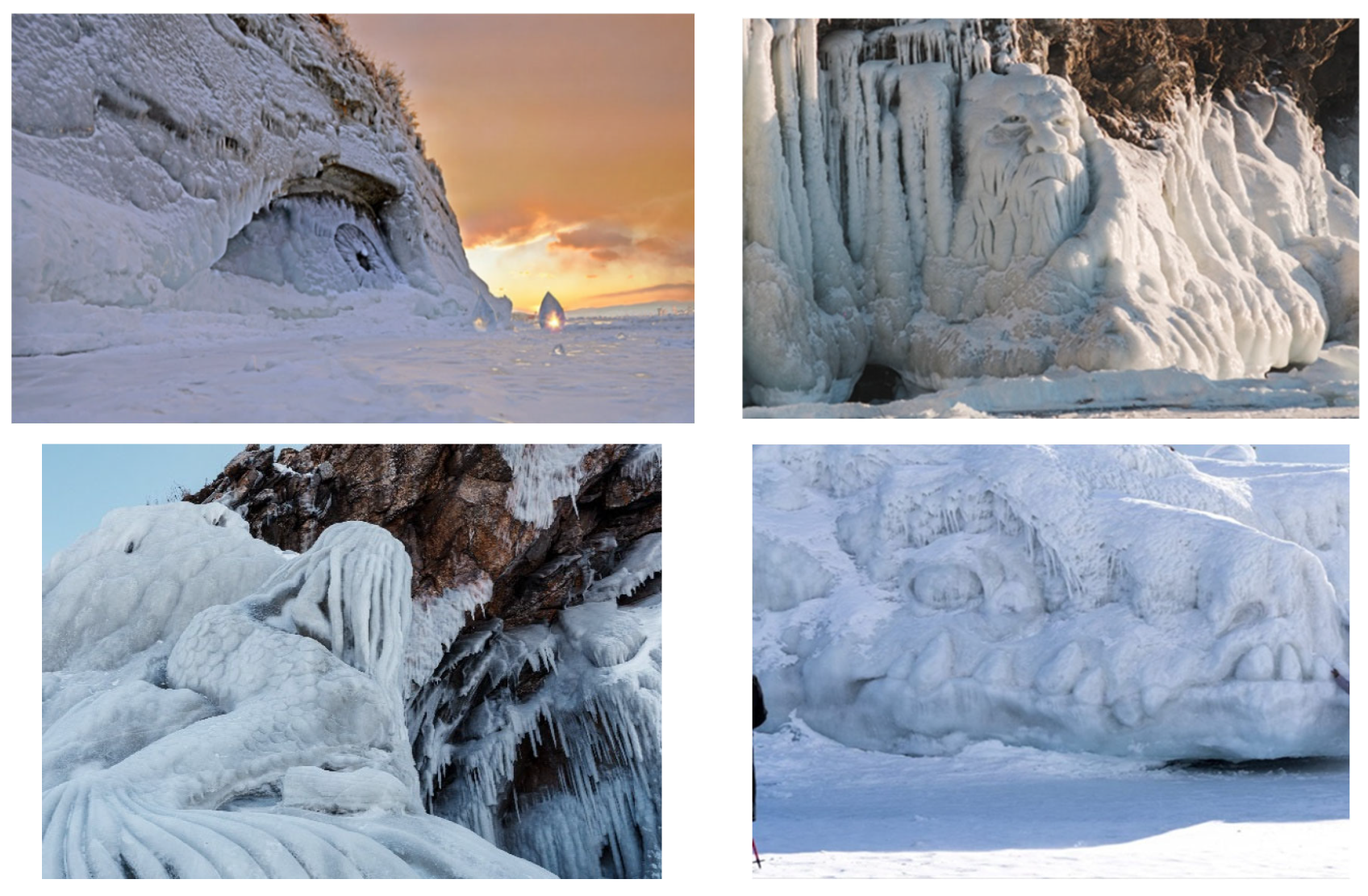
Development of a new branch of ice and snow art—splash ice sculpting. Master’s work with entire blocks of frozen coastal splash ice without pre-made sketches, carving forms that extend the natural landscape. Sculptures produced using the splash ice sculpting technique remain intact throughout the winter season, attracting tourists (
Figure 5).
The annual thematic agenda of the festival within the overarching concept “The Beauty of Nature, Skillfully Enhanced by Humans” is as follows:
2020: Ice is Life.
2021: Transformation of the World.
2022: From the Depths of Centuries.
2023: Tales and Legends of Northern Peoples.
2024: The Universe of Baikal.
2025: What the Ice Keeps Silent.
An important, yet still developing, aspect of the festival is its engagement with the cultural heritage of the indigenous peoples of the Baikal region. The festival’s thematic programs, such as “Tales and Legends of Northern Peoples” (2023) and “What the Ice Keeps Silent” (2025), offer a conceptual framework for interpreting local mythological and shamanic traditions through the medium of ice art.
- 4.
Participation of professional sculptors from Russia and abroad. Over the years, more than 50 masters from over ten regions of Russia, as well as Belarus, China, Mongolia, and France, have contributed to the creation of ice artworks. This collaboration has fostered a unique co-creative experience with nature, in which temporary attractions are harmoniously integrated into the ice and snow landscape, enriching the cultural space and promoting the ecological values of the territory.
- 5.
Expanded festival format. During the first three years, the main event was an international ice sculpture competition. In subsequent years, the festival evolved into a symposium, where masters jointly created ice works and built a creative community. In 2025, a school of ice sculpture was organized for students of creative disciplines as well as for experienced masters.
- 6.
Ecological agenda of the festival. Guided by the principles of ecotourism, the festival emphasizes the following:
Careful treatment of the environment;
Immersion in ice art and the creation of memorable experiences for visitors;
Minimization of physical, social, and behavioral impacts;
Ensuring a positive experience for both guests and the local community;
Financial benefits for local residents and businesses.
The “Olkhon Ice Park” exemplifies a careful approach to Baikal’s ice; tools and electrical equipment are placed on pallets to avoid direct contact with the ice, and park areas are organized into zones for ice compositions, service facilities, sanitary infrastructure, and separate waste collection. Organizers are responsible for preventing site pollution, including contamination from the release of oils or other substances onto the ice, and for ensuring that access ramps from the roadway onto the ice are covered with a protective flooring. An important prerequisite for organizing an ice park is the assessment of potential negative impacts of the ice-based structure on aquatic biological resources and their habitat.
- 7.
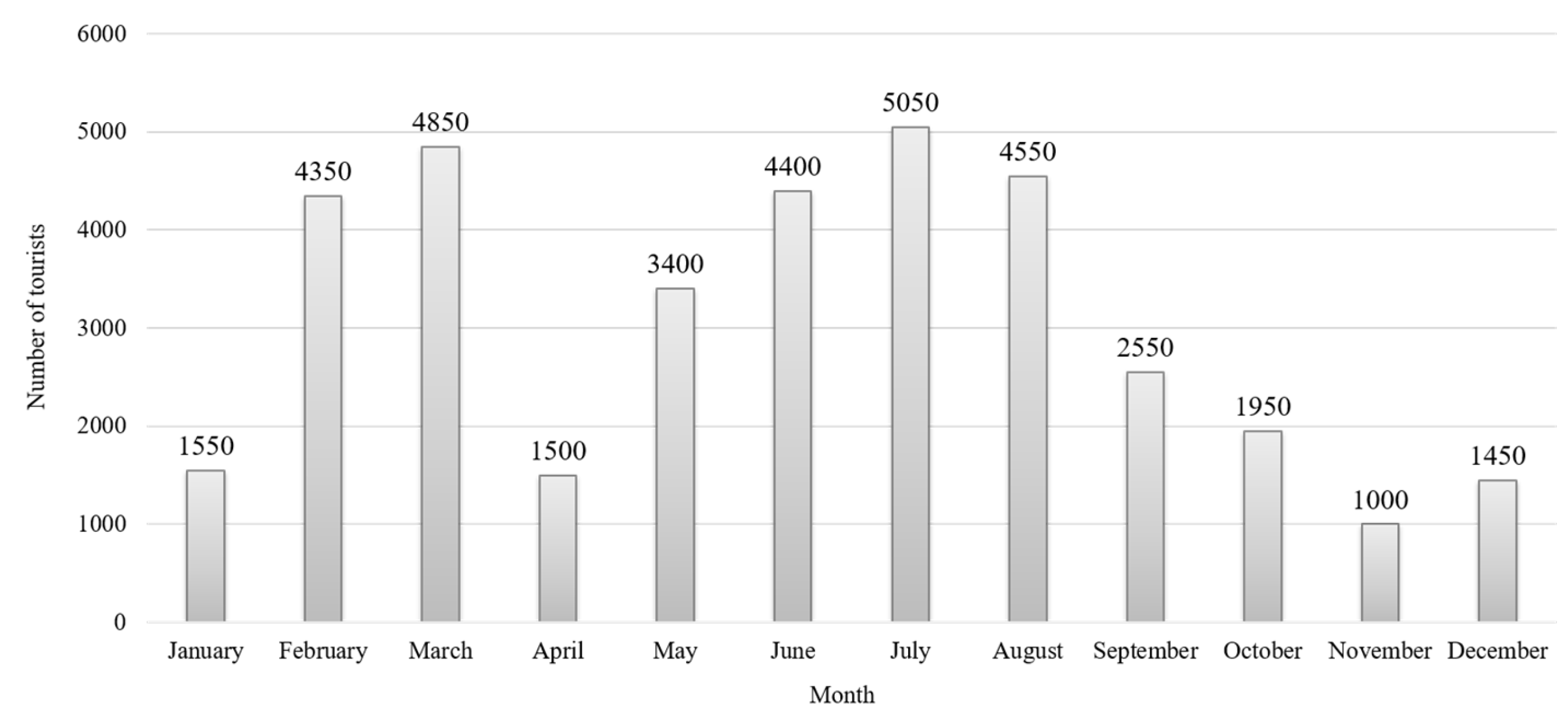
Entrepreneurial initiative and growing tourist activity. The tourism company Olkhon Sky serves as the festival’s initiator and consistent organizer. As a result of the “Olkhon Ice Fest,” winter tourist flows on Olkhon Island have increased in recent years, reaching levels approaching those of the summer season (
Figure 6).
The festival is organized as a private entrepreneurial initiative. In the longer term, the continued development of the “Olkhon Ice Fest” could lay the groundwork for establishing a broader ice and snow industry that integrates specialized equipment, technologies, workforce training, and transportation solutions to support the sustainable use of ice and snow resources. Realizing this vision, however, will require substantial investment and strong government support.
- 8.
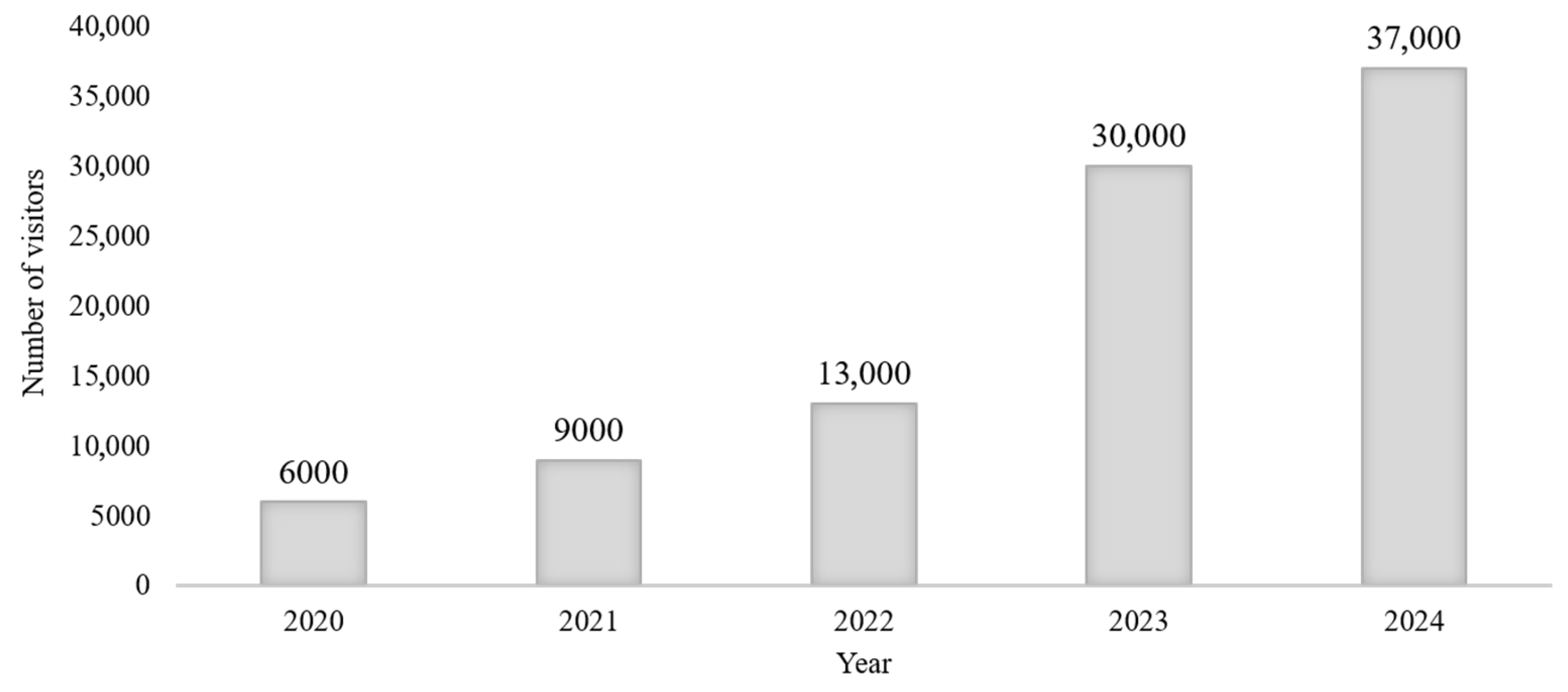
Tourism demand and supply. Visitor numbers show a consistently upward trajectory, having increased more than sixfold between 2020 and 2024 (
Figure 7). The festival’s information outreach now exceeds 30 million people. Its target audience includes families with children aged 5–14, young couples, tourists seeking active recreation and unique experiences, and residents of Khuzhir and Olkhon District.
During the 2024–2025 winter season, approximately 50 tourism products and services were offered on the ice, encompassing educational, physical, sports-related, emotional, and social experiences. The program features sled rides, ice skating and skiing, dog-sledding, tubing, mini-golf and bowling on ice, an ice carousel, an ice restaurant, laser and fire shows, and a children’s ice town.
The study indicates that as the ice surface of Lake Baikal becomes more deeply integrated into the tourism sector, the deficit of year-round recreational infrastructure is becoming increasingly apparent. This shortage is driven primarily by the limited development of the region’s engineering and utility systems [
48]. Local authorities report that winter tourism demand on Olkhon Island exceeds the available accommodation capacity, with some visitors staying in private homes. Anthropogenic pressure on the Lake Baikal ecosystem is rising, manifested in litter on the ice, air pollution, unregulated access, and the lack of toilets or alternative waste disposal options during ice cover and ferry closures.
To mitigate the negative consequences of IST development at Lake Baikal, several technical and organizational measures must be implemented:
- (a)
Establish temporary waste separation collection points (plastic, glass, mixed waste) at the festival ice venue and along popular routes using wind-resistant containers. To prevent waste from entering under the ice, geotextile flooring should be used in activity zones.
- (b)
Restrict vehicle access to the ice. It is recommended to minimize tourists’ use of personal vehicles by organizing centralized transfers using environmentally friendly, all-terrain vehicles from shoreline parking areas.
- (c)
During mass events, a sufficient number of portable toilets must be installed on the shoreline near ice access points. Their maintenance (cleaning and environmentally safe disinfection) should be the responsibility of event organizers. Information about toilet locations must be communicated to all visitors.
- (d)
Protect vulnerable natural and cultural sites. To reduce anthropogenic impact on key landmarks, such as Shamanka Rock, and preserve cultural heritage, temporary barriers constructed from natural ice should be installed annually. Festival experience has demonstrated that this creates a safe perimeter, preventing vehicle access and direct visitor contact with the site.
These measures require additional investment and coordination but are technically feasible and critically important for preventing degradation of the unique natural environment while sustaining a positive reputation for IST. Addressing these challenges requires coordinated efforts by federal, regional, and local authorities, the business community, and the Pribaikalsky National Park, alongside updates to strategic planning documents that recognize IST as a priority sector. A key condition for the sustainable development of IST is environmentally responsible tourist behavior, which depends on fostering ecological awareness and environmental culture.
5. Conclusions
This study has yielded findings that can be systematized across theoretical and practical dimensions. Theoretically, IST has been conceptualized as a distinct form of winter ecological tourism. Its specific character derives from the use of a frozen water body’s surface as a temporary recreational area that integrates the aquatic, ice, and coastal zones. This approach expands the resource and spatial foundation for winter recreation, incorporating not only the ice but also subglacial ecosystems into the tourist sector. Consequently, it raises critical questions regarding safety and environmental regulation.
These findings align with contemporary research on ski and winter tourism. Notably, the work of Chi et al. (2025) underscores the importance of analyzing sustainable interconnections between destinations and resources [
49], a perspective directly applicable to studying IST at Lake Baikal. Our research extends theoretical understanding of the interaction between tourism activity and natural resources, specifically through the winter use of aquatic ecosystems. The developed approach facilitates a deeper analysis of how temporary resources like ice and snow can be integrated into sustainable tourism models, balancing economic development with ecosystem conservation. Using the “Olkhon Ice Fest” as a case study, we propose an IST model that synthesizes natural resources (ice, snow), cultural traditions, entrepreneurial initiative, and environmental priorities. This model advances theory by demonstrating how IST can act as a catalyst for developing new, more integrated, and sustainable tourism destinations in environmentally sensitive regions.
From a practical standpoint, the study identifies key achievements, challenges, and recommendations for the sustainable development of IST. The “Olkhon Ice Fest” model contributes to several United Nations Sustainable Development Goals (SDGs). It supports SDG 8 (Decent Work and Economic Growth) by generating off-season employment and stimulating entrepreneurship, thereby diversifying the local economy. It advances SDG 11 (Sustainable Cities and Communities) by enhancing the cultural and event potential of Olkhon Island, strengthening local identity, and creating quality leisure opportunities for residents and visitors. Furthermore, its ecological focus—based on principles of minimal intervention and environmental education—directly aligns with SDG 13 (Climate Action). It exemplifies a recreational approach to fragile ecosystems that fosters awareness of natural resource value and the imperative for conservation amidst climate change.
The Baikal IST model, particularly through techniques like “splash ice sculpting” that minimize physical impact, can serve as a benchmark for the rational use of natural resources. To replicate this model while safeguarding Lake Baikal’s vulnerable ecosystem, it is essential to implement science-based regulations. These should include assessing recreational pressure on ice venues, establishing a monitoring system for ice-cover ecology, and managing coastal zones during peak tourist periods.
The future sustainable development of the “Olkhon Ice Fest” must be grounded in principles of inclusiveness and respect for cultural heritage. A crucial step is transitioning from indirect representation to active collaboration with the Indigenous communities of Olkhon and the Baikal region. Such a partnership would enhance the authenticity of the tourism product, align with international sustainable tourism principles through equitable benefit-sharing, safeguard intangible cultural heritage, and secure vital local community support.
For the long-term success of the Baikal IST model, IST must be integrated into regional tourism strategies and spatial planning documents. The regulatory framework governing winter recreational use of water bodies also requires revision, with an explicit emphasis on environmental safety. Addressing these needs demands coordinated efforts among federal, regional, and local authorities, business stakeholders, and the Pribaikalsky National Park. The Baikal IST experience demonstrates that successful winter tourism can be built on unique local assets—such as ice phenomena and cultural heritage—rather than solely on conventional ski infrastructure. This opens pathways for creating distinctive year-round destinations and building resilience against climate-related risks.
Author Contributions
Data collection, Z.E., S.D., T.K., N.B., A.A. and S.M.; methodology, Z.E., D.B., N.L. and L.M.; analysis, Z.E., D.B., S.D., T.K., N.B. and S.M.; conceptualization, D.B. and N.L.; writing, Z.E., D.B., T.K. and A.A.; review, Z.E. and D.B.; original draft, Z.E., D.B., N.B., S.D. and L.M.; final draft, Z.E., D.B., S.D., N.B., A.A., N.L. and L.M.; editing, L.M.; supervising, L.M. All authors have read and agreed to the published version of the manuscript.
Funding
This study was supported by the Russian Science Foundation, project No. 24-78-10059, titled “Ice and Snow Tourism on Lake Baikal: Comparative Assessment of Resource Potential and Anthropogenic Impact”:
https://rscf.ru/en/project/24-78-10059/ (accessed on 3 December 2025).
Institutional Review Board Statement
Not applicable.
Informed Consent Statement
Not applicable.
Data Availability Statement
Data are contained within the article.
Conflicts of Interest
Author Semen Mayor was employed by the company “OlkhonSky”, LLC. The remaining authors declare that the research was conducted in the absence of any commercial or financial relationships that could be construed as a potential conflict of interest.
References
- Chengcai, T.; Shiyi, X. Sustainable Development of Ice and Snow Tourism—Theory &Empirical Studies: Preface. J. Resour. Ecol. 2022, 13, 547–551. [Google Scholar] [CrossRef]
- AN, H.M.; Xiao, C.D.; Tong, Y.; Fan, J. Ice-and-snow tourism and its sustainable development in China: A new perspective of poverty alleviation. Adv. Clim. Change Res. 2021, 12, 881–893. [Google Scholar] [CrossRef]
- Nilsson, R.O.; Demiroglu, O.C. Impacts of climate change on dogsledding recreation and tourism in Arctic Sweden. Int. J. Biometeorol. 2024, 68, 595–611. [Google Scholar] [CrossRef] [PubMed]
- Jiang, Y.-Y.I.; Zhang, Y.; Gao, J.; Zhang, Y.-Y.I.N.; Fang, Y. High-quality development of ice and snow resources in China: Theoretical review, practice turn and challenge response. J. Nat. Resour. 2022, 37, 2334–2347. [Google Scholar] [CrossRef]
- Institute of Geography, Russian Academy of Sciences. Atlas of Snow and Ice Resources of the World; Institute of Geography, Russian Academy of Sciences: Moscow, Russia, 1997; Volume 1. [Google Scholar]
- Klueva, M.V. The impact of climate change on tourism in Russia. Proc. A.I. Voeikov Main. Geophys. Obs. 2022, 605, 5–24. [Google Scholar]
- Lubsanova, N.; Budaeva, D.; Dymbrylova, S.; Khrebtova, T. Winter and ice-snow tourism in the coastal rural areas of lake Baikal: Current state, problems and prospects. Int. Agric. J. 2025, 4, 438–443. [Google Scholar] [CrossRef]
- Wu, W.; Zhu, Y.; Zhang, C. The Assessment of Ice-snow Tourism Resources Value and Its Realization Degree. iBusiness 2013, 5, 30–35. [Google Scholar] [CrossRef]
- Yang, J.; Wang, Y.; Tang, F.; Guo, X.; Chen, H.; Ding, G. Ice-and-snow tourism in China: Trends and influencing factors. Humanit. Soc. Sci. Commun. 2023, 10, 826. [Google Scholar] [CrossRef]
- Li, C.H.; Zhang, D. Prospects for organising sino-russian cooperation in the development of the «ice and snow» economy ice and snow economy. Discussion 2024, 125, 69–78. [Google Scholar]
- Yang, Y.; Xing, N. Transforming ice-snow ecological resources into economic benefits: Three-dimensional analysis of China’s ice-snow economic policy texts. Environ. Technol. Innov. 2025, 40, 104467. [Google Scholar] [CrossRef]
- Rasmussen, K. Across Arctic America: Narrative of the Fifth Thule Expedition; G.P. Putnam’s Sons: New York, NY, USA, 1927. [Google Scholar]
- Mahdavinejad, M.; Bemanian, M. Ice-Houses: An Example of Traditional Persian Sustainable Architecture. Int. J. Environ. Res. 2005, 3, 45–52. [Google Scholar]
- Karacabey, F.; Kog, H.; Pekdemir, T. Exploring the Relationship Between Snow and Winter Tourism: A Bibliometric Insight. In Proceedings of the Conference: International Congress on Tourism, Culture and Economy (ITEC’24), Skopje, North Macedonia, 8–10 May 2024. [Google Scholar]
- Saarinen, J.; Varnajot, A. The Arctic in tourism: Complementing and contesting perspectives on tourism in the Arctic. Polar Geogr. 2019, 42, 109–124. [Google Scholar] [CrossRef]
- Pashkova, L.A.; Ekimova, M.A. Snow and ice architecture. Education. Architecture. In Proceedings of the All-Russian Scientific and Practical Conference on the Profile “Building Design”, Kazan, Russia, 15–17 May 2017. [Google Scholar]
- Salyakhova, M.R. The architecture of ice and snow in Japan. News Kazan State Univ. Archit. Eng. 2017, 3, 49–56. [Google Scholar]
- Fischer, A.; Olefs, M.; Abermann, J. Glaciers, snow and ski tourism in Austria’s changing climate. Ann. Glaciol. 2011, 52, 89–96. [Google Scholar] [CrossRef]
- Liu, M.; Zhao, L.; Liu, K. Study on Ice and Snow Tourism Development Strategies in Changbai Mountain Nature Reserve. In Proceedings of the 3rd International Conference on Contemporary Education, Social Sciences and Humanities (ICCESSH 2018), Moscow, Russia, 25–27 April 2024. [Google Scholar] [CrossRef]
- Zhou, Y. Analysis of the Status and Strategies for the Development of Ice and Snow Tourism in Northeast China. Highlights Bus. Econ. Manag. 2024, 39, 1145–1153. [Google Scholar] [CrossRef]
- Official Website of General Administration of Sport of China. Available online: https://www.sport.gov.cn (accessed on 20 October 2024).
- Li, C.; Sun, H. Analysing the development of the integration of china’s ‘ice and snow’ economy into social-market relations. Mod. Sci. Actual. Probl. Theory Pract. 2024, 6, 44–48. [Google Scholar] [CrossRef]
- Schrot, O.G.; Christesen, J.H.; Formayer, H. Greenland winter tourism in a changing climate. J. Outdoor Recreat. Tour. 2019, 27, 100224. [Google Scholar] [CrossRef]
- Dymbrylova, S.B. An Analysis of Theoretical Approaches to Studying Ice-and-Snow Tourism. Bull. Buryat State Univ. Econ. Manag. 2025, 3, 32–38. [Google Scholar] [CrossRef]
- Budaeva, D.G.; Eremko, Z.S.; Andreeva, A.M.; Dymbrylova, S.B. Ice and Snow Tourism: Concept, Development Factors and Practical Examples. Soc. Politics Econ. Law 2024, 12, 110–118. [Google Scholar] [CrossRef]
- Edelheim, J.R. Snow Design, Tourism, Hospitality & Events (TH&E) and Servicescape Thinking. Snow Des. Lapland–Initiat. Coop. 2014, 45, 103–111. [Google Scholar]
- Nareiko, I.G. Ice sculpture as a modern form of youth creativity in Khabarovsk Krai. In Proceedings of the International Scientific and Practical Conference «Personality, Creativity, and Education in the Sociocultural Space of the Russian Far East and the Asia-Pacific Region», Khabarovsk, Russia, 17 December 2020. [Google Scholar]
- Mubarakshina, F.D.; Salyakhova, M.R. Objects from ice and snow in the sphere of cultural tourism: Russian experience. East. Eur. Sci. J. 2018, 3, 4–10. [Google Scholar]
- Ice Festivals Around the World: The Coolest Winter Adventures You Can’t-Miss. Available online: https://www.worldsim.com/blog/the-coolest-winter-adventures-you-can-t-miss (accessed on 29 December 2025).
- Paukaeva, A.A.; Setoguchi, T.; Luchkova, V.I.; Watanabe, N.; Sato, H. Impacts of the temporary urban design on the people’s behavior—The case study on the winter city Khabarovsk, Russia. Cities 2021, 117, 103303. [Google Scholar] [CrossRef]
- Ilyin, A.S. Continuity of Traditions in the Formation of Artistic and Stylistic Features of Ice Sculpture in Different Regions of Russia. Decor. Art. Subj. -Spat. Environ. Bull. S. G. Stroganov Russ. State Univ. Des. Appl. Arts 2023, 2, 266–275. [Google Scholar] [CrossRef]
- Xu, D. Practice and Exploration of Artistic Techniques in the Course of “Ice and Snow Sculpture Creation”—Study on the Correlation of Shaping Techniques Between Ice and Sculpture Creation and Figurative Sculpture Creation. In Proceedings of the 2022 International Conference on Comprehensive Art and Cultural Communication (CACC 2022), Chongqing, China, 22–24 April 2022. [Google Scholar] [CrossRef]
- It’s a Shame Sculptures don’t Last Forever: We Explain How Long the Olkhon Ice Fest 2025 on Lake Baikal Will Last. Available online: https://www.irk.kp.ru/daily/27666/5054398/ (accessed on 14 April 2025).
- Galaziy, G.I. (Ed.) Atlas of Lake Baikal; Moscow Federal Service of Geodesy and Cartography of Russia, 1993; ISBN 5-85120-009-X.
- Kouraev, A.V.; Zakharova, E.A.; Kostianoy, A.G.; Shimaraev, M.N.; Desinov, L.V.; Petrov, E.A.; Hall, N.M.J.; Rémy, F.; Suknev, A.Y. Giant ice rings in southern Baikal: Multi-satellite data help to study ice cover dynamics and eddies under ice. Cryosphere 2021, 15, 4501–4516. [Google Scholar] [CrossRef]
- Levasheva, M.V. Problems related to the development of recreational potential of Olkhon island in the context of the implementation of the concept of ecological tourism. Bull. Irkutsk State Univ. Ser. Earth Sci. 2016, 18, 56–68. [Google Scholar]
- Bashalkhanova, L.B. Climate resources for tourism development on the west coast of Lake Baikal. Serv. Tour. Curr. Chall. 2018, 12, 110–120. [Google Scholar] [CrossRef]
- GUGK. Atlas of the Irkutsk Region; GUGK: Moscow, Russia; Irkutsk, Russia, 1962.
- State Program of the Russian Federation «Tourism Development». Available online: https://www.consultant.ru/document/cons_doc_LAW_405703/ (accessed on 24 January 2025).
- Federal Tourist Interregional Scheme for Territorial-Spatial Planning of the Baikal Macroterritory. Available online: https://xn--90ab5f.xn--p1ai/turisticheskie-skhemy/index.php?sphrase_id=3246361 (accessed on 5 June 2025).
- Concept for the Development of the Olkhon District within the Boundaries of the Central Ecological Zone of the Baikal Natural Territory. Available online: https://ckt38.ru/conceptofterrain (accessed on 24 January 2025).
- Rogozin, A.A. Coastal Zone of Baikal and Khubsugul: Morphology, Dynamics and History of Development; Nauka: Moscow, Russia, 1993. [Google Scholar]
- Passport of the Khuzhir Municipal Formation. Available online: http://адм-хужир.рф/pasport-poseleniya.html (accessed on 3 April 2025).
- Evstropyeva, O.V.; Zabortseva, T.I.; Rogov, P.V.; Ignatova, O.A.; Dulya, K.V. Structural analysis of the tourist flow and forecasting of anthropogenic impacts: A case study of Olkhon island (Baikal, Irkutsk oblast). Geogr. Nat. Resour. 2025, 46, 84–94. [Google Scholar] [CrossRef]
- Register of Collective Accommodation Facilities. Available online: http://адм-хужир.рф/turizm.html (accessed on 3 April 2025).
- Territorial Office of the Federal State Statistics Service for the Irkutsk Region. Available online: https://38.rosstat.gov.ru/ (accessed on 25 September 2025).
- The Ministry of Emergency Situations has Named the Locations on Lake Baikal Where Waves Reach 6 Meters. Available online: https://www.baikal-daily.ru/news/16/376549/?ysclid=mgonxgot2e477600904 (accessed on 14 April 2025).
- Lubsanova, N.; Budaeva, D.; Dymbrylova, S.; Khrebtova, T. Assessment of infrastructure provision of coastal territories of Lake Baikal for the development of tourism in the winter season. Multidiscip. Sci. J. 2025, 7, 2025612. [Google Scholar] [CrossRef]
- Chi, X.; Zhang, B.; Xia, Y.; Liu, X.; Wang, J.; Han, H. Ski tourist and destination relationship development. J. Travel. Tour. Mark. 2025, 42, 1015–1045. [Google Scholar] [CrossRef]
| Disclaimer/Publisher’s Note: The statements, opinions and data contained in all publications are solely those of the individual author(s) and contributor(s) and not of MDPI and/or the editor(s). MDPI and/or the editor(s) disclaim responsibility for any injury to people or property resulting from any ideas, methods, instructions or products referred to in the content. |





 ,
,