Article

Bayesian Network Analysis of Policing Governance: Implications for Mining and Regional Sustainability

by
Bhakti Suhendarwan
1,2 and
Akhmad Fauzi
1,*
1
Graduate Program in Regional and Rural Planning and Development, Faculty of Economic and Management, IPB University, Kampus IPB Dramaga, Bogor 16680, Indonesia
2
Indonesia National Police (Polri), Jakarta Headquarter, Jl. Jendral Sudirman, Jakarta 12190, Indonesia
*
Author to whom correspondence should be addressed.
Sustainability 2026, 18(3), 1217; https://doi.org/10.3390/su18031217
Submission received: 9 November 2025 / Revised: 19 December 2025 / Accepted: 5 January 2026 / Published: 26 January 2026

Abstract

The real-world effects of mining issues are closely tied to the inadequate enforcement efforts by relevant institutions, which could undermine the credibility of law enforcement agencies and affect regional performance. This study focused on assessing police performance in relation to mining activities in Indonesia. By employing a Bayesian network, it examined the complex relationships between economic, institutional, and social factors of policing governance and their impact on regional sustainability, with competitiveness as a key variable. The study used the regional policing governance index and mining permits as intervention variables, while considering social security, profitability, and corruption levels as intermediate variables. Results revealed that the ease or stringency of mining permits and the policing index significantly affect regional competitiveness. A sensitivity analysis was conducted to identify the most influential factors in regional competitiveness. It showed that corruption, the policing index, and social security are the most sensitive factors. The findings offer valuable insights for improving resource governance to foster sustainable regional development.

1. Introduction

Indonesia’s regional development heavily depends on the extraction of natural resources such as coal, nickel, tin, gold, and copper. In 2021, the mineral and coal sectors accounted for 6.2% of the country’s Gross Domestic Product (GDP) [1]. While the extraction and export of resources like coal, nickel, tin, and gold generate significant government revenue and create jobs in local economies, this reliance can lead to unsustainable growth, resulting in social inequality and environmental harm. Effective resource governance [2] and law enforcement are crucial for sustainable regional development. Social security, a stable business environment, environmental protection, and equitable distribution of natural resource benefits depend on robust governance practices. Managing development through sound governance policies is a significant challenge in the quest for sustainability, making policing governance vital for promoting sustainable regional development [3].
Policing, governance, and regional sustainability are interconnected concepts vital to ensuring a region’s safe, healthy, and prosperous future. Effective policing governance is fundamental to regional sustainability as it helps maintain public safety, enforce laws, and prevent crime [4,5,6]. Fostering a stable environment where people feel secure allows businesses to flourish and residents to enjoy a high quality of life. In the absence of proper policing, communities may descend into chaos, thereby obstructing economic development and social well-being [4,7]. Police also play a crucial role in enforcing environmental regulations and combating environmental crimes, such as poaching, illegal logging, and pollution. Sustainable practices depend on a healthy environment, and policing ensures they are adhered to. Sustainable regions manage resources wisely; policing can stop illegal resource extraction, safeguard natural areas, and ensure that these resources are preserved for future generations [8,9].
In specific sectors like extractive industries (e.g., mining), policing, and governance, these play a vital role for several reasons. Firstly, effective policing ensures that companies comply with laws and regulations governing resource extraction, including environmental standards, labour rights, and safety protocols. It prevents illegal activities and ensures that extraction processes are sustainable and responsible. Secondly, the extractive industry is prone to corruption, particularly in developing countries like Indonesia. Corruption can hinder economic growth and development, but strong governance frameworks promote transparency and accountability, thereby reducing corruption. Thirdly, extractive industries typically have significant environmental impacts. Good governance minimises harm to ecosystems by ensuring responsible mining and drilling practices and holding companies accountable for environmental degradation. This issue is especially critical for countries like Indonesia, where the dispersed geography makes monitoring the environmental impact of mining activities, especially in remote islands and frontier areas, challenging.
Additionally, policing governance can catalyse social equity. Effective policing governance ensures that the benefits of extractive activities are distributed fairly among local communities, reducing social inequalities and preventing conflicts over resources. Overall, robust policing governance balances economic interests with social and environmental responsibilities, advancing sustainable development in resource-rich regions.
While policing governance in resource management is crucial to building sustainable and competitive regions, there is a notable lack of studies addressing these issues in Indonesia. Most studies [9,10,11] focus on law enforcement against illegal mining and on the regulatory aspects of governance; none, however, examine the implications of mining governance for the sustainability of regional development. This gap makes research on policing governance both urgent and timely.
Several factors underscore this need. Unsustainable mining practices at both national and regional levels deprive the state of significant revenues, while social and environmental problems are widely felt by stakeholders. As of 2022, around 2700 illegal miners were recorded, and the resulting economic loss to the country was estimated at Rp 300 trillion (approximately USD 18,000) [12]. Internationally, Indonesia is under growing scrutiny regarding its environmental stewardship and responsible mining practices. A study on policing governance can therefore showcase Indonesia’s commitment to responsible mining through effective enforcement, thereby helping to attract sustainable investment.
This study represents the initial effort to tackle these issues. Its objectives include identifying gaps and weaknesses in current policing strategies, developing recommendations to enhance law enforcement, promoting community engagement, and combating corruption. Additionally, the study aims to inform policy changes that advance a more sustainable and fair mining sector from a policing governance standpoint.
This study seeks to address these issues by analysing the factors that contribute to regional competitiveness through the lens of regional policing. In addition to considering governance factors such as corruption and regional security, this study aims to identify influential factors and intervention variables that affect regional competitiveness in Indonesia [3].

2. Literature Review

This section will discuss the initial condition in mining governance in Indonesia, based on a literature review, and how we capture the information to be used in the BBN models as a tool to analyse possible scenarios based on the data collected during the research.

2.1. Mining Governance and Corruption in Mining and Quarrying Activities

Mining governance and its connection to regional competitiveness have been extensively analysed in various studies [9,13,14,15], which have highlighted a contradiction in the traditional view that emphasises geological conditions and resource abundance as the primary drivers of regional competitiveness. They argue that competitiveness is not solely determined by resource availability but also by multiple factors, including a favourable business environment, political stability, and the strength of mining institutions.
In the Indonesian context, research on the factors influencing mining management has been extensively discussed, particularly regarding supervisory behaviour and corruption. Some of the key issues in Indonesian mining management include (1) maladministration, (2) corruption, (3) uncertainty and collusion in administrative and licencing processes, and (4) manipulation of environmental impact assessments [9]. The problem of corruption in the mining sector is especially complex, as it involves the abuse of authority and the misuse of power for personal gain [10]. Such corruption can lead to scandals that undermine both economic and political stability within regions [11].

2.2. Resource Policing Governance

Policing is an activity undertaken by the government to ensure security, public order, and the smooth functioning of community life across various social aspects [16]. These activities are crucial in addressing community issues effectively [17], as evidenced by numerous studies on policing, including responses related to the COVID-19 pandemic [18]; Refs. [19,20], policing in the context of natural resource conservation [21,22], and the impact of policing on regional economies [17,23].
In the literature, policing within the context of mining governance is primarily focused on three core components of community policing: supervision, partnership, and law enforcement, based on the problem-oriented policing approach [24]. Sub-variables associated with these components have been combined into a composite index to offer a comparative assessment of policing and its impact on mining activities in Indonesia [3].
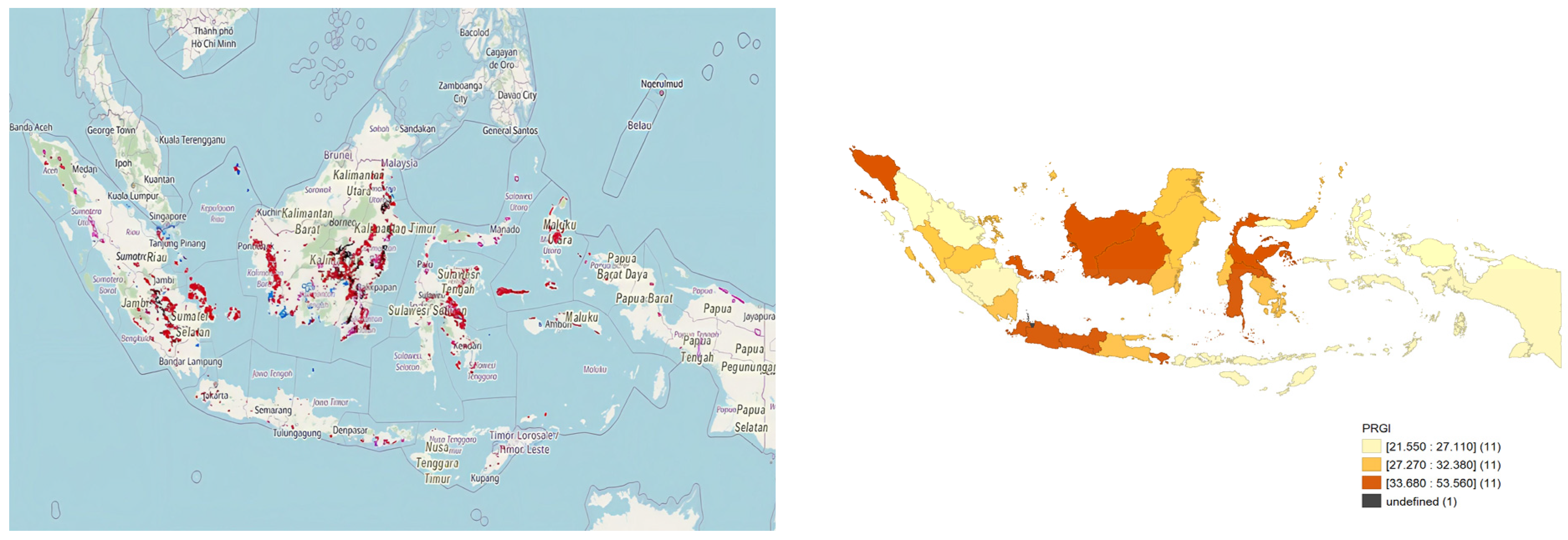
In the Indonesian context, overlaid areas of high mining activity with their resource governance index. Ideally, regions with intensive mining should be matched with intense supervision and management controls; however, the spatial map comparison reveals the opposite, as shown in Figure 1 [3]. In Figure 1, the red dots in the left panel represent areas with high mining intensity, while the darker shading in the right panel indicates higher scores on the Policing Resource Governance Index (PRGI). For example, regions with intense mining activity in East Borneo (Kalimantan) in the left figure correspond to low PRGI scores in the right figure. These findings are consistent with research on corporate social responsibility practices in the mining industry [25,26].

3. Research Methods

This study employs the Bayesian Belief Network (BBN) methodology. BBN is a powerful analytical tool for predicting and modelling public policymaking, especially when data are limited and rational assumptions are used. It allows for the analysis of relationships among existing data within a network framework. Additionally, the straightforward nature of this method makes it highly suitable for examining complex phenomena in various contexts [27].
BBN is becoming increasingly widespread across various research disciplines. For instance, the research on the sustainability of water tourism in Indonesia [28]. Other areas where BBN has been utilised include waste management, healthcare, assessing the reliability of structures in mining regions, ecological research, and other analyses involving predictions and policy [29,30,31,32,33].
Bayes’ theorem forms the foundation of the BBN method, and it can be expressed mathematically as the following equation:
A B = P B A P A P B
where P(A|B) represents the probability of event A occurring given that event B has already happened; P(B|A) is the probability of event B occurring given that event A has occurred. P(A) denotes the probability of event A happening without any prior information about event B, and P(B) indicates the probability of event B occurring without any knowledge of event A.
The above theory was subsequently adapted into the Bayesian Belief Network (BBN) method. BBN comprises two main components: a qualitative component represented by a directed acyclic graph (DAG) that illustrates relationships among variables based on focus group discussions and relevant theories. The second component is the quantitative aspect, consisting of Conditional Probabilistic Tables (CPTs), which contain numerical data indicating the initial conditions and the probabilities of specific variables relative to others [28].
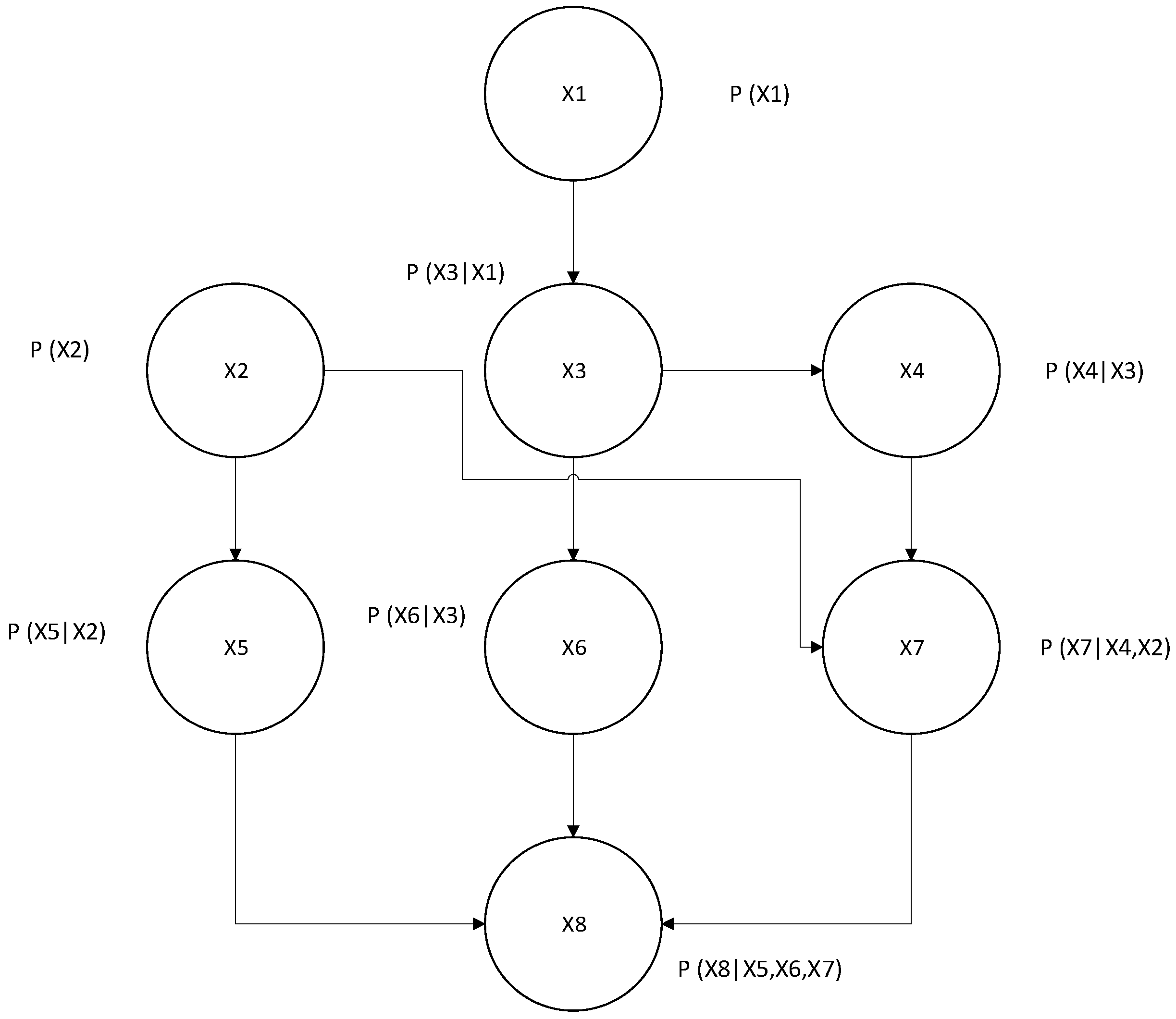
In this study, eight variables were used and connected in the DAG shown in Figure 2.
In Figure 2, the arrow from X 1 to X 3 signifies that the probability of variable X 3 depends on the outcome of X 1 . Similarly, the probability of X 7 is influenced by the outcomes of X 2 and X 4 , and so forth. In this DAG, X 1 and X 2 are parent variables because they do not depend on any other variables, whereas the remaining variables are considered child variables. If the target variable is X 8 , then the mathematical representation of the DAG can be expressed as
Pr ( X 8 ) = Pr ( X 8 | X 5 , X 6 , X 7 ) Pr ( X 5 ) Pr ( X 6 ) Pr ( X 7 )
So, for a network that has n variables, the probability of a complete BBN structure will be calculated based on the combination of probabilities with the equation
Pr ( X 1 , X 2 , X n )   = i = 1 n ( P r ( X i | ψ i )
where Pr( X 1 , X 2 , X n ) is the sum of the entire probability distribution, and ψ i is the parent variable of X i .
One of the key advantages of the BBN method is its capacity to conduct scenario analysis by incorporating intervention variables or modifying inputs based on real-world data and observations [34]. This flexibility allows the BBN model to estimate probabilities within a qualitative framework or for phenomena with limited available data [34,35,36,37].
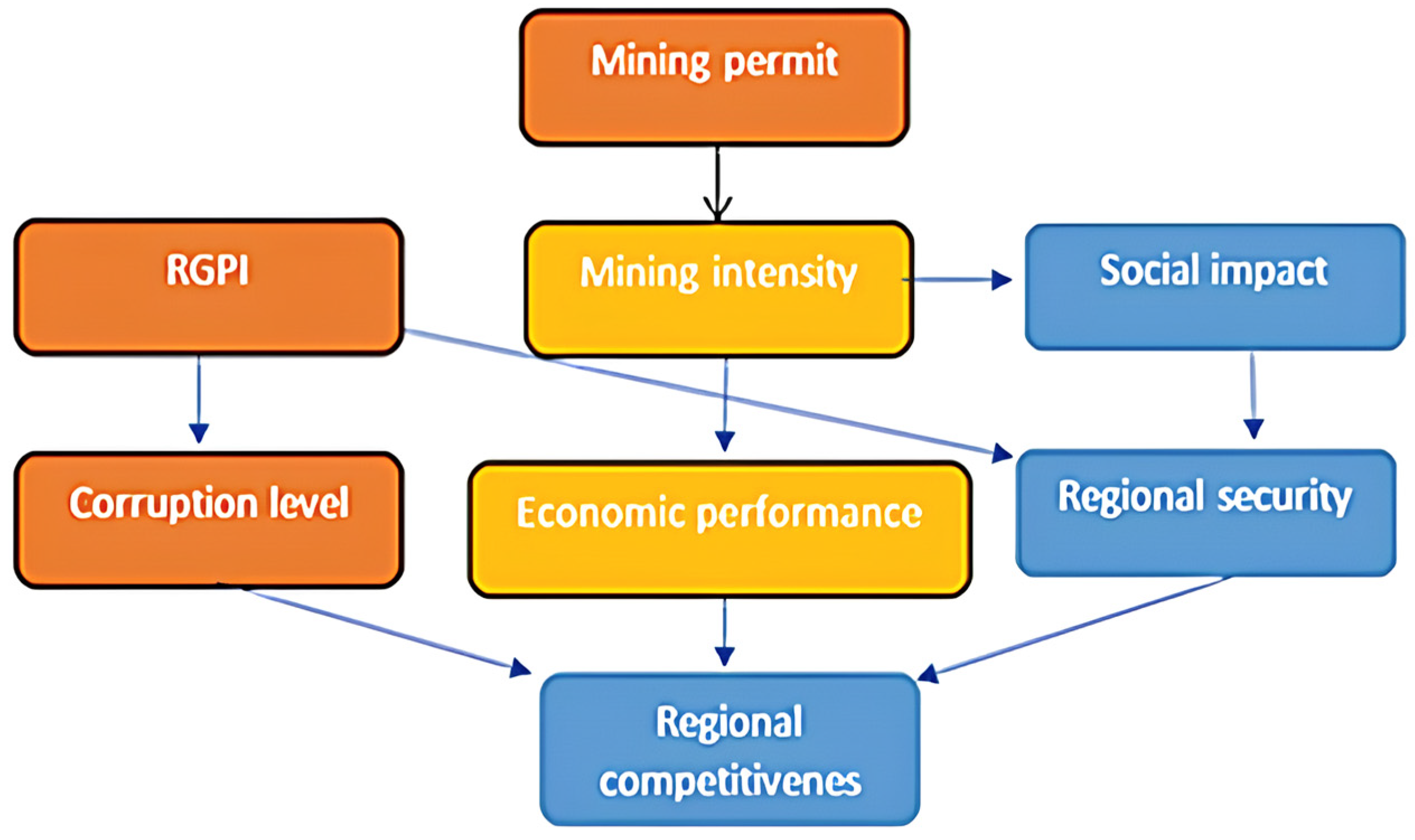
Based on the methodology and literature review outlined above, the Directed Acyclic Graph (DAG) developed in this study includes several variables believed to influence regional competitiveness within the mining context. These variables are mining permits, resource governance policing index, intensity of mining activities, social impact, corruption level, regional security, and economic performance. The relationships among these variables are illustrated in the DAG presented in Figure 3. In Figure 3, the brown color indicates variables associated with mining governance, the orange color represents variables related to economic performance, and the blue color corresponds to social, security, and competitiveness aspects.
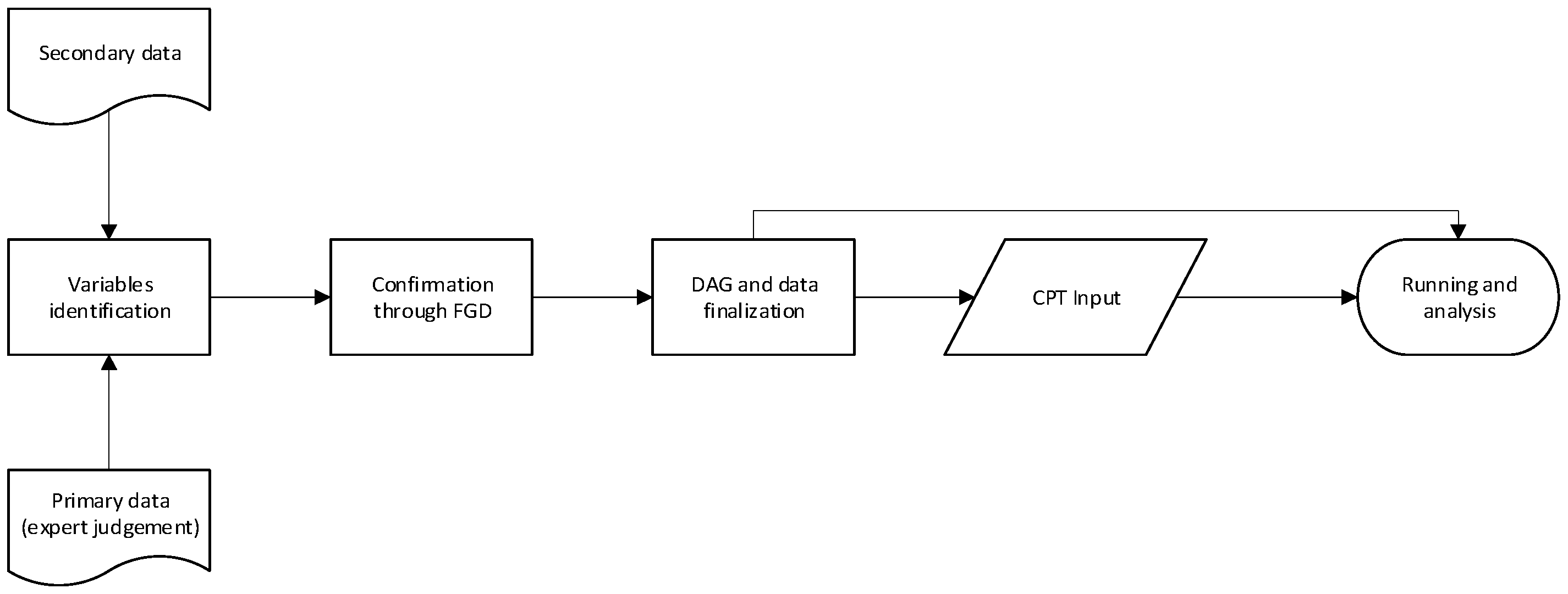
The data in this study were gathered through focus group discussions with eight resource persons, including experts in law enforcement, mining supervision, law enforcement supervisors, human rights activists, and mining advocates. These participants were responsible for discussing and defining the relationships within the DAG structure, validating the secondary data to be used, and adjusting based on their expertise and understanding of mining governance phenomena in Indonesia. The process of gathering and analysing data is depicted in Figure 4.
Within the DAG, several key parent variables were identified, notably mining permits and the Resource Governance Policing Index (RGPI), previously assessed by Suhendarwan et al. [3]. Mining permits are considered to influence the child variable, mining intensity, while RGPI is linked to corruption levels in the mining sector and regional security. In this model, the primary target variable is regional competitiveness, with experts asserting that all other variables collectively impact a region’s ability to compete.
The confirmation results provided by the resource persons were subsequently organised into a Conditional Probability Table (CPT) and analysed using Genie Bayes Fusion Academic Version 4.1. The CPT in this study represents the probabilities among variables related to mining, with measurement mechanisms for each variable outlined in Table 1.
Measurement across basic and more stringent scenarios, including classifications such as low, moderate, medium, and high, helps capture respondents’ or experts’ opinions. These assessments are based on their perceptions and on existing secondary data. During the FGD process, experts gave their opinions as well as gave scores for each CPT as presented in Table 2, Table 3, Table 4, Table 5, Table 6 and Table 7.
The CPT values in Table 2 and Table 3 are associated with single nodes, while the remaining tables present cross-tabulations that capture interactions among two or more nodes. For instance, the CPT values in Table 4 present the cross tabulation between mining intensity and mining permits. Respondents were asked to assess how mining intensity affects changes in the status of mining permits. For example, if the mining permit were to become more stringent, what would be the probability of mining intensity being classified as low, medium, or high?.
Table 5 provides a cross tabulation of the CPT regarding mining intensity and its social impact. The values were derived from evaluating the probabilities of mining intensity states (low, medium, high) and their corresponding social impacts. For instance, if the mining intensity is high, what would be the probability of social impact for low, medium, and high states? Similarly, Table 6 presents the cross tabulation of the CPT between RGPI nodes and corruption levels. Respondents were asked to assign a probability value to each RGPI state relative to the level of corruption.
Table 7 displays the CPT derived from evaluating the impact of mining intensity on economic performance. For example, when mining intensity is low, respondents indicated that the economic performance would also be low, with a probability of 0.5. Conversely, when mining intensity is high, respondents believed that economic performance would be high, with a probability of 0.6.
The CPT values in Table 8 were obtained from a more complex assessment involving three interconnected nodes: RGPI, Social Impact, and Regional Security. The results are presented as 3 by 3 matrices, where each cell represents the response of the combination of two nodes (RGPI and Social Impact) in relation to Regional Security. For instance, when RGPI is low and Social Impact is also low, the probability of Regional Security being low is assessed to be 0.4. This explanation applies similarly to the other cells in the table.
Using this method and measurement, objective and comprehensive insights into the factors influencing the regional competitiveness of the mining sector will be achieved.

4. Results

4.1. Strength Analysis

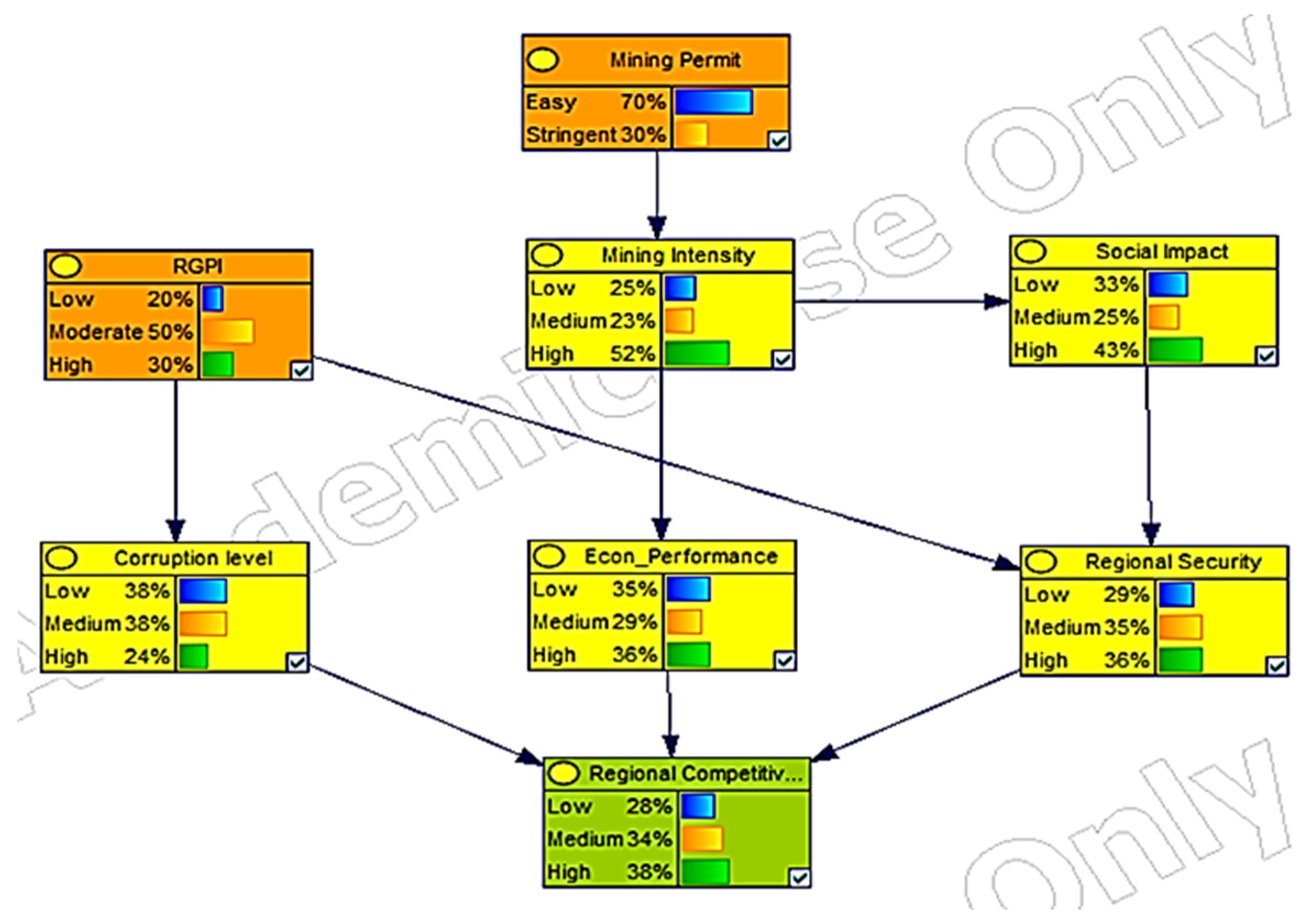
The Bayesian network model requires prior probabilities for each variable, expressed as conditional probabilities, which are established by filling in the Conditional Probability (CP) for each node. The initial probability structure for regional competitiveness in mining is depicted in Figure 5. For example, the probability of the parent node, mining permits, is set at 70%, reflecting the relatively straightforward permitting process in Indonesia. Other parent nodes, such as the Resource Governance Policing Index (RGPI), tend to be at a moderate level. The interactions among these variables in the Bayesian network yield a prior probability of regional competitiveness of 38%.
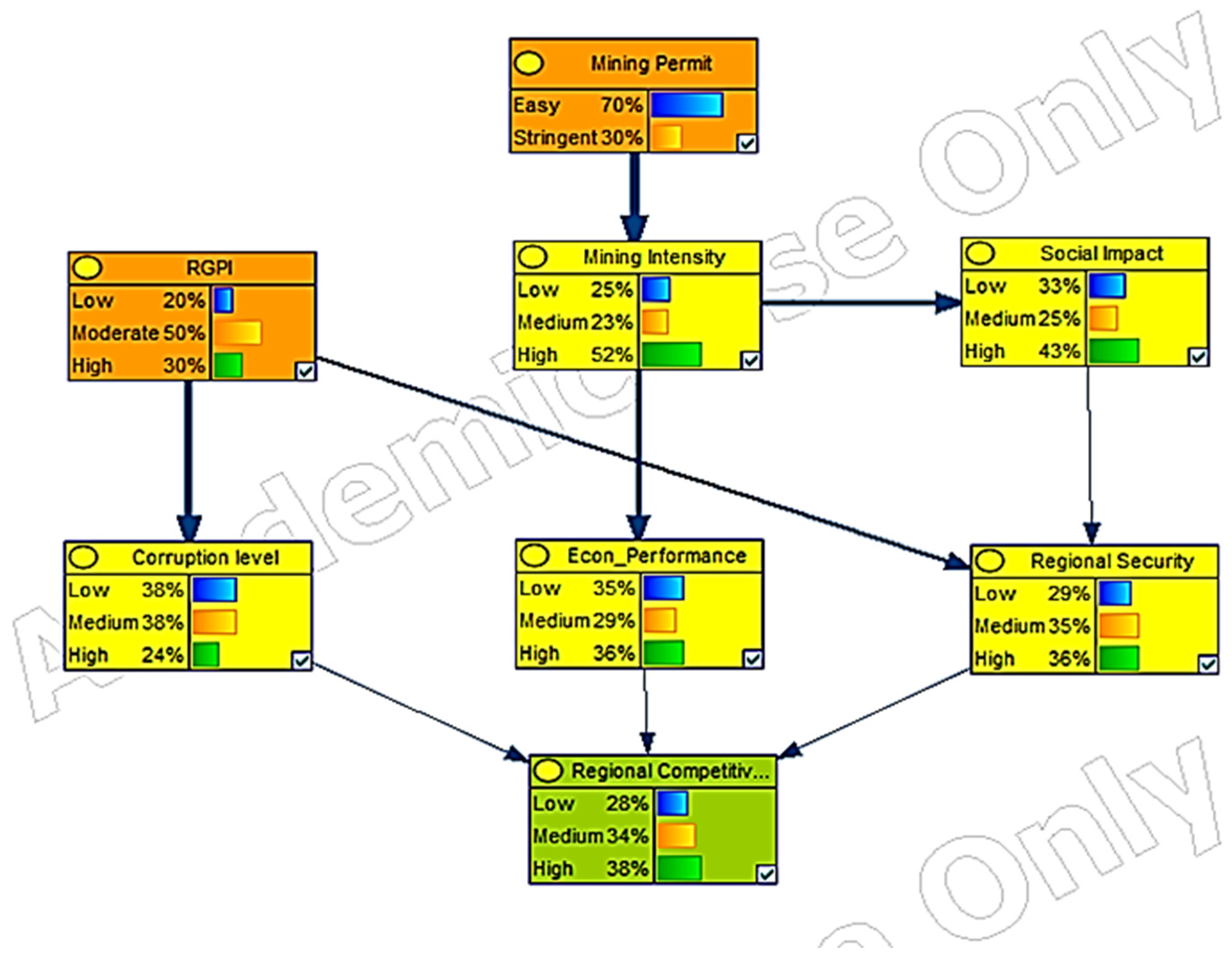
After estimating the prior probabilities for each node, the next step in the Bayesian network analysis is to assess the influence of each node on the target variable, in this case, regional competitiveness, through strength analysis. In Genie Software, the strength of the relationships between variables is represented by the thickness of the arcs, as illustrated in Figure 6. From this figure, it is evident that the nodes for mining permits, mining intensity, and the Resource Governance Policing Index (RGPI) have thicker arcs, indicating a more substantial influence on their downstream nodes. For instance, RGPI has a significant impact on corruption levels and regional security, while mining permits significantly affect mining intensity.
The strength of the influence of each node can be seen numerically through the Euclidean distance, as shown in Table 9.
As shown in Table 9 and Figure 6, the arc from mining permits has a significant influence on mining intensity within the BBN model, with an average influence score of 0.55 and a maximum score of 0.55. This finding aligns with various perspectives, indicating that the ease of conducting business is a key driver of regional competitiveness. Moreover, facilitating the bureaucratic licencing process not only promotes mining activity but also supports transparent governance.
Nodes that also exert significant influence include RGPI on corruption level, with an average influence score of 0.47 and a maximum of 0.65. It highlights the importance of maintaining transparent, clean governance to achieve competitiveness in mining management. Since RGPI is a composite index encompassing supervision, partnership, and law enforcement in the mining sector, its substantial impact on corruption levels indicates that targeted interventions on this variable can effectively drive positive change in the target node—regional competitiveness.
The third-highest influence score, as shown in Table 9, is from mining intensity to social impact, with an average of 0.378 and a maximum of 0.5. Mining intensity consistently affects environmental conditions and the social lives of communities in both mining and surrounding regions [13,38,39]. While higher mining intensity can boost economic activities and expand employment, uncontrolled mining—such as the use of hazardous substances and non-compliance with regulations—poses future social risks and environmental problems.
The analysis of influence strengths within the network reveals that nodes with the highest scores are ideal candidates for “what-if” analyses, providing a key advantage of the Bayesian Belief Network approach. Interventions targeting these influential nodes can be tested through scenario analysis, demonstrating how changes in specific variables can significantly impact the overall target, such as regional competitiveness

4.2. Scenario Analysis

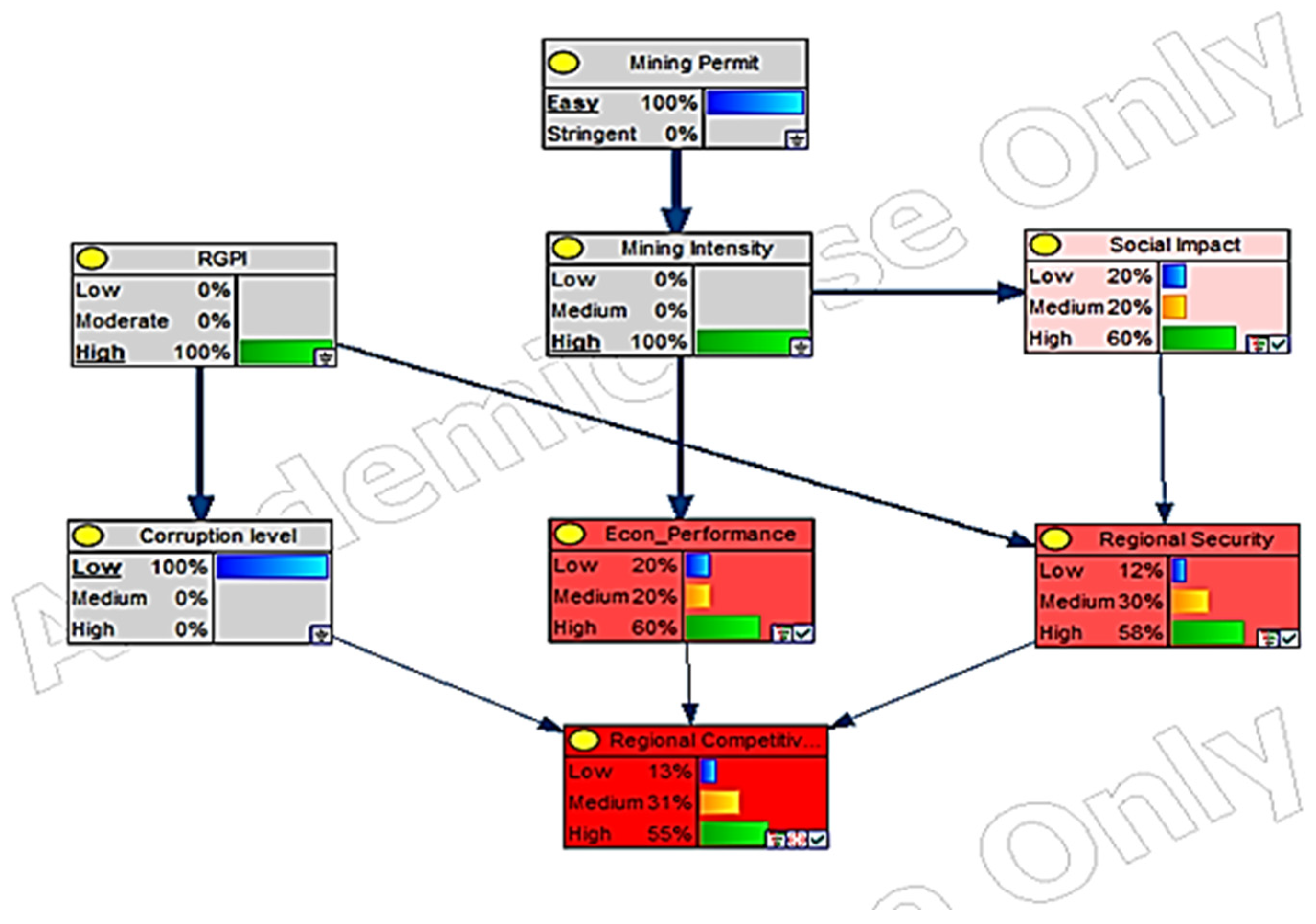
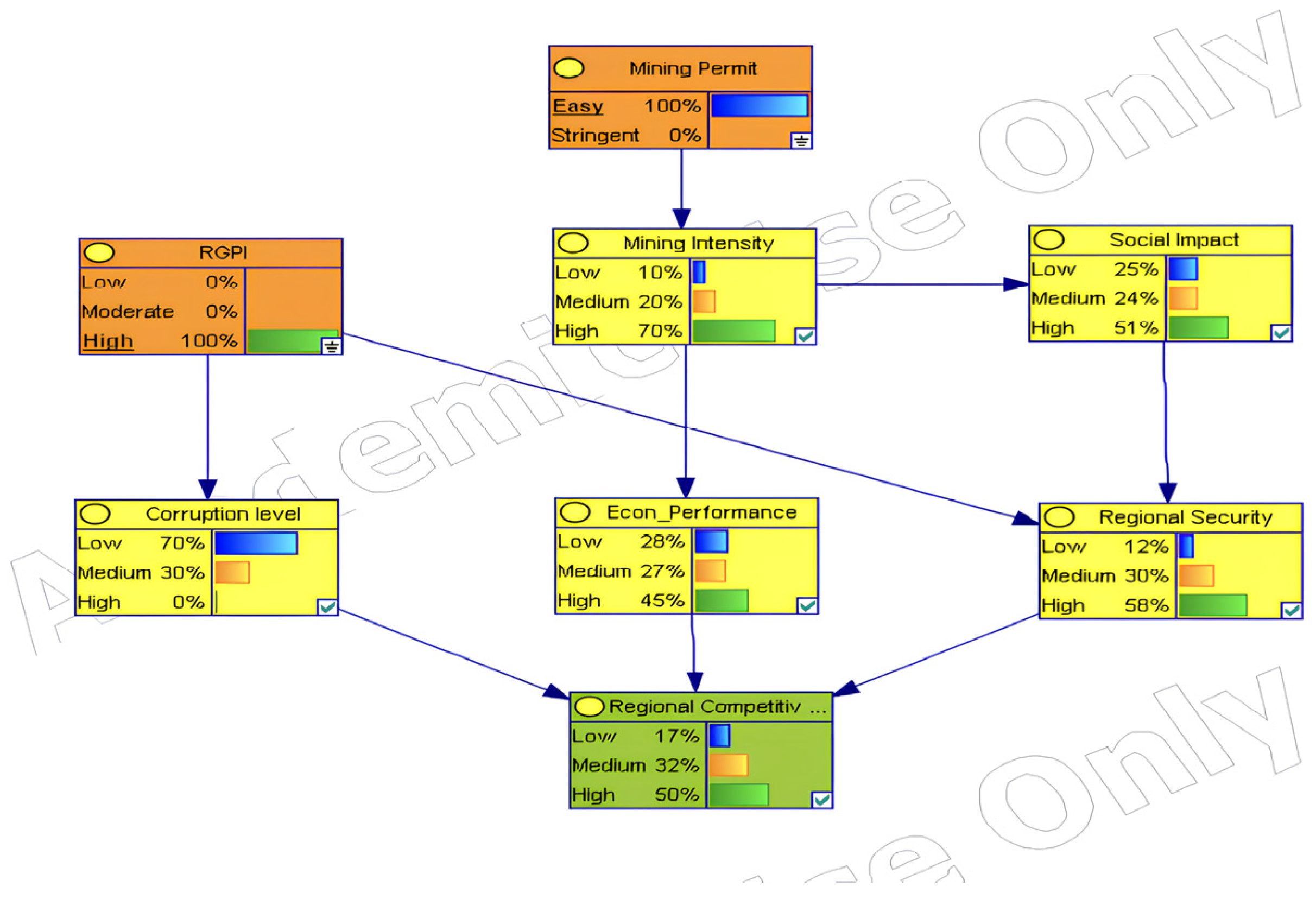
The scenario analysis is employed to assess the impact of interventions on various variables that influence the target variable—in this case, regional competitiveness. Scenario analysis using nodes as evidence was conducted in stages. First, the Mining Permit node was set to 100 (as evidence), and its impact on the other nodes was evaluated. The Mining Permit state used as evidence was “easy,” reflecting the assumption that regional competitiveness should make mining permits investment-friendly and free of regulatory bottlenecks. In the second step, the RGPI node was set as evidence while all other nodes (including Mining Permit) were kept at their prior probabilities, and the impact on the target and other nodes was assessed. The RGPI state was set to “high,” representing a scenario of strong governance in mining activities.
Finally, both RGPI and Mining Permit were set as evidence simultaneously, and their combined impact on all nodes was evaluated. This joint scenario represents a region that is both investment-friendly and characterized by strong mining governance. Figure 7 illustrates this stage, where both RGPI and Mining Permit are set to 100. Their effects on nodes such as mining intensity, economic performance, corruption level, regional security, and the regional competitiveness target will then be evaluated. The results of the scenario analysis are shown in Table 10.
As shown in Table 10, setting the variable “Mining Permit” (MP) as the sole evidence results in a notable increase in the probability of mining intensity, from 52% to 70%. It also leads to a moderate rise in economic performance from 36% to 45%. Regarding the target variable, regional competitiveness, the impact of setting MP as the sole evidence is just 1%, from 38% to 39%. It suggests that mining permits primarily influence mining activities directly but have a limited effect on overall competitiveness, as other variables have a greater impact on the target.
In the second scenario, setting the RGPI parent node as evidence significantly affects corruption levels. The probability of low corruption increases from 38% to 70%. RGPI also markedly influences regional security, raising its probability from 36% to 58%. Overall, setting RGPI as evidence enhances regional competitiveness from 38% to 49%.
The third scenario, combining both RGPI and MP, results in a substantial increase in regional competitiveness, reaching 50%, a nearly 32% rise from the baseline. The impacts on other variables, such as mining intensity, economic performance, and corruption levels, are comparable to the maximum effects observed in the individual scenarios. For instance, mining intensity reaches 70%, matching the increase observed when MP is set as evidence, and corruption levels also reach their maximum when RGPI is set as evidence. These findings support [40] assertion that regional competitiveness in the mining sector is no longer driven solely by natural resources and geological factors but is heavily influenced by sound policies, regulations, and effective sector oversight.

4.3. Sensitivity Analysis

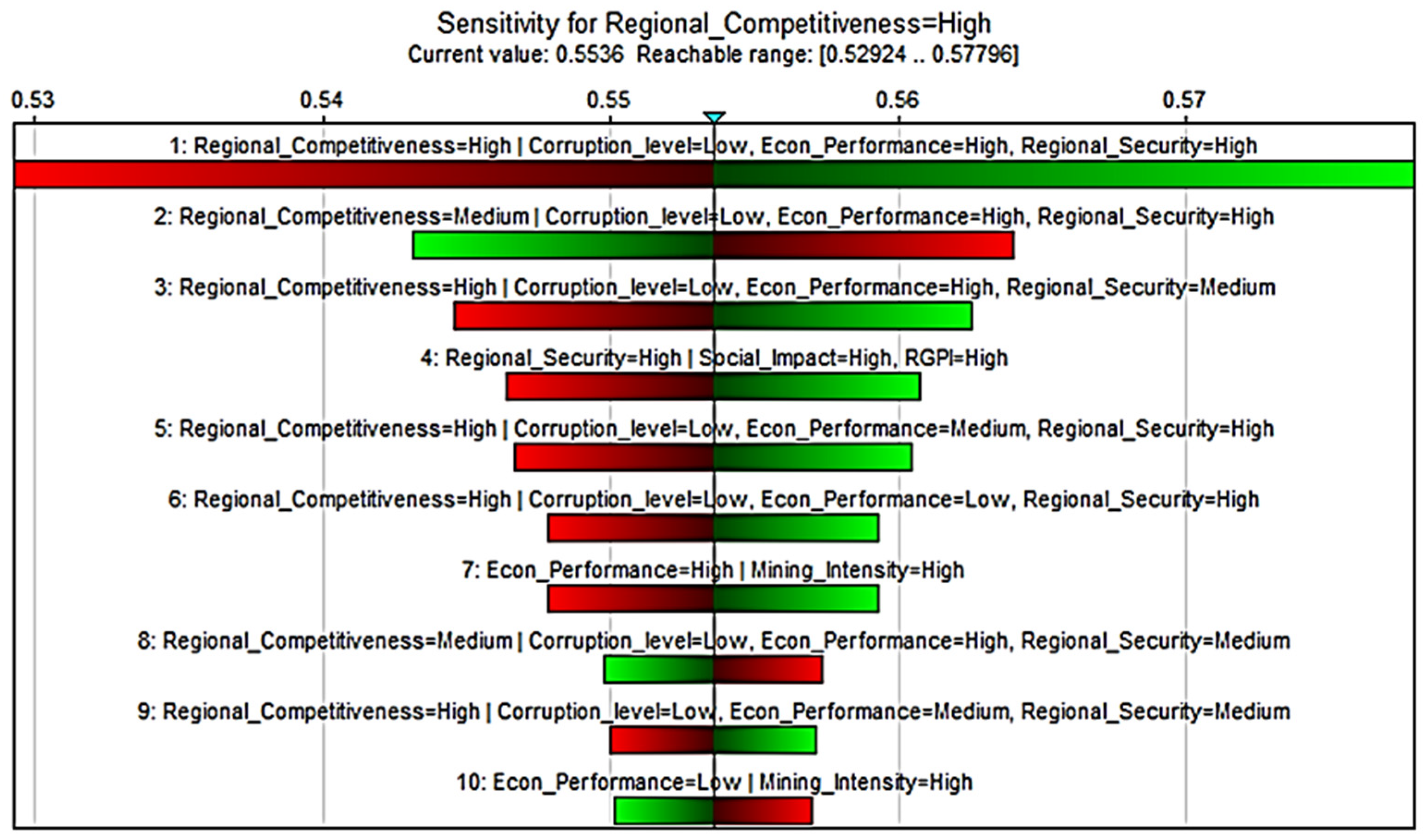
Sensitivity analysis is conducted to evaluate how changes in specific variables influence the final target probability [41]. In Genie Bayes Fusion Academic 4.1 software, nodes sensitive to parameter variations are highlighted in red and pink, as shown in Figure 8. As observed, regional competitiveness, economic performance, and regional security are particularly sensitive nodes, suggesting that if specific parent nodes—such as RGPI or mining permit—are set as evidence, these nodes are likely to be significantly affected. The overall impact of changes in each node is illustrated using a Tornado diagram in Figure 9. In the Genie software, variables with the strongest or positive influence are shown in green, while those with a negative impact are shown in red on the diagram.
As illustrated in Figure 9, a low corruption level combined with high or medium security levels significantly increases the probability of regional competitiveness, while the opposite conditions tend to decrease it. The probability of regional competitiveness ranges from 53% to 57%. Similarly, in the third tornado bar, RGPI shows sufficient sensitivity to affect corruption levels, which, in turn, influence the probability of regional competitiveness. A high RGPI score tends to correlate with lower corruption levels, ultimately leading to an increase in regional competitiveness.

5. Discussion

Mining governance in Indonesia is inherently complex, requiring the management of various issues to enhance regional competitiveness in the sector. These issues include administrative governance challenges, oversight of mining activities, and efforts to prevent corruption. Broadly defined, policing—encompassing supervision, partnership development, and law enforcement—serves as a crucial step toward ensuring proper mining governance. This approach helps promote transparency and accountability and ultimately fosters regional competitiveness in mining management areas.
Policing governance is a critical component in the development of countries like Indonesia, where the economy heavily relies on extractive industries such as mining. While national legislation and corporate strategies play significant roles, they often fall short in effectively addressing the myriad conflicts that arise over mining territories in Indonesia [12]. For instance, a study analysed customary law and violence in Indonesian mining regions. It noted that, although customary law can act as a deterrent to some social conflicts due to its deep-rooted social influence, it tends to be inadequate when confronting the powerful corporate interests associated with mining. Consequently, there is a pressing need to implement robust policing governance strategies that enhance security and provide comprehensive oversight in mining areas. Such measures are essential not only for preventing conflict but also for fostering an environment that ensures equitable and sustainable economic development through mining activities [42].
The study highlights the significant roles that three key factors play in enhancing the regional competitiveness of areas reliant on mining: the policing governance index, corruption levels, and regional security. Notably, the latter two factors, regional security and corruption levels, are heavily influenced by the effectiveness of policing governance. This fact underscores the notion that policing governance acts as a foundational pillar for the competitive advantage of regions dependent on mining industries.
In this study, the focus of policing governance is to enhance current policing practices, particularly in addressing challenges unique to mining areas. Some indicators suggest that current enforcement practices in these areas are predominantly legalistic, focusing mainly on criminal activities [43]. However, they often overlook other critical impacts of mining, such as environmental degradation and its adverse effects on regional economic performance.
The study suggests a shift in policing governance, highlighting the importance of governance beyond merely identifying offenders. Policing governance should extend beyond traditional enforcement to establish robust institutional frameworks. These frameworks should not only serve as reactive (ex post) measures to address illegal activities but also play proactive (ex ante) roles in preventing such activities from occurring in the first place. By establishing strong institutional foundations, regions can effectively mitigate illegal activities and bolster their economic and competitive standing.

6. Conclusions

Extractive resources, particularly those in the mining industry, undeniably play a vital role in regional development by generating revenue, creating employment opportunities, and facilitating infrastructure and social improvements. These benefits can significantly elevate the standard of living and foster economic growth within mining-dependent regions. However, the effectiveness of these contributions heavily relies on robust governance and effective law enforcement. When governance is weak, and measures to address issues beyond mere curtailment of illegal activities are limited, the overall performance of regional development can be adversely affected.
High levels of corruption further diminish the potential benefits to society, diverting resources from community development into illicit channels and eroding public trust and social cohesion. Similarly, a lack of regional security discourages both domestic and foreign investment, making mining areas less attractive and competitive in the long run. Without a secure environment, the sustainability of mining operations and the regional economic sustainability they can provide are threatened.
These interconnected challenges underscore the crucial role of effective mining governance in managing the sector’s inherent complexities and ensuring sustainable growth. Central to this governance framework is policing, which must extend beyond traditional law enforcement. It should include comprehensive oversight, strategic partnership development with local communities and stakeholders, and the establishment of resilient institutional frameworks. Strengthening policing governance is essential for fostering transparency, reducing corruption, and ensuring regional security—all of which directly enhance the competitiveness of mining-dependent regions.
Furthermore, current enforcement approaches, primarily focused on addressing criminal activities, need to evolve into more holistic and preventive strategies. This includes addressing environmental impacts, ensuring regulatory compliance, and establishing early prevention measures against illegal activities. By building robust institutional foundations that integrate reactive (ex post) and proactive (ex ante) strategies, Indonesia can create a more equitable, sustainable, and prosperous mining sector. Such an approach will not only boost regional economic performance but also secure the long-term competitiveness and resilience of mining-dependent areas, contributing to broader national development goals.

Author Contributions

Conceptualisation, B.S. and A.F.; methodology, A.F.; software, B.S.; validation, A.F.; formal analysis, B.S.; investigation, B.S. and A.F.; resources, A.F.; data curation, A.F.; writing—original draft preparation, B.S.; writing—review and editing, A.F.; visualisation, B.S.; supervision, A.F.; project administration, B.S.; funding acquisition, B.S. and A.F. All authors have read and agreed to the published version of the manuscript.

Funding

This research received no external funding.

Institutional Review Board Statement

This study is waived for ethical review as it is based on expert consultations to provide industry recommendations and does not involve the collection or processing of any personally identifiable information by the Institutional Committee.

Informed Consent Statement

Informed consent for participation was obtained from all subjects involved in the study.

Data Availability Statement

The original contributions presented in this study are included in the article. Further inquiries can be directed to the corresponding author.

Acknowledgments

During the preparation of this manuscript, the authors used Genie Bayes Fusion Academic Version 4.1 software for data analysis. The authors have reviewed and edited the output and take full responsibility for the content of this publication.

Conflicts of Interest

The authors declare no conflicts of interest.

References

  1. Ministry of Energy and Mineral Resources. Handbook Of Energy & Economic Statictics Of Indonesia 2023. 2023. Available online: https://esdm.go.id/assets/media/content/content-handbook-of-energy-and-economic-statistics-of-indonesia-2023.pdf (accessed on 20 June 2024).
  2. Bansard, J.; Schöder, M. The Sustainable Use of Natural Resources: The Governance Challenge; IISD: Winnipeg, MB, Canada, 2021; pp. 1–10. Available online: https://www.iisd.org/articles/sustainable-use-natural-resources-governance-challenge (accessed on 25 June 2024).
  3. Suhendarwan, B.; Fauzi, A.; Mulatsih, S.; Juanda, B. Developing a composite index for assessing policing in Indonesia’s mining. J. Infrastruct. Policy Dev. 2024, 8, 6443. [Google Scholar] [CrossRef]
  4. Cordero, S.P.Q. Citizen security and community participation in Latin America. Rev. Cient. Gen. Jose Maria Cordova 2020, 18, 5–24. [Google Scholar] [CrossRef]
  5. Hodgkinson, T.; Caputo, T.; McIntyre, M.L. Beyond crime rates and community surveys: A new approach to police accountability and performance measurement. Crime Sci. 2019, 8, 13. [Google Scholar] [CrossRef]
  6. Holzer, M. Bridging police work with the public health domain: An occupational safety and health perspective. Int. J. Saf. Secur. Eng. 2020, 10, 579–587. [Google Scholar] [CrossRef]
  7. White, V.M.; Avendano, S.A.; Albert, L.A.; Zgierska, A.E.; Balles, C.J.; Zayas-Cabán, G. Impact of a community-policing initiative promoting substance use disorder treatment over criminal charges on arrest recidivism. Drug Alcohol Depend. 2021, 227, 108915. [Google Scholar] [CrossRef]
  8. Jhanattan, M.; Laksmono, B.S.; Martono, D.N.; Herdiansyah, H. Mining Management of Nonmetallic Minerals and Rocks Based on Government Policy. Int. J. Environ. Impacts 2023, 6, 165–181. [Google Scholar] [CrossRef]
  9. Tegnan, H.; Karjoko, L.; Barkhuizen, J.; Bajrektarevic, A.H. Mining Corruption and Environmental Degradation in Indonesia: Critical Legal Issues. Bestuur 2021, 9, 90–100. [Google Scholar] [CrossRef]
  10. Harimbawa, G.; Sumaryadi, I.N.; Djohan, D.; Mulyati, D.; Achmad, M. Collaborative Governance wit focus on Controlling the Illegal Mining in Indonesia. Croat. Int. Relat. Rev. 2021, XXVII, 209–224. [Google Scholar] [CrossRef]
  11. Thamrin, H.; Nursanthy, A.T.R.; Thamrin, M.A. Law Enforcement Against Illegal Miners. Awang Long Law Rev. 2025, 7, 503–507. [Google Scholar] [CrossRef]
  12. Rahman, I.; Basrawi, B.; Widyawati, A.; Suryani, L.S.; Haris, I.N. Mineral and Coal Mining Regulatory Reform in Indonesia. J. Law Leg. Reform 2025, 6, 499–568. [Google Scholar] [CrossRef]
  13. Giffoni, F.; Salini, S.; Sirtori, E. Evaluating business support measures: The Bayesian Network approach. Evaluation 2018, 24, 133–152. [Google Scholar] [CrossRef]
  14. Rohman, A.; Hartiwiningsih; Rustamaji, M. Illegal mining in Indonesia: Need for robust legislation and enforcement. Cogent Soc. Sci. 2024, 10, 2358158. [Google Scholar] [CrossRef]
  15. San Cristóbal, J.R.; Biezma, M.V. The mining industry in the European Union: Analysis of inter-industry linkages using input-output analysis. Resour. Policy 2006, 31, 1–6. [Google Scholar] [CrossRef]
  16. Su, H.; Lu, Y.; Lyulyov, O.; Pimonenko, T. Good Governance within Public Participation and National Audit for Reducing Corruption. Sustainability 2023, 15, 7030. [Google Scholar] [CrossRef]
  17. Moisé, G.M. Corruption in the oil sector: A systematic review and critique of the literature. Extr. Ind. Soc. 2020, 7, 217–236. [Google Scholar] [CrossRef]
  18. Owens, E.; Ba, B. The Economics of Policing and Public Safety. J. Econ. Perspect. 2021, 35, 3–28. [Google Scholar] [CrossRef]
  19. Goldstein, R.; Sances, M.W.; You, H.Y. Exploitative Revenues, Law Enforcement, and the Quality of Government Service. Urban Aff. Rev. 2020, 56, 5–31. [Google Scholar] [CrossRef]
  20. Kajeepeta, S.; Bruzelius, E.; Ho, J.Z.; Prins, S.J. Policing the pandemic: Estimating spatial and racialised inequities in New York City police enforcement of COVID-19 mandates. Crit. Public Health 2022, 32, 56–67. [Google Scholar] [CrossRef]
  21. Laufs, J.; Waseem, Z. Policing in pandemics: A systematic review and best practices for police response to COVID-19. Int. J. Disaster Risk Reduct. 2020, 51, 101812. [Google Scholar] [CrossRef]
  22. Sheptycki, J. The politics of policing a pandemic panic. Aust. N. Z. J. Criminol. 2020, 53, 157–173. [Google Scholar] [CrossRef]
  23. Eliason, S. Policing natural resources: Issues in a conservation law enforcement agency. Prof. Issues Crim. Justice 2011, 6, 43–58. [Google Scholar]
  24. Massaquoi, B.; Roberts, N.J.; Tian, G. Marine fishing management towards sustainability in Sierra Leone. Int. J. Sustain. Dev. Plan. 2021, 16, 935–944. [Google Scholar] [CrossRef]
  25. Bakker, L. Custom and violence in Indonesia’s protracted land conflict. Soc. Sci. Humanit. Open 2023, 8, 100624. [Google Scholar] [CrossRef]
  26. Leonard, L. Traditional leadership, community participation and mining development in South Africa: The case of Fuleni, Saint Lucia, KwaZulu-Natal. Land Use Policy 2019, 86, 290–298. [Google Scholar] [CrossRef]
  27. Marenin, O. Styles of policing and economic development in African states. Public Adm. Dev. 2014, 34, 149–161. [Google Scholar] [CrossRef]
  28. Rusek, J.; Tajduś, K.; Firek, K.; Jędrzejczyk, A. Score-based Bayesian belief network structure learning in damage risk modelling of mining areas building development. J. Clean. Prod. 2021, 296, 126528. [Google Scholar] [CrossRef]
  29. Graham, W.; Robertson, A. Exploring criminal justice policy transfer models and mobilities using a case study of violence reduction. Criminol. Crim. Justice 2022, 22, 423–441. [Google Scholar] [CrossRef]
  30. Borg, I.; Groenen, P.J.; Mair, P. European Journal of Business and Management Research; SpringerBriefs in Statistics; Springer: Cham, Switzerland, 2013; Volume 5, Available online: http://www.springer.com/series/8921 (accessed on 2 May 2024).
  31. Daniel, D.; Sirait, M.; Pande, S. A hierarchical Bayesian Belief Network model of household water treatment behaviour in a suburban area: A case study of Palu, Indonesia. PLoS ONE 2020, 15, e0241904. [Google Scholar] [CrossRef]
  32. Norouzi Isfahani, R.; Talaee Malmiri, A.; BahooToroody, A.; Abaei, M.M. A Bayesian-based framework for advanced nature-based tourism model. J. Asian Bus. Econ. Stud. 2023, 30, 86–104. [Google Scholar] [CrossRef]
  33. Requejo Castro, D. Data-Driven Bayesian Networks Modelling to Support Decision-Making: Application to the Context of Sustainable Development Goal 6 on Water and Sanitation. April. 2021. Available online: https://upcommons.upc.edu/server/api/core/bitstreams/798055cc-5bcd-4592-beb6-8d42db93bb83/content (accessed on 25 April 2024).
  34. Simsekler, M.C.E.; Qazi, A. Adoption of a Data-Driven Bayesian Belief Network Investigating Organisational Factors that Influence Patient Safety. Risk Anal. 2022, 42, 1277–1293. [Google Scholar] [CrossRef]
  35. Wang, Y.; Zhang, J.; Wu, G. Bayesian-Based Traffic Safety Evaluation Study for Driverless Infiltration. Appl. Sci. 2023, 13, 12291. [Google Scholar] [CrossRef]
  36. Ariyani, N.; Fauzi, A. Unlocking Sustainable Rural Tourism to Support Rural Development: A Bayesian Approach to Managing Water-Based Destinations in Indonesia. Sustainability 2024, 16, 5506. [Google Scholar] [CrossRef]
  37. Paredes, S.; Pascoe, S.; Coglan, L.; Richards, C. Increasing Local Fish Consumption: A Bayesian Belief Network Analysis. J. Int. Food Agribus. Mark. 2021, 33, 104–121. [Google Scholar] [CrossRef]
  38. Kisioglu, P.; Topcu, Y.I. Applying Bayesian Belief Network approach to customer churn analysis: A case study on the telecom industry of Turkey. Expert Syst. Appl. 2011, 38, 7151–7157. [Google Scholar] [CrossRef]
  39. Bloodworth, A.J.; Scott, P.W.; McEvoy, F.M. Digging the backyard: Mining and quarrying in the UK and their impact on future land use. Land Use Policy 2009, 26, 317–325. [Google Scholar] [CrossRef]
  40. Tilton, J.E. Mineral endowment, public policy and competitiveness: A survey of issues. Resour. Policy 1992, 18, 237–249. [Google Scholar] [CrossRef]
  41. Rachman, R.M.; Mangidi, U.; Trihadiningrum, Y. Solidification and stabilisation of mercury-contaminated tailings in artisanal and small-scale gold mining using tras soil. J. Degrad. Min. Lands Manag. 2023, 10, 4575–4582. [Google Scholar] [CrossRef]
  42. Salemdeeb, R.; Al-Tabbaa, A.; Reynolds, C. The UK waste input-output table: Linking waste generation to the UK economy. Waste Manag. Res. 2016, 34, 1089–1094. [Google Scholar] [CrossRef]
  43. Meutia, A.A.; Bachriadi, D.; Gafur, N.A. Environment Degradation, Health Threats, and Legality at the Artisanal Small-Scale Gold Mining Sites in Indonesia. International J. Environ. Res. Public Health 2023, 20, 6774. [Google Scholar] [CrossRef]
Figure 1. Composite index score distribution vs. mining concession map [1,3].
Sustainability 18 01217 g001
Figure 2. Structure of DAG.
Sustainability 18 01217 g002
Figure 3. Agreed DAG structure.
Sustainability 18 01217 g003
Figure 4. FGD, data input and analysis (adapted from [36]).
Sustainability 18 01217 g004
Figure 5. Prior probabilities calculation using BBN. Reginal Competitiv...: regional competitiveness.
Sustainability 18 01217 g005
Figure 6. Strength influence of the BBN DAG. Reginal Competitiv...: regional competitiveness.
Sustainability 18 01217 g006
Figure 7. Evidence variables for scenario analysis. Reginal Competitiv...: regional competitiveness.
Sustainability 18 01217 g007
Figure 8. Sensitive nodes when other nodes are set as evidence. Reginal Competitiv...: regional competitiveness.
Sustainability 18 01217 g008
Figure 9. Sensitivity indicator after scenario analysis.
Sustainability 18 01217 g009
Table 1. Measurement method of each node.
Variable NodesMeasurement
1.
Mining permit
Easy, stringent
2.
RGPI
Low, moderate, high
3.
Mining intensity
Low, medium, high
4.
Social impact
Low, medium, high
5.
Corruption level
Low, medium, high
6.
Economic Performance
Low, medium, high
7.
Regional security
Low, medium, high
8.
Regional competitiveness
Low, medium, high
Table 2. Expert opinions data input on CPT node 1.
Node 1: Mining PermitInformation
easy0.7Mining permits are used to manage mining licences and other activities, such as non-mining activities. If the respondent thinks that mining licencing should be simplified, the respondent can provide a number greater than 50 percent in the Easy column, and vice versa. The two columns must be 100 percent.
Stringent0.3
Table 3. Expert opinions data input on CPT node 2.
Node 2: Resources Governance Policing IndexInformation
Low
Medium
High
0.2
0.5
0.3
The resource governance policing index (RGPI) is a composite index built from three dimensions of supervision, partnership, and law enforcement in the mining sector. Respondents were asked to determine the significance of these three activities in the context of mining in Indonesia, using low, moderate, and high scenarios based on their knowledge. If the significance of the mining activity is high, the highest percentage is given to the high scenario, while the other two scenarios adjust until the value of the column amounts to 100%
Table 4. Expert opinions data input on CPT node 3.
Node 3: Mining IntensityInformation
mining permiteasystringentMining intensity, according to the model, is the intensity of mining carried out, influenced by the ease of administration and licencing (mining permit). Mining activities are divided into three scenarios, namely low, medium, and high. If, according to the respondents, mining activities will be more intensive with the ease of licencing, then the respondents can provide the most significant percentage in the high scenario, according to their preferences, and vice versa. The entire column must be 100%
low0.20.3
medium0.30.6
high0.50.1
Table 5. Expert opinions data input on CPT node 4.
Node 4: Social ImpactInformation
mining intensitylowmediumhighSocial impact in this model is influenced by mining intensity. Respondents are asked to assess the extent to which mining intensity will affect the community’s social life in the mining area, with the probability score indicating that low mining intensity will have a negligible impact. The low value will have the most significant percentage.
low 0.70.30.2
medium0.20.40.2
high0.10.30.6
Table 6. Expert opinions data input on CPT node 5.
Node 5: Corruption LevelInformation
RGPIlowmoderatehighThe node corruption level has a probability distribution associated with the RGPI value. Respondents were asked to determine the corruption level for low, moderate, and high RGPI levels. If the RGPI is considered high and causes low-level corruption, then the percentage of the low scenario is given a high percentage, and the other values adjust so that they have a value of 100%
low0.30.20.5
moderate0.20.50.3
high0.50.30.2
Table 7. Expert opinions data input on CPT node 6.
Node 6: Economic PerformanceInformation
mining intensitylow mediumhighThe economic performance of a region in this model is influenced by mining intensity. Respondents were asked to determine the probability of economic performance for low, medium, and high mining intensity. If low mining intensity causes low economic performance, then the low percentage will be greater than the other two scenarios, so that the value reaches 100%
low 0.50.30.2
Medium0.30.50.2
High0.20.20.6
Table 8. Expert opinions data input on CPT node 7.
Node 7: Regional Security
social impactlowmediumhigh
RGPIlow moderate highlowmediumhighlow moderatehigh
low 0.40.250.20.30.20.10.50.40.3
medium0.30.40.30.40.50.30.30.30.3
high0.30.350.50.30.30.60.20.30.4
Table 9. Score of the strength influence between the parent and child node using Euclidean distance.
ParentChildAverageMaximum
Corruption levelRegional Competitiveness0.1815610.400
Econ_PerformanceRegional Competitiveness0.1578560.346
Mining IntensityEcon_Performance0.3647160.458
Mining IntensitySocial Impact0.3786300.500
Mining PermitMining Intensity0.5567760.556
Regional SecurityRegional Competitiveness0.1963930.436
RGPICorruption level0.4793480.656
RGPIRegional Security0.2950360.500
Social ImpactRegional Security0.1020990.200
Table 10. Results of analysis: scenario analysis on evidence variables.
VariablePrior Probability (%)Scenarios (Set as Evidence with Posterior Probability = 100%
Mining Permit (MP)RGPIMixed of Two (MP and RGPI)
Mining Intensity (high)5270%52%70%
Economic performance (high)3645%36%45%
Corruption level (Low)3838%70%70%
Regional Security (High)3630%58%58%
Regional Competitiveness (high)3839%49%50%
Disclaimer/Publisher’s Note: The statements, opinions and data contained in all publications are solely those of the individual author(s) and contributor(s) and not of MDPI and/or the editor(s). MDPI and/or the editor(s) disclaim responsibility for any injury to people or property resulting from any ideas, methods, instructions or products referred to in the content.