Article

Environmental Impacts and Sustainability of Tannery: A Case Study

by
Giancarlo D’Angelo
1,
Ganapathy Pattukandan Ganapathy
2,
Subramaniam Shanthakumar
3 and
Fulvia Chiampo
1,*
1
Department of Applied Science and Technology, Politecnico di Torino, Corso Duca degli Abruzzi 24, 10129 Torino, Italy
2
Centre for Disaster Mitigation and Management, Vellore Institute of Technology, Vellore 632014, India
3
Centre for Clean Environment, Vellore Institute of Technology (VIT), Vellore 632014, India
*
Author to whom correspondence should be addressed.
Sustainability 2026, 18(3), 1218; https://doi.org/10.3390/su18031218
Submission received: 26 December 2025 / Revised: 15 January 2026 / Accepted: 20 January 2026 / Published: 26 January 2026
(This article belongs to the Special Issue Process Life Cycle Assessment (LCA) and Sustainability)

Abstract

Leather has been a commodity since ancient times, when primitive men hunted animals for food and used their hides and skins for clothes and tents. Nowadays, the tanning process is highly industrialised. The chromium tanning is the most widely used because it produces high-quality leather despite its serious environmental impacts. The purpose of this study is to analyse the environmental impact of an Indian company that carries out post-tanning operations on bovine hides, that is to say, from the so-called wet-blue to finished crust. To do this, the Life Cycle Assessment (LCA) is implemented using the primary data provided by the company. The analysis has been carried out by the OpenLCA software, and 16 environmental impact categories have been evaluated. The results show that the processes for producing fuel (coal and diesel oil) and chromium(III) salts are the main contributors to the environmental impact for nearly all categories. These types of impacts are upstream, whereas the operations carried out by the company have impacts on the climate change category, due to the use of fossil fuels in the production process. Therefore, the direct action that the company could take is the substitution of fuel to produce energy with a renewable energy source. The comparison of these results with the whole tanning process present in the software confirms the limited impact of the post-tanning. At last, the results also evidence the methodological value of Life Cycle Assessment, which can be used to show what can be improved in one installation to reduce its environmental impact.

1. Introduction

Tannery is one of the oldest industrial activities in the world. Since prehistory, the raw skin of hunted animals has been exploited to make dresses and tents for protection from atmospheric agents.
However, the tannery process is well-known for its heavy environmental impacts, namely, high water consumption and pollution emissions.
Most processed leather has a bovine origin, even if other skins and hides are on the market, especially in the clothing sector.
Currently, this market is continuously expanding, with a global value of around 630 billion dollars in 2025, and with China, Brazil, Russia, India, and Italy as the main producers.
In recent years, part of leather production has moved from developed countries to developing ones, due to lower labour costs and less stringent environmental legislation. Moreover, the market of developing countries is expanding, and there is a great demand for leather, both for high-quality material and for economic ones.
The Indian market is in fast growth, also due to the large population with increasing income. For a long time, India has hosted many tanneries, mainly concentrated in the States of Tamil Nadu, West Bengal, and Uttar Pradesh.
Life Cycle Assessment (LCA) is a powerful tool for assessing the environmental impacts of a product or a process along its whole life cycle and for comparing the same product or process carried out in different situations.
This paper presents the results of a study on the environmental impacts caused by an Indian tannery, with LCA carried out using open-source software.
In the literature, several papers on the LCA of tannery have been published, especially in recent years [1,2,3,4]. Very often, they compare the results achieved with the traditional process and with modern ones, especially for the tanning phase, using real or literature data, and considering the whole supply chain or just one part of it [5,6,7,8].
In some cases, the real data are average values due to privacy reasons. The most careful attention has been given to the chemicals used in tannery, whereas energy features have had minor focus [9].
For the current case, the study has been carried out using real-scale data shared by an Indian company working in the post-tanning step, which is one of the phases constituting the tanning process and has moderate impacts compared to other steps of the whole supply chain. In other words, it is well known that the traditional tannery supply chain has huge environmental impacts, but the reduction in these impacts is tightly linked to the deep knowledge of the contribution of each operation carried out along the chain. This study aims to add a tile to this fundamental mosaic.
The results have highlighted the critical points of the process and, at the same time, they have shown that environmental improvements could be made for a more sustainable activity of the company itself.
The results have also been compared to the ones obtained in the whole process, from raw to finished hide, to show the categories with critical impacts.

2. Tannery Supply Chain and Its Environmental Impacts

Most leather derives from the bovine, caprine, and ovine hides. Other kinds represent niche products, such as leather from reptiles, minks, and beavers. In the tannery sector, usually, skin refers to small animals, while hide is the term used for large animal origin.
Leather is a stable and durable material, with characteristics achieved by chemical and physical operations. Skin is the biggest organ in a mammal, with a complex structure to give protection to the inner organs of the body.
It is composed of three main layers:
  • Epidermis, the external layer taken off during the preliminary operations of tanning (about 1% of the total thickness).
  • Derma (or corium), the main layer of the skin, is essentially constituted of collagen fibres; it can be represented by two parts, namely, the “flower side” and “meat side”.
  • Subcutaneous tissue, in contact with the meat and rich in adipose cells.
The layer useful for the leather is derma, whereas the others constitute a solid waste separated during the tanning process.
The raw skin contains around 64% by mass of water, 33% of proteins, 2% of fats, and 1% of minerals. Among the proteins, the most relevant is collagen, based on three amino acids, namely, glycine, proline, and hydroxyproline, randomly distributed in a chain wrapped on itself (α-helix). The combination of three chains gives the origin of the triple right-turning helix typical of collagen.
The tanning process operates the transformation of raw skin, which is quickly perishable, into leather, which is a material stable to temperatures higher than room temperature, to humidity, and contact with water.
It can be divided into four main steps:
  • Step 1—Pre-tanning (beam processes): It consists of operations preliminary to tanning, such as the take-off of epidermis, subcutaneous tissue, wool, and hair.
  • Step 2—Tanning: This is the core of the whole process, where the stabilisation of skin proteins by chemical agents is carried out to achieve a strong and workable material. The output is the “wet-blue” leather, with the name due to its colour.
  • Step 3—Post-tanning: In this step, in cascade to tanning, improvement of the chemical and physical properties of leather is performed essentially by chemical operations. The output from this step is called “crust” leather.
  • Step 4—Finishing: Final operations to improve the characteristics of the processed leather, for example, polishing and glazing.
About Step 3—Post-Tanning, it is composed of a series of operations, performed sequentially:
  • Retanning: It is useful to improve the leather’s softness and surface uniformity.
  • Dyeing: The colour application has aesthetic scopes since colour is the first characteristic noted by consumers. For this reason, dyeing is a relevant operation, and it can involve the whole thickness or simply the surface.
  • Fatliquoring: This operation lubricates the fibres, to allow them their reciprocal movement after drying; moreover, the fatliquors fill the fibre interspace and improve the impermeability of the finished leather.
  • Drying: It is the unique physical operation in the post-tanning process. It is usually performed in closed dryers, with forced hot air.
Except for drying, all the operations of this step make use of chemicals.
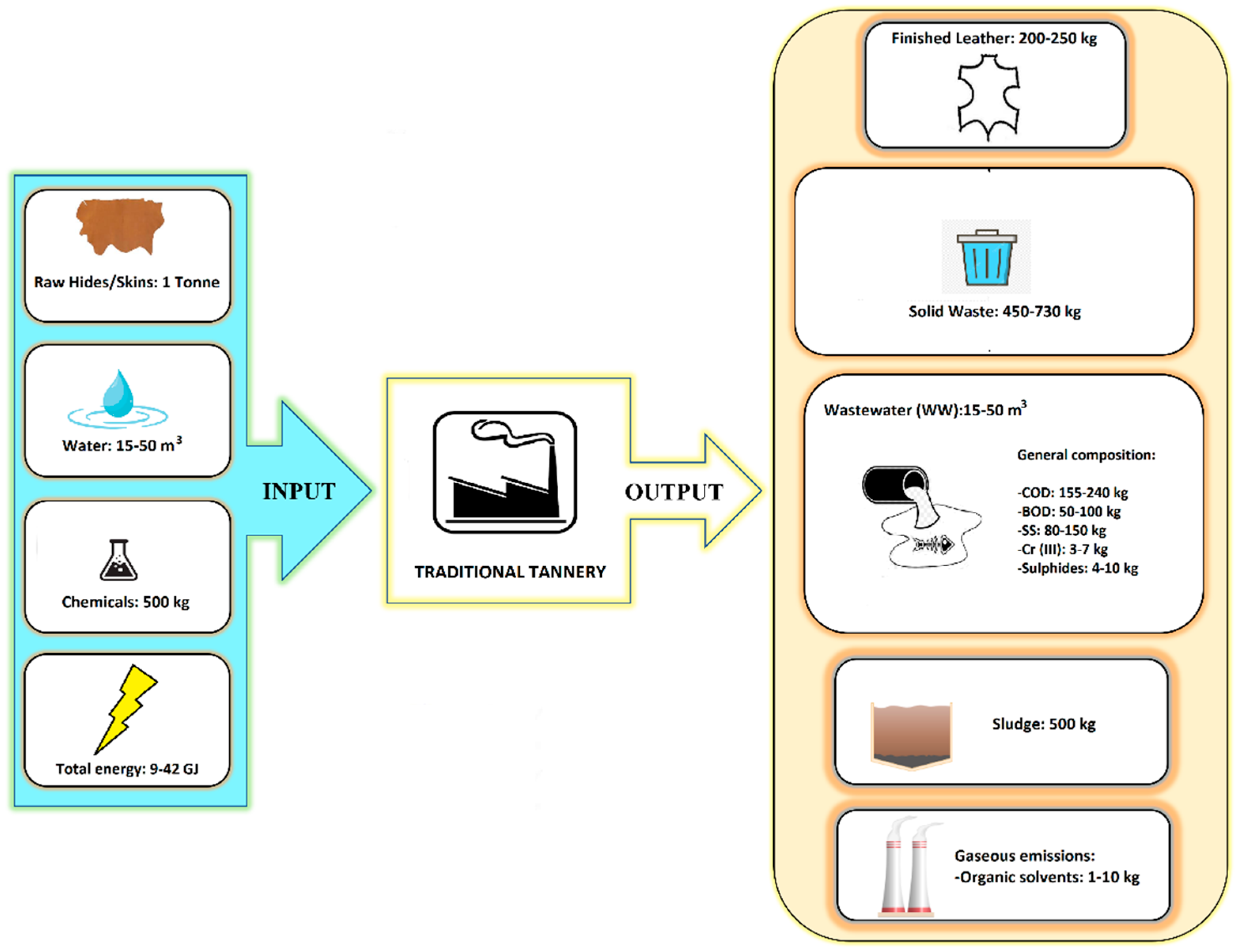
The tannery supply chain has a heavy environmental impact on water and soil. In the entire process, chemicals used along the process can reach 250, and many of them are released into the environment by wastewater or solid wastes, and marginally by air emissions. In particular, this occurs for traditional tanning, which makes use of chromium salts. On average, 1000 kg of raw skin gives 200–250 kg of leather, using around 500 kg of chemicals and 9–42 GJ of energy.
Due to the occurrence of main operations in water or solution, the process consumes 15–50 m3 of water per 1000 kg of raw skin. This quantity becomes wastewater almost entirely, and in turn, its treatment produces around 500 kg of sludge (waste to be treated).
About pollutants, almost 80% of them are produced in Step 2—Tanning. All the steps produce wastewater and solid wastes, while gas emission occurs mainly in Steps 1 and 4.
Common pollutants present in the wastewater are chromium(III), sodium sulfide, ammonium chloride, biocides, aldehydes, and dyes, many of which have low biodegradability.
Figure 1 reports the average consumption and emissions for the industrial sector of tannery. The values are considered applicable to the current companies engaged in this sector, and in the European Union, they are taken as a reference for the conventional tannery of bovine leather [10].

3. Materials and Methods

3.1. Plant

As a reference for the study, a company in Tamil Nadu has been the object of the assessment. It carries out only Step 3—Post-tanning for chromium-tanned leather without dyeing.
Yearly, the plant processes 950,000 m2 of inlet wet-blue leather in 2344 h of labour, with a consumption of 46,240 m3 of water, and a production of 5 m3/h of wastewater and 10 tons/y of sludge.
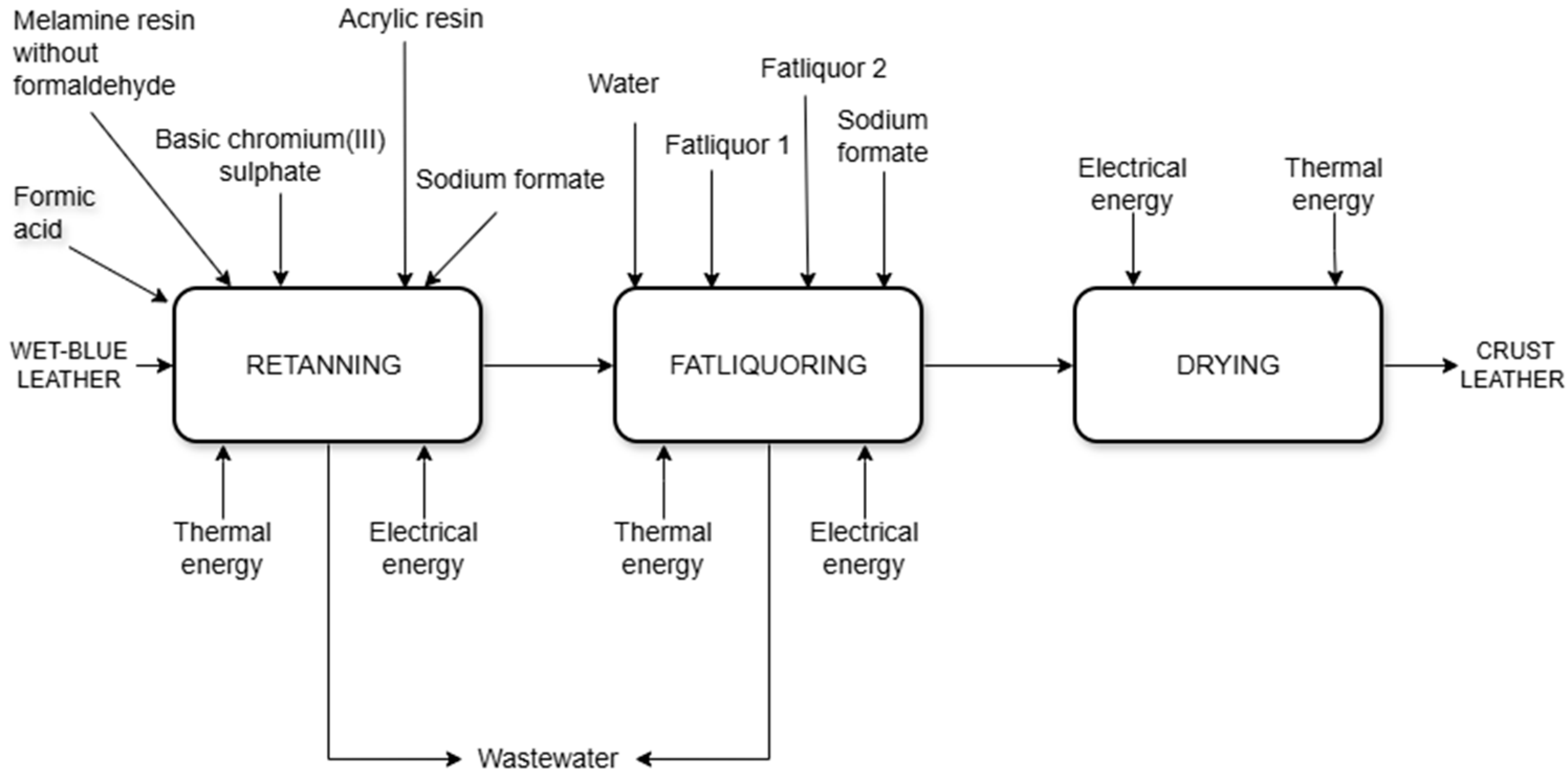
During the operations, several chemicals are used, among them fatliquors (chemical agents for fibre sticking prevention during drying and softening), formic acid, sodium formate, acrylic resins, and basic chromium(III) sulphate. The operations change the properties of the leather but not its surface area. Therefore, the yearly output as crust leather has a surface area about equal to the input, that is to say, 950,000 m2.
Table 1 reports the yearly consumption of these chemicals.
Thermal energy consumption is equal to 2.1 × 10⁵ kcal/y, totally obtained with solar energy, while the electricity needed is equal to 1.19 × 10⁶ kWh, obtained with fossil fuel used in two generators present inside the plant itself.
Two stacks emit flue gas, namely, 1.23 × 10⁷ Nm3/y (Stack 1, which burns 4.55 × 10⁵ kg/y of coal) and 0.11 × 10⁷ Nm3/y (Stack 2, which burns 5.59 × 10⁴ kg/y of diesel oil).
Table 2 reports the yearly pollutant emissions from these two stacks used by the company.
Figure 2 reports the operations, with inputs, outputs, and utilities, and shows the boundaries used for the assessment.

3.2. Life Cycle Assessment (LCA)

Life Cycle Assessment (LCA) is a methodology that has been standardised at the international level by the ISO Standards 14040 and 14044 [11,12] and can be useful for decision-making actions. It is used to quantify the impacts on the environment and human health caused by the whole life cycle of a product, process, or activity. Moreover, the results can evidence the critical points, suggesting where improvements can be made.
When LCA is applied to an industrial process, like in the current case, the contribution of all the materials involved in the process itself is considered in terms of their life cycle, with an approach similar to a “matryoshka” effect, taking into account raw material extraction, processing, production, transport, reuse, recycling, and the final disposal.
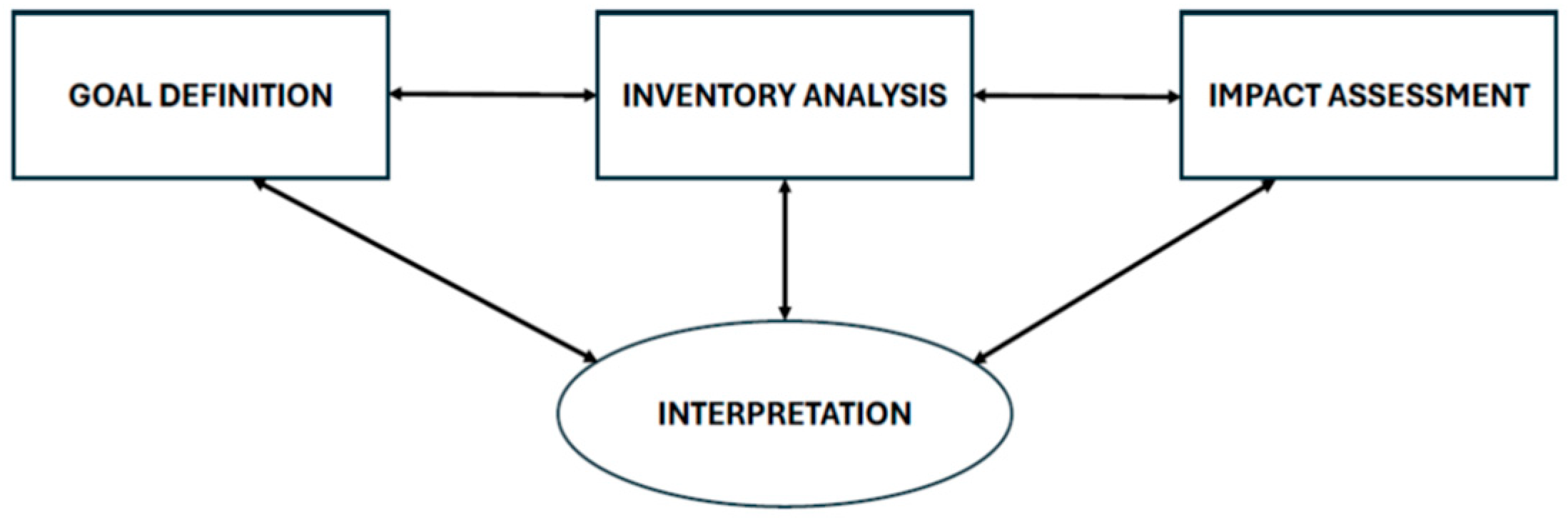
LCA is based on 4 interconnected phases, namely:
  • Goal definition. It focuses on the assessment objectives and application field, the functional unit, and the borders of the assessed system.
  • Inventory analysis. It includes the inventory assessment, that is, the assessment of mass and energy flows from and to the system, including the emissions. This is usually performed by databases contained in the software. When the databases do not meet the needs, it is compulsory to describe the system by adding each component to the database.
  • Impact assessment. It is usually performed by software, which works with the inventory database to give back the potential impacts produced by the studied system.
  • Interpretation. The results interpretation evidences the critical operations concerning the environmental impacts and/or the critical impact categories.
The general scheme of LCA is shown in Figure 3.
The assessment methods quantify the potential environmental impacts and link them to specific indices. The methods can be of two kinds:
  • Midpoint methods: they assess specific categories at the initial chain of cause and effect.
  • Endpoint methods: they look at wider categories, considering the final effects, and are less specific than the midpoint ones. In other words, their categories represent the grouping of midpoint categories.
For this study, the method of Product Environmental Footprint has been used [13]. It has been developed by the European Union under ISO 14040 and ISO 14044, as a midpoint method which considers 16 impact categories. Each of these categories is defined with its own unit to allow the comparison among different processes or products, and is periodically updated/revised to consider new technologies and knowledge. Table 3 reports these impact categories and definitions.
For this study, the open-source software OpenLCA v2 [14] has been used, fixing the system boundaries as “gate-to-gate”: this means that just the considered process (post-tanning) has been assessed, to say, the system boundaries are coincident with the plant ones (Figure 2). Inside the system, the wet-blue leather (input) is transformed into crust leather (output), which in its turn constitutes the input to finishing operations.
The results achieved from this assessment have also been compared to the impacts achievable for the whole tannery process with the same potentiality, that is to say, with the same amount of processed hide. To do this, a standard process contained in OpenLCA has been used. This introduces an uncertainty due to the construction of the process itself. To be precise, the process of OpenLCA works with average parameters based on data from the European Union, both for hides and technologies implemented. Therefore, the limits are evident. However, the comparison has a general validity, even if not so precise in terms of numerical values for the environmental categories.
For the assessment of the environmental impacts, the selected functional unit is 1 kg of raw hide (bovine origin). On average, 1 kg of raw hide is equivalent to about 0.225 m2 of finished leather. Therefore, for the current assessment, the total surface of processed leather corresponds to 4.22 × 10⁶ kg of raw hide.

4. Results and Discussion

4.1. Assessment of Impact Categories

Table 4 reports the impact value for the impact categories applied to the post-tanning process of the studied Indian case, with the operative conditions described in Section 3.1. Each value refers to 1 kg of raw hide (functional unit).
These data take into account the entire life cycle of materials and energy entering the plant’s boundaries. The main relevance is that the value of each impact category can be used to do a comparison with the value achieved in similar plants that carry out the same process/operations, even if with different operating conditions. The comparison just requires that the categories are defined in the same way, that is to say, with the same units and the same boundary approach; for this case, the “gate-to-gate” approach.

4.2. Plant Influence on the Impact Categories

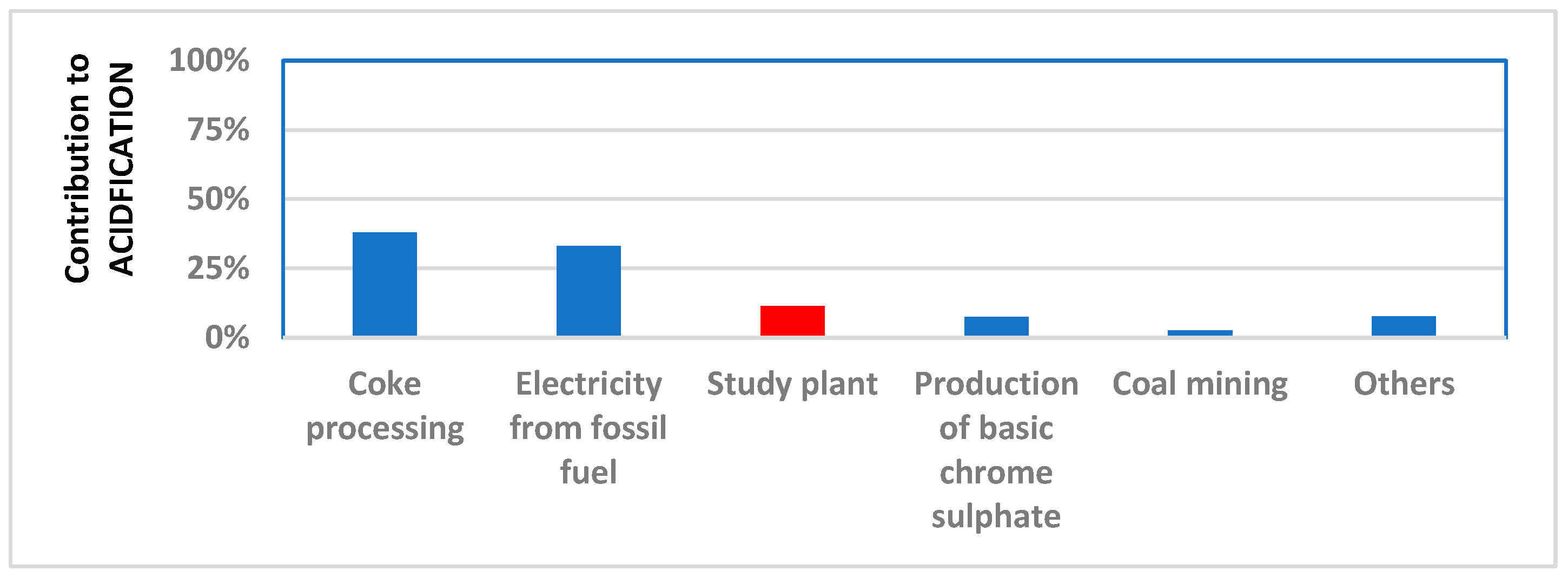
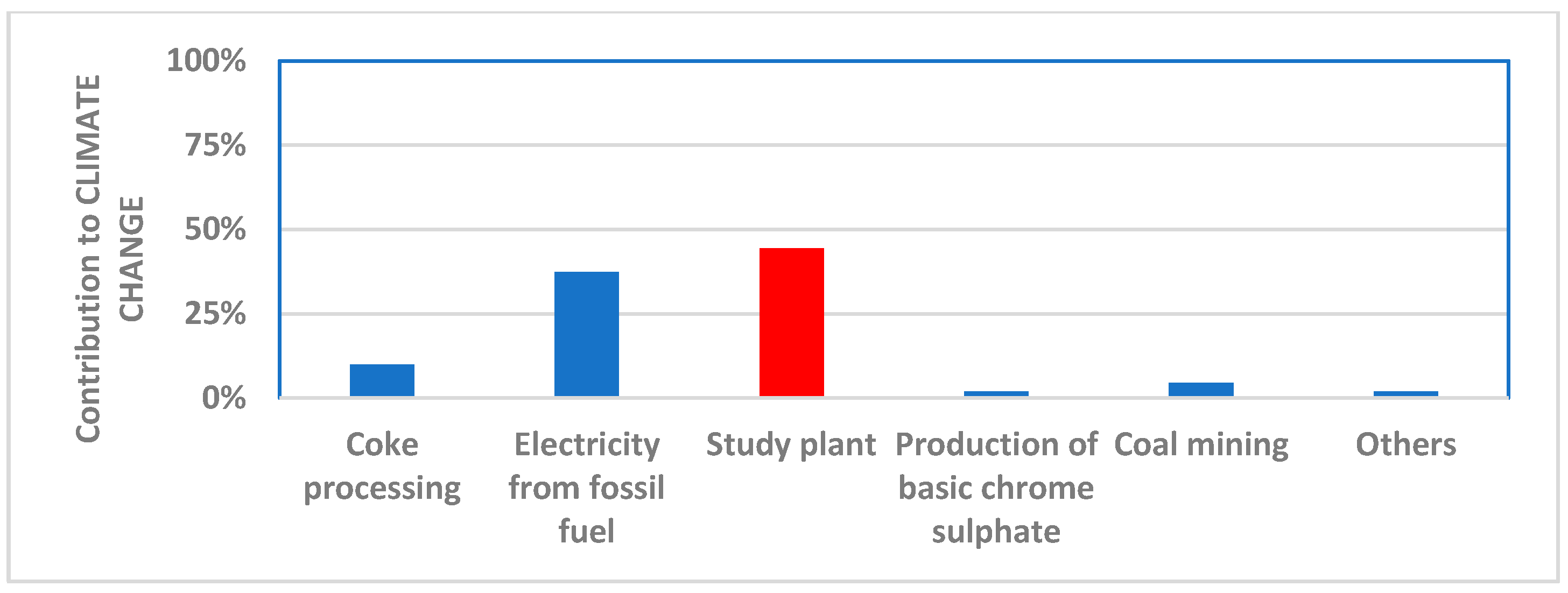
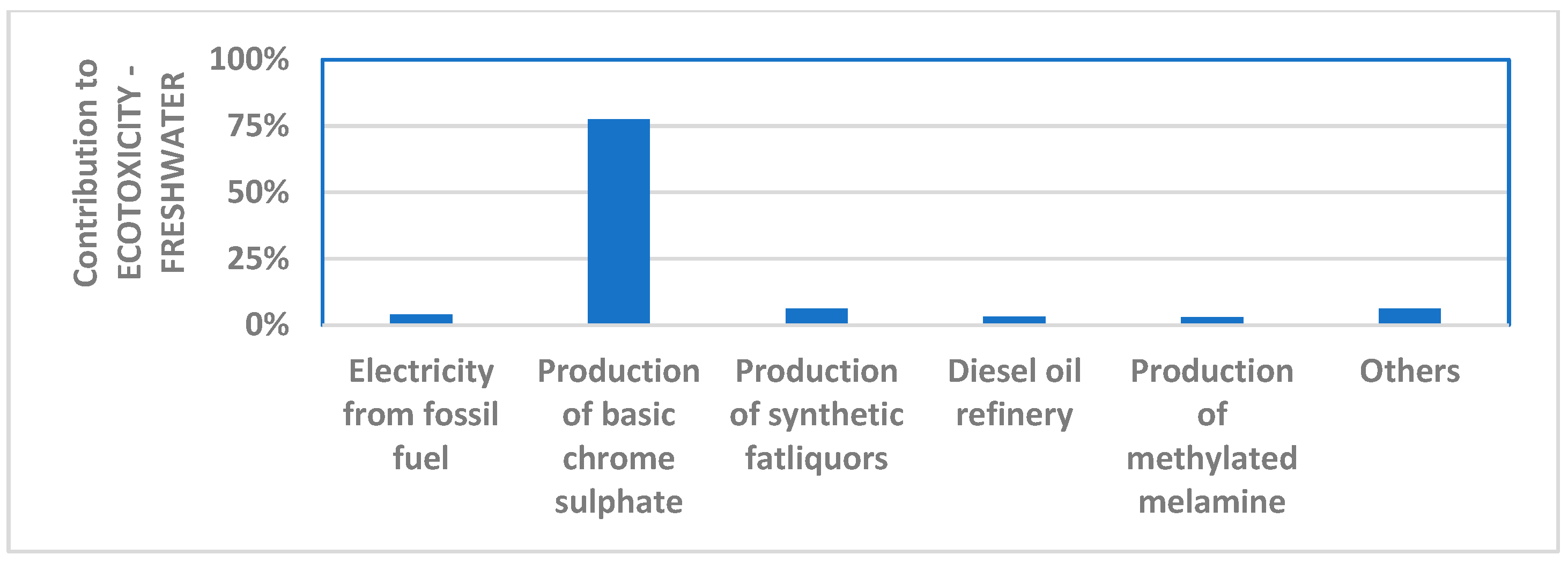
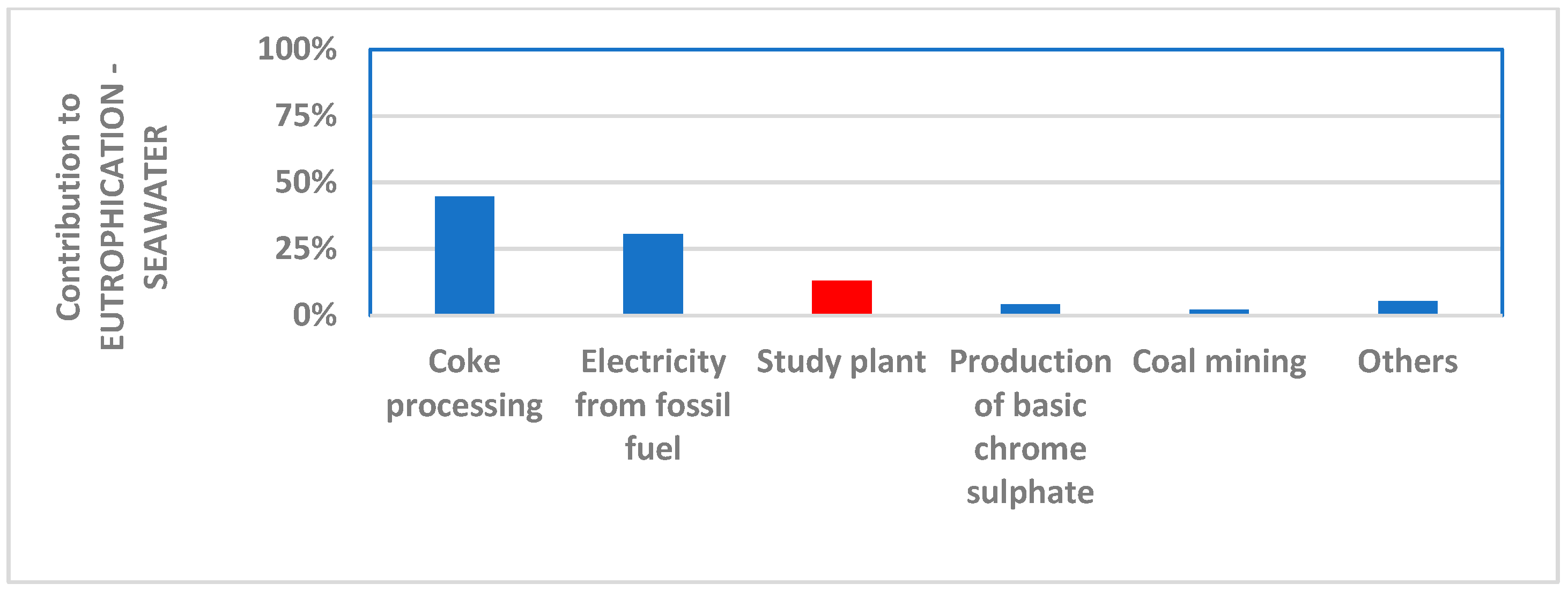
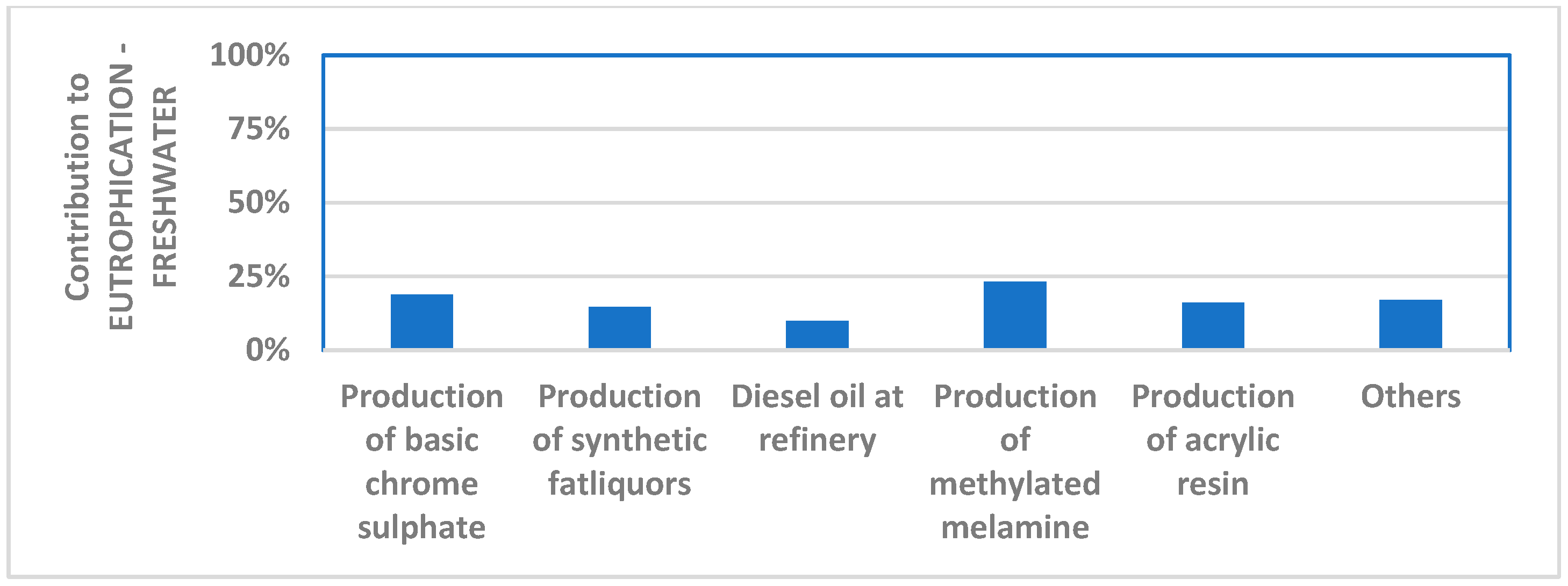
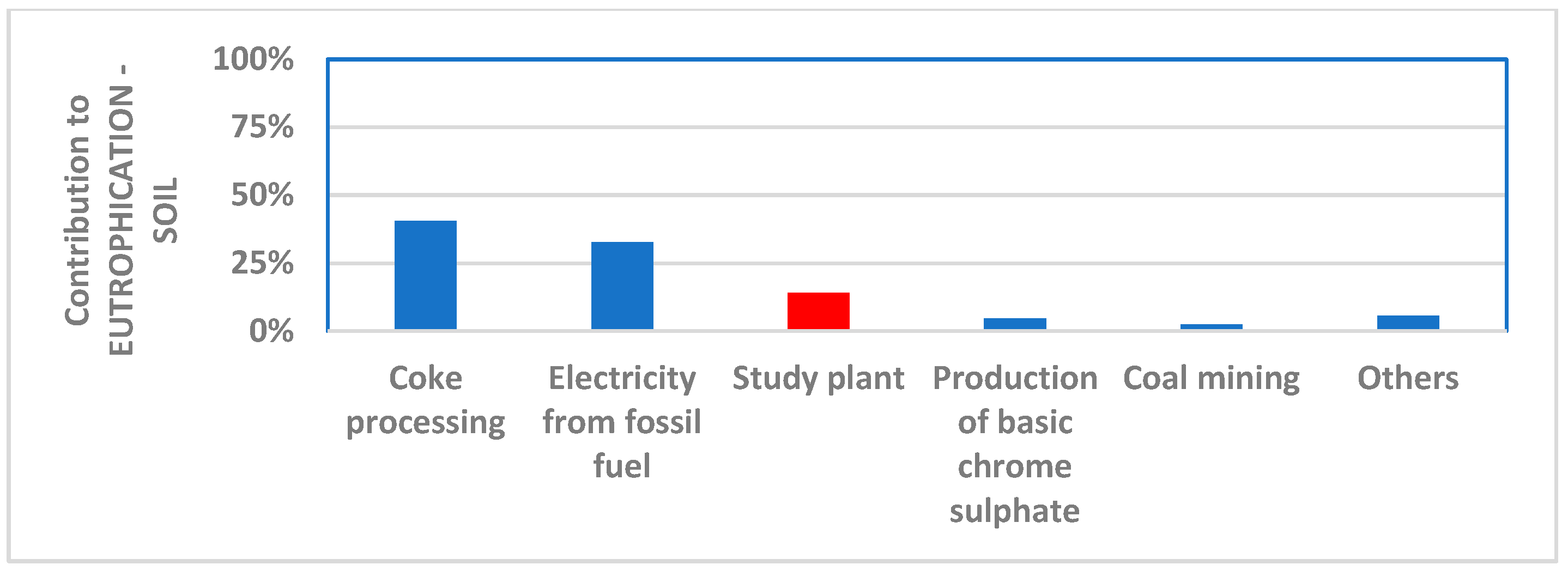
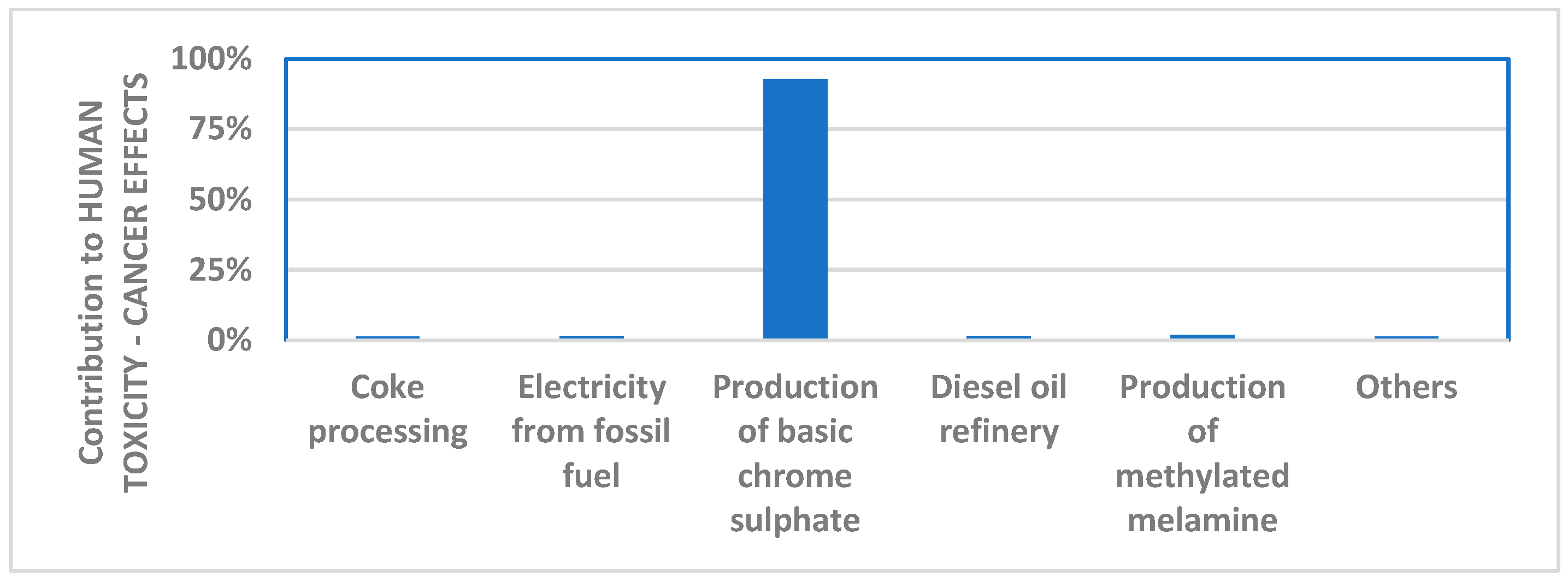
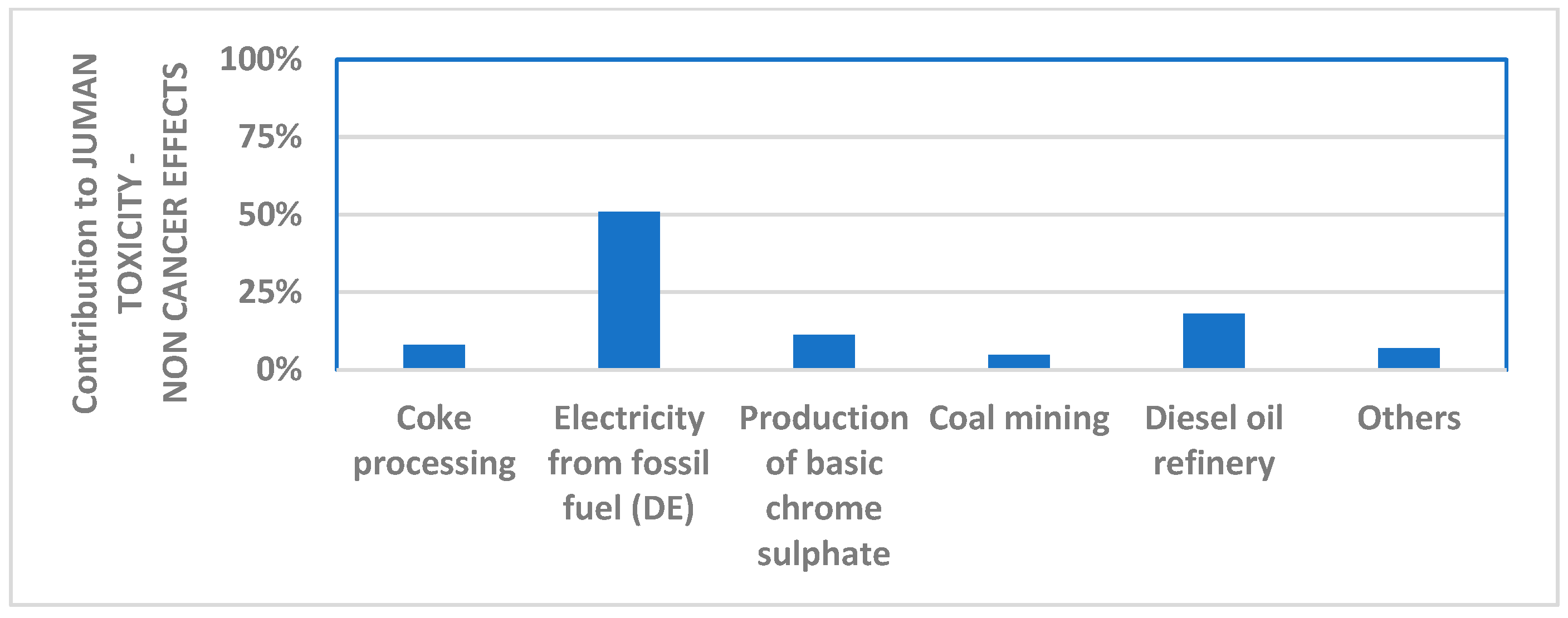
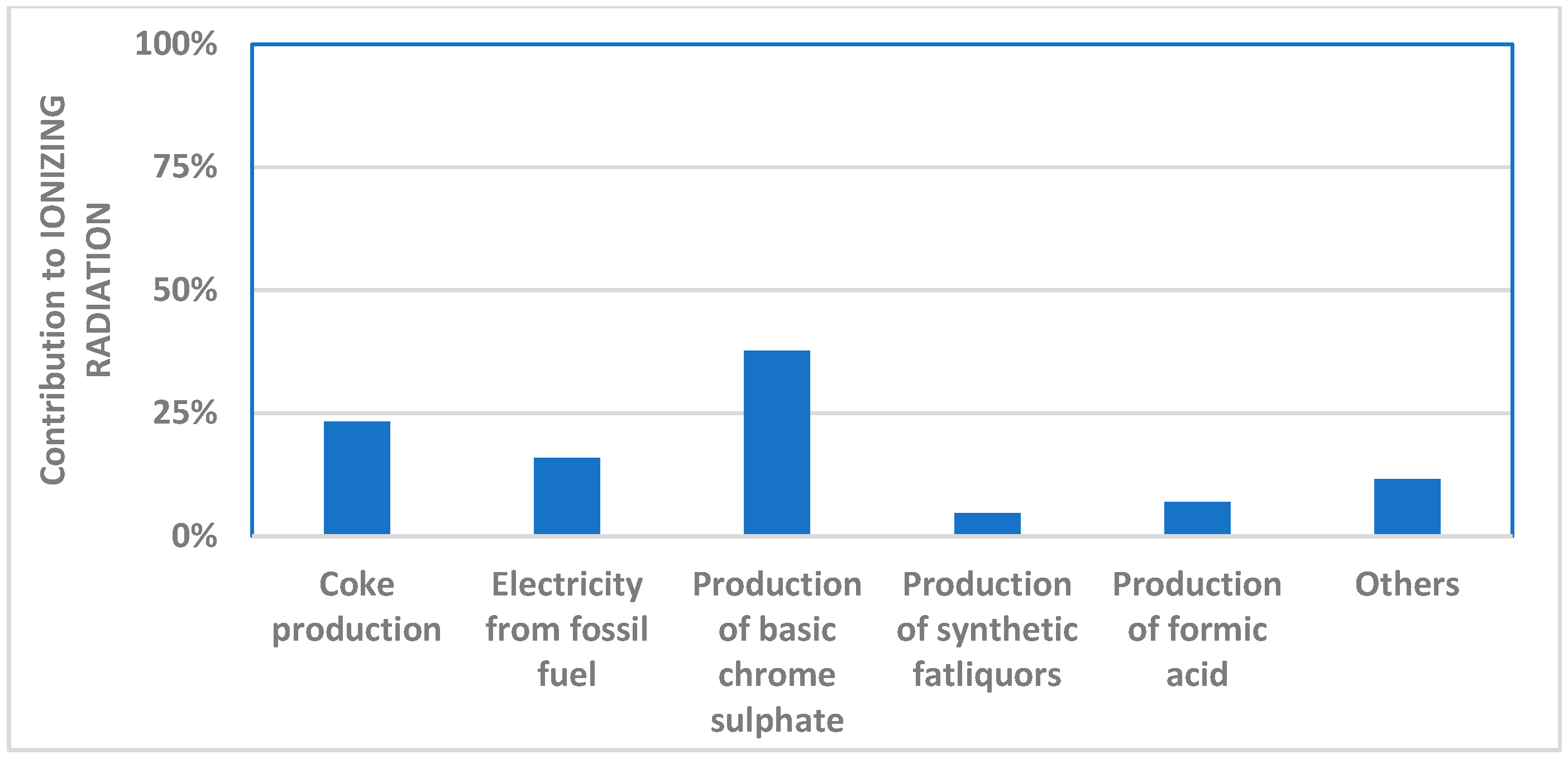
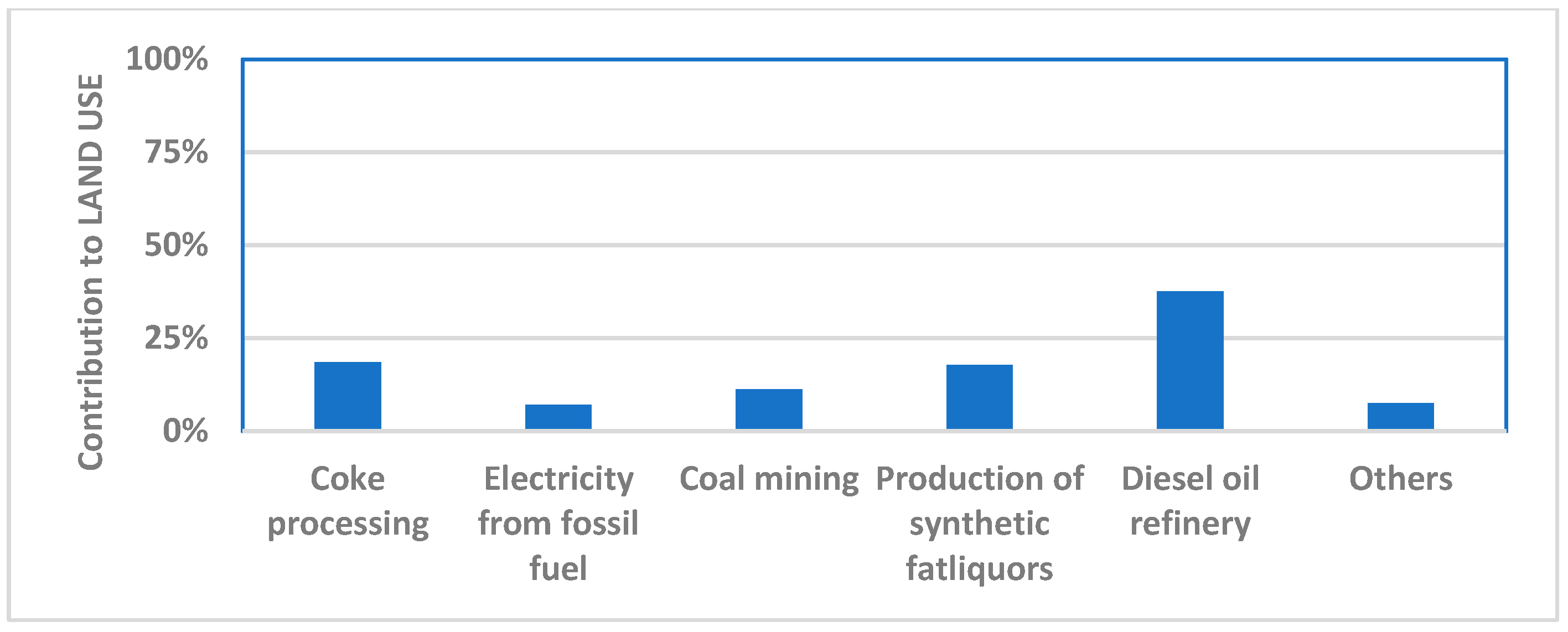
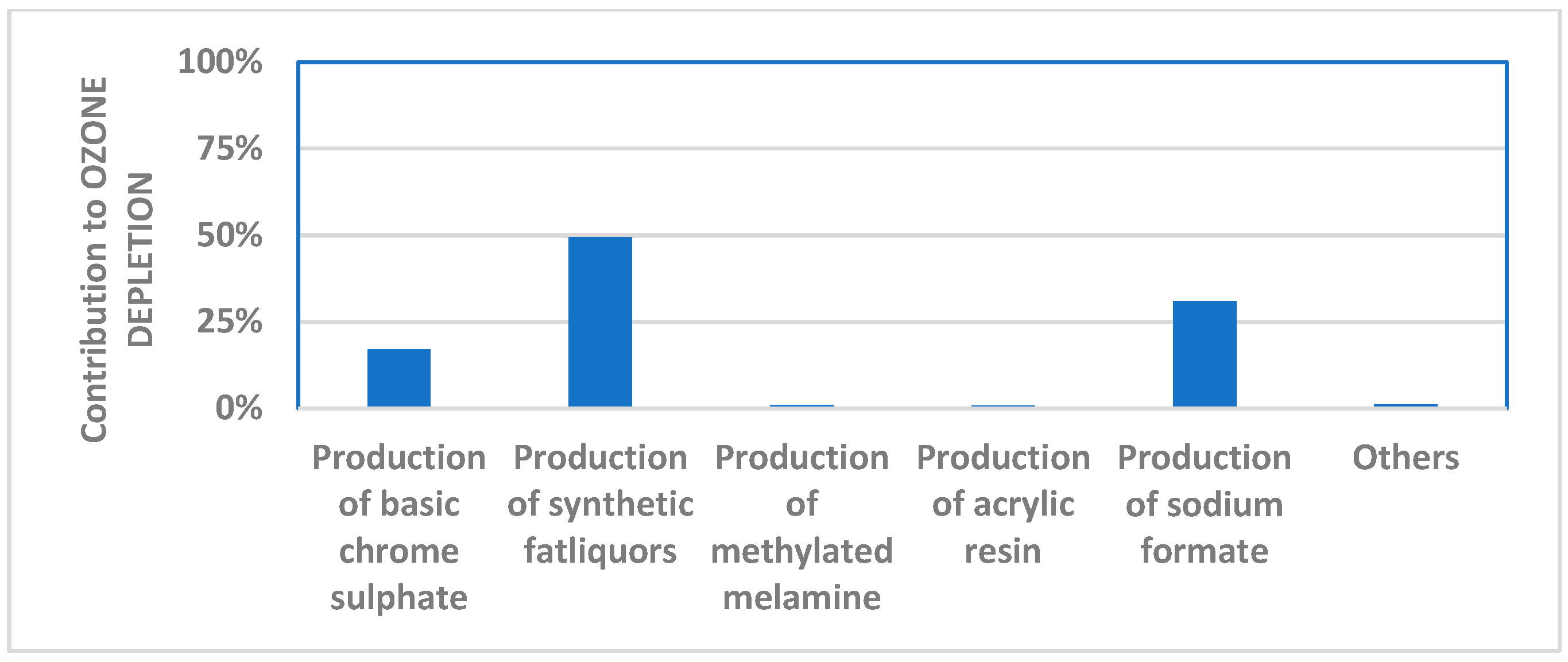
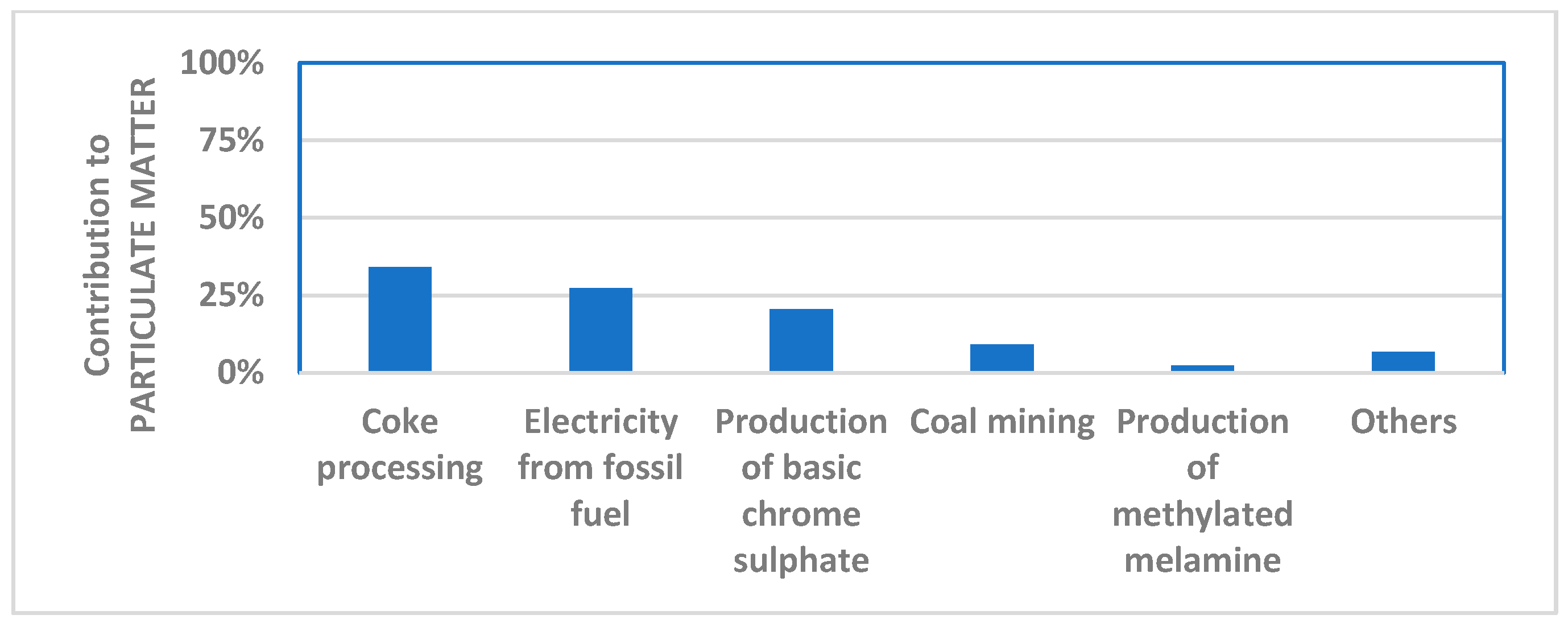
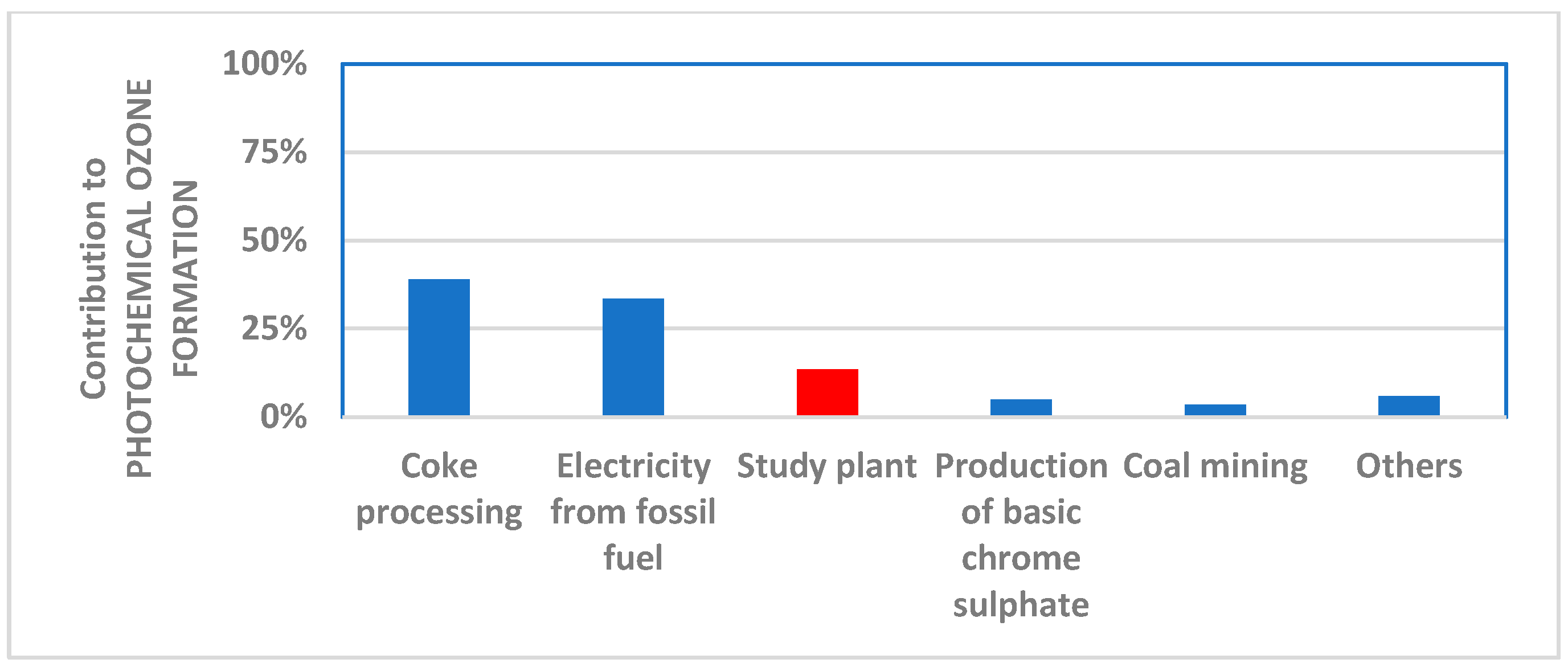
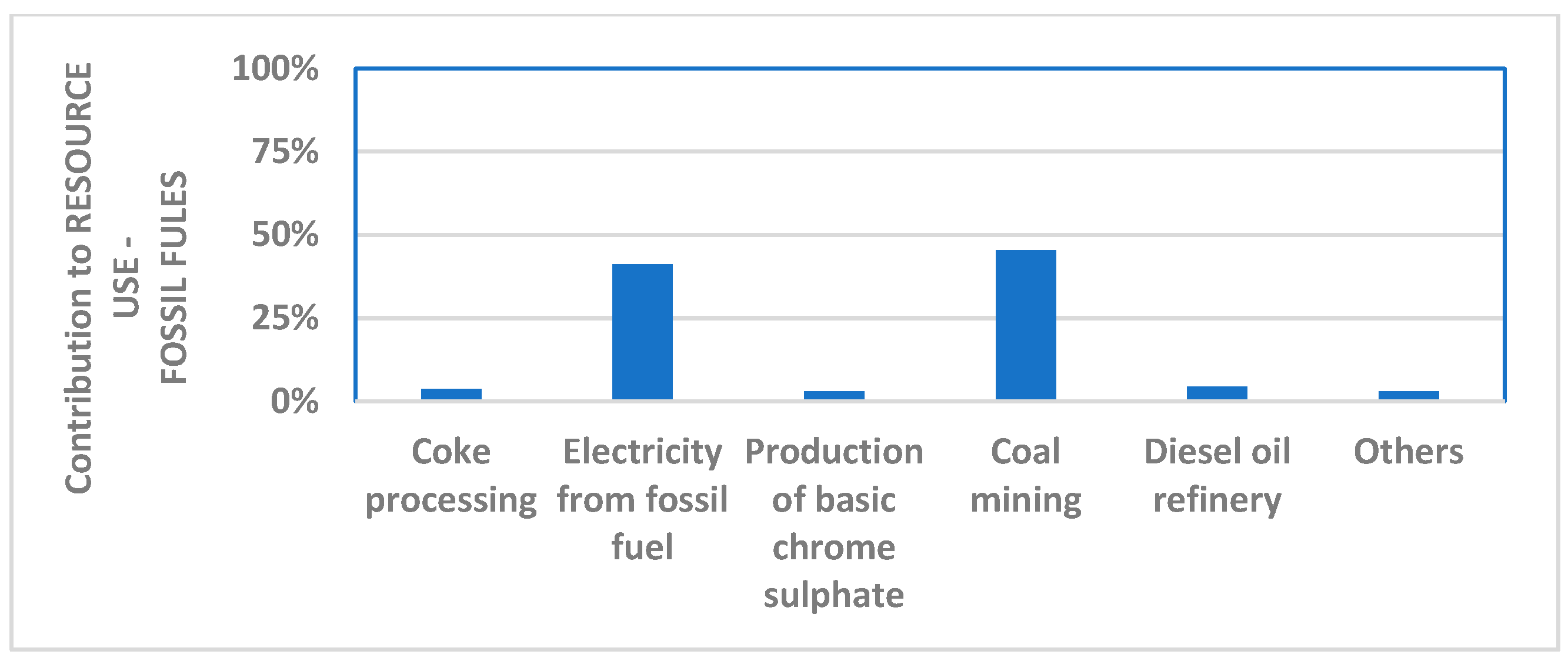
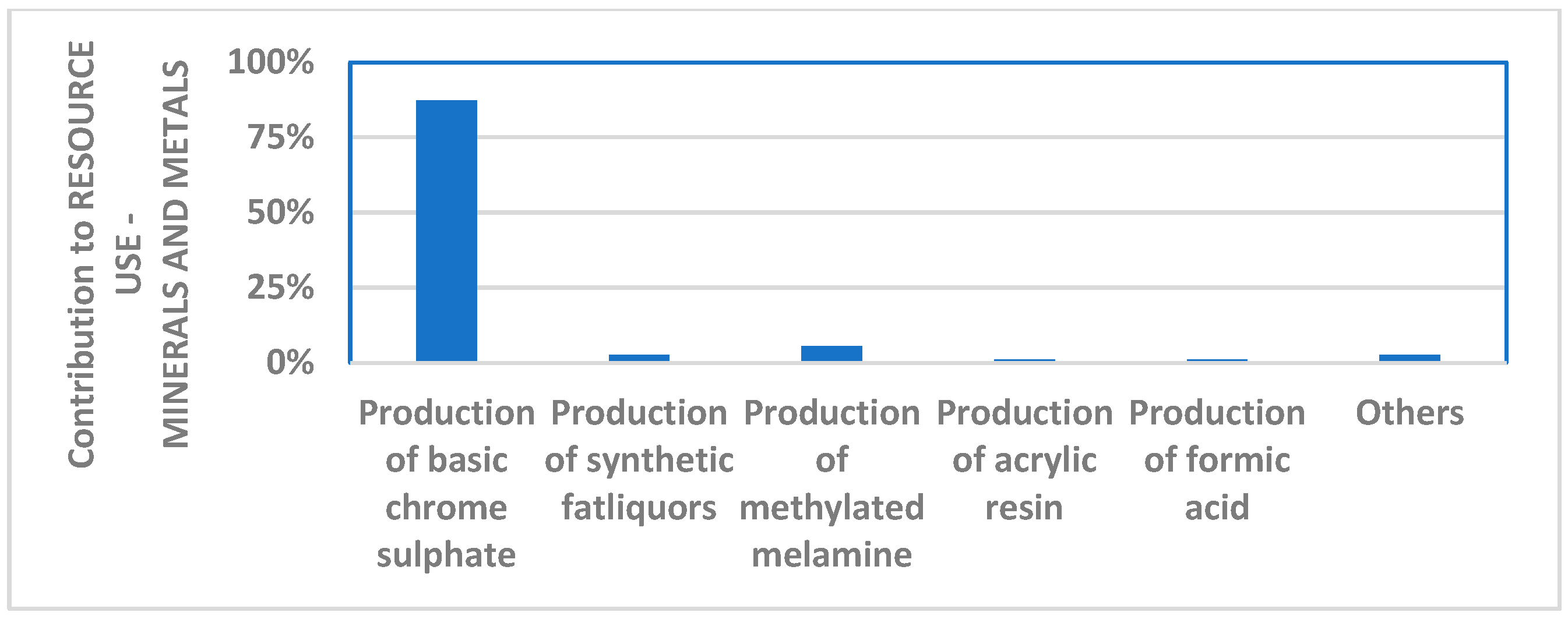
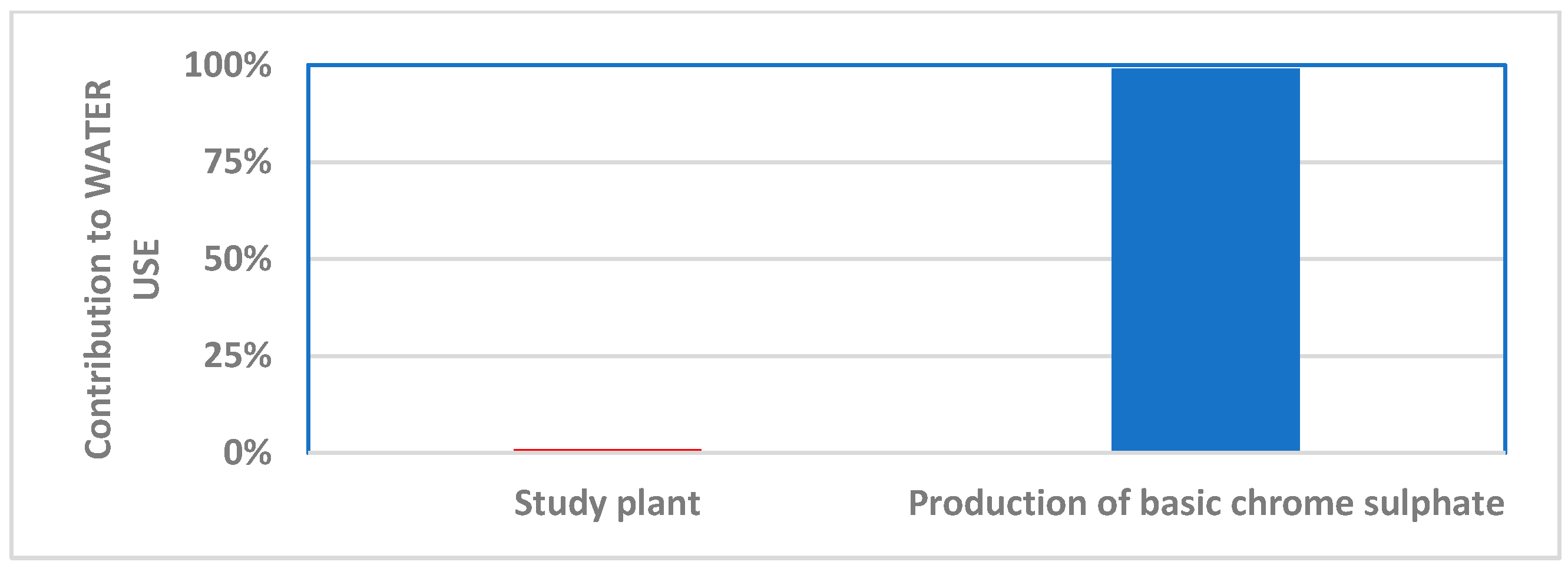
For each impact category, the contribution of each mass and energy input (in terms of mass and energy) to the post-tanning has been assessed and compared with the value due to the direct impact of the plant alone (red bar).
The impact due to the plant is evident only in some categories. The absence of values can be a positive feature of the post-tanning, in other words, a negligible contribution to a given impact category by the plant itself (and the process performed in it, too).
Looking at the diagrams, the contributions given by the plant alone can be divided into three kinds, according to their value:
  • Scarce or null contribution. This holds for very low or absent contributions. When this occurs, the post-tanning installation has no environmental impact. At a glance, it is evident that for 11 categories, namely, ecotoxicity for freshwater, eutrophication of freshwater, human toxicity with cancer effects, human toxicity without cancer effects, ionising radiation with effects on human health, land use, ozone depletion, particulate matter, use of fossil fuels, use of minerals and metals, and water use.
  • Moderate contribution. The values cannot be neglected, but they are not predominant in the whole impact. It is the case of acidification (11.3%), eutrophication of seawater (13%), eutrophication of soil (14.1%), and photochemical ozone formation (13%). The value in brackets represents the direct contribution of the plant to the whole impact.
  • Evident contribution. This is the case when the value is significant. From the plots, it is clear that only for climate change, the Indian plant gives an evident direct impact: it contributes to the whole impact of this category by 44.4%. The value depends on the carbon dioxide generated by the combustion of fossil fuels to produce the electrical energy needed for the plant itself. The amount of carbon dioxide is emitted by the stacks present in the installation area.
This analysis is also useful to identify critical points of the plant, where environmental improvements can be made.
For this Indian case, it is well evident that the main impact is the consumption of fossil fuels to produce energy, specifically, electrical energy. The reduction or, still better, elimination of this consumption could be achieved with the use of photovoltaic energy, also thanks to the localisation of the plant in a subequatorial position, where the irradiation is almost constant during the year and with high values. This would reduce the direct impact of climate change and the indirect impact of the production of photochemical ozone.
The other evident impacts are caused by activities external to the installation, and they cannot be influenced by the plant itself. For example, the production of basic chromium(III) sulphate makes use of a huge amount of water, but this is not under the power of the Indian company. To summarise, the impact reduction could be carried out with different strategies, such as the following:
  • Process changes to the salt production (production is elsewhere).
  • Reduction in salt consumption in the post-tanning (this can be performed onsite).
  • Reduction or elimination of chromium from tanning, to have green tannery or free-chromium tannery (this can be performed elsewhere).
Looking at these opportunities, it is evident that the company plays a limited role, also thinking that the true high consumption of chromium occurs in Step 2—Tanning, whereas in the post-tanning, the amounts are limited.

4.3. Impact of Post-Tanning on the Whole Tanning Process

As aforementioned, considering the whole tanning process, the main environmental impacts are caused by Step 2—Tanning. To assess the influence of the post-tanning on the whole process, its impacts have been compared to the values assessed for the whole process with the same potentiality, that is to say, 950 × 103 m2/y of crust leather (output), corresponding to 4.22 × 10⁶ kg/y of raw hide (input).
For the assessment of the whole process, the one already present in OpenLCA has been used.
Table 5 shows the results for the impact categories for both the case study and the whole process. To evidence the relevance of the post-tanning carried out in the Indian plant, the table also reports the % ratio of the impacts of its post-tanning process to the whole tannery supply chain (as aforesaid, a standard process present in the database has been used).
These results confirm that the post-tanning carried out in the Indian installation has a limited influence on the most impact categories (<1%), except for the following:
  • Climate change: in detail, 4.8% of the total, and 6.2% of the fossil fuel use. These values consider the production of energy from fossil fuels;
  • Human toxicity—carcinogenicity: 1.3%, due to the production of basic chromium(III) sulfate;
  • Photochemical ozone formation: 1.9%, due to coal mining and processing;
  • Use of fossil resources: 4.4%. This category takes into account the extraction of the fossil fuels globally used;
  • Water use: 20.8%. This impact considers the amount of water used in all the activities performed in the process, both directly and indirectly.
Once again, it is worth noting that the impacts reported in Table 5 consider the whole life cycle of the materials involved in the post-tanning or the whole process, that is to say, both direct and indirect impacts. If the environmental impacts only directly caused by the plant itself are considered, the relevance of these 5 impact categories becomes still less marked:
  • Climate change: Figure 4 shows that the relevance of the plant in this category, considered just for the post-tanning, is 44.4%; therefore, its relevance on the whole process can be assessed at most in the order of 2.8%.
  • Human toxicity—carcinogenicity: Figure 9 evidences that the plant does not influence this impact category. This is due to the low quantity of basic chromium(III) sulfate used in the installation.
  • Photochemical ozone formation: Considering the value reported in Figure 15 (13%), the assessed impact of the Indian plant on the whole tanning process is equal to 0.6%.
  • Use of fossil resources: As for Human toxicity—carcinogenicity, Figure 16 reports that the plant has no direct influence on this category.
  • Water use: In this case, looking at the value of Figure 18 (1%), an influence in the order of 0.2% is assessed.
Altogether, these data demonstrate that the direct environmental impact of the Indian plant is limited compared to the whole tanning process with the same amount of processed hide/leather, and, above all, this plant has a unique relevant impact category, namely, climate change This means that the Indian company can directly make improvements to reduce its impact on climate change, specifically, decreasing or reducing to zero the use of fossil fuels (coal and diesel oil) to produce its electrical energy. Considering the location of the plant (Southern India), photovoltaic panels could be adopted.
As a result, the fingerprint of climate change would be reduced, and, as a consequence, also the amount of photochemical ozone formation, although this impact is already rather small.
A second alternative could be the use of biomethane as a substitute for coal. Biomethane is one of the products generated from the anaerobic process of solid wastes, sludge, or residual biomass. In India, the anaerobic process is having a wide diffusion in all the States, linked to the scheduled targets for the production of electrical energy from renewable resources:
  • By 2030, 500 GW from renewable resources
  • By 2070, net-zero emissions.
Currently, Tamil Nadu has several plants where biogas is produced, eventually upgraded to biomethane.
Instead of upgrading biogas, it could be burnt directly in an internal combustion engine, to produce electrical energy in substitution of the generators burning coal and diesel oil. This kind of engine is targeted to produce electricity with high efficiency, but it can also produce hot water, showing limited losses of heat compared to the heat value of the input biogas.
In other words, for the installation, one opportunity would be buying biogas from a close anaerobic digester and exploiting it for its internal uses.
Given that biogas is a renewable source, its combustion would reduce the impacts produced by the emissions.
At last, the use of Artificial Intelligence should be considered for improving the process sustainability in some of the operations performed in the post-tanning, as described by Zhang et al. [15] in a study on energy saving and low carbon emissions in tanning with chrome.
Altogether, these results constitute a contribution to the whole tannery sector, for a deeper knowledge of the environmental impacts due to the supply chain and in view of actions to reduce these impacts. It is well known that the first part of the process (pre-tanning and tanning) gives the heaviest impacts. Therefore, the policy makers and stakeholders should address their activities to the companies specifically working in these phases, without disregarding the post-tanning and finishing sections.

5. Conclusions

Tannery is a well-known industrial sector with heavy environmental impacts, mainly on water and air. This is generated by its complex supply chain, which involves many physical and chemical operations and the use of toxic and pollutant chemicals. The changes or substitution of some of these activities and/or chemicals are useful to reduce the local environmental impacts. However, these improvements refer to the site where they are carried out, whereas the overall environmental impacts must also consider the ones generated by chemicals used in the whole process, as well as the energy production, which is often performed elsewhere.
In this frame, Life Cycle Assessment constitutes an efficient tool to evidence the categories with high environmental impacts, with the analysis performed on all the materials, chemicals, and kinds of energy involved in the whole supply chain. As shown in this study, its application to real cases can help to suggest improvements to do both in the installation with the aim of reducing its direct environmental footprint and in the industrial sectors producing chemicals and energy used within the whole tannery supply chain.
The first improvement should start locally, inside the installation, reducing the main impacts onsite. The reasons can be double: first, the decisions are taken at the company level, and this should make the improvement achievement faster; second, the costs are assessed by the company, and the improvement realisation can be distributed over time according to the company’s budget.
The improvements in other linked industrial sectors are much more complex, involving companies located in other States or with specific policies and geopolitical conditions. Moreover, they can be chained with other fields and interests, leading to longer times for their realisation.
With reference to the studied case, Life Cycle Assessment has confirmed that the 3rd step of the tannery process has limited environmental impacts compared to the values given by the whole process. Notwithstanding the criticism due to the assessment of a single case, the result supports the findings evidenced by the technical literature. Therefore, the study contributes to further confirmation.
Thinking that improvements are always possible, in this case, suggestions can be taken from the results achieved with LCA, which has evidenced that the plant has its proper impact on climate change, due to the use of fossil fuels (coal and diesel oil) for local power generation. Therefore, the company could reduce the impact in this category by using fuel from renewable sources (direct reduction) or by reducing the power consumption. The first option could be implemented by the installation of photovoltaic panels to substitute the power from fossil fuels with a renewable resource. Considering that the company is in Tamil Nadu, where the irradiation is high, the option could be a good choice. Nowadays, the use of renewable sources for power generation is a worldwide issue. About India, its target is the generation of 500 GW by 2030, and generation by companies for their internal use constitutes a contribution, even if of limited extent. To diffuse a similar approach, the role of policymakers will be fundamental.
In the specific case, the effort to install photovoltaic panels would also constitute an element of environmental virtuosity to be spent on the green market. The study presented in this paper has a double methodological value:
(1) It demonstrates that the application of LCA to a real case is useful to assess the environmental impact of the plant, both looking at its direct effects and considering the impacts due to all the chemicals and energy consumed for the activities, even if they are produced far from the site itself;
(2) It gives the relevance of the impact categories, identifying where the effort must be performed to global level to reduce these impacts.

Author Contributions

Conceptualisation, G.D. and F.C.; methodology, G.D. and F.C.; software, G.D.; validation, F.C.; data curation, G.D. and F.C.; writing—original draft preparation, G.D. and F.C.; writing—review and editing, G.P.G., S.S., and F.C.; supervision, F.C. All authors have read and agreed to the published version of the manuscript.

Funding

This research received no external funding.

Institutional Review Board Statement

Not applicable.

Informed Consent Statement

Not applicable.

Data Availability Statement

The original contributions presented in this study are included in the article. Further inquiries can be directed to the corresponding author.

Conflicts of Interest

The authors declare no conflicts of interest.

References

  1. Brugnoli, F.; Sena, K.; Zugno, L.; Oggioni, A. A global study on the Life Cycle Assessment (LCA) of the modern cow leather industry. Discov. Sustain. 2025, 6, 80. [Google Scholar] [CrossRef]
  2. Daddi, T.; Ahmad, S.; Albano, F. Fostering environmental sustainability of leather industry: Environmental impact assessment and improvement prospects for leather-tanning technologies. Environ. Sci. Pollut. Res. 2024, 32, 29995–30012. [Google Scholar] [CrossRef] [PubMed]
  3. Marrucci, L.; Corcelli, F.; Daddi, T.; Iraldo, F. Using a life cycle assessment to identify the risk of “circular washing” in the leather industry. Resour. Conserv. Recycl. 2022, 185, 106466. [Google Scholar] [CrossRef]
  4. Mozhiarasi, V.; Zahedi Nezhad, S.; Punitha, V.; Rose, P.M.B.; Das, I.; Weichgrebe, D.; Srinivasan, S.V. 10—Life cycle assessment as a tool for the environmental improvement of the leather industry. In Advanced Technologies in Wastewater Treatment; Basile, A., Cassano, A., De, S., Mondal, S., Eds.; Elsevier: Amsterdam, The Netherlands, 2025; pp. 305–336. ISBN 9780443138447. [Google Scholar] [CrossRef]
  5. Oliveira, M.; Zucaro, A.; Passaro, R.; Ulgiati, S. Life cycle assessment of leather treatment at various scales: Comparison between chrome and vegetable processes. Int. J. Life Cycle Assess. 2024, 29, 153–173. [Google Scholar] [CrossRef]
  6. Shi, J.; Sheng, L.; Salmi, O.; Masi, M.; Puig, R. Life cycle assessment insights into nanosilicates-based chrome-free tanning processing towards eco-friendly leather manufacture. J. Clean. Prod. 2024, 434, 139892. [Google Scholar] [CrossRef]
  7. Tasca, A.L.; Puccini, M. Leather tanning: Life cycle assessment of retanning, fatliquoring and dyeing. J. Clean. Prod. 2019, 226, 720–729. [Google Scholar] [CrossRef]
  8. Ardolino, F.; Parrillo, F.; Arena, U. Environmental performance of three innovative leather production processes using less chromium and water. Sustain. Prod. Consum. 2024, 50, 177–190. [Google Scholar] [CrossRef]
  9. Morera, J.M.; Borri, E.; Zsembinszki, G.; Vérez, D.; Gasa, G.; Bartolí, E.; Cabeza, L.F. Energy Assessment of a Tannery to Improve Its Sustainability. Sustainability 2023, 15, 5599. [Google Scholar] [CrossRef]
  10. Black, M.; Canova, M.; Rydin, S.; Scalet, B.M.; Roudier, S.; Sancho, L.D. Best available techniques (BAT) reference document for the tanning of hides and skins. In Industrial Emissions Directive 2010/75/EU (Integrated Pollution Prevention and Control) EU BREF Guidelines 2013; JRC83005; Publications Office of the European Union: Luxembourg, 2013. [Google Scholar] [CrossRef]
  11. ISO 14040:2006; Environmental Management—Life Cycle Assessment—Principles and Framework. ISO: Geneva, Switzerland, 2006.
  12. ISO 14044:2006; Environmental Management—Life Cycle Assessment—Requirements and Guidelines. ISO: London, UK, 2006.
  13. Damiani, M.; Ferrara, N.; Ardente, F. Understanding Product Environmental Footprint and Organisation Environmental Footprint Methods; JRC129907; Publications Office of the European Union: Luxembourg, 2022. [Google Scholar] [CrossRef]
  14. OpenLCA v2. Available online: https://www.openlca.org (accessed on 23 November 2023).
  15. Zhang, L.; Cheng, Q.; Wang, C.; Huang, C.; Lin, W. Energy-saving and low-carbon leather production: AI-assisted chrome tanning process optimization. J. Clean. Prod. 2024, 457, 142464. [Google Scholar] [CrossRef]
Figure 1. Average consumption and emissions of traditional tannery.
Sustainability 18 01218 g001
Figure 2. Operations and chemicals of the studied plant.
Sustainability 18 01218 g002
Figure 3. Scheme of LCA.
Sustainability 18 01218 g003
Figure 4. Contributions to acidification.
Sustainability 18 01218 g004
Figure 5. Contributions to climate change.
Sustainability 18 01218 g005
Figure 6. Contributions to the ecotoxicity of freshwater.
Sustainability 18 01218 g006
Figure 7. Contributions to the eutrophication of seawater.
Sustainability 18 01218 g007
Figure 8. Contributions to the eutrophication of freshwater.
Sustainability 18 01218 g008
Figure 9. Contributions to the eutrophication of soil.
Sustainability 18 01218 g009
Figure 10. Contributions to the human toxicity (cancer effects).
Sustainability 18 01218 g010
Figure 11. Contributions to the human toxicity (non-cancer effects).
Sustainability 18 01218 g011
Figure 12. Contributions to the ionising radiation with effects on human health.
Sustainability 18 01218 g012
Figure 13. Contributions to the land use.
Sustainability 18 01218 g013
Figure 14. Contributions to ozone depletion.
Sustainability 18 01218 g014
Figure 15. Contributions to the particulate matter.
Sustainability 18 01218 g015
Figure 16. Contributions to the photochemical ozone formation.
Sustainability 18 01218 g016
Figure 17. Contributions to the resource use (fossil fuels).
Sustainability 18 01218 g017
Figure 18. Contributions to the resource use (minerals and metals).
Sustainability 18 01218 g018
Figure 19. Contributions to the water use.
Sustainability 18 01218 g019
Table 1. Chemical consumption in the case study.
ChemicalConsumption (kg/y)
Fatliquor 11980
Fatliquor 23000
Formic acid1800
Sodium formate850
Basic chromium(III) sulphate2300
Acrylic resin2000
Melamine resin without formaldehyde2500
Table 2. Yearly emissions from the stacks present in the installation of the case study.
CompoundStack 1
(kg/y)
Stack 2
(kg/y)
CO21.3 × 1068.05 × 104
NOx316.3112.5
Dust (PM > 10 µm)321.228.6
SO2153.3
Table 3. Impact categories and their indicator used in the study.
Impact CategoryIndicatorUnit
AcidificationAccumulated Exceedancekg H+ eq
Climate changeGlobal Warming Potential (GWP-100)kg CO2 eq
Climate change-biogenic
Climate change-fossil
Climate change-land use and land use change
Ecotoxicity of freshwaterComparative Toxic Unit for the ecosystemCTUe
Eutrophication of freshwaterFraction of nutrients reaching freshwaterkg P eq
Eutrophication of seawaterFraction of nutrients reaching seawaterkg N eq
Eutrophication of soilAccumulated Exceedancekg N eq
Human toxicity—cancer effectsComparative Toxic Unit for humansCTUh
Human toxicity—non-cancer effectsComparative Toxic Unit for humansCTUh
Ionising radiation (effects on human health)Human exposure to U235kBq U-235 eq
Land useSoil Quality IndexPt
Ozone depletionOzone Depletion Potentialkg CFC-11 eq
Particulate matterEffects on human healthDisease incidence
Photochemical ozone formationTropospheric ozone increasekg NMVOC eq
Resource use—fossil fuelsAbiotic resource depletion—fossil fuelMJ
Resource use—minerals and metalsAbiotic resource depletion—minerals and metalskg Sb eq
Water useUser deprivation potentialm3 deprived
Table 4. Assessment of the categories.
Impact CategoryUnit
(per kg of Raw Hide)
Value
Acidificationkg H+ eq1.09 × 10−6
Climate changekg CO2 eq0.74
Climate change-biogenic 1.2 × 10⁻⁴
Climate change-fossil 0.74
Climate change-land use and land use change 2.3 × 10⁻⁴
Ecotoxicity of freshwaterCTUe0.12
Eutrophication of freshwaterkg P eq1.38 × 10−6
Eutrophication of seawaterkg N eq0.31 × 10−3
Eutrophication of soilkg N eq0.22 × 10−6
Human toxicity—cancer effectsCTUh9.98 × 10−9
Human toxicity—non-cancer effectsCTUh1.12 × 10−8
Ionising radiation (effects on human health)kBq U-235 eq2.01 × 10−3
Land usePt0.55
Ozone depletionkg CFC-11 eq0.23 × 10−9
Particulate matterDisease incidence1.06 × 10−8
Photochemical ozone formationkg NMVOC eq7.74 × 10−4
Resource use—fossil fuelsMJ6.66
Resource use—minerals and metalskg Sb eq3.06 × 10−7
Water usem3 deprived25.12
Table 5. Impact of the Indian installation on the whole tannery process with the same potentiality.
Impact CategoryUnit
(per kg of Raw Hide)
Case StudyWhole Process I m p a c t   o f   t h e   C a s e   S t u d y I m p a c t   o f   t h e   W h o l e   P r o c e s s 100
Acidificationkg H+ eq1.09 × 10−61.45 × 10−40.8
Climate changekg CO2 eq0.7415.574.8
Climate change-biogenic 1.2 × 10−42.944.1 × 10−3
Climate change-fossil 0.7411.926.2
Climate change-land use and land use change 2.3 × 10−40.723.2 × 10−2
Ecotoxicity. freshwaterCTUe0.12130.339.2 × 10−2
Eutrophication, freshwaterkg P eq1.38 × 10−61.37 × 10−30.1
Eutrophication, seawaterkg N eq0.31 × 10−35.54 × 10−20.6
Eutrophication, soilkg N eq0.22 × 10−67.60 × 10−30.6
Human toxicity—carcinogenicityCTUh9.98 × 10−97.46 × 10−71.3
Human toxicity—non-carcinogenicityCTUh1.12 × 10−89.48 × 10−60.1
Ionising radiation (effects on human health)kBq U-235 eq2.01 × 10−30.9930.2
Land usePt0.551.27 × 1034.3 × 10−2
Ozone depletionkg CFC-11 eq0.23 × 10−94.56 × 10−65.0 × 10−3
Particulate matterDisease incidence1.06 × 10−81.30 × 10−60.8
Photochemical ozone formation (effects on human health)kg NMVOC eq7.74 × 10−44.12 × 10−21.9
Resource use—fossil fuelsMJ6.66150.94.4
Resource use—minerals and metalskg Sb eq3.06 × 10−78.81 × 10−50.4
Water usem3 deprived25.1212120.8
Disclaimer/Publisher’s Note: The statements, opinions and data contained in all publications are solely those of the individual author(s) and contributor(s) and not of MDPI and/or the editor(s). MDPI and/or the editor(s) disclaim responsibility for any injury to people or property resulting from any ideas, methods, instructions or products referred to in the content.