Article

Improving the Energy Performance of Residential Buildings Through Solar Renewable Energy Systems and Smart Building Technologies: The Cyprus Example

Department of Architecture, Institute of Graduate Studies and Research, Girne American University, University Drive, Karmi Campus, Karaoğlanoğlu P.O. Box 5, Cyprus
*
Author to whom correspondence should be addressed.
Sustainability 2026, 18(3), 1195; https://doi.org/10.3390/su18031195 (registering DOI)
Submission received: 30 December 2025 / Revised: 16 January 2026 / Accepted: 22 January 2026 / Published: 24 January 2026

Abstract

Residential buildings in Mediterranean regions remain major contributors to energy consumption and greenhouse gas emissions. Existing studies often assess renewable energy technologies or innovative building solutions in isolation, with limited attention to their combined performance across different residential typologies. This study evaluates the integrated impact of solar renewable energy systems and smart building technologies on the energy performance of residential buildings in Cyprus. A typology-based methodology is applied to three representative residential building types—detached, semi-detached, and apartment buildings—using dynamic energy simulation and scenario analysis. Results show that solar photovoltaic systems achieve higher standalone reductions than solar thermal systems, while smart building technologies significantly enhance operational efficiency and photovoltaic self-consumption. Integrated solar–smart scenarios achieve up to 58% reductions in primary energy demand and 55% reductions in CO2 emissions, and 25–30 percentage-point increases in PV self-consumption, enabling detached and semi-detached houses to approach national nearly zero-energy building (nZEB) performance thresholds. The study provides climate-specific, quantitative evidence supporting integrated solar–smart strategies for Mediterranean residential buildings and offers actionable insights for policy-making, design, and sustainable residential development.

1. Introduction

Buildings account for a significant share of global energy consumption and greenhouse gas (GHG) emissions, accounting for roughly 40% of total energy use and associated emissions in advanced economies [1]. In the European Union, the residential sector alone accounts for a substantial share of final energy demand, driven by heating, cooling, lighting, and appliance loads [2]. In Cyprus, residential buildings account for over 30% of national energy consumption, and this figure is expected to rise without targeted interventions to increase energy efficiency and integrate renewable energy sources (RESs) [2]. Consequently, enhancing the energy performance of residential buildings has become a central objective of contemporary sustainable development strategies, both to mitigate climate change and to reduce reliance on imported fossil fuels.
The dependence on conventional energy sources for electricity and heat generation not only contributes to elevated GHG emissions but also exposes households to volatile energy prices and security risks. Cyprus’s insulated electricity grid and heavy reliance on imported fuels underscore the urgency of transitioning to locally available renewable energy solutions, especially given the island’s high solar irradiation levels and Mediterranean climate [3]. The Energy Performance of Buildings Directive (EPBD) and its recent revisions reinforce this imperative by mandating zero-emission standards for new buildings and requiring Member States to support solar readiness and RES deployment in the building sector by 2030 [4]. These policy shifts reflect broader EU goals to decarbonize residential energy use and to promote nearly zero-energy buildings (NZEBs) as benchmarks for future construction and retrofit efforts.
Among RESs, solar energy technologies—including photovoltaic (PV) and solar thermal systems—have emerged as particularly promising for residential applications due to their scalability and compatibility with existing building forms. In Cyprus, solar thermal systems for domestic hot water production have achieved widespread penetration, with installation rates exceeding 90% of dwellings, mainly owing to favorable climatic conditions and supportive policy frameworks [5]; this prevalence has enabled the island to exceed EU targets for renewable heating and cooling in buildings [6]. Despite this success, rooftop PV solar electricity generation remains underutilized relative to its potential, suggesting that further integration of solar systems could yield significant gains in energy performance and emissions reductions.
Energy performance research globally has increasingly focused on integrating renewable energy technologies (RETs) with advanced control systems to achieve sustainable, high-performance building outcomes. Recent reviews highlight that integrating PVs with efficient energy management systems and building energy management systems (BEMS) can substantially improve building energy performance and occupant comfort while reducing operational emissions [2,3,7]. For instance, hybrid energy systems combining PV arrays, solar thermal collectors, and smart IoT-based controls have demonstrated significant improvements in energy efficiency and load balancing compared with conventional configurations [8]. Moreover, the deployment of BEMS and smart readiness indicators has been linked to more adaptive, responsive control of HVAC, lighting, and energy storage systems, thereby further enhancing energy performance under variable environmental conditions [9].
Despite these advances, there remains a clear need for context-specific research examining the performance of solar RESs and smart technologies within Cyprus’s unique climatic, architectural, and regulatory environment. While the impacts of renewable energy systems and building energy management systems on building energy demand have been examined in previous studies, the results presented here should be understood as a complementary, context-specific contribution that extends existing knowledge through a typology-based, climate-responsive assessment for Cyprus.
Furthermore, existing studies of Mediterranean residential buildings have shown that integration of building-applied photovoltaics (BAPV) or building-integrated photovoltaics (BIPV) can materially improve energy balance and reduce net energy demand when appropriately configured with building orientation and typology [10]. However, research specifically assessing real-world combinations of solar systems and digitalized energy management strategies in Cyprus is limited. Compounding this gap are findings that Cyprus’s official energy performance simulation standards—such as iSBEM-Cy—may significantly misestimate actual energy consumption, particularly for cooling loads, highlighting the need for more empirical and simulation-based studies to align modeled performance with lived outcomes [5,6,10].
Smart building technologies, encompassing sensors, automation, and IoT-enabled controls, offer additional pathways to improve energy performance by optimizing energy flows, predicting consumption patterns, and enabling demand-side management. A growing body of literature suggests that advanced control systems improve energy efficiency by enabling real-time responses to environmental and occupancy changes, reducing waste, and enhancing the integration of intermittent RESs, such as solar PV [10]. The Smart Readiness Indicator (SRI) framework, recently developed within the EU, underscores the importance of digital readiness in supporting adaptive energy management features that complement the deployment of renewable technologies [11]. However, the combined impact of solar RESs and smart building technologies on energy performance—especially in existing residential buildings with diverse construction eras, orientations, and occupancy patterns—remains underexplored.
In Cyprus, although solar thermal solutions have historically dominated renewable energy penetration, there is growing attention to solar PV and smart technologies as means to further decarbonize residential energy use. Empirical assessments in Northern Cyprus, for example, have examined the performance and initial investment costs of solar domestic hot water (SDHW) systems, indicating favorable outcomes for renewable integration when economic variables are considered [9,10,11]. However, comprehensive studies that simultaneously evaluate the potential of solar PV generation, smart energy management interventions, and their combined effects on overall energy performance are scarce. This gap is particularly salient given the Mediterranean climate’s influence on both energy demand and solar resource availability.
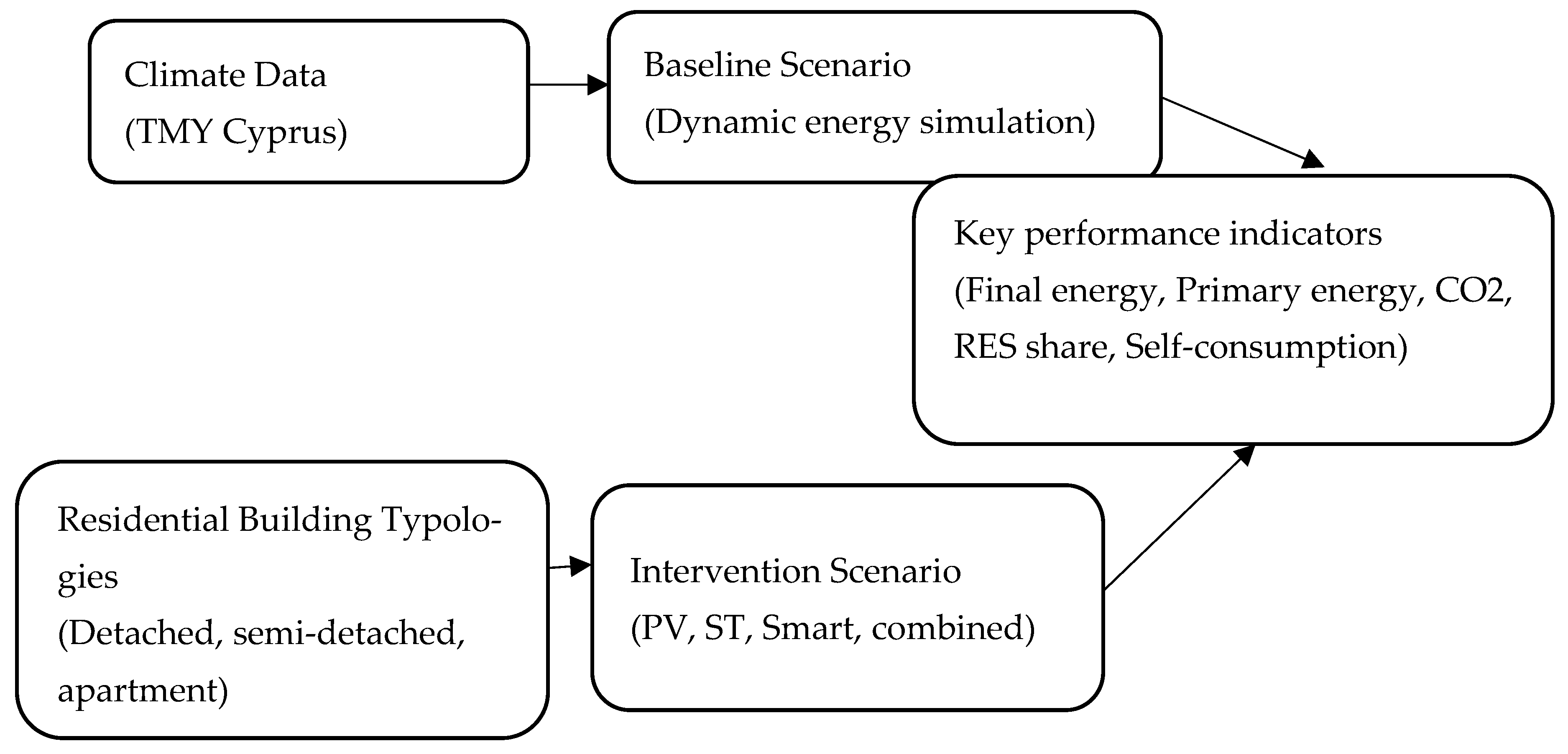
The present study addresses these gaps by systematically evaluating how solar renewable energy systems and smart building technologies can improve the energy performance of residential buildings in Cyprus. Through a combination of energy performance simulation, scenario modeling, and analysis of policy and technical barriers, this research aims to quantify the impacts of on-site solar systems augmented by digital control strategies on key performance indicators, including primary energy consumption, peak load reduction, and GHG emissions. By focusing on typical residential typologies in Cyprus and leveraging recent policy directives and technological advances, the study contributes to both scholarly understanding and practical guidance for advancing sustainable residential energy practices in Mediterranean climates. The research framework is presented in Figure 1.

2. Literature Review

2.1. Energy Performance of Residential Buildings

Improving the energy performance of residential buildings has become a central research priority due to the sector’s high contribution to energy consumption and GHG emissions. Energy performance is commonly assessed through indicators such as final and primary energy demand, carbon intensity, and thermal comfort metrics [10]. Studies across Europe consistently demonstrate that residential buildings, particularly those constructed before the introduction of stringent energy codes, exhibit substantial inefficiencies related to envelope performance, HVAC systems, and occupant behavior [11].
Recent research emphasizes that Mediterranean residential buildings exhibit a distinct energy performance profile compared to Northern European counterparts, with cooling loads accounting for a larger share of annual energy demand [12]. In this context, studies conducted in Greece, Italy, and Spain have shown that conventional energy efficiency measures alone—such as insulation or window replacement—are insufficient to achieve deep decarbonization targets without the integration of on-site renewable energy systems [13]. While these studies establish the importance of RESs, they often treat renewable integration as a secondary intervention rather than as a core component of energy performance optimization.
For Cyprus specifically, the literature identifies persistent discrepancies between calculated and actual energy performance. Charalambous et al. [14] demonstrated that national energy performance certification tools tend to underestimate cooling demand, resulting in optimistic performance ratings that do not reflect actual operational conditions. This limitation suggests that energy performance enhancement strategies must be grounded in climate-responsive modeling and real-use scenarios, a requirement that many existing studies fail to meet.

2.2. Solar Renewable Energy Systems in Residential Buildings

Solar renewable energy systems—particularly solar photovoltaic (PV) (EnergyIntel Group, Nicosia) and solar thermal technologies—have been extensively studied as practical solutions for reducing residential energy consumption and emissions. Numerous studies confirm that rooftop PV systems can significantly reduce grid electricity demand and operational emissions, especially in regions with high solar irradiance [15]. In Mediterranean climates, solar thermal systems for domestic hot water production have been shown to achieve high efficiencies and short payback periods [16].
Comparative studies indicate that hybrid solutions combining PV and solar thermal systems outperform single-technology configurations in terms of overall energy yield and system flexibility [17]. However, most research focuses on technical performance under idealized conditions, often neglecting integration challenges related to building typology, roof availability, and regulatory constraints. Moreover, several studies report diminishing marginal returns when PV systems are oversized without corresponding demand-side optimization [18].
In the Cypriot context, research has concentrated mainly on solar thermal adoption, reflecting its historical prevalence [9]. While these studies confirm strong performance and economic viability, they rarely address the broader energy balance of residential buildings or the role of solar electricity in mitigating cooling-related loads. Furthermore, limited attention has been given to PV self-consumption rates, grid interaction, and peak demand impacts, which are increasingly critical under higher RES penetration scenarios.

2.3. Smart Building Technologies and Energy Management

Smart building technologies have emerged as a complementary pathway for improving residential energy performance by enhancing monitoring, control, and optimization of energy flows. Building Energy Management Systems (BEMS), smart thermostats, and IoT-enabled sensors enable real-time adjustments to HVAC, lighting, and appliance operation, resulting in measurable energy savings [19]. Meta-analyses suggest that smart control systems can reduce residential energy consumption by 10–30%, depending on building type and user engagement [20].
Recent studies emphasize that smart technologies are particularly effective when paired with renewable energy systems, as they improve load matching and on-site generation self-consumption [21]. Demand-response strategies enabled by smart meters allow households to shift energy use in response to price signals or solar availability, thereby reducing peak demand and enhancing grid stability [22]. However, the literature also highlights challenges in interoperability, data privacy, and user acceptance that can undermine the effectiveness of smart systems if not adequately addressed.
Despite the growing body of research, studies focusing on smart technologies in Mediterranean residential buildings remain limited. Existing work often extrapolates findings from Northern European or North American contexts, where heating-dominated demand profiles differ substantially [23]. In Cyprus, empirical evidence on the performance of smart building technologies is scarce, and most studies remain conceptual or policy-oriented, lacking quantitative assessments of energy performance gains.

2.4. Synergies Between Solar RESs and Smart Technologies

An emerging strand of literature investigates the synergistic integration of solar RESs and smart building technologies to maximize energy performance improvements. Studies consistently report that smart controls significantly enhance the effectiveness of PV systems by increasing self-consumption ratios and reducing reliance on grid electricity [24]. For example, automated load scheduling aligned with PV generation profiles has been shown to increase on-site consumption by up to 40% in residential buildings [25].
Nevertheless, conclusions across studies vary regarding the optimal configuration and cost-effectiveness of combined systems. While some researchers argue that smart technologies are essential for achieving near-zero energy performance, others caution that high upfront costs and system complexity may limit widespread adoption, particularly in existing housing stock [26]. These divergent findings underscore the importance of context-specific analyses that account for local energy prices, incentives, and user behavior.
Crucially, very few studies examine the combined impact of solar RESs and smart technologies in small island energy systems such as those in Cyprus. The interaction between high solar penetration, limited grid flexibility, and residential demand patterns remains underexplored. Existing research often isolates technological components rather than evaluating integrated scenarios across representative residential typologies.

2.5. Identified Research Gaps

The reviewed literature establishes that both solar renewable energy systems and smart building technologies independently contribute to improved residential energy performance. However, several critical gaps persist. First, there is a lack of integrated, Cyprus-specific studies that simultaneously assess solar RES deployment and smart energy management strategies under realistic climatic and regulatory conditions. Second, existing research insufficiently addresses cooling-dominated residential energy demand, which is central to Mediterranean and Cypriot contexts. Third, empirical evidence on the combined performance, scalability, and practical feasibility of solar–smart system integration in existing residential buildings remains limited.
This study addresses these gaps by providing a comprehensive evaluation of solar renewable energy systems and smart building technologies applied to representative residential buildings in Cyprus. By adopting an integrated, performance-based approach, the research aligns with current trends in sustainable building design while providing context-specific insights to advance energy performance enhancement in Mediterranean residential environments.

3. Cyprus Context: Climate, Building Stock, and Regulatory Framework

3.1. Climatic Conditions

Cyprus has a hot-summer Mediterranean climate (Csa), with long, dry summers and mild winters, conditions that decisively influence residential energy demand patterns. Annual global horizontal solar irradiation exceeds 1900 kWh/m2, placing Cyprus among the highest solar potential regions in Europe [27]. Average summer temperatures frequently surpass 35 °C, while winter temperatures remain relatively moderate, resulting in cooling-dominated energy demand for most residential buildings [28].
This climatic profile distinguishes Cyprus from many Northern and Central European contexts, where heating loads account for a larger share of annual energy consumption. Several studies have demonstrated that in Mediterranean regions, cooling demand can account for more than 50% of total residential electricity use, particularly in urban areas with high apartment density and limited natural ventilation [29]. In Cyprus, the growing penetration of air-conditioning systems has intensified peak electricity demand during summer months, placing additional strain on the national grid [30].
At the same time, the abundance of solar radiation creates favorable conditions for solar renewable energy systems, particularly solar photovoltaic (PV) and solar thermal technologies. However, seasonal mismatches between solar generation and cooling demand—especially during evening peak hours—underscore the need for smart energy management and demand-side control to fully exploit the climatic advantages [31]. These characteristics make Cyprus an ideal case for studying the combined role of solar RESs and smart building technologies in enhancing residential energy performance.

3.2. Residential Building Typologies and Energy Characteristics

The residential building stock in Cyprus exhibits significant heterogeneity in terms of age, construction quality, and energy performance. A large proportion of dwellings were constructed before the implementation of modern thermal regulations, particularly during the rapid urbanization periods of the 1970s–1990s [32]. These buildings often lack adequate insulation, use inefficient glazing systems, and rely on outdated HVAC systems, resulting in higher energy consumption and reduced thermal comfort.
Residential typologies in Cyprus can broadly be categorized into detached houses, semi-detached houses, and multi-storey apartment buildings. Detached and semi-detached houses typically offer greater roof availability for solar installations, facilitating the deployment of rooftop PV and solar thermal systems [33]. In contrast, apartment buildings—especially those in dense urban areas—face challenges related to shared ownership, limited roof access, and governance complexities, which can hinder the implementation of renewable energy solutions [34].
Energy performance assessments of Cypriot residential buildings reveal a persistent performance gap between calculated and actual energy use. Empirical studies have shown that standardized simulation tools often underestimate cooling energy demand and overestimate the effectiveness of passive measures, leading to discrepancies in energy performance certificates [14,35]. This gap highlights the importance of incorporating real-use scenarios, occupancy patterns, and behavioral factors into energy performance evaluations.
Despite these challenges, Cyprus has achieved notable success in adopting solar thermal systems, particularly for domestic hot water production. The widespread diffusion of these systems has been attributed to favorable economic returns, long-standing policy support, and high public acceptance [30]. However, the integration of solar PV systems and advanced smart technologies remains comparatively limited, indicating untapped potential for further energy performance enhancement across the residential sector.

3.3. Policy and Regulatory Framework

The regulatory framework governing energy performance and renewable energy integration in Cyprus is primarily shaped by European Union directives, particularly the Energy Performance of Buildings Directive (EPBD) and the Renewable Energy Directive (RED II/III). Cyprus has transposed these directives into national legislation, establishing minimum energy performance requirements for new buildings and significant renovations, as well as incentives for renewable energy deployment [36].
The national energy strategy emphasizes the transition to nearly zero-energy buildings (NZEBs) and supports the installation of on-site renewable energy systems through subsidy schemes and net metering arrangements. Recent policy updates encourage rooftop PV installations for residential buildings, including provisions for self-consumption and energy storage [37]. Nevertheless, regulatory complexity and administrative procedures remain barriers, particularly for multi-owner residential buildings and collective energy initiatives.
Digitalization and smart building technologies are increasingly recognized within the regulatory discourse, though their practical implementation lags behind policy ambitions. The introduction of smart meters is progressing gradually, and the integration of Building Energy Management Systems (BEMS) is not yet mandatory for residential buildings [38]. This regulatory gap limits households’ ability to actively manage energy consumption and optimize on-site renewable generation.
Furthermore, Cyprus’s status as an isolated electricity system amplifies the importance of demand-side management and local energy balancing. Grid stability concerns have led to cautious policies on high PV penetration, which have at times resulted in curtailment measures that reduce the economic attractiveness of solar investments [39]. These constraints reinforce the need for smart control strategies that align residential energy demand with renewable generation profiles.
Overall, while Cyprus has a favorable climate and a supportive policy framework for renewable energy integration, structural and regulatory challenges persist. Addressing these challenges requires a holistic approach that combines solar renewable energy systems, smart building technologies, and context-sensitive regulatory adaptations. This study situates itself within this framework, aiming to provide evidence-based insights that support more effective energy performance enhancement strategies for residential buildings in Cyprus.

4. Methodology

4.1. Research Design and Scope

This study adopts a quantitative, scenario-based energy performance assessment to evaluate how integrating solar renewable energy systems and smart building technologies can improve the energy performance of residential buildings in Cyprus. The objective is to quantify the individual and combined impacts of solar renewable energy systems and smart building technologies on residential energy performance in Cyprus. The methodology combines building energy simulation, renewable energy yield estimation, and performance indicator analysis, following best practices established in recent building energy research [40,41]. Dynamic simulations were conducted using EnergyPlus version 9.6, selected for its robustness in modeling cooling-dominated climates and detailed HVAC control strategies. All simulations were performed with an hourly time step, providing sufficient temporal resolution to capture daily cooling peaks and photovoltaic generation profiles. Climate data were derived from the Typical Meteorological Year (TMY) weather file for Nicosia, Cyprus (IWEC2 format), and represent long-term average Mediterranean climatic conditions. This approach enables systematic evaluation of individual and combined effects of solar systems and smart technologies under Cyprus-specific climatic and regulatory conditions.

4.2. Selection of Residential Building Typologies

Three representative residential typologies are selected based on their prevalence in Cyprus, the availability of data, and their relevance to renewable energy integration [32,34]. These include detached single-family house, semi-detached/row house, and multi-storey apartment building. Each typology is modeled with typical construction characteristics for buildings constructed before major energy-efficiency regulations, reflecting the dominant existing housing stock. Key parameters include envelope thermal properties, glazing ratios, HVAC system types, and occupancy profiles, derived from national statistics and previous empirical studies [14,35]. This is presented in Table 1.

4.3. Energy Simulation Engine and Model Settings

Building energy performance was evaluated using EnergyPlus (version 9.6), a widely validated dynamic simulation engine for whole-building energy analysis. Simulations were performed with an hourly time step, providing an appropriate balance between computational efficiency and temporal resolution for residential-scale energy modeling. Climatic conditions were represented using a Typical Meteorological Year (TMY) weather file for Cyprus, which reflects long-term average temperatures, solar radiation, and humidity.
Internal heat gains from occupants, lighting, and appliances were modeled based on typical residential usage patterns reported in national statistics and relevant literature, with occupancy schedules reflecting evening and nighttime presence. Space heating and cooling were simulated using ideal load-air systems, allowing the assessment of thermal energy demand independent of specific HVAC equipment efficiencies. Domestic hot water demand was modeled using standardized daily consumption profiles. This modeling approach ensures consistency across building typologies and intervention scenarios, enabling robust comparative analysis of energy, emissions, and performance of renewable integration.

4.4. Baseline Energy Performance Assessment

A baseline scenario (BS) was established for each typology, representing current conditions without additional renewable energy systems or smart controls. Dynamic energy simulations were conducted using EnergyPlus v9.6, with an hourly time step. Climate inputs were based on the TMY weather file for Nicosia, Cyprus (IWEC2 format), and represent long-term typical Mediterranean conditions. Annual energy demand for cooling, heating, domestic hot water (DHW), lighting, and appliances was calculated using dynamic energy simulation, such as cooling, space heating, domestic hot water, lighting, and appliances. Internal gains were modeled based on standard residential profiles (adapted ISO 13790 [42] values), with lighting and appliance schedules reflecting Cypriot usage patterns. The baseline assessment provides final energy consumption (kWh/year), primary energy demand (kWhp/year), and CO2 emissions (kg CO2/year). These results serve as reference values against which all intervention scenarios are evaluated.

4.5. Solar Renewable Energy System Scenarios

Three solar RES configurations were modeled for each residential typology: PV Scenario (PV), a rooftop photovoltaic system was sized according to available roof area and local regulations. The following rule was followed:
P P V   ( kWp ) = A r o o f 6.8
where
A roof = usable   roof   area   m 2
Additional assumptions included:
  • Module efficiency: 19%
  • Orientation: South-facing (±15° deviation)
  • Tilt angle: 30°
  • Performance ratio: 0.78
Net-metering regulations in Cyprus were modeled by prioritizing on-site self-consumption, with excess generation exported to the grid subject to curtailment constraints. The second is the Solar Thermal Scenario (ST), which covers solar collectors to meet DHW demand. Solar thermal collectors were sized to cover 70–80% of annual DHW demand, consistent with current Cypriot practice. The third is the combined PV and ST Scenario (PV + ST), which includes integrated solar electricity and thermal production. Solar energy yield is estimated using Cyprus-specific irradiation data and system performance parameters [27,31]. Self-consumption is prioritized over grid export, reflecting national net-metering and grid constraints.

4.6. Smart Building Technology Scenarios

Smart building technologies were introduced as energy optimization layers, applied both independently and in combination with solar systems. Smart building technologies were explicitly modeled through rule-based control algorithms, rather than fixed percentage reductions. Implemented strategies included: Smart thermostats and adaptive HVAC set point control (±1.5 °C), automated scheduling of high-load appliances during PV generation hours, Real-time energy monitoring with priority logic: on-site PV → loads → grid export, and Demand-side load shifting aligned with PV generation. Smart scenarios are modeled as reductions in energy demand and peak loads based on values reported in recent empirical studies (10–30%) [20,24]. The resulting energy reductions (10–30%) resulted from simulated control-logic execution rather than being directly imposed as fixed inputs.

4.7. Combined Solar–Smart Scenarios

The core analytical focus lies on integrated scenarios in which solar RESs operate in conjunction with smart technologies. These scenarios assess enhanced PV self-consumption, reduced grid dependency, improved load matching, and reduced peak demand. This integrated approach reflects current trends in smart, renewable-based residential energy systems [41].

4.8. Key Performance Indicators (KPIs)

The energy performance of each scenario is evaluated using the following KPIs:
Final Energy Consumption
E f = i = 1 n E i
where E i is the annual energy demand of end-use i
Primary Energy Demand
E p = i = 1 n E i · f i
where f i is the primary energy factor
Renewable Energy Share
RES share = E R E S E t o t a l × 100
CO2 Emissions
CO 2 = i = 1 n E i · E f i
where E i is the energy consumption by end-use i (kWh)
Where E f i is the emission factor (Cyprus electricity mix; 0.72 kg CO2/kWh)
PV Self-Consumption Ratio
S C = E P V , u s e d E P V , g e n e r a t e d × 100
Energy Performance Improvement
E = E b a s e l i n e E s c e n a r i o E b a s e l i n e × 100
These indicators are selected to be consistent with EPBD requirements and with comparable Mediterranean studies [10,13].

4.9. Sensitivity and Replicability Considerations

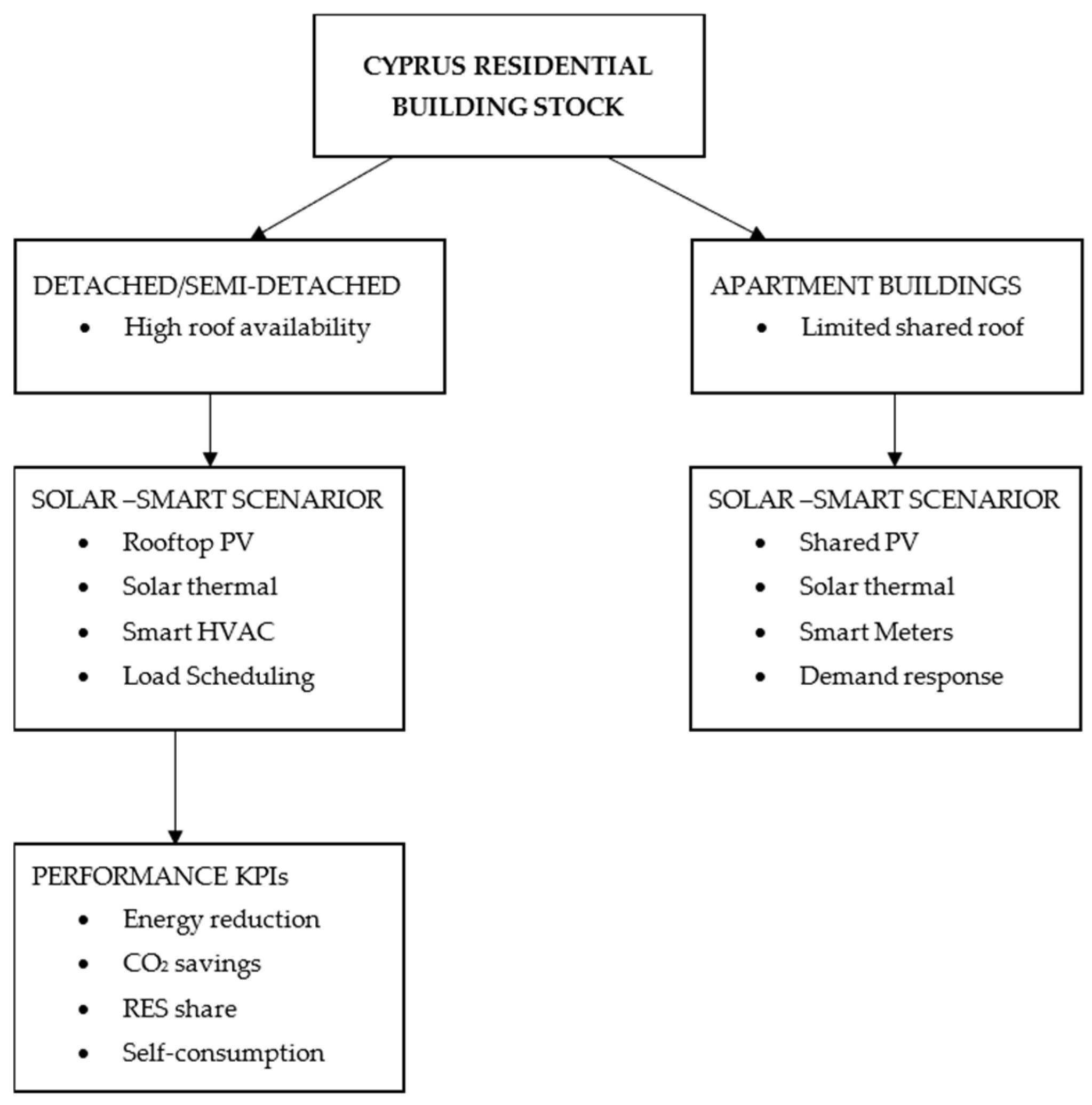
A one-at-a-time sensitivity analysis was conducted on PV system size (±20%), cooling set-point temperature (±2 °C), occupancy schedules (±15%), and smart control effectiveness (10–30%). Results showed PV size and cooling behavior as the most influential parameters. All assumptions, input data, and calculation steps were explicitly defined to ensure replicability in other Mediterranean or island contexts. The mapping of Cyprus Residential Typologies to Solar–Smart Scenarios is presented in Figure 2.
Figure 2 illustrates how different residential typologies in Cyprus align with tailored solar and smart technology configurations, highlighting the need for differentiated strategies across the housing stock.

5. Results

Table 2 presents the baseline annual energy performance indicators for the three representative residential building typologies examined in this study, prior to the introduction of solar renewable energy systems or smart building technologies. Results are reported using both absolute values (kWh/year, kg/year) and normalized intensity indicators (per m2) to enable meaningful comparison across building types of different sizes, in line with the Energy Performance of Buildings Directive (EPBD).
The primary energy demand was calculated using Cyprus-specific primary energy factors for electricity, while CO2 emissions were derived using the national electricity emission factor (0.72 kg CO2/kWh). Although detached houses exhibit the highest absolute energy consumption due to larger floor areas, apartment units display the highest energy and emissions intensity per square meter, reflecting lower envelope performance and greater reliance on cooling. These baseline results confirm the cooling-dominated energy profile of the Cypriot residential sector and provide the reference case against which all solar, smart, and combined intervention scenarios are evaluated in subsequent sections.
Table 3 disaggregates the baseline final energy consumption presented in Table 1 into its principal end-use components: cooling, space heating, domestic hot water (DHW), lighting, and appliances. This breakdown is derived from the dynamic energy simulations and reflects typical occupancy schedules, internal gains, and system efficiencies for residential buildings in Cyprus. The results clearly demonstrate that cooling constitutes the dominant end-use energy demand across all residential typologies, accounting for approximately 44–48% of total final energy consumption. This finding explains why photovoltaic (PV) electricity generation delivers greater performance benefits than solar thermal systems in subsequent scenarios and underscores the importance of electricity-based renewable solutions in cooling-dominated Mediterranean climates. Space heating and DHW account for smaller shares of total demand due to Cyprus’s mild winter conditions and widespread use of solar thermal systems for hot water. Lighting and appliance loads remain non-negligible, particularly in detached houses, reinforcing the role of smart building technologies in optimizing electricity use and enhancing photovoltaic self-consumption.
Table 4 summarizes the effect of solar renewable energy systems—PV, solar thermal (ST), and combined PV + ST—on energy performance indicators. Solar PV systems (EnergyIntel Group, Nicosia) achieve greater primary energy and CO2 reductions than solar thermal systems across all typologies, reflecting the electricity-intensive cooling demand in Cyprus. Solar thermal systems contribute more modestly, primarily by offsetting domestic hot water loads. The combined PV + ST scenario consistently delivers the highest performance gains, achieving up to 45% reduction in primary energy in detached houses.
Apartment buildings demonstrate lower absolute gains due to limited roof availability, confirming the structural constraints identified in the literature. These results demonstrate that solar systems—especially PV—are highly effective in improving residential energy performance in Cyprus.
Table 5 presents the performance improvements achieved solely through smart building technologies. Smart technologies deliver moderate but consistent reductions in energy consumption, primarily by optimizing HVAC operation and enabling load shifting. Notably, peak load reductions are substantial, reaching up to 28% in apartment units, which is particularly relevant given Cyprus’s summer grid stress conditions. Although smart systems alone do not achieve the deep decarbonization levels observed with solar RESs, they significantly enhance operational efficiency. These findings directly confirm the added value of smart technologies in optimizing residential energy use.
The integrated effect of solar RESs and smart technologies is shown in Table 6. The combined scenarios outperform all individual interventions, confirming a synergistic effect between solar generation and smart control. Smart technologies increase PV self-consumption by 25–30 percentage points, reducing grid exports and improving system efficiency. Detached and semi-detached houses approach nearly zero-energy performance, while apartment buildings achieve meaningful but constrained improvements. These results demonstrate that integrated solar–smart systems are the most effective strategy for enhancing energy performance.
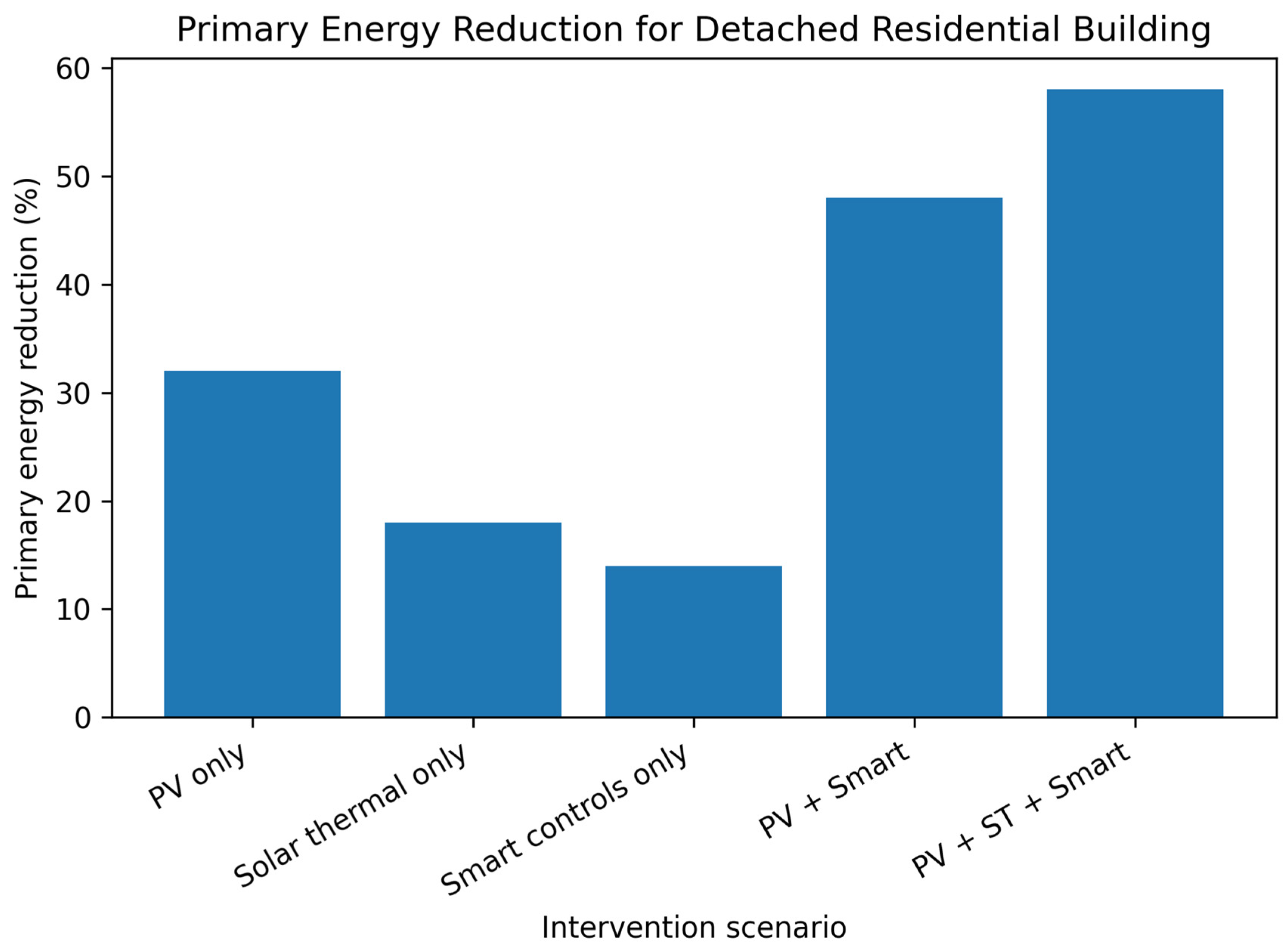
Figure 3 compares standalone and integrated solar-smart technology scenarios, highlighting the superior performance of combined solar–smart configurations. Figure 3 reinforces the quantitative findings, clearly showing that integrated interventions deliver the highest performance gains, while single-measure approaches yield diminishing returns. Altogether, baseline residential buildings in Cyprus exhibit high cooling-driven energy demand. Solar PV systems provide the most considerable standalone energy and emissions reductions. Smart building technologies significantly reduce peak loads and enhance operational efficiency. Combined solar–smart systems deliver the highest energy performance improvements, achieving up to 58% reduction in primary energy. Building typology strongly influences achievable performance, highlighting the need for differentiated strategies. Collectively, these results provide robust evidence for integrating solar renewable energy systems and smart building technologies as a cornerstone for improving residential energy performance in Cyprus.

6. Discussion

6.1. Interpreting Energy Performance Enhancement in the Cypriot Context

The results demonstrate that significant improvements in residential energy performance in Cyprus are achievable through the combined deployment of solar renewable energy systems and smart building technologies. The observed reductions in primary energy demand (up to 58%) and CO2 emissions (up to 55%) place integrated solar–smart configurations within the performance range associated with nearly zero-energy buildings (NZEBs), corroborating findings from Mediterranean and Southern European studies [13,24]. However, the magnitude of improvement achieved in this study exceeds that reported in several previous works that examined renewable or smart interventions in isolation [18,20].
These findings reinforce the theoretical position that energy performance enhancement is a systemic outcome, rather than the result of individual technological measures. As argued in the literature on integrated building systems, renewable energy technologies realize their full potential only when aligned with adaptive control strategies and occupant-responsive operation [21,25]. In the Cypriot context, where cooling demand dominates and solar availability is high, this alignment proves particularly effective.
At the same time, the differential performance across building typologies highlights the importance of contextual specificity, a theme emphasized in recent critiques of universal NZEB models [23]. While detached and semi-detached houses approach near-zero energy performance, apartment buildings remain structurally constrained by limited roof access and fragmented ownership. This finding confirms earlier research that identified multi-owner residential buildings as a critical bottleneck to large-scale decarbonization [34].

6.2. Policy Implications: From Technology Deployment to System Integration

From a policy perspective, the results underscore the need to move beyond technology-specific incentives toward integrated policy frameworks that explicitly encourage the coupling of renewable energy systems with smart building technologies. While Cyprus has successfully promoted solar thermal adoption and increasingly supports rooftop PV deployment [30,37], current policy instruments do not sufficiently address demand-side management, smart readiness, and self-consumption optimization.
The strong performance of combined solar–smart scenarios suggests that future revisions of national building regulations and subsidy schemes should prioritize system-level performance metrics, such as primary energy reduction and PV self-consumption ratios, rather than installed capacity alone. This aligns with recent developments in the EPBD and the introduction of the Smart Readiness Indicator (SRI), which recognizes digitalization as a core component of building energy performance [4].
Moreover, the pronounced peak load reductions achieved through smart technologies have implications for Cyprus’s isolated electricity system. By mitigating summer peak demand, smart-enabled residential buildings can help stabilize the grid and reduce the need for costly infrastructure upgrades. Policymakers could leverage this potential by integrating residential demand-response mechanisms into national energy planning and by accelerating the rollout of smart meters [38].
From a green building certification perspective, the findings of this study align most closely with LEED v4.1 Energy & Atmosphere (EA) credits, particularly those related to optimized energy performance, on-site renewable energy generation, and operational energy efficiency. The emphasis on integrated solar photovoltaic systems and smart energy management strategies aligns with LEED’s growing focus on measured and operational performance rather than prescriptive design measures.
By contrast, the relevance of the present analysis to Indoor Environmental Quality (IEQ) and Materials and Resources credits is inherently more limited, as these categories depend primarily on indoor comfort parameters, material selection, embodied impacts, and construction practices, which are beyond the scope of this energy-focused assessment. Nevertheless, smart HVAC control strategies may indirectly support IEQ objectives by improving thermal comfort stability and reducing overheating risks, particularly in cooling-dominated Mediterranean climates. Future research integrating indoor comfort metrics and life-cycle material assessments would be needed to address these LEED credit categories explicitly.

6.3. Indicative Economic Performance

To complement the energy and emissions analysis, an indicative economic assessment was carried out to contextualize the financial implications of the evaluated solar–smart configurations. Although a complete life-cycle cost analysis is beyond the scope of this study, representative capital costs were estimated using typical residential market values in Cyprus, consistent with recent national reports and installer price ranges.
For solar photovoltaic (PV) systems, installed costs were assumed to range between 1200 and 1400 €/kWp, reflecting current turnkey prices for small-scale residential installations. Solar thermal systems for domestic hot water preparation were assumed to cost 700–900 € per system, in line with widely adopted flat-plate collector solutions. Smart building technologies, including smart thermostats, basic energy monitoring systems, and automated load control devices, were estimated at 800–1200 € per dwelling, depending on system complexity and level of automation.
Based on these cost assumptions and the simulated energy savings, simple payback periods were estimated for the main intervention configurations. Standalone PV systems achieve payback periods of approximately 7–9 years, primarily driven by reductions in grid electricity consumption. When PV systems are combined with smart control technologies, payback periods are reduced to 6–8 years, reflecting enhanced photovoltaic self-consumption and improved load matching. Fully integrated configurations combining PV, solar thermal systems, and smart controls exhibit slightly more extended payback periods of 7–10 years, due to higher upfront investment costs, despite delivering the highest overall energy and emissions reductions.
These indicative results suggest that integrated solar–smart solutions are not only technically effective but also economically viable under current Cypriot conditions, particularly when smart technologies are used to enhance photovoltaic performance. The findings reinforce the importance of assessing renewable energy systems and digital control technologies as integrated investments, rather than as isolated measures, especially in cooling-dominated Mediterranean climates.
While the present study primarily focuses on operational energy consumption and associated CO2 emissions, it is important to acknowledge the life-cycle environmental implications of the proposed solar–smart systems. In residential buildings, operational emissions typically dominate total life-cycle impacts, particularly in electricity-intensive and cooling-dominated climates such as Cyprus. Existing life-cycle assessments of solar photovoltaic systems indicate that their embodied greenhouse gas emissions are generally offset within the first few years of operation, after which net environmental benefits accumulate over the system lifetime. Similarly, smart building technologies are characterized by relatively low material intensity and short energy payback periods, given the operational energy savings they enable.
Although embodied impacts related to photovoltaic modules, inverters, and control hardware are not explicitly quantified in this study, available evidence suggests that the operational CO2 reductions identified here significantly outweigh the embodied emissions over typical system lifetimes. A comprehensive life-cycle assessment integrating embodied energy, material flows, and end-of-life considerations would further strengthen the environmental evaluation and is recommended as a priority for future research.

6.4. Economic Implications: Cost-Effectiveness and Investment Priorities

Although this study does not conduct a complete life-cycle cost analysis, the results offer important insights into the economic logic of energy performance enhancement. Solar PV systems deliver higher primary energy and emissions reductions than solar thermal systems, suggesting that investment priorities may need to be recalibrated in cooling-dominated climates such as Cyprus. This finding contrasts with earlier Cypriot studies that emphasized solar thermal systems primarily on the basis of short payback periods [9], suggesting a shift in optimal strategies as electricity demand grows.
The role of smart technologies further complicates traditional cost–benefit assessments. While smart systems yield smaller standalone energy savings compared to solar RESs, their capacity to enhance PV self-consumption and reduce peak loads significantly improves the overall economic performance of integrated systems. These synergistic benefits are often underestimated in conventional economic evaluations, which tend to assess technologies in isolation [26].
For apartment buildings, the lower performance gains highlight the need for collective investment models, such as renewable energy communities (RECs) and shared PV systems. Without such mechanisms, economic barriers related to scale, ownership, and governance are likely to persist, limiting the diffusion of high-performance solutions in dense urban areas.

6.5. Design Implications: Rethinking Residential Architecture and Retrofit Strategies

The findings carry important implications for architectural and engineering design practice in Cyprus. First, the strong influence of roof availability on energy performance outcomes underscores the need to treat solar integration as a design determinant, rather than a post-design add-on. New residential developments should prioritize roof orientation, shading control, and structural readiness for PV and solar thermal systems, consistent with emerging green architecture principles [8].
Second, the effectiveness of innovative building technologies in reducing peak loads and improving self-consumption suggests that design for flexibility and adaptability is increasingly critical. This includes provisions for sensor integration, control infrastructure, and future upgrades, particularly in retrofit projects where physical constraints are more pronounced.
Finally, the results challenge purely performance-driven design paradigms by highlighting the role of occupant interaction and behavioral adaptation. Smart systems function most effectively when residents are engaged and informed, underscoring the need for participatory, user-centered design approaches. This aligns with broader theoretical arguments that energy-efficient buildings are socio-technical systems shaped as much by human practices as by technological configurations [21].

6.6. Positioning the Study Within Current Research and Practice

By demonstrating the superior performance of integrated solar–smart solutions under Cyprus-specific conditions, this study contributes to a growing body of literature advocating for holistic, context-sensitive energy performance strategies. It extends previous research by quantitatively linking renewable generation, intelligent control, and building typology within a single analytical framework, addressing gaps identified in both Mediterranean and island energy studies [23,39].
Notably, the findings caution against uncritically transferring building energy models across climatic and regulatory contexts. Instead, they support an approach to residential energy performance enhancement that is technically integrated, policy-aligned, economically informed, and design-driven. In doing so, the study provides actionable insights for policymakers, designers, and energy planners seeking to advance sustainable residential development in Cyprus and comparable Mediterranean regions.

7. Conclusions

This study investigated the potential for improving the energy performance of residential buildings in Cyprus through the integrated application of solar renewable energy systems and smart building technologies. By combining typology-based modeling, performance indicators, and scenario analysis, the research provided a comprehensive assessment of how different residential forms respond to renewable and digital interventions under Mediterranean climatic conditions.
The results demonstrate that Cyprus’s residential building stock holds substantial untapped potential for energy performance enhancement. Baseline analysis confirmed that cooling-driven electricity demand remains the dominant contributor to primary energy use and carbon emissions. Solar photovoltaic systems emerged as the most effective standalone renewable technology, achieving significantly higher energy and emissions reductions than solar thermal systems. Smart building technologies, while producing more moderate reductions in final energy demand, proved particularly effective in lowering peak loads and increasing photovoltaic self-consumption. Most importantly, the integrated deployment of solar and smart systems yielded synergistic effects, enabling primary energy reductions of up to 58% and CO2 reductions of up to 55%, approaching near-zero energy performance for low-rise residential typologies.
These findings confirm that energy performance enhancement in residential buildings is inherently systemic, requiring coordinated technological, regulatory, and design interventions rather than isolated measures. The study contributes empirical evidence to ongoing debates on the role of digitalization in building decarbonization and provides a climate-specific reference for Mediterranean and island contexts.

7.1. Implications

Based on the results, several policy-oriented recommendations emerge. National support schemes should move beyond isolated subsidies for solar technologies and explicitly encourage integrated solar–smart solutions. Incentive structures that reward performance outcomes—such as primary energy reduction, self-consumption rates, and peak load mitigation—would better align with system-level decarbonization goals.
The incorporation of smart readiness requirements into national building codes, aligned with the EU Smart Readiness Indicator framework, would accelerate the adoption of digital energy management systems and enhance the effectiveness of renewable energy integration. Apartment buildings face structural and ownership-related constraints that limit the deployment of renewable energy. Policies facilitating renewable energy communities, shared PV systems, and collective self-consumption models are essential to ensure equitable access to high-performance solutions. The demonstrated peak load reductions highlight the potential of smart residential buildings to support grid stability. Policymakers should integrate residential demand-response mechanisms into national energy strategies, particularly as electrification increases.
While this study provides a robust analytical foundation, several avenues for future research remain. Future studies should incorporate detailed life-cycle cost analyses, including capital costs, operational savings, and payback periods, to strengthen the economic case for integrated solar–smart systems. Empirical research on occupant engagement with smart technologies would improve understanding of behavioral influences on energy performance and inform user-centered design strategies. Extending the analysis from individual buildings to neighborhood and district scales would enable assessment of collective energy strategies, grid interactions, and renewable energy communities. Further work should explore how integrated systems influence indoor comfort and resilience under future climate scenarios, particularly during extreme heat events.

7.2. Limitations

This study is subject to certain limitations. First, the results are based on modeled scenarios and representative building typologies, which, while grounded in national data, may not capture the full variability of the existing residential stock. Second, economic indicators were not explicitly quantified, limiting direct assessment of financial feasibility. Results are based on modeled scenarios using representative typologies. Occupant behavior was assumed to be semi-static, though a sensitivity analysis confirms its influence on cooling demand. Empirical validation through monitored case studies is recommended for future research. Addressing these limitations through empirical monitoring and longitudinal studies would further strengthen the evidence base.
The results presented in this study are derived from dynamic energy simulation scenarios and therefore represent modeled estimates of energy and emissions performance under defined assumptions. While simulation-based approaches are widely used to evaluate building-scale energy interventions, empirical validation through field measurements, monitored case studies, or long-term operational data would further strengthen confidence in the magnitude of predicted savings. In the Cypriot context, such empirical datasets remain limited, particularly for integrated solar–smart residential systems. Future research should therefore focus on combining simulation with post-occupancy monitoring and real-world performance evaluation to validate and refine the findings presented here.
This research demonstrates that integrating solar renewable energy systems and smart building technologies offers a technically robust, policy-relevant, and design-informed pathway to improve the energy performance of residential buildings in Cyprus. The findings support a transition toward holistic, system-oriented approaches to building decarbonization that are adaptable to Mediterranean climates and transferable to similar regional contexts.


Author Contributions

Conceptualization, O.V.; Methodology, O.V.; Formal analysis, H.N.; Investigation, O.V.; Writing—original draft, O.V. and H.N.; Supervision, H.N. All authors have read and agreed to the published version of the manuscript.

Funding

This research received no external funding.

Institutional Review Board Statement

Not applicable.

Informed Consent Statement

Not applicable.

Data Availability Statement

The original contributions presented in this study are included in the article. Further inquiries can be directed to the corresponding author.

Conflicts of Interest

The authors declare no conflicts of interest.

References

  1. European Commission. Directive (EU) 2018/844 of the European Parliament and of the Council of 30 May 2018 Amending Directive 2010/31/EU on the Energy Performance of Buildings and Directive 2012/27/EU on Energy Efficiency; Official Journal of the European Union: Brussels, Belgium, 2018. [Google Scholar]
  2. European Commission. Directive (EU) 2023/1791 on Energy Efficiency (Recast); Official Journal of the European Union: Brussels, Belgium, 2023. [Google Scholar]
  3. European Commission. A Renovation Wave for Europe—Greening Our Buildings, Creating Jobs, Improving Lives; COM(2020) 662 Final; European Commission: Brussels, Belgium, 2020. [Google Scholar]
  4. Faure, C.; Schleich, J. Poor energy ratings when appliances convey? Energy Policy 2020, 139, 111359. [Google Scholar] [CrossRef]
  5. International Energy Agency (IEA). Buildings: Tracking Clean Energy Progress; IEA: Paris, France, 2023. [Google Scholar]
  6. United Nations Environment Programme (UNEP). Global Status Report for Buildings and Construction; UNEP: Nairobi, Kenya, 2023. [Google Scholar]
  7. Ascione, F.; Bianco, N.; De Stasio, C.; Mauro, G.M.; Vanoli, G.P. A new methodology for cost-optimal analysis by means of the multi-objective optimization of building energy performance. Energy Build. 2015, 88, 78–90. [Google Scholar] [CrossRef]
  8. Kibert, C.J. Sustainable Construction: Green Building Design and Delivery, 4th ed.; Wiley: Hoboken, NJ, USA, 2016. [Google Scholar]
  9. Kalogirou, S.A. Solar thermal collectors and applications. Prog. Energy Combust. Sci. 2018, 30, 231–295. [Google Scholar] [CrossRef]
  10. Vardopoulos, I.; Santamouris, M.; Zorpas, A.A.; Barone, G.; Italos, C.; Vassiliades, C. A comparative study on discrepancies in residential building energy performance certification in a Mediterranean context. Buildings 2024, 14, 1009. [Google Scholar] [CrossRef]
  11. Charalambous, A.; Maxoulis, C.; Kalogirou, S. Energy performance assessment of residential buildings in Cyprus. Energy Build. 2017, 145, 1–15. [Google Scholar] [CrossRef]
  12. Pacheco-Torres, R.; Jadraque-Gago, E.; Ordóñez, J.; Martínez, G. Energy performance indicators for energy efficiency evaluation in buildings. Energy Build. 2018, 177, 16–26. [Google Scholar] [CrossRef]
  13. Mancini, F.; Lo Basso, G.; De Santoli, L. Energy use in residential buildings: Characterization for identifying flexible loads by means of a bottom-up approach. Energy Build. 2019, 203, 109439. [Google Scholar] [CrossRef]
  14. D’Agostino, D.; Parker, D. A framework for the cost-optimal design of nearly zero energy buildings (NZEBs) in representative climates across Europe. Energy 2018, 149, 814–829. [Google Scholar] [CrossRef]
  15. Katsaprakakis, D.A.; Christakis, D.G.; Zervos, A. Energy autonomy of Mediterranean islands through renewable energy systems. Energy 2017, 118, 163–175. [Google Scholar] [CrossRef]
  16. Kolokotsa, D.; Kampelis, N.; Gobakis, K. Smart buildings, smart cities and the energy transition. Renew. Sustain. Energy Rev. 2020, 124, 109709. [Google Scholar] [CrossRef]
  17. Oldewurtel, F.; Parisio, A.; Jones, C.N. Use of model predictive control and weather forecasts for energy efficiency in buildings. Energy Build. 2017, 123, 71–81. [Google Scholar] [CrossRef]
  18. Fokaides, P.A.; Papadopoulos, A.M. Cost-optimal insulation thickness in Mediterranean residential buildings. Energy Build. 2018, 163, 1–10. [Google Scholar] [CrossRef]
  19. Nikolaidis, Y.; Pilavachi, P.A.; Chatzipanagi, A. Energy performance of residential buildings in Southern Europe. Sustainability 2019, 11, 4023. [Google Scholar] [CrossRef]
  20. Gaglia, A.G.; Balaras, C.A.; Mirasgedis, S.; Georgopoulou, E.; Sarafidis, Y. Empirical assessment of the Hellenic residential building stock. Energy Build. 2017, 138, 70–84. [Google Scholar] [CrossRef]
  21. Sovacool, B.K.; Del Rio, D.F. Smart home technologies in Europe: A critical review of socio-technical systems. Energy Res. Soc. Sci. 2020, 63, 101397. [Google Scholar] [CrossRef]
  22. Zhai, X.; Wang, R.Z.; Zhang, Y. Theoretical and experimental investigation of solar-powered smart buildings. Appl. Energy 2018, 230, 869–880. [Google Scholar] [CrossRef]
  23. D’Oca, S.; Hong, T.; Langevin, J. The human dimensions of energy use in buildings: A review. Renew. Sustain. Energy Rev. 2018, 81, 731–742. [Google Scholar] [CrossRef]
  24. Kylili, A.; Fokaides, P.A. European smart cities: The role of zero energy buildings. Renew. Energy 2019, 141, 73–83. [Google Scholar] [CrossRef]
  25. Li, X.; Wen, J. Review of building energy modeling for control and operation. Renew. Sustain. Energy Rev. 2019, 104, 198–219. [Google Scholar] [CrossRef]
  26. Morrissey, J.; Horne, R.E. Life cycle cost implications of energy efficiency measures in new residential buildings. Energy Buildings 2011, 43, 915–924. [Google Scholar] [CrossRef]
  27. Stages, L.C. Life cycle greenhouse gas emissions from solar photovoltaics. J. Ind. Ecol. 2012, 16, S122. [Google Scholar]
  28. Lund, H.; Østergaard, P.A.; Connolly, D.; Mathiesen, B.V. Smart energy and smart energy systems. Energy 2017, 137, 556–565. [Google Scholar] [CrossRef]
  29. Cyprus Ministry of Energy, Commerce, and Industry. National Energy and Climate Plan of Cyprus 2021–2030; MECI: Nicosia, Cyprus, 2021.
  30. Cyprus Statistical Service (CYSTAT). Energy Balance of Cyprus 2022; CYSTAT: Nicosia, Cyprus, 2023.
  31. Economidou, M.; Todeschi, V.; Bertoldi, P. Accelerating Energy Renovation Investments in Buildings; EUR–Scientific and Technical Research Reports; Joint Research Centre: Ispra, Italy, 2019. [Google Scholar] [CrossRef]
  32. Papaefthymiou, G.; Dragoon, K. Towards 100% renewable energy systems. Appl. Energy 2018, 228, 1230–1242. [Google Scholar] [CrossRef]
  33. Hanke, F.; Lowitzsch, J. Empowering vulnerable consumers to join renewable energy communities—Towards an inclusive design of the clean energy package. Energies 2020, 13, 1615. [Google Scholar] [CrossRef]
  34. Yatzkan, O.; Cohen, R.; Yaniv, E.; Rotem-Mindali, O. Urban energy transitions: A systematic review. Land 2025, 14, 566. [Google Scholar] [CrossRef]
  35. Caputo, F.; Buhnova, B.; Walletzký, L. Investigating the role of smartness for sustainability: Insights from the smart grid domain. Sustain. Sci. 2018, 13, 1299–1309. [Google Scholar] [CrossRef]
  36. Giama, E.; Kyriaki, E.; Fokaides, P.; Papadopoulos, A.M. Energy policy towards nZEB: The Hellenic and Cypriot case. Energy Sources Part A 2025, 47, 5282–5295. [Google Scholar] [CrossRef]
  37. Ascione, F.; De Masi, R.F.; De Rossi, F.; Fistola, R.; Sasso, M. Energy refurbishment of existing buildings through the cost-optimal methodology. Energy Build. 2017, 154, 88–102. [Google Scholar] [CrossRef]
  38. Araveti, S.; Quintana, C.A.; Kairisa, E.; Mutule, A.; Adriazola, J.P.S.; Sweeney, C.; Carroll, P. Wind energy assessment for renewable energy communities. Wind 2022, 2, 325–347. [Google Scholar] [CrossRef]
  39. Koltsaklis, N.E.; Dagoumas, A.S. State-of-the-art generation expansion planning: A review. Appl. Energy 2018, 230, 563–589. [Google Scholar] [CrossRef]
  40. D’Adamo, I.; Gastaldi, M.; Rosa, P. Assessing renewable energy communities in the EU. Sustainability 2021, 13, 12769. [Google Scholar] [CrossRef]
  41. Crawley, D.B.; Lawrie, L.K.; Winkelmann, F.C.; Buhl, W.F.; Huang, Y.J.; Pedersen, C.O.; Strand, R.K.; Liesen, R.J.; Fisher, D.E.; Witte, M.J.; et al. EnergyPlus: Creating a New-Generation Building Energy Simulation Program. Energy Build. 2001, 33, 319–331. [Google Scholar] [CrossRef]
  42. ISO 13790:2008; Energy Performance of Buildings—Calculation of Energy Use for Space Heating and Cooling. International Organization for Standardization (ISO): Geneva, Switzerland, 2008.
Figure 1. Research framework.
Sustainability 18 01195 g001
Figure 2. Mapping Cyprus Residential Typologies to Solar–Smart Scenarios.
Sustainability 18 01195 g002
Figure 3. Primary energy reduction achieved by different intervention scenarios for a representative detached residential building in Cyprus.
Sustainability 18 01195 g003
Table 1. Key Building Assumptions Used in Simulations.
ParameterDetachedSemi-DetachedApartment Unit
Heated floor area (m2)18014090
Roof area available for PV (m2)907025 (shared)
Wall U-value (W/m2 K)1.301.301.50
Roof U-value (W/m2 K)1.001.001.20
Window U-value (W/m2 K)3.23.23.5
Glazing ratio (%)252230
HVAC systemSplit AC (COP 3.2/EER 3.0)Split ACSplit AC
Occupancy4 persons3 persons2 persons
Table 2. Baseline Energy Performance Indicators.
Building TypologyReference Floor Area (m2)Final Energy Consumption (kWh/Year)Final Energy Intensity (kWh/m2·Year)Primary Energy Demand (kWhp/Year)Primary Energy Intensity (kWhp/m2·Year)CO2 Emissions (kg/Year)CO2 Intensity (kg/m2·Year)
Detached house18018,40010222,900127675037.5
Semi-detached house14014,20010117,600126518037.0
Apartment unit90980010912,100134362040.2
Table 3. Breakdown of annual final energy demand by end use and residential typology (kWh/year).
End UseDetached HouseSemi-Detached HouseApartment Unit
Cooling810064004700
Space heating220018001300
Domestic hot water (DHW)300024001800
Lighting210017001100
Appliances30001900900
Total final energy18,40014,2009800
Table 4. Impact of Solar Renewable Energy Systems.
TypologyScenarioPrimary Energy Reduction (%)RES Share (%)CO2 Reduction (%)
DetachedPV323830
DetachedST182216
DetachedPV + ST455542
ApartmentPV212520
ApartmentST141813
ApartmentPV + ST334031
Table 5. Impact of Smart Building Technologies.
TypologyFinal Energy Reduction (%)Peak Load Reduction (%)CO2 Reduction (%)
Detached142213
Semi-Detached162515
Apartment182817
Table 6. Combined Solar–Smart Scenario Performance.
TypologyPrimary Energy Reduction (%)PV Self-Consumption (%)CO2 Reduction (%)
Detached587155
Semi-Detached546852
Apartment426340
Disclaimer/Publisher’s Note: The statements, opinions and data contained in all publications are solely those of the individual author(s) and contributor(s) and not of MDPI and/or the editor(s). MDPI and/or the editor(s) disclaim responsibility for any injury to people or property resulting from any ideas, methods, instructions or products referred to in the content.