Article

Social Innovation in Rural Areas: Evidence from Italian Community Cooperatives

Department of Agricultural, Food and Environmental Sciences (D3A), Università Politecnica delle Marche (UNIVPM), Via Brecce Bianche, 10, 60131 Ancona, Italy
*
Author to whom correspondence should be addressed.
Sustainability 2026, 18(3), 1149; https://doi.org/10.3390/su18031149
Submission received: 10 December 2025 / Revised: 14 January 2026 / Accepted: 21 January 2026 / Published: 23 January 2026

Abstract

European rural areas are facing major challenges, from strong depopulation dynamics to economic and cultural depressions. Simultaneously, these areas, with their own attributes, may serve as fertile grounds for novel growth potential via tangible cases of social innovation. This study looks at the role of community cooperatives, a new model of social innovation, as promoters of the sustainable development of rural areas. The phenomenon of community cooperatives has recently emerged on the Italian national scene, and, over time, it is carving out an increasingly important role within rural development processes. A study based on Italian case studies located in the Marche Region is conducted to highlight the role and the characteristics of these realities. Desk research, analysis and semi-structured interviews were utilized as a technique for gathering data. Results show that these realities do have a positive impact on communities, although in many cases it is still limited. A supportive policy is required to ensure resources for these entities.

1. Introduction

Europe’s rural areas have undergone major changes recently. Ahlmeyer and Volgmann [1] point out that Europe’s rural areas are facing several challenges, such as diminishing agricultural holdings, an aging farming demographic, reduced rural services and accessibility, and climate change, along with environmental degradation. At the same time, they emphasize that rural areas possess numerous potentials for regeneration, including the establishment of local food chains, the shift to sustainable agriculture, and the diversification of the rural economy.
In this regard, numerous forms of social innovation are emerging, particularly within the Italian context, that effectively tackle the issues confronting these areas by fostering innovative development models. Social innovation is a term largely adopted in the areas of agriculture and rural development, and there are several interpretations of social innovation in the literature [2,3]. The European Horizon project known as SIMRA—Social Innovation in Marginalised Rural Areas—defines social innovation as “the reconfiguring of social practices, in response to societal challenges, which seeks to enhance outcomes on societal well-being and necessarily includes the engagement of civil society actors” [4].
As mentioned by Rogelja et al. [5], social innovation processes lead to solutions that revitalize the rural fabric through the voluntary involvement of the local community. Moreover, it is important to highlight that there is a growing body of literature that recognizes the importance of social innovation in rural areas and highlights how crucial it is for sustainable rural development processes [6,7,8,9].
More recently, based on the work of the Organization for Economic Co-operation and Development [10], social innovation has been described as the search for new responses to social and environmental problems through new solutions capable of improving the quality of individuals and the community, increasing their well-being, and their social and economic inclusion. Ultimately, we should acknowledge that these solutions may manifest as novel services, innovative products, and new partnerships among stakeholders. In this setting, community cooperatives can be included.
However, given the recent history of community cooperatives, only a few works examine them as a paradigm of development, especially in social innovation within rural areas. Berti and D’Angelo [11] focus directly on community cooperatives and recognize them as a model of social innovation in which citizens take on the dual roles of producers and consumers of goods and services. They underline how these cooperatives promote synergies, development, and social cohesion, responding in an integrated manner to collective needs oriented towards socio-environmental justice. Berti and D’Angelo focus their analysis on an inner area of the Tuscany Region, which is characterized by important depopulation dynamics. The focus was on a case study involving documentary analysis and a series of interviews with key individuals interested in establishing a community cooperative, as well as other local residents. Their findings highlight how, for the creation of a community cooperative, it is crucial to have the presence of an important “community bond” that is more relevant even than the presence of appropriate laws, the availability of public funding, and the natural resources typical of the inner areas. For instance, as part of a collaboration on the “SiBaTer—Institutional Support for the Land Bank” project, Confcooperative (Confcooperative is one of the main organizations representing, assisting, protecting and supervising the Italian cooperative movement and social enterprises) and Legacoop (Legacoop is an association that brings together cooperative enterprises active in all regions of Italy) published a handbook in 2021 [12]. This handbook describes the main cooperative models, such as agricultural and social cooperatives, and outlines the key characteristics of the community cooperative model, emphasizing its significant presence in inner areas. It highlights the role of community cooperatives in promoting, developing, and strengthening local communities through economic activities. These activities focus on producing goods and services for the community, enhancing common goods, preserving cultural traditions and local resources, and fostering social cohesion while empowering community members. Another important work that addresses these issues is by Mastronardi and Romagnoli [13]. They emphasize the strategic role that community cooperatives could play in these rural areas from a social and economic development perspective. Specifically, they highlight the inland areas of Italy as an ideal environment in which to develop community cooperatives, as these are able to respond flexibly to the complexities of such territories. Their study draws attention to the importance of community cooperatives in the regeneration and development of inland areas in Italy, emphasizing their ability to play a leading role in meeting collective needs. In addition, it is possible to mention the work by Rago et al. [14]. In this document, community cooperatives are identified as true transformative agents of communities and territories, recognized as enterprising communities capable of generating economies of scope through the concrete actions of their inhabitants. A qualitative–quantitative questionnaire was administered to 30 Italian cooperative enterprises that were selected and promoted by Confcooperative through a dedicated call for applications. The results highlight how these entities base their activities on asset management (e.g., land, abandoned buildings, or natural parks), reactivating them for production purposes as well as for use as tourist and cultural attractions. Ultimately, they acknowledge that community cooperatives can effect long-term change within their communities in three key areas, namely economic profitability, social response to community needs, and environmental regeneration and protection. Finally, the work of Saladino [15] adopts interviews to analyze three community cooperatives. In this study, she highlights the regenerative effects of community cooperatives on local economies. These effects arise not only from the direct creation of employment but also from indirect benefits stemming from their efforts in territorial revitalization. This transformation turns socioeconomic challenges into opportunities for the regions involved.
Community cooperatives are a type of cooperative that is intrinsically connected to their specific locales and prioritizes generating benefits for either the community of their promoting members or a community they have chosen, thereby fostering a robust development dynamic [16,17].

The Definition and Legal Framework of Community Cooperatives in Italy

In Italy, even though there is no national law, there are several regional laws that try to regulate the community cooperative phenomenon [18,19]. To date, of the twenty Italian regions, sixteen have a regional law that pertains to community cooperatives. Table 1, derived from the research conducted by Messina and Moro [20] and Della Croce [19] and followed by an update of the authors, lists all Italian regions that have enacted legislation concerning community cooperatives.
In addition to this framework, the Marche Region presented draft legislation in 2019 [20]. Some of these laws recognize that community cooperatives can be set up as production and labor cooperatives, support cooperatives, user cooperatives, social cooperatives, or mixed cooperatives. Furthermore, in some regions, this specification is not provided, or, in some cases, the community cooperatives are developing in the absence of a regional regulation. Among the regions with a regional law, based on the work of Della Croce [19] and followed by the authors’ update and elaboration, it is important to focus on some aspects characterizing these regulations, which can already partially describe the nature of these realities. Table 2 attempts to summarize the main characteristics that accompany the activities of community cooperatives according to regional laws.
As can be seen in Table 2, most regional laws consider the environmental sustainability of the activities promoted by community cooperatives and their focus on depopulation phenomena. Furthermore, regional laws often identify specific community issues by referring to specific types of territory, such as mountainous and marginal areas (e.g., Campania, Toscana, Lazio, Emilia Romagna, and Piemonte) or rural communities (e.g., Sardegna). For example, article 2 of Lazio Regional Law No. 1 of 3 March 2021 defines community cooperatives as cooperatives “in mountainous areas, inland areas, or areas at risk of depopulation, or in areas characterized by socio-economic hardship and environmental problems.” The Lazio Region’s law is also important because it is the only one that directly calls farmers “guardians of the landscape.” This title is promoted in municipalities with fewer than 5000 residents to encourage farmers to stay.
As there is no national law and different regional laws, it is not easy to give a clear definition of community cooperatives, but we can generalize by saying that they are a form of cooperative enterprise whose main purpose is to improve the quality of life and the economic and social development of a specific community [16,17]. Bianchi [17] points out that the term “community cooperative” refers to a recent development of the cooperative form in Italy, aimed at promoting processes of popular participation to revitalize local resources, economies, and cultures. More recently, Sforzi and Tellarini [21] highlighted that community cooperatives are a model of social innovation in which citizens act as both producers and users of goods and services and as entrepreneurs and enterprises. People who live and work in specific places create these economic entities. They produce goods and services in various sectors to improve the economic and social well-being of the community itself. According to Fonte and Cucco [22], they may serve as a potential remedy for the environmental, economic, and social challenges faced by inland areas.
Community cooperatives have no legal status, but each one chooses the legal form that best suits its function and the territory in which it will operate [23]. To date, community cooperatives are present in both marginal rural and urban areas and can be involved in different sectors. According to a report by Venturi and Miccolis [24], there were 188 community cooperatives in Italy as of 30 June 2021; nowadays, according to the interactive map developed by the Italian Association for the Promotion of a Culture of Cooperation and Non-Profit Organizations (AICCON) (https://www.aiccon.it/chi-siamo/ (accessed on 18 September 2025), the community cooperatives are 222 located in 69 Italian provinces, and 101 more realities are in a registration step in the map [25]. Data from the last official report of AICCON indicates that production and labor cooperatives are the most common legal form of community cooperatives in Italy, followed by social cooperatives [26]. A community cooperative can operate in several sectors and carry out several projects at the same time. As highlighted in the document “The community cooperative: a virtuous circle for the territory” of 2019, cooperatives can be active in the cultivation and processing of agricultural products, where the farms become a community asset that not only enhances and protects the territory but also its traditions, history, and artisan production [27]. A community cooperative will not aim at intensive agriculture but at the cultivation of products linked to the territory, the image of the territory, and the cooperative itself, promoting the multifunctionality of agriculture. Another sector is hospitality, which creates jobs, income, and vitality in the most remote areas. The appeal of rural and mountain areas combines culture, landscape, food, and wine and has already led to the spread of examples of diffuse hospitality and experiential tourism in many areas. Community cooperatives are also involved in personal services, redesigning the welfare of specific areas, such as the creation of nature and farmhouse pre-schools or care services for the elderly or disadvantaged. It is essential to emphasize land management and energy generation, where diligent management by cooperative members can significantly improve the rural areas and generate new employment prospects.
It is important to underline that, at the European level, there is no regulation that clearly defines the term “community cooperatives”; however, there are very similar cases, such as community enterprises in the United Kingdom and “sociétés d’intérêt collectif” in France, as well as the Greek and German models where social cooperation focuses on the production of goods and services, including renewable energy sources [28]. As highlighted by Fonte and Cucco [22], in Italy the cooperative movement has moved toward new paradigms of alternative agriculture and an integrated vision of rural development through community cooperatives. They point out that community cooperatives have recently been involved in activities that include initiatives for local agricultural systems, such as farmers’ markets, the promotion of agritourism, and the protection of the agricultural landscape. It is therefore of particular interest to analyze community cooperatives that pay particular attention to agricultural activities to promote rural development. Due to the importance of community cooperatives for the development of rural areas, there are different articles analyzing the case studies of community cooperatives [11,20,22,29], but the combination of community cooperatives and agriculture seems to be an innovative aspect to explore. Therefore, our paper aims to fill this gap by presenting an analysis of two case studies in Italy and investigating the following research questions:
  • RQ1: How are community cooperatives involved in agricultural activities?
  • RQ2: Which type of agriculture do they promote? Which strategies do they apply to valorize the production?
  • RQ3: How do community cooperatives represent an opportunity to revitalize rural areas?
We conducted the analysis using semi-structured interviews. A qualitative study can be useful in highlighting the characteristics of the community cooperatives analyzed and in enriching the debate on this form of social innovation, thus promoting reflection on the creation of a regional or national reference regulation.

2. Materials and Methods

2.1. Methodology and Data Collection

After consulting the interactive map provided by AICCON and a preliminary interview with an expert in the field of cooperation in Italy, we were able to contact two case studies in the Marche Region. Although the sample is small, it is appropriate for this qualitative study, as it considers local specificities and allows us to obtain important information about contemporary phenomena that would otherwise be difficult to analyze [30]. The Marche Region is an interesting case study because it is one of the Italian regions that has not yet developed a regional law regarding these types of cooperatives, even though such cooperatives are present. Studying these realities and their dynamics could help create policies and tools that promote their development and impact. It is important to point out that in the chosen cooperatives, there are present agricultural or silvicultural activities. Their selections are because, as Fonte and Cucco [22] mention, it is only recently that these forms of cooperatives have become increasingly close to the agricultural sector, including in a non-sectoral rural development perspective. The case studies were selected based on the following criteria:
(a)
Community cooperatives that are involved in agricultural activities.
(b)
They are in rural areas or partially rural areas.
(c)
They value productive activities in the agricultural sector.
To analyze these community cooperatives, we decided to use a semi-structured interview model inspired by the Horizon SIMRA project [31], specifically designed for the study of social innovation, with some minor modifications to add more specific questions about the agricultural aspects of community cooperatives. The tool of semi-structured interviews was chosen to provide a comprehensive view of these realities, and, furthermore, as pointed out by McIntosh and Morse [32], this approach provides elasticity and at the same time ensures a structured framework for comparative analysis between cases. The outline of the semi-structured interview is divided into ten main questions based on tool no. 7 developed by the SIMRA project. The intention was to collect information regarding five main areas, namely the dynamics of the creation of the case studies, the role of the interviewee, the political support, the activities, and the results of the cooperatives, as reported in Table 3.
For the first community cooperative (CC1), the semi-structured interview was conducted in the presence of one of the founders, who is also a long-standing volunteer for the cooperative and a member of the board of directors. For the second community cooperative (CC2), two members of the cooperative were interviewed: the first is a founding member, volunteer, and current member of the board of directors. She was contacted because she had more knowledge of the historical aspects of the cooperative. The second interviewee is the current president of the cooperative, a member of the board of directors and workers, and he was contacted because he had additional information about the current activities. It is important to note that conducting interviews with the various key figures in these contexts is difficult because the individuals involved often play multiple roles. For instance, one person may be a member, employee, and customer simultaneously. Interviews lasted around 90 min, depending on the availability of the interviewees. All the interviews were audio-recorded with the consent of the respondents and fully transcribed verbatim. All participants were informed that all information collected through the questionnaires was managed in accordance with Regulation (EU) 2016/679, known as the General Data Protection Regulation, and Legislative Decree 196/2003, as amended, and written informed consent was obtained from all subjects participating in the study.
Furthermore, to analyze the collected data, we adopted deductive thematic analysis following the structure proposed by Ravazzoli et al. [33]. In this model, it is individuals who, through their actions in every context, bring about social innovation and reconfigure social practices to improve social welfare. Specifically, this methodology highlights four key dimensions relevant to the study of social innovation, namely:
  • Context: it references the tangible and intangible resources of the reference context that can facilitate or hinder social innovation. These can be, for example, natural (land), financial (capital), social, and cultural resources, which enable or limit social innovation.
  • Agency: it represents the ability of the actors to activate and transform the available resources through their ideas, knowledge, and vision, as well as the preparatory actions to implement the social innovation initiative.
  • Reconfiguring: it is the process where reference is made both to changes that can occur in social practices, such as new policies or laws and the creation of networks, and to new attitudes that are established.
  • Outcomes: it represents the behavioral changes resulting from the social innovation initiative, such as new habits, choices, rules, and institutions, which may affect individuals or the whole community.
This thematic pattern scheme was applied to the data transcript, identifying and grouping text segments that refer to each dimension. The coding activity was conducted manually, and the results were refined and discussed among the authors to ensure consistency and robustness of the interpretation. Finally, in line with the methodology of other studies that utilize qualitative analysis through interviews [34], we decided to return to the interviewees after processing their interviews to add any missing information and allow them to verify the content, thereby avoiding misunderstandings and enhancing the reliability of the study’s methodology.

2.2. Case Studies’ Description

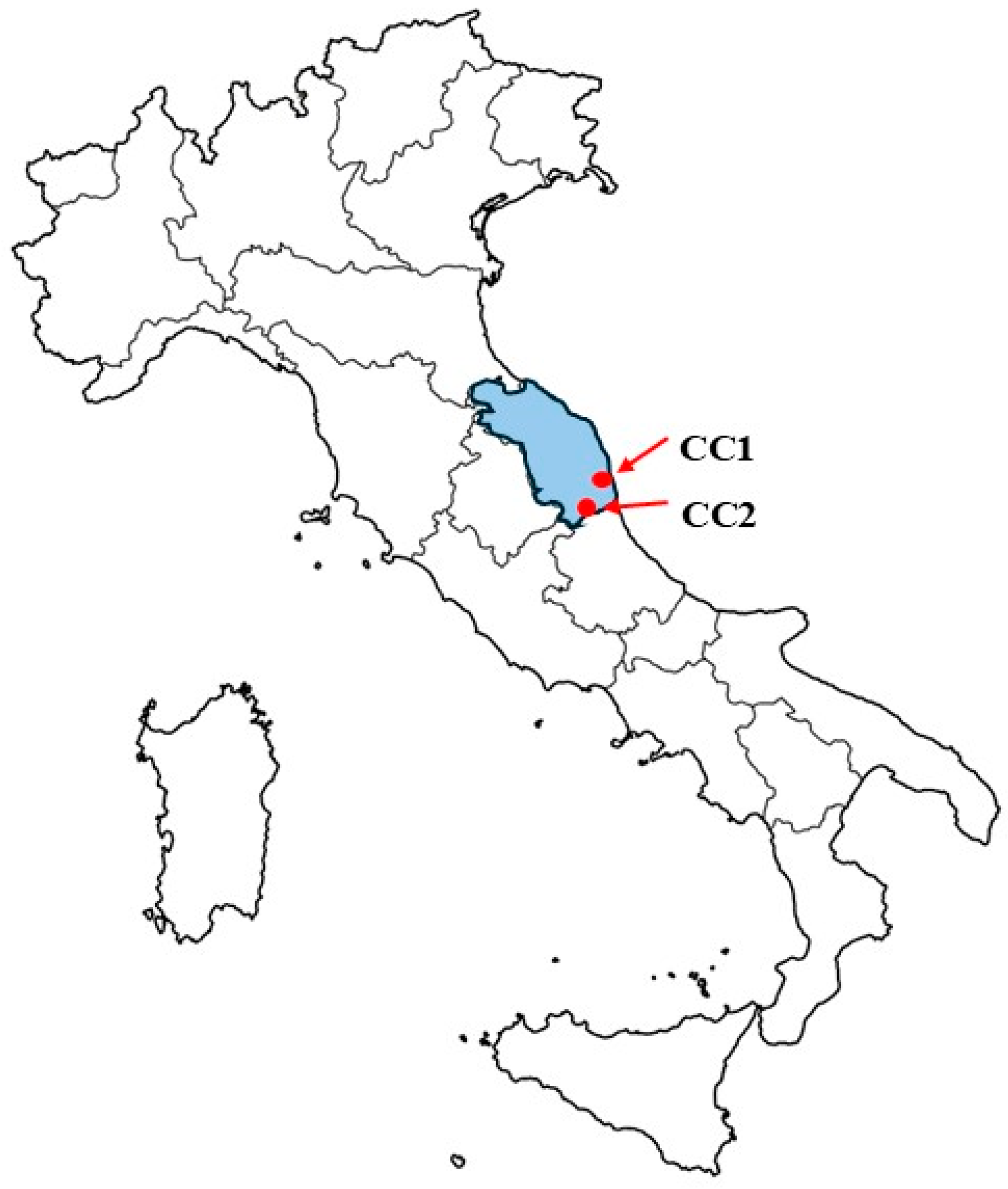
The case studies under analysis are two community cooperatives in the Marche Region of Italy (Figure 1).
Both cases are promoting new agricultural activities and models of cooperation, seeking to enhance the resources of their territory, responding to social needs, and promoting the well-being of their communities. CC1 concerns a community agricultural cooperative based in a coastal area of the Marche Region but operating throughout the Valdaso Valley. This area is characterized by a strong agricultural vocation. The community cooperative in this area proposes itself as a model of sustainable agriculture, promoting organic farming techniques and offering support and visibility to small farmers in the valley and the more inland areas, trying to recreate a sense of community around the agricultural sector. CC2 is in the inland areas of the Marche Region that have been hit by a strong earthquake in recent years. It is the result of a collaboration between citizens, a municipal politician, and a “Comunanza Agraria”, a form of collective property that involve a community of people in the management of land and resources. These are ancient forms of land management [35]. The proximity of a “Comunanza agraria”is an important aspect. In fact, the “Comunanza agraria” is characterized by being an endogenous form of sustainable development of marginal areas, acting to maintain the productive use of an agro-forestry territory and protecting it from an environmental, economic, and social perspective [35]. In certain areas, the characteristics of the “Comunanza agraria” resemble those of community cooperatives. This reality aims to promote social cohesion and to develop new projects based on the characteristics of the territory. CC2 is involved in the recovery of a network of mountain paths, the recovery of abandoned chestnut groves, and other initiatives to involve an ever-wider section of the population.

3. Results

The results are presented and organized according to the four key factors recognized for the study of social innovation, namely context, agency, reconfiguring, and outcomes.

3.1. Case Study 1

Context: The area of activity and interest for CC1 is Valdaso. This valley, situated in the Marche Region, is distinguished by a robust agricultural orientation and a series of small towns (“borghi”) that punctuate the landscape extending from the mountains to the sea. There are also many small- and medium-sized farms in this area, especially in the innermost areas, which are struggling to compete in the global markets and to promote their products. It is also an area that is very suitable for horticulture and fruit growing, but climate change, especially severe droughts, is putting a strain on current agricultural development models. There are also associations for the promotion of tourism in the area and a river contract promoted by a mayor, in which several private and public bodies join together in a legal protocol for the environmental regeneration of the hydrographic basin of a waterway.
Agency: The main protagonists of this social innovation are a group of private individuals who wanted to create a community cooperative with the aim of redeveloping a public good, comprising buildings and agricultural land, through the sustainable management of agricultural resources. This initiative was unsuccessful; however, the cooperative was established due to this mobilization in 2016. From the outset, there was a strong sharing of resources and ideas among the founders of the cooperative. Some said,
“We have land, and we will make it available to you free of charge,”
while other volunteers said,
“We will provide the labor.”
Today, the cooperative has more than 220 members with a very diverse human capital. There are various forms of association; they can be working members, contributors, financiers or backers, supporters, co-producers, or users. They include agronomists, medical doctors, architects, agricultural entrepreneurs, etc., who offer their professionalism and commitment according to their availability and interests. For example, some architects help the cooperative with communication-related aspects. The cooperative aims to improve the well-being of the community by promoting an alternative and sustainable model of agricultural production and valorizing the cultural heritage. In addition to the availability of the members, both in terms of voluntary work and capital, the cooperative was able to benefit from a loan of 15,000 euros at a very favorable interest rate, following a call for funding from Confcooperative, which is aimed at emerging community cooperatives. Finally, it should be stressed that in the Marche Region, unlike other regions, there is a general indifference on the part of public institutions towards community cooperatives. The interviewee said,
“We get no help or privileged access to calls for proposals and resources; there is no attention, and there is no awareness.”
Reconfiguring: The creation of the cooperative has made it possible to establish a new network. Farmers who supply directly to the cooperative can also enjoy the opportunity to sell their products directly at the cooperative’s premises. In addition, the network of exchange and discussion created within the cooperative is positively influencing farmers’ attitudes. The contributing members of the cooperative have reconfigured their production processes. A farm dedicated to horticulture production decided to switch to wheat production using sustainable techniques. The citizens who founded this organization have strongly supported the reorganization of agricultural practices and marketing methods. The cooperative assists small farmers in inland areas by marketing their products, offering their facilities to agricultural entrepreneurs for direct sales, and working to activate short supply chains within the cooperative. This organization has led to the adoption of sustainable agricultural practices on farms and provides an important marketing and visibility opportunity for many small farmers in the more inland areas. The founding member interviewed highlighted that,
“as a cooperative, we have tried to activate short supply chains and enhance the value of the inland towns. By ensuring that coastal residents, who often are unaware of what lies just 15 km inland, can begin to appreciate and understand the importance of the hinterland, they can also feel a sense of belonging to a valley community.”
Outcomes: Today, the cooperative’s project mainly concerns the management of a wheat supply chain, from seed to bakery products, as they have opened a sales and processing point. The cooperative mainly grows “ancient grains” (Senatore Cappelli and Kerosan) and Aleppo mix (durum and soft wheat, characterized as evolutionary populations capable of adapting to their individual cultivation environments, integrate many kinds from throughout the globe and were developed by Salvatore Ceccarelli and Stefania Grando). Cultural meetings are frequently organized to allow people to taste and understand the production process of the cooperative’s products and its contributing members. In addition, for the last three years, the cooperative has promoted an initiative called “Grano nostro pane nostro” (wheat is our bread, our grain), which takes place in an inland municipality. On this occasion, experts are invited to provide lectures on food, climate, agriculture, or local development. The results of this cooperative are manifold. In economic terms, the cooperative has so far managed to create one permanent job, a work scholarship that will eventually become another permanent job, and an inclusive internship. Furthermore, it is creating new commercial and income opportunities for farmers in the valley. From a cultural perspective, the cooperative’s promotion and awareness-raising activities show how community members are shifting towards a healthy diet and gaining a greater appreciation for local produce and sustainable farming practices. Regarding the social results, the activities of the cooperative encourage the creation of new networks and collaborations between farmers, restaurateurs, and cultural and tourist associations, from which new development dynamics can arise. For example, there are some restaurant owners in the area who have created menus using only local produce.
The cooperative’s activities are still developing, and their future goals include the creation of an internal seed company and the opening of a restaurant area within their premises. The founding member interviewed highlighted that
“…a community cooperative can act as a regenerative yeast for a territory.”

3.2. Case Study 2

Context: The context of CC2 is an inland area of the Marche Region, particularly affected by the 2016 and 2017 earthquakes and suffering from depopulation, with a consequent strong need for social and community regeneration. The morphology of the territory, mainly hilly and mountainous with limited connections, makes the construction of networks of social and economic interest difficult. Agricultural activities primarily characterize these areas in decline. They are areas with an important natural heritage; in fact, they are located between two national parks, the Monti Sibillini National Park and the Gran Sasso-Monti della Laga National Park. The area has benefited from specific public funding for reconstruction following the earthquakes. After the earthquakes, there was a strong mobilization of some cultural associations present in the territory.
Agency: The cooperative was created in 2018 thanks to the commitment and determination of a group of local associations, a “Comunanza agraria,” local people, and the deputy mayor of a local council. The cooperative was formed after a six-month period dedicated to discussing the problems facing these earthquake-affected areas and exchanging ideas between the above-mentioned stakeholders. The common thought that guided this action was,
“Let’s try to go beyond the emergency situation. What can we do for the local people?”
The cooperative was born out of the realization that, before rebuilding the buildings damaged by the earthquake, it was important to rebuild a community, involving the people and the activities that had decided to stay or move to these inland areas. The cooperative is particularly active in preserving cultural and natural heritage, reviving traditional agricultural practices, and promoting a sustainable approach from an environmental, economic, and social perspective. To start the activities of this project, the cooperative participated in a funding program promoted by Legacoop called “Centro Italia Reload” and intended specifically for the areas affected by the earthquake, and that allowed them to set up the legal form of a cooperative.
Reconfiguring: One of the activities of CC2 is the recovery of abandoned chestnut groves. In this specific case, the cooperative is concerned with their restoration, their management using sustainable agronomic techniques (e.g., biological pest control), and the harvesting and direct sale of “marroni” (a specific type of chestnut). The creation of this direct sales network and innovative agricultural techniques is a real innovation for the area. The community cooperative’s activities have also relied on continuous learning and capacity building. Alongside restoration and environmental management initiatives, the cooperative has promoted training programs to enhance members’ professional and technical competencies. Therefore, today, the cooperative has more than twenty members, private individuals and private representatives of agricultural companies or cultural associations. It also works closely with a “Comunanza Agraria” and other community cooperatives in the surrounding area, one of which is represented by the first case study (CC1). The cooperative emphasizes,
“We network situations that are changing, agricultural companies, associations, promoters, and initiatives.”
These efforts enable the group to evolve from a spontaneous, volunteer-based initiative into a more structured and professional organization, thereby reinforcing its capacity for long-term collective action.
Outcomes: Despite the serious problems associated with the territory and a situation of socio-economic decline, the founders of the cooperative have worked and continue to dedicate their efforts to this project, mostly on a completely voluntary basis. The cooperative has engaged in numerous activities recently: they have restored and managed mountain trails, conducted a summer camp for children from earthquake-affected areas who were living in emergency housing, and are currently focused on the restoration of abandoned chestnut groves, a distinctive agricultural practice in their locality that was at risk of total extinction in many areas. These activities are helping to keep the community more cohesive and stimulate collaboration between the various actors involved, as well as providing undeniable environmental benefits. As highlighted in the interview,
“…the recovery of a historical and cultural heritage, because the chestnut groves in this area are not just productive trees…”
The cooperative has successfully generated employment opportunities in areas severely impacted by the earthquake and enhanced the income-generating potential of local activities, establishing a network and facilitating the marketing of agricultural products. The interviewees were keen to point out that, at present, these are mainly seasonal jobs linked to the management of chestnut groves and the harvesting of chestnuts, but that each year they are able to guarantee a longer period of work. From a cultural and social perspective, the way they manage their chestnut groves captivates nearby proprietors, who inquire about collaborative procurement of organic pest control solutions, as well as opportunities for exchanges and conversations. The interview emphasized,
“This year we started using wires that are soaked in hormones that confuse chestnut parasites… Sharing this with others, communicating it, talking about it, and training the territory means that many people have already asked us, When you take the wires for yourselves, can you take them for us too?”
The reorganization of production methods, together with a new marketing model, ensures that the cooperative’s products are recognized and that the local area receives an economic return. In fact, recently, other local chestnut producers have approached the cooperative with a view to entrusting it with the management of their chestnut groves or with the supply of their products. As they point out in the interview, the direct sales channels created by the cooperative can guarantee higher purchase prices, even for non-member suppliers, compared to large-scale distribution. The interview noted,
“…We received more requests than our production could meet, so we also purchased from other local producers and paid significantly more for the chestnuts than what the distributor pays, which made them happy and eager to repeat the experience.”

4. Discussion

The case studies presented represent two community cooperatives in the Marche Region. Both acts enhance the well-being of communities and entire territories through the transformation of social practices, mainly in the agricultural sector. CC1 is located in an area highly suited to agricultural activities and seeks to promote and strengthen the social and community fabric through an innovative agricultural model. Moreover, it presents a compelling case as it seeks to connect neighboring areas that are frequently separated by social, cultural, and economic characteristics, such as inland and mountainous areas, with coastal areas. CC2 is located in a completely inland area with greater morphological, development, and demographic difficulties.
In both cases, the presence of strong social capital has been and still is the driving force behind these realities, demonstrating its importance for local development. This aspect is also confirmed in the case studies analyzed by Ravazzoli et al. [33] and other relevant studies [8,36,37].
Both realities act on the short supply chain of agricultural products, promoting direct sales systems and finding new ways of valorization for the endogenous resources of the territory. This supports what Fonte and Cucco [22] point out, namely that community cooperatives are expanding their fields of action to include initiatives for local agriculture.
Furthermore, both cases advocate for sustainable agricultural models; the first cooperative endorses organic and regenerative agriculture, while the second rehabilitates abandoned chestnut groves and manages them using environmentally sustainable agronomic approaches. Both scenarios represent cases of multifunctional agriculture [38,39,40], which encompasses not only food production but also the sustainable management of land and natural resources, alongside the preservation of the socio-economic life and cultural heritage of rural areas [41,42,43].
Both cooperatives are also involved in cultural activities in their local communities, trying to communicate what they do and transfer their knowledge. Another important aspect is the creation of new networks and collaborations; indeed, both cooperatives succeed in triggering new cooperative dynamics with local farmers, associations, and other community cooperatives. For example, the interviewed cases support each other by exchanging experiences and assisting one another in marketing their products. The first cooperative typically sells some of the products from the second cooperative, illustrating their collaboration.
It is important to highlight how both realities are attempting to create employment opportunities: the first cooperative interviewed has successfully created one permanent job, while the second has provided seasonal contracts for managing chestnut groves. Both aim to broaden their business activities, either by establishing a restaurant in the first case or by enhancing tourism in the second, to augment their employment capacity.
It is striking how both experiences can create positive impacts within their communities, with the first interview highlighting the fact that more people are becoming aware of healthy eating. In the second case, they point out that other chestnut farmers in the area are also interested in the sustainable agronomic practices used by the cooperative to manage chestnut groves. These aspects strongly remind us of the concept of ecosystem services promoted in 2005 by the Millennium Ecosystem Assessment (MEA) [44], which identified them as the multiple benefits that ecosystems provide to humanity. The MEA [44] classifies ecosystem services in four main areas: supporting (such as nutrient cycling, soil formation, and primary production), provisioning (production of food, drinking water, materials, or fuel), regulating (climate and tidal regulation, water purification, pollination, and pest control), and cultural (aesthetic, spiritual, educational, and recreational activities). In particular, the two case studies protect and promote various ecosystem services while acting directly in the agroecosystem where they conduct their activities. The aforementioned aspects corroborate the assertions of Mastronardi and Romagnoli [45] that community cooperatives can facilitate sustainable development in various dimensions, including social enhancement, by elevating community well-being, economic stability via the valorization of endogenous resources, and environmental improvement through the restoration of degraded or abandoned natural resources. To conclude, as already pointed out by Urso [46] and underlined by the results of this research, it is important to pay particular attention to how community cooperatives can play an important role in the agricultural sector, adding value to products, recovering dormant resources, and promoting an innovative, participatory, and sustainable vision of agriculture and rural areas.
In this regard, it is possible to highlight important examples of community cooperatives or projects that involve them in regions such as Emilia-Romagna, Abruzzo, and Tuscany. An example is a cooperation project such as “BorghiIN,” a network of cooperative villages in Abruzzo created in 2016. This network aims to promote the recovery of Abruzzo’s cultural heritage, stimulate employment, and combat depopulation through community cooperatives. At the same time, cases of well-established community cooperatives that can be highlighted are characterized by a high degree of diversification and multifunctionality in their activities, such as the community cooperatives of Briganti del Cerreto, Valle dei Cavalieri, or Calafata. They are directly involved in restoring environmental and cultural heritage, as well as in tourism, catering, and the inclusion of disadvantaged people. This combination has strengthened and made these cooperatives more sustainable. Moreover, in these regions, the public sector demonstrates a greater awareness of these issues, and community cooperatives can take advantage of dedicated funding calls and active regional registers. These examples also offer useful perspectives for the case studies analyzed and could shape and influence their future development.
Community cooperatives are innovative development models that can promote the integrated development of agriculture with other sectors, creating a virtuous circle of valorization, specifically in abandoned, degraded, or rural areas.

5. Conclusions and Implications

This analysis of community cooperatives in the Marche Region shows that they are new realities with an important territorial connection. The results of the research have shown us how community cooperatives can be new forms of collaboration capable of promoting sustainable development based on local resources and considering environmental, economic, and social aspects. This research still has some limitations, primarily a small sample of the case studies analyzed and the exclusive use of a qualitative method. However, the two cases can be viewed as a new development model for the reference territories, as they involve private citizens, associations, and private companies working together to address community needs through a sustainable development approach that strongly considers environmental, economic, and social aspects. Both cooperatives aim to revive a sense of community and bolster local economies by enhancing the resources of their territories. They do this by creating new development dynamics through multi-stakeholder networks, where the primary shared goal is the community’s and territory’s well-being. These initiatives aim to address extreme events, such as the earthquake, and promote sustainable agricultural practices by developing local economies while remaining open to external opportunities, including external capital and human resources related to the community. In alignment with the EU Commission’s long-term vision for rural areas, these initiatives seek to foster stronger, interconnected, resilient, and thriving rural communities. In this context, the agricultural sector, alongside other activities, has the potential to serve as a catalyst for this revitalization by capitalizing on its inherent resources and enhancing ecosystem services.
The study of these forms of social innovation, which are practically new development models, is crucial for the targeting of future policies from a holistic perspective of rural and territorial development. The absence of national law, particularly in the context of regional law, can provide these entities with a degree of freedom to operate. However, it can also significantly hinder their development. Both interviews revealed a notable indifference from local authorities towards these entities. The lack of legal recognition for these realities limits their ability to access public funds, making their role as forms of territorial development and protection more complex. To this end, policymakers should prioritize legal recognition and bespoke support mechanisms to enhance these abilities regarding sustainable agriculture, local economies, and community resilience.
These community cooperatives can be a replicable model for other rural areas facing similar challenges, such as depopulation and seismic events. This is because they primarily rely on local multistakeholder networks, and their flexibility and adaptability to local circumstances can inspire similar initiatives elsewhere. This research can have an important practical implication that could help local and regional authorities address these realities by promoting specific support channels or instruments. This becomes particularly important when considering that the National Law for the regulation of this form of cooperative is currently under discussion. Therefore, this research could play a crucial role in assisting policymakers in crafting transparent and effective laws that can safeguard these diverse and intricate forms of social innovation.
Greater awareness among public authorities of the role these realities play can certainly drive the development of rural areas, for example, to define tailor-made policies. In this respect, the results of this research have shown us the importance of considering the role of agricultural activities and farmers, a sector that could be strongly considered in any legislative instruments aimed at regulating and promoting these realities. Future research could further explore the role of these realities in agriculture and rural development, incorporating quantitative analysis methods. Additionally, it would be valuable to examine public perceptions of these realities by investigating how community cooperatives can enhance the resilience of the agricultural sector and support farmers. This exploration could also highlight ways to promote the future of agriculture, which is essential for the well-being of our society, particularly in more marginalized areas.

Author Contributions

Conceptualization, M.M., D.B., G.C., G.S. and A.F.; methodology, M.M. and D.B.; validation, D.B. and A.F.; investigation, M.M.; data curation, M.M.; writing—original draft preparation, M.M.; writing—review and editing, D.B., G.C. and G.S.; supervision, D.B. and A.F.; project administration, D.B. and A.F. All authors have read and agreed to the published version of the manuscript.

Funding

This research received no external funding.

Institutional Review Board Statement

Ethical review and approval were waived for this study according to Regulation (EU) 536/2014 and Directive 2001/20/EC, which state that research posing minimal risk to participants may be exempt from formal ethical approval, as it does not involve invasive or experimental interventions. According to Legislative Decree No. 211 of 24 June 2003, research that does not pose a significant risk and is solely aimed at improving educational practices is exempt from review and approval by the Institutional Review Board (IRB) or Ethics Committee of the University.

Informed Consent Statement

Informed consent for participation was obtained from all subjects involved in the study.

Data Availability Statement

The data presented in this study are available on request from the corresponding author.

Acknowledgments

The authors wish to thank the two agricultural community cooperatives involved in this study for their availability.

Conflicts of Interest

The authors declare no conflicts of interest.

Abbreviations

The following abbreviations are used in this manuscript:
SIMRASocial Innovation in Marginalized Rural Areas
AICCONItalian Association for the Promotion of a Culture of Cooperation and Non-Profit Organizations
CC1First community cooperative
CC2Second community cooperative

References

  1. Ahlmeyer, F.; Volgmann, K. What Can We Expect for the Development of Rural Areas in Europe?—Trends of the Last Decade and Their Opportunities for Rural Regeneration. Sustainability 2023, 15, 5485. [Google Scholar] [CrossRef]
  2. Bock, B.B. Social innovation and sustainability; how to disentangle the buzzword and its application in the field of agriculture and rural development. Stud. Agric. Econ. 2012, 114, 57–63. [Google Scholar] [CrossRef]
  3. Ravazzoli, E.; Dalla Torre, C.; Da Re, R.; Marini Govigli, V.; Secco, L.; Górriz-Mifsud, E.; Pisani, E.; Barlagne, C.; Baselice, A.; Bengoumi, M.; et al. Can social innovation make a change in European and Mediterranean marginalized areas? Social innovation impact assessment in agriculture, fisheries, forestry, and rural development. Sustainability 2021, 13, 1823. [Google Scholar] [CrossRef]
  4. Polman, N.; Slee, B.; Kluvankova, T.; Dijkshoorn, M.; Nijnik, M.; Gežik, V.; Soma, K. Classification of Social Innovations for Marginalized Rural Areas. SIMRA. 2017. Available online: http://www.simra-h2020.eu/wp-content/uploads/2017/09/D2.1-Classification-of-SI-for-MRAs-in-the-target-region.pdf (accessed on 22 January 2025).
  5. Rogelja, T.; Ludvig, A.; Weiss, G.; Prah, J.; Shannon, M.; Secco, L. Analyzing social innovation as a process in rural areas: Key dimensions and success factors for the revival of the traditional charcoal burning in Slovenia. J. Rural Stud. 2023, 97, 517–533. [Google Scholar] [CrossRef]
  6. Neumeier, S. Why do social innovations in rural development matter and should they be considered more seriously in rural development research?—Proposal for a stronger focus on social innovations in rural development research. Sociol. Rural. 2012, 52, 48–69. [Google Scholar] [CrossRef]
  7. Neumeier, S. Social innovation in rural development: Identifying the key factors of success. Geogr. J. 2017, 183, 34–46. [Google Scholar] [CrossRef]
  8. Lombardi, M.; Lopolito, A.; Andriano, A.M.; Prosperi, M.; Stasi, A.; Iannuzzi, E. Network impact of social innovation initiatives in marginalised rural communities. Soc. Netw. 2020, 63, 11–20. [Google Scholar] [CrossRef]
  9. Dalla Torre, C.; Ravazzoli, E.; Dijkshoorn-Dekker, M.; Polman, N.; Melnykovych, M.; Pisani, E.; Gori, F.; Da Re, R.; Vicentini, K.; Secco, L. The role of agency in the emergence and development of social innovations in rural areas. Analysis of two cases of social farming in Italy and The Netherlands. Sustainability 2020, 12, 4440. [Google Scholar] [CrossRef]
  10. OECD. Assessing the Framework Conditions for Social Innovation in Rural Areas; OECD Local Economic and Employment Development (LEED) Papers, No. 2024/04; OECD Publishing: Paris, France, 2024. [Google Scholar] [CrossRef]
  11. Berti, F.; D’Angelo, A. Relaunch of Italy’s Inner Areas and Community Cooperatives The-failed-Case of Gerfalco. J. Rural. Community Dev. 2022, 17, 128. [Google Scholar]
  12. Sibater. Vademecum Le Cooperative per la Valorizzazione dei Beni Comuni. Focus Sulle Cooperative di Comunità. 2021. Available online: www.sibater.it/wp-content/uploads/2021/02/Vademecum_Cooperative.pdf (accessed on 6 January 2026).
  13. Mastronardi, L.; Romagnoli, L. Metodologie, Percorsi Operativi e Strumenti per lo Sviluppo Delle Cooperative di Comunità Nelle Aree Interne Italiane; Firenze University Press: Florence, Italy, 2020. [Google Scholar]
  14. Rago, S.; Venturi, P.; Daconto, G. Innovazione Sociale e Governance Territoriale: La Dimensione Trasformativa Delle Cooperative di Comunità; Fondazione Giacomo Brodolini: Roma, Italy, 2020. [Google Scholar]
  15. Saladino, D. Socioeconomic Regeneration in Inland Territories: Community Cooperatives and Place Based Policies. In Proceedings of the International Conference on Designing in Disorder, Singapore, 1–2 November 2024. [Google Scholar]
  16. Gramigna, A. Le Cooperative di Comunità. Una Forma Giuridica Possibile per la Sostenibilità Ambientale, Sociale ed Economica Delle Comunità. 2020. Available online: https://www.sibater.it/wp-content/uploads/2020/10/LeCooperativediComunita.pdf (accessed on 4 February 2025).
  17. Bianchi, M. Le cooperative di comunità come nuovi agenti di aggregazione sociale e sviluppo locale. Impresa Soc. 2021, 2, 71–83. [Google Scholar] [CrossRef]
  18. Bandini, F.; Medei, R.; Travaglini, C. Territorio e persone come risorse: Le cooperative di comunità. Impresa Soc. 2015, 5, 18–33. [Google Scholar]
  19. Della Croce, F.V. Cooperative di comunità. La legislazione regionale vigente e la prospettiva di una normativa generale. Oss. AIC 2021, 4, 1–31. [Google Scholar]
  20. Messina, P.; Moro, D. Per uno sviluppo locale solidale e sostenibile: I contributi delle Cooperative e delle Fondazioni di Comunità. In Lo Sviluppo Locale Nelle Aree Svantaggiate. Un Confronto tra Italia e Svizzera; Penati, C., Bianchi, M., Eds.; Anci Lomb.: Milano, Italy, 2023; pp. 120–137. [Google Scholar]
  21. Sforzi, J.; Tallarini, G. Country Report on Social Exclusion and Social Economy Initiatives in Rural Areas-Italy. ESIRA Horizon Europe Project. 2025. Available online: https://www.esira.eu/wp-content/uploads/2025/03/T4.1-T4.2_Regional-report_Italy_v4_clean.pdf (accessed on 18 June 2025).
  22. Fonte, M.; Cucco, I. Cooperatives and alternative food networks in Italy. The long road towards a social economy in agriculture. J. Rural Stud. 2017, 53, 291–302. [Google Scholar] [CrossRef]
  23. Messina, P.; Bermond, A.; Moro, D. Innovazione istituzionale per lo sviluppo locale sostenibile: I contributi delle cooperative di comunità e delle fondazioni di comunità. Reg. Stud. Loc. Develop 2024, 5, 3–44. [Google Scholar]
  24. Venturi, P.; Miccolis, S. Economie di Luogo: Fotografia e Dimensioni Qualitative Delle Cooperative di Comunità; AICCON: Forlì, Italy, 2021; Available online: https://www.aiccon.it/wp-content/uploads/2022/01/Executive-summary-mappatura-coop-comunita_28-01-22.pdf (accessed on 4 February 2025).
  25. AICCON. Mappa Interattiva Delle Cooperative di Comunità. Available online: https://coopcomunita.aiccon.it (accessed on 4 February 2025).
  26. AICCON. Economie di Luogo: Fotografia e Dimensioni Qualitative Delle Cooperative di Comunità. 2025. Available online: https://coopcomunita.aiccon.it/news-e-ricerche/presentato-il-nuovo-report-sulle-cooperative-di-comunita-in-italia/ (accessed on 3 September 2025).
  27. Confcooperative. Le Cooperative di Comunità: Un Circolo Virtuoso per il Territorio. 2019. Available online: https://lavoro.chiesacattolica.it/wp-content/uploads/sites/27/2019/07/09/TENEGGI-La-cooperativa-di-comunita-un-circolo-virtuoso-per-il-territorio.pdf (accessed on 6 March 2025).
  28. Sforzi, J. Quando la cooperazione riscopre la comunità. In Cooperative da Riscoprire. Dieci Tesi Controcorrente; Borzaga, C., Ed.; Donzelli Editore Srl: Roma, Italy, 2018; pp. 120–121. [Google Scholar]
  29. Pezzi, M.G.; Urso, G. Innovazione sociale e istituzionalizzazione: L’esempio delle cooperative di comunità nell’area interna dell’Appennino Emiliano. Geotema 2018, 56, 93–100. [Google Scholar]
  30. Yin Robert, K. Case Study Research and Applications—Design and Methods, 6th ed.; Sage Publications: Thousand Oaks, CA, USA, 2018. [Google Scholar]
  31. Secco, L.; Pisani, E.; Da Re, R.; Vicentini, K.; Rogelja, T.; Burlando, C.; Ludvig, A.; Weiss, G.; Zivojinovic, I.; Górriz-Mifsud, E.; et al. Evaluation Manual. Innovative Methods to Assess Social Innovation and Its Impacts in Marginalised Rural Areas. SIMRA Project. 2020. Available online: https://hdl.handle.net/10863/14708 (accessed on 6 January 2025).
  32. McIntosh, M.J.; Morse, J.M. Situating and constructing diversity in semi-structured interviews. Glob. Qualitat. Nurs. Res. 2015, 2. [Google Scholar] [CrossRef]
  33. Ravazzoli, E.; Torre, C.D.; Streifeneder, T. Transforming the role of women farmers and of refugees: Two Italian experiences of social innovation in mountain areas. J. Alp. Res. 2019, 107. [Google Scholar] [CrossRef]
  34. Sgroi, F. Social agriculture is a strategy to prevent the phenomenon of abandonment in mountain areas and areas at risk of desertification. J. Agric. Food Res. 2022, 10, 100454. [Google Scholar] [CrossRef]
  35. Finco, A.; Valentini, S. Economia delle risorse e proprietà collettive la riscoperta delle comunanze agrarie nella Regione Marche. Estratto dal volume: Archivio Scialoja-Bolla—Analisi di studio sulla proprietà collettiva. Giuffrè Ed. 2008, 1, 162–182. [Google Scholar]
  36. Sharp, J.S.; Smith, M.B. Social capital and farming at the rural–urban interface: The importance of nonfarmer and farmer relations. Agricult. Syst. 2003, 76, 913–927. [Google Scholar] [CrossRef]
  37. Rivera, M.; Knickel, K.; María Díaz-Puente, J.; Afonso, A. The role of social capital in agricultural and rural development: Lessons learnt from case studies in seven countries. Sociol. Rural. 2019, 59, 66–91. [Google Scholar] [CrossRef]
  38. OECD. Multifunctionality: Towards an Analytical Framework; OECD: Paris, France, 2001; Available online: www.oecd.org/content/dam/oecd/en/publications/reports/2001/04/multifunctionality_g1gh17be/9789264192171-en.pdf (accessed on 6 February 2025).
  39. Van Huylenbroeck, G.; Vandermeulen, V.; Mettepenningen, E.; Verspecht, A. Multifunctionality of agriculture: A review of definitions, evidence and instruments. Living Rev. Landsc. Res. 2007, 1, 3. [Google Scholar] [CrossRef]
  40. Casini, L.; Scozzafava, G. La Multifunzionalità Dell’Agricoltura Nelle Zone Montane Marginali: Una Valutazione Qualitativa, Quantitativa e Monetaria Degli Impatti Ambientali, Economici e Sociali; Firenze University Press: Firenze, Italy, 2013; p. 84. [Google Scholar]
  41. Marotta, G.; Nazzaro, C.; Simeone, M. Capitale umano e capitale sociale nell’agricoltura multifunzionale: Un’analisi delle esperienze di filiera corta nella Campania interna. Econ. Agro-Alim 2013, XV, 149–173. [Google Scholar] [CrossRef]
  42. Meloni, B. Aree Interne, Multifunzionalità e Rapporto con la Città, Agriregionieuropa. 2016. Available online: https://www.agriregionieuropa.it/it/content/article/31/45/aree-interne-multifunzionalita-e-rapporto-con-la-citta/index.html (accessed on 3 March 2025).
  43. Mogetta, M.; Bentivoglio, D.; Chiaraluce, G.; Staffolani, G.; Finco, A. Can Social Innovation and Agriculture Serve as a Turning Point in Rural Areas? Insights from a Bibliometric Literature Review. Metrics 2025, 2, 19. [Google Scholar] [CrossRef]
  44. Millennium Ecosystem Assessment. Ecosystems and Human Well-Being: Synthesis; Island Press: Washington, DC, USA, 2005. [Google Scholar]
  45. Mastronardi, L.; Romagnoli, L. Community-based cooperatives: A new business model for the development of Italian inner areas. Sustainability 2020, 12, 2082. [Google Scholar] [CrossRef]
  46. Urso, K. Opportunità e Strumenti per L’Agricoltura Delle Aree Interne: Le Cooperative di Comunità. Agriregionieuropa. 2021. Available online: https://iris.unical.it/handle/20.500.11770/379851 (accessed on 16 January 2025).
Figure 1. Geographical location of the case studies. The map shows the Marche Region, and the location of the case studies interviewed. Source: Authors’ elaboration.
Sustainability 18 01149 g001
Table 1. Italian Regions with a regional law on community cooperatives. Source: [19,20], and authors’ elaboration.
RegionNormativeDenomination
PugliaL.R. 20 May 2014, n.23Disciplina delle cooperative di comunità
BasilicataL.R. 20 March 2015, n.12, art.12Cooperative di comunità
LiguriaL.R. 7 April 2015, n.14Azioni Regionali a sostegno delle cooperative di comunità
AbruzzoL.R. 8 October 2015, n.25Disciplina delle cooperative di comunità
LombardiaL.R. 6 November 2015, n.36, art.11Cooperative di comunità e di autogestione
SardegnaL.R. 2 August 2018, n.35Azioni generali a sostegno delle cooperative di comunità
SiciliaL.R. 27 December 2018, n.25Norme per la promozione, il sostegno e lo sviluppo delle cooperative di comunità nel territorio siciliano
ToscanaL.R. 14 November 2019, n.67Cooperative di comunità. Modifiche alla L.R. 73/2005
UmbriaL.R. 11 April 2019, n.2Disciplina delle cooperative di comunità
CampaniaL.R. March 2020, n.1
L.R. 24 June 2020, n.12 (integration)
Disposizioni in materia di cooperativa di comunità
LazioL.R. 3 March 2021, n.1Disposizioni in materia di cooperativa di comunità
PiemonteL.R. 28 May 2021, n.13Disposizioni in materia di cooperativa di comunità
Emilia-RomagnaL.R. 3 August 2022, n.12Disposizioni in materia di cooperativa di comunità
Trentino-Alto AdigeL.R. 31 January 2022, n.1Disposizioni in materia di cooperativa di comunità
CalabriaL.R. 2 December 2024, n.40Riconoscimento e disciplina delle cooperative di comunità
VenetoL.R. 12 August 2025, n.21Disposizioni in materia di cooperativa di comunità
Table 2. Characteristics of regional laws on community cooperatives. The checkmark highlights the presence of the specific topics in the regional laws text (Eco-Sustainability of Activities, Social Capital Generation, Attention to Depopulation). Source: [19] and authors’ elaboration.
RegionEco-Sustainability of ActivitiesSocial Capital
Generation
Attention on
Depopulation
Puglia
Basilicata
Liguria
Abruzzo
Lombardia
Sardegna
Sicilia
Toscana
Umbria
Campania
Lazio
Piemonte
Emilia-Romagna
Trentino-Alto Adige
Calabria
Veneto
Table 3. Structure of semi structured interviews. Source: authors’ elaboration based on tool no. 7 developed by the SIMRA project.
AreaQuestions
Dynamics of creationWhen and how did your initiative come about?
Which actors (individuals or organizations), were involved in the initiative and what were their roles?
What information and skills have been important for the development of your business?
How was your initiative financed?
Who have you collaborated with? Who are you collaborating with?
Role of the intervieweeWhat has been and what is still your role within this organization?
Political supportWhat political support was relevant to the creation of your initiative?
ActivitiesWhat does your organization actually do? What are the main activities carried out by the initiative? What are the innovative aspects?
ResultsWhat are the most important results of the initiative?
What are the main strengths, weaknesses, opportunities, and threats of your initiative?
Disclaimer/Publisher’s Note: The statements, opinions and data contained in all publications are solely those of the individual author(s) and contributor(s) and not of MDPI and/or the editor(s). MDPI and/or the editor(s) disclaim responsibility for any injury to people or property resulting from any ideas, methods, instructions or products referred to in the content.