Article

Experimental Study on Preparation of Sustainable Low Carbon Magnesium Oxysulfate Cement (MOSC) Based on Brucite and Dilute Sulfuric Acid


1
Key Laboratory of Urban Security and Disaster Engineering of Ministry of Education, Beijing Key Laboratory of Earthquake Engineering and Structural Retrofit, College of Architecture and Civil Engineering, Beijing University of Technology, Beijing 100124, China
2
State Key Laboratory of Mountain Bridge and Tunnel Engineering, Chongqing Jiaotong University, Chongqing 400074, China
*
Author to whom correspondence should be addressed.
Sustainability 2026, 18(3), 1154; https://doi.org/10.3390/su18031154
Submission received: 18 December 2025 / Revised: 13 January 2026 / Accepted: 21 January 2026 / Published: 23 January 2026
(This article belongs to the Special Issue Advances in Sustainable Building Materials and Concrete Technologies)

Abstract

Traditional magnesium oxysulfate cement (MOSC) is prepared from light-burned magnesia, magnesium sulfate heptahydrate with a large amount of energy consumption and CO2 release. This study used brucite and dilute sulfuric acid to prepare magnesium sulfate (MgSO4) solution where the temperature exceeded 70 °C; light-burned magnesia was added to create a new type of sustainable low carbon MOSC, of which the performances were evaluated. Additionally, the effects of MgSO4 solution temperatures on sustainable low carbon MOSC were investigated. The results showed that as the temperature of the MgSO4 solution increased, the setting time and the fluidity of the sustainable low carbon MOSC decreased. The compressive strength of this material showed that the samples prepared with 20 °C MgSO4 solution exhibited increasing compressive strength, reaching 34 MPa at 3 d age. However, the samples prepared with 40 °C and 60 °C MgSO4 solution showed compressive strength reduction as 23 and 18.2 MPa at 3 d age. Microscopic analysis revealed that the type of hydration products was not altered by the MgSO4 solution temperatures. Under 60 °C of the MgSO4 solution, the content of 3·1·8 crystalline phase in the material increased to 18.5%, while the 5·1·7 crystalline phase decreased to 13.1%. The porosity of the material increased to 26.55%.

1. Introduction

Carbon dioxide, primarily emitted from fossil fuel combustion and biological activities, is the leading pollutant responsible for global warming [1,2,3,4,5]. Magnesium oxysulfate cement (MOSC), a gas-hardening magnesium-based cement synthesized from light-burned magnesium oxide and magnesium sulfate heptahydrate (MgSO4·7H2O), features lightweight properties and moisture-resistant and anti-corrosion characteristics [6,7,8]. MOSC-based materials can form various carbonates and bicarbonates through carbonation, facilitating CO2 sequestration, potentially offsetting carbon emissions, and enhancing material strength [9,10].
The hydration mechanism of MOSC has been extensively studied. Demediuk et al. [11] proposed that the primary hydration products of the MOSC were 3Mg(OH)2·MgSO4·8H2O (3·1·8 crystalline phase) and Mg(OH)2 (as shown in Equations (1) and (2)). Wang et al. [12] introduced citric acid (CA), sodium citrate (SC), tartaric acid (TA) [13], and sodium ethylenediaminetetraacetic acid (EDTA-Na) [14] as modifiers into the MOSC, forming a new crystalline phase: 5Mg(OH)2·MgSO4·7H2O (5·1·7 crystalline phase). The hydration process of the MOSC prepared with citric acid as a chemical additive can be divided into five stages: induction pre-stage, induction stage, acceleration stage, deceleration stage, and stabilization stage. In the initial pre-stage, water molecules first reacted with magnesium oxide, forming a [MgO(H2O)xH]+ hydration film on the surface of the magnesium oxide particles and releasing OH ions (as shown in Equation (3)). Subsequently, the chemical additive molecules (CAM) reacted with the hydration film to form a complex layer [CAn− → MgO(H2O)x−1H]+ (as shown in Equation (4)), which inhibited the [MgO(H2O)xH]+ reaction to generate Mg(OH)2 (induction stage). In the acceleration stage, the organic-magnesium complex layer [CAn− → MgO(H2O)x−1H]+ reacted with Mg2+, SO42−, and OH in the solution to form a 5·1·7 crystalline nucleus, releasing chemical additive molecules again (as shown in Equation (5)). Tang et al. [15,16] demonstrated that when the 5·1·7 crystalline nucleus reached a critical quantity, the 5·1·7 crystalline nucleus initiated growth, continuously exposing new magnesium oxide surfaces to sustain hydration reactions (as shown in Equation (6)) (deceleration and stabilization stages). Furthermore, Wu et al. [13,17] found that the MOSC contained 30–35 wt% of the 5·1·7 crystalline phase, and increasing this crystalline phase content significantly enhanced the compressive strength of the MOSC.
MgO + H2O → Mg(OH)2
3MgO + MgSO4 + 11H2O → 3Mg(OH)2·MgSO4·8H2O
MgO(s) + (x + 1)H2O → [MgO(H2O)xH]+(surface) + OH(aq)
CAn− + [MgO(H2O)xH]+(surface) → [CAn− → MgO(H2O)x−1H]+(surface) + H2O
{SO42− + [CAn− → MgO(H2O)x−1H]+5 + Mg2+}(surface) + 5OH → 5Mg(OH)2·MgSO4·7H2O(nucles)(5x − 15)H2O + CAn−
5Mg(OH)2·MgSO4·7H2O(nucles) → 5Mg(OH)2·MgSO4·7H2O(s)
Many scholars have conducted research on the improvement techniques of MOSC performance. Wang et al. [12] added citric acid (CA), sodium citrate (SC), tartaric acid (TA) [13], and sodium ethylenediaminetetraacetic acid (EDTA-Na) [14] as modifiers to form a new composition (5·1·7 crystalline phase), increasing the 28 d compressive strength of the MOSC from 30.1 MPa to 75.1 MPa. Zhang et al. [18] found that acidic chemical additives can delay the hydration reaction of the MOSC, prolong the initial and final setting times, and reduce early compressive strength but improve late compressive strength. The neutral and alkaline chemical additives can promote the hydration reaction of the MOSC, shorten the initial and final setting times, and enhance the early compressive strength. Xu et al. [19] suggested that circulating fluidized bed combustion ash (CFBC ash) can serve as an excellent raw material for preparing the MOSC. When the median diameter of finely ground CFBC ash was 12.94 μm and the dosage was 8%, the 28 d compressive strength of the MOSC reached the maximum value of 80.7 MPa, which was 7.0 MPa higher than the sample with the raw CFBC ash, representing a 9.5% increase. Wang et al. [20] used the MOSC as the cementitious material and directional composite coral sand as the fine aggregate. Through response surface methodology design, the synthesized MOSC-based high-strength coral aggregate concrete achieved a compressive strength of 79.1 MPa at 28 d. Tie et al. [21] studied high-strength MOSC prepared from chlorinated calcined natural limestone, proposing a cost-effective alternative to traditional light-burned magnesium oxide for the MOSC preparation. You et al. [22] developed a basalt fiber (BF)-biobased MOSC that promoted the formation of stronger microporous structures, thereby enhancing the material strength. Ma et al. [23] proposed using basalt and carbon fiber to enhance the mechanical properties and microstructure of the MOSC. When the 6 mm basalt fiber content was 0.6%, the 1 d compressive strength reached a maximum of 76.4 MPa. When the 6 mm carbon fiber content was 0.6%, the 1 d compressive strength reached 82.7 MPa. Wang et al. [24] utilized red mud to modify the MOSC, achieving a compressive strength of 94.54 MPa and porosity reduction to 18.07%.
Chen et al. [25] investigated the hydration process and mechanical properties of the low-carbon MOSC containing citric acid and boric acid. The addition of the citric acid and boric acid was found to regulate the hydration process of the low-carbon MOSC by delaying setting, sup-pressing undesirable by-products, and promoting the formation of the strength-giving 5·1·7 crystalline phase, thereby producing a high-strength, low-carbon cementitious material for green building applications. Li et al. [26] prepared the durable and environmentally friendly low-carbon MOSC by incorporating mineral admixtures-fly ash (FA) or ground granulated blast-furnace slag (GGBFS) with CO2 curing. The results showed that the CO2 curing could sequester approximately 5% of the CO2 through the formation of magnesium carbonates, inhibit the transformation of MgO to Mg(OH)2, and significantly improve the mechanical strength and performance after dry-wet cycling. Moreover, the GGBFS outperformed fly ash because it could form nano-scale C–S–H gel, providing better strength retention. Overall, the synergistic use of the mineral admixtures and CO2 curing can reduce carbon emissions, cost, and environ-mental burden. Hu et al. [27] studied the effects of steel slag, a solid waste from the steel industry, and CO2 treatment on the compressive strength and water resistance of the MOSC. The results indicated that after the steel slag incorporation and CO2 treatment, the compressive strength of the MOSC reached 89.7 MPa. The water resistance coefficients of the control sample and samples containing 10%, 20%, and 30% steel slag were 0.91, 0.81, 1.01, and 1.08, respectively. The improvements in strength and water resistance were attributed to carbonation accelerating the hydration of C2S in steel slag and the formation of Ca-Mg-C amorphous phases. The carbonation products enhanced water stability by densifying the matrix and sup-pressing MgO hydration, thereby improving the water resistance. In addition, the CO2 storage and CO2 emissions reduction suggested this approach as an alternative pathway was beneficial to the sustainable concrete industry. Li et al. [28] incorporated industrial waste flue gas desulfurization gypsum (FGDG) into the MOSC, focusing on the effects of different FGDG contents and initial curing temperatures on the MOSC performance. The results showed that compressive strength decreased with in-creasing the FGDG content. However, curing at 40 °C increased the compressive strength of the MOSC by up to 23.5% and raised the softening coefficient to as high as 87.9%, significantly improving the water resistance. The microstructure became denser and contained the 5·1·7 crystalline phase. Gu et al. [29] proposed recycling phosphate gypsum tailings (PT) in cement production to reduce solid waste and associated pollution. Accordingly, high contents of calcined phosphate gyp-sum tailings were used as a substitute for light-burned MgO to prepare the MOSC. The results showed that the MOSC prepared with phosphate gypsum tailings calcined at 700 °C (pre-treated at 600 °C) achieved the highest 28 d compressive strength of 63 MPa among all mixtures. Moreover, the cement containing 50% phosphate gypsum tailings calcined at 700 °C exhibited the highest strength retention after 56 d of water immersion, at approximately 68%.
The traditional production of magnesium sulfate hydrate (MgSO4·7H2O) in the MOSC required high energy consumption and generated substantial CO2 emissions, yet no viable alternatives have been explored. This study innovatively proposed using natural brucite to react with dilute sulfuric acid, producing magnesium sulfate (MgSO4) solution as a sustainable low carbon substitute. The resulting sustainable low carbon MOSC was tested for setting time, fluidity, and compressive strength. The exothermic reaction between hydrated magnesite and dilute sulfuric acid caused significant temperature elevation in the MgSO4 solution. Consequently, this research investigated how varying temperatures of the MgSO4 solution affected the setting time, fluidity, compressive strength, pore structure, and hydration product evolution of the sustainable low carbon MOSC.

2. Experiments

2.1. Raw Materials

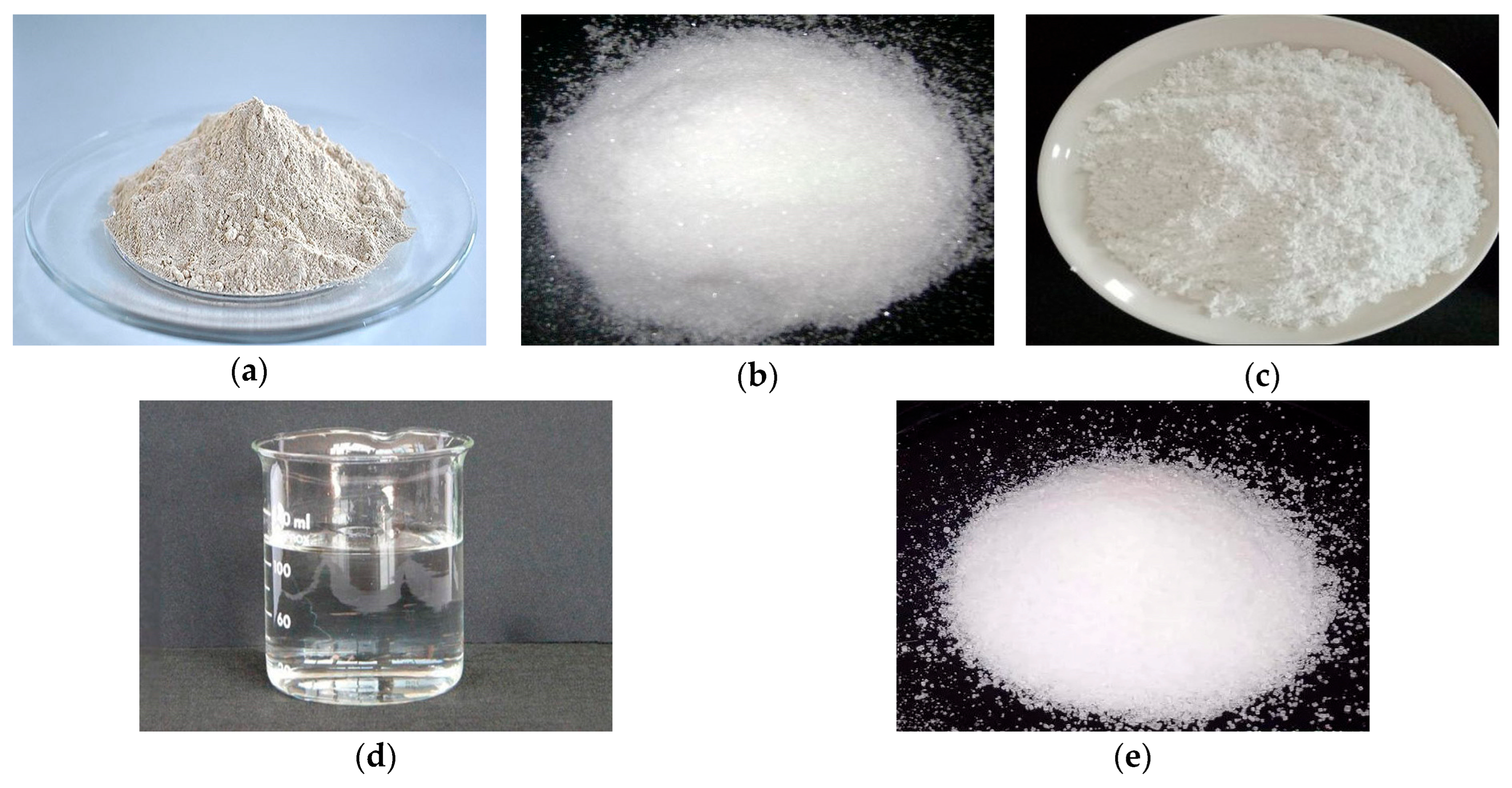
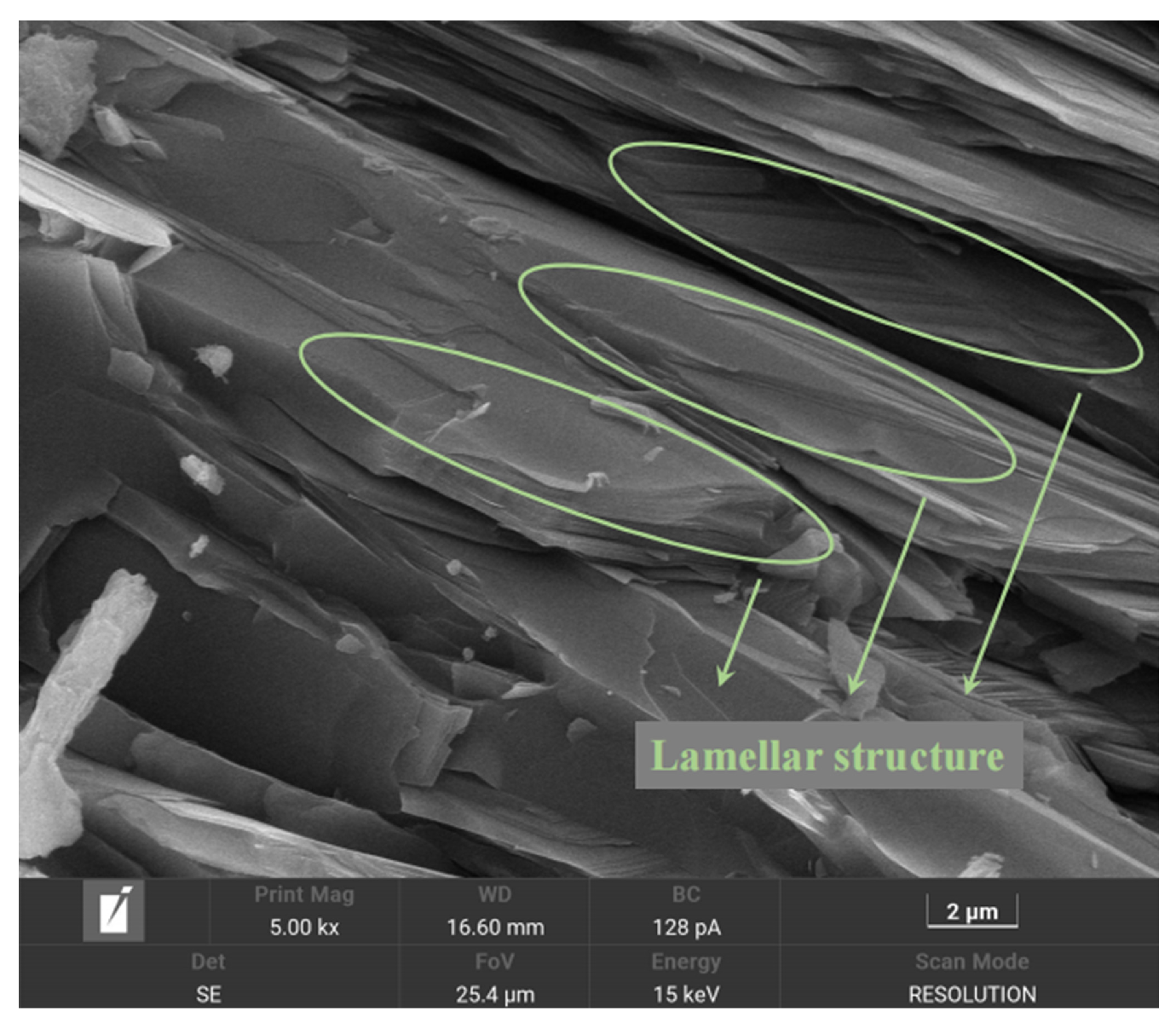
The raw materials used in this study included the following: light-burned magnesia, magnesium sulfate heptahydrate, brucite, dilute sulfuric acid, citric acid monohydrate (CAM), and water. The morphology of some raw materials is shown in Figure 1. The light-burned magnesia was provided by Weifang Zhixin Chemical Co., Ltd., Weifang, China with a particle size of 80 μm, MgO content of 82.5%, density of 1.2 g/cm3, and specific surface area > 3 m2/g, as shown in Table 1. The magnesium sulfate heptahydrate was provided by Jinan Guofeng Chemical Industry Co., Ltd., Jinan, China with a particle size of 1–2 mm, density of 1.68 g/cm3, and analytical purity. The brucite was provided by Liaoning Brucite Ore Trade Co., Ltd., Dalian, China with a particle size of 45 μm, Mg(OH)2 content of 81.4%, density of 2.39 g/cm3, and specific surface area of 0.057 m2/g, as shown in Table 2 (XRF test results of natural brucite). Figure 2 is the microstructure of the natural brucite [30].The dilute sulfuric acid was provided by Wabcan Biotechnology Co., Ltd., Fuzhou, China with a concentration of 5 mol/L (≈38% (wt%)). The modifier, CAM, was provided by Tianjin Chemical Reagent Co., Ltd., Tianjin, China with a particle size of 0.15 mm, density of 0.791 g/cm3, and analytical purity. The mixing water was deionized water.

2.2. Design of Mix Proportion

In this study, the mix proportion of the sustainable low carbon MOSC was formulated based on the proportion of traditional MOSC, namely MgO:MgSO4:H2O (molar ratio) = 14:1:22.5, as shown in Table 3. The M-0 represented the traditional MOSC composed of light-burned magnesia, magnesium sulfate heptahydrate, water, and citric acid monohydrate. The five test groups (SM-1, SM-2, SM-3, SM-4, and SM-5) were prepared using magnesium sulfate solution derived from dilute sulfuric acid and brucite, which replaced the magnesium sulfate heptahydrate in the sustainable low carbon MOSC formulation.

2.3. Sample Preparation

2.3.1. Sample Preparation of Macroscopic Experiments

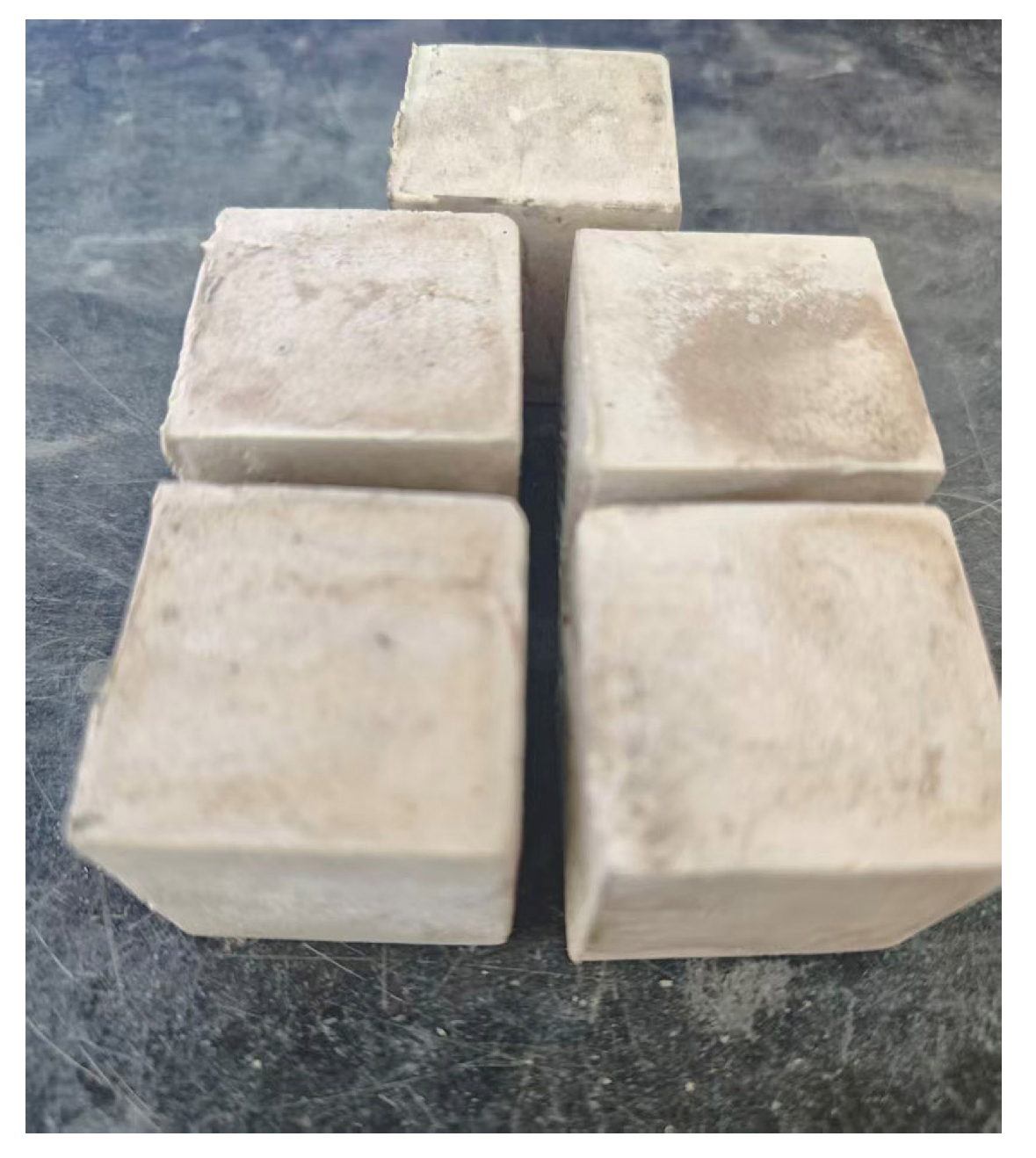
The preparation process of the sustainable low carbon MOSC for the macroscopic experiments was as follows: The brucite and the dilute sulfuric acid were added to a glass container and mixed with a glass rod at 60 rpm for 2 min to form the magnesium sulfate solution. The maximum temperature of the prepared magnesium sulfate solution measured using a liquid thermometer was 71 °C. Therefore, the magnesium sulfate solution was allowed to cool naturally under ambient conditions, while the temperature variation was continuously monitored using a liquid thermometer. When the temperature of the magnesium sulfate solution decreased to 60 °C, 40 °C, and 20 °C, respectively, the subsequent experimental procedures were immediately carried out.. The light-burned magnesia and the CAM were then added to the magnesium sulfate solution and mixed in a cement paste mixer at 140 rpm for 4 min to obtain the fresh cement paste. Some of the paste was taken for setting time and fluidity tests. The remaining paste was poured into a 40 mm × 40 mm × 40 mm mold, covered with polyethylene film to prevent moisture evaporation, and cured under standard conditions (20 ± 1 °C, 95% RH) for 3 d (as shown in Figure 3). The compressive strength was tested using six samples per group, with average values taken to minimize the errors. The preparation process of the traditional MOSC (M-0) was similar to the sustainable low carbon MOSC: the light-burned magnesia, heptahydrate magnesium sulfate, deionized water, and CAM were mixed in a cement paste mixer at 140 rpm for 4 min to obtain the fresh cement paste. The remaining preparation and curing processes were identical to those of sustainable low carbon MOSC.
It should be noted that the maximum 3 d compressive strength of the sustainable low carbon MOSC prepared with a 20 °C magnesium sulfate solution was 34 MPa (SM-3), as shown in Figure 6. Additionally, since the magnesium sulfate solution released high temperatures during preparation, this study also investigated the setting time, fluidity (for magnesium sulfate solutions at 20 °C, 30 °C, 40 °C, 50 °C, 60 °C, and 70 °C), and compressive strength (for magnesium sulfate solutions at 20 °C, 40 °C, and 60 °C, with curing ages of 3 h, 6 h, 1 d, 3 d, and 28 d) of SM-3 under different solution temperatures. For example, the SM-3-60 indicated that the magnesium sulfate solution used to prepare the sample was at 60 °C. The SM-3-60-3h denoted that the magnesium sulfate solution used to prepare the sample was at 60 °C with a curing age of 3 h.

2.3.2. Sample Preparation of Microscopic Experiments

As shown in Figure 7, the mechanical test results revealed that under three magnesium sulfate solution temperatures (20 °C, 40 °C, and 60 °C), the 3 d compressive strength of the SM-3 showed no significant difference from the 28 d compressive strength. This indicated that the cement hydration reaction has been largely completed for the first three days with the mechanical performance and microstructure stabilizing. Consequently, this study selected samples from four hydration ages (3 h, 6 h, 1 d, and 3 d) of SM-3-60, SM-3-40, and SM-3-20 for the microscopic analysis.
The preparation procedure of the microscopic experiments samples was as follows: The samples cured to various ages were crushed and soaked in anhydrous ethanol for 72 h to terminate the hydration behavior. Subsequently, the samples were collected and dried in a 40 °C vacuum drying oven for 48 h. After drying, some of the samples were ground in an agate mortar for 30 min and sieved through a 200-mesh sieve, and the remaining powder was used for XRD and TG-DSC tests. Some of the samples were crushed into blocks approximately 5 mm × 5 mm × 5 mm for the mercury intrusion porosity (MIP) test. Finally, the remaining samples were cut into regular blocks measuring 5 mm × 5 mm × 2 mm, treated with ion sputtering gold plating (Au film thickness: 10 nm), and used for the SEM test.

2.4. Testing Methods

2.4.1. Setting Time and Fluidity

The setting time and fluidity of the sustainable low carbon MOSC were tested according to China standard GB/T1346-2024 “Test Methods for Water Requirement of Standard Consistency, Setting Time and Soundness of the Portland Cement” [31].

2.4.2. Compressive Strength

The compressive strength of the sustainable low carbon MOSC was tested in accordance with the China standard GB/T 17671-2021 “Methods of Testing Cements-Determination of Strength (ISO Method)” [32]. A cement compressive and flexural testing machine was conducted with a loading rate of 2.4 kN/s.

2.4.3. MIP

The pore characteristics of the sustainable low carbon MOSC were tested using the high-performance automatic mercury compression apparatus (Micromeritics AutoPore V 9620) from Micromeritics, Norcross, GA, USA. The pressure range was 0.2 psia to 60,000 psia.

2.4.4. XRD

The compositions of the sustainable low carbon MOSC were analyzed using a Rigaku SmartLab SE X-ray diffractometer from Rigaku, Tokyo, Japan. The experiment employed a Cu target Kα X-ray source with a step size of 0.02°, an acceleration voltage of 40 kV, a 2θ angle scanning range of 5° to 90°, and a scanning speed of 5°/min. The obtained diffraction data were processed with Jade 6.5 software to determine the material compositions.

2.4.5. TG-DSC

The composition of the sustainable low carbon MOSC was analyzed using a HITACHI STA200 TG-DSC instrument from HITACHI, Tokyo, Japan. The temperature range was 30–800 °C with a heating rate of 5 °C/min. The composition content was calculated based on the mass change in the sample during the heating process.

2.4.6. SEM

The microstructure of the sustainable low carbon MOSC was observed by scanning electron microscope (SEM) of ZEISS Sigma 360 model from ZEISS, Oberkochen, Germany. The acceleration voltage was 5 kV and the emission current was 10 nA.

3. Results and Discussion

3.1. Setting Time and Fluidity of Sustainable Low Carbon MOSC

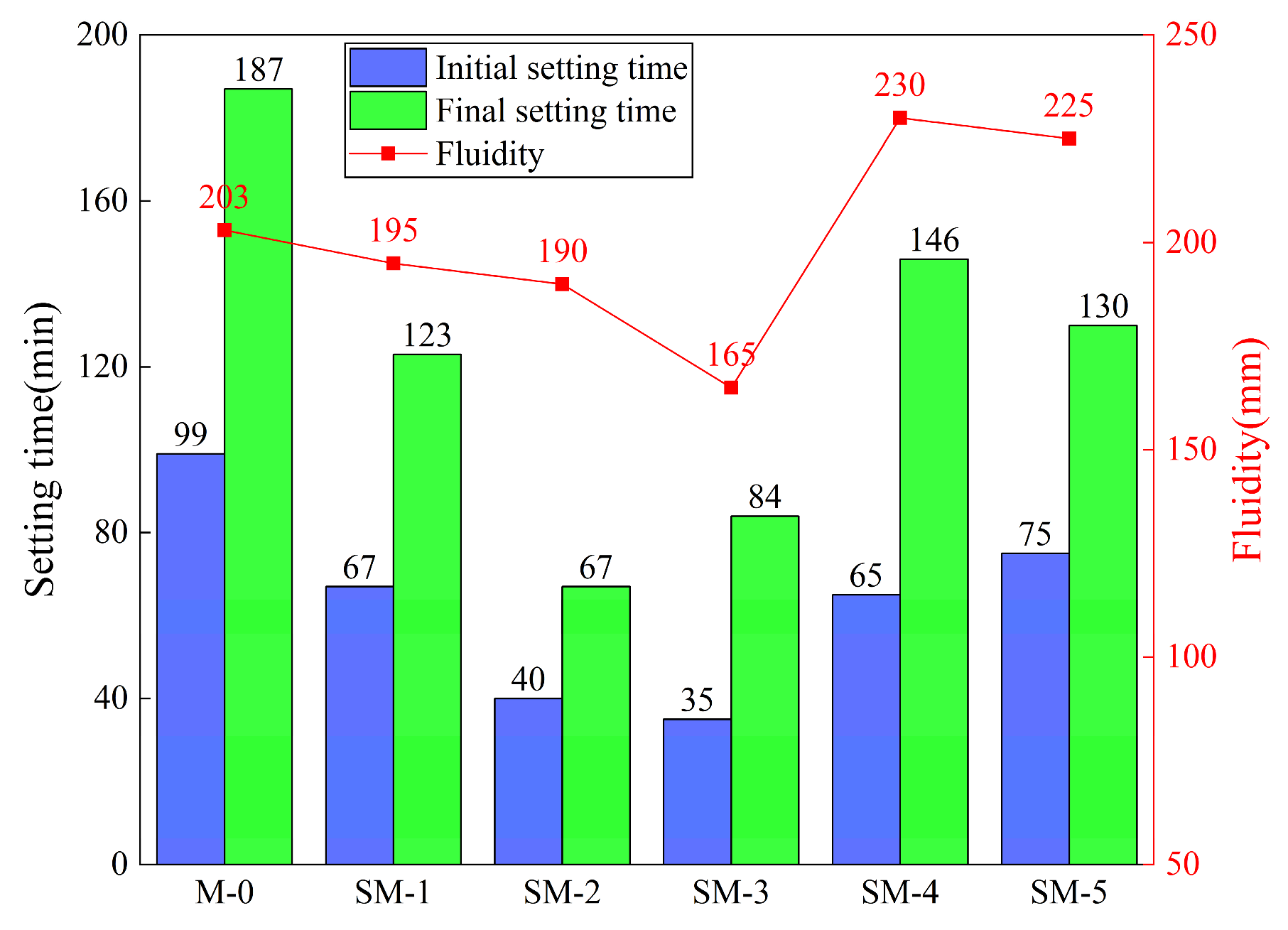
Figure 4 displays the setting time and fluidity of the sustainable low carbon MOSC prepared with 20 °C magnesium sulfate solution. The data indicated that the initial setting times for M-0, SM-1, SM-2, SM-3, SM-4, and SM-5 were 99 min, 67 min, 40 min, 35 min, 65 min, and 75 min, respectively, while the final setting times were 187 min, 123 min, 67 min, 84 min, 146 min, and 130 min. The corresponding fluidities were 203 mm, 195 mm, 190 mm, 165 mm, 230 mm, and 225 mm. Notably, compared to M-0, SM-3 demonstrated a 64.6% reduction in initial setting time, a 55.1% decrease in final setting time, and an 18.7% reduction in fluidity.
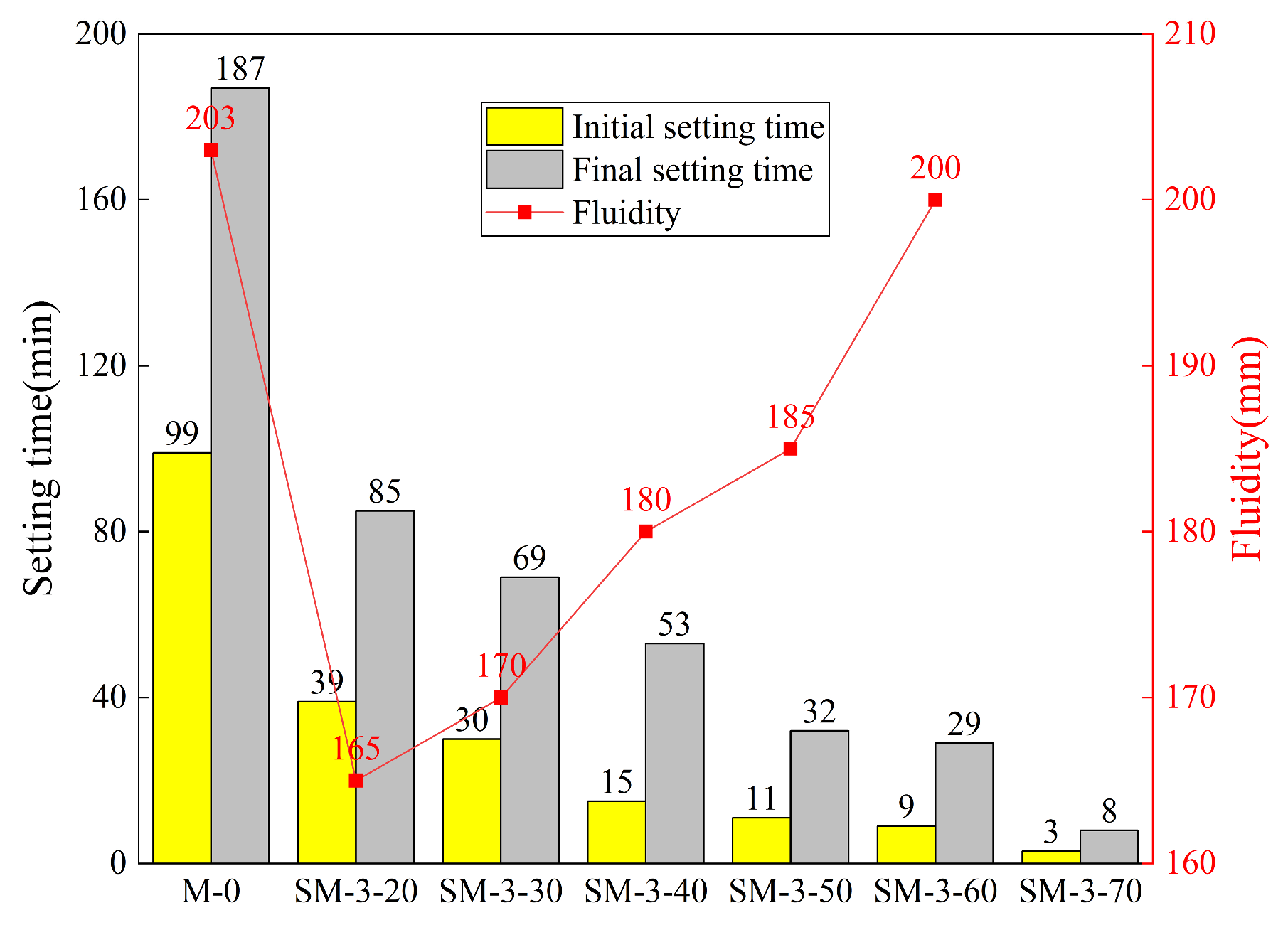
Figure 5 demonstrates the setting times and fluidities of sustainable low carbon MOSC (SM-3) prepared with magnesium sulfate solutions at varying temperatures. The initial setting times for M-0, SM-3-20, SM-3-30, SM-3-40, SM-3-50, SM-3-60, and SM-3-70 were 99 min, 30 min, 39 min, 15 min, 11 min, 9 min, and 3 min, respectively, while the final setting times were 187 min, 85 min, 69 min, 53 min, 32 min, 29 min, and 8 min. The fluidity values of M-0, SM-3-20, SM-3-30, SM-3-40, SM-3-50, and SM-3-60 were 203 mm, 165 mm, 170 mm, 180 mm, 185 mm, and 200 mm, respectively. The SM-3-70 was too viscous to measure the fluidity. Compared to M-0, SM-3-60 exhibited a 90.9% reduction in initial setting time, an 84.5% decrease in final setting time, and a 1.5% reduction in fluidity. SM-3-20 showed a 60.6% decrease in initial setting time, a 54.5% reduction in final setting time, and an 18.7% decrease in fluidity. These results indicated that increasing the temperature of the magnesium sulfate solution shortened the setting time and enhanced the fluidity of the prepared sustainable low carbon MOSC. The previous studies have demonstrated that, under identical mix proportions, temperature had a pronounced influence on the setting behavior of the MOSC. When the temperature increased from 25 °C to 90 °C, the initial setting time decreased from approximately 203 min to 13 min, while the final setting time was reduced from 274 min to 20 min, indicating a significant temperature-accelerated the setting effect. This behavior was generally attributed to the enhanced dissolution of reactants, accelerated ionic transport, and in-creased nucleation and crystal growth rates of hydration products at elevated temperatures, which collectively promoted the hydration kinetics and the rapid establishment of the internal structure [33]. In addition, the previous studies on Portland cement paste have shown that temperature exerted a dual effect on early-age flow behavior. On the one hand, increasing temperature reduced the viscosity of the liquid phase and altered shear-induced structural breakdown, allowing particles to undergo easier de-flocculation and rearrangement under the same shear conditions. As a result, the paste can more readily reach a relatively dispersed state, which manifested as a maintenance or even a temporary increase in flowability during the very early stage. On the other hand, as the hydration proceeded, the elevated temperature significantly accelerated the hydration reactions and structural build-up, causing the system to rapidly enter a thickening stage and leading to a sharp loss of flowability [34]. Based on these findings, it can be reasonably inferred that, the increase in temperature during the early stage immediately after mixing primarily enhanced the reactant solubility and reduced the paste viscosity in the sustainable low carbon MOSC. Consequently, the material exhibited an increase in initial flowability with increasing temperature at the time of testing. However, this behavior was confined to an early low-hydration window and was subsequently overridden by the rapid hydration and structural development of the system.

3.2. Compressive Strength of Sustainable Low Carbon MOSC

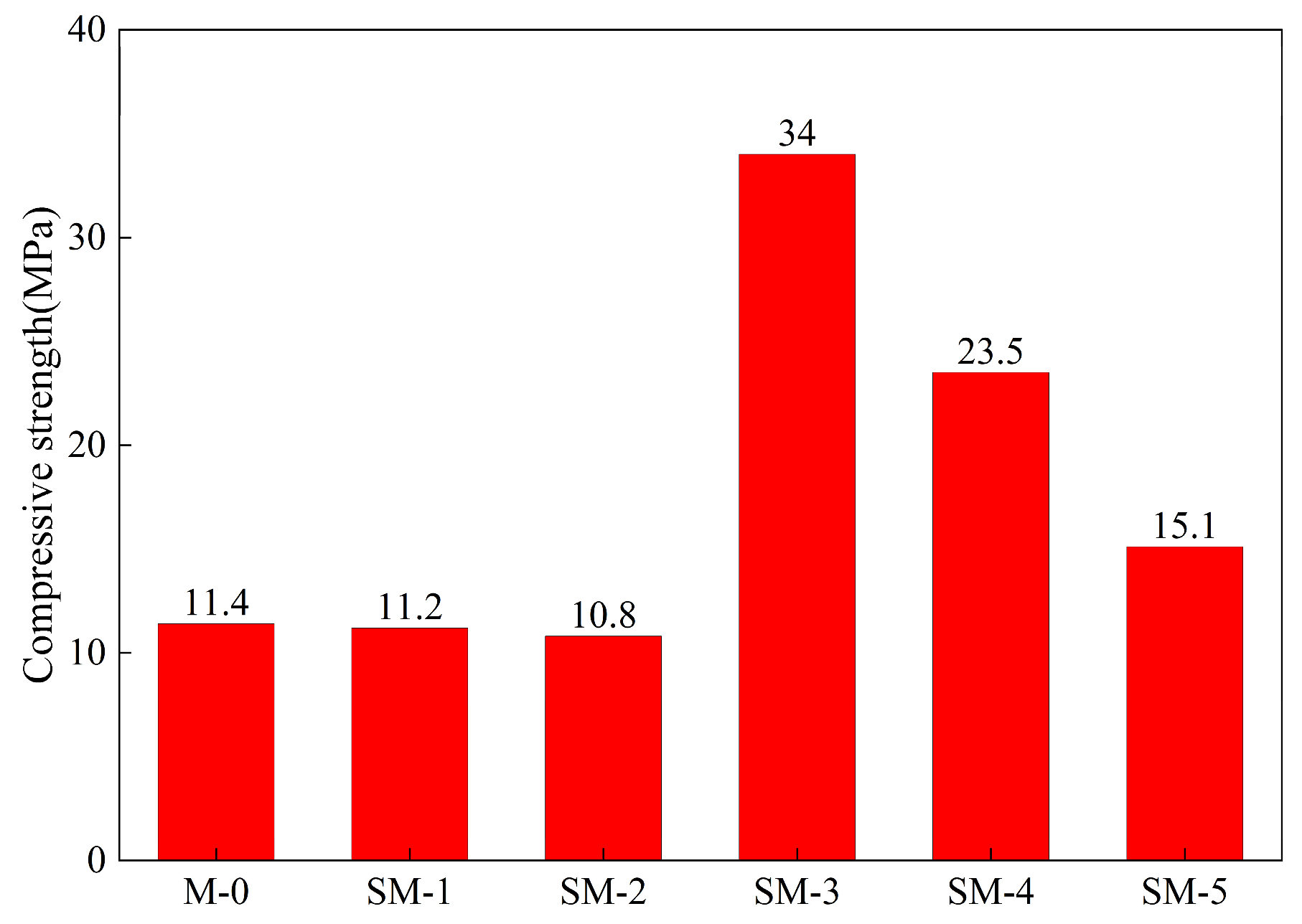
Figure 6 shows the 3 d compressive strength of the sustainable low carbon MOSC prepared with 20 °C magnesium sulfate solution. As can be seen from the figure, the 3 d compressive strengths of M-0, SM-1, SM-2, SM-3, SM-4, and SM-5 were 11.4 MPa, 11.2 MPa, 10.8 MPa, 34.0 MPa, 23.5 MPa, and 15.1 MPa. Compared with M-0, SM-3 had the highest value, increasing by 198.2%.
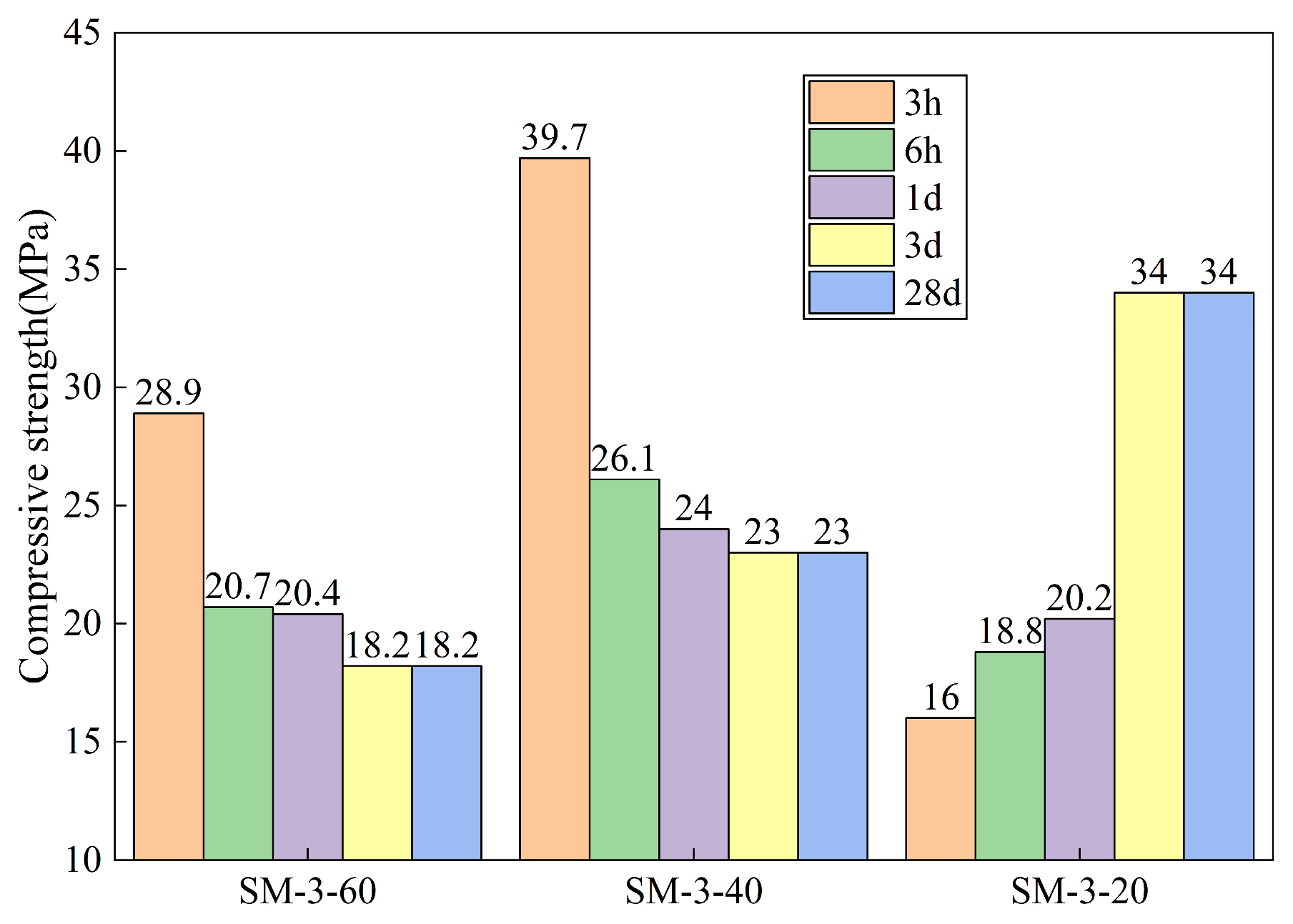
Figure 7 shows the compressive strength of sustainable low carbon MOSC prepared with SM-3 in magnesium sulfate solutions at 60 °C, 40 °C, and 20 °C, with curing ages of 3 h, 6 h, 1 d, 3 d, and 28 d. The compressive strengths of SM-3-60 at 3 h, 6 h, 1 d, 3 d, and 28 d were 28.9 MPa, 20.7 MPa, 20.4 MPa, 18.2 MPa, and 18.2 MPa, respectively. The compressive strengths of SM-3-40 at 3 h, 6 h, 1 d, 3 d, and 28 d were 39.7 MPa, 26.1 MPa, 24.0 MPa, 23.0 MPa, and 23.0 MPa, respectively. These results indicated that the compressive strength decreased with the increase in age and stabilized after 3 d of hydration, with SM-3-40 showing higher compressive strengths of all ages than SM-3-60. The compressive strengths of SM-3-20 at 3 h, 6 h, 1 d, 3 d, and 28 d were 16.0 MPa, 18.8 MPa, 20.2 MPa, 34.0 MPa, and 34.0 MPa, respectively, indicating that the compressive strength increased continuously with the age and stabilized after 3 days of hydration, showing an opposite trend to the other two groups. The reason for this change was that when the temperature of the MgSO4 solution was >40 °C, although the high temperature accelerated cement hydration and the formation of 5·1·7 crystalline phase, the crystal growth was insufficient and disordered, leading to a porous and fragile microstructure. Simultaneously, it reduced the thermodynamic stability of the 5·1·7 crystalline phase, gradually transforming it into the 3·1·8 crystalline phase with a looser crystalline structure while also promoting the localized precipitation of Mg(OH)2 [35,36].

3.3. MIP Analysis

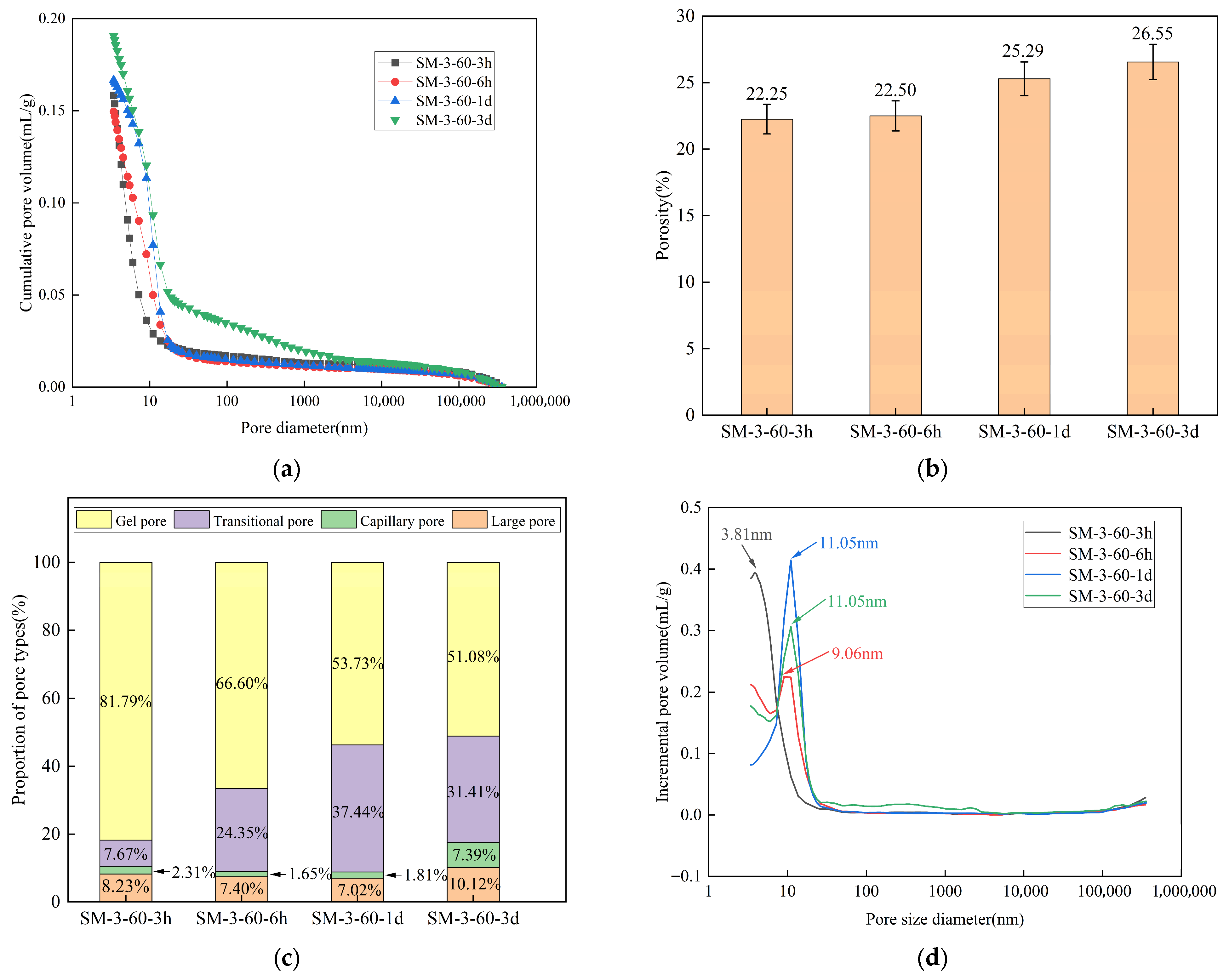
The pore structures of SM-3-60 at 3 h, 6 h, 1 d, and 3 d ages were analyzed through MIP test, with the results shown in Figure 8. In this study, pores were classified into large pores (pore diameter > 1000 nm), capillary pores (100 nm < pore diameter < 1000 nm), transitional pores (10 nm < pore diameter < 100 nm), and gel pores (pore diameter < 10 nm) [37]. Figure 8a shows the cumulative pore volume distribution curves of SM-3-60 at different ages, indicating that the gel pores and transitional pores were predominant, with small amounts of capillary pores and large pores. Figure 8b displays the porosity values of SM-3-60 at different ages. The results show that the porosities were 22.25%, 22.5%, 25.29%, and 26.55% at each age, which increased with age. Figure 8c illustrates the proportions of different pore types at different ages. It can be seen that the proportion of the gel pores was 81.79%, 66.6%, 53.73%, and 51.08% at each age. As the age increased, the proportion of the gel pores decreased, while the proportions of the other three types of pores increased. Figure 8d presents the incremental pore volume distribution curves of SM-3-60 at different ages, revealing that the most probable pore diameters increased with age, including 3.81 nm, 11.05 nm, 11.05 nm, and 9.06 nm, all less than 20 nm, which were considered as harmless pores [24]. These results aligned with the compressive strength trends shown in Figure 7 for the corresponding groups. The lower the porosity of the samples, the higher the proportion of gel pores, and consequently the greater the compressive strength.
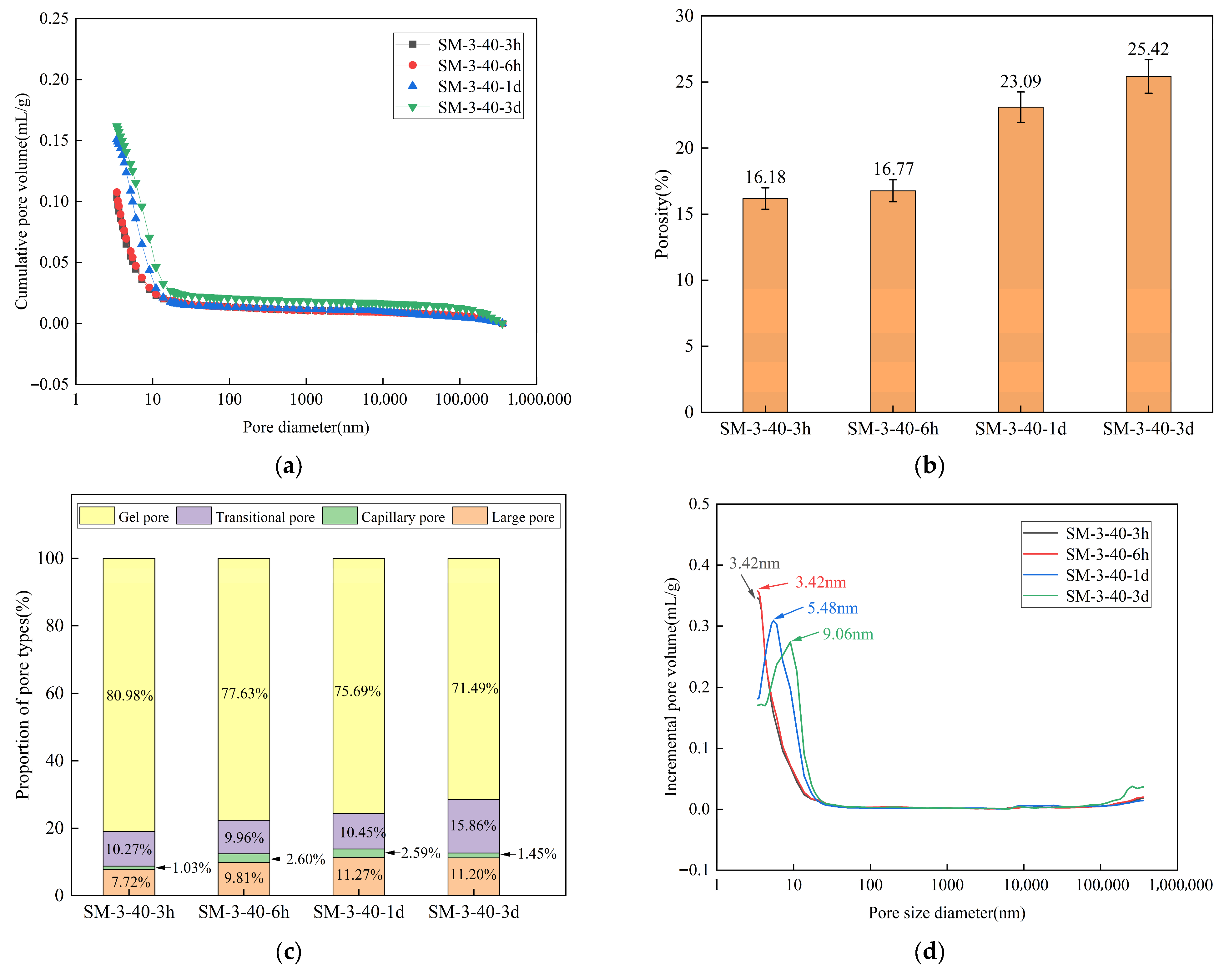
The pore structures of SM-3-40 at 3 h, 6 h, 1 d, and 3 d ages were analyzed through the MIP test, as shown in Figure 9. Figure 9a shows the cumulative pore volume distribution curves of SM-3-40 at different ages, mainly consisting of gel pores and transitional pores, with small amounts of capillary pores and large pores, similar to SM-3-60. Figure 9b displays the porosities of SM-3-40 at different ages, with results showing 16.18%, 16.77%, 23.09%, and 25.42% at each age. As the age increased, the porosity of the sample increased. Compared with Figure 8b, the porosity of SM-3-40 at the same age was lower than that of SM-3-60. Figure 9c shows the proportions of different pore types of SM-3-40 at different ages. The data in the figure indicated that the proportions of gel pores in the sample at each age were 80.98%, 77.63%, 75.69%, and 71.49%, respectively. This showed that the proportions of gel pores were >50% at each age, and as the age increased, the proportion of gel pores decreased, while the proportions of the other three pore types increased. Figure 9d shows the incremental pore volume curves of SM-3-40 at different ages, indicating that the most probable pore sizes were 3.42 nm, 3.42 nm, 5.48 nm, and 9.06 nm, which were harmless. The above results were consistent with the trend of compressive strength changes shown in the corresponding groups in Figure 7. The smaller the porosity of the sample, the larger the proportion of gel pores, and the higher the compressive strength.
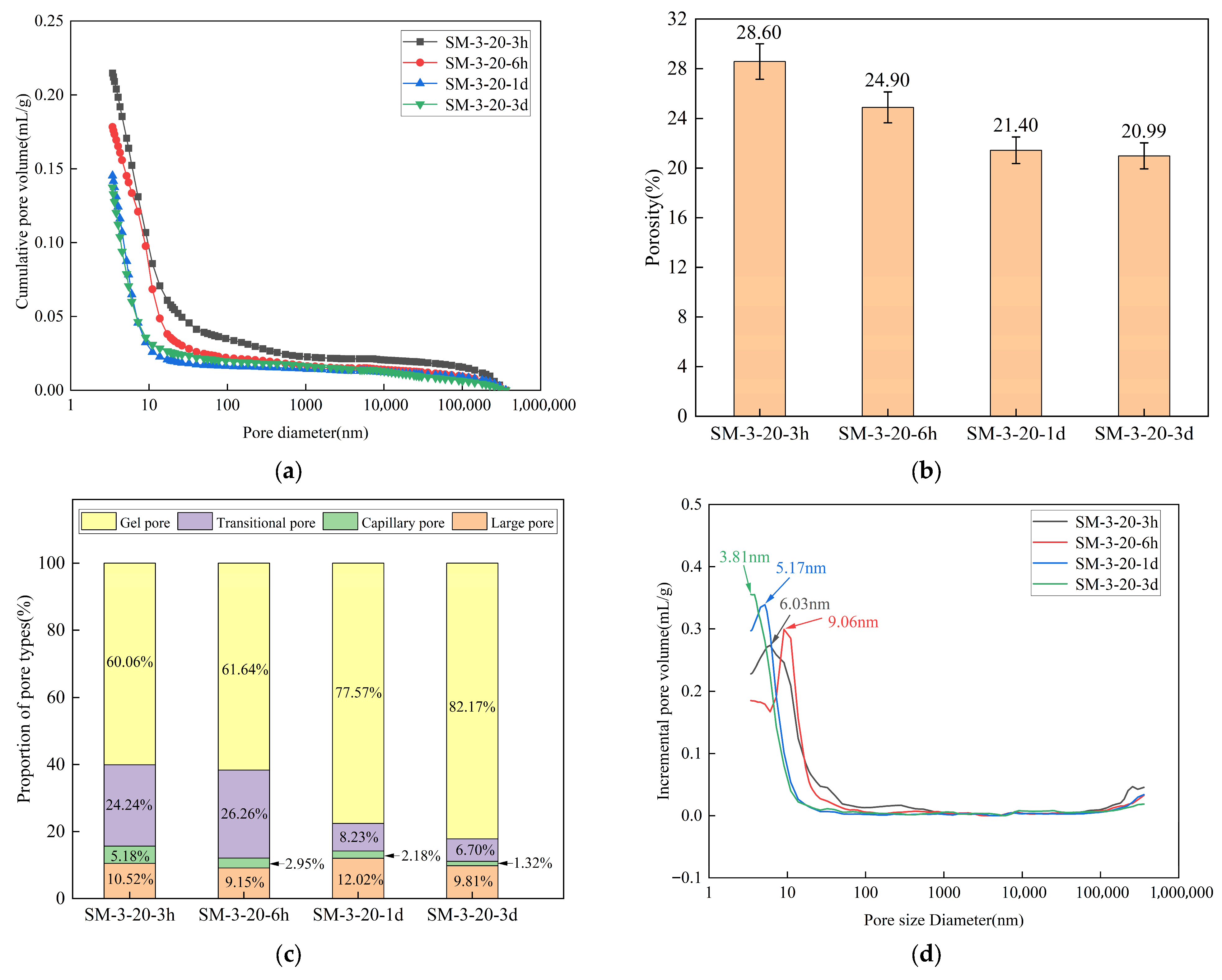
The pore structures of SM-3-20 at 3 h, 6 h, 1 d, and 3 d ages were analyzed through the MIP test, as shown in Figure 10. Figure 10a presents the cumulative pore volume distribution curves of SM-3-20 at different ages, primarily consisting of gel pores and transitional pores, with minor amounts of capillary pores and large pores, similar to SM-3-60. Figure 10b displays the porosity of SM-3-20 at various ages, which were 28.60%, 24.90%, 21.40%, and 20.99%, respectively. These results indicated a decreasing trend in porosity with increasing age, contrary to the observed increase in Figure 8b and Figure 9b. Notably, the minimum porosity of SM-3-20 was lower than that of SM-3-60 but higher than that of SM-3-40, aligning with the maximum compressive strength results in Figure 7 (SM-3-40 > SM-3-20 > SM-3-60). Figure 9c shows the proportion of different pore types in SM-3-20 at various ages. The gel pore proportions at each age were 60.06%, 61.64%, 77.57%, and 82.17%, respectively. This demonstrated that gel pores accounted for over 50% of the total pores at all ages, with their proportions increasing while the other three pore types decreased, a trend opposite to that observed in Figure 8c and Figure 9c. Figure 10d shows the incremental pore volume curves of SM-3-20 at different ages, from which it can be seen that the most probable pore sizes for the samples that increased with age were 3.81 nm, 5.17 nm, 6.03 nm, and 9.06 nm, all of which were harmless pores. This result was consistent with the trend of compressive strength changes shown in the corresponding groups in Figure 7. The higher the porosity of the samples, the smaller the proportion of gel pores, and the greater the compressive strength.

3.4. XRD

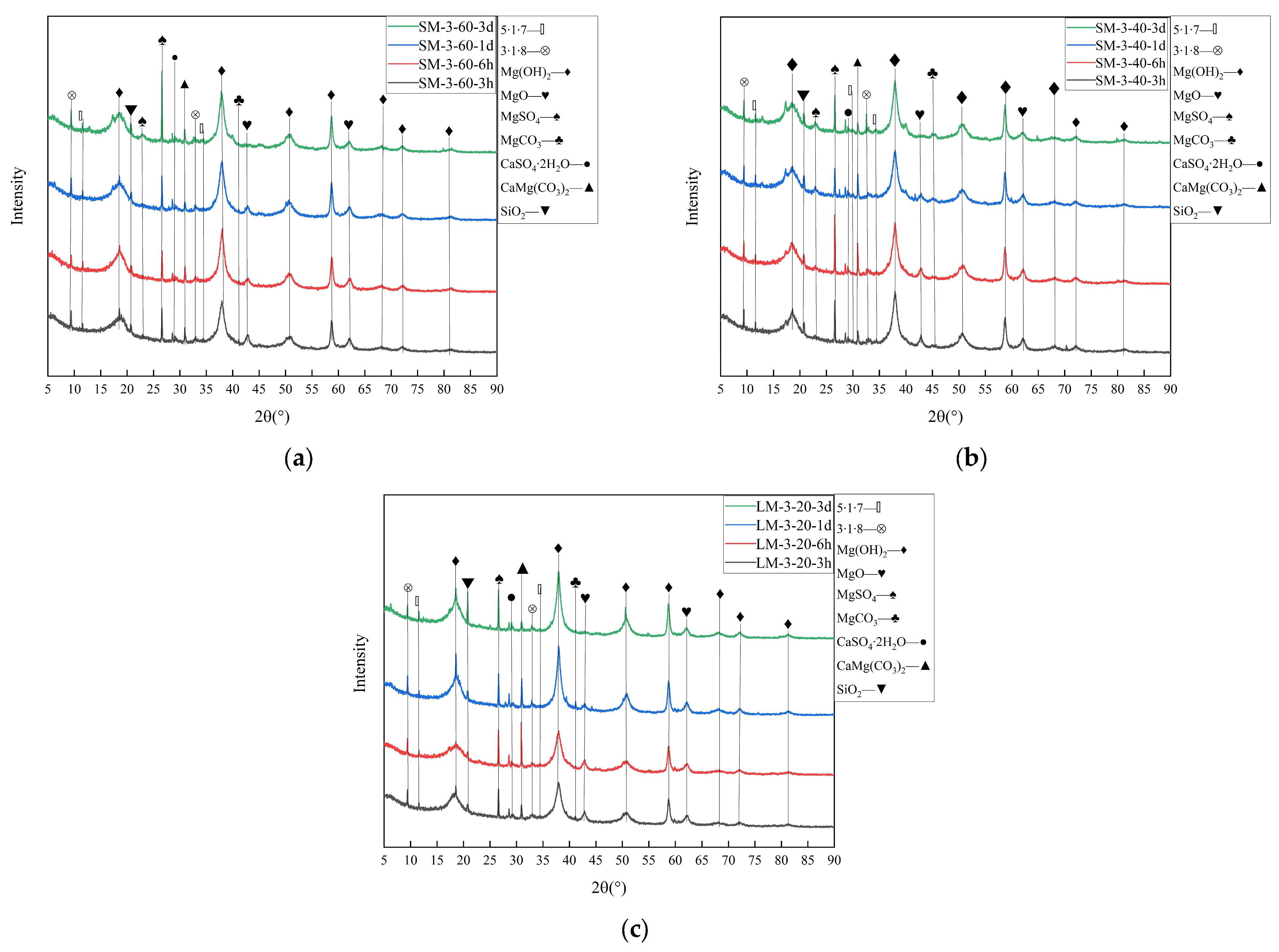
The XRD analysis of the compositions of SM-3-60, SM-3-40, and SM-3-20 samples at 3 h, 6 h, 1 d, and 3 d was conducted, as shown in Figure 11. The results indicated that all three groups maintained identical compositions across different ages, primarily consisting of the 5·1·7 crystalline phase [38], 3·1·8 crystalline phase [39], Mg(OH)2, MgSO4, MgO, MgCO3, CaSO4·2H2O, and SiO2 [27]. The generated compositions in the samples were formed within the first 3 h of the hydration reaction. The 5·1·7 crystalline phase, 3·1·8 crystalline phase (Equation (7)), and Mg(OH)2 were the primary hydration products of the sustainable low carbon MOSC. The MgO and MgSO4 served as reactants, while SiO2 and CaO originated from the light-burned magnesia and brucite in the raw materials. The CaO reacted with H2O to form Ca(OH)2, which subsequently underwent double decomposition with partial free MgSO4 to produce the Mg(OH)2 and CaSO4. Under humid conditions, CaSO4·2H2O was formed (as shown in Equations (8)–(10)).
4Mg2+ + SO42− + 6OH + 8H2O → 3Mg(OH)2·MgSO4·8H2O
CaO + H2O → Ca(OH)2
Ca(OH)2 + MgSO4 → Mg(OH)2↓ + CaSO4
CaSO4 + 2H2O → CaSO4·2H2O

3.5. TG-DSC

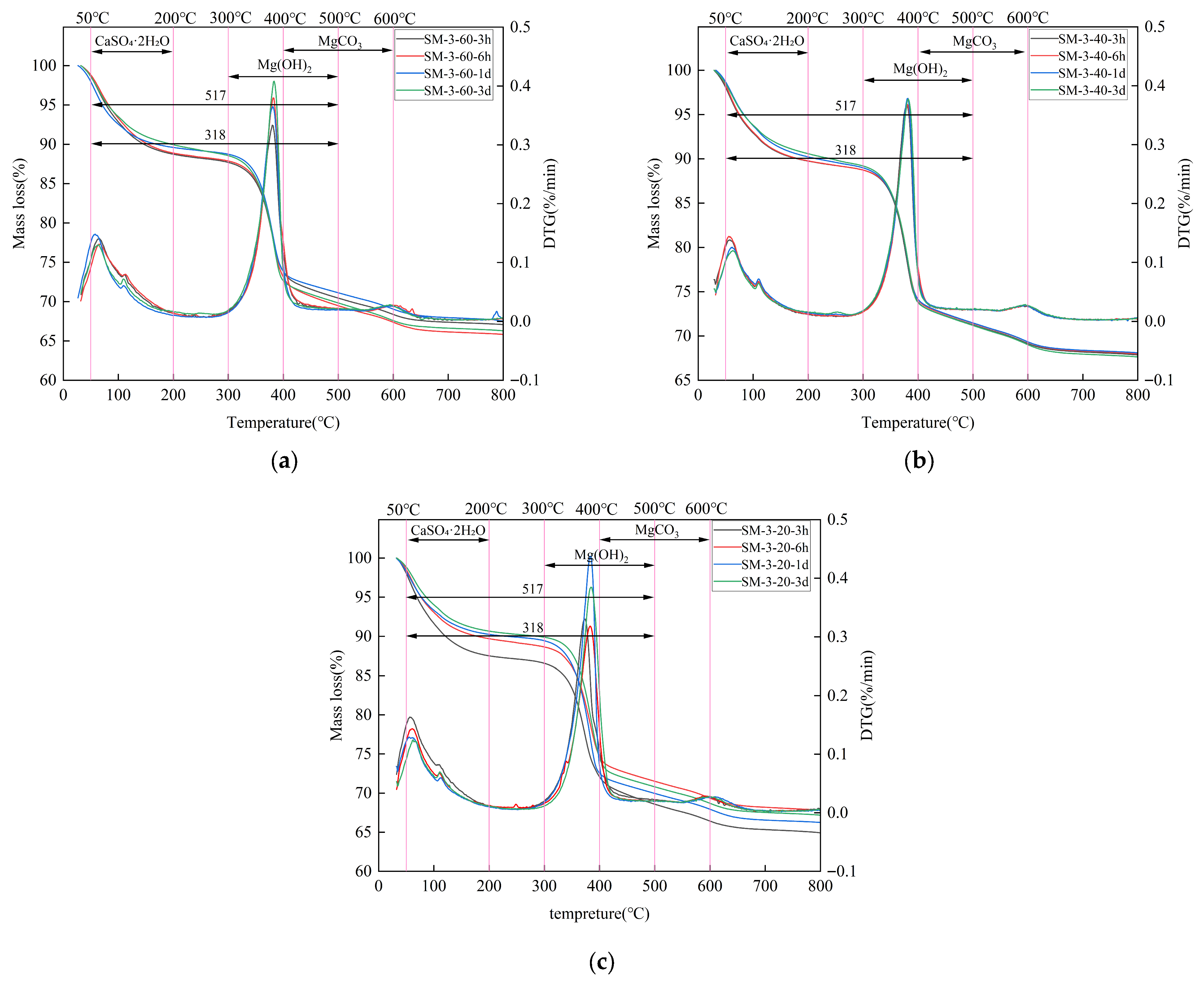
The TG-DSC thermogravimetric analysis curves were used to determine the compositions contents of SM-3-60, SM-3-40, and SM-3-20 at 3 h, 6 h, 1 d, and 3 d, as shown in Figure 12. The decomposition temperature ranges for different compositions were as follows [40]: The CaSO4·2H2O decomposed at 50–200 °C. The 5·1·7 and 3·1·8 crystalline phases decomposed at 50–500 °C, losing crystalline water at 50–300 °C, and Mg(OH)2 decomposed therein at 300–500 °C and finally converted to MgSO4. The Mg(OH)2 decomposed at 300–500 °C. The CaSO4·2H2O lost crystalline water at 50–200 °C to form CaSO4. A small amount of MgCO3 was generated during cement curing and sample grinding, decomposing at 400–600 °C. The MgO and SiO2 remained stable within the TG experiment temperature range.
Table 4 presents the mass percentages of compositions for SM-3-60, SM-3-40, and SM-3-20 at 3 h, 6 h, 1 d, and 3 d ages, calculated using the data from Figure 12 and Equations (11) and (12).
ωL = M1/M0
ω = TGti−1~tiL
where ωL indicates the composition mass loss ratio (%); M0 indicates the relative molecular mass of the composition; M1 indicates the relative molecular mass of the lost mass of the composition; ω indicates the mass percentage of the composition (%); and TGti−1~ti indicates the mass loss percentage of the composition in the temperature range of ti−1~ti.
As shown in Table 4, SM-3-60 exhibited a gradual decrease in the 5·1·7 crystalline phase content from 15.8% to 13.1% with age, while the 3·1·8 crystalline phase content increased from 17.2% to 18.5%. The Mg(OH)2 content increased from 48.5% to 51.6%, whereas the mass percentages of MgCO3 and CaSO4·2H2O showed no significant changes, maintaining average values of 4.1% and 7.5%, respectively. Notably, the 5·1·7 crystalline phase served as the primary composition responsible for the mechanical strength of the MOSC. The mass percentage trends of both the 5·1·7 and 3·1·8 crystalline phases aligned with the compressive strength and pore structure changes observed in Figure 7 and Figure 8. This phenomenon can be attributed to the following mechanisms: During high-temperature mixing, the sustainable low carbon MOSC underwent intense early hydration reaction, rapidly forming an abundant 5·1·7 crystalline phase. As a medium-temperature stable phase (optimal formation temperature: 60–120 °C), the 5·1·7 crystalline phase accelerated cement strength development and structural densification. The resulting hydration products encapsulated unreacted MgO, thereby inhibiting sustained hydration [35,37]. During initial hydration, the 3·1·8 crystalline phase demonstrated rapid nucleation and crystallization. In the early reaction stage, high ionic concentrations drove the system to prioritize the fastest-forming phase to minimize free energy. In contrast, the 5·1·7 crystalline phase required higher energy barriers and longer induction periods for nucleation and growth, necessitating time to organize more ions into an ordered structure. Hence, there was a 3·1·8 crystalline phase formed in SM-3-60-3h, and its mass percentage was higher than the 5·1·7 crystalline phase. As the curing time progressed, the cement temperature gradually decreased, resulting in insufficient MgO participation in the reaction while MgSO4 remained in excess. Within the MgO-MgSO4-H2O ternary phase system, the 3·1·8 crystalline phase was a stable or metastable phase under low-temperature (<50 °C) and low-alkalinity (low MgO/MgSO4 molar ratio) conditions, and Mg(OH)2 was a stable or metastable phase under low-temperature conditions. Consequently, when the system lacked sufficient “alkalinity,” the high-alkalinity 5·1·7 crystalline phase could not form, leading to the formation of the low-alkalinity 3·1·8 crystalline phase instead [20]. Since some MgO failed to participate in hydration, it reacted with water in the system to form Mg(OH)2, causing an increase in Mg(OH)2 content. The MgCO3, a trace composition generated during curing and grinding, and the raw material contained limited amounts of CaO; therefore, the contents of MgCO3 and CaSO4·2H2O showed minimal variation.
The trends in mass percentages of different compositions in SM-3-40 at various ages shown in Table 4 were consistent with those of SM-3-60, as well as the compressive strength and pore structure trends displayed in Figure 7 and Figure 9. As the curing age increased, the content of the 5·1·7 crystalline phase decreased from 22.8% to 12%, while the 3·1·8 crystalline phase increased from 15.6% to 19.2%. The Mg(OH)2 content increased from 42.2% to 52.4%, whereas the mass percentage changes in MgCO3 and CaSO4·2H2O were not obvious, with average values of 4.1% and 7.3%, respectively. However, the maximum mass percentage of the 5·1·7 crystalline phase in SM-3-40-3h reached 22.8%, exceeding that of SM-3-60-3h. This was attributed to the relatively lower initial temperature, which resulted in slower early-stage hydration and accelerated late-stage hydration, leading to more participation of MgO in hydration [35,37], thereby enhancing the formation of the 5·1·7 crystalline phase. This finding corresponded with the highest compressive strength observed in SM-3-40-3h shown in Figure 6. The reasons for the insignificant changes in MgCO3 and CaSO4·2H2O content were identical to those in SM-3-60.
As shown in Table 4, SM-3-20 exhibited a gradual increase in the 5·1·7 crystalline phase content from 15.2% to 21.0% with ages, while the 3·1·8 crystalline phase content decreased from 17.4% to 15.8%. The Mg(OH)2 content dropped from 48.6% to 45.1%, with average mass fractions of MgCO3 and CaSO4·2H2O at 4.1% and 7.5%, respectively. At room temperature, these results were attributed to the increasing temperature during hydration which promoted the 5·1·7 crystalline phase formation, while the 3·1·8 crystalline phase demonstrated low-temperature stability [20]. The hydration heat from cement hydration enhanced ionic mobility and reactivity, causing the dissolved 3·1·8 crystalline phase to release Mg2+, OH, and SO42− ions into the solution. Under new thermodynamic conditions, these ions no longer recombined into the 3·1·8 crystalline phase but instead served as sources for 5·1·7 crystalline phase formation. These ions directly deposited onto 5·1·7 phase nuclei, accelerating crystal growth into a larger, longer, and tighter interwoven structure [36]. Simultaneously, the Mg(OH)2 mass fraction progressively decreased. These findings aligned with the compressive strength (Figure 7) and pore structure (Figure 10) trends in corresponding groups. The minimal variation in MgCO3 and CaSO4·2H2O content mirrored the pattern observed in SM-3-60.
The thermal analysis results indicated that the MOSC hydration products underwent stepwise dehydration and structural rearrangement during heating, which was consistent with the multi-stage thermal decomposition behavior of basic magnesium oxysulfate hydrates such as the 5·1·7 crystalline phase [41]. From a thermodynamic perspective, Newman’s thermochemical study proposed the for-mation reaction of the 3·1·8 crystalline phase, and showed that its reaction enthalpy was relatively small (approximately 2.11 kcal/mol), indicating that the energy differences among different hydrated phases were limited. Consequently, the variations in temperature, humidity (water activity), and ionic activity can significantly alter the relative stability and transformation pathways of these phases [42]. Furthermore, the 3·1·8 crystalline phase had been clearly identified as a metastable phase in the Mg(OH)2-MgSO4-H2O system, with its formation and stability windows being highly sensitive to the environmental conditions [39]. The phase equilibrium studies have also demonstrated that the multiple hydrated and hydrated salt phases can stably exist in the MOSC system, and changes in conditions may drive the system across different phase regions and trigger phase reconstruction [43]. Therefore, the “interconversion or switching” between the 5·1·7 and 3·1·8 phases observed at elevated temperatures (especially under high humidity or steam-curing conditions) was more likely associated with dissolution-reprecipitation-controlled phase reconstruction and water-activity-regulated stability switching, rather than a single-step direct solid-state dehydration reaction. This interpretation was also consistent with the previous findings that temperature strongly affected the MgSO4 solubility and the phase formation path-ways in the MOSC system [44].
In summary, when using high-temperature (60 °C) magnesium sulfate solution, the sustainable low carbon MOSC exhibited faster initial hydration with rapid formation of the 5·1·7 crystalline phase. However, the large amount of hydration products quickly encapsulated the unreacted MgO particles, hindering their subsequent full hydration. In contrast, under low-temperature (20 °C) condition, the cement’s hydration progressed more slowly with the lower 5·1·7 crystalline phase formation rate, but the MgO can participate more fully in later stages. This difference manifested in mechanical properties: SM-3-60 demonstrated higher 3 h compressive strength than SM-3-20, yet its 3 d compressive strength was lower than SM-3-20. When using medium-temperature (40 °C) magnesium sulfate solution, both the initial hydration rate and MgO participation in the later stages of the sustainable low carbon MOSC fell between those of 60 °C and 20 °C conditions. Correspondingly, SM-3-40 showed higher 3 h compressive strength than SM-3-60 and SM-3-20, while its 3 d compressive strength exceeded SM-3-60 but fell below SM-3-20 [45].

3.6. SEM

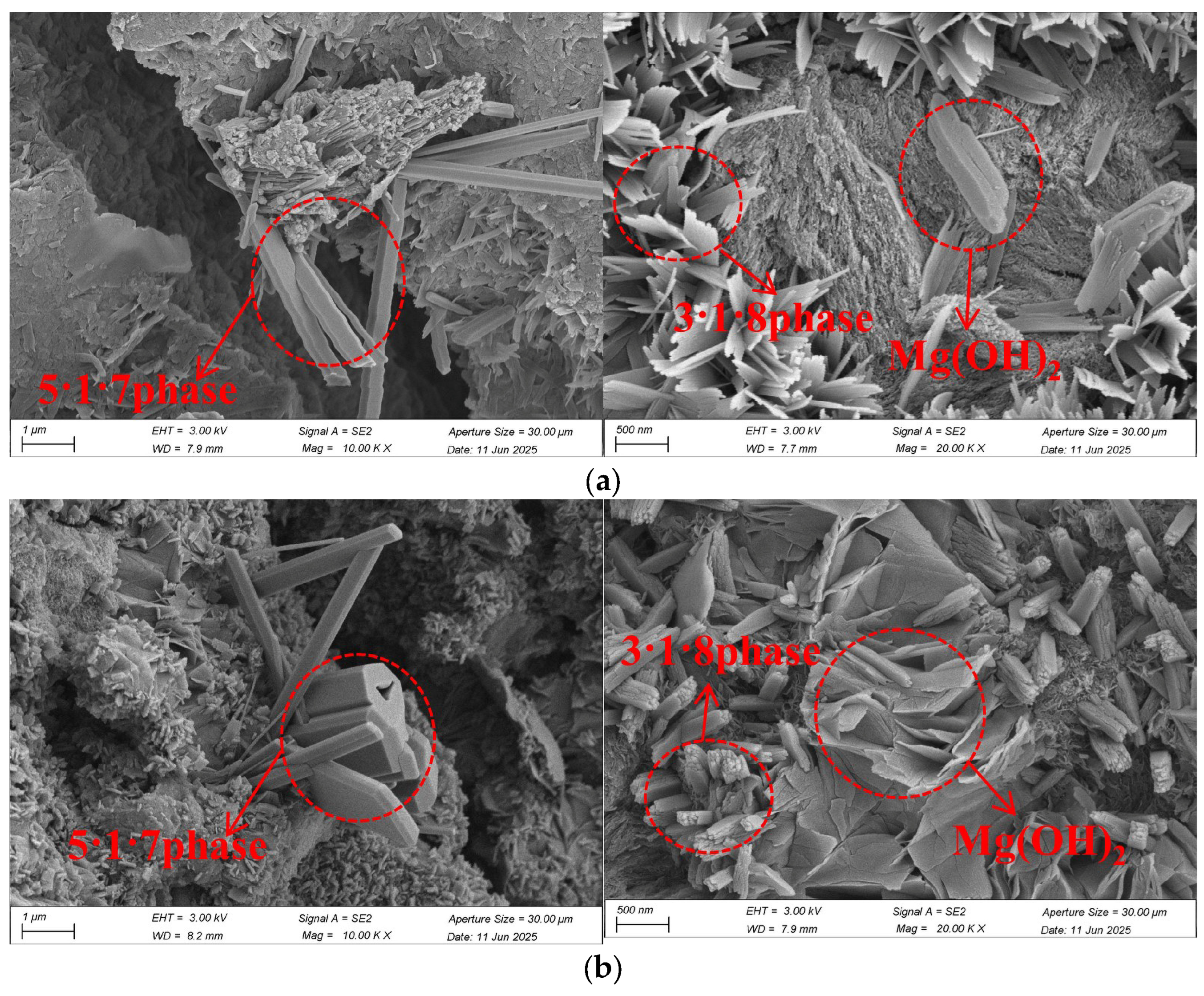
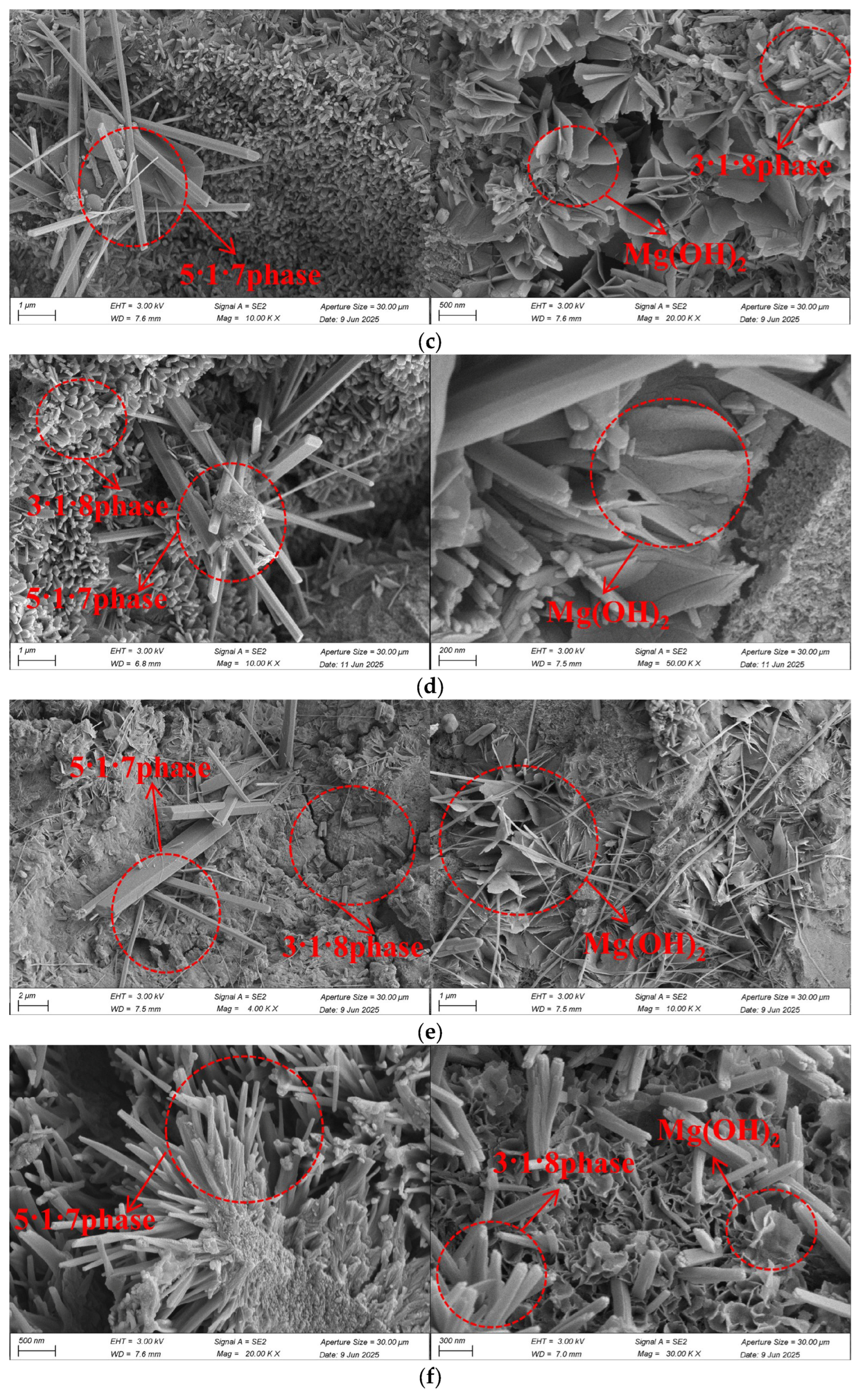
The scanning electron microscopy (SEM) analysis of the sustainable low carbon MOSC SM-3 with hydration ages of 3 h and 3 d revealed the following microstructures, shown in Figure 13. Three primary hydration products were identified: 5·1·7 crystalline phase (spiculate) [8,13,43], 3·1·8 crystalline phase (short columnar or flaky) [39], and Mg(OH)2 (flaky or layered) [46,47,48]. The morphology of these hydration products remained unchanged with hydration time. Notably, the temperature of the magnesium sulfate solution used for mixing did not affect the product morphology but influenced their quantities. These findings were consistent with the XRD and TG results.

4. Conclusions

This study developed a novel sustainable low carbon magnesium oxysulfate cement (MOSC) by substituting traditional magnesium sulfate heptahydrate with a magnesium sulfate solution prepared from the brucite and dilute sulfuric acid and systematically investigated the variation patterns of its macroscopic properties and microstructure. The main conclusions are as follows:
(1)
When the molar ratio of MgO:Mg(OH)2:H2SO4:H2O was 14:1:1:22.5 and the magnesium sulfate solution was 20 °C, the prepared sustainable low carbon MOSC exhibited the lowest setting time and fluidity, along with the highest 3 d compressive strength, measured at 35 min (initial), 84 min (final), 165 mm, and 34 MPa, respectively.
(2)
As the temperature of the magnesium sulfate solution increased, the sustainable low carbon MOSC fluidity decreased and the setting time shortened. The compressive strength development followed this pattern: SM-3-20 achieved 34 MPa at 3 d with age, while SM-3-40 and SM-3-60 showed declining strength with age, reaching 23 MPa and 18.2 MPa, respectively, at 3 d. The hydration ceased after 3 days, and the compressive strength stabilized. The highest compressive strength values were SM-3-40 > SM-3-20 > SM-3-60.
(3)
The lower the porosity of the sustainable low carbon MOSC, the higher the proportion of the gel pores, and the greater the compressive strength of the cement. In SM-3-60, the 3 d porosity increased to 26.55% while the gel pore proportion decreased to 51.08%. In SM-3-40, the 3 d porosity rose to 25.42%, with the gel pore proportion dropping to 71.49%. In SM-3-20, the 3 d porosity decreased to 20.99% while the gel pore proportion increased to 82.17%.
(4)
Neither the temperature of magnesium sulfate solution nor the aging period altered the compositions types, but they affected their quantitative trends: higher temperatures (60 °C and 40 °C) increased the 3·1·8 crystalline phase and Mg(OH)2 during hydration of the sustainable low carbon MOSC while reducing the high-strength 5·1·7 crystalline phase, resulting in higher porosity and compressive strength shrinkage. Conversely, lower temperatures (20 °C) produced the opposite effect.
(5)
The XRD and TG analysis indicated that SM-3-60, SM-3-40, and SM-3-20 generated the same types of phases at curing ages, including the 5·1·7 crystalline phase, the 3·1·8 crystalline phase, and Mg(OH)2. However, their contents varied significantly with the temperatures of the magnesium sulfate solution and curing ages. Under the 60 °C condition, the 5·1·7 phase content in SM-3-60 reached 15.8% at 3 h but decreased to 13.1% with age, accompanied by increases in the contents of the 3·1·8 phase and Mg(OH)2. Under the 20 °C condition, the 5·1·7 phase content in SM-3-20 increased to 21.0%, while the contents of the 3·1·8 phase and Mg(OH)2 decreased, demonstrating that lower temperatures favored sufficient late-stage MgO participation and promoted the transformation from the 3·1·8 phase to the 5·1·7 phase. Under the 40 °C condition, SM-3-40 exhibited a high 5·1·7 phase content of 22.8% at 3 h, achieving the best early strength, and its subsequent phase evolution lies between those observed at 60 °C and 20 °C. The SEM observations showed that SM-3 mainly formed spiculate 5·1·7, short columnar or flaky 3·1·8, and flaky or layered Mg(OH)2 at different ages. The morphologies of the hydration products remained stable, and temperature affects microstructural evolution primarily by regulating the quantities rather than the morphologies of these products.
(6)
Future work will be conducted based on the SM-3 mixture (with a molar ratio of MgO:MgSO4:H2O = 14:1:22.5) to further investigate in depth the effects of magnesium sulfate solution temperature on material properties and microstructural evolution under different mixture proportion conditions.

Author Contributions

Methodology, Z.W. and Y.L.; Writing—Review and Editing, Z.W. and Y.L.; Funding Acquisition, Z.W. and Y.L.; Writing—Original Draft, C.D.; Investigation, C.D. All authors have read and agreed to the published version of the manuscript.

Funding

This research was funded by State Key Laboratory of Mountain Bridge and Tunnel Engineering, Chongqing Jiaotong University (Grant No. SKLBT-2301); National Key Research and Development Program of China (No. 2022YFC3803103); State Key Laboratory of Silicate Materials for Architectures (Wuhan University of Technology) (SYSJJ2024-15).

Institutional Review Board Statement

Not applicable.

Informed Consent Statement

Not applicable.

Data Availability Statement

Data will be made available on request.

Conflicts of Interest

The authors declare no conflicts of interest.

References

  1. Woodwell, G.M.; Whittaker, R.H.; Reiners, W.A.; Likens, G.E.; Delwiche, C.C.; Botkin, D.B. The Biota and the World Carbon Budget: The terrestrial biomass appears to be a net source of carbon dioxide for the atmosphere. Science 1978, 199, 141–146. [Google Scholar] [CrossRef] [PubMed]
  2. Langford, N.J. Carbon Dioxide Poisoning. Toxicol. Rev. 2005, 24, 229–235. [Google Scholar] [CrossRef] [PubMed]
  3. Scott, J.L.; Kraemer, D.G.; Keller, R.J. Occupational hazards of carbon dioxide exposure. J. Chem. Health Saf. 2009, 16, 18–22. [Google Scholar] [CrossRef]
  4. Quirk, T. Sources and sinks of carbon dioxide. Energy Environ. 2009, 20, 105–121. [Google Scholar] [CrossRef]
  5. Quere, C.L.; Raupach, M.R.; Canadell, J.G.; Marland, G.; Woodward, F.I. Trends in the sources and sinks of carbon dioxide. Nat. Geosci. 2009, 2, 831–836. [Google Scholar] [CrossRef]
  6. Salomao, R.; Pandolfelli, V.C. Citric acid as anti-hydration additive for magnesia containing refractory castables. Ceram. Int. 2011, 37, 1839–1842. [Google Scholar] [CrossRef]
  7. Wu, C.Y.; Yu, H.F.; Zhang, H.F.; Dong, J.M.; Wen, J.; Tan, Y.S. Effects of phosphoric acid and phosphates on magnesium oxysulfate cement. Mater. Struct. 2015, 48, 907–917. [Google Scholar] [CrossRef]
  8. Beaudoin, J.J.; Ramachandran, V.S. Strength development in magnesium oxysulfate cement. Cem. Concr. Res. 1978, 8, 103–112. [Google Scholar] [CrossRef]
  9. Ba, M.F.; Xue, T.; He, Z.M.; Wang, H.; Liu, J.Z. Carbonation of magnesium oxysulfate cement and its influence on mechanical performance. Constr. Build. Mater. 2019, 223, 1030–1037. [Google Scholar] [CrossRef]
  10. Wang, L.; Chen, L.; Tsang, D.C.W.; Li, J.S.; Yeung, T.L.Y.; Ding, S.M.; Poon, C.S. Green remediation of contaminated sediment by stabilization/solidification with industrial by-products and CO2 utilization. Sci. Total Environ. 2018, 631–632, 1321–1327. [Google Scholar] [CrossRef]
  11. Demediuk, T.; Cole, W. A study of Magnesium Oxysulphates. Aust. J. Chem. 1957, 10, 287–294. [Google Scholar] [CrossRef]
  12. Wang, N.; Yu, H.F.; Bi, W.L.; Tan, Y.S.; Zhang, N.; Wu, C.Y.; Ma, H.Y.; Hua, S. Effects of sodium citrate and citric acid on the properties of magnesium oxysulfate cement. Constr. Build. Mater. 2018, 169, 697–704. [Google Scholar] [CrossRef]
  13. Wu, C.Y.; Chen, W.H.; Zhang, H.F.; Yu, H.F.; Zhang, W.Y.; Jiang, N.S.; Liu, L.X. The hydration mechanism and performance of Modified magnesium oxysulfate cement by tartaric acid. Constr. Build. Mater. 2017, 144, 516–524. [Google Scholar] [CrossRef]
  14. Gu, K.; Maierdan, Y.; Chen, B. Effects of ethylenediamine tetra-acetic acid (EDTA) and its disodium salt derivative (EDTA-Na) on the characteristics of magnesium oxysulfate (MOS) cement. Compos. Part B Eng. 2022, 232, 109654. [Google Scholar] [CrossRef]
  15. Huang, J.S.; Li, W.W.; Huang, D.S.; Wang, L.; Chen, E.; Wu, C.Y.; Wang, B.S.; Deng, H.Y.; Tang, S.W.; Shi, Y.; et al. Fractal Analysis on Pore Structure and Hydration of Magnesium Oxysulfate Cements by First Principle, Thermodynamic and Microstructure-Based Methods. Fractal Fract. 2021, 5, 164. [Google Scholar] [CrossRef]
  16. Tang, S.W.; Wei, C.R.; Cai, R.J.; Huang, J.S.; Chen, E.; Yuan, J.H. In situ monitoring of pore structure of magnesium oxysulfate cement paste: Effect of MgSO4/H2O ratio. J. Ind. Eng. Chem. 2020, 83, 387–400. [Google Scholar] [CrossRef]
  17. Qin, L.; Gao, X.J.; Chen, T.F. Recycling of raw rice husk to manufacture magnesium oxysulfate cement based lightweight building materials. J. Clean. Prod. 2018, 191, 220–232. [Google Scholar] [CrossRef]
  18. Zhang, N.; Yu, H.F.; Ma, H.Y.; Ba, M.F. Effects of different pH chemical additives on the hydration and hardening rules of basic magnesium sulfate cement. Constr. Build. Mater. 2021, 305, 124696. [Google Scholar] [CrossRef]
  19. Xu, X.; Xu, Y.Y.; Duan, L.L. Effect of fineness and components of CFBC ash on performance of basic magnesium sulfate cement. Constr. Build. Mater. 2018, 170, 801–811. [Google Scholar] [CrossRef]
  20. Wang, A.G.; Huang, M.; Chu, Y.J.; Zhu, Y.C.; Liu, K.W.; Guo, L.P.; Liu, P.; Sun, D.S. Optimization of mix proportion of basic magnesium sulfate cement-based high-strength coral concrete. Constr. Build. Mater. 2022, 341, 127709. [Google Scholar] [CrossRef]
  21. Tie, C.L.; Wang, J.L.; Ning, X.K.; Wu, C.Y. Study on the preparation of high strength basic magnesium sulfate cement based on chlorination roasting natural limestone with bischofite as by-product of salt lake. Constr. Build. Mater. 2025, 483, 141402. [Google Scholar] [CrossRef]
  22. You, J.J.; Song, Q.Y.; Tan, D.; Yang, C.; Liu, Y.F. Mechanical properties and microstructure of basalt fiber-biobased- basic magnesium sulfate cement. Cem. Concr. Compos. 2023, 137, 104934. [Google Scholar] [CrossRef]
  23. Ma, M.M.; Ji, Y.S. Enhancing the Mechanical Properties and Microstructure of Basic Magnesium Sulfate Cement with Basalt and Carbon Fibers. ACS Omega 2025, 10, 12928–12935. [Google Scholar] [CrossRef]
  24. Wang, Y.R.; Zhen, Z.L. Properties of Red-Mud-Modified Basic Magnesium Sulfate Cement. Materials 2024, 17, 4085. [Google Scholar] [CrossRef]
  25. Chen, X.Y.; Wang, S.Y.; Zhou, Y.X.; Cheeseman, C.; Bi, W.L.; Zhang, T.T. Improved low-carbon magnesium oxysulfate cement pastes containing boric acid and citric acid. Cem. Concr. Compos. 2022, 134, 104813. [Google Scholar] [CrossRef]
  26. Li, Q.Y.; Su, A.S.; Gao, X.J. Preparation of durable magnesium oxysulfate cement with the incorporation of mineral admixtures and sequestration of carbon dioxide. Sci. Total Environ. 2022, 809, 152127. [Google Scholar] [CrossRef] [PubMed]
  27. Hu, Z.Q.; Guan, Y.; Chang, J.; Bi, W.L.; Zhang, T.T. Effect of Carbonation on the Water Resistance of Steel Slag-Magnesium Oxysulfate (MOS) Cement Blends. Materials 2020, 13, 5006. [Google Scholar] [CrossRef]
  28. Li, M.X.; Gu, K.; Chen, B. Effects of flue gas desulfurization gypsum incorporation and curing temperatures on magnesium oxysulfate cement. Constr. Build. Mater. 2022, 349, 128718. [Google Scholar] [CrossRef]
  29. Gu, K.; Lang, L.; Li, D.S.; Chen, B. Preparation of Magnesium Oxysulfate Cement with Calcined Phosphate Tailings. J. Mater. Civ. Eng. 2022, 34, 04022355. [Google Scholar] [CrossRef]
  30. Li, Y.; Long, S.; Wang, Z.; Ji, G. Research on Magnesium Phosphate Cement Prepared Using Natural Brucite. J. Mater. Civ. Eng. 2026, 38, 04025543. [Google Scholar] [CrossRef]
  31. GB/T1346-2024; Test Methods for Water Requirement of Standard Consistency, Setting Time and Soundness of the Portland Cement. China Building Materials Federation: Beijing, China, 2024.
  32. GB/T 17671-2021; Methods of Testing Cements-Determination of Strength (ISO Method). China Building Materials Federation: Beijing, China, 2021.
  33. Yan, L.L.; Pang, S.C.; Dong, H.Y.; Zheng, X.H.; An, Y.X. Magnesium Oxychloride and Magnesium Oxysulfate Cements as Temporary Plugging Agents in Geothermal Drilling. ACS Omega 2023, 9, 2696–2706. [Google Scholar] [CrossRef]
  34. Link, J.; Sowoidnich, T.; Pfitzner, C.; Gil-Diaz, T.; Heberling, F.; Lützenkirchen, J.; Schäfer, T.; Ludwig, H.-M.; Haist, M. The Influences of Cement Hydration and Temperature on the Thixotropy of Cement Paste. Materials 2020, 13, 1853. [Google Scholar] [CrossRef] [PubMed]
  35. Wu, C.Y.; Zhang, H.F.; Yu, H.F. Preparation and properties of modified magnesium oxysulfate cement derived from waste sulfuric acid. Adv. Cem. Res. 2016, 28, 178–188. [Google Scholar] [CrossRef]
  36. Wu, C.Y.; Huang, L. Properties and effective improvement approaches of basic magnesium sulfate cement under high-temperature pre-curing. Constr. Build. Mater. 2024, 411, 134561. [Google Scholar] [CrossRef]
  37. Jin, S.S.; Zhang, J.X.; Han, S. Fractal analysis of relation between strength and pore structure of hardened mortar. Constr. Build. Mater. 2017, 135, 1–7. [Google Scholar] [CrossRef]
  38. Runcevski, T.; Wu, C.Y.; Yu, H.F.; Yang, B.; Dinnebier, R.E. Structural Characterization of a New Magnesium Oxysulfate Hydrate Cement Phase and Its Surface Reactions with Atmospheric Carbon Dioxide. J. Am. Ceram. Soc. 2013, 96, 3609–3616. [Google Scholar] [CrossRef]
  39. Dinnebier, R.E.; Pannach, M.; Freyer, D. 3Mg(OH)2·MgSO4·8H2O: A Metastable Phase in the System Mg(OH)2-MgSO4-H2O. Z. Anorg. Allg. Chem. 2013, 639, 1827–1833. [Google Scholar] [CrossRef]
  40. Tang, S.W.; Yuan, J.H.; Cai, R.J.; Wei, C.R.; Chen, J.T.; Chen, E. In situ monitoring of hydration of magnesium oxysulfate cement paste: Effect of MgO/MgSO4 ratio. Constr. Build. Mater. 2020, 251, 119003. [Google Scholar] [CrossRef]
  41. Ning, X.K.; Wu, C.Y.; Chen, H.D. Preparation and Characterization of Novel 5Mg(OH)2·MgSO4·7H2O Whiskers. Materials 2022, 15, 8018. [Google Scholar] [CrossRef]
  42. Newman, E.S. Preparation and Heat of Formation of a Magnesium Oxysulfate. J. Res. Natl. Bur. Stand. Sect. A 1964, 68A, 645–650. [Google Scholar] [CrossRef]
  43. Urwongse, L.; Sorrell, C.A. Phase relations in magnesium oxysulfate cements. J. Am. Ceram. Soc. 1980, 63, 523–526. [Google Scholar] [CrossRef]
  44. Gu, K.; Chen, B.; Cui, Q. Experimental research on properties of magnesium oxysulfate cement during high temperature exposure. Compos. Part B Eng. 2022, 244, 110168. [Google Scholar] [CrossRef]
  45. Walling, S.A.; Provis, J.L. Magnesia-Based Cements: A Journey of 150 Years, and Cements for the Future? Chem. Rev. 2016, 116, 4170–4204. [Google Scholar] [CrossRef]
  46. Ghanbari, D.; Salavati-Niasari, M.; Sabet, M. Preparation of flower-like magnesium hydroxide nanostructure and its influence on the thermal stability of poly vinyl acetate and poly vinyl alcohol. Compos. Part B Eng. 2013, 45, 550–555. [Google Scholar] [CrossRef]
  47. Cao, X.P.; Zhao, H.; Liu, X.Y.; Luo, H.H.; Liu, R.J. Preparation of petal-like magnesium hydroxide particles by adding sulfate ions. J. Cryst. Growth 2020, 550, 125841. [Google Scholar] [CrossRef]
  48. Liu, X.M.; Liao, C.Z.; Lin, L.; Gao, H.Q.; Zhou, J.; Feng, Z.; Lin, Z. Research progress in the environmental application of magnesium hydroxide nanomaterials. Surf. Interfaces 2020, 21, 100701. [Google Scholar] [CrossRef]
Figure 1. The raw materials for preparing MOSC: (a) light-burned magnesia; (b) magnesium sulfate heptahydrate; (c) brucite; (d) dilute sulfuric acid; (e) CAM.
Sustainability 18 01154 g001
Figure 2. Microstructure of natural brucite [30].
Sustainability 18 01154 g002
Figure 3. The sustainable low carbon MOSC samples.
Sustainability 18 01154 g003
Figure 4. The setting time and fluidity of sustainable low carbon MOSC prepared with 20 °C magnesium sulfate solution.
Sustainability 18 01154 g004
Figure 5. The setting time and fluidity of sustainable low carbon MOSC SM-3 with different temperatures of magnesium sulfate solutions.
Sustainability 18 01154 g005
Figure 6. The 3 d compressive strength of sustainable low carbon MOSC with 20 °C magnesium sulfate solution.
Sustainability 18 01154 g006
Figure 7. The compressive strength of SM-3 samples under different magnesium sulfate solution temperatures and ages.
Sustainability 18 01154 g007
Figure 8. The MIP test results of SM-3-60 samples at different ages: (a) cumulative pore volume; (b) porosity; (c) proportion of pore types; (d) incremental pore volume.
Sustainability 18 01154 g008
Figure 9. The MIP test results of SM-3-40 samples at different ages: (a) cumulative pore volume; (b) porosity; (c) proportion of pore types; (d) incremental pore volume.
Sustainability 18 01154 g009
Figure 10. The MIP test results of SM-3-20 samples at different ages: (a) cumulative pore volume; (b) porosity; (c) proportion of pore types; (d) incremental pore volume.
Sustainability 18 01154 g010
Figure 11. The XRD results of sustainable low carbon MOSC SM-3 at different ages: (a) magnesium sulfate solution at 60 °C; (b) magnesium sulfate solution at 40 °C; (c) magnesium sulfate solution at 20 °C.
Sustainability 18 01154 g011
Figure 12. The TG test results of sustainable low carbon MOSC SM-3 at different ages: (a) magnesium sulfate solution at 60 °C; (b) magnesium sulfate solution at 40 °C; (c) magnesium sulfate solution at 20 °C.
Sustainability 18 01154 g012
Figure 13. The SEM images of SM-3-60 at hydration ages of 3 h and 3 d: (a) SM-3-60-3h; (b) SM-3-60-3d; (c) SM-3-40-3h; (d) SM-3-40-3d; (e) SM-3-20-3h; (f) SM-3-20-3d.
Sustainability 18 01154 g013aSustainability 18 01154 g013b
Table 1. The compositions of light-burned magnesia (%).
MgOSiO2CaOAl2O3Fe2O3SO3Others
82.49710.6123.9640.9930.9020.6010.431
Table 2. The compositions of brucite (%).
Mg(OH)2CaO SiO2Fe2O3Al2O3P2O5Others
81.3559.1677.2631.2020.5690.1560.288
Table 3. Design of mix proportion of sustainable low carbon MOSC (g).
CodeLight Calcined MagnesiaDilute H2SO4BruciteCAMH2OMgSO4·7H2O
M-0242.4300199.6487.86
SM-1242.43116.335.65190.20
SM-2242.43105.3229.71181.760
SM-3242.4390.4225.46176.370
SM-4242.4397.3827.42182.230
SM-5242.4390.3925.46179.610
Note: In M-0, MgO:MgSO4:H2O (molar ratio) = 14:1:22.5. In SM-1, MgO:Mg(OH)2:H2SO4:H2O (molar ratio) = 10:1:1:21.5. In SM-2, SM-3, SM-4, and SM-5, MgO:MgSO4:H2O (molar ratio) = 12:1:21.5, 14:1:1:22.5, 13:1:1:22.5, and 14:1:1:23, respectively.
Table 4. Mass percentage of compositions in SM-3 at different temperatures of magnesium sulfate solution and ages (%).
Code5·1·7
Crystalline Phase
3·1·8
Crystalline Phase
Mg(OH)2MgCO3CaSO4·2H2O
SM-3-60-3h15.817.248.54.27.3
SM-3-60-6h14.517.849.54.17.2
SM-3-60-1d13.818.251.24.17.7
SM-3-60-3d13.118.551.64.07.8
SM-3-40-3h22.815.642.24.07.4
SM-3-40-6h21.215.846.84.07.2
SM-3-40-1d18.216.248.34.37.0
SM-3-40-3d12.019.252.44.07.4
SM-3-20-3h15.217.448.64.17.7
SM-3-20-6h19.116.148.24.17.5
SM-3-20-1d20.115.947.83.97.3
SM-3-20-3d21.015.845.14.17.6
Disclaimer/Publisher’s Note: The statements, opinions and data contained in all publications are solely those of the individual author(s) and contributor(s) and not of MDPI and/or the editor(s). MDPI and/or the editor(s) disclaim responsibility for any injury to people or property resulting from any ideas, methods, instructions or products referred to in the content.