Article

Dynamic Impacts of Rail Transit Investment on Regional Economic Development: A Spatial-System Dynamics Analysis of the Jiangsu Yangtze River City Cluster


1
School of Transportation, Southeast University, Nanjing 211189, China
2
Jiangsu Province Collaborative Innovation Center of Modern Urban Traffic Technologies, Southeast University, Nanjing 211189, China
*
Author to whom correspondence should be addressed.
Sustainability 2026, 18(2), 986; https://doi.org/10.3390/su18020986 (registering DOI)
Submission received: 18 November 2025 / Revised: 14 January 2026 / Accepted: 15 January 2026 / Published: 18 January 2026
(This article belongs to the Special Issue Sustainable Transport Research and Railway Network Performance)

Abstract

The Jiangsu Yangtze River city cluster is a key growth pole of the Yangtze River Economic Belt, yet substantial disparities in development levels persist across cities, and the role of rail transit investment in fostering regional economic coordination remains insufficiently understood. This study aims to reveal the dynamic mechanisms through which railway transportation investment influences regional economic growth via population migration and service industry agglomeration, and to quantify the economic multiplier effects under different investment scenarios. Considering the close economic linkages among cities, spatial autocorrelation analysis is applied to assess intercity economic dependence, which provides the basis for developing a system dynamics model that links the rail transit system with the regional economy. Using data from eight core cities over the period 2014–2023, the model is employed to simulate long-term economic responses under different investment scenarios. The results indicate that increasing the rail transit investment ratio from 0.0077 to 0.02 is associated with an estimated 13.2% increase in regional GDP by 2030, with a corresponding economic multiplier of approximately 1.8, while simulation errors remain within 4.1–16.2% compared with historical data. The findings suggest that rail transit investment promotes regional growth through improved accessibility, factor agglomeration, and industrial upgrading, and that coordinated planning at the urban agglomeration scale is more effective than isolated city-level strategies. By integrating spatial dependence analysis with system dynamics modeling, this study offers a dynamic perspective on the regional economic impacts of rail transit investment.

1. Introduction

With the continuous advancement of urbanization in China, urban agglomerations have been regarded as key carriers for promoting coordinated regional development. The intensity of transportation connectivity within these urban clusters is highly correlated with the level of economic development. Particularly under the backdrop of increasing infrastructure investment, rail transit has been positioned as a critical tool for enhancing regional accessibility, facilitating factor mobility, and optimizing spatial structures. As such, it plays an increasingly important role in various regional economic strategies [1]. As a key spatial carrier of China’s regional coordination strategy, the Yangtze River Economic Belt exhibits increasing potential for integrated development, particularly in its Jiangsu section. The Jiangsu Yangtze River city cluster, which is centered around prefecture-level cities such as Nanjing, Zhenjiang, Changzhou, Wuxi, Suzhou, Yangzhou, Nantong, and Taizhou, is located along the middle and lower reaches of the Yangtze “Golden Waterway.” This region is characterized by strong economic strength, a solid industrial foundation, and a large population scale [2]. Under the dual frameworks of the Yangtze River Delta integration and the Yangtze River Economic Belt coordination strategies, growing demands for regional integration and intercity rail connectivity have been increasingly emphasized. Despite the favorable geographical conditions and solid economic foundation of the Jiangsu Yangtze River city cluster, significant disparities persist among its constituent cities regarding development levels, industrial structures, fiscal capacities, and infrastructure allocation. Therefore, identifying effective strategies to enhance intercity collaboration and achieve economic synergy has become a central policy challenge guiding regional infrastructure investment. Rail transit infrastructure, capable of shaping urban spatial restructuring and facilitating the redistribution of economic resources, is essential not only for enhancing intercity accessibility but also for stimulating capital markets, promoting growth in related industries, and accelerating talent flows and capital agglomeration within the region. These dynamics generate substantial external economic benefits [3], continuously driving regional economic growth and industrial upgrading. The feedback mechanism for the interaction between rail transit and regional economy is shown in Figure 1. However, the extent to which rail transit contributes to coordinated economic growth at the urban agglomeration scale, as well as the mechanisms through which such effects unfold over time, remain insufficiently understood.
Early studies frequently centered on the direct effects of urban rail transit (URT) within individual cities, analyzing shifts in land values, property prices, and employment patterns [4,5]. For instance, research in Chengdu, China, employed a hedonic pricing model to quantify the heterogeneous impact of the metro system on housing across different price brackets. It found that Chengdu’s metro exerted positive effects on low-, medium-, and high-priced housing, albeit to varying degrees [6]. Studies in Beijing, Hangzhou, and Bangkok similarly demonstrate that urban rail transit infrastructure significantly influences residential property values, alters land use patterns, and generates spatial price differentials [7,8,9]. These early investigations frequently employed methods such as the Difference-in-Differences (DID) approach and hedonic pricing models to analyze rail transit impacts. Furthermore, research in the United States [10] indicates that light rail systems may enhance property prices and trigger resident displacement. Whilst improving local employment, they may exacerbate social inequality and reduce overall employment rates.
With the expansion of rail networks, particularly the vigorous development of high-speed rail (HSR), research perspectives have broadened to the regional level, focusing on spillover effects and inter-city accessibility [11]. Liu et al. [12] found that HSR directly impacts residents’ income by enhancing inter-city accessibility, reshaping urban locational conditions and factor mobility patterns, while generating cross-regional spillover effects through spatial correlation. This influence manifests both as positive diffusion between neighboring cities and as a siphoning effect from core nodes to surrounding areas, with effects being more pronounced during the HSR network’s formative stage. Shi et al. [13] similarly indicate that as the high-speed rail network densifies, highly centralized cities may exert a siphoning effect on less centralized cities, inhibiting the latter’s upgrading. In addition, Yang et al.’s [14] research examines the spatial spillover effects of HSR on regional innovation activities. Findings suggest that HSR significantly promotes urban innovation growth by compressing spatio-temporal distances and reducing knowledge diffusion costs. Within a certain spatial range, it drives regional innovation convergence, thereby helping to narrow the innovation gap between lagging and developed regions. Hu et al. [15] found that high-speed rail markedly enhances tertiary sector agglomeration and industrial upgrading (shifting from primary to secondary and tertiary industries), though it may induce industrial structure ‘irrationalisation’—causing short-term imbalances in resource allocation.
In recent years, academic research has increasingly focused on treating urban agglomerations as integrated economic systems [16]. This perspective highlights the potential of rail transport in promoting regional coordination, functional differentiation, and overall economic equity among cities. An et al. [17] pointed out that high-speed rail exerts heterogeneous effects on the economic growth of cities along its route, potentially exacerbating regional development disparities. This highlights the need to pay attention to its potential siphoning effect and negative consequences.
Additionally, existing studies have applied system dynamics to a wide range of transportation-related issues at different spatial and thematic scales. At the macro level, system dynamics models have been used to analyze the interactions between transportation infrastructure investment and regional socioeconomic development, highlighting how transport systems influence regional GDP growth, employment expansion, and industrial activity through reinforcing and balancing feedback mechanisms [18,19]. At the urban scale, system dynamics has been employed to evaluate transportation policies and system performance by integrating transportation, environmental, and economic subsystems, providing decision support for congestion mitigation, sustainability improvement, and infrastructure planning [20,21,22]. In addition, recent studies have extended system dynamics applications to more micro-level perspectives, such as port trade and regional economic linkages [23], rail transit and urban economic evolution [24], active travel behavior [25], and citizen satisfaction with urban transportation systems [26].
Despite the growing body of research on the economic impacts of rail transport and transport infrastructure, several limitations persist. Firstly, existing studies predominantly focus on individual cities or limited inter-city relationships [4], struggling to capture the inherent spatial interdependence within urban agglomeration—where cities are tightly interconnected through transport networks and the flow of factors of production. Secondly, a substantial body of empirical research employs static modeling frameworks [27], which struggle to adequately depict the complex dynamics whereby transport investment influences population flows, industrial structure, and long-term economic growth through dynamic feedback mechanisms. Thirdly, Previous studies have mainly applied system dynamics models to analyze the economic impact of urban rail transit at the city level, focusing on feedback loops of population, industry, and investment [24]. However, little attention has been given to city clusters, where polycentric and multi-level structures create stronger spatial spillovers and economic interdependence. Finally, while spatial statistical methods and system dynamics models are both widely applied, they are often used in isolation. Spatial methods emphasize inter-urban dependencies yet frequently overlook endogenous feedback processes, whereas system dynamics models focus on dynamic evolution while often neglecting explicit spatial interactions.
Given these limitations, this study aims to construct an integrated analytical framework combining spatial analysis and dynamic modeling to examine the economic effects of rail transit investment at the urban agglomeration level. To address this gap, this study incorporates Moran’s I to test spatial correlations of economic output within the Jiangsu Yangtze River city cluster, characterized by close linkages and complementary industries. Results confirm significant spatial dependence, consistent with spatial economics theory, and justify treating the cluster as an integrated unit of analysis. A system dynamics model is then developed with two subsystems—the “rail transit system” and the “economic system”—to simulate GDP evolution under different rail investment scenarios. Findings show that higher rail transit investment improves accessibility and significantly promotes regional economic growth.
This study contributes in two ways: (1) it verifies spatial economic correlation within the city cluster, and (2) it integrates spatial analysis with system dynamics to reveal feedback and lagged effects of rail transit investment. Overall, the results highlight the need to evaluate rail transit from the perspective of city clusters rather than individual cities, offering theoretical and practical insights for coordinated regional development in China.

2. Method

This paper proposes a system dynamics modeling approach for the regional economic system of Jiangsu Province that takes into account urban rail transit investment. After creating a Causal Loop Diagram (CLD), a Stock-Flow Diagram (SFD) was constructed. The model was then simulated, and data from Jiangsu Province from 2016 to 2023 was used to verify its accuracy. After verification, scenarios up to 2030 were evaluated to explore potential outcomes.

2.1. Experimental Design and Evaluation Criteria

This study takes 8 core cities in the Jiangsu Yangtze River City Cluster (Nanjing, Zhenjiang, Changzhou, Wuxi, Suzhou, Yangzhou, Nantong, Taizhou) as the research objects. The experimental design is as follows:
(1)
Data Preprocessing: Collect economic, transportation, and population-related data of 8 core cities from the “Jiangsu Statistical Yearbook” and complete data preprocessing.
(2)
Spatial Correlation Verification: Use Moran’s I index to test the spatial autocorrelation of economic development among cities, clarify the rationality of the city cluster as an overall analysis unit, and provide a theoretical basis for subsequent system dynamics model construction.
(3)
Model Construction: Based on system dynamics principles, construct a “Rail Transit System—Economic System” dual subsystem model, draw Causal Loop Diagrams (CLDs) and Stock-Flow Diagrams (SFDs), and set functional relationships and initial parameters between variables (calibrate coefficients through regression analysis).
(4)
Model Calibration and Validation (2016–2023): Based on historical data, simulate model outputs using Vensim10.3.2 software, compare with actual data for error analysis, and ensure the model fit meets research requirements.
(5)
Scenario Simulation and Comparative Analysis (2024–2030): Set a baseline scenario (maintain existing rail investment ratio) and a high-investment scenario (increase rail investment ratio to 0.02), simulate the dynamic change trends of dependent variables under the two scenarios, and quantify the economic multiplier effect of rail investment.
The model performance evaluation criterion uses Relative Error to measure the deviation between simulated values and historical actual values. The calculation formula is as follows:
R E = | Y s i m Y o b s | Y o b s × 100 %
where Y s i m is the simulated value and Y o b s is the observed value.

2.2. Causal Relationship Analysis

To clarify the economic effects of urban rail transit, the corresponding evaluation indicators were screened, as shown in Table 1. The detailed data are presented in Table 2, with the missing values imputed by linear interpolation.
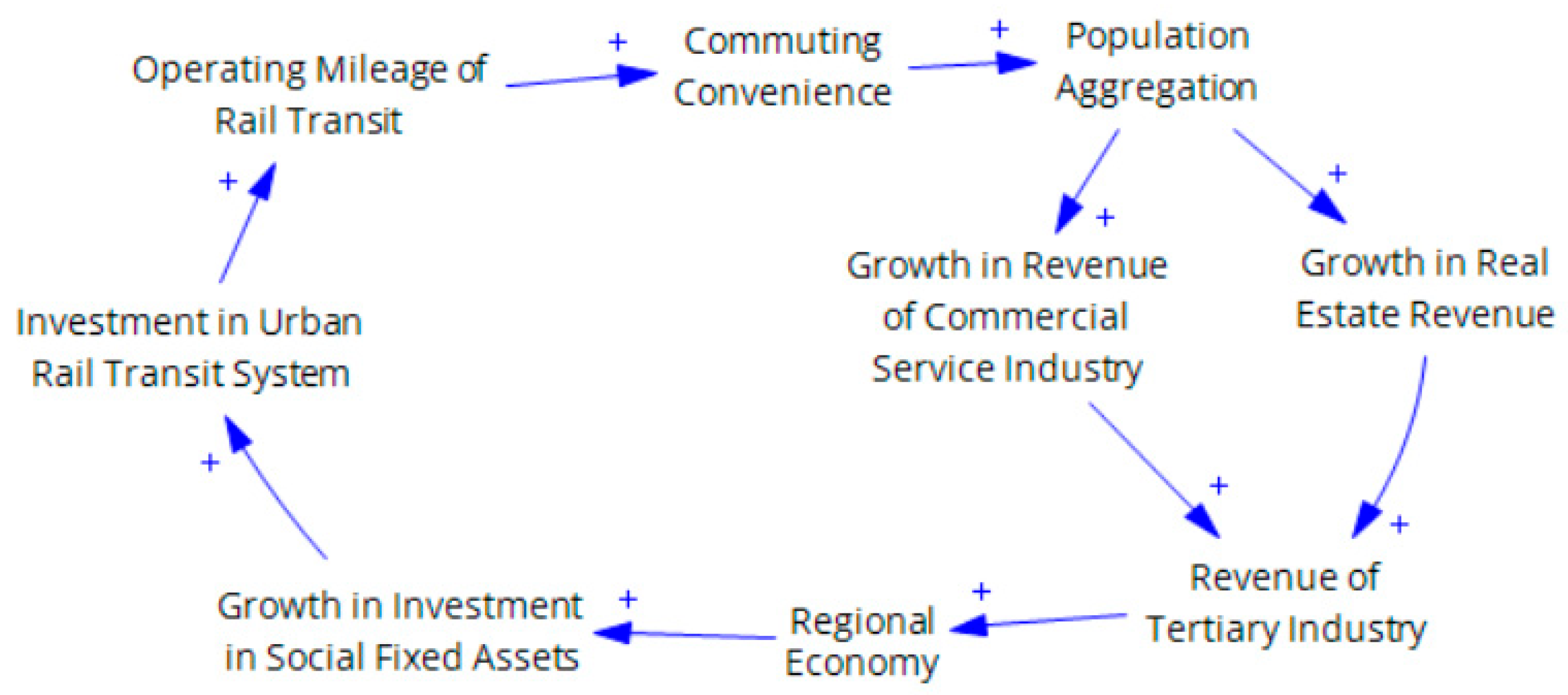
To illustrate the interrelationships between key variables in the regional economic system, the overall CLD is shown in Figure 2. This diagram includes relevant variables such as rail transit operating mileage, population aggregation, tertiary industry income, regional economy, increases in social fixed asset investment, and urban rail transit system investment. Arrows in the CLD indicate the nature of the relationship between each pair of variables, and the symbol (+) indicates that the two variables increase or decrease in the same direction.

2.3. Stock-Flow Diagram

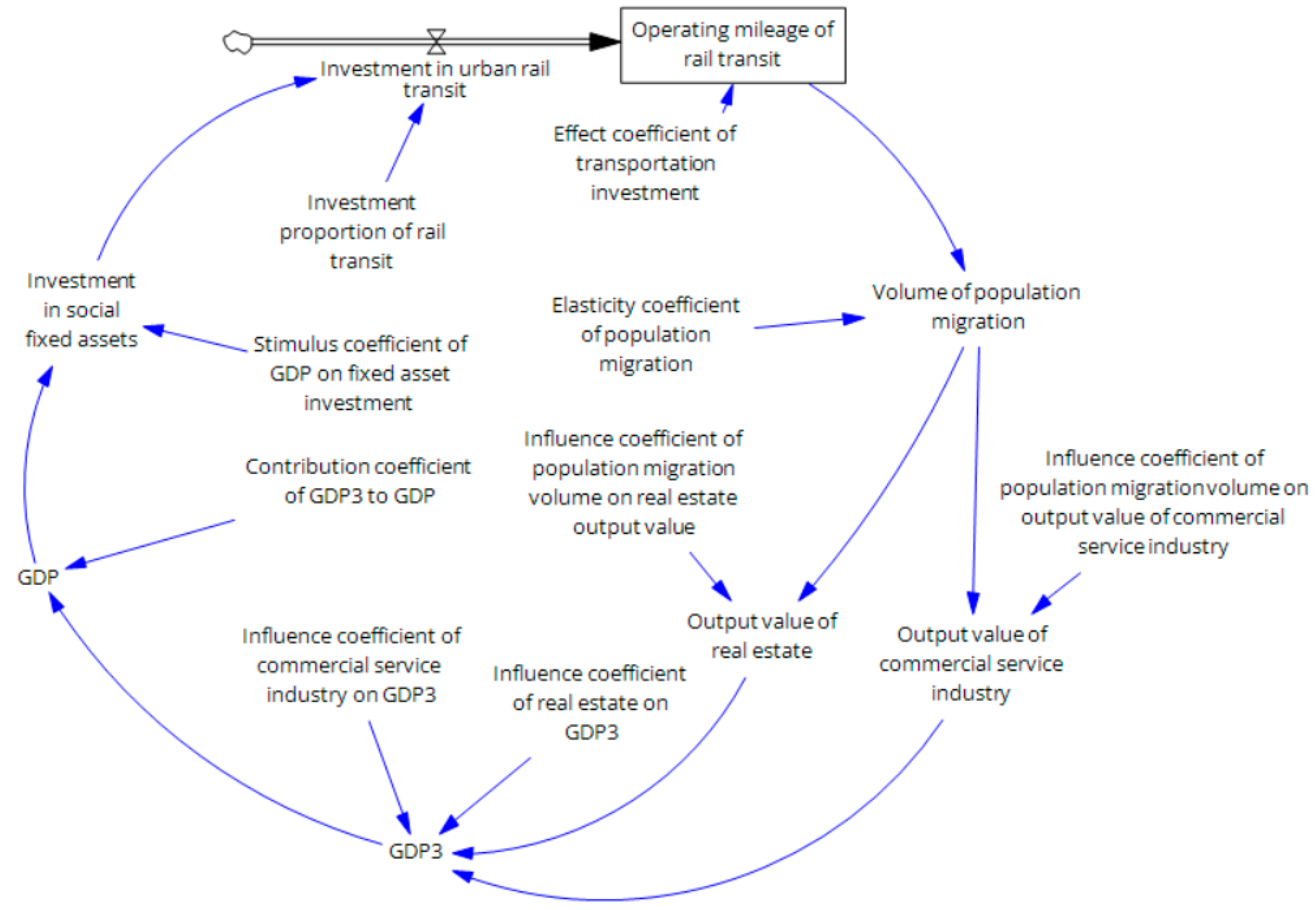
Based on Evaluation Indicator Table 1 and Figure 2, a system dynamics model of the regional economic system of Jiangsu Province was established, as shown in Figure 3. This diagram shows the interaction between urban agglomeration rail transit and the regional economy and its impact on the change process of the socioeconomic system. Rail transit determines the development of the system through factors such as investment in infrastructure construction, capital flow, consumption, and recycling, while the construction funds for rail transit infrastructure usually depend on the income brought by the growth of the regional economy. The initial values were selected from the relevant data of Jiangsu Province in 2016.

2.4. System Dynamic Equations

The equations for each variable in the system dynamics model of the regional economy of Jiangsu Province are shown in Table 3.
The relevant coefficients in the above equations were obtained through regression analysis.

2.5. Spatial Autocorrelation Test

Before constructing the system dynamics model, it is essential to verify whether spatial dependence exists among the cities within the Jiangsu Yangtze River urban agglomeration. Spatial correlation indicates that the economic performance of one city may be significantly influenced by the performance of its neighboring cities. Testing for such spatial autocorrelation is a crucial step in regional economic modeling, as it helps justify the application of spatial analytical frameworks and supports the conceptual design of interdependent feedback mechanisms in system dynamics.
To evaluate this, the Moran’s I index is employed, which quantifies the degree of spatial similarity in GDP levels among cities. The Moran’s I value is calculated using the following Equation (1):
I = n i = 1 n j = 1 n w i j i = 1 n j = 1 n w i j ( x i x ¯ ) ( x j x ¯ ) i = 1 n ( x i x ¯ ) 2 = i = 1 n j = 1 n w i j ( x i x ¯ ) ( x j x ¯ ) S 2 i = 1 n j = 1 n w i j
where
n = 8 is the number of cities (spatial units),
xi and xj denote the GDP of cities i and j,
x ¯ = 1 n j = 1 n x is the mean GDP across all cities,
w i j is an element in the spatial weight matrix representing the spatial interaction strength (typically distance-based) between city i and city j,
w i j is a binary variable. If city i and city j are geographically adjacent (i.e., share a common border), then w i j = 1 ; if city i and city j are not adjacent, then w i j = 0 .
The Moran’s I value ranges between −1 and 1. A value greater than 0 indicates positive spatial autocorrelation (i.e., cities with similar GDPs are spatially clustered), a value less than 0 indicates negative autocorrelation, and a value close to 0 suggests spatial randomness.
Based on GDP data from eight major cities in Jiangsu Province between 2014 and 2021, Moran’s I was calculated using two types of spatial weight matrices. However, we only present W i j due to the same output of two types of spatial weight matrices. As summarized in Table 4, the Moran’s I values are consistently positive and statistically significant at the 1% level across all years. This provides strong empirical evidence of spatial interdependence among the cities’ economic activities.
Notably, prior to the large-scale deployment of rail transit infrastructure in 2018, the Moran’s I values remained relatively stable around 0.250. In 2018, coinciding with the opening of several new transit lines, the index peaked at 0.264. From 2019 onwards, a slight decline is observed, indicating that the regional economic structure may have begun to evolve in response to improved intercity connectivity brought by rail transit development.
These results further reinforce the assumption of spatial coupling used in the system dynamics model, validating the treatment of the Jiangsu Yangtze River city cluster as an economically interactive and mutually influential system.

3. Result

3.1. Model Validity Verification

To verify the effectiveness of the model, Vensim software was used for testing. The GDP3 and GDP indicators were selected, and the actual data were compared with the simulation results for error analysis. The time period was from 2016 to 2023, and the verification results are shown in Table 5.
An error analysis was conducted on the simulation results of GDP3 and GDP from 2016 to 2023. The relative errors were high but within an acceptable range. The reasons for the errors are analyzed as follows:
(1)
Some data were missing, and part of the data generated by fitting had a certain error compared with the real situation.
(2)
In some years, the impact of the epidemic caused large fluctuations in the volume of population migration.
(3)
Parameters are estimated using linear regression, which has certain errors.
(4)
Simplified selection of dependent variables leads to hidden structural errors.

3.2. Model Simulation Prediction

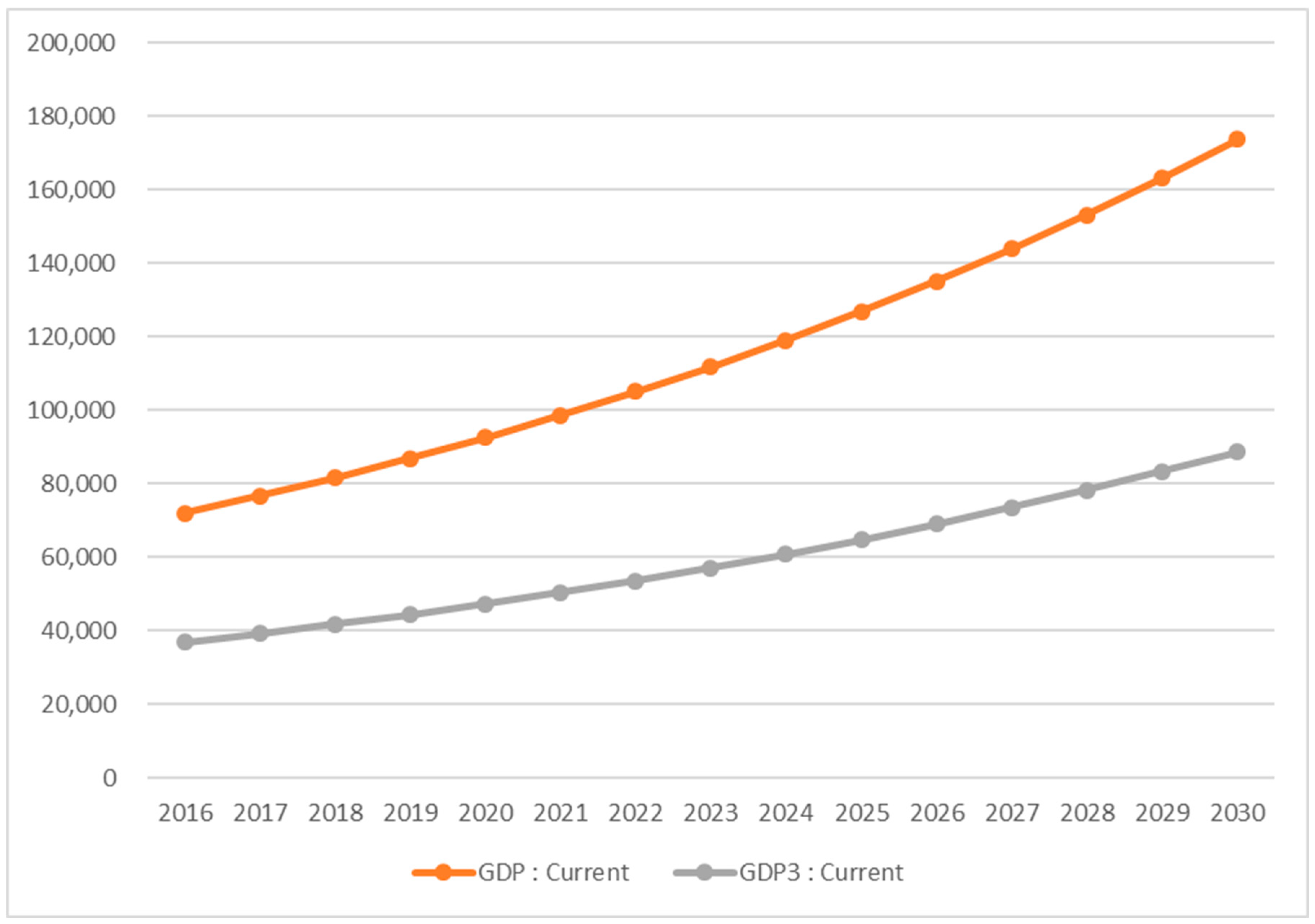
According to the simulation results, the change in the main variables in the regional economic system of Jiangsu Province considering urban rail transit investment from 2024 to 2030 was predicted. The simulation prediction results of GDP and GDP3 in Jiangsu Province are shown in Figure 4.
The simulation results show that under the condition that the urban agglomeration along the Yangtze River maintains the existing rail transit construction and investment level, the regional economy continues to expand, and the real estate and commercial service industries will be further developed with the support of the rail transit network. Rail transit investment has played a positive role in improving commuting convenience and enhancing traffic mobility.

3.3. Model Comparative Analysis

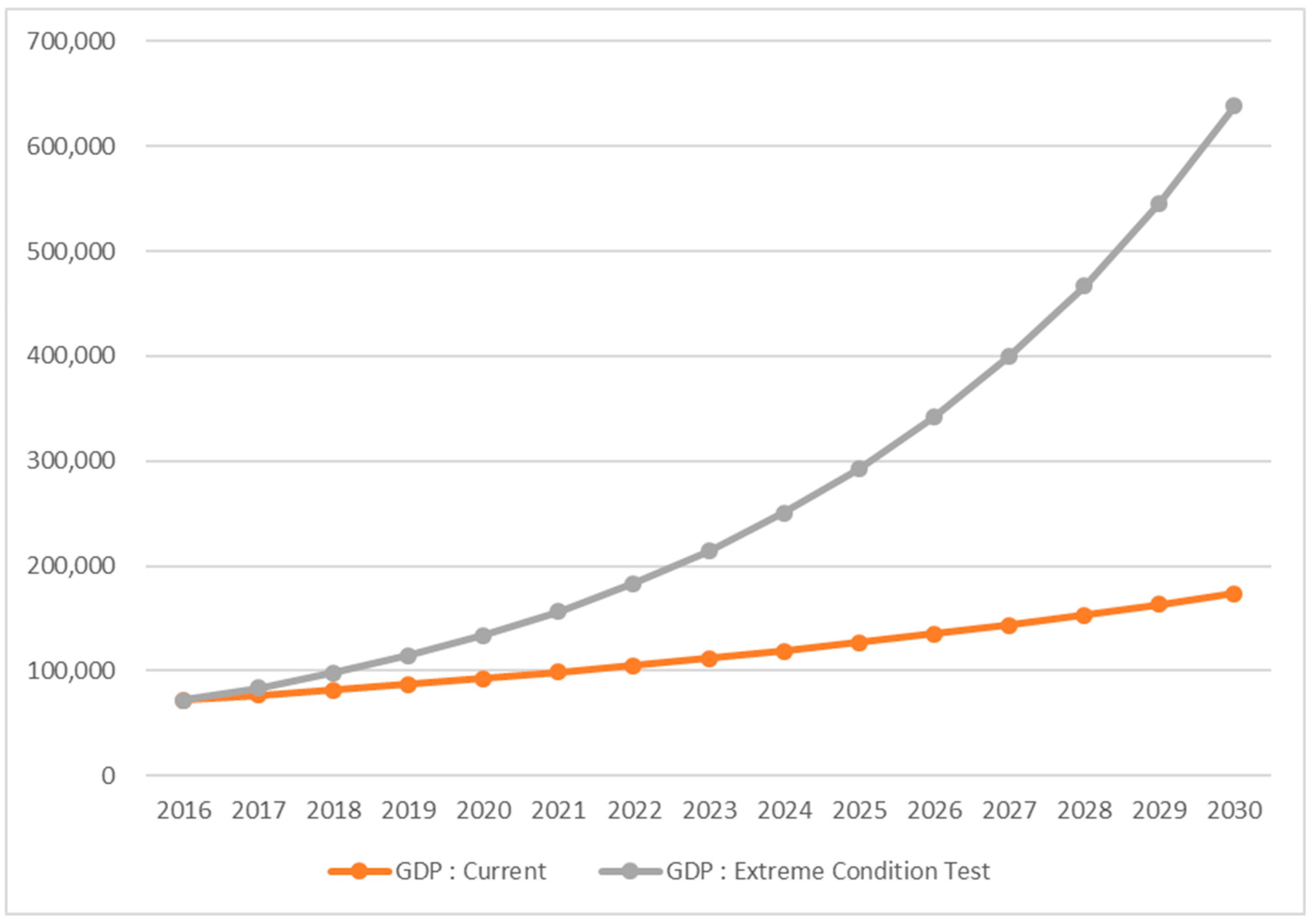
In the comparative scenario, we assumed that the rail transit investment proportion of the urban agglomeration along the Yangtze River was increased from 0.007708 to 0.02 to simulate the stronger driving effect of rail transit investment on the regional economy. In this scenario, the rail transit investment proportion is significantly increased, and the traffic connection between the main axis cities is focused on strengthening. This scenario assumption will analyze the change in the rail transit investment proportion, discuss its impact on the regional GDP, and compare the simulation results with the basic scenario. The comparative scenario simulation prediction results are shown in Figure 5.
The simulation results show that increasing rail transit investment will directly promote the rapid growth of the regional economy. This growth is not only reflected in the increase in the total GDP but also reflects the multiplier effect of rail transit on the regional economy. With the increase in rail transit investment, the tertiary industry (especially in the fields of real estate and commercial services) will be more strongly driven, and the service industry and consumption demand in the region will be greatly released. After increasing rail transit investment, not only the construction speed and quality of transportation facilities are improved, but also the investment in social fixed assets is promoted. These investments will in turn promote the expansion of the real estate and commercial service industries, thereby bringing more passenger flow and economic benefits to rail transit, forming a virtuous circle.

4. Discussion

The results of the system dynamics simulations indicate that urban rail transit investment exerts a significant influence on the economic trajectory of the Jiangsu Yangtze River city cluster. First, the model confirms that enhanced commuting convenience—proxied by the expansion of rail transit operating mileage—promotes population agglomeration. This demographic shift, in turn, contributes directly to growth in the real estate and commercial service sectors, ultimately increasing tertiary industry output and regional GDP.
Second, comparative scenario analysis reveals a pronounced multiplier effect. Elevating the proportion of rail transit investment not only accelerates GDP growth but also stimulates higher levels of social fixed asset investment, suggesting the presence of a positive feedback loop within the economic system. These findings align with prior research underscoring the catalytic role of rail infrastructure in regional development through agglomeration effects, factor mobility, and market integration. At the same time, several potential risks warrant attention. High-intensity rail investment may raise implicit debt burdens for local governments, particularly in cities with weaker fiscal foundations such as Taizhou and Yangzhou, necessitating cost-sharing mechanisms such as central transfers or public–private partnerships. Population inflows could also drive up housing prices in core cities like Nanjing and Suzhou, calling for complementary measures such as purchase restrictions and affordable housing policies to mitigate speculative pressure. Moreover, rail investment may reinforce the dominant positions of Nanjing and Suzhou, potentially widening development gaps with neighboring cities. It is therefore advisable to allocate investment preferentially toward secondary cities, including Zhenjiang and Yangzhou, to foster a more polycentric network structure.
Notably, spatial interdependence, as captured by the Moran’s I index, lends empirical support to a cluster-based analytical approach. The finding that economic growth in one city stimulates and is influenced by surrounding cities underscores the importance of evaluating infrastructure impacts beyond individual administrative boundaries. Such interconnected dynamics reinforce the rationale for treating the Yangtze River city cluster as a cohesive economic entity.
This study offers several contributions. First, it refines the research scale by focusing on eight core cities central to Jiangsu’s economy, thereby better capturing intercity collaborative dynamics and addressing limitations of studies that are either overly broad or narrowly focused. Second, it adopts a multidimensional framework linking transportation infrastructure, industrial development, and regional GDP, incorporating segmented indicators such as rail transit passenger volume and output values of real estate and commercial services. This moves beyond single-variable analyses prevalent in earlier work. Third, methodologically, it introduces a dynamic spatial weight matrix and combines it with a panel threshold model to better capture nonlinear relationships and evolving spatial spillover effects between transport and economic variables, offering a more nuanced approach than traditional static linear models.
Considering the development context of the eight cities, sustainable growth faces challenges related to pollution and uneven development. Industrial pollution in southern Jiangsu (e.g., Suzhou, Wuxi, Changzhou) stems from concentrated electronics and machinery manufacturing, while dense transport networks in core cities contribute to traffic-related emissions. Riverside cities also encounter ecological pressures along the Yangtze River coastline. Responses should emphasize green industrial transition and cross-regional pollution control mechanisms. Development gaps between southern and central Jiangsu, alongside relative poverty in certain counties and rural areas, pose equity concerns, as do employment risks for workers in traditional manufacturing during industrial upgrading. Countermeasures include fostering industrial collaboration and gradient relocation between regions, along with strengthened social security and vocational training. Insights from this study—such as optimizing rail networks and enhancing industrial synergy—can inform these efforts: improved rail connectivity may reduce reliance on highways and associated emissions, while integrated development of commercial services and manufacturing can help optimize industrial structures and mitigate poverty risks.
Several limitations should be acknowledged. The model relies on regression-derived coefficients, which may be susceptible to estimation bias due to data constraints or omitted variables. Furthermore, the analysis focuses on the tertiary industry due to its higher dependence on rail transport, while primary and secondary sectors are not explicitly incorporated. The model also does not fully account for potential negative externalities of rail investment, such as land acquisition costs, environmental impacts, or short-term fiscal pressures on local governments. Future research could extend the framework by integrating environmental and fiscal sustainability modules to support more holistic assessment.
Finally, while the model captures sectoral responses, it does not fully address intra-city distributional effects, such as impacts on income inequality or differential access to transit infrastructure. These considerations are vital for designing equitable regional policies and should be examined in subsequent studies.

5. Conclusions

This study investigates the dynamic impacts of urban rail transit investment on regional economic development within the Jiangsu Yangtze River City Cluster by integrating spatial statistical analysis with system dynamics modeling. Unlike conventional studies that either rely on static spatial econometric methods or city-level dynamic simulations, this research explicitly combines Moran’s I–based spatial dependence testing with a multi-subsystem system dynamics framework, thereby capturing both spatial interdependence and temporal feedback mechanisms at the urban agglomeration scale.
The empirical results demonstrate that rail transit investment exerts a significant and sustained positive effect on regional economic growth. By improving intercity accessibility, rail transit facilitates population aggregation and stimulates the expansion of tertiary industries—particularly real estate and commercial services—which in turn accelerates regional GDP growth. Comparative scenario analysis further reveals a pronounced multiplier effect: increasing the proportion of rail transit investment leads to a virtuous cycle of infrastructure expansion, fixed asset investment, and industrial development.
Compared with previous studies that predominantly focus on single-city systems or treat spatial spillovers implicitly, this study contributes to the literature in three aspects. First, it empirically verifies the existence of significant spatial economic autocorrelation within the city cluster, justifying a cluster-level analytical framework. Second, it advances methodological practice by integrating spatial correlation tests into system dynamics modeling, enabling a more realistic representation of intercity economic interactions and lagged policy effects. Third, it provides scenario-based quantitative evidence on how changes in infrastructure investment intensity translate into differential regional economic outcomes, offering actionable insights for transportation and regional development policies.
From a policy perspective, this study highlights the importance of coordinated transportation planning at the urban agglomeration level. Regional governments should prioritize rail transit projects that strengthen intercity connectivity, especially along key development axes, while ensuring balanced investment across cities to avoid deepening existing disparities. In addition, investment strategies should be complemented by supportive land use policies and fiscal tools to maximize the socioeconomic returns of transit infrastructure.
This study has several limitations that may be further explored in future research: Future work could extend the model by incorporating environmental sustainability indicators, fiscal constraints, and social equity considerations to better align with sustainability-oriented policy goals. Methodologically, introducing nonlinear relationships, parameter sensitivity analysis, and stochastic simulations would improve the robustness of the model. Additionally, exploring heterogeneous effects across core and peripheral cities could further enhance understanding of the distributive impacts of rail transit investment within urban agglomerations.
In conclusion, urban rail transit serves not merely as a means of transportation but as a strategic lever for spatial and economic restructuring. A system dynamics-based approach offers valuable insights into the transmission mechanisms and lagged effects of rail investment, thereby contributing to evidence-based planning for sustainable and inclusive regional growth.

Author Contributions

Conceptualization, M.Q.; data curation, M.Q.; formal analysis, M.Q.; funding acquisition, L.C.; investigation, M.Q.; writing—original draft, M.Q.; writing—review and editing, L.C. and M.Q. All authors have read and agreed to the published version of the manuscript.

Funding

This research was funded by the Natural Science Foundation of Zhejiang Province, China (No. LMS25E080010), Zhejiang Provincial Philosophy and Social Science Planning Project (No. 26NDJC018Z), and the Natural Science Foundation of Ningbo City, China (No. 2024J130).

Institutional Review Board Statement

Not applicable.

Informed Consent Statement

Not applicable.

Data Availability Statement

The data presented in this study are available on request from the corresponding author. All data, models, and code generated or used during the study appear in the submitted article.

Conflicts of Interest

The authors declare no conflicts of interest.

References

  1. Zhao, L.Y.; Shen, L. The impacts of rail transit on future urban land use development: A case study in Wuhan, China. Transp. Policy 2019, 81, 396–405. [Google Scholar] [CrossRef]
  2. Wang, Y.Y.; Peng, B.H.; Wei, G.; Elahi, E. Comprehensive evaluation and spatial difference analysis of regional ecological carrying capacity: A case study of the Yangtze River urban agglomeration. Int. J. Environ. Res. Public Health 2019, 16, 3499. [Google Scholar] [CrossRef]
  3. Deng, Y.M.; Li, X.M.; Zhu, J.M. Effect of planning and construction of intercity railways on the economic development of the Pearl River Delta Urban Agglomeration: An analysis based on the spatial durbin model. Sustainability 2024, 16, 738. [Google Scholar] [CrossRef]
  4. Zhang, D.; Jiao, J. How Does Urban Rail Transit Influence Residential Property Values? Evidence from An Emerging Chinese Megacity. Sustainability 2019, 11, 534. [Google Scholar] [CrossRef]
  5. Nilsson, I.; Delmelle, E.C. On the link between rail transit and spatial income segregation. Appl. Geogr. 2020, 125, 102364. [Google Scholar] [CrossRef]
  6. Ren, P.; Li, Z.; Cai, W.; Ran, L.; Gan, L. Heterogeneity Analysis of Urban Rail Transit on Housing with Different Price Levels: A Case Study of Chengdu, China. Land 2021, 10, 1330. [Google Scholar] [CrossRef]
  7. Shi, D.; Fu, M. How Does Rail Transit Affect the Spatial Differentiation of Urban Residential Prices? A Case Study of Beijing Subway. Land 2022, 11, 1729. [Google Scholar] [CrossRef]
  8. Wen, H.; Gui, Z.; Tian, C.; Xiao, Y.; Fang, L. Subway Opening, Traffic Accessibility, and Housing Prices: A Quantile Hedonic Analysis in Hangzhou, China. Sustainability 2018, 10, 2254. [Google Scholar] [CrossRef]
  9. Vichiensan, V.; Wasuntarasook, V.; Hayashi, Y.; Kii, M.; Prakayaphun, T. Urban Rail Transit in Bangkok: Chronological Development Review and Impact on Residential Property Value. Sustainability 2021, 14, 284. [Google Scholar] [CrossRef]
  10. Tyndall, J. The local labour market effects of light rail transit. J. Urban Econ. 2021, 124, 103350. [Google Scholar] [CrossRef]
  11. Qin, C.; Yang, C.; Zhang, M.; Zhu, B. Does high-speed rail improve green development? Evidence from a quasi-natural experiment. J. Clean. Prod. 2023, 407, 137174. [Google Scholar] [CrossRef]
  12. Liu, Y.H.; Tang, D.S.; Wang, F.Y. Research on the spatial spillover effect of high-speed railway on the income of urban residents in China. Humanit. Soc. Sci. Commun. 2024, 11, 236. [Google Scholar] [CrossRef]
  13. Shi, K.H.; Wang, J.F. The influence and spatial effects of high-speed railway construction on urban industrial upgrading: Based on an industrial transfer perspective. Socio-Econ. Plan. Sci. 2024, 93, 101886. [Google Scholar] [CrossRef]
  14. Yang, X.H.; Zhang, H.R.; Lin, S.L.; Zhang, J.P.; Zeng, J.L. Does high-speed railway promote regional innovation growth or innovation convergence? Technol. Soc. 2021, 64, 101472. [Google Scholar] [CrossRef]
  15. Hu, M.Y.; Xu, J. How does high-speed rail impact the industry structure? Evidence from China. Urban Rail Transit 2022, 8, 296–317. [Google Scholar] [CrossRef]
  16. Zhang, P.; Zhao, Y.; Zhu, X.; Cai, Z.; Xu, J.; Shi, S. Spatial structure of urban agglomeration under the impact of high-speed railway construction: Based on the social network analysis. Sustain. Cities Soc. 2020, 62, 102404. [Google Scholar] [CrossRef]
  17. An, Y.; Wei, Y.D.; Yuan, F.; Chen, W. Impacts of high-speed rails on urban networks and regional development: A study of the Yangtze River Delta, China. Int. J. Sustain. Transp. 2022, 16, 483–495. [Google Scholar] [CrossRef]
  18. Pokharel, R.; Bertolini, L.; te Brömmelstroet, M. How does transportation facilitate regional economic development? A heuristic mapping of the literature. Transp. Res. Interdiscip. Perspect. 2023, 19, 100817. [Google Scholar] [CrossRef]
  19. He, Y.; Liu, M. System dynamics analysis on the regional transport infrastructure and socio-economic development. In Proceedings of the First International Conference on Transportation Engineering, Chengdu, China, 22–24 July 2007; pp. 642–648. [Google Scholar]
  20. Fontoura, W.B.; Ribeiro, G.M.; Chaves, G.D.L.D. A framework for evaluating the dynamic impacts of the Brazilian Urban Mobility Policy for transportation socioeconomic systems: A case study in Rio de Janeiro. J. Simul. 2020, 14, 316–331. [Google Scholar] [CrossRef]
  21. Wang, J.; Lu, H.; Peng, H. System dynamics model of urban transportation system and its application. J. Transp. Syst. Eng. Inf. Technol. 2008, 8, 83–89. [Google Scholar] [CrossRef]
  22. Suryani, E.; Hendrawan, R.A.; Adipraja, P.F.E.; Indraswari, R. System dynamics simulation model for urban transportation planning: A case study. Int. J. Simul. Model. 2020, 19, 5–16. [Google Scholar] [CrossRef]
  23. Li, X.; Zhang, Y.; Cao, Y. Impact of port trade on regional economic development based on system dynamics. J. Coast. Res. 2020, 110, 38–42. [Google Scholar] [CrossRef]
  24. Zhao, S.; Xue, L.; Li, J. Modelling and simulation of the urban rail transit operation system based on system dynamics. Int. J. Simul. Process Model. 2021, 17, 284–302. [Google Scholar]
  25. Papageorgiou, G.; Tsappi, E. A system dynamics model promoting active transportation modes for urban sustainability. IFAC-PapersOnLine 2024, 58, 255–260. [Google Scholar] [CrossRef]
  26. Mylonakou, M.; Chassiakos, A.; Karatzas, S. System dynamics analysis of the relationship between urban transportation and overall citizen satisfaction: A case study of Patras city, Greece. Systems 2023, 11, 112. [Google Scholar] [CrossRef]
  27. Donaldson, D. Railroads of the Raj: Estimating the impact of transportation infrastructure. Am. Econ. Rev. 2018, 108, 899–934. [Google Scholar] [CrossRef]
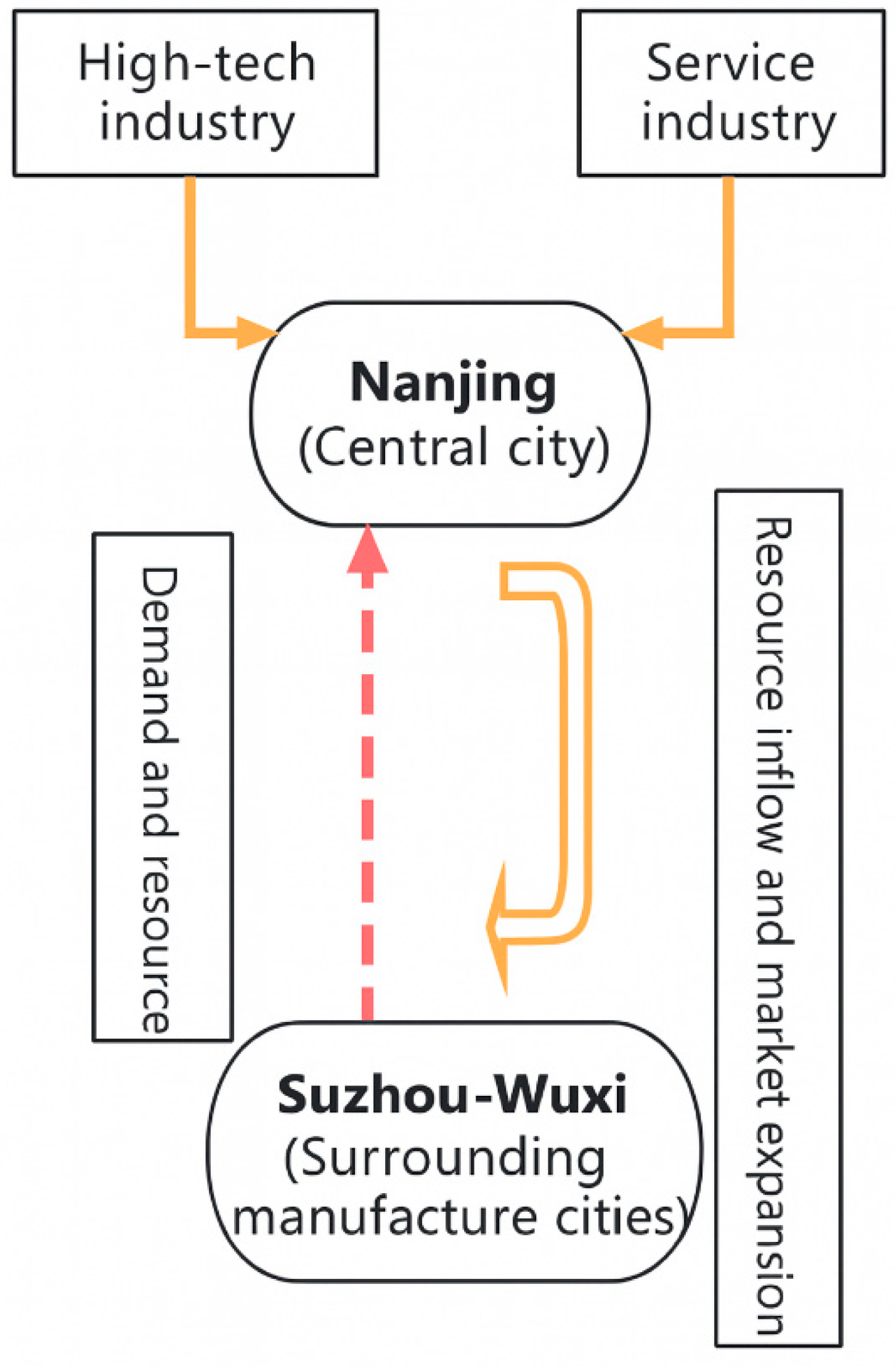
Figure 1. The Urban-Rural Relationship and Industrial Characteristics Along the Yangtze River Belt.
Sustainability 18 00986 g001
Figure 2. Causal Loop Diagram of Rail Transit System. * The symbol of “+” indicates a positive effect.
Sustainability 18 00986 g002
Figure 3. Stock-Flow Diagram of System Dynamics Model of Regional Economy in Jiangsu Province.
Sustainability 18 00986 g003
Figure 4. Trend Diagram of GDP and GDP3 Simulation Prediction Results.
Sustainability 18 00986 g004
Figure 5. Trend Diagram of GDP Simulation Prediction Value before and after Model Adjustment.
Sustainability 18 00986 g005
Table 1. Explanation of Evaluation Indicator Connotations.
Evaluation IndicatorStatistical IndicatorUnitIndicator Connotation
Commuting convenienceOperating mileage of rail transitKilometerThe operating mileage of rail transit can actually reflect the current situation of commuting convenience.
Revenue of tertiary industryGDP3100 million yuanThe external economic benefits during the operation of rail transit are mainly reflected in the output value of the regional tertiary industry.
Growth in real estate revenueOutput value of real estate100 million yuanThe output value of real estate can reflect the development status of the regional real estate industry.
Growth in revenue of commercial service industryOutput value of commercial service industry100 million yuanThe output value of the business service industry can reflect the development of other industries in the region except the real estate industry.
Population aggregationVolume of population migrationPersonThe volume of population migration can reflect the degree of population aggregation.
Growth in investment in social fixed assetsInvestment in social fixed assets100 million yuanThe total amount of social fixed asset investment reflects the situation of fixed asset input in the region
Regional economyGDP100 million yuanGDP is the most direct indicator for measuring the development of the regional economy.
Investment in urban rail transit systemInvestment in urban rail transit100 million yuanThe investment in rail transit directly reflects the input intensity of the region in rail transit construction.
Table 2. Descriptive statistics.
YearGDP (100 Million Yuan)Output Value of Real Estate (100 Million Yuan)Output Value of Commercial Service Industry (100 Million Yuan)GDP3
(100 Million Yuan)
201677,350.855792.0129,612.538,269.57
201785,869.766907.7532,818.2442,700.49
201893,207.557467.1735,472.6246,936.41
201998,656.827925.8537,672.5150,852.05
2020102,807.788,383.8537,086.0653,638.85
2021117,392.48626.9442,702.6559,992.65
2022122,089.37931.0842,752.1262,239.04
2023128,222.27783.6845,547.566,236.7
YearInvestment in Social Fixed Assets (100 Million Yuan)Operating Mileage of Rail Transit (Kilometer)Rail Transit Passenger Volume (10,000 Person-Times)Investment in Urban Rail Transit
201649,370.85272217,814380.5266
201753,000.21277119,786408.5
201858,403.85303321,204450.1487
201961,818.36353922,880476.4661
202064,419.29399815,038496.5128
202173,558.05431319,075566.9499
202276,501.14431911,399589.6338
202380,344.01462328,202619.2528
Table 3. Equations of Variables in System Dynamics Model of Regional Economy in Jiangsu Province.
VariableEquationUnit
Operating mileage of rail transitINTEG(Investment in urban rail transit × Effect coefficient of transportation investment, Initial value of the operating mileage of rail transit)Kilometer
Volume of population migrationOperating mileage of rail transit × Elasticity coefficient of population migrationperson
Output value of real estateVolume of population migration × Influence coefficient of population migration volume on real estate output value100 million yuan
Output value of commercial service industryVolume of population migration × Influence coefficient of population migration volume on output value of commercial service industry100 million yuan
GDP3Output value of real estate × Influence coefficient of real estate on GDP3 + Output value of commercial service industry × Influence coefficient of commercial service industry on GDP3100 million yuan
GDPGDP3 × Contribution coefficient of GDP3 to GDP100 million yuan
Investment in social fixed assetsGDP × Stimulus coefficient of GDP on fixed asset investment100 million yuan
Investment in urban rail transitInvestment in social fixed assets × Investment proportion of rail transit100 million yuan
Table 4. The Moran Index from 2014 to 2021 under the spatial weight matrix.
Year2014201520162018201920202021
W i j 0.2640.2470.2480.2640.2600.2450.250
Table 5. Comparison between Model Simulation Results and Historical Data.
YearGDP (100 Million Yuan)GDP3 (100 Million Yuan)
SimulationHistoricalRelative
Error
SimulationHistoricalRelative
Error
201671,918.677,350.857.0%36,693.238,269.574.1%
201776,595.885,869.7610.8%39,079.542,700.498.5%
201881,57793,207.5512.5%41,620.946,936.4111.3%
201986,882.398,656.8211.9%44,327.750,852.0512.8%
202092,532.5102,807.710.0%47,210.553,638.8512.0%
202198,550.2117,392.416.1%50,280.759,992.6516.2%
2022104,959122,089.314.0%53,550.762,239.0414.0%
2023111,785128,222.212.8%57,033.366,236.713.9%
Disclaimer/Publisher’s Note: The statements, opinions and data contained in all publications are solely those of the individual author(s) and contributor(s) and not of MDPI and/or the editor(s). MDPI and/or the editor(s) disclaim responsibility for any injury to people or property resulting from any ideas, methods, instructions or products referred to in the content.