
Article

Energy Transitions in the Digital Economy: Interlinking Supply Chain Innovation, Growth, and Policy Stringency in OECD Countries

by
Majdi Hashim
* and
Opeoluwa Seun Ojekemi
Institute of Social Sciences, University Mediterranean Karpasis, Northern Cyprus, Mersin 99010, Turkey
*
Author to whom correspondence should be addressed.
Sustainability 2026, 18(2), 981; https://doi.org/10.3390/su18020981 (registering DOI)
Submission received: 7 November 2025 / Revised: 24 December 2025 / Accepted: 26 December 2025 / Published: 18 January 2026
(This article belongs to the Section Energy Sustainability)

Abstract

The development of renewable energy has emerged as a cornerstone of sustainable economic transformation, offering a pathway to reduce carbon dependence and enhance long-term energy security. As a result, this study examines the influence of supply chain digitalization, economic growth, and environmental stringency policies on renewable energy consumption (REC) across 33 OECD countries from 2000 to 2021. Using the Method of Moments Quantile Regression (MMQR) approach, the research provides robust, distribution-sensitive insights into how these factors shape renewable energy dynamics. In addition to the main variables, financial development and economic globalization were included as control variables to capture broader macroeconomic effects. The empirical results reveal that supply chain digitalization exerts a negative and consistent influence on REC across all quantiles, suggesting that technological advancement within supply chains may still be heavily dependent on non-renewable energy inputs. Conversely, environmental stringency policies demonstrate a positive and significant impact on REC at all quantiles, indicating that stricter environmental regulations effectively drive the transition toward cleaner energy sources. However, the effect of economic growth varies across quantiles, reflecting a nonlinear relationship—fostering renewable energy use in some instances while increasing conventional energy demand in others. Among the control variables, economic globalization enhances REC, implying that greater international integration facilitates technology transfer and access to green innovations. In contrast, financial development negatively affects REC, suggesting that current financial systems may still prioritize fossil fuel investments. Overall, the study emphasizes the need to align digital transformation strategies, financial reforms, and policy frameworks to strengthen renewable energy development and ensure a sustainable, low-carbon future across OECD nations.

1. Introduction

Renewable energy development has become a cornerstone of the global sustainability agenda. Moreover, the Organization for Economic Cooperation and Development (OECD) nations are known for their economic leadership and technological innovation, which have placed them at the forefront of transitioning to cleaner energy sources to address climate change and reduce dependency on fossil fuels [1,2]. Meanwhile, the explosion in population alongside the need for economic development spurs the energy demand level, which requires the scaling up of renewable energy (RE). However, with the recent strides in OECD nations RE status, this current status remains insufficient in meeting long-term environmental commitments. Expanding renewable energy is not just a matter of environmental necessity; it is also a strategic imperative for ensuring energy security, fostering economic resilience, and promoting sustainable development. It becomes vital to uncover which factors are responsible for the renewable energy (RE) development, as well as those that hinder its development, which will help in devising effective strategies towards the development of the RE sector.
One of such factors is the supply chain digitalization (SCD) [3], which involves transforming traditional operational models, enhancing efficiency, transparency, and resilience. Integrating advanced technologies such as the Internet of Things (IoT), blockchain, artificial intelligence (AI), and big data analytics [4] helps enable better resource management, reduce waste, and lower carbon footprints. For OECD nations, where industrial and service sectors heavily contribute to greenhouse gas (GHG) emissions, ref. [5,6] concluded that digital transformation offers a promising pathway to decouple economic growth from environmental harm. However, realizing these benefits necessitates robust infrastructure, policy support, and collaboration among stakeholders, underscoring the importance of a systemic approach. Despite its potential, SCD faces challenges like cybersecurity threats, data privacy concerns, and the digital divide, which hinder its widespread adoption [7]. These issues can disrupt operations, compromise sensitive information, and exacerbate inequalities, thereby limiting access to digital tools and hindering the development in renewable energy sector.
Environmental Stringent Policies (ESP) are another factor that could influence the direction of development towards renewable energy consumption (REC). Moreover, these policies include mechanisms such as carbon pricing, emissions trading systems, and stringent pollution controls, establishing a framework that incentivizes businesses to shift toward cleaner and greener energy sources [8]. Additionally, these policies incentivize innovation by creating a market demand for green technologies, thereby driving progress toward sustainability goals. Moreover, many OECD nations have established comprehensive and well-structured regulatory frameworks, designed to facilitate the transition to cleaner energy systems [9]. These frameworks are further reinforced by targeted financial incentives, including subsidies, tax breaks, and grants, which serve to reduce the financial burden on businesses and individuals adopting renewable energy technologies. This further reinforces the position of OECD nations as an ideal case study.
Following this discussion, our study contributes to the literature in a number of ways. Firstly, the uniqueness based on the authors’ knowledge lies in exploring how supply chain digitalization, environmental stringency policy, and economic growth influence renewable energy in OECD nations, thereby addressing a critical gap in prior research. Secondly, we also control some variables such as economic globalization and financial development, both of which are acknowledged as drivers of REC. Thirdly, we provide insight into the heterogeneous influence of the response variables across the conditional distribution of REC by using the Method of Moments Quantile Regression (MMQR) approach, which accommodates outliers. Our investigation not only fills a crucial gap in the literature but also provides valuable insights for policymakers and stakeholders in understanding the dynamics of supply chain digitalization towards REC. The objective of this study lies in providing answers to the following key research questions: (i) How does SCD impact REC in OECD nations? (ii) Do ESP and economic growth promote the development of REC in OECD nations? (iii) How do economic globalization and financial development influence REC in OECD nations?
The subsequent sections of this study are arranged as follows: Section 2 provides a concise evaluation of the existing empirical studies on the determinants of renewable energy. Section 3 details the data and econometric methodology employed. The empirical results are presented and discussed in Section 4, and the concluding insights, along with policy implications derived from the empirical findings, are encapsulated in Section 5.

2. Literature Review

This section provides an opportunity for understanding the drivers of REC, identified by previous studies. This helps to provide insights into the challenges and opportunities associated with promoting REC, which is crucial for identifying gaps in the literature. For example, ref. [10] inspected how the United States advances its energy transition via the lens of natural resources by using the Fourier quantile causality to analyze the quarterly dataset between 1990 and 2020. The authors found that natural resources contribute to the advancement of their energy transition in the United States. Another research conducted in the United States by ref. [11] used the data between 1985 and 2021 by using the FMOLS, DOLS, and CCR to observe the perspective of natural resources extraction and energy transition. The authors uncovered that coal rents and forest rent negatively affect energy transition, while mineral rents, natural gas rent, and oil rent positively affect energy transition in the United States. Furthermore, adopting a mixed-method analysis, ref. [12] tested whether natural resources hinder the production of renewable energy in the EU. The authors’ findings suggested that the total natural resources may positively influence renewable energy within a nation; certain specific resources, notably petroleum, are prone to exert adverse effects. Ref. [13] inspected the impact of natural resources on the Sub-Saharan Africa (SSA) region’s renewable energy usage for the period between 1990 and 2015, and observed that natural resources have no significant influence on renewable energy. Ref. [14] used ten selected Asian nations and reported that natural resources positively influence renewable energy. Moreover, ref. [15] conducted in 162 nations, which established a similar result. For E7 and G7 nations, the effect of economic complexity on renewable energy was inspected by ref. [16]. The authors used four different estimators to analyze the period between 1990 and 2017 and uncovered that economic complexity contributes to renewable energy in E7 and G7 nations. Ref. [17] focused on offering direction towards EU nations’ sustainable development objectives by investigating the role of economic complexity on renewable energy, and detected that economic complexity increases renewable energy.
The work of ref. [18] focused on determinants of renewable energy, in which economic complexity is included in 23 nations using the dataset between 1990 and 2017. The authors found that at the low quantiles, economic complexity negatively influences renewable energy, while at the middle and higher quantiles, a positive effect was detected. Meanwhile, a study in G7 nations by ref. [19] identified that economic complexity mitigates renewable energy. Likewise, ref. [20] used the 94 nations to inspect whether economic complexity drives renewable energy and found that economic complexity reduces renewable energy. Meanwhile, ref. [21] looked into China’s sustainable energy pursuit by inspecting the role of economic complexity by using the dynamic ARDL method, and identified that economic complexity positively impacts renewable energy.
The study by ref. [22] examined the determinants of renewable energy in OECD nations, in which economic globalization is the major regressor of the study. They uncovered that a higher economic globalization level increases renewable energy, but their influences vary at various degrees of economic globalization. Another research performed for OECD nations by ref. [23] also found that the outcome varies at different degrees of economic globalization. However, ref. [23] suggested that the revised and reconstructed economic globalization induces renewable energy in OECD nations. Ref. [24] inspected the significance of economic globalization on renewable energy in nine selected nations based on renewable energy capacity. Using the CS-ARDL method, the authors confirmed the positive influence of economic globalization on renewable energy. The potency of economic globalization in reshaping Vietnam’s renewable energy using the dynamic ARDL approach was investigated by ref. [25] and detected that renewable energy can be promoted by increasing the level of economic globalization. Ref. [26] scrutinized the impact of CO2 emissions on renewable energy usage in West African Economic and Monetary Union nations for the period between 1990 and 2017, and detected that CO2 emissions reduce renewable energy. Furthermore, the nations are categorized into three subpanels based on income level. The empirical outcome indicates that CO2 emissions positively influence renewable energy. Ref. [27] looked into the role of CO2 emissions on renewable energy in 97 nations, and identified that renewable energy is positively influenced by CO2 emissions. Meanwhile, a study in five ASEAN nations by ref. [28] identified that CO2 emissions mitigate renewable energy. Likewise, ref. [25] inspected the influences of CO2 emissions on renewable energy in Vietnam. Using the dynamic ARDL method, the authors confirmed the negative influence of CO2 emissions on renewable energy.
The DOLS and Granger causality test was used to inspect whether economic growth influences renewable energy in India by ref. [29] and the result disclosed that economic growth increases renewable energy, while a feedback causal relationship between economic growth and renewable energy. Ref. [30] adopted the FMOLS method to analyze the impact of economic growth on renewable energy in six Latin American nations and revealed that economic growth increases renewable energy. Ref. [31] argued that given the inherent costliness of renewable energy utilization, nations with lower economic growth exhibit diminished enthusiasm for the implementation of policies supporting renewable energy development. In contrast, countries experiencing an economic growth rate surpassing 4.13% in the preceding period demonstrate the capacity to allocate economic surplus towards renewable energy development. Ref. [32] probed the effect of economic growth on renewable energy in Asian nations and confirmed that economic growth reduces renewable energy in Asian nations. However, ref. [33]’s empirical results affirm the pivotal significance of economic growth in the development of renewable energy capacity and also found the presence of long-term causality in OECD nations in Europe.
From reviewing previous studies on the drivers of REC, a series of observations emerge. (1) No research so far has examined how supply chain digitalization influences renewable energy. (2) The current body of research on the impact of economic growth on renewable energy has established contradictory findings. (3) We observed limited literature on how stringent policies impact renewable energy and yield contradictory findings, highlighting the necessity for new empirical evidence in this domain. (4) The utilization of the MMQR estimator, a tool tailored for estimating conditional means, is infrequently applied in studies on this issue. Addressing these gaps, our study distinguishes itself by examining the impact of supply chain digitalization, economic growth, and stringent environmental policy on renewable energy in OECD countries, utilizing the MMQR estimator.

3. Data and Method

3.1. Data Description

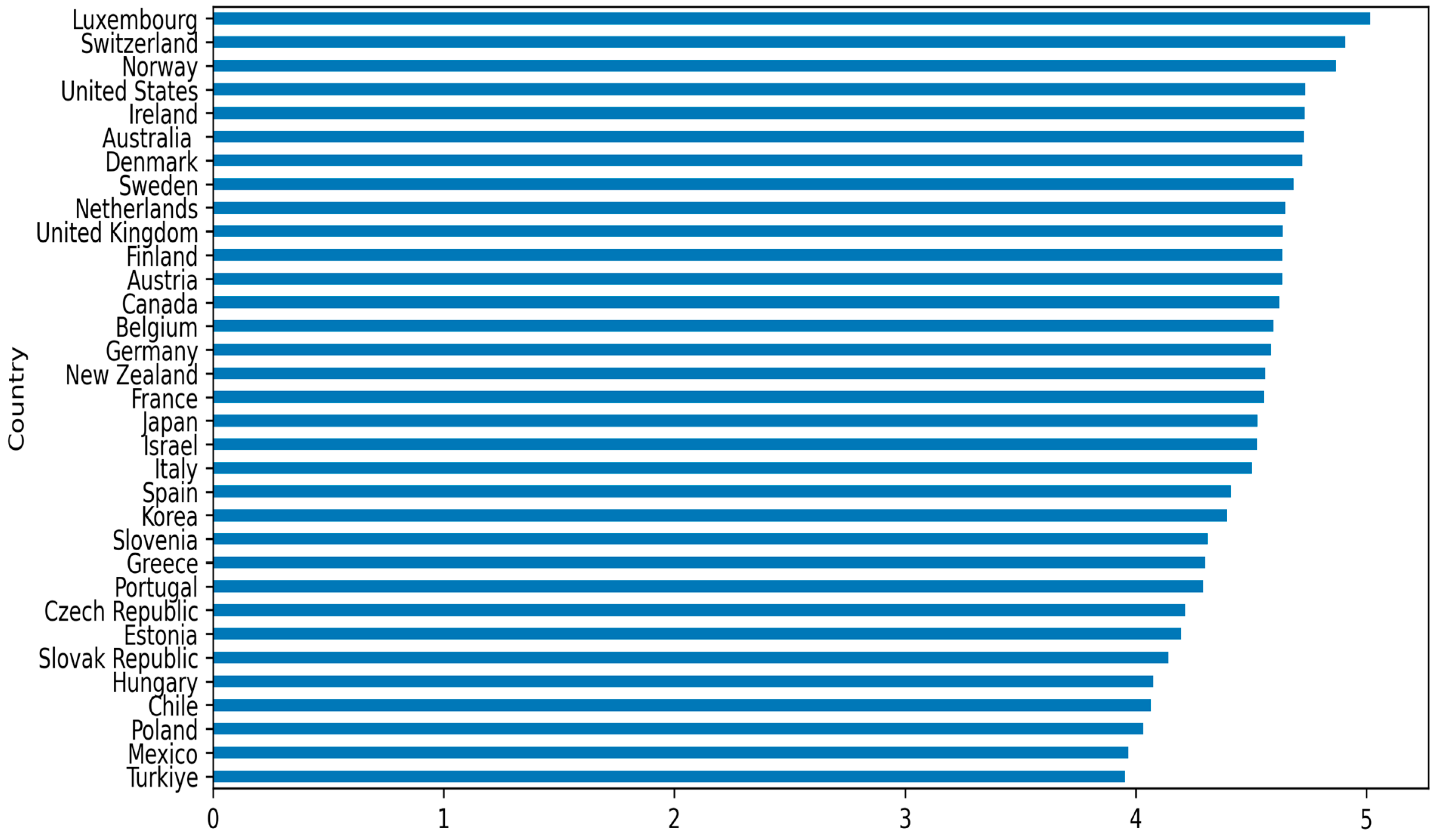
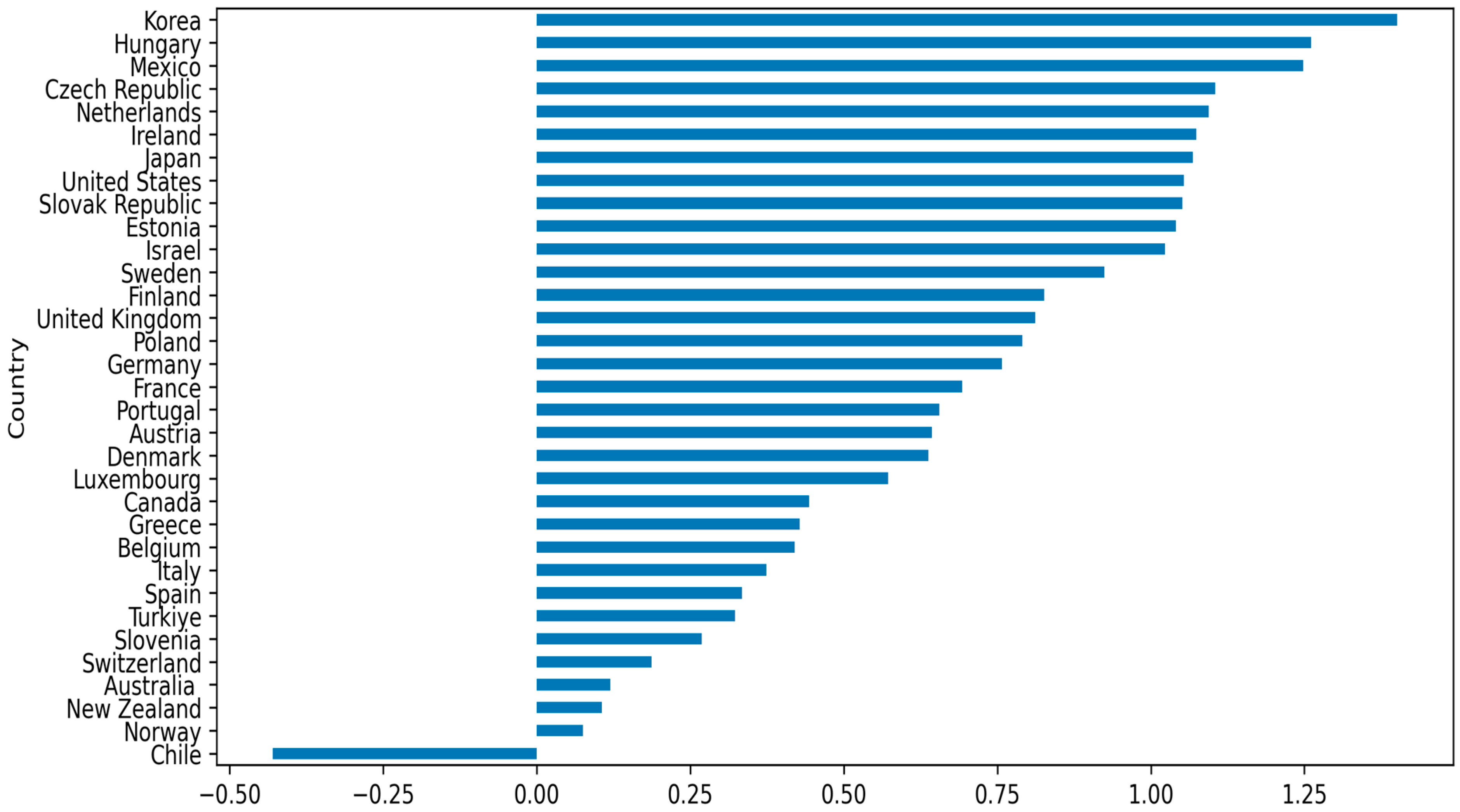
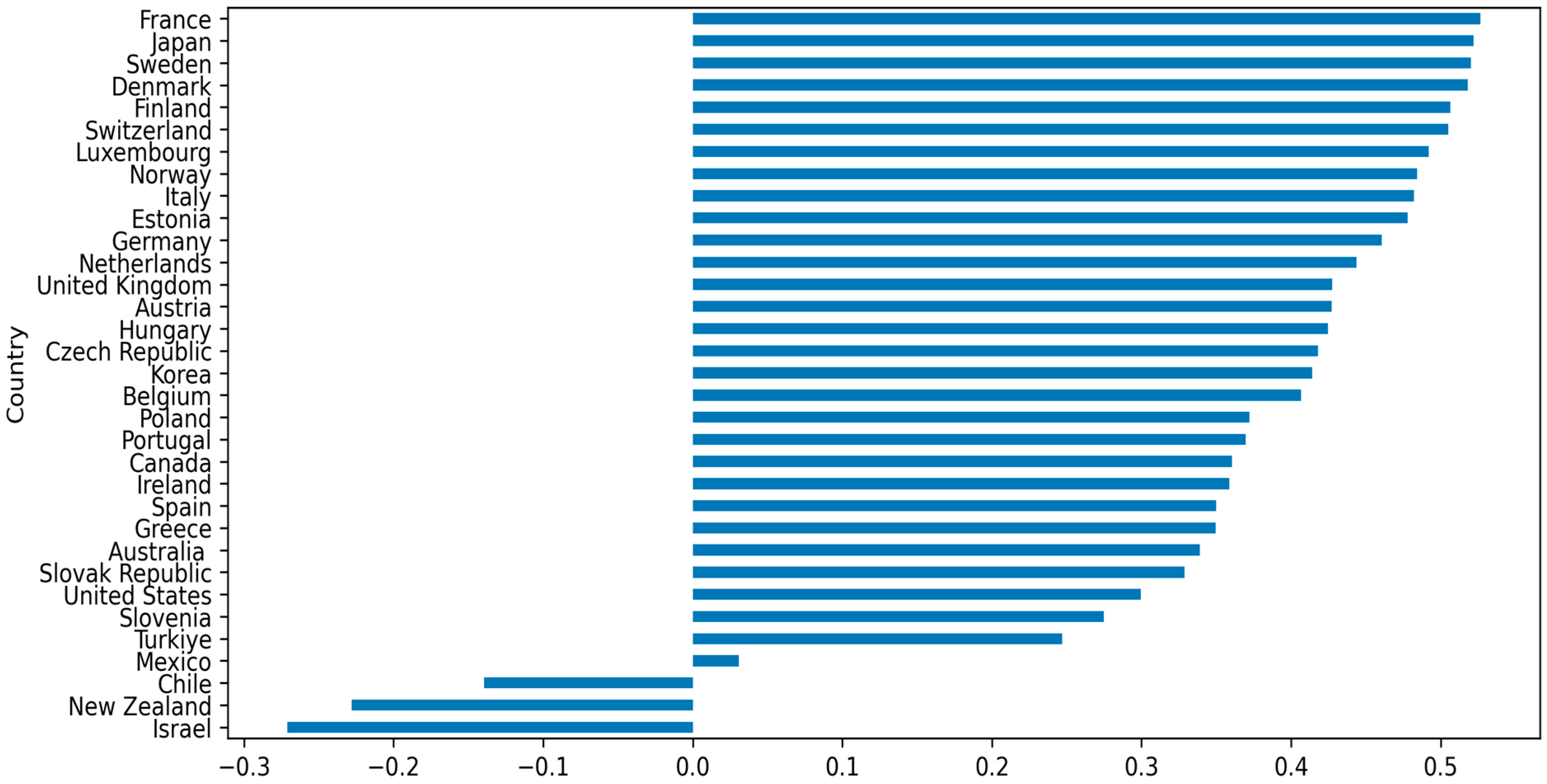
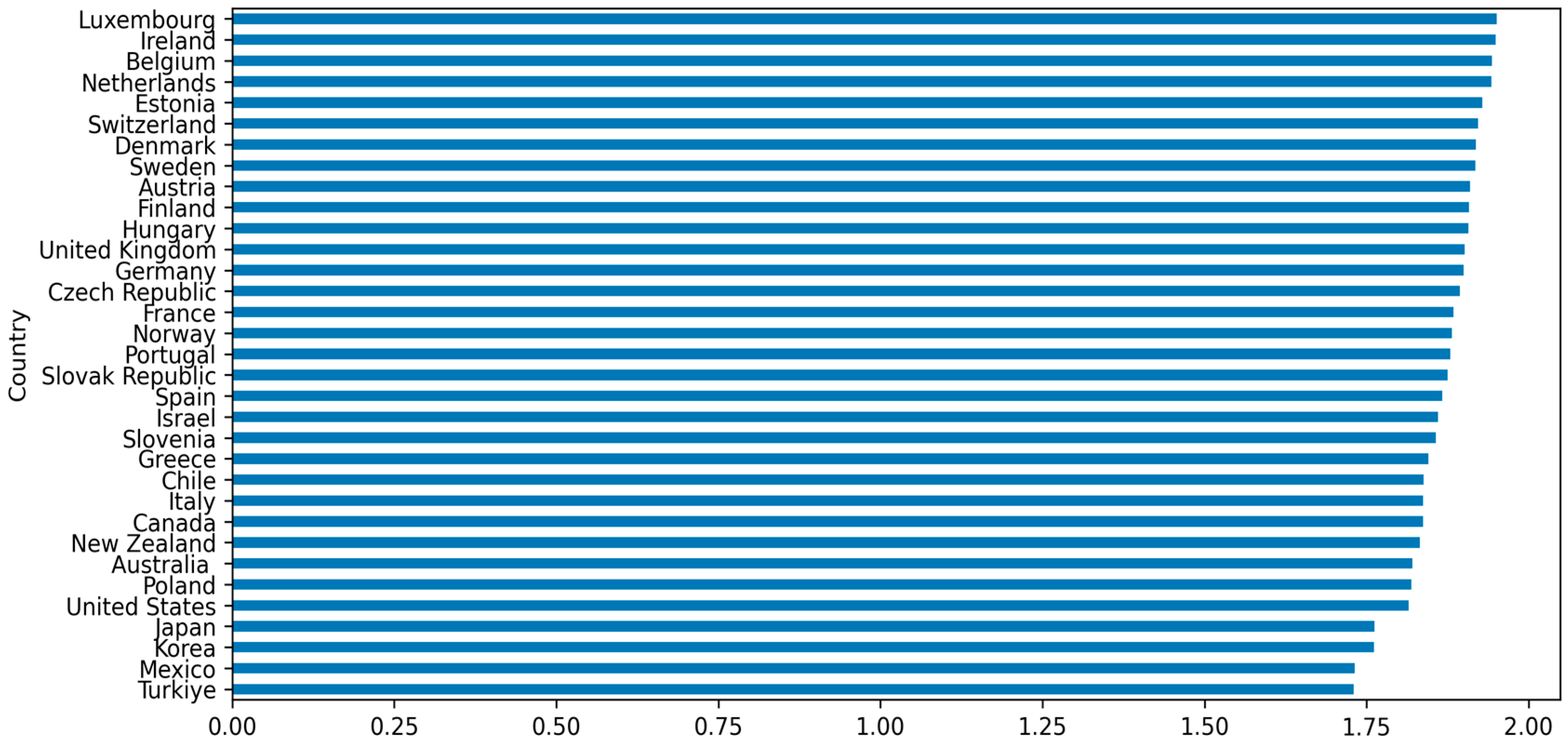
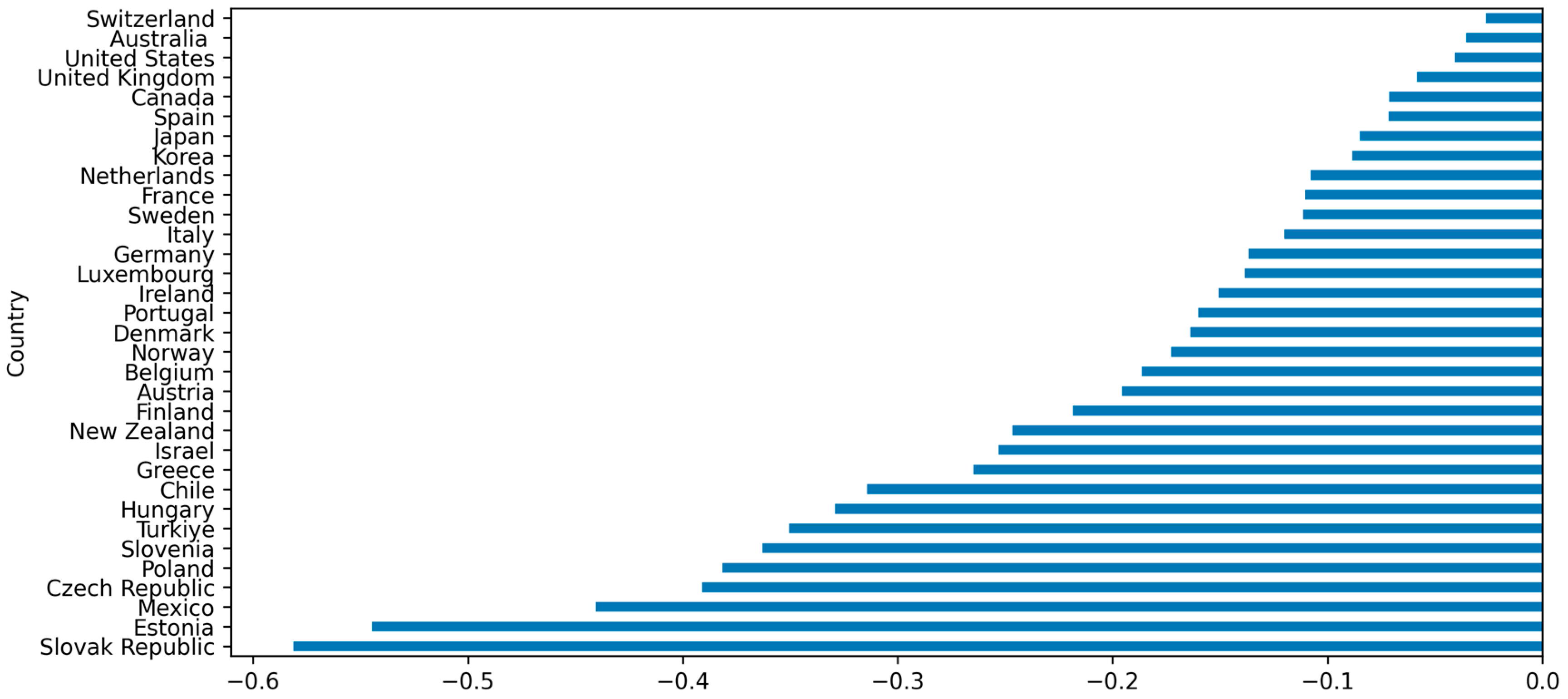
The panel data of 33 selected OECD nations (Australia, Austria, Belgium, Canada, Chile, Czech Republic, Denmark, Estonia, Finland, France, Germany, Greece, Hungary, Ireland, Israel, Italy, Japan, Korea, Luxembourg, Mexico, Netherlands, New Zealand, Norway, Poland, Portugal, Slovak Republic, Slovenia, Spain, Sweden, Switzerland, Turkiye, United Kingdom, and United States) covers the period between 2000 and 2021. The renewable energy consumption (measured as the percentage of total final energy consumption) is the dependent variable, which is sourced from the World Bank indicator database. The following are the independent variables: ICT goods exports are used as the proxy for supply chain digitalization because they provide consistent, comparable data across countries, whereas broader indicators of digital adoption (such as AI, IoT, and blockchain use) are not available for the full study period. Although this measure does not capture all dimensions of supply chain digitalization, it serves as the most reliable option given data constraints, and this limitation is duly acknowledged. Moreover, ICT goods exports (% of total goods exports)) and economic growth (measured as GDP per capita (constant 2015 US$)), were sourced from the World Bank indicator database. However, the dataset of environmental stringency policy (measured in an index) is extracted from the OECD database. Additionally, financial development (measured in an index) and economic globalization (measured in an index) are extracted from the International Monetary Fund database and the KOF Swiss Economic Institute database, respectively. Detailed information about the data, including its source, measurement, and corresponding symbols, can be found in Table 1. Moreover, the study began in 2000 and concluded in 2021 due to the lack of data on supply chain digitalization. Furthermore, the descriptive statistics are summarized in Table 2. The spatial distribution of renewable energy, economic growth, supply chain digitalization, environmental stringency policy, economic globalization, and financial development over the studied period is presented in Figure 1, Figure 2, Figure 3, Figure 4 and Figure 5, and Figure 6, respectively.
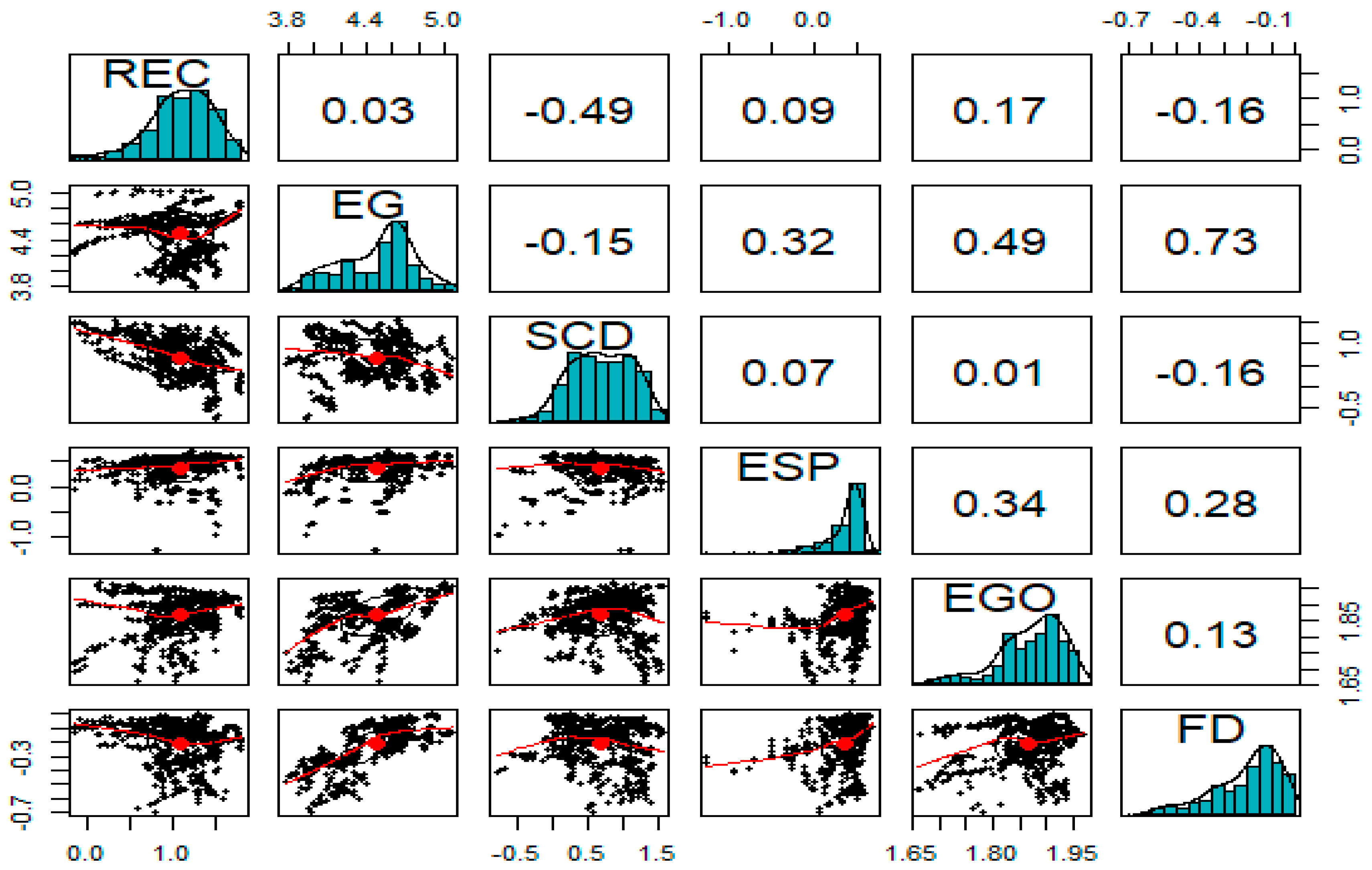
Figure 7 shows the correlation matrix of each variable used, which reveals weak-to-moderate associations among the variables, indicating a low risk of multicollinearity in the baseline specifications. REC exhibits very weak correlations with EG, SCD, and FD, suggesting that the influence of these drivers on REC is likely heterogeneous and nonlinear. EG shows a moderate positive correlation with both FD and EGO. ESP is moderately positively correlated with EGO, implying that countries with higher degrees of environmental integration also tend to implement stronger regulatory measures.

3.2. Model Specification

We explored two models to offer insight into the objective of this study. For the first model, the study’s regressors are supply chain digitalization, economic growth, and environmental stringency policy, which is denoted as follows:
R E C i t = β 0 +   β 1 S C D i t +   β 2 E G i t +   β 3 E S P i t +   ε
where ε indicates the error term, subscripts of i and t indicate cross-section (33 selected nations) and period of study (2000–2021), respectively. To mitigate the potential occurrence of heteroscedasticity, the dataset was transformed into natural logarithmic expressions. The second model of this study included two additional regressors, namely, financial development and economic globalization, as depicted in Equation (2):
R E C i t = β 0 +   β 1 S C D i t +   β 2 E G i t +   β 3 E S P i t + β 4 E G O i t +   β 5 F D i t + ε
where REC represents renewable energy consumption, SCD, EG, ESP, EGO, and FD denote supply chain digitalization, economic growth, environmental stringent policy, economic globalization, and financial development.
The impact of the core variables on renewable energy consumption operates through several transmission channels. SCD affects renewable energy consumption through both energy-intensive and efficiency-enhancing mechanisms. On the negative side, digital technologies such as IoT systems, automated logistics, and data-driven platforms substantially increase electricity demand, which is often met by fossil fuels in economies with limited renewable capacity [38]. Additionally, the rebound effect theory also explains that efficiency gains from digital technologies often stimulate greater production and energy use, thereby reinforcing dependence on non-renewable sources, especially where renewable integration remains weak [39,40], i.e., β 1 < 0 .
However, SCD can positively influence renewable consumption when supported by strong grid systems, as digital tools enhance energy monitoring, improve load management, and facilitate the integration of renewable sources. Thus, SCD promotes the integration of advanced technologies, thereby contributing to the surge in renewable energy consumption, leading to β 1 > 0 . Therefore, whether SCD ultimately raises or reduces REC depends on the nation’s underlying energy structure and the maturity of its renewable infrastructure. For economic growth, its impact on REC depends on whether the increase in energy demand outweighs the structural and technological changes that encourage the adoption of renewable energy. With respect to the negative effect, rising economic growth increases total energy demand, and in countries where fossil fuels remain the dominant source of power, this expansion tends to limit the share of renewables [41].
Economic growth can also accelerate industrial and urban development, both of which are highly energy-intensive and often slow to transition toward clean energy, i.e., β 2 < 0 . On the positive side, sustained economic growth can enhance fiscal capacity, improve technological capabilities, and attract investment that supports renewable energy deployment when effective policies are in place [29,30,31]. i.e., β 2 > 0 . Environmental stringency policies influence renewable energy consumption through several interconnected mechanisms. First, stringent regulations such as carbon pricing, emission caps, and pollution taxes create strong investment incentives for firms and governments to expand renewable energy capacity, as shown by ref. [42], who document that regulatory pressure increases financial flows toward clean technologies. Second, ESPs stimulate technological innovation by raising the cost of complying with fossil-fuel-based processes, encouraging firms to adopt renewable technologies and cleaner production methods [43]. Third, these policies promote industrial restructuring, pushing economies away from carbon-intensive activities toward energy-efficient and low-carbon sectors. However, ESP may have delayed or uneven effects in economies with weak institutional capacity or high dependence on fossil fuels, which can moderate the speed at which renewables replace conventional energy sources. Financial development similarly exhibits dual effects. On one hand, deeper financial systems can mobilize capital for renewable energy projects and promote clean technology diffusion; on the other hand, financial development may also channel credit to energy-intensive sectors that continue to rely on fossil energy, thereby offsetting gains from renewable deployment. Globalization shapes REC through technology transfer and integration into international production networks, which can encourage renewable adoption when countries absorb cleaner technologies, but may also reinforce fossil-based consumption when trade and investment patterns strengthen carbon-intensive industrial structures [41].

3.3. Econometric Estimation Strategy

To estimate the heterogeneous impact of SCD, EG, EGO, and other covariates on REC, this study employs the Method of Moments Quantile Regression (MMQR) as proposed by ref. [44]. Unlike traditional mean regression methods, MMQR directly models the conditional quantiles of the dependent variable, allowing the effects of explanatory variables to vary across the distribution of REC. This feature is particularly important when the relationship between predictors and the outcome may differ at lower, median, or higher quantiles of REC, as is observed in many energy and environmental contexts.
Formally, let Y i t denote REC for the country i at time t , and let X i t be a vector of explanatory variables including SCD, EG, ESP, EGO, and FD. The MMQR model allows the conditional quantiles of renewable energy consumption (REC) to depend on a set of explanatory variables while also accounting for heterogeneity in both the location (median) and scale (dispersion) of the distribution. The MMQR model expresses the τ -th conditional quantile of Y i t as follows:
Q Y i t τ X i t = X i t β τ + σ X i t γ τ ε i t .
Here, Q Y i t τ X i t represents the τ -th conditional quantile of REC given X i t , X i t represents the set of explanatory variables, β ( τ ) captures the location effects, which reflect how the central tendency of REC responds to changes in the explanatory variables at different quantiles, γ ( τ ) captures the scale effects, which reflect how the variability (dispersion) of REC changes across quantiles, and ε i t is a random error term with zero mean and unit variance.
The MMQR estimation relies on moment conditions derived from the decomposition of the response distribution into location and scale components [45]. This approach enables simultaneous estimation of how predictors influence both the conditional central tendency and conditional dispersion of REC across different quantiles. The inclusion of scale parameters is especially informative in energy studies where heteroskedasticity and distributional heterogeneity are prevalent. Following [46] and similar applications in the literature, the location parameters are interpreted as quantile-specific effects on the median or other conditional quantiles, while the scale parameters reflect the degree to which the explanatory variables affect the spread of REC across countries and quantiles.
To implement the MMQR, we estimate the model at multiple quantiles (e.g., τ = 0.10, 0.25, 0.50, 0.75, 0.90) to capture the full conditional distribution of renewable energy consumption. This quantile-level approach allows identification of asymmetric effects, whereby a predictor may have different impacts at the lower end of the REC distribution compared to the upper end. Statistical inference for the estimated parameters is conducted using bootstrapped standard errors to ensure robust significance testing, consistent with practices in comparable studies that apply MMQR in energy and environmental research.

4. Presentation and Discussions

4.1. CSD Analysis

This study’s first phase of the analysis is conducting the cross-sectional dependence (CSD) test on each variable. Moreover, this study used the ref. [47]’s CSD test for this purpose. Table 3 shows the result of the CSD test, suggesting the rejection of the null hypothesis of no CSD for all variables used at 1% significant level. Additionally, Figure 1 shows the plots of the correlational connection of each variable, showing that there is either a positive or a negative connection between two variables.

4.2. Unit Root Test Analysis

The second phase of this study’s analysis is the unit root test. This study used the Cross-sectionally augmented Im–Pesaran–Shin (CIPS) panel unit root test and the cross-sectionally augmented Dickey–Fuller (CADF). The outcomes of these methods are detailed in Table 4, showing that all variables exhibit non-rejection of the null hypothesis of non-stationarity at the level. Upon subjecting them to their first differencing, the null hypothesis of unit root issues was rejected across all series. Hence, it validates that all series attain stationarity at the first difference.
For the third phase of this study’s analysis, the Pedroni cointegration analysis is used. Table 5 reveals the findings of the Pedroni cointegration test for the two models. For the two models, we observed that at least two statistics out of the four statistics reject the null hypothesis of the absence of co-integration. This authenticates the assertion of a long-term relationship between REC and its regressors in each of the models.
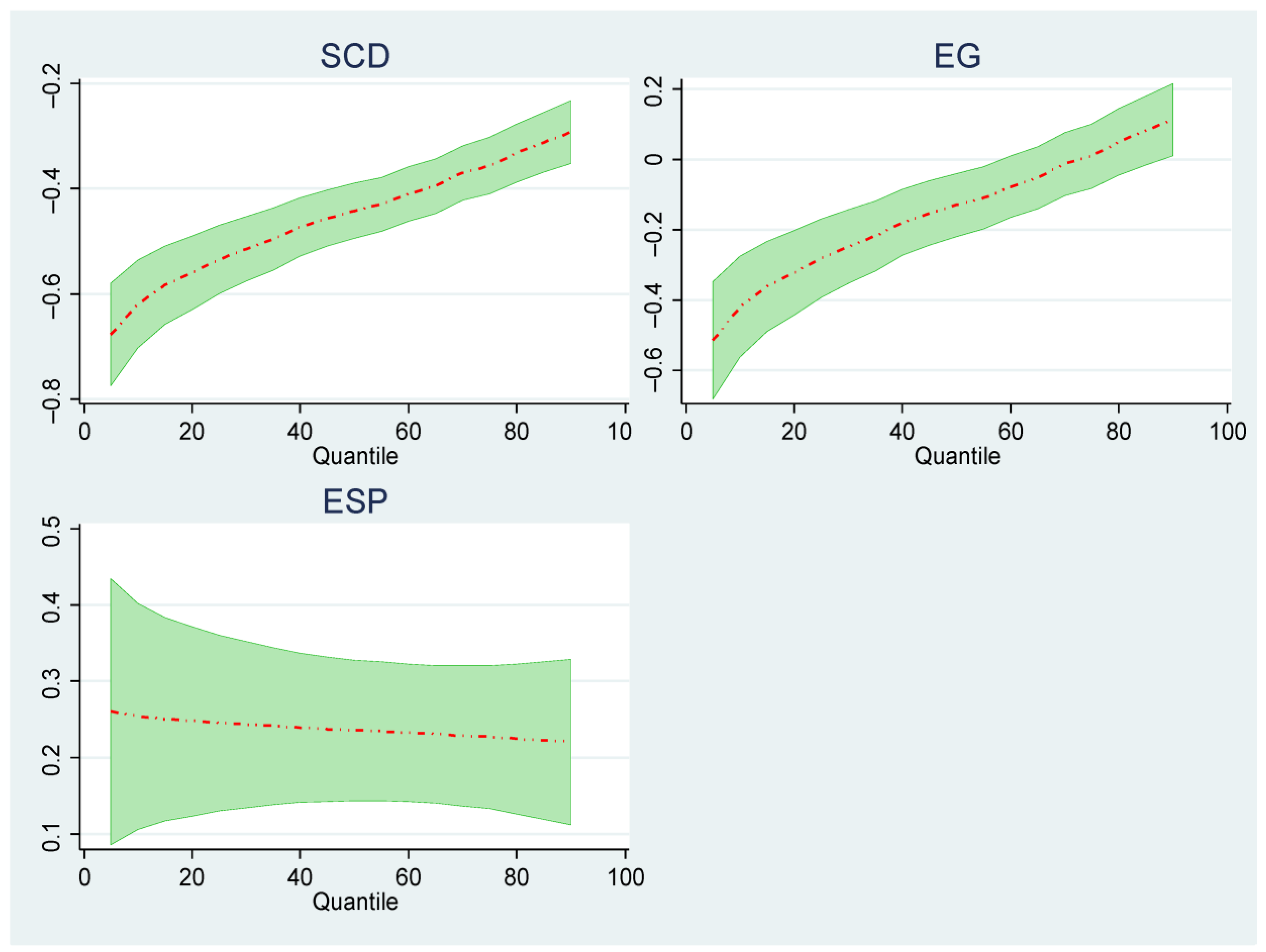
Table 6 and Table 7 report the MMQR estimates of the location, scale, and quantiles (τ = 0.10, 0.25, 0.50, 0.75, and 0.90) for each variable. The location coefficients quantify the impact of the explanatory variables on the conditional mean of REC, while the scale coefficients indicate the distribution’s propensity to diverge or converge toward the REC conditional mean. The quantiles represent the intervals or subgroups of the dependent variable from the lowest level (10th quantile) to the highest (90th quantile). Table 6 shows how supply chain digitalization, economic growth, and environmental stringent policy impact renewable energy consumption in OECD nations. Additionally, the pictorial representation of the MMQR estimations for Model 1 is depicted in Figure 8. With respect to the location parameter, SCD and EG negatively influence REC. This implies that, on average, SCD and EG reduce the central tendency of REC across OECD countries. The result suggests that while SCD and EG may enhance productivity, they also increase total electricity demand that is largely met by fossil fuels rather than renewable sources. Conversely, ESP exhibits a positive effect on REC at the location level, confirming that stronger ESP encourages clean-energy deployment and promotes a shift away from carbon-intensive sources. In the scale model, the direction of influence reverses. Supply chain digitalization and economic growth positively affect the scale parameter of REC, indicating that these factors contribute to greater dispersion or variability in REC across countries. This means that the benefits of SCD and EG for REC are not uniform but differ according to each country’s technological readiness and energy structure. Meanwhile, ESP negatively influences the scale parameter, suggesting that stricter regulations reduce the variability of REC and foster greater convergence among OECD nations in transitioning toward sustainable energy systems.
We observed that the coefficient of SCD is negative in nature across all quantiles. However, as the quantiles increase, the magnitude of its coefficient falls, particularly in the middle and upper quantiles (0.5–0.9). Thus, the negative effect of SCD on REC can be explained through scale, rebound, and infrastructure effects. While SCD enhances operational efficiency, real-time coordination, and automation across supply chains, it simultaneously increases electricity demand through data centres, cloud computing, smart logistics, and digital monitoring systems [48]. In contexts where the electricity mix remains largely fossil-fuel dependent, this additional energy demand is more likely to be met by conventional sources rather than renewables, thereby reducing REC. Moreover, SCD is primarily adopted to improve competitiveness and cost efficiency, whereas RE integration often depends on regulatory incentives and long-term investment planning [38]. In the absence of strong policy alignment, SCD may therefore expand energy demand faster than renewable capacity can adjust, resulting in a negative association between SCD and REC. This result does not agree with the study of ref. [49] for G7 nations. Additionally, we observed that the coefficient for EG is mixed across all quantiles. Precisely, the negative role of EG on REC falls within the lower and middle quantiles (0.1–0.7), while in the 0.8 quantiles, EG exerts an insignificant impact on REC, and the positive impact of EG on REC is observed in 0.9 quantiles. Thus, lower and moderate level in EG show a decreasing role in REC, while the higher EG level shows a surge in REC. Prior study of ref. [32] provide support for this study. The coefficients of ESP show a consistent and significantly positive significant relationship across all quantiles. Moreover, with the increase in quantiles, it is evident that the magnitude of the coefficient declines. This consistent positive coefficient indicates the crucial role of ESP in increasing REC in OECD nations. The implementation of environmental stringent policies, such as increasing carbon pricing mechanisms, providing subsidies to green initiatives, and energy and environmental tax help in promoting the development and investment in the renewable energy sector. Prior studies such as ref. [9] also provided backing for this finding.
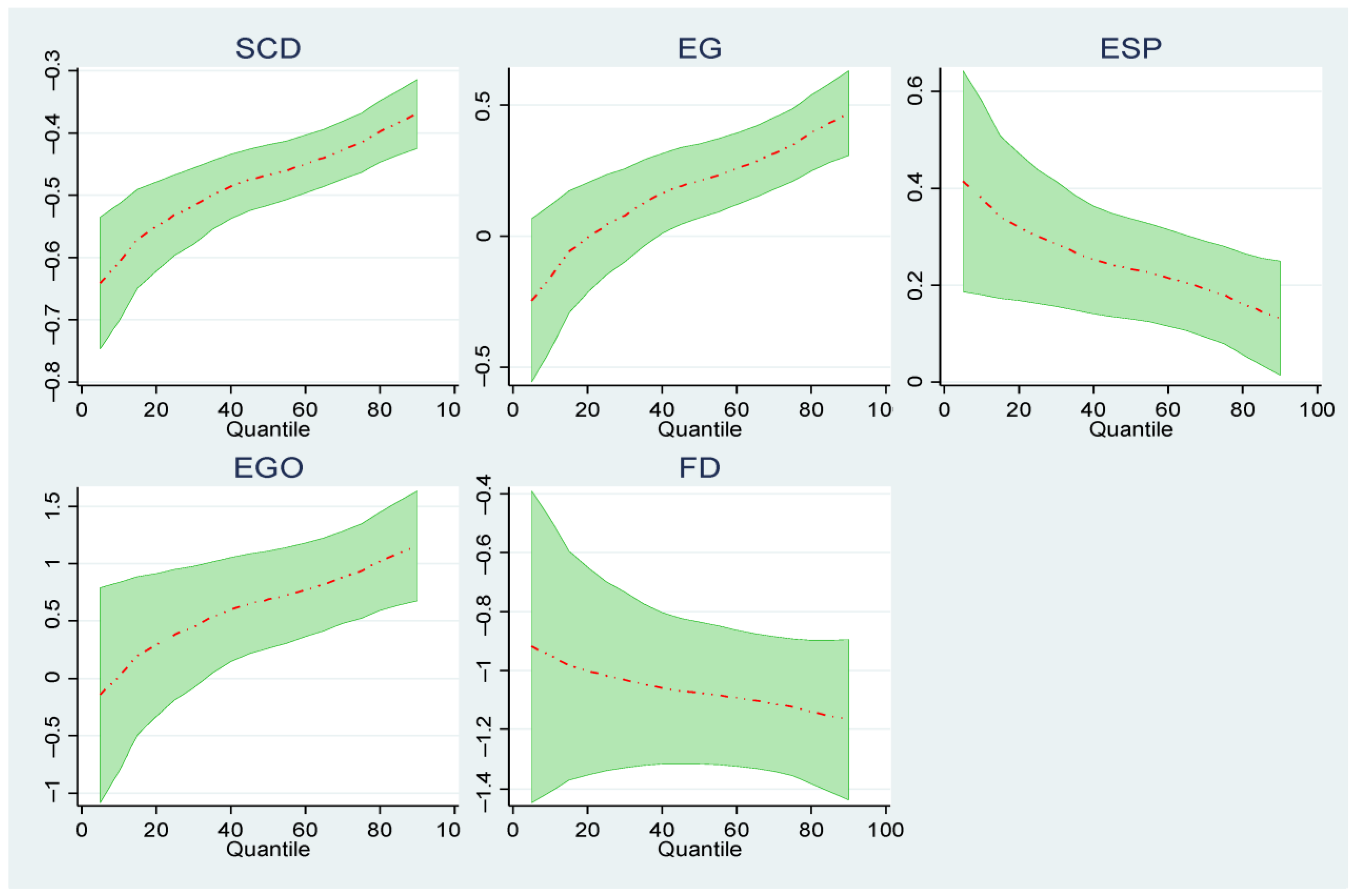
We further evaluate Model 2, which included other regressors such as economic globalization and financial development. Table 7 shows the estimation of the MMQR methods, while Figure 9 gives a graphical representation of the MMQR method. For the location estimates, SCD and FD exert a negative influence on REC, suggesting that greater digital transformation and financial expansion tend to increase energy demand that is still largely met by fossil fuels. In contrast, ESP, EG, and EGO show positive effects on REC. These relationships describe the conditional mean of REC, reflecting how each factor shapes the typical or average level of renewable energy consumption across quantiles. For the scale estimates, SCD, EGO, and EG are positively associated with REC, implying that these factors increase variability in REC across countries. This suggests that while they may raise average REC, their effects are uneven and depend on national contexts, technological readiness, and policy strength. In contrast, ESP and FD have negative scale effects, meaning that stricter regulations and stable financial systems help reduce cross-country disparities in REC, promoting more consistent and equitable clean energy growth within the OECD.
Furthermore, it is evident that SCD exhibits a negative impact on REC across all quantiles. However, with the increasing quantile level, the coefficients of SCD decline. Thus, SCD hinders the development of REC in OECD nations. Conversely, the coefficients of ESP are positive across all quantiles. Meanwhile, as the quantiles increase, the magnitude of the coefficients reduces. ESP plays a pivotal role in the development of REC in OECD nations. However, the coefficient of EG shows mixed findings across all quantiles. Precisely, we observed that there was an insignificant connection between EG and REC at the lower quantiles (0.1–0.3), suggesting that low economic conditions cannot influence REC. Moreover, the coefficient of EG is positive in the middle and upper quantiles (0.4–0.9), indicating moderate and higher levels of economic expansion contribute to the surge in REC in OECD nations. Thus, EG contributed to the development of REC in OECD nations.
EGO exerts an insignificant influence on REC in the lower quantiles, whereas EGO positively impacts REC in the middle and upper quantiles. This finding corresponds with the study of refs. [22,23]. This result reveals that expanding economic integration induces REC in OECD nations. The EGO method facilitates the international transfer of sophisticated technology, hence improving the efficiency and expansion of renewable energy systems. EGO facilitates the movement of foreign investments into renewable energy projects, providing financing for the development of clean energy infrastructures. This global interconnection enables nations to access advanced ideas and financial resources that may be otherwise inaccessible domestically, expediting the shift towards a more sustainable energy future.
Lastly, FD exhibits a consistent and negative impact on REC across all quantiles, suggesting that the financial development in OECD nations led to the decline in REC. This result agrees with the work of refs. [50,51]. This negative role may be linked to the investors’ preference for profitability over sustainability. The absence of robust green finance regulations can be responsible for the increasing preference. In the absence of strong mechanisms like subsidies, tax credits, or advantageous banking conditions for green enterprises, it is challenging for the renewable energy sector to compete with fossil fuels for financial resources, therefore impeding the development and acceptance of sustainable energy solutions.

5. Conclusions and Policy Recommendation

Renewable energy is pivotal to the global sustainable development agenda due to its mitigating nature towards climate change issues while promoting economic growth. As a result, this study investigated how supply chain digitalization, economic growth, and environmental stringency policies affected renewable energy consumption in the selected 33 OECD nations from 2000 to 2021. This study employed the moment quantile regression (MMQR) method as the main estimator to provide a robust insight into their effect on renewable energy consumption. Additionally, financial development and economic globalization were also used as control variables. The findings of the MMQR method disclose that SCD has a negative effect on REC across most quantiles, suggesting that the digital transformation of production and logistics, while improving efficiency, increases electricity demand that is largely met by fossil fuels. This finding aligns with the rebound effect theory and supports the evidence of ref. [38], who found that ICT expansion increases total energy use in OECD nations, but differs from the study by ref. [52], which emphasizes that digital efficiency gains in energy management in China. EG shows a mixed relationship with REC, in which at the lower quantiles, EG reduces REC, while at the middle and higher quantiles, EG amplifies REC. This pattern is consistent with the environmental Kuznets hypothesis and previous findings by ref. [32] conducted in Asian nations. ESP has a strong positive effect on REC across most quantiles, confirming that regulatory enforcement is vital for promoting clean energy transitions, which aligns with the study by ref. [9] for the case in OECD nations. EGO enhances REC, reflecting the role of economic integration in facilitating technology transfer and renewable diffusion. This aligns with the study of refs. [22,23] in OECD nations. Financial development negatively affects REC, possibly because financial investments still favour fossil-fuel-based sectors.
From these findings, this study reports that upon uncovering the negative role of supply chain digitalization on REC, the government needs to implement comprehensive measures that actively promote the procurement of renewable energy components from local markets. This can be achieved by introducing targeted policies and incentives that encourage domestic manufacturers and suppliers to participate in renewable energy projects, thereby reducing dependence on imports and strengthening the local economy. Offering financial and regulatory support for the establishment of innovative and diverse supply chains is crucial, as it ensures the availability of high-quality, locally sourced materials while also reducing logistical challenges. Moreover, there is a need to foster cooperation among different sets of entities, including governmental agencies, the industrial sector, and research institutions, which is crucial in identifying vulnerabilities, optimizing resource allocation, and creating strategies to mitigate potential disruptions associated with SCD. Additionally, there is a pressing need to scale up research and development (R&D) funding for business enterprises to drive sophisticated innovations in supply chain digitalization. Enhanced R&D investments would enable companies to develop advanced technologies, such as blockchain for transparent tracking, artificial intelligence for predictive analytics, and automation tools for improved efficiency. By prioritizing these measures, the government can create a robust and sustainable supply chain ecosystem that supports the growth of the renewable energy sector while fostering economic and technological advancement.
The role of ESP must be fully utilized by enhancing and empowering regulatory bodies to effectively implement both existing and newly enacted environmental legislation. Strengthening these regulatory bodies involves equipping them with adequate resources, technical expertise, and enforcement capabilities to ensure compliance with environmental laws. By performing so, ESP can play a pivotal role in advancing sustainability goals, improving environmental monitoring, and supporting the efficient execution of policies designed to promote renewable energy. This collaborative approach ensures that legislative frameworks translate into actionable outcomes, fostering a cleaner and more sustainable future.
Our study exhibits two limitations. Primarily, constrained by data availability, the scope of this research is confined only to OECD nations. The future exploration of other sets of developing countries is warranted as additional data becomes accessible. Secondly, this study is only confined to five variables. Future studies could adopt other macroeconomic variables such as green finance, human capital, and technological innovation.

Author Contributions

Conceptualization, O.S.O.; Methodology, M.H.; Validation, M.H.; Data curation, M.H.; Writing—review & editing, O.S.O.; Supervision, O.S.O. All authors have read and agreed to the published version of the manuscript.

Funding

This research received no external funding.

Institutional Review Board Statement

Not applicable.

Informed Consent Statement

Not applicable.

Data Availability Statement

The data presented in this study are available on request from the corresponding author.

Conflicts of Interest

The authors declare no conflict of interest.

Abbreviations

RECRenewable Energy Consumption
SCDSupply Chain Digitalization
ESPEnvironmental Stringency Policy
EGEconomic Growth
EGOEconomic Globalization
FDFinancial Development
OECDOrganisation for Economic Co-operation and Development
MMQRMethod of Moments Quantile Regression
OLSOrdinary Least Squares
EKCEnvironmental Kuznets Curve
ICTInformation and Communication Technology
R&DResearch and Development
CO2Carbon Emissions
GDPGross Domestic Product
SDGSustainable Development Goal
IoTInternet of Things
AIArtificial Intelligence
GHGGreenhouse Gas
FDIForeign Direct Investment
ARDLAutoregressive Distributed Lag
AMGAugmented Mean Group
FMOLSFully Modified Ordinary Least Squares
DCCEDynamic Common Correlated Effects

References

  1. Can, M.; Ahmed, Z.; Mercan, M.; Kalugina, O.A. The role of trading environment-friendly goods in environmental sustainability: Does green openness matter for OECD countries? J. Environ. Manag. 2021, 295, 113038. [Google Scholar] [CrossRef]
  2. Zhu, S.; Zafar, M.W.; Usman, M.; Kalugina, O.A.; Khan, I. Internalizing negative environmental externalities through environmental technologies: The contribution of renewable energy in OECD countries. Sustain. Energy Technol. Assess. 2024, 64, 103726. [Google Scholar] [CrossRef]
  3. Bo, X.; Yi, B. Sustainable development and supply chain management in renewable-based community based self-sufficient utility: An analytical review of social and environmental impacts and trade-offs in digital twin. Sustain. Energy Technol. Assess. 2024, 65, 103734. [Google Scholar] [CrossRef]
  4. Seyedghorban, Z.; Tahernejad, H.; Meriton, R.; Graham, G. Supply chain digitalization: Past, present and future. Prod. Plan. Control 2020, 31, 96–114. [Google Scholar] [CrossRef]
  5. Liu, Q.; Trevisan, A.H.; Yang, M.; Mascarenhas, J. A framework of digital technologies for the circular economy: Digital functions and mechanisms. Bus. Strat. Environ. 2022, 31, 2171–2192. [Google Scholar] [CrossRef]
  6. Awosusi, A.A.; Uzun, B. Sustainability Under Uncertainty: A Time-Frequency Perspective on Brazil’s Nuclear Energy Pathway, Digital Evolution, and Financial Risk Exposure. Geol. J. 2025. [Google Scholar] [CrossRef]
  7. Gamreklidze, E. Cyber security in developing countries, a digital divide issue: The case of Georgia. J. Int. Commun. 2014, 20, 200–217. [Google Scholar] [CrossRef]
  8. Awosusi, A.A.; Taiwo, T.S.; Uzun, B. Consolidating sustainable development in G7 economies: The role of green production process, energy transition, environmental policy stringency, and economic globalization. Int. J. Sustain. Dev. World Ecol. 2025, 33, 9–28. [Google Scholar] [CrossRef]
  9. Fatima, N.; Hu, X.; Alnafisah, H.; Zeast, S.; Akhtar, M.R. Enhancing climate action in OECD countries: The role of environmental policy stringency for energy transitioning to a sustainable environment. Environ. Sci. Eur. 2024, 36, 157. [Google Scholar] [CrossRef]
  10. Ullah, S.; Luo, R.; Nadeem, M.; Cifuentes-Faura, J. Advancing sustainable growth and energy transition in the United States through the lens of green energy innovations, natural resources and environmental policy. Resour. Policy 2023, 85, 103848. [Google Scholar] [CrossRef]
  11. Zhang, S.; Shinwari, R.; Zhao, S.; Dagestani, A.A. Energy transition, geopolitical risk, and natural resources extraction: A novel perspective of energy transition and resources extraction. Resour. Policy 2023, 83, 103608. [Google Scholar] [CrossRef]
  12. Ahmadov, A.K.; van der Borg, C. Do natural resources impede renewable energy production in the EU? A mixed-methods analysis. Energy Policy 2019, 126, 361–369. [Google Scholar] [CrossRef]
  13. Dingru, L.; Onifade, S.T.; Ramzan, M.; AL-Faryan, M.A.S. Environmental perspectives on the impacts of trade and natural resources on renewable energy utilization in Sub-Sahara Africa: Accounting for FDI, income, and urbanization trends. Resour. Policy 2023, 80, 103204. [Google Scholar] [CrossRef]
  14. Chau, K.Y.; Sadiq, M.; Chien, F. The role of natural resources and eco-financing in producing renewable energy and carbon neutrality: Evidence from ten Asian countries. Resour. Policy 2023, 85, 103846. [Google Scholar] [CrossRef]
  15. Han, Z.; Zakari, A.; Youn, I.J.; Tawiah, V. The impact of natural resources on renewable energy consumption. Resour. Policy 2023, 83, 103692. [Google Scholar] [CrossRef]
  16. Rafique, M.Z.; Doğan, B.; Husain, S.; Huang, S.; Shahzad, U. Role of economic complexity to induce renewable energy: Contextual evidence from G7 and E7 countries. Int. J. Green Energy 2021, 18, 745–754. [Google Scholar] [CrossRef]
  17. Can, M.; Ahmed, Z. Towards sustainable development in the European Union countries: Does economic complexity affect renewable and non-renewable energy consumption? Sustain. Dev. 2023, 31, 439–451. [Google Scholar] [CrossRef]
  18. Chu, L.K.; Ghosh, S.; Doğan, B.; Nguyen, N.H.; Shahbaz, M. Energy security as new determinant of renewable energy: The role of economic complexity in top energy users. Energy 2023, 263, 125799. [Google Scholar] [CrossRef]
  19. Chu, L.K. The role of energy security and economic complexity in renewable energy development: Evidence from G7 countries. Environ. Sci. Pollut. Res. 2023, 30, 56073–56093. [Google Scholar] [CrossRef]
  20. Adekoya, O.B.; Kenku, O.T.; Oliyide, J.A.; Al-Faryan, M.A.S.; Ogunjemilua, O.D. Does economic complexity drive energy efficiency and renewable energy transition? Energy 2023, 278, 127712. [Google Scholar] [CrossRef]
  21. Wang, X.; Chen, G.; Afshan, S.; Awosusi, A.A.; Abbas, S. Transition towards sustainable energy: The role of economic complexity, financial liberalization and natural resources management in China. Resour. Policy 2023, 83, 103631. [Google Scholar] [CrossRef]
  22. Gozgor, G.; Mahalik, M.K.; Demir, E.; Padhan, H. The impact of economic globalization on renewable energy in the OECD countries. Energy Policy 2020, 139, 111365. [Google Scholar] [CrossRef]
  23. Padhan, H.; Padhang, P.C.; Tiwari, A.K.; Ahmed, R.; Hammoudeh, S. Renewable energy consumption and robust globalization(s) in OECD countries: Do oil, carbon emissions and economic activity matter? Energy Strat. Rev. 2020, 32, 100535. [Google Scholar] [CrossRef]
  24. Yi, S.; Raghutla, C.; Chittedi, K.R.; Fareed, Z. How economic policy uncertainty and financial development contribute to renewable energy consumption? The importance of economic globalization. Renew. Energy 2023, 202, 1357–1367. [Google Scholar] [CrossRef]
  25. Awosusi, A.A.; Rjoub, H.; Dördüncü, H.; Kirikkaleli, D. Does the potency of economic globalization and political instability reshape renewable energy usage in the face of environmental degradation? Environ. Sci. Pollut. Res. 2022, 30, 22686–22701. [Google Scholar] [CrossRef]
  26. Bayale, N.; Ali, E.; Tchagnao, A.-F.; Nakumuryango, A. Determinants of renewable energy production in WAEMU countries: New empirical insights and policy implications. Int. J. Green Energy 2021, 18, 602–614. [Google Scholar] [CrossRef]
  27. Chen, C.; Pinar, M.; Stengos, T. Determinants of renewable energy consumption: Importance of democratic institutions. Renew. Energy 2021, 179, 75–83. [Google Scholar] [CrossRef]
  28. Huang, Y.; Ahmad, M.; Ali, S. The impact of trade, environmental degradation and governance on renewable energy consumption: Evidence from selected ASEAN countries. Renew. Energy 2022, 197, 1144–1150. [Google Scholar] [CrossRef]
  29. Eren, B.M.; Taspinar, N.; Gokmenoglu, K.K. The impact of financial development and economic growth on renewable energy consumption: Empirical analysis of India. Sci. Total Environ. 2019, 663, 189–197. [Google Scholar] [CrossRef]
  30. Vural, G. Analyzing the impacts of economic growth, pollution, technological innovation and trade on renewable energy production in selected Latin American countries. Renew. Energy 2021, 171, 210–216. [Google Scholar] [CrossRef]
  31. Chang, T.-H.; Huang, C.-M.; Lee, M.-C. Threshold effect of the economic growth rate on the renewable energy development from a change in energy price: Evidence from OECD countries. Energy Policy 2009, 37, 5796–5802. [Google Scholar] [CrossRef]
  32. Tiwari, A.K.; Nasreen, S.; Anwar, M.A. Impact of equity market development on renewable energy consumption: Do the role of FDI, trade openness and economic growth matter in Asian economies? J. Clean. Prod. 2022, 334, 130244. [Google Scholar] [CrossRef]
  33. Li, R.; Lee, H. The role of energy prices and economic growth in renewable energy capacity expansion—Evidence from OECD Europe. Renew. Energy 2022, 189, 435–443. [Google Scholar] [CrossRef]
  34. World Bank. World Bank Open Data. Available online: https://data.worldbank.org (accessed on 23 May 2023).
  35. World Bank GDP per Capita (Constant 2015 US$)|Data. Available online: https://data.worldbank.org/indicator/NY.GDP.PCAP.KD (accessed on 6 June 2022).
  36. OECD. Measuring Environmental Policy Stringency in OECD Countries: An Update of the OECD Composite EPS Indicator; OECD Economics Department Working Papers; OECD: Paris, France, 2022; Volume 1703. [Google Scholar]
  37. KOF. KOF Globalisation Index. Available online: https://kof.ethz.ch/en/forecasts-and-indicators/indicators/kof-globalisation-index.html (accessed on 19 October 2023).
  38. Salahuddin, M.; Alam, K. Information and Communication Technology, electricity consumption and economic growth in OECD countries: A panel data analysis. Int. J. Electr. Power Energy Syst. 2016, 76, 185–193. [Google Scholar] [CrossRef]
  39. Saunders, H. Is what we think of as “rebound” really just income effects in disguise? Energy Policy 2013, 57, 308–317. [Google Scholar] [CrossRef]
  40. Sorrell, S. Jevons’ Paradox revisited: The evidence for backfire from improved energy efficiency. Energy Policy 2009, 37, 1456–1469. [Google Scholar] [CrossRef]
  41. Awosusi, A.A.; Rjoub, H.; Ağa, M.; Onyenegecha, I.P. An insight into the asymmetric effect of economic globalization on renewable energy in Australia: Evidence from the nonlinear ARDL approach and wavelet coherence. Energy Environ. 2024, 35, 3600–3624. [Google Scholar] [CrossRef]
  42. Godawska, J.; Wyrobek, J. The Impact of Environmental Policy Stringency on Renewable Energy Production in the Visegrad Group Countries. Energies 2021, 14, 6225. [Google Scholar] [CrossRef]
  43. Alsagr, N. How environmental policy stringency affects renewable energy investment? Implications for green investment horizons. Util. Policy 2023, 83, 101613. [Google Scholar] [CrossRef]
  44. Koenker, R.; Bassett, G. Regression Quantiles. Econometrica 1978, 46, 33–50. [Google Scholar] [CrossRef]
  45. Adolphus, J.; Arminen, H.; Pekkanen, T.-L. The effect of institutions on clean energy investments and environmental degradation across income groups: Evidence based on the Method of Moments Quantile estimation. Energy 2025, 324, 136018. [Google Scholar] [CrossRef]
  46. Machado, J.A.; Silva, J.S. Quantiles via moments. J. Econom. 2019, 213, 145–173. [Google Scholar] [CrossRef]
  47. Pesaran, M.H. General Diagnostic Tests for Cross Section Dependence in Panels. Empir. Econ. 2021, 60, 13–50. [Google Scholar] [CrossRef]
  48. Lange, S.; Pohl, J.; Santarius, T. Digitalization and energy consumption. Does ICT reduce energy demand? Ecol. Econ. 2020, 176, 106760. [Google Scholar] [CrossRef]
  49. Wang, L.; Yang, Y.; Yang, D.; Zhou, Y. Role of supply chain disruptions and digitalization on renewable energy innovation: Evidence from G7 nations. Energy Econ. 2024, 140, 108016. [Google Scholar] [CrossRef]
  50. Kirikkaleli, D.; Adebayo, T.S. Political risk and environmental quality in Brazil: Role of green finance and green innovation. Int. J. Financ. Econ. 2024, 29, 1205–1218. [Google Scholar] [CrossRef]
  51. Bolte, A.-M.; Kistemann, T.; Dehbi, Y.; Kötter, T. (Un)just Distribution of Visible Green Spaces? A Socio-Economic Window View Analysis on Residential Buildings: The City of Cologne as Case Study. J. Geovis. Spat. Anal. 2025, 9, 17. [Google Scholar] [CrossRef]
  52. Zhang, D.; Rong, Z.; Ji, Q. Green innovation and firm performance: Evidence from listed companies in China. Resour. Conserv. Recycl. 2019, 144, 48–55. [Google Scholar] [CrossRef]
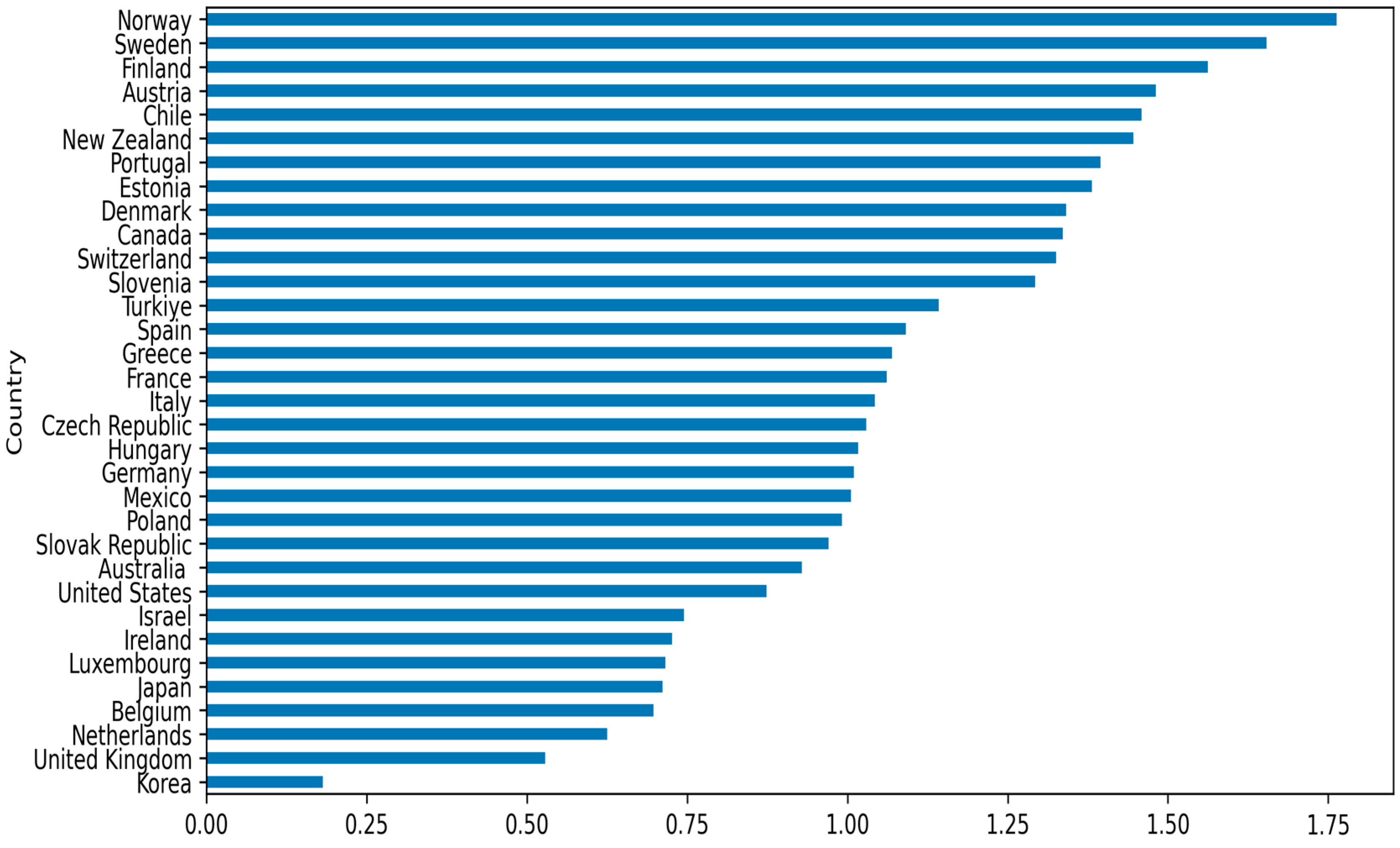
Figure 1. Spatial distribution of renewable energy.
Sustainability 18 00981 g001
Figure 2. Spatial distribution of economic growth.
Sustainability 18 00981 g002
Figure 3. Spatial distribution of supply chain digitalization.
Sustainability 18 00981 g003
Figure 4. Spatial distribution of environmental stringency policy.
Sustainability 18 00981 g004
Figure 5. Spatial distribution of economic globalization.
Sustainability 18 00981 g005
Figure 6. Spatial distribution of financial development.
Sustainability 18 00981 g006
Figure 7. Plots of the correlational relationship.
Sustainability 18 00981 g007
Figure 8. MMQR plot for Model 1.
Sustainability 18 00981 g008
Figure 9. MMQR plot for Model 2.
Sustainability 18 00981 g009
Table 1. Description of variables.
SignsNames of VariablesMeasurements UnitSources
RECRenewable energy consumptionpercentage of total final energy consumption[34]
SCDSupply chain digitalization ICT goods exports (% of total goods exports)[34]
EGEconomic growthGDP per capita (Constant 2015 US$)[35]
ESPEnvironmental stringency policyIndex[36]
EGOEconomic globalizationIndex[37]
FDFinancial developmentIndexInternational Monetary Fund Database
Table 2. Descriptive statistics.
VariableLevelMeanStd. Dev.MinMaxObservations
RECOverall1.0780.388−0.1541.788N = 726
Between 0.3520.1811.763n = 33
Within 0.1740.4531.683T = 22
EGOverall4.4780.2813.7775.050N = 726
Between 0.2803.9535.016n = 33
Within 0.0514.2804.694T = 22
SCDOverall0.6780.450−0.7951.562N = 726
Between 0.421−0.4291.400n = 33
Within 0.1740.0891.259T = 22
ESPOverall0.3480.268−1.2550.689N = 726
Between 0.206−0.2710.526n = 33
Within 0.174−0.6350.794T = 22
EGOOverall1.8670.0631.6611.968N = 726
Between 0.0601.7301.950n = 33
Within 0.0201.7421.934T = 22
FDOverall−0.2090.148−0.699−0.001N = 726
Between 0.146−0.581−0.026n = 33
Within 0.036−0.387−0.103T = 22
Table 3. CSD test.
Table 3. CSD test.
VariableCSD Testp-ValueCorrAbs (Corr)
REC57.82 *0.0000.5370.763
SCD41.75 *0.0000.3880.665
ESP88.89 *0.0000.8260.826
EG77.42 *0.0000.7190.807
EGO31.52 *0.0000.2930.494
FD30.66 *0.0000.2850.422
Note: * p < 0.01.
Table 4. Results of the unit root test.
VariableCIPSCADF
I (0)I (1)I (0)I (1)
REC−2.390−4.727 *−2.630−5.035 *
SCD−2.348−4.132 *−2.520−4.211 *
ESP−2.911−4.771 *−3.073−4.721 *
EG−1.495−3.199 *−1.670−3.417 *
EGO−2.269−4.445 *−2.493−4.673 *
FD−2.257−5.212 *−3.457−5.277 *
Note: * p < 0.01.
Table 5. Results of Pedroni cointegration.
Model 1Model 2
Statisticsp-ValueStatisticsp-Value
Modified variance ratio−5.219 *0.000−6.180 *0.000
Modified Phillips–Perron t2.1290 **0.0163.976 *0.0000
Phillips–Perron t0.3640.357−0.0100.495
Augmented Dickey–Fuller t1.0230.1530.4810.315
Note: ** p < 0.05, * p < 0.01.
Table 6. Method of Moments Quantile Regression (MMQR) for Model 1.
VariablesLocationScaleQuantiles
τ = 0.10τ = 0.20τ = 0.30τ = 0.40τ = 0.50τ = 0.60τ = 0.70τ = 0.80τ = 0.90
SCD−0.447 *
[−16.89]
0.100 *
[6.46]
−0.620 *
[14.50]
−0.560 *
[−15.62]
−0.515 *
[−16.43]
−0.472 *
[−16.75]
−0.442 *
[−16.63]
−0.409 *
[−15.64]
−0.369 *
[−13.88]
−0.332 *
[−11.80]
−0.291 *
[−9.54]
EG−0.137 *
[−3.04]
0.161 *
[6.05]
−0.415 *
[−5.87]
−0.318 *
[−5.20]
−0.246 *
[−4.59]
−0.178 *
[−3.69]
−0.129 *
[−2.84]
−0.077 ***
[−1.73]
−0.013
[−0.29]
0.046
[0.97]
0.112 **
[2.14]
ESP0.236 *
[4.99]
−0.011
[−0.40]
0.255 *
[3.38]
0.249 *
[3.94]
0.244 *
[4.41]
0.239 *
[4.82]
0.236 *
[5.02]
0.232 *
[5.08]
0.228 *
[4.89]
0.224 *
[4.50]
0.219 *
[3.98]
Constant1.917 *
[9.75]
−0.524 *
[−4.54]
2.818 *
[8.93]
2.504 *
[9.48]
2.269 *
[9.82]
2.048 *
[9.86]
1.889 *
[9.63]
1.720 *
[8.94]
1.512 *
[7.72]
1.317 *
[6.34]
1.105 *
[4.87]
N726726726726726726726726726726726
Note: *** p < 0.10, ** p < 0.05, * p < 0.01. t statistics in parentheses [].
Table 7. Method of Moments Quantile Regression (MMQR) for Model 2.
VariablesLocationScaleQuantiles
τ = 0.10τ = 0.20τ = 0.30τ = 0.40τ = 0.50τ = 0.60τ = 0.70τ = 0.80τ = 0.90
SCD−0.473 *
[−18.78]
0.070 *
[4.29]
−0.610 *
[−12.74]
−0.551 *
[−15.19]
−0.517 *
[−16.71]
−0.485 *
[−18.28]
−0.467 *
[−18.97]
−0.449 *
[−18.93]
−0.426 *
[−17.92]
−0.396 *
[−15.71]
−0.367 *
[−13.08]
EG0.195 *
[2.63]
0.180 *
[3.75]
−0.156
[−1.11]
−0.004
[−0.04]
0.081
[0.89]
0.164 **
[2.11]
0.211 *
[2.91]
0.257 *
[3.69]
0.316 *
[4.54]
0.394 *
[5.32]
0.468 *
[5.67]
ESP0.240 *
[4.45]
−0.072 **
[−2.07]
0.382 *
[3.75]
0.321 *
[4.14]
0.286 *
[4.35]
0.252 *
[4.46]
0.234 *
[4.42]
0.215
[4.24]
0.191 *
[3.80]
0.160 *
[2.99]
0.130 **
[2.17]
EGO0.656 *
[2.96]
0.329 **
[2.29]
0.016
[0.04]
0.292
[0.92]
0.448 ***
[1.66]
0.601 *
[2.59]
0.686 *
[3.16]
0.770 *
[3.69]
0.878 *
[4.24]
1.019 *
[4.63]
1.154 *
[4.69]
FD−1.071 *
[−8.57]
−0.063
[−0.78]
−0.947 *
[−4.03]
−1.001 *
[−5.59]
−1.031 *
[−6.79]
−1.060 *
[−8.11]
−1.076 *
[−8.80]
−1.093 *
[−9.31]
−1.113
[−9.59]
−1.140 *
[−9.24]
−1.167 *
[−8.42]
Constant−1.007
[2.71]
−1.224
[−5.07]
1.371
[1.93]
0.343
[0.64]
−0.235
[−0.51]
−0.802
[−2.04]
−1.118
[−3.08]
−1.430
[−4.08]
−1.832
[−5.18]
−2.355
[−6.29]
−2.859
[−6.89]
N726726726726726726726726726726726
Note: *** p < 0.10, ** p < 0.05, * p < 0.01. t statistics in parentheses [].
Disclaimer/Publisher’s Note: The statements, opinions and data contained in all publications are solely those of the individual author(s) and contributor(s) and not of MDPI and/or the editor(s). MDPI and/or the editor(s) disclaim responsibility for any injury to people or property resulting from any ideas, methods, instructions or products referred to in the content.