Article

Quality Management System Model for Food SMEs

1
Department of Industrial and Systems Engineering, Institut Teknologi Sepuluh Nopember, Surabaya 60111, Indonesia
2
Research Center for Testing Technology and Standards, National Research and Innovation Agency of Indonesia, Tangerang Selatan 15314, Indonesia
*
Author to whom correspondence should be addressed.
Sustainability 2026, 18(2), 890; https://doi.org/10.3390/su18020890
Submission received: 23 December 2025 / Revised: 12 January 2026 / Accepted: 13 January 2026 / Published: 15 January 2026

Abstract

This study aims to develop a tailored Quality Management System (QMS) model for SMEs in the food sector, acknowledging their limited resources, the complexity of existing quality standards, and the pressing need for a contextualized, practical framework. The research adopts the Framework for Analysis, Comparison, and Testing of Standards (FACTS), comprising three main stages: a systematic review of relevant literature, expert validation through panel discussions, and preliminary field testing involving selected food SMEs. The study proposes a seven-variable QMS model designed around the PDCA cycle. The variables include leadership, philosophy-based, strategic planning, customers, quality infrastructure, quality assurance, and performance assessment. Empirical findings suggest that the model aligns well with the operational realities and strategic needs of food SMEs. It is perceived as user-friendly, adaptable, and feasible for stepwise implementation, without requiring substantial investment or intensive external support. Validation through field implementation revealed strong acceptance among SME practitioners and stakeholders. The proposed model offers a practical roadmap for food SMEs to establish an internal quality system that is both adaptive to their unique contexts and measurable in its outcomes.

1. Introduction

Small and Medium Enterprises (SMEs) serve as the cornerstone of the global economy, accounting for over 90% of all businesses worldwide and playing a vital role in employment generation and economic output. [1]. Their significance is even more pronounced in developing economies, where they form the majority of business actors and contribute substantially to inclusive growth [2]. In Indonesia, SMEs represent approximately 99% of all business entities and employ more than 97% of the workforce, with the food sector standing out as one of the most prominent contributors to both employment and Gross Domestic Product (GDP) [3].
The food SME sector is not only economically significant but also strategically important, given its direct link to public health and consumer safety. Among all SME segments, food-based enterprises are among the most populous, with extensive employment capacity and a vast consumer reach. Unlike many other industries, the quality of food products directly impacts human health. Issues such as contamination, inadequate hygiene practices, or suboptimal processing can lead to serious public health risks, costly product recalls, and lasting damage to consumer trust. In extreme cases, unsafe food products can even result in fatal outcomes. As such, the implementation of effective quality management practices is not only essential for business sustainability but also for safeguarding public health and reinforcing consumer confidence [4].
Despite the recognized importance of quality management, the adoption of formal Quality Management Systems (QMS), such as ISO 9001, remains limited among food SMEs. These standards are often viewed as overly complex, intensive resource, and poorly aligned with the realities faced by small enterprises. Common barriers include limited technical capacity, constrained financial resources, informal organizational structures, and resistance to change [5]. Moreover, the generic nature of ISO 9001, designed initially for large process-driven organizations, further complicates its implementation in SME settings effectively [6].
The formal adoption of standardized QMS among food SMEs continues to face considerable barriers. Most existing frameworks were designed with large-scale enterprises in mind and often fail to address the unique realities of SMEs operating with limited resources [7]. This disconnect has created a gap between the idealized notions of quality proposed in theory and the practical challenges faced in the field. Many SMEs struggle to translate abstract quality principles into daily operational practices due to the absence of tailored guidance suited to their characteristics [8]. Studies have shown that SMEs frequently fall short in meeting QMS standards, particularly in areas such as customer focus and staff training [9]. There are limited QMS implementation models specifically designed for food SMEs [10]. Company size significantly influences the success of QMS adoption. Larger firms tend to achieve better outcomes and demonstrate greater tolerance for systemic change due to more robust support for QMS deployment. [7]. In contrast, smaller organizations with informal structures often struggle to align with formal management systems such as ISO 9001 [11]. The lack of a contextualized approach can lead to resistance, misunderstanding, and ultimately, implementation failure.
In response to these challenges, various QMS adaptations and alternative models have been proposed over the past two decades. However, many of these models still require resources, expertise, or infrastructure that remain beyond the reach of typical SMEs. Furthermore, only a few of these frameworks are specifically designed to account for the operational characteristics of food SMEs. Most existing models are either theoretical or tailored for large-scale enterprises, thus failing to accommodate the constraints and practical realities faced by smaller firms in the food sector [12,13].
A wide range of QMS models have been proposed, either as alternatives to or enhancements of ISO 9001, which is often criticized for its lack of flexibility, particularly for SMEs in the food sector. Models such as IDEF9001 and IQMS 20 focus on process visualization and standard integration (e.g., ISO 9001, ISO 22000, Six Sigma, TQM) into a unified system [14]. Meanwhile, models such as Lean Six Sigma—ISO 9001 and CMMI aim to improve operational efficiency and process maturity, although they typically require advanced technical skills and resources beyond the capacity of most SMEs [15,16]. On the other hand, frameworks like PZB (SERVQUAL) and TQM emphasize service quality and organizational culture, yet their implementation often falls short without formal system support [17,18]. In the food sector, the HACCP system has become the dominant approach to ensuring product safety. However, HACCP focuses narrowly on safety and does not address the broader dimensions of quality management [19].
This gap highlights the urgent need for a QMS model that is not only practical and scalable but also empirically validated and adapted to the specific conditions of food SMEs. Such a model should provide a clear, simplified implementation pathway while also embedding the foundational pillars of quality management, such as leadership engagement, customer orientation, infrastructure preparedness, and performance monitoring, without imposing excessive administrative or financial burdens.
Addressing this need, the present study develops and validates a QMS model specifically tailored for SMEs in the food industry. Guided by the FACTS framework (Framework for Analysis, Comparison, and Testing of Standards), the research follows a four-stage methodology comprising stakeholder analysis, expert validation, comparative assessment of stakeholder needs, and empirical testing through field application. By integrating input from practitioners, experts, and real-world implementation feedback, the study aims to deliver a model that is both academically sound and practical.
The central research question driving this inquiry is: What kind of QMS model is most relevant, feasible, and beneficial for food sector SMEs? Through this investigation, the study aims to contribute not only to academic literature but also to policy discourse and practical implementation by providing a structured, context-aware approach to quality management for SMEs. By bridging the gap between theory and practice, this research offers a viable and sustainable pathway to enhance quality standards in the food SME sector, grounded in local realities and scalable across similar contexts.

2. Literature Review

2.1. Critical Review of ISO 9001 and Its Challenges for SMEs

ISO 9001 is an internationally recognized QMS standard that enhances customer satisfaction through a process-based approach aligned with the PDCA cycle. While it has been widely adopted across various industrial and service sectors, its implementation among food sector SMEs continues to face significant challenges. Food sector SMEs often struggle to meet the requirements of ISO 9001 due to several constraints, including limited resources, the complexity of required documentation, the need for formal training, and the high cost of certification. Low levels of quality awareness, informal organizational structures, and restricted access to technical support further compound these challenges [5].
Although the 2015 revision of ISO 9001 introduced greater flexibility, particularly through a risk-based thinking approach and a reduction in mandatory documentation, many food SMEs remain unable to adopt the system in a meaningful way. This is mainly due to their lack of technical readiness and the absence of an established quality culture. In principle, formal QMS standards such as ISO 9001 remain relevant and valuable. However, in practice, they are often operationally impractical for food SMEs operating at a small scale, under informal management conditions, and with limited access to broader markets. This disconnect between theoretical applicability and practical feasibility underscores the need for a more tailored approach to quality management in this context.

2.2. Summary of Existing QMS Models

Various alternative approaches have been developed to address the limitations of ISO 9001 in its practical implementation across different industrial sectors (Table 1). Some of these models aim to simplify the deployment of ISO 9001, while others integrate quality management principles with broader managerial frameworks. Most of these models were initially designed for large organizations and have been tested primarily in service, manufacturing, and information technology contexts.
In general, these models can be grouped into two main categories: (1) enhancement models, which enrich ISO 9001 through the incorporation of additional tools and methodologies; and (2) adaptation models, which attempt to simplify quality systems for specific contexts. While each approach has its merits, the majority remain overly complex, technically demanding, or too generic for practical use by food SMEs. To overcome these challenges, there is a need for greater conceptual clarity and managerial adaptability in implementing QMS frameworks suitable for SMEs. Such models must reflect the unique operational dynamics, resource limitations, and cultural context of food-sector SMEs [2].

2.3. Gaps in Existing QMS Models and the Justification for a Contextual Model for Food SMEs

Most existing QMS frameworks, such as ISO 9001 and various integrative models, are fundamentally designed with the assumption that the implementing organizations possess formal structures, sufficient resources, and advanced technical capabilities [29]. In contrast, SMEs particularly in the food sector, often operate with informal management systems, face significant limitations in human resources and infrastructure, and are subject to financial constraints and complex regulatory pressures. Previous studies have highlighted that generic, technically oriented approaches fall short of addressing the practical challenges encountered by food SMEs [30]. Beyond implementation complexity, many models fail to consider local business contexts and tend to adopt a top-down orientation, with limited empirical validation at the grassroots level. These models typically rely on extensive documentation requirements, performance indicators that are difficult to measure in small-scale settings, and require ongoing technical support from external consultants.
Given these shortcomings, it is essential to develop a QMS model that is both contextually grounded and participatory. Such a model should be constructed through a collaborative validation process involving key stakeholders, including SME owners, local food industry associations, and relevant policymakers. This approach ensures that the system is not only theoretically sound but also operationally relevant and socially acceptable. In response to this need, the present study introduces a new QMS model designed explicitly for food sector SMEs. The model is modular in structure, incorporates best practices, and is empirically validated within the operational context of small food enterprises. By bridging the gap between formal quality standards and the dynamic, real-world practices of micro and small enterprises, the model aims to serve as a practical, scalable tool that enables SMEs to strengthen their internal quality systems in a sustainable, locally responsive manner.
The originality of this study lies in developing a QMS model that is both empirically validated and explicitly tailored to the operational realities of food-sector SMEs. Unlike existing frameworks such as ISO 9001 or integrative models that combine ISO with Lean, Six Sigma, or TQM, the proposed model adopts a context-driven and modular approach, grounded in the PDCA cycle, and refined through direct stakeholder input and field application. This bottom-up orientation ensures that the model does not replicate the complexity, documentation burden, or resource intensity of conventional systems, but instead aligns with the managerial informality, limited resources, and cultural characteristics that define SMEs. The study makes a distinctive theoretical contribution by bridging the disconnect between generic quality management theory and the nuanced conditions under which SMEs operate, particularly in the food industry, where quality outcomes are directly linked to public health and consumer trust.

3. Framework for Analysis, Comparison, and Testing of Standards (FACTS)

This study employs the Framework for Analysis, Comparison, and Testing of Standards (FACTS) to develop a QMS model tailored for food sector SMEs [31]. The FACTS was developed by the National Institute of Standards and Technology (NIST) based on the premise that a strong interrelationship exists between standard development from the supply side and implementation strategies from the demand side, both of which play a critical role in accelerating the widespread adoption of standards. The design and implementation of standards require a comprehensive understanding of information needs, conceptual modeling, and multiple levels of abstraction that reflect the perspectives of diverse stakeholders [32]. FACTS provides a structured approach that integrates these dimensions to support coherent and effective standardization processes.
FACTS has been widely applied in both the development of new standards and the revision of existing ones, including standards for electric vehicle batteries, wheelchairs, modified cassava flour, functional foods, and solar-powered water pumps [33,34,35,36]. This approach offers several key advantages: it is explicitly focused on standard development, actively involves all relevant stakeholders, and supports all stages of the standardization process from conceptualization to implementation across different levels of abstraction.
The FACTS framework consists of four sequential stages: stakeholder analysis, technical analysis, stakeholder needs comparison, and empirical model testing (Table 2). This structured approach ensures a systematic and comprehensive development process, facilitating both theoretical rigor and practical relevance.

3.1. Stakeholder Analysis

This initial stage of the research was intended to map the variables of a QMS relevant to food-sector SMEs and to identify key stakeholder groups involved in or affected by its implementation. The initial stage of the research involved a literature review to identify key QMS variables relevant to SMEs. The stakeholder analysis served as a foundation for understanding the perspectives and realities of actors (Table 3). In this phase, a structured instrument was developed to capture their assessments regarding the relevance and necessity of various QMS elements. The resulting data helped establish a preliminary framework to guide subsequent technical and empirical validation. A total of 72 respondents participated in this stage, comprising SME owners, academic researchers, government officials, SME advisors, and ISO 9001 auditors. This sample size adheres to widely accepted guidelines in social research, which suggest a minimum of 30 participants for exploratory studies [37]. To recruit participants, the study employed a convenience sampling method, a non-probability sampling technique that selects individuals based on ease of access and availability [38]. This method offers practical advantages, including reduced costs, time efficiency, and logistical simplicity [39]. To address potential sampling bias, this study applied several mitigation measures to enhance sample representativeness and reliability. The limitations of convenience sampling were managed through controlled sample representation, improved diversity, and the use of supplementary data [40]. Participants were selected based on predefined criteria, including government representatives, academics, practitioners, auditors, food SMEs, and SME associations. In addition, geographical diversity was incorporated, and complementary qualitative inputs were obtained from SME mentors, ISO 9001 auditors, and academic experts. Such strategies have been shown to reduce sampling bias and strengthen sample representativeness effectively [38].

3.2. Technical Analysis

Following the identification of QMS variables, the study proceeded to assess their technical feasibility. The objective of this stage was to evaluate the relative significance of each variable through a consistent analytical approach. Emphasis was placed on ensuring the proportional representation of stakeholder judgments while minimizing the impact of outliers or value distortions. To achieve this, a geometric mean technique was adopted to consolidate responses and determine representative scores for each variable. The results from this analysis provided a more objective basis for refining the QMS model before expert validation and field testing. The GM was calculated using the following general formula:
G = x 1 , x 2 , x 3 x n n
Source: [41]
To interpret the resulting geometric mean values within the Likert scale framework, the class width (c) was determined using a standard class interval formula:
c = X n X 1 k
where:
c = estimated class width (class size, class length)
k = number of classes
Xn = highest observed value
X1 = lowest observed value [42]
Table 4 presents the interpretation scale used to assess the QMS variables for food SMEs. The four-point Likert scale is designed to capture not only the perceived feasibility but also the level of necessity for each variable. To ensure consistent interpretation, numerical responses were categorized into class intervals. These intervals allow aggregation of respondent scores to be classified by the strength of agreement and perceived importance, supporting a more structured analysis of the QMS variables.

3.3. Stakeholder Needs Comparison

In the third phase, the study transitioned from technical assessment to contextual validation by engaging subject matter experts from various stakeholder groups. This stage aimed to ensure that the proposed QMS model variables were not only feasible in theory but also aligned with the practical needs and expectations of professionals operating in the field. A targeted expert review process was undertaken, involving individuals from academia, national regulatory agencies, and SME practitioners. Their input was essential for identifying gaps between the technical model and real-world applicability, as well as for refining the model’s structure before testing. This process added depth to the validation of the QMS framework by incorporating diverse institutional perspectives. This phase of the study engaged a panel of nine subject-matter experts representing diverse institutional backgrounds, including:
  • Academic scholars from Indonesian universities
  • Researchers from the National Research and Innovation Agency of Indonesia
  • Representatives from the National Standardization Agency of Indonesia
  • Policy officers from the Ministry of Cooperatives and SMEs of the Republic of Indonesia
  • Practitioners and business actors from the food sector SMEs

3.4. QMS Model Testing

The final stage of the methodology focused on verifying the real-world usability and relevance of the proposed QMS model through field application. This phase serves as the ultimate validation of the prototype model, assessing its readiness for broader implementation in real-world settings. A series of structured assessments was conducted with a selected group of food-sector SMEs that had not yet adopted formal quality management standards (Table 5). The objective was to understand how well the model performed when applied in practical contexts characterized by resource limitations, informal systems, and varying levels of quality awareness. Informants from these SMEs, typically owners or senior managers with hands-on operational experience, provided direct feedback on the model’s applicability. This stage served as a critical step in bridging the gap between conceptual development and implementation readiness.

4. Results

4.1. Stakeholder Needs Analysis and Technical Analysis

The literature review identified 13 variables and 54 sub-variables, as presented in Table 6 and Table 7. To reduce subjectivity and enhance measurement robustness, the questionnaire instruments were subjected to validity and reliability testing before analysis. Validity testing assesses the extent to which the research instrument measures what it intends to measure. In contrast, reliability testing evaluates the consistency of the instrument in producing stable data over time (Table 8).
Based on Table 8, all research variables are declared valid, as the obtained significance is below the 0.05 threshold. This indicates that each measurement item in the research instrument is highly appropriate to the construct being measured, leading to the conclusion that the instrument can accurately measure the QMS variables in food-sector SMEs as specified. The reliability test results show a Cronbach’s alpha of 0.833, well above the minimum threshold of 0.7. This value indicates that the measurement instrument used in this study exhibits high internal consistency. In other words, the items within the instrument are strongly interrelated and yield consistent results when measured repeatedly. In addition to these statistical tests, expert panel validation was employed to triangulate perception-based responses, thereby reducing subjectivity and strengthening the findings’ robustness.
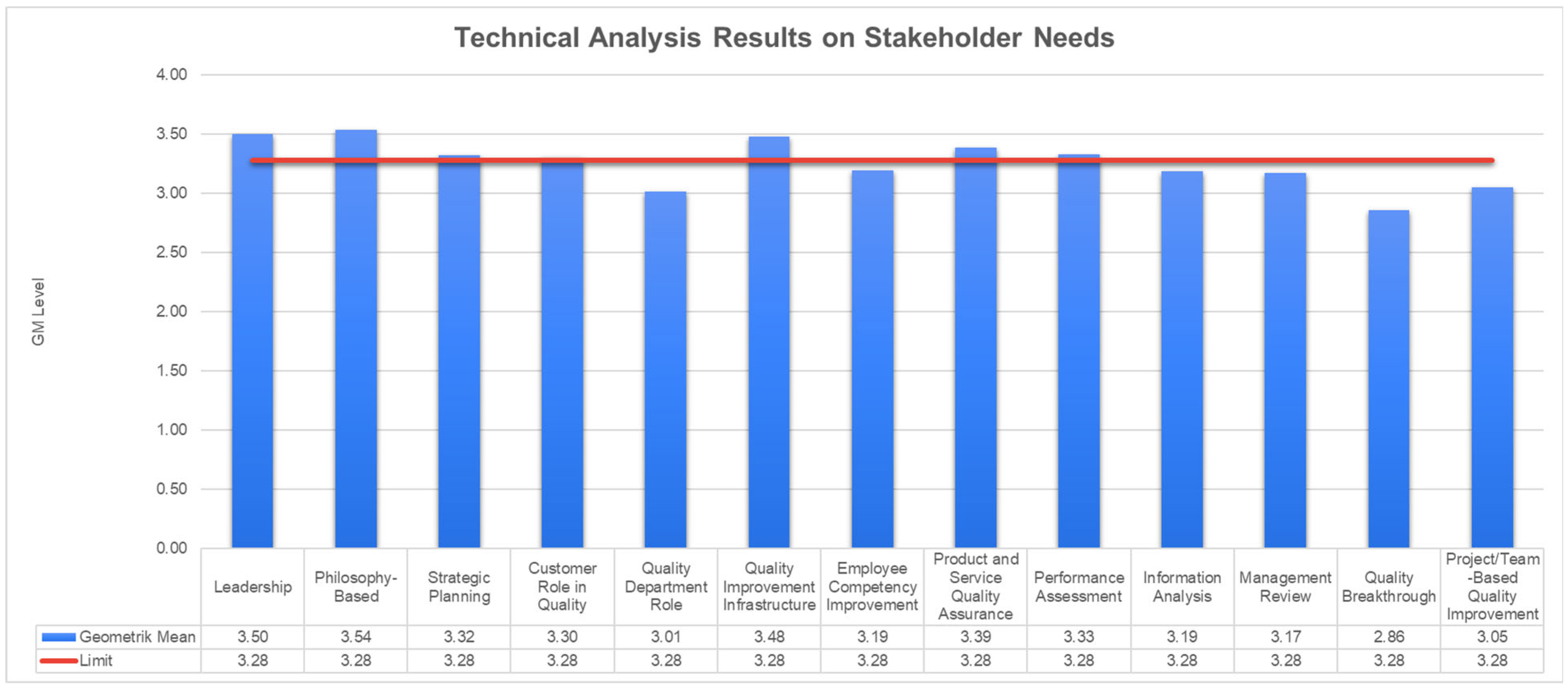
Based on Table 9 and Figure 1, the foundational model of the QMS for food SMEs comprises seven core variables, each encompassing key aspects of quality management. These seven variables include leadership, a philosophy-based approach, strategic planning, the customer’s role in quality, quality improvement infrastructure, product and service quality assurance, and performance evaluation. To support the implementation of these primary variables, the basic QMS model is further complemented by thirty-two (32) sub-variables, comprehensively structured to cover all relevant aspects of quality management.

4.2. Comparison and Testing of SMM Model Variables for Food SMEs

The comparison (validation) stage aligns and ensures that the developed QMS model meets the needs of all previously identified stakeholders. The QMS model for food SMEs was tested using a case-study approach, with selected food SMEs serving as representative samples. The results of the comparison and model testing are presented in Table 10.

4.3. Validation of the QMS Model by the Expert Panel

Based on the analysis presented in Table 8, all proposed variables and sub-variables have undergone validation by a panel of experts. This validation was carried out to ensure that the developed variables align with the research context and needs, particularly in the development of a QMS model for food SMEs. The validation results indicate that all variables and sub-variables were accepted and deemed relevant for implementation. Through this process, seven main variables and 32 sub-variables were identified as core variables in the development of the QMS model. These seven main variables are systematically structured to encompass various critical aspects of quality management in food SMEs. The variables include not only technical aspects but also strategic and philosophical dimensions, to enhance the overall quality of products and services.

4.4. Testing of the QMS Model in Food SMEs

The QMS model testing was conducted using a case-study approach involving nine food-sector SMEs, encompassing seven main variables and 32 sub-variables. The analysis results showed that all sub-variables received average scores within the “applicable” category, with no scores falling below 3.7. The leadership variable achieved high scores (average 4.2–4.8), reflecting the critical role of commitment, authority, and leadership involvement in the successful implementation of the quality system. Similarly, the quality philosophy and strategic planning variables showed positive results, particularly in aligning quality objectives and planning implementation, with average scores of 4.4 and 4.6, respectively.

4.5. Implementation and Beneficial Level of the QMS Model

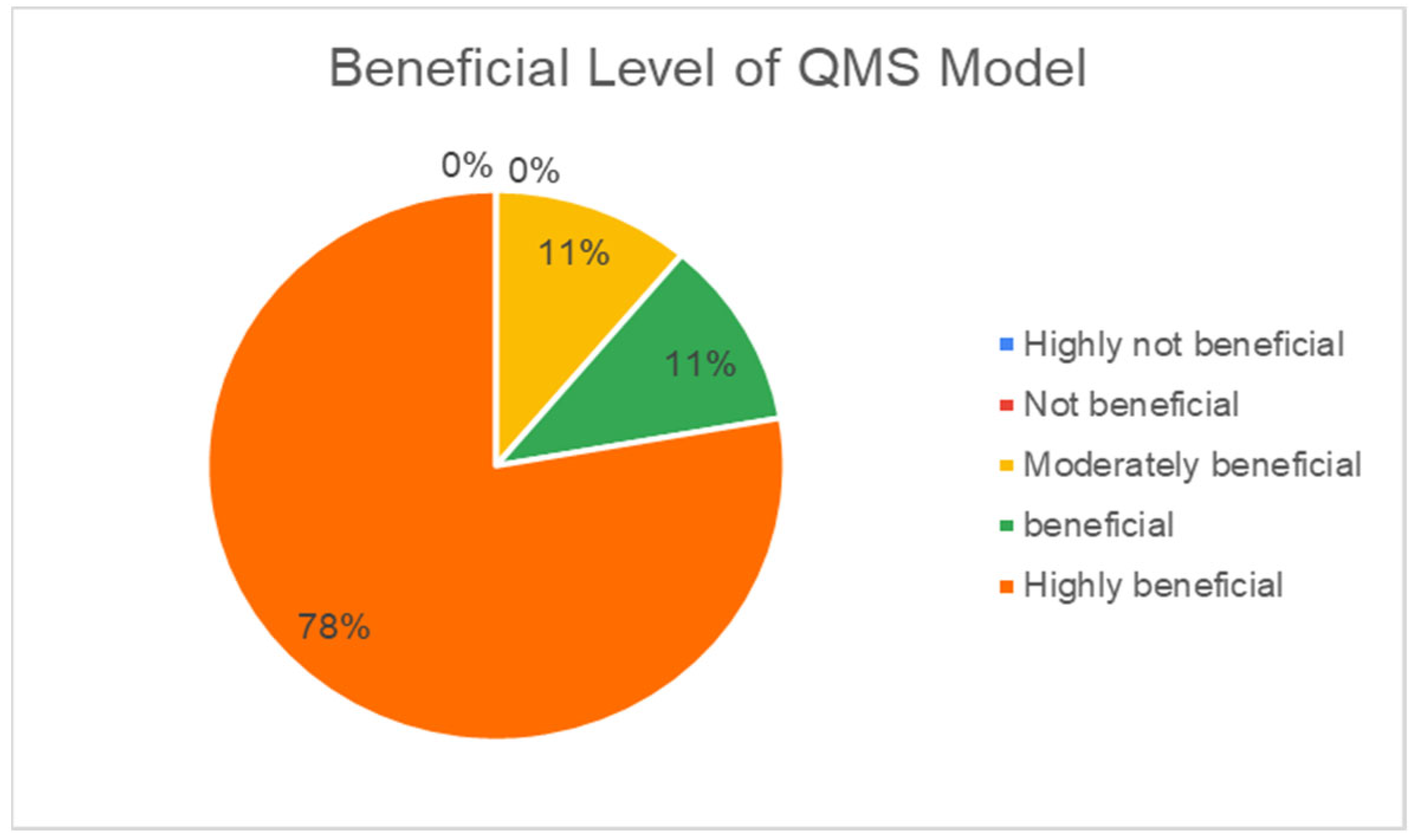
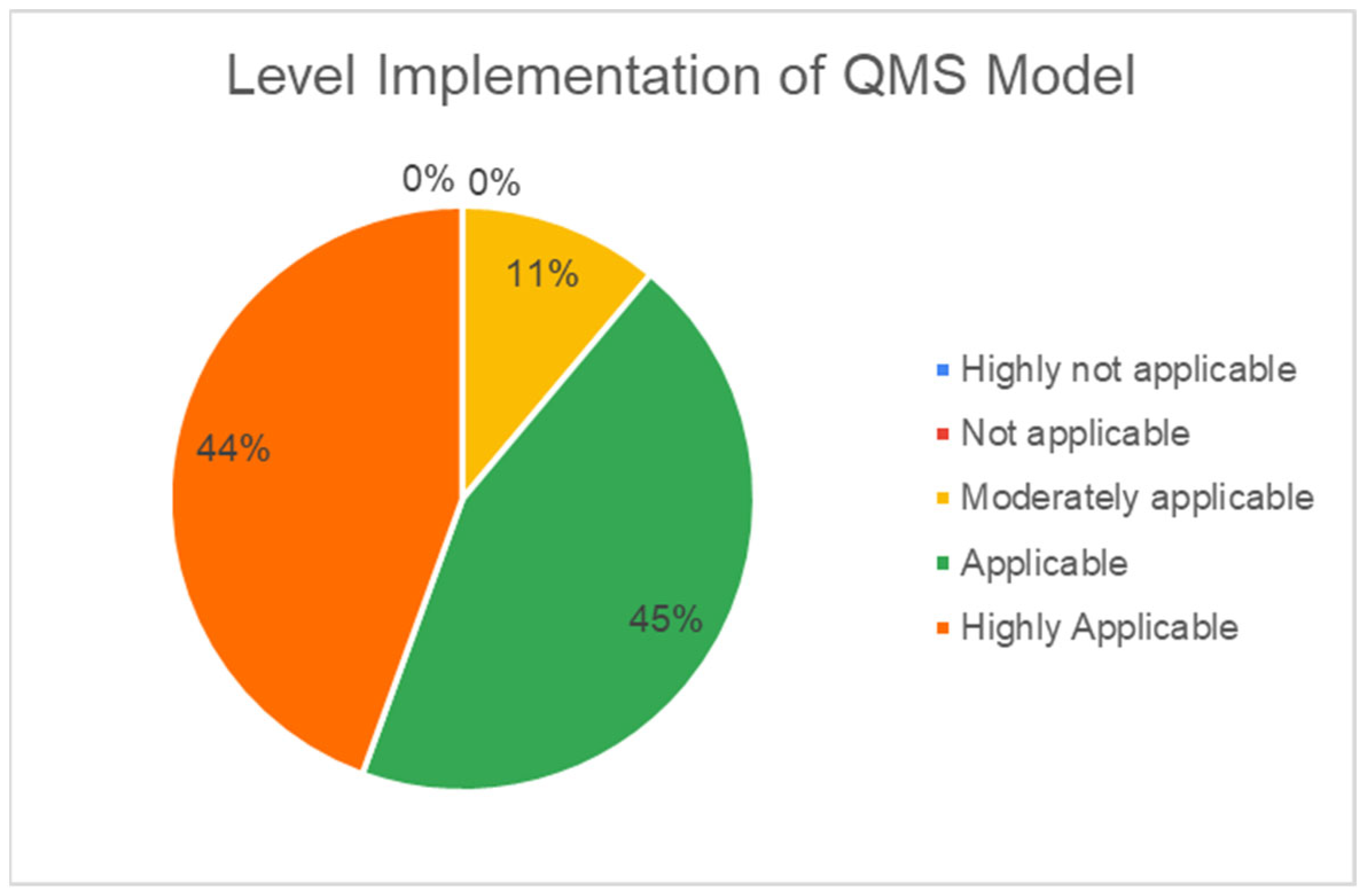
The QMS model developed in this study was evaluated based on two main criteria: implementation level and beneficial level. The implementation-level criterion assesses the extent to which the model can be applied under real-world conditions in food SMEs, reflecting ease, suitability, and affordability in daily operations. Meanwhile, the beneficial level describes the extent to which the model’s application delivers positive impacts on quality management, such as improvements in product quality, process efficiency, customer satisfaction, and support for business sustainability. The results of the QMS model testing for food SMEs concerning implementation and benefit levels are presented in Figure 2 and Figure 3.
Figure 2 shows that most respondents rated the QMS model as applicable (44.4%) and highly applicable (44.4%), indicating very strong acceptance among food SME practitioners of the developed model. These findings reinforce the model’s validity and demonstrate that the approach successfully addresses the contextual needs of food SMEs. An effective QMS model must be tailored to the specific conditions and objectives of its implementation and controlled through rational actions to ensure the achievement of desired goals [8,52].
Figure 3 shows that most respondents, 78%, perceive the model as highly beneficial for improving the quality and quality management of food products within SMEs. This finding reinforces confidence that the developed QMS model is not only applicable but also capable of making a tangible contribution to the sustainability and competitiveness of food SMEs through a systematic, structured approach to quality management. When organizations successfully implement a QMS, they experience various significant benefits to organizational performance [14].

5. Discussion

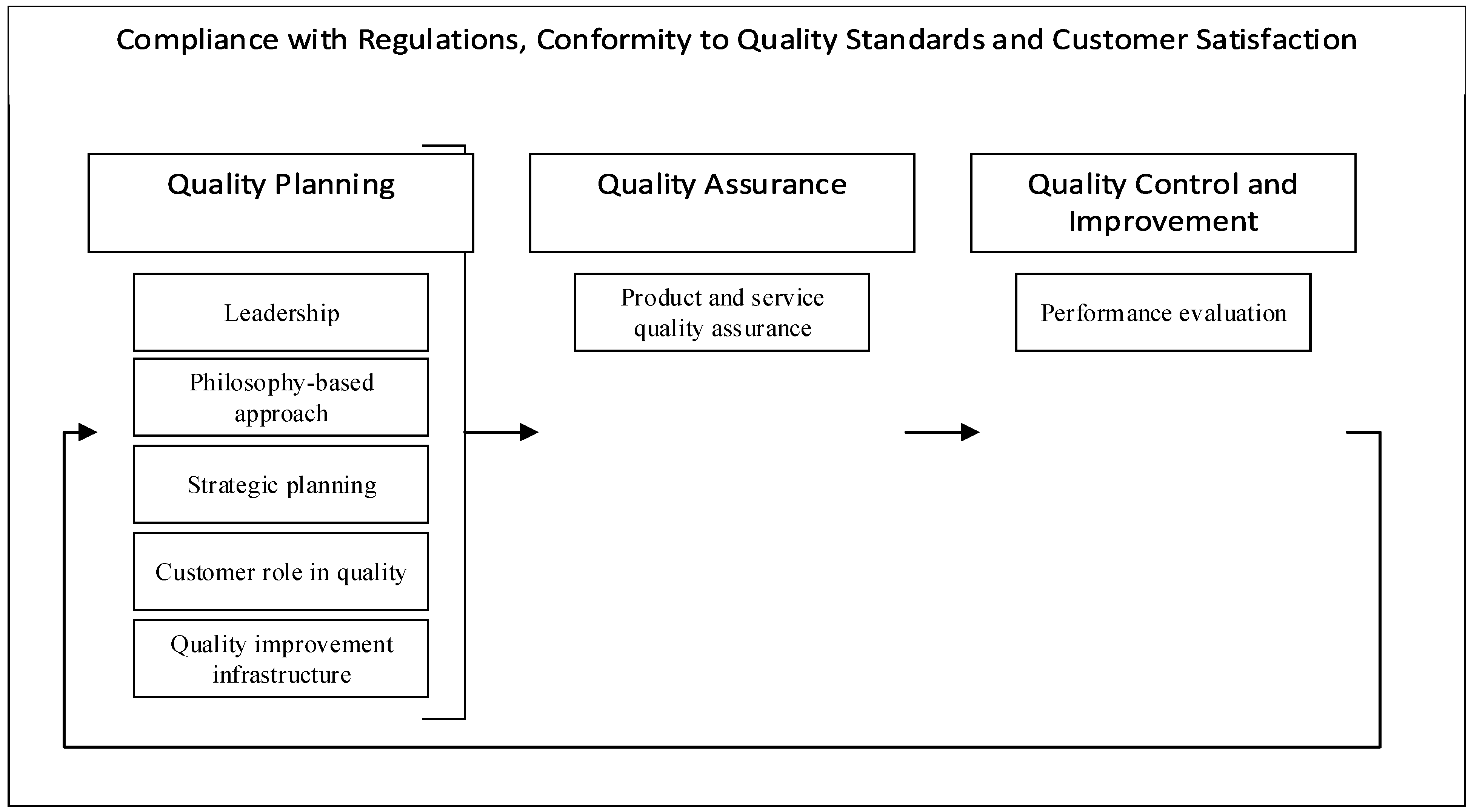
The QMS model shown in Figure 4 is specifically designed to support quality management in food sector SMEs. The model is structured into three integrated stages: Quality Planning, Quality Assurance, and Quality Control and Improvement. Together, these variables aim to ensure regulatory compliance, conformity with quality standards, and customer satisfaction.

5.1. Comparison of the Proposed QMS Model with Previous Studies

The proposed Quality Management System (QMS) model advances existing research on SME-oriented quality management by addressing well-documented limitations of standardized frameworks, such as ISO 9001, when applied to food-sector SMEs. Prior studies consistently acknowledge that ISO 9001 adoption can improve quality awareness, operational performance, customer satisfaction, and competitiveness [48,49,50]. However, the same literature also emphasizes significant constraints faced by SMEs, including high implementation costs, bureaucratic complexity, limited human resources, insufficient managerial commitment, and resistance to organizational change [30,52,53,54,55,56,57]. As a result, many SMEs either fail to adopt formal QMS frameworks or are unable to sustain their implementation over time.
In contrast to previous approaches that focus on certification-driven compliance, the model developed in this study adopts a contextualized and applied perspective. Rather than replicating the whole structure of ISO 9001, the model selectively adapts core quality management principles into seven operational variables that reflect the actual capacity and constraints of food SMEs. This approach responds directly to earlier calls for simplified, modular, and resource-sensitive quality frameworks tailored to SME environments, particularly in the food sector.
Compared to existing SME quality models that emphasize either performance outcomes or certification readiness, the proposed model emphasizes gradual capability development. This evolutionary perspective aligns with research suggesting that SMEs benefit more from staged quality adoption than from immediate full compliance with comprehensive standards. By grounding the model in stakeholder needs analysis, expert validation, and field testing, this study provides empirical support for a bottom-up approach to QMS design, complementing earlier conceptual and case-based studies in the literature.
The proposed QMS model does not seek to replace established standards such as ISO 9001, but rather to bridge the gap between formal quality frameworks and practical implementation in food SMEs. The proposed model contributes to the growing body of applied quality management research advocating adaptive, context-aware solutions that support sustainable quality improvement in resource-constrained enterprises.

5.2. Quality Planning

Quality planning serves as the foundational stage in developing a quality management system. This stage comprises five key variables: leadership, a philosophy-based approach, strategic planning, customers, and quality infrastructure. Leadership plays a central role in shaping the organization’s culture of quality. The “philosophy-based” variable highlights the importance of core values and quality management principles in guiding critical decisions, such as maintaining food safety and complying with regulations [58]. Strategic planning provides the framework for setting measurable quality objectives aligned with business vision, emphasizing customer-based and practical marketing approaches [59]. Customer focus ensures that all processes are designed to meet consumer needs and expectations. At the same time, quality infrastructure refers to the readiness of facilities, technology, and human resources to achieve quality outcomes consistently. Customer feedback is vital for improving quality and service satisfaction [60]. An adequate infrastructure supports not only efficient production processes but also guarantees food safety and consistent product quality. Infrastructure includes not only physical buildings and facilities, but also equipment, raw materials, and effective sanitation systems. Proper sanitation throughout the production stages contributes to hygienic and high-quality products [61]. Good production methods, cleanliness, and sanitation can effectively enhance product quality [62].
Leadership in SMEs often focuses on short-term operational issues, reducing the role of quality philosophy to mere compliance rather than a guiding value. [63]. Strategic planning tends to be reactive, responding only to customer complaints rather than relying on systematic monitoring, which limits SMEs’ ability to anticipate market changes [64]. At the same time, inadequate infrastructure in terms of equipment, sanitation, and human resources widens the gap between customer expectations and actual product quality [65]. The absence of integration among variables further compounds these issues, creating an implementation gap that undermines the effectiveness of quality management systems.
The results of this study demonstrate that the proposed quality planning stage plays a critical bridging role in addressing the implementation gap of quality management systems in food SMEs. By operationalizing leadership, quality philosophy, strategic planning, customer orientation, and quality infrastructure as a coherent and interdependent set of variables, the model enables SMEs to translate quality principles into actionable practices aligned with their organizational capacity. Empirical validation indicates that these elements are not only relevant but also feasible for adoption, allowing SMEs to prioritize essential quality practices without the excessive cost and complexity associated with formal certification systems. The integration of customer-driven planning and infrastructure readiness further shifts quality management from reactive compliance to proactive, sustainable quality improvement, making the model particularly suitable for resource-constrained food SMEs.

5.3. Quality Assurance

Quality assurance serves as the bridge between quality planning and execution. In this model, quality assurance is defined as the process that ensures products meet predetermined standards. The activity focuses on controlling quality at critical points during production and ensuring that the final products meet the required specifications. This function is vital for building consumer trust and ensuring compliance with food industry regulations. Quality assurance not only applies to the final product but also encompasses the production process, packaging, storage, and distribution. Its implementation is a key factor in maintaining product consistency and customer satisfaction [66].
In the context of food SMEs, limited resources and weak procedural documentation lead to a focus on end-product inspection rather than systematic control throughout production, packaging, storage, and distribution [65]. Inadequate testing facilities, insufficient technical expertise, and fragmented integration further hinder the early detection of quality risks, thereby undermining product consistency, regulatory compliance, and consumer trust.
The empirical results of this study indicate that the proposed quality assurance stage effectively addresses these limitations by shifting quality control practices in food SMEs from a predominantly reactive, end-product inspection approach toward systematic, process-oriented assurance. By structuring quality assurance activities around critical control points across production, packaging, storage, and distribution, the model enables earlier detection of quality risks despite resource constraints. The validation results suggest that this approach is perceived as feasible and necessary by SMEs, allowing them to enhance product consistency and regulatory compliance without reliance on sophisticated testing facilities. As a result, the quality assurance stage serves as a practical mechanism to strengthen consumer trust and to reinforce the continuity of quality management between planning and execution within food SMEs.

5.4. Quality Control and Improvement

Quality control and improvement represent continuous efforts to evaluate and enhance the quality system. The primary variable at this stage is performance assessment, which involves measuring the quality system’s effectiveness and analyzing data to support continuous improvement. Periodic evaluations enable SMEs to identify process weaknesses, encourage innovation, and increase operational efficiency. Performance assessment using relevant perspectives on key performance indicators can enhance SME competitiveness [67].
Performance assessments in SME are rarely systematic due to limited resources, inadequate understanding of key performance indicators, and weak data recording practices [68]. Consequently, evaluations are typically reactive, focusing on sales outcomes or customer complaints rather than on comprehensive process indicators, thereby restricting innovation and operational efficiency. The findings of this study demonstrate that the proposed quality control and improvement stage addresses these challenges by providing a structured yet feasible approach to performance assessment for food SMEs. Empirical validation indicates that this stage supports data-informed decision-making without imposing complex measurement systems, thereby encouraging incremental innovation and operational efficiency. The quality control and improvement stage strengthens the continuity of quality management by embedding continuous improvement practices that are aligned with SME capabilities and resource limitations [69].

5.5. Theoretical, Practical, and Policy Implications

This study contributes to the quality management and SME literature by addressing a persistent gap between generic quality management frameworks and the operational realities of food sector SMEs. Previous studies have focused mainly on adapting or integrating established systems such as ISO 9001, Lean, Six Sigma, or TQM, which remain resource-intensive and are predominantly validated in large organizations or service-oriented contexts. In contrast, this research advances existing knowledge by proposing a context-driven, empirically grounded QMS model tailored to food SMEs that incorporates both technical and socio-organizational dimensions. By integrating stakeholder-derived variables and validating them through the FACTS framework, the study extends prior research by demonstrating how quality management theory can be operationalized in resource-constrained, informal, and regulation-sensitive SME environments. This approach responds directly to calls in recent literature for more adaptive, modular, and bottom-up quality management models that reflect local contexts and practical implementation constraints.
The theoretical contribution of this study lies in developing a contextualized, application-oriented QMS model grounded in established quality management principles. Core elements, including leadership commitment, process control, continuous improvement, and customer focus, are adapted from recognized QMS frameworks. At the same time, their operationalization is explicitly tailored to the organizational, regulatory, and resource constraints characterizing food SMEs. Furthermore, the model systematically integrates stakeholder-derived requirements and feasibility considerations. This positioning establishes the proposed model as an applied extension of quality management theory, effectively bridging the gap between abstract conceptual frameworks and their practical implementation within food SME contexts.
From a practical perspective, the proposed QMS model provides food SMEs with a feasible, incremental roadmap for improving quality management without the administrative burden of complete certification systems. The model enables SME owners and managers to prioritize critical quality variables, align daily operational practices with food safety and customer requirements, and progressively strengthen internal quality capabilities. For policymakers, the model offers a structured yet flexible framework that can be integrated into national SME development programs, including simplified technical guidelines, subsidized training schemes, and quality-focused incubation initiatives. Rather than enforcing uniform certification requirements, public agencies may use the model to support stepwise quality maturity aligned with SME capacity and regulatory compliance. Additionally, industry associations, extension services, and academic institutions can adopt the model as a reference tool for capacity building, advisory services, and applied training programs, thereby enhancing coordination among stakeholders involved in food SME development.

6. Conclusions

This study presents an exploratory and applied QMS model designed to support food SMEs in implementing quality management practices under resource and capability constraints. By integrating a systematic literature review, stakeholder needs analysis, expert validation, and limited field testing, the study offers a structured framework that emphasizes feasibility and contextual relevance over comprehensive certification compliance. The empirical findings indicate that participating SMEs perceive the proposed model as applicable and beneficial, particularly for clarifying priority quality practices and supporting the gradual development of quality capabilities.
The findings should be interpreted in consideration of the study’s exploratory design and empirical scope. The validation was conducted using a cross-sectional approach. It incorporated assessments from multiple stakeholder groups, including academics, practitioners, food SMEs, auditors, and government representatives, to capture feasibility and initial acceptance of the proposed model. While the number of participating food SMEs in the field testing stage was limited, this approach was appropriate for the study’s objective of developing and preliminarily validating a contextualized QMS framework. Accordingly, the results are intended to inform understanding of early-stage applicability rather than to support broad generalization across all food SME contexts.
Future research is encouraged to further validate and refine the model through longitudinal studies, larger and more diverse samples, and application in different regulatory and cultural contexts. Such studies would enable assessment of the model’s long-term impact on quality performance, competitiveness, and sustainability outcomes. Despite these limitations, this research contributes to the ongoing discussion of adaptive and resource-sensitive quality management approaches for food SMEs by providing an empirically grounded, context-aware model that may inform both academic inquiry and practical quality development initiatives.

Author Contributions

Conceptualization, D.A.S., M.S. and P.D.K.; methodology, D.A.S., M.S., P.D.K. and B.P.; software, D.A.S.; validation, D.A.S.; formal analysis, D.A.S., M.S., P.D.K. and B.P.; investigation, D.A.S.; resources, D.A.S.; data curation, D.A.S.; writing—original draft preparation, D.A.S.; writing—review and editing, D.A.S., M.S., P.D.K. and B.P.; visualization, D.A.S.; supervision, M.S., P.D.K. and B.P.; project administration, D.A.S.; funding acquisition, D.A.S. All authors have read and agreed to the published version of the manuscript.

Funding

This research was funded by the National Research and Innovation Agency of Indonesia, grant number 8/III.3/HK/2025.

Institutional Review Board Statement

The study was conducted in accordance with the Declaration of Helsinki, and approved by the Social and Humanities Research Ethics Committee, National Research and Innovation Agency (BRIN) (protocol code No: 086/KE.01/SK/02/2025 and 12 February 2025).

Informed Consent Statement

Informed consent was obtained from all subjects involved in the study.

Data Availability Statement

Data will be made available on request.

Acknowledgments

We thank the National Research and Innovation Agency of Indonesia and Institut Teknologi Sepuluh Nopember (ITS) for supporting this research. We also thank the Deputy for Human Resources Science and Technology at the National Research and Innovation Agency of Indonesia (BRIN) for supporting the scholarship (No. 88/II/HK/2022).

Conflicts of Interest

The authors declare no conflicts of interest.

Abbreviations

The following abbreviations are used in this manuscript:
SMEsSmall and Medium-sized Enterprises
QMSQuality Management Systems
ISOInternational Organization for Standardization
HACCPHazard Analysis and Critical Control Points
GMGeometric Mean
GMPGood Manufacturing Practices
SSOPSanitation Standard Operating Procedures
QAQuality assurance

References

  1. Hoke, E.; Peterek, K.; Vichova, K.; Taraba, P. Effect of Crises on Human Resources Management in Small and Medium Enterprises: Evidence from Manufacturing Industry in the Czech Republic. Probl. Perspect. Manag. 2022, 20, 10–21. [Google Scholar] [CrossRef]
  2. Levstek, A.; Pucihar, A.; Hovelja, T. Towards an Adaptive Strategic IT Governance Model for SMEs. J. Theor. Appl. Electron. Commer. Res. 2022, 17, 230–252. [Google Scholar] [CrossRef]
  3. Anatan, L.; Nur. Micro, Small, and Medium Enterprises’ Readiness for Digital Transformation in Indonesia. Economies 2023, 11, 156. [Google Scholar] [CrossRef]
  4. Vassos, V.; Voltezou, A.; Stavropoulos, A.; Stavropoulou, E.; Stefanis, C.; Tsigalou, C.; Nena, E.; Chatzaki, E.; Constantinidis, T.C.; Bezirtzoglou, E. The Role of Total Quality Management in the Pharmaceutical, Food, and Nutritional Supplement Sectors. Foods 2024, 13, 2606. [Google Scholar] [CrossRef]
  5. Chiarini, A. Why Are Manufacturing SMEs Cancelling Their ISO 9001 Certification? Research from Italy. Prod. Plan. Control 2019, 30, 639–649. [Google Scholar] [CrossRef]
  6. de Carvalho, R.S.M.C.; Dumke de Medeiros, D. ISOTRIZ: An Approach to Support SMEs in Implementing ISO 9001:2015 Using the TRIZ Methodology. Total Qual. Manag. Bus. Excell. 2024, 35, 584–605. [Google Scholar] [CrossRef]
  7. Sanchez-Lizarraga, M.A.; Limon-Romero, J.; Tlapa, D.; Baez-Lopez, Y.; Puente, C.; Puerta-Sierra, L.; Ontiveros, S. ISO 9001 Standard: Developing and Validating a Survey Instrument. IEEE Access 2020, 8, 190677–190688. [Google Scholar] [CrossRef]
  8. Klute-Wenig, S.; Refflinghaus, R. Quality Management for Microenterprises and Start-Ups: Is the ISO 9001 Suitable? Int. J. Qual. Serv. Sci. 2020, 12, 44–55. [Google Scholar] [CrossRef]
  9. Zefaj, E. Readiness of Small and Medium Enterprises to Apply Total Quality Manag Ement Standards: Evidence from Kosovo. Probl. Perspect. Manag. 2025, 23, 437–448. [Google Scholar] [CrossRef]
  10. Ben Arab, S.D.; Toke, L.K.; Kalpande, S.D.; Crv, S.; Markic, M. Total Quality Management in Small and Medium Enterprises: An Overview in Indian Context. Qual. Manag. J. 2020, 27, 227–242. [Google Scholar] [CrossRef]
  11. Sá, J.C.; Vaz, S.; Carvalho, O.; Lima, V.; Morgado, L.; Fonseca, L.; Doiro, M.; Santos, G. A Model of Integration ISO 9001 with Lean Six Sigma and Main Benefits Achieved. Total Qual. Manag. Bus. Excell. 2022, 33, 218–242. [Google Scholar] [CrossRef]
  12. Levstek, A.; Hovelja, T.; Pucihar, A. IT Governance Mechanisms and Contingency Factors: Towards an Adaptive IT Governance Model. Organizacija 2018, 51, 286–310. [Google Scholar] [CrossRef]
  13. Kumar, P.; Singhal, S.; Kansal, J. A Critical Model for Achieving the Global Quality in ISO 9001 Certified Engineering Educational Institutions. J. Sci. Ind. Res. 2020, 79, 810–813. [Google Scholar] [CrossRef]
  14. Susanto, D.A.; Suef, M.; Karningsih, P.D.; Prasetya, B. ISO 9001 Implementation Model: A Review and Future Research Agenda. TQM J. 2025, 37, 1342–1363. [Google Scholar] [CrossRef]
  15. Nedra, A.; Jun, X.; Nèjib, S.; Jiajia, D. Effect of ISO (9001) Certification and Article Type Produced on Lean Six Sigma Application Successes: A Case Study Within Textile Companies. Fibres Text. East. Eur. 2022, 30, 17–22. [Google Scholar] [CrossRef]
  16. Sfreddo, L.S.; Vieira, G.B.B.; Vidor, G.; Zin, R.A. Systematic Literature Review of ISO 9001 and Process Management. Int. J. Product. Qual. Manag. 2019, 26, 330–352. [Google Scholar] [CrossRef]
  17. Oliveira, G.S.; Corrêa, J.E.; Balestrassi, P.P.; Martins, R.A.; Turrioni, J.B. Investigation of TQM Implementation: Empirical Study in Brazilian ISO 9001-Registered SMEs. Total Qual. Manag. Bus. Excell. 2019, 30, 641–659. [Google Scholar] [CrossRef]
  18. Muruganandham, R.; Venkatesh, K.; Devadasan, S.R.; Harish, V. TQM through the Integration of Blockchain with ISO 9001:2015 Standard Based Quality Management System. Total Qual. Manag. Bus. Excell. 2023, 34, 291–311. [Google Scholar] [CrossRef]
  19. Susanto, D.A.; Suef, M.; Karningsih, P.D. Effectiveness of Hazard Control through HACCP Critical Control Points in the Wet Noodle Production Process on Product Quality. Int. J. Appl. Sci. Eng. 2022, 19, 2021372. [Google Scholar] [CrossRef]
  20. Gingele, J.; Childe, S.J.; Miles, M.E. A Modelling Technique for Re-Engineering Business Processes Controlled by ISO 9001. Int. J. Prod. Res. 2003, 41, 3091–3118. [Google Scholar] [CrossRef]
  21. Liao, R.-C. Combining ISO 9001 QMS and PZB Model to Reach Customer Satisfaction for School’s Extension Education Organization—An Integrated Approach and Empirical Study in Taiwan. Int. J. Digit. Content Technol. Its Appl. 2011, 5, 207–213. [Google Scholar] [CrossRef]
  22. Tebar Betegon, M.A.; Baladrón González, V.; Bejarano Ramírez, N.; Martínez Arce, A.; Rodríguez De Guzmán, J.; Redondo Calvo, F.J. Quality Management System Implementation Based on Lean Principles and ISO 9001:2015 Standard in an Advanced Simulation Centre. Clin. Simul. Nurs. 2021, 51, 28–37. [Google Scholar] [CrossRef]
  23. Elwardi, B.; Meddaoui, A.; Mouchtachi, A.; En-Nhaili, A. Towards a LSRO Model of Industrial Performance Improvement: A Case Study of LSRO Model Implementation in an Industrial SME. Int. J. Process Manag. Benchmarking 2021, 11, 584–600. [Google Scholar] [CrossRef]
  24. Yoo, C.; Yoon, J.; Lee, B.; Lee, C.; Lee, J.; Hyun, S.; Wu, C. A Unified Model for the Implementation of Both ISO 9001:2000 and CMMI by ISO-Certified Organizations. J. Syst. Softw. 2006, 79, 954–961. [Google Scholar] [CrossRef]
  25. Yoo, C.; Yoon, J.; Lee, B.; Lee, C.; Lee, J.; Hyun, S.; Wu, C. An Integrated Model of ISO 9001:2000 and CMMI for ISO Registered Organizations. In Proceedings—Asia-Pacific Software Engineering Conference, APSEC; School of Computer Science and Engineering, Seoul National University: Seoul, Republic of Korea, 2004; pp. 150–157. [Google Scholar] [CrossRef]
  26. Babatunde, Y.; Pheng, L.S. TQM Implementation through ISO 9001: Findings from Chinese Construction Firms in Nigeria. TQM J. 2015, 27, 671–682. [Google Scholar] [CrossRef]
  27. Fok-Yew, O.; Aziati, A.H.N.; Hazana, A.N. Validity and Reliability Analysis of the Baldrige Excellence Framework Scale in the Electrical & Electronics Manufacturing Companies in Malaysia. Int. J. Recent Technol. Eng. 2020, 9, 1226–1234. [Google Scholar] [CrossRef]
  28. Wallace, C.A.; Holyoak, L.; Powell, S.C.; Dykes, F.C. HACCP—The Difficulty with Hazard Analysis. Food Control 2014, 35, 233–240. [Google Scholar] [CrossRef]
  29. Santos, G.; Rebelo, M.; Lopes, N.; Alves, M.R.; Silva, R. Implementing and Certifying ISO 14001 in Portugal: Motives, Difficulties and Benefits after ISO 9001 Certification. Total Qual. Manag. Bus. Excell. 2016, 27, 1211–1223. [Google Scholar] [CrossRef]
  30. Sfakianaki, E.; Kakouris, A.P. Obstacles to ISO 9001 Certification in SMEs. Total Qual. Manag. Bus. Excell. 2020, 31, 1544–1564. [Google Scholar] [CrossRef]
  31. Witherell, P.W.; Rachuri, S.; Narayanan, A.N.; Lee, J.H. FACTS: A Framework for Analysis, Comparison, and Test of Standards; National Institute of Standards and Technology: Gaithersburg, MD, USA, 2013. [Google Scholar] [CrossRef]
  32. Prianjani, D.; Sutopo, W.; Pujiyanto, E.; Fahma, F. Designing Framework for Standardization and Testing Requirements of Battery Swap for Electric Motorcycle Application in Indonesia. Int. J. Appl. Sci. Eng. 2018, 15, 141–148. [Google Scholar] [CrossRef]
  33. Rahmawatie, B.; Sutopo, W.; Fahma, F.; Purwanto, A.; Nizam, M.; Louhenapessy, B.B.; Mulyono, A.B. Designing Framework for Standardization and Testing Requirements of Battery Management System for Electric Vehicle Application. In Proceedings of the 2017 4th International Conference on Electric Vehicular Technology (ICEVT), Bali, Indonesia, 2–5 October 2017; Volume 2018, pp. 7–12. [Google Scholar] [CrossRef]
  34. Pratiwi, R.A.; Fahma, F.; Sutopo, W.; Pujiyanto, E.; Suprapto; Ayundyahrinib, M. Designing Parameter for Developing Standard of Manual Wheelchair. Int. J. Appl. Sci. Eng. 2018, 15, 127–134. [Google Scholar] [CrossRef]
  35. Aristyawati, N.; Fahma, F.; Sutopo, W.; Purwanto, A.; Nizam, M.; Louhenapessy, B.B.; Mulyono, A.B. Designing Framework for Standardization and Testing Requirements for the Secondary Battery a Case Study of Lithium-Ion Battery Module in Electric Vehicle Application. In Proceedings of the 2016 2nd International Conference of Industrial, Mechanical, Electrical, and Chemical Engineering (ICIMECE), Yogyakarta, Indonesia, 6–7 October 2016; pp. 207–212. [Google Scholar] [CrossRef]
  36. Susanto, D.A.; Kristiningrum, E.; Adinugroho, T.P. Designing a Framework for Standardization and Testing Requirements for the Solar-Powered Water Pump System. IOP Conf. Ser. Earth Environ. Sci. 2023, 1133, 012071. [Google Scholar] [CrossRef]
  37. Hakim, I.M.; Singgih, M.L.; Gunarta, I.K. Critical Success Factors for Internet of Things (IoT) Implementation in Automotive Companies, Indonesia. Sustainability 2023, 15, 2909. [Google Scholar] [CrossRef]
  38. Golzar, J.; Noor, S. Defining Convenience Sampling in a Scientific Research. Int. J. Educ. Lang. Stud. 2022, 1, 72–77. [Google Scholar]
  39. Alvi, M. A Manual for Selecting Sampling Techniques in Research. University of Karachi, Iqra. University. Munich Pers. RePEC Arch. 2016, 2016, 1–56. [Google Scholar]
  40. Rahi, S. Research Design and Methods: A Systematic Review of Research Paradigms, Sampling Issues and Instruments Development. Int. J. Econ. Manag. Sci. 2017, 6, 1000403. [Google Scholar] [CrossRef]
  41. Vogel, R.M. The Geometric Mean? Commun. Stat.—Theory Methods 2022, 51, 82–94. [Google Scholar] [CrossRef]
  42. Foster, S.T. Managing Quality Integrating the Supply Chain, 6th ed.; Wall, S., Ed.; Pearson Education Limited: Harlow, UK, 2017. [Google Scholar]
  43. Ortiz-Rangel, D.; Rocha-Lona, L.; Bada-Carbajal, L.M.; Garza-Reyes, J.A.; Nadeem, S.P. Implementation of Quality Management System ISO 9001 in a Telecom Network Operation Centre-A Case Study. In Proceedings of the 11th Annual International Conference on Industrial Engineering and Operations Management, Singapore, 7–11 March 2021; pp. 81–92. [Google Scholar]
  44. Oricchio, G.; Zanda, S.; Gregori, G.L.; Marinelli, L. Top Management Evaluation in Italian Food and Beverage Industry. Br. Food J. 2021, 123, 1249–1267. [Google Scholar] [CrossRef]
  45. Khalfan, I.; Said, S.; Jamaluddin, Z.; Widyarto, S. Conceptual Framework on Quality Management Practices and Operational Performance for ISO 9001 Certified Construction Industries. Int. J. Acad. Res. Account. Financ. Manag. Sci. 2020, 10, 200–210. [Google Scholar] [CrossRef]
  46. Limón-Romero, J.; García-Alcaraz, J.L.; Alberto Sanchez-Lizarraga, M.; Gastelum-Acosta, C.; Báez-López, Y.; Tlapa, D. Implementing a Quality Management System Based on ISO 9001:2015 Standard: Modeling the Enablers’ Relationships. IEEE Access 2024, 12, 195174–195187. [Google Scholar] [CrossRef]
  47. Marques, P.A.; Saraiva, P.M.; Requeijo, J.G.; Guerreiro, F.J. Integration of Six Sigma with a QMS Based on the ISO 9001 Requirements: A Portuguese SME Case Study. In Proceedings of the 2011 IEEE International Conference on Quality and Reliability, Bangkok, Thailand, 14–17 September 2011; Volume 2011, pp. 391–397. [Google Scholar] [CrossRef]
  48. Susanto, D.A.; Suef, M.; Karningsih, P.D. Level of Implementation of GMP and SSOP in SMEs Wet Noodle Production Process with Gap Analysis Tools. Evergreen 2023, 10, 510–518. [Google Scholar] [CrossRef]
  49. Vatria, B. Review: Implementation of the Hazard Analysis and Critical Control Point (HACCP) System as a Guarantee of the Quality and Safety of Fishery Products. Manfish J. 2022, 3, 104–113. [Google Scholar] [CrossRef]
  50. Kutnjak, G.; Miljenović, D.; Mirković, A. Improving Competitiveness of Small and Medium-Sized Enterprises with the Application of Quality Management System. Pomorstvo 2019, 33, 11–21. [Google Scholar] [CrossRef]
  51. Andres-Jimenez, J.; Medina-Merodio, J.A.; Fernandez-Sanz, L.; Martinez-Herraiz, J.J.; Ruiz-Pardo, E. An Intelligent Framework for the Evaluation of Compliance with the Requirements of ISO 9001:2015. Sustainability 2020, 12, 5471. [Google Scholar] [CrossRef]
  52. Medina-Merodio, J.-A.; De-Pablos-Heredero, C.; Jimenez-Rodriguez, L.; Fernandez-Sanz, L.; Robina-Ramirez, R.; Andres-Jimenez, J. A Framework to Support the Process of Measurement of Customer’s Satisfaction According to ISO 9001. IEEE Access 2020, 8, 102554–102569. [Google Scholar] [CrossRef]
  53. Doto; Purba, H.H.; Rimawan, E. Impact Analysis of QMS ISO 9001 Implementation on Service Organizations in Indonesia. Int. J. Innov. Sci. Res. Technol. 2018, 3, 370–376. [Google Scholar]
  54. Lepistö, K.; Saunila, M.; Ukko, J. Enhancing Customer Satisfaction, Personnel Satisfaction and Company Reputation with Total Quality Management: Combining Traditional and New Views. Benchmarking 2022, 31, 75–97. [Google Scholar] [CrossRef]
  55. Lepistö, K.; Saunila, M.; Ukko, J. The Impact of Certification on the Elements of TQM Exploring the Influence of Company Size and Industry. Int. J. Qual. Reliab. Manag. 2022, 39, 30–52. [Google Scholar] [CrossRef]
  56. Zeininger, L.; Irimie, S.; Mihai, M. SME’s Implementing a Quality Management System-Risks and Opportunities. Econ. Appl. Inform. 2017, 23, 14–19. [Google Scholar]
  57. Kakouris, A.P.; Sfakianaki, E. Impacts of ISO 9000 on Greek SMEs Business Performance. Int. J. Qual. Reliab. Manag. 2018, 35, 2248–2271. [Google Scholar] [CrossRef]
  58. Burgess, P.R.; Sunmola, F.T.; Wertheim-Heck, S. A Review of Supply Chain Quality Management Practices in Sustainable Food Networks. Heliyon 2023, 9, e21179. [Google Scholar] [CrossRef] [PubMed]
  59. Iklima, C.; Yanti, N.H.; Hendra, J. Marketing Plan Strategy and Customer Satisfaction Measurement. J. Educ. Transp. Bus. 2024, 1, 741–752. [Google Scholar] [CrossRef]
  60. Dadfar, H.; Brege, S.; Sarah Ebadzadeh Semnani, S. Customer Involvement in Service Production, Delivery and Quality: The Challenges and Opportunities. Int. J. Qual. Serv. Sci. 2013, 5, 46–65. [Google Scholar] [CrossRef]
  61. Woldesenbet, B.; Tolcha, A.; Tsegaye, B. Water, Hygiene and Sanitation Practices Are Associated with Stunting among Children of Age 24–59 Months in Lemo District, South Ethiopia, in 2021: Community Based Cross Sectional Study. BMC Nutr. 2023, 9, 17. [Google Scholar] [CrossRef]
  62. Mishra, T.; Machireddy, J.; Vuppu, S. Comprehensive Study on Hygiene and Quality Assessment Practices in the Production of Drinkable Dairy-Based and Plant-Based Fermented Products. Fermentation 2024, 10, 489. [Google Scholar] [CrossRef]
  63. Štrukelj, T.; Dankova, P. Ethical Leadership and Management of Small- and Medium-Sized Enterprises: The Role of AI in Decision Making. Adm. Sci. 2025, 15, 274. [Google Scholar] [CrossRef]
  64. Carayannis, E.G.; Dumitrescu, R.; Falkowski, T.; Papamichail, G.; Zota, N.-R. Enhancing SME Resilience through Artificial Intelligence and Strategic Foresight: A Framework for Sustainable Competitiveness. Technol. Soc. 2025, 81, 102835. [Google Scholar] [CrossRef]
  65. Noor Hasnan, N.Z.; Basha, R.K.; Amin, N.A.M.; Ramli, S.H.M.; Tang, J.Y.H.; Aziz, N.A. Analysis of the Most Frequent Nonconformance Aspects Related to Good Manufacturing Practices (GMP) among Small and Medium Enterprises (SMEs) in the Food Industry and Their Main Factors. Food Control 2022, 141, 109205. [Google Scholar] [CrossRef]
  66. Javaid, M.; Haleem, A.; Pratap Singh, R.; Suman, R. Significance of Quality 4.0 towards Comprehensive Enhancement in Manufacturing Sector. Sens. Int. 2021, 2, 100109. [Google Scholar] [CrossRef]
  67. Fortier, J.; Gamache, S.; Fonrouge, C. Integrating Sustainable Performance into the Digital Maturity Models for SMEs in Manufacturing. Appl. Sci. 2025, 15, 4041. [Google Scholar] [CrossRef]
  68. Rojas-Lema, X.; Alfaro-Saiz, J.-J.; Rodríguez-Rodríguez, R.; Verdecho, M.-J. Performance Measurement in SMEs: Systematic Literature Review and Research Directions. Total Qual. Manag. Bus. Excell. 2021, 32, 1803–1828. [Google Scholar] [CrossRef]
  69. Niyi Anifowose, O.; Ghasemi, M.; Olaleye, B.R. Total Quality Management and Small and Medium-Sized Enterprises’ (SMEs) Performance: Mediating Role of Innovation Speed. Sustainability 2022, 14, 8719. [Google Scholar] [CrossRef]
Figure 1. Results of technical analysis of stakeholder needs related to QMS variables.
Sustainability 18 00890 g001
Figure 2. Implementation level of the QMS model in food SMEs.
Sustainability 18 00890 g002
Figure 3. Beneficial level of the QMS model in food SMEs.
Sustainability 18 00890 g003
Figure 4. QMS model for food SMEs.
Sustainability 18 00890 g004
Table 1. Summary of previous QMS models.
NoModelDescriptionStrengthsLimitationsTarget ApplicationReferences
1.IDEF9001A diagrammatic approach to model ISO 9001 for easier comprehension.Enhance process visualization.Still reliant on the ISO structure; it requires technical understanding.General[20]
2.IQMS 20An integrated model combining ISO 9001, ISO 14001, TQM, and Six Sigma.Holistic and cross-functional approach.Complex and unsuitable for SMEs.Large Organizations[13]
3.PZB (SERVQUAL)A service quality model measuring the gap between customer expectations and perceptions.Customer-focused, suitable for services.Less applicable to food production processes.General[21]
4.Lean Six Sigma + ISOCombines Lean efficiency and Six Sigma defect reduction within an ISO framework.Improve efficiency and quality.Requires statistical training and a culture of continuous improvement.Large Organizations[22]
5.Integration with Lean ManufacturingIntegrates Lean principles with the requirements of ISO 9001:2015.Enhance operational efficiency and customer value focus.Complex implementation and resistance to change.Large Organizations[11,23]
6.CMMI + ISO 9001Combines process maturity models with ISO 9001 compliance.Promote consistency and maturity.Not well-suited for SMEs or the food industry.Large Organizations[24,25]
7.TQMA comprehensive quality philosophy involving all organizational levels.Encourages quality culture and collaboration.Requires significant time and cultural change.General[26]
8.Baldrige FrameworkA performance excellence model based on leadership, strategy, and results.Holistic and balanced framework.Resource-intensive; unsuitable for SMEs.Large Organizations[27]
9.HACCP-based QMSA critical control point system ensures food safety.Strong focus on food safety.Lacks comprehensive quality management components.Large Orgs[28]
10.Management System Integration (ISO 9001, ISO 22000, and HAS 23000)Integration of food safety and quality management systems.Consolidates multiple standards into a unified system.It is overly complex for most SMEs.Large Organizations[11]
Table 2. Summary of research methodology using the FACTS framework.
StageObjectiveDescriptionActivitiesInstruments & ScaleAnalysis Method
Stakeholder AnalysisTo identify key stakeholders and relevant QMS variables for food SMEs.Mapping the ecosystem and initial perspectives on quality variables from the field.Literature review; identification of 72 respondents (SME owners, regulators, auditors, academics); initial survey.Structured questionnaire; 4-point Likert scale (1 = Cannot, 4 = Must).Geometric Mean (GM), class interval interpretation.
Technical AnalysisTo assess the technical feasibility and proportional importance of each QMS variable.Evaluate QMS variables using quantitative aggregation to ensure consistency and proportionality.Compilation and processing of data from the Stakeholder Analysis step.Structured questionnaire; Likert scale responses; variable frequency distribution.Geometric Mean, proportional weighting analysis.
Stakeholder Needs ComparisonTo validate the contextual fit and acceptability of QMS variables among diverse experts.Align the proposed QMS variables with stakeholder expectations and operational realities.Expert panel review (9 experts from academia, policy, and practice); distribution of refined questionnaire.Structured questionnaire: 5-point Likert scale (1 = Strongly Disagree, 5 = Strongly Agree).Geometric Mean, stakeholder convergence mapping.
Model TestingTo validate the applicability and usability of the QMS model in real food SME settings.Confirm the model’s operational readiness and perceived applicability by end users.Field test in 9 food SMEs; informant interviews with experienced owners or managers.Structured questionnaire; Applicability questionnaire; 5-point Likert scale (1 = Highly Not Applicable, 5 = Highly Applicable).Geometric Mean, interpretive analysis of real-world fit.
Table 3. Profile of research respondents.
NoCategoryDescriptionNumber of RespondentsPercentages (%)
1.Type of Respondent
-
SME Owners
3143
-
Government Officials
1014
-
Academics
1318
-
ISO Auditors
1014
-
SME Advisors
811
2.Age Group
-
25–37 years
2940
-
38–51 years
3143
-
52–72 years
1217
3.Years of Experience
-
3–8 years
2839
-
3–14 years
1926
-
15–20 years
1521
-
21–26 years
57
-
27–44 years
57
4.Education Level
-
Doctoral (Ph.D.)
1115
-
Master’s (M.Sc./M.A.)
2535
-
Bachelor’s (B.Sc./B.A.)
2839
-
Associate degree (Diploma)
34
-
High School
57
Table 4. Scale levels of QMS variables for food SMEs on the technical analysis stage.
ScaleStatementDescriptionClass Interval
1CannotScore 1 (Cannot—indicating impossibility): The variable cannot be applied within the QMS model for food SMEs.1.00–1.75
2CanScore 2 (Can—indicating possibility): The variable may be applied within the QMS model for food SMEs.1.76–2.51
3ShouldScore 3 (Should—indicating recommendation): The variable should be applied within the QMS model for food SMEs.2.52–3.27
4MustScore 4 (Must—indicating requirement): The variable must be applied within the QMS model for food SMEs.3.28–4.00 *
* The variable is considered required if it achieves an average score of at least 3.28, only variables with this value will be used in the next stage of analysis.
Table 5. Scale levels of QMS variables for food SMEs on stakeholder needs comparison and model testing stage.
ScaleStakeholder Needs ComparisonModel TestingClass Interval
StatementDescriptionStatementDescription
1Strongly DisagreeRespondent strongly rejects the statement, perceiving it as clearly inconsistent with the actual conditions of the SME.Highly Not ApplicableThe QMS variable is highly inapplicable to SMEs due to fundamental constraints that make implementation unrealistic.1.00–1.80
2DisagreeRespondent disagrees with the statement, as it is considered insufficiently aligned with the SME’s practices or experience.Not ApplicableThe QMS variable is inapplicable to SMEs, as existing limitations hinder its practical implementation.1.80–2.60
3NeutralRespondent neither agrees nor disagrees with the statement, reflecting uncertainty or the absence of a clear position.Moderately ApplicableThe QMS variable is partially applicable to SMEs but requires substantial adaptation to fit their operational context.2.61–3.40
4AgreeRespondent agrees with the statement, considering it generally consistent with the SME’s conditions or practices.ApplicableThe QMS variable applies to SMEs with only minor adjustments to existing practices.3.41–4.20 *
5Strongly AgreeRespondent strongly agrees with the statement, perceiving it as entirely consistent with the SME’s conditions and operational reality.Highly ApplicableThe QMS variable is highly applicable to SMEs and can be effectively implemented without significant constraints.4.21–5.00
* The Stakeholder Needs Comparison stage is considered valid if it achieves an average minimum score of 3.41. * The Model Testing stage is considered feasible if it achieves an average minimum score of 3.41.
Table 6. Key variables of the quality management system.
NoVariableDemingJuranCrosbyTaguchiIshikawaFeigenbaumPZBISO 72GMPSSOPHACCP
1.Leadership
2.Philosophy-Based
3.Strategic Planning
4.Customer Role in Quality
5.Quality Department Role
6.Quality Improvement Infrastructure
7.Employee Competency Improvement
8.Product and Service Quality Assurance
9.Performance Assessment
10.Information Analysis
11.Management Review
12.Quality Breakthrough
13.Project/Team-Based Quality Improvement
References[30,42,43] [42,44][42][42][42][42,45][21][46,47][48] [48][49]
Table 7. Variables and sub-variables of the quality management system.
NoVariablesSub VariablesCodeDescriptionRef.
1.Leadershipa.Knowledge and understanding of QMSA1Leadership reflects top management’s understanding, authority, and commitment to QMS implementation through quality policies, risk-based thinking, and achievement of intended quality outcomes.[42]
b.Authority over finance and operationsA2[30,43]
c.CommitmentA3[42]
d.Quality facilitatorA4[42,45]
e.Quality policy and objectivesA4[50,51]
f.Concern for process approach and risk-based thinkingA6[50,51]
g.Orientation towards QMS outcome achievementA7[50,51]
2.Philosophy-baseda.Establishing, implementing, and maintaining quality policy.B1This variable represents the institutionalization of quality as an organizational philosophy through the establishment of quality policies, regulatory compliance, continuous improvement, and effective communication.[50,51]
b.Compliance with applicable requirements and continuous improvementB2[50,51]
c.Communication of quality policy.B3[50,51]
3.Strategic planninga.Quality planning based on risk and opportunity analysisC1Strategic planning focuses on the formulation and implementation of quality objectives based on a systematic analysis of risks and opportunities.[50,51]
b.Actions to address risks and opportunitiesC2[50,51]
c.Quality objectives planningC3[50,51]
d.Implementation of quality objectivesC4[50,51]
4.Customer role in qualitya.Customer serviceD1This variable captures the integration of customer requirements, communication, and satisfaction improvement into quality management through risk- and opportunity-based approaches.[42]
b.Compliance with customer requirementsD2[50,51]
c.Risk and opportunity analysis impacting customer satisfactionD3[50,51]
d.Customer satisfaction improvementD4[50,51]
e.Communication with customersD5[50,51]
5.Role of the quality departmenta.Guiding quality improvement effortsE1The quality department plays a central role in guiding, coordinating, and sustaining organizational quality improvement efforts.[50,51]
b.Establishment, provision, and maintenance of a quality department E2[50,51]
6.Quality improvement infrastructurea.Production site is uncontaminated, clean, and free of waste.F1This variable reflects the adequacy of facilities, sanitation, equipment, raw materials, utilities, and laboratory support to ensure food safety and product quality.[48]
b.The building meets food hygiene standards for processed food and is easy to maintain and clean. F2[48]
c.The sanitation facilities in the production building are planned to meet technical and hygiene requirements.F3[48]
d.Machines/equipment in contact with food are designed, constructed, and installed correctly to ensure product quality and safety and to avoid cross-contamination. F4[48]
e.Raw materials used must not be damaged, spoiled, or contain hazardous substances.F5[48]
f.Water, ice, and steam must be protected from contamination by external substances.F6[48]
g.Maintenance and sanitation programs for production facilities are conducted regularly to avoid cross-contamination. F7[48]
h.SMEs have their own laboratory for quality and safety control of raw materials, semi-finished materials, and final products.F8[48]
7.Employee competency improvementa.Employee competency G1Employee competency improvement emphasizes workforce capability development through structured training and skill enhancement to support effective QMS implementation.[50,51]
b.Employee trainingG2[42,48]
8.Product and service quality assurancea.SMEs establish acceptance criteria for processes and final products.H1This variable encompasses controlled production, traceability, nonconformity management, packaging, storage, transportation, recall systems, and compliance with food safety and product standards.[50,51]
b.SMEs implement production activities under controlled conditionsH2[42,48]
c.SMEs ensure products are traceableH3[50,51]
d.SMEs identify and control outputs not conforming to requirementsH4[50,51]
e.SMEs use packaging that maintains quality and protects products from external influences.H5[50,51]
f.Packaging is clearly and informatively labelled to facilitate consumer decision-making.H6[48]
g.Storage of raw materials and final products is properly conducted to maintain safety and quality.H7[48]
h.SMEs conduct product recalls if products are suspected of causing illness or poisoning.H8[48]
i.SMEs supervise the transportation of final products to prevent errors that cause damage and quality deterioration.H9[48]
j.Implementation of HACCP, ISO 22000, or other management standardsH10[48]
k.SMEs apply product standards such as the Indonesian National Standards (SNI) for yogurt, bandeng fish, and salt, etc.H11[19]
9.Performance assessmenta.Quality monitoring throughout the production supply chainI1Performance assessment involves monitoring and evaluating quality performance across the production supply chain against internal, regulatory, and standard requirements.[14]
b.Performance evaluation of final products against internal requirements, regulations, or standardsI2[48]
10.Information analysisa.Collecting, analyzing, and objectively evaluating data to support improvement decisionsJ1This variable refers to the systematic collection, analysis, and auditing of quality data to support objective decision-making and continuous improvement.[48]
b.Conducting internal auditsJ2[42,50,51]
11.Management reviewa.QMS reviewK1Management review ensures the ongoing suitability, adequacy, and effectiveness of the QMS through periodic evaluation and preventive actions.[50,51]
b.Preventive actionsK2[50,51]
12.Quality breakthroughsa.Innovation for quality improvementL1Quality breakthroughs represent innovation-driven improvements through technological, organizational, or business model redesign.[50,51]
b.Redesign of technology, organizational structure, or business models.L2[42,44]
13.Project/team-based quality improvementa.Improving food product quality to meet future customer and stakeholder requirements and expectations.M1This variable focuses on collaborative, project-based quality initiatives to address nonconformities, manage risks, and meet future customer and stakeholder expectations.[42,44]
b.Project or team-based quality improvementM2[50,51]
c.Managing undesired effectsM3[42,46,47]
d.Managing nonconformitiesM4[50,51]
Table 8. Results of data validity testing.
NoVariablesPearson CorrelationSig. (2-Tailed)Result
1.Leadership0.642 **0.000Valid
2.Philosophy-Based0.686 **0.000Valid
3.Strategic Planning0.716 **0.000Valid
4.Customer Role in Quality0.765 **0.000Valid
5.Quality Department Role0.695 **0.002Valid
6.Quality Improvement Infrastructure0.655 **0.000Valid
7.Employee Competency Improvement0.777 **0.000Valid
8.Product and Service Quality Assurance0.864 **0.000Valid
9.Performance Assessment0.783 **0.000Valid
10.Information Analysis0.827 **0.002Valid
11.Management Review0.811 **0.000Valid
12.Quality Breakthrough0.747 **0.001Valid
13.Project/Team-Based Quality Improvement0.830 **0.000Valid
** Correlation is significant at the 0.01 level (2-tailed).
Table 9. QMS variables and sub-variables for food SMEs selected by respondents.
NoVariablesSub VariablesGMDecisionNoVariablesSub VariablesGMDecision
1.AA13.56Required F73.54Required
A23.35Required F82.75Should
A33.65Required7.GG13.13Should
A43.39Required G23.26Should
A43.69Required8.HH13.42Required
A63.26Should H23.44Required
A73.58Required H33.26Should
2.BB13.42Required H43.31Required
B23.60Required H53.50Required
B33.60Required H63.51Required
3.CC13.24Should H73.63Required
C23.04Should H83.57Required
C33.39Required H93.39Required
C43.38Required H103.03Should
4.DD13.25Should H113.19Should
D23.14Should9.II13.25Should
D33.10Should I23.32Required
D43.40Required10.JJ13.17Should
D53.14Should J23.21Should
5.EE13.14Should11.KK13.17Should
E22.89Should K23.18Should
6.FF13.61Required12.LL12.93Should
F23.56Required L22.79Should
F33.51Required13.MM13.14Should
F43.53Required M22.79Should
F53.69Required M33.08Should
F63.65Required M43.18Should
Table 10. Results of the QMS model testing for food SMEs.
NoVariablesSub VariablesComparison StageTesting Model Stage
Average GMResultModel Testing in SMEsAverage GMResult
123456789
1.AA15.0Valid5555554454.8Feasible
A25.0Valid5544454554.5Feasible
A34.9Valid5545545454.6Feasible
A44.8Valid4545433554.1Feasible
A55.0Valid4555444554.5Feasible
A75.0Valid4554544454.4Feasible
2.BB14.7Valid5555434554.5Feasible
B24.7Valid5555554454.8Feasible
B34.4Valid4555334454.1Feasible
3.CC34.7Valid4555534454.4Feasible
C44.7Valid4555454454.5Feasible
4.DD15.0Valid4544344454.1Feasible
D24.8Valid5541353453.6Feasible
D44.9Valid5544454554.5Feasible
5.EE14.9Valid5555555555.0Feasible
E24.9Valid4555453454.4Feasible
E34.9Valid4555554554.8Feasible
E44.9Valid4555354554.5Feasible
E54.8Valid5555535554.7Feasible
E64.9Valid4555443454.3Feasible
E74.9Valid4555353454.2Feasible
6.FF14.9Valid4554553454.4Feasible
F24.9Valid4544433453.9Feasible
F34.7Valid5455342454.0Feasible
F45.0Valid5455323453.8Feasible
F55.0Valid3555454454.4Feasible
F64.9Valid5555545454.8Feasible
F74.9Valid5555454454.6Feasible
F84.9Valid5555454454.6Feasible
F94.9Valid5554453454.4Feasible
7.GG14.6Valid5545443454.3Feasible
G24.8Valid5544554454.5Feasible
Disclaimer/Publisher’s Note: The statements, opinions and data contained in all publications are solely those of the individual author(s) and contributor(s) and not of MDPI and/or the editor(s). MDPI and/or the editor(s) disclaim responsibility for any injury to people or property resulting from any ideas, methods, instructions or products referred to in the content.